
The White Walls Black Doors combination creates crisp contrast while leaving plenty of freedom for wood tones, metals, textiles, and colorful accents. Black doors give ordinary openings more architectural presence, while white walls keep surrounding rooms bright and visually open. This pairing can work across entryways, hallways, kitchens, bedrooms, bathrooms, and utility spaces, with applications ranging from streamlined minimalism to traditional and farmhouse interiors. () The key is building a complete look around the doors instead of treating them as isolated dark features. Flooring, trim, hardware, furniture, lighting, and repeated black details should create a balanced visual rhythm. The following complete room schemes offer practical ways to personalize White Walls Black Doors.

1. Modern Entryway With Black Door
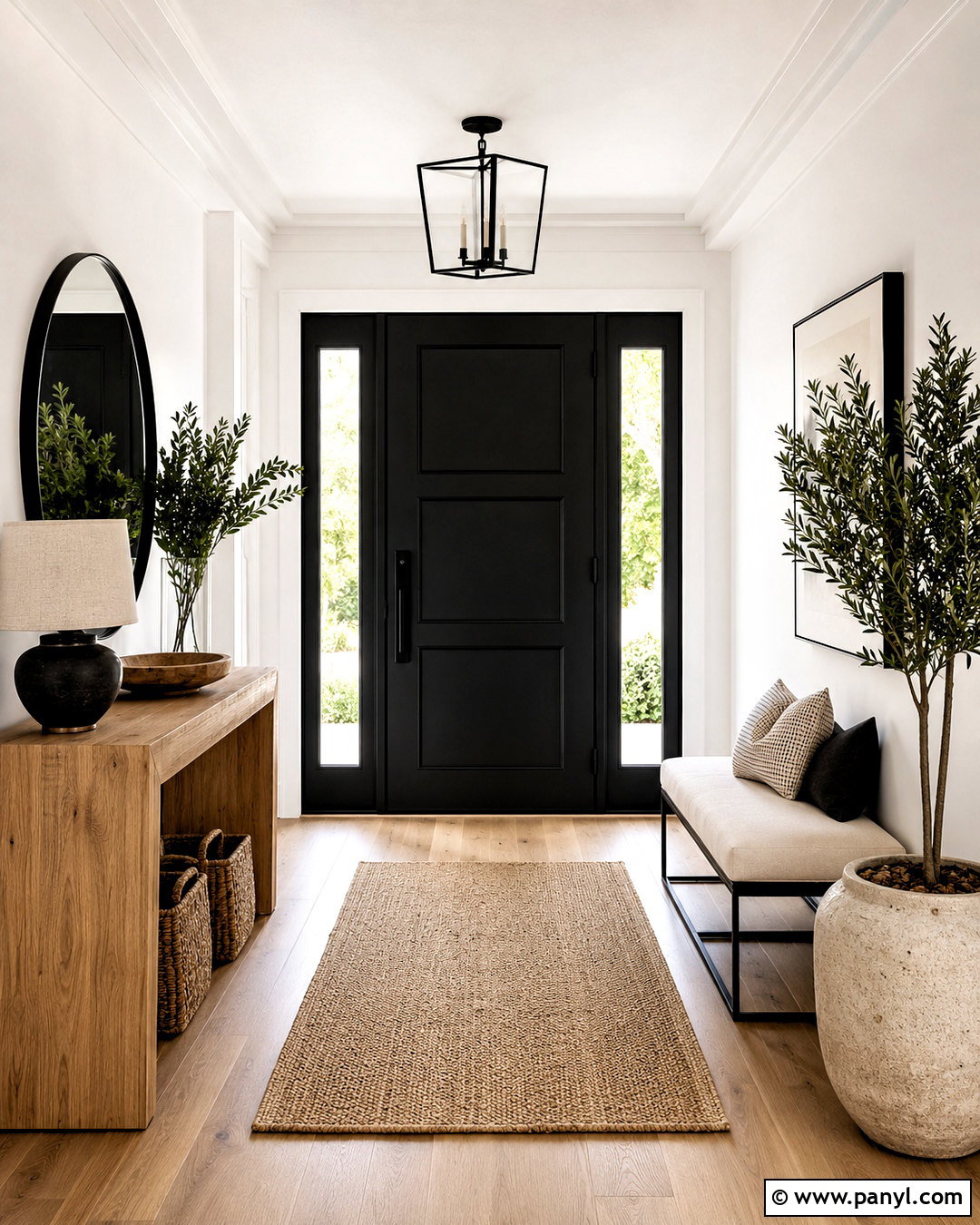
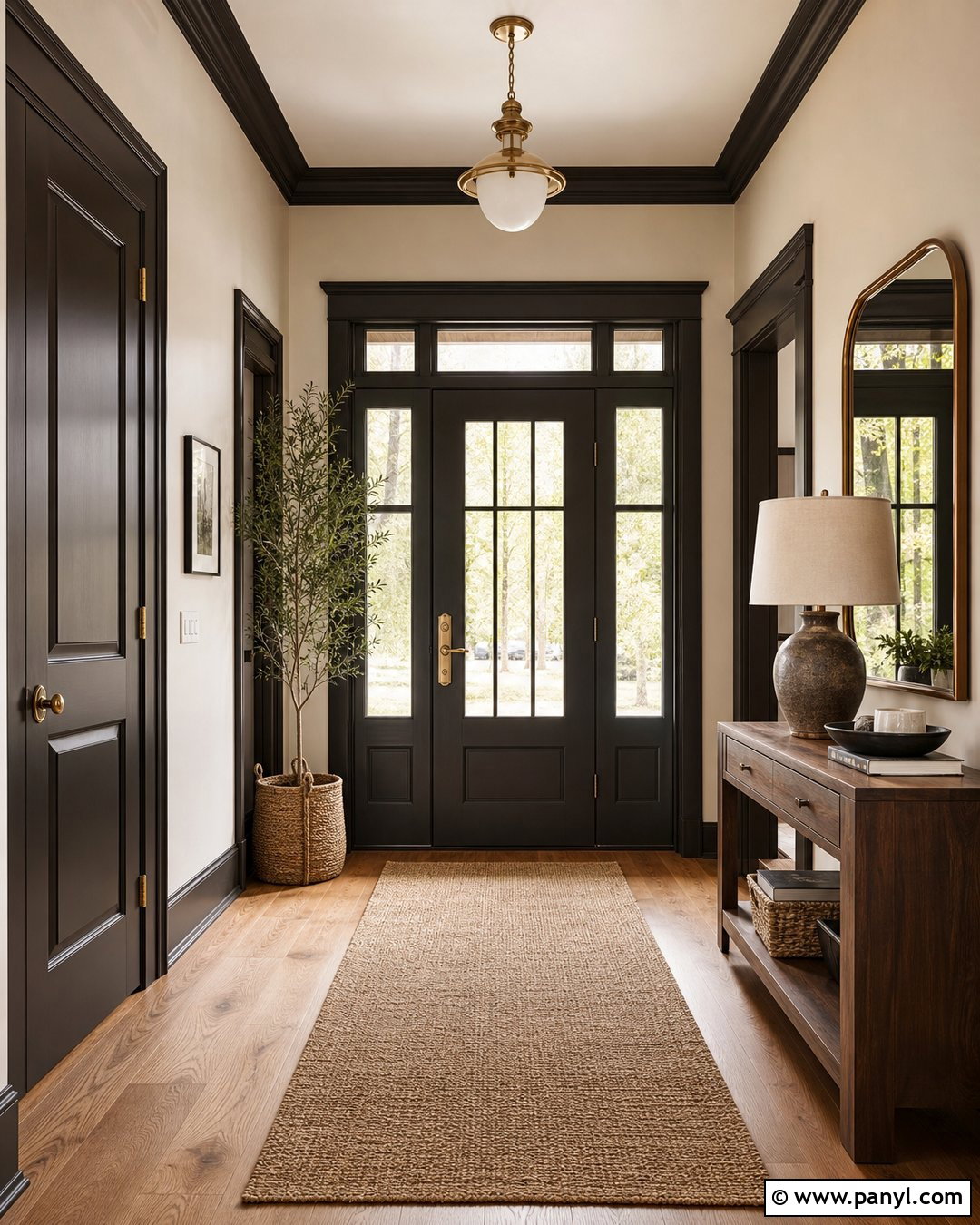
Create a polished entrance with a matte black paneled front door surrounded by warm white walls and clean white casing. Light oak flooring softens the strong contrast and makes the entry feel welcoming rather than stark. Place a slim oak console along one wall, then add a large round black mirror and a ceramic table lamp. A woven runner introduces texture without distracting from the door. Choose a simple black ceiling pendant that repeats the door color overhead. For storage, use a low bench with natural linen upholstery and baskets underneath. A leafy plant in a stone pot adds gentle color. Keep accessories limited so the black door remains the clear focal point while the layered neutrals make the entire entrance feel comfortable and complete.
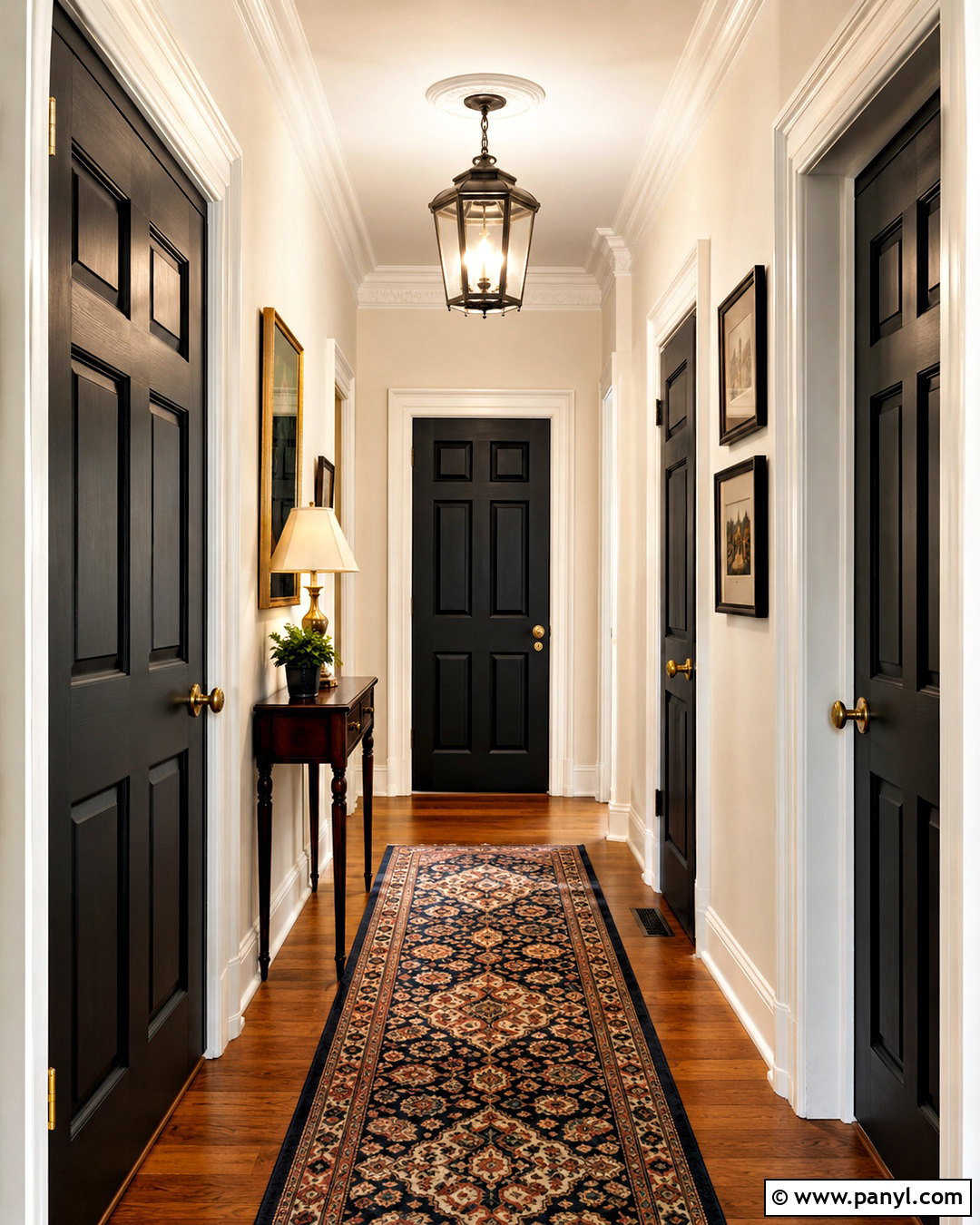
2. Hallway With Black Panel Doors
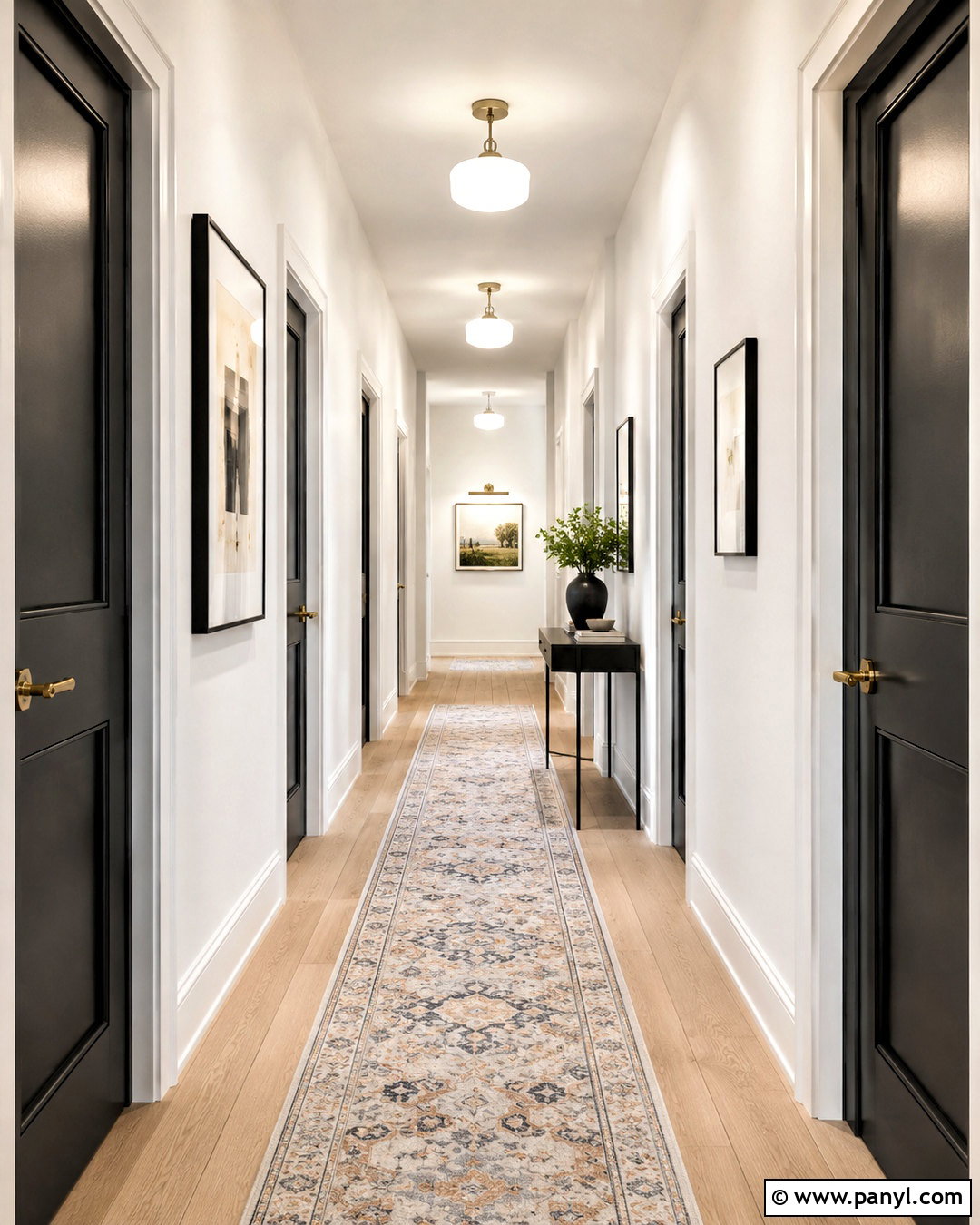
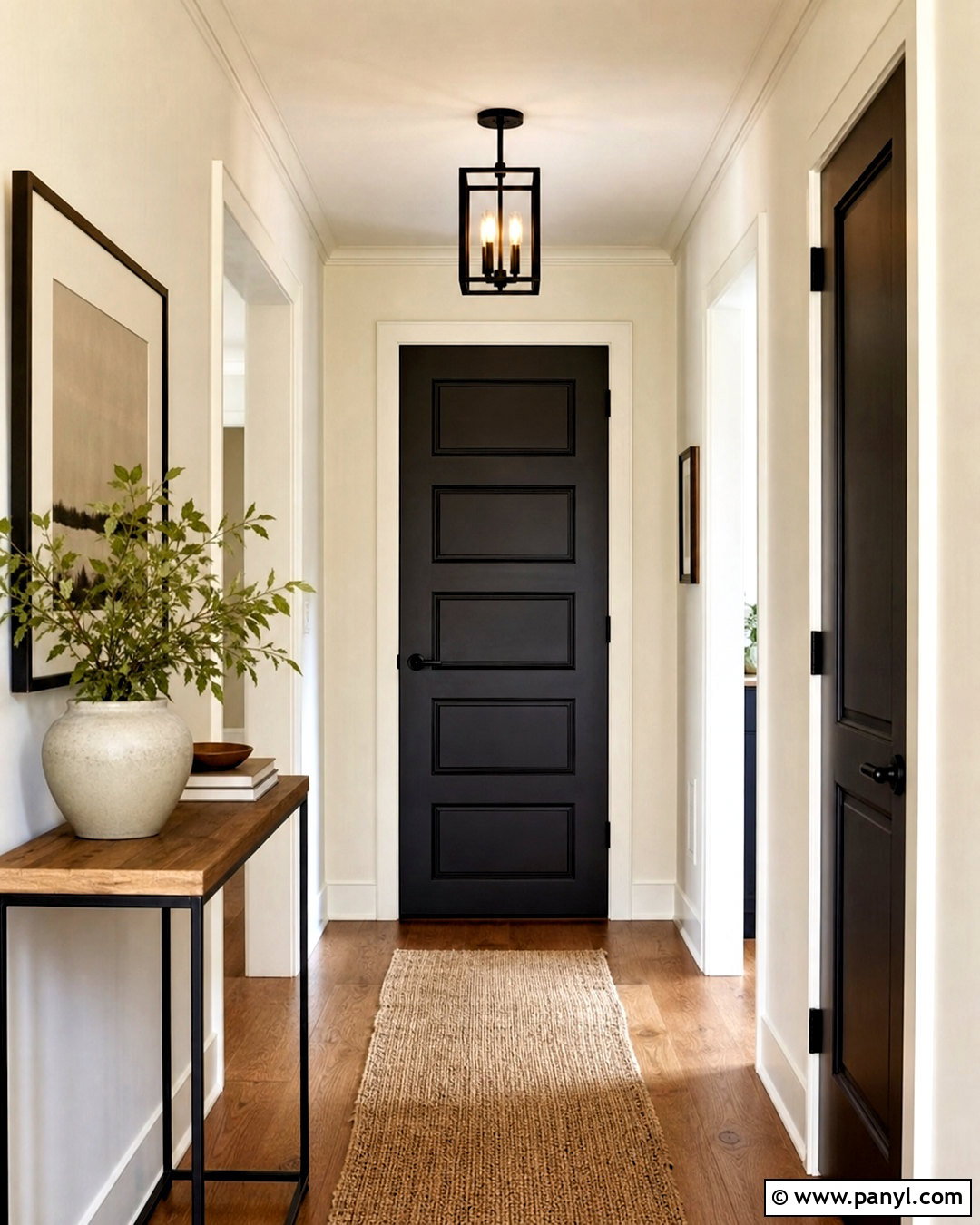
A long hallway becomes more interesting when matching black panel doors create a steady architectural rhythm. Use soft white walls, white door casing, and white baseboards to outline each dark door clearly. Pale oak flooring keeps the corridor bright, while a narrow patterned runner adds movement and helps soften sound. Hang simple black-framed artwork between the doors, maintaining even spacing for an organized appearance. A row of milk-glass ceiling fixtures brings subtle vintage character without lowering the visual height. Choose satin black paint for a smooth, gently reflective finish that is easier to maintain than flat paint. Small brass levers add warmth and distinction. The finished hallway feels intentional and connected, not like an overlooked passage filled with unrelated doorways.
3. Living Room With Black French Doors
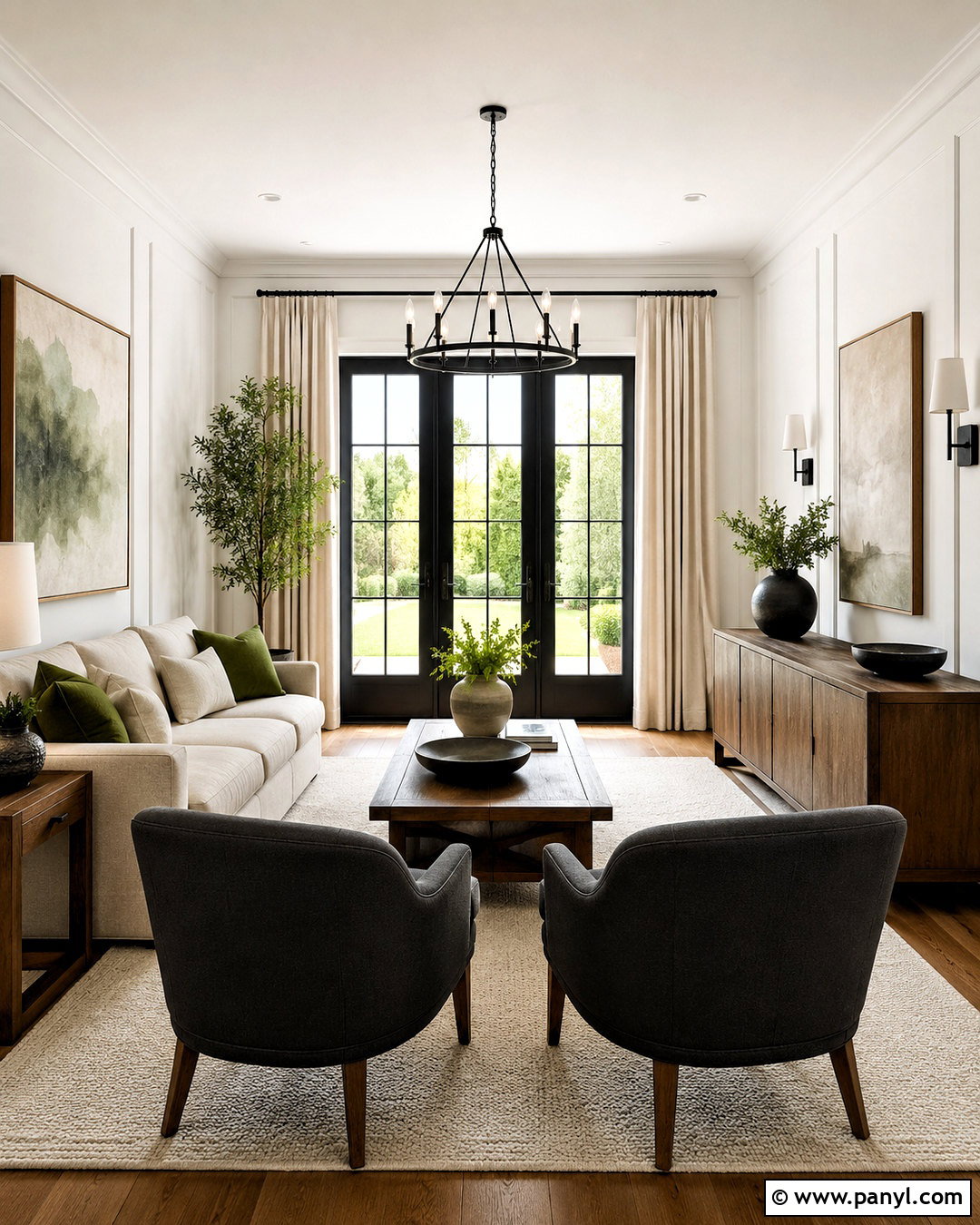
Black French doors can frame a living room beautifully while allowing light to travel between adjoining spaces. Set the doors against creamy white walls and pair them with medium-tone oak flooring for warmth. Arrange an oatmeal-colored sofa facing a low walnut media cabinet, then add two charcoal lounge chairs to repeat the deeper tones. A large ivory rug defines the seating area and prevents the black lines from feeling too dominant. Use linen curtains beside the doors when privacy is needed, but keep the fabric light and simple. A black metal chandelier, walnut coffee table, and muted green pillows finish the room. The glass panes introduce elegance, while the balanced mix of white, black, wood, and soft upholstery creates a comfortable everyday gathering space.
4. Farmhouse Black Five Panel Doors
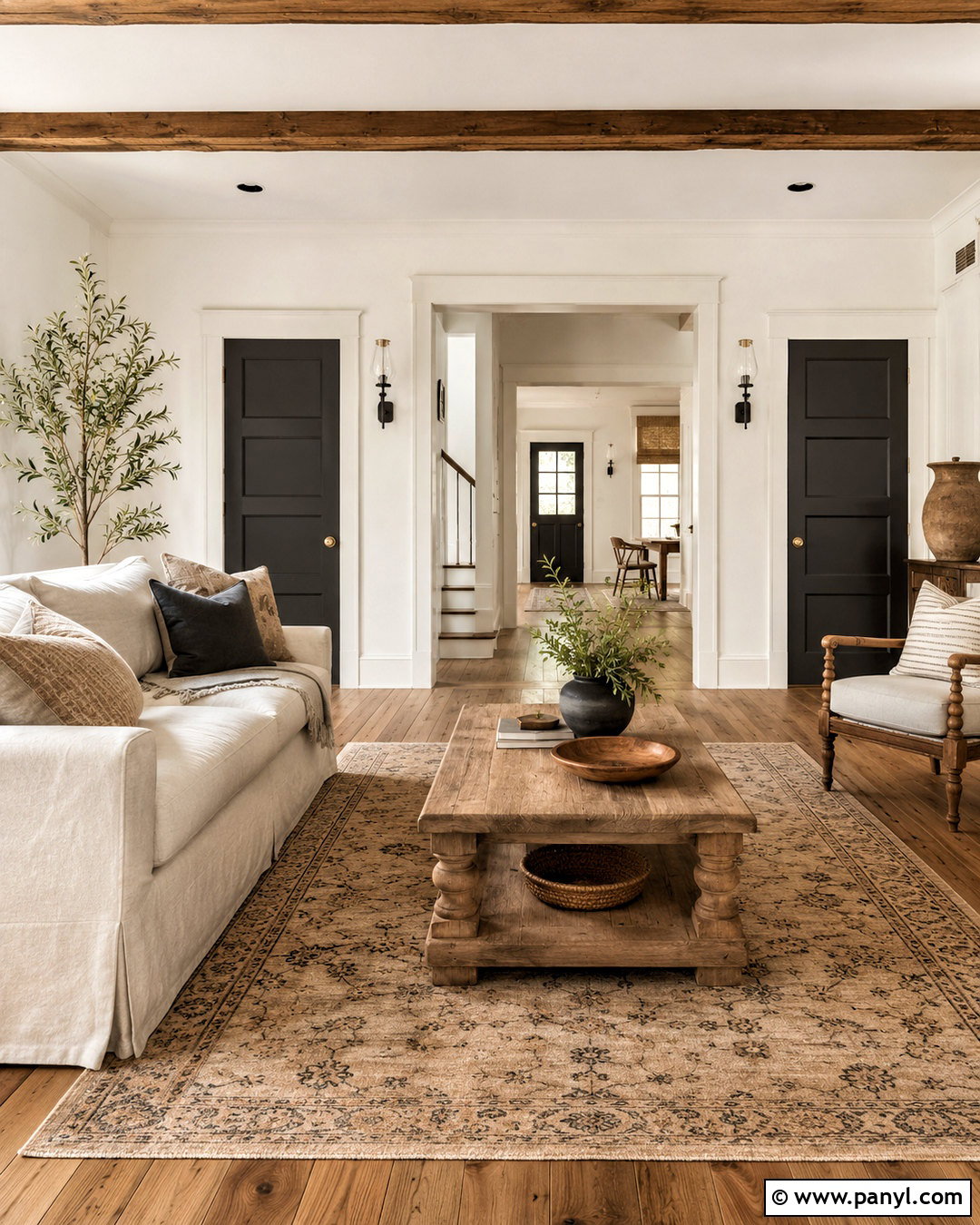
For a modern farmhouse interior, combine black five-panel doors with warm white walls, wide white trim, and natural wood flooring. The doors provide definition without relying on excessive rustic decoration. Add a slipcovered linen sofa, a substantial reclaimed-oak coffee table, and a vintage-inspired wool rug in faded beige and charcoal. Black iron sconces can repeat the door color, while aged brass hardware adds a softer historical note. Use woven shades and off-white curtains to layer the windows without making the room busy. A simple stoneware vase filled with leafy branches brings life to the neutral palette. Avoid filling every surface with signs or themed accessories. Authentic materials, comfortable furniture, and restrained black accents create a farmhouse look that feels current, collected, and livable.
5. Minimalist Flush Black Doors
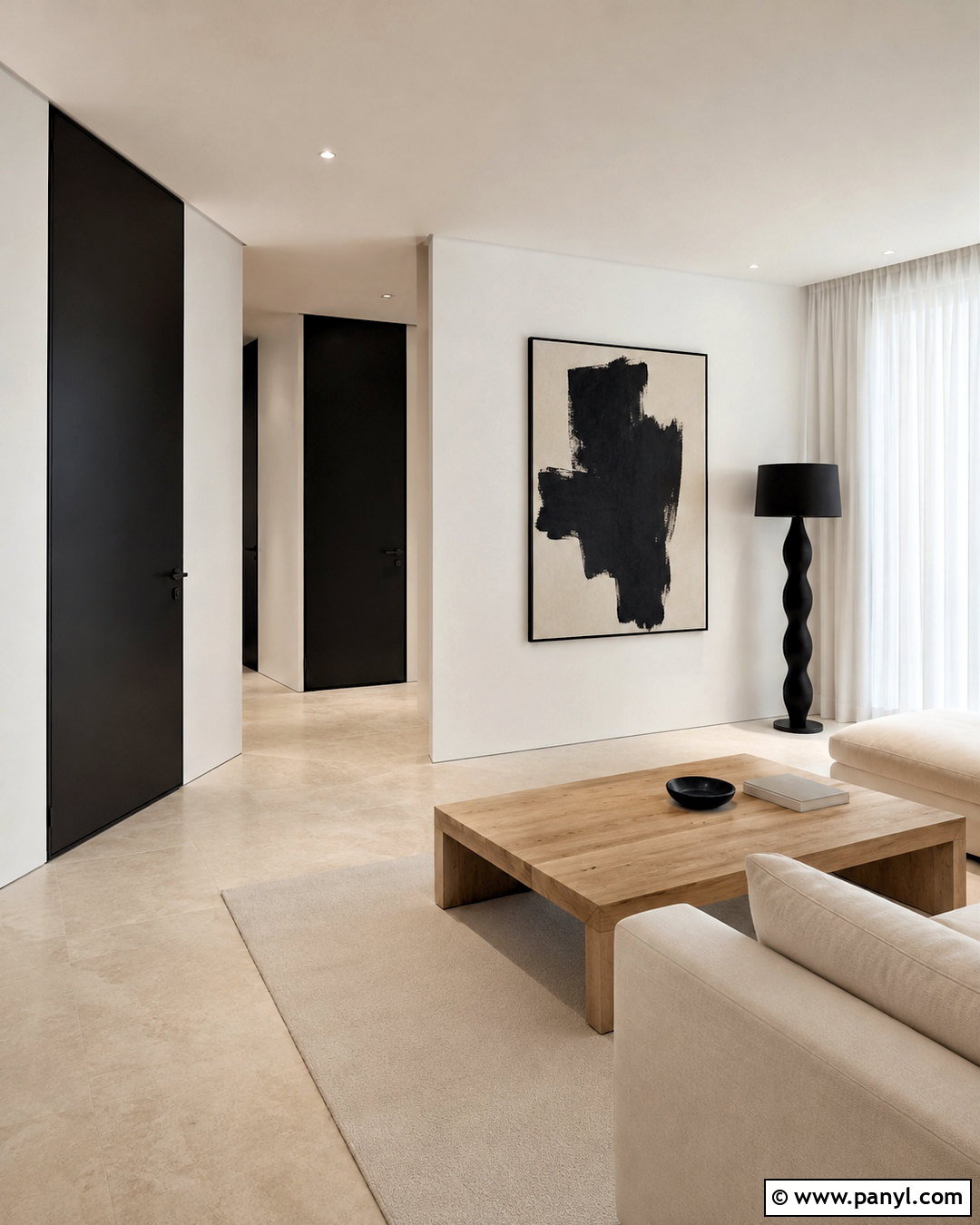
Flush black doors offer a particularly clean solution for a minimalist home with crisp white walls. Choose full-height doors with narrow black frames so each opening becomes a simple graphic shape. Continue pale limestone-look flooring throughout the room and hallway to reduce visual interruptions. Furnish the space with a low-profile cream sofa, a rectangular light oak table, and one sculptural black floor lamp. Concealed hinges and streamlined black levers support the uncluttered design. Keep window coverings plain, preferably white ceiling-mounted drapery or simple roller shades. Instead of several small decorations, display one large abstract artwork containing black, white, and muted sand tones. The result feels calm rather than empty because the architecture, furniture proportions, and limited material palette have been carefully coordinated.
6. Traditional Black Six Panel Doors
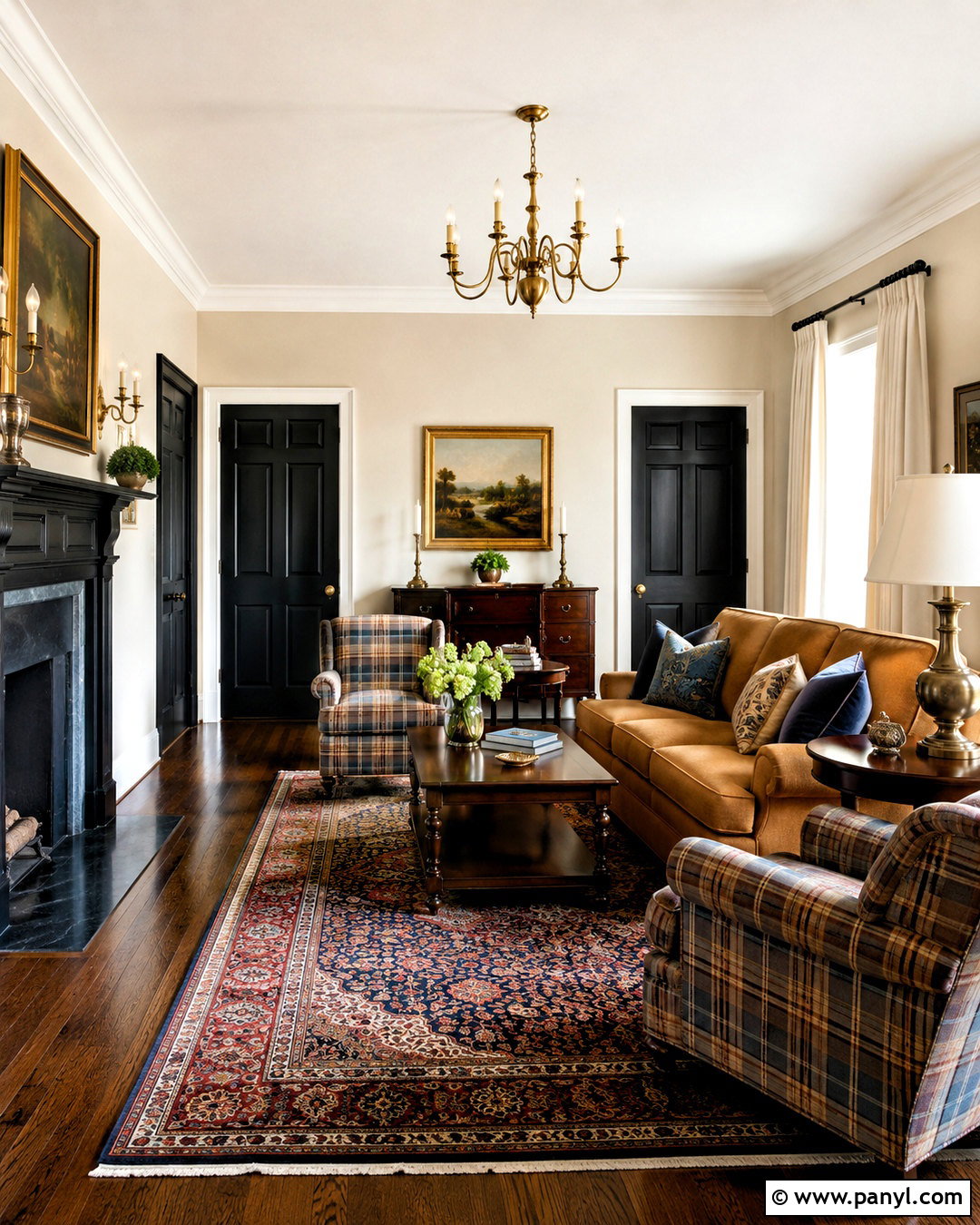
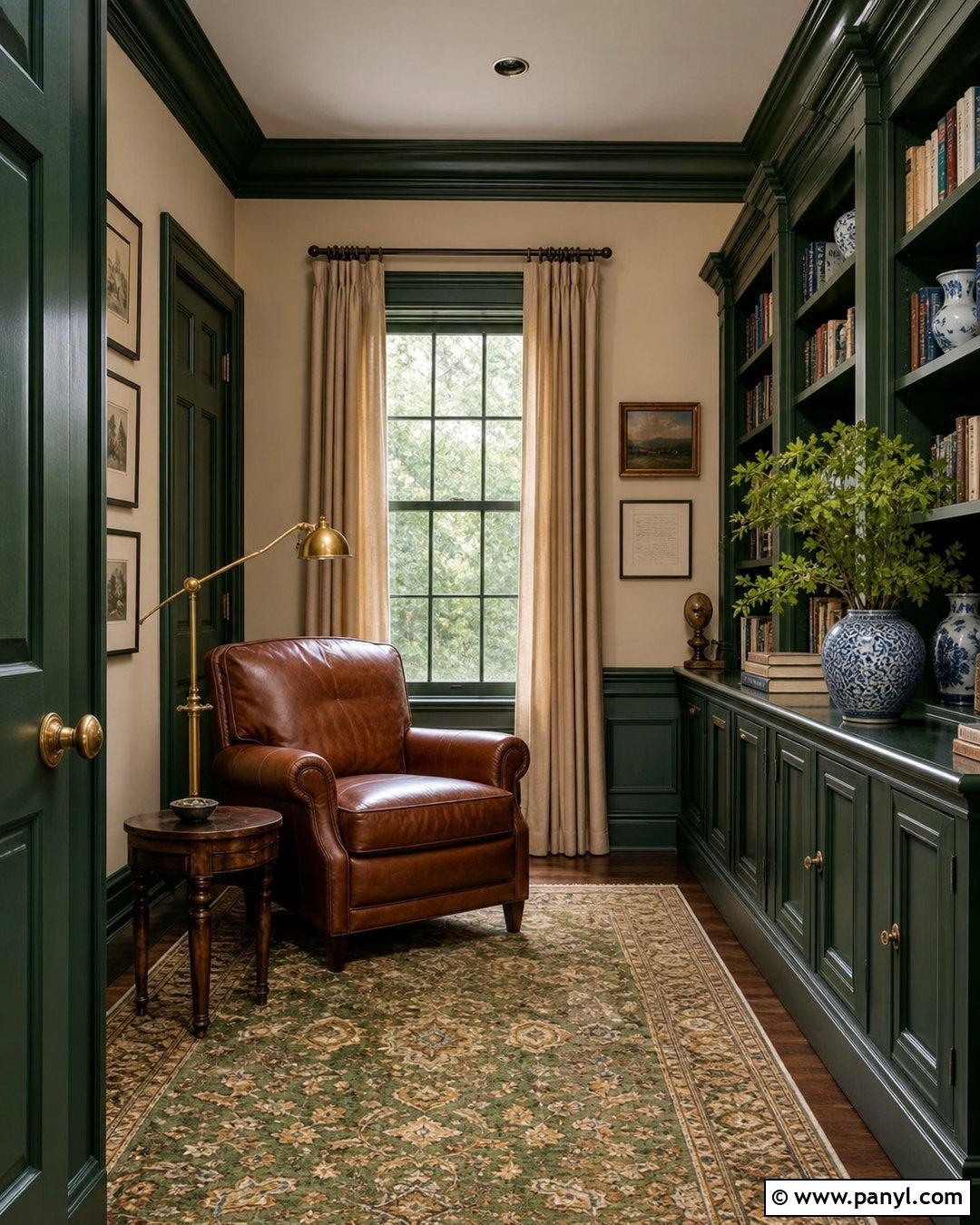
Black six-panel doors can give a traditional room stronger definition while preserving its familiar character. Pair them with soft ivory walls, substantial white crown molding, and medium-dark hardwood floors. A tailored camel sofa, two plaid armchairs, and a Persian-style rug create a warm seating arrangement. Choose antique brass knobs or levers, then repeat that finish on picture lights and a classic chandelier. Hang framed landscapes in an orderly grouping and use dark wood side tables to connect the doors with the furniture. Cream drapery should extend from near the ceiling to the floor for an elegant finish. Because the doors already make a bold statement, keep additional black accents restrained. This produces a layered traditional interior that feels established, comfortable, and thoughtfully updated.
7. Dining Room With Black Pocket Door
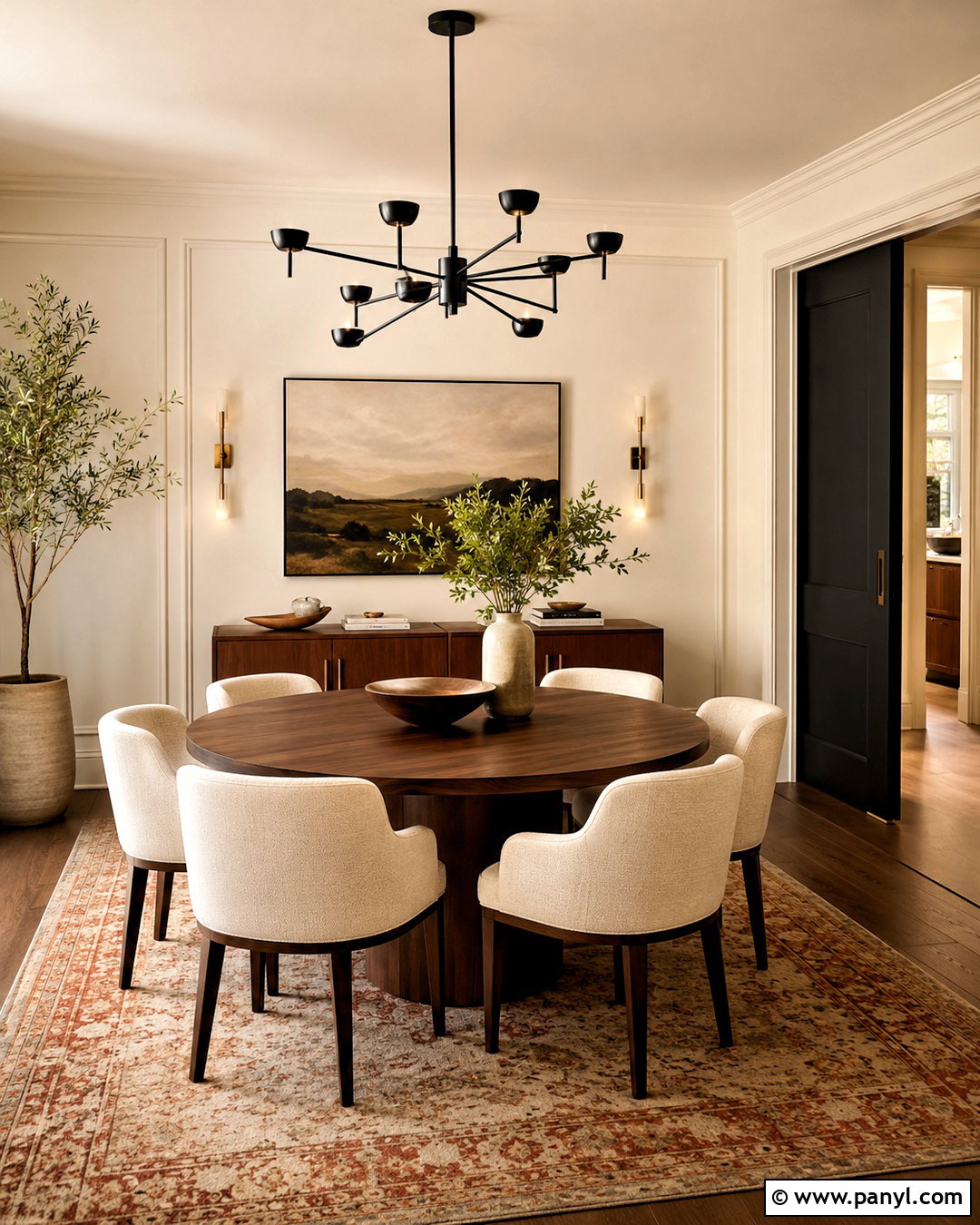
A black pocket door can separate a dining room without consuming valuable floor space. Set it within warm white walls and use matching white trim so the dark panel appears crisp when closed. A round walnut dining table encourages easy movement, while cream upholstered chairs lighten the center of the room. Ground the arrangement with a flatwoven rug in beige, black, and muted rust. Above the table, install a sculptural black chandelier that visually connects with the door. A low walnut buffet provides storage and introduces another warm wood surface. Complete the walls with one oversized landscape and a pair of brass sconces. This scheme works especially well in compact homes because the pocket door provides flexibility while the carefully repeated materials make the dining area feel finished.
8. Home Office With Black Barn Door
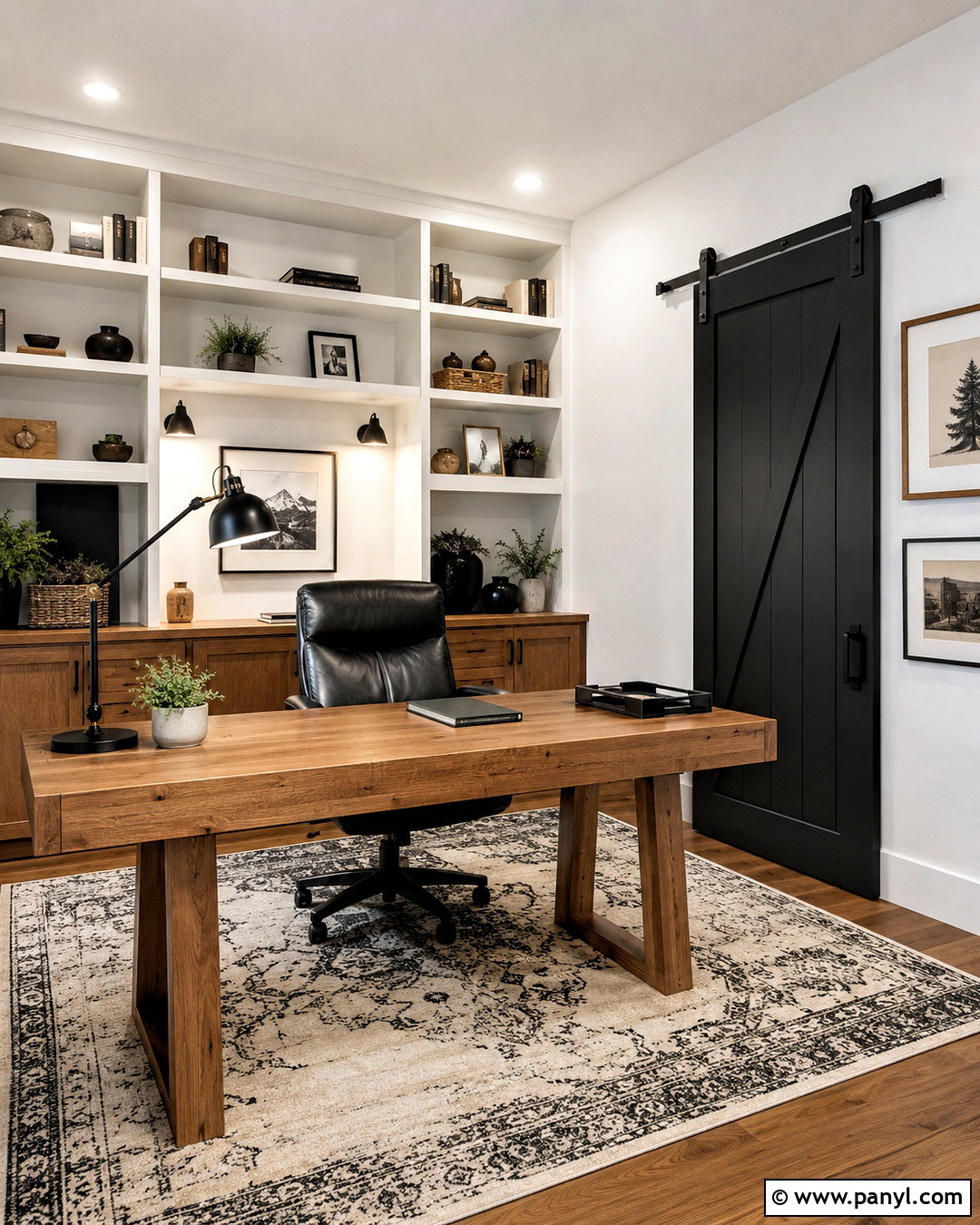
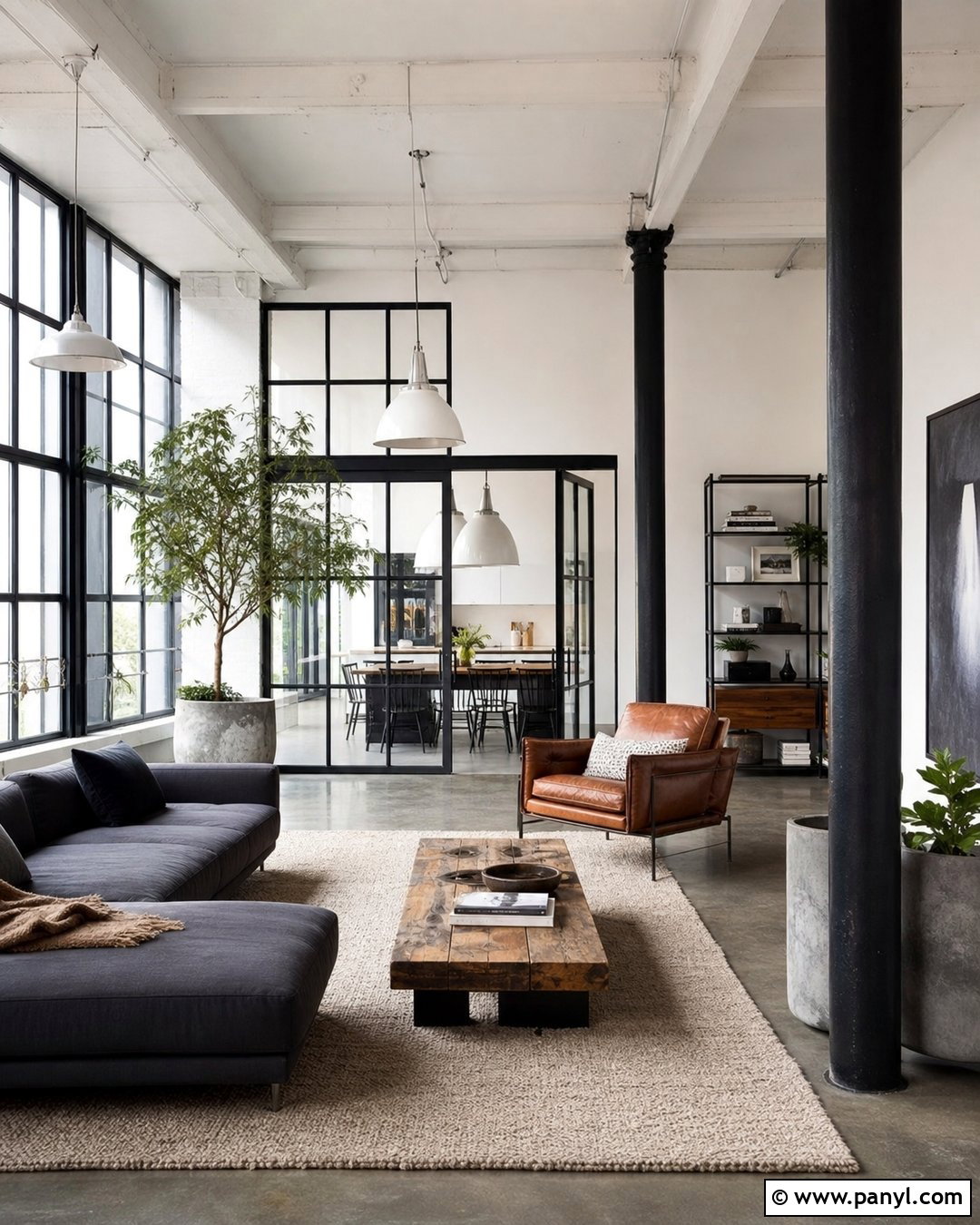
Give a home office definition with a streamlined black barn door mounted on simple black metal hardware. Surround it with smooth white walls rather than heavy rustic paneling, allowing the feature to feel modern and practical. Inside the office, place a solid oak desk near the window and use a comfortable black leather chair. White built-in shelves with oak lower cabinets offer organized storage while keeping the workspace bright. Add a cream-and-charcoal rug, a black articulated desk lamp, and two large framed prints. A small upholstered reading chair can fill an unused corner without crowding the desk. The barn door should slide along a clear wall and fully cover the opening. This complete setup combines privacy, storage, warmth, and a strong architectural focal point.
9. Arched Black Door With White Walls
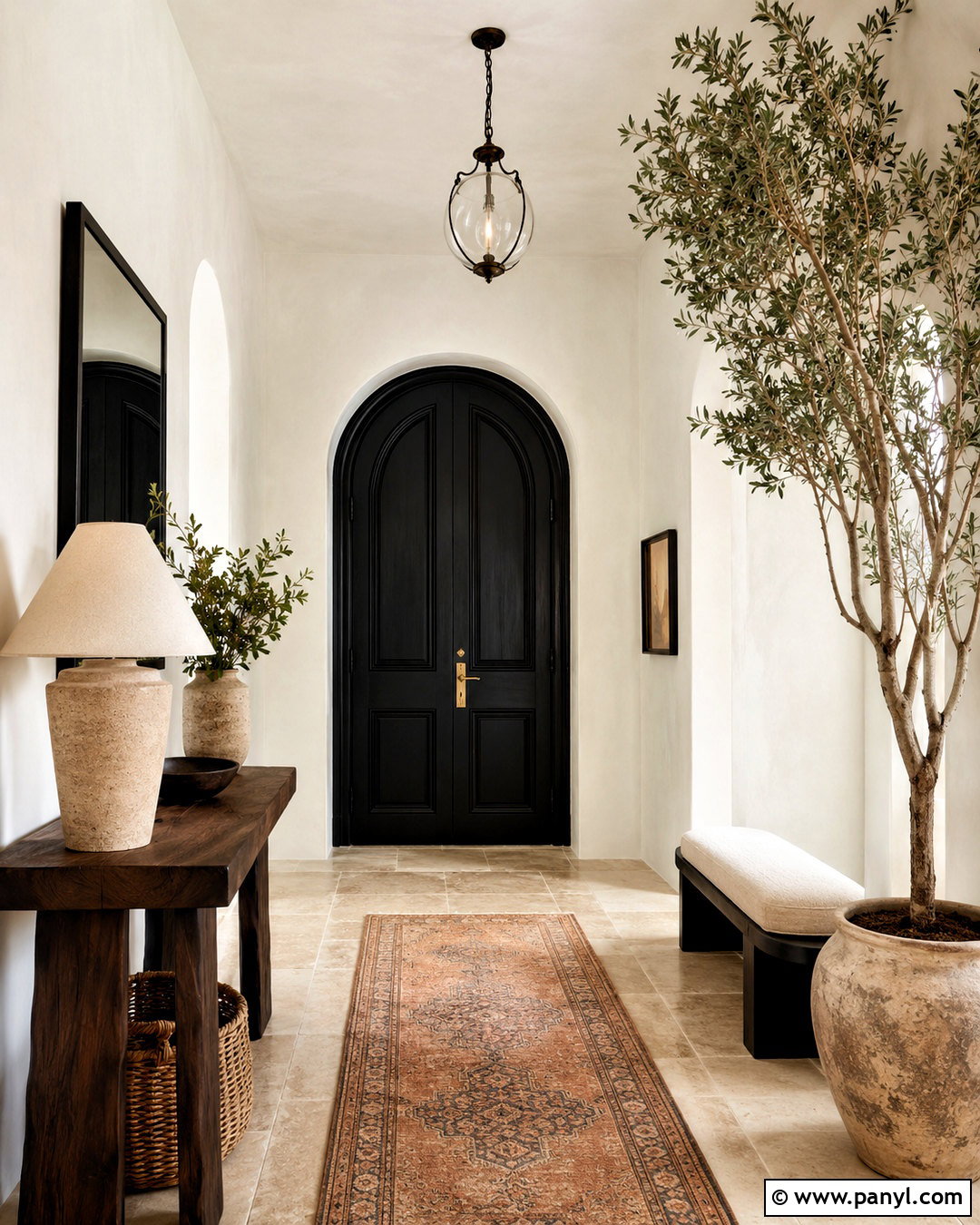
An arched black door introduces graceful shape into an otherwise simple black-and-white interior. Use a solid paneled door with a softly rounded top, white plaster walls, and matching arched casing painted black. Limestone flooring or light beige porcelain tile provides a warm, quiet foundation. Nearby, place a narrow dark wood console with a travertine lamp and a shallow ceramic bowl. A vintage-style runner in muted terracotta and cream adds color while complementing the earthy materials. Choose aged brass hardware to bring warmth to the black finish. A small upholstered bench and one tall indoor tree complete the transition space. Repeating the arch in a mirror or nearby opening creates cohesion, resulting in an entry that feels distinctive without becoming overly decorative or formal.
10. Pantry With Black Glass Door
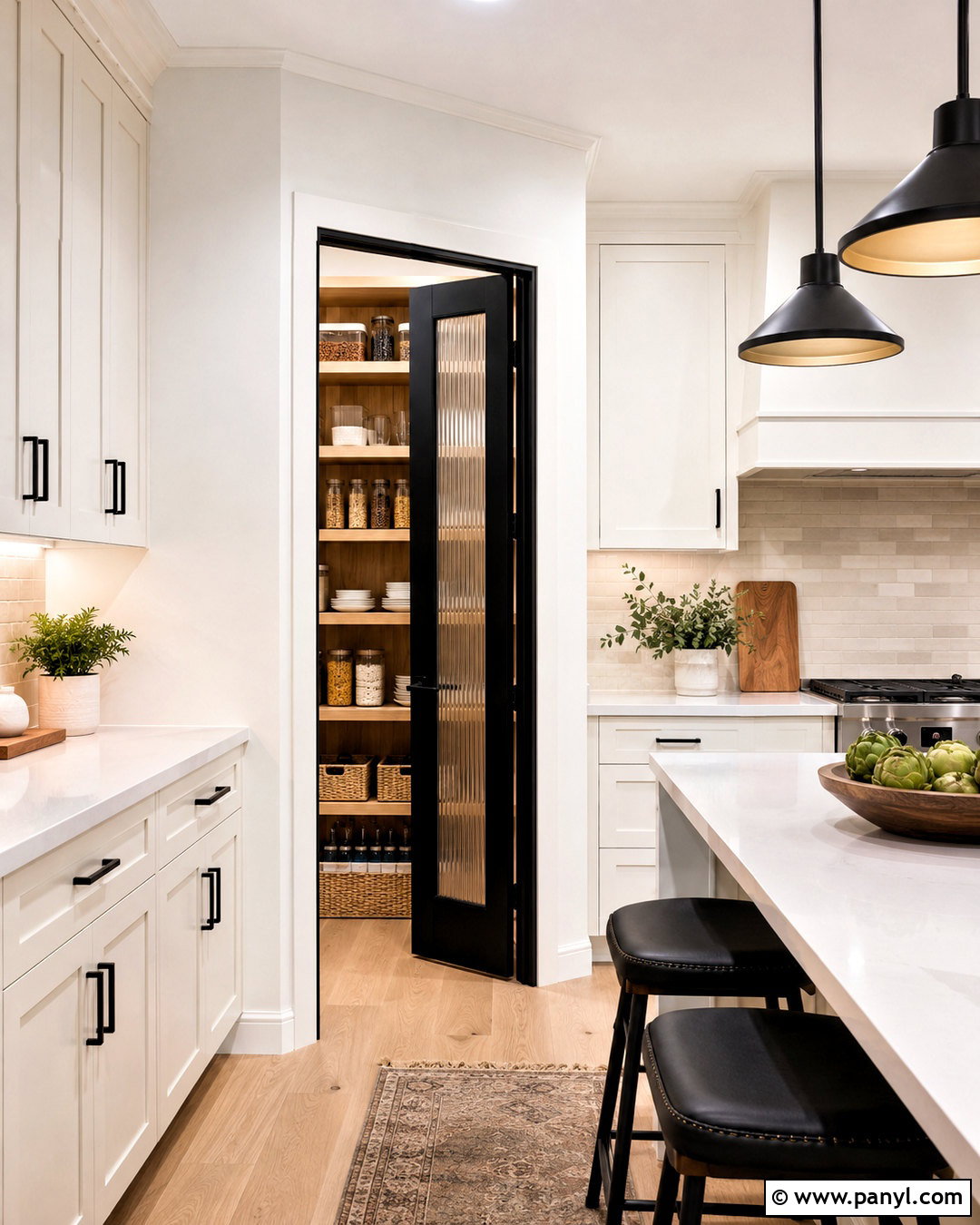
A black glass pantry door can make kitchen storage feel like part of the overall design. Choose clear reeded or divided glass set within a slim black frame, surrounded by warm white walls and cabinetry. Inside the pantry, install light oak shelves, matching labeled containers, and under-shelf lighting so the view remains organized. Continue the kitchen’s pale oak flooring through the doorway for a seamless transition. Black pendant lights, cabinet pulls, and counter stools connect the door to the larger room. Use white quartz counters and a soft beige backsplash to prevent the palette from becoming too graphic. The glass adds depth and borrowed light, while the black frame gives the entrance definition. Careful pantry organization ensures this practical feature always looks deliberate.
11. Kitchen With Black Back Door
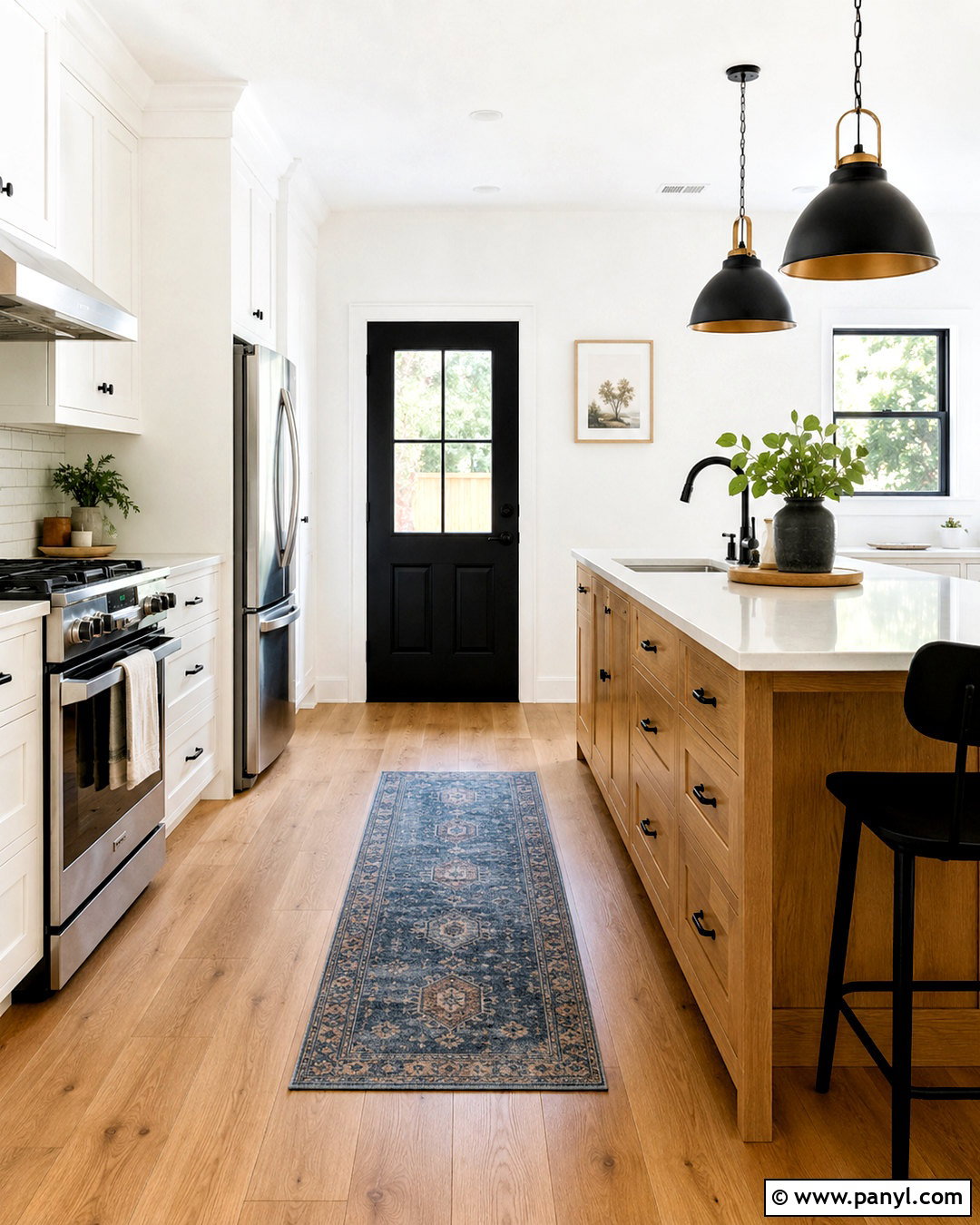
Turn a kitchen’s back door into a purposeful design feature by painting it satin black and setting it against clean white walls. Pair the door with white shaker cabinets, lightly veined quartz counters, and a warm oak island. Black cabinet hardware and pendant lights repeat the door color across the room, creating balance. Choose natural oak flooring or durable wood-look porcelain to soften the monochrome palette. A narrow washable runner can introduce muted blue or green near the work area. Use a glass upper panel in the door if more daylight is needed, along with a simple woven shade for privacy. Stainless steel appliances keep the room practical, while a few ceramic pieces and wood cutting boards add relaxed texture. The completed kitchen feels bright, grounded, and connected.
12. Bedroom With Black Door
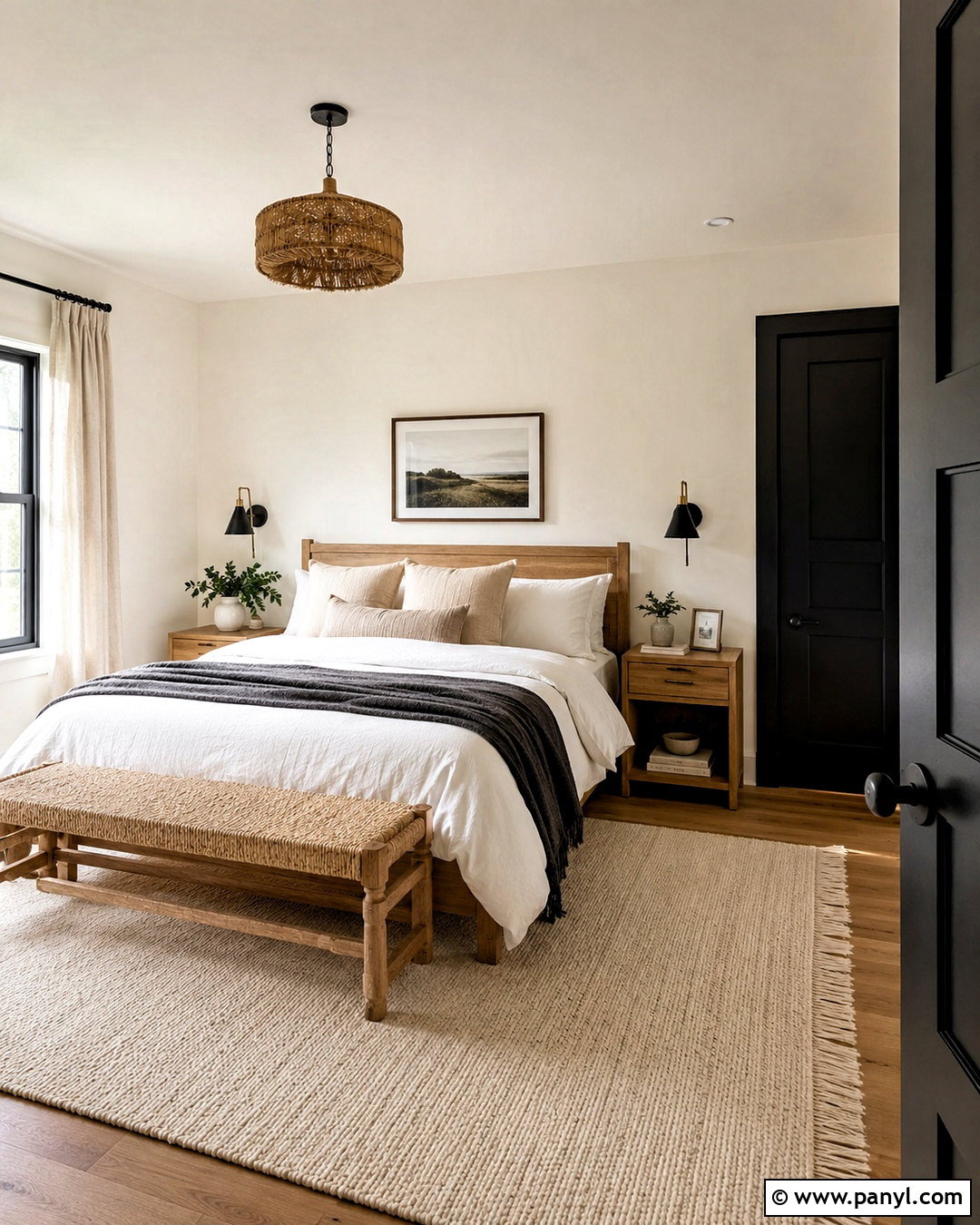
A black bedroom door can feel restful when it is balanced with warm white walls and soft, touchable materials. Position a natural oak bed against the main wall and dress it with white linen, beige layers, and a charcoal throw. Use matching oak nightstands with small black sconces to connect the bed area to the door. A large wool rug in warm ivory softens the flooring and reduces the starkness of the contrast. Choose white door casing and understated aged brass hardware for a subtle transition. Full-length oatmeal curtains and a woven bench add texture without introducing visual clutter. One muted landscape above the headboard completes the room. This approach allows the black door to provide depth while the remaining bedroom stays peaceful, light, and comfortable.
13. Bathroom With Black Door
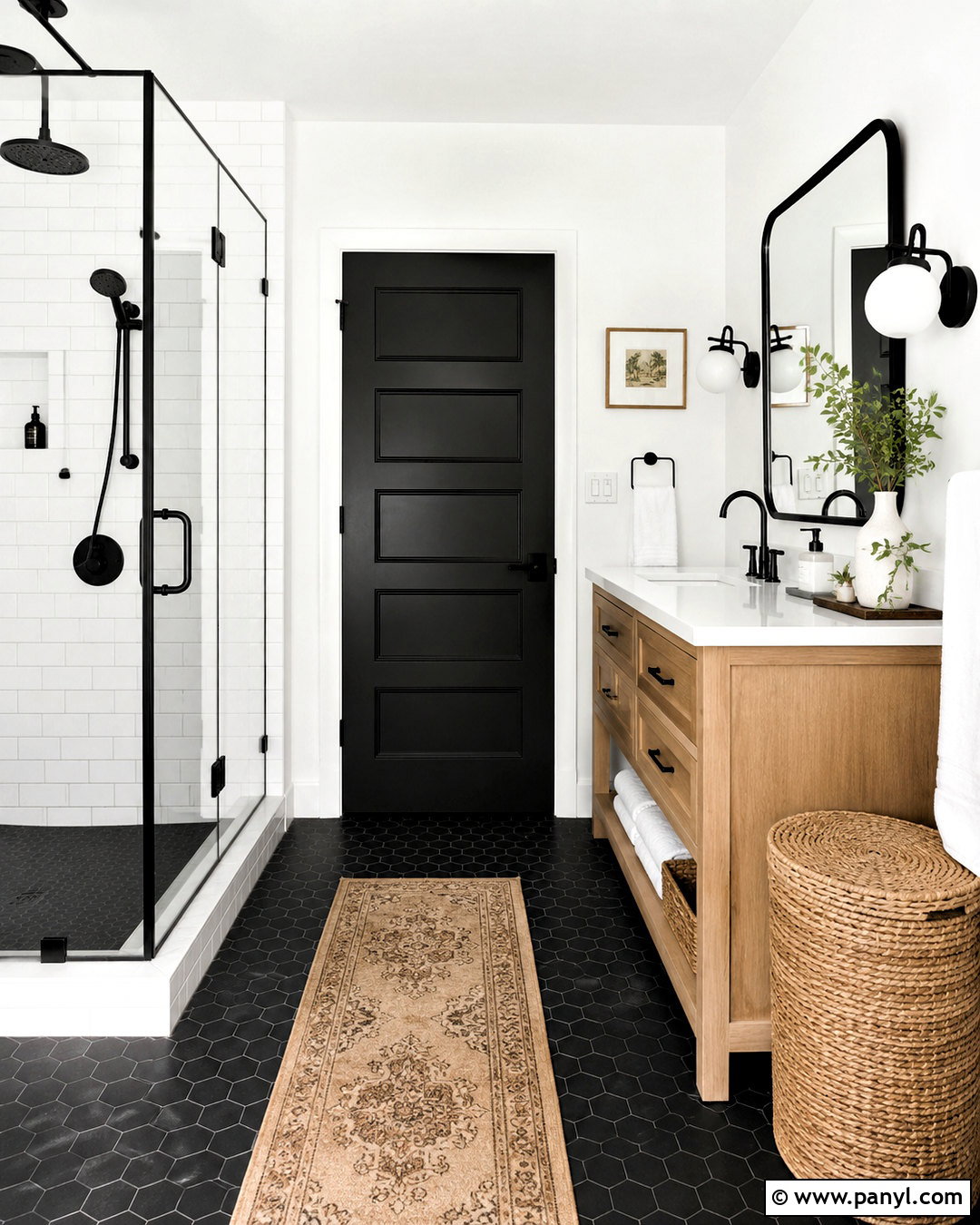
White walls and a black bathroom door create a natural foundation for a clean, high-contrast bathroom. Use white subway tile around the tub or shower, then add small black hexagonal floor tile for pattern and grip. A light oak vanity keeps the palette warm, while a white quartz counter maintains brightness. Repeat the door color with a black-framed mirror, black faucet, shower frame, and towel bar. Choose white trim around the door to separate it from nearby black fixtures. A pair of opal-glass sconces provides balanced task lighting without adding more hard lines. Finish the space with white towels, a woven hamper, and one small plant. The complete bathroom feels coordinated because black appears at several levels instead of being concentrated only on the door.
14. Bedroom With Black Closet Doors
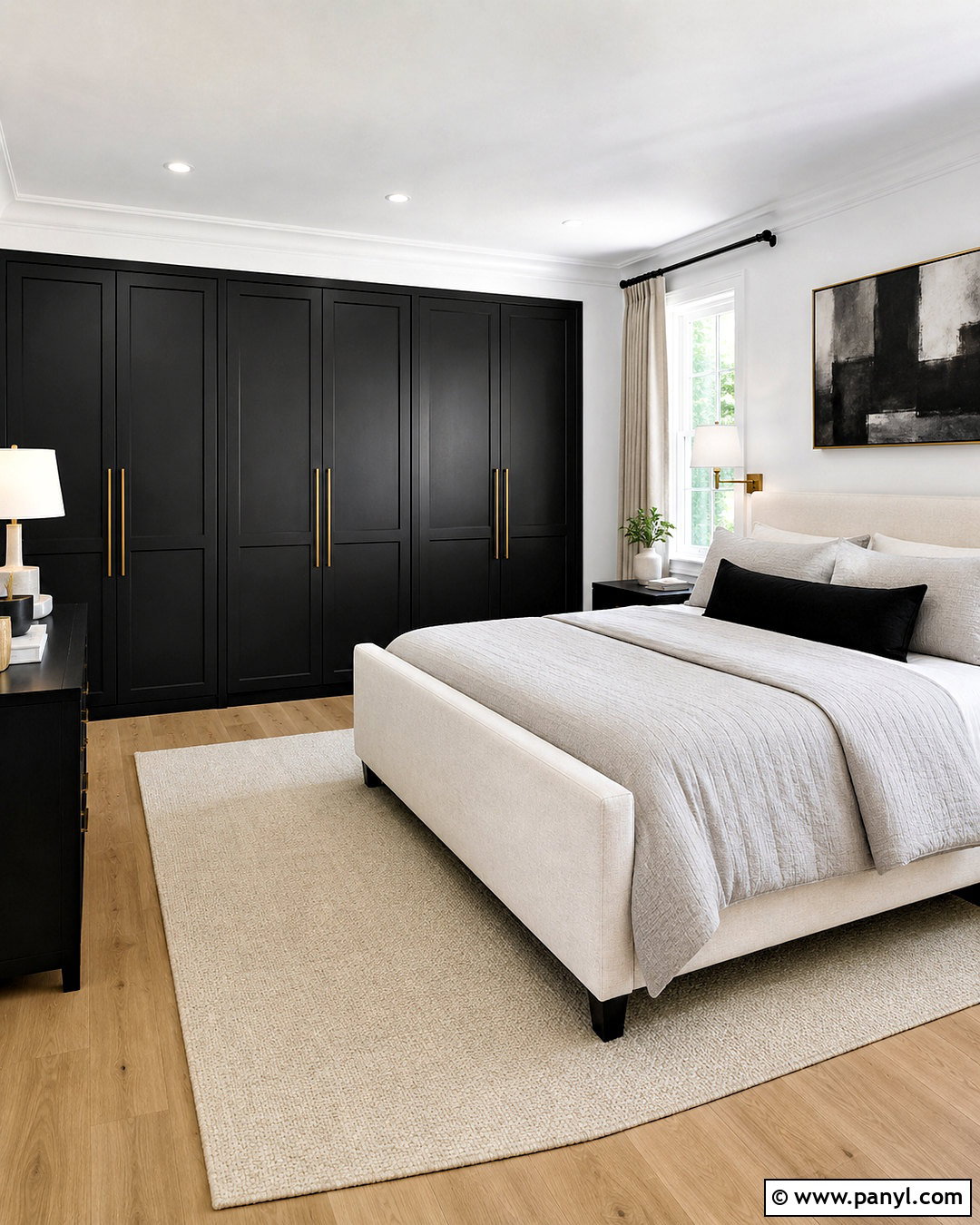
Black closet doors can anchor a bedroom while making basic storage look more architectural. Use flat or narrow shaker panels across the closet, paired with soft white walls and matching white ceiling trim. Light oak flooring, an ivory upholstered bed, and pale gray bedding keep the larger surfaces calm. Add black nightstands or slim wall sconces so the closet color feels repeated rather than isolated. Long brushed brass pulls can visually lengthen the doors and introduce warmth. Place a cream rug beneath the bed and add textured beige curtains for softness. Keep artwork simple, with one large piece featuring charcoal lines and muted natural tones. By balancing the dark closet wall with light furniture and restrained black details, the bedroom remains airy while gaining a strong, organized focal point.
15. Laundry Room With Black Bi Fold Doors
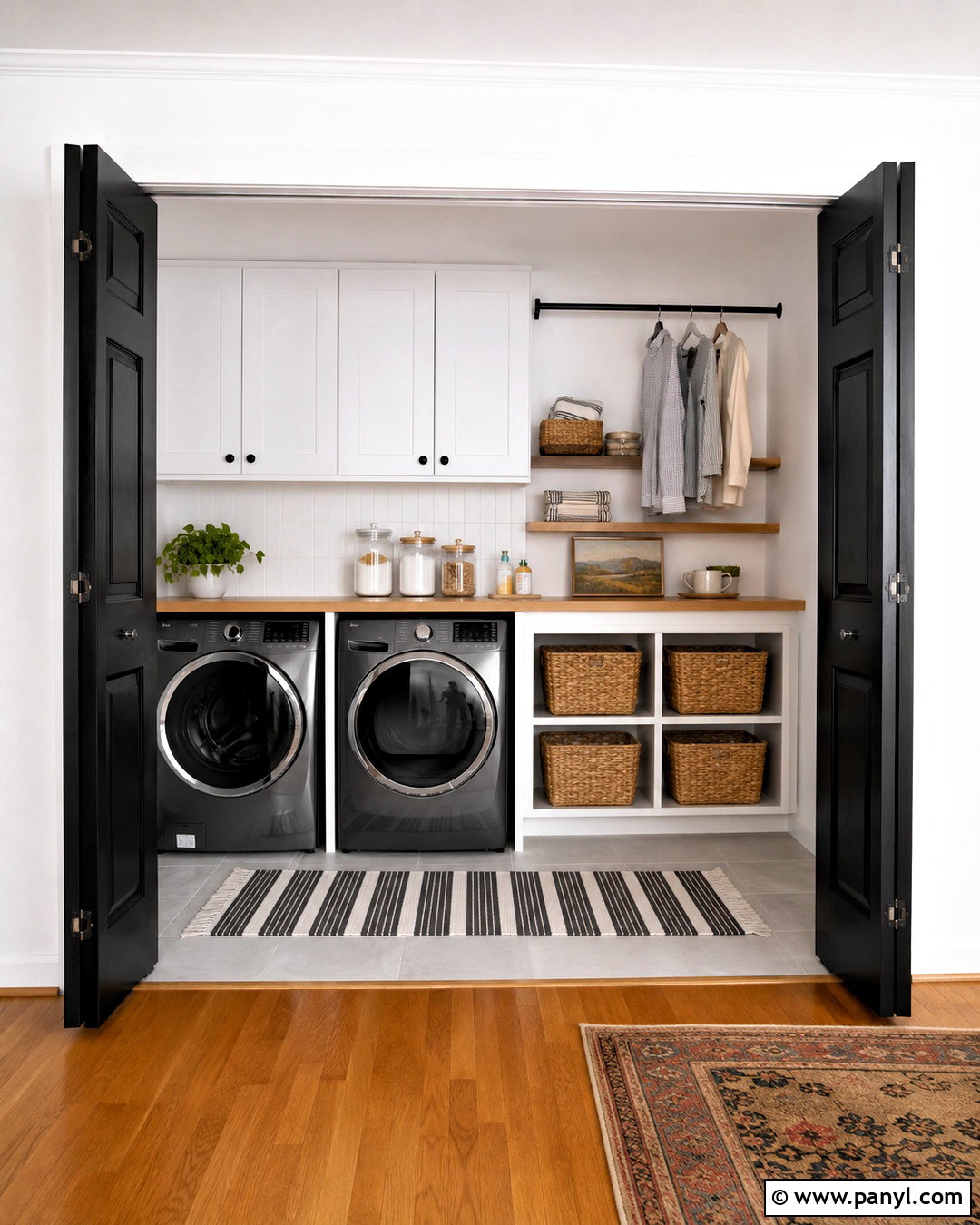
Black bi-fold doors can conceal a laundry area while adding contrast to a white hallway or utility room. Choose simple paneled doors with compact black knobs and surround them with white casing. Inside, install white upper cabinets, a light wood folding counter, and pale gray floor tile. Open oak shelves can hold matching baskets and clear containers, creating a practical but attractive workspace. Add a black hanging rail for air-drying clothes and a small black wall light above the counter. If space permits, include a narrow striped runner and a pullout hamper. The black doors hide appliances when they are not in use, while the organized interior supports daily routines. Repeated wood and black accents make this hardworking area feel integrated with the rest of the home.
16. Mudroom With Black Doors
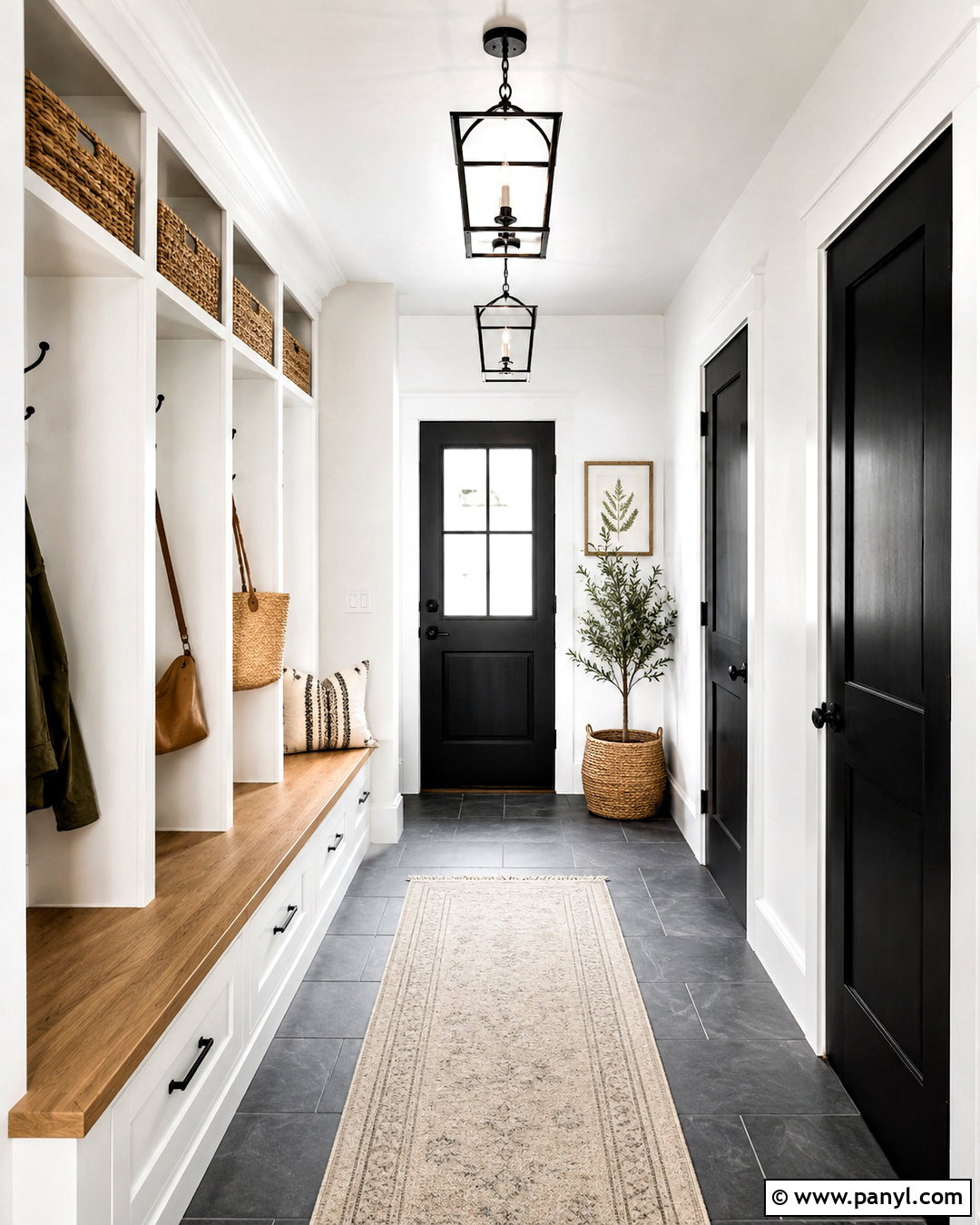
A mudroom benefits from durable black doors because they visually ground a busy area and handle everyday marks more gracefully. Pair the doors with bright white walls, white built-in lockers, and natural oak bench seats. Black hooks, cabinet pulls, and overhead lanterns create a consistent accent color. Use charcoal slate-look porcelain tile underfoot for easy cleaning, then add a washable beige runner to soften the surface. Each locker should include a basket above, hooks at the center, and shoe storage below. A sturdy exterior door painted black can match adjacent closet or utility doors for a unified appearance. Add one small framed print and a potted plant, but keep pathways open. The finished mudroom feels orderly, welcoming, and prepared for real household routines.
17. Dining Room With Black Double Doors
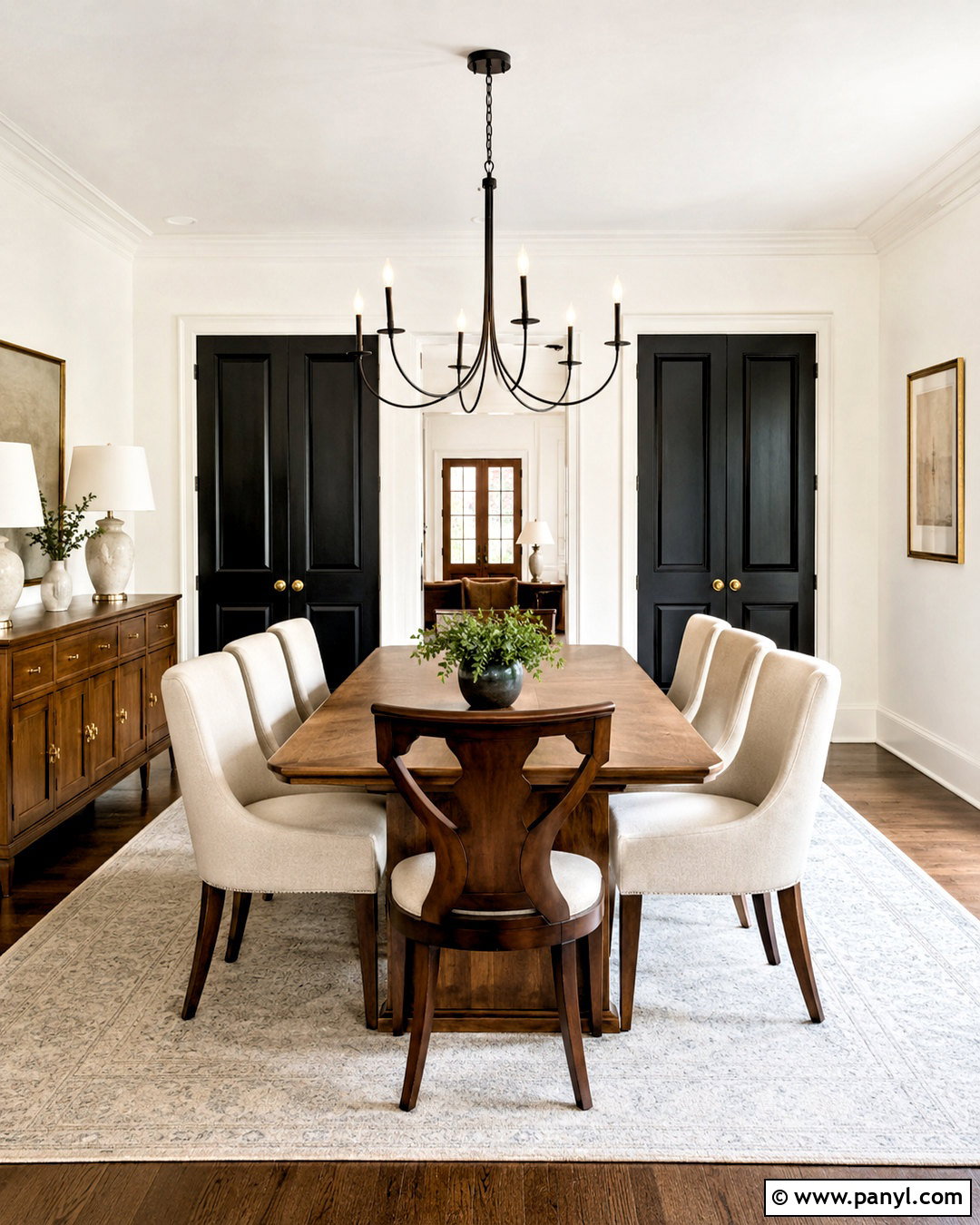
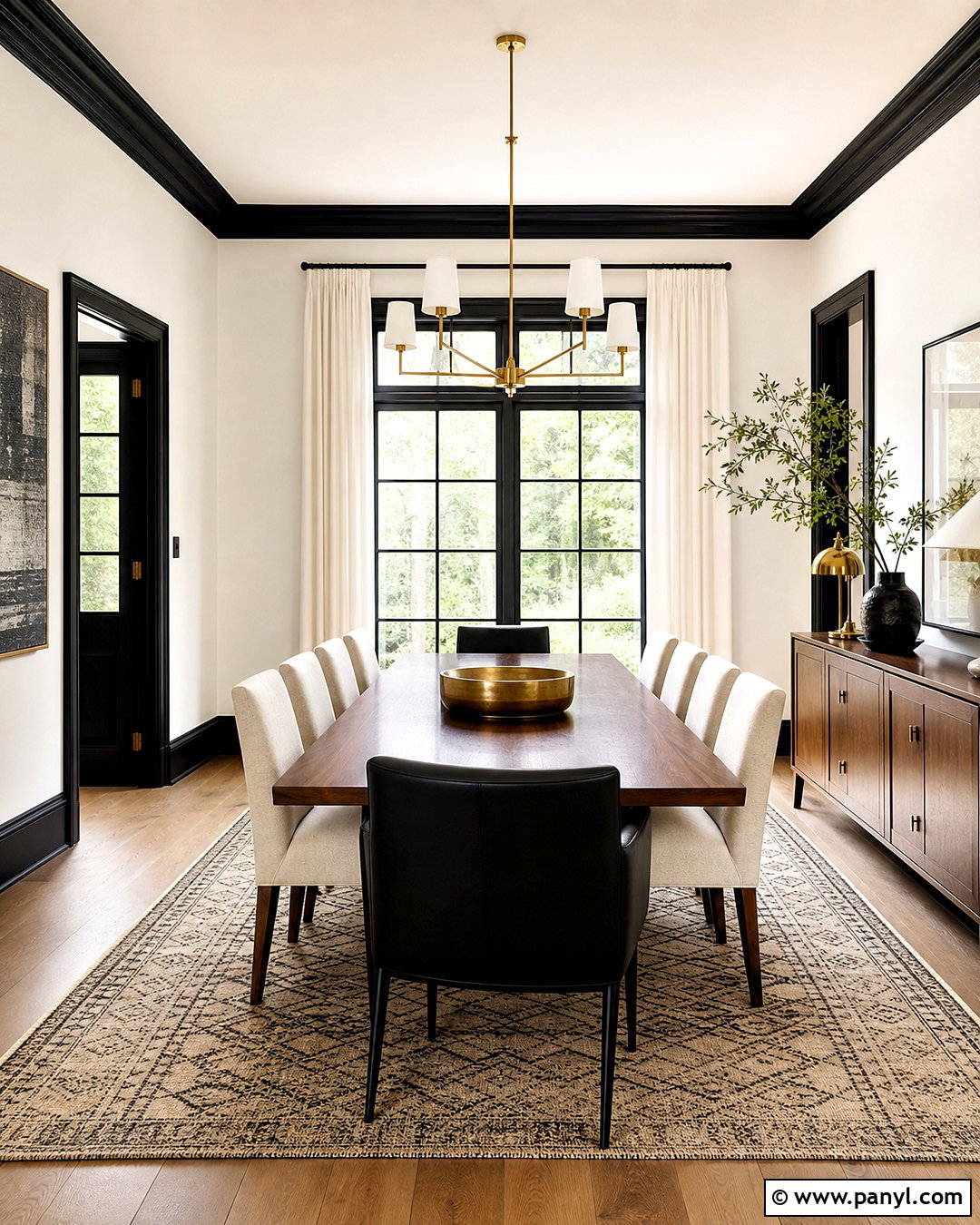
Black double doors make a dining room entrance feel substantial and balanced. Use paneled or divided-glass doors set against creamy white walls, with white trim maintaining a clean boundary. Center a long oak dining table in the room and surround it with upholstered linen chairs plus darker wood end chairs. A generous neutral rug defines the arrangement, while a large black iron chandelier echoes the doors. Install a warm wood buffet on the opposite wall and style it with matching ceramic lamps and a simple mirror. Brass door hardware can be repeated on the buffet and lighting for cohesion. Keep window treatments light and full length. This combination creates a gracious dining space that works for casual meals but still feels special when the double doors are closed.
18. Sunroom With Black Patio Doors
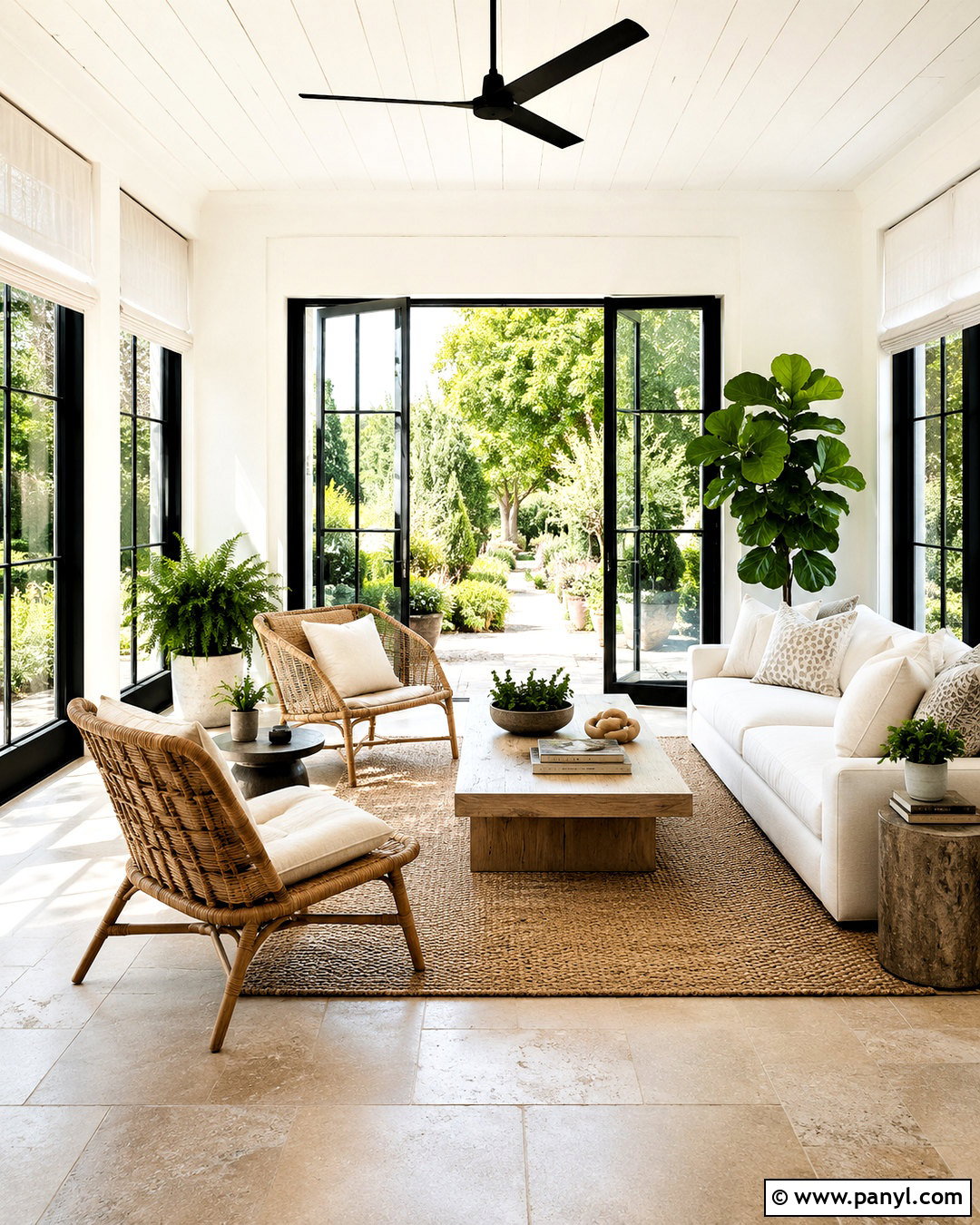
Black patio doors bring structure to a bright sunroom filled with white walls and natural light. Use large glass panels so garden views remain the dominant feature, then repeat the black framing in nearby windows. Pale stone tile creates a durable floor, while a woven jute rug adds warmth under a relaxed seating group. Choose a cream performance-fabric sofa, two rattan chairs, and a round weathered-oak coffee table. Add leafy plants in clay and stone pots to strengthen the connection with the outdoors. White linen shades can control glare without hiding the black frames. A simple black ceiling fan and striped neutral pillows complete the space. The room feels fresh and open because the dark doors outline the view rather than blocking it.
19. Kitchen With Black Dutch Door
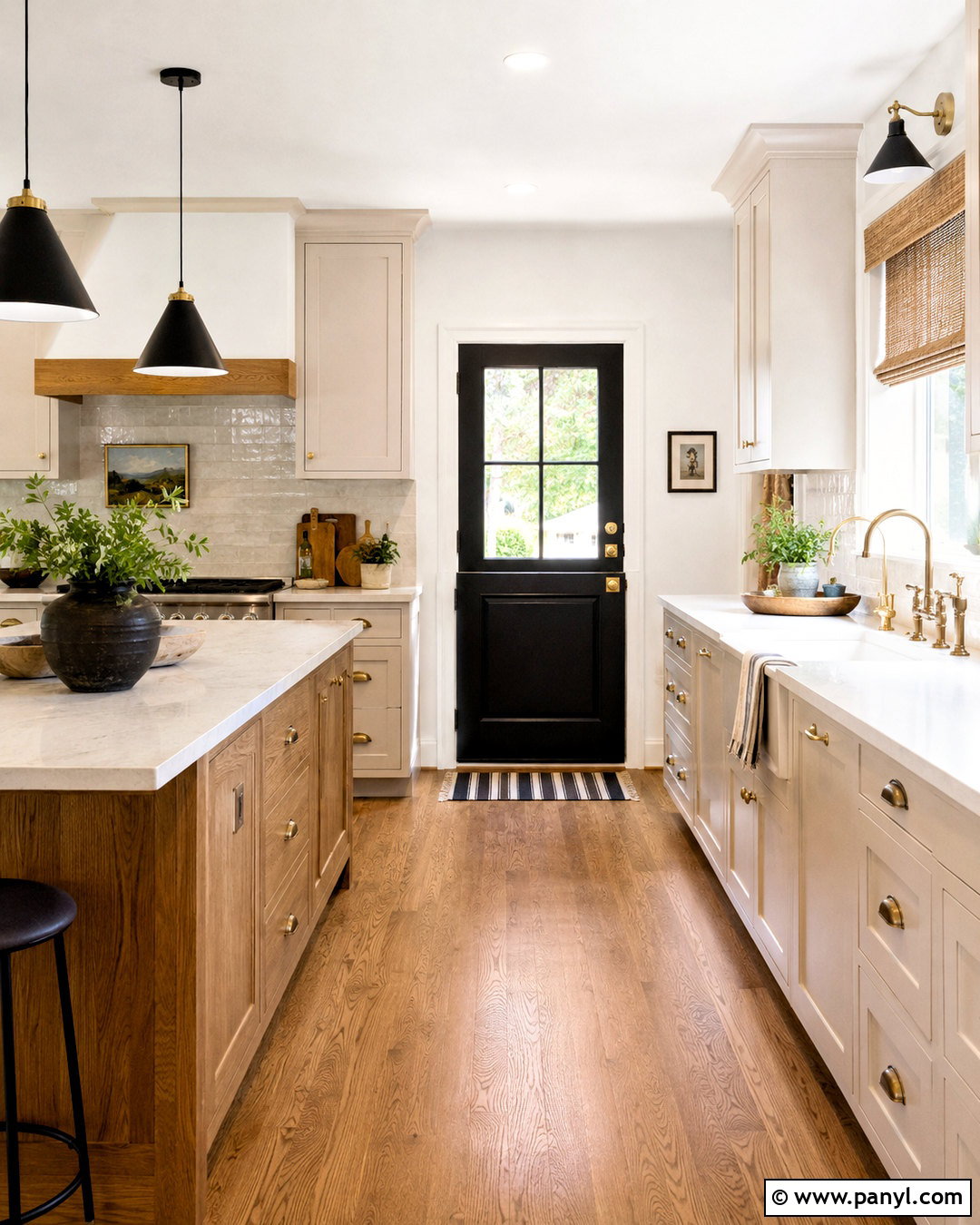
A black Dutch door gives a white kitchen practical charm while letting the upper and lower portions operate independently. Surround it with warm white walls and cabinetry, then use medium oak flooring and a matching island to soften the contrast. The upper door can include divided glass, while the solid lower half provides durability and privacy. Add aged brass hardware, a woven shade, and a small striped mat at the threshold. Repeat black on pendant lights and cabinet pulls, but keep counters and backsplash light. A ceramic fruit bowl, linen towels, and a few wood accessories make the room feel relaxed. The completed look combines function and character, offering ventilation and outdoor connection without relying on exaggerated farmhouse decorations.
20. Black Doors With White Trim
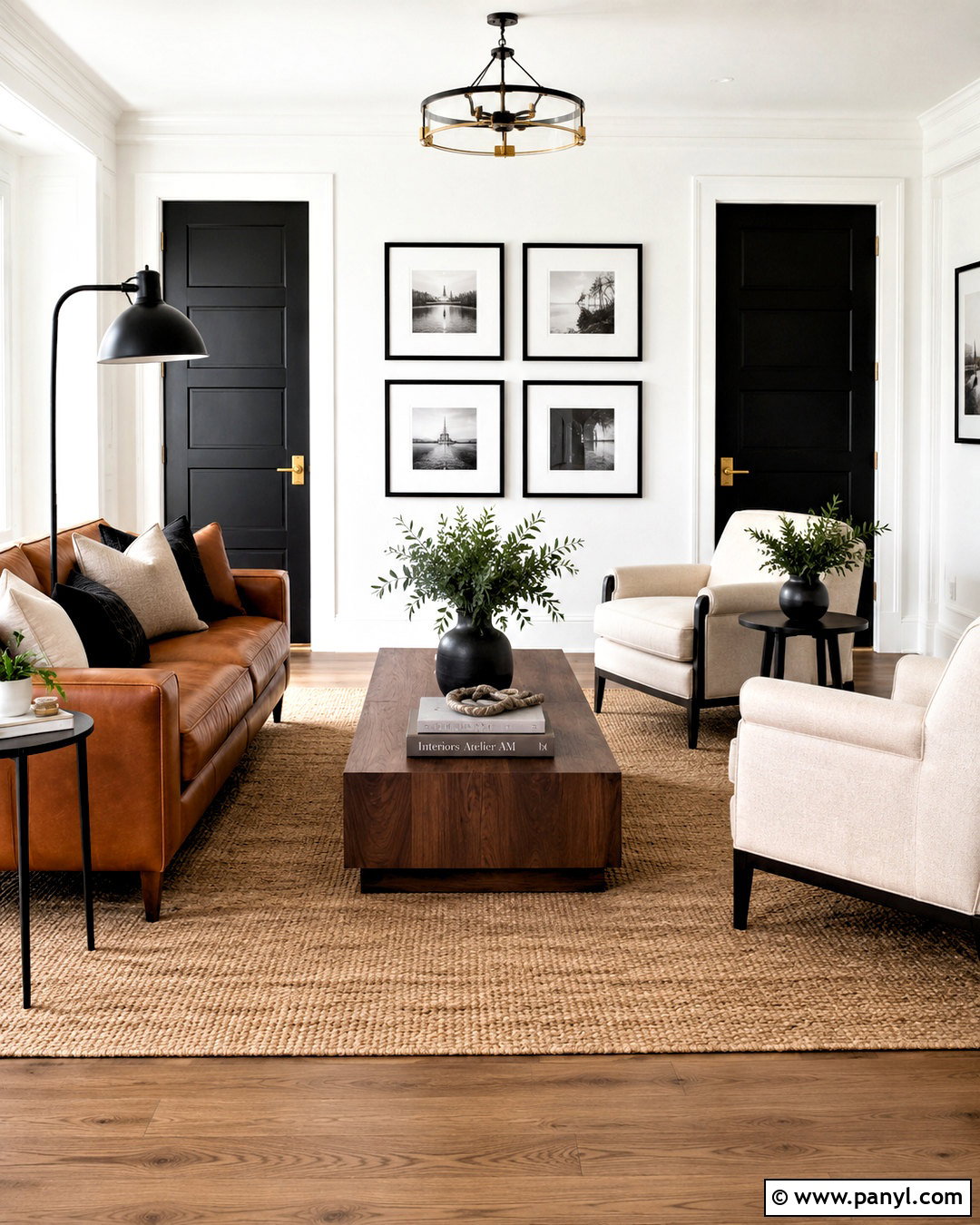
White trim is an effective choice when you want black doors to stand out as individual features rather than blending into their frames. Continue the same white from the walls onto baseboards and door casing, changing only the sheen for subtle definition. In a family room, pair this crisp envelope with a caramel leather sofa, cream armchairs, and a large natural fiber rug. Add a walnut coffee table, black picture frames, and a black metal floor lamp. Warm brass door levers prevent the dark panels from feeling cold. Medium oak flooring ties everything together and handles everyday use well. This full scheme balances graphic contrast with inviting materials, allowing each door to become a focal point without making the surrounding room feel overly black or rigid.
21. Black Doors With Black Trim
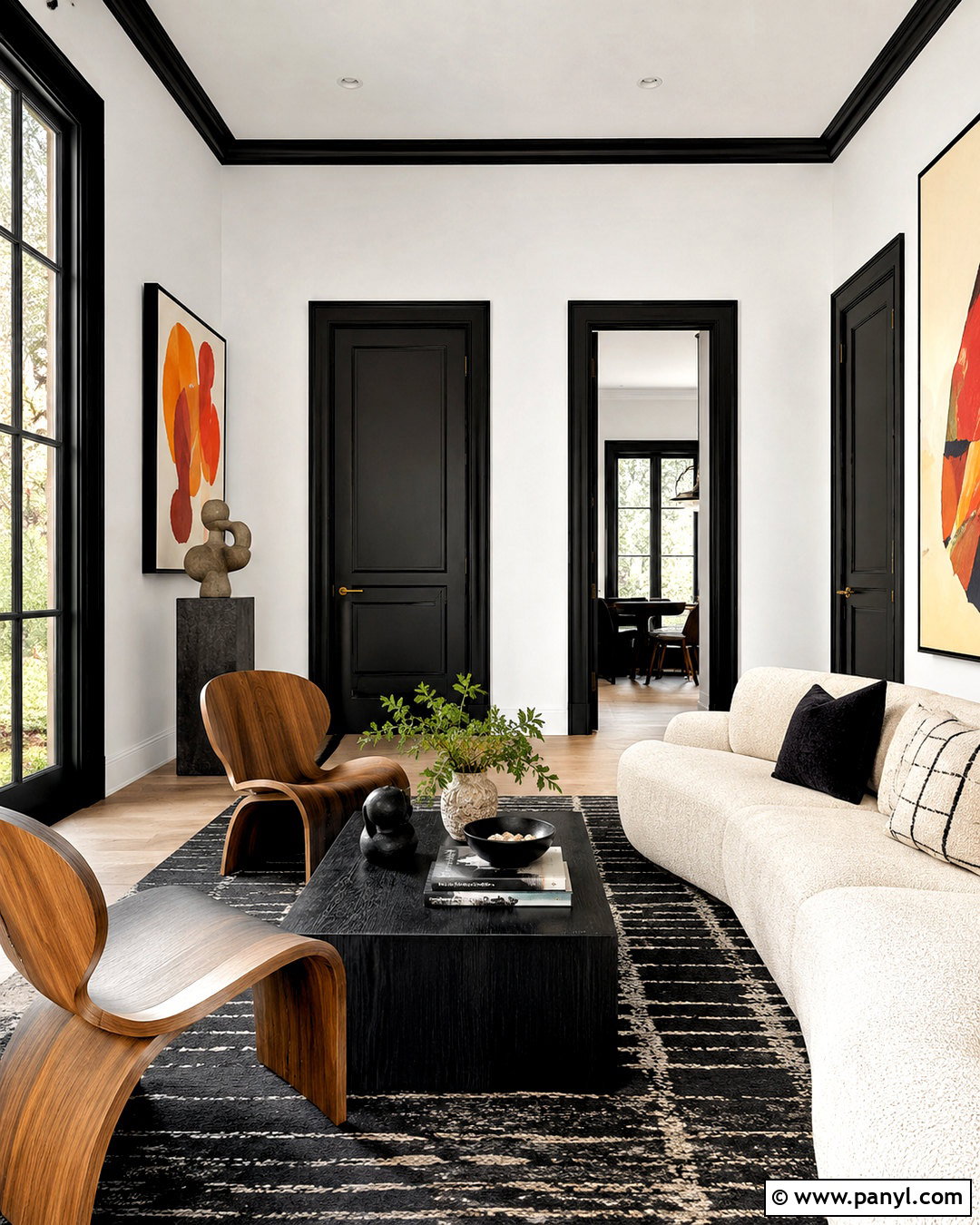
Painting doors and their casing black creates a bolder, more continuous architectural statement. Use this treatment in a room with generous light, warm white walls, and pale wood flooring. A modern sitting room could include a low cream sofa, two sculptural oak chairs, and a charcoal-and-ivory rug. Repeat the black trim around nearby windows or built-ins so the doorway does not look disconnected. Minimal black hardware keeps the surface streamlined, while warm wood tables and textured upholstery counter the strong outlines. Hang one oversized colorful artwork to break up the neutral palette. Keep baseboards white if you want the black concentrated around openings. The resulting room feels graphic and polished, with clear visual structure softened by comfortable furniture and natural materials.
22. Black Doors With Natural Wood Trim
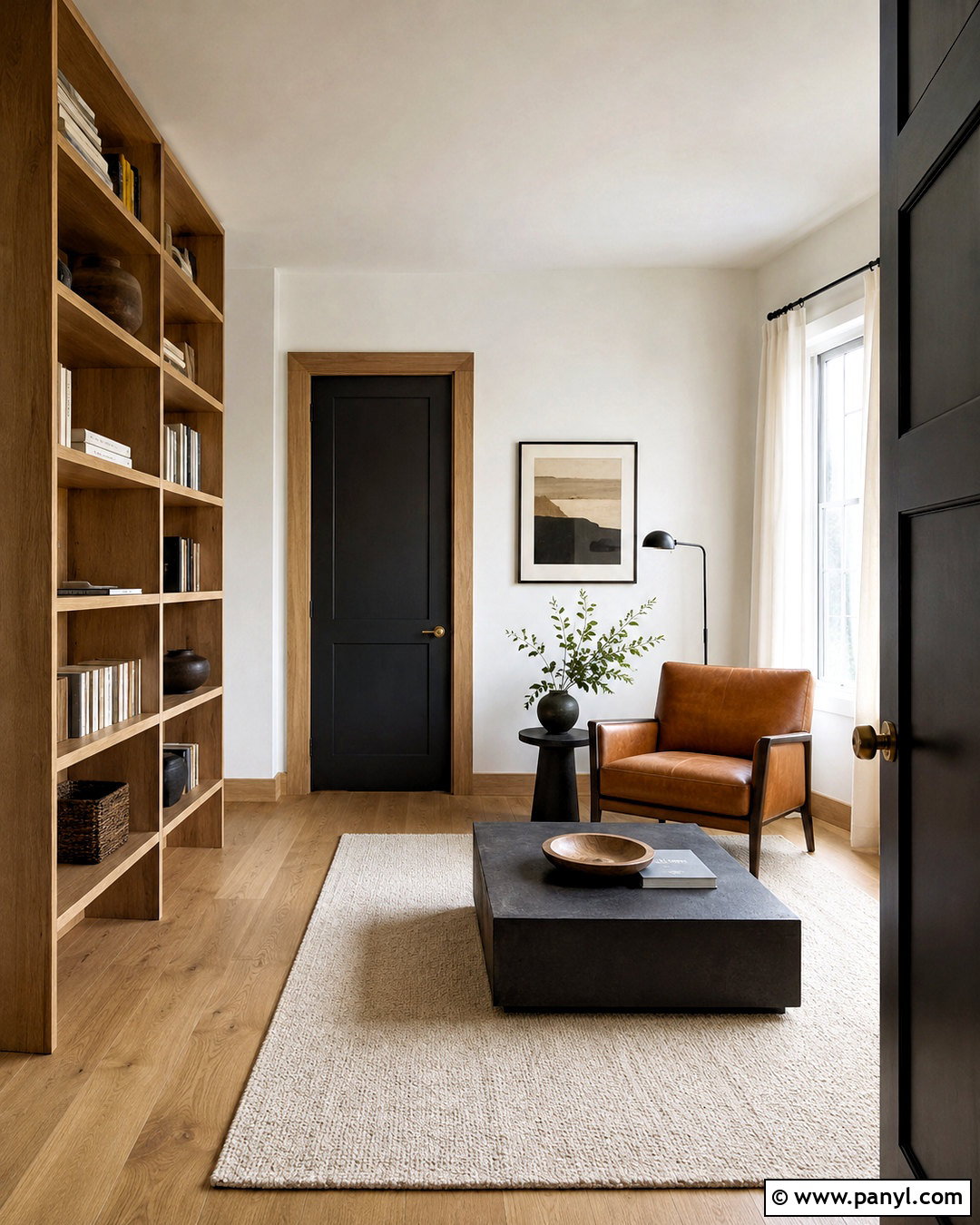
Natural wood trim creates a warm transition between black doors and white walls. Choose white oak or medium walnut casing with a simple profile, allowing the grain to function as a decorative element. Continue the same wood on baseboards, flooring, and selected furniture for a connected whole-house look. In a quiet reading room, place a camel leather chair beside a tall oak bookcase and add a cream wool rug. A black metal floor lamp and charcoal side table repeat the door color in smaller amounts. Use dark bronze hardware that relates to both black paint and warm wood. White linen curtains preserve brightness. This combination feels less graphic than black-and-white trim alone, making it especially suitable for organic modern, transitional, or nature-inspired interiors.
23. Black Doors With Light Oak Floors
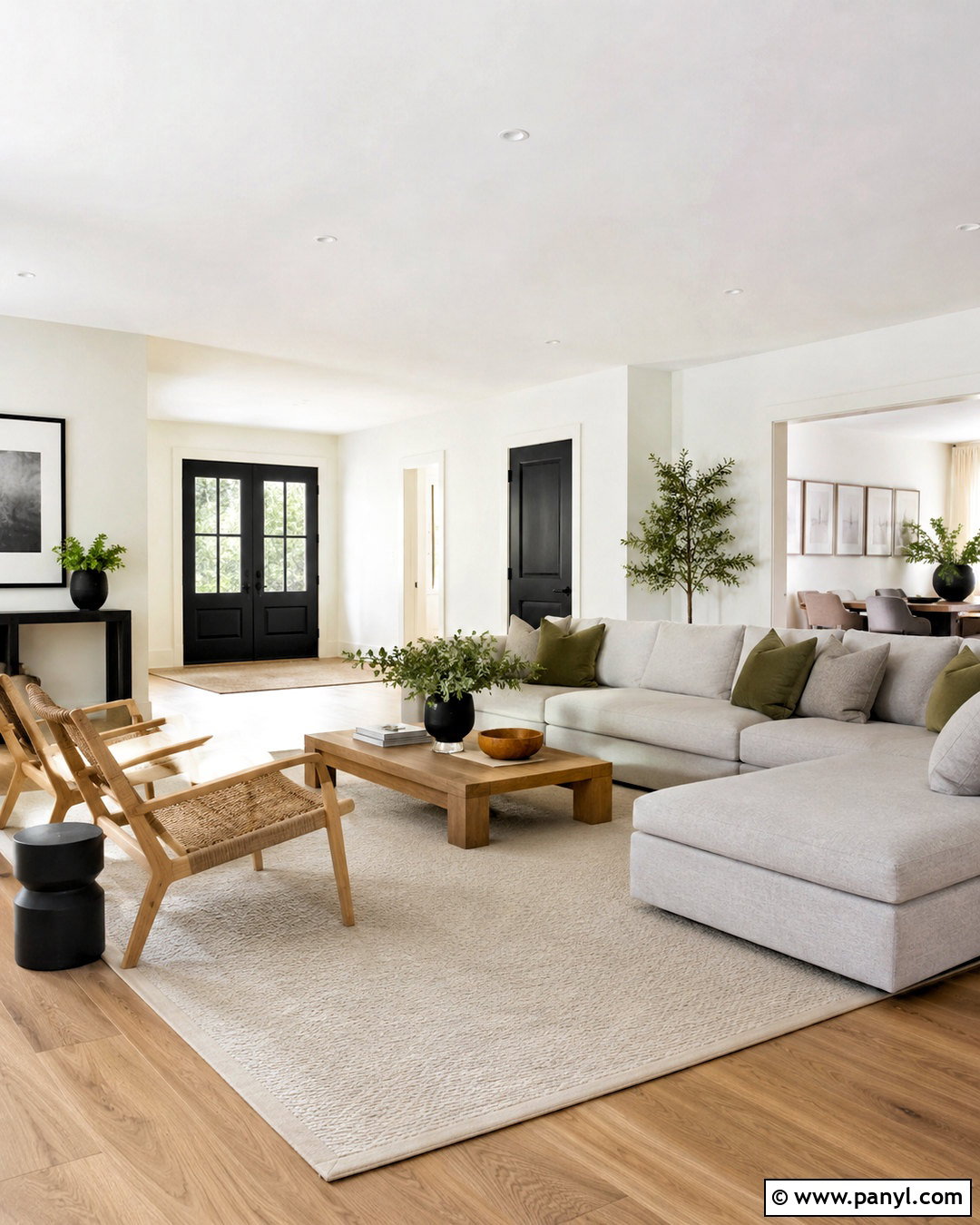
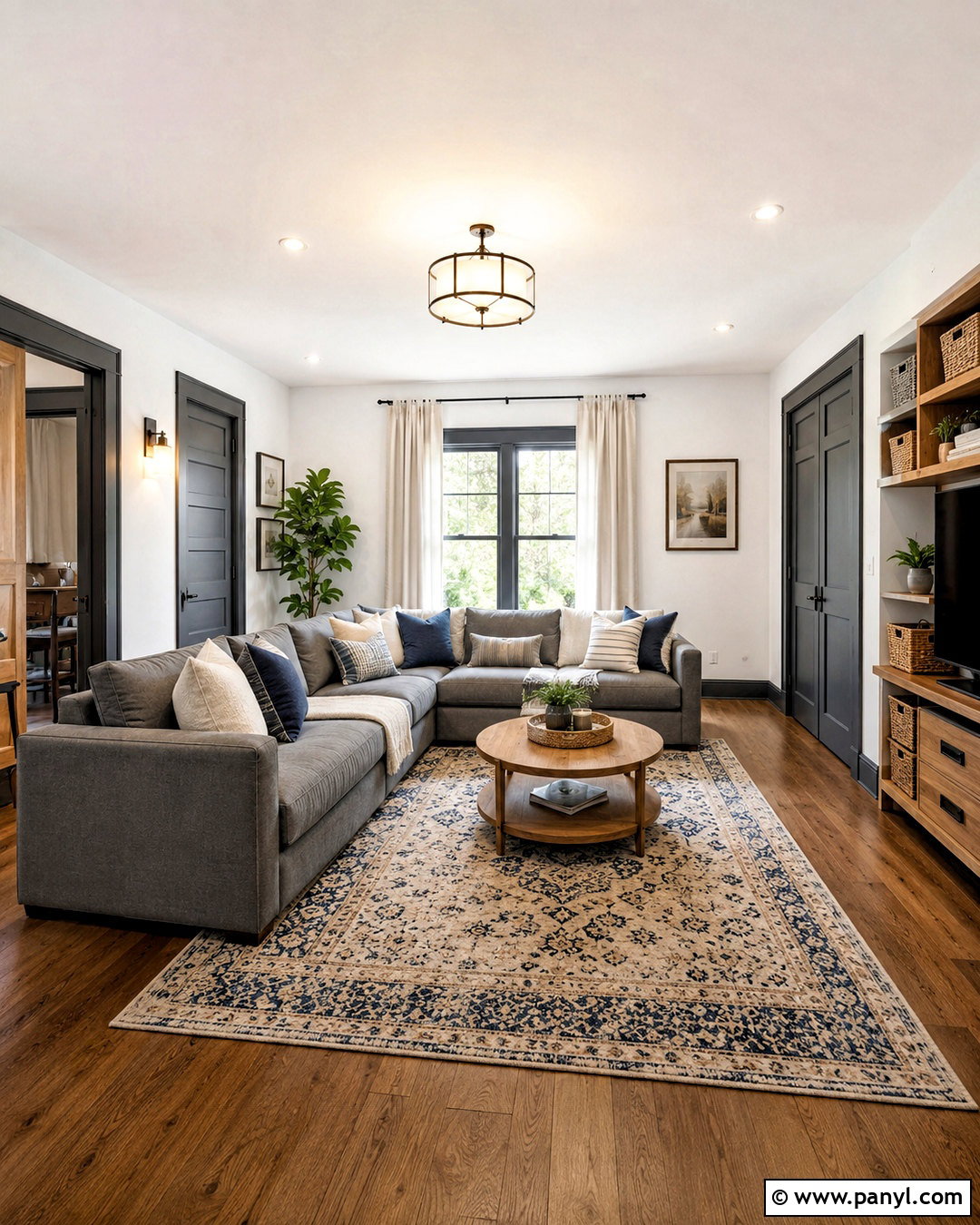
Light oak flooring keeps rooms with multiple black doors from appearing heavy. Use warm white walls and white trim to create a bright envelope, then allow the honey and beige tones in the floor to soften the contrast. In an open family room, arrange a light gray sectional, an oak coffee table, and two woven accent chairs around a large ivory rug. Black door levers, curtain rods, and slim picture frames distribute the darker color throughout the space. Add olive green pillows and leafy plants for natural color. Window treatments should remain airy, using white or oatmeal fabric. Because the floor reflects more light than dark wood, this scheme works well in hallways and modest rooms where several doorways are visible at once.
24. Black Doors With Dark Wood Floors
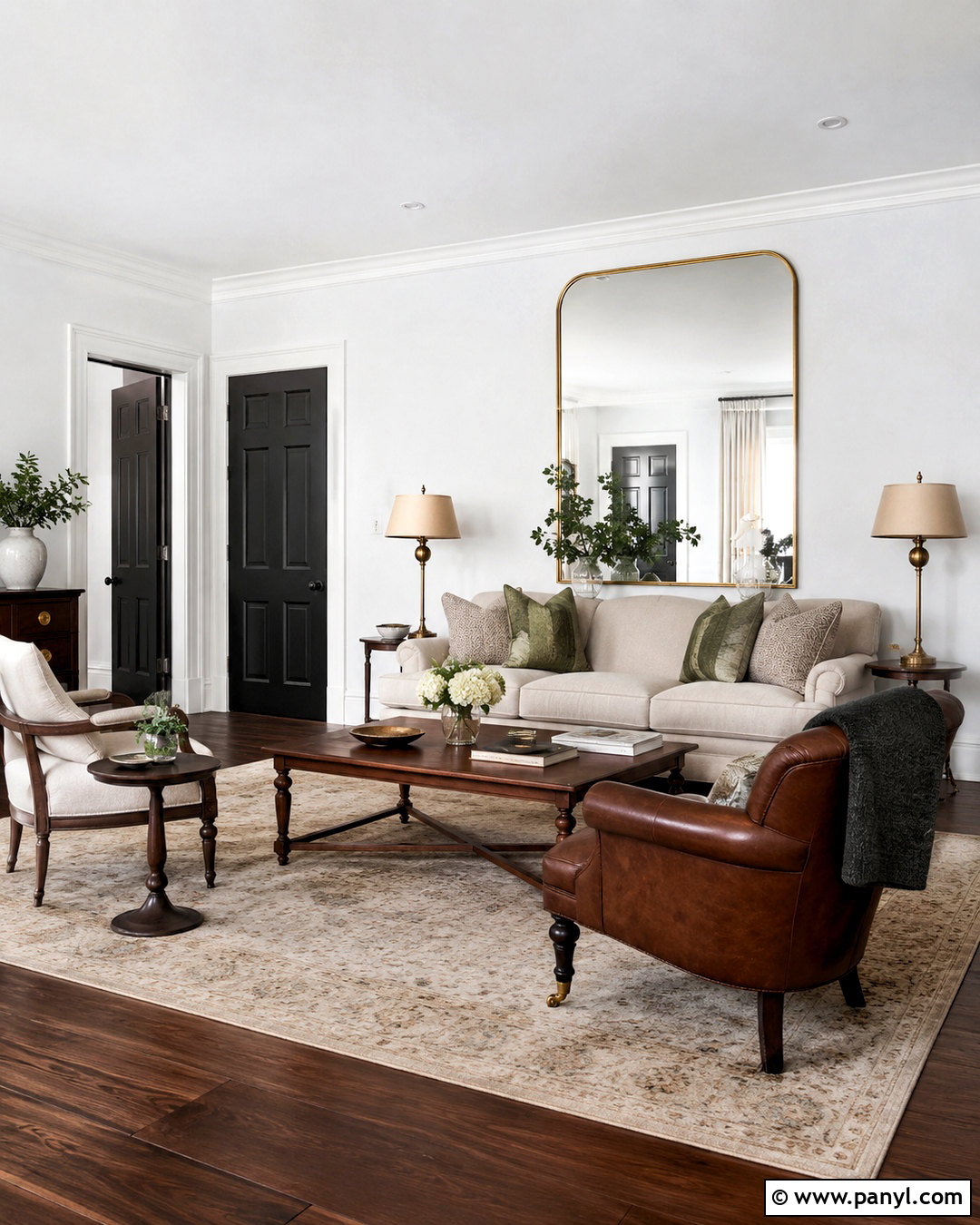
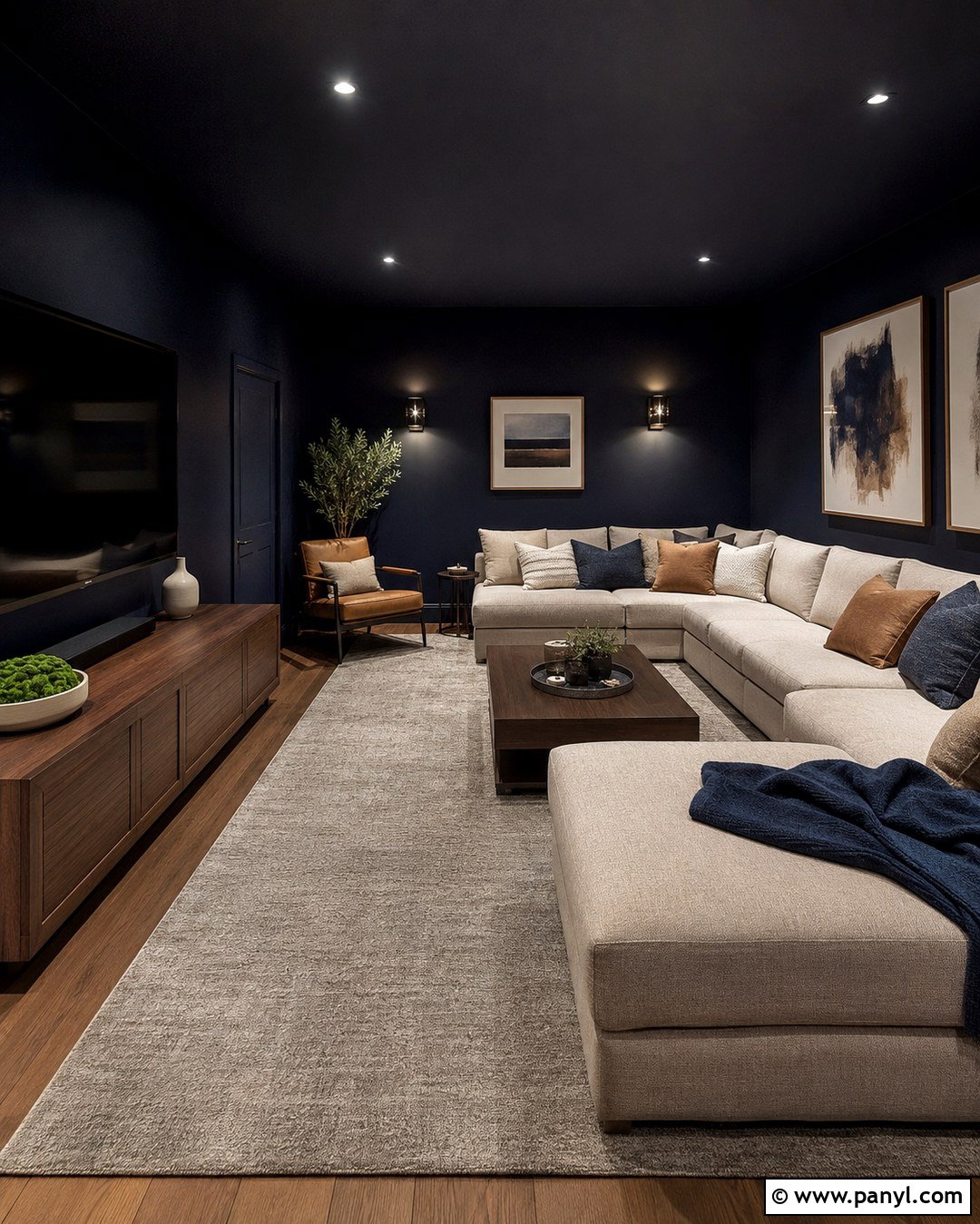
Black doors and dark wood floors can create a rich, enveloping room when white walls and light furnishings provide enough relief. Choose walnut or espresso flooring with visible natural variation rather than a flat black finish. In a formal living room, use an ivory sofa, cream drapery, and a pale patterned rug to brighten the center. Add walnut side tables, brass lamps, and a cognac leather chair for warmth. White casing around the black doors separates them from the flooring and prevents the dark surfaces from merging visually. An oversized mirror can reflect daylight across the room. Keep the ceiling white and lighting layered. This balanced approach produces depth and sophistication without sacrificing comfort or making the room feel smaller than it is.
25. Black Doors With Checkerboard Floors
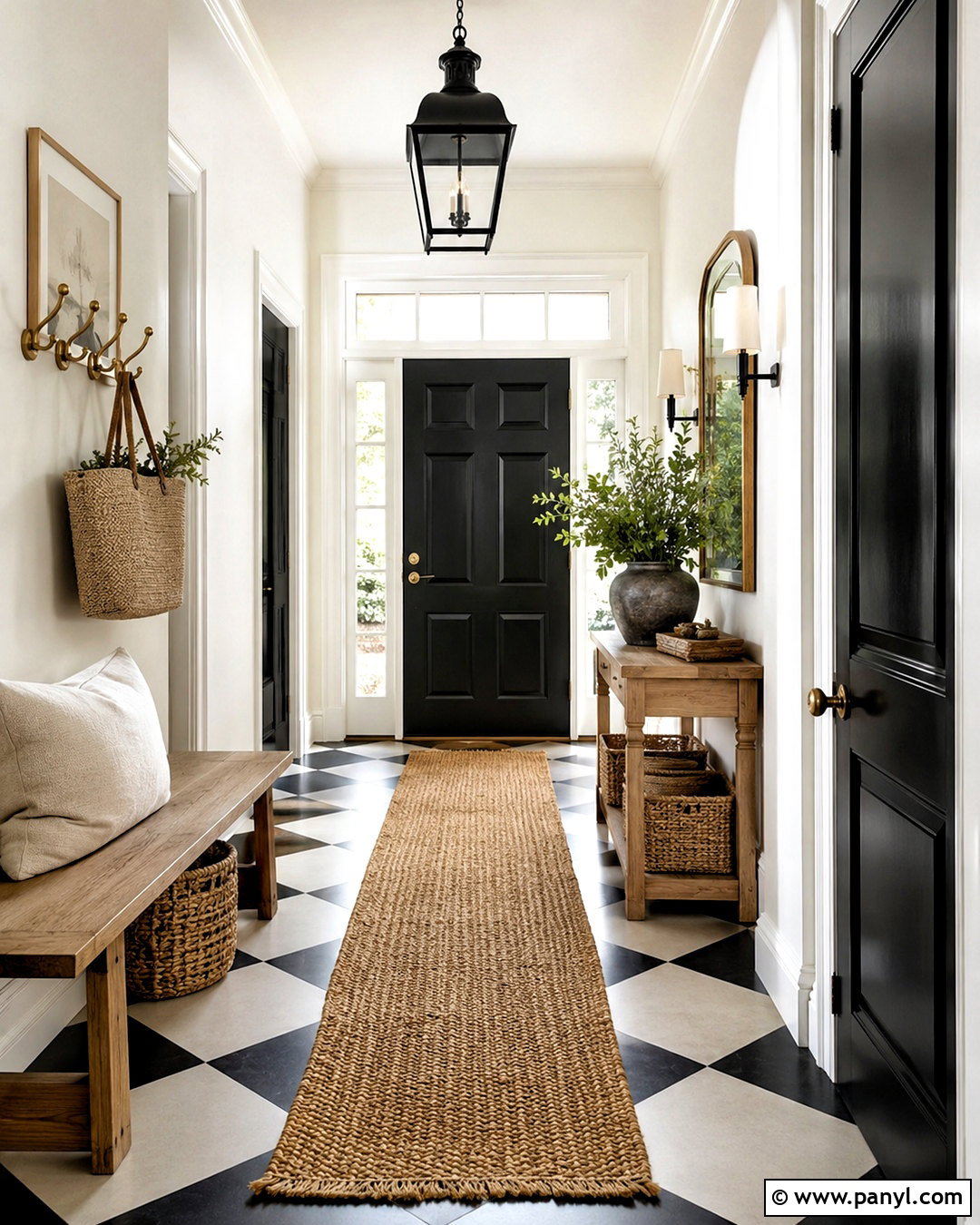
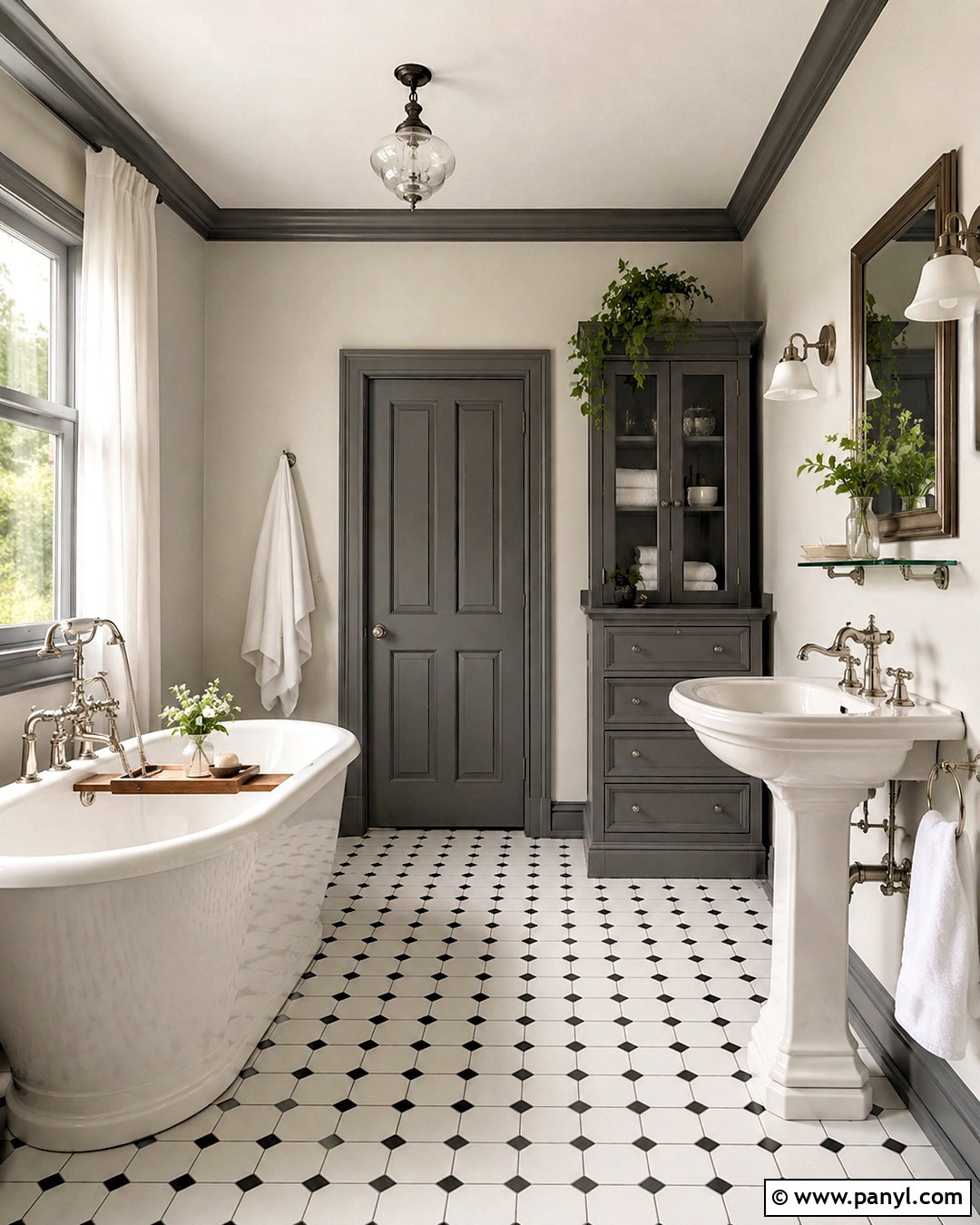
A black-and-white checkerboard floor pairs naturally with black doors, but warmer materials help prevent the room from feeling overly graphic. Use creamy white walls, black paneled doors, and large limestone-look tiles in soft black and off-white. In an entry or enclosed porch, add a light oak bench, woven baskets, and a faded terracotta runner. Brass hooks and door hardware introduce a gentle glow, while black lantern lighting repeats the strongest color overhead. Keep trim white for clear separation between the doors and walls. A simple wood console and leafy plant can complete the room without competing with the patterned floor. The final design feels classic and energetic, with enough natural texture to remain approachable for an average, everyday home.
26. Black Doors With Warm Neutral Decor
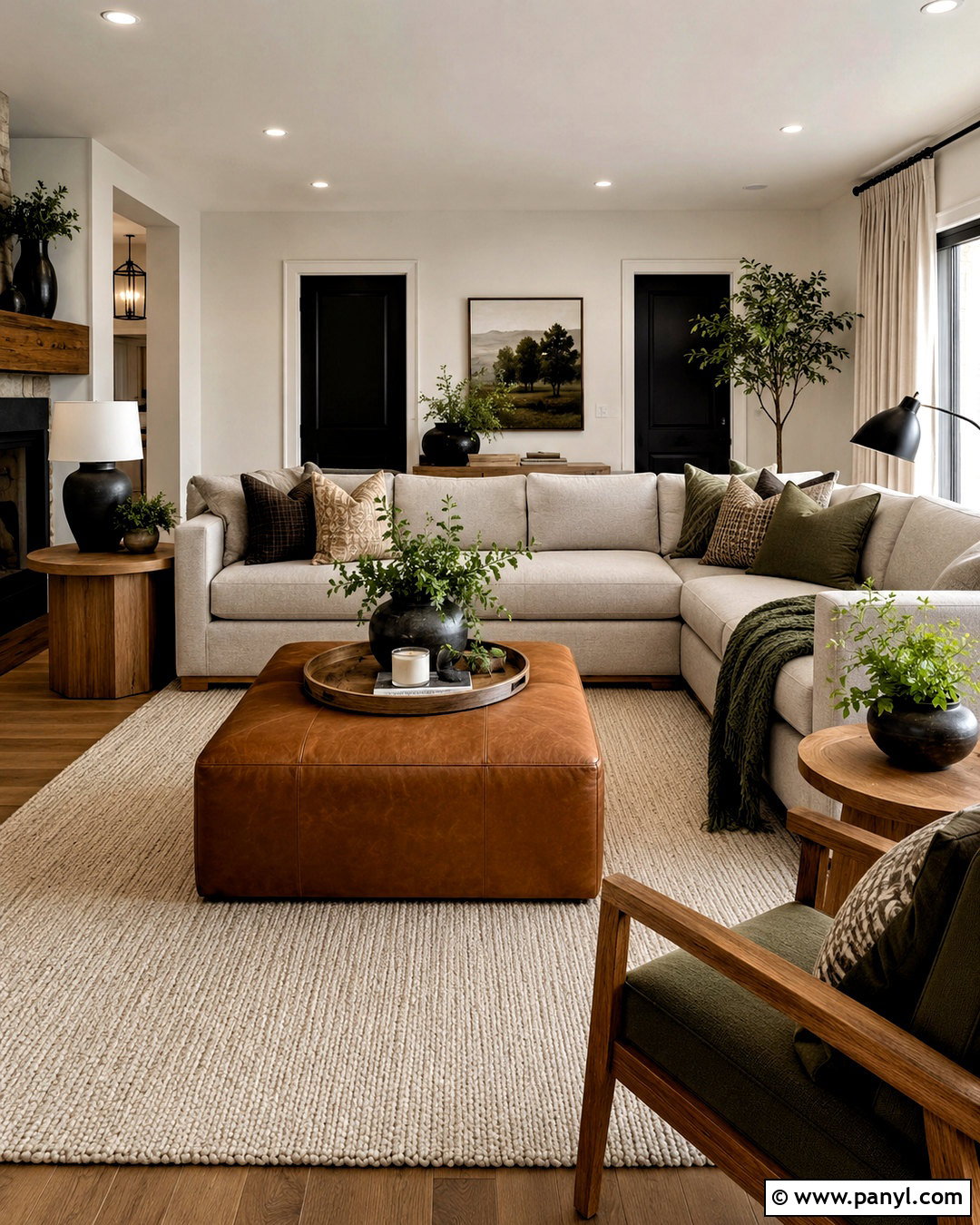
Warm neutral furnishings make white walls and black doors feel softer and more relaxed. Build the room around shades of oatmeal, camel, taupe, and natural brown rather than cool gray. A beige sectional, cognac leather ottoman, oak side tables, and a cream wool rug create a comfortable family room. Add black curtain rods, lamp bases, and picture frames to connect the furniture arrangement with the doors. Choose warm white paint with a subtle creamy undertone, plus white trim and medium oak flooring. Textured linen curtains and woven pillows prevent the neutral palette from looking flat. A few rust or olive accents can provide quiet color. This complete look preserves the dramatic contrast of black doors while creating a welcoming, layered room suited to daily life.
27. Black Doors With Colorful Decor
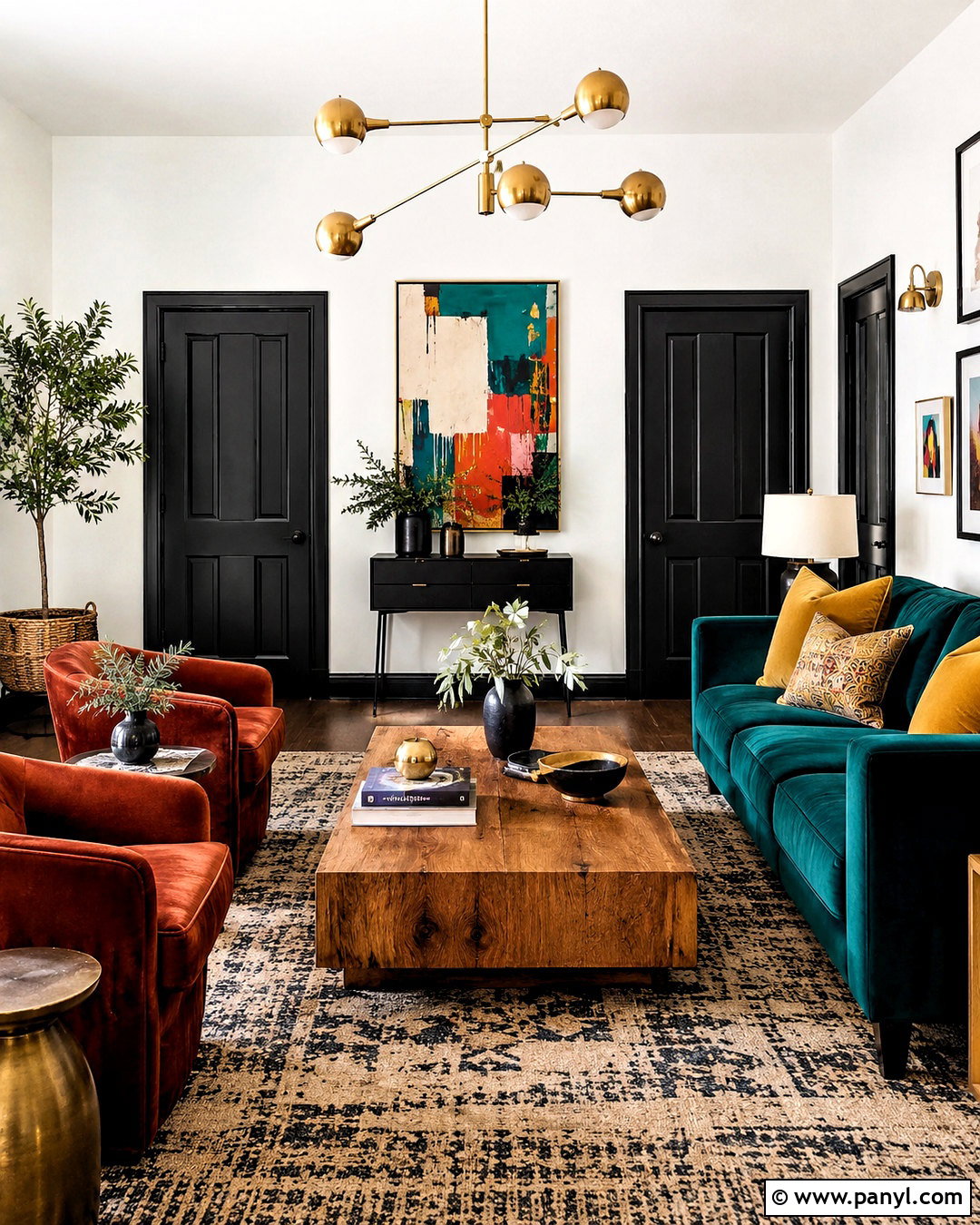
White walls and black doors form a flexible backdrop for colorful furniture and artwork. In a lively living room, use a deep teal sofa, rust-colored accent chairs, and a multicolored vintage-style rug containing cream and black. The black doors help ground these stronger hues, while white trim keeps the architecture crisp. Add a medium oak coffee table and brass lighting to introduce warmth. Display a large abstract painting that repeats teal, rust, mustard, and charcoal, but leave some wall space open so the room can breathe. Black picture frames and curtain rods provide continuity without overwhelming the colors. This approach feels cheerful and collected rather than chaotic because every accent appears more than once and the black-and-white architectural foundation remains consistent throughout the room.
28. Black Doors With Brass Hardware
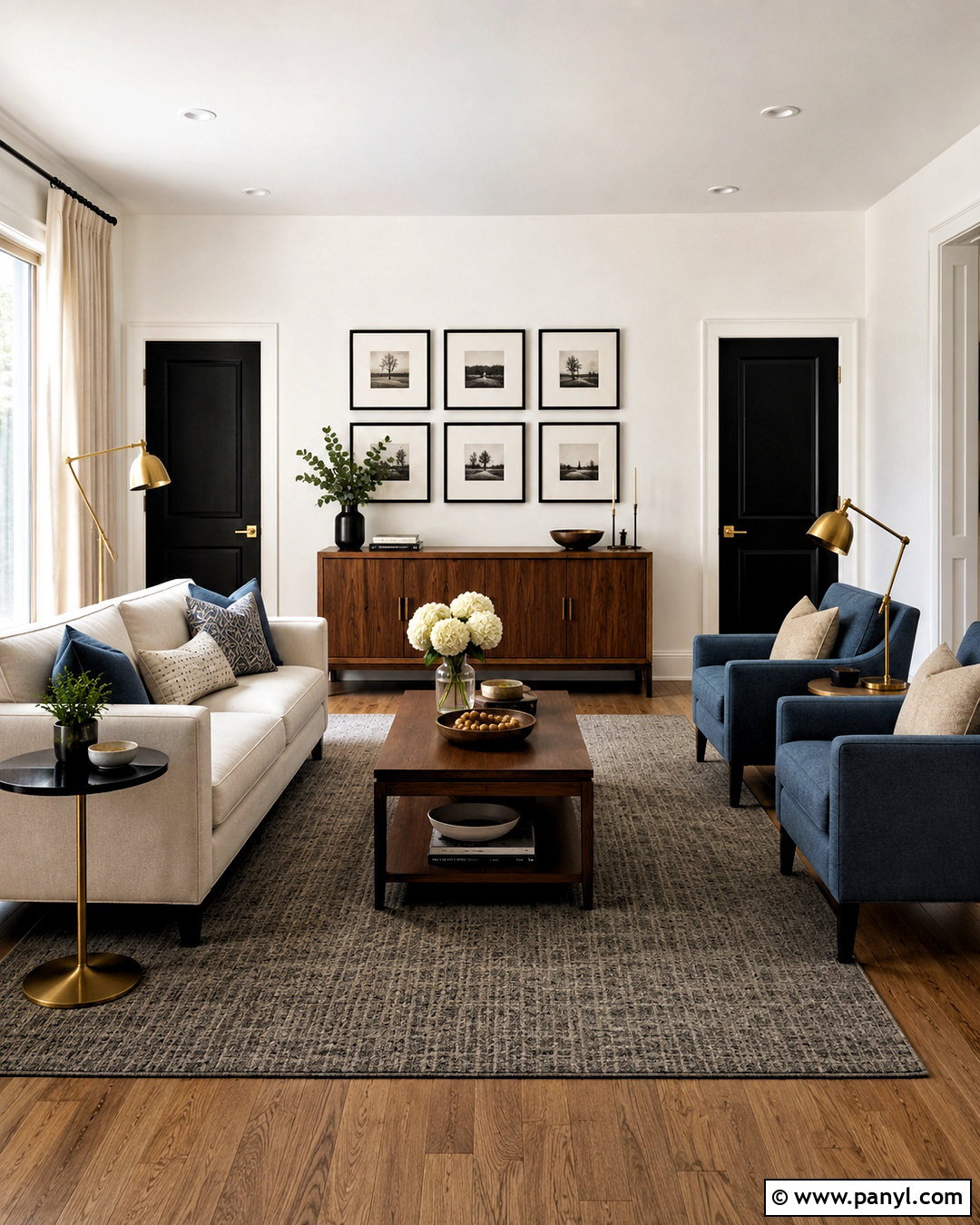
Brass hardware brings warmth and definition to black doors, especially within a transitional interior. Choose simple lever handles in an aged or brushed brass finish rather than highly ornate designs. Build the surrounding room with warm white walls, white casing, and medium-tone oak flooring. A cream sofa, walnut console, and muted blue armchairs create an inviting living space. Repeat brass on table lamps, a ceiling fixture, and small furniture details, keeping the finish consistent. Black frames and a charcoal rug pattern connect the doors to the seating area. Linen curtains and textured cushions soften the polished metal and dark paint. The completed room feels balanced because the brass is distributed thoughtfully, supporting the black doors without turning every decorative item into a matching metallic accent.
29. Black Doors With Black Hardware
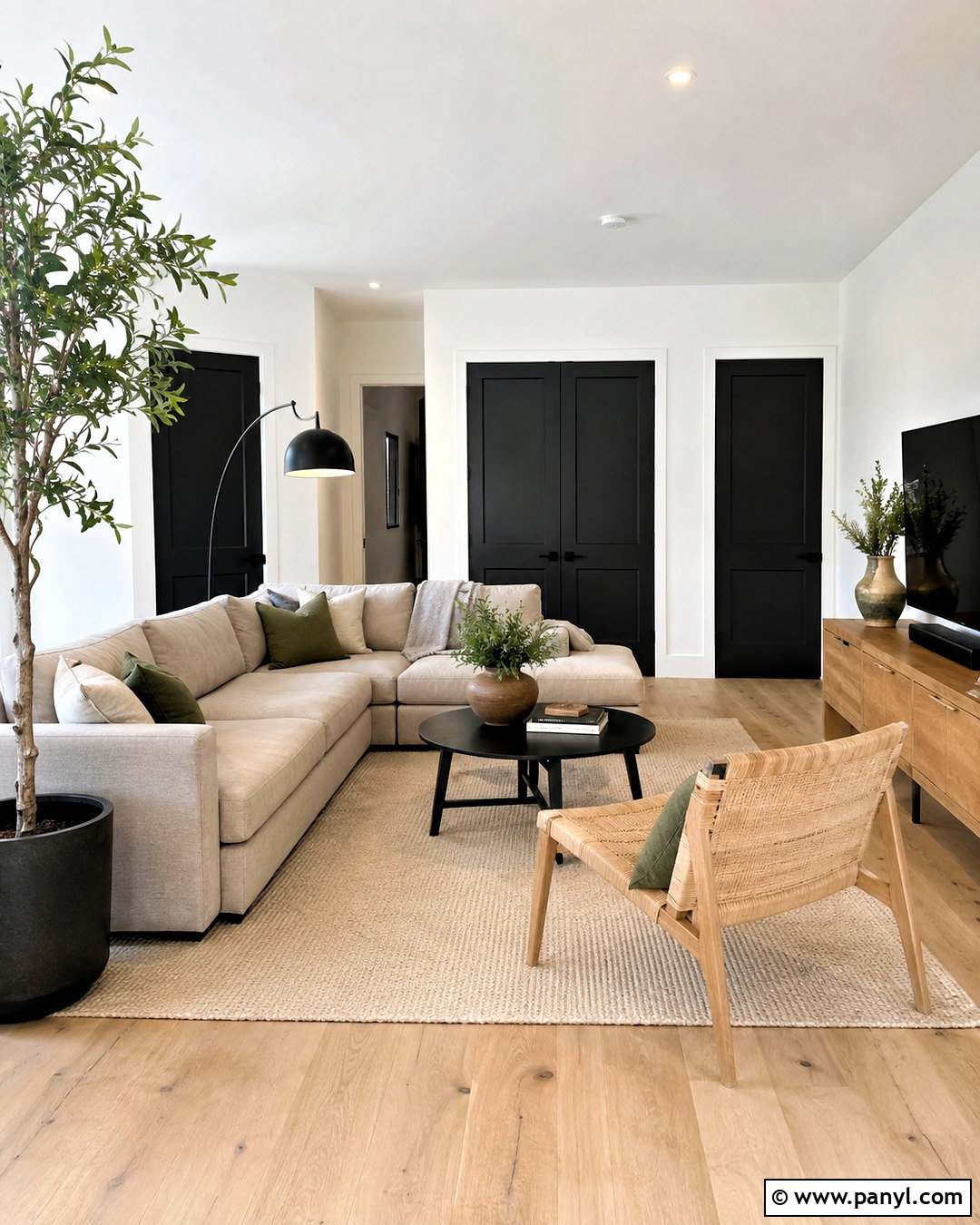
Black-on-black hardware gives painted doors a smooth, understated appearance. Use matte black levers and hinges so they visually disappear into satin black panels. To prevent the full room from feeling severe, surround the doors with warm white walls, white trim, pale oak flooring, and relaxed natural textiles. A modern family room might include a soft beige sectional, woven lounge chair, oak media console, and thick ivory rug. Repeat matte black only on a slim floor lamp, curtain rod, and a few frames. Add sage green pillows and plants to bring life to the restrained palette. This treatment works particularly well with flush or narrow shaker doors because the hardware does not interrupt their clean lines, leaving the complete space calm, practical, and visually organized.
30. Black Doors With Chrome Hardware
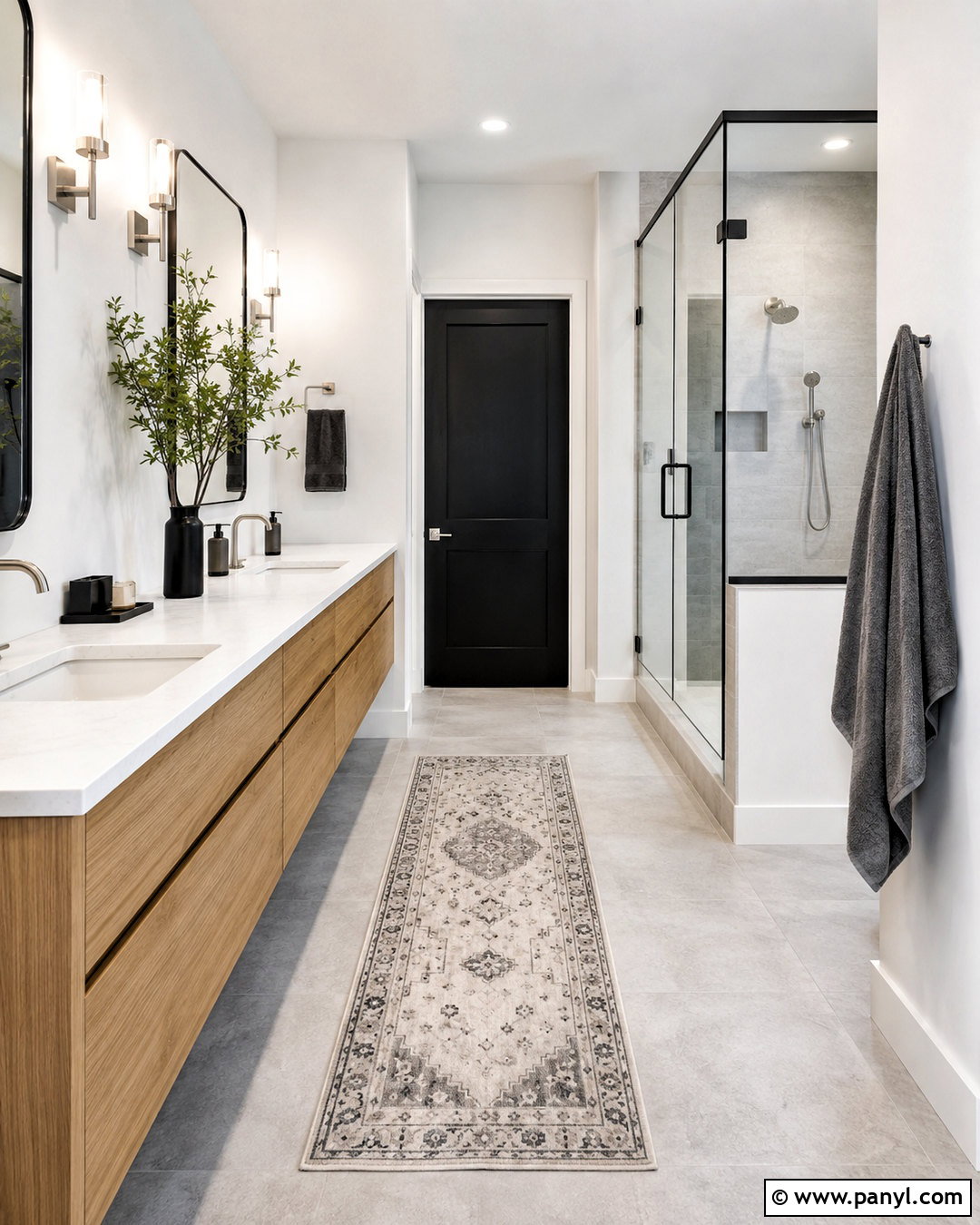
Polished chrome or brushed nickel hardware gives black doors a crisp, contemporary edge. Use the combination in a bright bathroom or modern hallway with cool white walls, white trim, and pale gray porcelain flooring. Repeat the silver finish on faucets, sconces, mirror frames, and cabinet pulls for consistency. A floating white oak vanity can add warmth, while white quartz counters and large-format shower tile keep the space clean. Include black-framed shower glass or a black towel rail to connect the door with the fixtures. Soft gray towels and a small washable runner prevent the room from appearing harsh. The mix of reflective metal, dark paint, light wood, and white surfaces produces a fresh, streamlined space that still feels comfortable and suitable for everyday use.
31. Black Doors With White Wainscoting
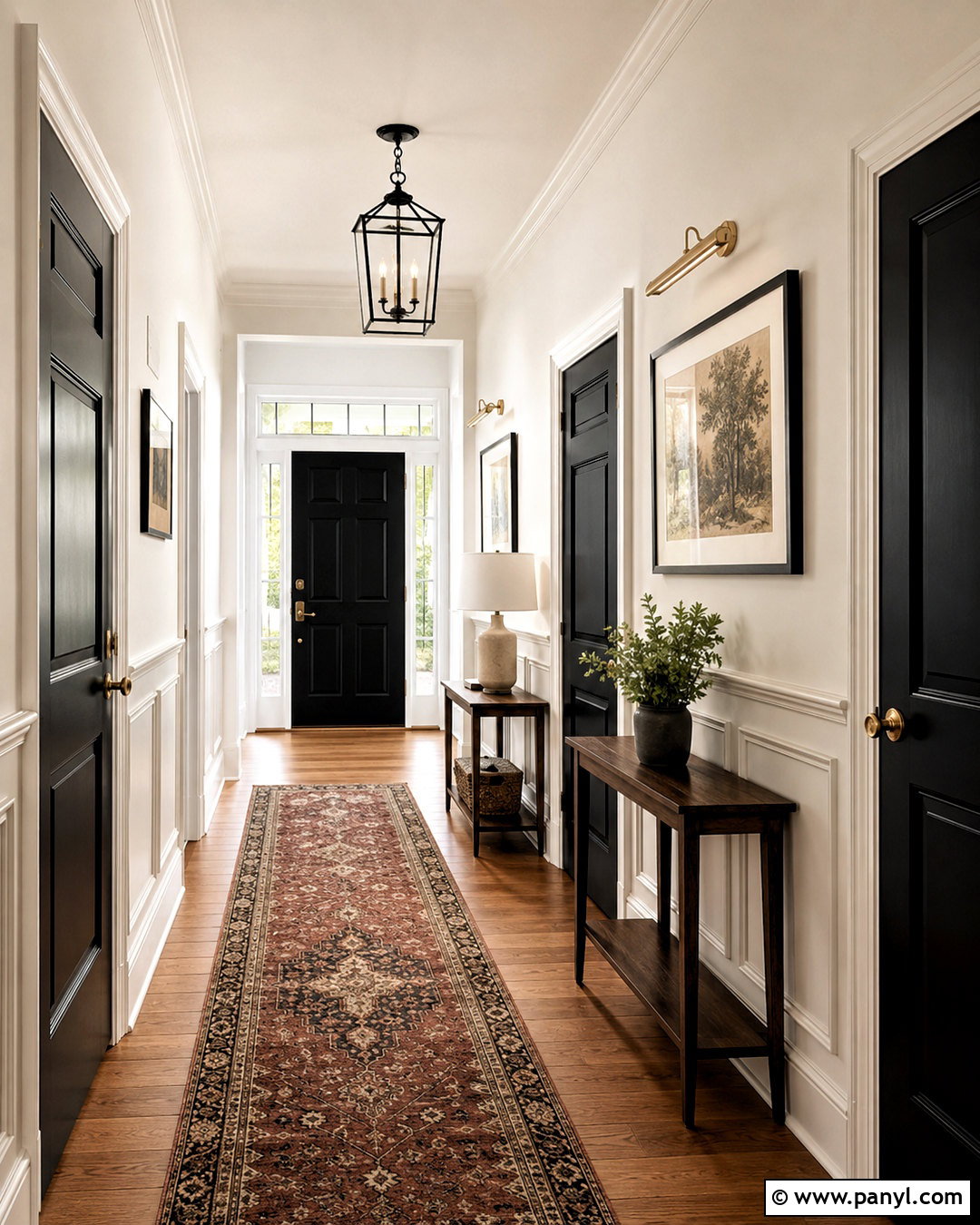
White wainscoting creates architectural texture around black doors without adding another color. Install simple picture-frame molding or board-and-batten panels on the lower portion of warm white walls, painting both sections the same white for a unified appearance. Use black paneled doors with white casing, then add medium oak flooring and a narrow vintage-style runner. In a hallway or stair landing, hang black-framed artwork above the molding and install aged brass picture lights. A slim walnut console can provide a warm resting point without blocking circulation. Repeat black in a stair railing or ceiling lantern for balance. This complete treatment feels tailored and traditional, while the limited palette keeps the detailed walls from looking busy or competing with the strong door color.
32. Black Doors With White Shiplap
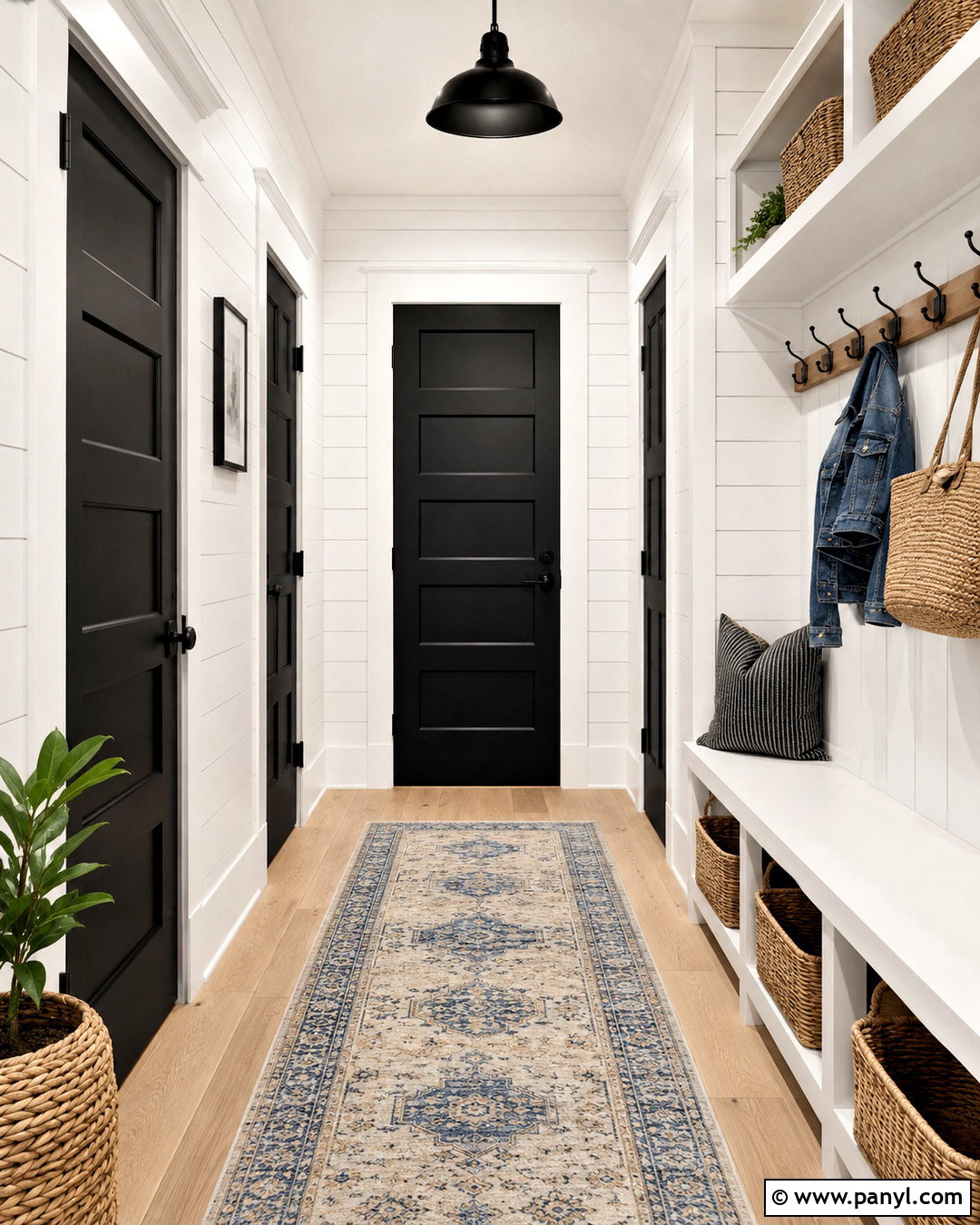
White shiplap walls and black doors can feel clean and updated when the remaining details remain simple. Use vertical shiplap to make a mudroom or casual hallway appear taller, then add black five-panel doors and white trim. Light oak or weathered wood flooring brings necessary warmth, while a built-in white bench offers practical seating. Include natural wood hooks, woven storage baskets, and a black metal ceiling light. A muted blue-and-cream runner introduces gentle color without pushing the space toward a themed farmhouse look. Keep the shiplap spacing narrow and the finish smooth for a refined appearance. The completed room combines texture, contrast, and useful storage, allowing the black doors to stand out while every element continues to serve an everyday purpose.
33. Black Doors With White Brick Walls
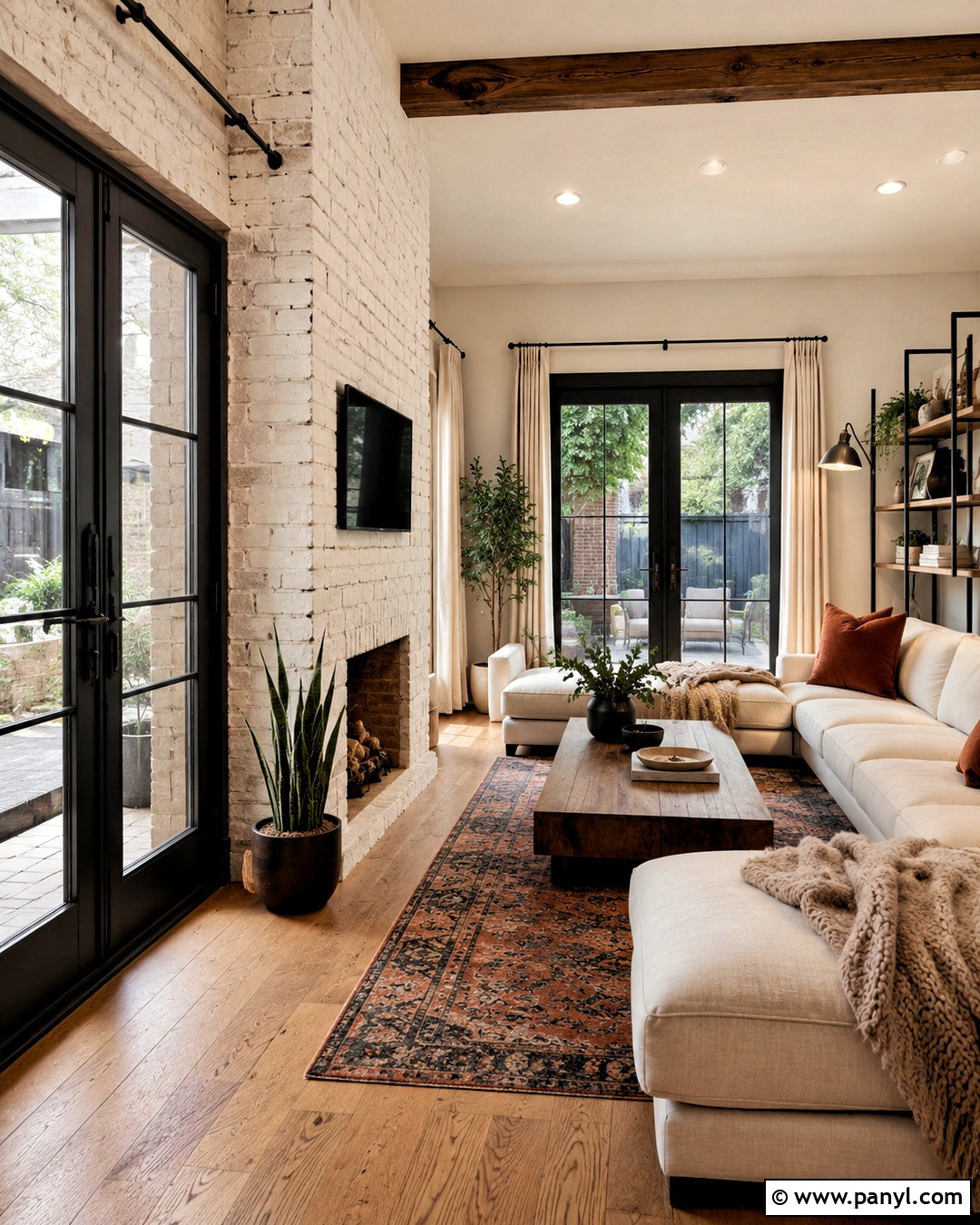
Painted white brick gives black doors a textured architectural background that works well in converted spaces, sunrooms, or casual family rooms. Preserve the brick’s uneven surface rather than covering it with a perfectly smooth finish. Add a black steel-framed door with divided glass, medium oak flooring, and a soft ivory sectional. A faded rug in rust, cream, and charcoal can warm the room, while a walnut coffee table introduces depth. Repeat black through a linear ceiling fixture, window frames, and minimal shelving. Use linen curtains and several plants to soften the harder brick and metal surfaces. This full scheme combines industrial structure with comfortable furnishings, producing a room that feels characterful and inviting rather than cold, unfinished, or excessively monochrome.
34. Small Room With Black Door
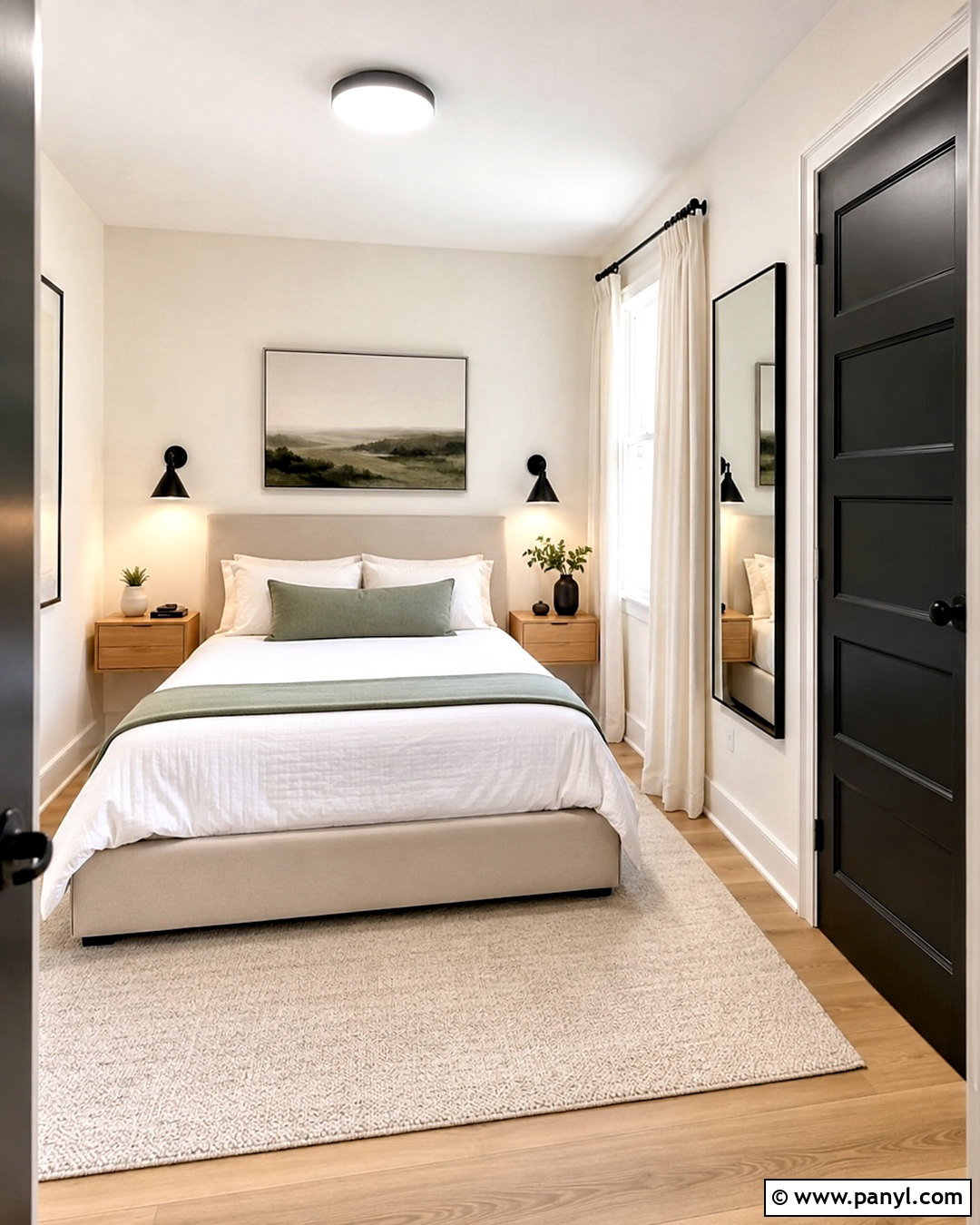
A black door can work in a small room when the surrounding design remains light and carefully scaled. Use warm white walls, white trim, pale oak flooring, and a single black door rather than several competing dark surfaces. In a compact guest bedroom, place a slim upholstered bed against the longest wall and choose floating oak nightstands to preserve floor space. Add white bedding, a soft sage throw, and a cream rug. One black wall sconce on each side of the bed repeats the door color without adding bulky furniture. Hang a large mirror opposite the window to distribute natural light. Light curtains and minimal artwork prevent visual crowding. The finished space feels intentional, comfortable, and larger because every furnishing supports an open layout.
35. Whole House Black Door Scheme
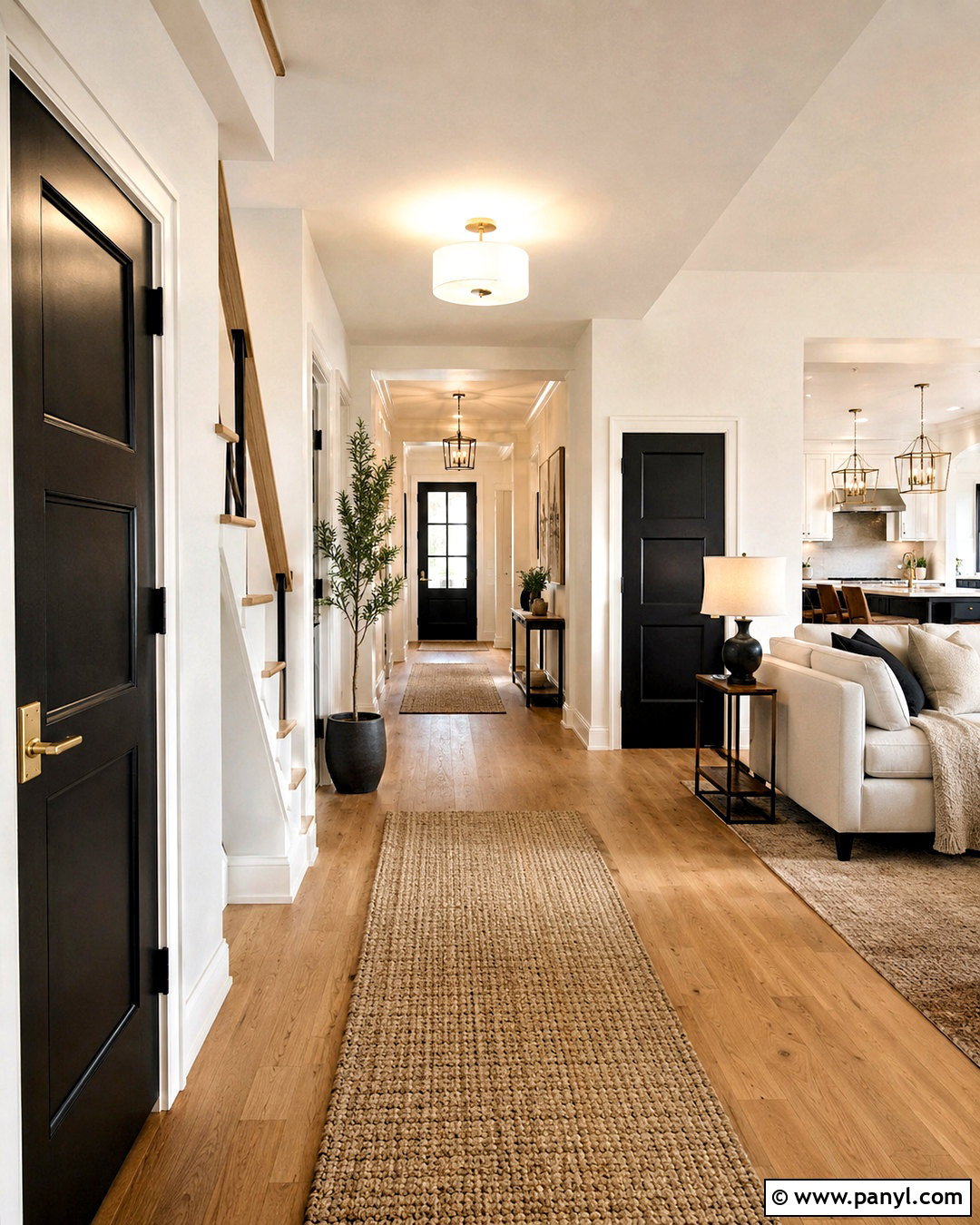
For a connected whole-house scheme, use the same black door color, sheen, and hardware across the main visible areas. Pair the doors with one consistent warm white wall color and matching white casing, then repeat a limited range of materials such as light oak, brushed brass, linen, and black metal. Hallways can feature runners and framed art, while living spaces add warmer upholstery and bedrooms introduce softer textiles. Utility areas may use darker flooring for practicality, but the door treatment should remain recognizable. Avoid matching every piece of furniture to the doors. Instead, repeat black in small, evenly distributed details such as lighting, frames, and curtain rods. This creates continuity while still allowing each room to have its own function, mood, and accent colors.
Conclusion:
White Walls Black Doors can create a striking home without limiting your decorating choices. The strongest results come from treating every room as a complete composition. Consider the door profile, trim color, hardware finish, flooring, lighting, furniture, and textiles together before painting. Warm wood and natural fibers can soften the contrast, while repeated black accents help each door feel connected to its surroundings. White trim creates a crisp outline, black trim makes openings bolder, and wood trim adds organic warmth. Whether your home is traditional, minimalist, farmhouse, or transitional, consistent materials will keep the palette cohesive. Use these complete looks as flexible starting points, then adjust the colors, scale, and details to match your architecture and daily routines.

Related Ideas and Inspiration:
Leave a Reply