
Black walls can feel dramatic, cozy, modern, or classic depending on the undertone and surrounding finishes. These 20 Black Wall Paint Color Ideas explore complete room looks rather than isolated swatches, making it easier to picture each shade in a real home. True black creates crisp contrast, while charcoal, brown-black, blue-black, and green-black bring softer dimension. Natural wood, creamy textiles, warm metals, layered lighting, and thoughtful artwork prevent dark walls from feeling flat or uninviting. Black can also highlight fireplaces, built-ins, architectural trim, and furniture silhouettes while giving smaller spaces surprising depth. Testing samples in changing daylight remains essential because every black responds differently to its surroundings. () Here are 20 Black Wall Paint Color Ideas for creating a balanced, finished space.

1. True Black Living Room
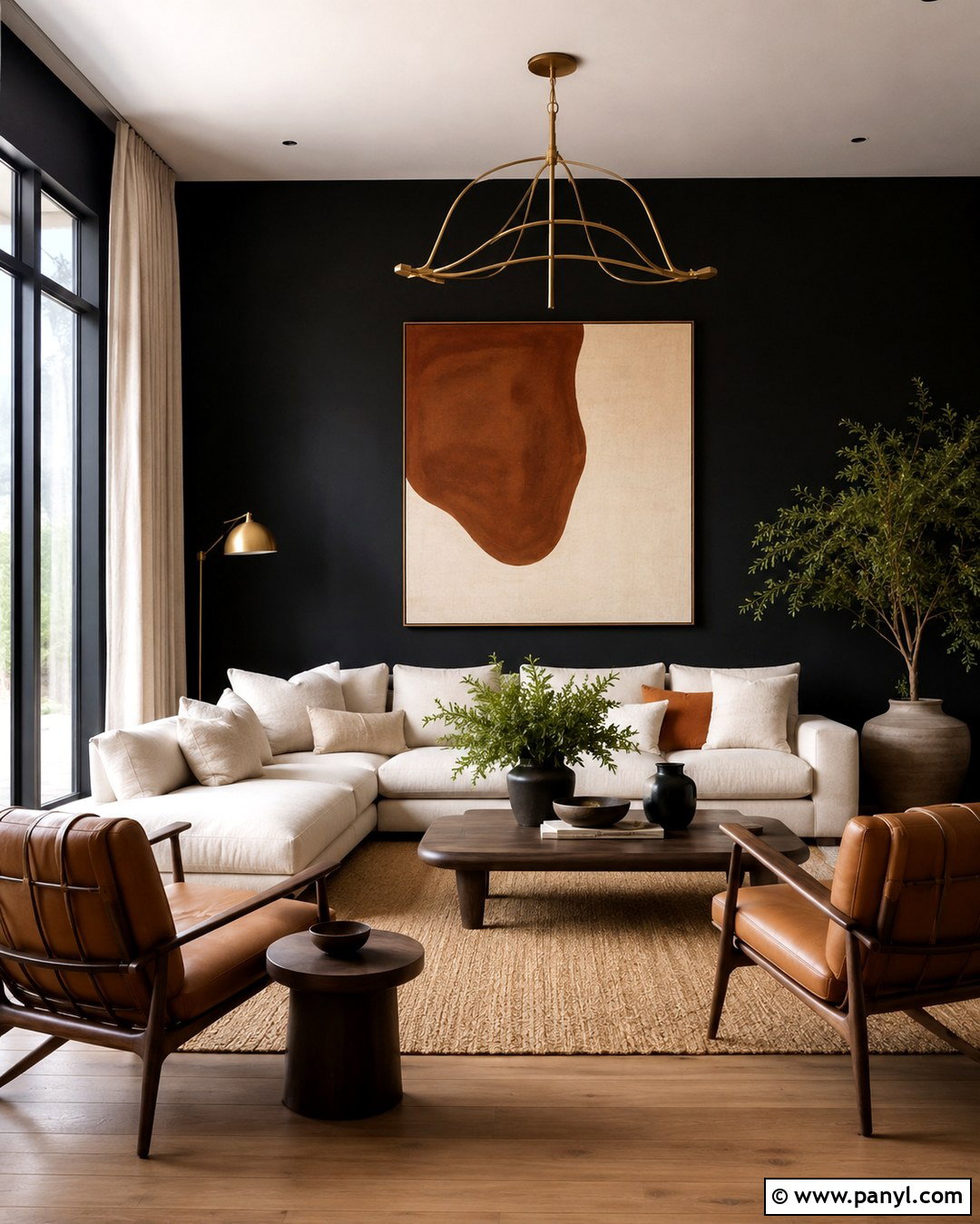
A true black wall gives a living room a clean focal point without introducing noticeable blue, brown, or green undertones. Use it behind a low-profile cream sofa, then balance the depth with warm white walls elsewhere. Medium oak flooring, a natural jute rug, and walnut side tables keep the palette comfortable rather than severe. Hang one oversized abstract print with ivory, rust, and muted olive details instead of filling the wall with many small pieces. A brushed brass floor lamp brings a gentle reflective finish to the dark background. Finish the room with oatmeal curtains, camel leather chairs, and several leafy plants. This combination makes pure black look intentional, polished, and easy to live with.
2. Soft Black Bedroom
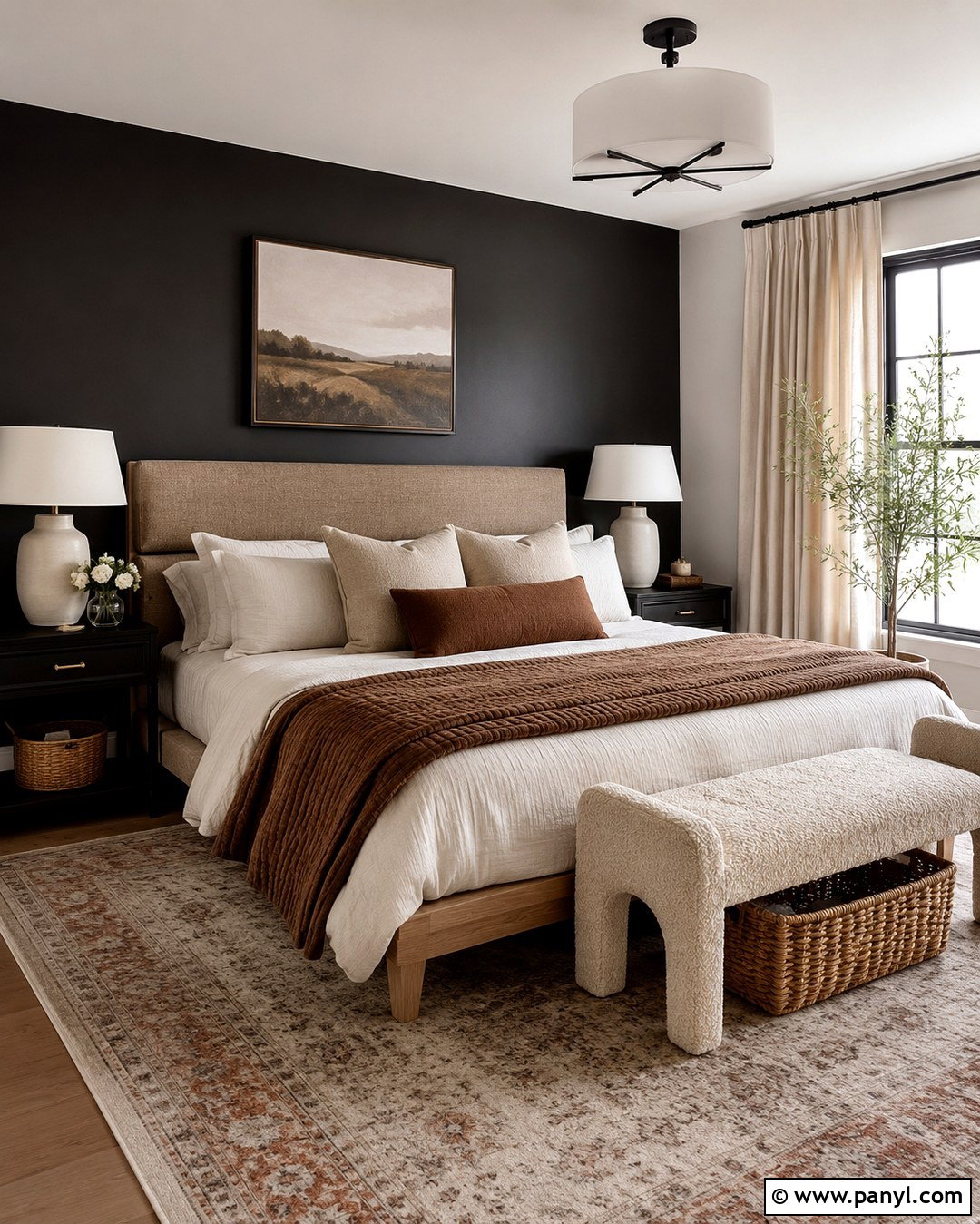
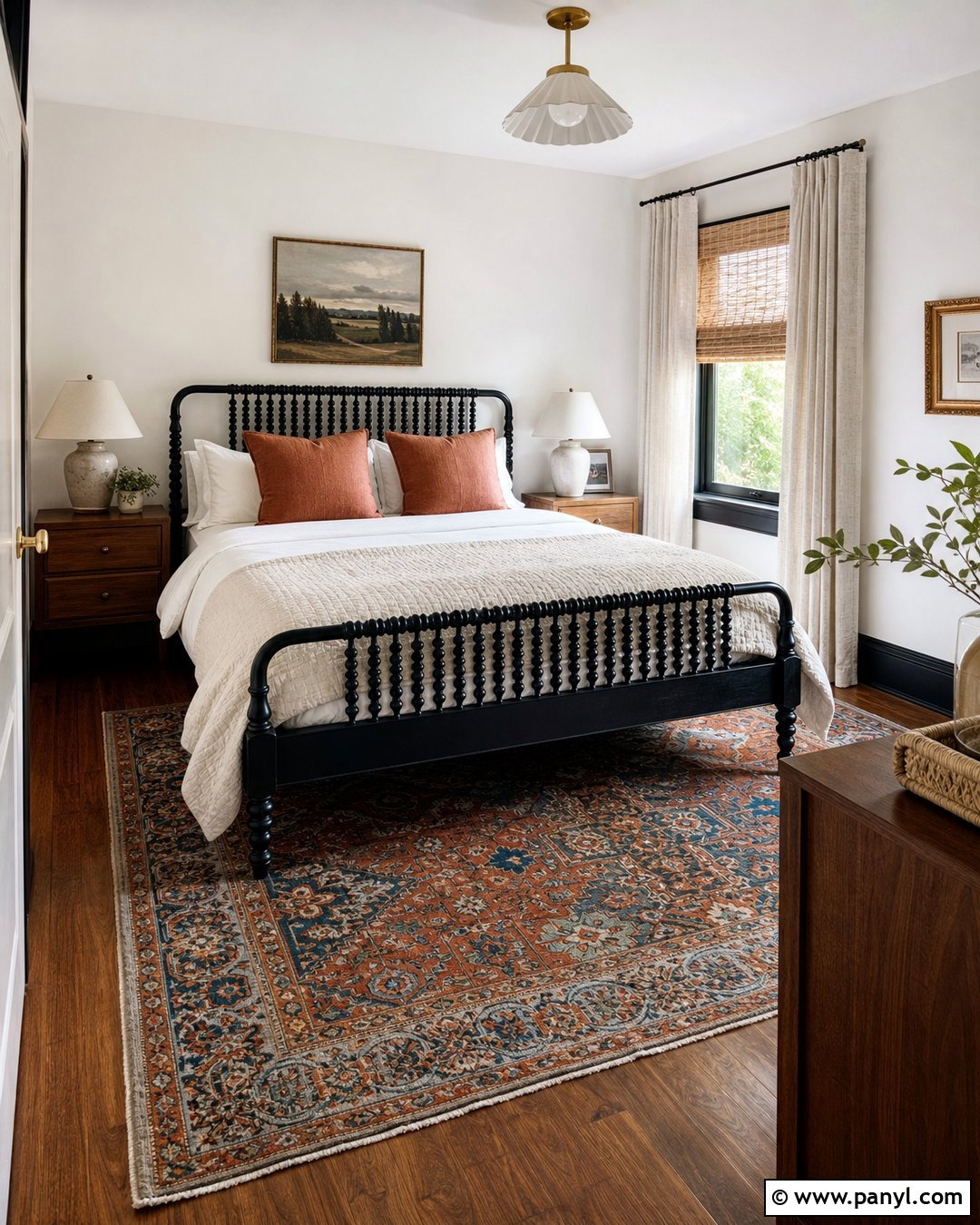
Imagine waking up beside a black wall that feels velvety instead of harsh. A soft black with subtle gray undertones works especially well behind an upholstered bed because it creates contrast without overpowering the room. Pair it with warm white bedding, a light oak bed frame, and mushroom-colored curtains that reach from ceiling to floor. Two compact black nightstands can blend into the wall, allowing ceramic lamps and pale linen shades to stand out. Add a vintage-inspired rug containing faded beige, rust, and slate blue. Keep the remaining walls creamy white and introduce texture through boucle, woven baskets, and a quilted coverlet. The completed bedroom feels restful, layered, and quietly dramatic.
3. Warm Black Dining Room
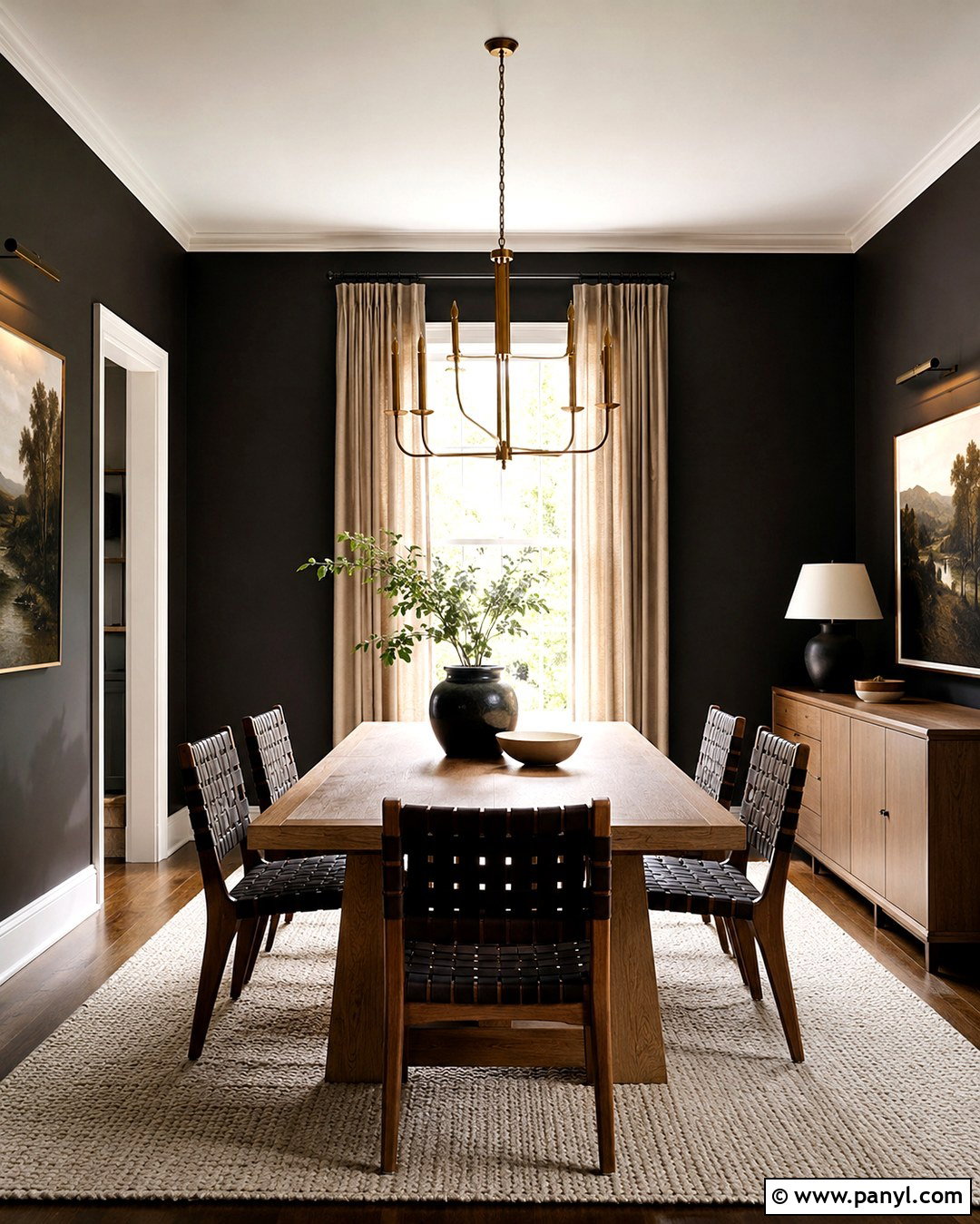
Warm black paint carries a faint brown undertone that becomes especially welcoming under soft interior lighting. Use it across all four dining room walls for an intimate, enveloping effect. A rectangular oak table, woven leather chairs, and a large cream wool rug bring natural warmth into the darker setting. Choose a linear chandelier in aged brass and add matching picture lights over traditional landscape artwork. Warm white trim creates definition without producing an overly sharp contrast. Linen curtains in sand or flax soften the windows and reflect daylight around the room. A simple wood sideboard can hold stoneware, stacked books, and a tall ceramic vase. The finished scheme feels sophisticated enough for gatherings but relaxed enough for everyday meals.
4. Charcoal Black Kitchen
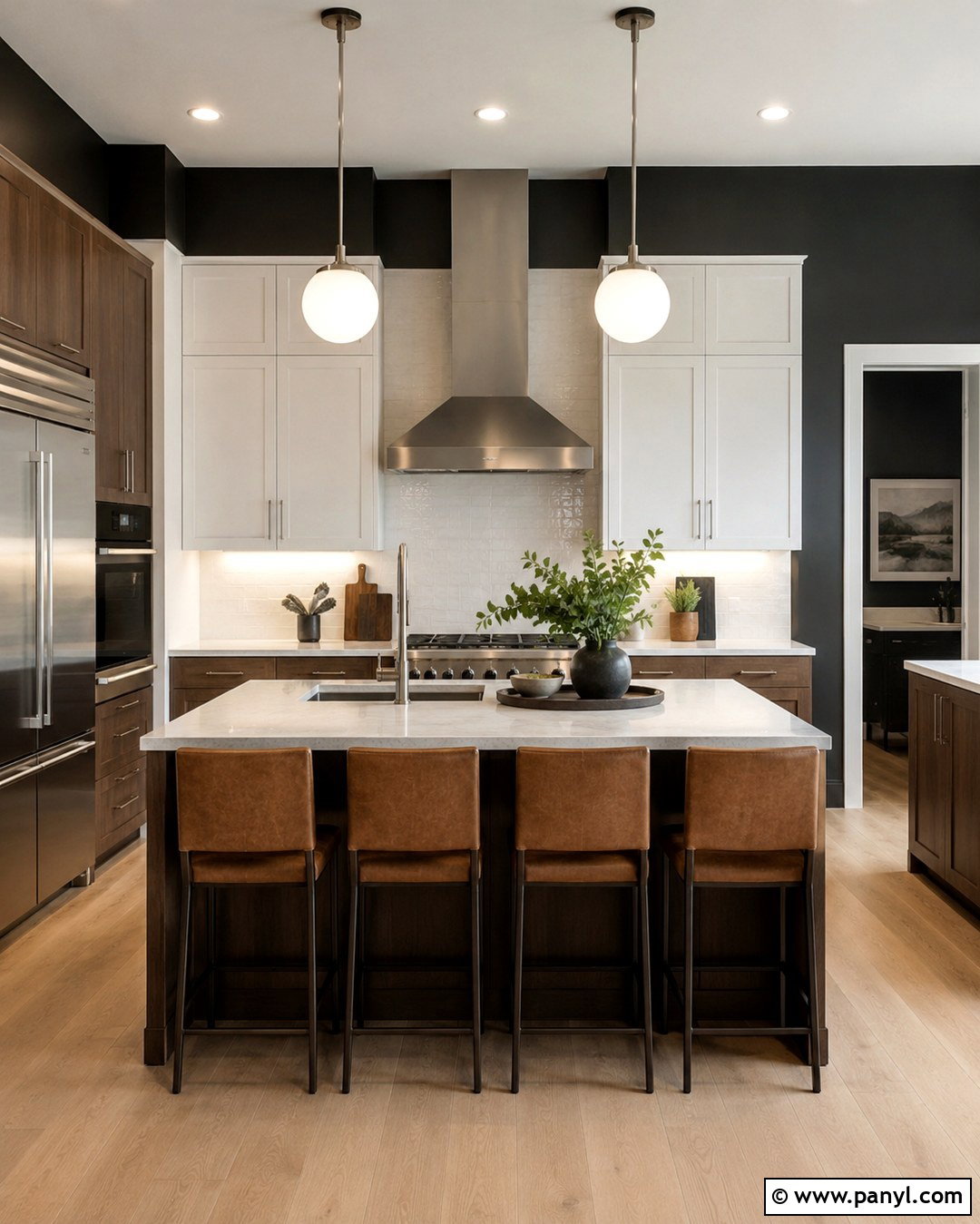
Charcoal black provides the impact of black while showing more detail in changing light. Paint the walls above lower cabinets in this smoky shade, then combine them with warm white upper cabinets to keep the kitchen open. Flat-panel walnut base cabinets add richness, while pale quartz countertops and a handmade ivory tile backsplash brighten the working surfaces. Continue the charcoal color onto a pantry door for a seamless effect. Brushed nickel hardware offers understated contrast and works well with stainless steel appliances. Complete the design with light oak flooring, globe pendants, and simple counter stools upholstered in tan fabric. The entire kitchen feels contemporary and grounded, with enough tonal variation to prevent the black surfaces from looking heavy.
5. Blue Black Home Office
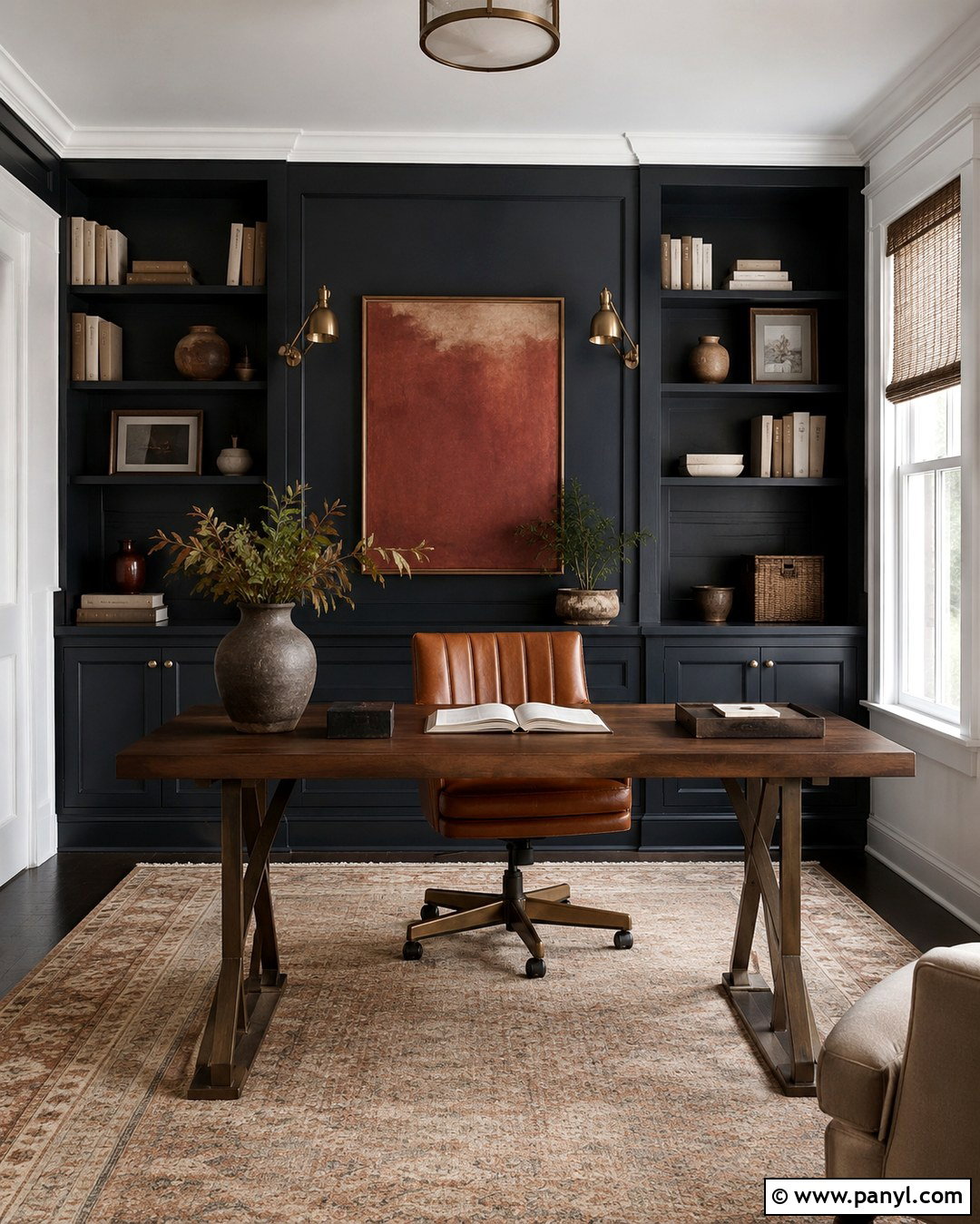
When ordinary black feels too severe, a blue-black wall can create a focused yet colorful home office. Paint the wall behind the desk and continue the color onto nearby shelving for a built-in appearance. Choose a mid-tone walnut desk with slim drawers, a cognac leather chair, and a cream patterned rug. Bright white trim emphasizes the paint’s cooler undertone, while antique brass sconces add necessary warmth. Style the shelves with neutral books, pale pottery, and a few framed photographs rather than overcrowding them. Natural linen shades filter harsh daylight without darkening the room completely. A rust-colored throw and muted red artwork provide small complementary accents. The result feels productive, collected, and more distinctive than a standard neutral workspace.
6. Green Black Library
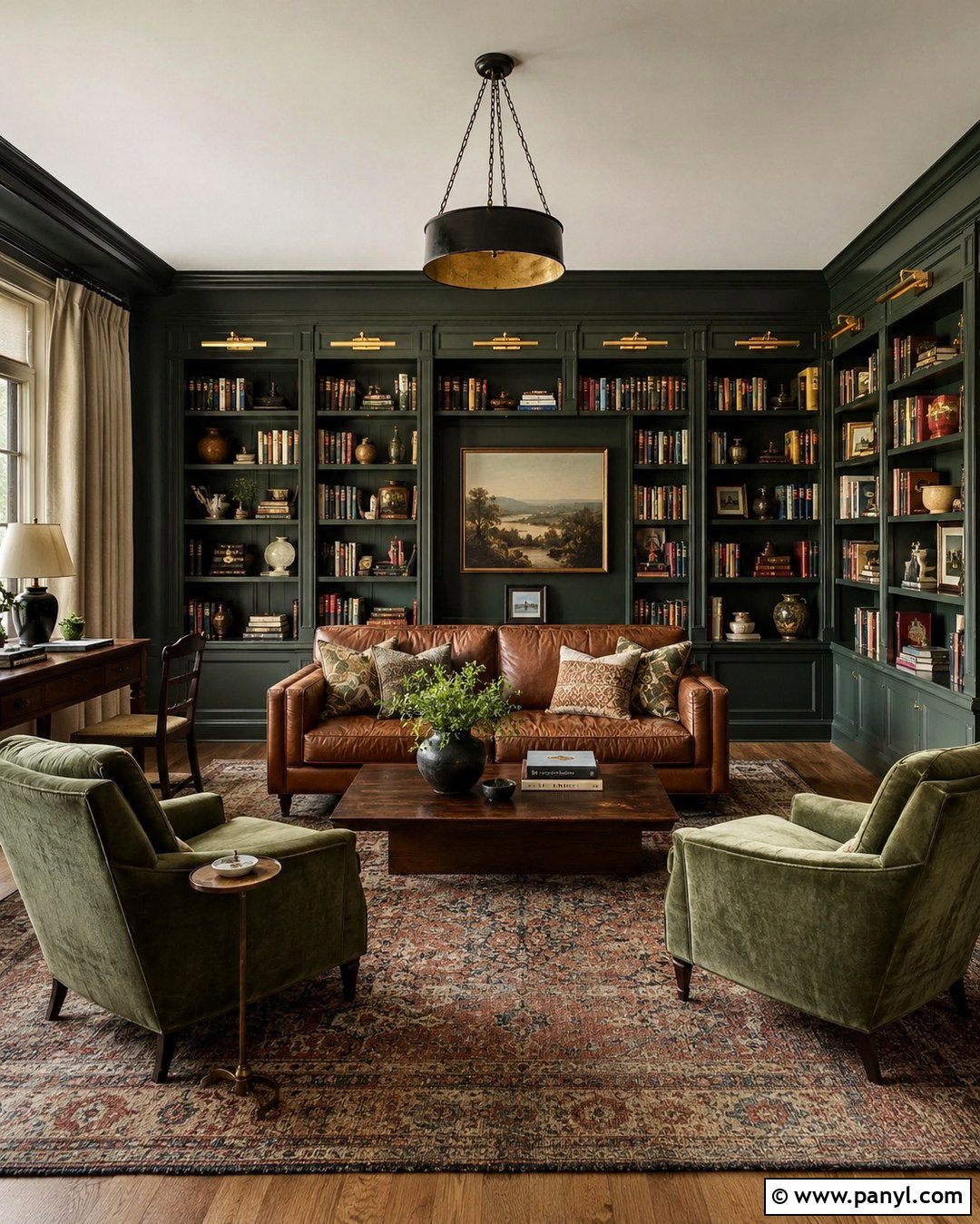
A green-black paint color reveals an earthy undertone beside plants, leather, and natural wood. Cover the library walls and built-in bookcases in the same shade, using a satin finish on the millwork and matte paint on the flat wall surfaces. Place a worn caramel leather sofa in the center with two moss green lounge chairs angled toward it. A faded Persian-style rug adds burgundy, beige, and muted gold without competing with the walls. Install warm brass picture lights above the shelving and use cream linen curtains to frame the windows. Books, framed artwork, and handmade pottery should be arranged with breathing room. This complete look feels cozy and established, while the green undertone connects the dark walls to organic materials.
7. Brown Black Entryway
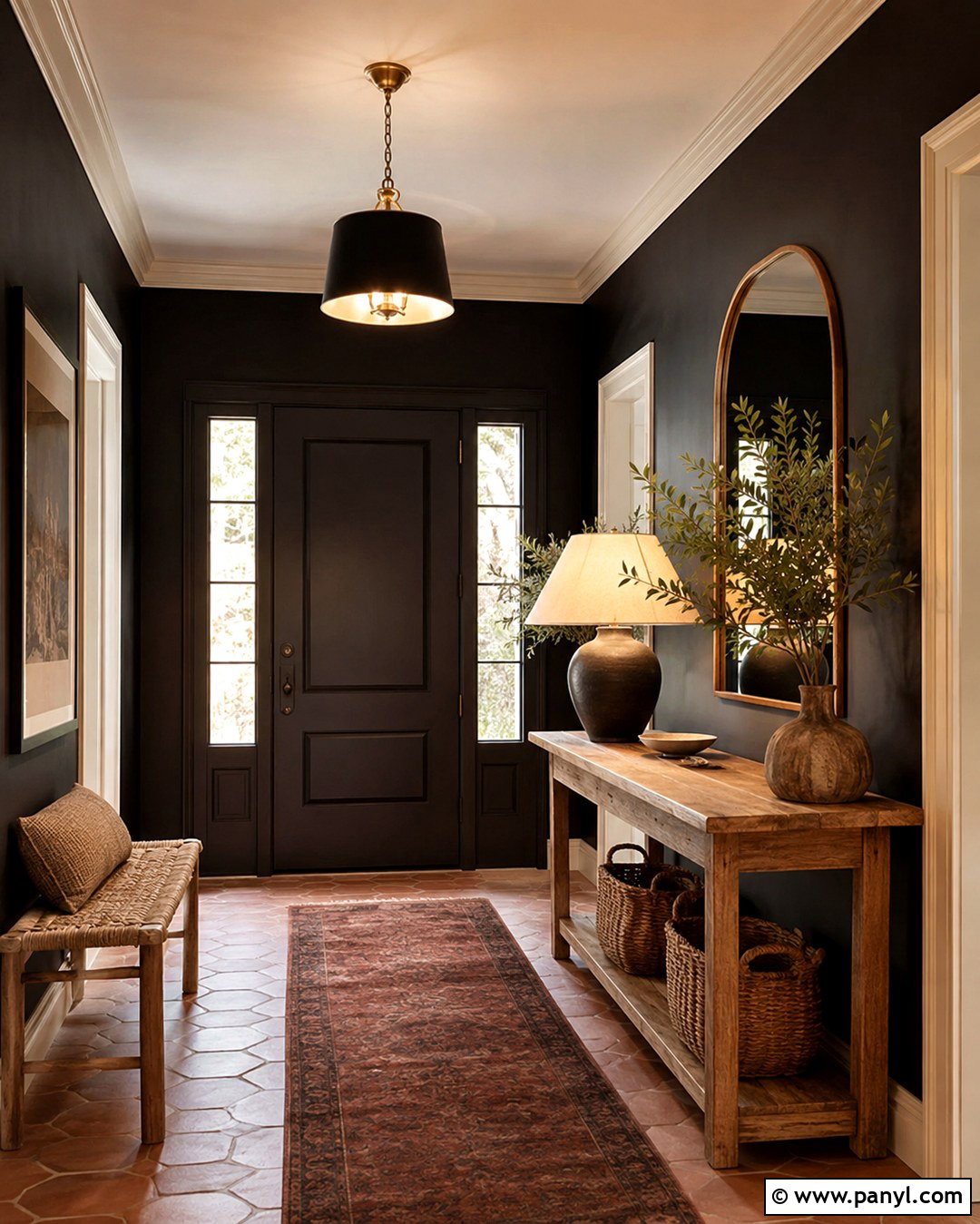
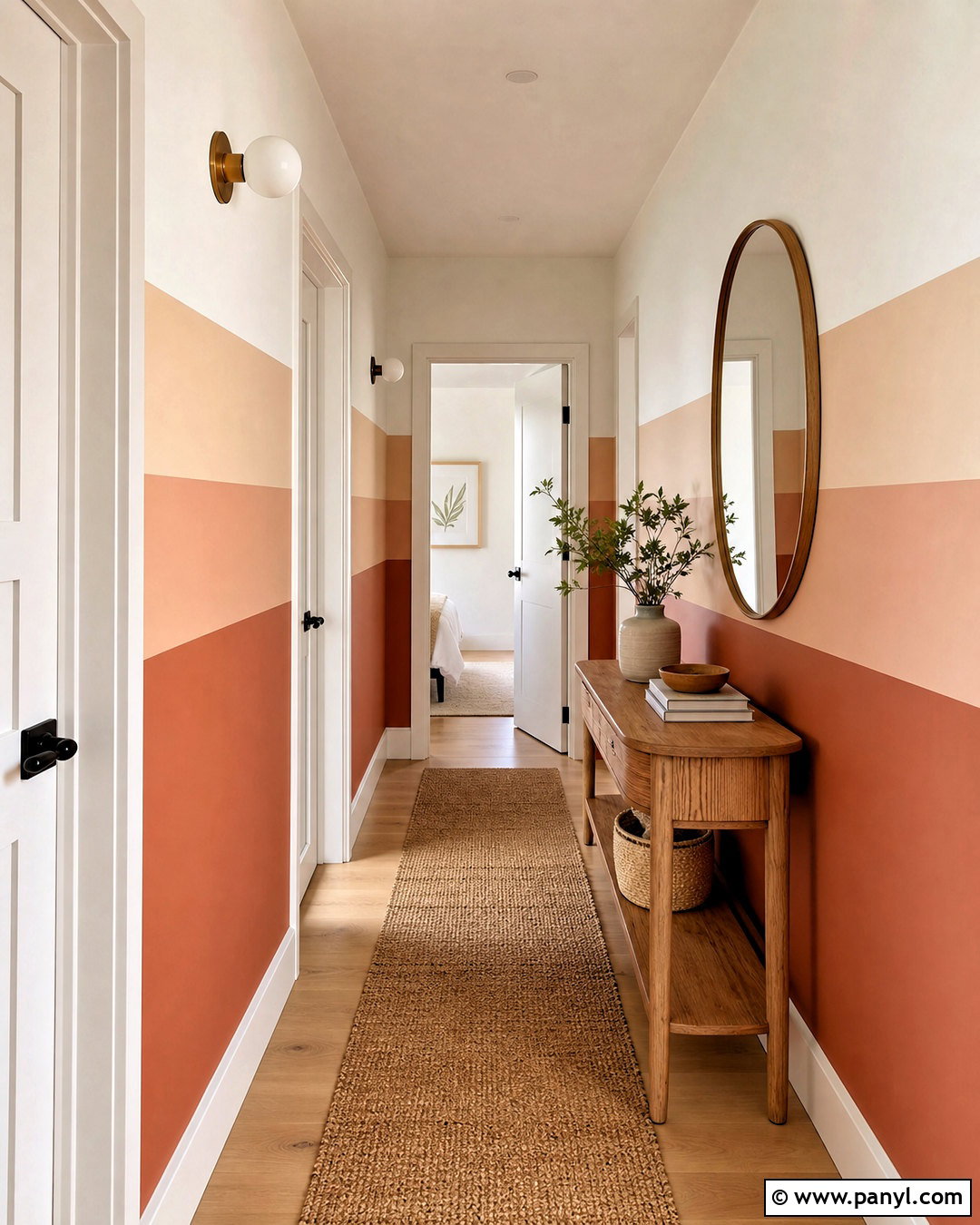
A brown-black entryway makes a strong first impression while remaining warmer than a neutral black. Paint the primary wall and interior side of the front door in the same rich color. Add a narrow oak console with rounded corners, a large arched mirror, and a woven bench for removing shoes. Terracotta floor tile or a vintage rust-toned runner strengthens the earthy palette. Use creamy trim and a warm white ceiling to prevent the compact area from feeling enclosed. A shaded brass pendant provides soft illumination, while a bowl, table lamp, and leafy branch create a simple console arrangement. The finished entry feels considered and welcoming, with durable materials and practical furniture supporting the dramatic paint choice.

8. Graphite Black Bathroom
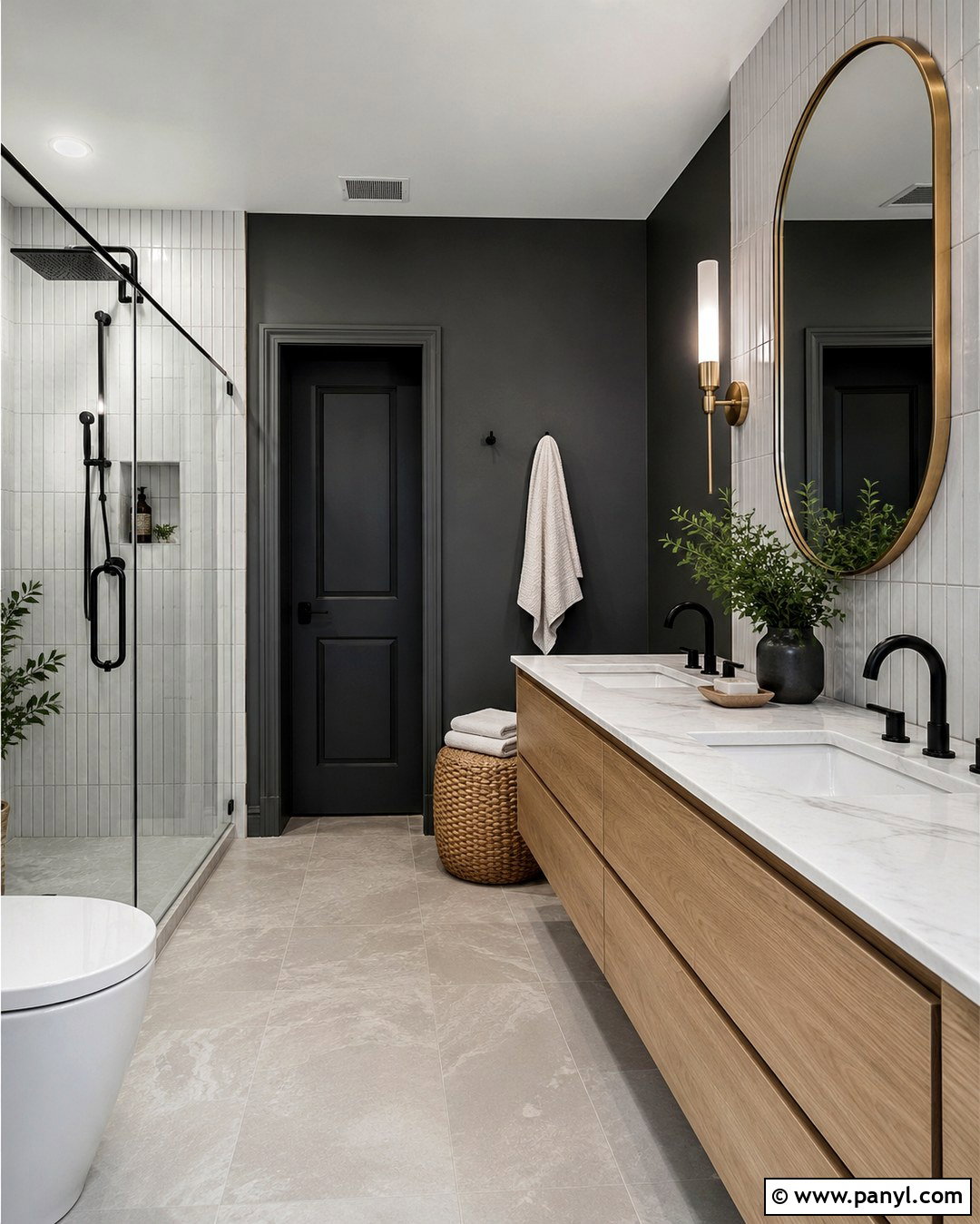
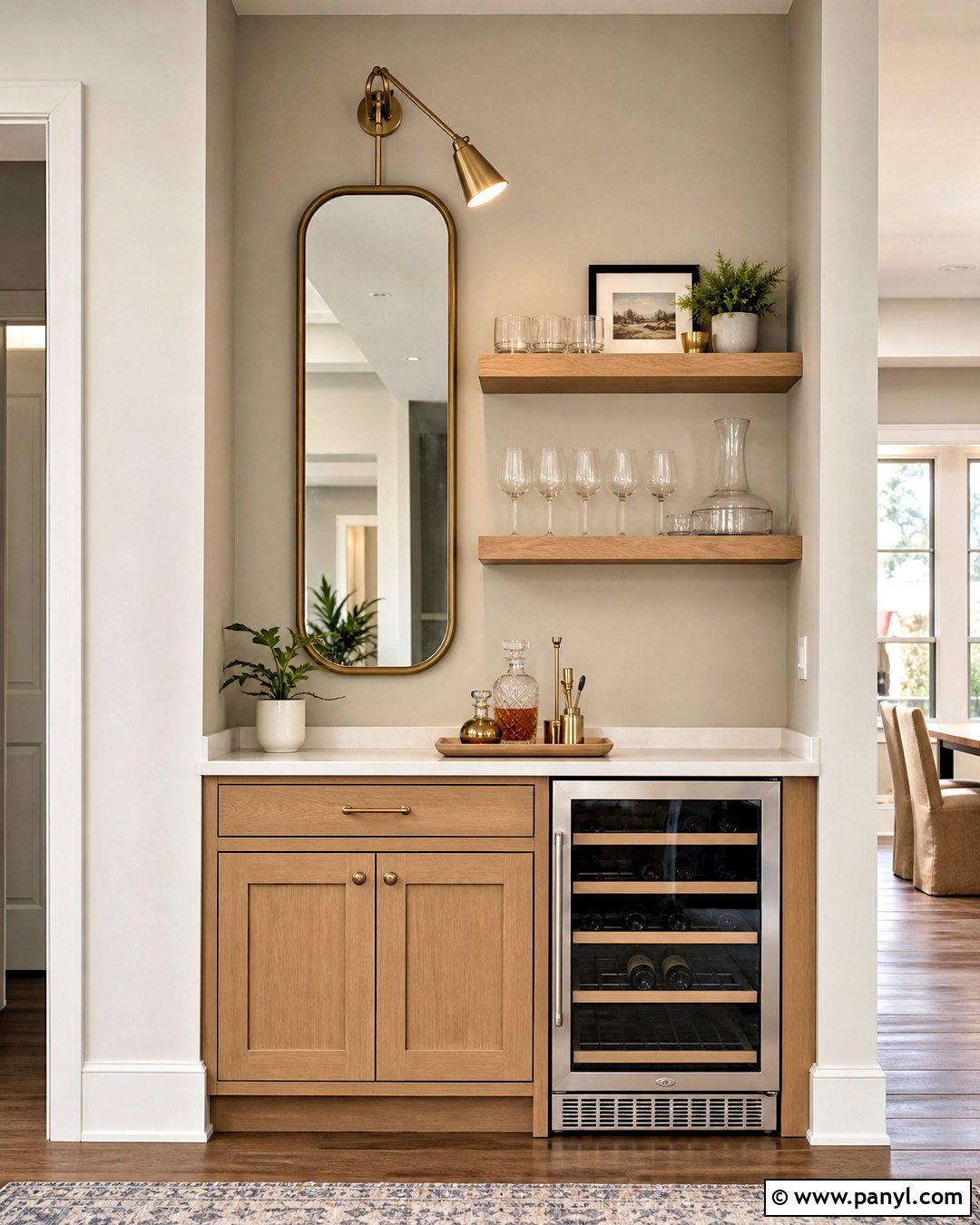
Graphite black has a mineral quality that suits a bathroom filled with stone and metal. Paint the upper walls in this dark gray-black, then install white vertical tile below for a fresh, water-resistant contrast. A floating white oak vanity keeps the floor visible and introduces warmth. Top it with pale marble-look quartz and choose matte black faucets that visually connect with the walls. A rounded brass mirror and matching sconces prevent the scheme from becoming overly cool. Use light gray porcelain flooring, white towels, and a small woven stool to complete the room. Because graphite contains visible gray, it pairs naturally with both black and silver-toned finishes. The overall bathroom feels crisp, balanced, and comfortably modern.
9. Blackened Navy Media Room
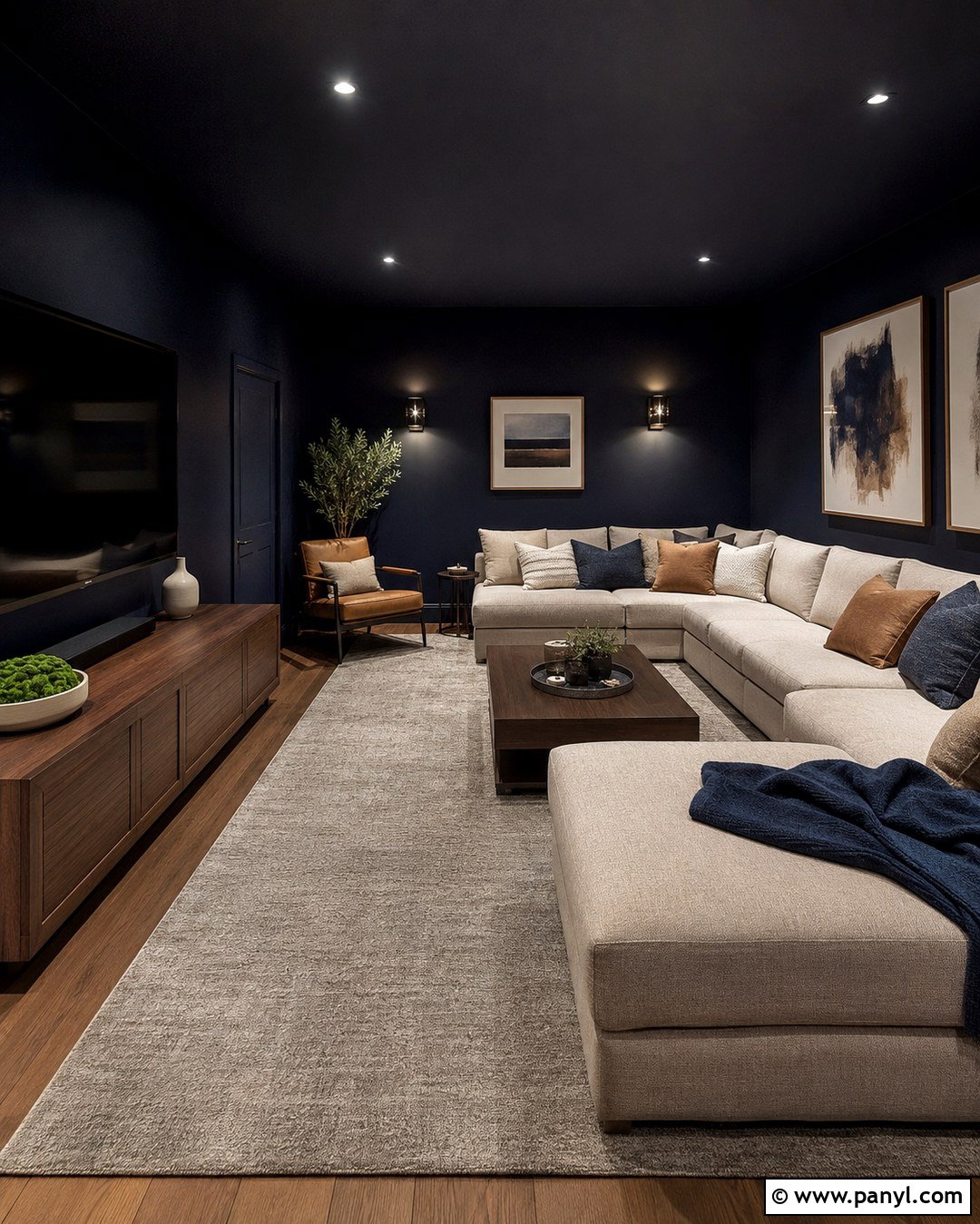
Blackened navy can appear nearly black until daylight or lamplight reveals its deep blue undertone. Use it on every media room wall and the ceiling to reduce visual distractions around the television. A large oatmeal sectional introduces lightness, while a low walnut media cabinet warms the color palette. Layer a thick gray rug over medium wood flooring and add navy, camel, and cream pillows for continuity. Recessed ceiling lights should be dimmable, with two shaded table lamps providing softer illumination when the screen is off. Keep artwork minimal and avoid glossy frames that can reflect light. This dark, cohesive room feels immersive for viewing but remains comfortable and attractive enough for reading, relaxing, or casual conversation.
10. Inky Black Powder Room
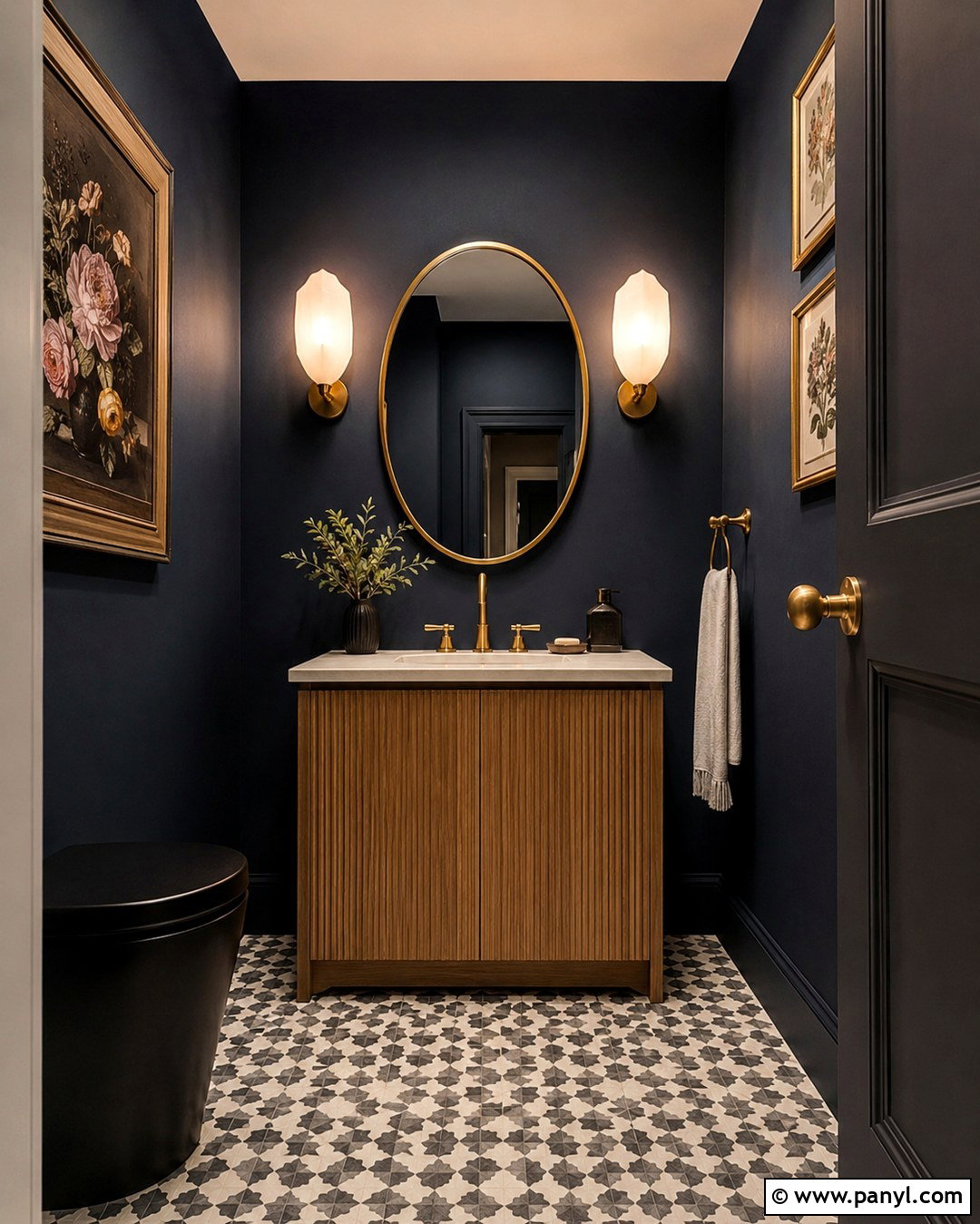
Small powder rooms offer an ideal place to experiment with saturated inky black. Paint every wall in a rich black with a subtle violet or blue cast, then use a warm white ceiling to preserve brightness overhead. Install a compact fluted oak vanity with a creamy stone top and an undermount sink. An unlacquered brass faucet, oval mirror, and sculptural sconces add warmth and sparkle. Choose patterned floor tile combining black, ivory, and dusty rose for a memorable foundation. One framed botanical print and a simple hand towel are enough decoration. The limited palette keeps the room organized despite its bold surfaces. When layered with bright fixtures and tactile materials, inky black feels jewel-like rather than cramped.
11. Deep Black Fireplace Wall
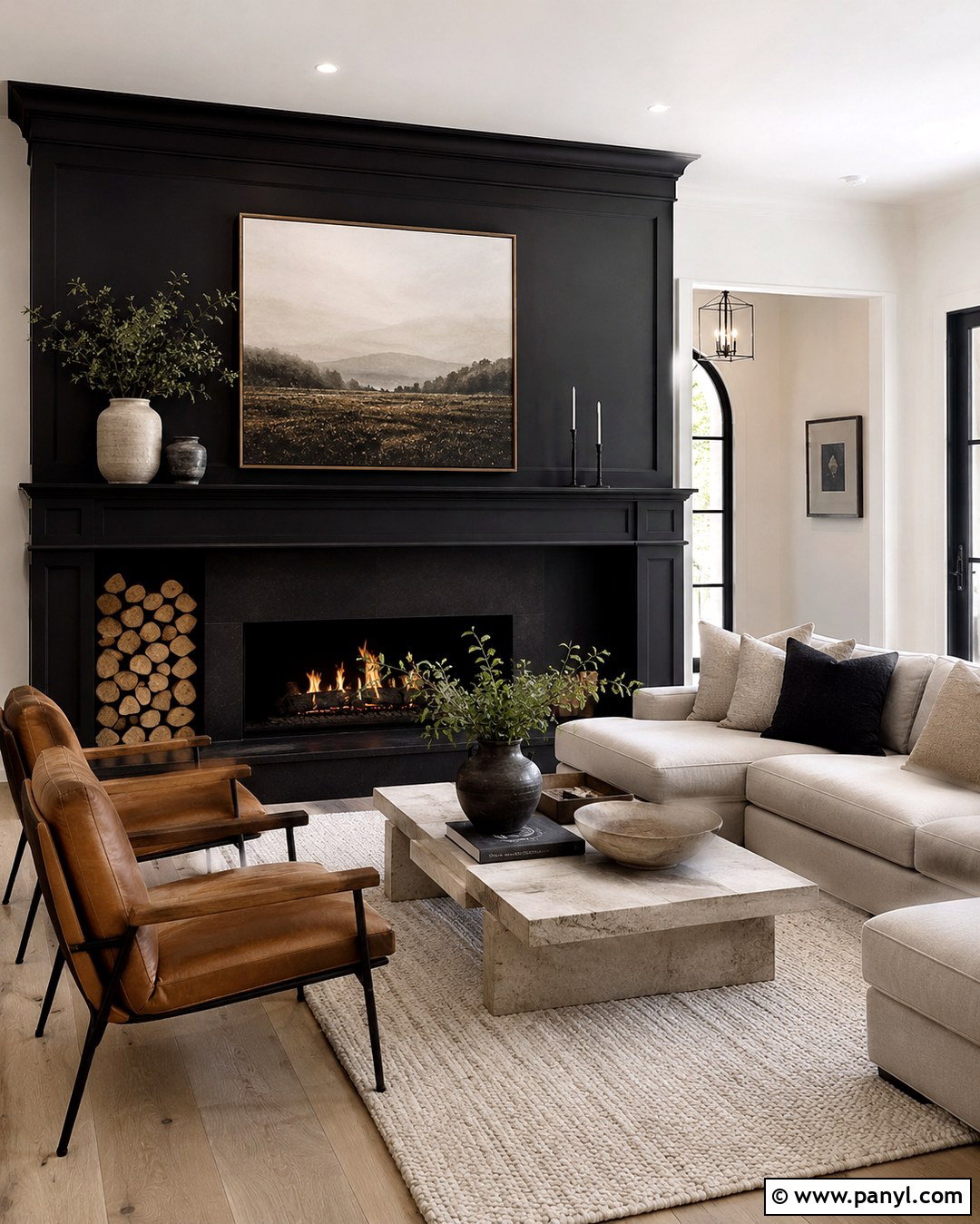
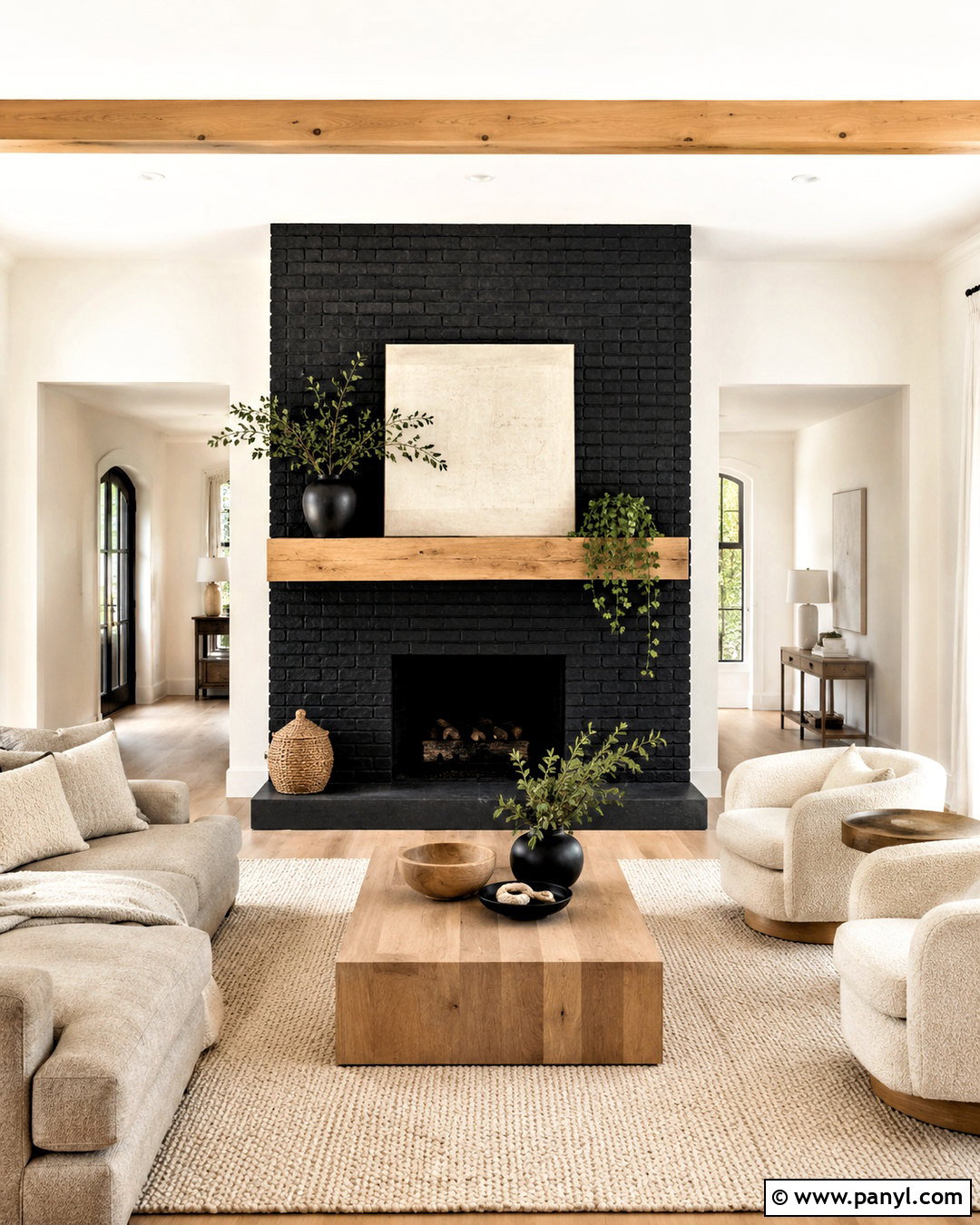
A fireplace wall painted deep black creates a natural anchor for the entire living room. Apply the color to the fireplace surround, mantel, and connected wall so separate components read as one architectural feature. () Place a light greige sectional opposite the fireplace and add two tan leather chairs to form a comfortable conversation area. Pale oak floors and a large ivory rug provide contrast underfoot. Above the mantel, choose a substantial landscape painting or round brass mirror sized to match the fireplace width. Built-in firewood storage, ceramic vessels, and a low stone coffee table reinforce the grounded palette. Keep adjoining walls warm white. This approach makes an ordinary fireplace look larger, cleaner, and more intentionally integrated into the room.
12. Matte Black Board And Batten Bedroom
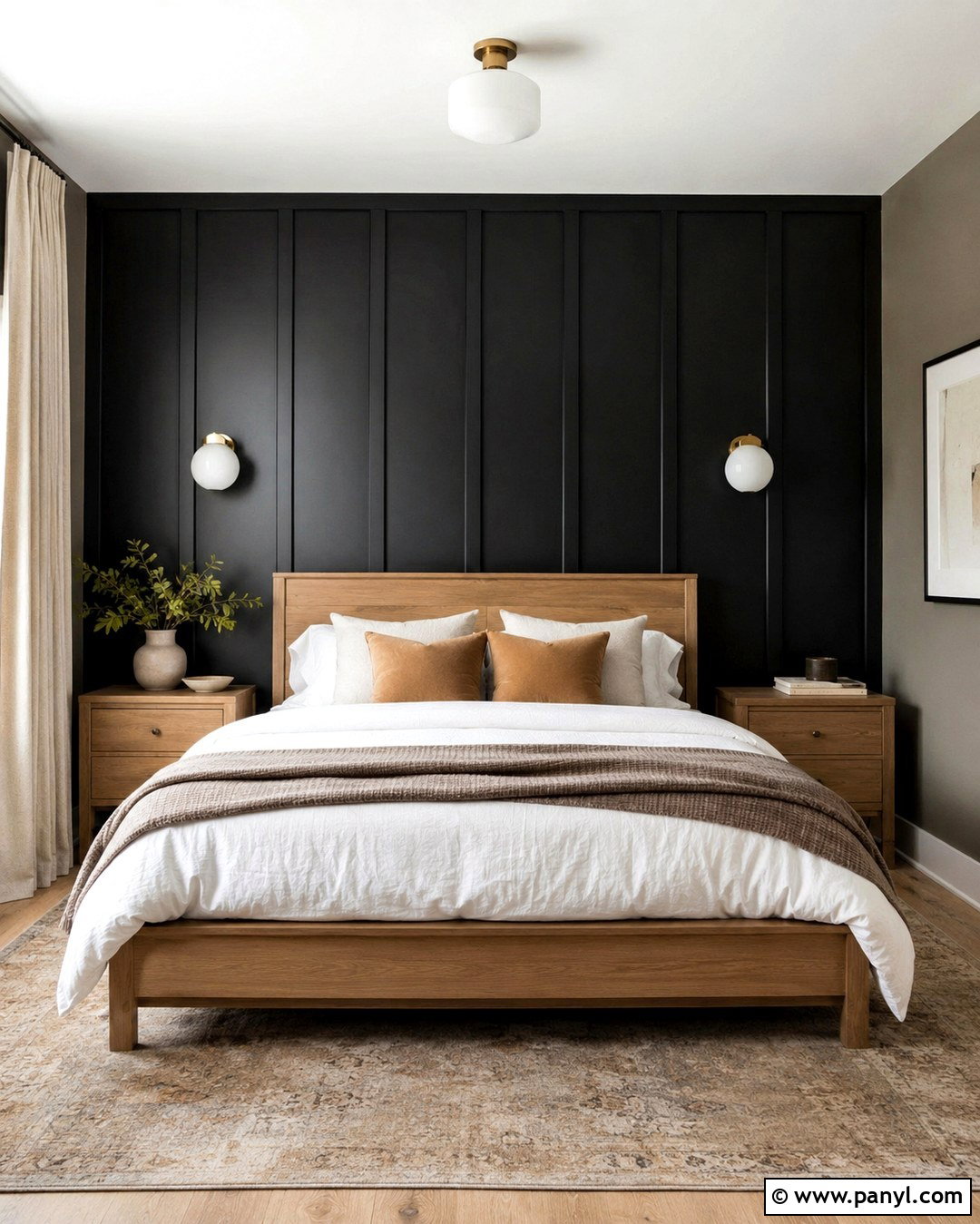
Matte black board and batten adds shadow and structure behind a bed without requiring additional wall decoration. Extend the treatment from baseboard to ceiling so the feature feels architectural rather than temporary. Center a natural oak bed against it and layer the bedding with white linen, camel pillows, and a textured taupe blanket. Matching oak nightstands create symmetry, while white globe sconces provide bright contrast against the black panels. Use warm greige on the remaining walls and hang oatmeal curtains beside the windows. A faded neutral rug softens the floor and absorbs sound. The matte finish minimizes glare and makes the panel pattern easier to appreciate. The finished bedroom feels tailored, comfortable, and visually balanced.
13. Black Limewash Living Room
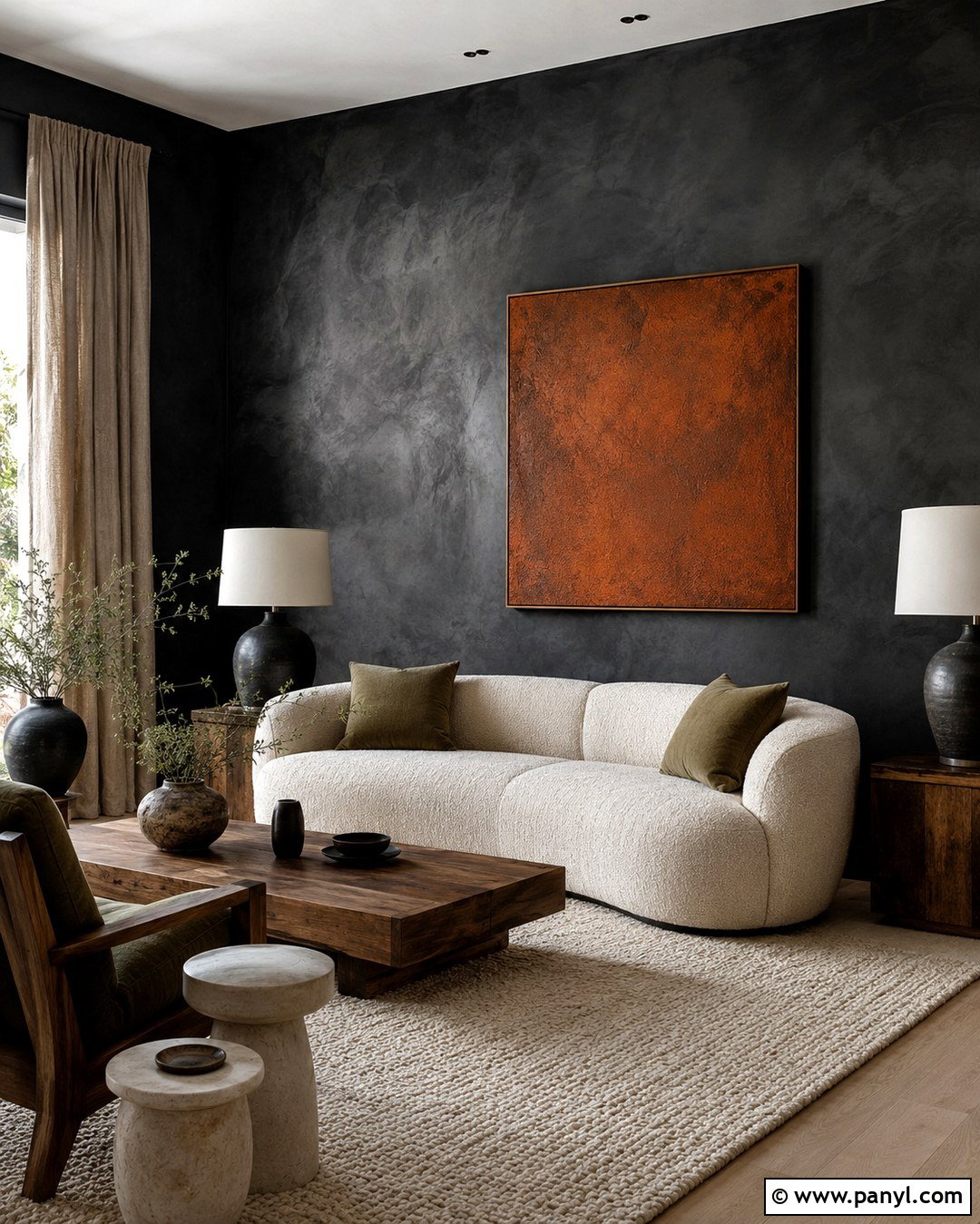
Black limewash produces cloudy gray variation that gives a living room the character of aged plaster. Apply it to one broad wall behind a curved ivory sofa, allowing the irregular brush movement to remain visible. Choose low walnut furniture, a chunky cream rug, and sculptural stone side tables to continue the organic appearance. Soft beige curtains and pale oak flooring counterbalance the dark wall without creating stark contrast. Add a large rust-colored artwork, black ceramic lamps, and olive green cushions for controlled color. Keep the layout open and avoid placing too many decorative pieces against the textured surface. The completed space feels modern yet handcrafted, with subtle tonal movement preventing the black wall from appearing flat or overly formal.
14. Black Shiplap Mudroom
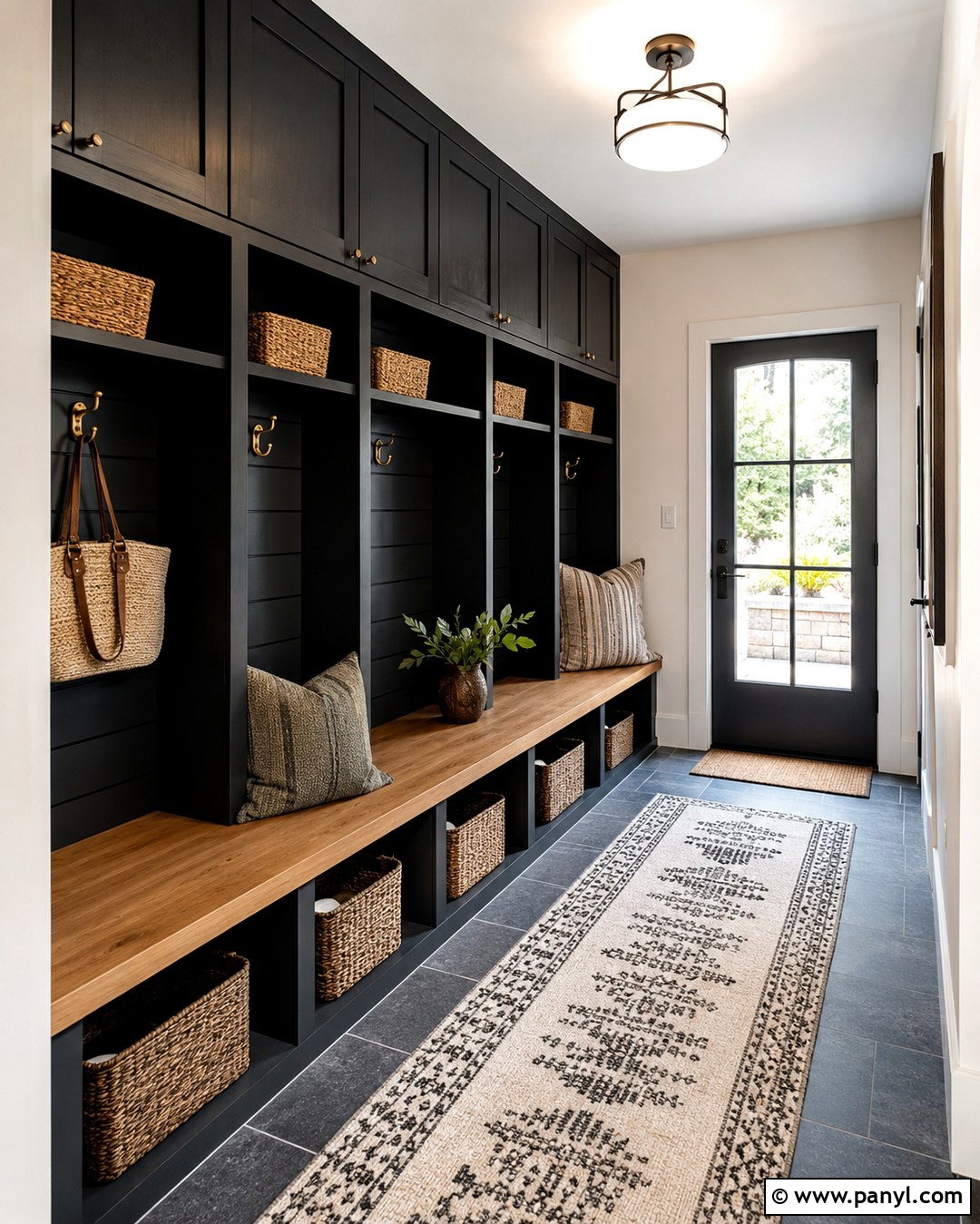
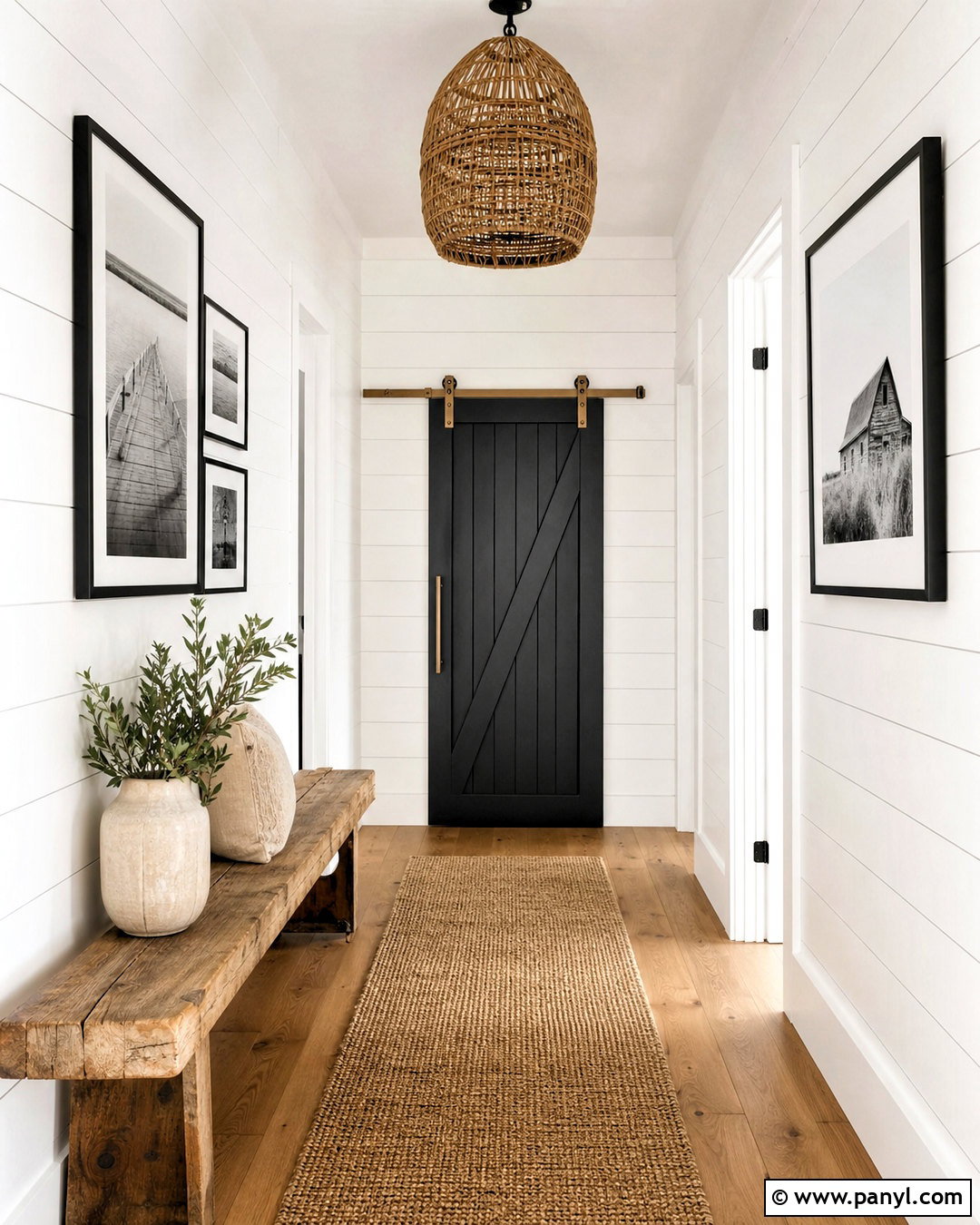
Black-painted shiplap can turn a practical mudroom into a polished transition space. Cover the main storage wall with horizontal boards and paint the cubbies, hooks, and upper cabinets the same soft black. A long oak bench breaks up the dark surface and offers a warm place to sit. Use durable slate-look porcelain tile on the floor, then add a washable cream-and-black runner. Woven baskets provide concealed storage for seasonal accessories, while aged brass hooks remain visible against the painted boards. Paint the other walls warm white and select a bright flush-mount ceiling fixture. The completed mudroom feels organized and sturdy, with each family member receiving a defined storage zone. Black also helps everyday scuffs appear less visually distracting.
15. Black Built In Bookshelves
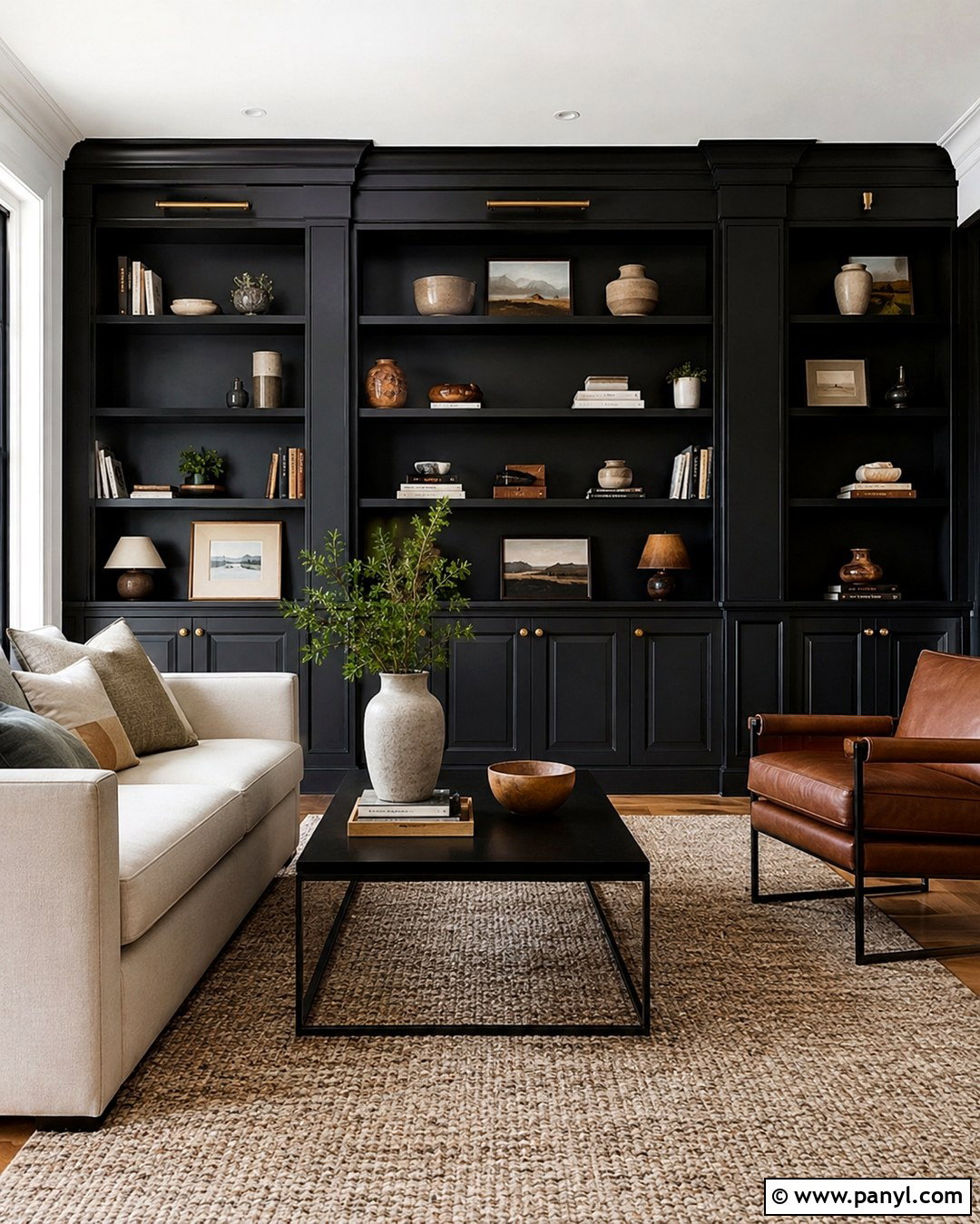
Floor-to-ceiling built-ins become a striking focal point when the shelves, cabinet doors, trim, and backing are painted the same black. A satin or eggshell finish helps the details remain visible and makes the cabinetry easier to clean. () Position a cream sofa nearby and repeat the black through a slim coffee table and window frames. Medium oak flooring, a woven rug, and cognac leather accents keep the room from feeling cold. Arrange books both vertically and horizontally, leaving open spaces for pottery, framed art, and small lamps. Warm brass cabinet pulls introduce a restrained decorative finish. With balanced styling and adequate lighting, black shelving looks substantial and integrated rather than like dark furniture placed against a wall.
16. Black Ceiling Dining Room
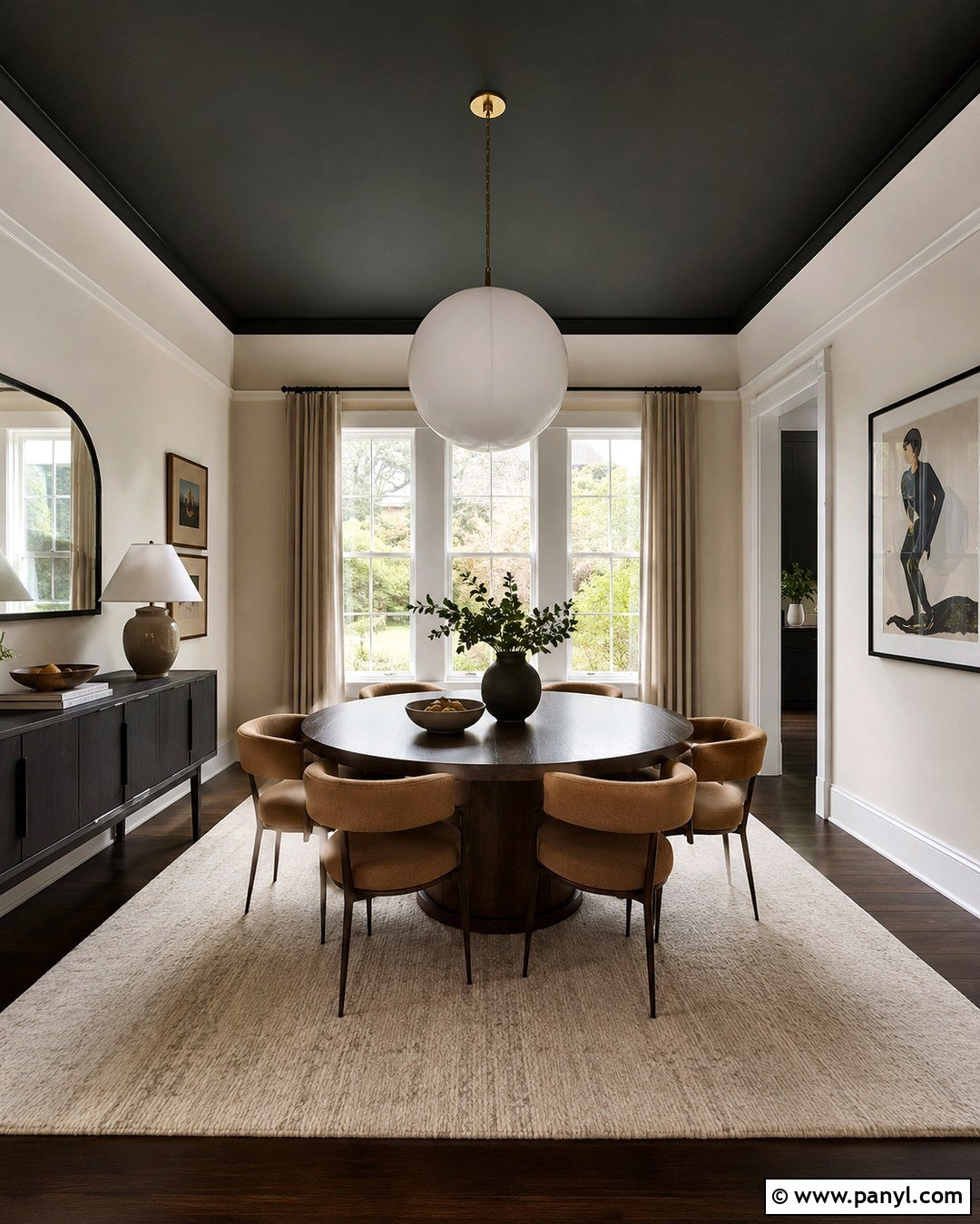
Painting the ceiling black can visually connect a dining area while leaving the surrounding walls light. Choose a soft neutral black and continue it a few inches down the wall as a clean border. Cream walls, bright white trim, and tall windows preserve an airy feeling below. Place a round walnut table beneath a large white globe pendant so the fixture stands out against the dark ceiling. Upholstered dining chairs in camel or olive add warmth, while an ivory rug defines the arrangement. Repeat black through slender curtain rods, picture frames, and chair legs. This balanced distribution prevents the ceiling from looking disconnected. The final dining room feels intimate overhead but open at eye level, making the treatment suitable for both traditional and modern homes.
17. Black Wainscoting Hallway
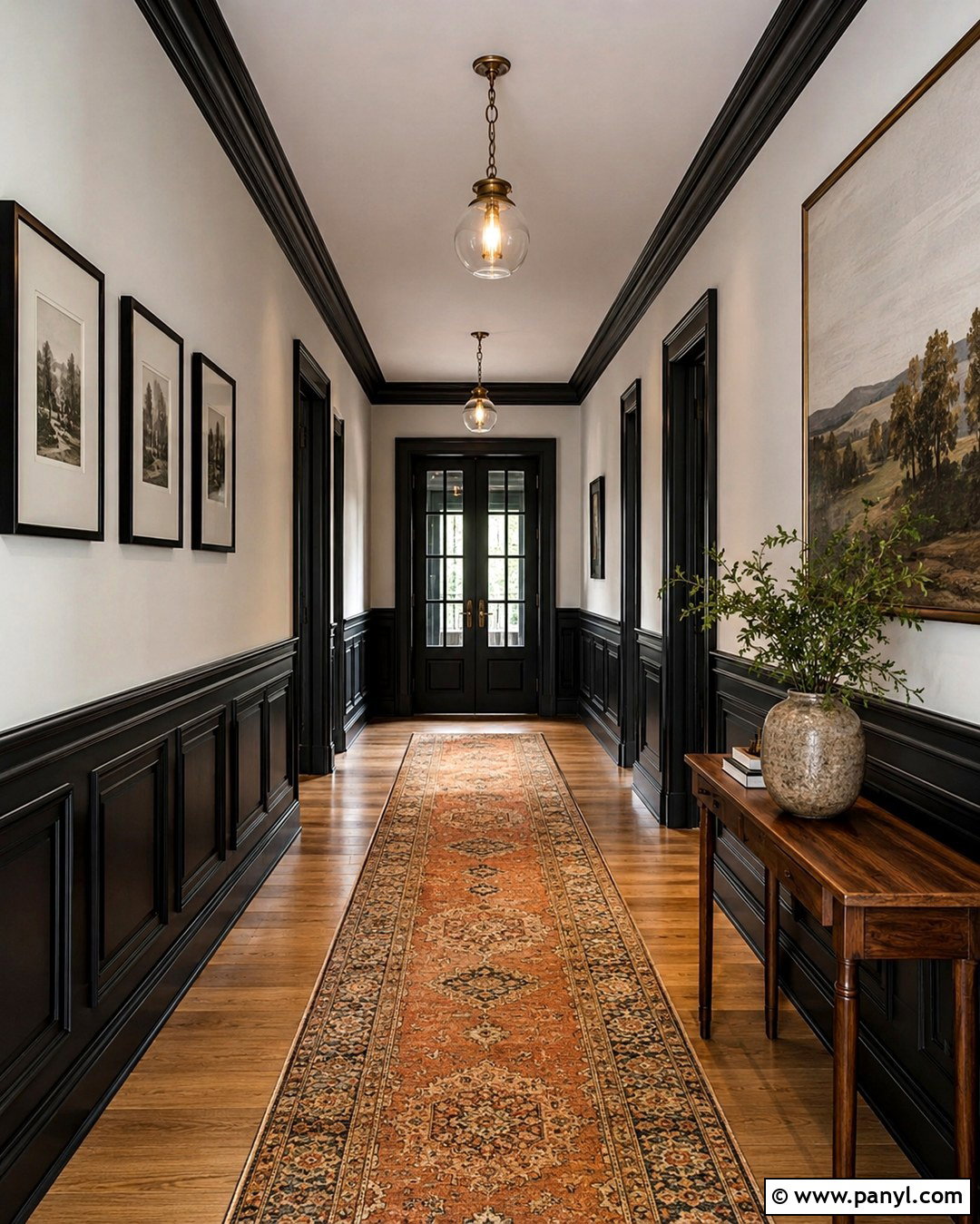
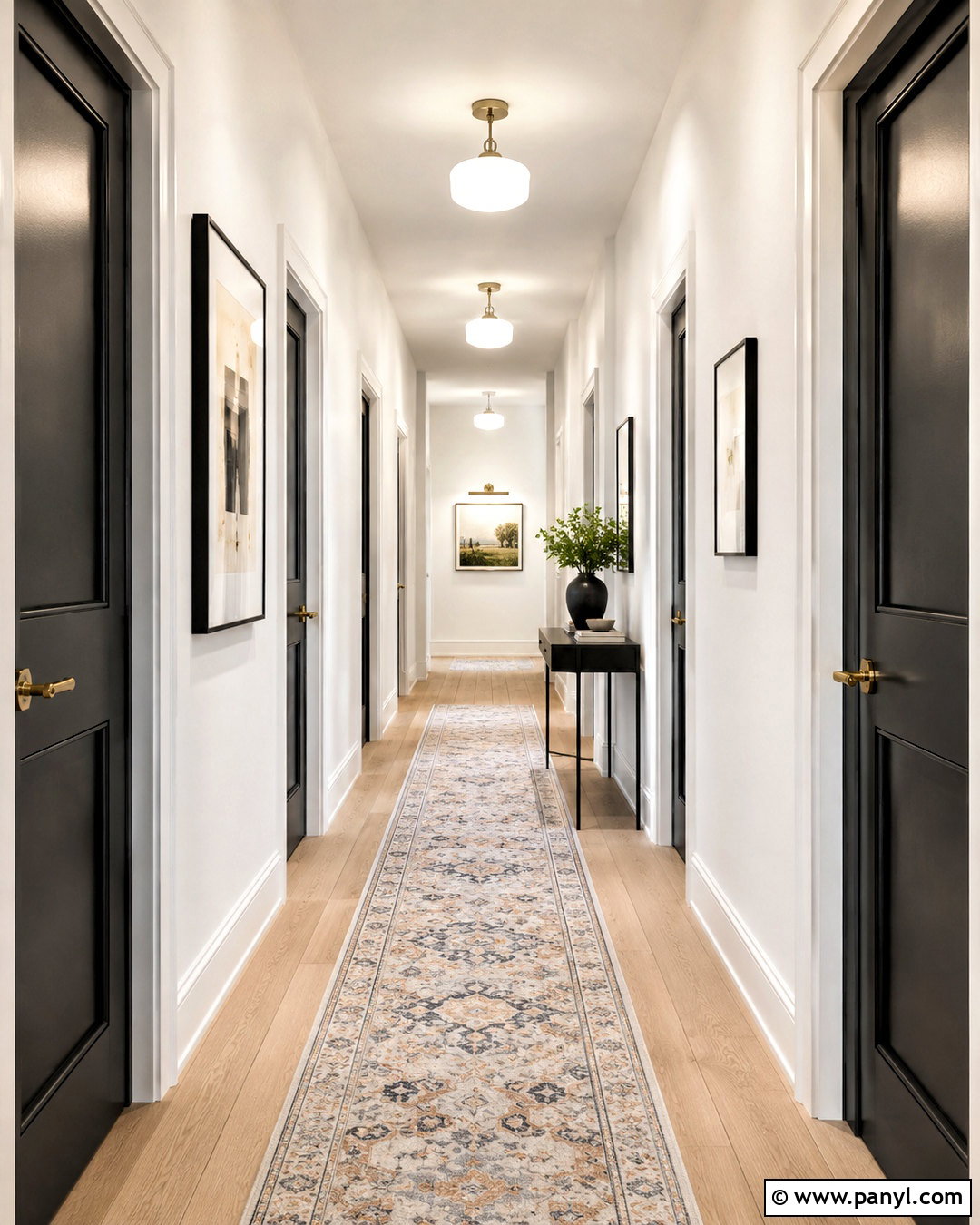
Black wainscoting gives a plain hallway useful depth while protecting the lower portion of the walls. Install simple rectangular molding to about two-thirds height and paint the panels in a deep charcoal black. Keep the upper walls creamy white to reflect light through the narrow space. A vintage runner containing rust, olive, and beige adds color, while warm oak flooring provides a natural foundation. Hang a row of medium-sized artwork with matching black frames along the lighter upper section. Use aged brass ceiling lights and a small wood console where space allows. The design feels detailed without reducing walking room. By concentrating the darkest color below eye level, the hallway gains character while retaining a bright, comfortable sense of movement.
18. Black Color Drenched Bedroom
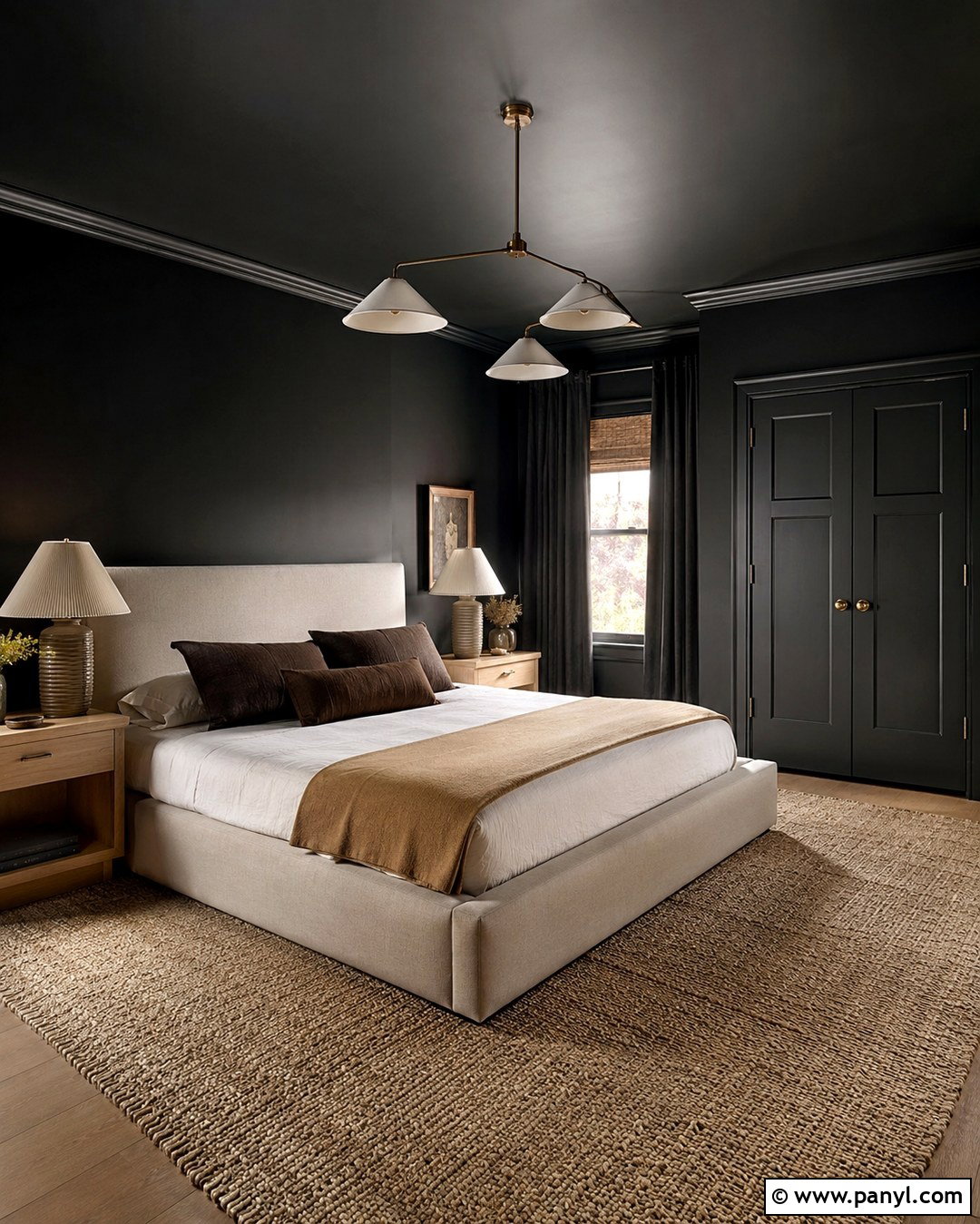
For a cocooning bedroom, carry a warm black across the walls, ceiling, trim, and closet doors. The consistent color removes sharp boundaries, helping architectural angles blend into a calm background. Choose an oversized upholstered bed in warm beige, then layer ivory sheets, chocolate pillows, and a camel wool blanket. Pale oak nightstands and ribbed ceramic lamps introduce lighter surfaces at eye level. Install a large natural fiber rug to soften the room and use subtle brass hardware for gentle reflection. Window treatments can match the walls or shift slightly lighter in dark charcoal linen. Several controlled light sources are essential, including bedside lamps and dimmable ceiling lighting. The finished bedroom feels immersive, restful, and intentionally dramatic rather than unfinished.
19. Black Breakfast Nook
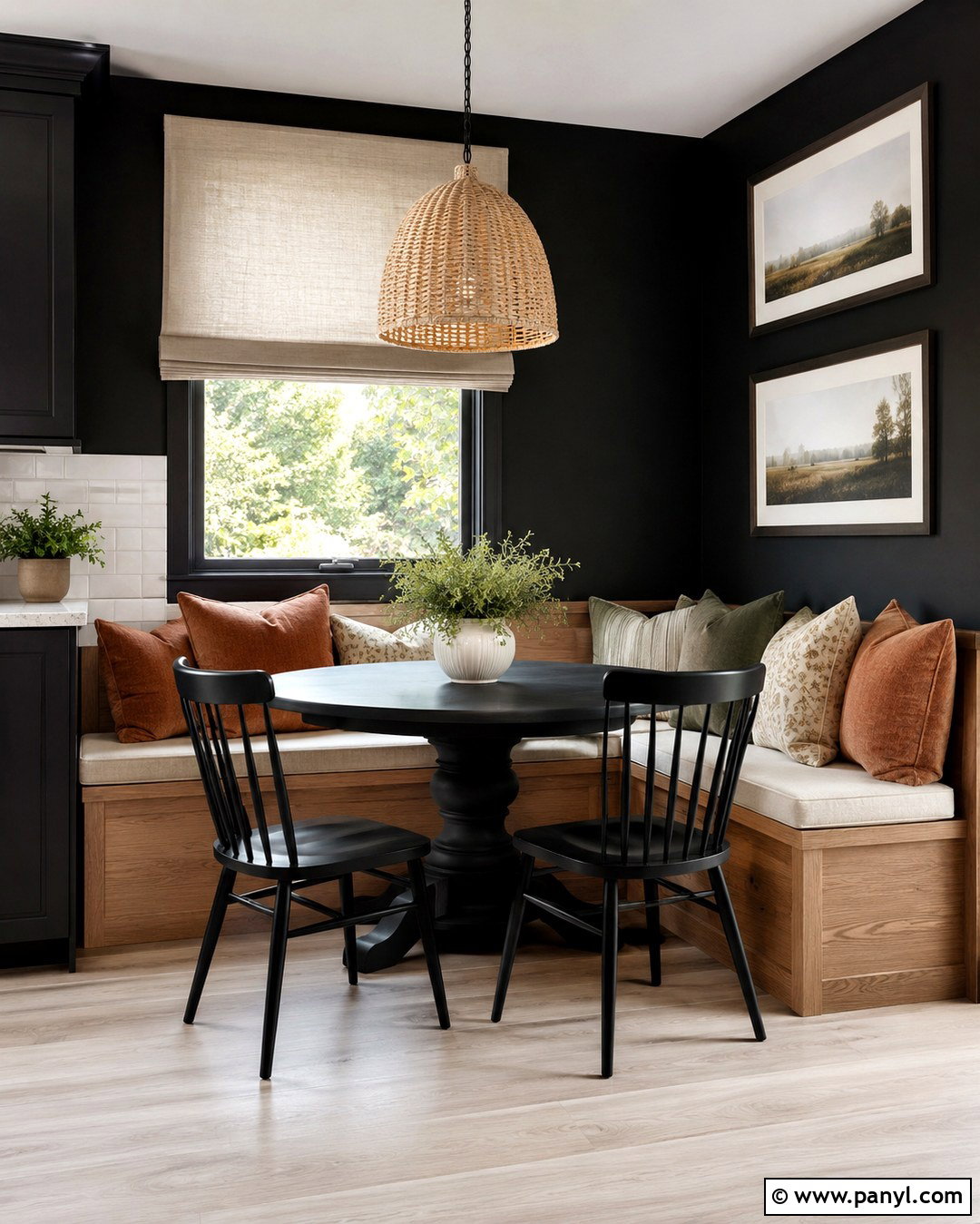
A black-painted breakfast nook can feel cheerful when it is surrounded by natural light and warm materials. Cover the nook walls in a soft black, then install an L-shaped oak bench with hidden storage. Add seat cushions in oatmeal performance fabric and pillows in rust, cream, and muted green. A round pedestal table keeps movement easy, while two lightweight spindle chairs provide flexible seating. Hang a woven pendant above the table and use relaxed linen shades at the windows. Small framed landscapes or a simple ledge display bring personality to the dark background. Continue pale kitchen flooring into the nook for visual connection. The completed area feels cozy and defined while remaining practical for family meals, homework, or morning coffee.
20. Black Gallery Wall Staircase
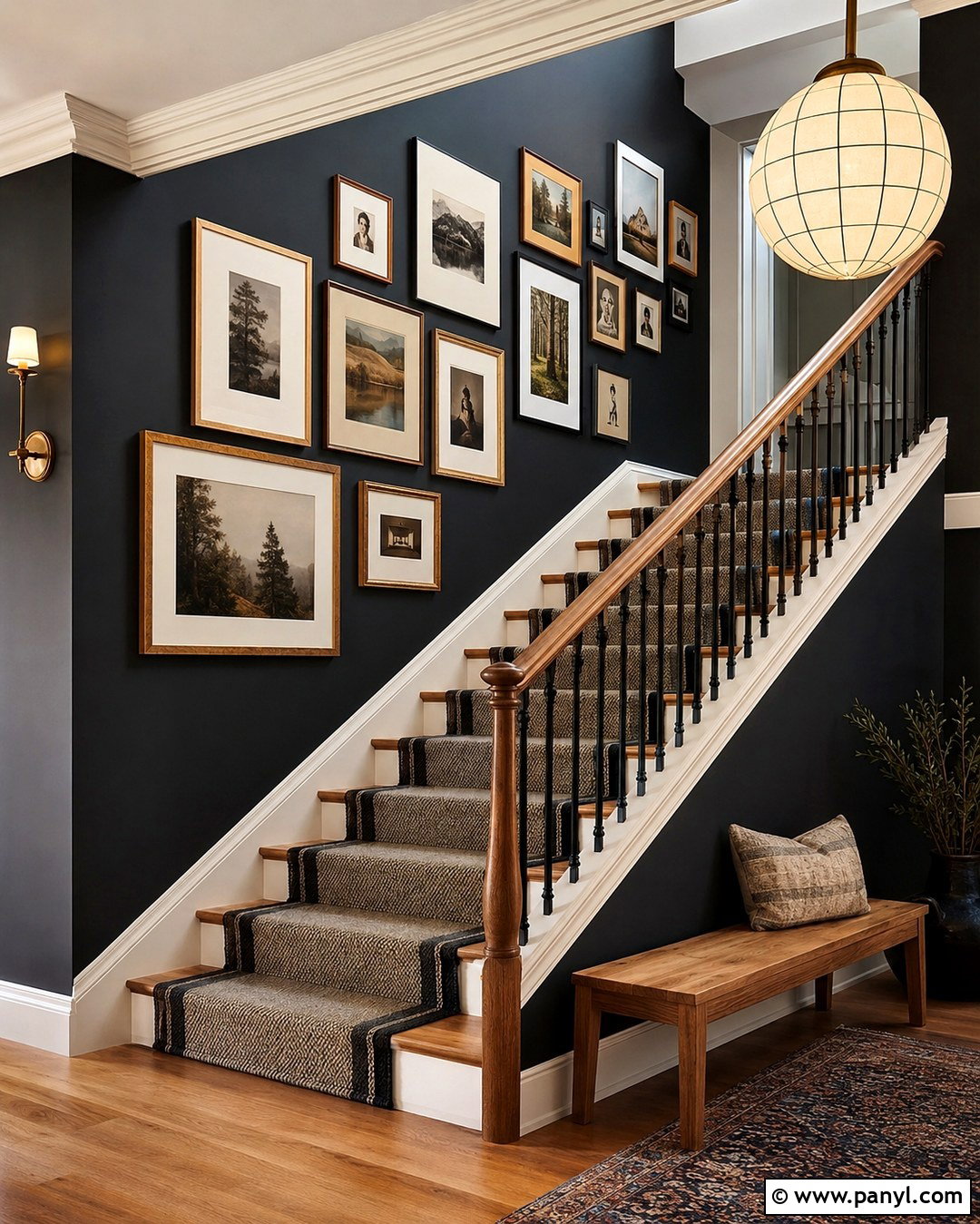
A black staircase wall creates a dramatic backdrop for a carefully organized gallery without changing the entire entry. Select a neutral matte black and apply it from the base of the stairs to the upper landing. Use frames in warm oak, antique brass, and narrow black profiles to add controlled variation. Include family photographs, landscapes, and abstract prints with generous ivory matting so each piece remains readable. Paint the stair trim warm white and choose a natural oak handrail for contrast. A woven runner in beige and charcoal provides softness underfoot. Finish with a simple globe pendant and a small bench near the bottom step. The complete design turns a pass-through area into a layered feature while maintaining a clear, uncluttered arrangement.
Conclusion:
The most successful black interiors combine strong color with thoughtful contrast, useful lighting, and tactile materials. These 20 Black Wall Paint Color Ideas show that black can work in bright kitchens, restful bedrooms, narrow hallways, practical mudrooms, and comfortable living spaces. Begin by studying the undertones already present in your flooring, furniture, and natural light. Test large paint samples on more than one wall and view them throughout the day. Then select warm wood, pale textiles, reflective metal, or colorful artwork to balance the depth. Whether you choose a true black focal wall or a fully color-drenched room, treating every element as part of one complete design will create the most polished result.

Related Ideas and Inspiration:

Leave a Reply