
Black walls can turn an ordinary music space into a focused, expressive room that feels both polished and personal. They create a strong backdrop for instruments, album artwork, speakers, and warm wood furniture. The key is balancing the dark color with layered lighting, acoustic materials, practical storage, and lighter finishes. Whether you play piano, collect vinyl, produce electronic tracks, or rehearse with a full band, the entire room should support how you make and enjoy music. Thoughtful layouts also keep cables, stands, and equipment organized without removing the creative character. The following complete designs cover modern studios, cozy listening rooms, compact practice spaces, and multifunctional layouts. Use these **20 Black Wall Music Room Ideas** to create a space that looks as impressive as it sounds.

1. Modern Black Wall Piano Room
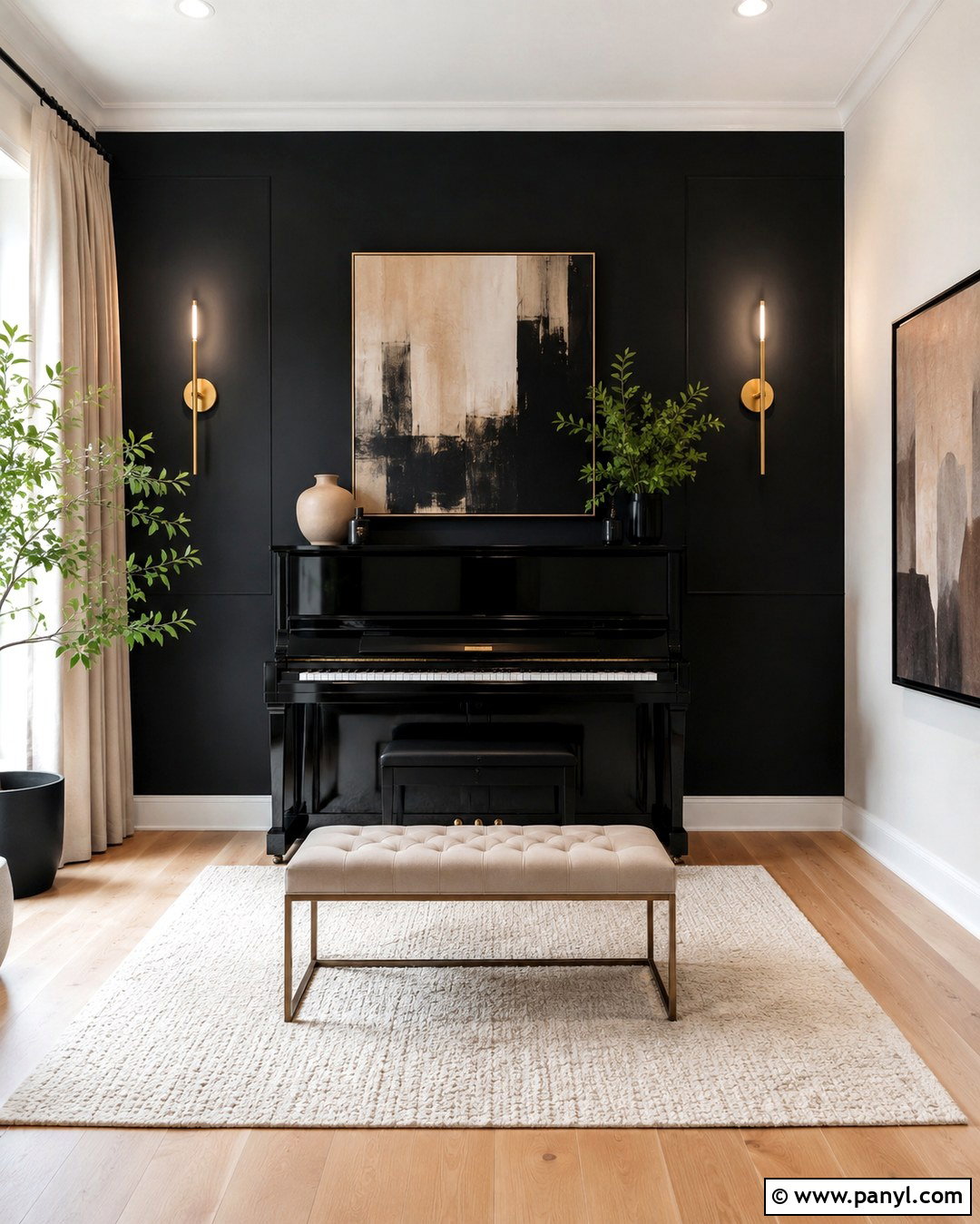
A sleek piano room starts with a matte black feature wall behind an upright or digital piano. Keep the remaining walls warm white so the room feels open rather than enclosed. Light oak flooring, a cream wool rug, and a cushioned beige bench soften the sharp contrast. Place two narrow brass sconces above the piano to illuminate sheet music without creating glare. A large abstract print, ceramic vase, and small leafy plant provide simple decoration. Add lined curtains and an upholstered accent chair to introduce sound-softening fabrics. A low cabinet can hold music books, headphones, and accessories. This complete arrangement feels modern and welcoming while making the black piano and matching wall look like one intentional focal point.
2. Black Wall Guitar Music Room
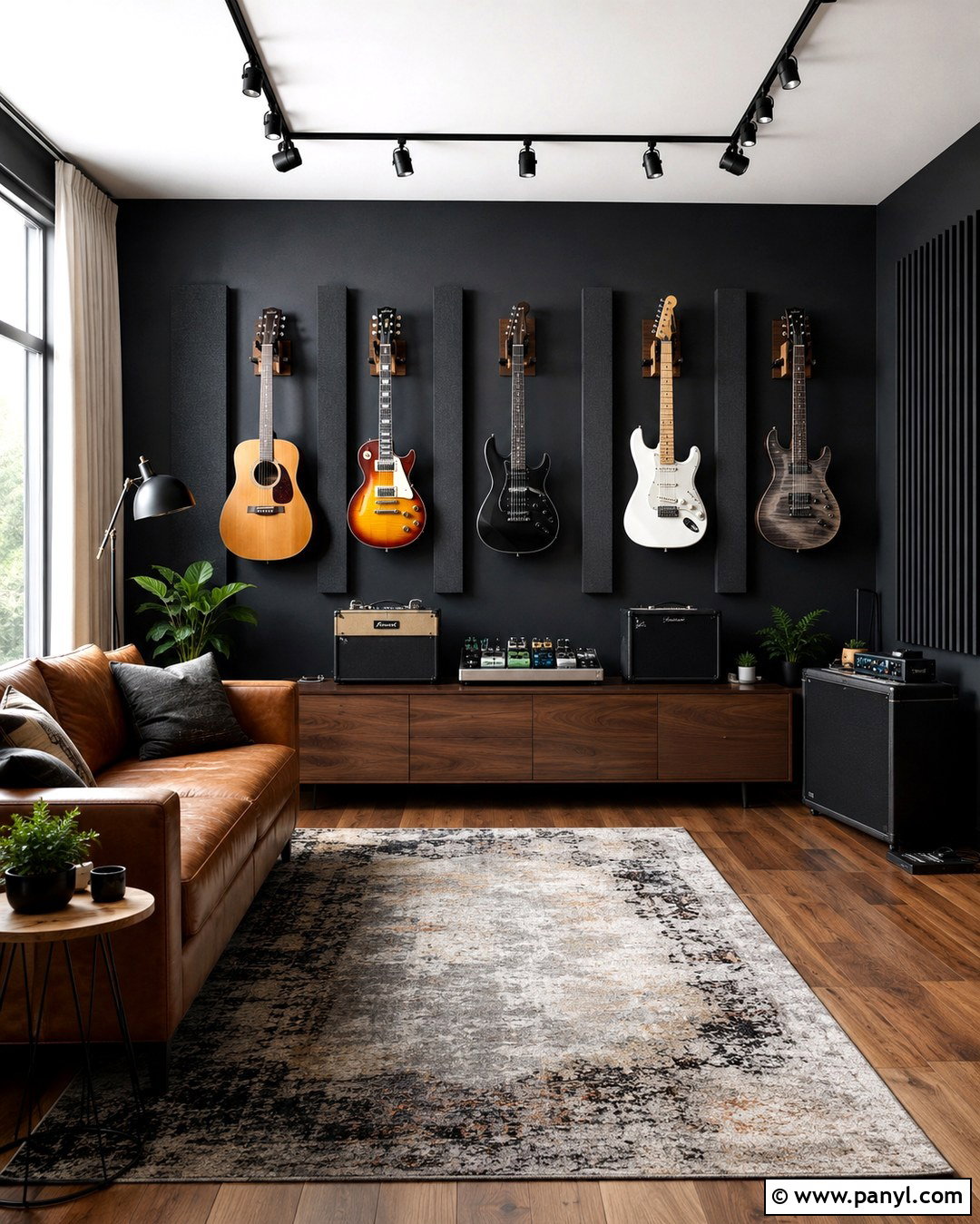
Turn a guitar collection into functional decor by displaying it across a matte black wall with secure wooden mounts. Mix acoustic and electric guitars while leaving enough space between them for easy access. A low walnut cabinet beneath the display can store pedals, strings, cables, and smaller equipment. Complete the room with a camel leather sofa, patterned neutral rug, and black metal floor lamp. Position amplifiers along a side wall rather than directly beneath every instrument to prevent the arrangement from feeling crowded. Warm wood flooring balances the dark backdrop, while cream curtains bring softness around the windows. Add acoustic panels in coordinating charcoal fabric so they blend into the design. The result is an organized practice room that also feels like a personal gallery.
3. Black Wall Vinyl Listening Room
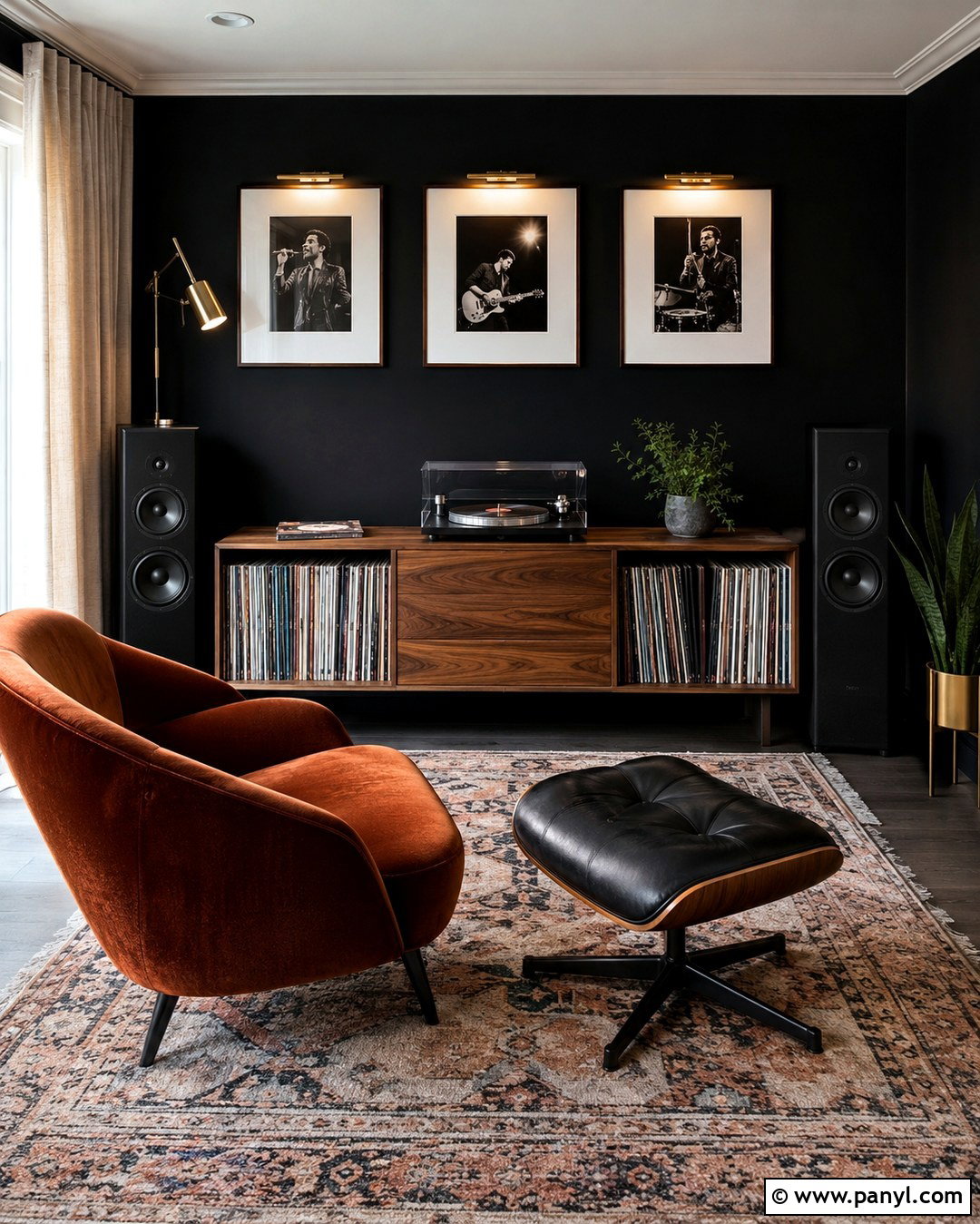
Imagine settling into a deep lounge chair with your favorite record playing nearby. For this look, place a walnut media console and turntable against a smooth black wall. Add matching record cabinets on each side, using open sections to display colorful album covers. Two substantial speakers should sit on sturdy stands at balanced positions within the room. A rust-colored velvet chair, round leather ottoman, and faded geometric rug introduce warmth. Choose soft white walls elsewhere to maintain brightness, then add full-length oatmeal curtains for acoustic softness. Brass picture lights can highlight framed music photography without overwhelming the wall. Keep cables concealed behind the console. This complete listening room combines practical vinyl storage, comfortable seating, clear speaker placement, and sophisticated black wall decor.
4. Black Wall Music Studio With Wood Slats
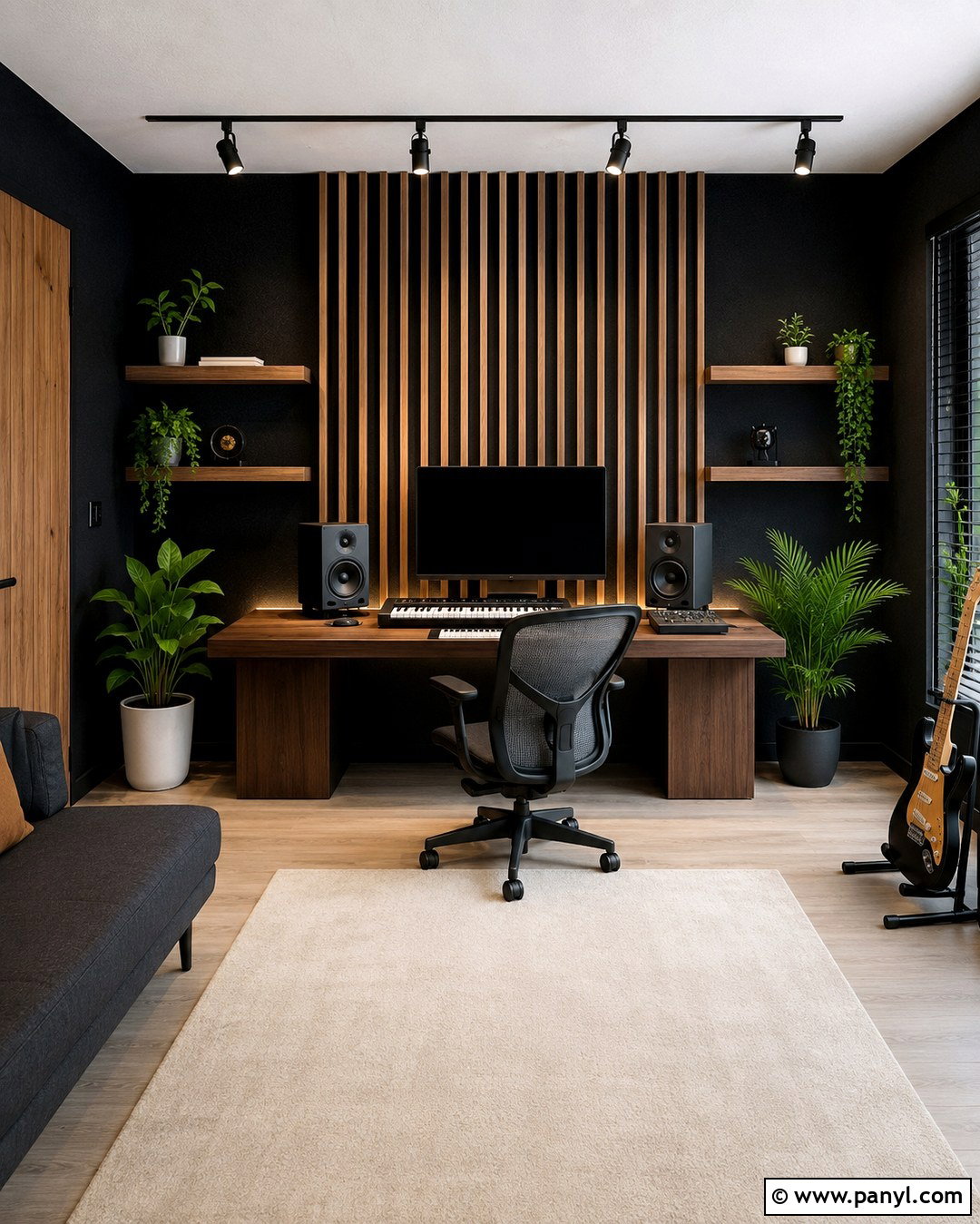
Natural wood slats can transform a black studio wall into a warm architectural feature. Install evenly spaced oak battens over black acoustic felt behind the main production desk. The combination creates depth while helping the treatment look like part of the decor. Choose a wide walnut desk with an ultrawide monitor, studio speakers, MIDI keyboard, and hidden cable trays. A charcoal ergonomic chair maintains the dark palette without disappearing against the wall. Use light oak flooring and a large cream rug to brighten the lower half of the room. Add dimmable ceiling tracks for practical illumination and soft LED strips behind the desk for definition. A few floating shelves can hold compact instruments and plants, producing a clean, contemporary workspace suited to writing, mixing, and editing.
5. Black Wall Basement Band Room
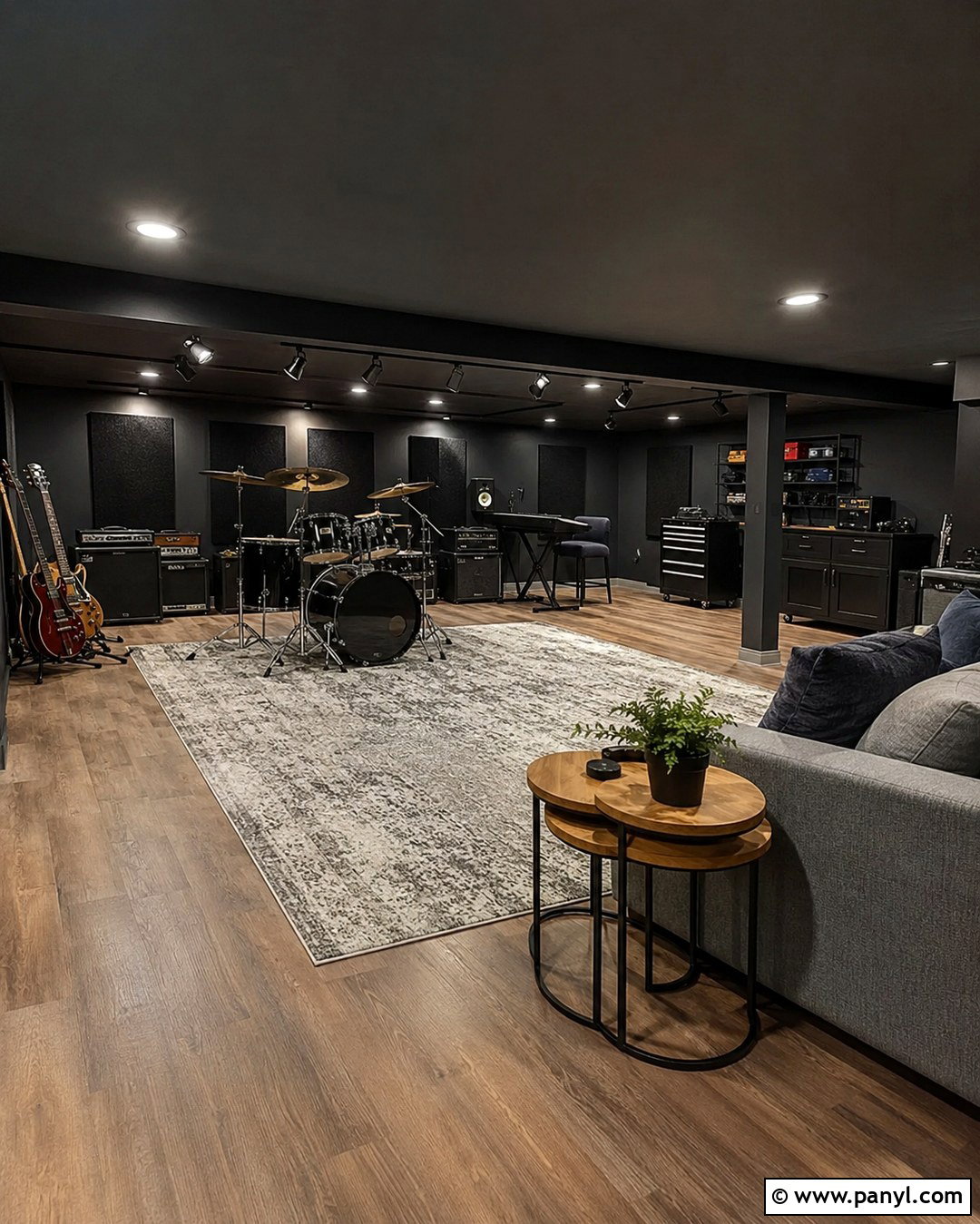
A basement rehearsal room needs durable surfaces, flexible furniture, and enough open floor area for several instruments. Paint the longest wall matte black, then add charcoal fabric acoustic panels in a balanced grid. Position the drum kit near the center of that wall, with amplifiers and guitars arranged along the sides. Use medium-tone vinyl plank flooring with a large low-pile rug under the equipment. A compact gray sofa and nesting tables create a comfortable break area without consuming too much room. Install bright ceiling lights, adjustable wall fixtures, and practical task lighting near keyboards and music stands. Closed cabinets should hold microphones, cables, and spare hardware. This complete setup feels energetic and professional while keeping a potentially cluttered basement organized and visually consistent.
6. Small Black Wall Music Room
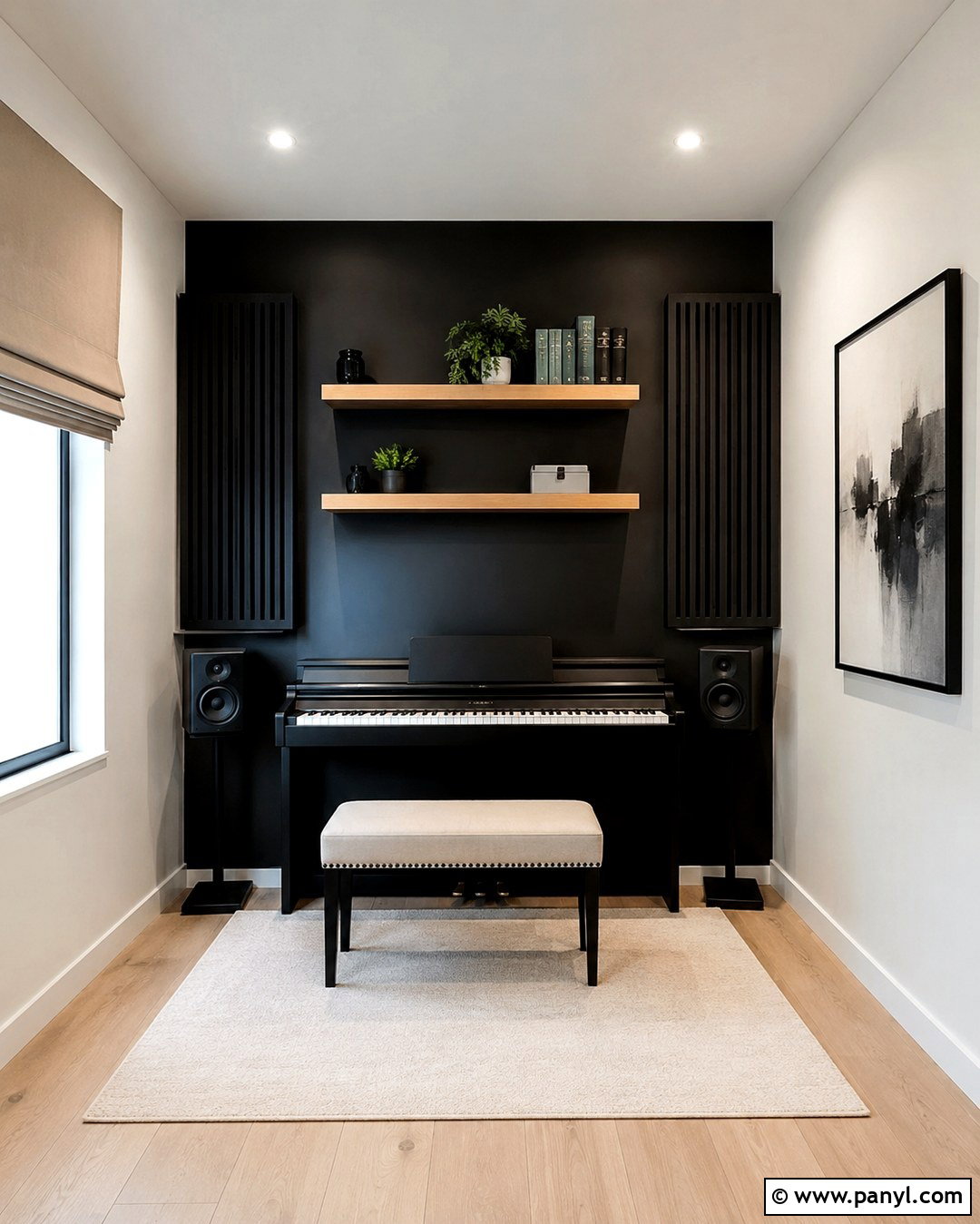
When space is limited, one black wall can define a dedicated music zone without making the entire room feel smaller. Place a compact digital piano or narrow production desk against the dark surface. Use floating shelves above it for headphones, books, and small speakers, keeping the floor clear. A slim upholstered bench can tuck completely underneath the instrument when it is not needed. Paint the other walls soft white and choose pale wood flooring to reflect more light around the room. A washable ivory rug and linen Roman shade introduce softness. Add one vertical acoustic panel on each side of the workstation for a balanced appearance. With wall-mounted storage, concealed cables, and limited decoration, this compact design offers everything needed for focused practice in a tidy footprint.
7. Black Wall Jazz Music Room
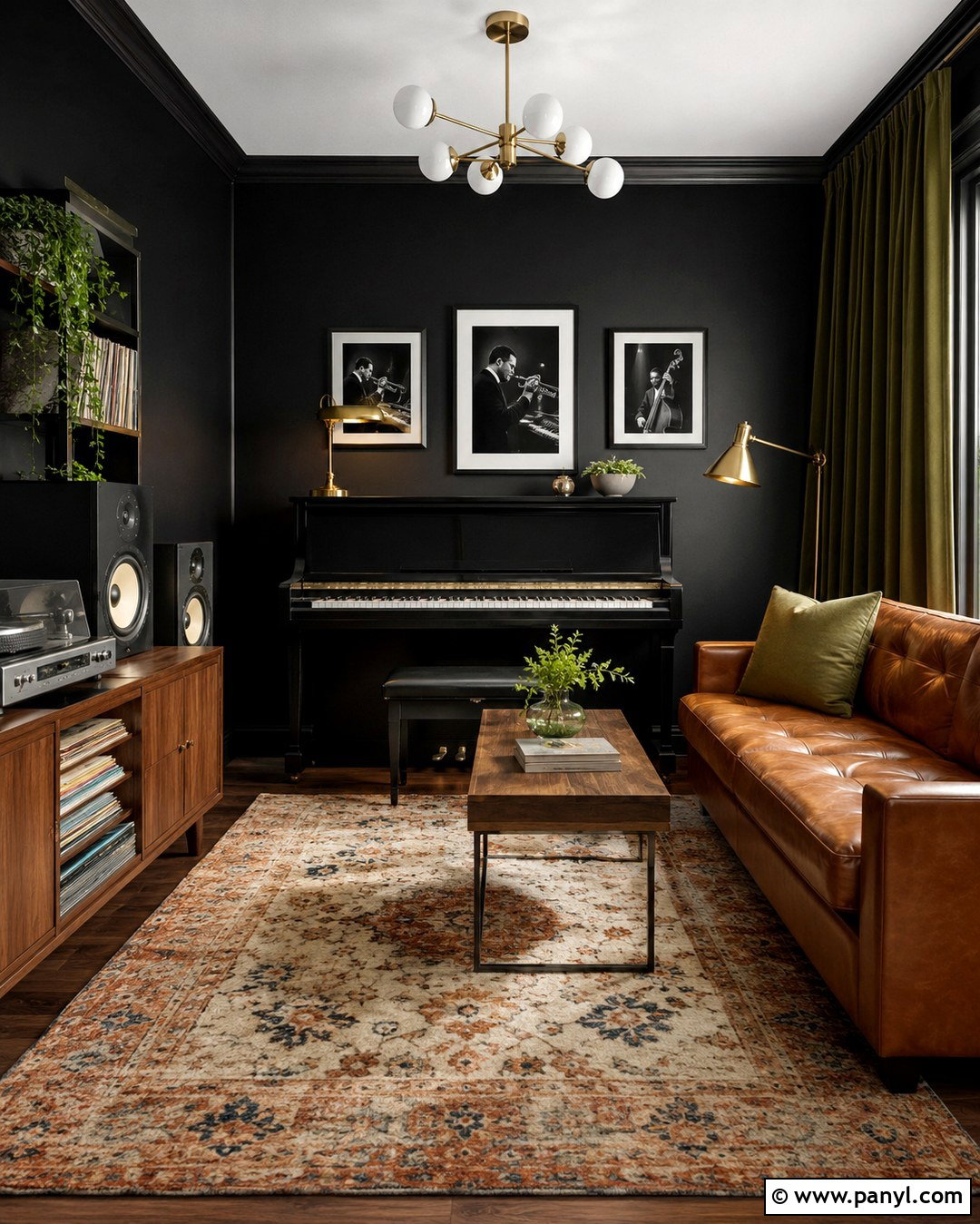
Rich materials give a jazz-inspired music room its relaxed, sophisticated character. Begin with black walls and medium-dark walnut flooring, then anchor the space with an upright piano and a deep cognac leather sofa. A patterned rug in cream, rust, and muted blue adds color while helping define the listening area. Place a record console beside the sofa and position bookshelf speakers at comfortable ear level. Framed black-and-white performance photography can create a gallery above the piano. Use aged brass floor lamps and sconces to bring warmth to the dark background. Heavy olive-green curtains add another rich color and soften the windows. Keep the center of the room open for playing. The finished space feels intimate yet practical, with music, seating, storage, and lighting working together.
8. Minimalist Black Wall Production Studio
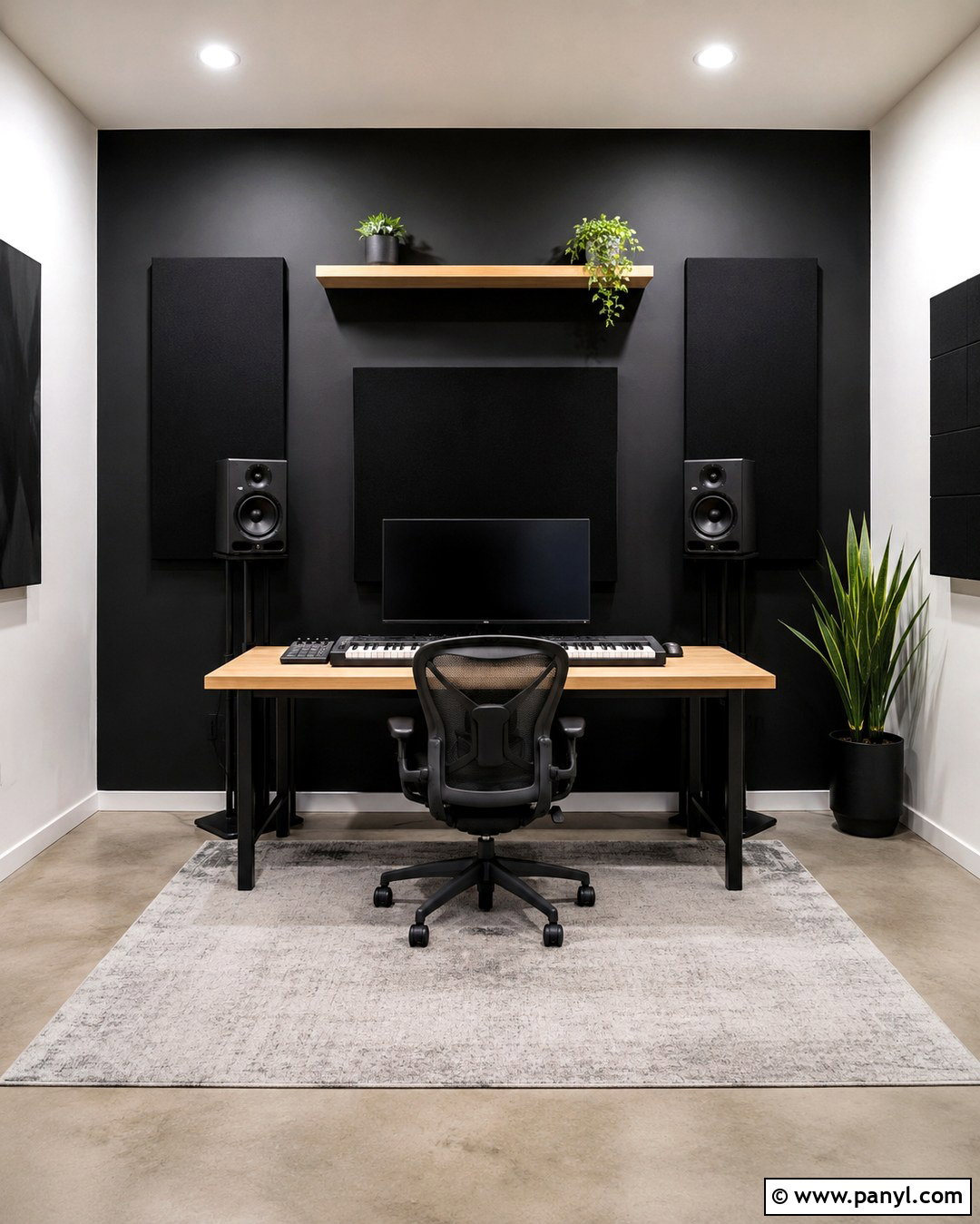
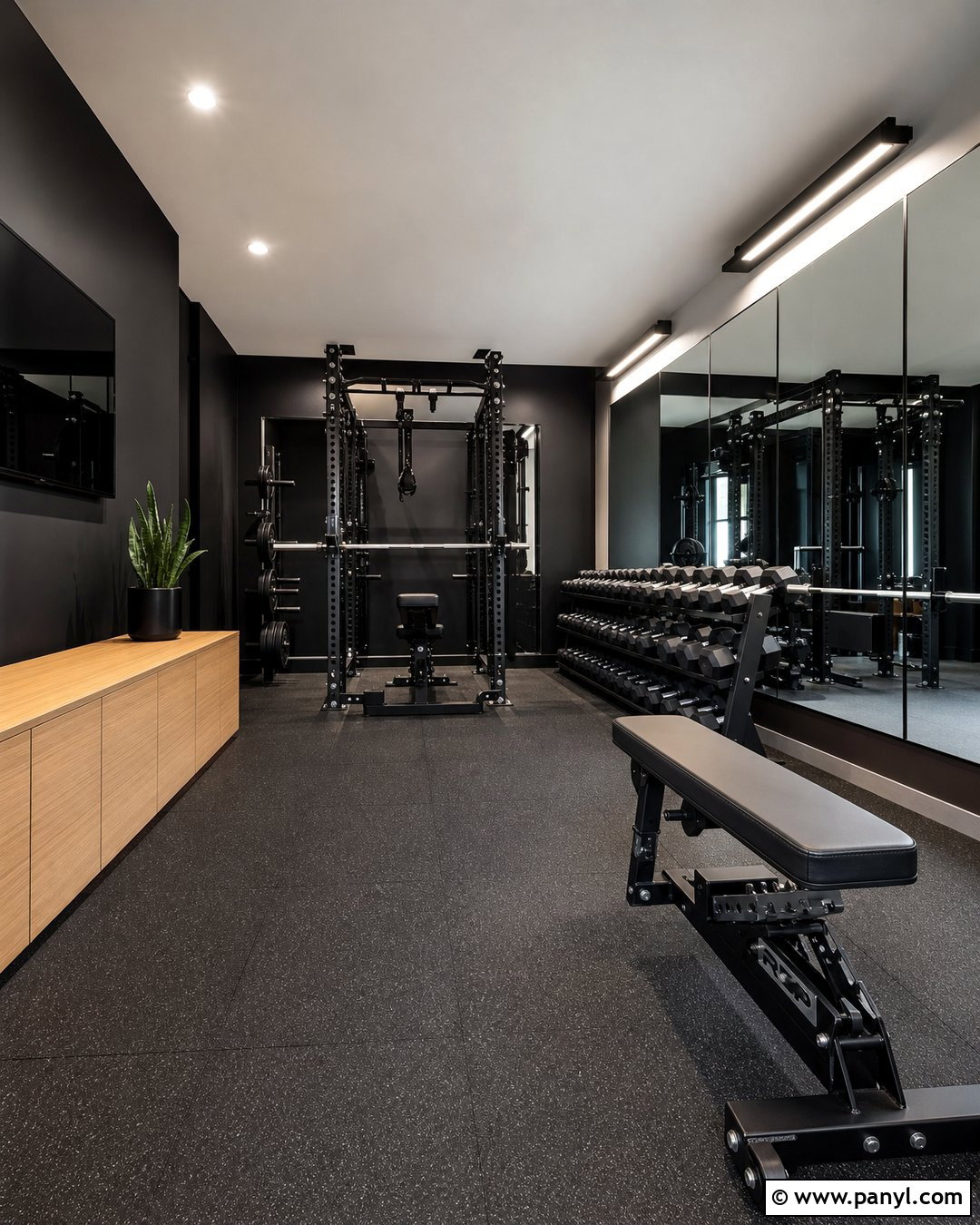
A restrained production room can improve visual focus by giving every piece of equipment a clear place. Paint the front wall flat black and center a simple oak desk between two black studio speakers. Use matching stands so the speakers align cleanly with the listening position. Choose a streamlined MIDI keyboard, one monitor, and an under-desk rack for essential equipment. White side walls, pale concrete flooring, and a light gray rug prevent the room from feeling overly dark. Install black rectangular acoustic panels in a symmetrical pattern, leaving open wall space around them. A single floating shelf can hold headphones and two small plants. Complete the room with a supportive gray chair and hidden cable channels. The minimal palette keeps attention on creating music rather than managing decorative clutter.
9. Industrial Black Wall Drum Room
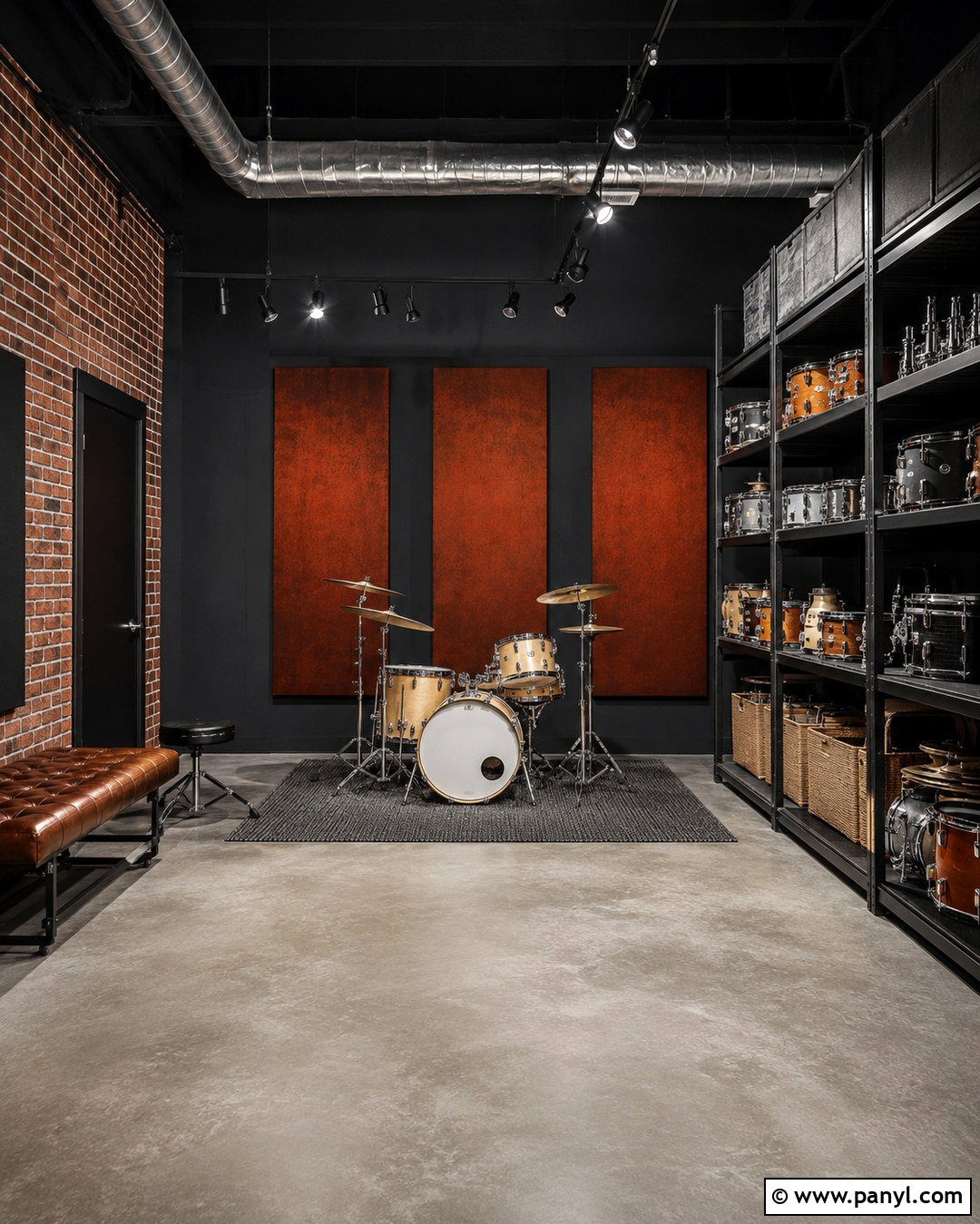
Raw finishes work especially well around a dramatic black drum-room wall. Pair the painted surface with exposed brick on one side and sealed concrete flooring below. Center a natural maple drum kit on a large charcoal rug, leaving walking space around the entire setup. Black metal shelves can hold percussion instruments, cases, and folded stands. Add rust-colored acoustic panels to the black wall for contrast and practical softness. Overhead track lighting provides strong, adjustable illumination, while industrial cage sconces add character. A worn brown leather bench creates a place to tune instruments or take breaks. Keep loose cables in labeled drawers and use wall hooks for headphones. This complete room feels rugged and purposeful, but the warm wood, leather, and fabric prevent it from becoming cold.
10. Scandinavian Black Wall Music Room
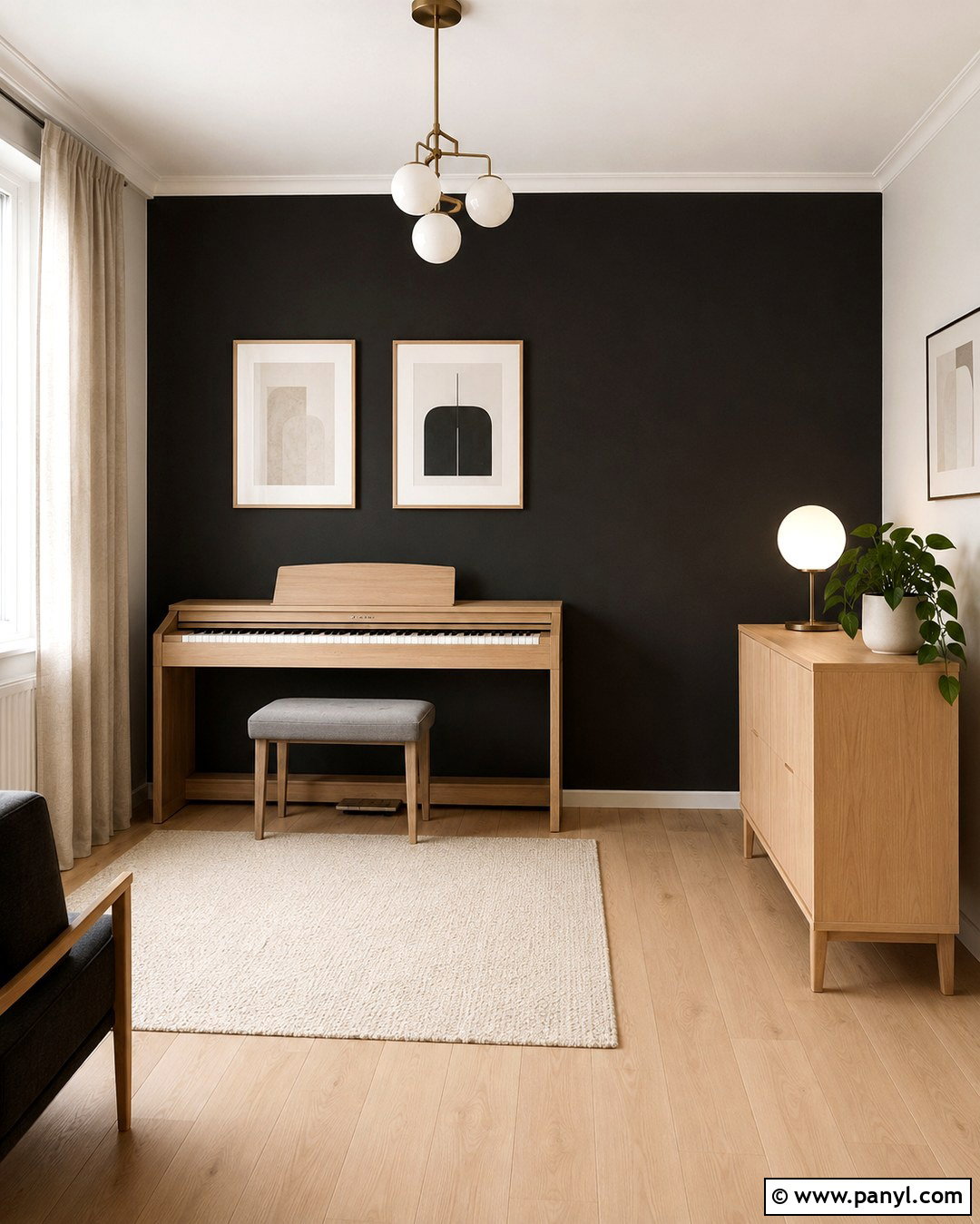
Black walls can still feel light when paired with Scandinavian furniture and a restrained neutral palette. Use a single soft-black wall behind a pale oak digital piano, then keep the surrounding walls crisp white. Add blonde wood flooring, a woven ivory rug, and a simple gray upholstered bench. A low birch cabinet can store sheet music, cables, and smaller instruments behind plain doors. Choose white globe lighting and a slender wood floor lamp to brighten the room evenly. Minimal framed prints and one large leafy plant provide decoration without creating distraction. Linen curtains help soften both the window and the room’s acoustics. This balanced arrangement works well for quiet practice, casual listening, or lessons, offering strong contrast while preserving the clean, comfortable feeling associated with Scandinavian interiors.
11. Midcentury Black Wall Listening Room
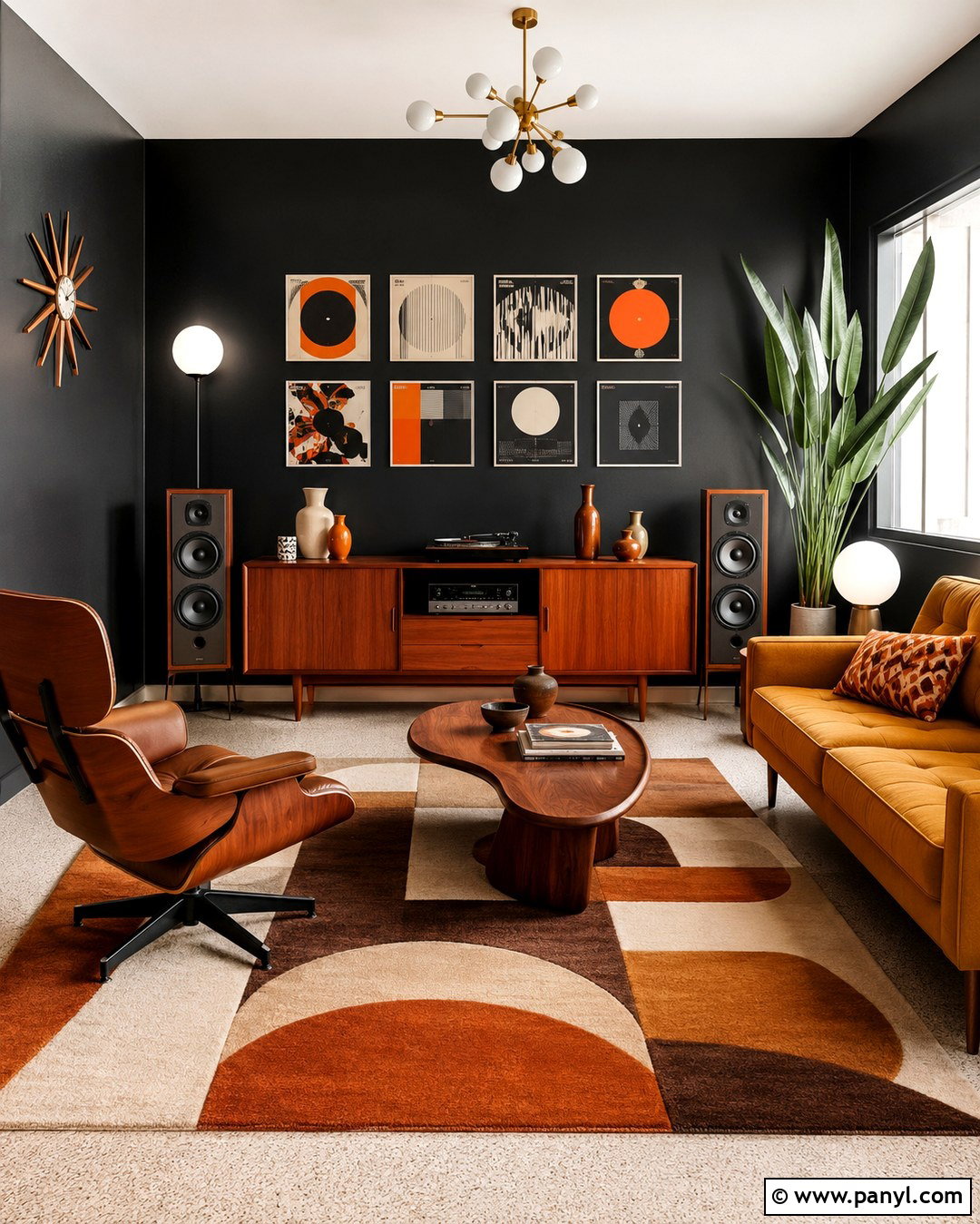
A black backdrop gives midcentury furniture and warm wood finishes extra definition. Place a long teak record console against the feature wall, with a turntable centered above closed storage. Add two vintage-inspired speakers, angled toward a low walnut lounge chair with caramel upholstery. A compact sofa in muted mustard brings another period-appropriate color without overpowering the room. Choose a geometric rug in cream, brown, and burnt orange to connect the furniture. A starburst clock, framed album art, and sculptural ceramic pieces complete the display. Keep the remaining walls warm white and use medium oak flooring throughout. Globe lamps and a brass floor light add soft illumination. The result is a comfortable listening space that feels collected, functional, and unmistakably midcentury without becoming overly themed.
12. Classic Black Wall Grand Piano Room
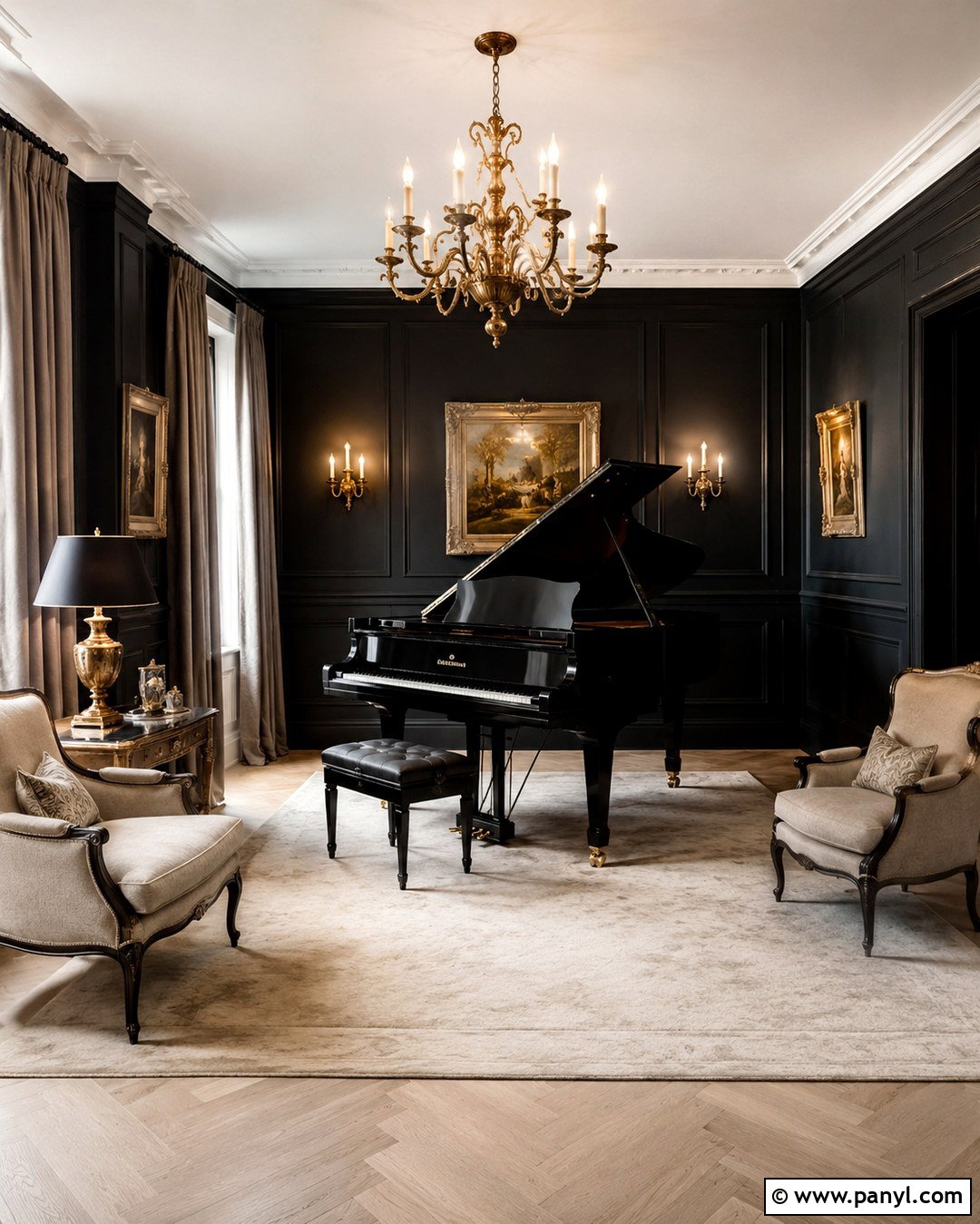
A grand piano deserves enough breathing room to be appreciated from several angles. Paint the main wall deep black and use warm white trim, crown molding, and tall baseboards to create crisp architectural contrast. Position the black grand piano slightly off-center, leaving clear circulation around its curved side. Pale herringbone wood flooring and a large ivory rug lighten the room while adding refinement. Include two upholstered armchairs near the window for informal performances and conversation. Floor-length taupe curtains soften the tall windows and balance the piano’s strong finish. A traditional brass chandelier, matching sconces, and framed classical music prints complete the scheme. This entire room feels elegant but approachable, with formal details, comfortable seating, and a layout designed for both playing and listening.
13. Boho Black Wall Music Room
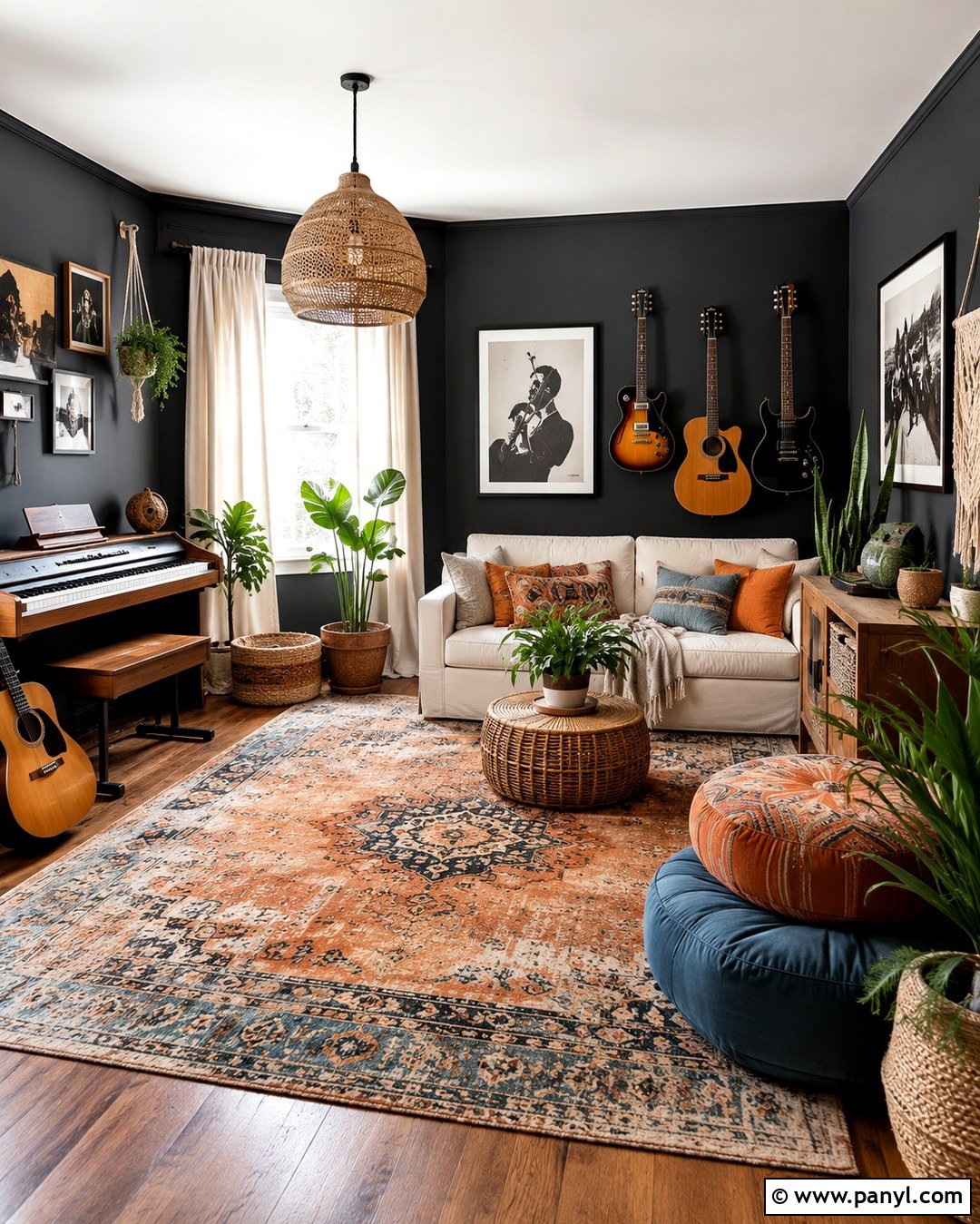
Layered textiles and natural materials can make a black music room feel relaxed rather than severe. Use a matte black wall behind a low wooden keyboard stand, then display two guitars on woven leather straps nearby. Place a cream slipcovered sofa opposite the instruments and add a vintage-style rug with terracotta, tan, and faded blue patterns. Rattan side tables, a woven pendant, and several healthy green plants introduce organic texture. Hang a simple macramé piece between framed music prints, but leave enough open space to avoid visual clutter. Linen curtains and floor cushions create additional softness for casual listening sessions. Use lidded baskets to store cables, pedals, and accessories. The complete room has a creative, comfortable personality while maintaining an organized and practical layout.
14. Luxury Black Wall Music Room
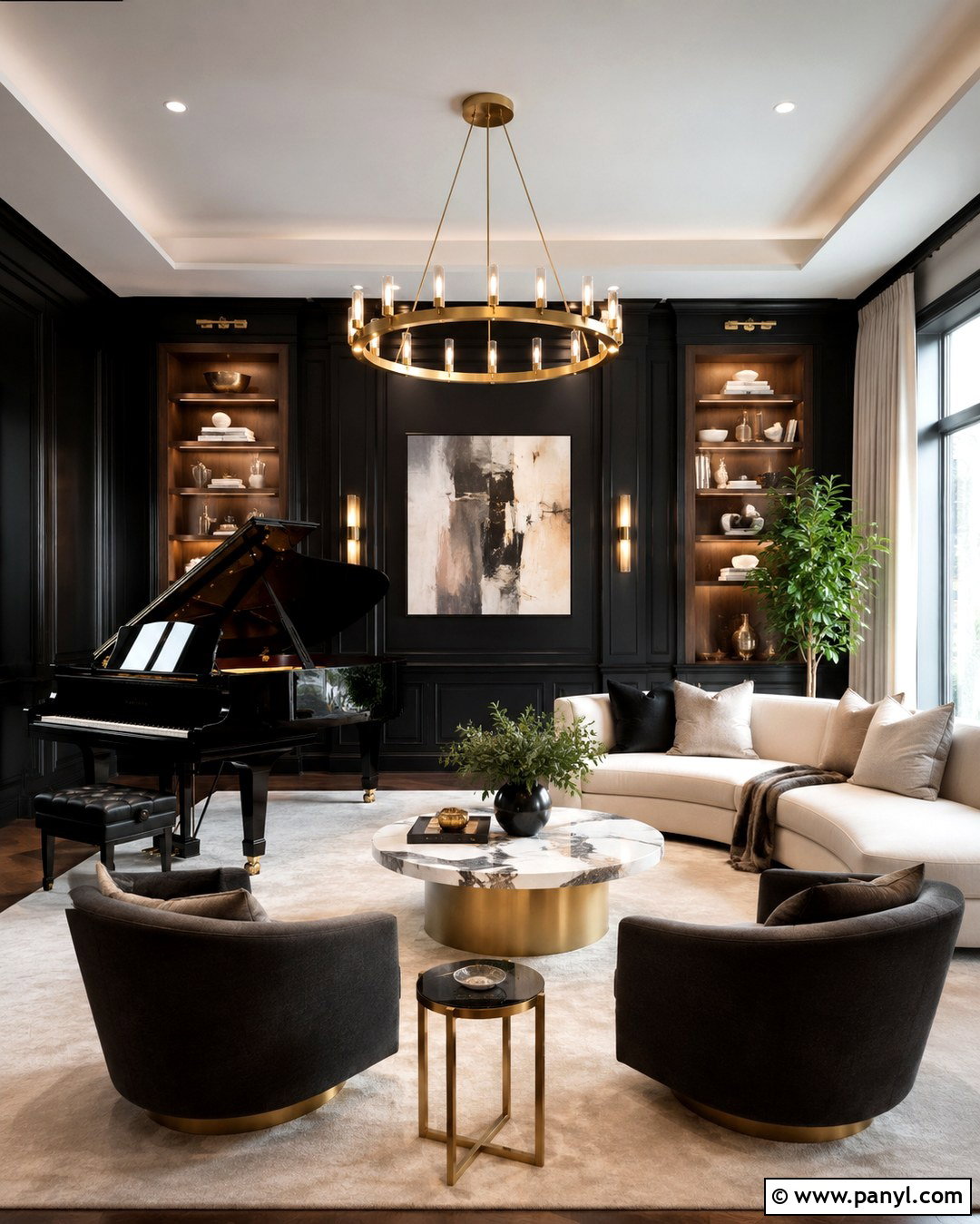
For a more polished setting, combine black walls with veined stone, velvet, brass, and dark wood. Center a glossy black piano against the longest wall and frame it with tall brushed-brass sconces. A curved cream velvet sofa should face the performance area, accompanied by two compact charcoal chairs and a round marble table. Add a large neutral rug to define the seating arrangement and soften the floor. Built-in walnut cabinets can conceal equipment while displaying selected records and decorative objects in illuminated niches. Use tailored ivory curtains and a modern brass chandelier to keep the room bright. Restrained artwork and carefully placed greenery complete the design. Every element feels coordinated, creating an elegant music room that supports performances, private practice, and comfortable listening sessions.
15. Black Wall Music Room Office
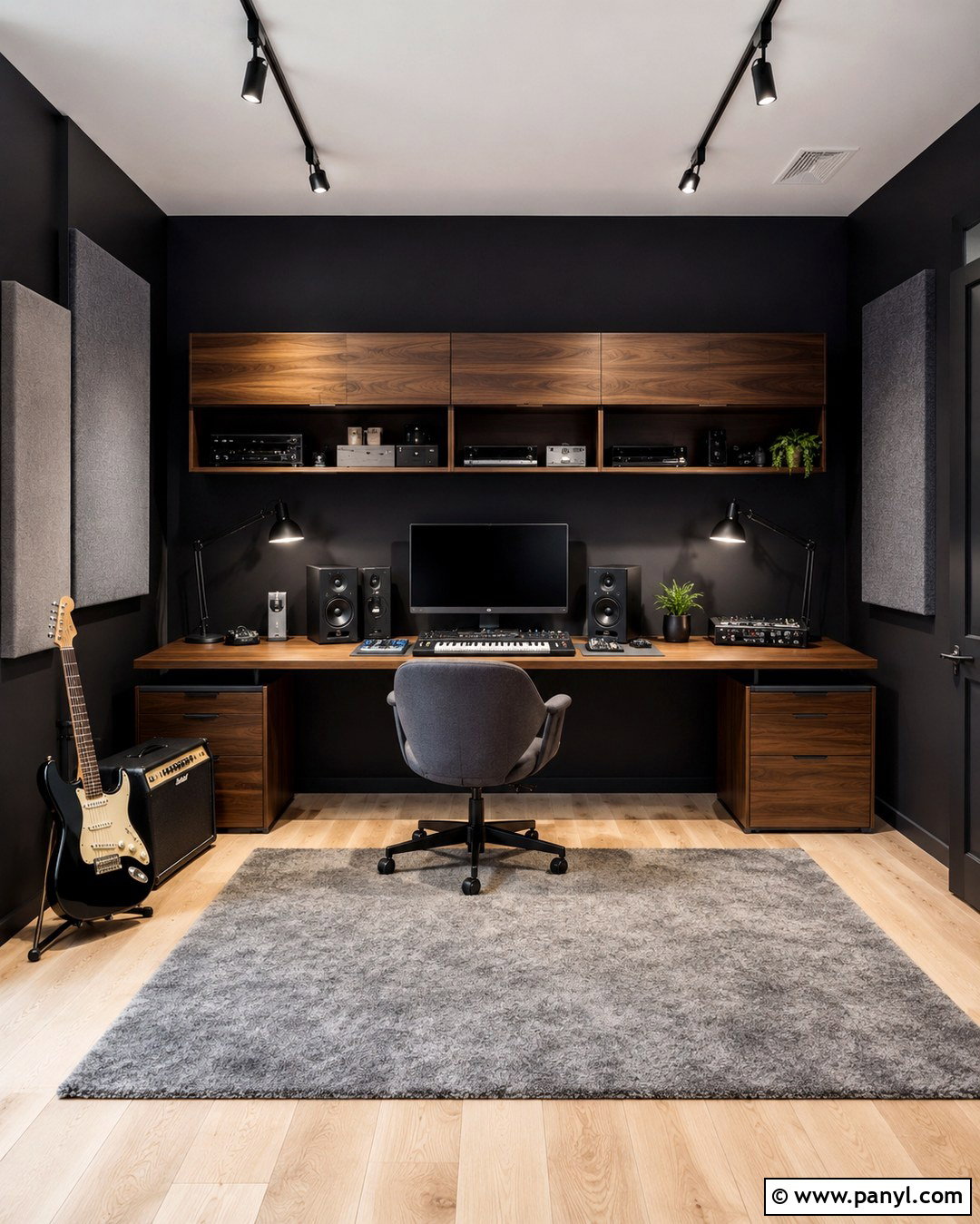
A combined office and music room works best when each activity has its own clearly defined zone. Run a long walnut desk along the black wall, leaving one end for a computer and the other for a compact keyboard and audio equipment. Install floating cabinets above the workstation to hide paperwork, cables, and accessories. Place a guitar stand and small amplifier near the music side, while a supportive office chair serves both functions. Pale wood flooring, a soft gray rug, and warm white side walls balance the black backdrop. Add fabric acoustic panels that resemble simple artwork and use adjustable task lights above both work areas. A compact sleeper chair in the corner creates a listening spot. This layout remains productive by day and ready for music after work.
16. Black Wall Teen Music Room
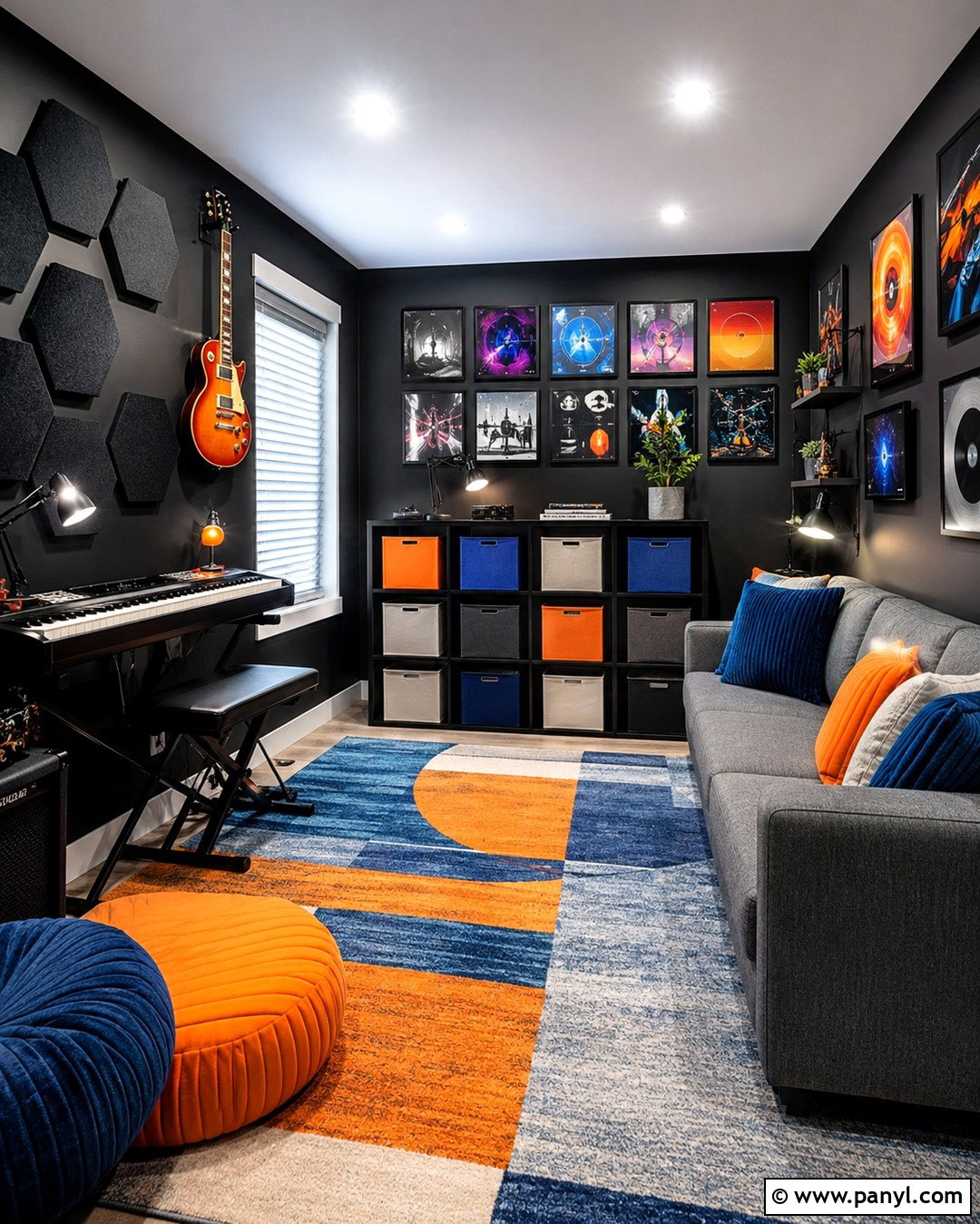
A teen music room should feel expressive while remaining easy to organize and update. Paint one wall matte black and use it as the backdrop for a keyboard, guitar mounts, and interchangeable framed album artwork. Choose a durable gray sofa with washable covers and add floor cushions for friends. A bold rug in blue, orange, and cream introduces energy without requiring permanent changes. Modular cube storage can hold small instruments, headphones, books, and electronics in labeled fabric bins. Add black acoustic panels in geometric shapes to support the visual theme. Bright ceiling lights and flexible desk lamps keep the room practical for practice or homework. With open floor space, accessible instruments, and adjustable decor, the finished design can evolve as musical interests and personal tastes change.
17. Black Wall Vocal Recording Room
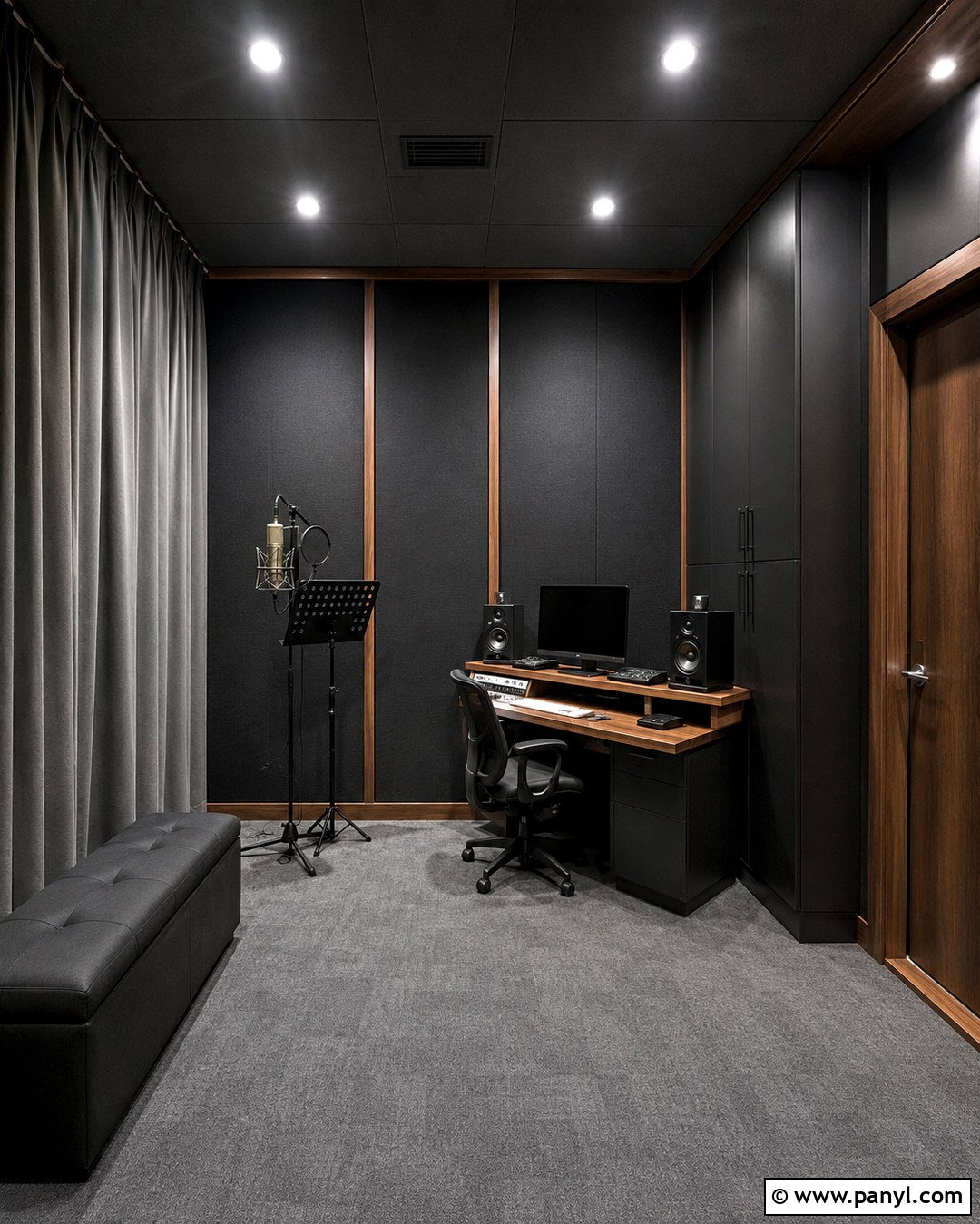
A vocal room can look refined while using practical acoustic finishes throughout the space. Cover the wall behind the microphone with black fabric-wrapped panels, then add narrow walnut strips between them for warmth. Position the microphone and pop filter near the center, leaving enough clearance for a music stand and comfortable movement. Place a compact recording desk with a monitor and speakers along the adjacent wall. Charcoal carpet tiles, thick gray curtains, and a small upholstered bench add more soft surfaces. Use bright recessed lighting with an adjustable task light near the stand. Closed cabinetry can store microphones, headphones, and cables safely. The overall layout feels calm and professional, giving the vocalist a focused recording zone without making the room resemble a plain commercial booth.
18. Black Wall Electronic Music Studio
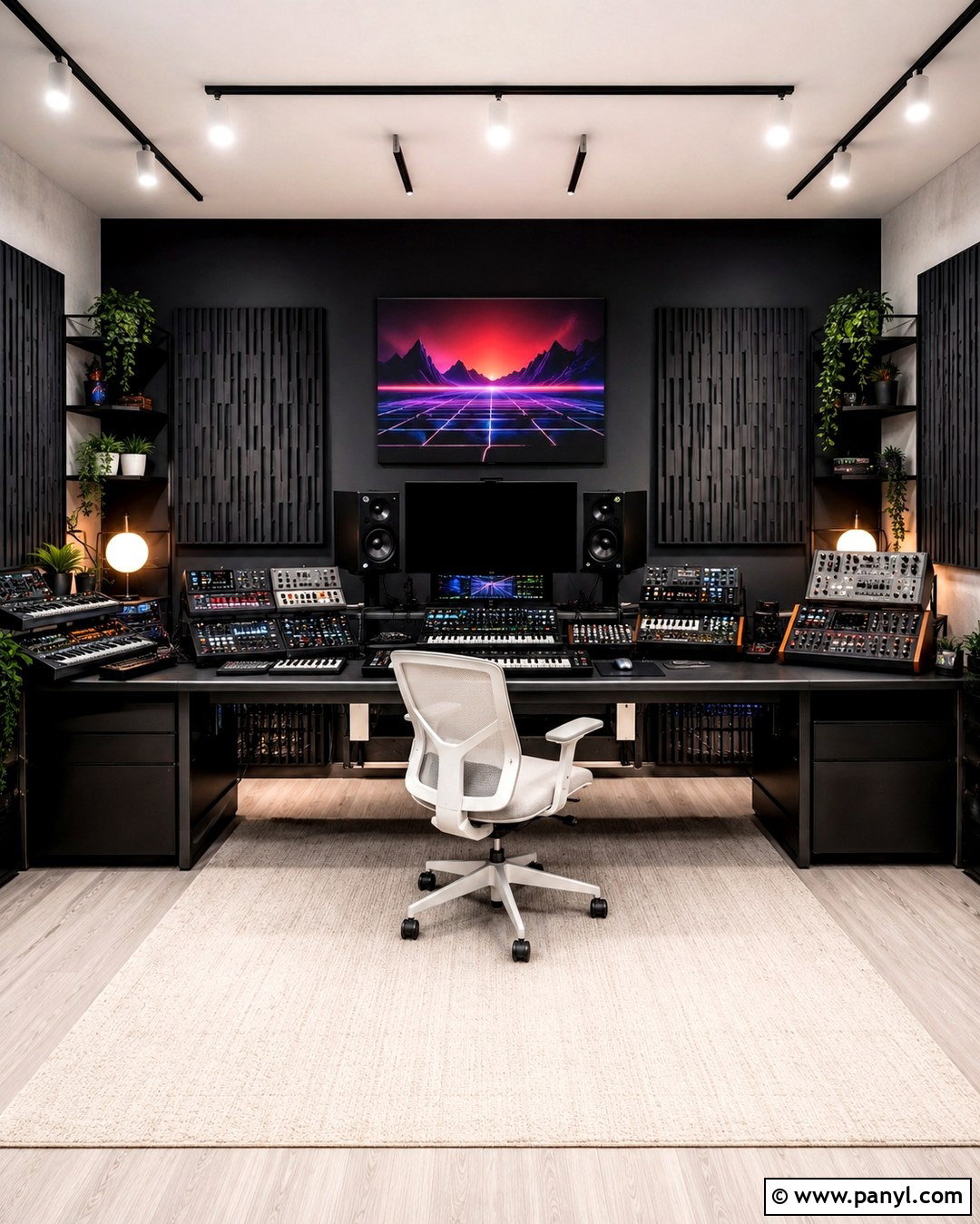
Electronic instruments create a visually detailed room, so the background and storage should remain disciplined. Paint the front wall satin black and place a wide modular desk across it. Arrange synthesizers on tiered stands, keeping the primary keyboard at seated height and smaller units above. Mount studio speakers on separate stands and place charcoal acoustic panels behind them in a symmetrical layout. Light gray flooring and a large cream rug brighten the room, while black cable channels keep connections controlled. Add floating metal shelves for compact drum machines and headphones. A streamlined white chair creates crisp contrast against the dark setup. Bright track lighting and concealed LED accents reveal the equipment clearly. This finished studio supports composing, performing, and recording without sacrificing an orderly, contemporary appearance.
19. Black Wall Album Cover Gallery Room
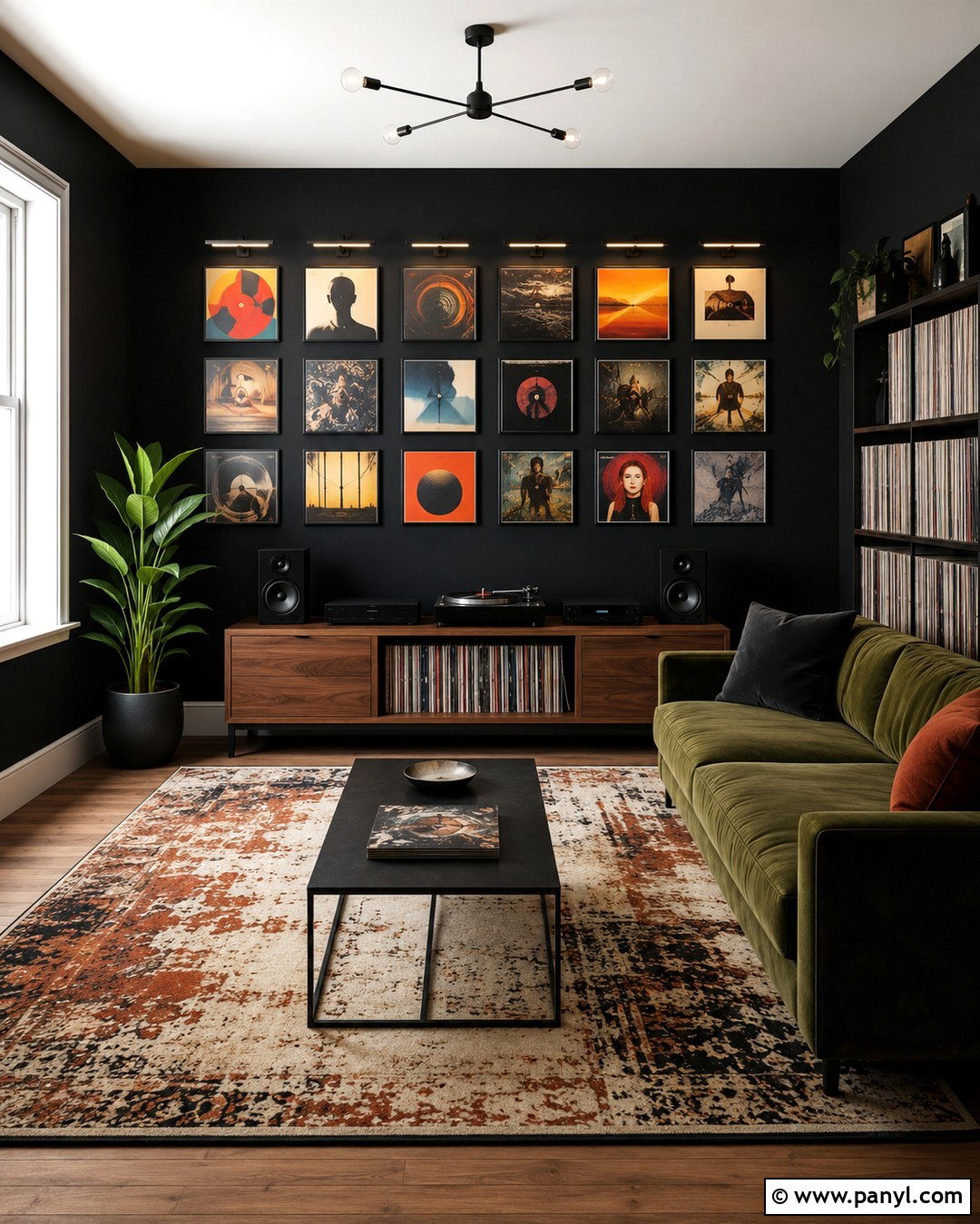
A carefully planned album gallery can bring color to black walls without making the room look chaotic. Select a consistent frame size and arrange album covers in an evenly spaced grid above a low record console. Build the rest of the room around that focal point with walnut storage, black speakers, and a comfortable olive-green sofa. A cream and rust rug connects the artwork to the seating area. Place a turntable at the center of the console and use closed cabinets for cleaning supplies, cables, and less attractive accessories. Slim picture lights can illuminate the display, while a simple ceiling fixture brightens the entire room. By repeating frame sizes and limiting furniture finishes, the complete design celebrates a personal collection while remaining sophisticated, comfortable, and easy to maintain.
20. Black Wall Music Room With White Trim
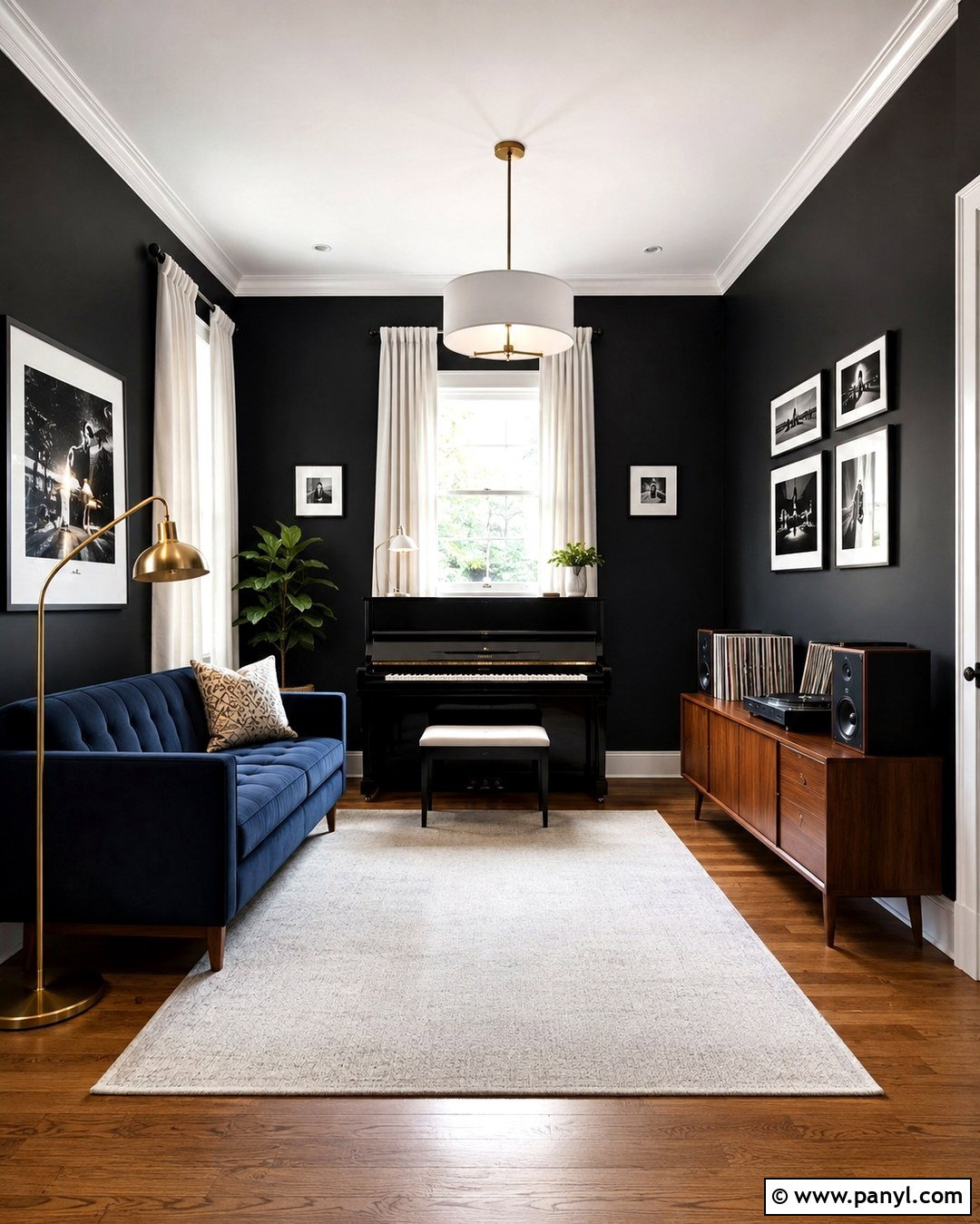
Crisp white trim creates a strong frame around black walls and prevents traditional architectural details from disappearing. Paint the walls a soft matte black, then highlight the baseboards, window casings, doors, and crown molding in clean white. Place an upright piano against the main wall and add a cream upholstered bench beneath framed music photography. Medium oak flooring, an ivory rug, and natural linen curtains bring warmth and brightness. Include a small navy sofa for listening, plus a walnut side table and brass floor lamp. Black speakers and a narrow record cabinet can sit along the opposite wall without interrupting the balanced palette. The completed room combines classic contrast with practical music storage, creating a timeless space suited to practice, informal performances, and everyday relaxation.
Conclusion:
The best **20 Black Wall Music Room Ideas** balance dramatic color with comfort, organization, and practical musical needs. Black can highlight instruments, disguise acoustic materials, and make colorful artwork stand out, but lighter flooring, warm wood, soft textiles, and strong lighting keep the space inviting. Start by deciding whether the room will support practicing, recording, listening, entertaining, or several activities. Then create a layout around the largest instrument or primary workstation. Add acoustic finishes thoughtfully, conceal loose cables, and provide accessible storage for everyday equipment. Whether your space is a small corner or a dedicated studio, a coordinated black wall design can give it focus, personality, and a finished appearance.

Related Ideas and Inspiration:
Leave a Reply