
A well-planned music office can support focused work, creative practice, recording, and relaxed listening without feeling like two unrelated rooms. These 20 music office room ideas combine practical desks, accessible instrument storage, comfortable seating, controlled acoustics, and decor that reflects your musical taste. The strongest layouts begin with your main activity, whether that is remote work, production, teaching, songwriting, or daily practice. From there, furniture and equipment should create an easy workflow with clear walking paths and tidy cable management. You can build an effective setup in a compact spare bedroom, basement, attic, or larger dedicated studio. Explore the following complete layouts, color palettes, and decorating approaches to find realistic 20 music office room ideas for your home.
1. Small Music Office Room
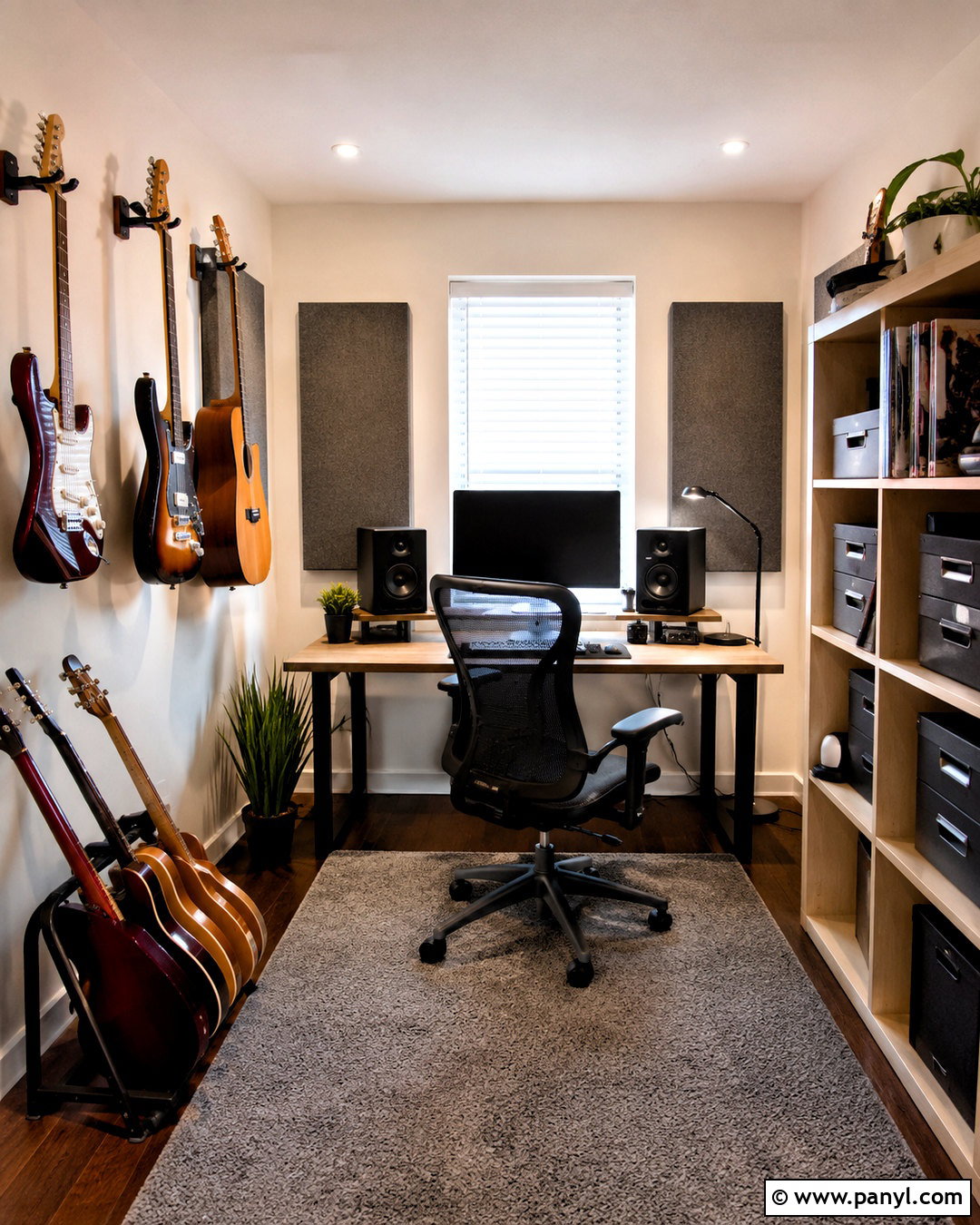
A compact room works best when the desk, instruments, and storage share the walls instead of competing for floor space. Center a slim oak desk on the shortest uninterrupted wall and place two compact studio monitors on raised stands. Slide a small MIDI keyboard onto an under-desk tray to preserve the main work surface. Mount one or two guitars securely beside the desk, leaving enough clearance to remove them easily. Choose warm white walls, a soft gray rug, and pale wood furniture to keep the room visually open. A tall bookcase can store files, headphones, sheet music, and small audio equipment in labeled boxes. Finish the room with one upholstered desk chair, a wall-mounted task light, and simple fabric acoustic panels that resemble modern artwork.
2. Modern Music Office Room
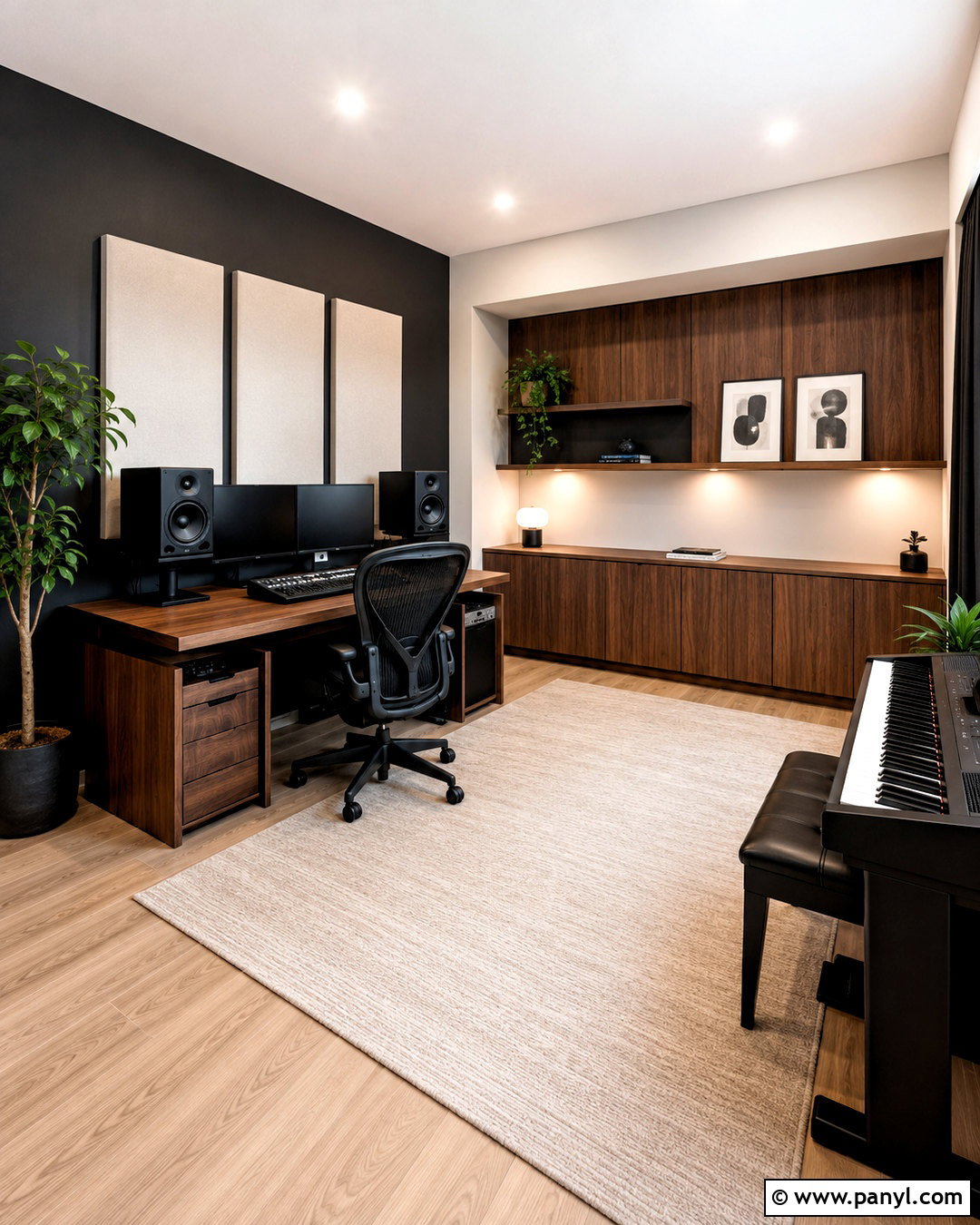
Clean lines and controlled contrast give a modern music office a polished look without making it feel cold. Start with a wide walnut desk facing a charcoal feature wall, then add matte black monitor stands, a low-profile ergonomic chair, and concealed cable channels. Position a digital piano along the neighboring wall so the desk and keyboard form an efficient L-shaped work zone. Large cream acoustic panels soften the darker wall while maintaining a streamlined appearance. Use light oak flooring and a textured ivory rug to balance the deep colors. Closed cabinets keep office supplies and recording accessories out of sight, while one floating shelf displays headphones, framed album art, and a small plant. Linear ceiling lighting and an adjustable desk lamp provide bright, even illumination for both work and music sessions.
3. Cozy Music Office Room
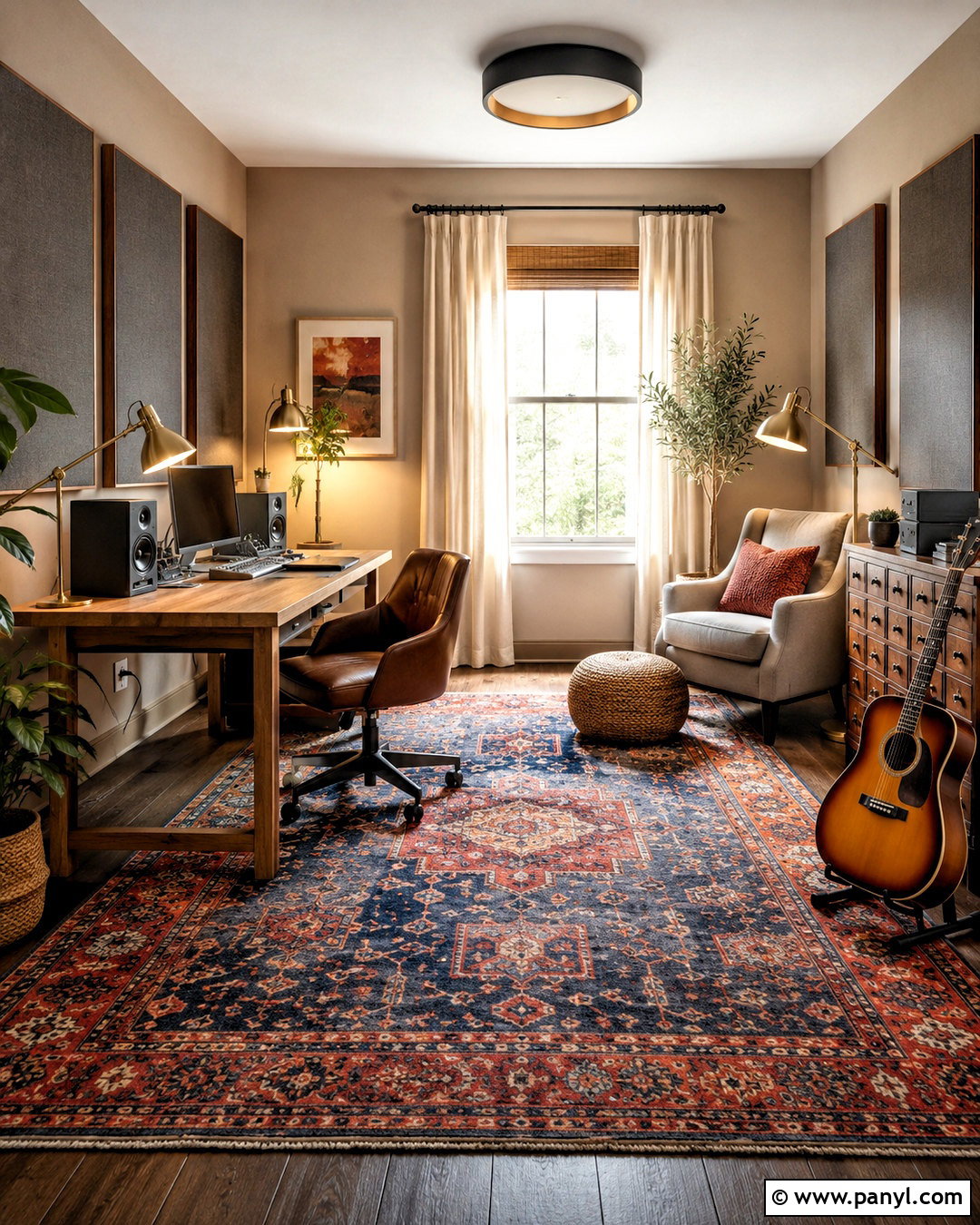
Soft textures and warm wood can make long workdays and practice sessions feel more comfortable. Paint the walls a muted clay beige and place a medium-toned wood desk near the window for natural daytime light. Across from it, create a relaxed playing area with an acoustic guitar, a compact lounge chair, and a small woven ottoman. A rust, cream, and faded blue area rug visually connects both zones. Add full-length curtains, upholstered acoustic panels, and a fabric desk chair to reduce the room’s hard, echoing surfaces. Store music books and office materials in a vintage-style cabinet with labeled baskets. Warm brass lamps, framed concert photography, and a few leafy plants add personality. Keep the arrangement uncluttered so the room remains practical, inviting, and easy to move through.
4. Minimalist Music Office Room
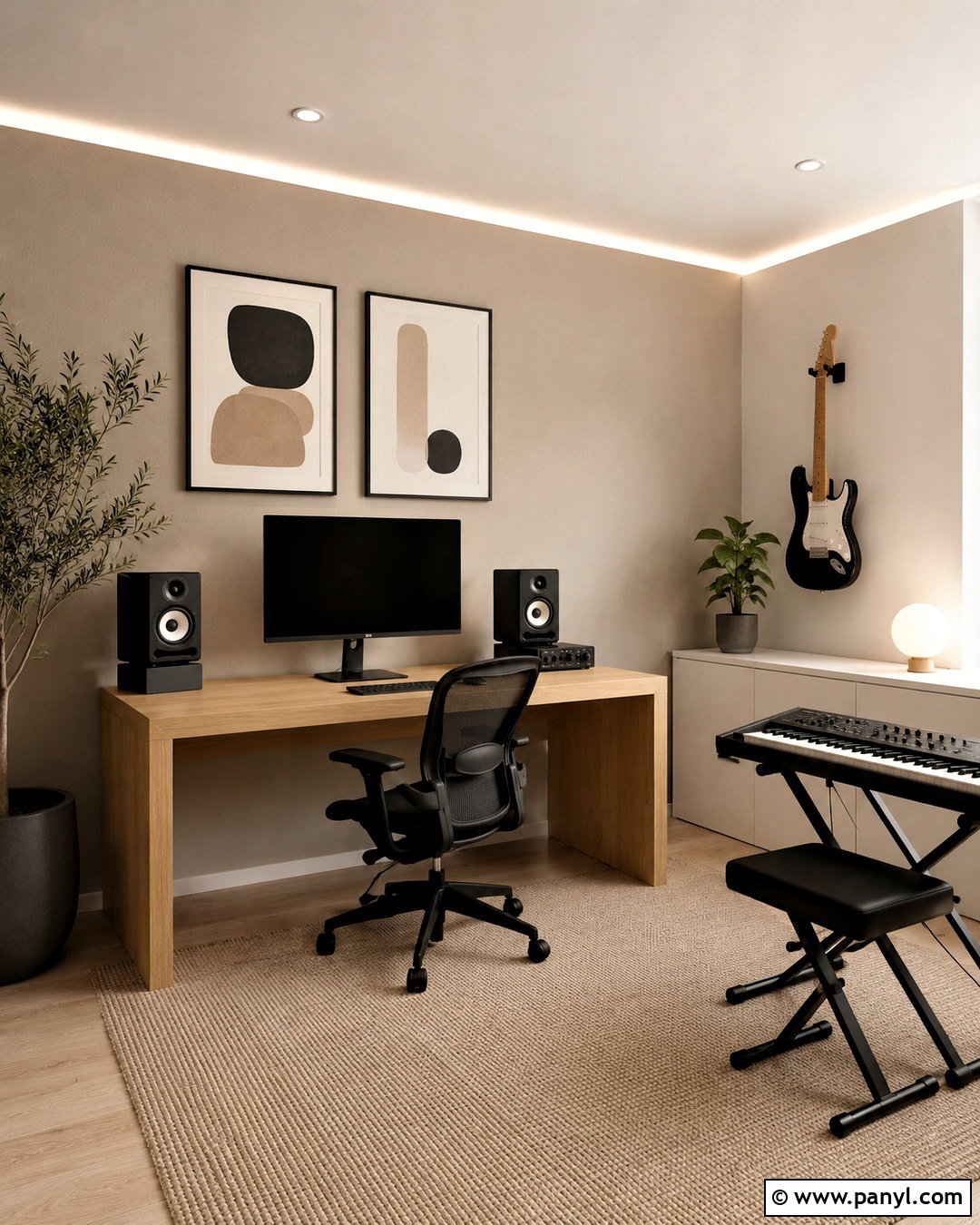
Could fewer furnishings create a more productive creative space? A minimalist music office needs only carefully selected pieces with clearly defined purposes. Use a white oak desk with a single large monitor, compact speakers, and an audio interface arranged symmetrically. Pair it with a supportive black chair and a narrow white storage cabinet. One electric guitar can hang on a warm greige wall, while a small keyboard rests on a simple stand nearby. Choose pale wood flooring and a flat-woven beige rug for quiet texture. Install rectangular acoustic panels in the same color as the walls so they blend into the architecture. Hide power strips beneath the desk and route every cable through matching sleeves. One sculptural lamp and a small plant complete the calm, distraction-free room without introducing unnecessary decor.
5. Music Production Office Room
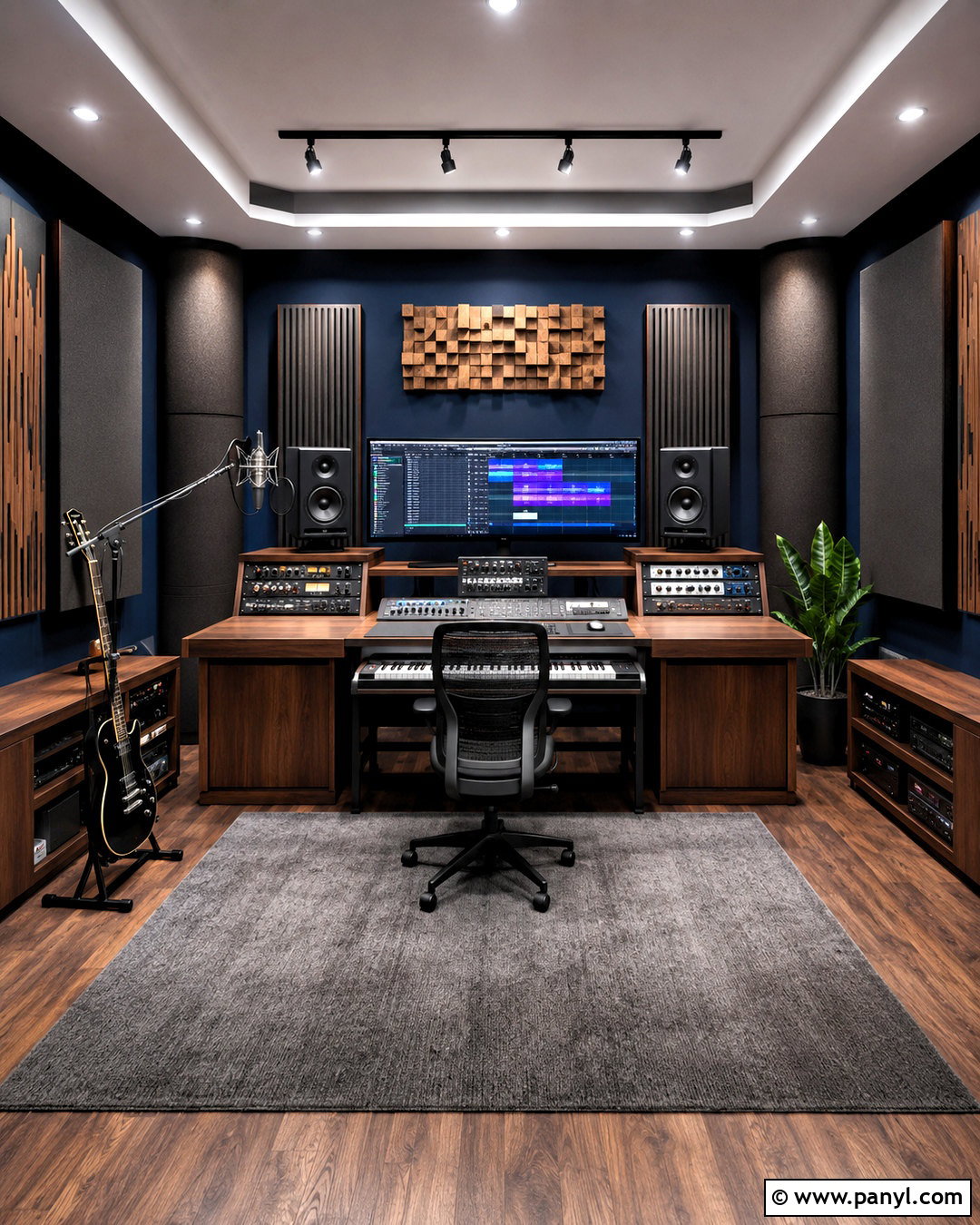
For daily production work, the workstation should control the entire layout. Center a deep studio desk on a balanced wall and position matching monitor speakers at equal heights and distances from the listening seat. A wide computer display, audio interface, control surface, and MIDI keyboard should remain within comfortable reach. Add freestanding speaker stands when space allows, keeping the desktop less crowded and easier to organize. Use deep navy walls behind the workstation, medium walnut cabinetry, and charcoal acoustic panels for a professional but residential appearance. Place bass traps in available corners and treatment at important reflection areas to help control unwanted room effects. Symmetrical monitor placement also supports more balanced listening. () A low rear cabinet can hold drives, cables, microphones, and office documents behind closed doors.
6. Guitar Music Office Room
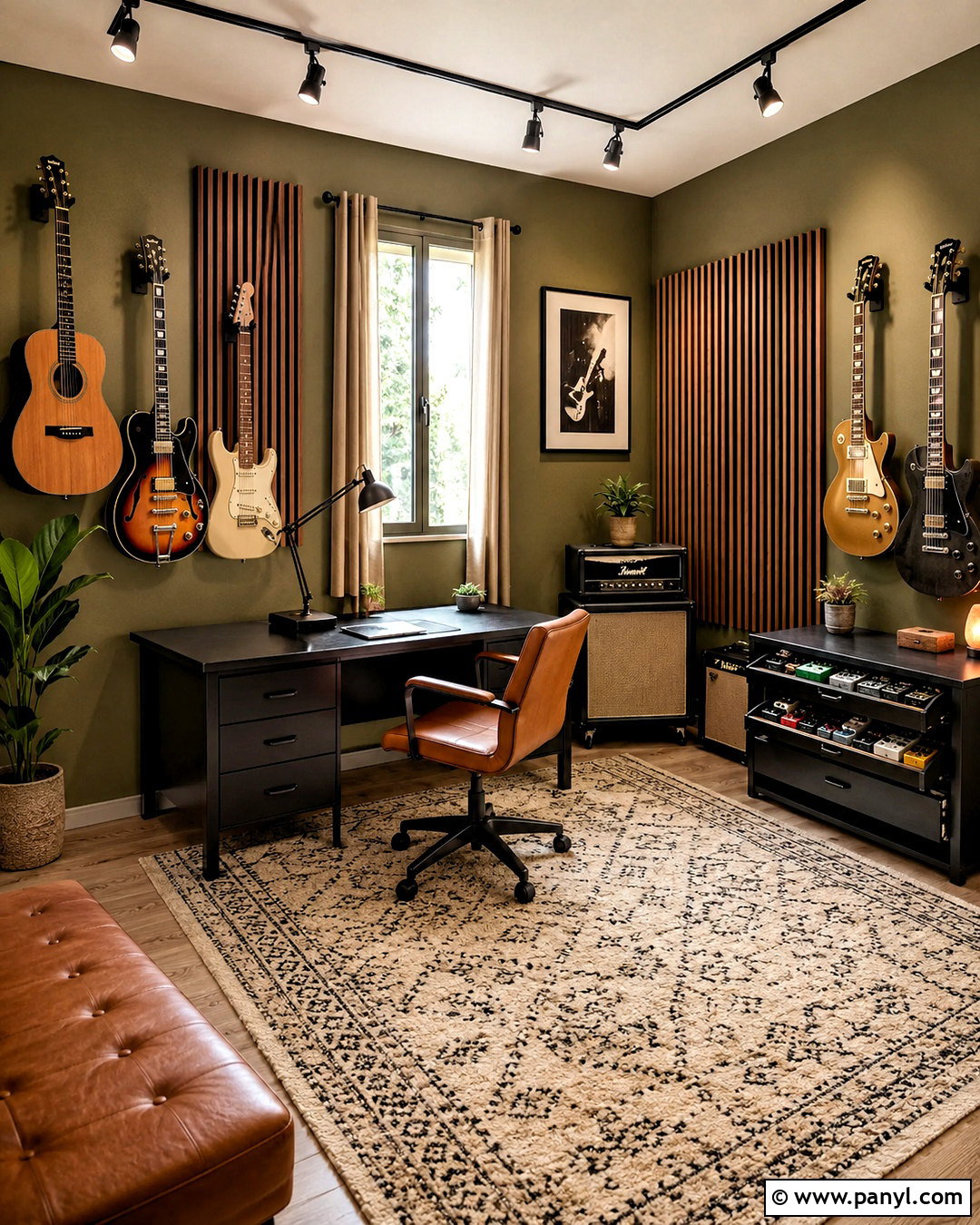
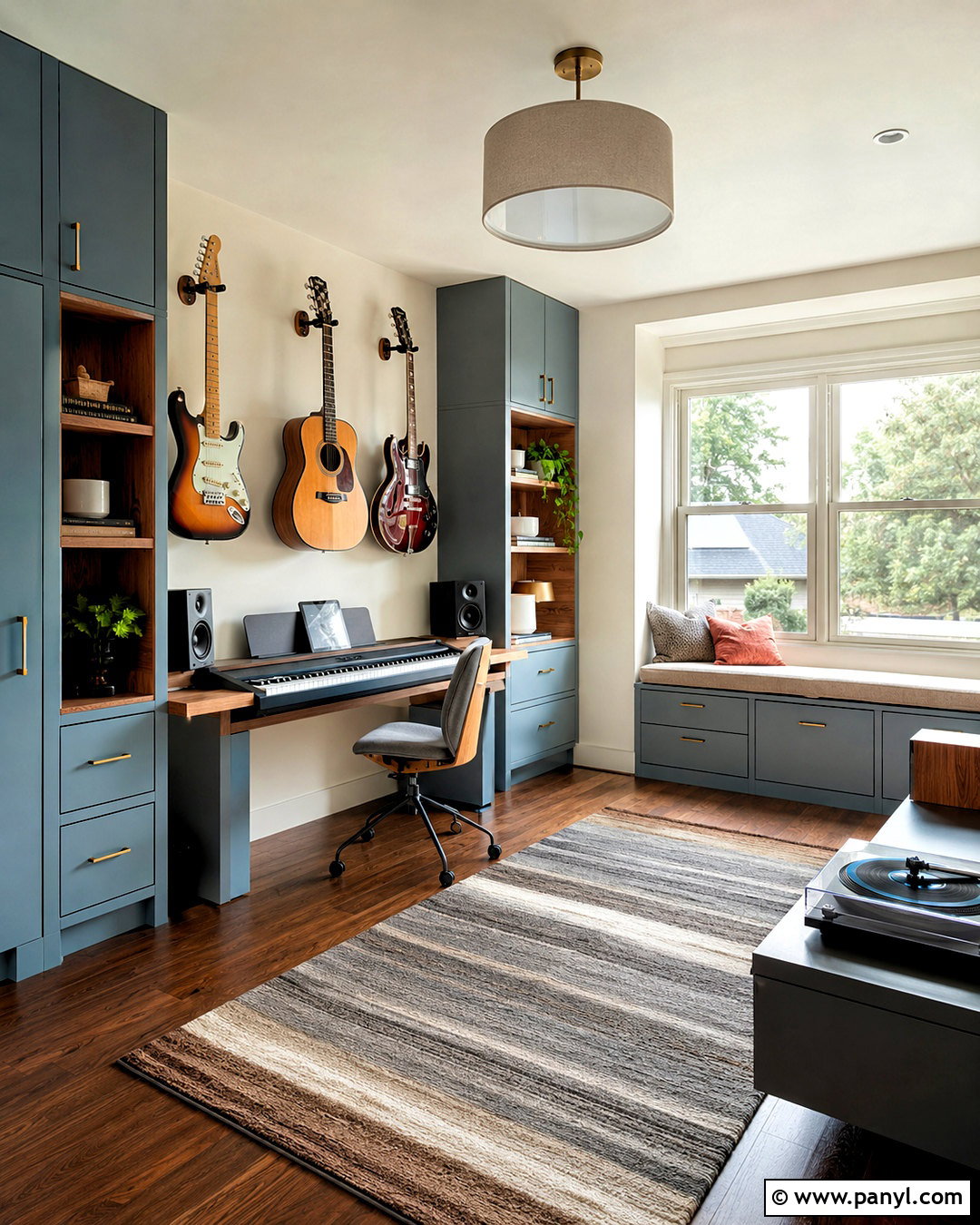
A guitar-focused office should make instruments easy to reach while protecting them from busy walkways. Place a sturdy black desk against one wall and install padded guitar hangers in a neat row on the opposite side. Use varied hanging heights for acoustic, electric, and bass guitars, but maintain enough space between each instrument. A compact amplifier station can sit below the display with pedals stored in shallow drawers. Choose warm olive walls, a cognac leather desk chair, and a patterned cream rug for a grounded, collected look. Slatted wood acoustic panels behind the guitars create a refined backdrop and add useful texture. Include a small bench for restringing or adjusting equipment. Closed office storage, soft curtains, adjustable track lighting, and organized cable hooks keep the complete room functional rather than turning it into an overcrowded equipment display.
7. Piano Music Office Room
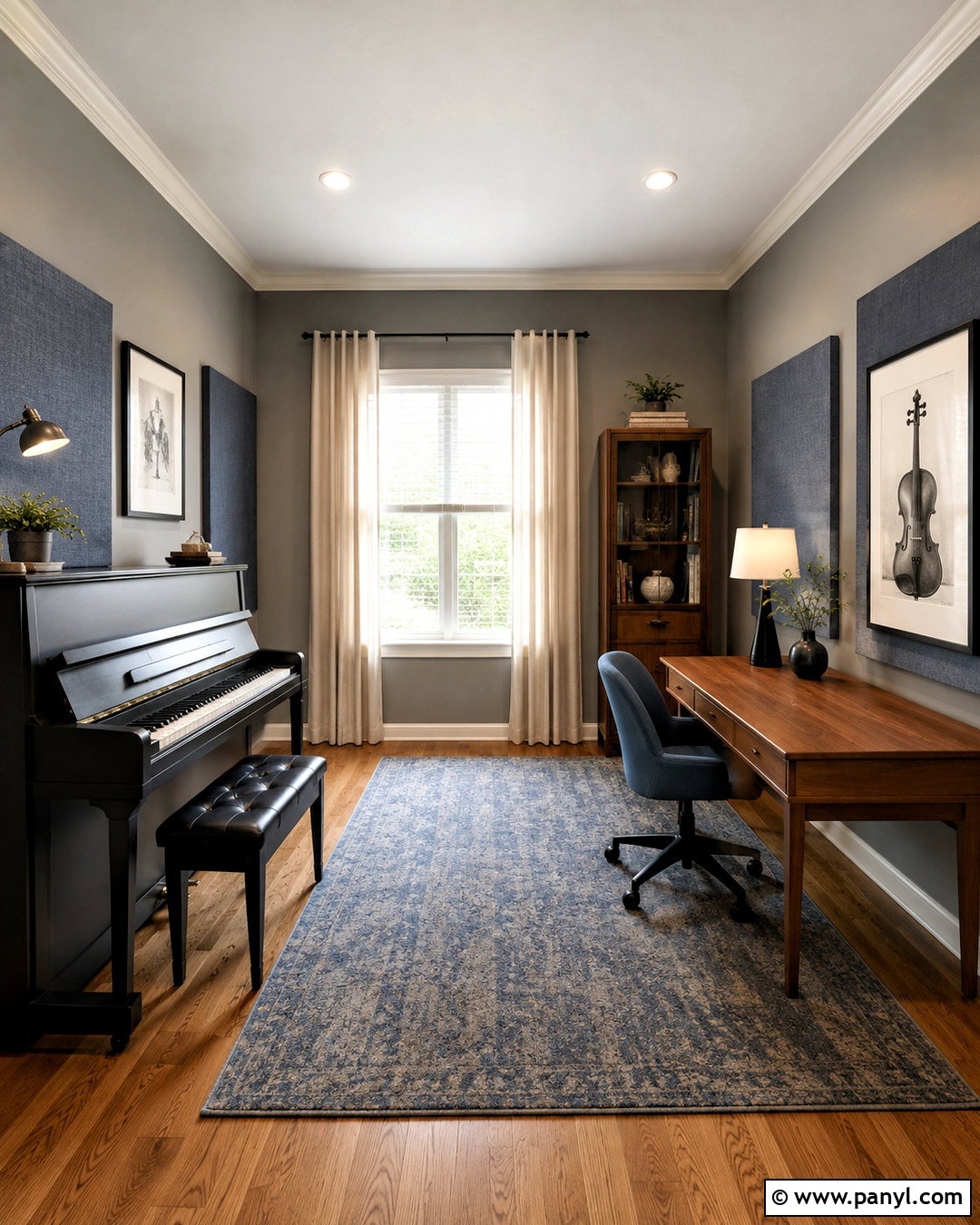
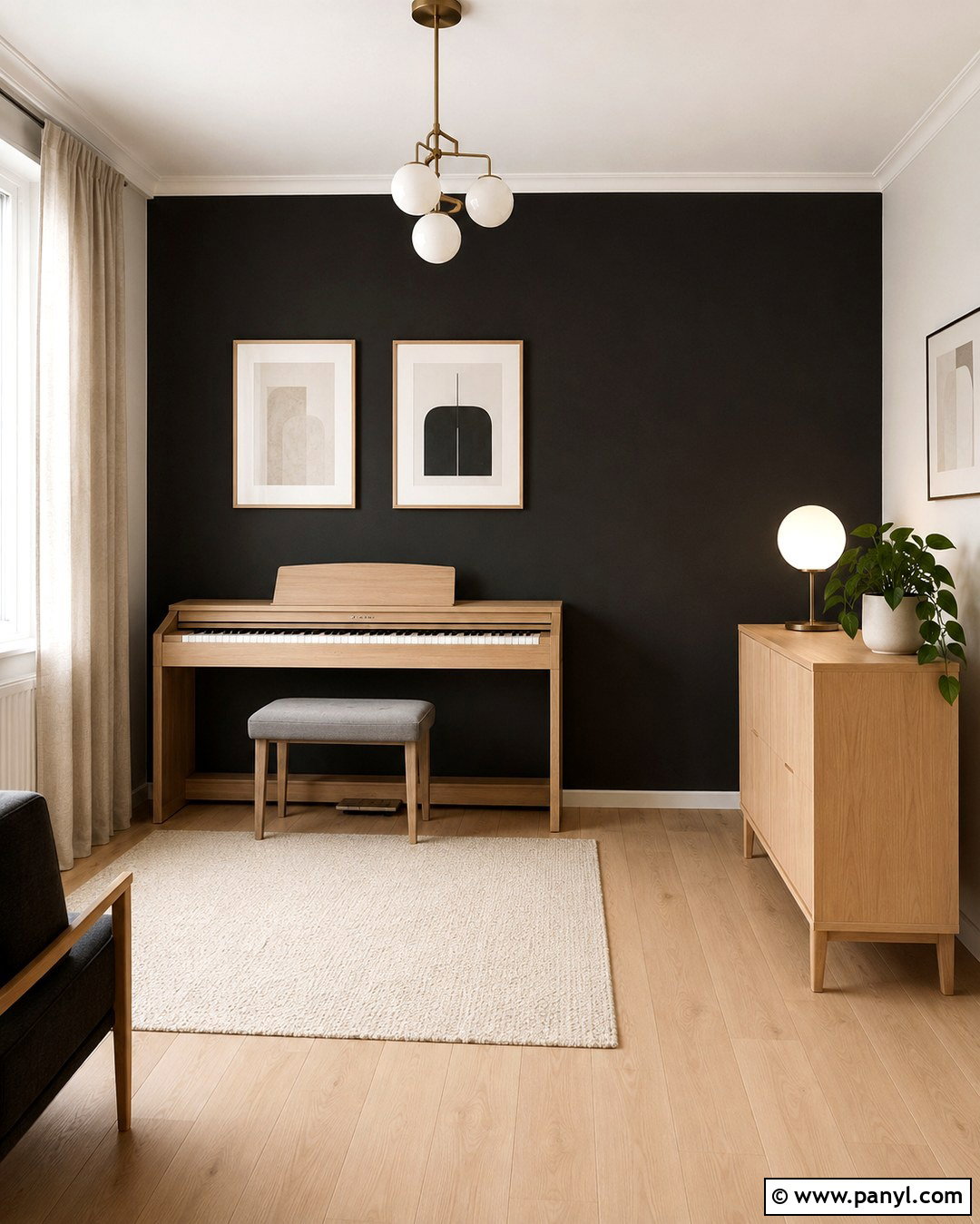
An upright piano can anchor a sophisticated office without overwhelming the available floor space. Place a matte black piano along the longest solid wall and use a slim walnut desk perpendicular to it, creating two distinct but connected zones. Paint the room soft mushroom gray and introduce cream curtains, medium oak flooring, and a muted blue rug. A cushioned piano bench can tuck fully beneath the instrument when it is not being used. Add a narrow cabinet for sheet music, printer supplies, and small recording accessories. Framed music prints above the piano provide character without cluttering the desktop. Use a picture light over the artwork and a bright adjustable lamp at the desk. Upholstered wall panels in coordinating gray fabric can support a quieter, softer room while looking like intentional architectural details.

8. Acoustic Music Office Room
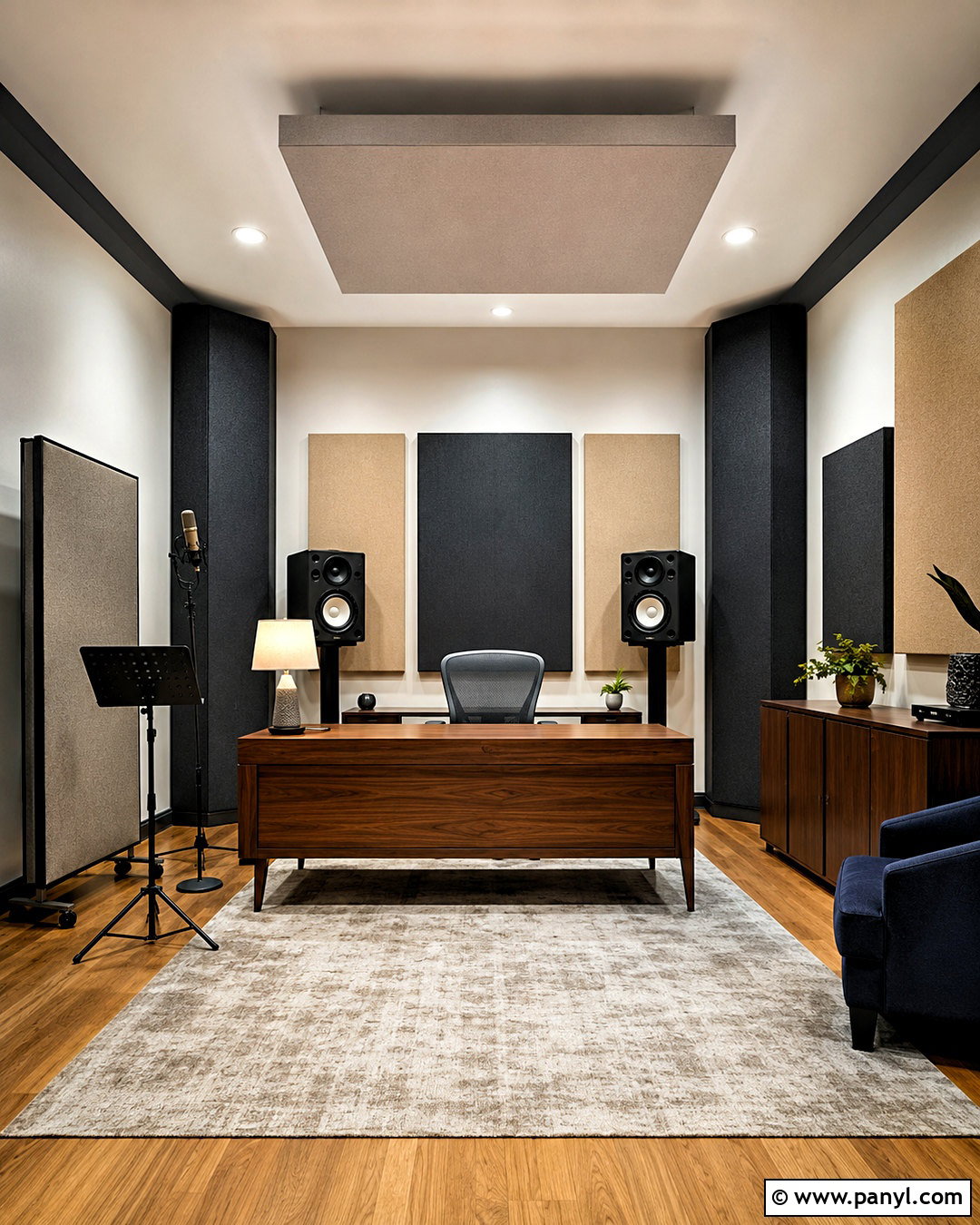
In a room used for recording and accurate listening, acoustic materials should become part of the visual design. Begin with a centered desk, matching studio monitors, and a listening chair aligned with the room. Cover side-wall reflection areas with fabric panels in alternating sand and charcoal tones. Add thicker corner bass traps in coordinating fabric and place a ceiling cloud above the workstation if the ceiling height permits. Corners, first-reflection areas, and rear walls are common priorities for acoustic treatment, although every room requires its own plan. () Balance the technical features with warm oak flooring, a large low-pile rug, and closed walnut storage. Keep the recording corner behind the desk flexible with a microphone stand, music stand, and movable upholstered screen that can be repositioned when needed.
9. Industrial Music Office Room
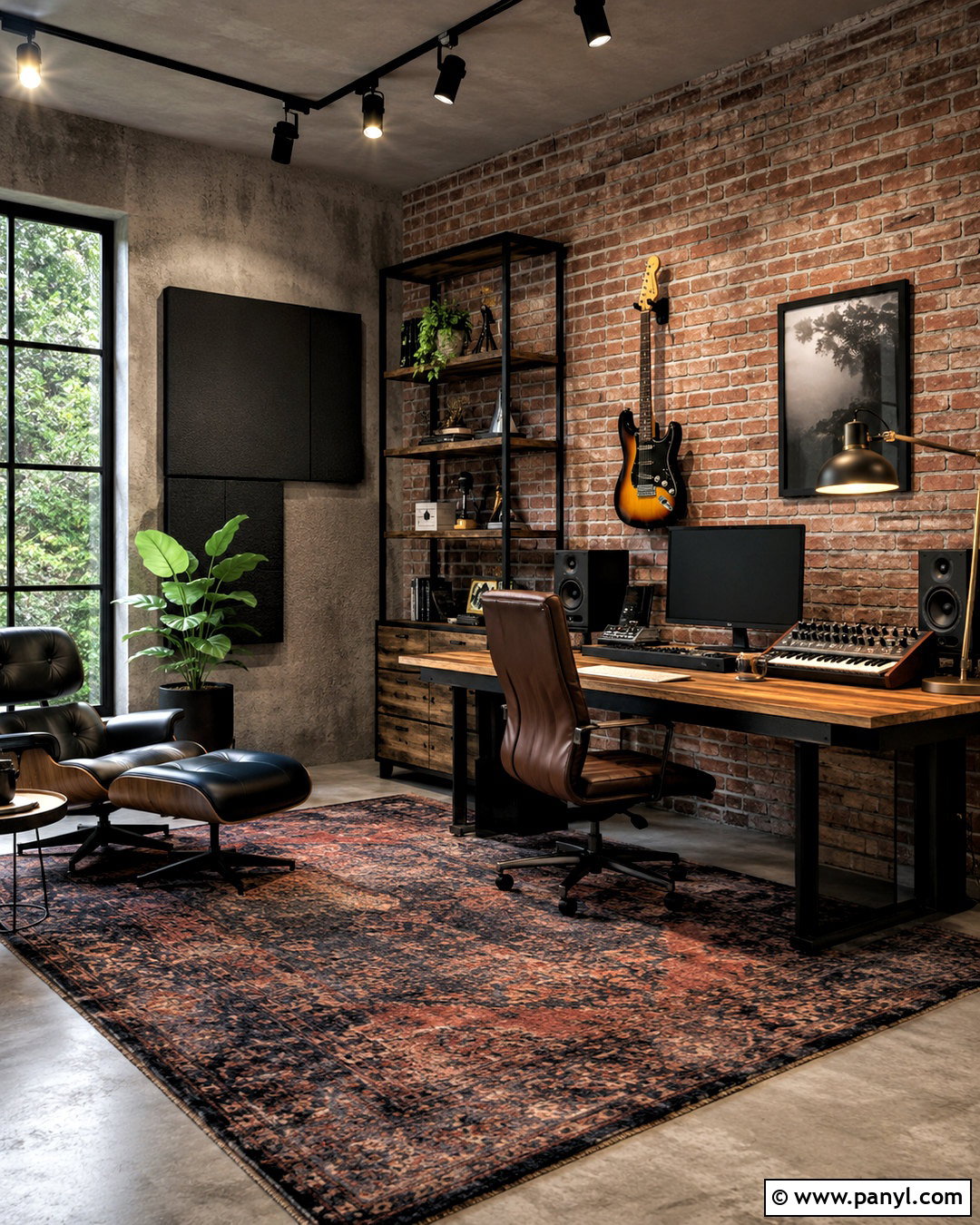
Raw materials can give a music workspace plenty of character while remaining organized and comfortable. Use a black steel and reclaimed wood desk as the center of the office, paired with an ergonomic chair in dark brown leather. Create a production station with compact monitors, a computer screen, and a keyboard tray. Along the side wall, display one guitar and a small synthesizer against brick or brick-look paneling. Balance those rugged finishes with warm gray walls, a large distressed rug, and black fabric acoustic panels. Metal shelving can hold records, office files, speakers, and storage boxes, but avoid filling every shelf. Add bright track lighting, an articulated task lamp, and a floor lamp near a simple lounge chair. Concealed power strips and black cable sleeves maintain the industrial look without leaving wires tangled across the floor.
10. Midcentury Music Office Room
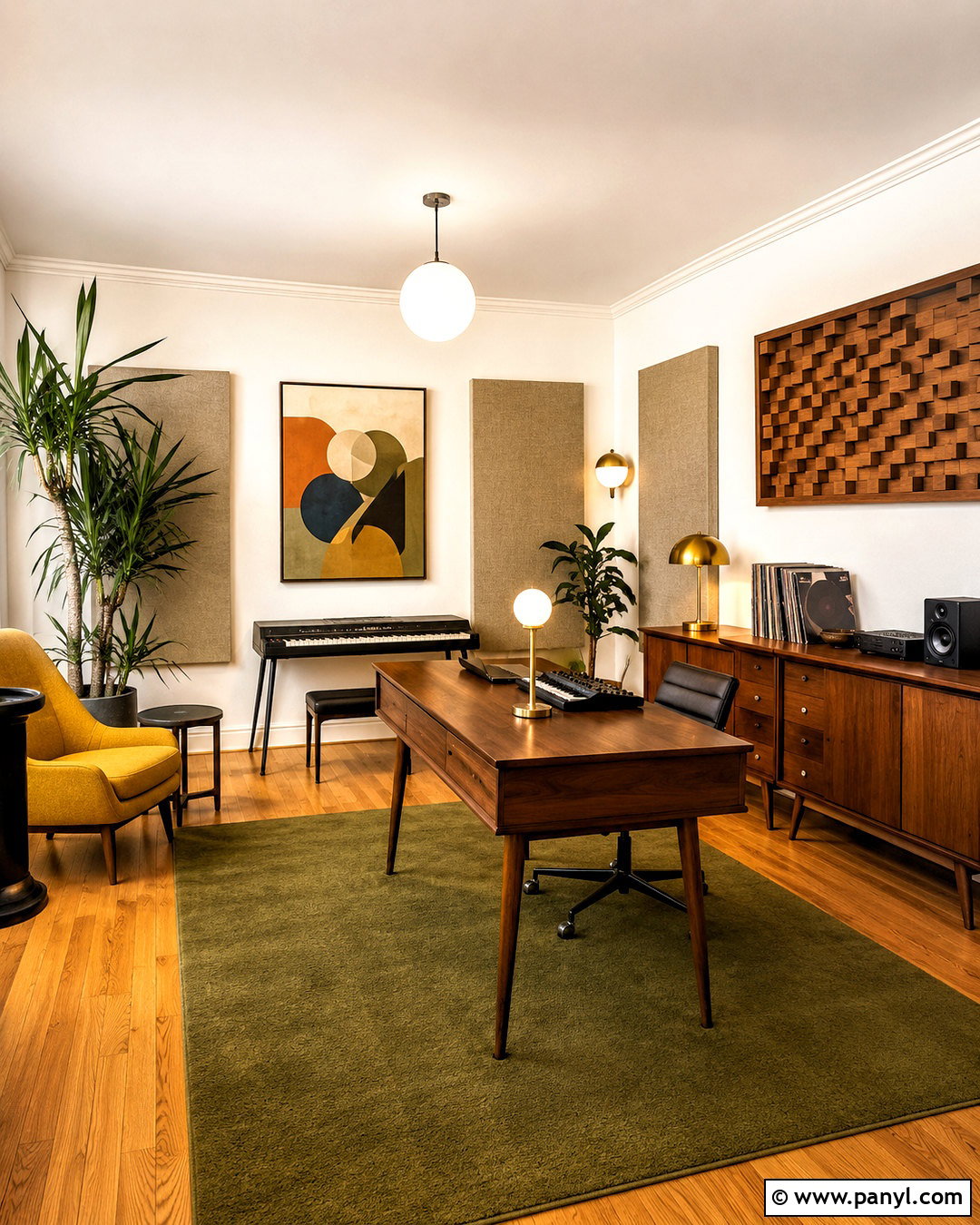
Walnut furniture and gently curved shapes create a timeless music office that still supports modern technology. Choose a streamlined desk with tapered legs, then place a widescreen monitor and small speakers on low walnut stands. A vintage-inspired credenza along the back wall can conceal paperwork, audio equipment, and charging accessories. Set a compact electric piano beside it, leaving a comfortable walkway between the instrument and desk. Use warm white walls, honey-toned flooring, and an olive green rug. Mustard or muted orange upholstery on a small lounge chair provides a controlled accent. Cover acoustic panels in neutral woven fabric and arrange them in an orderly grid. Finish the room with globe lighting, simple abstract artwork, and one sculptural plant. The result feels residential and collected while remaining efficient enough for serious work and practice.
11. Boho Music Office Room
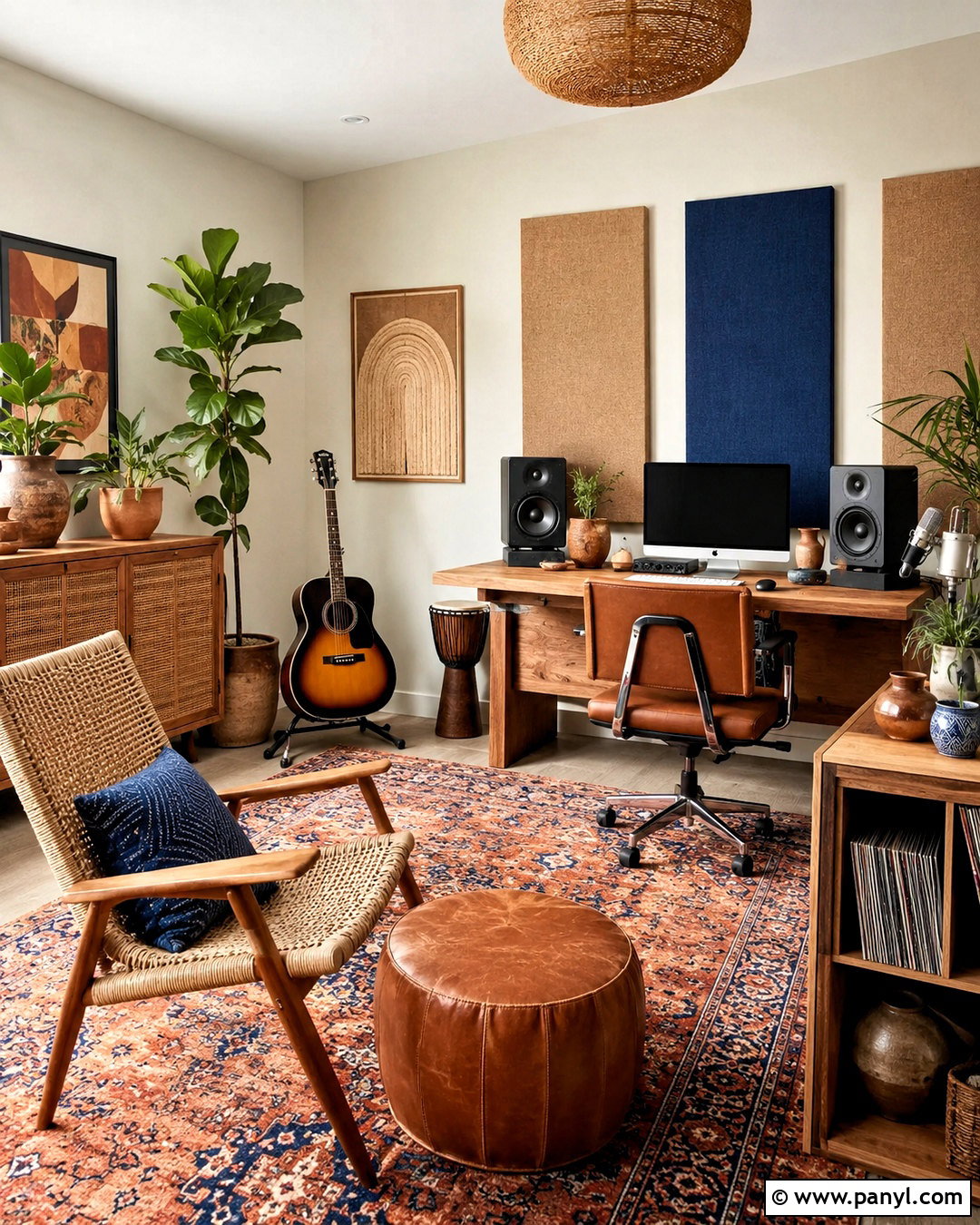
A boho music office can feel layered and expressive without becoming visually chaotic. Start with a simple wood desk, a cream upholstered chair, and a compact recording setup. Place an acoustic guitar and hand percussion instruments near a low rattan cabinet, using secure stands rather than crowding the floor. Paint the walls warm ivory and introduce terracotta, dusty rose, olive, and faded indigo through textiles. A large patterned rug defines the central area, while woven curtains soften the window. Fabric-wrapped acoustic panels can coordinate with the earthy palette instead of looking technical. Add floating shelves for plants, records, books, and a few handmade ceramics, leaving open space between objects. A cane lounge chair and small side table form a comfortable listening corner. Use bright natural-looking lamps to keep the layered room cheerful and functional.
12. Scandinavian Music Office Room
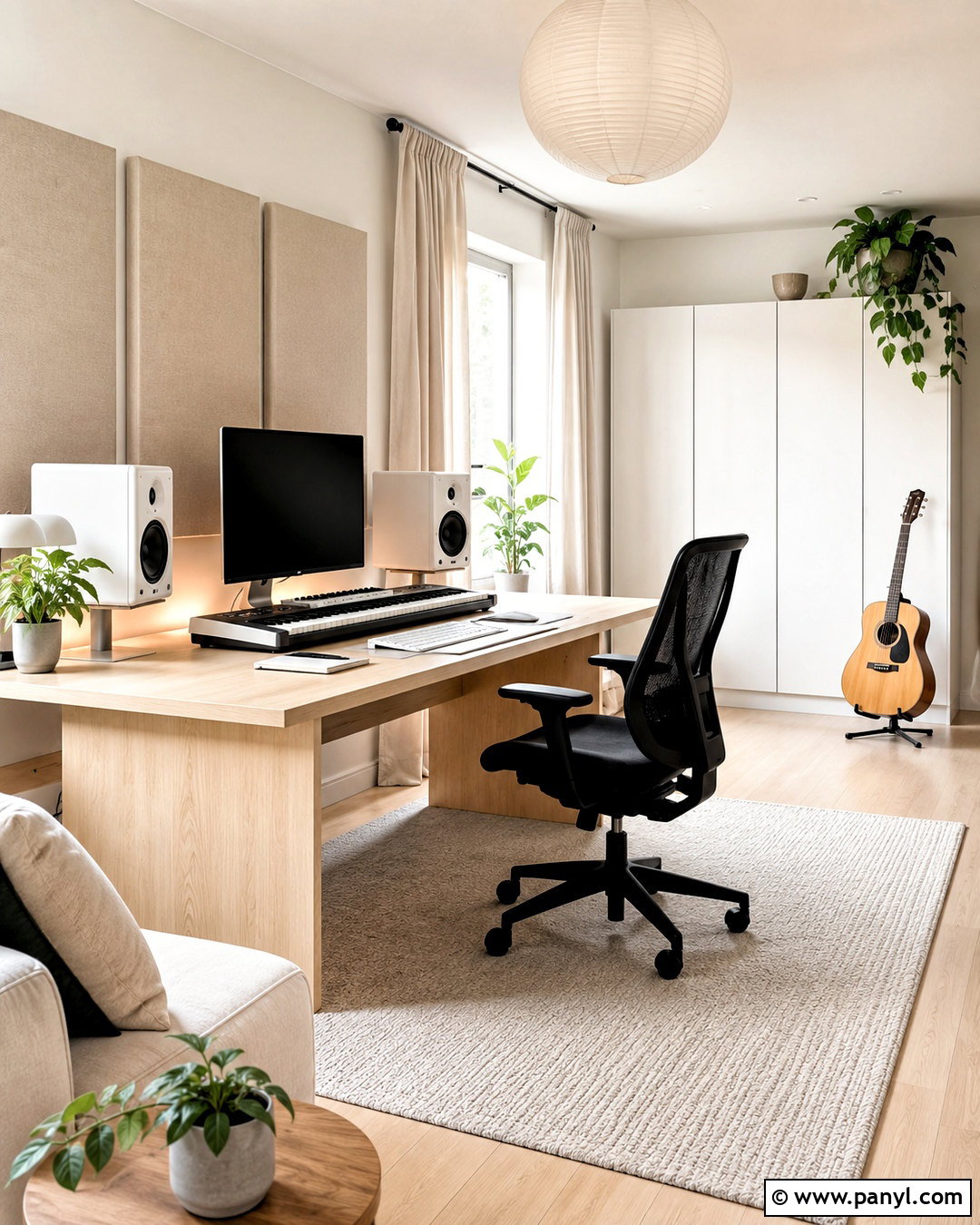
Pale colors, straightforward storage, and practical furniture suit a calm Scandinavian-inspired workspace. Position a light birch desk near the center of a soft white wall, with compact white speakers and a neatly mounted screen. Add a slim digital keyboard on the adjacent wall and hang one natural wood guitar above a low cabinet. Choose blond flooring, a pale gray wool rug, and simple linen curtains to create quiet visual warmth. White cabinets with birch handles can organize files, sheet music, microphones, and cables. Cover acoustic panels in light gray and oatmeal fabric so they blend naturally with the restrained palette. A black ergonomic chair provides useful contrast, while a paper-shade pendant and directional desk light brighten the room. Finish with minimal black-framed artwork and one hardy green plant rather than numerous decorative accessories.
13. Dark Music Office Room
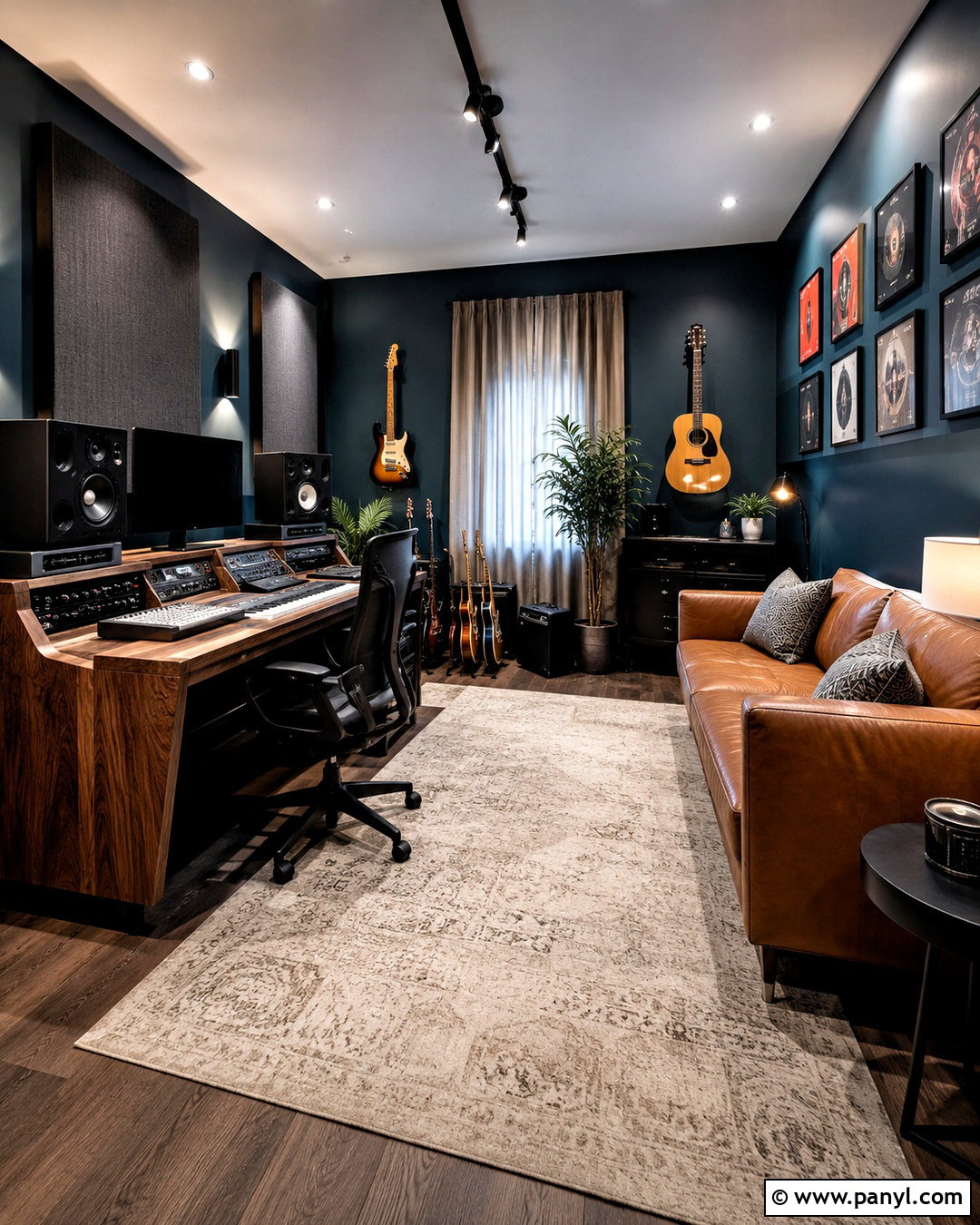
Deep colors can create an immersive music office as long as the lighting and lighter materials prevent it from feeling enclosed. Paint the main workstation wall deep blue-green and use warm walnut furniture throughout the room. Center a large desk with black monitors, a computer display, and an under-desk MIDI keyboard. Place a cognac leather chair or small sofa along the back wall for listening and occasional collaboration. Charcoal acoustic panels can be arranged in a symmetrical pattern, while cream curtains and a pale textured rug lift the overall palette. Use bright ceiling lighting supplemented by wall washers, shelf lighting, and an adjustable task lamp. A black storage cabinet conceals office supplies and less attractive equipment. Display one brass-toned lamp, a few framed record covers, and two instruments to keep the dark room dramatic but controlled.
14. Shared Music Office Room
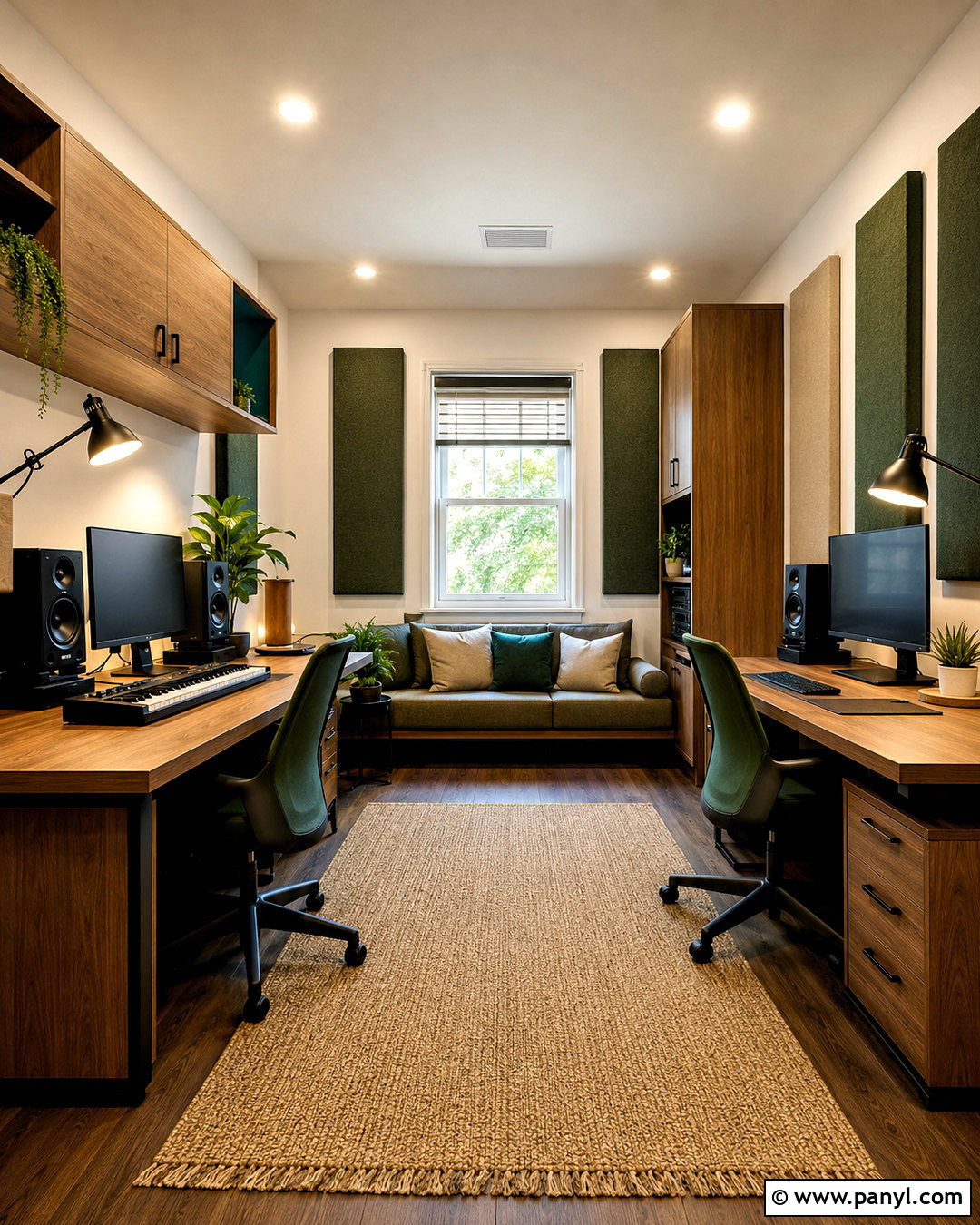
When two people use the same room, separate work surfaces can prevent equipment and paperwork from colliding. Arrange matching desks on opposite walls, leaving an open central path and a shared recording zone at the far end. One desk can prioritize office work with video-call lighting and closed file storage. The second can hold studio monitors, a MIDI controller, and an audio interface. Use warm white walls, oak desktops, dark green desk chairs, and a large neutral rug to unify both sides. Install wall-mounted cabinets above each workstation and designate separate drawers for cables, stationery, and personal gear. A compact sofa beneath the window provides shared seating without blocking instruments. Add fabric acoustic panels in coordinated green and beige, plus adjustable ceiling lights that allow each user to control their own work area.
15. Basement Music Office Room
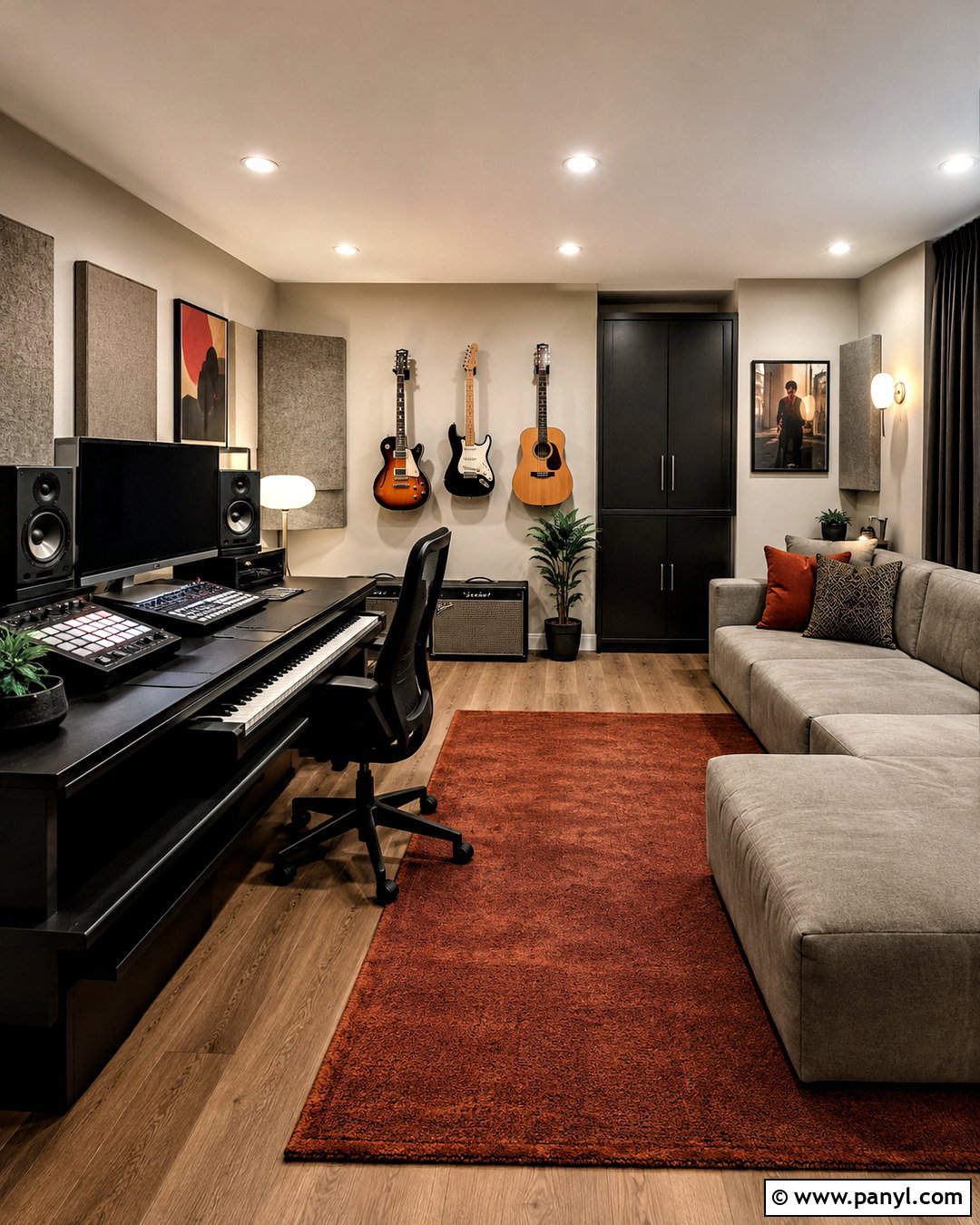
A basement can become a highly functional music office when lighting, comfort, and storage are planned carefully. Use light greige walls and pale oak-look flooring to brighten the room, then anchor the workstation with a wide black desk. Place studio monitors on stands and add a keyboard beneath the desktop or along one side wall. A low modular sofa creates a casual listening area without making the room feel crowded. Install bright recessed ceiling lights, wall sconces, and desk lighting to eliminate shadowy corners. Fabric acoustic panels in warm gray can cover broad wall areas while maintaining a finished appearance. Heavy curtains over small windows add softness, while closed cabinets protect office materials and equipment from visible dust. Finish with a rust-colored rug, mounted guitars, and a compact beverage station for comfortable extended sessions without restricted content.
16. Attic Music Office Room
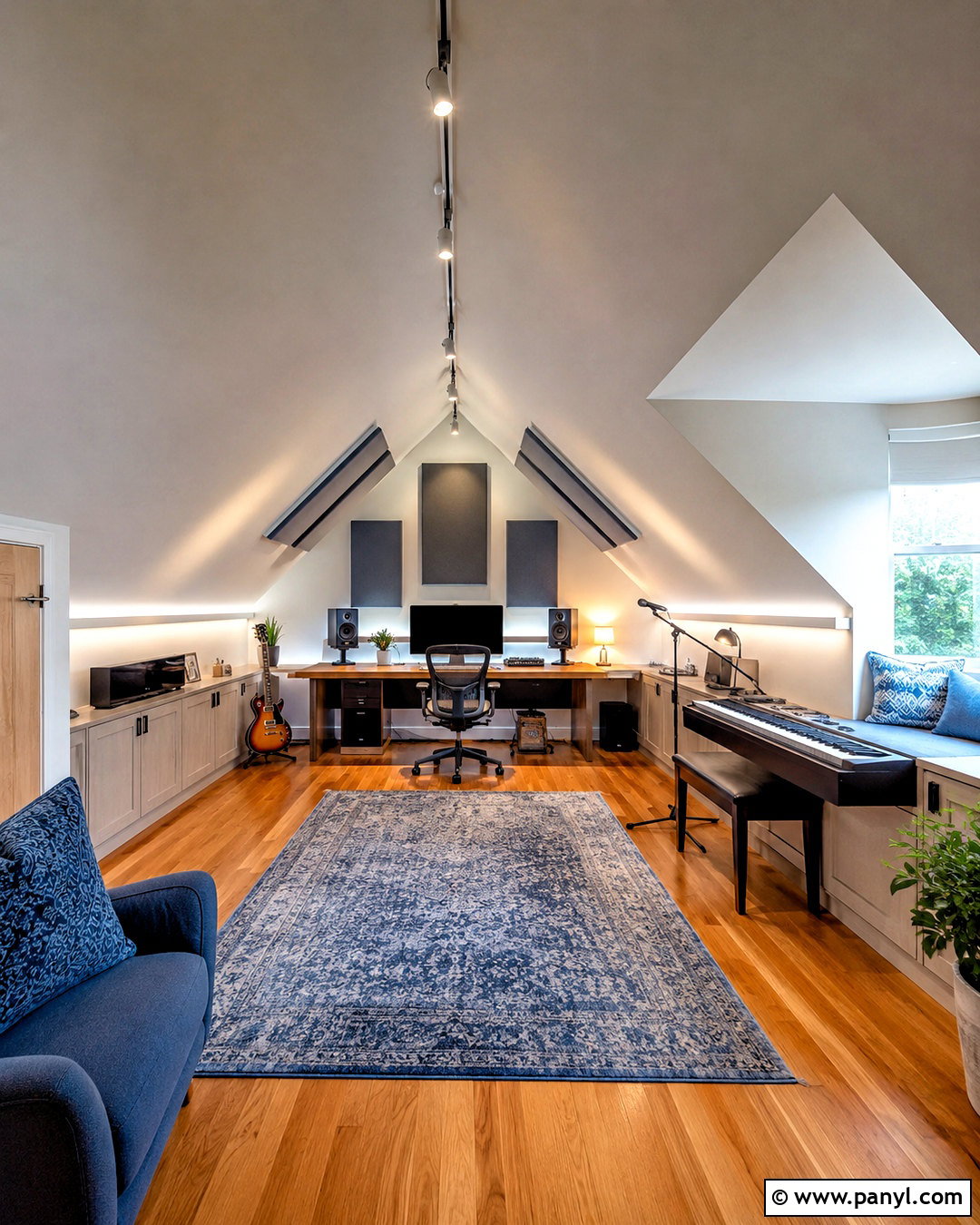
Sloped ceilings can give an attic music office character, but the furniture must follow the room’s unusual shape. Place the main desk beneath the highest section of ceiling so standing and sitting remain comfortable. Use the lower eaves for custom cabinets, record storage, equipment drawers, and a long keyboard surface. Soft white walls and honey oak flooring help reflect available light, while a faded blue rug defines the work zone. Install acoustic panels on practical vertical walls and consider freestanding treatment where angled surfaces limit mounting options. A dormer window can hold a small built-in bench for reading, listening, or guitar practice. Keep tall instruments and microphone stands away from low ceiling areas. Add bright track lighting along the ridge, compact wall lamps, and hidden LED task lighting beneath the eave cabinets.
17. Budget Music Office Room
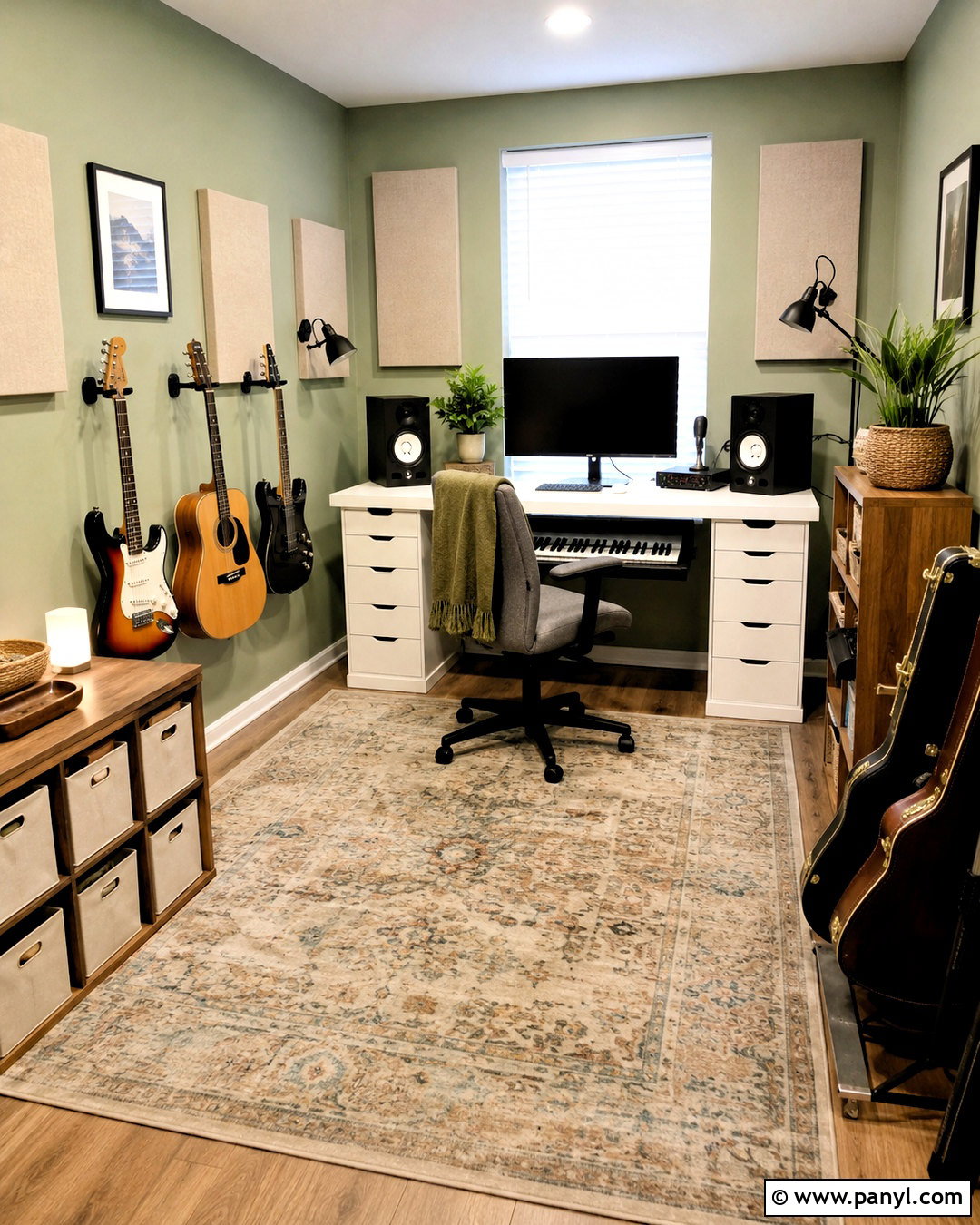
An affordable music office can look coordinated when the plan relies on simple furniture and a limited palette. Begin with a basic white desk supported by drawer units, then add an under-desk keyboard tray and inexpensive monitor risers. Paint the walls a soft sage green and use a large secondhand neutral rug to soften the room. Securely mount guitars on one wall, creating storage and decoration at the same time. Cover DIY-style acoustic panels with matching beige fabric, but use appropriate safe materials and mounting methods. A cube organizer can hold office supplies, records, headphones, and labeled cable boxes. Refresh a used desk chair with a washable seat cover rather than replacing every item. Finish with simple clamp lamps, thrifted frames, and one plant. Consistent colors make these practical, lower-cost elements feel intentional and complete.
18. Luxury Music Office Room
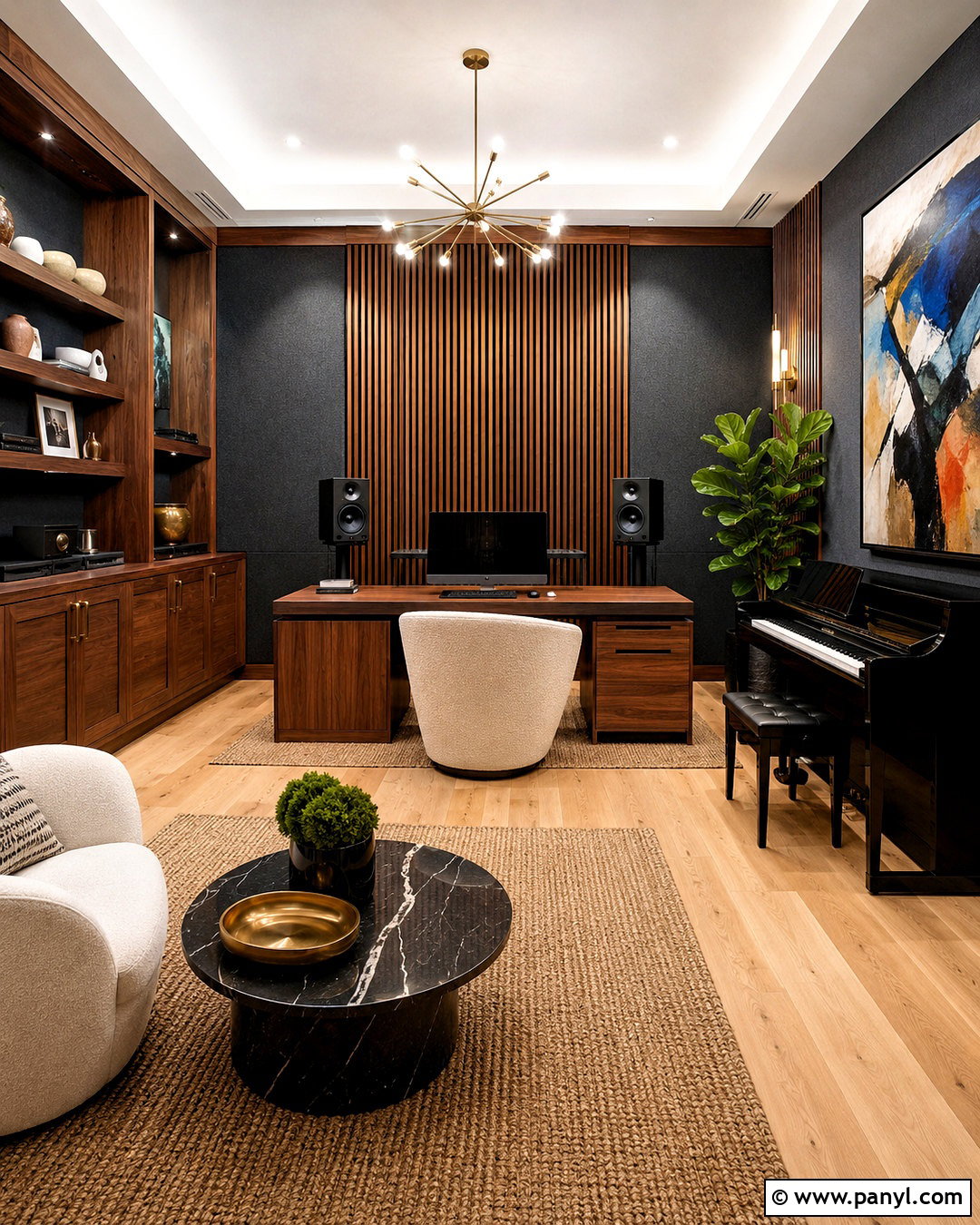
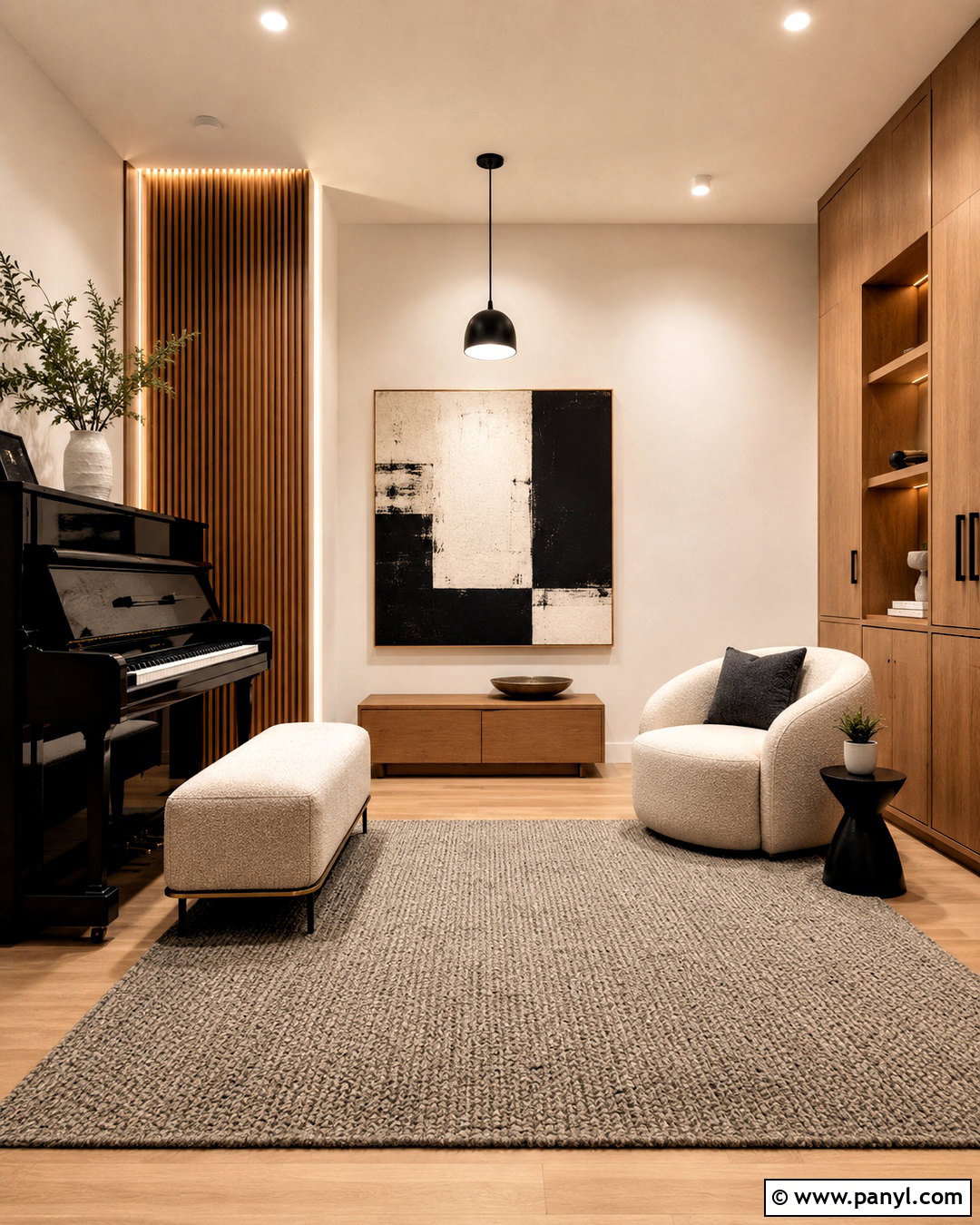
A refined music office can combine premium finishes with an uncluttered professional layout. Center a custom walnut desk against a wall of vertical wood slats and integrated charcoal acoustic panels. Use concealed drawers for cables, controllers, and office materials, leaving only essential equipment visible. Freestanding studio monitors, a wide display, and a full-size MIDI keyboard create the production zone. On the opposite side, place a polished black digital piano beside a cream bouclé lounge chair and small marble table. Wide-plank oak flooring and a large handwoven rug provide warmth underfoot. Built-in cabinets with brushed brass hardware can hold instruments, records, microphones, and files. Layer recessed lighting, wall washers, and focused task lamps for clear illumination. Keep the palette to walnut brown, cream, charcoal, and muted brass for a calm, cohesive finish.
19. Podcast Music Office Room
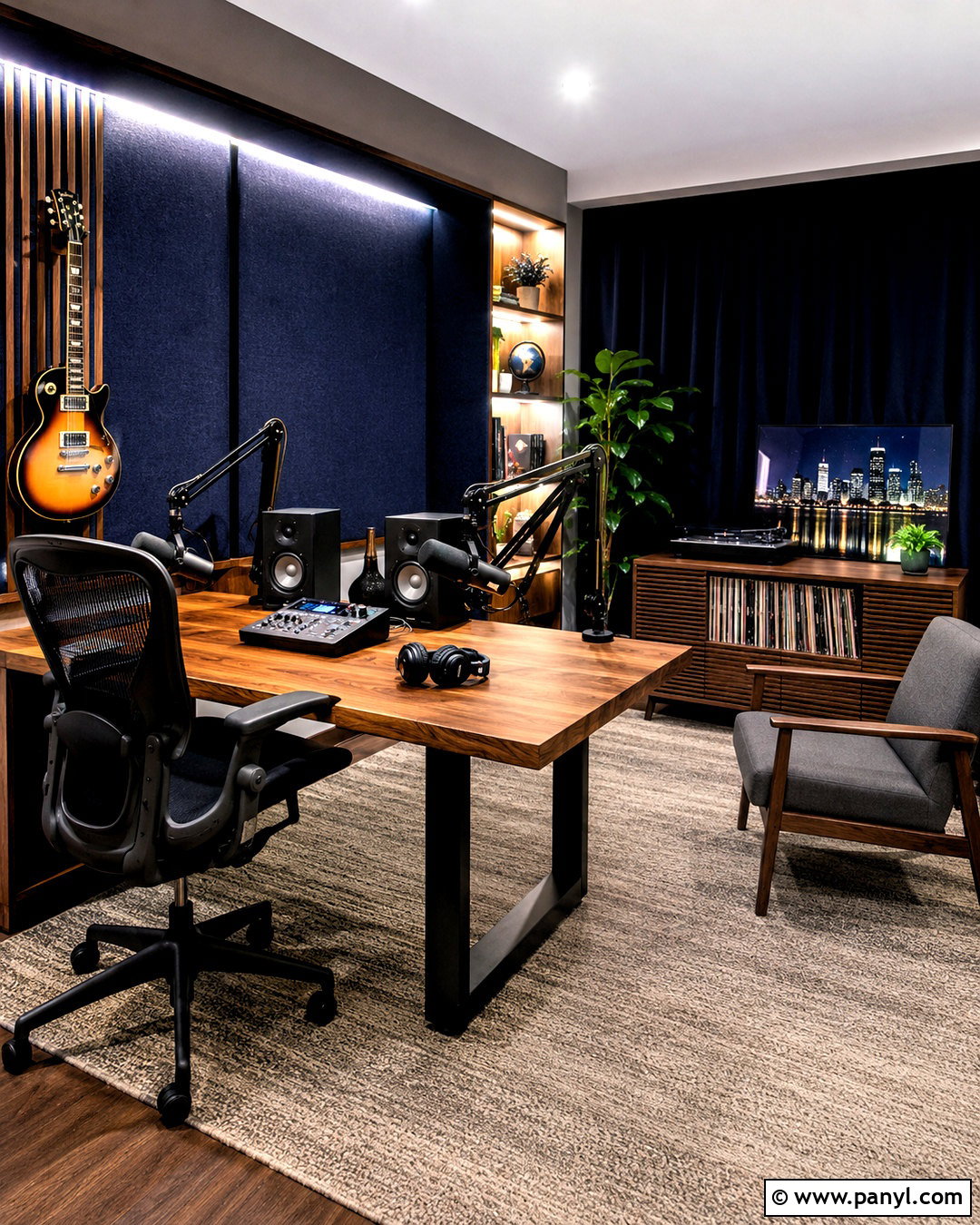
A combined podcast and music office needs a camera-ready background, controlled recording corner, and efficient everyday desk. Place the workstation perpendicular to the window to reduce harsh screen glare while still receiving natural light. Use a warm oak desk with a monitor, audio interface, microphone arm, compact studio speakers, and hidden cable routing. Behind the chair, build a clean background with navy fabric acoustic panels, a low record cabinet, one guitar, and softly illuminated shelving. Add a second microphone and upholstered guest chair across the desk for interviews or collaborative recording. Wall and ceiling treatment near microphones can help manage reflections that affect spoken audio. () Complete the room with a neutral rug, blackout curtains, bright adjustable lighting, and closed office storage outside the camera frame.
20. Vinyl Music Office Room
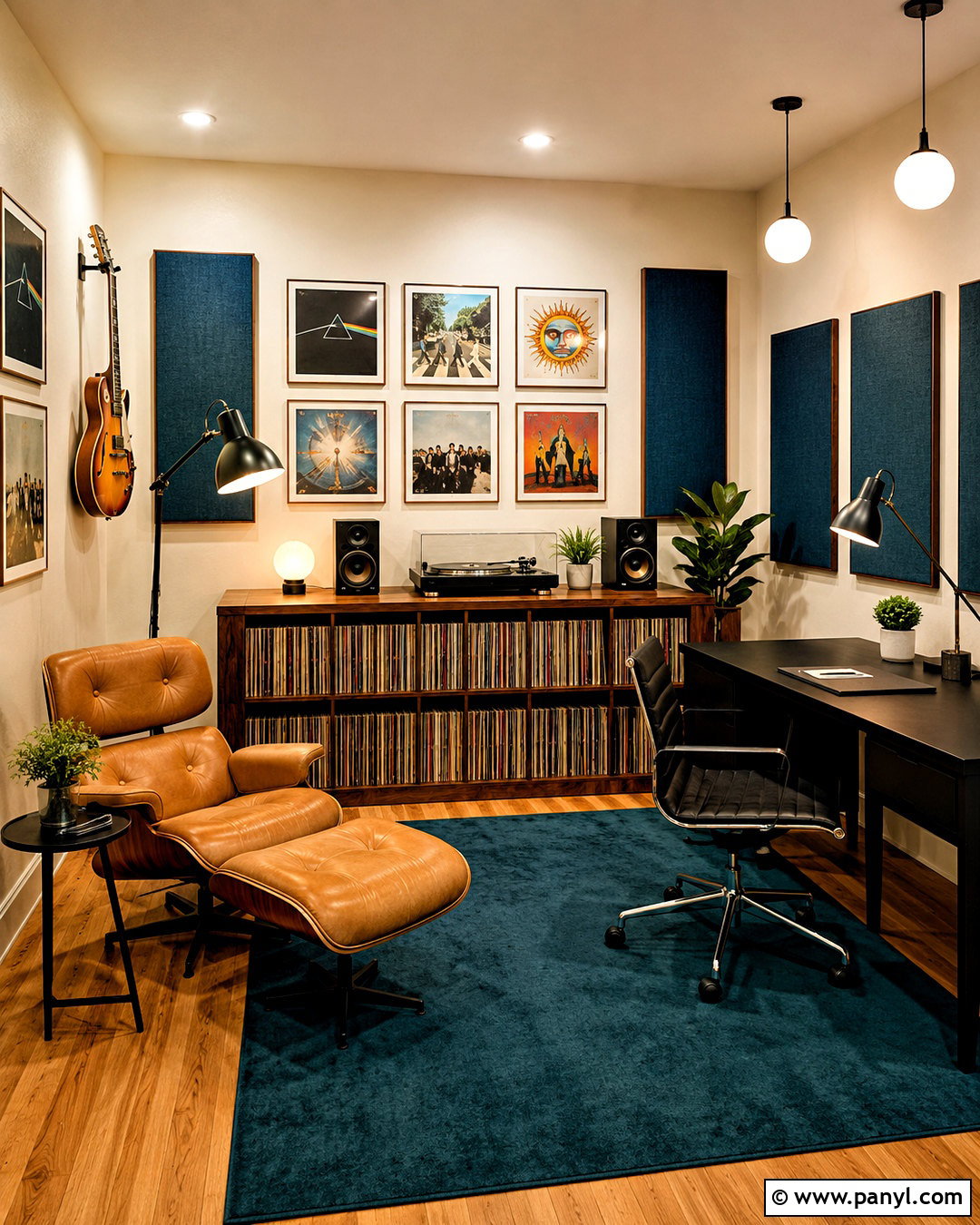
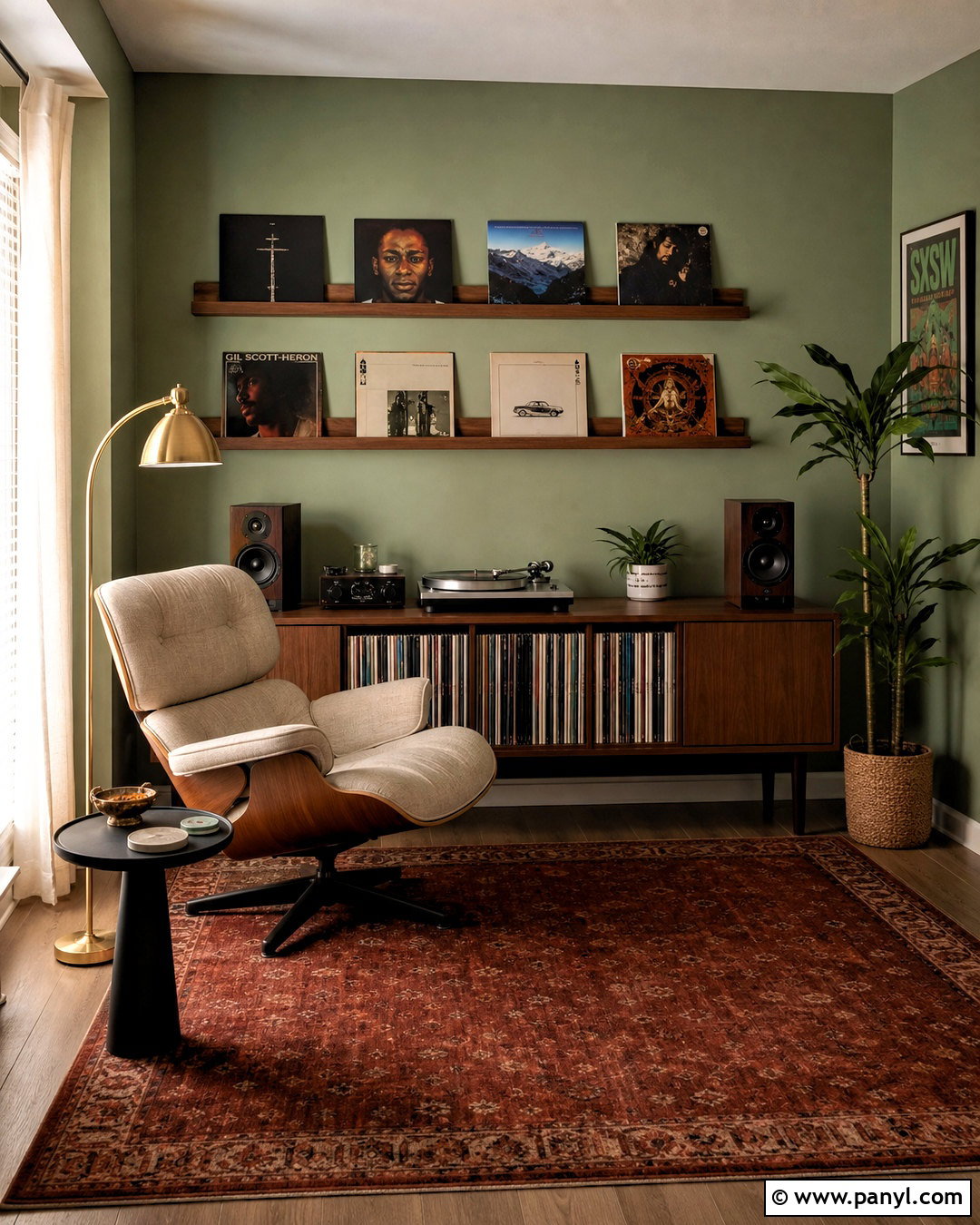
For someone who works, plays instruments, and collects records, storage should define the room without taking it over. Install a long walnut record cabinet along one wall with correctly sized compartments and a sturdy surface for a turntable and speakers. Place a simple black desk opposite the collection, creating a separate work zone with a computer, headphones, and compact production equipment. Use warm cream walls, medium oak floors, and a deep teal rug to connect the contrasting furniture. A comfortable tan lounge chair between the desk and record cabinet creates a dedicated listening spot. Mount one guitar near the chair and place fabric acoustic panels behind the workstation. Add framed album artwork sparingly, allowing the visible records to provide most of the color. Bright globe lights and an adjustable reading lamp complete the balanced room.
Conclusion:
The most useful 20 music office room ideas balance productivity, creativity, storage, and comfort instead of treating the office and music zones as separate afterthoughts. Start by identifying the activity that matters most, then place the desk, monitors, keyboard, or primary instrument around that priority. Use wall storage and closed cabinets to control clutter, and coordinate acoustic features with the room’s colors and materials. Good lighting is equally important, especially in basements, attics, and dark color schemes. Whether you prefer modern simplicity, warm vintage character, or a full production setup, maintain comfortable walking paths and keep frequently used equipment accessible. A thoughtful plan will make even a modest room feel focused, personal, and ready for daily use.

Related Ideas and Inspiration:

Leave a Reply