
A small music room can be both practical and inspiring when every inch has a clear purpose. The best layouts combine comfortable playing space, attractive instrument storage, balanced acoustics, and lighting that supports practice or recording. You do not need a large studio or expensive built-ins to create a room that works. A spare bedroom, office corner, attic, closet, or unused landing can become a polished musical retreat with compact furniture and thoughtful organization. These 20 small music room ideas home ideas cover complete looks for guitarists, pianists, singers, producers, families, and casual listeners. Each design offers a distinct color palette, layout, storage plan, and decorative direction. Explore the following 20 small music room ideas home ideas.

1. Small Music Room With Wall-Mounted Guitars
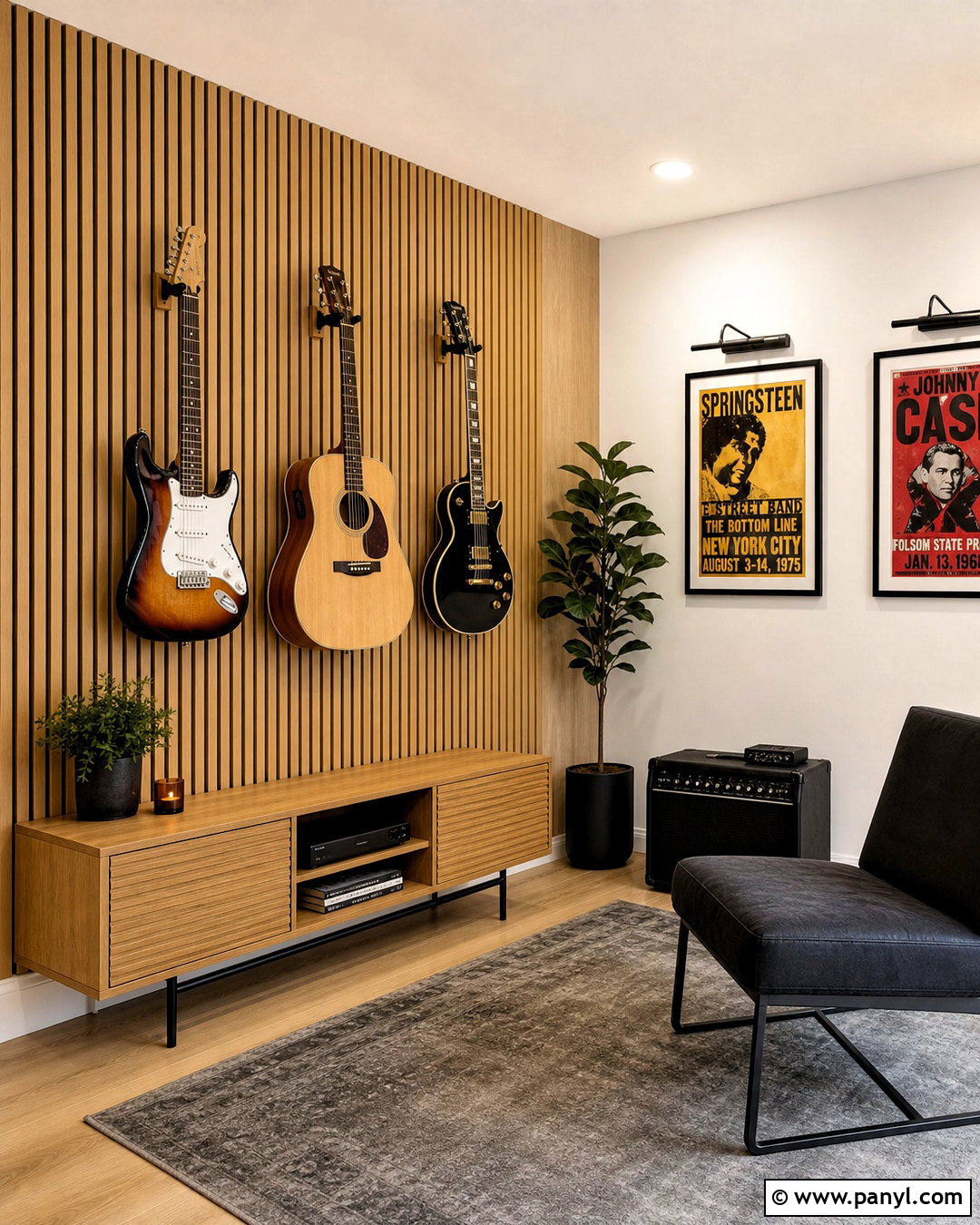
Turn a narrow spare room into a streamlined guitar studio by using the walls as functional display space. Mount two or three guitars above a slim oak console, leaving the center of the room open for playing. Paint the walls warm white and add light wood acoustic slats behind the instruments for texture and sound control. A compact armless chair provides a comfortable practice seat without crowding the floor. Place a small amplifier beneath the console and organize pedals in labeled baskets. A low-pile charcoal rug softens the room and defines the practice zone. Finish the look with black picture lights, framed concert artwork, and a tall plant in the corner for natural color.
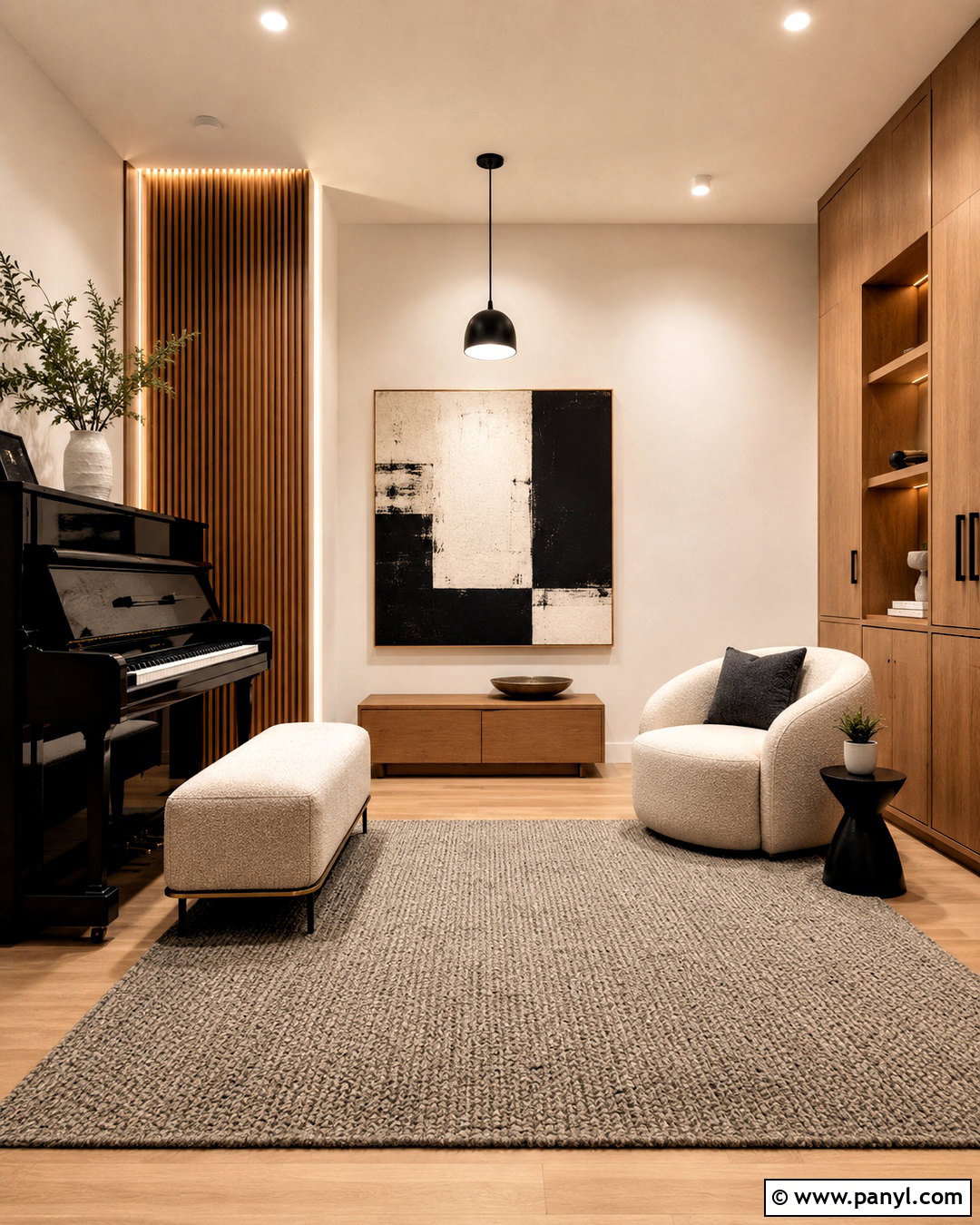
2. Small Music Room With Piano And Storage
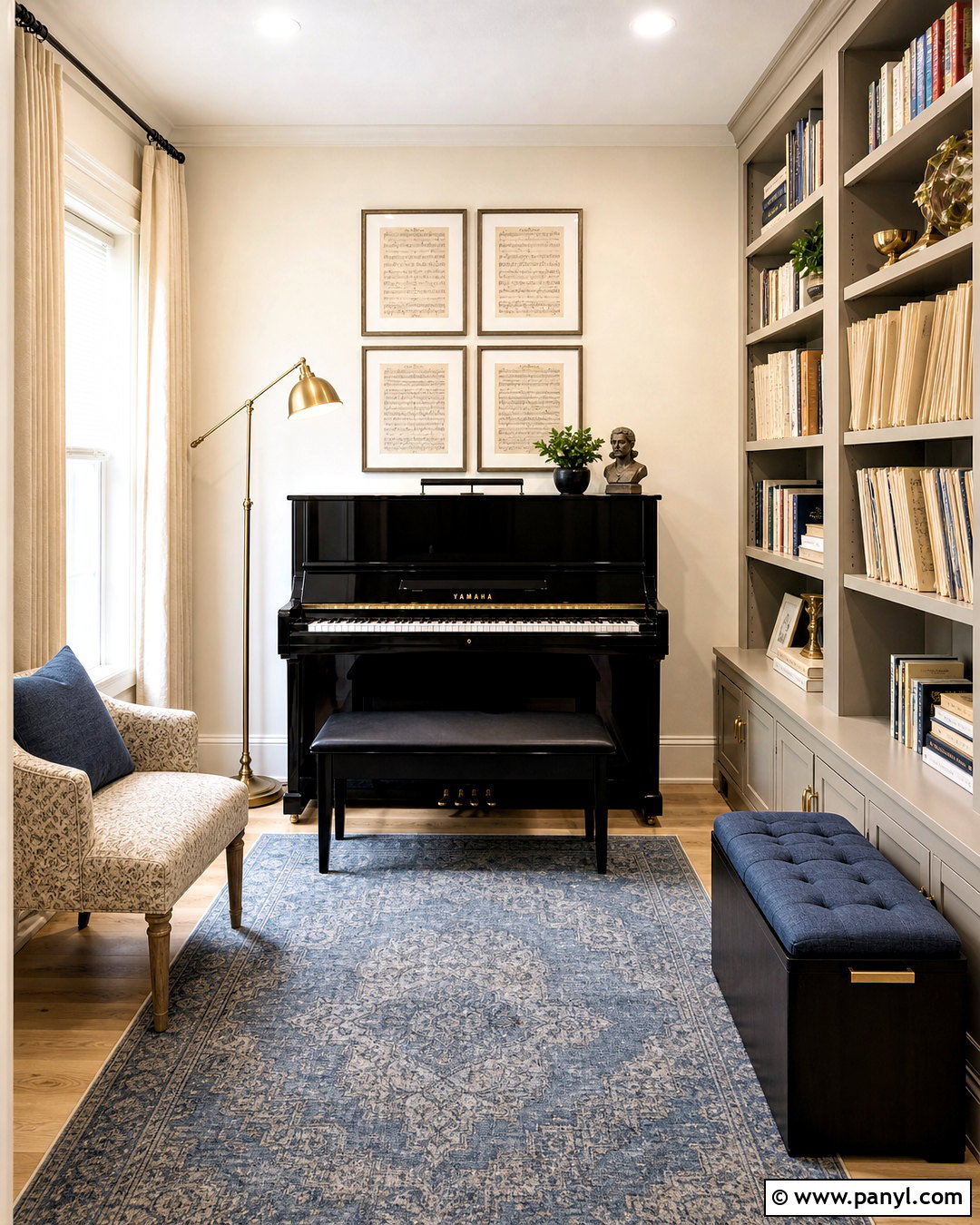
A compact upright piano can anchor an elegant music room without making the space feel crowded. Position it against the longest uninterrupted wall and surround it with shallow built-in shelves painted soft greige. Use the shelves for sheet music, small speakers, books, and a few decorative objects. Choose a piano bench with hidden storage to hold cables, headphones, and practice supplies. Pale oak flooring and a muted blue washable rug keep the design light and comfortable. Add linen curtains to soften reflections from the window while preserving natural light. A narrow brass floor lamp provides focused illumination for evening practice. Complete the room with simple framed music prints and one upholstered listening chair opposite the piano.
3. Small Music Room And Home Office
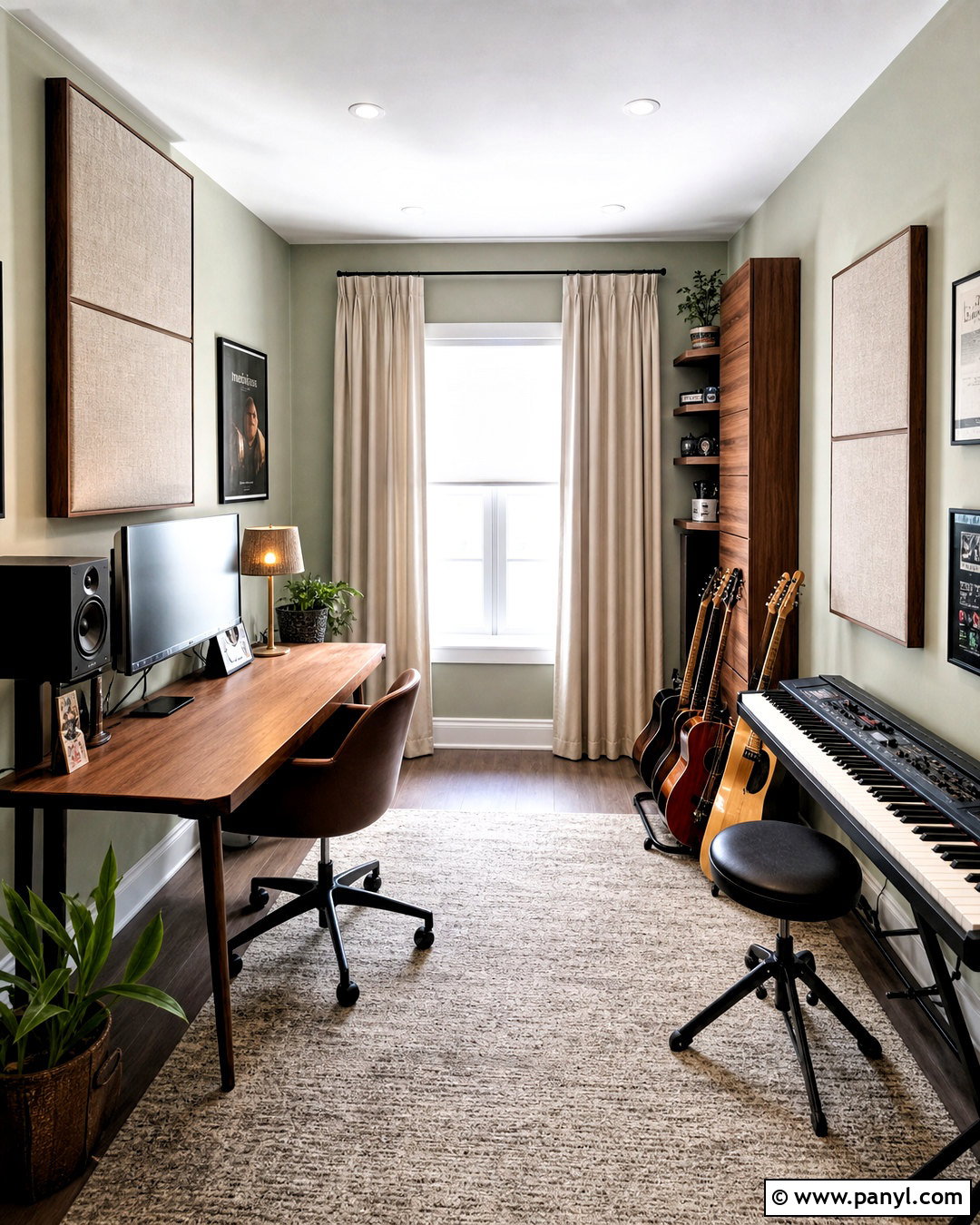
When a room must support music and remote work, divide it into two clear zones. Place a slim walnut desk and computer along one wall, then position a digital keyboard on a stand against the opposite side. Matching wood finishes make the arrangement feel intentional rather than crowded. Use soft sage green paint, cream curtains, and a warm gray rug to create a calm background. Install vertical wall storage for headphones, cables, and a guitar. Decorative fabric acoustic panels above the desk improve the finished look while supporting clearer listening. A rolling stool can move between the keyboard and workstation. Keep everyday office supplies inside closed cabinets so the instruments remain the visual focus after the workday ends.
4. Small Music Room Under The Stairs
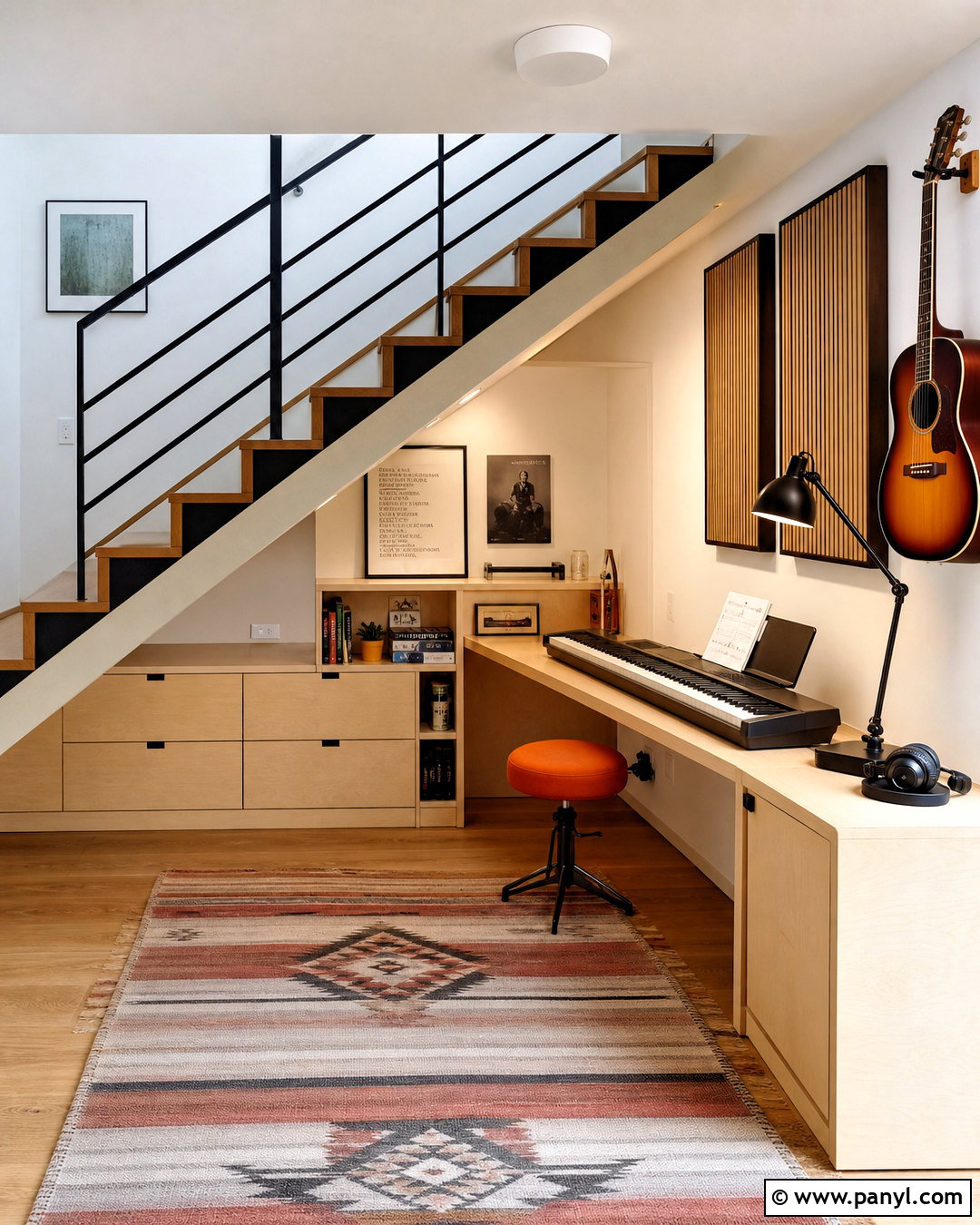
That awkward space beneath a staircase can become a compact music nook with a custom, fitted layout. Install a low desk beneath the highest part of the ceiling and place a digital piano or production keyboard on top. Use the shorter end for built-in drawers that hold cables, pedals, and recording accessories. Warm white walls and pale birch cabinetry prevent the enclosed area from feeling heavy. Add a rust-colored upholstered stool and a patterned flat-weave rug for warmth. Wood-framed acoustic panels can follow the staircase angle, turning an unusual wall into a deliberate feature. Finish with an adjustable wall light, closed-back headphones, and one wall-mounted instrument. The result feels organized, creative, and connected to the surrounding home.
5. Small Music Room In A Closet
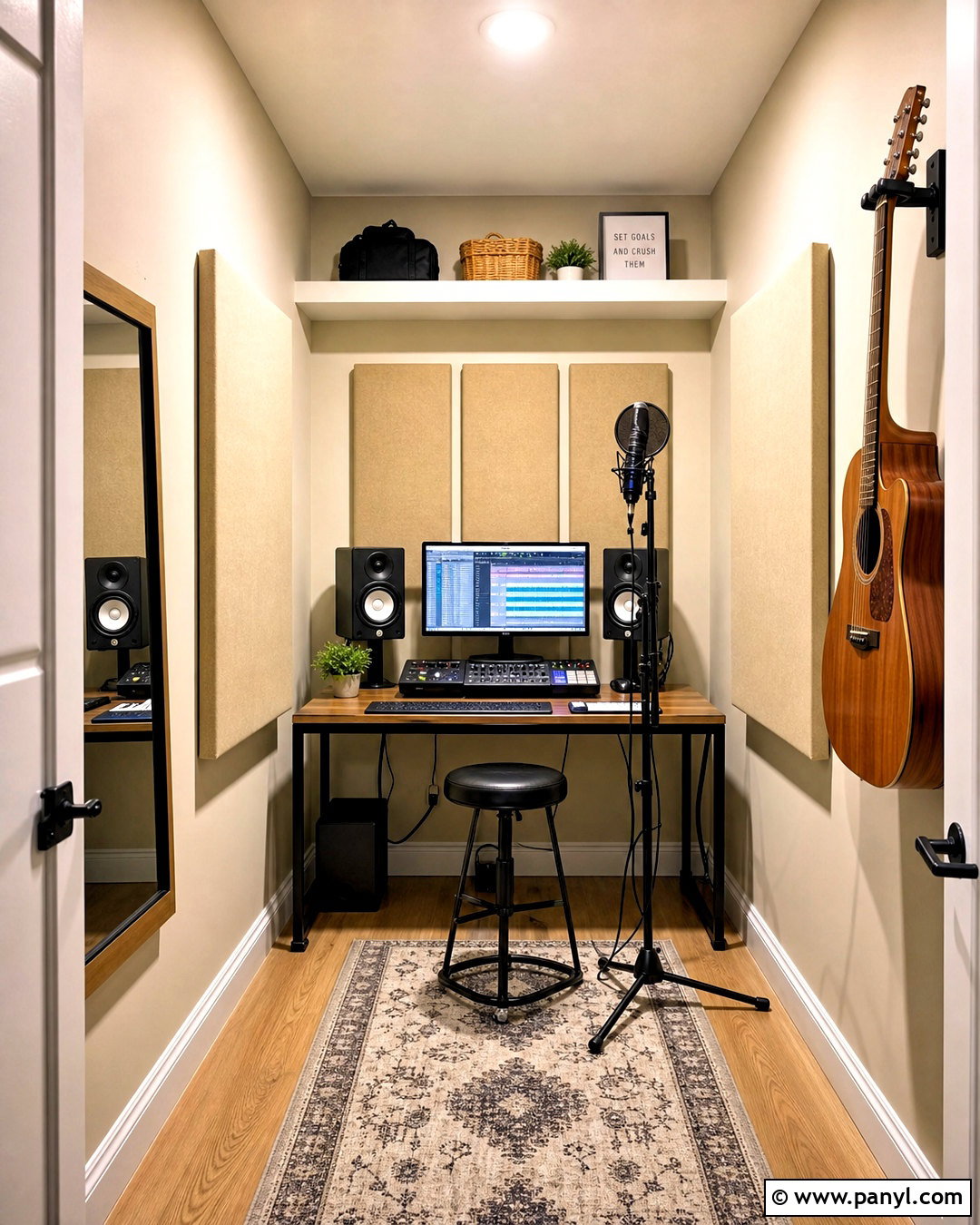
A walk-in closet can become a focused vocal or instrumental practice room when storage is planned carefully. Remove unnecessary hanging rods and install shallow shelves near the ceiling for cases and accessories. Cover selected walls with thick, fabric-wrapped acoustic panels in warm beige rather than filling every surface with thin foam. A compact recording desk, microphone stand, and armless stool create a simple workstation. Use light oak laminate flooring with a small washable rug to make the room feel more finished. A quiet ceiling light and adjustable wall lamp provide bright, even illumination. Keep cables secured along the baseboards in covered channels. Soft cream paint on exposed surfaces and a small mirror help the converted closet appear open and welcoming.
6. Small Music Room With Colorful Acoustic Panels
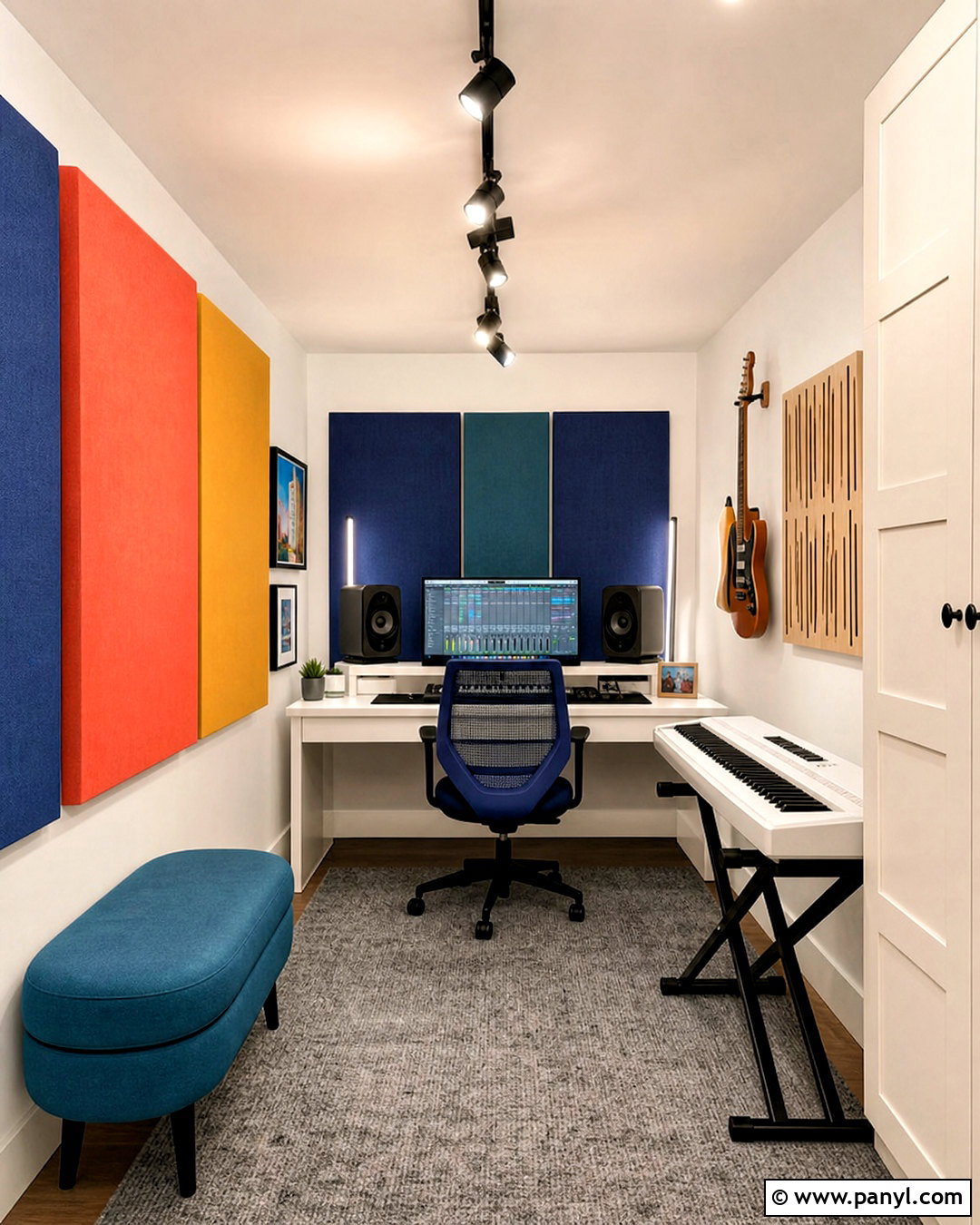
Acoustic treatment can become the main decorative feature in a cheerful modern music room. Start with crisp white walls and arrange fabric-wrapped panels in deep blue, coral, mustard, and teal behind the primary playing area. Keep the furniture simple so the colors remain balanced. A narrow white desk can hold a laptop, interface, and compact speakers, while a black metal keyboard stand fits neatly beside it. Add a medium-gray rug, a bright blue task chair, and closed storage under the desk. Mount a guitar on the remaining white wall to create visual breathing room. Simple ceiling track lights can highlight the colorful panels. This complete setup feels energetic and personal without sacrificing floor space or useful organization.
7. Small Music Room With Wood Slat Walls
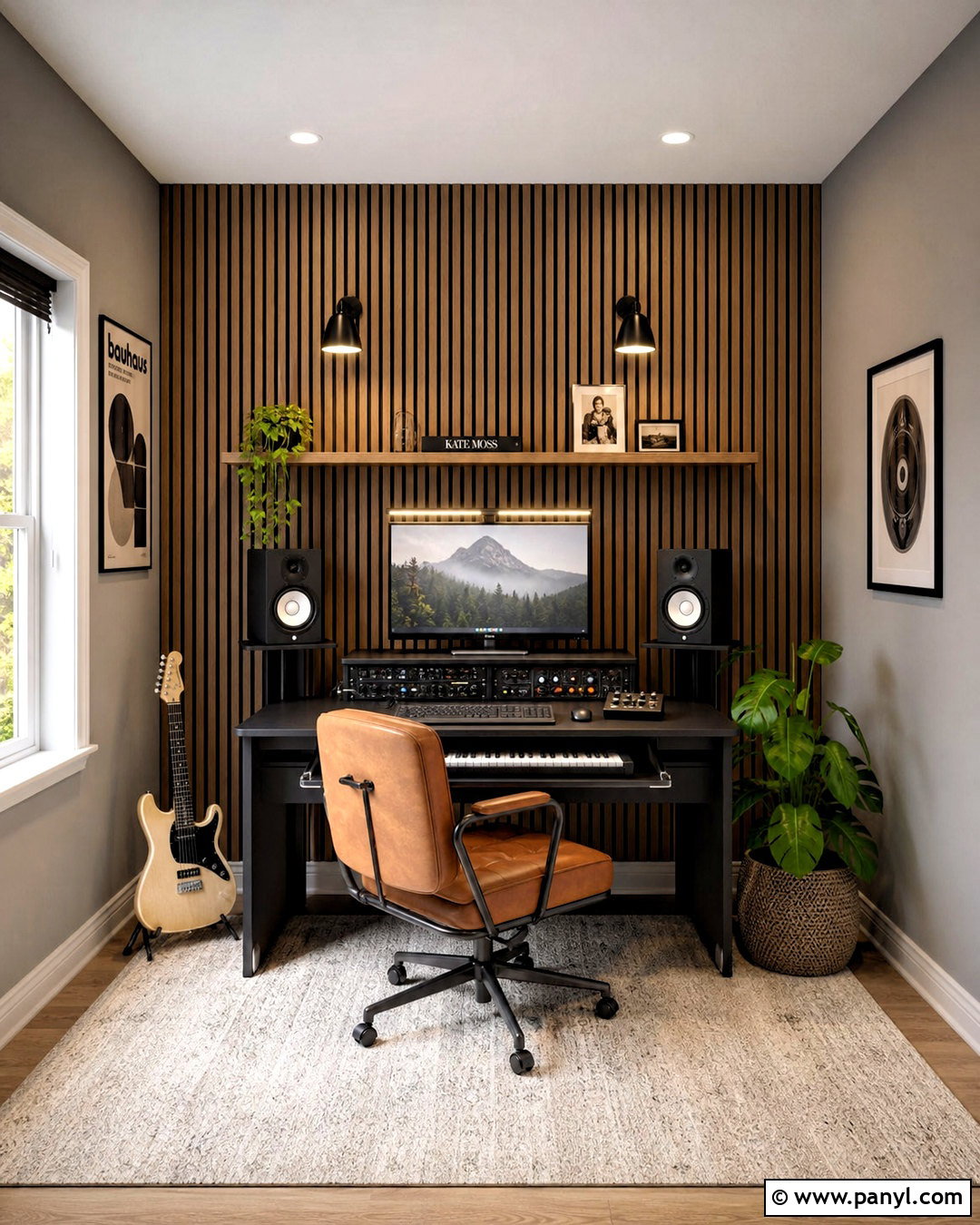
Warm wood slats give a small music room a polished studio atmosphere without requiring elaborate decoration. Cover the wall behind the desk with narrow oak slats over a dark acoustic backing. Paint the remaining walls soft warm gray to keep the space balanced and bright. Center a compact black production desk on the feature wall and place small studio monitors at ear height. A matching oak shelf above the desk can display records, headphones, and a few plants. Use a low-profile tan leather chair and a textured cream rug to introduce softness. Store a keyboard on a sliding tray beneath the desktop and mount one guitar nearby. Matte black lighting and cable channels complete this clean, coordinated contemporary room.
8. Small Music Room With A Corner Keyboard
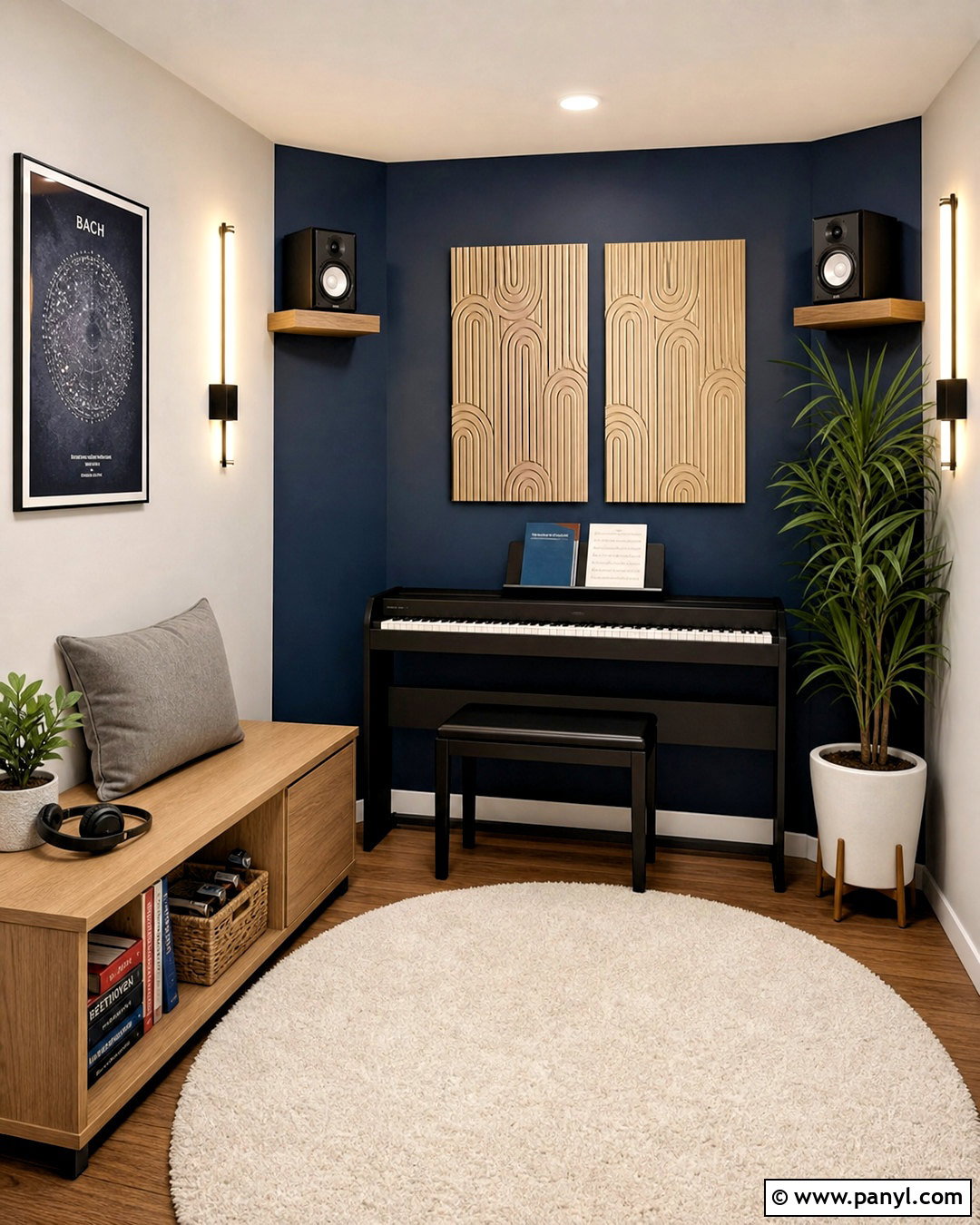
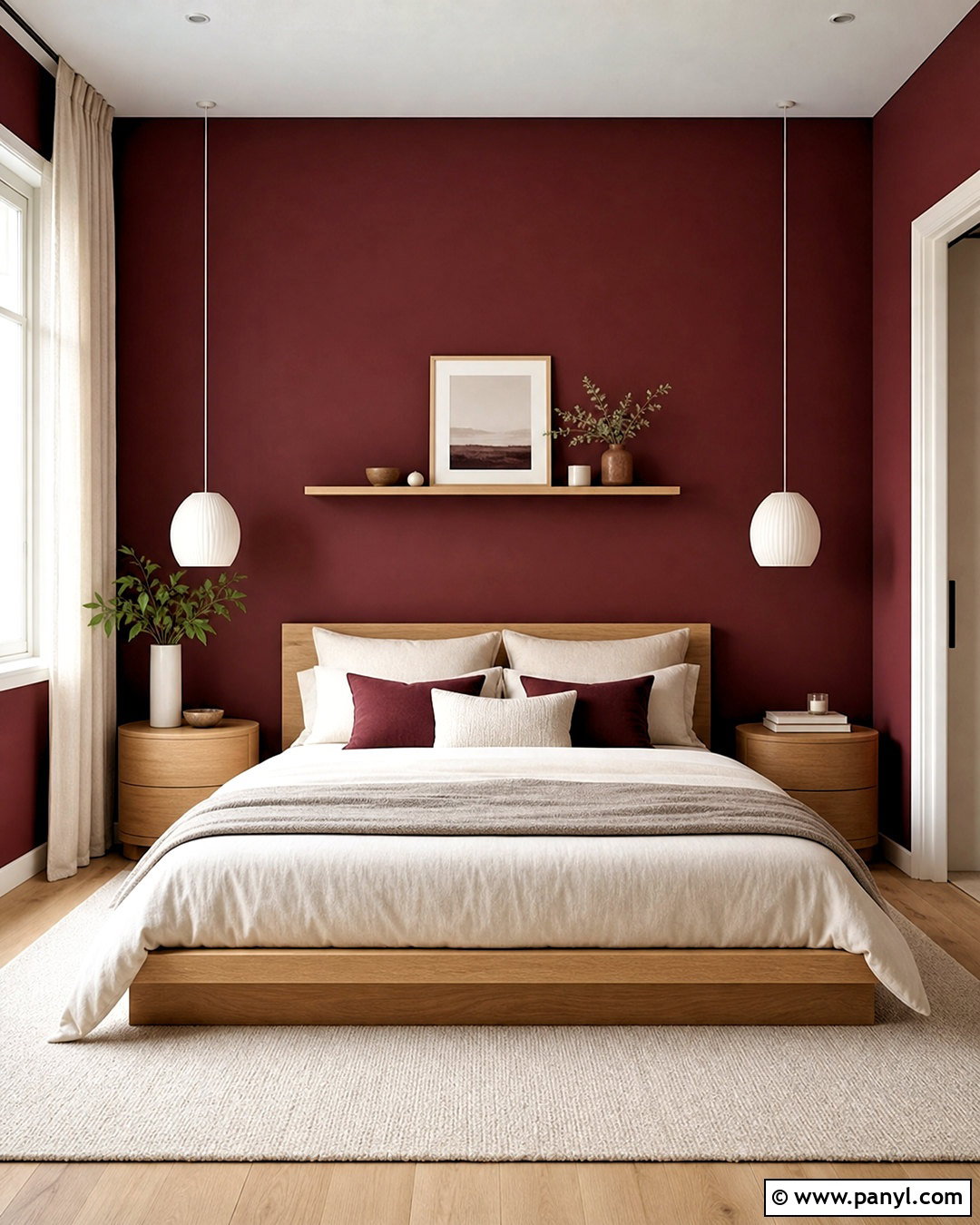
Make an unused corner productive by creating an L-shaped keyboard and listening area. Position a compact digital piano along one wall and add a narrow floating shelf on the adjacent wall for speakers, headphones, and music books. Paint the corner muted navy blue while keeping the surrounding walls warm white. This creates a distinct zone without adding a divider. Choose a light oak piano bench with internal storage and place a round cream rug beneath it. Slim wall sconces provide focused light without using tabletop space. Hang two decorative acoustic panels above the piano and add a tall leafy plant near the room entrance. The finished layout feels intimate, organized, and easy to incorporate into a bedroom or living area.
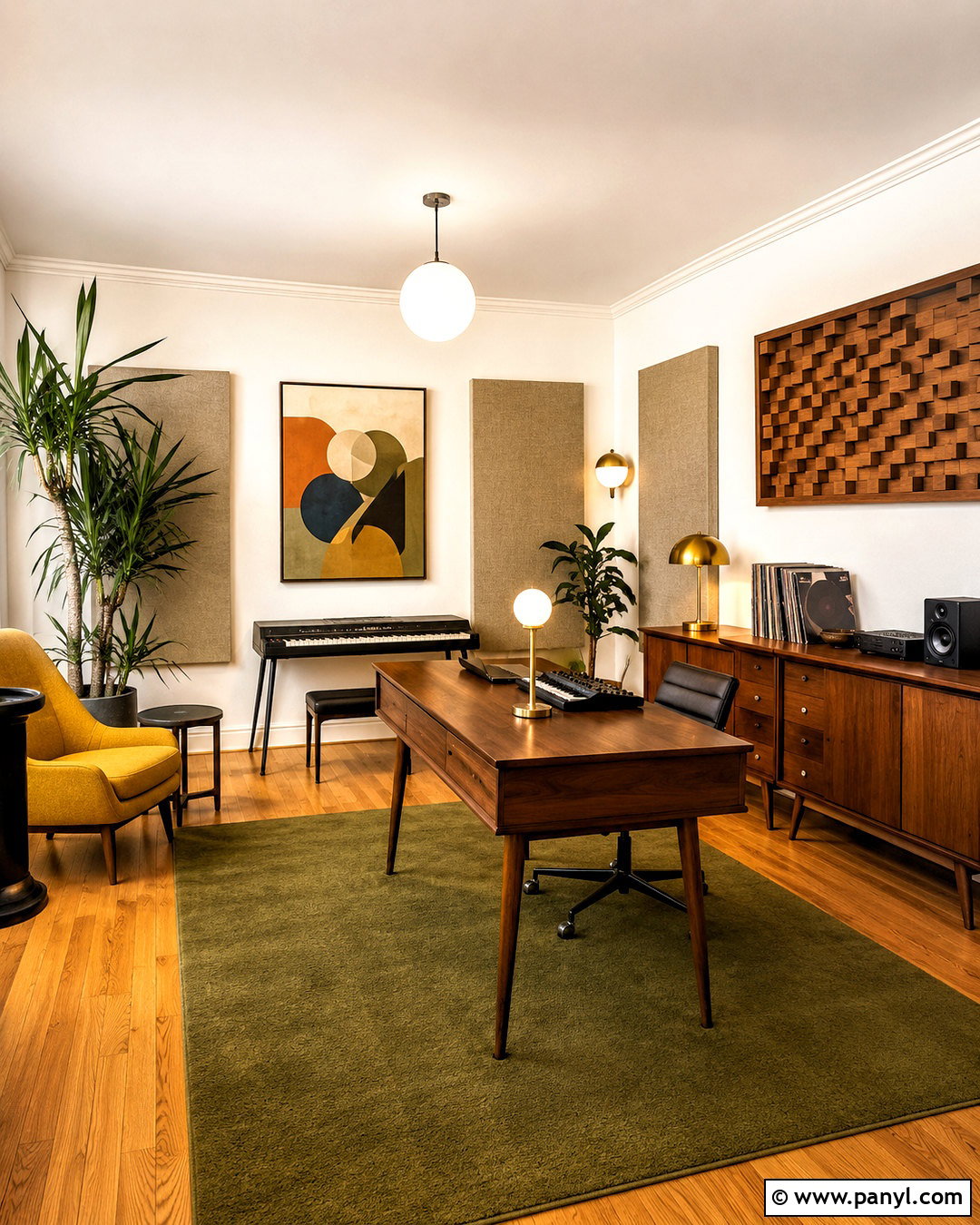
9. Small Music Room With Record Storage
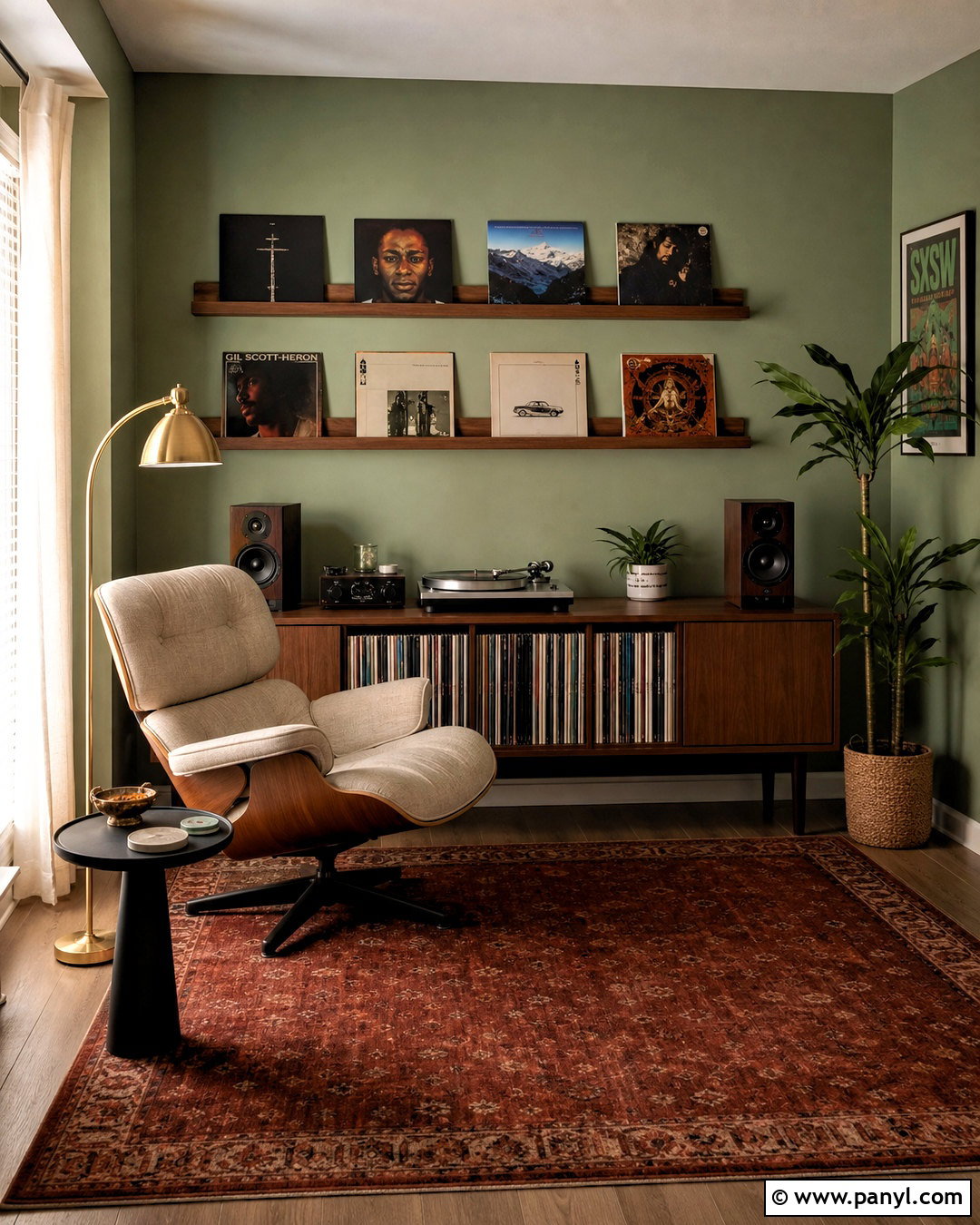
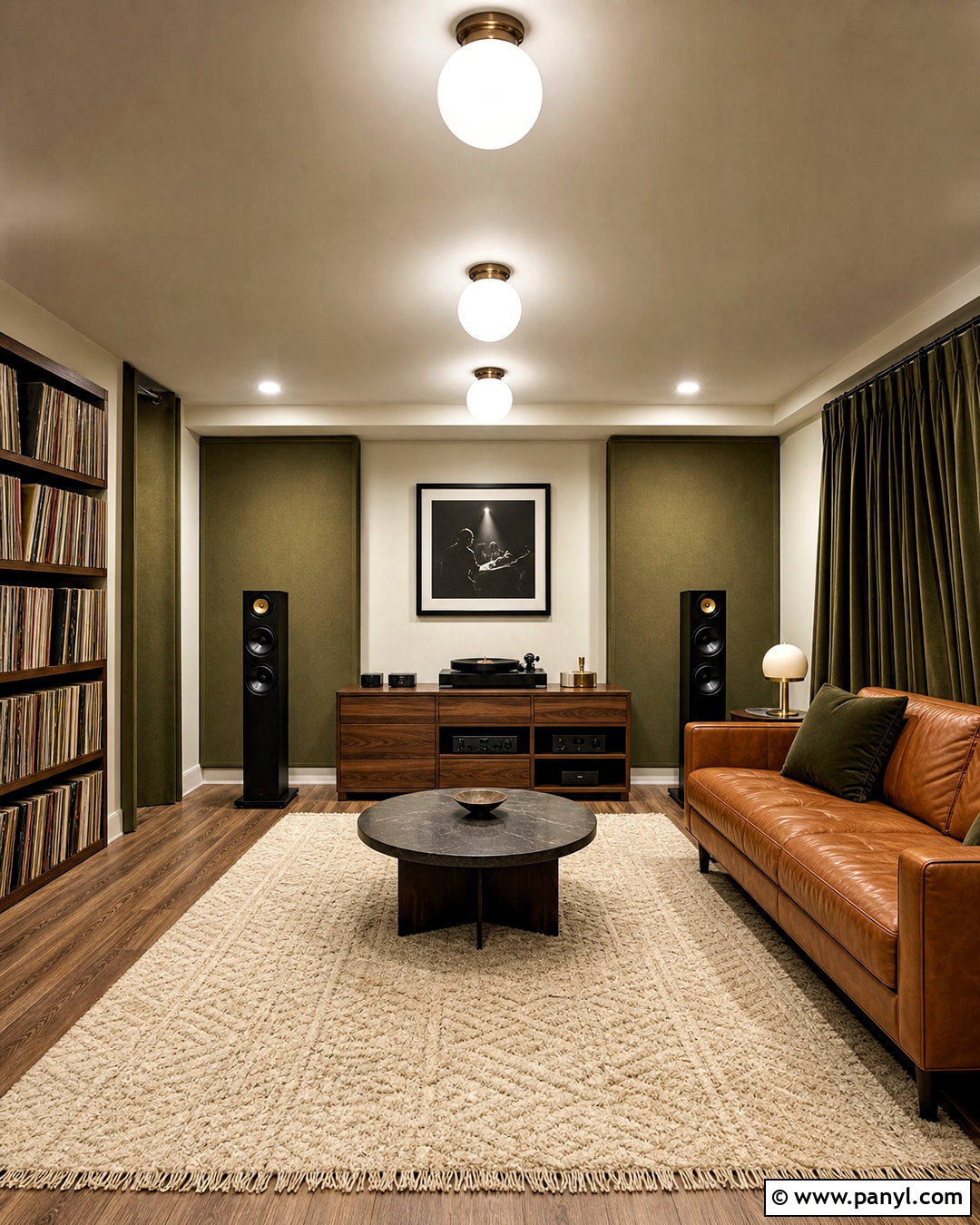
A listening-focused music room should make the record collection accessible while preserving comfortable seating. Line one wall with low walnut cabinets sized for vinyl storage, then place a turntable and compact speakers on top. Use dusty green walls, warm white trim, and a rust-colored rug to create a relaxed midcentury look. A single oatmeal lounge chair with a small round side table provides a dedicated listening spot without overwhelming the room. Install floating ledges above the console to display a rotating selection of album covers. Heavy cream curtains soften the window and add visual warmth. Finish with a brass floor lamp, a textured throw, and concealed cable management. The room becomes a tidy retreat for focused, everyday listening.
10. Small Music Room With A Drum Kit
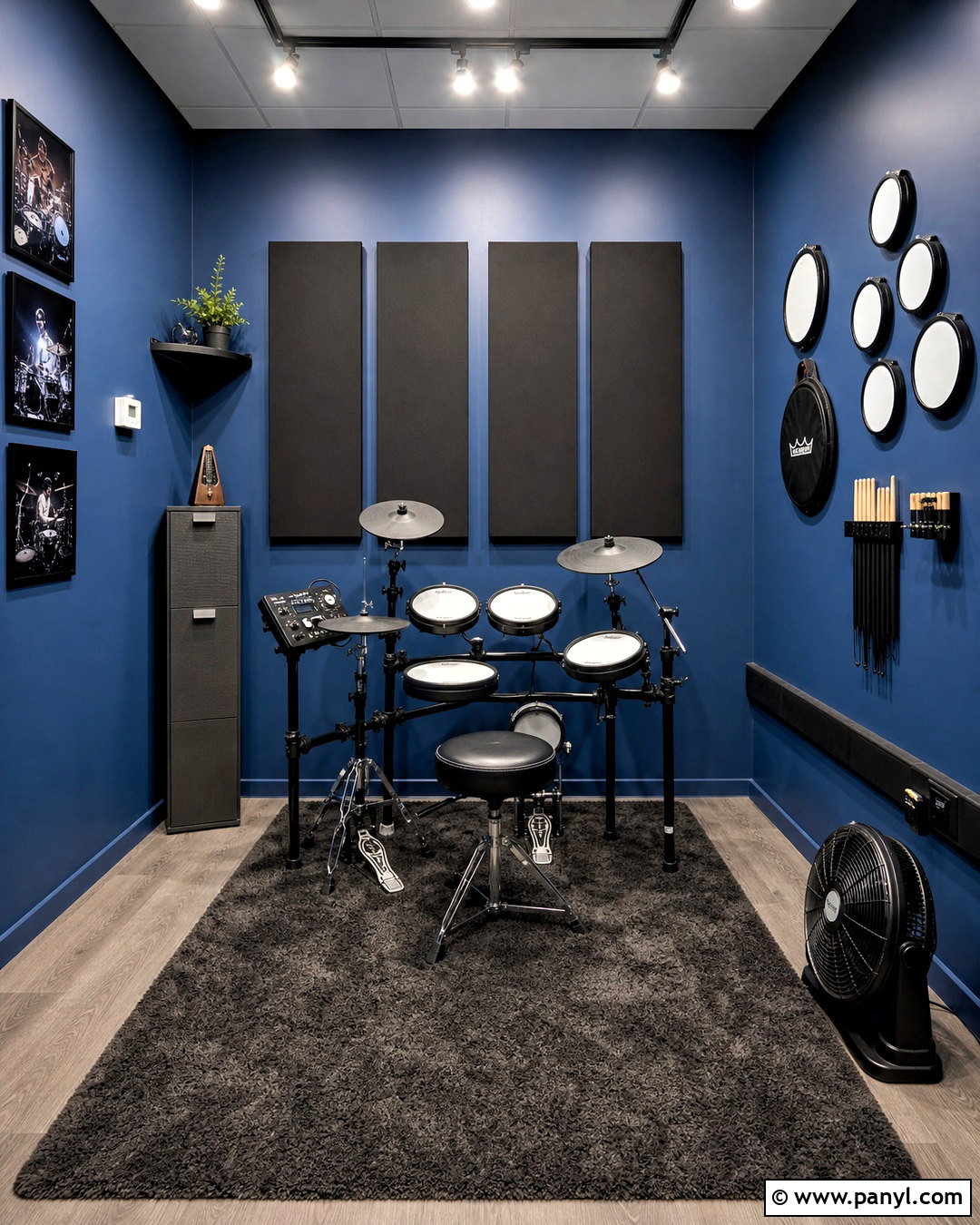
A compact drum room works best when the kit is carefully scaled and positioned. Place an electronic or small acoustic kit in the back corner, leaving a clear path from the door. Use deep blue walls with charcoal acoustic panels to give the space depth while keeping treatment visually coordinated. A thick, low-pile rug beneath the entire kit helps define the setup and protects the floor. Add a narrow wall cabinet for sticks, headphones, sheet music, and maintenance supplies. Mount cymbals or practice pads on secure wall storage when they are not being used. Bright adjustable ceiling lights keep the room functional. A small fan, padded drum throne, and covered cable channels complete a practical arrangement that still looks intentional and uncluttered.
11. Small Music Room In An Attic
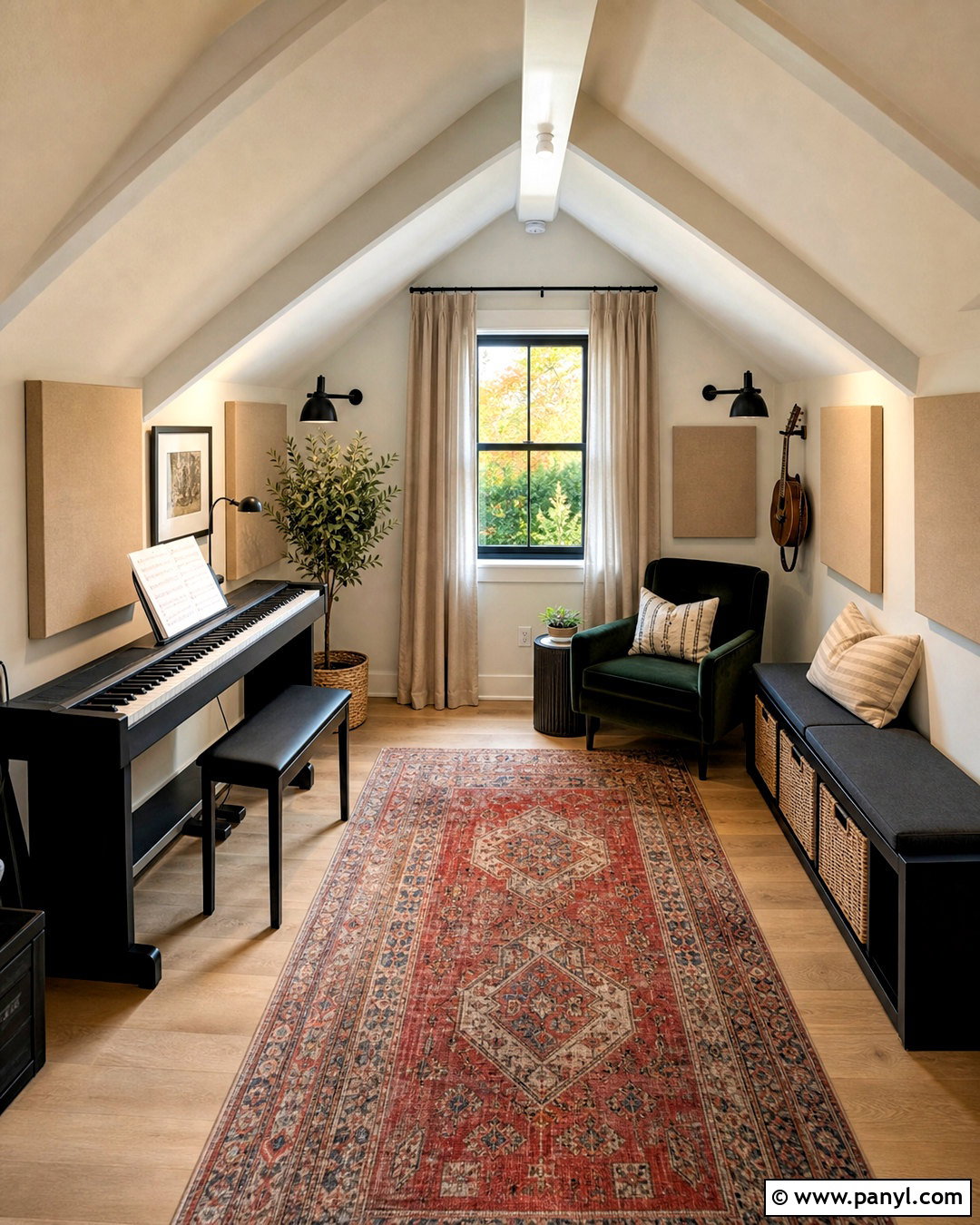
A sloped attic can become a charming music room when the layout follows the ceiling instead of fighting it. Place low instruments, record cabinets, or a digital piano beneath the shortest wall. Reserve the highest central area for standing, singing, or playing guitar. Paint the angled ceiling and walls the same soft white to create a continuous, open appearance. Add pale wood flooring, a faded red vintage-style rug, and natural linen curtains. Fit acoustic panels between ceiling beams where possible, using beige fabric that blends with the architecture. A low storage bench can hold cases while doubling as seating. Finish with wall-mounted lights, woven baskets, and one dark green accent chair for a comfortable attic studio with character.
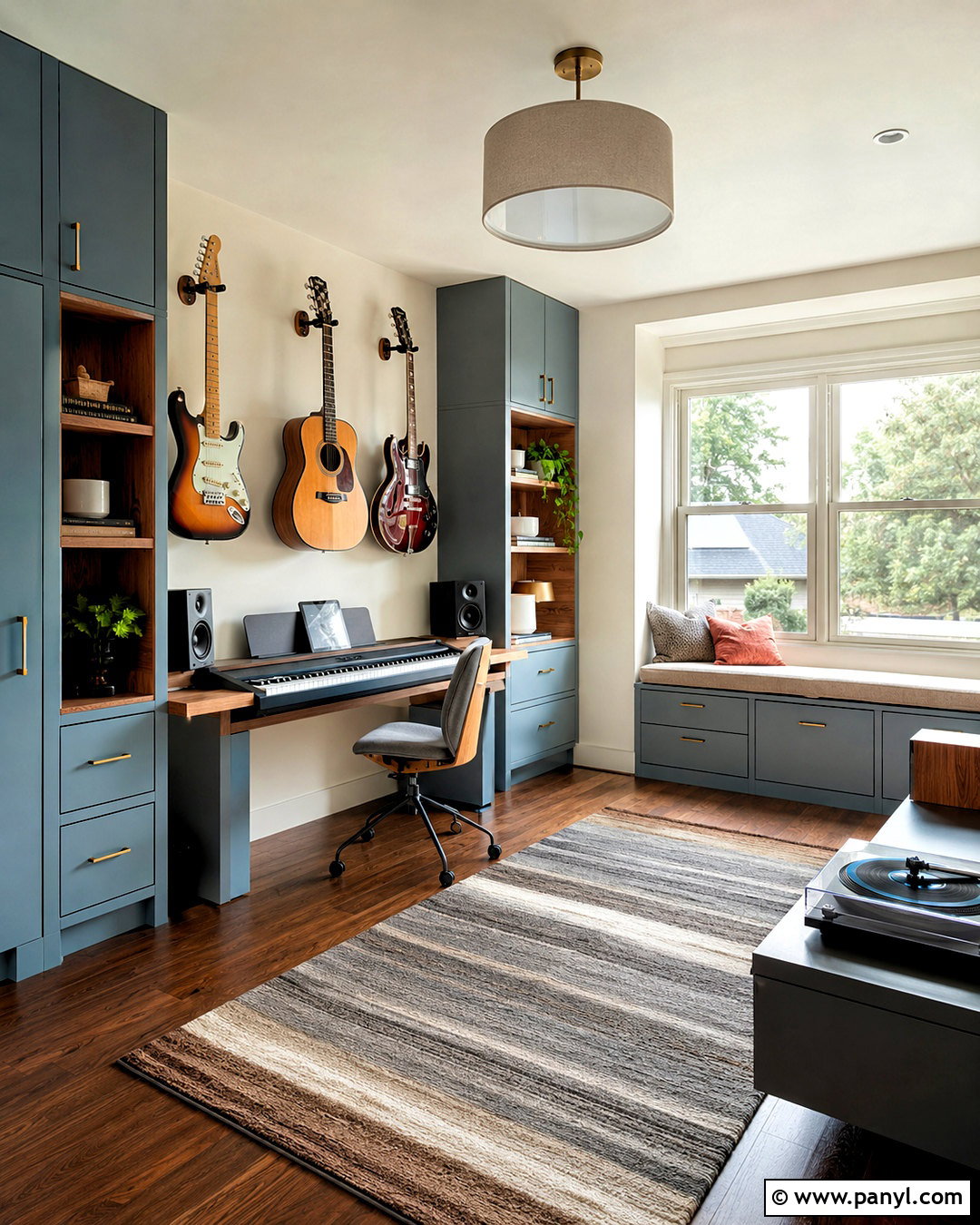
12. Small Music Room With Built-In Shelves
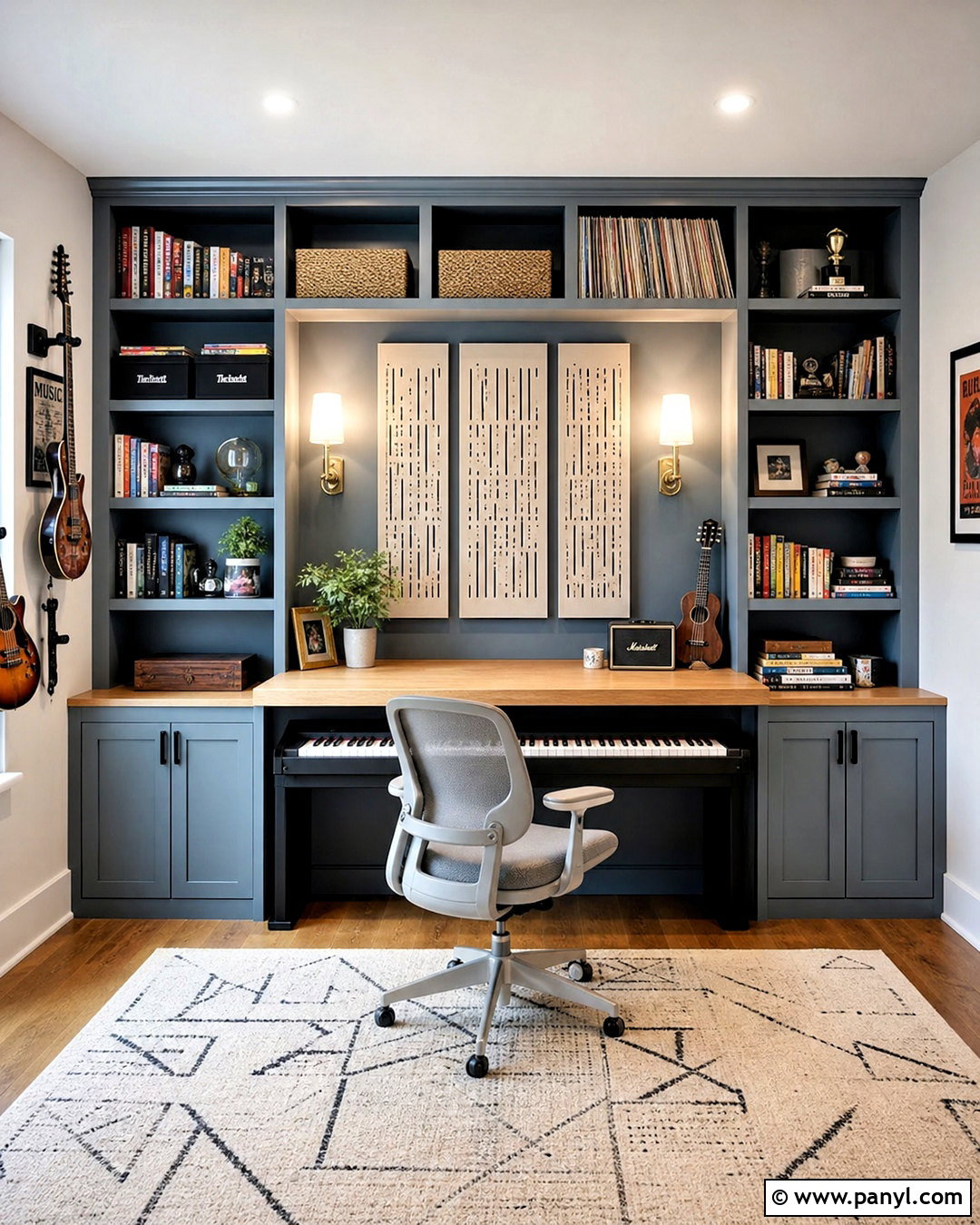
Floor-to-ceiling shelving can give a compact music room impressive storage without filling it with separate cabinets. Build shallow shelves around a centered keyboard or production desk, leaving enough open wall area for decorative acoustic panels. Paint the cabinetry muted blue-gray and use warm oak for the desktop and display ledges. Closed lower cupboards can hide amplifiers, cables, and less attractive equipment. Open upper shelves work well for books, records, small instruments, and carefully edited decor. Add a light gray ergonomic chair and a cream geometric rug to soften the built-in design. Warm white wall lights illuminate the shelves without occupying valuable desk space. This organized layout makes a narrow room feel purposeful, custom, and visually cohesive.
13. Small Music Room With A Fold-Down Desk
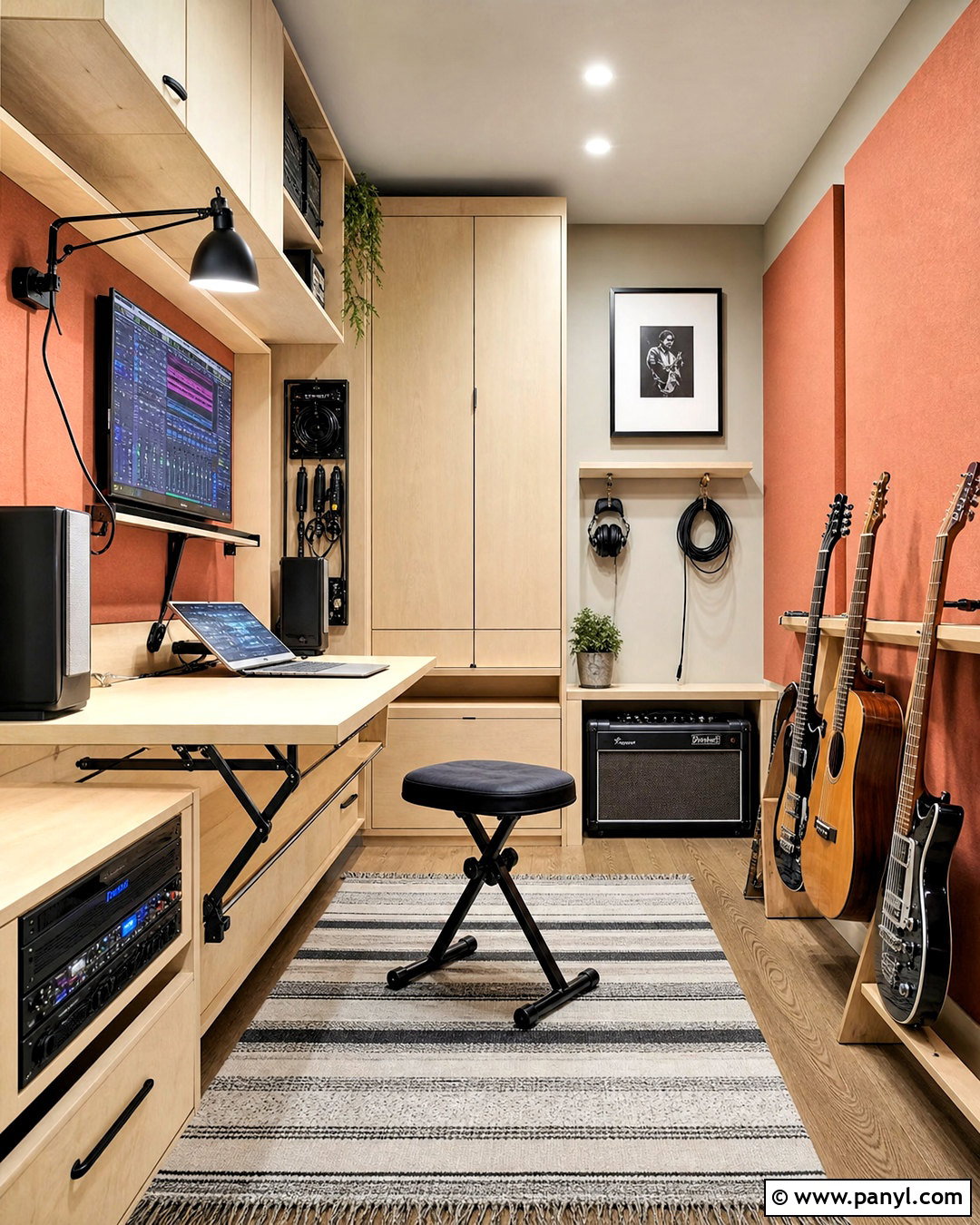
A fold-down desk allows a tiny music room to change quickly between recording and instrumental practice. Mount a sturdy wall desk with built-in compartments for an audio interface, headphones, and a laptop. When closed, the unit should resemble simple paneled cabinetry rather than exposed studio equipment. Paint the walls pale clay and choose light maple furniture for an airy, casual look. Position a guitar rack and compact amplifier beside the desk, then place a cushioned stool in the center. A striped neutral rug helps define the room while keeping the palette relaxed. Add two fabric acoustic panels, a plug-in swing-arm lamp, and wall hooks for cables. The flexible arrangement keeps the floor clear whenever larger instruments or microphone stands are needed.
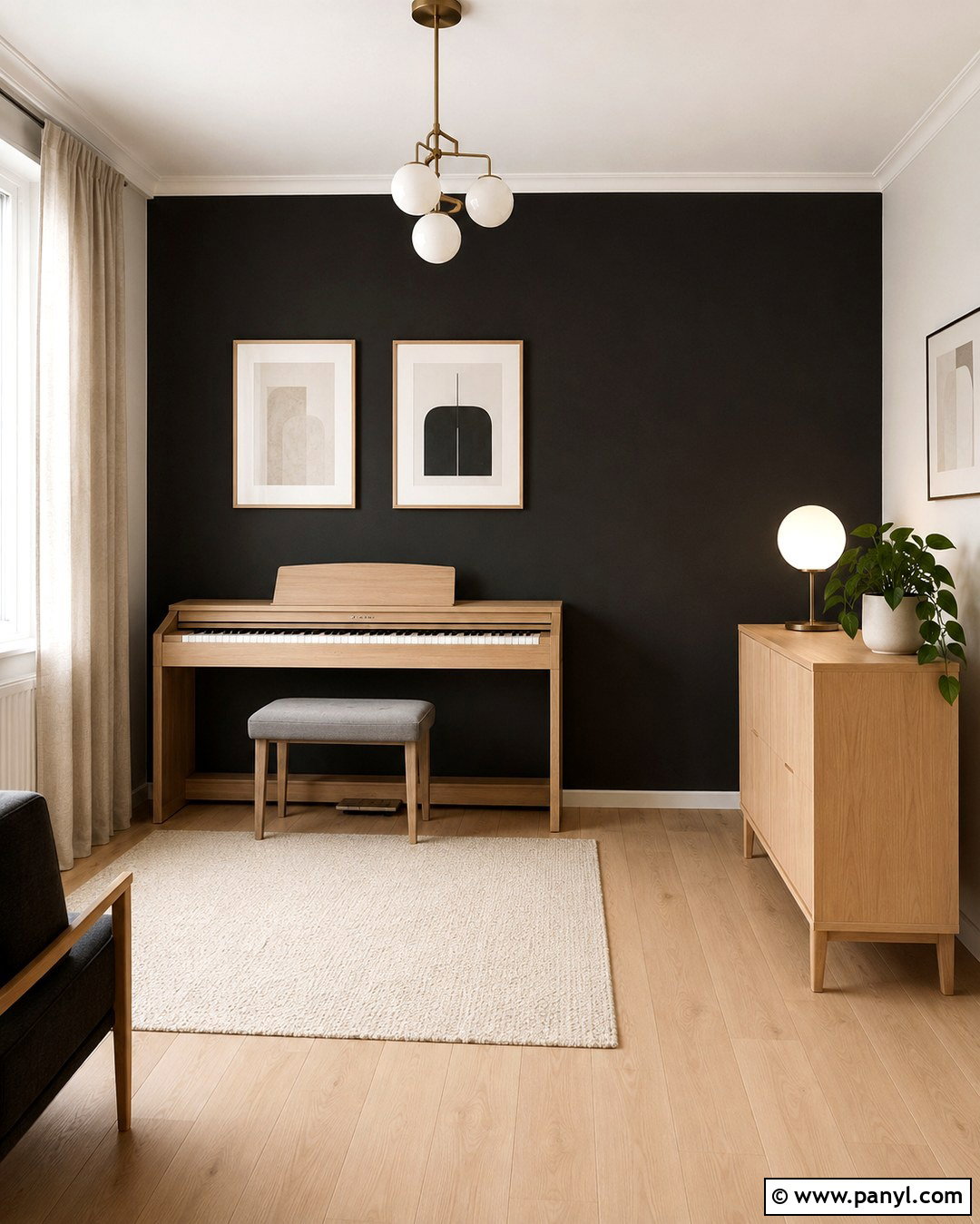
14. Small Music Room With Black Walls
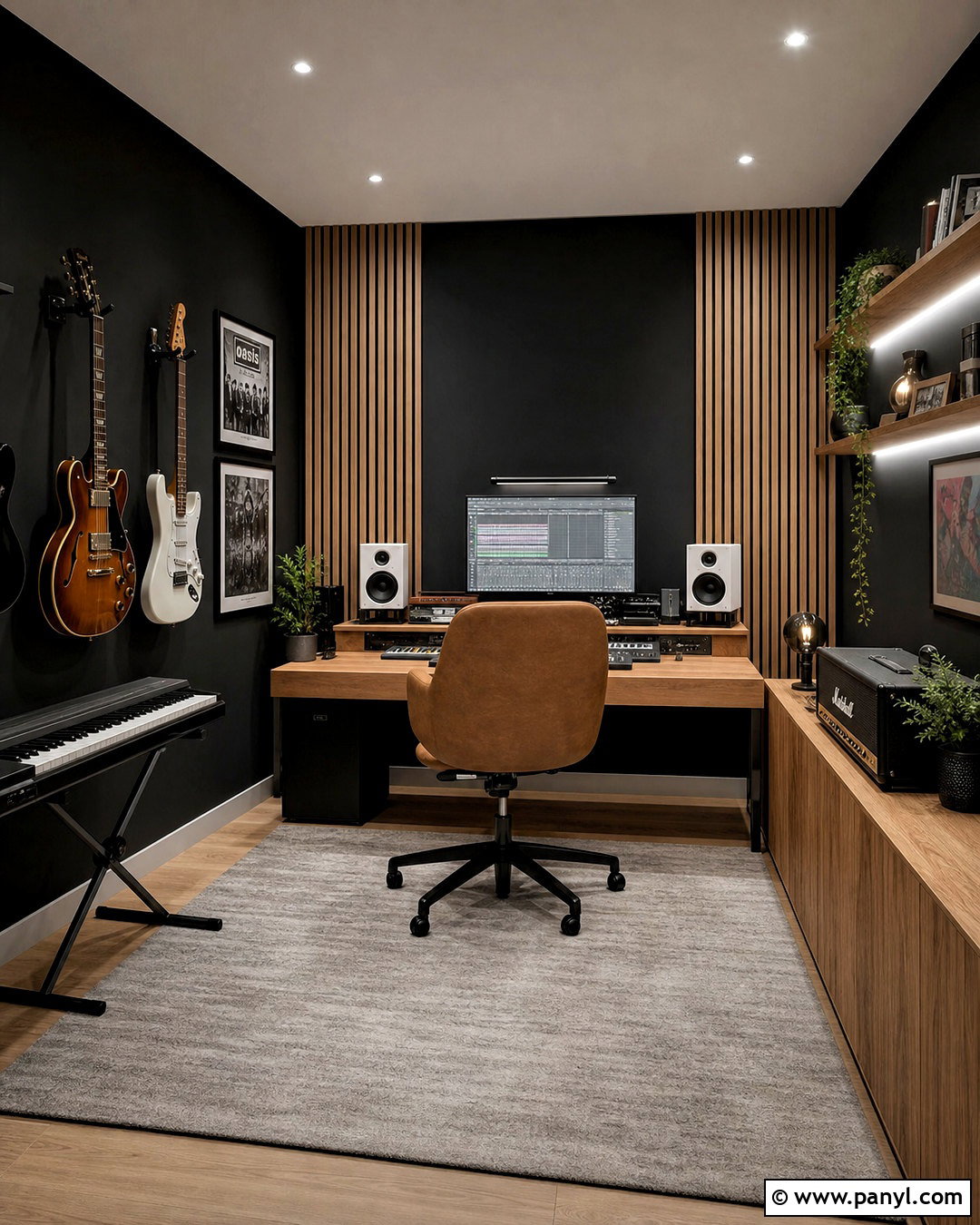
Dark walls can make a compact music room feel focused and sophisticated when balanced with lighter materials. Paint the walls soft matte black rather than a glossy or blue-toned shade. Add natural oak acoustic slats behind a light wood desk to create contrast and warmth. Use compact white speakers, a tan upholstered chair, and a pale gray rug so the room does not appear visually heavy. Mount instruments on one wall with matching black hardware, leaving generous space between them. Closed oak cabinets below the desk keep cables and accessories hidden. Bright white ceiling lighting, an adjustable task lamp, and subtle shelf lighting ensure that every work surface remains clear. The completed room feels dramatic, modern, and comfortable rather than cramped.
15. Small Music Room With Boho Decor
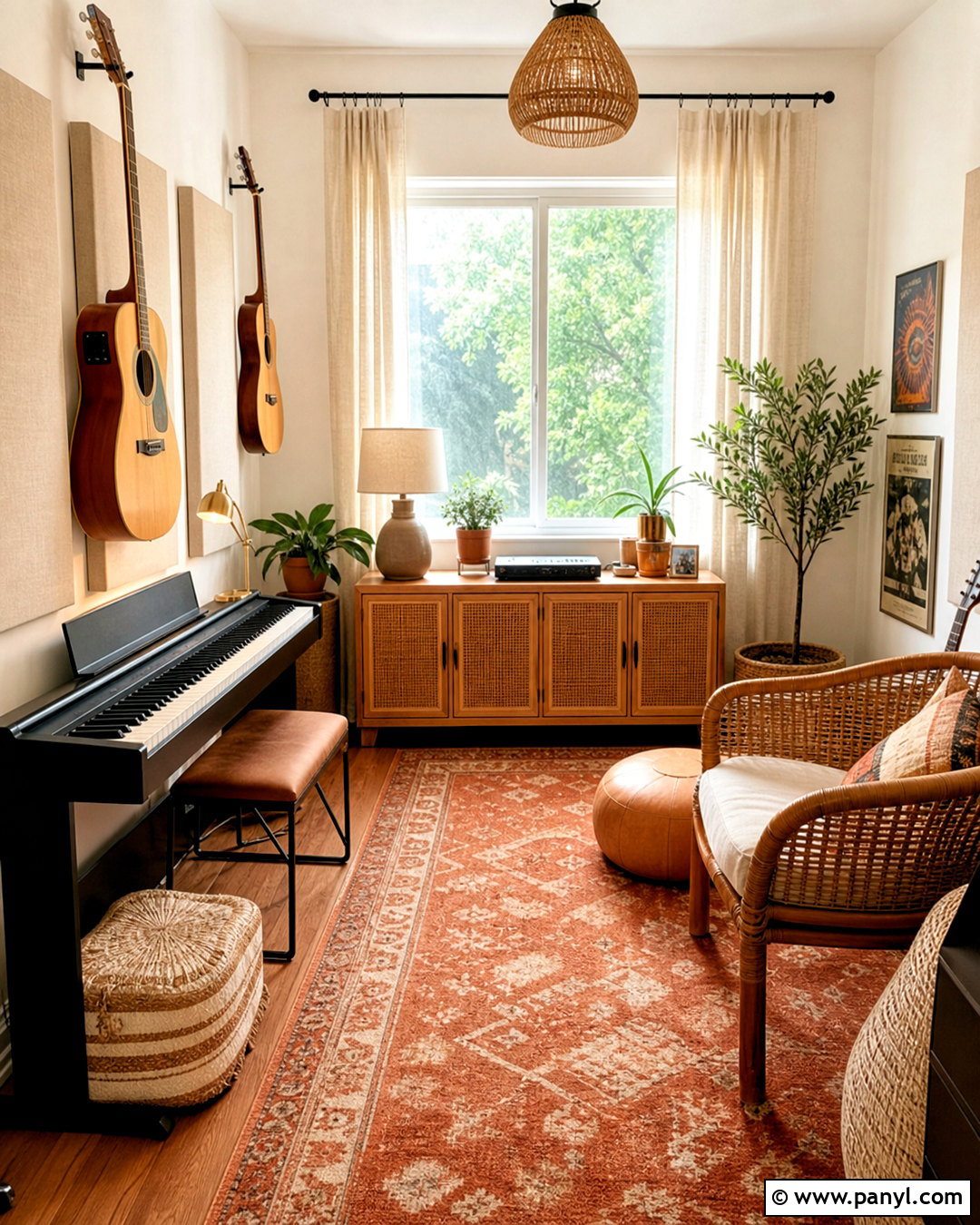
For a softer creative atmosphere, combine practical music equipment with relaxed boho materials and warm colors. Start with creamy white walls, honey-toned wood furniture, and a faded terracotta rug. Place a digital keyboard beneath a woven wall hanging, using fabric acoustic panels in nearby neutral tones to support the layered look. A cane-front cabinet can store pedals, records, and cables while concealing visual clutter. Add a low rattan chair for listening and a floor cushion for casual jam sessions. Wall-mounted guitar hooks save floor space and turn instruments into decor. Finish with linen curtains, leafy plants, ceramic lamps, and woven baskets. Keep the layout edited so the textures feel cozy and artistic without making the small room difficult to navigate.
16. Small Music Room With Scandinavian Decor
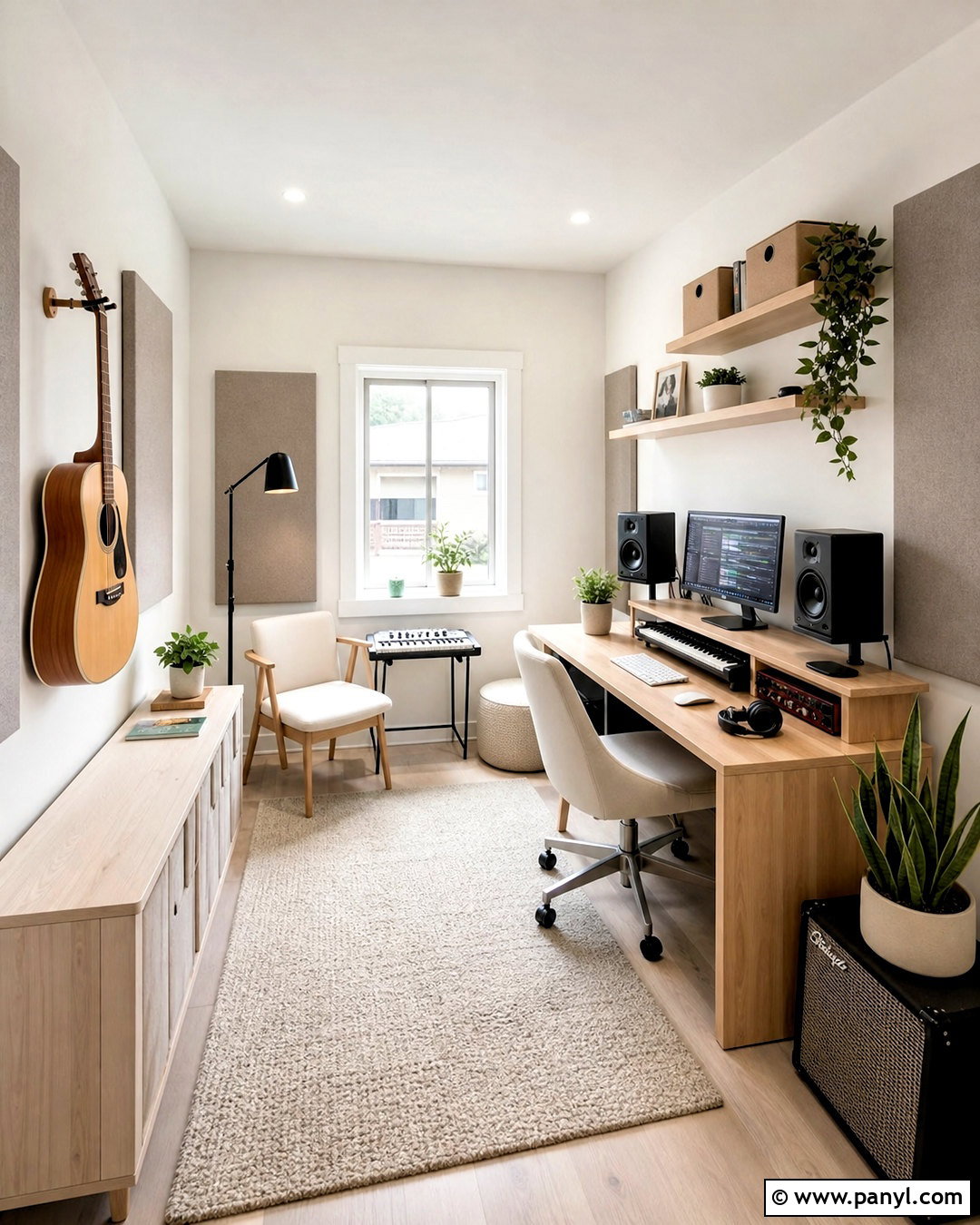
A Scandinavian music room feels open because it relies on pale finishes, simple forms, and limited decoration. Paint the walls clean warm white and use light ash wood for the desk, keyboard stand, and floating shelves. Choose soft gray acoustic panels in rectangular shapes that align neatly behind the workstation. A compact white chair and oatmeal wool rug add comfort without introducing strong visual contrast. Store cables and accessories in matching lidded boxes on the upper shelves. One wall-mounted guitar can serve as the room’s primary decorative feature. Add a slim black floor lamp and a few small green plants for definition. This complete scheme works especially well in apartments because it feels calm, practical, and connected to modern everyday interiors.
17. Small Music Room For Kids
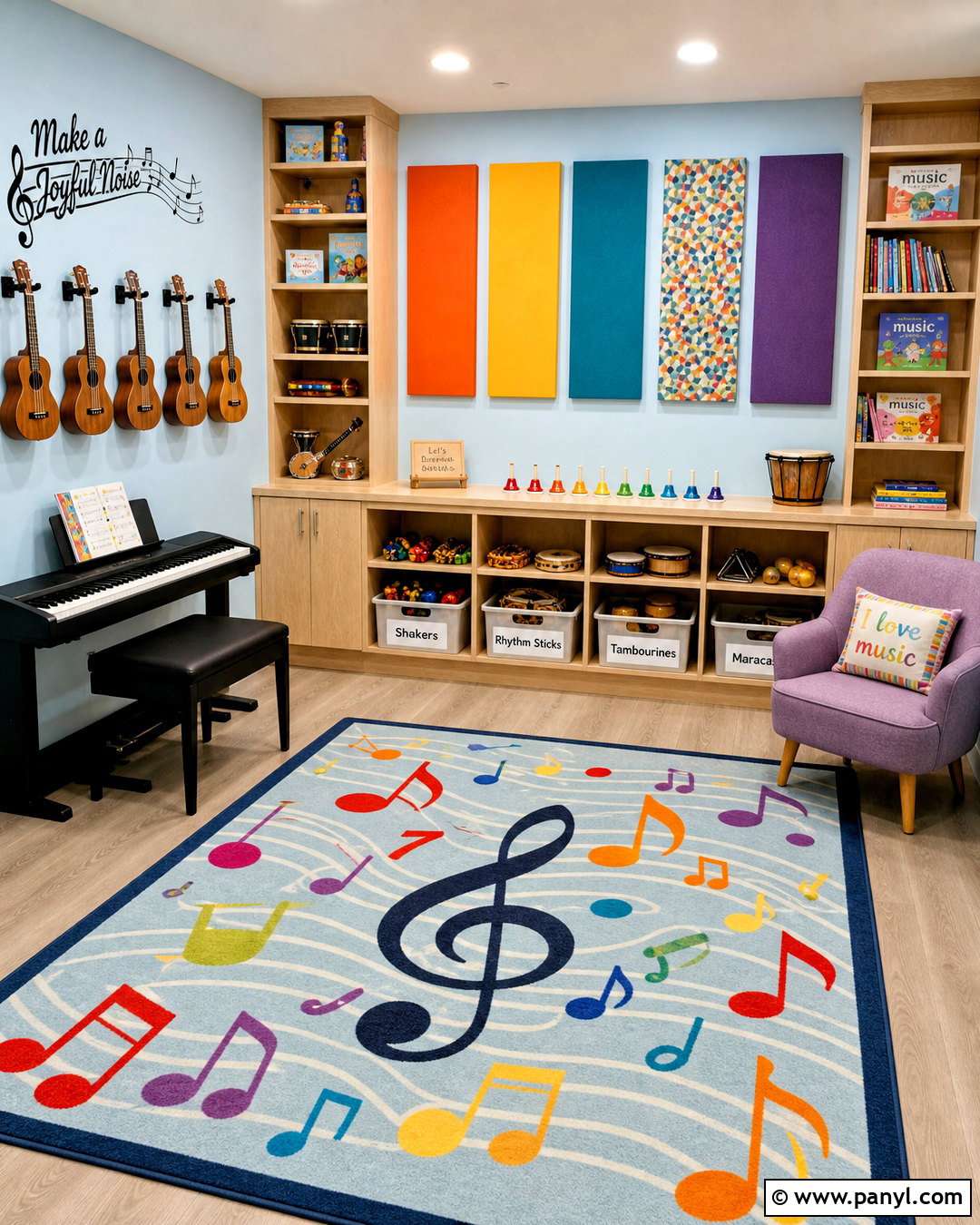
A children’s music room should support exploration while keeping instruments secure and easy to reach. Use washable pale blue paint, light wood storage, and a cheerful multicolor rug as the foundation. Place a compact keyboard against one wall with a height-adjustable bench. Create a second zone with small percussion instruments arranged in labeled, open bins. Install secure wall mounts for a child-size guitar or ukulele, and keep heavier equipment in closed lower cabinets. Colorful fabric acoustic panels can add sound control and playful wall decoration without feeling overly themed. Include a cushioned reading seat for music books and quiet listening. Bright ceiling lighting, rounded furniture corners, and a clear central floor area make the finished room practical for lessons, practice, and family music time.
18. Small Music Room In A Bedroom
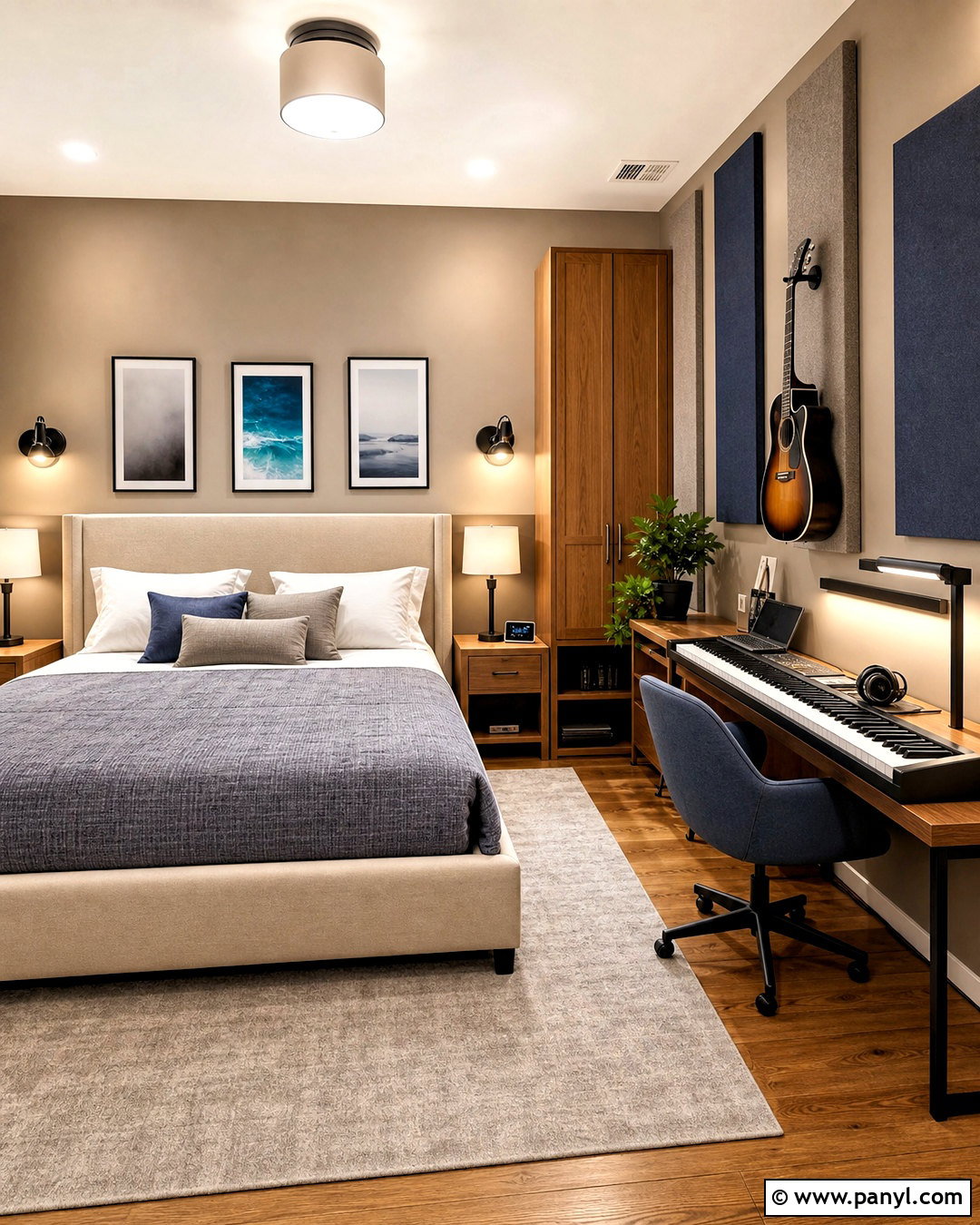
A bedroom music corner should blend naturally with the sleeping area instead of looking like a separate equipment station. Place a narrow keyboard or studio desk along the wall farthest from the bed. Match its finish to the nightstands or dresser for visual consistency. Use warm taupe walls, an upholstered beige bed, and medium oak furniture to create a restful base. Hang decorative acoustic panels in fabric that coordinates with the bedding. A guitar can be mounted above a low cabinet with doors for cables and accessories. Place a small rug beneath the music workstation to define the zone. Adjustable wall lighting supports late practice, while headphones keep the setup flexible. Careful cable management ensures the bedroom remains calm, safe, and uncluttered.
19. Small Music Room With Soundproofing Features
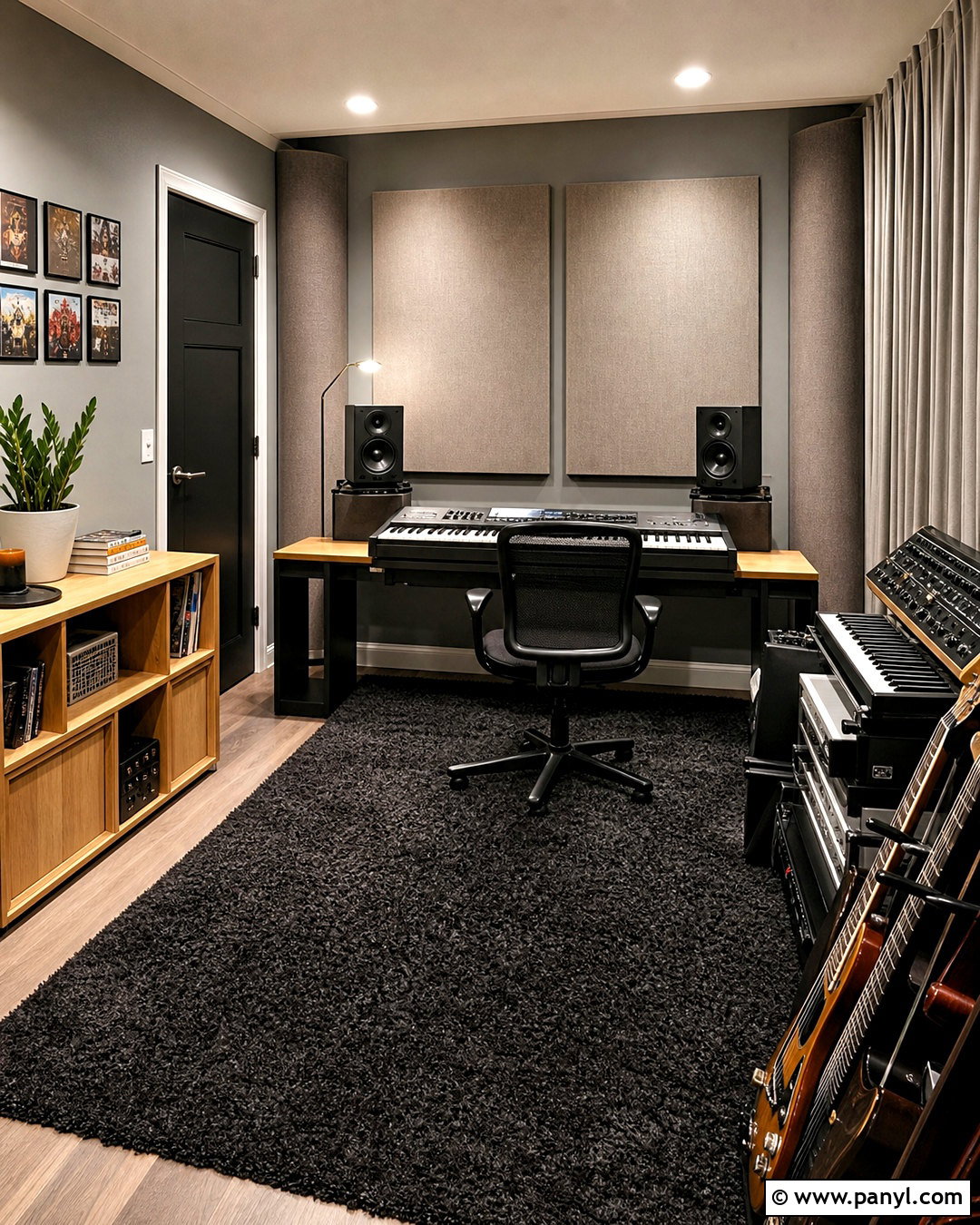
A sound-conscious practice room can look inviting when practical materials are integrated into the design. Begin with a solid door fitted with perimeter seals and a door sweep. Use warm gray walls, thick fabric acoustic panels, and full-length lined curtains across the window. Place a compact keyboard or guitar station on the longest wall and set speakers on isolation pads. A dense charcoal rug with a quality rug pad adds softness beneath the equipment. Choose closed white oak storage for amplifiers, microphones, and cables to prevent the room from feeling technical. Corner bass traps can be covered in coordinating neutral fabric. Bright recessed lighting and a slim task lamp complete a comfortable room that reduces distracting reflections and supports considerate practice at home.
20. Small Music Room With Minimal Decor
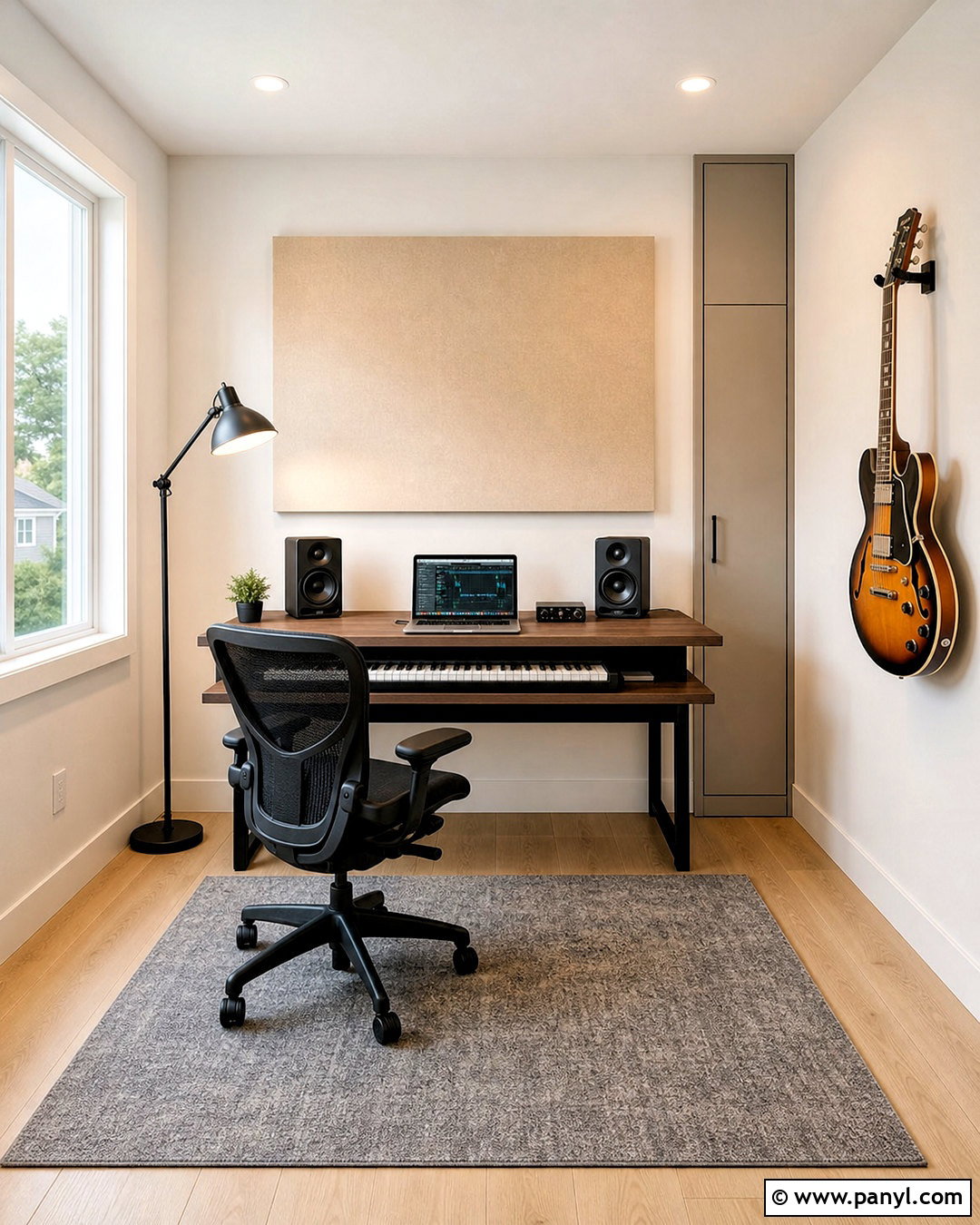
A minimalist music room creates more space by limiting furniture to the pieces that directly support playing or recording. Use soft white walls, pale oak flooring, and one large beige acoustic panel as a quiet backdrop. Center a compact desk with a laptop, audio interface, and two small speakers. Store the keyboard on a sliding tray and mount a single guitar beside the workstation. Choose a black ergonomic chair with a light frame to maintain visual openness. A narrow closed cabinet can hold every cable, pedal, and accessory, preventing loose equipment from spreading across the room. Add a simple gray rug and one adjustable floor lamp. With careful proportions and concealed storage, the finished space feels bright, organized, and ready for focused creative work.
Conclusion:
The strongest small music rooms balance creativity with practical planning. Wall-mounted instruments, shallow storage, compact furniture, and flexible layouts preserve valuable floor space while giving every item a proper place. Rugs, curtains, upholstered furniture, and thoughtfully positioned acoustic panels can also make a room feel warmer and more comfortable. Choose a design that supports the way you practice, record, teach, or listen rather than filling the room with unnecessary equipment. A consistent color palette will help even technical gear feel connected to the home. Whether you are converting a closet or redesigning a spare bedroom, these 20 small music room ideas home ideas offer realistic ways to create an organized and inspiring musical retreat.

Related Ideas and Inspiration:
Leave a Reply