
Lodge interiors feel most inviting when wall color works with the home’s natural materials rather than competing with them. The best **lodge wall colors** borrow from stone, timber, soil, forests, and nearby water. Current cabin palettes commonly combine warm neutrals with wood tones and one or two nature-inspired accents, such as forest green, charcoal, or muted blue. () Light colors can freshen rooms filled with dark logs, while deeper shades create a sheltered atmosphere in spaces with generous windows. Consider the undertones in your beams, flooring, fireplace stone, and upholstery before selecting paint. From airy warm white to dramatic soft black, these complete room schemes show how to decorate with 20 practical **lodge wall colors**.

1. Warm White Lodge Walls
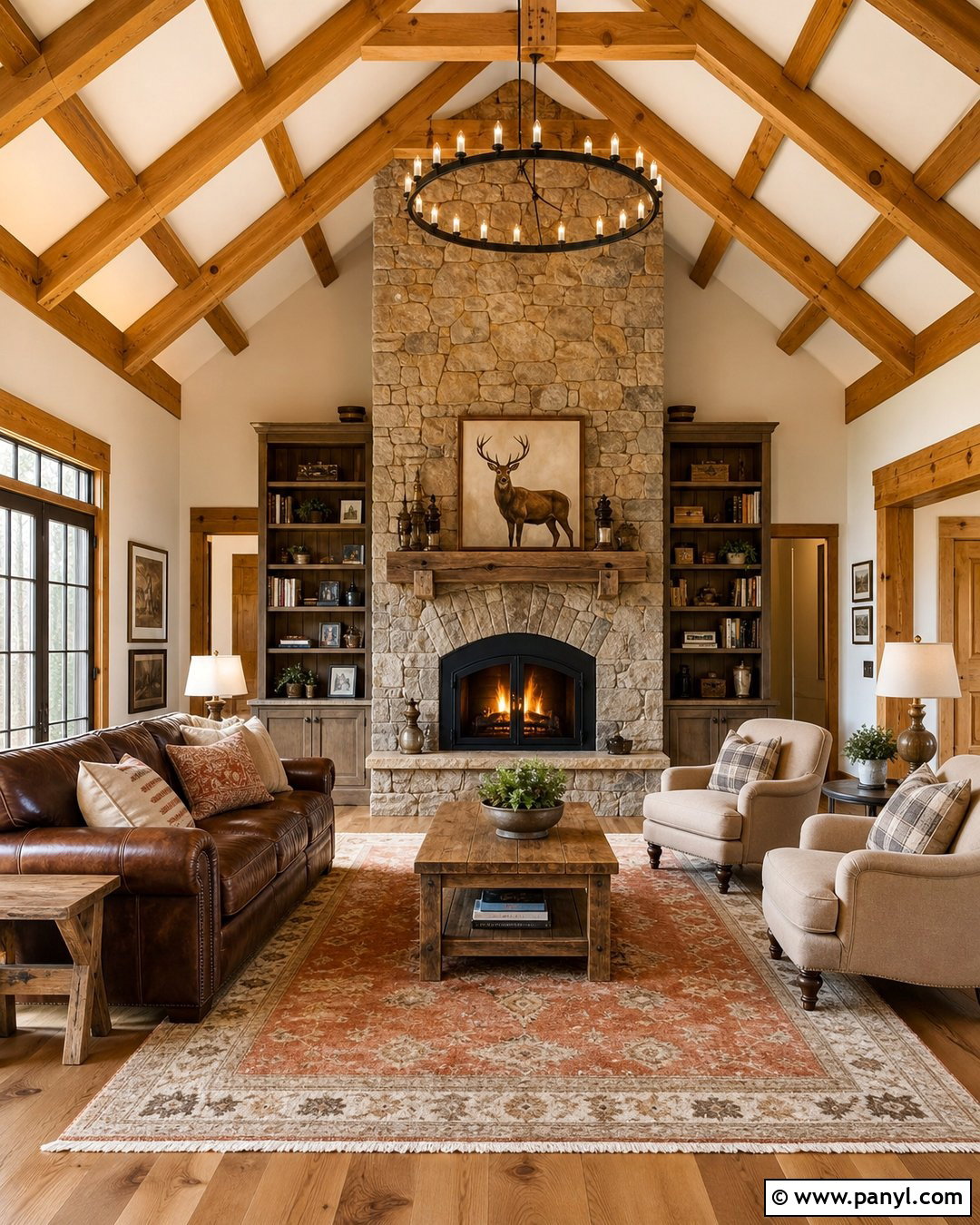
Warm white walls brighten a lodge without making it feel stark or overly modern. Choose an off-white with creamy or beige undertones to complement honey-toned pine, oak flooring, and tan stone. In a living room, keep exposed ceiling beams natural and use soft white on the walls between them. Add a substantial brown leather sofa, oatmeal wool chairs, and a reclaimed wood coffee table. A fieldstone fireplace creates a strong rustic focal point, while black iron sconces bring structure to the pale background. Finish the room with a faded rust-and-ivory rug, woven baskets, and simple landscape artwork. This balanced palette is especially helpful in smaller lodges or rooms with limited natural light.
2. Cream Lodge Walls
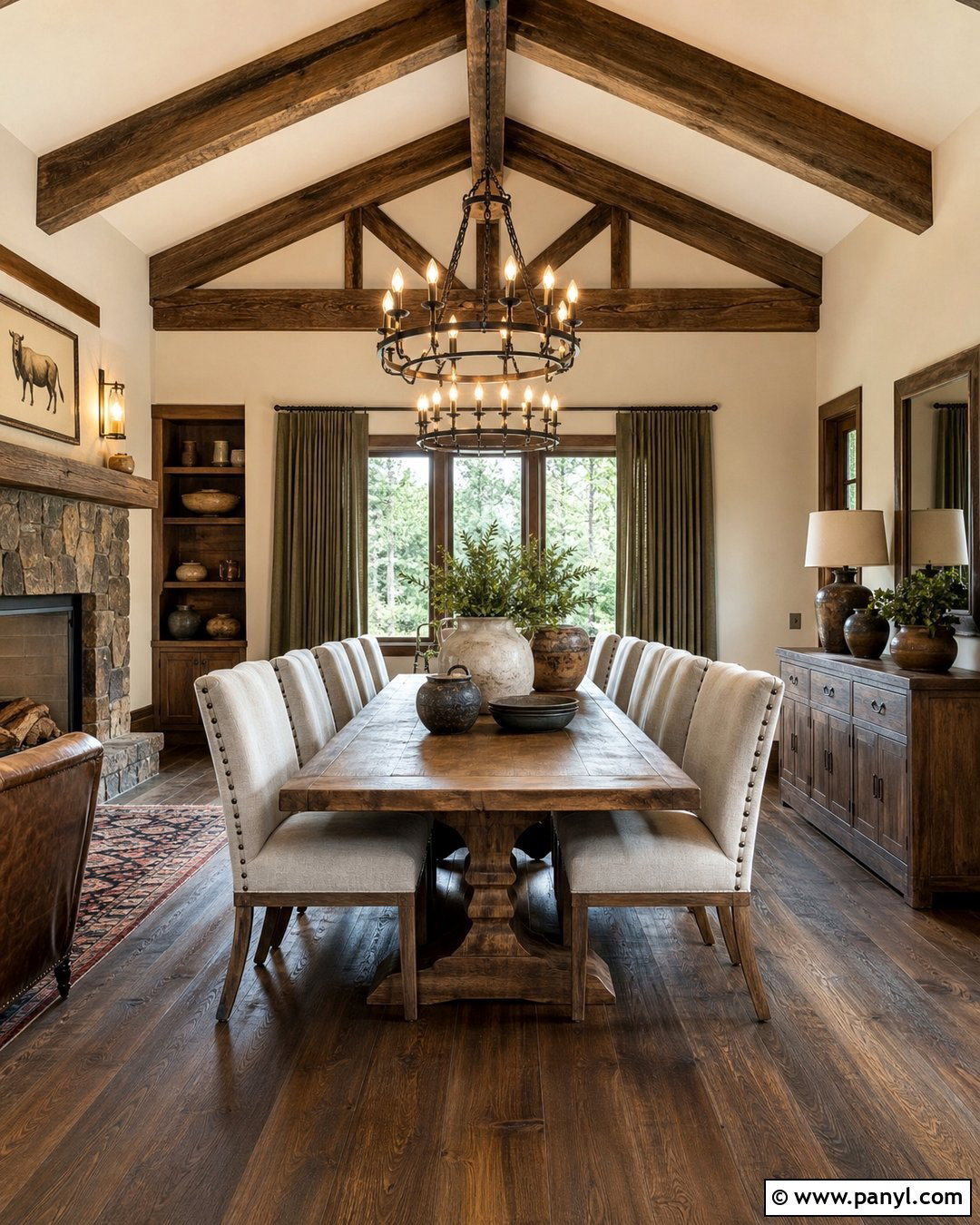
Cream walls create a mellow, welcoming background that feels softer than standard white. This color works beautifully in a lodge dining room with dark walnut furniture and an aged bronze chandelier. Paint the walls a gentle buttercream without strong yellow undertones, then use slightly lighter cream on the ceiling and trim. Frame the room with stained timber beams and wide-plank medium-brown flooring. An oversized trestle table, upholstered end chairs, and a built-in sideboard make the arrangement useful for everyday meals and larger gatherings. Add olive linen curtains, stoneware pottery, and a muted botanical rug. The resulting room feels warm and traditional but remains bright enough to showcase the grain and character of natural wood.
3. Soft Greige Lodge Walls
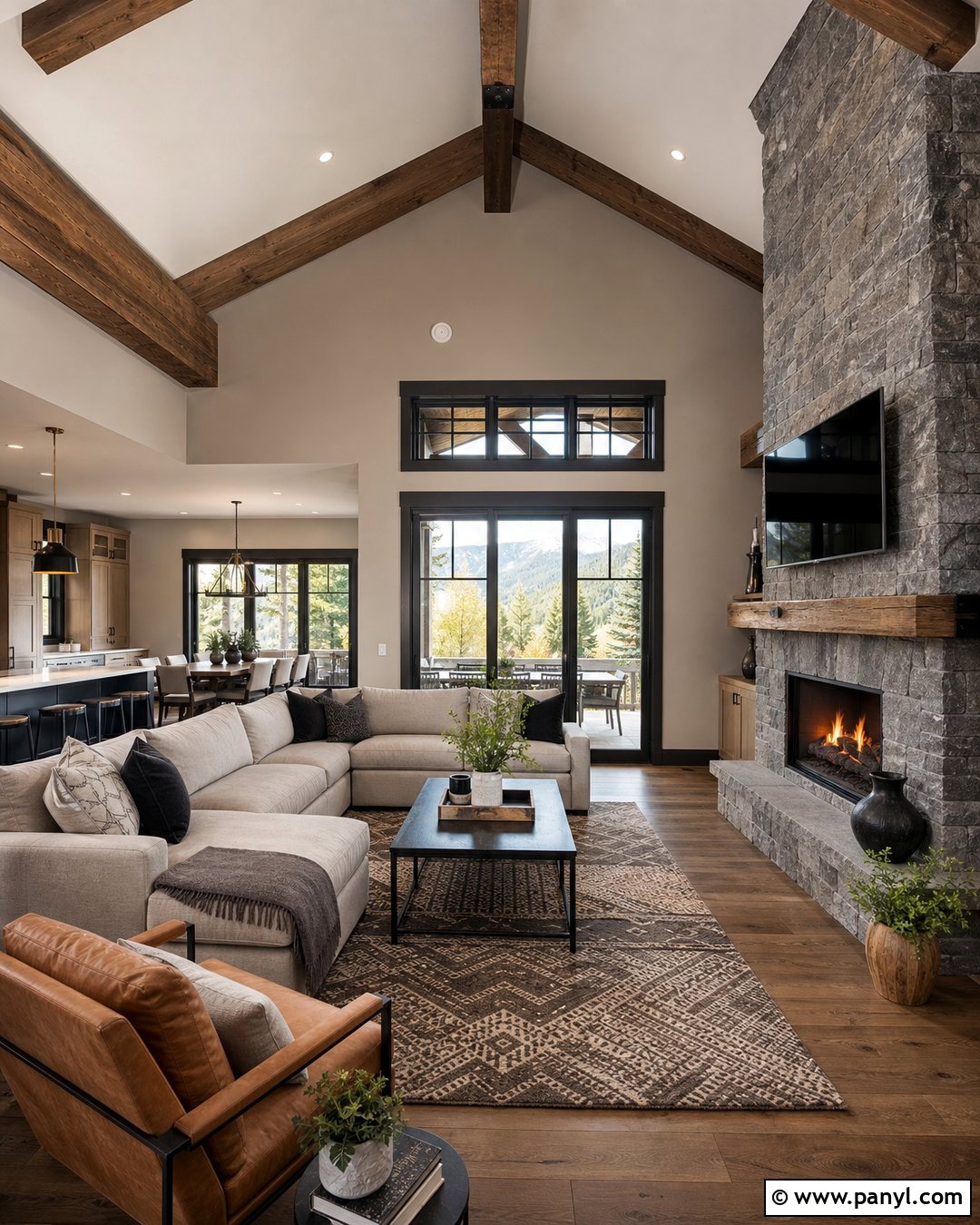
Soft greige offers a practical bridge between gray stone and warm brown wood. Use it throughout an open lodge great room to connect the living, dining, and kitchen areas without making every surface look identical. Choose a greige with a noticeable beige undertone, especially when the room contains orange or red-toned timber. Pair the walls with off-white trim, charcoal window frames, and a rough stone fireplace. A taupe sectional, cognac leather chairs, and a black metal coffee table create a comfortable contemporary arrangement. Introduce texture through wool throws, linen curtains, and a large geometric rug. Minimal mountain artwork and handmade ceramic lamps complete a polished modern lodge look that still feels grounded in nature.
4. Mushroom Taupe Lodge Walls
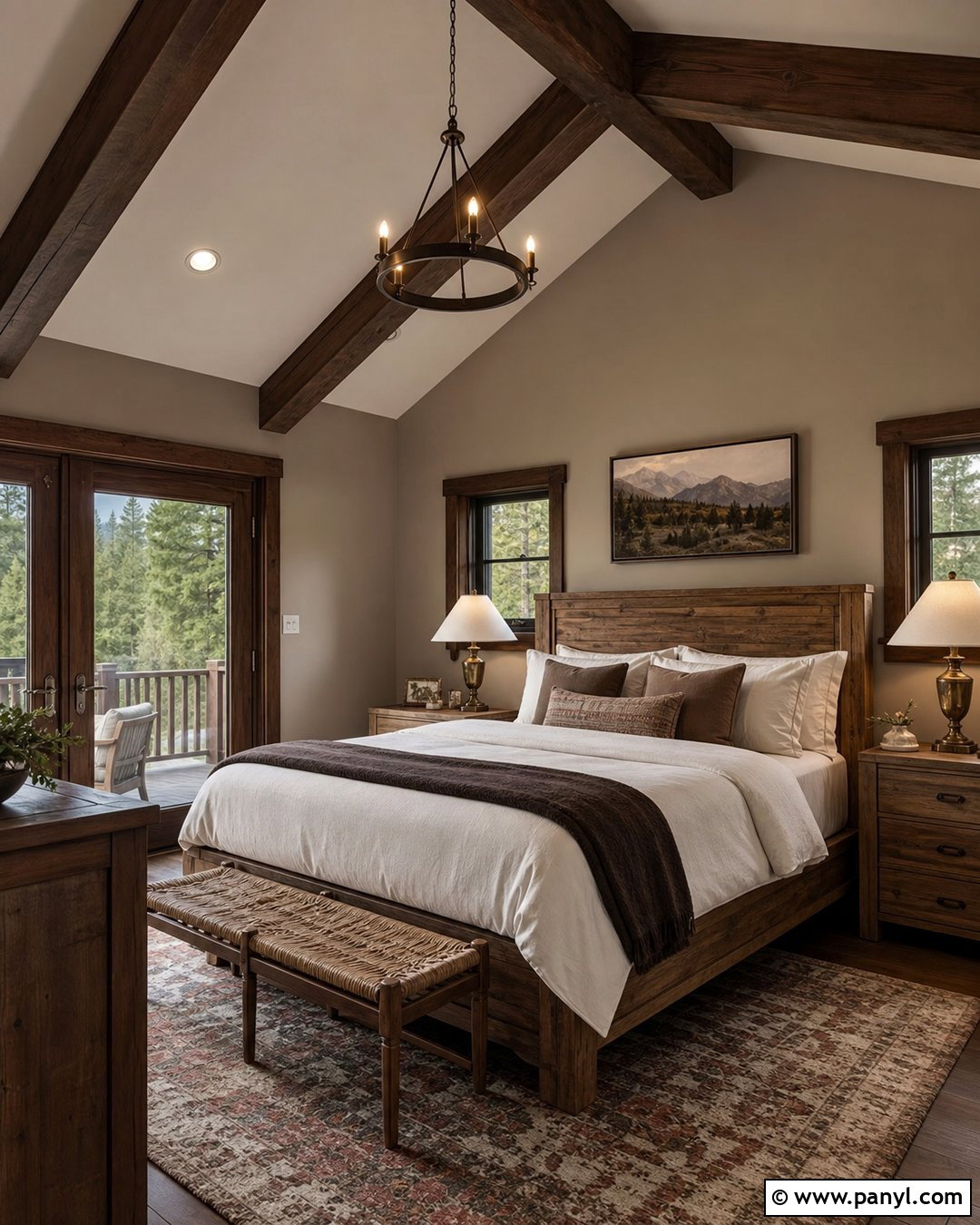
Mushroom taupe gives lodge walls earthy depth without absorbing as much light as dark brown. It is an excellent choice for a comfortable bedroom with a vaulted timber ceiling. Cover the walls in a medium taupe that carries subtle gray and brown undertones. Use warm ivory on the ceiling between the beams to preserve brightness. Center a wood-framed bed against the longest wall, then layer it with cream linen, chocolate wool blankets, and muted plaid pillows. Weathered oak nightstands and antique brass lamps add gentle contrast. Complete the room with a woven bench, a faded vintage rug, and simple charcoal sketches. The finished space feels quiet, restful, and connected to the surrounding landscape.
5. Sandstone Beige Lodge Walls
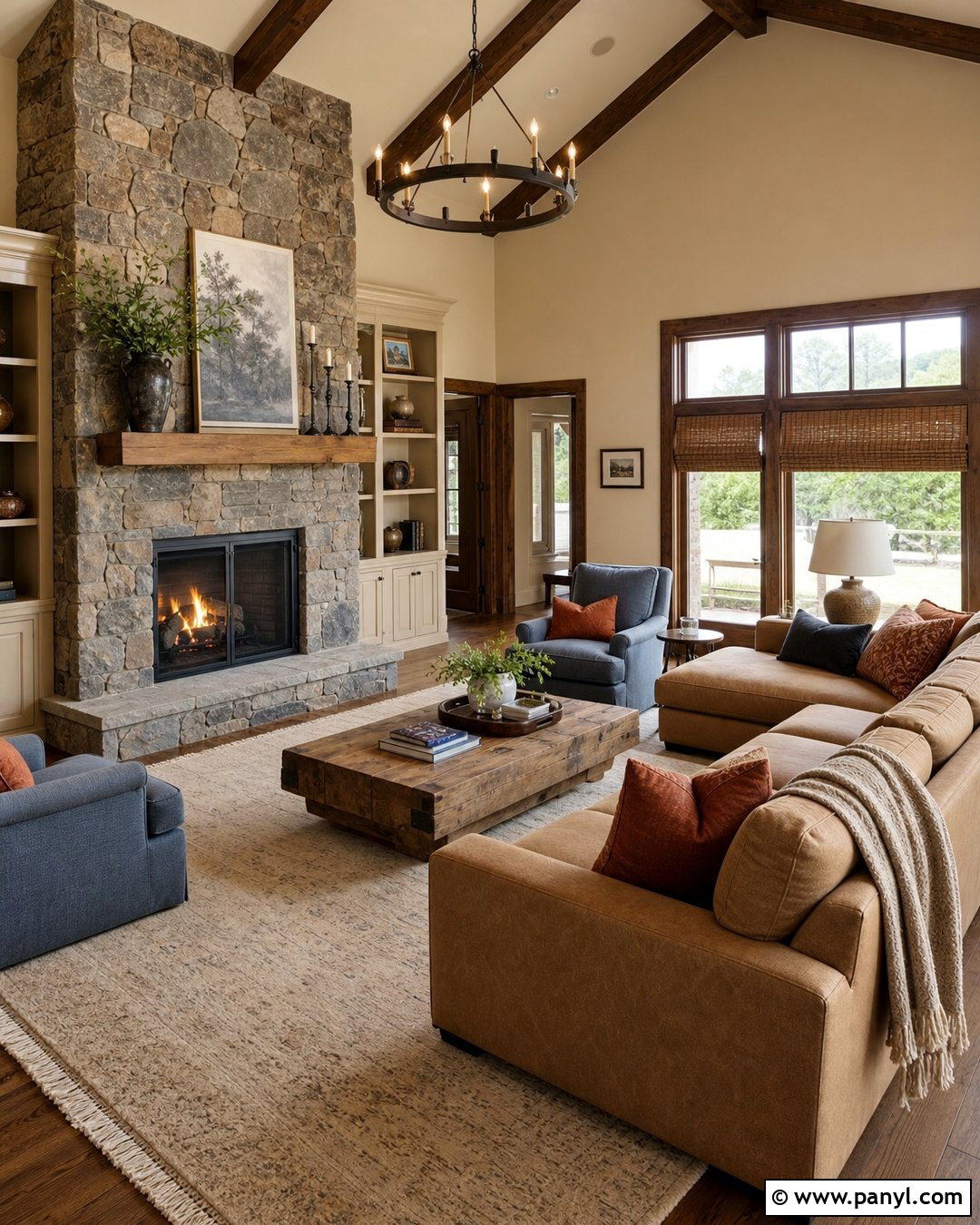
Imagine the soft, varied color of a sunlit stone fireplace carried across the surrounding walls. Sandstone beige creates that effect while giving a family room a comfortable neutral foundation. Select a shade with warm tan and subtle mineral undertones rather than a flat builder beige. Pair it with creamy trim, medium oak flooring, and a fireplace made from mixed beige and gray stone. Arrange a deep camel sectional opposite two blue-gray armchairs to establish an easy conversation area. Add a thick ivory rug, a chunky wood coffee table, and woven window shades. Rust-colored pillows and green branches provide natural accents. This approachable scheme suits both traditional cabins and newer lodge-style suburban homes.
6. Camel Tan Lodge Walls
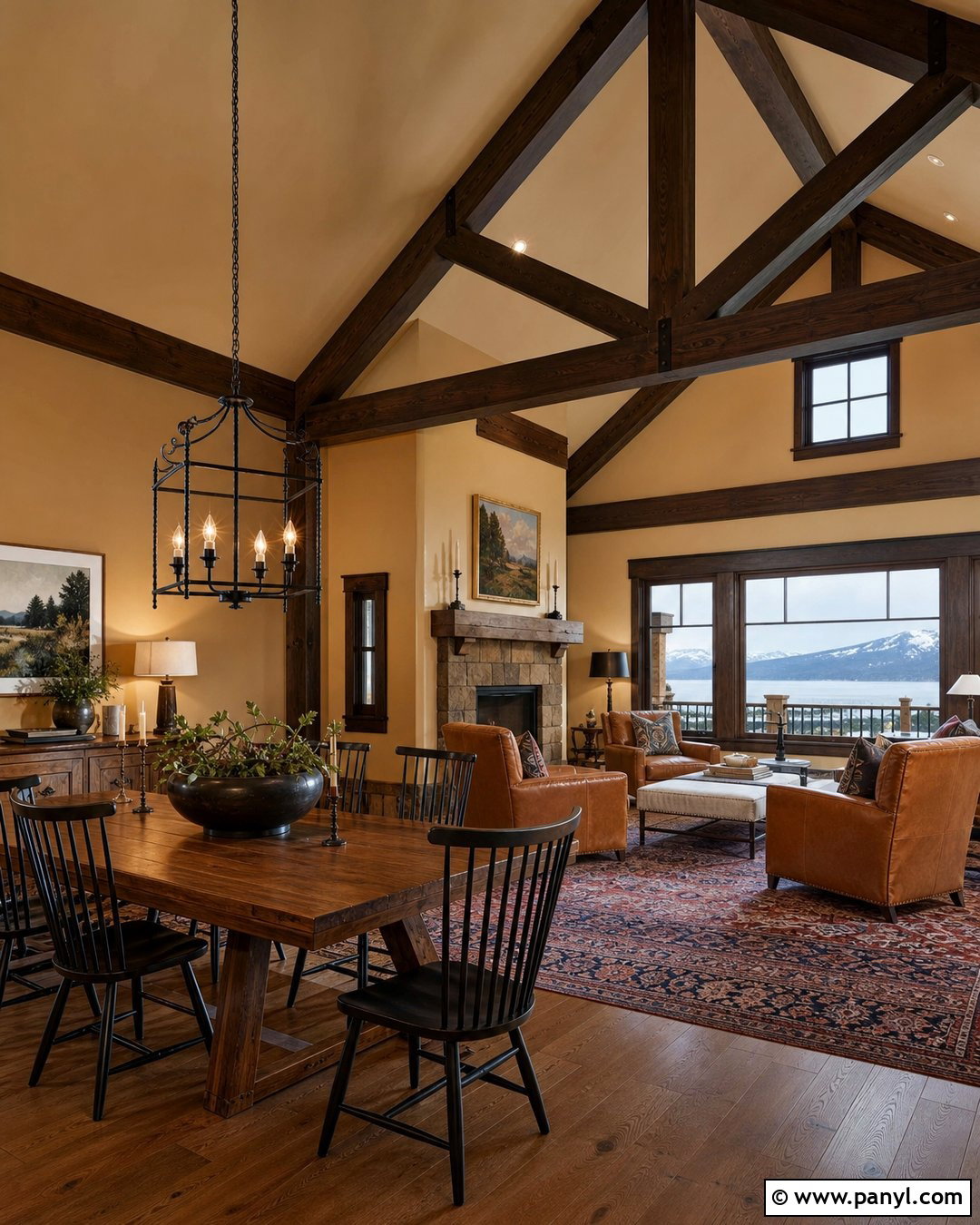
Camel tan walls bring warmth to large lodge rooms that might otherwise feel cavernous. Use this rich golden neutral in a dining and sitting area with tall ceilings, heavy beams, and substantial windows. Balance the wall color with creamy ceilings and dark espresso trim around doors or built-ins. Furnish the space with a long oak table, black spindle chairs, and a bronze lantern chandelier. Nearby, create a small fireside arrangement with caramel leather club chairs and a textured cream ottoman. A red, navy, and tan patterned rug introduces color without overwhelming the architecture. Finish with woven shades, pottery, and restrained wildlife or landscape art. The full design feels substantial, warm, and pleasantly traditional.
7. Clay Brown Lodge Walls
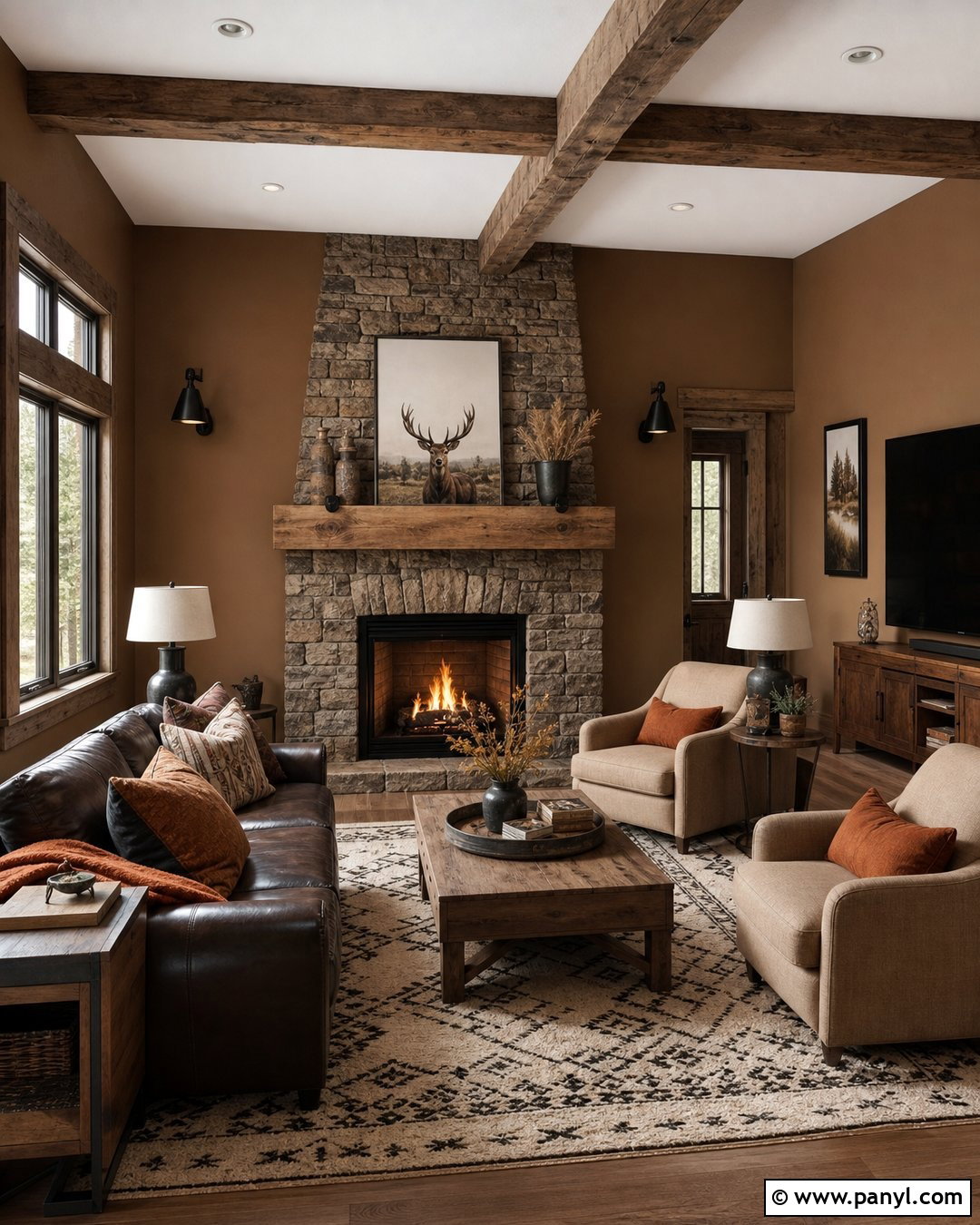
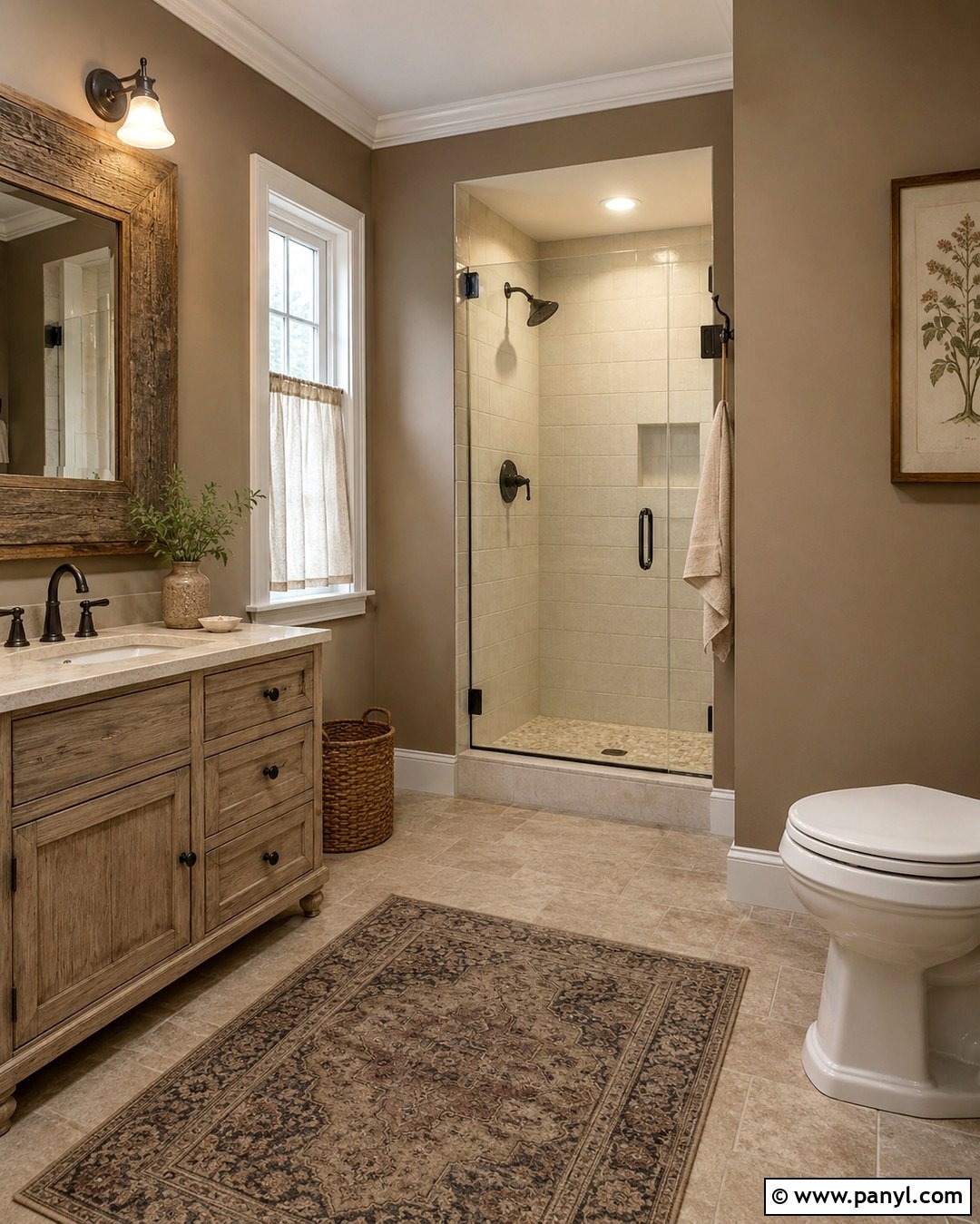
Clay brown creates a grounded lodge interior with the warmth of natural earth and handmade pottery. It works particularly well in a den where comfort matters more than maximum brightness. Paint all four walls a medium reddish brown, then keep the ceiling warm white and leave rustic wood beams exposed. A dark brown leather sofa, flax-colored armchairs, and a weathered wood media console maintain the earthy palette. Use a cream-and-black wool rug to prevent the room from becoming visually heavy. A stacked-stone fireplace, matte black sconces, and burnt orange pillows add definition. Include several large windows with simple linen panels. Natural greenery and pale ceramic accessories provide the final lighter notes in this cozy, cohesive room.
8. Chocolate Brown Lodge Walls
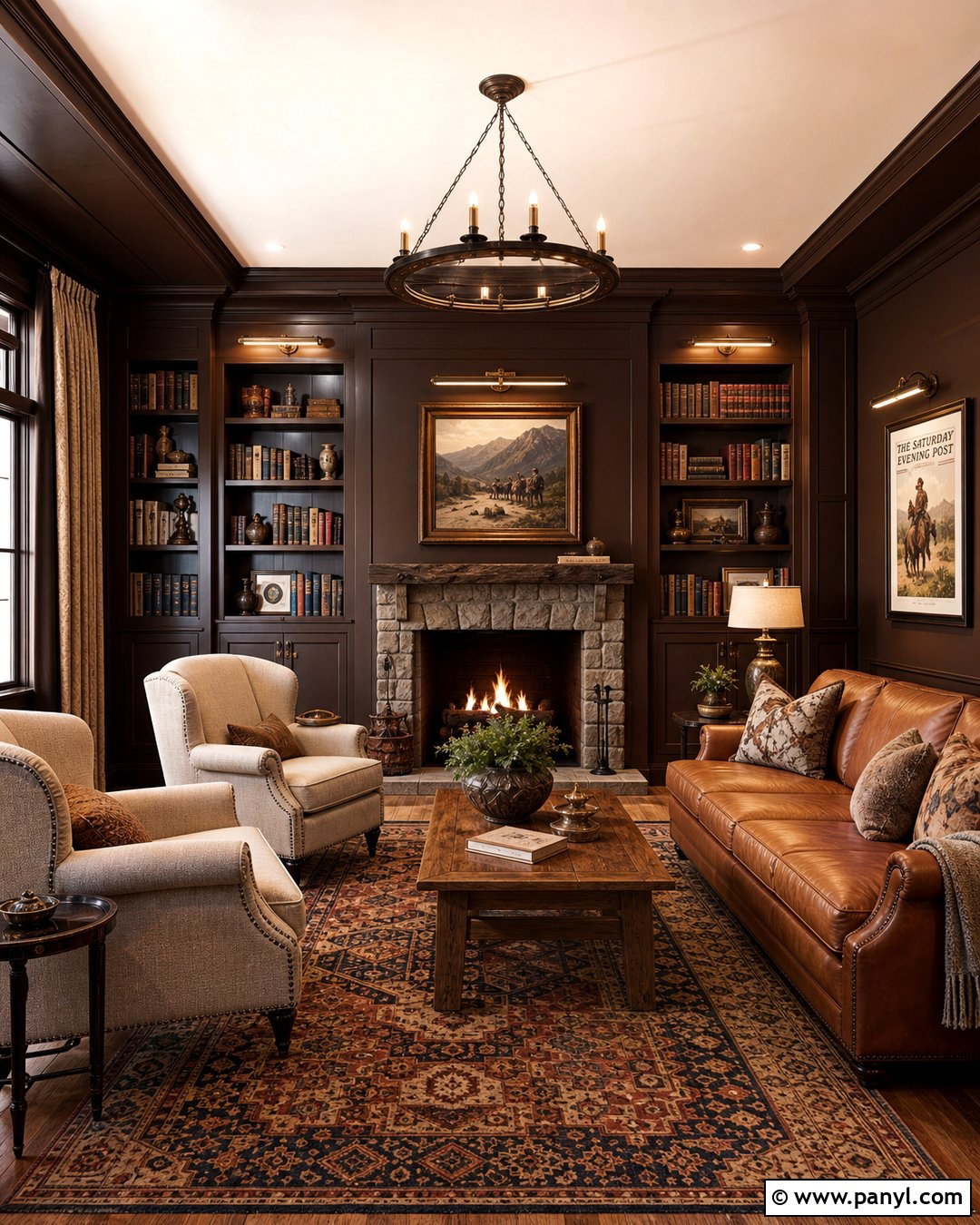
Chocolate brown walls can make a lodge library feel deeply comfortable and intentionally enclosed. Choose the color for a room with good daylight or multiple warm-white lamps. Extend the brown across built-in bookcases for a seamless, color-drenched effect, while leaving the ceiling a soft cream. Place a cognac leather sofa opposite two oatmeal reading chairs, with a sturdy oak coffee table between them. An antique-style rug containing red, gold, and muted blue keeps the palette lively. Add aged brass picture lights, wool curtains, and a small stone fireplace. Books, pottery, and framed landscape paintings supply character without unnecessary clutter. The result is a refined retreat for reading, conversation, and quiet evenings.
9. Charcoal Gray Lodge Walls
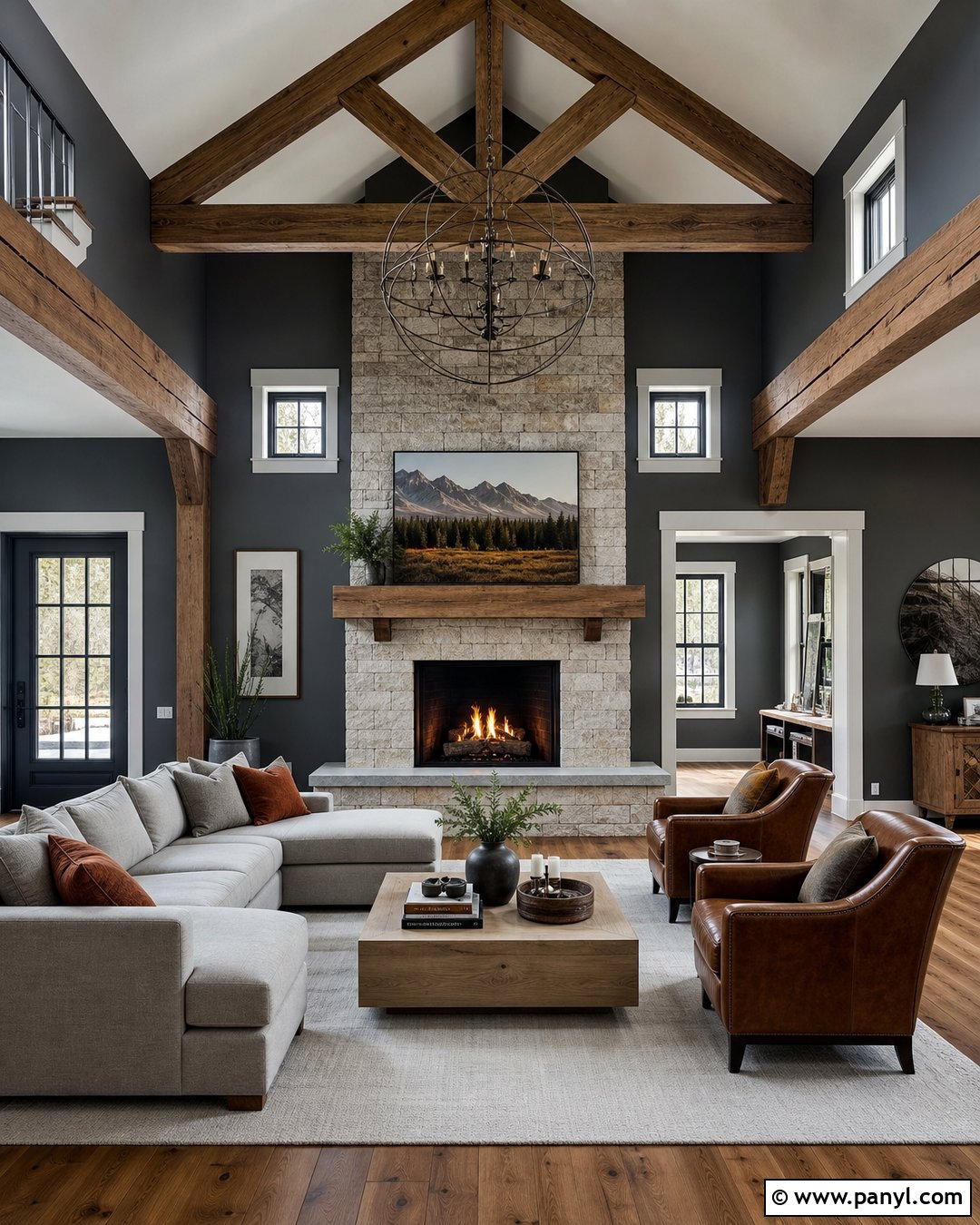
Charcoal walls emphasize dramatic architecture and frame outdoor views with a crisp, modern edge. Use this color in a high-ceilinged lodge living room with large windows, pale stone, and plenty of natural light. Paint the walls matte charcoal, but keep the ceiling and window trim warm white to prevent the room from feeling closed in. Natural oak beams and flooring introduce warmth against the cool backdrop. Choose a light gray sectional, saddle leather lounge chairs, and a pale wood coffee table. A large cream rug softens the contrast underfoot. Finish with black iron lighting, rust-colored pillows, and restrained abstract landscape art. This complete scheme feels modern yet remains connected to classic lodge materials.
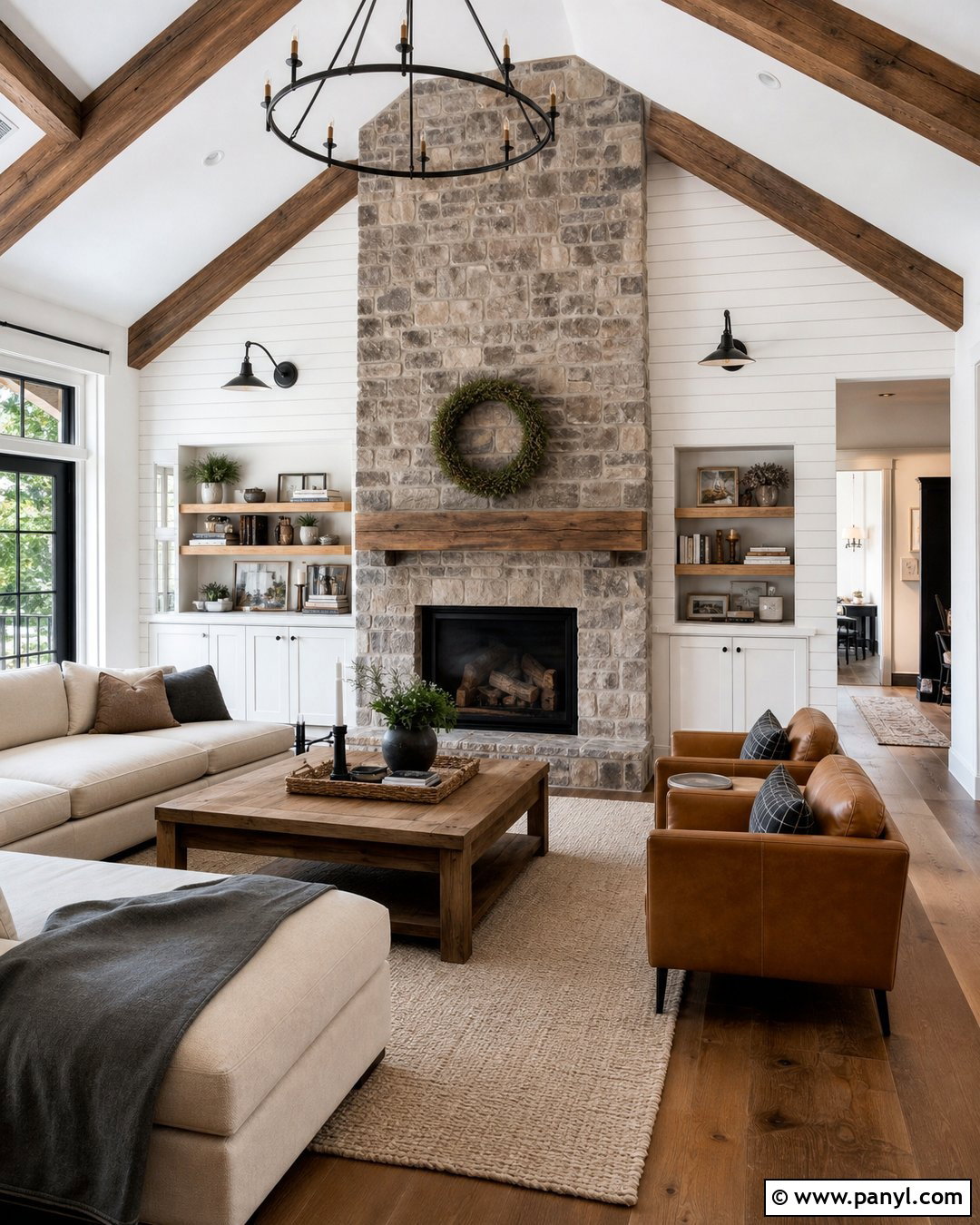
10. Slate Gray Lodge Walls
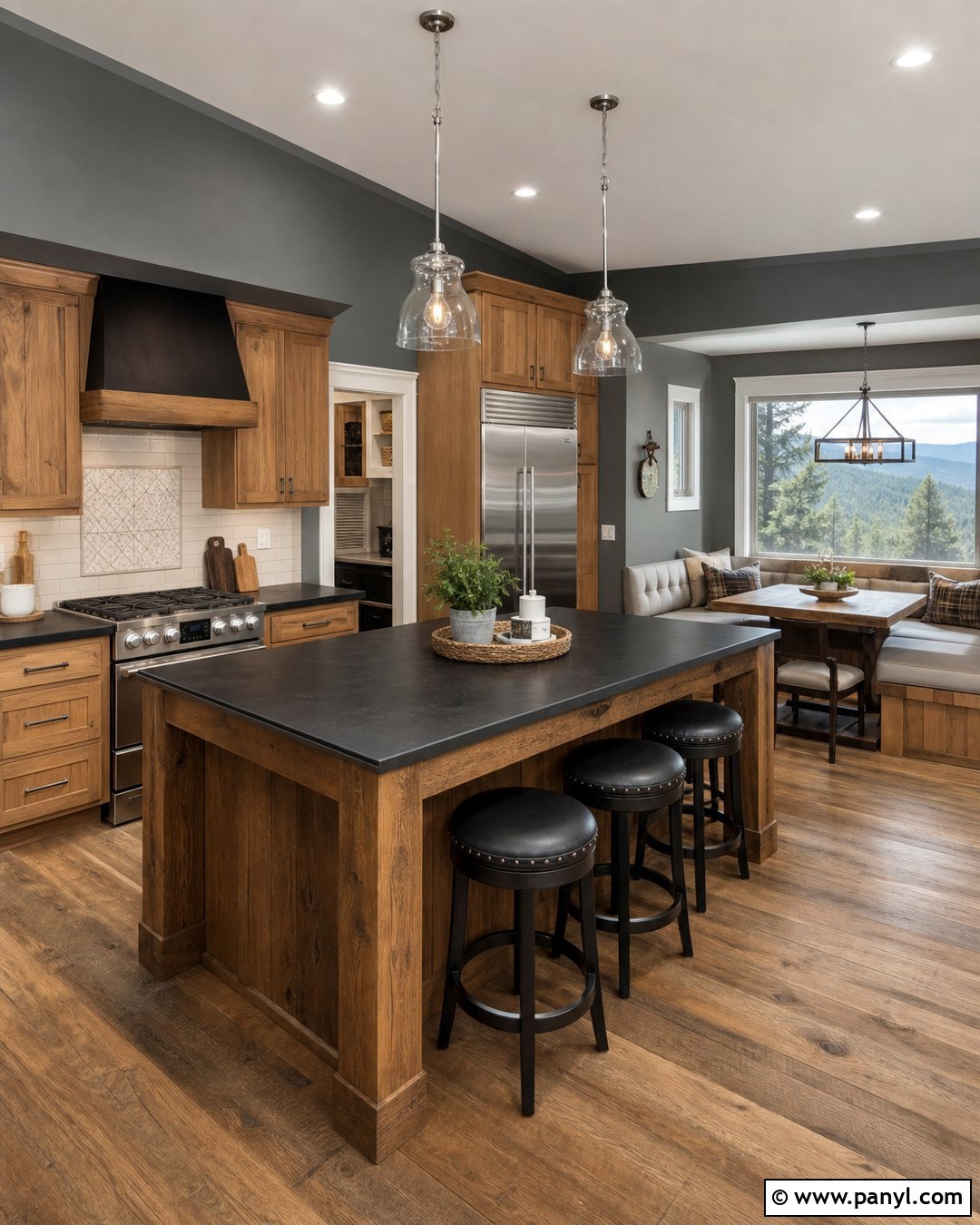
Slate gray echoes mountain rock and creates a calm foundation for a lodge kitchen. Select a medium gray with a subtle blue undertone, then combine it with natural oak cabinets and honed black stone countertops. Use the gray wall color around the cabinetry and across an adjoining breakfast nook for visual continuity. An ivory tile backsplash reflects light, while brushed nickel hardware adds a clean, practical finish. Include a rustic oak island with dark counter stools and simple glass pendant lights. In the nook, pair a built-in wood bench with blue, cream, and brown cushions. Warm flooring, woven shades, and stoneware accessories prevent the gray from feeling cold, creating a balanced and highly usable gathering space.
11. Forest Green Lodge Walls
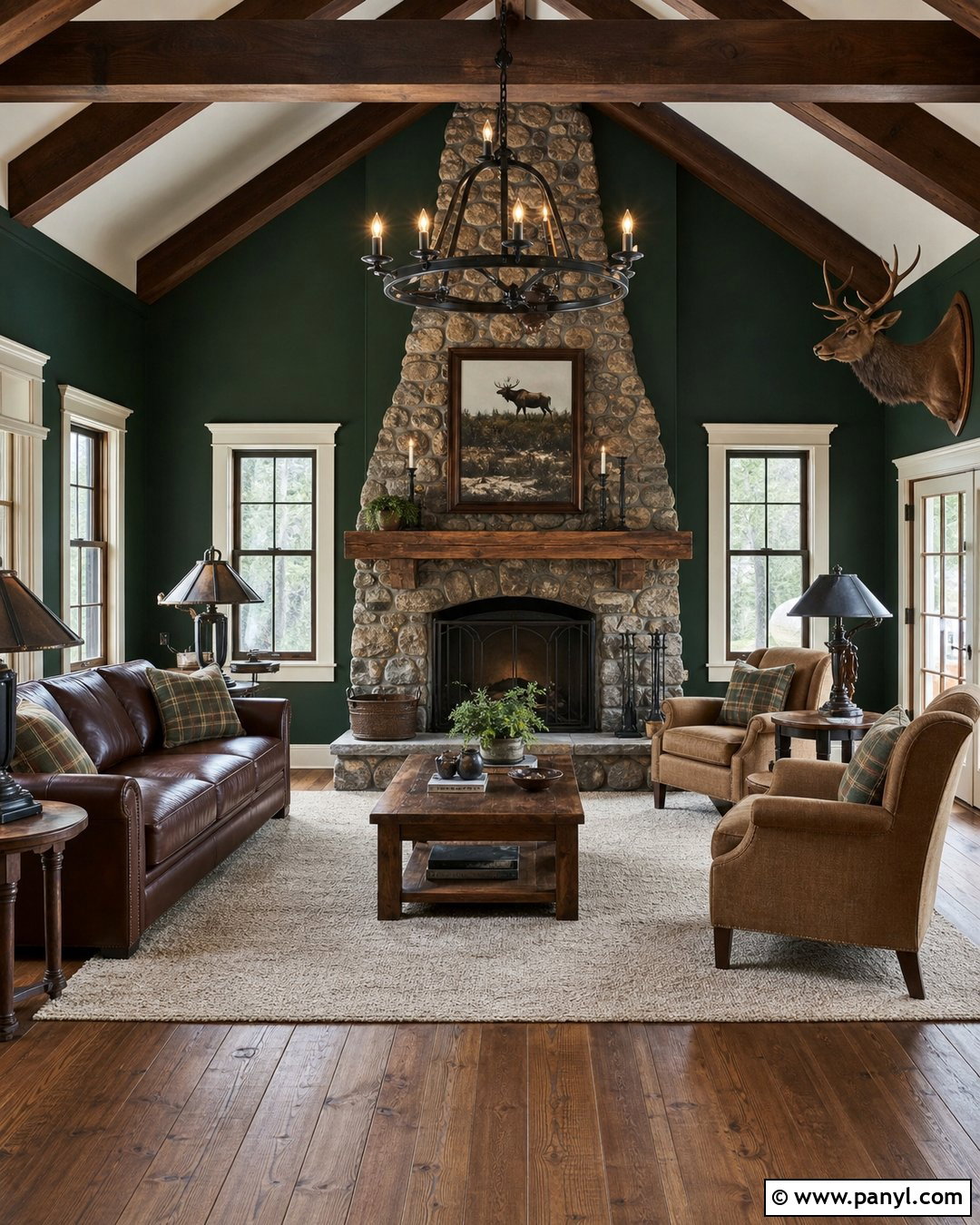
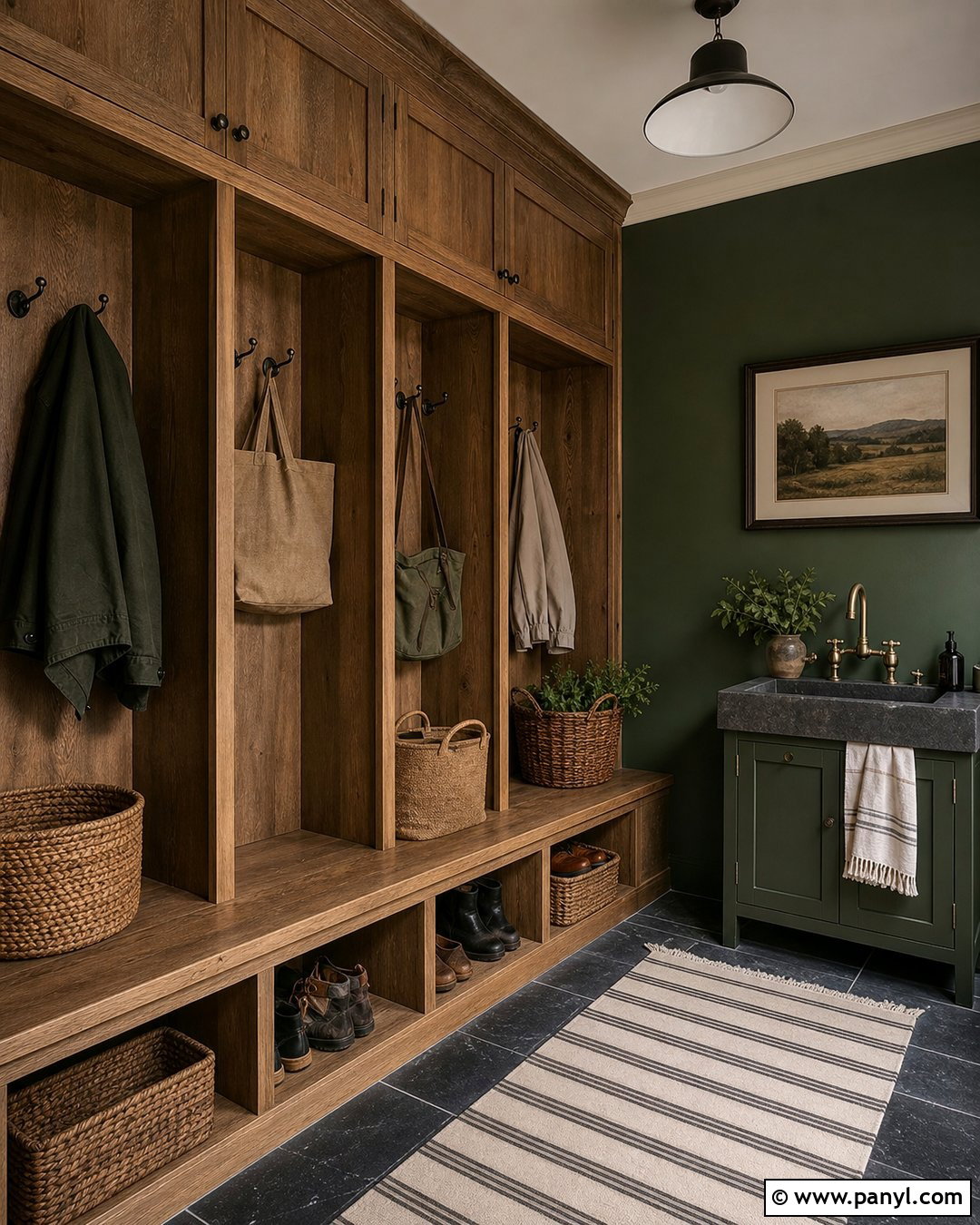
Few colors establish a woodland lodge atmosphere as effectively as deep forest green. Use it in a living room with tall windows, where daylight can reveal the color’s natural variation. Cover the main walls in a velvety green and paint the trim a warm ivory for clear contrast. Keep exposed beams and wide-plank floors in a medium walnut finish. A classic brown leather sofa, tan fabric chairs, and a large stone fireplace provide sturdy visual anchors. Layer in a cream wool rug, plaid pillows, and black iron lamps. Botanical prints and simple branches reinforce the connection to the landscape. The final room feels enveloping and timeless rather than themed, making the green suitable for year-round use.
12. Olive Green Lodge Walls
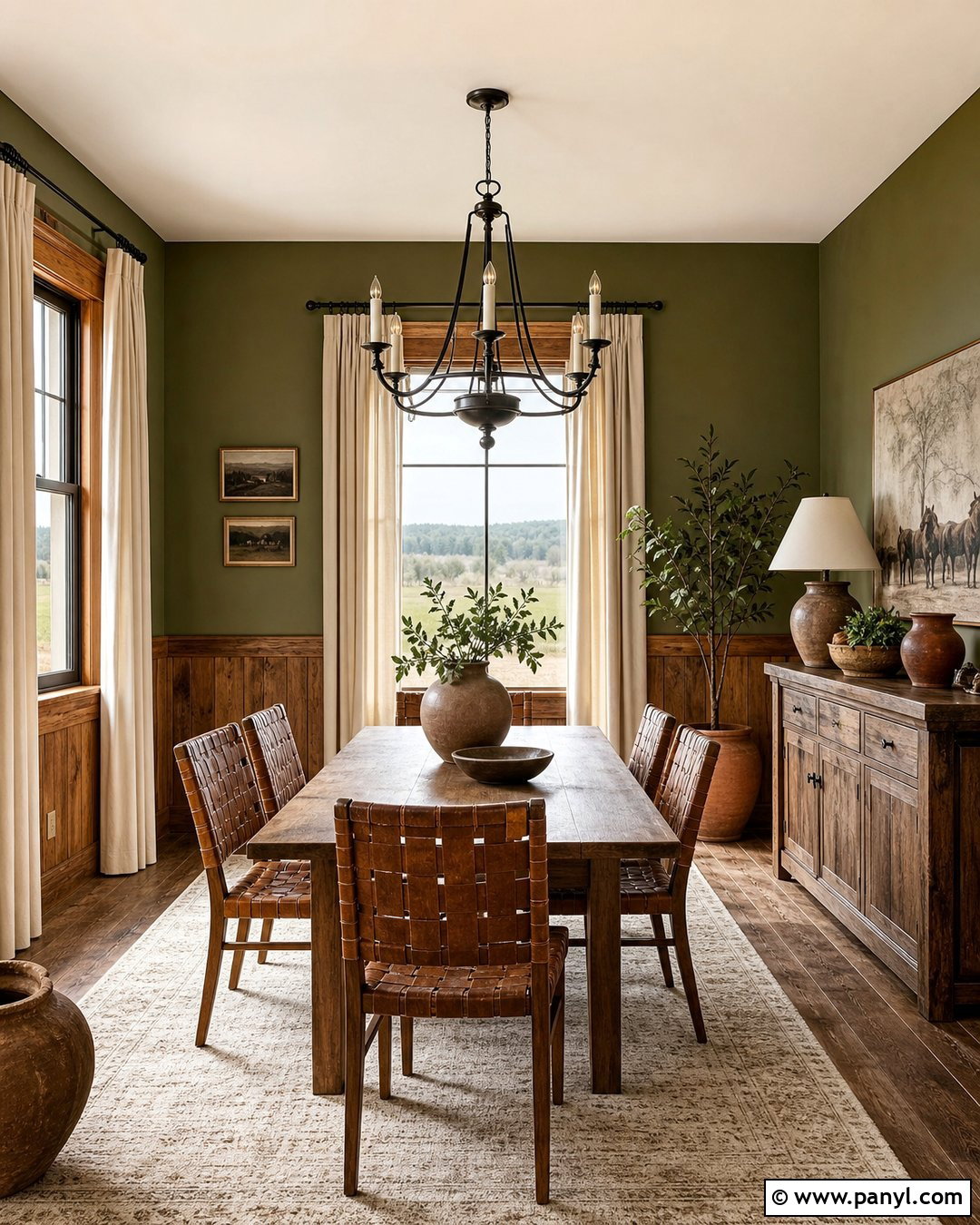
Olive green offers a softer, warmer alternative to traditional forest green. It is particularly effective in a lodge dining room because it complements wood furniture, aged metals, and linen textiles. Choose a muted olive with brown undertones and apply it to the walls above natural oak wainscoting. Add a rectangular farmhouse table, woven leather chairs, and a black iron chandelier. Cream curtains and a pale patterned rug keep the room from appearing too dark. Display handcrafted pottery on a rustic sideboard, along with a large landscape painting in an antique wood frame. Small touches of terracotta and mustard add warmth. Together, these details create a casual lodge dining space that feels collected and comfortable.
13. Sage Green Lodge Walls
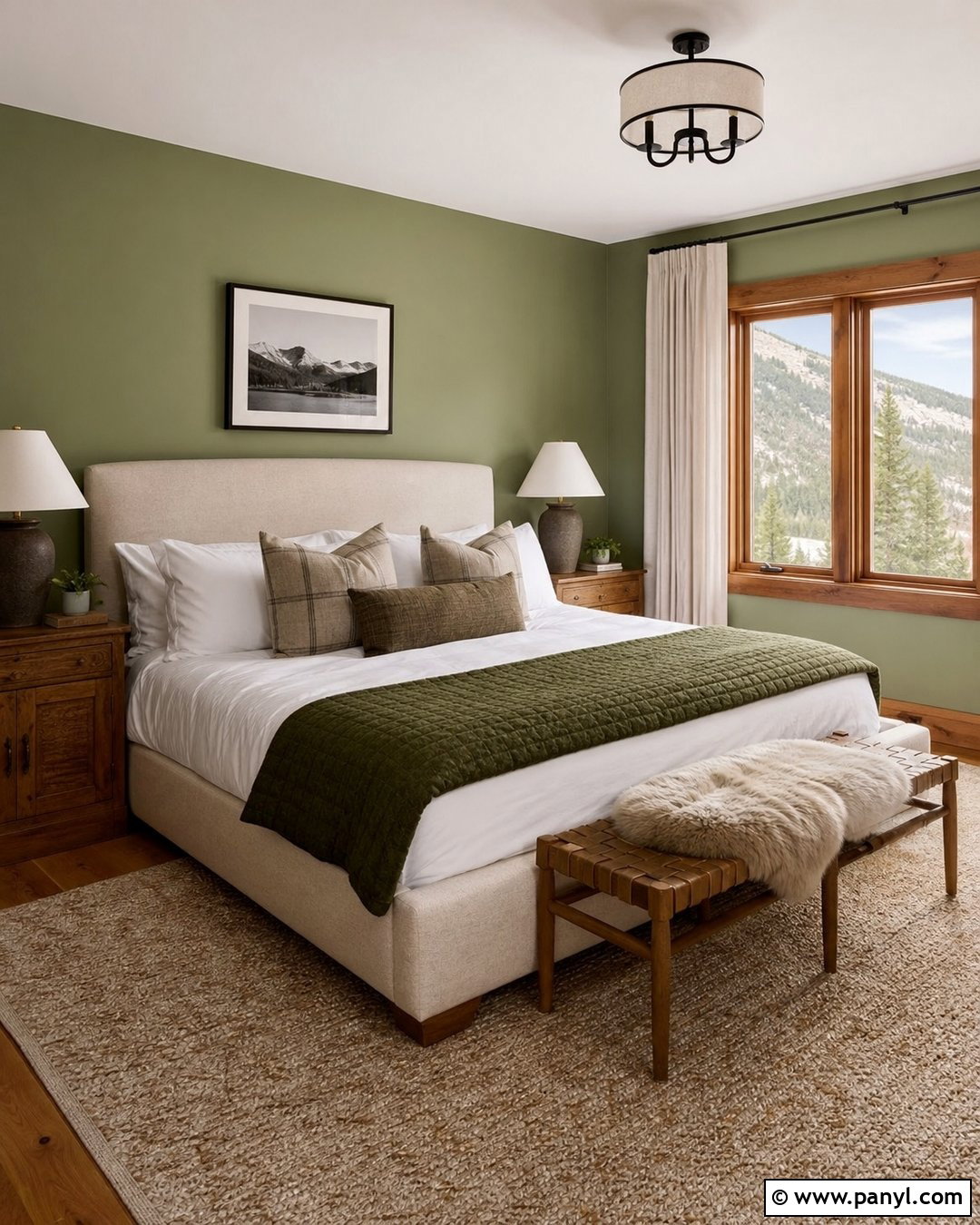
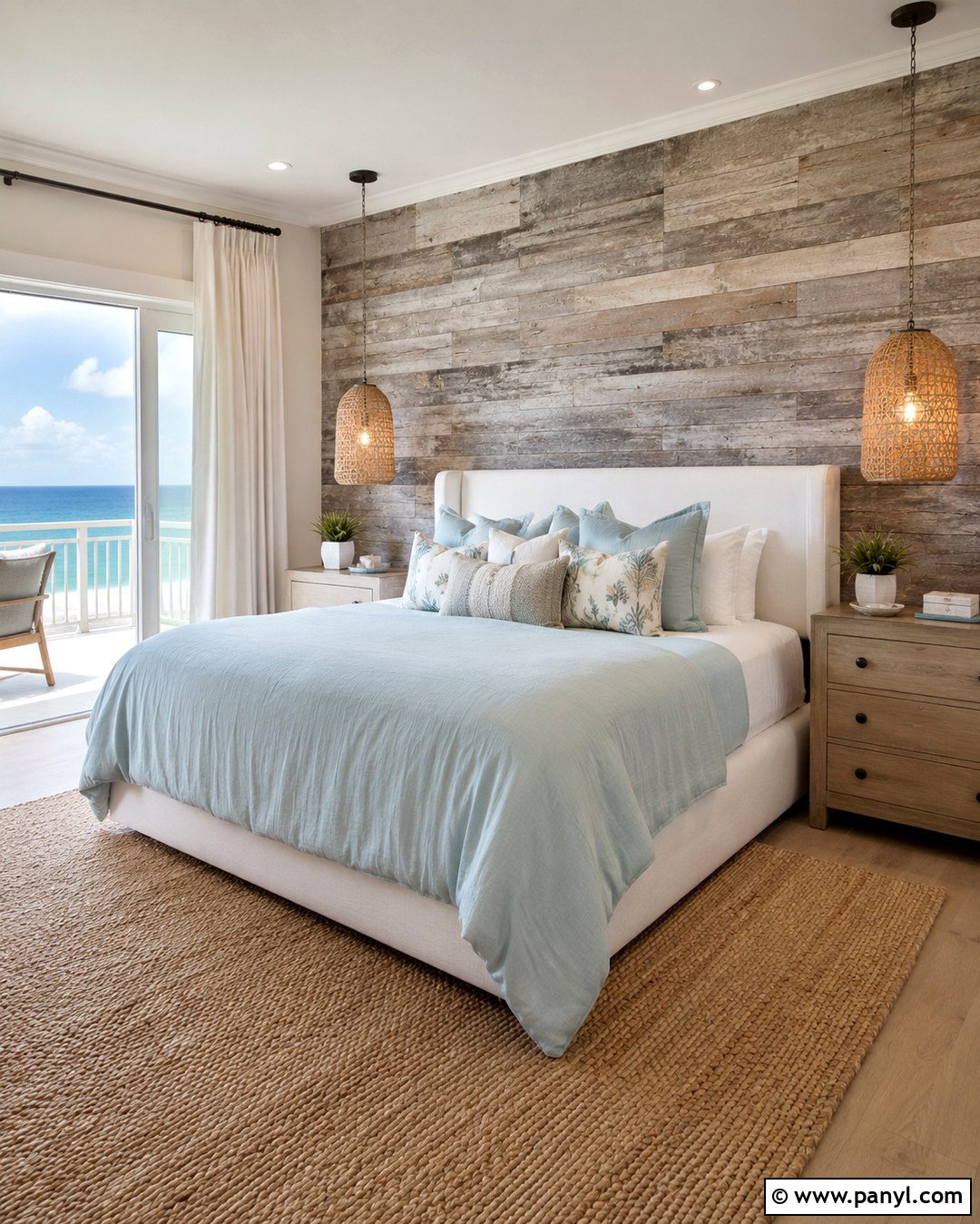
Sage green brings a fresh, relaxed quality to lodge bedrooms and guest suites. Select a subdued shade with gray undertones so it sits comfortably beside knotty pine or cedar. Paint the walls sage, use warm white on the ceiling, and retain natural wood trim around the windows. An upholstered oatmeal bed softens the surrounding timber, while white bedding and a moss-colored quilt build gentle layers. Add rustic oak nightstands, ceramic lamps, and a low woven bench at the foot of the bed. A beige wool rug warms the floor without hiding its wood grain. Linen curtains, small botanical artwork, and one leather accent chair complete a restful design that feels rustic, light, and welcoming.
14. Moss Green Lodge Walls
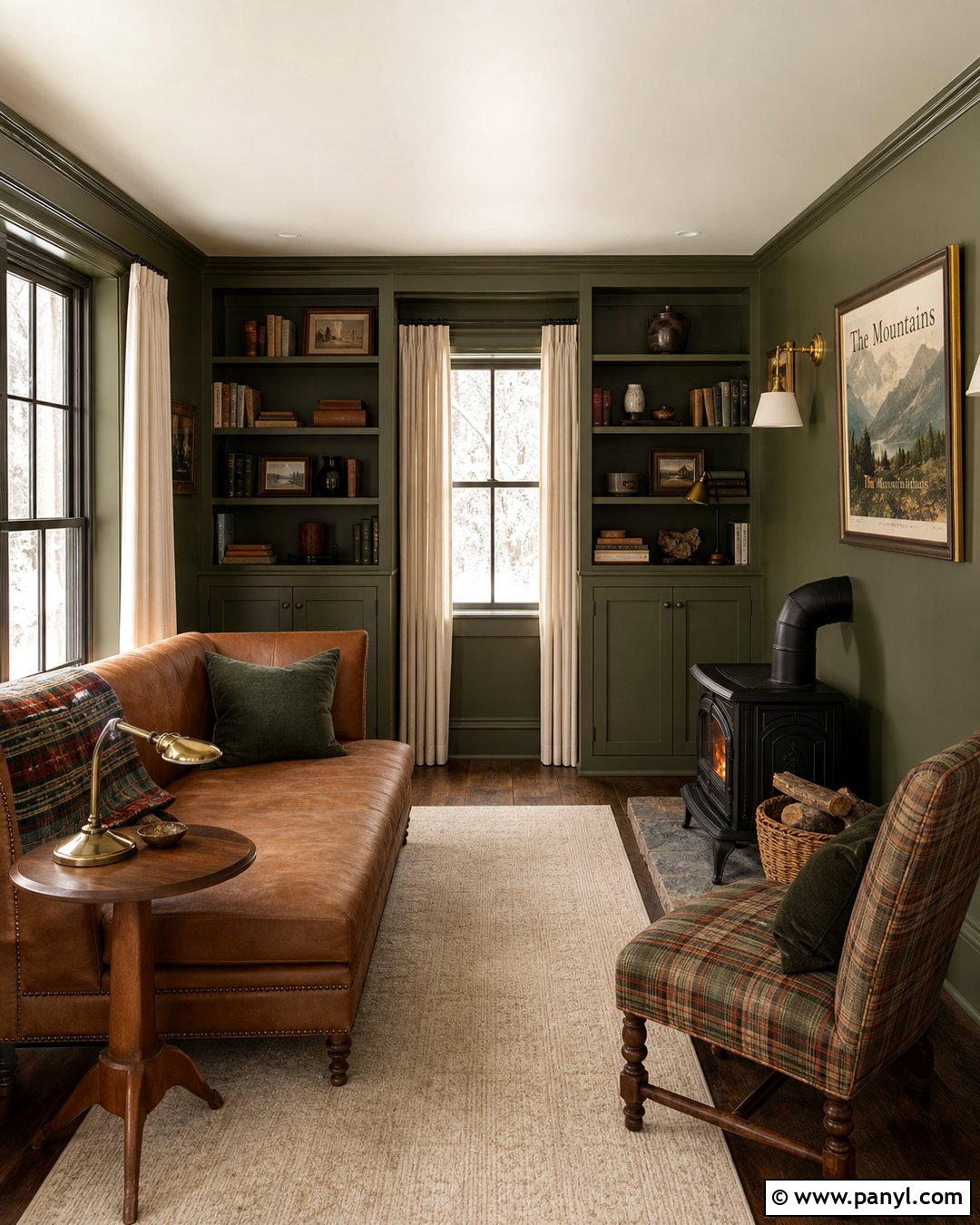
Moss green walls can transform a small lodge reading room into a sheltered woodland retreat. Choose a medium green with golden or brown undertones rather than a bright botanical shade. Paint the walls and built-in shelving the same color to create a unified background. Introduce a caramel leather chaise, a compact plaid armchair, and an aged oak side table. A cream ceiling, pale wool rug, and natural linen curtains balance the darker surfaces. Use antique brass sconces for focused reading light and display books, ceramic vessels, and framed nature studies sparingly. A small black woodstove adds an authentic focal point. This layered arrangement provides coziness and function without making the limited floor space feel overcrowded.
15. Smoky Blue Lodge Walls
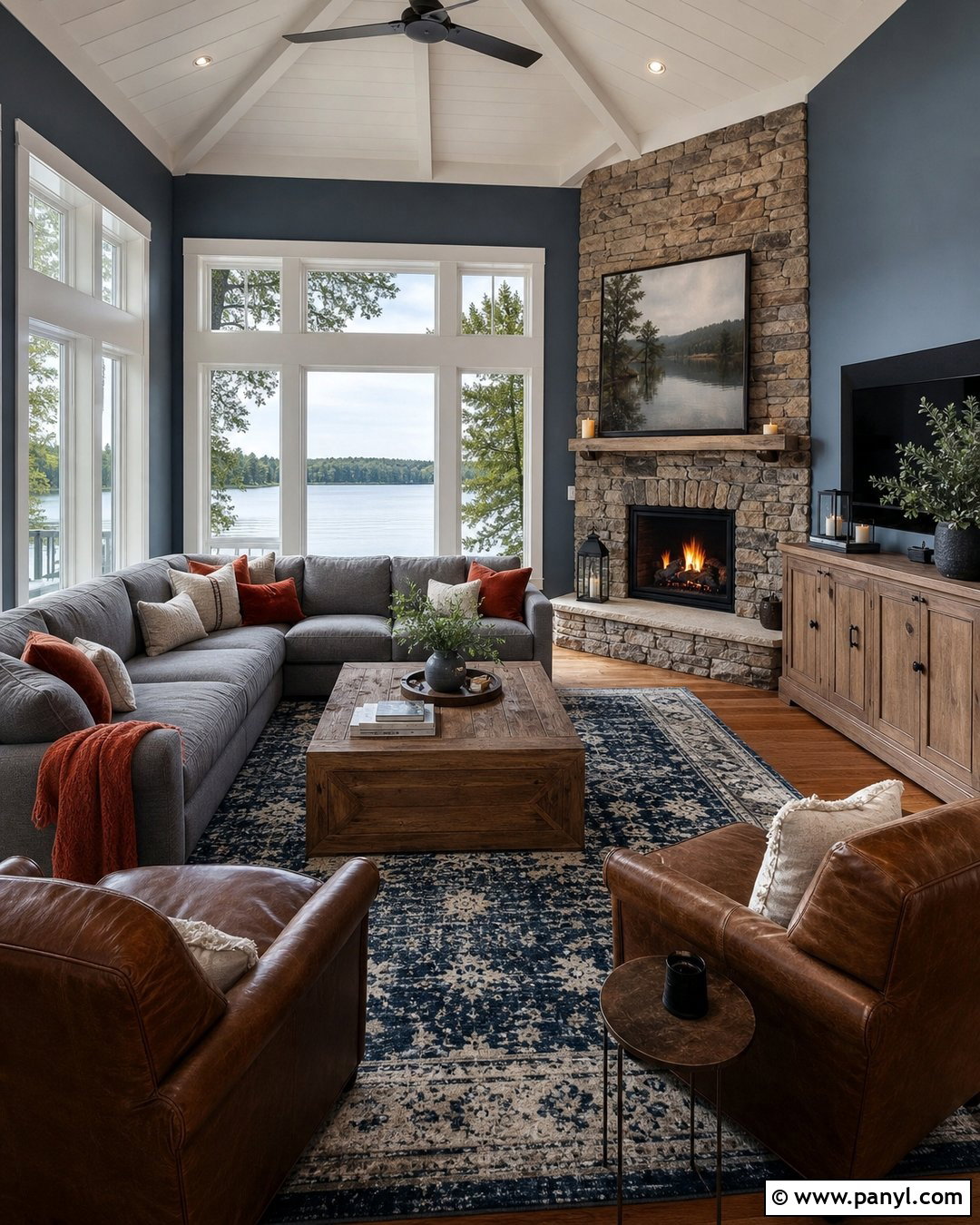
Smoky blue captures the subdued color of distant mountains and works naturally with stone, weathered wood, and brown leather. Use it in a lodge family room with a relaxed, lake-adjacent character. Paint the walls a muted blue-gray and keep the trim creamy white. Add a weathered oak media cabinet, a warm gray sectional, and two cognac leather chairs arranged around a broad wood coffee table. A stone fireplace offers texture, while a navy-and-ivory rug strengthens the blue palette. Include linen curtains, black metal floor lamps, and a few rust-colored pillows for warmth. Framed landscape photography and woven baskets finish the design. The room feels peaceful and casual without becoming overtly coastal.
16. Lake Blue Lodge Walls
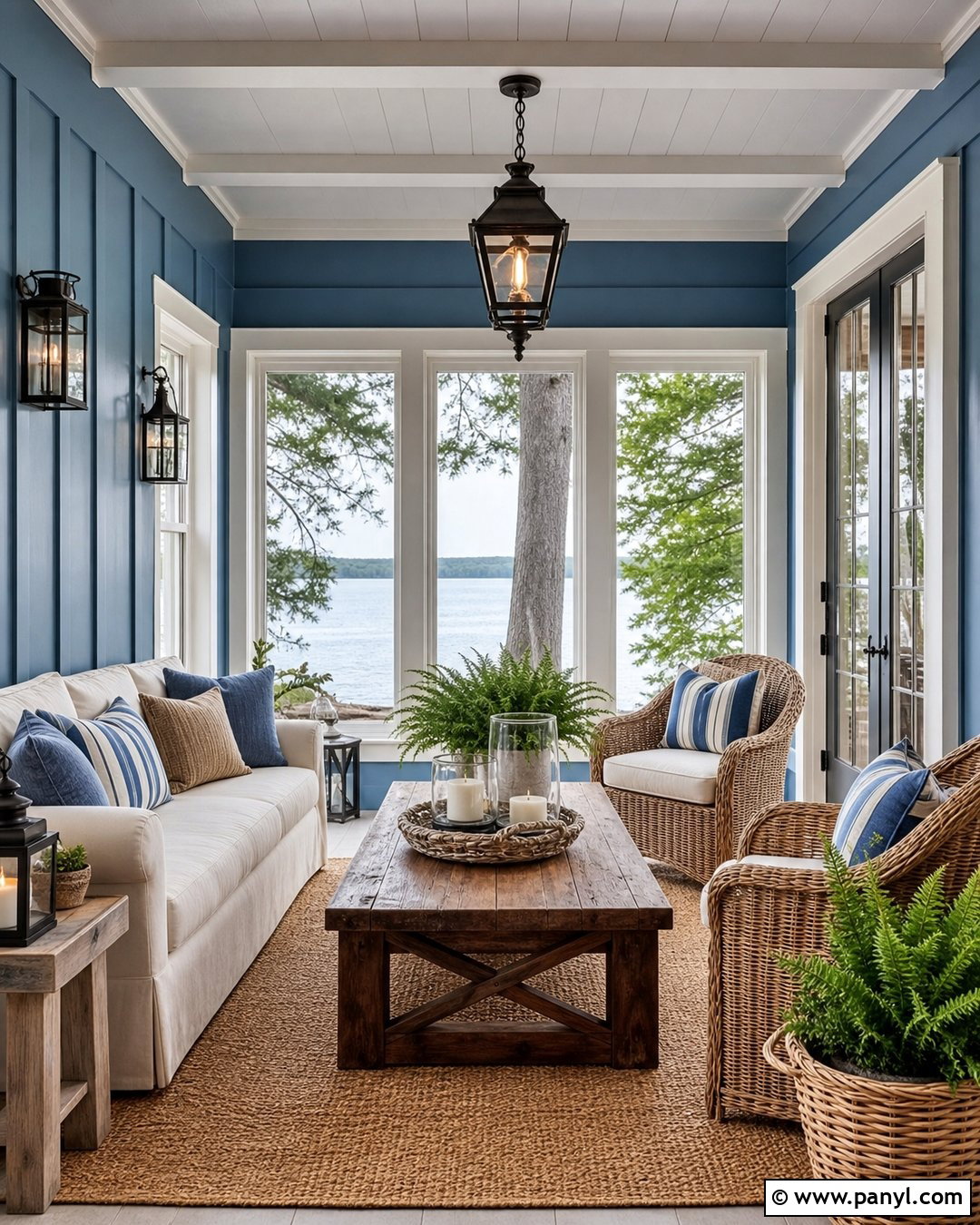
Lake blue gives a lodge sunroom or enclosed porch a clear sense of place. Choose a medium, slightly muted blue that feels cheerful in bright daylight but not overly saturated. Paint the walls lake blue, then use crisp warm white on the ceiling, window frames, and simple board-and-batten details. Furnish the room with natural rattan chairs, an ivory upholstered sofa, and a reclaimed pine coffee table. Add striped blue-and-tan cushions, a jute rug, and lightweight linen shades. Black metal lanterns provide contrast against the lighter palette. Potted ferns and handmade pottery connect the room to nature. This complete look feels fresh and outdoorsy while preserving the substantial textures associated with lodge design.
17. Deep Navy Lodge Walls
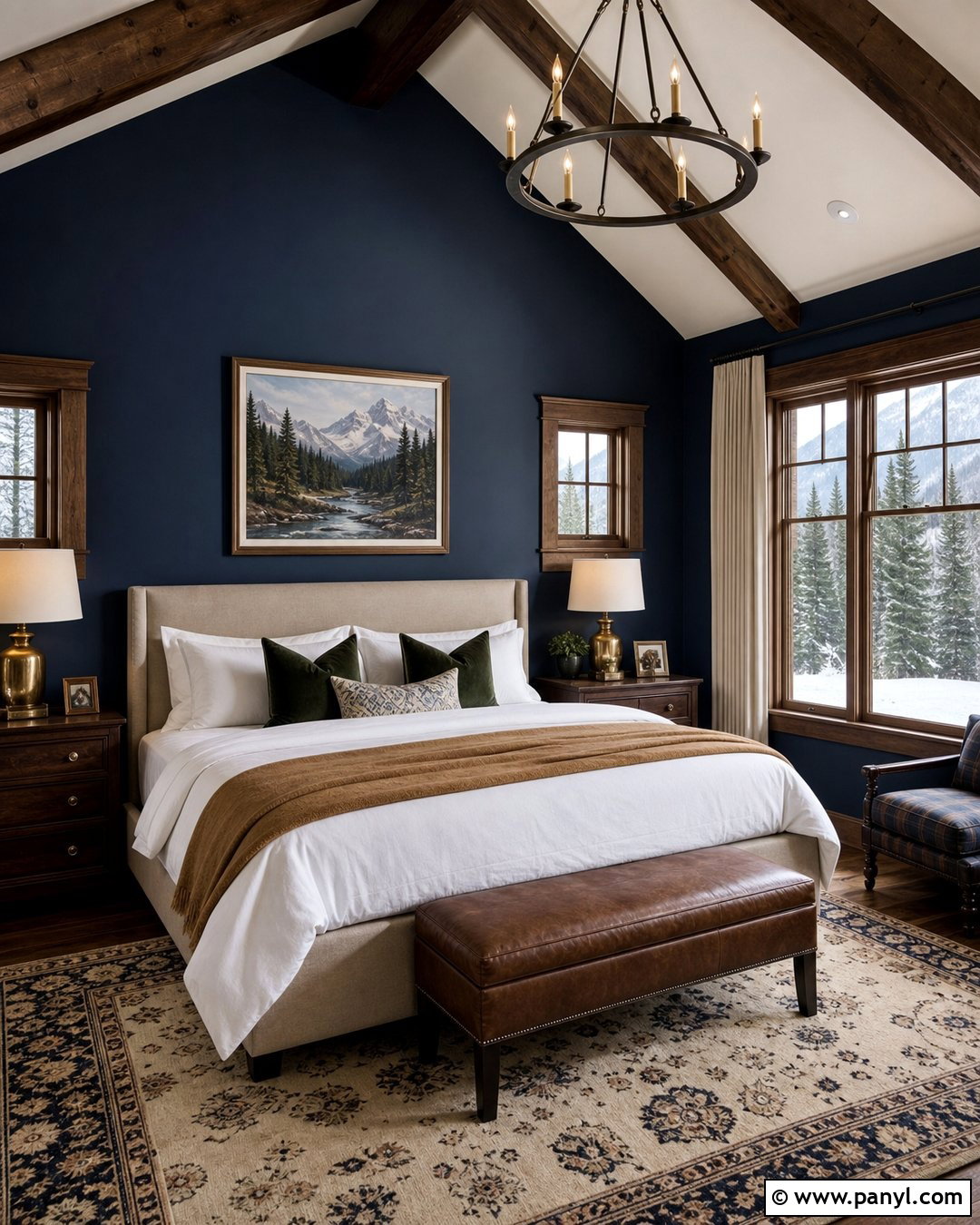
Deep navy creates an elegant lodge bedroom when it is balanced by warm wood and light textiles. Apply navy to every wall for a unified, restful envelope, but keep the vaulted ceiling creamy white. Exposed walnut beams and matching window trim add architectural warmth. Place a tall oatmeal linen bed against the navy background and layer it with white sheets, a camel blanket, and muted green pillows. Use medium-brown wood nightstands with aged brass lamps on both sides. A large ivory-and-blue rug brightens the floor, while simple linen curtains soften the windows. Finish with a leather bench and restrained mountain artwork. The combination feels tailored and cozy, offering drama without losing the lodge’s welcoming character.
18. Muted Terracotta Lodge Walls
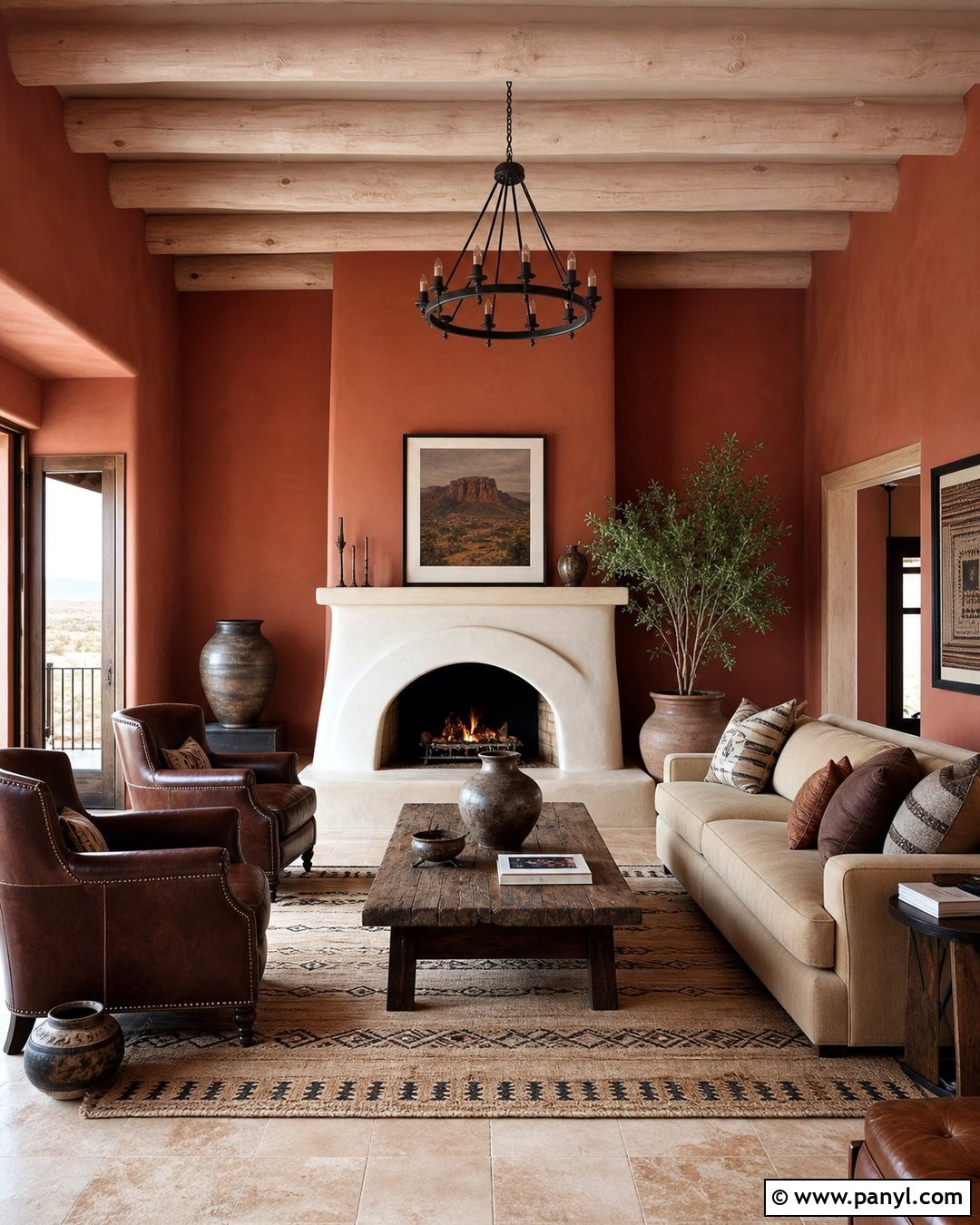
Muted terracotta introduces desert warmth to a Southwestern or mountain lodge. Select a dusty red-orange shade with plenty of brown in it, avoiding anything overly bright. Use the color in a living room with pale timber beams, warm limestone flooring, and an off-white plaster fireplace. A sand-colored sofa and two dark brown leather chairs create a balanced seating group around a rough wood table. Add a cream geometric rug, woven pillows, and black metal lighting. Large pottery vessels and drought-tolerant greenery support the earthy direction without turning the room into a theme. Natural linen curtains filter strong sunlight. The finished palette feels warm, handcrafted, and especially appealing in lodges surrounded by rocky or high-desert scenery.
19. Oxblood Red Lodge Walls
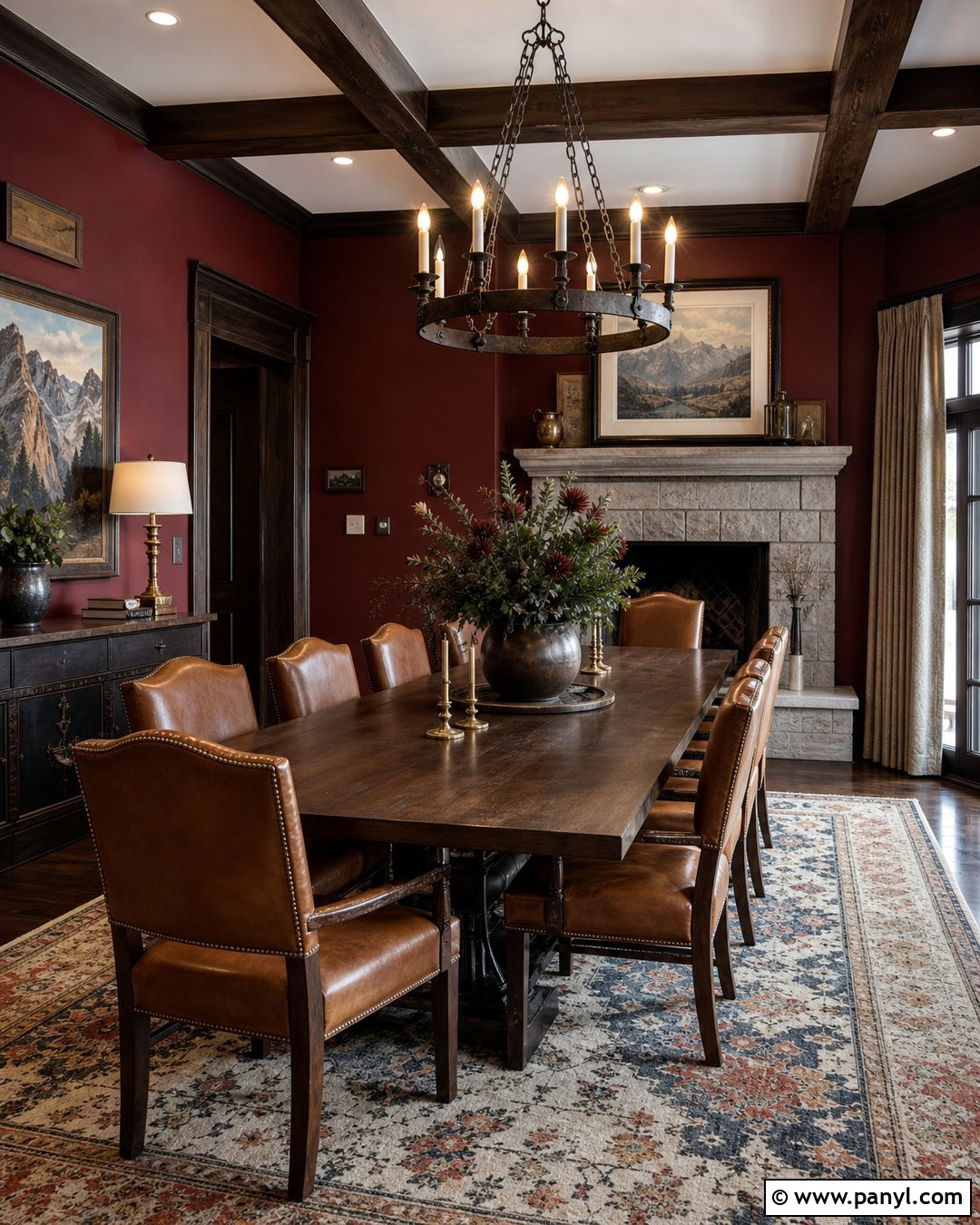
Oxblood red provides traditional richness in a lodge dining room or fireside gathering space. Its deep brown undertone makes it more versatile than a bright primary red. Paint the walls oxblood, then use dark-stained wood on the trim, ceiling beams, and built-in cabinetry. A long walnut table with tan leather chairs creates a strong centerpiece beneath an aged iron chandelier. Keep the fireplace stone light gray to break up the darker palette. An antique-inspired rug containing cream, faded blue, and rust adds pattern underfoot. Warm white candles, brass accents, and neutral curtains supply necessary brightness. Used as part of this complete arrangement, oxblood feels historic and comfortable rather than heavy or overly formal.
20. Soft Black Lodge Walls
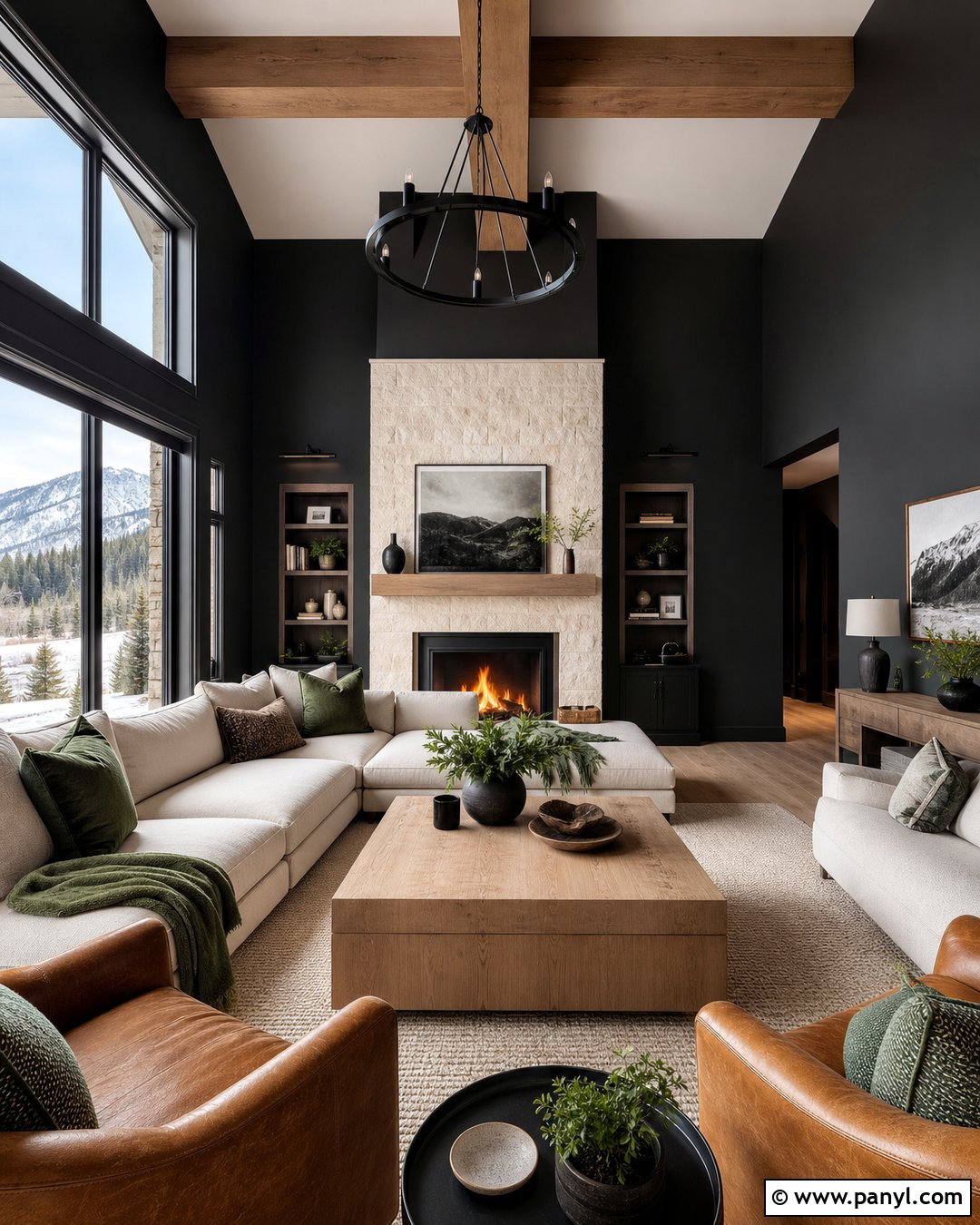
Soft black walls deliver a bold modern lodge look while allowing stone, wood, and lighter furnishings to stand out. Choose a black softened by charcoal or brown undertones, especially in rooms with warm timber. Paint the walls matte black and repeat the shade on interior doors or built-ins. Leave the ceiling and exposed oak beams natural to maintain contrast. Furnish the room with an ivory sectional, camel leather chairs, and a substantial pale oak coffee table. A light limestone fireplace becomes a striking focal point against the dark walls. Add a cream wool rug, black iron pendants, and restrained green textiles. Large windows and minimal accessories keep the finished space dramatic, comfortable, and visually clean.
Conclusion:
Choosing successful **lodge wall colors** begins with the fixed materials already present in the room. Study the undertones in the logs, beams, flooring, stone, and large furniture pieces before narrowing your options. Warm whites, greige, beige, and sage can brighten a compact lodge, while forest green, navy, chocolate, or soft black can give a spacious room greater intimacy. Balance deep walls with pale rugs, ceilings, upholstery, and window treatments. Repeat each wall color through a few smaller accents so the overall room feels connected. Most importantly, test large painted samples on several walls. Check them throughout the day and under your actual lamps before committing to the final lodge palette.

Related Ideas and Inspiration:
Leave a Reply