
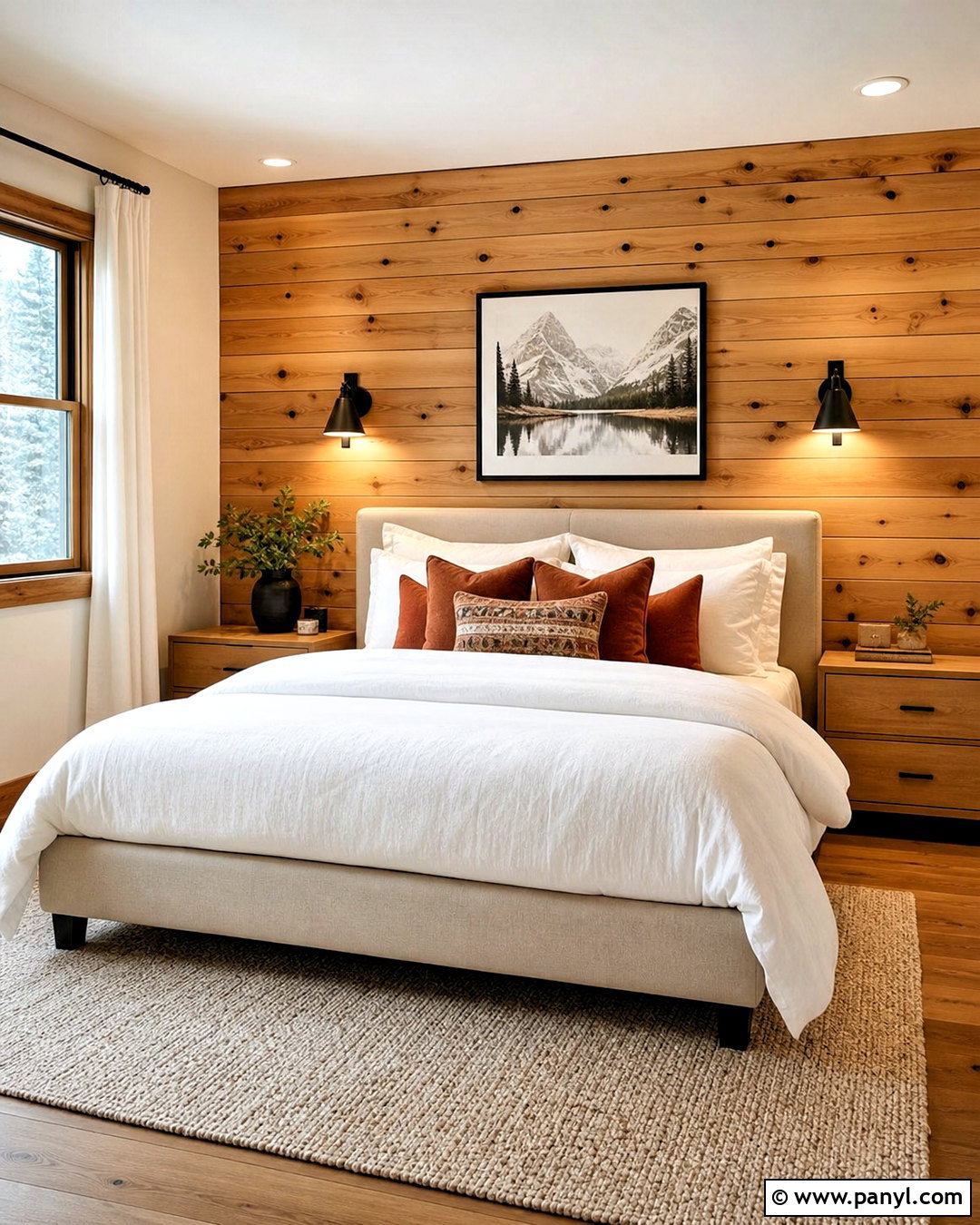
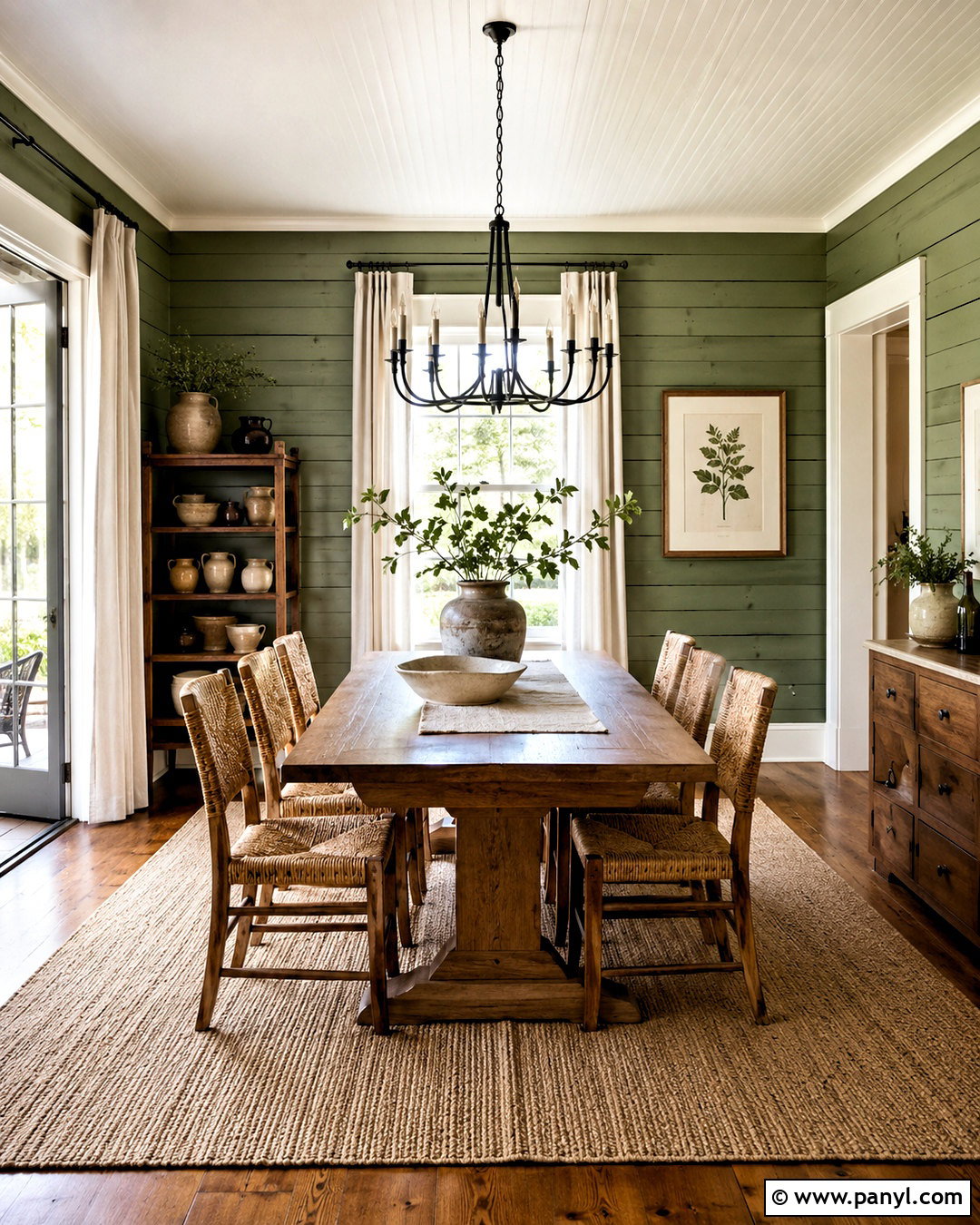
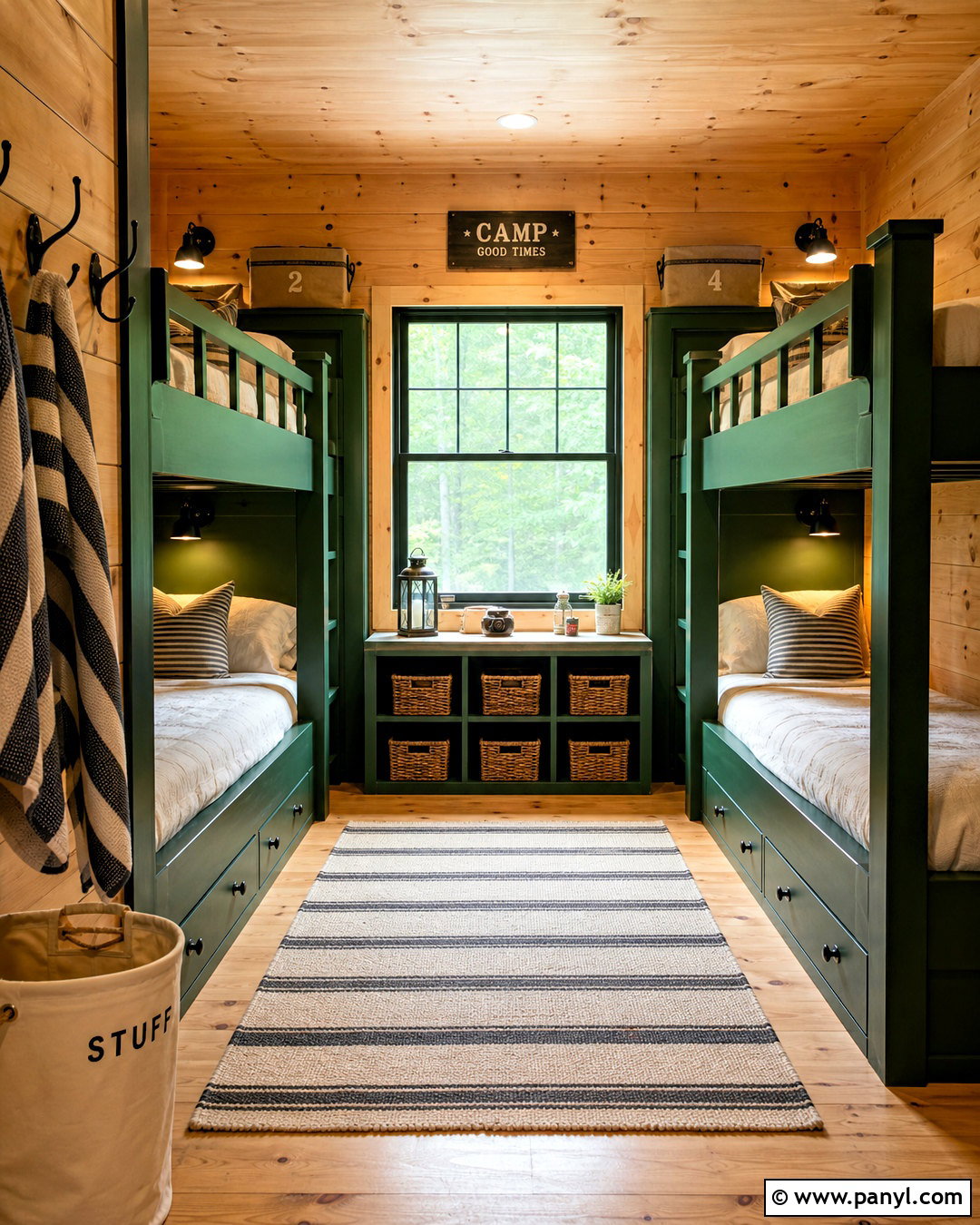
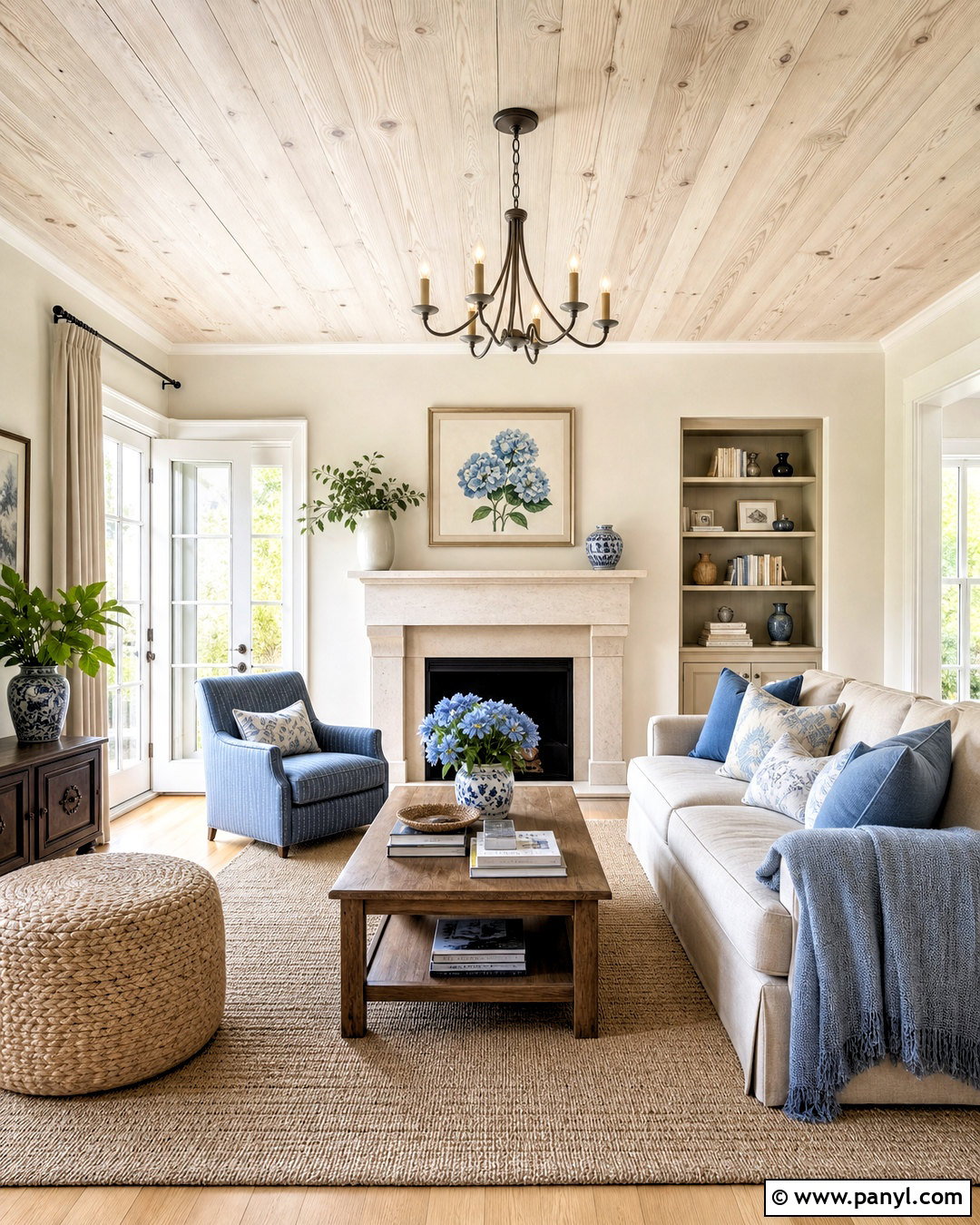
Knotty pine walls bring natural warmth, visible grain, and plenty of character, but their strong yellow, amber, or orange undertones can make color planning feel challenging. The best palettes either soften that warmth with creamy neutrals, balance it with muted blues and greens, or create intentional contrast through charcoal, navy, and black. Lighting matters too. Light colors can open a compact pine-paneled room, while deeper shades give a large room a cozy, grounded mood. Before committing, compare samples directly beside the paneling during morning and evening light because stained pine can shift noticeably throughout the day. () The complete room combinations below make it easier to explore and recreate **40 Knotty Pine Walls Color Schemes**.

1. Knotty Pine Walls With Cream And Sage Green
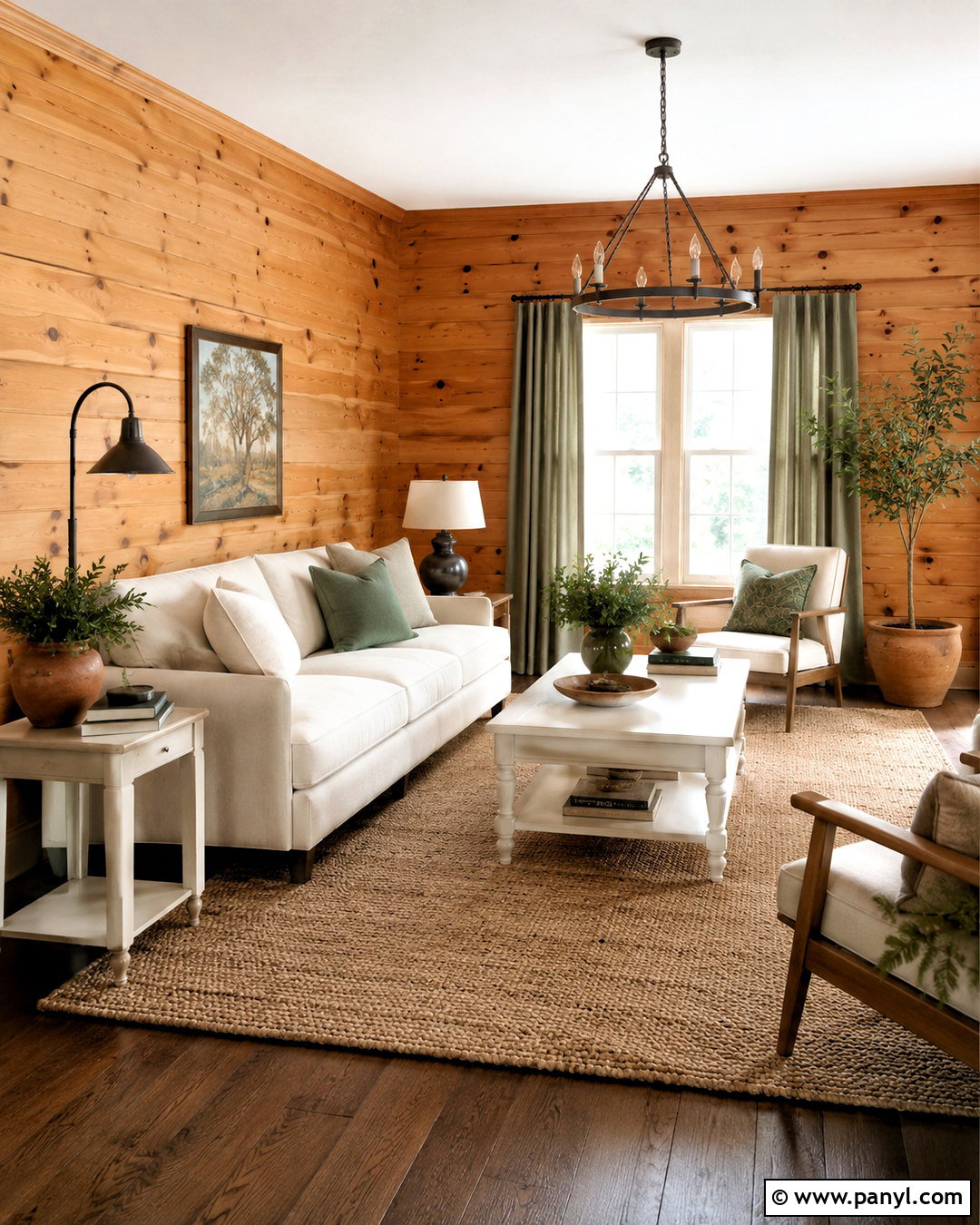
Cream and sage green create a soft, nature-inspired setting around golden knotty pine walls. Start with a cream sofa or upholstered bed to brighten the room without introducing a harsh white contrast. Use muted sage on curtains, rugs, cabinetry, or a painted fireplace surround. Medium oak furniture can blend into the pine, so choose painted cream pieces or dark bronze metal instead. Layer in oatmeal linen, woven baskets, and small terracotta planters for comfortable texture. A warm ivory ceiling keeps the room open, while aged brass lighting adds a gentle glow. This complete scheme works especially well in living rooms, bedrooms, and dining spaces where the goal is relaxed, timeless comfort rather than a heavily themed cabin appearance.
2. Knotty Pine Walls With Greige And Charcoal
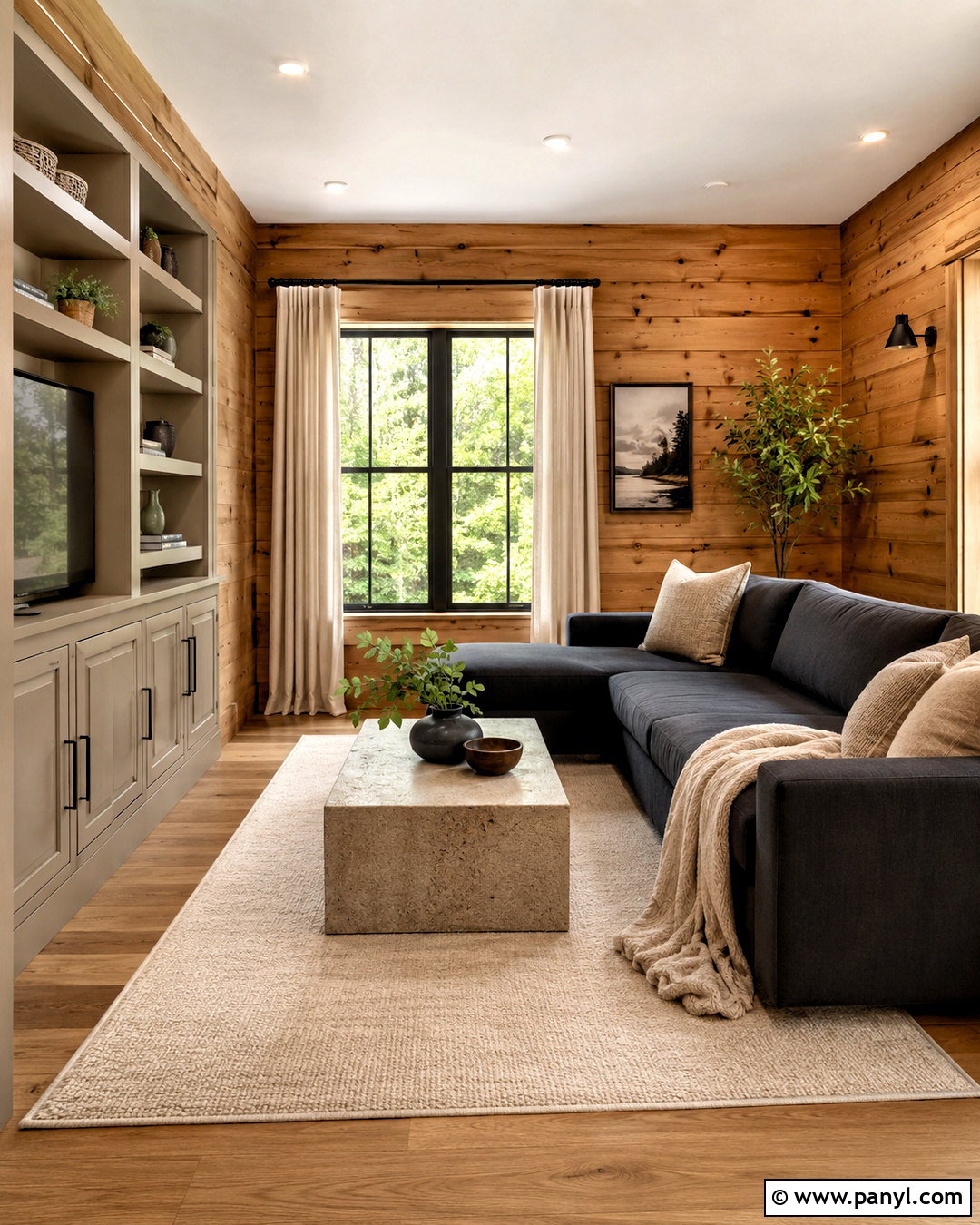
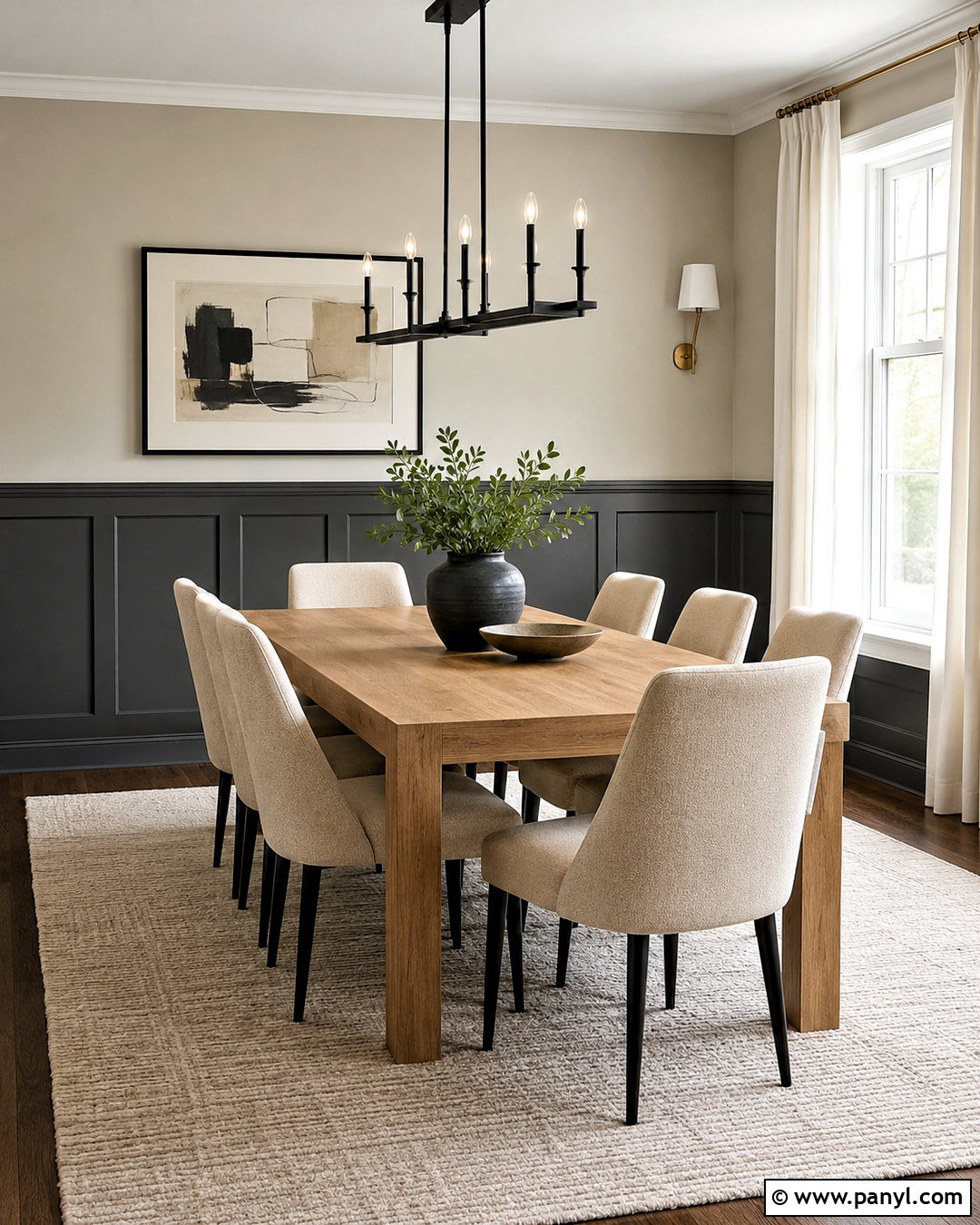
Soft greige helps calm orange-toned knotty pine, while charcoal gives the room enough contrast to feel updated. Choose a pale warm greige for the ceiling, adjoining drywall, or built-in cabinetry. Bring charcoal into the design through a low-profile sofa, wool area rug, fireplace surround, and slim metal lighting. Keep window treatments light with natural linen panels that allow plenty of daylight into the room. Matte black frames and hardware can reinforce the darker accents without becoming dominant. A light stone coffee table provides another cooling surface beside the warm wood. Finish the look with cream cushions and one muted green plant. The result feels modern and grounded, yet the knots and grain remain the main visual feature.
3. Knotty Pine Walls With Dusty Blue And Ivory
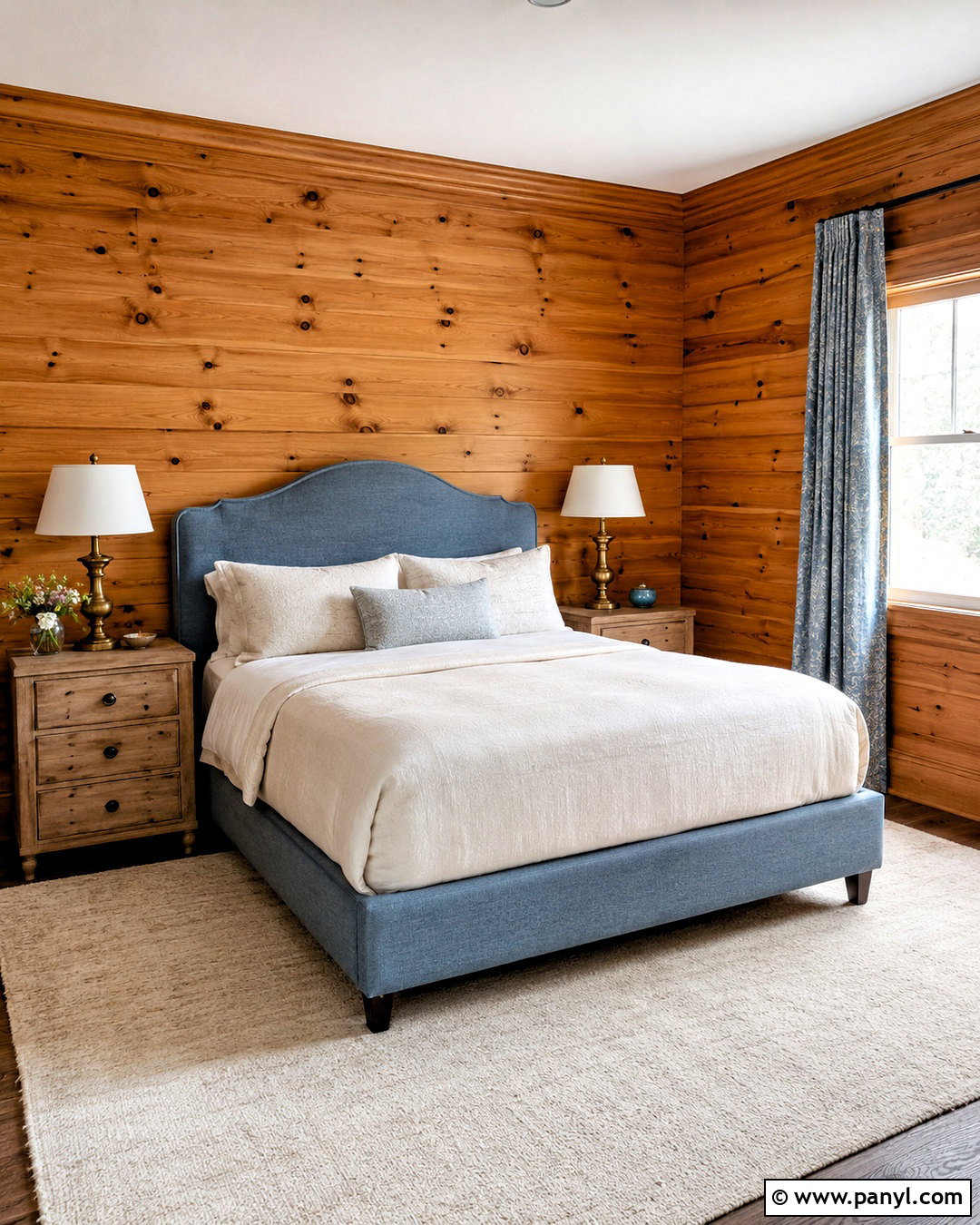
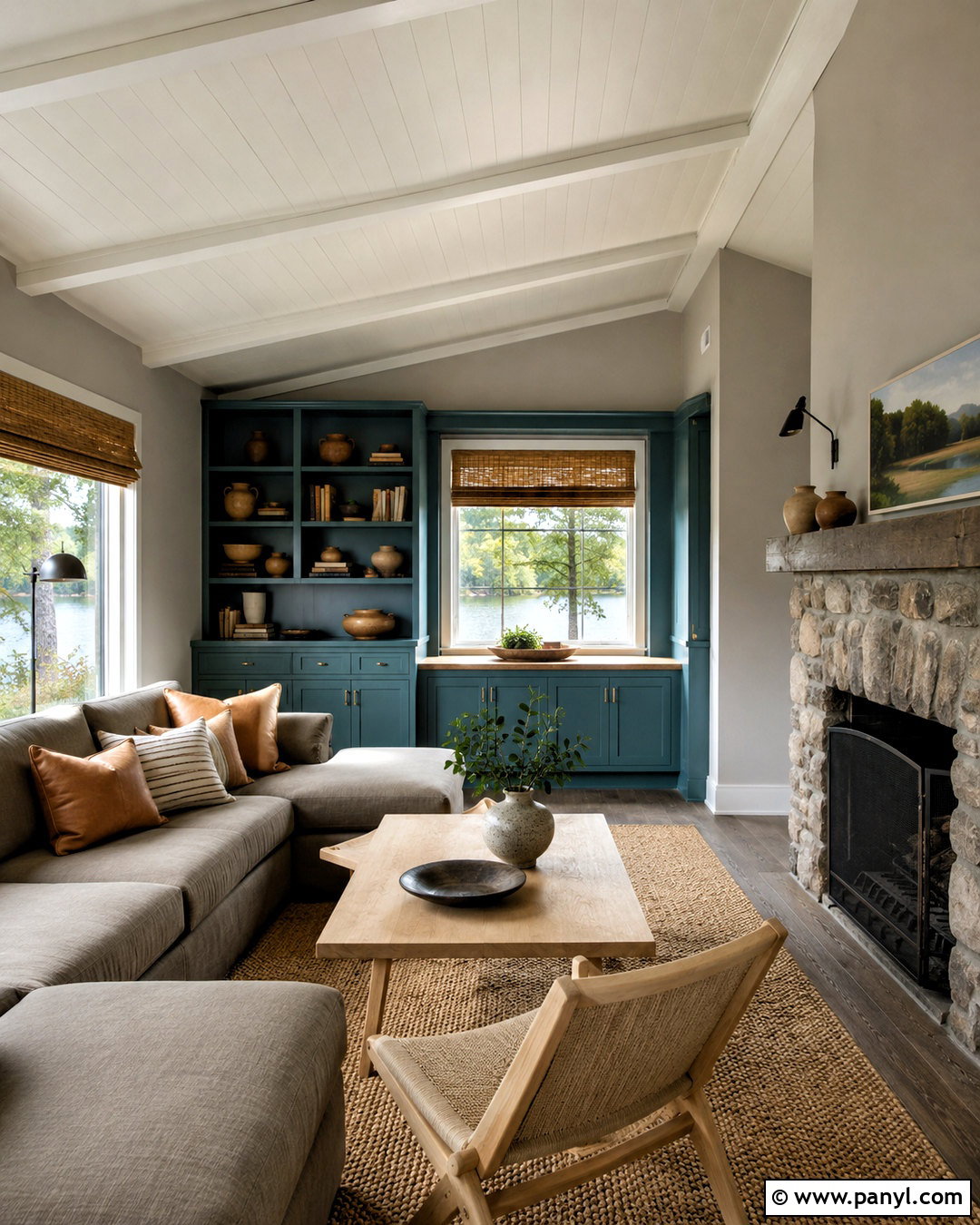
Dusty blue offers a quiet contrast that can make warm knotty pine walls look richer rather than more orange. Use the blue on a substantial element, such as a sofa, painted dresser, kitchen island, or long set of curtains. Ivory should become the room’s light base through the ceiling, area rug, lampshades, and larger textiles. Choose furniture with simple profiles so the wall grain does not compete with complicated shapes. Weathered oak, antique brass, and creamy ceramic accessories fit naturally into this palette. Add a few faded blue patterns through pillows or bedding, but leave generous areas of solid ivory for balance. This finished look feels particularly comfortable in lake houses, guest rooms, and casual family spaces.
4. Knotty Pine Walls With Navy Blue And White
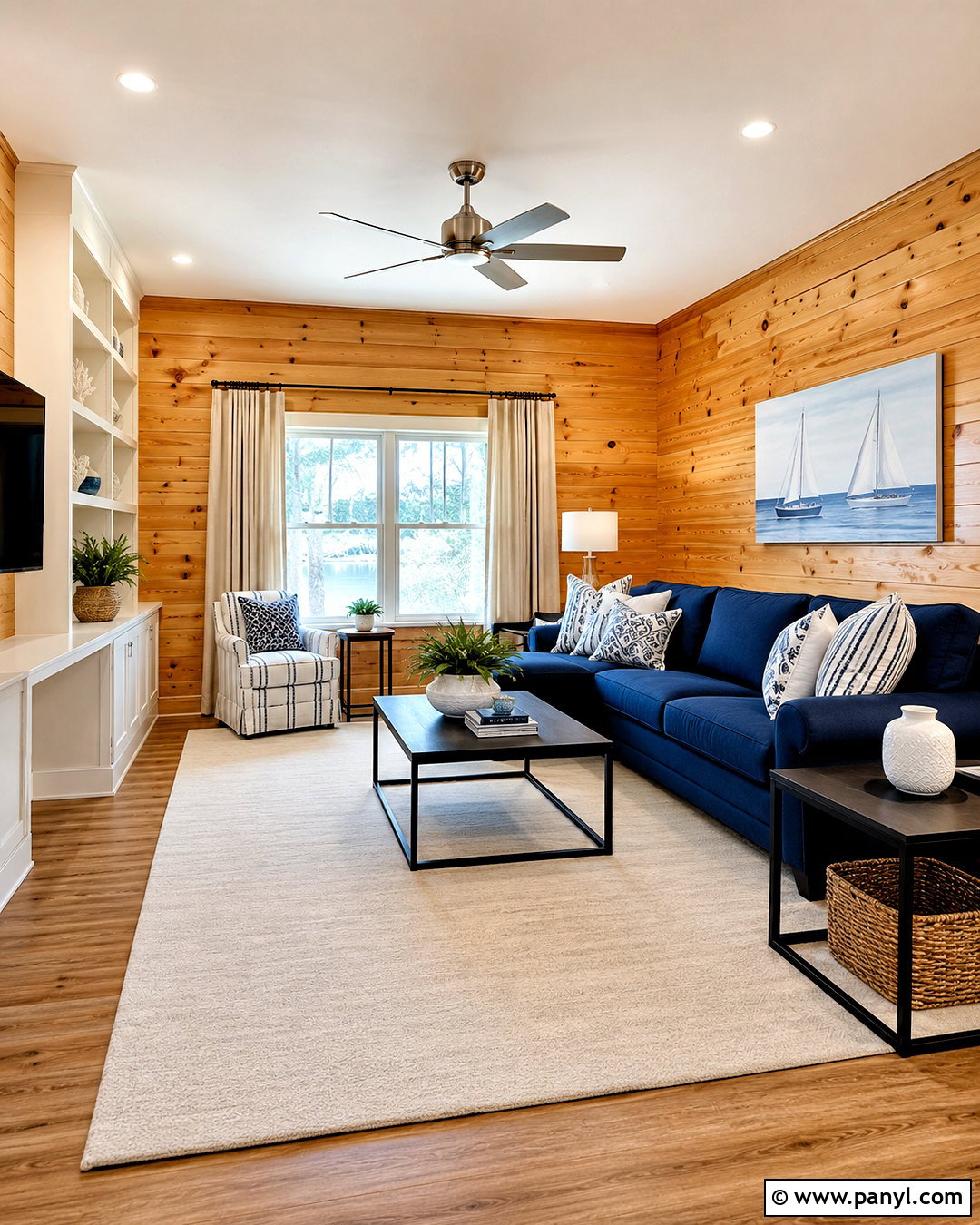
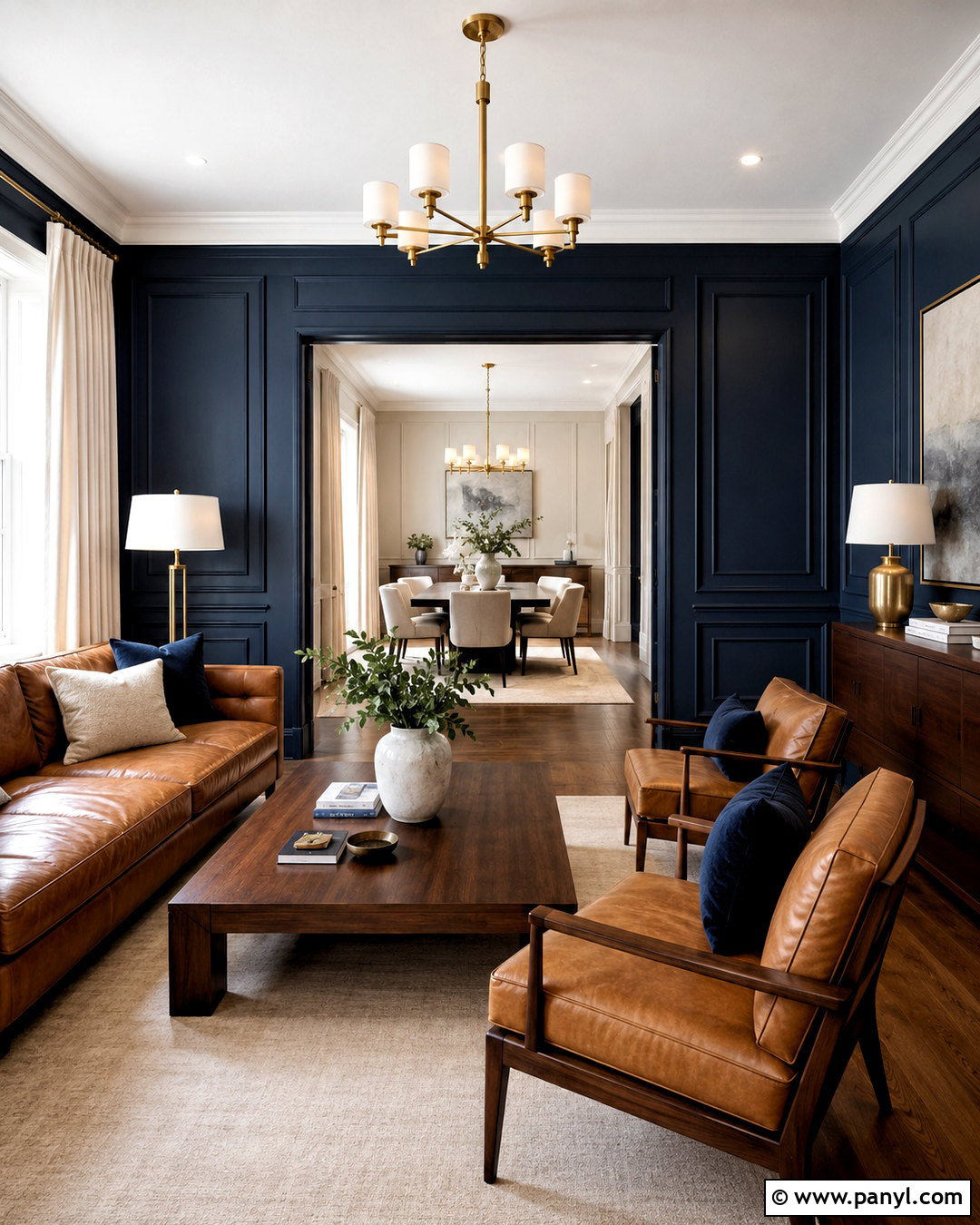
Deep navy blue gives knotty pine walls a clean, confident contrast, while fresh white prevents the combination from becoming too heavy. In a living room, use a navy sofa, white ceiling, and a large ivory rug to establish the palette. Add white-painted window trim or bookcases if the room needs more brightness. A kitchen can use navy lower cabinets, white countertops, and warm pine walls above them. Choose brushed nickel, chrome, or matte black hardware for a crisp finish. Natural flax curtains soften the difference between the dark blue and bright white. Keep decorative patterns simple, perhaps with narrow stripes or small geometric prints. This polished scheme suits coastal, traditional, and updated cabin interiors without hiding the wood’s character.
5. Knotty Pine Walls With Olive Green And Warm Beige
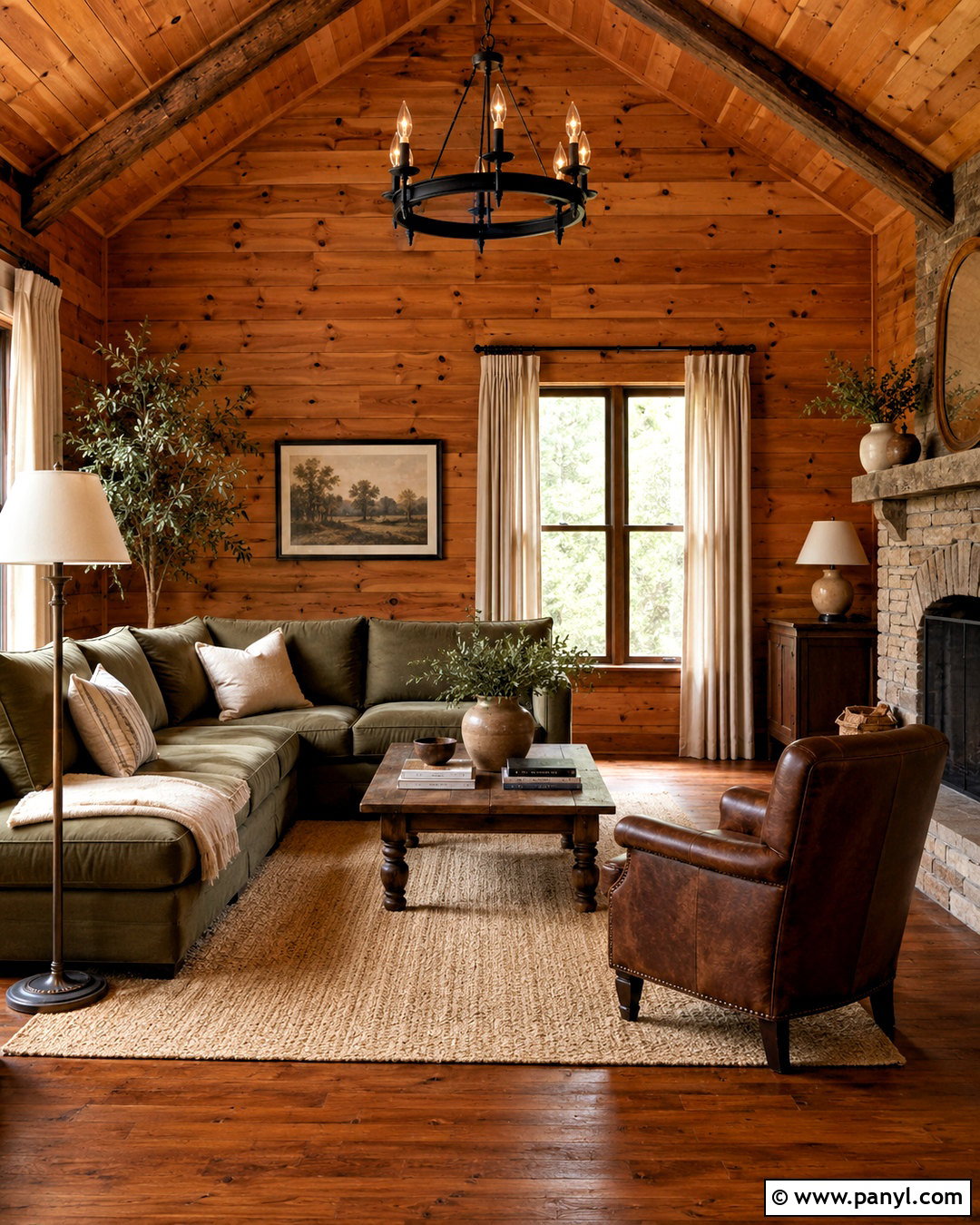
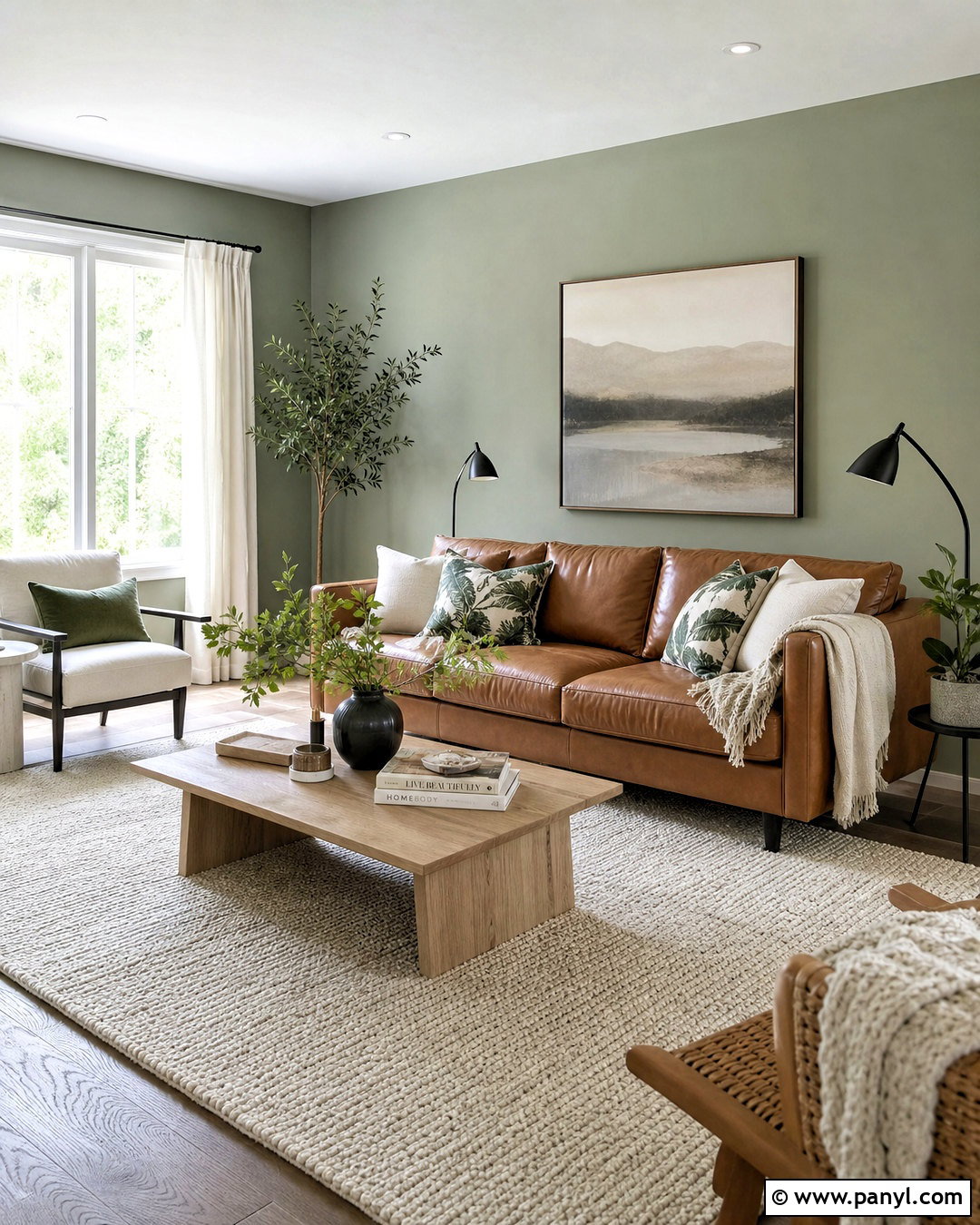
Olive green and warm beige lean into the earthy character of knotty pine without making the room feel overly rustic. Choose olive upholstery, painted cabinets, or floor-length curtains as the primary color feature. Warm beige works well for a ceiling, sectional, bedding, or broad area rug. Introduce dark brown leather through an armchair or bench to deepen the scheme. Black iron lighting and hardware add definition around the softer natural colors. Avoid filling the room with additional orange wood furniture. Instead, select beige-painted pieces, dark-stained tables, or simple metal frames. Cream pottery, textured wool, and leafy greenery complete the look. The finished space feels grounded, restful, and connected to the landscape outside.
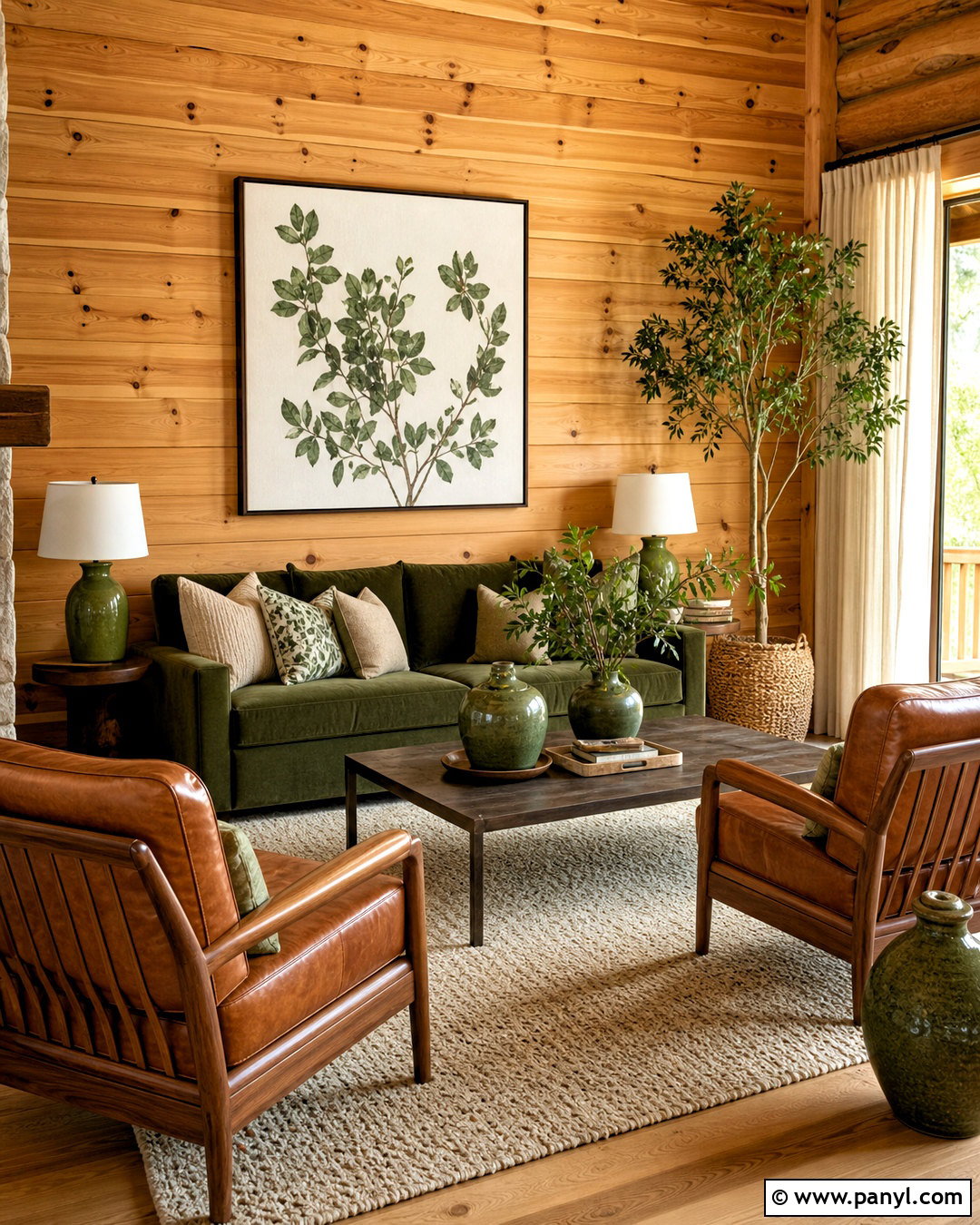
6. Knotty Pine Walls With Forest Green And Deep Cream
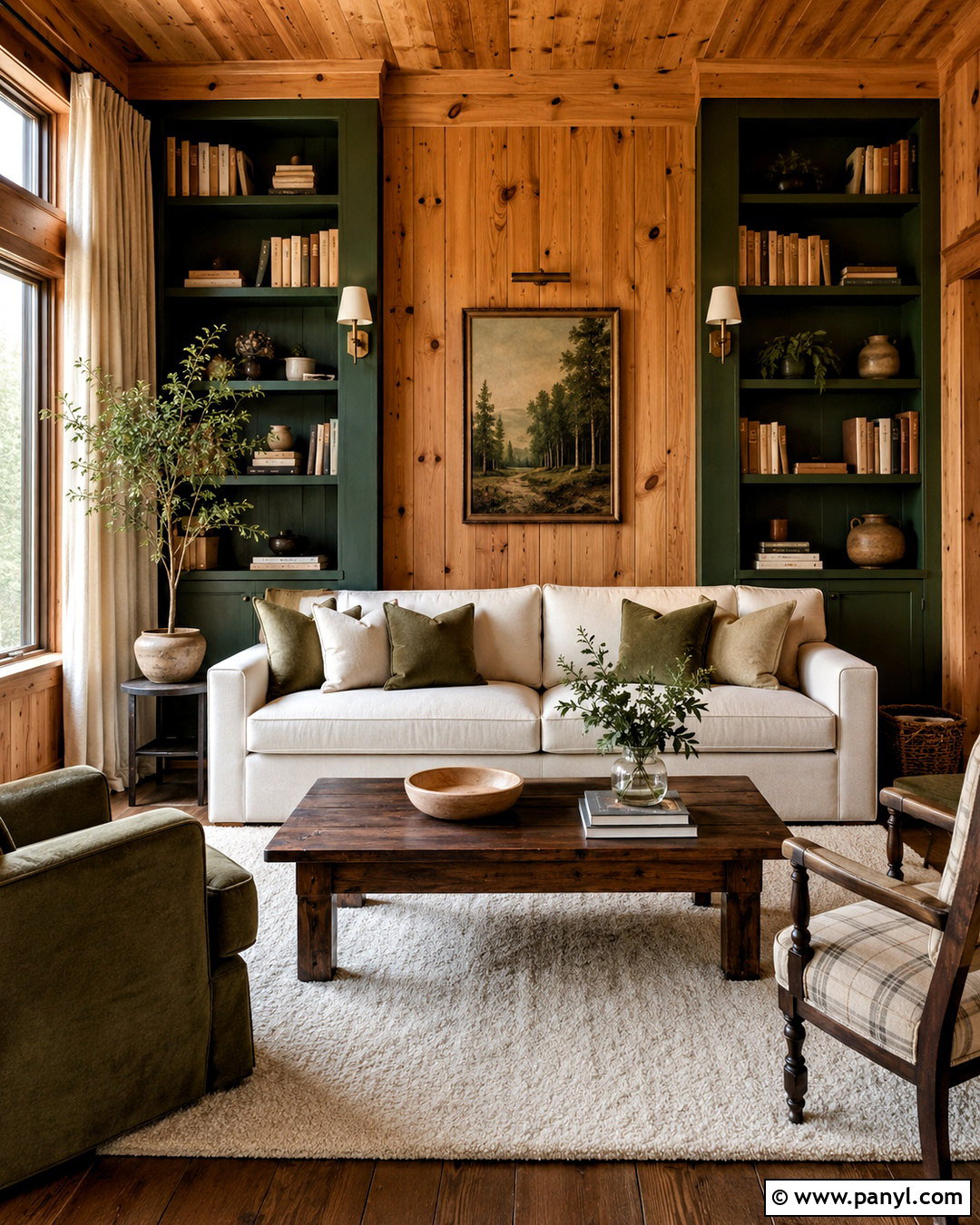
Rich forest green can transform knotty pine walls into an elegant backdrop rather than a casual cabin finish. Use the green on a velvet sofa, built-in bookshelves, kitchen cabinetry, or an upholstered headboard. Balance its depth with a deep cream ceiling, substantial cream rug, and warm linen drapery. Dark walnut tables provide contrast without repeating the yellow tones of the pine. Choose aged brass sconces or pendants to add warmth, then introduce small amounts of black through frames and hardware. Keep accessories restrained because both the wood grain and forest green already carry visual weight. A few cream ceramics and botanical elements are enough. This color scheme works beautifully in libraries, dining rooms, and spacious bedrooms with generous natural light.
7. Knotty Pine Walls With Teal And Rust
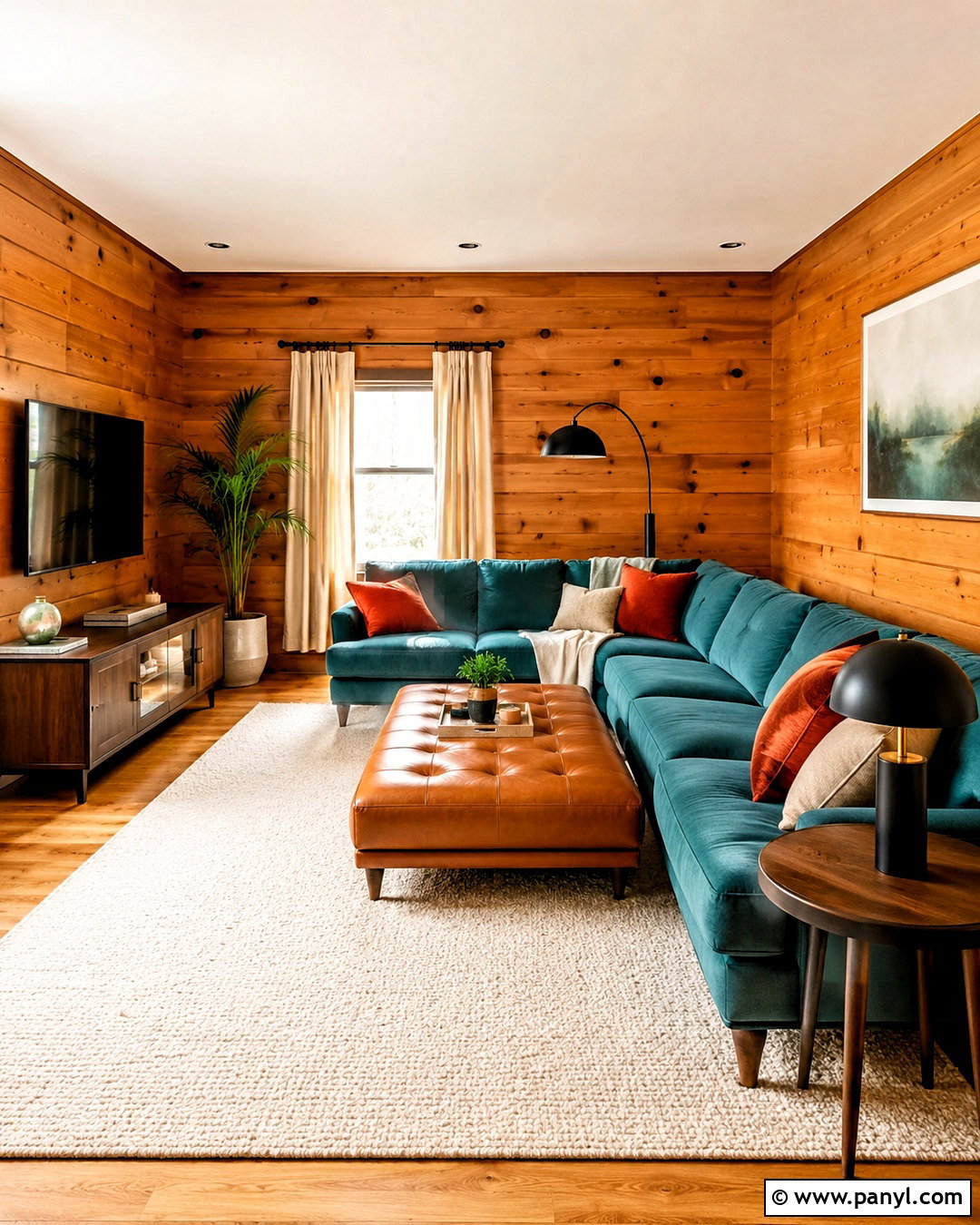
Teal provides strong cool contrast, while controlled touches of rust connect the scheme back to the warm knotty pine walls. Make teal the dominant upholstery or cabinetry color rather than scattering it through many small objects. A teal sectional, for example, can sit on a light beige rug with rust-colored pillows and a cognac leather ottoman. Paint the ceiling warm white to prevent the combination from feeling enclosed. Choose black metal lighting and simple cream window treatments for visual relief. Rust should remain a supporting accent in one throw, patterned rug, or ceramic vessel. Walnut furniture and brushed brass details complete the room. The resulting palette has a bold retro influence but still feels comfortable, intentional, and suitable for everyday living.
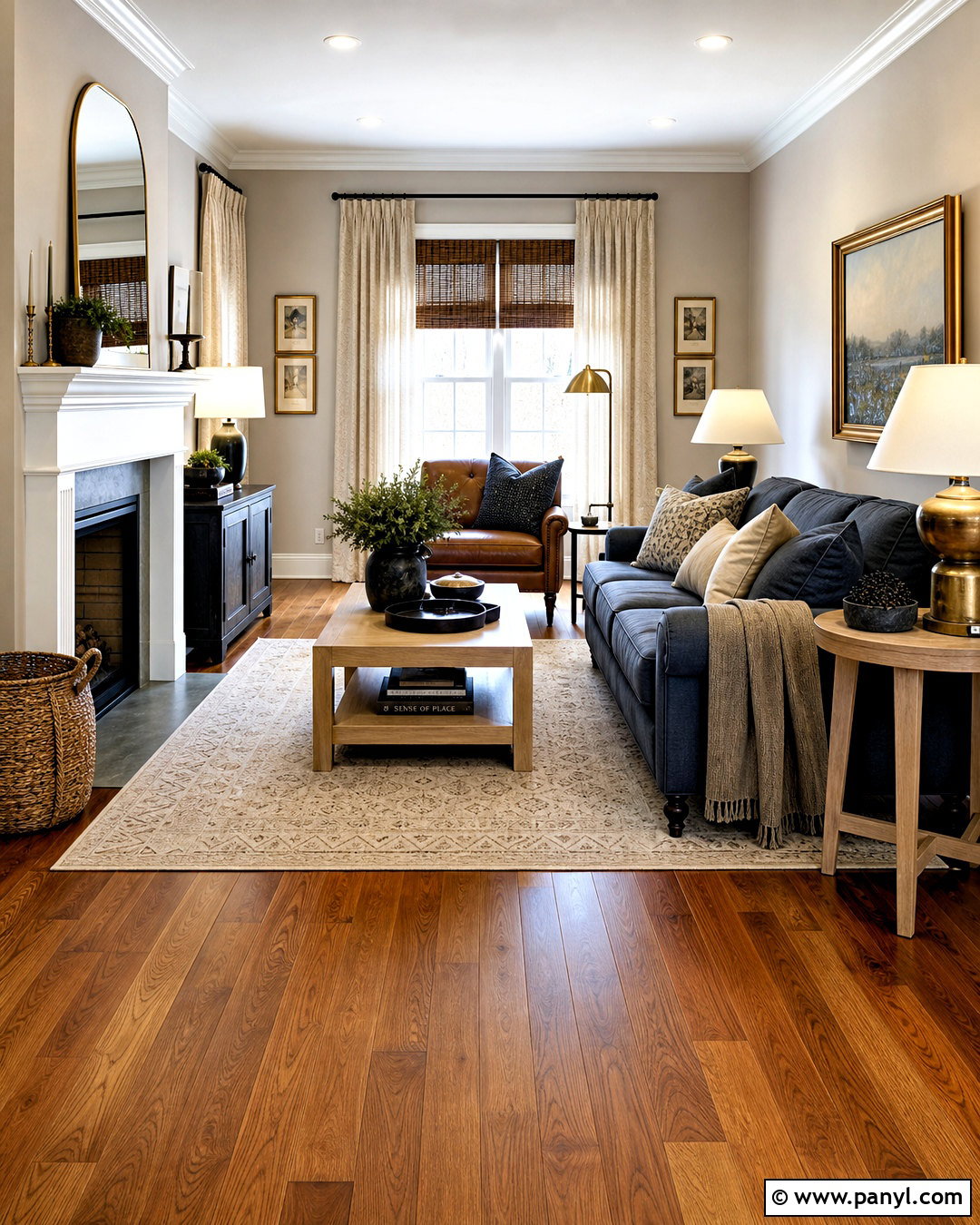
8. Knotty Pine Walls With Seafoam Green And Sand
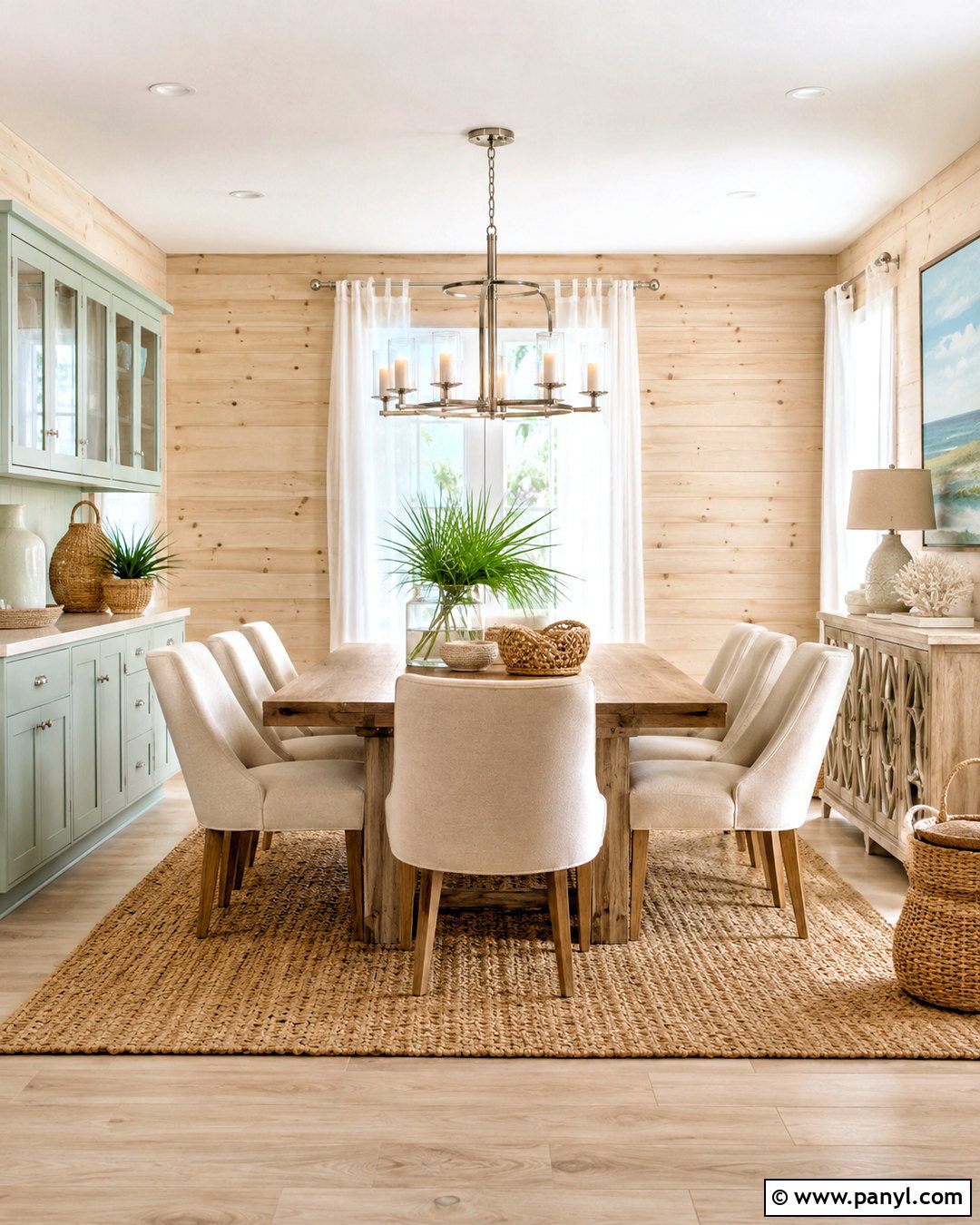
Pale seafoam green brings an airy quality to knotty pine walls, especially in rooms that receive good natural light. Pair the wood with a seafoam-painted vanity, sideboard, or set of lower kitchen cabinets. Use sandy beige upholstery and a natural fiber rug to create a light foundation. White linen curtains, an ivory ceiling, and pale ceramic lamps will keep the upper half of the room bright. Add subtle coastal texture through woven shades, rattan seating, or a light stone tabletop, but avoid obvious themed decorations. Brushed nickel fixtures suit the cool green, while a few warm brass accents connect with the pine. This balanced room feels breezy and relaxed without losing the welcoming warmth that makes natural wood paneling appealing.
9. Knotty Pine Walls With Slate Blue And Driftwood Gray
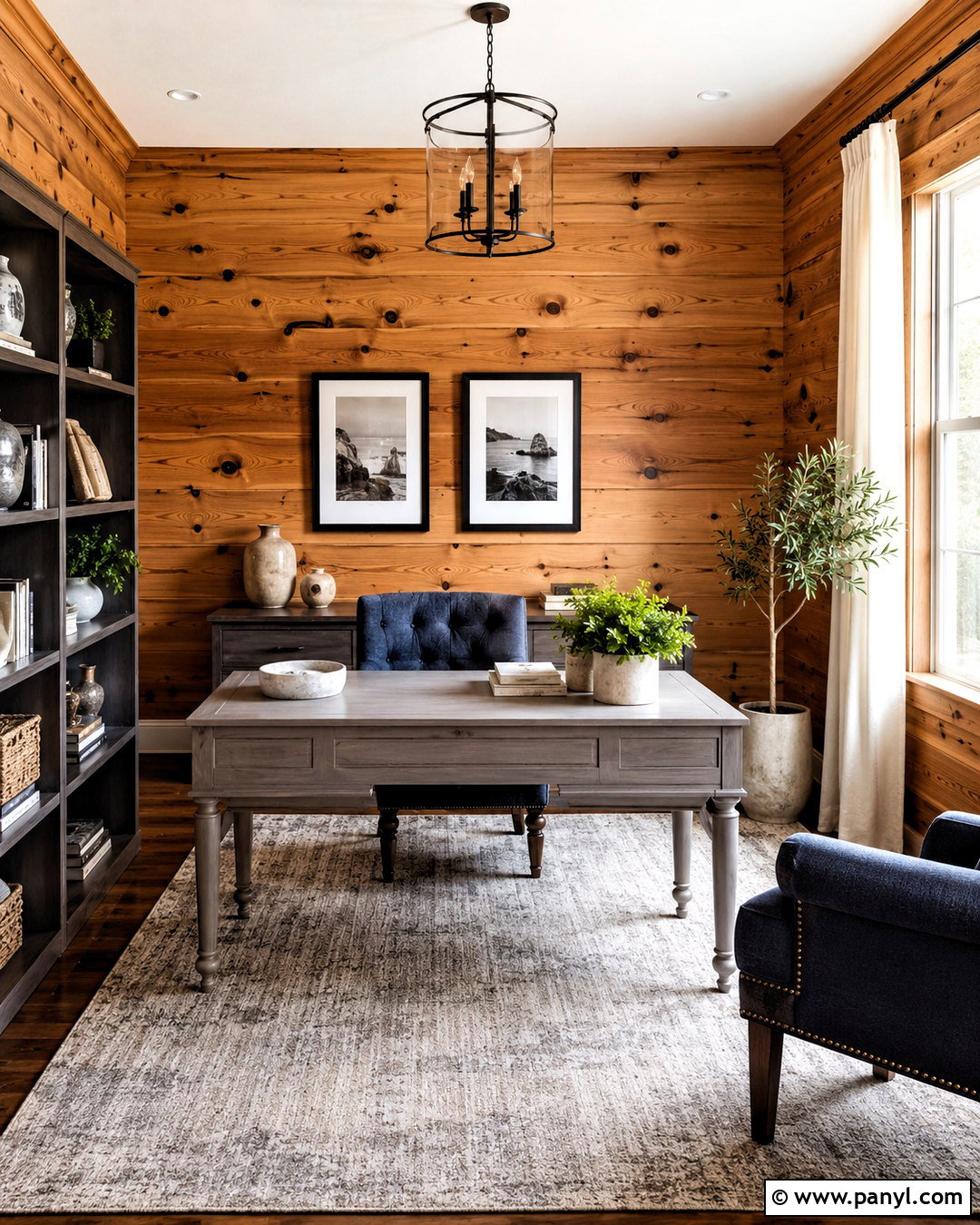
Slate blue and driftwood gray give knotty pine walls a cooler, more tailored appearance. Begin with a slate blue sofa or upholstered bed, then introduce driftwood gray through the rug, curtains, and painted furniture. A soft off-white ceiling keeps the gray from making the room look dim. Use dark bronze lighting and black picture frames to create clear edges against the textured walls. Light gray stone, concrete, or ceramic surfaces can reduce the amount of competing wood in the space. Add cream pillows and one camel leather accent for warmth. This complete palette works well when the paneling has aged to a deep amber tone. It creates contrast while maintaining a natural, understated atmosphere suitable for a den, office, or bedroom.
10. Knotty Pine Walls With Pale Aqua And White
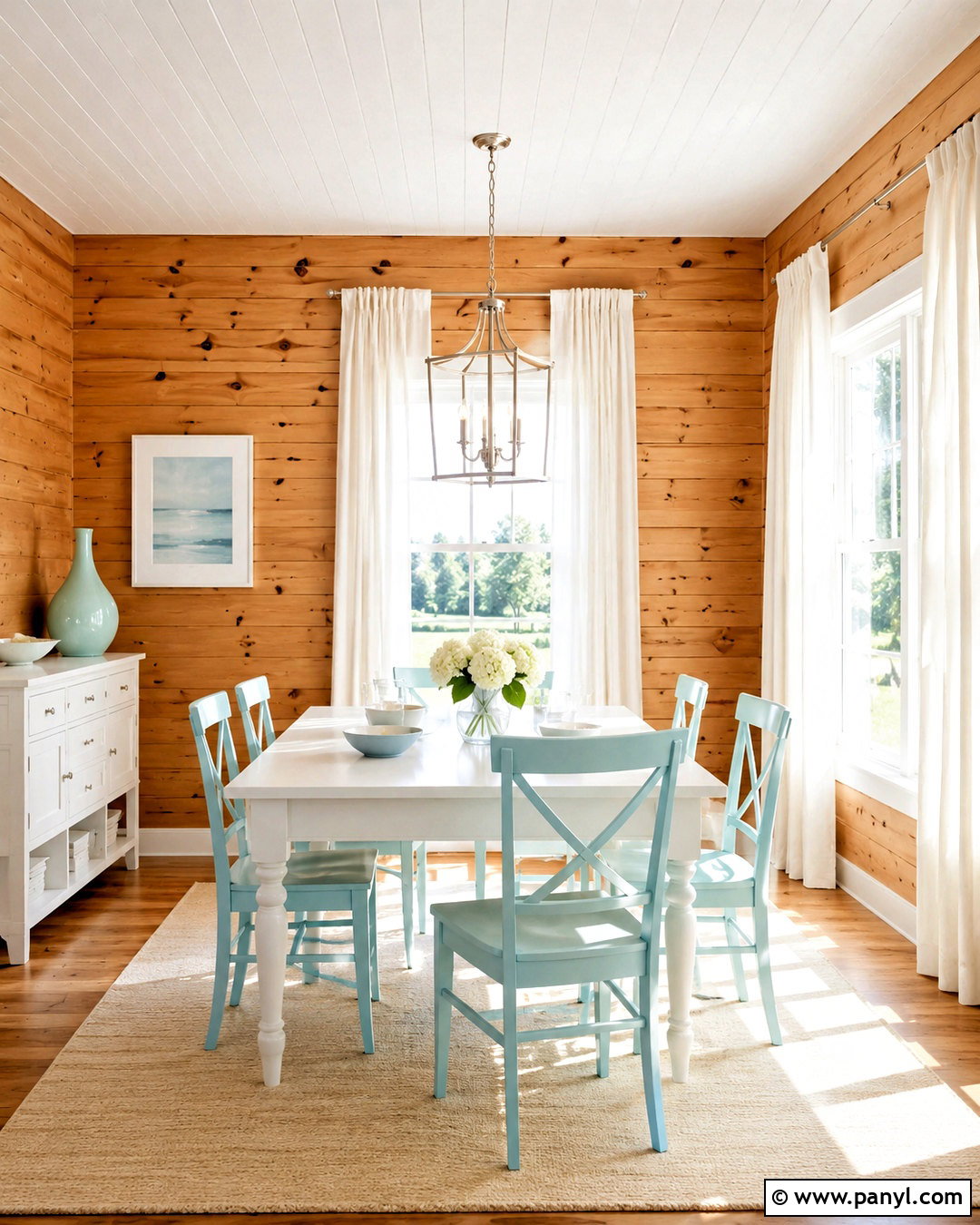
Pale aqua and clear white can freshen traditional knotty pine walls without requiring the wood to be painted. Cover the ceiling in white and repeat that color on window trim, doors, and one large upholstered piece. Use pale aqua for curtains, bedding, dining chairs, or a painted cabinet. Light-colored flooring or a cream rug will help reflect more daylight around the wood-paneled room. Choose polished chrome or brushed nickel lighting for a clean finish. Simple glass lamps and white ceramic accessories reinforce the airy mood. Avoid dark, bulky furniture that blocks too much of the pine. A few medium brown pieces will provide enough grounding. The finished room feels cheerful, open, and appropriate for a small cottage or sunny breakfast area.
11. Knotty Pine Walls With Terracotta And Taupe
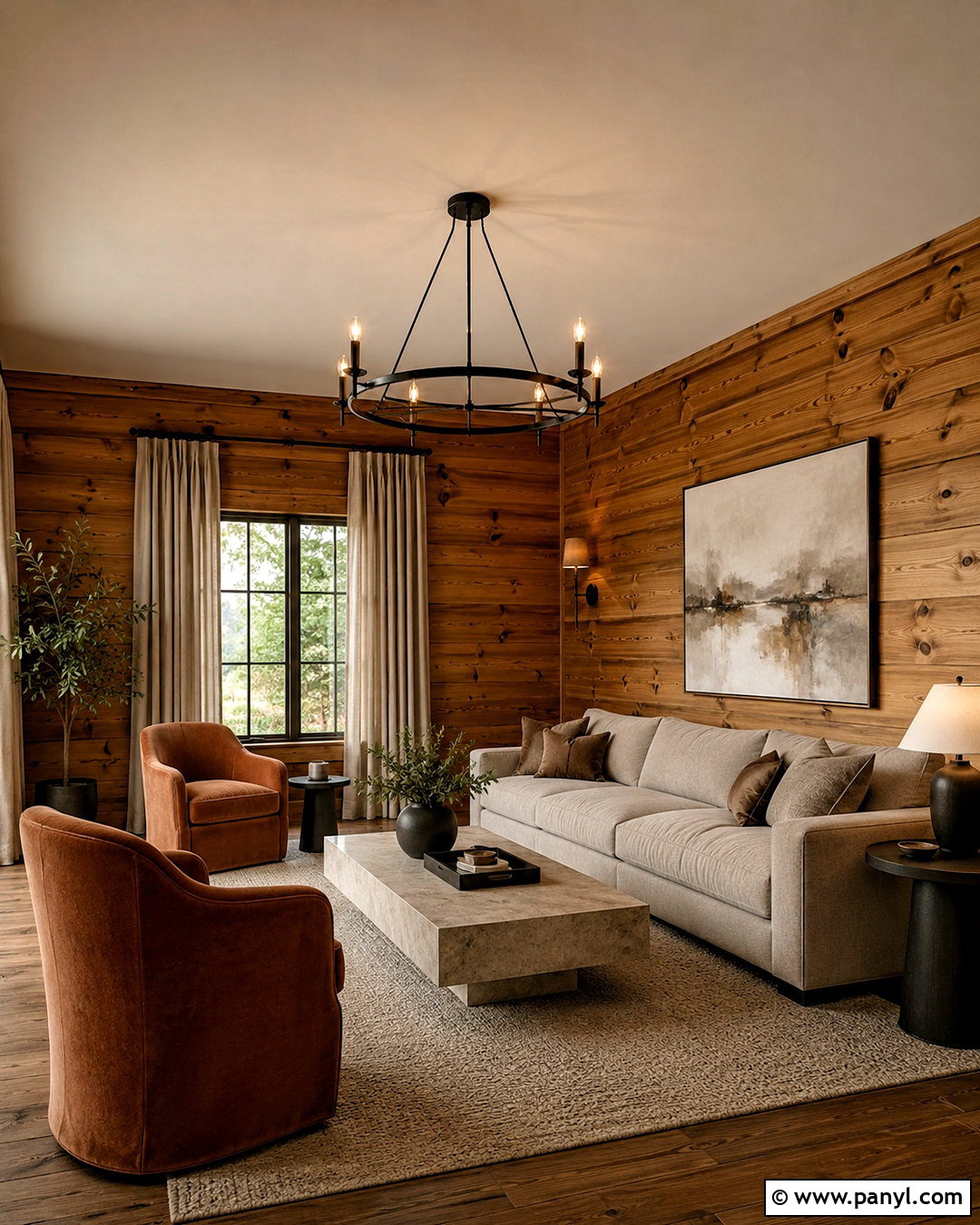
Terracotta works with the warm undertones of knotty pine walls, while taupe prevents the room from becoming overwhelmingly orange. Build the space around a taupe sofa, bed, or large woven rug. Add terracotta in a pair of chairs, linen pillows, pottery, or a restrained patterned textile. Use mushroom-colored curtains and a creamy ceiling to soften the transitions. Dark brown tables and black iron lighting provide necessary definition among the similar warm hues. Select upholstery with visible texture, such as linen or boucle, rather than shiny fabric. A pale stone fireplace or coffee table can introduce a cooling neutral surface. This tonal, earthy color scheme creates a welcoming room that feels layered and sophisticated instead of overly coordinated.
12. Knotty Pine Walls With Blush Pink And Ivory
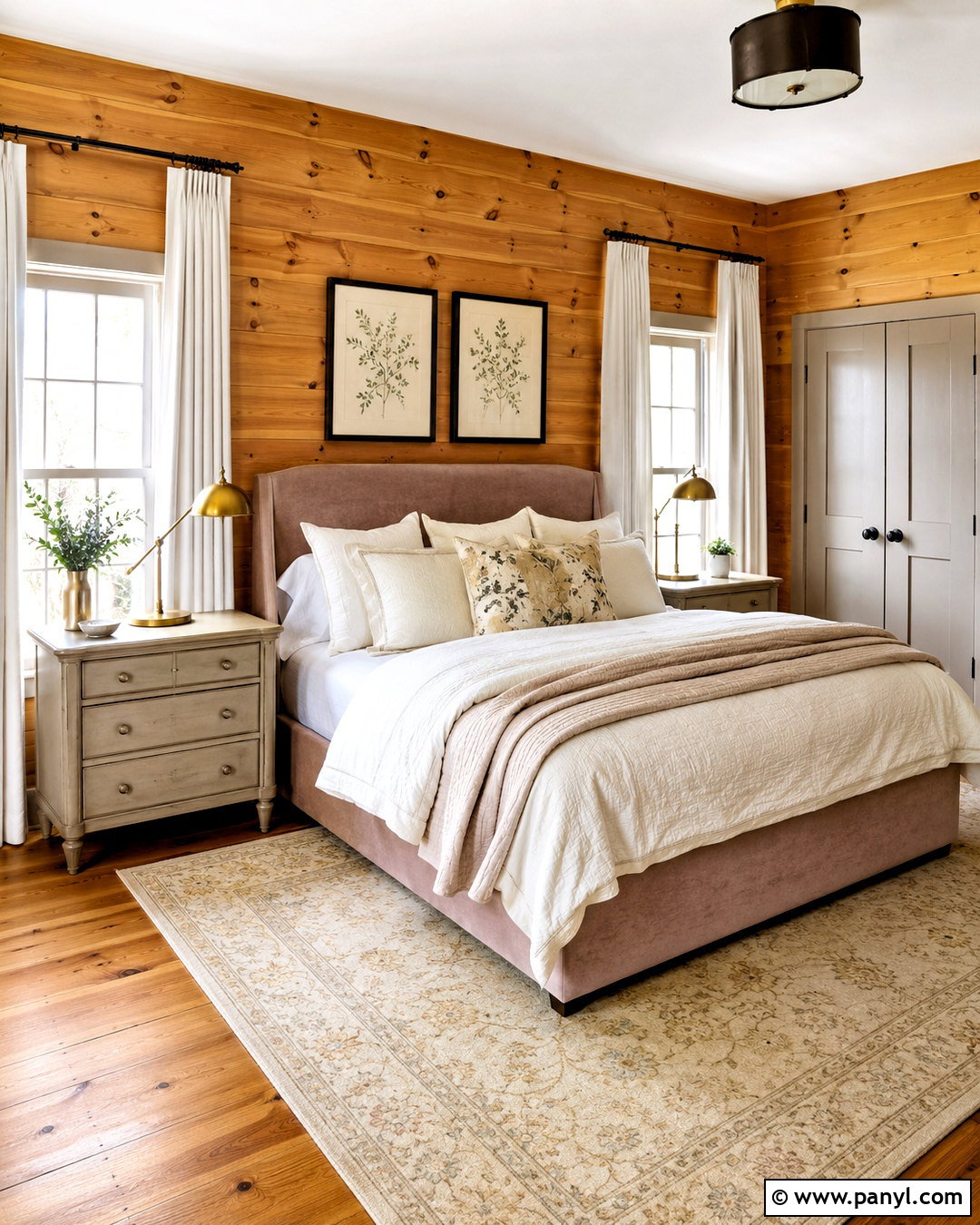
Muted blush pink provides an unexpectedly gentle companion for golden knotty pine walls. The key is choosing a dusty, brown-based pink rather than a sugary pastel. Use blush on an upholstered bed, lounge chair, or long curtains, then surround it with ivory bedding, a cream rug, and warm white ceilings. Light taupe furniture and antique brass lighting give the palette maturity. Add small charcoal details through frames, cabinet knobs, or a narrow table base to sharpen the softer colors. Keep patterns understated, using narrow stripes or simple botanical prints in blush and beige. The knots in the wood supply plenty of visual movement. This complete scheme suits bedrooms, reading rooms, and cozy sitting areas where a quiet and welcoming mood is preferred.
13. Knotty Pine Walls With Mustard Yellow And Soft Gray
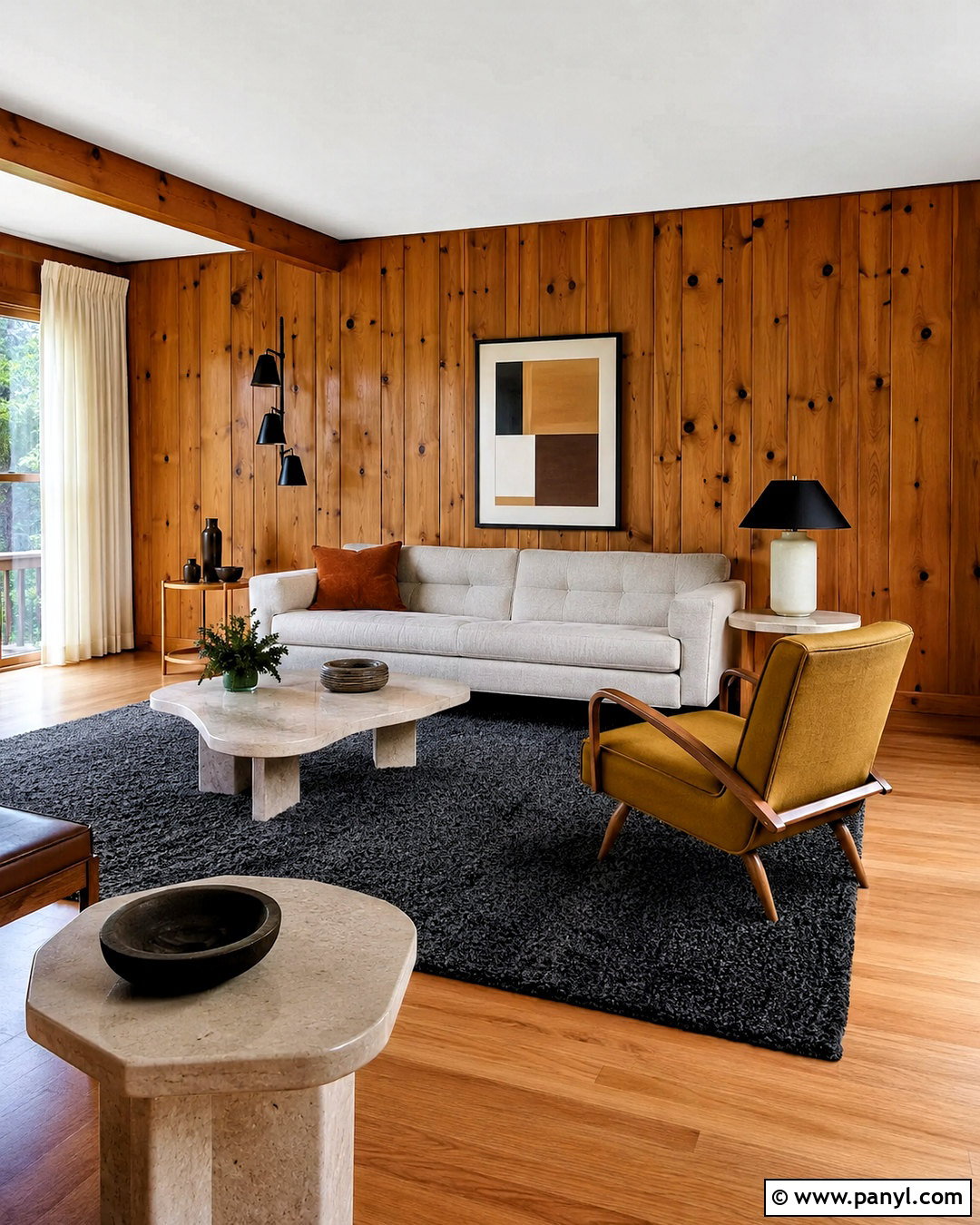
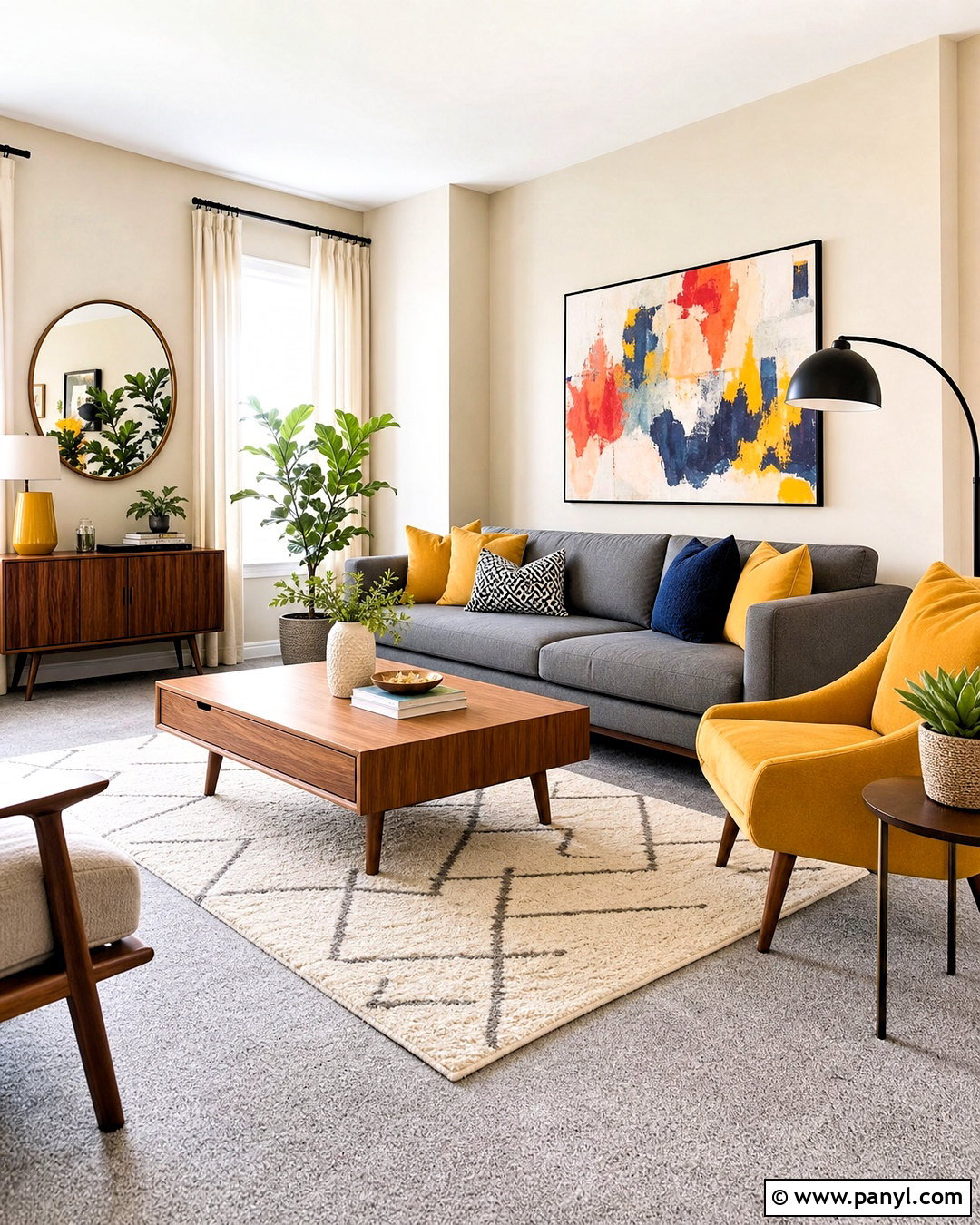
Mustard yellow can complement knotty pine walls when it is separated from the wood by generous amounts of soft gray. Start with a pale gray sofa, rug, or painted cabinetry to establish a calm neutral base. Bring mustard into the room through one substantial chair, a bench cushion, or carefully selected curtains. Use a warm white ceiling and cream window treatments so the palette remains bright. Charcoal lighting, dark gray frames, and black hardware provide contrast. Avoid adding several different yellow shades, which can amplify the pine’s golden undertone. Instead, repeat the same muted mustard only two or three times. Light stone surfaces and gray wool textiles complete this cheerful midcentury-influenced room without allowing the warmer colors to overwhelm the space.
14. Knotty Pine Walls With Burgundy And Mushroom
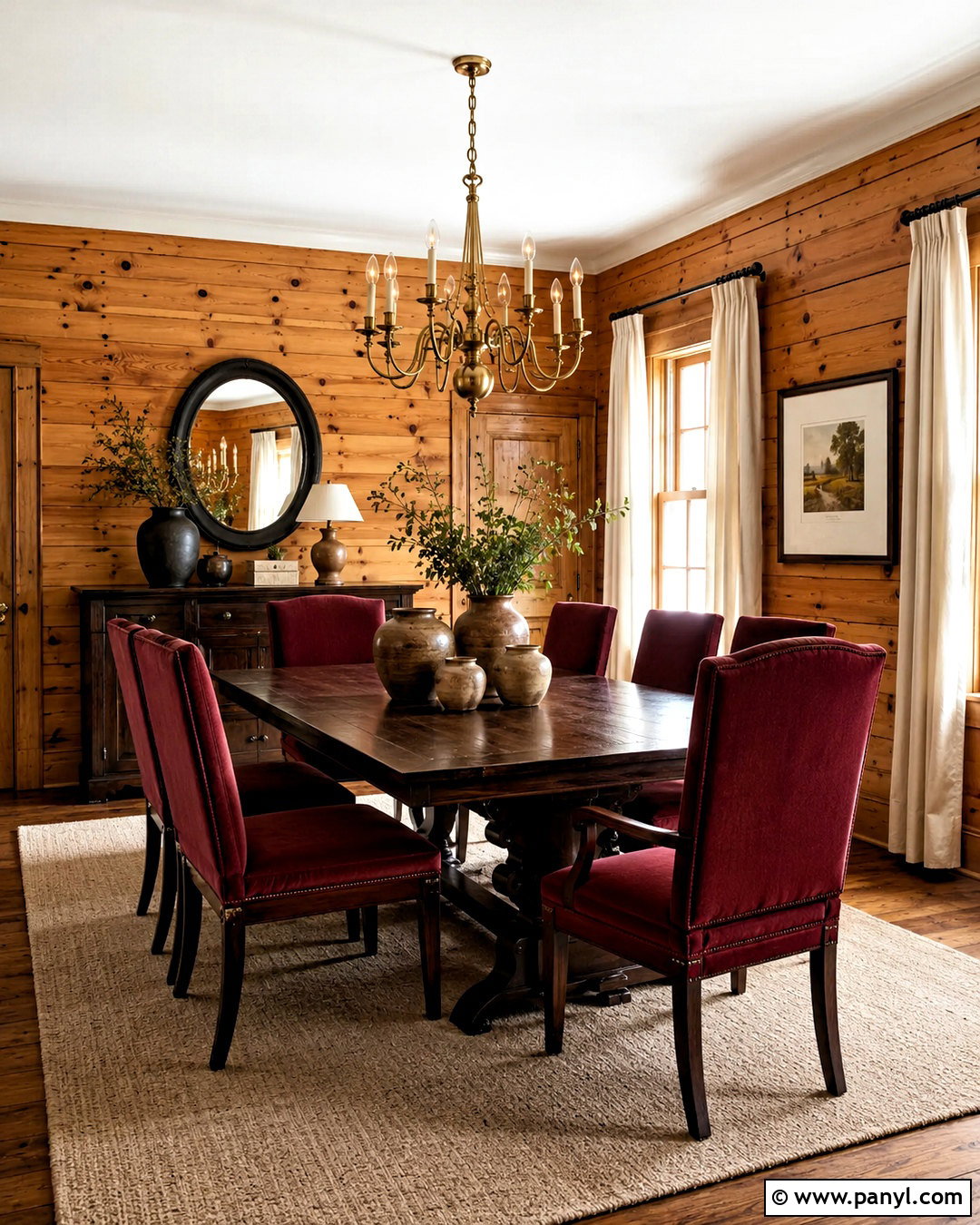
Burgundy creates a rich, traditional setting around knotty pine walls, while mushroom beige provides a softer visual bridge. Choose burgundy for a sofa, dining chairs, or an upholstered headboard rather than painting large surfaces. Use mushroom on rugs, draperies, bedding, and any adjoining drywall. A cream ceiling will help lift the entire room. Dark walnut furniture and aged brass fixtures support the formal character of the palette. Introduce small amounts of olive green through a throw or plant to keep the red tones from becoming too dominant. Avoid glossy finishes, which can make varnished pine and burgundy compete. Matte fabrics and gently textured surfaces create a more balanced result. This scheme is especially effective in dining rooms, libraries, and traditional cabin bedrooms.
15. Knotty Pine Walls With Black And Linen White
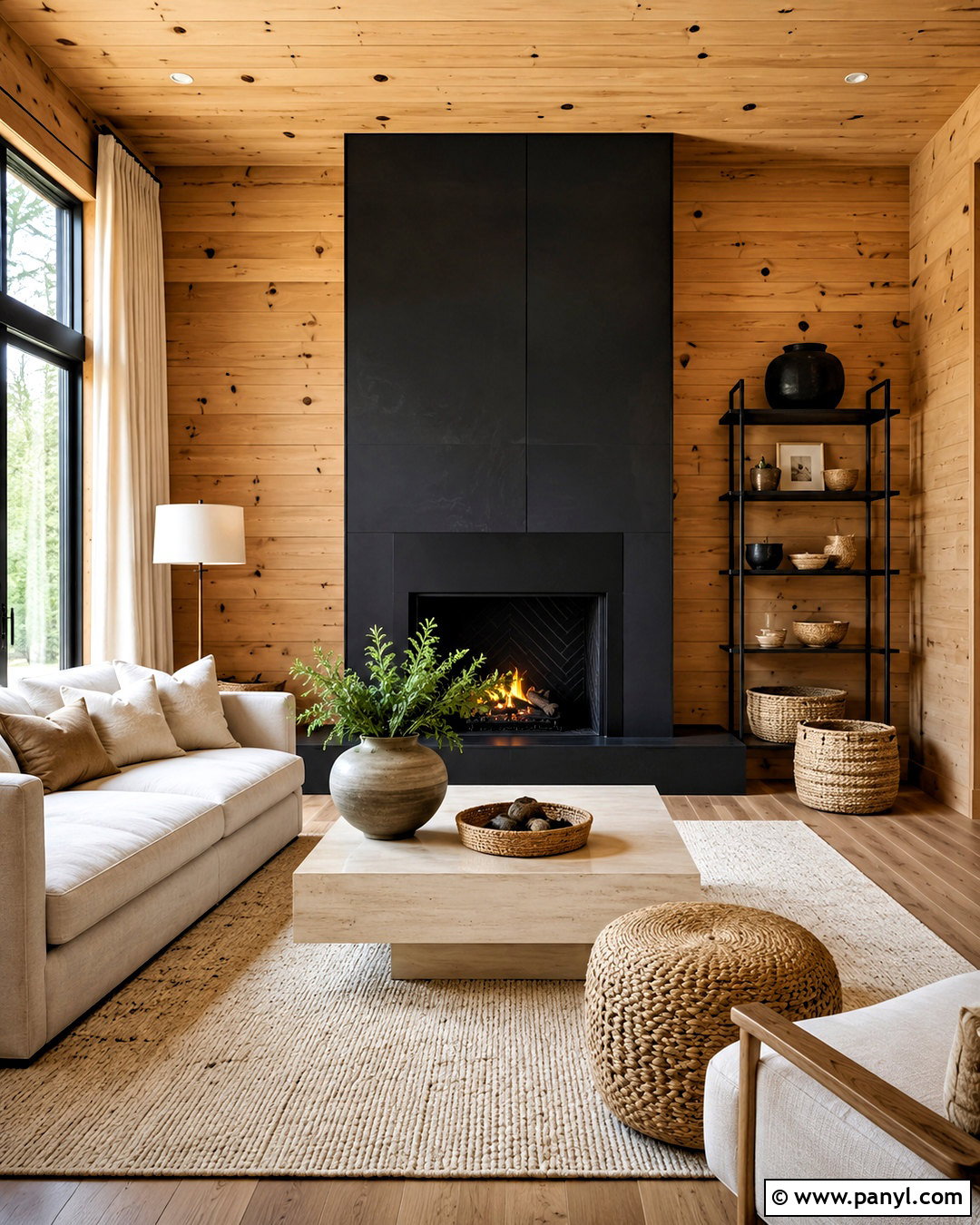
Black accents can make knotty pine walls look clean and architectural, especially when balanced with generous linen white. Use black on window frames, a fireplace surround, shelving, and slender furniture legs. A linen-white sofa or bed should become the largest light surface, supported by an ivory rug and warm white ceiling. Keep tables simple and choose pale stone, glass, or black metal instead of adding more golden wood. Cream curtains will soften the windows without weakening the contrast. Add texture through nubby upholstery, wool throws, and woven baskets in natural beige. The finished design feels modern, but it does not erase the room’s rustic character. This high-contrast combination works best when black elements are repeated evenly rather than concentrated in one corner.
16. Knotty Pine Walls With Charcoal And Camel
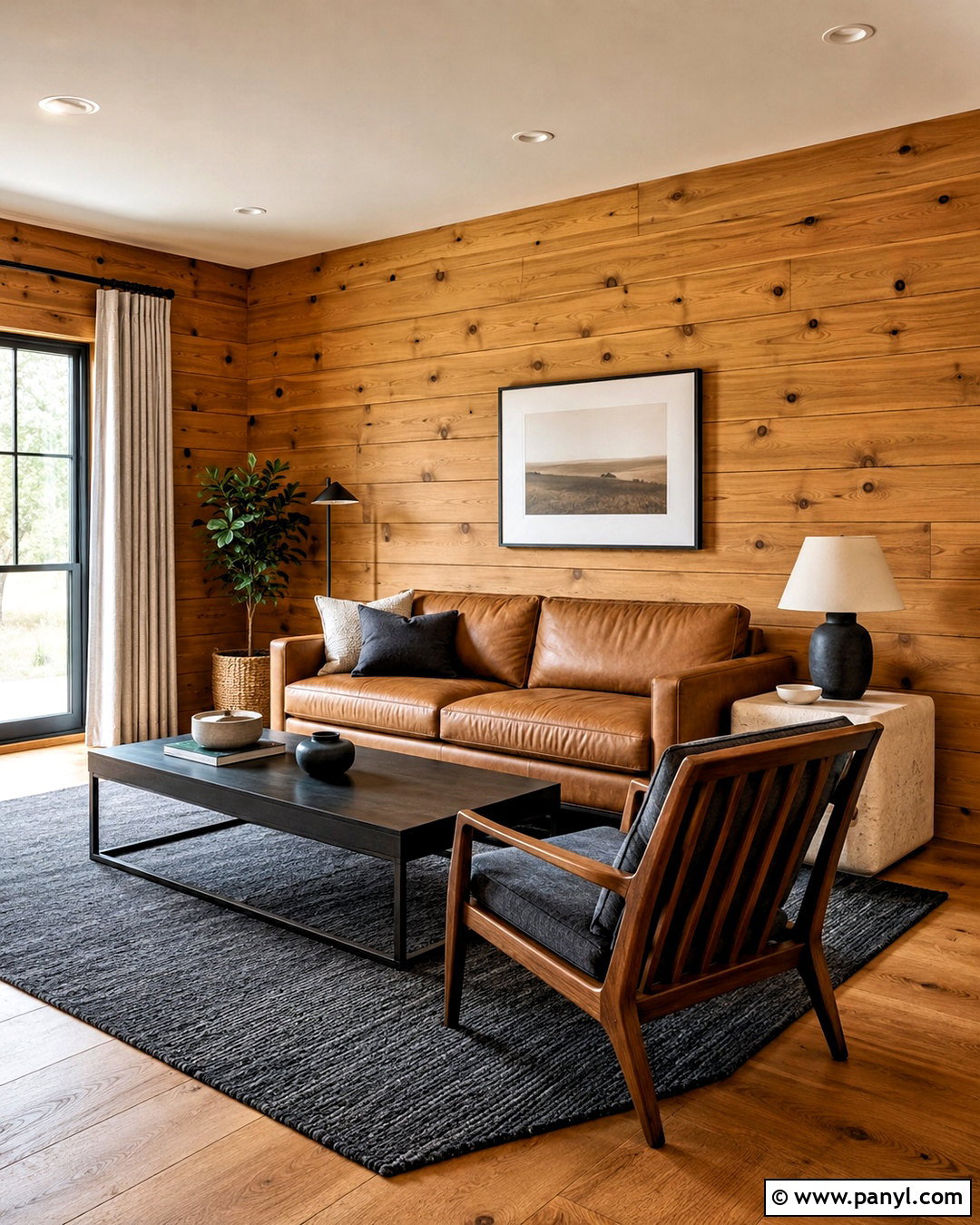
Imagine a warm camel leather sofa set against glowing knotty pine walls, grounded by a charcoal wool rug. This pairing creates an inviting room with enough dark contrast to prevent the wood and leather from blending together. Repeat charcoal on a fireplace surround, metal coffee table, and simple overhead fixture. Use a cream ceiling and pale oatmeal curtains to brighten the composition. One or two camel leather pieces are sufficient; additional seating can be upholstered in ivory or gray. Choose blackened steel hardware and a light stone side table for variation. Decorative accents should stay minimal, with cream pottery and a few muted green branches. The completed room has a comfortable modern-rustic character that feels substantial without becoming dark or visually crowded.
17. Knotty Pine Walls With Warm White And Matte Black
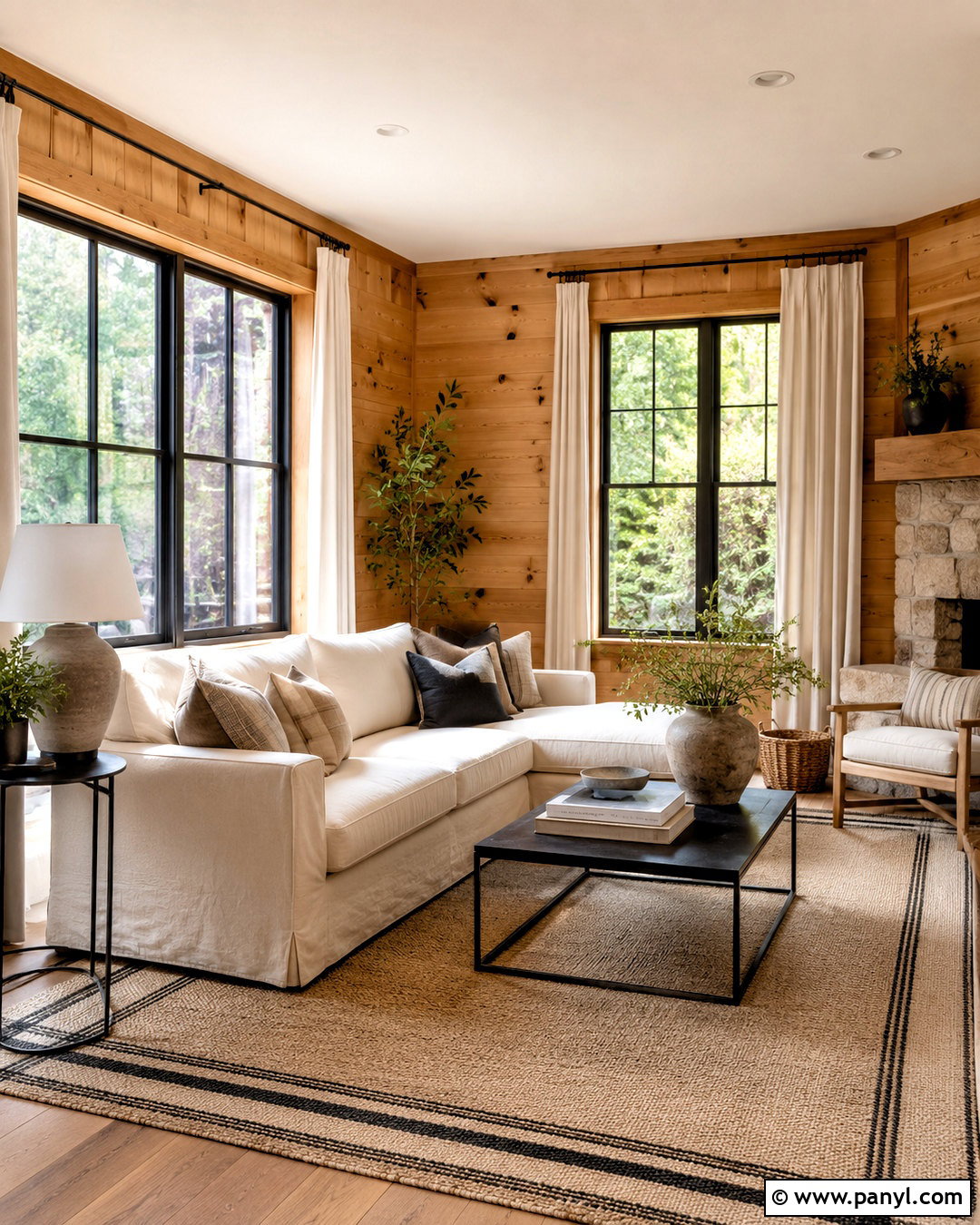
Warm white is one of the simplest ways to give knotty pine walls breathing room. Apply it to ceilings, doors, adjacent drywall, bookcases, and larger upholstery. Then use matte black for window frames, lighting, cabinet hardware, and narrow furniture bases. A cream and black patterned rug can connect the two colors without distracting from the pine grain. Choose a white slipcovered sofa, black metal coffee table, and pale stone accessories for a balanced living room. In a kitchen, combine warm white cabinets with black countertops and hardware. Keep additional wood furniture to a minimum or select pieces with a much darker stain. The finished palette is bright, practical, and versatile, allowing vintage, farmhouse, industrial, or contemporary furnishings to sit comfortably beside the paneling.
18. Knotty Pine Walls With Cool White And Cobalt Blue
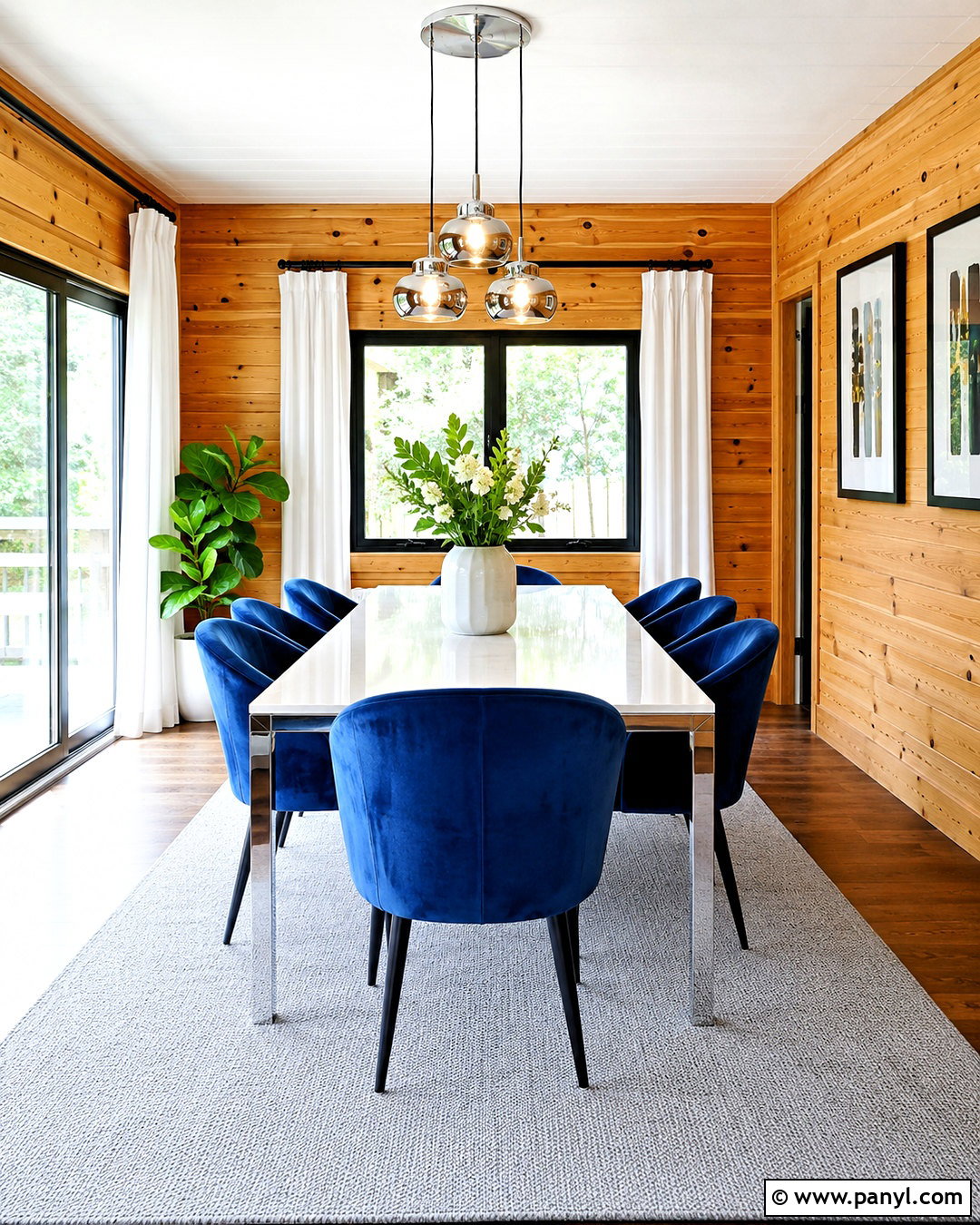
Cobalt blue introduces energetic contrast against amber knotty pine walls, so it should be used with care. Make cool white the dominant supporting color across the ceiling, rugs, curtains, and major upholstery. Add cobalt through a painted sideboard, pair of lounge chairs, kitchen island, or bold geometric rug. Use chrome or polished nickel fixtures to reinforce the crisp quality of the white and blue. Black details can outline the room through frames and table bases, but keep them slim. A few pale gray textiles help soften the strong contrast. Avoid red and bright yellow accessories, which could make the room overly colorful. This finished design feels fresh and lively, making it suitable for a family room, game-free recreation space, or cheerful dining area.
19. Knotty Pine Walls With Warm Beige And Espresso Brown
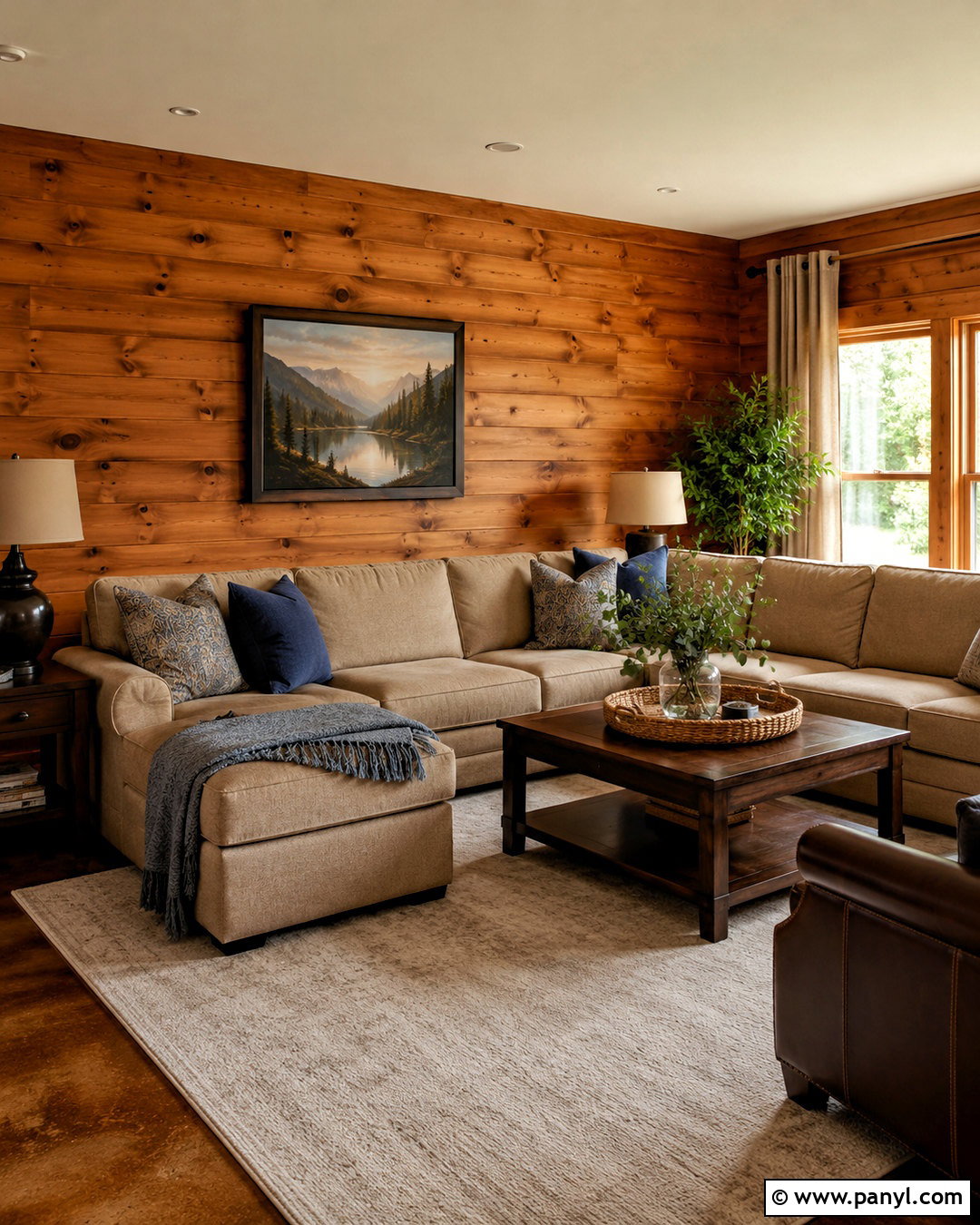
Warm beige and espresso brown create a quiet, grounded environment that respects the natural character of knotty pine walls. Select a large beige sectional, upholstered bed, or dining rug to lighten the room. Espresso should appear on tables, shelving, picture frames, and curtain rods, giving the golden wood clear contrast. Use cream on the ceiling and window treatments to prevent the brown elements from feeling heavy. Upholstered furniture with simple lines keeps the room from appearing too traditional. Introduce a small amount of muted blue or green in pillows and ceramics for balance. Avoid medium honey-brown furniture because it may blend into the paneling. The complete look is comfortable and timeless, working equally well in rustic homes, suburban family rooms, and traditional bedrooms.
20. Knotty Pine Walls With Taupe And Aged Bronze
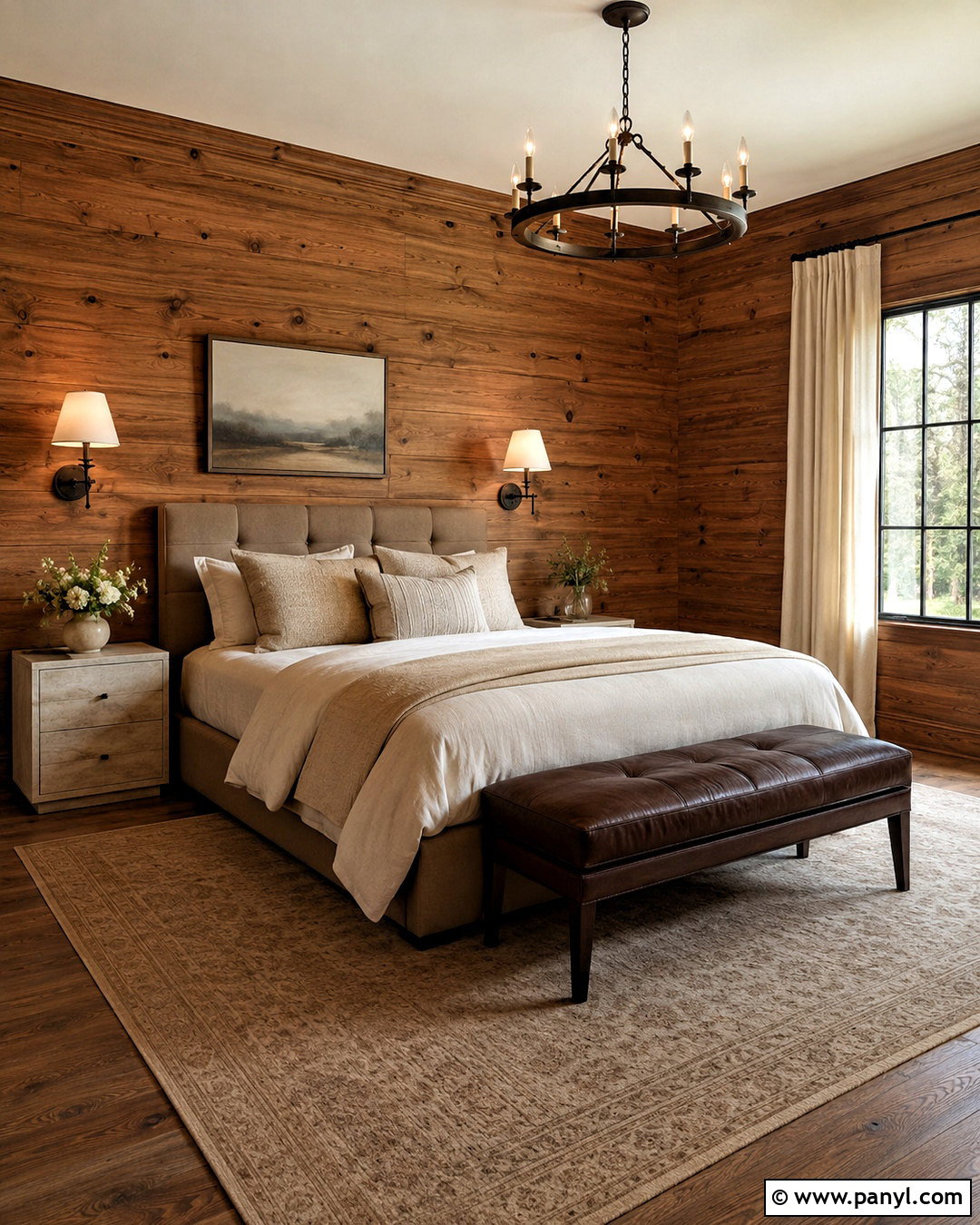
Taupe and aged bronze bring subtle elegance to knotty pine walls without creating a dramatic color clash. Cover large fabric surfaces with warm taupe, including the sofa, curtains, bed linens, or area rug. Use aged bronze for sconces, cabinet hardware, curtain rods, and furniture details. An ivory ceiling and pale cream lampshades will keep the room luminous. Add a dark brown leather chair or bench for visual weight. Stone-topped tables can reduce the amount of visible wood while reinforcing the natural palette. Keep patterns low contrast, focusing instead on linen, wool, leather, and woven textures. This coordinated scheme feels calm and polished. It is particularly suitable for an adult bedroom, refined den, or dining room where understated materials matter more than bold color.
21. Knotty Pine Walls With Mushroom And Cream
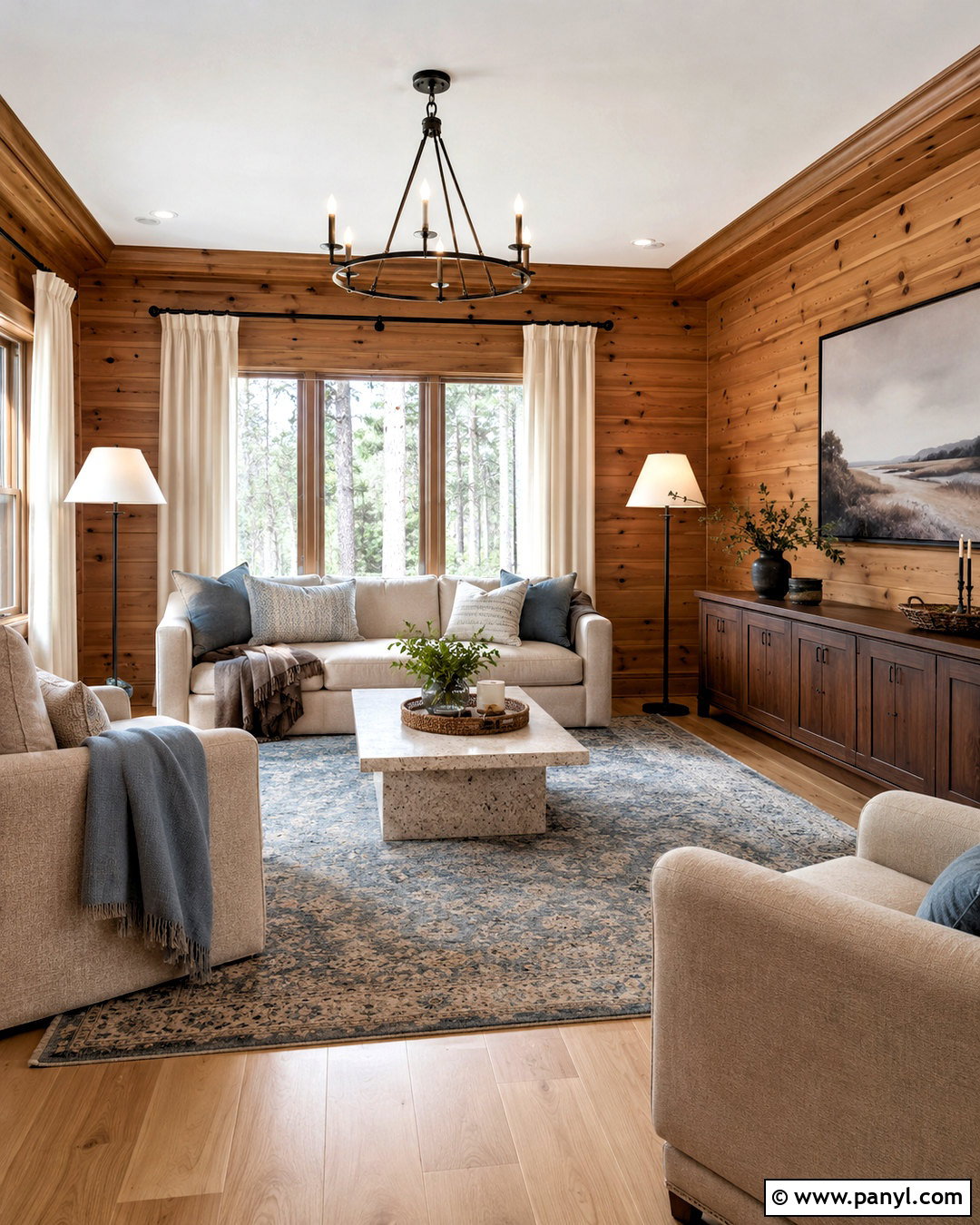
Mushroom is a balanced beige-gray that can soften the intensity of orange or yellow knotty pine walls. Use it on cabinetry, upholstered furniture, curtains, and a broad area rug. Cream should brighten the ceiling, bedding, pillows, and ceramic decor. Select dark bronze or black lighting to provide stronger outlines among the gentle neutrals. A pale limestone coffee table or fireplace surround adds another light surface without introducing stark white. For furniture, choose painted mushroom finishes or dark walnut rather than more golden pine. Add one restrained accent color, such as dusty blue or soft olive, through a throw and a pair of cushions. The resulting room is cohesive and restful, with enough tonal variation to keep the neutral palette from looking flat or unfinished.
22. Knotty Pine Walls With Light Gray And Navy
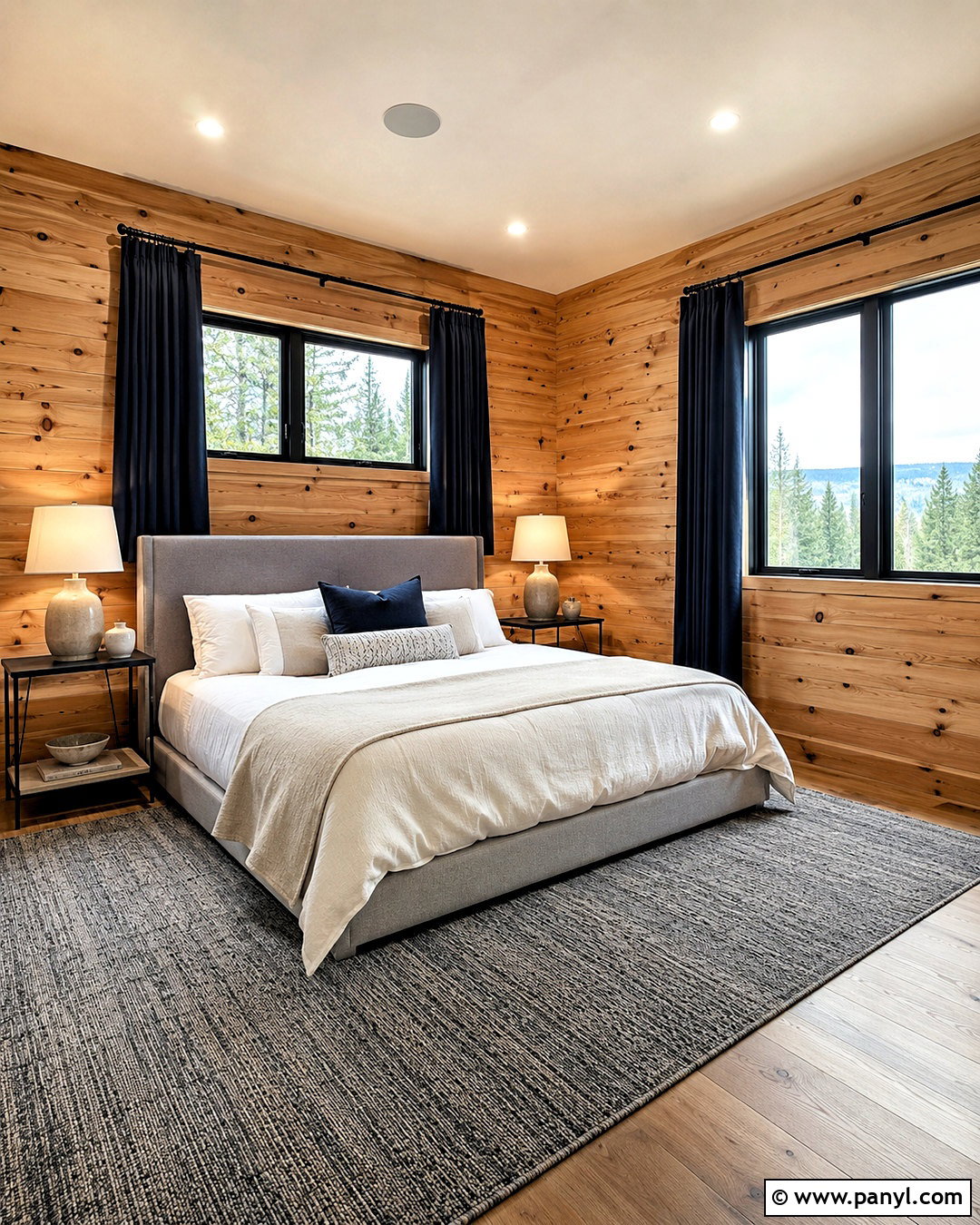
Light gray cools the warmth of knotty pine walls, while navy gives the finished room depth. Start with a large light gray rug, sectional, or upholstered bed. Use navy on curtains, a painted cabinet, dining chairs, or a substantial accent chair. Keep the ceiling warm white rather than icy white, creating a smoother transition to the wood. Black metal fixtures and brushed nickel hardware can both work, although one finish should remain dominant. Add ivory pillows and pale gray ceramics to break up the darker blue. Furniture with clean, straightforward lines helps modernize the paneling. This palette is useful in rooms where knotty pine covers every wall because gray creates visual rest and navy provides structure without introducing another warm wood tone.
23. Knotty Pine Walls With Blue Gray And Cognac
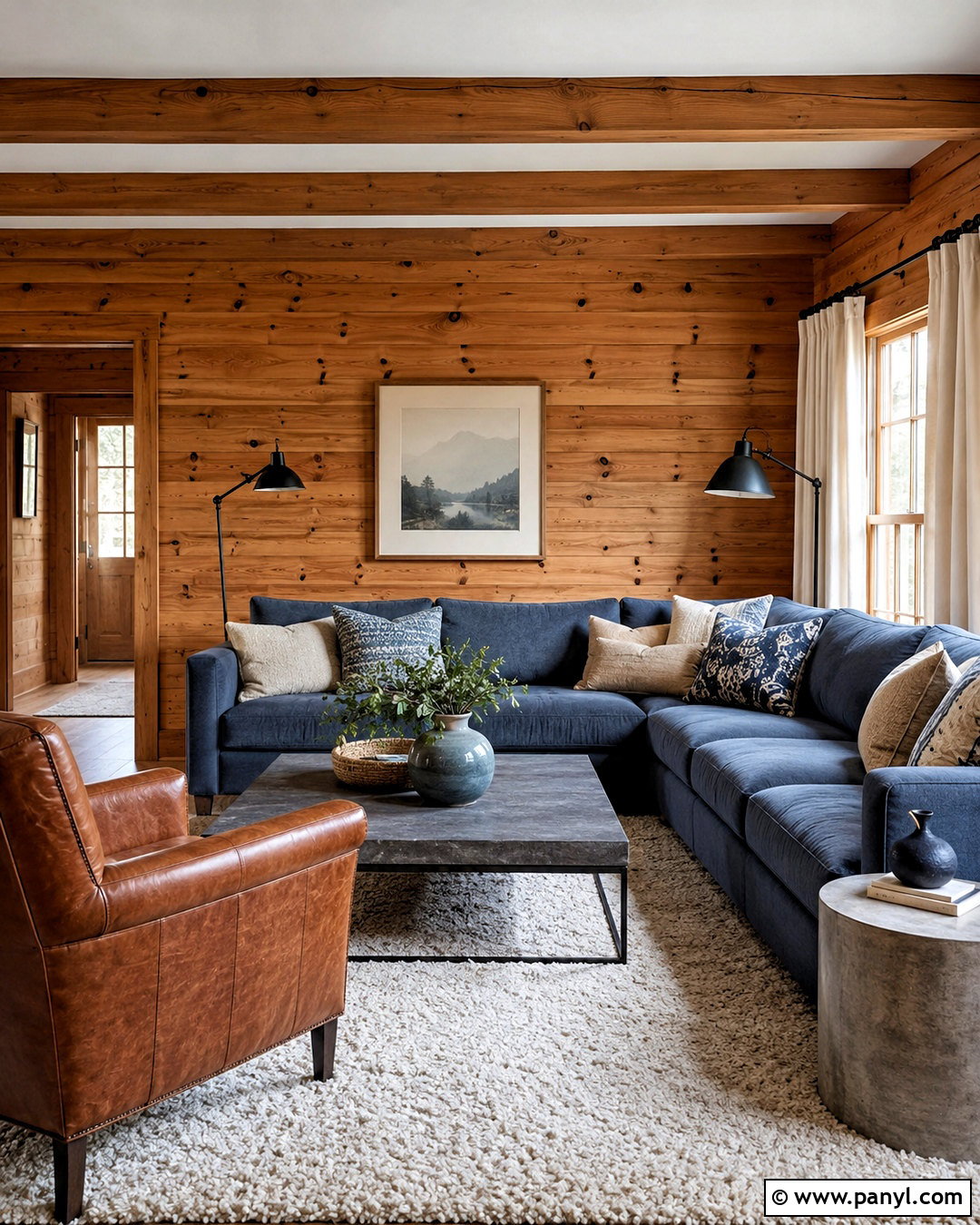
Blue-gray upholstery and cognac leather form a comfortable, balanced partnership with knotty pine walls. Let blue-gray cover the largest piece, such as a sectional, bed, or bank of curtains. Introduce cognac through one leather chair, an ottoman, or dining seat cushions. A cream rug and warm white ceiling create light space between these deeper materials. Use black metal lamps and tables to sharpen the composition. Avoid adding honey-colored furniture because the pine and cognac already provide enough warmth. Pale stone or gray-washed oak can work for occasional tables. Finish with ivory textiles and a few muted blue ceramics. This complete look feels relaxed and collected, making it a strong choice for family rooms, home offices, and casual open-plan cabins.
24. Knotty Pine Walls With Green Gray And Black
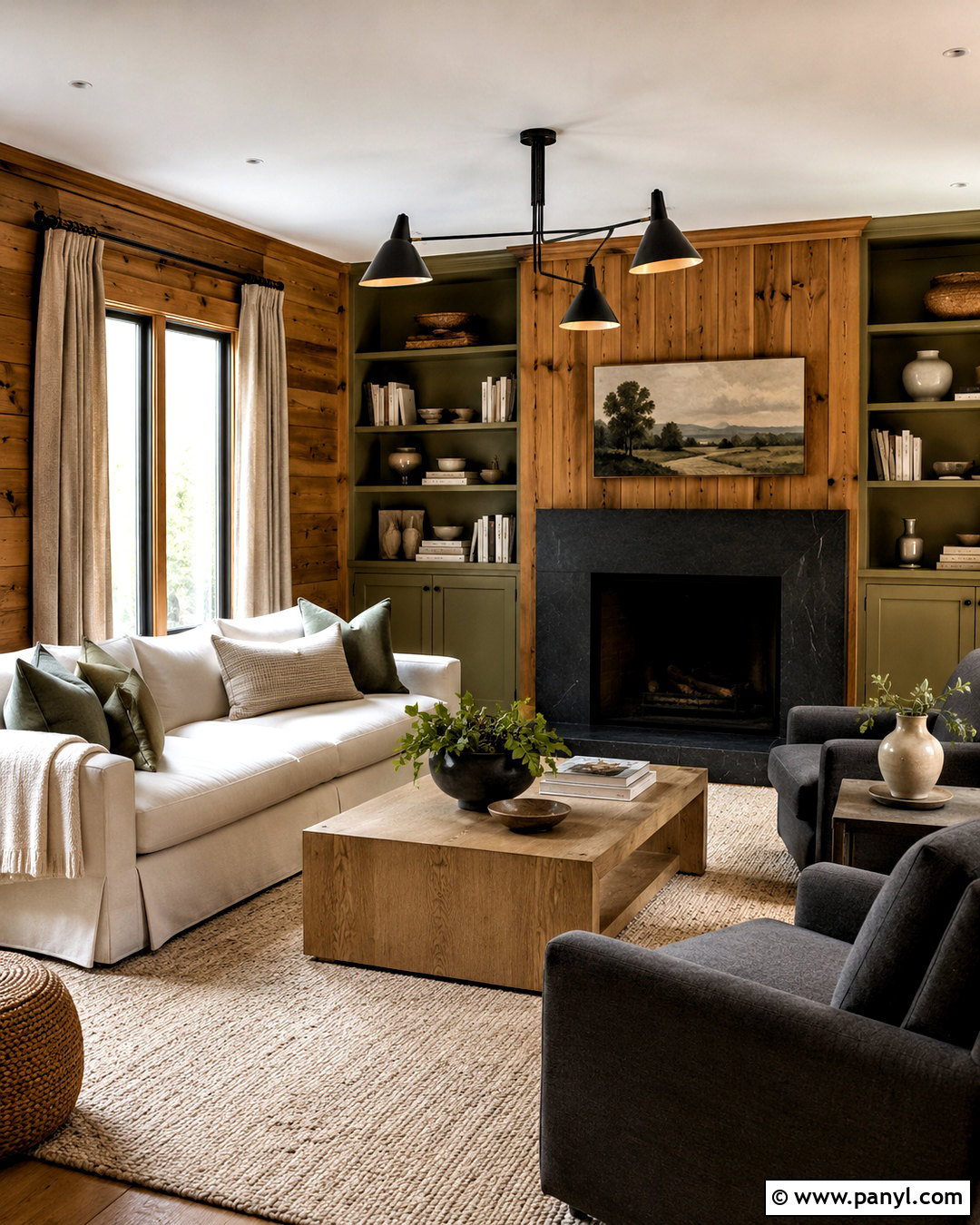
Green-gray has enough coolness to balance knotty pine walls while still appearing natural beside the wood. Paint built-in shelves, lower cabinets, or a fireplace surround in a muted green-gray. Use black for hardware, lighting, frames, and a streamlined coffee table. A cream sofa, oatmeal rug, and ivory ceiling ensure the room remains bright. Choose curtains in light flax linen rather than matching the green-gray exactly. For additional seating, consider charcoal upholstery or dark brown leather. Decorative pieces can include matte cream pottery and simple leafy plants. Keep the palette restrained so the pine grain remains visible and purposeful. This coordinated design brings a modern feeling to an older paneled room without relying on stark white paint or overly trendy decorative elements.
25. Knotty Pine Walls With Eucalyptus Green And Cream
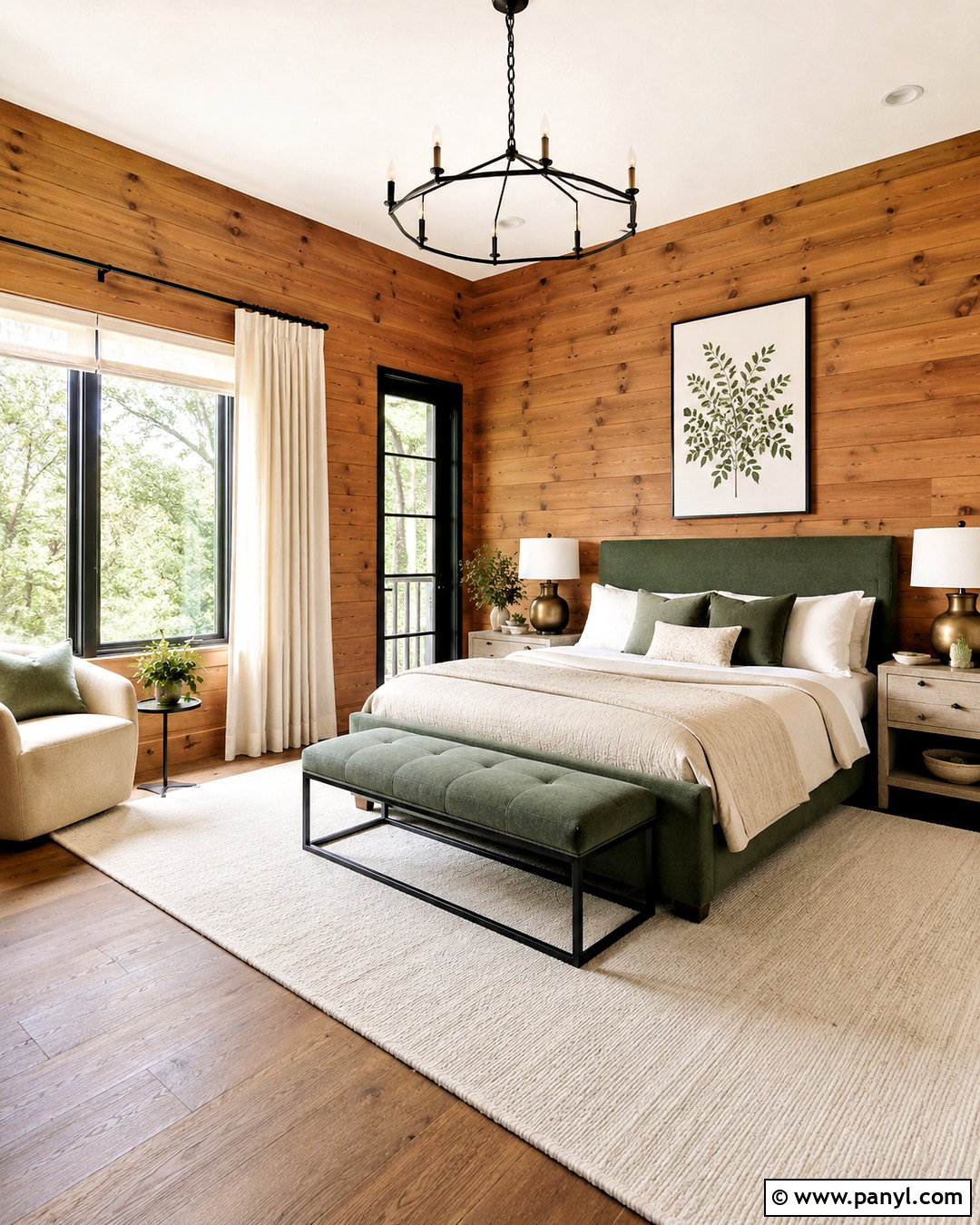
Soft eucalyptus green gives knotty pine walls a fresh, botanical character. Use it on an upholstered sofa, painted vanity, kitchen cabinets, or paneled headboard. Cream should appear on the ceiling, rug, curtains, countertops, and larger decorative objects. Pale natural stone and brushed brass fixtures bring lightness and subtle polish to the space. Select furniture in black metal, cream paint, or dark walnut to avoid creating too many competing wood tones. Textured linen and cotton fabrics keep the palette relaxed. A few darker green leaves can reinforce the nature-inspired direction, but the room does not need extensive plant decoration. The completed look feels airy and restorative, making it particularly effective in bathrooms, bedrooms, breakfast spaces, and sun-filled sitting rooms.
26. Knotty Pine Walls With Avocado Green And Brown
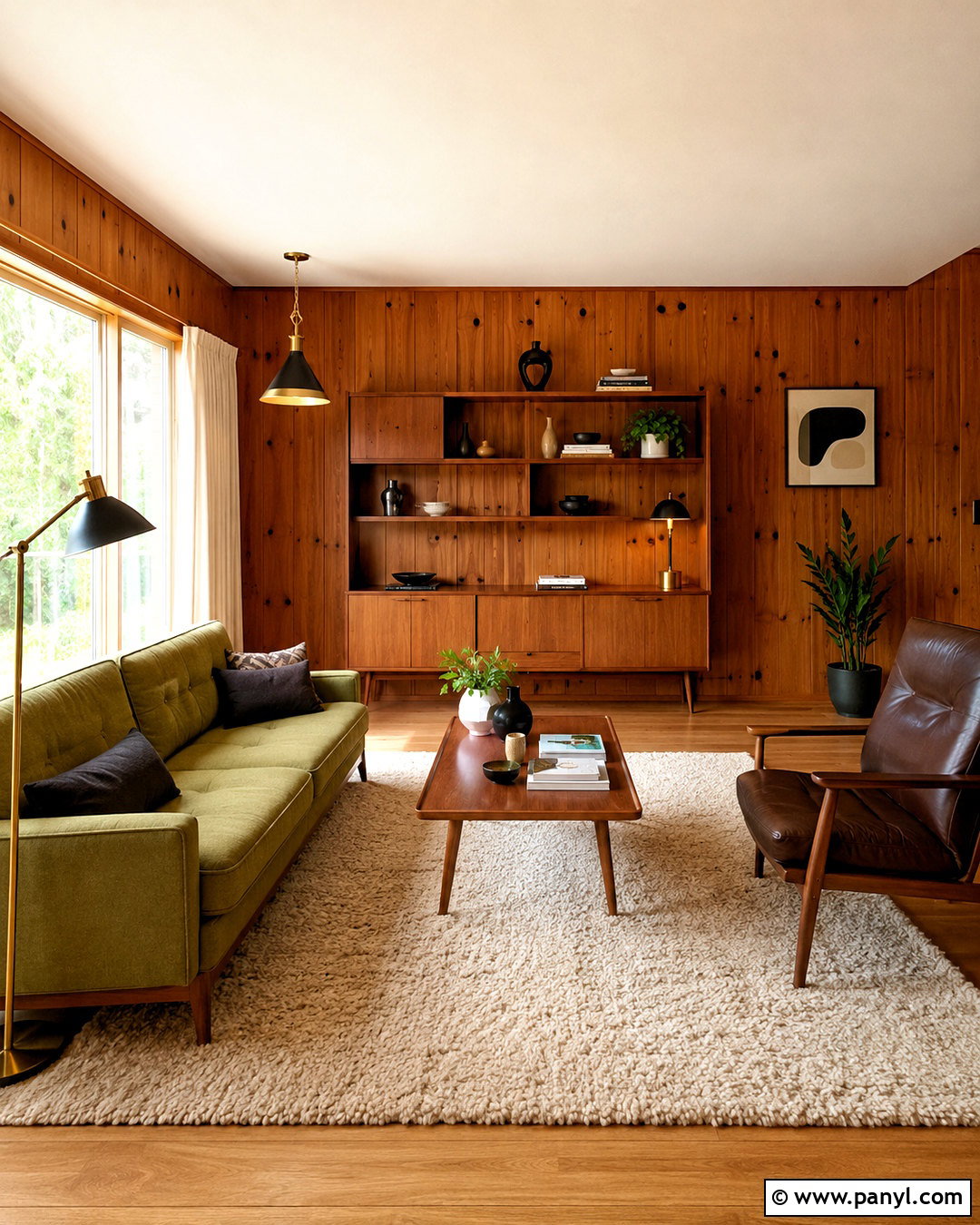
Avocado green gives knotty pine walls an unmistakable midcentury direction, particularly when paired with chocolate brown and cream. Use the green on a low sofa, kitchen cabinetry, dining chairs, or a large patterned rug. Ground the room with a dark brown table, leather chair, or slim walnut storage unit. A cream ceiling and off-white curtains stop the palette from feeling like a dark period room. Add small black details and brushed brass lighting for clean definition. Keep furniture profiles low and simple, with tapered legs and minimal ornament. Orange accessories are unnecessary because the pine already supplies that warmth. This full scheme celebrates the paneling’s vintage character while making the layout and furnishings feel deliberate, functional, and suitable for modern life.
27. Knotty Pine Walls With Turquoise And Walnut
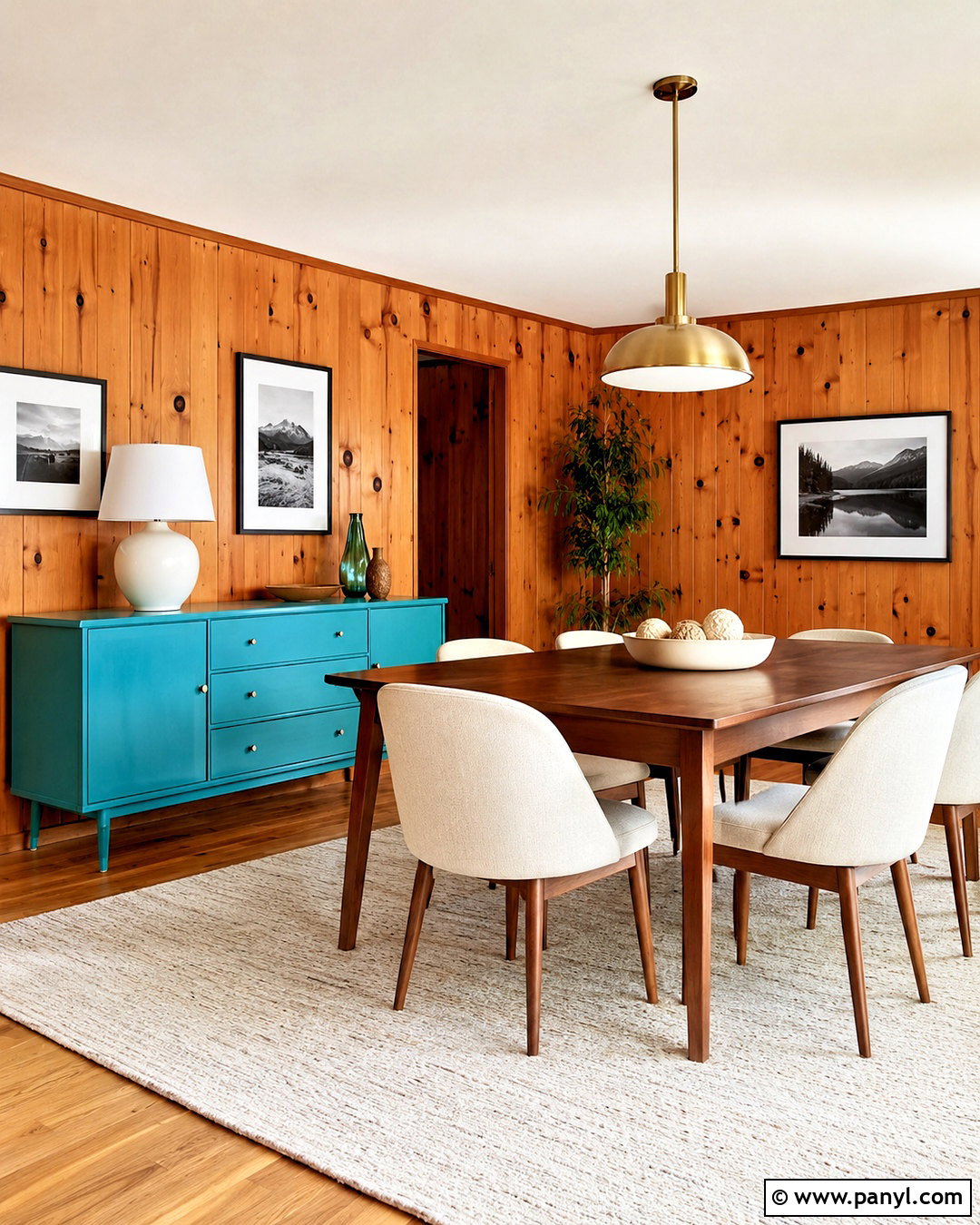
Turquoise creates a vivid focal color against knotty pine walls, while dark walnut furniture provides a sophisticated anchor. Choose one large turquoise feature, such as a sofa, painted island, sideboard, or pair of curtains. Surround it with a cream rug, ivory upholstery, and a warm white ceiling. Use walnut for the dining table, media cabinet, or bed frame, keeping its deep brown tone clearly different from the pine. Brushed brass or chrome lighting can emphasize the retro influence. Add small charcoal accents through frames and hardware. Avoid filling the room with multiple turquoise patterns. Solid blocks of color look cleaner beside busy knots and grain. The finished space feels upbeat and nostalgic, yet controlled enough for a contemporary home.
28. Knotty Pine Walls With Country Blue And Cream
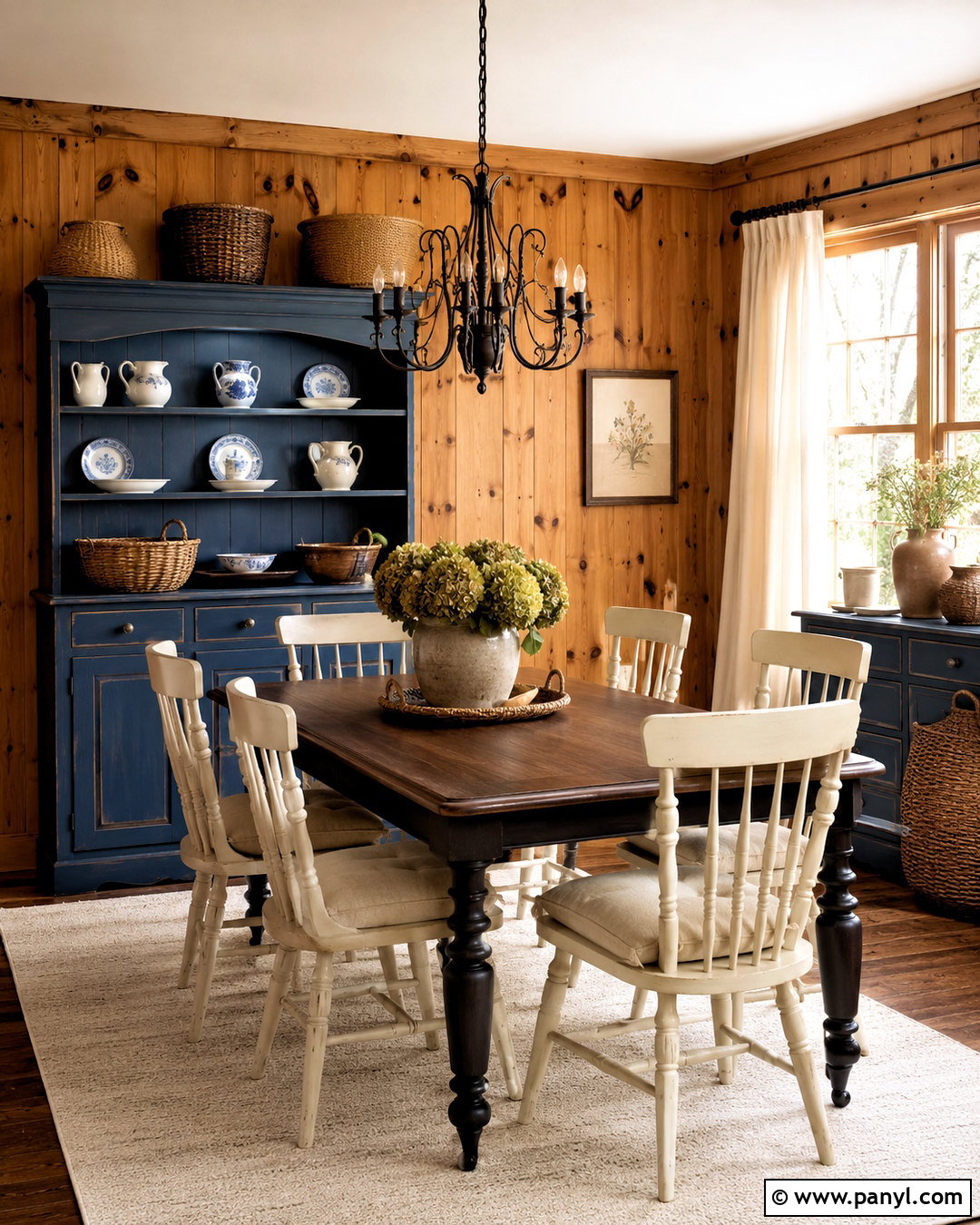
Country blue and cream create an inviting traditional room that fits naturally around knotty pine walls. Use the blue for cabinetry, a sofa, upholstered dining chairs, or simple cotton curtains. Bring cream into the ceiling, rug, bedding, and painted furniture to brighten the wood-paneled space. A dark brown farmhouse table or leather chair can add grounding contrast. Choose aged pewter, black iron, or antique brass hardware, but limit the room to one primary metal finish. Small checked or striped patterns can work on cushions, provided the rest of the textiles remain solid. Finish with stoneware and woven baskets in natural beige. This complete palette feels familiar and comfortable without requiring decorative signs, novelty cabin objects, or excessive country-themed accessories.
29. Knotty Pine Walls With Farmhouse White And Denim Blue
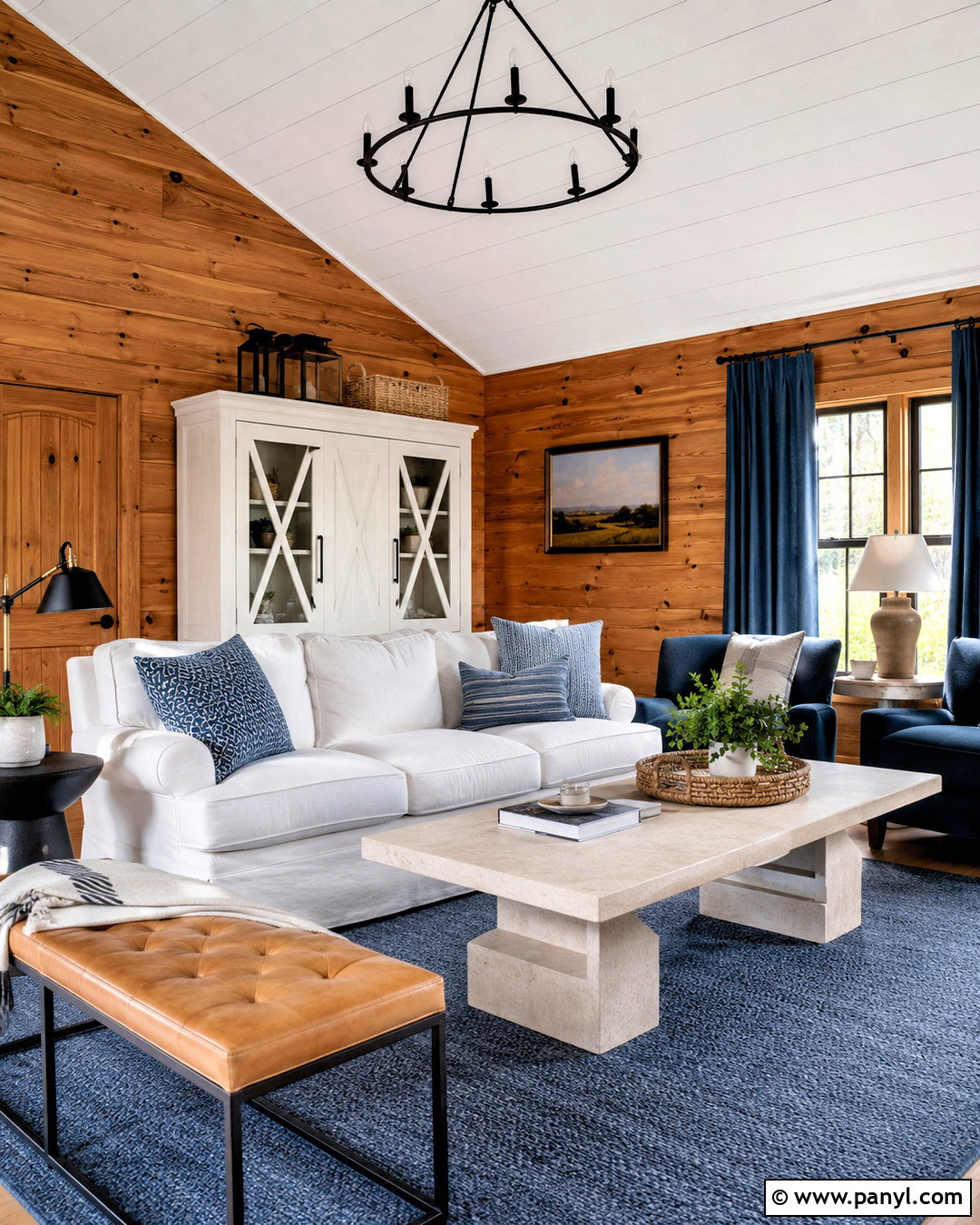
Farmhouse white creates a bright foundation, while denim blue adds casual color beside knotty pine walls. Use soft white on the ceiling, trim, doors, slipcovered seating, and painted storage pieces. Introduce denim blue through a sofa, washable rug, curtains, or layered bedding. Black iron lighting and dark hardware provide practical contrast. Choose a pale stone coffee table or white-painted dining table rather than another golden wood surface. Natural linen, ticking stripes, and simple woven textures can reinforce the relaxed appearance without turning the space into a theme. A tan leather bench or chair adds one deeper warm note. The finished design is light, durable, and family-friendly, making it especially effective in living rooms, mudrooms, bedrooms, and casual dining spaces.
30. Knotty Pine Walls With Coastal Blue And Crisp White
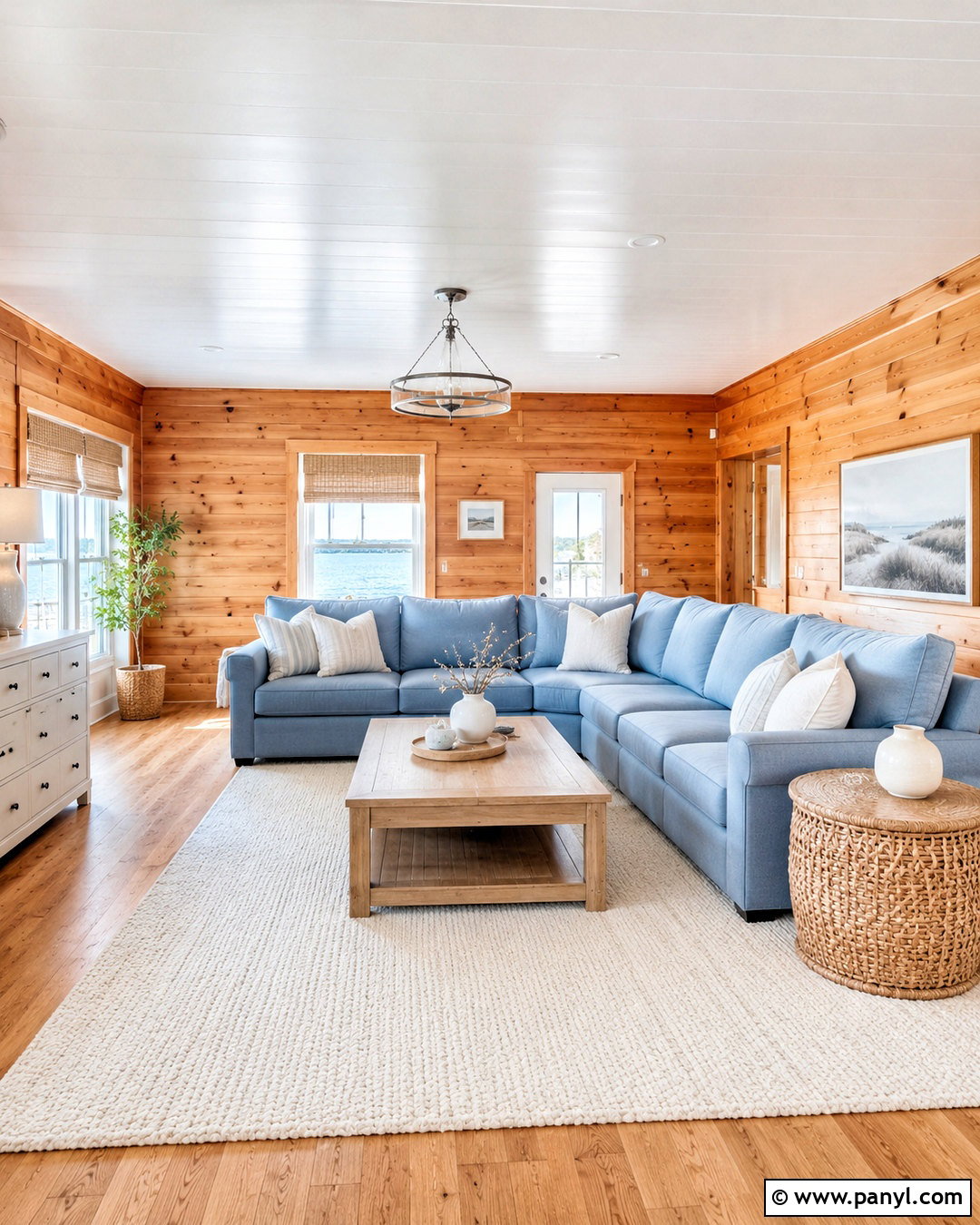
A coastal blue and crisp white palette can make knotty pine walls feel brighter and more relaxed. Choose a medium muted blue for a sectional, painted cabinets, or floor-length curtains. Repeat clean white on the ceiling, trim, countertops, lamps, and a large washable rug. Add light beige through woven shades and natural fiber accessories to soften the contrast. Brushed nickel or polished chrome fixtures suit the cooler colors and keep the room looking fresh. Limit additional wood to one or two pale pieces, such as a light oak coffee table. Avoid obvious nautical objects; color and texture are enough to communicate the breezy direction. This complete scheme works particularly well in lake cabins, coastal cottages, and sunny rooms with broad windows.
31. Knotty Pine Walls With Scandinavian White And Pale Blue
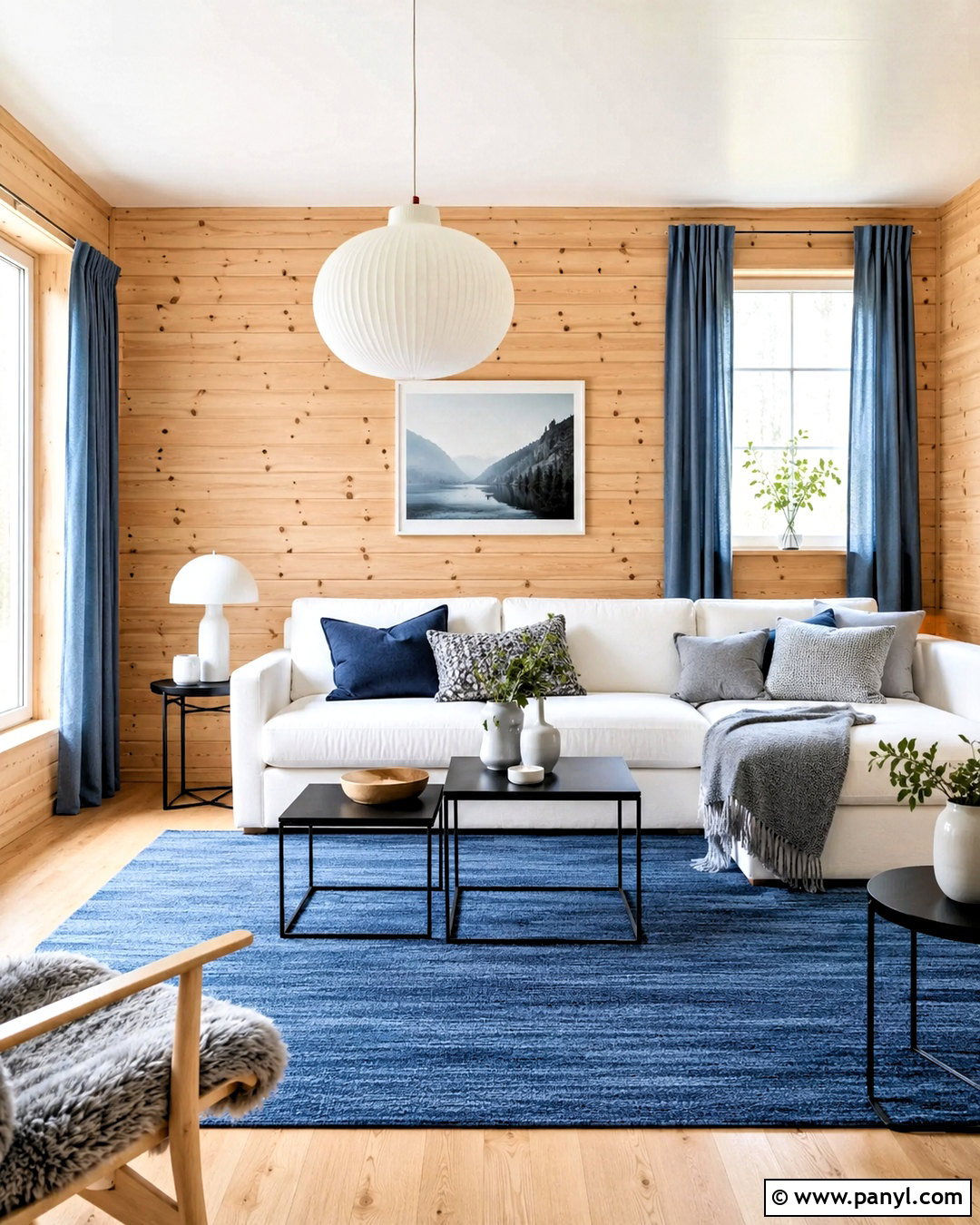
Scandinavian white, pale blue, and simple natural textures can lighten an entire room of knotty pine walls. Cover the ceiling, doors, and major upholstery in a soft clean white. Use pale blue for curtains, a flat-woven rug, painted storage, or a streamlined lounge chair. Choose furniture with light shapes and visible floor space, using white paint, black metal, or very pale oak sparingly. Add gray wool, cream linen, and simple ceramic lighting for texture. Black accents should remain thin and graphic rather than heavy. Keep surfaces mostly clear so the knots do not compete with clutter. The completed room feels functional, calm, and bright, showing that warm pine paneling can coexist comfortably with a lighter, more minimal decorating approach.
32. Knotty Pine Walls With Black And Bright White
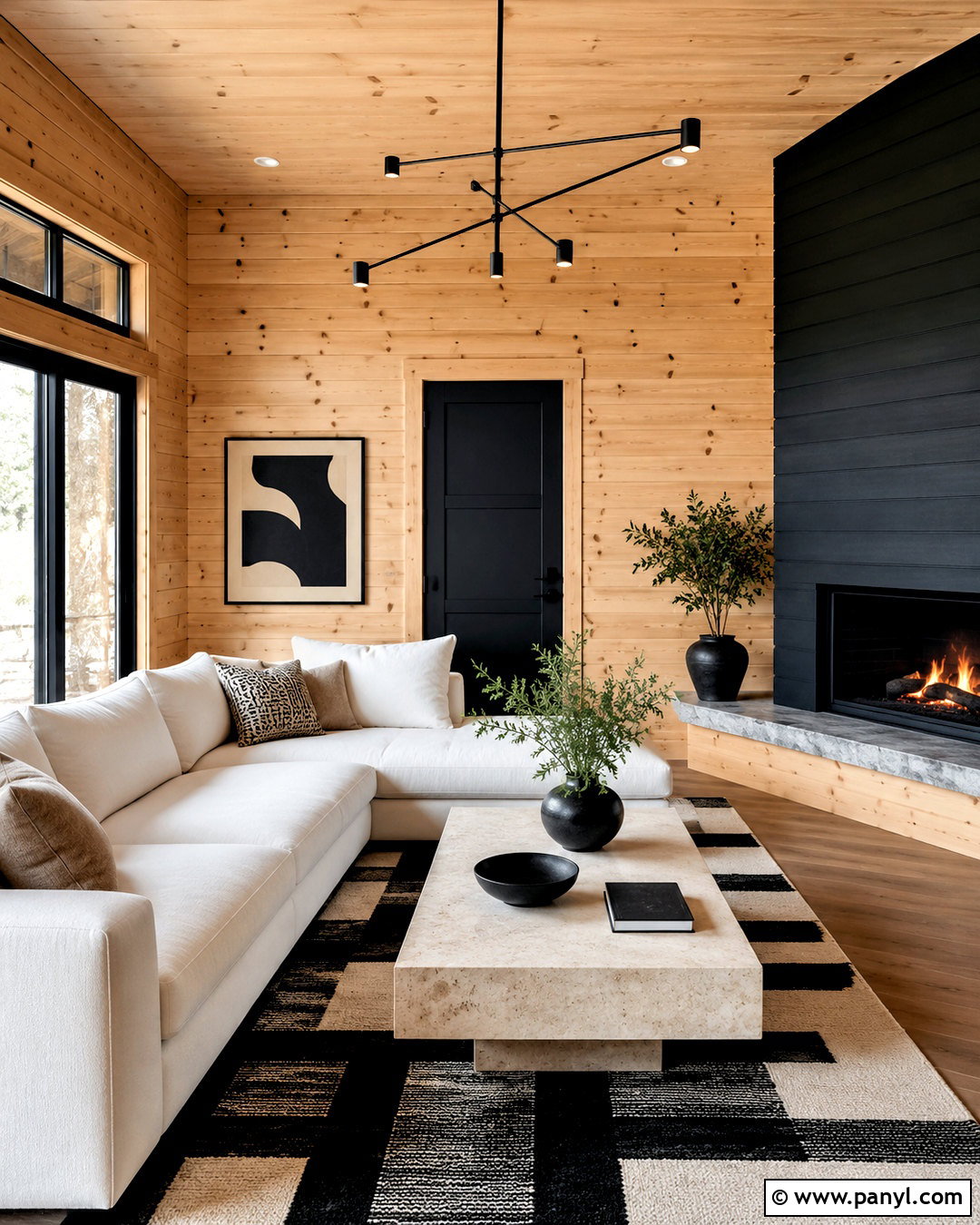
Strong black and bright white can give knotty pine walls a bold contemporary frame. Paint the ceiling and any adjoining drywall bright white, then use black on a fireplace, interior doors, shelving, and metal window details. Select a white sofa or bed with a large black-and-cream rug beneath it. Furniture should feature clean lines and limited ornament, using black steel, pale stone, or clear glass. Add warm beige pillows to soften the contrast and help the pine connect with the white upholstery. A single deep green plant can provide natural color without complicating the scheme. Evenly distributing black around the room is important. When balanced correctly, this palette makes traditional paneling feel graphic, intentional, and visually connected to modern architecture.
33. Knotty Pine Walls With Chocolate Brown And Cream
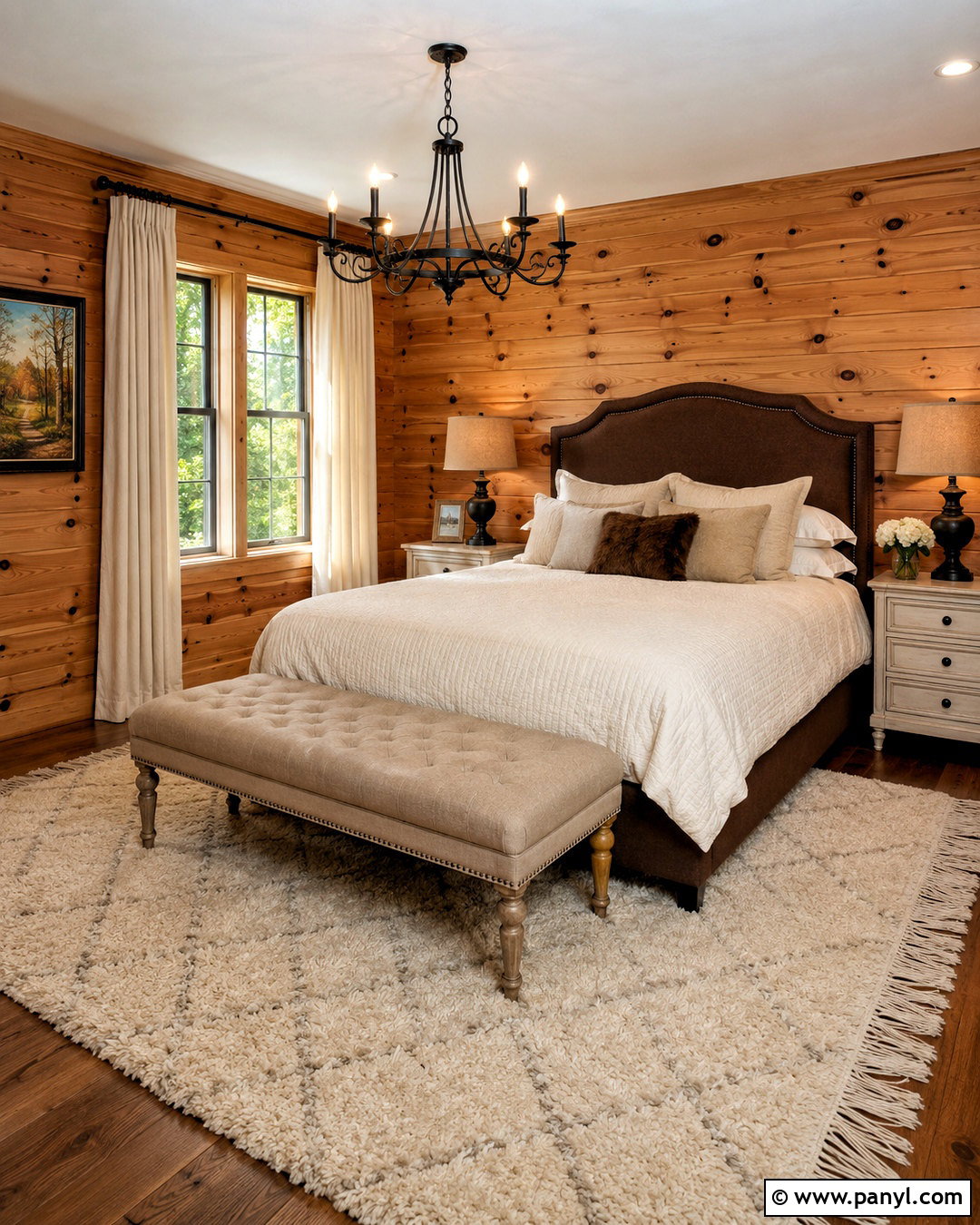
Chocolate brown emphasizes the cozy quality of knotty pine walls, while cream keeps the room from becoming too dark. Choose a deep brown sofa, upholstered bed, or leather sectional as the primary anchor. Add a large cream rug, light curtains, and a creamy white ceiling to reflect available daylight. Use taupe pillows and beige wool throws to create gradual transitions between dark brown and golden wood. Black iron lighting can provide sharper definition, while aged brass adds a softer traditional finish. Avoid medium brown furniture that disappears against the paneling. Instead, select very dark wood or painted cream pieces. This complete palette is particularly successful in large living rooms and bedrooms where the abundance of cream can balance substantial, comfortable furniture.
34. Knotty Pine Walls With Copper And Deep Green
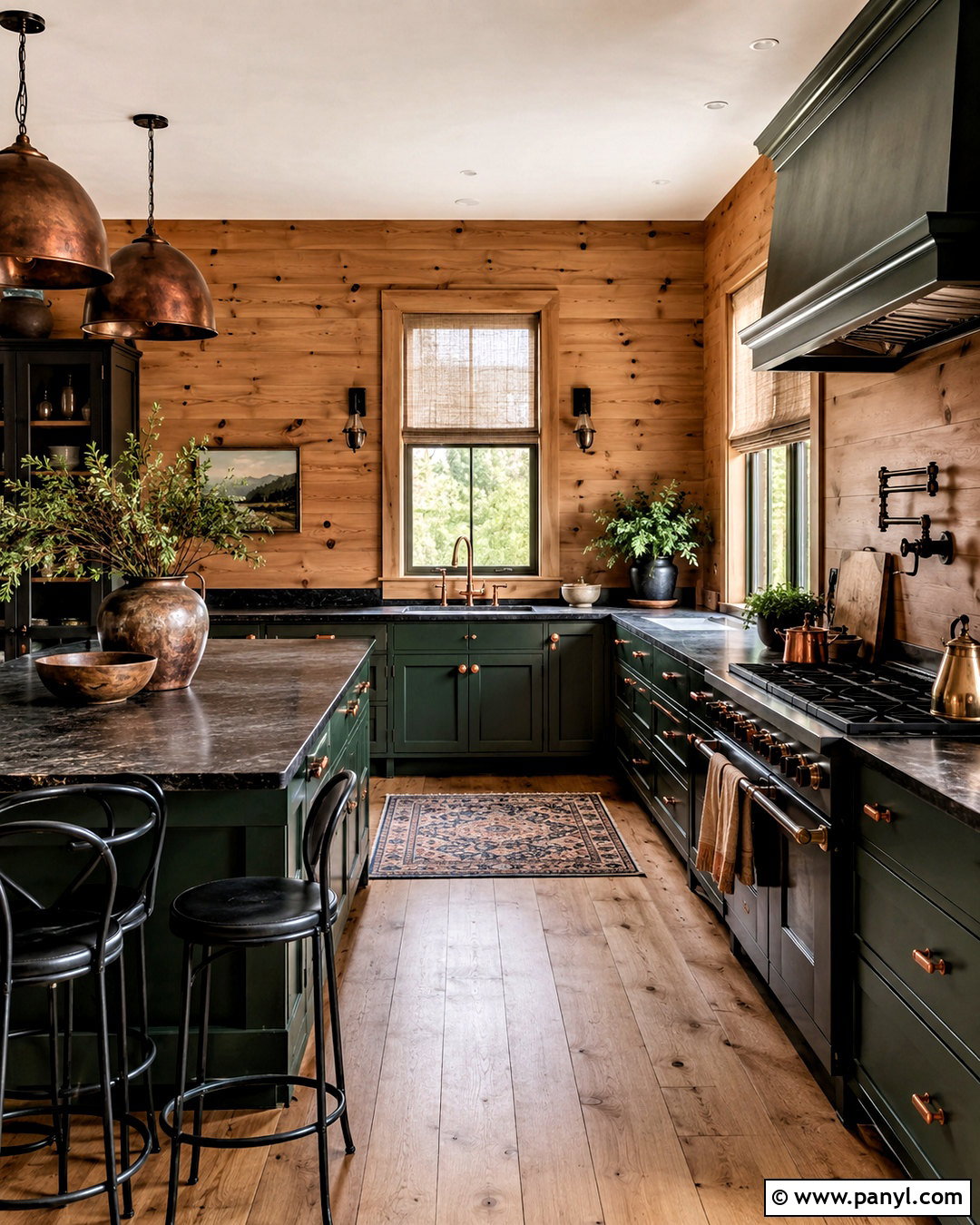
Copper and deep green bring out the natural richness of knotty pine walls without copying their exact color. Use deep green on a sofa, painted built-ins, or cabinetry. Introduce copper through pendant lights, cabinet hardware, a small side table, or decorative bowls rather than covering large surfaces. A cream ceiling, flax curtains, and beige rug create enough visual space around the darker green. Choose black metal table bases and dark stone countertops to ground the combination. Matte and aged copper finishes generally look more comfortable beside rustic wood than highly reflective metal. Add one camel leather chair if the room needs another warm layer. The finished space feels substantial and nature-focused, making it effective for kitchens, libraries, dining areas, and fireside living rooms.
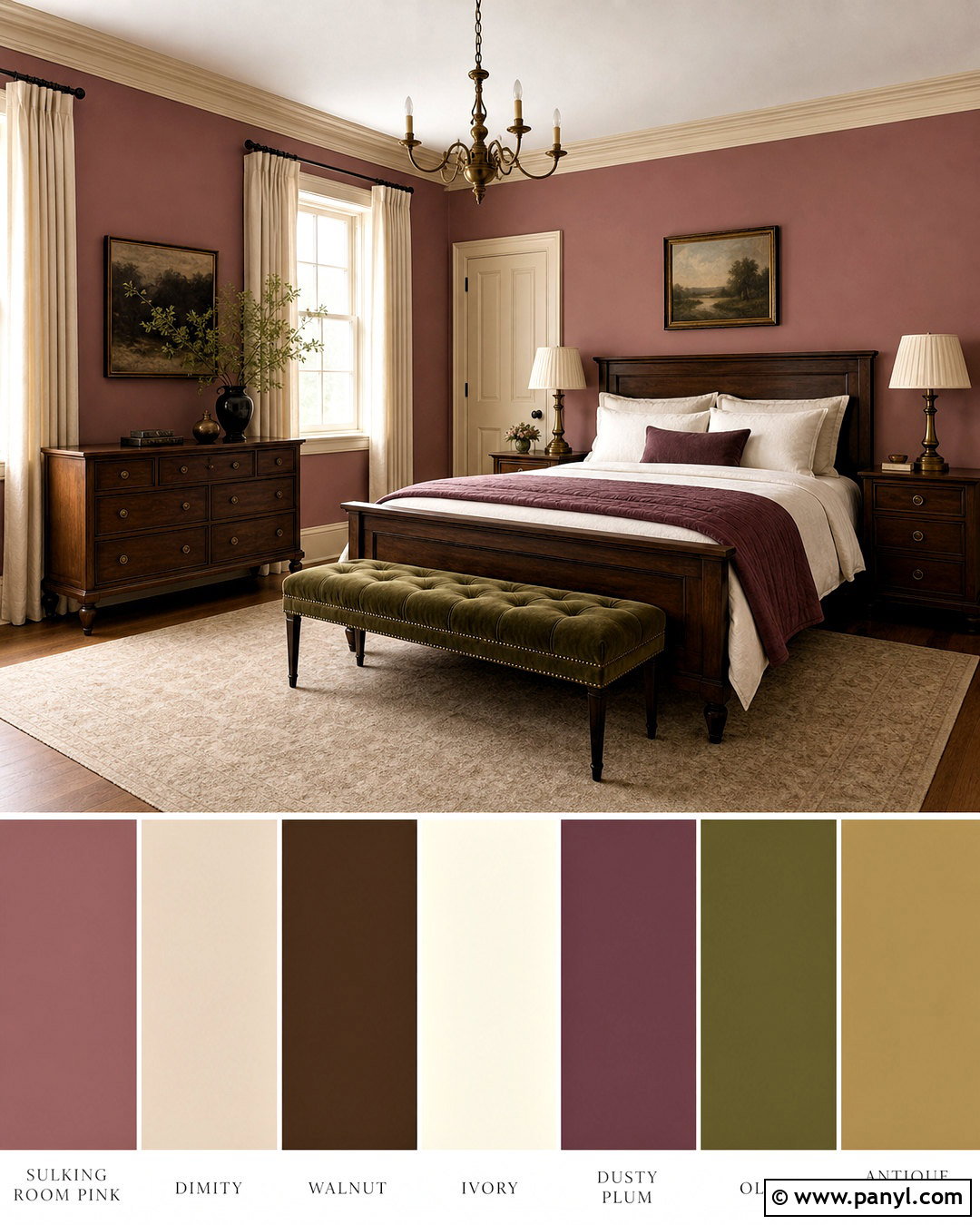
35. Knotty Pine Walls With Muted Plum And Putty
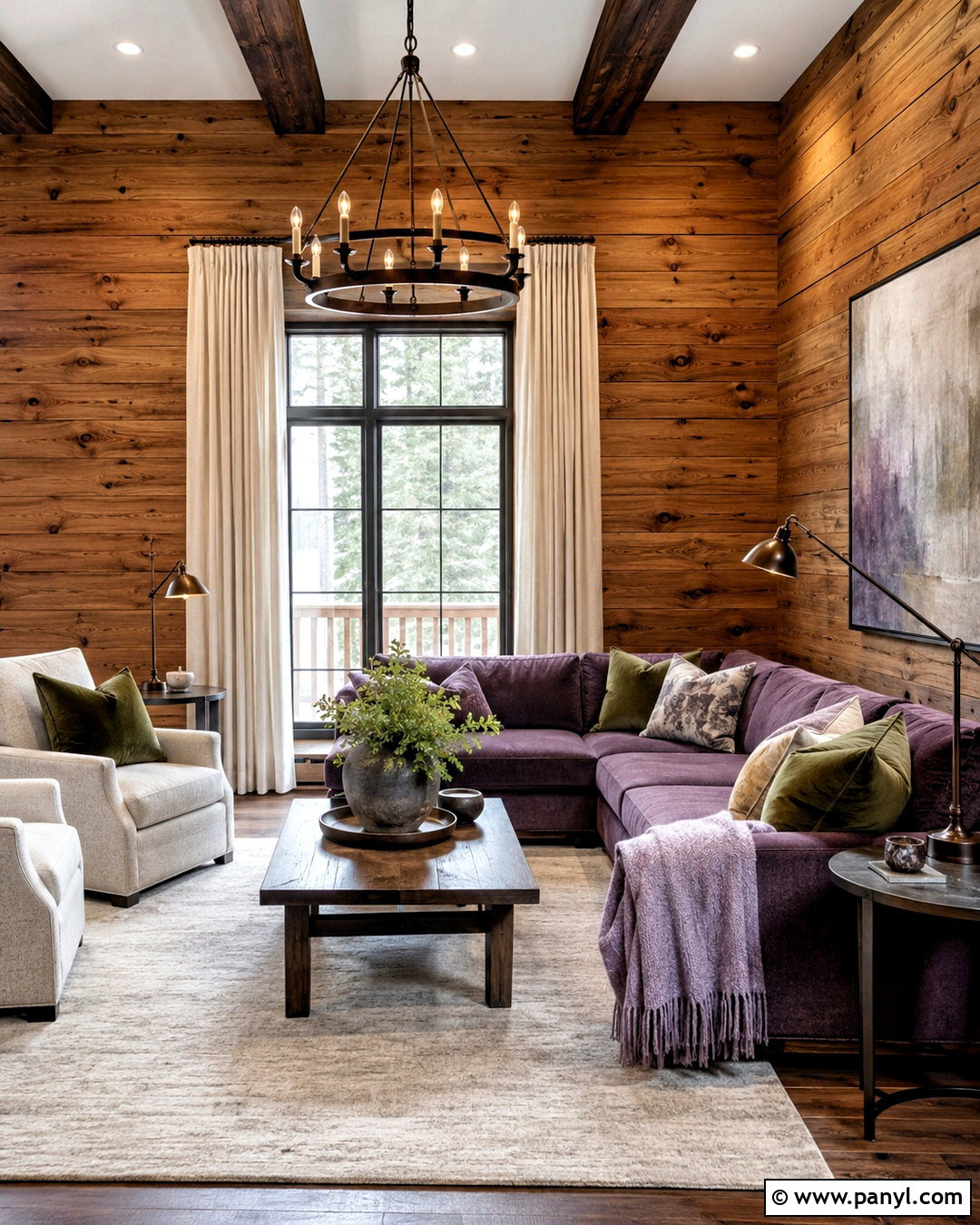
Muted plum creates an unusual but sophisticated contrast with knotty pine walls. Select a gray-based plum rather than a bright purple, using it on a sofa, headboard, curtains, or painted cabinet. Putty beige should form the quieter foundation through the rug, secondary seating, and bedding. Keep the ceiling creamy white and choose dark bronze lighting for warmth. A dark walnut table or dresser anchors the scheme without repeating the pine’s golden color. Add ivory pillows and a few olive accents to connect the plum with more natural hues. Patterns should remain subtle because the wood grain already provides movement. This complete combination works best in bedrooms, formal sitting rooms, and dining spaces where a deeper, less predictable color can create an intimate atmosphere.
36. Knotty Pine Walls With Lavender Gray And Ivory
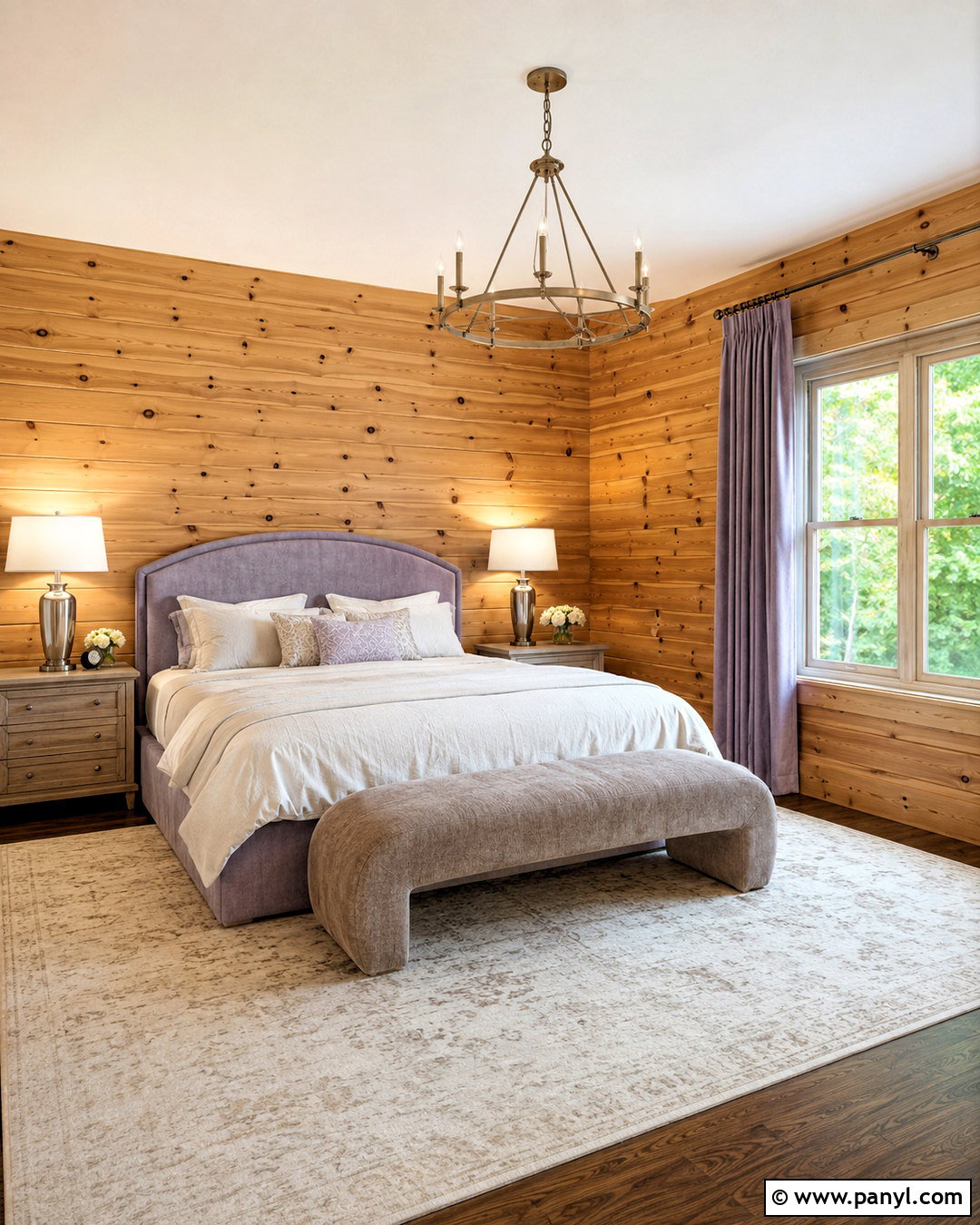
Lavender-gray offers a soft cooling effect that can balance yellow knotty pine walls. Use this muted shade on curtains, an upholstered bed, painted cabinetry, or a comfortable reading chair. Ivory should dominate the rug, ceiling, bedding, and lampshades, keeping the overall room warm and luminous. Introduce mushroom beige through a bench or ottoman to bridge the lavender and pine. Brushed nickel lighting supports the cooler accent color, while small antique brass details can connect with the wood. Avoid clear purple accessories, which may feel disconnected from the natural paneling. Instead, layer gray-violet, ivory, and taupe textiles with simple patterns. The finished palette creates a restful, grown-up bedroom or sitting room that feels gentle without becoming overly sweet or delicate.
37. Knotty Pine Walls With Soft Peach And Blue Gray
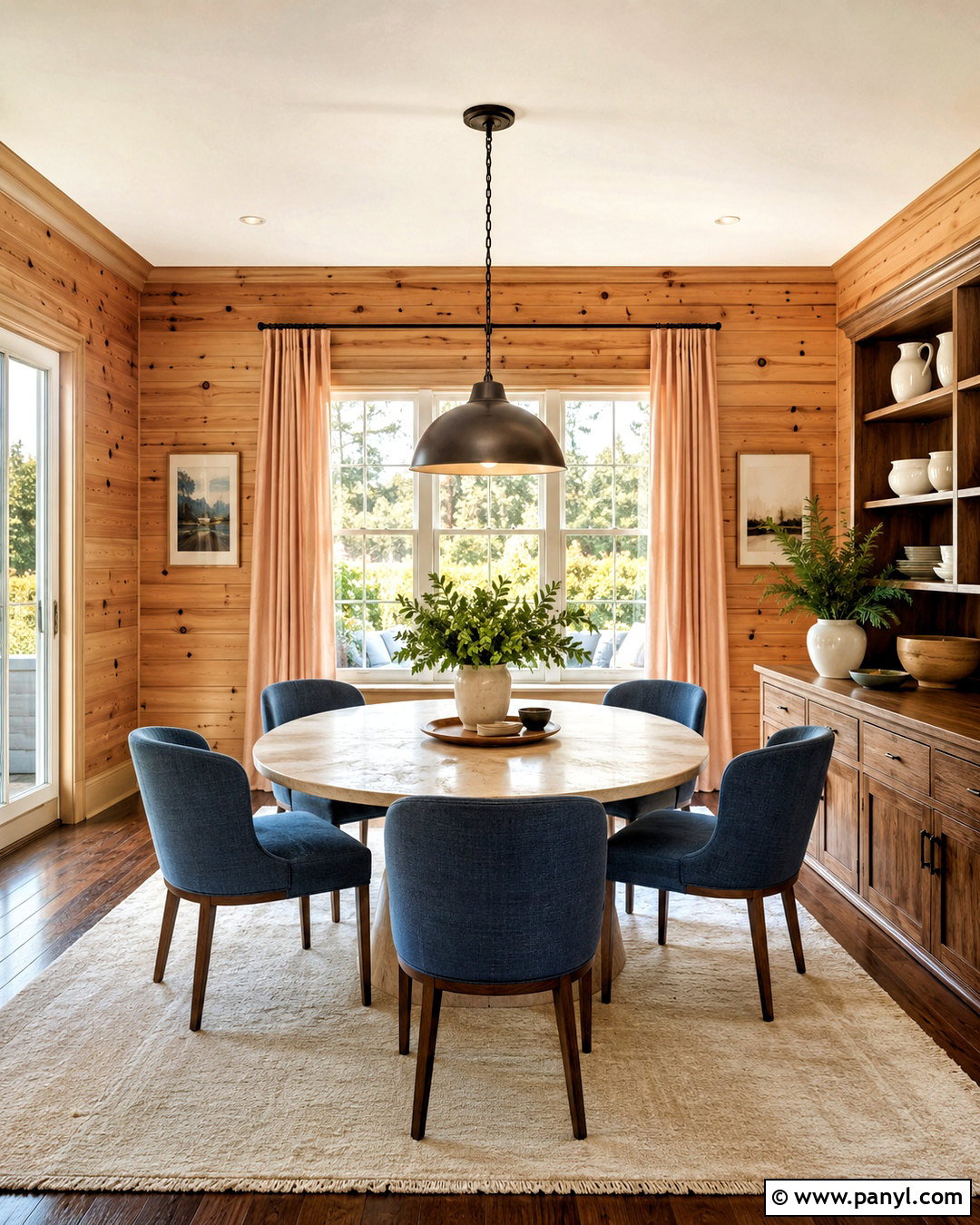
Soft peach echoes some of the warmth in knotty pine walls, while blue-gray supplies the cool balance needed to keep the room fresh. Make blue-gray the larger color through a sofa, rug, kitchen cabinetry, or upholstered bed. Use peach more sparingly on curtains, pillows, a bench, or one painted accent piece. Cream ceilings and ivory textiles will prevent either color from becoming too strong. Add dark bronze lighting and walnut furniture for definition. A pale stone table or countertop introduces a neutral surface between the colorful elements. Keep the peach dusty and understated rather than bright coral. This complete scheme feels warm, welcoming, and slightly playful, making it a practical choice for guest bedrooms, breakfast rooms, and comfortable family spaces.
38. Knotty Pine Walls With Lemon Yellow And White
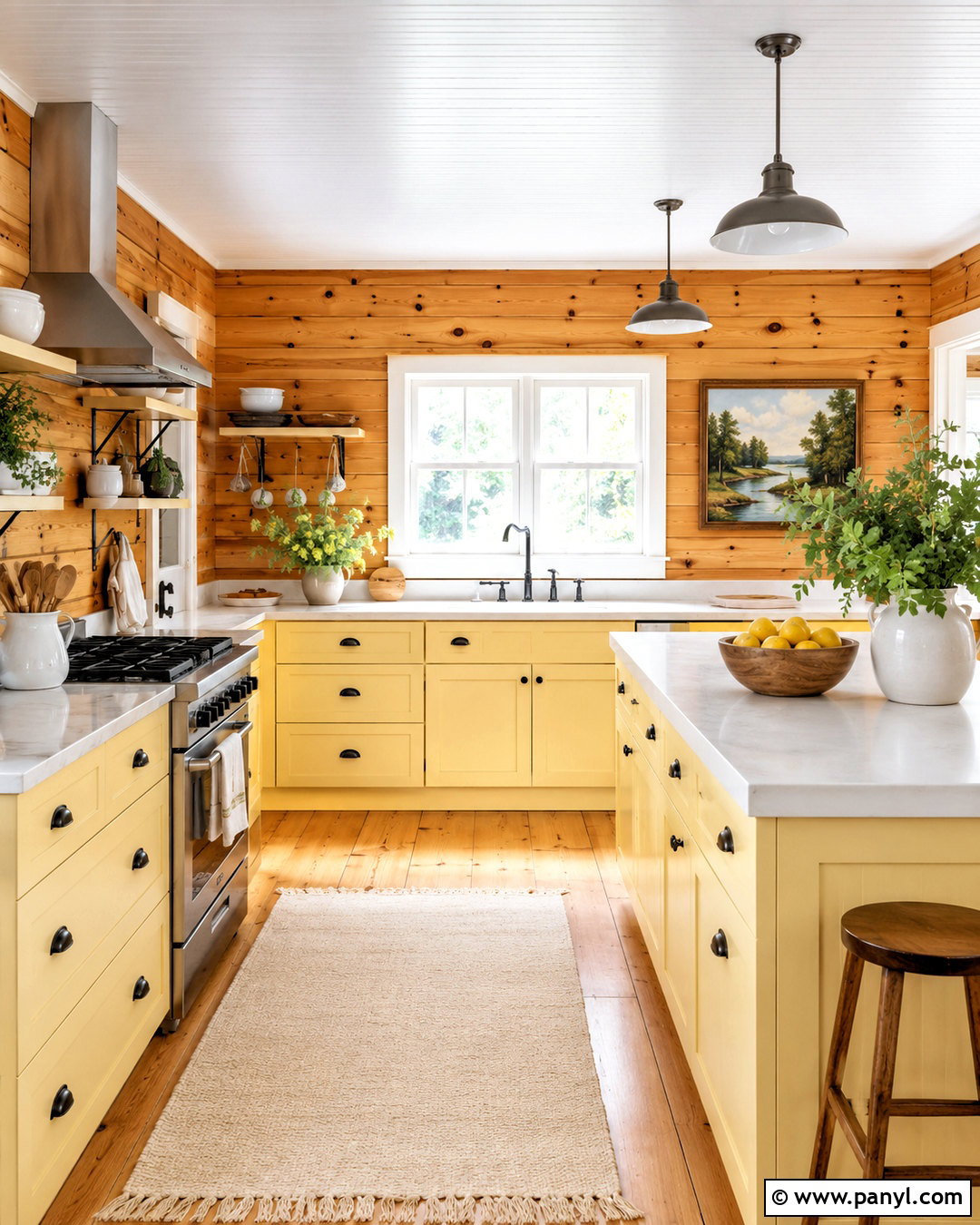
A controlled amount of pale lemon yellow can brighten knotty pine walls, especially when the room includes plenty of white. Start with a white ceiling, large white rug, and cream upholstery. Add lemon through a painted cabinet, kitchen backsplash, curtains, or one patterned chair. Choose a soft yellow with a creamy base instead of a vivid primary shade. Light gray or charcoal accents should appear on hardware, lighting, and small furniture to separate the yellow from the golden pine. Pale stone counters and simple white ceramics keep the space clean. Avoid layering in mustard, orange, or red because the room already contains considerable warmth. The final design feels sunny and cheerful, particularly in kitchens, breakfast nooks, children’s rooms, and small cottages.
39. Knotty Pine Walls With Brick Red And Denim Blue
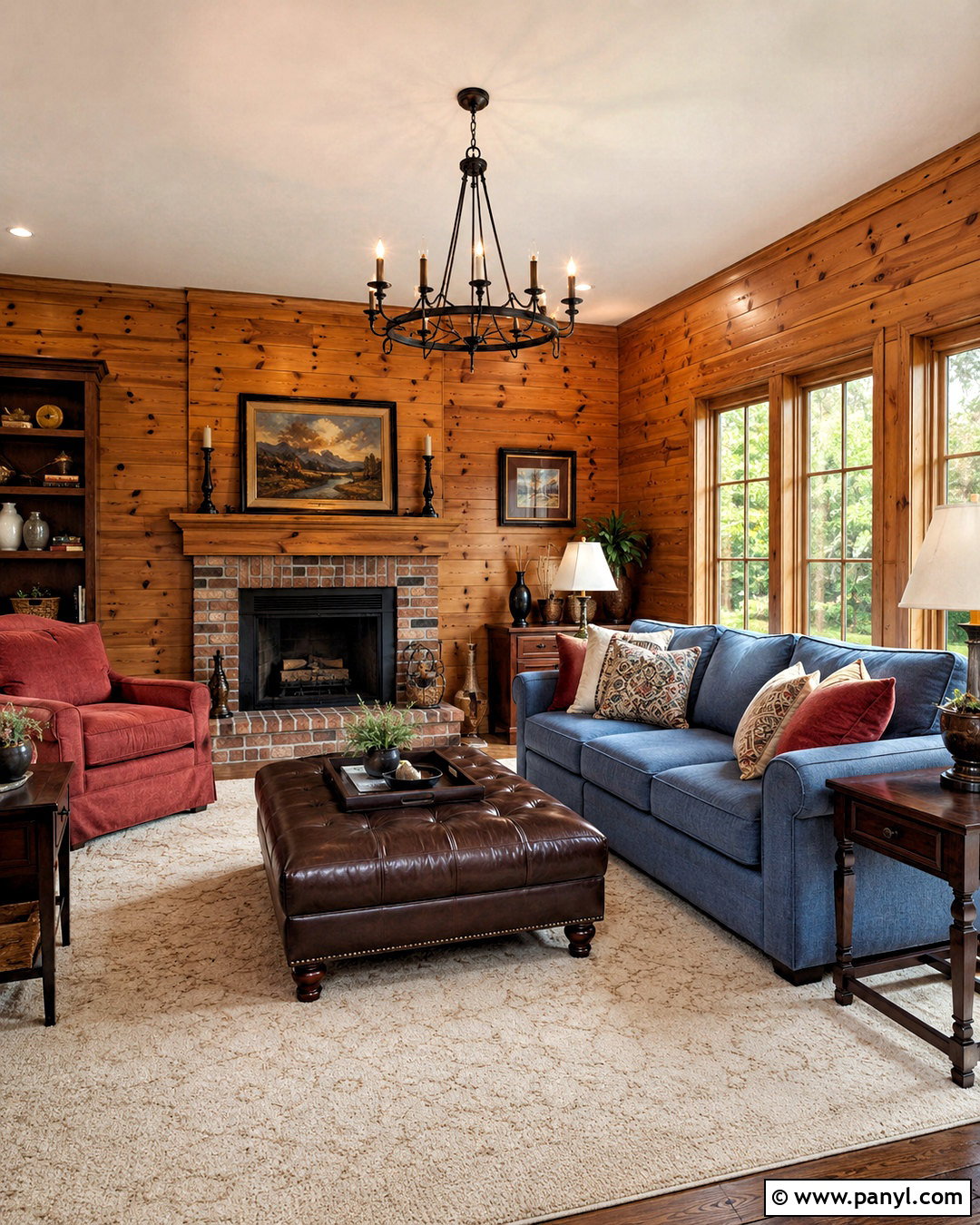
Brick red and denim blue form a balanced, classic palette around knotty pine walls. Use denim blue as the larger cooling color on a sofa, curtains, cabinetry, or area rug. Bring brick red into the room through an upholstered chair, pillows, or a narrow woven pattern. Cream should cover the ceiling and major light textiles so the primary colors do not become overwhelming. Add dark brown leather, black iron lighting, and simple wood furniture with an espresso finish. Keep red accents muted and earthy rather than bright. The completed space can feel traditional and relaxed without relying on themed decorations. This combination works particularly well in family rooms, cabins, and casual dining spaces where durable fabrics and warm, welcoming colors are practical priorities.
40. Knotty Pine Walls With Tan And Dark Brown
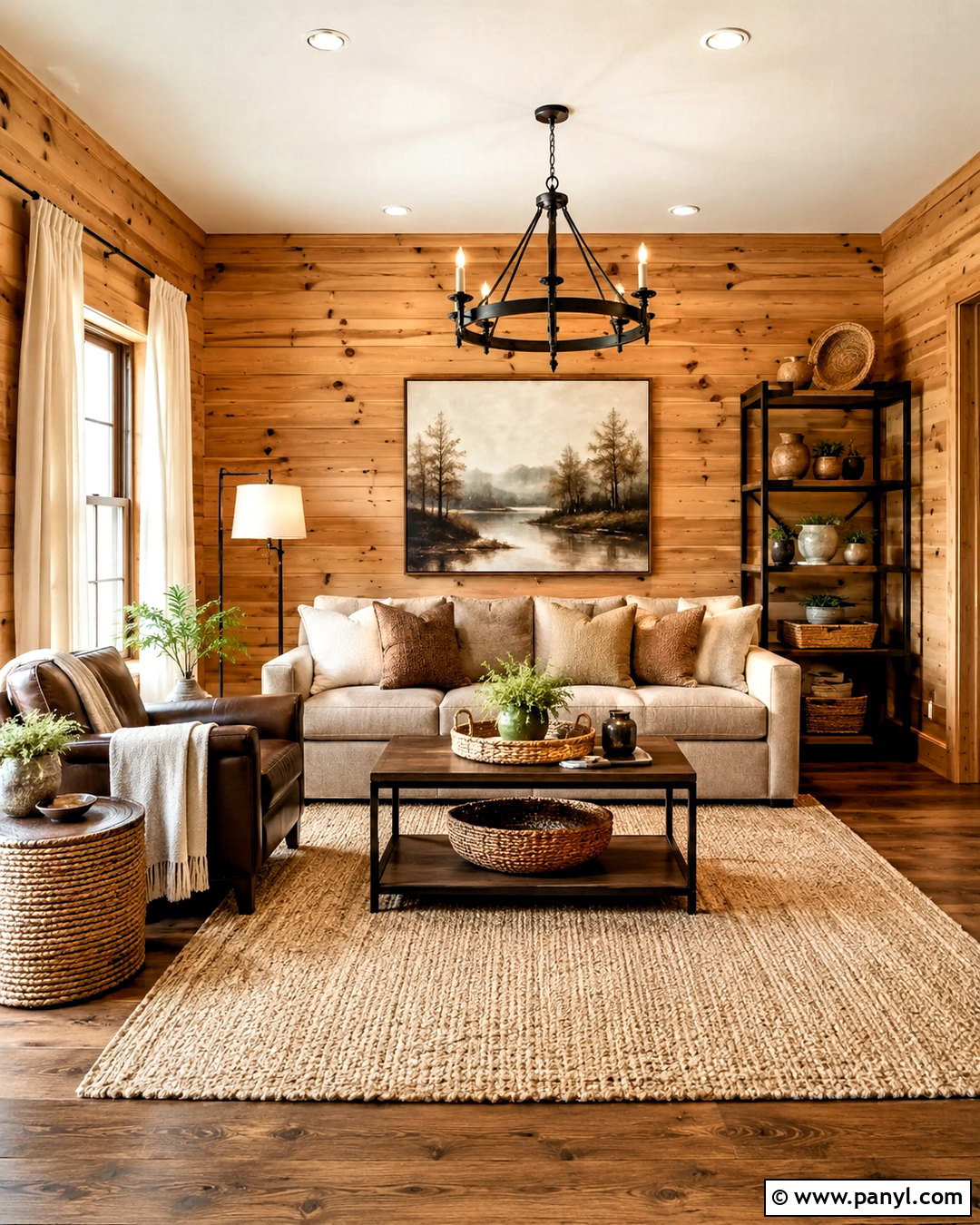
A layered tan and dark brown scheme provides a straightforward way to decorate around knotty pine walls. Choose pale tan for the sofa, curtains, rug, and upholstered dining seats. Use dark brown on a leather chair, coffee table, shelving, and curtain hardware. Paint the ceiling cream to keep the upper part of the room bright. Introduce black through a few slim lighting fixtures or frames for extra definition. Since the palette is mostly neutral, vary the materials with linen, wool, leather, stone, and woven fibers. Avoid adding several medium-toned woods, which can make the entire room look uniformly golden. This complete arrangement feels calm and dependable, allowing the pine knots and grain to remain the room’s strongest decorative feature.
Conclusion:
Successful **40 Knotty Pine Walls Color Schemes** begin with the wood’s actual undertone, the amount of daylight, and the atmosphere you want the room to have. Cream, ivory, and warm white brighten the paneling, while blue and green help balance its golden warmth. Charcoal, navy, espresso, and black create definition for a more updated look. Earthy colors such as olive, terracotta, tan, and taupe support a softer rustic direction. Whatever palette you choose, build it across the entire room through furniture, textiles, lighting, flooring, and finishes. Test colors beside the wood instead of viewing them alone. A coordinated design will make knotty pine feel intentional, comfortable, and full of lasting character. ()

Related Ideas and Inspiration:
Leave a Reply