
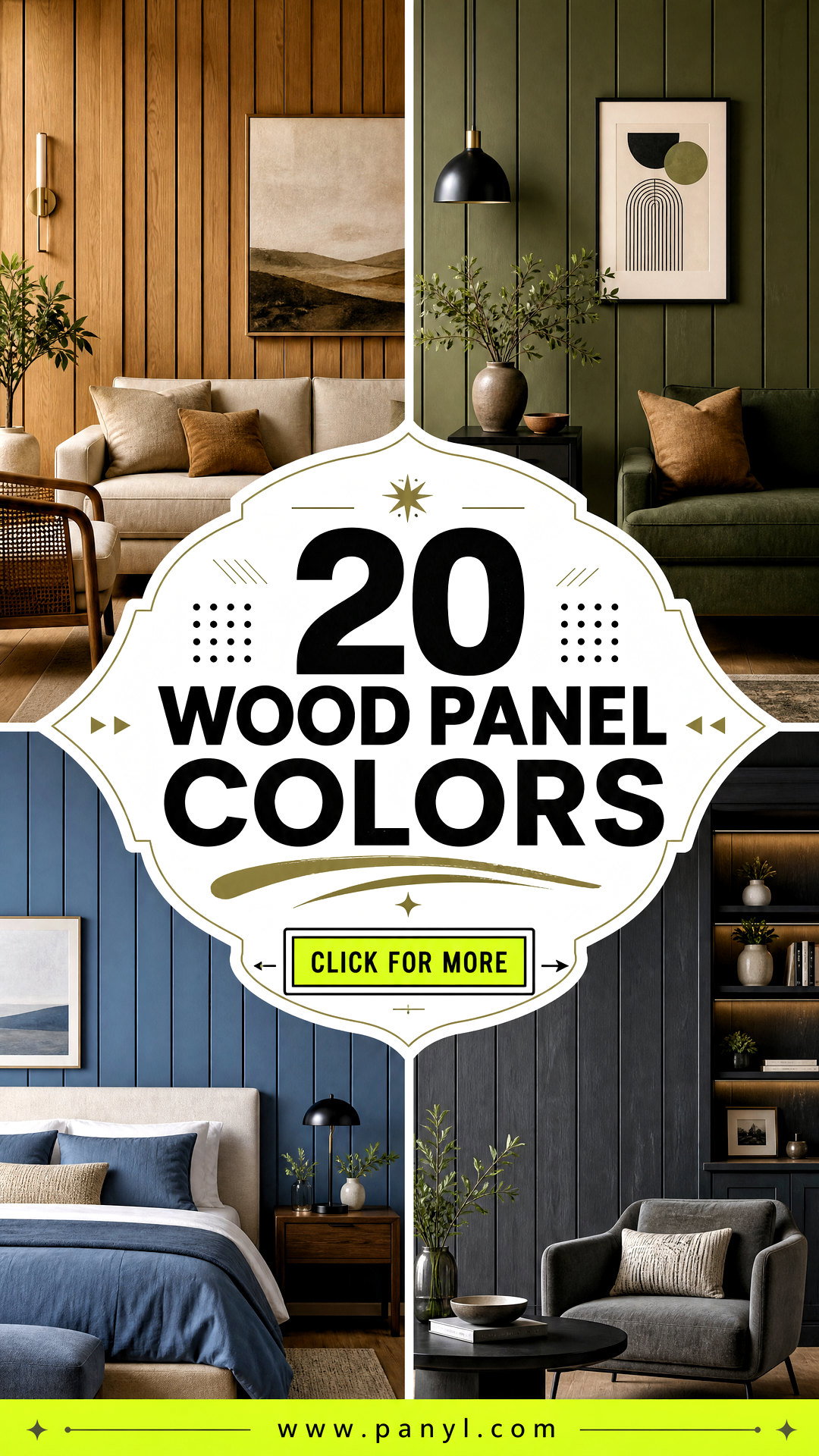
Wood paneling has moved far beyond the dark, glossy walls once associated with older basements. Today, 20 Wood Panel Colors can include pale natural stains, comforting earth tones, soft neutrals, and dramatic painted finishes. The right choice depends on the room’s light, the wood grain, and the atmosphere you want to create. Lighter finishes make vertical panels feel airy, while deeper colors give dining rooms, offices, and bedrooms a grounded character. Natural oak and walnut remain versatile, but painted paneling can highlight molding, slats, shiplap, or board-and-batten details just as effectively. Current applications also favor coordinated floors, layered textures, and carefully selected finishes rather than isolated accent walls. () The complete room schemes below show how to decorate with 20 Wood Panel Colors.
1. Warm White Wood Panels
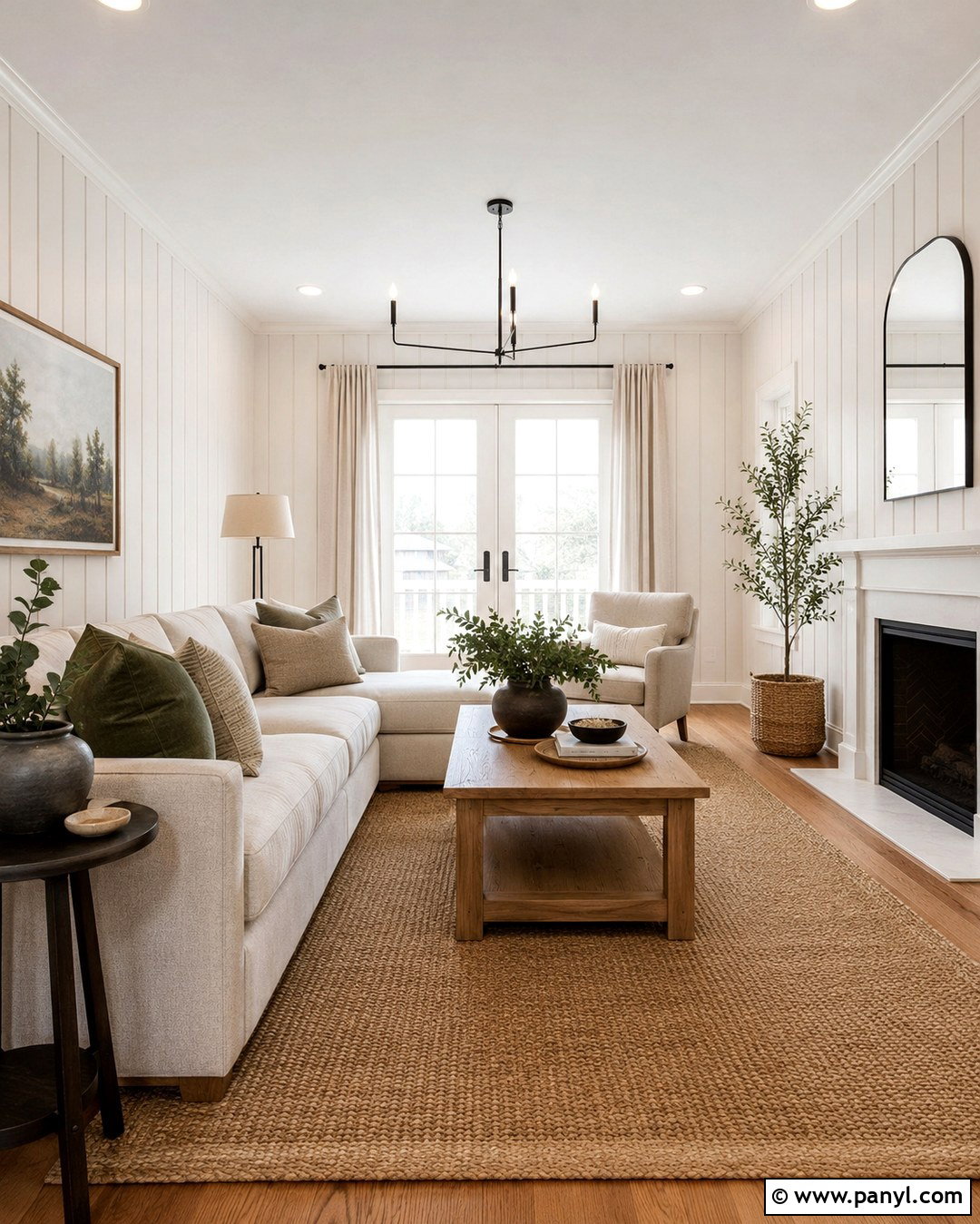
Warm white wood panels create a clean foundation without making a room feel cold or unfinished. Use vertical tongue-and-groove panels across a small living room, then continue the same color onto the baseboards for a seamless effect. Choose a soft white with cream undertones rather than a sharp blue-white. Add a light oatmeal sofa, natural oak coffee table, woven jute rug, and relaxed linen curtains. Small black accents, such as a floor lamp and thin picture frames, provide enough contrast to define the pale palette. Keep the ceiling a slightly brighter white so the paneling remains visible. An eggshell finish softens minor flaws, while satin trim adds subtle dimension. This complete look suits coastal, farmhouse, cottage, and casual transitional homes.
2. Cream Wood Panels
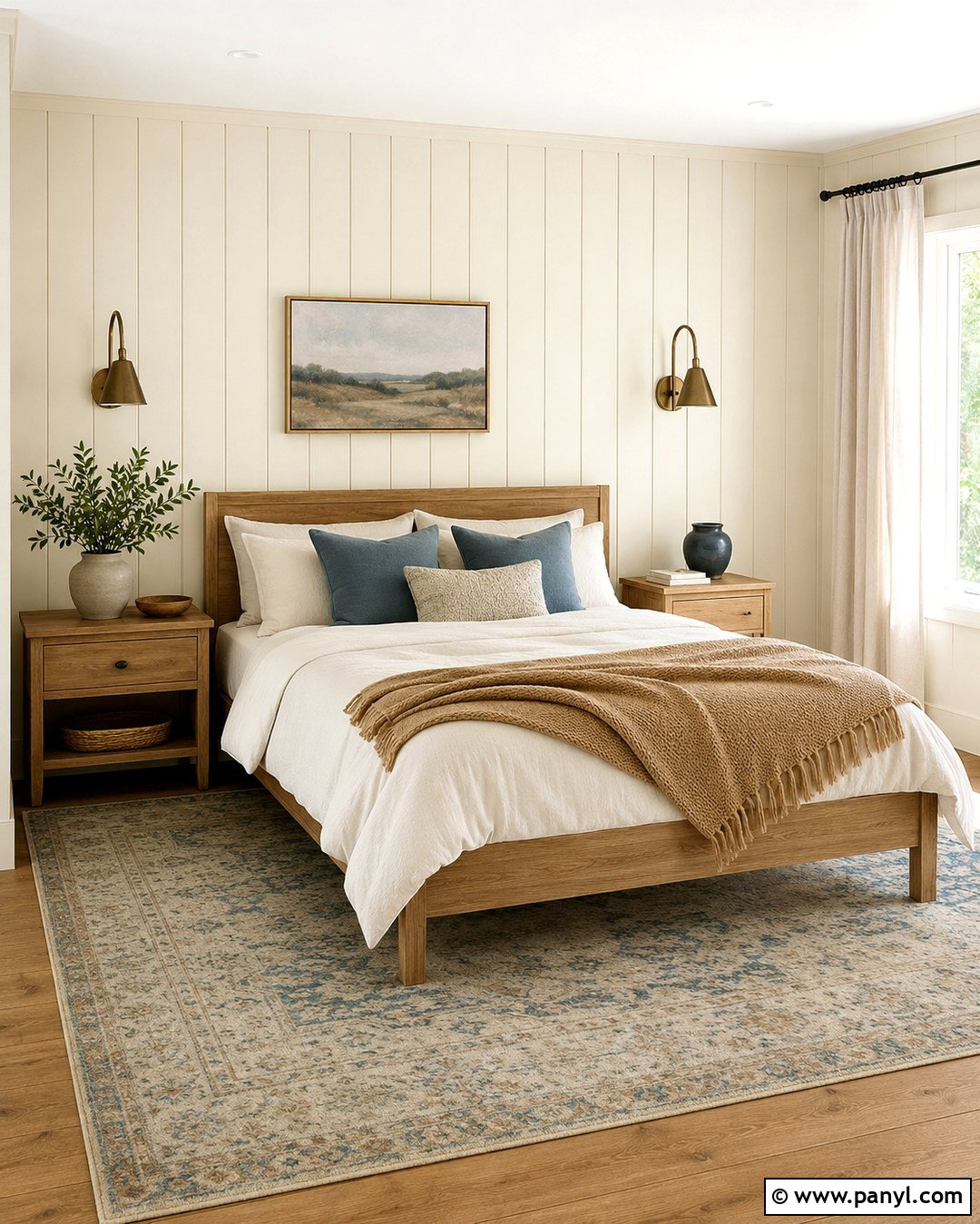
Cream paneling brings gentle warmth to bedrooms that need more character than plain white walls. Cover the wall behind the bed with wide vertical panels and paint the remaining walls in the same creamy shade. A medium-tone oak bed, ivory bedding, camel-colored throw, and muted blue pillows create balanced contrast without overpowering the woodwork. Place matching oak nightstands on both sides and use aged brass sconces for soft visual warmth. A flat-weave rug in beige and faded blue anchors the arrangement. Cream works especially well in rooms with northern exposure because it reduces the chilly look of indirect light. Use an eggshell finish on the panels and repeat the color on doors and trim for an enveloping, carefully connected bedroom.
3. Soft Greige Wood Panels
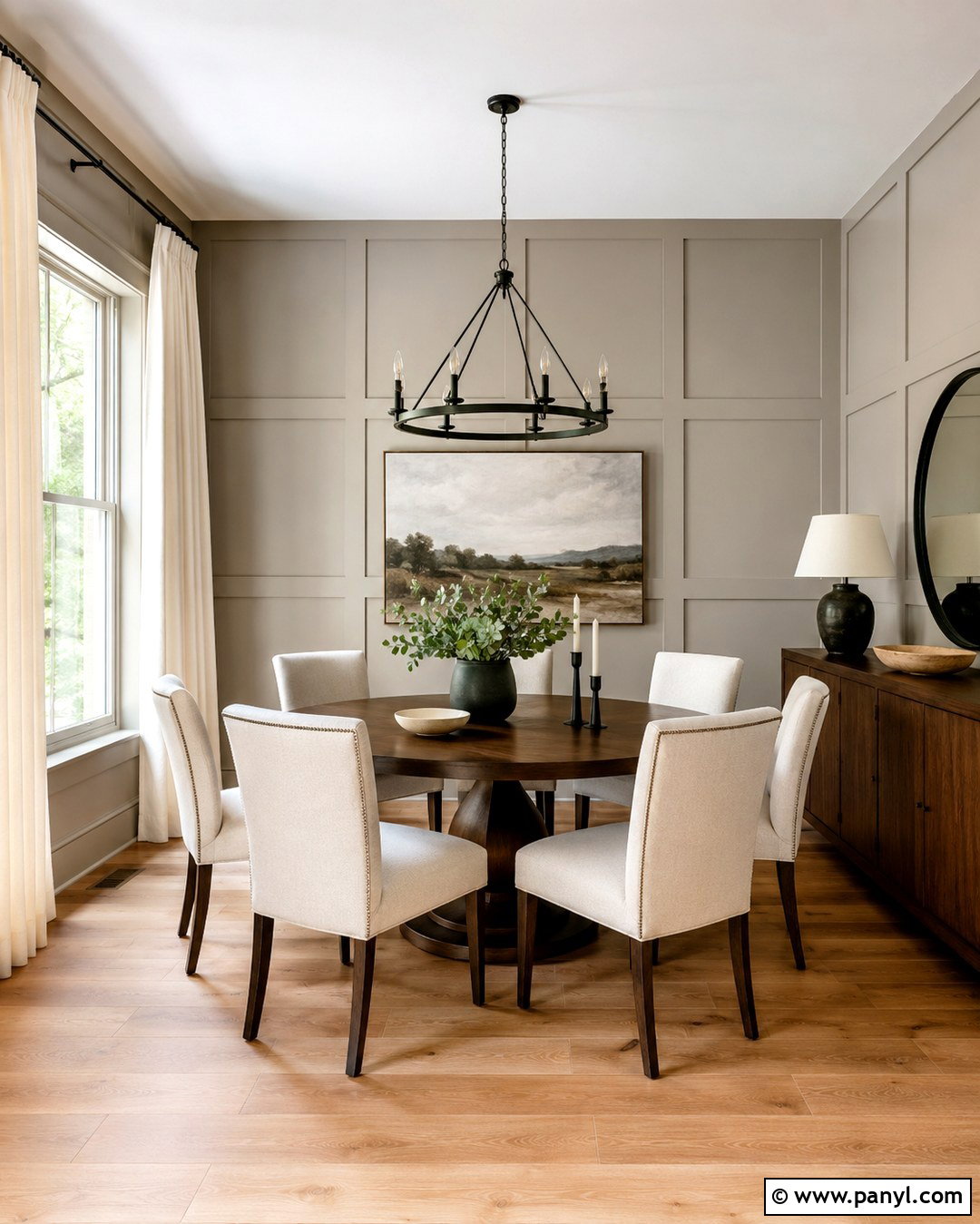
Soft greige gives traditional wood paneling a calmer and more current appearance. In a dining room, install square wall molding from the baseboards to the ceiling and coat every piece in one balanced gray-beige color. Pair it with a round walnut dining table, upholstered oatmeal chairs, and a simple black metal chandelier. Warm oak flooring prevents the gray undertones from looking flat, while off-white curtains brighten the edges of the room. Add a large landscape print with muted green and brown tones rather than several small decorations. A low walnut sideboard completes the practical layout. Choose a greige that looks warm beside your flooring, and test it throughout the day. The result feels polished, comfortable, and suitable for everyday meals or gatherings.
4. Mushroom Taupe Wood Panels
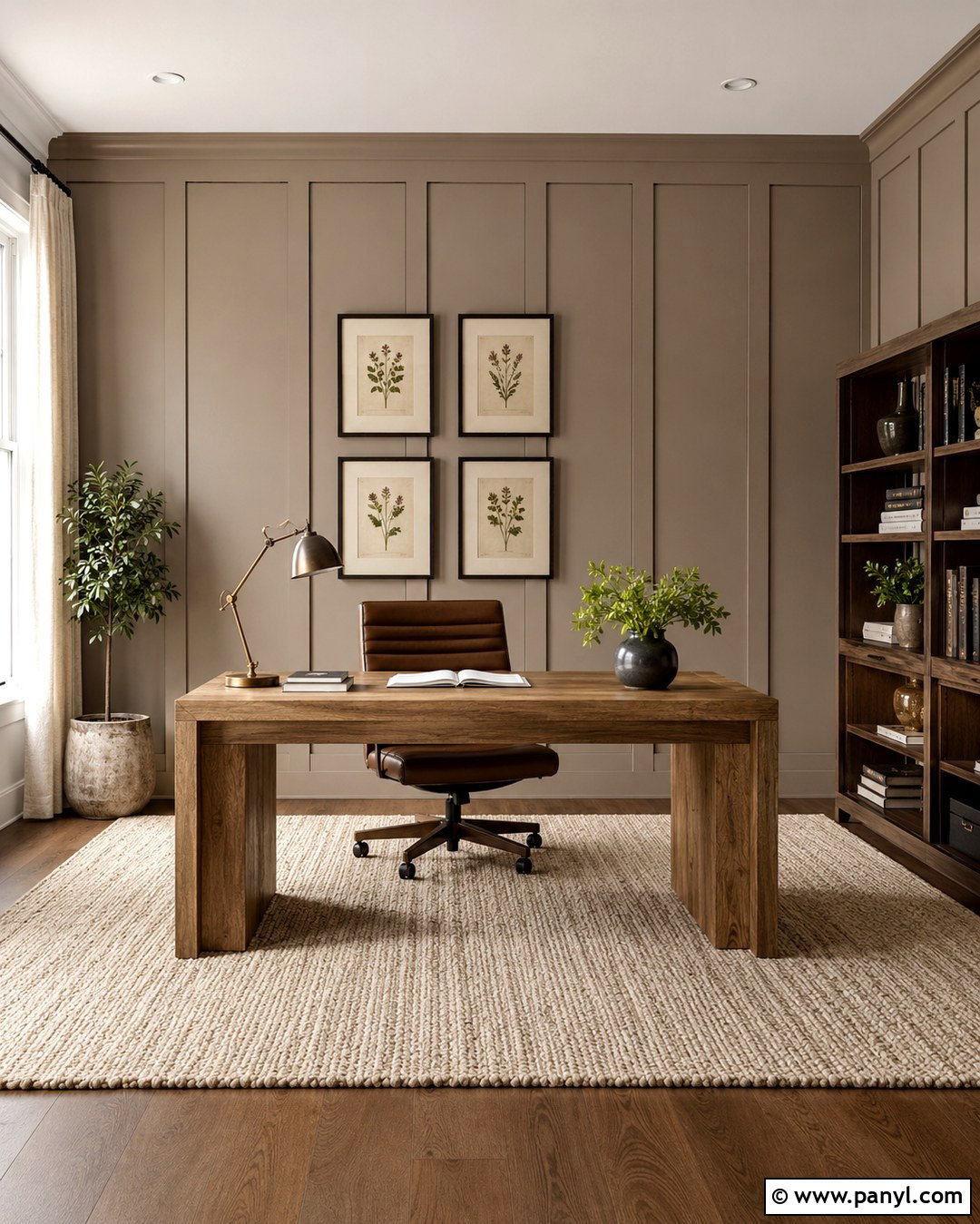
Mushroom taupe paneling can turn an ordinary home office into a quiet, focused retreat. Apply the color to full-height board-and-batten walls, including the trim and interior door. Its blend of brown and gray feels earthy but remains neutral enough for changing furniture. Position a solid oak desk near the window, with a streamlined leather chair and a low bookcase along the opposite wall. Use cream curtains, a textured wool rug, and bronze task lighting to warm the scheme. A few framed botanical prints can introduce muted green without making the office busy. Select a medium mushroom shade if the room receives strong daylight, or a paler version in a darker space. The finished office feels organized, grounded, and intentionally designed.
5. Pale White Oak Wood Panels
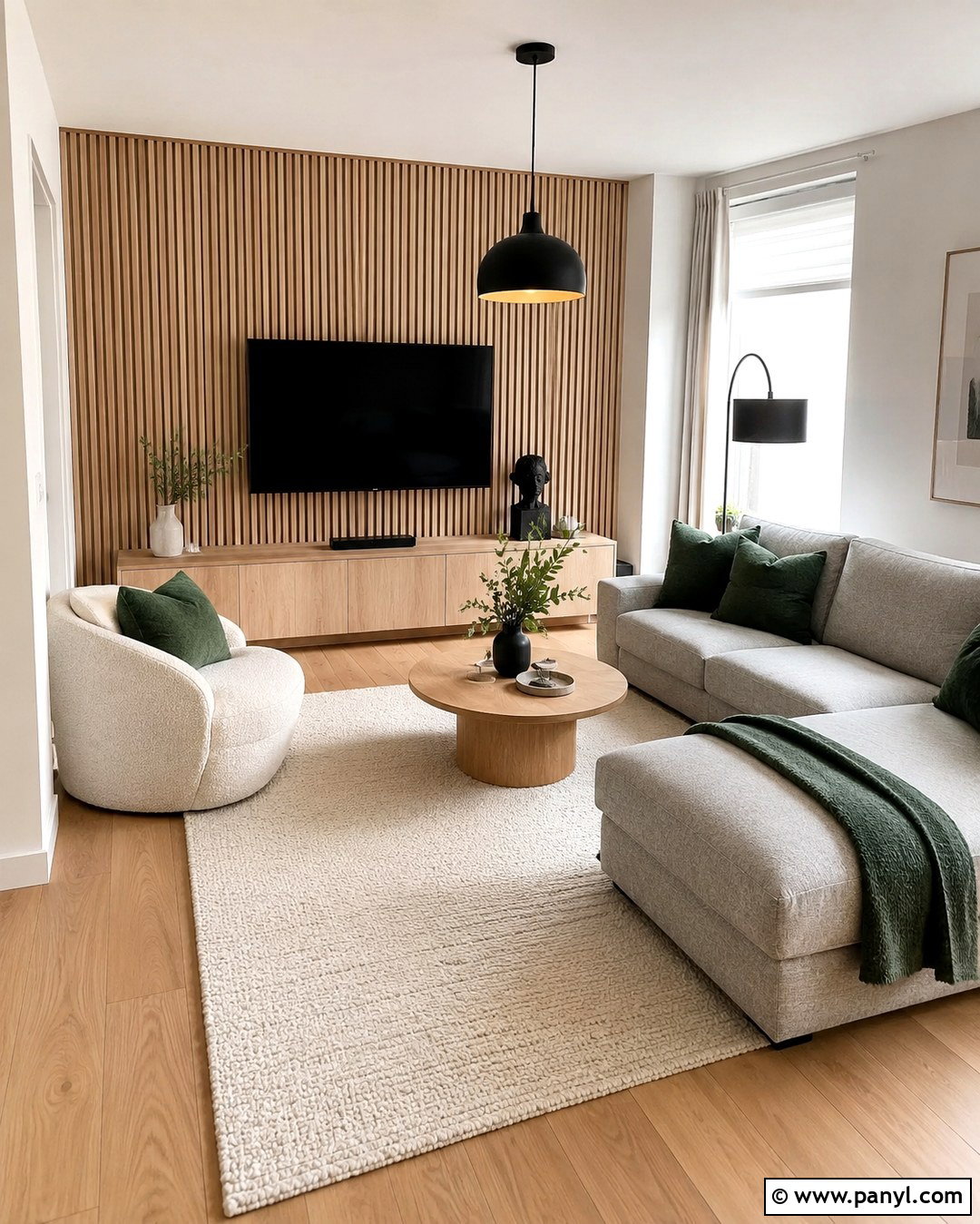
Pale white oak panels provide natural texture while keeping a compact living room bright. Use narrow vertical slats across the television wall, with a matching oak media cabinet below for a built-in appearance. Keep the other walls warm white and choose light oak flooring in a similar undertone, but vary the board width so the surfaces do not look identical. A soft gray sectional, ivory rug, and rounded cream chair make the room comfortable without hiding the paneling. Add matte black lighting and a few deep green cushions for definition. Finish the oak with a clear matte sealer that preserves its raw, sandy color. This light, coordinated palette works beautifully in Scandinavian, organic modern, and understated contemporary interiors.
6. Natural Oak Wood Panels
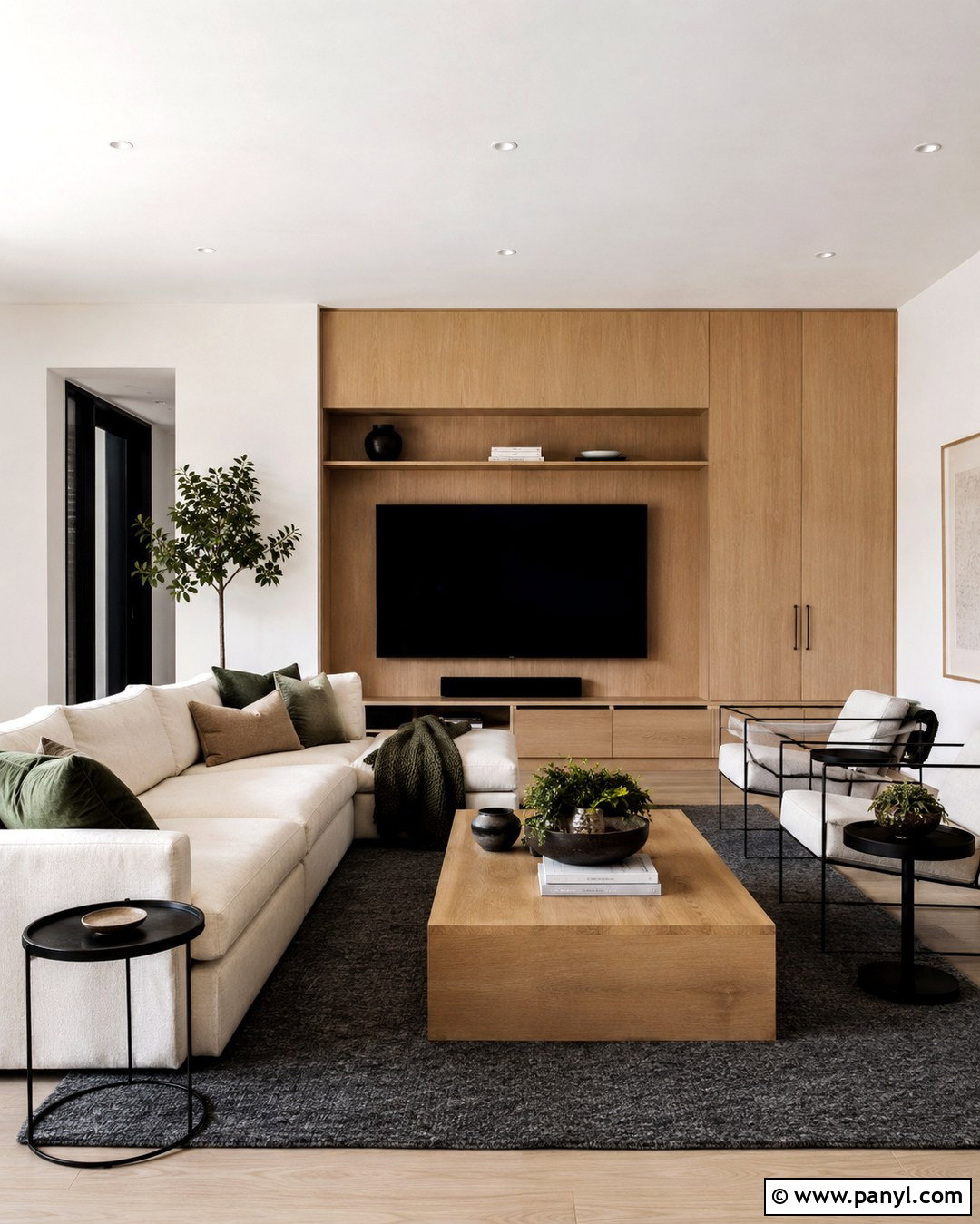
Natural oak paneling gives a family room lasting warmth and enough variation to hide everyday wear. Cover the main wall with wide oak boards in a clear, low-sheen finish that reveals the golden-beige grain. Arrange a deep cream sectional facing the paneling and place a substantial oak coffee table in the center. To prevent the room from becoming overly matched, introduce a charcoal wool rug, black metal side tables, and olive green pillows. White walls and a pale ceiling reflect light around the richer wood surface. Add closed storage beneath the television and leave only a few ceramics on display. The combination feels relaxed yet structured, making it suitable for a busy room where comfort, storage, and visual warmth all matter.
7. Honey Oak Wood Panels
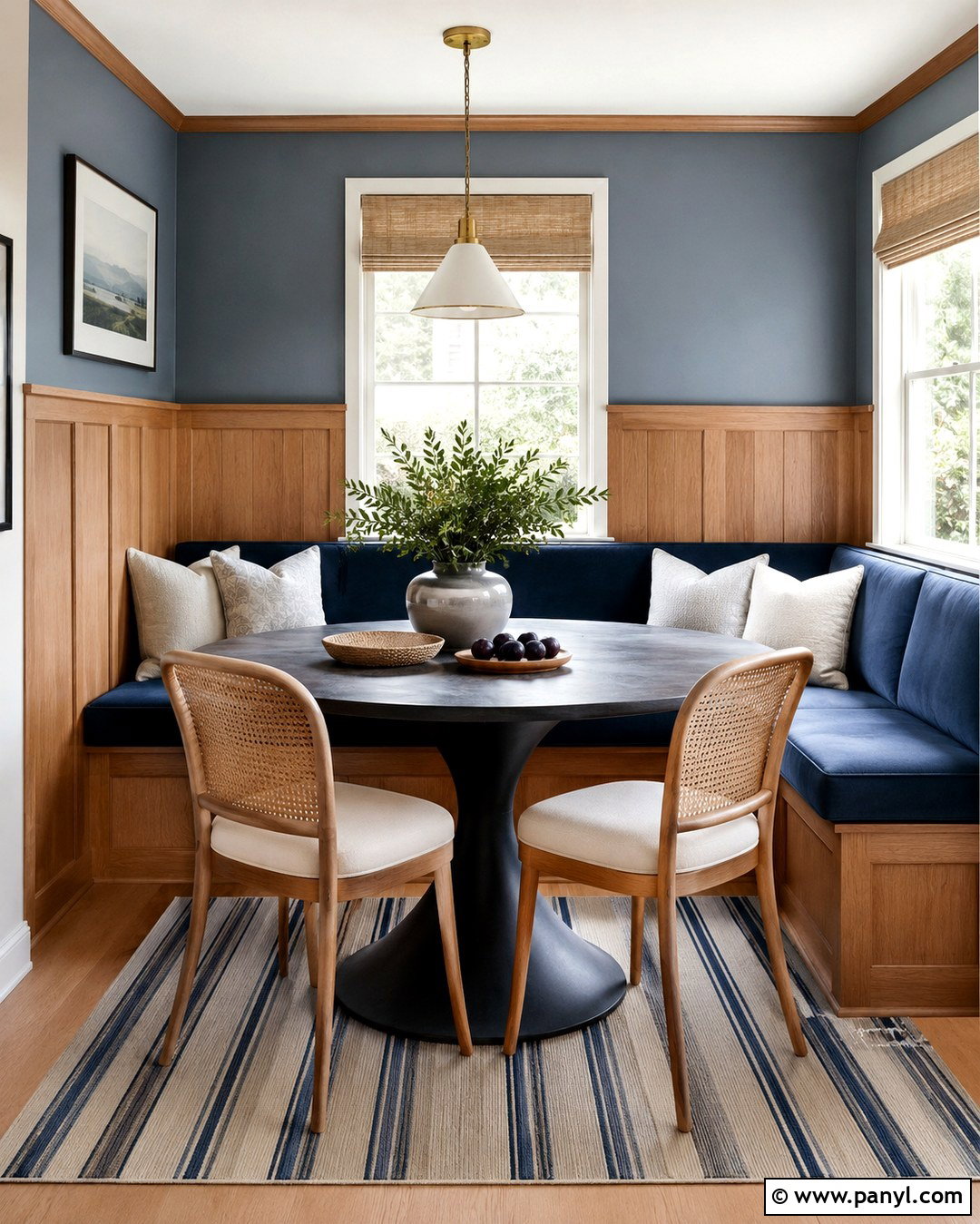
Honey oak wood panels can feel fresh when their golden color is balanced with cooler furnishings. Use them on the lower two-thirds of a dining nook, topped with a simple ledge, and paint the upper wall a muted blue-gray. Add a dark navy banquette, a round pedestal table, and woven cane dining chairs. Cream cushions and a striped rug soften the contrast while connecting the blue and golden tones. Keep window treatments light and simple so sunlight can enhance the natural grain. Avoid adding orange-toned flooring or furniture, which may make the palette overly warm. Medium brown or neutral oak floors are easier companions. This complete arrangement respects the cheerful character of honey oak while giving it a crisp, updated direction.
8. Natural Pine Wood Panels
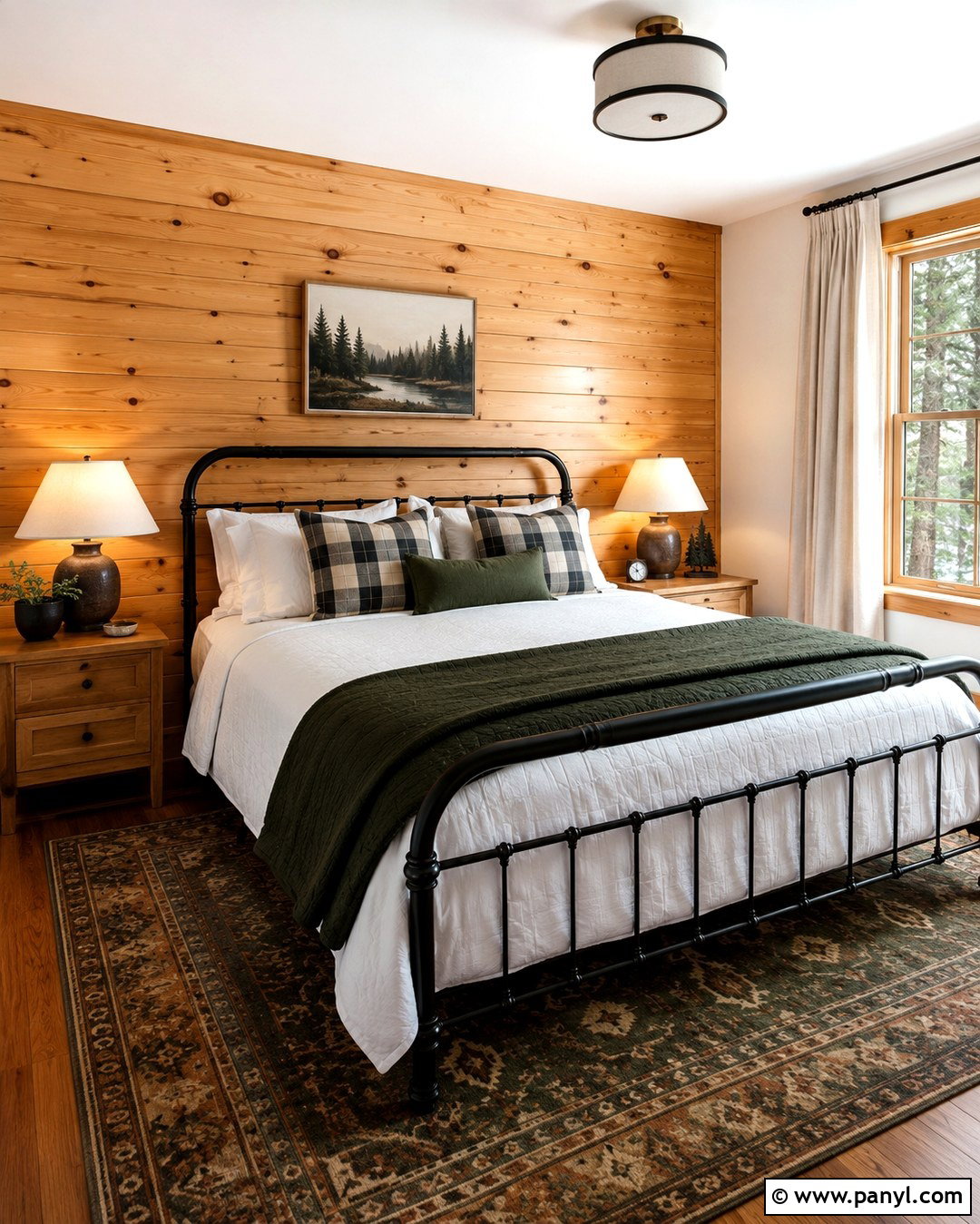
Natural pine paneling creates an inviting cabin influence without requiring a heavily rustic room. Install knotty pine boards horizontally in a guest bedroom, using a clear matte finish that controls shine and preserves the pale yellow grain. Ground the walls with a black metal bed, crisp white quilt, forest green blanket, and plaid accent pillows in cream and charcoal. A vintage-style wool rug adds pattern, while simple oak nightstands continue the natural material story. Paint the ceiling and window trim warm white to keep the wood from enclosing the room. Use linen curtains instead of heavy drapes, and select streamlined lighting rather than antler or lodge-themed accessories. The finished space feels warm, practical, and connected to nature.
9. Golden Maple Wood Panels
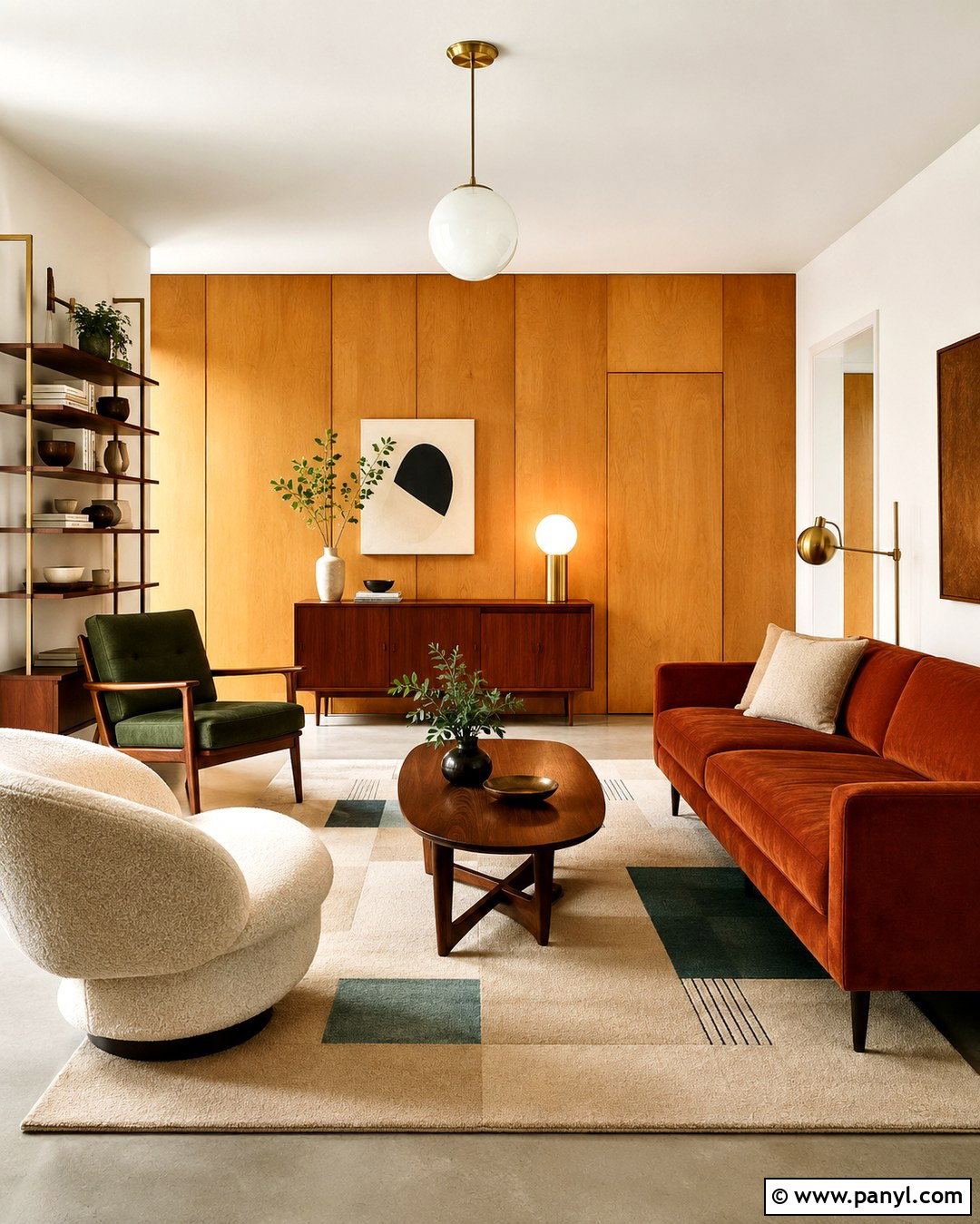
Golden maple panels bring smooth grain and understated warmth to a midcentury-inspired living room. Cover one long wall with evenly matched veneer panels, leaving slim vertical reveals between each section. Pair the maple with a low-profile rust-colored sofa, sculptural cream lounge chair, and walnut coffee table. A geometric rug in beige, brown, and muted teal reinforces the period influence without turning the room into a theme. Use globe-shaped lighting with brushed brass details and keep artwork large but minimal. The surrounding walls should be soft white so the maple remains the main architectural feature. Because maple can appear yellow under warm bulbs, use neutral white lighting. This thoughtful combination makes the room feel sunny, refined, and comfortably retro.
10. Warm Cedar Wood Panels
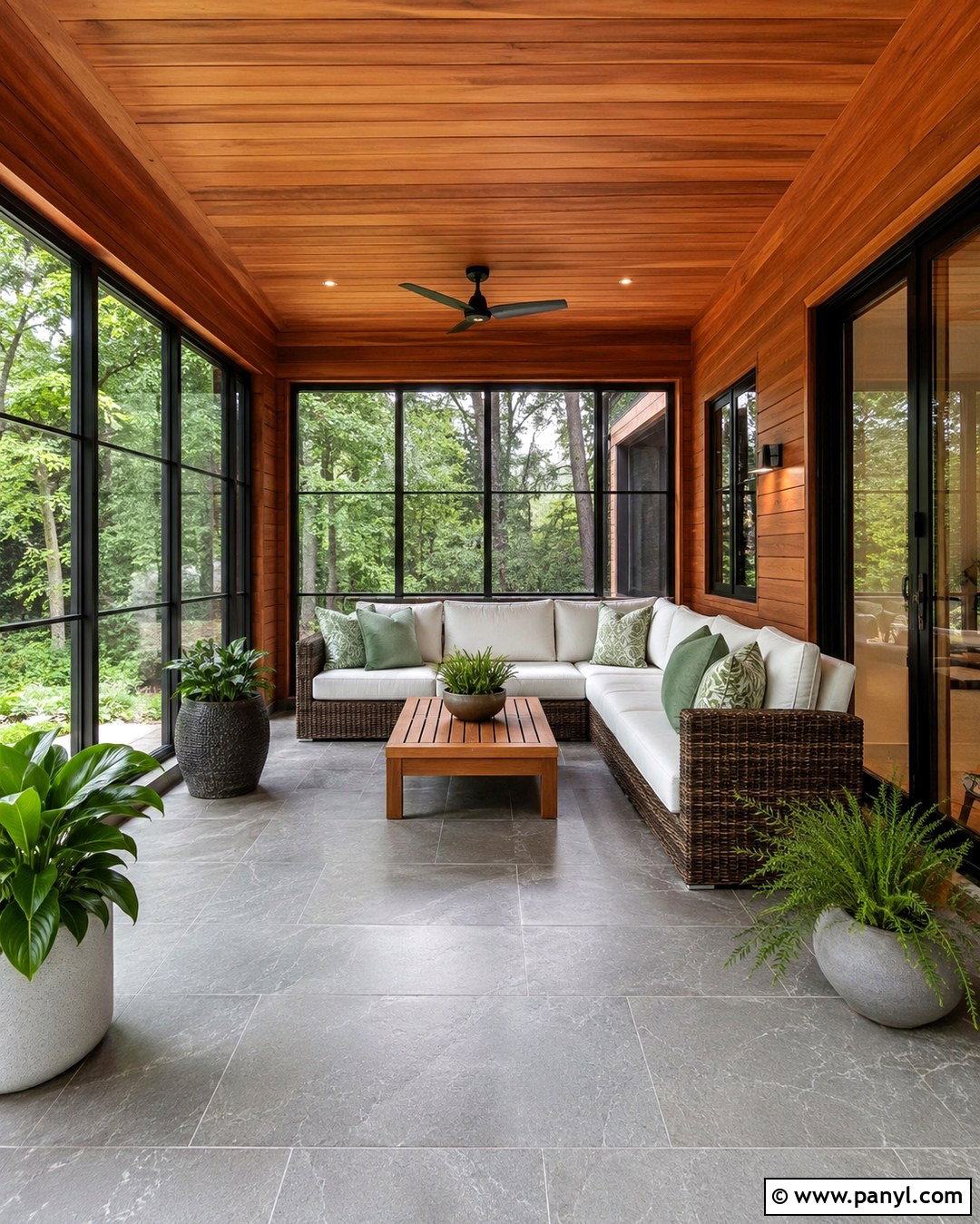
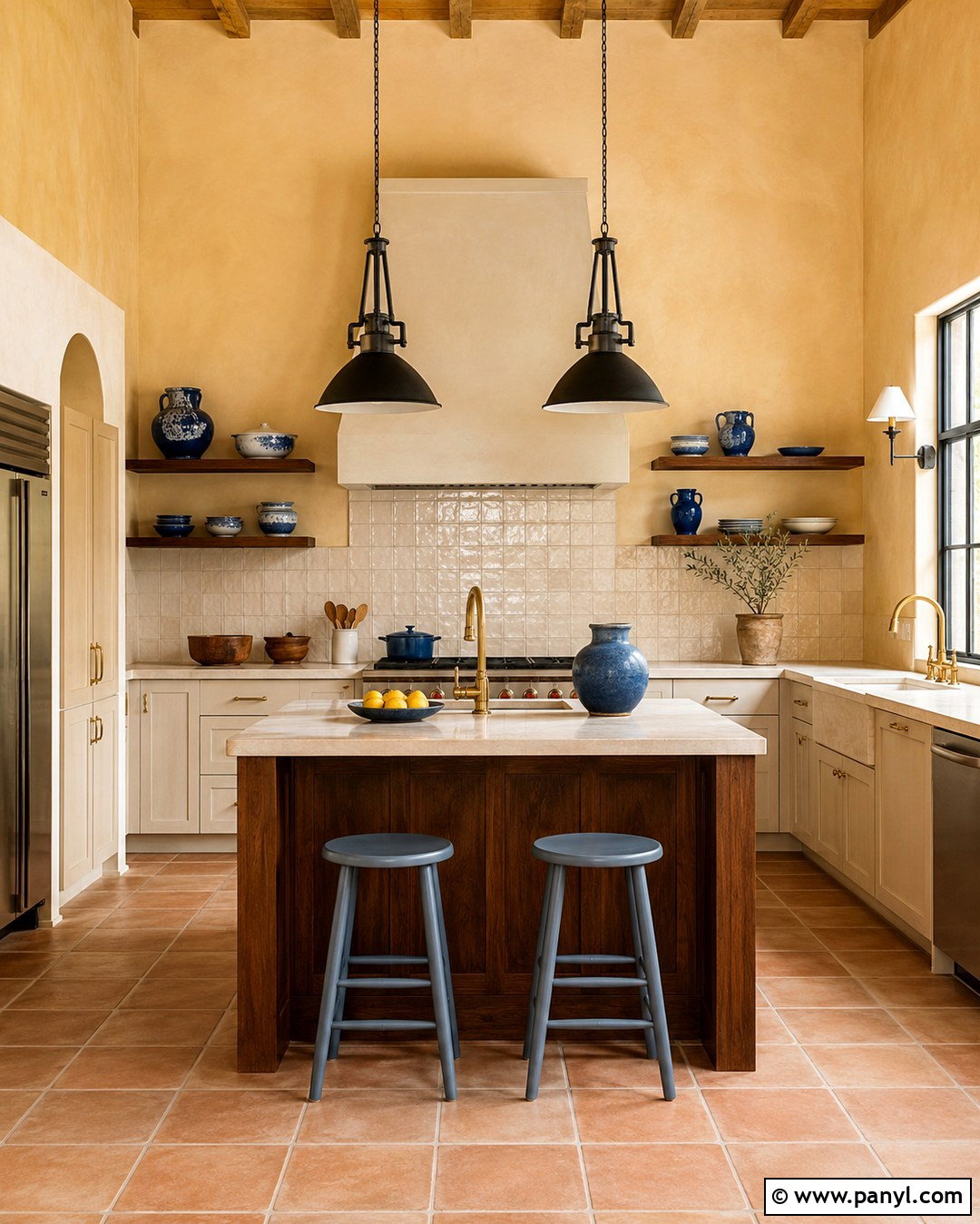
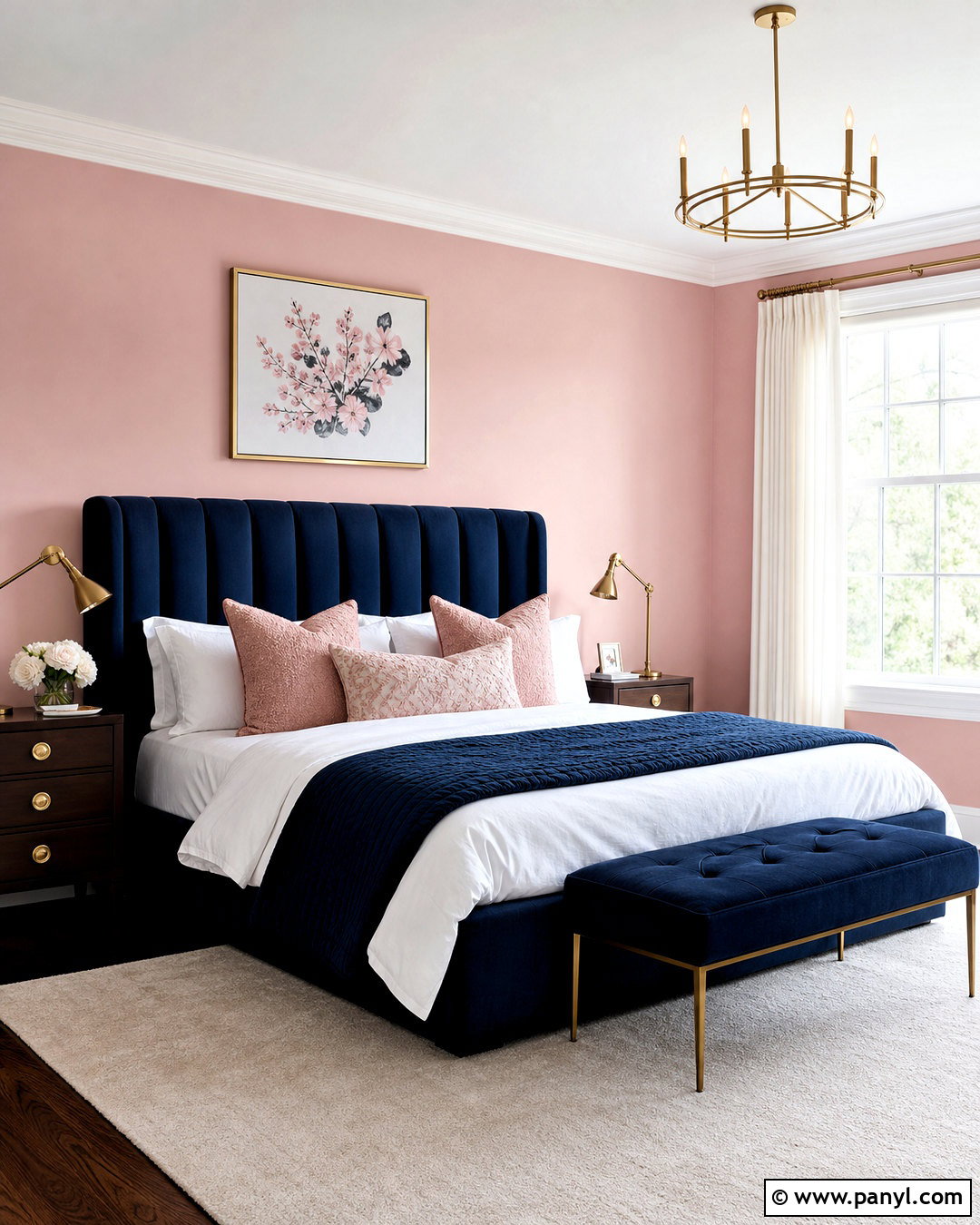
Warm cedar panels suit an indoor-outdoor sunroom where natural color and durability shape the entire design. Run vertical cedar boards across the main wall and ceiling section, then pair them with large windows framed in matte black. Furnish the space with a woven sectional, washable cream cushions, and a slatted teak coffee table. Sage green pillows and potted foliage echo the garden beyond the glass. Choose stone-look porcelain flooring in a warm gray shade to balance the reddish cedar undertones and handle frequent foot traffic. Keep decorative objects simple, since the grain already provides movement and detail. A clear satin finish enriches the cedar without making it overly glossy. The complete sunroom feels bright, natural, and ready for everyday relaxation.
11. Terracotta Wood Panels
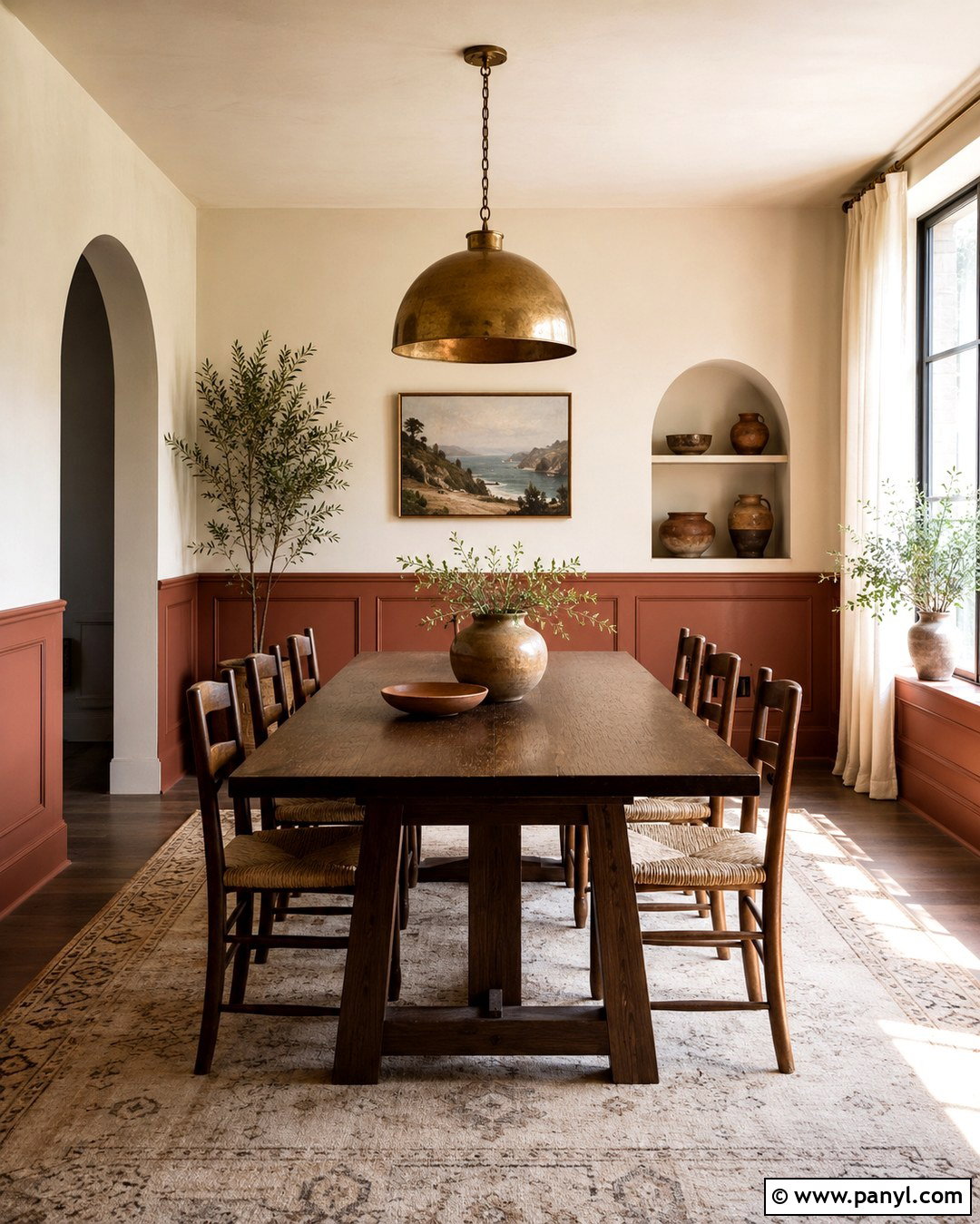
Terracotta-painted wood panels can make a dining room feel warm, social, and full of personality. Apply a muted clay color to paneled walls below chair-rail height, then use soft cream paint above to preserve openness. Center a dark oak table in the room and surround it with woven rush-seat chairs. A large pendant in aged brass creates a welcoming focal point, while ivory curtains and a pale patterned rug soften the earthy walls. Repeat the terracotta in small details, such as striped napkins or ceramic serving pieces, rather than covering every surface with the same hue. Medium brown flooring complements the scheme naturally. This color works best with a matte or eggshell finish, which keeps the paneling rich rather than shiny or overly intense.
12. Dusty Rose Wood Panels
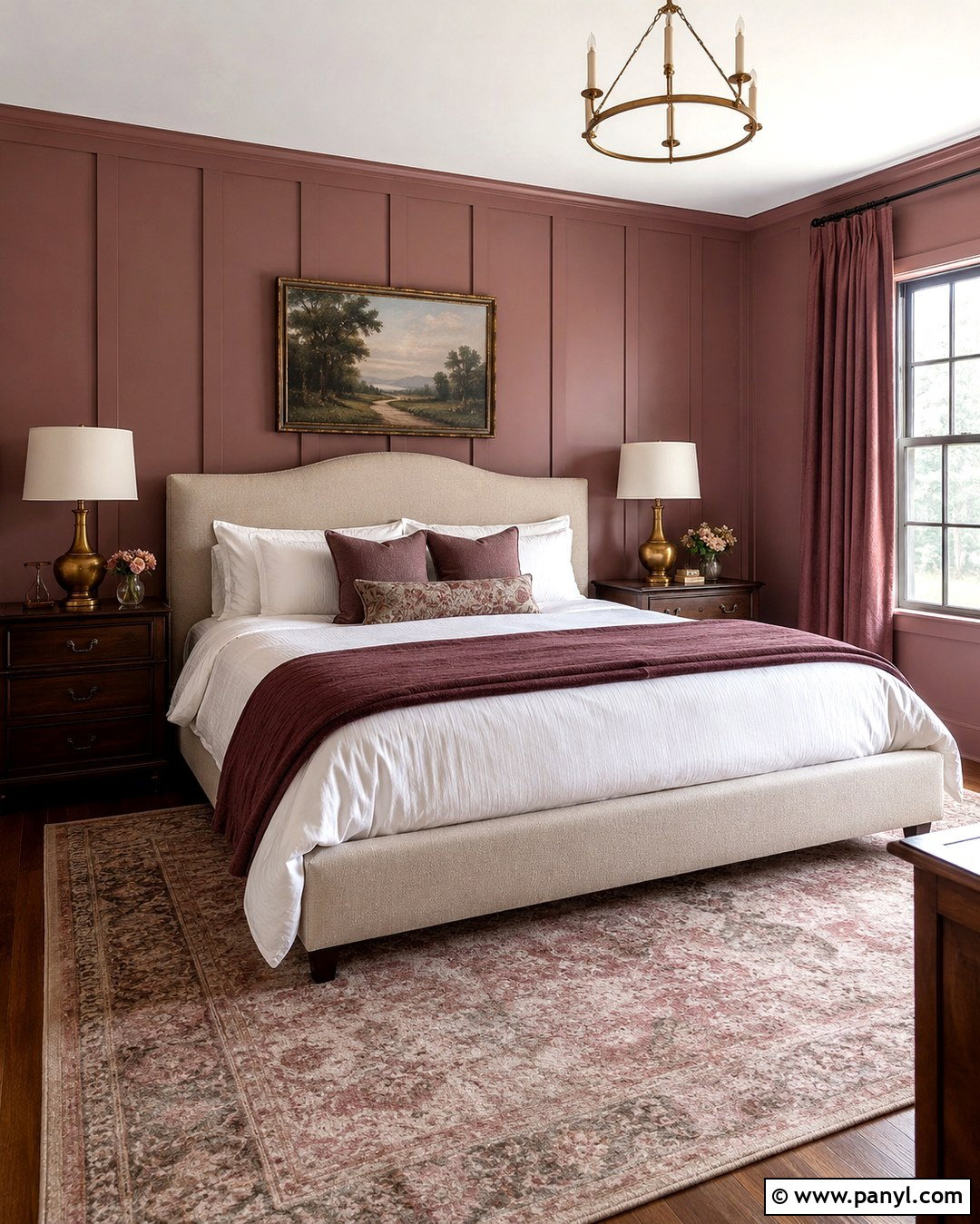
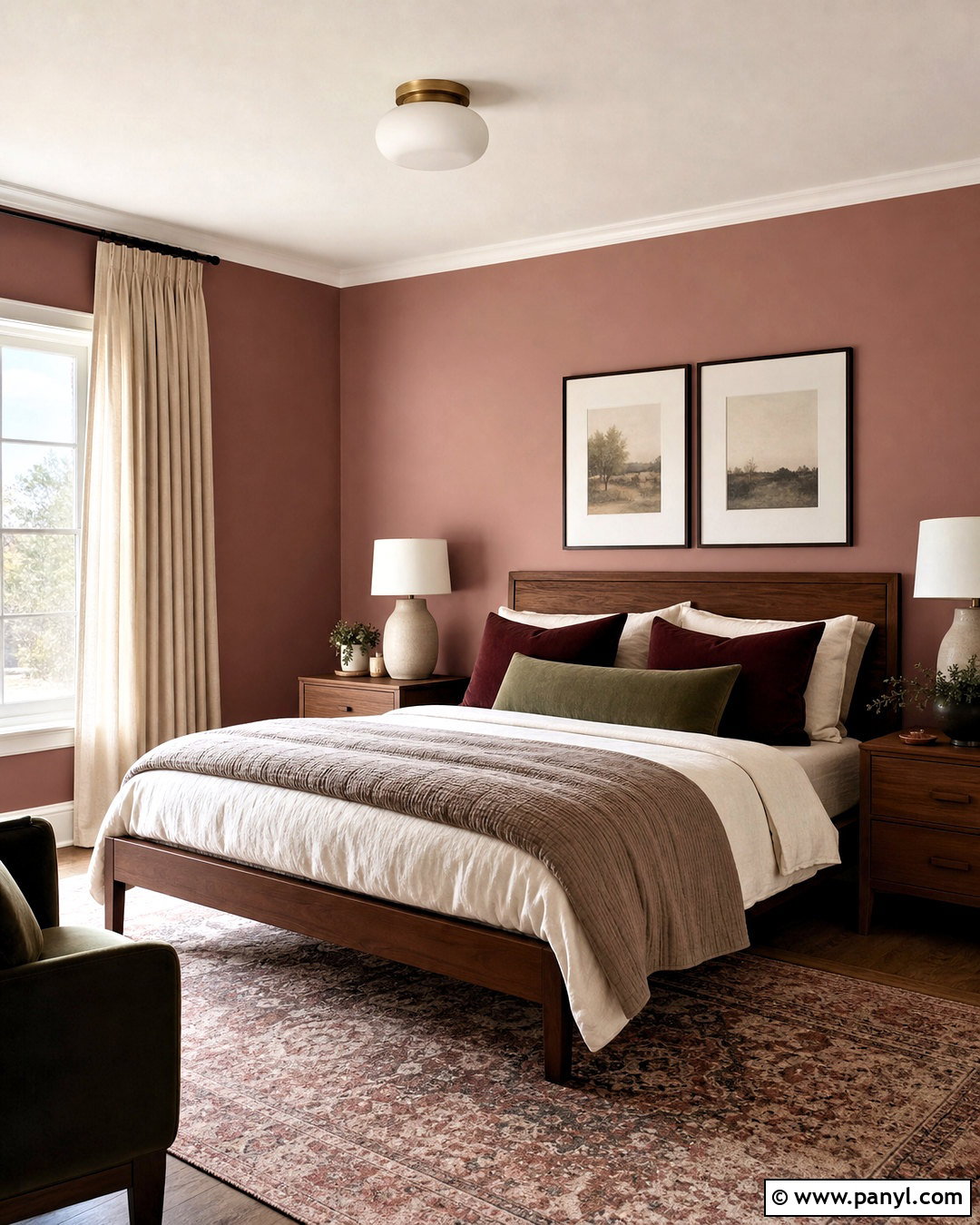
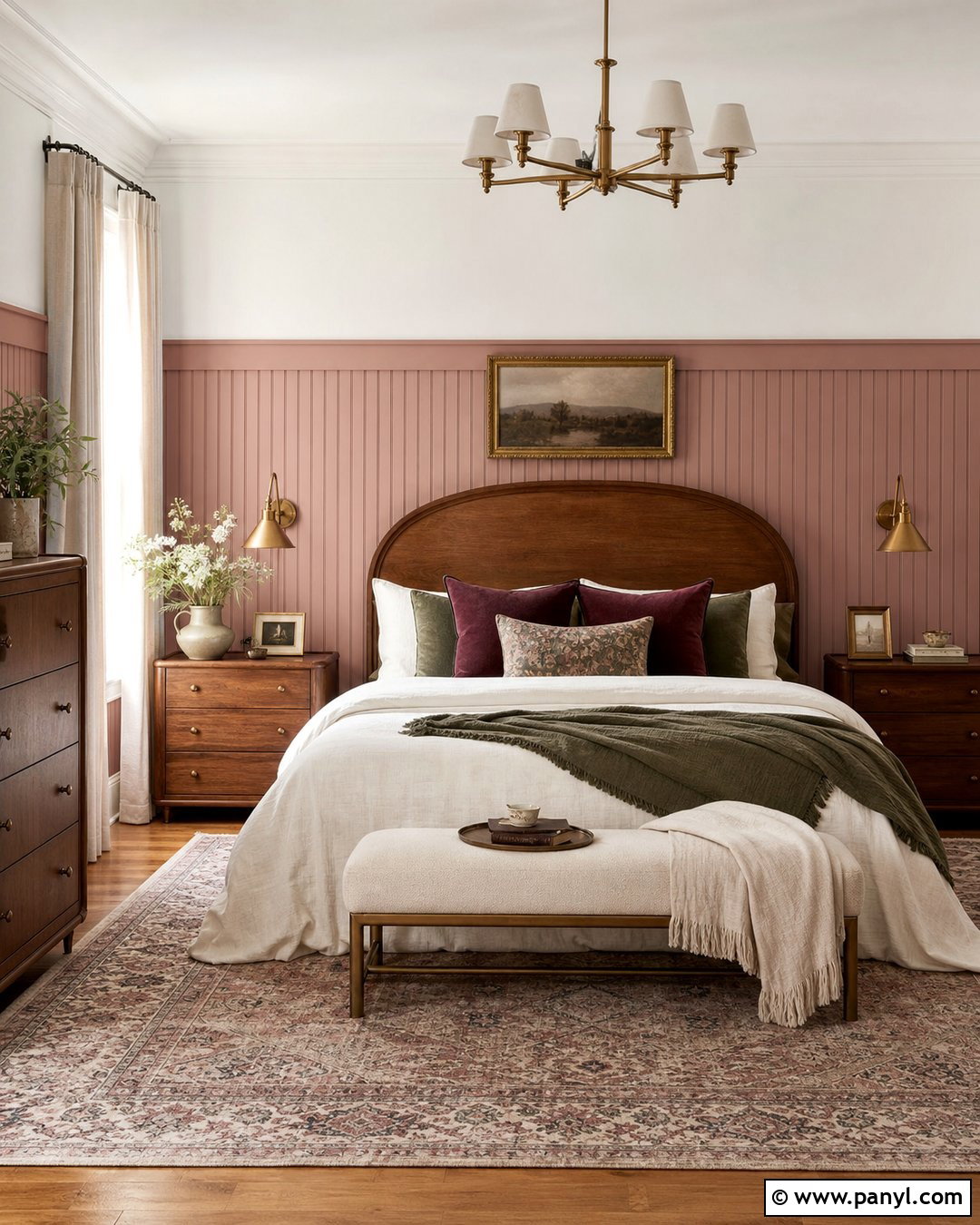
Dusty rose paneling offers a soft alternative to beige in a bedroom, reading as warm and sophisticated rather than overly sweet. Use narrow board-and-batten panels on all four walls and paint the trim in the same muted pink-brown shade. Choose an upholstered bed in oatmeal linen, white bedding, and a deep burgundy throw for layered color. Dark walnut nightstands add needed weight, while aged brass lamps bring a gentle glow. Finish the room with a vintage-style rug containing faded rose, cream, and olive tones. Keep curtains close to the wall color so the boundaries feel smooth and restful. This complete palette works especially well with medium or dark wood furniture, which prevents the pale paneling from feeling delicate or one-dimensional.
13. Sage Green Wood Panels
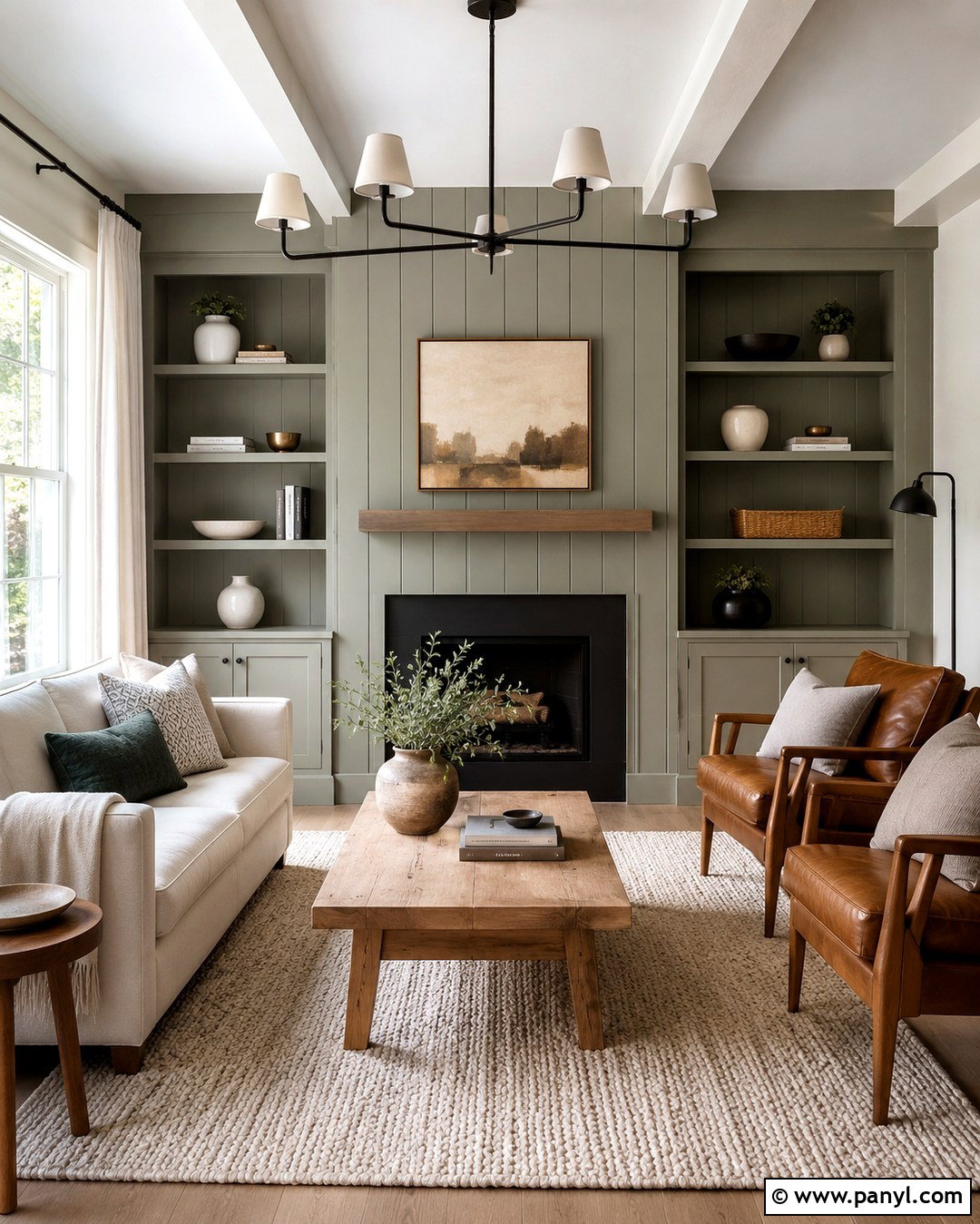
Sage green wood panels create a peaceful living room that feels connected to outdoor colors. Install full-height vertical paneling behind a light beige sofa and continue the paint onto nearby built-in shelves. Select a gray-based sage rather than a bright yellow-green to maintain a relaxed atmosphere. Layer the room with a natural oak coffee table, warm white curtains, a cream wool rug, and leather accent chairs in cognac brown. Black window frames or lighting fixtures provide clean definition. Decorate the shelving with off-white ceramics, books, and a small amount of greenery, leaving open space between objects. Sage works with both light and medium wood tones, making it easy to update existing furniture. The complete room feels fresh, balanced, and comfortably lived in.
14. Olive Green Wood Panels
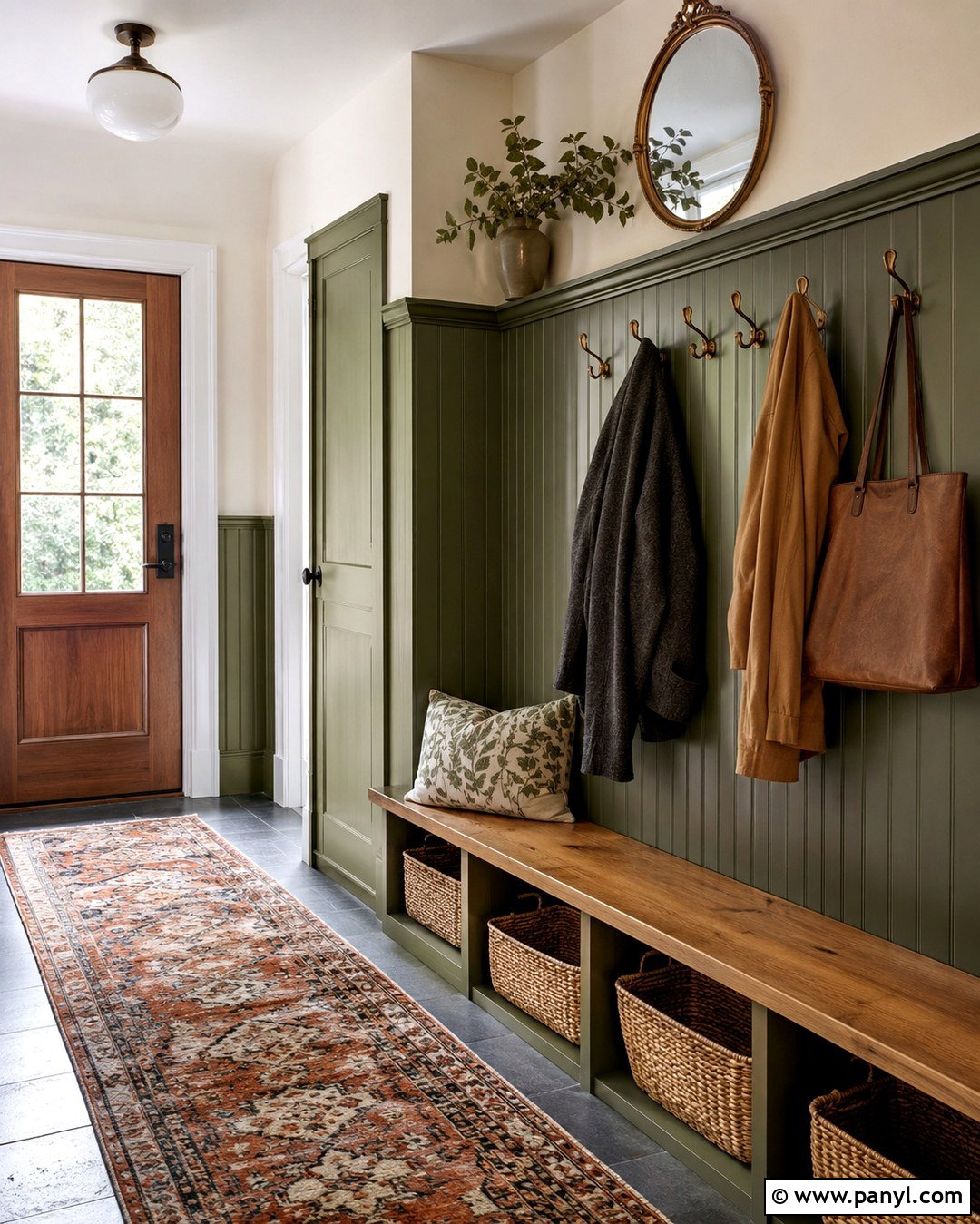
Olive green paneling gives an entryway a grounded, traditional character while hiding minor marks from daily traffic. Paint tall beadboard panels in a medium olive shade and finish the upper walls with warm off-white. Add a built-in oak bench with woven baskets below, plus brass hooks for coats and bags. A patterned runner in rust, cream, and charcoal creates movement through the narrow space. Use an antique-style mirror above the bench to reflect light and make the entry feel wider. Dark bronze hardware complements the green without creating harsh contrast. If the space has limited natural light, choose an olive with a softened gray undertone. This practical scheme combines seating, storage, color, and durable finishes in one cohesive first impression.
15. Forest Green Wood Panels
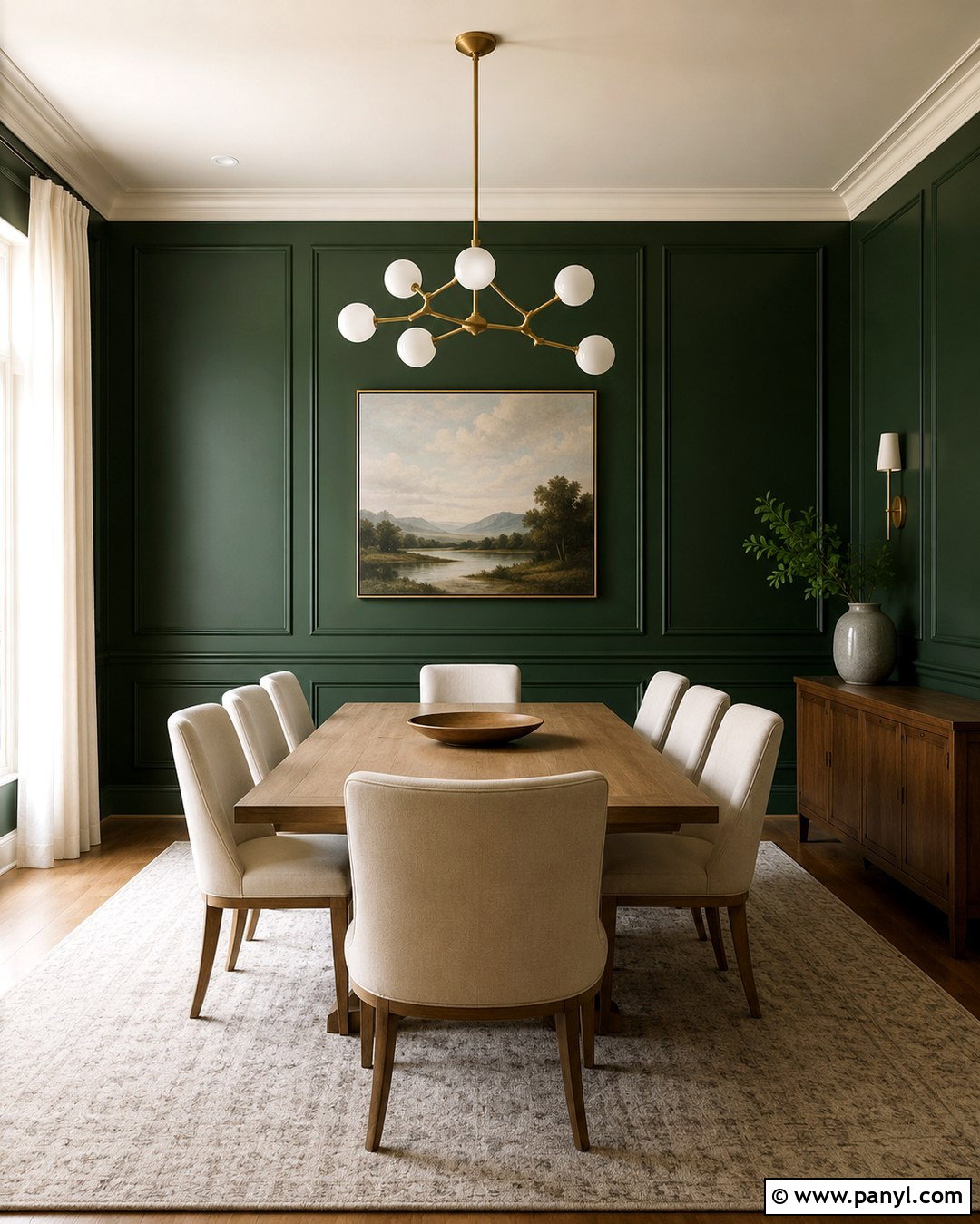
Deep forest green panels can transform a formal dining room into an intimate, memorable space. Cover all walls with rectangular panel molding and paint the baseboards, doors, and trim in the same saturated green. Balance the depth with a medium oak dining table, cream upholstered chairs, and a large light-colored rug. A sculptural brass chandelier adds brightness, while off-white drapes frame the windows without competing with the walls. Hang one oversized landscape or abstract artwork containing touches of green, brown, and pale blue. Use warm white bulbs so the color remains rich instead of turning cool or black. The ceiling should stay a soft cream to provide relief. This room feels dramatic, but the natural wood and pale textiles keep it welcoming.
16. Dusty Blue Wood Panels
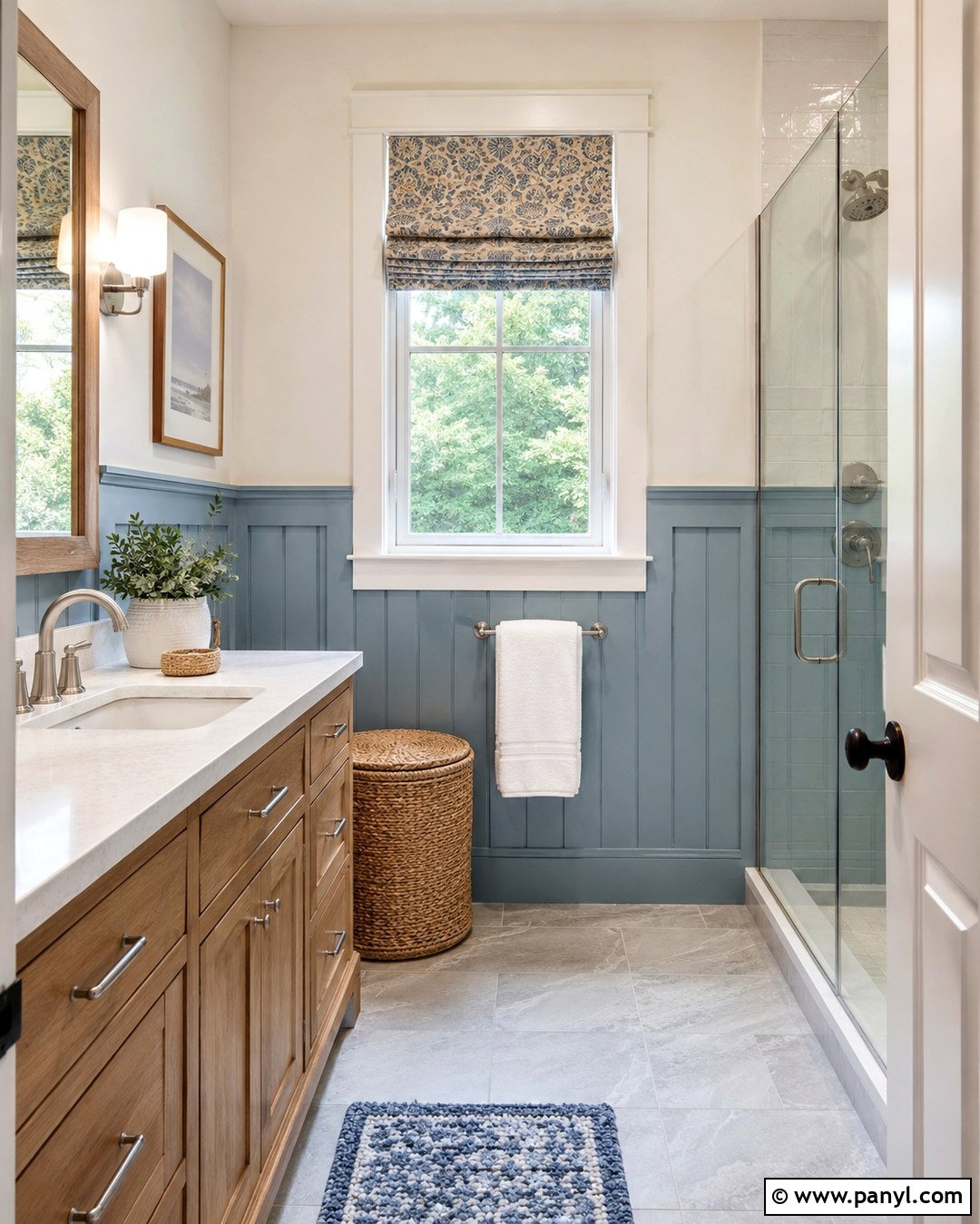
Dusty blue paneling brings a quiet sense of color to a bathroom without overwhelming a smaller floor plan. Use painted beadboard on the lower half of the walls and moisture-appropriate warm white paint above. Install a natural oak vanity with a white quartz top, brushed nickel faucet, and simple framed mirror. Pale gray stone-look tile flooring complements the blue while remaining easy to maintain. Add white towels, a woven hamper, and a small patterned Roman shade containing blue and beige. Choose a muted blue with noticeable gray undertones so it pairs smoothly with wood and stone. Use a durable satin or semi-gloss finish on the paneling in this hardworking area. The finished bathroom looks fresh, calm, and thoughtfully coordinated.
17. Navy Blue Wood Panels
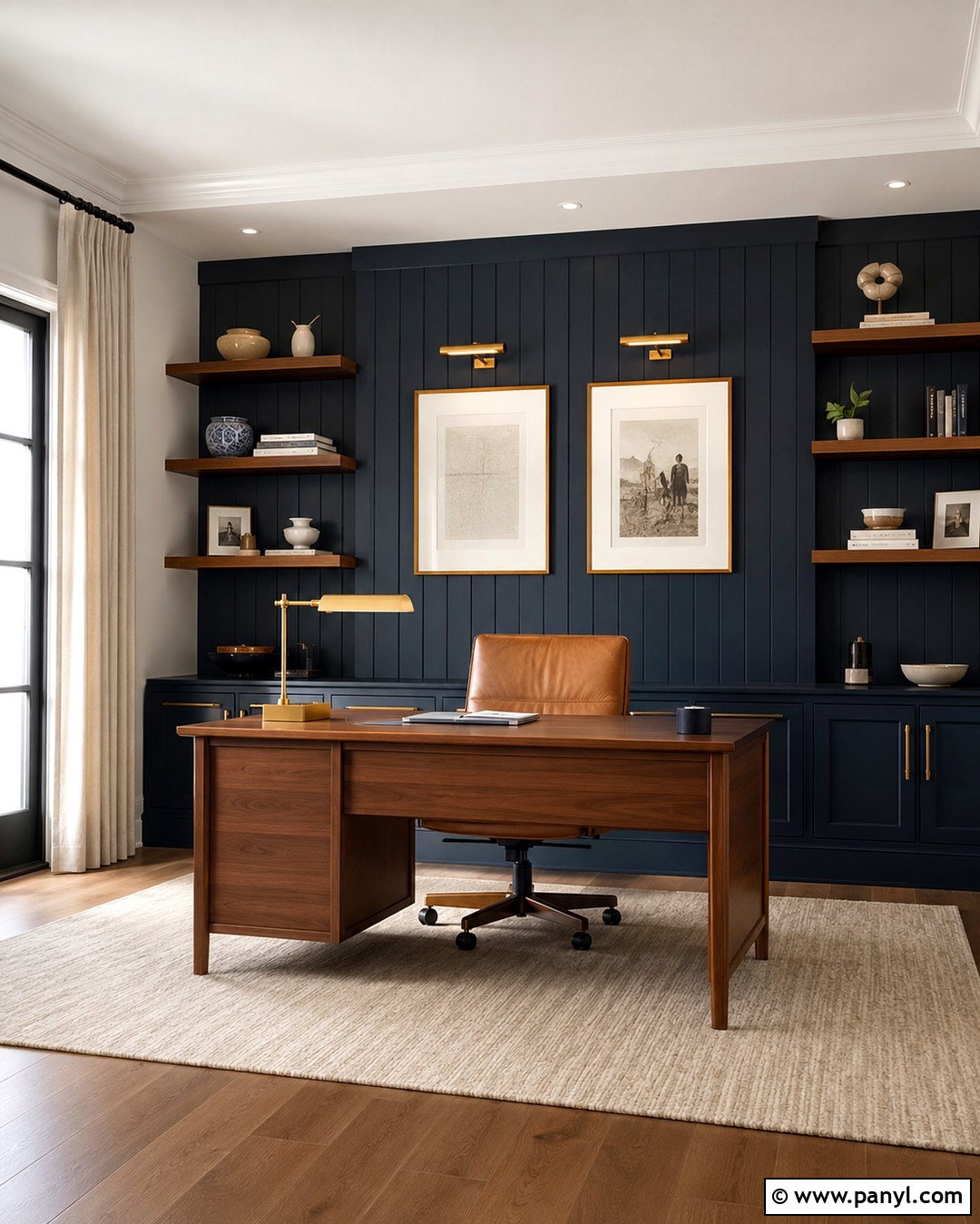
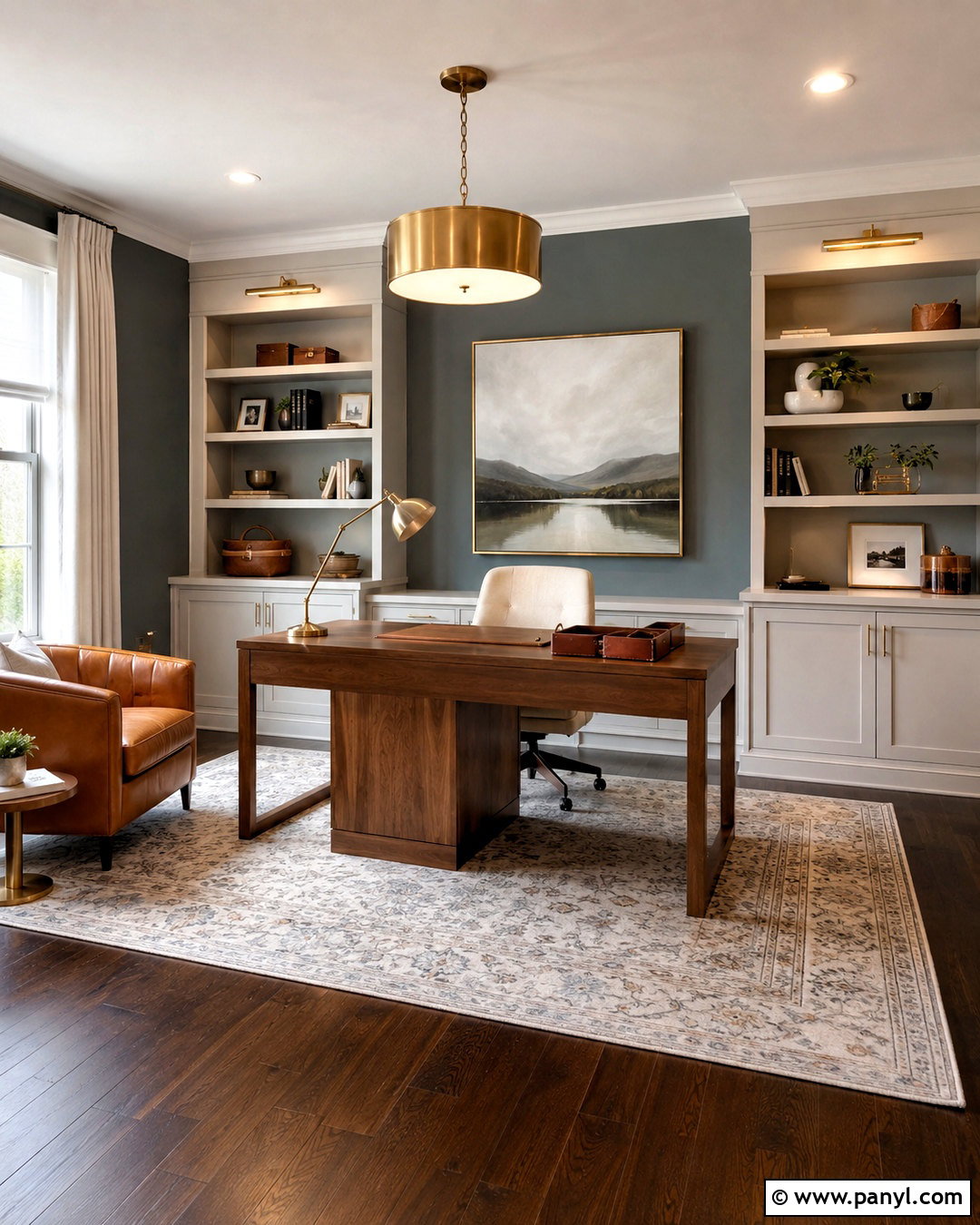
Navy wood panels create a strong focal wall in a home office or library. Install narrow vertical slats behind a walnut desk and paint the slats and background in the same deep blue for consistent depth. Add a cognac leather desk chair, brass picture lights, and a cream flat-weave rug to warm the saturated wall. Built-in lower cabinets can repeat the navy, while open walnut shelves connect to the desk. Keep the remaining walls soft white and use light curtains so the room retains brightness during the day. A few framed prints with wide cream mats provide visual breathing room. Navy looks especially polished in an eggshell finish, which shows the panel texture without distracting reflections. The complete office feels focused, tailored, and comfortable.
18. Charcoal Gray Wood Panels
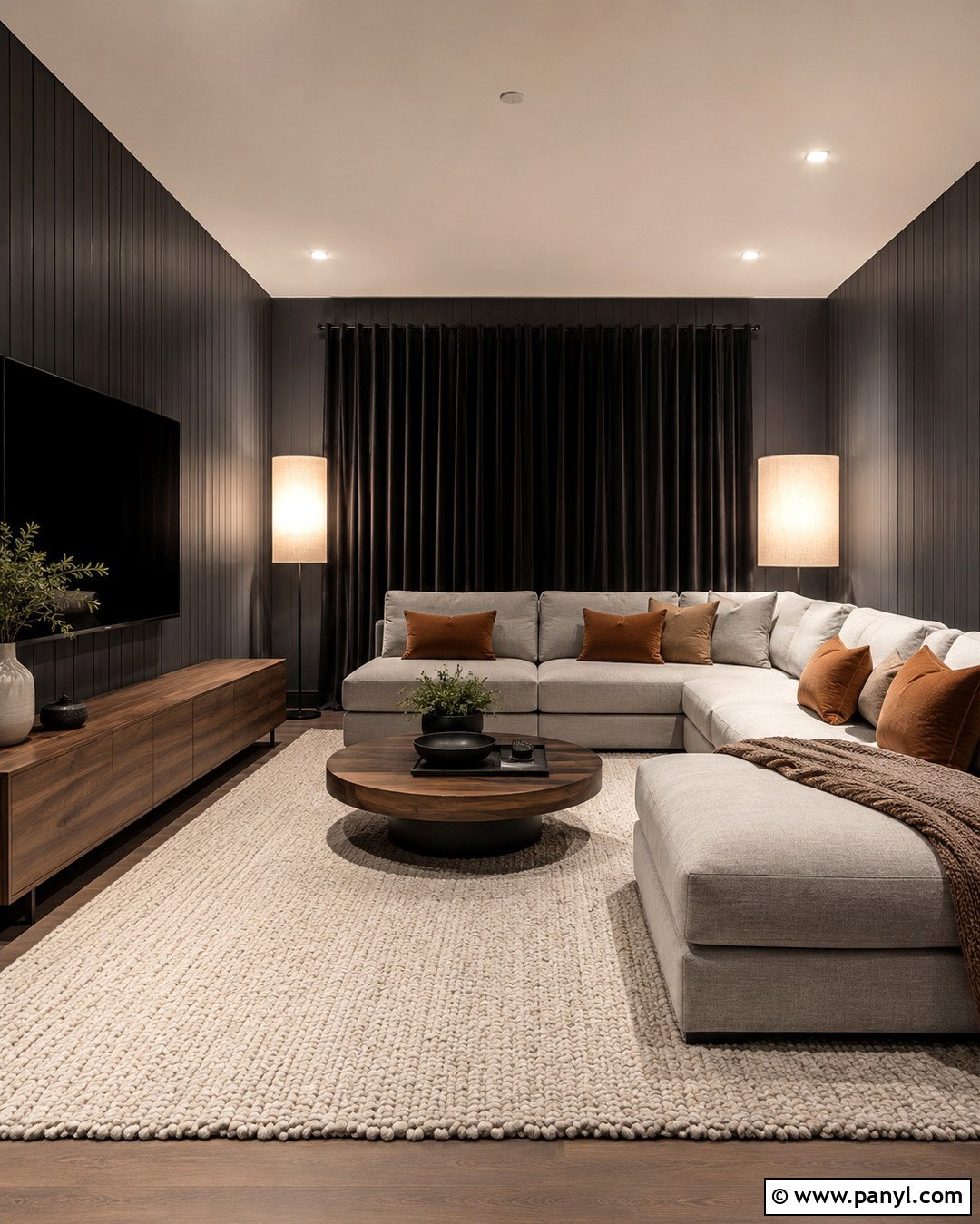
Charcoal gray paneling gives a media room depth and helps a television blend naturally into the surrounding wall. Use wide vertical panels in a soft charcoal rather than pure black, then install a low walnut console beneath the screen. Arrange a large light-gray sectional opposite the wall and add a textured cream rug to brighten the center of the room. Rust, camel, and muted gold pillows warm the cool color scheme. Blackout curtains can match the paneling, but include floor lamps with pale fabric shades for balanced illumination. Keep the ceiling warm white so the room does not feel compressed. A matte finish reduces glare and emphasizes the panel lines. This coordinated design feels cozy for viewing while remaining polished when the screen is off.
19. Espresso Walnut Wood Panels
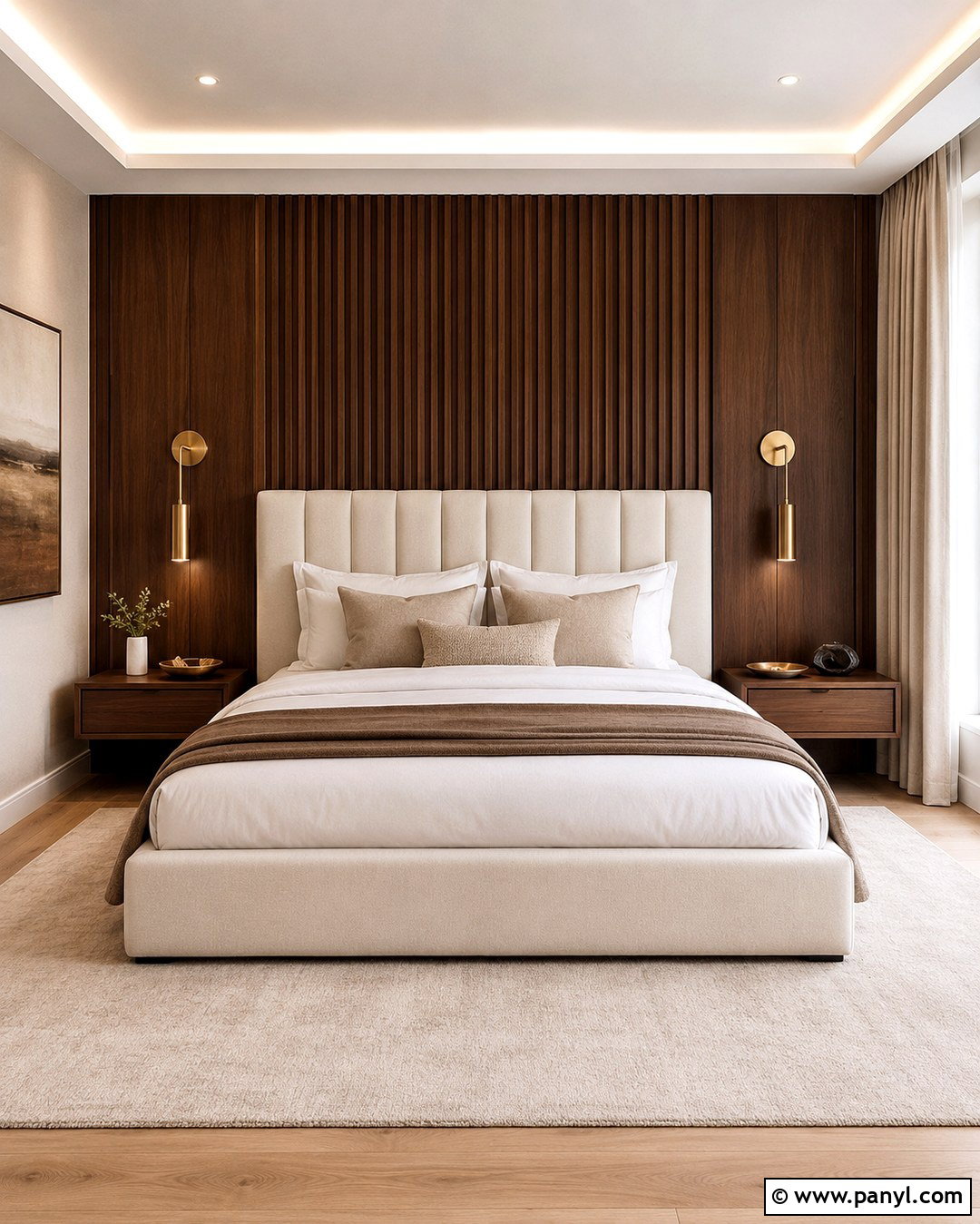
Espresso walnut panels bring rich character to a sophisticated primary bedroom. Cover the bed wall with book-matched walnut veneer or evenly toned vertical boards in a deep chocolate-brown finish. Choose a tall upholstered bed in warm ivory, layered with white sheets, taupe pillows, and a muted bronze blanket. Floating walnut nightstands maintain a streamlined appearance, while brushed brass sconces provide warm contrast. Use a pale wool rug and oatmeal curtains to surround the dark focal wall with lighter surfaces. The remaining walls should be creamy beige rather than stark white. Limit additional dark furniture so the paneling keeps its visual importance. With balanced lighting and soft textiles, espresso walnut feels luxurious and restful instead of heavy or old-fashioned.
20. Matte Black Wood Panels
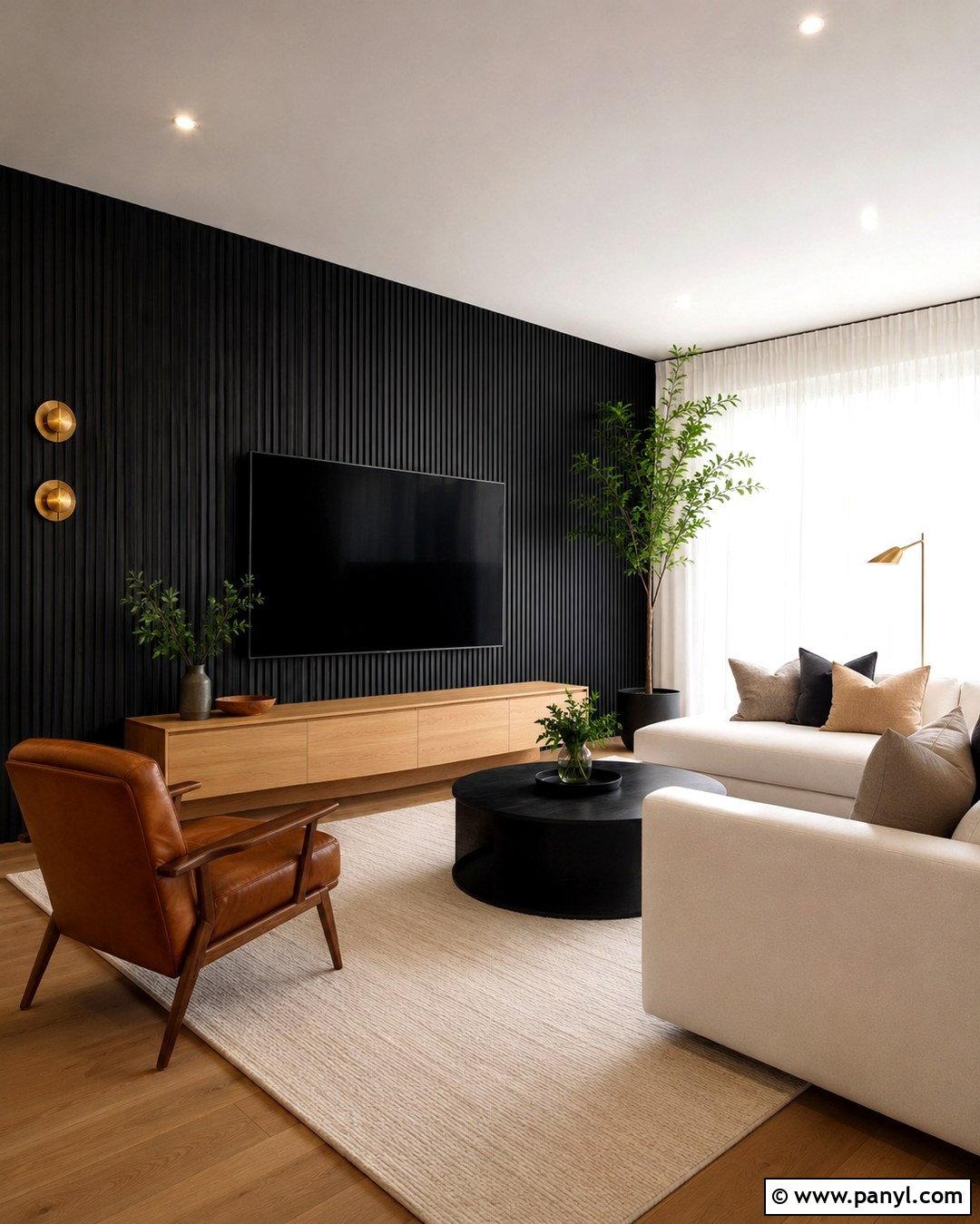
Matte black wood panels create a striking modern living room when the rest of the space is intentionally light. Install slim vertical slats on one wall, using a black background between them for a continuous finish. Place a low white oak media console against the wall and furnish the room with a cream sofa, caramel leather chair, and large ivory rug. Warm oak flooring prevents the black from feeling severe, while brushed brass lighting adds a controlled metallic accent. Keep window coverings sheer and off-white to maximize daylight. Green plants can soften the strong geometry, but use only a few substantial pieces. The matte finish minimizes glare and reveals the rhythm of the slats, producing a bold yet comfortable room.
Conclusion:
Choosing among 20 Wood Panel Colors becomes easier when you consider the entire room rather than viewing the wall finish alone. Pale oak, warm white, and cream can open compact spaces, while walnut, navy, forest green, and black create stronger architectural depth. Earthy choices such as sage, olive, terracotta, and mushroom taupe offer color without feeling overly bright. Whatever finish you prefer, compare it with the flooring, furniture, trim, fabrics, and available daylight before making a final decision. Test paint or stain directly on a spare panel whenever possible, since grain and lighting can shift its appearance. A successful paneled room combines color, texture, practical furnishings, and balanced contrast into one complete, livable design.

Related Ideas and Inspiration:
Leave a Reply