
Pink can feel soft, earthy, energetic, elegant, or surprisingly neutral depending on its undertone and supporting palette. The best **20 pink room colors** go far beyond sugary pastels. Muted blush works beautifully with oak and cream, while dusty rose feels grounded beside olive green. Coral pink adds warmth to social spaces, and deep magenta creates drama in smaller rooms. Lighting also matters. Warm pinks glow in north-facing spaces, while cooler rose tones can balance strong sunlight. Before painting, sample each shade on several walls and check it throughout the day. The complete room looks below pair pink walls with practical furniture, flooring, lighting, textiles, and decor, making it easier to recreate your favorite from these **20 pink room colors**.

1. Blush Pink Bedroom
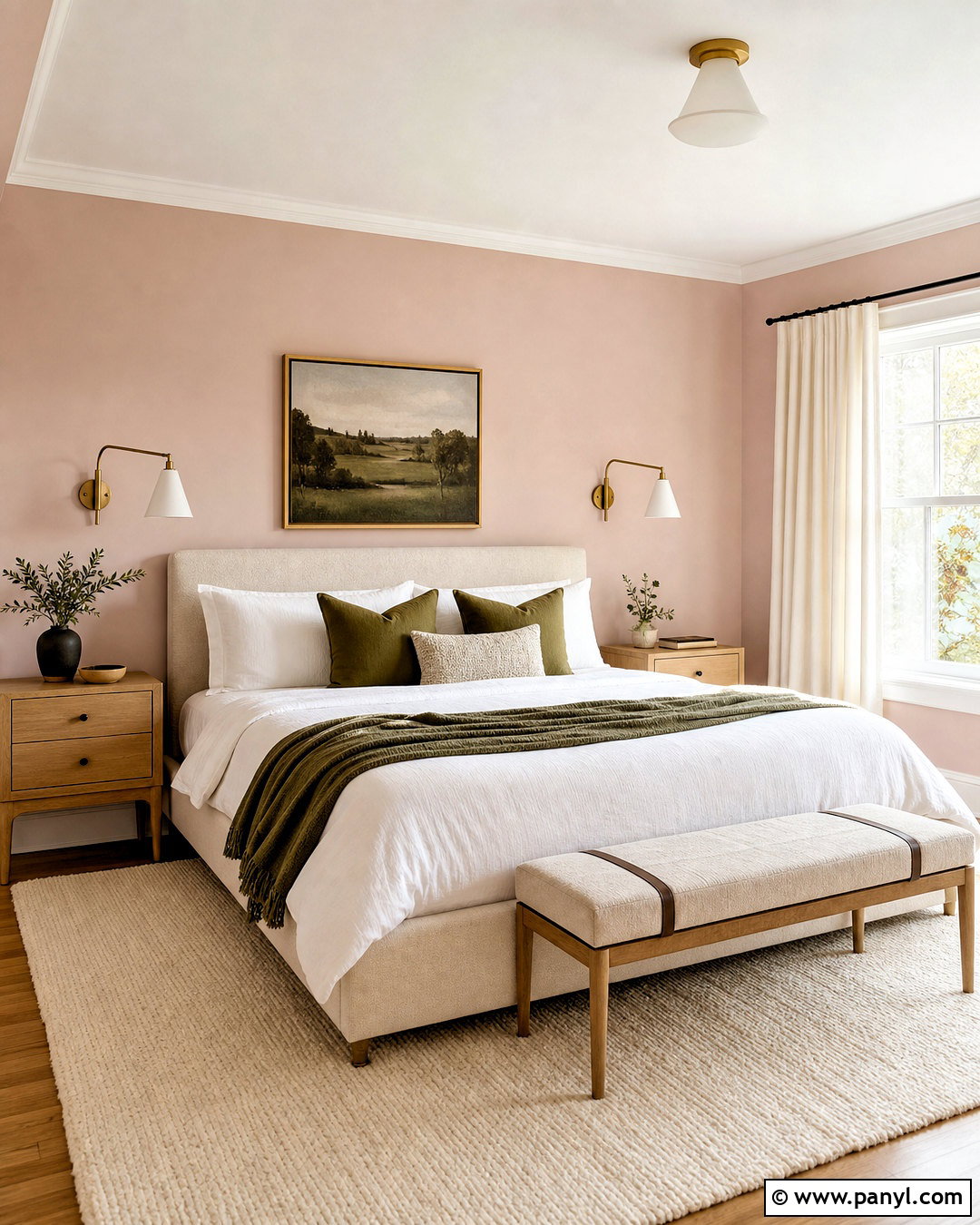
A blush pink bedroom feels restful when the color is treated like a warm neutral. Paint every wall a pale pink with a soft beige undertone, then keep the ceiling and trim creamy white. Choose an upholstered oatmeal bed with simple lines and layer it with white linen, blush quilts, and muted taupe pillows. Light oak nightstands prevent the palette from becoming overly sweet, while brushed brass sconces add a polished glow. Ground the room with a cream wool rug and natural oak flooring. For contrast, introduce one or two olive green accents through a bench, artwork, or leafy plant. Linen curtains in warm ivory complete this calm, comfortable bedroom without competing with the delicate walls.
2. Dusty Rose Living Room
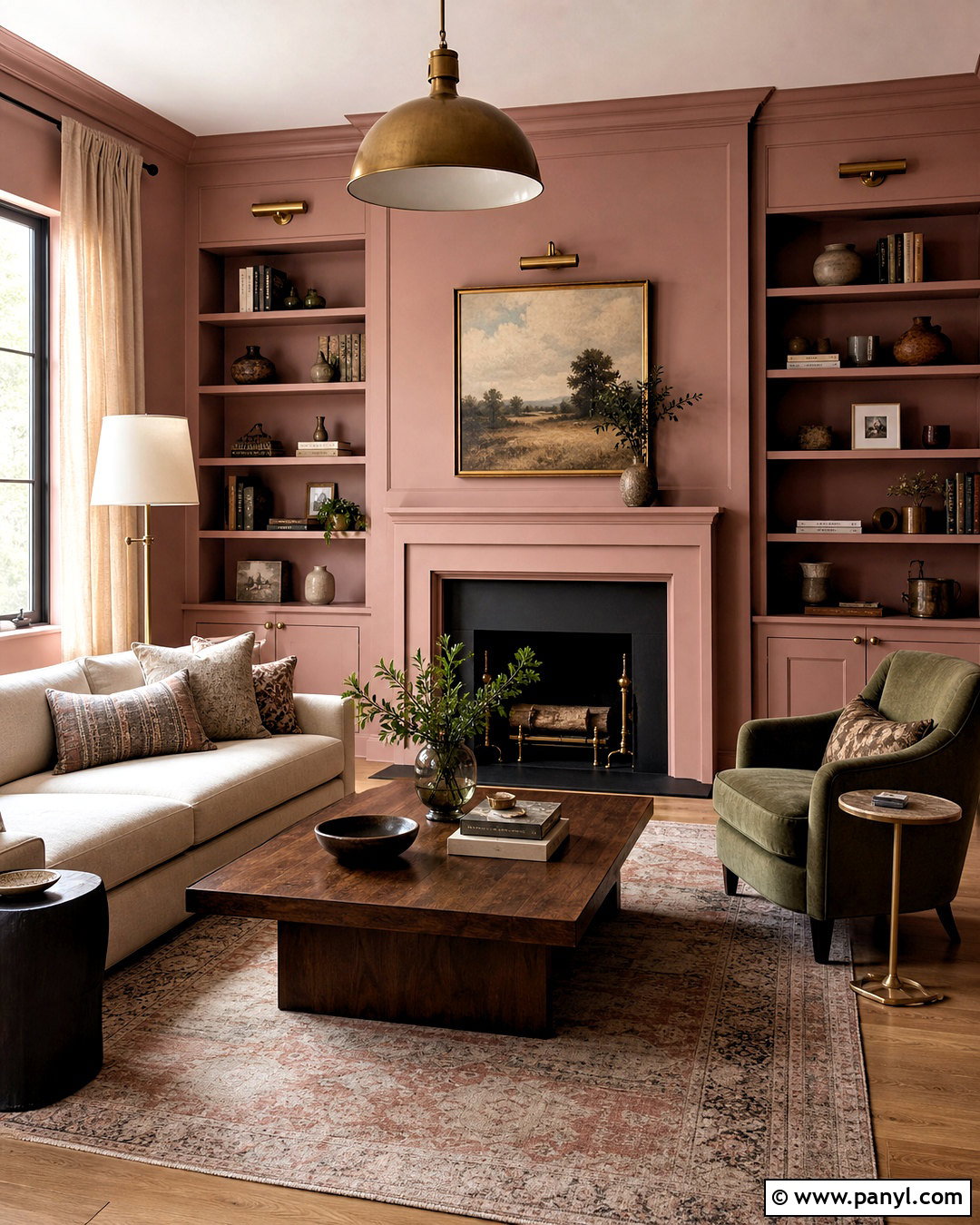
Dusty rose brings depth to a living room without the intensity of a brighter pink. Use the muted shade across the walls, built-in shelves, and fireplace surround for a cohesive background. A relaxed cream sofa keeps the center of the room light, while an olive green armchair creates an earthy counterpoint. Add a walnut coffee table, aged brass floor lamp, and patterned rug containing rose, tan, and charcoal. Curtains in natural flax linen soften the windows without matching the walls too closely. Display pottery, framed landscapes, and dark wood accents instead of overly delicate accessories. This combination works especially well in traditional or transitional rooms because the gray-brown undertones make dusty rose feel established, warm, and easy to live with.
3. Mauve Pink Dining Room
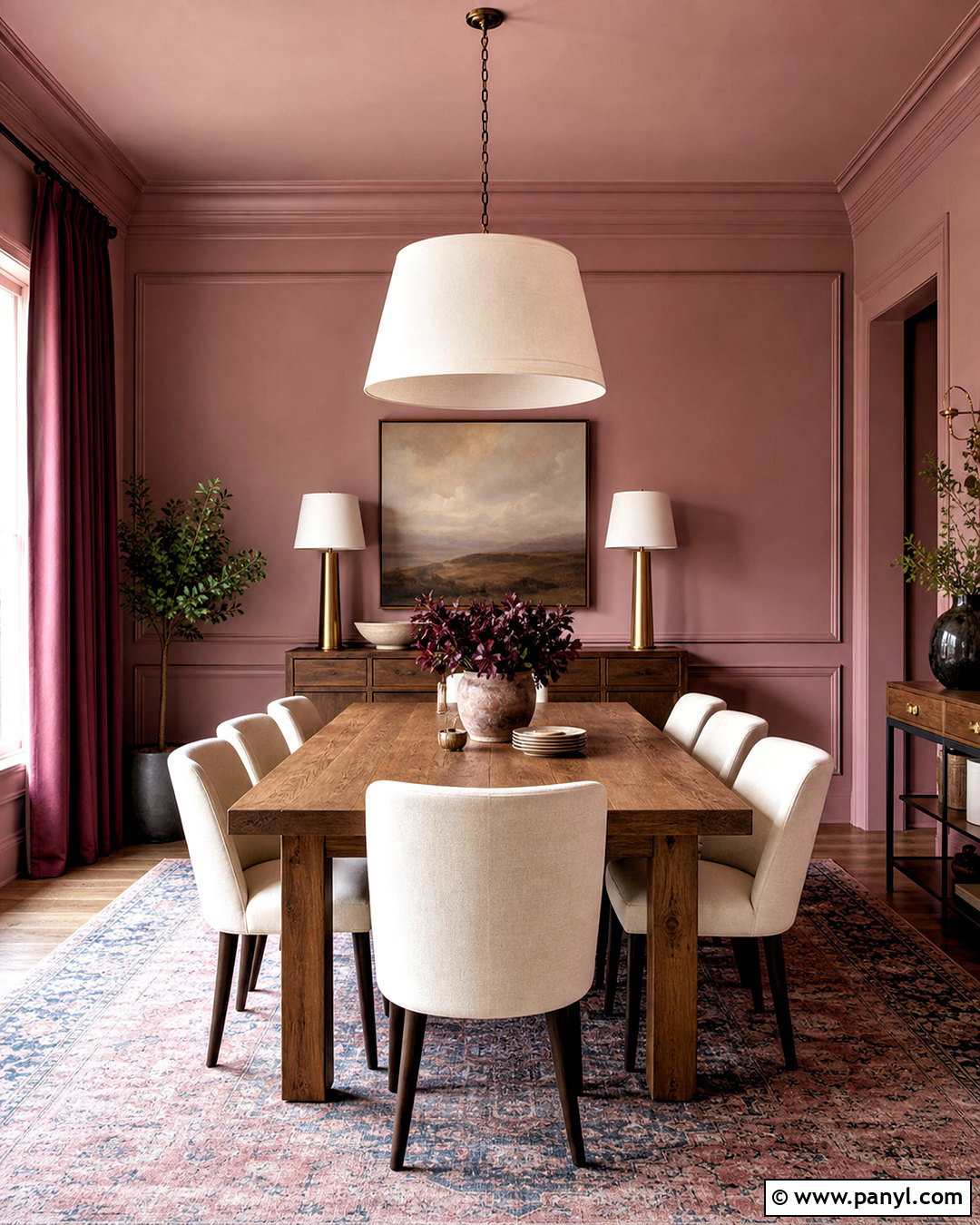
Imagine a dining room wrapped in a smoky pink that shifts between rose and muted purple. Mauve pink creates an intimate setting, especially when used on walls, molding, and built-in cabinetry. Balance its depth with a medium oak dining table and cream upholstered chairs. A large linen pendant or plaster chandelier keeps the lighting soft and modern. Use warm white on the ceiling so the room does not feel enclosed. Burgundy napkins, plum glassware, and muted botanical artwork can deepen the palette, while brushed brass hardware introduces subtle shine. Underfoot, select a vintage-style rug with faded pink, brown, and blue details. The finished space feels sophisticated enough for formal meals but still relaxed for everyday family dining.
4. Peach Pink Kitchen
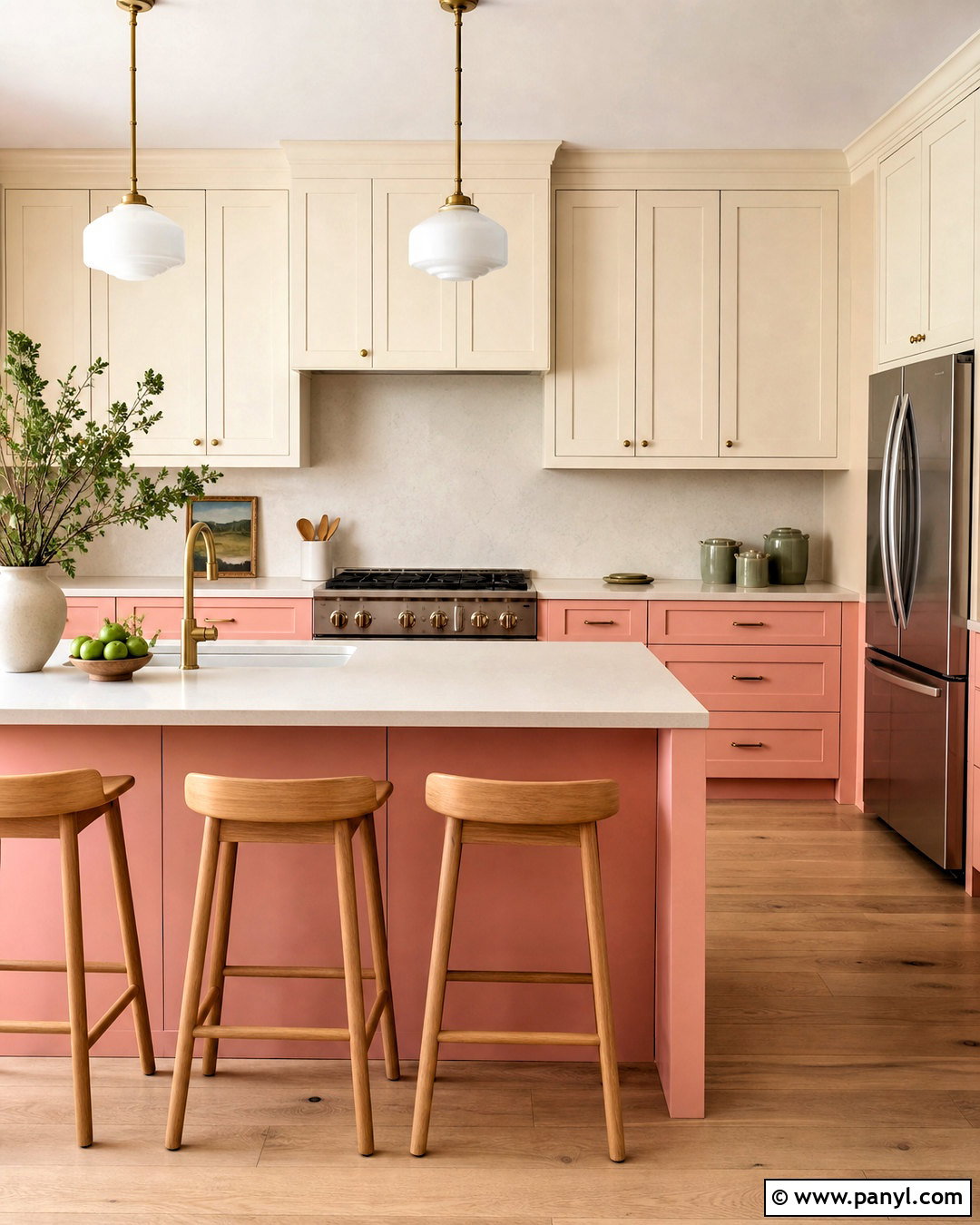
Peach pink gives a kitchen warmth without making it look overly colorful. Apply the shade to Shaker-style lower cabinets and use creamy white cabinets above to maintain an open feeling. A pale quartz backsplash and countertop provide a clean transition between both colors. Add unlacquered brass pulls, light oak stools, and white oak flooring for an inviting natural finish. Soft terracotta accessories can strengthen the warm undertone, while a few sage green ceramics provide gentle contrast. Choose simple milk-glass pendants above the island and keep appliances in stainless steel or warm white. This complete palette suits kitchens with limited natural light because peach pink brings brightness and warmth while remaining softer and more practical than saturated coral cabinetry.
5. Plaster Pink Home Office
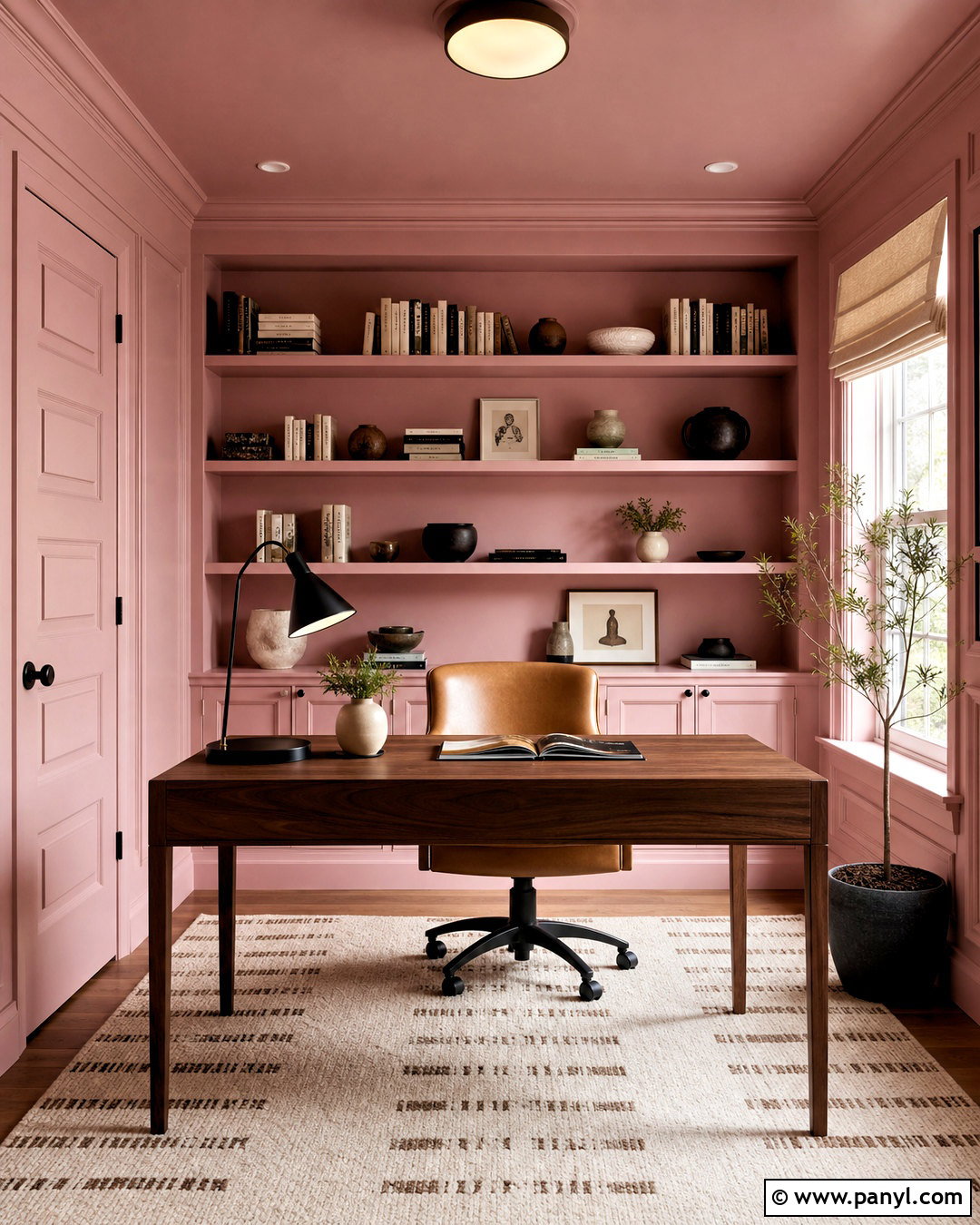
Plaster pink has an earthy, mineral quality that can make a home office feel focused rather than feminine. Color-drench the walls, trim, bookcases, and ceiling in the same muted pink, using a slightly glossier finish on woodwork for definition. Place a streamlined walnut desk near the window and pair it with a camel leather chair. Closed lower cabinets hide office supplies, while open shelves hold books, matte ceramics, and a few black frames. A woven wool rug in cream and brown adds softness beneath the desk. Use a black task lamp and dark bronze hardware to sharpen the gentle palette. Natural linen shades filter glare and allow the pink surfaces to change subtly as daylight moves around the room.
6. Rose Pink Bathroom
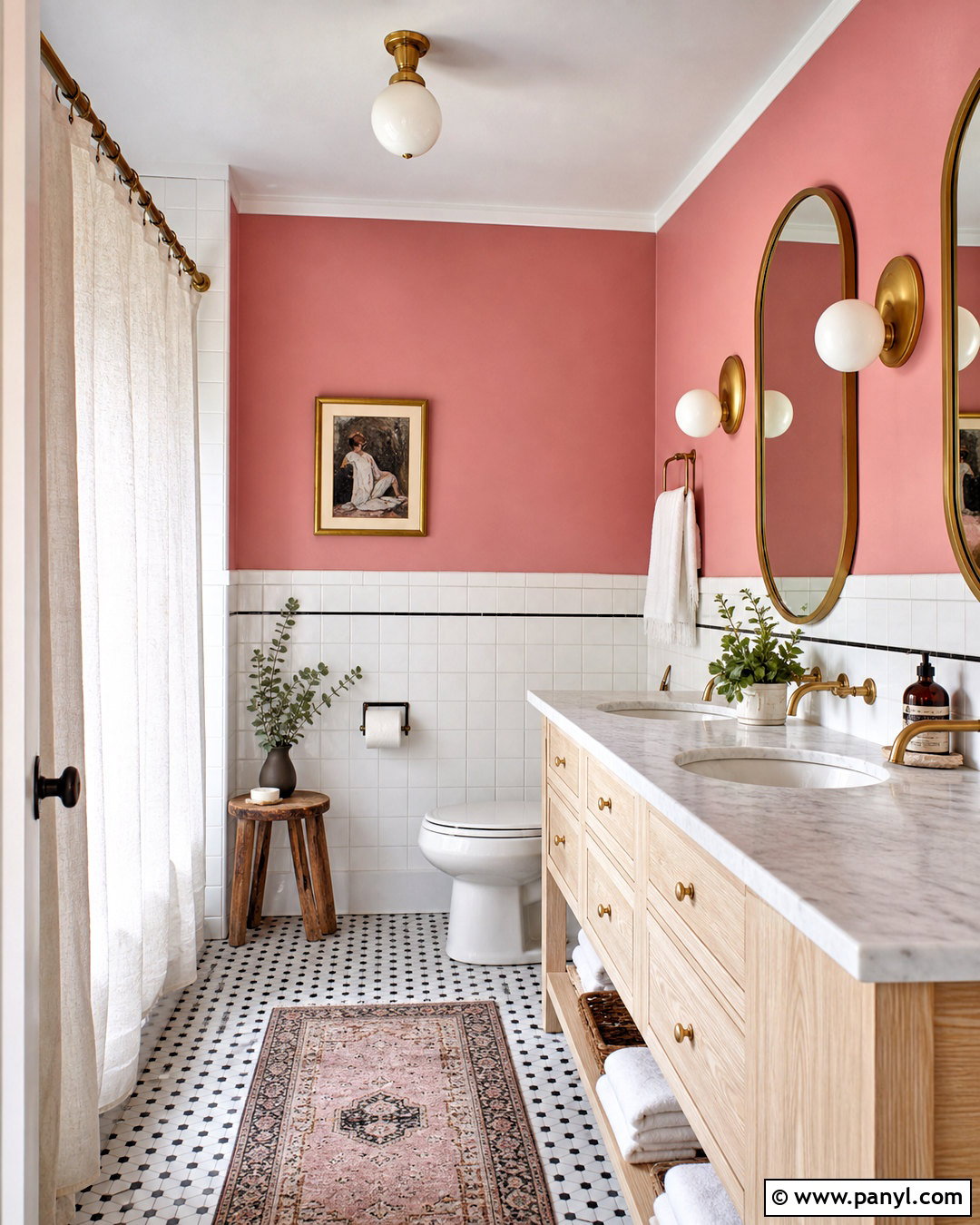
Could a rose pink bathroom feel both cheerful and polished? The key is combining warm pink walls with crisp architectural finishes. Cover the lower half of the room in glossy white square tile and paint the upper walls a clear mid-tone rose. A white oak vanity with a pale marble counter adds warmth without distracting from the color. Choose brushed brass faucets, rounded mirrors, and globe sconces for a clean vintage influence. Black-and-white mosaic floor tile gives the room structure and makes the pink feel more intentional. Finish with white towels, a simple linen shower curtain, and one small green plant. This balanced design works in family bathrooms because the durable surfaces are practical while the rosy walls add personality.
7. Coral Pink Sunroom
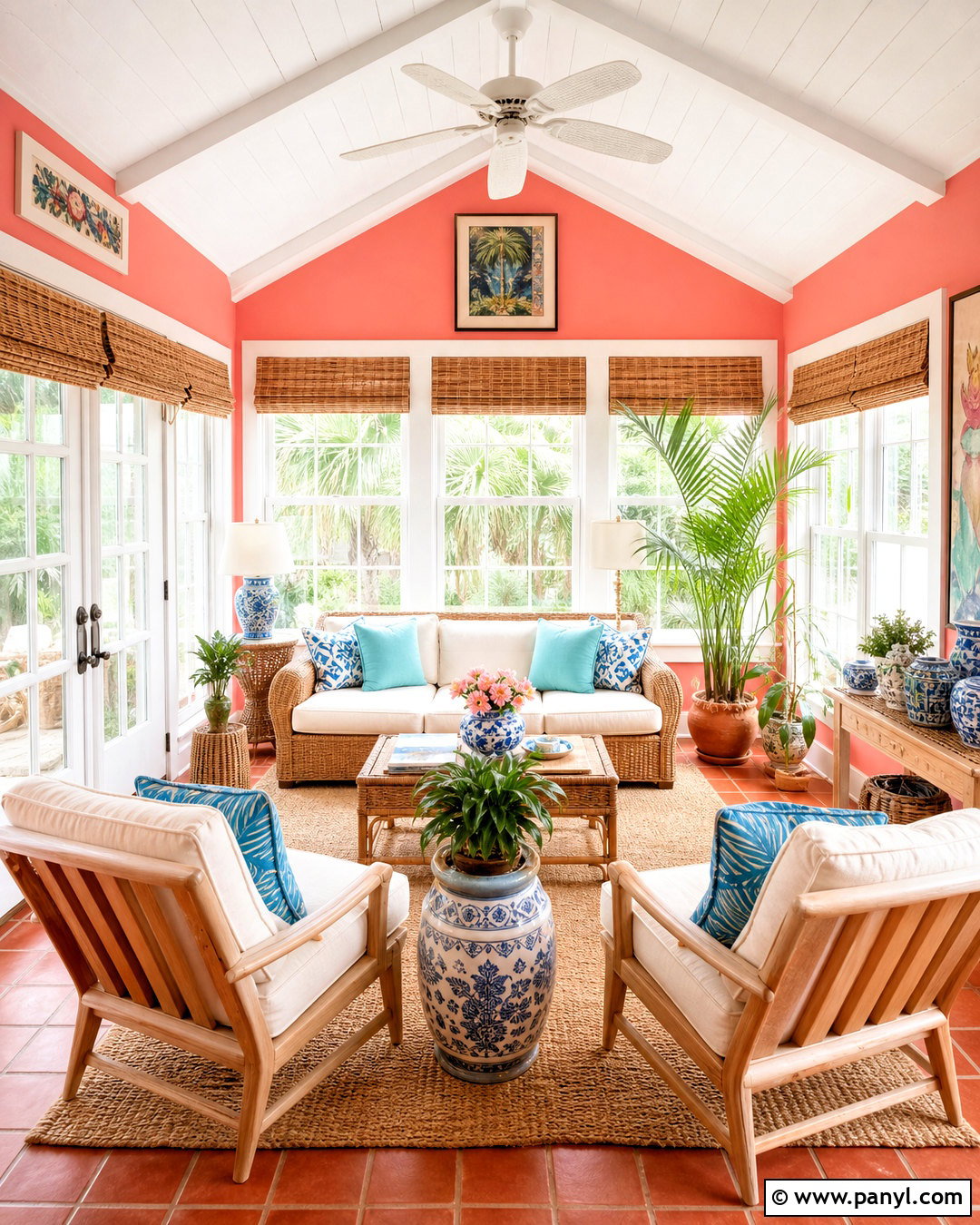
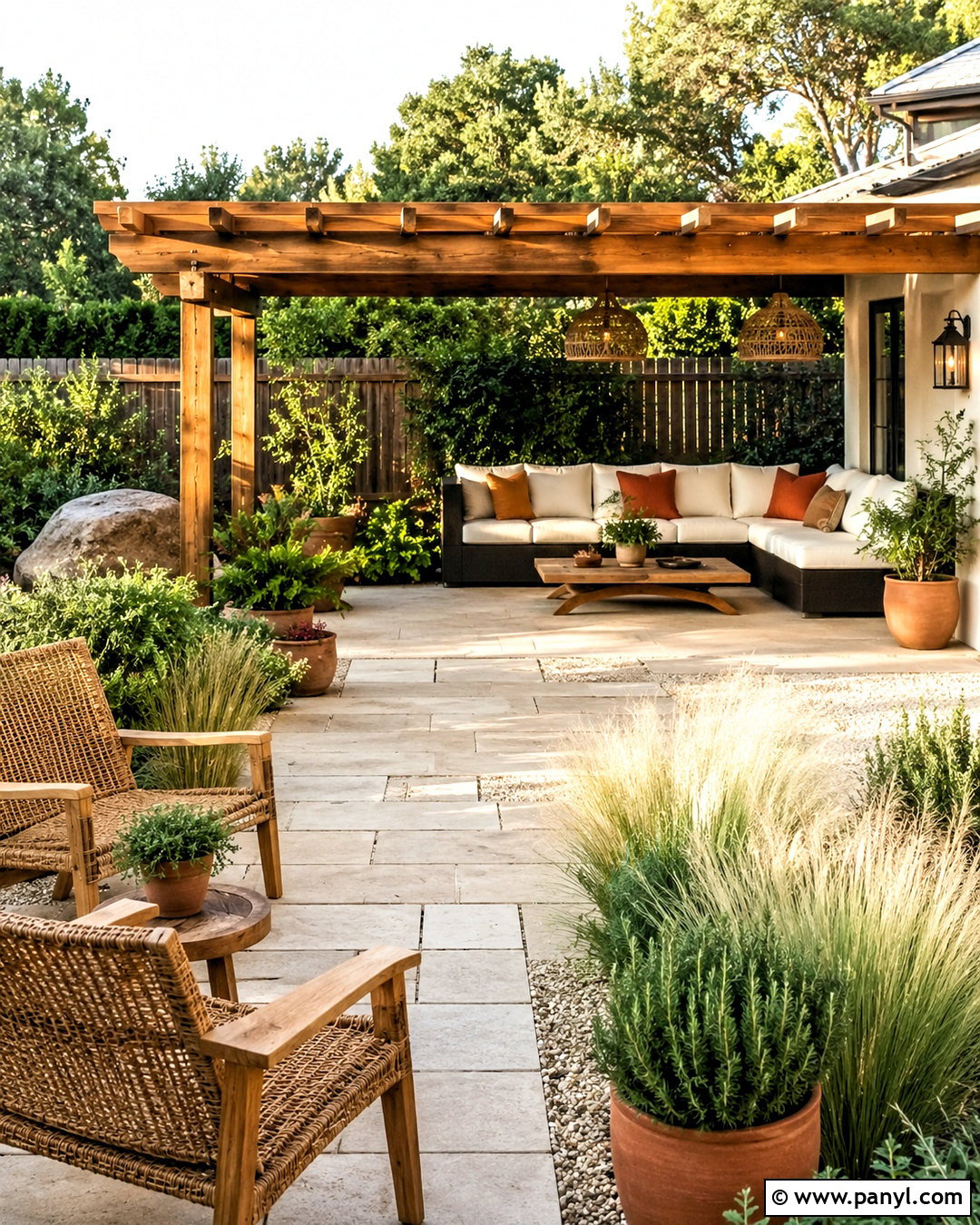
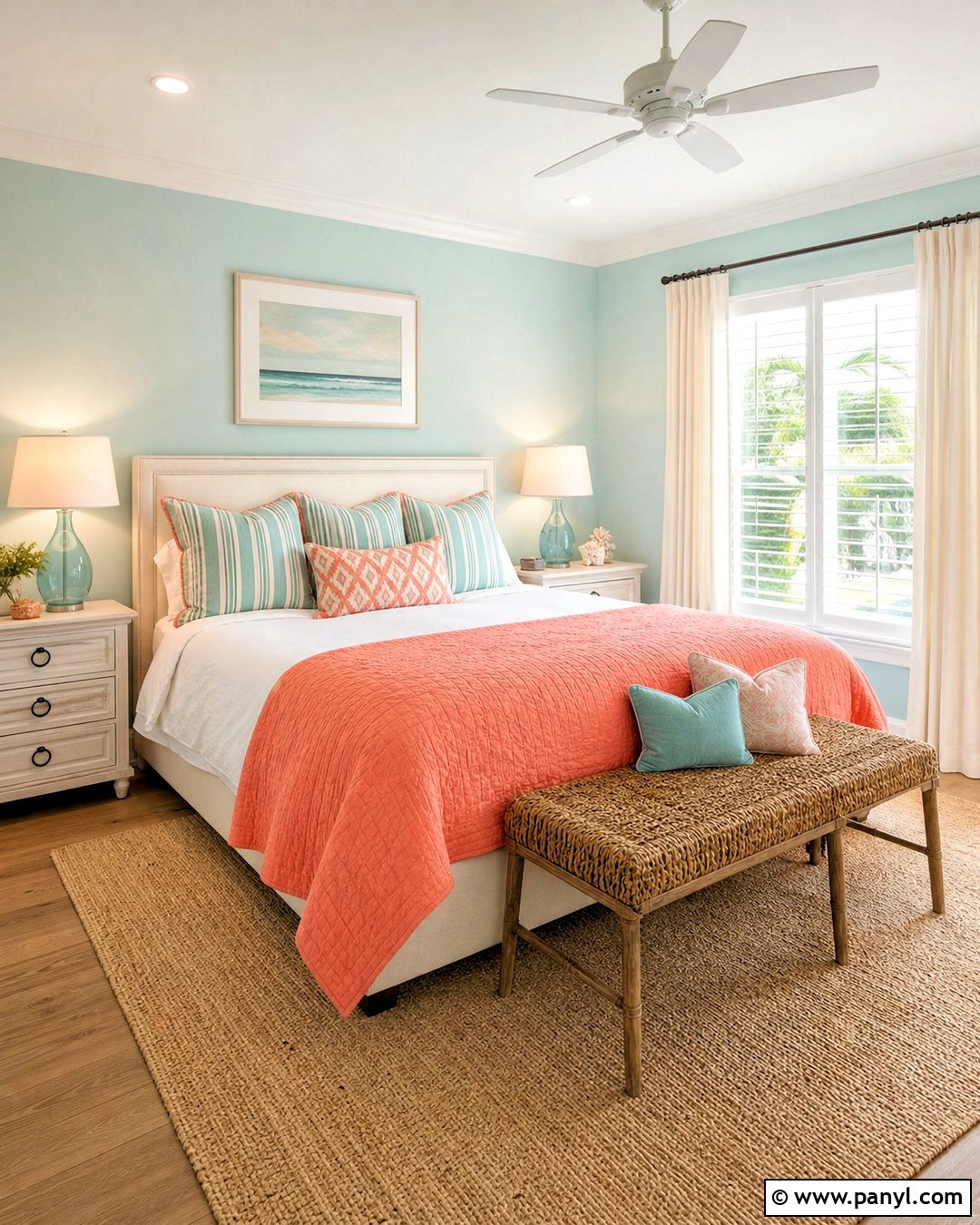
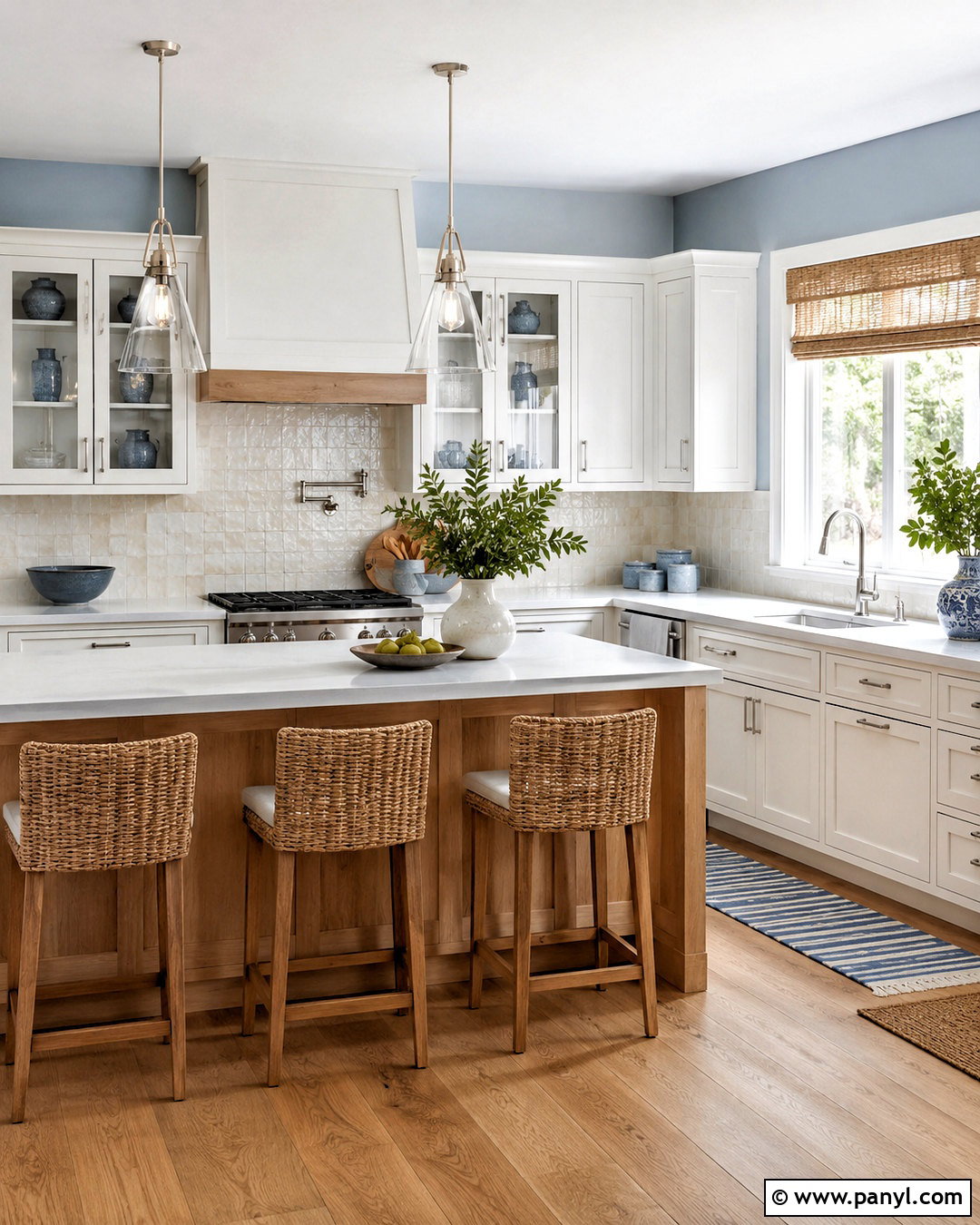
Coral pink feels lively in a sunroom where natural light can reveal its warm orange undertones. Paint the walls coral, but leave window frames and the ceiling bright white to create breathing room. Arrange a woven rattan sofa with cream cushions along the longest wall, then add two light wood lounge chairs for flexible seating. Turquoise pillows and blue-and-white pottery provide refreshing contrast. A flat-weave natural fiber rug keeps the floor casual and helps connect the furniture. Include leafy plants in terracotta pots to reinforce the indoor-outdoor setting. Instead of heavy curtains, use simple bamboo shades that control glare while preserving the airy atmosphere. The complete room should feel sunny, comfortable, and colorful without becoming visually crowded.
8. Salmon Pink Guest Room
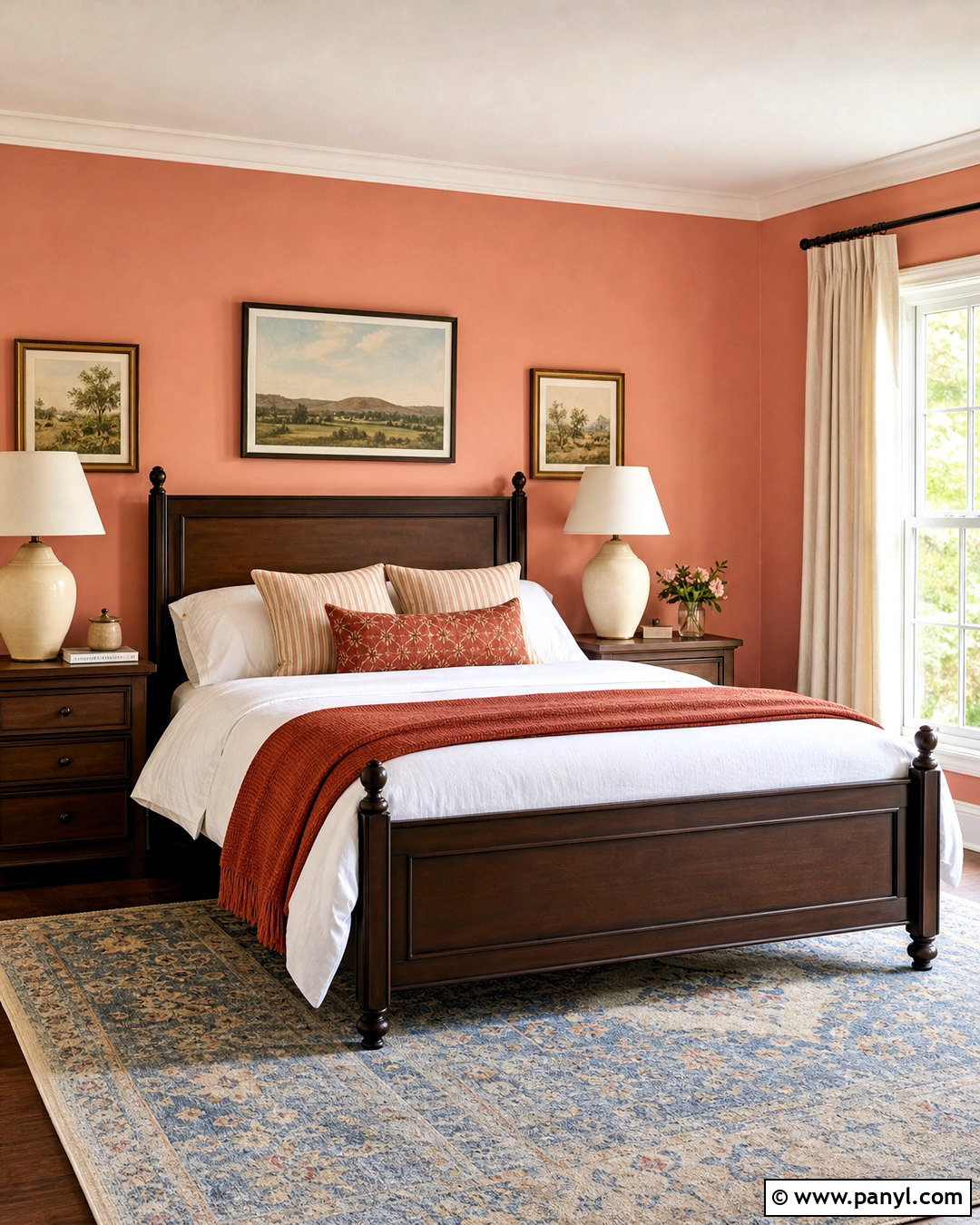
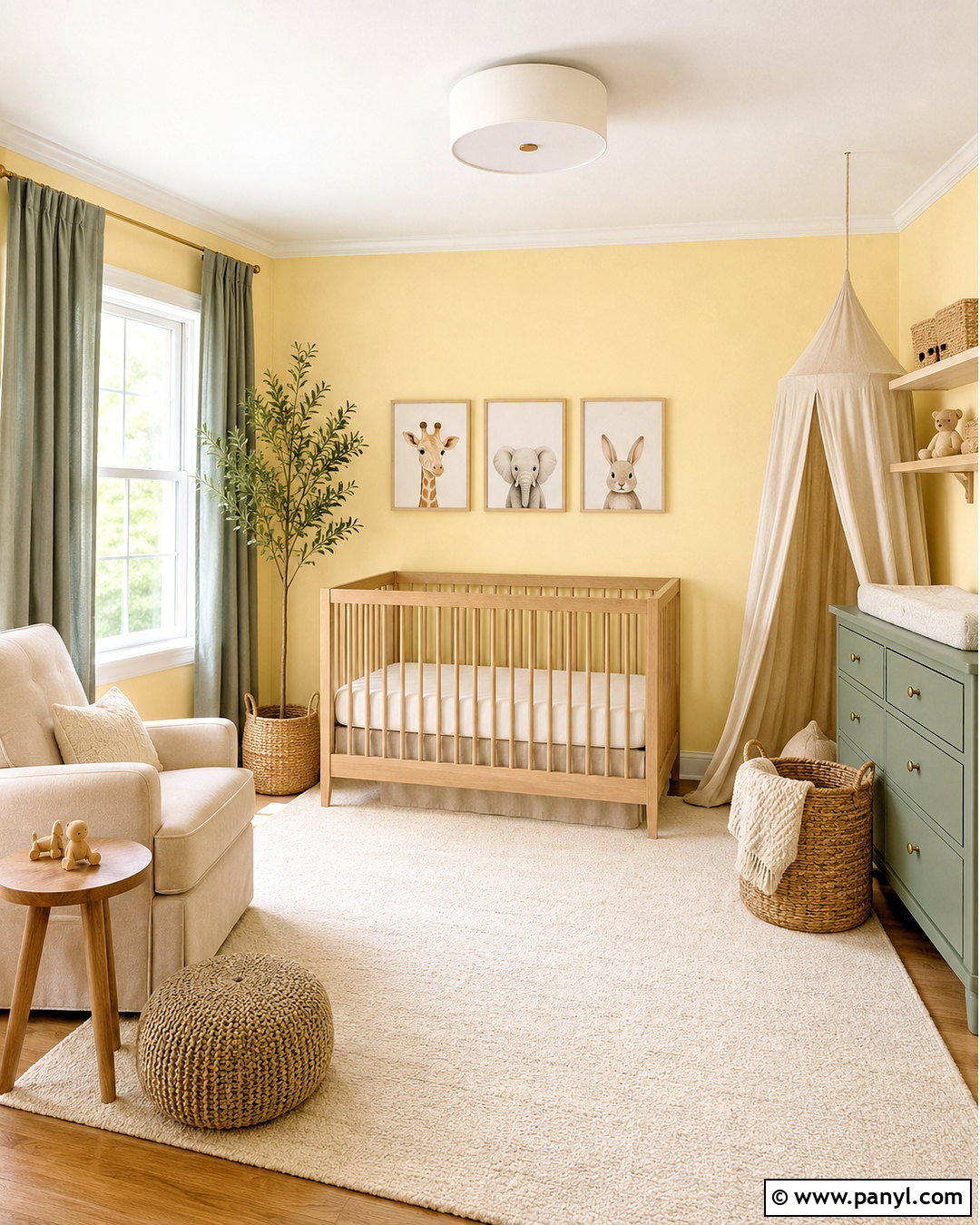
Salmon pink creates a welcoming guest room when paired with warm wood and restrained patterns. Choose a softened salmon wall color rather than a vivid orange-pink, and frame it with ivory trim. A dark walnut bed gives the pale walls definition, while crisp white bedding keeps the space fresh. Layer a rust-colored throw and striped pink-and-tan pillows for subtle variation. Place compact wooden nightstands on both sides of the bed with ceramic lamps in warm cream. A faded blue rug adds a cool note that balances the salmon undertone. Hang simple landscape prints in antique brass frames and use flax linen curtains at the windows. The final room feels collected and comfortable, offering guests color without sacrificing calm or versatility.
9. Pale Pink Nursery
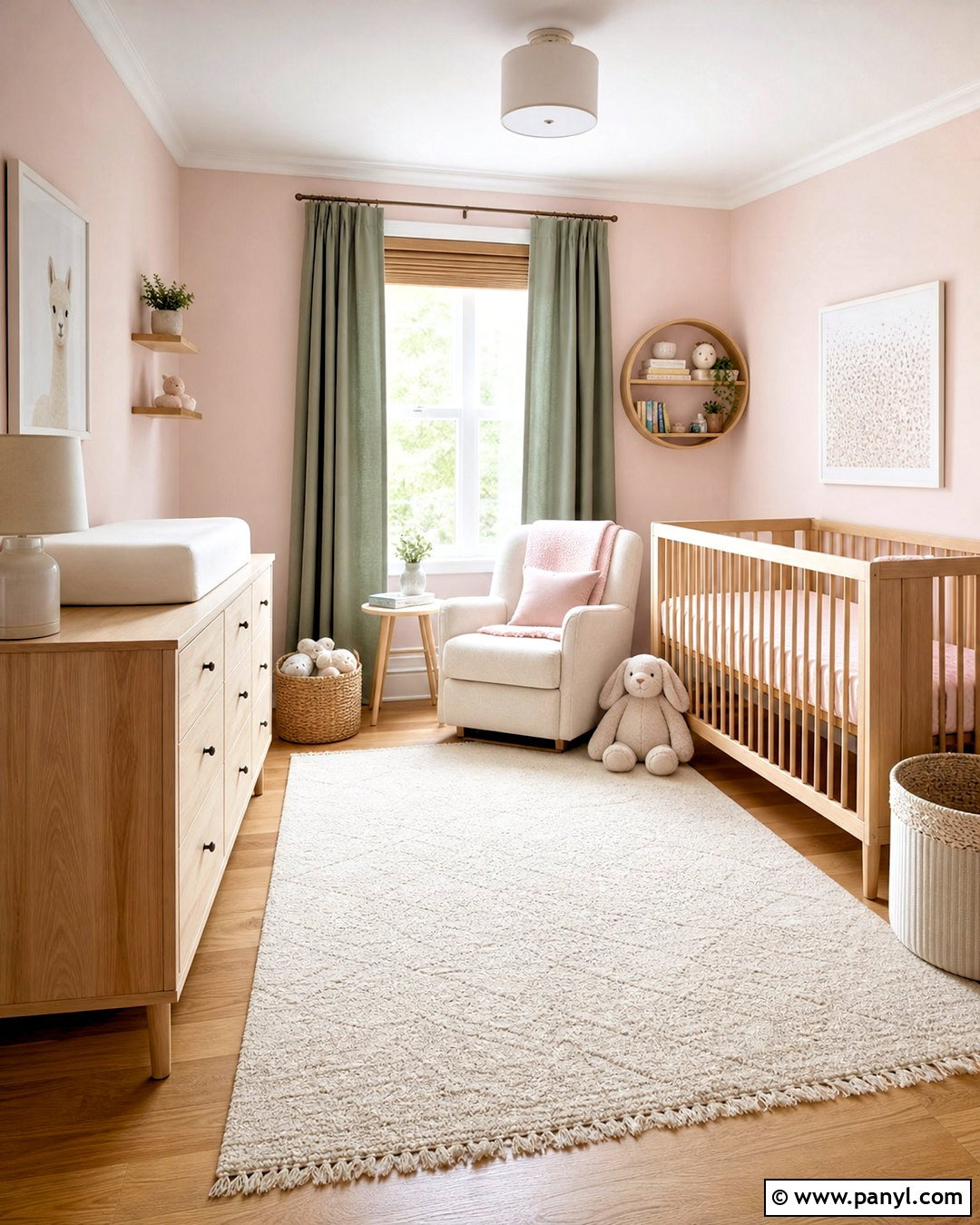
A pale pink nursery can feel timeless when the room relies on natural materials and adaptable furniture. Paint the walls a barely there shell pink, then use soft white on the ceiling, doors, and trim. Choose a natural maple crib, a comfortable cream glider, and a light wood dresser that can later function outside the nursery. An ivory washable rug creates a soft play area while keeping the palette bright. Introduce muted sage through blackout curtains, storage baskets, and a simple patterned crib sheet. Add one rounded wall shelf for books and a dimmable white pendant for practical lighting. Avoid filling every surface with pink accessories. The gentle wall color should provide the warmth, allowing the functional pieces to remain simple and flexible.
10. Hot Pink Teen Bedroom
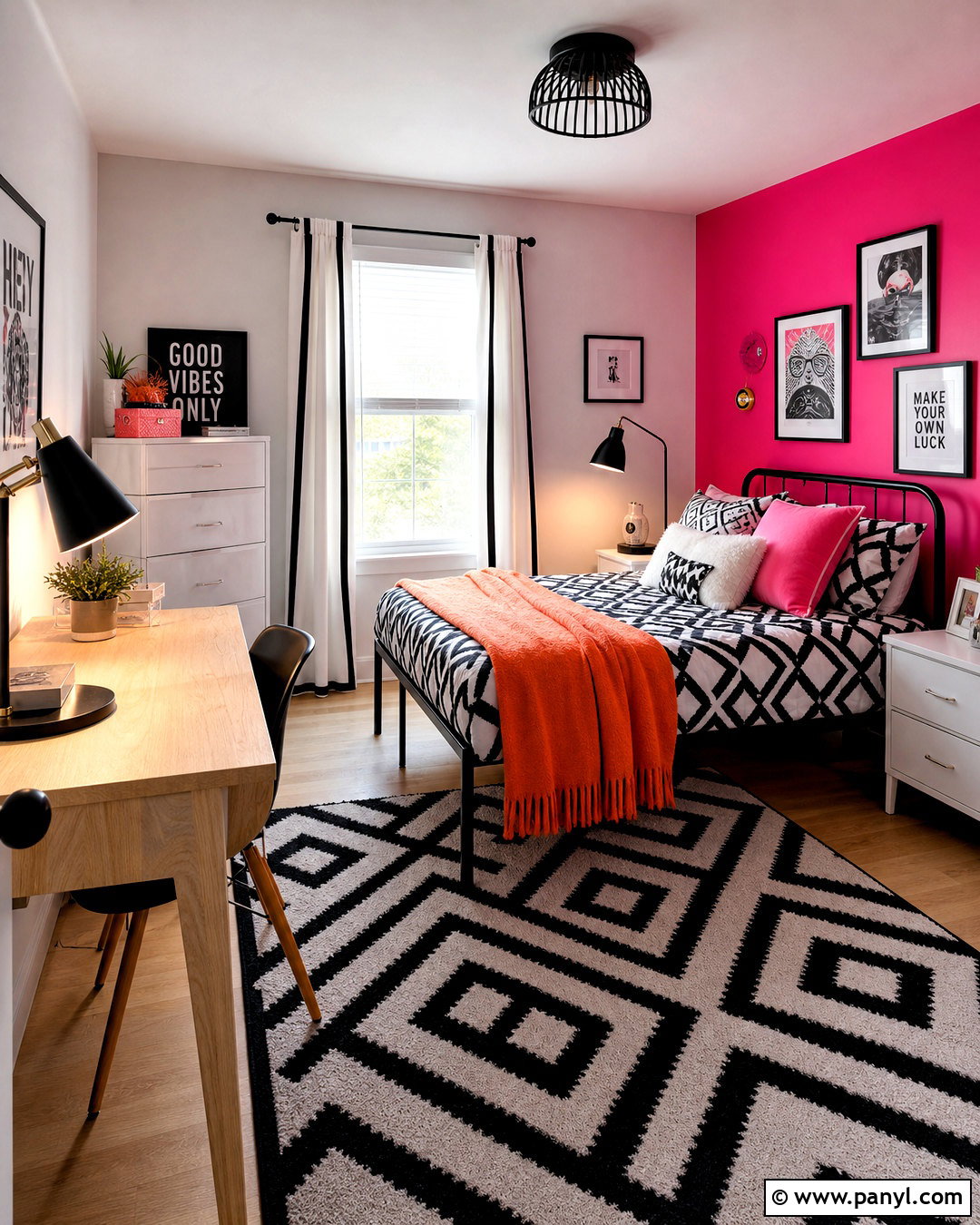
For a bold teen bedroom, hot pink works best when it has clear boundaries and strong supporting colors. Paint the wall behind the bed in saturated hot pink, leaving the remaining walls clean white. Choose a low black metal bed and layer it with white bedding, graphic black pillows, and a bright orange throw. A light wood desk creates a useful homework area, while a rolling white drawer unit provides flexible storage. Repeat hot pink through a desk chair or geometric rug rather than many small accessories. Add matte black lighting and simple framed art to give the palette structure. This balanced layout feels energetic and expressive, yet the neutral furniture can remain in place if the room’s color scheme changes later.
11. Magenta Pink Powder Room
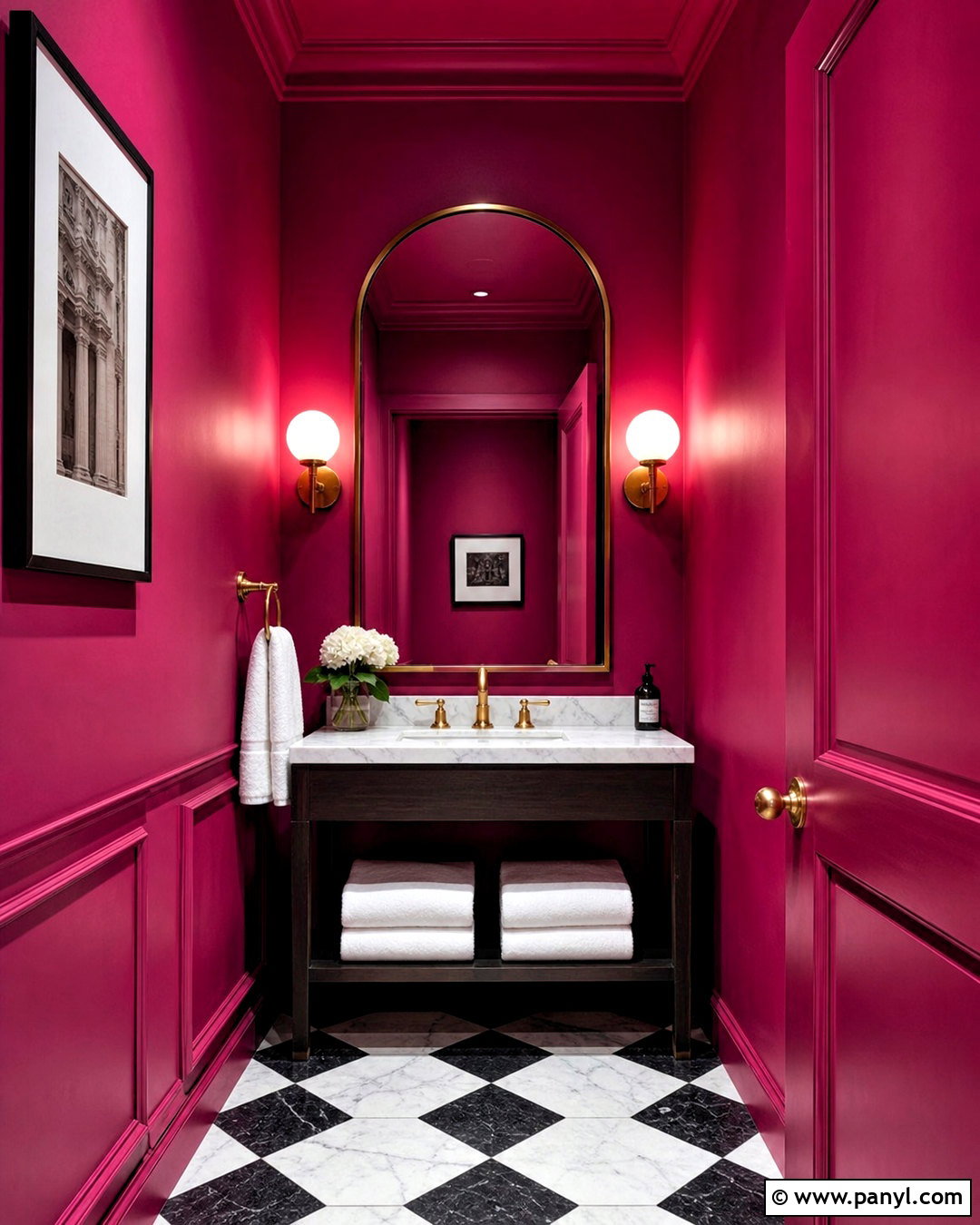
A compact powder room is an ideal place to embrace dramatic magenta pink. Paint the walls, ceiling, trim, and door in one rich shade for an immersive jewel-box effect. Install a slim dark wood vanity with a white marble top to provide contrast and useful storage. A tall arched brass mirror draws the eye upward, while two opal glass sconces spread even light across the saturated walls. Use small black-and-white marble tiles on the floor for a crisp graphic foundation. Keep accessories minimal: a white hand towel, a brass tray, and one small piece of framed art are enough. Because the room is enclosed and used briefly, the bold color feels memorable and intentional rather than overwhelming or difficult to maintain.
12. Terracotta Pink Entryway
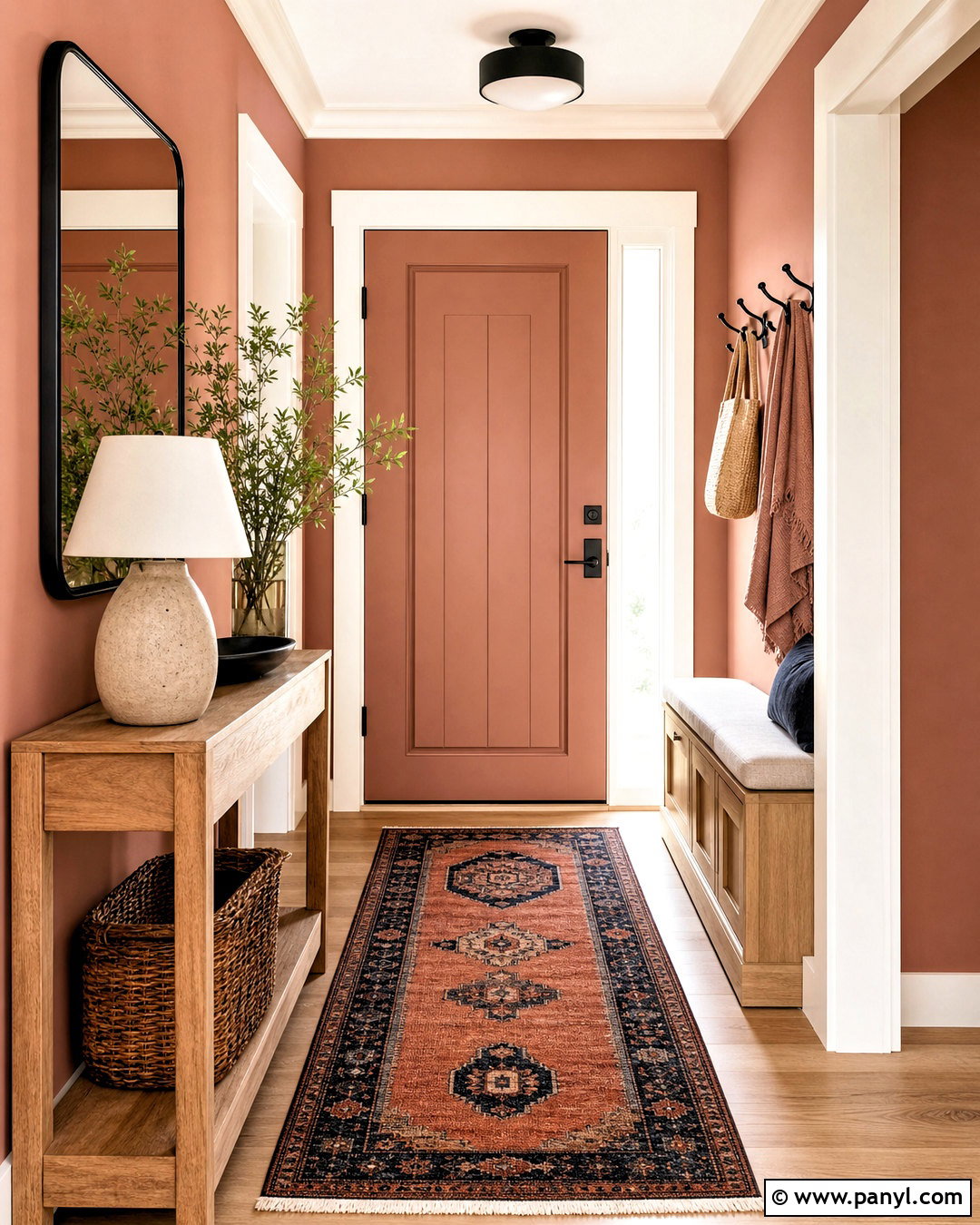
Terracotta pink offers a grounded welcome in an entryway because it combines rosy warmth with an earthy clay undertone. Paint the walls and interior side of the front door in the same muted shade, then use warm white on the ceiling and trim. A narrow oak console provides a practical landing area for keys and mail. Place a large black-framed mirror above it to reflect light and sharpen the soft wall color. Add a woven runner with rust, cream, and faded navy details, plus a small wooden bench with concealed shoe storage. A ceramic table lamp and simple wall hooks increase function without adding clutter. Green branches in a stoneware vase complete this approachable entry and connect the pink walls to natural outdoor colors.
13. Pink And Sage Living Room
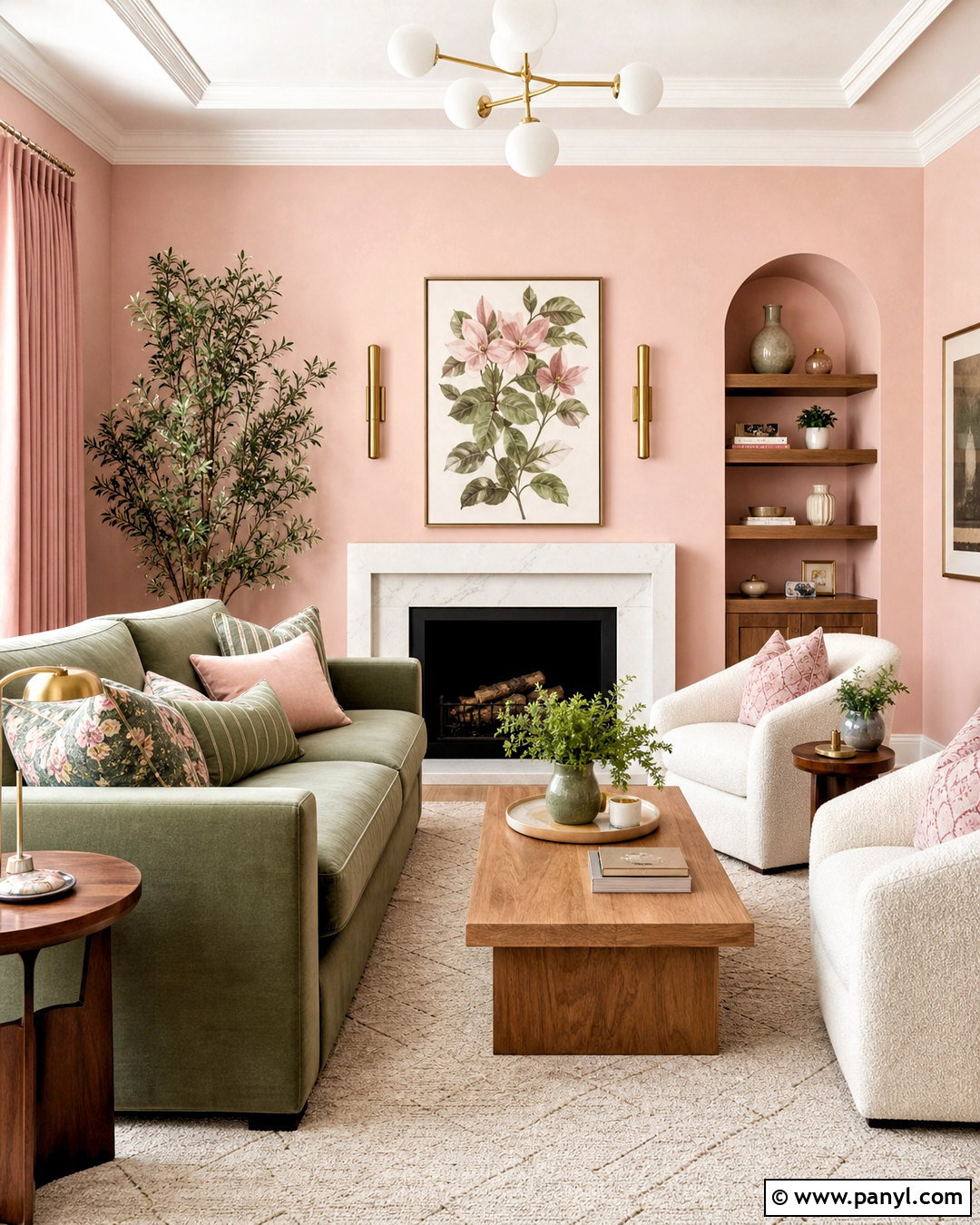
Pink and sage green create a balanced living room because one color brings warmth while the other feels cool and botanical. Use soft plaster pink on the walls and select a muted sage sofa as the main contrasting feature. Add cream boucle chairs, an oak coffee table, and a textured ivory rug to give both colors a neutral foundation. Curtains in the same pink family as the walls can make the windows appear taller and create a more continuous look. Repeat sage through patterned cushions and ceramic lamps, but avoid matching every green accent exactly. Aged brass details and walnut side tables provide additional warmth. Botanical artwork with deeper greens ties everything together, resulting in a layered room that feels fresh, restful, and grown-up.
14. Pink And Navy Bedroom
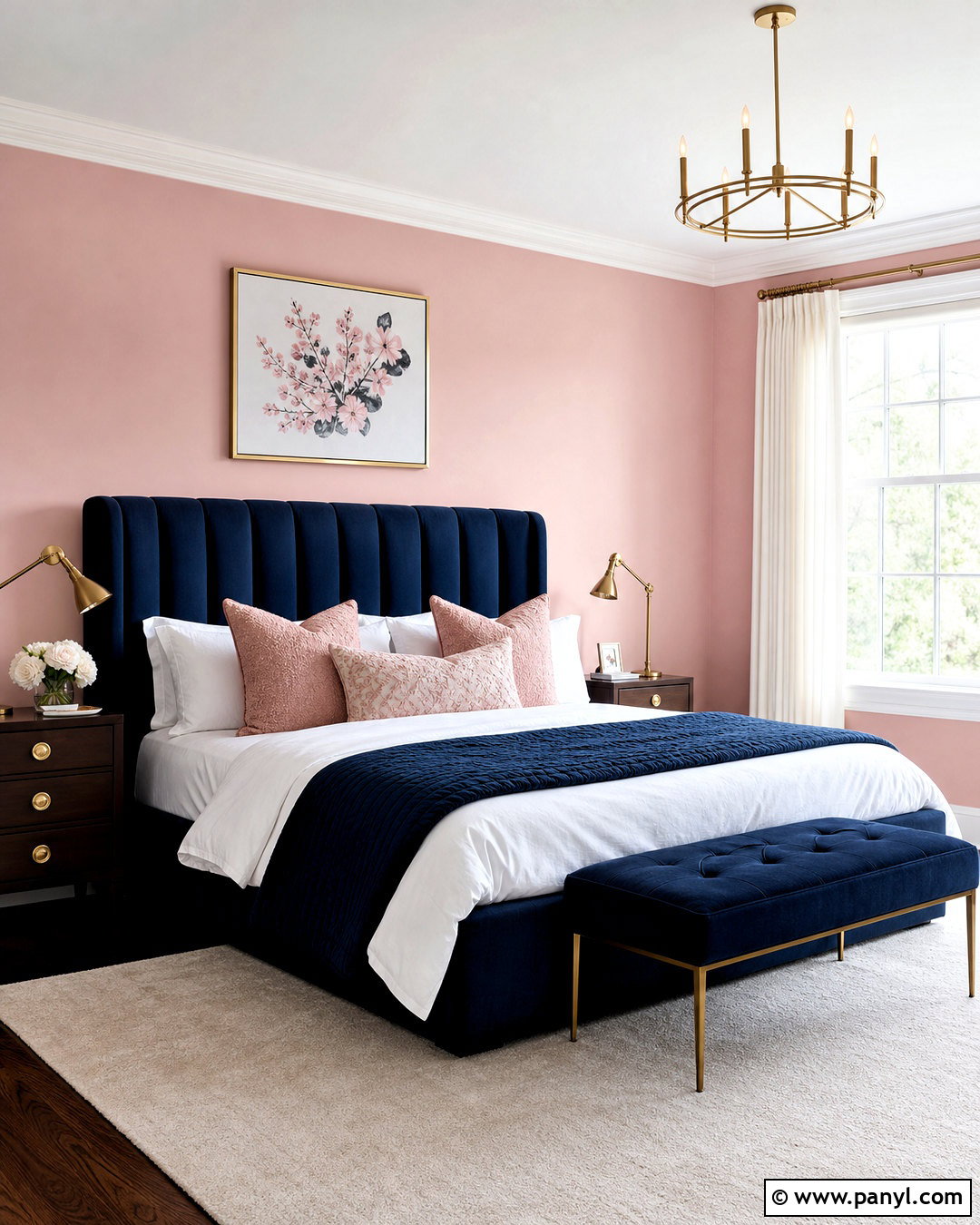
Pink becomes tailored and dramatic when combined with navy blue. Paint the bedroom walls a muted blush, then place a tall navy upholstered bed against the main wall. Layer the bed with white sheets, a navy quilt, and dusty pink pillows to distribute both colors evenly. Dark wood nightstands add visual weight, while brass reading lamps keep the scheme warm. Choose an ivory rug with a subtle blue border and use simple white curtains to avoid making the room feel too dark. A navy bench at the foot of the bed can provide extra storage and reinforce the contrast. Complete the space with abstract artwork containing pink, cream, and deep blue. The finished bedroom feels polished without losing the comfort associated with softer pink walls.
15. Pink And Burgundy Dining Room
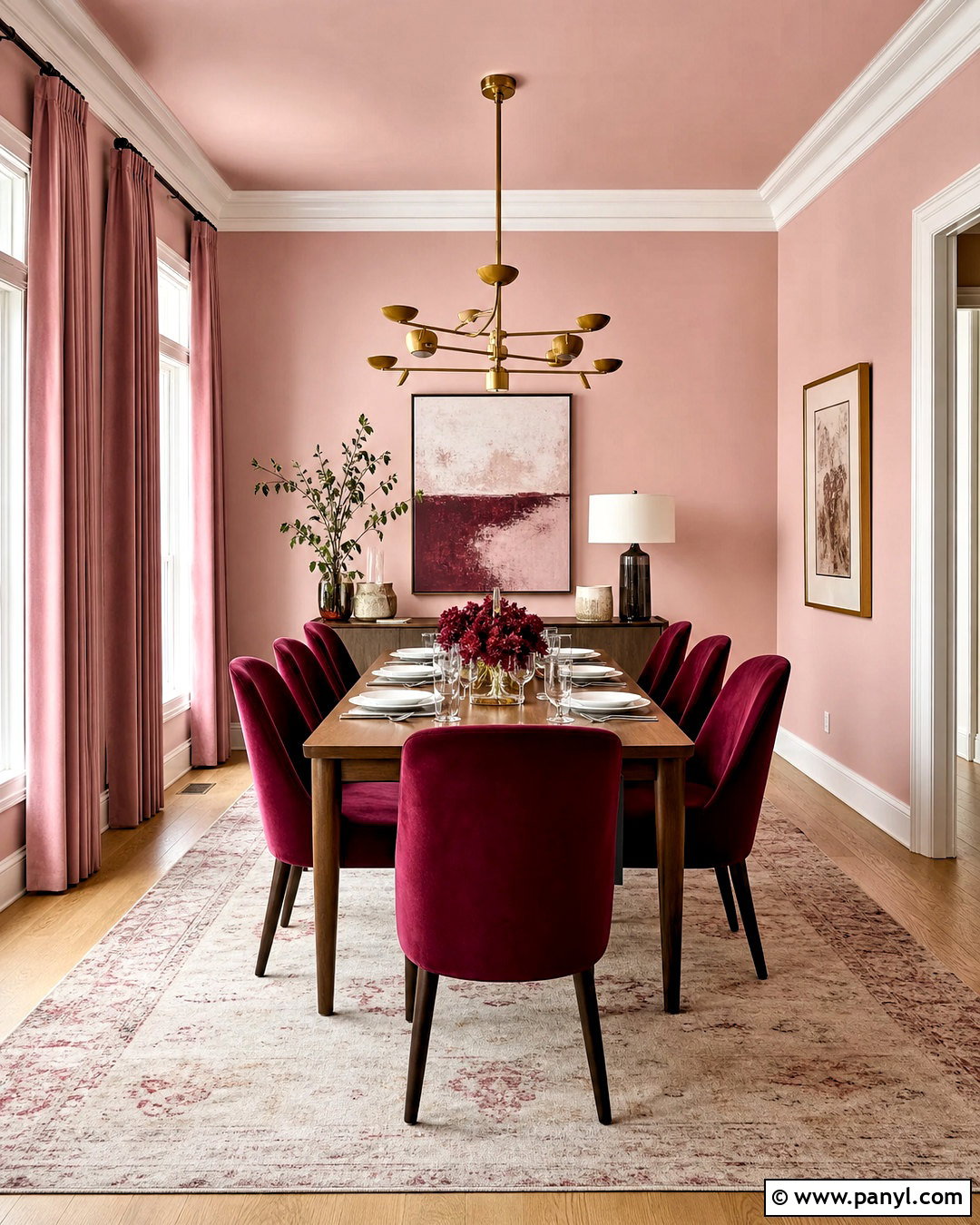
A pale pink and burgundy dining room feels rich without requiring dark walls throughout the space. Start with sandy blush paint, then anchor the room with burgundy velvet dining chairs around a rectangular walnut table. A cream ceiling and light oak flooring keep the deeper upholstery from becoming heavy. Add a sculptural brass chandelier and full-length curtains in a slightly deeper rose than the walls. An understated rug containing cream, faded red, and brown connects the furniture to the paint color. Use white dinnerware, amber glass, and dark wood serving pieces for a practical tablescape. Framed artwork with burgundy and earthy green details finishes the walls. This layered palette is especially effective in dining spaces where warmth and intimacy are desirable.
16. Pink And Black Home Office
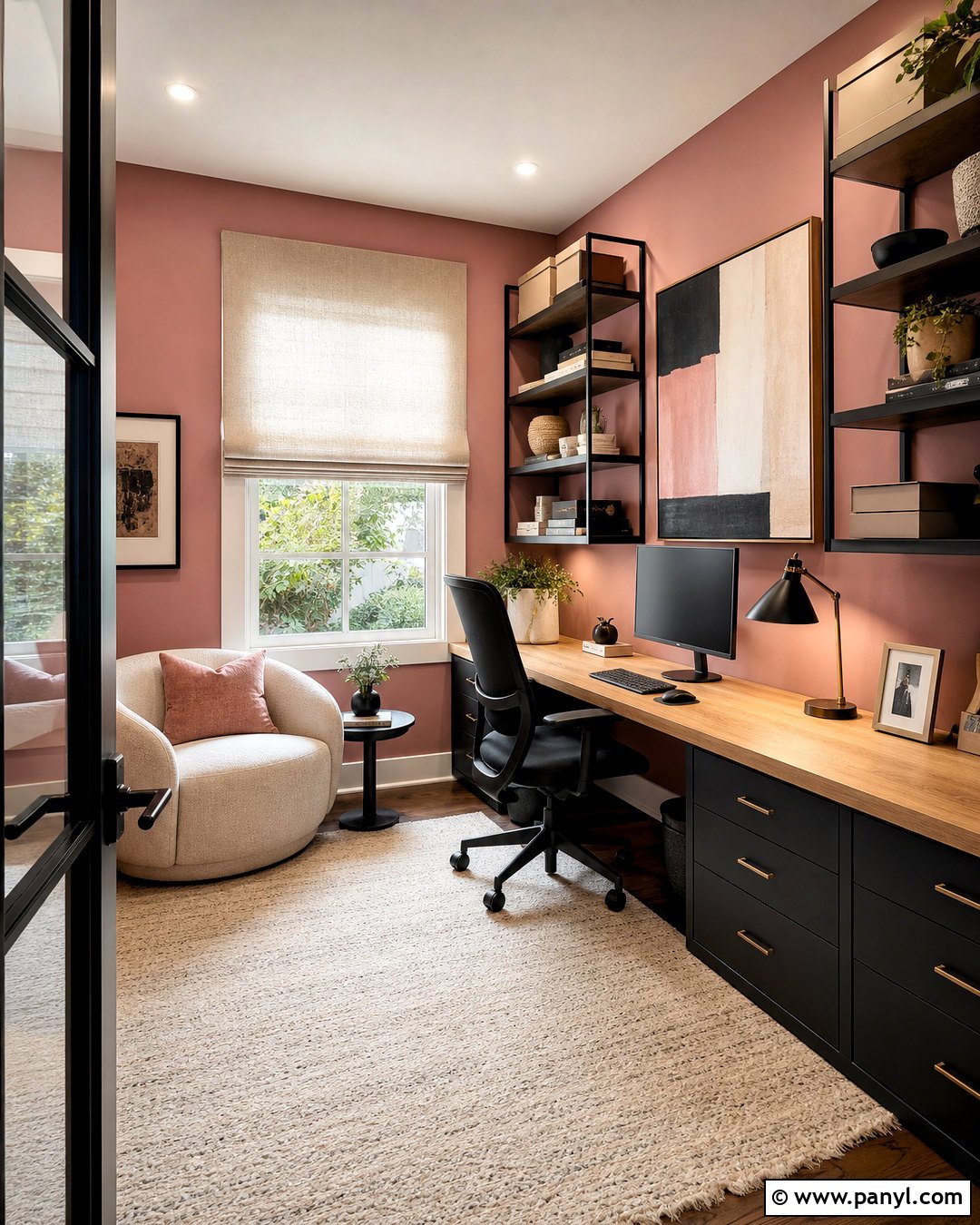
Black accents can give a pink home office a crisp, architectural character. Paint the walls a medium dusty pink and leave the ceiling warm white to maintain brightness. Install matte black lower cabinets beneath a long oak work surface, combining concealed storage with enough room for a computer and paperwork. A black ergonomic chair, slim task lamp, and metal shelving continue the strong contrast. Soften those lines with a cream wool rug, linen Roman shade, and a rounded upholstered guest chair. Keep accessories organized in matching boxes rather than scattering many decorative pieces across the desk. One oversized abstract print can bring together pink, charcoal, and tan. The resulting office feels creative and modern while remaining functional enough for daily work.
17. Pink And Cream Bedroom
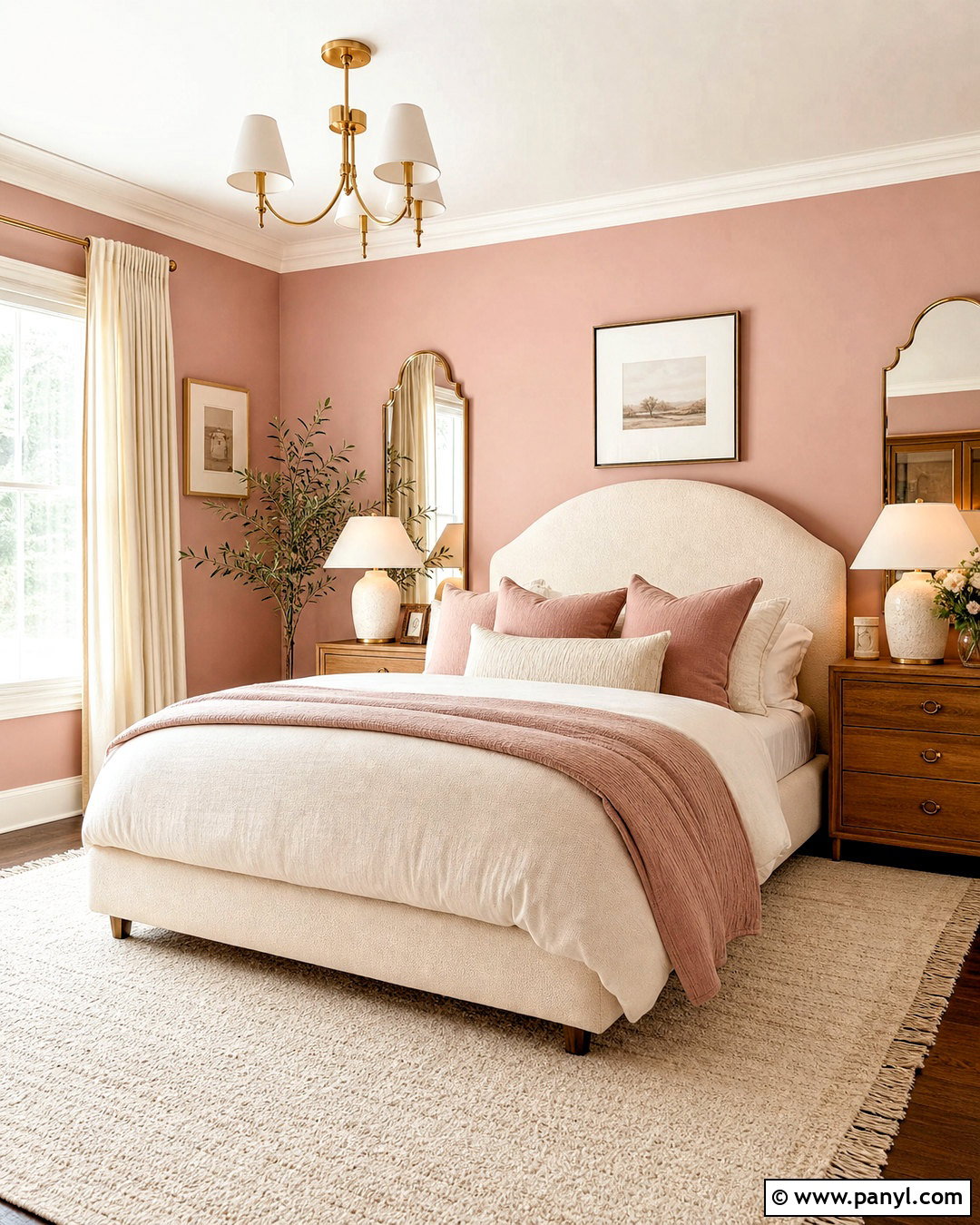
Pink and cream produce a gentle bedroom palette that feels warmer than a standard pink-and-white combination. Cover the walls in muted ballet pink and use creamy ivory on the ceiling, trim, and paneled closet doors. Choose a curved cream upholstered bed and add layered bedding in ivory, dusty rose, and pale taupe. Oak nightstands introduce natural grain, while ceramic lamps with linen shades spread soft light. Place a thick cream rug beneath the bed and hang full-length curtains in a warm neutral that sits between pink and beige. Small brass details can add definition without interrupting the quiet atmosphere. To prevent the room from looking flat, mix boucle, linen, wool, and smooth wood surfaces throughout the complete design.
18. Pink And Gray Living Room
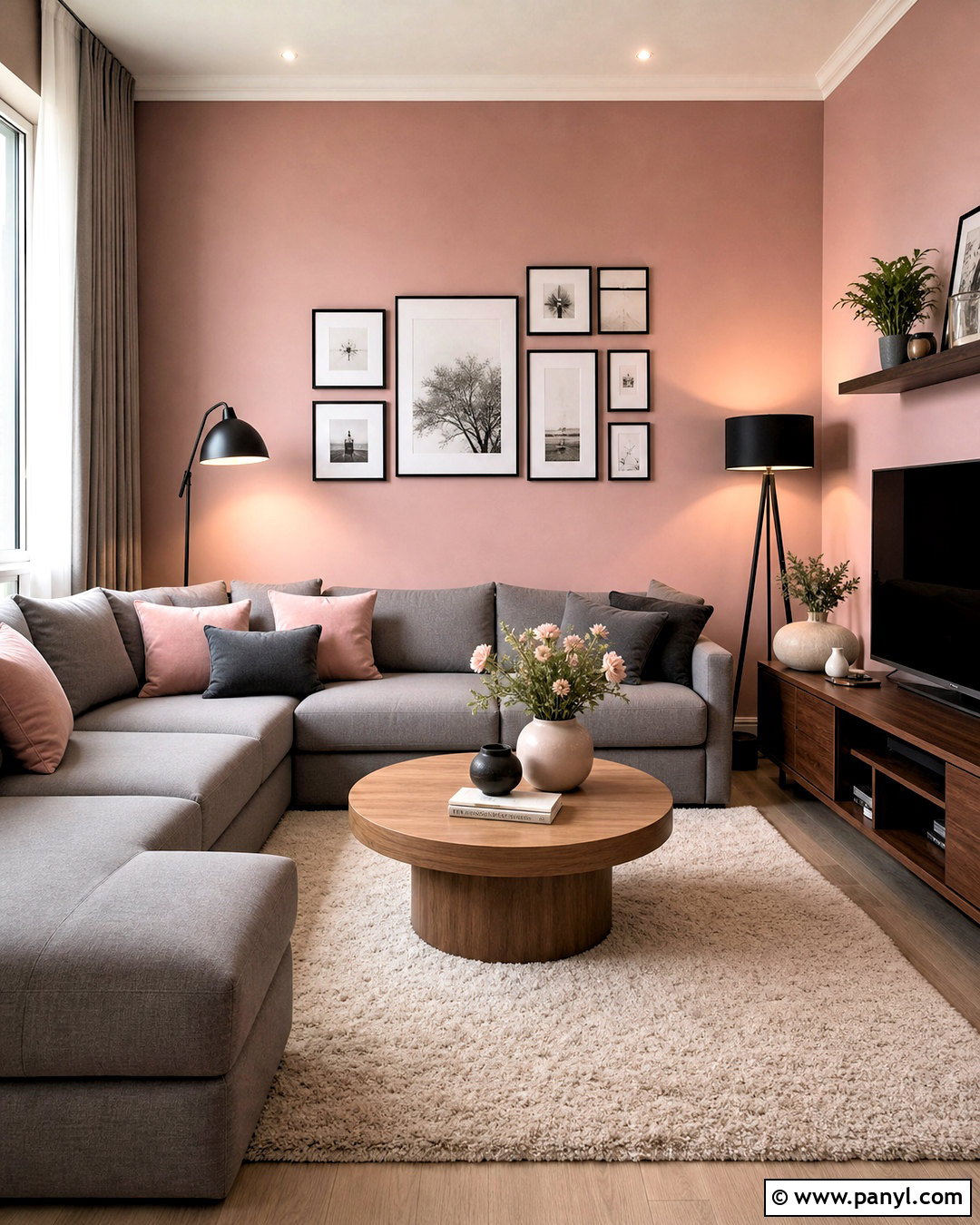
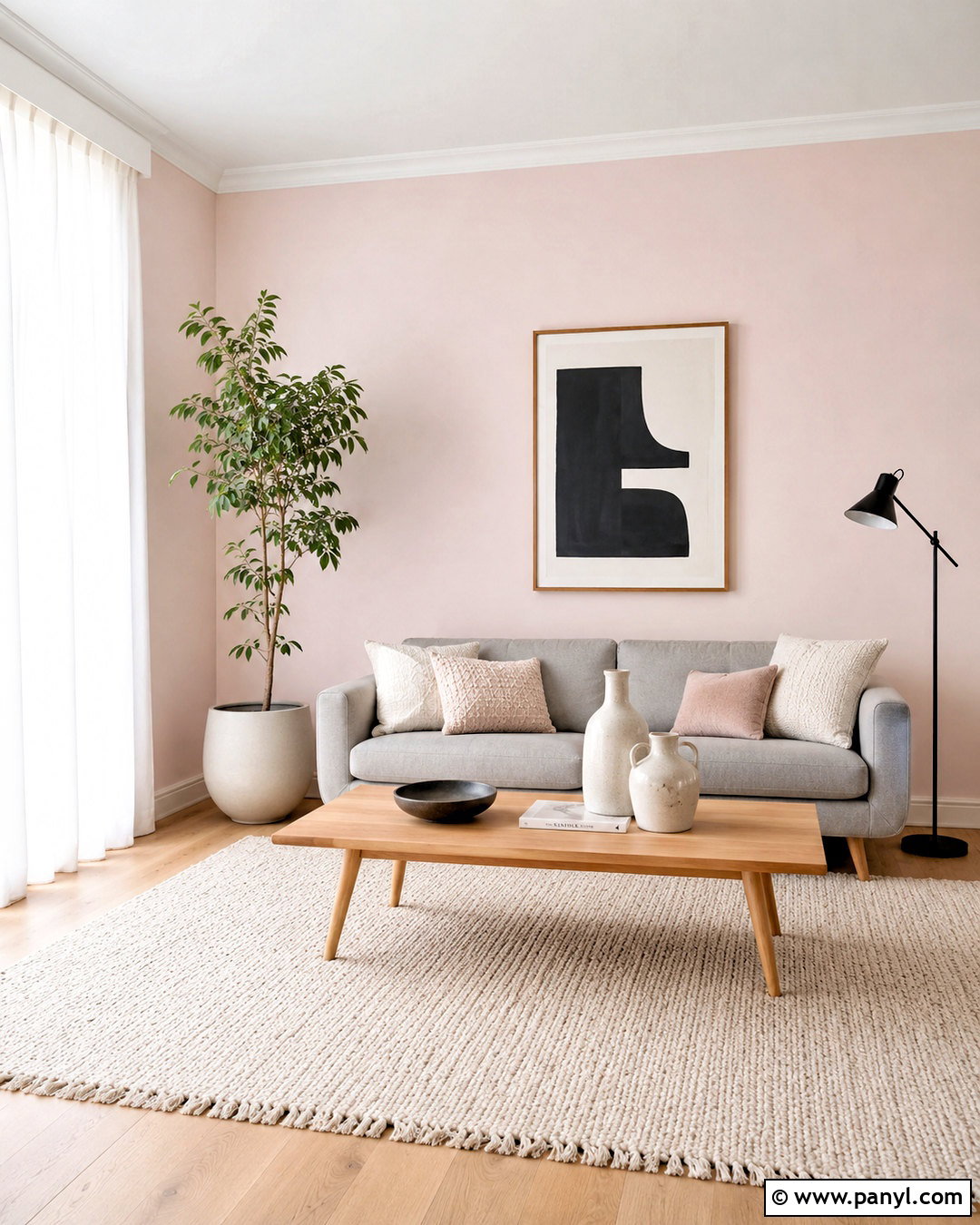
Pink and gray can feel inviting when the gray is warm and the pink is muted. Paint the walls a chalky rose pink, then choose a large warm-gray sectional with clean, simple lines. Introduce a walnut media cabinet, black metal floor lamp, and cream area rug to prevent the palette from becoming overly coordinated. Pillows in charcoal, rose, and subtle geometric patterns help connect the sofa to the walls. Use light gray linen curtains, hanging them close to the ceiling to emphasize height. A round oak coffee table softens the sectional’s shape and adds another warm material. Finish with black-framed artwork and a few ceramic objects in cream and smoky gray. This room feels comfortable, practical, and suitable for everyday family use.
19. Pink And Blue Bathroom
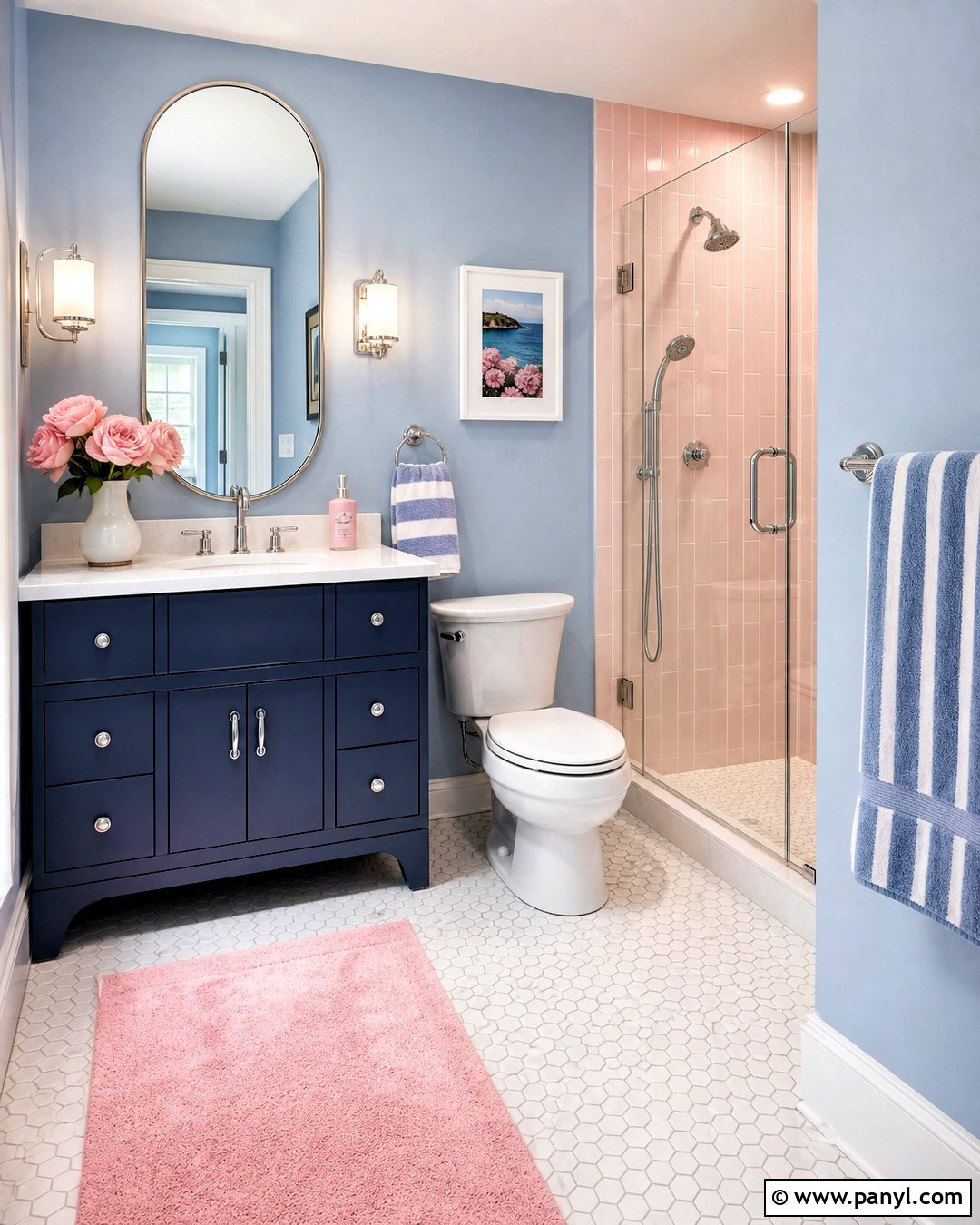
A pink and blue bathroom can look playful yet polished with carefully selected surfaces. Use pale pink vertical tile around the tub and shower, then paint the remaining walls a powdery light blue. A navy vanity grounds both pastels and provides a strong focal point. Choose a white quartz countertop, polished chrome fixtures, and a large rounded mirror for a clean, reflective finish. Small white hexagon floor tiles keep the room bright and suit the classic color pairing. Repeat the blue through striped towels and introduce pink with one bath mat or ceramic container. Clear glass shower panels allow the tile to remain visible. The complete bathroom feels colorful and fresh, but its simple shapes and durable materials prevent it from looking themed.
20. Pink Color Drenching Bedroom
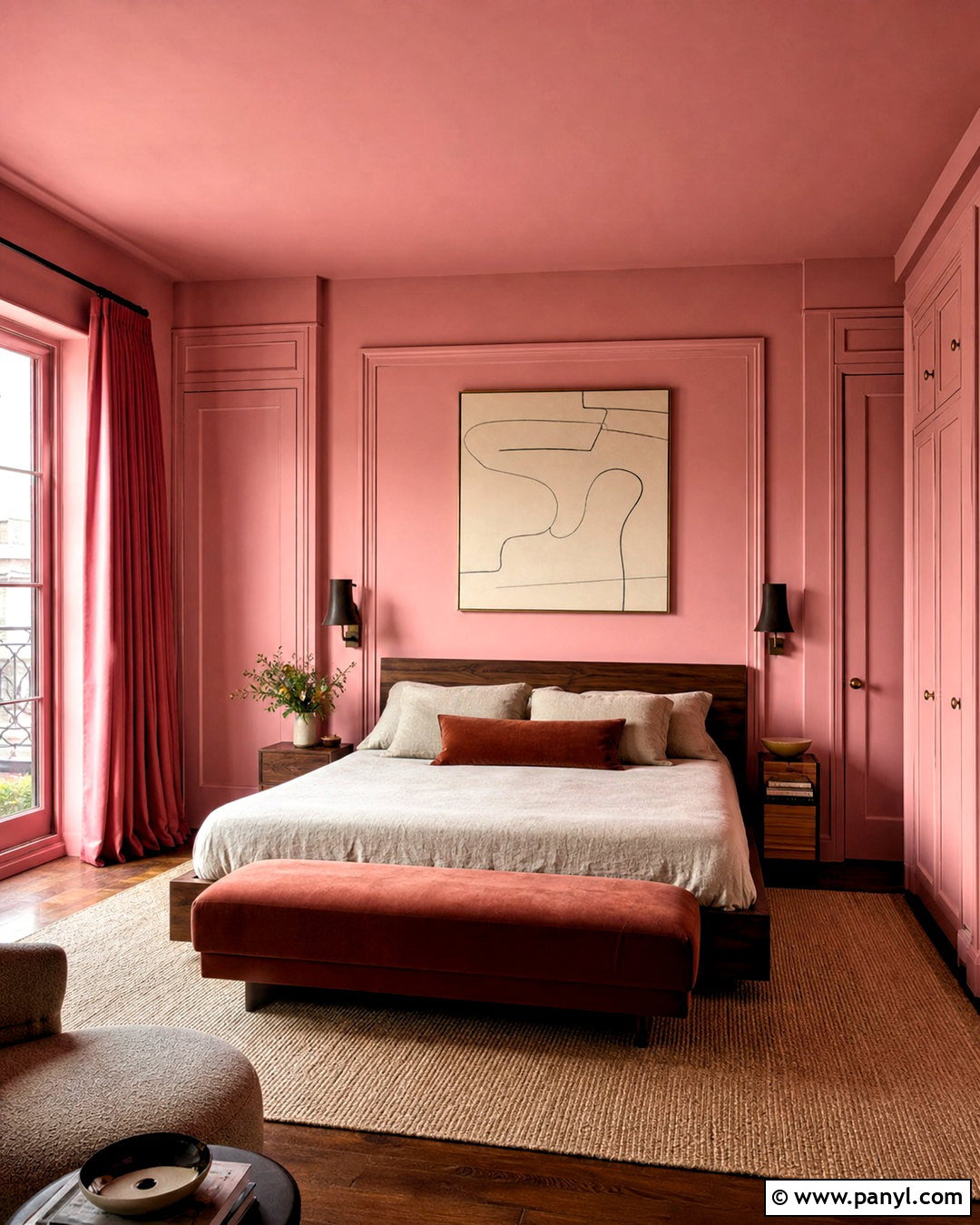
Pink color drenching creates a cocooning bedroom by covering the walls, ceiling, trim, doors, and built-ins in one continuous shade. Choose an earthy mid-tone pink with brown undertones so the effect feels enveloping rather than sugary. Use different paint sheens to add quiet definition: matte on broad surfaces and satin on woodwork. A low walnut bed, cream linen bedding, and a rust velvet bench break up the surrounding color. Add a large natural wool rug and dark bronze sconces to introduce texture and contrast. Curtains in a slightly deeper pink can blend into the walls while still framing the windows. Keep artwork limited and generously scaled. This thoughtful approach makes a strong design statement while preserving the calm atmosphere needed in a bedroom.
Conclusion:
These **20 pink room colors** show how versatile a rosy palette can be throughout the home. Pale blush and cream create restful bedrooms, while dusty rose, mauve, and terracotta pink give shared spaces more depth. Stronger shades such as coral, hot pink, and magenta work best when balanced with structured furniture and intentional contrast. Before choosing a final paint color, test a large sample near windows, corners, flooring, and permanent finishes. Review it in morning light, afternoon sun, and artificial lighting. Most importantly, design the entire room as one palette. When paint, furniture, textiles, lighting, and materials support one another, pink feels cohesive, comfortable, and personal rather than overly themed.

Related Ideas and Inspiration:
Leave a Reply