
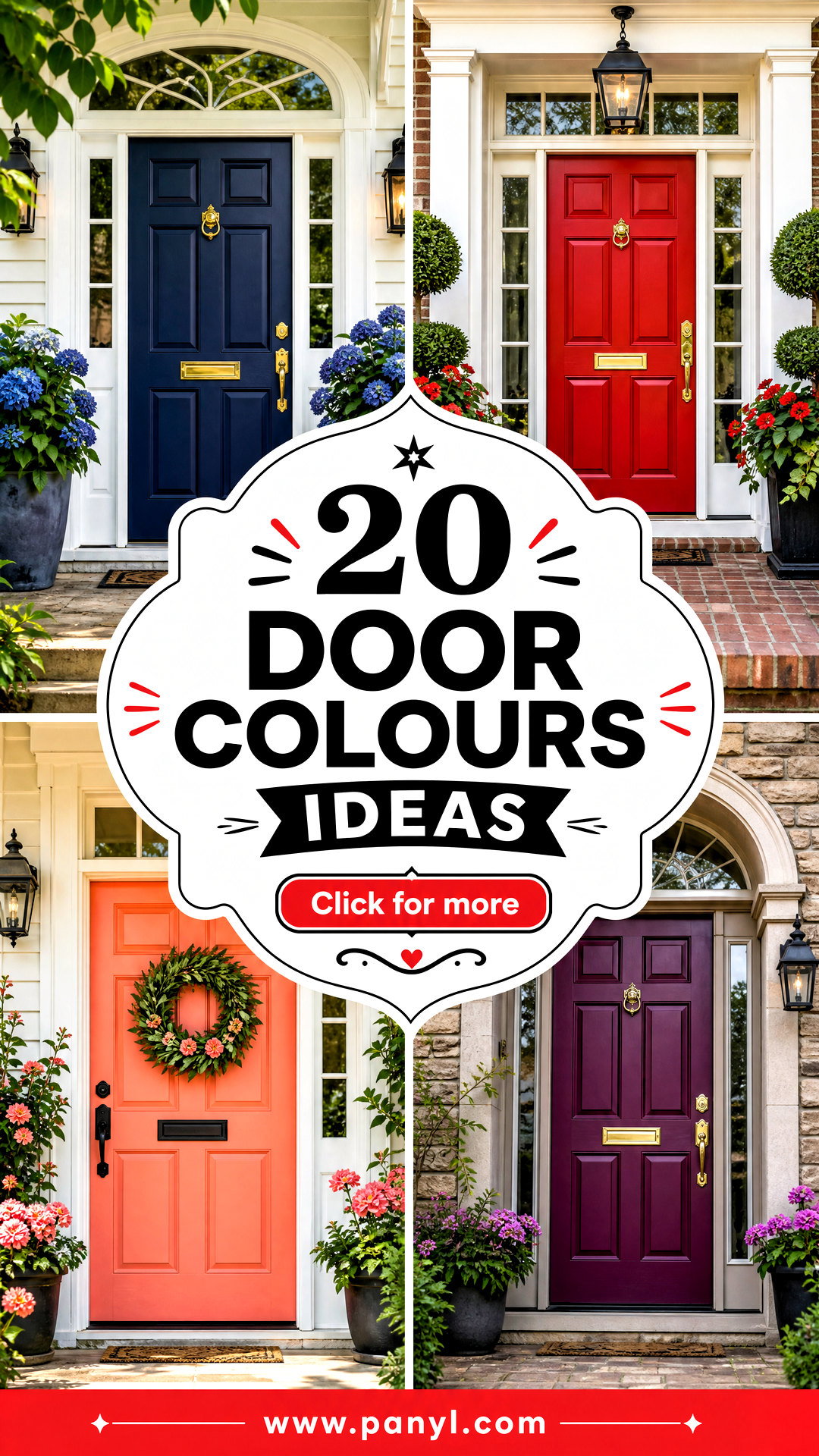
Choosing a front door color is one of the easiest ways to refresh a home’s exterior without changing the entire facade. If you searched for **20 door colours ideas paint colors**, the best approach is to consider the full entry rather than choosing a shade by itself. Siding, brick, trim, roofing, porch materials, hardware, lighting, and landscaping should all support the door. A glossy black entrance can sharpen traditional brick, while sage green softens warm siding and bright yellow energizes a gray exterior. The following combinations include bold, neutral, earthy, and pastel options for many architectural looks. Use these complete exterior schemes to explore **20 door colours ideas paint colors**.
1. Black Front Door Color
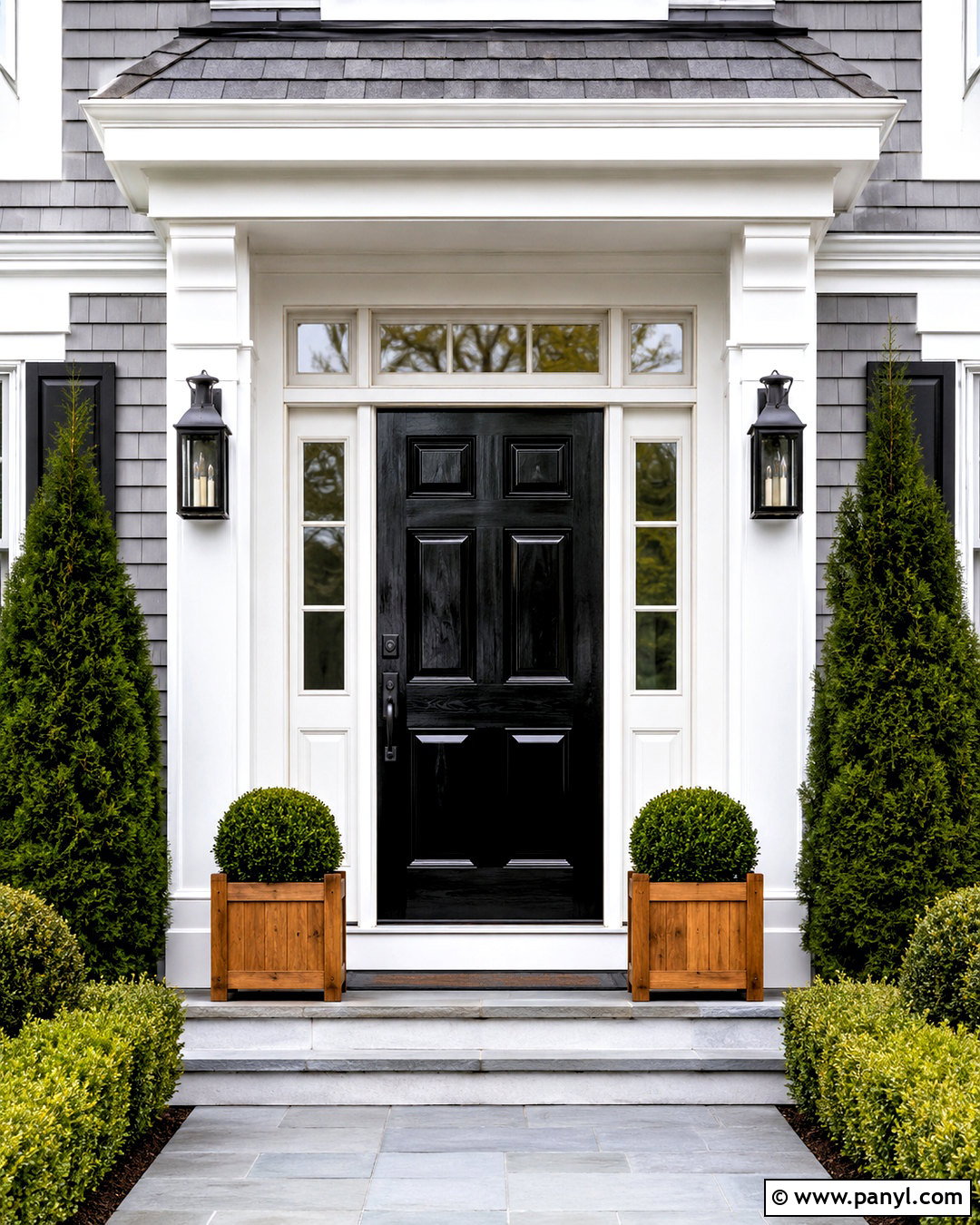
A glossy black front door creates a polished focal point that works especially well on a white house. Frame the door with crisp white trim, then add matte black sconces, simple house numbers, and a black metal mailbox for consistency. A light gray shingle roof keeps the contrast from feeling too severe. Warm up the entry with natural cedar planters, woven porch chairs, and soft green shrubs along the walkway. If the door has raised panels or glass inserts, the dark paint will help those details stand out. Choose a satin or high-gloss exterior finish that is easy to clean. This complete black-and-white scheme feels crisp, balanced, and appropriate for traditional, farmhouse, or transitional homes.
2. Navy Blue Front Door Color
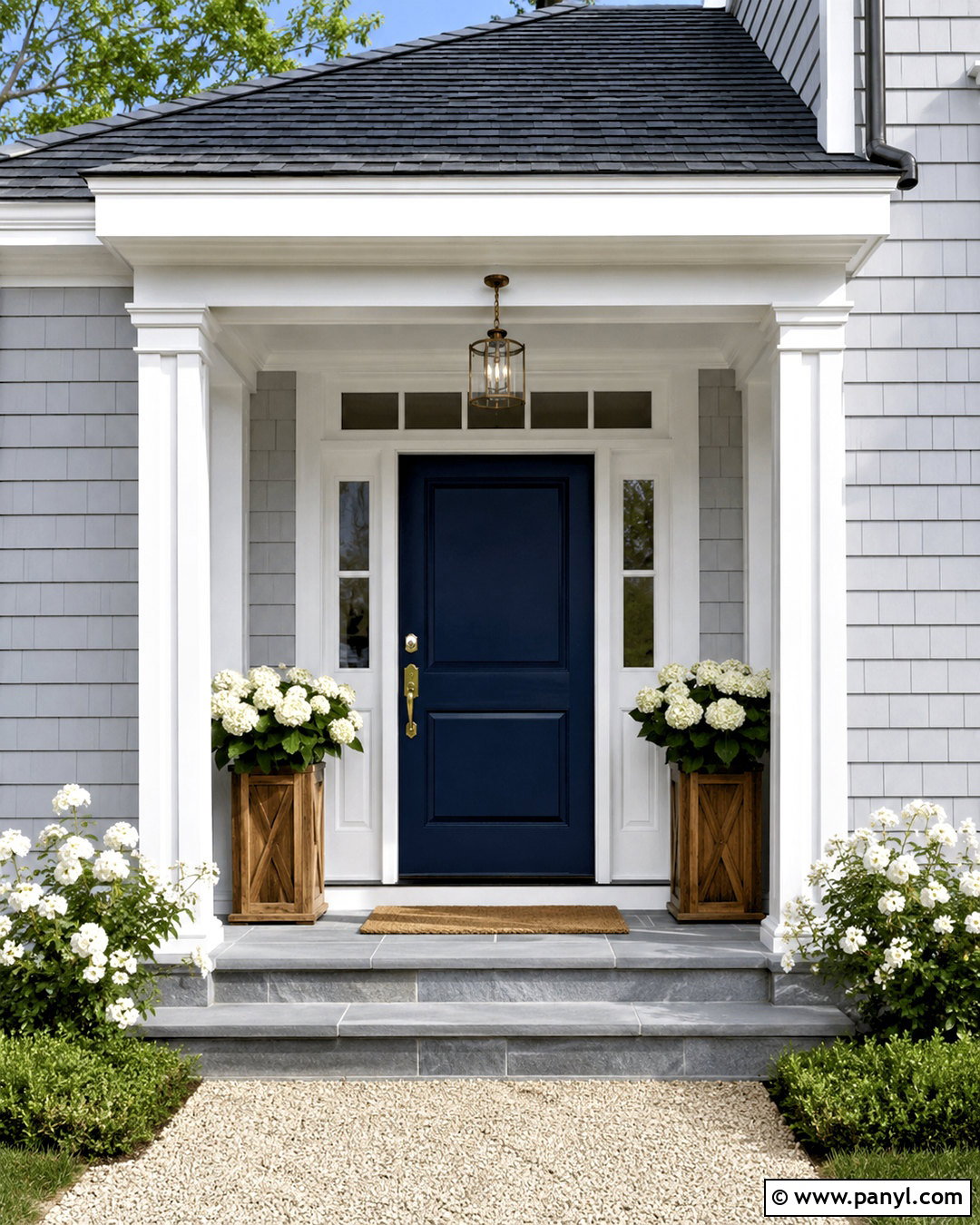
Deep navy blue offers noticeable color while remaining calm and easy to coordinate. Pair it with pale gray siding, bright white trim, and a charcoal roof for a classic exterior palette. Brushed brass door hardware adds warmth and prevents the cool colors from looking flat. Continue that warmth with teak planters, a natural coir mat, and porch pots filled with white flowers and trailing greenery. A pair of traditional lantern sconces can frame the entrance without competing with the door. For a more unified appearance, repeat navy on small shutters or a porch bench cushion. This complete look suits coastal, Colonial, and modern suburban homes because the blue feels distinctive without overwhelming the surrounding architecture.
3. Sage Green Front Door Color
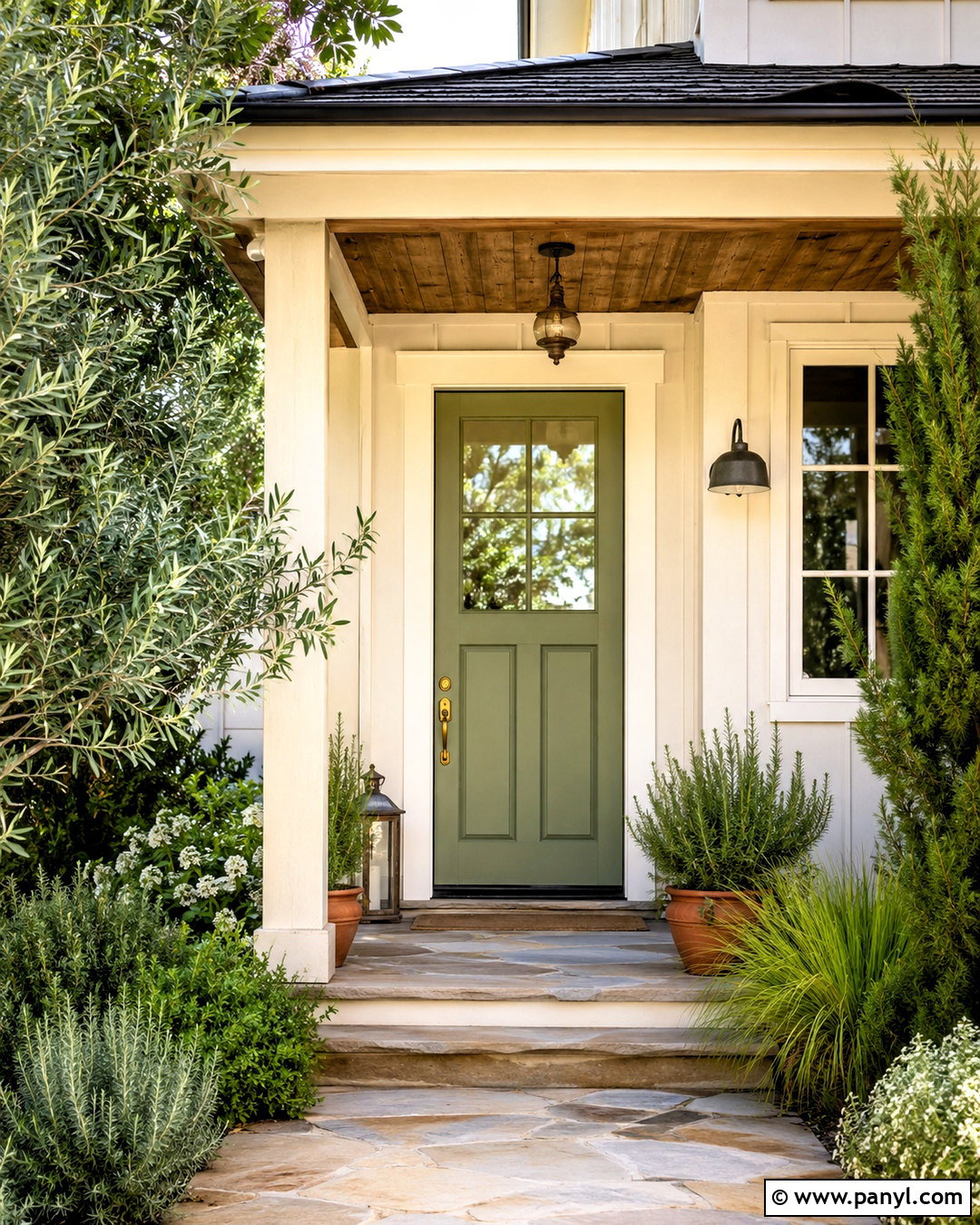
Soft sage green gives an entrance a relaxed, nature-inspired appearance. It looks particularly inviting against creamy white siding, warm beige stucco, or pale natural stone. Use off-white trim instead of stark white to maintain the gentle color story. Antique brass hardware, aged bronze lighting, and terracotta planters add depth without making the entry too formal. Bring in layered greenery through rosemary, ornamental grasses, and small evergreen shrubs. A light brown roof and natural wood porch ceiling can complete the earthy palette. Choose a muted sage with gray undertones rather than a highly saturated green. The finished entrance feels peaceful and connected to the landscape, making it an appealing choice for cottages, bungalows, and casual farmhouse exteriors.
4. Classic Red Front Door Color
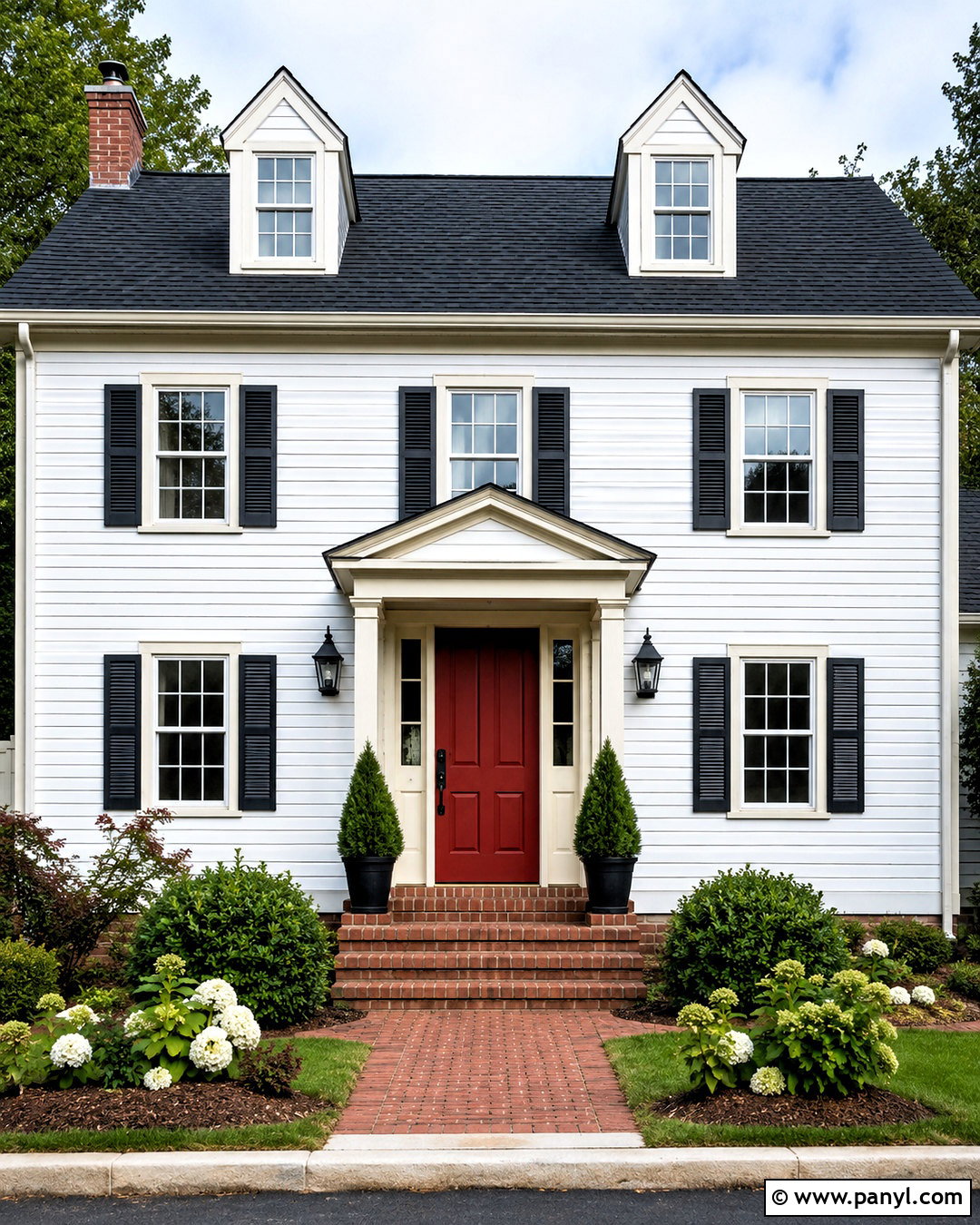
A classic red front door brings energy to a traditional home while creating a clear visual destination. Use a rich, slightly muted red with white siding, cream trim, and a dark charcoal roof. Black iron hardware and lantern-style sconces give the color a grounded, established appearance. If the house has shutters, paint them black or deep gray rather than matching them to the door. Symmetrical planters filled with clipped evergreens reinforce the traditional layout, while a brick walkway connects the warm door color to the landscape. Keep porch accessories simple so the red remains the main feature. This coordinated scheme works beautifully on Colonial, Cape Cod, and brick homes with strong symmetry and clearly defined architectural details.
5. Yellow Front Door Color
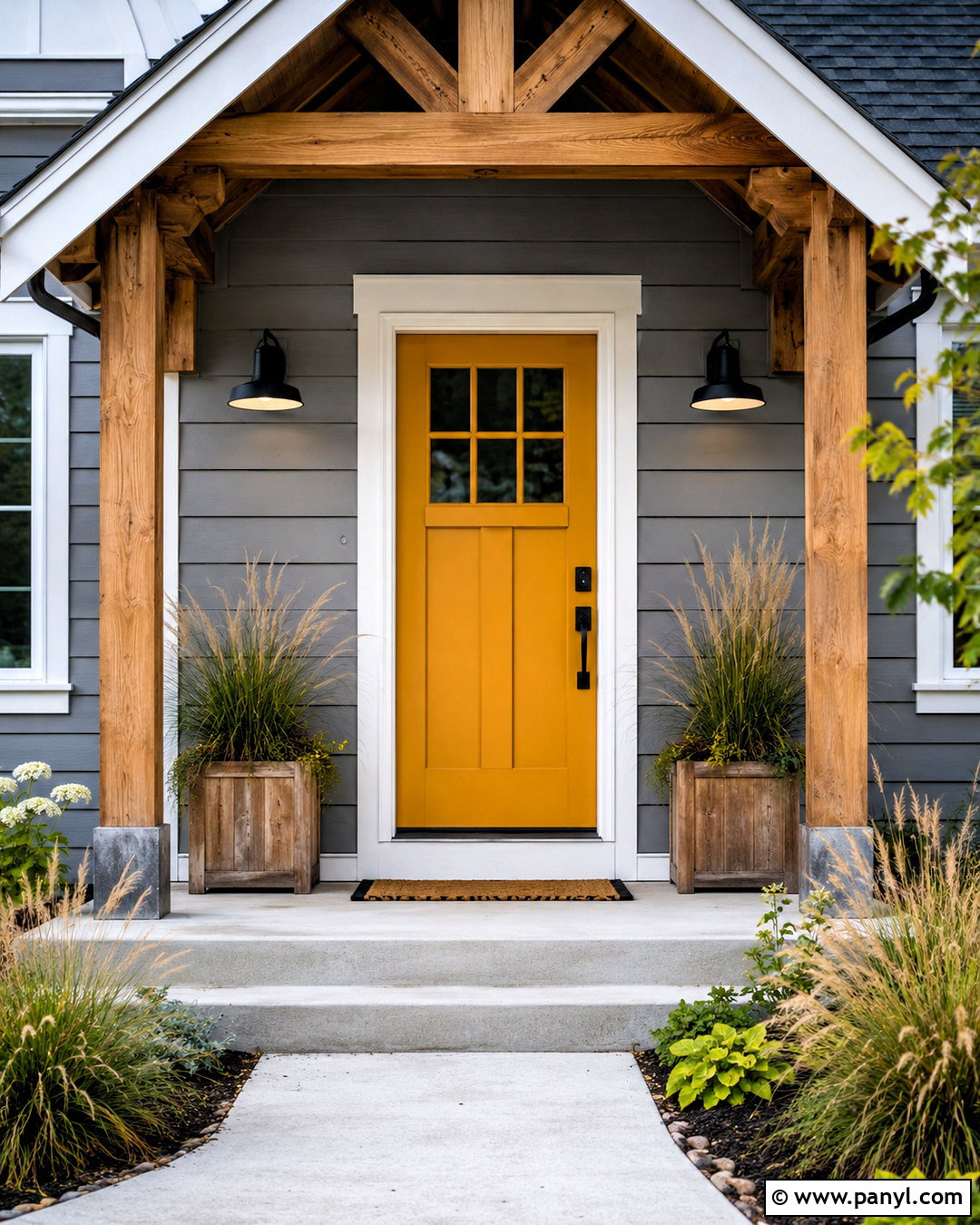
Could your neutral exterior use a cheerful lift? A warm golden-yellow front door creates a sunny accent against medium gray siding and clean white trim. Balance the brightness with a charcoal roof, matte black handle set, and simple black wall lights. Natural wood planters and a woven doormat keep the entrance approachable rather than overly graphic. Add white flowers, soft ornamental grasses, and small green shrubs to frame the walkway. Avoid carrying yellow across too many exterior details; one confident door provides enough impact. A satin finish gives the color a smooth, welcoming glow without excessive shine. This complete palette is ideal for compact cottages, modern farmhouses, and gray suburban homes needing a memorable but manageable update.
6. Charcoal Gray Front Door Color
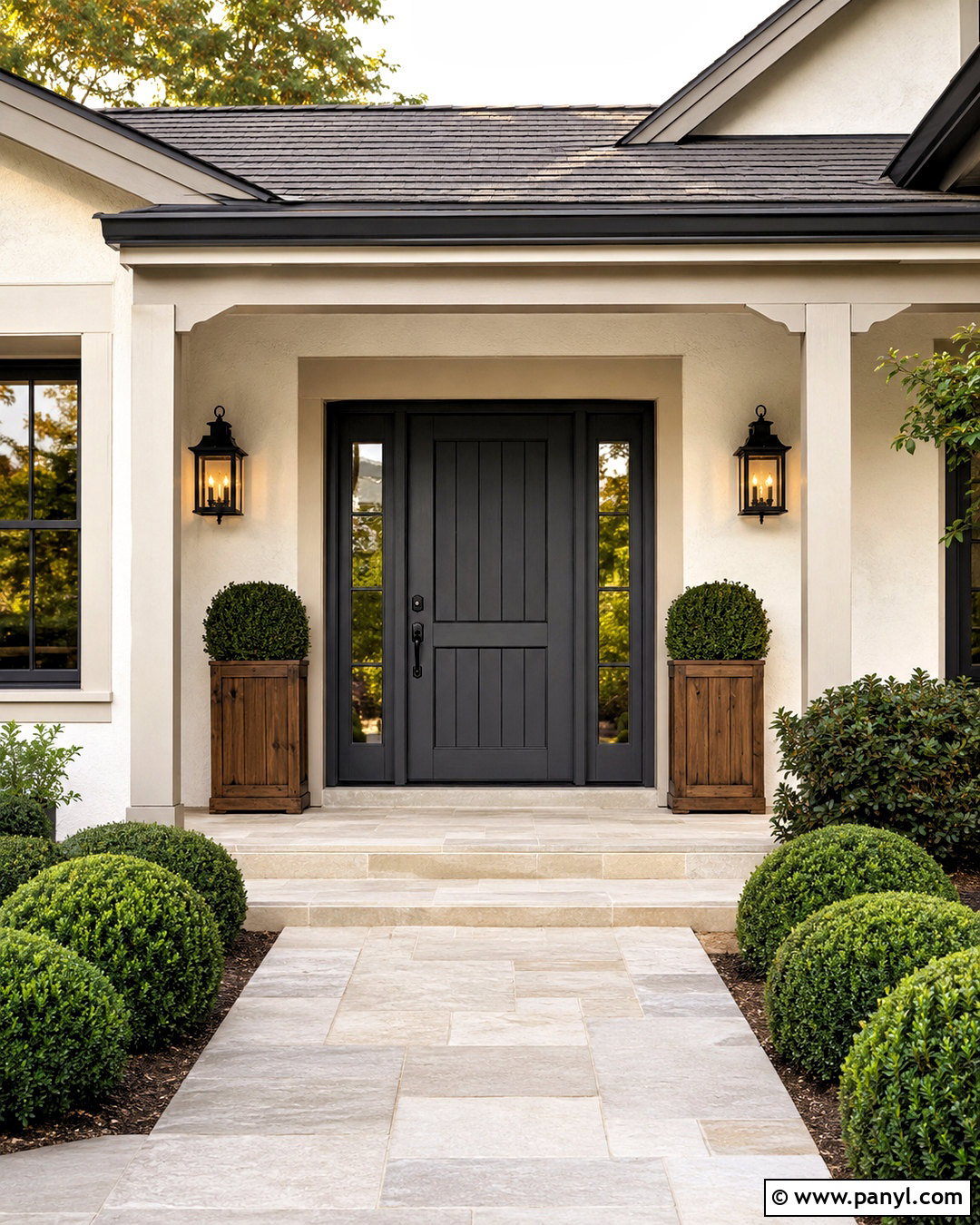
Charcoal gray creates depth without the sharp contrast of pure black. Pair it with warm white siding, soft greige trim, and medium brown roof shingles for an understated exterior. A door with simple panels or narrow glass inserts keeps the dark shade visually interesting. Select brushed nickel or aged pewter hardware to continue the cool gray notes. Then introduce warmth with oak planters, a camel-colored doormat, and pale stone porch flooring. Rounded shrubs and white flowering plants soften the entrance and prevent it from appearing too industrial. This coordinated look works well when homeowners want a refined neutral palette with minimal color. It can update ranch, Craftsman, transitional, and contemporary homes while still complementing existing exterior materials.
7. Teal Front Door Color
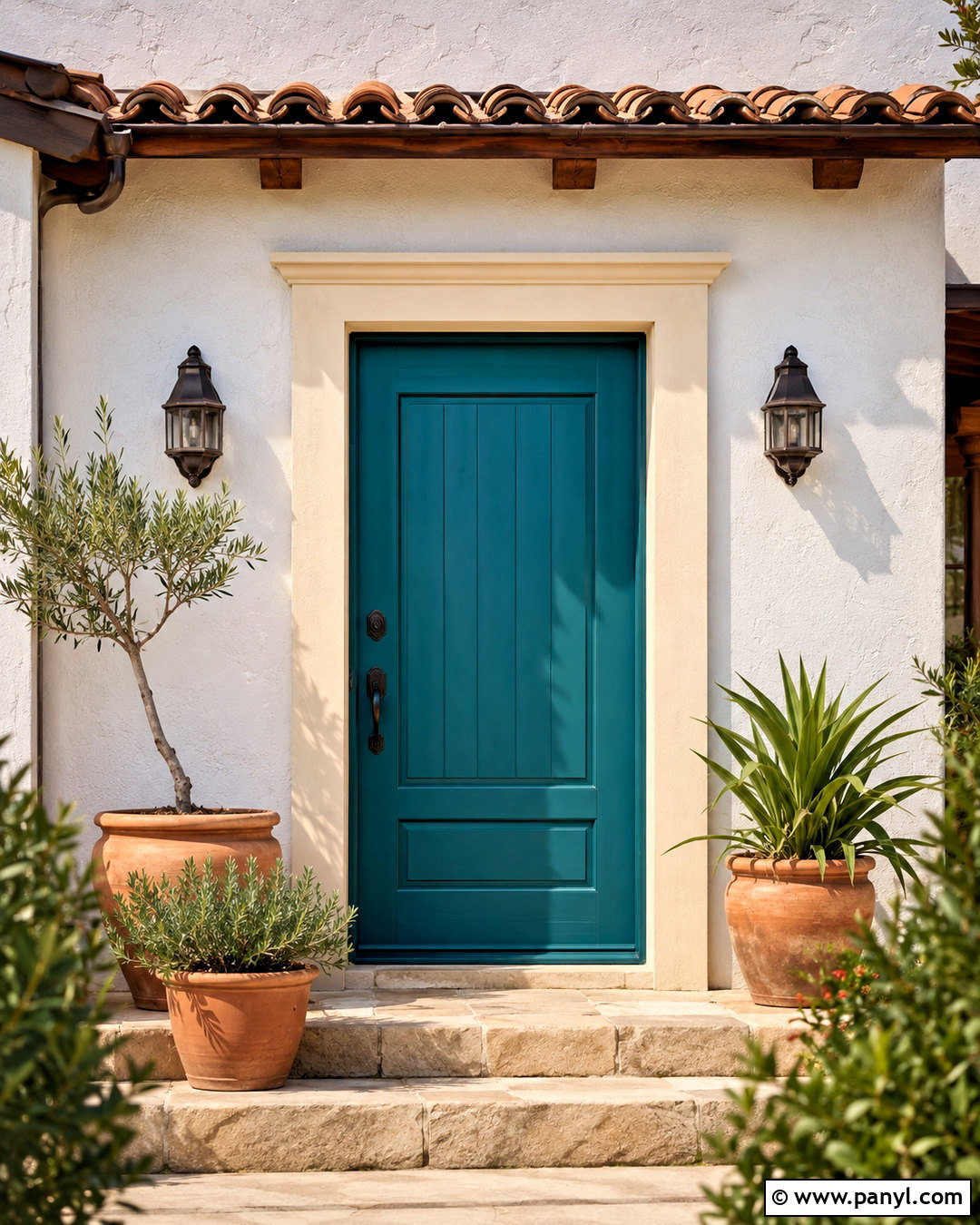
Rich teal combines the calm quality of blue with the organic character of green. For a balanced exterior, place it against warm white stucco, sandy beige siding, or pale cream brick. Use dark bronze hardware and matching wall sconces to anchor the colorful door. Terracotta pots, natural stone steps, and dense green foliage reinforce the warm, earthy side of the palette. A medium brown roof completes the scheme without introducing another strong color. Keep the trim creamy white and limit additional blue accents so the entrance remains clean. This finished look feels lively but not overly bright. It is particularly effective on Southwestern, Mediterranean, coastal, and eclectic homes with textured walls and relaxed landscaping.
8. Terracotta Front Door Color
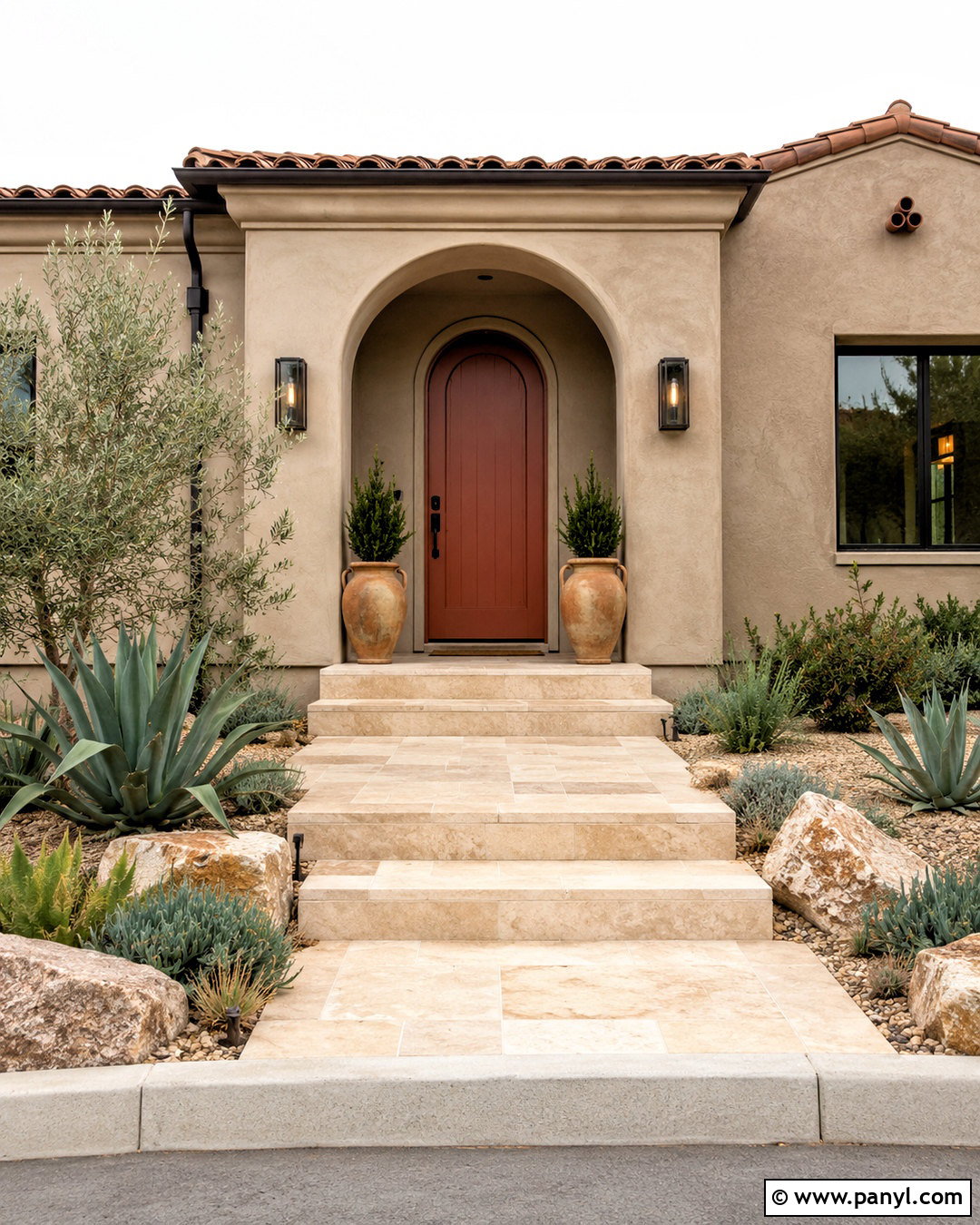
Warm terracotta paint makes a front entrance feel grounded and welcoming. Combine it with light taupe stucco, creamy trim, and a weathered brown roof for a soft desert-inspired palette. Black or oil-rubbed bronze hardware provides enough contrast to define the door. Continue the earthy theme with clay planters, natural gravel, pale limestone steps, and drought-tolerant greenery. Olive shrubs, ornamental grasses, and sculptural succulents can complete the landscape without making it busy. Select a terracotta shade that leans burnt orange rather than bright red for a more versatile result. This complete entry scheme complements Spanish, adobe, Mediterranean, and contemporary homes while also warming up plain beige exteriors that need greater character and visual depth.
9. White Front Door Color
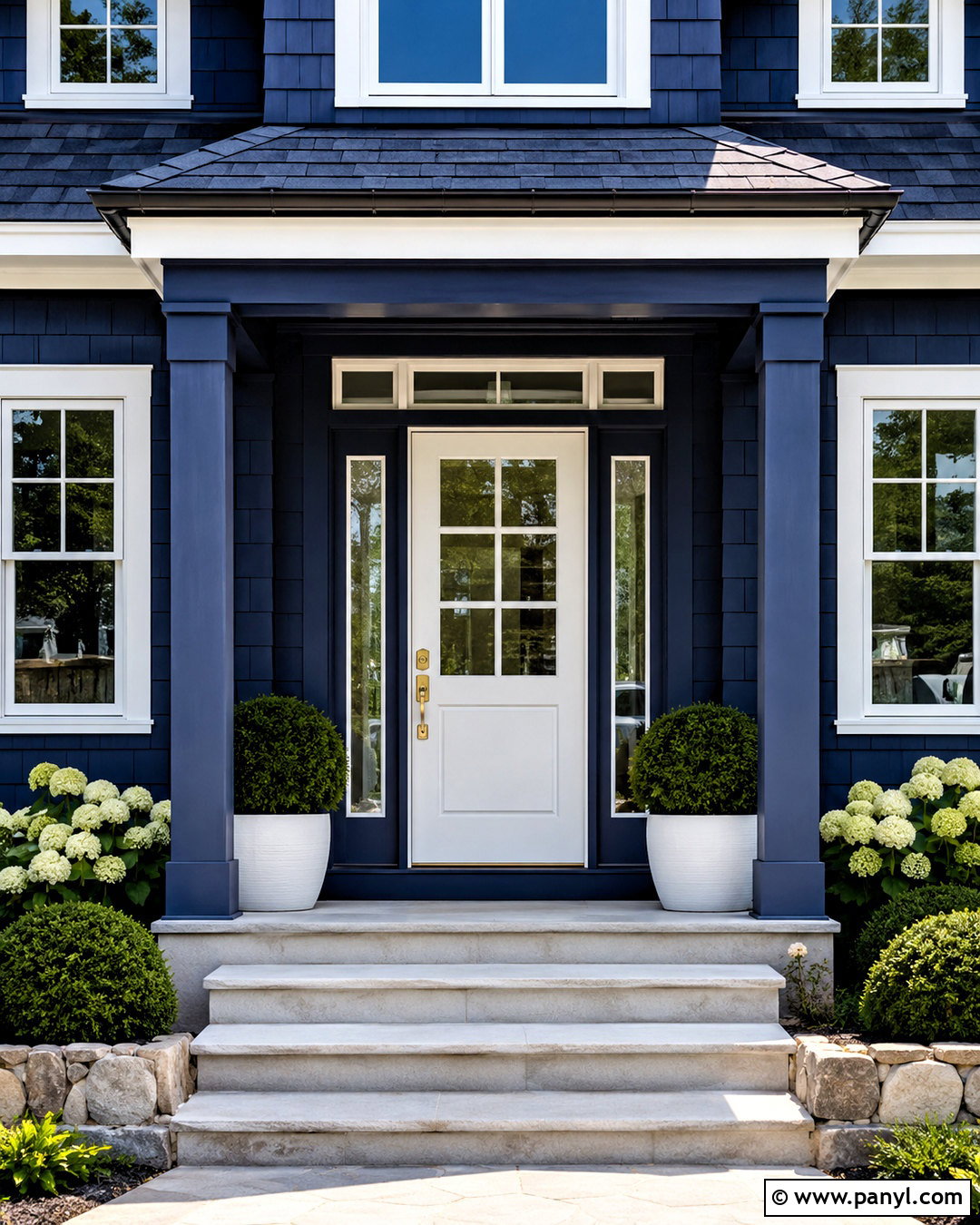
A white front door can look intentional and distinctive when surrounded by deeper exterior colors. Pair a warm white door with dark navy siding, matching navy trim, and a charcoal roof for crisp contrast. Polished brass hardware adds a refined highlight, while clear glass panels keep the entry bright and open. Use pale stone steps and symmetrical white planters to repeat the door color around the porch. Green boxwood shrubs and restrained white flowers provide a fresh finishing layer. Avoid mixing several different whites; use one consistent warm or cool family across the door, porch ceiling, and small accents. This complete palette offers a clean alternative to dark doors and works especially well on coastal, traditional, and compact contemporary houses.
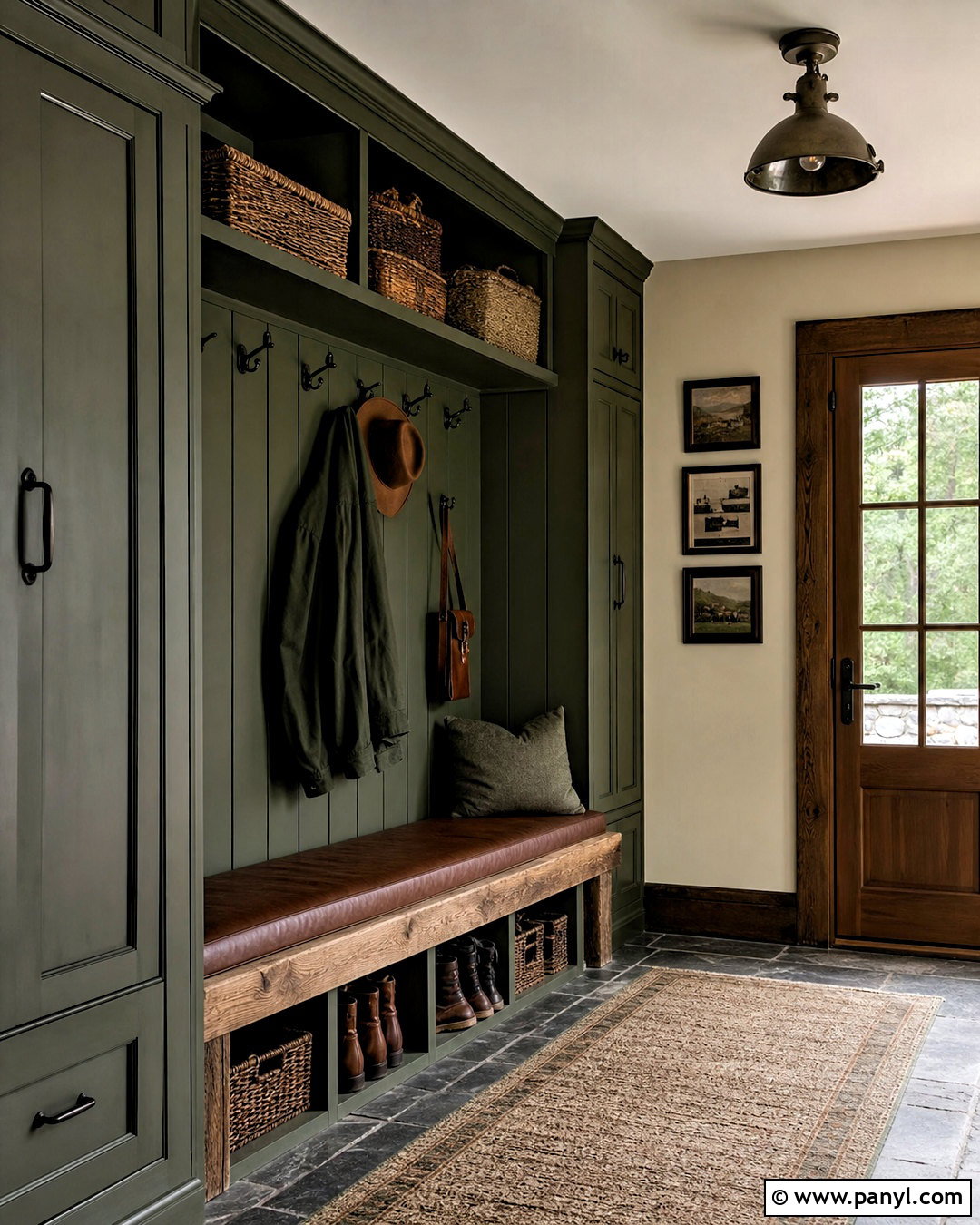
10. Deep Green Front Door Color
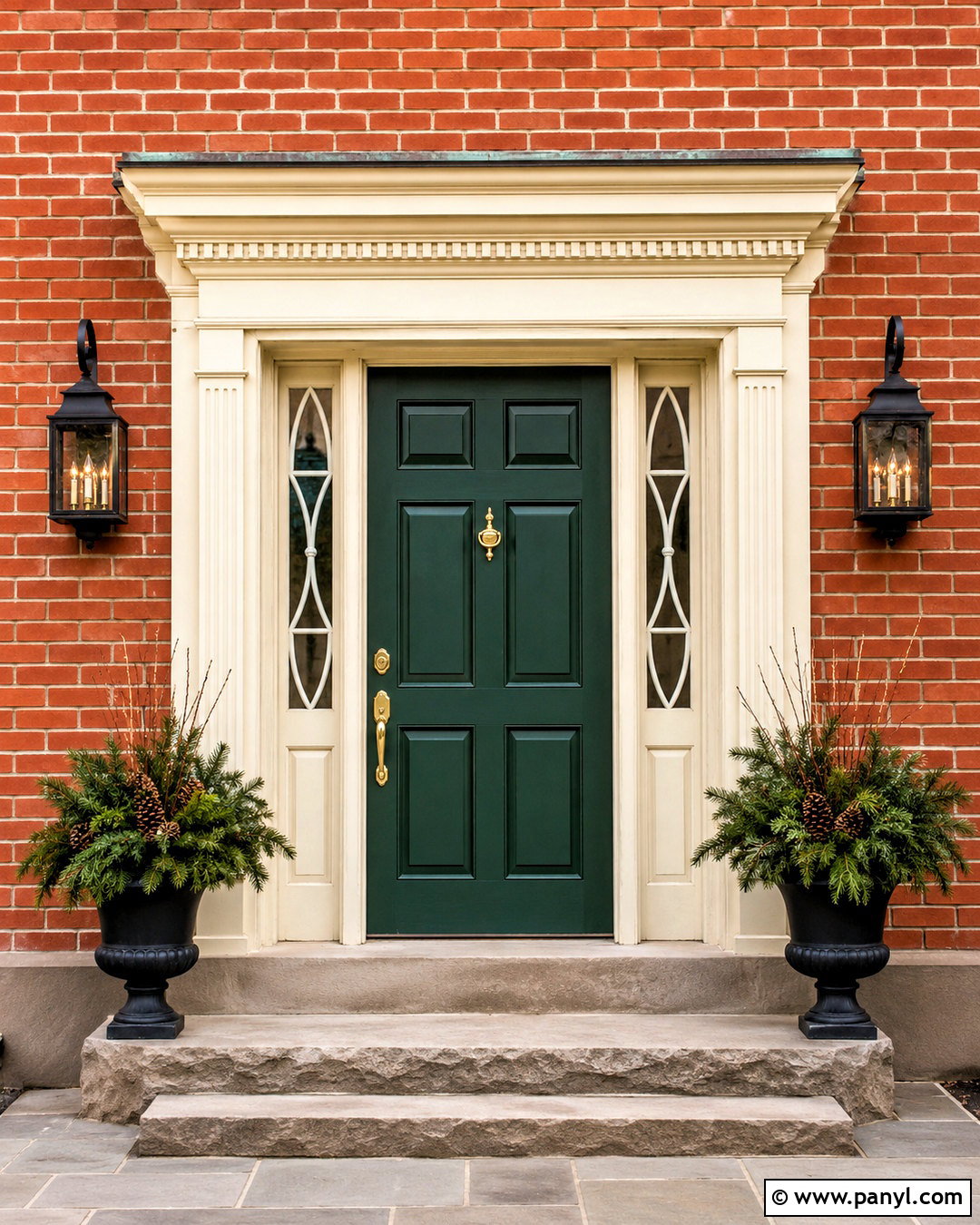
Deep forest green gives a front door a substantial, heritage-inspired presence. It pairs naturally with red brick, ivory trim, and dark brown or charcoal roofing. Choose unlacquered brass hardware to create a warm contrast against the green paint. Black lantern sconces, a natural stone threshold, and large evergreen planters complete the structured entrance. If the brick contains several warm tones, select a green with a subtle gray base to keep the colors balanced. A glossy finish can emphasize decorative panels, while satin creates a quieter result. Repeat the green sparingly through a bench cushion or small planter detail. This finished scheme feels established and elegant, making it suitable for Georgian, Tudor, Colonial, and traditional brick homes.
11. Dusty Blue Front Door Color
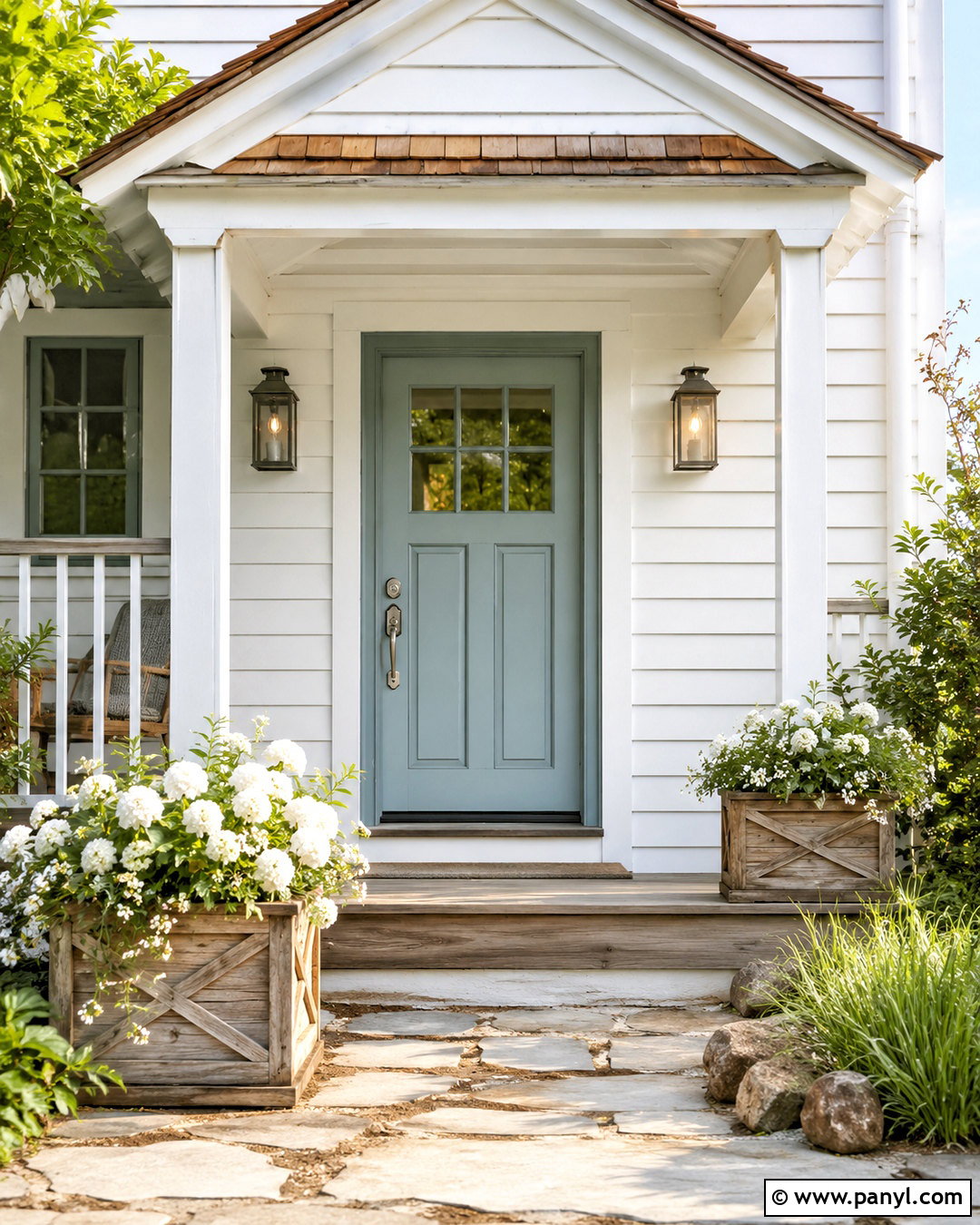
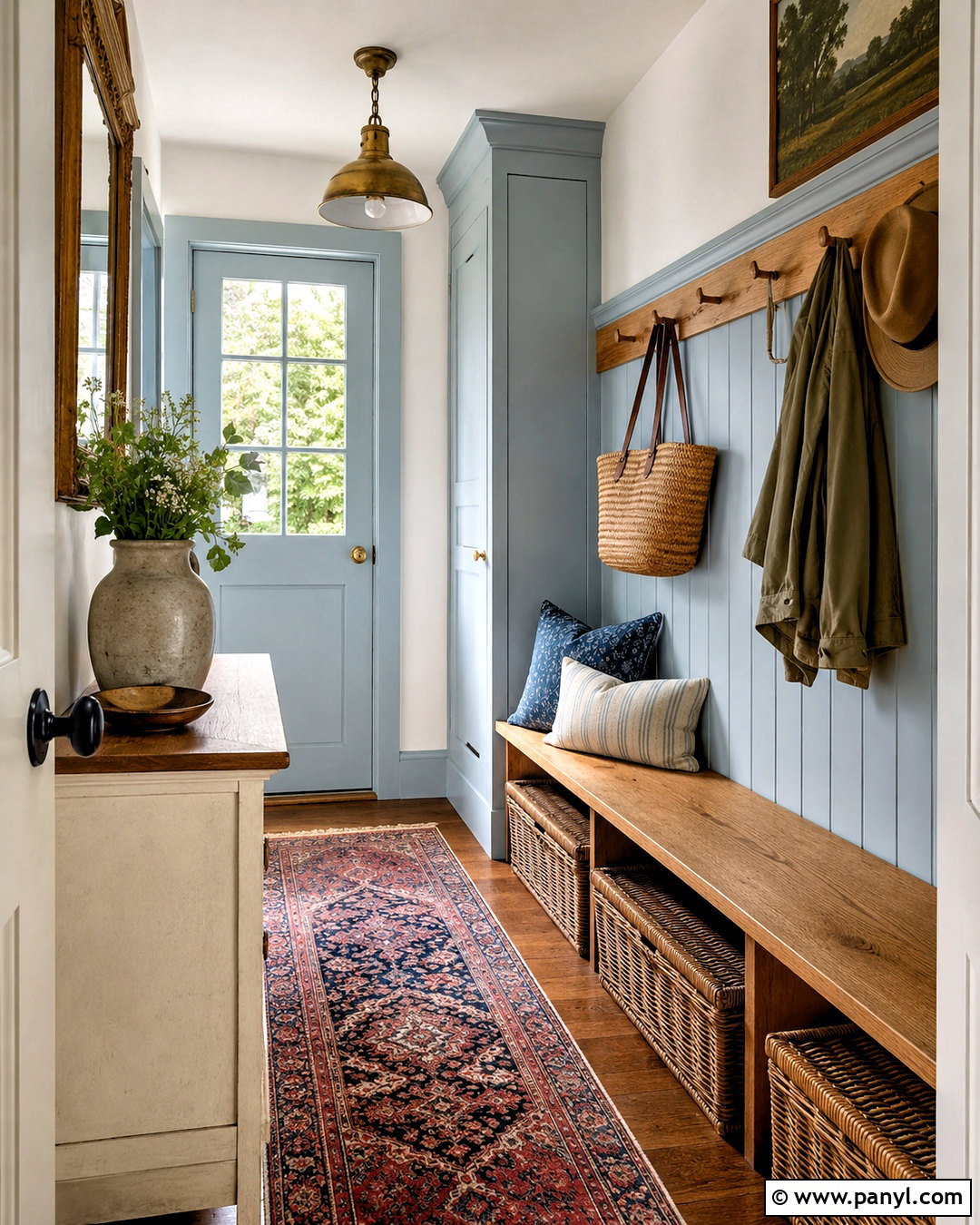
Dusty blue creates a soft, welcoming entrance without becoming overly sweet or coastal. Pair it with warm white clapboard siding, pale gray trim, and natural cedar roof accents. Satin nickel hardware maintains the gentle appearance, while woven baskets and weathered oak planters introduce organic texture. Fill the planters with soft green foliage and small white blooms rather than highly saturated flowers. A flagstone walkway and light gray porch floor help connect the blue door to the surrounding exterior. Choose a muted blue containing enough gray to look composed in changing daylight. This complete design is especially attractive on cottages, Cape Cod homes, and casual farmhouses where an easygoing color palette suits the architecture and landscaping.
12. Burgundy Front Door Color
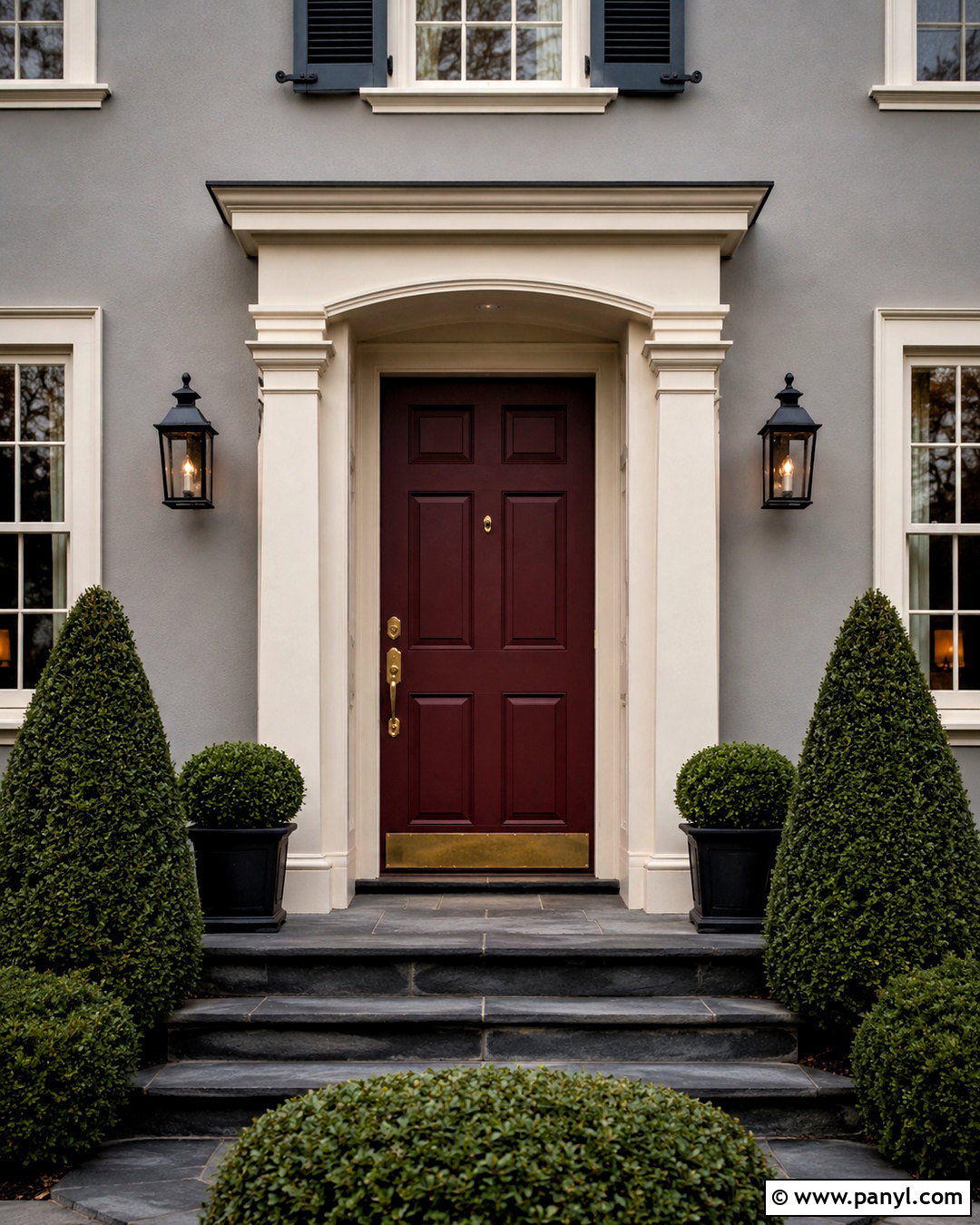
A burgundy front door adds rich color to an exterior without the brightness of classic red. Use it with warm gray siding, ivory trim, and a deep charcoal roof for a balanced, mature palette. Aged brass hardware and traditional lantern sconces bring out the door’s warmer undertones. Ground the entrance with dark stone steps, black planters, and neatly trimmed evergreen shrubs. Cream flowers can provide light contrast without introducing another competing hue. Burgundy also works well with pale stone or mixed brick when the surrounding materials contain red-brown notes. Keep shutters charcoal or dark gray rather than matching the door. The resulting entrance feels substantial and composed, making it suitable for traditional, Tudor, and stately suburban homes.
13. Coral Front Door Color
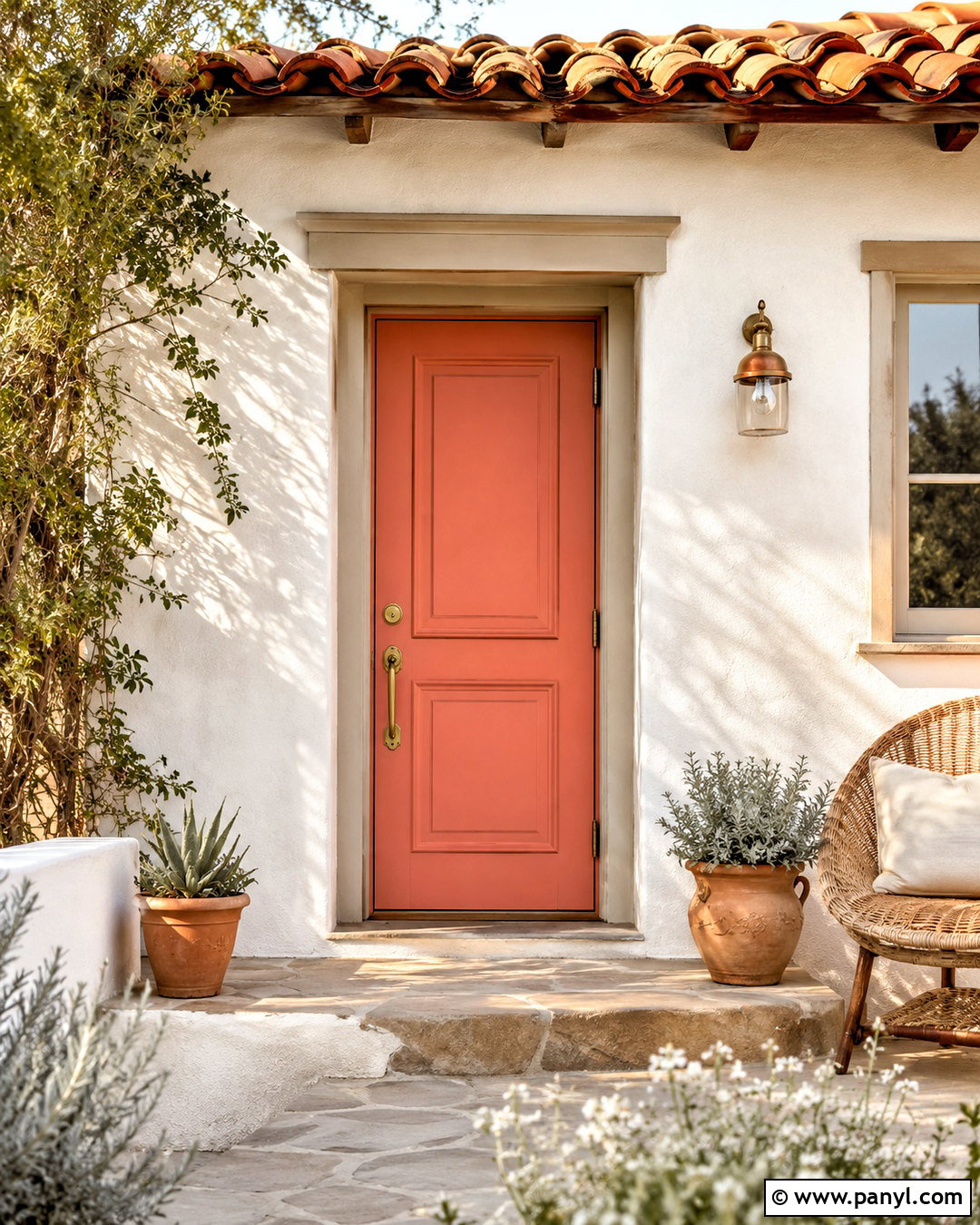
A muted coral door can brighten a light exterior while keeping the overall design warm and approachable. Set it against creamy white stucco, soft beige trim, and a light terracotta roof. Brushed brass hardware, natural rattan seating, and clay planters support the sunny color without creating excessive contrast. Use pale stone pavers and loose, informal landscaping with silvery foliage and white flowers. Coral should appear warm and softly weathered rather than neon or intensely pink. Keeping the surrounding walls neutral allows the door to remain the clear focal point. This complete exterior scheme suits coastal cottages, Florida-inspired homes, Mediterranean facades, and simple stucco houses that benefit from a friendly accent and relaxed curb appeal.
14. Greige Front Door Color
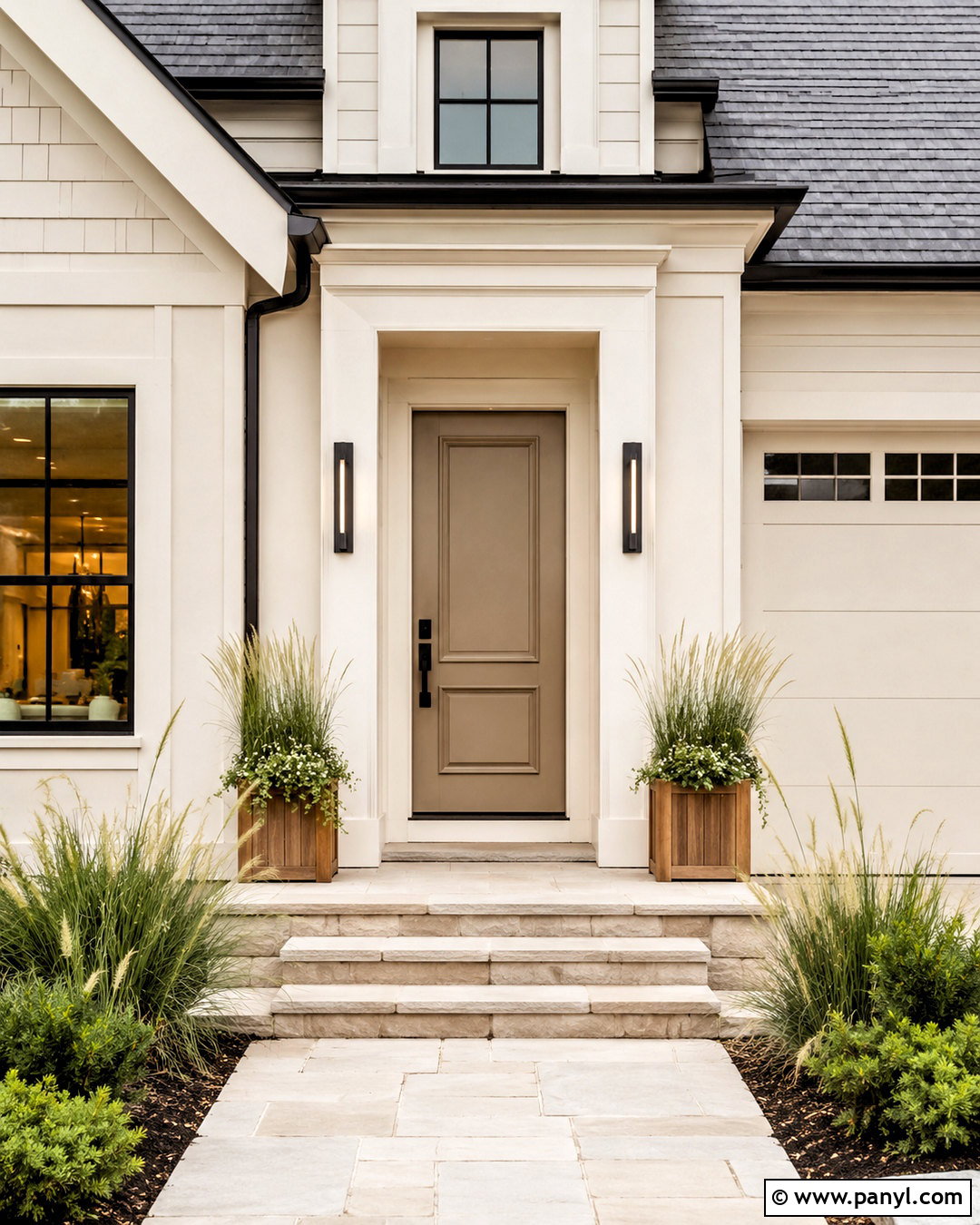
Greige is an effective door color when the goal is subtle contrast and a layered neutral exterior. Pair a medium warm greige door with creamy siding, crisp off-white trim, and a medium charcoal roof. Matte black hardware and slim contemporary sconces give the understated palette stronger definition. Natural oak planters, limestone steps, and soft green grasses introduce warmth and movement. For more depth, paint nearby shutters a darker taupe rather than matching the door exactly. Select a greige that is visibly darker than the siding so the entrance does not disappear. This complete combination feels clean, calm, and easy to maintain visually. It works particularly well for transitional, modern farmhouse, ranch, and newly updated suburban homes.
15. Plum Front Door Color
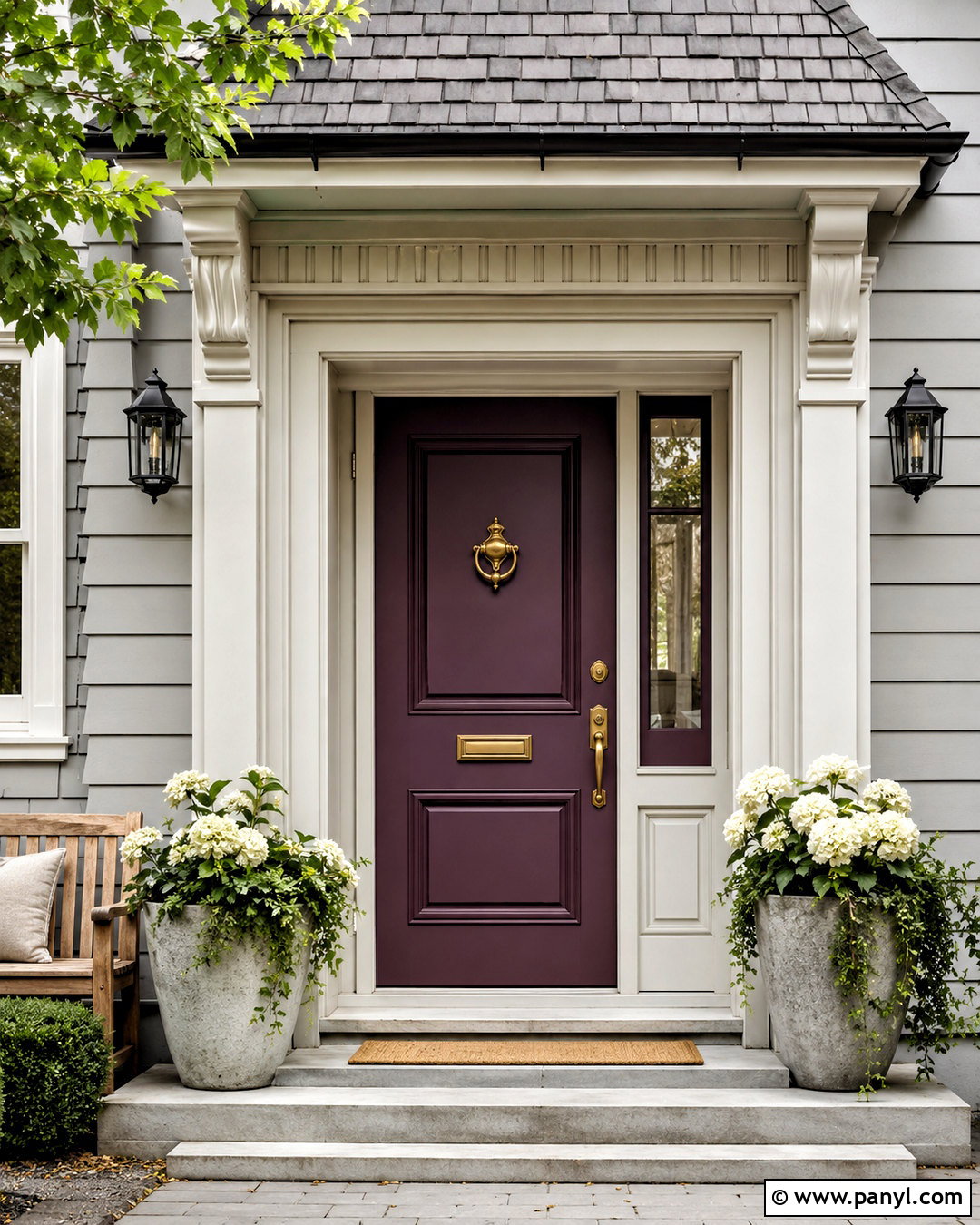
Deep plum creates a surprising front door accent that still feels sophisticated. Place it against pale gray siding, soft white trim, and dark graphite roofing to let the purple undertones read clearly. Antique brass hardware warms the color, while black metal sconces connect it to the roof. Use simple concrete planters filled with green foliage and small cream flowers. Avoid adding strong red or blue accessories, which can make the scheme feel overly colorful. Instead, choose a neutral porch rug and natural wood bench. A dark, muted plum works best because it changes subtly as the light shifts. This completed entry is a strong option for Victorian, eclectic, transitional, and gray-painted homes needing personality without a highly saturated door.
16. Sky Blue Front Door Color
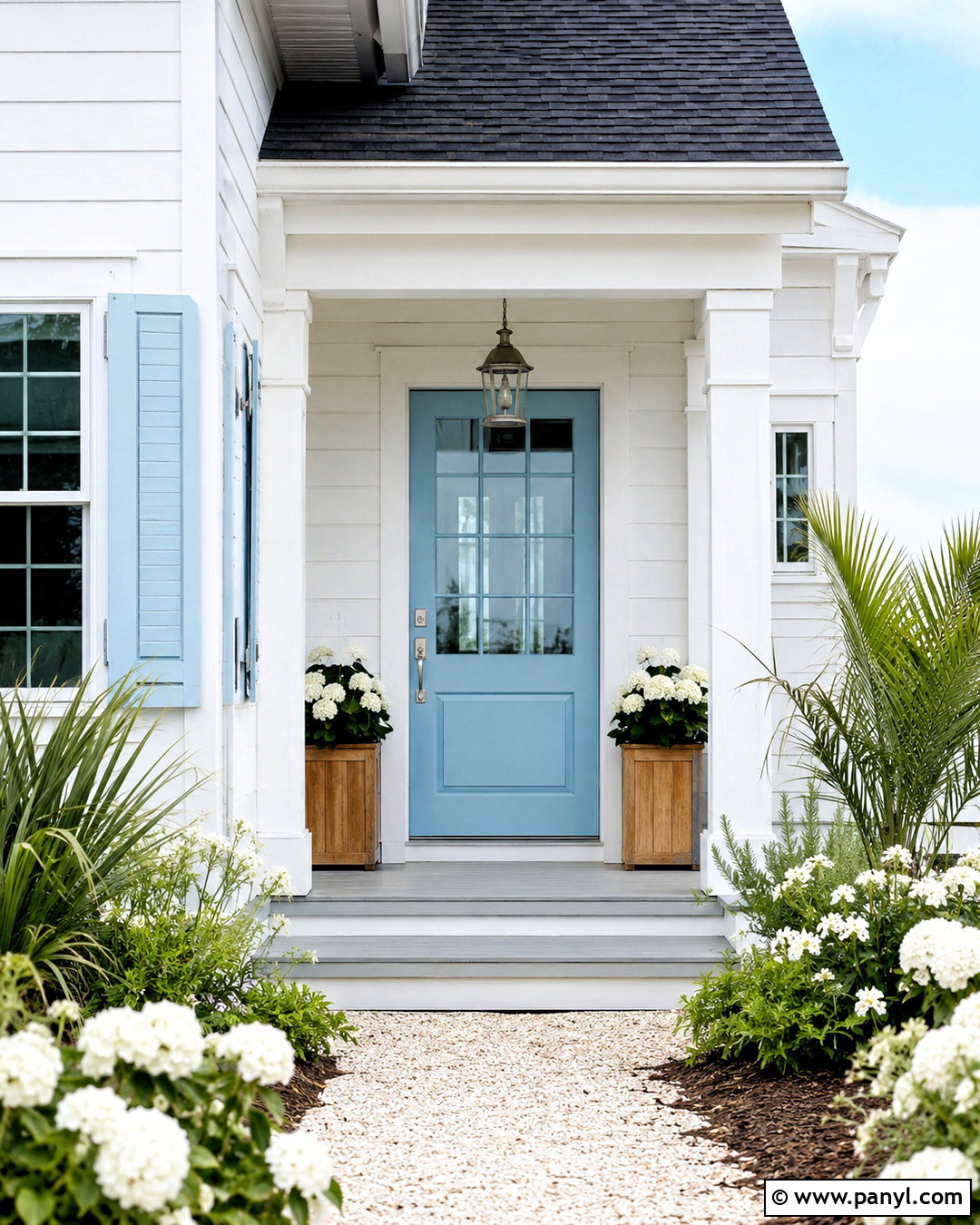
A clear sky-blue front door gives a small home an airy, open character. Combine it with bright white siding, pale gray porch flooring, and a medium charcoal roof for a fresh exterior palette. Use polished nickel or chrome hardware to maintain the light, cool appearance. Natural teak planters and a tan woven mat add enough warmth to prevent the entry from feeling sterile. White flowers, feathery grasses, and low green shrubs create a soft garden border. A door with divided glass panes can enhance the breezy quality of the design. Keep shutters white or remove them from the color story altogether. This complete look works beautifully on coastal cottages, compact bungalows, and simple homes with clean architectural lines.
17. Olive Green Front Door Color
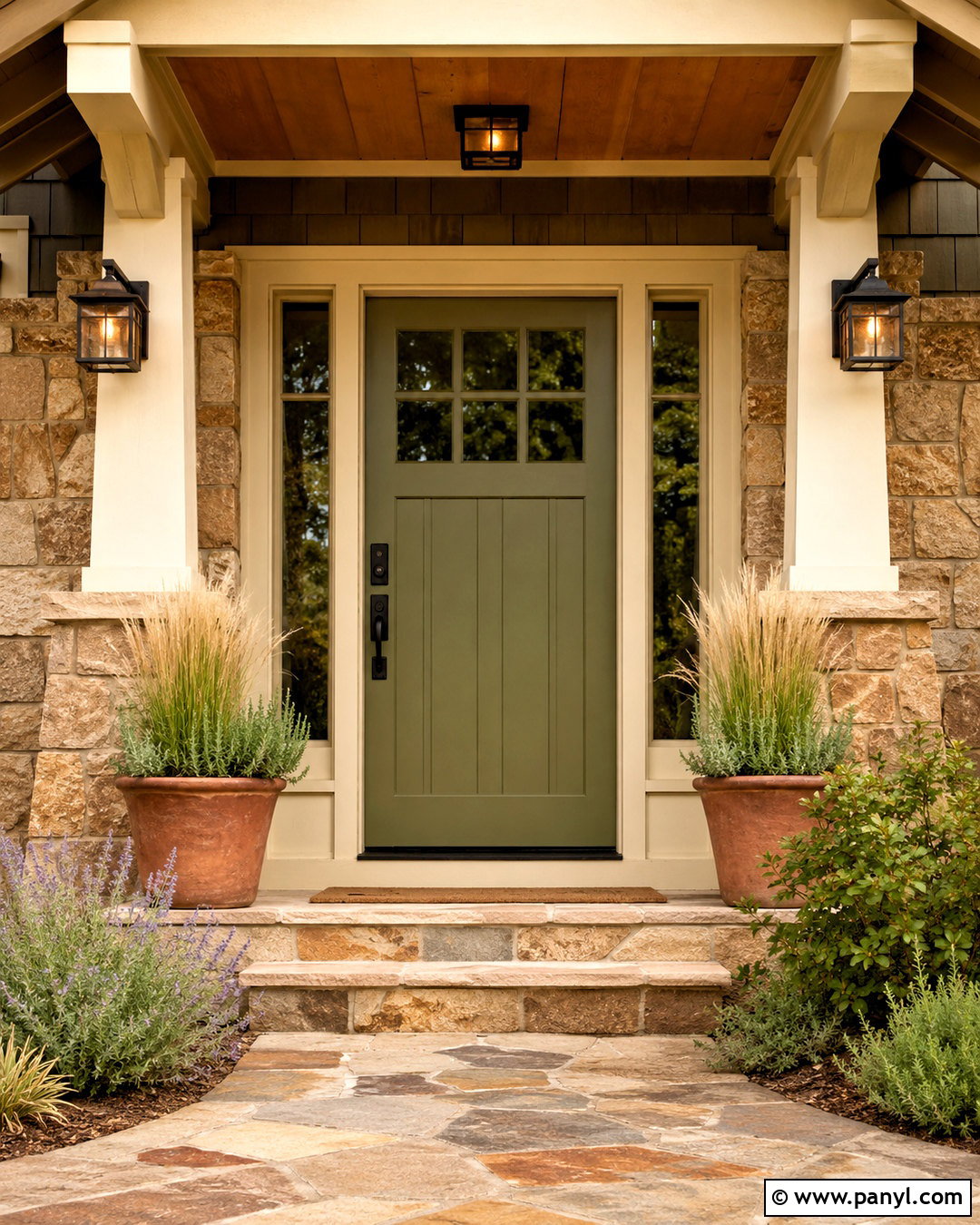
Earthy olive green feels especially natural against tan stone, warm beige siding, and cream trim. Choose a medium-depth olive with brown or gray undertones for a grounded appearance. Dark bronze hardware, blackened metal sconces, and a wood porch ceiling complete the material palette. Add rectangular terracotta planters filled with grasses, herbs, and silvery foliage to echo the landscape. A brown shingle roof and irregular flagstone walkway reinforce the organic scheme. Because olive is muted, it can be repeated on a nearby bench or small gate without making the exterior feel busy. This coordinated entrance complements Craftsman, ranch, cottage, and rustic contemporary homes, particularly when the facade already includes stone, wood, or other natural finishes.
18. Chocolate Brown Front Door Color
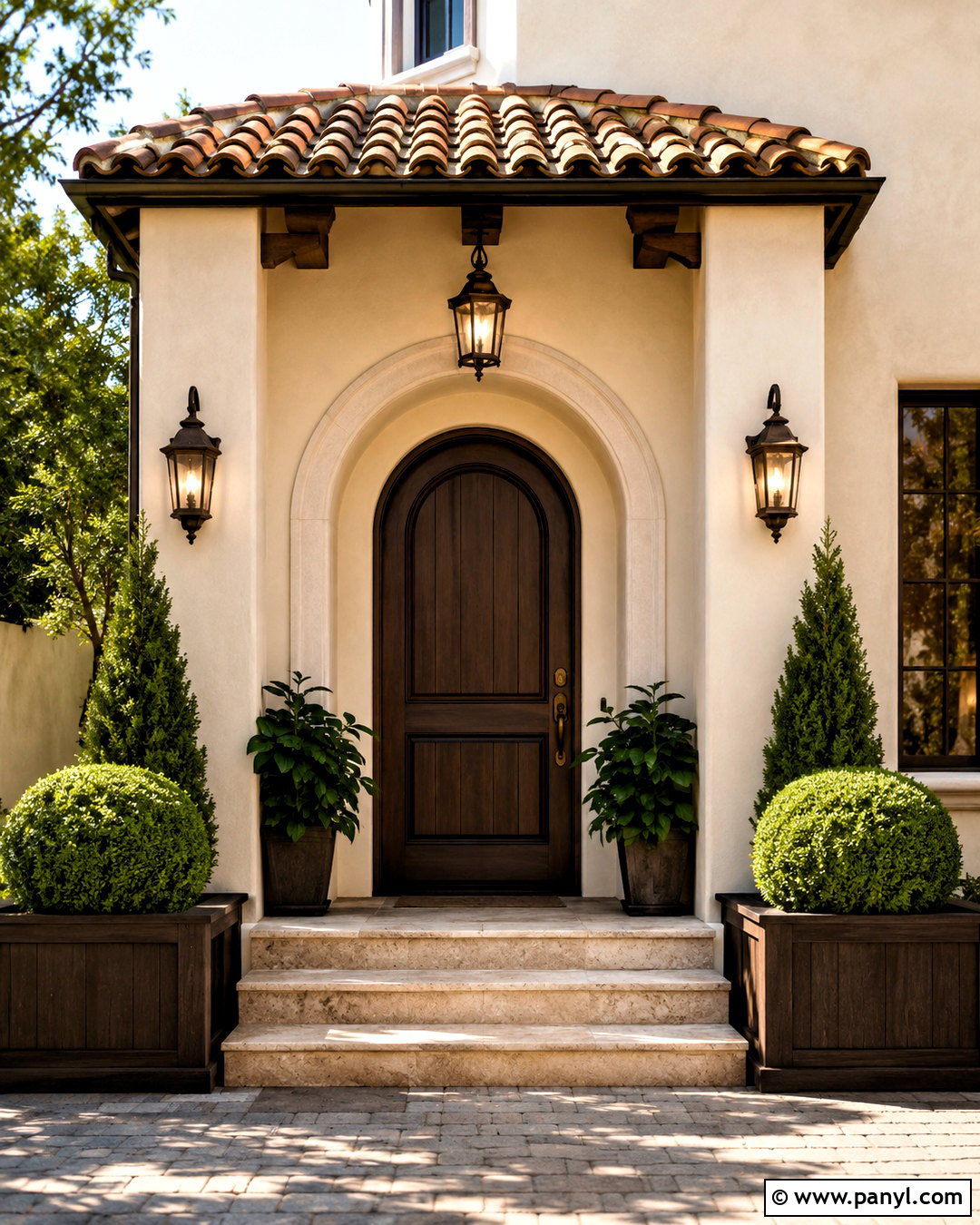
Chocolate brown brings warmth and definition to a light-colored home while offering a softer alternative to black. Pair it with creamy stucco, warm white trim, and a medium brown tile or shingle roof. Bronze hardware and amber-free clear glass sconces reinforce the classic earthy palette. Choose pale limestone steps, dark wood planters, and clipped green shrubs to create a neat entrance. If the exterior includes stone, look for brown paint that connects with its deepest natural tones. A satin finish keeps the door rich without making it appear overly glossy. This complete scheme works well on Mediterranean, traditional, Craftsman, and beige suburban houses. It creates contrast while remaining connected to warm roofing and landscape materials.
19. Soft Pink Front Door Color
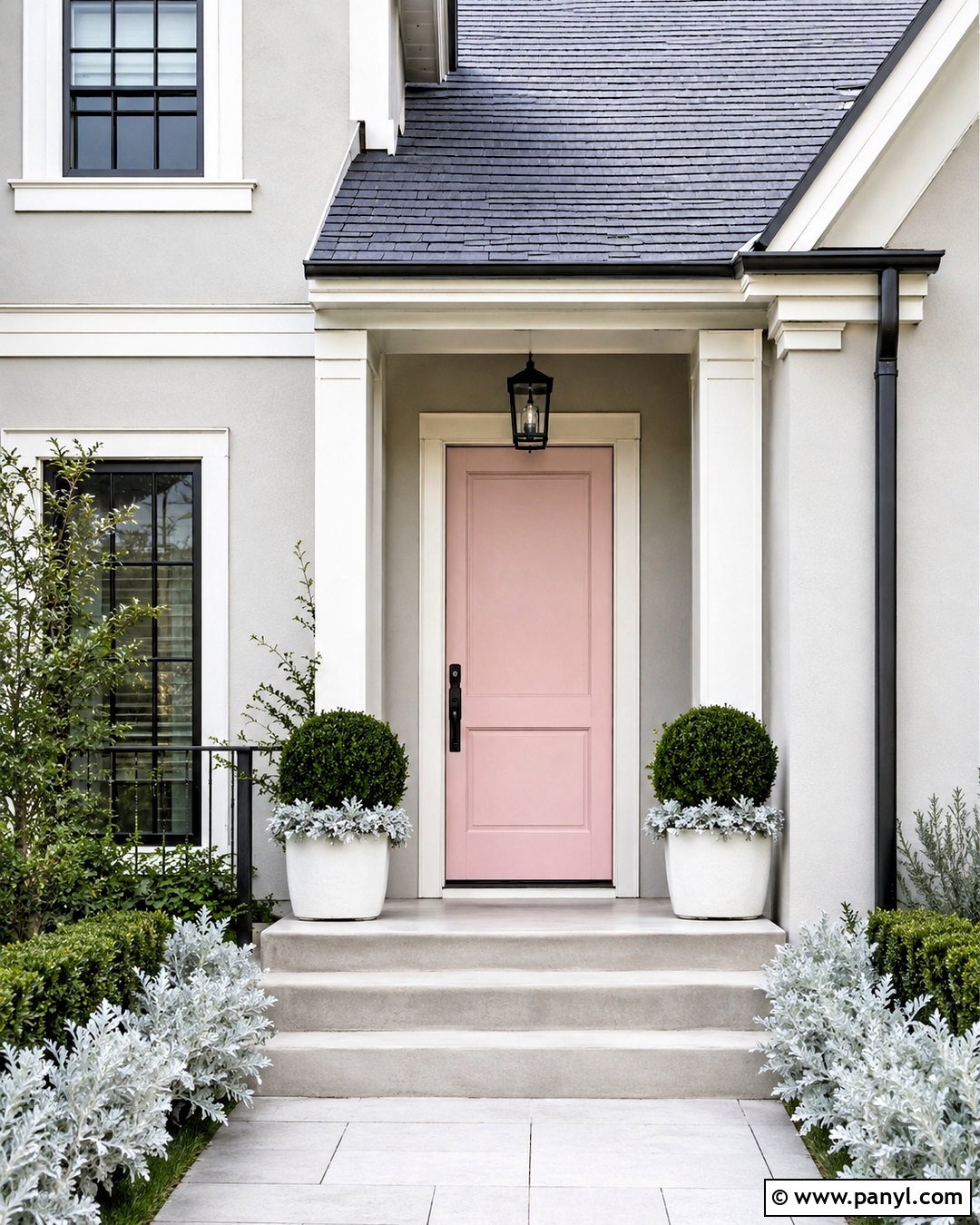
A dusty pink front door can feel tasteful and architectural when paired with restrained exterior colors. Use a muted blush with light gray siding, white trim, and a charcoal roof. Matte black hardware adds crisp definition, while pale concrete steps prevent the entrance from looking too delicate. Incorporate white planters, dark green shrubs, and silvery foliage for a clean garden palette. A simple striped doormat in gray and natural tan can connect the door to the surrounding neutrals. Avoid sugary pinks and choose a shade with beige or gray undertones. This complete exterior look feels warm, distinctive, and modern. It suits cottages, small townhouses, transitional homes, and contemporary facades with simple shapes and minimal decorative details.
20. Burnt Orange Front Door Color
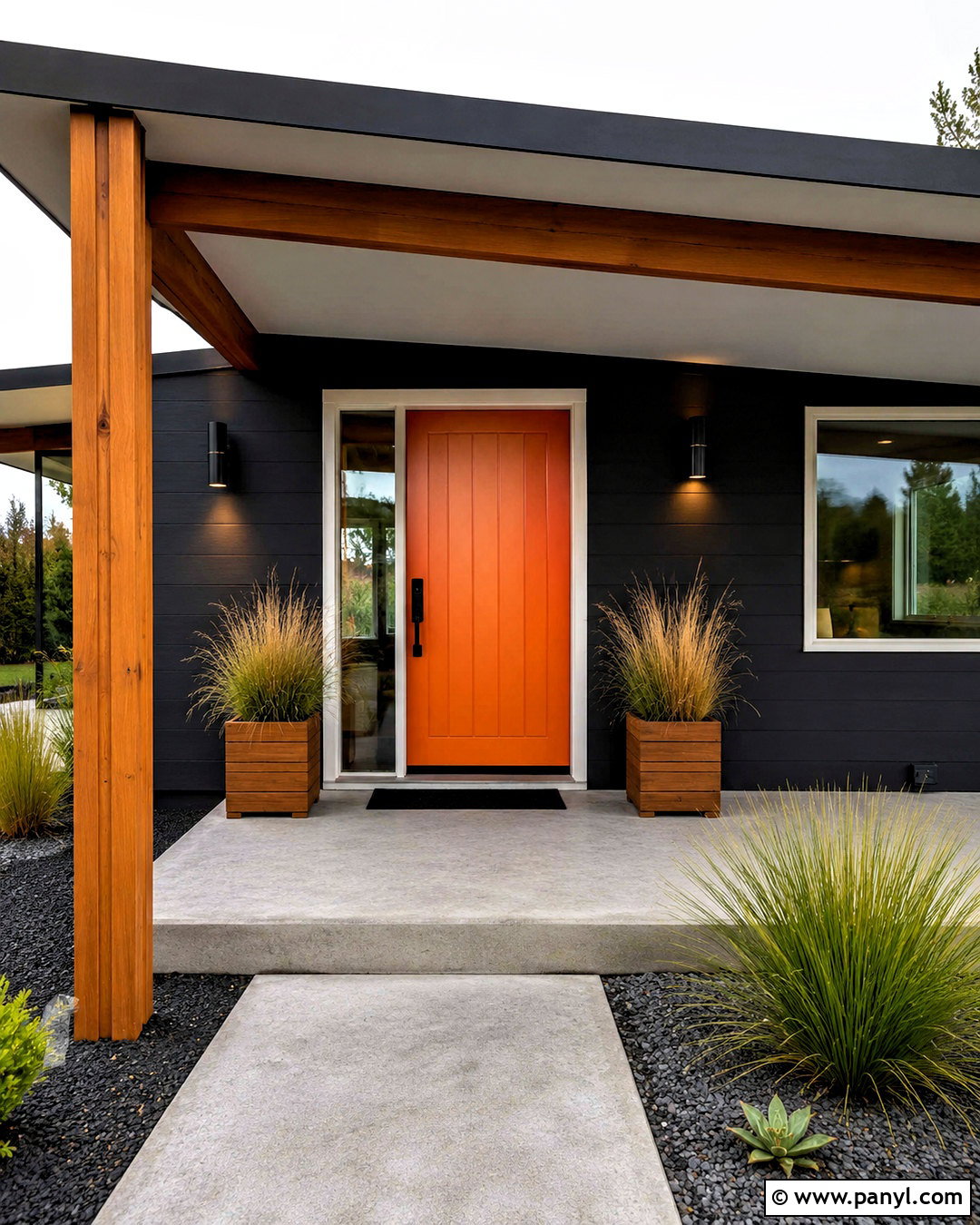
Burnt orange provides bold warmth while remaining more grounded than a bright citrus shade. Pair it with deep charcoal siding, warm white trim, and a black roof for a striking modern exterior. Matte black hardware and streamlined sconces keep the architecture crisp. Introduce natural cedar through porch posts, a bench, or large square planters to connect the orange door with warmer materials. Use ornamental grasses and structured evergreen shrubs rather than multicolored flowers. A concrete walkway and dark gravel beds complete the contemporary landscape. Select an orange with brown or terracotta undertones so it feels substantial. This finished scheme is ideal for midcentury modern, contemporary, and updated ranch homes with clean lines and simple entry details.
Conclusion:
The right front door color should feel connected to the entire house, including its siding, trim, roof, porch materials, hardware, and landscaping. Black, navy, charcoal, and deep green provide strong contrast, while sage, dusty blue, greige, and olive create softer transitions. Yellow, coral, plum, pink, and burnt orange offer more personality when balanced with simple neutral surroundings. Before painting, compare a large sample against the exterior at different times of day. Then choose a durable exterior finish that suits the door material and desired level of shine. These complete schemes make **20 door colours ideas paint colors** easier to compare, personalize, and confidently recreate at home.

Related Ideas and Inspiration:
Leave a Reply