
Ochre walls bring earthy warmth, depth, and personality into a home without the sharp intensity of brighter yellow. Depending on the undertone, ochre can appear golden, mustard, clay-like, or softly brown, making it surprisingly flexible across modern and traditional interiors. It works beautifully with natural wood, creamy white, muted green, deep blue, terracotta, and matte black. The key is creating a balanced room where furniture, lighting, textiles, and finishes support the wall color instead of competing with it. From inviting living rooms and restful bedrooms to character-filled kitchens, offices, and hallways, the following 35 ochre walls show how this grounded color can shape a complete, comfortable, and highly personal space.

1. Ochre Walls With Cream Furniture
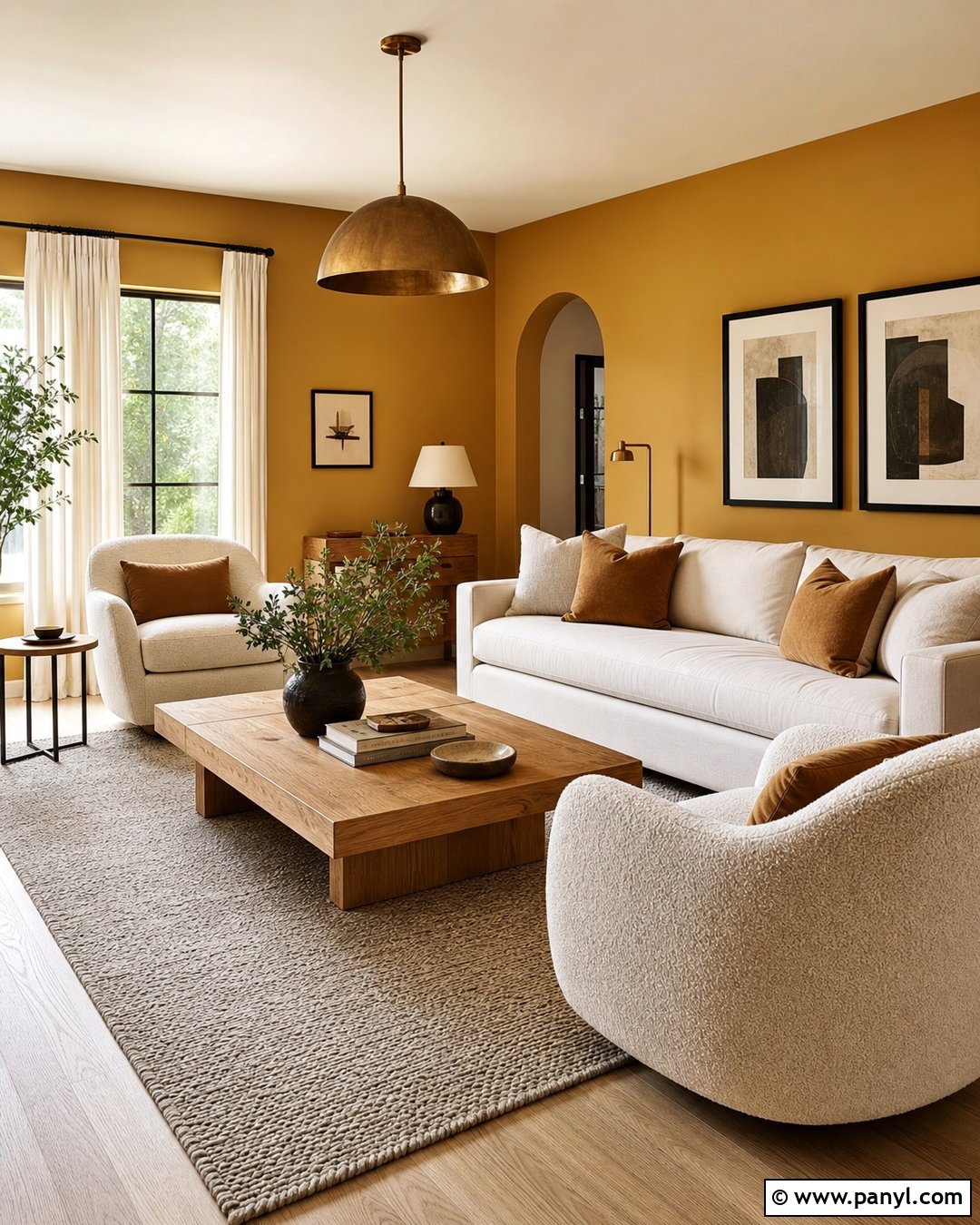
Cream furniture softens the strength of ochre walls and creates a living room that feels warm rather than overly yellow. Start with a comfortable cream sofa and two ivory boucle or linen chairs arranged around a simple oak coffee table. A beige wool rug grounds the seating area while allowing the rich wall color to remain visible. Add off-white curtains, ceramic table lamps, and cushions in caramel, rust, and soft brown. Light oak flooring keeps the palette natural and relaxed. For contrast, use thin black picture frames or a dark bronze floor lamp. This combination works especially well in a bright room because daylight reveals the golden and earthy undertones of the ochre paint.
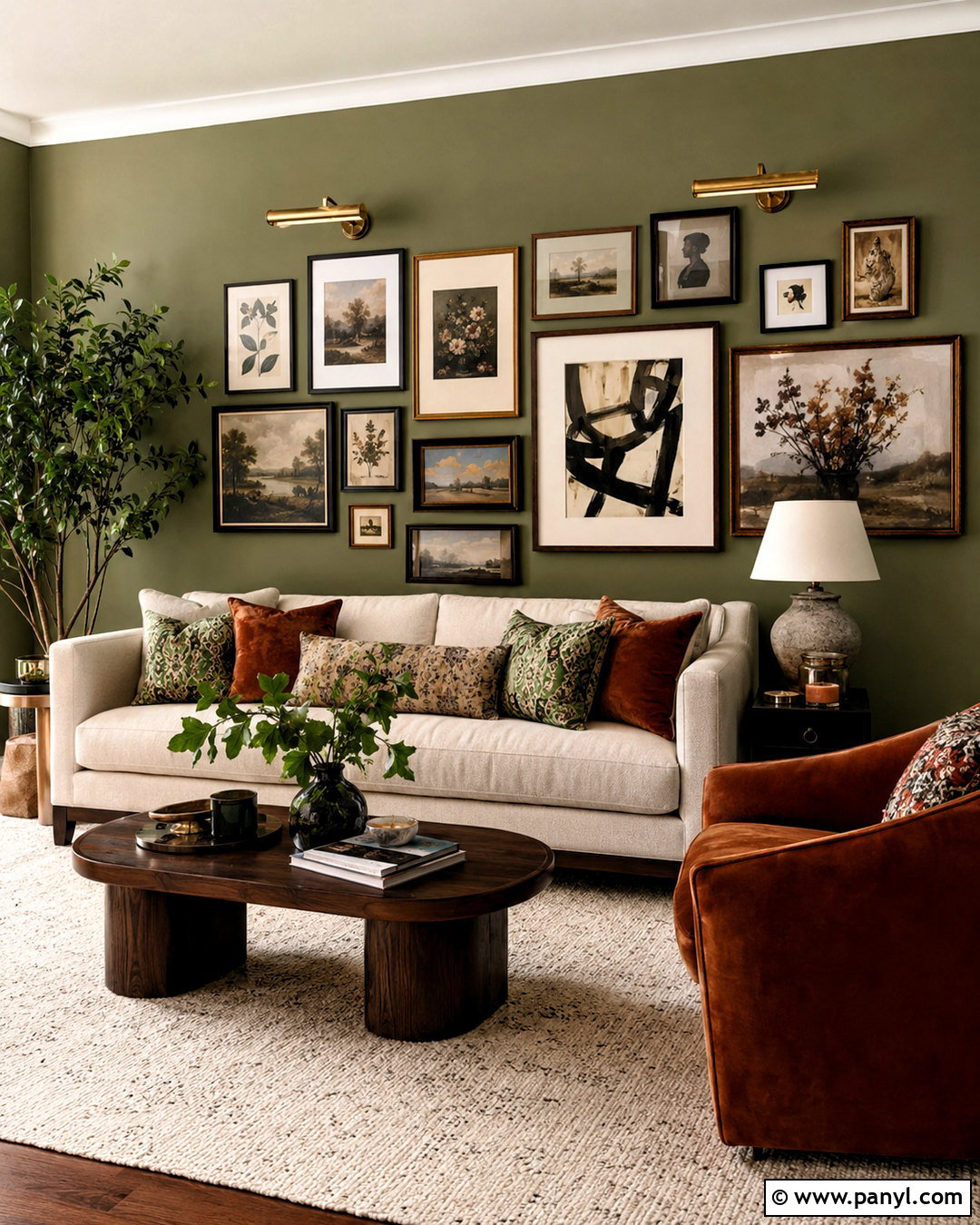
2. Ochre Walls With Dark Green Sofa
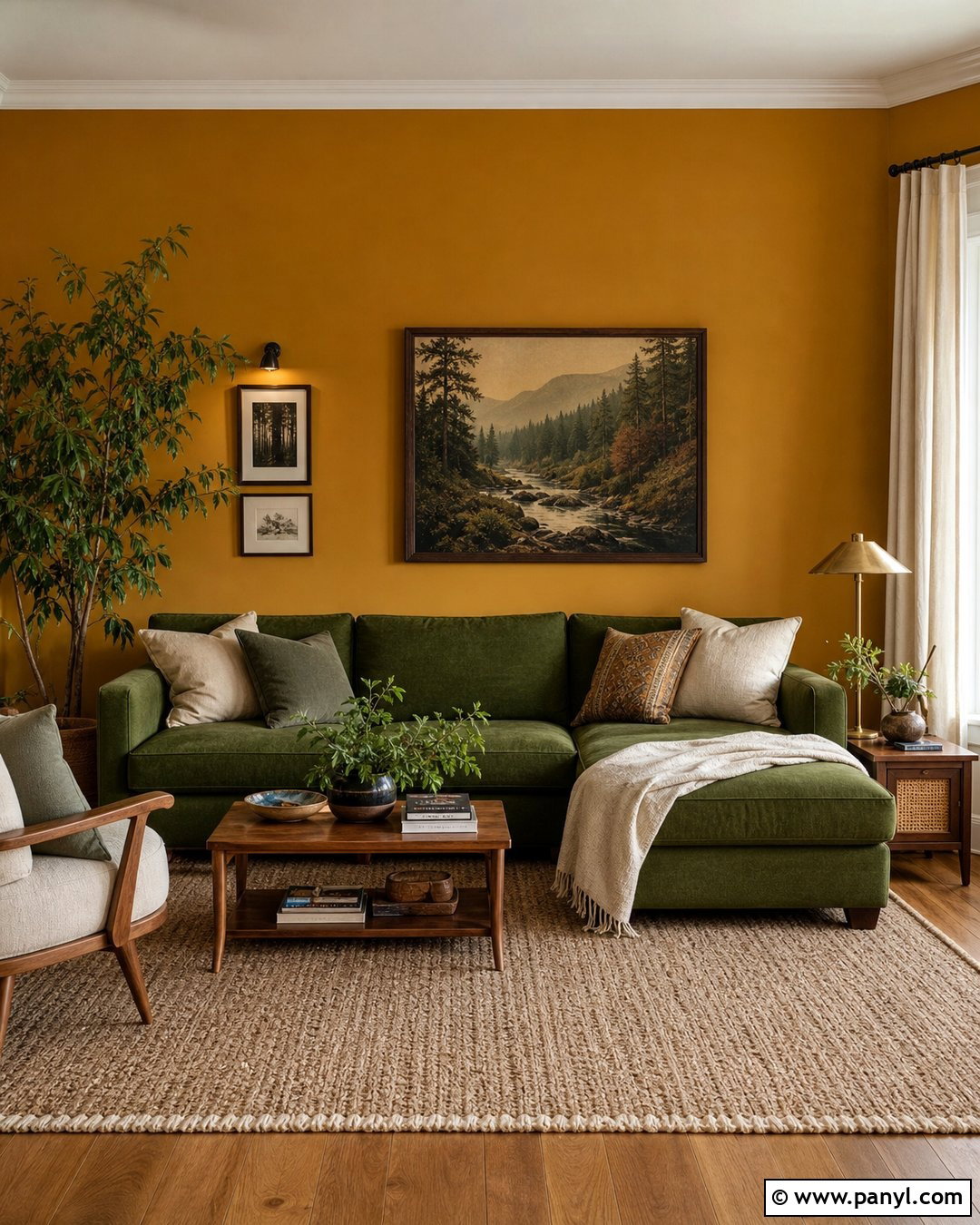
A dark green sofa creates a rich, nature-inspired contrast against golden ochre walls. Choose a deep olive or forest green upholstery with a matte fabric finish, then add pillows in cream, camel, and subtle botanical patterns. A walnut coffee table and medium-toned wood flooring reinforce the earthy palette. Use a large oatmeal rug to separate the strong colors and keep the room from feeling heavy. Antique brass lighting brings out the warmth of the walls without adding too much shine. Finish the look with leafy indoor plants, landscape artwork, and linen curtains in warm white. Keep other furnishings simple so the ochre and green pairing remains the clear focus of the complete living room.
3. Ochre Walls With Navy Blue Accents
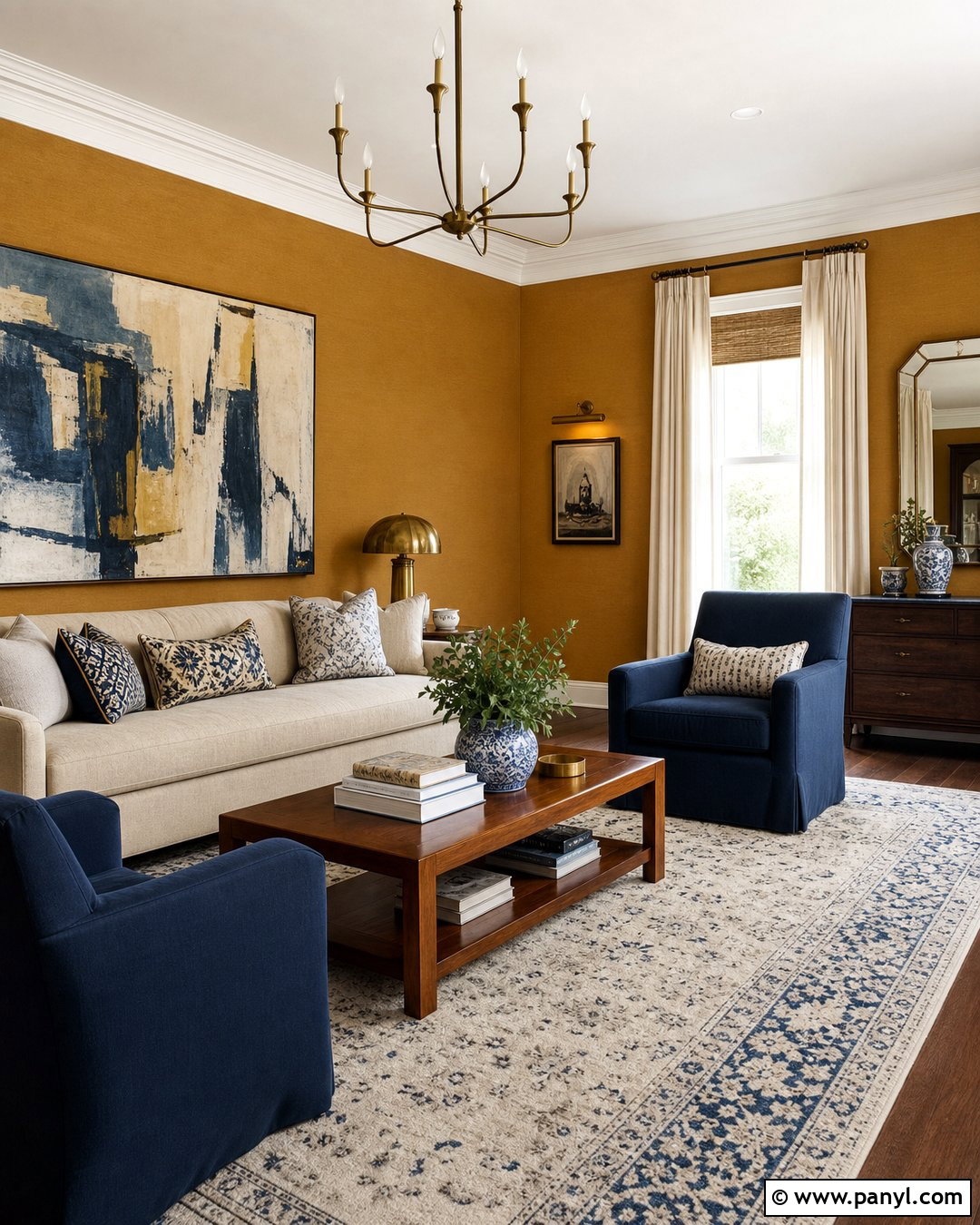
Deep navy blue gives ochre walls a crisp, sophisticated edge. Build the room around an oatmeal sofa, then introduce navy through a pair of armchairs, patterned pillows, and a large area rug with subtle cream details. Walnut furniture helps connect the cool blue accents to the warm wall color. Add aged brass lamps and simple white ceramics for brightness. Warm white curtains will soften the windows while maintaining contrast around the ochre walls. A large abstract painting featuring blue, tan, and muted gold can unite the entire palette above the sofa. This complete scheme feels balanced because navy adds visual weight, ochre supplies warmth, and the neutral upholstery prevents either strong color from overwhelming the room.
4. Light Ochre Walls In A Small Living Room
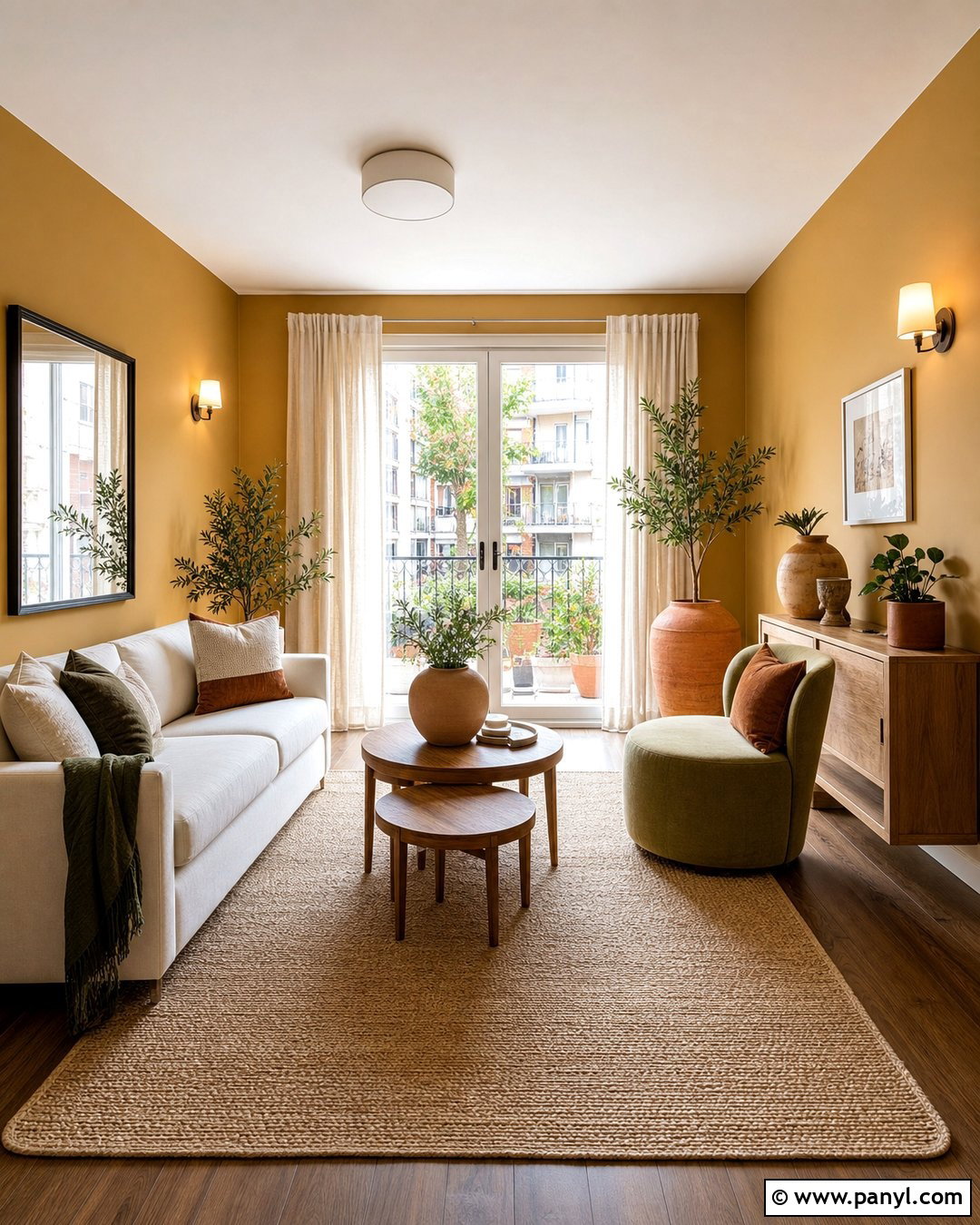
Pale ochre walls can make a compact living room feel sunny, comfortable, and visually open. Select a muted shade with beige undertones rather than a saturated mustard color. Pair it with a small warm-white sofa, an armless accent chair, and nesting oak tables that can be moved easily. A light natural-fiber rug keeps the floor simple and creates an airy base. Use wall-mounted lighting instead of bulky table lamps, and hang curtains close to the ceiling to emphasize height. One large mirror can reflect daylight across the ochre surfaces. Complete the room with a few terracotta pots, soft sage cushions, and streamlined artwork, leaving enough open wall space to avoid a crowded appearance.
5. Dark Ochre Walls In A Cozy Living Room
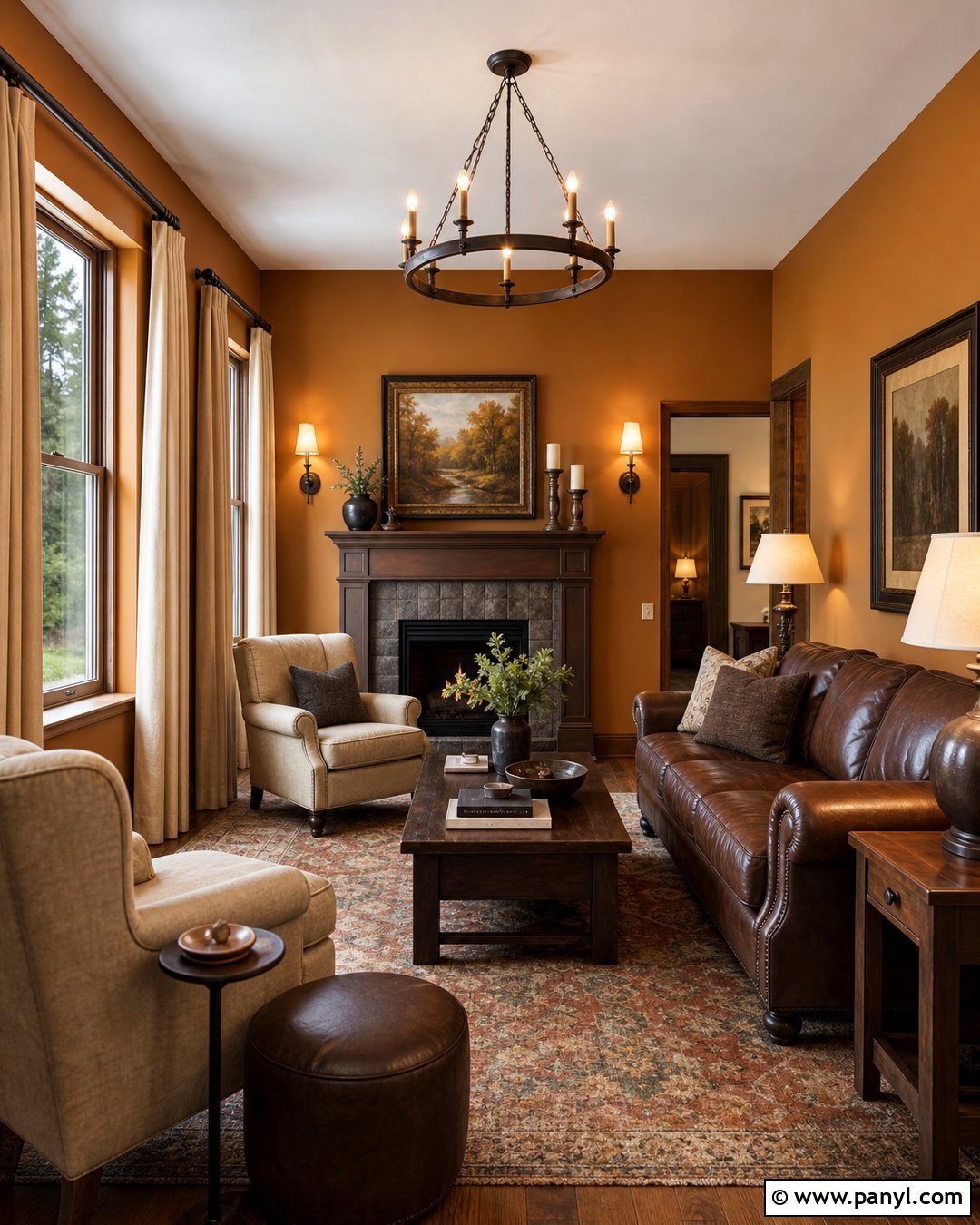
Dark ochre walls create an enveloping living room when they are balanced with soft textures and layered lighting. Use the color across every wall, then furnish the space with a deep brown leather sofa and two relaxed beige armchairs. A faded Persian-style rug containing rust, cream, and olive adds pattern without fighting the walls. Choose dark walnut tables, brushed brass lamps, and heavy oatmeal curtains for a settled, intimate effect. White or pale cream on the ceiling will keep the room from closing in. Add several light sources at different heights, including sconces and a floor lamp. Natural wood frames and restrained artwork complete this cozy room while allowing the saturated ochre background to remain prominent.
6. Ochre Accent Wall Behind A Sofa
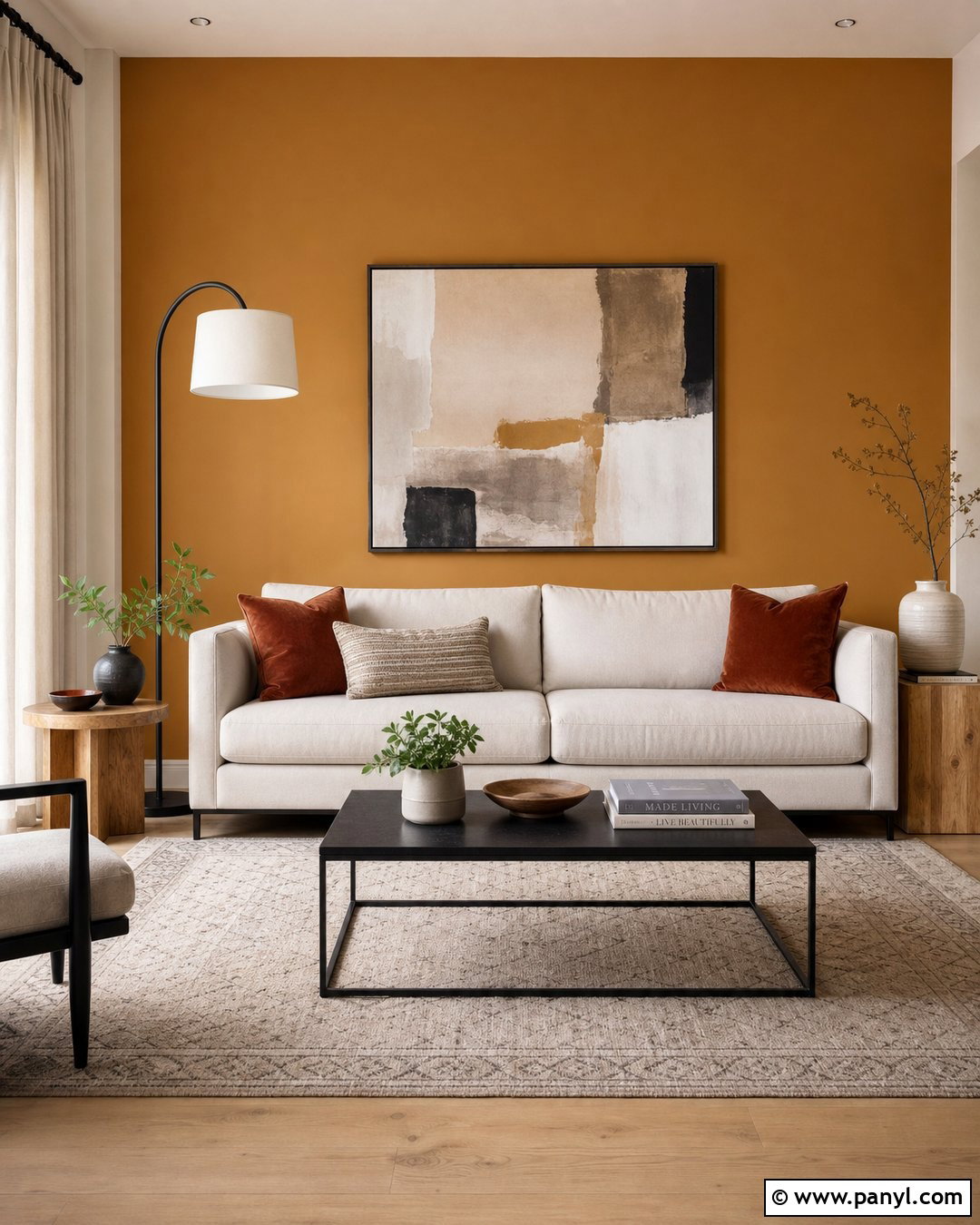
An ochre accent wall can establish a strong focal point without surrounding the entire living room in color. Paint the longest uninterrupted wall behind the sofa, keeping the remaining walls warm white or soft greige. Place a light gray or cream sofa against the ochre surface and anchor it with a large charcoal, beige, and gold area rug. Oak side tables and a black metal coffee table introduce both warmth and definition. Hang one oversized artwork rather than several small pieces, choosing a composition with cream, rust, and dark green. Finish the room with linen curtains, a sculptural floor lamp, and textured cushions. Repeating ochre sparingly in one pillow or decorative bowl makes the design feel intentional.
7. Ochre Walls With Midcentury Furniture
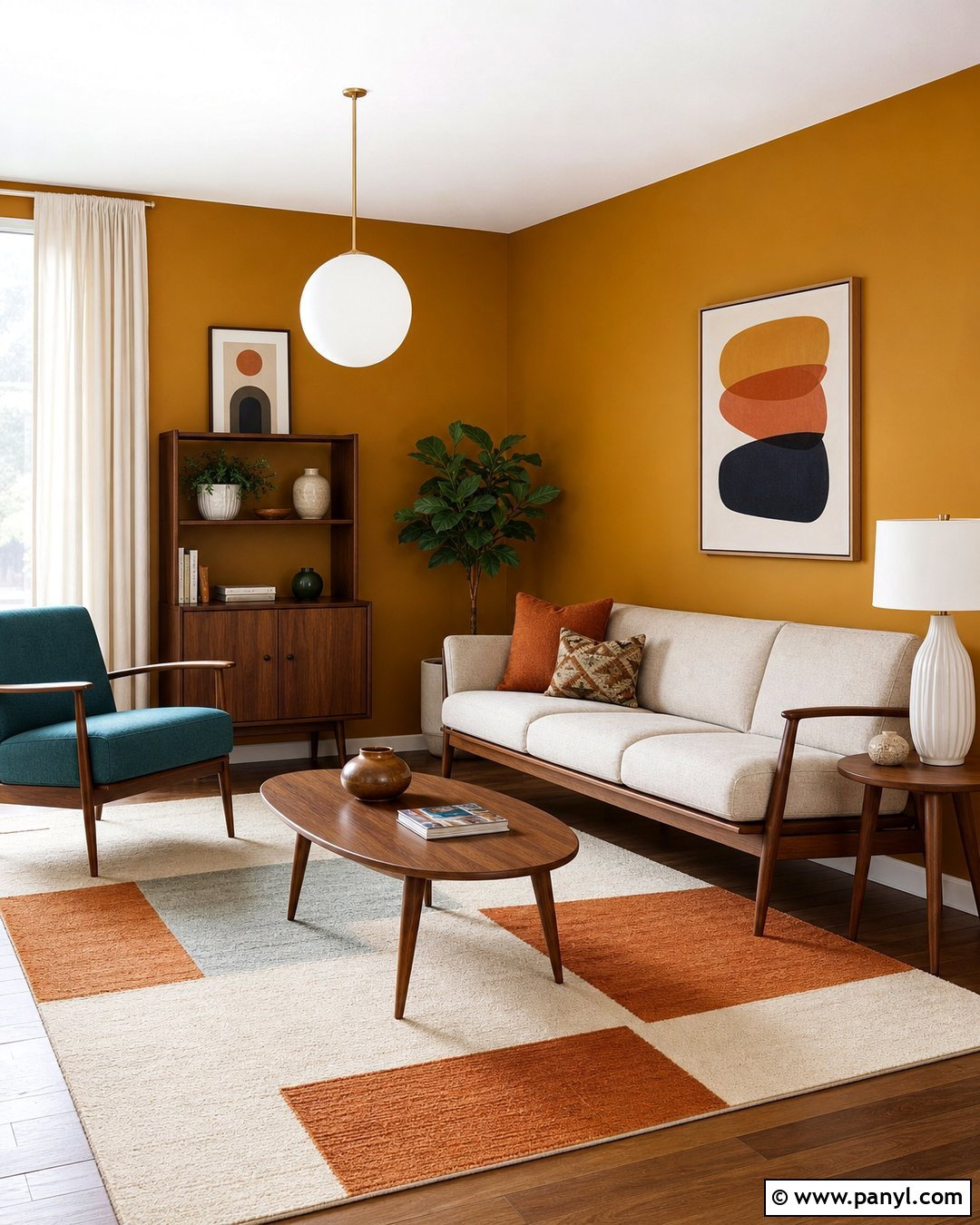
Ochre walls fit naturally into a midcentury-inspired room filled with clean lines, warm woods, and purposeful color. Choose a low-profile walnut sofa frame with neutral upholstery, then add a muted teal lounge chair for contrast. A tapered-leg coffee table and streamlined media console maintain the period influence without making the space feel themed. Use a geometric rug in cream, burnt orange, and brown to connect the wall color with the furnishings. Globe lighting in opal glass provides a softer counterpoint to the angular furniture. Keep window treatments simple with full-length ivory curtains. Finish with abstract prints, ceramic vessels, and one tall plant, creating a complete room that feels nostalgic, practical, and current.
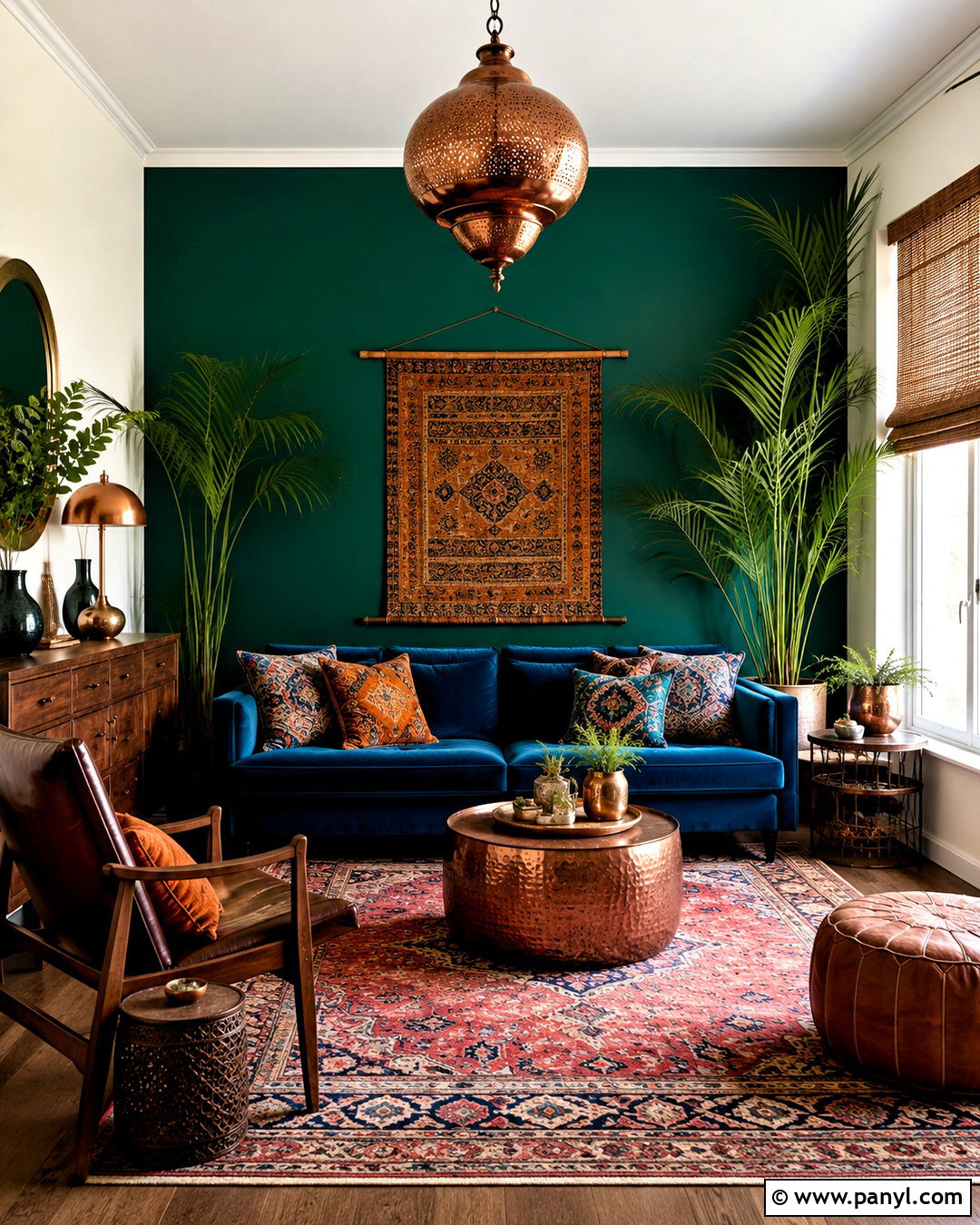
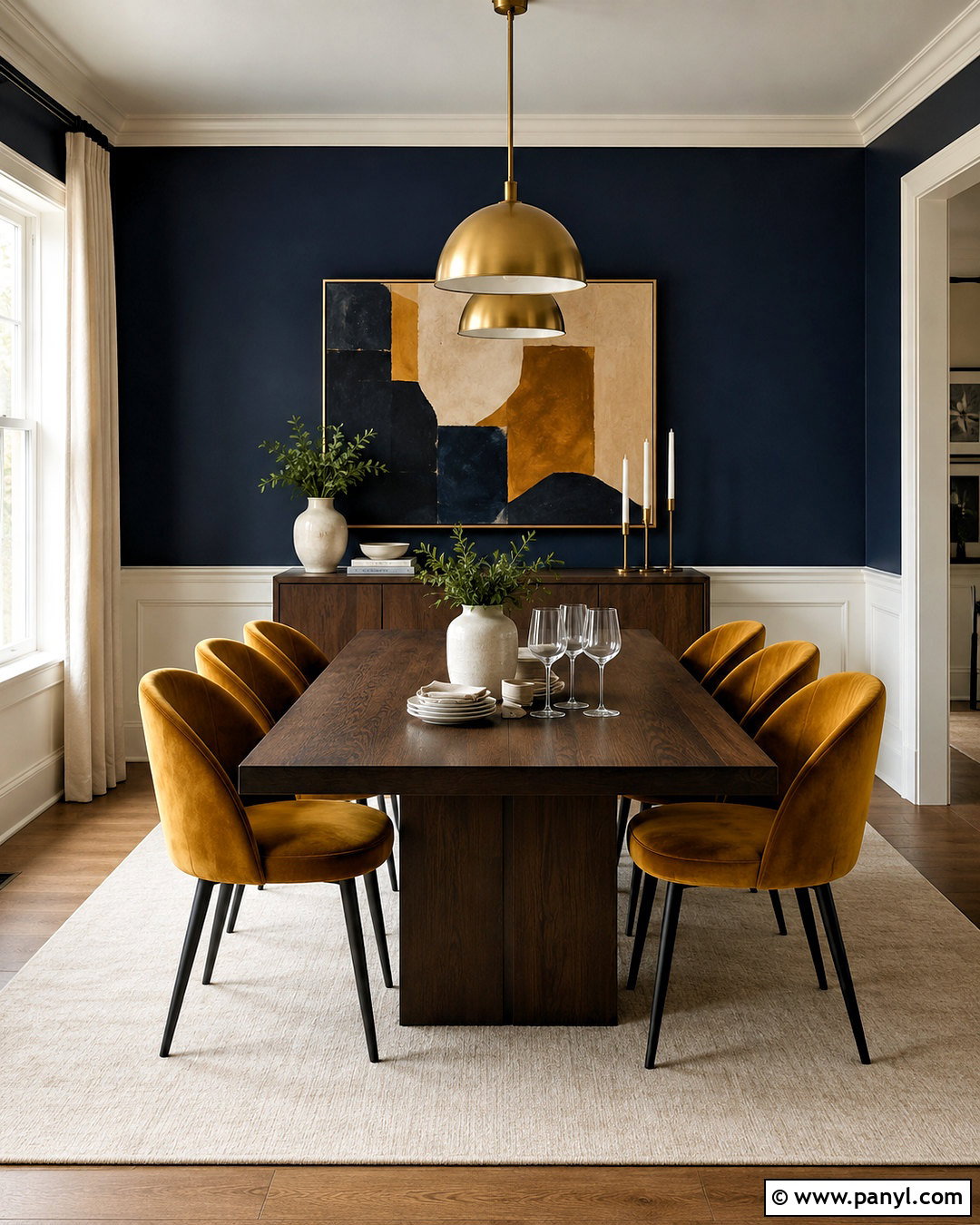
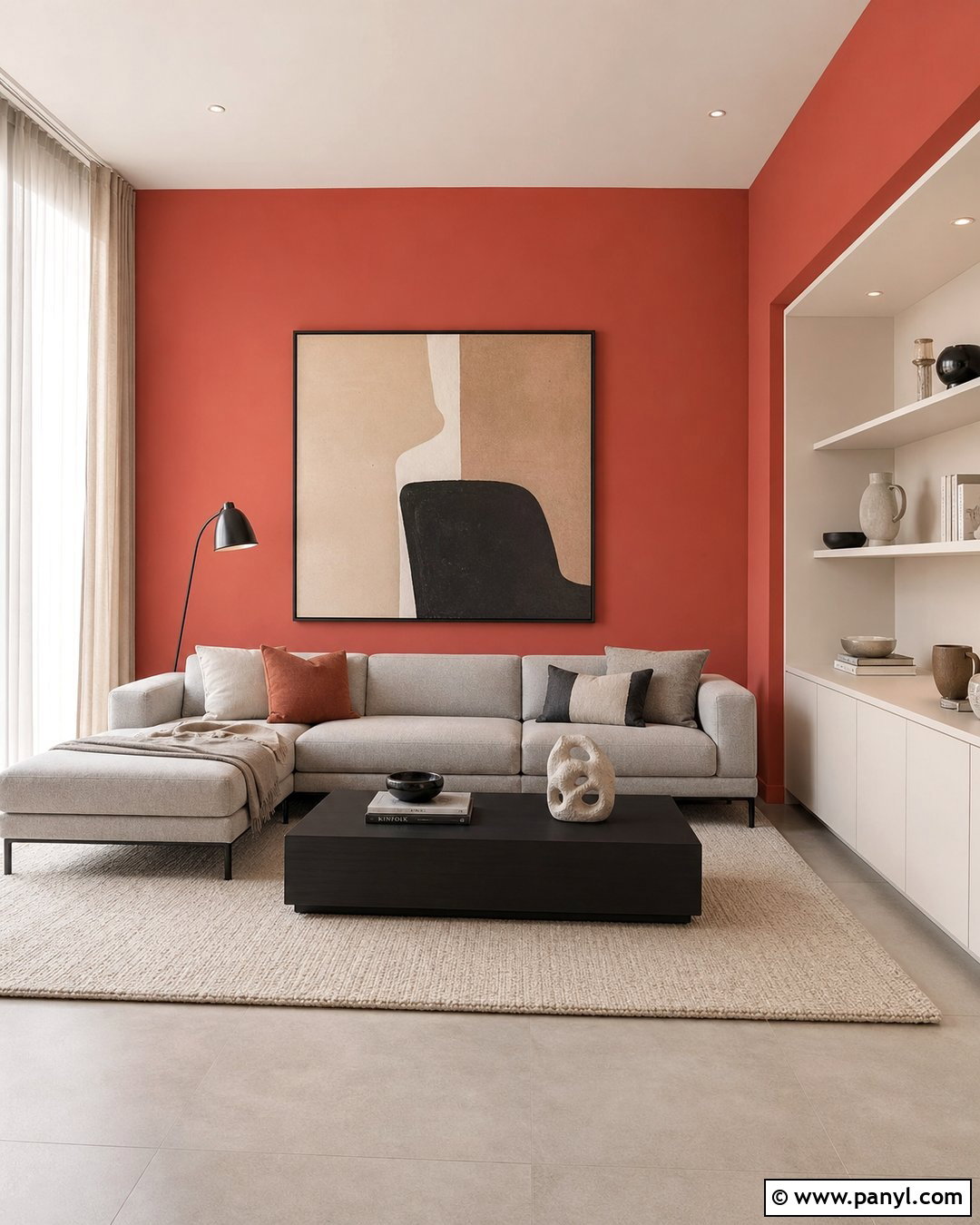
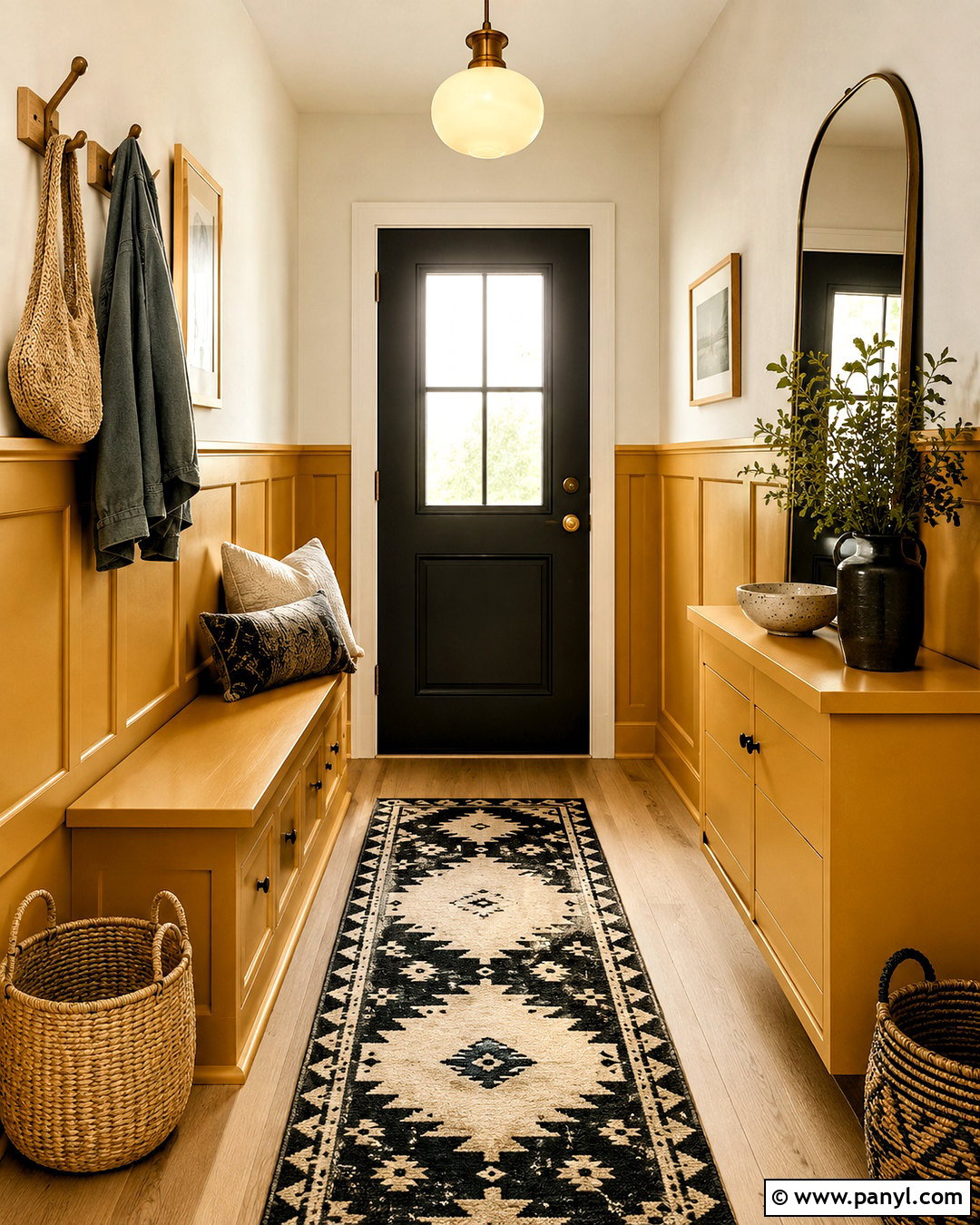
8. Ochre Walls With Boho Decor
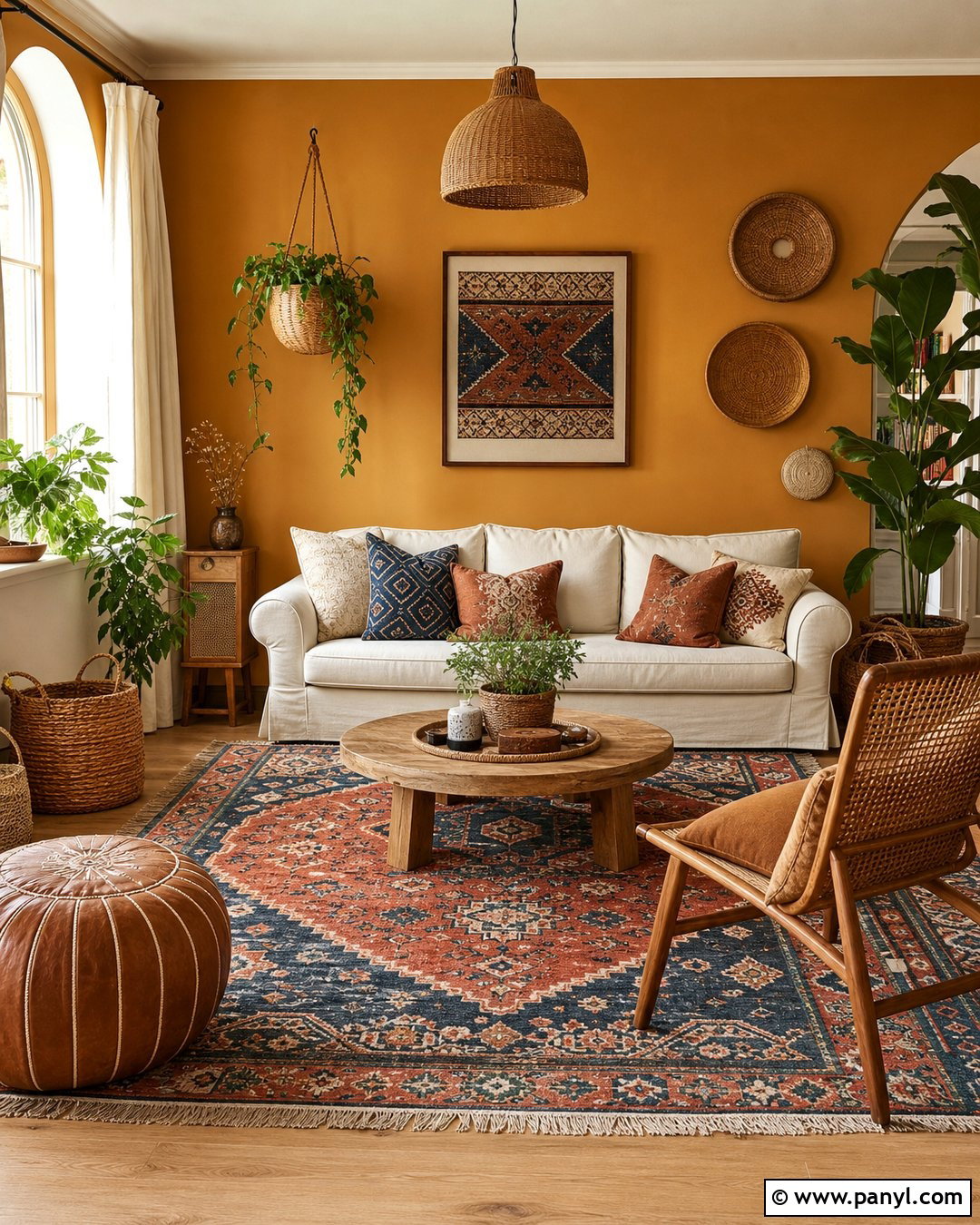
For a relaxed boho interior, pair ochre walls with layered natural materials, handmade-looking accessories, and comfortable low seating. Begin with a cream slipcovered sofa and a cane lounge chair, arranged over a faded terracotta and blue rug. Add a round wood coffee table, woven baskets, and linen cushions with simple geometric patterns. Long ivory curtains will brighten the ochre background while giving the room softness and movement. Display a thoughtful mix of framed artwork, pottery, and trailing plants rather than filling every surface. Rattan lighting adds texture overhead, while black details provide subtle definition. The finished room should feel collected and welcoming, but editing the accessories carefully will prevent the warm palette from becoming visually cluttered.
9. Ochre Walls With Scandinavian Decor
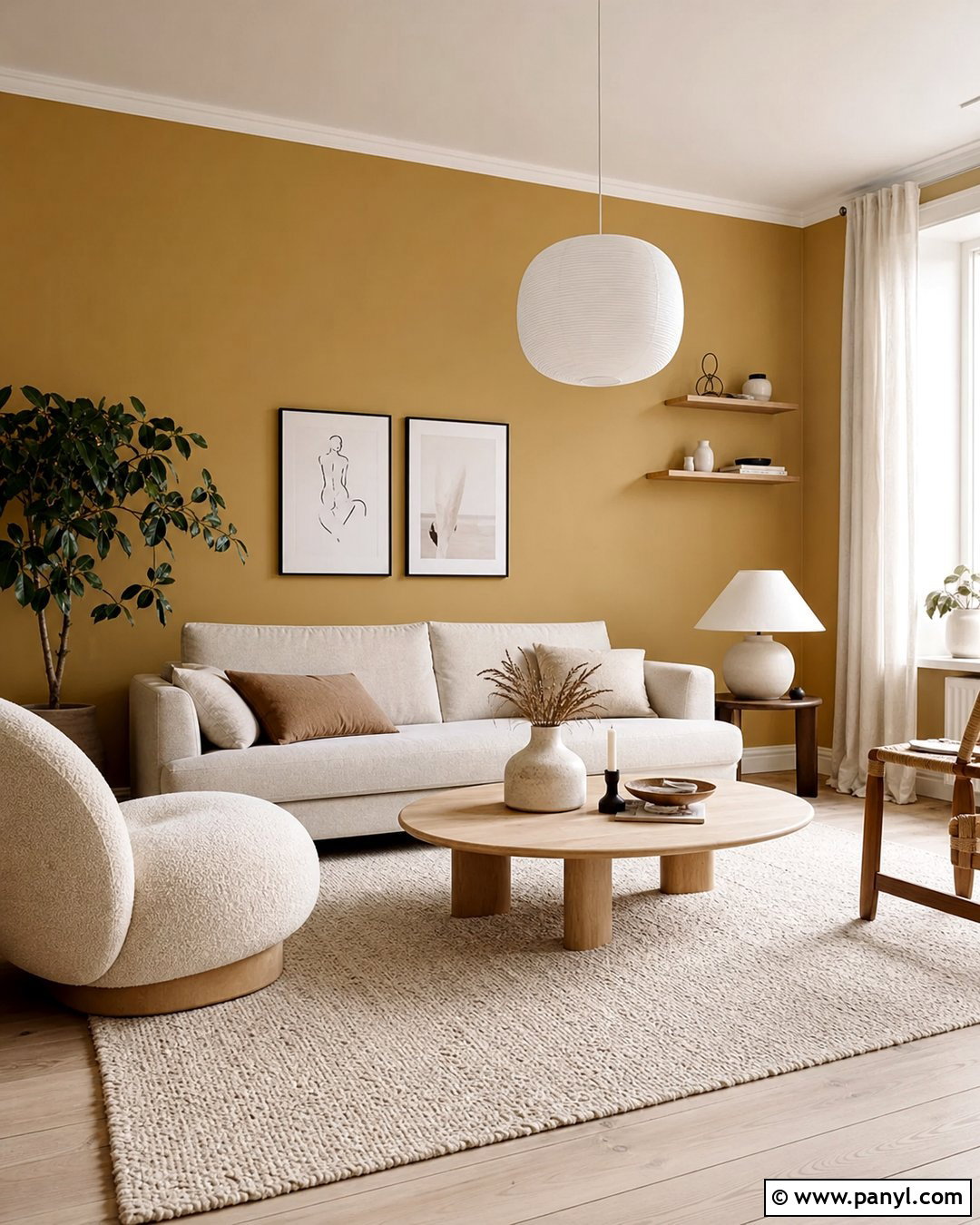
Can ochre work in a calm Scandinavian room? A softly muted ochre shade provides warmth while pale woods and restrained furnishings preserve the light, uncluttered character. Use a simple oatmeal sofa with slim oak legs, a light wood coffee table, and one sculptural cream armchair. A large off-white wool rug will brighten the center of the room and soften bare flooring. Choose white linen curtains, matte ceramic lamps, and minimal black-framed prints. Rather than filling shelves with small objects, display a few carefully selected books, vessels, and natural branches. This balanced room combines the coziness of ochre walls with practical furniture and generous empty space, resulting in an inviting look that still feels clean and organized.
10. Ochre Walls With Rustic Wood Furniture
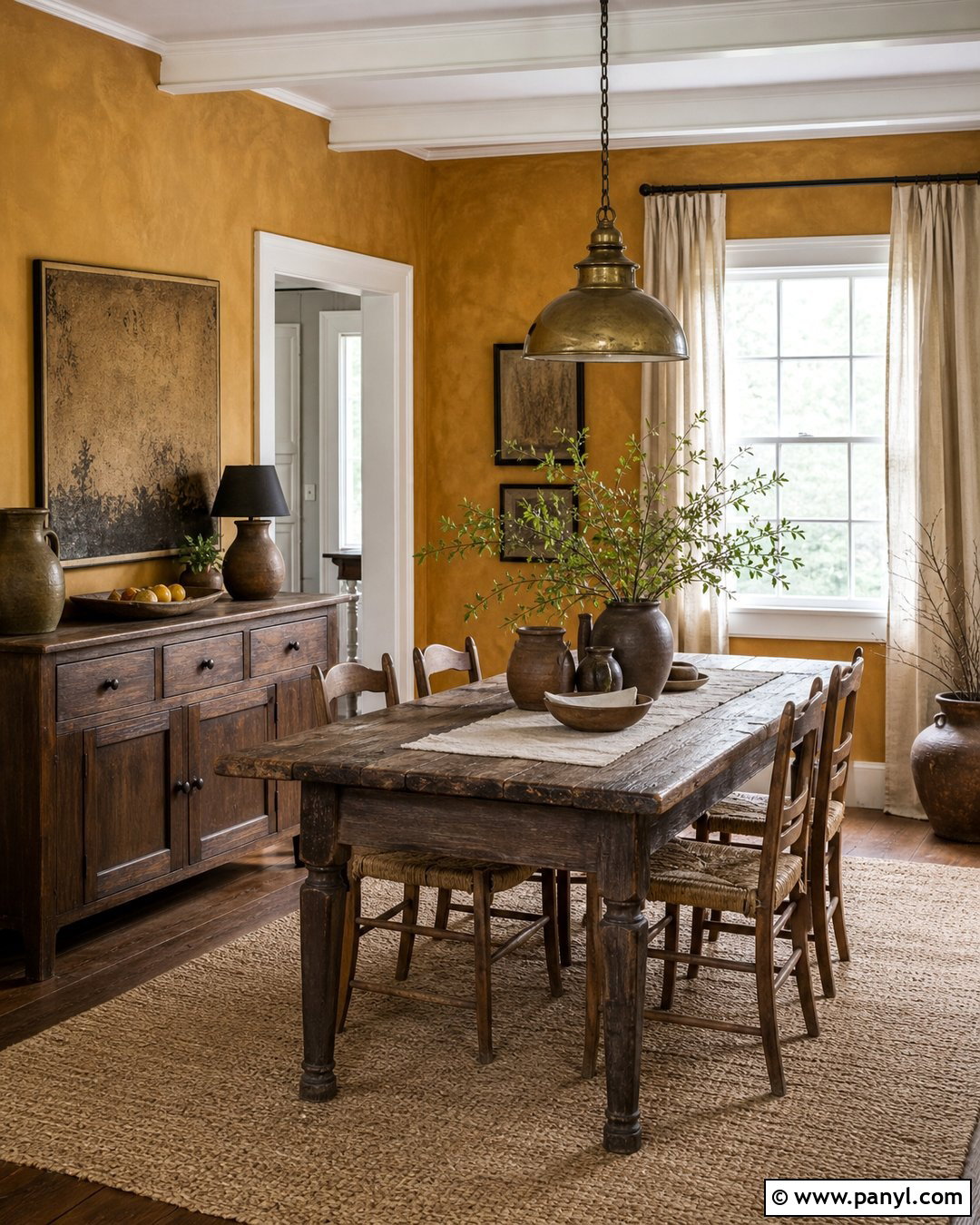
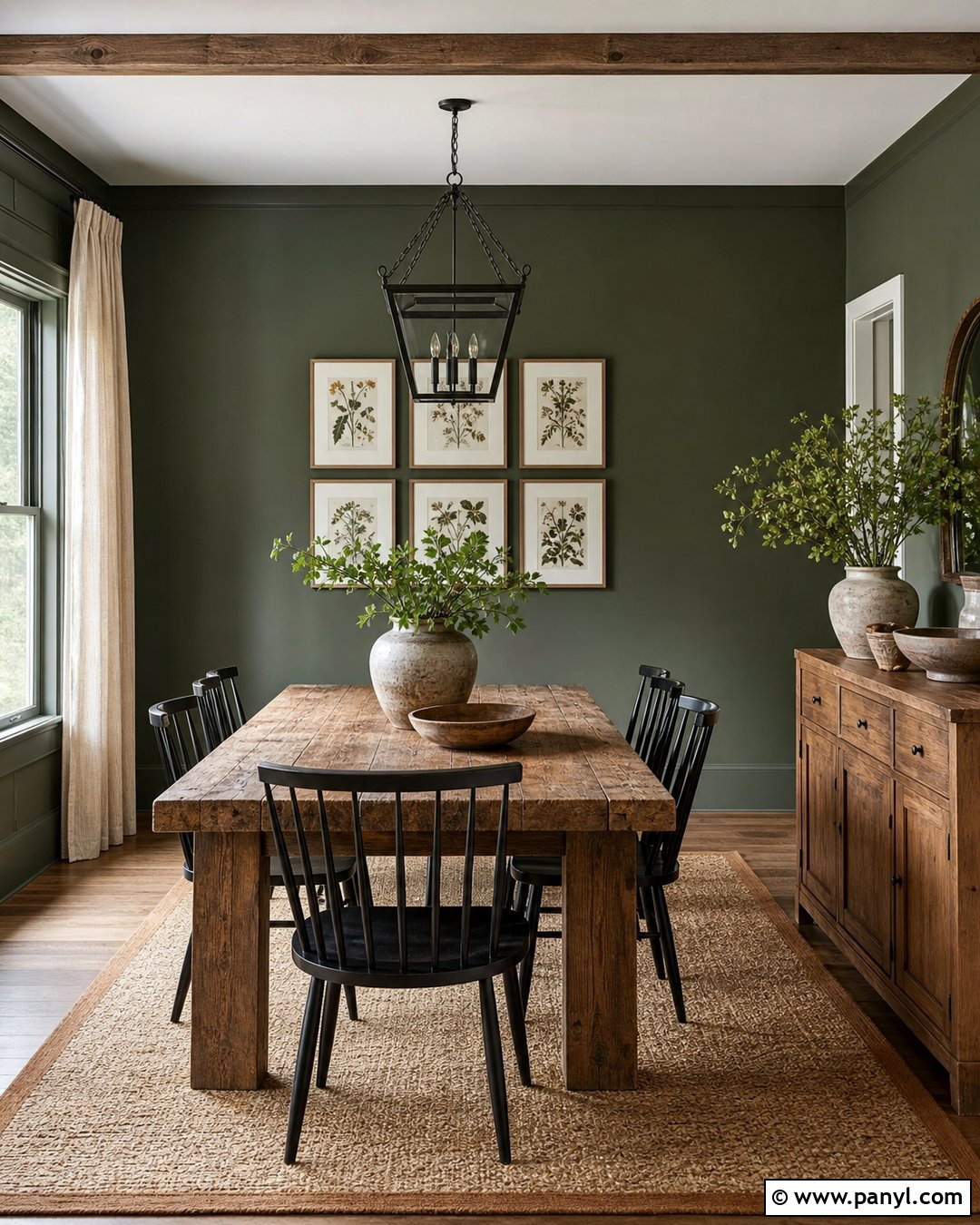
Rustic wood furniture emphasizes the mineral, earth-based character of ochre walls. In a dining room, position a substantial reclaimed-wood table beneath a black iron or aged brass pendant. Add simple wooden chairs with woven seats and place a large natural-fiber rug underneath the dining set. Warm white curtains soften the windows, while cream-painted trim creates a clean border around the wall color. A vintage sideboard provides useful storage and another surface for pottery, branches, and softly colored artwork. Avoid matching every wood finish exactly; a mix of medium oak and darker reclaimed timber creates depth. The final room should feel sturdy and comfortable, with enough pale textiles and open space to balance the heavier natural materials.
11. Ochre Walls With Terracotta Decor
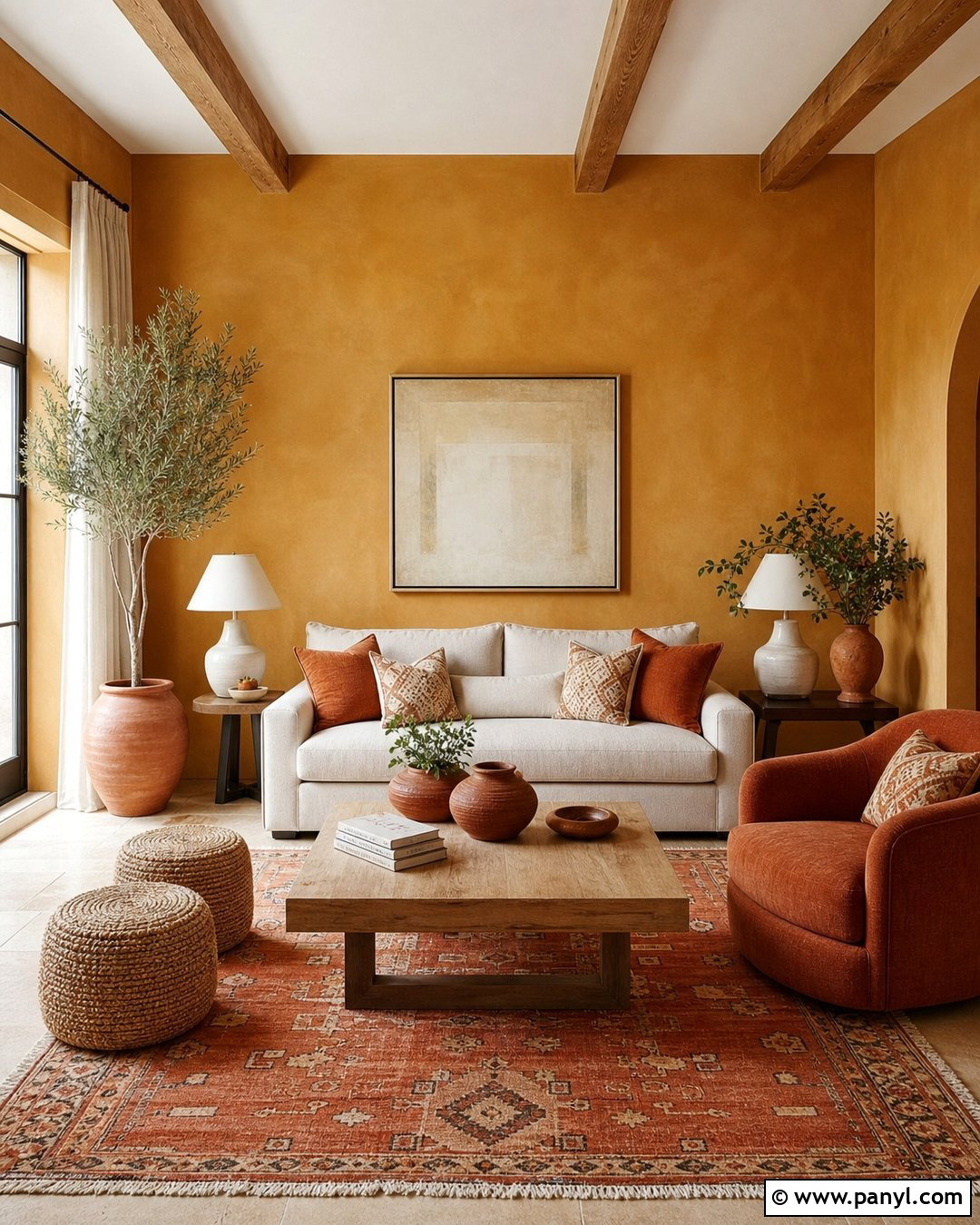
Ochre and terracotta form a warm, sunbaked palette that feels cohesive when lighter neutrals are included. Paint the walls a golden ochre, then choose a cream sofa or upholstered dining chairs as the room’s visual break. Introduce terracotta through a patterned rug, earthenware planters, cushions, and one substantial accent chair. Medium oak furniture supports both colors without creating another strong focal point. Add warm-white linen curtains and pale ceramic lamps to reflect light around the space. Olive branches or muted green plants provide a small amount of cooling contrast. Since ochre and terracotta are closely related, vary their textures and values so the room has dimension rather than appearing like one continuous block of orange-brown color.
12. Ochre Walls With Black Trim
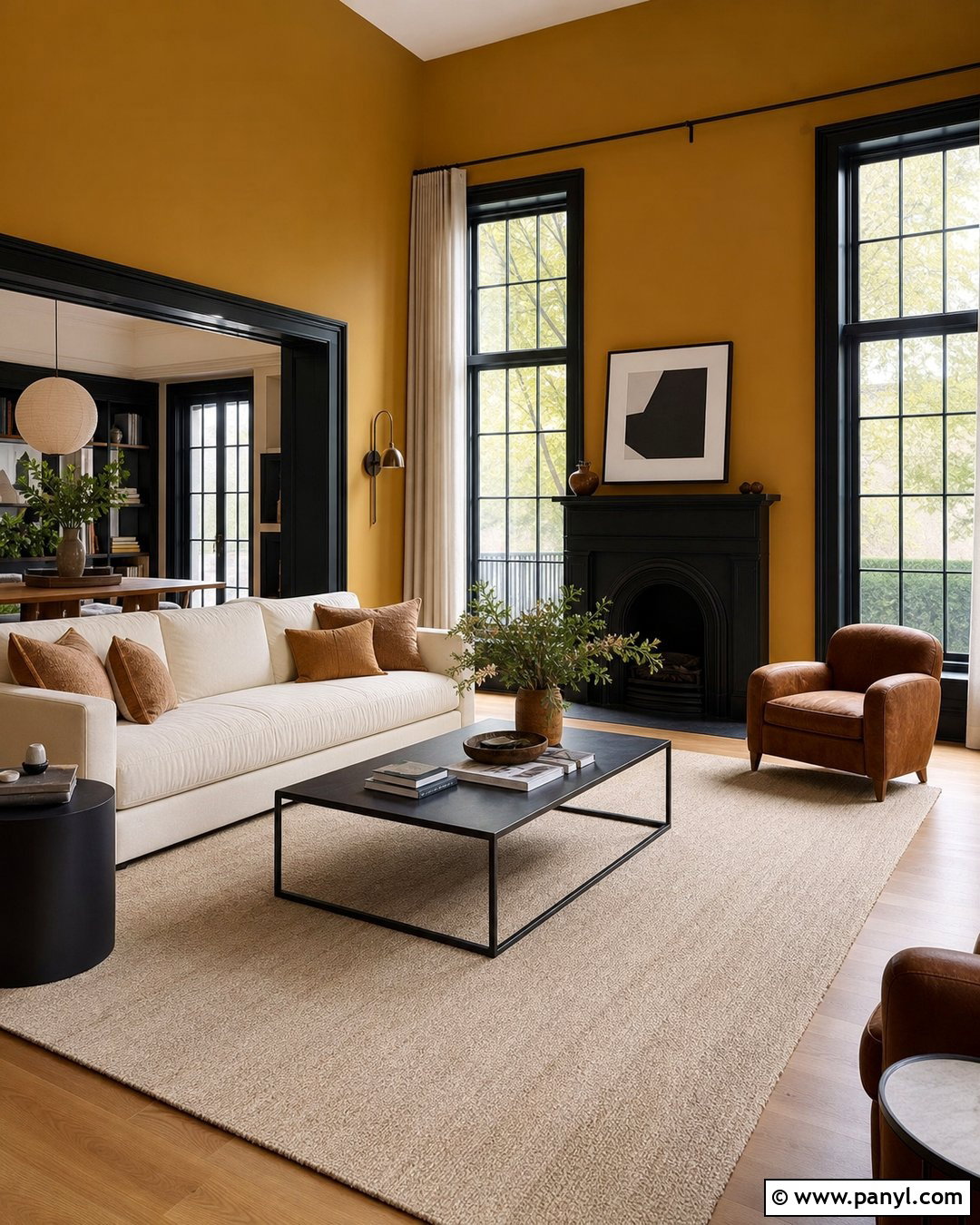
Black trim turns ochre walls into a bold architectural statement. Use a soft, earthy ochre rather than a bright yellow, then paint window frames, baseboards, or interior doors in matte black. Balance the contrast with a cream sofa, pale oak flooring, and an oversized beige rug. Furniture with simple shapes will prevent the room from looking overly dramatic. A black metal coffee table can repeat the trim, while cushions in camel, ivory, and olive soften the palette. Choose white or natural linen curtains and hang them beyond the window frames so the black detailing remains visible. Warm brass or opal glass lighting completes the scheme, creating a polished room where strong outlines highlight the richness of the ochre walls.
13. Ochre Walls With White Trim
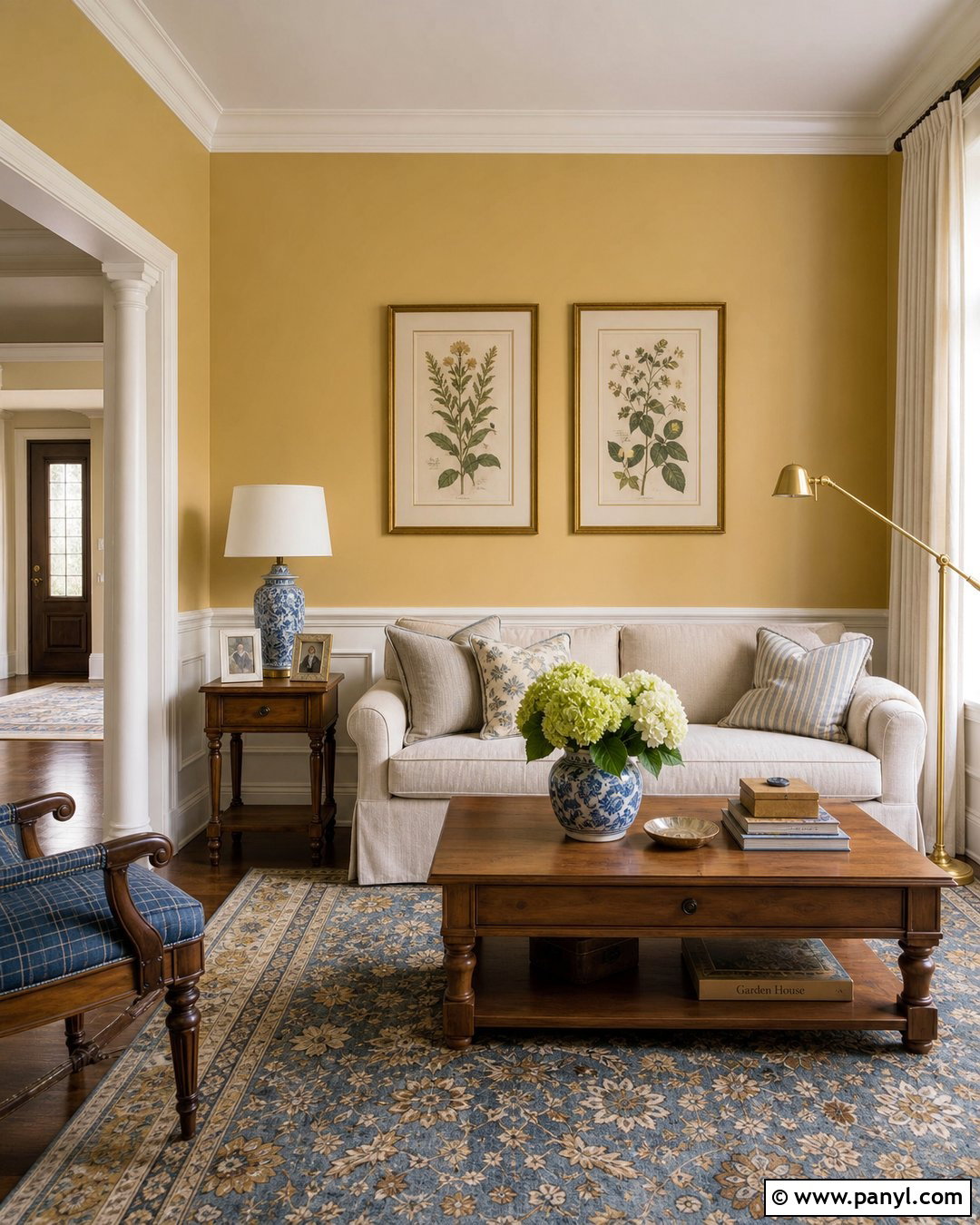
Fresh white trim brings clarity to ochre walls and works especially well in homes with traditional moldings. Use a warm, slightly creamy white on baseboards, window casings, crown molding, and paneled doors. Furnish the room with a beige linen sofa, medium oak tables, and a patterned rug containing blue, cream, and faded gold. The white architectural details keep the warm color from becoming visually heavy, while the cooler blue accents add balance. Hang simple botanical or landscape prints in wood frames and include a brass reading lamp beside the sofa. Full-length ivory curtains complete the bright, comfortable appearance. This combination gives an older room definition while allowing its original features to stand out clearly.
14. Ochre Walls With Picture Frame Molding
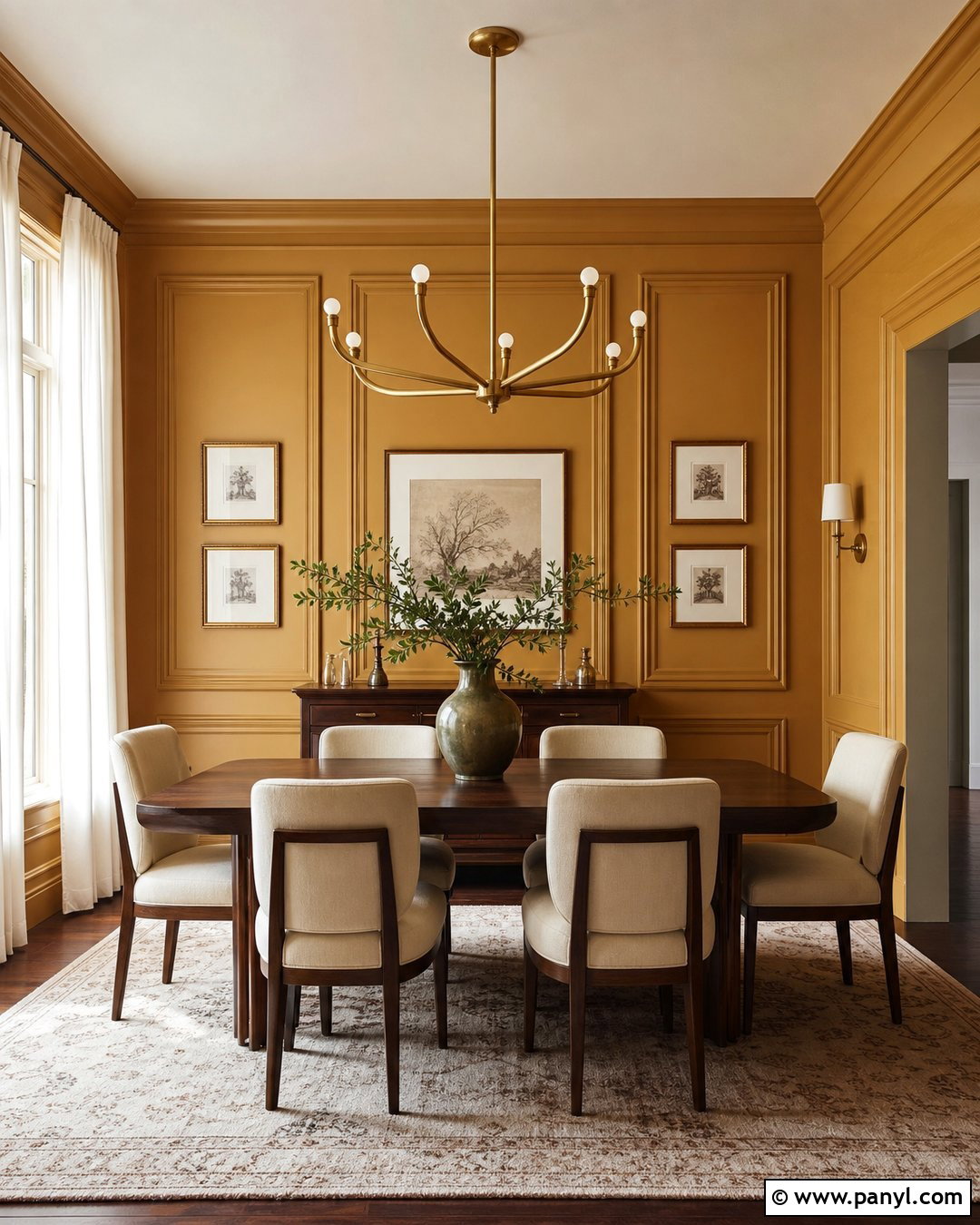
Decorative molding adds depth and refinement to ochre walls without requiring busy wall decor. Install evenly spaced picture-frame molding, then paint the trim and wall surface in the same matte ochre for a seamless, color-drenched effect. In a dining room, pair this backdrop with a dark walnut table and upholstered cream chairs. A softly patterned rug and a sculptural brass chandelier will balance the architectural detail. Keep artwork limited to one or two framed pieces positioned within the molding panels. Warm white curtains can lighten the windows, while a vintage wood sideboard provides practical storage. The completed room feels layered and substantial because the shadows created by the molding give the single wall color natural variation throughout the day.
15. Textured Ochre Walls With Neutral Decor
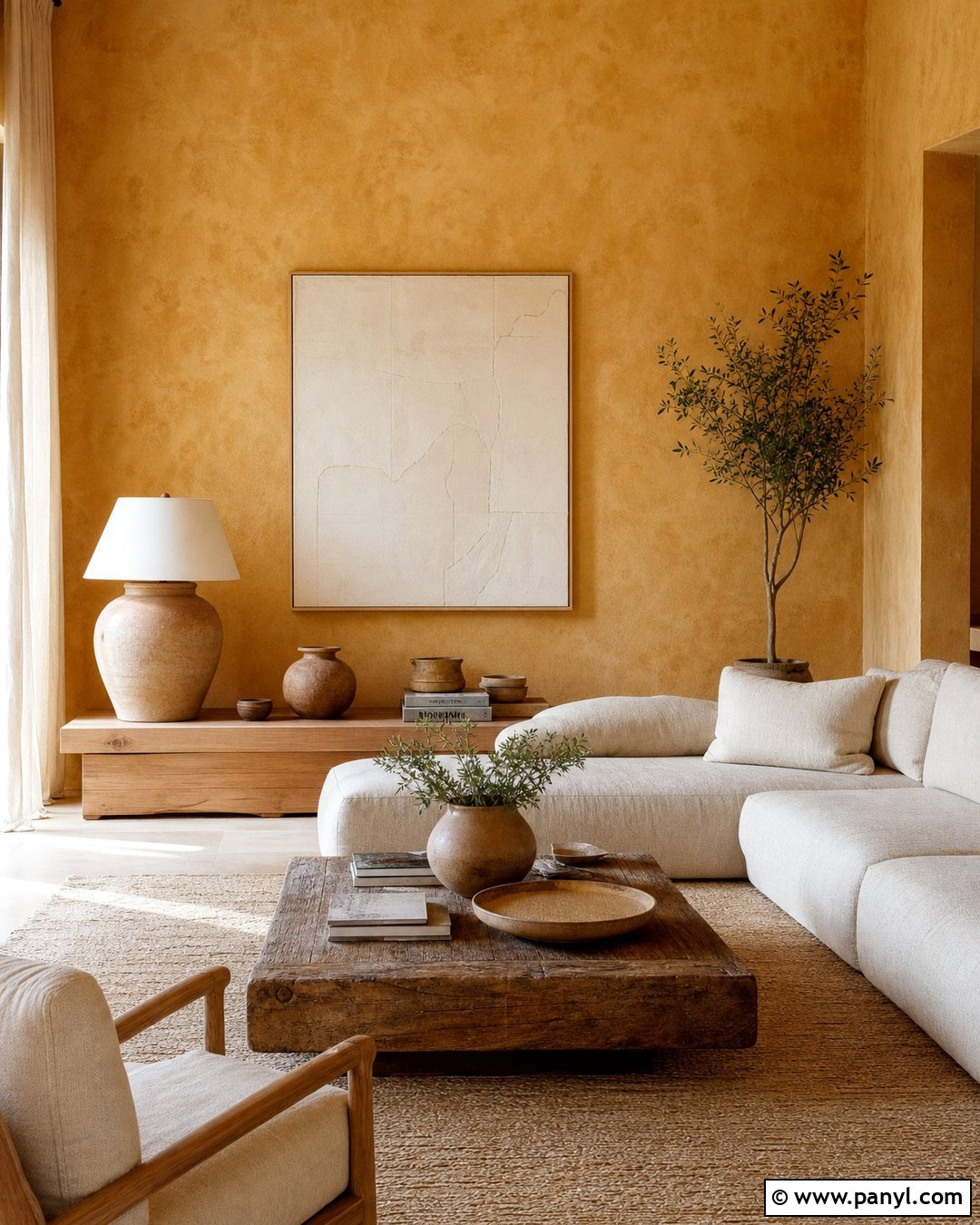
A textured ochre finish gives the walls gentle movement and an organic, hand-applied appearance. Choose limewash, mineral paint, or a subtle plaster-style finish in muted golden brown. Pair it with low-profile furniture in cream linen, pale oak, and woven natural fibers. A large beige wool rug will soften the room, while a chunky wood coffee table reinforces the tactile quality of the walls. Keep accessories simple: an oversized ceramic lamp, a few clay vessels, and abstract artwork in off-white and charcoal are enough. Soft linen curtains should filter daylight across the uneven surface, revealing tonal changes. This complete design feels calm and earthy because texture provides interest without relying on strong patterns or excessive decoration.
16. Ochre Walls In A Modern Bedroom
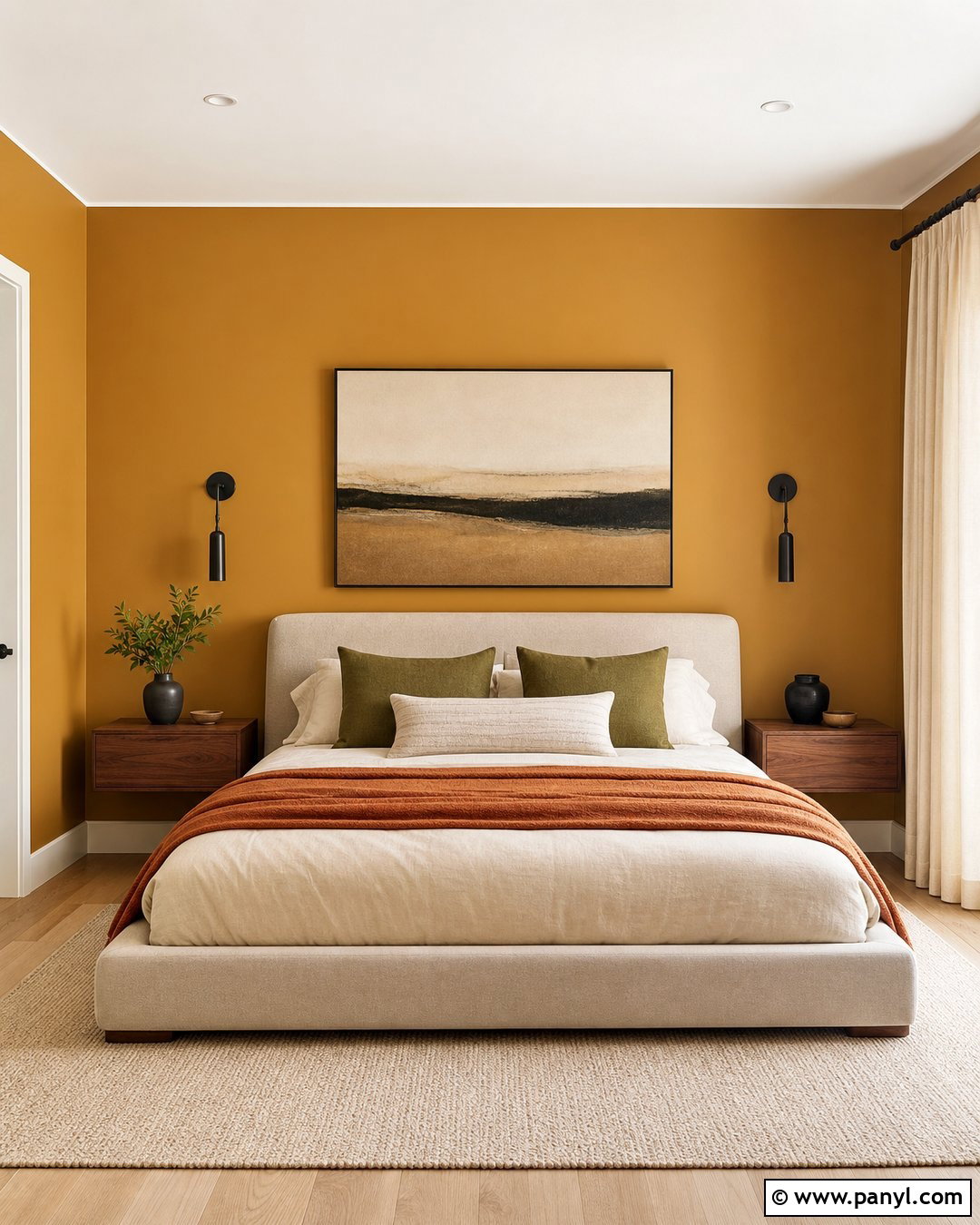
A modern bedroom with ochre walls can feel warm, streamlined, and restful rather than busy. Use a medium ochre with brown undertones behind a low upholstered bed in warm gray or oatmeal. Select pale bedding, then layer in rust and deep olive through a folded blanket and a few structured pillows. Floating walnut nightstands keep the floor visually open, while black wall sconces add clean definition. A large neutral rug softens wood flooring and extends beyond the sides of the bed. Limit wall decor to one wide abstract canvas or a pair of minimalist prints. Full-length cream curtains complete the room, reducing the intensity of the walls and helping the bedroom maintain a comfortable, uncluttered atmosphere.
17. Ochre Accent Wall Behind A Bed
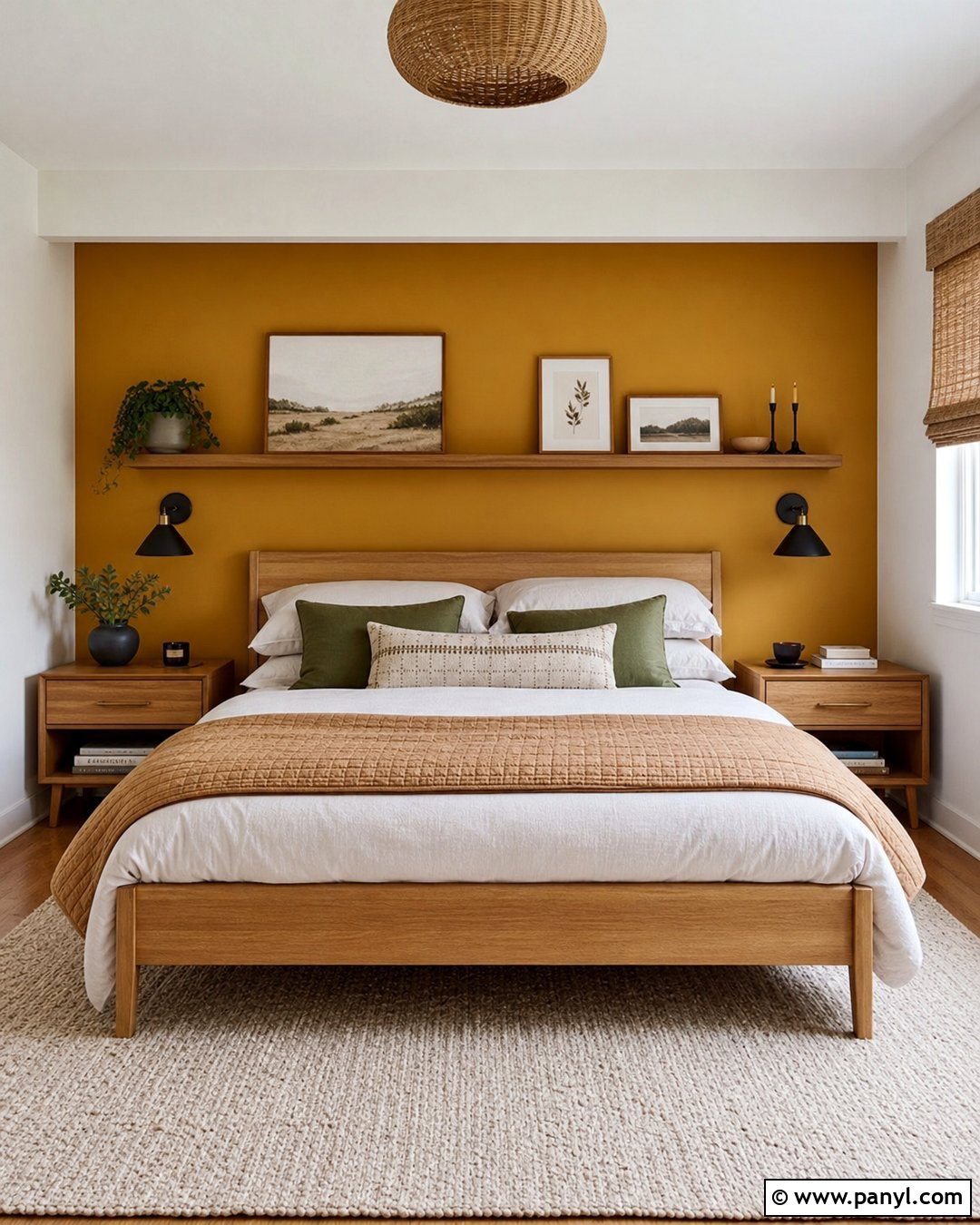
Painting the wall behind the bed in ochre creates a natural focal point and can visually replace an elaborate headboard. Keep the other walls soft white, warm beige, or pale greige for balance. Place a simple oak bed against the accent wall and dress it with crisp ivory bedding, a camel quilt, and muted sage pillows. Matching wood nightstands create symmetry, while small black sconces free up their surfaces. Ground the arrangement with a cream wool rug and add woven shades or linen curtains at the windows. One long shelf holding restrained artwork and ceramics can emphasize the bed’s width. Repeating ochre subtly in the rug or bedding will connect the accent wall with the rest of the room.
18. Ochre Walls With A Green Headboard
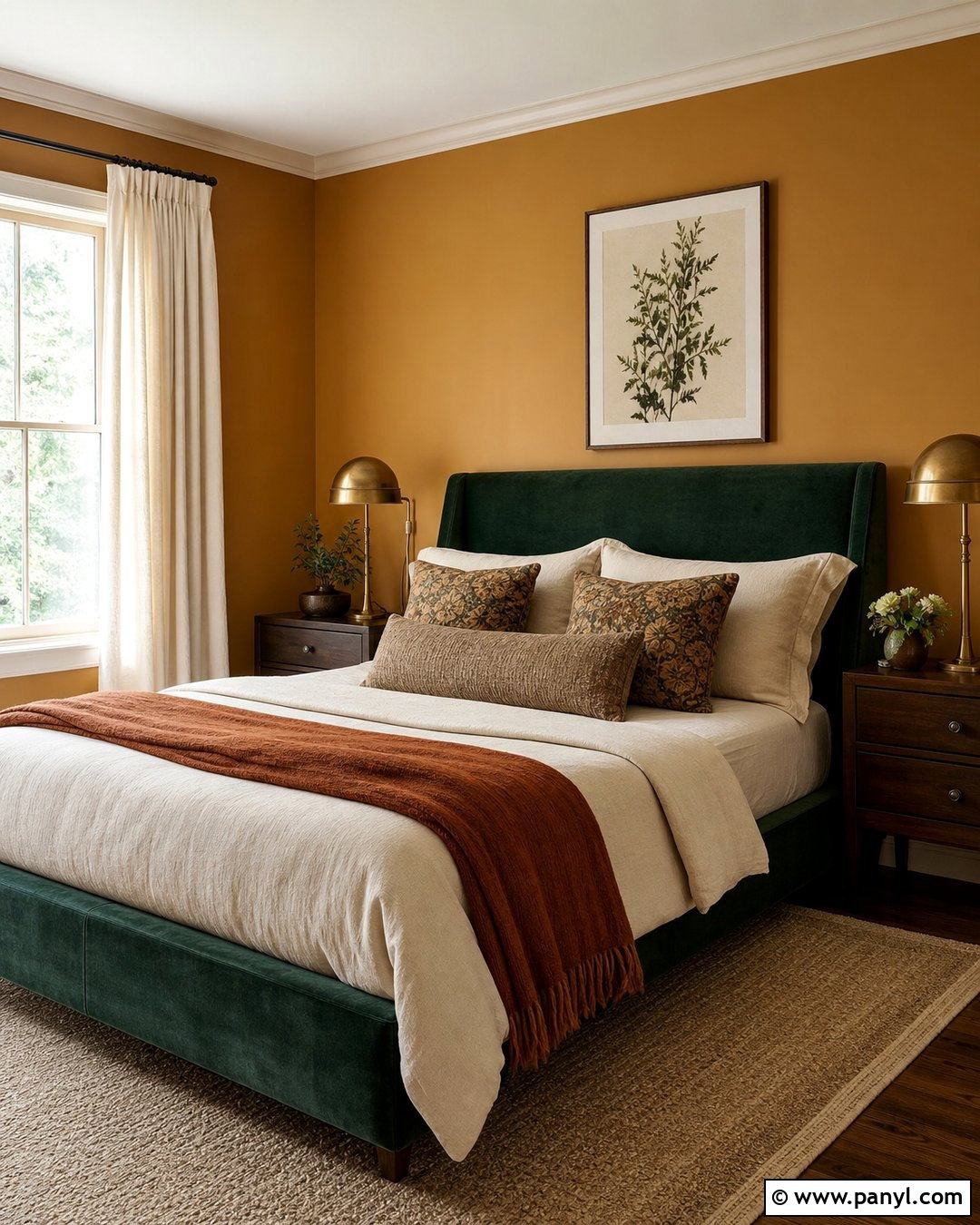
A deep green headboard looks especially rich against warm ochre walls. Choose an upholstered design in forest, moss, or muted olive velvet, making it wide enough to anchor both the bed and nightstands. Dress the bed in soft cream linens with a rust-colored throw and small patterned pillows that include both green and gold. Dark wood nightstands bring depth, while aged brass lamps enhance the warmth of the scheme. Add an oatmeal rug underfoot and use off-white curtains to lighten the room. Botanical prints or quiet landscape artwork will reinforce the natural color story. The completed bedroom feels layered and luxurious, but its earth tones remain comfortable enough for everyday living rather than appearing overly formal.
19. Ochre Walls With A Blue Bed
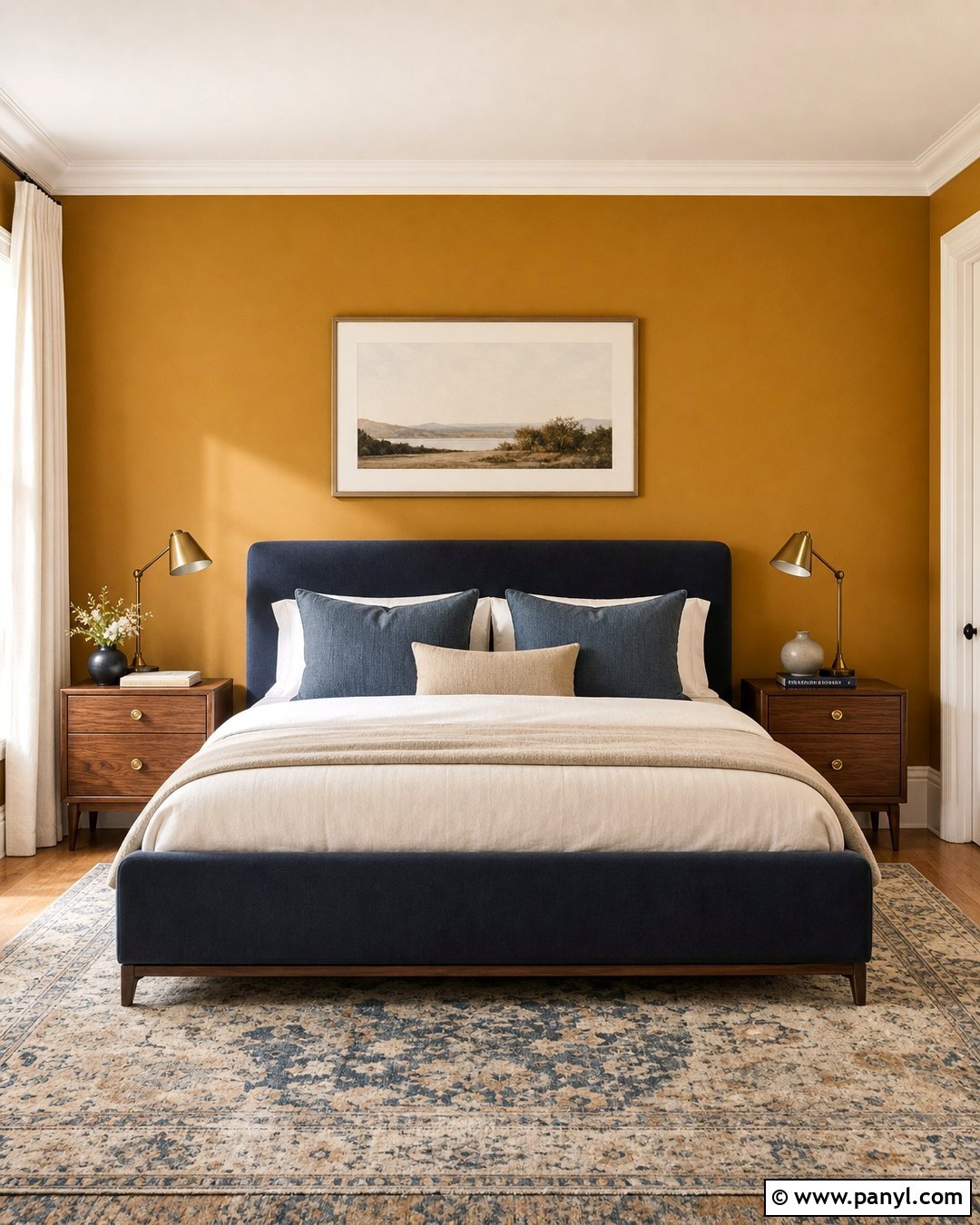
Blue and ochre create a confident bedroom palette because the cool upholstery clearly contrasts with the warm walls. Select a dusty navy or deep denim bed rather than a highly saturated royal blue. Use white sheets, a beige duvet, and cushions in ochre, slate, and small-scale patterns to bridge the two main colors. Medium walnut nightstands and brass reading lamps add warmth without blending into the wall. A faded blue and cream rug makes the bed feel connected to the floor. Finish the windows with plain ivory curtains and keep artwork simple. When thoughtfully balanced, the ochre walls appear golden and welcoming, while the blue bed gives the room a calm, substantial center.
20. Pale Ochre Walls In A Guest Bedroom
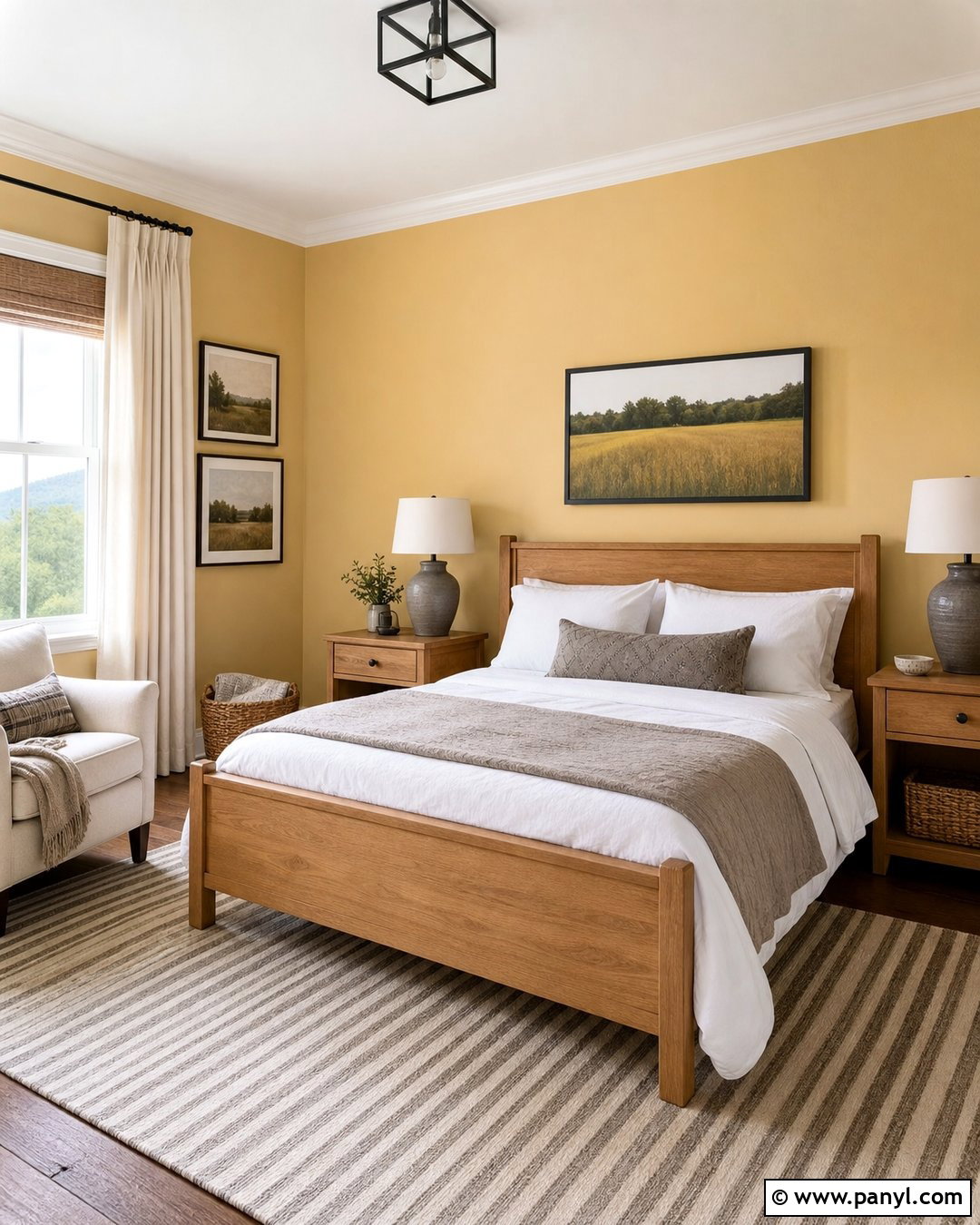
Pale ochre walls give a guest bedroom a gentle glow that feels welcoming in both daylight and artificial light. Pair the color with a natural oak bed, white cotton bedding, and a soft taupe coverlet. Two small wood nightstands with ceramic lamps provide symmetry and practical surfaces. Add a comfortable armchair in cream or muted sage, along with a woven basket for spare blankets. A simple striped rug introduces quiet pattern without overwhelming the restful palette. Use white trim and lightweight linen curtains to maintain brightness. Finish with landscape prints, a small mirror, and one leafy plant. This complete room feels considered and comfortable while remaining neutral enough to appeal to visitors with different tastes.
21. Ochre Walls In A Traditional Dining Room
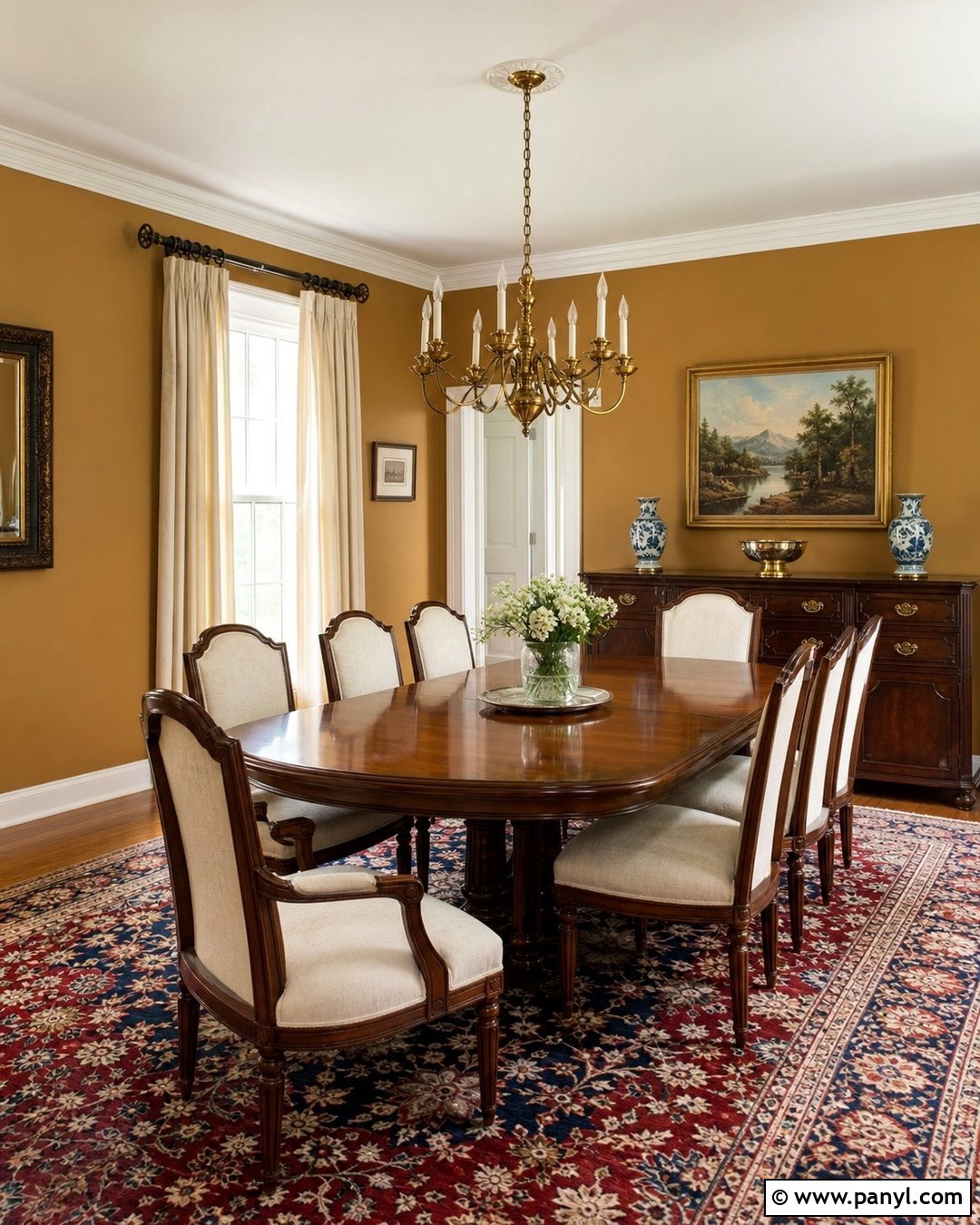
Traditional furniture gains warmth and character against rich ochre walls. Center the dining room around a polished walnut table with classic wood chairs upholstered in neutral linen. Use a patterned rug containing burgundy, navy, cream, and muted gold to give the space a grounded foundation. White crown molding and baseboards will sharpen the room’s architectural lines, while long ivory curtains soften them. Hang a brass chandelier above the table and position a dark wood sideboard along one wall. A large landscape painting or antique-style mirror can serve as the main decorative feature. The completed design feels established but not dated because the furnishings are balanced by simple textiles, restrained accessories, and a cohesive earthy color palette.
22. Ochre Walls In A Modern Dining Room
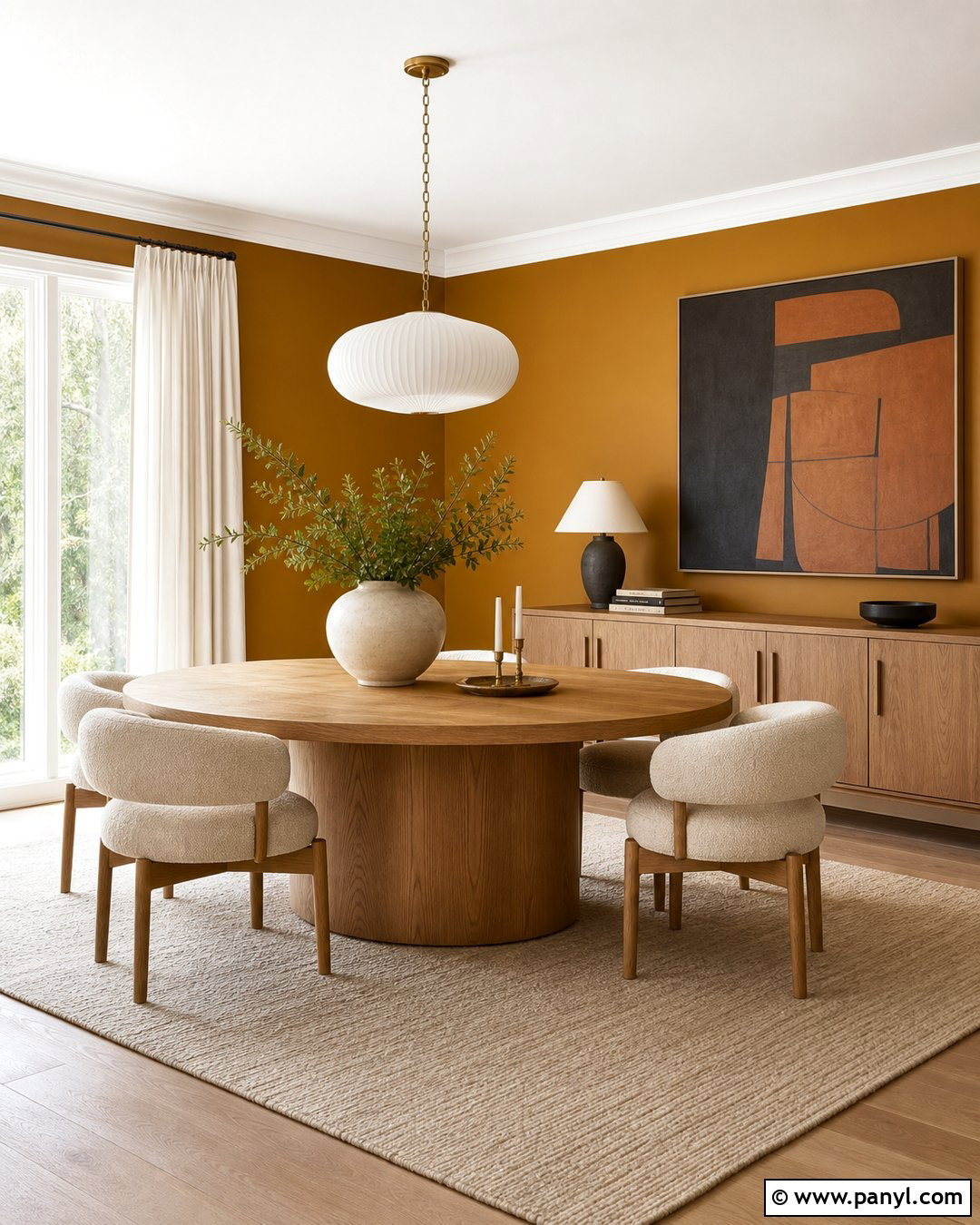
Clean-lined furniture creates a striking counterpoint to the warmth of ochre walls. Choose a rectangular oak dining table with softly rounded corners and surround it with curved chairs in cream upholstery or black wood. A large contemporary pendant in white glass or matte black provides a crisp focal point above the table. Use a low-profile sideboard in matching oak to maintain visual continuity. An understated beige rug can define the dining zone and absorb sound without adding a distracting pattern. Keep the windows simple with full-length ivory curtains. One oversized abstract artwork featuring charcoal, clay, and cream will complete the wall composition. The resulting dining room feels modern, welcoming, and practical enough for frequent meals and gatherings.
23. Ochre Walls With A Black Dining Table
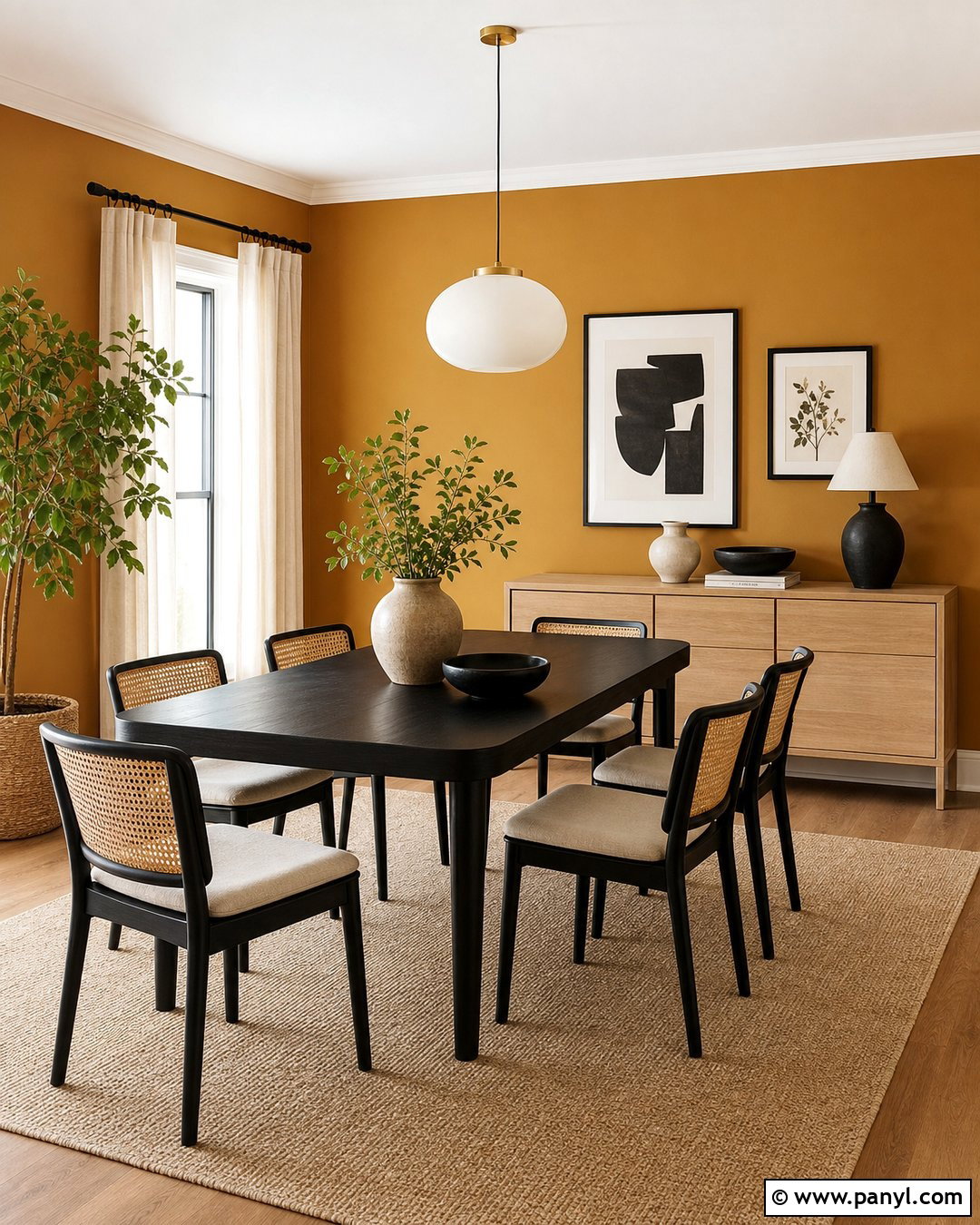
A black dining table adds graphic structure to ochre walls and produces a strong yet approachable room. Select a matte black table with a simple silhouette, then pair it with natural cane chairs or upholstered cream seating to soften the contrast. Place a flat-woven beige rug beneath the arrangement and hang a large opal glass pendant overhead. A light oak sideboard prevents the black furniture from becoming too dominant. Use ivory curtains and white trim to introduce brightness around the golden wall color. Decorate with ceramic vessels, greenery, and framed artwork containing black, cream, and muted rust. By spreading dark details across the room in small amounts, the table appears intentional instead of looking like one isolated, heavy object.
24. Ochre Walls In A Farmhouse Kitchen
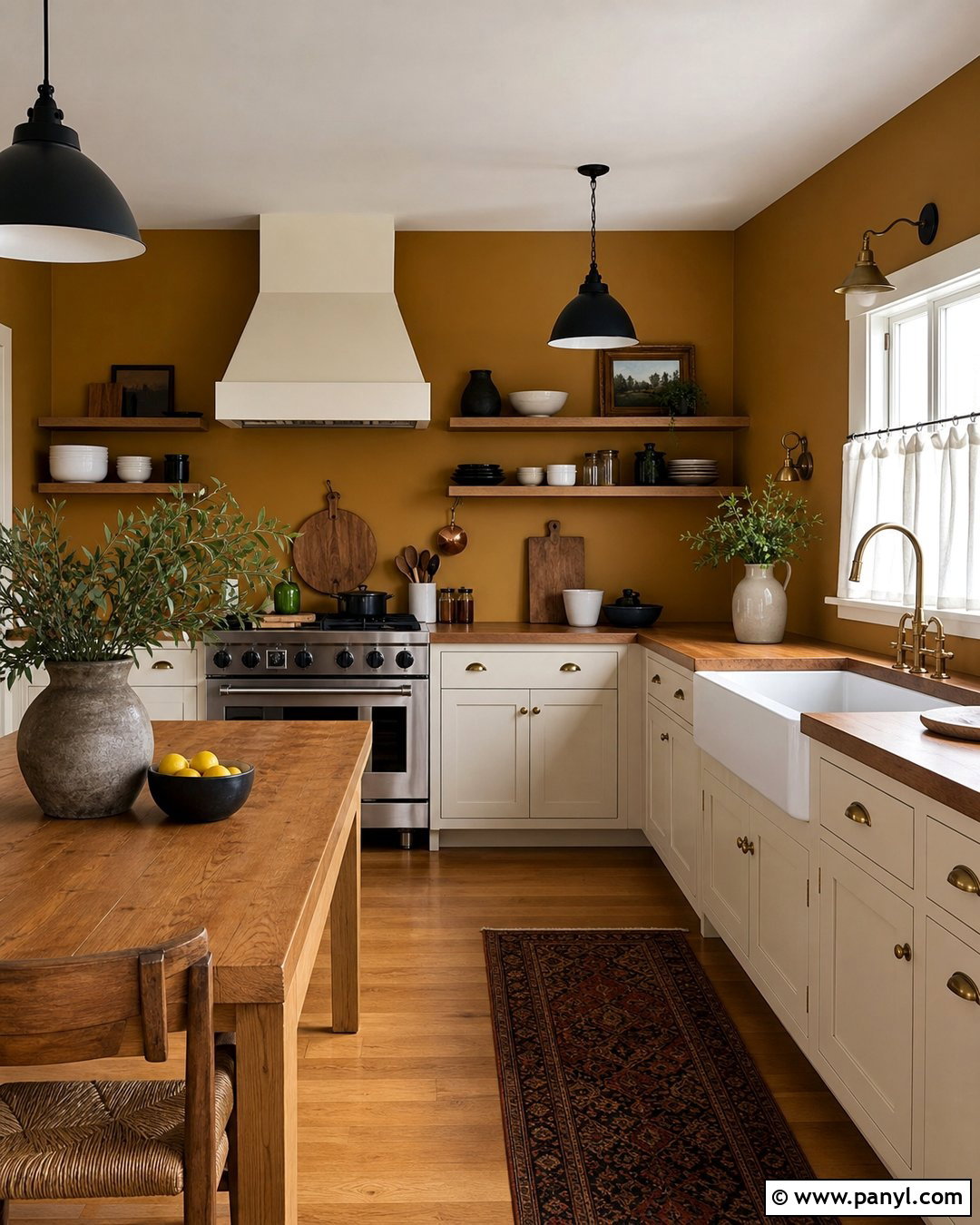
Ochre walls can warm up a farmhouse kitchen filled with practical, traditional materials. Pair them with cream shaker cabinets, aged brass hardware, and warm butcher-block or lightly veined stone countertops. A deep white apron-front sink and simple bridge faucet reinforce the familiar character. Use medium oak flooring and add a wooden farmhouse table or compact breakfast set if space allows. Off-white café curtains maintain privacy without hiding natural light. Open shelves can display white dishes, cutting boards, and a small collection of pottery, but avoid overcrowding them. Matte black pendant lights introduce a useful contrast. The complete kitchen feels cheerful and grounded, with ochre acting as a warm backdrop rather than competing with the cabinets and work surfaces.
25. Ochre Walls With Dark Green Kitchen Cabinets
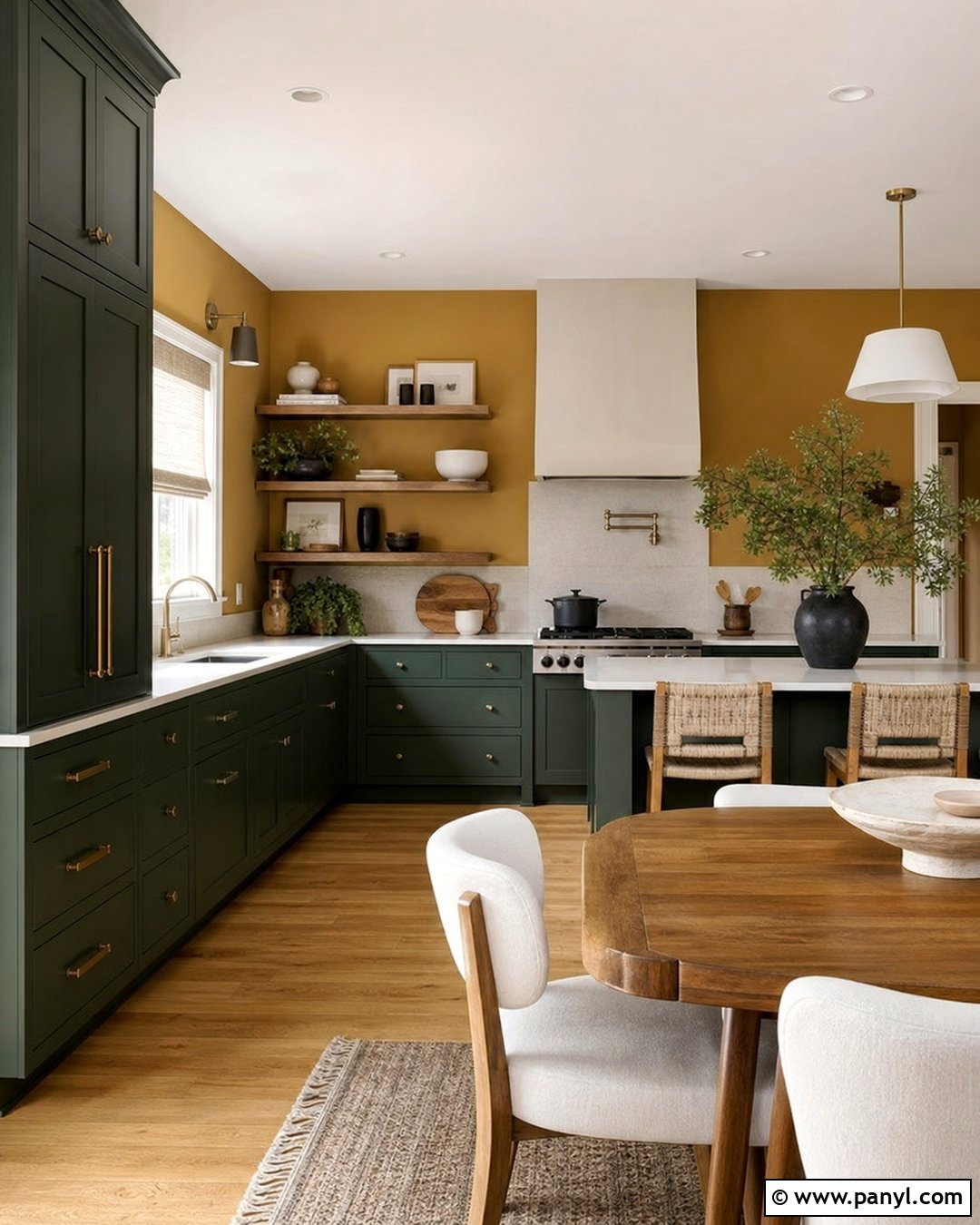
Dark green cabinetry and ochre walls create a kitchen inspired by garden and woodland colors. Choose muted forest or olive cabinets with a matte finish, then add warm white countertops and a simple cream backsplash to separate the two saturated tones. Aged brass handles and faucets complement both colors. Medium oak flooring and open wood shelves contribute natural warmth without adding another painted surface. Use white or linen window treatments to maximize brightness, especially in a smaller kitchen. A wood dining table with cream chairs can complete an eat-in layout. Keep countertop accessories restrained and practical. The finished room feels bold but balanced because neutral stone, pale textiles, and wood provide visual resting points throughout the green-and-ochre scheme.
26. Ochre Walls In A Breakfast Nook
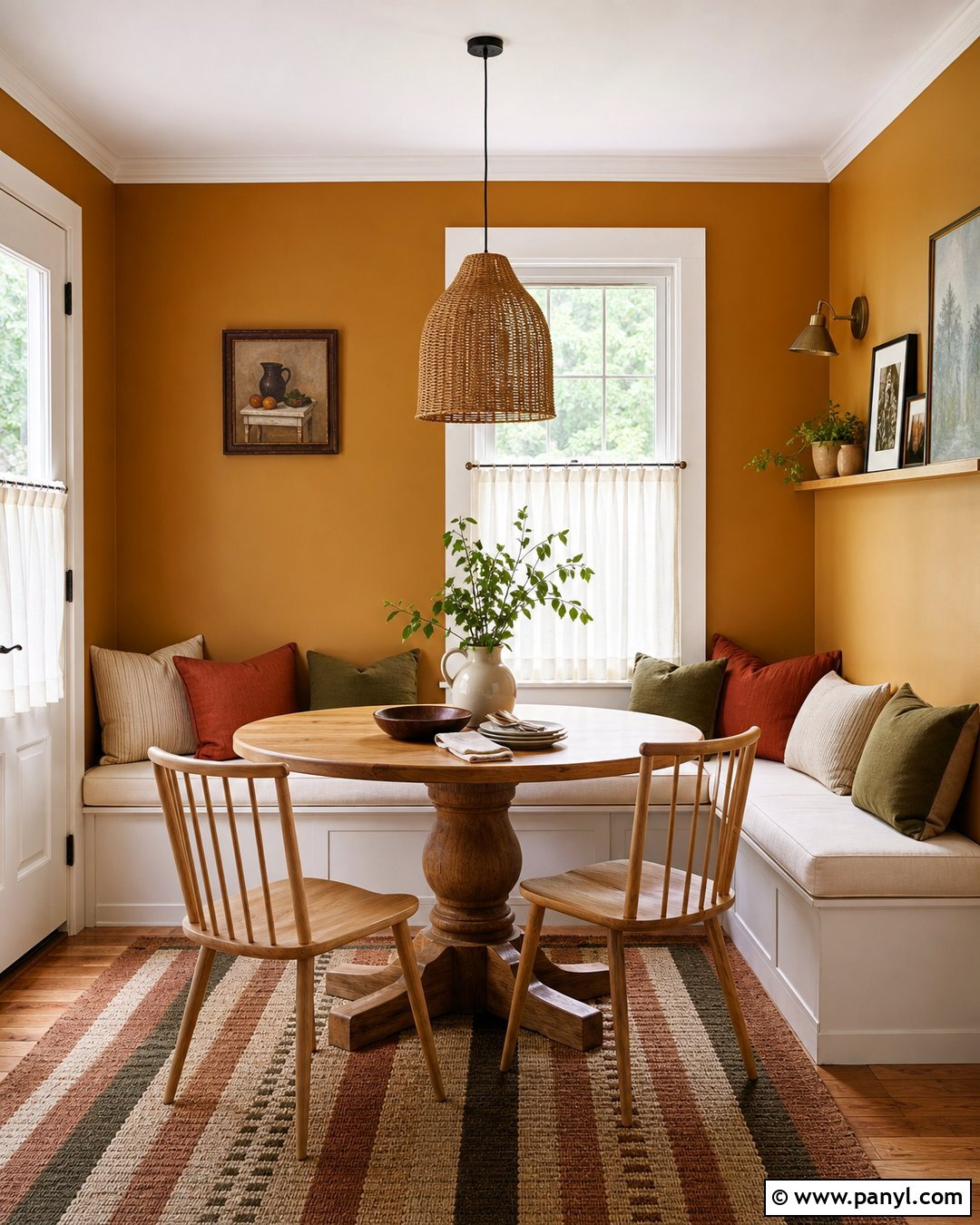
Morning light makes ochre walls appear especially warm in a compact breakfast nook. Build a corner bench with cream or beige upholstery and add cushions in rust, olive, and subtle stripes. Pair it with a round oak pedestal table and two lightweight wood chairs that can move easily. A small pendant in woven fiber or white glass defines the dining area without blocking the view. Use a washable flat-woven rug beneath the table for texture and comfort. White trim and linen café curtains keep the window bright. A narrow ledge holding framed art and simple ceramics can decorate the wall without taking up floor space. The completed nook feels cheerful, efficient, and comfortably separated from the main kitchen.
27. Ochre Walls In A Home Office
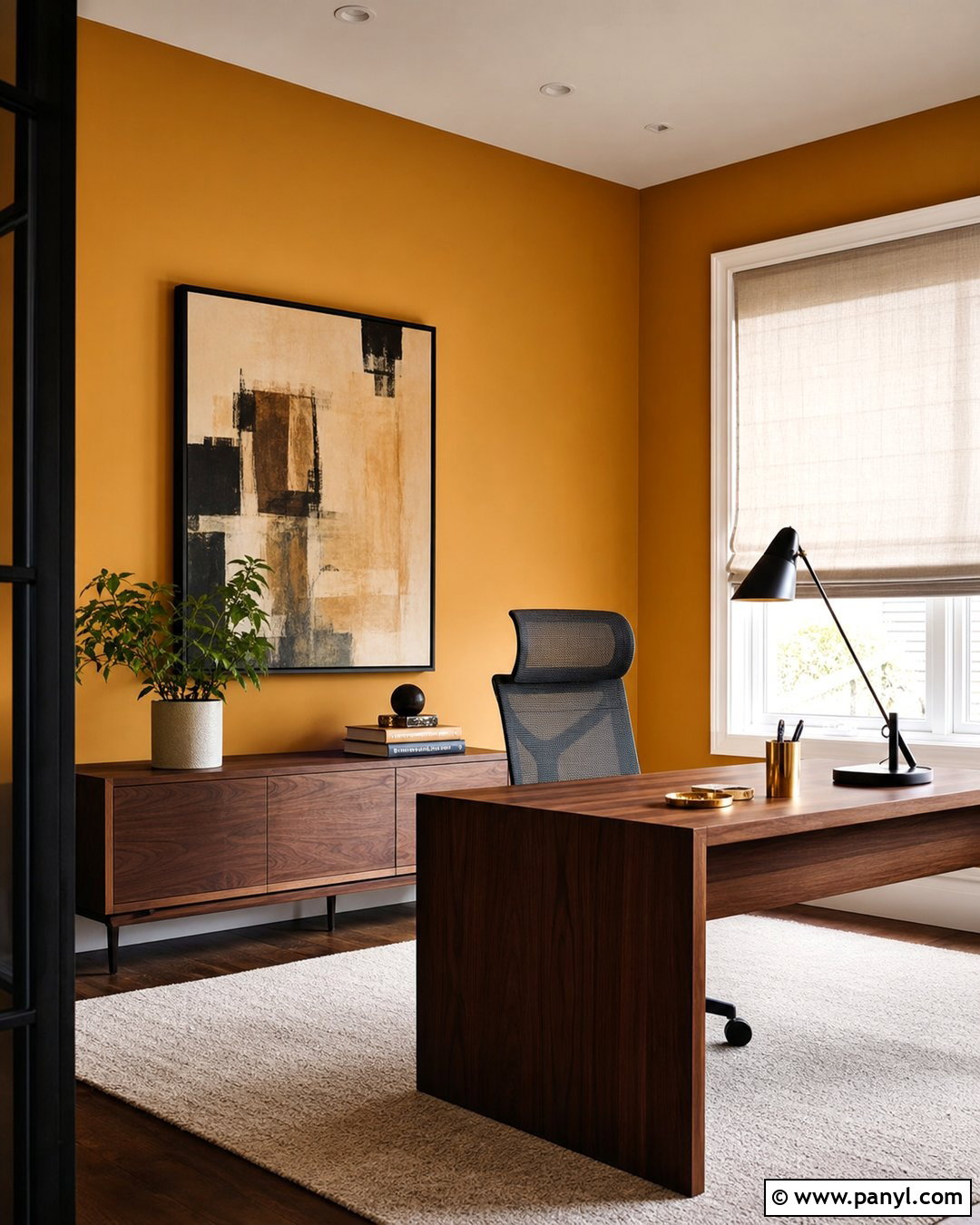
Ochre walls can make a home office feel energetic while still providing a grounded background for focused work. Place a streamlined walnut desk near a window and pair it with an ergonomic chair upholstered in charcoal or muted green. Add a low bookcase or closed storage cabinet in matching wood to reduce visual clutter. A cream rug will brighten the floor, while black task lighting provides clean contrast against the warm walls. Use linen shades to control glare without removing natural light. Keep desk accessories coordinated in wood, brass, and dark metal. One large abstract print and a leafy plant complete the room. This practical layout supports productivity while making the workspace feel connected to the rest of a thoughtfully decorated home.
28. Ochre Walls With Built-In Shelves
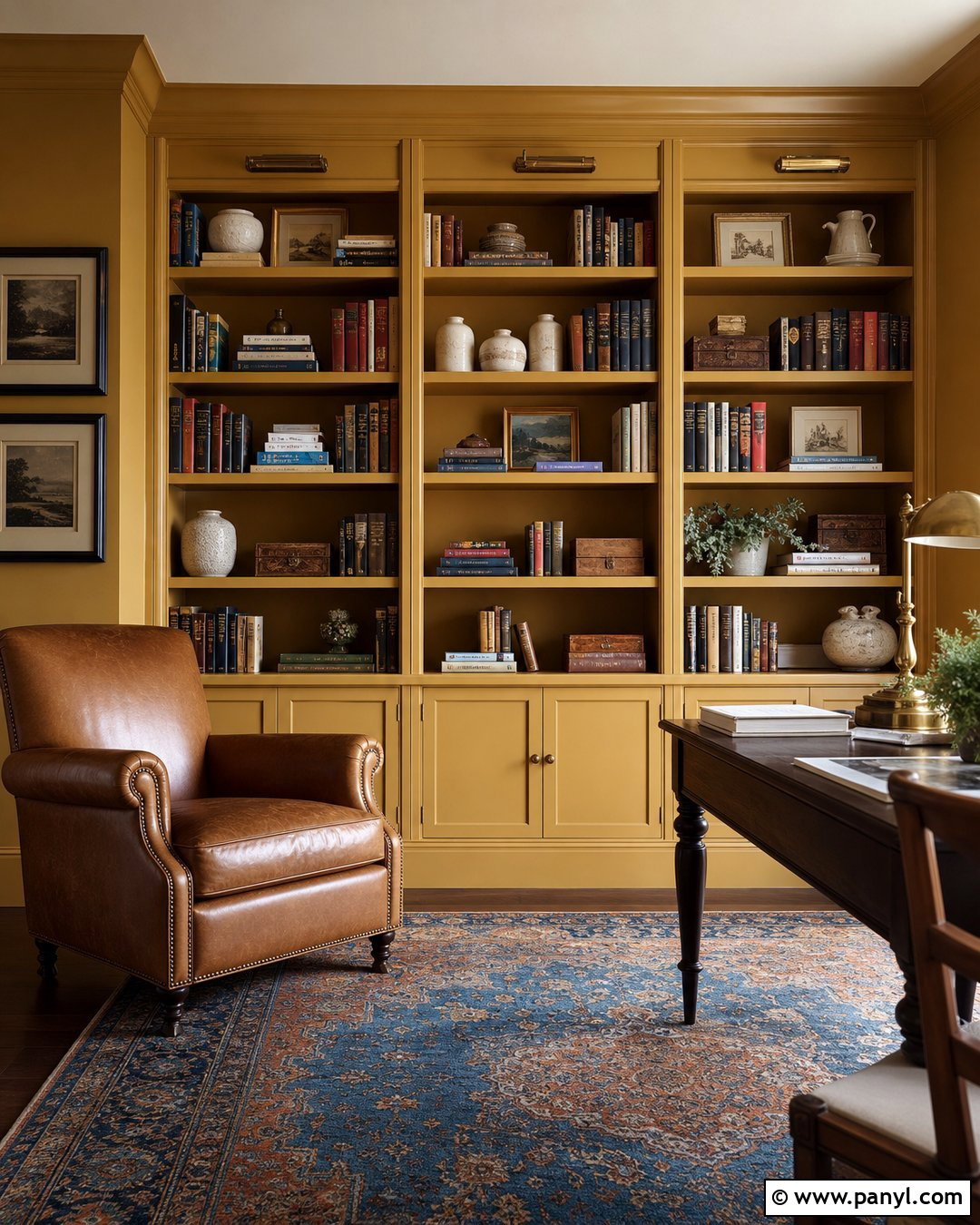
Built-in shelves become a unified architectural feature when painted in the same ochre color as the surrounding walls. Use this color-drenched treatment in a library, office, or living room, then style the shelves with books, ceramics, framed artwork, and small storage boxes in cream, brown, and black. Leave portions of each shelf empty so the arrangement remains calm. Position a caramel leather chair or cream upholstered sofa nearby with a dark wood side table and brass reading lamp. A patterned rug in faded blue, rust, and beige can introduce subtle contrast. The monochromatic walls and shelving create depth, while carefully varied objects keep the feature interesting. Warm, directional lighting will make the shelves feel especially inviting.
29. Ochre Walls In A Small Entryway
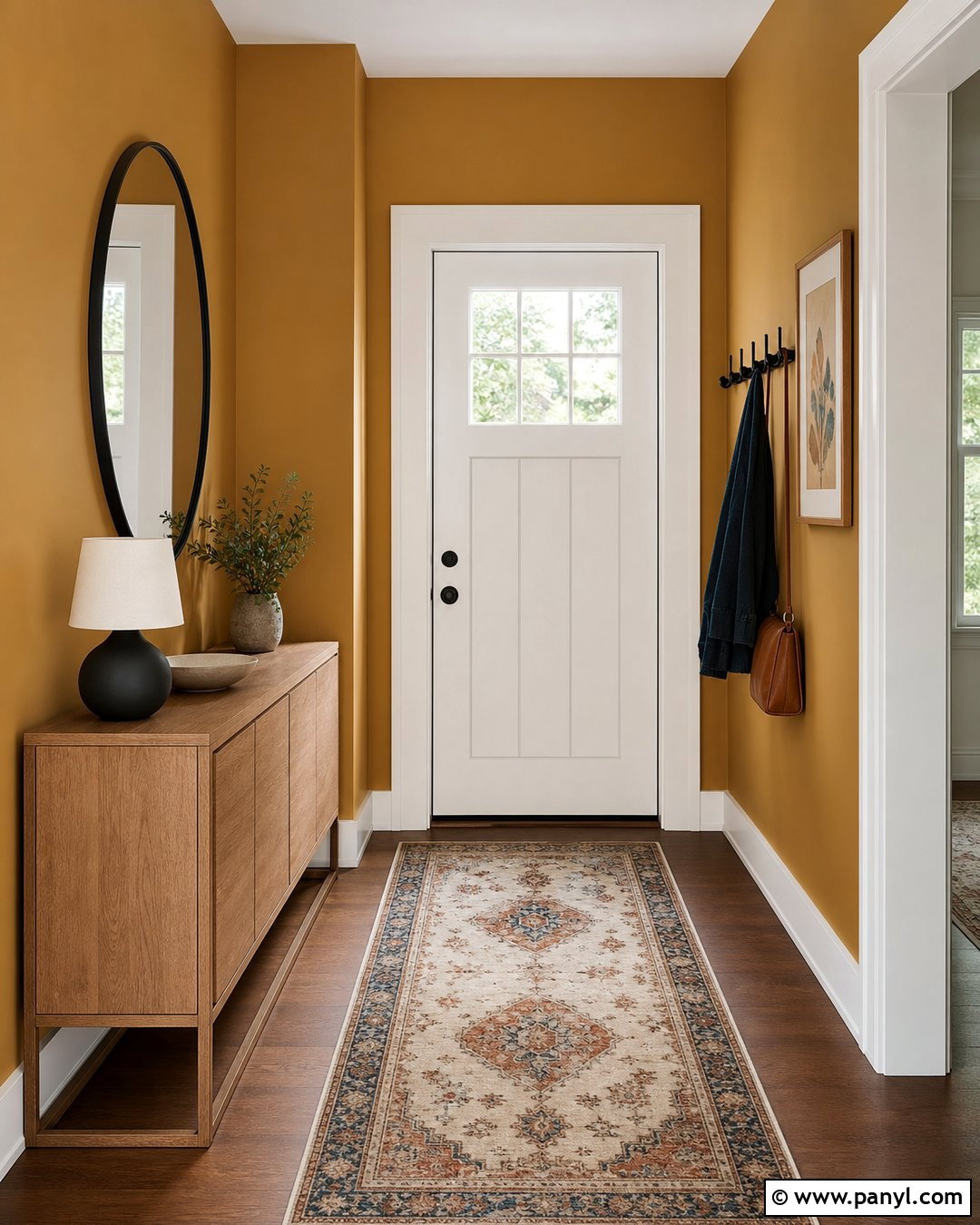
A small entryway can handle strong ochre walls because visitors experience the color in a short, focused moment. Pair the walls with a slim oak console, a round black-framed mirror, and a narrow runner in cream, rust, and faded blue. Add a wall-mounted sconce or compact table lamp to improve brightness. Closed shoe storage will maintain a clear walkway, while a few hooks provide convenient space for everyday bags and outerwear. Paint the trim warm white to define doorways and prevent the color from feeling enclosed. A ceramic bowl, one framed print, and a small vase are enough decoration. This complete setup gives the entrance personality while still supporting the practical needs of a hardworking transition space.
30. Ochre Walls In A Long Hallway
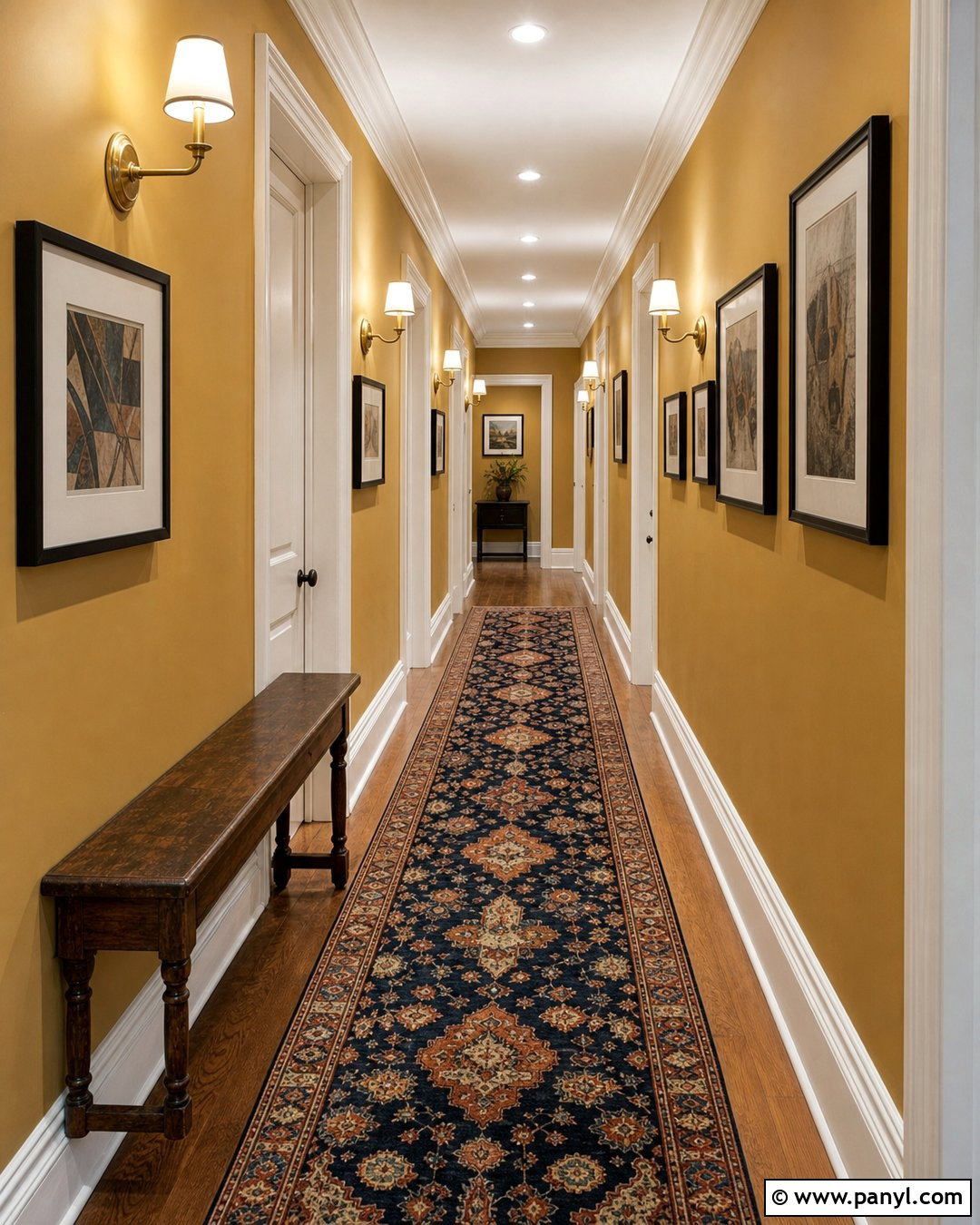
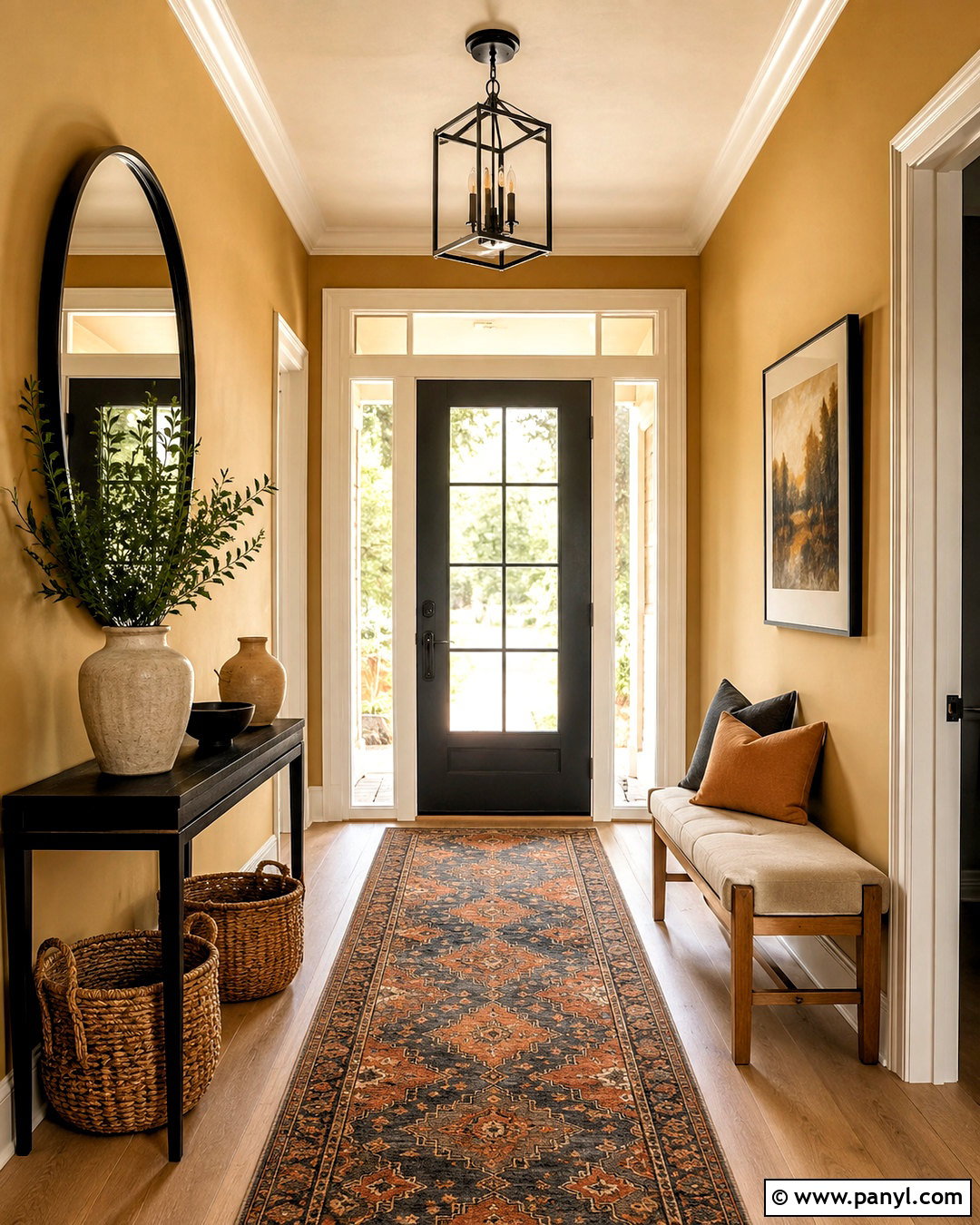
Ochre walls can turn a plain hallway into a warm visual connection between rooms. Choose a medium, slightly muted shade and pair it with warm white trim, doors, and ceiling paint. A long vintage-style runner in navy, rust, and cream will lead the eye through the space while adding softness underfoot. Install evenly spaced black or aged brass sconces for consistent light. Instead of covering every wall, create one orderly row of framed prints or family photographs with generous spacing. A narrow bench or shallow console can occupy the widest section without blocking movement. The finished hallway feels purposeful and inviting because color, lighting, artwork, and floor covering work together as one complete design rather than unrelated additions.
31. Ochre Walls In A Powder Room
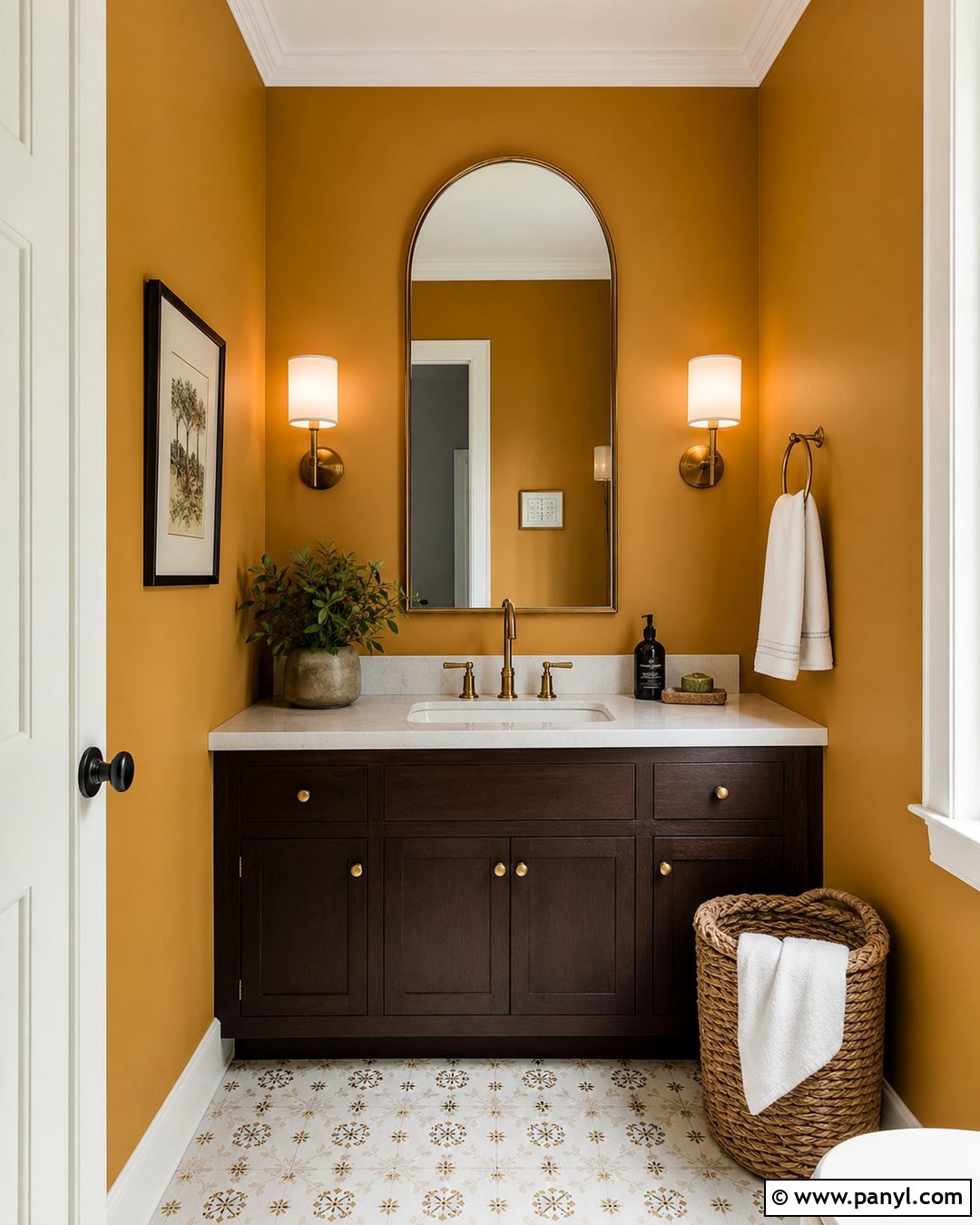
A powder room is an ideal place to use saturated ochre walls in a compact, memorable design. Pair the color with a dark wood vanity, a white stone countertop, and an undermount or vessel sink with simple lines. Choose an arched mirror framed in matte black or aged brass, then install matching sconces on both sides for even illumination. Small-format cream floor tiles or a black-and-white pattern can balance the warm walls. Add crisp white hand towels, a woven basket, and one small framed artwork. If the room lacks natural light, use bright bulbs with an accurate, neutral appearance. The finished powder room feels distinctive and polished without needing excessive accessories or complicated decorative treatments.
32. Ochre Walls In A Bathroom
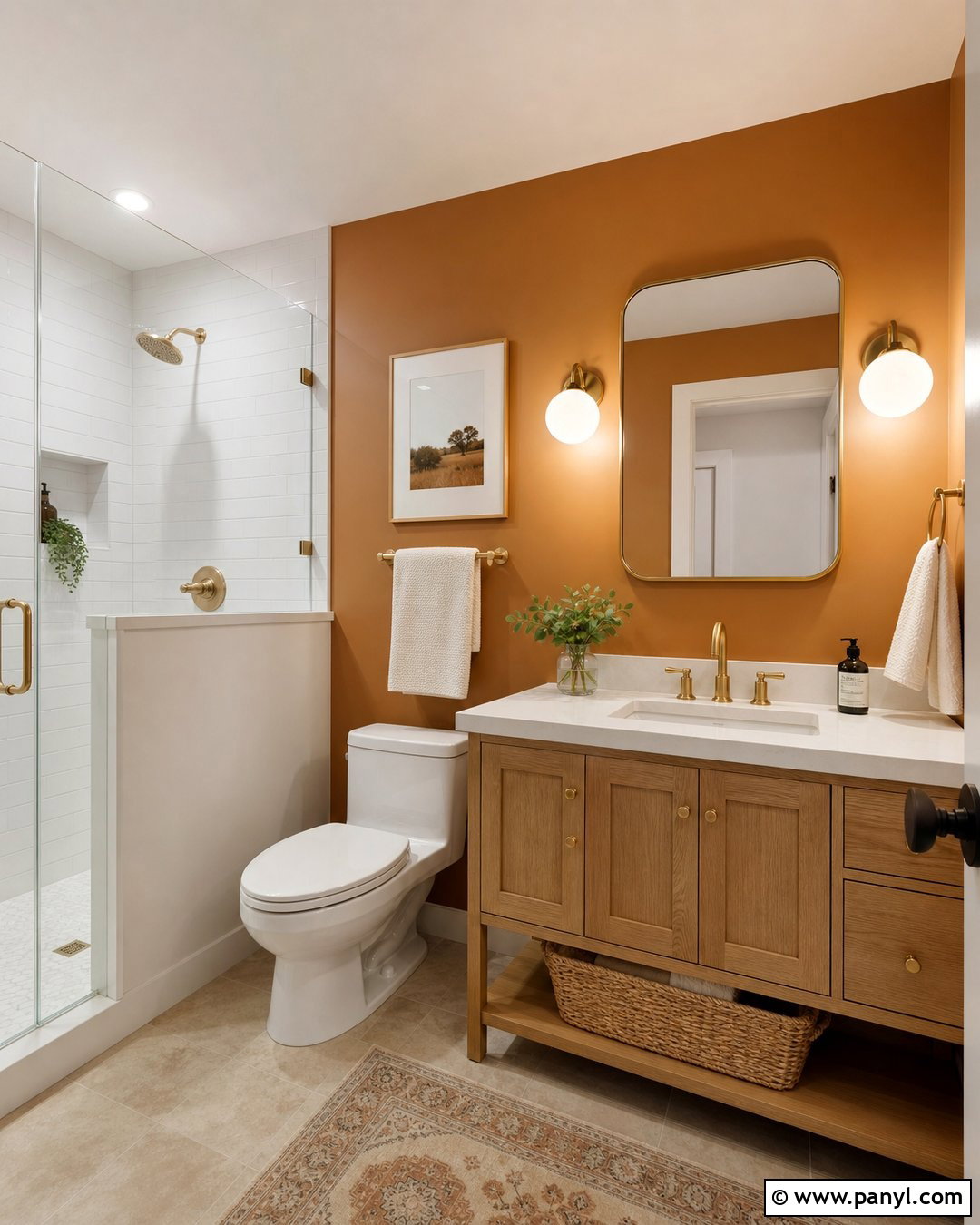
Ochre walls bring warmth to a bathroom dominated by cool ceramic and stone surfaces. Use moisture-appropriate paint on the upper walls, pairing it with white subway tile or pale limestone around wet areas. Choose a natural oak vanity with a white countertop and brushed brass fixtures. A frameless glass shower keeps the room open, while cream floor tiles create a calm base. Add a large rounded mirror and simple globe sconces for clean, balanced lighting. Towels in ivory, rust, and muted olive can repeat the earthy palette without creating clutter. Finish with a wood stool, woven basket, and small plant. This complete bathroom feels warm and modern while remaining bright, practical, and easy to maintain.
33. Ochre Walls With A Freestanding Bathtub
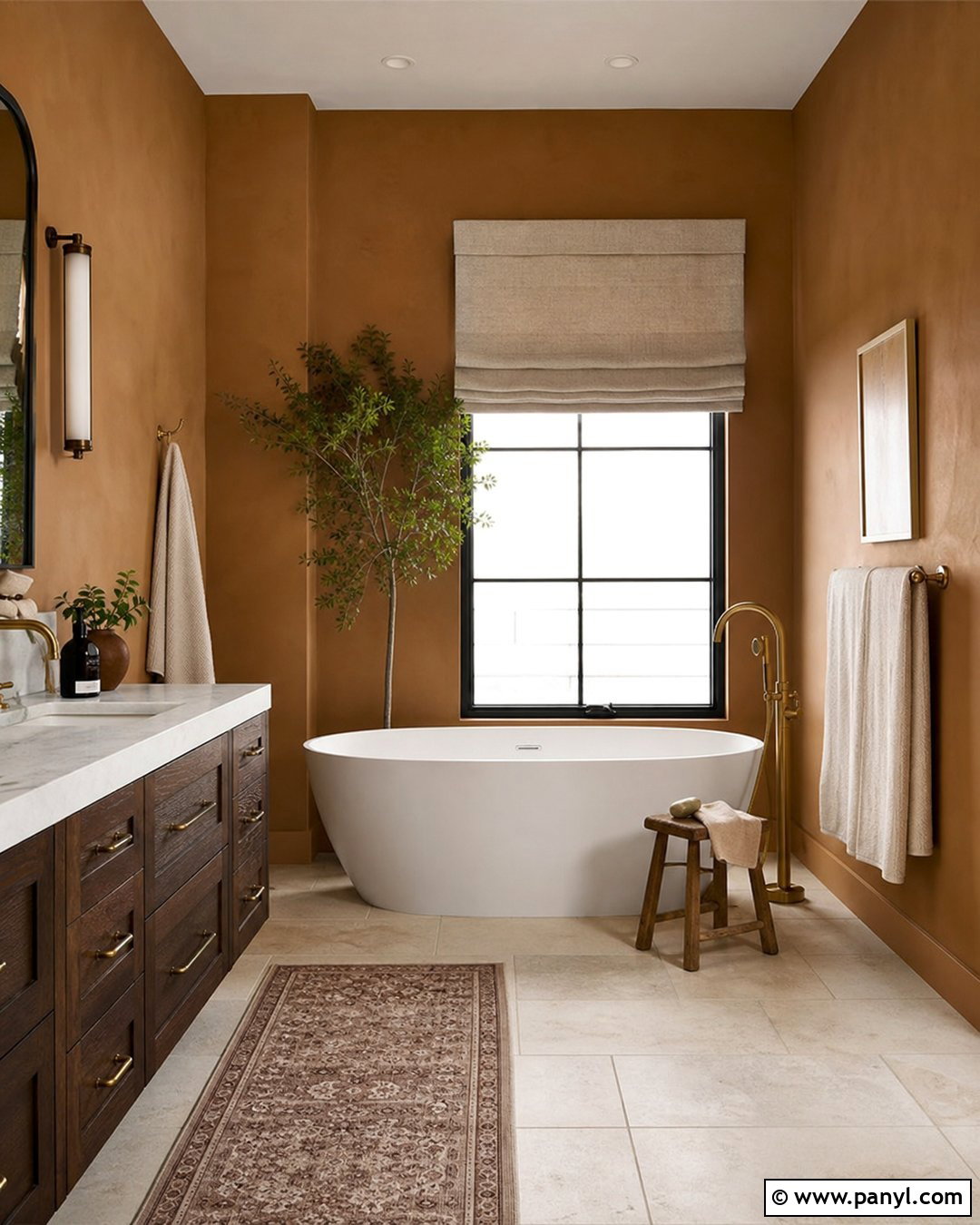
A freestanding white bathtub becomes a sculptural focal point against deep ochre walls. Position the tub near a window when possible, adding a floor-mounted brushed brass faucet and a small oak stool for practical storage. Use pale limestone or warm cream floor tiles to keep the lower half of the room bright. An oatmeal Roman shade provides privacy while complementing the earthy palette. Include a dark wood vanity with a white countertop on the opposite wall, ensuring the room has enough visual weight beyond the tub. Soft ivory towels, simple ceramics, and one leafy plant complete the design. The contrast between white fixtures and saturated walls creates drama, while natural materials keep the bathroom calm and approachable.
34. Ochre Walls In A Reading Corner
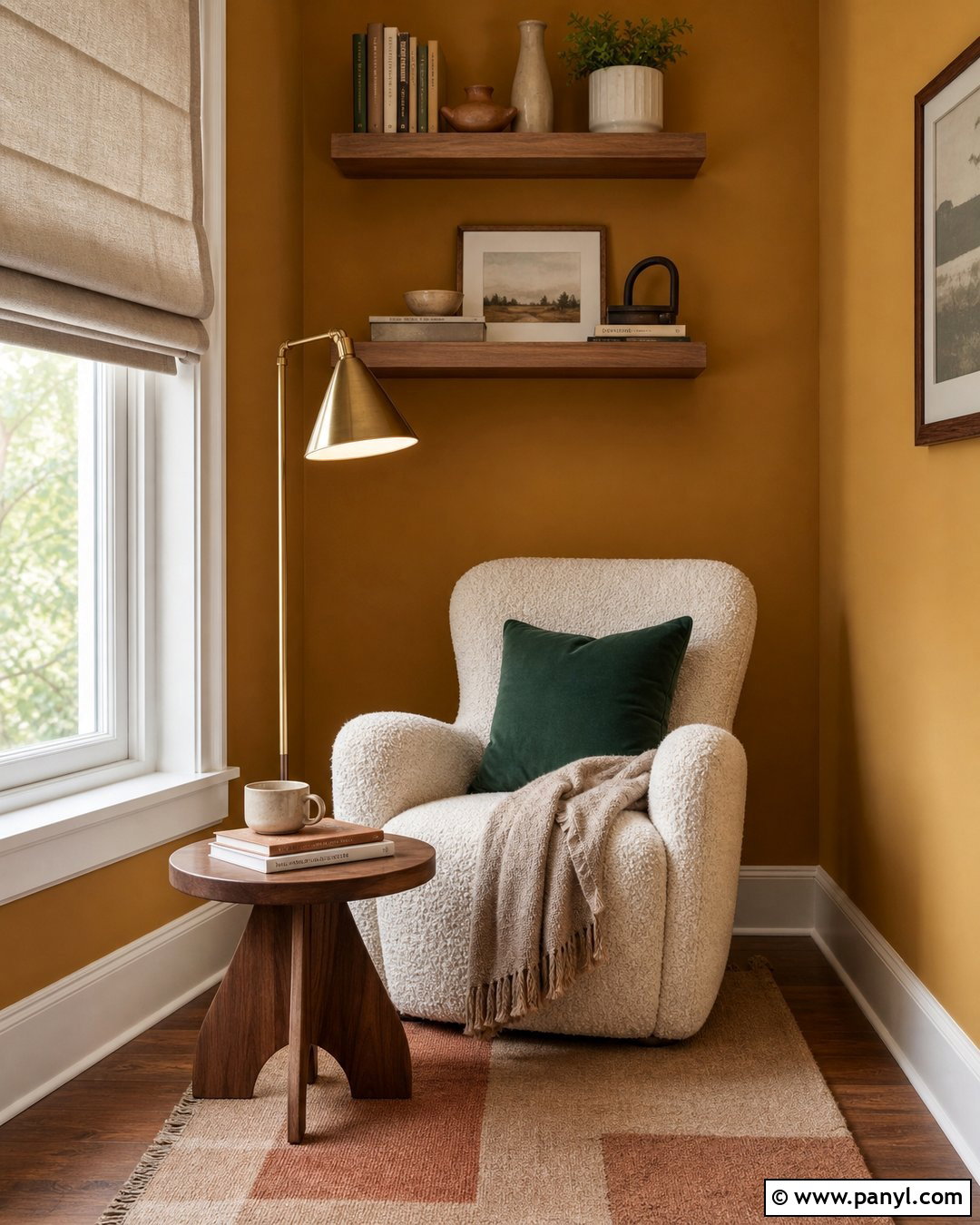
A dedicated reading corner feels immediately inviting when framed by ochre walls. Place a comfortable cream boucle or brown leather chair beside a compact walnut table, then add a tall brass or matte black floor lamp. A small wool rug in beige and rust will define the corner and soften the floor. Install floating wood shelves for a restrained selection of books, leaving enough space for pottery or framed artwork. A deep green cushion and oatmeal throw can introduce comfort and subtle color contrast. If the corner sits near a window, use a linen Roman shade to filter strong daylight. The finished arrangement feels like a complete destination within a larger room rather than a chair placed against an empty wall.
35. Ochre Color Drenched Room
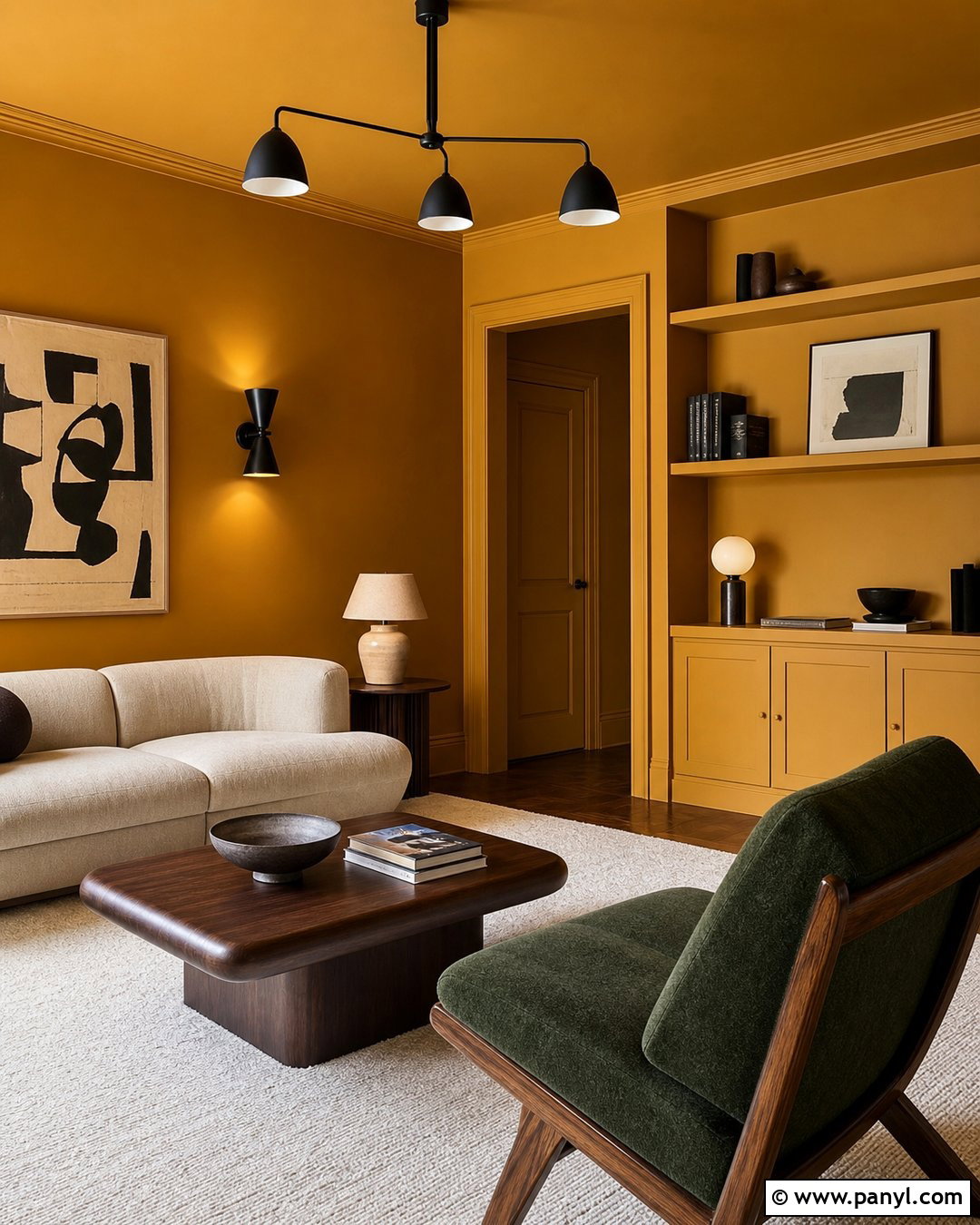
Color drenching creates the boldest interpretation of ochre walls by extending the same shade across trim, doors, built-ins, and sometimes the ceiling. Select a muted, brown-based ochre that remains comfortable over large surfaces. Furnish the room with a cream sofa or bed, dark walnut tables, and a generous off-white rug to break up the color. Use black accents sparingly through lighting and picture frames, then introduce deep green or navy in one substantial upholstered piece. Layer several lamps so shadows do not make the room appear flat. Artwork with broad areas of cream and charcoal will stand out clearly. The completed space feels immersive and cohesive, with neutral furniture maintaining balance throughout the saturated envelope.
Conclusion:
Decorating with ochre requires more than choosing a warm yellow paint. The surrounding furniture, flooring, lighting, textiles, and architectural finishes determine whether the color feels soft, dramatic, modern, or traditional. Cream and white provide brightness, while navy, green, black, and dark wood create stronger contrast. Natural fibers, warm metals, and earthy ceramics reinforce ochre’s grounded character without making a room look overly coordinated. Always test the paint under daylight and evening lighting before covering every wall, since undertones can shift noticeably. Whether you prefer one focused accent wall or a fully color-drenched room, these 35 ochre walls offer complete, practical looks that can be adapted to homes of different sizes and design preferences.

Related Ideas and Inspiration:
Leave a Reply