
Clay colored walls bring the warmth of sunbaked earth into a home without feeling overly bright or rustic. Depending on the undertone, clay can appear muted peach, dusty terracotta, warm brown, softened coral, or earthy beige. This flexible color works across modern, traditional, bohemian, Mediterranean, and minimalist rooms. The key is building a complete palette around it. Creamy whites keep clay fresh, natural woods deepen its warmth, and olive, blue, black, or brass accents create contrast. Lighting also matters, so test several large samples throughout the day before choosing a shade. From cozy bedrooms to polished dining spaces, the following complete room looks offer practical ways to decorate with clay colored walls.

1. Clay Colored Walls With Cream Furniture
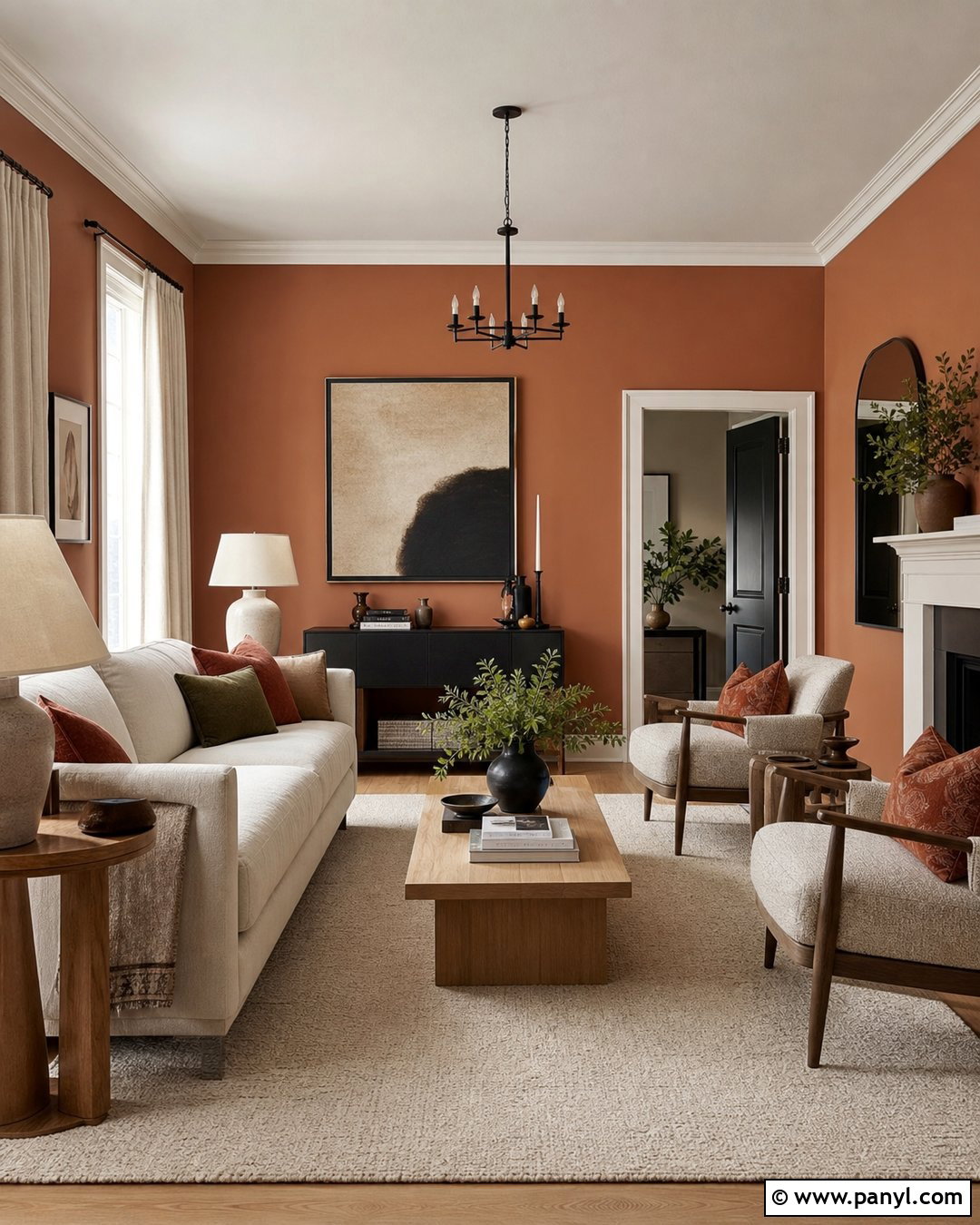
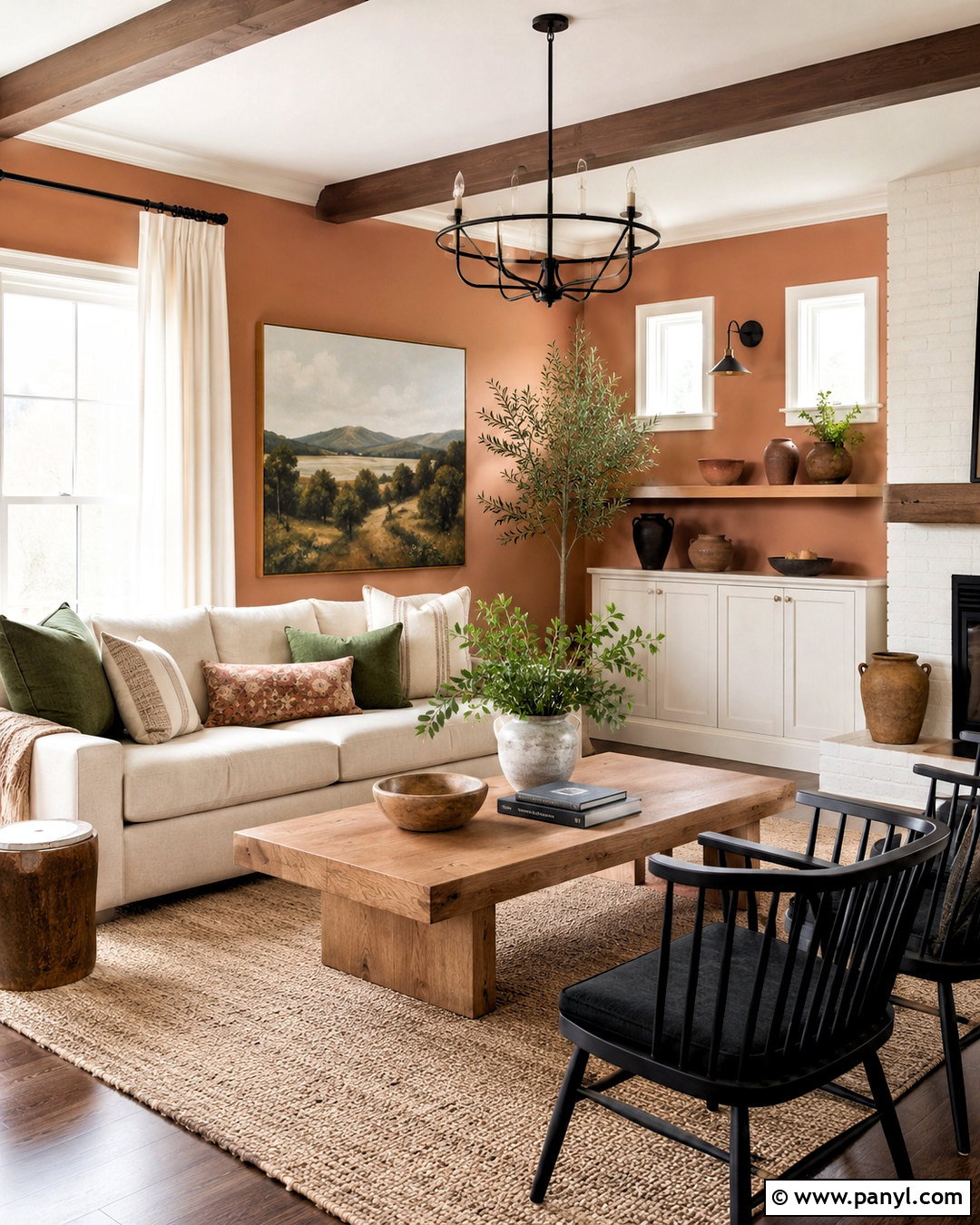
Soft clay walls and cream furniture create a warm living room that feels bright rather than heavy. Choose a muted, midtone clay with peach-brown undertones, then use warm white on the ceiling, trim, and doors. Center the room around a comfortable cream sofa with clean lines. Add two oatmeal armchairs, a pale oak coffee table, and a textured ivory rug to keep the palette light. Rust, camel, and muted olive pillows provide gentle variation without competing with the walls. Finish the space with linen curtains, ceramic lamps, and simple landscape artwork in natural wood frames. A few matte black accents, such as a floor lamp or side table, prevent the earthy color scheme from looking overly soft.
2. Clay Colored Walls With Olive Green
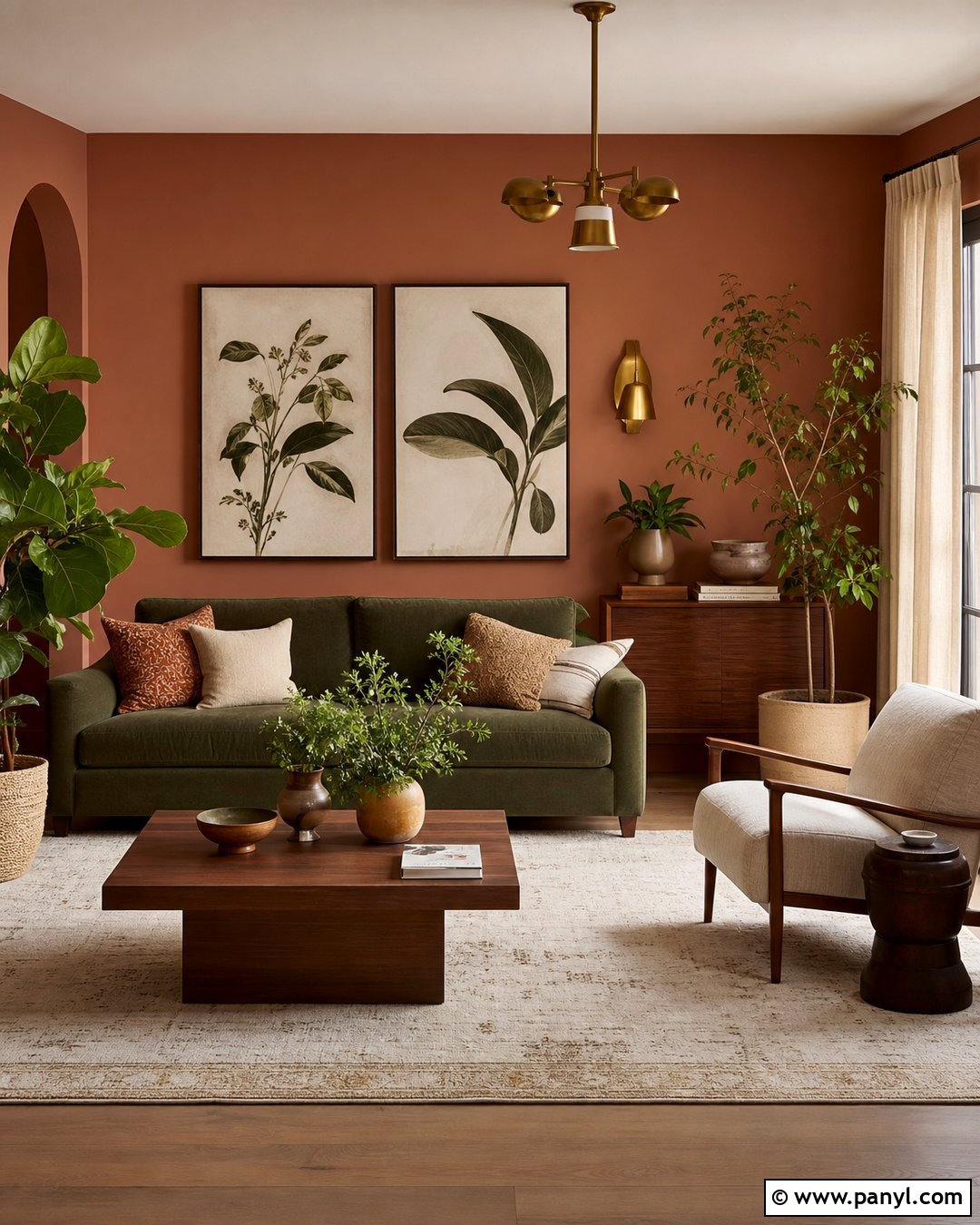
Clay and olive green form a grounded palette inspired by natural landscapes. Paint the living room walls a dusty terracotta-clay shade and balance them with a deep olive sofa or a pair of mossy green lounge chairs. Choose walnut or medium oak furniture to connect the two colors through another warm, organic element. An ivory rug, oatmeal curtains, and cream ceiling provide enough lightness for the richer tones. Use aged brass lighting for warmth, then add black picture frames for sharper definition. Botanical artwork, handmade pottery, and leafy indoor plants reinforce the earthy character without turning the room into a theme. Keep patterns limited to subtle stripes or small geometric prints so the clay walls remain an important part of the complete design.
3. Light Clay Colored Bedroom Walls
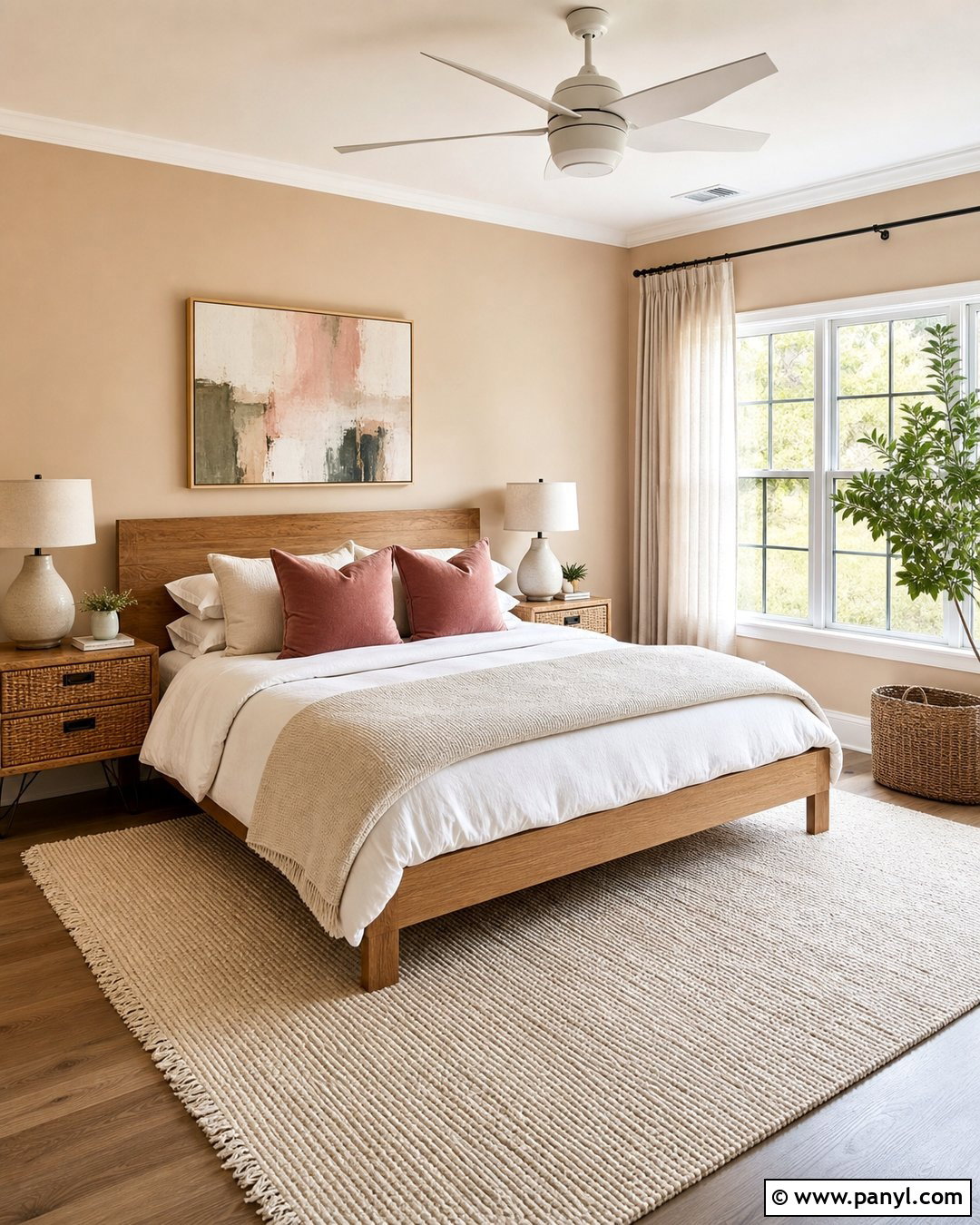
A light clay bedroom can feel restful, flattering, and comfortably warm in both morning and evening light. Select a pale clay shade with muted peach and beige undertones instead of strong orange. Cover every wall for a soft, enveloping effect, then use warm white on the ceiling and simple trim. Place a natural oak bed against the main wall and layer it with white sheets, an oatmeal coverlet, and dusty rose or rust pillows. Light linen curtains allow sunshine to soften the color further. Complete the room with woven nightstands, cream ceramic lamps, and a low-pile wool rug. Minimal black accents add definition, while one large abstract artwork ties the clay, cream, and brown tones together without making the bedroom feel busy.
4. Dark Clay Colored Dining Room Walls
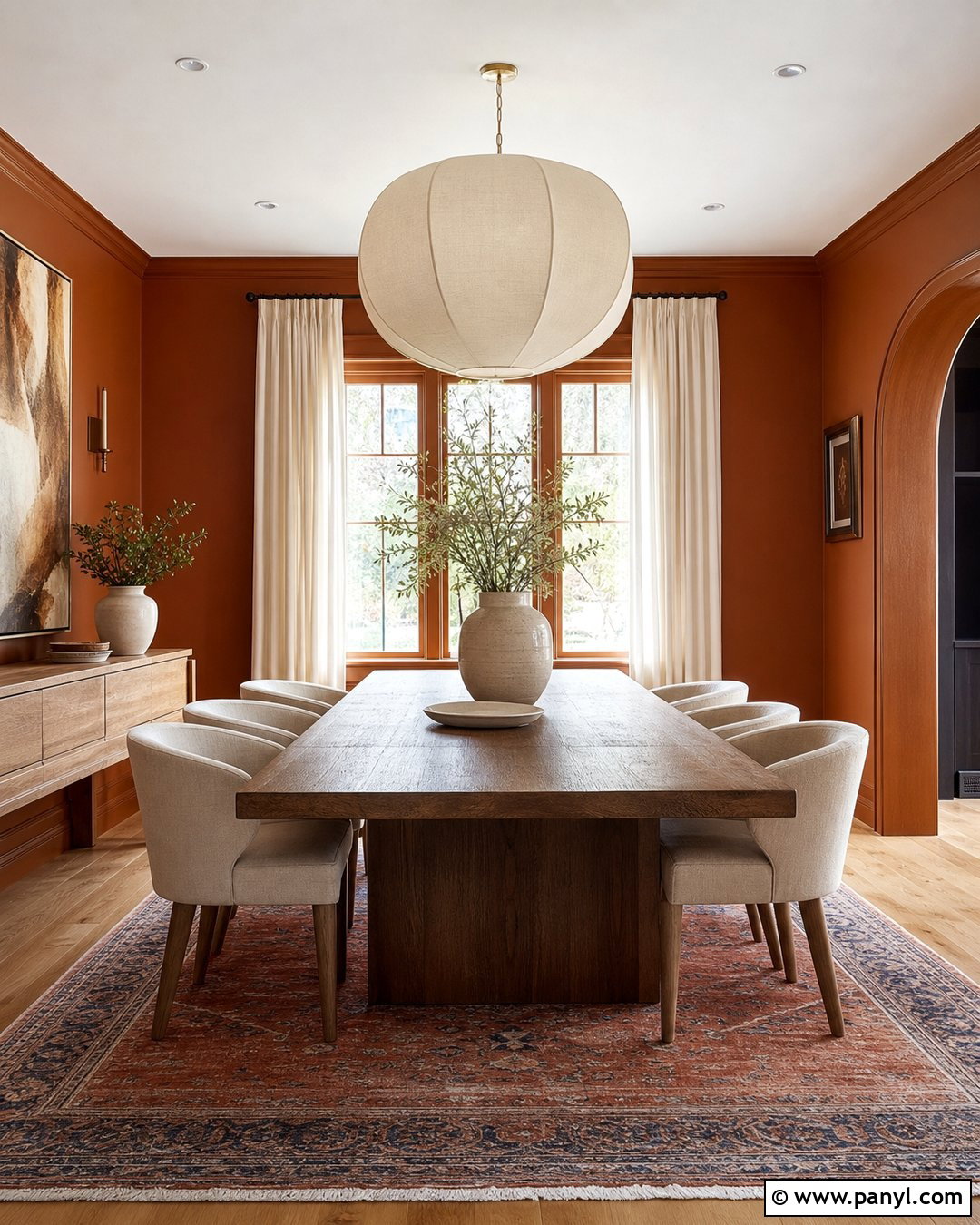
Deep clay walls can turn an ordinary dining room into a rich, intimate space while still feeling approachable. Choose a dark burnt-clay shade with brown and red undertones, then paint the walls, baseboards, and window trim in the same color for a cohesive finish. A substantial oak dining table adds natural contrast, while cream upholstered chairs prevent the arrangement from looking too dark. Hang a large linen or plaster pendant above the table to introduce a lighter focal point. A vintage-inspired rug containing rust, tan, and faded blue adds pattern beneath the furniture. Finish with bronze hardware, off-white curtains, and oversized artwork in warm neutral tones. During the day, mirrors and pale ceramics help reflect light around the room.
5. Clay Colored Living Room Walls
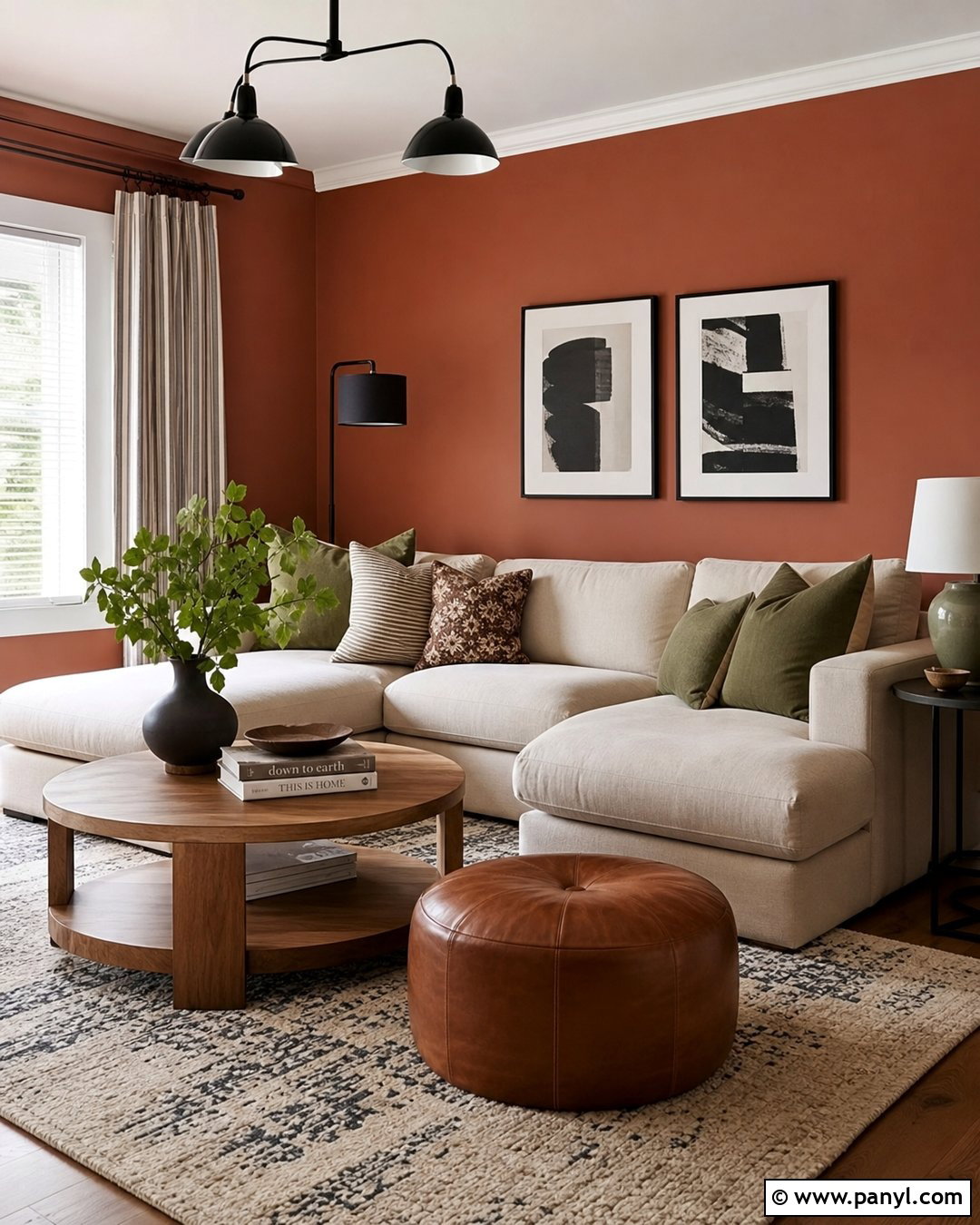
Imagine a living room that feels warm and collected but still clean enough for everyday family life. Use a medium clay color across all four walls and pair it with crisp cream trim. Arrange a soft beige sectional around a round oak coffee table, leaving open pathways between the seating and windows. A large ivory-and-charcoal rug grounds the layout and introduces graphic contrast. Add cognac leather through one accent chair or ottoman rather than using several heavy brown pieces. Olive pillows, striped curtains, and sculptural ceramic decor give the room depth. Choose a black metal floor lamp and understated framed art to sharpen the relaxed palette. This complete scheme lets clay serve as a livable background instead of a bold feature that dominates the space.
6. Clay Colored Accent Wall
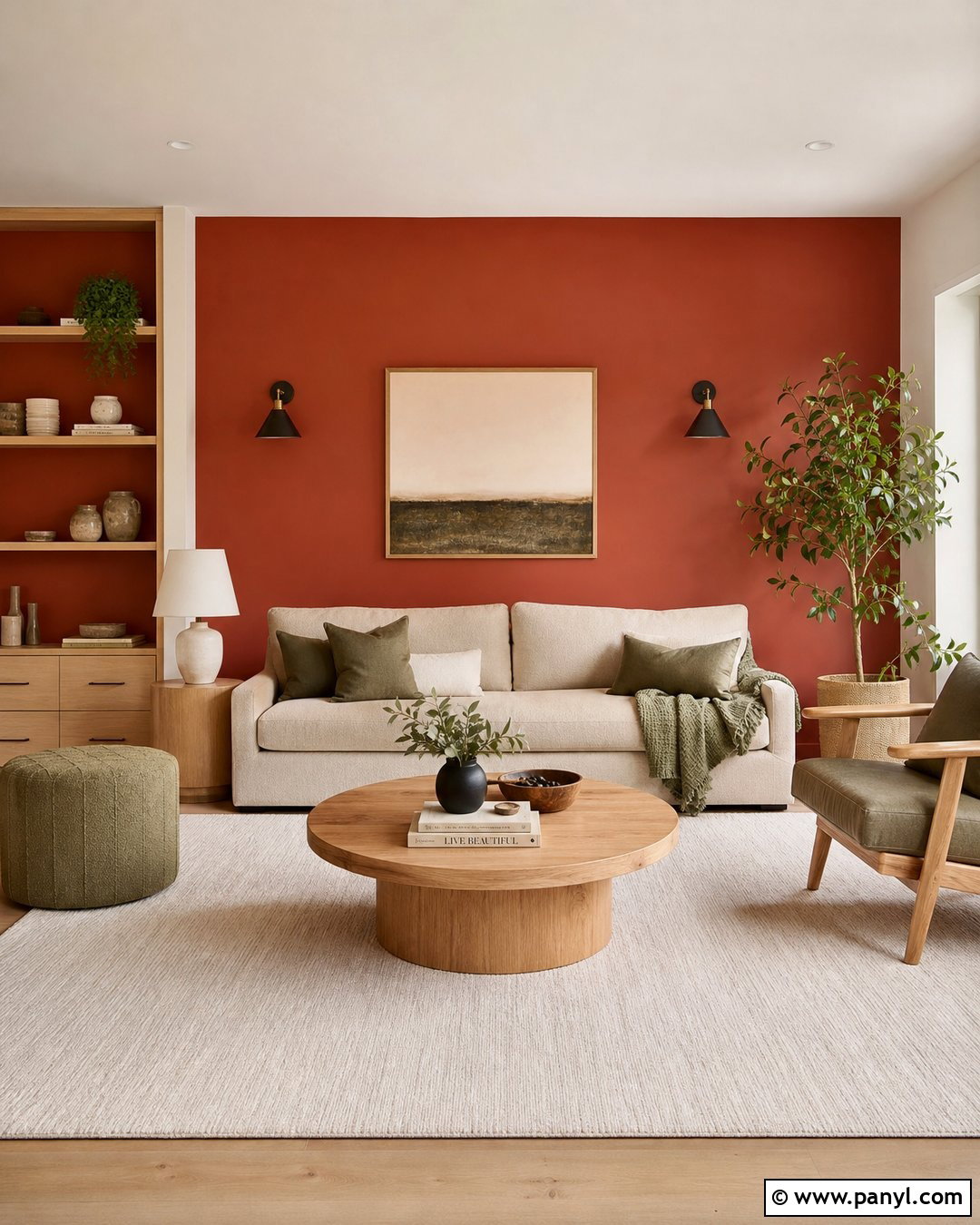
A clay accent wall works best when it anchors an important architectural area rather than stopping at a random corner. In a living room, place the color behind the sofa, fireplace, or built-in media unit. Keep the surrounding walls warm white so the contrast looks intentional and balanced. A beige sofa, light oak tables, and an ivory rug create a calm foundation in front of the clay wall. Repeat the color through two or three smaller touches, such as patterned pillows, pottery, or framed artwork. Add olive green and matte black accents for depth. If the wall includes shelving, paint the shelves clay as well or use natural wood. The finished design should visually connect the focal wall to the rest of the room.
7. Clay Colored Walls With White Trim
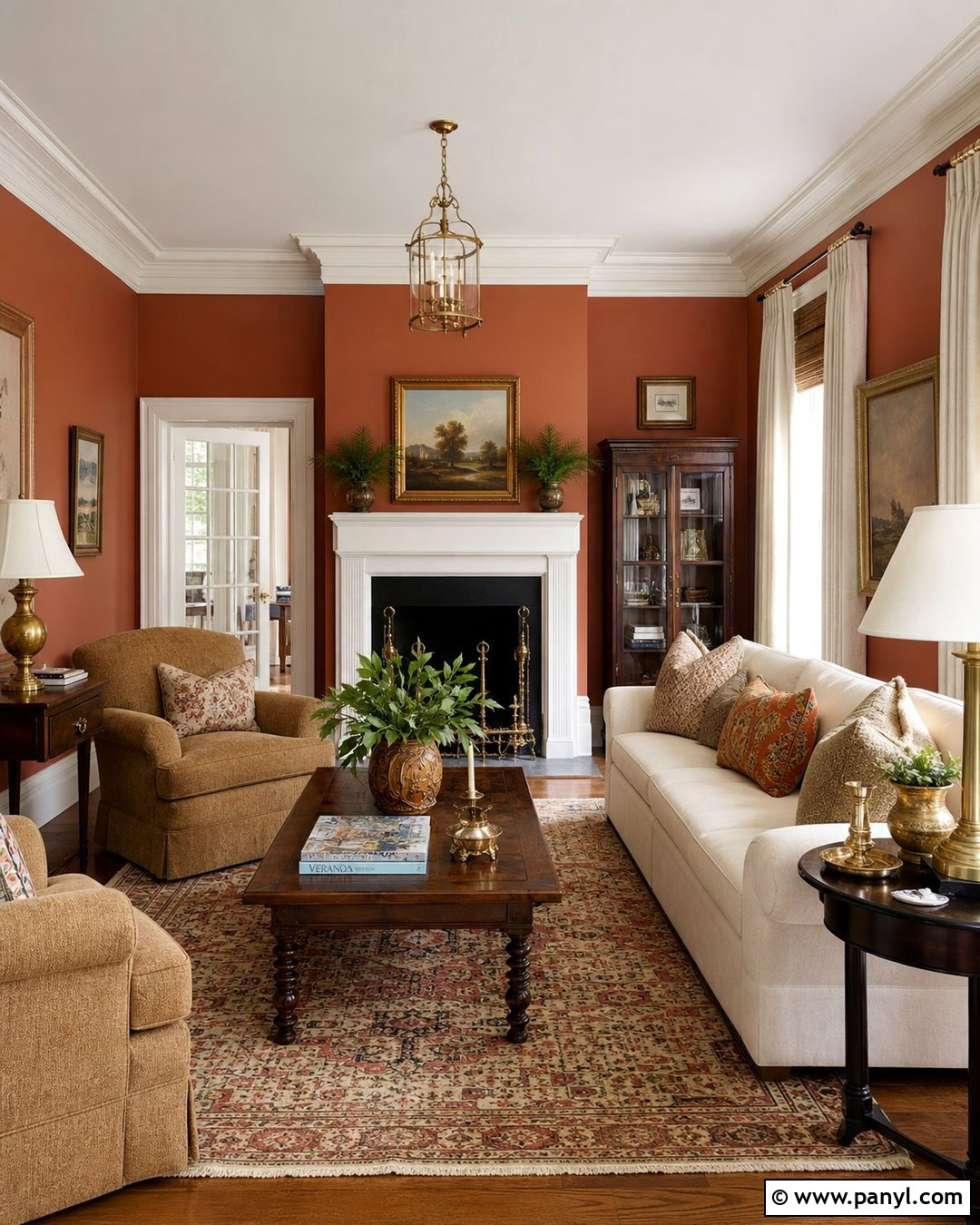
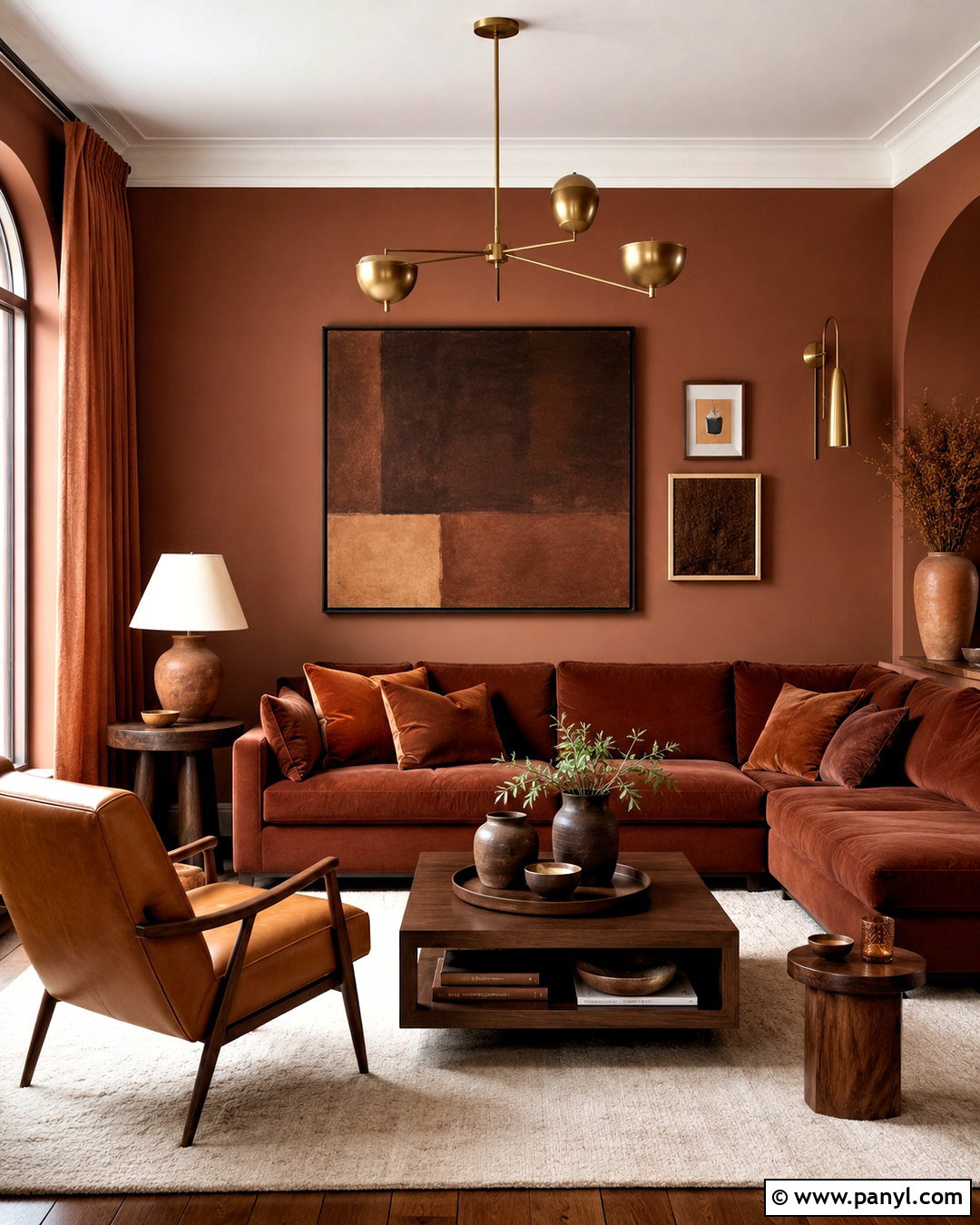
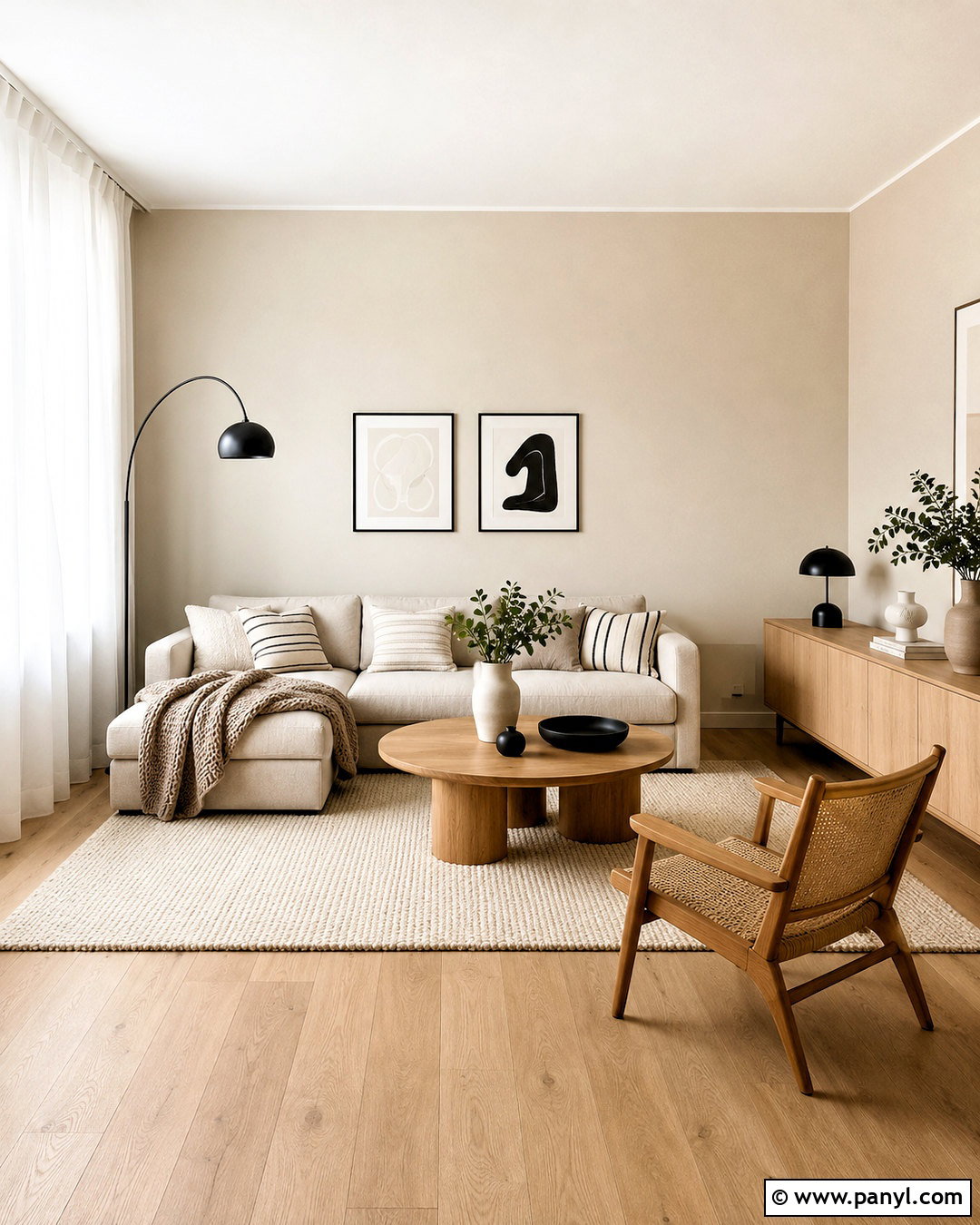
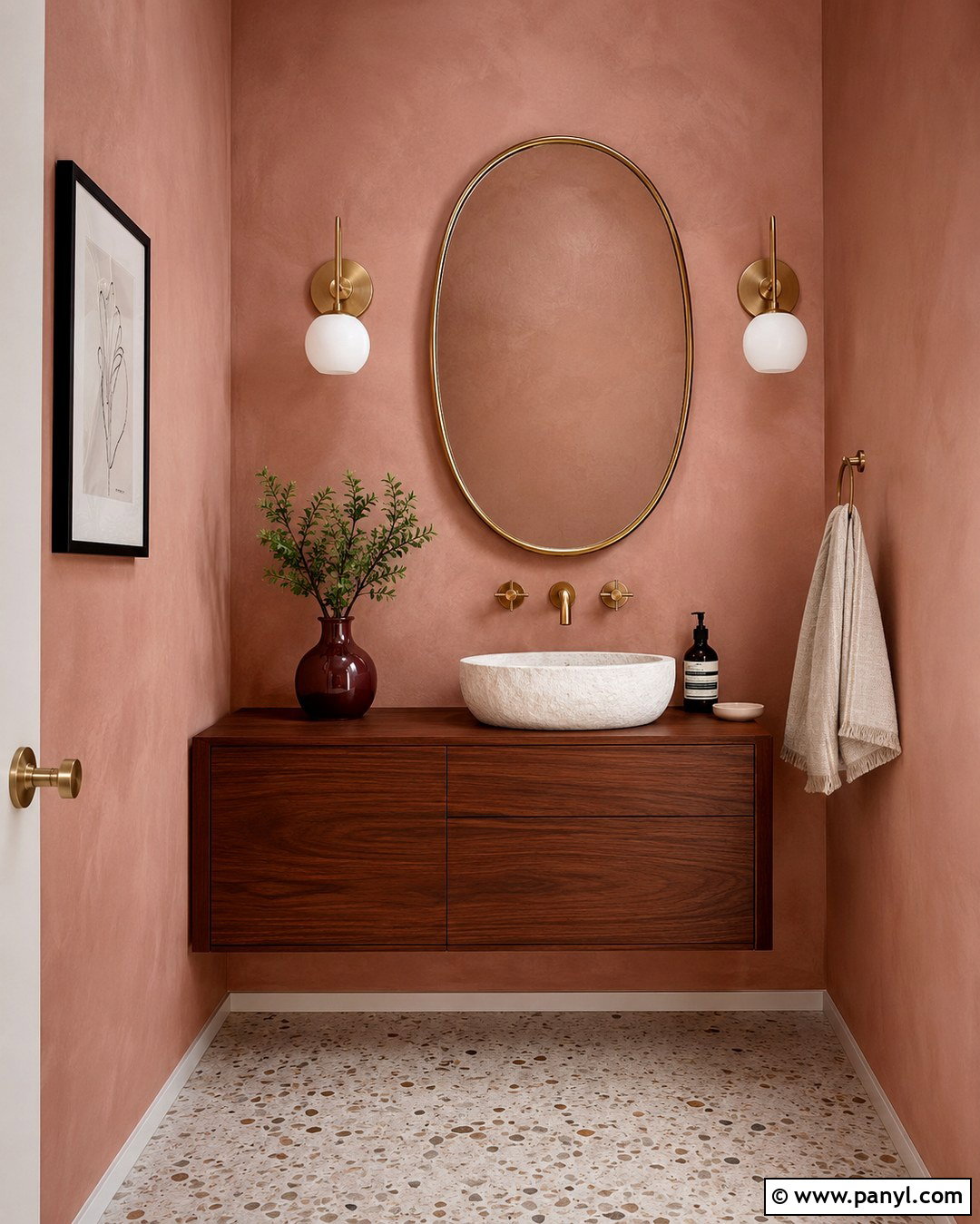
Clean white trim gives clay colored walls a defined, traditional edge that works especially well in rooms with detailed molding. Choose a balanced terracotta-clay paint that is warm but not overly saturated. Use a soft white with creamy undertones for baseboards, crown molding, window casings, doors, and the ceiling. In a sitting room, arrange an ivory sofa with two camel-colored chairs around a dark wood coffee table. Pale curtains can blend with the trim and make the windows appear taller. Bring in patterned textiles containing faded red, blue, and beige to connect the wall color with the furnishings. Polished brass lamps and classic framed artwork complete the look. Avoid icy white finishes, which can make warm clay walls appear unexpectedly orange.
8. Clay Colored Walls With Black Accents
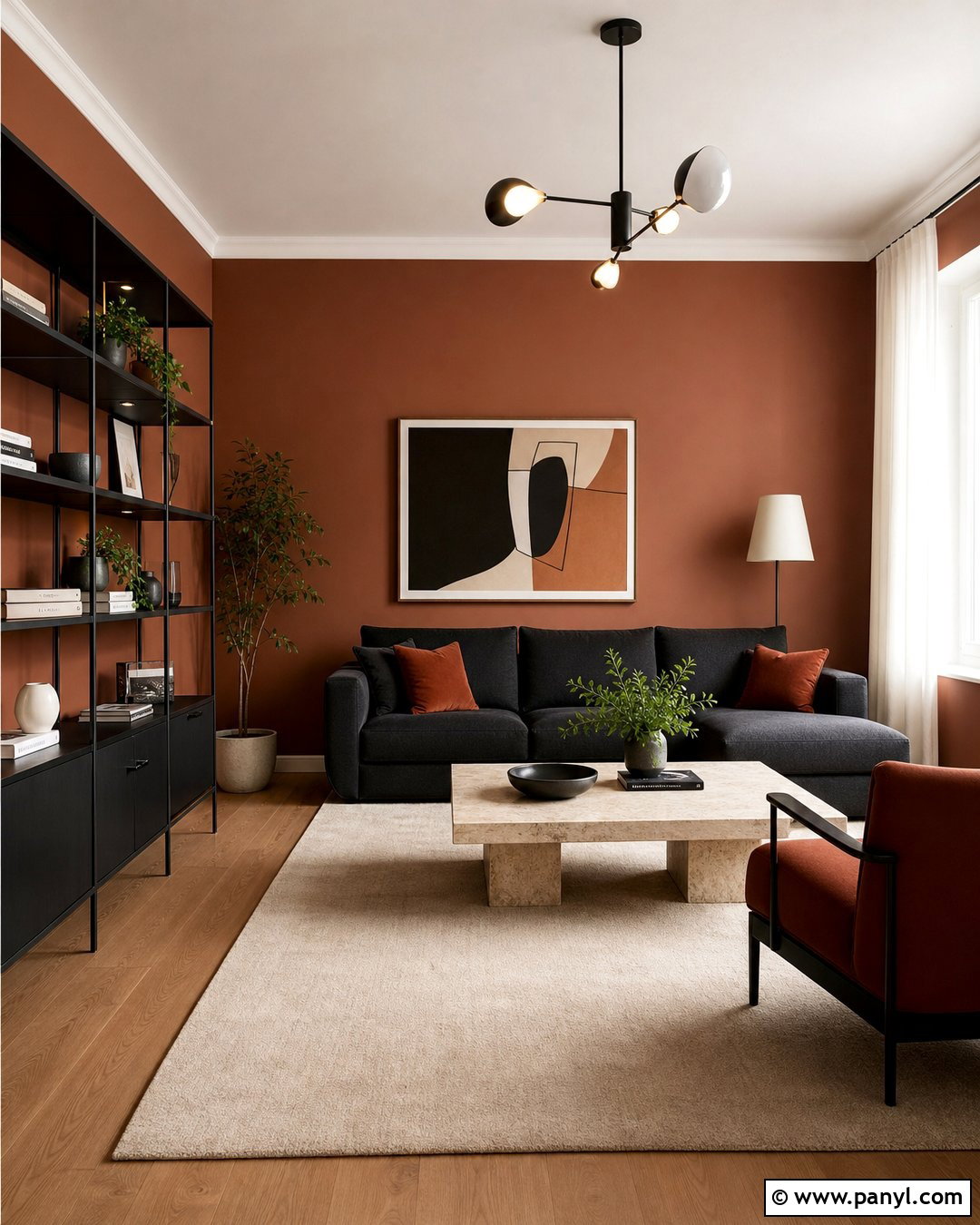
Black accents bring structure to clay walls and create a modern room with strong visual definition. Start with a subdued reddish-clay color that has enough gray or brown to remain sophisticated. Use a charcoal sofa, black metal shelving, and slim black window frames as the primary contrasting elements. Keep the floor light with natural oak and place a large cream rug beneath the seating area. A travertine coffee table introduces pale stone while supporting the earthy palette. Add warm white curtains, rust-colored cushions, and abstract artwork with black lines. Limit the darkest color to a few well-spaced pieces so the room remains inviting. The finished layout should balance solid black forms with lighter textiles and open surfaces, allowing the clay walls to provide warmth.
9. Clay Colored Walls With Natural Wood
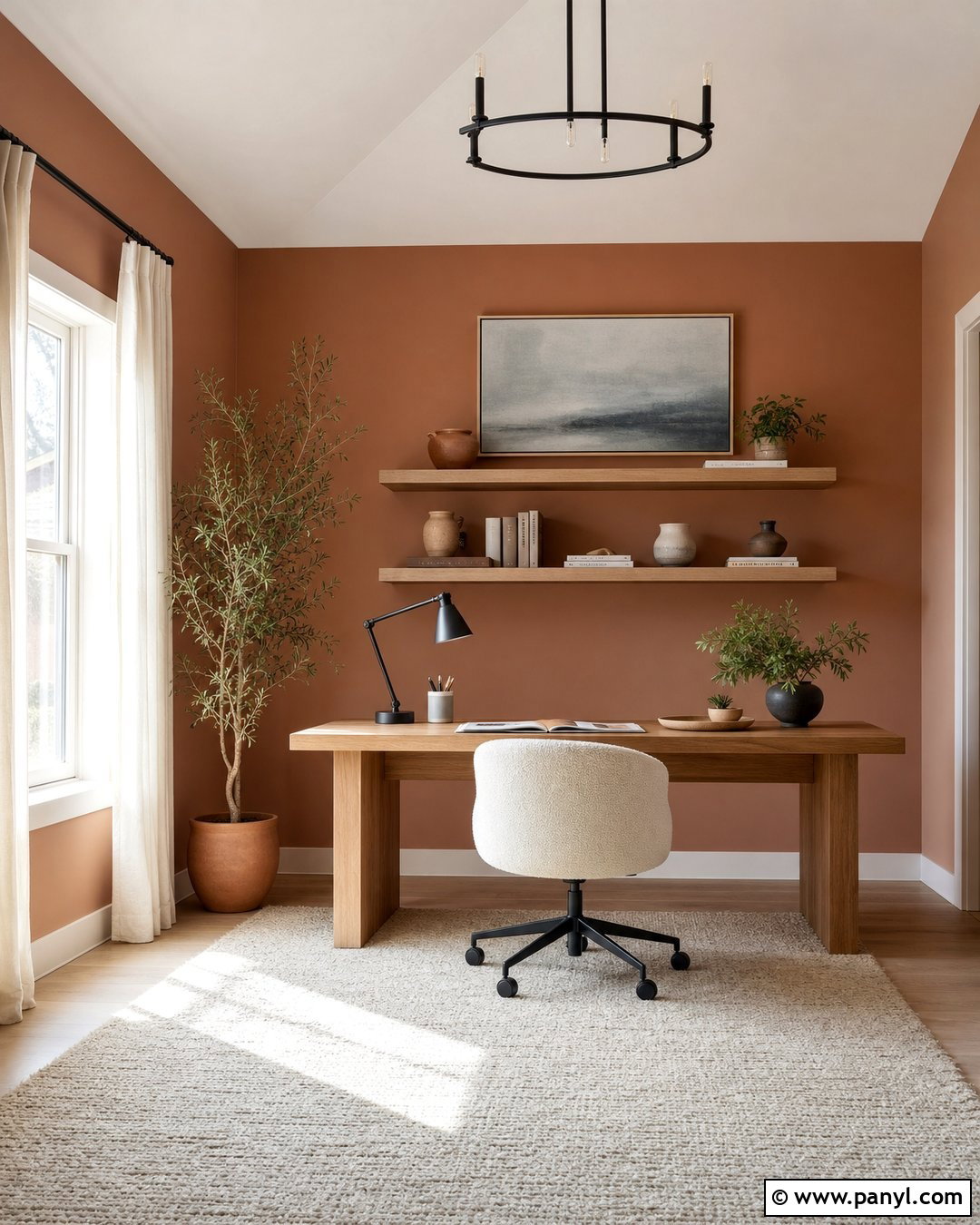
Natural wood emphasizes the earthy character of clay without requiring a heavily rustic decorating style. Paint the walls a soft, warm clay shade and choose medium oak for the largest furniture pieces. In a home office, this might include a streamlined oak desk, matching floating shelves, and a low storage cabinet. Add a cream boucle chair and a woven wool rug to soften the hard surfaces. White linen curtains and a pale ceiling keep the room from feeling enclosed. Use black task lighting and small brass accessories for contrast. Books, textured pottery, and one leafy plant make the shelves feel finished without clutter. Because clay and wood are both warm, include a few cooler details, such as gray-blue artwork or charcoal desk accessories, to create balance.
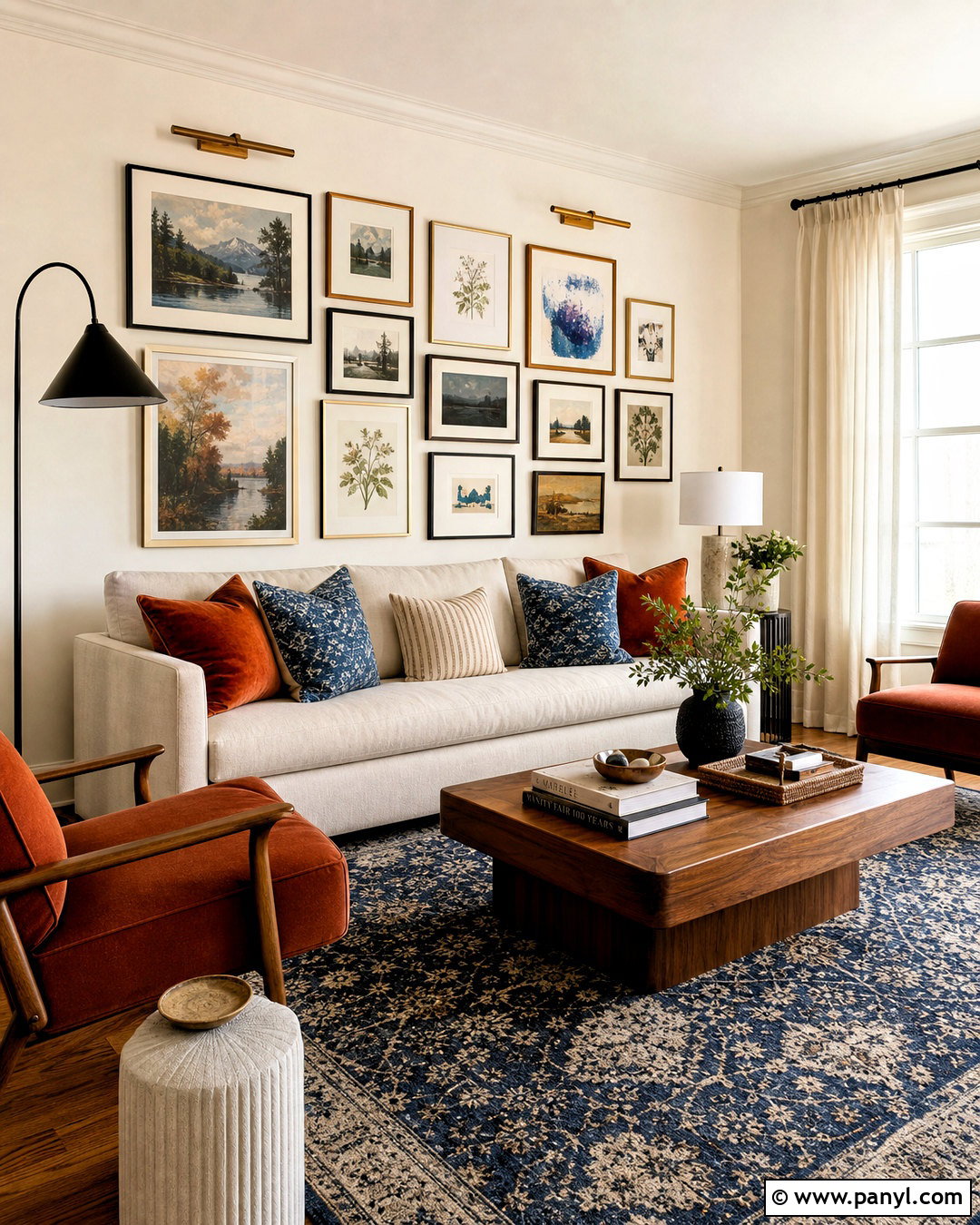
10. Clay Colored Walls With Blue Decor
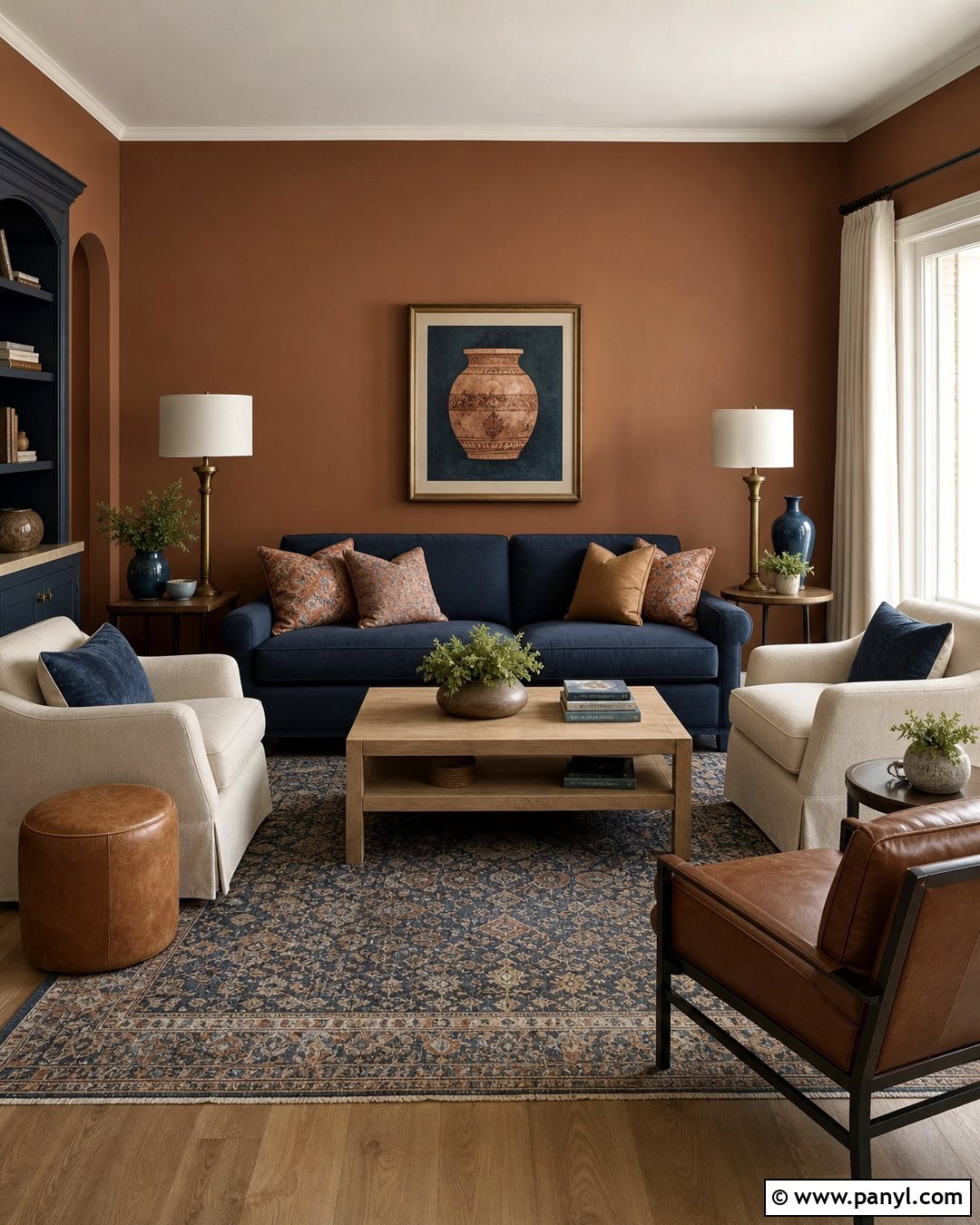
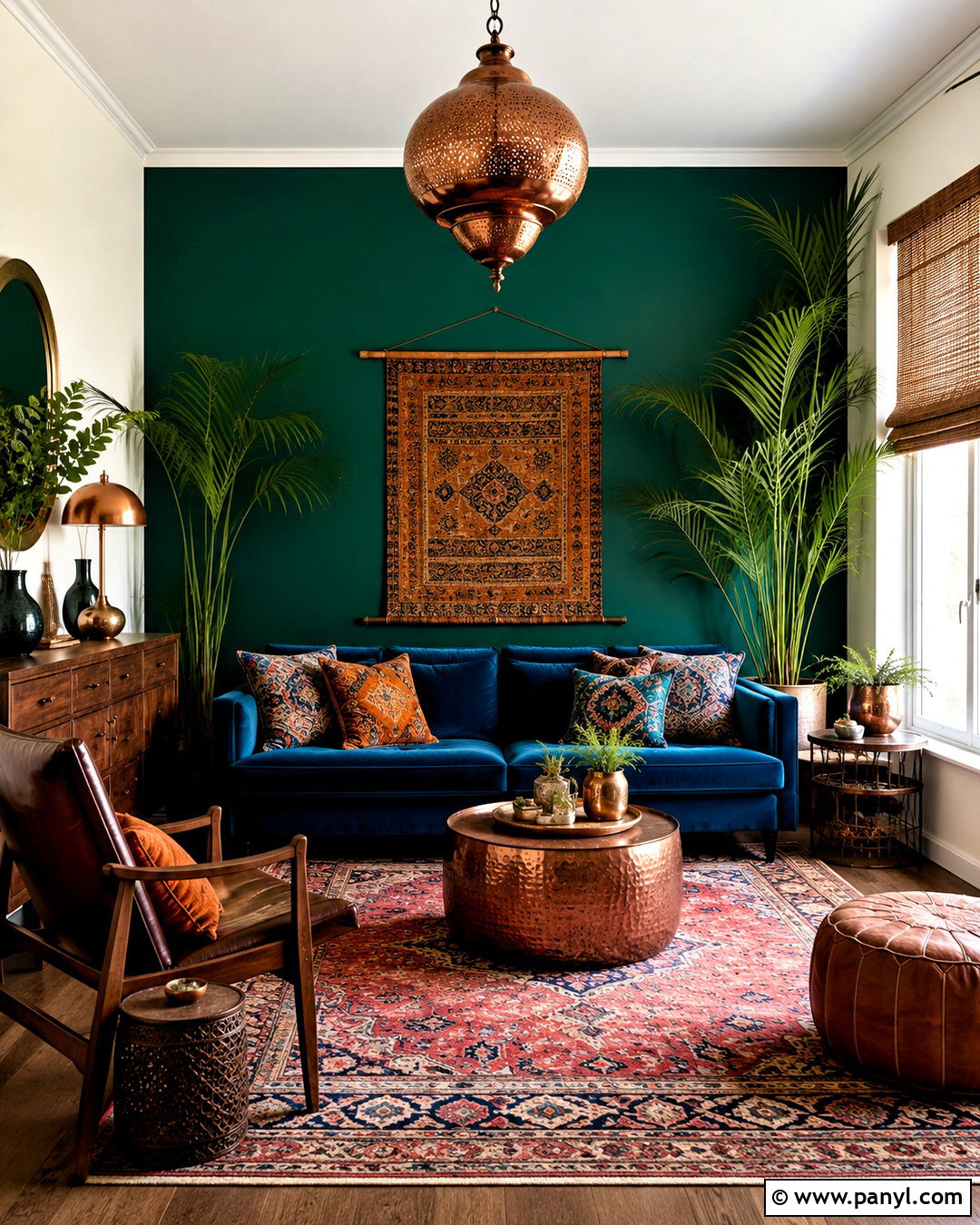
Blue decor gives clay walls a refreshing complementary contrast that can feel relaxed, classic, or coastal depending on the materials. Choose muted clay paint rather than bright orange, then introduce blue through a navy sofa, faded denim pillows, or a blue-patterned rug. In a living room, combine these colors with a pale oak coffee table and two cream lounge chairs. Use warm white curtains and trim to lighten the overall composition. Small touches of cognac leather can bridge the warm walls and cool textiles. Select artwork containing both terracotta and deep blue so the pairing looks deliberate. Brass lamps add warmth, while white ceramics provide visual breathing room. Keep the blue slightly dusty or softened to match the natural, understated quality of the clay color.
11. Clay Colored Walls With Sage Green
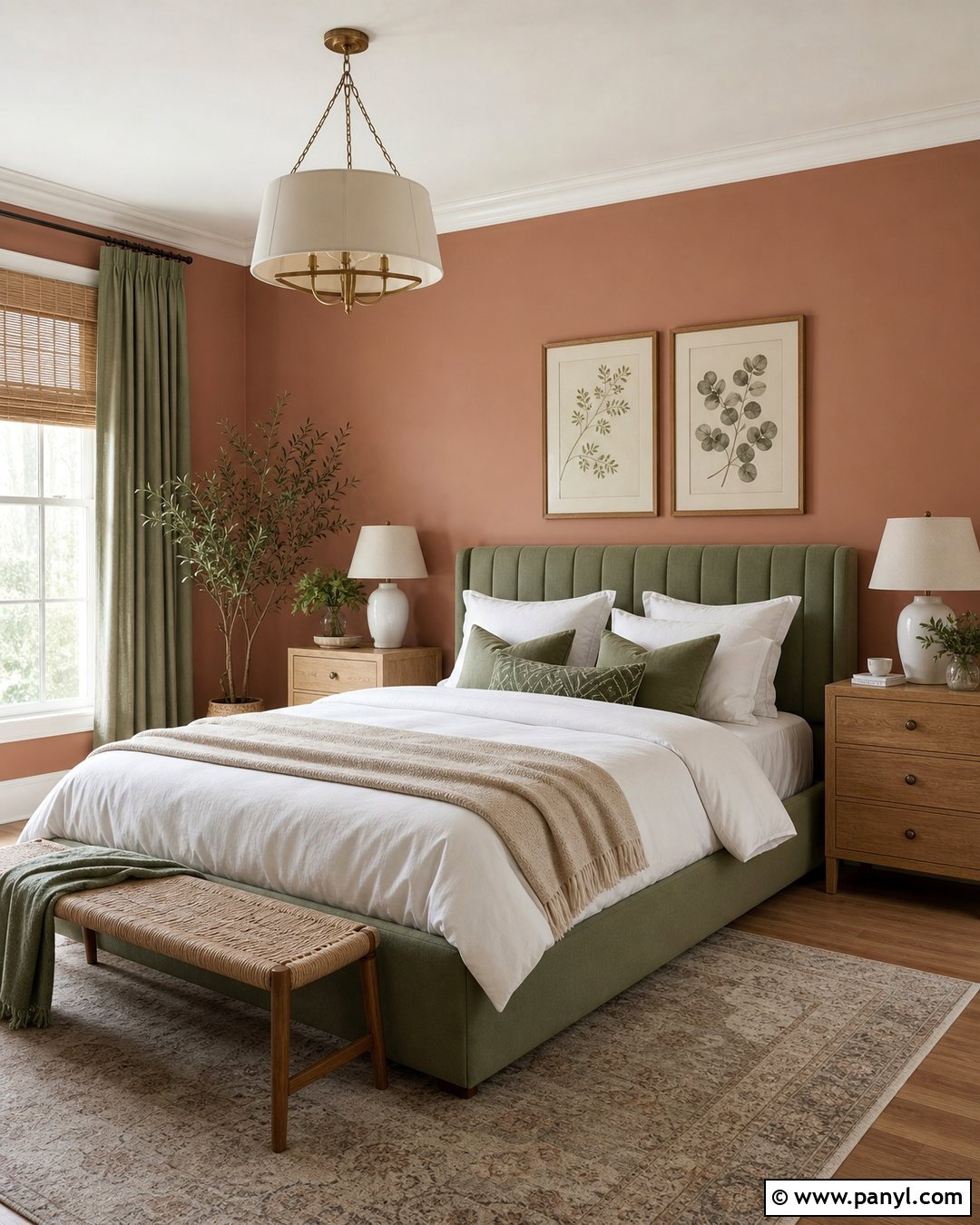
Clay walls and sage green furnishings produce a calm, garden-inspired bedroom with plenty of warmth. Cover the walls in a muted pinkish-clay shade, then place a sage upholstered bed against the main focal wall. Use crisp white bedding layered with an oatmeal blanket and one terracotta lumbar pillow. Light oak nightstands maintain an airy feeling, while cream ceramic lamps provide symmetry. Add woven blinds beneath off-white curtains to control light and bring natural texture into the room. A soft rug with pale green, beige, and faded clay tones connects the entire palette. Keep the ceiling and trim warm white. Botanical prints or a quiet landscape above the bed complete the design, while brushed brass hardware adds just enough polish without disrupting the restful atmosphere.
12. Clay Colored Walls With Gray Furniture
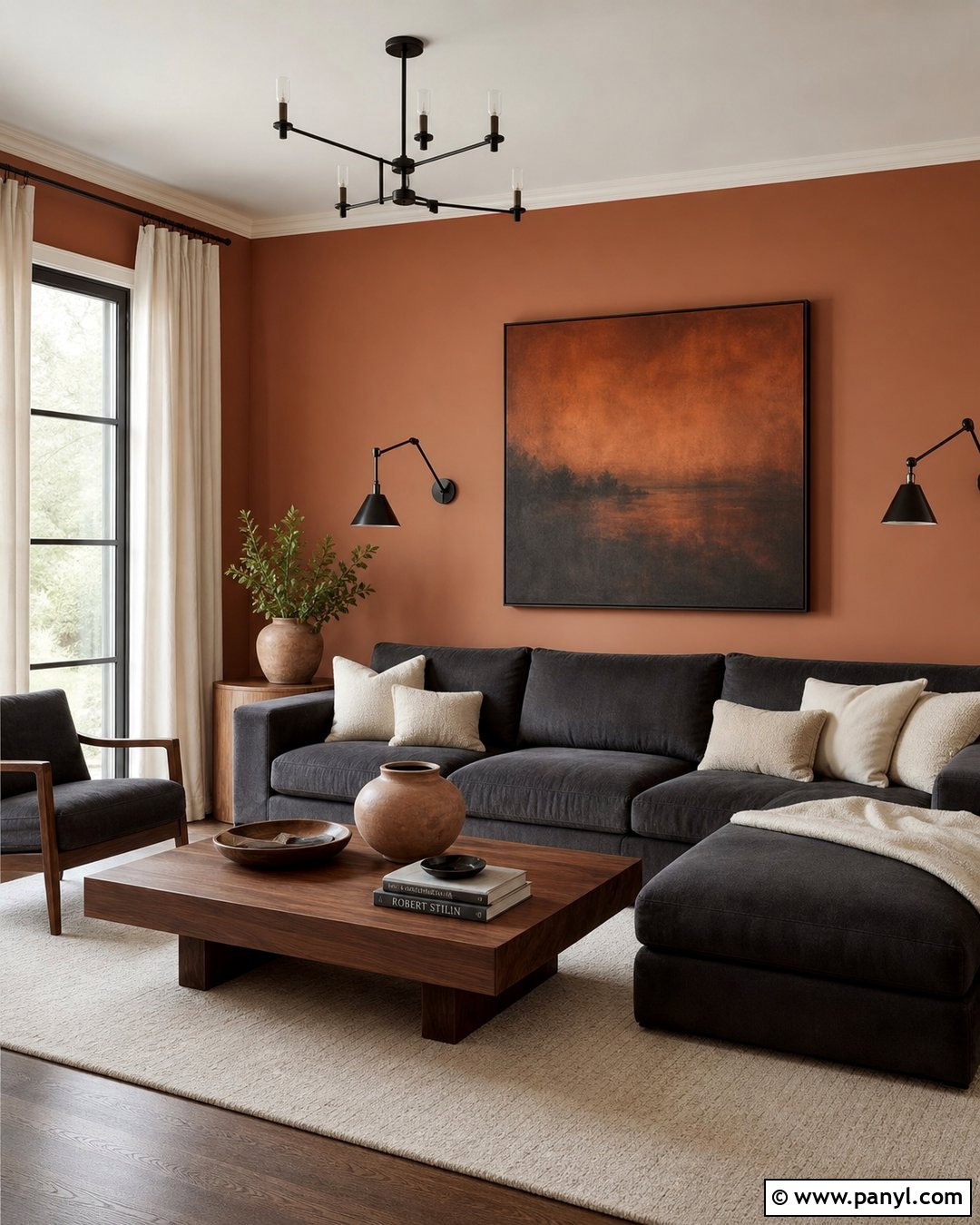
Gray furniture can work beautifully with clay walls when the gray has warm undertones rather than a cool blue cast. Choose a subdued adobe-clay wall color, then furnish the room with a warm charcoal sectional or medium greige sofa. Introduce cream through the rug, curtains, and ceiling to stop the deeper colors from feeling flat. A walnut coffee table adds another warm layer and helps connect the gray seating to the earthy walls. Use black metal lighting sparingly for structure, then soften it with clay pottery and oatmeal pillows. Artwork that combines charcoal, tan, and rust will unify the room. Avoid filling the space with several different grays. One consistent upholstery tone, supported by warm woods and pale textiles, creates a cleaner and more intentional result.
13. Clay Colored Bathroom Walls
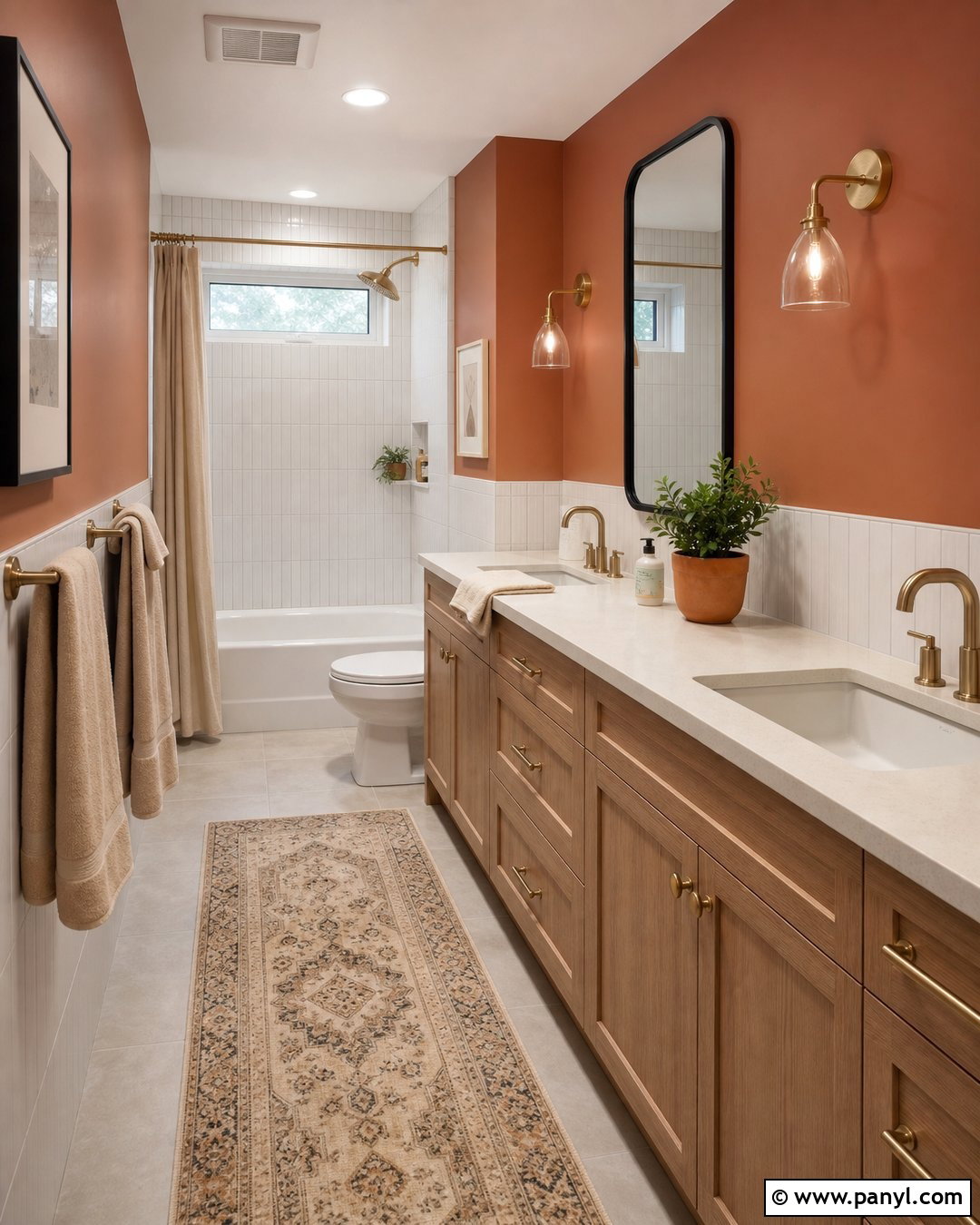
A clay colored bathroom feels warm and distinctive when the finishes are simple and moisture appropriate. Paint the upper walls in a muted terracotta-clay tone using a durable bathroom formula. Cover the lower portion with creamy white vertical tile to brighten the room and protect areas near water. Choose a light oak vanity with a pale quartz or honed stone top. Brushed brass faucets and sconces complement the wall color, while a black-framed mirror provides crisp contrast. Use an off-white shower curtain, sand-colored towels, and a small patterned runner to complete the space. White fixtures keep the bathroom familiar and practical. If natural light is limited, select a lighter clay shade and use bright, high-quality bulbs that show the color accurately without making it look muddy.
14. Clay Colored Kitchen Walls
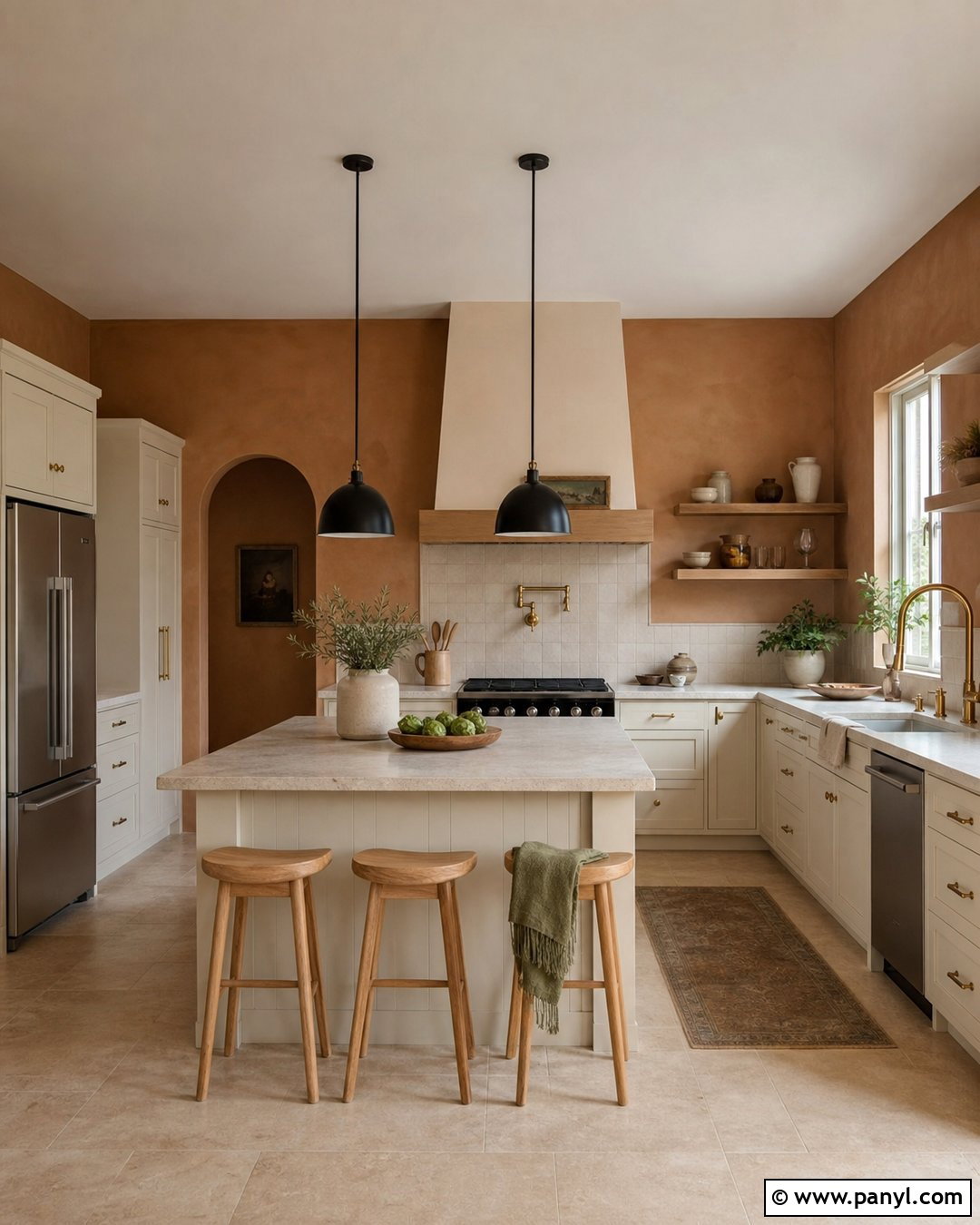
Clay walls can soften a kitchen filled with hard surfaces and create an inviting transition into nearby living areas. Use a light, washable clay paint on the walls and pair it with warm white cabinets for an airy foundation. A cream zellige-style backsplash adds subtle texture without introducing another strong color. Choose oak stools, pale stone countertops, and brushed brass hardware to continue the warm palette. Matte black pendants above the island offer definition and prevent the space from appearing overly beige. Bring in muted olive through a runner, small appliances, or simple pottery. Keep upper shelves lightly arranged with white dishes and wood boards. The complete kitchen should balance the wall color with plenty of pale surfaces, especially if the room receives limited natural light.
15. Clay Colored Walls With Green Cabinets
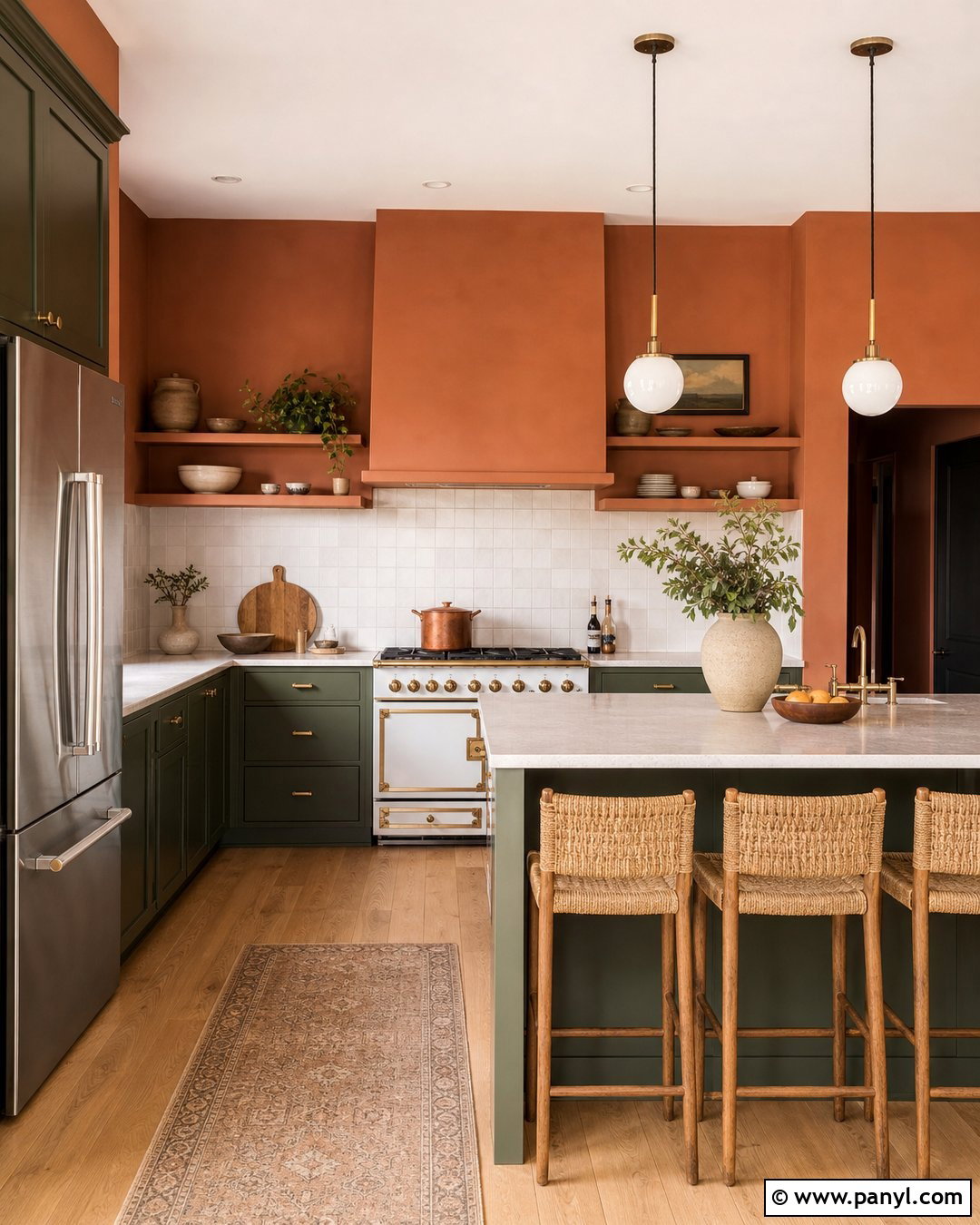
A kitchen with clay walls and green cabinets feels earthy, layered, and more distinctive than a standard neutral scheme. Select muted olive or deep sage cabinetry with a matte finish, then paint the remaining walls a soft baked-clay color. Keep the countertops creamy white or lightly veined to separate the two saturated tones. Natural oak floors and woven stools add warmth without competing with the palette. Use aged brass cabinet pulls and simple globe pendants for a polished finish. A white tile backsplash provides a quiet visual break behind the work area. Repeat clay through one or two ceramic pieces and bring green into nearby textiles. This combination works best when both colors are slightly muted, allowing them to support each other rather than fighting for attention.
16. Clay Colored Walls With Built-In Shelves
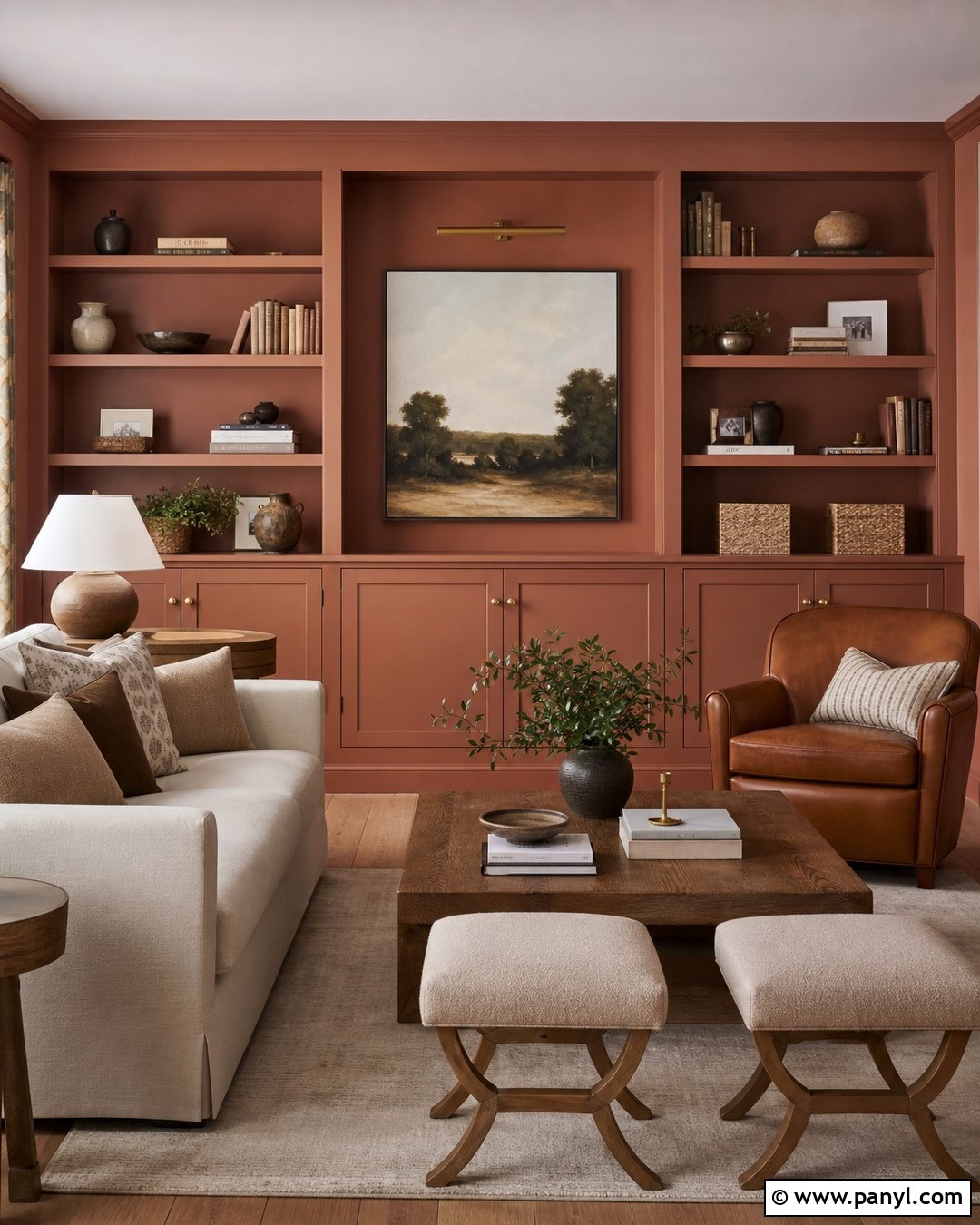
Built-in shelving looks integrated and architectural when it shares the same clay color as the surrounding walls. Paint the wall, shelves, cabinet fronts, and trim in one muted terracotta tone, using an appropriate finish for each surface. The uniform color creates depth while allowing books and objects to stand out. Place a cream sofa opposite the built-ins and add a cognac leather chair near one end for balance. A pale wool rug and oak coffee table lighten the central seating area. Style the shelves with white ceramics, framed art, books, woven boxes, and a small amount of greenery. Leave some open space around each grouping. Warm brass picture lights above the shelves can highlight the display and add a refined finishing layer.
17. Clay Colored Fireplace Wall
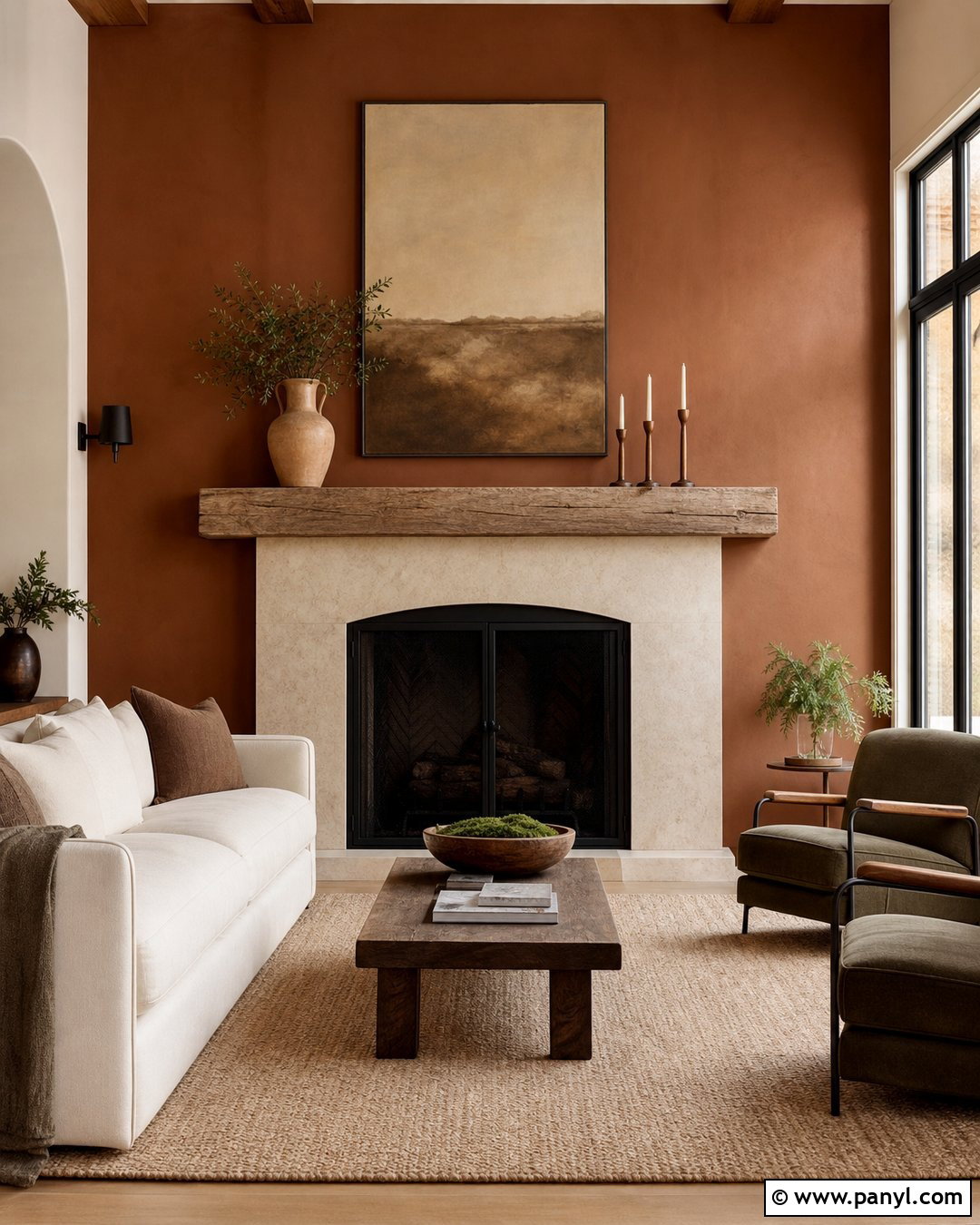
A fireplace wall painted in clay creates a clear focal point without requiring expensive stonework or a major remodel. Cover the entire chimney breast or fireplace surround wall in a rich, earthy clay shade. Keep adjoining walls warm white and use a simple plaster, limestone, or light tile finish directly around the firebox. Add a substantial natural wood mantel to connect the focal wall with the rest of the room. Arrange a cream sofa and two olive chairs facing the fireplace over an ivory rug. Black fireplace tools and a slim metal screen provide practical contrast. Style the mantel with one large artwork, a ceramic vessel, and a modest branch arrangement. Avoid crowding the surface, since the strong wall color already gives the fireplace plenty of presence.
18. Clay Colored Home Office Walls
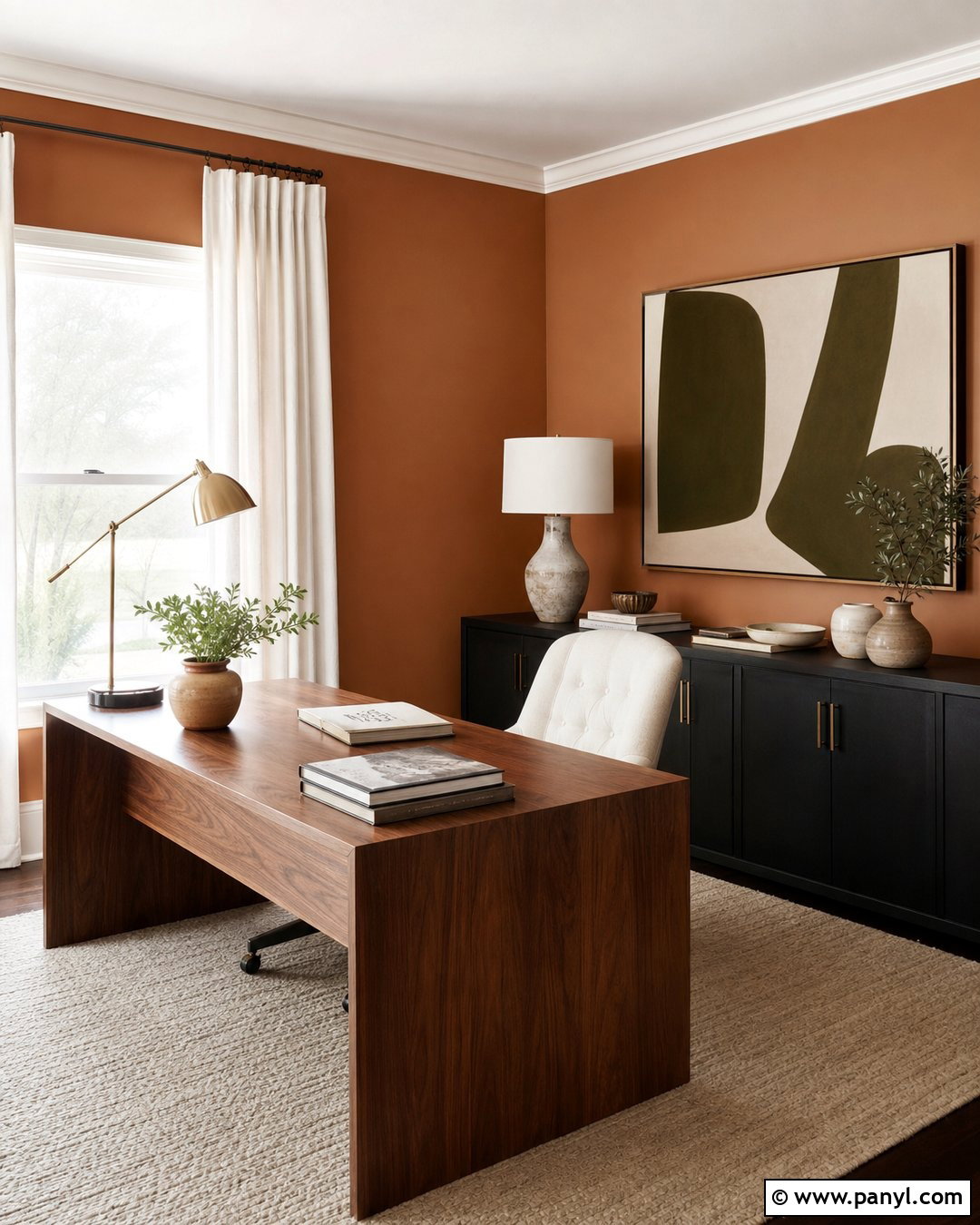
Clay walls can make a home office feel focused and welcoming instead of cold or overly corporate. Choose a medium, brown-based clay color that remains comfortable during long work sessions. Place a walnut desk against the main wall and use a supportive cream upholstered chair to lighten the arrangement. Add black metal shelving or a tall storage cabinet for visual structure. A neutral flat-weave rug helps define the work zone and reduces echo. Hang simple abstract artwork with olive, beige, and charcoal accents above the desk. Use white linen curtains to filter glare while keeping the room bright. A brass task lamp, closed storage boxes, and a few ceramic accessories complete the look. Keep everyday supplies organized so the warm wall color remains calming rather than visually busy.
19. Clay Colored Entryway Walls
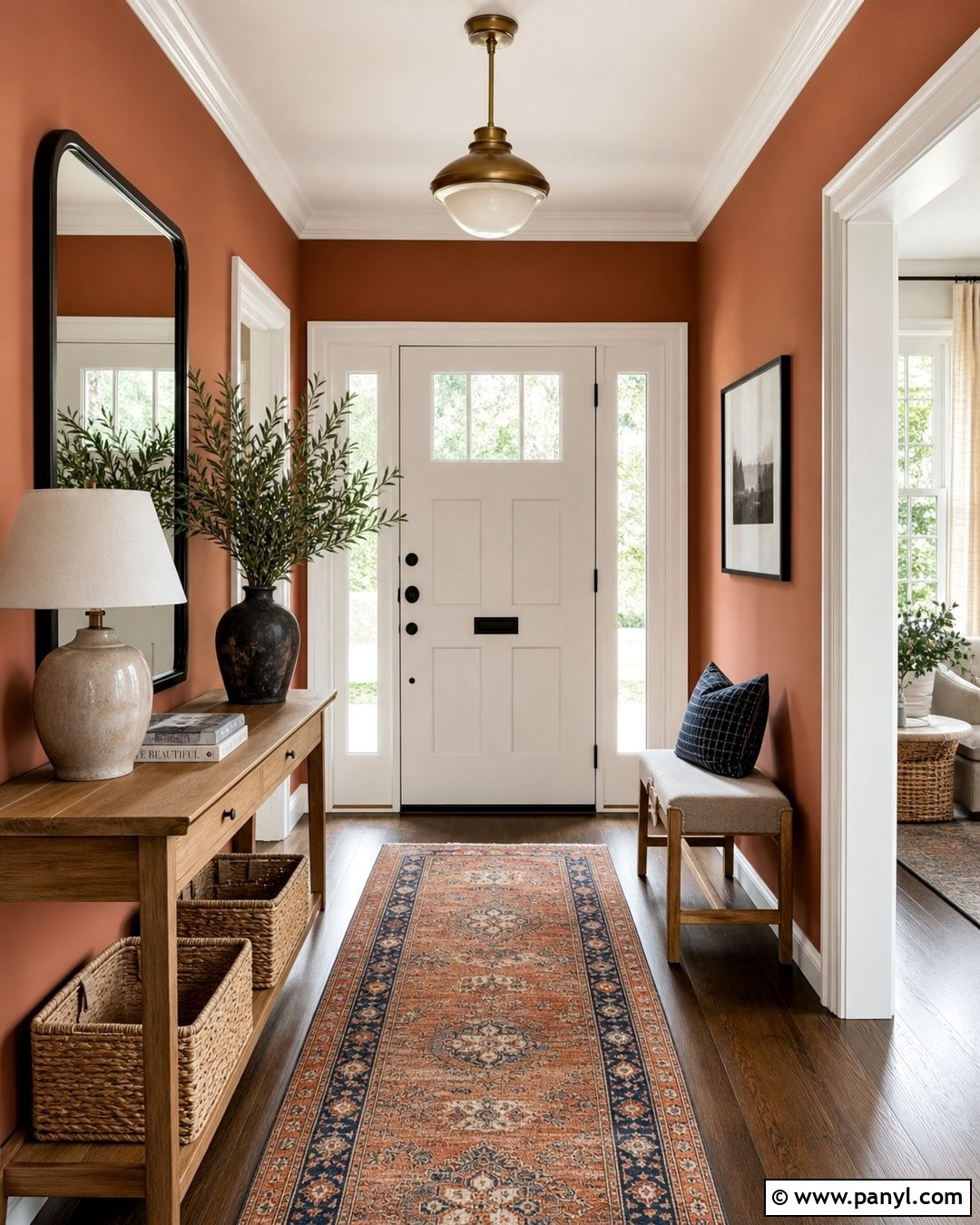
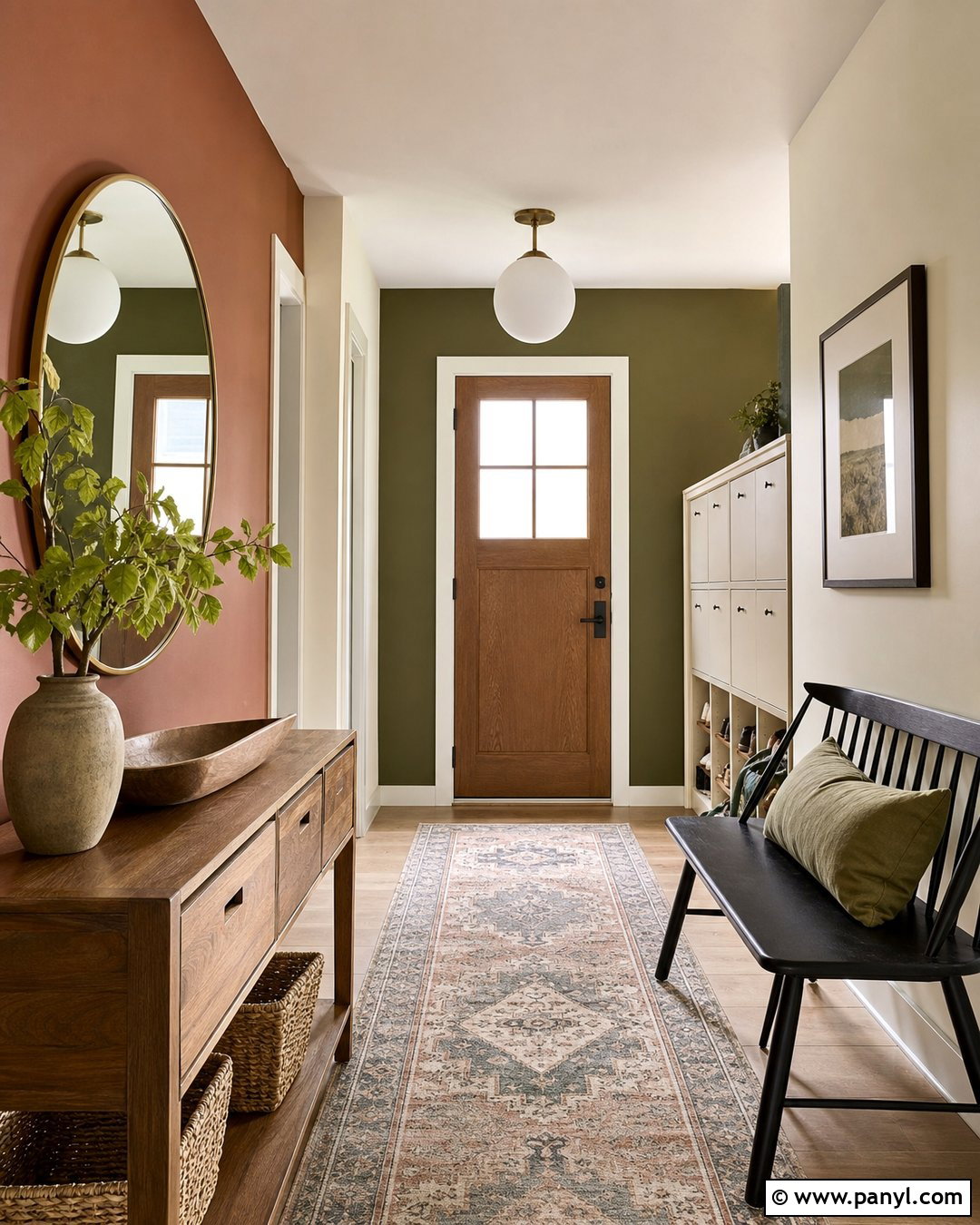
The entryway is an ideal place to use clay because the color creates an immediate sense of warmth. Paint the walls a medium terracotta-clay shade and keep the ceiling, doors, and trim creamy white. Position a narrow oak console against one wall with a large black-framed mirror above it. Add a woven runner that includes tan, rust, and faded blue to handle traffic while connecting the palette. A small upholstered bench or pair of stools can provide practical seating without crowding the walkway. Use a brass or black ceiling fixture for clear illumination. Finish the console with a ceramic lamp, a shallow tray, and one leafy branch. Closed baskets beneath it can store shoes or accessories while preserving the clean, coordinated appearance of the entrance.
20. Clay Colored Hallway Walls
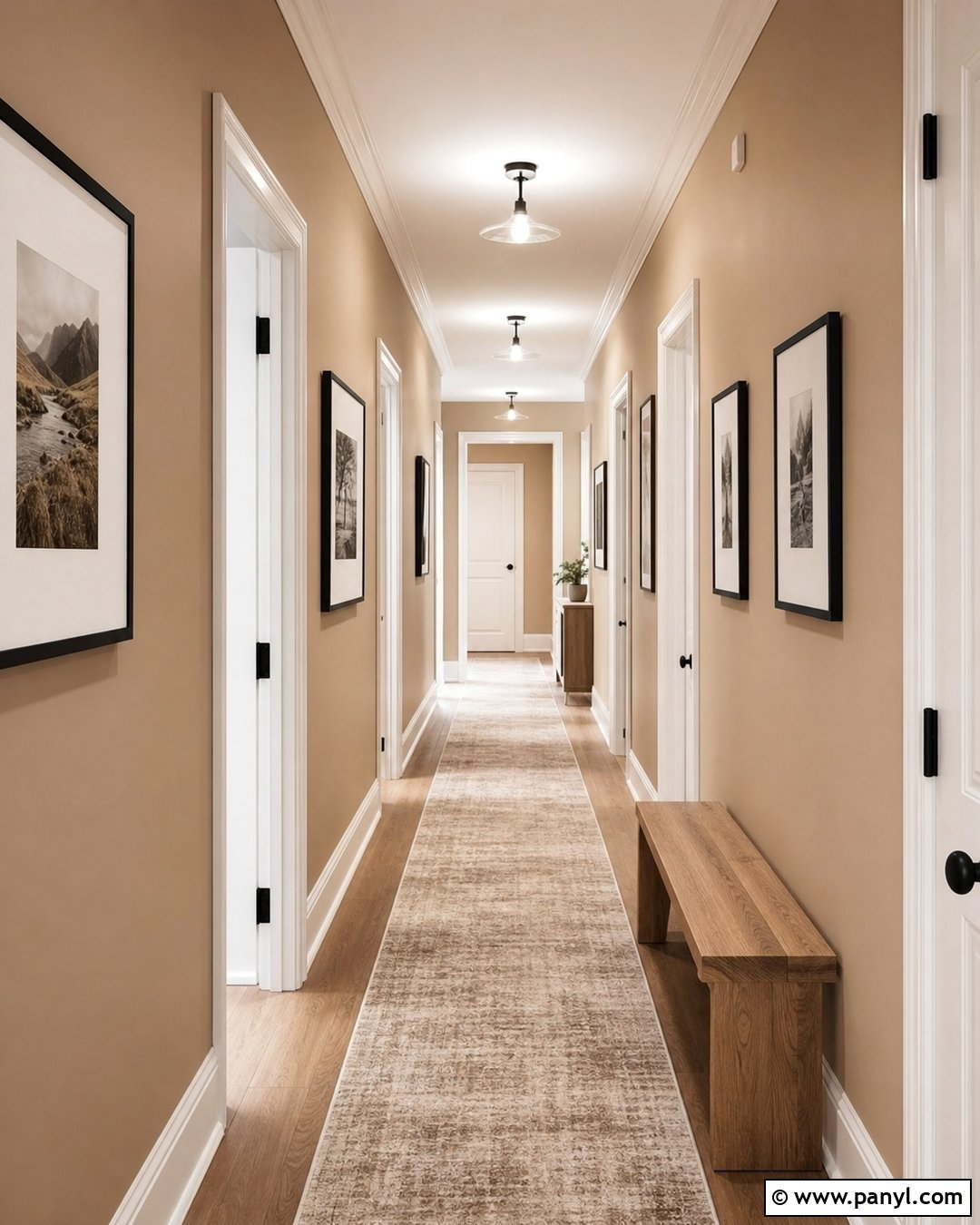
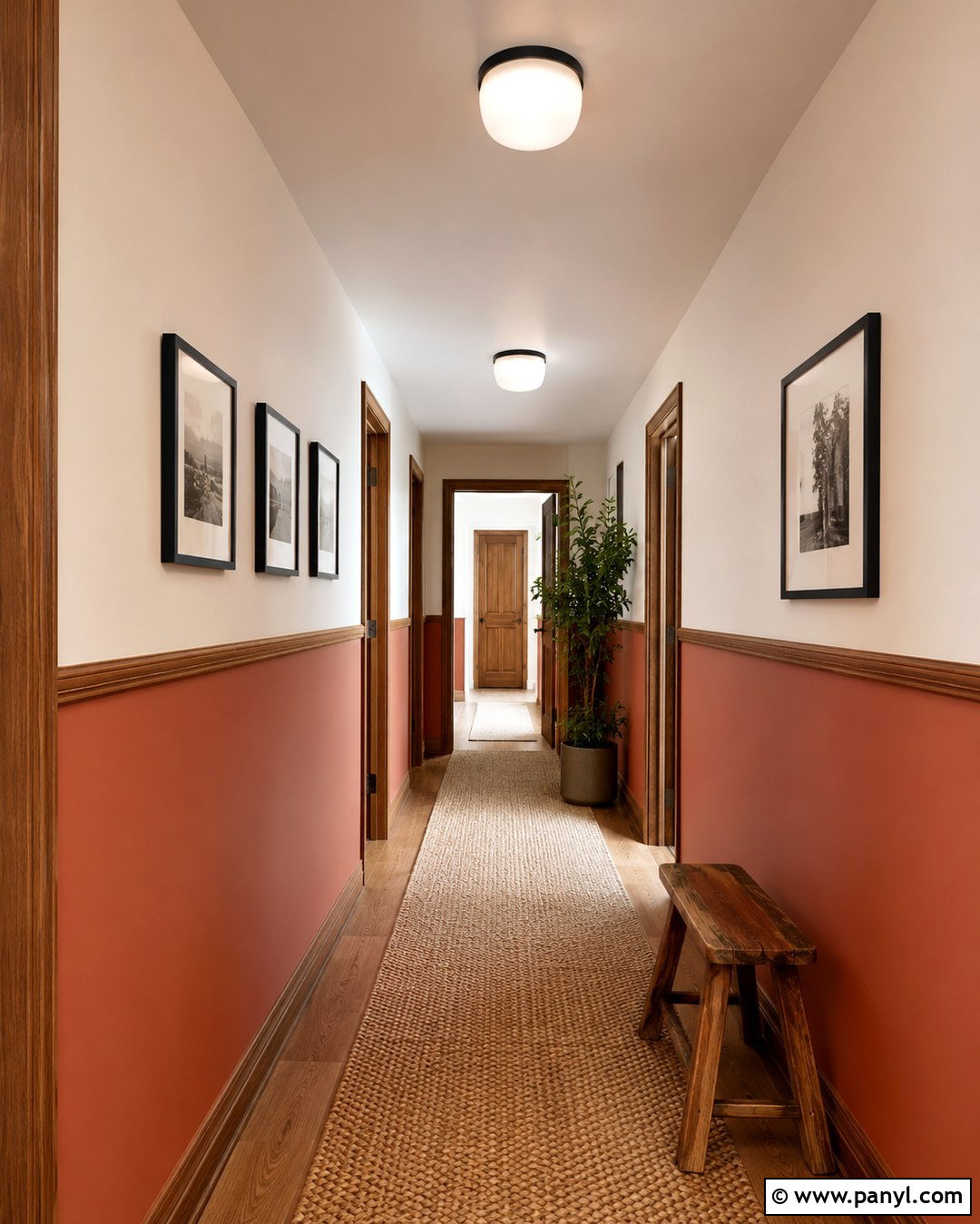
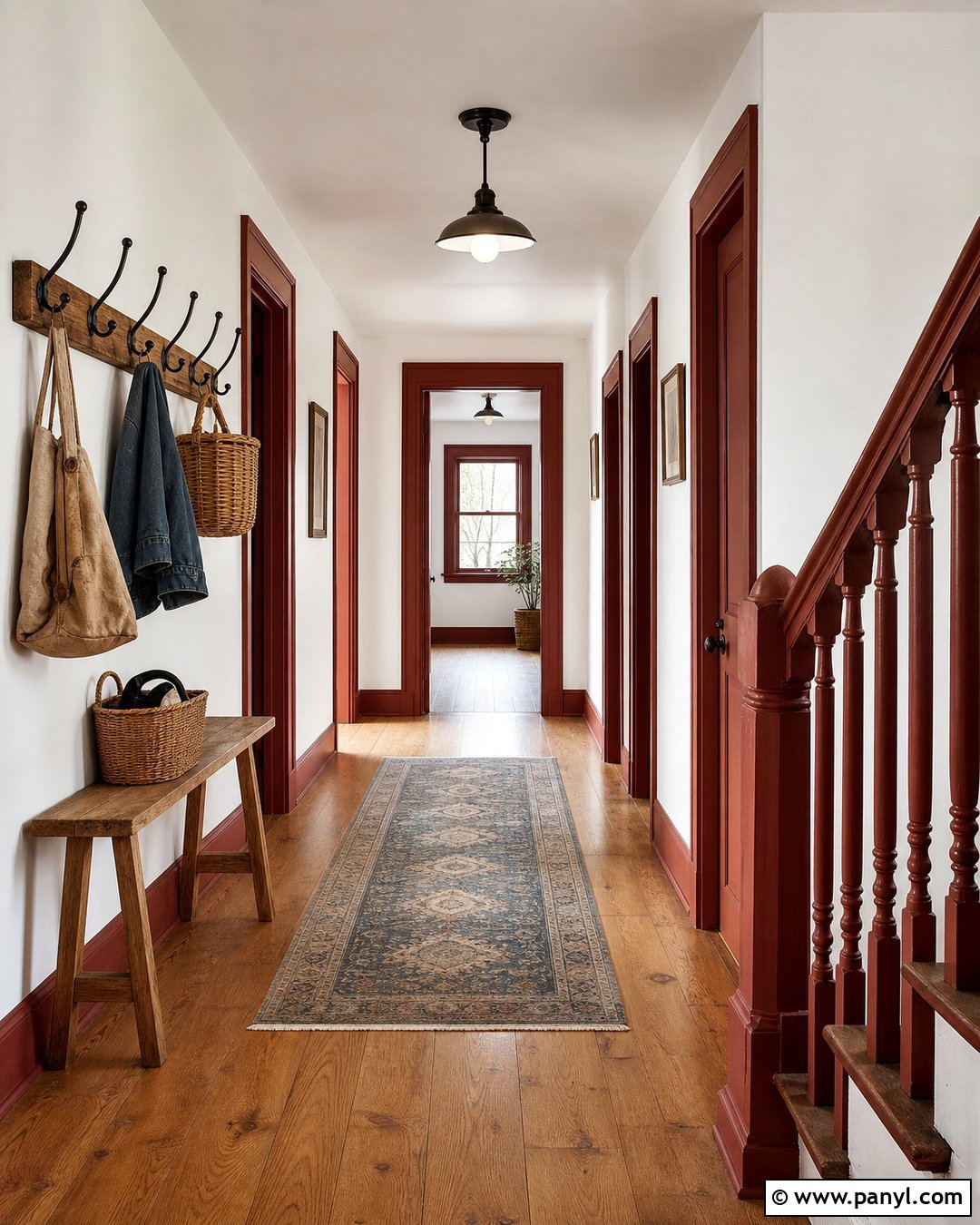
A long hallway gains warmth and character from clay walls, but it still needs enough light and repetition to feel open. Select a lighter clay shade with beige or peach undertones and use it on every wall. Paint the ceiling, baseboards, and door casings warm white for contrast. Install a row of evenly spaced artwork in matching dark wood or black frames to create rhythm along the passage. A washable cream-and-tan runner visually lengthens the floor while softening footsteps. If space allows, include a slim oak bench or shallow console near the widest point. Use several simple ceiling fixtures rather than one central light, ensuring the color remains even from end to end. Minimal accessories keep the narrow area functional and visually calm.
21. Clay Colored Nursery Walls
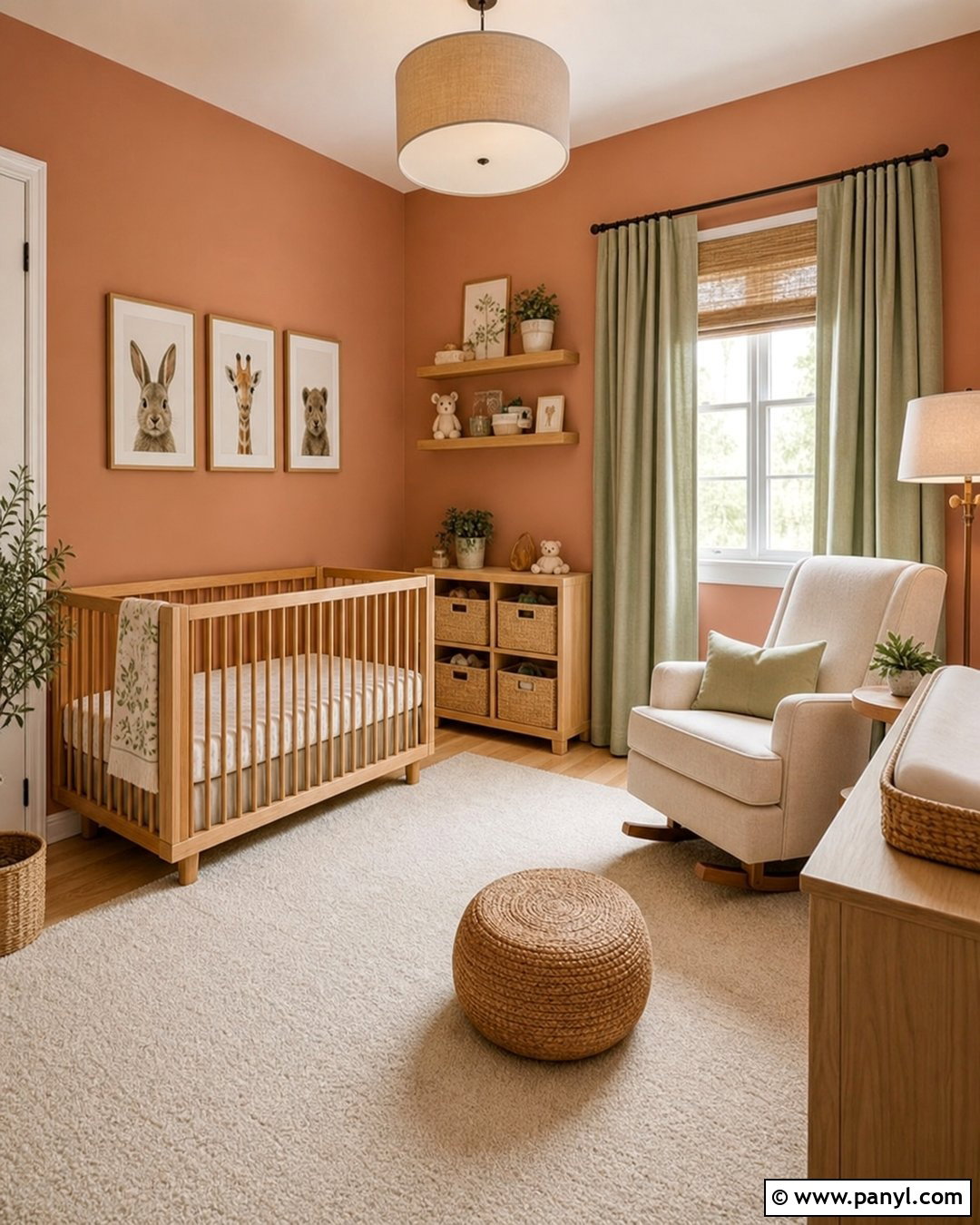
Soft clay walls give a nursery gentle color without relying on a highly specific theme. Choose a pale peach-clay shade and pair it with white trim, a white ceiling, and light natural wood flooring. Position a simple oak crib against the main wall, leaving clear space around windows and heating vents. Add a cream upholstered rocking chair, a small wood side table, and a soft ivory rug for comfortable nighttime routines. Sage green curtains or storage baskets introduce a soothing secondary color. Use closed storage for practical supplies and low shelves for a few books and toys. Simple animal or landscape prints can bring personality without overwhelming the room. Finish with layered, dimmable lighting so the space can remain bright during the day and restful at bedtime.
22. Clay Colored Kids Bedroom Walls
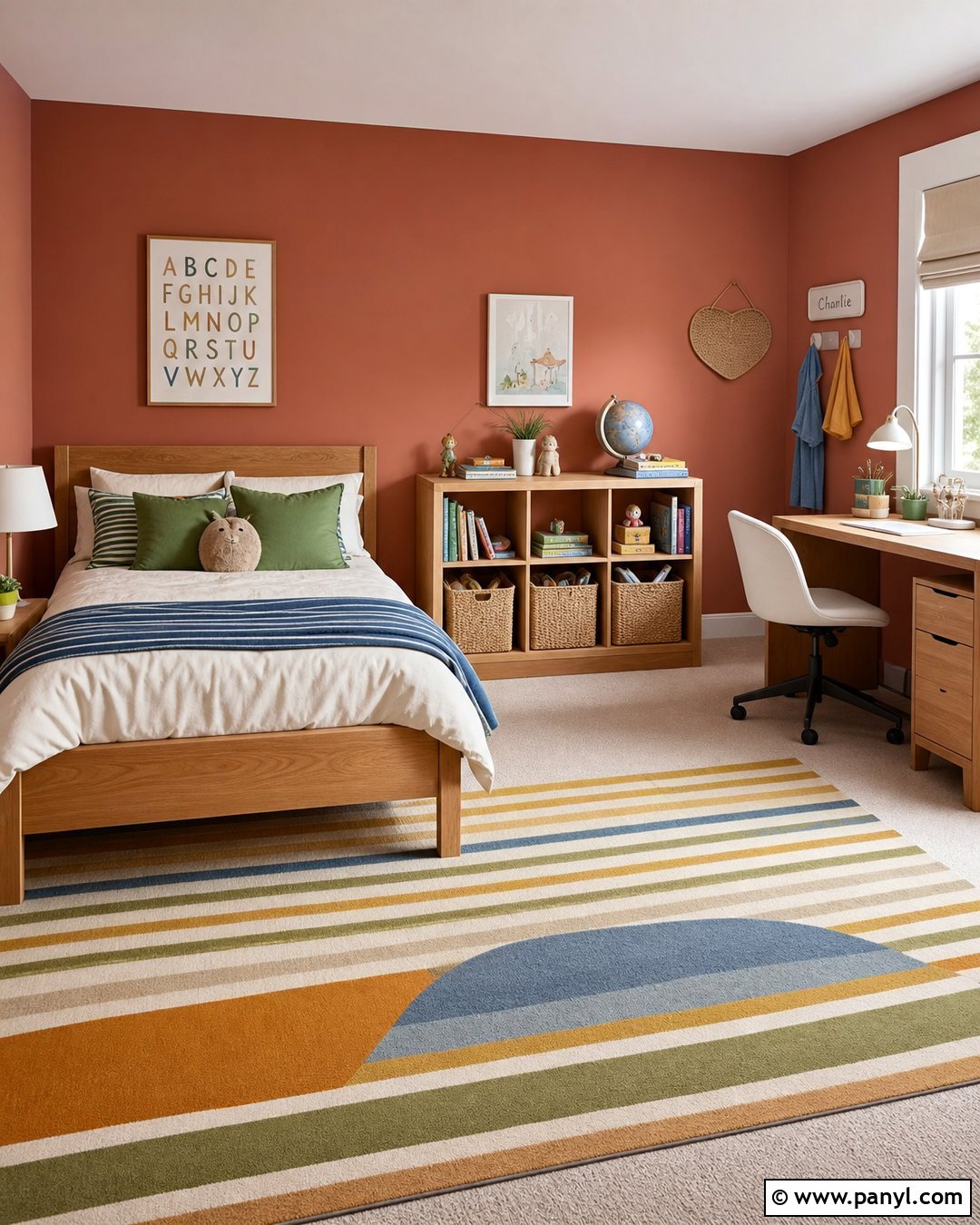
A child’s bedroom with clay walls can feel cheerful, adaptable, and mature enough to last for years. Use a mid-light clay shade with warm coral undertones, then balance it with white trim and pale wood furniture. Place a natural oak bed along the longest wall and layer it with cream bedding, a striped blue blanket, and playful green pillows. Add a low bookcase, a practical desk, and labeled woven baskets to create clear activity zones. A washable patterned rug can combine clay, navy, mustard, and beige in small amounts. Choose simple wall art that can be changed as interests develop. White curtains keep the room bright, while black or dark blue lighting fixtures provide definition. The finished room should support sleeping, reading, playing, and storage equally well.
23. Clay Colored Walls With Wainscoting
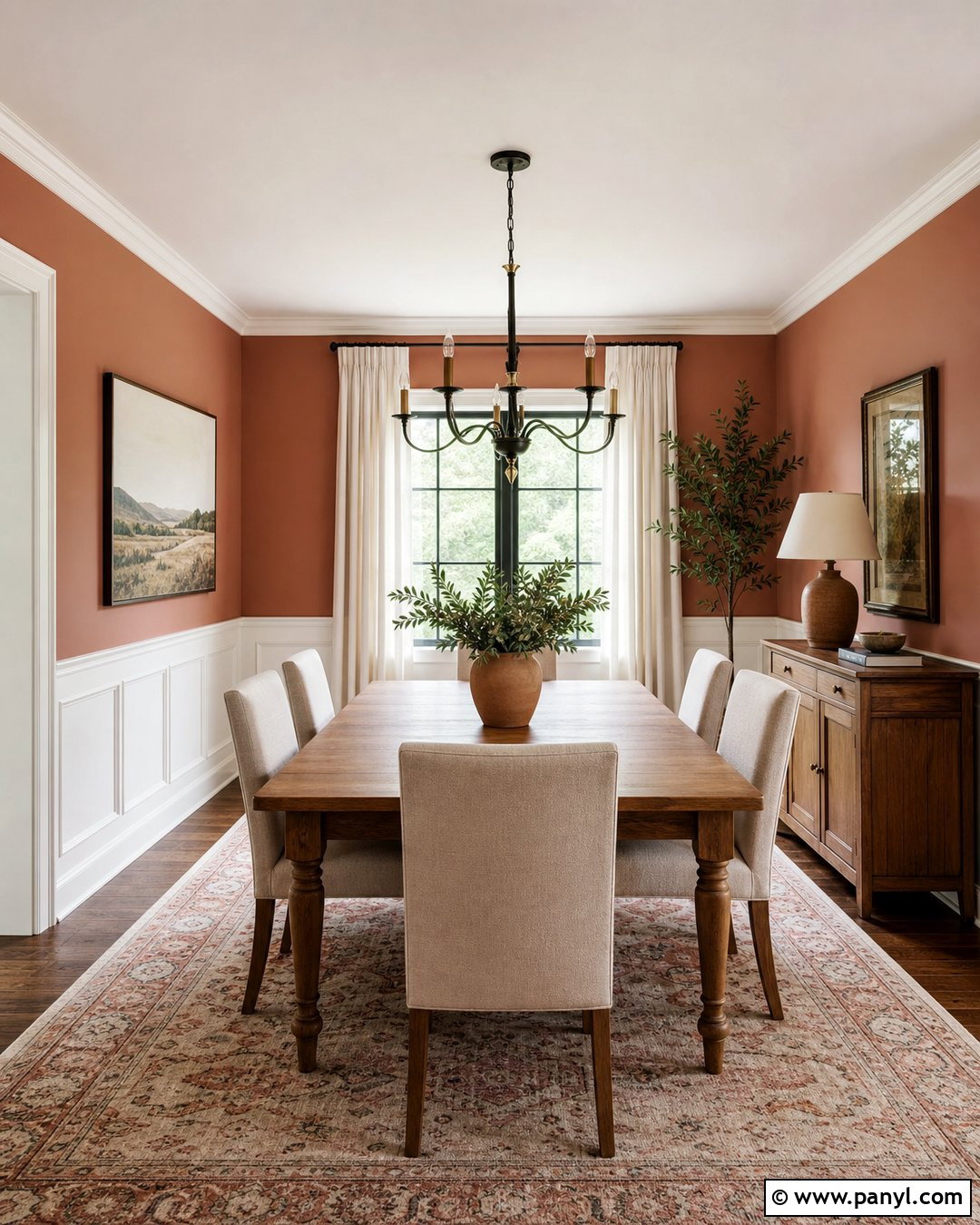
Combining clay walls with white wainscoting creates a balanced room that feels both warm and structured. Install simple panel molding or beadboard across the lower third of a dining room, then paint it creamy white. Use muted terracotta clay above the molding and repeat the white on the ceiling and window trim. A medium oak table with upholstered oatmeal chairs keeps the furniture grounded but not dark. Hang a black or aged brass chandelier over the center of the table. Add linen curtains, a faded patterned rug, and traditional artwork in dark wood frames. The white lower wall reflects light and reduces the visual weight of the clay. Keep accessories modest so the strong two-tone wall treatment remains the main architectural feature of the finished room.
24. Clay Colored Walls And Ceiling
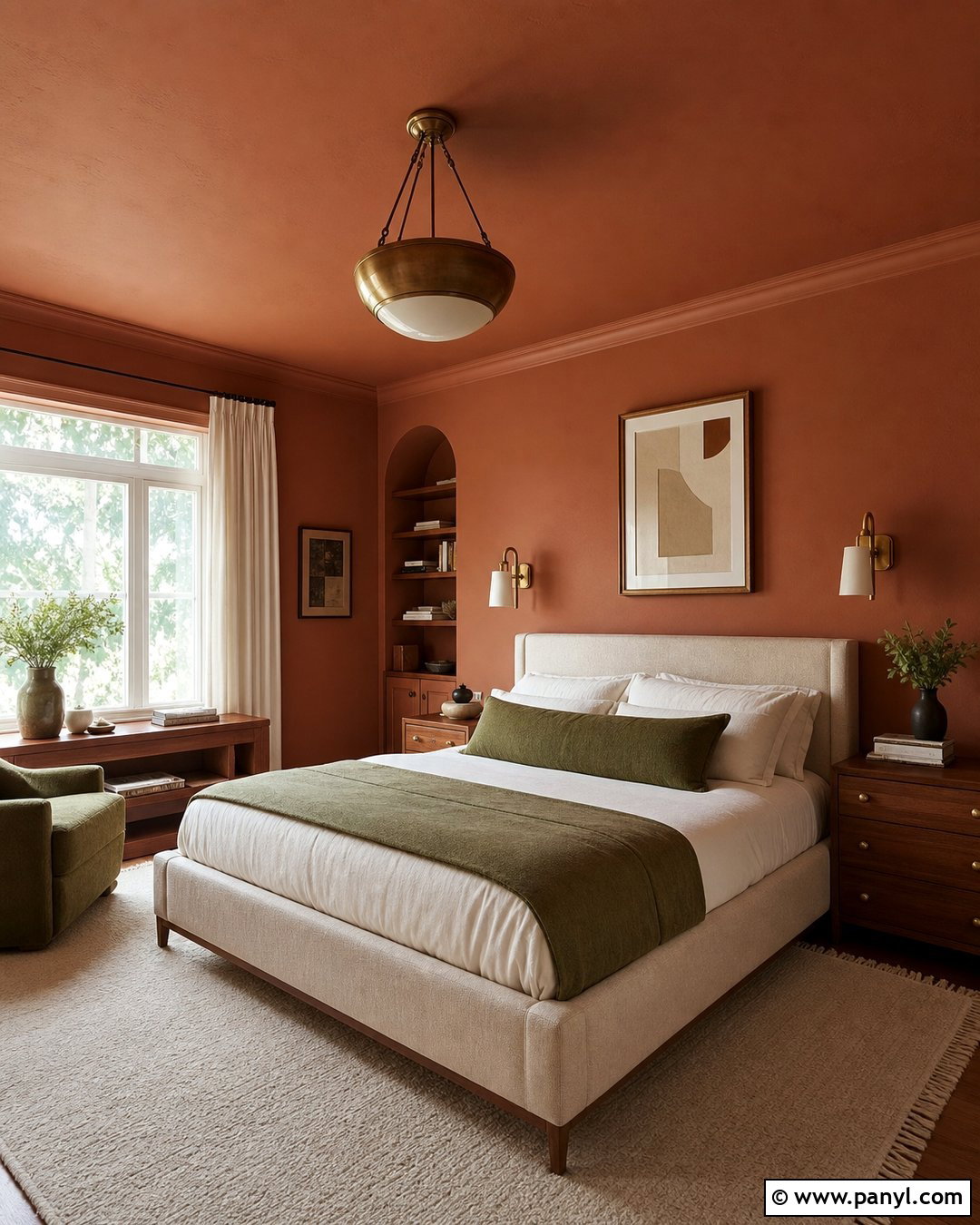
Color-drenching the walls and ceiling in clay creates an enveloping effect that works especially well in a bedroom, library, or small sitting room. Choose a softened brown-clay color rather than a highly saturated orange. Apply the same shade to walls, trim, doors, and ceiling, adjusting the sheen where durability is needed. Furnish the room with an ivory upholstered bed or sofa to establish one large area of contrast. Dark walnut tables, an antique brass light, and a cream wool rug deepen the intimate mood. Add rust, olive, and patterned beige textiles in limited amounts. Because the color surrounds the room, keep artwork simple and curtains close to the wall tone. Multiple lamps and bright bulbs will prevent corners from appearing flat or shadowy.
25. Clay Colored Walls With Arched Doorways
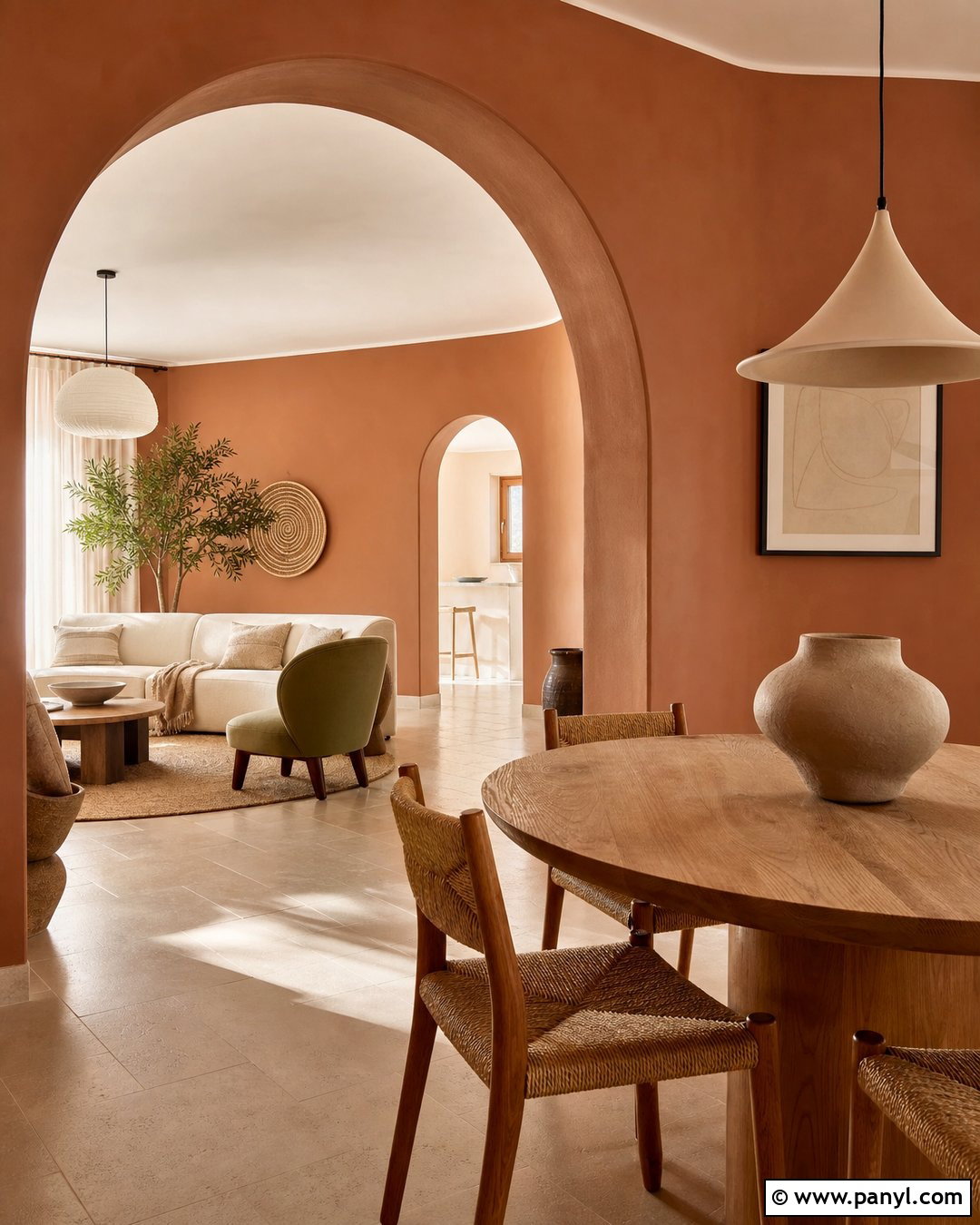
Clay walls naturally complement arched openings because both features can give a home a warm, handcrafted character. Use a medium adobe-clay paint across the connecting living and dining areas, allowing the color to flow through each arch. Keep the ceiling and baseboards creamy white for clean definition. In the living space, combine a low cream sofa with oak tables and an olive chair. In the dining area, repeat the wood through a round table and use woven seats for texture. Terracotta pottery, linen curtains, and simple plaster pendants can connect both zones. Avoid filling every surface with rustic accessories. The curved architecture and earthy color already provide strong personality, so streamlined furniture and uncluttered arrangements will keep the overall home feeling current and comfortable.
26. Clay Colored Walls With Boho Decor
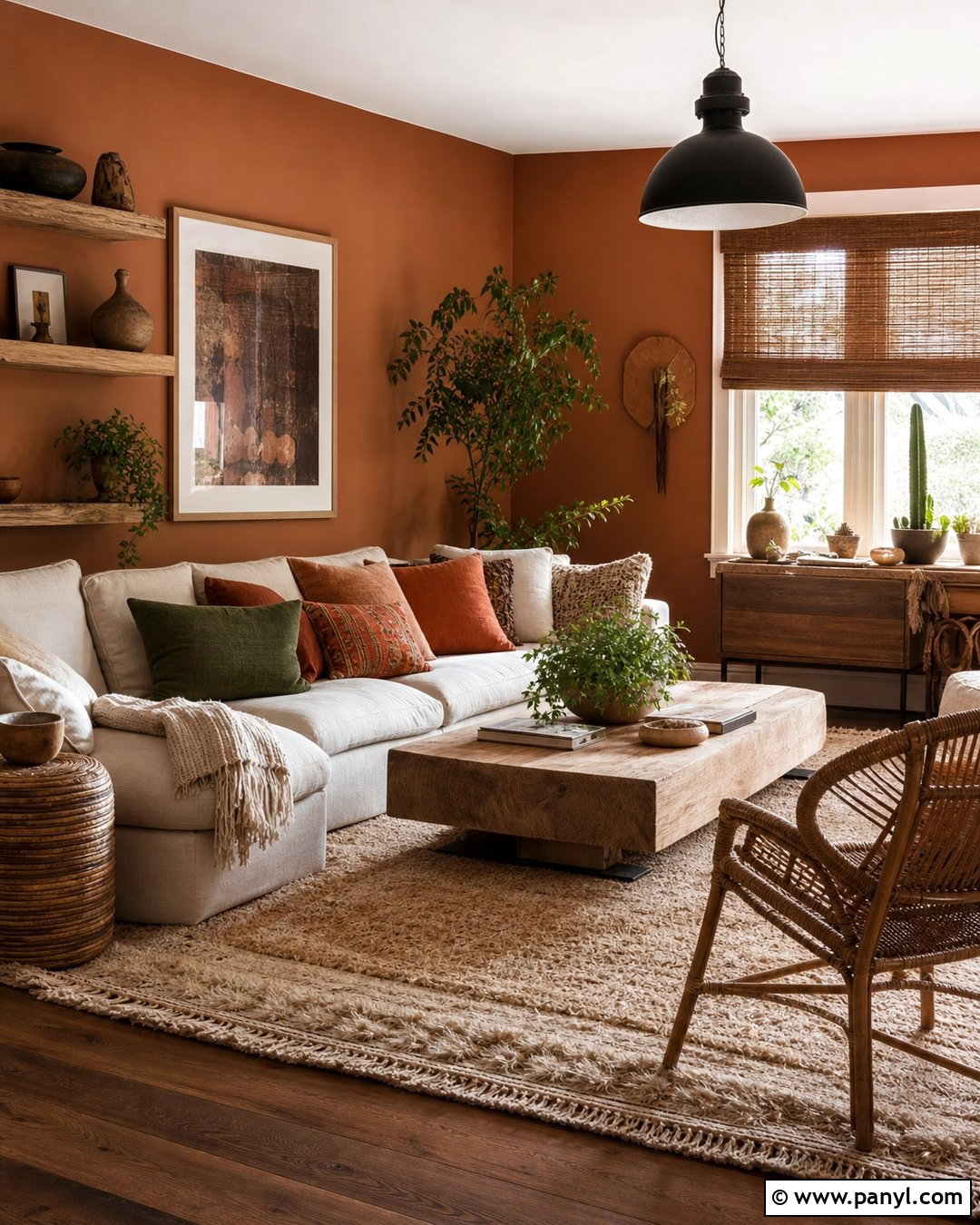
Clay walls provide an ideal background for a boho room when the design relies on natural materials and thoughtful layering. Start with a warm terracotta-clay color on every wall. Arrange a low cream sofa with rust, olive, and patterned beige cushions around a chunky oak coffee table. Use a large jute-and-wool rug to define the seating area and add softness underfoot. Woven blinds, off-white curtains, and a rattan chair bring varied texture without introducing too many colors. Display a limited collection of handmade pottery, framed textiles, books, and trailing plants on wood shelves. Add black metal lighting for contrast. Keep pathways open and surfaces partially clear, since a successful boho space should feel collected and personal rather than crowded with unrelated decorative pieces.
27. Clay Colored Walls With Midcentury Furniture
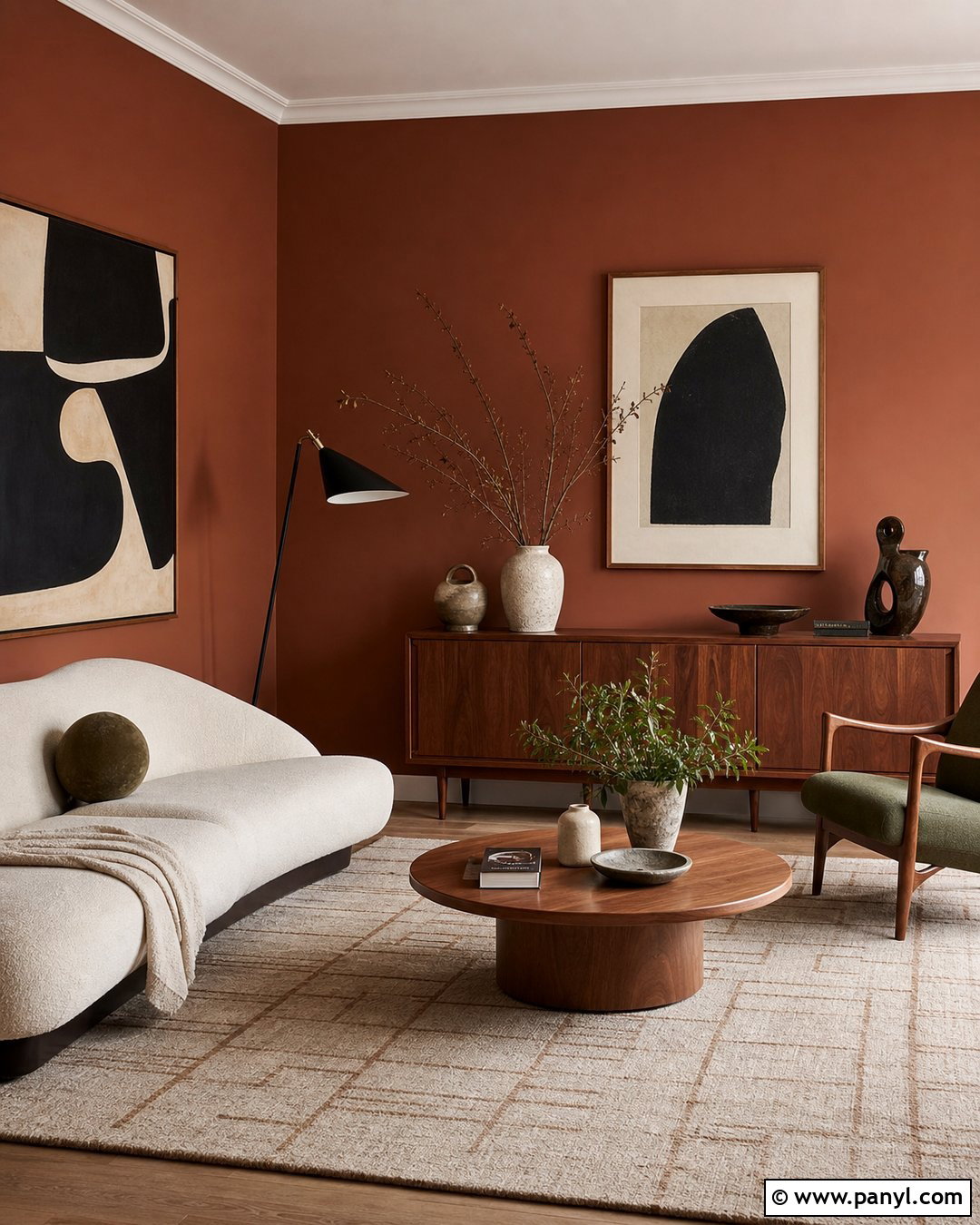
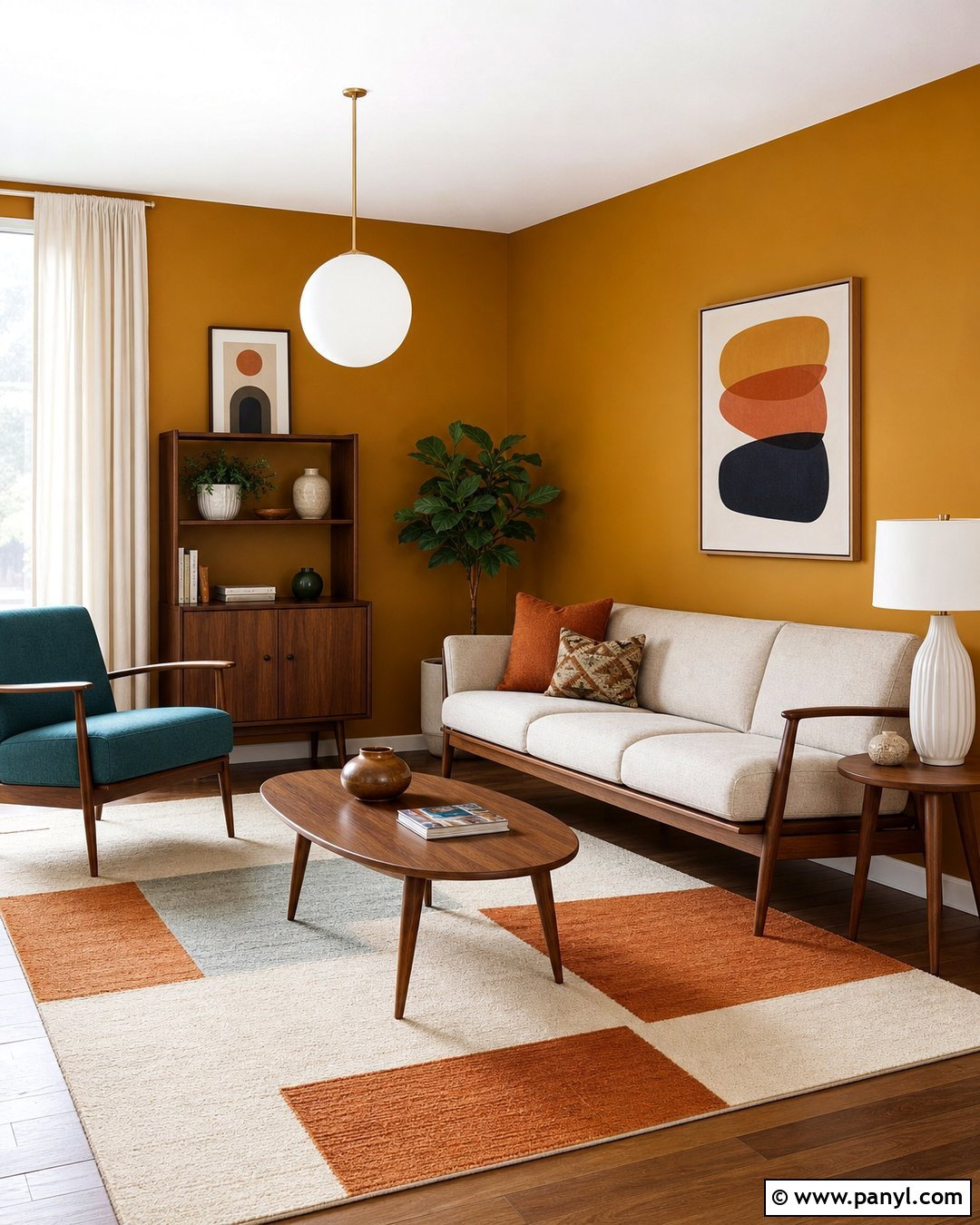
Midcentury furniture gives clay walls a clean, graphic character while preserving their natural warmth. Paint the living room a muted red-clay shade and anchor it with a streamlined walnut credenza. Choose a low-profile cream sofa with tapered wood legs and add one olive or mustard lounge chair. A geometric rug in beige, charcoal, and rust brings the palette together without looking overly retro. Use a round walnut coffee table and a black metal floor lamp to emphasize simple shapes. Hang one large abstract print above the credenza rather than arranging many small objects. White curtains and a pale ceiling balance the darker wood tones. Finish with sculptural ceramics and a small amount of greenery for a complete room that feels vintage influenced but still fresh.
28. Clay Colored Walls With Coastal Decor
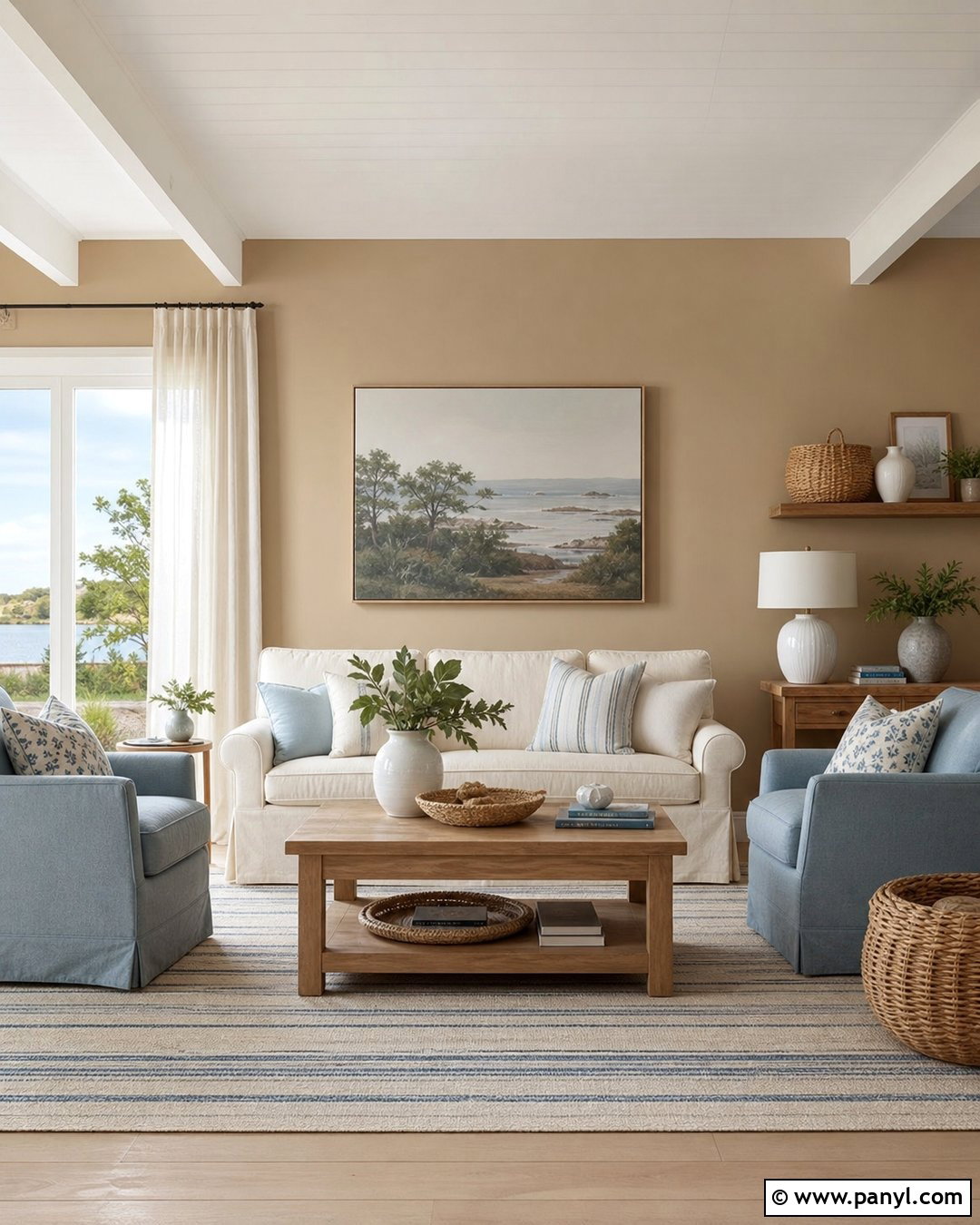
Clay can support a relaxed coastal interior when it is paired with weathered blues, pale woods, and plenty of warm white. Select a light sandy-clay wall color with subtle peach undertones. Furnish the living room with a slipcovered ivory sofa, two faded blue chairs, and a light oak coffee table. Place a cream and blue striped rug beneath the seating and use airy linen curtains at the windows. Woven baskets, white ceramics, and simple landscape artwork add texture without becoming overly themed. Include a few dark bronze or black details to ground the pale palette. Avoid obvious novelty decor. The finished room should reference sun-warmed coastal landscapes through natural color, comfortable furniture, and casual materials rather than relying on decorative symbols.
29. Clay Colored Walls With Farmhouse Decor
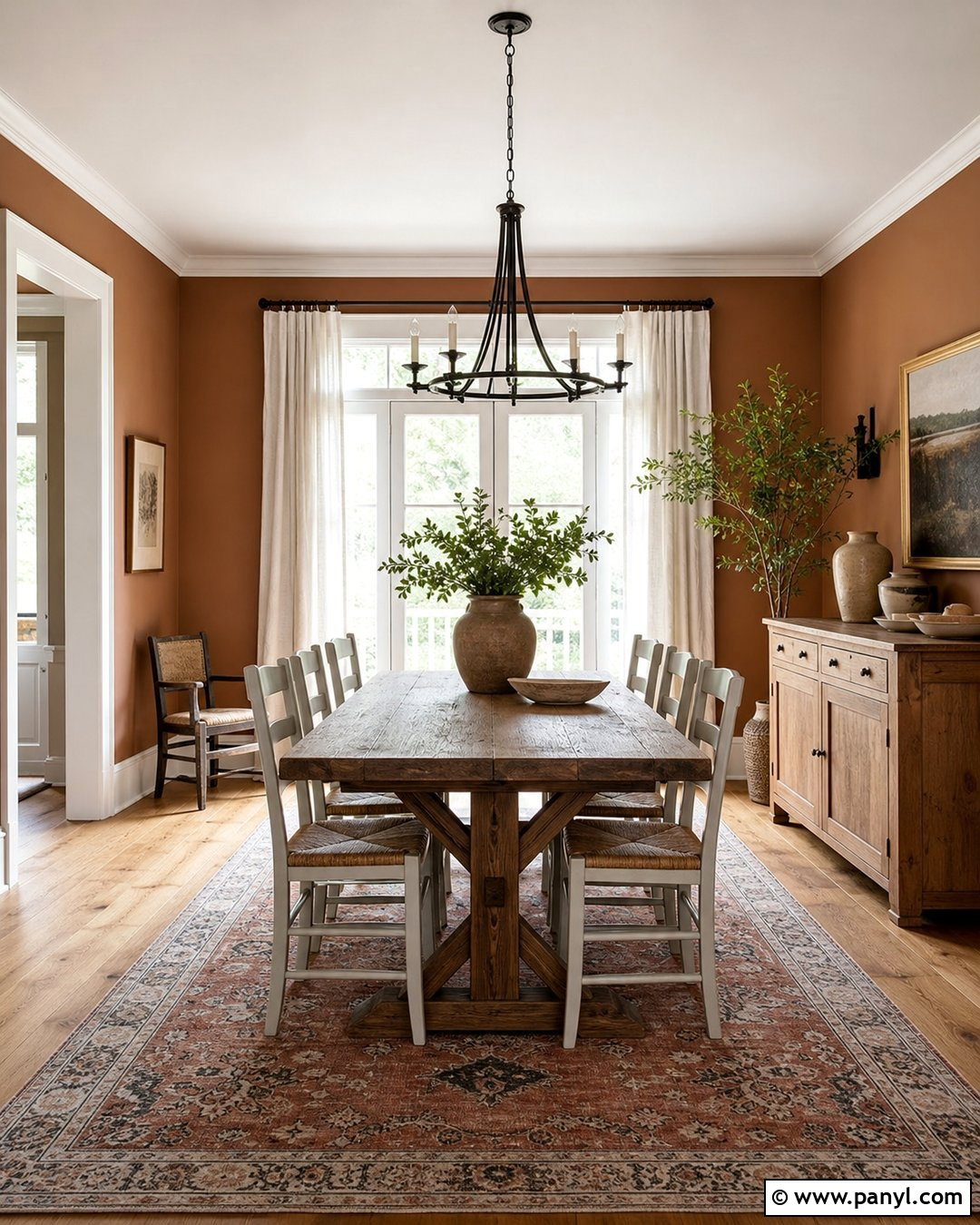
For a warmer farmhouse room, replace predictable gray walls with a muted brown-clay color. Pair the walls with creamy white trim, a white ceiling, and wide-plank oak flooring. Center the dining area around a sturdy wood table with simple painted chairs and upholstered seats at each end. A black metal chandelier provides practical contrast above the table. Add linen curtains, a vintage-inspired rug, and an oak sideboard for serving and storage. Use stoneware, wood boards, and one large landscape print as understated decoration. Avoid excessive distressed finishes or themed signs, which can distract from the rich wall color. Clean-lined furniture and authentic natural materials create a farmhouse look that feels comfortable, durable, and current rather than overly decorative.
30. Clay Colored Walls With Minimalist Decor

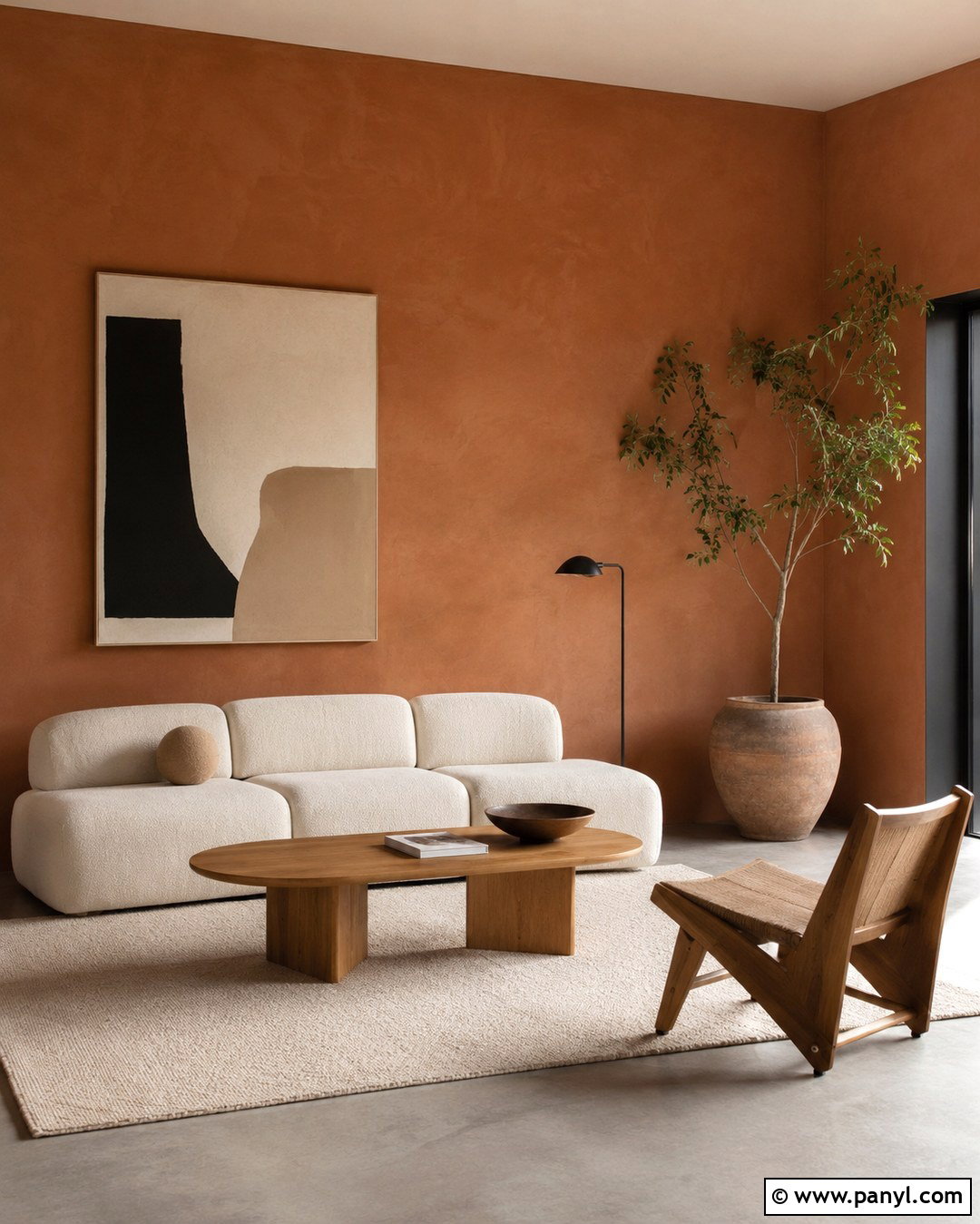
Clay walls keep a minimalist room from feeling cold while allowing the furnishings to remain simple. Choose a soft, earthy clay shade with beige and brown undertones and apply it evenly across all four walls. Use a low cream sofa, one sculptural oak chair, and a pale stone coffee table as the main living room pieces. Ground them with a large, nearly solid ivory rug. Linen curtains should blend with the ceiling and trim rather than becoming another focal point. Add one oversized abstract artwork, a black floor lamp, and a single ceramic vessel. Concealed storage will help maintain clear surfaces and open pathways. The limited palette lets material, proportion, and texture create interest, resulting in a peaceful room that still feels warm, personal, and practical.
Conclusion:
Clay colored walls offer more decorating flexibility than their earthy appearance may initially suggest. Pale clay can create a calming bedroom or nursery, while deep burnt clay adds intimacy to dining rooms, offices, and fireplace walls. Cream textiles and warm white trim brighten the color. Oak, walnut, stone, brass, olive green, and softened blue bring depth and balance. Before painting, view large samples beside flooring, furniture, and trim during morning, afternoon, and evening light. This simple step reveals whether the shade becomes too pink, orange, brown, or dark in your home. With a coordinated layout and restrained palette, clay colored walls can make almost any room feel welcoming, grounded, and thoughtfully finished.

Related Ideas and Inspiration:
Leave a Reply