
Clay color painted walls bring the grounded warmth of sunbaked earth into almost any room. The shade can lean peach, rust, dusty rose, brown, or muted orange, so it works with far more decorating styles than many homeowners expect. Clay looks especially inviting beside warm cream, natural wood, aged brass, sage green, deep blue, and handmade materials. It can cover an entire room for a cozy effect or define one architectural feature without overwhelming the space. Matte, eggshell, limewash, and plaster-like finishes further change how the color responds to light. () From calm bedrooms to character-filled kitchens, the following complete room looks offer practical ways to decorate with **clay color painted walls**.

1. Clay Living Room Walls With Cream Furniture
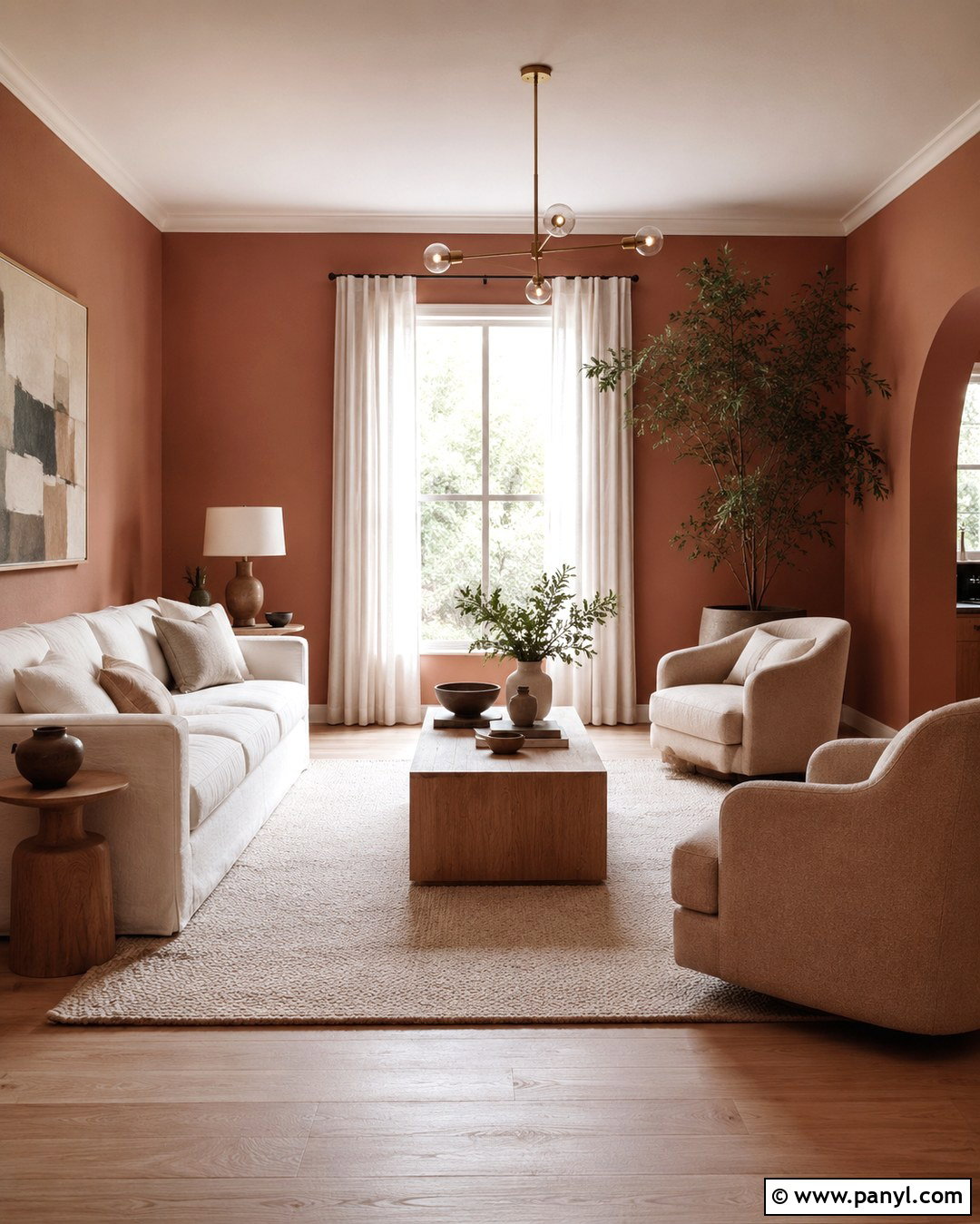
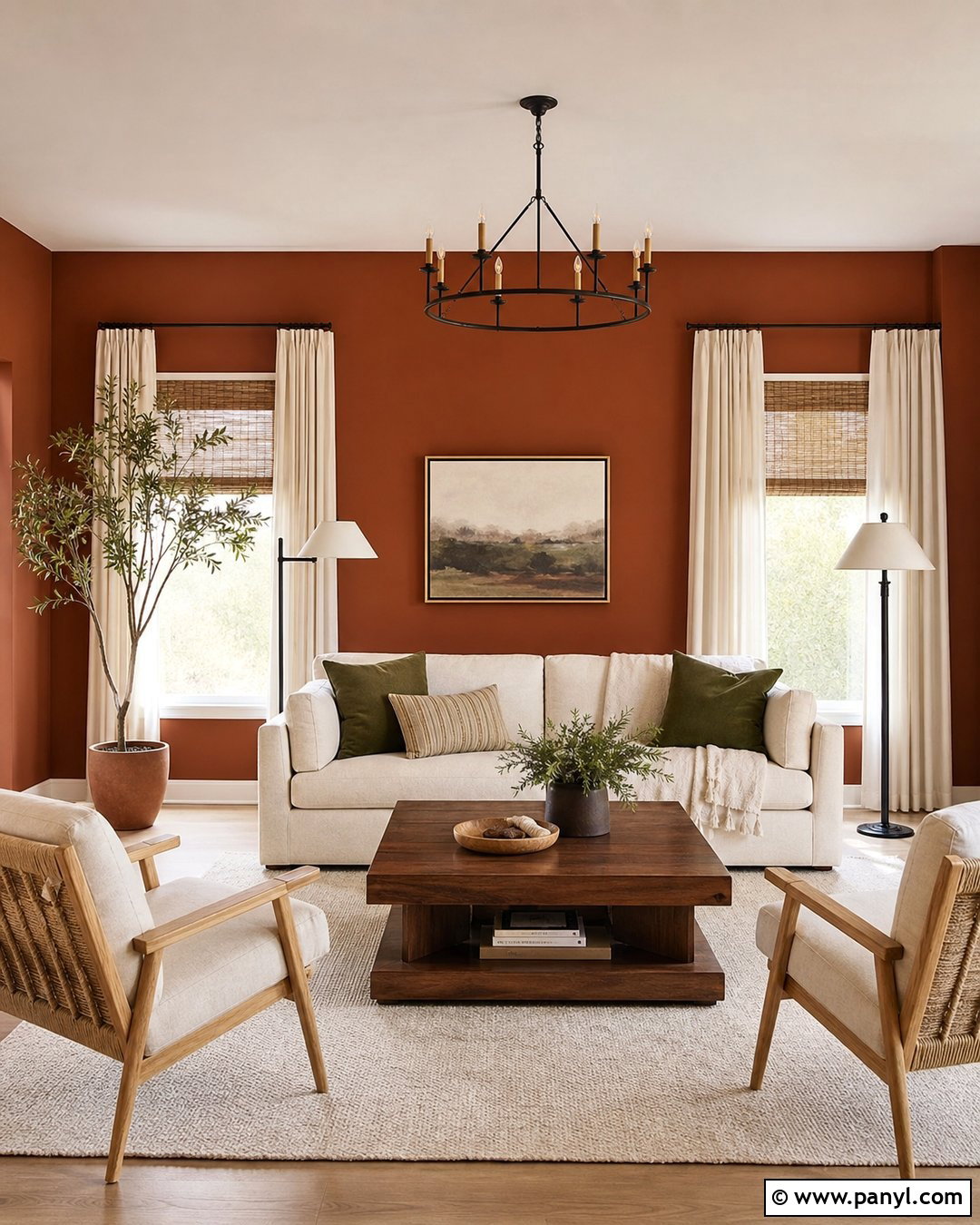
A soft clay living room feels warm without becoming too dark when pale upholstery balances the walls. Paint every wall in a muted clay shade with dusty peach and brown undertones. Then add a generous cream sofa, two oatmeal armchairs, and a light oak coffee table. An ivory wool rug will brighten the center of the room while allowing the earthy wall color to remain noticeable. Choose linen curtains close to the sofa color for a simple, continuous look. Small accents in aged brass, rust, and dark brown provide definition. Finish the arrangement with large neutral artwork, handmade pottery, and one leafy indoor tree. The result feels relaxed, polished, and comfortable enough for everyday family living.
2. Clay Bedroom Walls With White Bedding
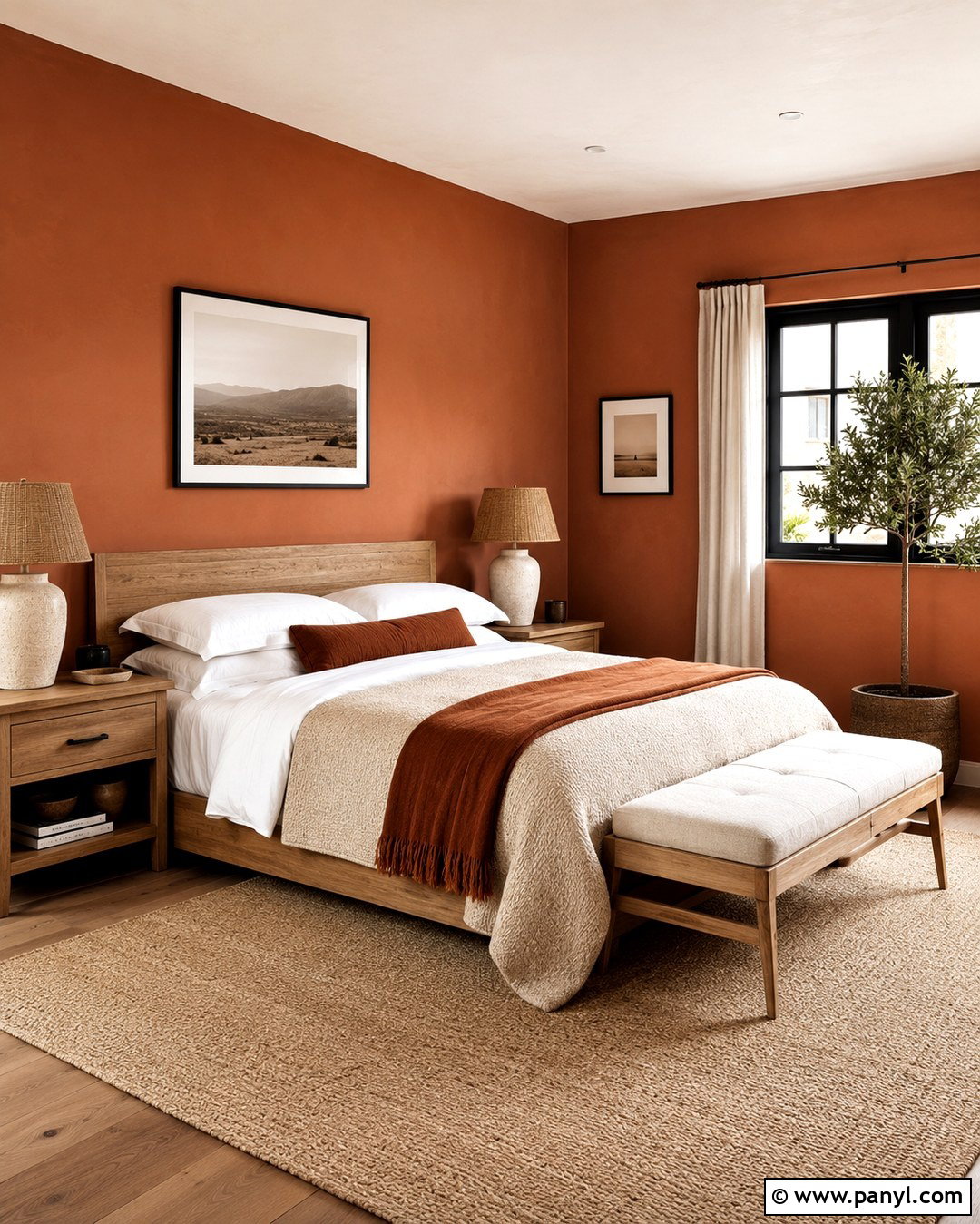
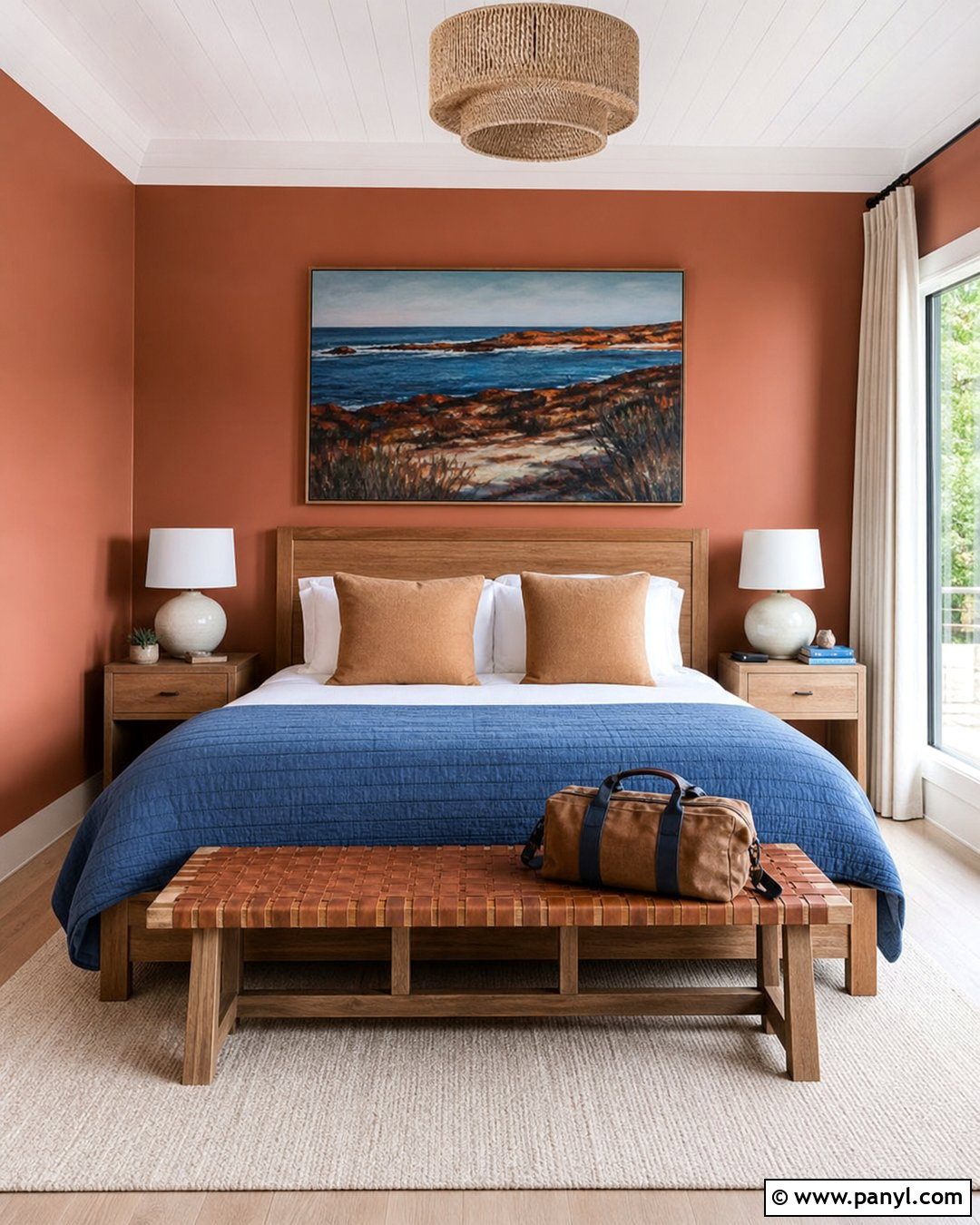
Imagine waking up surrounded by a gentle, sunrise-like glow. Medium clay walls can create that effect when the bed and textiles remain fresh and light. Position a low natural oak bed against the main wall and dress it with crisp white sheets, a cream coverlet, and a folded rust-colored throw. Add two compact oak nightstands with simple ceramic lamps. Woven shades filter strong daylight and repeat the room’s natural textures. A pale beige rug keeps the floor area calm, while black picture frames add a small amount of contrast. Avoid filling every surface with decorations. One landscape print, a clay vase, and a narrow upholstered bench are enough to make the bedroom feel complete, restful, and thoughtfully coordinated.
3. Light Clay Walls For A Small Living Room
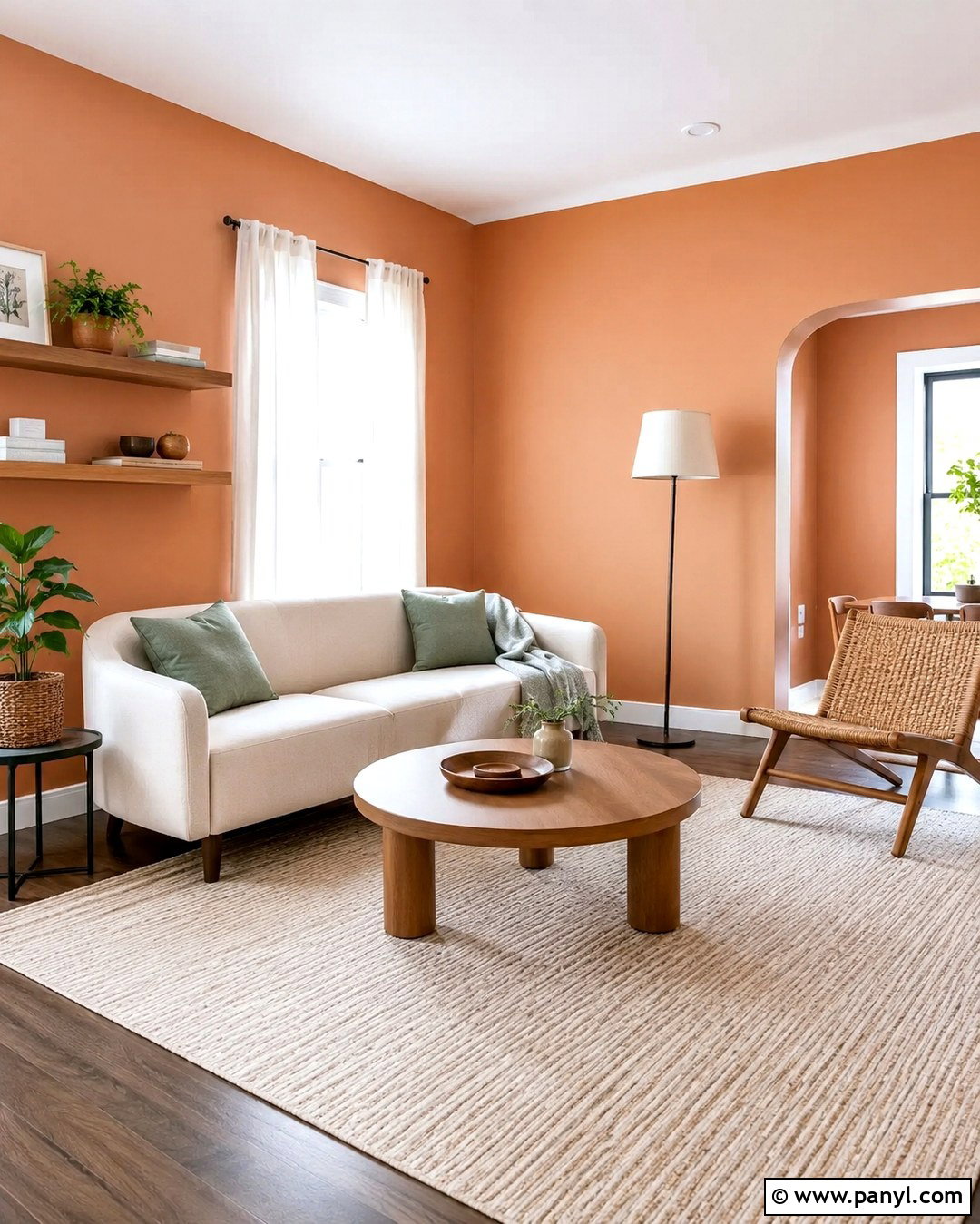
A small living room does not need to avoid earthy color. Select a pale clay paint with peachy beige undertones, which will feel softer than traditional dark terracotta. Cover all four walls so the room has continuity rather than a visually choppy accent wall. Use a compact ivory loveseat, a rounded light wood coffee table, and one woven lounge chair to keep the floor plan open. Hang curtains high and wide in warm white linen to emphasize the room’s height. A slim floor lamp and wall-mounted shelves provide function without taking up much space. Add sage green cushions and a striped cream rug for gentle contrast. The finished space feels airy and welcoming while still offering noticeably more personality than an all-white room.
4. Dark Clay Walls With Blue Velvet Furniture
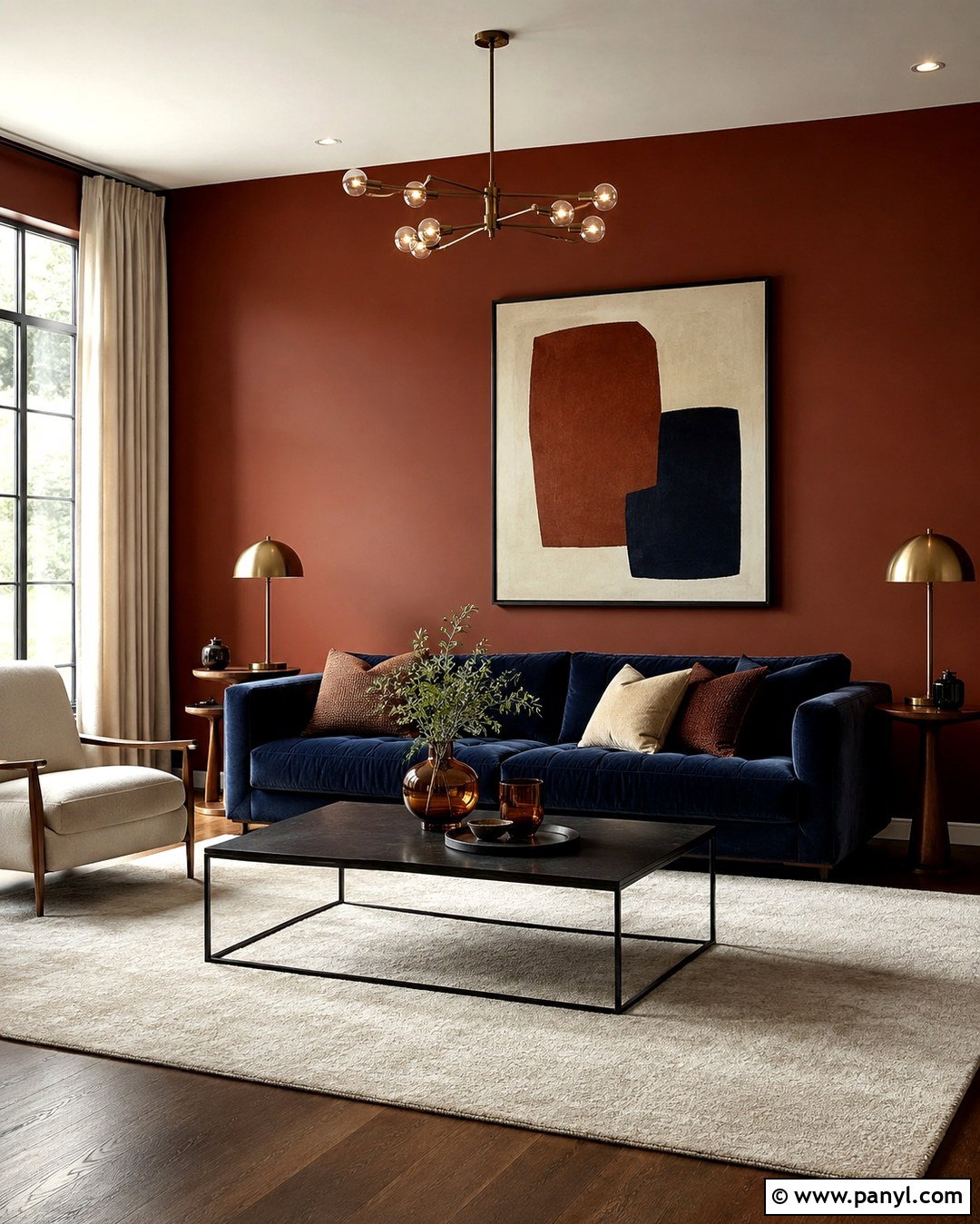
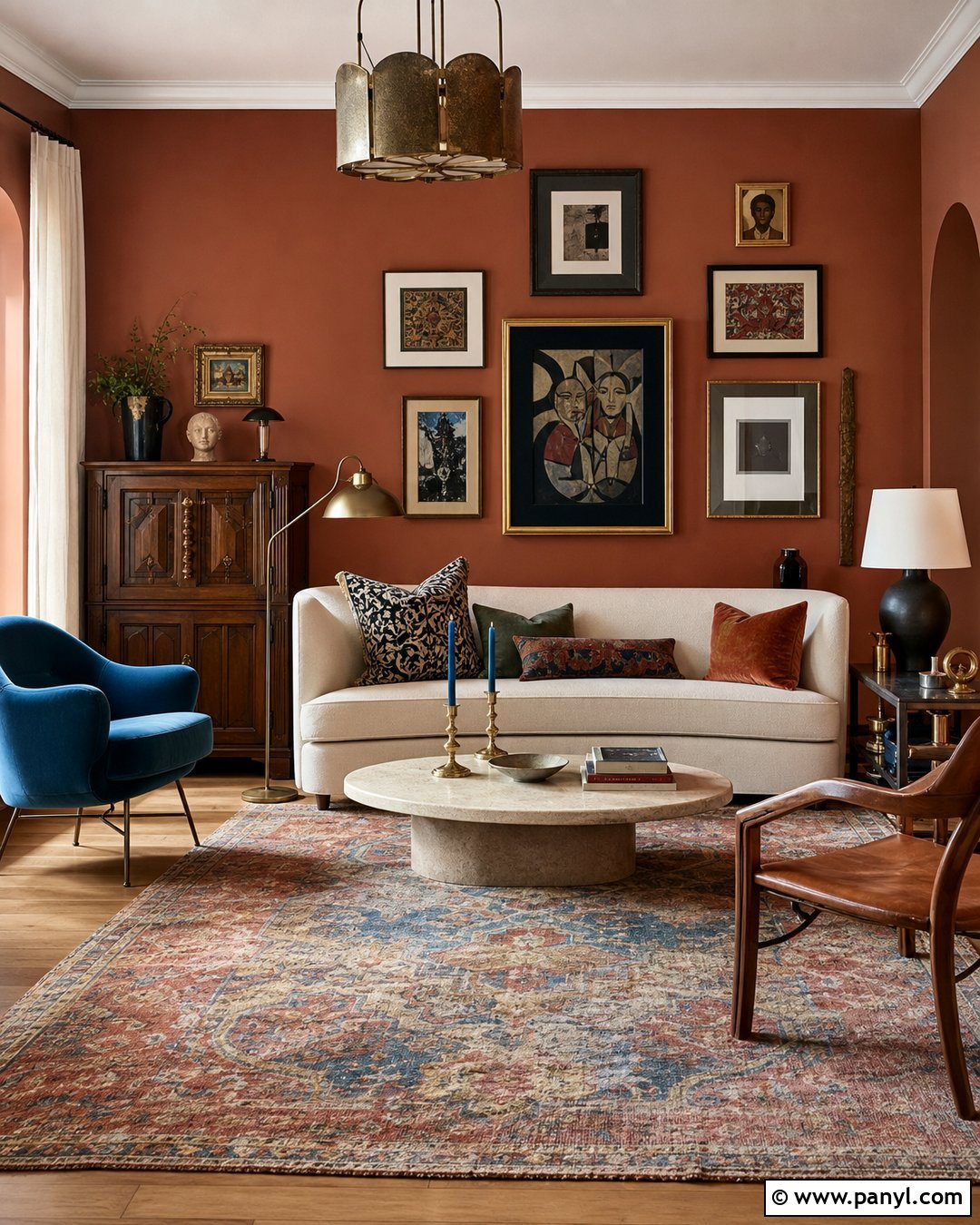
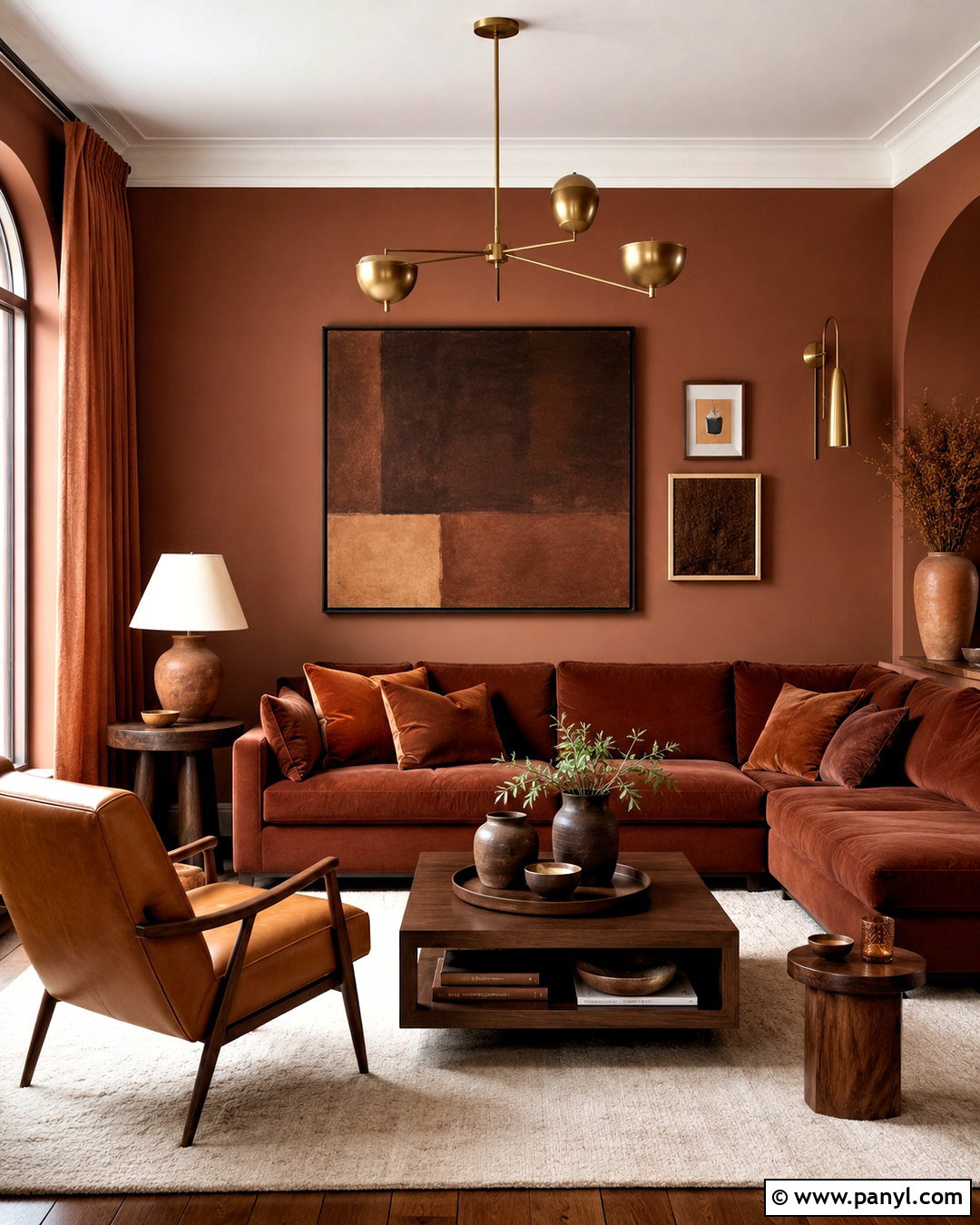
Deep clay paint creates a dramatic backdrop for rich blue upholstery. Choose a reddish brown clay shade and apply it to the walls in a matte finish. Center a navy or dark teal velvet sofa against the longest wall, then add walnut side tables and a low black metal coffee table. The complementary temperature of blue helps the warm paint appear deeper and more sophisticated. Introduce cream through a large area rug and full-length curtains so the room does not become visually heavy. A brass floor lamp, amber glass accessories, and abstract artwork can connect the colors without making the scheme busy. This complete living room works particularly well in spaces with generous windows, warm wood flooring, and enough daylight to reveal the wall color’s subtle variations.
5. Clay Dining Room Walls With Natural Wood
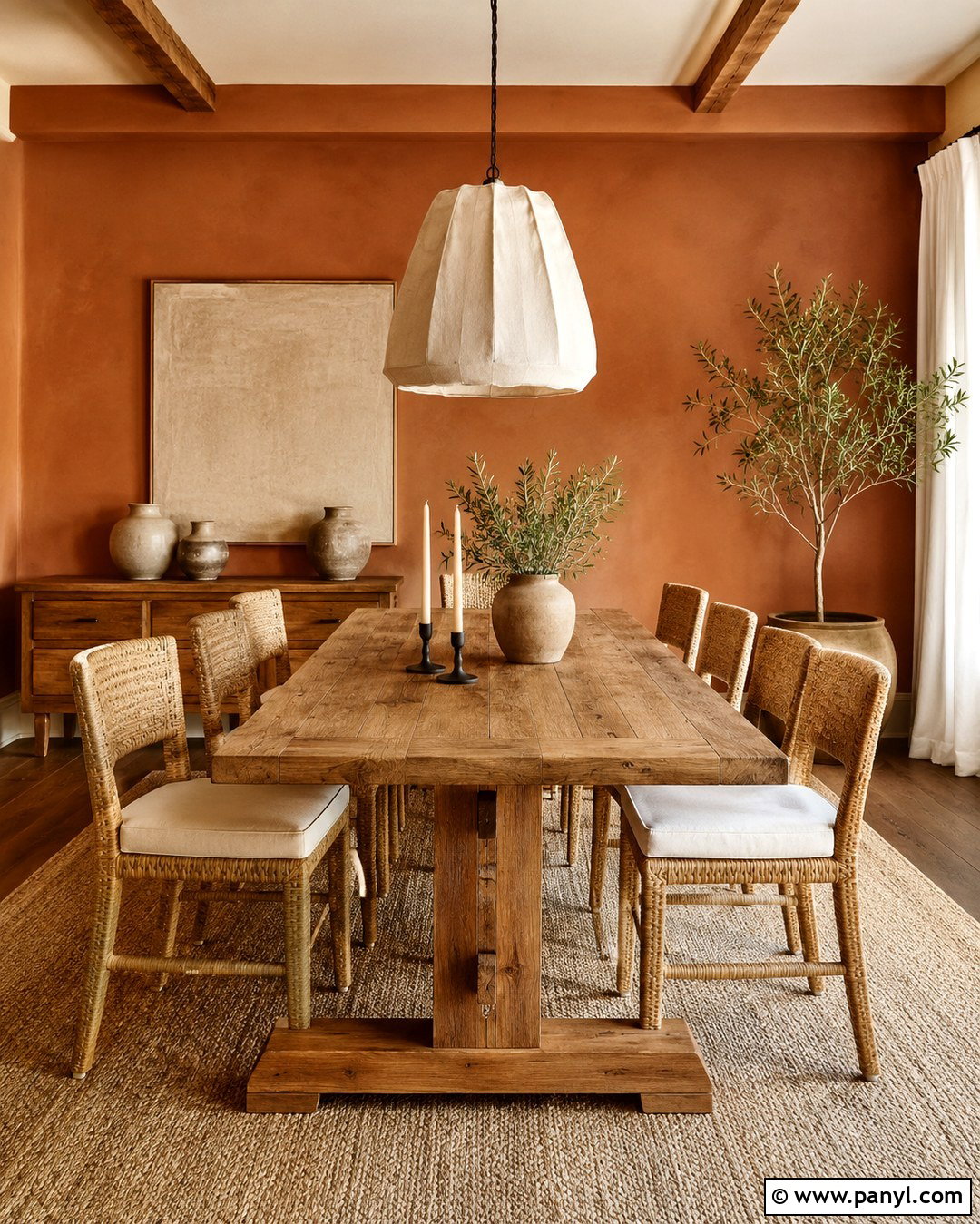
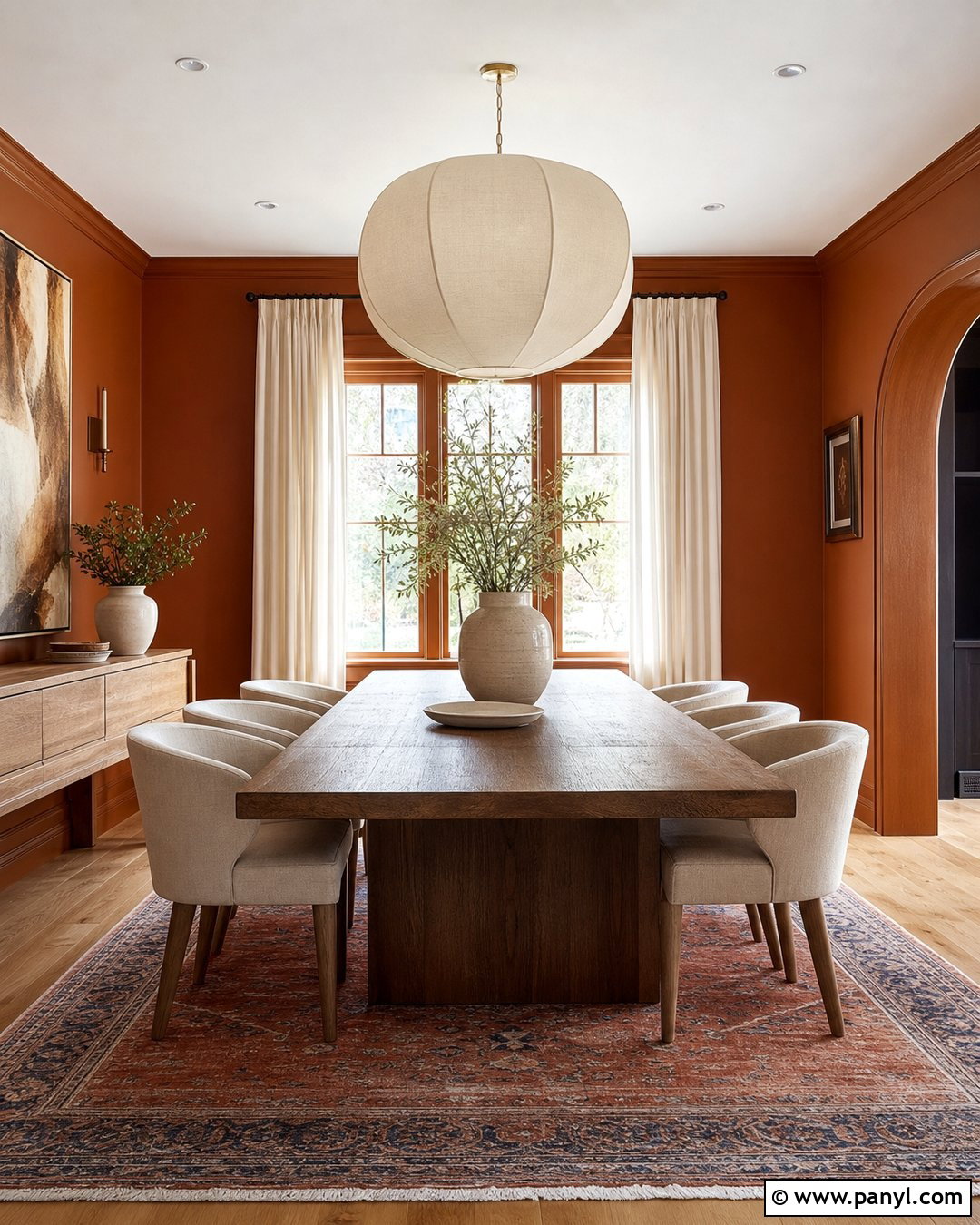
Clay walls and natural wood create an inviting dining room that feels connected to the landscape. Use a midtone clay color with balanced orange and brown notes, then place a substantial oak dining table in the center. Surround it with woven rush chairs or simple wood chairs with cream seat cushions. A large paper or linen pendant light softens the setting and gives the table a clear focal point. Keep the window treatments uncomplicated with warm white curtains. Display handmade ceramic dishes inside a low wood cabinet rather than covering every wall with art. An olive tree, jute rug, and black candleholders add texture and contrast. This combination feels casual enough for daily meals yet considered enough for relaxed weekend gatherings.
6. Clay Kitchen Walls With Cream Cabinets
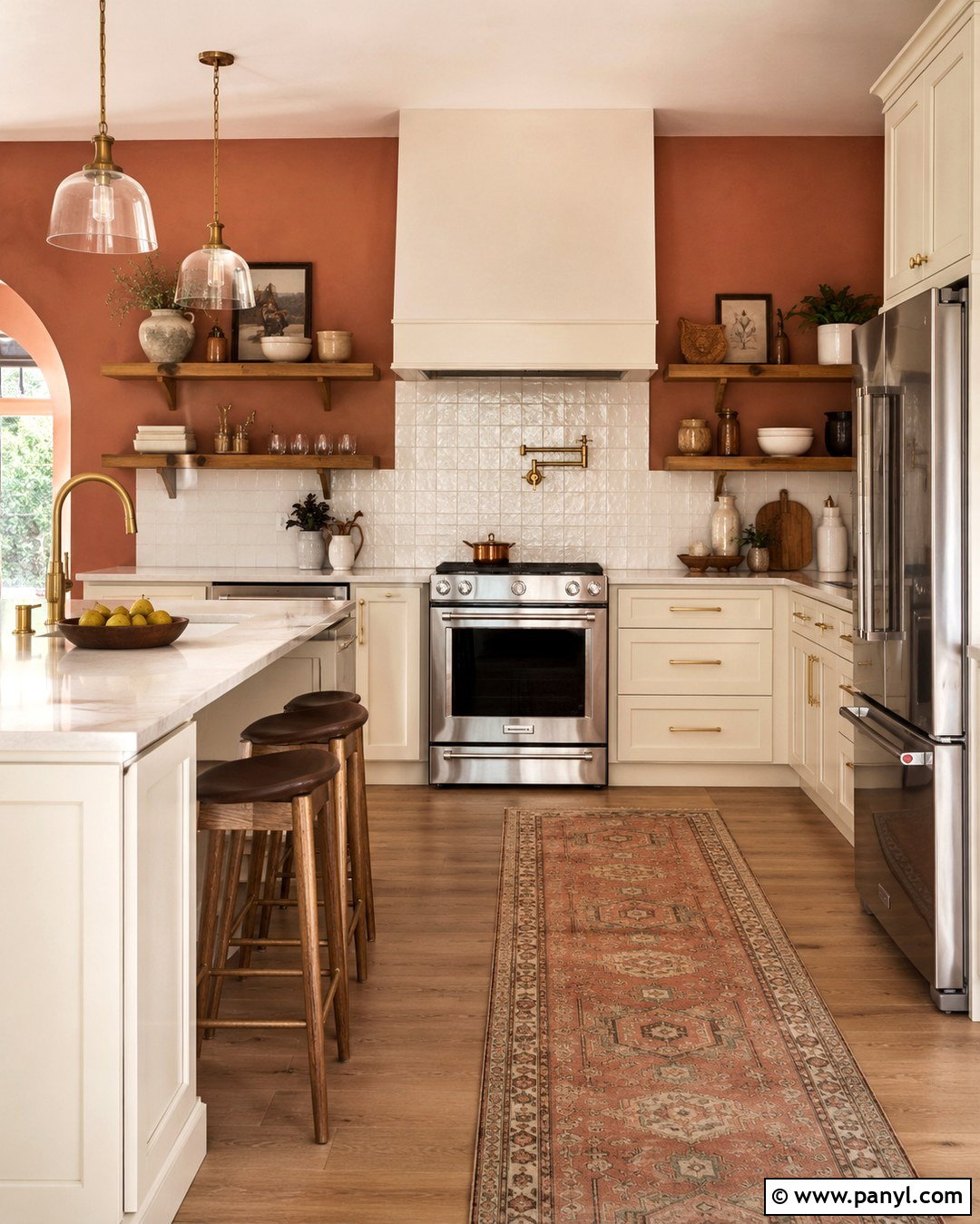
Warm clay walls can make cream kitchen cabinets feel richer and less predictable. Choose a softened terracotta paint rather than a highly saturated orange. Pair it with warm off-white cabinetry, honed cream quartz countertops, and a simple backsplash in handmade ivory tile. Unlacquered brass hardware will age naturally and support the earthy palette. Bring in medium oak through open shelves, counter stools, or a small breakfast table. Keep appliances and plumbing fixtures in stainless steel or brushed nickel if you prefer a cleaner contrast. A runner containing rust, sage, and beige can connect the finishes. Because kitchen lighting changes throughout the day, test the clay shade beside the cabinets, counters, and backsplash before committing to the complete color scheme.
7. Clay Bathroom Walls With Beige Tile
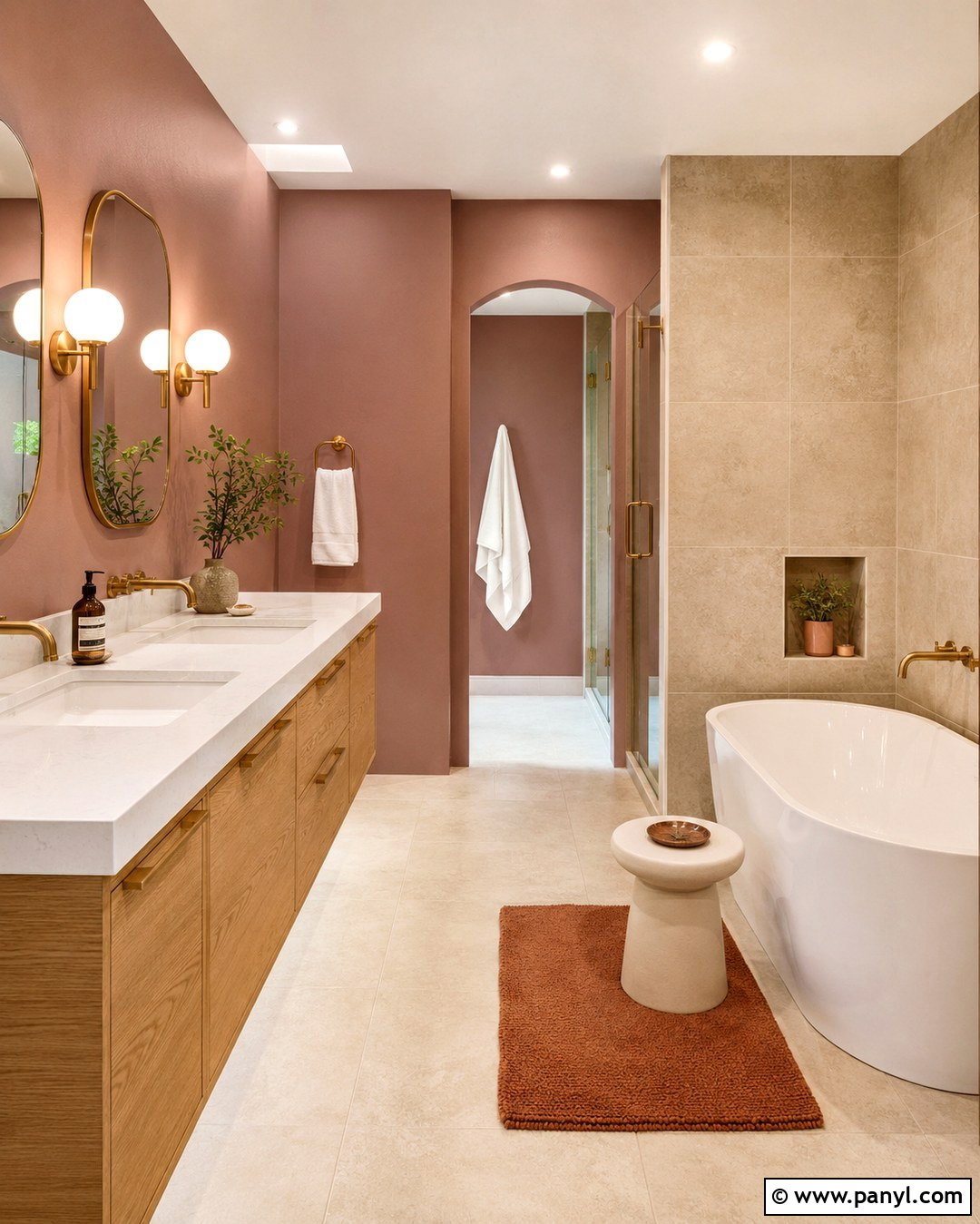
Would you like a bathroom that feels warm and restorative rather than cold and clinical? Paint the upper walls in a muted pink-clay shade and use large beige stone-look tile across the floor and shower. A floating oak vanity keeps the room visually open, while a white quartz top adds practical brightness. Select brushed brass faucets, rounded mirrors, and simple globe sconces for a gentle modern finish. White towels and a white tub provide clean relief from the surrounding earth tones. Add one rust-colored bath mat and a small ceramic stool to repeat the wall color at floor level. Use moisture-resistant bathroom paint in a suitable finish, especially near the shower. The completed room should feel soft, cohesive, and easy to maintain.
8. Clay Home Office Walls With Black Accents
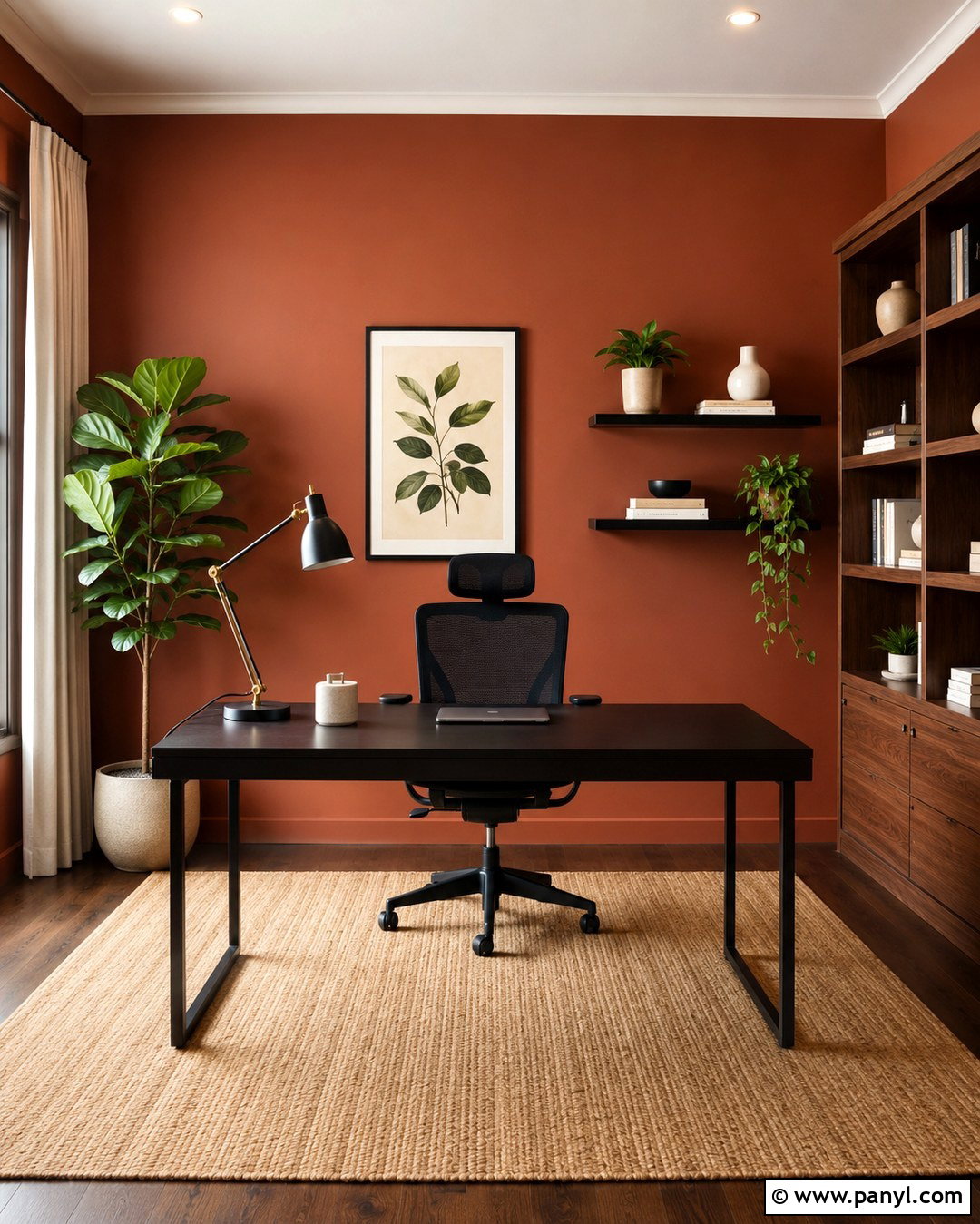
A clay-painted home office can feel focused and energetic without looking corporate. Cover the walls in a medium rust-clay tone, then introduce a streamlined black desk and a supportive black chair. Ground the workspace with a natural fiber rug and add a walnut bookcase for warmth. Matte black picture frames, a task lamp, and narrow floating shelves create crisp lines against the earthy background. Keep desktop accessories limited to practical items in cream, leather, and dark green. If the office receives little natural light, use a slightly lighter clay shade and layer bright, neutral lighting at the ceiling and desk. A large botanical print and one tall plant soften the darker furniture. This arrangement provides a professional video-call background and an inviting place to work.
9. Clay Entryway Walls With Green Accents
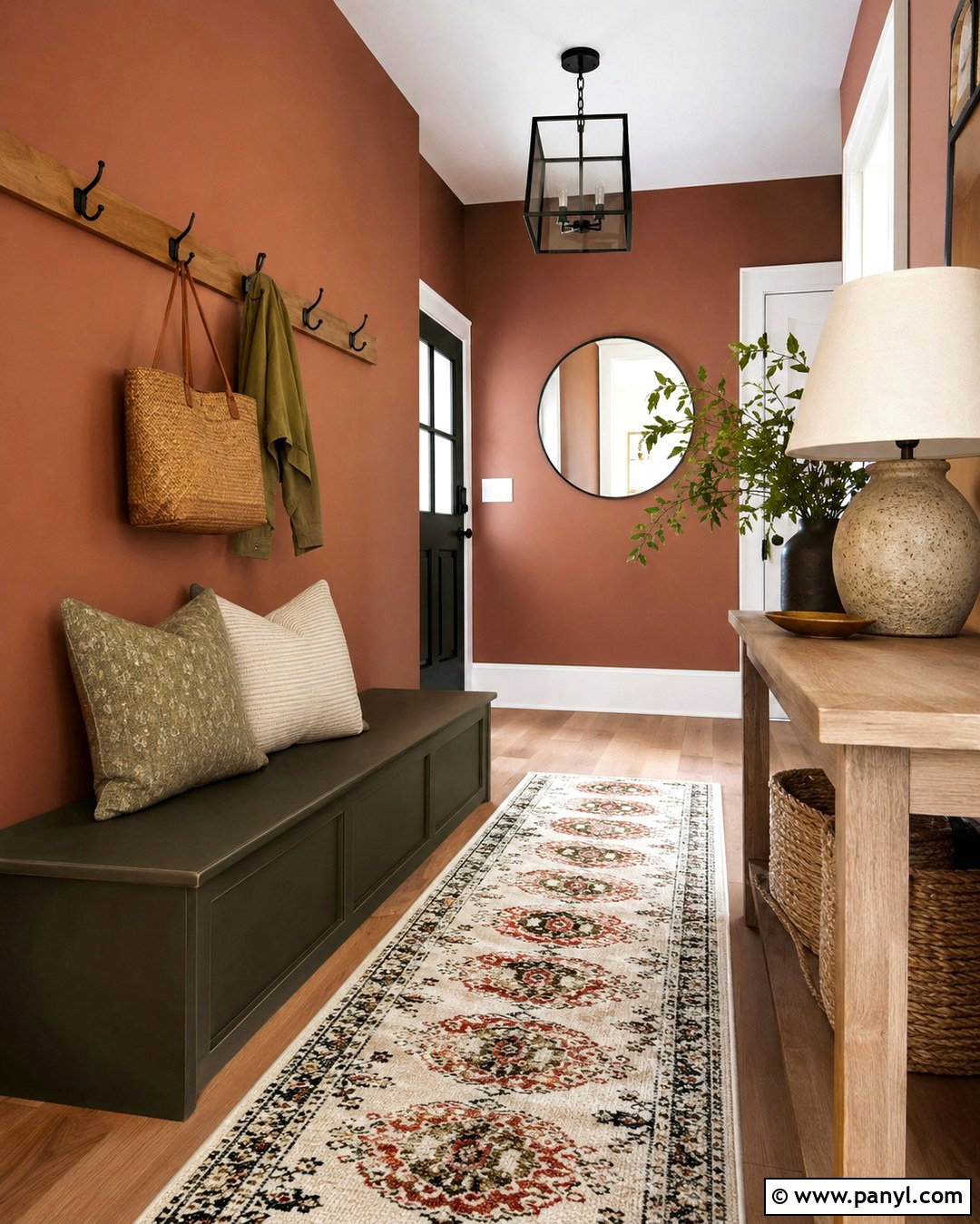
Set a welcoming tone by pairing clay entryway walls with earthy green accents. Paint the entire foyer in a subdued terracotta shade, including awkward corners, to create a connected envelope of color. Place a narrow olive green console or bench along one wall and hang a large rounded mirror above it. A natural oak peg rail offers everyday storage without crowding the space. Choose a washable patterned runner featuring cream, olive, rust, and charcoal. Black hooks and a black ceiling fixture add definition, while woven baskets keep shoes and accessories contained. Finish with a ceramic lamp and a leafy branch in a simple vase. The palette feels grounded and memorable, but every furnishing still serves a useful purpose in this hardworking transitional area.
10. Clay Accent Wall Behind The Bed
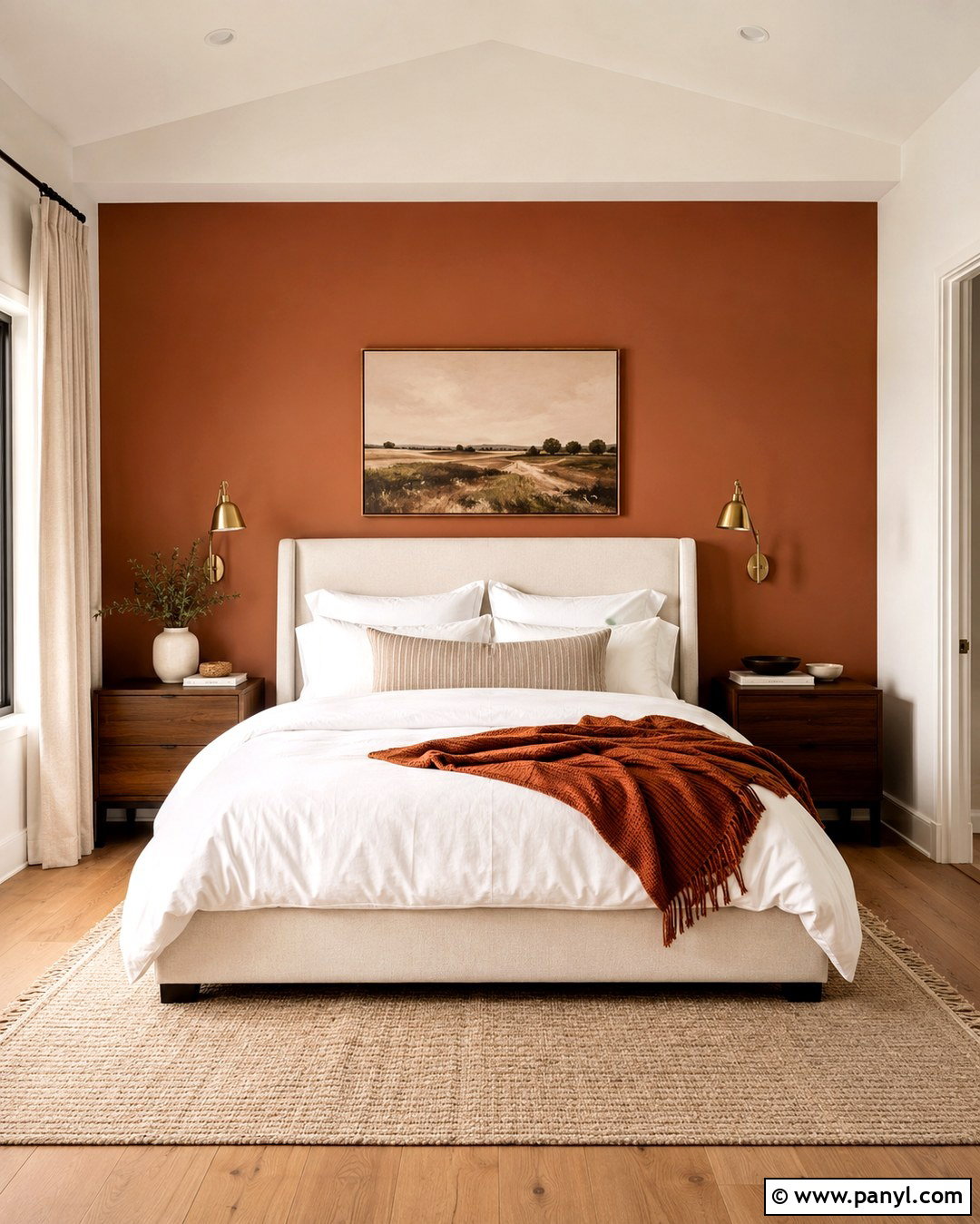
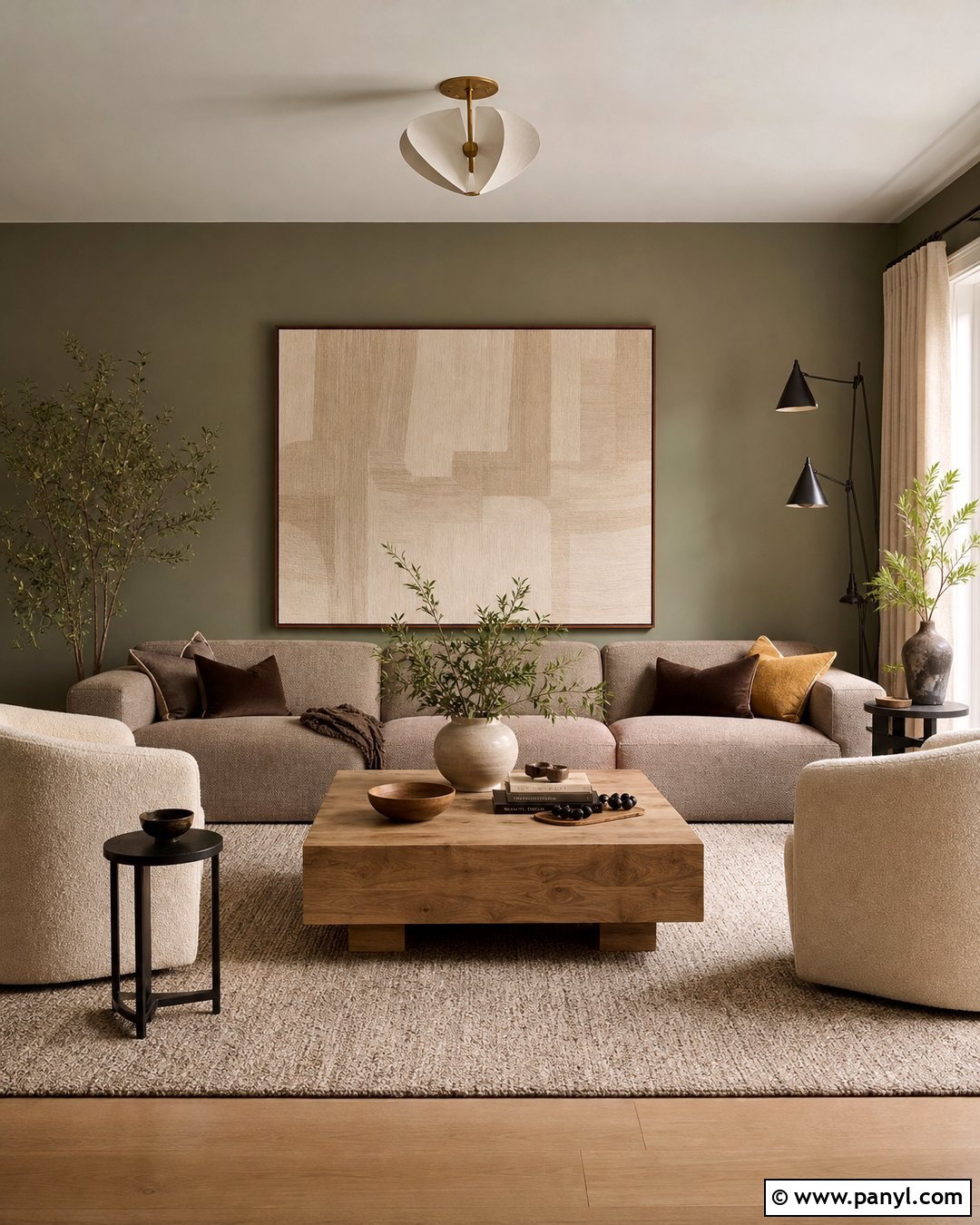
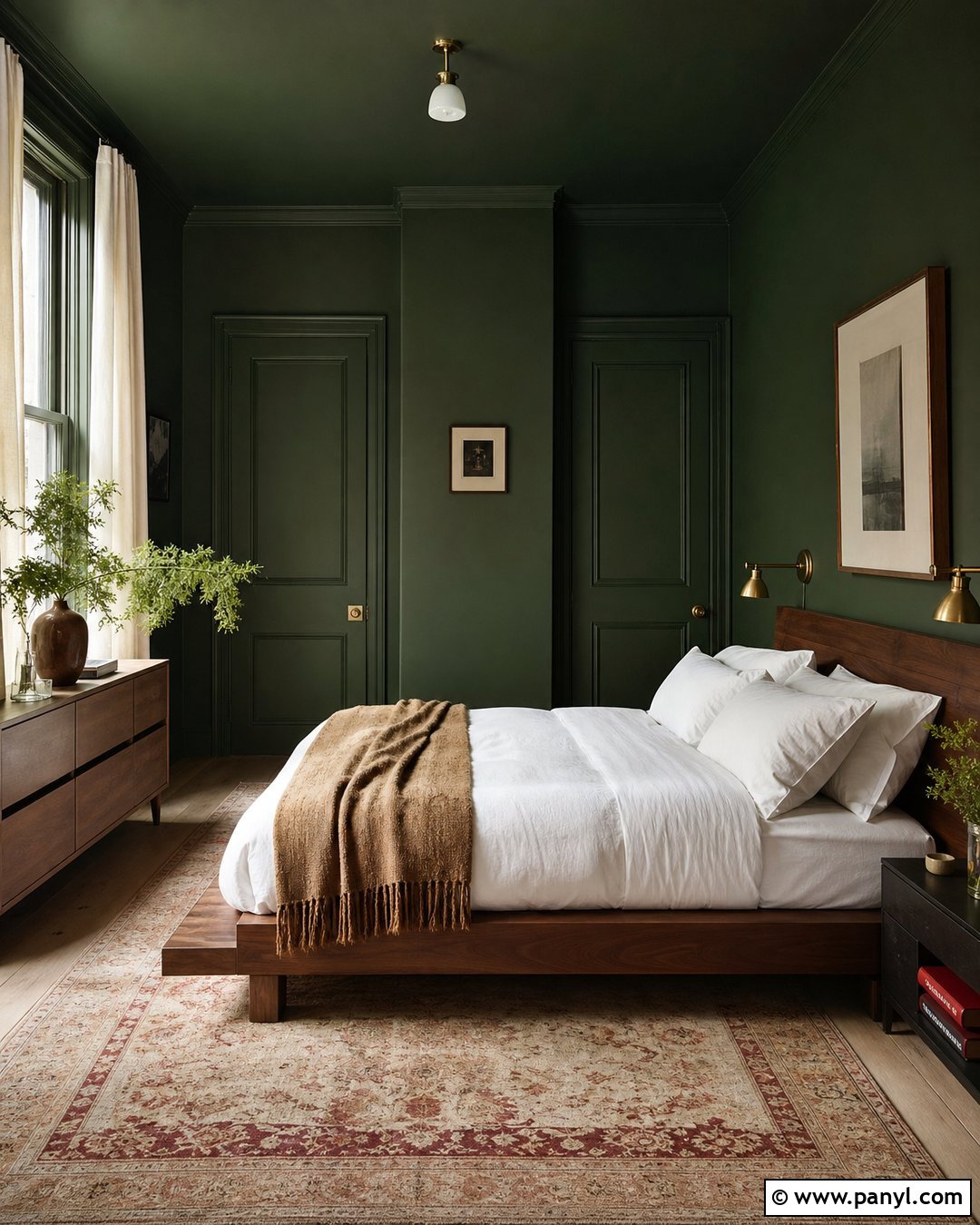
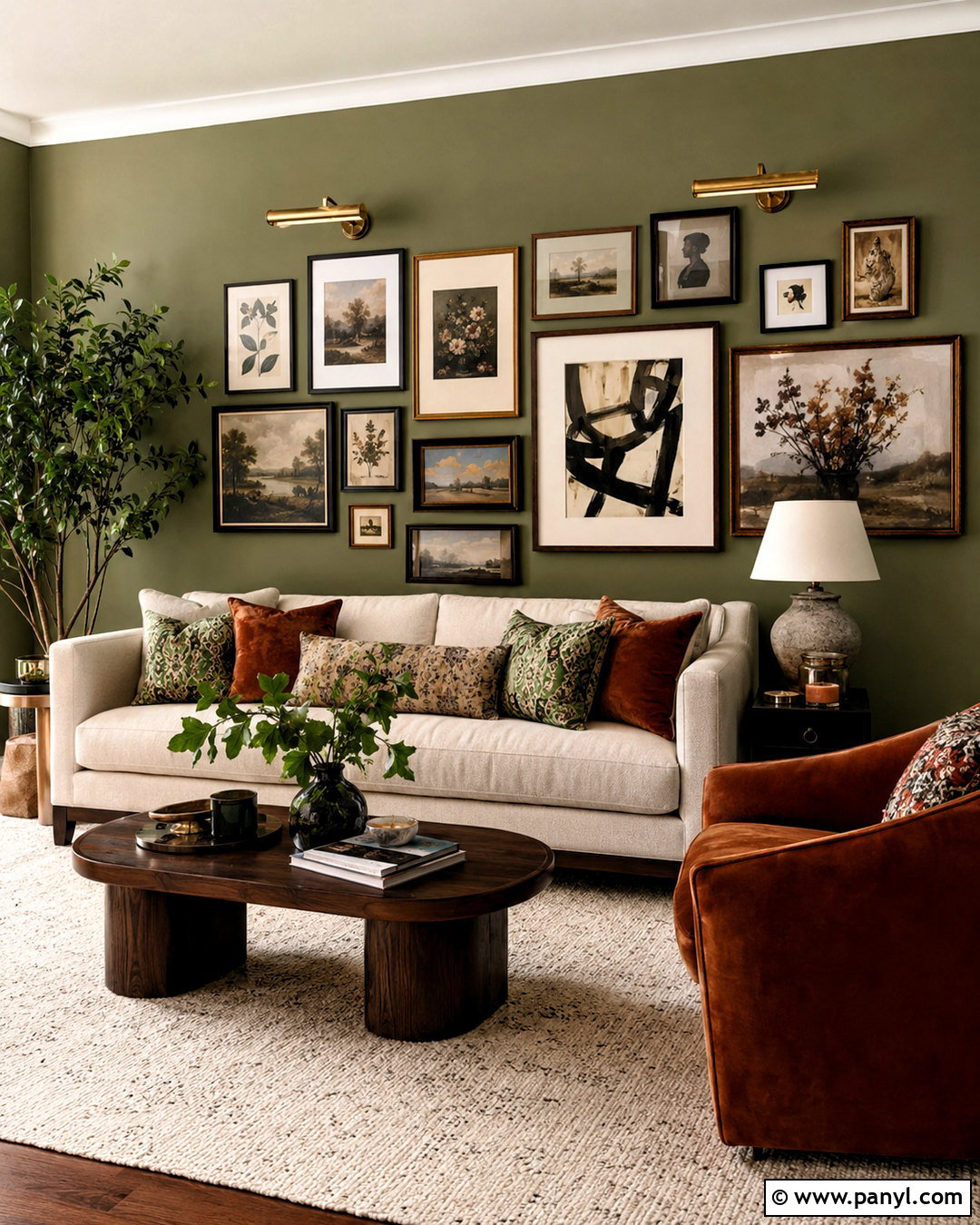
If four clay walls feel like too much, concentrate the color behind the bed. Select a warm clay shade that clearly contrasts with the remaining creamy white walls. Extend the paint across the complete headboard wall, including any shallow alcoves, so it appears intentional. Place an upholstered oatmeal bed in front of it and use walnut nightstands on both sides. White bedding, striped beige pillows, and a cinnamon throw build a layered but quiet palette. Match the window curtains to the lighter walls to maintain openness. Two brass sconces and a wide landscape print create symmetry above the bed. This arrangement gives the bedroom a strong focal point while making future color changes easier than a fully color-drenched decorating scheme.
11. Clay Walls With Sage Green Decor
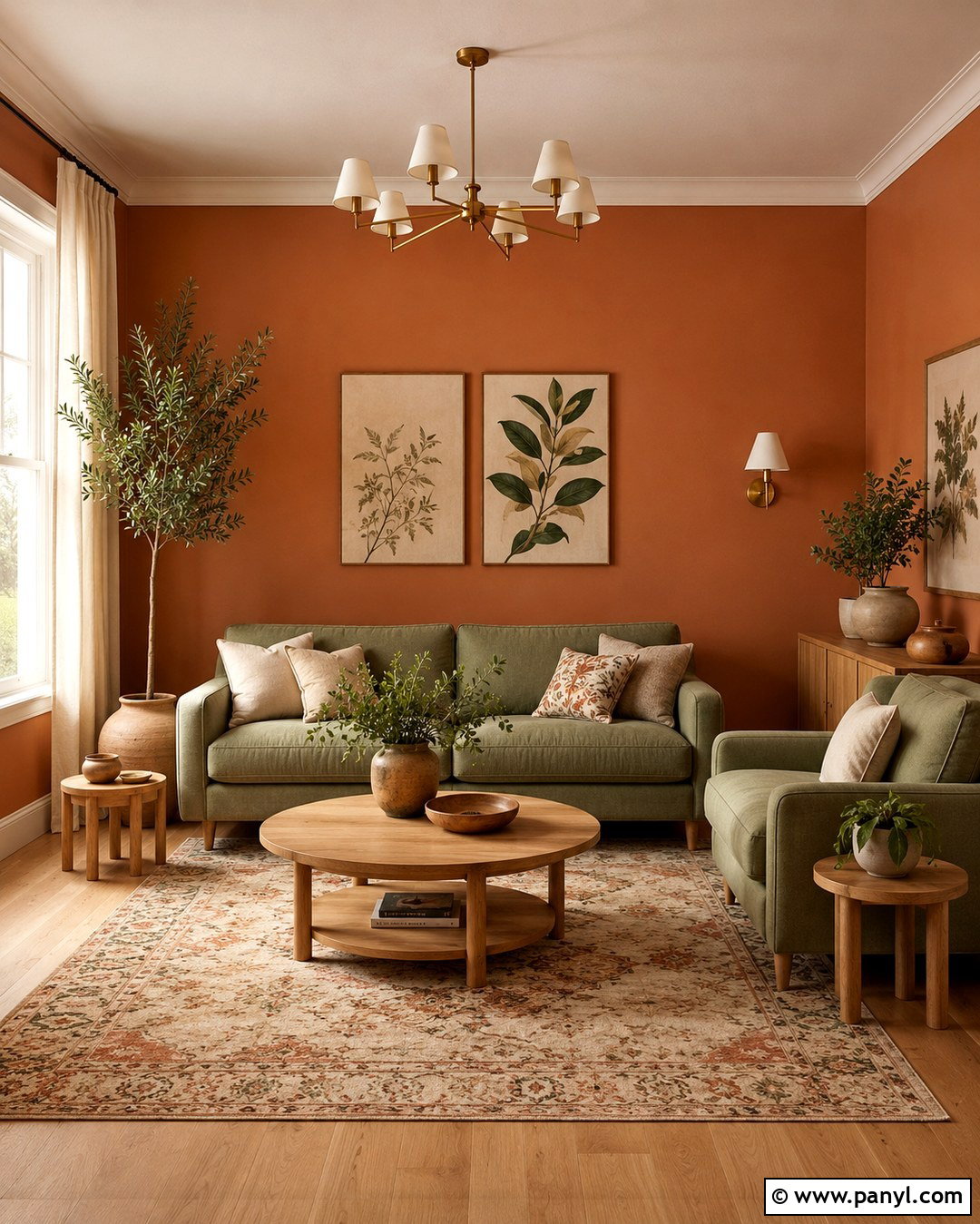
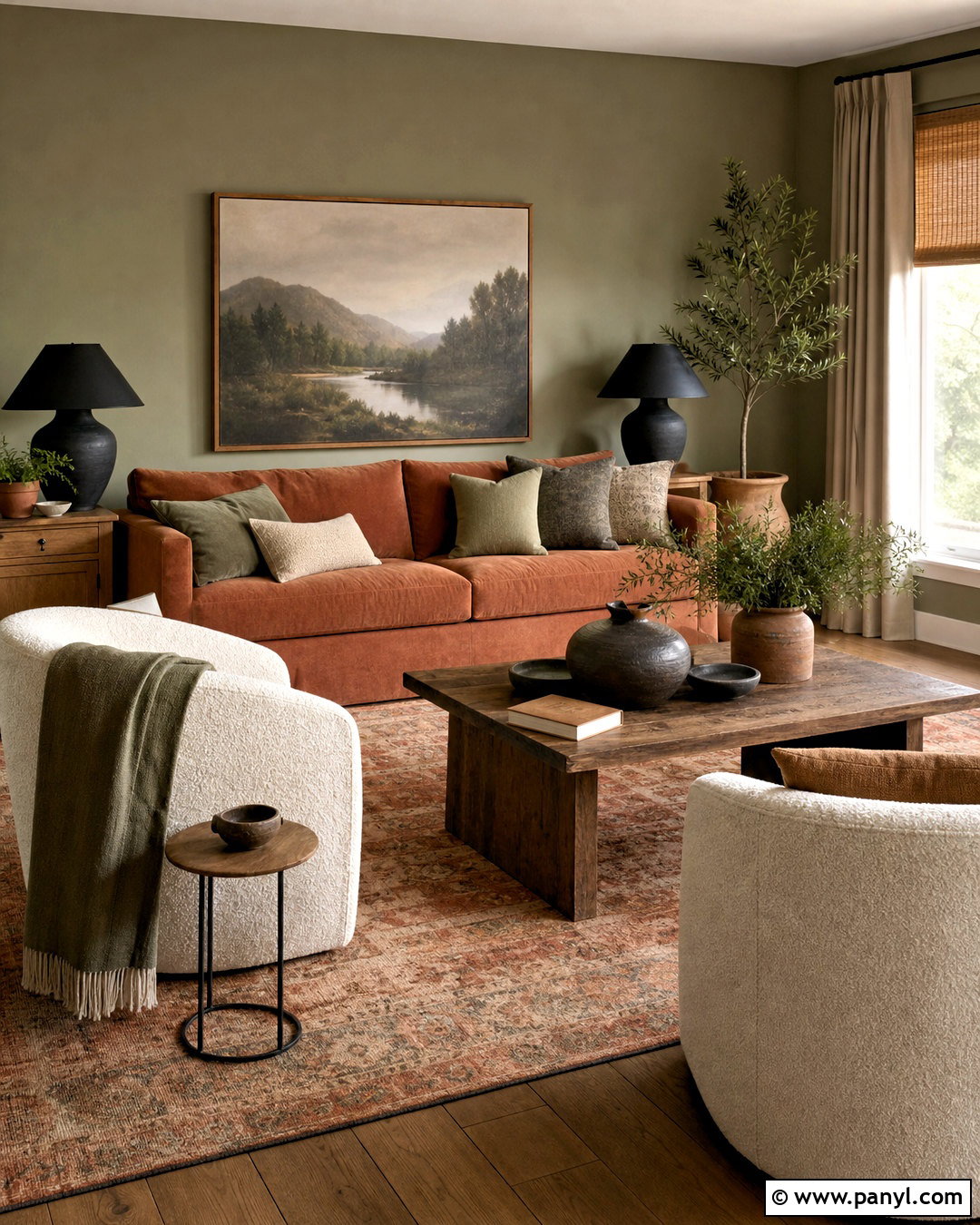
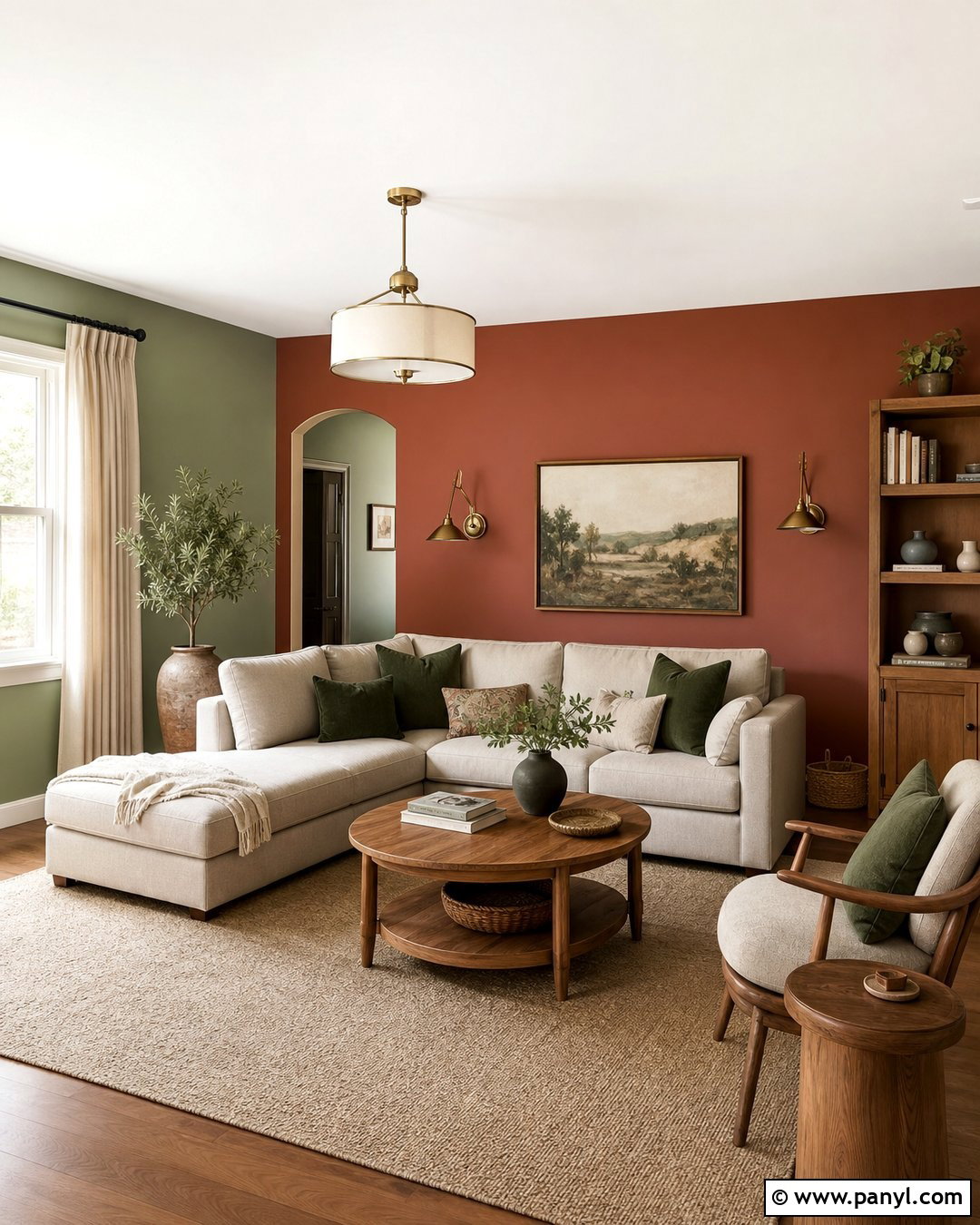
Clay and sage green form a naturally balanced combination because one supplies warmth while the other introduces a cooler botanical note. Paint the living room walls in a muted orange-clay color, then use sage on a comfortable sofa or pair of armchairs. Connect the two shades with a patterned rug containing cream, rust, olive, and tan. Light oak furniture keeps the palette casual, while aged brass lighting adds a gentle glow. Choose warm white curtains rather than bright white ones, which may look harsh beside the earthy paint. Complete the room with botanical artwork, linen cushions, and several plants in unglazed pots. Keep the ceiling and trim soft cream. The finished look feels colorful and layered without relying on intense or overly trendy accents.
12. Clay Walls With Midcentury Furniture
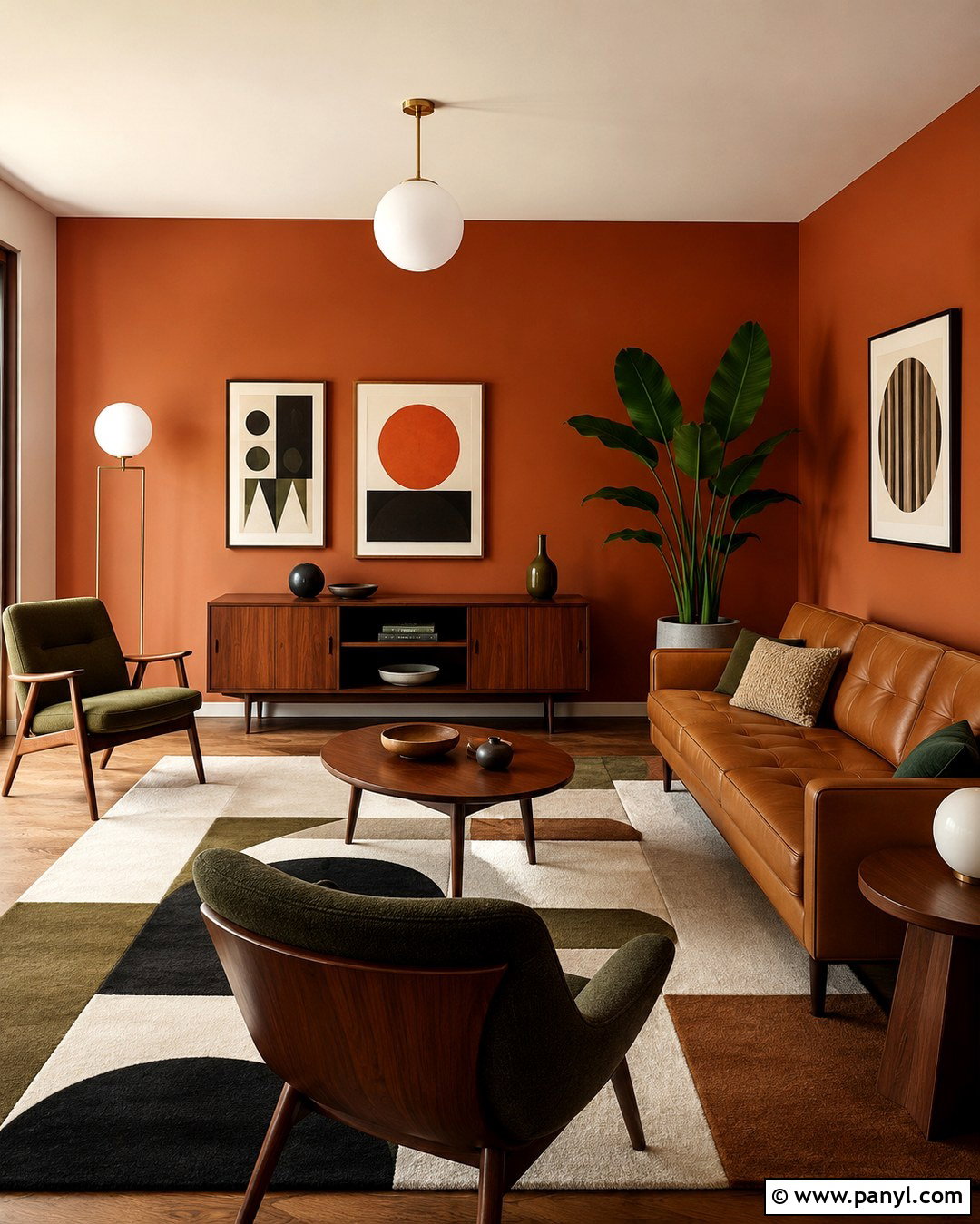
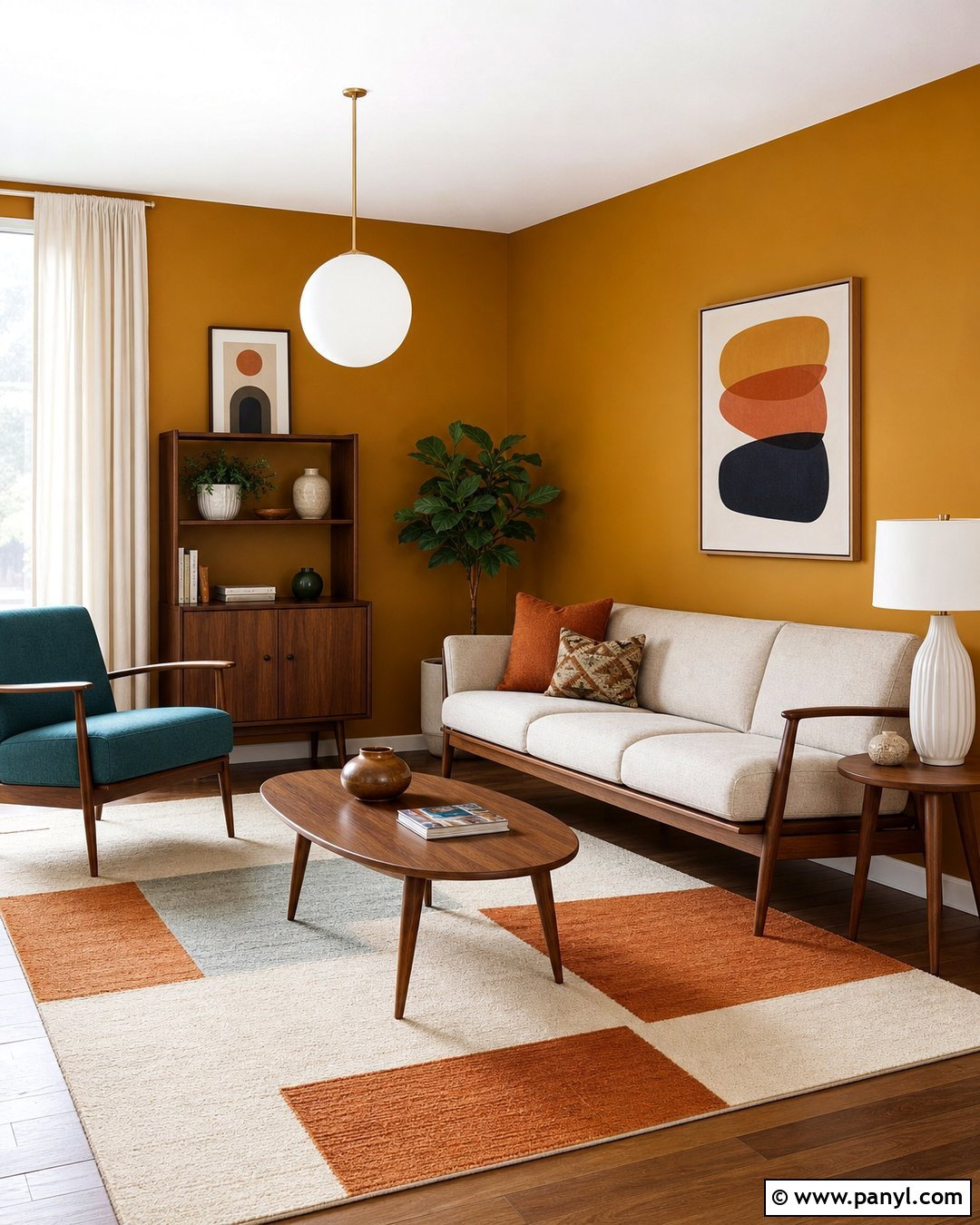
Clean midcentury furniture gives clay walls a sharper, more structured appearance. Start with a dusty burnt-orange clay paint and pair it with a low walnut media console, a streamlined tan leather sofa, and two sculptural lounge chairs. Use a geometric rug in cream, olive, brown, and black to organize the seating area. A globe pendant, tripod floor lamp, and simple framed prints reinforce the period influence without turning the room into a theme. Keep window coverings minimal so natural light can emphasize the warm wall color and wood grain. One tall plant adds an organic shape beside the straight furniture lines. The final room should feel collected and functional, with open walking paths and enough negative space around each distinctive furniture piece.
13. Clay Walls With Modern Farmhouse Decor
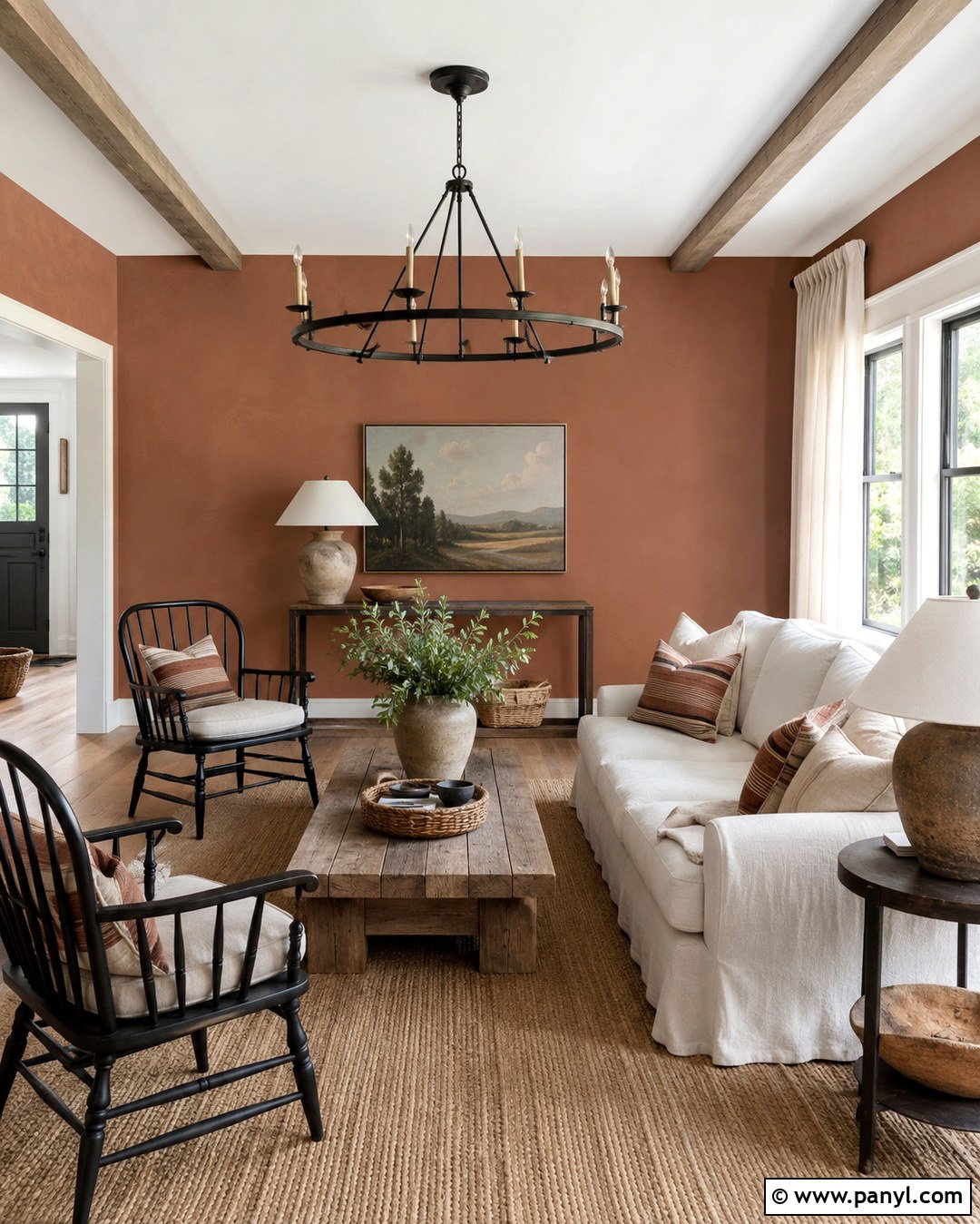
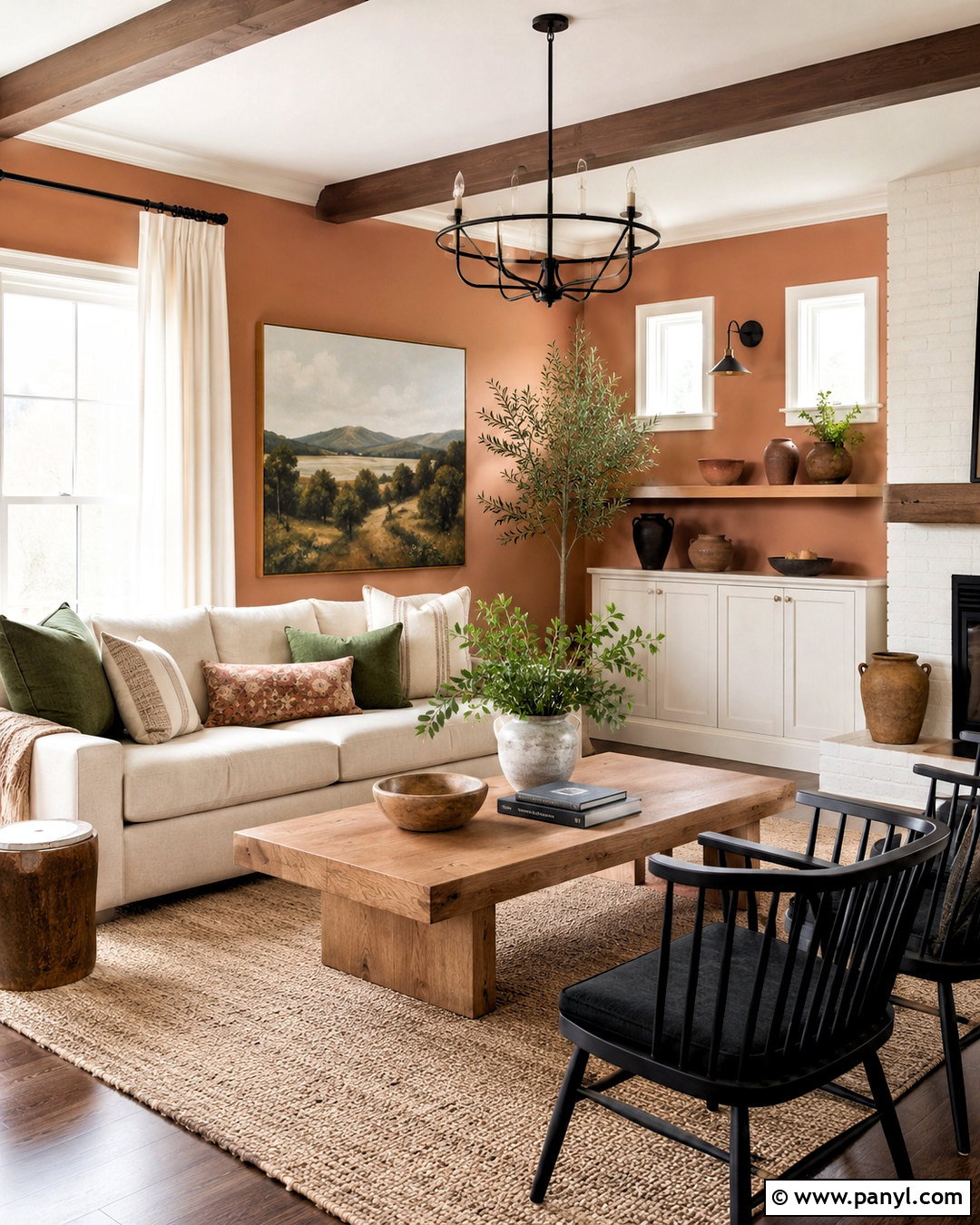
Clay paint can give modern farmhouse rooms warmth without depending on predictable gray walls. Choose a softened brown-clay color and pair it with warm white trim, natural oak flooring, and a comfortable slipcovered sofa. Add two black spindle chairs, a reclaimed wood coffee table, and a cream-and-tan woven rug. Linen curtains, stoneware lamps, and simple landscape artwork continue the relaxed country character. Rather than filling the walls with small signs or decorative objects, use a few larger pieces with authentic texture. A black metal chandelier can provide contrast overhead. Finish with olive branches, woven baskets, and rust-striped cushions. This complete scheme feels practical and welcoming while maintaining the cleaner lines associated with updated farmhouse interiors.
14. Clay Walls With Boho Decor
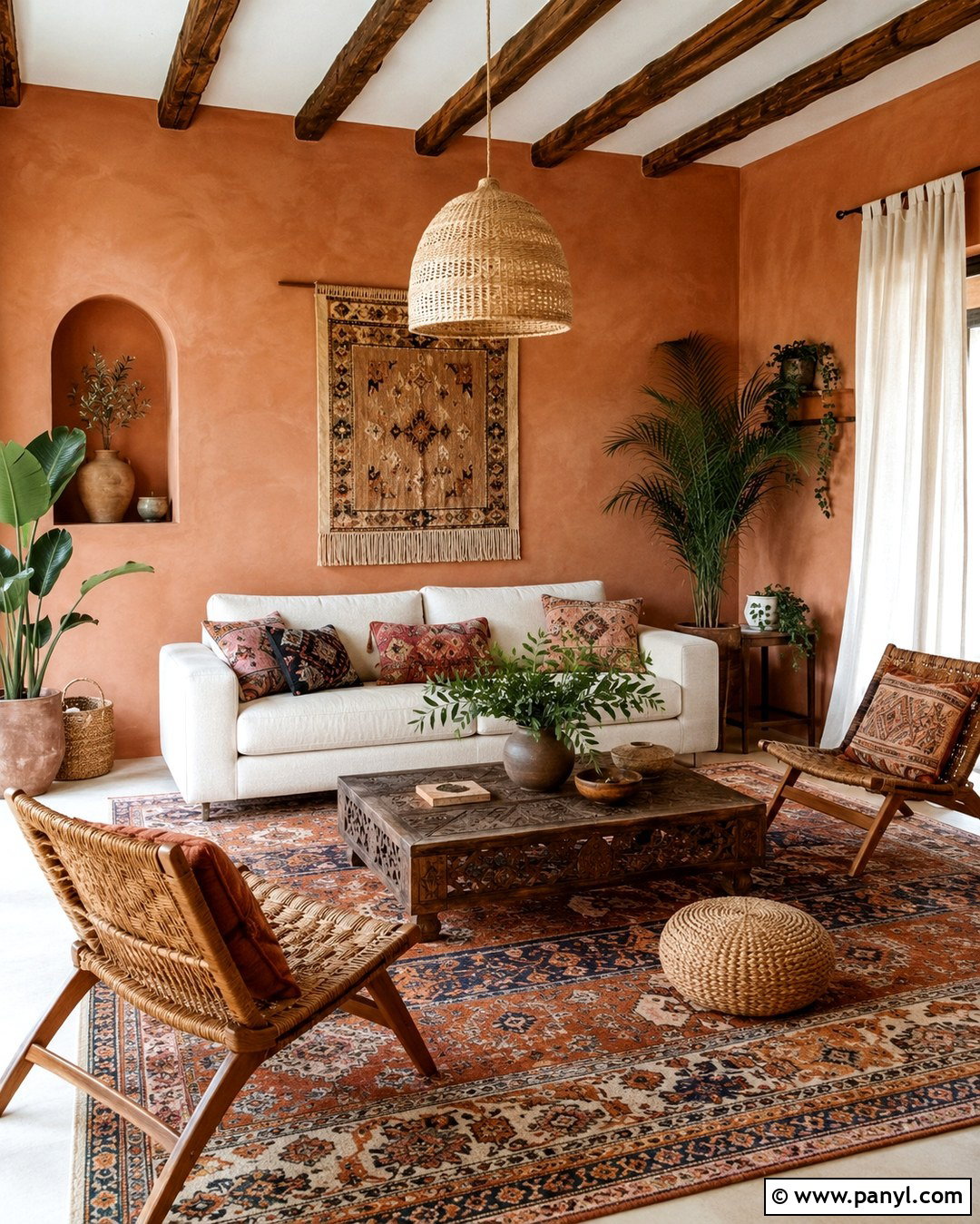
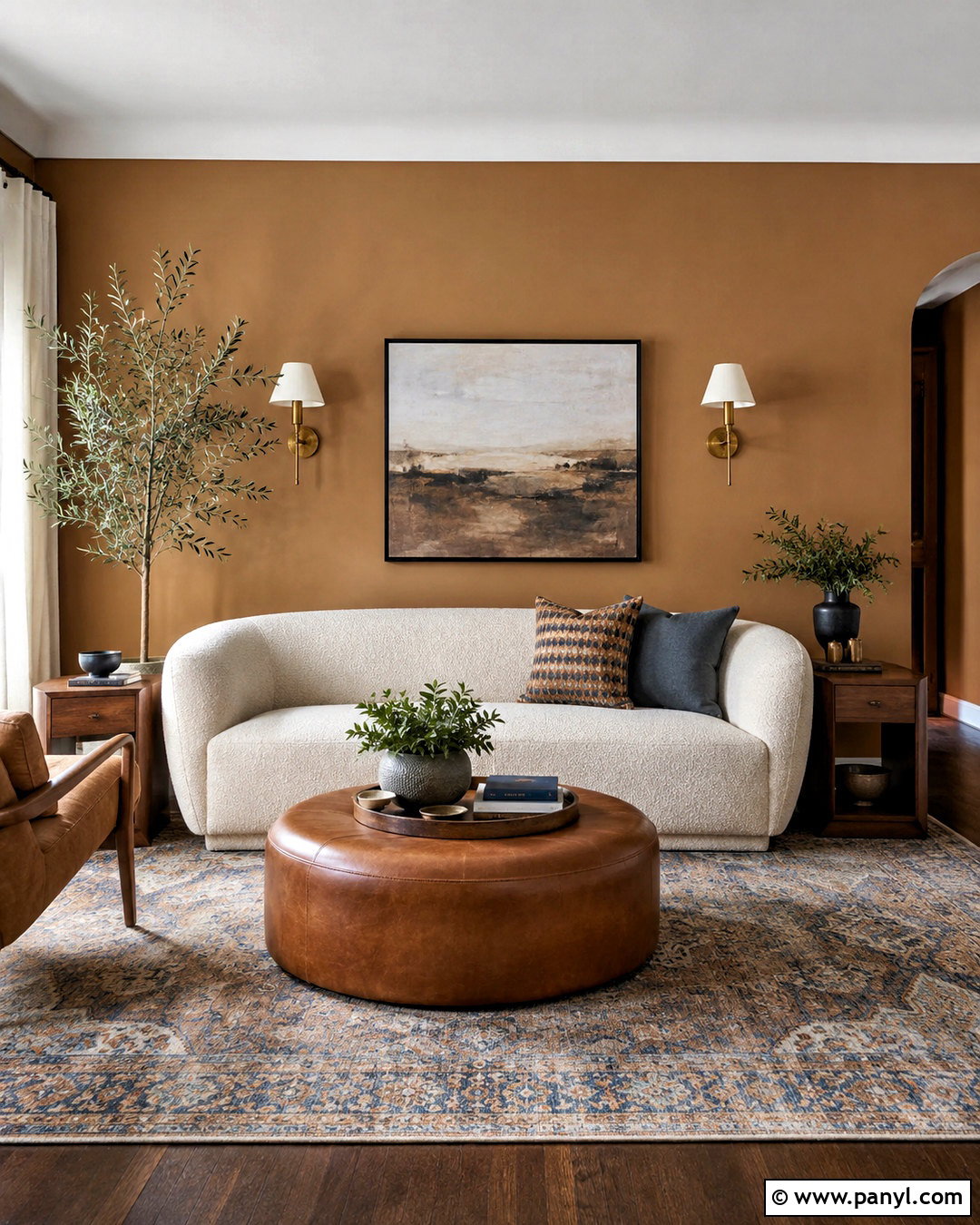
Layered textiles look especially vibrant against matte clay walls. Build the room around a comfortable cream sofa, a carved wood coffee table, and a large vintage-inspired rug containing rust, indigo, pink, and tan. Add woven lounge chairs and mixed cushions in block-printed patterns, but repeat several colors to keep the collection connected. Full-length off-white curtains will soften the wall color and reflect daylight. Use baskets, plants, pottery, and one large fabric wall hanging rather than scattering many unrelated accessories around the room. A rattan pendant supplies texture overhead without competing with the rug. The final boho living room should feel personal and relaxed, yet the furniture placement, repeated palette, and uncluttered walking areas will prevent it from looking chaotic.
15. Clay Walls With Minimalist Decor
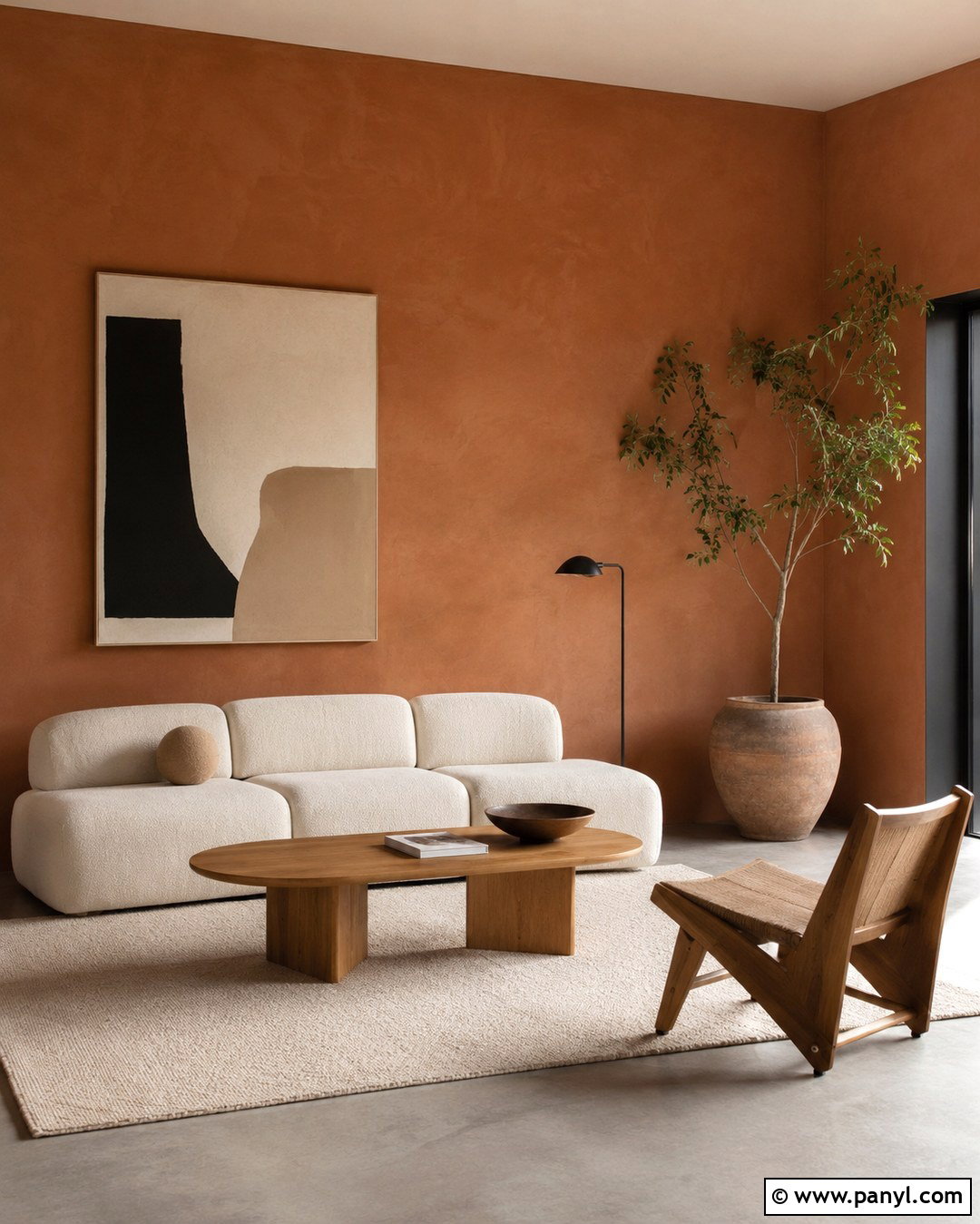
Minimalist rooms do not have to be colorless. Clay-painted walls can supply warmth while allowing the furniture and decor to remain restrained. Choose a smooth, muted clay shade and cover the room consistently, leaving the ceiling a soft warm white. Add a low cream sofa, one sculptural oak chair, and a simple oval coffee table. Use a large plain wool rug in oatmeal to reduce visual noise. One oversized abstract artwork, a ceramic floor vase, and a single leafy tree provide enough decoration. Concealed storage keeps electronics and everyday items out of sight. Select black accents sparingly through one lamp or thin picture frame. The completed room feels serene and modern because every element has space to breathe against the rich wall color.
16. Clay Walls With Rustic Wood Beams
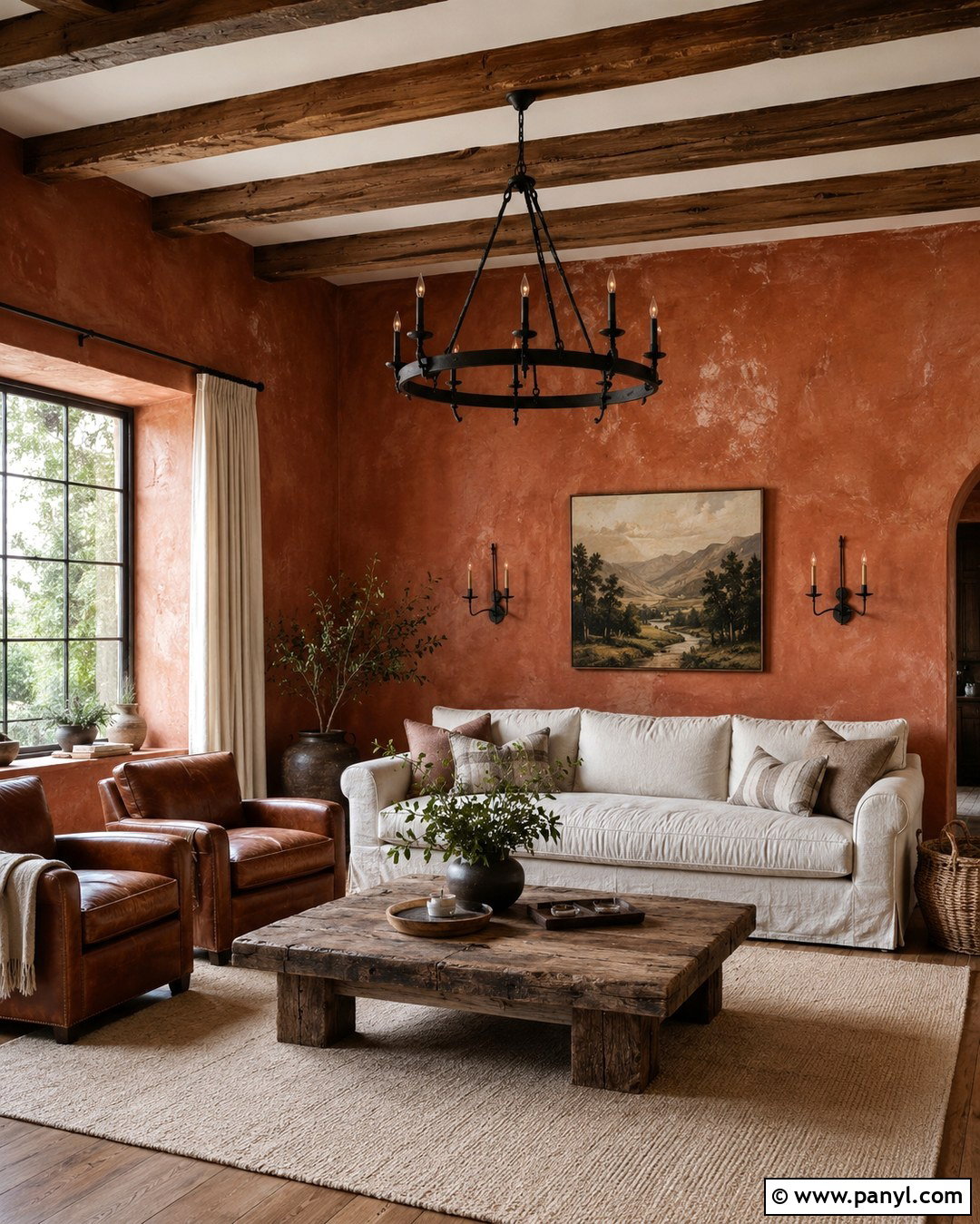
In a room with exposed beams, clay paint can emphasize the architecture while supporting a rustic palette. Apply a medium, slightly weathered terracotta shade to the walls and leave the ceiling warm white between the natural wood beams. Arrange a generous linen sofa and two brown leather chairs around a substantial reclaimed wood coffee table. A large cream wool rug lightens the floor and defines the conversation area. Add iron lighting, woven baskets, and landscape artwork in simple wood frames. Avoid using too many reddish woods, which may blend into the wall color. Instead, mix medium oak, deep brown leather, blackened metal, and pale textiles. The result feels established and comfortable rather than overly themed or artificially aged.
17. Clay Fireplace Wall With Built-In Shelves
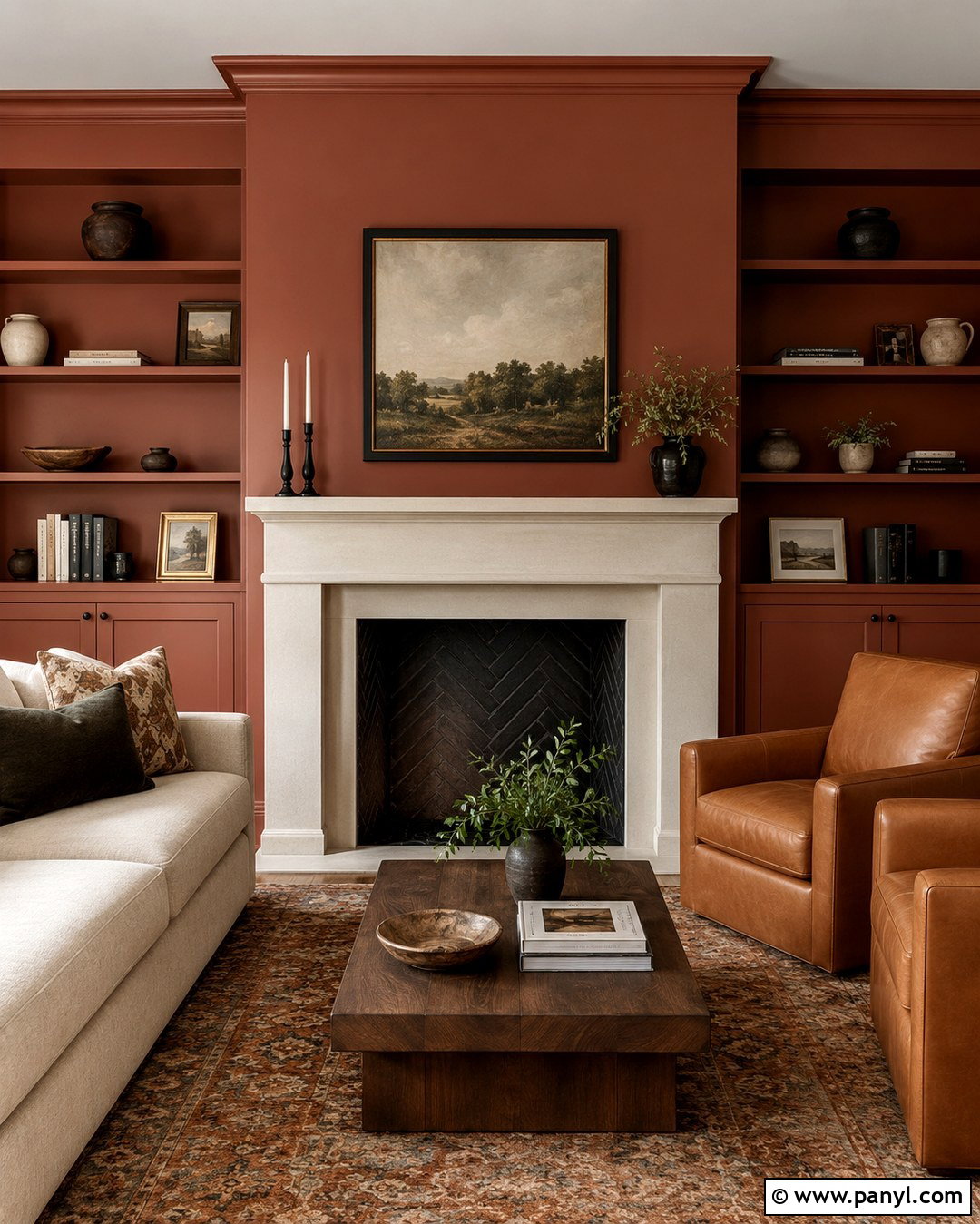
Turn a plain fireplace into a complete architectural focal point by painting the chimney wall and surrounding built-ins in one clay color. A deep dusty terracotta works well with a simple cream stone or plaster fireplace surround. Style the shelves lightly with books, ceramics, framed art, and a few dark objects for contrast. Place an oatmeal sofa facing the fireplace, then add cognac leather chairs and a walnut coffee table to form a balanced seating arrangement. A faded patterned rug can repeat the clay, cream, and brown tones. Use warm white on the remaining walls so the built-in structure stands forward visually. This approach creates stronger impact than painting a narrow strip while keeping the entire living room bright and approachable.
18. Clay Hallway Walls With White Trim
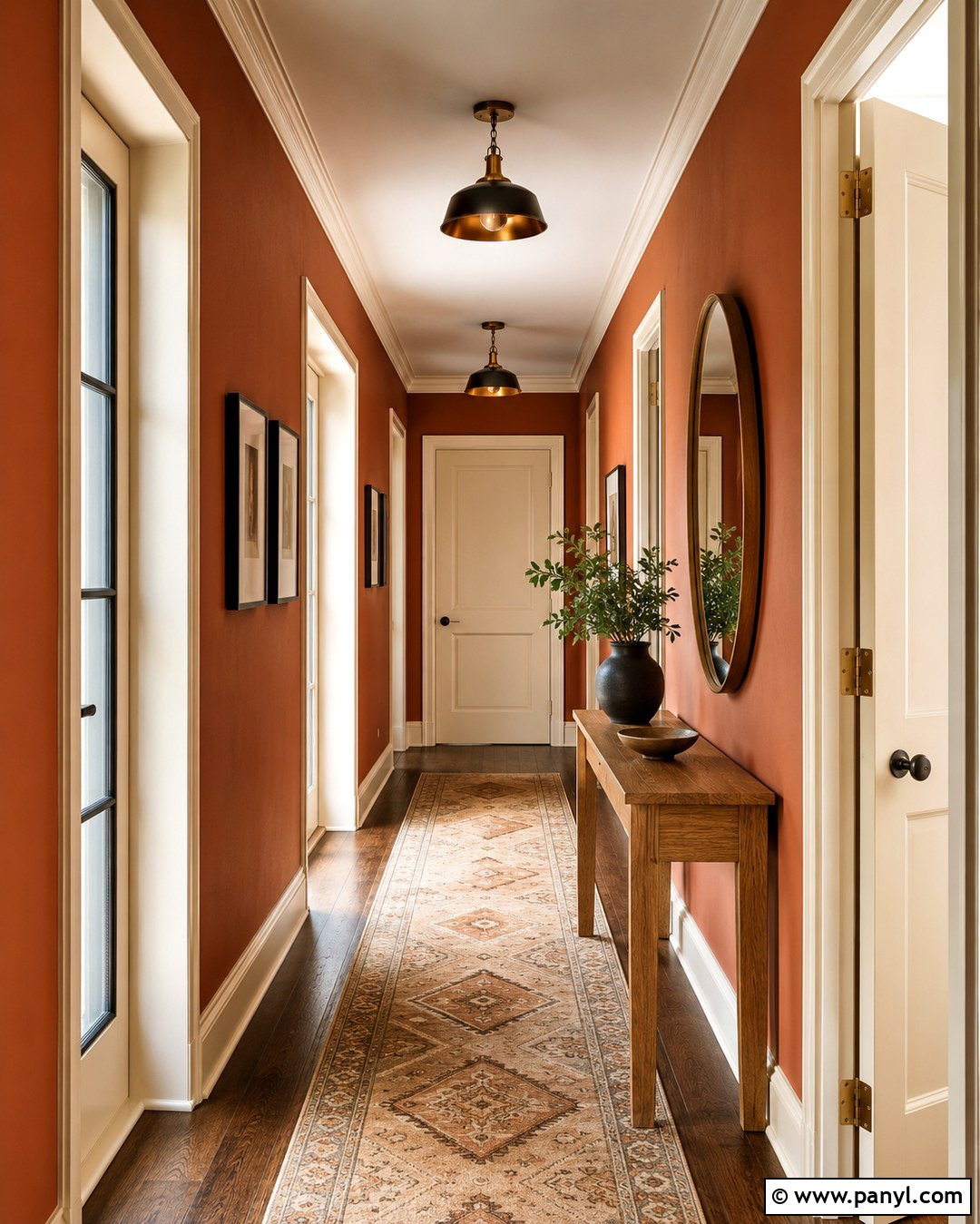
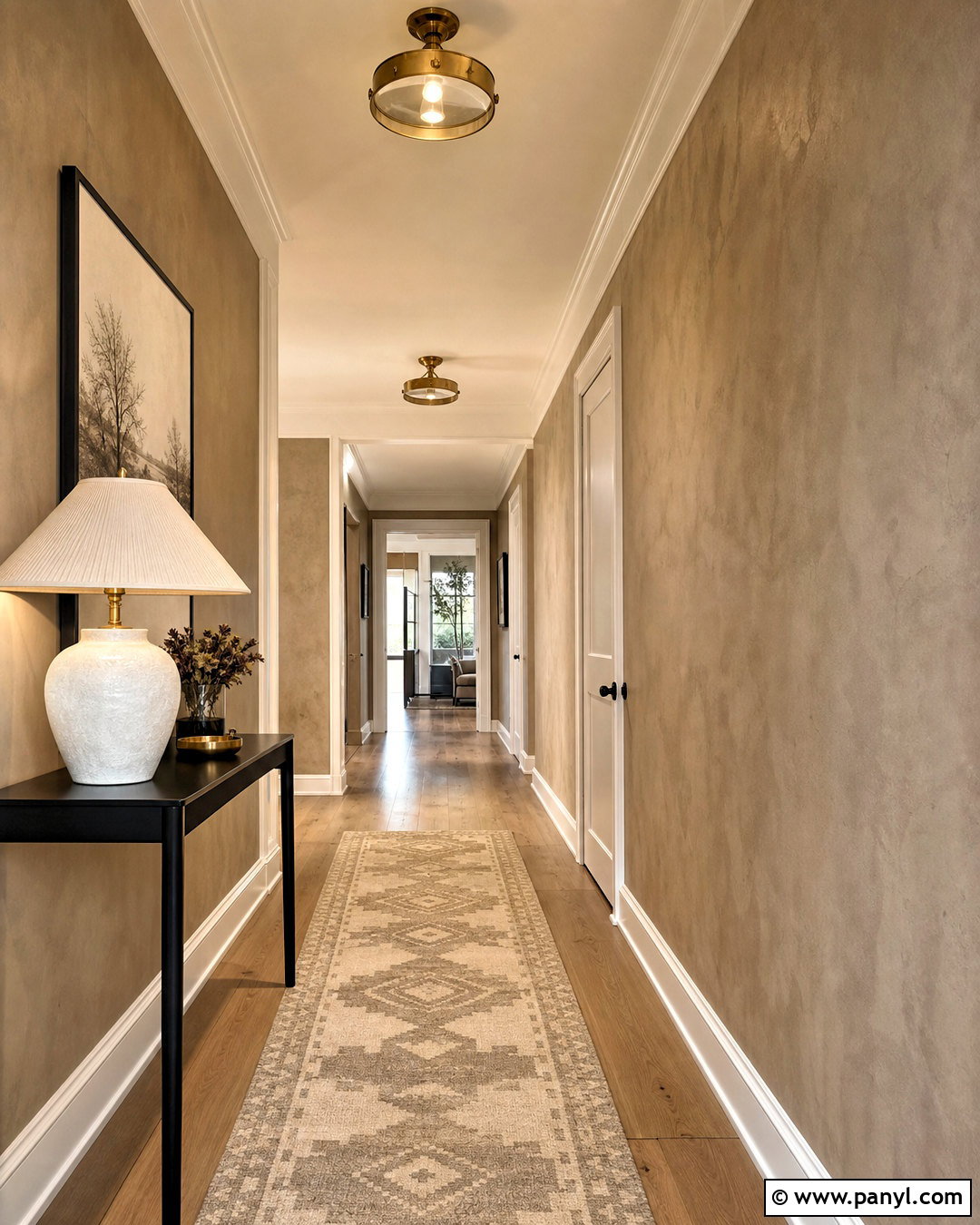
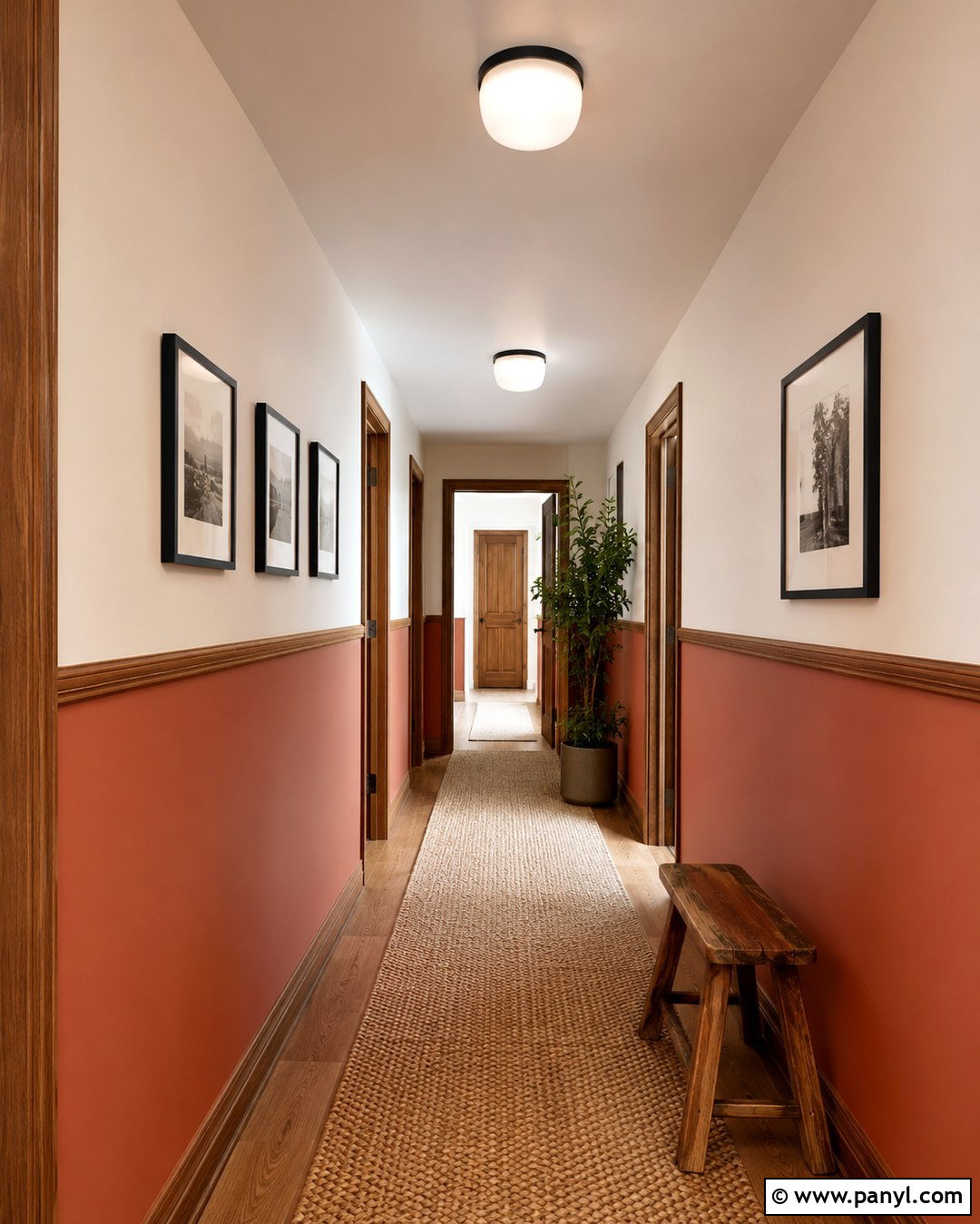
A hallway becomes far more memorable when clay walls frame bright white or warm ivory woodwork. Paint both sides of the corridor in a midtone earthy clay, then keep the baseboards, doors, and door casings light for definition. Add a long natural runner with a small geometric pattern to guide the eye through the space. Black or aged brass ceiling lights provide repeated accents overhead. If the hallway is wide enough, include a slim wood console and a rounded mirror, but preserve comfortable circulation. Arrange a few medium-scale artworks at consistent heights rather than creating a crowded gallery. The completed hallway feels warm and connected to nearby rooms, especially when the surrounding spaces repeat small touches of rust, cream, wood, or green.
19. Clay Color Drenched Reading Room
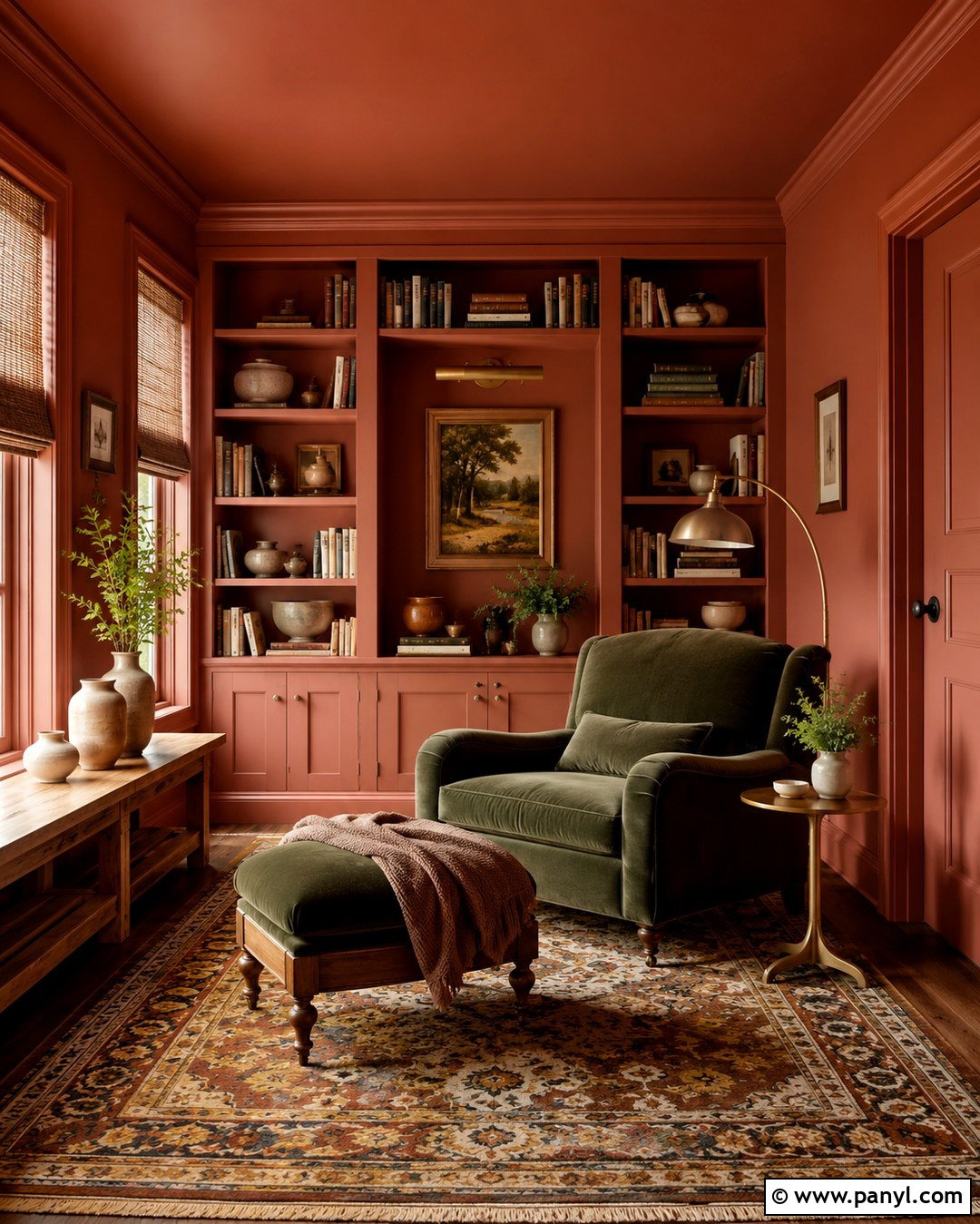
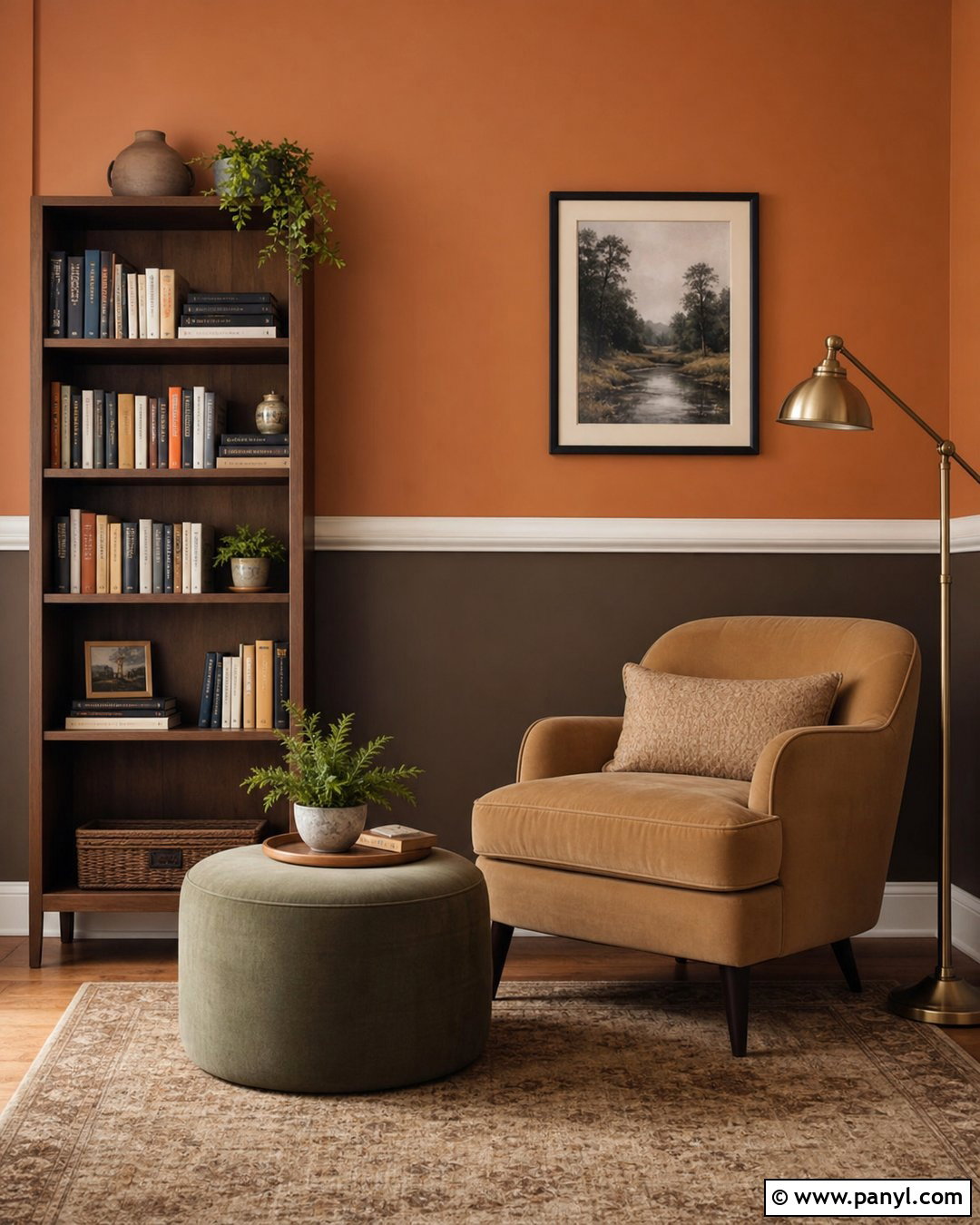
A small reading room is an ideal place to embrace clay from wall to wall. Paint the walls, trim, built-in shelves, and ceiling in the same muted terracotta shade, using appropriate finishes for each surface. This color-drenched treatment can soften visual interruptions and create an enveloping atmosphere. Add a deep olive armchair, a compact ottoman, and a warm brass reading lamp beside the shelves. A patterned wool rug in rust, gold, cream, and green provides softness underfoot. Fill the bookcase without overstyling every shelf, and include a few cream ceramics for contrast. Natural woven shades keep the windows simple. The finished retreat feels cozy and purposeful, with every surface supporting a comfortable space for quiet reading and relaxation.
20. Textured Clay Walls With Linen Furniture
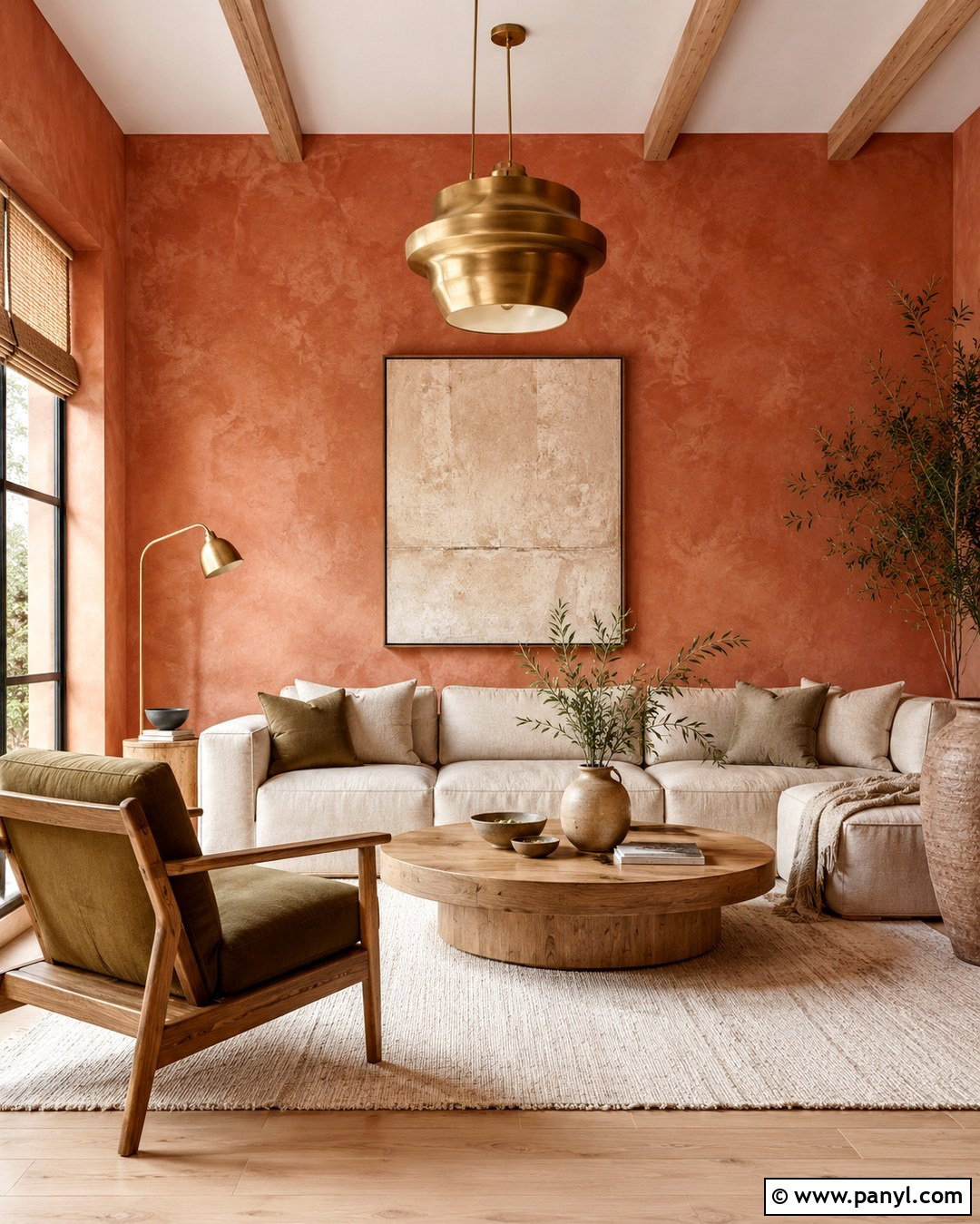
Subtle texture gives clay walls the movement and character of naturally aged plaster. Use a mineral-style, limewash-inspired, or softly brushed finish in a muted dusty terracotta. Its tonal variation becomes the main decorative feature, so pair it with uncomplicated furnishings. A flax linen sofa, pale oak tables, and a warm cream rug create a quiet foundation. Add handmade pottery, woven window shades, and sculptural lighting in aged brass or plaster. Keep artwork limited to one large neutral piece so the textured walls remain visible. Soft brown, charcoal, and olive accents can provide depth without disrupting the natural palette. The complete room feels tactile and relaxed, combining modern furniture with imperfect surfaces that appear warmer as daylight moves across them.
Conclusion:
The best clay color painted walls are supported by a complete palette rather than treated as an isolated splash of color. Cream upholstery and pale rugs can brighten deeper shades, while walnut, oak, brass, sage, navy, and olive bring out different undertones. Consider the room’s daylight, flooring, fixed finishes, and size before choosing between pale peach-clay and dark rust-clay paint. Sample the color on several walls and observe it during the morning, afternoon, and evening. You can then decide whether to paint one feature wall, all four walls, or the ceiling and trim as well. With thoughtful balance, clay paint can make kitchens, bedrooms, living rooms, bathrooms, and transitional spaces feel grounded, distinctive, and genuinely welcoming.

Related Ideas and Inspiration:
Leave a Reply