
Rose Colored Walls can make almost any room feel warmer, softer, and more inviting. The key is choosing a rose tone with undertones that suit the natural light, flooring, furniture, and overall mood of the space. Pale blush shades work like warm neutrals, while dusty rose, earthy pink, and deeper mauve create richer, more dramatic rooms. Rose also pairs beautifully with warm wood, crisp white, sage green, charcoal, navy, and brushed metals, giving it far more versatility than expected. () Whether you want a peaceful bedroom, polished living room, colorful kitchen, or memorable entryway, the following complete looks offer practical ways to decorate with Rose Colored Walls.
1. Dusty Rose Living Room Walls
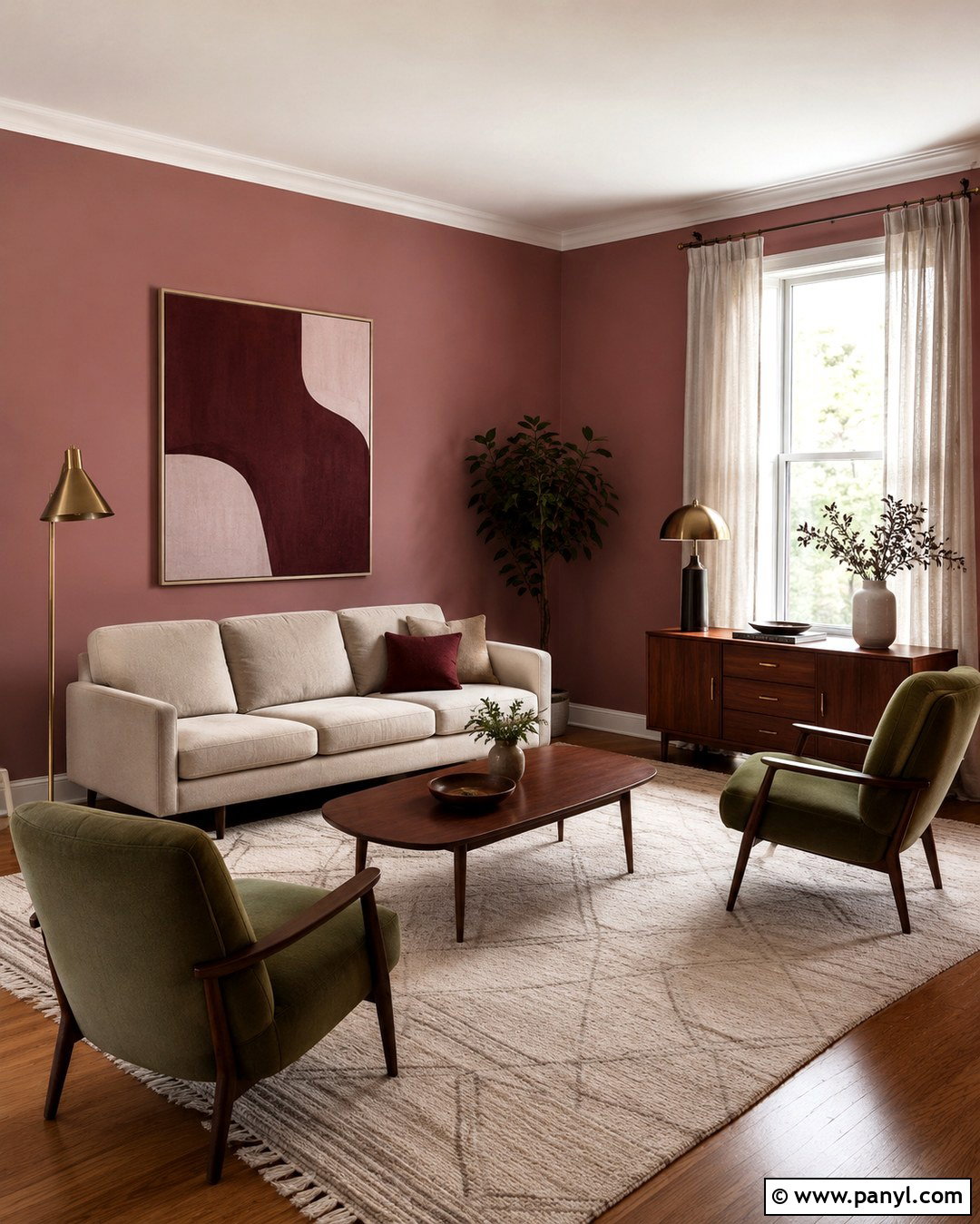
Dusty rose creates a living room that feels warm and sophisticated without becoming overly sweet. Paint every wall in a muted rose with gray or brown undertones, then add a streamlined oatmeal sofa and two olive green accent chairs. A medium-tone walnut coffee table gives the soft palette visual weight. Ground the seating area with a cream rug featuring a subtle geometric pattern. Linen curtains, aged brass lamps, and abstract artwork in burgundy, beige, and charcoal complete the room. Keep the ceiling and baseboards warm white so the rose remains clear but not overpowering. Dark wood furniture and cooler neutral upholstery can provide useful balance in a larger rose-colored living space. ()
2. Pale Rose Bedroom Walls
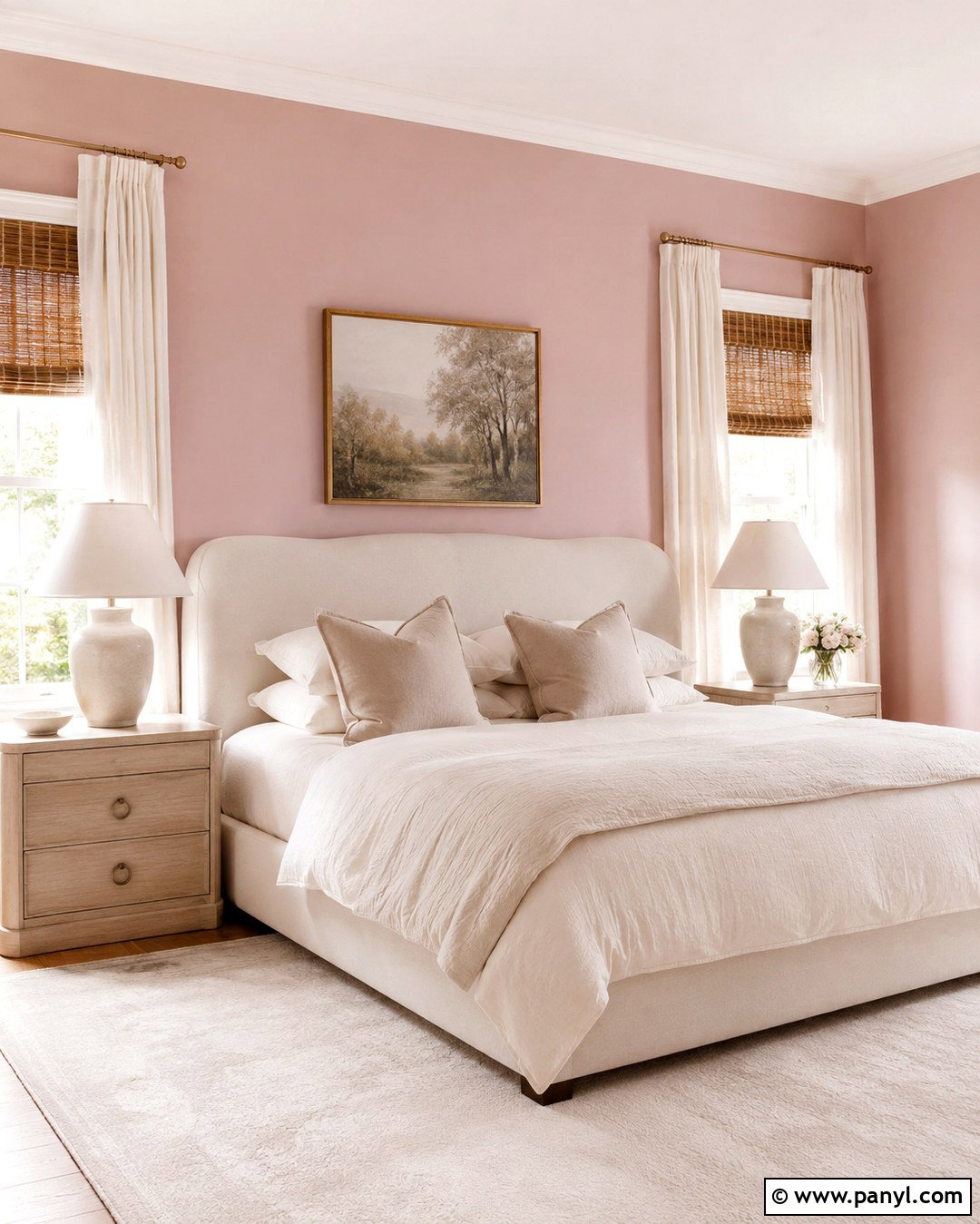
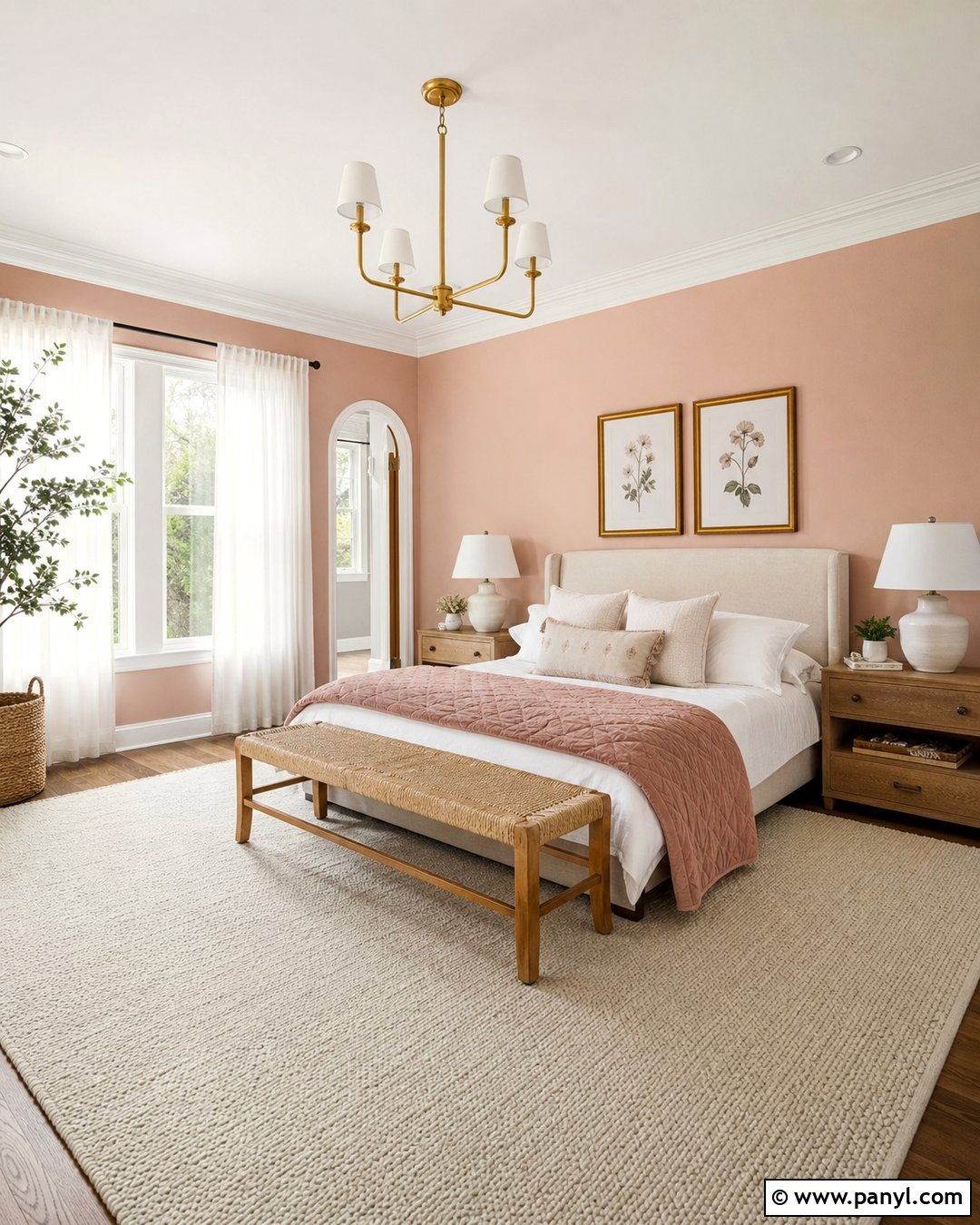
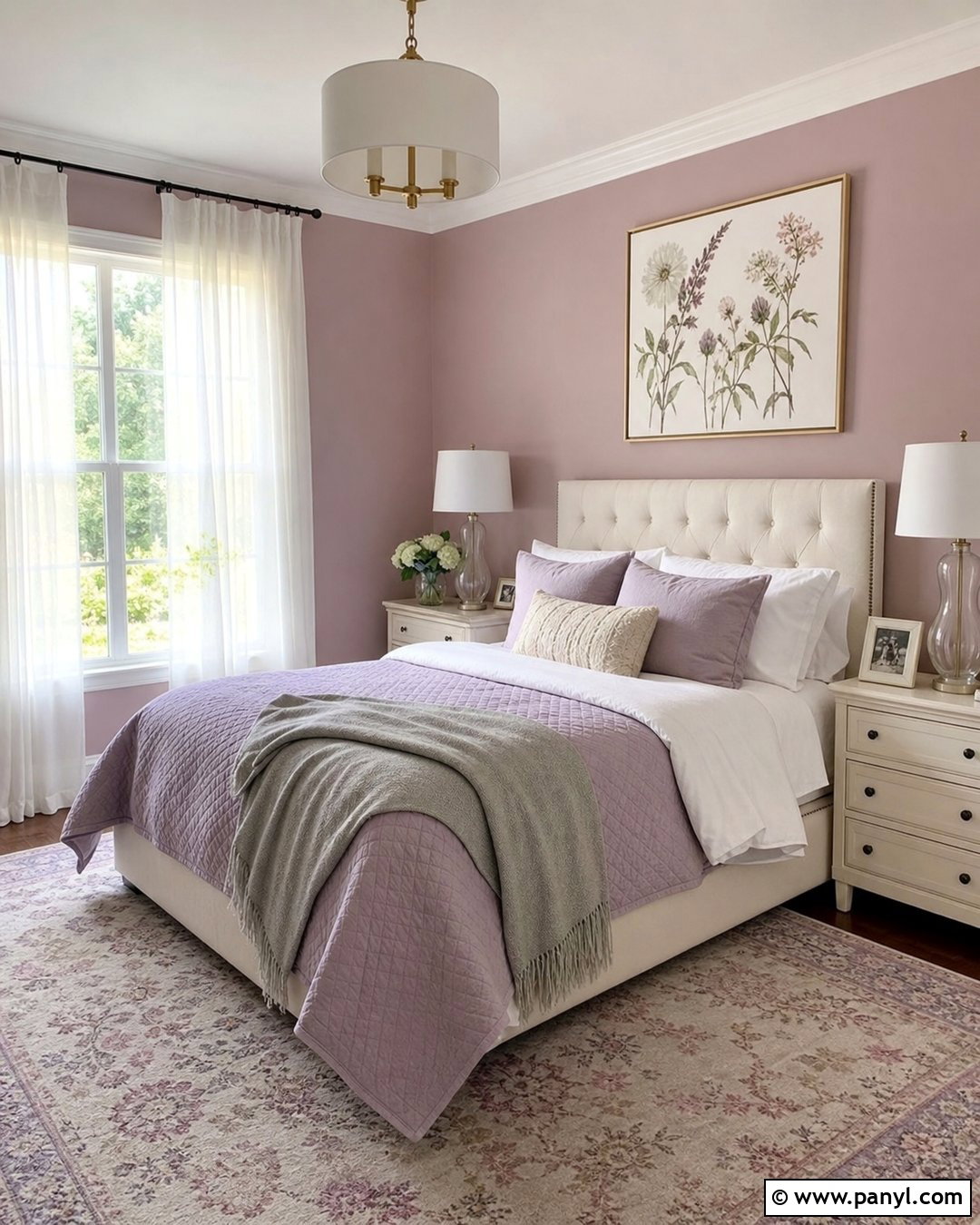
Imagine waking up in a bedroom filled with soft, flattering color. Pale rose walls can provide that gentle atmosphere while still working as a versatile background. Choose a quiet petal shade with beige undertones and combine it with an upholstered cream bed, white oak nightstands, and simple linen bedding. Layer the bed with taupe, ivory, and muted berry pillows for depth. Natural woven shades filter strong sunlight, while full-length off-white curtains soften the windows. Add a light wool rug and two ceramic table lamps with linen shades. Keep artwork minimal and use slim antique brass frames. The finished bedroom feels restful and grown-up because the shapes remain tailored and the supporting colors stay natural.
3. Rose Walls With Sage Green Decor
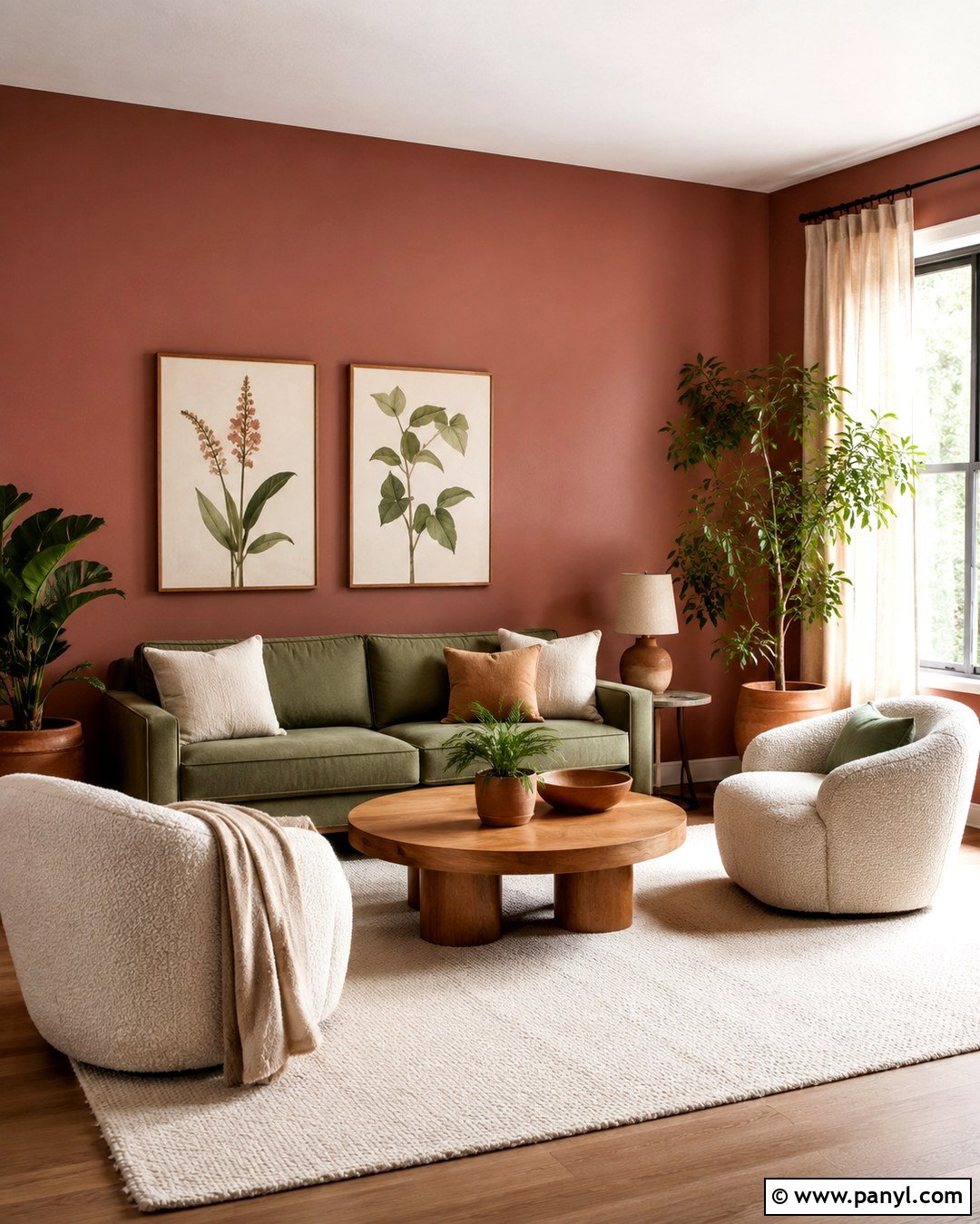
Rose and sage create a balanced color scheme inspired by gardens and weathered botanical prints. Use medium dusty rose across the living room walls, then place a comfortable sage green sofa against the longest wall. Add a pair of cream bouclé chairs, an oak coffee table, and a large ivory rug to keep the room bright. Botanical artwork can repeat both colors without making the arrangement feel themed. Choose linen curtains in natural beige and finish the windows with matte black rods. Terracotta planters, leafy houseplants, and aged brass lighting add warmth and texture. This complete palette works best when the green is muted rather than bright, allowing the rose walls to remain the welcoming foundation of the space.
4. Rose Walls With Navy Blue Furniture
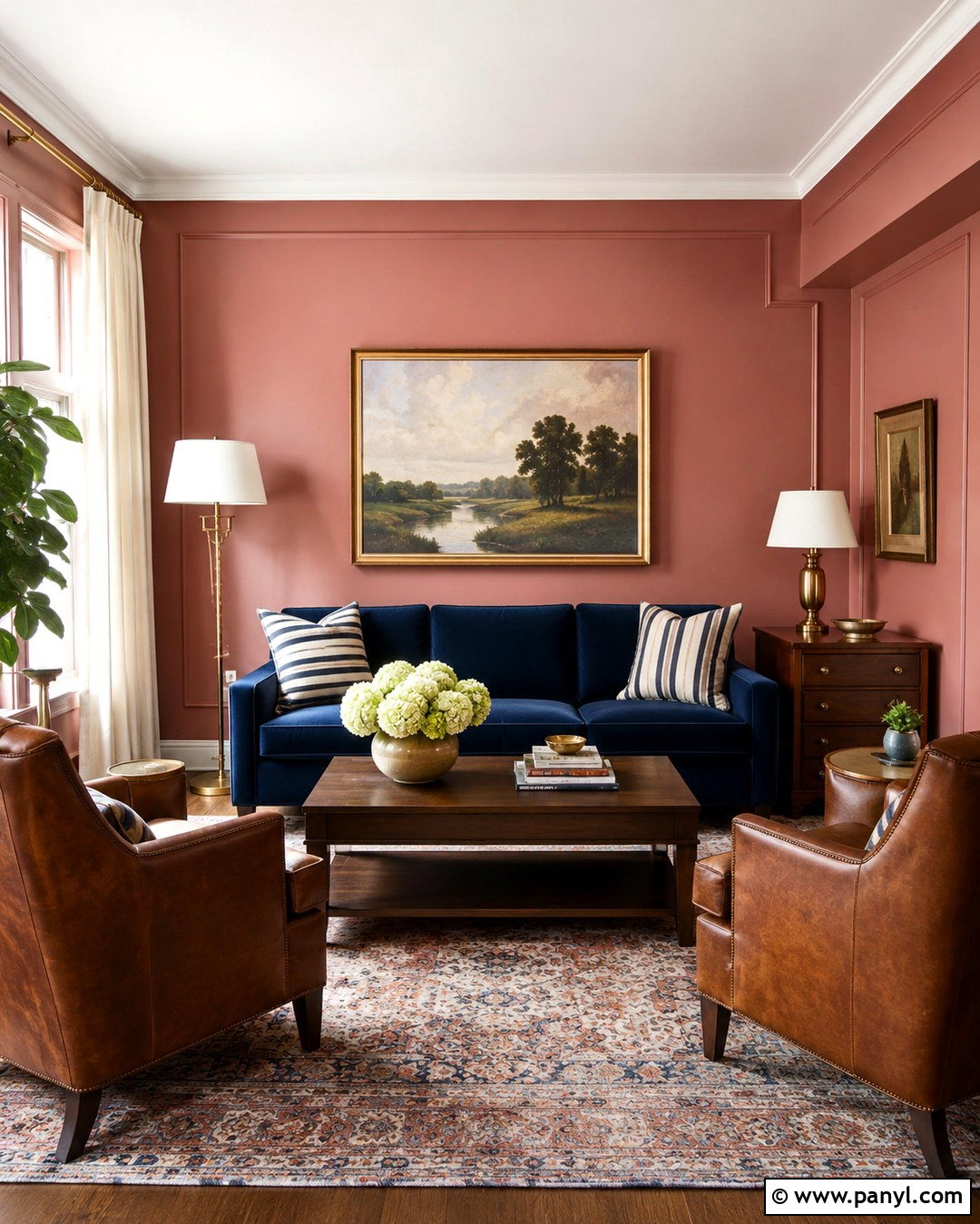
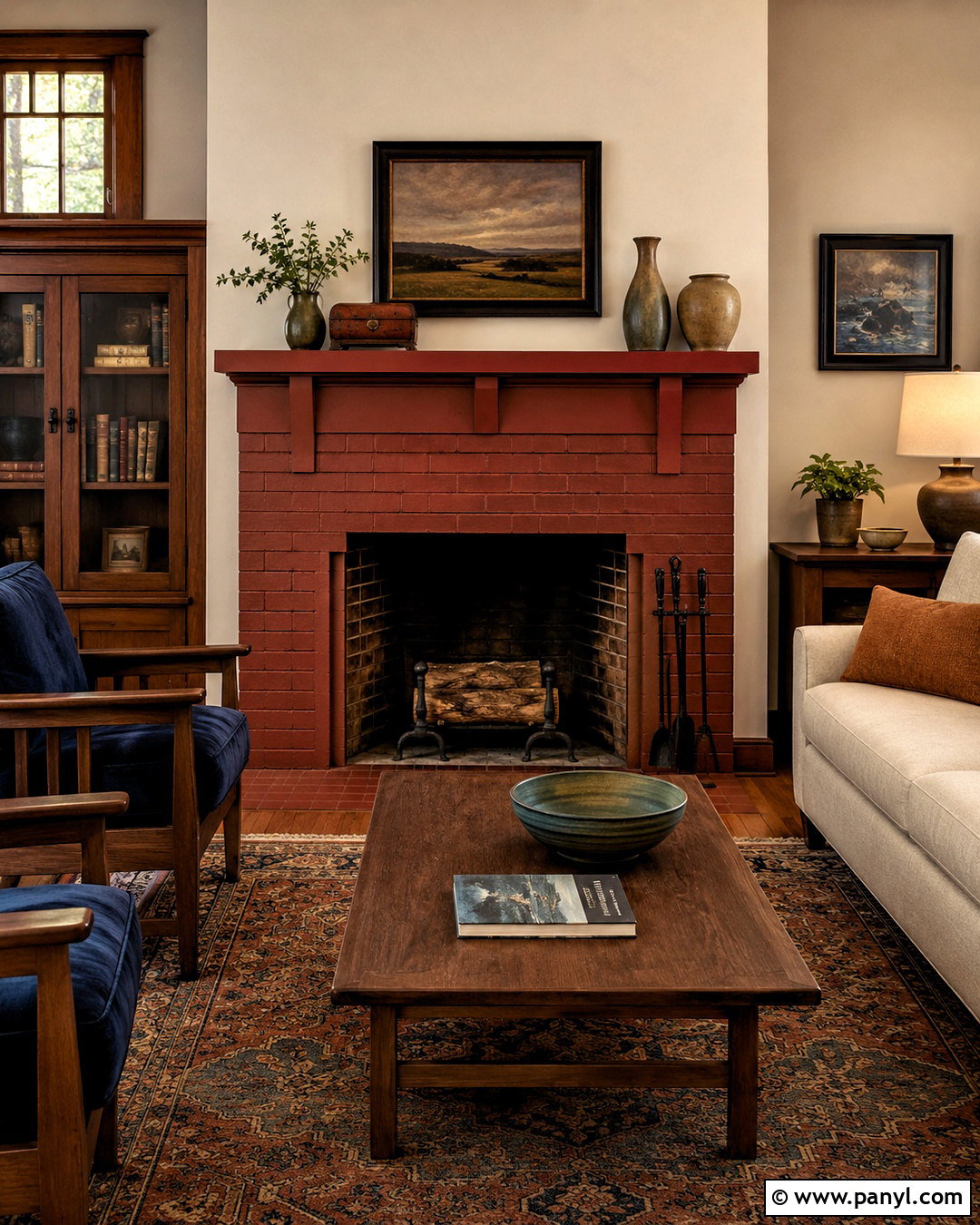
For a strong, tailored room, contrast warm rose walls with deep navy blue furniture. Start with an earthy rose paint that has enough depth to hold its own beside a navy velvet sofa. Add two cognac leather chairs and a dark walnut coffee table to make the palette feel layered rather than sharply divided. A vintage-style rug combining faded rose, blue, cream, and rust ties every major color together. Hang large landscape artwork above the sofa in dark wood frames. Crisp ivory curtains and a warm white ceiling prevent the room from feeling heavy. Finish with brass floor lamps, striped pillows, and one sculptural ceramic vase. The result is colorful, comfortable, and suitable for an everyday family living room.
5. Rose Accent Wall Bedroom
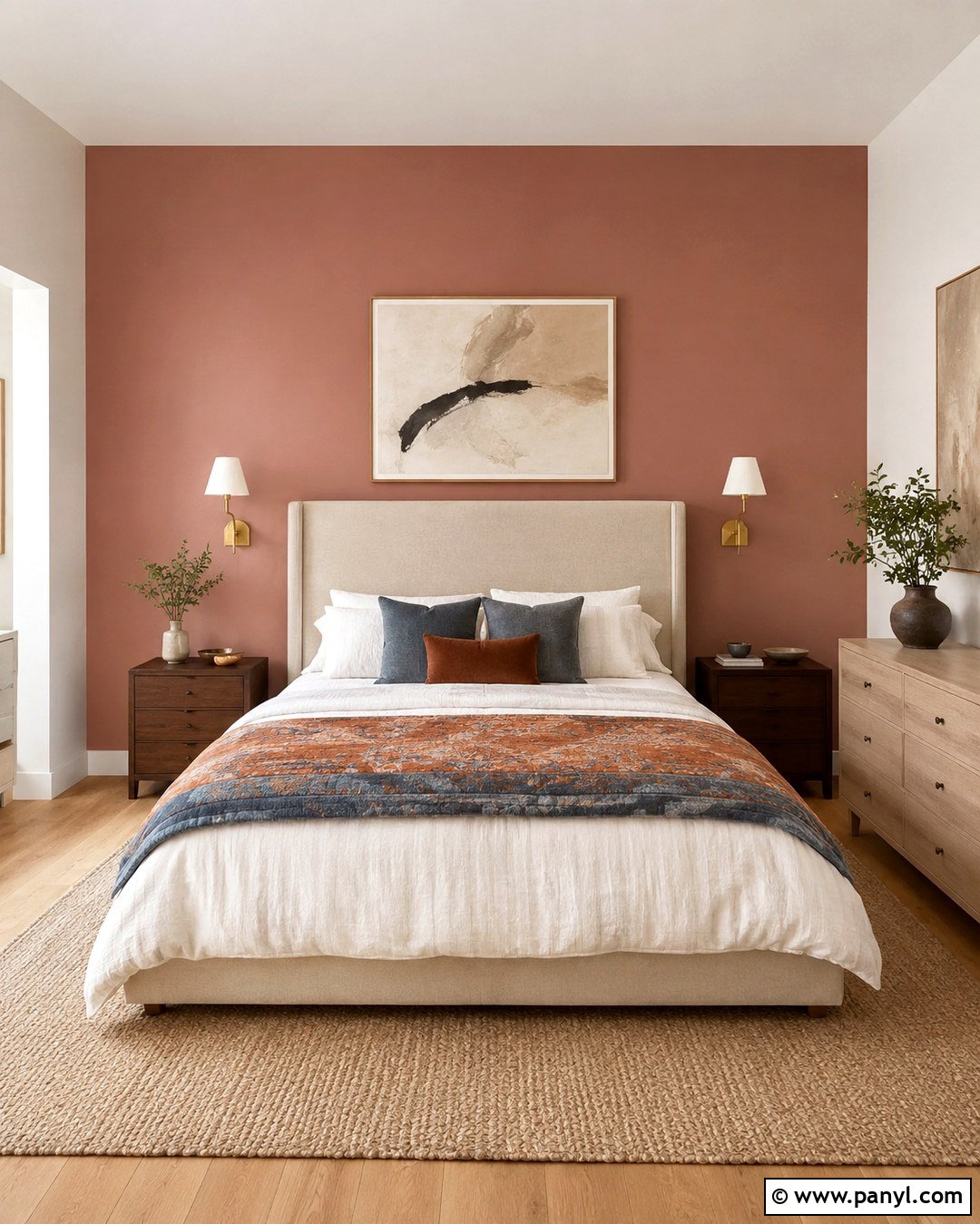
Not ready to cover an entire room? A rose accent wall behind the bed delivers color while preserving an airy feeling. Select a moderately saturated dusty rose and paint the remaining walls soft warm white. Place a tall oatmeal linen headboard against the colored wall, then use walnut nightstands on each side for symmetry. White bedding keeps the look fresh, while a quilt and pillows in rust, blush, and muted blue connect the palette. Install simple brass sconces above the nightstands to leave the surfaces uncluttered. A neutral wool rug and pale oak dresser balance the darker wood. Complete the bedroom with one wide piece of abstract art, ensuring the accent wall looks purposeful rather than like an unfinished paint decision.
6. Rose Walls With White Trim
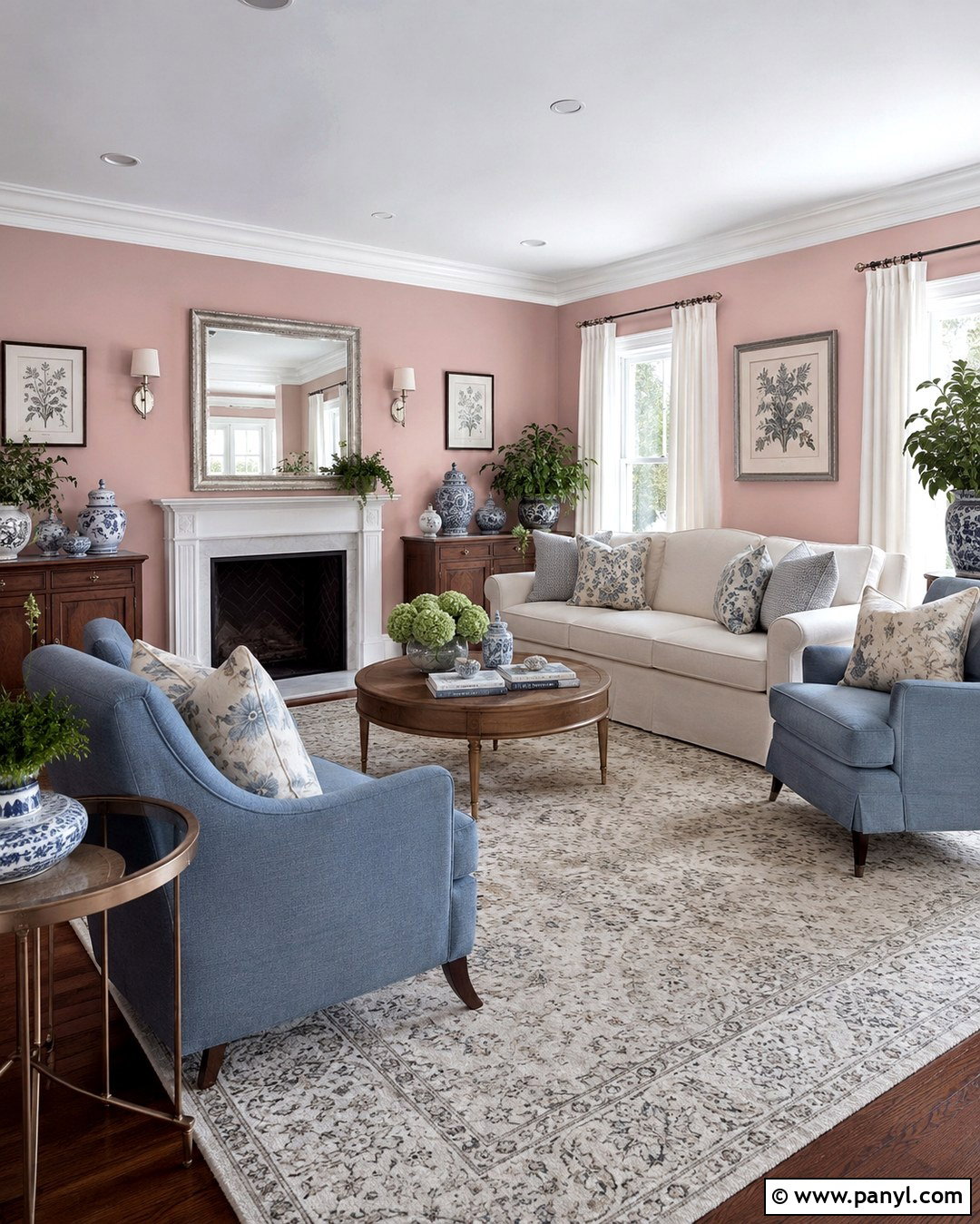
Crisp white trim gives rose walls a clean architectural outline and helps even a small room appear polished. Use a soft mid-tone rose on the walls of a traditional sitting room, then paint the crown molding, baseboards, window casings, and paneled doors in a bright neutral white. Furnish the space with a cream slipcovered sofa, two blue-gray armchairs, and a round oak coffee table. A patterned rug in ivory, rose, and faded blue connects the contrasting surfaces. Hang relaxed white curtains just below the crown molding to emphasize height. Blue-and-white ceramics, silver picture frames, and simple green plants introduce cool details. This scheme works especially well in rooms with substantial millwork that deserves to be highlighted.
7. Dark Rose Dining Room Walls
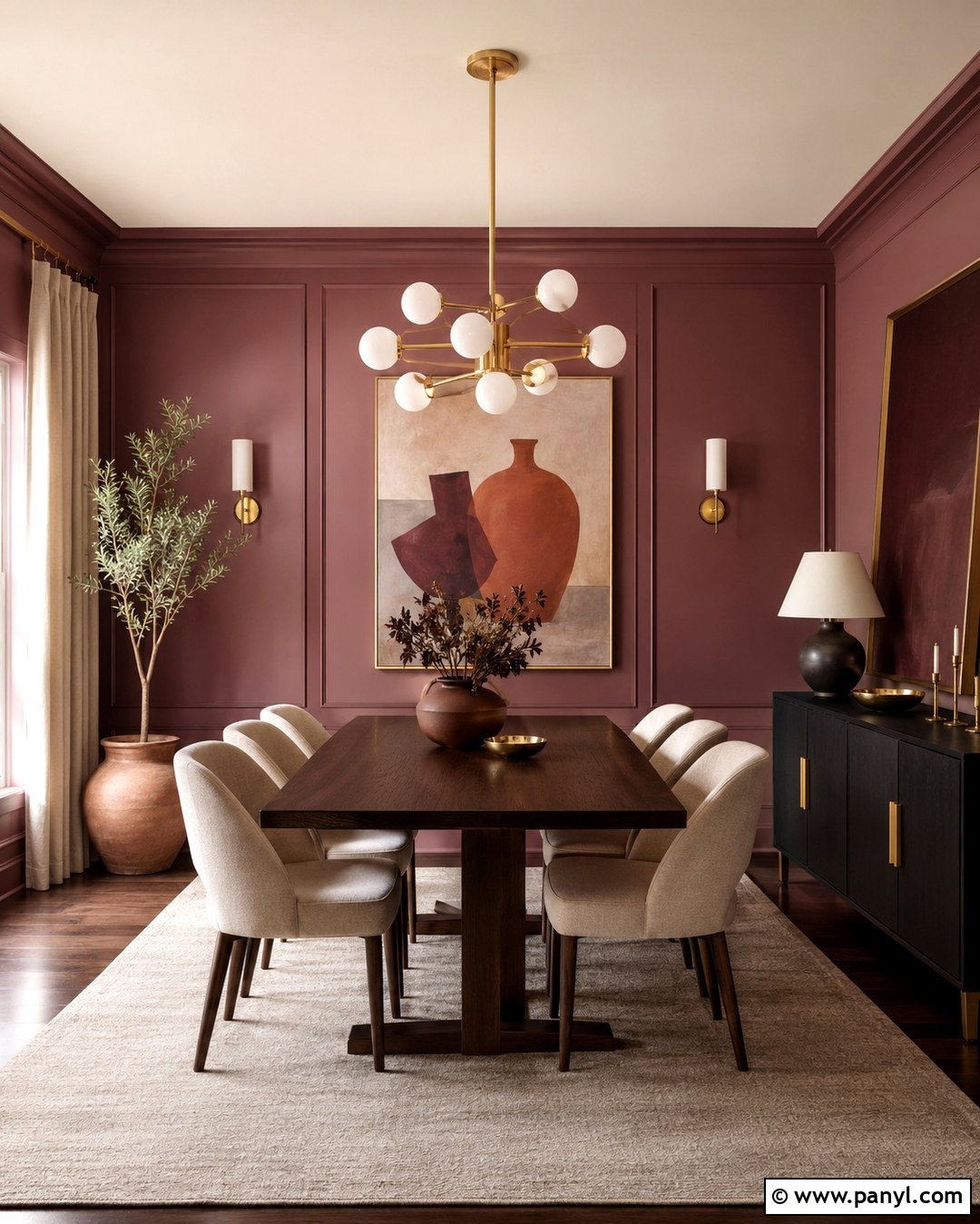
A dining room can handle a deeper rose because it is often used for shorter, more atmospheric gatherings. Cover the walls in a rich brown-based rose, then balance the color with a rectangular walnut dining table and chairs upholstered in warm beige. Hang a large opal glass chandelier above the center of the table for bright, even illumination. Full-length flax linen curtains soften the walls without creating harsh contrast. A low black sideboard adds a modern edge and provides useful storage. Display oversized abstract artwork containing cream, terracotta, and plum tones. Underfoot, choose a generously sized neutral rug that allows every chair to remain on the surface when pulled out. Brass candlesticks and simple ceramic bowls finish the composed look.
8. Rose Walls With Black Accents
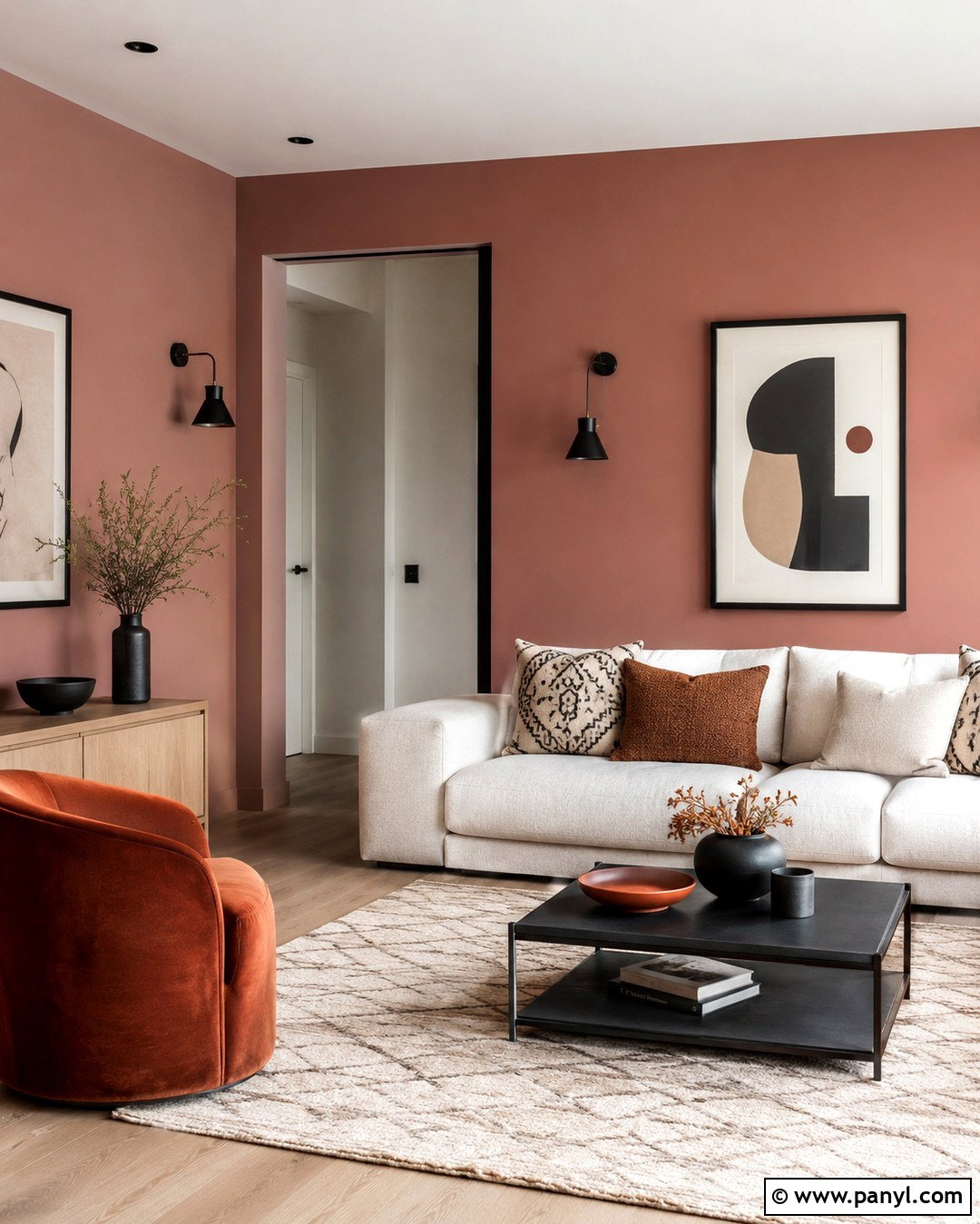
Black accents can make rose-colored rooms feel graphic, modern, and grounded when they are used with restraint. Paint the walls a soft clay rose and choose a low-profile cream sofa as the main furniture piece. Introduce black through slim window frames, a metal coffee table, two contemporary wall sconces, and narrow artwork frames. Light oak flooring and a large natural wool rug stop the contrast from becoming severe. Add one rust velvet chair and a few patterned cushions that combine pink, ivory, and black. Keep larger storage pieces in pale wood rather than solid black. The finished living room feels structured because the dark accents trace key shapes, while the rose walls and tactile neutral fabrics maintain an inviting sense of warmth.
9. Rose Color-Drenched Home Office
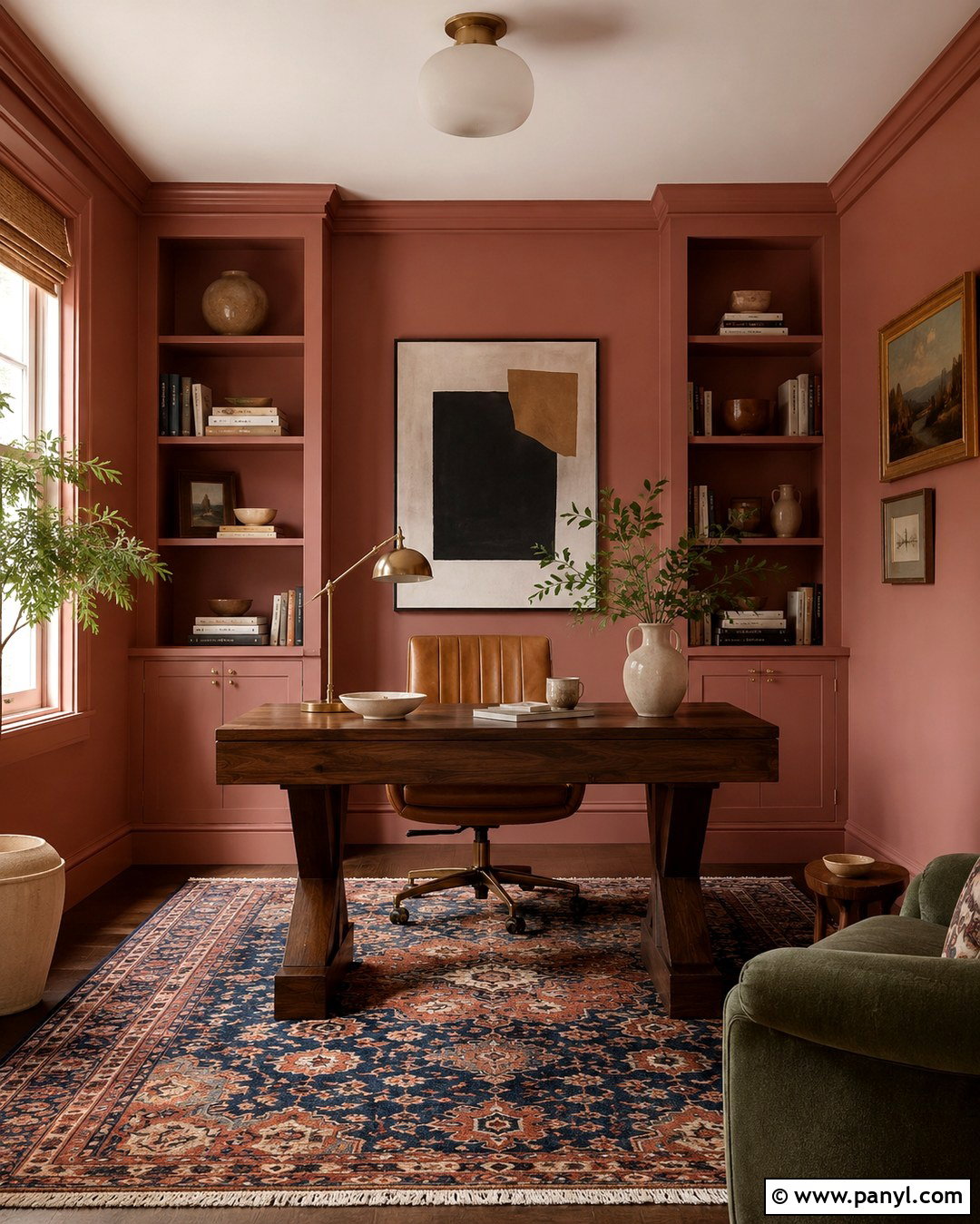
Turn a compact office into an immersive workspace by applying muted rose to the walls, ceiling, trim, and built-in shelving. This color-drenched approach reduces visual breaks and can make awkward architectural details feel intentional. Choose an earthy rose with gray undertones so the room remains calm during long work sessions. Position a walnut desk in the center or facing the window, paired with a comfortable camel leather chair. Fill the shelves selectively with books, lidded storage boxes, and cream ceramics. A patterned flat-weave rug introduces navy and rust for contrast. Install a white globe pendant and an adjustable brass desk lamp for practical lighting. Natural linen Roman shades complete a focused office that feels distinctive without becoming distracting.
10. Rose Walls With Natural Wood
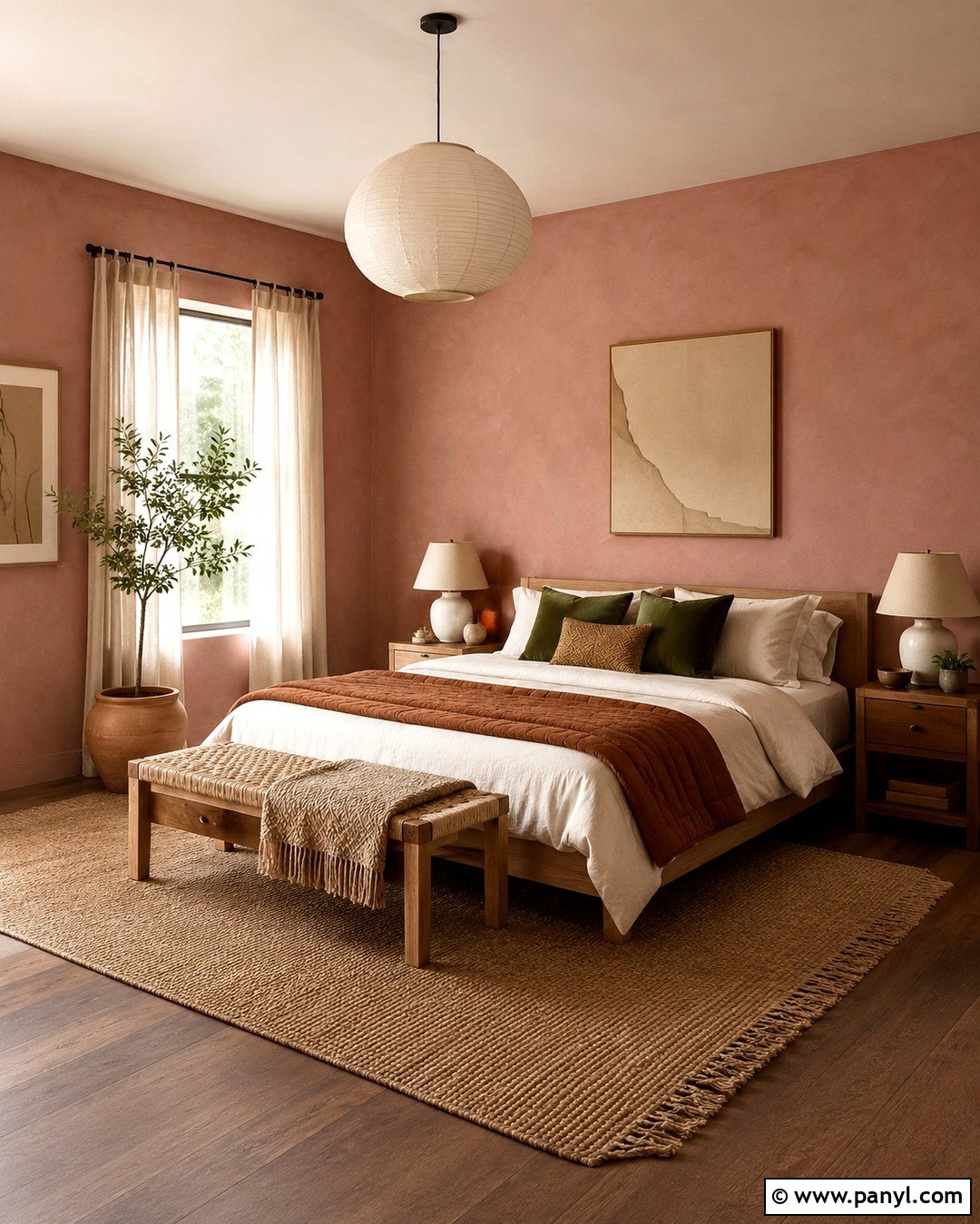
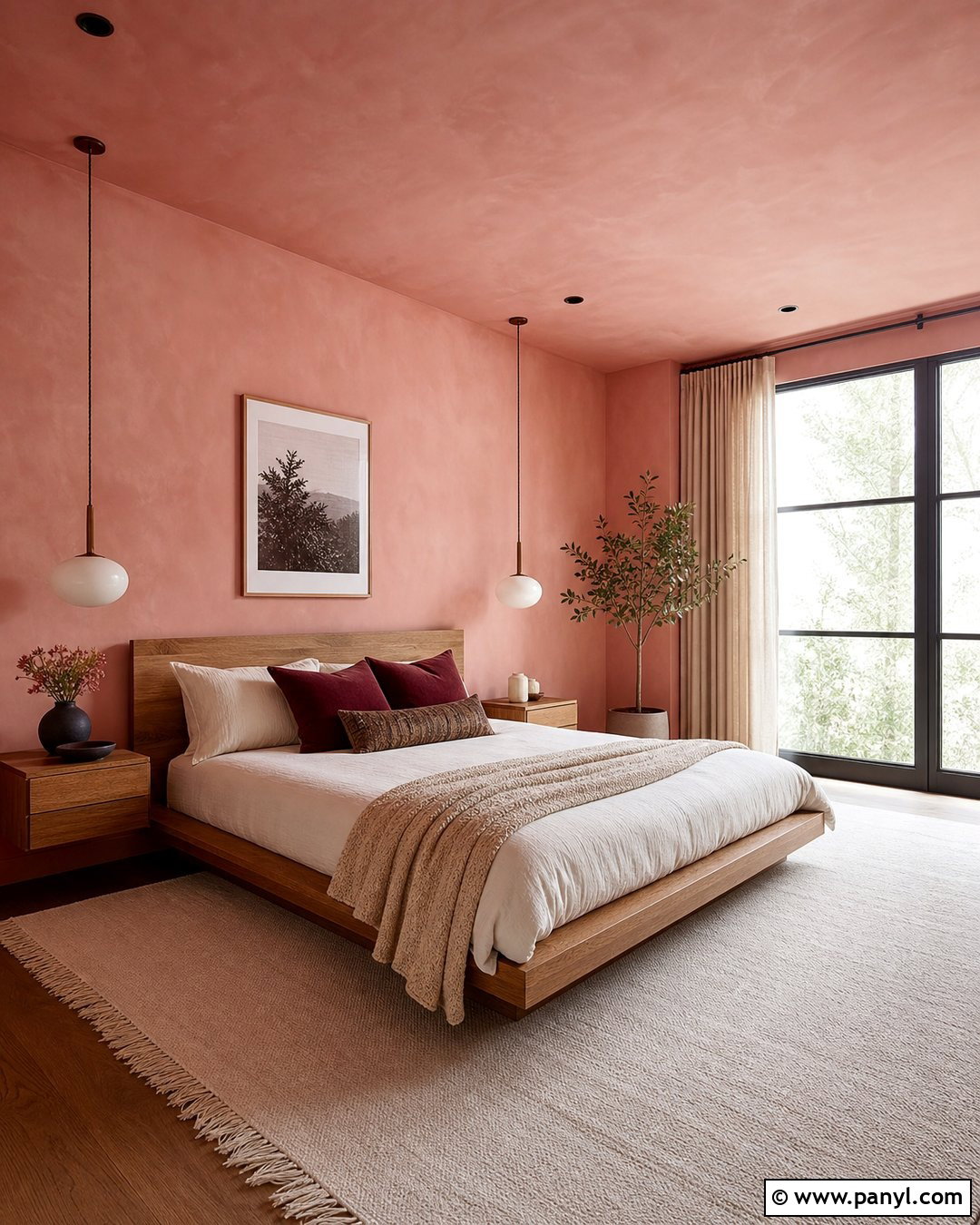
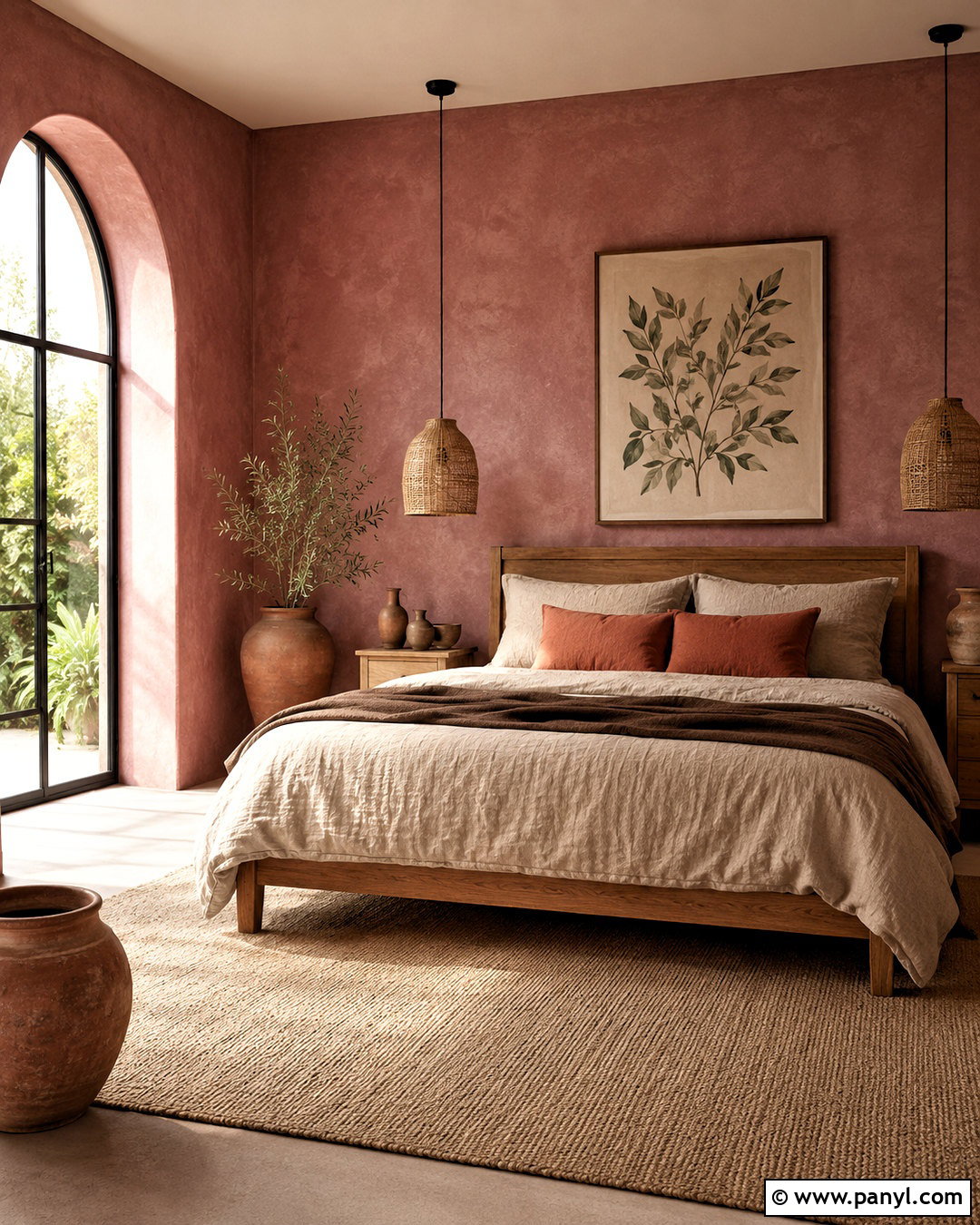
Warm wood brings out the earthy side of rose paint and creates a relaxed, organic room. Choose a muted plaster-like rose for the walls and combine it with a low white oak bed, matching nightstands, and a woven bench. Dress the bed in ivory linen with a cinnamon quilt and a small number of olive accent pillows. A jute-and-wool rug adds texture while remaining comfortable underfoot. Use simple ceramic lamps, unbleached linen curtains, and handcrafted wall art to continue the natural theme. Avoid glossy finishes and overly ornate accessories. Instead, emphasize visible wood grain, soft fabrics, and rounded shapes. The resulting bedroom feels peaceful and collected, with every material reinforcing the warmth of the rose-colored background.
11. Rose Walls With Brass Details
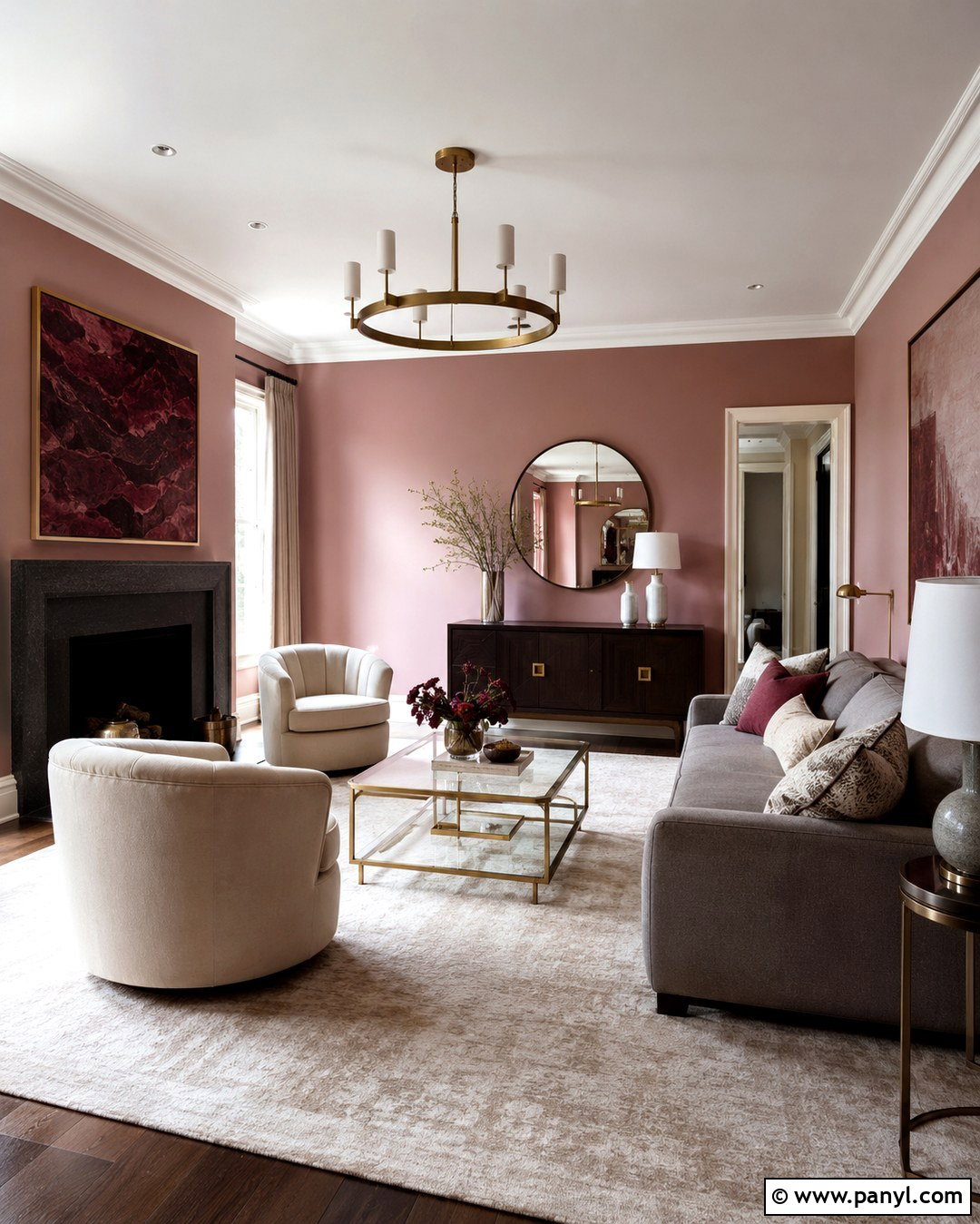
The gentle glow of brushed brass can elevate rose walls without pushing the room into an overly glamorous direction. Use a refined dusty rose in a formal living room, then anchor the arrangement with a warm gray sofa and two curved cream chairs. Introduce brass through a glass coffee table, picture lights, floor lamps, and small cabinet hardware. Keep these metal details consistent in finish so the room remains cohesive. A charcoal fireplace surround or dark wood media cabinet adds necessary depth. Select an ivory rug and understated curtains that closely match the trim. Artwork in burgundy, ochre, and muted green broadens the palette. With balanced furniture and controlled metallic accents, the finished space feels elegant, comfortable, and suitable for daily use.
12. Rose Walls With Gray Furniture
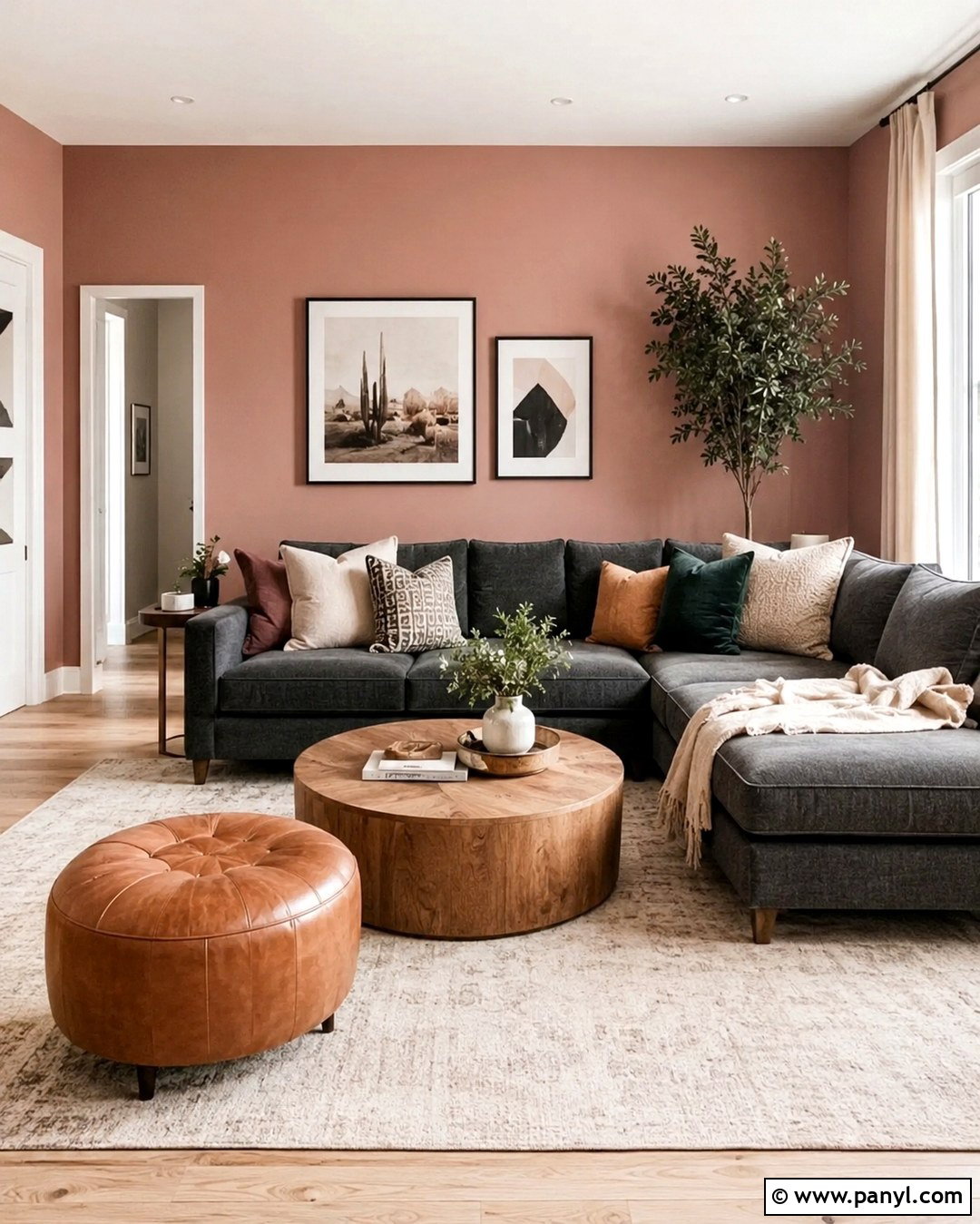
A cool gray sofa can sharpen rose walls and create a balanced room that appeals to many decorating preferences. Select a medium rose with subtle beige undertones rather than a sugary pastel. Place a structured charcoal-gray sectional along the main wall and soften it with ivory, dusty pink, and dark green pillows. Add a round oak coffee table to warm the cool upholstery. A large cream rug brightens the floor, while black-framed artwork and a simple black floor lamp add definition. Hang natural linen curtains for an easy transition between the pink walls and white window trim. Finish with a leather ottoman and a tall plant. The overall living room looks practical and mature, with enough contrast to keep every element visually distinct.
13. Rose Walls With Floral Wallpaper
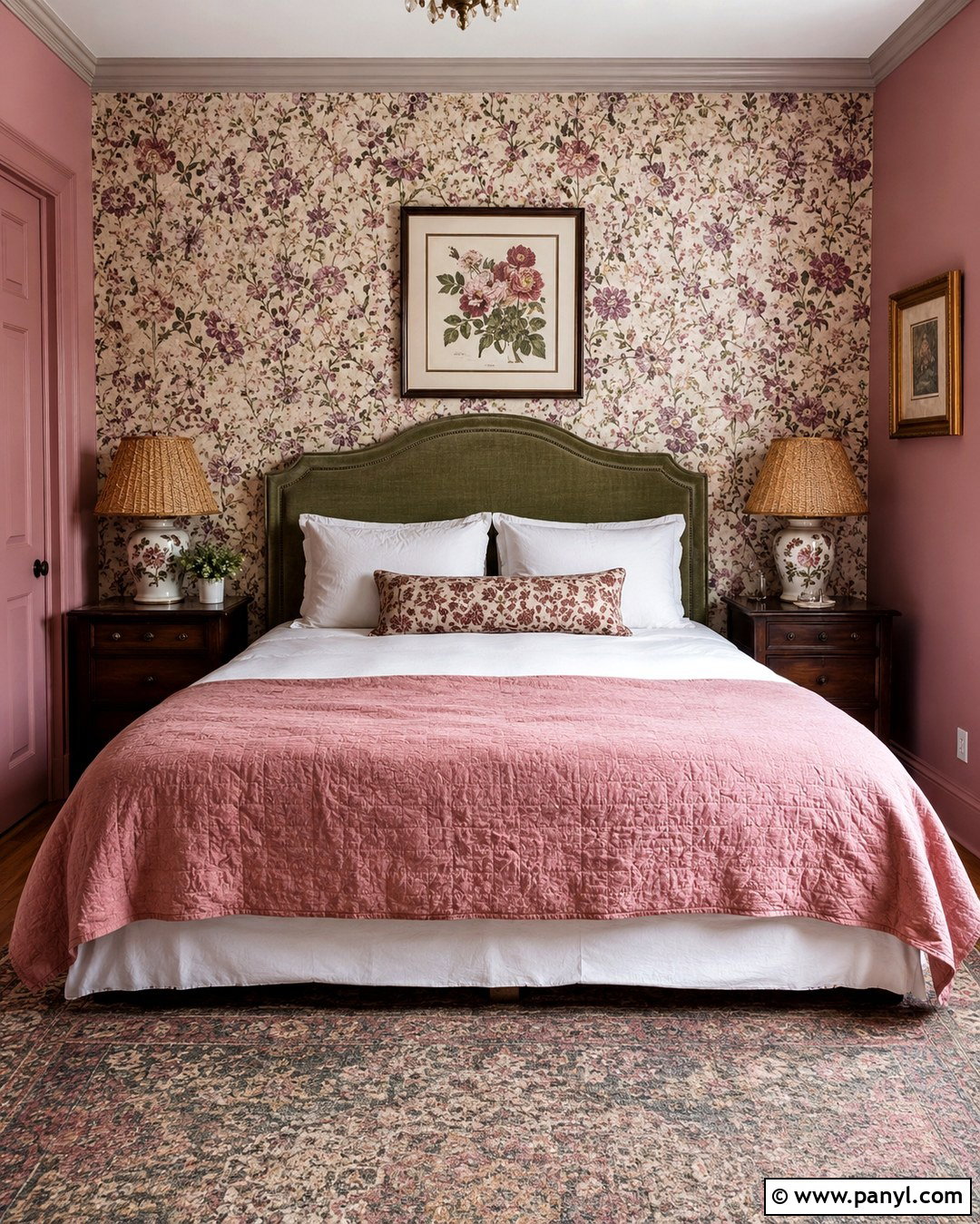
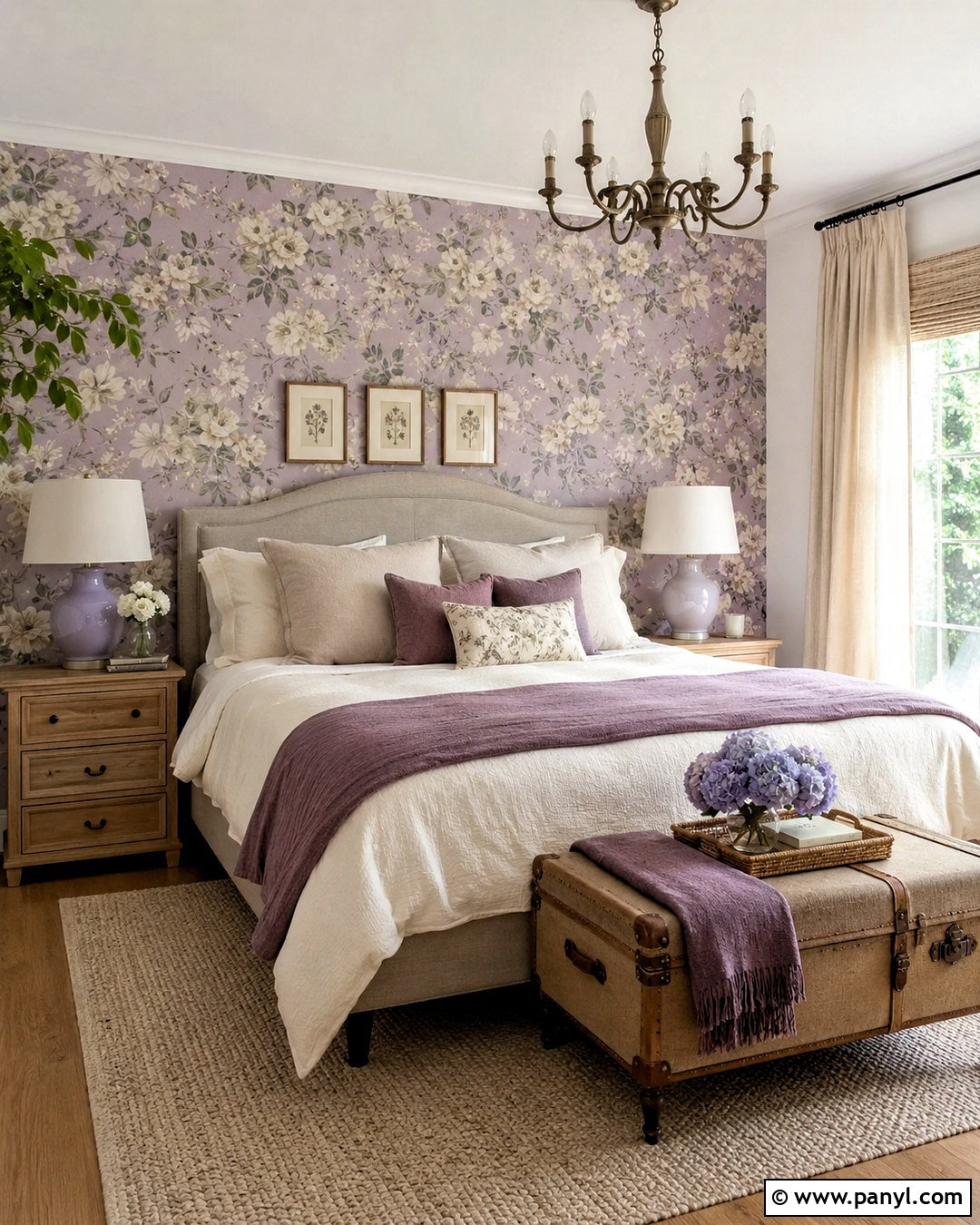
Would you like more pattern without covering every wall? Combine muted rose paint with floral wallpaper on one carefully chosen surface. In a guest bedroom, paint three walls a soft antique rose and wallpaper the wall behind the bed with a large botanical print containing cream, green, plum, and matching pink. Choose an upholstered olive headboard, white bedding, and a faded rose coverlet. Dark wood nightstands prevent the floral scheme from feeling too delicate. Add cream ceramic lamps and woven window shades for natural texture. Keep other artwork minimal because the wallpaper already provides a focal point. A small vintage-style rug can repeat the greens and burgundies. This layered room feels welcoming, coordinated, and intentionally decorative from every viewpoint.
14. Rose Bathroom Walls
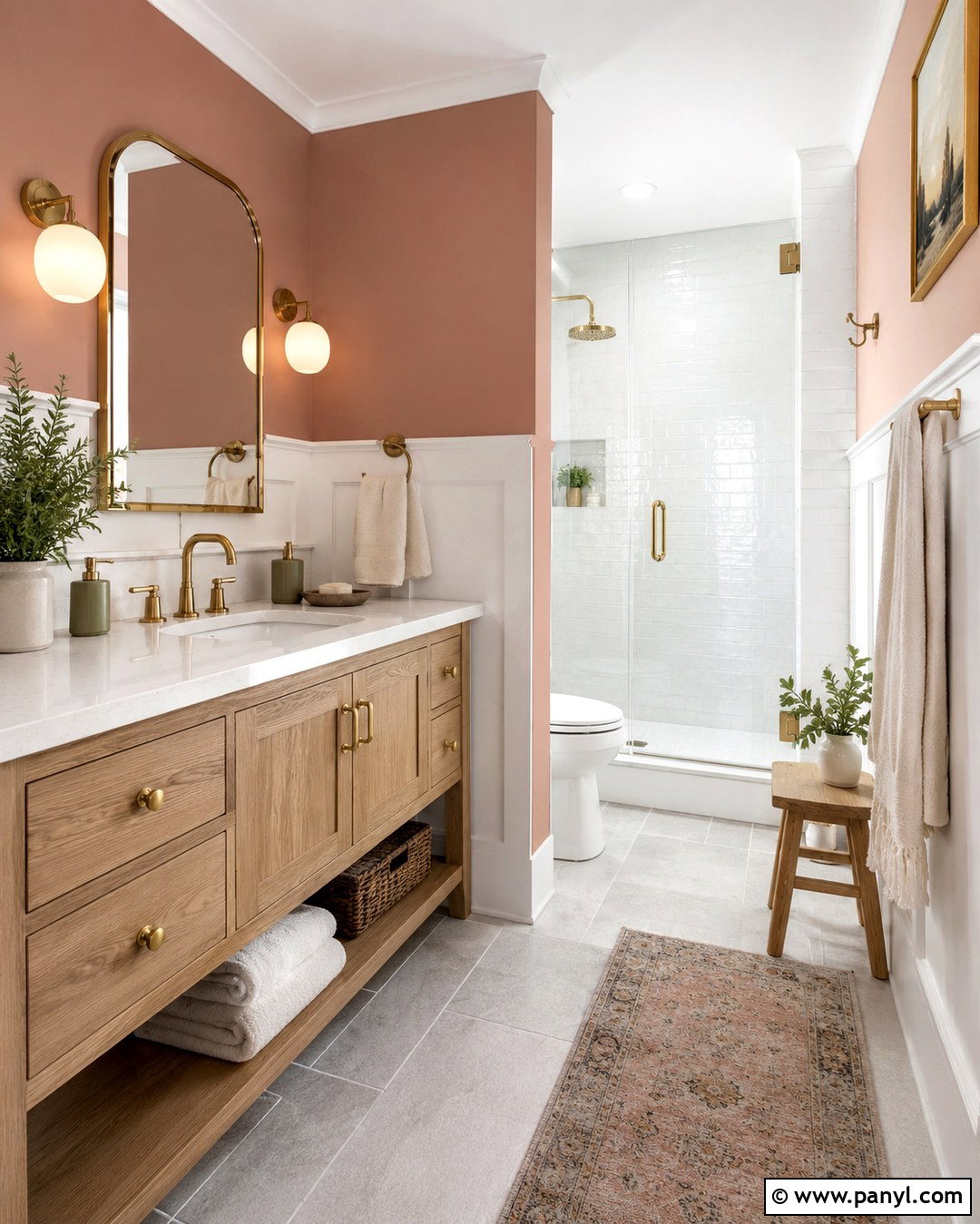
Rose paint can warm up the hard surfaces commonly found in a bathroom. Apply a soft earthy rose above white vertical wall paneling, keeping the lower half durable and easy to clean. Install a light oak vanity with a white quartz top, an undermount sink, and brushed brass hardware. A rounded brass mirror and two opal glass sconces create a polished focal area. Use white tile in the shower and pale gray porcelain tile across the floor to balance the wall color. Towels in ivory and muted olive add gentle contrast. Include a simple framed print and one leafy plant if natural light permits. The complete bathroom feels bright and fresh, while the rose upper walls provide warmth that an entirely white scheme might lack.
15. Rose Kitchen Walls
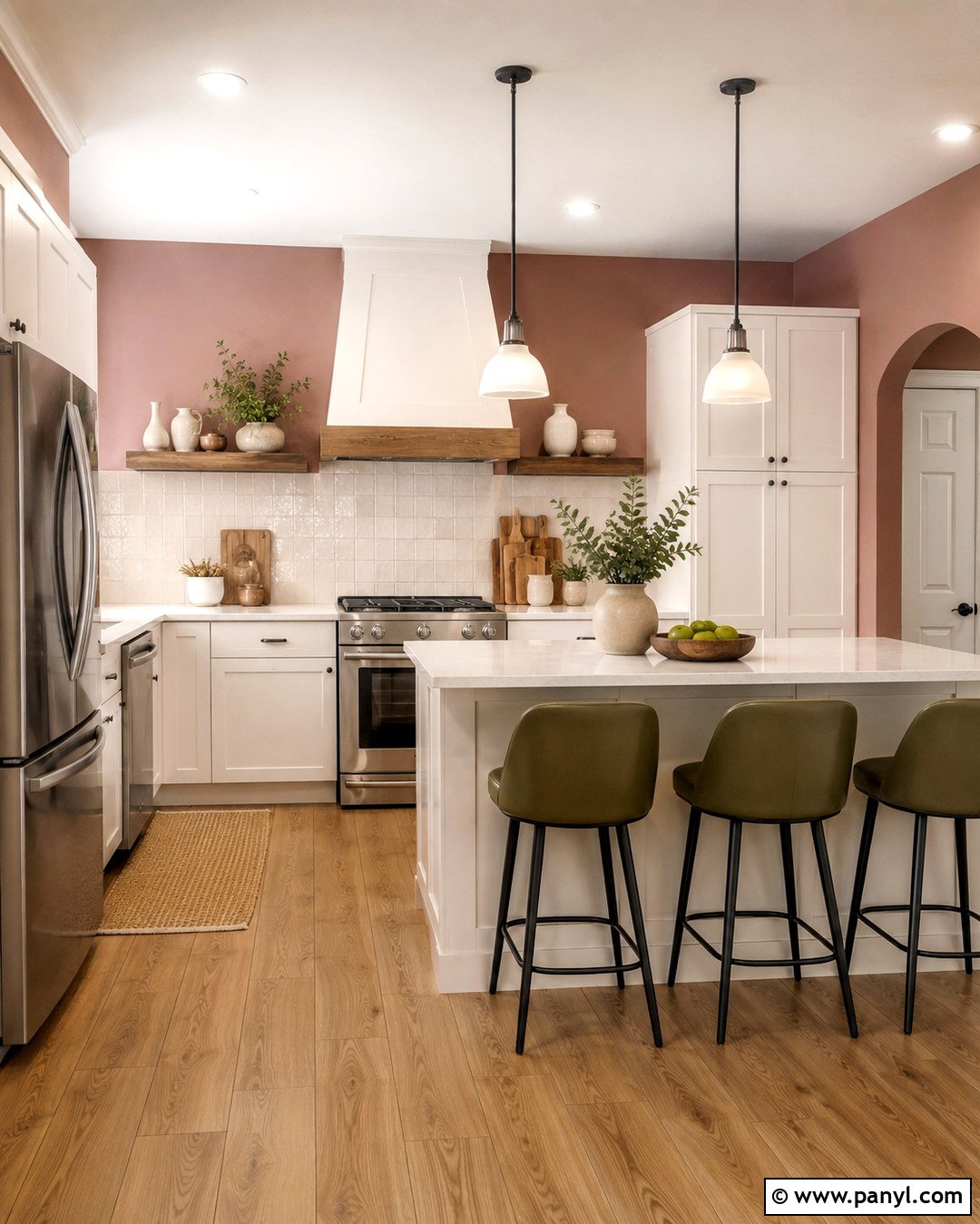
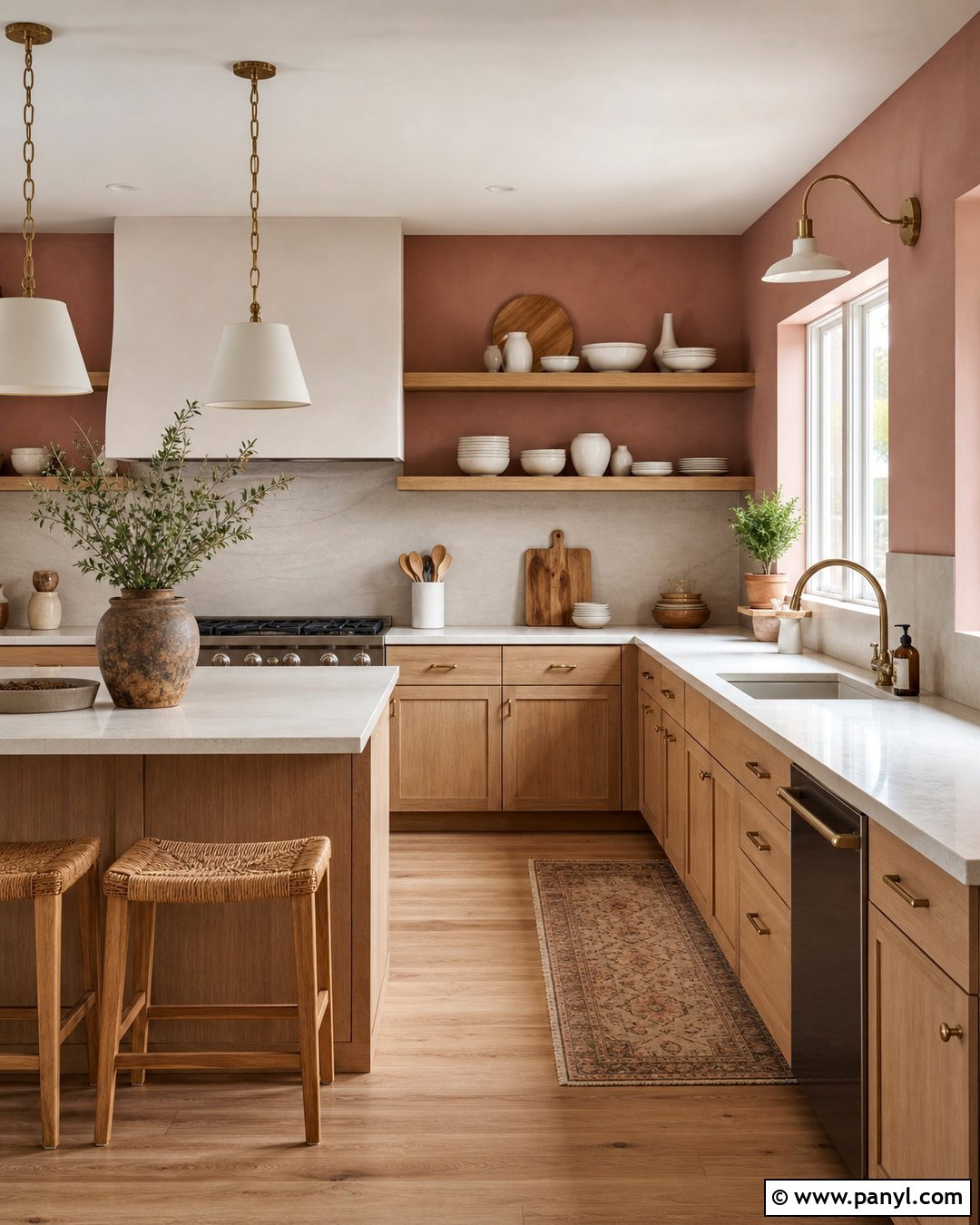
Rose walls can bring personality to a kitchen without requiring colorful cabinets or expensive remodeling. Paint the open wall areas a muted blush rose and pair them with warm white Shaker cabinets. Choose honed white quartz counters, a creamy rectangular tile backsplash, and medium oak flooring for a bright foundation. Matte black cabinet pulls and a black bridge faucet introduce crisp definition. Over the island, hang two simple milk-glass pendants with dark metal fittings. Upholster counter stools in olive green or use green-painted wood seats to create contrast. Keep appliances in stainless steel and display only a few wood cutting boards and neutral ceramics. The finished kitchen feels warm, modern, and approachable, with the rose paint acting as a distinctive but livable background.
16. Rose Entryway Walls
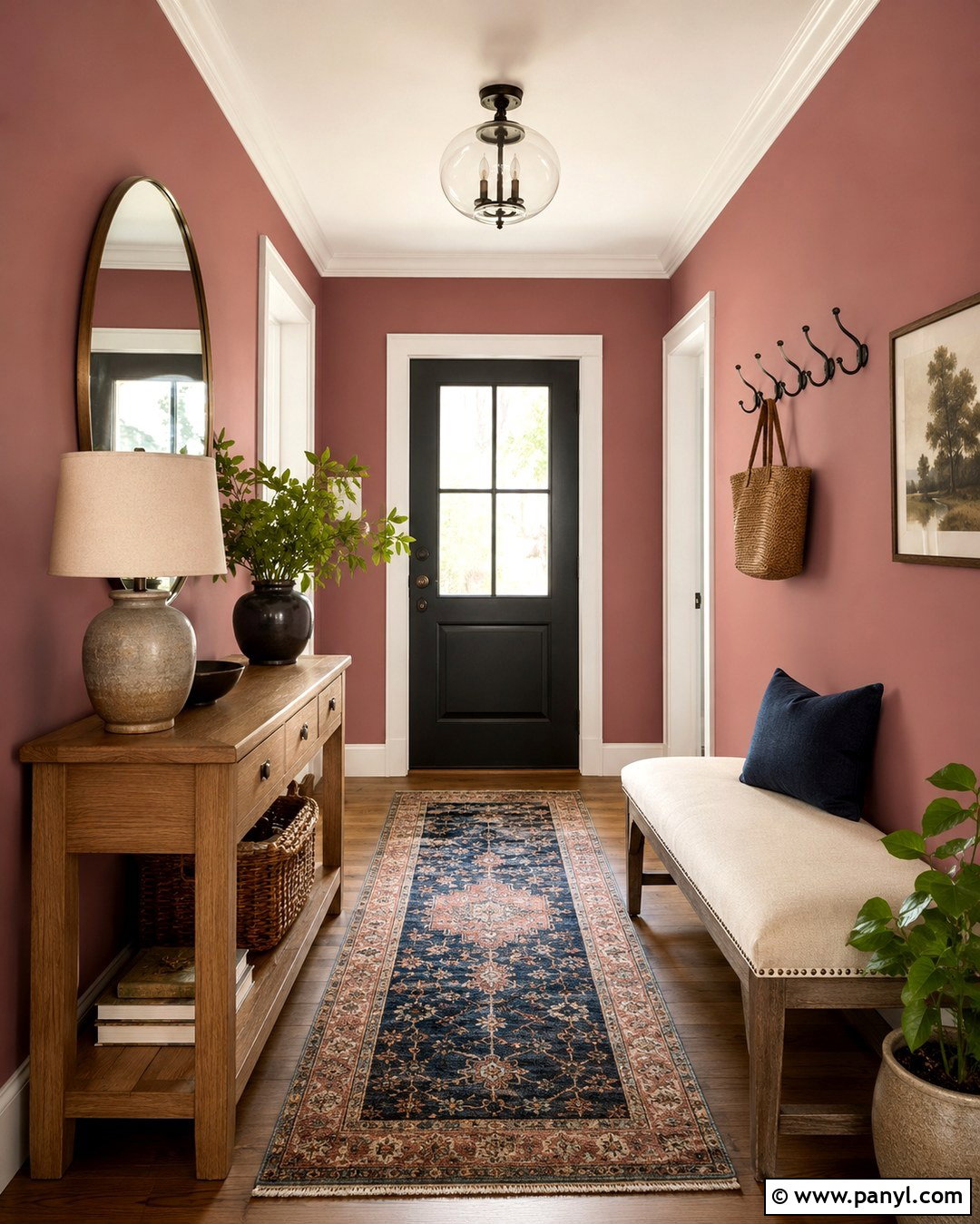
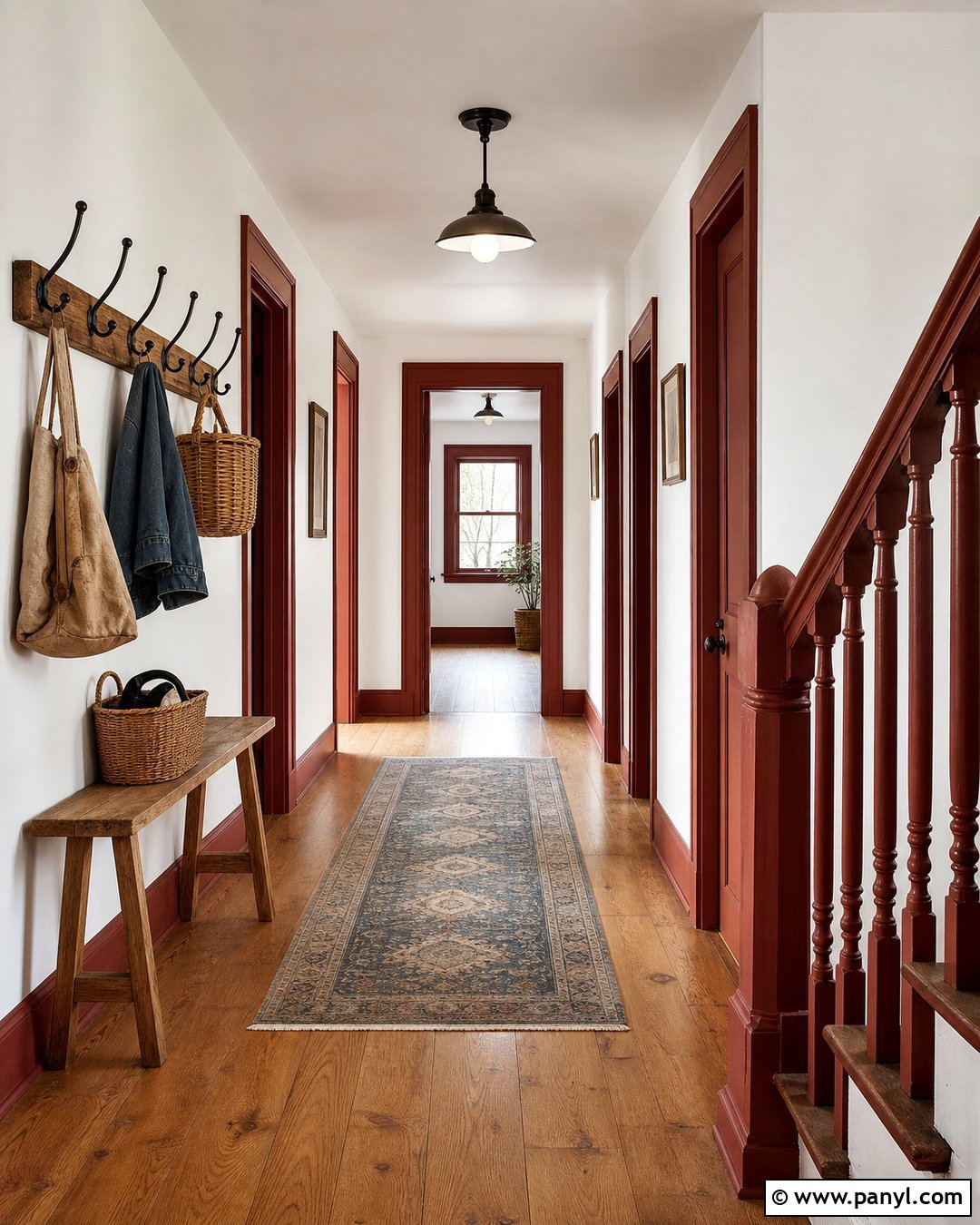
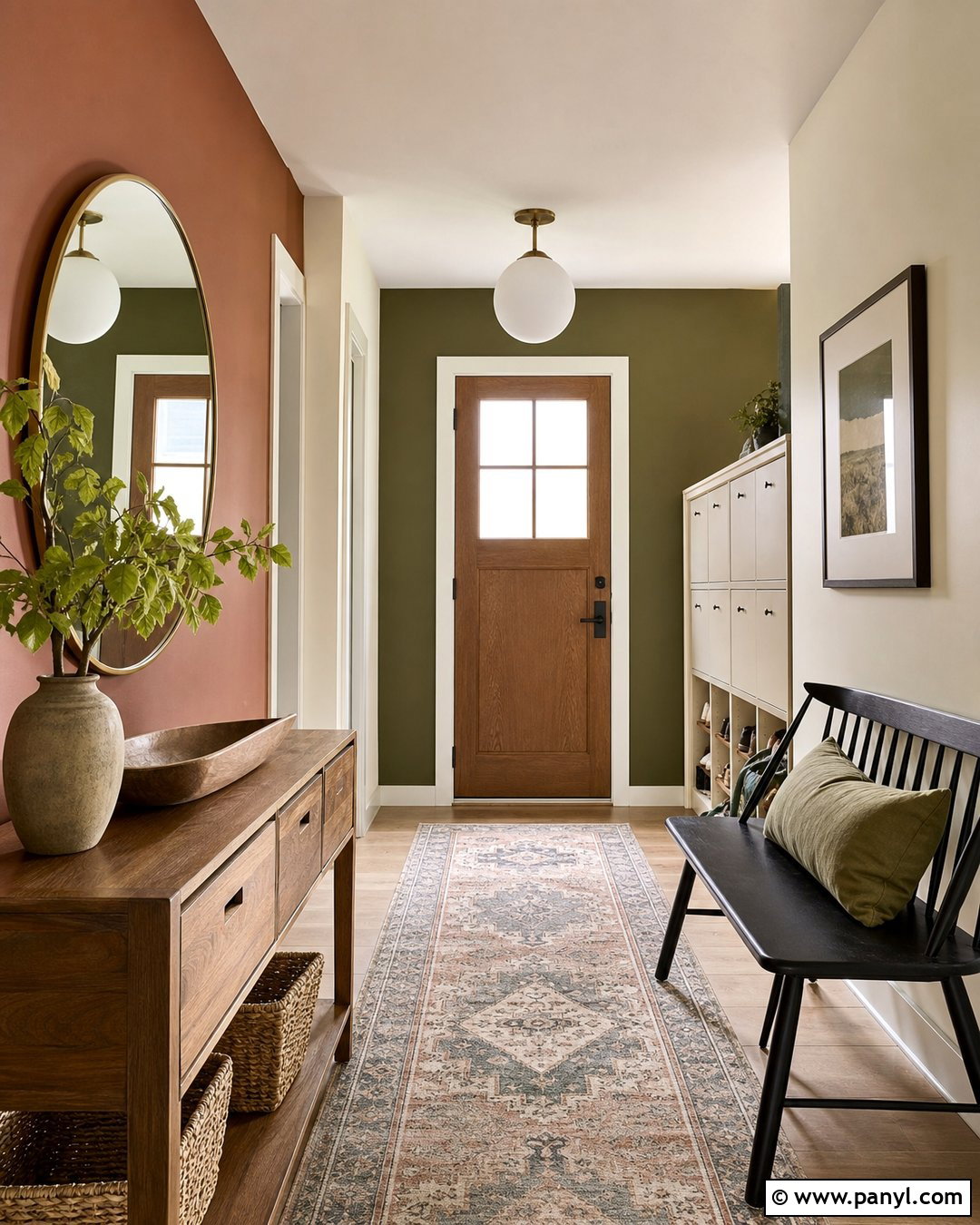
First impressions become warmer when an entryway is wrapped in a welcoming rose tone. Select a medium dusty rose for the walls and pair it with warm white trim, a natural oak console, and a large round mirror with a dark bronze frame. A washable runner featuring faded navy, rust, cream, and rose handles foot traffic while tying the palette together. Add a small upholstered bench with storage baskets underneath for practical organization. A ceramic table lamp provides soft supplemental light, while a clear glass ceiling fixture keeps the narrow area open. Use black hooks or pegs for coats, but avoid overcrowding them. One framed landscape and a leafy plant complete an entry that is functional, memorable, and visually connected to the rest of the home.
17. Rose Walls With Olive Green Cabinets
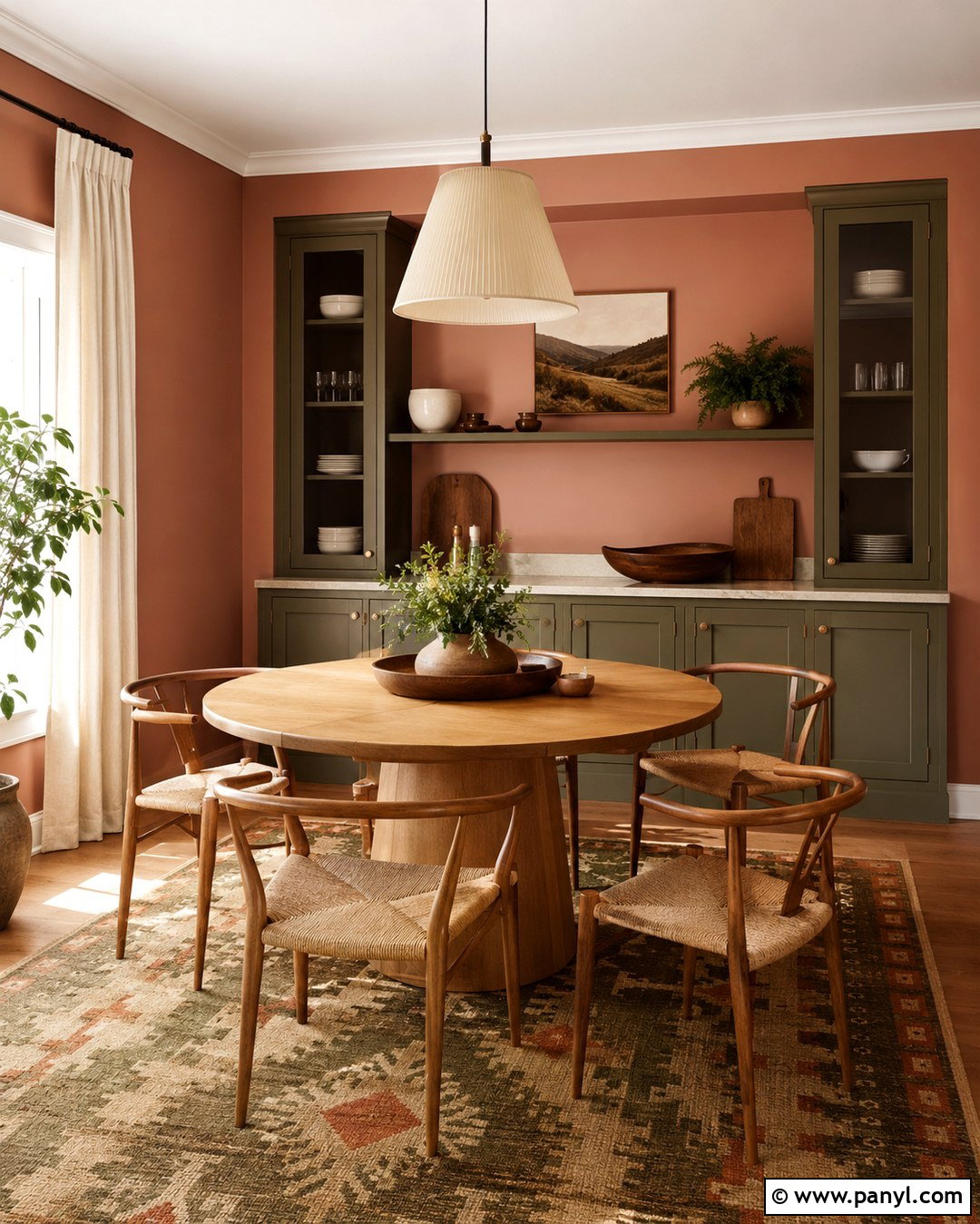
Rose and olive form a rich combination that works especially well in a dining room with built-in storage. Paint the walls a warm clay rose, then finish the lower cabinets and tall display cupboards in muted olive green. Use aged brass knobs and a pale stone countertop to connect the two saturated colors. Place a round oak table in the center with woven-seat dining chairs to add natural texture. A large cream pendant keeps the space casual and bright. Choose simple linen curtains and a geometric rug containing olive, beige, rust, and small rose details. Display white dishes, wood serving pieces, and clear glassware inside the cabinets. This complete look feels earthy and established, with enough neutral material to keep the colors from competing.
18. Rose Walls With Terracotta Decor
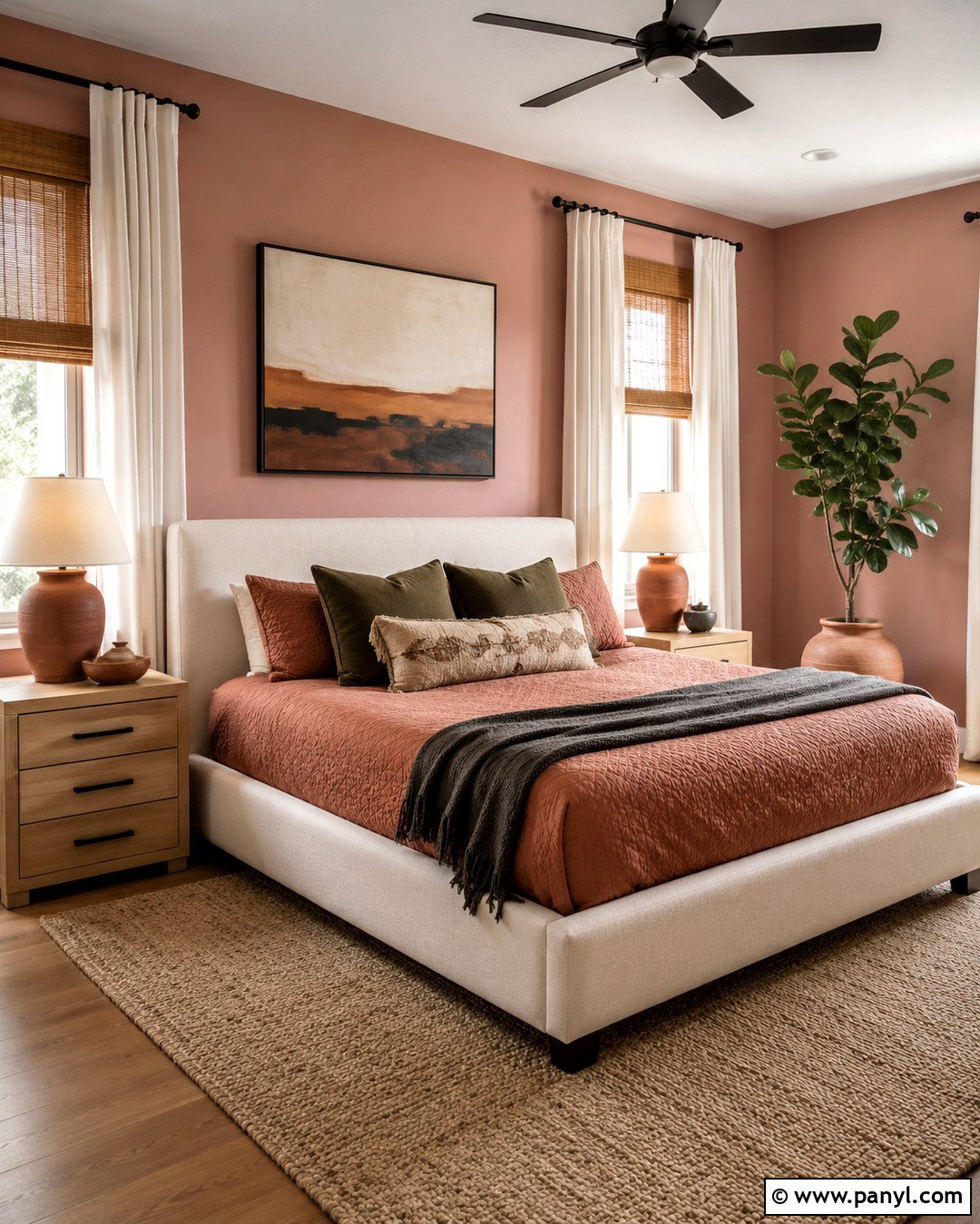
Sunbaked color gives rose walls a warmer, more relaxed personality. Paint a bedroom in a pale desert rose, then introduce terracotta through a quilted bedcover, ceramic lamps, and a large abstract artwork. Use an ivory upholstered bed and light oak furniture to prevent the related warm colors from blending together. Add olive green pillows and one charcoal throw for cooler contrast. Woven bamboo shades and gauzy cream curtains soften the natural light. Ground the room with a textured wool rug in oatmeal rather than another pink or orange shade. A tall clay pot holding a leafy plant can fill an empty corner. The complete scheme feels inspired by natural landscapes, combining rosy plaster tones, warm earth colors, and honest materials in a calm arrangement.
19. Rose Walls With Blue Trim
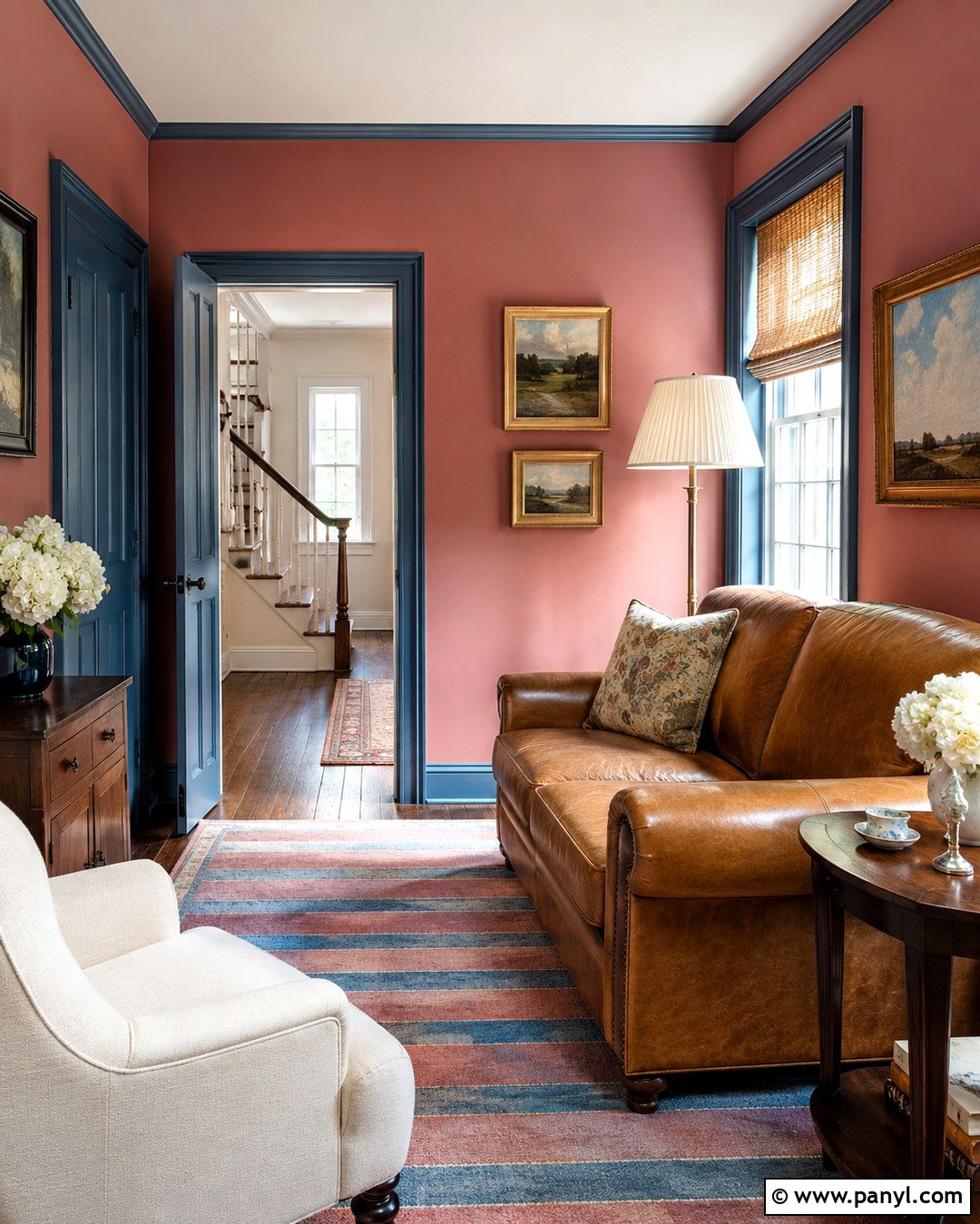
For an unexpected but orderly color treatment, frame muted rose walls with smoky blue trim. Use the blue on baseboards, window casings, interior doors, and crown molding, keeping the ceiling a soft white for openness. In a small reading room, add a caramel leather loveseat, a cream upholstered chair, and a dark oak side table. A striped rug containing blue, rose, rust, and ivory helps the contrasting paint colors feel connected. Hang vintage landscape prints in slim brass frames and install a simple pleated-shade floor lamp beside the chair. Natural woven blinds add warmth without introducing another strong color. This room feels playful but controlled because the blue follows the existing architecture, while the rose covers the larger uninterrupted surfaces.
20. Deep Rose Powder Room Walls
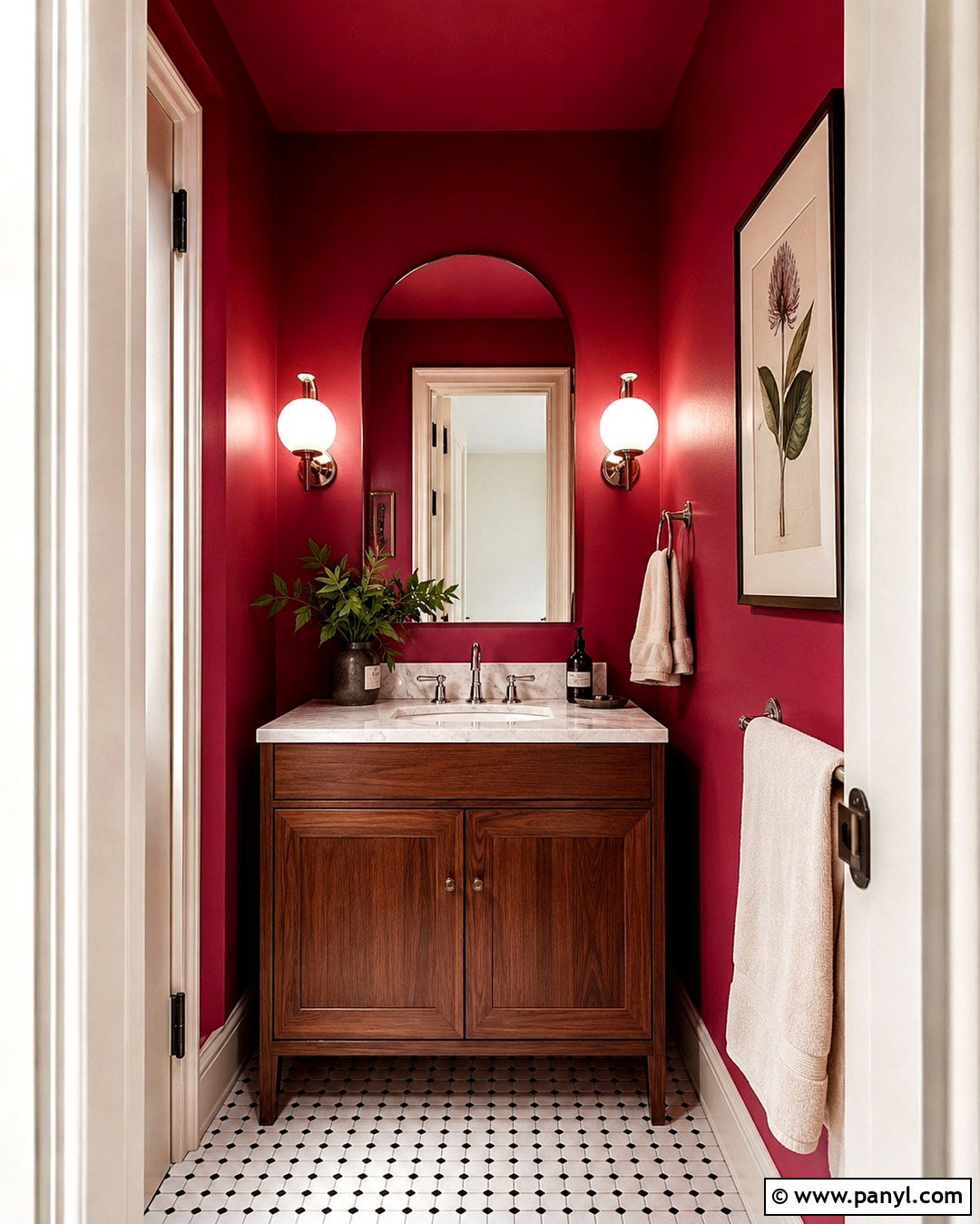
A small powder room offers the perfect setting for confident, deep rose walls. Choose a saturated raspberry-rose shade and continue it across the ceiling for a seamless envelope of color. Install a compact walnut vanity with a white marble top and polished nickel faucet. A frameless arched mirror keeps the room visually open, while two milk-glass sconces provide clear, bright lighting. Use small black-and-white mosaic floor tile for graphic contrast and paint the door trim in a clean warm white. One framed botanical print and a neat stack of ivory hand towels are enough decoration. Because the room is compact, limit accessories and prioritize strong finishes. The completed powder room feels dramatic and polished rather than crowded or overly decorative.
Conclusion:
Rose Colored Walls offer much more decorating flexibility than their romantic reputation might suggest. Pale rose can behave like a warm neutral, while dusty, earthy, and deep rose shades bring character to rooms that need stronger color. The most successful spaces balance pink walls with contrasting materials and tones, such as walnut, white oak, linen, charcoal, navy, sage, or olive. Architectural details, room lighting, and paint undertones also influence how the final color appears, so test large samples before committing. Whether you prefer a subtle bedroom, dramatic powder room, welcoming entryway, or color-drenched office, these complete schemes show how rose can support a practical, comfortable, and beautifully coordinated home.

Related Ideas and Inspiration:
Leave a Reply