
Using two paint colors can give an ordinary room more depth, structure, and personality without requiring expensive remodeling. The best two-tone schemes go beyond adding a random accent wall. They consider where the colors meet, how natural light changes each shade, and how furniture, flooring, textiles, and trim connect the palette. Horizontal divisions can make tall rooms feel more balanced, while vertical blocks help define zones in open spaces. Closely related shades create a calm look, and contrasting hues deliver stronger visual impact. Testing large samples is essential because paint can appear different throughout the day. () Each of these **20 Rooms With Two Color Walls** presents a complete, practical look you can recreate.

1. Sage Green And Cream Living Room
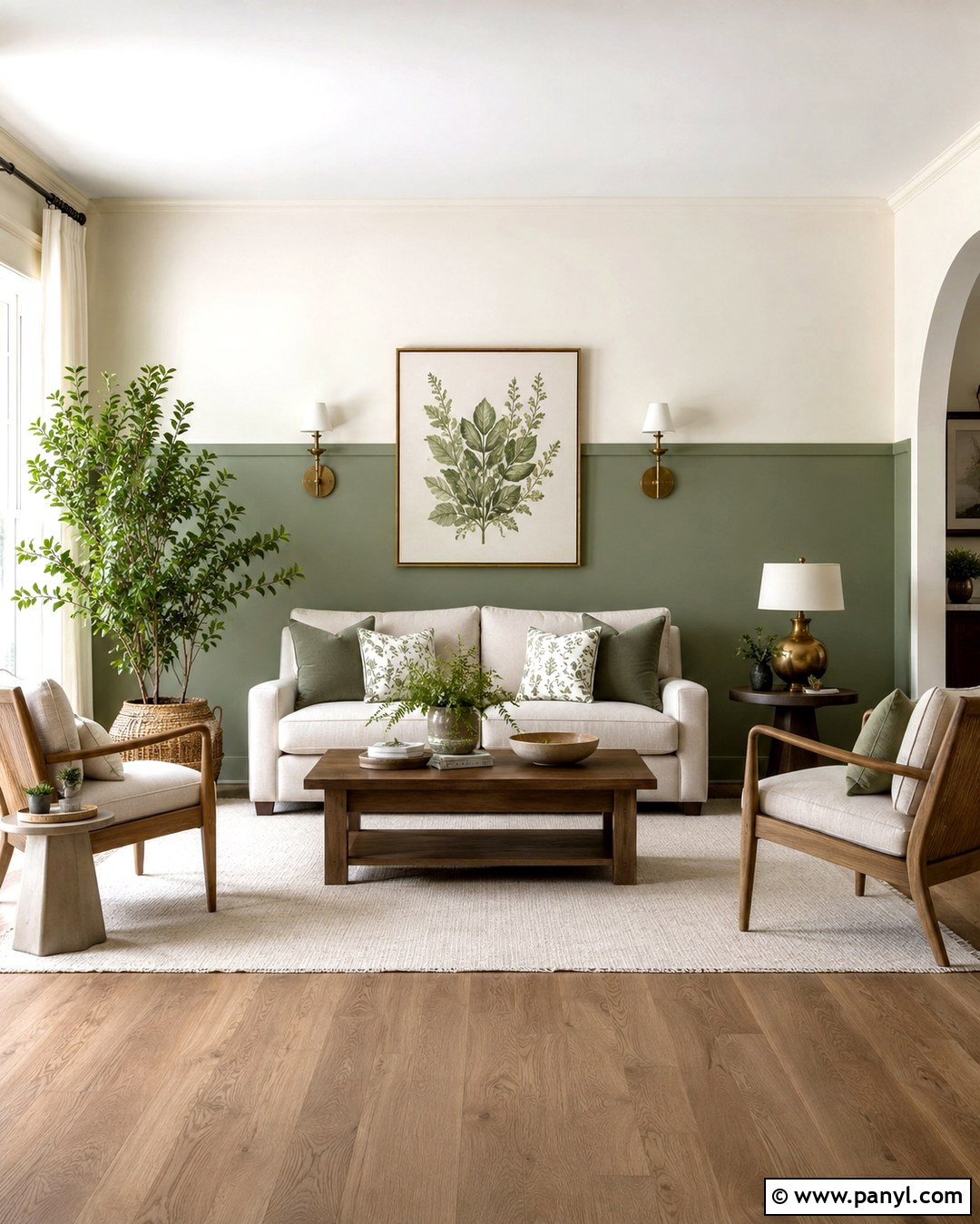
A soft cream upper wall and warm sage green lower wall create a living room that feels fresh yet grounded. Position the dividing line slightly above the sofa back, then add a narrow cream molding for a finished transition. Choose a comfortable oatmeal sofa, two oak-framed chairs, and a large ivory rug with a subtle green pattern. Linen curtains keep the windows light, while brass lamps bring gentle warmth. Repeat sage through pillows and ceramic planters without matching every accessory exactly. A walnut coffee table adds enough contrast to prevent the palette from looking washed out. Finish the room with botanical artwork, woven baskets, and leafy plants for a relaxed, nature-inspired space that works well in traditional or modern homes.
2. Navy Blue And White Dining Room
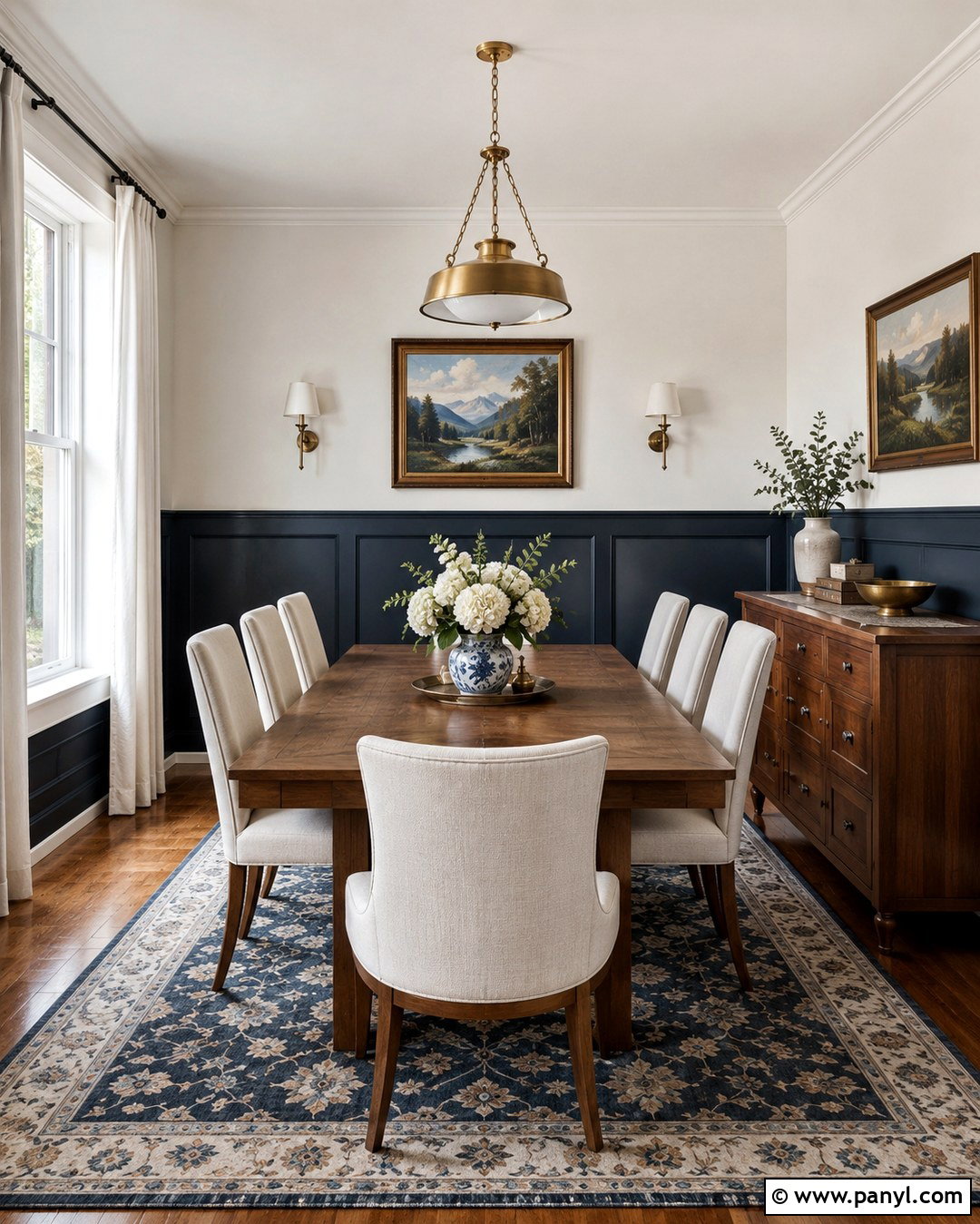
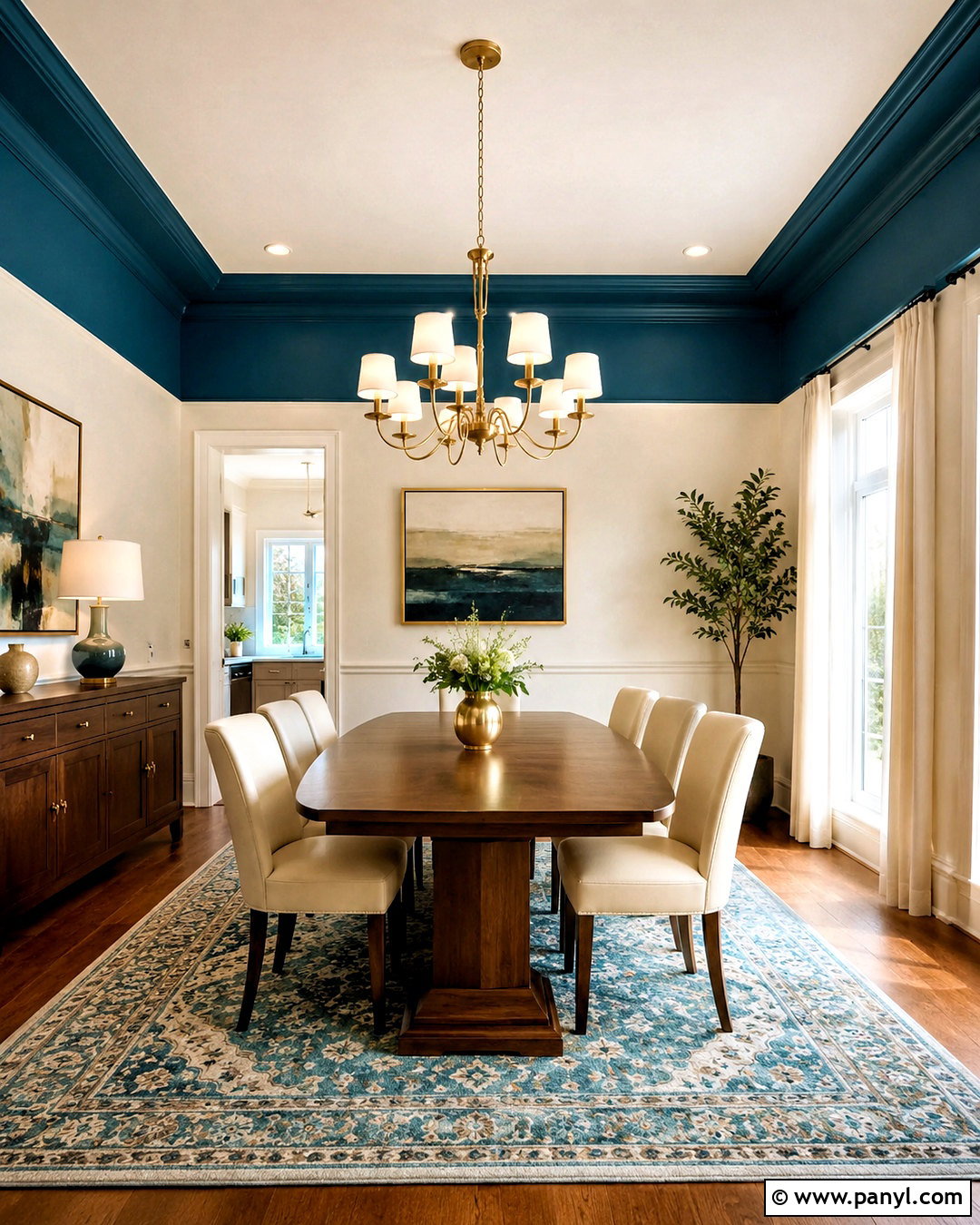
Crisp white walls above deep navy paneling give a dining room timeless structure and a slightly formal character. Run the navy across the lower third of the walls, including the baseboards and applied molding, for a seamless architectural effect. A medium-tone oak dining table prevents the dark paint from feeling too heavy. Surround it with cream upholstered chairs and place a patterned blue rug underneath to connect both wall colors. A large brass pendant creates a warm focal point above the table. Keep window treatments simple with full-length white linen curtains. Framed landscapes or abstract prints can fill the upper walls without making the room crowded. Add a narrow wood sideboard and ceramic table lamps to complete this polished, welcoming dining space.
3. Terracotta And Blush Bedroom
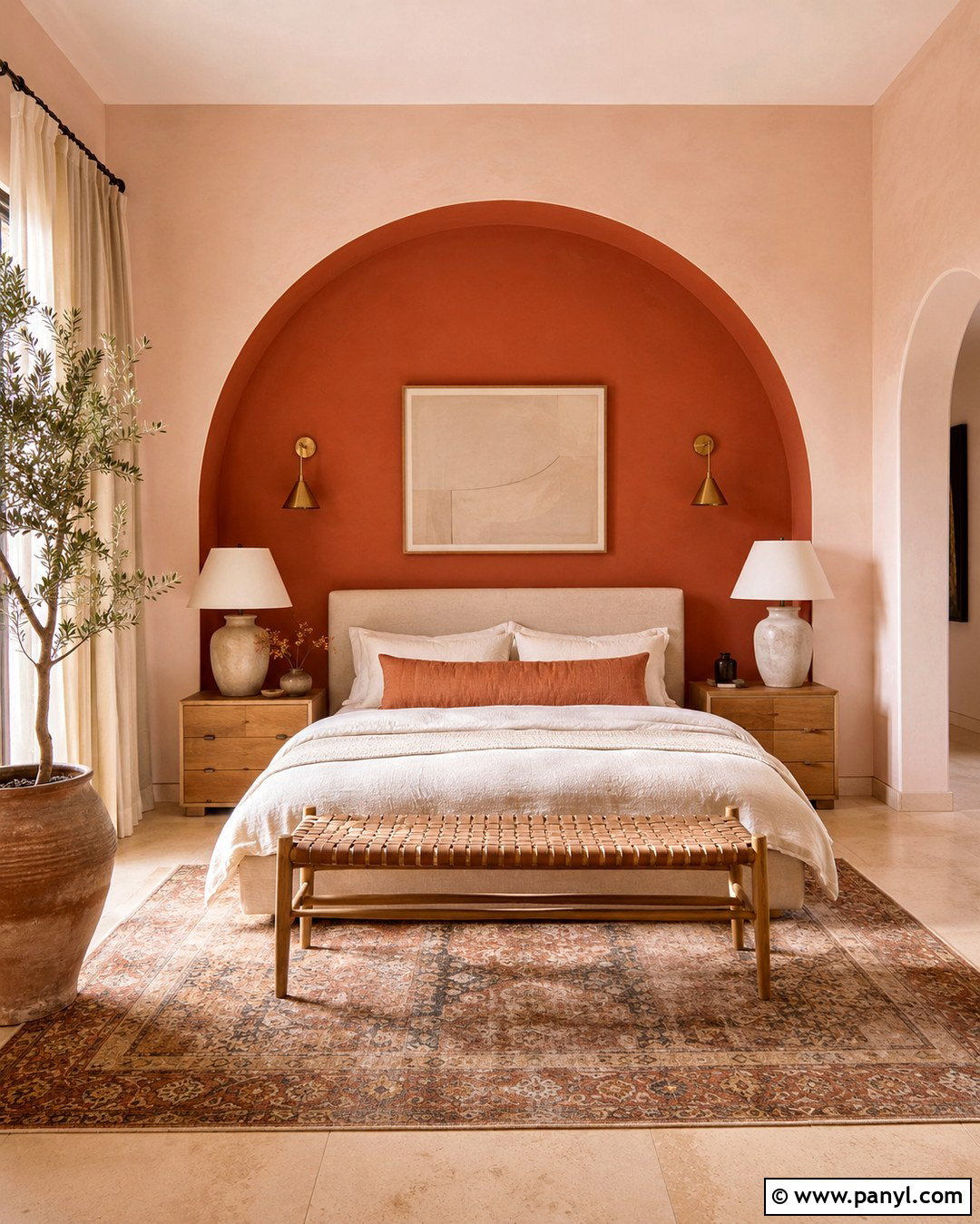
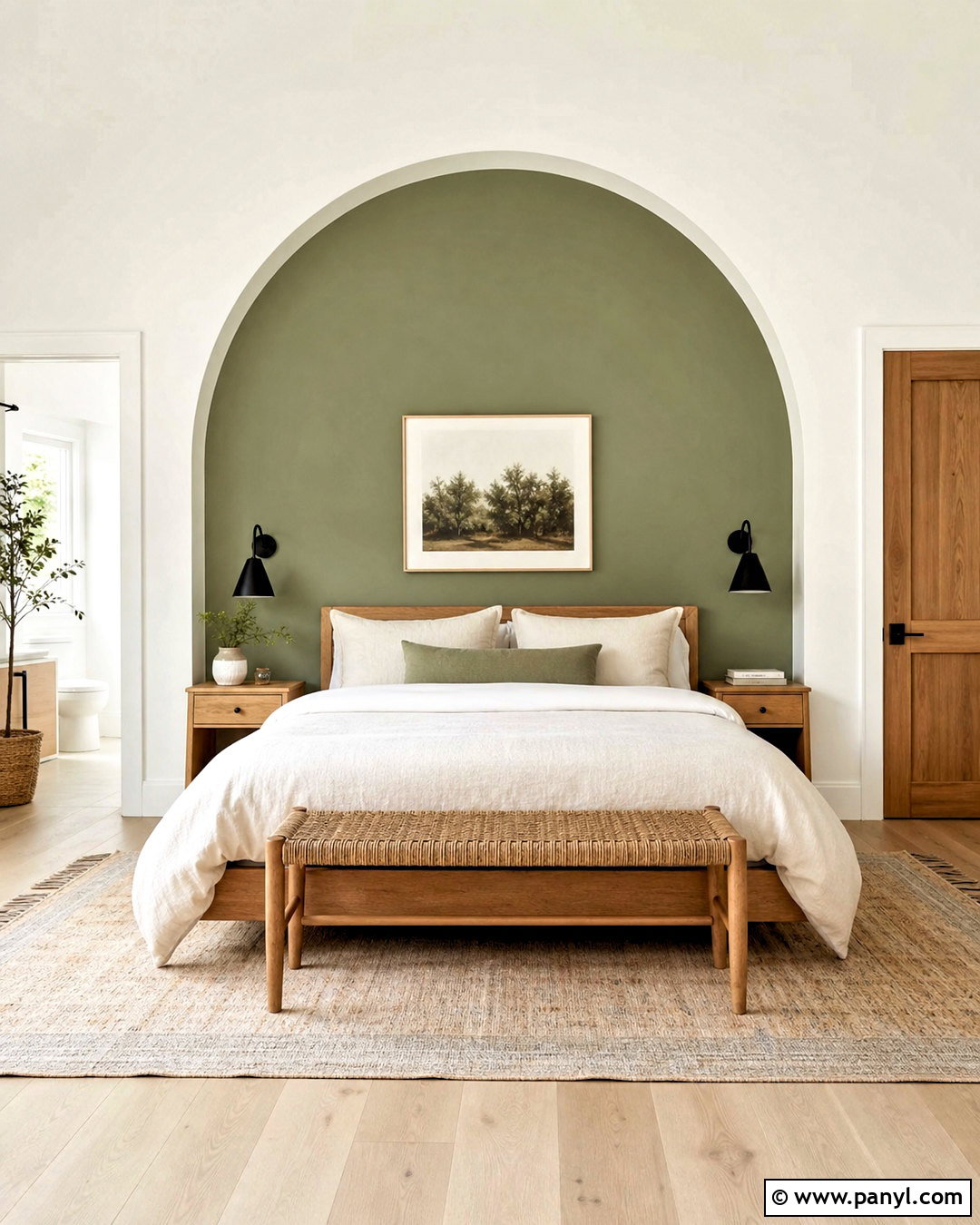
Warm terracotta behind the bed and muted blush across the remaining wall sections make a bedroom feel layered and restful. Instead of using a standard accent wall, paint a wide terracotta arch that extends beyond both nightstands. Continue blush around the arch and throughout the room, creating a soft background with one defined focal point. An upholstered oatmeal bed, natural oak nightstands, and cream bedding balance the earthy colors. Introduce terracotta again through a lumbar pillow, patterned rug, and ceramic lamps. Brushed brass sconces add a refined finish without overpowering the palette. Keep the curtains pale and lightweight so daylight softens the warmer paint. A woven bench, simple artwork, and one sculptural plant complete this comfortable Mediterranean-inspired bedroom.
4. Charcoal And Greige Home Office
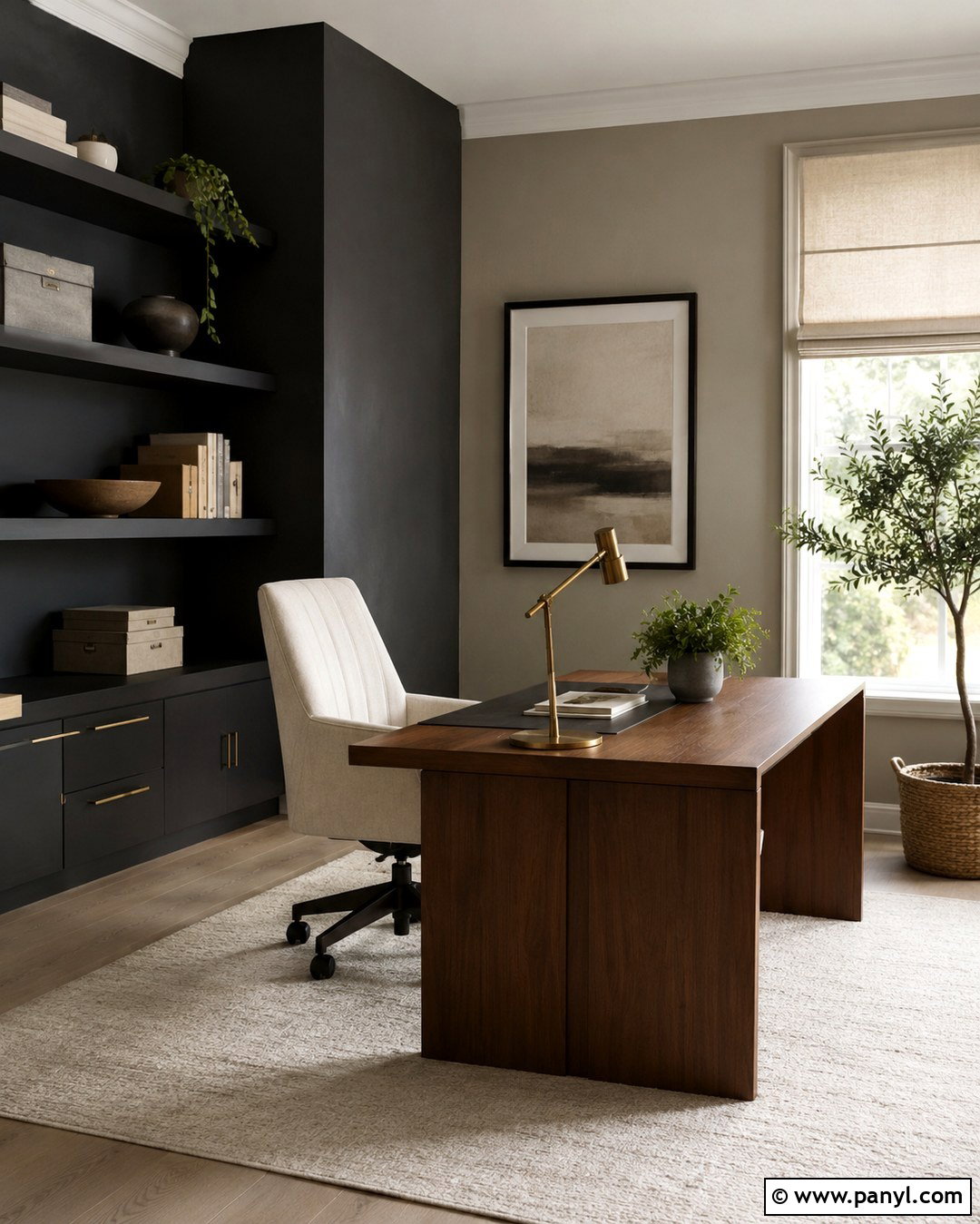
A vertical charcoal color block can separate a workspace from the rest of a small home office without adding a physical divider. Paint the desk wall and one adjoining corner in soft charcoal, then use warm greige across the remaining walls. Place a streamlined walnut desk within the darker zone so the arrangement looks intentional. A cream desk chair, pale wool rug, and linen Roman shade keep the office from becoming gloomy. Use matte black shelves against the charcoal section for books and storage boxes, while understated artwork decorates the lighter wall. A brass task lamp introduces warmth and improves the layered look. Finish with a slim cabinet, one leafy plant, and concealed cord management for a professional room that remains calm, practical, and comfortable.
5. Blue And White Kids Bedroom
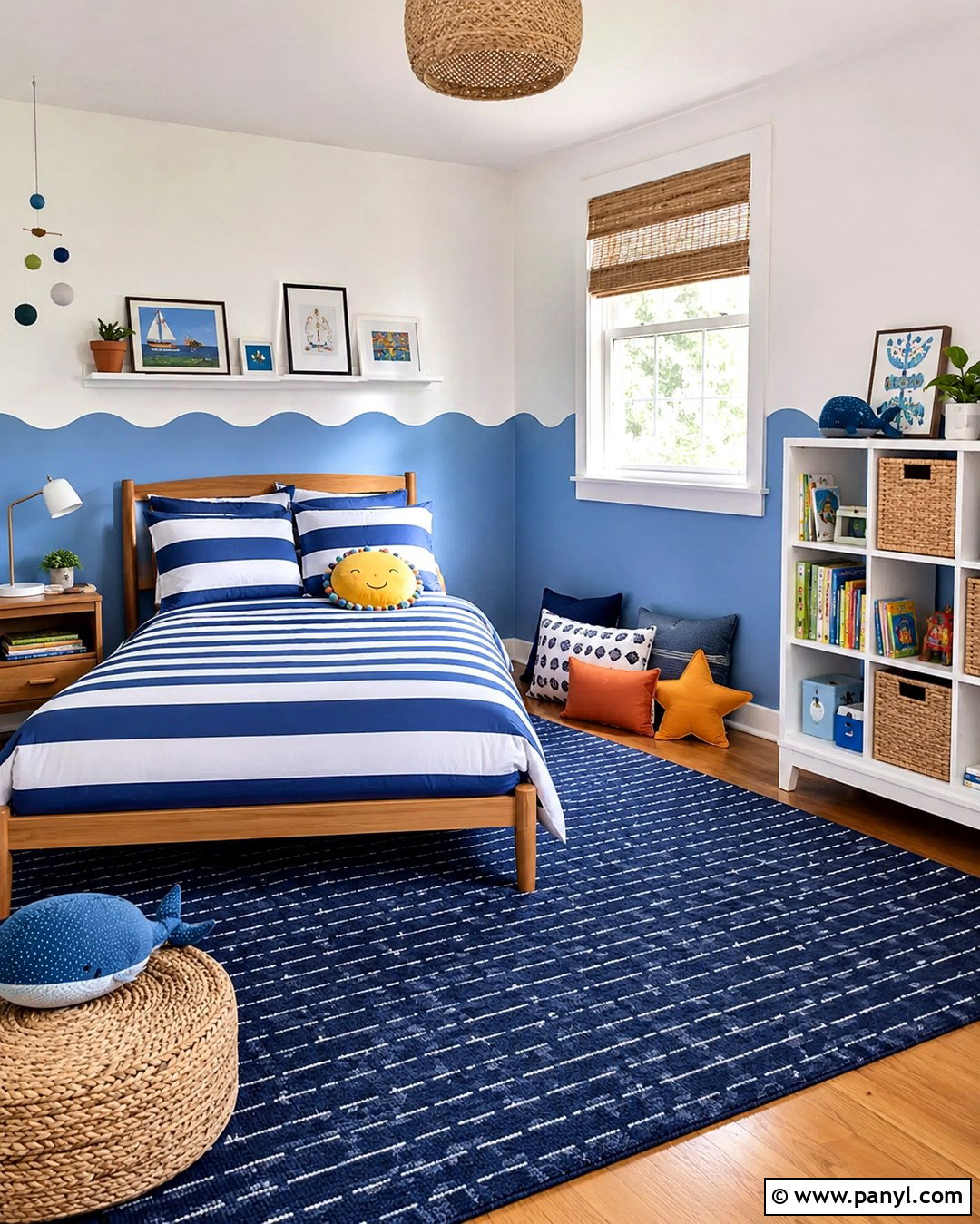
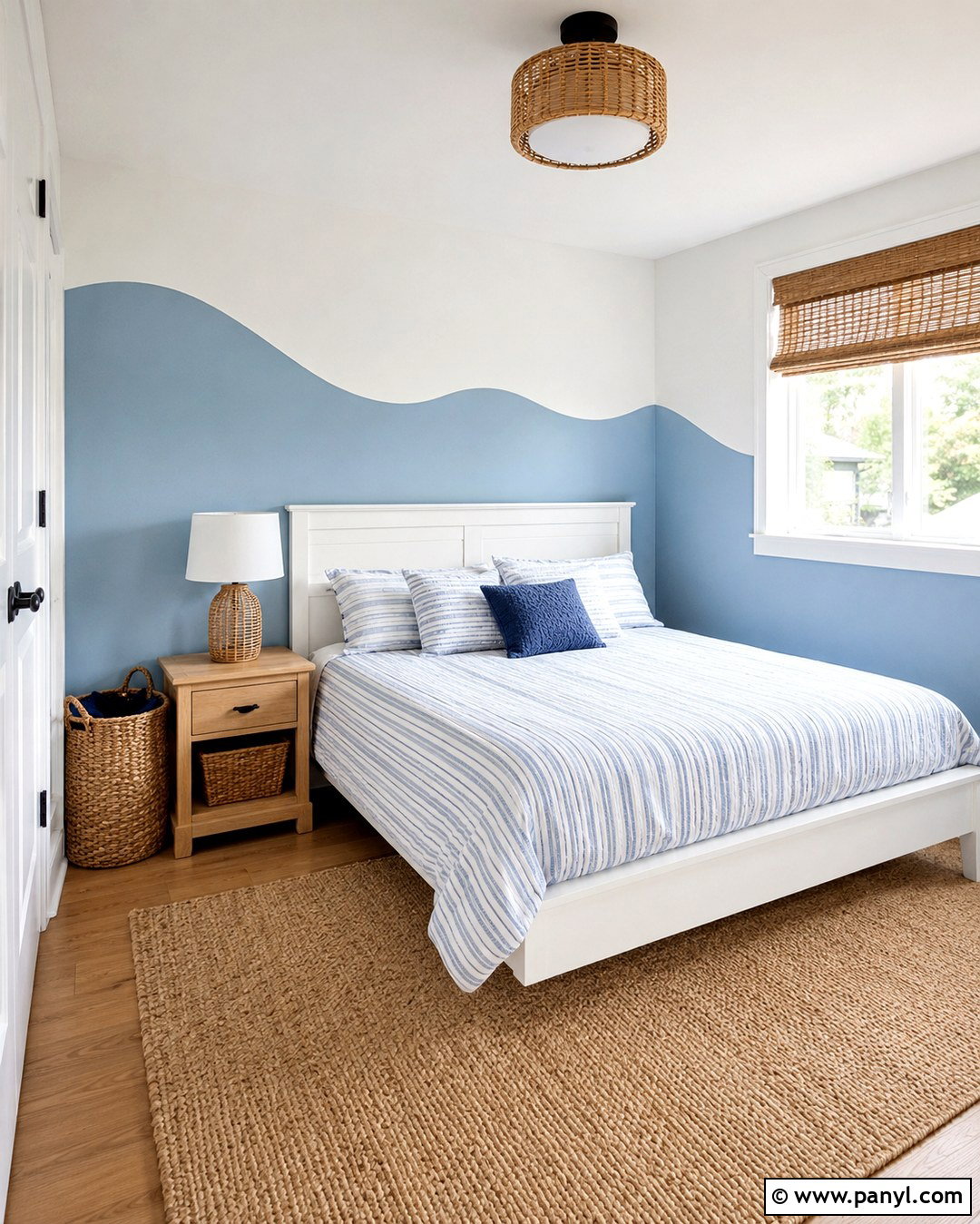
A playful wave separating sky blue lower walls from soft white upper walls gives a child’s bedroom movement without overwhelming the space. Keep the wave broad and gentle rather than creating many small curves. A natural wood bed with white-and-blue striped bedding reinforces the clean palette. Place a washable navy rug beneath the bed and add a small white bookcase with woven storage baskets. Pale wood furniture keeps the room warm, while yellow and coral accents can appear sparingly in toys, pillows, and framed prints. Choose white curtains with a simple blue border to repeat the wall treatment. A compact reading corner with a floor cushion and picture ledges completes a cheerful room that can mature easily as accessories and bedding change.
6. Forest Green And Beige Reading Room
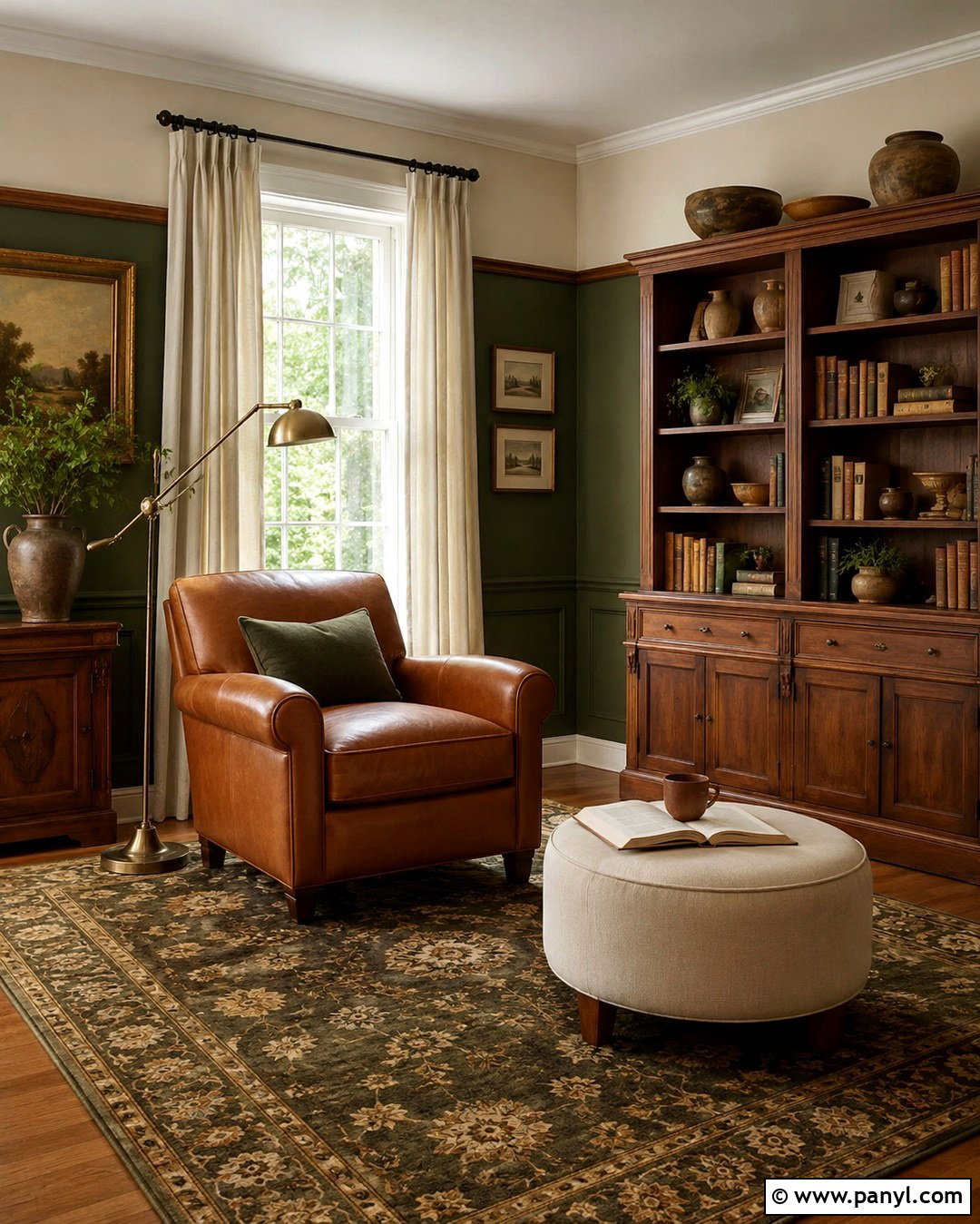
Deep forest green lower walls paired with warm beige above create a cozy reading room that still feels open during the day. Raise the green section to roughly two-thirds of the wall height for a more enveloping effect, then finish the division with a slim wood picture rail. Arrange a camel leather chair beside a walnut bookcase and a brass floor lamp. An ivory ottoman and a softly patterned wool rug lighten the darker colors. Use beige linen curtains so the window treatment blends into the upper walls. Display books, pottery, and small framed pieces rather than filling every shelf. A compact side table and textured throw complete the seating area. This combination produces a quiet, library-like atmosphere without requiring an overly formal or oversized room.
7. Dusty Blue And Taupe Entryway
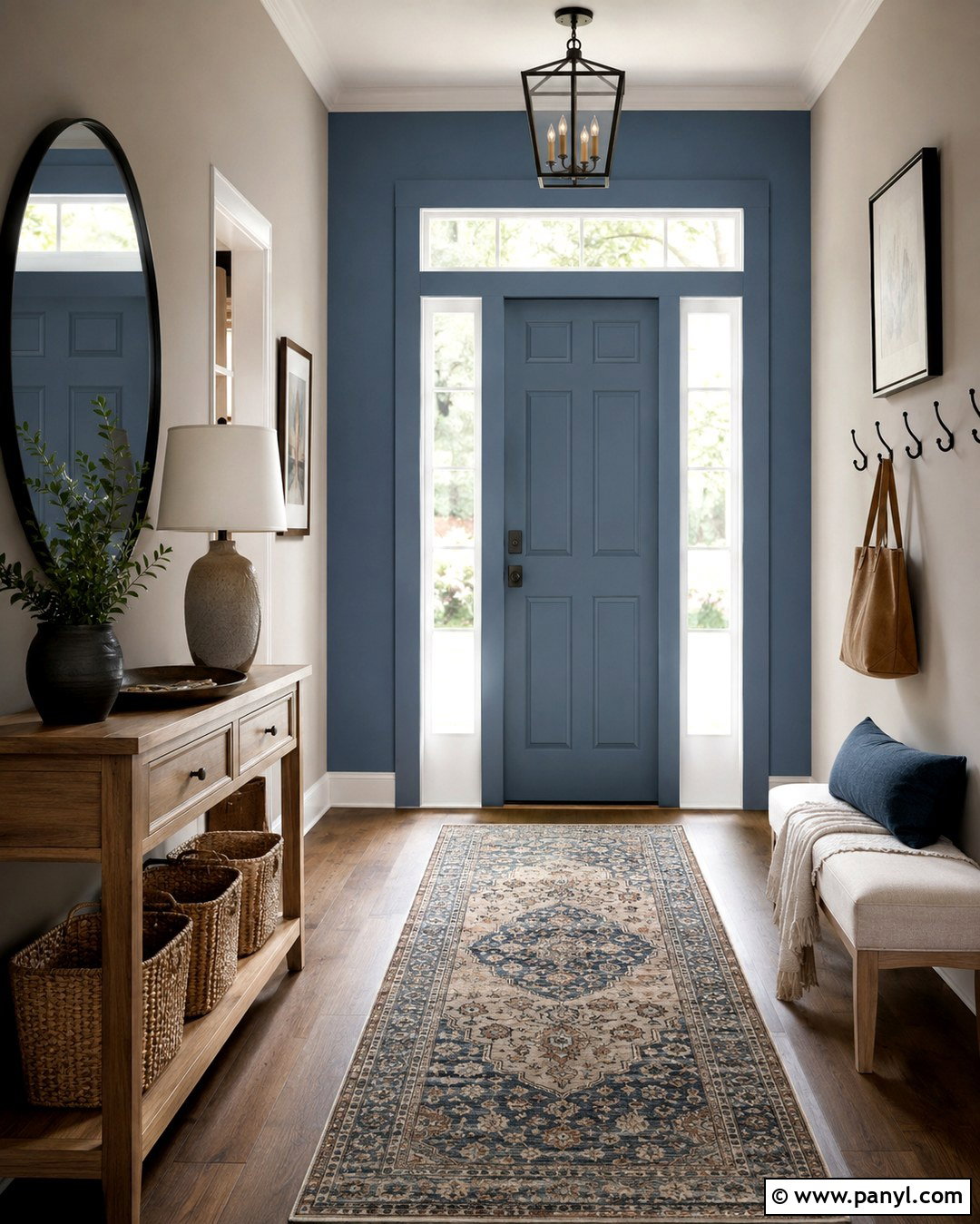
Dusty blue and light taupe can turn a narrow entryway into a calm, organized transition space. Paint the wall around the front door dusty blue and continue the shade onto the door for a broad color-blocked section. Cover the side walls in pale taupe to brighten the passage and complement wood flooring. A slim oak console provides a place for keys without narrowing the walkway. Hang a large rounded mirror above it to reflect light through the space. Add a washable runner with blue, beige, and rust details for practical pattern. Matte black hooks, a small upholstered bench, and closed shoe baskets keep everyday items controlled. Finish with one table lamp and restrained artwork, allowing the two wall colors to remain the strongest visual feature.
8. Black And White Breakfast Nook
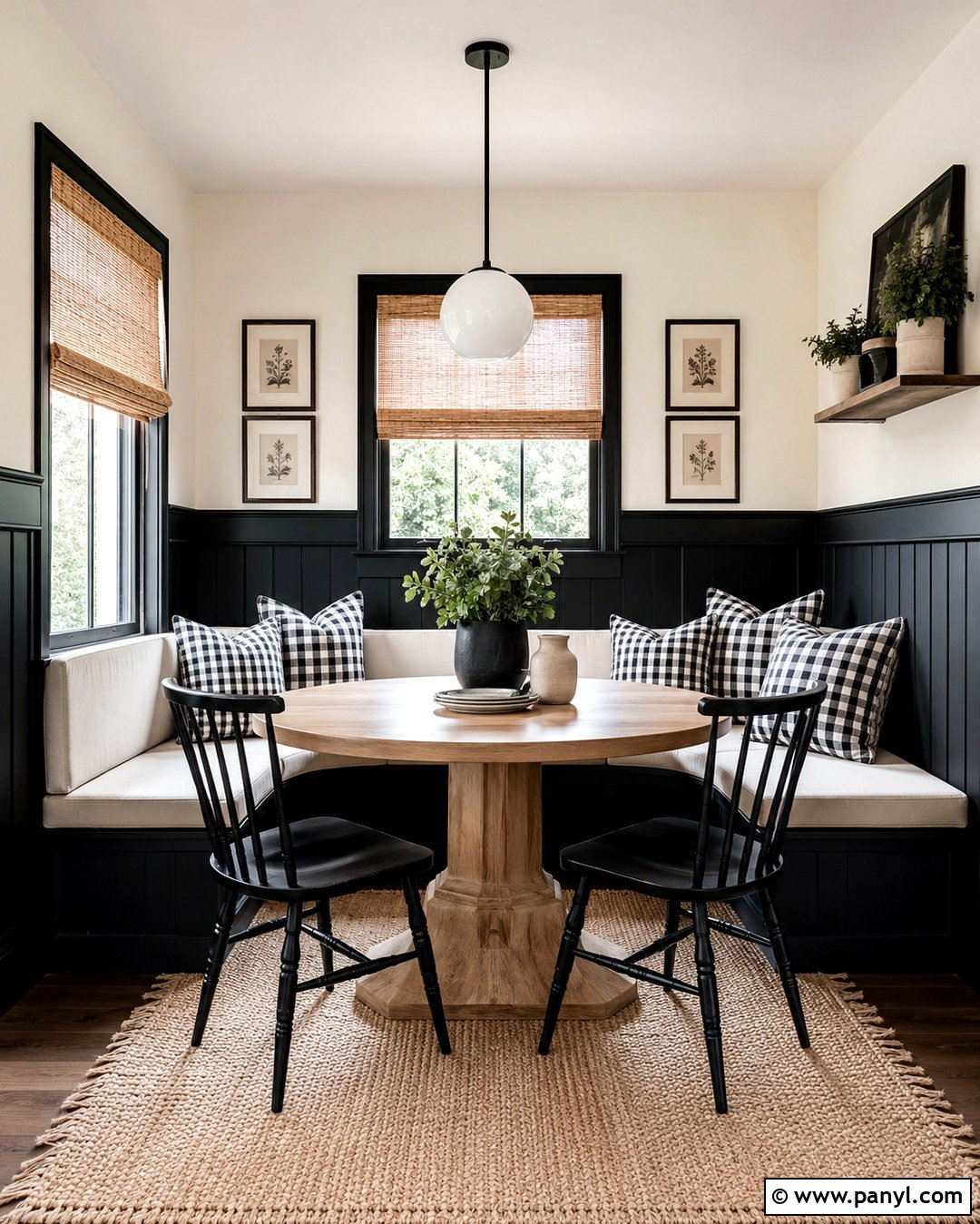
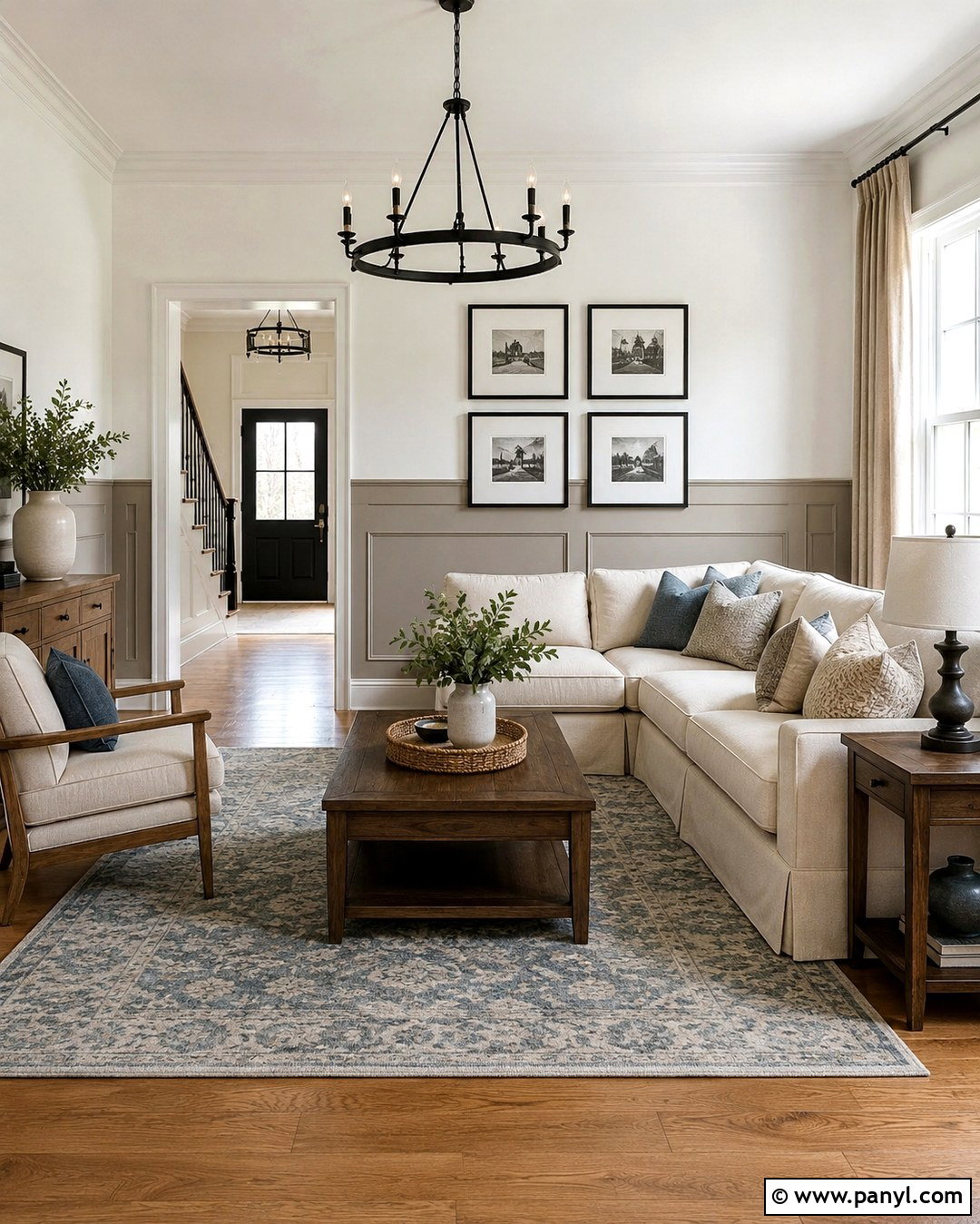
A black lower wall and warm white upper wall give a breakfast nook graphic definition while preserving a light, inviting atmosphere. Use simple vertical paneling across the black section to introduce texture, stopping slightly above the bench back. Build the dining arrangement around a pale oak pedestal table and a fitted cream banquette. Add black spindle chairs on the open side to repeat the darker paint. Cushions in tan, cream, and small-scale checks soften the sharp contrast. A white globe pendant keeps the ceiling area clean, while natural woven shades warm the windows. Display a few black-framed prints on the white upper wall. Light wood floors, a washable neutral rug, and a simple bowl of greenery complete this practical modern farmhouse breakfast space.
9. Deep Teal And Coral Powder Room
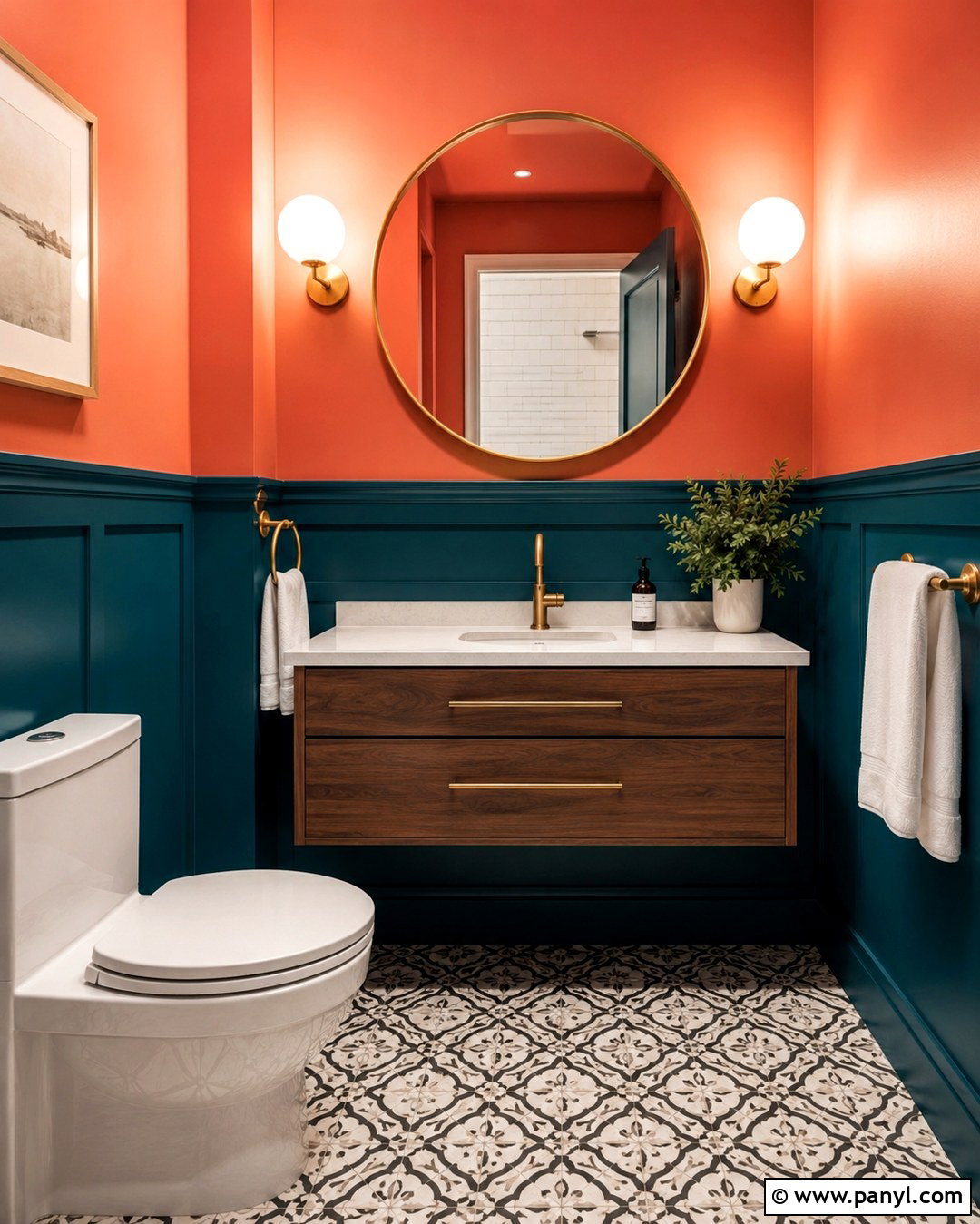
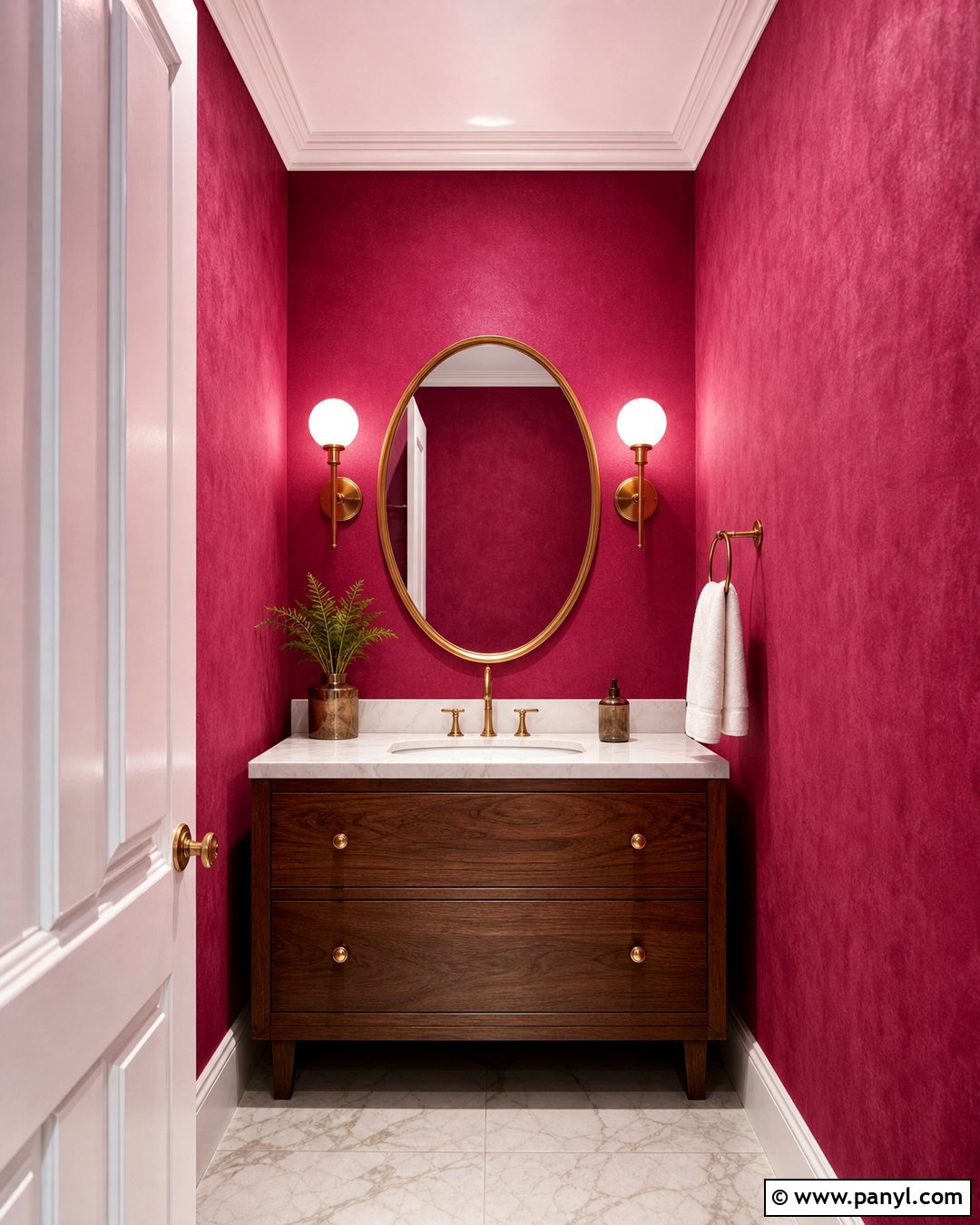
A compact powder room can handle stronger color, especially when deep teal and muted coral are carefully balanced. Paint the vanity wall and the lower half of the surrounding walls in saturated teal. Use soft coral above, creating a warm contrast that feels bold rather than harsh. A floating walnut vanity introduces natural texture, while a white quartz counter keeps the sink area crisp. Choose a round brass mirror, matching faucet, and two small globe sconces to add polished highlights. The floor can feature cream-and-charcoal patterned tile that connects the room without competing with the walls. Keep accessories minimal with white towels, a ceramic soap dispenser, and one small plant. This complete scheme makes a small bathroom memorable while remaining elegant and functional.
10. Lavender And Ivory Guest Bedroom
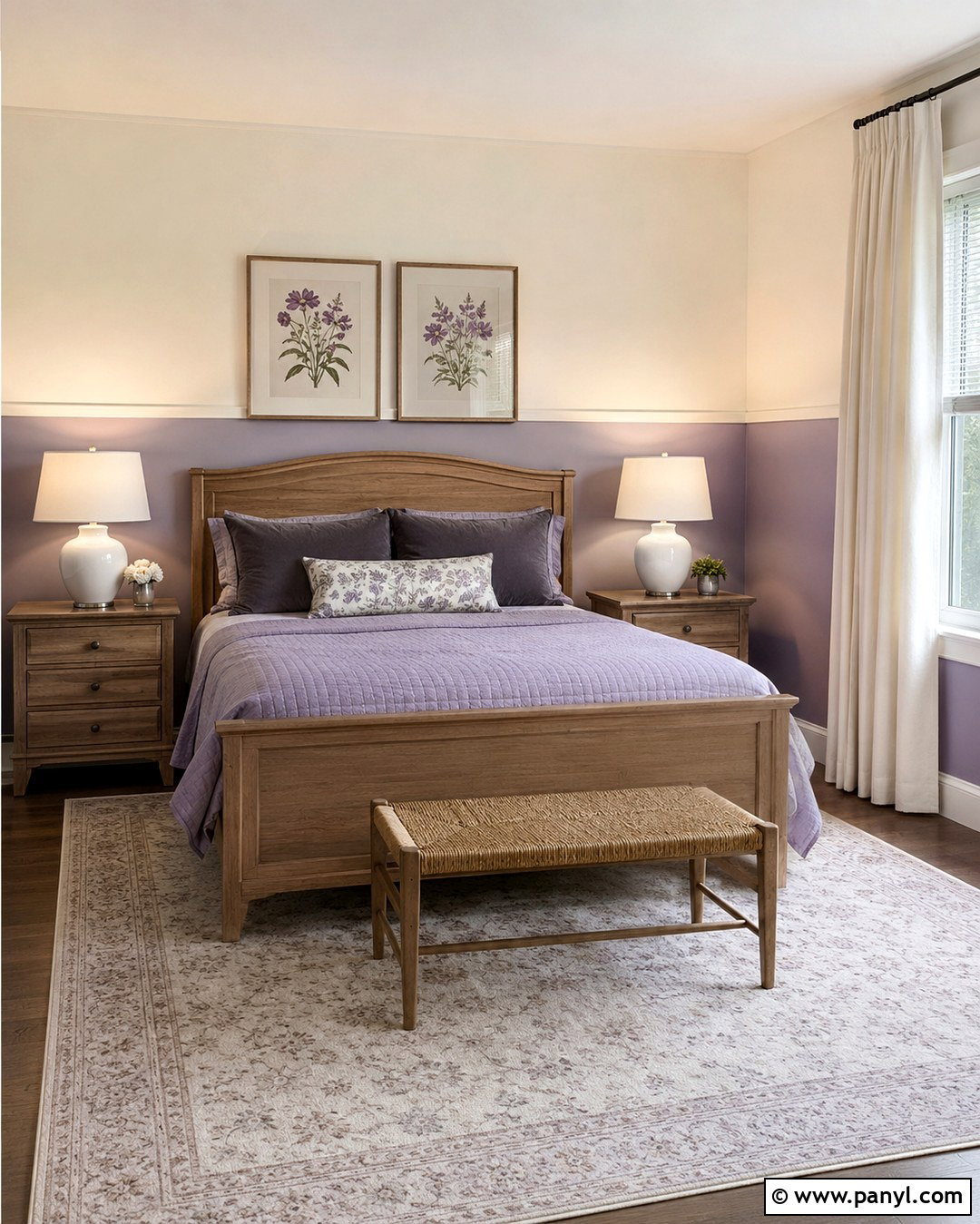
Muted lavender lower walls and creamy ivory above create a guest bedroom that feels soothing, clean, and thoughtfully finished. Separate the colors with a narrow ivory chair rail, then paint the baseboards lavender for a unified lower section. Center a light oak bed against the longest wall and dress it with ivory bedding, a lavender quilt, and soft gray accent pillows. Matching wood nightstands keep the room balanced, while white ceramic lamps provide simple symmetry. Use full-length ivory curtains and a pale patterned rug to maintain brightness. Botanical prints in slim brass frames add subtle detail to the upper walls. A small upholstered chair, woven luggage bench, and fresh greenery complete a welcoming bedroom that feels personal without becoming overly decorative or theme-driven.
11. Olive Green And Clay Sunroom
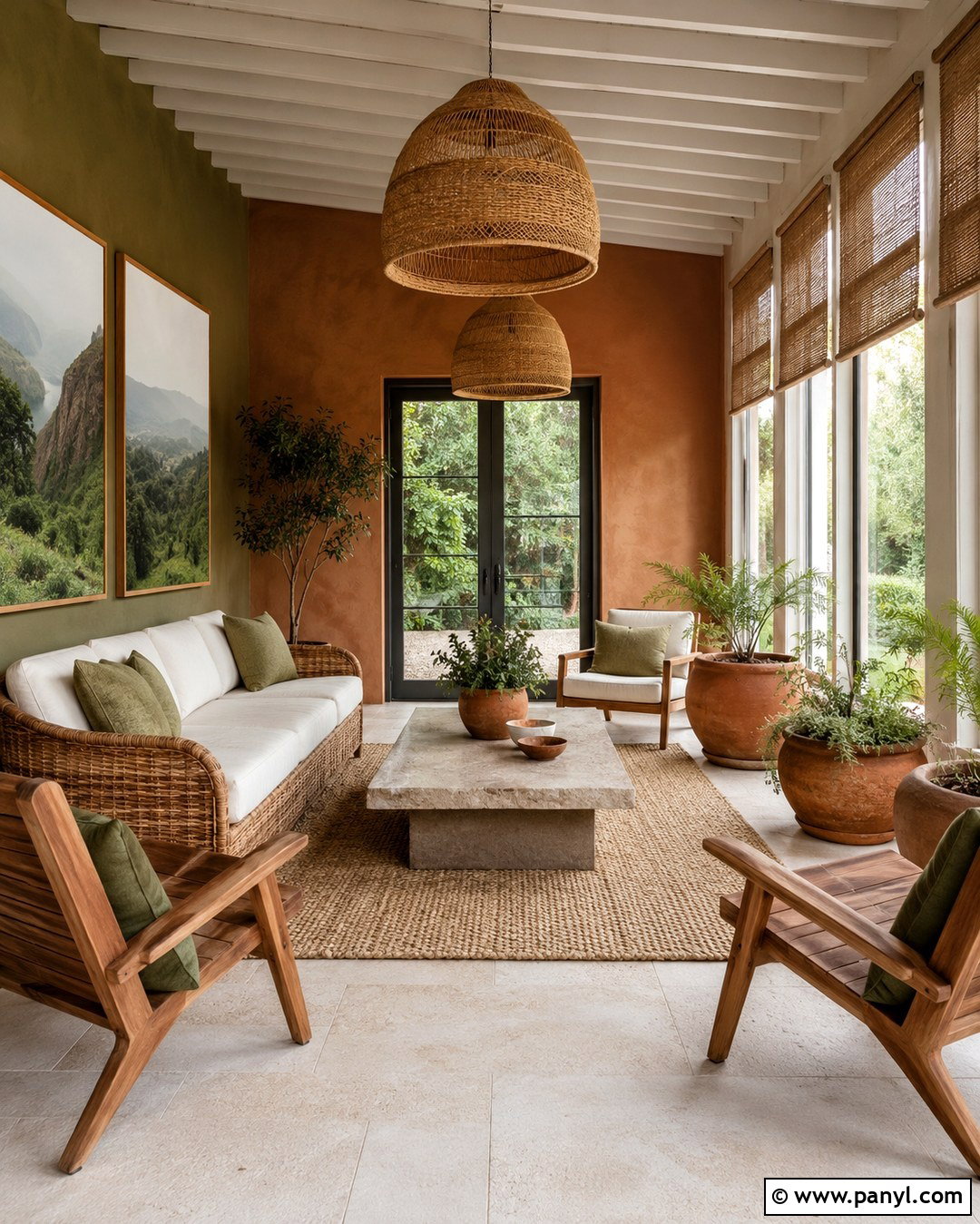
Sunlight brings out the richness of olive green and warm clay, making the pairing especially effective in a casual sunroom. Paint two adjoining walls olive and the opposite walls a muted clay color, keeping the corners crisp rather than dividing every wall horizontally. A natural rattan sofa with cream cushions bridges the two earthy hues. Add teak lounge chairs, a jute rug, and a low stone-topped coffee table for varied organic texture. Linen shades soften direct sunlight without hiding the windows. Use cushions that combine olive, rust, cream, and faded blue to connect the entire palette. Terracotta planters filled with leafy greenery reinforce the indoor-outdoor feeling. A woven pendant and understated landscape prints finish this comfortable gathering space without distracting from the garden views.
12. Mustard And Soft Gray Playroom
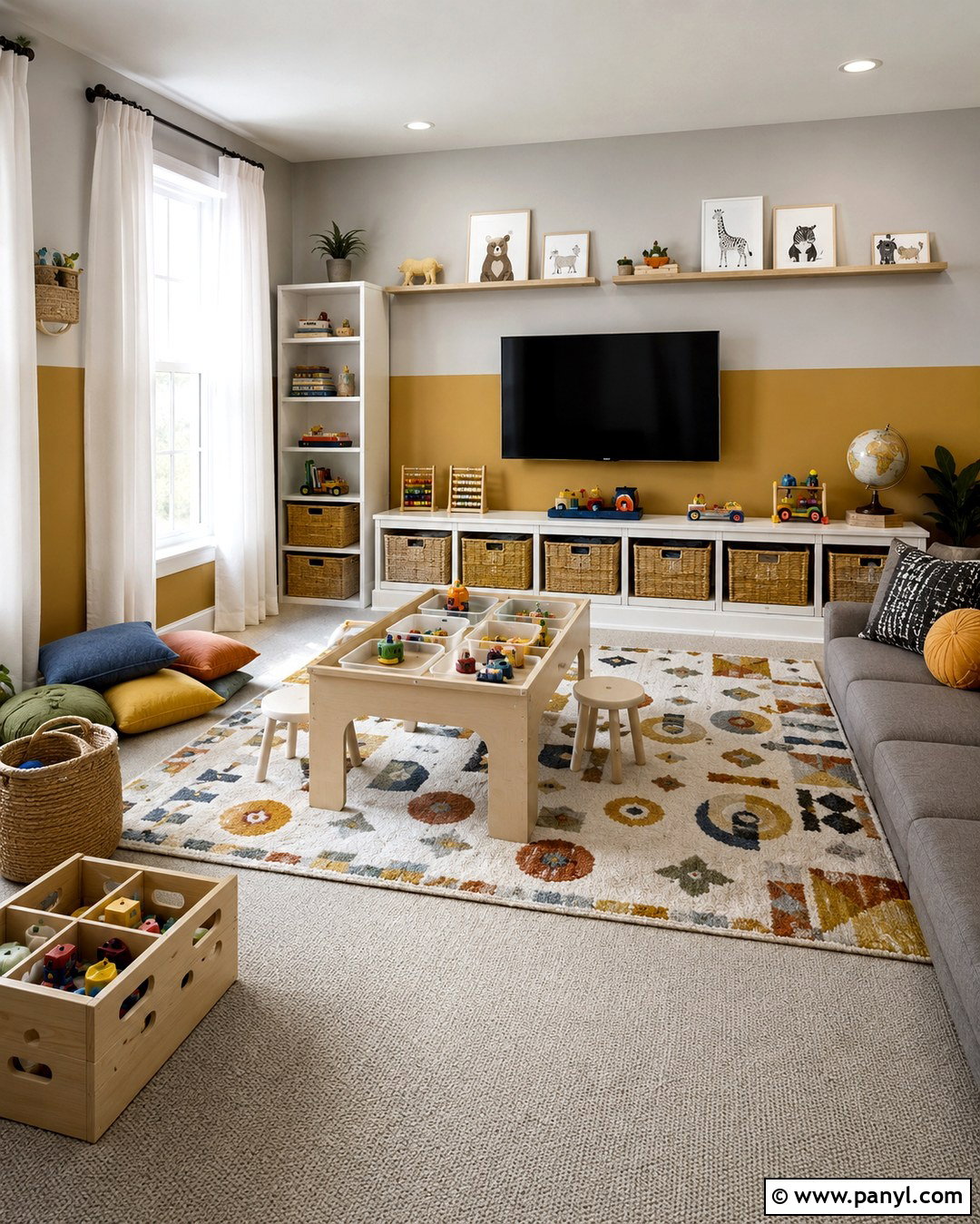
Mustard yellow and soft gray make a playroom cheerful while giving colorful toys a controlled background. Paint a broad mustard band around the lower half of the room and use pale gray above it. Instead of molding, create a clean painted edge that feels casual and modern. Choose low white storage cabinets with labeled woven bins to keep the floor open. A gray modular sofa gives adults and children a comfortable place to sit, while a large washable rug introduces blue, rust, and yellow details. Add a child-sized birch table near the center and mount picture ledges on the gray walls for rotating artwork. White curtains, simple ceiling lighting, and a padded reading corner complete a bright, durable room designed for active play, crafts, and quiet time.
13. Burgundy And Pale Pink Dining Room
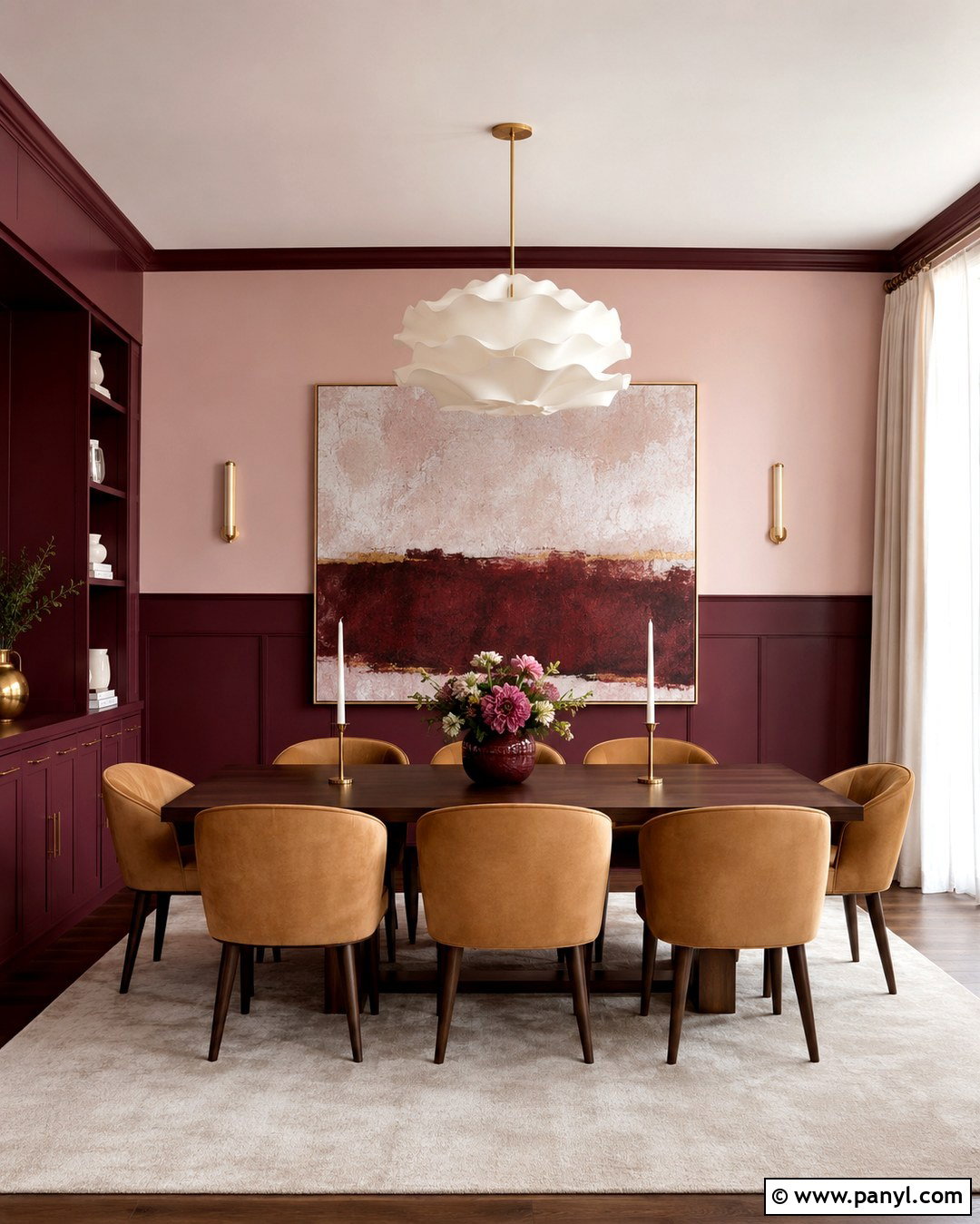
Rich burgundy paneling with pale pink upper walls creates a dining room that feels dramatic without losing warmth. Carry the burgundy across the lower half of the room, including the trim and built-in storage, to form a strong visual base. Pale pink above softens the contrast and reflects more light around the dining area. Choose a dark walnut table with upholstered camel chairs for a balanced mix of depth and warmth. A large cream rug prevents the dark furniture and paneling from appearing too dense. Add a sculptural white pendant, brass candlesticks, and oversized abstract artwork containing burgundy, blush, and brown. Sheer cream curtains complete the windows. The finished room feels sophisticated enough for gatherings but comfortable enough for relaxed everyday meals.
14. Chocolate Brown And Cream Bedroom
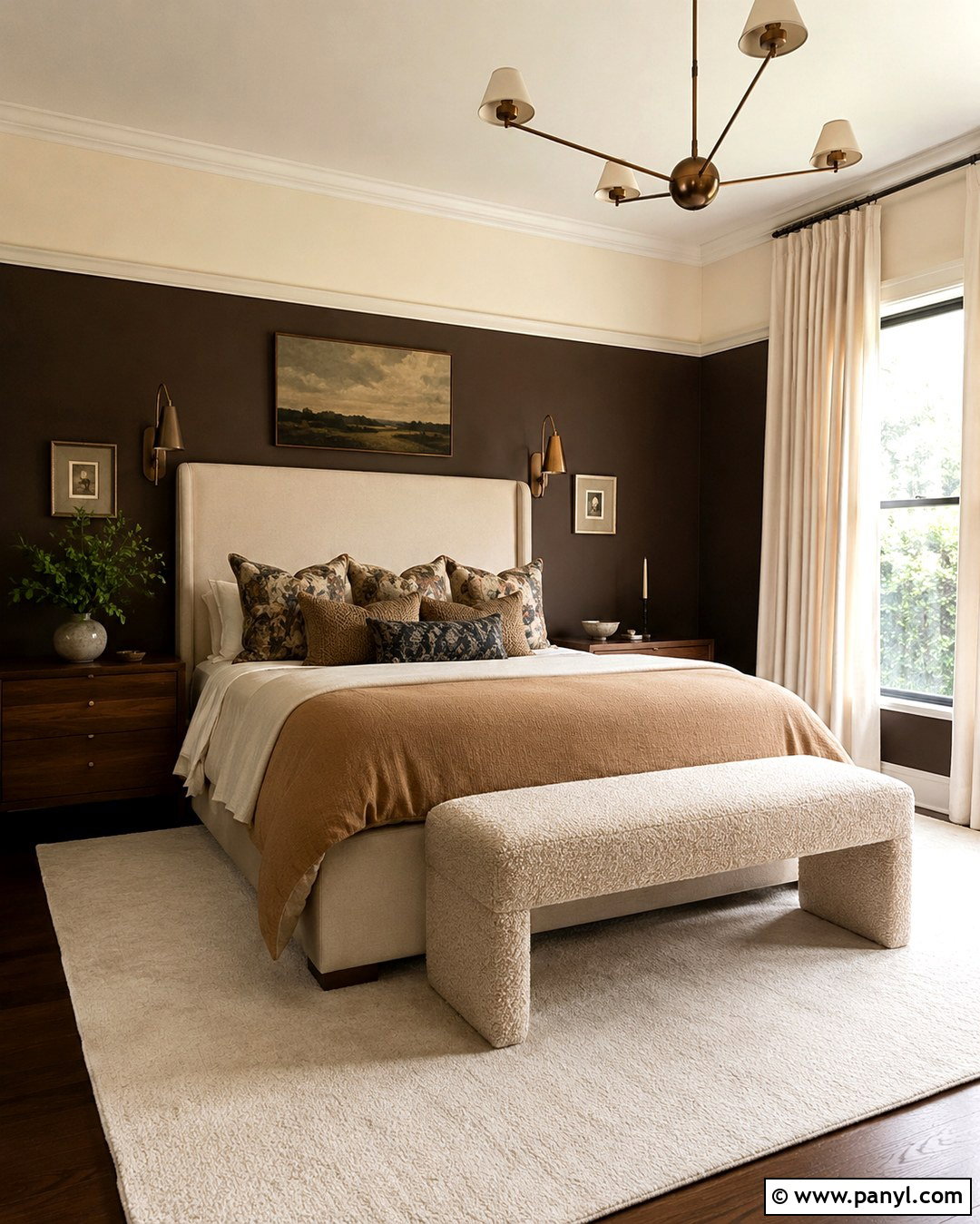
Chocolate brown and soft cream can create a warm primary bedroom when texture and light are carefully layered. Paint the lower two-thirds of the walls deep brown, then use cream above and across the ceiling to keep the room visually lifted. Add a slim cream picture rail at the color break for a tailored finish. A tall oatmeal upholstered bed softens the brown background, while walnut nightstands continue the warm undertones. Dress the bed with white sheets, a camel coverlet, and patterned brown pillows. Place a large ivory rug under the bed and use full cream curtains at the windows. Bronze sconces, minimal black frames, and a boucle bench add subtle contrast. The result is cozy and grounded without appearing dark or visually crowded.
15. Pale Blue And Deep Blue Bathroom
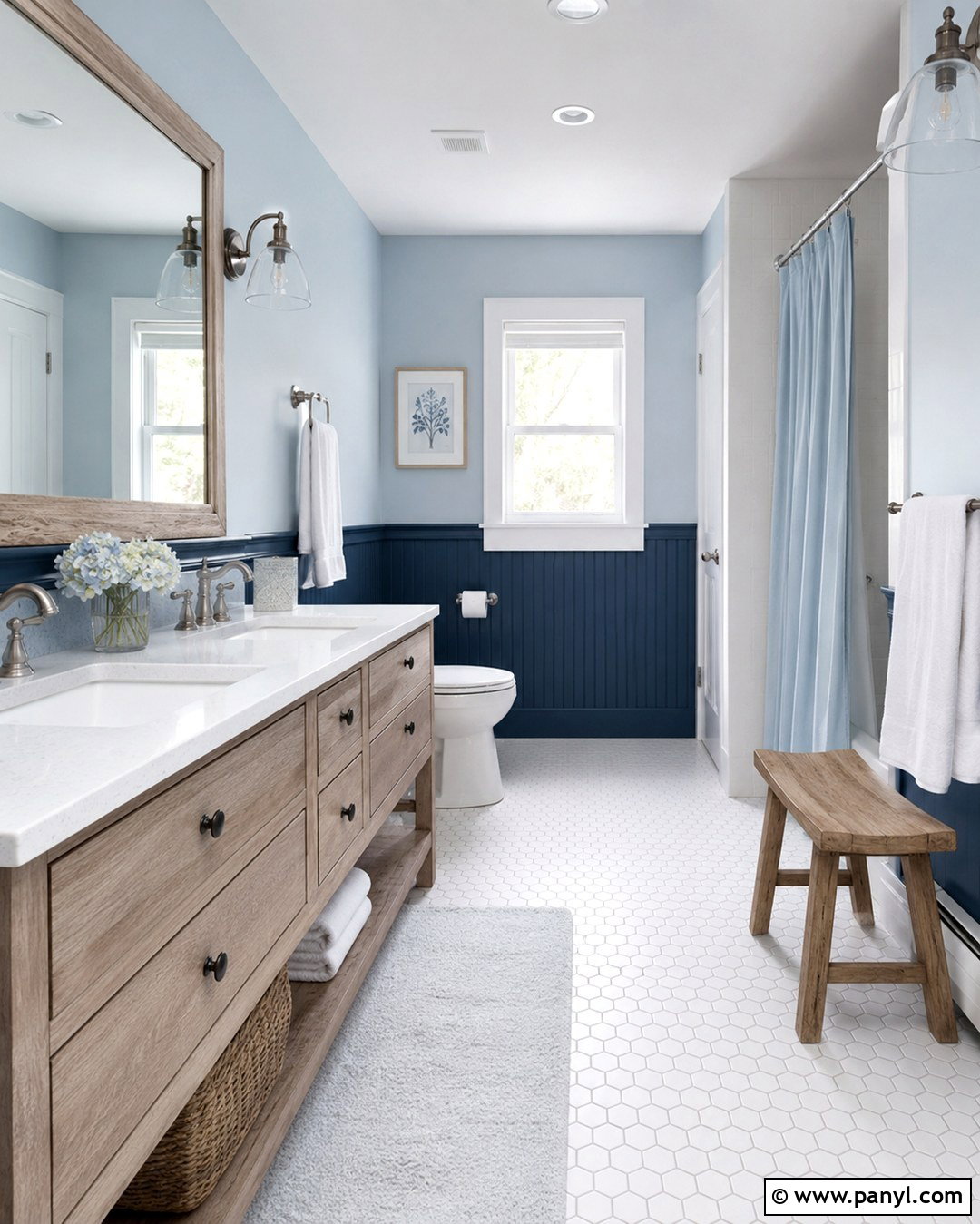
Two shades of blue can give a bathroom depth while maintaining a clean, refreshing appearance. Cover the lower walls with deep blue painted beadboard and use misty pale blue above. A white oak vanity, white quartz countertop, and rectangular white sink keep the room bright. Choose brushed nickel hardware for a quiet finish that works naturally with the cool palette. White hexagonal floor tile with soft gray grout adds pattern without introducing another strong color. Hang a wide framed mirror above the vanity and use clear glass sconces on either side. White towels, a pale blue shower curtain, and one small wood stool complete the scheme. This balanced bathroom looks crisp and composed while the darker lower wall helps disguise everyday marks in a busy space.
16. Peach And Caramel Nursery
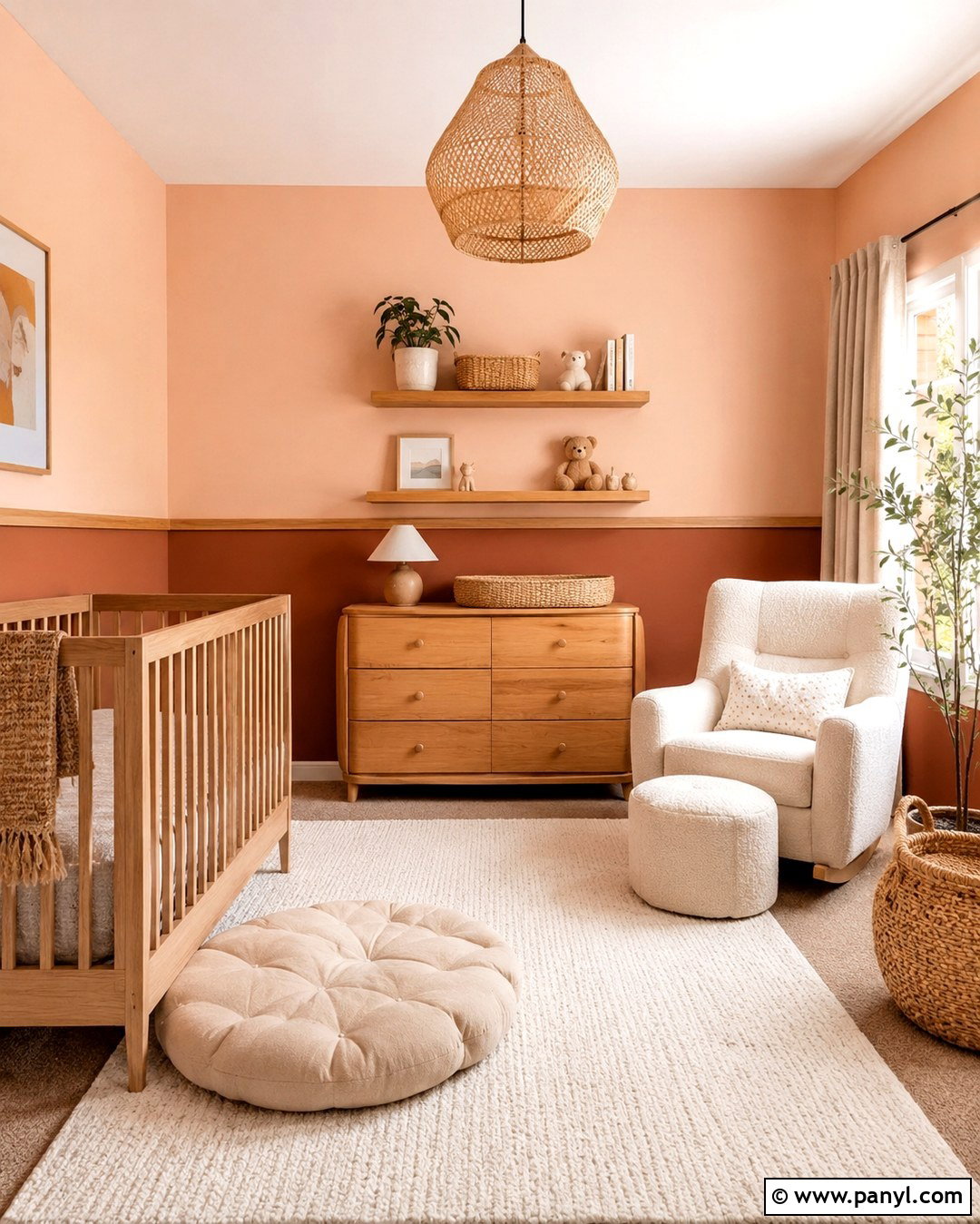
Soft peach upper walls and warm caramel lower walls create a nursery that feels gentle, modern, and suitable beyond infancy. Position the color division slightly above crib height and use a thin natural wood rail between the shades. A light oak crib, cream boucle chair, and ivory rug keep the room calm and comfortable. Choose curtains in a pale oatmeal fabric to filter daylight without introducing another dominant color. Bedding should remain simple, with small touches of peach, caramel, and muted green. Mount two secure wood shelves for lightweight decorative pieces and books, leaving the crib wall uncluttered. A rounded dresser, woven baskets, and a soft floor cushion complete the room. The coordinated palette feels warm and nurturing without relying on overly themed nursery decorations.
17. Greige And White Hallway
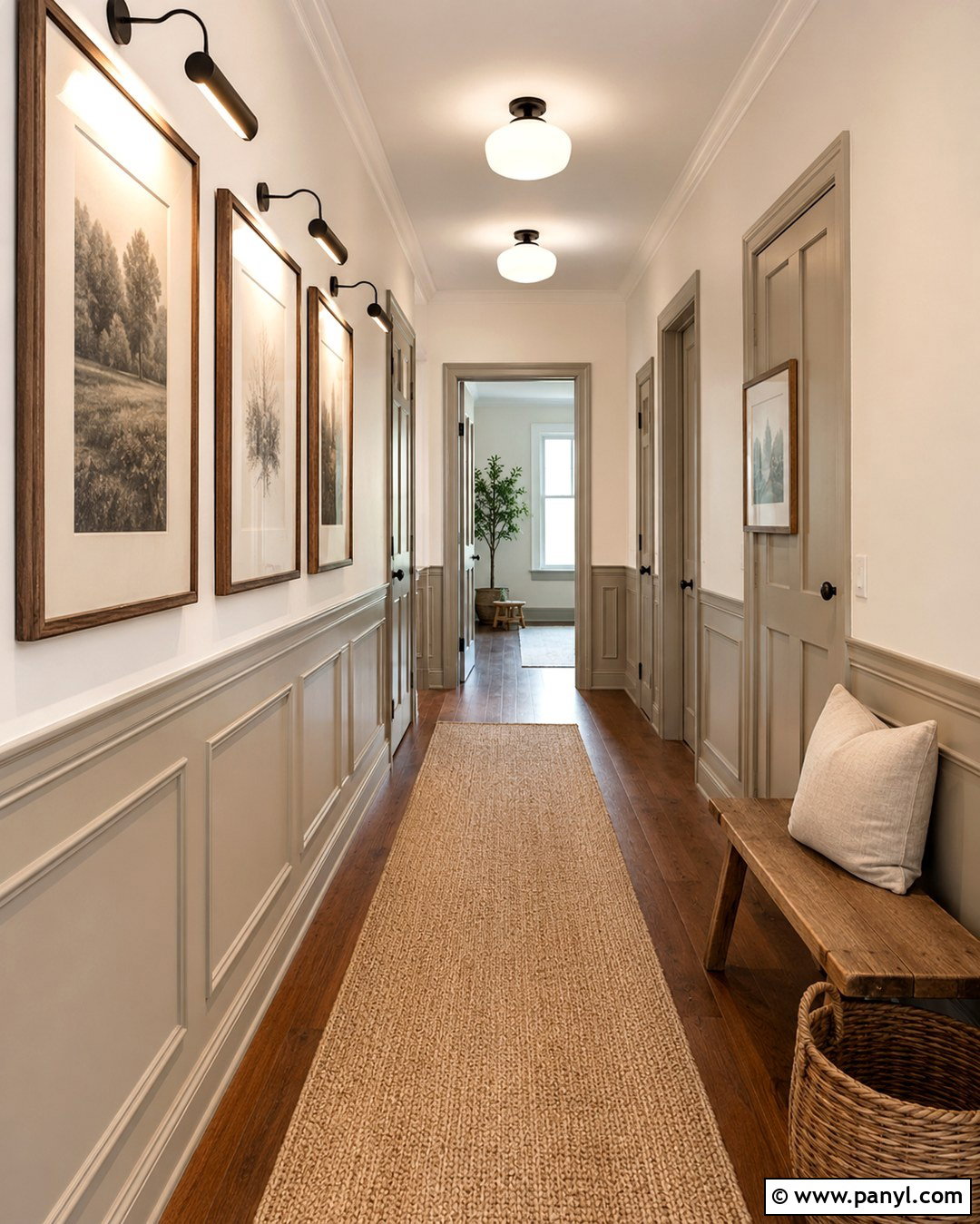
A warm greige lower wall and soft white upper wall can give a plain hallway architectural presence and practical durability. Create rectangular molding panels below the color break and paint the molding, baseboards, and doors in the same greige for a continuous built-in appearance. Keep the upper walls white to reflect light through the passage. A long natural fiber runner adds comfort while introducing subtle texture. Install simple black picture lights over a series of matching wood frames to turn the hallway into an organized gallery. A narrow bench can fit at the widest point, paired with one woven basket for shoes or bags. Use warm white ceiling fixtures rather than oversized pendants. The finished hallway feels connected to nearby rooms while having a clear identity of its own.
18. Rust And Linen Basement Family Room
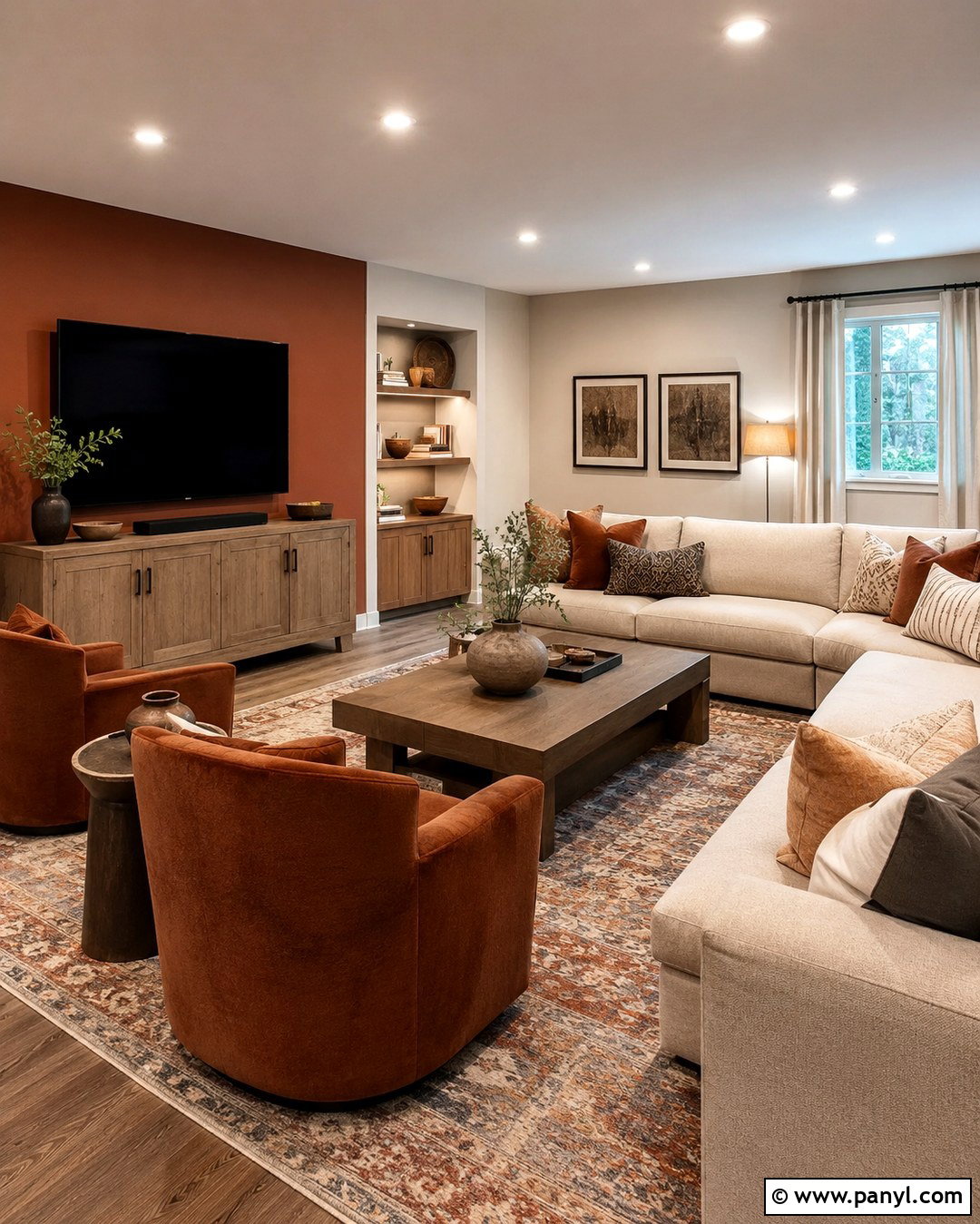
Earthy rust and light linen walls can make a basement family room feel warmer and more inviting. Paint the television wall and an adjoining corner in muted rust, then use creamy linen across the other walls to maximize available light. Position a deep beige sectional opposite the television and anchor it with a large washable rug in brown, cream, and faded blue. A low oak media console keeps the darker wall from feeling bulky. Add two rust-colored swivel chairs to create a conversation area that can easily face the screen. Layer floor lamps, table lamps, and bright ceiling lighting throughout the room. Cream curtains, textured pillows, closed game storage, and a broad coffee table complete a practical family space suited to movies, reading, and casual gatherings.
19. Emerald Green And Mint Laundry Room
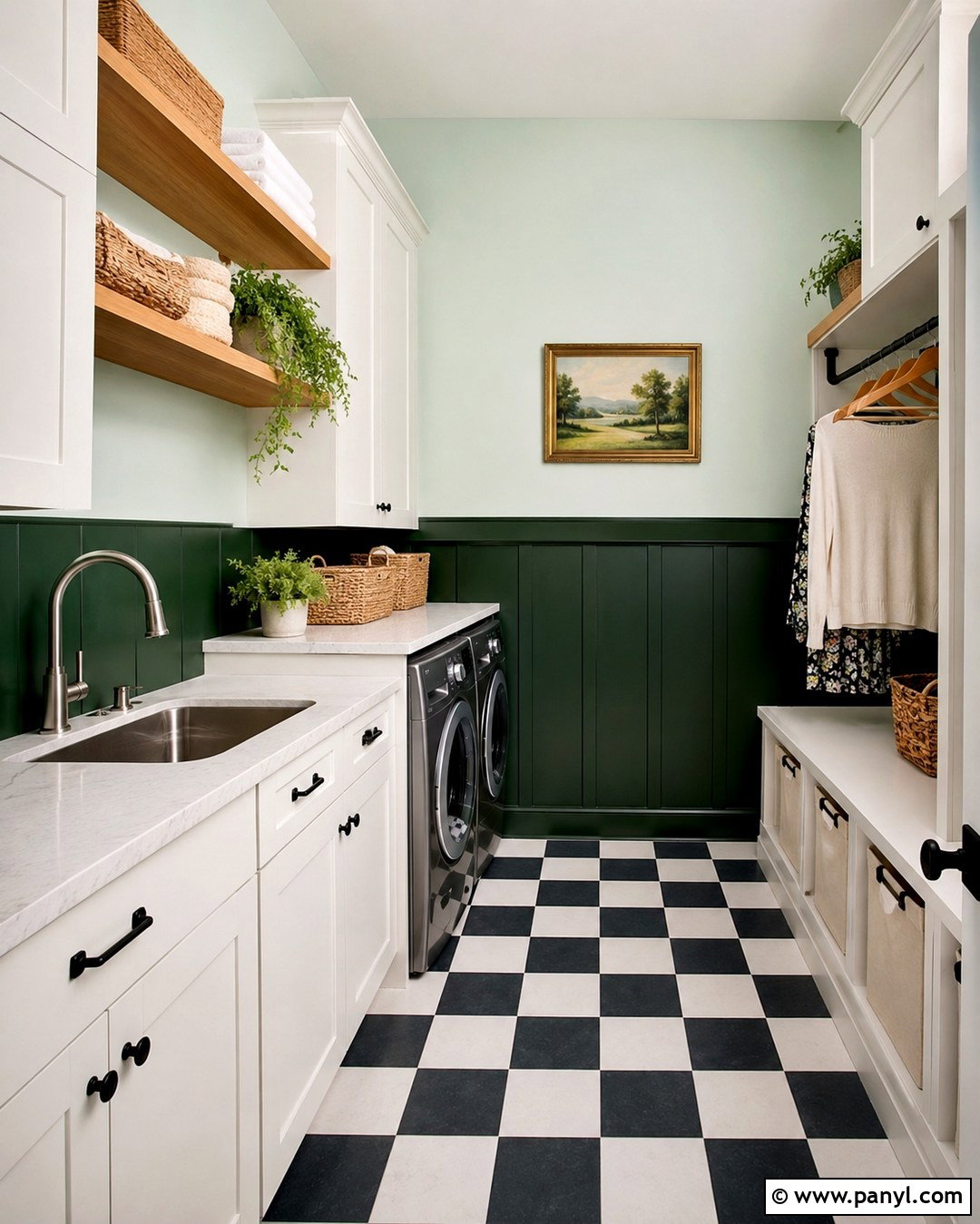
Emerald green lower walls and pale mint above give a laundry room color and energy without sacrificing a clean working environment. Use emerald on moisture-resistant paneling behind the sink and beneath the wall cabinets. Paint the upper walls mint to brighten the room and soften the saturated green. White shaker cabinets, a pale quartz counter, and a stainless steel sink create a durable work zone. Add warm oak floating shelves for baskets, jars, and folded linens. A black-and-white checkerboard floor introduces a classic pattern that can handle visual activity. Choose matte black cabinet pulls and a bright white ceiling fixture for crisp definition. A hanging rail, concealed hampers, and labeled storage containers complete an organized laundry room where both wall colors support the practical layout.
20. Cobalt Blue And Sand Craft Room
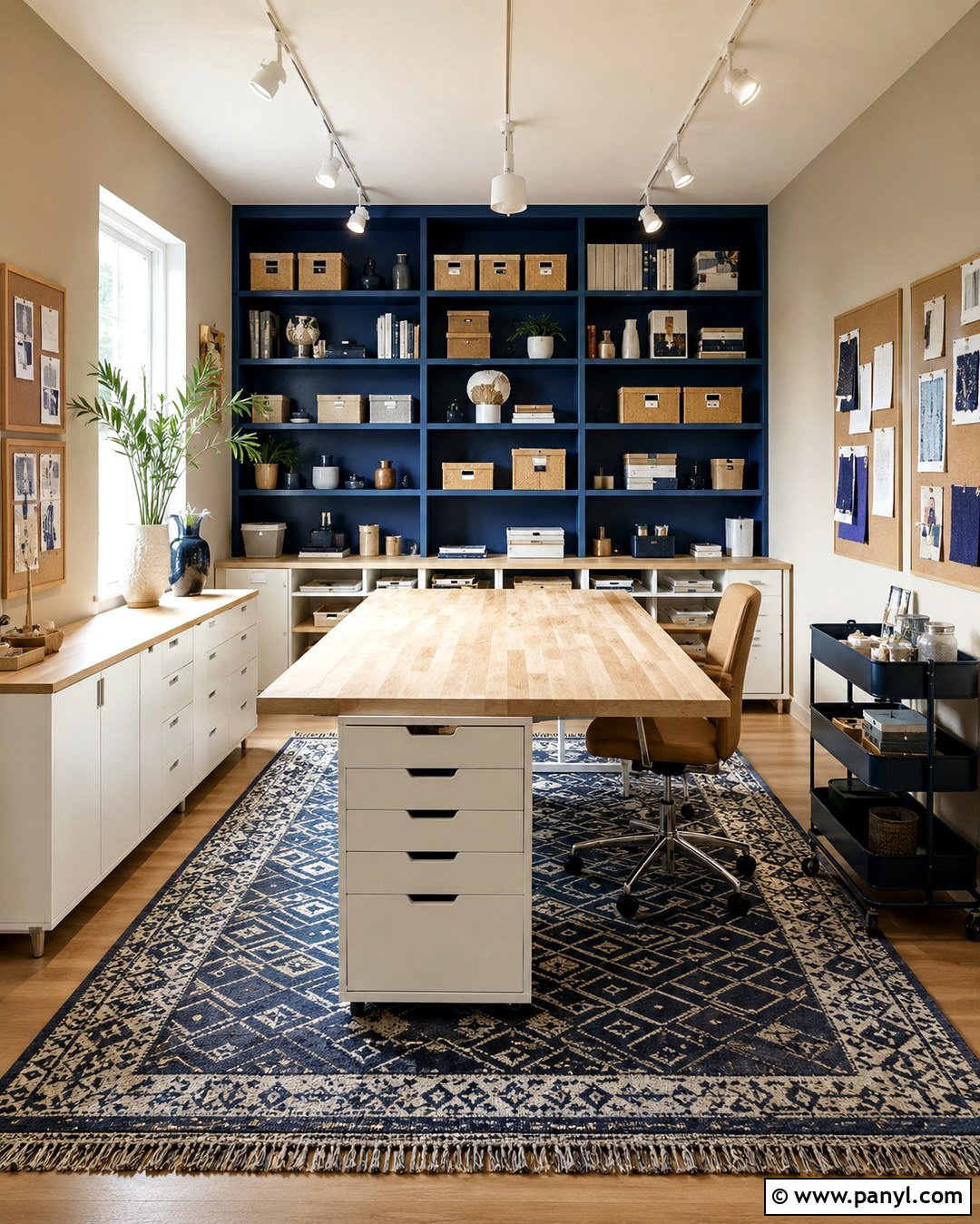
Cobalt blue and warm sand create an energizing craft room with clearly defined work and storage zones. Paint the wall behind the main worktable cobalt, including the shelving mounted across it. Use a soft sand color on the other walls to balance the stronger blue and keep the room bright. A large birch table in the center offers space for projects, while white cabinets along one wall hold tools and supplies. Add a comfortable tan task chair and a flat-weave rug featuring cobalt, cream, and rust. Adjustable white track lights provide clear illumination across the table. Corkboards, closed boxes, and a small rolling cart keep materials accessible but controlled. The finished studio feels creative and colorful while remaining organized enough for frequent, practical use.
Conclusion:
The most successful **20 Rooms With Two Color Walls** show how paint can shape an entire space rather than act as a disconnected decorative feature. Start with two colors that share compatible undertones, then repeat them thoughtfully through furniture, rugs, artwork, and smaller accents. Decide whether the room needs a horizontal division, a vertical zone, an architectural panel treatment, or a focused painted shape. Lighter colors usually work well where you want openness, while deeper shades can ground furniture or highlight a specific area. Before committing, test both colors together on large sections of every wall. Observe them during morning, afternoon, and evening light. Careful planning will make the final room feel balanced, intentional, and completely personal.

Related Ideas and Inspiration:
Leave a Reply