
Half-painted walls bring color, structure, and personality into a room without overwhelming the space. The best 25 Half Wall Color Ideas pair upper and lower shades with furniture, flooring, trim, lighting, and decor to create a complete, balanced look. A darker lower color can visually anchor the room, while a pale upper wall keeps it open and bright. You can define the divide with a slim chair rail, wood molding, paneling, or a sharply painted line. The color break does not have to sit at the exact midpoint, either. Raising it behind a bed or lowering it above a console can improve the room’s proportions. From calm neutrals to dramatic jewel tones, these 25 Half Wall Color Ideas offer a finished look for every space.

1. Sage Green Half Wall With Warm White
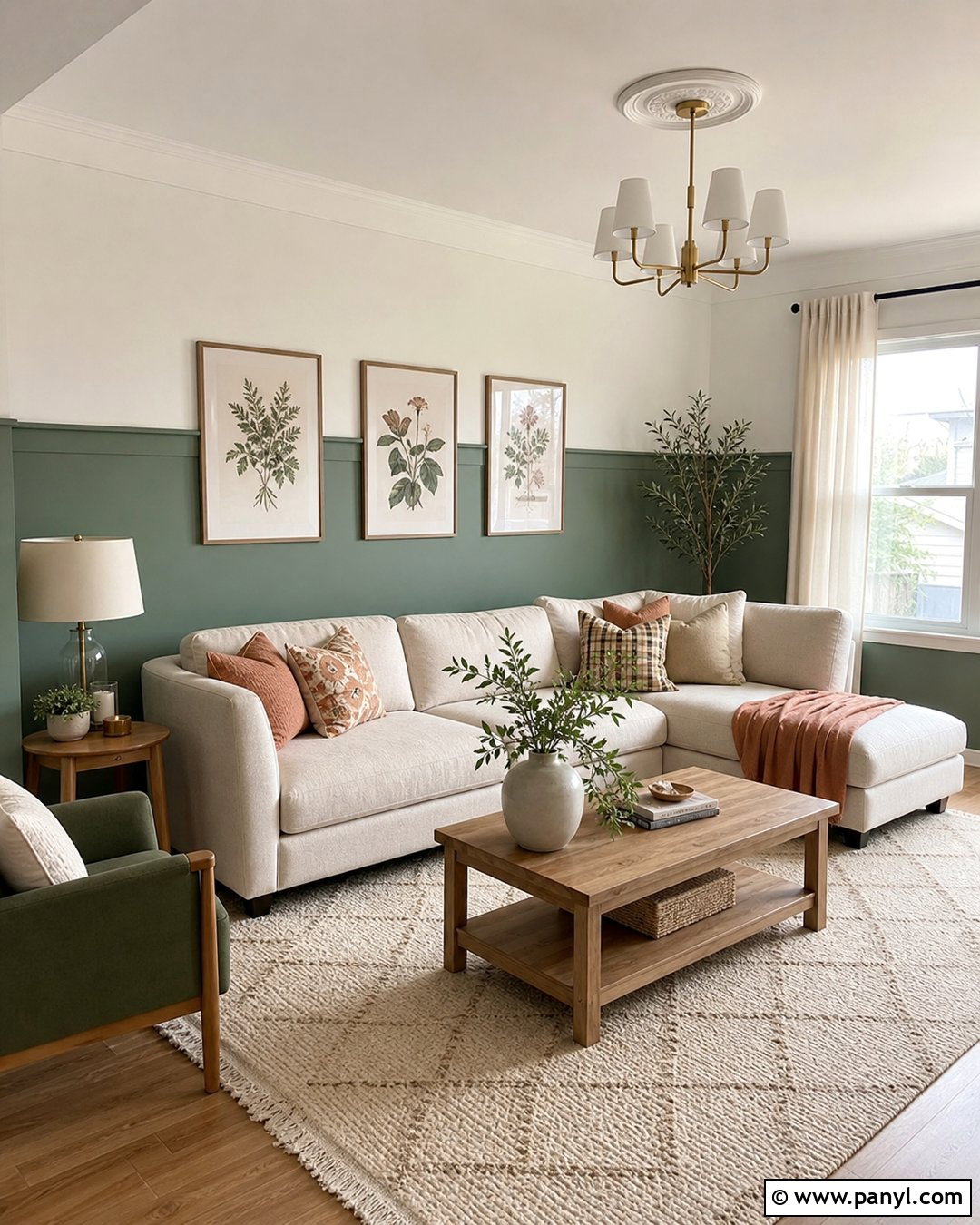
Soft sage green on the lower half creates a calm foundation without making the room feel heavy. Use warm white above it, then carry that same white across the ceiling and simple window trim. This combination works especially well in a living room with an oatmeal sofa, light oak coffee table, and cream textured rug. Add muted rust pillows, leafy plants, and brushed brass lighting for warmth. A narrow molding strip painted sage can give the transition a clean architectural finish. Position the split slightly above the sofa back so the green remains visible. Natural linen curtains and a few botanical prints complete this relaxed, organic room while keeping the color palette soft and approachable.
2. Navy Blue Half Wall With Crisp White
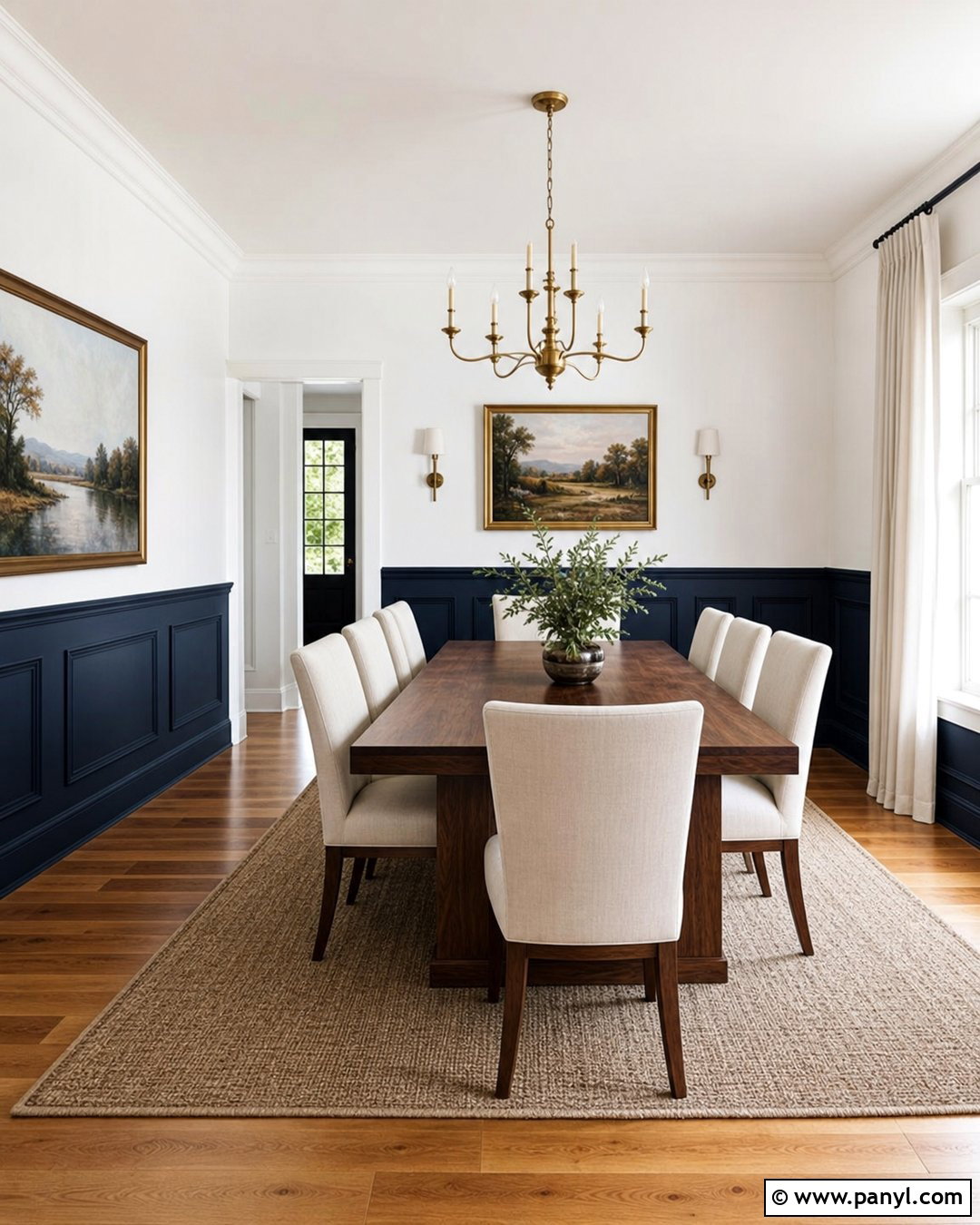
A navy blue lower wall brings tailored contrast to a bright dining room. Pair it with crisp white above, white crown molding, and a medium-tone oak floor to prevent the darker shade from dominating. Slim picture-frame molding on the navy portion can add traditional detail without requiring full wood paneling. Furnish the room with a round walnut table, cream upholstered chairs, and a woven neutral rug. A brass chandelier and simple landscape artwork introduce warmth against the cool blue. Keep the color division near standard chair-rail height so it connects naturally with the dining furniture. White curtains and clear glass accessories maintain an airy finish while allowing the strong navy foundation to remain the room’s focal point.
3. Terracotta Half Wall With Cream
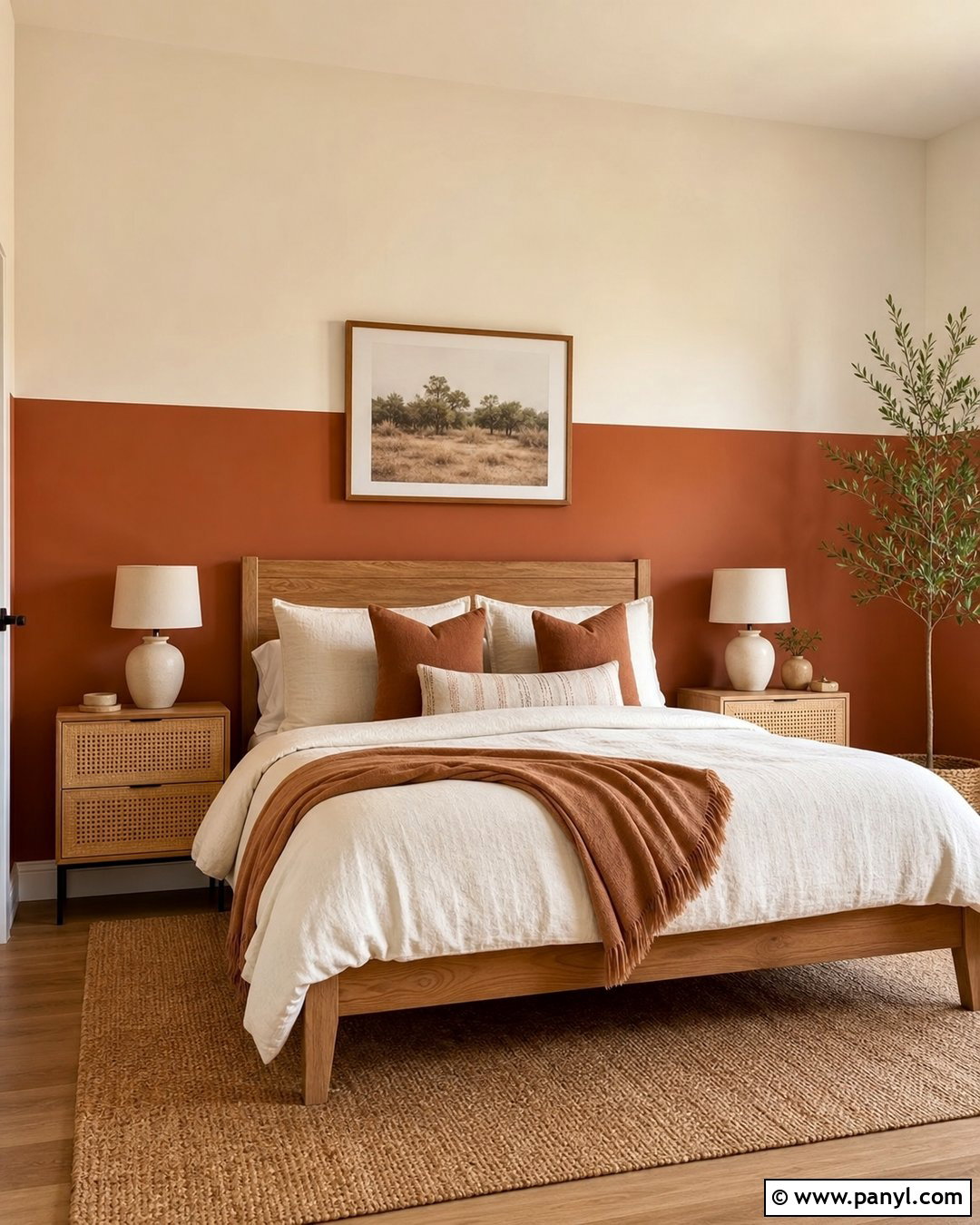
Warm terracotta gives a bedroom an earthy, sunbaked feeling when it covers the lower half of the walls. Balance it with creamy white above and continue the cream across the ceiling for a seamless upper area. Place the painted line behind a natural oak bed so it sits slightly higher than the headboard. Layer the bed with ivory linen, clay-colored pillows, and a woven camel throw. Cane nightstands, ceramic lamps, and a jute rug support the warm palette without making everything look overly matched. Choose an eggshell finish for the terracotta and a flatter finish for the cream. A few black accents, such as slim frames or reading sconces, provide definition within this comfortable, desert-inspired bedroom.
4. Charcoal Gray Half Wall With Soft Gray
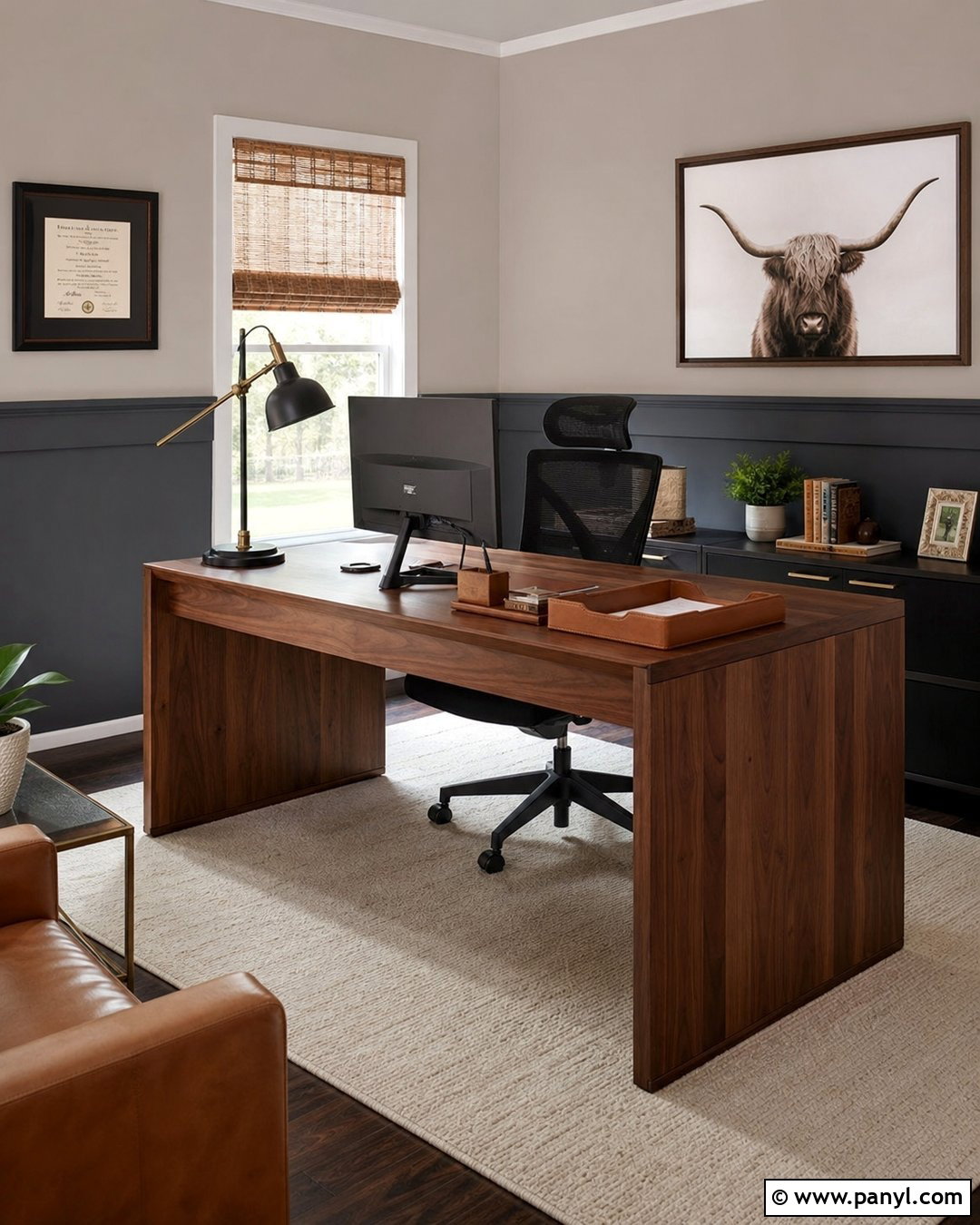
Charcoal on the lower wall can make a home office feel focused and polished rather than dark. Use a pale, warm gray on the upper portion to soften the contrast and reflect daylight around the workspace. Paint a narrow chair rail in charcoal so the divide feels intentional. A walnut desk, black task chair, and low charcoal storage cabinets create a practical foundation. Bring in warmth through cognac leather accessories, an ivory rug, and natural woven shades. Hang simple black-framed artwork entirely within the pale upper area to emphasize the room’s height. Brushed nickel lighting works well with the cooler palette. This complete scheme feels professional, but its wood textures and soft textiles keep it welcoming enough for everyday use.
5. Dusty Blue Half Wall With White
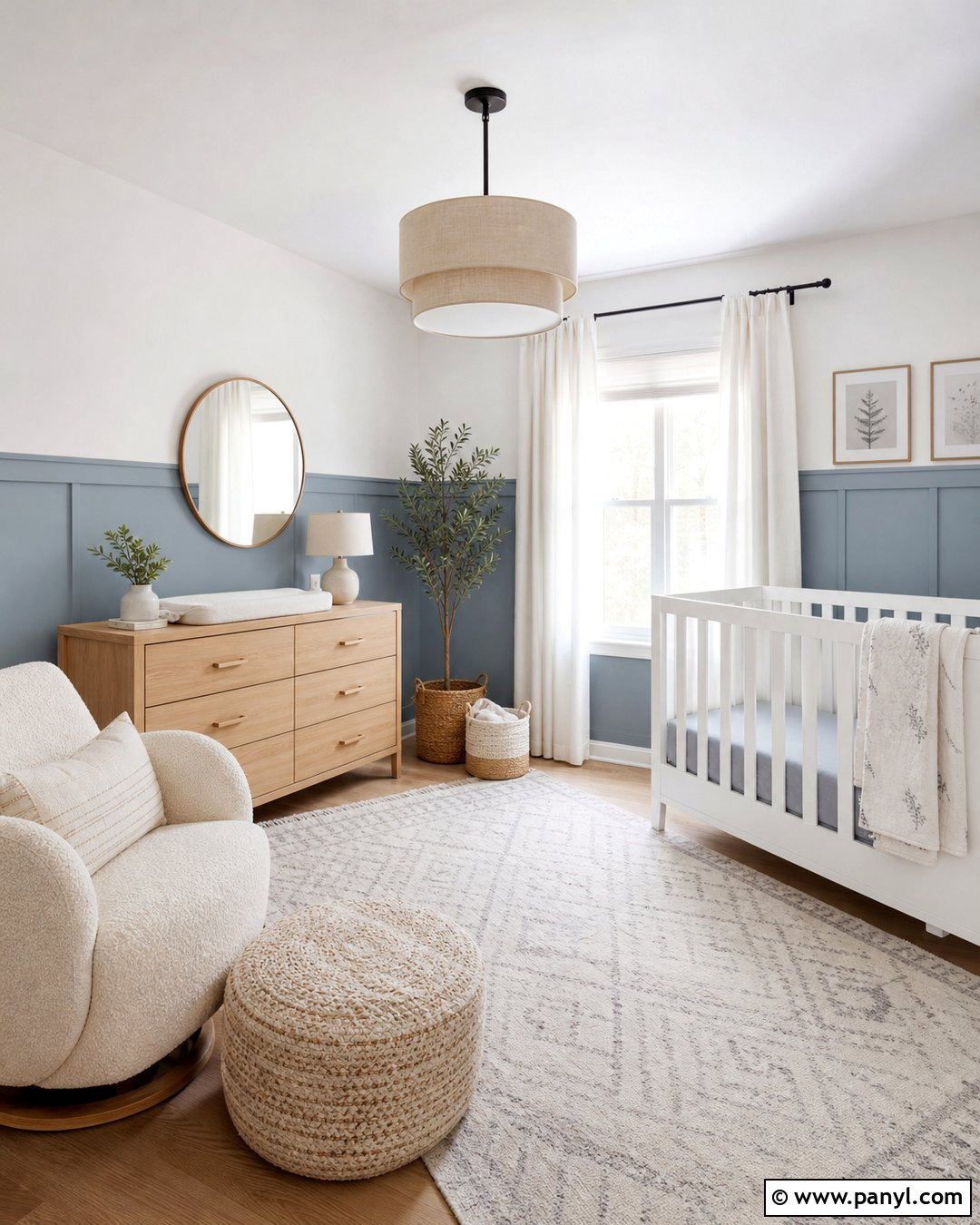
Dusty blue offers enough color to define a nursery while maintaining a peaceful atmosphere. Apply it to the lower two-thirds of the walls, leaving the upper section and ceiling clean white. The taller color block creates a cozy backdrop for a white crib and helps artwork feel visually connected to the furniture. Add a light oak dresser, a cream boucle chair, and a washable ivory rug with a subtle blue pattern. White curtains keep the windows bright, while natural baskets introduce practical storage and texture. Use a slim white molding strip at the divide for a crisp transition. Soft gray bedding, pale wood toys, and one muted mustard accent prevent the blue-and-white room from feeling overly themed or predictable.
6. Black Half Wall With Warm White
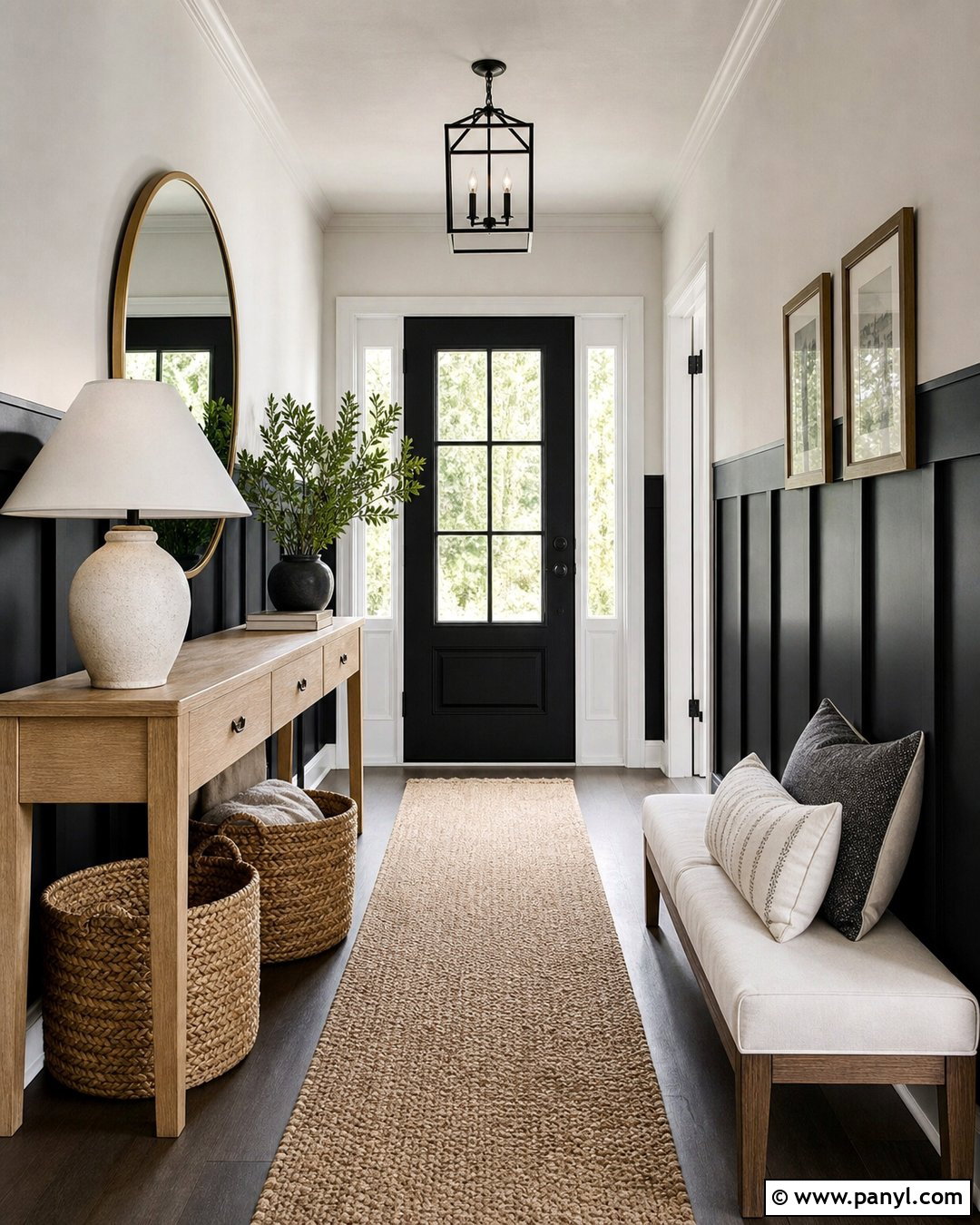
A matte black lower wall can look surprisingly inviting in an entryway when balanced with warm white above. Keep the black section near chair-rail height and paint the baseboards the same color for one continuous, grounded band. A light oak console, round brass mirror, and cream ceramic lamp stand out clearly against the dark background. Use pale limestone-look flooring or a natural runner to brighten the walkway. A slim black rail makes the transition appear clean and deliberate. Introduce greenery, woven baskets, and a small upholstered bench to soften the contrast. The upper walls should remain mostly uncluttered, with only one large mirror or artwork. This keeps the compact entrance open while giving it a memorable architectural presence.
7. Blush Pink Half Wall With Ivory
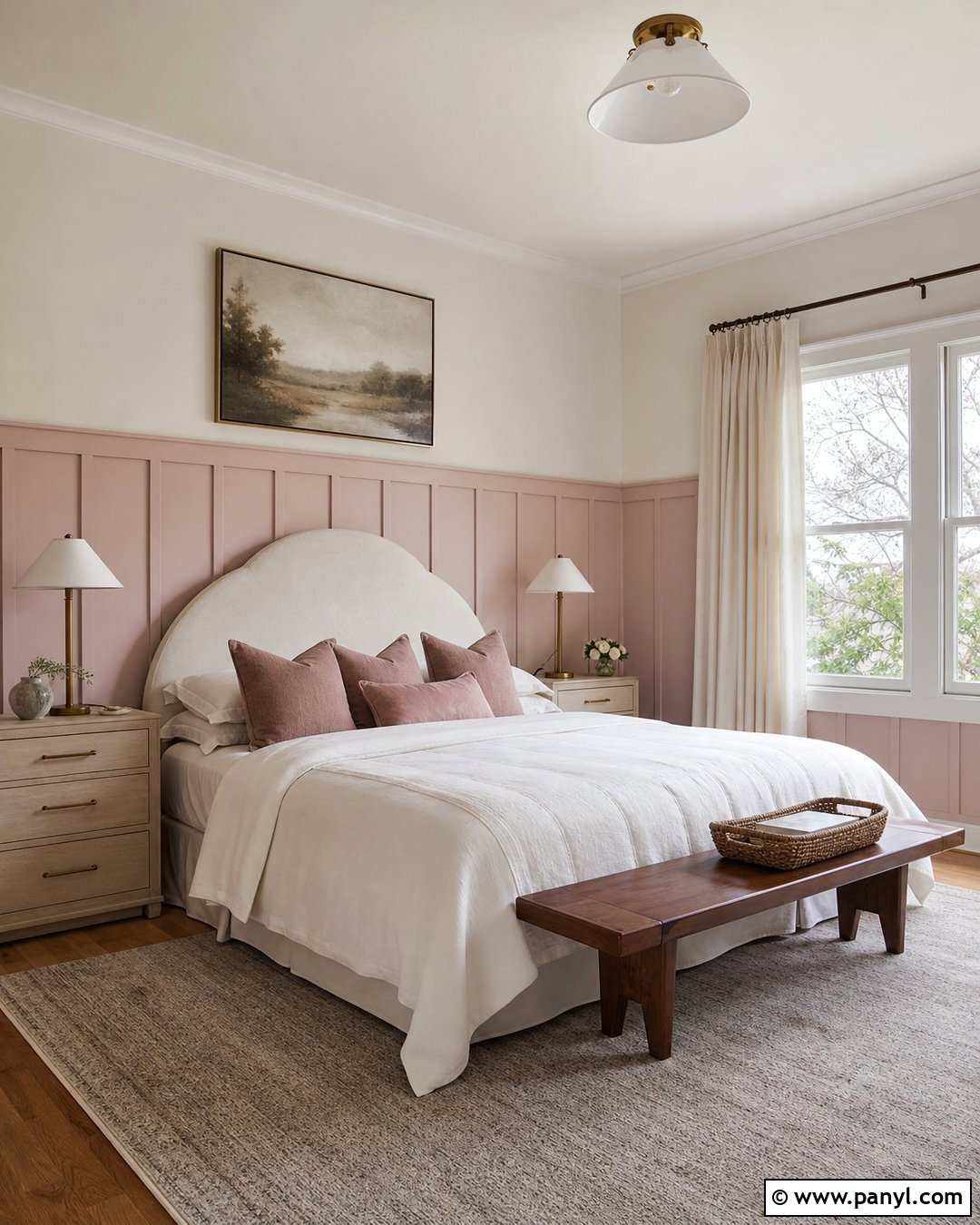
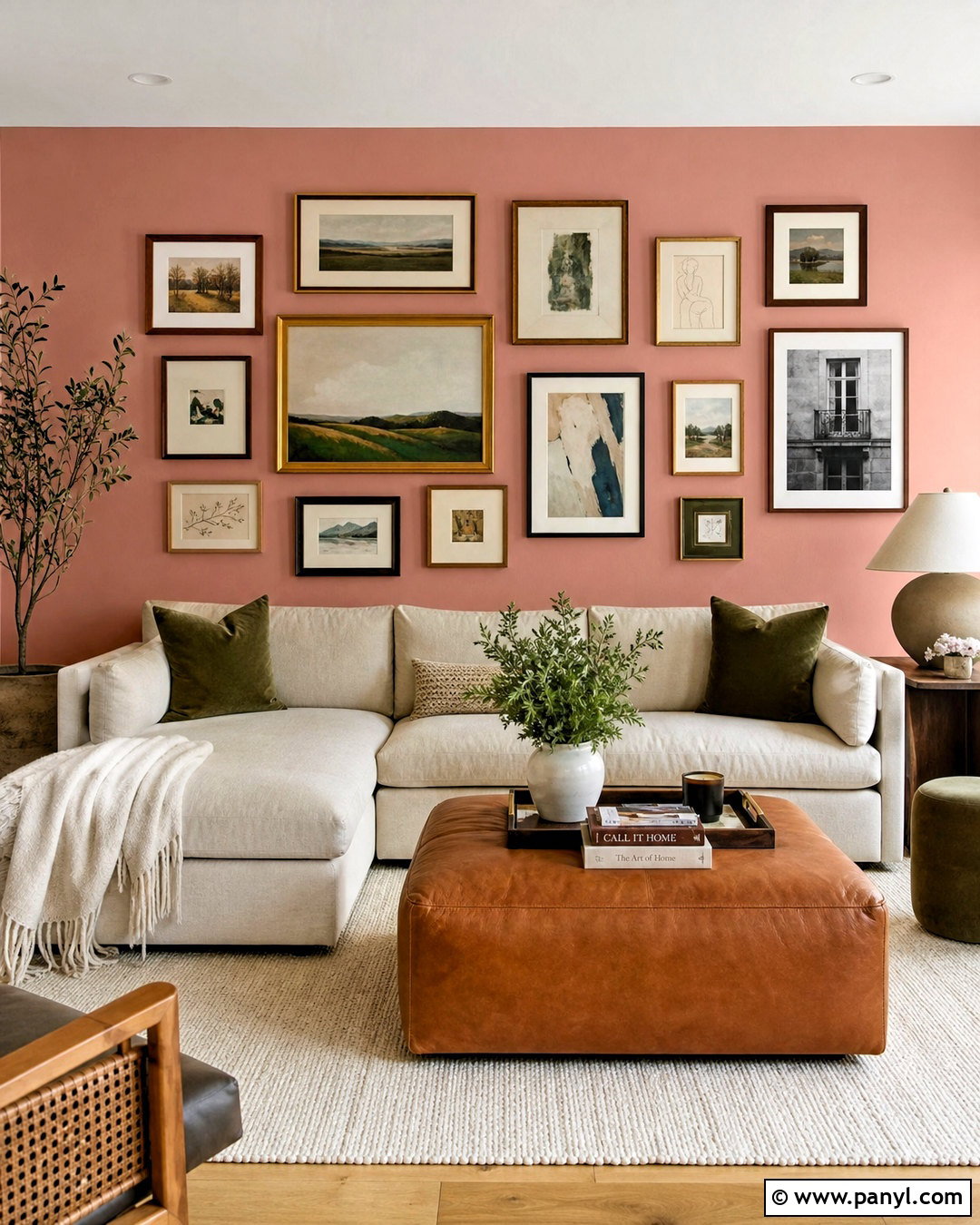
Blush pink can feel grown-up and refined when paired with ivory rather than bright white. Paint the lower half blush, including simple board-and-batten molding, and use a soft ivory across the upper walls and ceiling. In a guest bedroom, combine this treatment with a curved cream headboard, pale oak nightstands, and warm brass lamps. Bedding in ivory, taupe, and dusty rose creates gentle layers without turning the room overly pink. Ground the light colors with a warm gray rug and a small walnut bench. Keep the divide a few inches above the nightstands for balanced proportions. Minimal floral artwork and linen curtains finish the room, creating an inviting space that feels soft, polished, and comfortable throughout the year.
8. Olive Green Half Wall With Beige
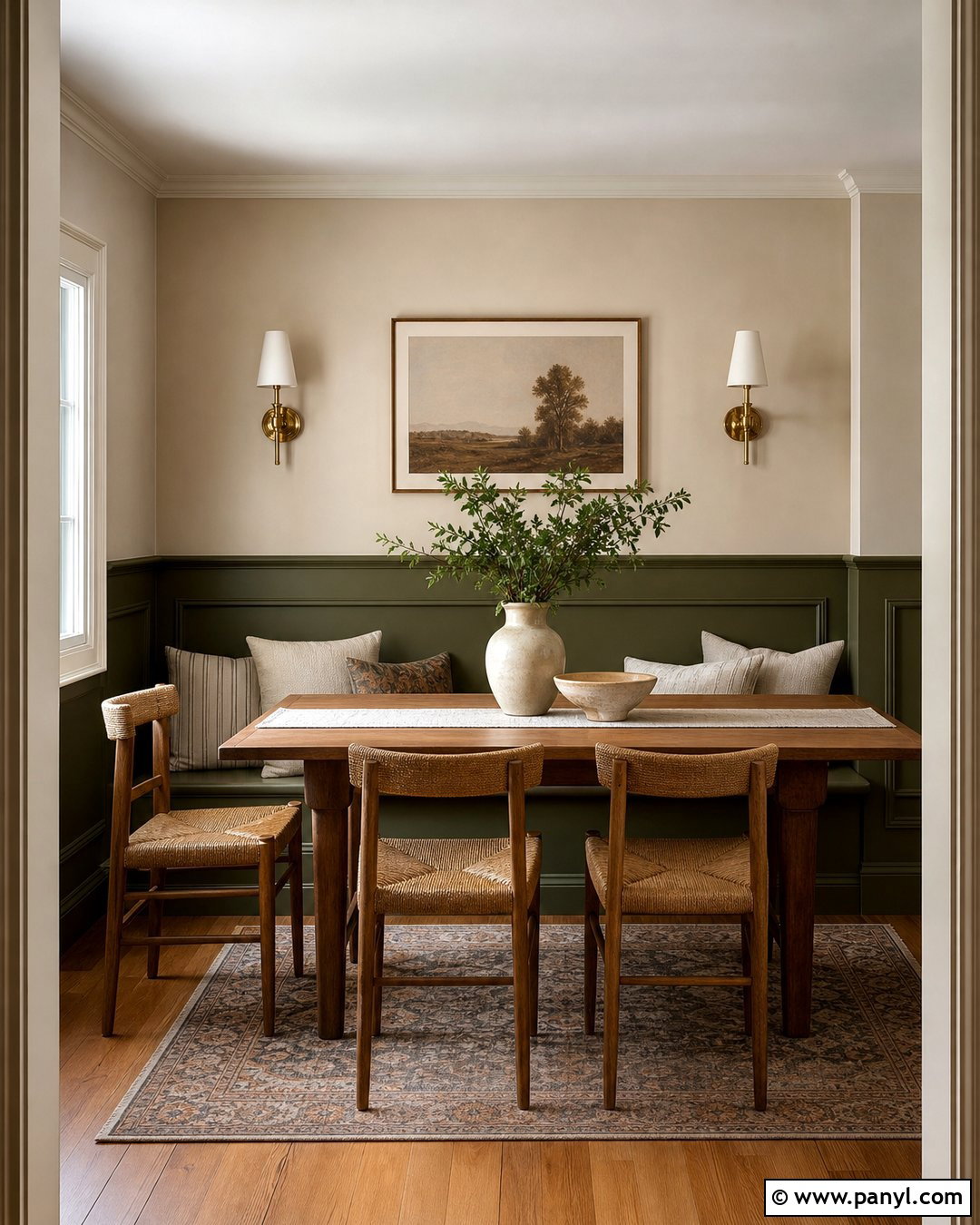
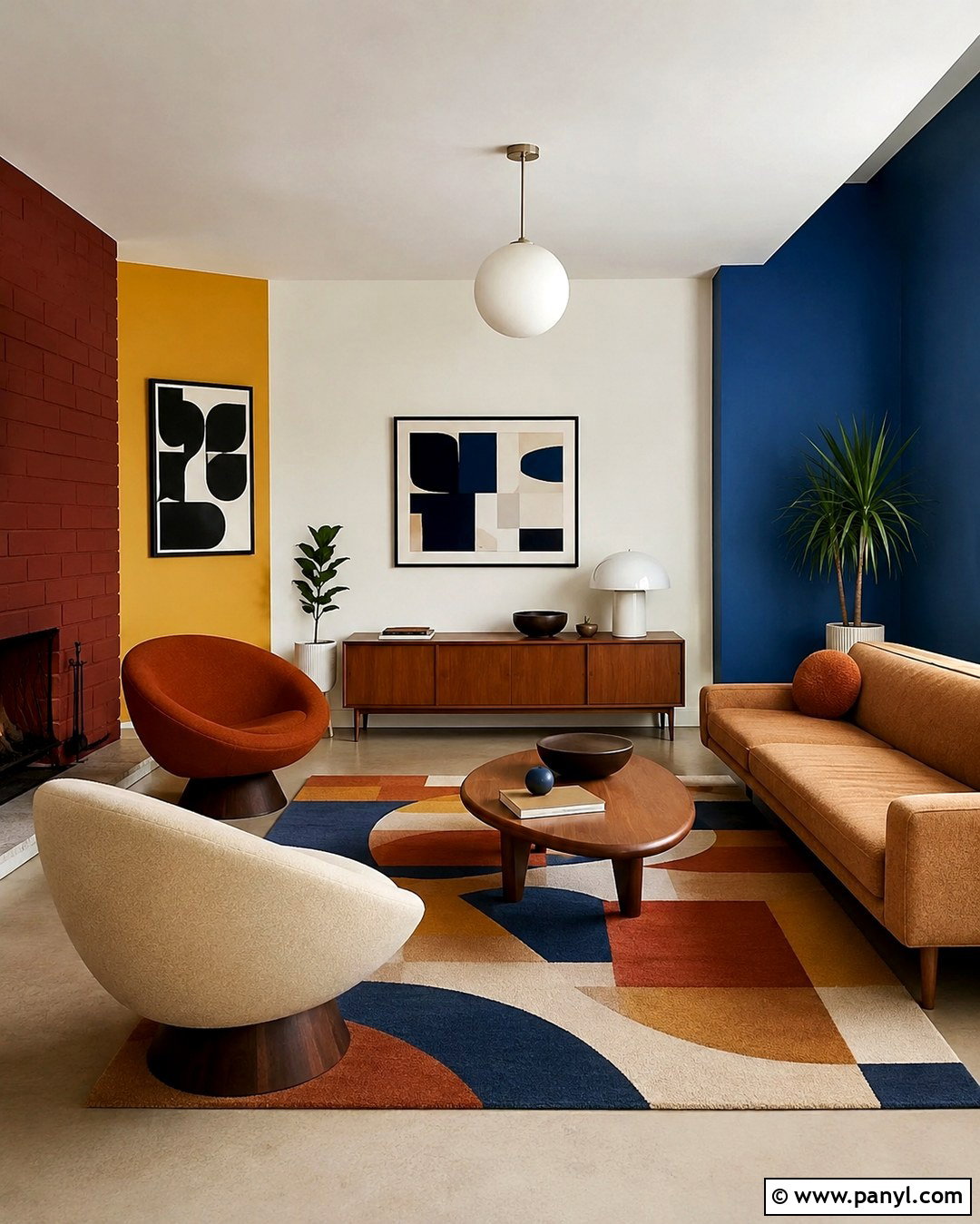
Deep olive green gives a dining nook richness, while a warm beige upper wall prevents the area from feeling enclosed. Paint the lower portion and its narrow molding in olive, then repeat the shade on built-in bench seating for a connected design. Add a rectangular oak table, woven dining chairs, and neutral seat cushions. Antique brass sconces and cream pottery complement the green’s earthy undertones. A beige-and-olive patterned rug can visually define the nook while protecting the flooring. Keep the upper wall simple with one oversized landscape print or a small collection of neutral ceramics. This complete palette works beautifully beside natural wood cabinets or floors, producing a comfortable gathering space with depth, warmth, and understated traditional character.
9. Greige Half Wall With Soft White
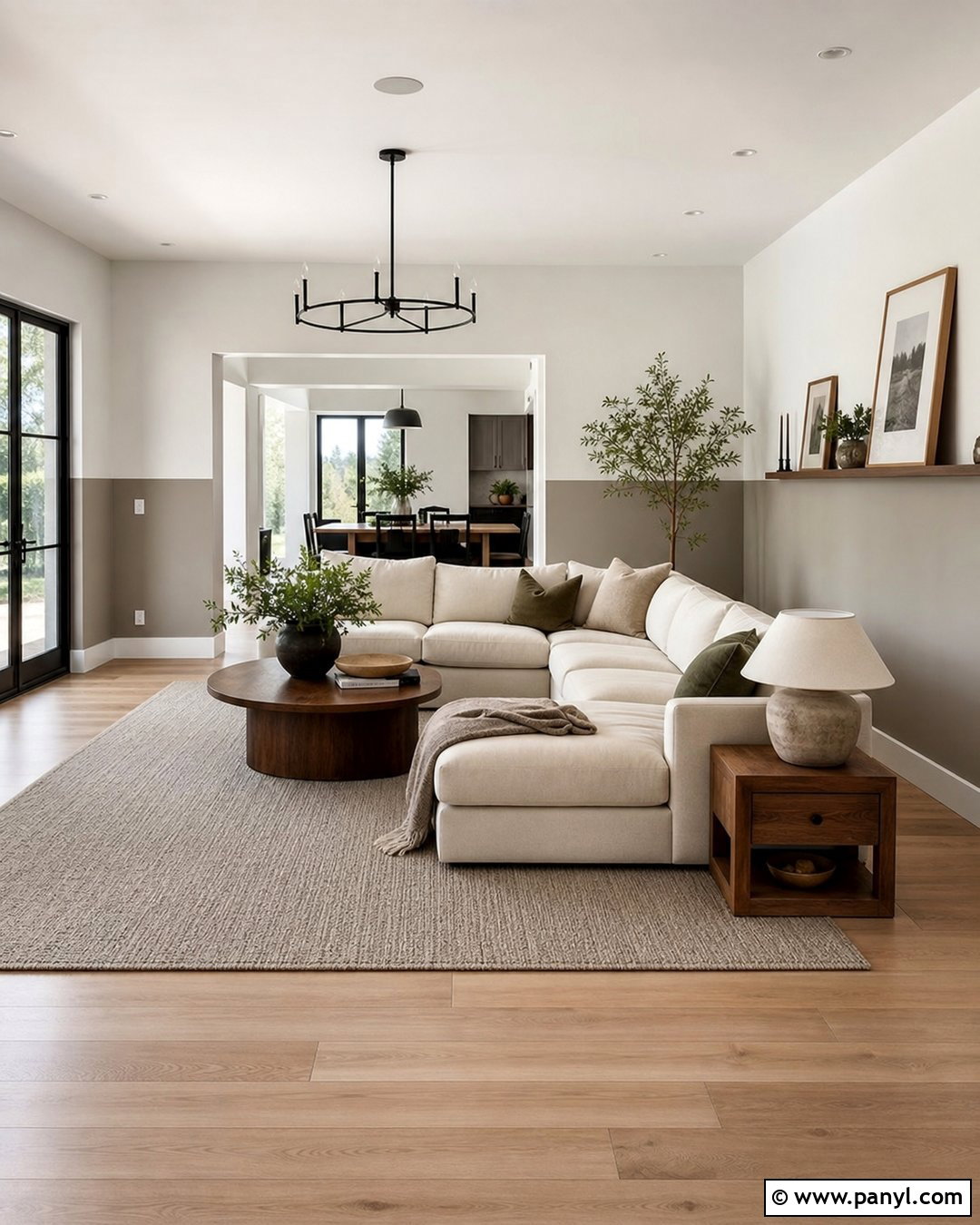
Greige is an easy half-wall choice for an open living room because it adds definition without creating harsh contrast. Paint the lower half in a medium warm greige and use soft white above, including the ceiling and crown molding. Add a narrow ledge at the color break for small framed artwork, but keep the display edited and uncluttered. A cream sectional, walnut side tables, and a taupe wool rug build a layered neutral palette. Black metal lighting adds just enough structure, while olive pillows and natural greenery introduce restrained color. Extend the greige around doorways and connected walls for continuity. The finished room feels brighter than an all-greige space, yet warmer and more dimensional than plain white walls.
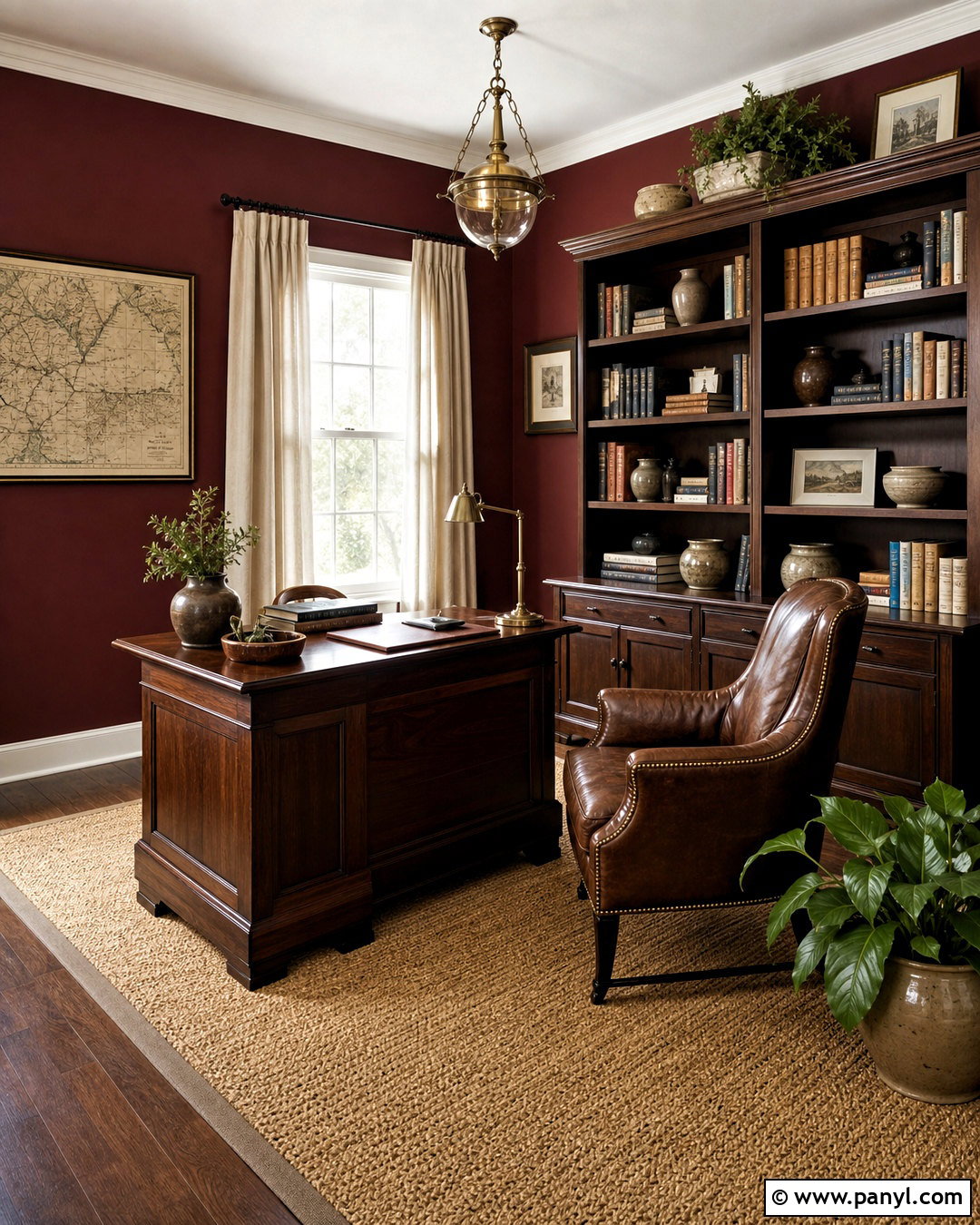
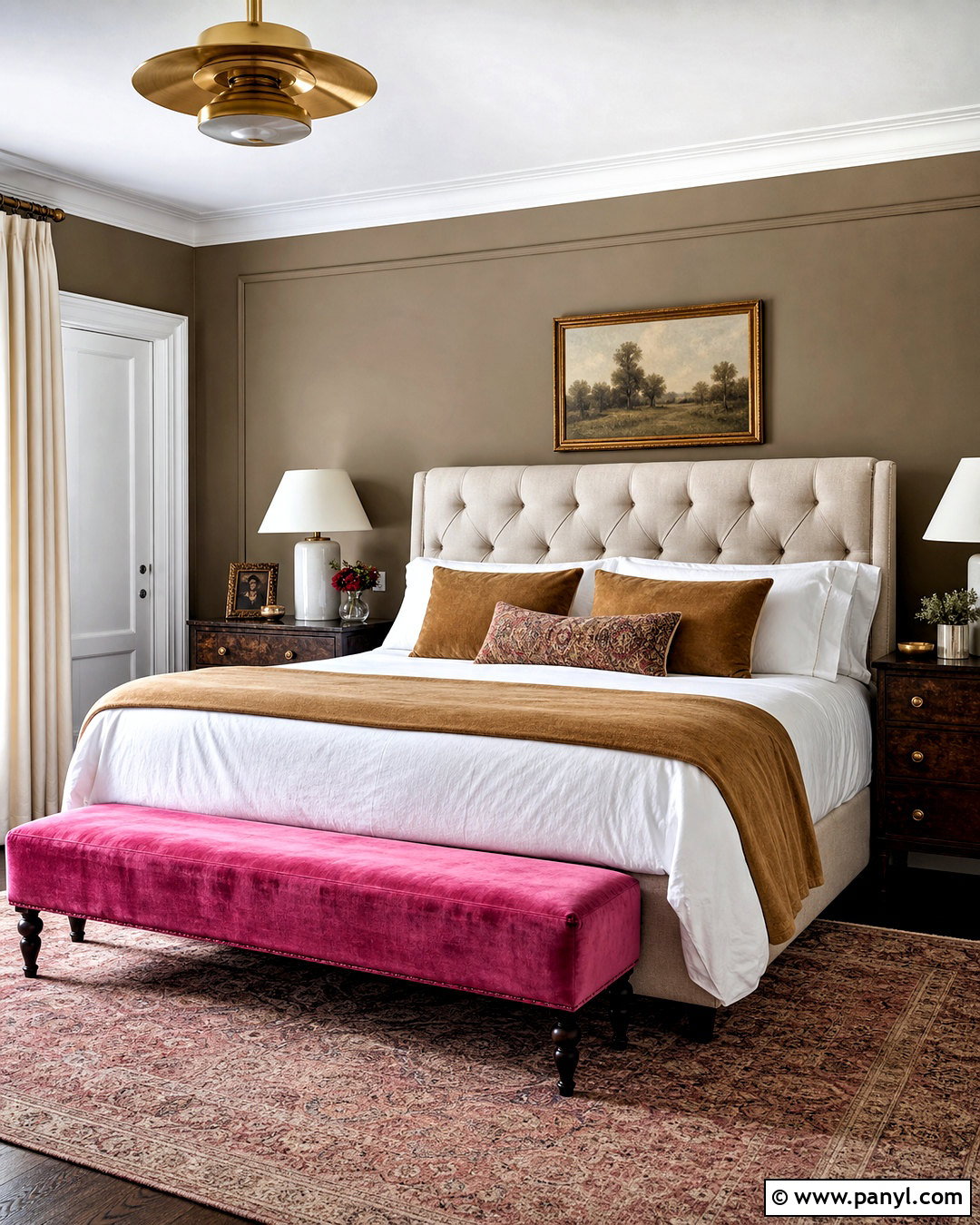
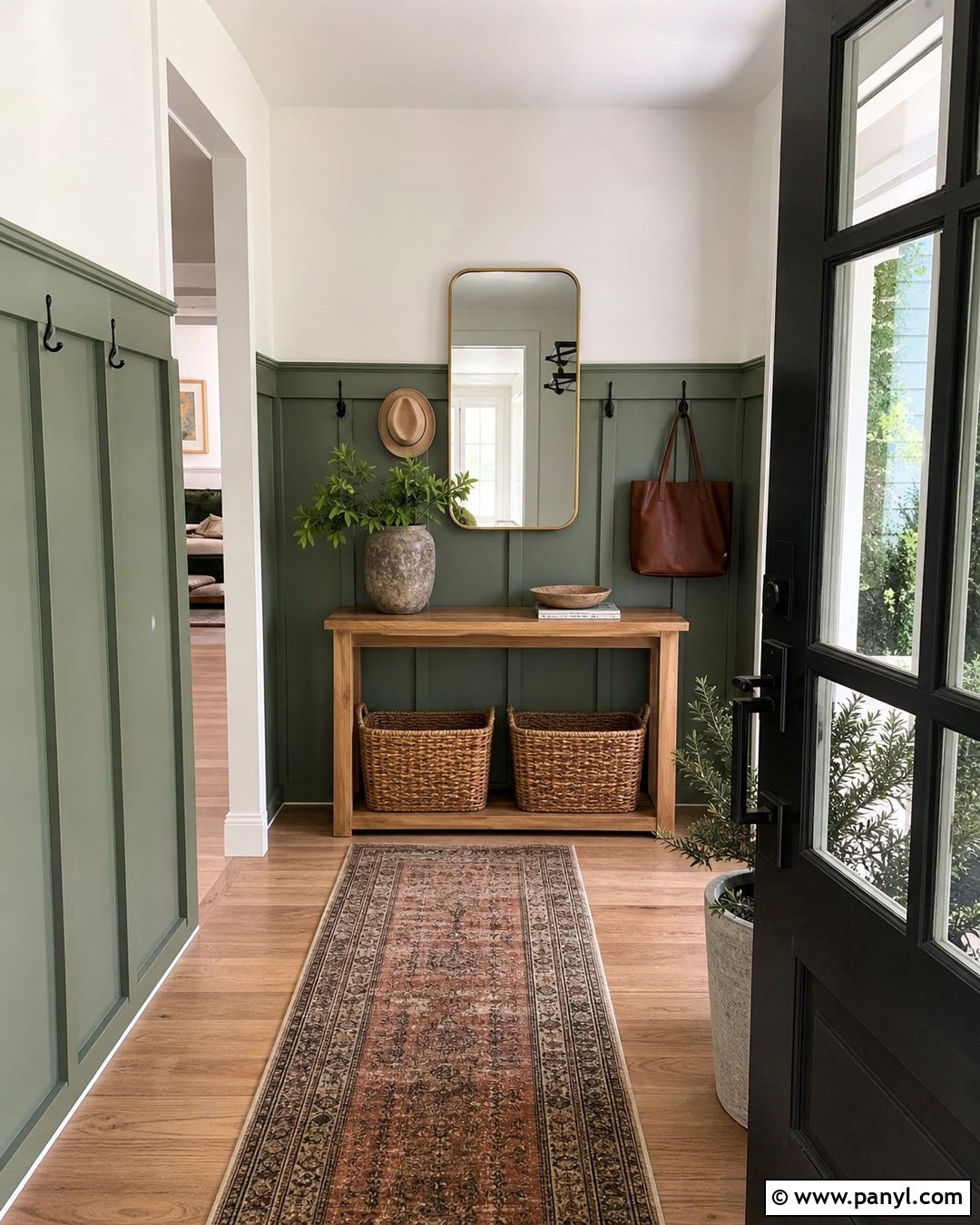
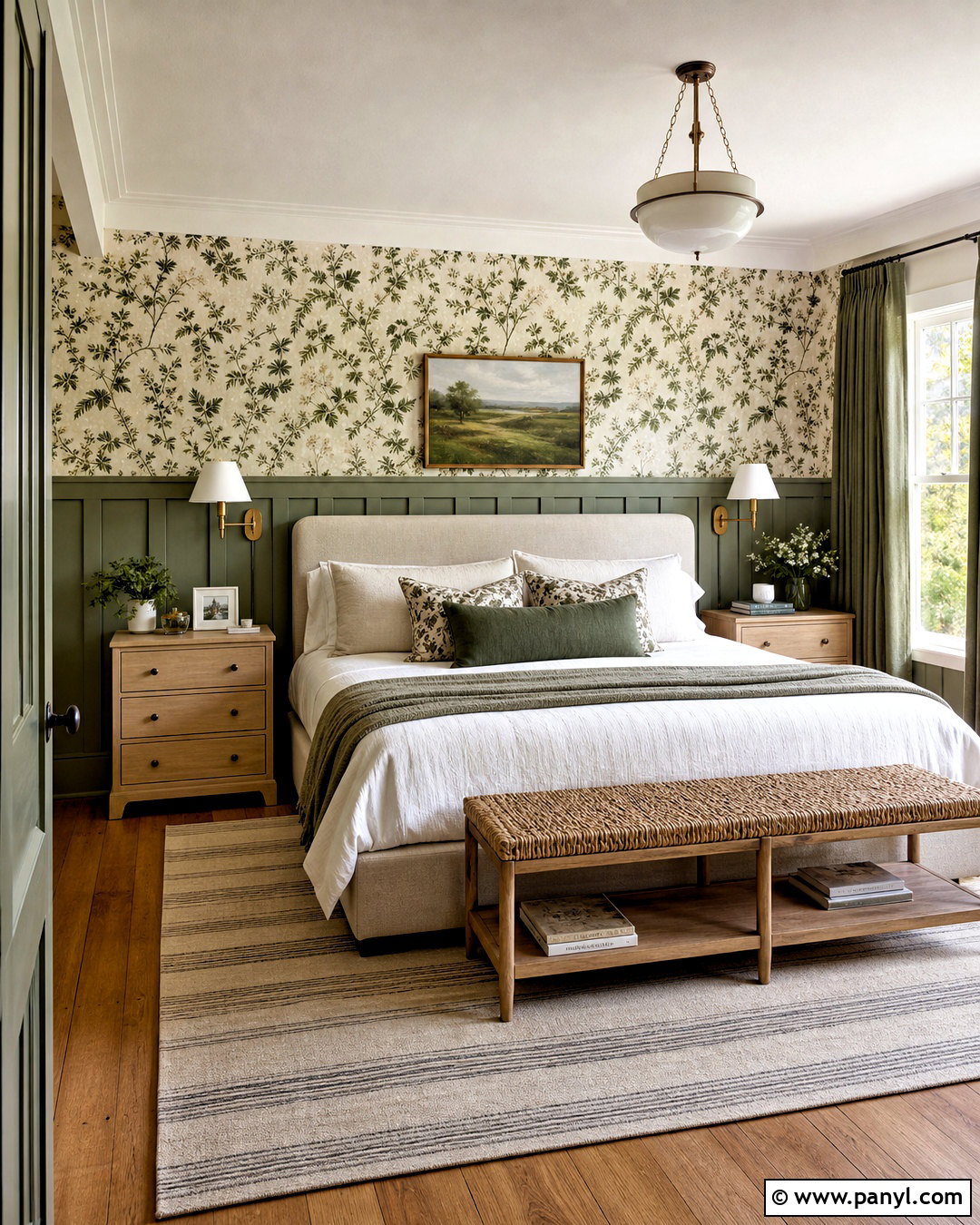
10. Mustard Yellow Half Wall With Cream
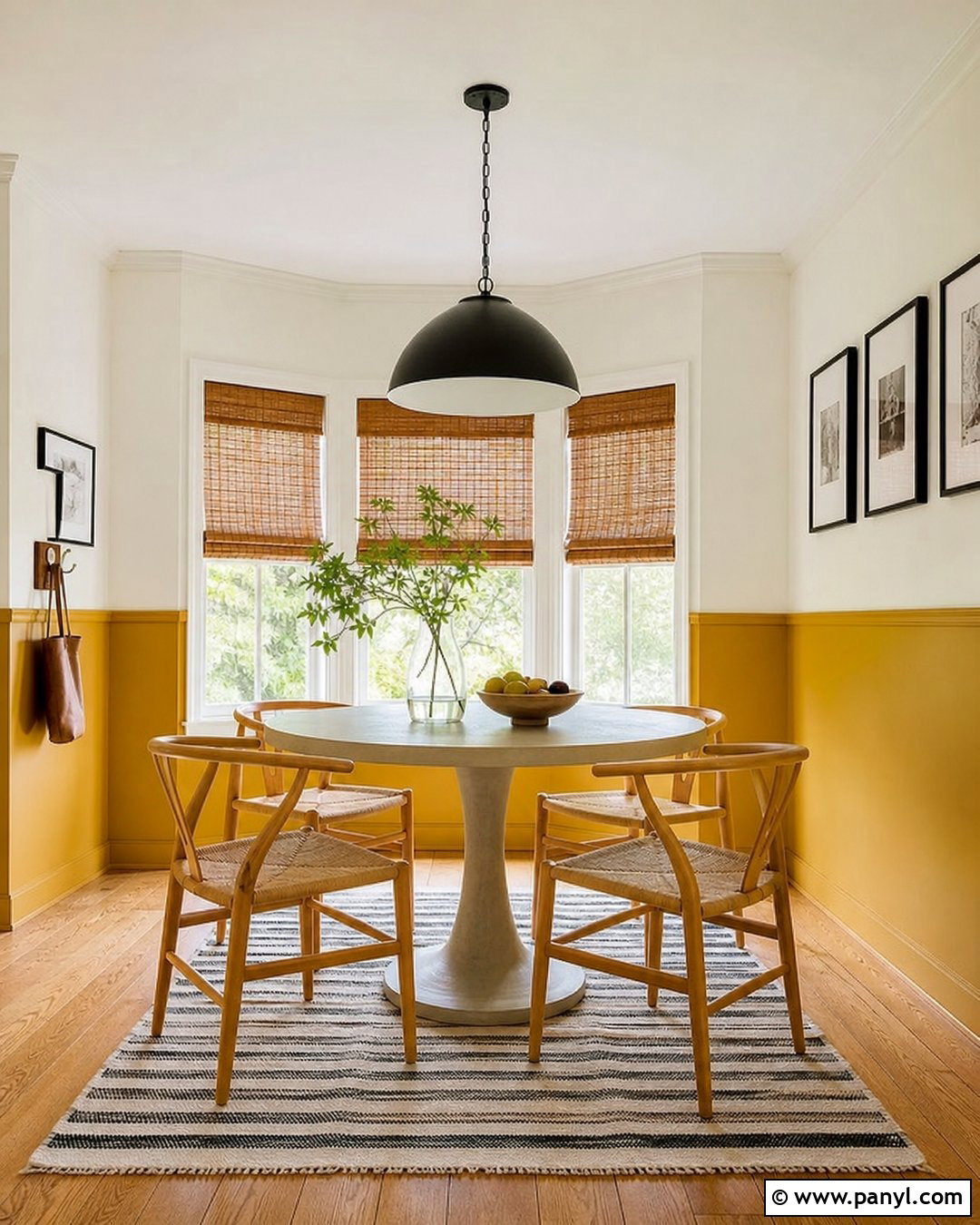
Mustard yellow creates a cheerful kitchen breakfast area without covering every wall in strong color. Use it on the lower half, paired with creamy white above and simple white trim. A small round pedestal table, light wood chairs, and a washable striped rug make the space practical for daily meals. Repeat mustard in only one or two accessories, such as seat cushions or a ceramic bowl, to avoid an overly coordinated result. Matte black pendant lighting and black-framed prints sharpen the warm palette. Position the dividing line just above the chair backs so the yellow remains visible around the furniture. Pale oak flooring and woven shades complete this bright, welcoming nook while keeping the saturated color grounded in natural materials.
11. Teal Half Wall With Pale Gray
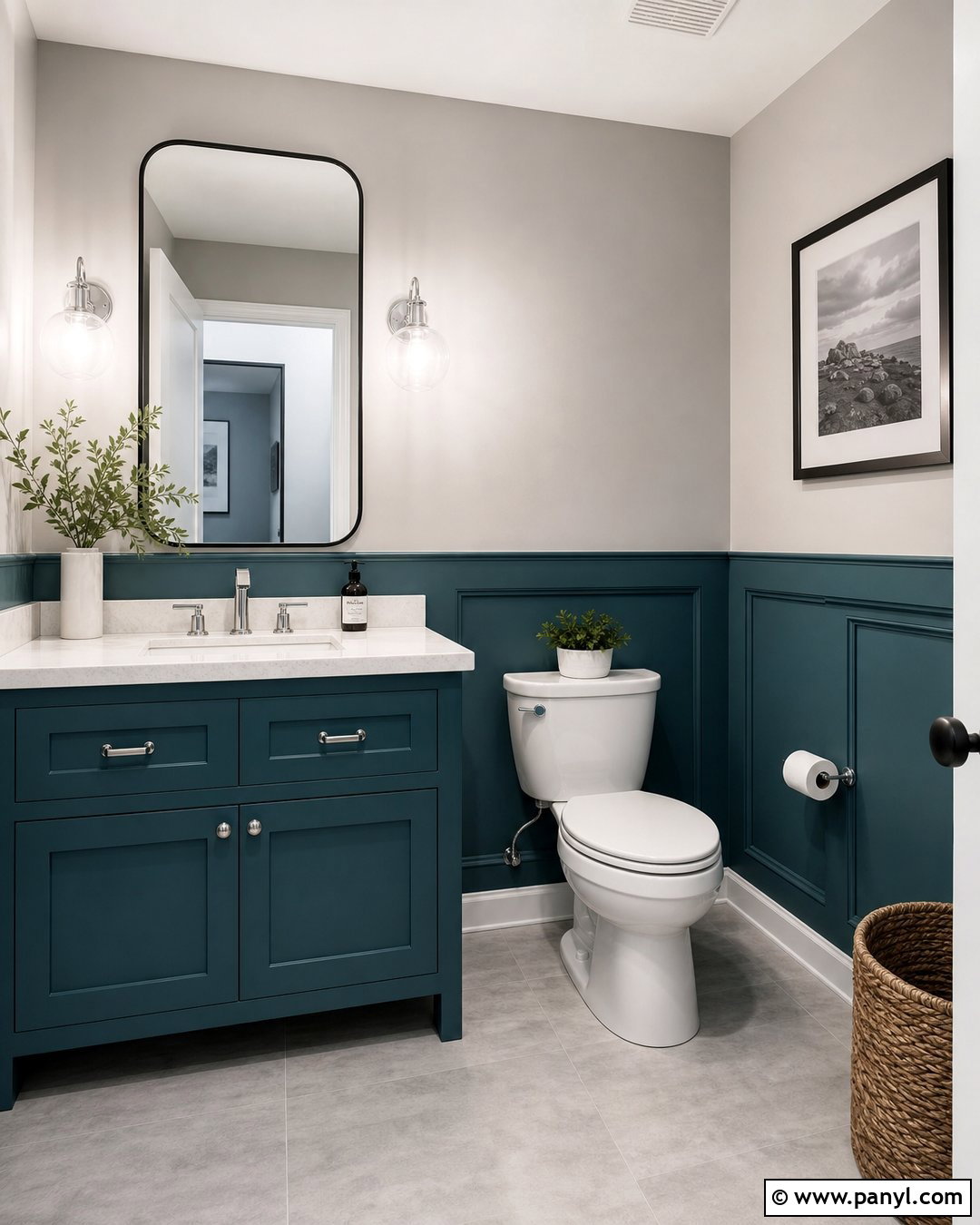
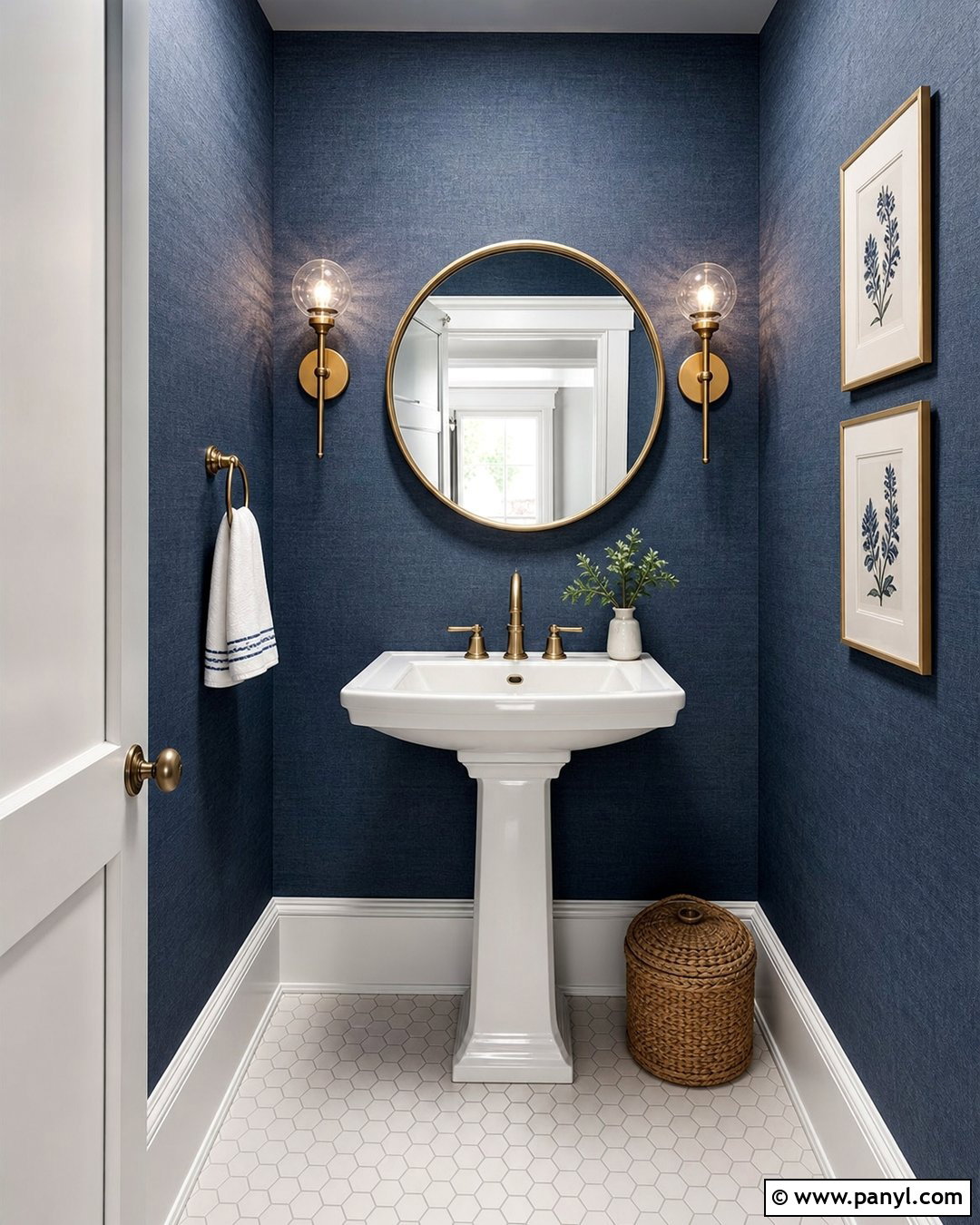
Rich teal can transform a powder room when applied below a slim chair rail. Pair it with pale gray upper walls to create a softer transition than bright white would provide. Continue the teal across the vanity for a cohesive, furniture-like effect, then add a white quartz counter and polished chrome faucet. A rounded mirror, clear glass sconces, and light gray floor tile keep the compact room reflective and open. Hang one simple print above the rail rather than filling the small walls with decor. White towels and a woven storage basket add practical texture. Choose a moisture-resistant satin finish for the teal lower section. The finished powder room feels bold and complete, yet the pale upper area keeps it visually balanced.
12. Burgundy Half Wall With Pale Blush
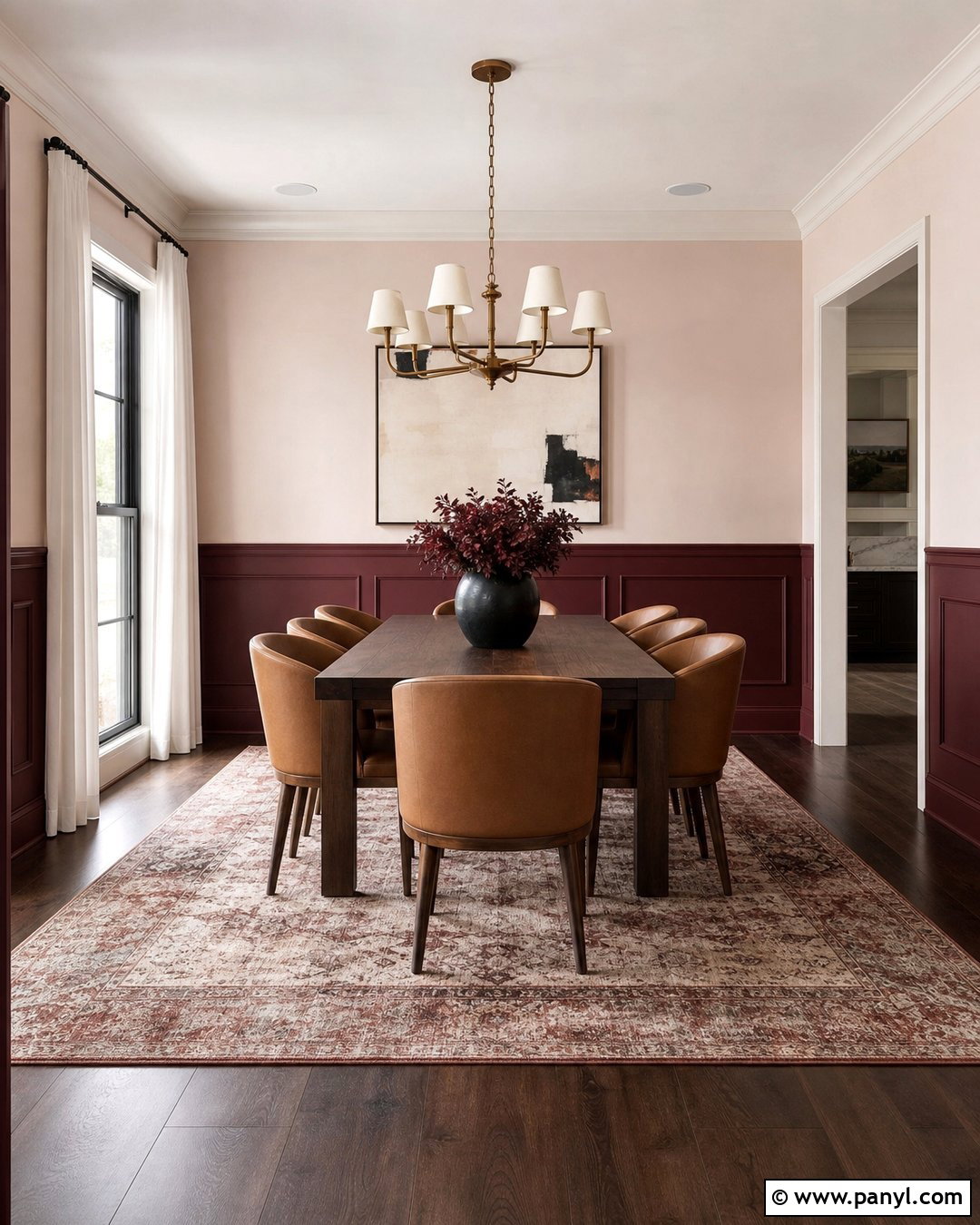
Burgundy creates a dramatic dining room when softened by pale blush on the upper walls. Use the deeper color across the lower third, including picture-frame molding and baseboards, rather than splitting the wall exactly in half. This lower placement provides richness without visually shrinking the room. Choose a dark walnut dining table, camel upholstered chairs, and a faded rose-and-cream rug. A sculptural brass chandelier and warm white curtains bring light into the palette. Keep artwork restrained, using one large abstract piece that includes muted red, tan, and ivory. Pale blush has enough warmth to connect with burgundy while remaining subtle. Together, the colors create a layered, intimate room suited to both casual meals and more formal gatherings.
13. Chocolate Brown Half Wall With Linen White
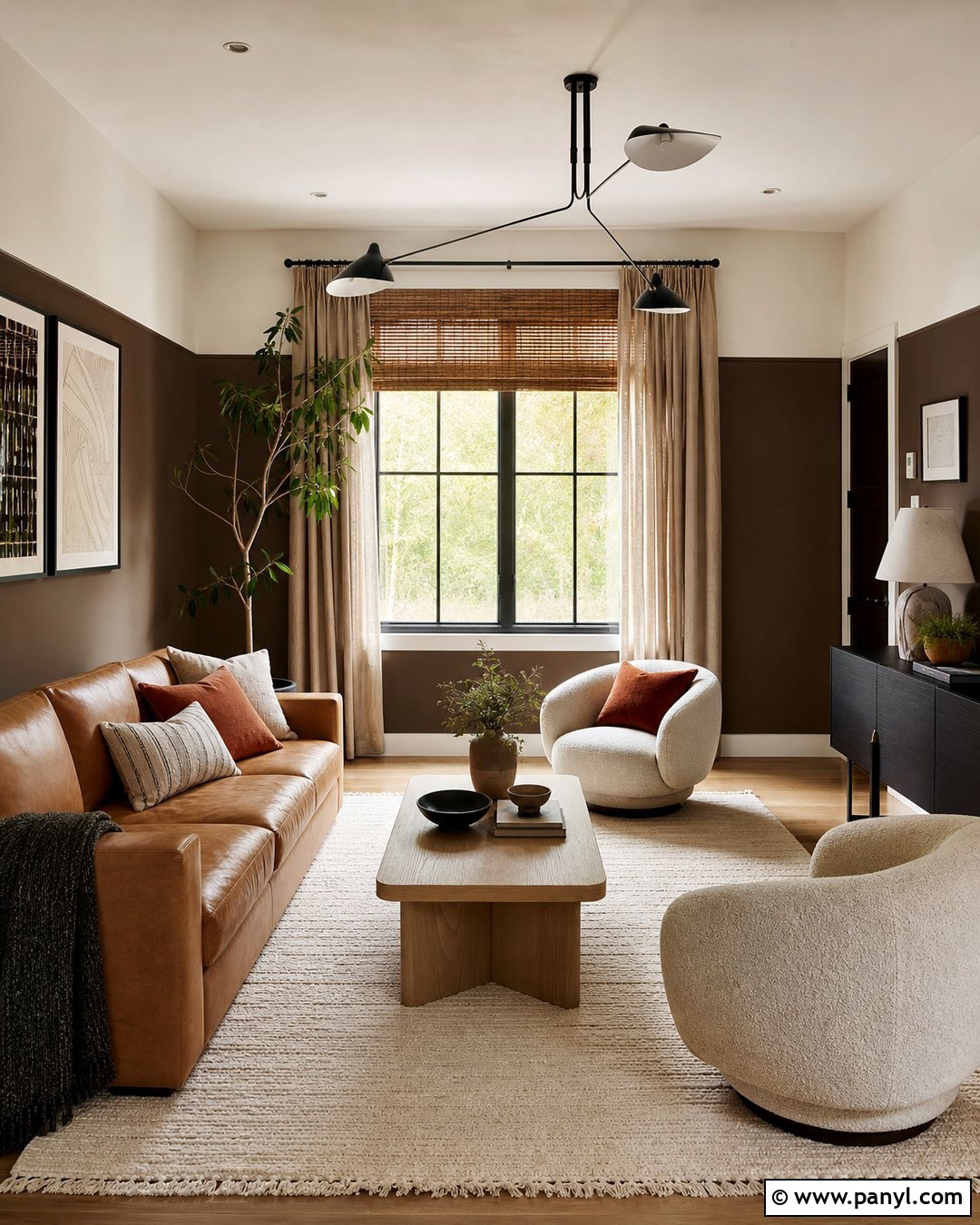
Chocolate brown gives a living room a cozy foundation when paired with soft linen white above. Paint the lower half and baseboards brown, then use a clean, narrow line rather than decorative paneling for a more contemporary result. A camel leather sofa, cream boucle chairs, and a light oak coffee table create warm tonal variation. Add an ivory wool rug to brighten the floor and rust or ochre pillows for depth. Black-framed artwork placed across the color boundary can help connect the two wall sections. Choose off-white curtains with a subtle woven texture rather than stark white fabric. The completed room feels earthy and comfortable, while the pale upper walls prevent the rich brown from becoming visually heavy or old-fashioned.
14. Lavender Half Wall With White
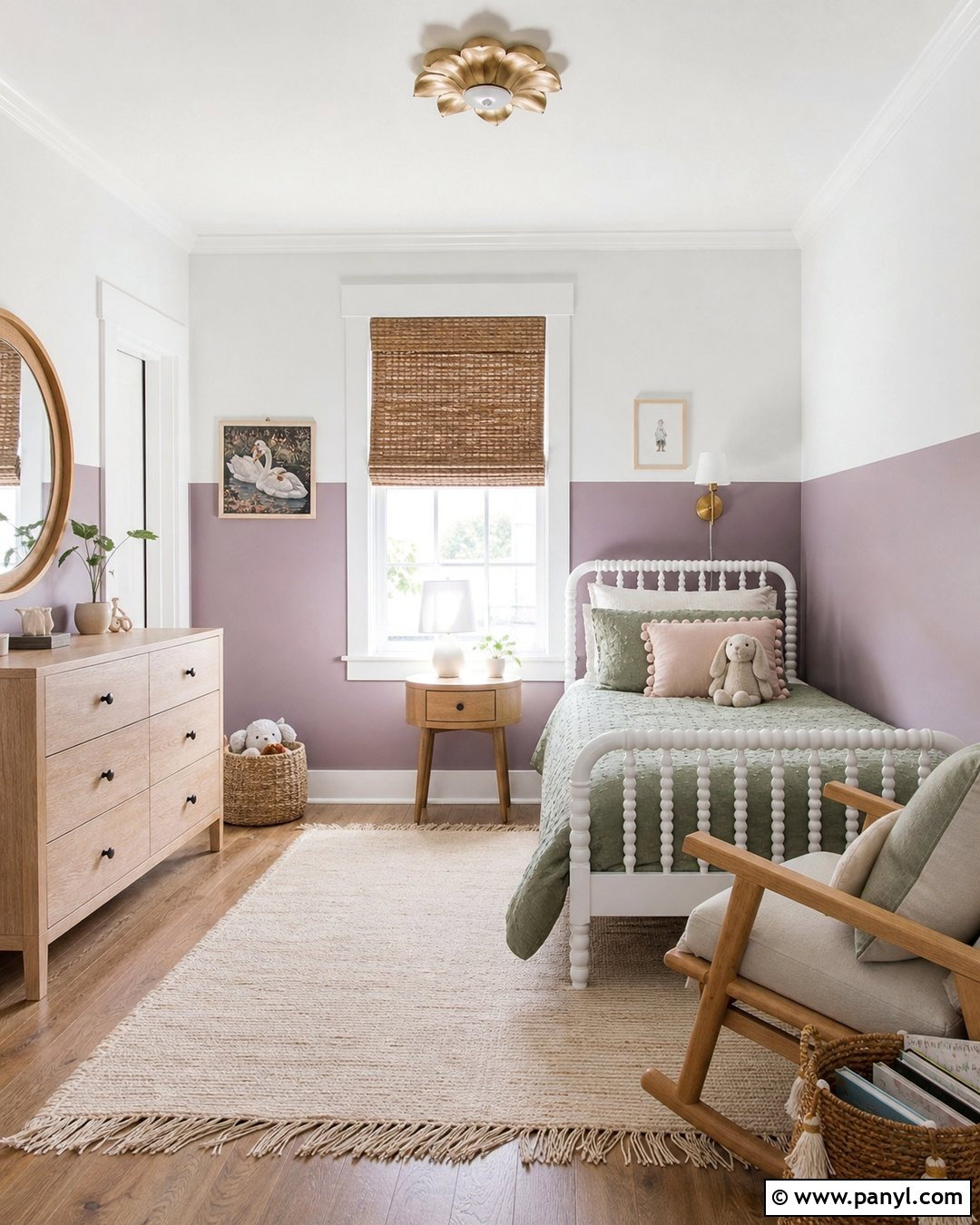
Muted lavender can give a child’s bedroom personality while remaining calm enough for rest. Paint the lower half in a dusty lavender and keep the upper walls, trim, and ceiling bright white. A white spindle bed, pale wood dresser, and cream rug create a light foundation that can grow with the room. Introduce sage green through bedding or curtains to keep the palette balanced and less sugary. A slim lavender-painted molding at the divide creates a tidy finish. Position shelves and artwork above the line, leaving the lower area open and durable around furniture. Add woven baskets, a simple reading chair, and a white pendant light. This complete look feels playful and colorful without relying on a complicated theme or overly youthful decorations.
15. Forest Green Half Wall With Cream
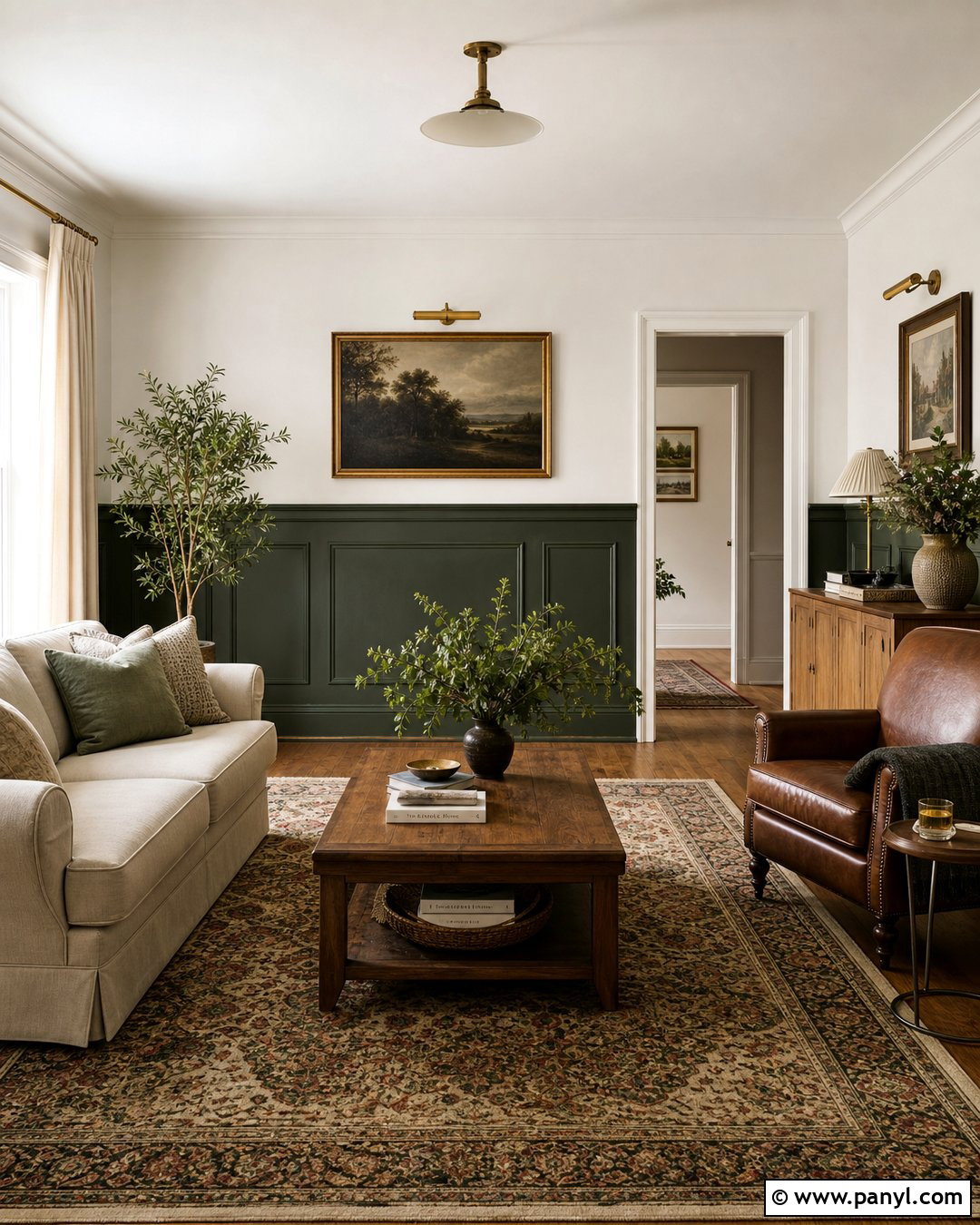
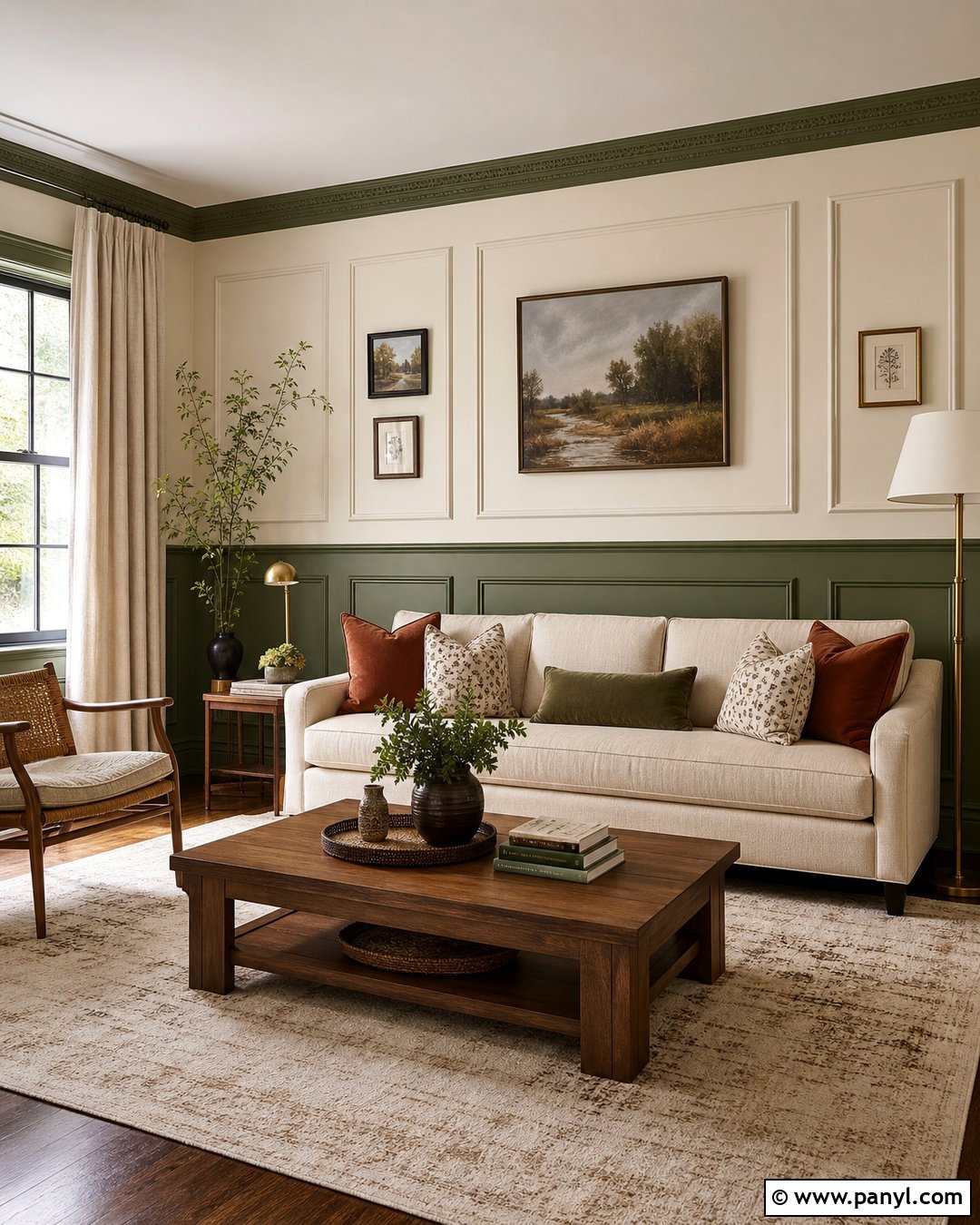
Forest green wainscoting adds depth and architectural character to a traditional living room. Paint the paneled lower half, baseboards, and chair rail in the same deep green, then use a warm cream above. A beige linen sofa, brown leather chair, and medium walnut furniture balance the strength of the walls. Bring in a vintage-inspired rug containing green, rust, and ivory to unite the room. Brass picture lights and landscape artwork reinforce the classic feeling without making the space formal. Cream curtains should blend with the upper walls and visually raise the ceiling. Add a few pottery pieces and leafy plants, but avoid excessive green accessories. The finished space feels established, comfortable, and naturally coordinated from floor to ceiling.
16. Powder Blue Half Wall With Soft Peach
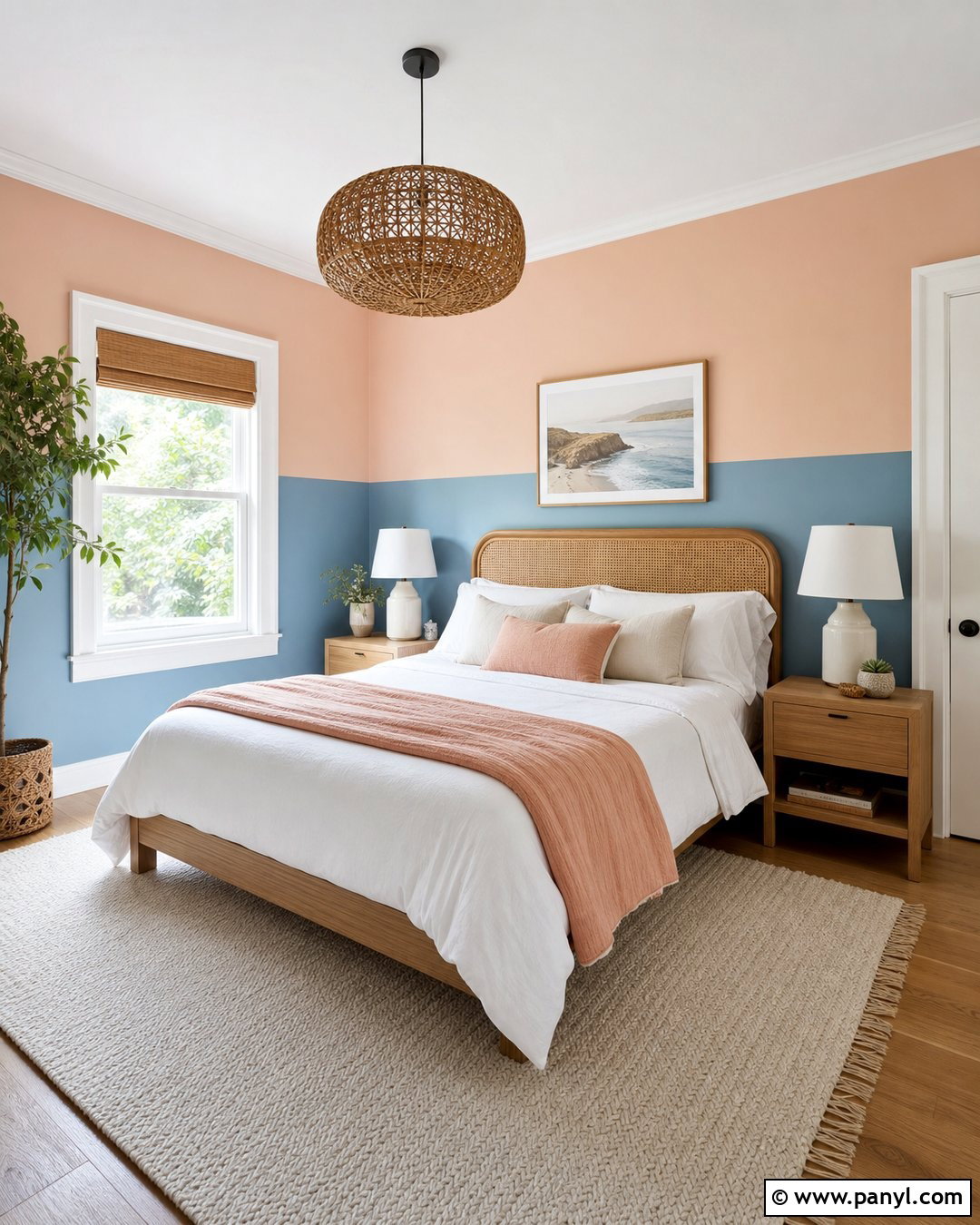
Powder blue and soft peach create an unexpected but balanced pairing for a bright bedroom. Place powder blue on the lower half to ground the room, then use a very pale peach above for warmth. White trim around the doors and windows keeps the two colors crisp. Choose a natural cane headboard, white bedding, and a peach linen throw to connect the palette. Light oak nightstands and simple ceramic lamps maintain the airy appearance. A cream rug with faded blue details can pull the entire room together. Keep the wall divide slightly above the headboard and paint it as a clean line without molding. The finished bedroom feels fresh and cheerful, with enough neutral material to prevent the pastel colors from becoming overly sweet.
17. Coral Half Wall With Warm White
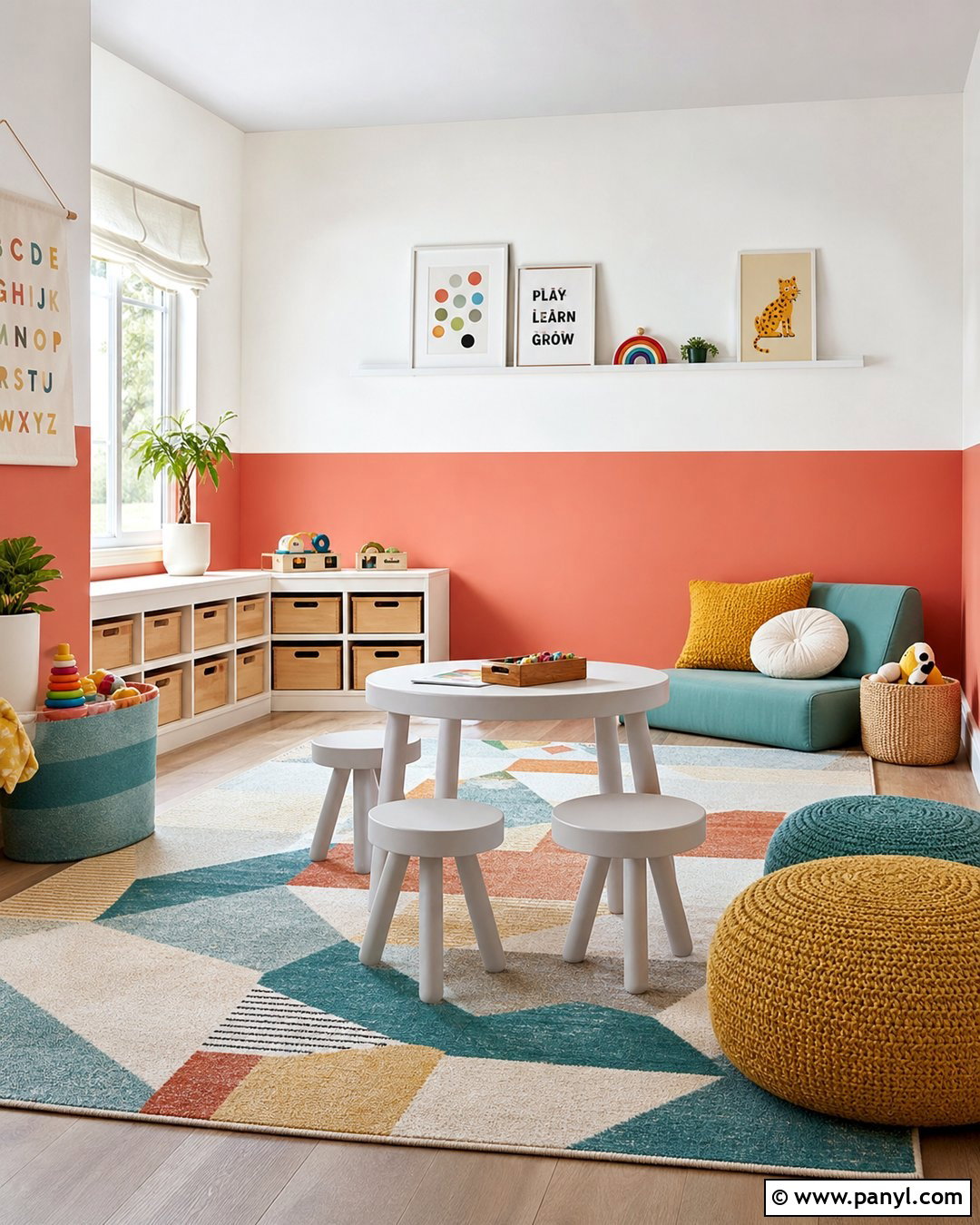
A coral half wall can energize a playroom while warm white above keeps the room bright and flexible. Paint the lower portion in a washable satin finish that can handle fingerprints and scuffs. Low white storage units, natural wood bins, and a pale gray activity table create an organized foundation. Introduce aqua, mustard, and navy through small cushions and toys rather than adding more large color blocks. A simple white rail at the divide provides a neat edge and can double as a shallow picture ledge. Use a colorful but restrained geometric rug to connect the palette. Open floor space, practical storage, and bright ceiling lighting complete the design, making the room playful without allowing the strong coral color to overwhelm it.
18. Taupe Half Wall With Creamy White
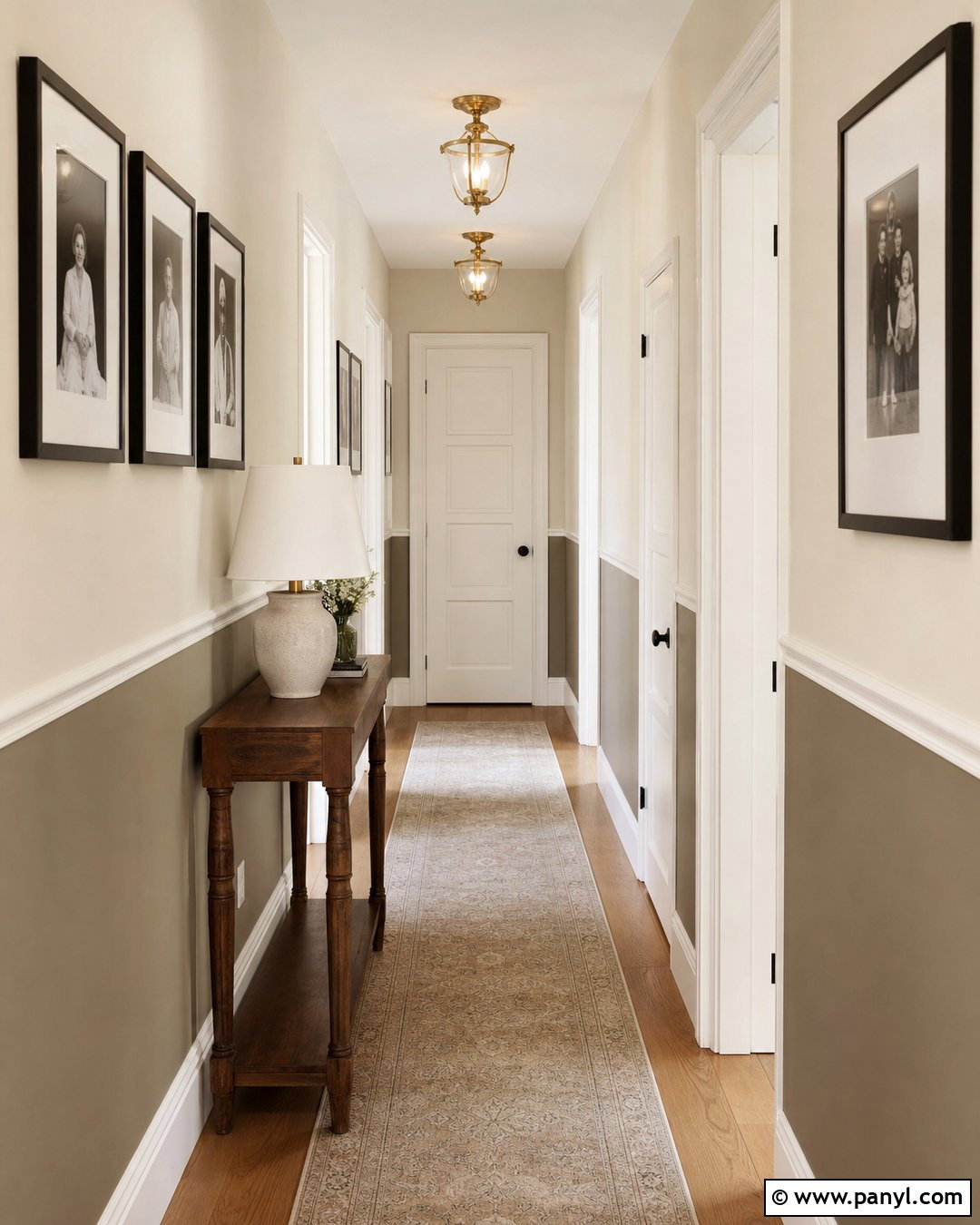
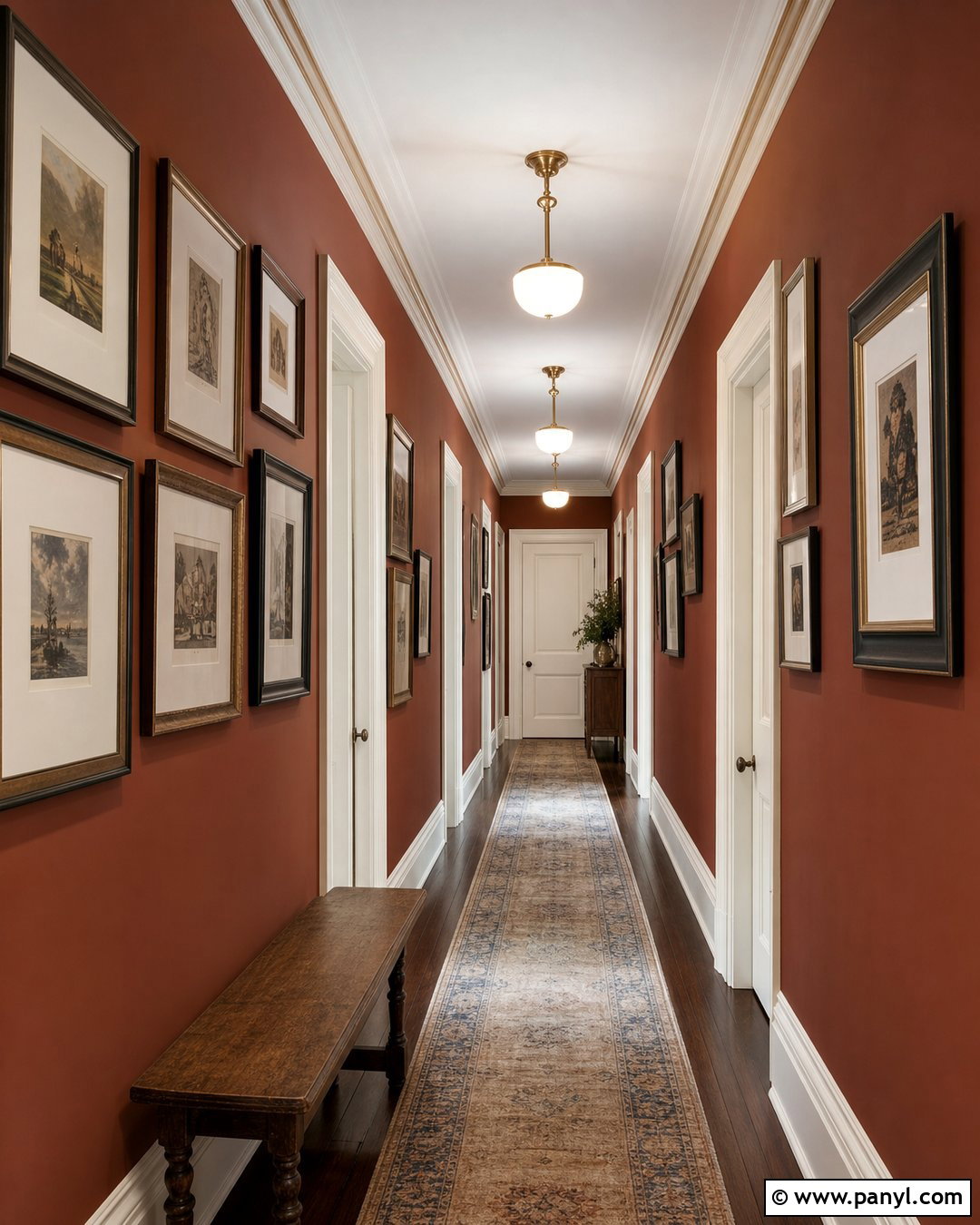
Taupe and creamy white can turn a plain hallway into a warm, finished transition space. Use medium taupe below a narrow chair rail, then continue creamy white across the upper walls, doors, trim, and ceiling. This low-contrast combination works especially well with oak flooring and limited natural light. Add a slim walnut console where space allows, topped with a ceramic lamp and a shallow tray. A long neutral runner introduces pattern without narrowing the walkway visually. Hang black-framed family photographs in an orderly row above the rail. Warm brass ceiling fixtures add gentle shine. The complete design remains practical and uncluttered, yet the half-wall treatment gives the hallway far more dimension than a single neutral paint color would provide.
19. Mint Green Half Wall With Off-White
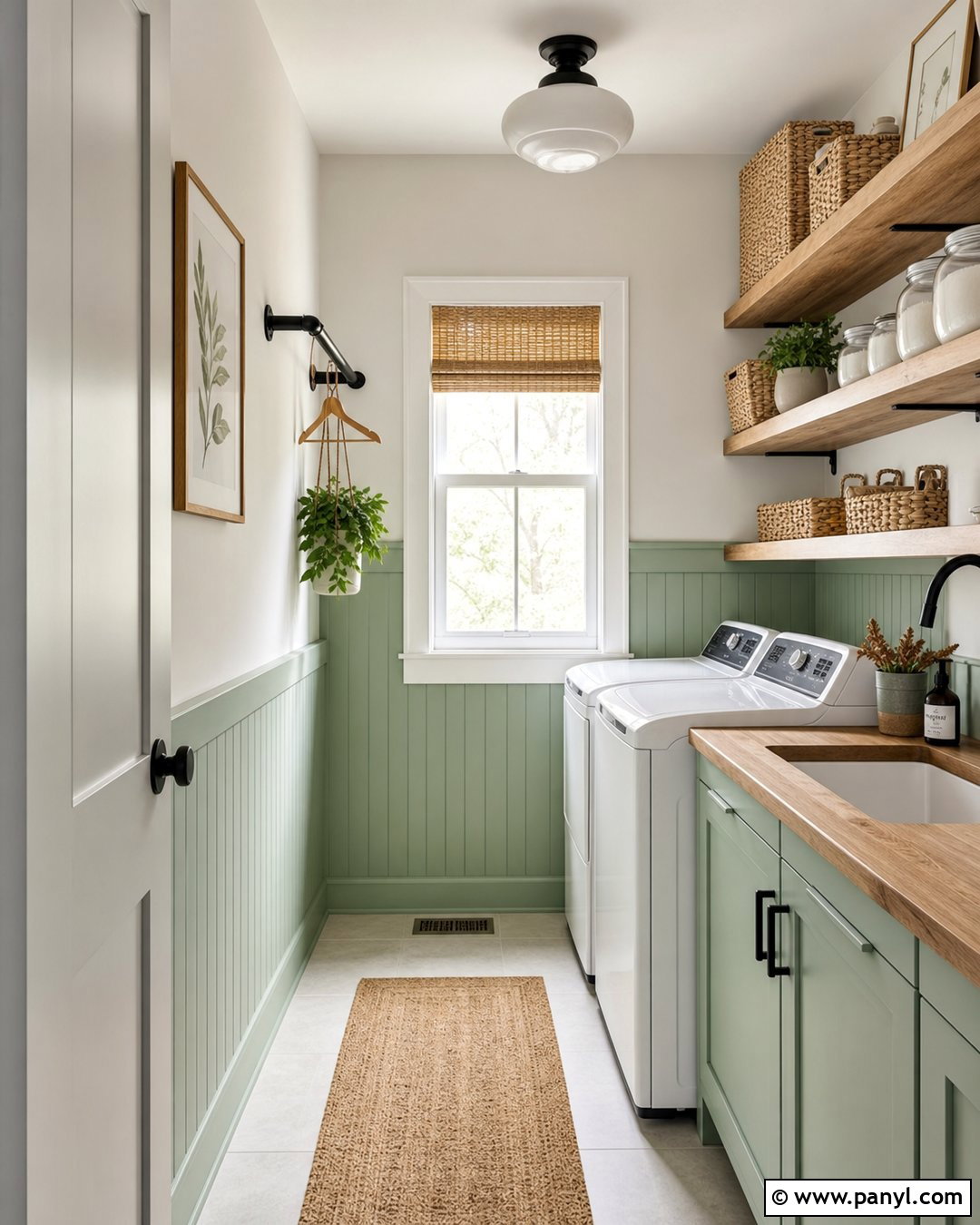
Fresh mint green works beautifully in a compact laundry room, especially when the upper walls remain off-white. Paint beadboard or simple vertical paneling mint, including the baseboards and utility cabinet fronts. Use off-white above and on the ceiling to reflect the room’s task lighting. White appliances, butcher-block counters, and open oak shelves create a clean, practical workspace. Store supplies in matching glass containers, woven baskets, and a few labeled bins kept inside cabinets. Black cabinet pulls and a black wall-mounted drying rail provide modern contrast. Choose light gray floor tile for easy maintenance and visual balance. This complete scheme gives a hardworking space cheerful color while preserving the bright, orderly appearance needed in a small utility room.
20. Rust Orange Half Wall With Sand Beige
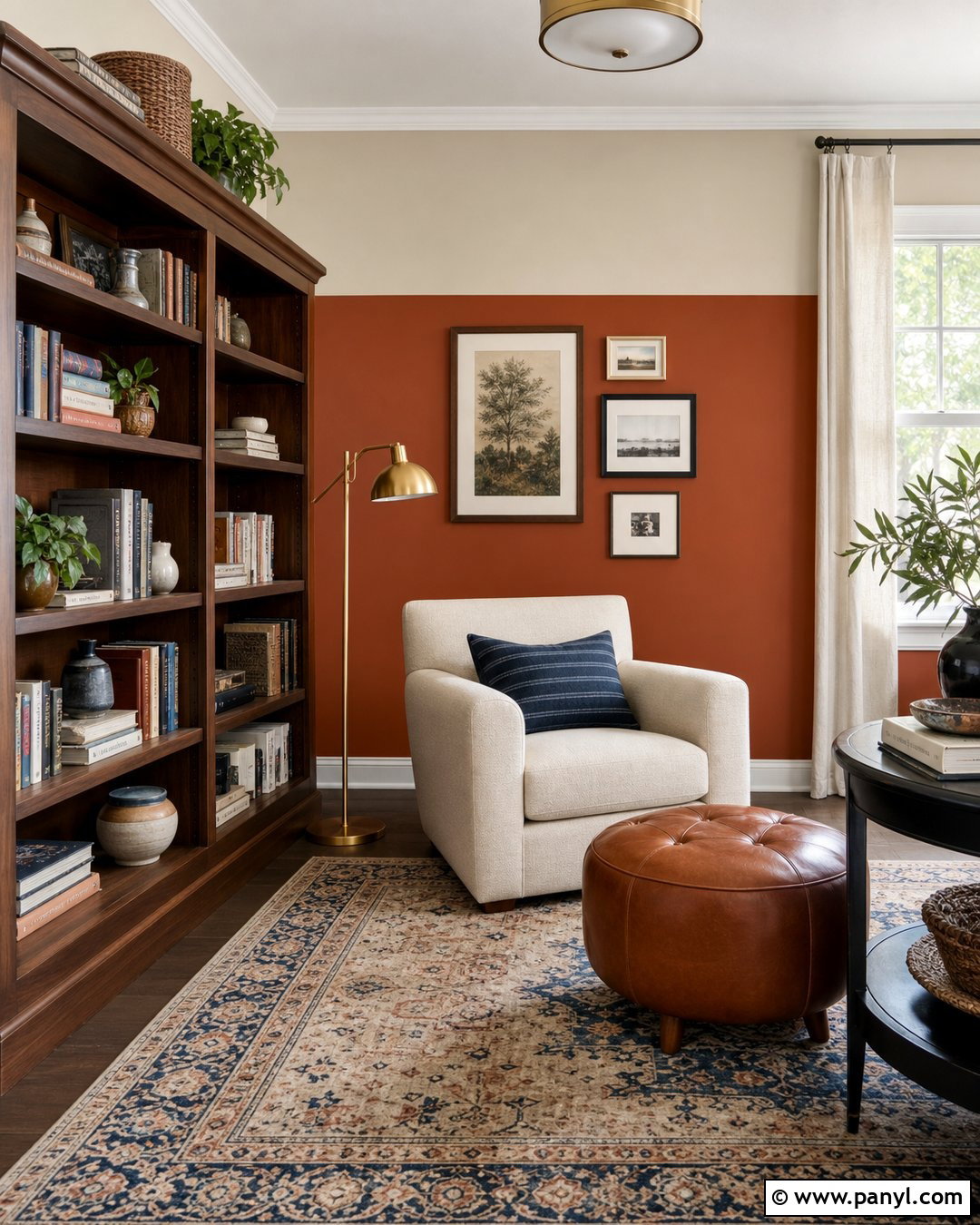
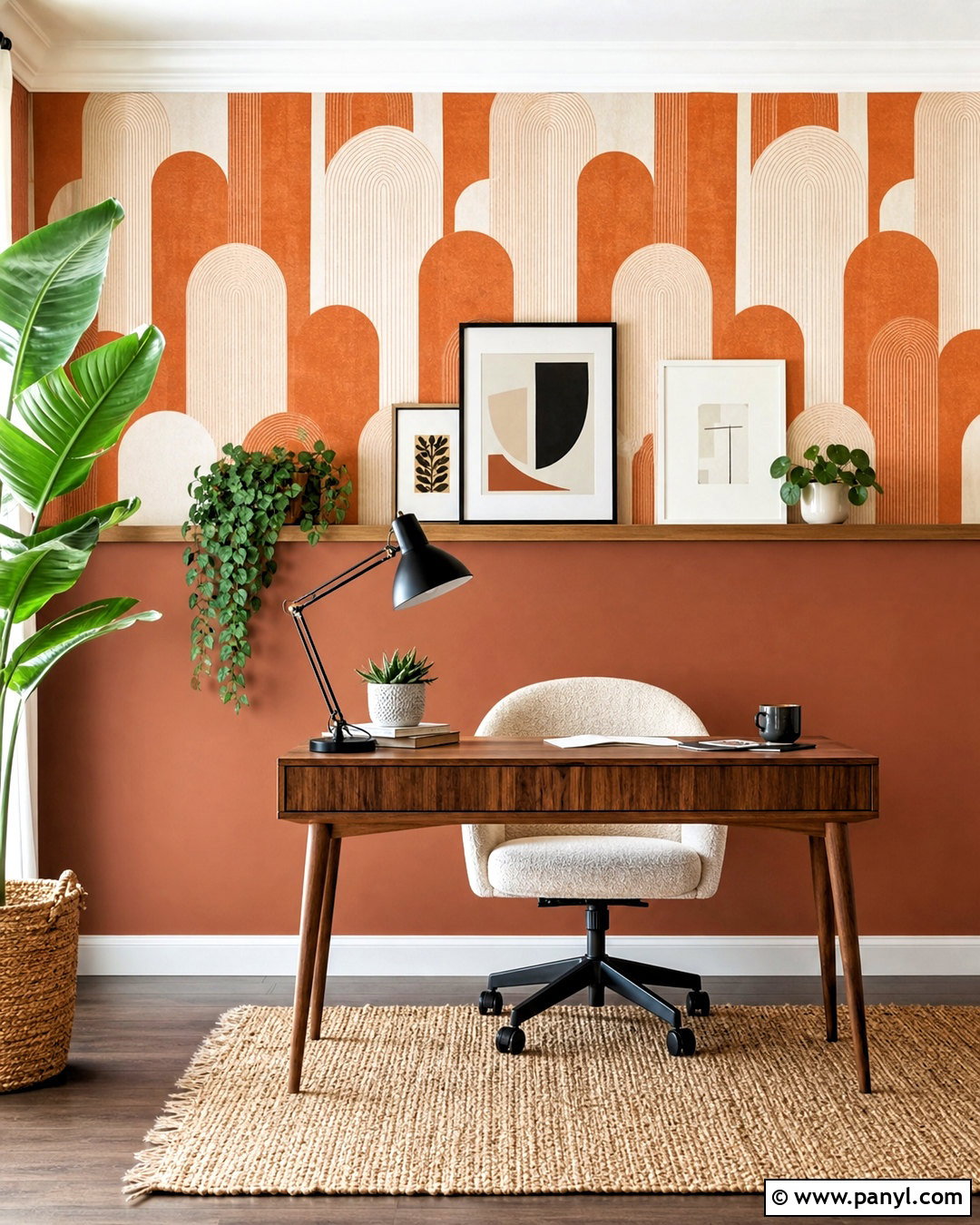
Rust orange brings warmth to a home library or reading corner without requiring a fully saturated room. Apply it to the lower two-thirds of the wall and use sand beige above. A low walnut bookcase can blend into the rust section, making books and objects appear neatly integrated. Add a cream upholstered armchair, cognac leather ottoman, and an adjustable brass floor lamp. A patterned rug in beige, rust, and faded blue provides a softer counterpoint to the strong wall color. Hang one large neutral artwork above the division rather than several small pieces. Linen curtains and warm wood flooring complete the scheme. The finished corner feels enveloping and comfortable while remaining bright enough for daytime reading and relaxed everyday use.
21. Monochromatic Blue Half Wall
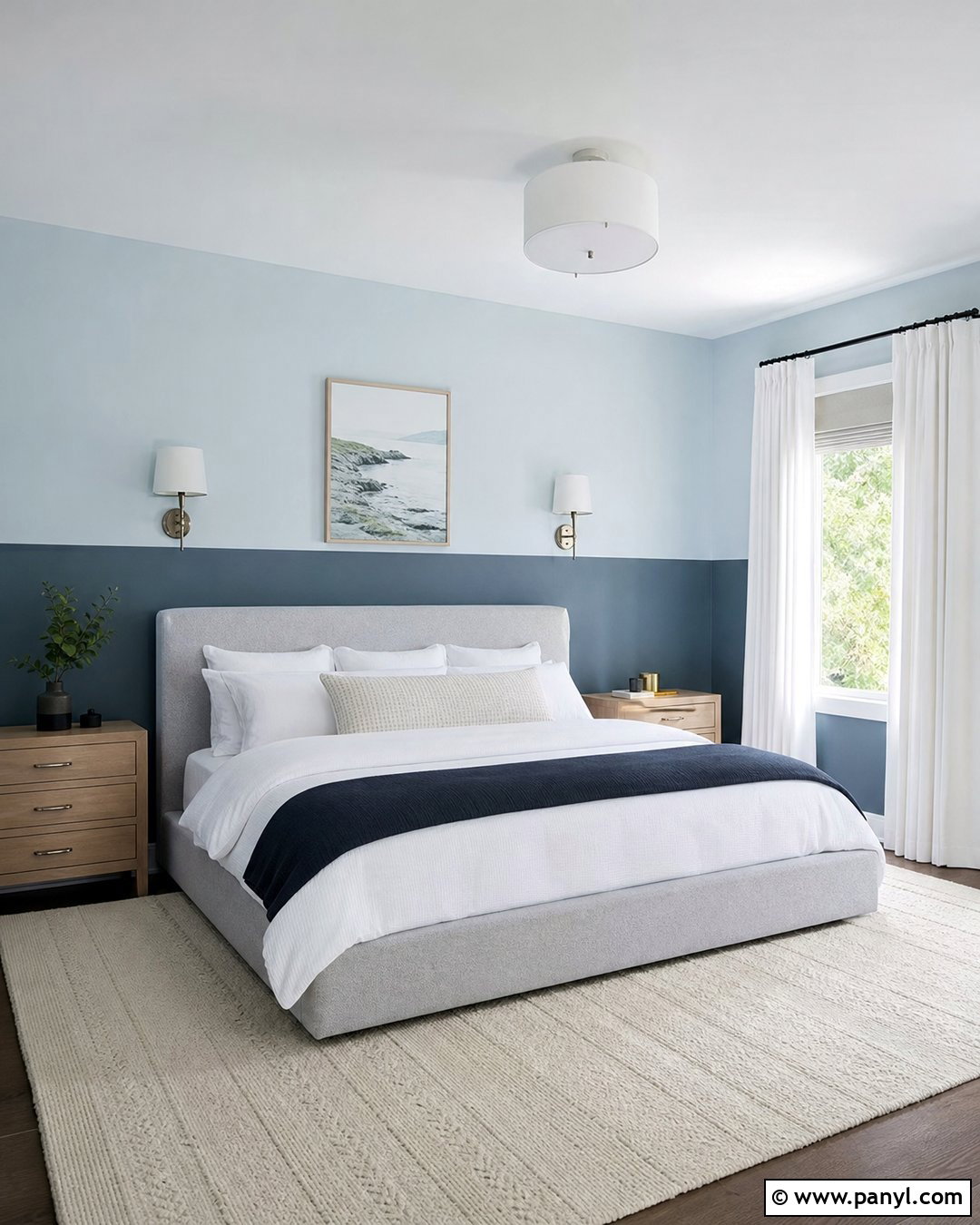
Using two shades of blue creates a layered half-wall design with softer contrast than blue and white. Choose a medium slate blue below and a pale misty blue above. Paint the chair rail in the darker shade to give the lower section a clear finish. In a bedroom, add a light gray upholstered bed, white bedding, and a navy throw for tonal depth. Pale oak nightstands and brushed nickel sconces keep the cool palette from appearing too dark. A cream rug and white curtains bring necessary brightness near the floor and windows. Keep artwork simple and mostly neutral. This complete blue-on-blue room feels cohesive and restful, while the distinct color break supplies enough structure to prevent the monochromatic palette from looking flat.
22. Monochromatic Green Half Wall
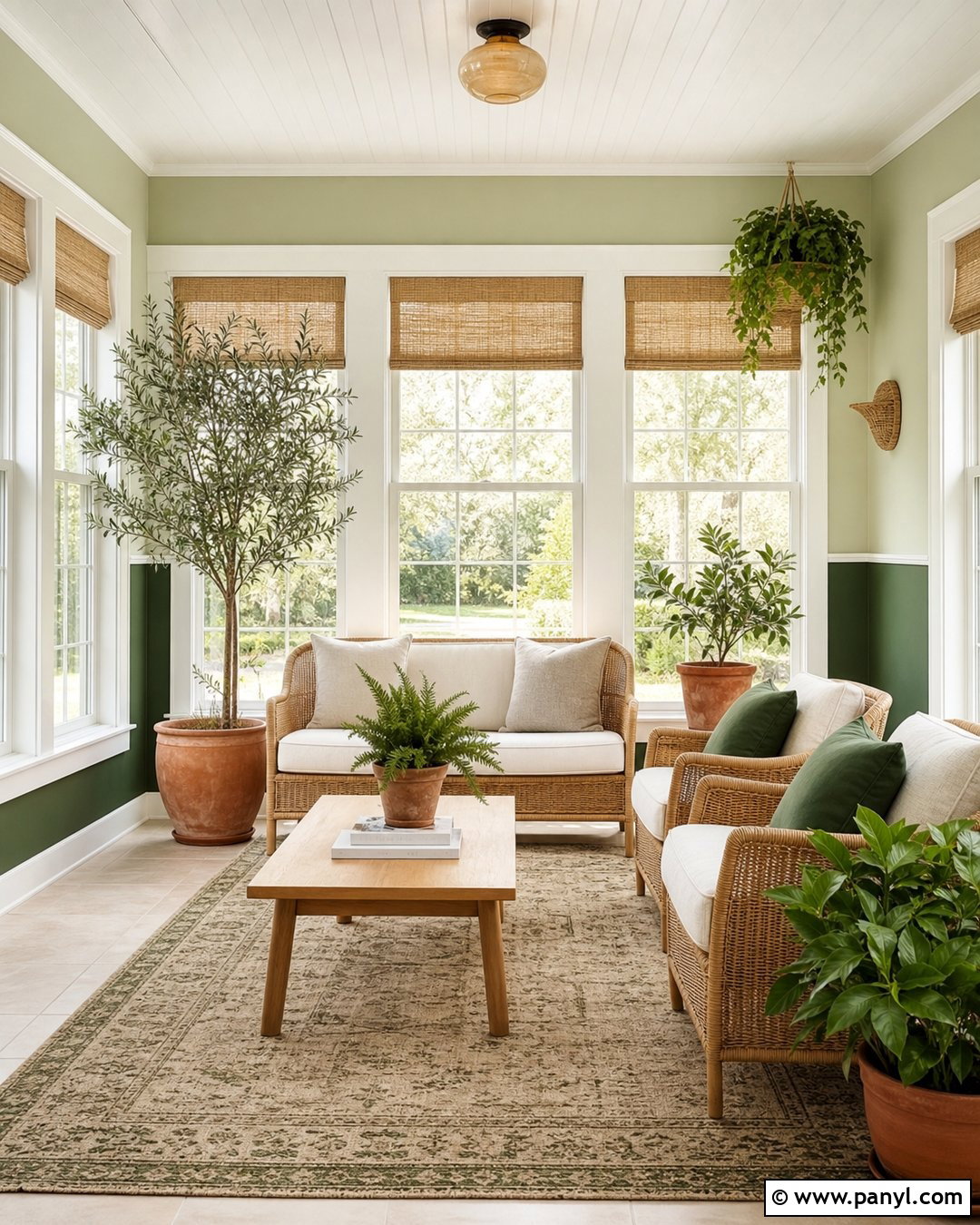
A tonal green treatment can make a sunroom feel connected to the landscape outside. Use muted moss green on the lower half and pale celery green above, finishing the boundary with a narrow moss-colored rail. Natural rattan chairs, cream cushions, and a light wood coffee table reinforce the organic palette. Add a flat-woven rug in beige and olive, along with several plants in terracotta and cream pots. Keep the window trim soft white so the outdoor view remains clearly framed. Linen shades provide privacy without blocking too much daylight. The two greens should share similar warm undertones for a smooth transition. Together, the paint colors, natural furniture, and relaxed textiles create a complete room that feels fresh rather than overly themed.
23. White Beadboard Half Wall With Sky Blue
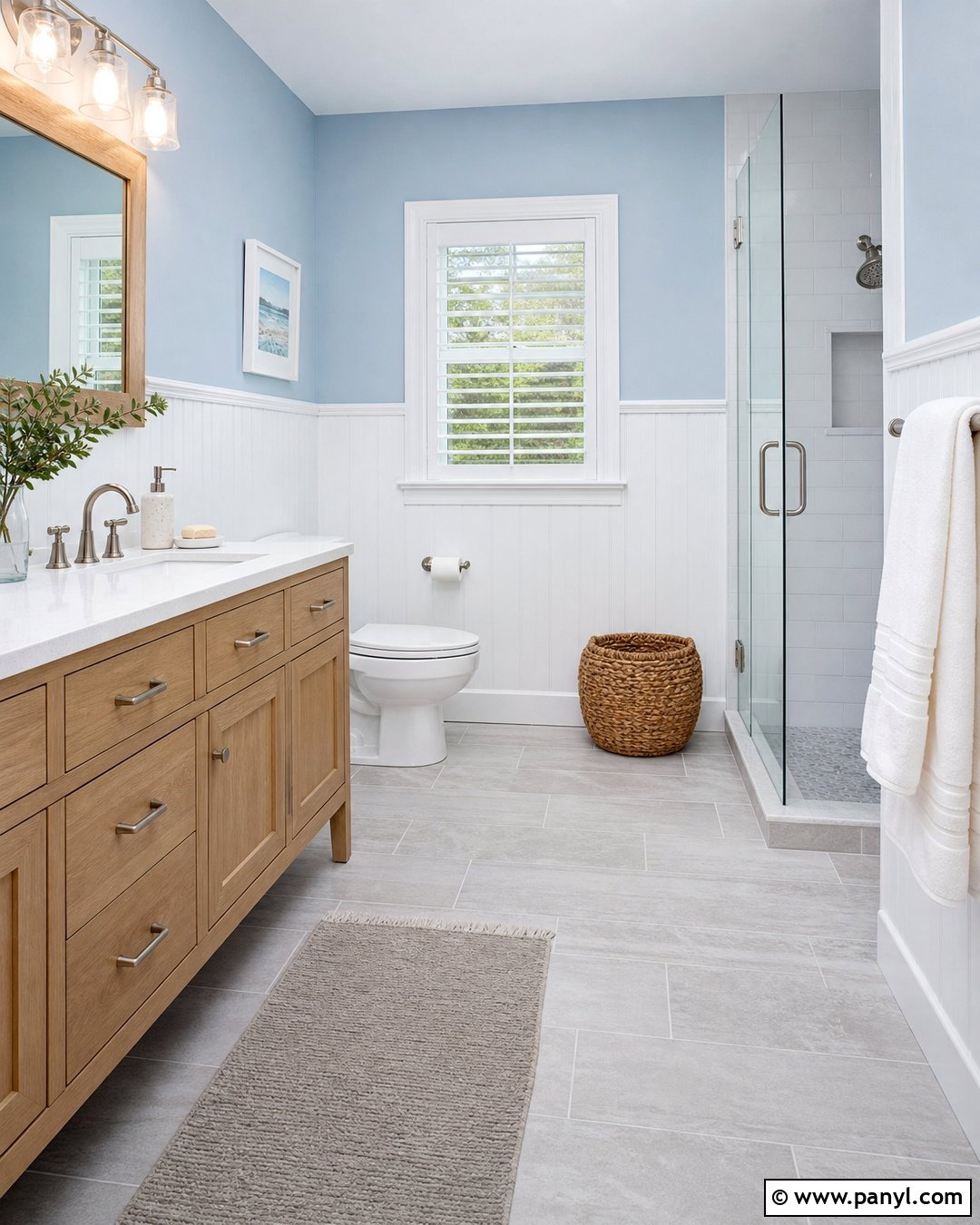
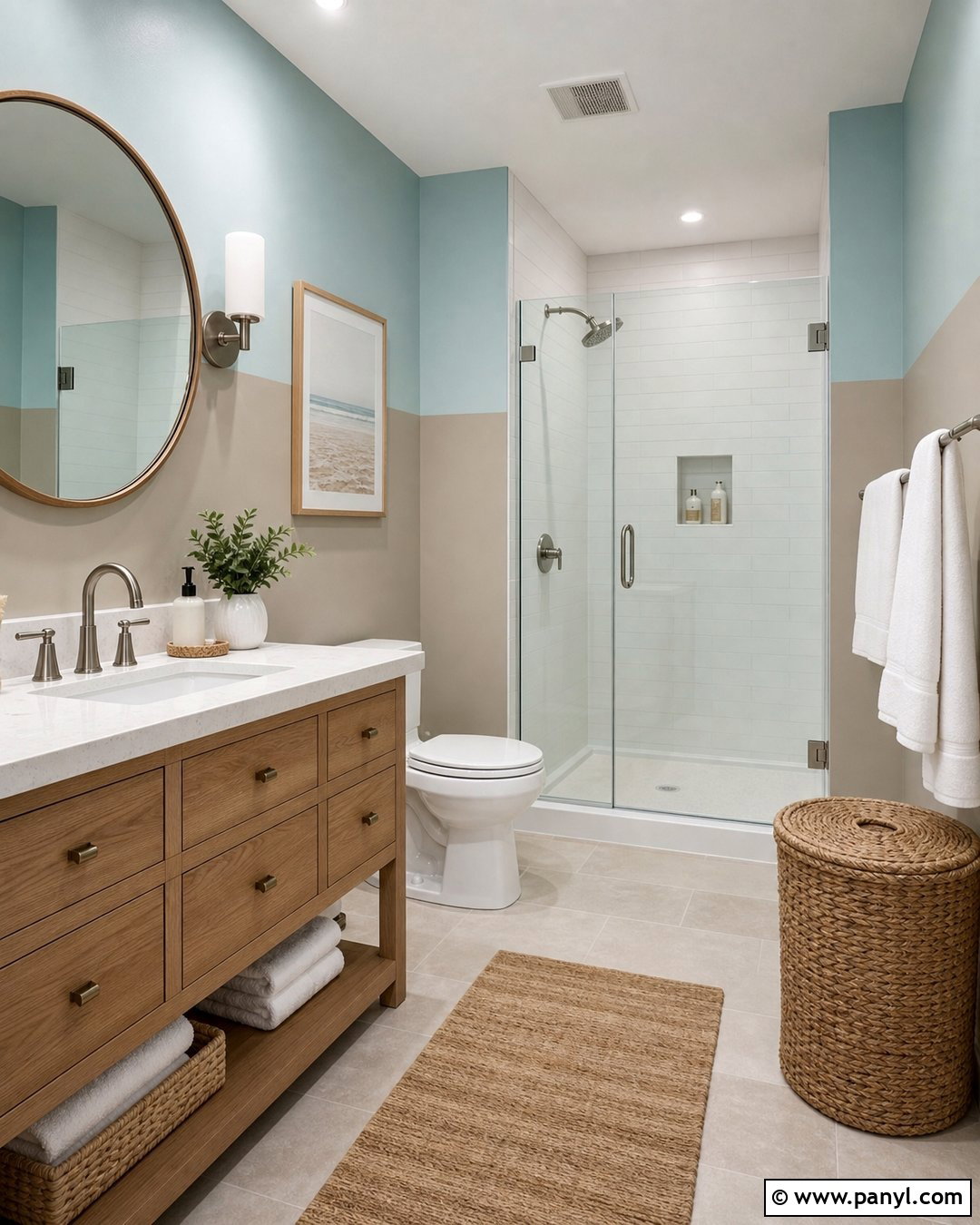
White beadboard on the lower wall and sky blue paint above create a clean coastal bathroom without relying on decorative beach motifs. Keep the beadboard, baseboards, and window trim the same bright white for a seamless lower section. Add a light oak vanity, white quartz counter, and brushed nickel fixtures. Pale gray stone-look floor tile provides durability and keeps the room from becoming too blue. Use white towels, a simple woven basket, and one small landscape print for restrained decoration. A frameless glass shower and clear globe sconces preserve the bright atmosphere. The sky blue upper wall introduces fresh color, while the structured beadboard gives the bathroom enough texture and detail to feel complete, polished, and thoughtfully designed.
24. Natural Wood Half Wall With Warm White
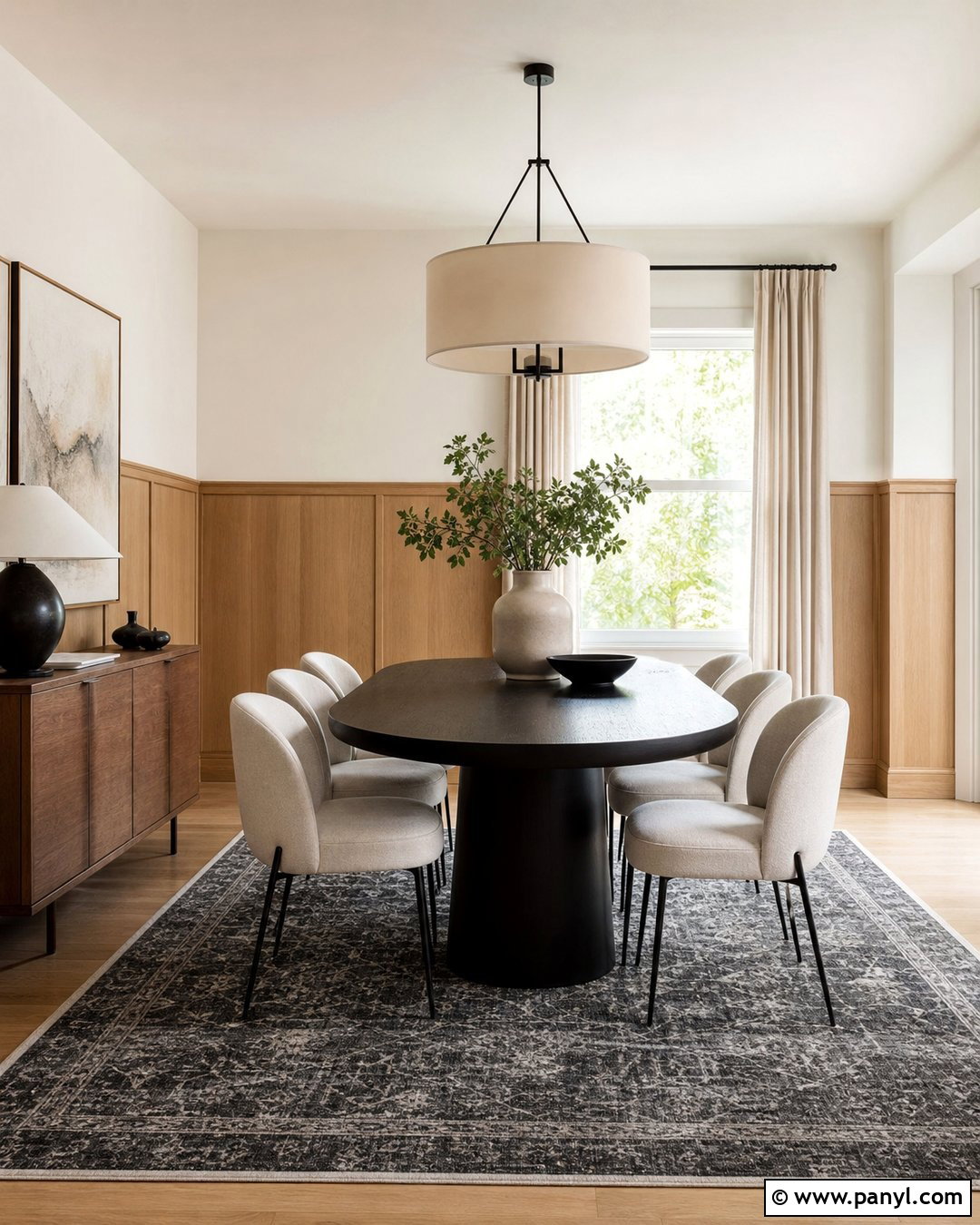
Natural wood paneling offers a rich alternative to a painted lower wall. Use vertical white oak slats or smooth oak panels across the lower half, then paint the upper walls warm white. In a modern dining room, pair this treatment with a black pedestal table, upholstered cream chairs, and a large neutral pendant. Continue the warm wood tone through a sideboard or simple picture frames, but avoid matching every piece exactly. A charcoal-and-ivory rug grounds the seating area, while linen curtains soften the straight panel lines. Keep the upper walls mostly open so the natural grain remains the main feature. The combination feels warm and architectural, bringing color and texture into the room without depending on a bold painted shade.
25. Deep Plum Half Wall With Floral Wallpaper
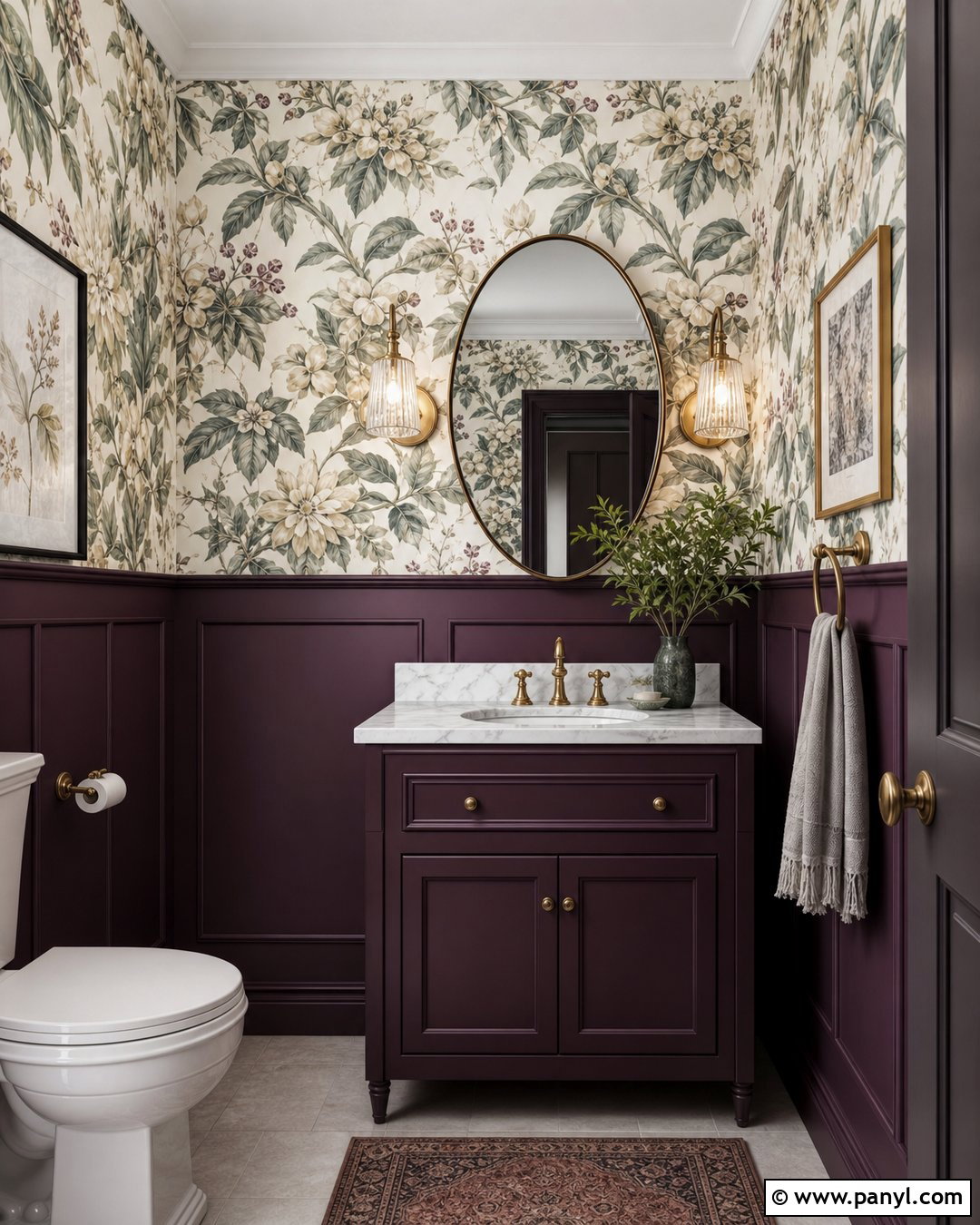
Deep plum paneling and botanical wallpaper create a memorable powder room with a complete, layered appearance. Paint the lower half, chair rail, baseboards, and vanity in a rich plum satin finish. Above it, install a light wallpaper featuring muted green leaves, cream flowers, and small plum details. A white marble-look counter prevents the dark color from becoming too dominant. Add an aged brass faucet, oval mirror, and compact wall sconces with white glass shades. Light neutral floor tile balances the patterned walls and keeps the room practical. Limit accessories to white towels and one small ceramic container. Repeating plum in both the paneling and wallpaper unites the two halves, creating bold contrast that still feels carefully coordinated.
Conclusion:
The most successful half-painted rooms treat wall color as part of the complete design rather than an isolated feature. Consider the furniture height, flooring, natural light, trim, and textiles before choosing where the color division should sit. Dark lower shades can add structure, while pale upper colors preserve openness. Soft tonal pairings feel restful, and sharper combinations create stronger architectural contrast. Molding, paneling, beadboard, or a carefully taped line can make the transition look deliberate. Always test both colors together in the room and view them throughout the day. With thoughtful proportions and coordinated furnishings, these 25 Half Wall Color Ideas can bring depth, practical durability, and personal character to almost any interior.

Related Ideas and Inspiration:
Leave a Reply