
A well-designed music space should feel inspiring, comfortable, and practical, whether you play instruments, record songs, or simply enjoy focused listening. These 20 modern music room ideas explore complete looks for piano rooms, guitar spaces, vinyl lounges, home studios, and compact creative corners. Current music rooms often combine attractive instrument displays, comfortable seating, concealed storage, and acoustic materials that complement the decor rather than making the space feel commercial. () You will find options for large and small homes, along with adaptable layouts for different budgets. Each design coordinates furniture, color, lighting, equipment, and organization, giving you a realistic plan to recreate. Read on to discover 20 modern music room ideas.

1. Modern Piano Music Room
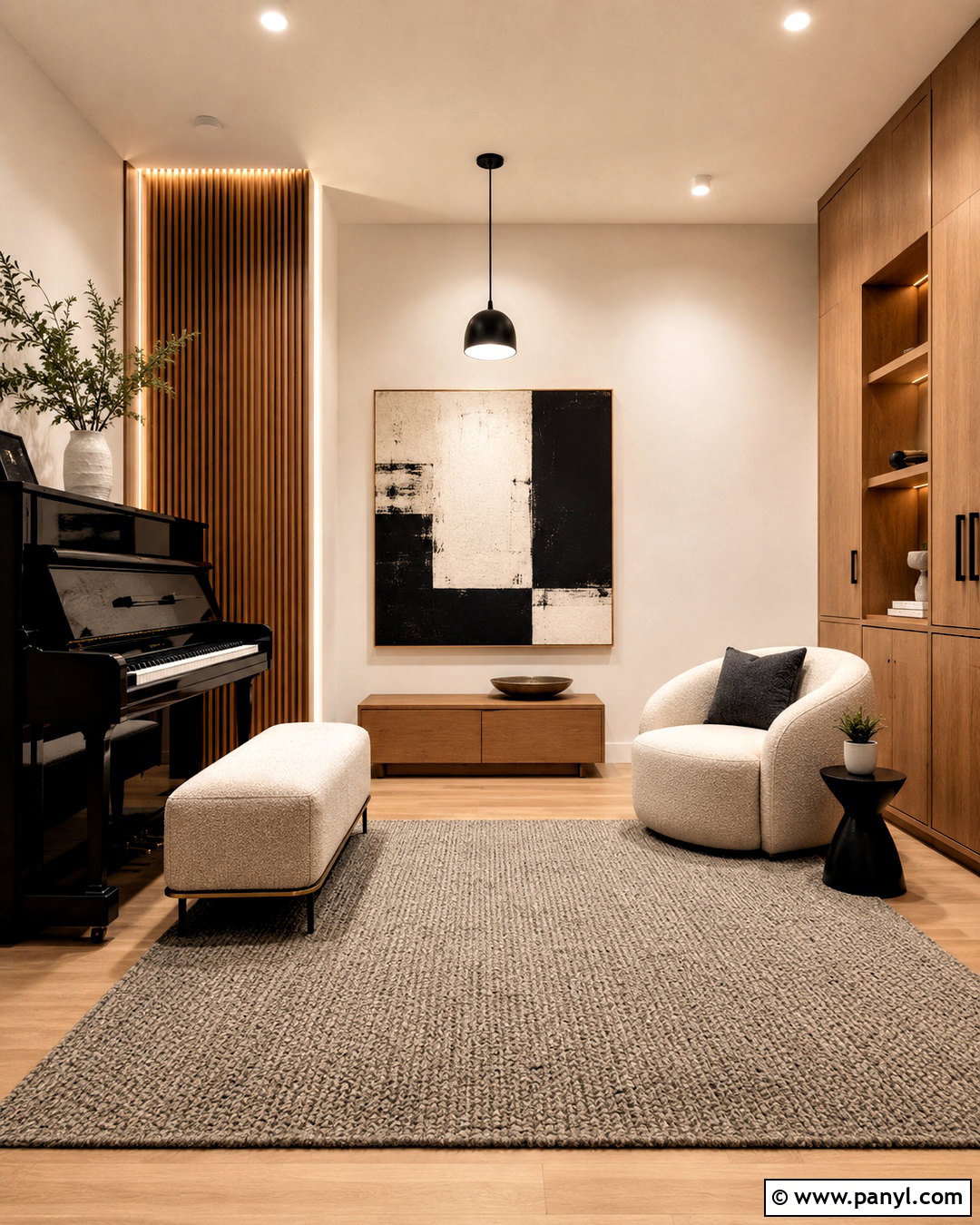
Let a black upright piano become the visual anchor of a bright, sophisticated room. Place it against a warm white wall framed by slim oak panels, then add a cream boucle bench for comfortable practice. A soft gray wool rug beneath the instrument defines the music zone and balances the piano’s dark finish. Include a compact lounge chair near the window, a matte black floor lamp, and a small oak table for books or headphones. Hang one large abstract artwork above the piano instead of several small decorations. Built-in cabinets along an adjacent wall can hold sheet music, cables, and accessories. The finished room feels calm and modern while keeping the piano easy to reach and ready to play.
2. Small Music Room Setup
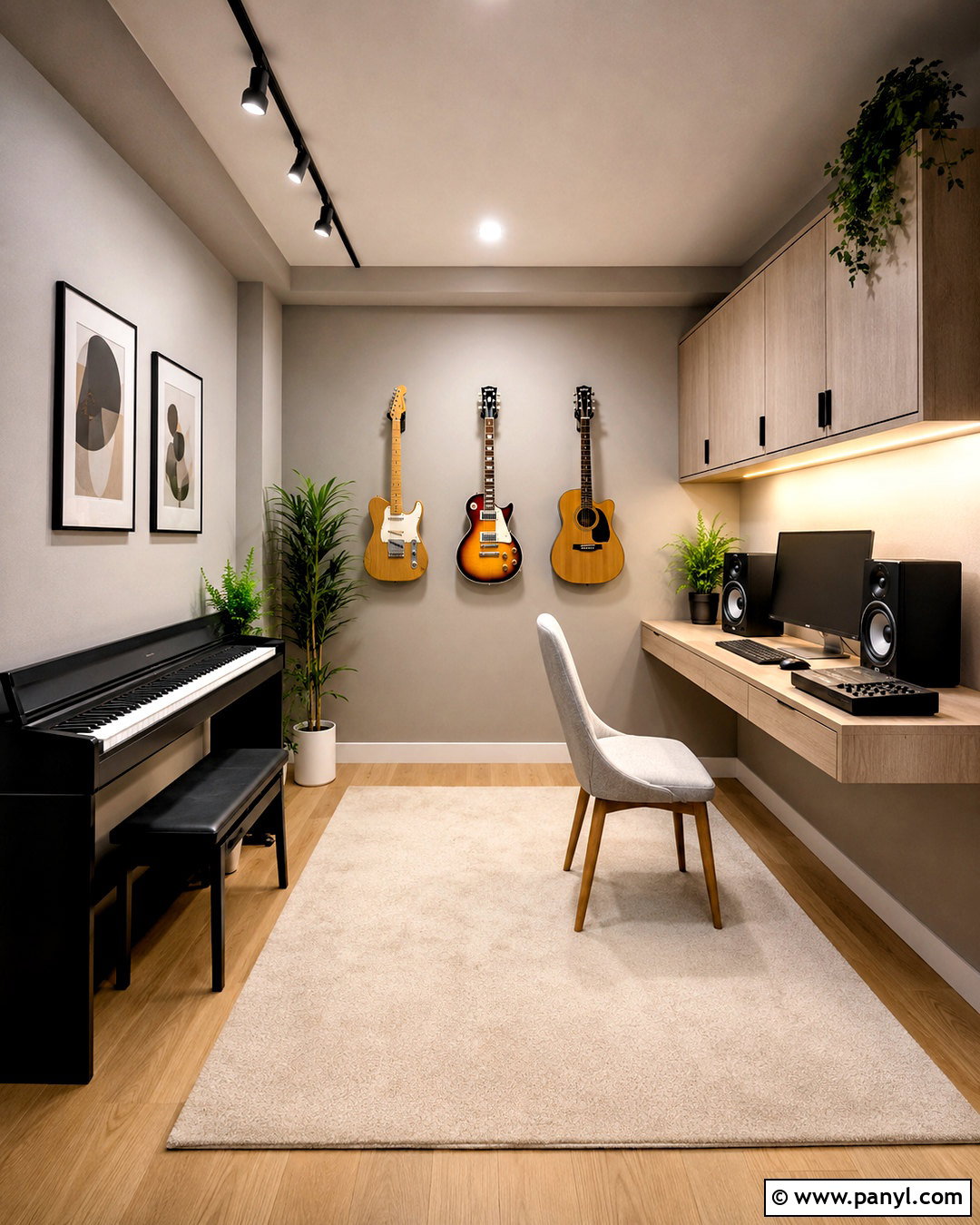
A spare bedroom can become a complete music room without feeling crowded. Start with a slim digital piano against the longest wall and mount two guitars vertically beside it. Choose light greige walls, pale oak flooring, and a low-pile cream rug to create a more open appearance. A narrow floating desk can support a laptop, compact audio interface, and small studio monitors. Add one armless chair that can move between the desk and keyboard. Closed base cabinets hide cables, pedals, and cases, while shallow shelves display a few records and plants. Use ceiling track lights to illuminate each activity area. Keeping the center floor clear creates comfortable circulation and leaves enough room for standing practice or a second musician.
3. Modern Guitar Music Room
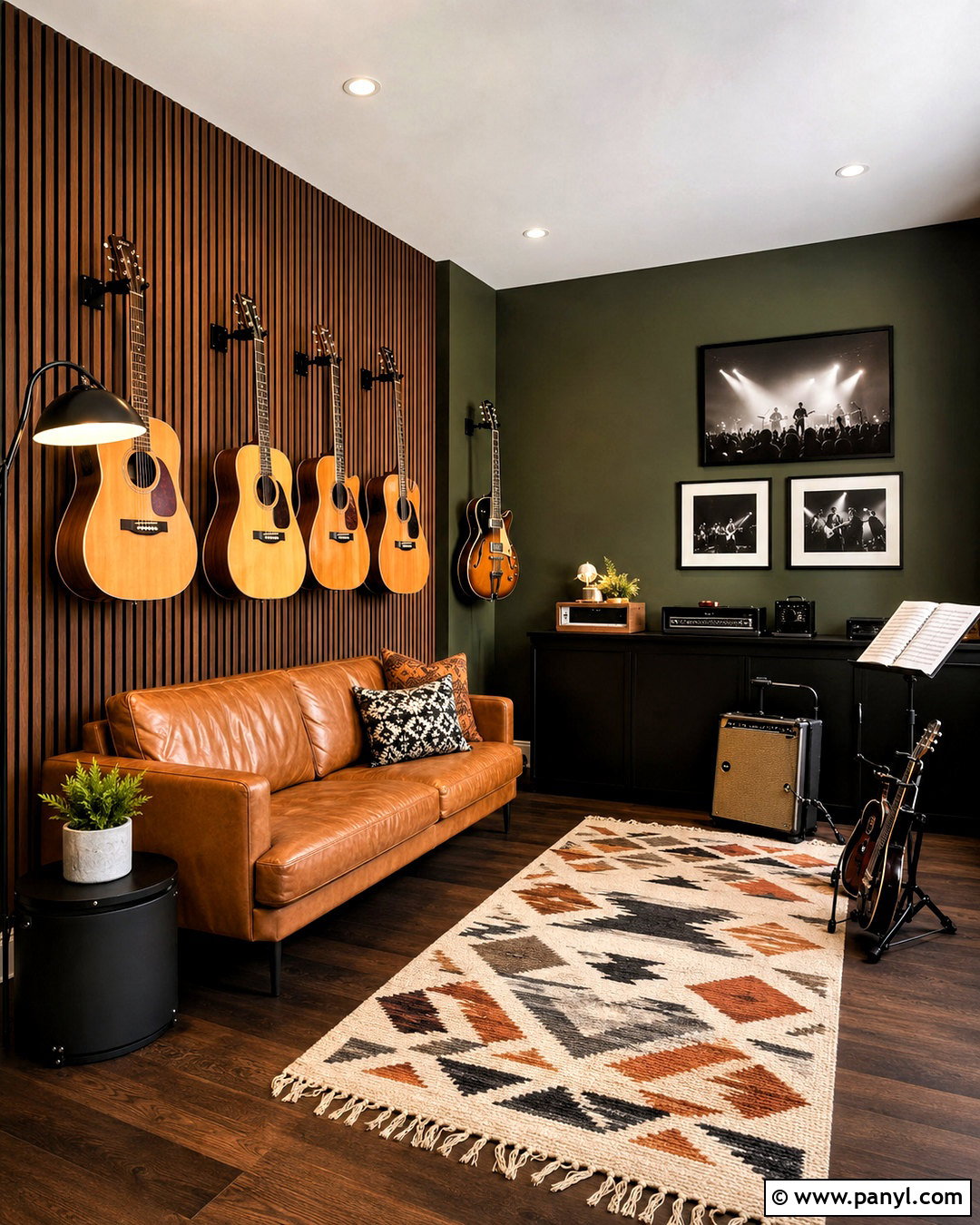
Turn a guitar collection into functional wall decor while giving the room a polished, organized look. Cover the main display wall with vertical walnut slats and install evenly spaced black guitar hangers. Position a low black cabinet underneath for pedals, tuners, straps, and small amplifiers. Across from the display, place a caramel leather sofa and a round black side table. Deep olive walls on the remaining surfaces create contrast without overpowering the wood. A large geometric rug brings softness and defines the playing area. Complete the design with an adjustable floor lamp, a streamlined music stand, and framed concert photography. Leave open space in front of the sofa so instruments can be removed safely and played without bumping nearby furniture.
4. Modern Home Recording Studio
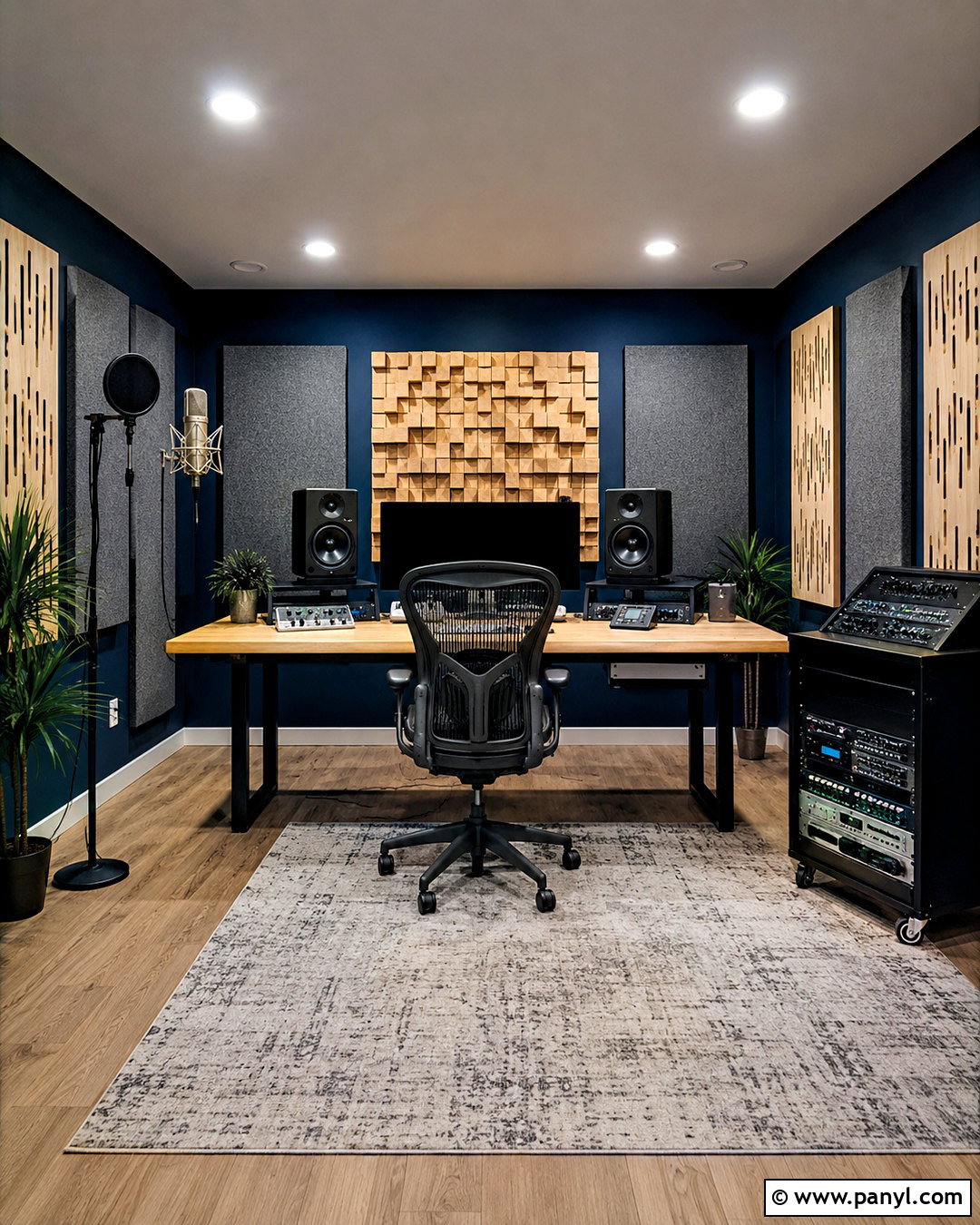
Build a focused recording room around a wide production desk placed symmetrically on the front wall. Use a warm oak desktop with matte black legs, matching monitor stands, and an ergonomic charcoal chair. Fabric-wrapped acoustic panels in soft gray can form a balanced arrangement around the workstation, while wood diffusers add natural texture behind the listening position. Acoustic treatment should address the room’s actual sound behavior rather than serving as random decoration. () Add a compact vocal corner with a microphone, adjustable stand, and removable screen. Dark blue walls reduce visual distractions, while bright recessed lighting keeps controls visible. Conceal power strips and cables beneath the desk, then use a rolling equipment rack to keep frequently adjusted gear within reach.
5. Vinyl Listening Music Room
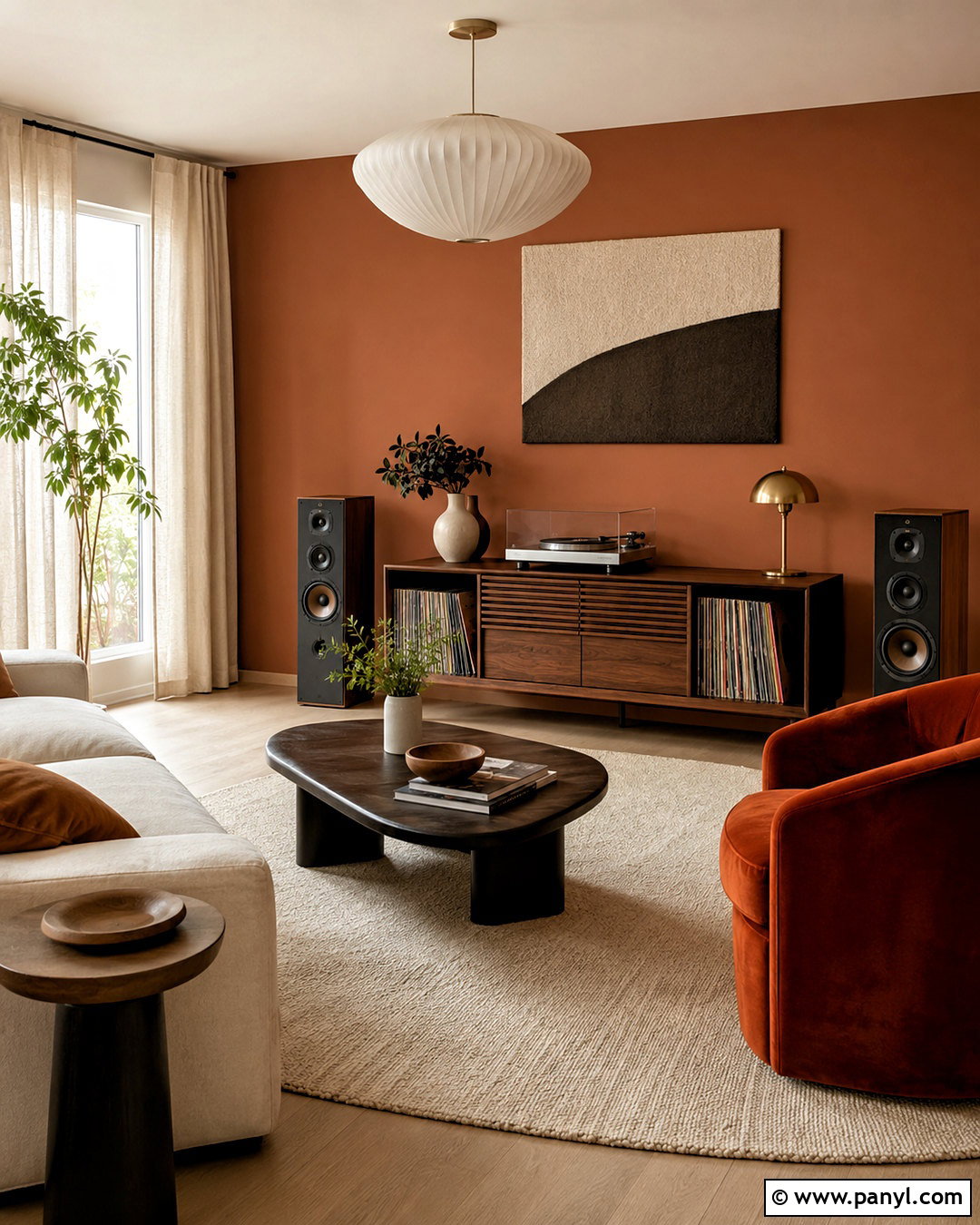
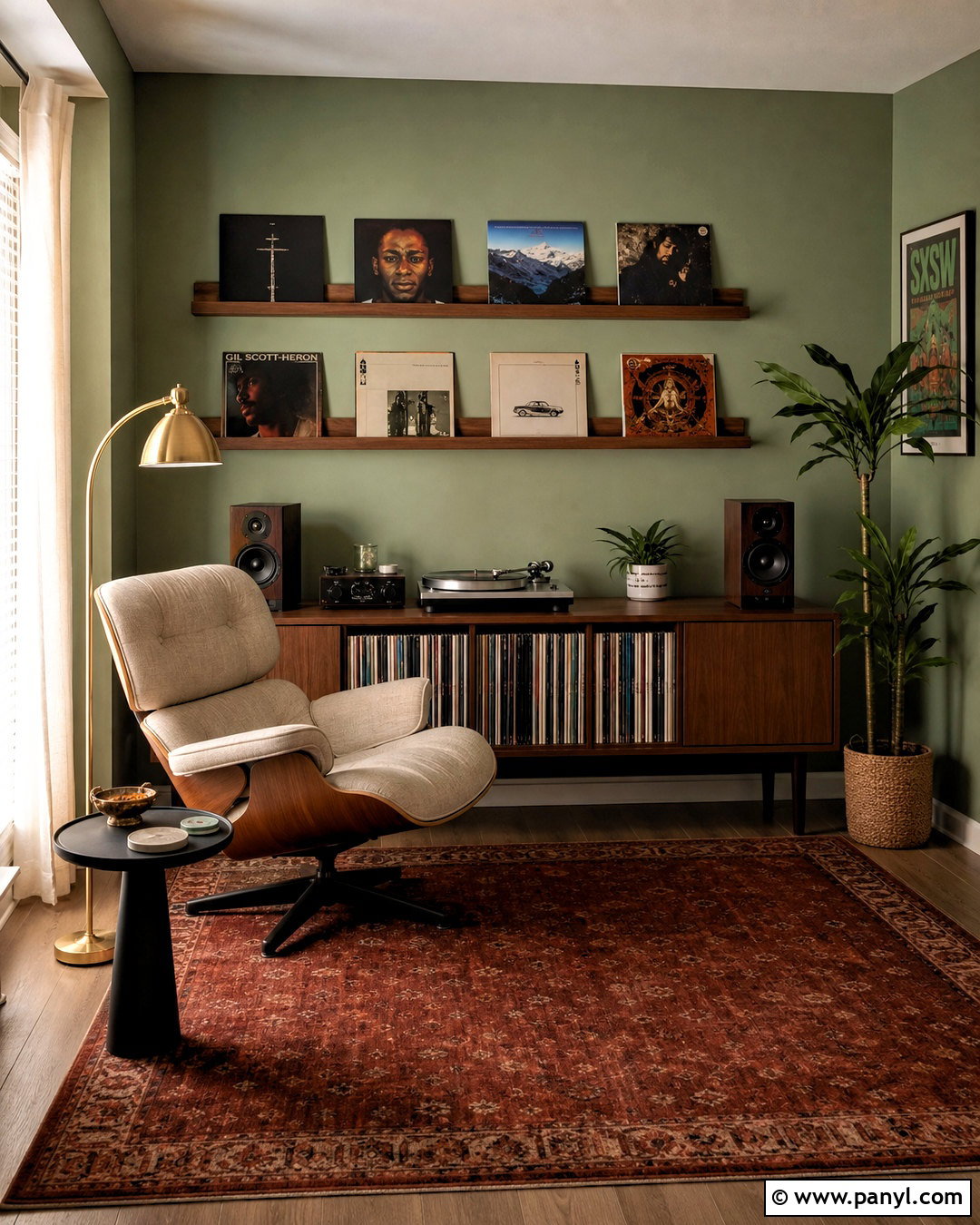
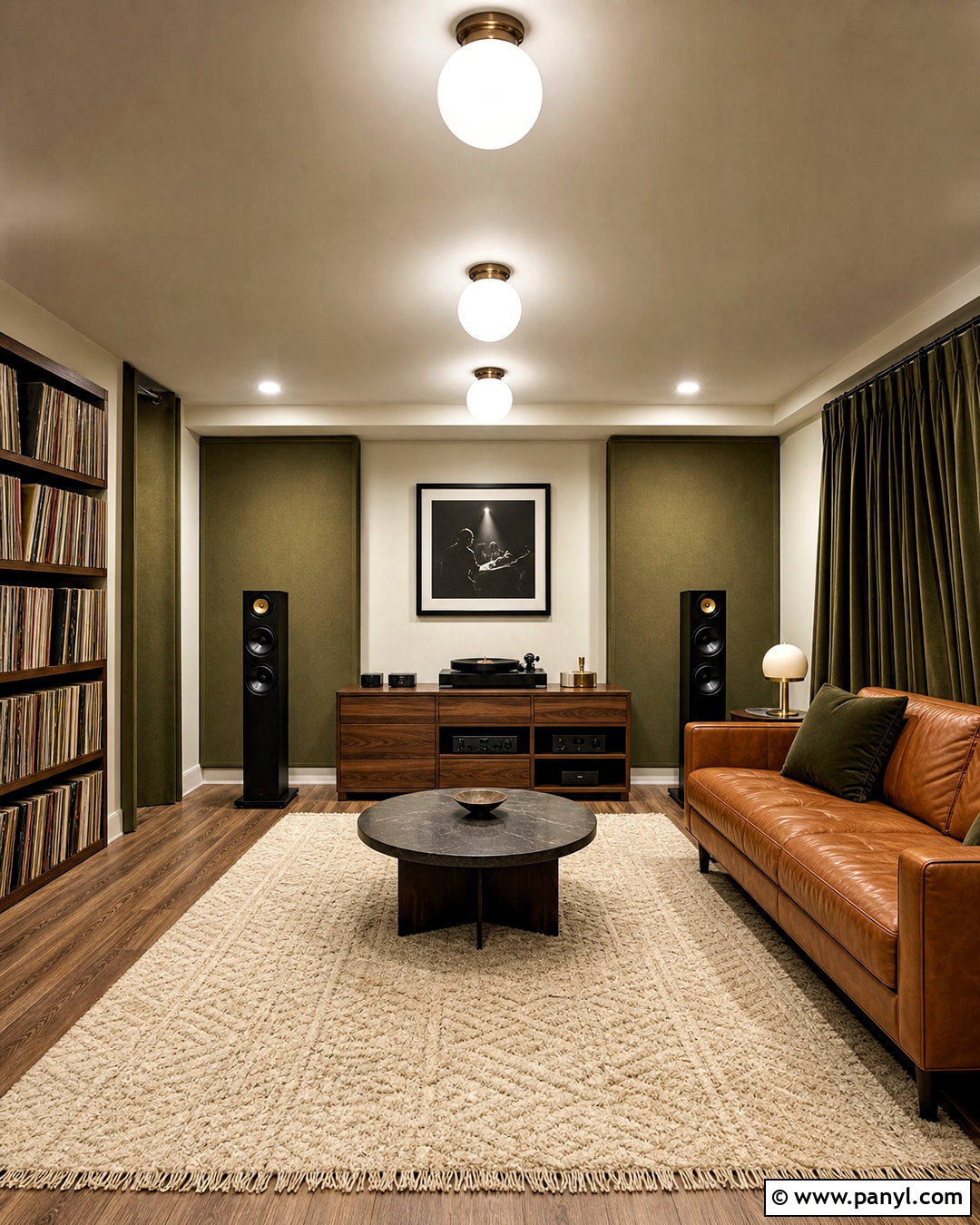
Create a modern listening room where records, speakers, and relaxed seating work as one complete composition. Center a walnut media console on a muted clay-colored wall, with the turntable positioned at comfortable standing height. Place matching floor speakers on either side and keep the arrangement visually balanced. A low oatmeal sofa facing the system creates the main listening position, while a rust velvet chair provides extra seating. Store records vertically inside divided console compartments so they remain tidy and accessible. Add a thick cream rug, linen curtains, and fabric artwork to soften the room visually. A sculptural white pendant supplies general light, while a small brass lamp illuminates the turntable. Avoid excessive decor around the speakers so the setup remains uncluttered and intentional.
6. Minimalist Music Room
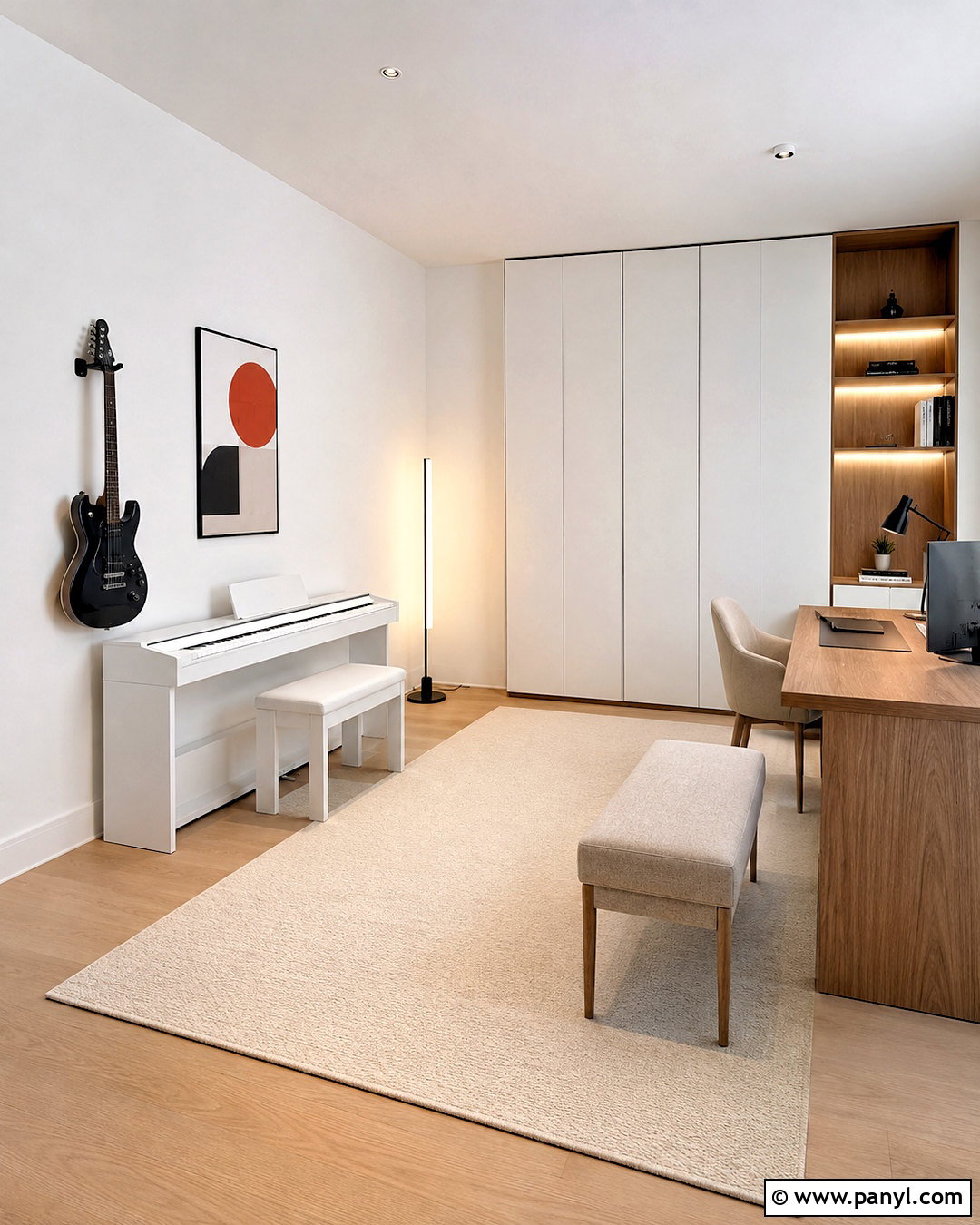
Could a quieter decorating approach help you concentrate on playing? Use soft white walls, light oak floors, and streamlined furniture to create a minimalist music room with very few distractions. Place a white digital piano along one wall and a compact ash-wood desk along another, leaving generous open space between them. Hide cables inside paintable wall channels and store accessories in handle-free cabinets. One black guitar on a wall mount can serve as the room’s strongest visual accent. Add a simple ivory rug, a slim floor lamp, and one linen-covered bench. Instead of filling every wall, hang a single graphic print above the piano. The limited palette creates consistency, while practical concealed storage prevents equipment and everyday accessories from disrupting the clean design.
7. Mid-Century Modern Music Room
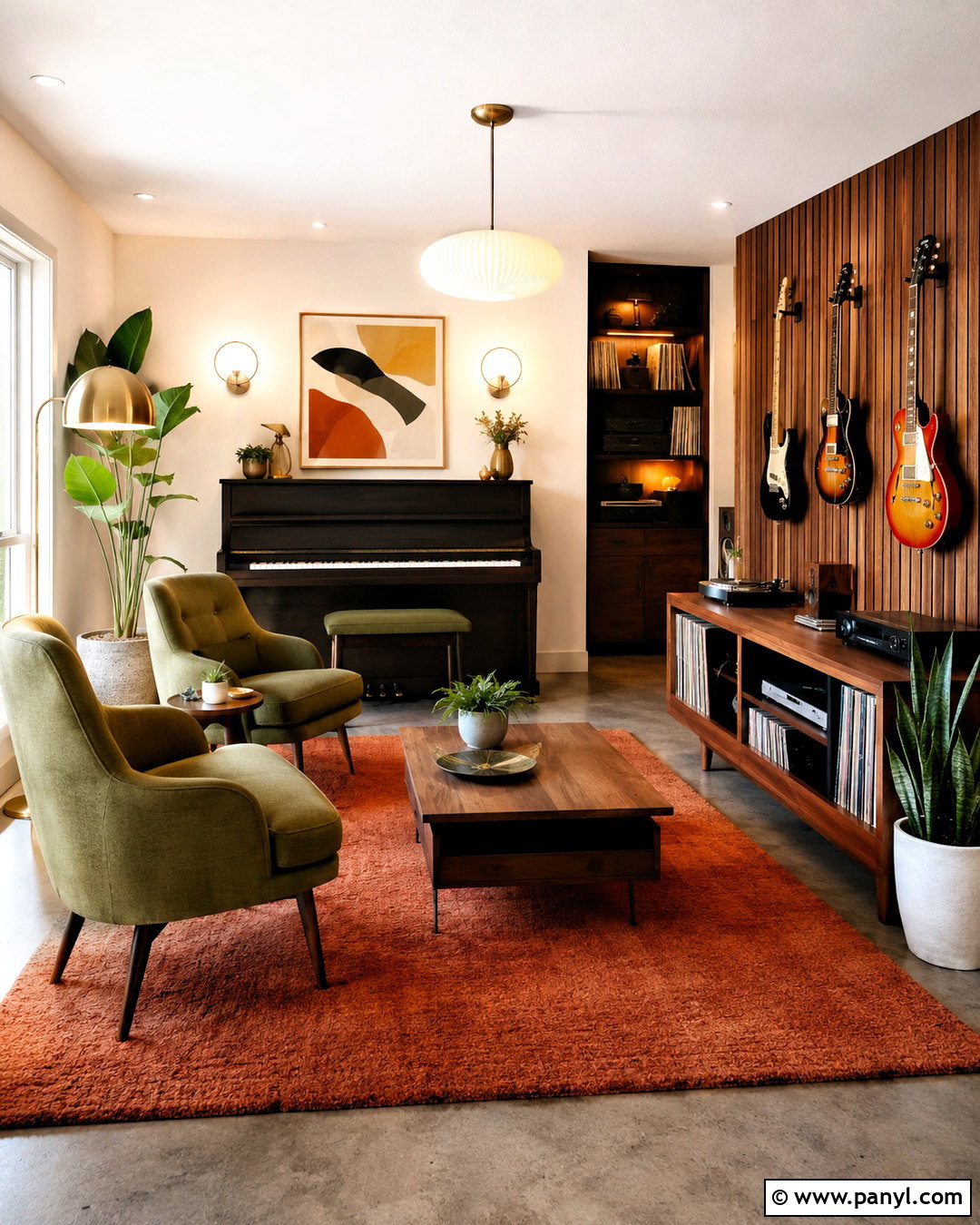
Warm walnut furniture and simple vintage-inspired shapes give a music room an inviting mid-century character. Position an upright piano beside a long walnut record cabinet with tapered legs. Add a pair of olive green lounge chairs angled toward the instruments, allowing the room to support both practice and listening. Cream walls provide a light backdrop, while a burnt orange rug introduces period-appropriate color without overwhelming the space. Display two guitars on a wood-paneled wall and use globe sconces to illuminate them. A brass floor lamp, ceramic planters, and abstract artwork complete the setting. Keep modern audio equipment inside ventilated cabinet sections when it is not in use. This combination creates a comfortable, collected room that feels residential rather than like a technical studio.
8. Industrial Music Room
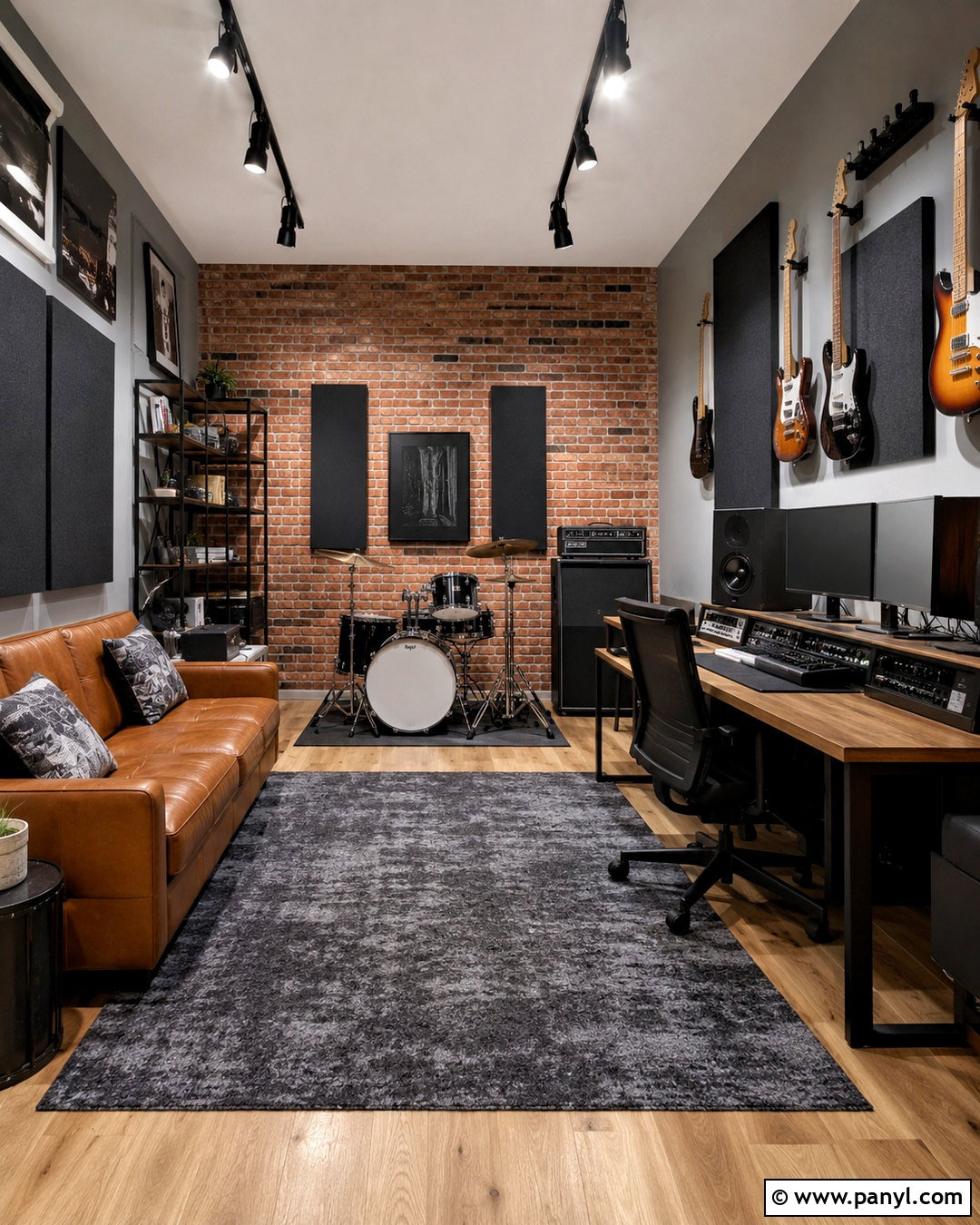
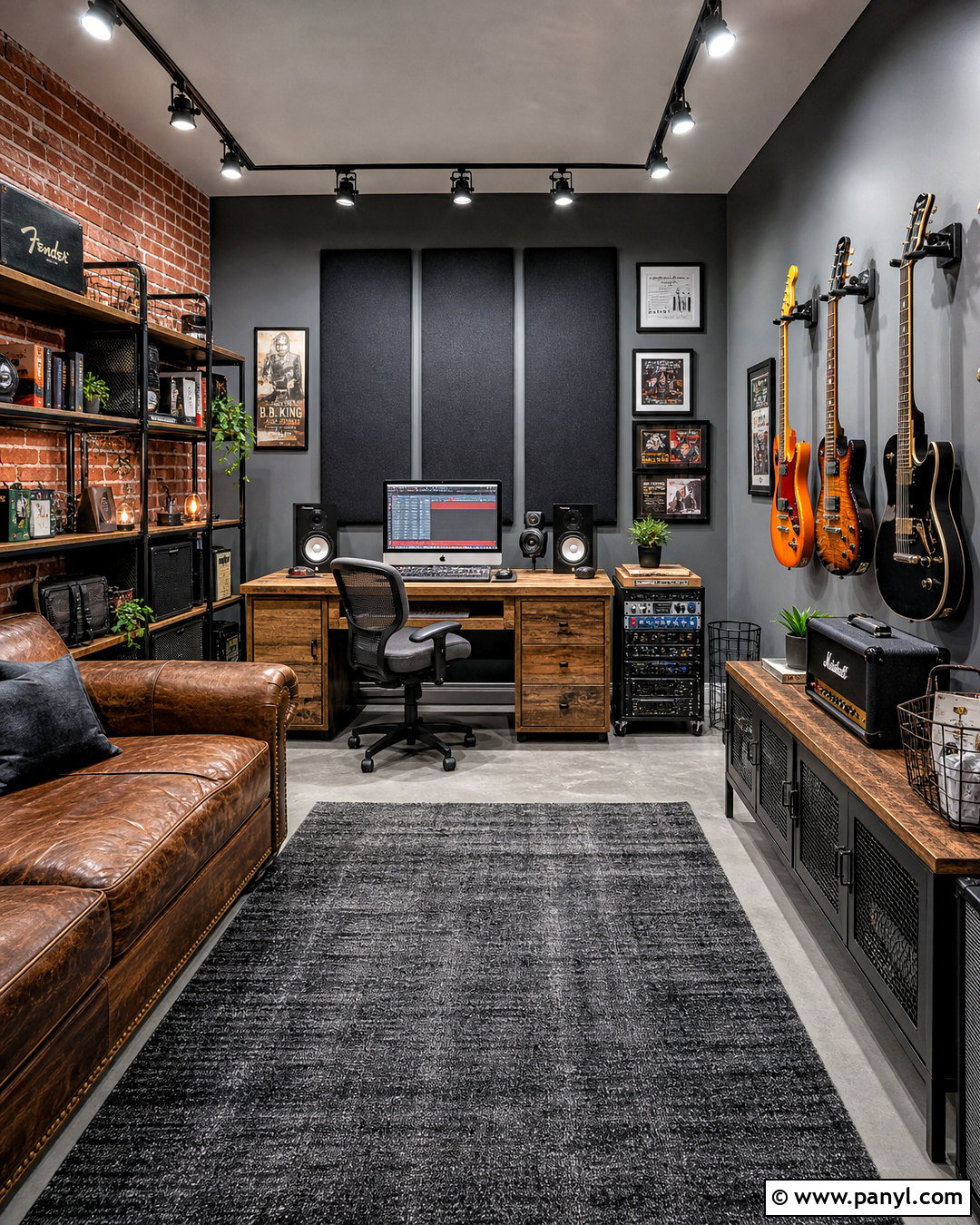
Exposed materials can give a home music room energy while remaining comfortable and practical. Use one red brick accent wall behind a compact drum kit, then balance it with warm gray walls and engineered oak flooring. A black metal desk with a thick wood top creates a sturdy production station. Place guitars on a rail system, store amplifiers beneath a steel shelving unit, and organize cables in labeled baskets. Soften the harder surfaces with a charcoal area rug, full-length fabric curtains, and dark acoustic panels arranged in a clean grid. Add a cognac leather loveseat for breaks and casual listening. Matte black track lights provide bright, adjustable illumination across the equipment. The result feels creative and urban without becoming cold, unfinished, or visually chaotic.
9. Scandinavian Music Room
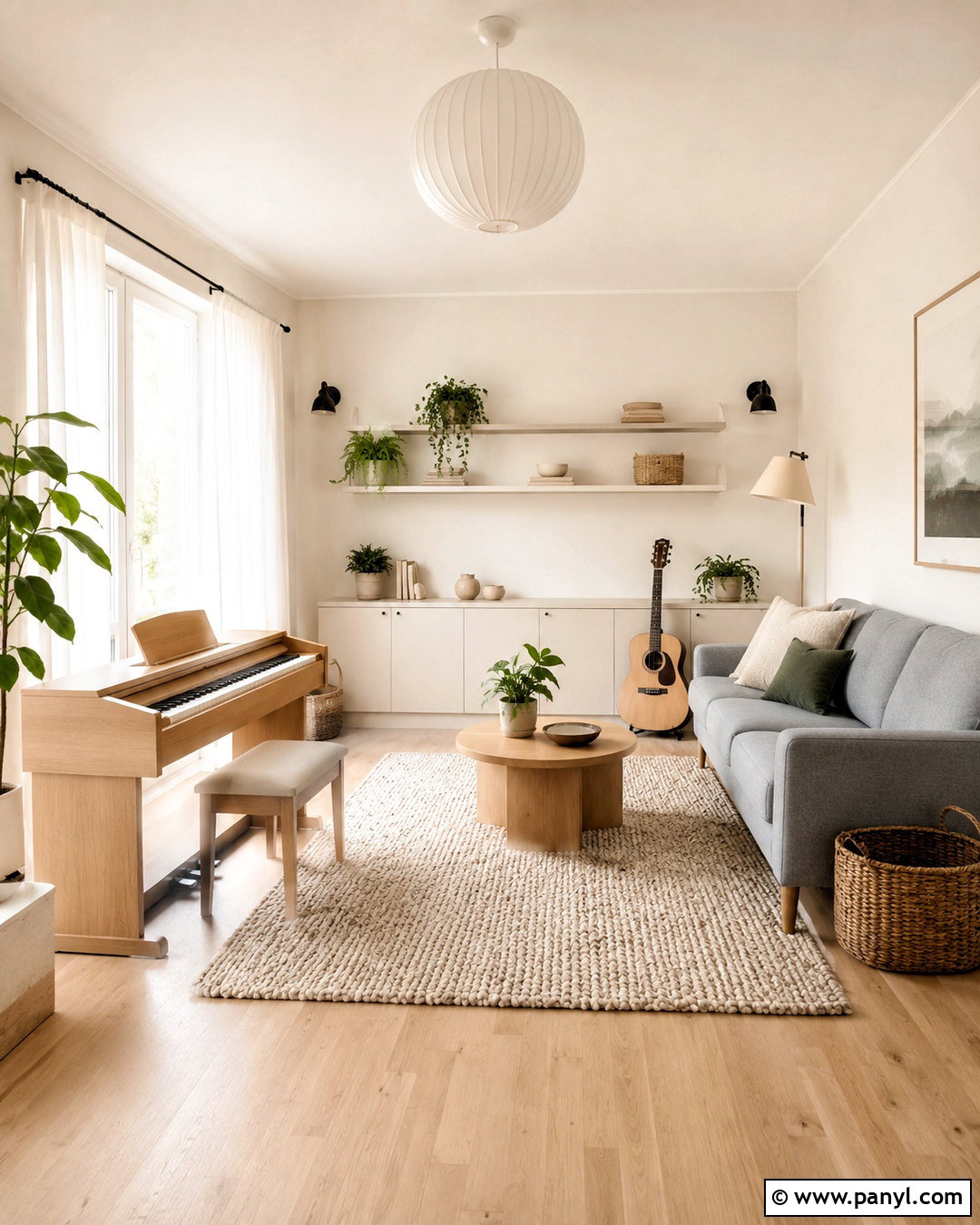
Natural light and gentle colors can make daily practice feel more relaxed. Paint the room a soft warm white and combine pale oak flooring with simple birch furniture. A light wood digital piano fits neatly beneath a framed botanical print, while an acoustic guitar hangs nearby on a white wall mount. Add a compact gray sofa, a round oak coffee table, and a textured ivory rug for an informal listening area. White cabinets with wood handles keep sheet music and audio accessories organized. Use woven baskets for headphones and cables, then introduce a few healthy green plants in matte ceramic pots. Sheer curtains filter window light without making the room feel enclosed. Black sconces and a matching music stand provide crisp contrast within the calm, airy palette.
10. Black Music Room
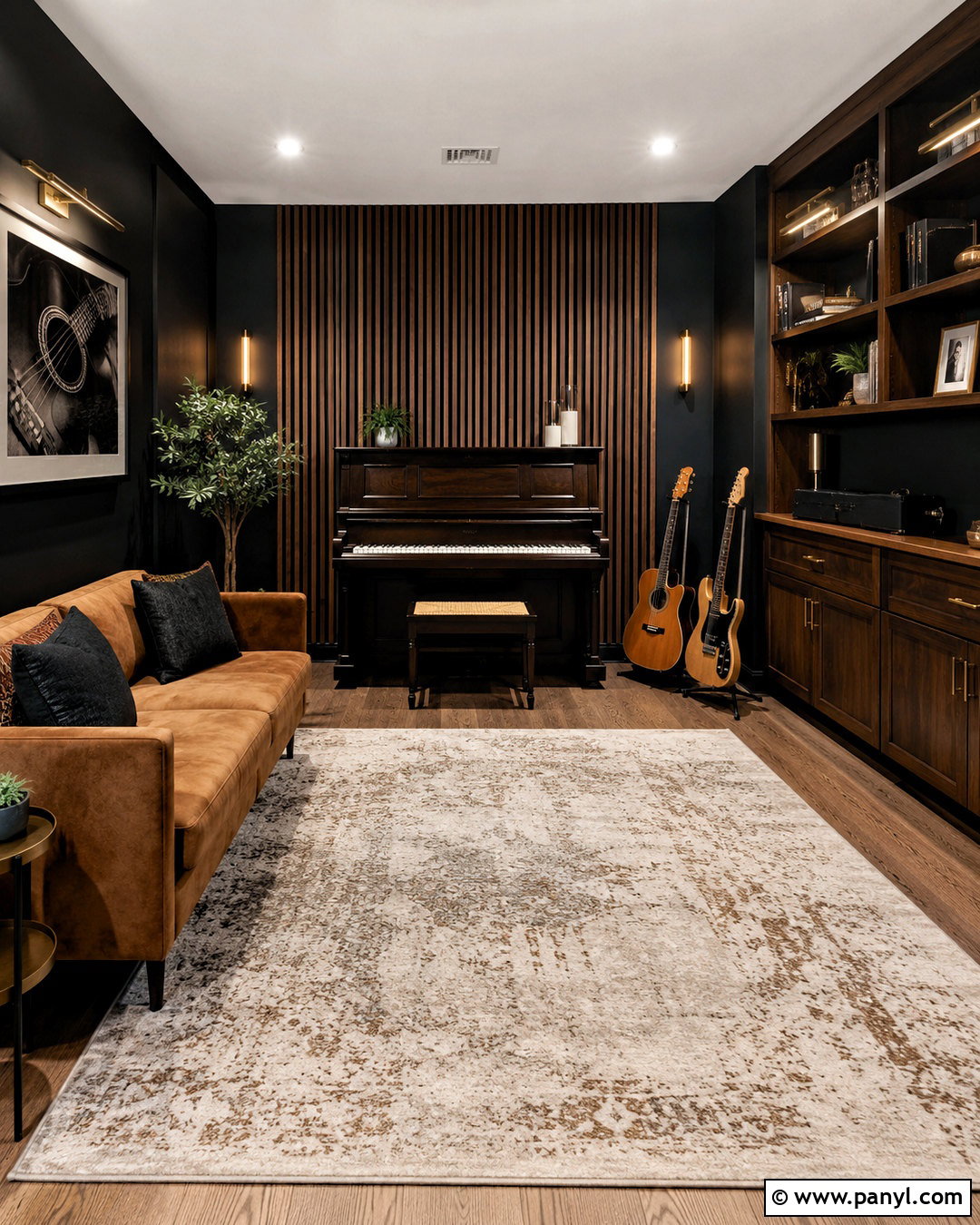
For a dramatic modern room, surround warm instruments with deep black walls and carefully placed lighting. Choose matte charcoal-black paint instead of a glossy finish, then install walnut acoustic slats behind a brown upright piano. Display two natural wood guitars on the opposite wall to repeat the warm tones. A camel-colored sofa and a large cream rug prevent the palette from feeling too heavy. Use bright ceiling spotlights, picture lights, and an adjustable floor lamp so each instrument remains clearly visible. A low walnut cabinet can conceal records, pedals, and electronic equipment. Add brushed brass accents through lamp bases and cabinet handles. The completed room feels bold and intimate, yet the light textiles and reflective metal details maintain balance and visual clarity.
11. White Music Room
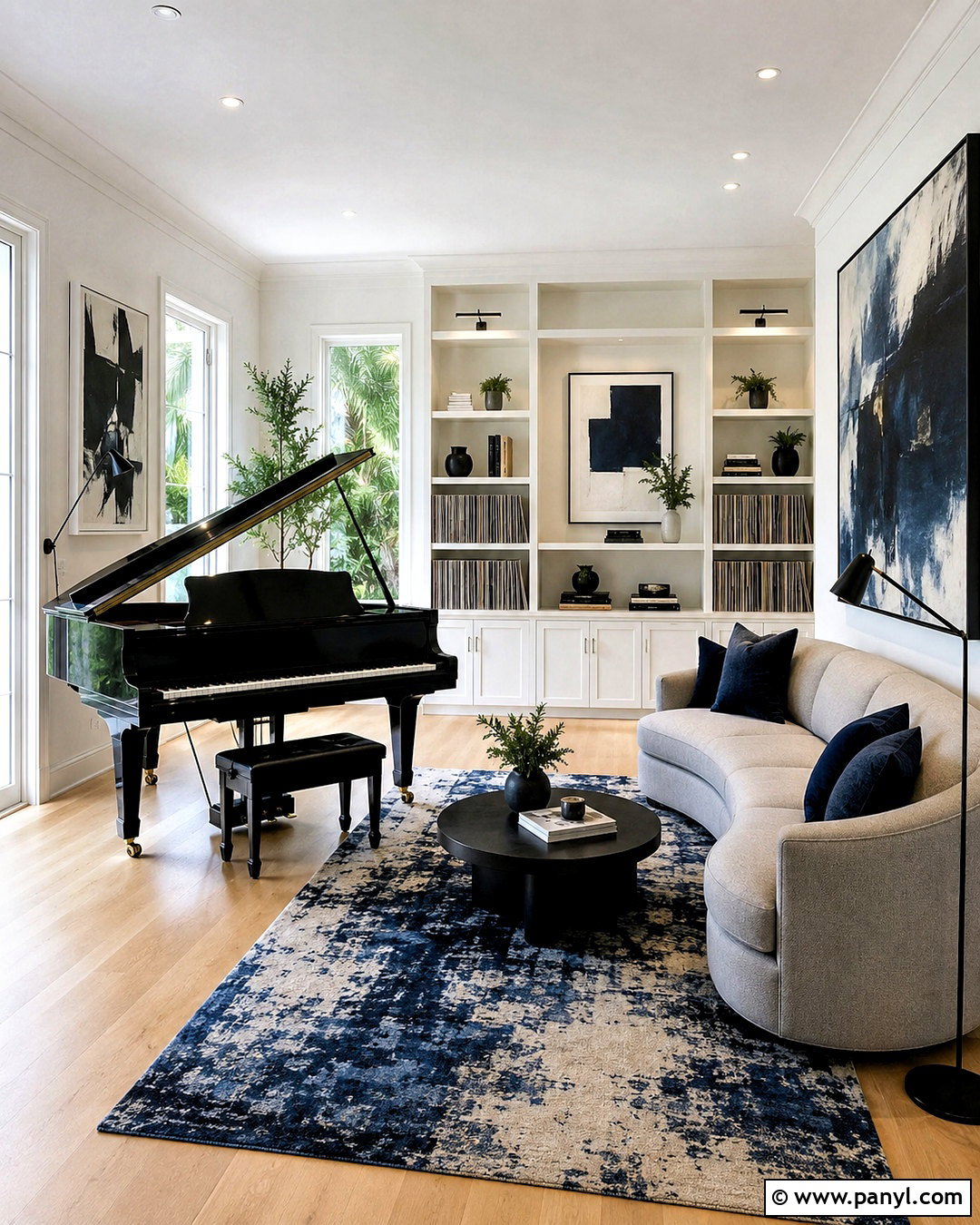
A fresh white palette works especially well when instruments and artwork provide the color. Begin with warm white walls, simple ceiling trim, and pale natural flooring. Place a glossy black baby grand piano near the center, allowing enough clearance around the bench and keyboard. Add a curved light gray sofa facing the piano and anchor both pieces with a large blue-and-cream patterned rug. White built-in shelves can hold records, music books, and small speakers while maintaining a clean architectural appearance. Introduce color through framed abstract prints, navy pillows, and a tall green plant. Layer recessed lights with slim black floor lamps for flexible illumination. The contrast between the black piano and bright surroundings creates an elegant focal point without requiring ornate decorating.
12. Blue Music Room
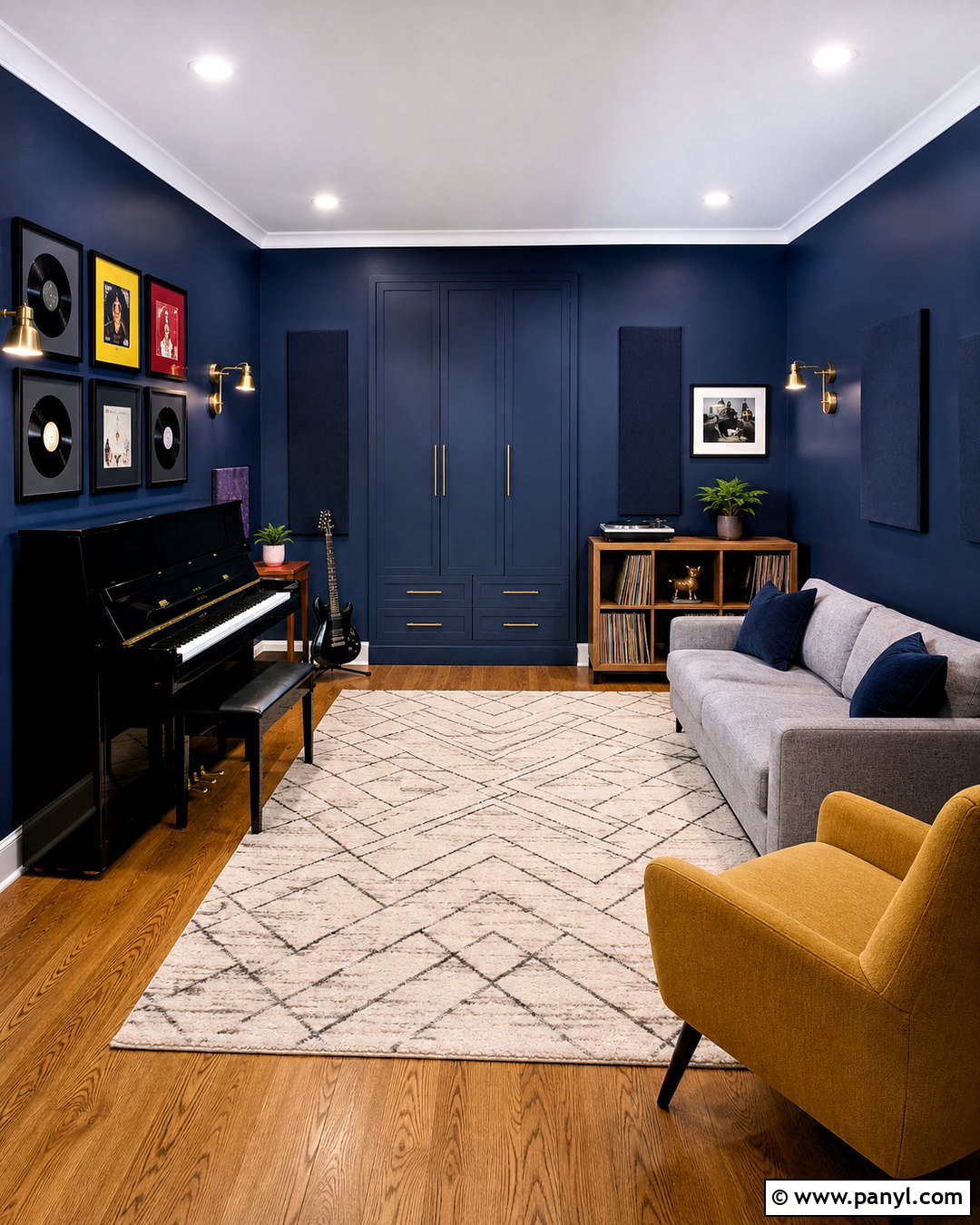
Deep blue walls can establish a focused atmosphere while supporting both modern and traditional instruments. Paint the room a rich navy blue, then add white trim and medium oak flooring for balance. Set a black upright piano on the main wall and place a natural oak record cabinet nearby. A light gray loveseat, mustard accent chair, and cream geometric rug create a comfortable listening zone in the center. Mount framed records in a structured row above the cabinet, leaving the piano wall visually quieter. Brass sconces add warmth, while bright white ceiling lights provide practical illumination for practice. Include navy fabric acoustic panels where appropriate so they blend into the wall color. Closed storage below the turntable keeps cables and smaller equipment from dominating the finished design.
13. Music Room With Wood Slat Walls
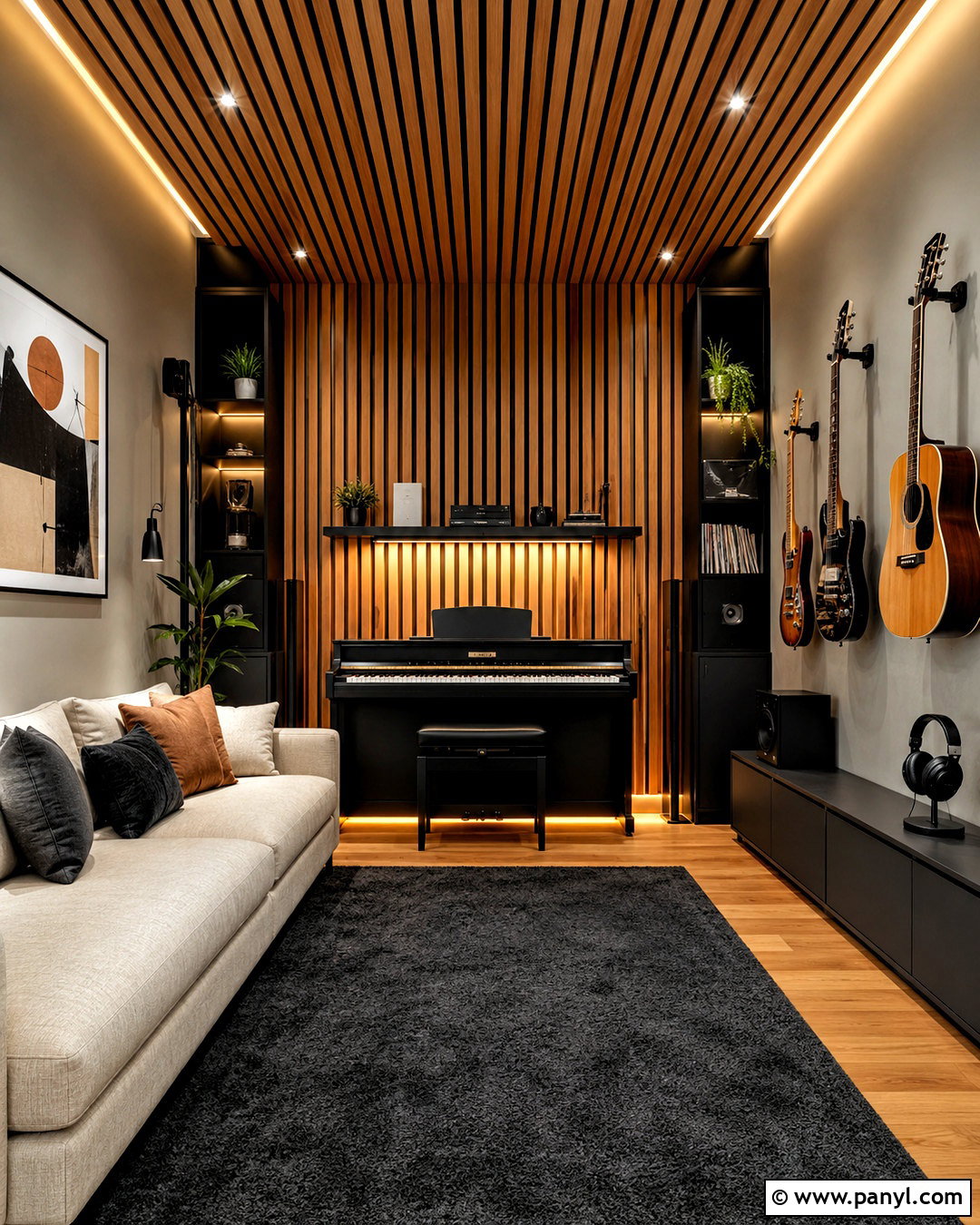
Wood slats can connect acoustic features, instrument storage, and modern architecture in one cohesive room. Install warm oak slats across the main wall and continue them onto a short section of the ceiling for a built-in appearance. Center a matte black digital piano against the wall, with two guitars mounted safely to one side. Place a compact cream sofa opposite the instruments and use a charcoal rug to define the practice area. Add black floating shelves for headphones, small speakers, and carefully selected decor. Soft greige paint on the remaining walls prevents the wood from becoming overwhelming. Linear ceiling lights and slim wall washers highlight the texture. Concealed cabinets beneath the guitar display provide organized storage for pedals, music books, and maintenance supplies.
14. Modern Basement Music Room
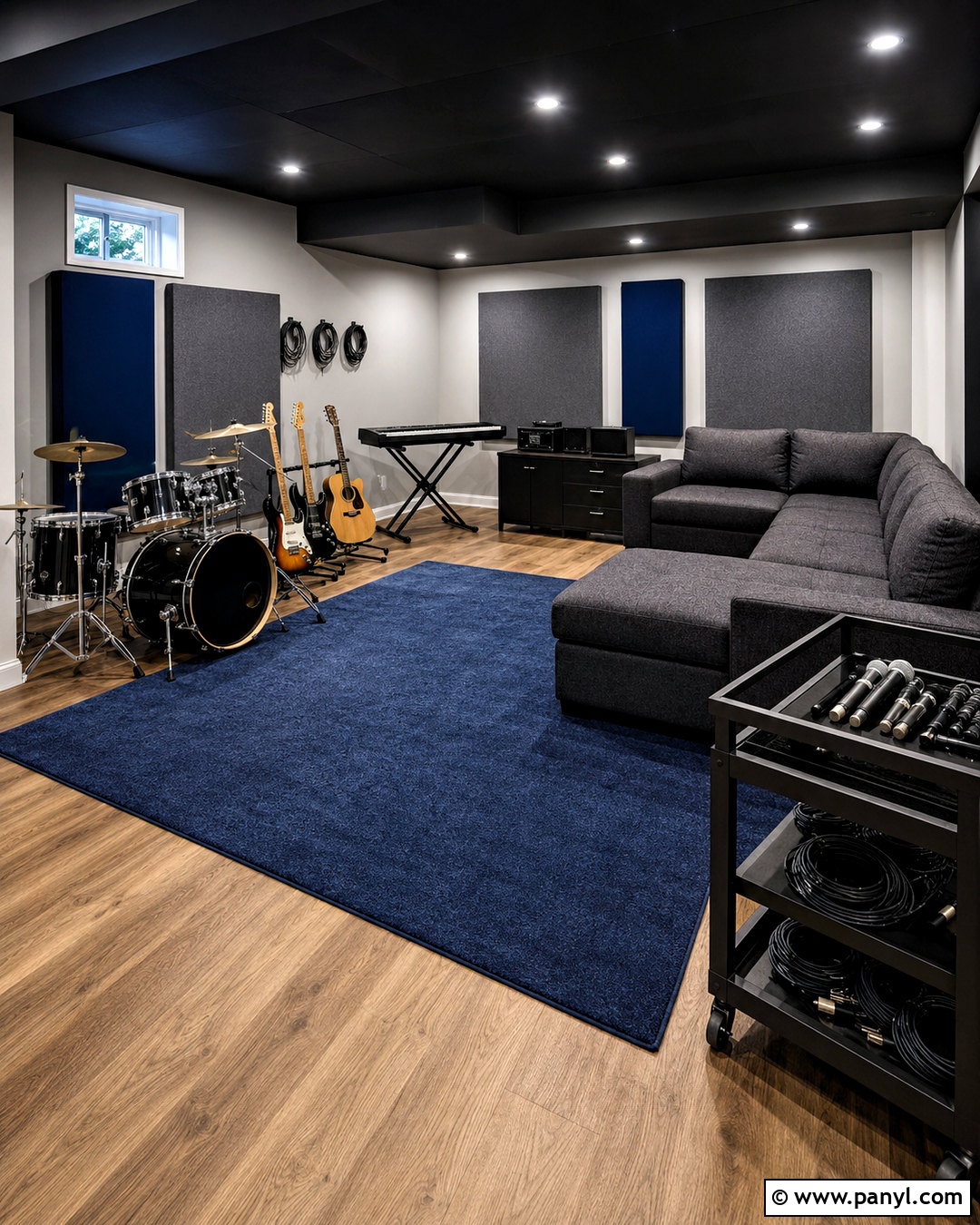
A finished basement can support louder practice, group sessions, and relaxed listening when the layout is carefully planned. Use light gray walls, durable oak-look flooring, and a large dark blue rug to brighten the lower-level space. Arrange a drum kit at one end, with a keyboard and guitar station along the side walls. A charcoal sectional at the opposite end gives family members or bandmates a comfortable place to listen. Add wood-framed acoustic panels in coordinated gray and blue fabrics for a decorative, finished appearance. Black ceiling paint can visually simplify pipes or soffits, but use plenty of recessed white lighting. Include lockable cabinets for equipment, wall hooks for cables, and a small rolling cart for microphones so the room remains flexible between sessions.
15. Music Room With Built-In Storage
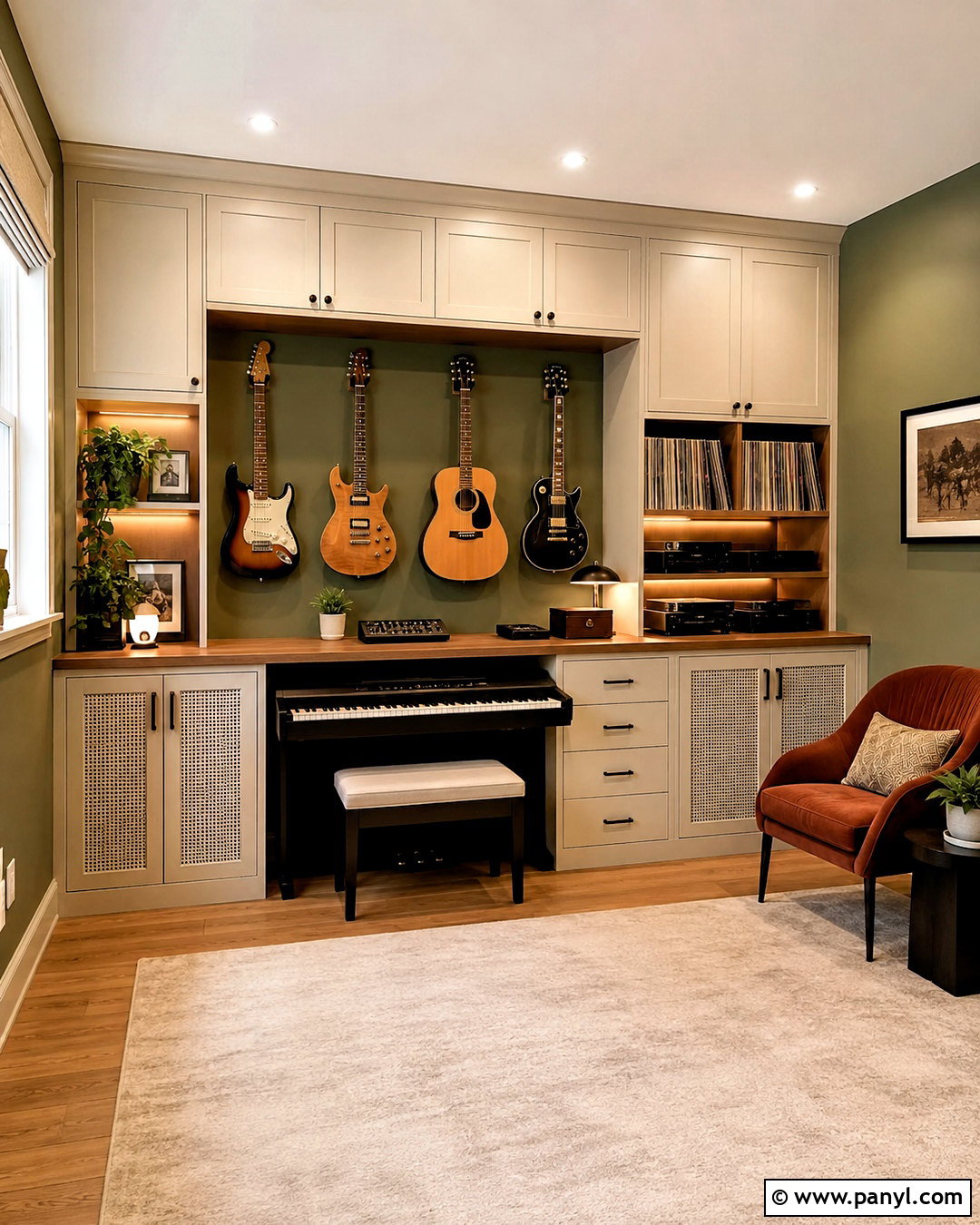
When instruments, records, and equipment share one room, built-in storage can create a calmer and more efficient layout. Cover one wall with warm white cabinetry surrounding a walnut work surface. Use tall ventilated cupboards for amplifiers and equipment, wide drawers for cables and pedals, and open shelves for records and music books. Place a digital piano on the adjacent wall and mount guitars above a low cushioned bench. Soft sage green paint introduces color, while natural oak flooring and a cream rug keep the room light. Add a comfortable rust-colored chair near the workstation for listening or practice breaks. Integrated cabinet lighting makes equipment easy to locate. The design feels orderly, but selected open areas ensure favorite instruments remain visible and ready for everyday use.
16. Modern Drum Music Room
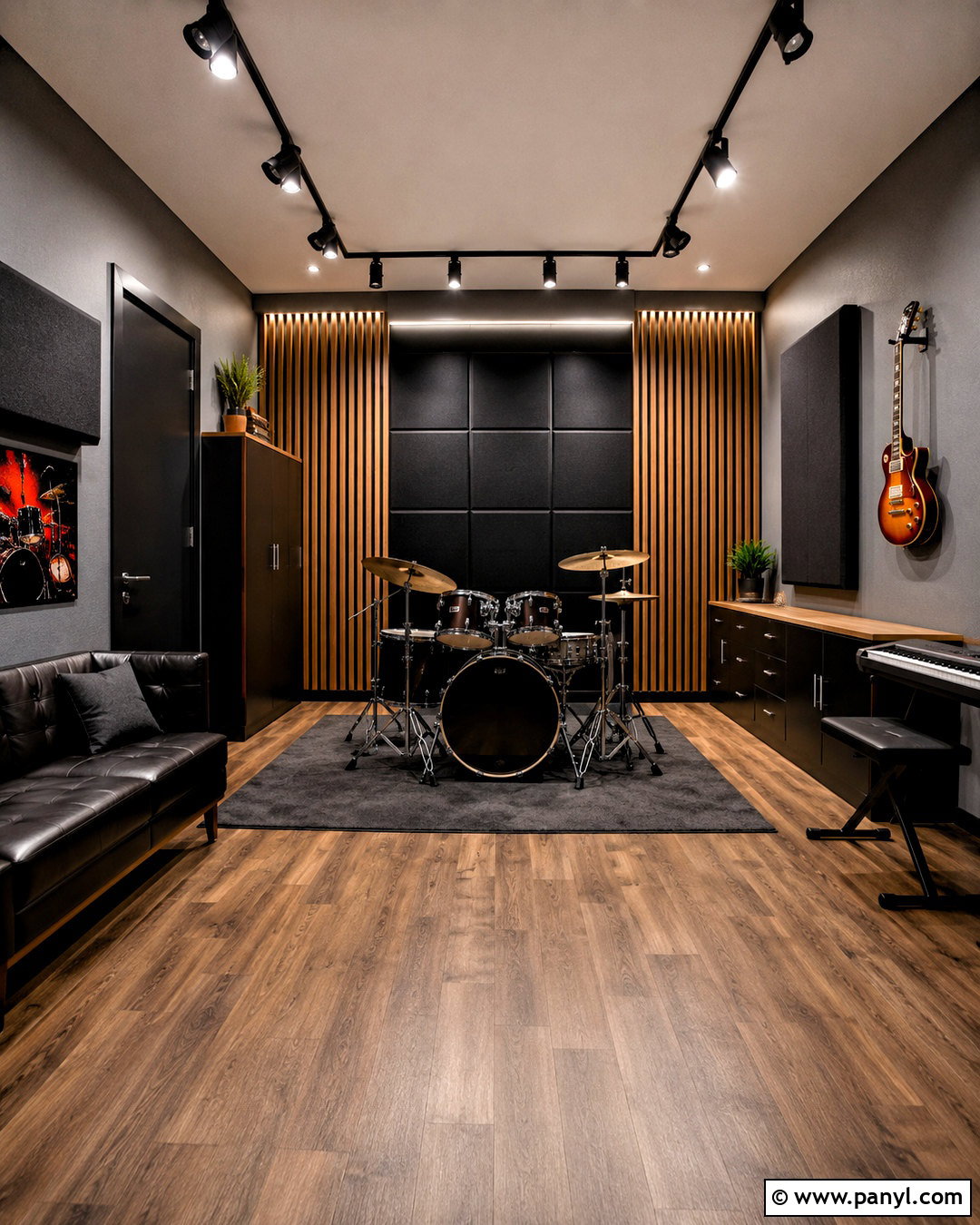
Designing around a drum kit requires generous floor space and a strong visual plan. Center the kit on a large charcoal low-pile rug so the playing zone feels intentional. Use medium gray walls with black acoustic panels arranged in alternating vertical and horizontal blocks. A warm wood slat section behind the drums creates a focal point and prevents the room from looking purely technical. Install closed cabinets along one side for sticks, replacement heads, microphones, and cables. A compact black sofa on the opposite wall provides seating without restricting movement. Bright track lighting should aim toward the kit, storage, and doorway. Add one wall-mounted guitar and a narrow keyboard station if space allows, but preserve clear walking paths around the drums and equipment.
17. Luxury Modern Music Room
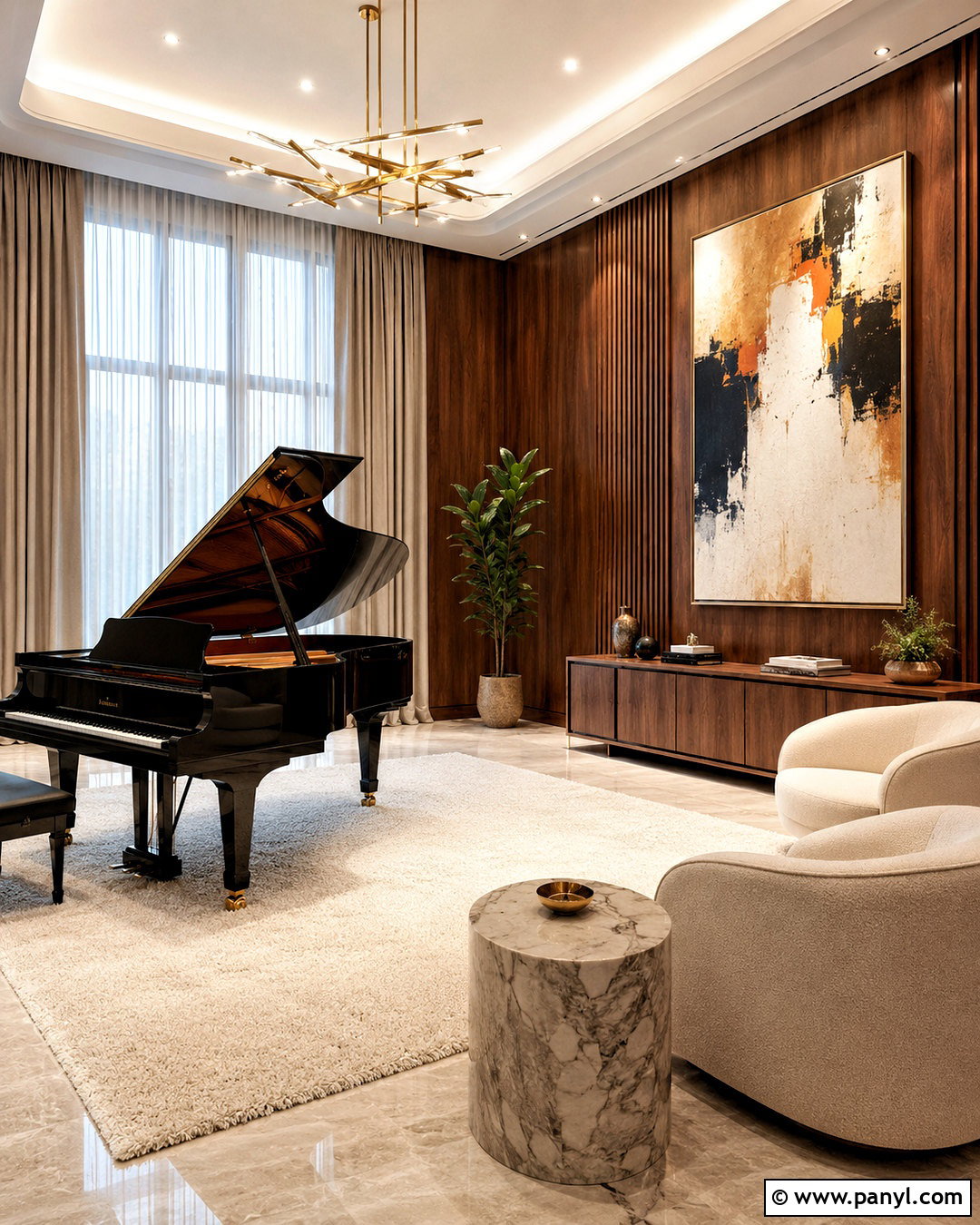
A refined music room can feel luxurious through proportion, materials, and careful restraint rather than excessive decoration. Place a glossy black grand piano on a large ivory wool rug and surround it with warm walnut wall paneling. Two curved cream lounge chairs create an intimate listening area without competing with the instrument. Use pale stone flooring around the rug and add full-height taupe curtains to frame tall windows. A sculptural brass chandelier provides a central statement, while discreet ceiling lights illuminate the keyboard and artwork. Build a low walnut media cabinet into one wall for audio equipment and records. Large abstract art, a marble side table, and minimal accessories finish the room. The result feels elegant, comfortable, and clearly designed around live musical performance.
18. Music Room Home Office
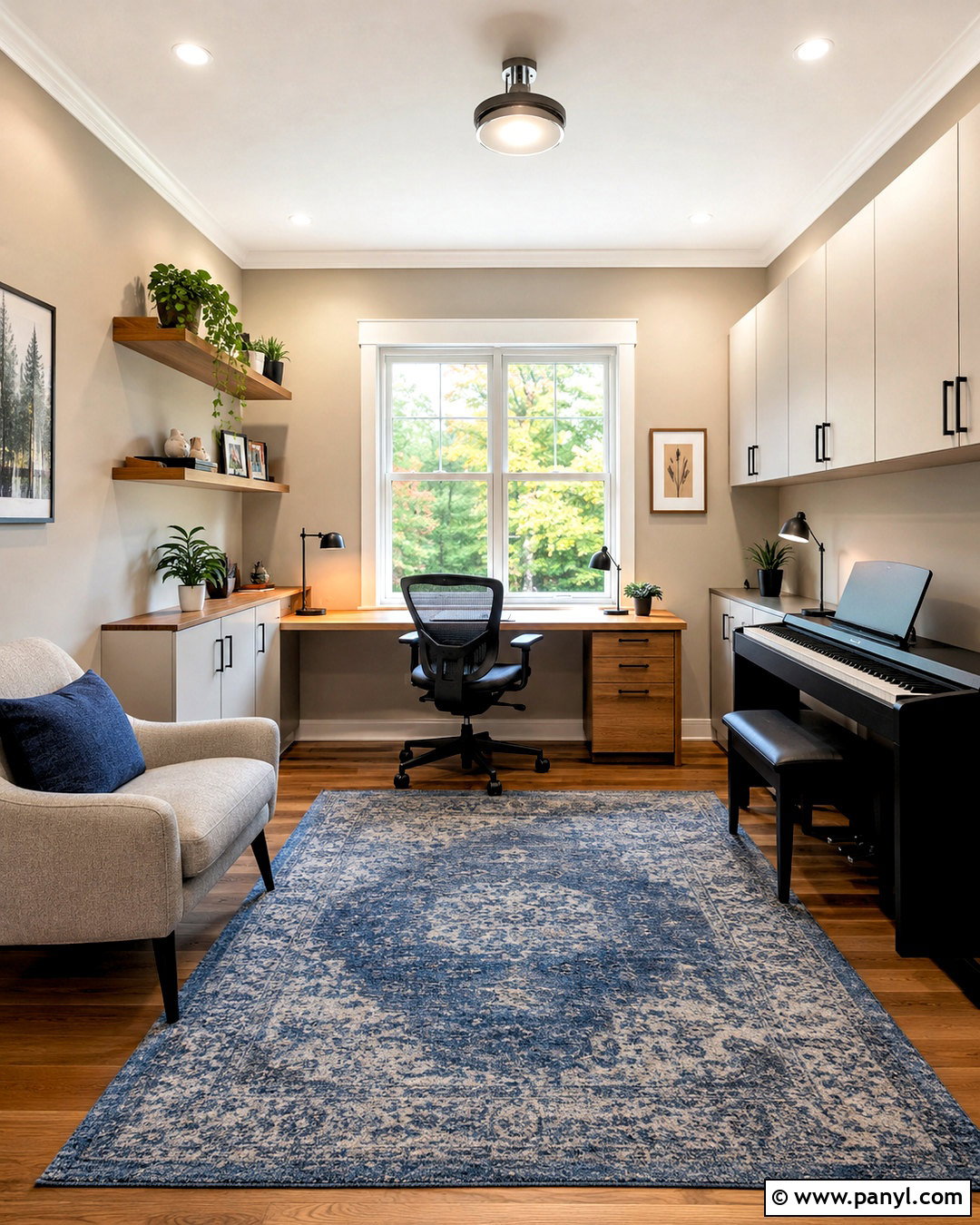
A dual-purpose room can support focused work during the day and music practice afterward. Place a streamlined oak desk beneath the window and position a digital piano along the opposite wall. Matte white cabinets between the two zones provide shared storage for office supplies, sheet music, and audio equipment. Use soft greige walls, medium oak flooring, and a blue patterned rug to unite the layout. An ergonomic black desk chair can double as keyboard seating when necessary, while a small upholstered armchair creates a relaxed listening spot. Install floating shelves above the desk for books and framed art, but keep the piano wall uncluttered. Concealed charging points, under-desk cable trays, and adjustable task lights help each activity function smoothly without creating visible disorder.
19. Modern Music Room Corner
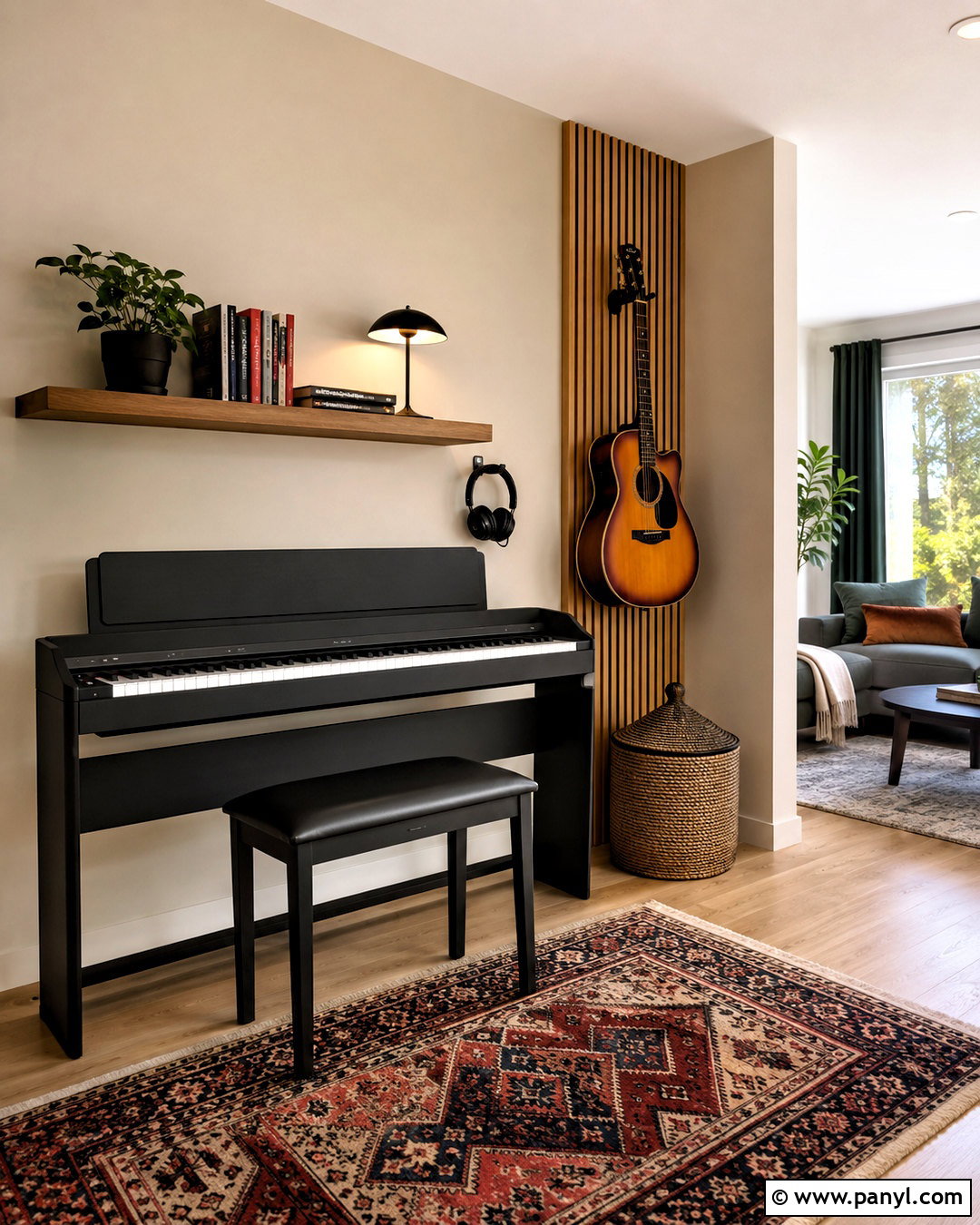
Not every home has space for a dedicated room, but an unused living room corner can become a complete music zone. Place a slim black digital piano against a warm beige wall and define the area with a narrow wood-slat panel. Mount one guitar beside the piano, then add a floating shelf for headphones, music books, and a small lamp. A compact patterned rug under the bench visually separates the corner from the rest of the room. Coordinate the nearby living room furniture with similar black, beige, and oak tones so the setup feels integrated. Use a plug-in picture light above the instrument for focused illumination. A lidded basket beneath the shelf can hold cables and accessories, keeping the small arrangement attractive between practice sessions.
20. Modern Family Music Room
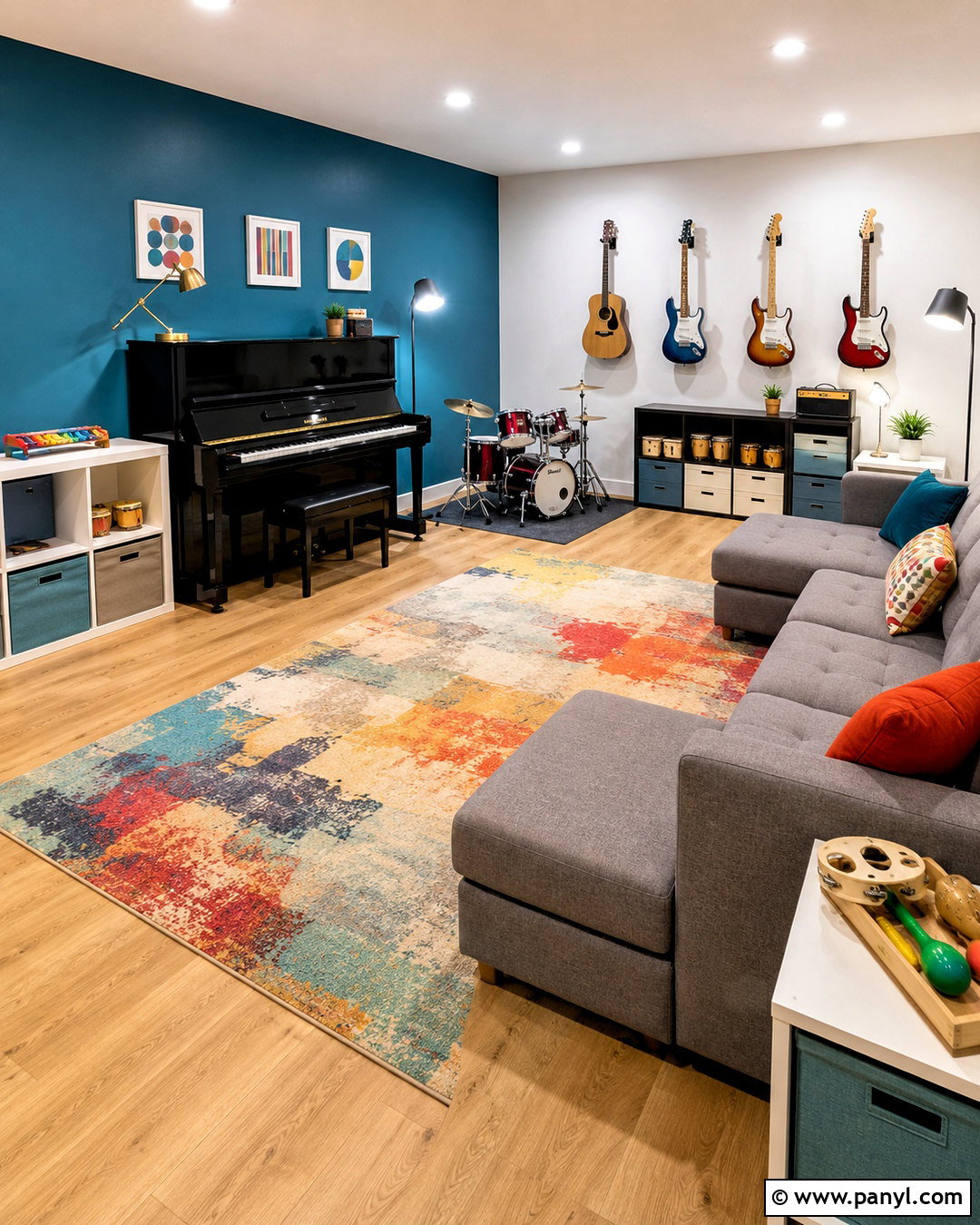
Bring different instruments together in a flexible family music room designed for practice, lessons, and casual performances. Place an upright piano on one wall, a compact drum kit in the far corner, and guitars on secure mounts above a low storage cabinet. Use cheerful teal and warm white walls with light oak flooring to create an energetic but balanced background. A modular gray sofa provides seating and can be rearranged when more floor space is needed. Add a colorful washable rug, cube storage for children’s instruments, and closed drawers for delicate accessories. Bright ceiling lights and adjustable wall lamps support reading and playing. Keep the central area open so family members can practice together, move equipment safely, or enjoy informal performances without rearranging the entire room.
Conclusion:
The best music room balances sound, comfort, organization, and personal expression. Whether you prefer a dramatic black piano lounge, a bright Scandinavian practice space, or a flexible family studio, every element should support how you actually use the room. Begin with the largest instrument or listening system, then arrange seating, storage, and lighting around it. Choose rugs, curtains, upholstered furniture, or attractive acoustic treatments to make the finished space feel comfortable and cohesive. Most importantly, keep instruments accessible and cables controlled so making music never feels inconvenient. These 20 modern music room ideas offer adaptable plans for different spaces, instruments, decorating preferences, and budgets, helping you create a room that looks polished and encourages regular use.

Related Ideas and Inspiration:
Leave a Reply