
Choosing the right basement color can turn a dim lower level into one of the most inviting spaces in your home. Since basements often have small windows, low ceilings, and limited sunlight, every shade needs to work with the lighting, flooring, furniture, and purpose of the room. Light neutrals can open the space, while deeper colors create a cozy setting for movies, games, or quiet evenings. Warm greens, soft blues, and earthy accent colors can also add personality without making the room feel closed in. Always test large paint samples under your actual ceiling lights before committing. The complete room schemes below offer practical, coordinated ways to decorate with 20 Nice Basement Colors.

1. Warm White Basement Color
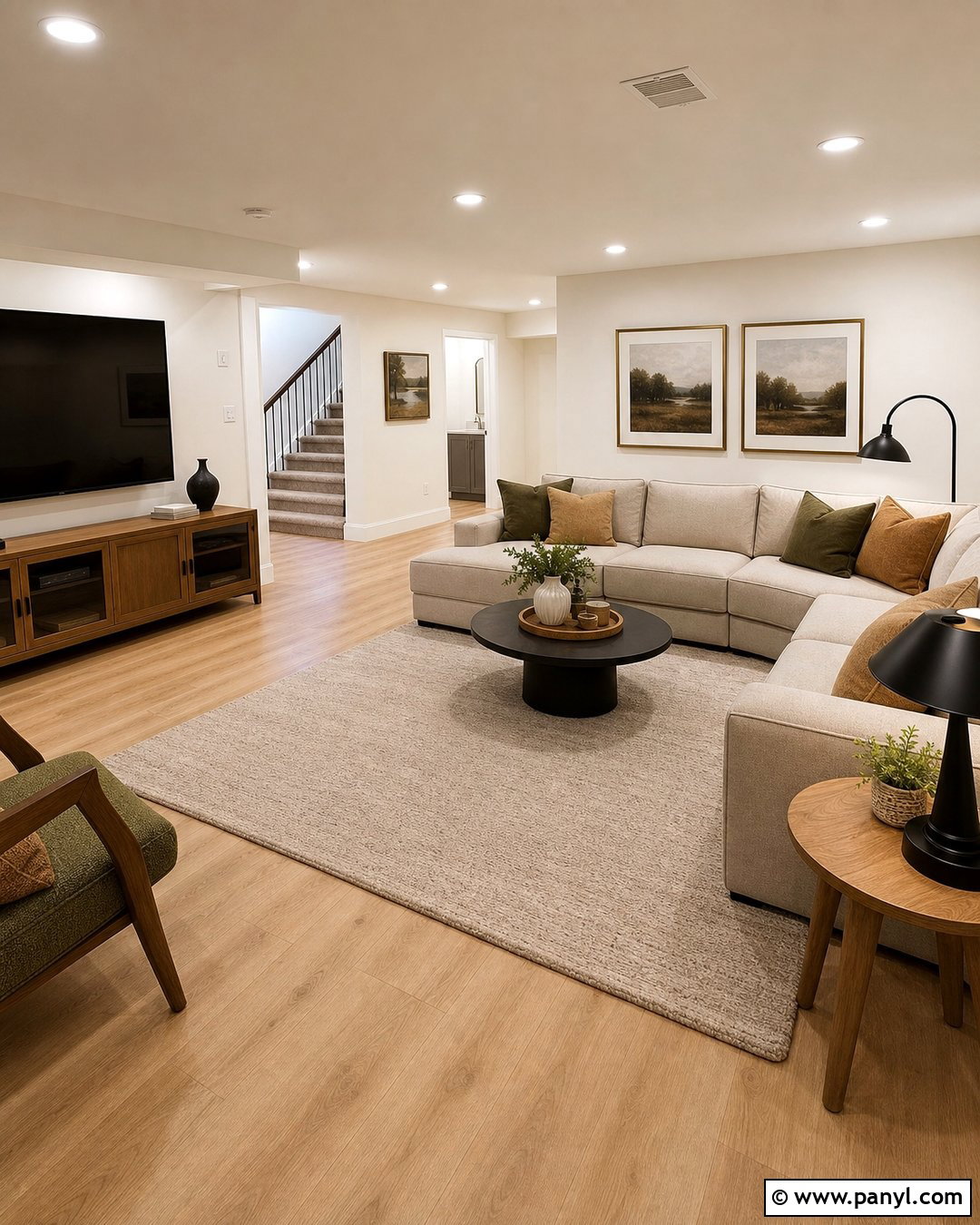
Warm white creates a bright basement without the cold, clinical feeling that can come from a crisp blue-white. Use it across the walls and ceiling to soften visual boundaries and make a low room appear taller. Add light oak luxury vinyl plank flooring, a beige sectional, and a textured ivory rug for a comfortable family room. Matte black floor lamps and picture frames provide clean contrast, while camel and olive pillows introduce gentle warmth. Choose layered lighting with recessed ceiling fixtures, a floor lamp, and table lamps so the white stays welcoming in every corner. This complete scheme works especially well in windowless basements because the pale surfaces distribute artificial light evenly throughout the room.
2. Cream Basement Color
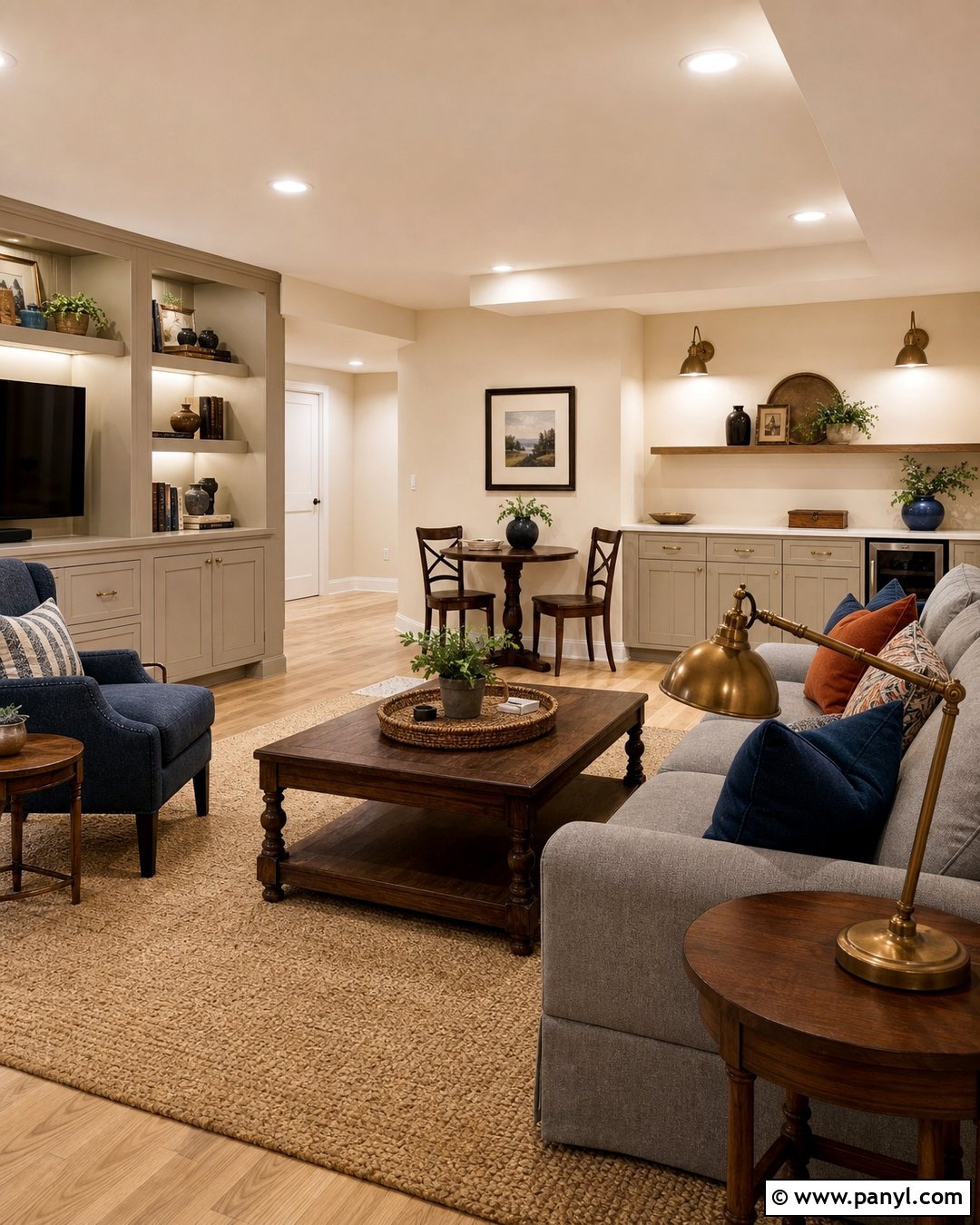
Cream walls can make a basement feel sunny, relaxed, and connected to the rest of a traditional home. Select a soft cream with subtle beige undertones rather than a strong yellow base. Pair it with medium-tone oak flooring, a warm gray sofa, and built-in cabinets painted slightly deeper tan. A natural jute-blend rug and linen curtains bring texture to small basement windows without blocking valuable light. Finish the room with antique brass lamps, framed landscape prints, and dark wood side tables. Soft blue and rust accents keep the palette from becoming too neutral. This warm combination is ideal for a basement sitting room, guest lounge, or multipurpose space that needs brightness with a comfortable, established character.
3. Light Greige Basement Color
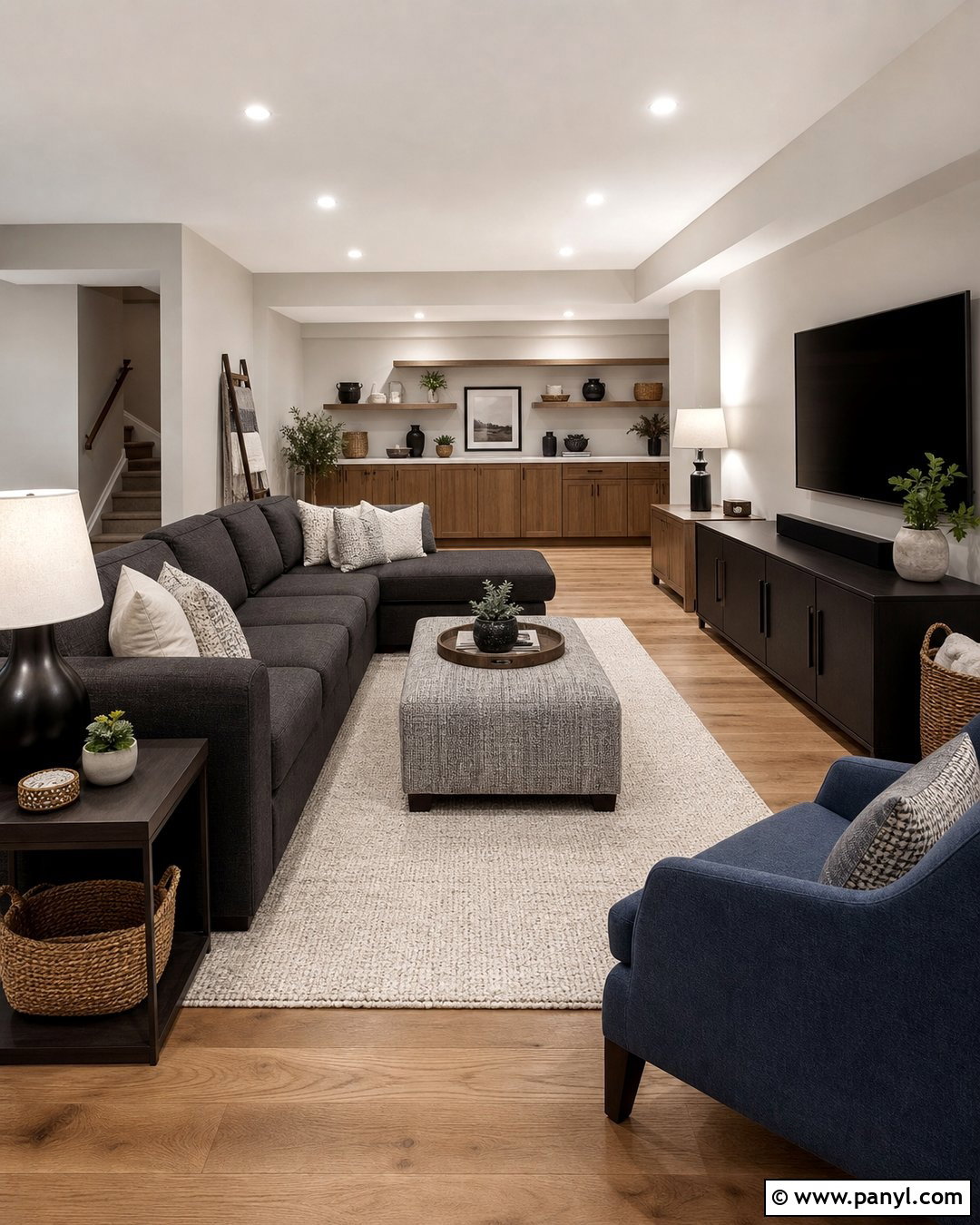
Can’t decide between gray and beige? Light greige provides the flexibility of both, making it a dependable background for a finished basement family room. Paint the walls a pale warm greige and keep the ceiling soft white for a clean transition. Wide-plank oak-look flooring, a charcoal sectional, and an oatmeal area rug create an easy neutral foundation. Introduce muted navy through pillows and an upholstered chair, then repeat black in the media console, hardware, and slim floor lamps. Simple wood shelving can display pottery, baskets, and a few plants that tolerate lower light. The balanced palette works with warm or cool artificial lighting and can adapt easily when furniture or decor changes later.
4. Soft Gray Basement Color
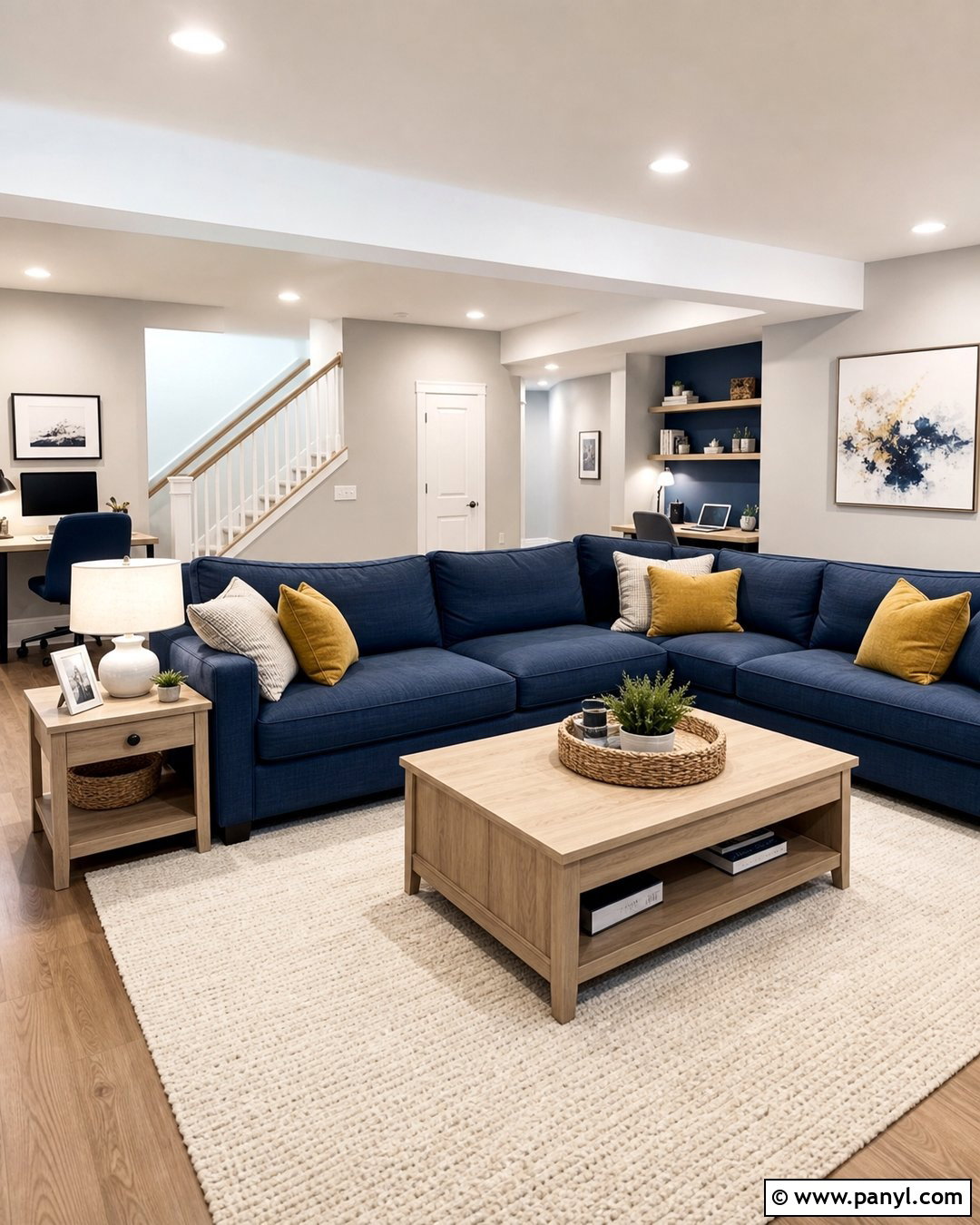
A soft gray basement feels polished when the shade has warm undertones and plenty of light surrounding it. Use pale gray walls with bright white trim, then add a smooth white ceiling to prevent the room from feeling heavy. Medium oak flooring warms the cooler color, while a deep blue sofa gives the family area a clear focal point. Layer in an ivory rug, light wood tables, and mustard pillows for contrast. Brushed nickel fixtures suit the contemporary palette without looking overly shiny. Install recessed lights at even intervals and add lamps beside the seating area. The final room feels crisp and organized, making this basement color particularly useful for shared entertainment spaces, homework zones, or casual home offices.
5. Mushroom Taupe Basement Color
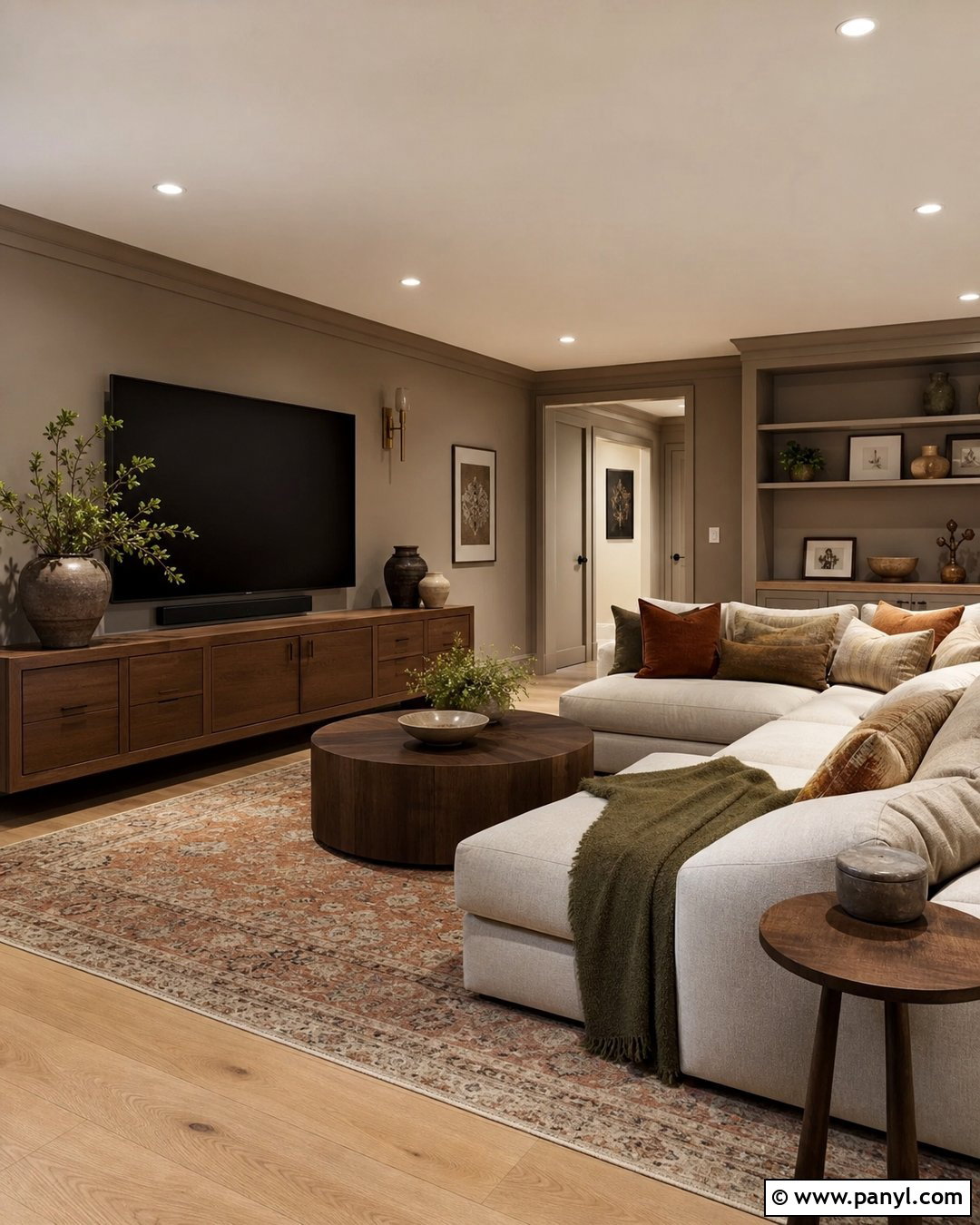
Mushroom taupe brings earthy depth to a basement while remaining quiet enough for walls throughout the room. Choose a medium-light shade that blends gray, beige, and soft brown. Continue it onto simple wall molding for subtle architectural interest, but leave the ceiling warm white to reflect more light. A cream modular sofa, walnut media cabinet, and vintage-style patterned rug create a grounded family room. Add bronze lighting, rust-colored pillows, and olive throws to emphasize the natural palette. Light oak flooring keeps the lower half of the space from becoming too dark. This basement scheme feels especially inviting during cooler months, yet its understated materials and balanced colors remain comfortable and practical year-round.
6. Sandy Beige Basement Color
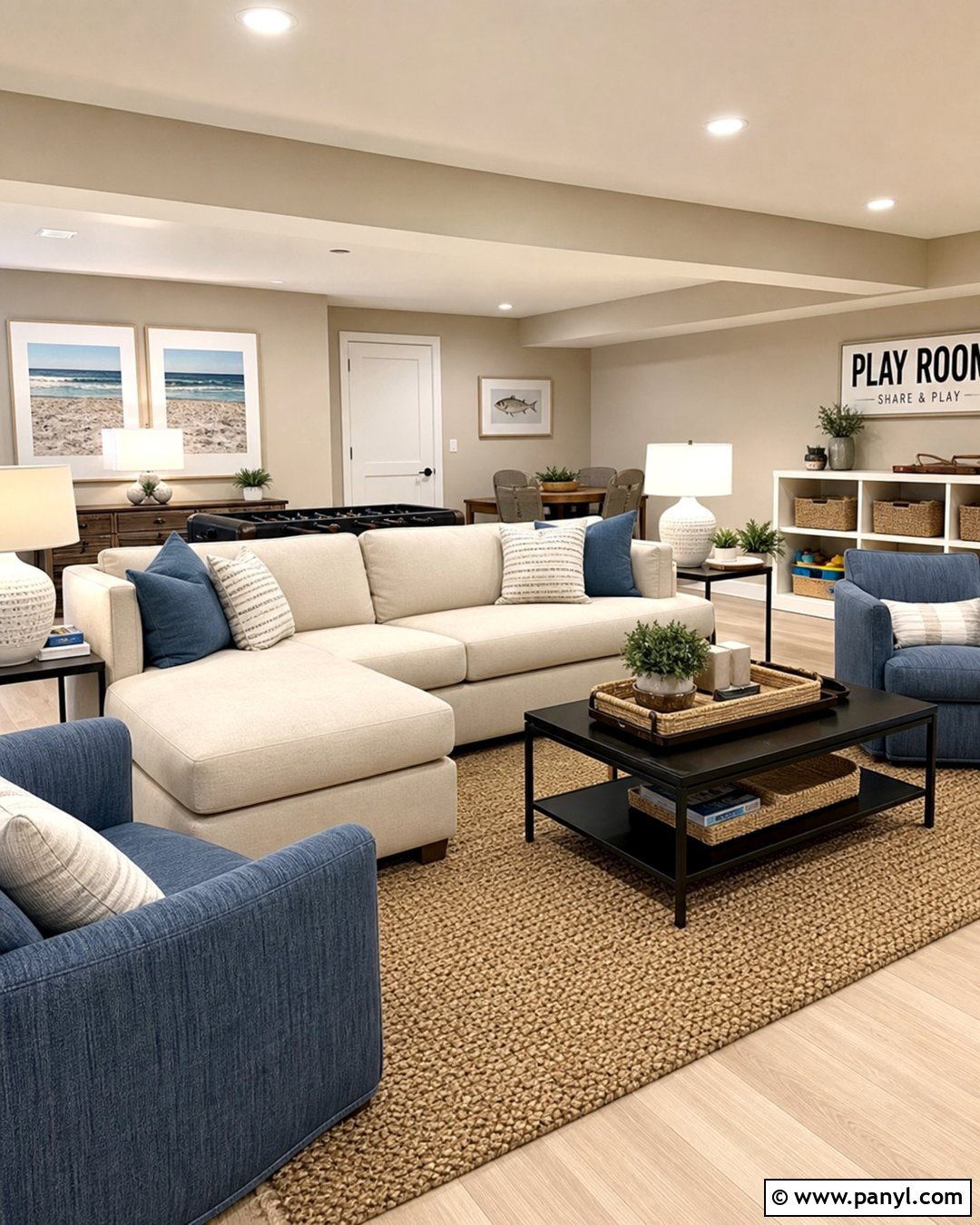
Sandy beige gives a basement the warmth of natural sunlight, even when the windows are small. Use it on the walls with white trim and a slightly lighter ceiling. Build the room around pale oak flooring, a relaxed off-white sectional, and a large woven rug. Soft denim-blue chairs add gentle color, while black metal tables keep the look defined. Include woven baskets, linen pillows, ceramic lamps, and coastal landscape artwork without turning the room into a theme. Recessed lights paired with two table lamps will prevent shadows from dulling the beige. This complete basement palette is approachable and family-friendly, making it a practical choice for playrooms, television areas, and casual spaces used every day.
7. Pale Sage Green Basement Color
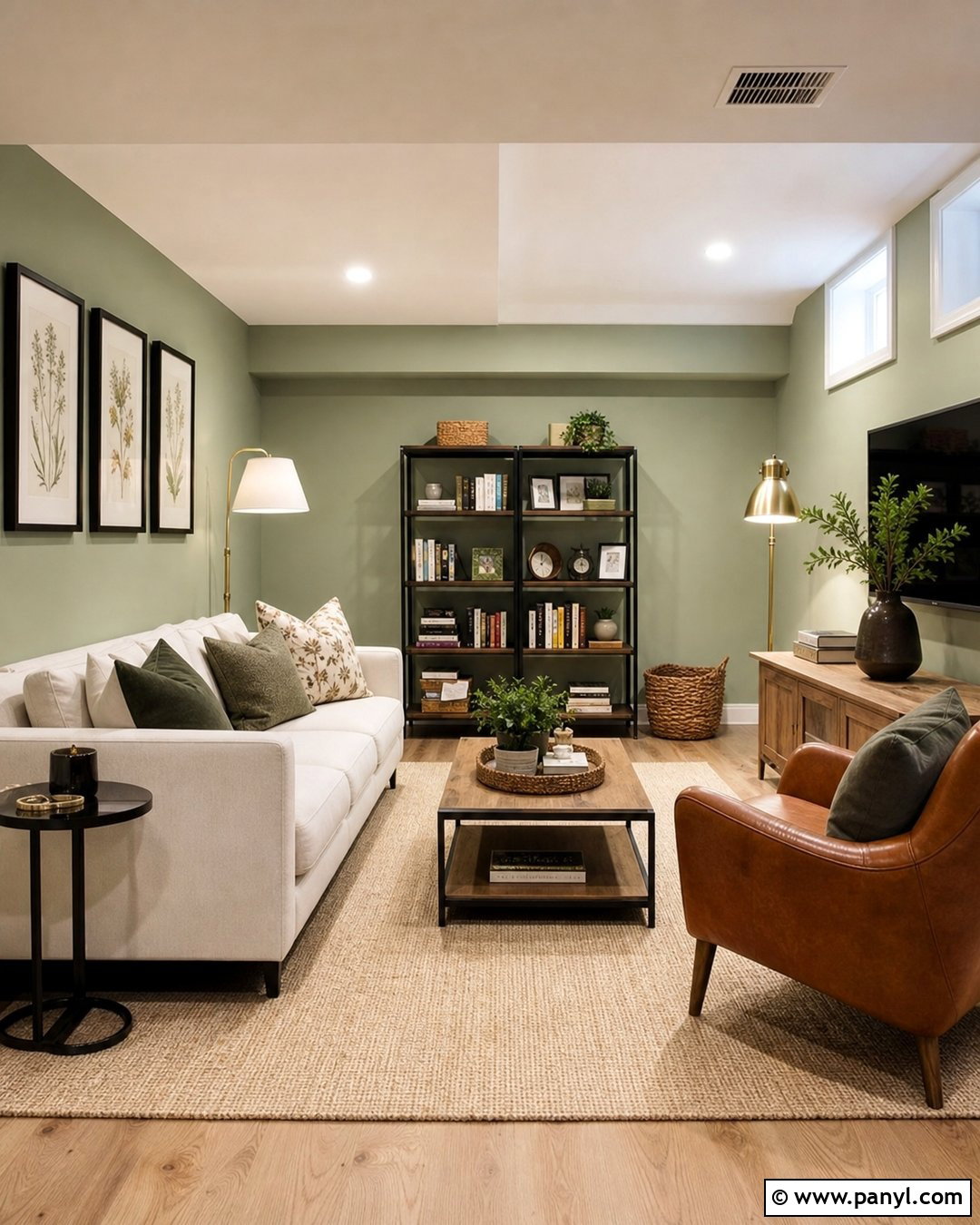
Pale sage green can make a basement feel fresh and calming without demanding too much attention. Cover the main walls in a muted sage with gray undertones, then use warm white on the ceiling, baseboards, and doors. Light oak flooring and a cream sofa keep the room airy. Add a natural wood media console, cognac leather chair, and beige wool rug for warmth. Black picture frames and aged brass lamps offer small moments of contrast. Botanical artwork can reinforce the color while remaining suitable for a low-light space. This balanced look works beautifully for a basement reading room or family lounge because sage creates personality while still functioning like a versatile neutral alongside wood, leather, and woven materials.

8. Seafoam Green Basement Color
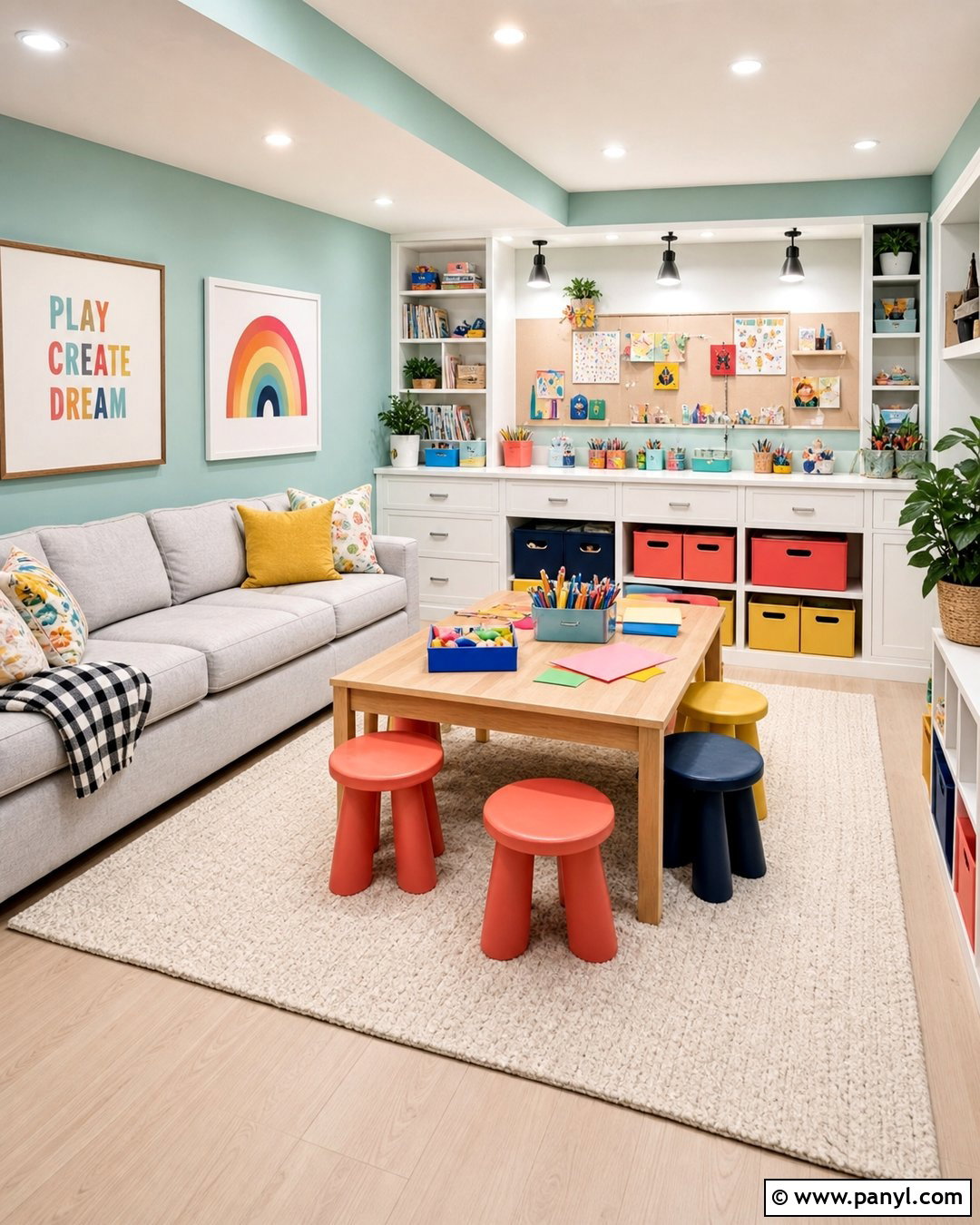
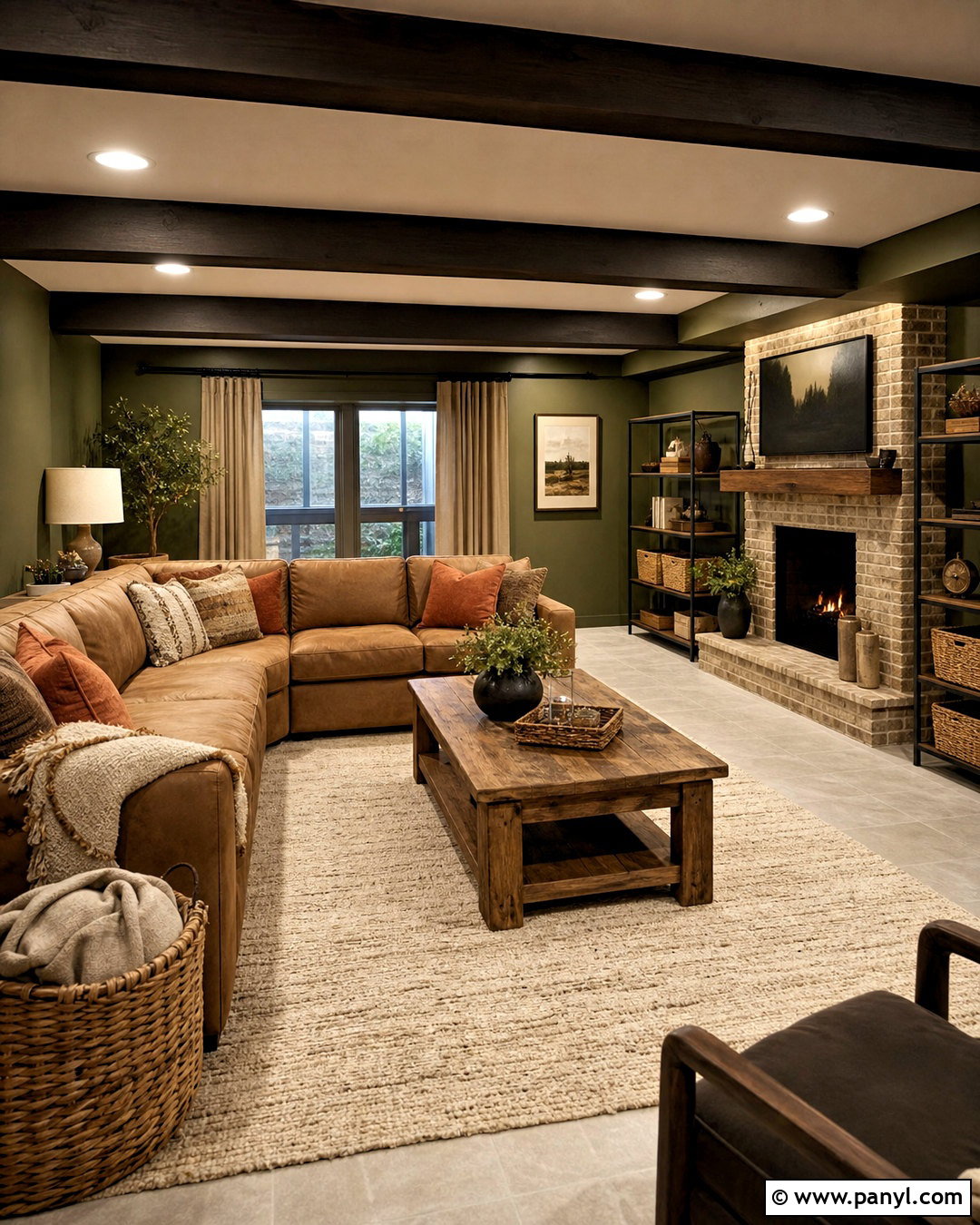
Seafoam green introduces a light, cheerful atmosphere that works particularly well in a basement craft room or play area. Choose a softened blue-green rather than a highly saturated mint. Pair the walls with crisp white storage cabinets, pale maple flooring, and a washable cream rug. A light gray sofa and a blond wood activity table provide practical places for relaxing and working. Use coral, sunny yellow, and navy accents in small amounts through bins, cushions, and framed artwork. Install bright recessed lighting and under-cabinet fixtures so projects remain easy to see. The resulting basement feels energetic but controlled, with coordinated furniture and organized storage preventing the colorful palette from becoming visually busy or childish.
9. Pale Blue Basement Color
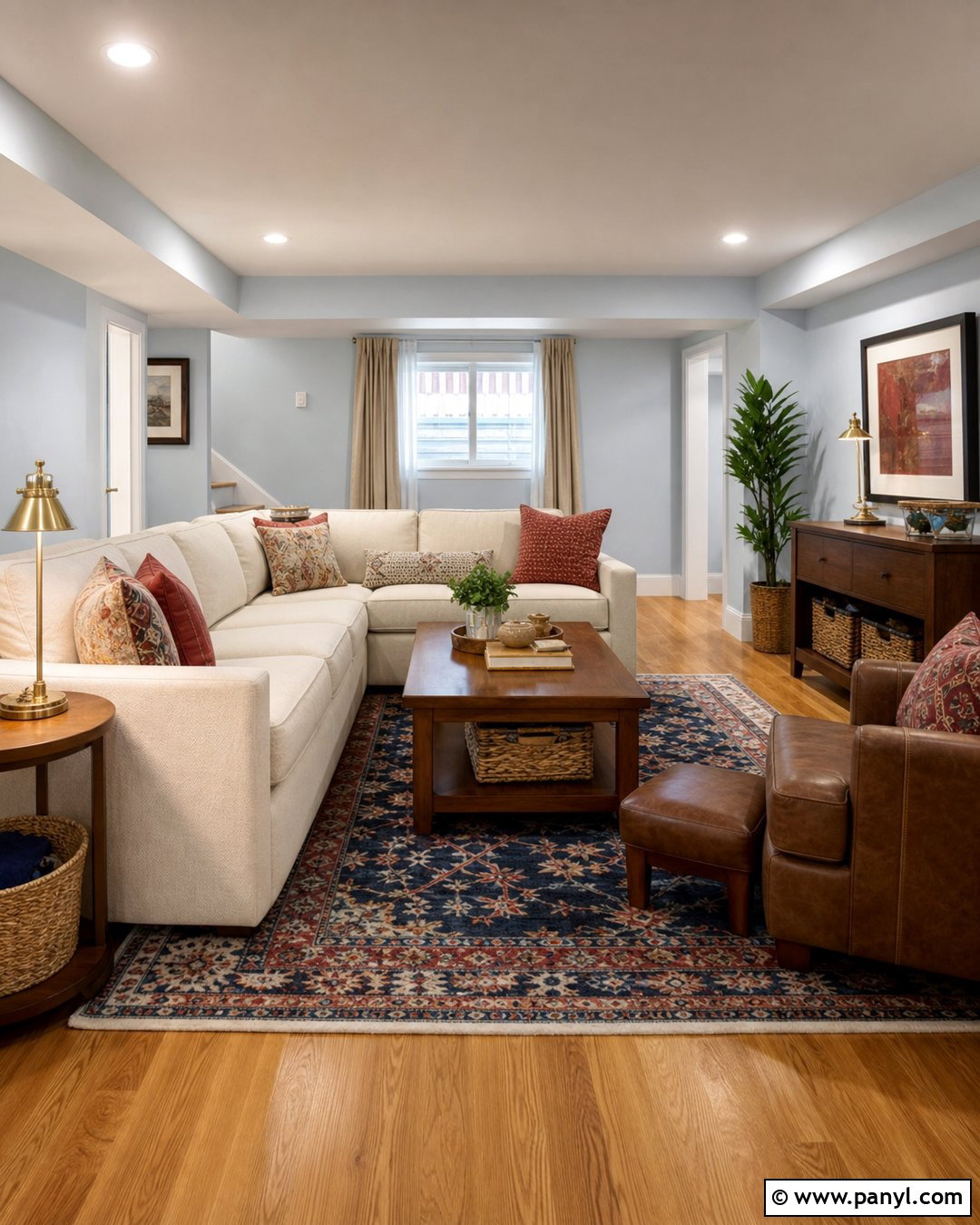
Imagine a basement that feels open and peaceful instead of enclosed. Pale blue walls can visually lighten the room, especially when paired with bright white trim and a matching white ceiling. Choose a blue with a soft gray base so it remains calm under artificial lighting. Add honey-toned oak flooring, an ivory sectional, and a navy patterned rug for a comfortable family space. Warm wood tables and woven baskets balance the cool wall color. Use brushed brass lamps, light tan curtains, and a few muted red accents to create depth. This palette is particularly effective for a basement guest suite or lounge where you want a restful mood without relying entirely on white or beige.

10. Blue Gray Basement Color
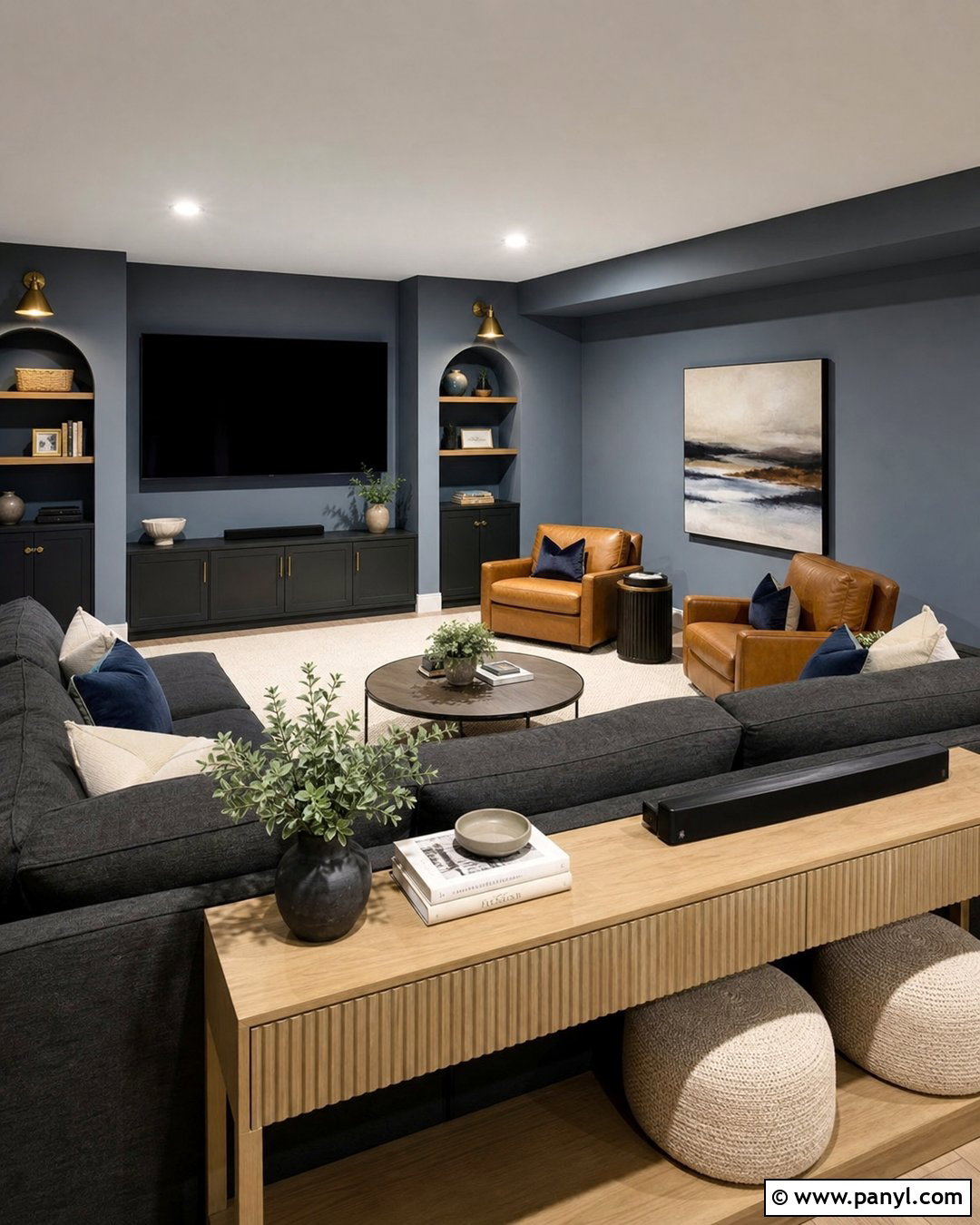
Blue gray gives a basement a sophisticated look while remaining easy to coordinate with everyday furniture. Apply a medium-light blue gray to the walls and use clean white for the ceiling and trim. A charcoal sofa, light oak console, and cream rug form a practical foundation for a media room. Introduce caramel leather chairs and warm brass lighting to offset the cooler paint. Navy pillows can deepen the palette, while pale artwork prevents the walls from looking flat. Choose warm-white LED bulbs rather than cool fluorescent lighting, which may exaggerate the gray undertone. With balanced lighting and natural materials, this complete scheme feels tailored and comfortable rather than cold, dark, or overly formal.
11. Dusty Blue Basement Color
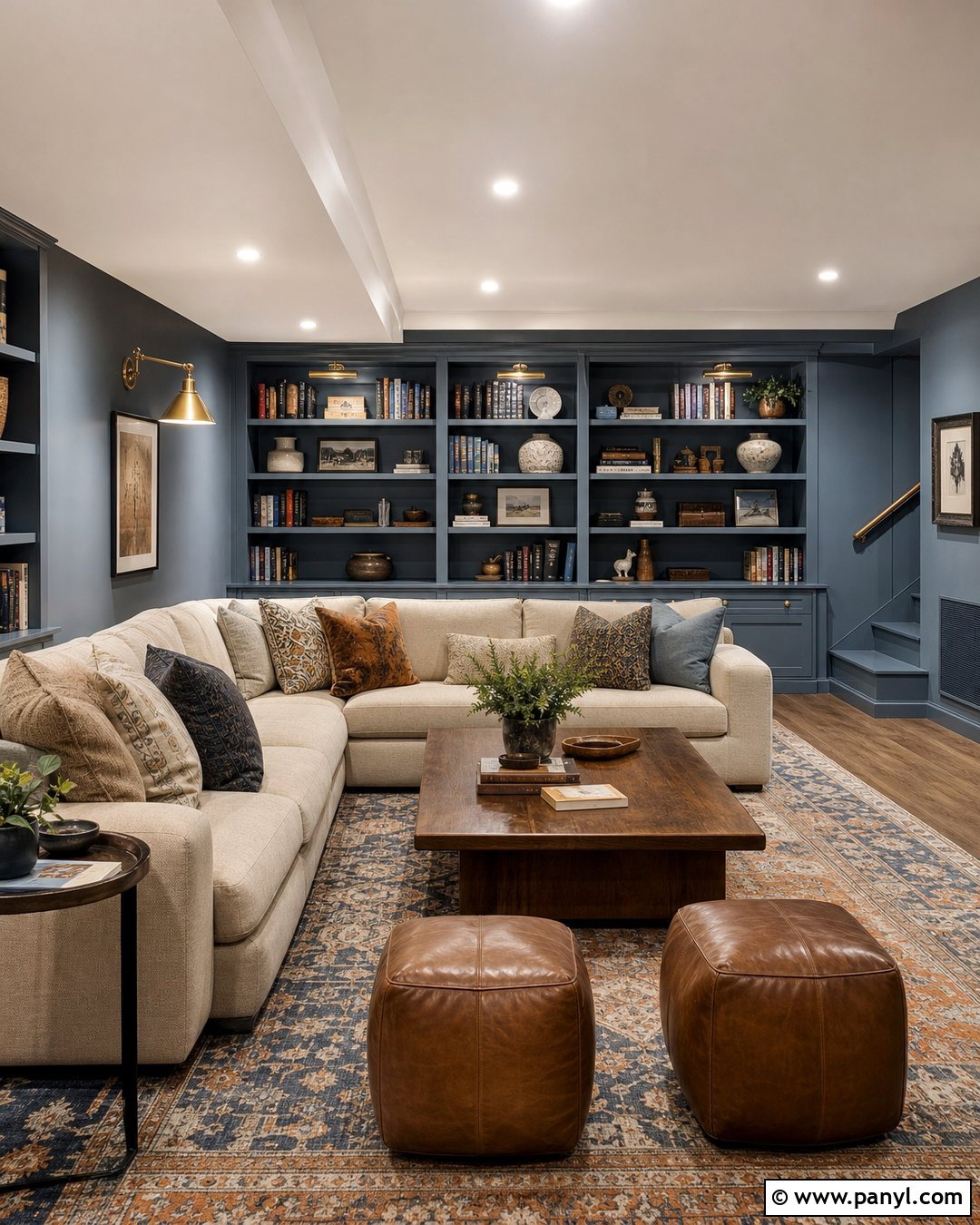
Dusty blue delivers more presence than a pale blue but still feels relaxed in an enclosed lower level. Use the shade on all walls, then paint the ceiling and trim a creamy white to maintain brightness. A warm beige sectional, walnut coffee table, and faded blue-and-rust rug make the space feel layered and lived in. Add cognac leather ottomans, brass sconces, and linen pillows for warmth. Built-in shelves painted the same dusty blue create a cohesive backdrop for books and ceramics. Several light sources are essential, including recessed fixtures, wall lighting, and a floor lamp near the sofa. The finished room suits a basement library, conversation area, or comfortable secondary living room.
12. Deep Navy Basement Color
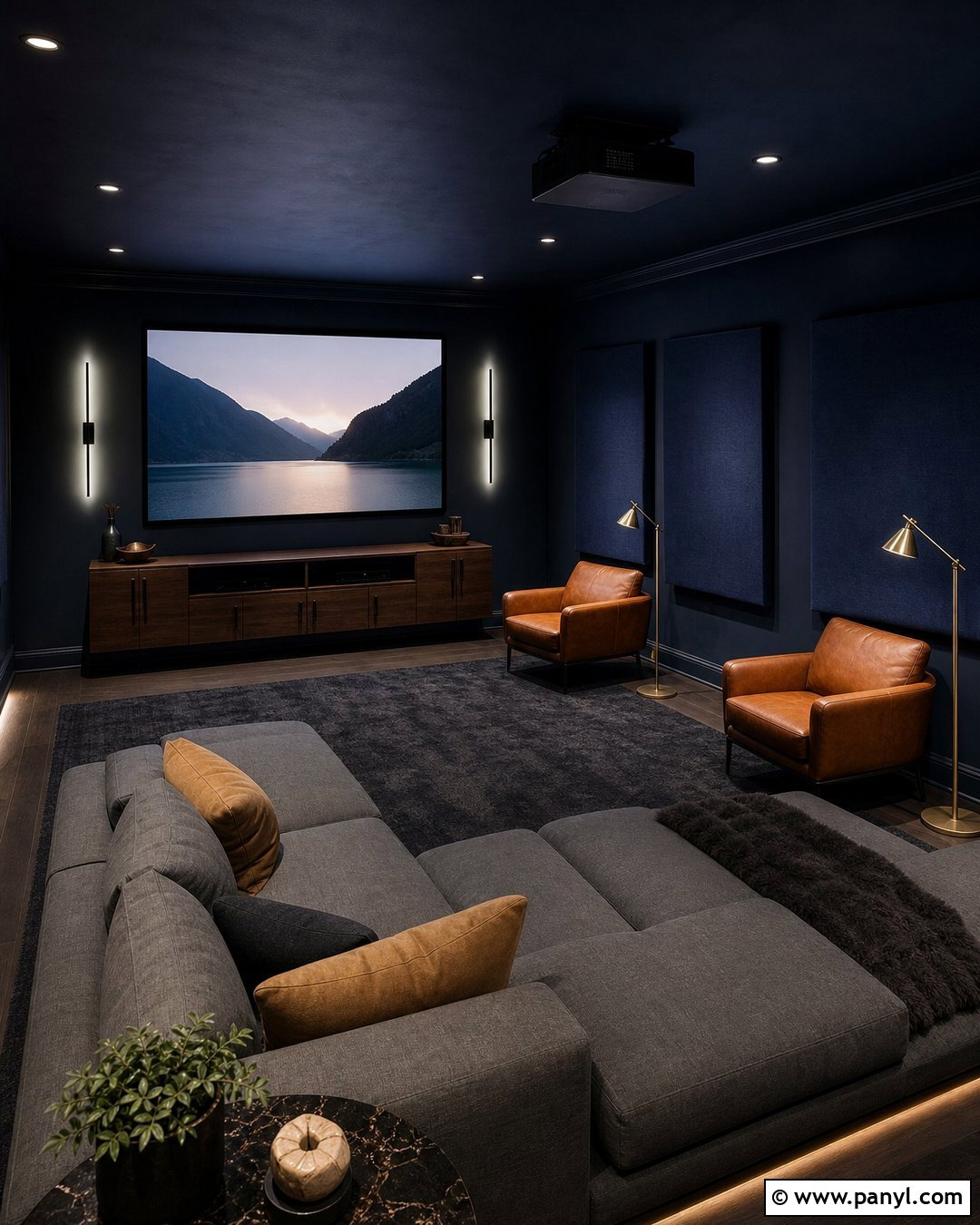
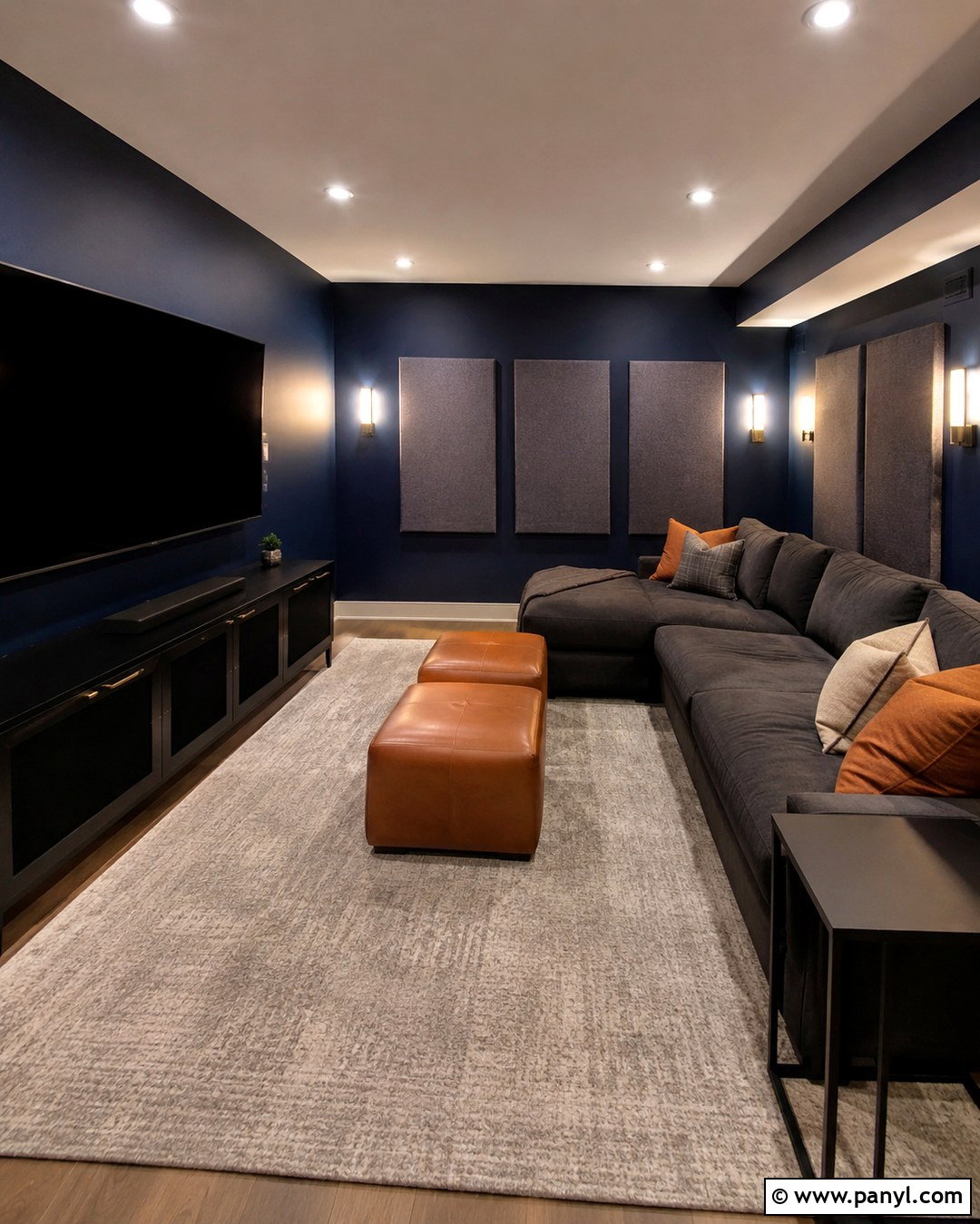
Deep navy can transform a basement media room into a cozy destination rather than trying to disguise its limited natural light. Paint the walls navy and continue the shade across the ceiling for an immersive effect. Add a low-profile medium-gray sectional, dark oak media console, and charcoal carpet or rug. Warm the palette with cognac leather chairs, brass floor lamps, and camel pillows. Acoustic wall panels in matching navy can improve the finished appearance while supporting the room’s purpose. Keep pathways and shelving illuminated with dimmable recessed fixtures and subtle LED lighting. This complete design works best in a dedicated entertainment zone, where darker surfaces reduce distracting reflections and create a comfortable, cinema-inspired atmosphere without unnecessary decoration.
13. Charcoal Basement Color
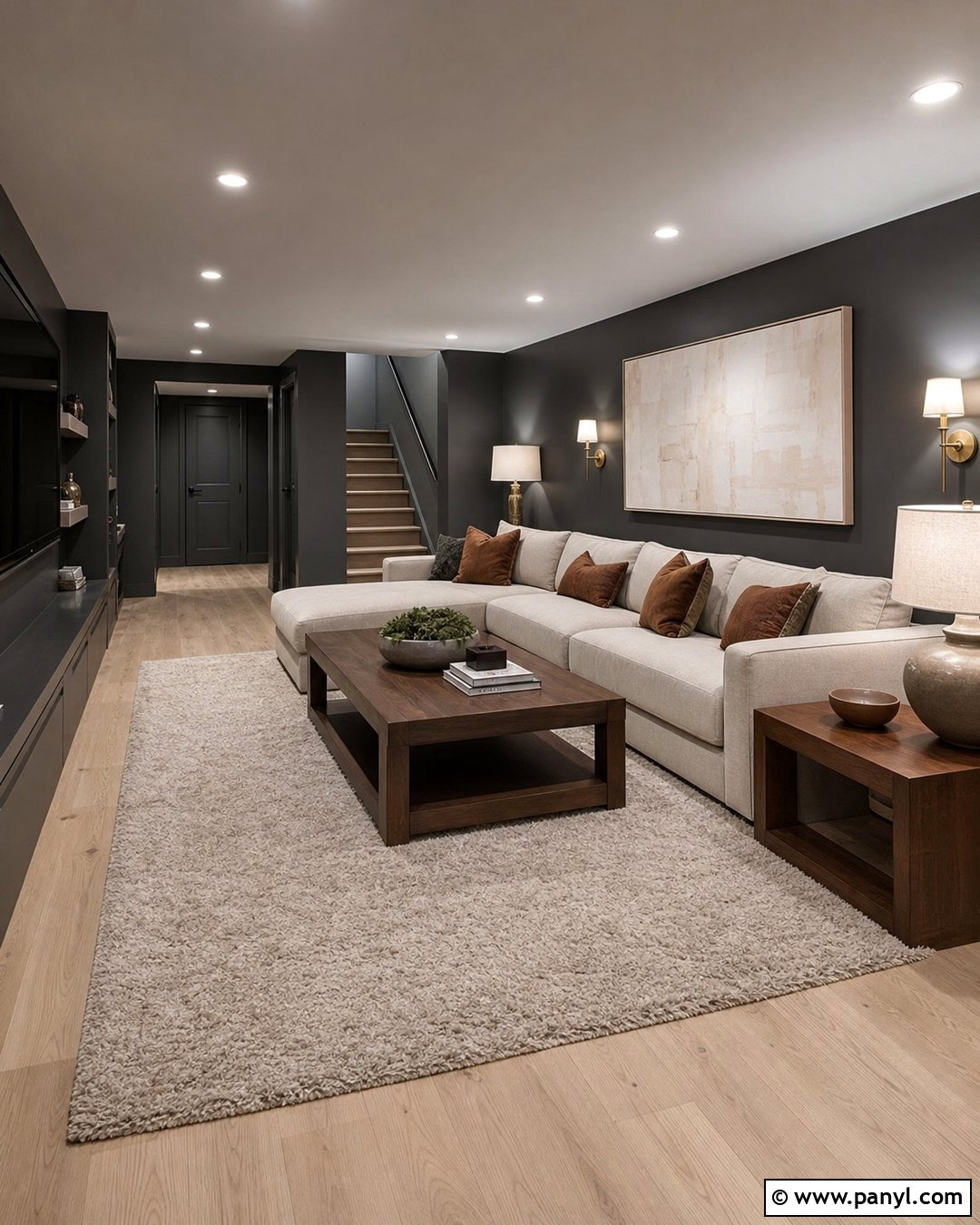
Charcoal walls create a sleek basement lounge when they are balanced with lighter flooring and generous artificial light. Choose a deep charcoal with a slightly warm undertone, then paint the ceiling a softer gray to maintain continuity without making it disappear completely. Add pale oak flooring, a cream sectional, and a large ivory rug. Walnut tables, rust-colored pillows, and brushed brass fixtures bring warmth to the dramatic backdrop. Use oversized light-toned artwork to break up broad wall areas. A row of recessed lights, adjustable wall sconces, and table lamps will keep the corners visible. The finished basement feels modern and intimate, making charcoal a strong option for television rooms, music spaces, and grown-up gathering areas.
14. Forest Green Basement Color
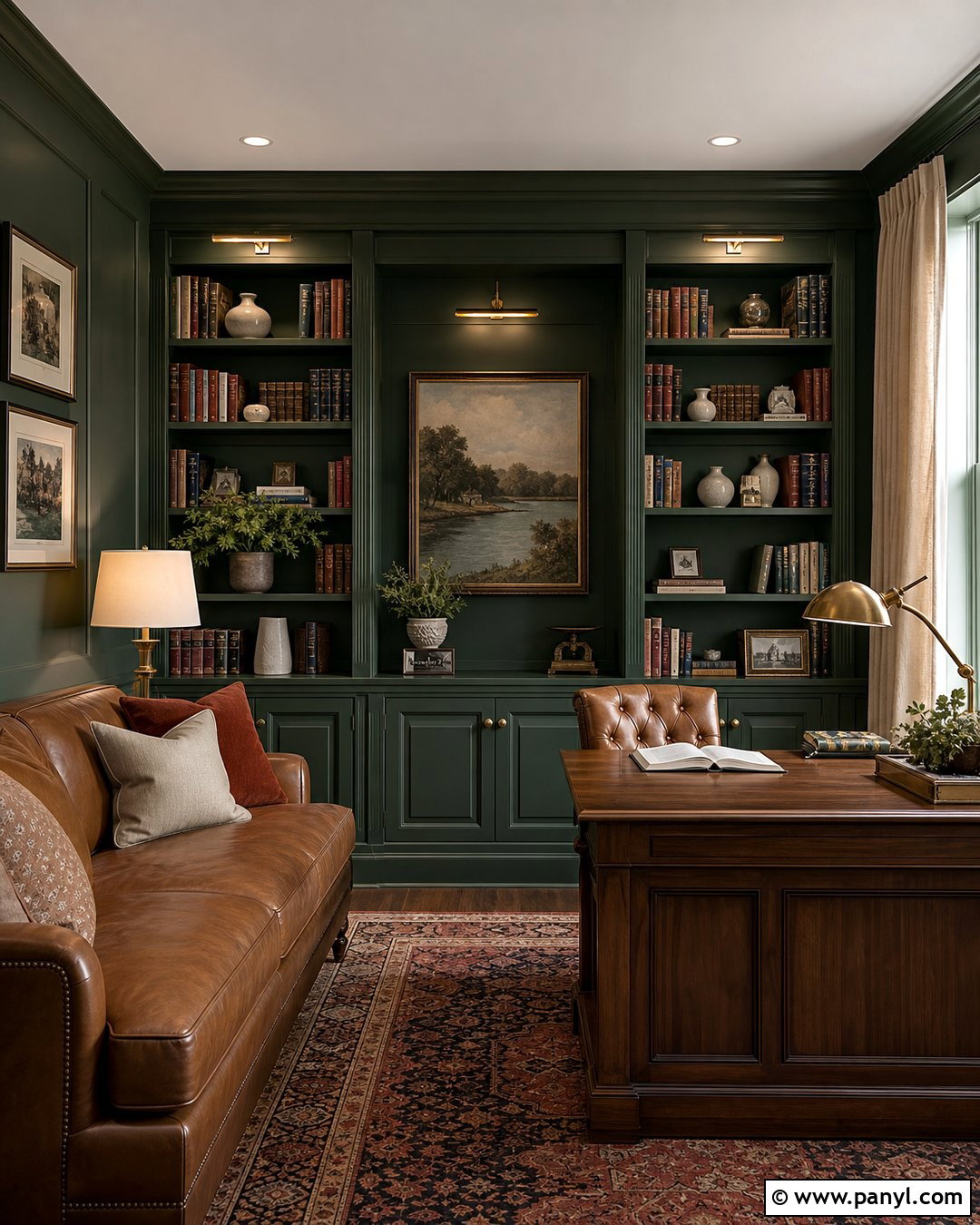
Forest green surrounds a basement with rich, natural color and works beautifully for a library or quiet retreat. Paint the walls a muted deep green and use the same shade on built-in bookcases for a seamless effect. Keep the ceiling creamy white if the room is especially low. A camel leather sofa, walnut desk, and traditional patterned rug bring warmth and structure. Add antique brass picture lights, off-white curtains, and linen pillows in tan and rust. Shelves should combine books with lighter pottery so the dark cabinetry does not appear too dense. The overall basement feels cozy and collected, while warm wood, reflective metal, and carefully planned lighting prevent the green from overwhelming the room.
15. Muted Teal Basement Color
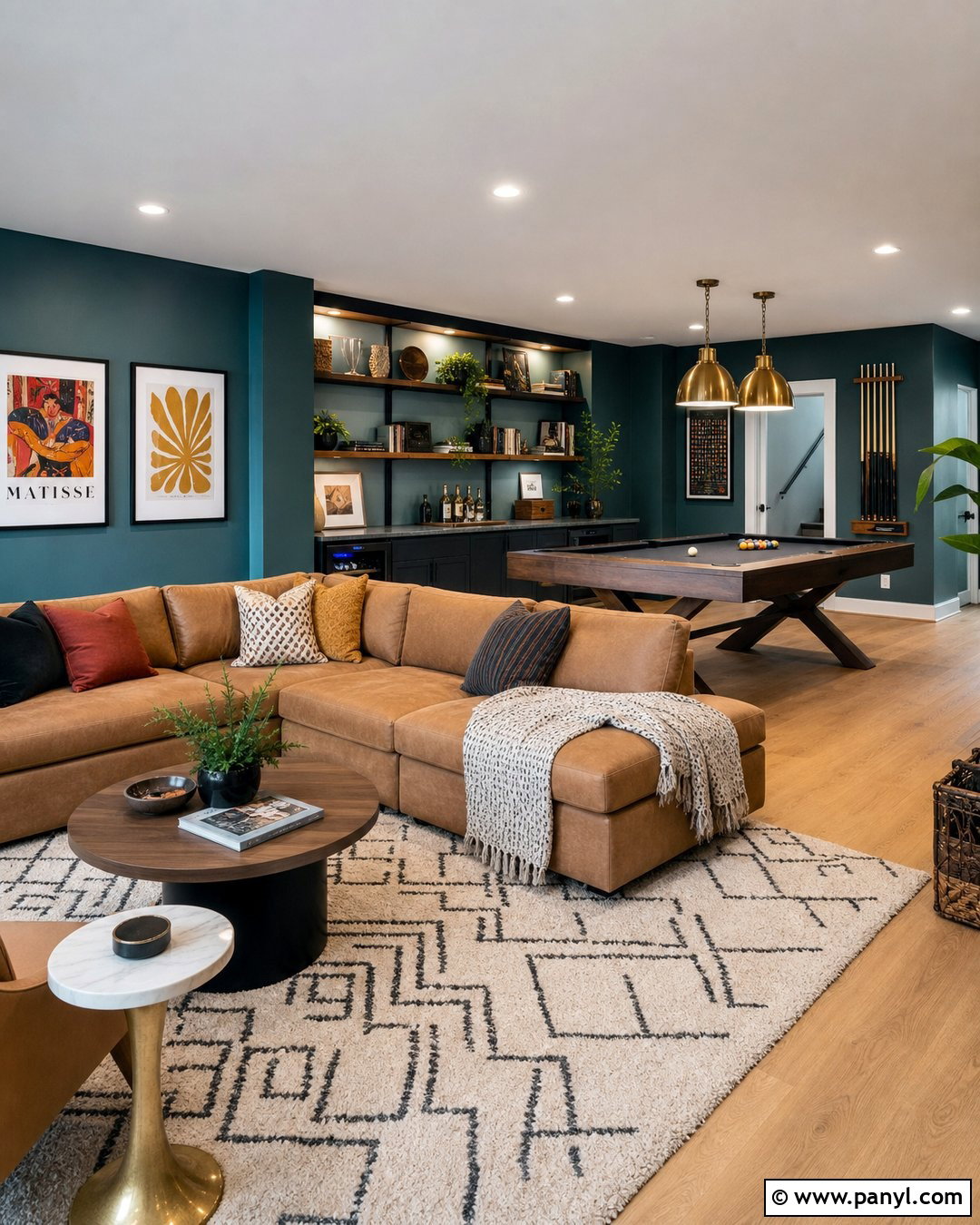
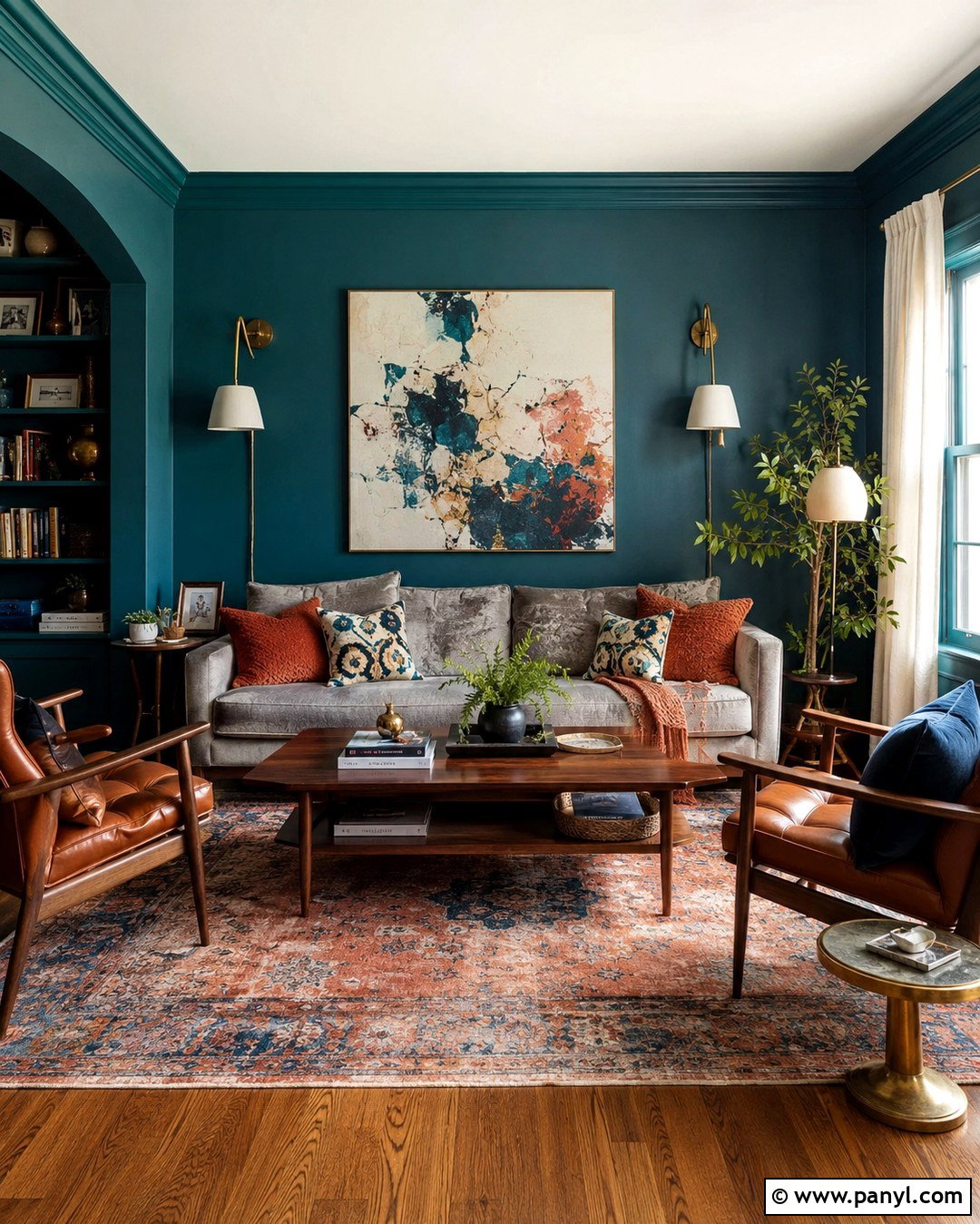
Muted teal offers a colorful middle ground between calming blue and earthy green. Use it on the walls of a basement game room or social space, paired with a warm white ceiling and simple white trim. Light oak flooring, a camel-colored sectional, and a cream geometric rug provide balance. Choose a walnut game table, matte black shelving, and brass pendant lights to give the room clear structure. Accent pillows in mustard, rust, and soft blue can connect the teal to the surrounding furnishings. Avoid overcrowding the walls, since the color already creates a strong background. With bright, evenly spaced lighting, this basement palette feels lively and modern while remaining comfortable enough for regular family use.
16. Soft Terracotta Basement Color
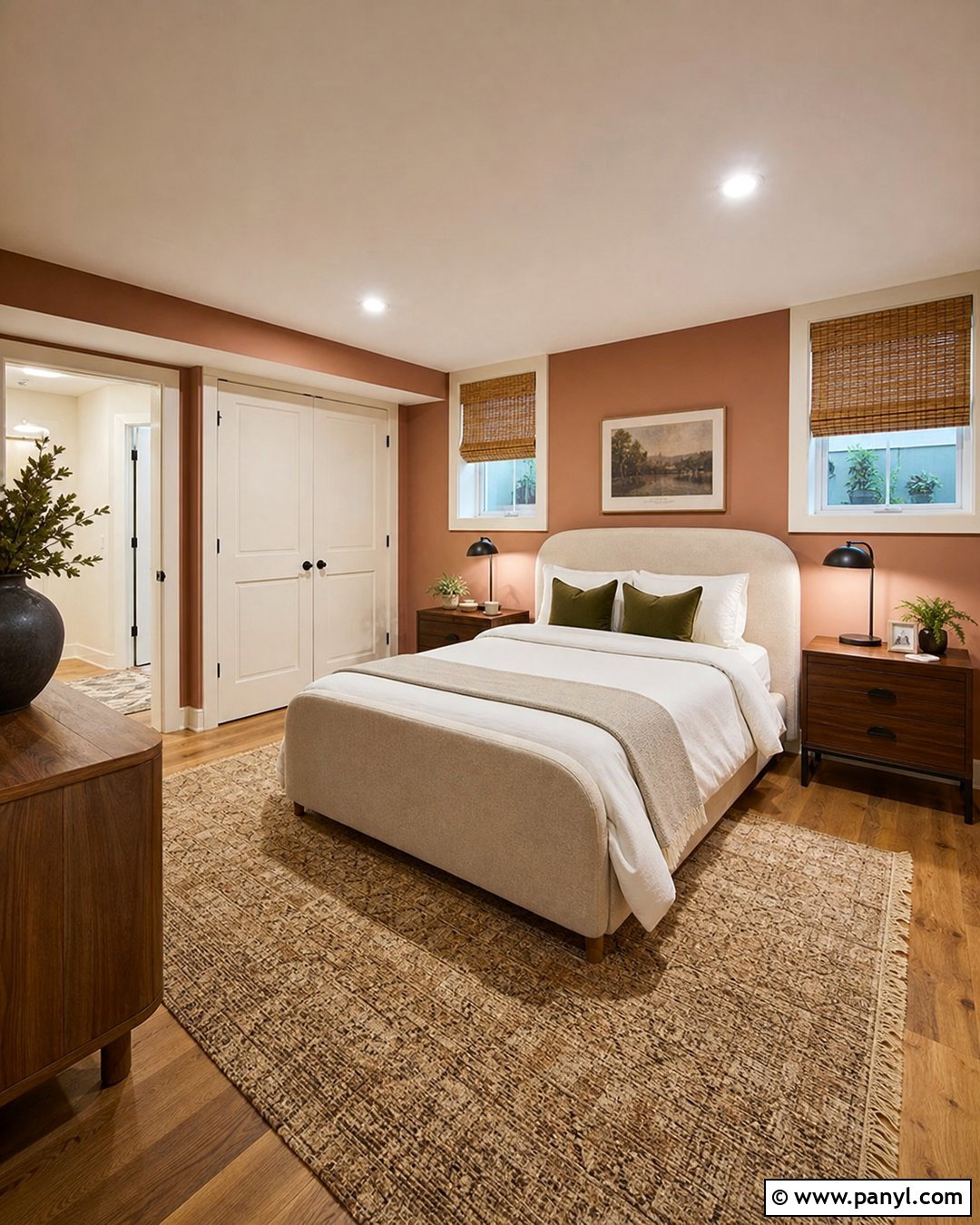
Soft terracotta can warm a basement bedroom or lounge that lacks sunlight. Choose a muted clay shade with brown and pink undertones rather than a vivid orange. Use it on the walls behind cream trim and a warm white ceiling. A low oatmeal bed or sofa, medium oak flooring, and a beige patterned rug keep the room relaxed. Bring in walnut nightstands, woven shades, olive pillows, and matte black lamps for an earthy contrast. White bedding or upholstery will help the terracotta remain fresh under artificial lighting. This coordinated palette turns the basement’s enclosed character into an advantage, creating a comforting space with warmth, depth, and enough light surfaces to prevent it from feeling small.
17. Muted Blush Basement Color
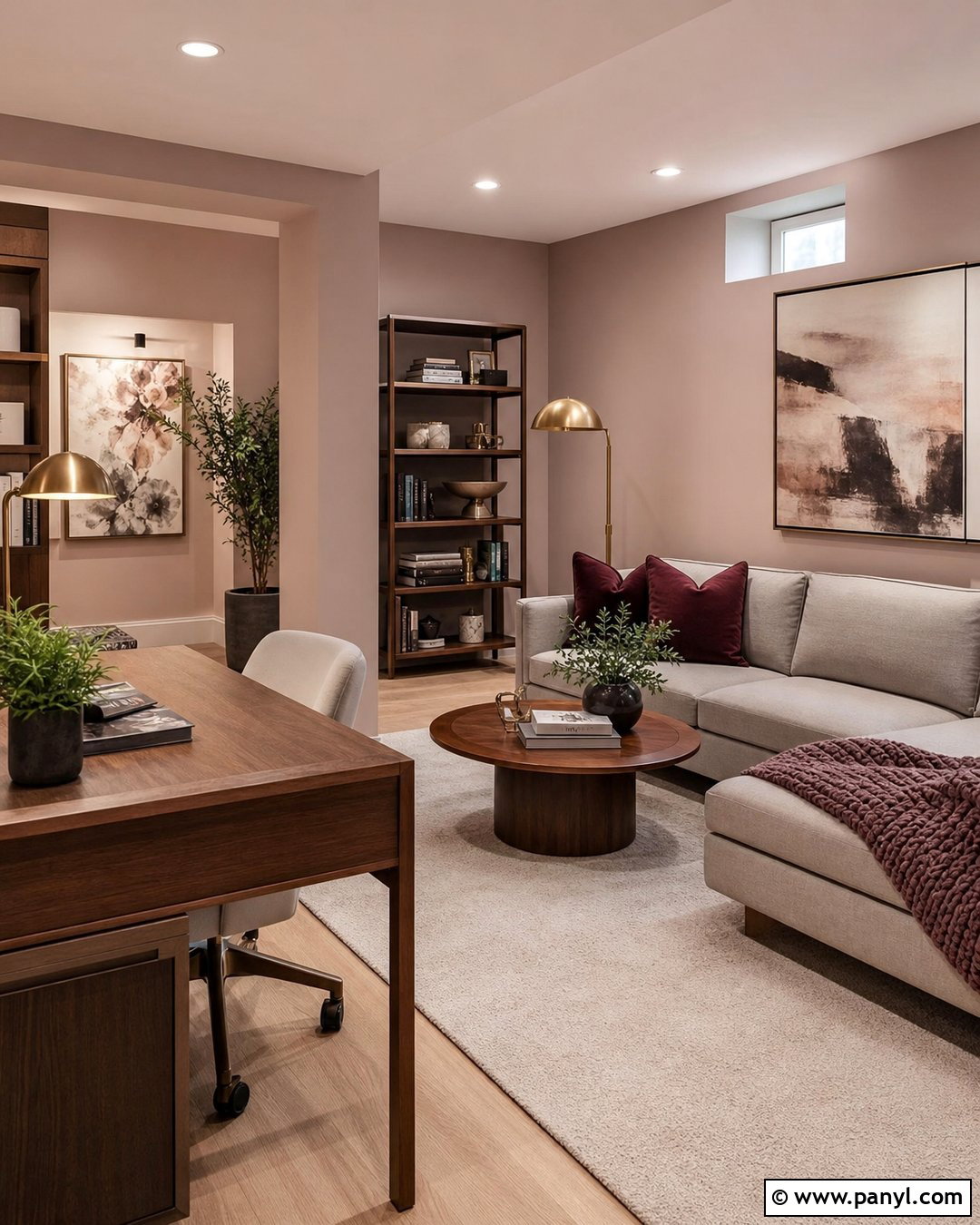
Muted blush brings gentle warmth to a basement without making the room feel overly sweet. Look for a dusty pink with beige or brown undertones, then pair it with warm white trim and a soft ivory ceiling. A light gray sofa, pale oak flooring, and a cream rug create a refined foundation. Add burgundy pillows, walnut side tables, and brushed brass lighting for deeper contrast. Abstract artwork featuring blush, tan, and charcoal can tie the palette together. Use streamlined furniture and simple curtains so the color remains the main feature. This complete scheme works well for a basement guest room, home office, or reading lounge where a softer atmosphere feels more welcoming than standard gray or beige.
18. Butter Yellow Basement Color
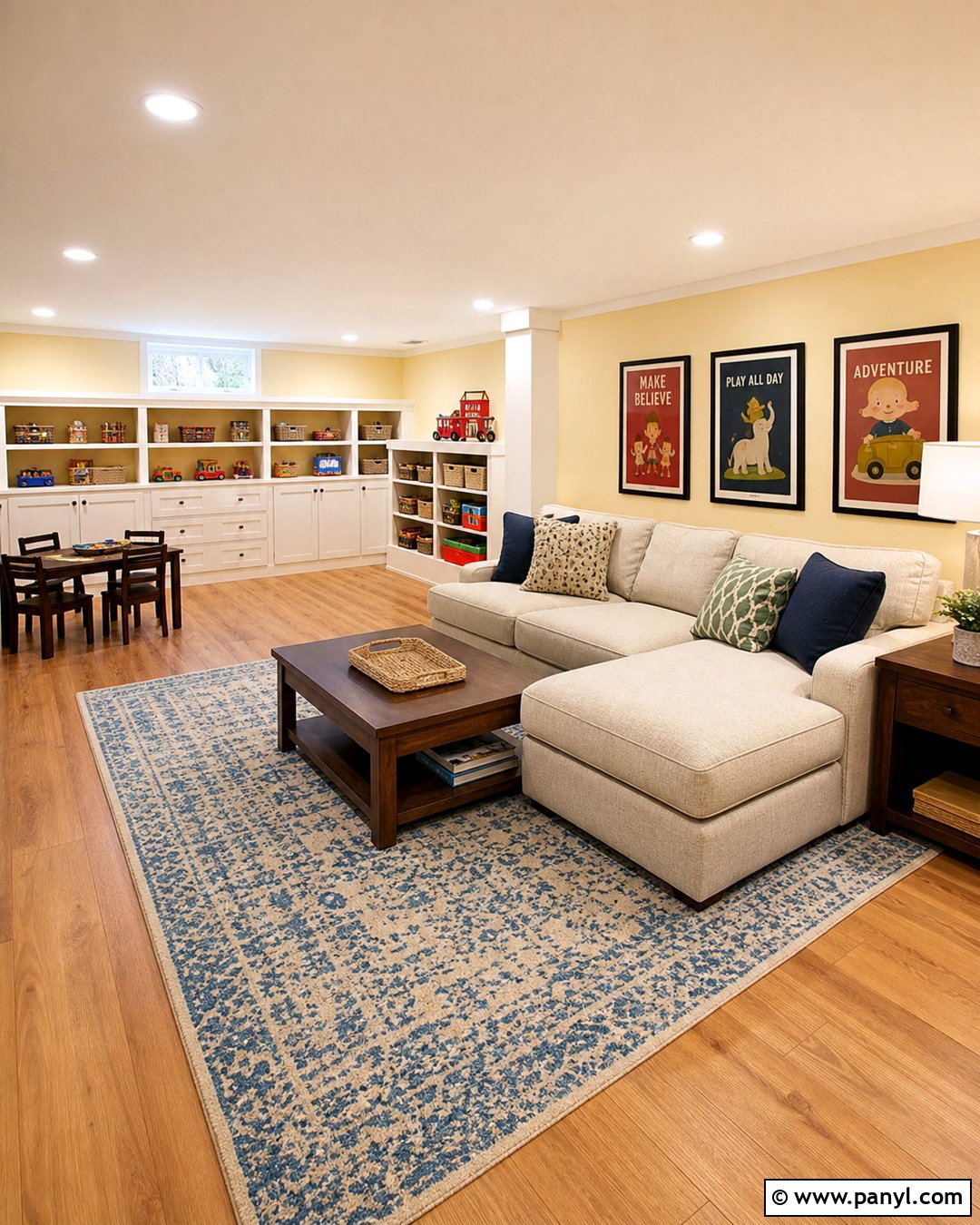
Butter yellow can give a dark basement a naturally cheerful quality when the shade is soft and creamy. Paint the walls a pale yellow and keep the ceiling, trim, and doors warm white. Pair the color with honey oak flooring, an oatmeal sofa, and a light blue patterned rug. White storage cabinets will reflect light, while walnut tables add enough contrast to anchor the room. Use navy, sage, and muted red accents sparingly through pillows and artwork. Bright recessed fixtures and white-shaded lamps help the yellow look clear rather than muddy. This coordinated palette is especially useful for basement playrooms, hobby areas, and family spaces that should feel active, friendly, and comfortable throughout the day.
19. Chocolate Brown Basement Color
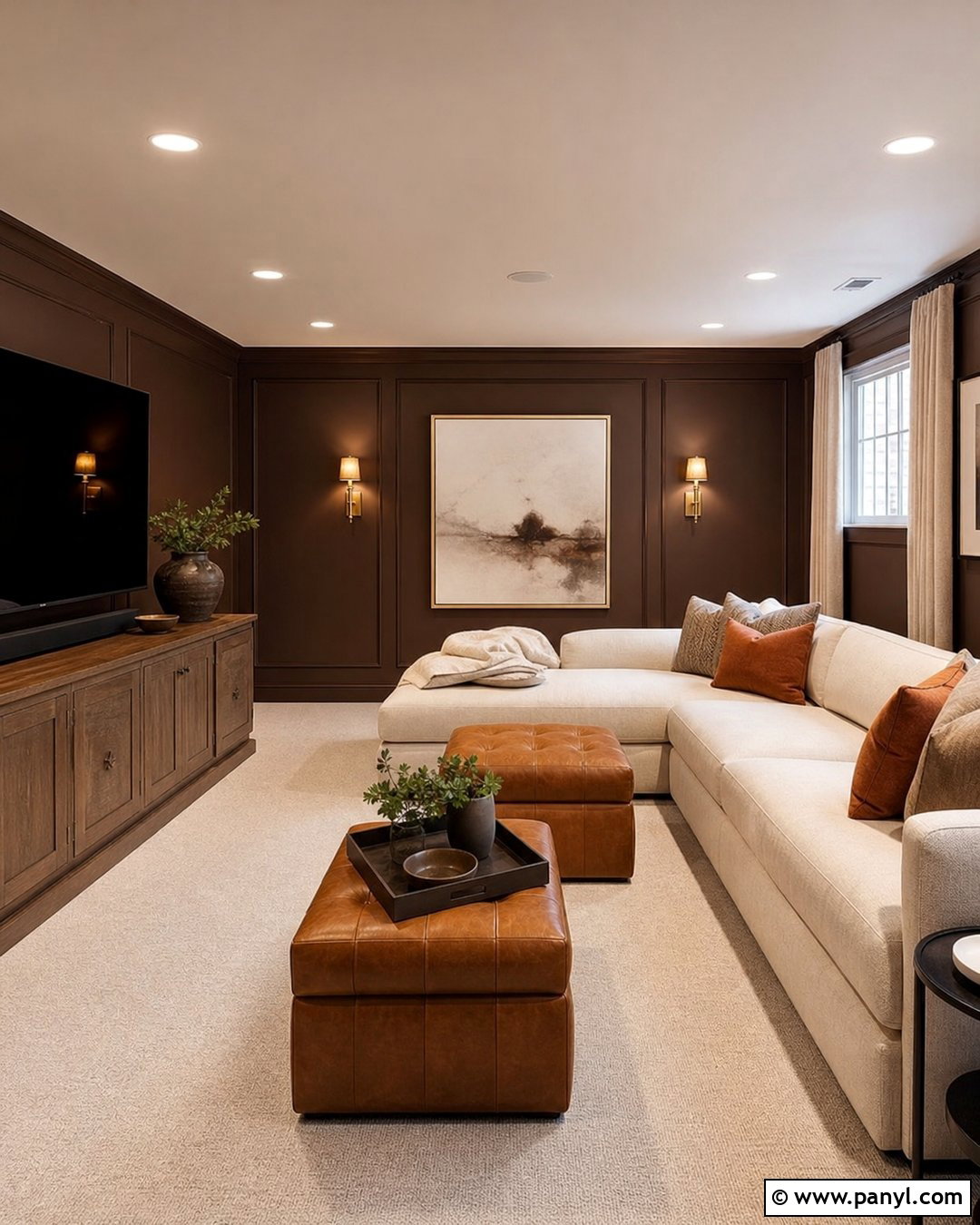
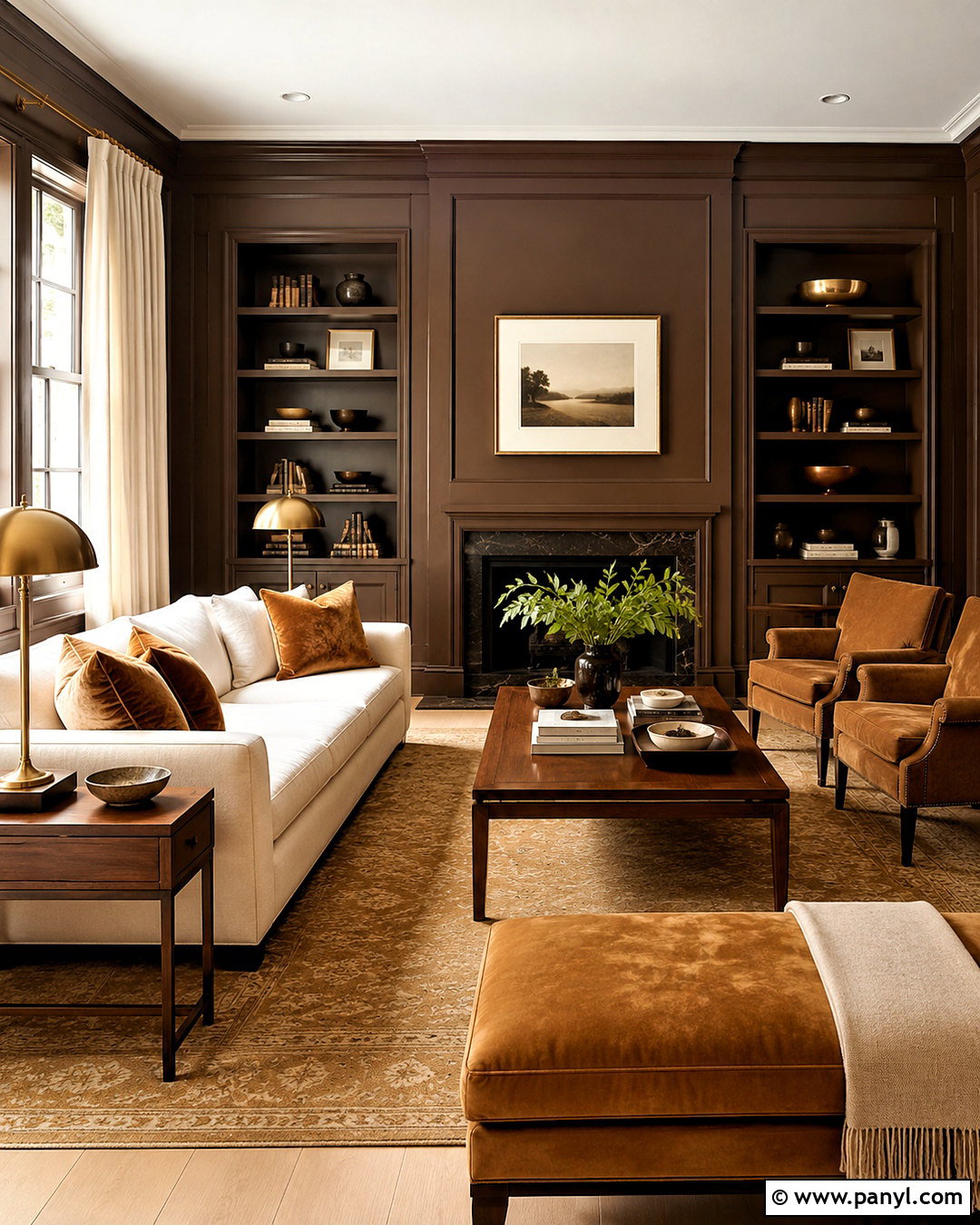
Chocolate brown can make a basement feel exceptionally cozy when used with restraint and plenty of pale materials. Apply the rich brown to paneled walls in a dedicated television room, then keep the ceiling warm white for contrast. Add a large cream sectional, light beige carpet, and oak media cabinet to brighten the lower half of the room. Caramel leather ottomans, bronze sconces, and rust pillows enhance the warm palette without blending completely into the walls. Choose large ivory artwork and simple linen curtains to provide visual breaks. Layered, dimmable lighting is important for this scheme. The final basement feels comfortable and grounded, with the atmosphere of a private retreat rather than a dark storage area.
20. Black And White Basement Color
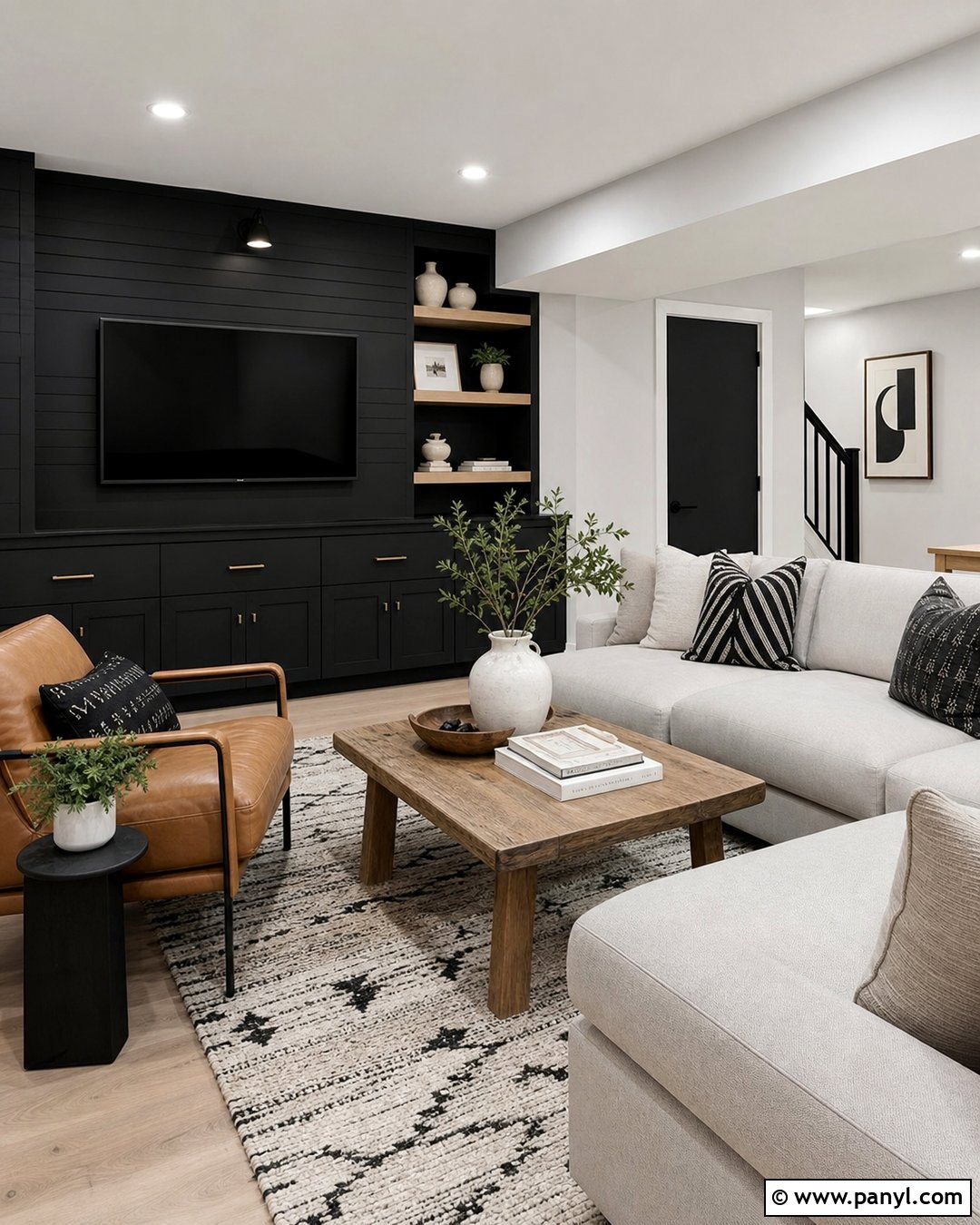
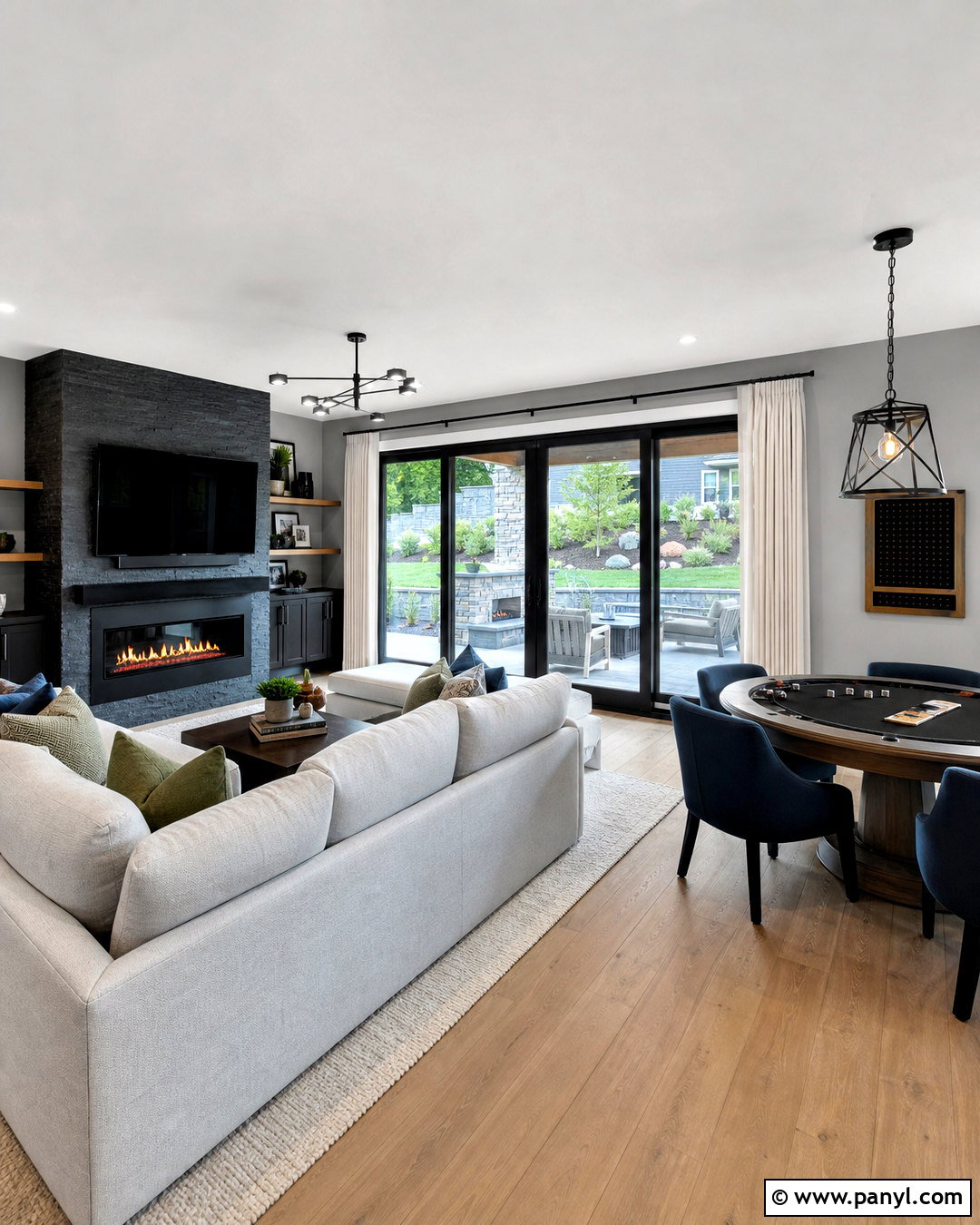
A black and white basement can look bright, graphic, and highly organized when the colors are carefully distributed. Use soft white across most walls and the low ceiling, then create a matte black media wall with matching built-in cabinets. Pale oak flooring and a large light gray sectional prevent the contrast from becoming harsh. Add a black-and-cream patterned rug, cognac leather chair, and natural wood coffee table for warmth. Repeat black through slim lighting fixtures, door hardware, and picture frames. Closed cabinets keep visual clutter under control, while open shelves provide space for pale ceramics and books. This complete palette delivers a contemporary basement that feels intentional, spacious, and practical for family entertainment.
Conclusion:
The best basement palette depends on how the space will be used, how much light it receives, and which existing finishes must remain. Warm whites, creams, greiges, and pale colors can make an everyday family room feel open. Navy, charcoal, forest green, and chocolate brown can turn an entertainment area into a cozy retreat. Whatever shade you choose, coordinate the walls with the ceiling, flooring, furniture, textiles, and lighting rather than treating paint as an isolated decision. Test samples on several walls and observe them under every fixture. With thoughtful planning, these 20 Nice Basement Colors can help your lower level feel finished, comfortable, and fully connected to your home.

Related Ideas and Inspiration:

Leave a Reply