
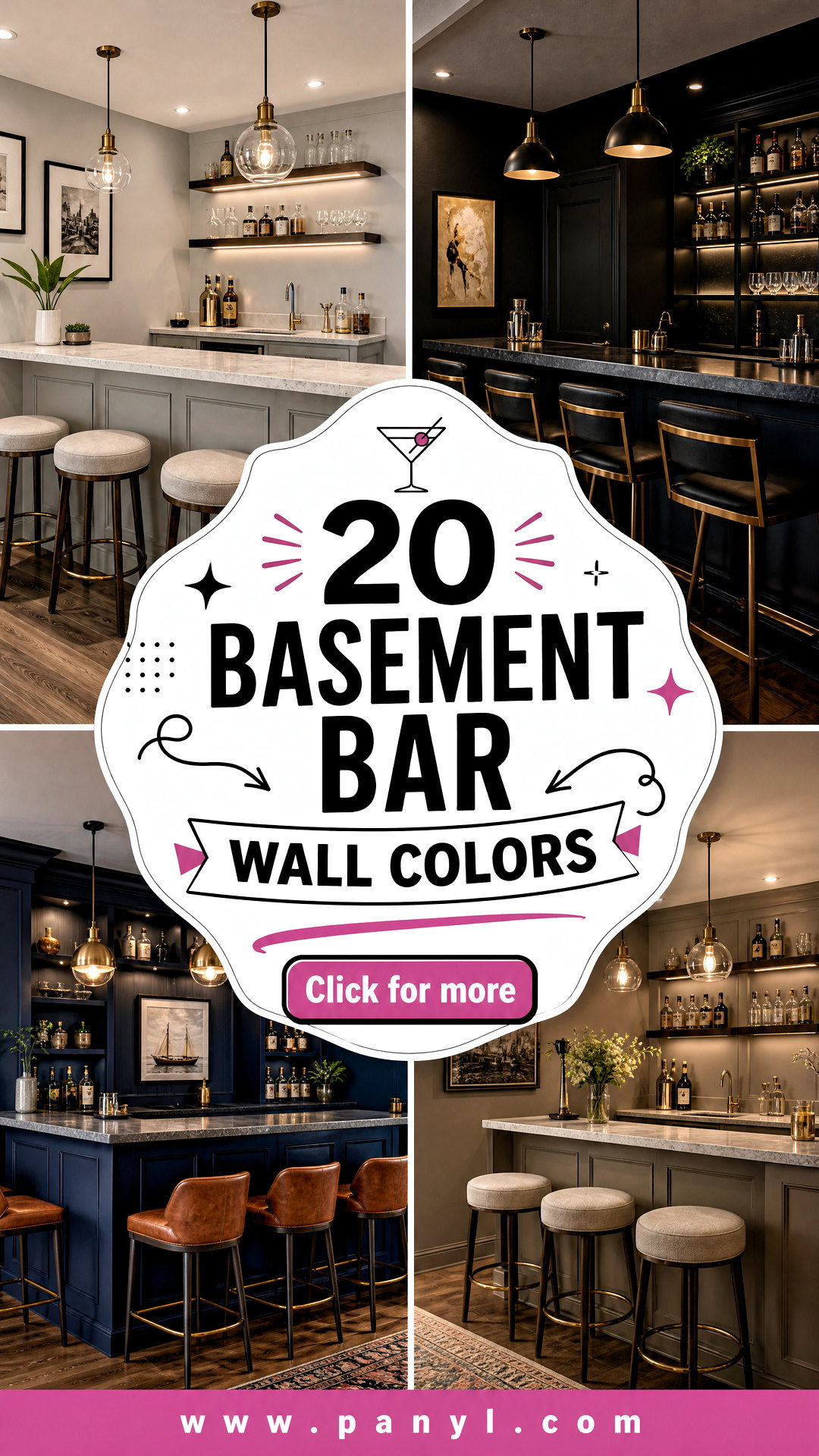
Choosing the right 20 Basement Bar Wall Colors can turn an unfinished-looking lower level into a polished place for relaxing and entertaining. Basement lighting changes how paint appears, so the strongest palettes consider undertones, cabinet finishes, flooring, countertops, and artificial light together. Current basement color guidance supports both light-reflecting neutrals and rich, enveloping shades such as navy, charcoal, and deep green. () Warm whites can open a small room, while darker colors create depth around a bar wall. The key is building a complete scheme rather than choosing paint in isolation. From modern black walls to comfortable sage and earthy terracotta, the following complete looks make it easier to compare and recreate 20 Basement Bar Wall Colors.
1. Basement Bar Warm White Walls
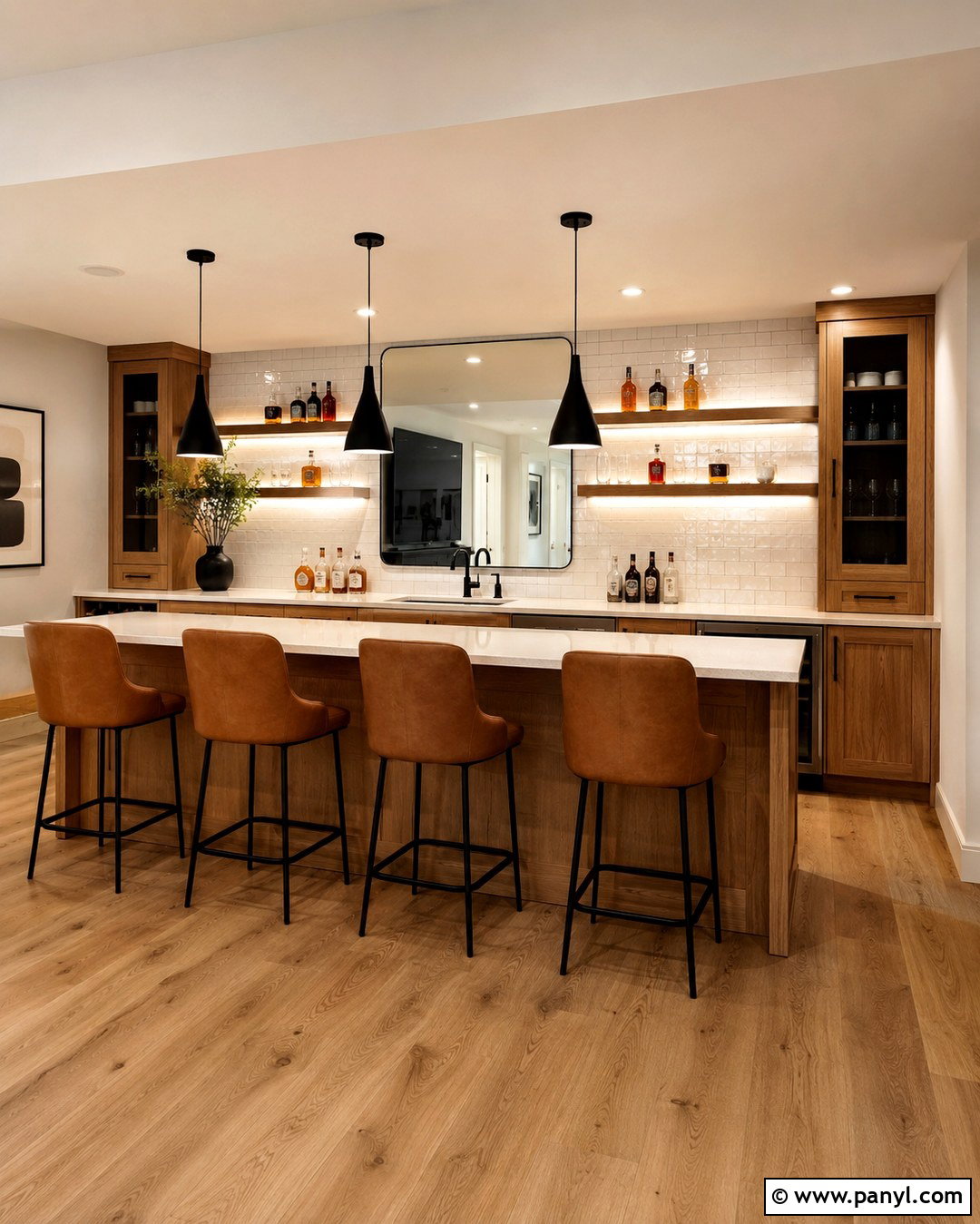
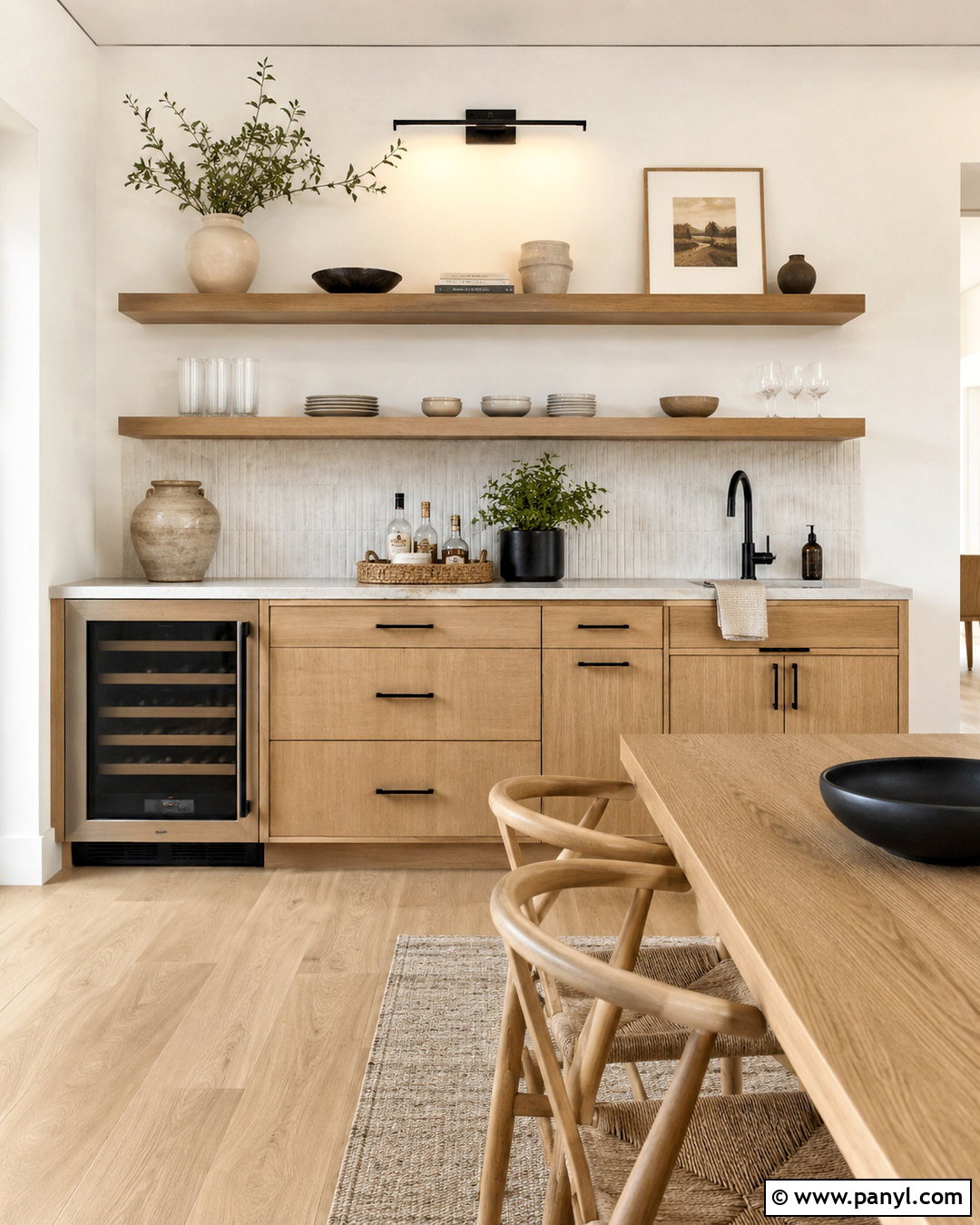
Warm white walls give a basement bar a brighter appearance without creating the cold feeling associated with stark white paint. Choose a creamy white with subtle beige undertones, then pair it with medium oak cabinets and a pale quartz countertop. A backsplash of glossy off-white subway tile will reflect overhead light and add gentle texture. Use matte black cabinet pulls, simple black pendant lights, and camel-colored bar stools for definition. Light oak luxury vinyl flooring keeps the space coordinated and practical. Add woven shades if the basement has windows, plus one large mirror behind the counter to spread light. This complete palette works especially well in compact basement bars where the goal is a clean, comfortable, and visually open room.
2. Basement Bar Soft Greige Walls
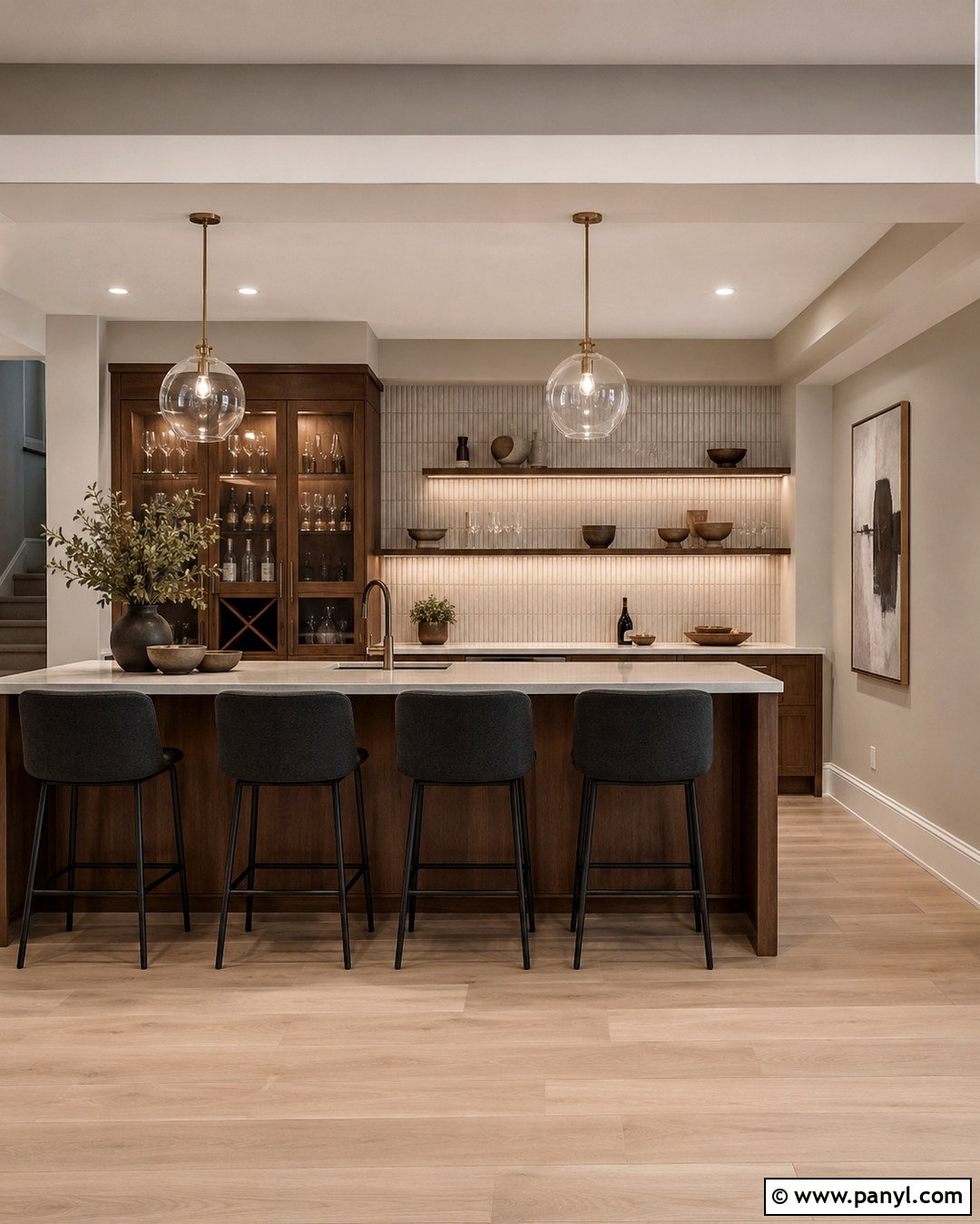
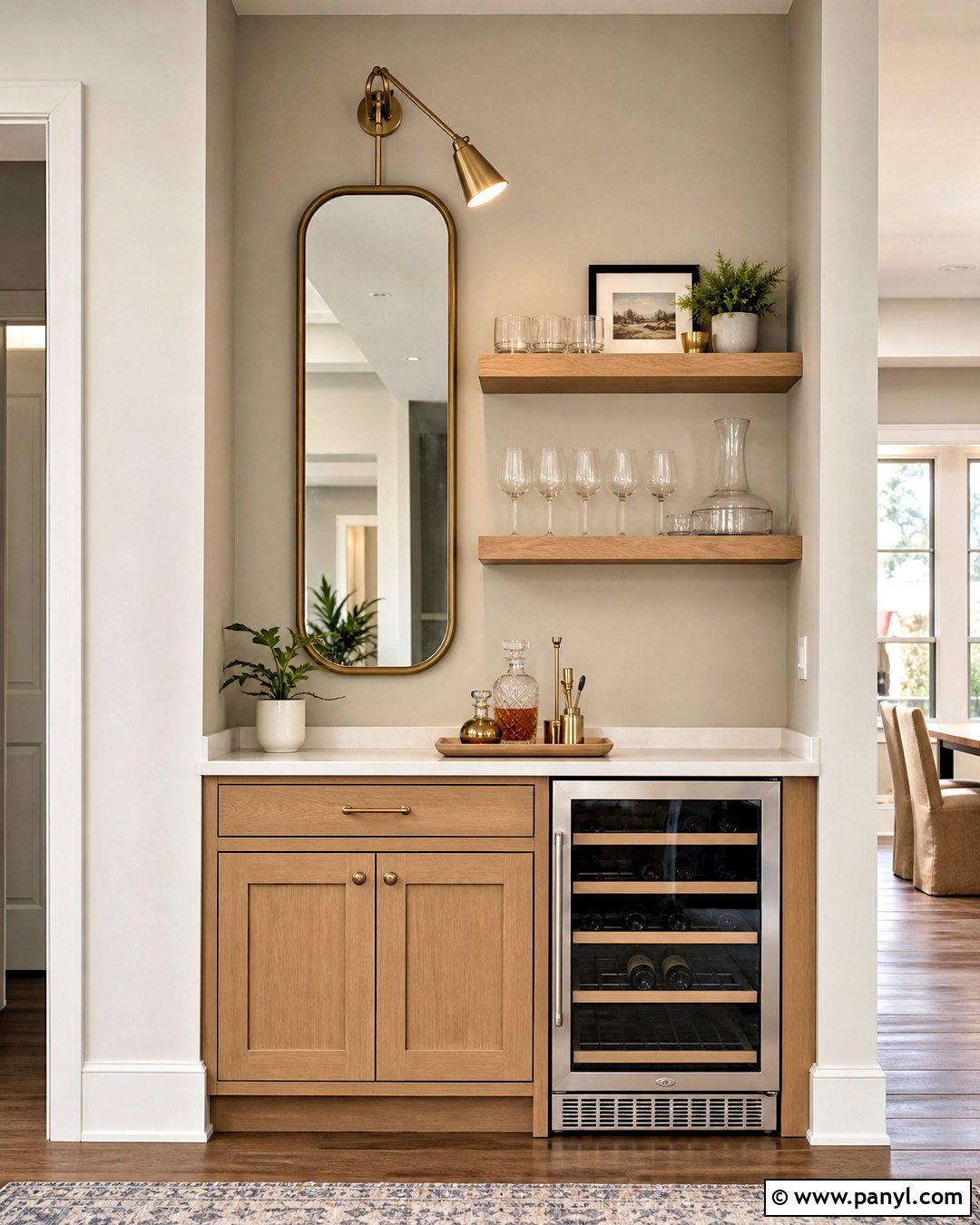
Soft greige creates a balanced foundation when a basement bar contains both warm wood and cool metal finishes. Paint every wall in a light gray-beige shade, including short soffits, to reduce choppy visual transitions. Build the bar with walnut cabinetry, brushed brass pulls, and a warm white quartz counter. A backsplash made from narrow cream tiles adds texture without introducing another strong color. Upholstered stools in charcoal fabric ground the lighter surfaces, while a natural jute-blend rug softens hard flooring nearby. Choose brass-and-glass pendants with bright white bulbs to keep the greige from appearing muddy. Finish the room with simple black-framed artwork, ceramic accessories, and pale oak flooring for an inviting transitional basement bar that feels connected and thoughtfully designed.
3. Basement Bar Light Gray Walls
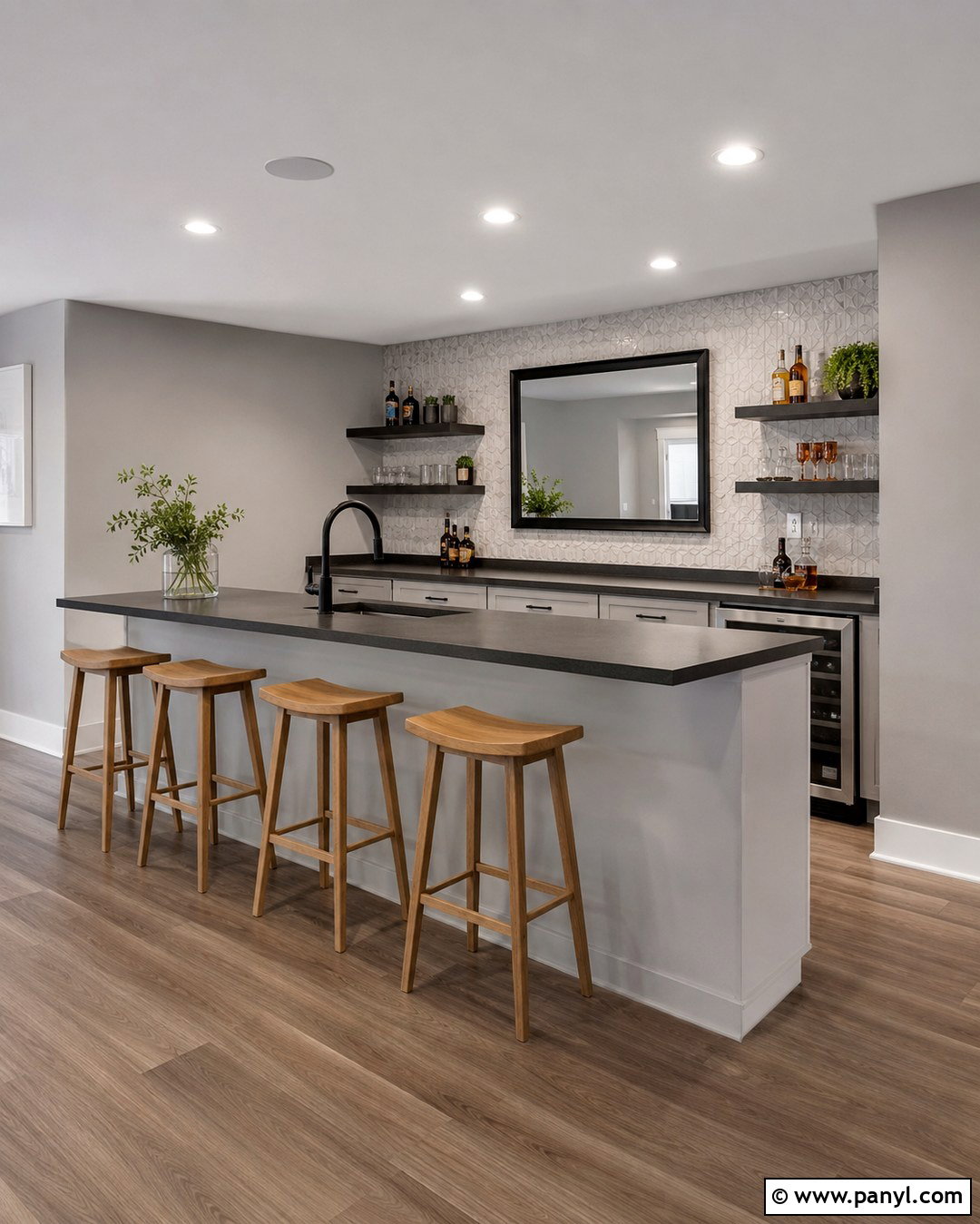
Light gray walls suit a modern basement bar that needs brightness with a little more structure than white can provide. Select a soft gray with a neutral undertone rather than a blue-heavy shade, especially if the room relies on recessed lighting. Pair it with flat-panel white cabinets, a charcoal quartz countertop, and a geometric white-and-gray backsplash. Matte black faucets and slim black pendant lights create crisp lines. Bring warmth into the scheme with natural oak bar stools and matching floating shelves. Medium-tone flooring hides everyday marks while keeping the bar from looking too pale. A large framed mirror, clear glass accessories, and one leafy plant complete the room. The result feels streamlined and fresh without becoming sterile, dark, or overly industrial.
4. Basement Bar Charcoal Walls
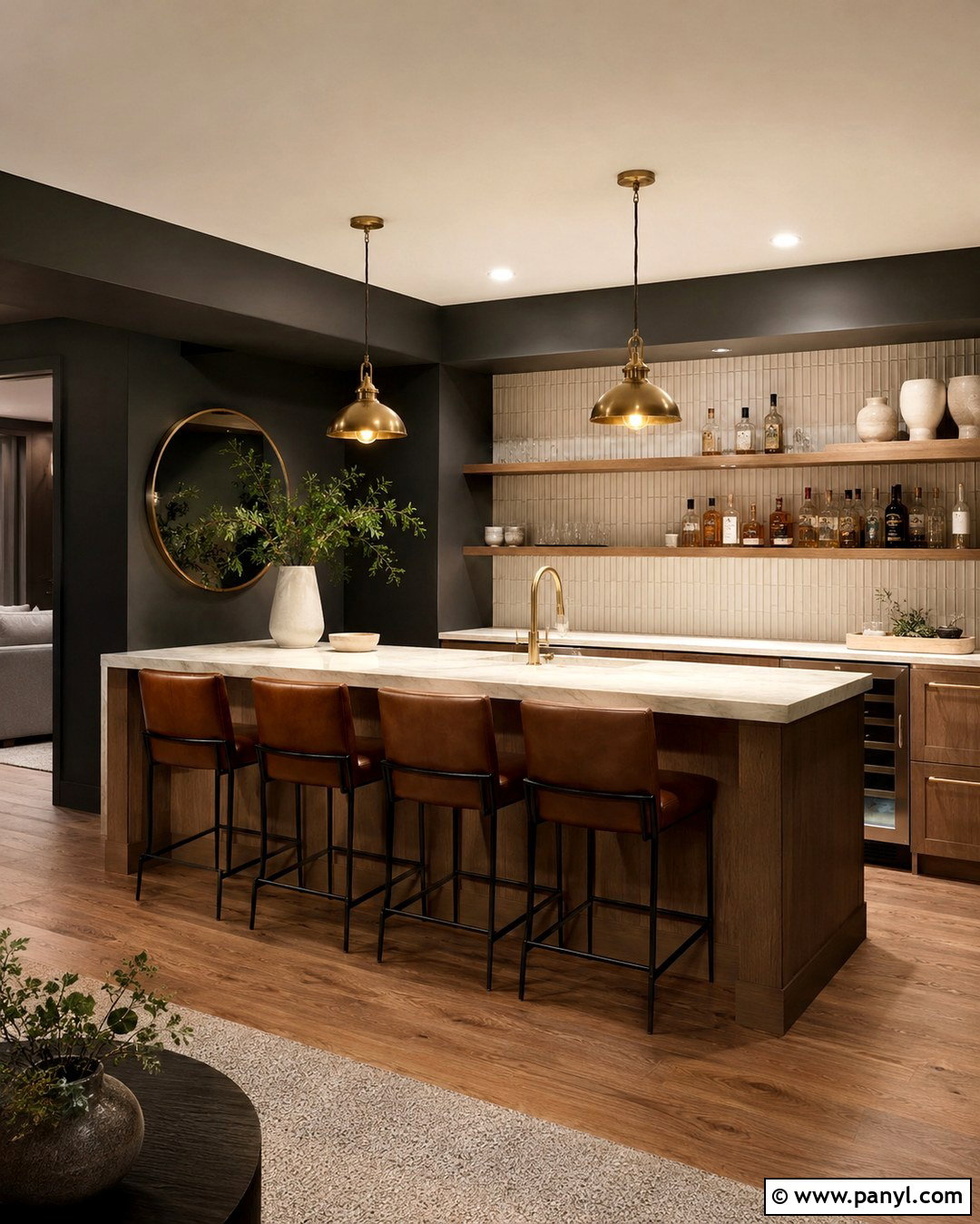
Charcoal walls can make a basement bar feel intentional and intimate rather than simply dark. Use the color across the main bar wall and nearby side walls, then keep the ceiling soft white to preserve visual height. Rift-cut oak cabinets and a creamy stone countertop provide a strong, natural contrast against the deep background. Install a vertically stacked ivory tile backsplash to brighten the work area. Cognac faux-leather stools add warmth, while aged brass pendants and cabinet hardware create a softer finish than polished metal. Medium walnut flooring supports the moody palette without disappearing into it. Add under-cabinet lighting, a large round mirror, and a few pale ceramic pieces. This scheme works best with layered illumination that keeps every surface easy to see.
5. Basement Bar Matte Black Walls
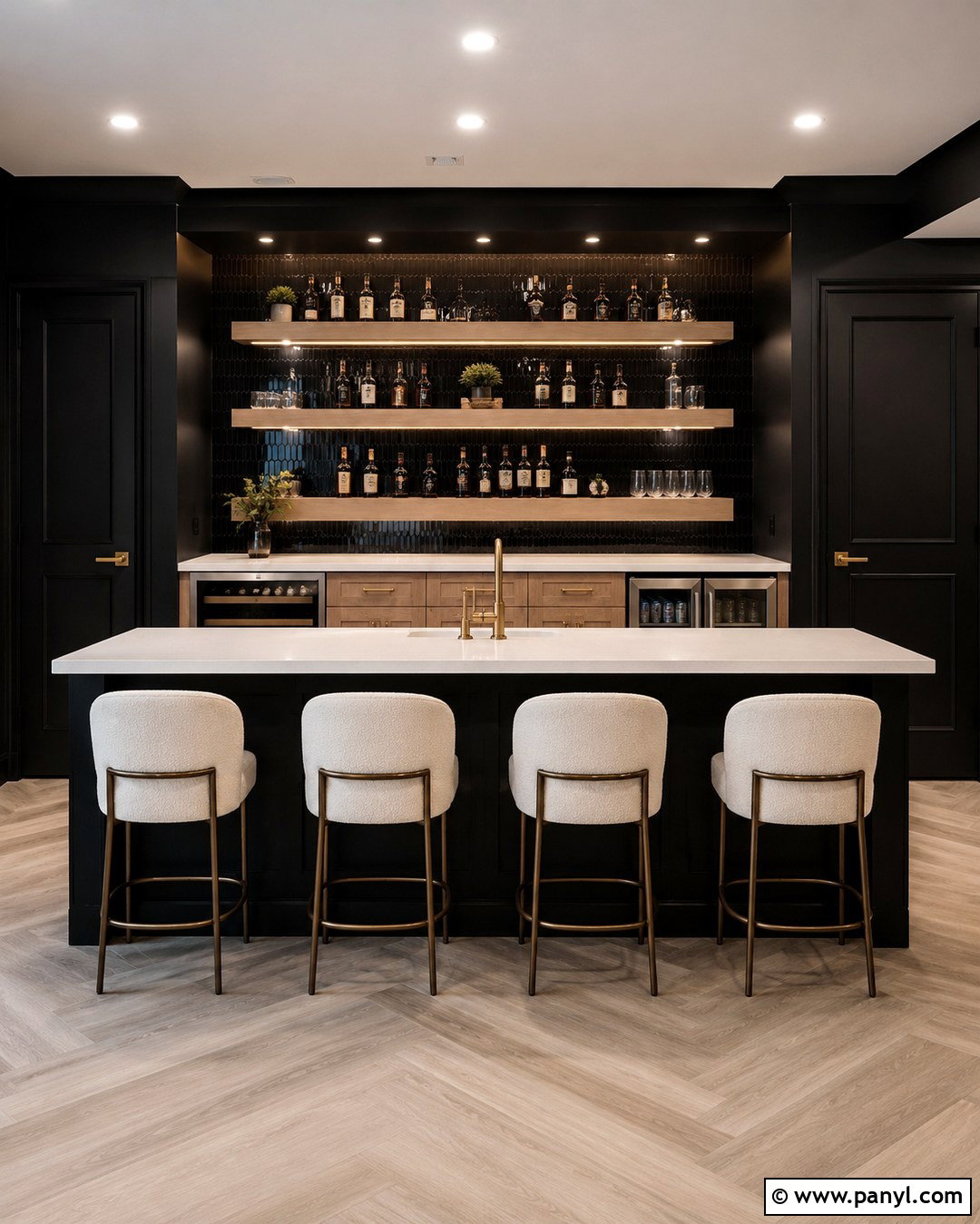
Want a basement bar that feels dramatic but still polished? Matte black walls create a bold envelope when balanced with lighter materials and carefully placed lighting. Continue black paint over the bar wall, doors, and trim for a seamless architectural effect. Choose natural white oak cabinets and thick white quartz counters to break up the darkness. A glossy black backsplash adds subtle reflection, while brushed brass hardware introduces warmth. Use cream boucle bar stools and a pale patterned rug to soften the seating area. Bright recessed lights, brass pendants, and concealed shelf lighting are essential throughout the room. Finish with clear glassware, sculptural white ceramics, and warm oak flooring. The completed bar feels modern, graphic, and comfortable instead of heavy or unfinished.
6. Basement Bar Navy Blue Walls
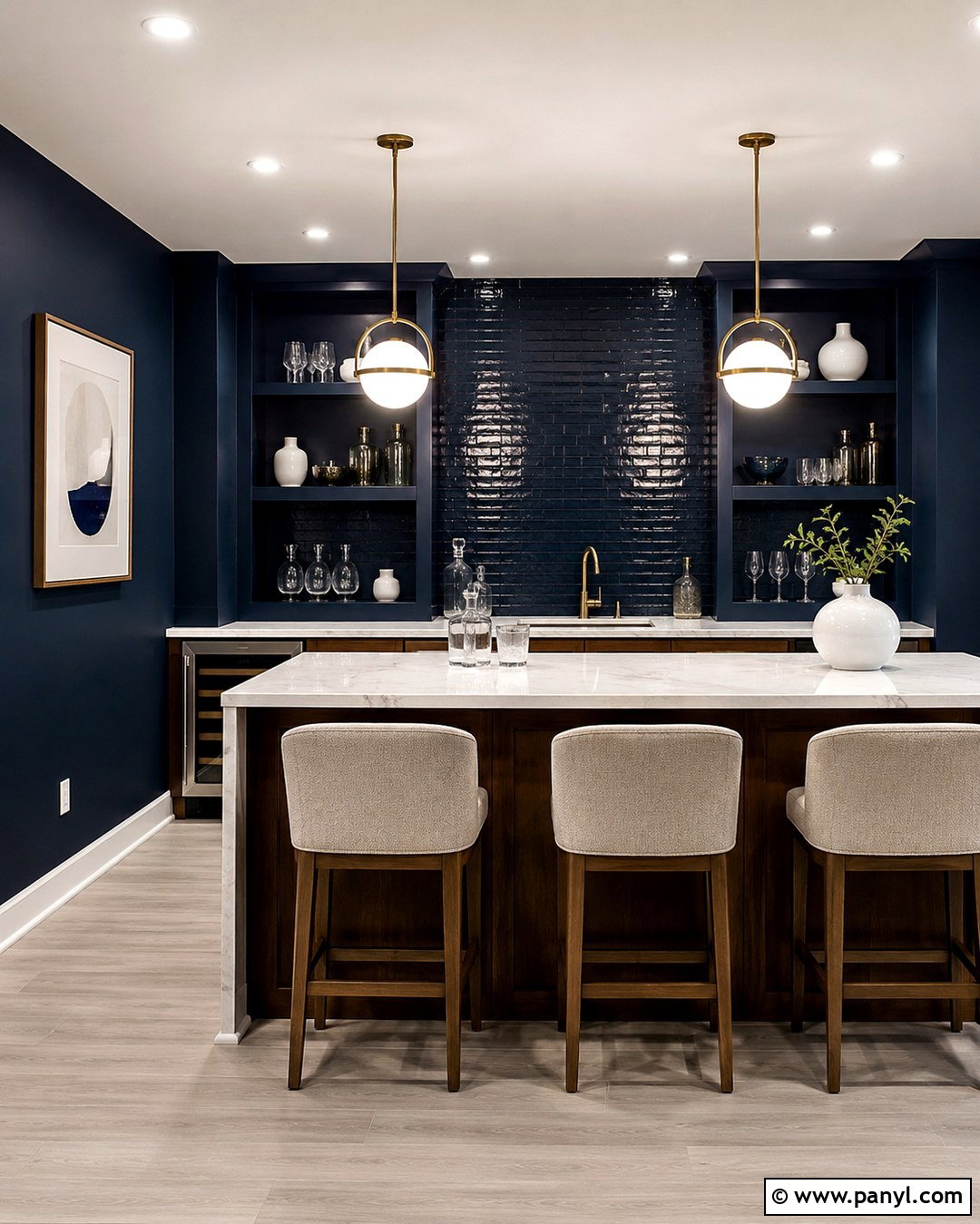
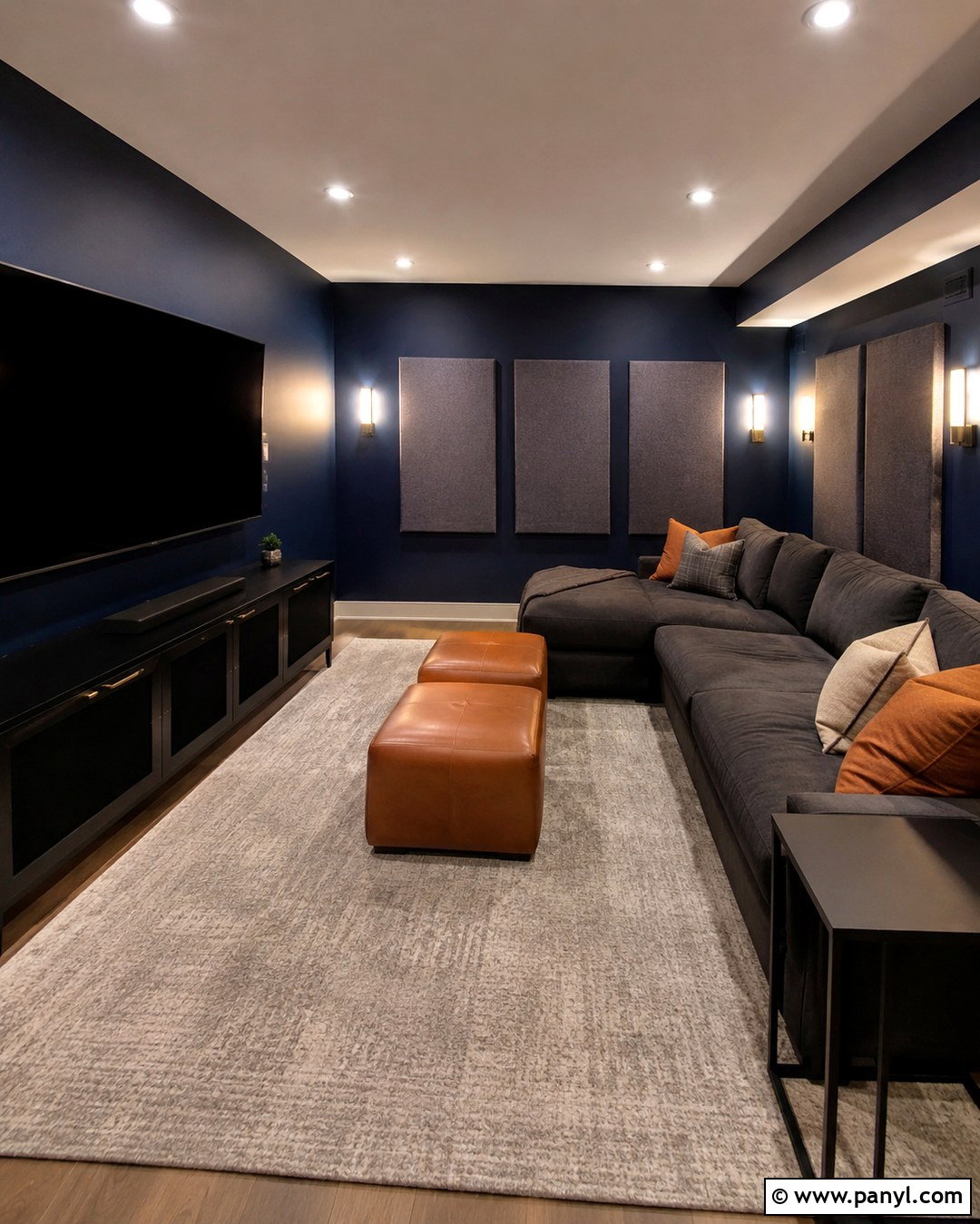
Navy blue provides rich color while remaining easy to coordinate with familiar basement finishes. Paint the walls and built-in shelving in the same deep navy for a unified backdrop. Add medium walnut lower cabinets, a white marble-look quartz countertop, and a glossy navy tile backsplash with subtle tonal variation. Brushed brass hardware and globe pendant lights bring warm contrast to the blue. Choose oatmeal upholstered stools with walnut legs to connect the seating to the cabinetry. A light greige floor and soft white ceiling prevent the lower level from becoming too enclosed. Style the shelves with white pottery, clear glasses, and small brass objects. This complete navy basement bar feels tailored and timeless, making it suitable for both traditional homes and updated transitional interiors.
7. Basement Bar Midnight Blue Walls
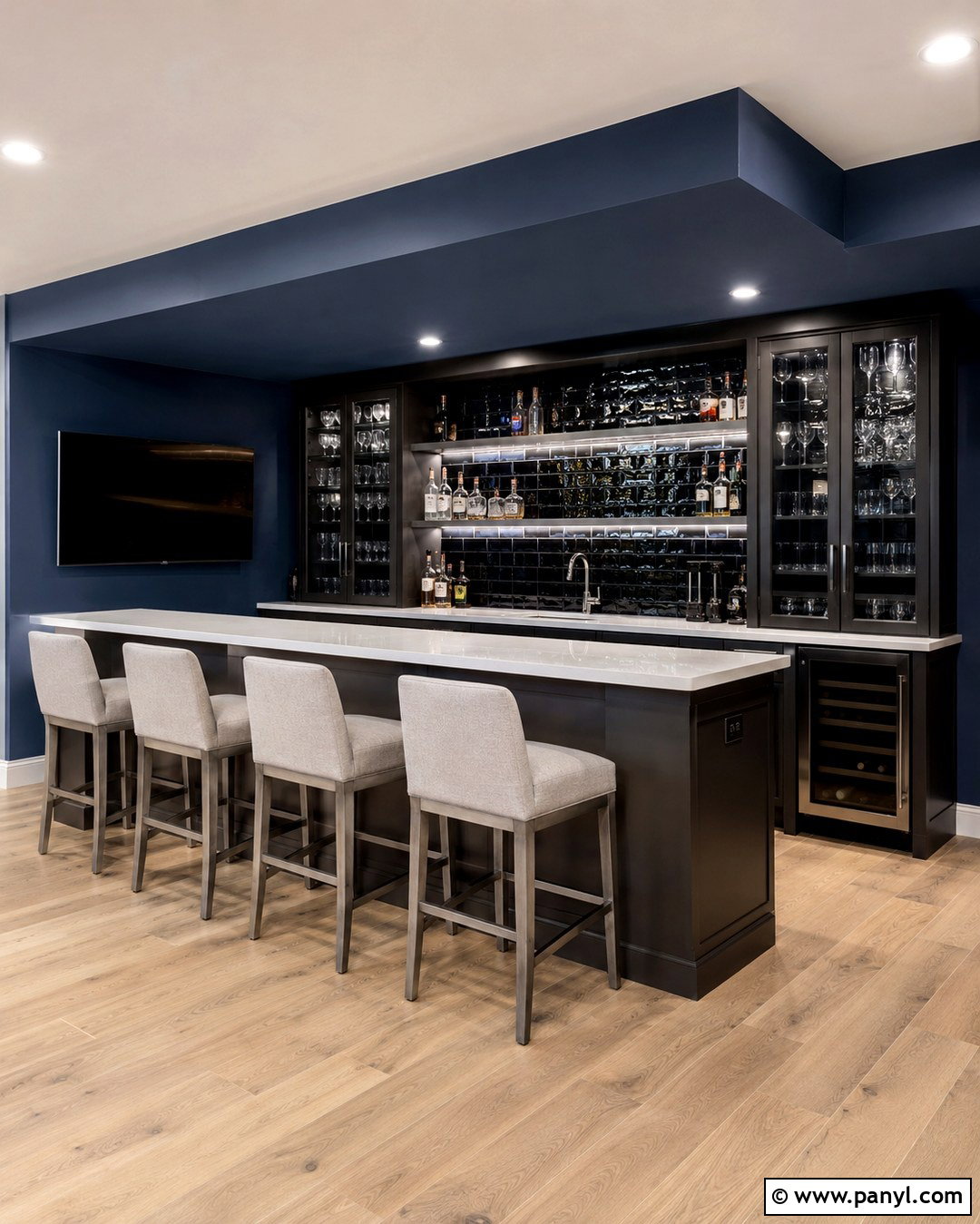
Midnight blue offers a nearly black appearance with a softer, more colorful undertone. Wrap the bar wall and ceiling soffit in this saturated shade to visually define the entertaining zone within an open basement. Pair it with charcoal cabinets, a bright white quartz counter, and a reflective black tile backsplash. Glass-front upper cabinets keep the dark composition from feeling solid or bulky. Install polished nickel pulls and clear globe pendants for a cool, clean contrast. Pale gray stools and light oak flooring introduce balance without weakening the dramatic design. Use concealed lighting beneath shelves and cabinets to highlight every surface. A slim mirror panel behind the display shelves can also deepen the room while reflecting light around the finished basement bar.
8. Basement Bar Slate Blue Walls
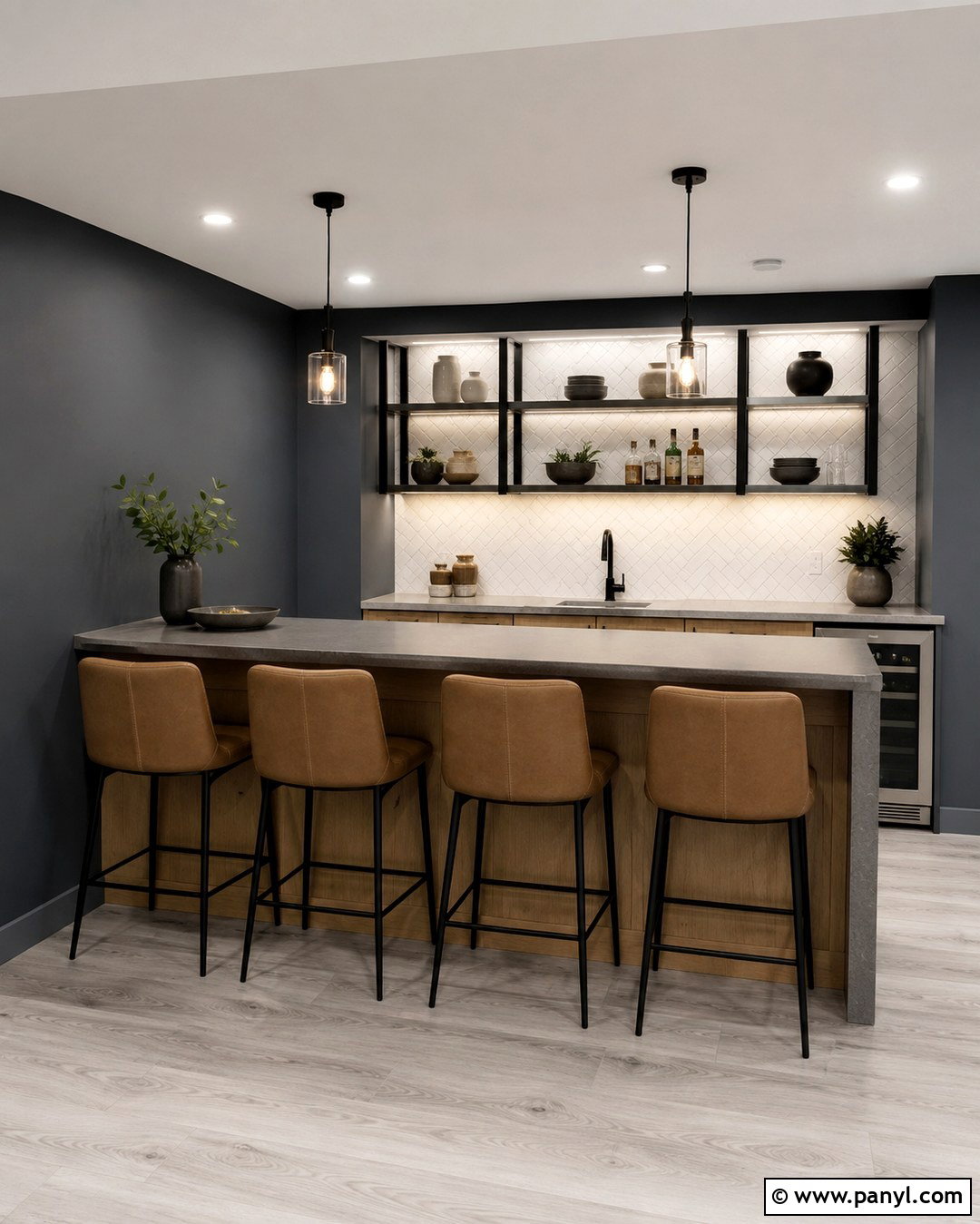
Slate blue gives a basement bar muted color that feels calm, relaxed, and easier to live with than a vivid blue. Choose a medium gray-blue for the walls, then pair it with natural maple cabinets and concrete-look quartz counters. A soft white herringbone backsplash supplies movement while reflecting light around the counter. Matte black hardware, black-framed shelving, and simple cone pendants sharpen the casual palette. Select stools upholstered in warm tan fabric to bridge the blue walls and wood cabinetry. Pale gray flooring keeps the room airy, while a textured cream rug defines an adjacent seating area. Complete the look with minimal landscape prints, stoneware accessories, and a small plant. The finished space feels modern, comfortable, and appropriately colorful without becoming overpowering.
9. Basement Bar Dusty Blue Walls
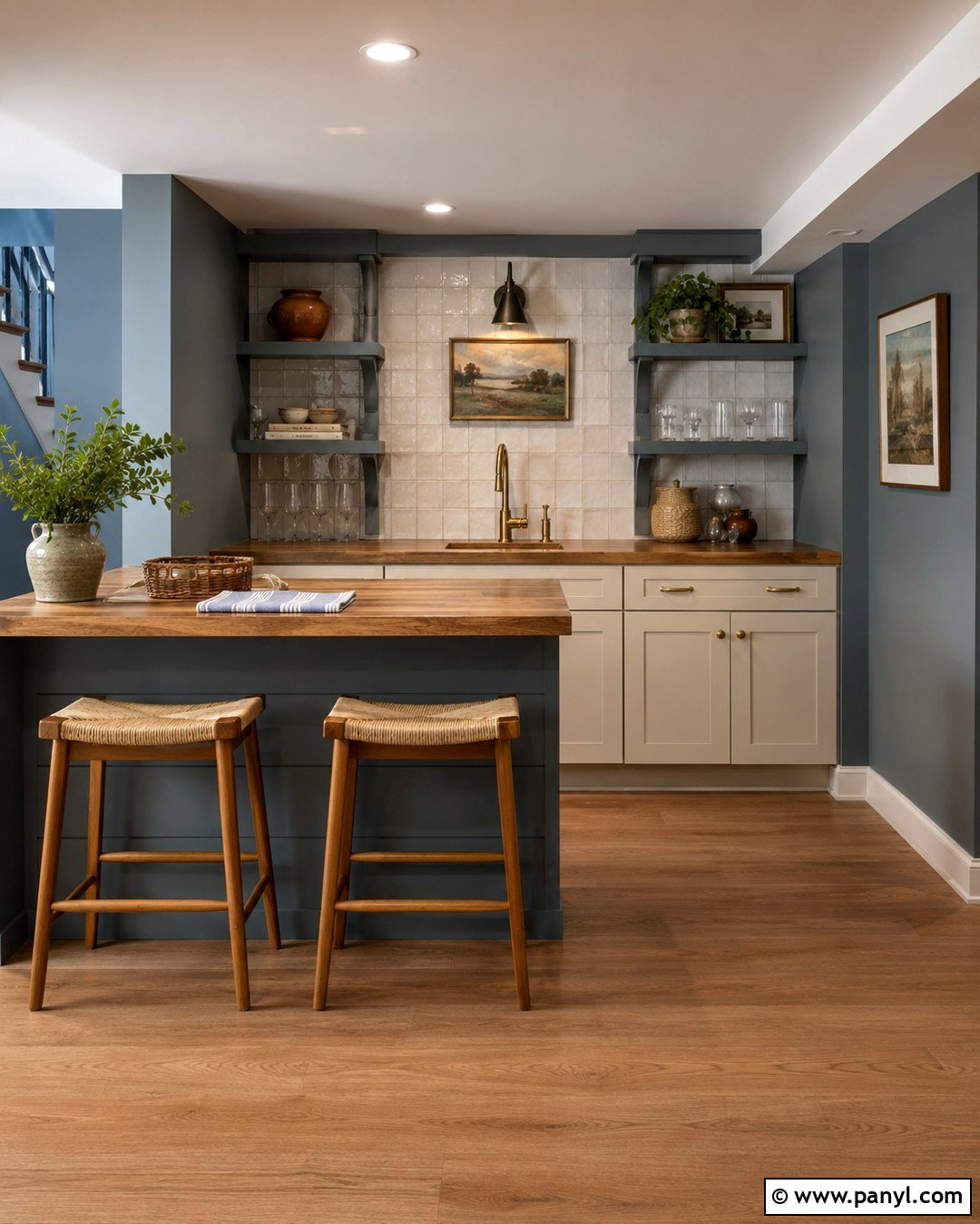
Dusty blue walls bring a soft, welcoming character to a basement bar with traditional or cottage-inspired details. Use a muted blue with noticeable gray undertones, then add shaker cabinets in warm white. Butcher-block counters introduce natural warmth, while handmade-looking cream backsplash tiles give the counter area depth. Choose aged brass knobs, milk-glass pendants, and oak stools with woven seats. Medium oak flooring creates continuity with the countertops and prevents the cool wall color from dominating. Open shelves painted dusty blue can display neutral pottery and clear beverage glasses without adding visual clutter. Finish the room with a striped cream-and-blue rug and simple framed botanical prints. This complete combination makes a small basement bar appear approachable, bright, and thoughtfully integrated into the home.
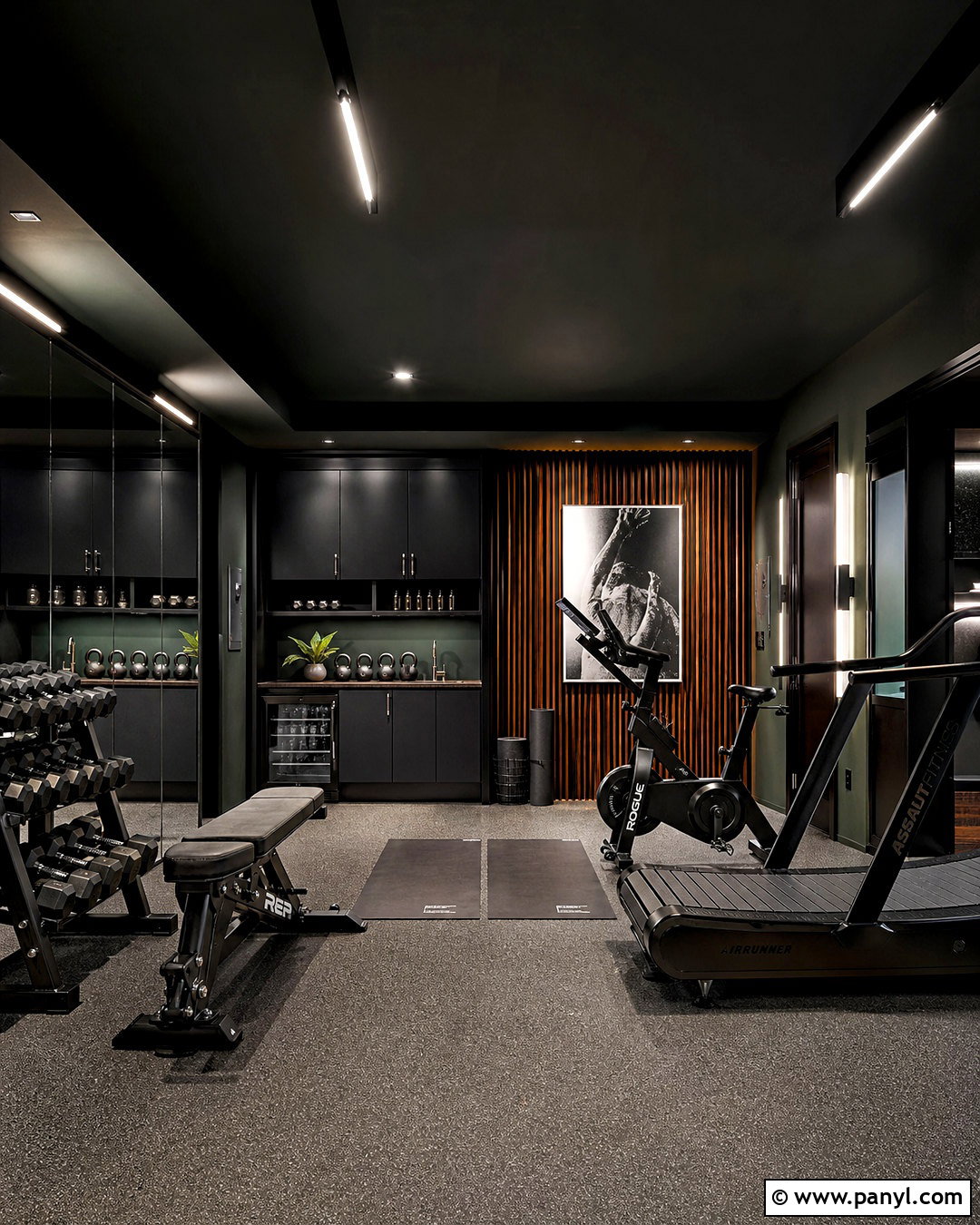
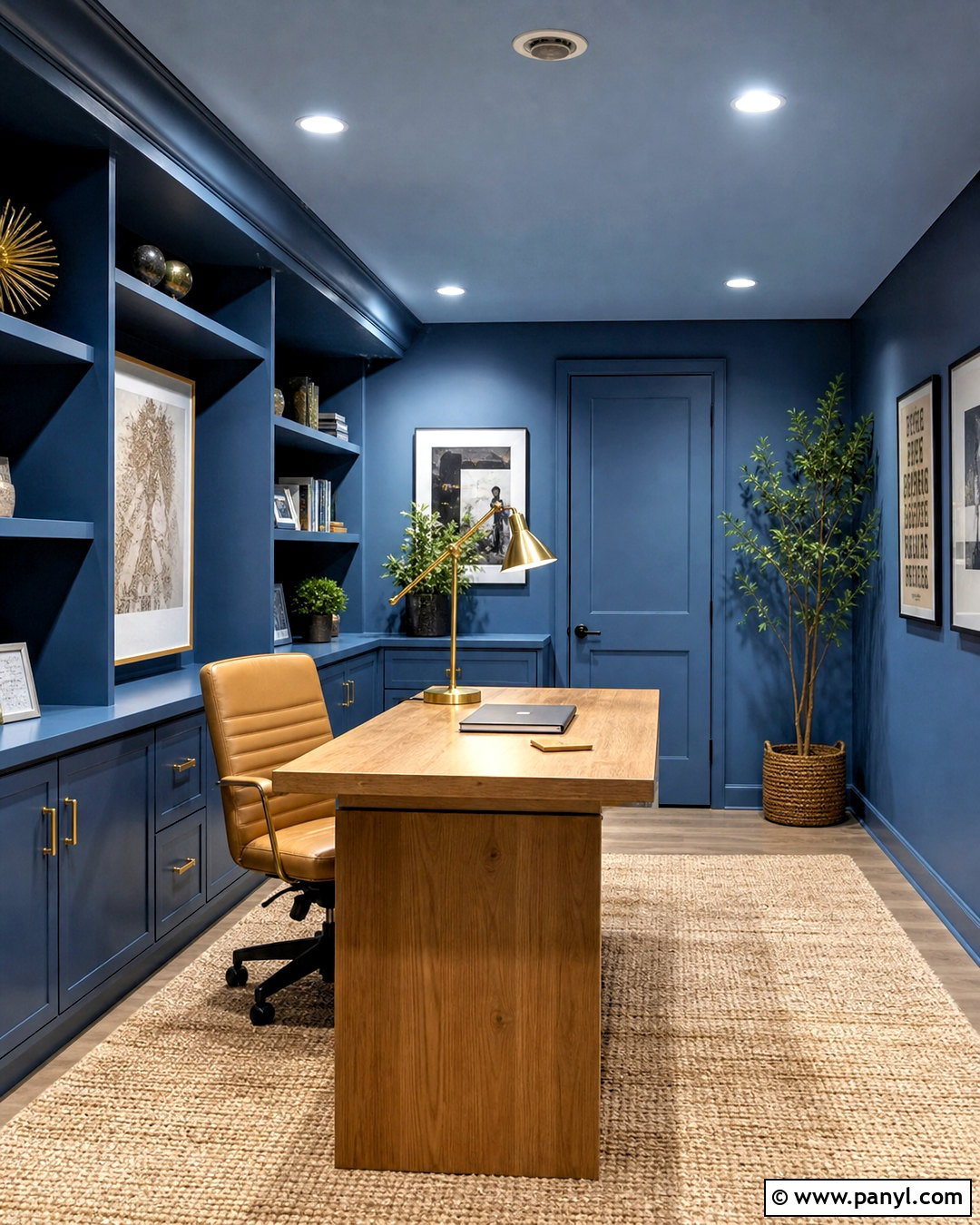
10. Basement Bar Deep Teal Walls
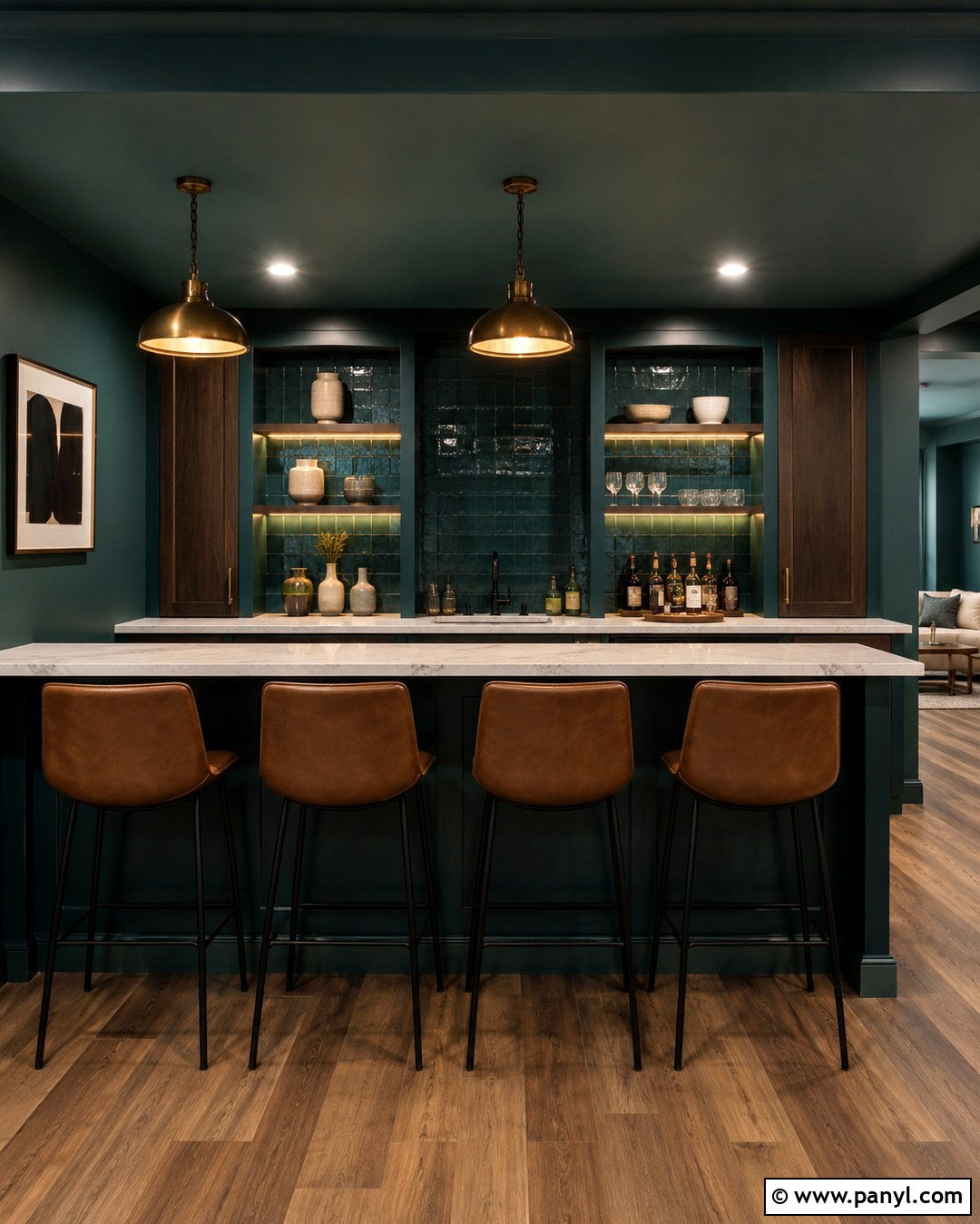
Deep teal produces a confident basement bar that feels colorful, sophisticated, and grounded. Paint the walls, trim, and built-in shelving in the same blue-green shade for a smooth color-drenched effect. Use dark walnut cabinets beneath a pale cream quartz counter, then install a backsplash of glossy square tiles in a slightly lighter teal. Antique brass pulls and dome pendants enhance the warmth of the wood. Choose saddle-brown bar stools with slim black legs to add another comfortable earth tone. Medium brown flooring and a soft ivory ceiling keep the color scheme balanced. Style the shelves sparingly with cream ceramics and clear glasses. With under-shelf lighting and several recessed fixtures, the deep teal stays vibrant instead of reading as black in the basement.
11. Basement Bar Forest Green Walls
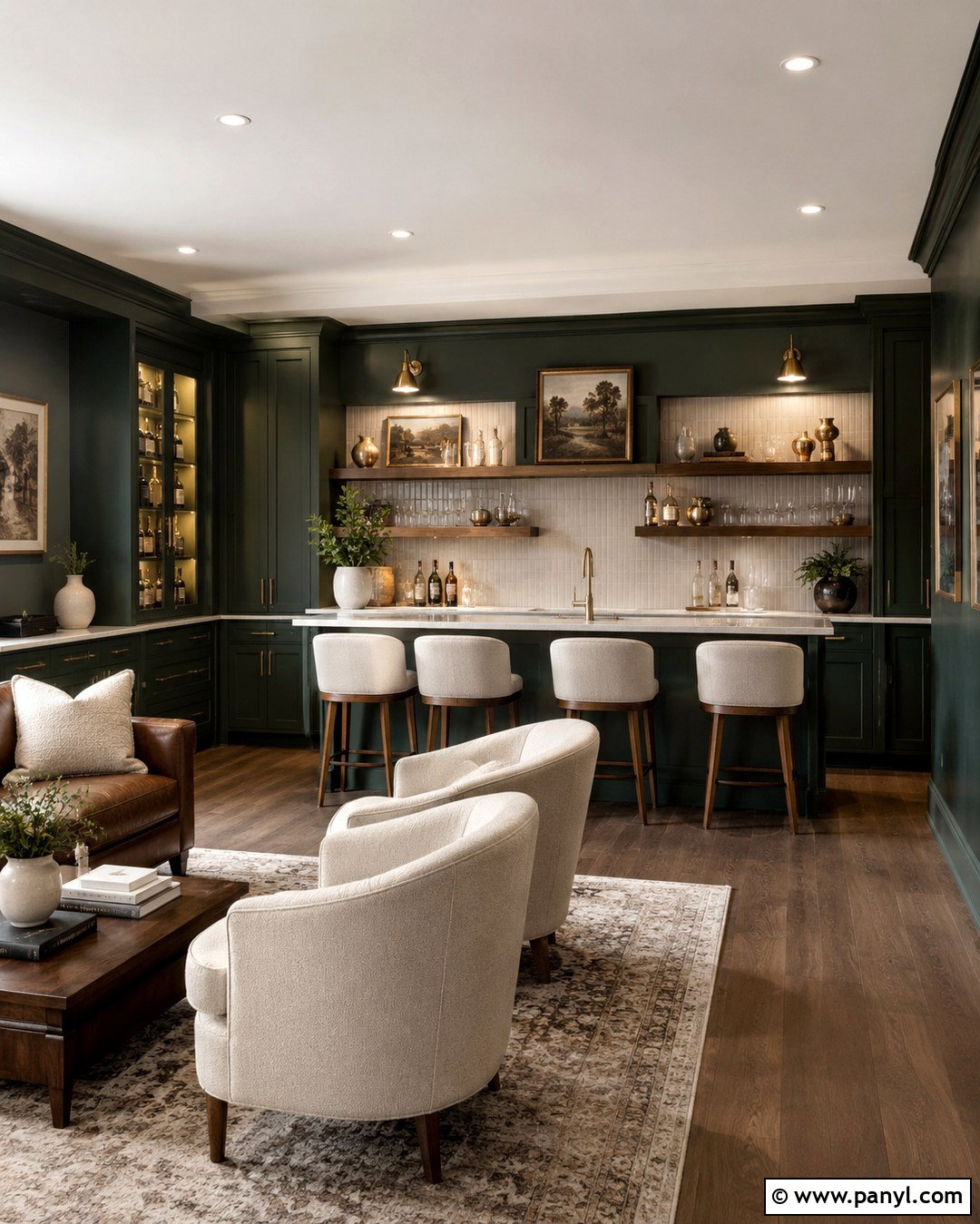
Forest green creates an enveloping background that pairs naturally with wood, stone, and warm metal. Cover the main walls and bar cabinetry in a deep green, but use a soft cream ceiling to maintain a sense of height. Top the cabinets with lightly veined white quartz and install vertical cream tiles behind the counter. Walnut floating shelves repeat the warm tone of the flooring and provide contrast against the green. Add aged brass sconces, cabinet pulls, and a simple faucet for a cohesive finish. Bar stools in oatmeal fabric keep the seating visually light. A patterned rug combining cream, green, and tan can connect the bar to a nearby lounge. The completed space feels refined and comfortable, with enough contrast to remain clear under artificial lighting.
12. Basement Bar Olive Green Walls
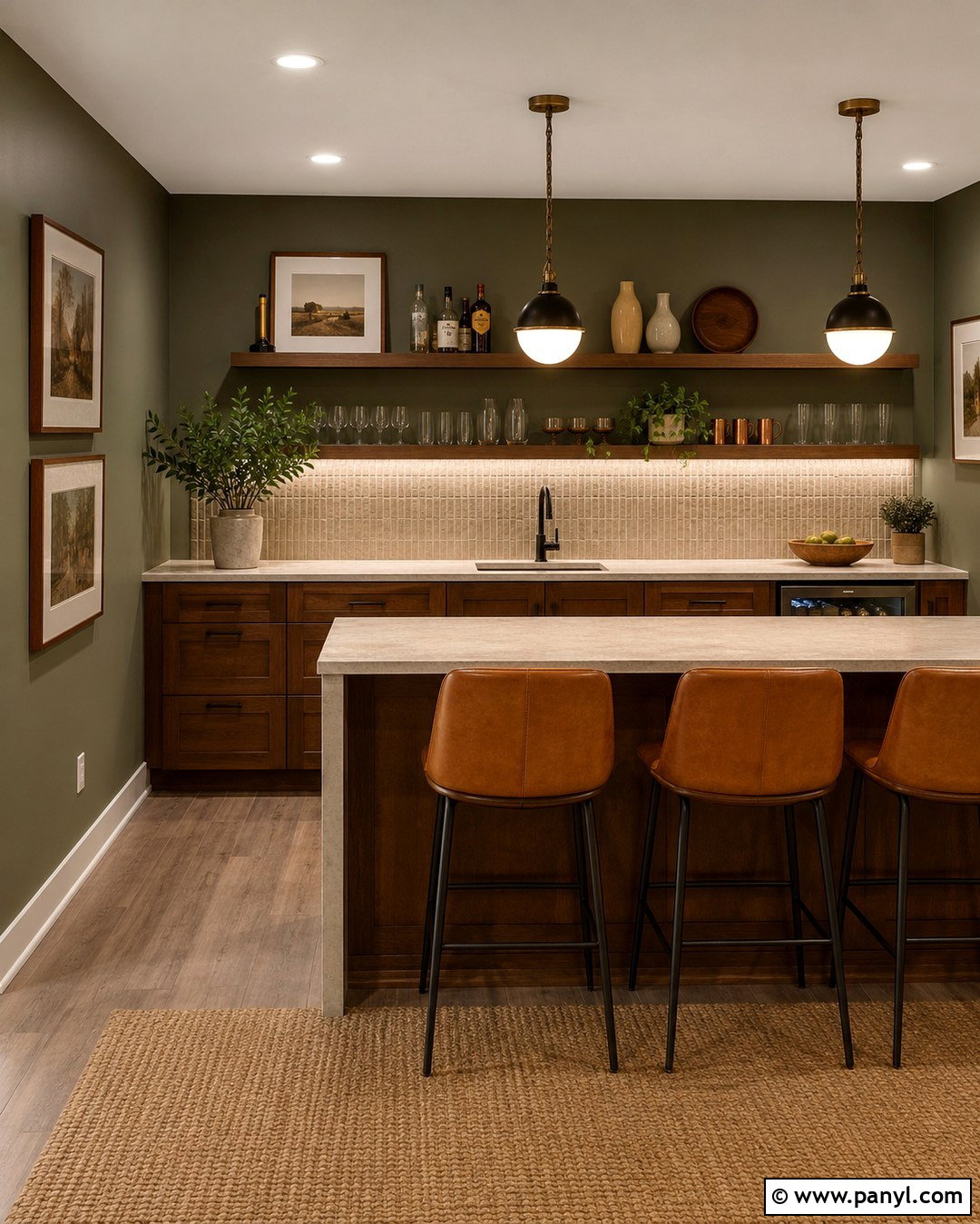
Olive green walls give a basement bar an earthy, relaxed look that works especially well with rustic and midcentury furnishings. Select a muted olive rather than a yellow-heavy green, then combine it with walnut cabinets and honed cream countertops. A backsplash of textured beige tile keeps the palette warm and organic. Use matte black pulls, linear pendant lights, and black metal shelf brackets for clean definition. Cognac stools contribute another rich natural tone, while warm gray flooring prevents the scheme from becoming overly brown. Bring in a woven rug, simple wood-framed artwork, and stoneware accessories in cream and rust. Bright recessed lighting will reveal the green undertone clearly. This coordinated bar feels cozy and established without relying on overly themed basement decorations.
13. Basement Bar Sage Green Walls
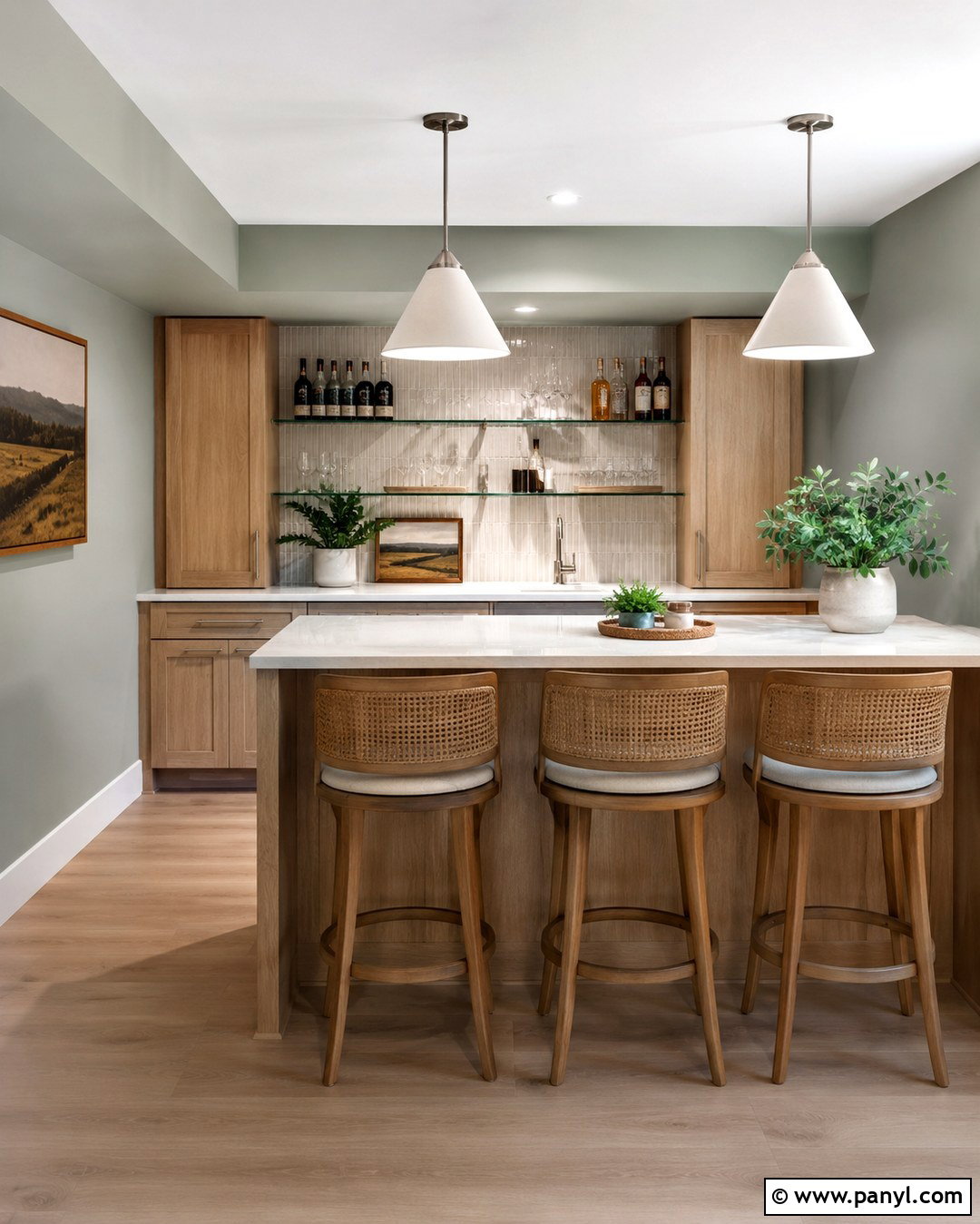
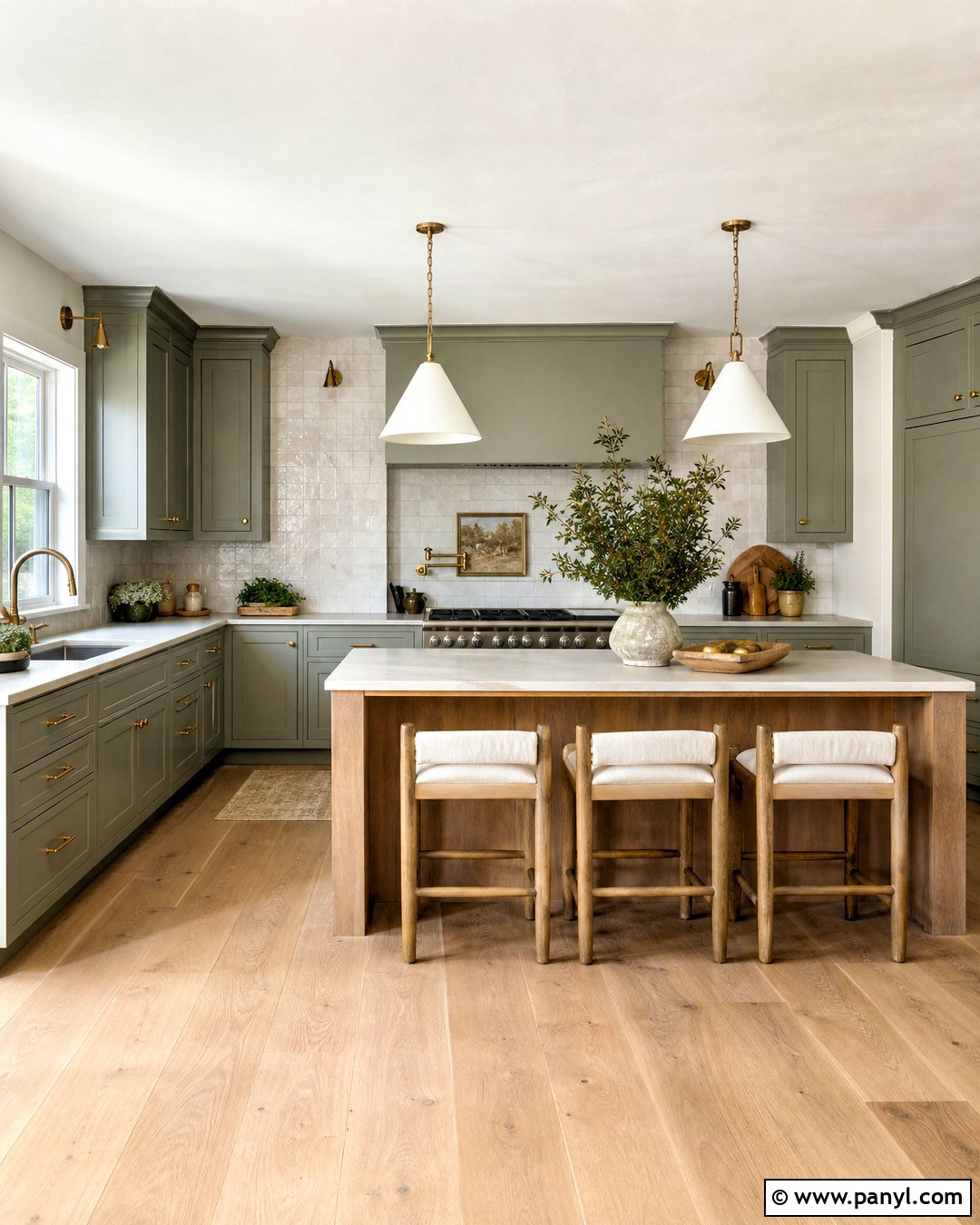
Soft sage green can freshen a basement bar while maintaining the versatility of a neutral. Paint the full room in a pale, gray-influenced sage, including the soffit above the bar, to create a consistent backdrop. Choose white oak cabinets, white quartz counters, and a narrow cream tile backsplash for a light natural scheme. Brushed nickel hardware keeps the finish subtle, while linen-shaded pendants provide comfortable illumination. Add counter stools with woven cane backs and light beige cushions. Pale wood-look flooring supports the airy effect and performs well in a frequently used lower level. Finish with small potted plants, cream ceramics, and understated artwork in oak frames. The completed design feels casual, clean, and connected to nature, even when basement windows are limited.
14. Basement Bar Mushroom Taupe Walls
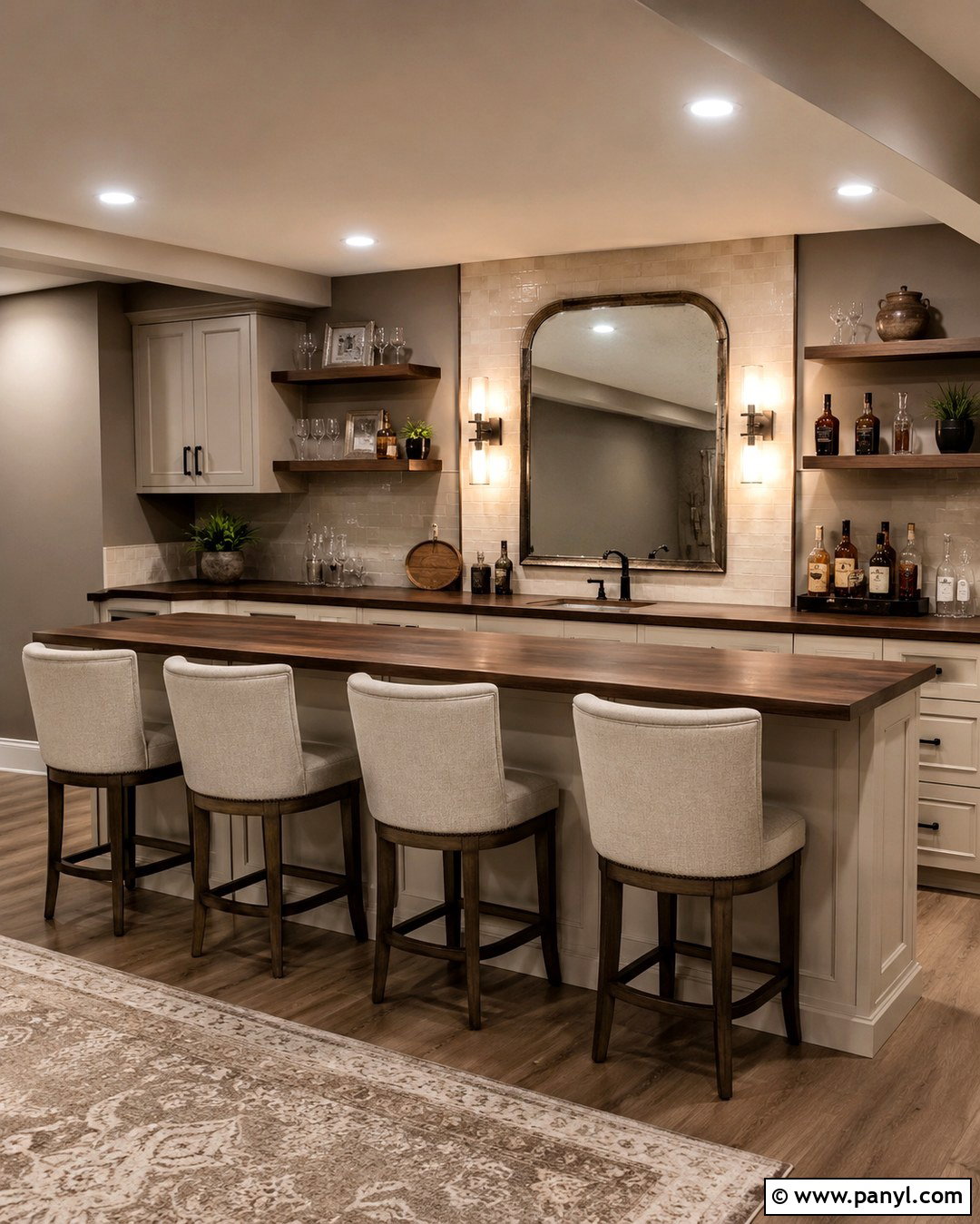
Mushroom taupe has enough depth to make a basement bar feel warm, yet it remains neutral beside many cabinet colors. Use this gray-brown shade on all walls and select creamy off-white cabinetry for contrast. A medium walnut counter or butcher-block surface adds richness, while a backsplash of matte ivory rectangular tile keeps the work zone bright. Incorporate oil-rubbed bronze hardware and matching pendants to strengthen the warm undertones. Upholstered stools in textured oatmeal fabric create comfortable seating without competing with the palette. Install medium oak flooring and a subtle patterned rug that blends taupe, cream, and brown. A large antiqued mirror behind open shelving can reflect light softly. This complete scheme suits traditional, transitional, and rustic basement bars without feeling dated.
15. Basement Bar Cream Walls
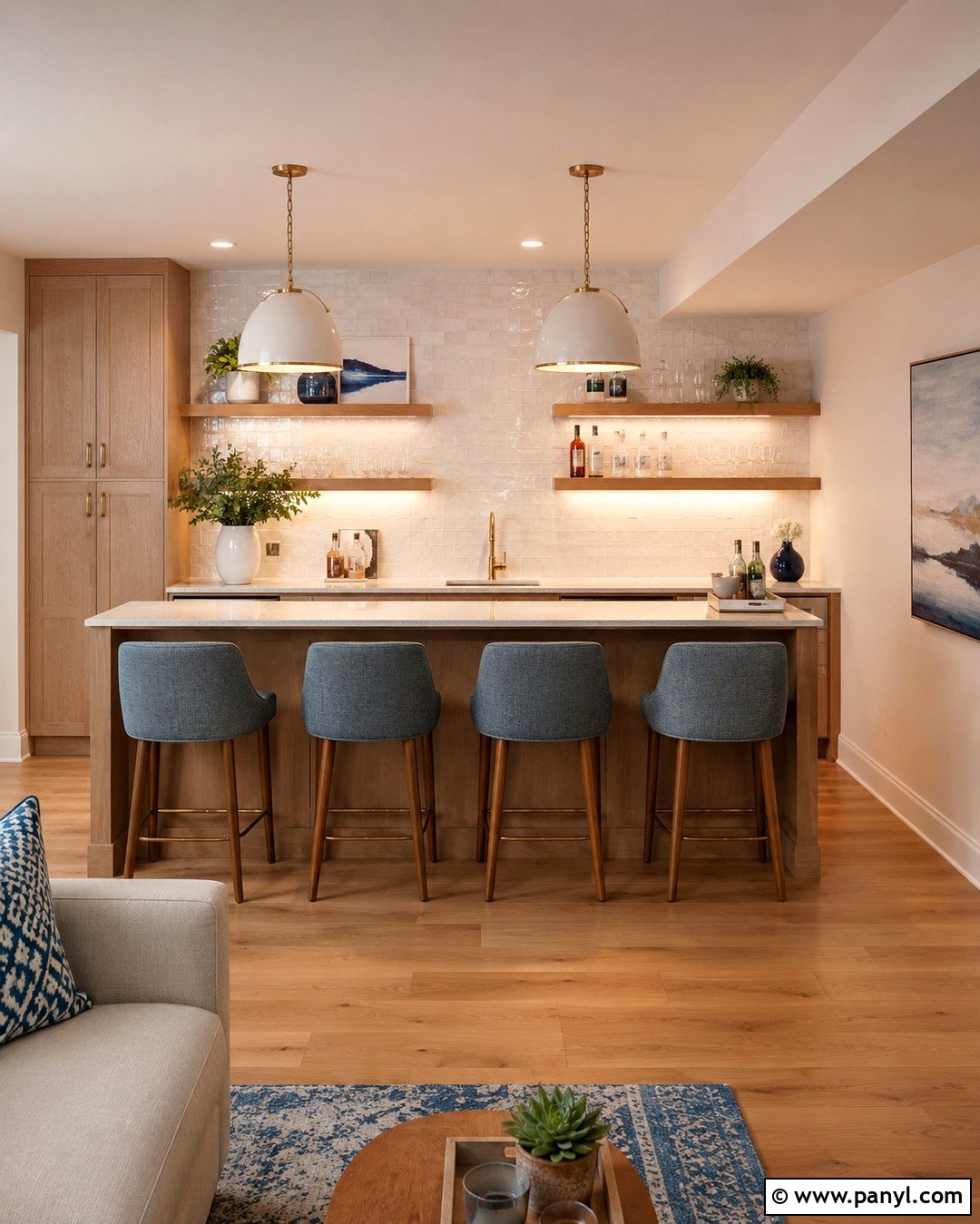
Cream walls are ideal when you want a basement bar to feel sunny, warm, and comfortable throughout the day. Choose a pale cream that stays soft beneath bright white bulbs, then introduce light walnut cabinets and beige quartz countertops. Glossy zellige-style tiles in warm white create a reflective backsplash with gentle surface variation. Use brushed brass pulls and small dome pendants to continue the welcoming palette. Bar stools in muted blue fabric provide a controlled touch of cool color. Medium-tone oak flooring grounds the lighter surfaces, while a blue-and-cream rug ties the seating into the cabinetry. Add simple oak shelves and framed prints with pale blue details. The resulting bar feels open and cheerful without depending on strong natural light or pure white paint.
16. Basement Bar Terracotta Walls
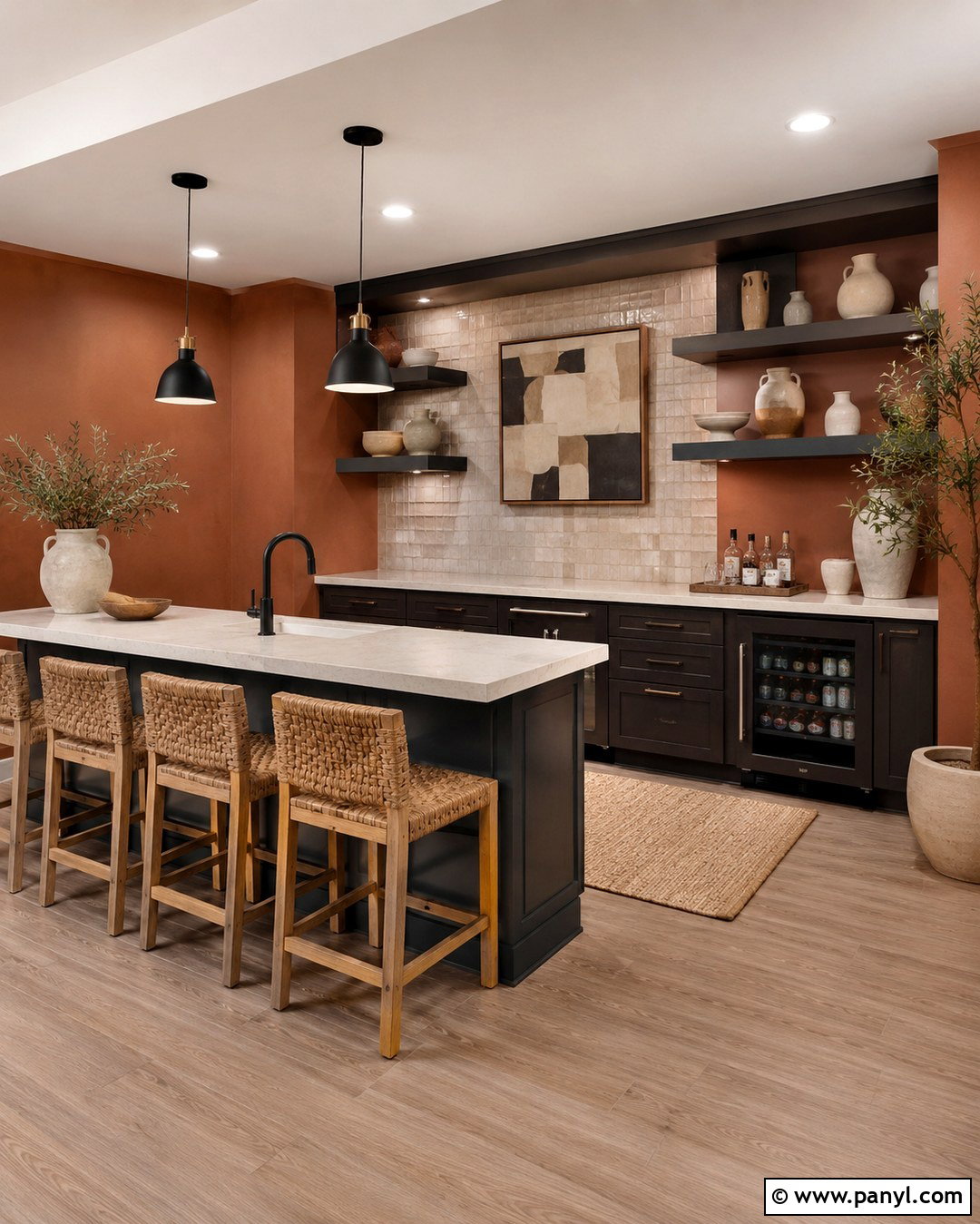
Terracotta walls bring warmth and personality to a basement bar that might otherwise feel cool or plain. Select a muted clay shade with brown undertones rather than a bright orange. Pair it with deep charcoal cabinets, a cream quartz countertop, and a handmade-look beige backsplash. Black metal hardware and streamlined pendants add contemporary structure. Choose natural oak stools with woven seats to soften the contrast between the dark cabinetry and earthy walls. Warm gray flooring prevents the room from becoming too red or rustic. Complete the space with cream ceramics, a simple abstract print, and one olive green plant. Keep the ceiling and adjacent open areas warm white. This balanced design allows terracotta to become a welcoming backdrop without overwhelming the compact basement setting.
17. Basement Bar Muted Burgundy Walls
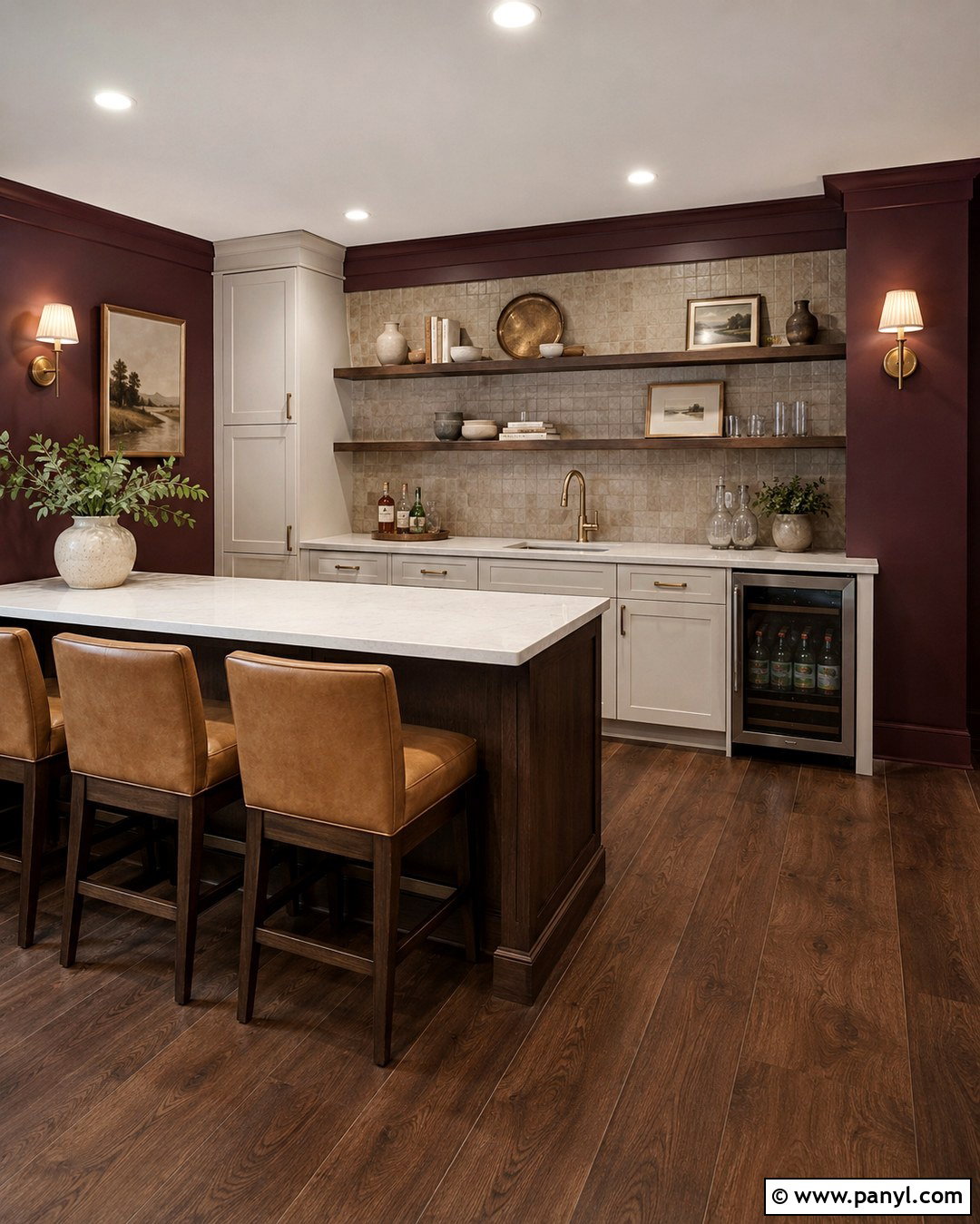
Muted burgundy can transform a basement bar into a rich, comfortable retreat when used with restrained supporting finishes. Choose a brown-based burgundy for the walls, then balance it with warm white shaker cabinets and creamy quartz countertops. A lightly textured taupe backsplash creates a quiet transition between the dark paint and pale counter. Use antique brass hardware, compact wall sconces, and walnut floating shelves to reinforce the warm palette. Bar stools in camel-colored upholstery provide softness and practical contrast. Medium walnut flooring works well, provided the ceiling remains cream and the room includes generous recessed lighting. Add neutral ceramics and simple vintage-inspired artwork without text. The finished basement bar feels distinctive and layered, yet the light cabinetry prevents the strong wall color from closing in.
18. Basement Bar Soft Clay Walls
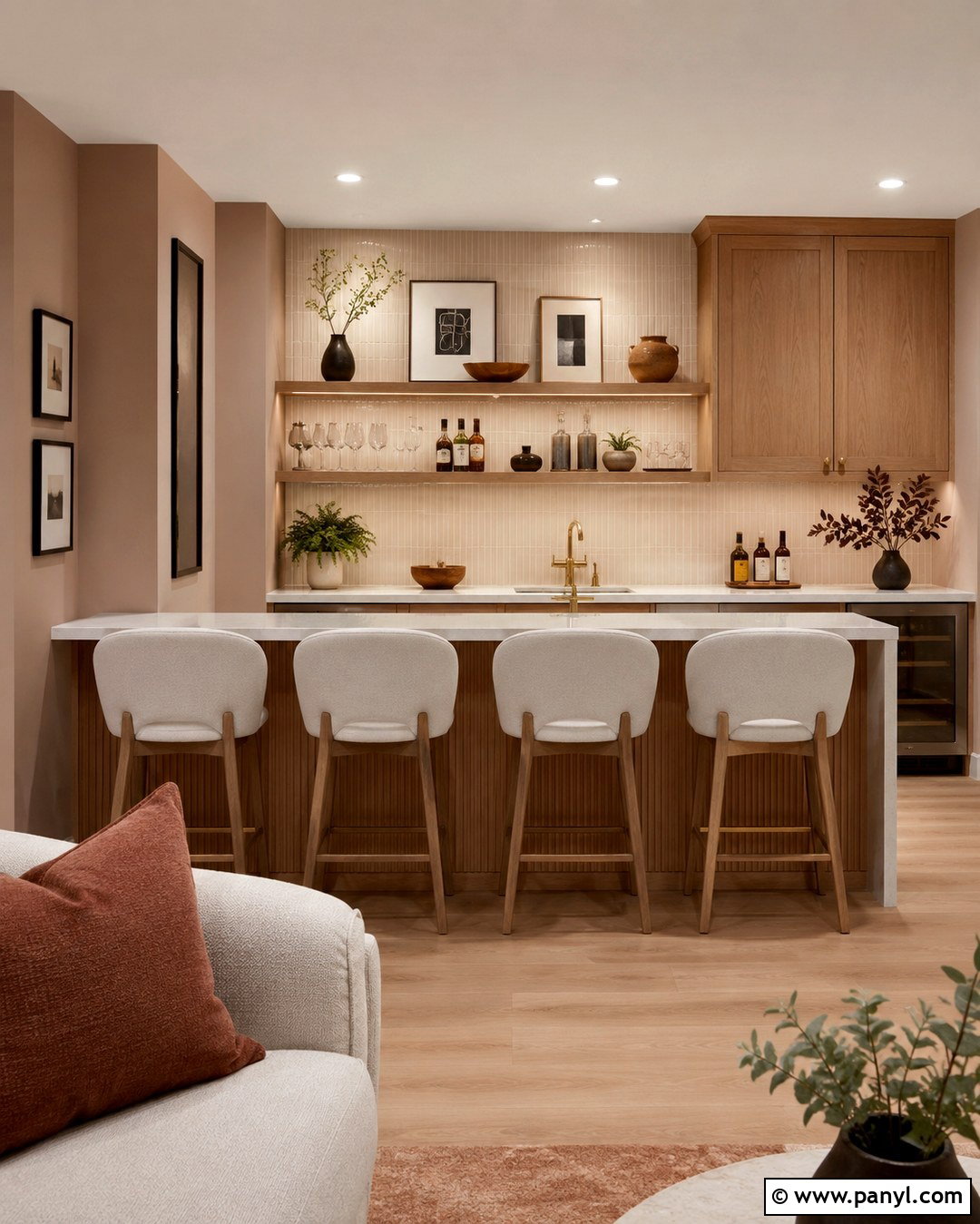
Soft clay offers an understated alternative to both beige and terracotta. Its warm pink-brown character can make a basement bar feel welcoming without appearing overly colorful. Paint the walls in a pale clay tone and pair them with natural oak cabinets, warm white quartz, and vertical ivory backsplash tiles. Brushed brass fixtures complement the color, while matte black pendant cords add a small amount of contrast. Choose stools covered in textured cream fabric and install light oak flooring for an easy, tonal foundation. A low-pile rug with muted rust, beige, and charcoal details can define the seating area. Finish with handmade ceramic accessories, black-framed artwork, and a leafy plant. This complete palette suits contemporary organic interiors and brightens a basement through warmth rather than starkness.
19. Basement Bar Butter Yellow Walls
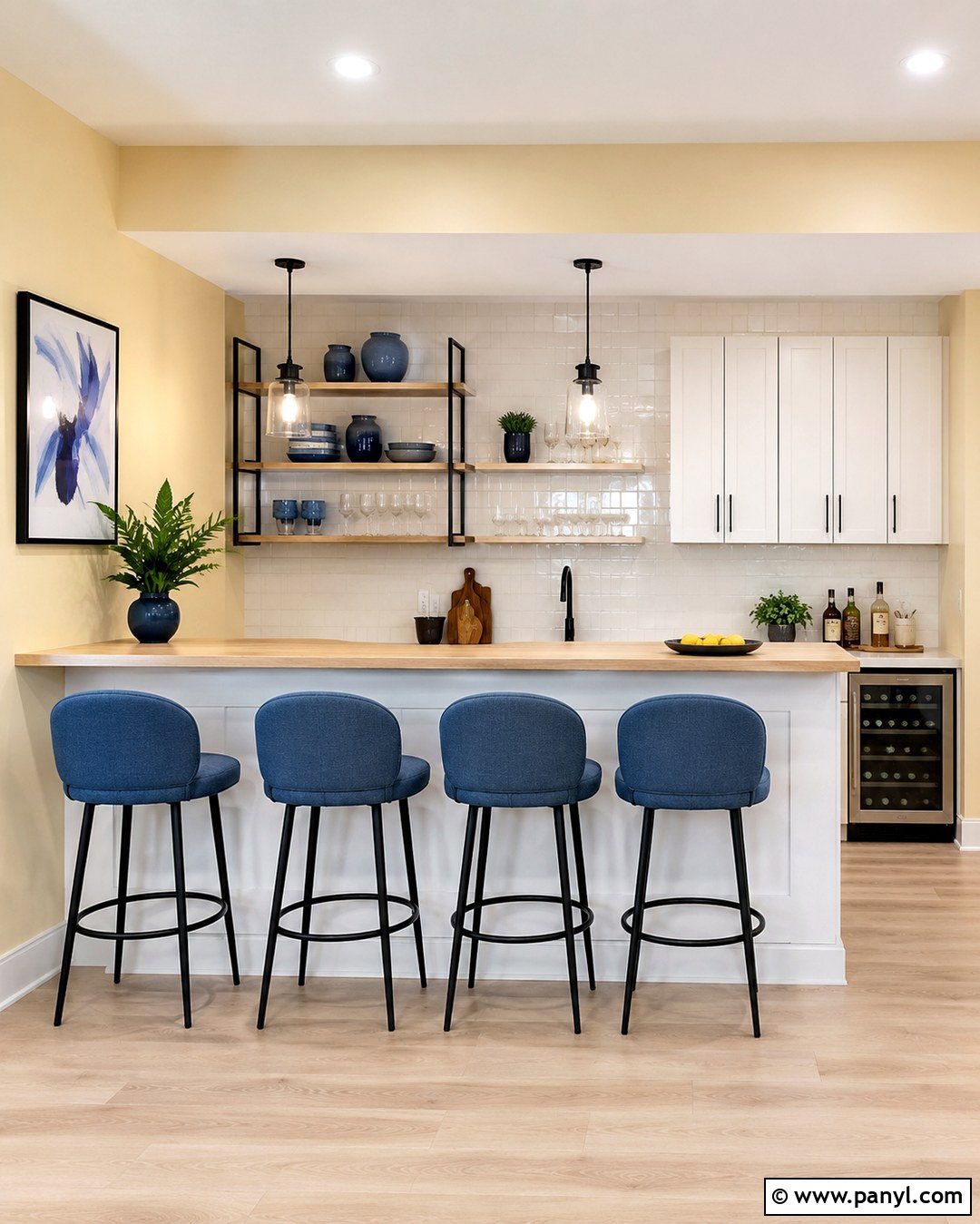
A gentle butter yellow can brighten a basement bar while giving the room more personality than cream. Choose a pale, softened yellow instead of a saturated lemon shade. Combine it with white cabinets, light maple counters, and a glossy white square-tile backsplash for a cheerful foundation. Introduce matte black pulls, black-framed shelves, and simple black pendants to keep the design crisp. Counter stools in dusty blue fabric provide a complementary cool accent without making the palette feel childish. Pale oak flooring and a cream rug maintain the room’s visual openness. Style the shelves with white ceramics and a few blue accessories. Under-cabinet lights will enhance the backsplash and keep the yellow walls looking clean, warm, and intentional throughout the finished basement bar.
20. Basement Bar Warm Beige Walls
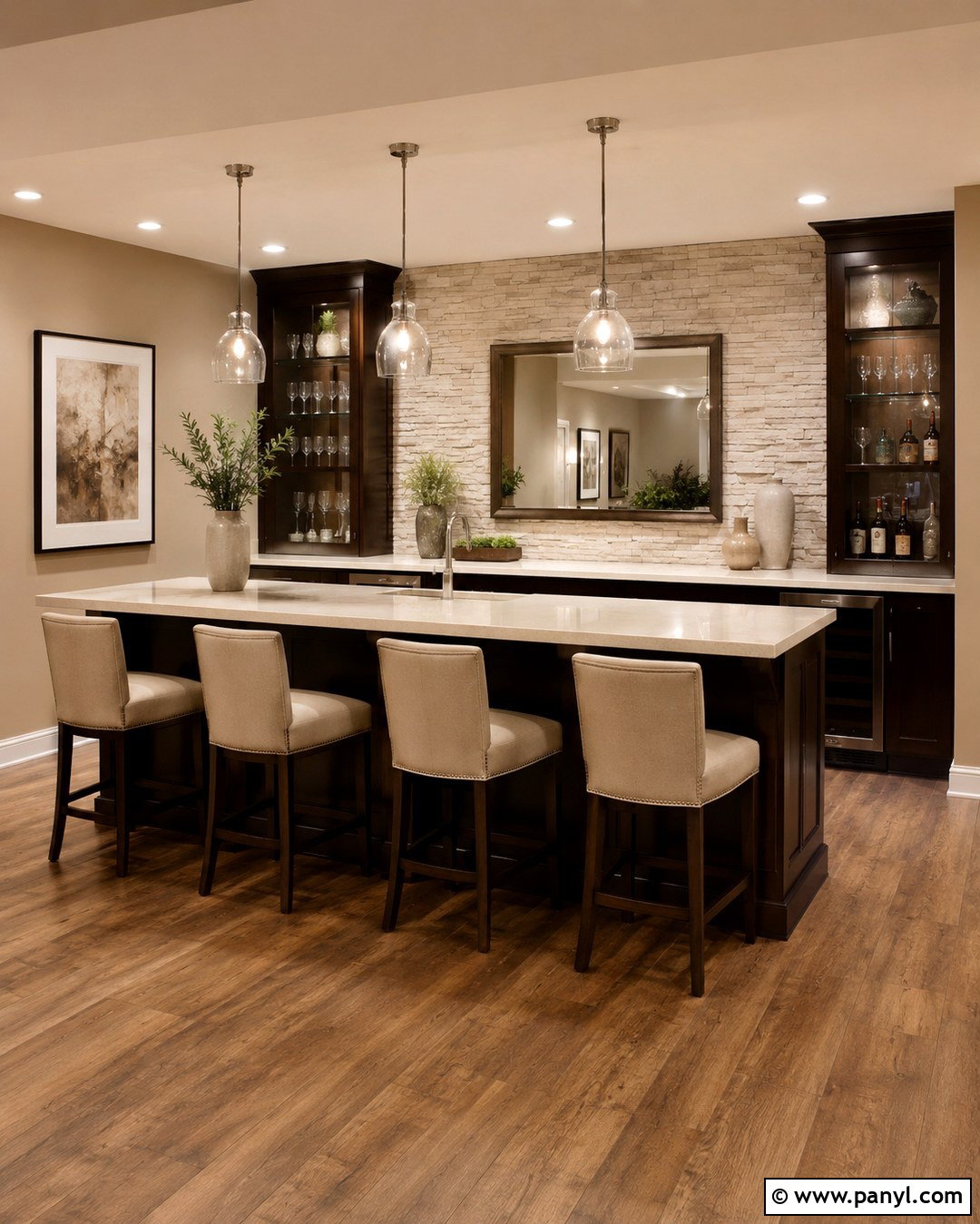
Warm beige walls create a familiar, flexible backdrop that can unify an existing basement bar with mixed finishes. Select a beige with subtle tan undertones, then add dark espresso cabinets and a creamy quartz countertop for clear contrast. Use a backsplash of light stacked stone or textured porcelain tile to bring natural variation to the bar wall. Brushed nickel hardware and glass pendant lights keep the darker cabinetry from feeling heavy. Choose tan upholstered stools with dark wood legs and install medium oak flooring for a layered but coordinated result. A large mirror, pale ceramic accessories, and simple greenery will brighten the arrangement. This practical palette is especially useful when the basement includes open seating or game areas that must connect smoothly with the bar.
Conclusion:
The best 20 Basement Bar Wall Colors create more than an attractive background. They coordinate the walls with cabinetry, counters, flooring, lighting, stools, and nearby seating so the entire lower level feels complete. Light shades such as warm white, cream, greige, and sage can open the room, while charcoal, navy, teal, and forest green build a more intimate atmosphere. Always view large paint samples under the basement’s actual recessed, pendant, and under-cabinet lighting before making a final decision. Compare them beside permanent materials at different times of day. Whether you prefer a bright modern bar or a deeply colored retreat, a balanced palette will make the space look purposeful, comfortable, and ready for everyday use.

Related Ideas and Inspiration:
Leave a Reply