
A basement can become far more than overflow storage when it is planned around a beautiful, organized bottle collection. These 20 wine cellar ideas basement ideas cover compact closets, spacious tasting rooms, modern glass enclosures, rustic brick interiors, and practical layouts for large collections. Each look combines storage, lighting, flooring, climate considerations, and comfortable circulation, so the entire room feels cohesive. Before choosing finishes, plan insulation, ventilation, cooling equipment, and moisture protection with qualified professionals. Then select racks and materials that suit your basement’s size, ceiling height, and existing architecture. Whether your goal is an affordable conversion or a polished entertaining space, the complete designs below make it easier to shape your favorite 20 wine cellar ideas basement ideas.

1. Modern Glass Basement Wine Cellar
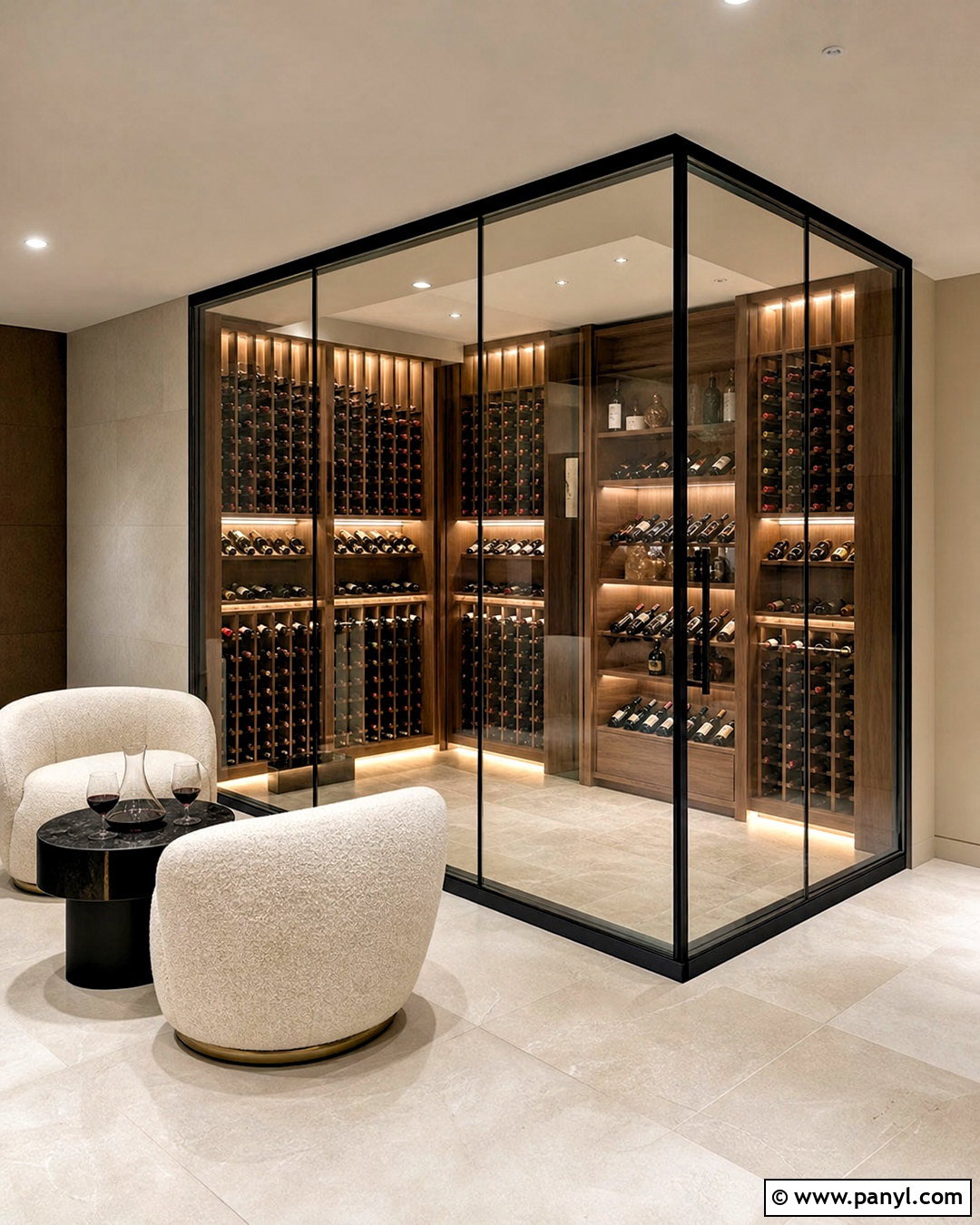
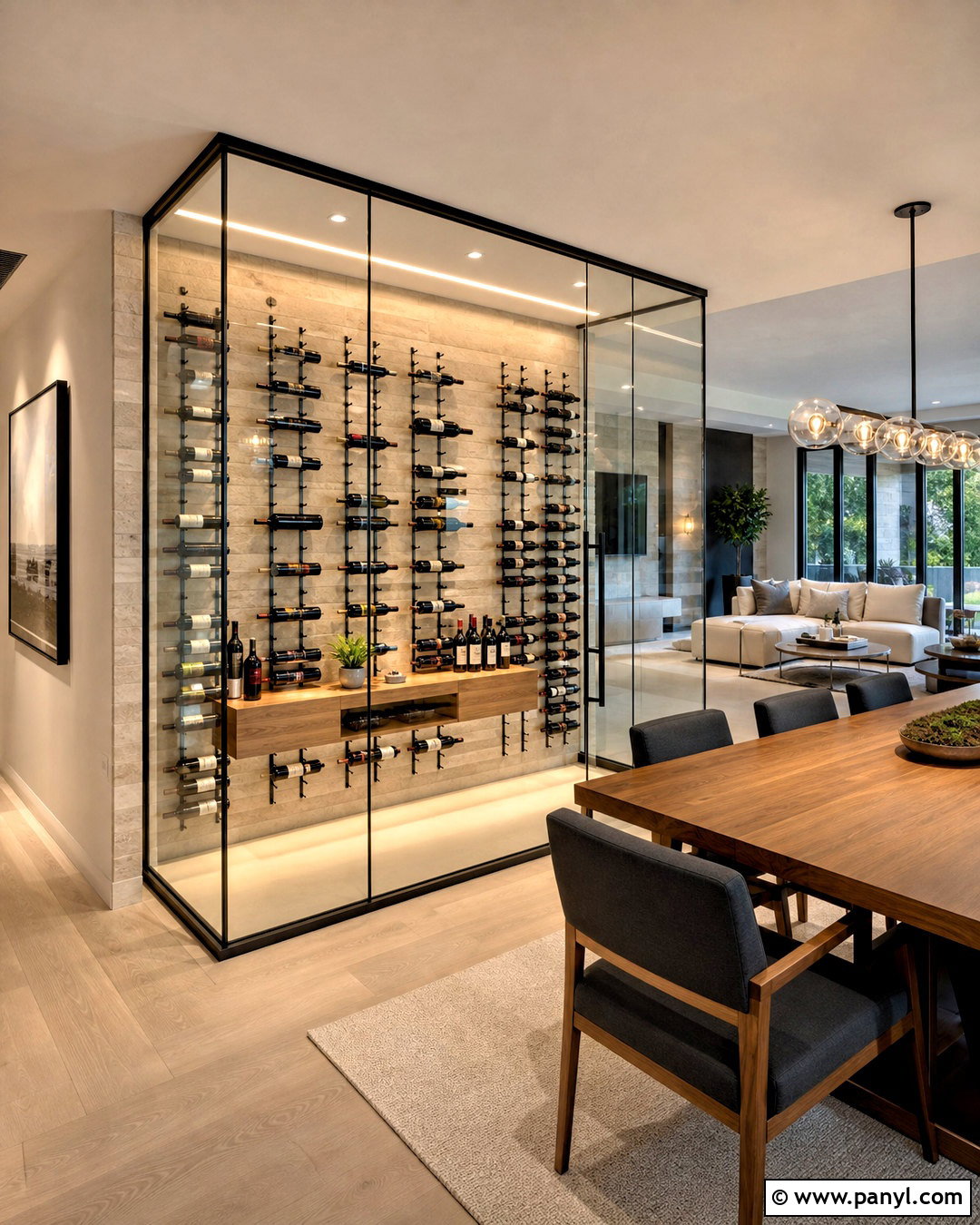
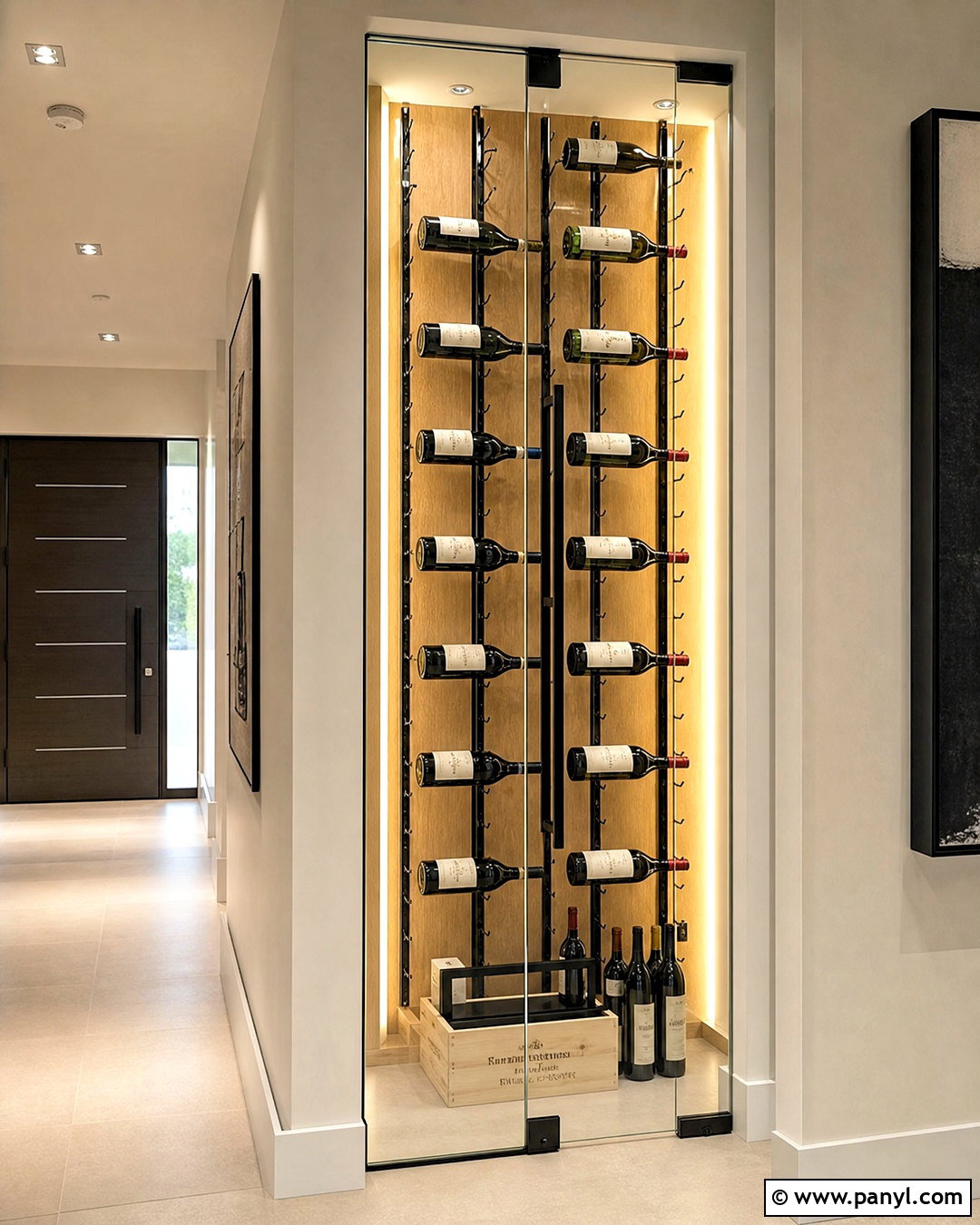
Turn an open basement corner into a modern glass wine cellar that feels connected to the surrounding lounge. Use clear, insulated glass walls with slim matte black frames to create a crisp enclosure without making the basement feel smaller. Inside, install floor-to-ceiling walnut racks against a warm greige wall. Add a pale limestone floor and concealed LED lighting beneath shelves for an elegant glow. A narrow walnut display ledge can showcase special bottles without crowding the walkway. Outside the enclosure, place two cream boucle chairs and a small black table to establish a casual tasting area. Keep cooling equipment visually hidden and coordinate the cellar hardware with nearby basement doors, lighting, and cabinetry.
2. Small Basement Wine Cellar
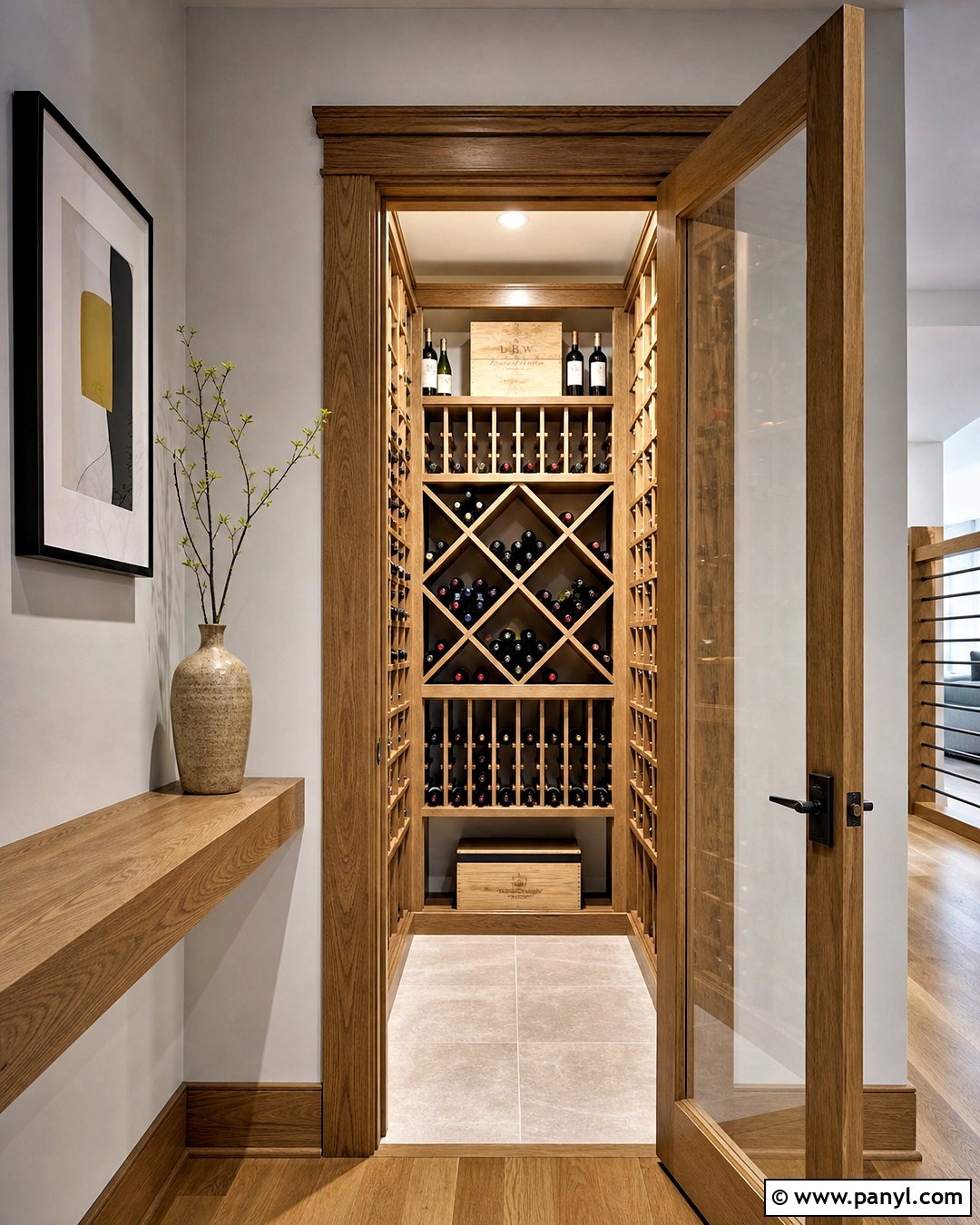
A compact cellar can feel polished when every inch serves a clear purpose. Convert a small basement closet into an enclosed storage room with shallow oak racks lining three walls. Leave enough open floor space for comfortable access, and use diagonal cubbies near the bottom for grouped bottles. Soft white walls, light oak shelving, and pale porcelain tile will make the tight interior appear brighter. Install a glass-paneled door so the collection becomes part of the basement decor without requiring a large footprint. A flush ceiling light and discreet shelf lighting provide clear visibility. Finish the surrounding area with matching oak trim and a simple framed print, creating an intentional transition between the cellar and basement hallway.
3. Rustic Brick Basement Wine Cellar
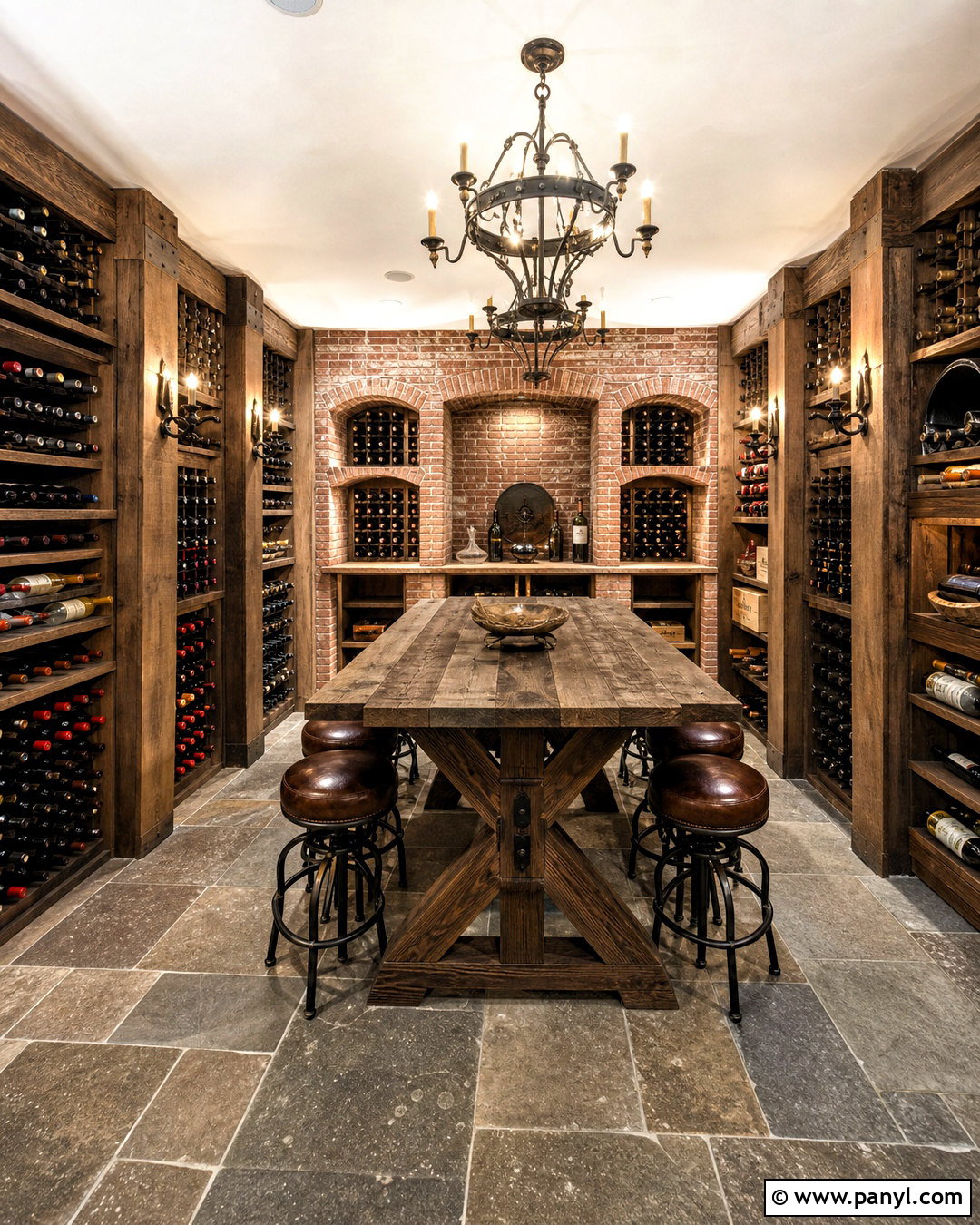
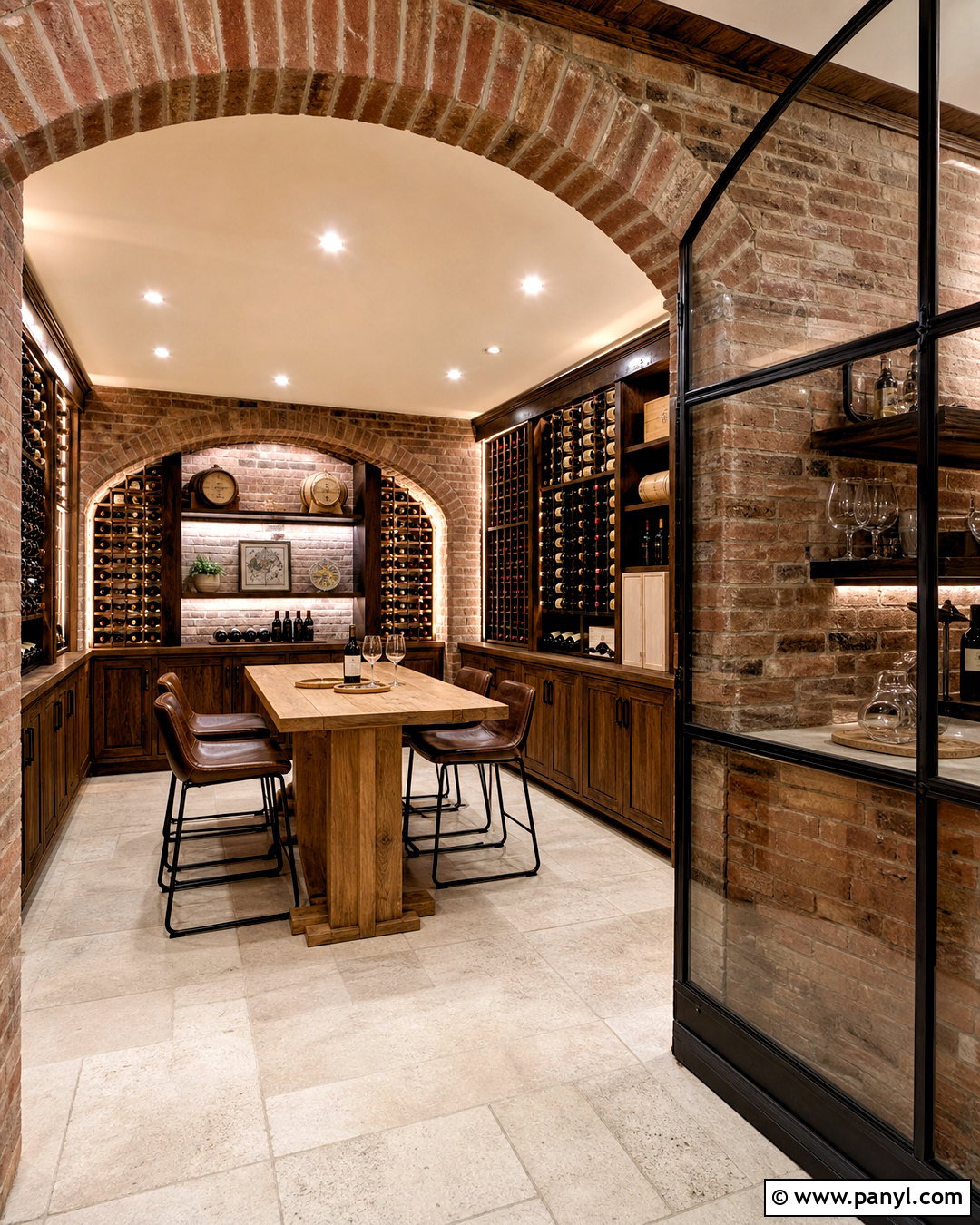
Exposed brick, rough wood, and aged metal create a basement wine cellar with an inviting old-world character. Cover the main walls with reclaimed red brick or a realistic thin-brick veneer. Add sturdy racks made from stained oak, leaving several arched openings for display bottles and wooden cases. A warm gray stone floor balances the rich wall colors while handling everyday foot traffic. Use black iron sconces with warm white bulbs to highlight the brick texture without leaving dark corners. Complete the room with a reclaimed wood tasting table, leather stools, and a simple iron chandelier. Keep the layout symmetrical, with storage surrounding the seating zone, so the rustic materials feel organized rather than heavy or cluttered.
4. Under Stairs Basement Wine Cellar
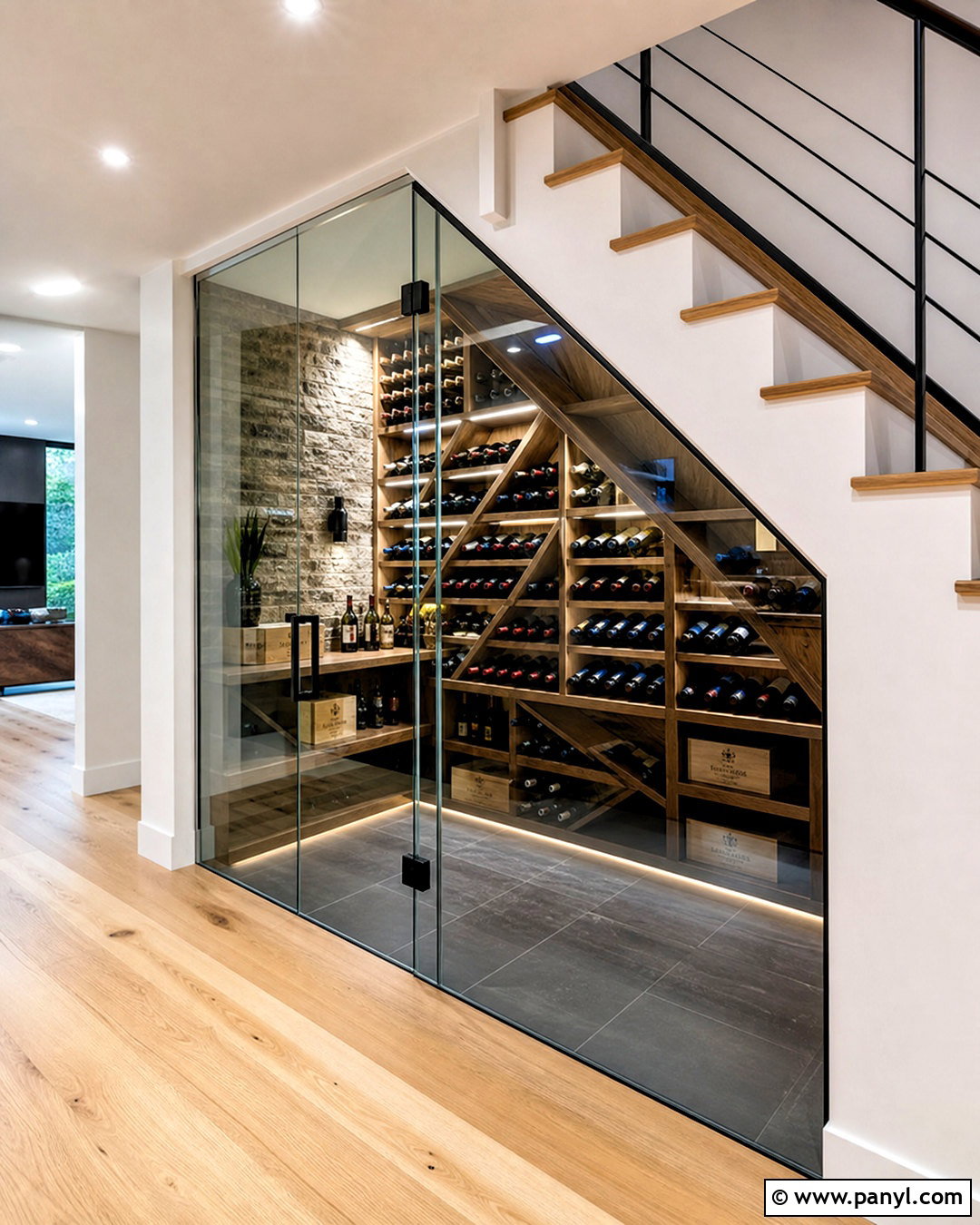
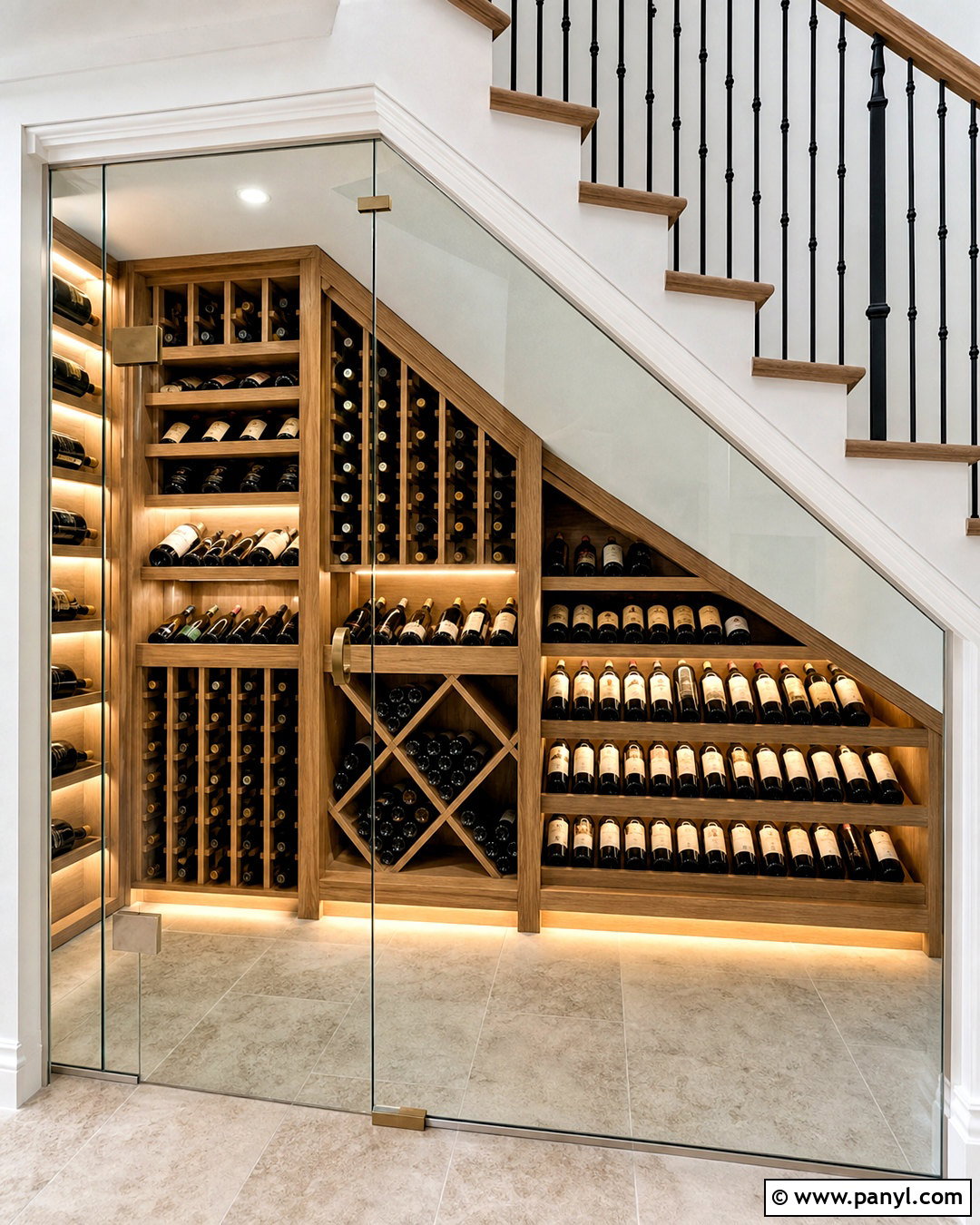
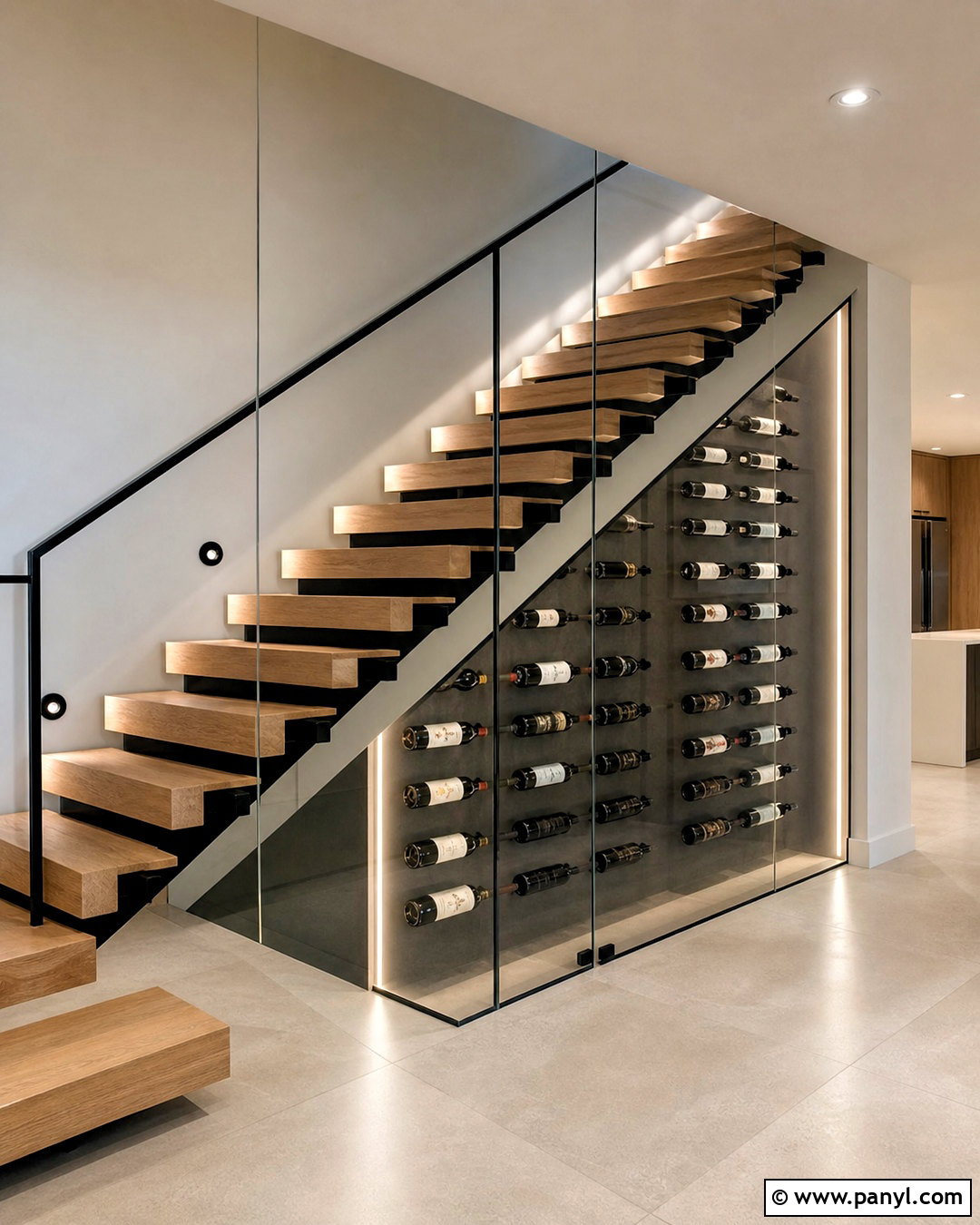
The space beneath a basement staircase can become a compact wine cellar rather than an awkward storage area. Enclose the triangular footprint with frameless glass panels and a matching glass door. Inside, use custom walnut racks that follow the slope of the stairs, placing taller storage columns at the high end and shorter display shelves below the lowest steps. A charcoal porcelain floor adds contrast and connects visually with matte black stair railings. Install slim LED strips along the rack edges to brighten the entire enclosure. Keep the surrounding basement simple with warm white walls, natural oak flooring, and minimal furniture. This tailored arrangement turns an overlooked architectural pocket into a useful, attractive basement focal point.
5. Basement Wine Cellar Tasting Room
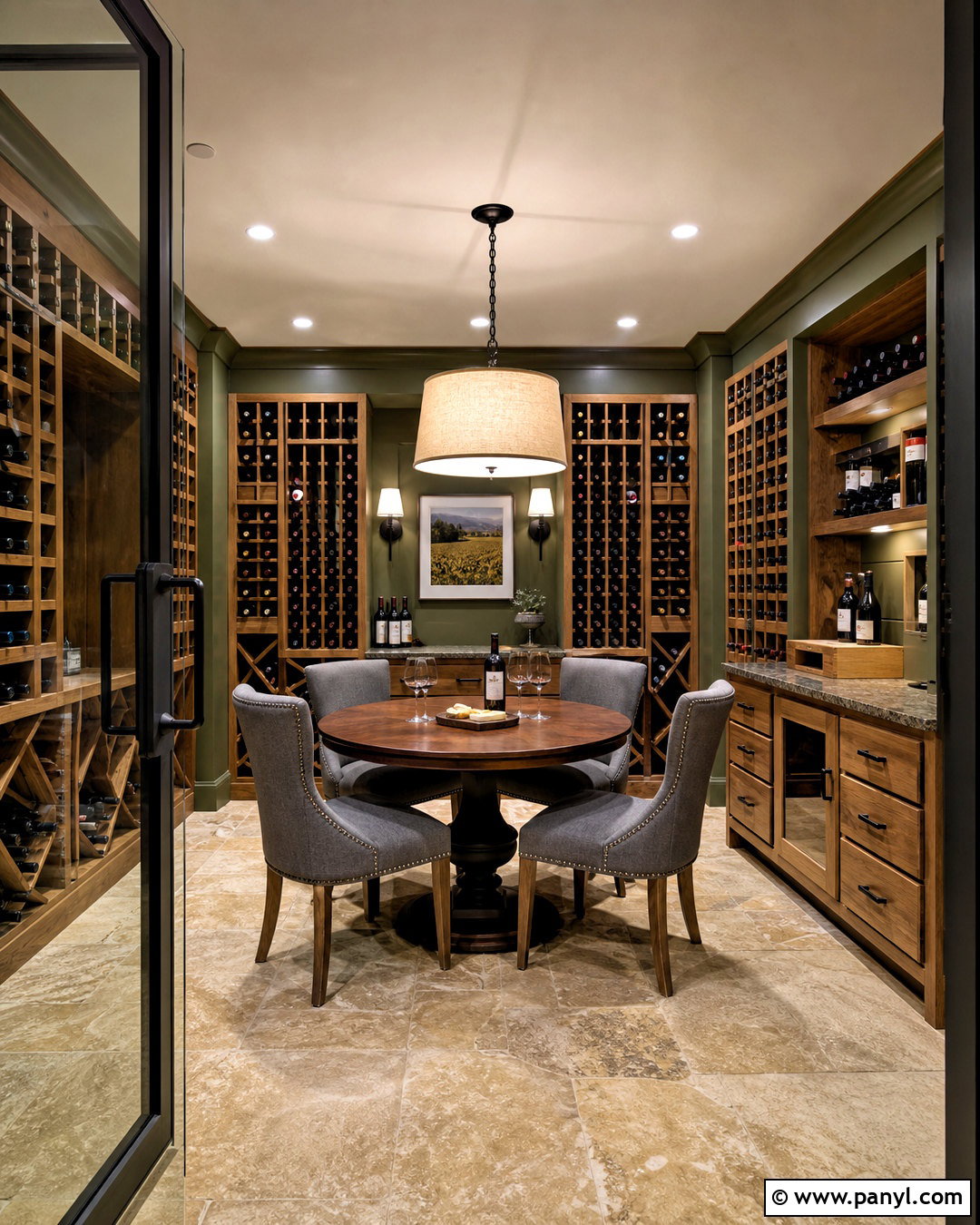
Imagine entering a cellar where the collection and tasting area feel like one comfortable room. Line the perimeter with medium-tone oak racks, then place a round pedestal table in the center with four upholstered chairs. Deep olive walls, warm stone flooring, and an off-white ceiling provide rich color without making the basement feel enclosed. Use a shaded pendant over the table, wall sconces around the storage, and concealed rack lighting for balanced illumination. Include a narrow countertop with closed cabinets for glasses, serving accessories, and linens. A glass door helps define the climate-controlled cellar while maintaining visual connection with the basement. Keep pathways open around the table so bottles remain easy to browse and retrieve.
6. Black Metal Basement Wine Cellar
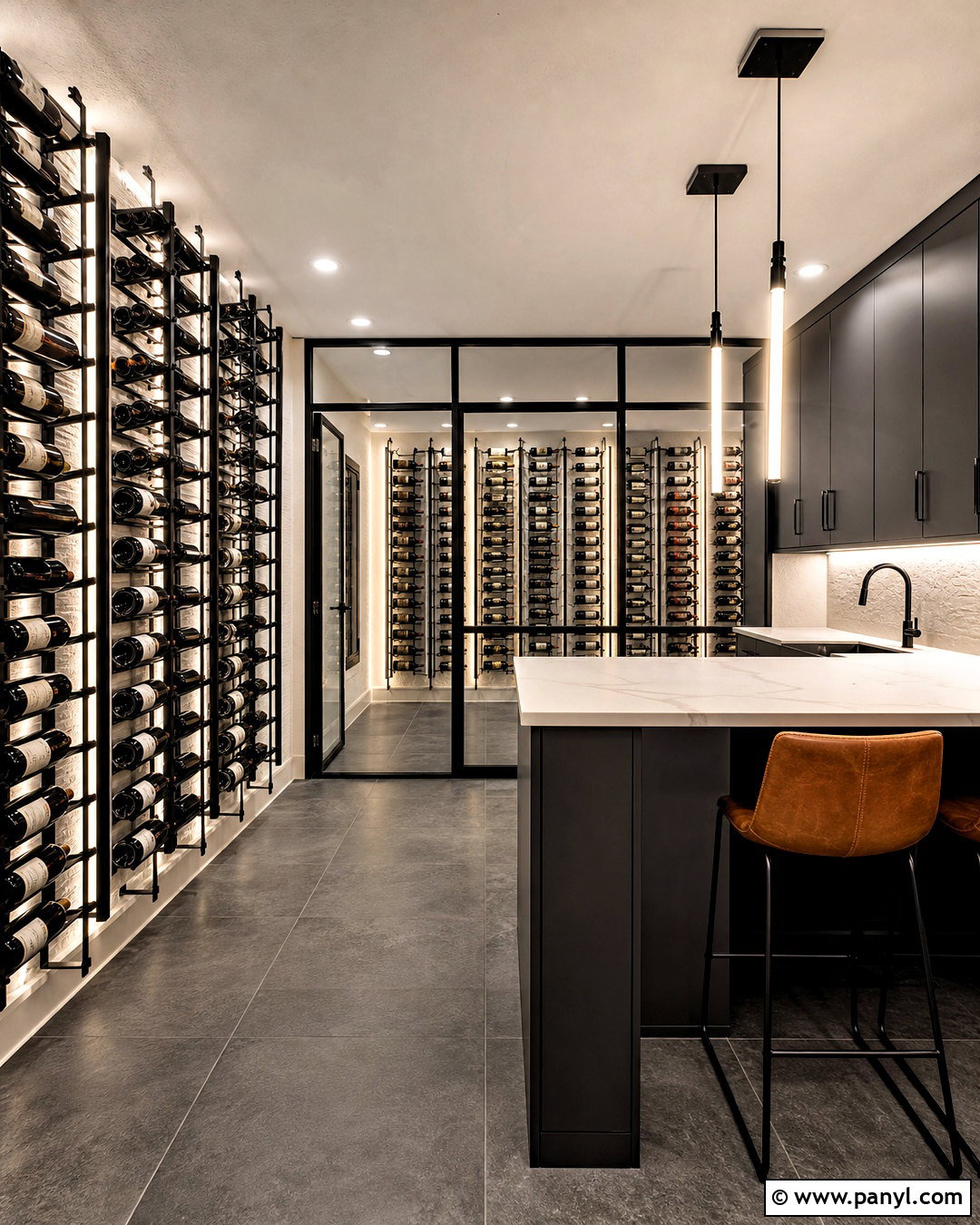
For a clean architectural look, build the cellar around slim black metal racks and a restrained neutral palette. Install label-forward bottle supports across a textured warm white wall, allowing the storage system to create a strong graphic pattern. Use black-framed glass walls, large gray porcelain floor tiles, and flat-panel charcoal cabinetry along one side. A light quartz countertop adds a practical place for opening and arranging bottles. Bright recessed ceiling lights and vertical LED strips prevent the black finishes from feeling too dark. Add two camel leather stools for warmth and contrast. This complete basement design works especially well beside a contemporary bar or media room because its repeated black lines connect easily with modern railings, fixtures, and furniture.
7. Traditional Wood Basement Wine Cellar
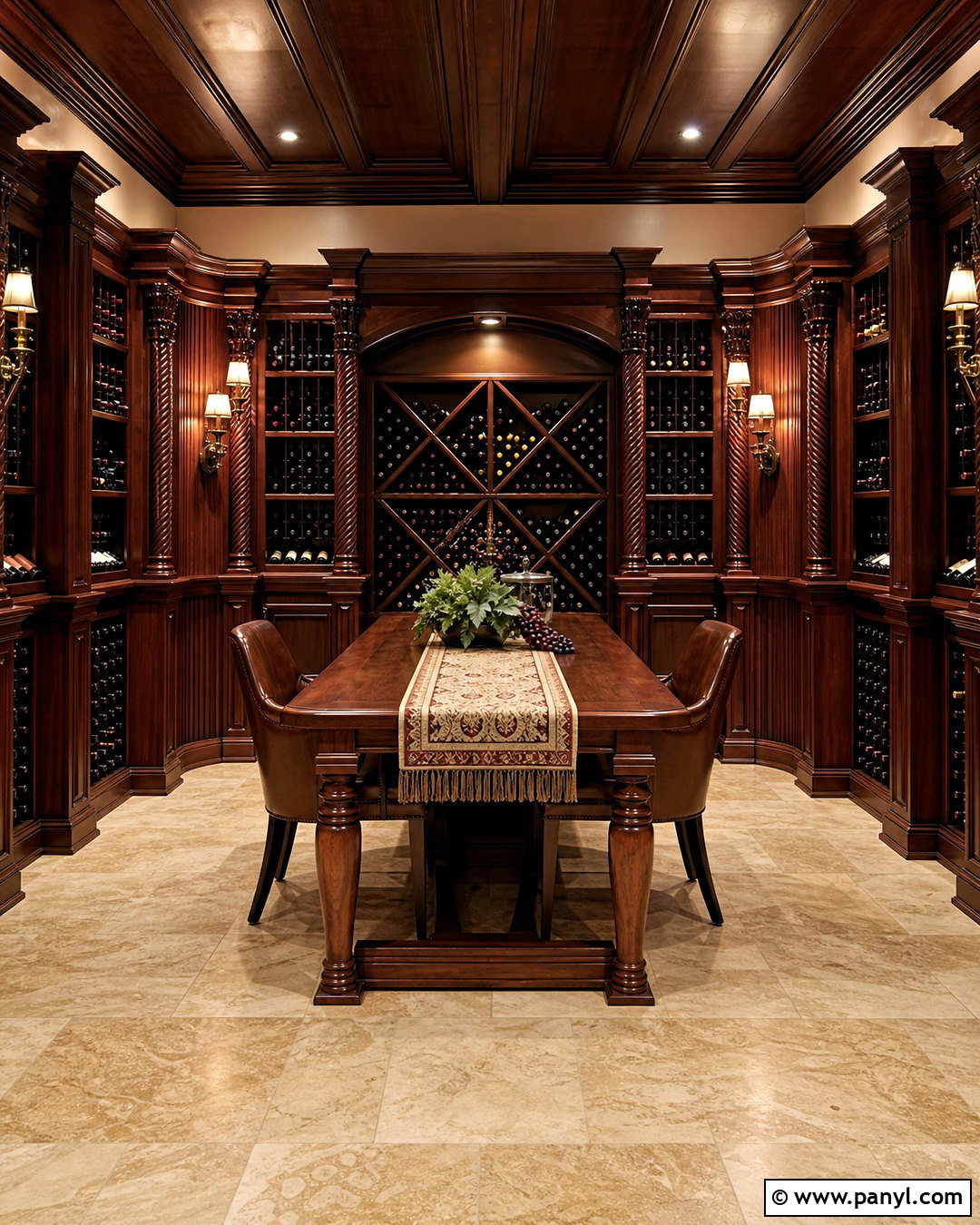
Rich woodwork gives a basement wine cellar the established appearance of a classic library. Wrap the walls in custom cherry or mahogany racks with crown molding, carved posts, and a mix of individual slots, diamond bins, and display rows. Choose a warm beige stone floor to soften the darker cabinetry. In the middle, position a substantial wood table with a lower shelf for closed storage. A paneled ceiling with recessed lighting creates architectural detail while preserving headroom. Add traditional brass sconces, a patterned runner, and two brown leather chairs near the back wall. Keep decoration limited so the craftsmanship remains the focus. A solid wood door with an insulated glass panel provides a welcoming entrance and completes the tailored look.
8. Floating Rack Basement Wine Cellar
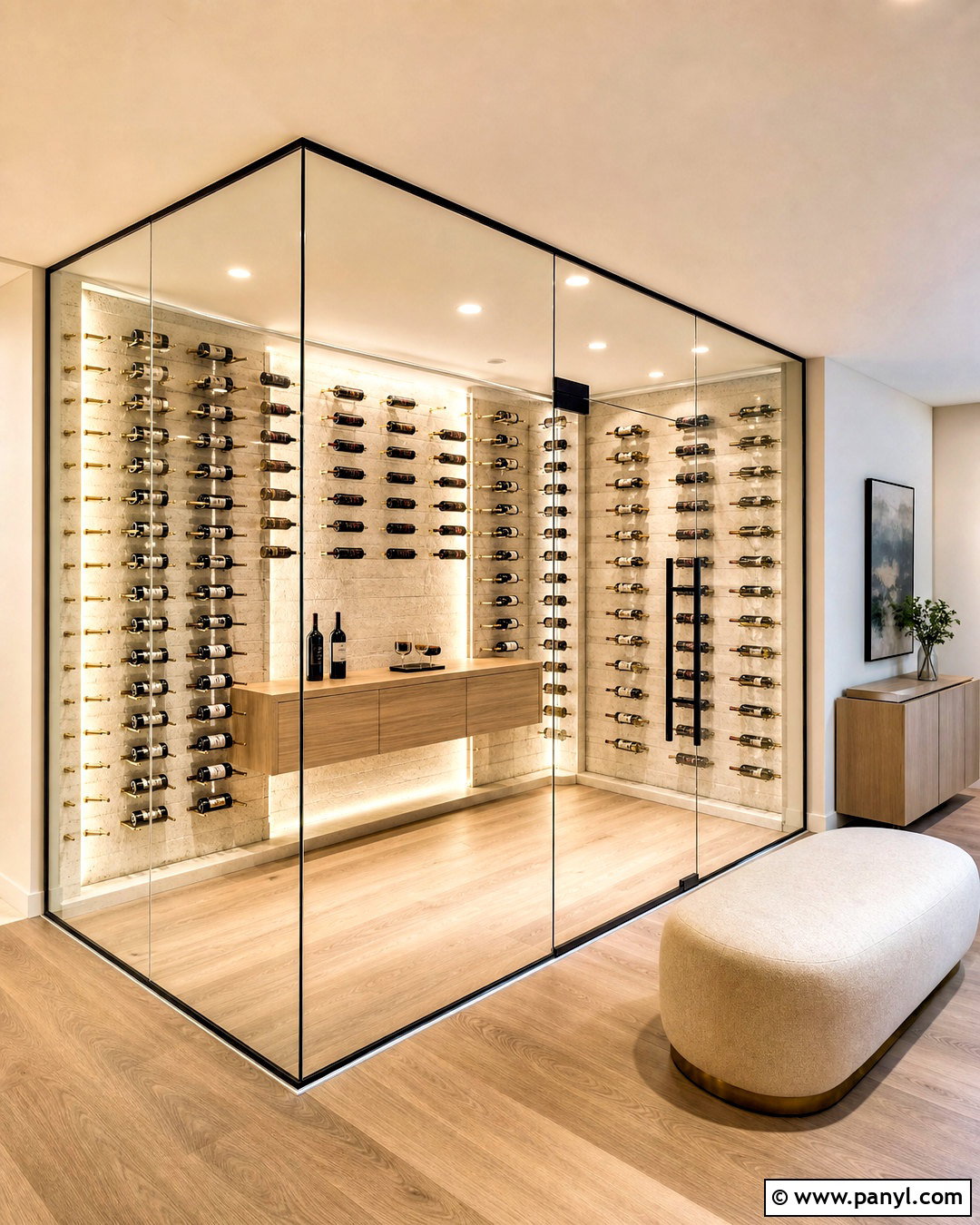
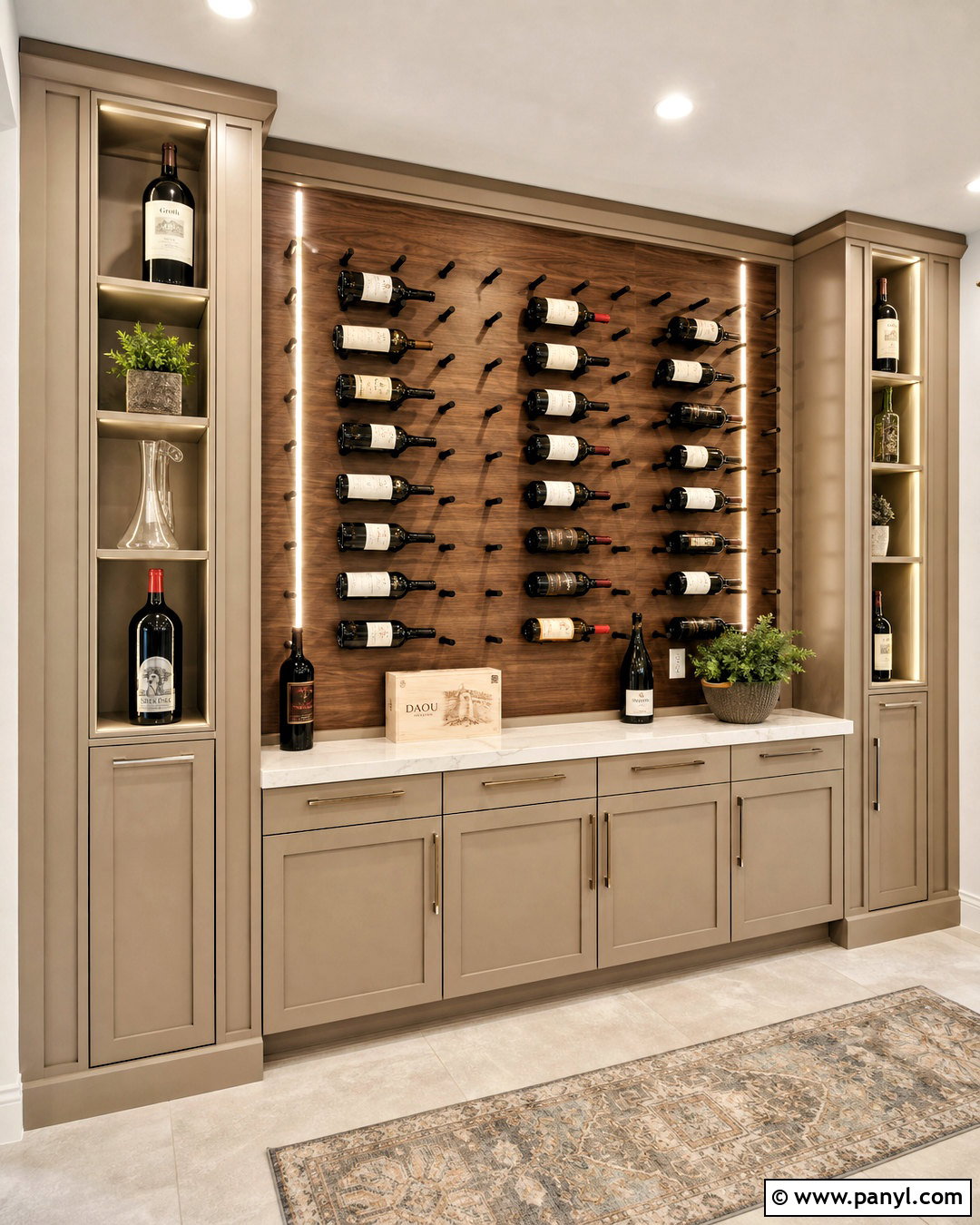
Floating racks make a basement cellar feel lighter and more spacious by exposing more of the wall behind the bottles. Choose brushed brass or matte black pegs mounted across large ivory stone panels. Arrange bottles in neat horizontal rows, leaving deliberate open areas to prevent the display from appearing crowded. Pair the feature wall with light oak flooring, warm white ceilings, and a clear glass enclosure. A slim oak console with concealed drawers provides storage for accessories without competing with the racks. Use ceiling spotlights and soft backlighting around the stone panels to add depth. Outside the cellar, continue the same flooring and place a curved cream bench nearby, creating a seamless modern basement rather than a disconnected storage room.
9. Budget Basement Wine Cellar
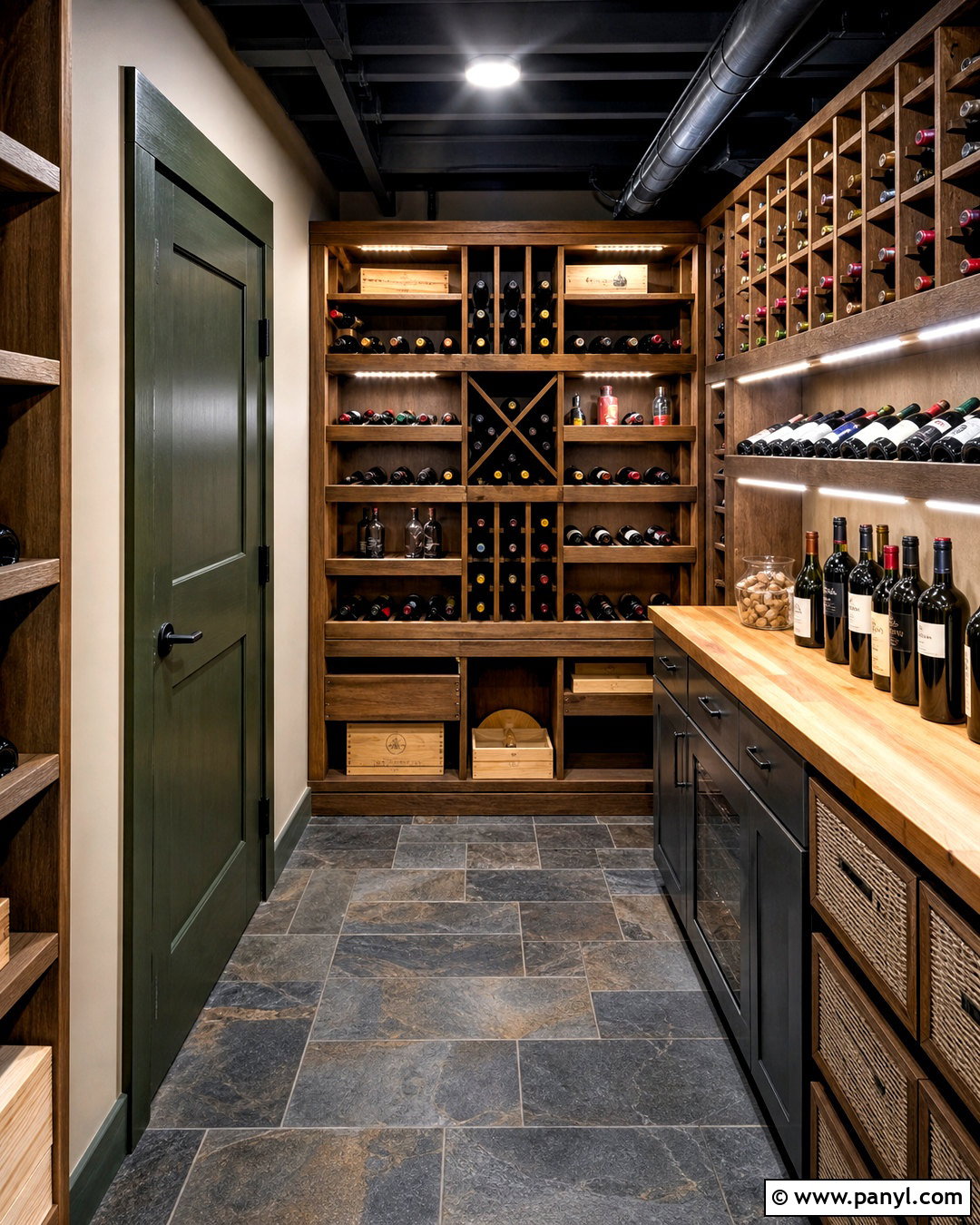
An affordable basement cellar can still look finished when simple materials are repeated consistently. Paint the room a soft taupe and install modular pine racks along two walls, staining them a medium walnut tone for a more substantial appearance. Use durable slate-look vinyl flooring and finish exposed ceiling areas with matte charcoal paint. Add battery-free wired LED strips beneath the upper shelves and a practical flush-mount ceiling fixture. A basic butcher-block counter over stock cabinets creates an organizing and serving station. Instead of an expensive decorative entrance, choose an insulated solid door painted deep green with simple black hardware. Keep the layout open and avoid unnecessary ornament, allowing neat storage, warm colors, and thoughtful lighting to elevate the economical materials.
10. Luxury Stone Basement Wine Cellar
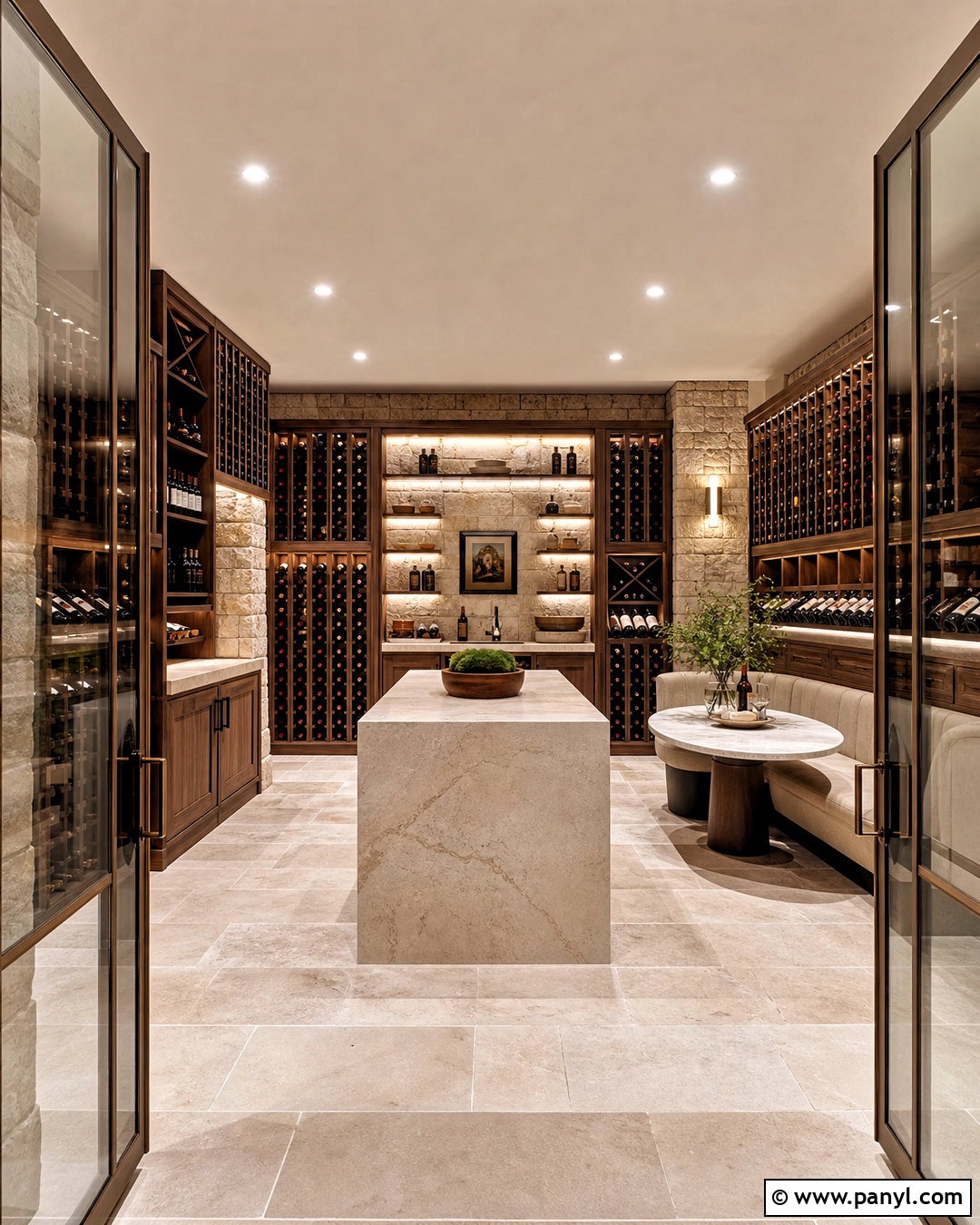
Natural-looking stone and carefully layered lighting can turn a generous basement into a sophisticated cellar suite. Cover the main storage wall with creamy limestone and add floor-to-ceiling dark walnut racks on both sides. Build a central display island with a waterfall stone top, closed drawers, and open bottle compartments below. Continue large-format limestone tile across the floor for a seamless appearance. A glass entrance with bronze framing introduces a warm metallic accent. At one end, create a tasting niche with a curved banquette, round marble table, and soft neutral upholstery. Use recessed lights, illuminated display shelves, and elegant wall sconces throughout. Keep mechanical equipment concealed behind matching millwork so every visible surface supports the refined, uncluttered design.
11. Narrow Basement Wine Cellar
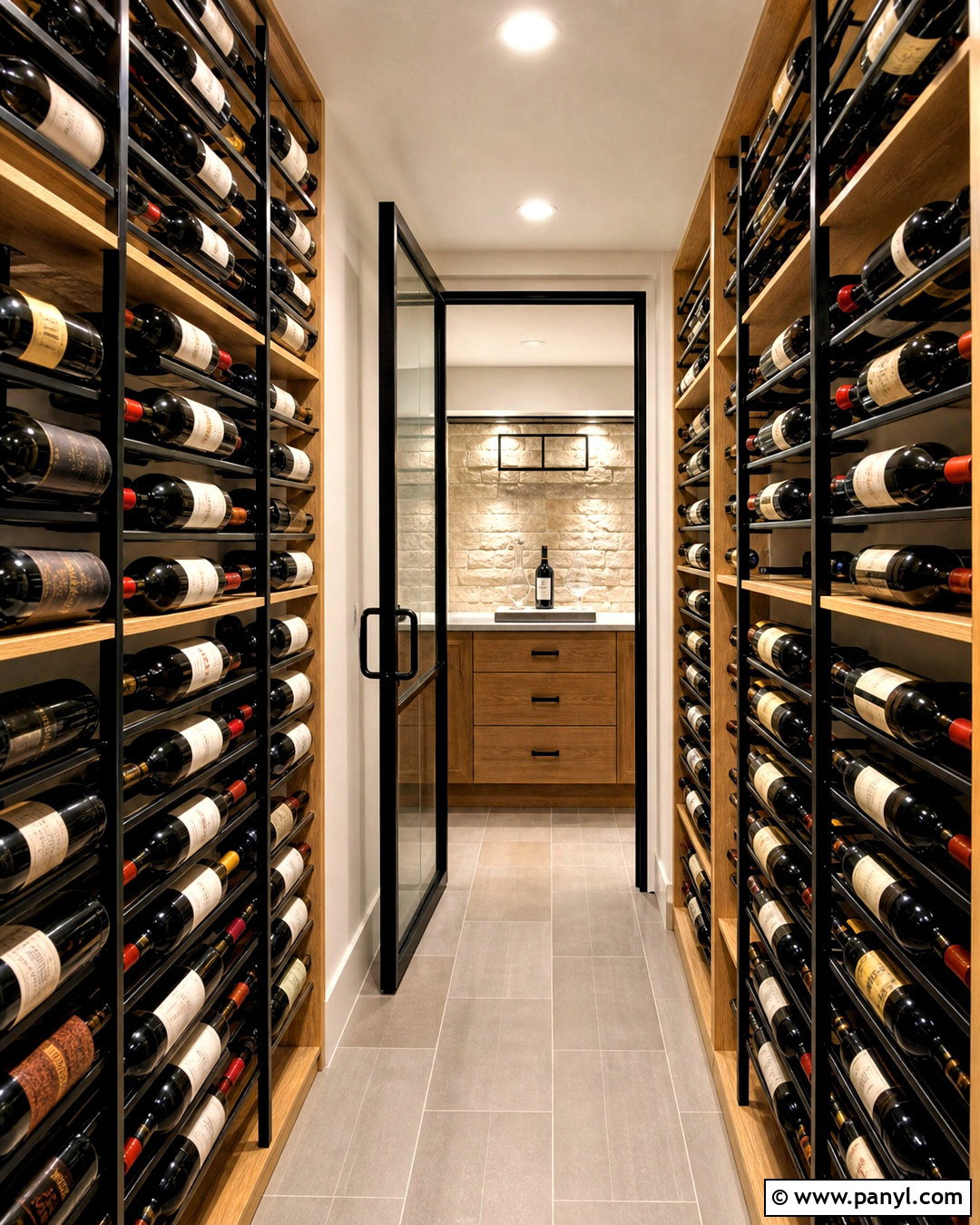
A long, narrow basement room works best with shallow storage and a clear central path. Install label-forward metal racks on one wall and slim wooden shelving on the opposite side. At the far end, add a small counter with drawers and a statement stone backsplash to create a natural visual destination. Use pale gray floor tile laid lengthwise to emphasize the room’s depth. Warm white walls and a light ceiling keep the corridor from feeling confined. Choose flush recessed lights instead of hanging fixtures, then add vertical illumination between rack sections. A black-framed glass door provides an open sightline from the basement hallway. Limit the palette to oak, black, gray, and white for a tidy, cohesive result.
12. Industrial Basement Wine Cellar
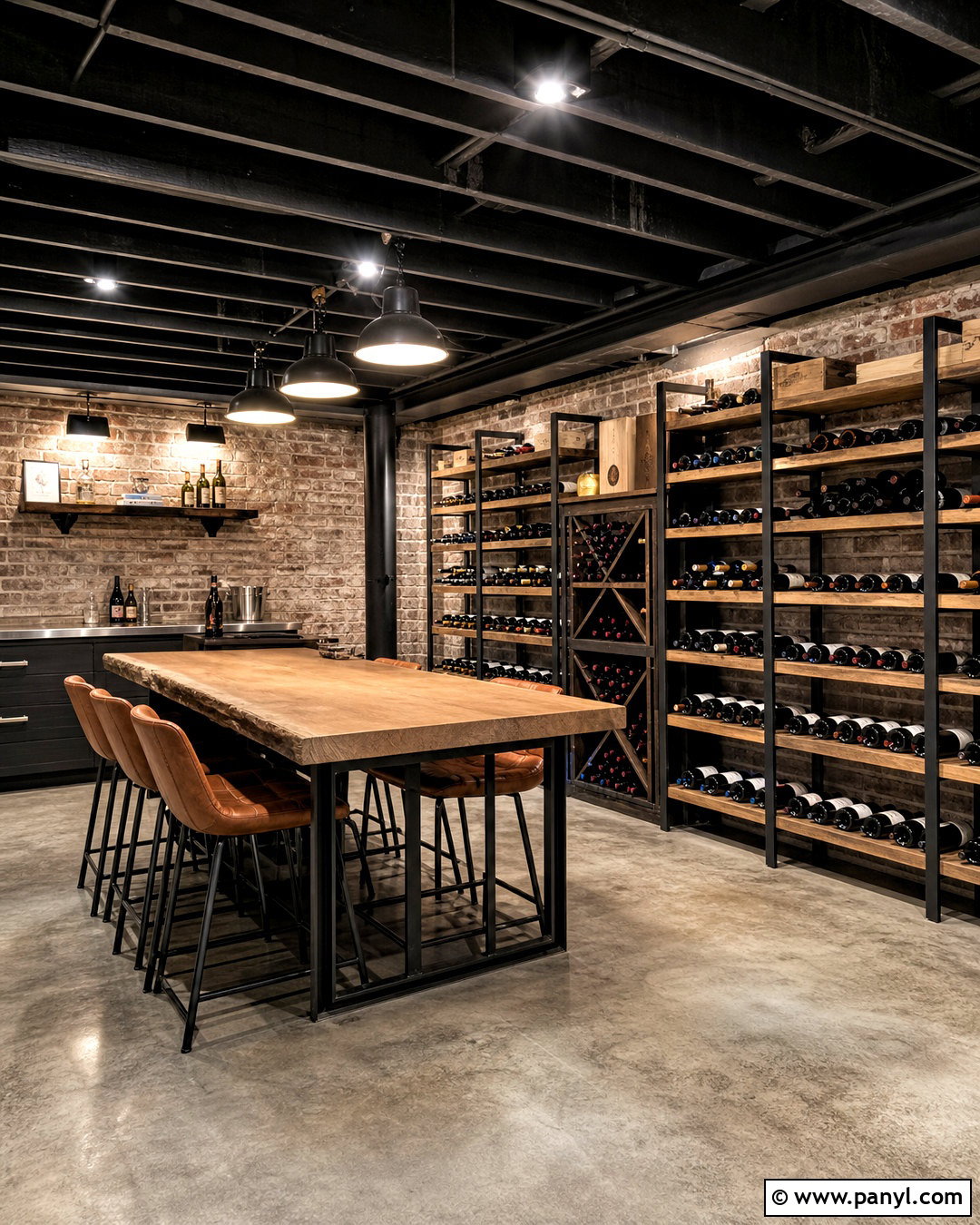
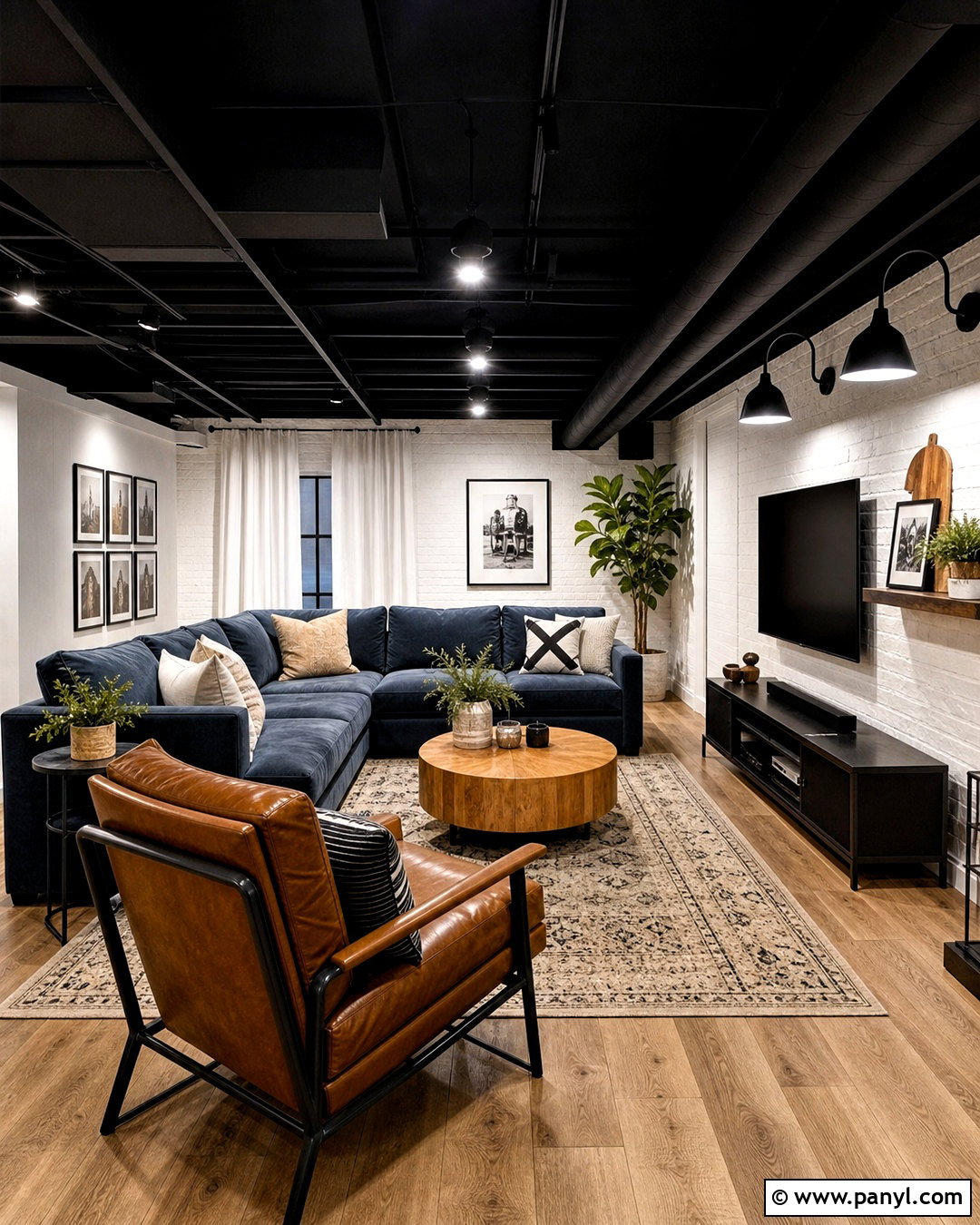
Exposed structural details can become part of an industrial cellar when the room is carefully coordinated. Paint ceiling joists and visible mechanical elements matte black, then pair them with weathered brick walls and a sealed concrete floor. Use steel-framed racks with reclaimed oak shelves for a practical mix of warm and cool materials. Place a sturdy rectangular tasting table in the center with black metal stools and cognac leather seats. Cage-style sconces, track lights, and hidden rack lighting provide multiple layers of brightness. Add charcoal cabinets and a stainless steel counter along one wall for easy cleanup and organized storage. Maintain generous spacing around the furniture so the strong materials feel intentional, comfortable, and suitable for a real residential basement.
13. Farmhouse Basement Wine Cellar
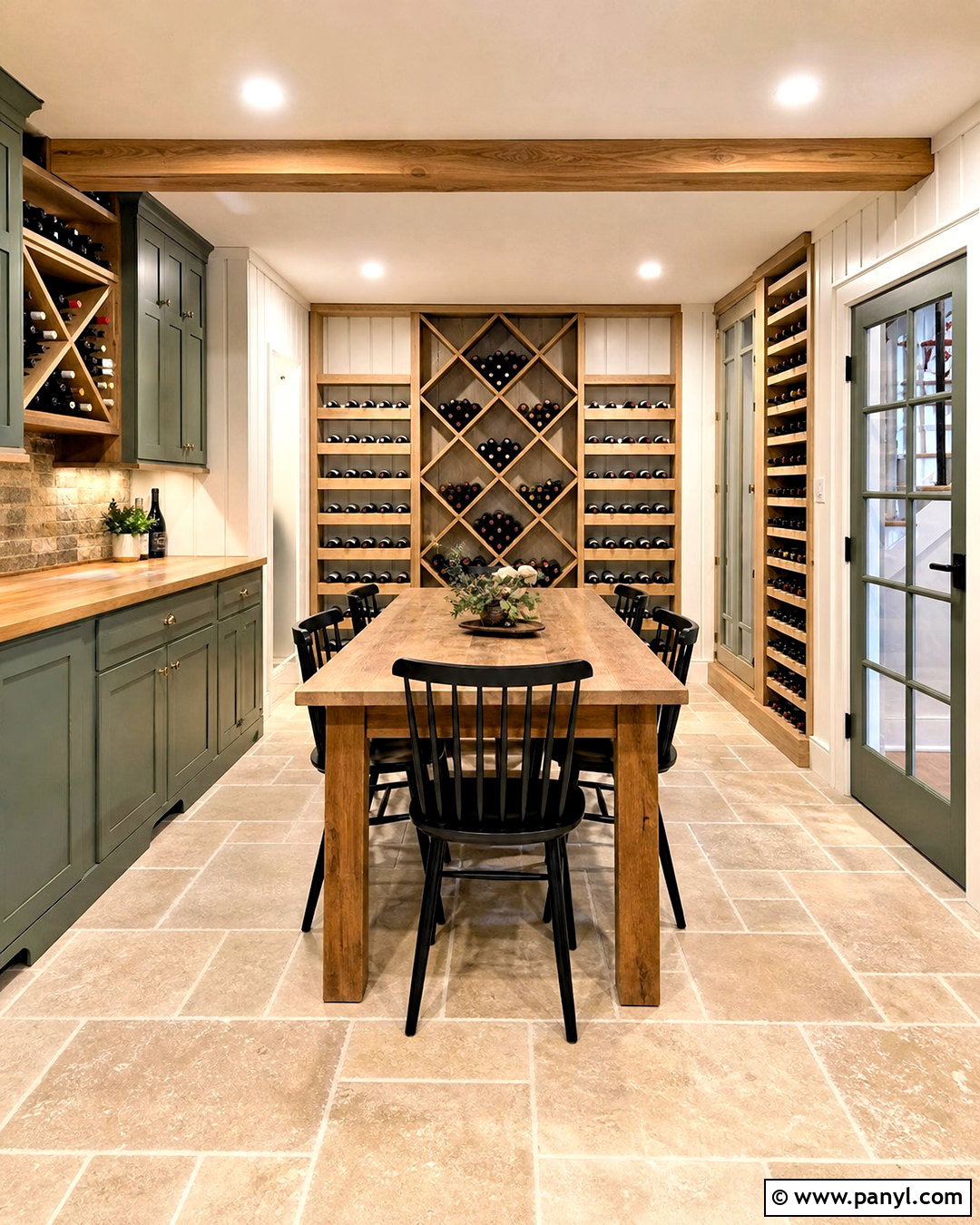
A farmhouse cellar feels relaxed when natural wood, painted cabinetry, and simple textures work together. Install white oak racks against vertical cream shiplap walls, mixing standard bottle slots with open cubbies for wooden boxes. Choose tumbled beige stone flooring and a white-painted ceiling with a single oak beam for warmth. A sturdy farmhouse table can anchor the room, surrounded by spindle-back chairs in muted black. Add a sage green base cabinet with a butcher-block top for glasses and accessories. Use black lantern-style lighting in a clean, updated shape rather than overly rustic fixtures. Finish the entrance with a divided-light glass door and oak casing, helping the cellar coordinate with a comfortable basement family room or casual entertaining area.
14. Mediterranean Basement Wine Cellar
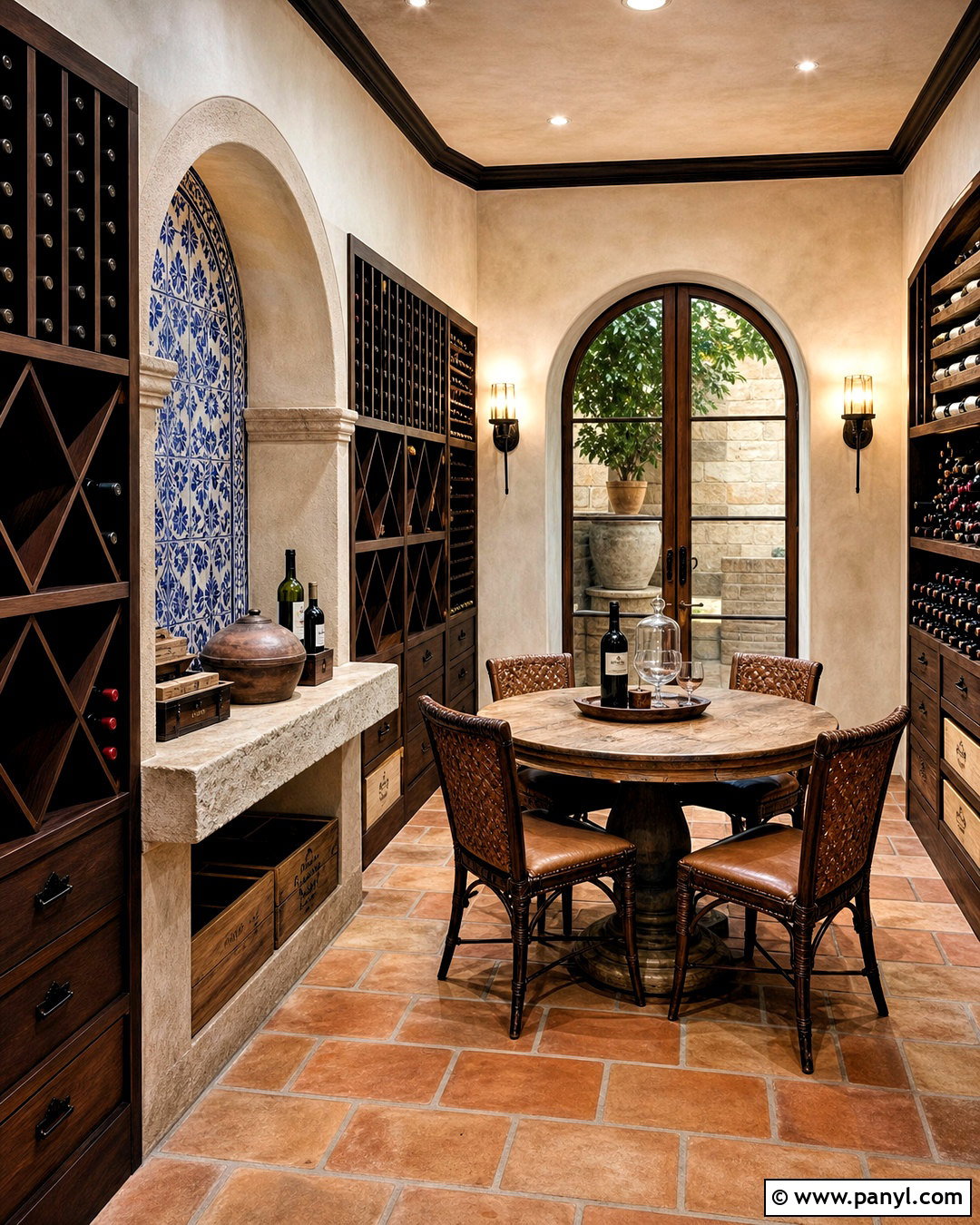
Warm plaster walls and curved architecture create a welcoming Mediterranean-inspired basement cellar. Use creamy limewash-style walls, terracotta floor tile, and dark stained wood racks arranged around a shallow arched niche. Highlight the niche with hand-painted blue and white tile, then add a stone counter below for serving. A round wood table and woven-seat chairs establish a relaxed central tasting area. Select aged bronze sconces and a simple iron pendant with bright warm-white bulbs. Keep the ceiling light and uncluttered so the warm materials do not overwhelm the basement. An arched wood door with clear glass repeats the interior curves. Small olive-toned accessories and ceramic vessels complete the palette without turning the room into a themed display.
15. Minimalist Basement Wine Cellar
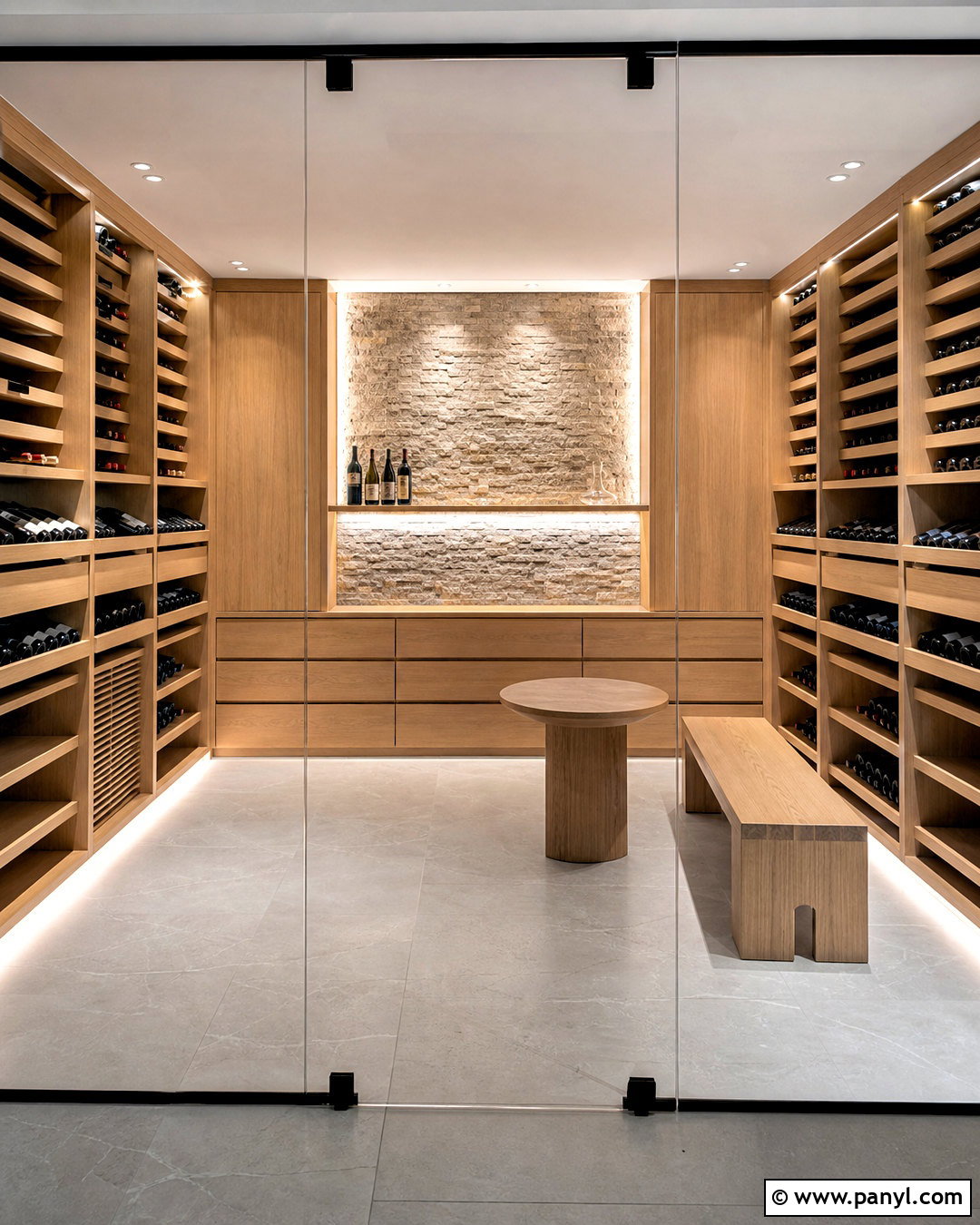
Clean lines and concealed storage give a minimalist cellar a calm, gallery-like appearance. Use floor-to-ceiling white oak cabinetry with integrated bottle slots, flat doors, and handle-free drawers. Reserve one central wall for a symmetrical label-forward display against pale gray stone. Select seamless light gray porcelain flooring and paint the ceiling crisp warm white. A frameless glass entrance maintains the simplicity while allowing the collection to remain visible. Instead of adding a full tasting set, place one narrow oak bench and a compact round side table outside the enclosure. Recessed ceiling lights and hidden LEDs provide even illumination without decorative fixtures. Limit visible accessories, coordinate every metal detail in matte black, and maintain clear floor space throughout the basement.
16. Hidden Door Basement Wine Cellar
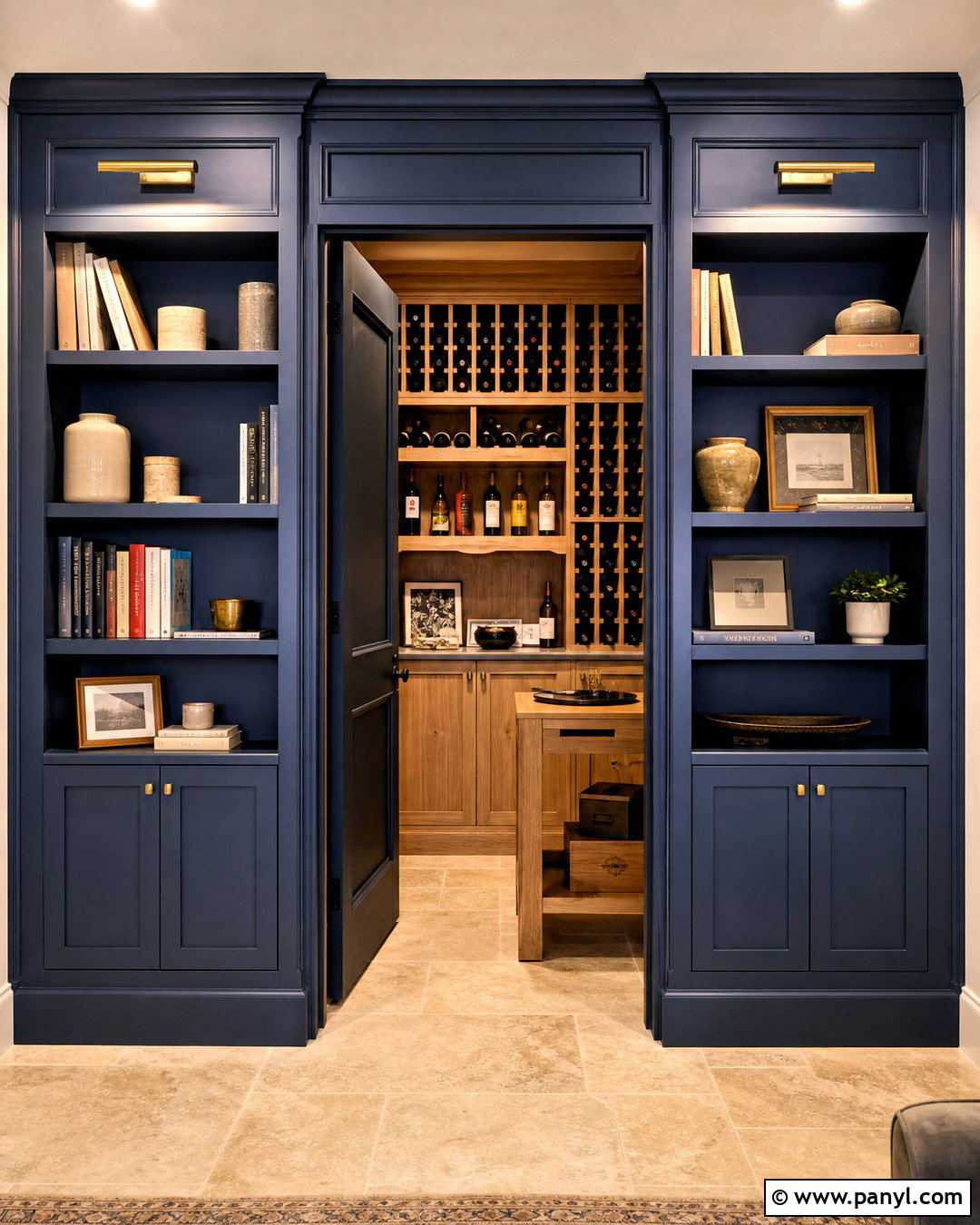
A concealed entrance can make a basement cellar feel special while preserving a clean hallway or lounge. Build a full-height bookcase door that matches surrounding dark blue paneled walls and opens into a bright cellar lined with natural oak racks. Inside, use warm limestone flooring, cream walls, and a compact oak table to create contrast with the dramatic entrance. Include a mix of bottle slots, display shelves, and closed base cabinets for an organized collection. Small brass sconces and recessed lights add warmth without reducing headroom. Keep the bookcase styling restrained with books and simple ceramic pieces so the door mechanism remains discreet. Consult experienced professionals to ensure the entrance, insulation, cooling, and safety requirements work together properly.
17. Basement Bar And Wine Cellar
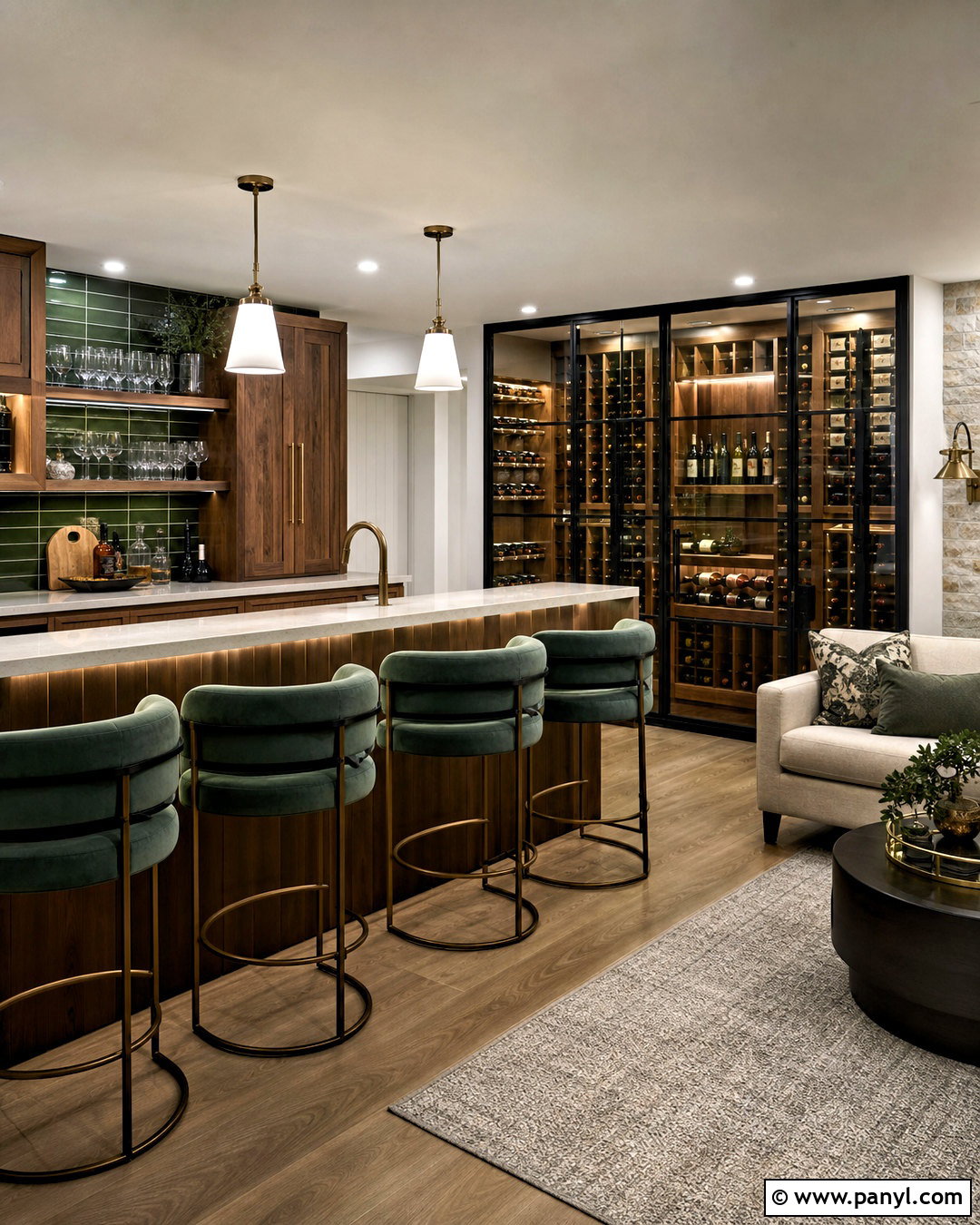
Combining a cellar with a basement bar creates one complete entertaining zone. Enclose the storage room behind black-framed glass, then position an L-shaped bar directly outside it. Use walnut racks inside the cellar and matching walnut cabinets at the bar for visual continuity. Deep green backsplash tile, pale quartz counters, and aged brass fixtures add color and polish. Include upholstered counter stools, a small lounge area, and open shelving for attractive glassware. Layer recessed lighting, pendant lights, cabinet lighting, and illuminated bottle displays so every area remains functional. Plan enough clearance between the cellar door, bar seating, and lounge furniture. The finished arrangement should feel like one cohesive room rather than several features crowded into an unfinished basement corner.
18. Arched Basement Wine Cellar
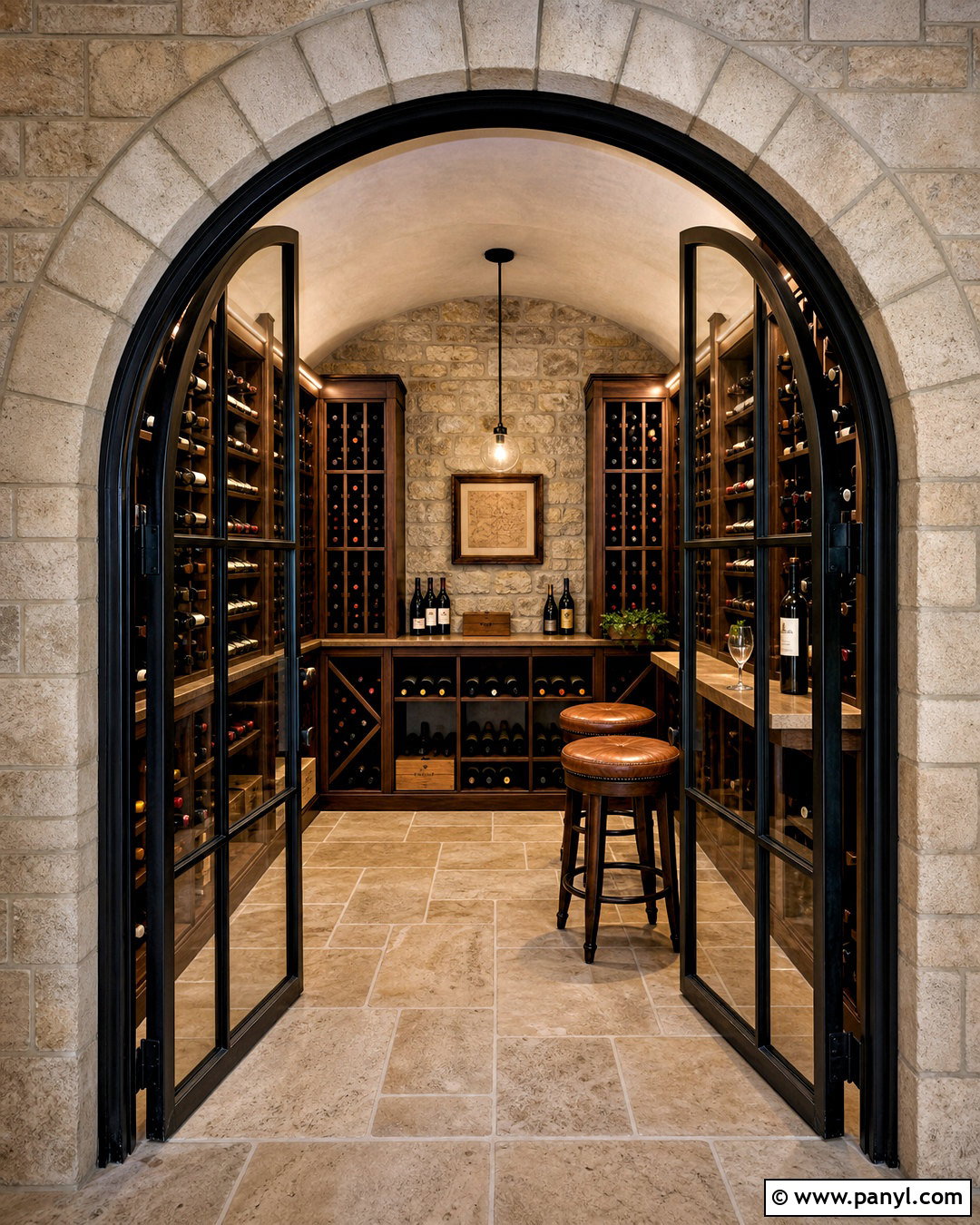
An arched entrance introduces architectural character even when the cellar itself has a straightforward layout. Frame the opening with pale natural stone and install a curved black metal glass door. Continue the stone inside across the back wall, then add medium walnut racks along both sides. Create a shallow barrel-style ceiling using painted wood planks in a soft cream finish, which keeps the room bright. A patterned limestone floor provides subtle movement without distracting from the collection. Position a narrow tasting ledge at the back with two leather stools. Add discreet recessed lighting along the ceiling curve and under the racks. Keep nearby basement walls warm white so the detailed entrance becomes a strong, balanced focal point.
19. Low Ceiling Basement Wine Cellar
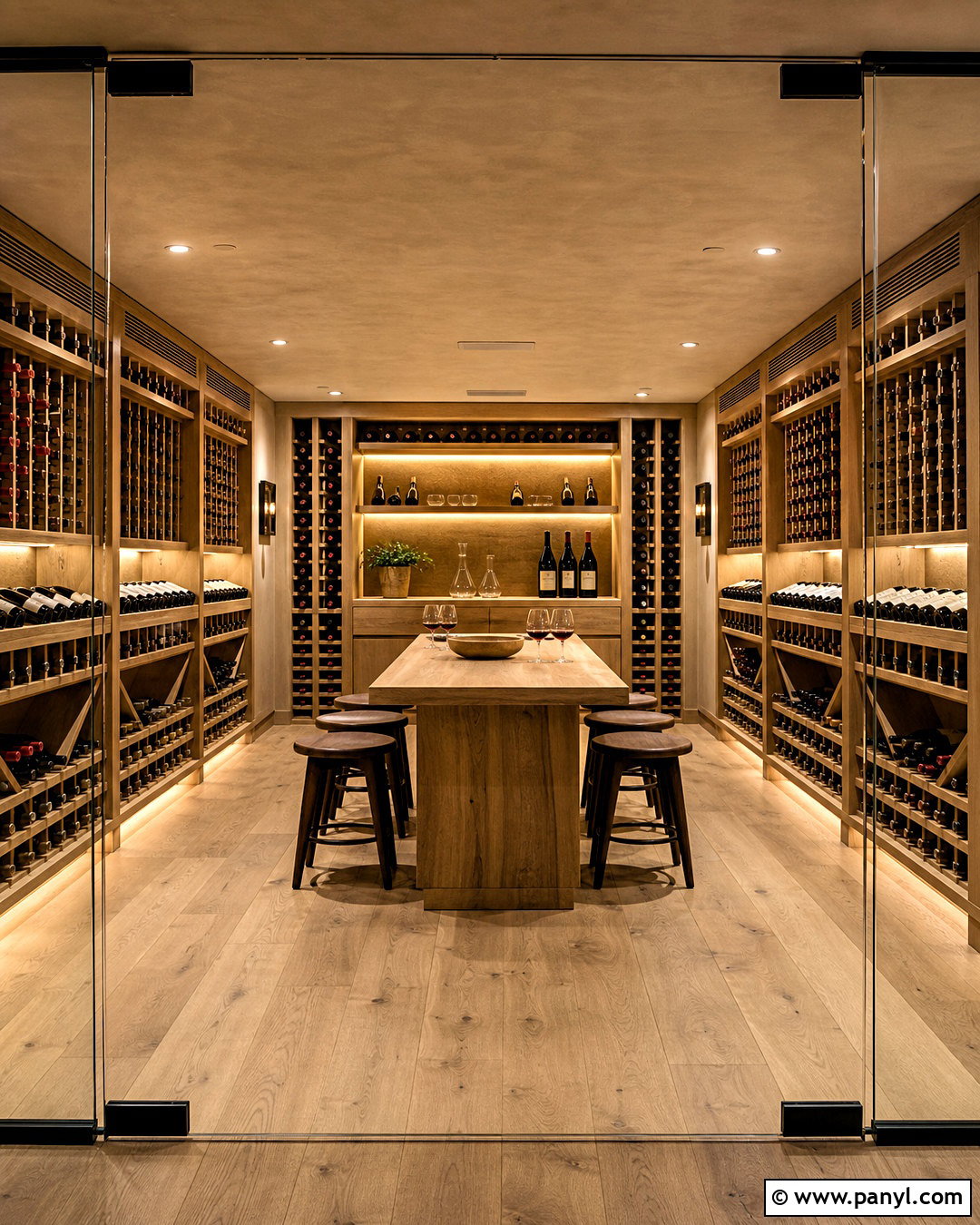
Low ceilings require a cellar design that emphasizes horizontal lines and avoids bulky overhead features. Run streamlined oak racks from wall to wall, keeping their upper edges aligned to make the room appear wider. Paint the ceiling and walls the same soft greige to reduce visual breaks. Choose wide-plank light oak flooring and a low rectangular tasting table with backless stools that tuck completely underneath. Use shallow recessed fixtures where construction allows, supported by under-shelf LEDs and wall-mounted lights. Avoid heavy crown molding, hanging pendants, and tall decorative objects. A broad glass door with minimal framing increases the sense of openness. The resulting basement cellar feels comfortable and intentional despite limited height, with every feature scaled appropriately for the room.
20. Large Collection Basement Wine Cellar
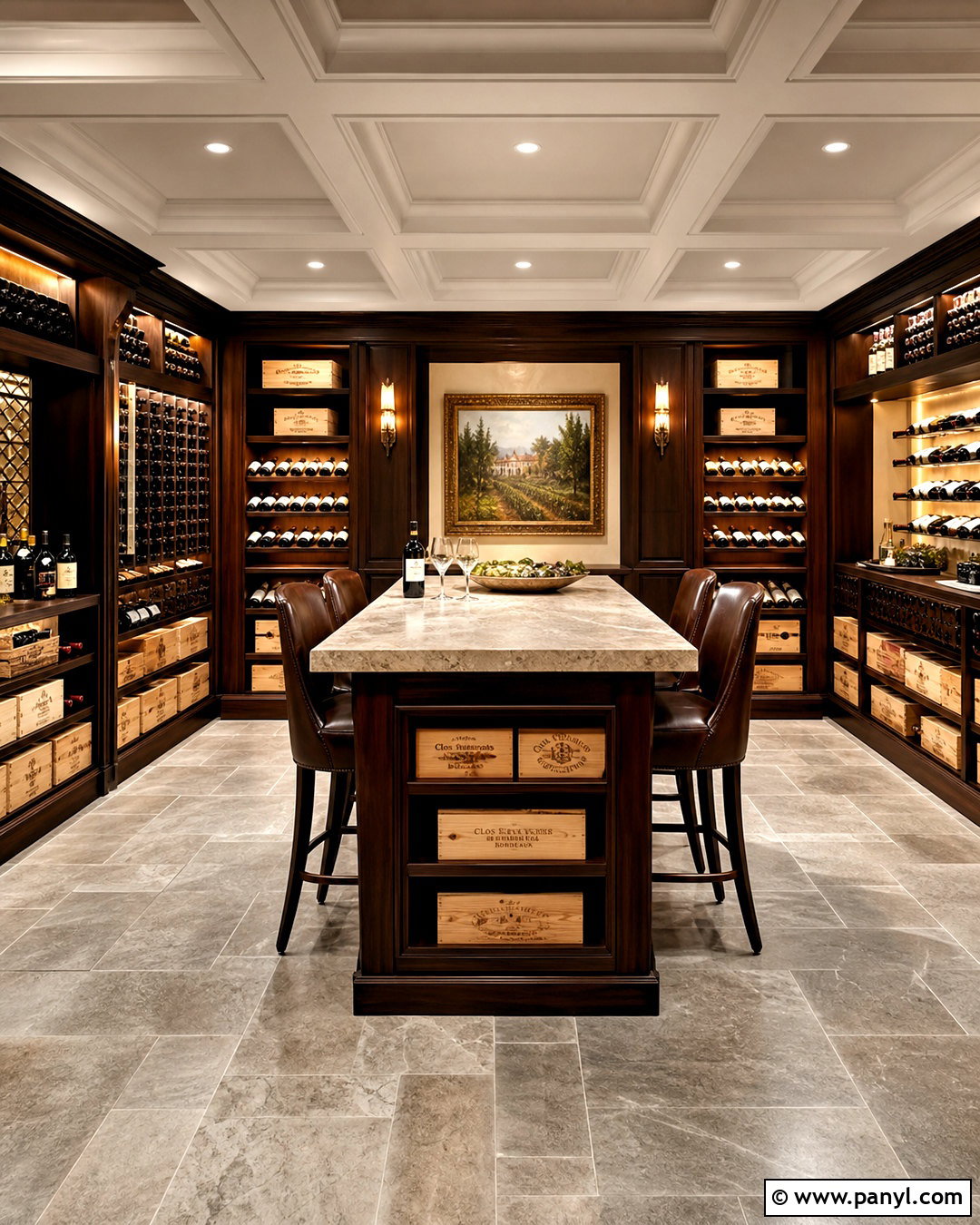
A large collection needs clear organization as much as beautiful finishes. Divide the cellar into balanced storage zones using floor-to-ceiling racking, case bins, display rows, and closed cabinets. Dark walnut millwork against warm ivory walls creates contrast while maintaining an elegant background. Add a wide central island with drawers, a durable stone top, and bottle storage at each end. Use large gray limestone floor tiles and a coffered ceiling painted soft white. A small tasting area with four leather chairs can occupy one end without interrupting access to the racks. Bright recessed lights, shelf LEDs, and wall sconces make labels easy to view. Leave open pathways around the island and allow room for the collection to expand.
Conclusion:
The best basement cellar balances attractive design with efficient storage, comfortable movement, and properly planned environmental controls. Glass walls can open a compact basement, while wood racks, brick, stone, and metal establish a distinct personality. Small closets benefit from shallow shelving, and larger rooms can support islands, tasting tables, bars, or lounge seating. Before installing decorative finishes, have qualified professionals evaluate insulation, moisture, electrical service, ventilation, cooling, and local building requirements. Coordinating these essentials early helps protect the room and prevents expensive changes later. Use these 20 wine cellar ideas basement ideas to choose a complete look that complements your home, available space, collection size, entertaining needs, and realistic renovation budget.

Related Ideas and Inspiration:
Leave a Reply