
Kitchen sideboards can solve storage problems while making an eating area feel warmer, more finished, and easier to use. The best designs hold dinnerware, linens, small appliances, or pantry supplies without looking like an extra kitchen cabinet. They can also create a convenient serving surface and anchor an otherwise empty wall. Current design guidance favors pieces that balance practical storage with appropriate proportions, intentional styling, and comfortable circulation around the dining table. () Whether your home is modern, farmhouse, traditional, or compact, choose a sideboard that connects with the cabinetry while adding its own character. The complete looks below offer functional layouts, coordinated colors, and approachable decorating inspiration through 20 kitchen sideboard ideas.
1. Modern Wood Kitchen Sideboard
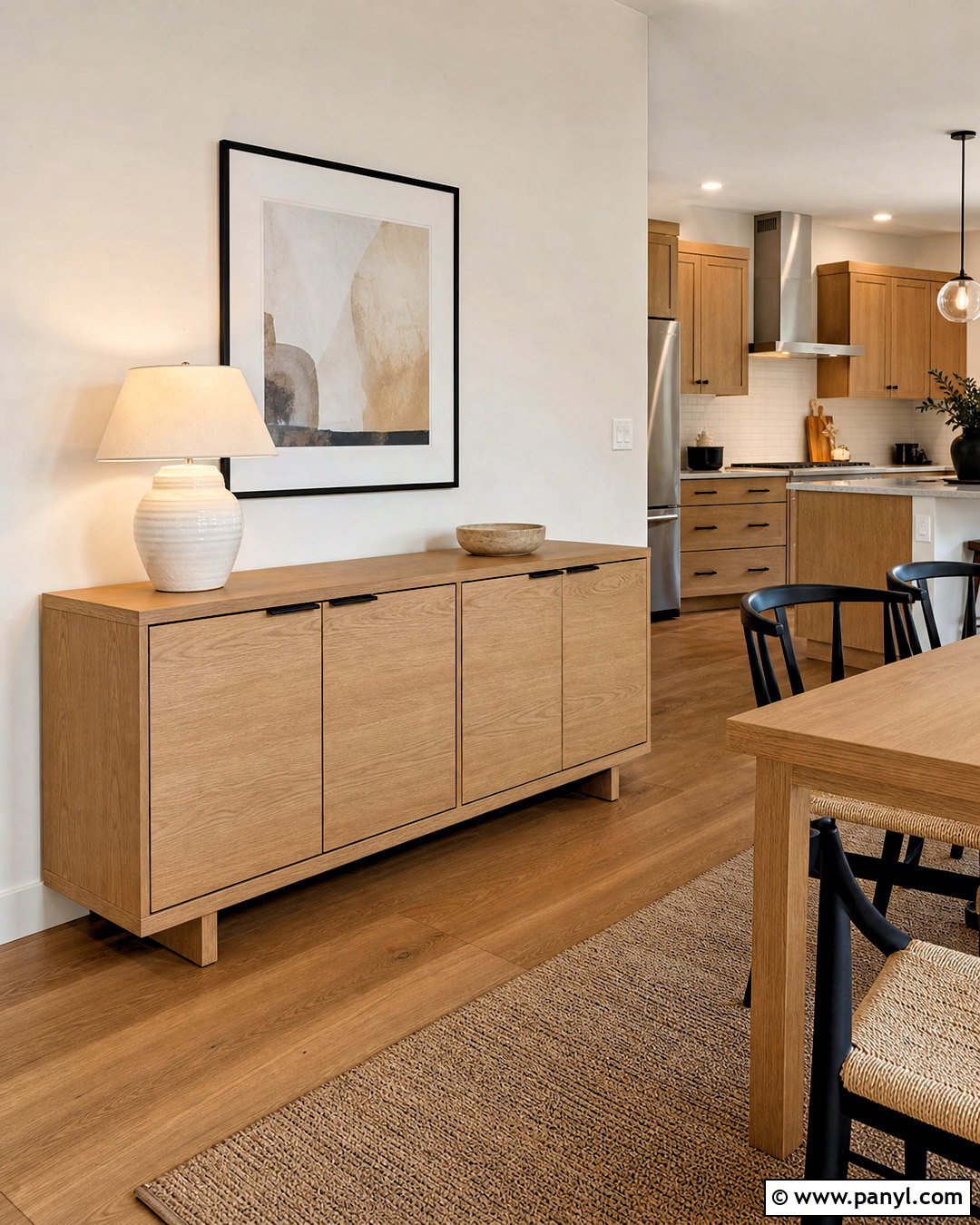
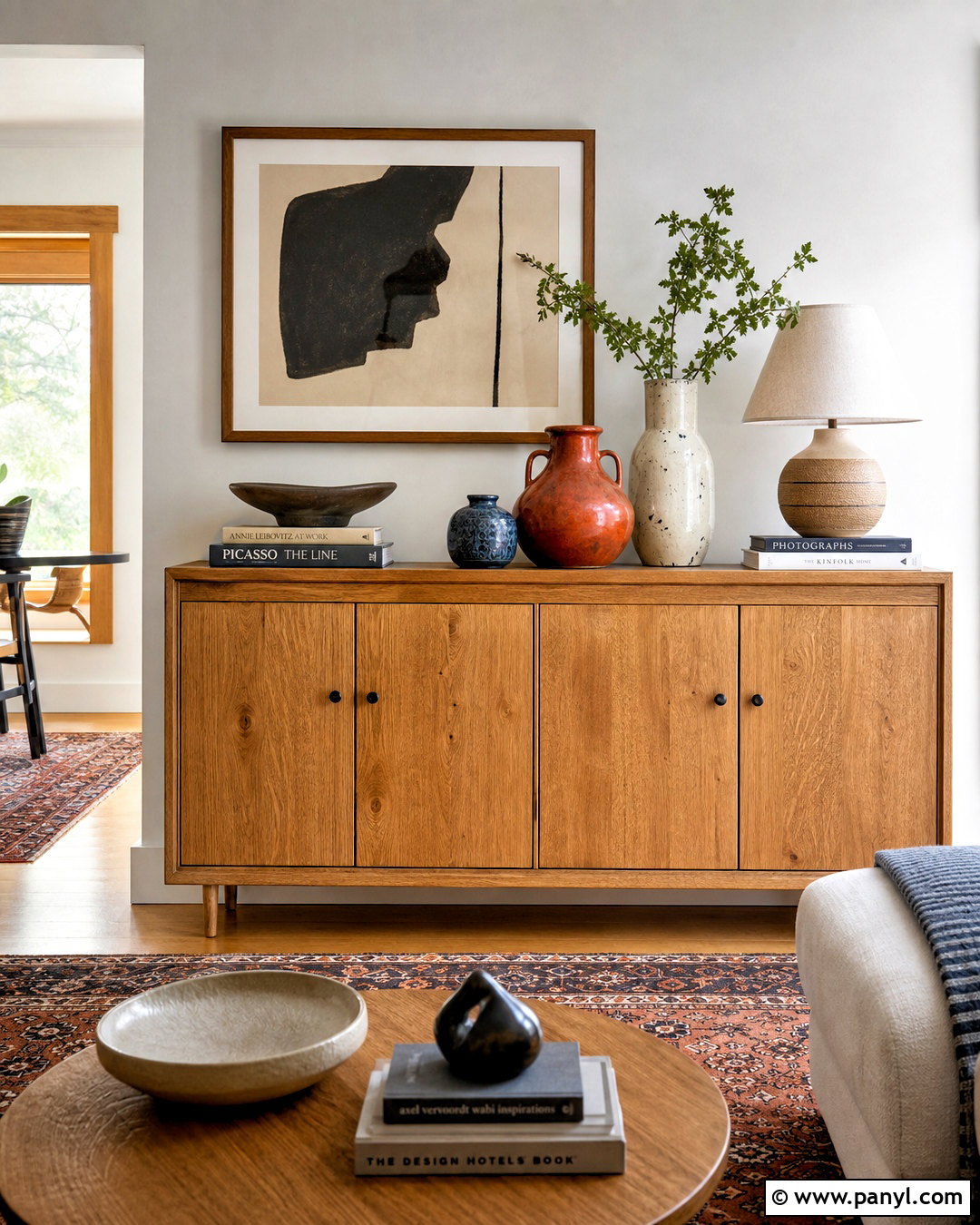
A modern wood kitchen sideboard adds natural warmth without making the room feel traditional. Choose a low-profile cabinet in white oak or light walnut with flat doors, subtle grain, and slim black or brushed brass hardware. Position it against a clear wall near the dining table, leaving comfortable space for chairs and walking. Style the top with a ceramic lamp, one wide bowl, and a simple framed print rather than many small accessories. Inside, use drawers for napkins and flatware, then reserve the cabinets for serving dishes and small appliances. Complete the room with warm white walls, streamlined dining chairs, and a neutral woven rug. The result feels calm, useful, and connected to a modern kitchen.
2. Farmhouse Kitchen Sideboard
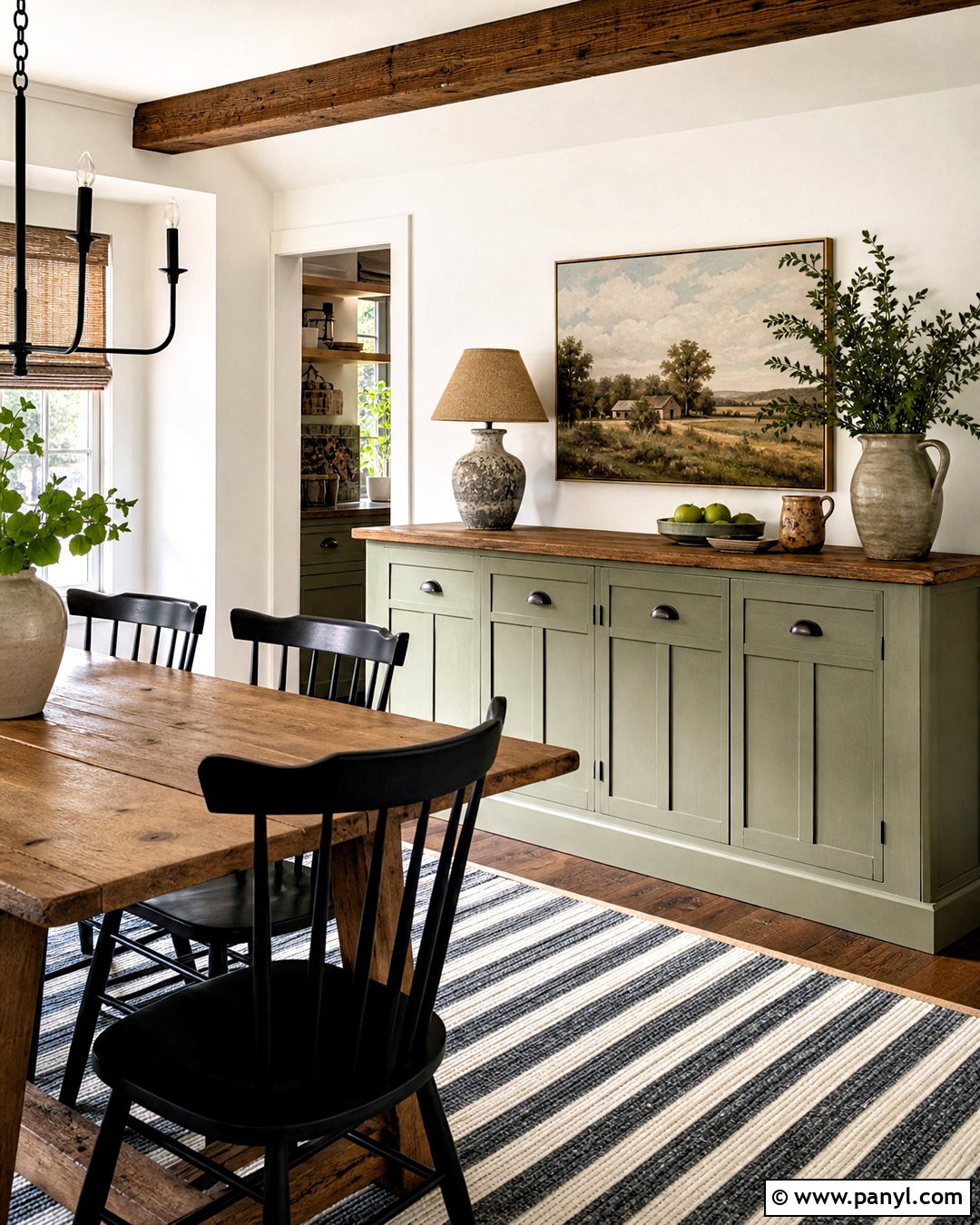
Picture a welcoming kitchen dining area with creamy walls, warm timber, and a sideboard that looks collected over time. A farmhouse kitchen sideboard works well in painted white, muted sage, or natural reclaimed wood. Look for paneled doors, cup pulls, sturdy legs, and a slightly distressed finish. Pair it with a solid wood table, spindle-back chairs, and a washable striped rug for a practical family setting. Store everyday dishes behind the doors and place linens in labeled baskets. On top, arrange a large stoneware pitcher with leafy branches, a rustic lamp, and a shallow wooden tray. Hang one landscape painting above it. Keep the styling restrained so the full room feels comfortable rather than overly themed.
3. Small Kitchen Sideboard
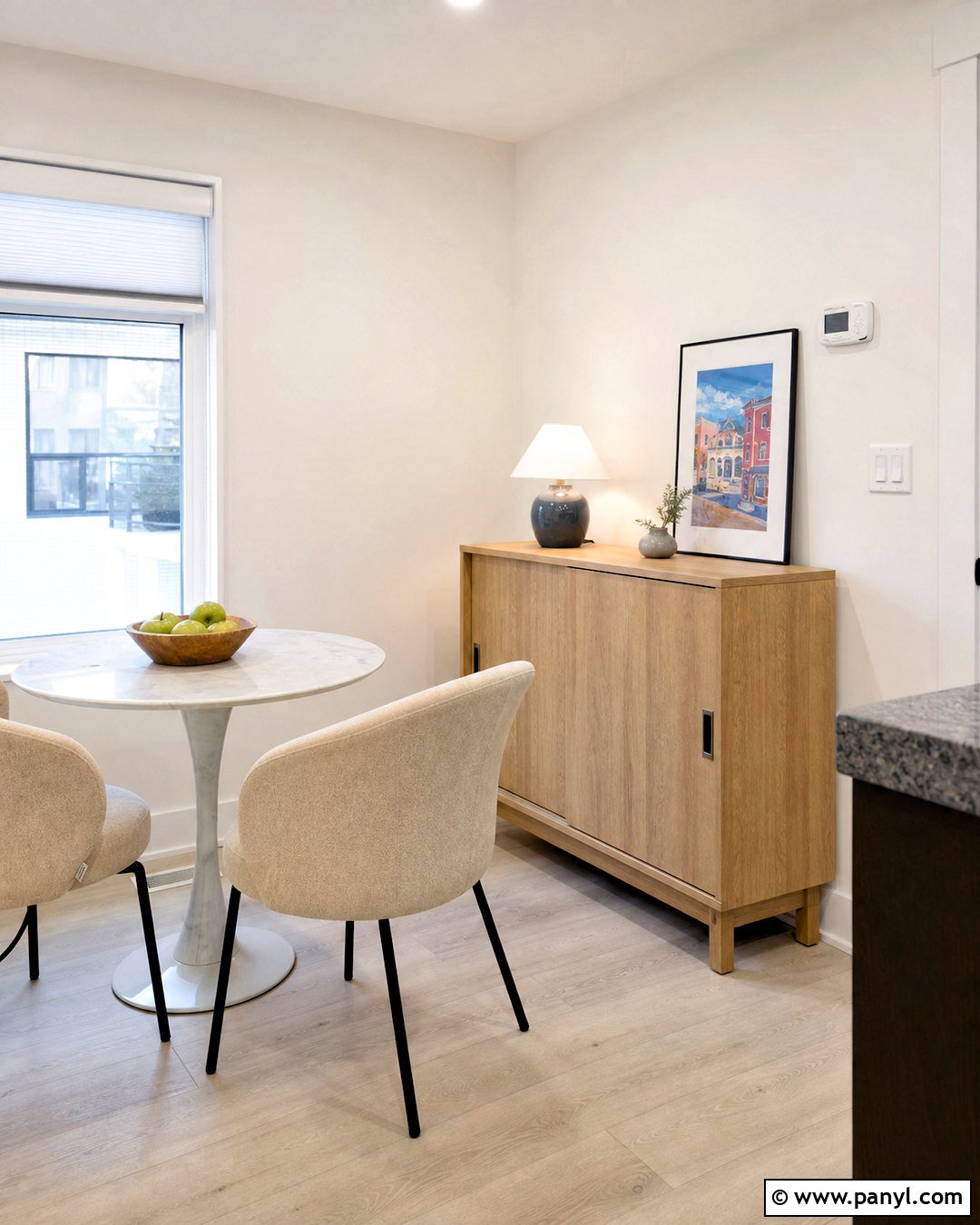
Limited floor space calls for a narrow piece that provides storage without crowding the walkway. Select a small kitchen sideboard around console depth with sliding doors or compact hinged doors that can open safely. A light oak or soft white finish will keep its visual weight low. Place it along the dining wall and pair it with a round pedestal table, which leaves more open space around chairs. Inside, stack plates vertically, organize linens in bins, and use shallow drawers for utensils. A small lamp and one upright artwork add height without covering the serving surface. Continue the pale palette through warm white walls, oatmeal upholstery, and light flooring. This complete arrangement makes a compact kitchen-dining zone feel organized, open, and intentional.
4. Built-In Kitchen Sideboard
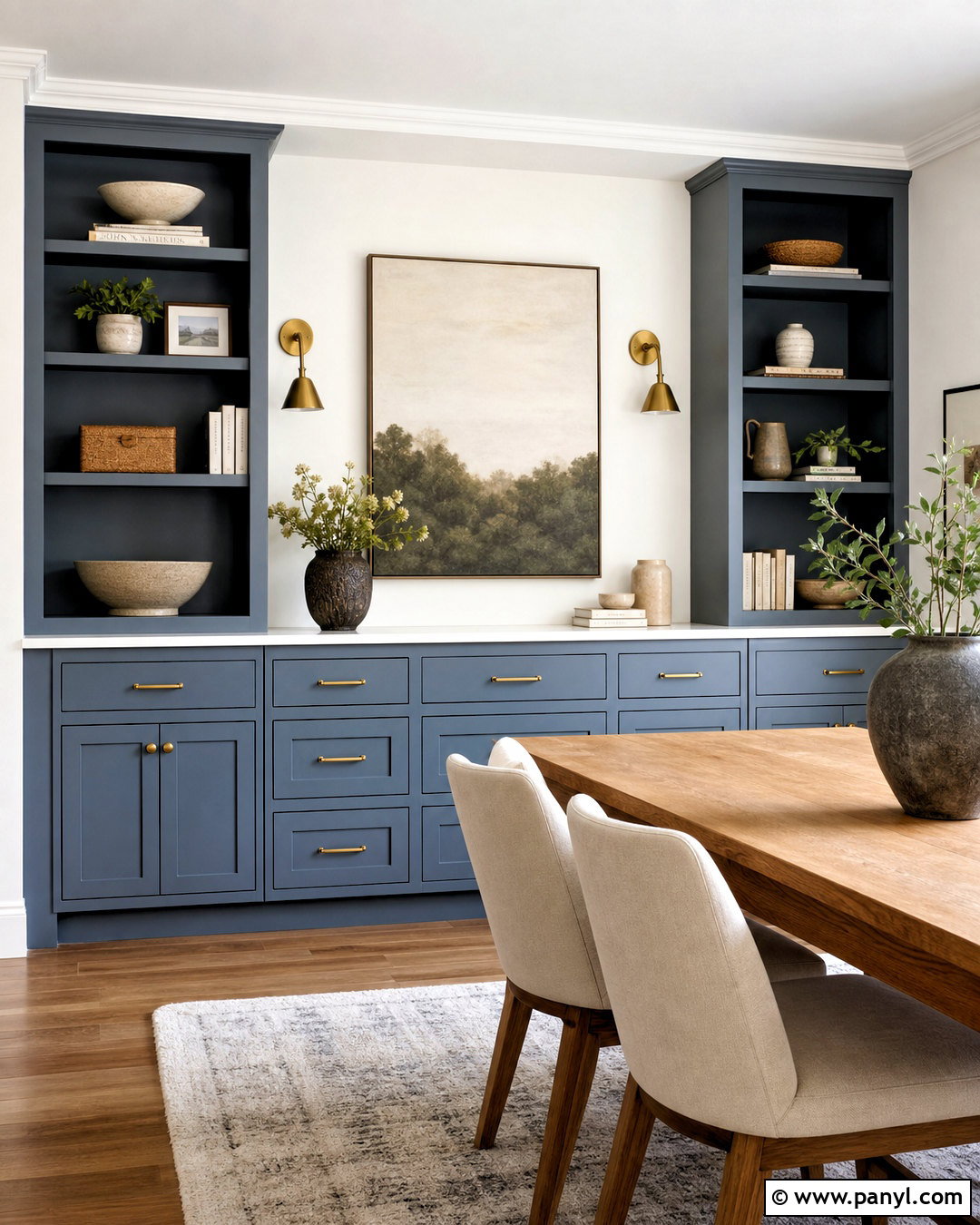
Could an unused wall become part of the kitchen itself? A built-in kitchen sideboard creates a polished storage zone by combining lower cabinets, a durable countertop, and focused wall decor. Match the door profile to the main kitchen cabinetry, but consider a contrasting color such as dusty blue, olive green, or warm greige. Add drawers for flatware and closed cabinets for platters, countertop appliances, or bulk supplies. A quartz or butcher-block top offers a useful surface for serving meals. Finish the wall with two sconces and one large framed artwork, or install a short row of display shelves. Repeating the kitchen hardware and countertop material helps both areas connect while the different cabinet color gives the dining zone a clear identity.
5. Vintage Kitchen Sideboard
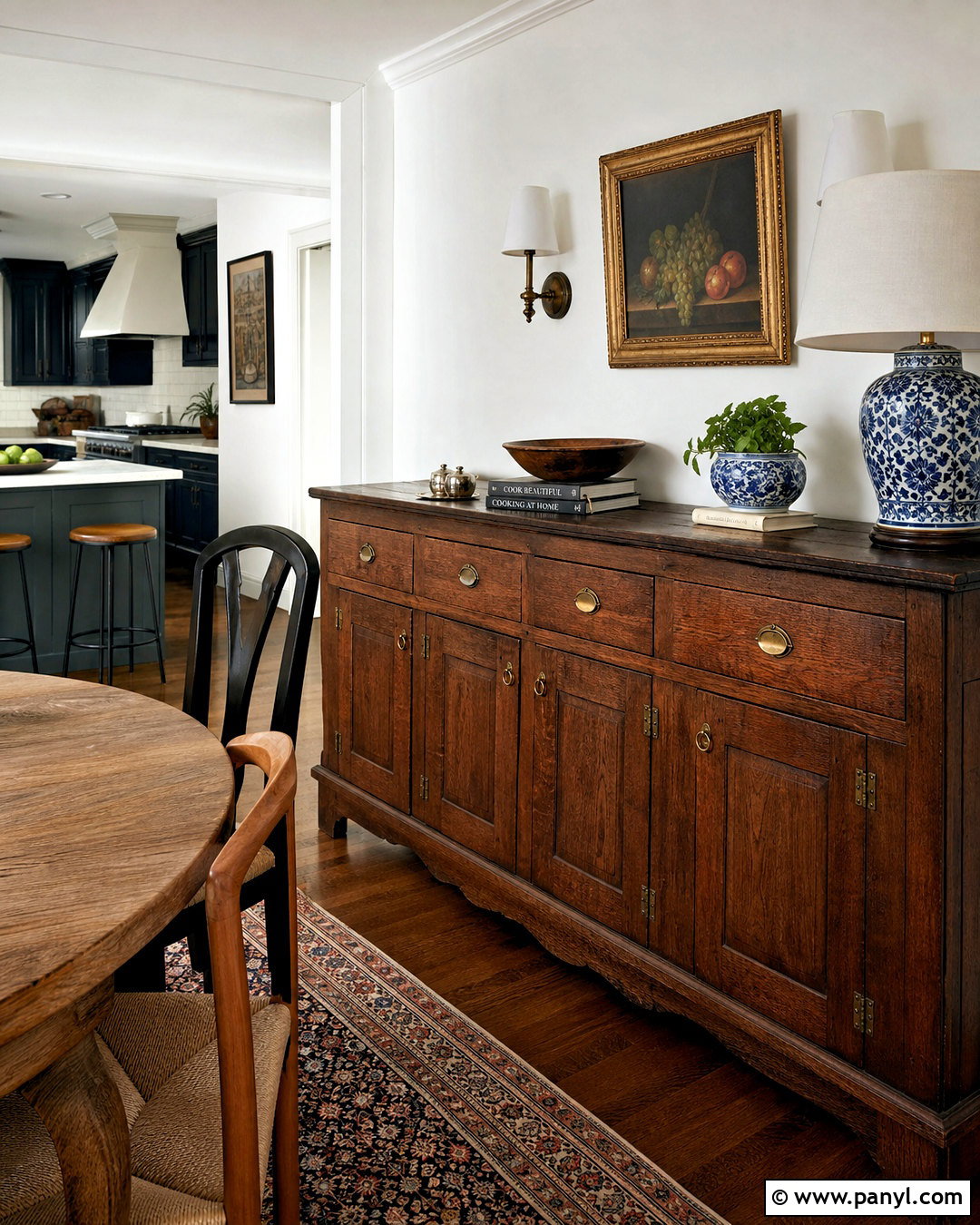
An older furniture piece can bring depth and personality to a kitchen filled with newer cabinets. Choose a vintage kitchen sideboard in dark oak, medium walnut, or painted pine, preferably with drawers and enclosed lower storage. Let natural wear remain visible, then update loose hardware or add simple aged-brass knobs. Surround the sideboard with warm off-white walls, a farmhouse table, mixed wood chairs, and a classic patterned runner. Display a table lamp, a stack of cookbooks, and handmade pottery on top. A vintage mirror or framed still-life painting completes the wall. Keep modern appliances stored inside so the surface remains decorative. This layered look feels personal and established, yet every element still supports everyday kitchen organization and dining.
6. Black Kitchen Sideboard
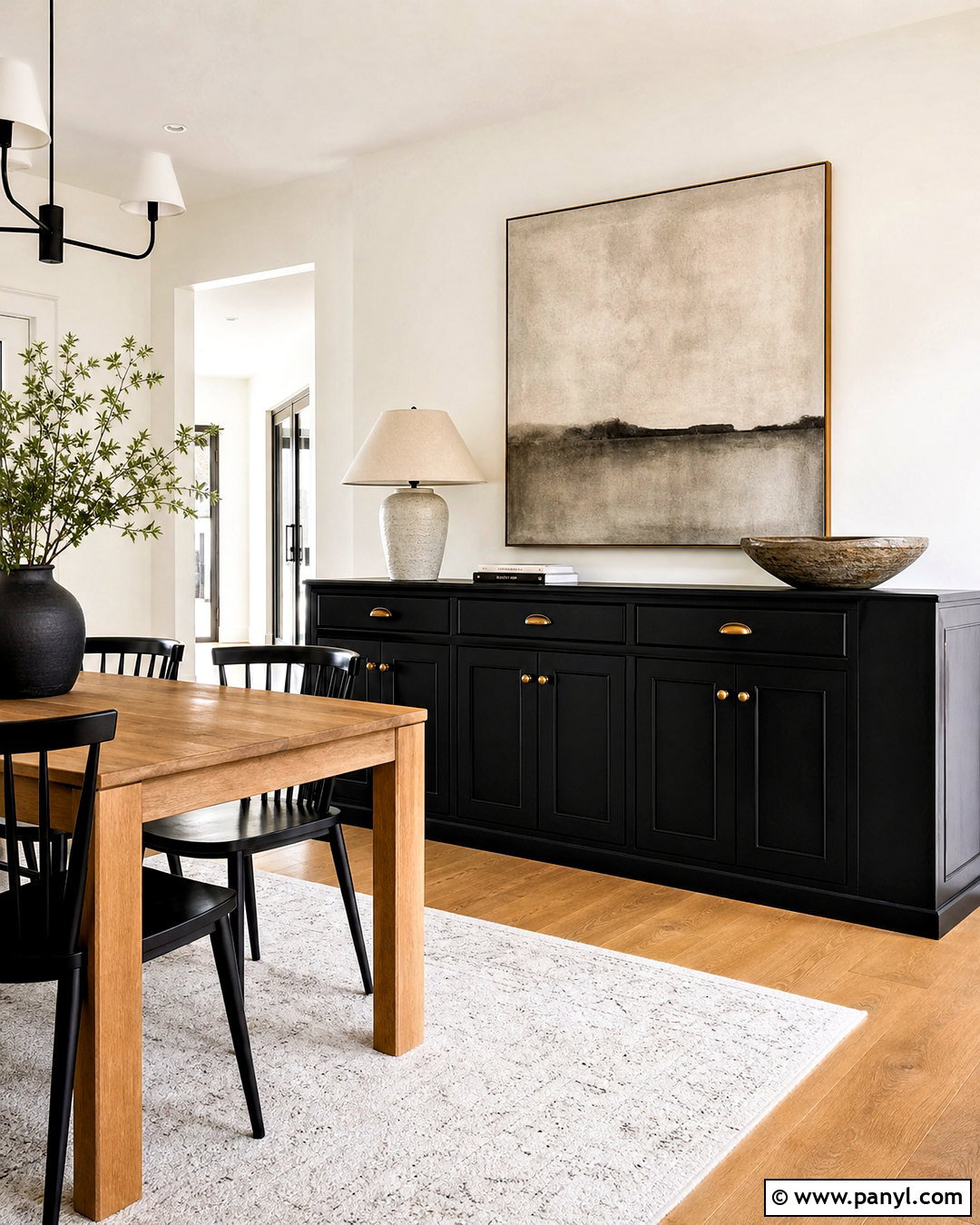
A black kitchen sideboard can give a pale kitchen the contrast it needs. Choose a matte black cabinet with clean doors, restrained molding, and aged-brass or satin-nickel pulls. Set it against soft white, pale greige, or light beige walls so its shape remains crisp. Connect the piece to the room through black dining chairs, a dark pendant light, or small black accents on the countertop. Warm oak flooring and a natural wood table will prevent the palette from feeling cold. Style the sideboard with a cream ceramic lamp, a large neutral artwork, and a textured bowl. Behind the doors, store mismatched serving pieces and occasional appliances. The finished space feels bold and balanced rather than heavy or overly dramatic.
7. White Kitchen Sideboard
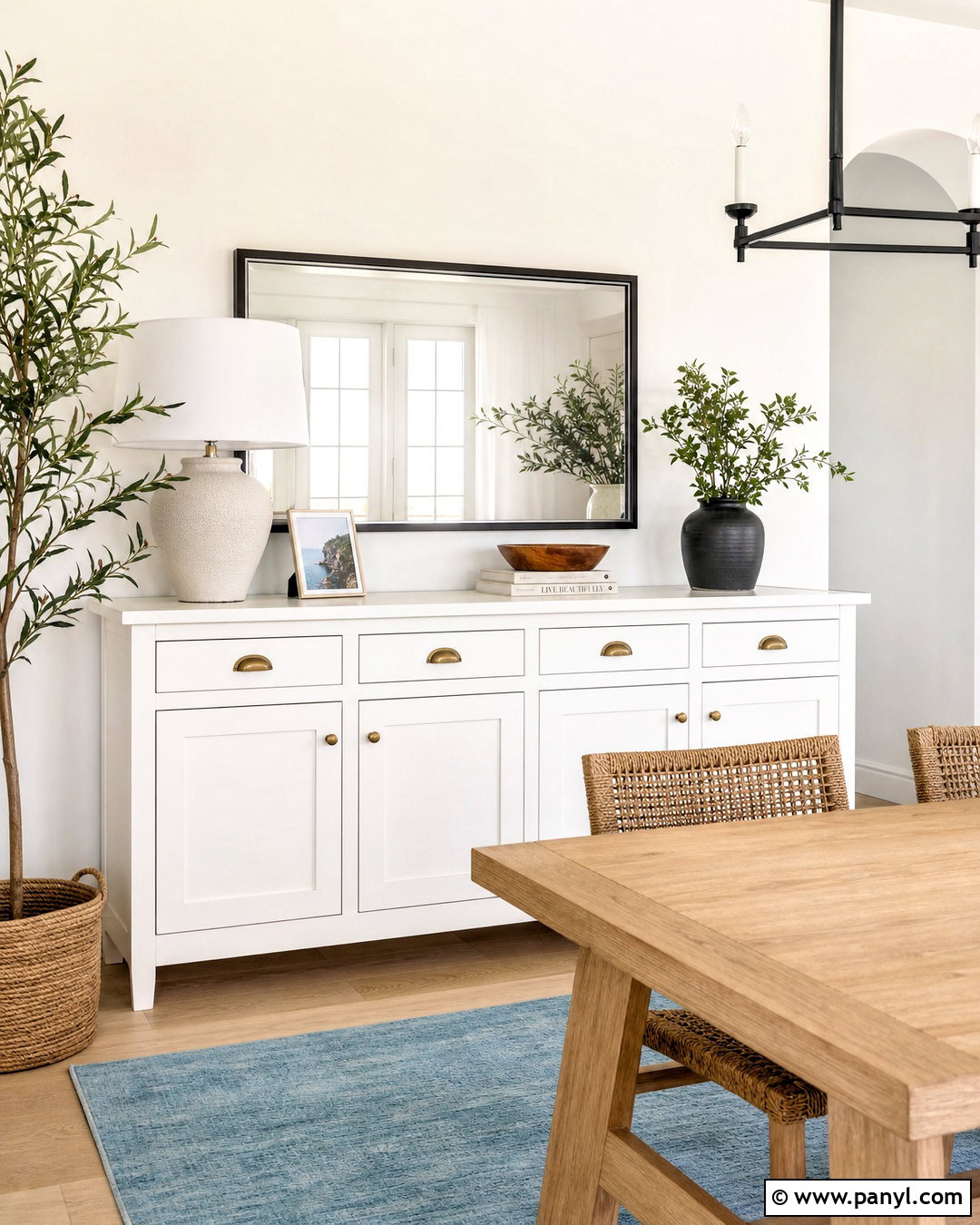
For an airy, seamless appearance, use a white kitchen sideboard that blends into the wall while adding practical storage. Select a warm white rather than a stark blue-white, especially when the room includes oak floors or cream cabinetry. Shaker doors and simple brass hardware create a classic look that can work in transitional, coastal, or cottage kitchens. Pair the sideboard with a pale wood dining table, woven chairs, and a soft blue or beige rug. Add contrast on top with a dark-framed mirror, a leafy plant, and a ceramic lamp. Keep dinnerware, baking equipment, and table linens organized inside. The coordinated palette makes the dining area look larger, while varied wood, metal, and woven textures stop the complete room from appearing flat.
8. Green Kitchen Sideboard
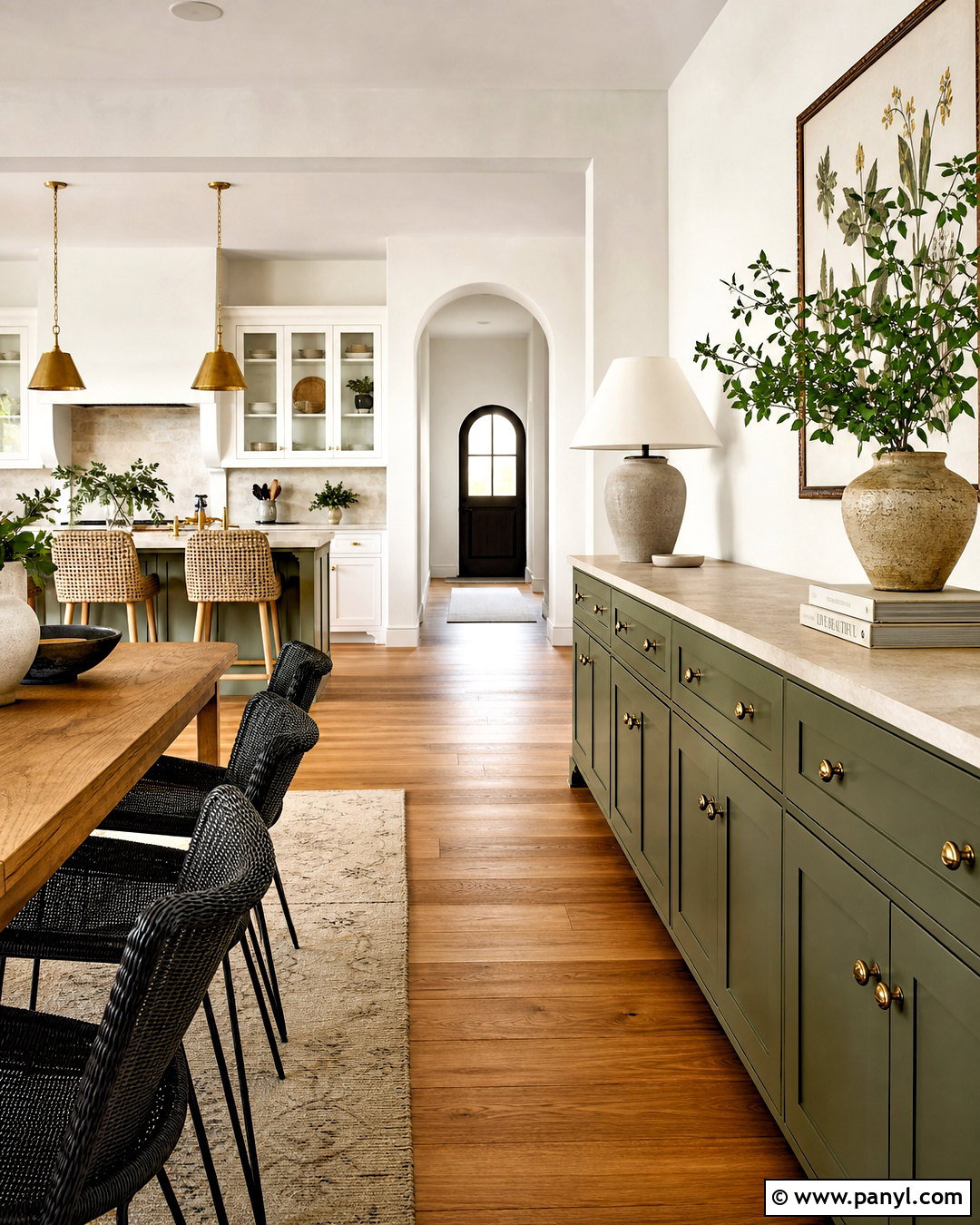
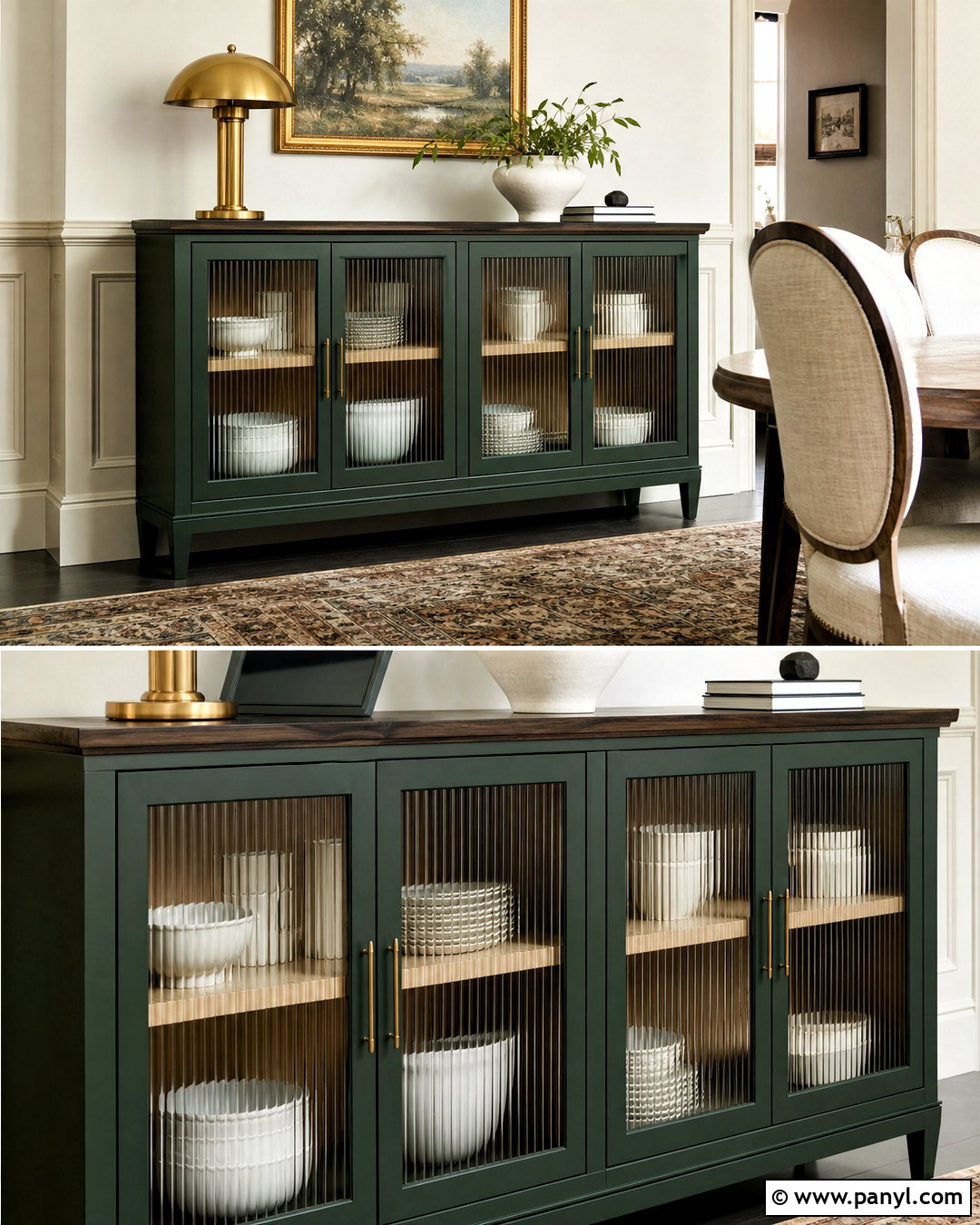
Soft green brings color into the kitchen without overwhelming surrounding finishes. Paint a kitchen sideboard in warm sage, muted olive, or dusty eucalyptus, then pair it with aged-brass knobs and a light wood or creamy stone top. This combination looks especially cohesive beside white cabinets, oak flooring, and warm neutral walls. Use a wood dining table with woven or upholstered chairs to continue the relaxed mood. Above the sideboard, hang botanical artwork or a rounded brass mirror. A linen-shaded lamp, off-white pottery, and a shallow wooden bowl complete the surface. Inside, divide storage between serving dishes, linens, and entertaining supplies. The full design feels fresh and grounded, with enough color to define the dining space while remaining easy to live with.
9. Navy Kitchen Sideboard
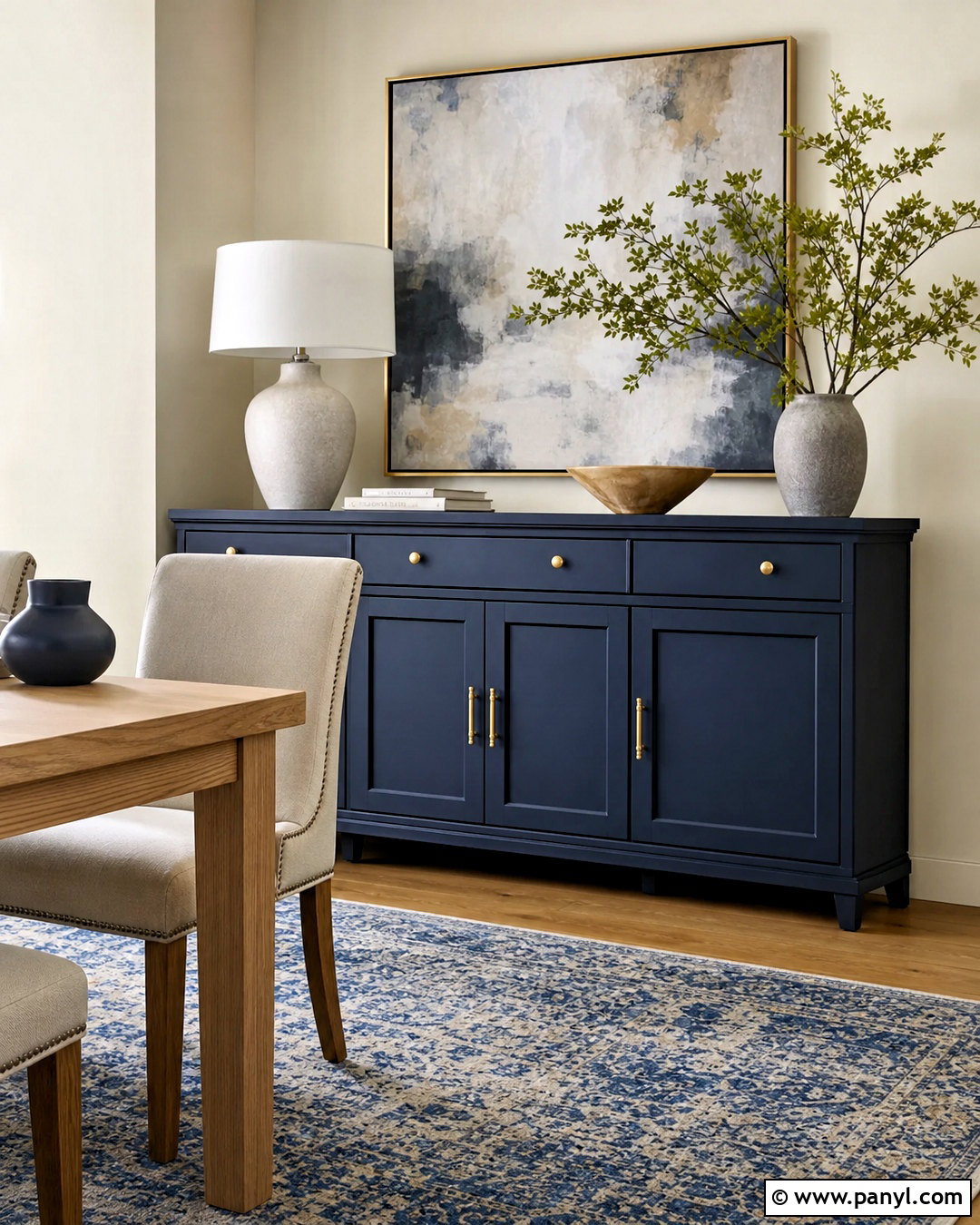
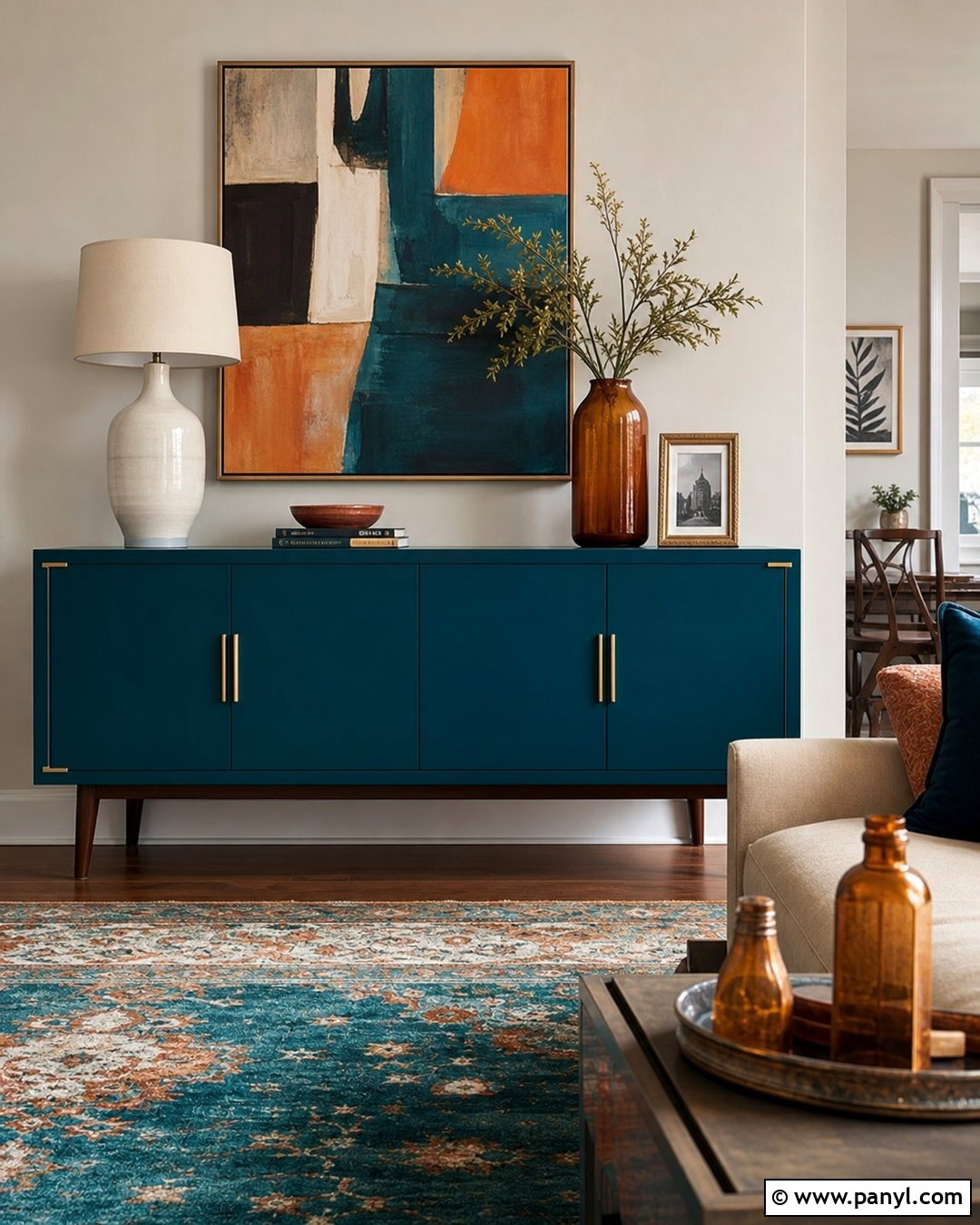
Deep navy creates an elegant focal point when the rest of the kitchen uses light, quiet colors. Choose a navy kitchen sideboard with paneled doors, a smooth satin finish, and brass hardware. Place it against warm white walls near a light oak or walnut dining table. Repeat the blue through a patterned rug, seat cushions, or small ceramic details, but avoid covering every surface with the same color. A pale stone lamp, large abstract artwork, and a bowl of green branches brighten the dark cabinet top. Use the interior for white dishes, table linens, and serving trays. The contrast between navy, natural wood, and warm metal creates a complete kitchen-dining look that feels polished, comfortable, and suitable for both daily meals and gatherings.
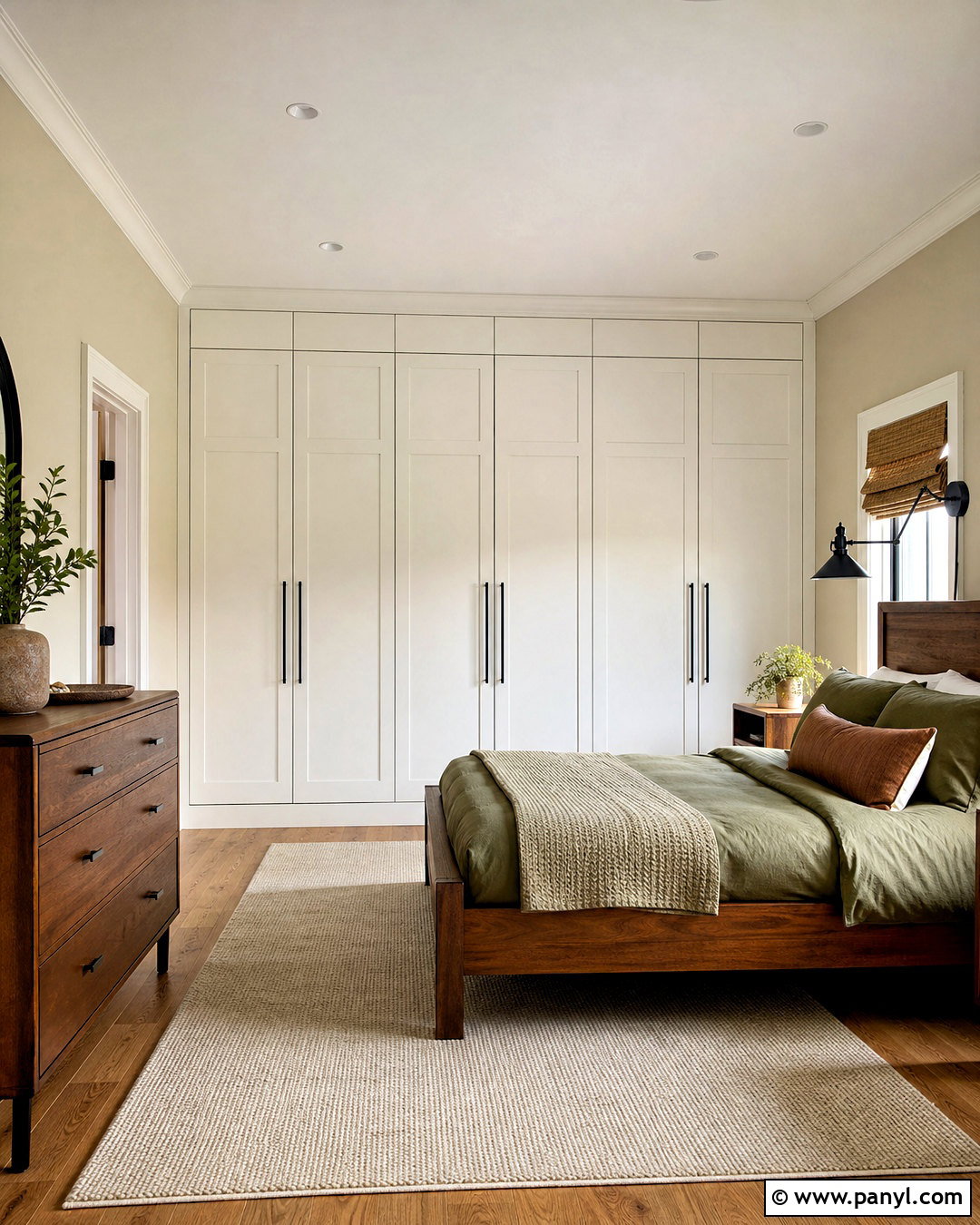
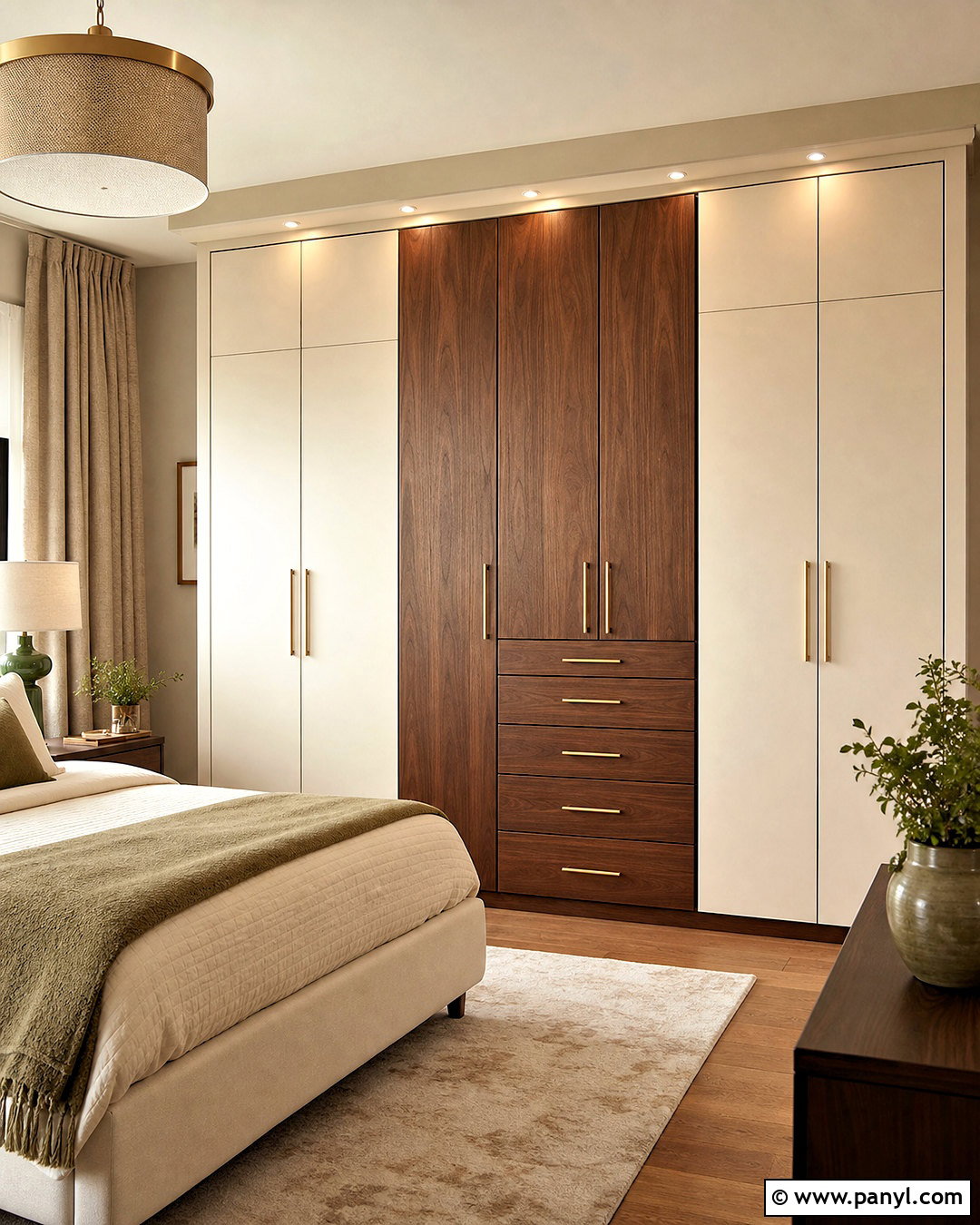
10. Rattan Kitchen Sideboard
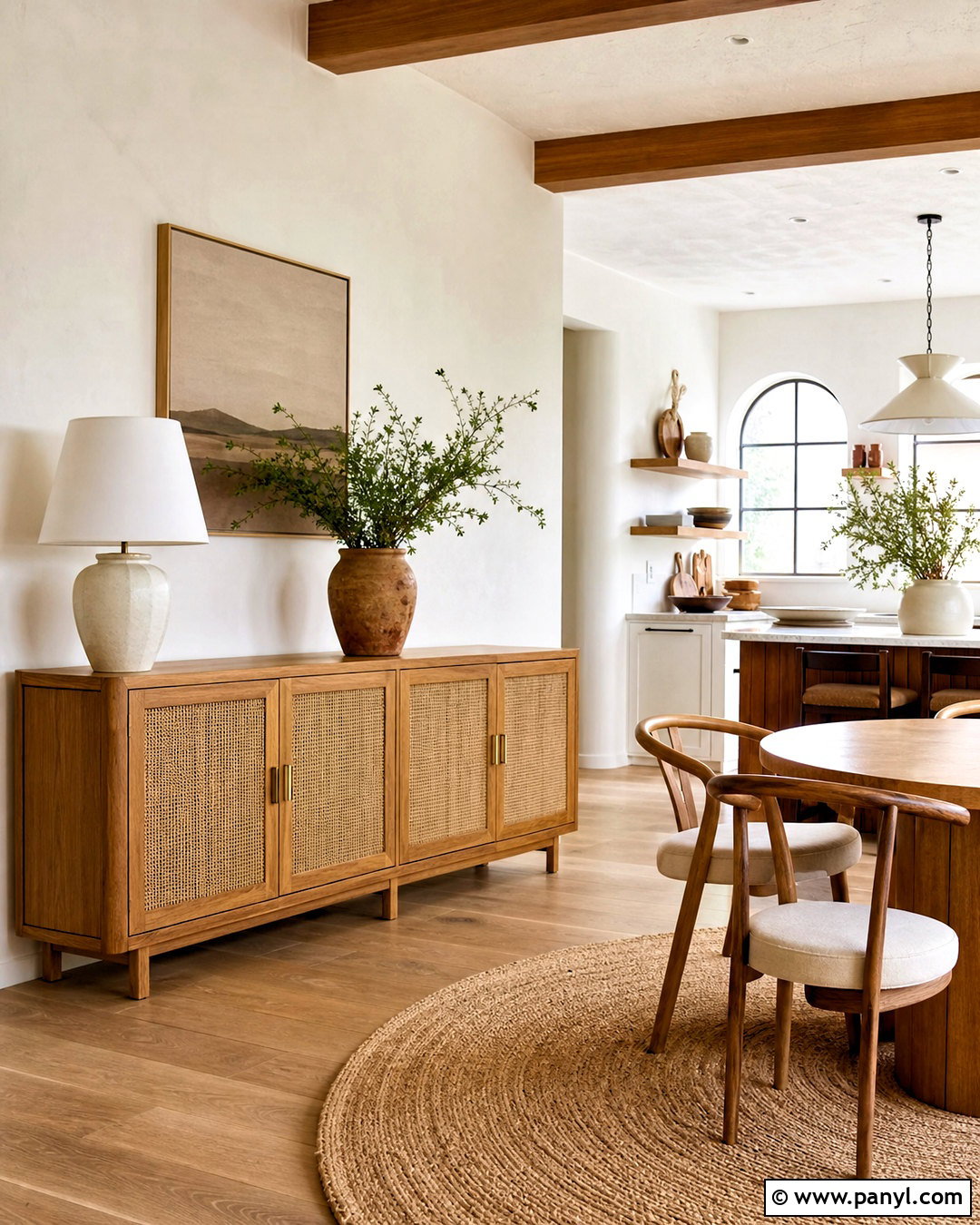
Rattan doors can soften straight cabinetry and introduce texture to an open kitchen. Look for a rattan kitchen sideboard with a natural oak frame, woven cane panels, and discreet wood or brass pulls. Pair it with creamy walls, a round wood dining table, curved chairs, and a natural fiber rug. This combination works particularly well in relaxed contemporary, coastal, and organic modern interiors. Use solid storage boxes inside if the woven fronts reveal too much visual clutter. Style the top with a sculptural white lamp, a wide earthenware vase, and one leaning framed print. Add greenery for a fresh accent. The full room should mix smooth and tactile materials, allowing the woven sideboard to stand out without turning the entire kitchen into a heavily themed space.
11. Glass Door Kitchen Sideboard
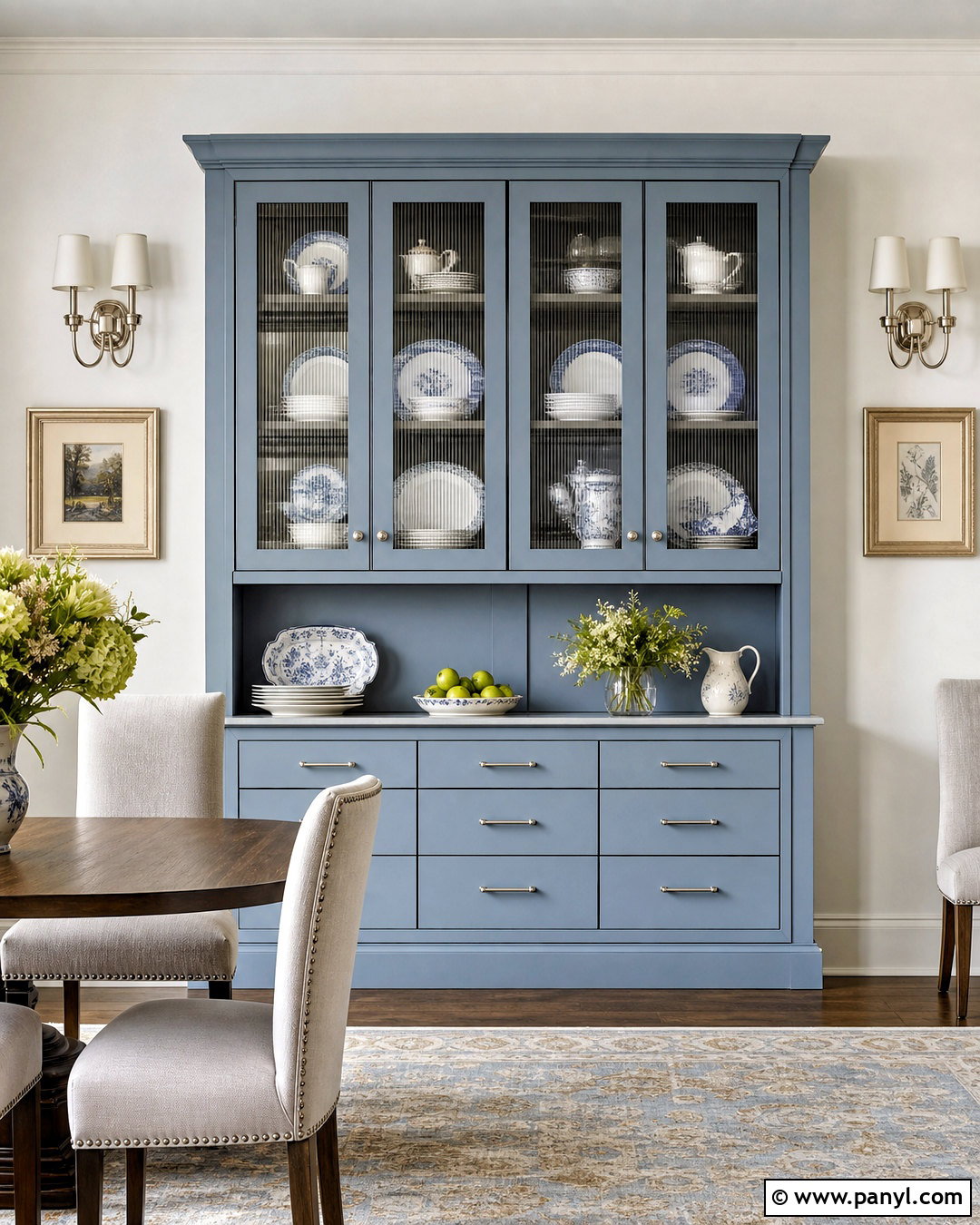
If you own attractive dishes, a glass door kitchen sideboard can combine practical storage with a controlled display. Choose a cabinet with clear or lightly fluted glass, a painted wood frame, and enclosed drawers beneath. Arrange matching plates, bowls, and serving pieces by color so the interior looks calm from across the room. Use the drawers for items that create clutter, such as extra utensils and folded linens. Coordinate the sideboard with a simple dining table, upholstered chairs, and a softly patterned rug. Above it, install a pair of small sconces or hang one understated artwork. Keep the top mostly open for serving. A restrained palette of warm white, pale gray, natural wood, and soft blue gives the complete space an orderly, welcoming character.
12. Floating Kitchen Sideboard
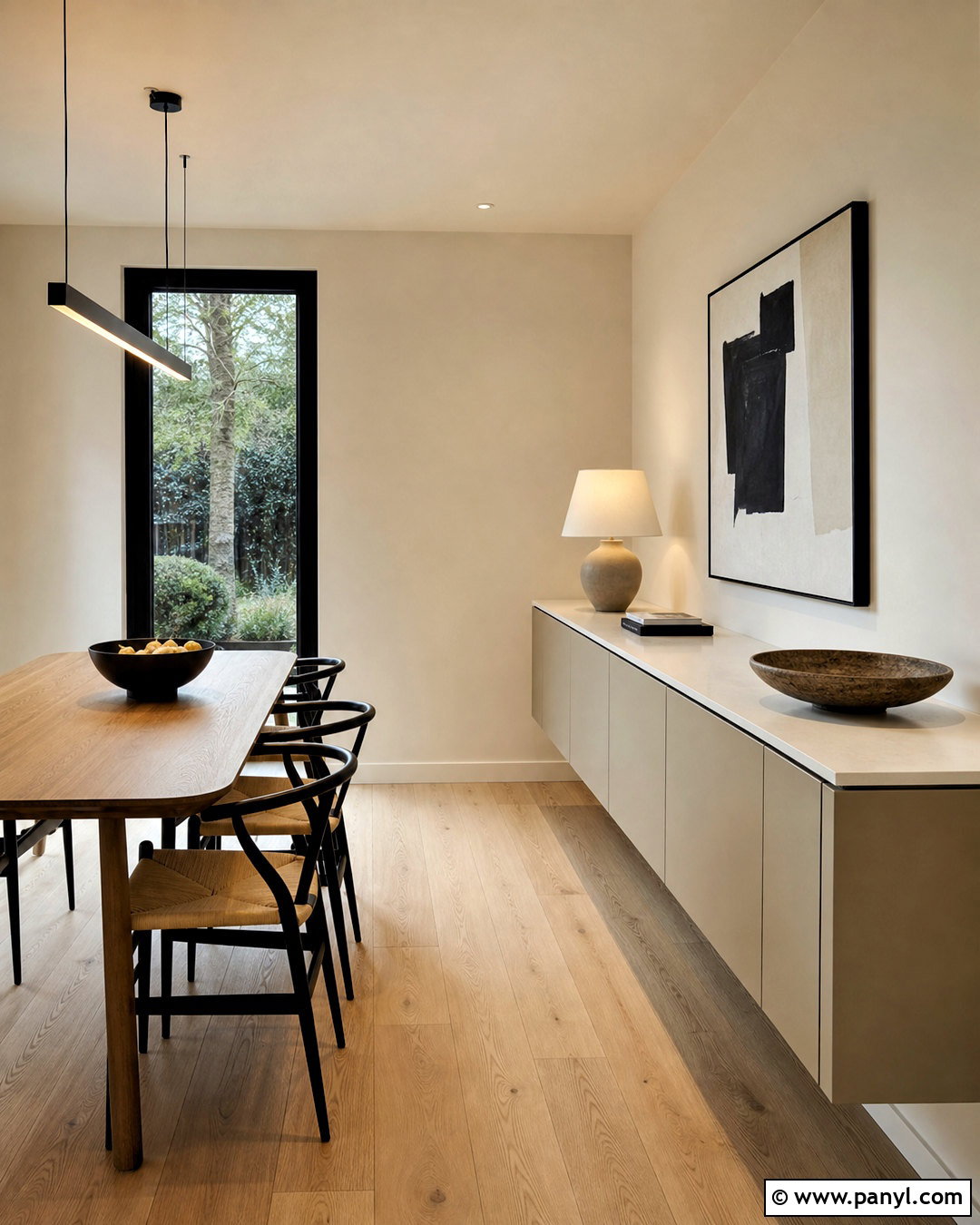
A floating kitchen sideboard gives a narrow dining zone a lighter, more architectural appearance. Mount streamlined cabinets securely to the wall, using flat fronts in white oak, warm white, or muted greige. Keep the floor visible underneath to make the arrangement feel less bulky and simplify cleaning. Pair the sideboard with a compact rectangular table, slender chairs, and a flush or linear pendant. A continuous wood or quartz top provides a useful serving surface. Style it with one lamp, a low bowl, and artwork centered above the cabinet. Hidden push latches will maintain the clean profile, while internal dividers organize linens and dishes. The finished design suits a modern kitchen where visual simplicity matters as much as additional storage.
13. Marble Top Kitchen Sideboard
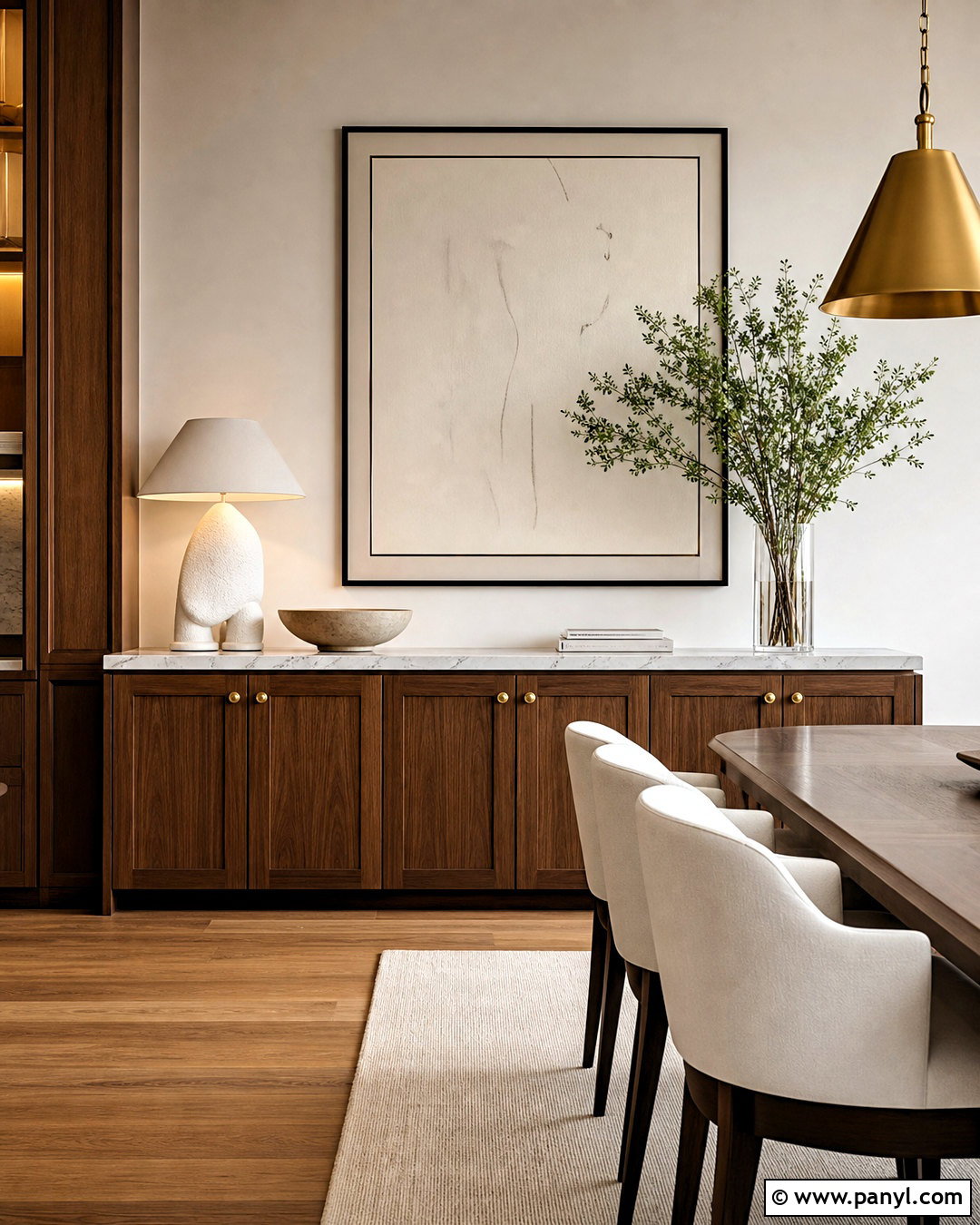
A marble top kitchen sideboard brings a refined surface to a kitchen-dining area without requiring a full remodel. Choose a wood cabinet in walnut, charcoal, or warm white, then add a pale marble top with subtle gray or beige veining. Pair it with a streamlined dining table, softly upholstered chairs, and a modern pendant in brass or black. Keep the sideboard surface edited with a sculptural lamp, a ceramic bowl, and one tall arrangement. The natural stone becomes a visual bridge when the kitchen already includes stone counters or a similar backsplash. Store serving platters, table accessories, and frequently used dining pieces below. This complete scheme mixes practical storage with polished materials while remaining comfortable enough for everyday family meals.
14. Kitchen Sideboard Coffee Bar
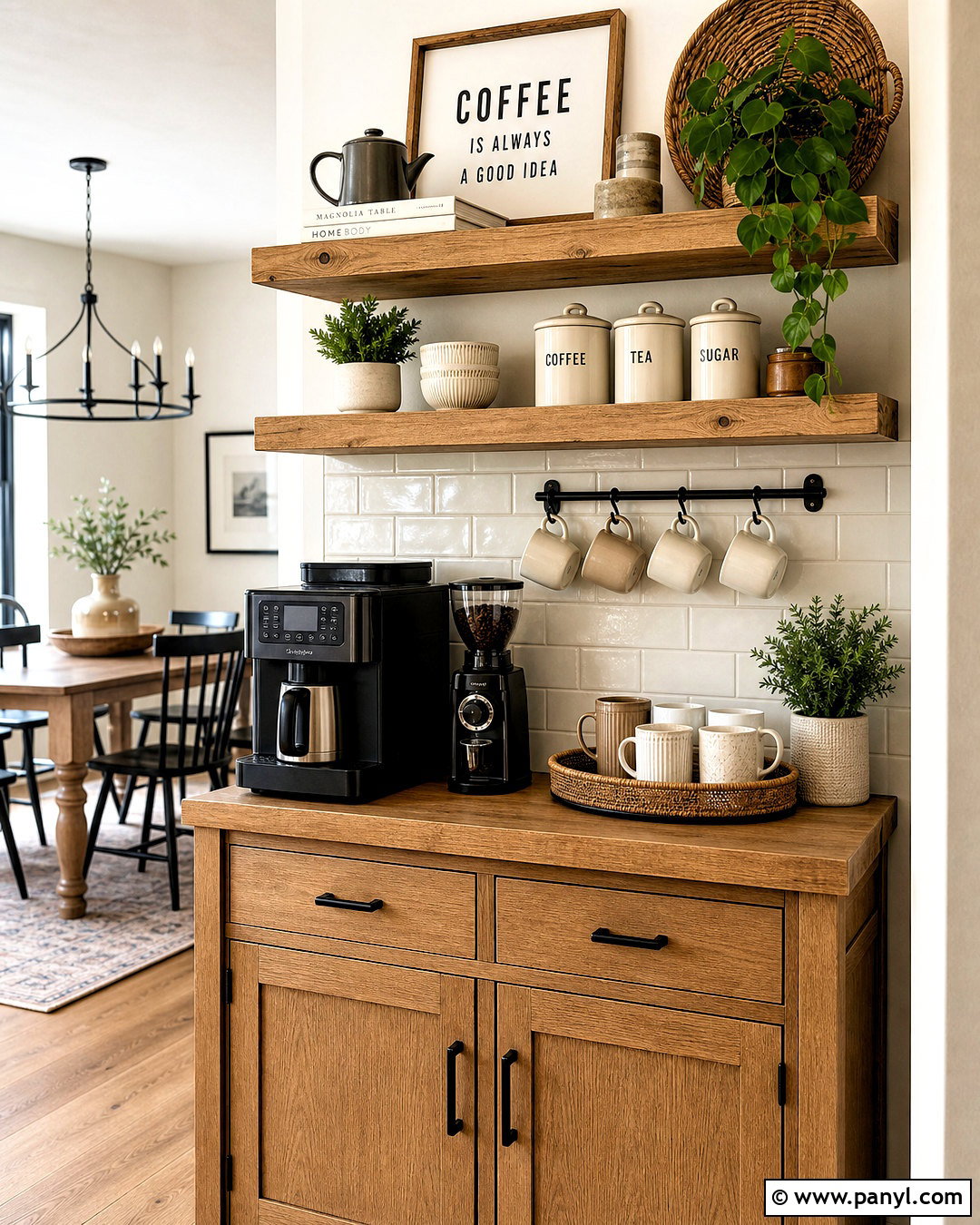
Turn a sideboard into an organized coffee station by planning the entire wall around morning routines. Choose a sturdy kitchen sideboard with drawers, cabinet storage, and a heat-resistant or easily cleaned top. Place the coffee maker and grinder together on one side, leaving the other half open for preparation. Use a tray to contain mugs, canisters, and spoons. Store beans and filters in the top drawer, with extra cups and small appliances below. Add a washable backsplash panel or a short tiled section behind the setup. Open shelves can hold matching mugs and a small plant. Warm wood, cream tile, matte black fixtures, and soft white walls create a welcoming coffee bar that looks integrated rather than like appliances gathered on spare furniture.
15. Kitchen Sideboard With Open Shelves
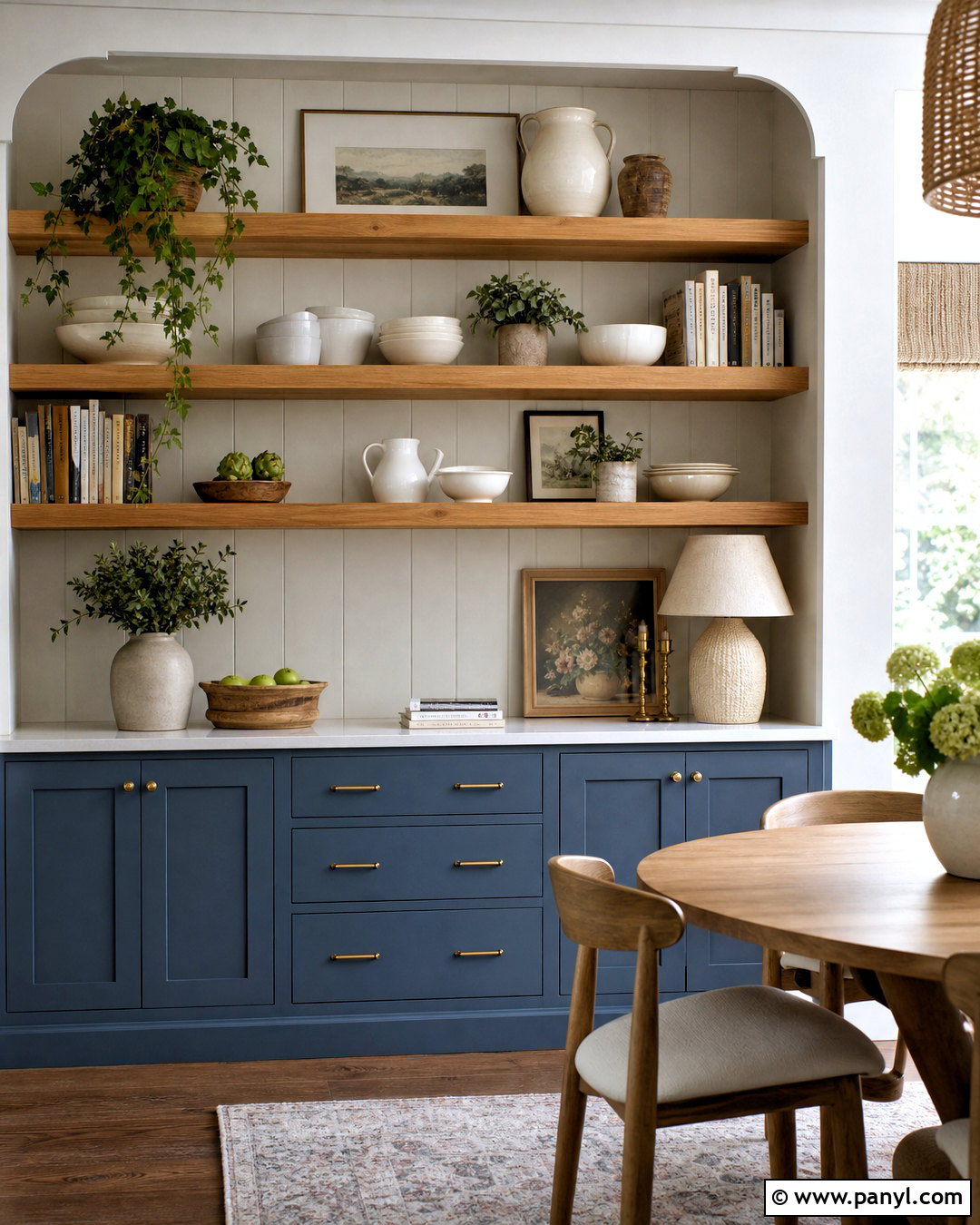
Open shelves can make a sideboard feel lighter while keeping everyday items within easy reach. Choose a kitchen sideboard with closed cabinets below and one or two broad shelves above. Paint the lower cabinet warm gray, dusty blue, or creamy white, then use natural wood shelves for contrast. Arrange frequently used bowls, pitchers, and cookbooks in small groups, leaving visible space between them. Keep less attractive supplies behind the doors. A simple wood table, neutral chairs, and a linen pendant will support the casual look. Add one lamp to the sideboard and a trailing plant on the upper shelf. This complete setup works especially well in a breakfast area where accessible storage and relaxed decorating are more useful than formal display.
16. Kitchen Sideboard Matching Cabinets
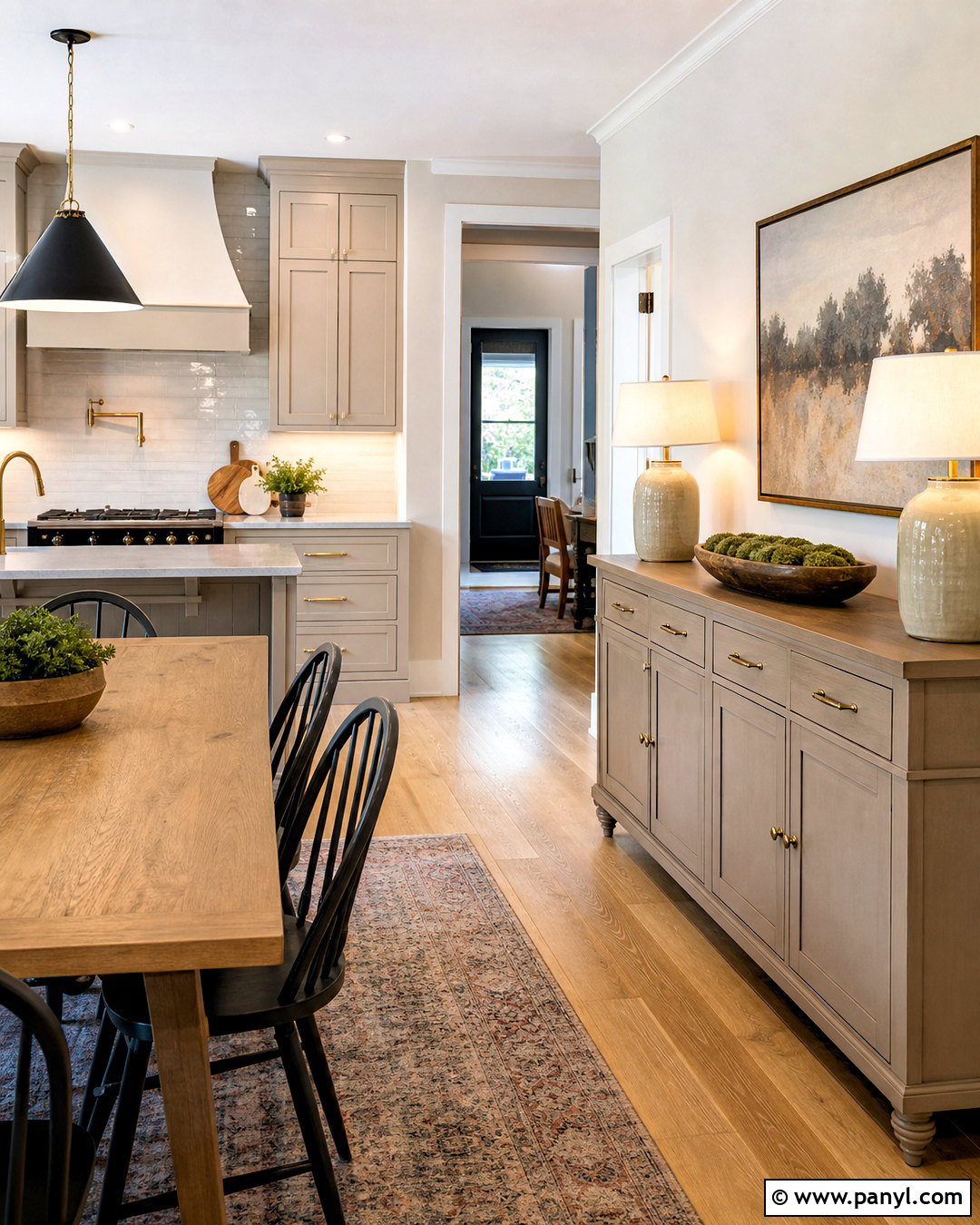
Matching the sideboard to the kitchen cabinets can make an open-plan room feel deliberately designed. Repeat the same door profile, paint color, hardware, and countertop material, especially when the sideboard is visible from the main cooking area. To distinguish the dining zone, use a furniture-style base with decorative feet or a slightly shallower cabinet depth. Add drawers for flatware, doors for serving pieces, and a broad surface for setting out food. Continue the coordinated design with dining chairs that echo the cabinet color and a table that relates to the flooring. One large artwork and a pair of lamps will soften the fitted appearance. The room feels unified, while the sideboard still functions as a clear transition between cooking and dining spaces.
17. Contrasting Kitchen Sideboard
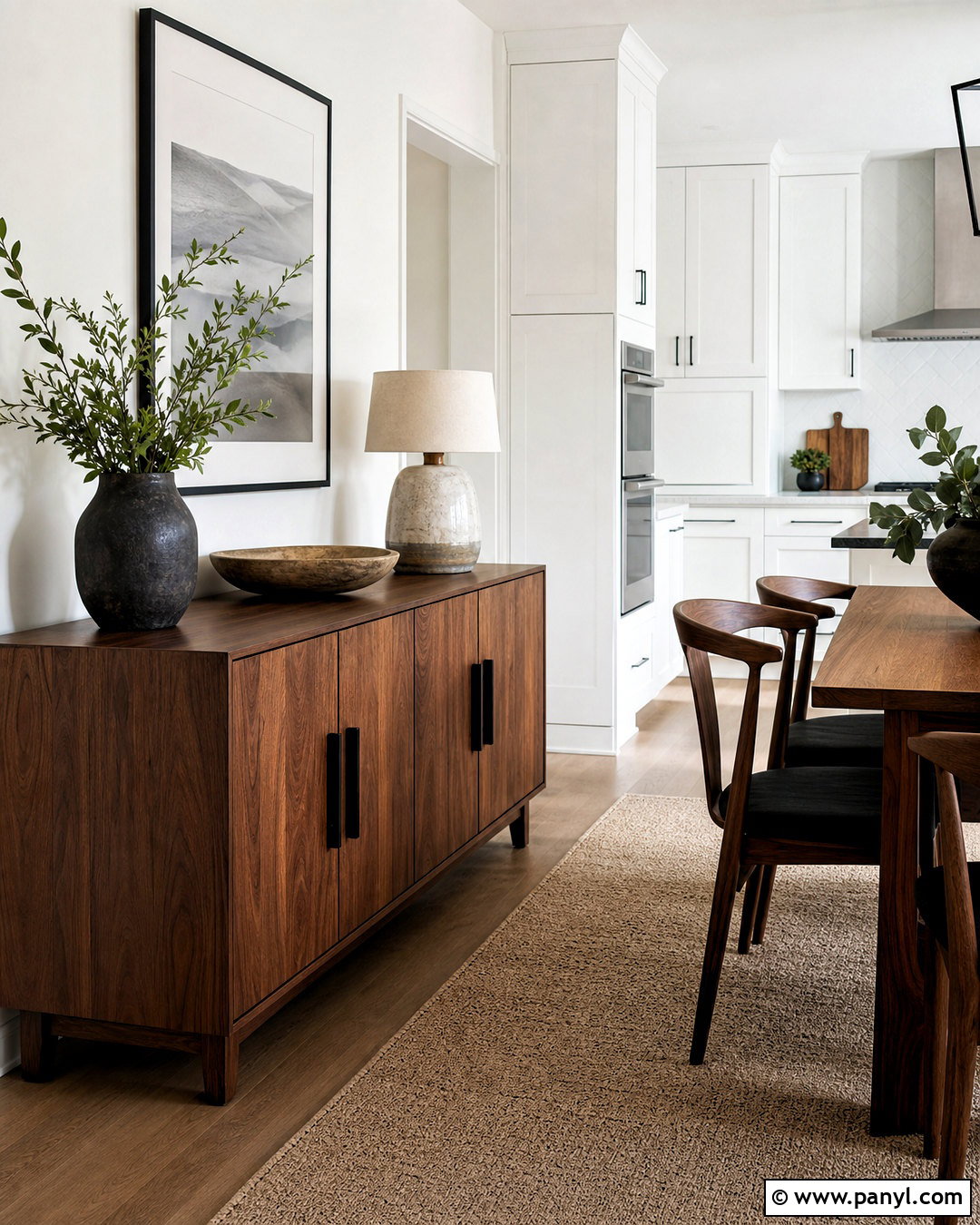
Sometimes the strongest choice is a sideboard that clearly differs from the fitted cabinetry. Place a rich walnut kitchen sideboard beside white cabinets, or introduce painted charcoal furniture into a kitchen dominated by pale oak. The contrast should look intentional, so repeat the new material or color in dining chairs, lighting, or artwork frames. Select a simple cabinet shape that complements rather than copies the kitchen doors. Style the top with a lamp, a large tray, and sculptural pottery in colors already found around the room. A neutral rug can visually connect the dining table and storage wall. Inside, organize special-occasion dishes and bulky serving pieces. The final look has more depth and character while maintaining a coordinated material palette throughout the space.
18. Corner Kitchen Sideboard
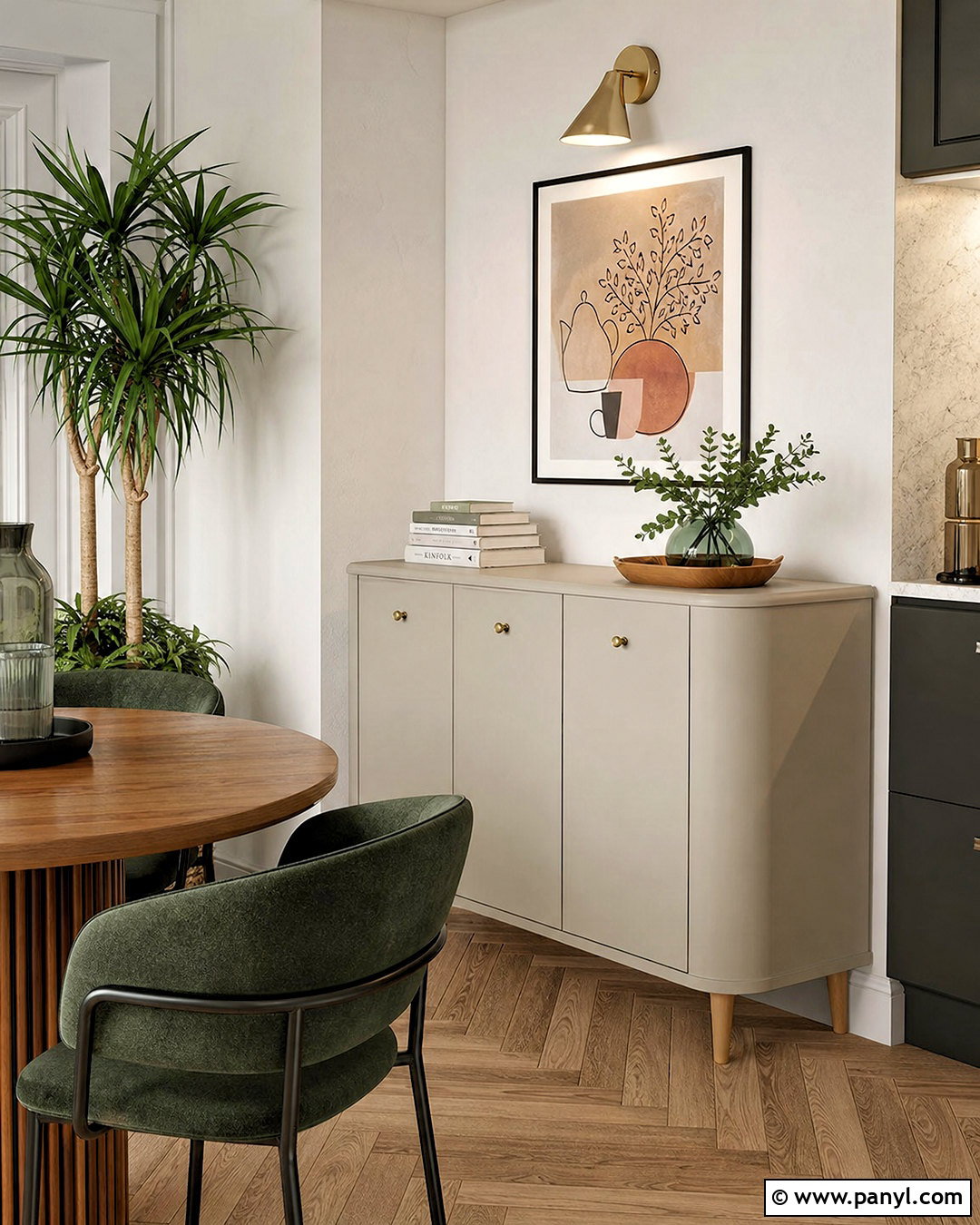
An awkward corner can become valuable storage when the sideboard is scaled to fit rather than forced into the available area. Use a compact kitchen sideboard on the longest wall, then balance the adjoining wall with artwork, a sconce, or a tall plant. Choose rounded front corners or slim legs if the walking path passes close to the cabinet. Light wood, warm white, or pale greige will keep the corner open and bright. Pair the piece with a round dining table and curved chairs to improve visual flow. Store table linens, small appliances, and serving dishes behind closed doors. A small lamp and shallow tray leave enough usable countertop space. This thoughtful layout turns an overlooked corner into a complete, practical dining nook.
19. Industrial Kitchen Sideboard
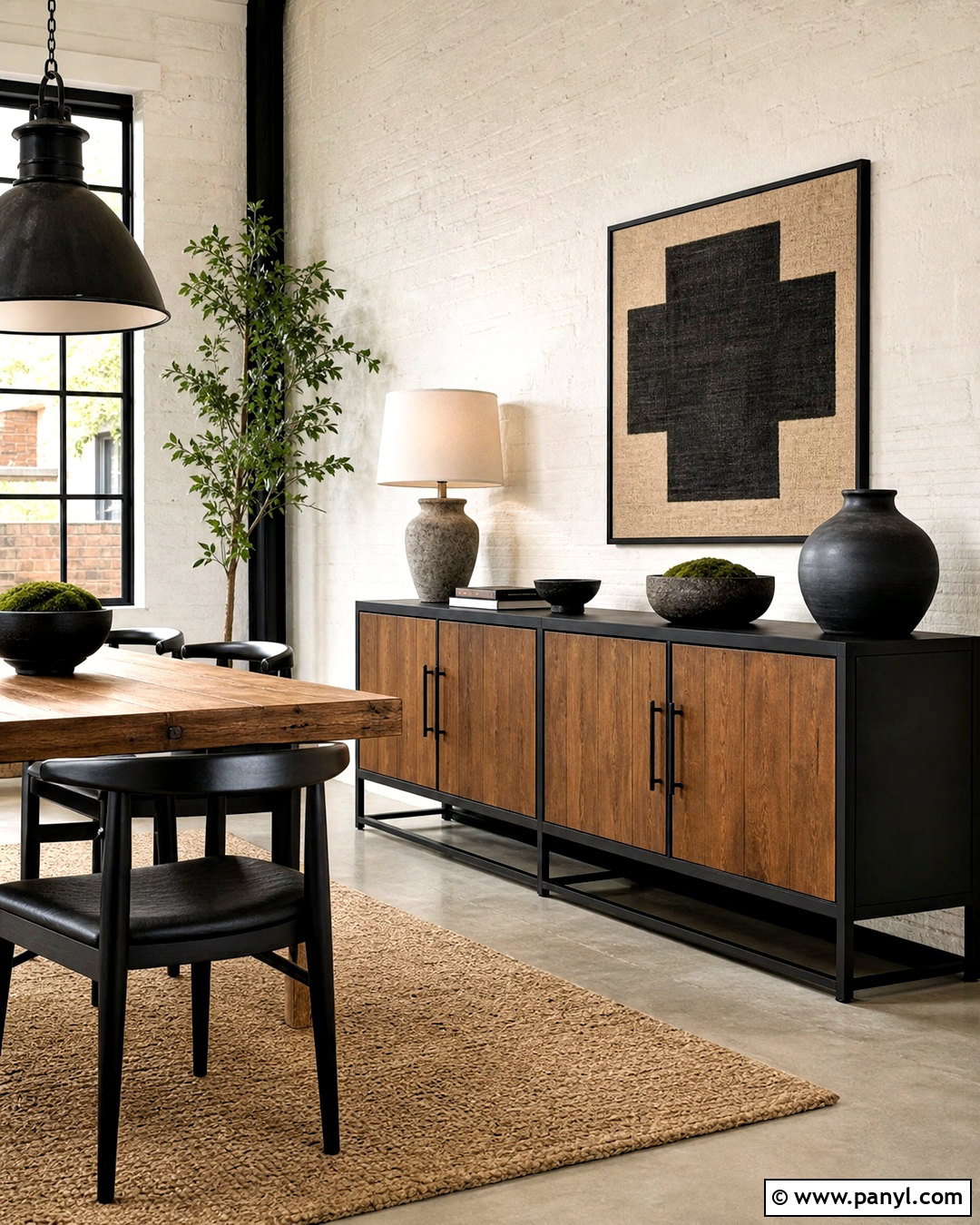
For a loft-inspired kitchen, combine warm timber with dark metal rather than relying on cold finishes alone. An industrial kitchen sideboard can feature a black steel frame, medium-toned wood doors, and simple bar pulls. Place it against a white brick, warm gray, or lightly textured wall. Add a substantial wood dining table, black metal chairs with upholstered seats, and a large neutral rug to soften the hard materials. Style the cabinet with a concrete lamp, matte ceramic vessels, and bold graphic artwork. Keep most storage enclosed so the room remains organized. Brushed black lighting and a few leather-look accents can repeat the industrial details. The complete arrangement feels sturdy and modern, but natural wood and textiles keep it welcoming.
20. Scandinavian Kitchen Sideboard
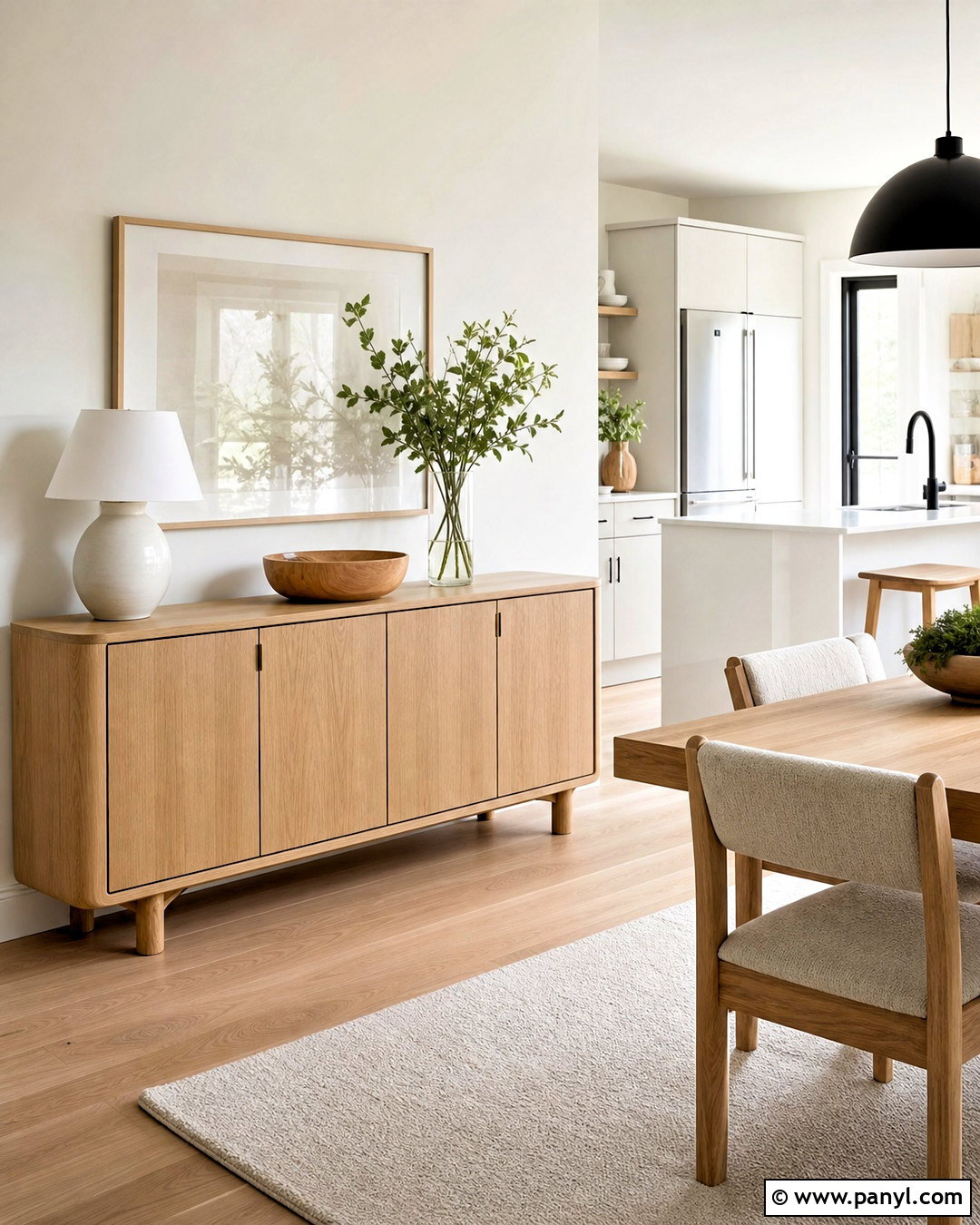
A Scandinavian kitchen sideboard should feel practical, light, and quietly decorative. Choose pale oak with simple doors, softly rounded edges, and minimal hardware. Pair it with warm white walls, blond wood flooring, a clean-lined dining table, and comfortable chairs in oatmeal or light gray fabric. Keep the palette gentle, then introduce black through a pendant, picture frames, or chair legs for definition. Arrange only a few useful objects on the sideboard, such as a white ceramic lamp, a shallow wood bowl, and a clear vase with leafy stems. Store dishes and linens in neatly divided cabinets. A subtle flat-weave rug completes the room. This uncluttered design creates a bright kitchen-dining space that feels welcoming rather than sparse.
Conclusion:
The best kitchen sideboard should improve how the room functions while supporting its overall color palette and character. Begin with available wall space, storage needs, and circulation around the dining table. Then choose a finish that either coordinates with the kitchen cabinets or creates purposeful contrast. Closed cabinets control clutter, while drawers, glass doors, shelves, and durable tops can support specific routines. Complete the area with balanced lighting, appropriately scaled artwork, and only a few decorative objects. Whether you prefer natural oak, painted color, vintage furniture, or a streamlined built-in, these 20 kitchen sideboard ideas offer realistic ways to create a more organized, attractive, and useful kitchen-dining space.

Related Ideas and Inspiration:

Leave a Reply