
Small glass wine cellar wall ideas can turn an overlooked corner into a polished storage feature without overwhelming the room. Current designs often use floor-to-ceiling glazing, slim bottle racks, integrated lighting, and under-stair or dining-room locations to maximize limited space. () The best layouts treat the cellar as part of the surrounding interior, coordinating its frame, flooring, backdrop, and lighting with nearby finishes. Some feel sleek and modern, while others introduce warm oak, brick, marble, or natural stone. Proper planning also helps ventilation equipment, doors, and storage remain visually discreet. Whether you are renovating a narrow alcove or creating a statement dining wall, these 20 small glass wine cellar wall ideas offer complete, practical looks worth recreating.

1. Frameless Glass Wine Cellar Wall
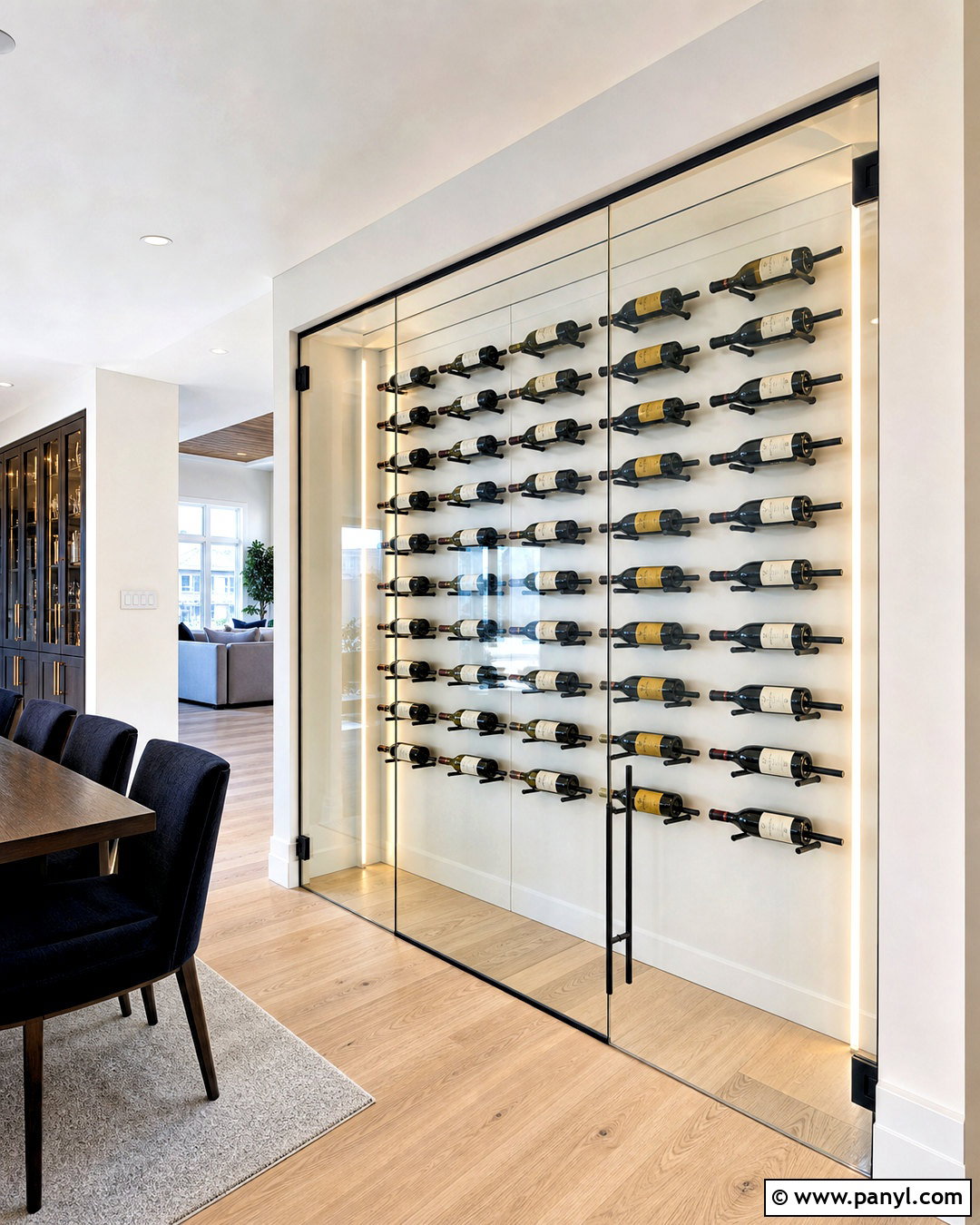
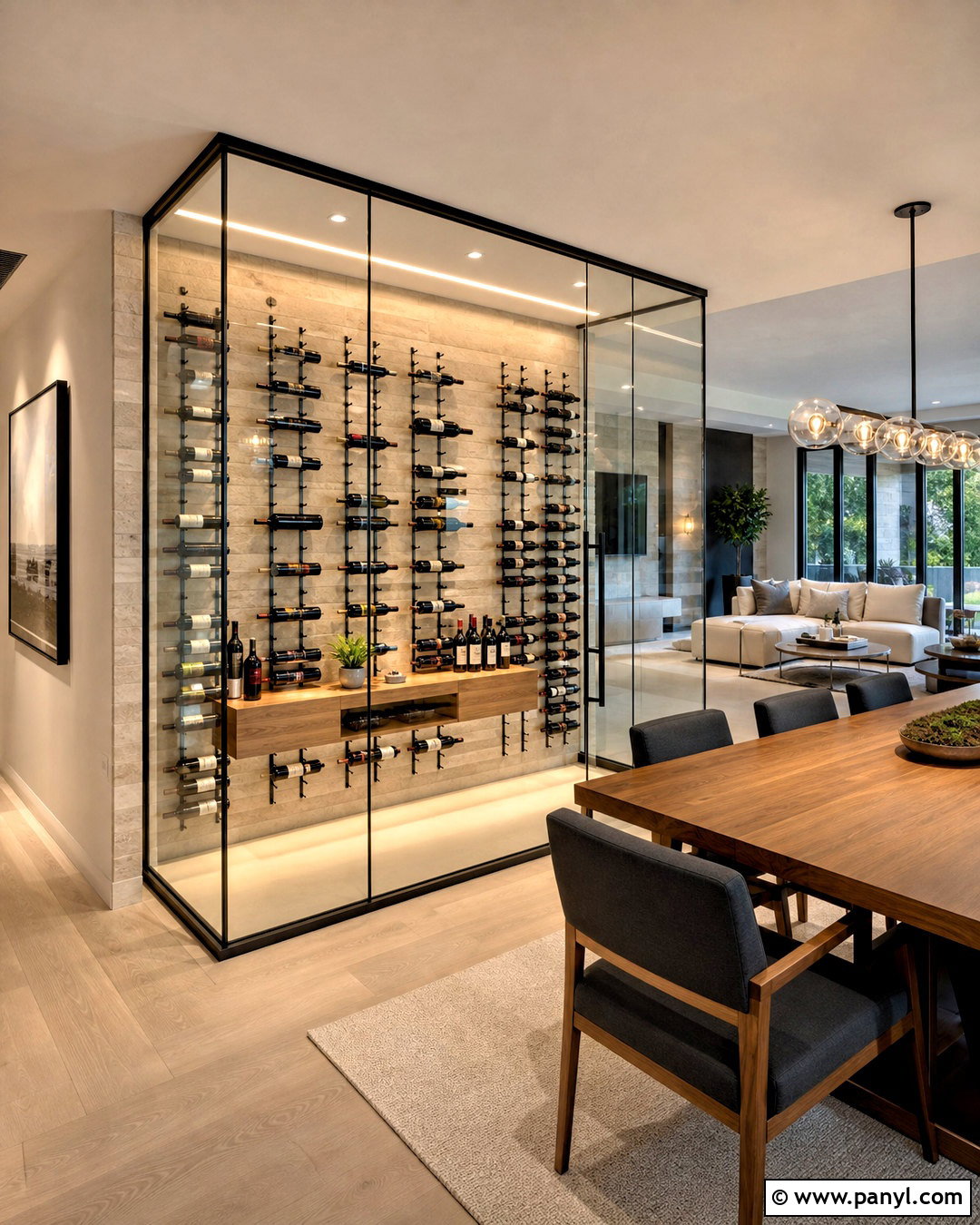
A frameless enclosure creates one of the cleanest looks for a compact wine display. Use floor-to-ceiling clear glass across the front, with minimal channels at the floor and ceiling. Inside, mount slim matte black bottle pegs on a warm white wall so every bottle appears neatly organized. Continue the surrounding room’s light oak flooring into the cellar to make the area feel larger and more connected. A narrow vertical LED strip on each side will illuminate the display without adding bulky fixtures. Choose a simple glass door with understated hardware. This complete scheme works especially well beside a modern dining area, where the transparent enclosure becomes an architectural feature while preserving an open, uncluttered view through the room.
2. Under Stair Glass Wine Cellar Wall
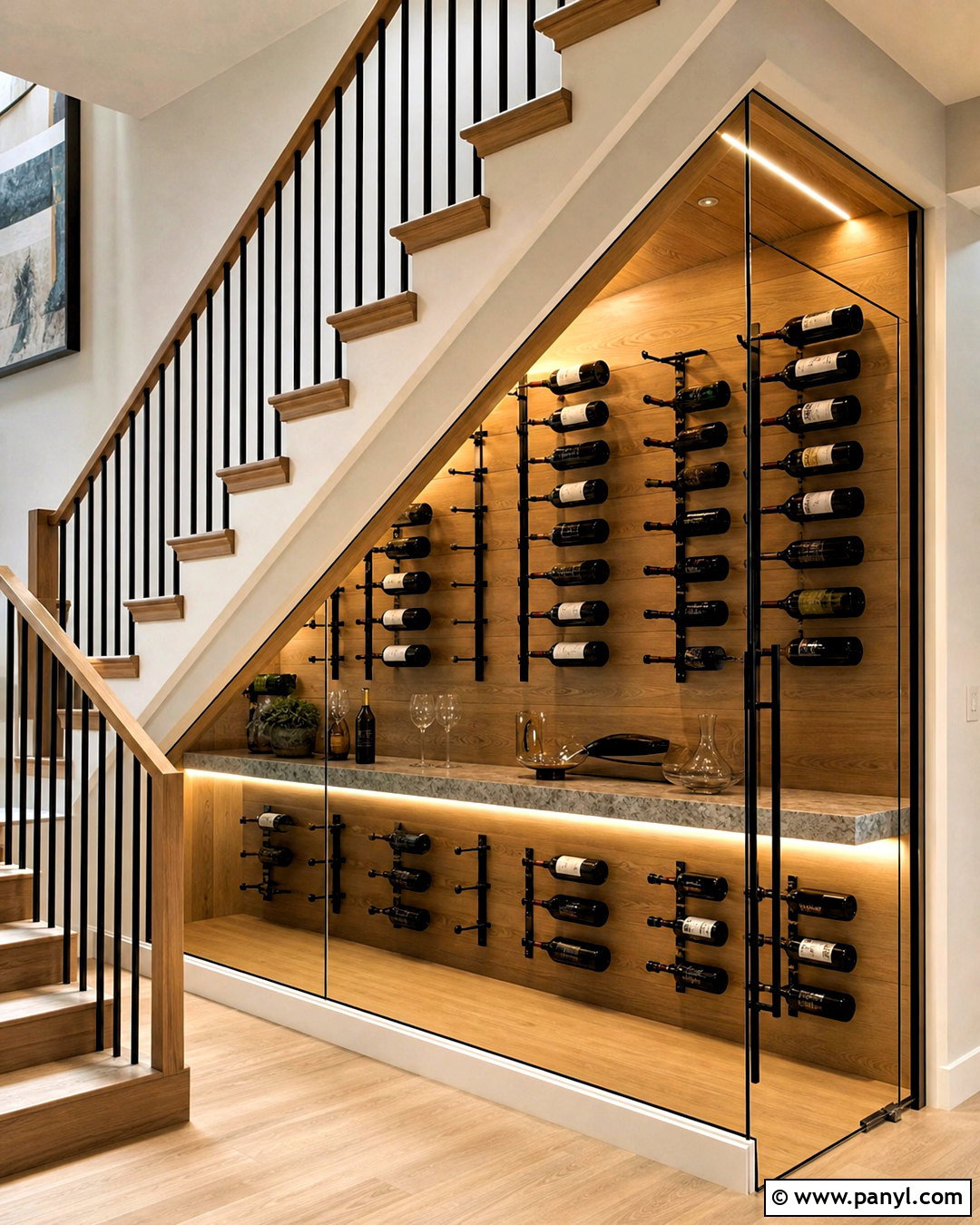
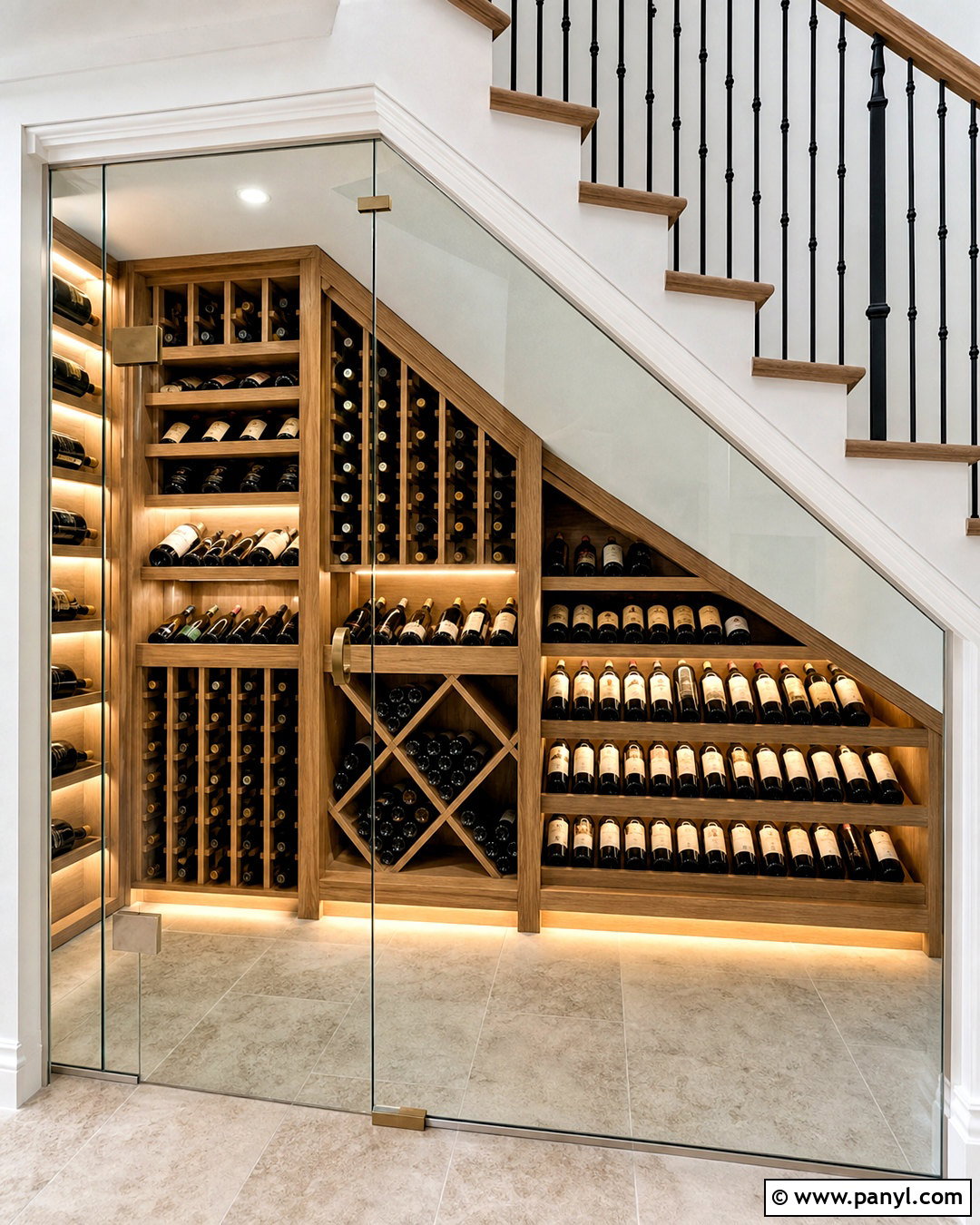
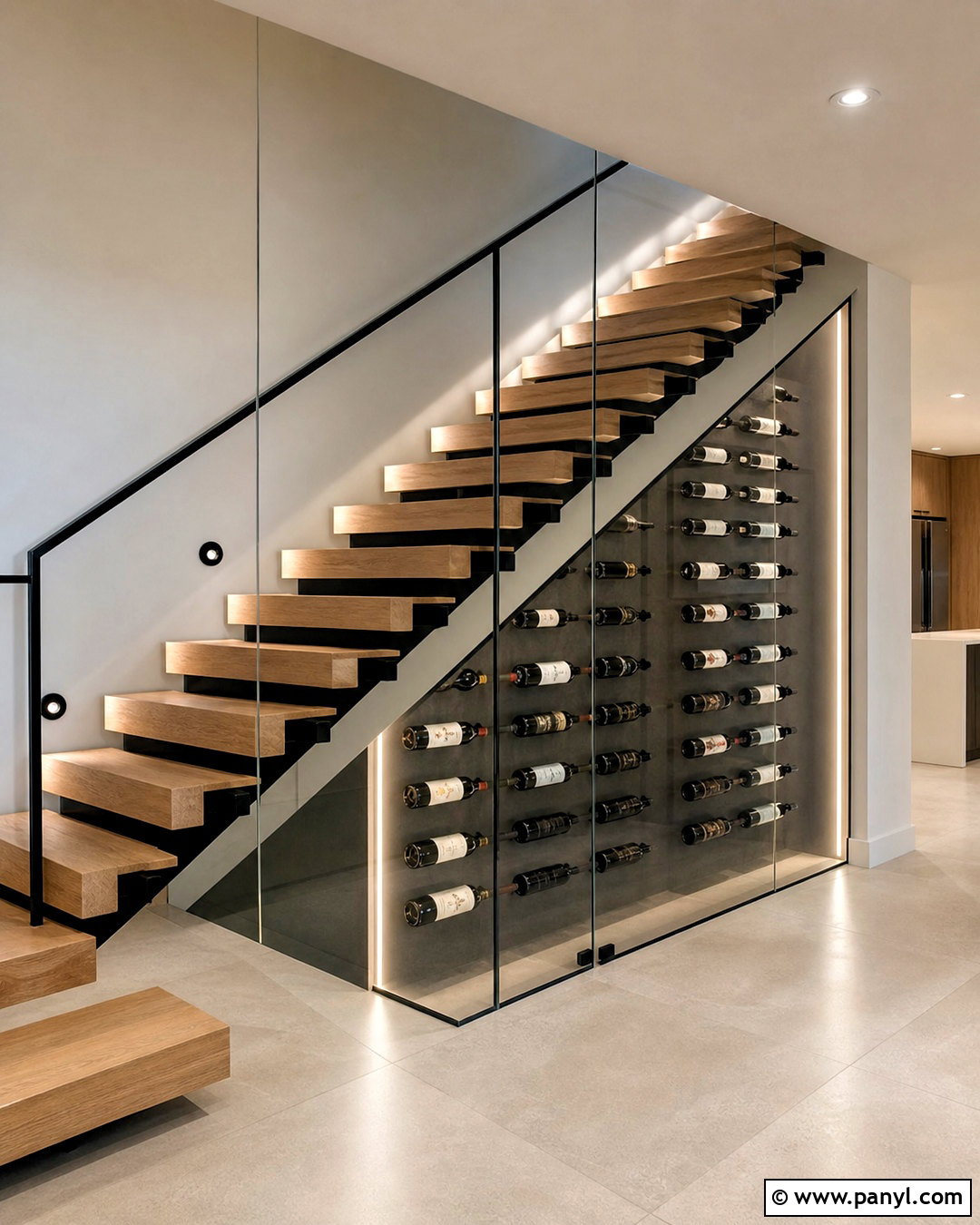
Could the empty area beneath your staircase become useful storage? Follow the stair angle with custom glass panels, creating a fitted enclosure that uses every inch of the triangular footprint. Line the back with natural white oak and install horizontal black metal racks from the lowest section to the tallest point. Warm white LED strips beneath the stair slope will emphasize the architecture. Match the glass frame to the staircase railing for a cohesive look. Wide plank oak flooring, a slim black handle, and a small stone counter at the tall end complete the design. This under-stair glass wine cellar wall feels intentional rather than squeezed into leftover space, making it suitable for open-plan homes, hallways, and dining rooms.
3. Black Framed Glass Wine Cellar Wall
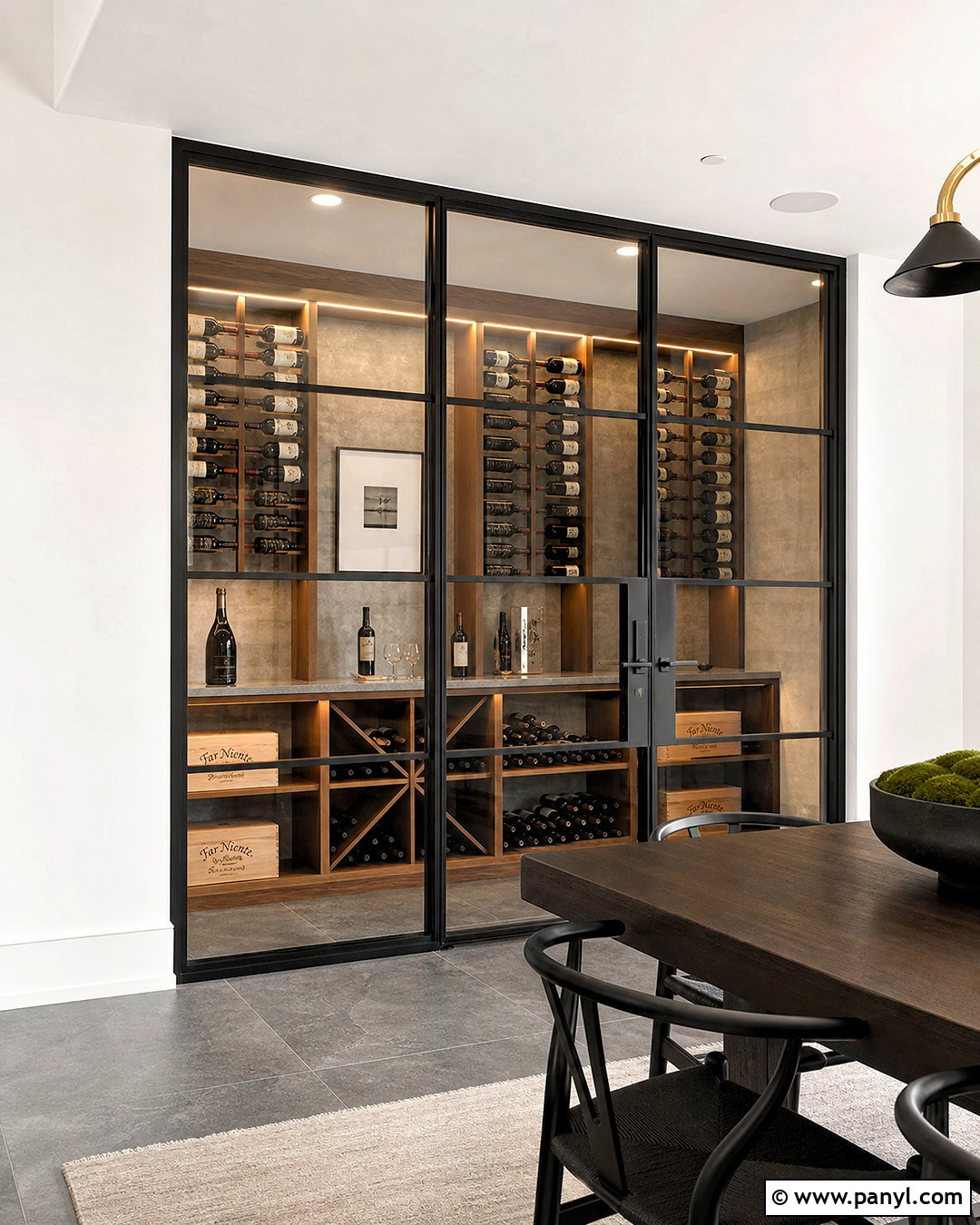
Crisp black framing gives a small enclosure definition and helps it stand out against light walls. Create a grid-style front using narrow matte black metal mullions and clear glass panels. Inside, pair walnut bottle racks with a charcoal porcelain tile floor and a warm gray plaster backdrop. Add soft LED lighting behind the racks to reveal the wood grain and bottle shapes. The dark frame can coordinate with black dining chairs, cabinet pulls, or nearby window frames. Keep the surrounding walls creamy white so the feature does not make the room feel heavy. This complete glass wine cellar wall has a modern industrial character, but the walnut interior adds enough warmth for transitional, contemporary, and updated farmhouse homes.
4. Dining Room Glass Wine Cellar Wall
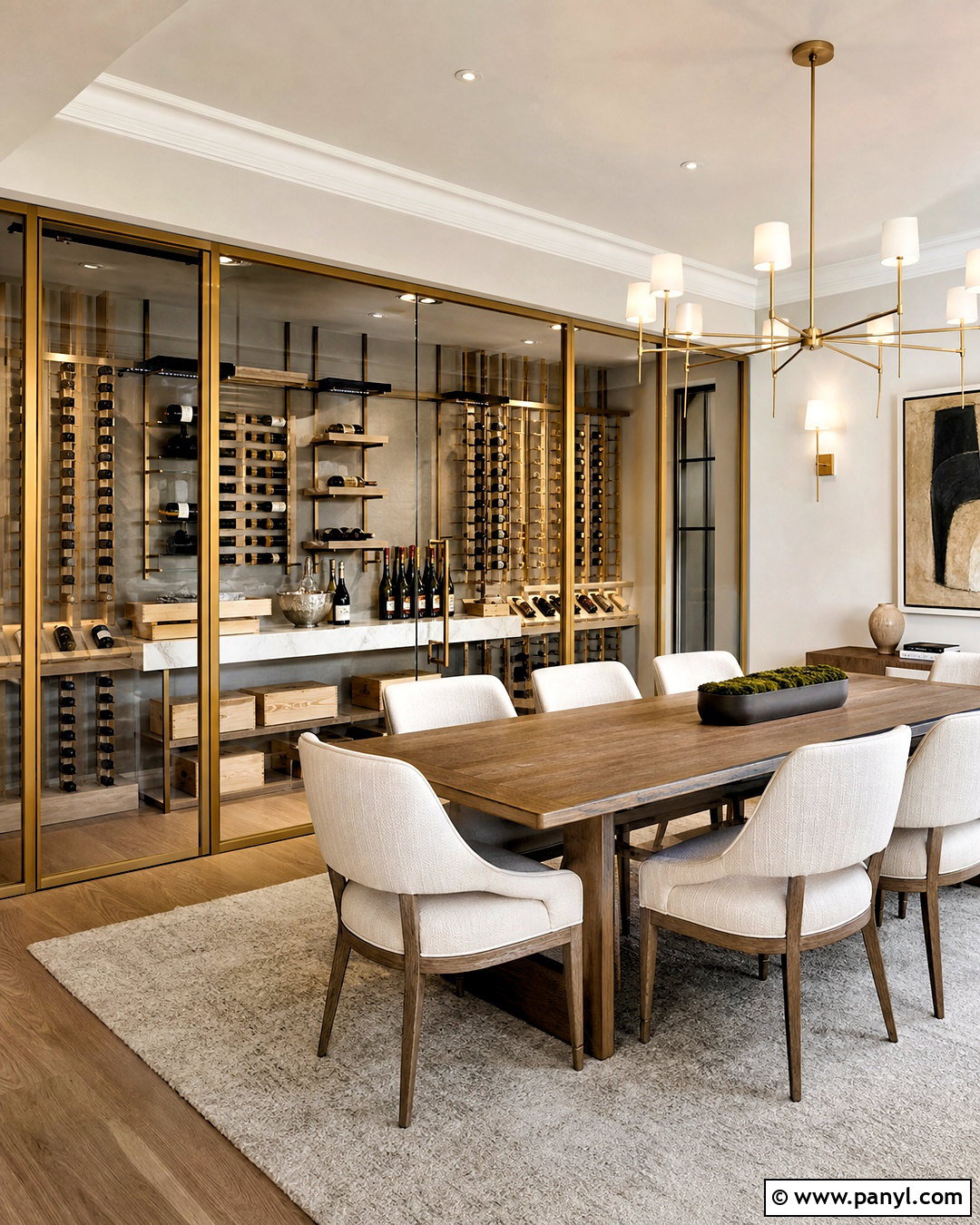
Place a shallow glass wine cellar along one end of the dining room to create an elegant entertaining focal point. Use a full-height clear glass front with brushed brass framing, then install pale oak racks against a soft greige back wall. Arrange bottles in balanced vertical rows and reserve the center for a narrow marble serving shelf. Small recessed ceiling lights and concealed shelf lighting will provide clear, even illumination. Echo the brass frame with a dining chandelier, while an oak table connects with the interior racks. Upholstered cream chairs and a textured neutral rug soften the glass surfaces. The finished wall feels integrated with the dining area and provides attractive storage without requiring a separate basement or dedicated room.
5. Corner Glass Wine Cellar Wall
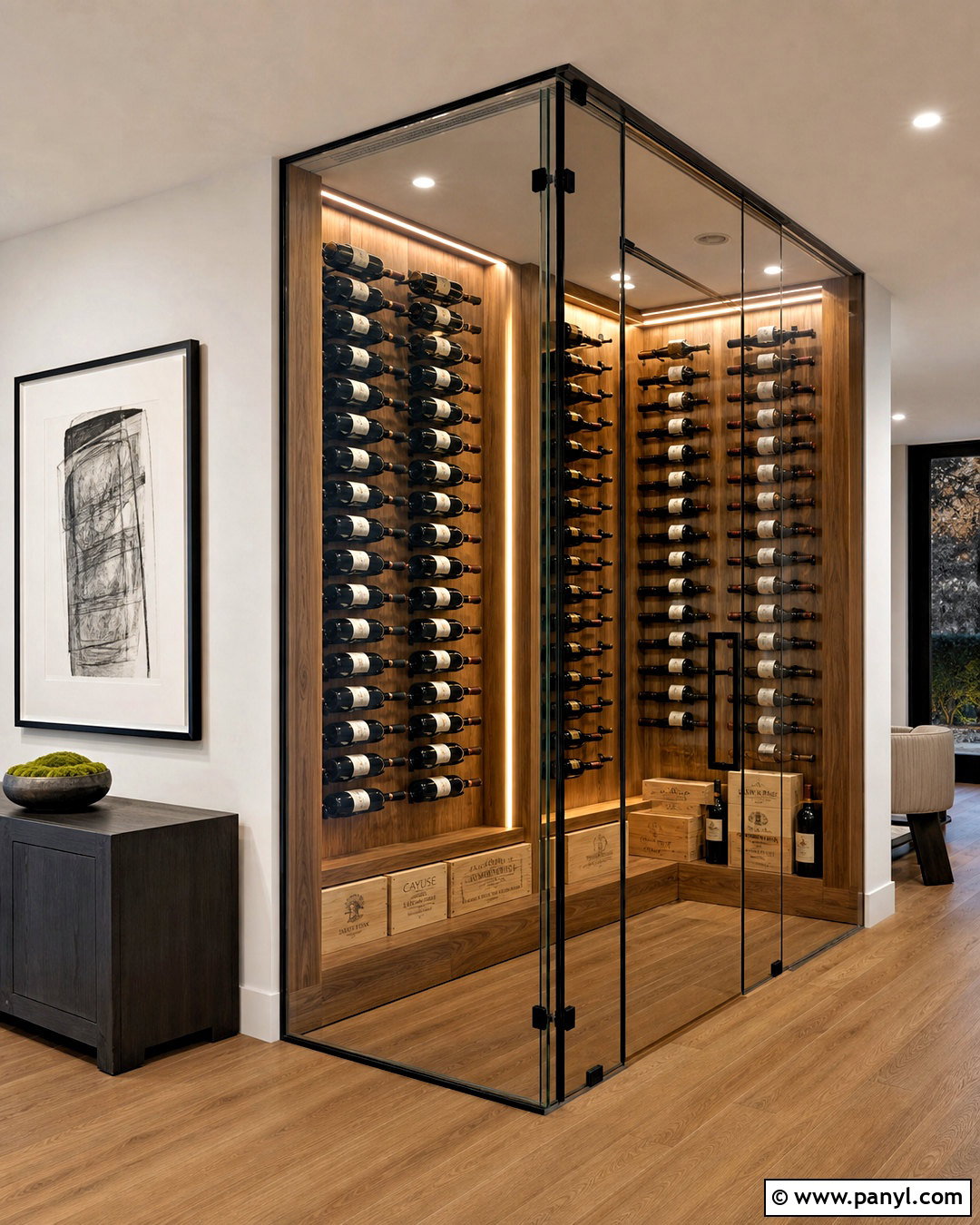
An unused corner can become a compact two-sided display with excellent visibility. Enclose the space using two clear glass walls and a narrow glass door, keeping the remaining walls solid for bottle storage. Cover those interior surfaces with medium-tone walnut panels and add black metal label-forward racks. The rich wood provides contrast, while the transparent corner prevents the enclosure from looking boxy. Install small recessed lights overhead and a continuous LED strip near the floor for depth. Match the outside flooring to the adjacent living or dining room. A nearby console, large artwork, and simple decorative bowl will help the feature settle naturally into the space instead of appearing like an isolated glass cabinet.
6. Marble Glass Wine Cellar Wall
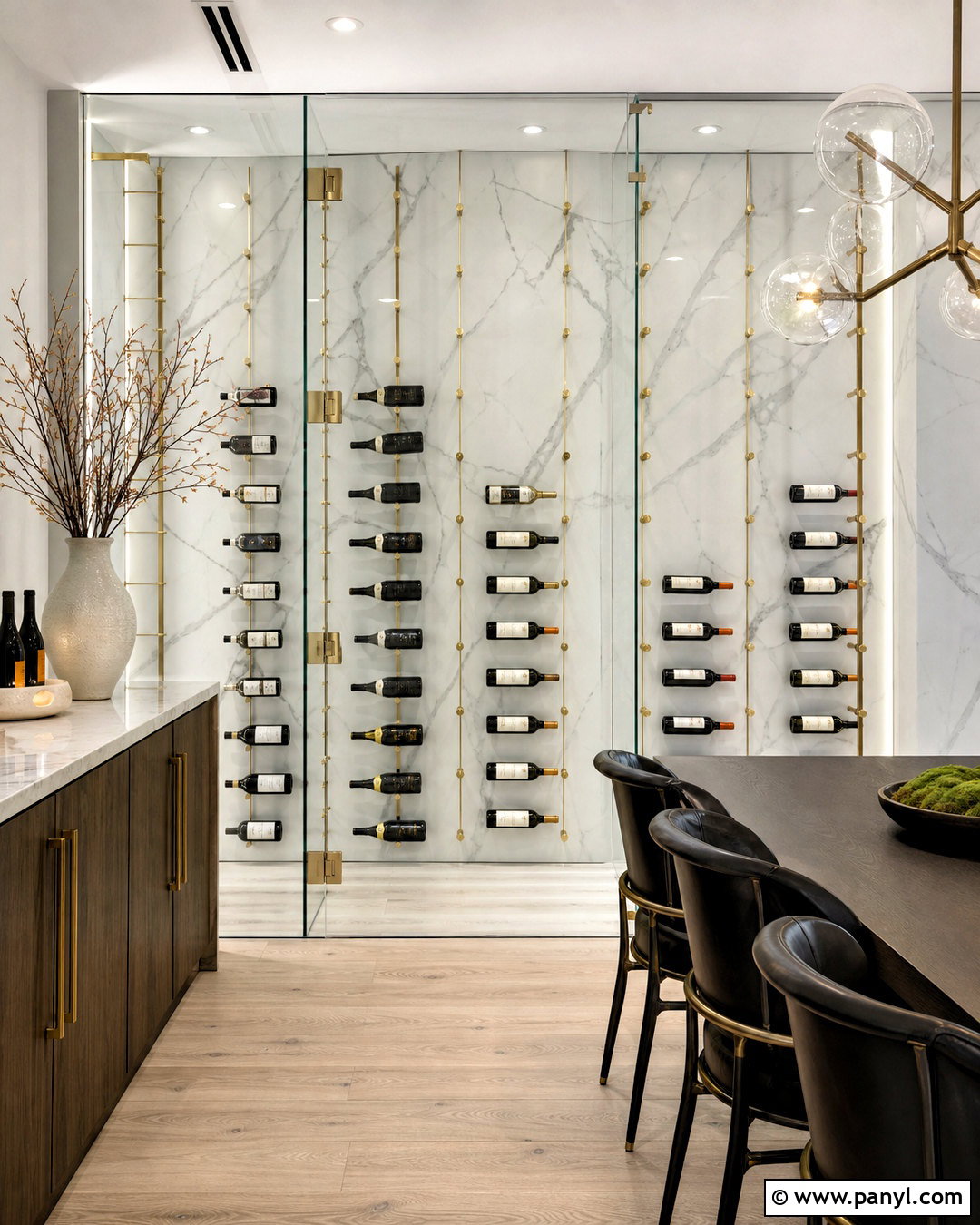
White and gray marble creates a bright, refined background that can make a small enclosure feel more spacious. Apply large marble slabs or convincing porcelain panels to the back wall, aligning the veining carefully for a seamless appearance. Mount slim brushed brass bottle pegs directly over the stone and surround the display with clear frameless glass. A light oak floor balances the cooler surface, while warm white vertical lighting prevents the marble from appearing stark. Keep the door hardware and nearby decor understated. In a dining room, repeat the marble on a buffet top and use brass accents in the chandelier. The result is a complete glass wine cellar wall that looks luxurious without requiring a large footprint or elaborate cabinetry.
7. Stone Glass Wine Cellar Wall
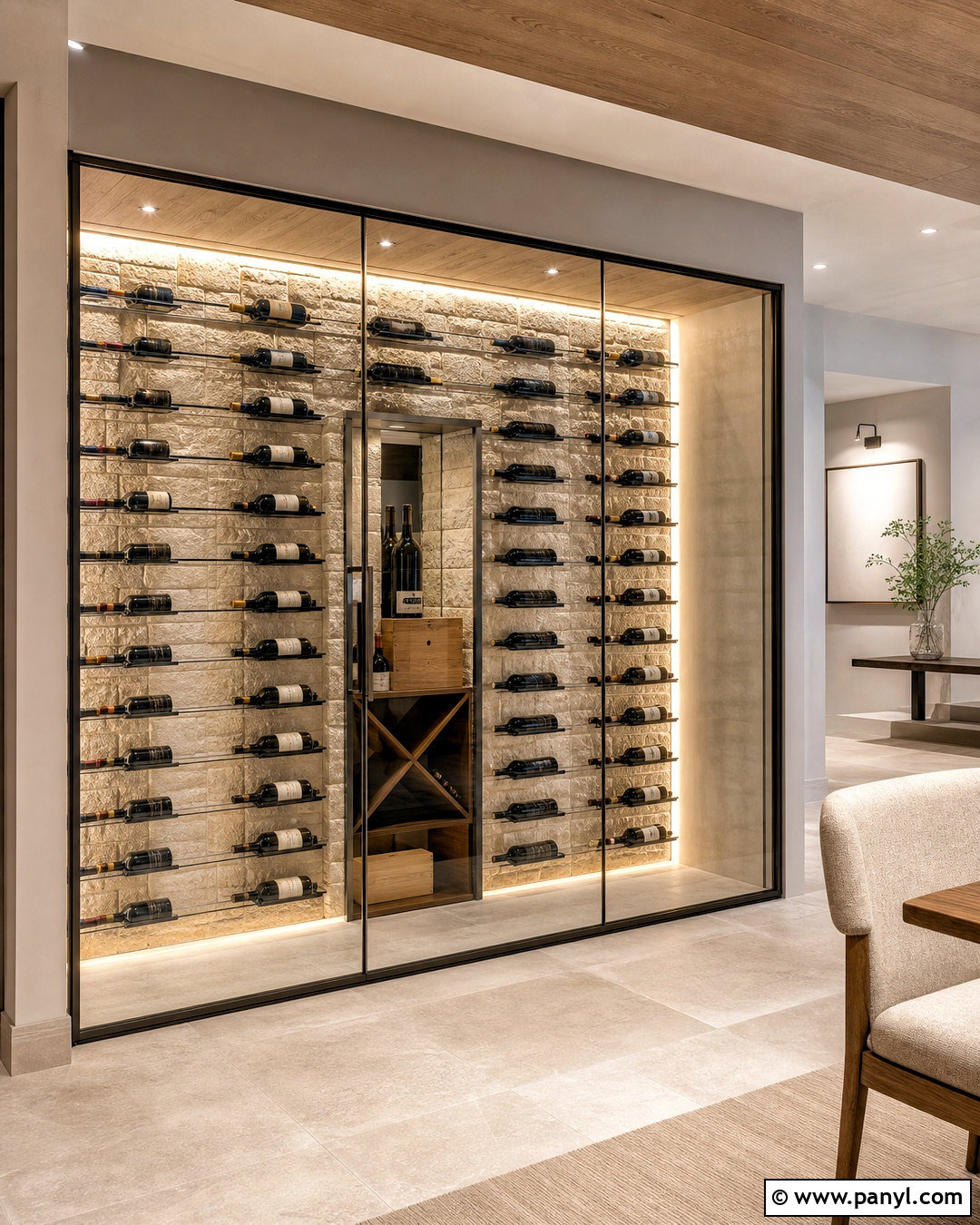
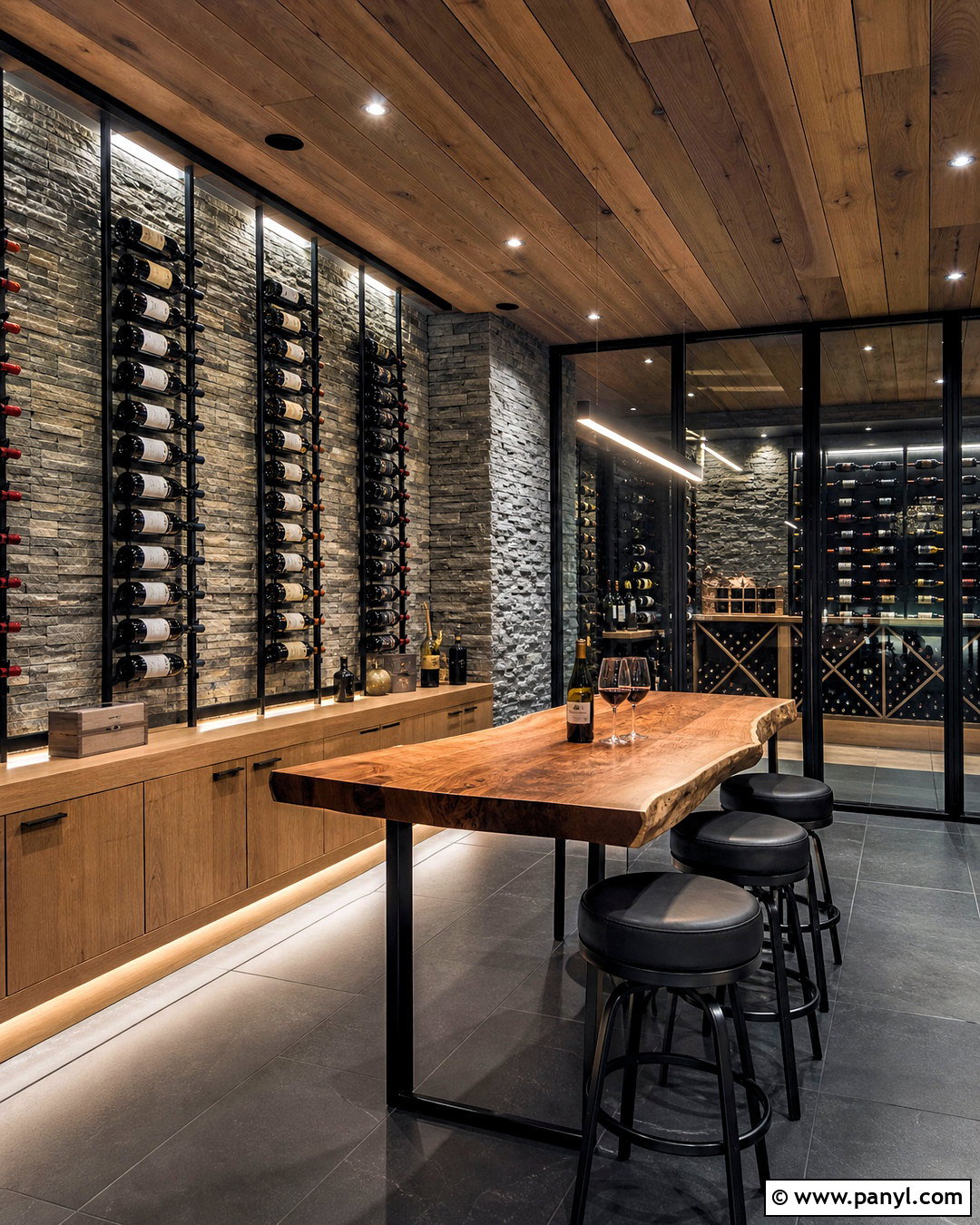
Natural stone introduces texture and gives a contemporary glass enclosure a grounded, substantial character. Build the back wall with thin-cut limestone or light stacked stone, choosing a soft beige color that will not visually shrink the space. Install dark bronze horizontal racks so the bottles appear to float against the uneven surface. A bronze-framed glass front, limestone-look floor tile, and oak ceiling panel create a coordinated material palette. Use concealed wall-grazing lights to highlight the stone’s texture from above. Outside the enclosure, neutral dining furniture and linen upholstery will continue the relaxed look. This small glass wine cellar wall combines rustic materials with clean architectural lines, making it effective in modern organic, Mediterranean, or updated traditional interiors.
8. White Oak Glass Wine Cellar Wall
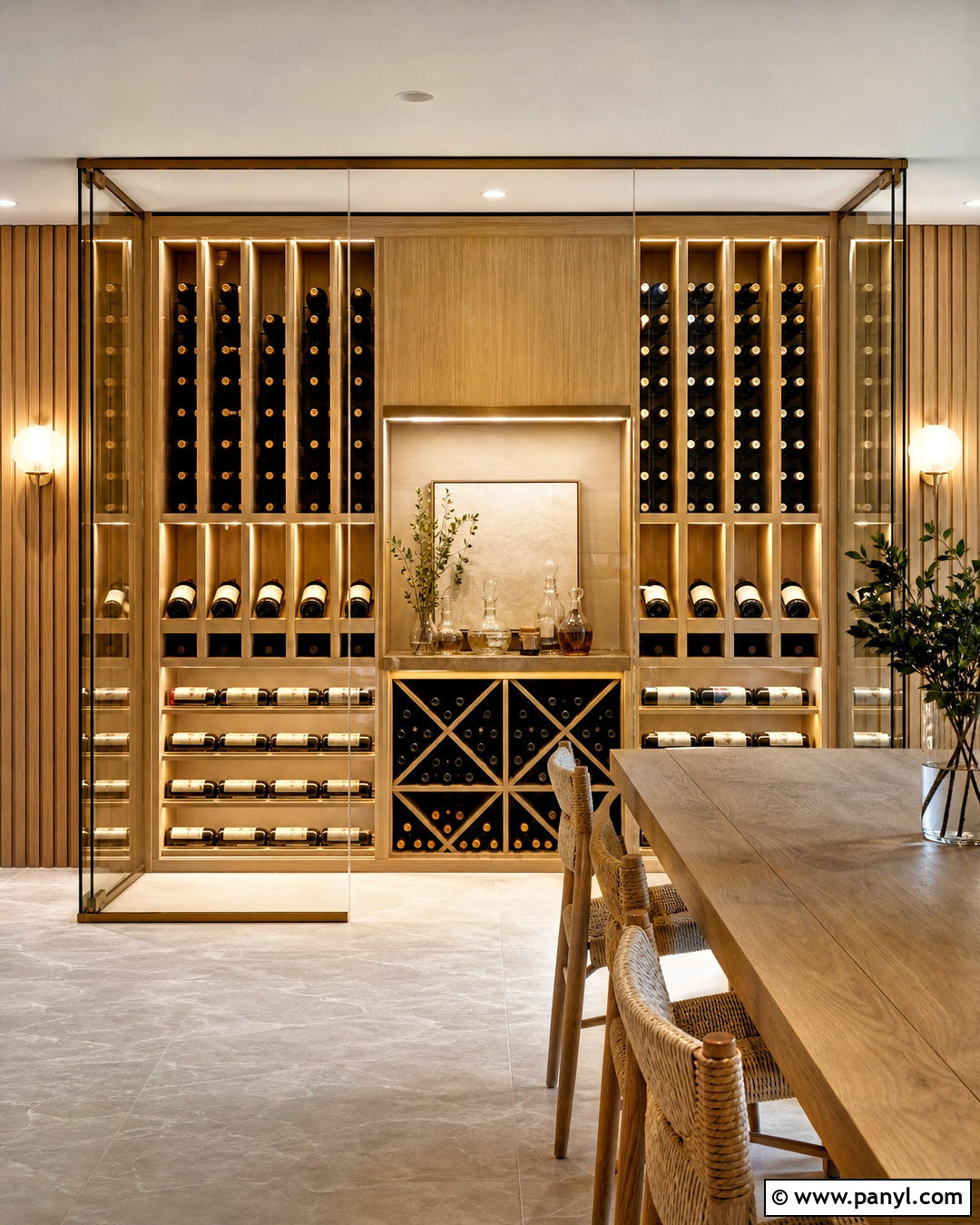
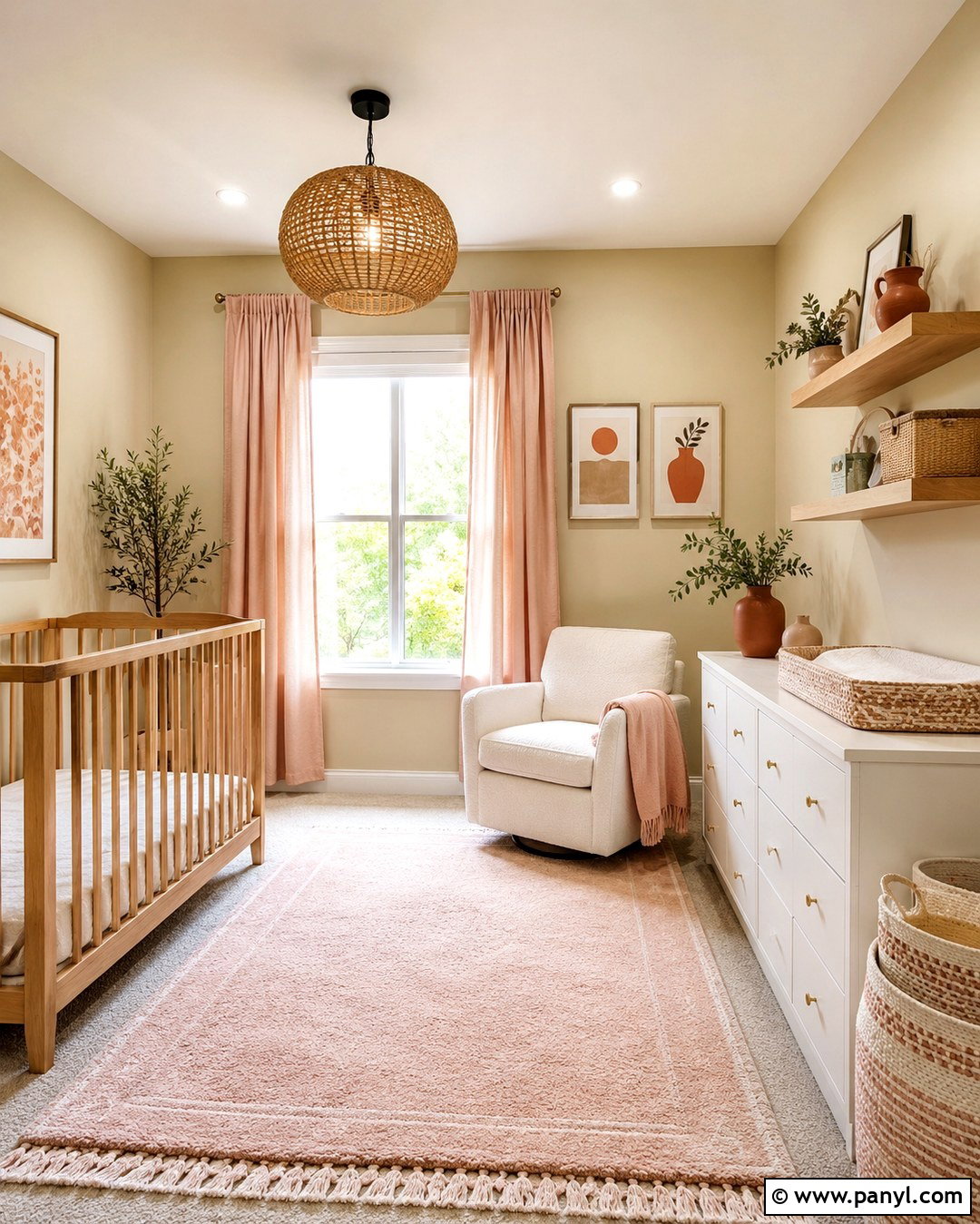
Warm white oak can make a compact cellar feel inviting and furniture-like rather than cold or overly commercial. Cover the back and side walls with vertical oak panels, then add matching custom racks arranged around a central display niche. Enclose the front with clear glass and a thin champagne-bronze frame. Use a pale limestone floor to add subtle contrast without interrupting the neutral palette. Linear lighting recessed into the oak panels will keep the bottles visible while hiding wires and fixtures. Coordinate the cellar with an oak dining table, woven chairs, and creamy walls. This complete glass wine cellar wall suits Scandinavian, contemporary, and modern organic homes because it combines simple geometry, natural texture, and practical storage in one compact feature.
9. Walnut Glass Wine Cellar Wall
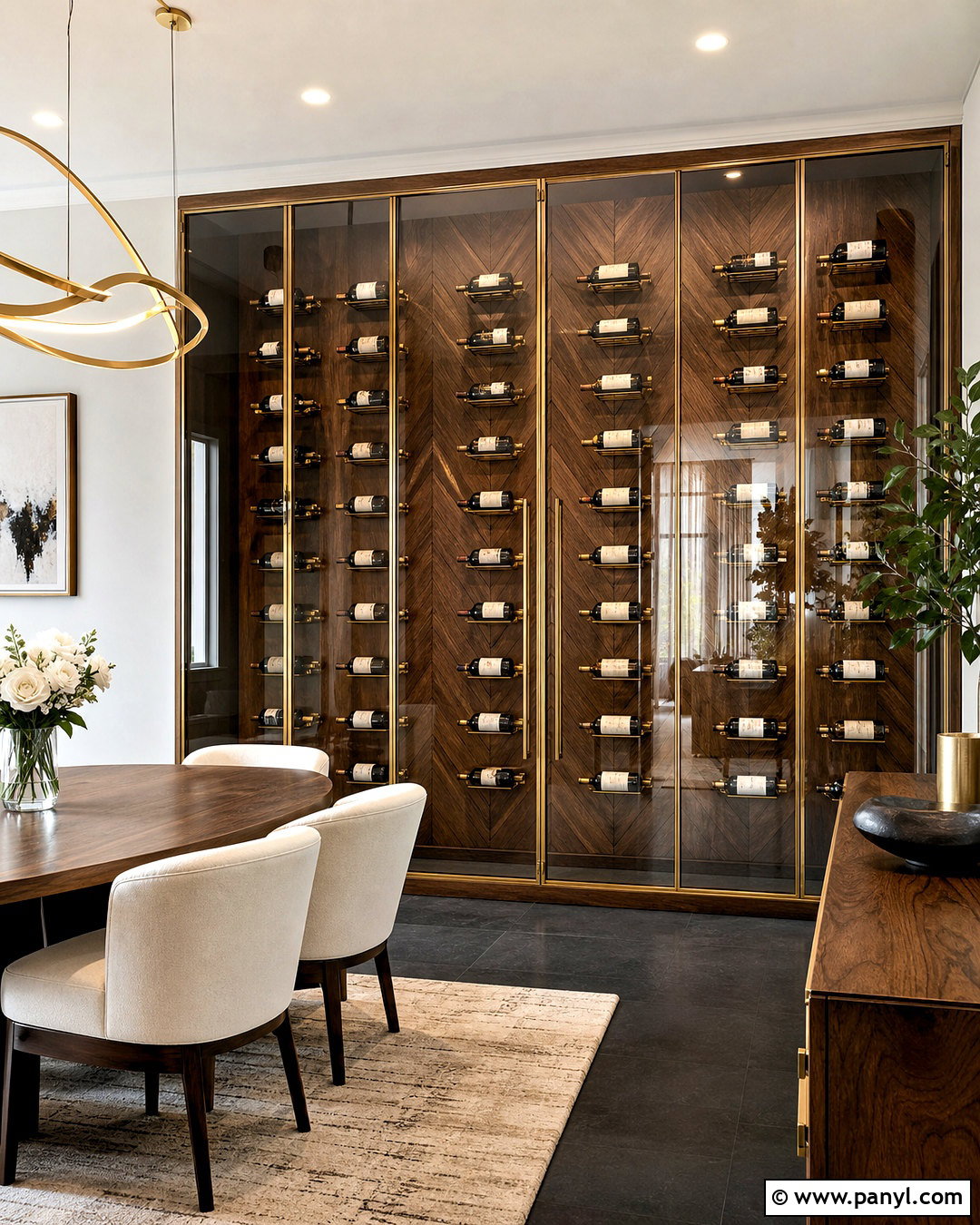
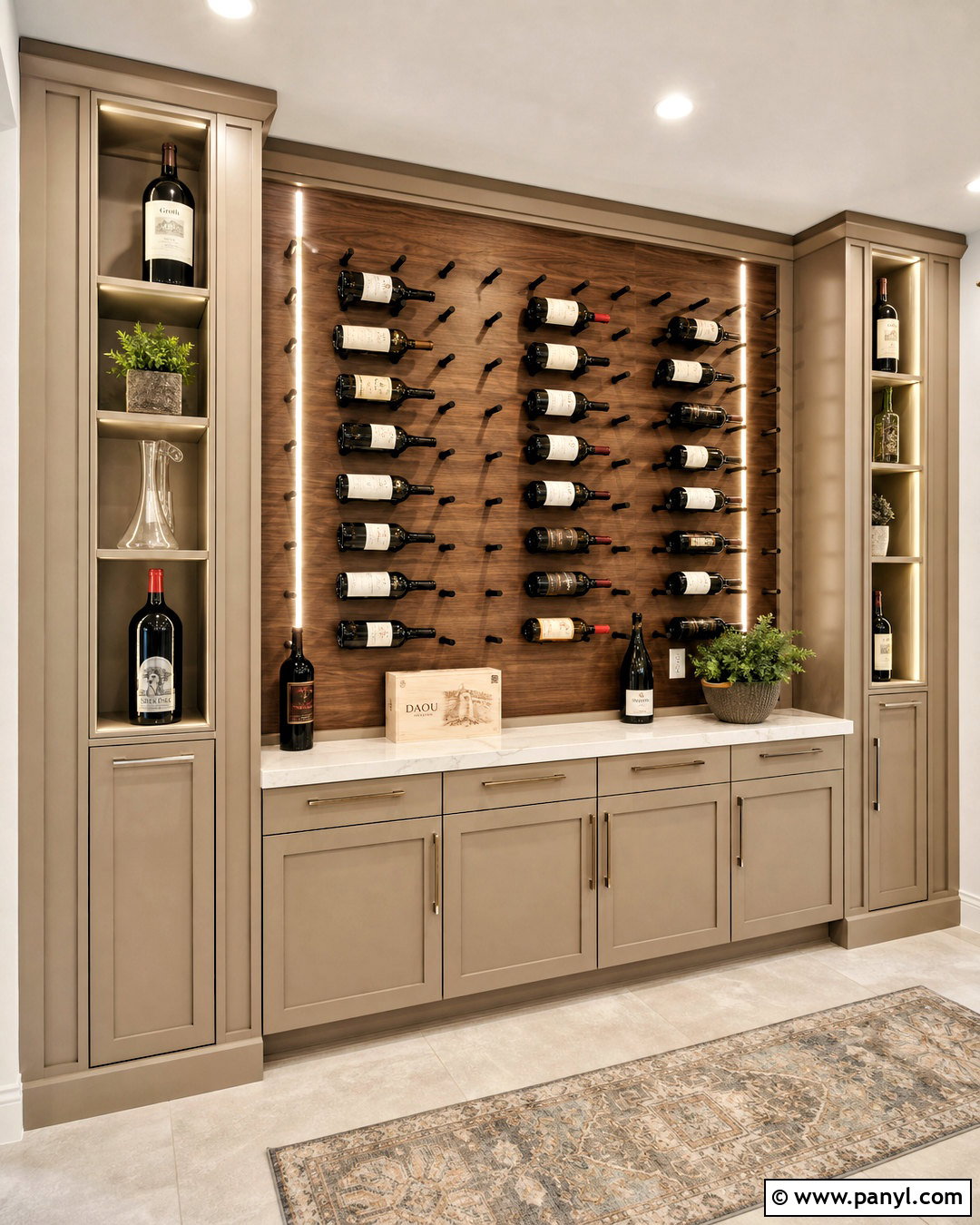
Deep walnut creates a dramatic display, even when the enclosure holds a modest collection. Install book-matched walnut panels across the back wall and build shallow storage columns on both sides. Use satin brass bottle supports and a matching narrow glass door frame to introduce a warm metallic accent. A black stone floor anchors the rich wood, while concealed lighting along the rack edges prevents the interior from becoming too dark. Position the enclosure against a warm white dining-room wall and repeat walnut on a nearby sideboard. Cream dining chairs and a sculptural brass pendant will complete the room. The resulting glass wine cellar wall feels sophisticated and cohesive, with enough contrast to become a focal point without dominating a smaller interior.
10. Brick Glass Wine Cellar Wall
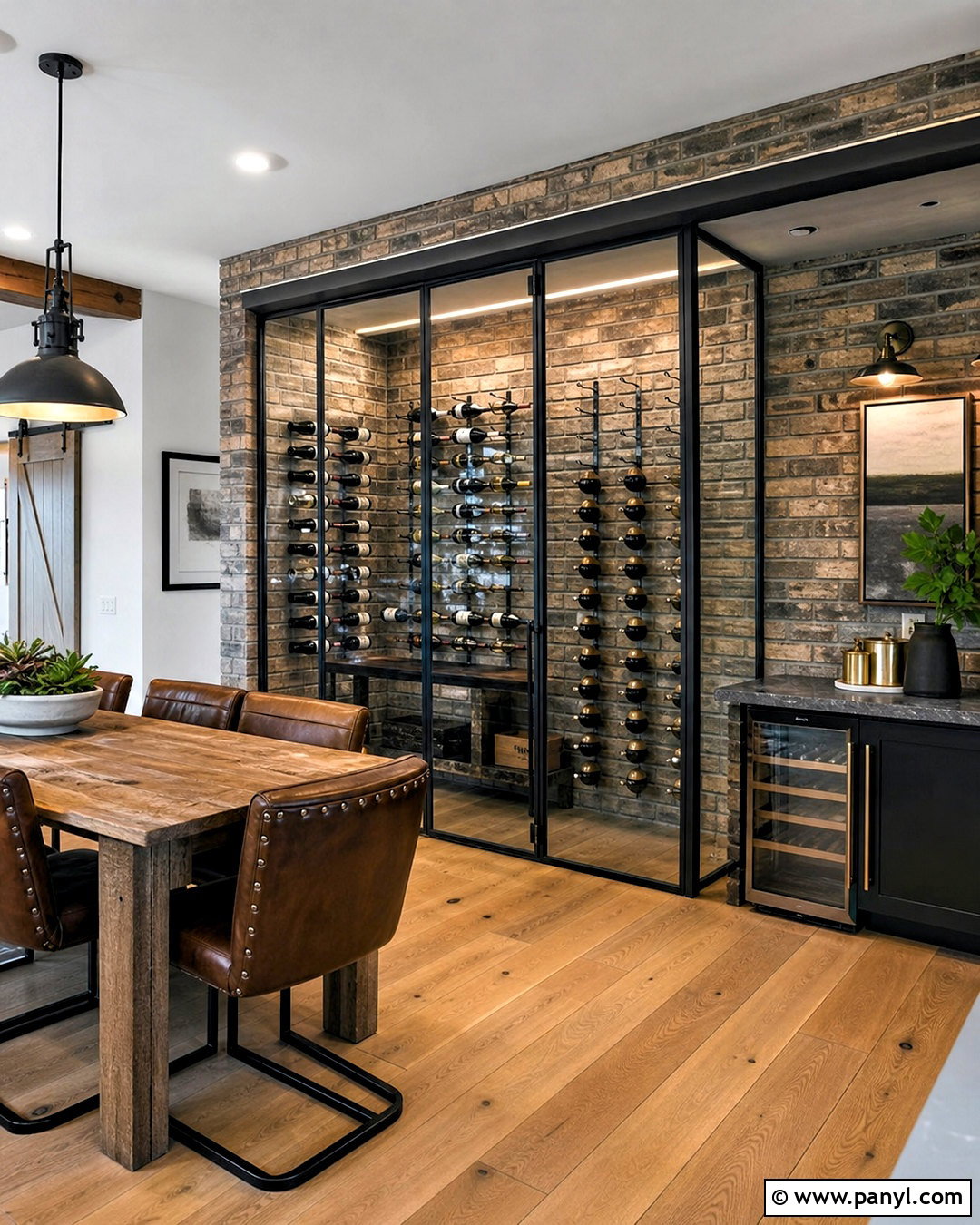
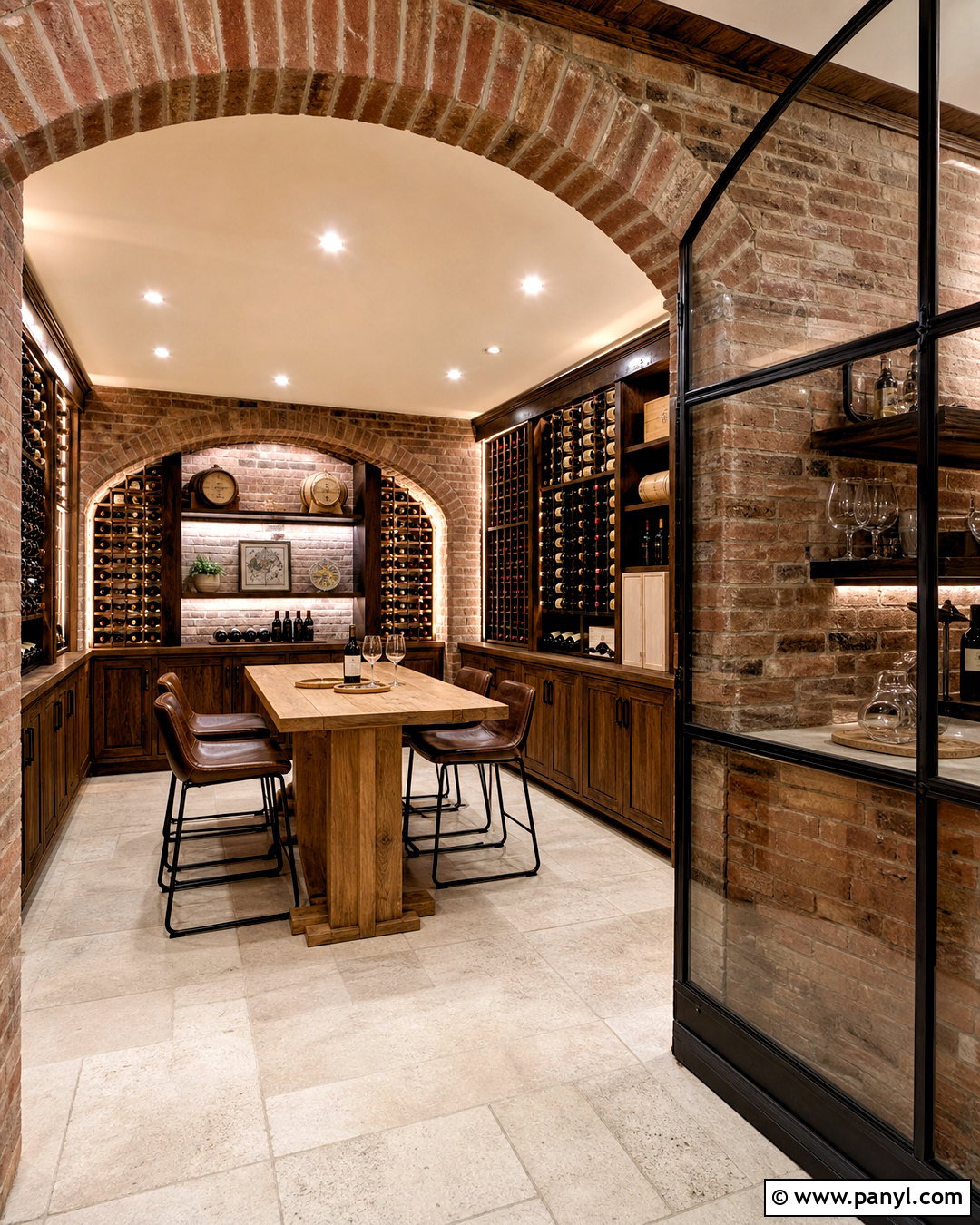
Reclaimed-look brick can bring warmth and age to a new glass wine display. Choose slim brick veneer in muted terracotta, taupe, and charcoal shades for the back wall. Install simple black steel racks in evenly spaced vertical sections, allowing portions of the masonry to remain visible. A black framed glass front reinforces the industrial character, while medium oak flooring keeps the enclosure welcoming. Add a compact black stone counter beneath the tallest rack section for setting down bottles or accessories. Soft wall-grazing lights will reveal the brick texture without creating harsh shadows. Complete the surrounding room with leather dining chairs, a wood table, and black metal lighting. This design offers a balanced mix of traditional cellar atmosphere and modern transparency.
11. Arched Glass Wine Cellar Wall
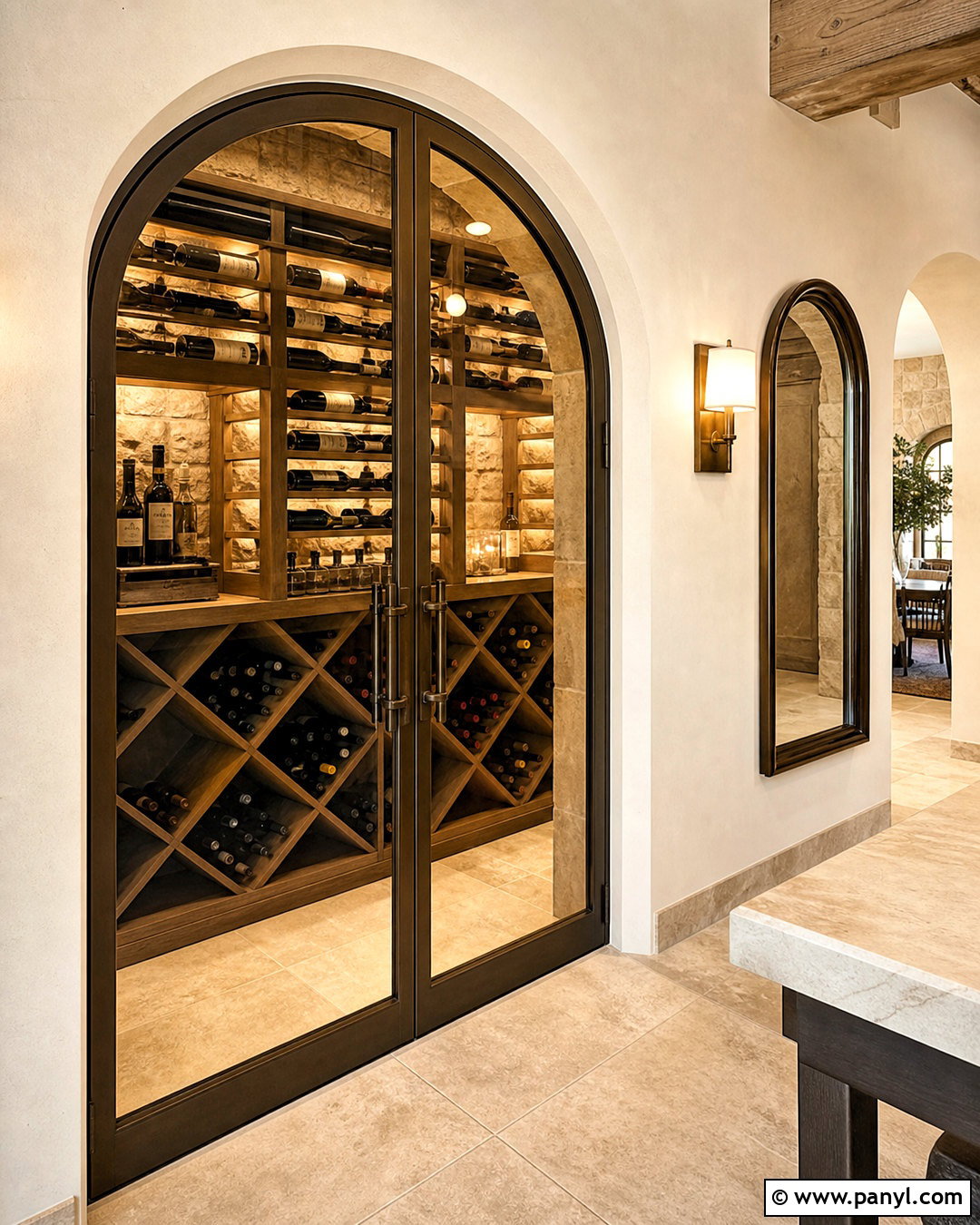
An arched doorway can soften the straight lines of a compact glass cellar and give it a custom architectural presence. Shape the front opening with a gentle plaster arch, then install a matching arched glass door with a slim bronze frame. Inside, use medium oak diamond racks below and straight horizontal racks above for a useful mix of storage. A creamy limestone wall and pale stone floor will keep the narrow space bright. Add one small aged-brass ceiling fixture and concealed shelf lighting for layered illumination. Continue the arch motif subtly in a nearby mirror or doorway. The complete glass wine cellar wall feels classic but not formal, making it a natural fit for Mediterranean, Spanish revival, transitional, or soft contemporary homes.
12. Fluted Glass Wine Cellar Wall
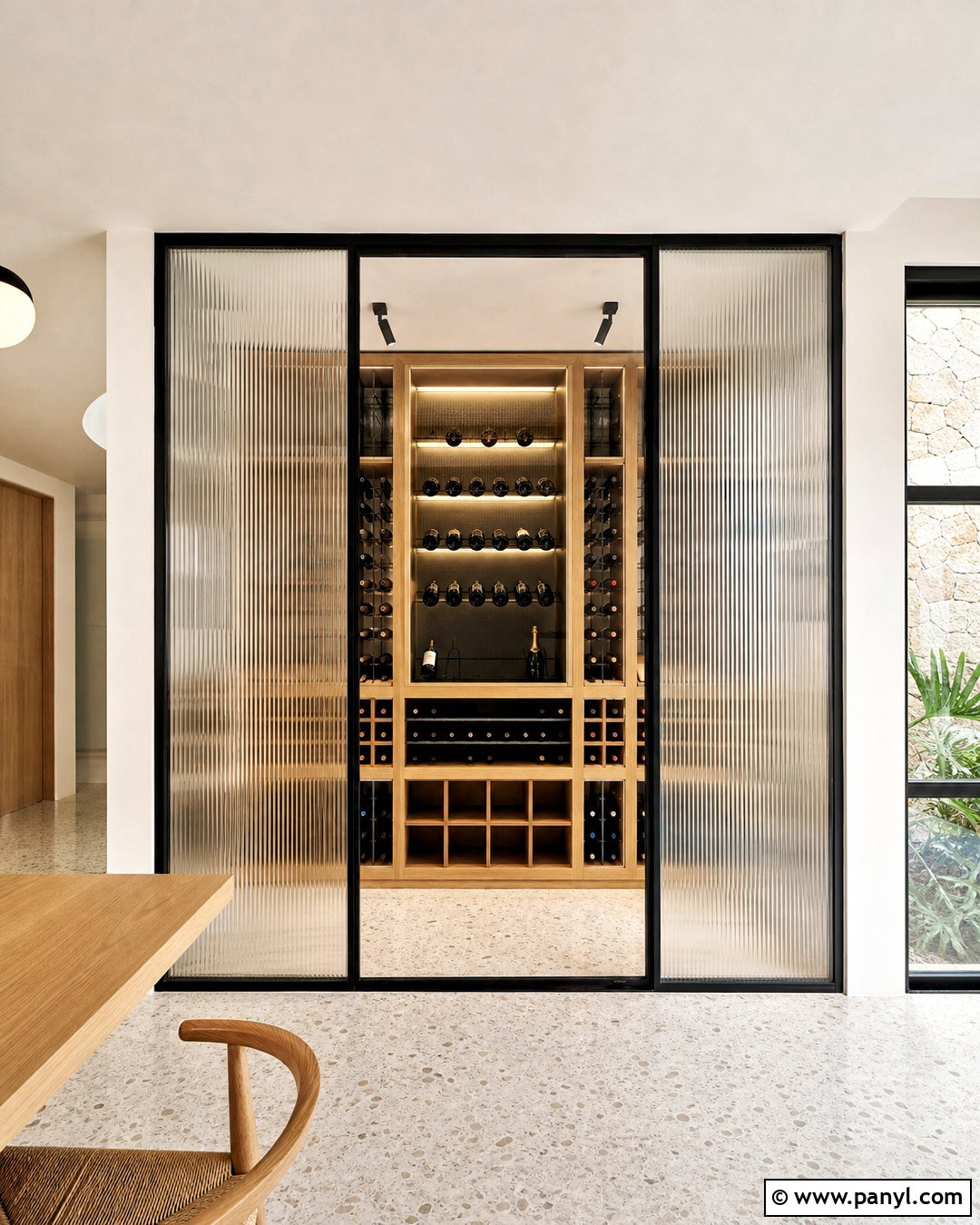
Fluted glass offers partial privacy while still allowing light, color, and bottle shapes to show through. Use ribbed panels on the door and side sections, framed with slim black metal. Keep one central panel clear so the arrangement remains visible. Inside, combine natural oak shelves, black bottle racks, and a warm white plaster wall. A pale terrazzo floor can add subtle pattern without competing with the textured glass. Install vertical lighting behind the side panels to emphasize the fluting and create a gentle glow. Nearby, select simple oak furniture and black accents to connect the cellar with the room. This design is especially helpful when the storage area must hide cooling components, irregular walls, or less decorative parts of the collection.
13. Sliding Glass Wine Cellar Wall
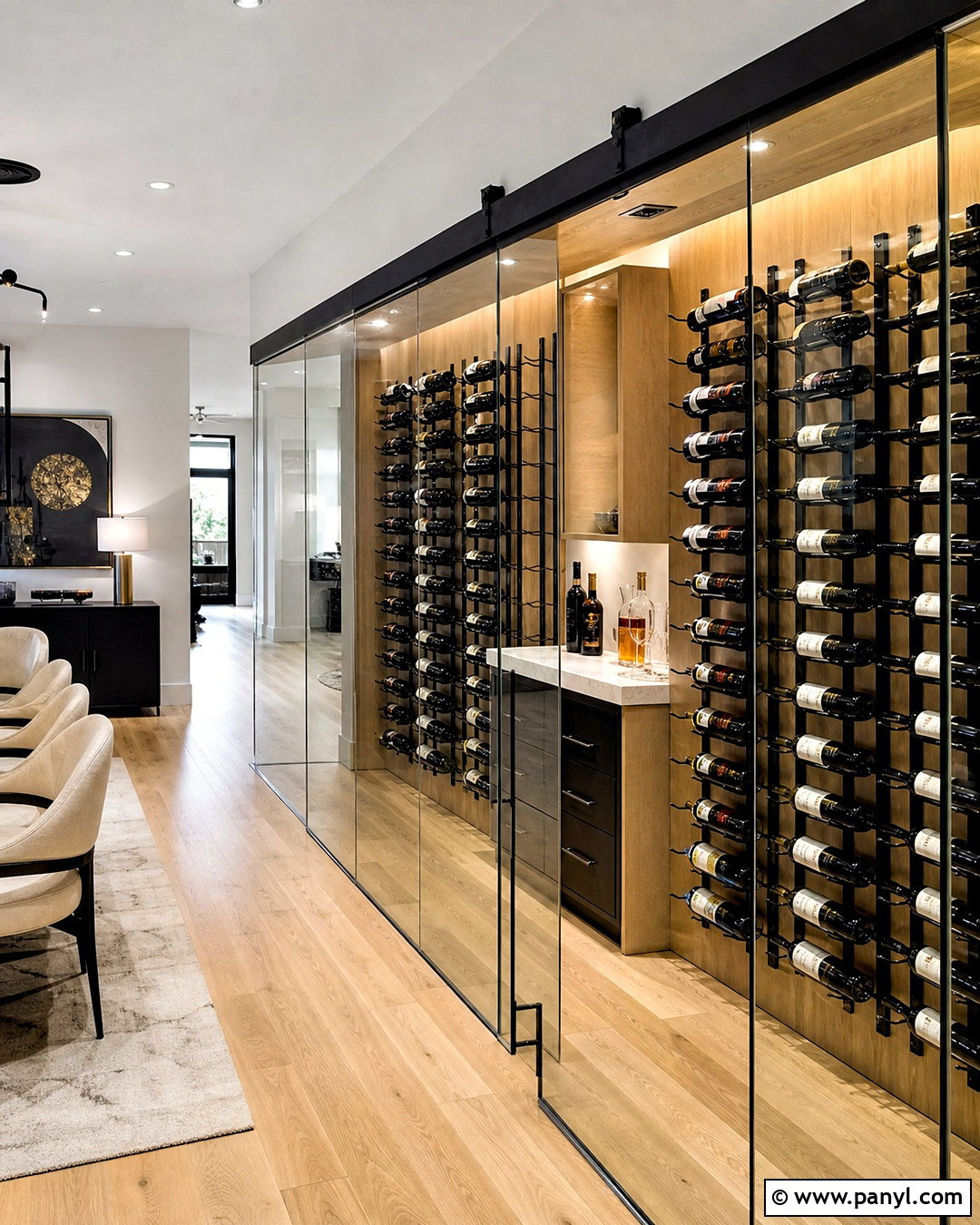
A sliding door is practical where a hinged door would interfere with dining chairs or a narrow hallway. Build a shallow wall-to-wall enclosure with fixed clear glass panels and one large sliding glass door on a matte black ceiling track. Inside, use black metal racks over pale oak panels, leaving a small center section for case storage and a slim counter. Continue the hallway or dining-room flooring through the enclosure to strengthen the visual connection. Recessed ceiling lights will provide general brightness, while under-counter lighting adds depth. Choose a recessed pull rather than projecting hardware. This compact glass wine cellar wall offers a streamlined appearance and efficient access, making it ideal for apartments, townhouses, and homes with restricted circulation space.
14. Narrow Hallway Glass Wine Cellar Wall
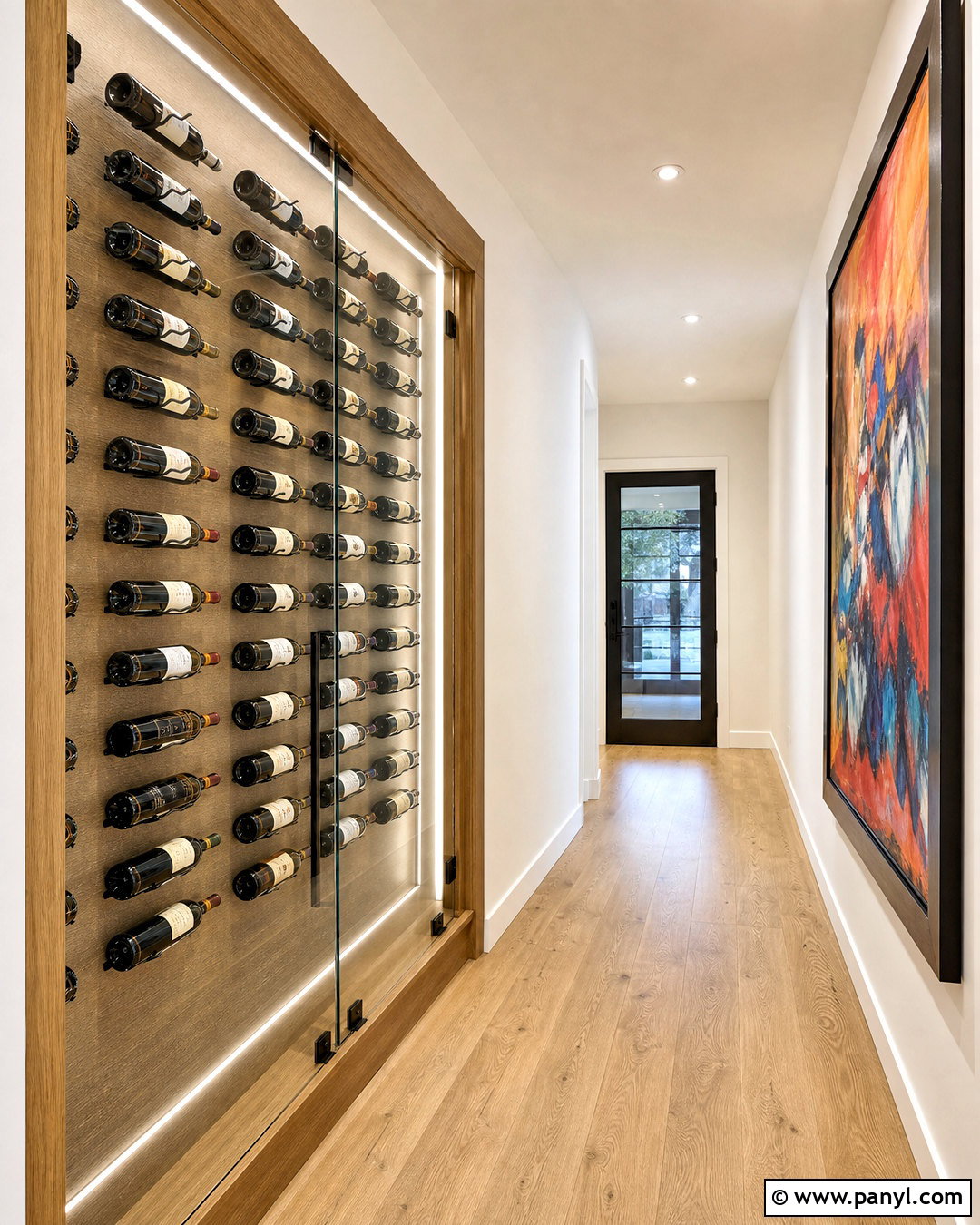
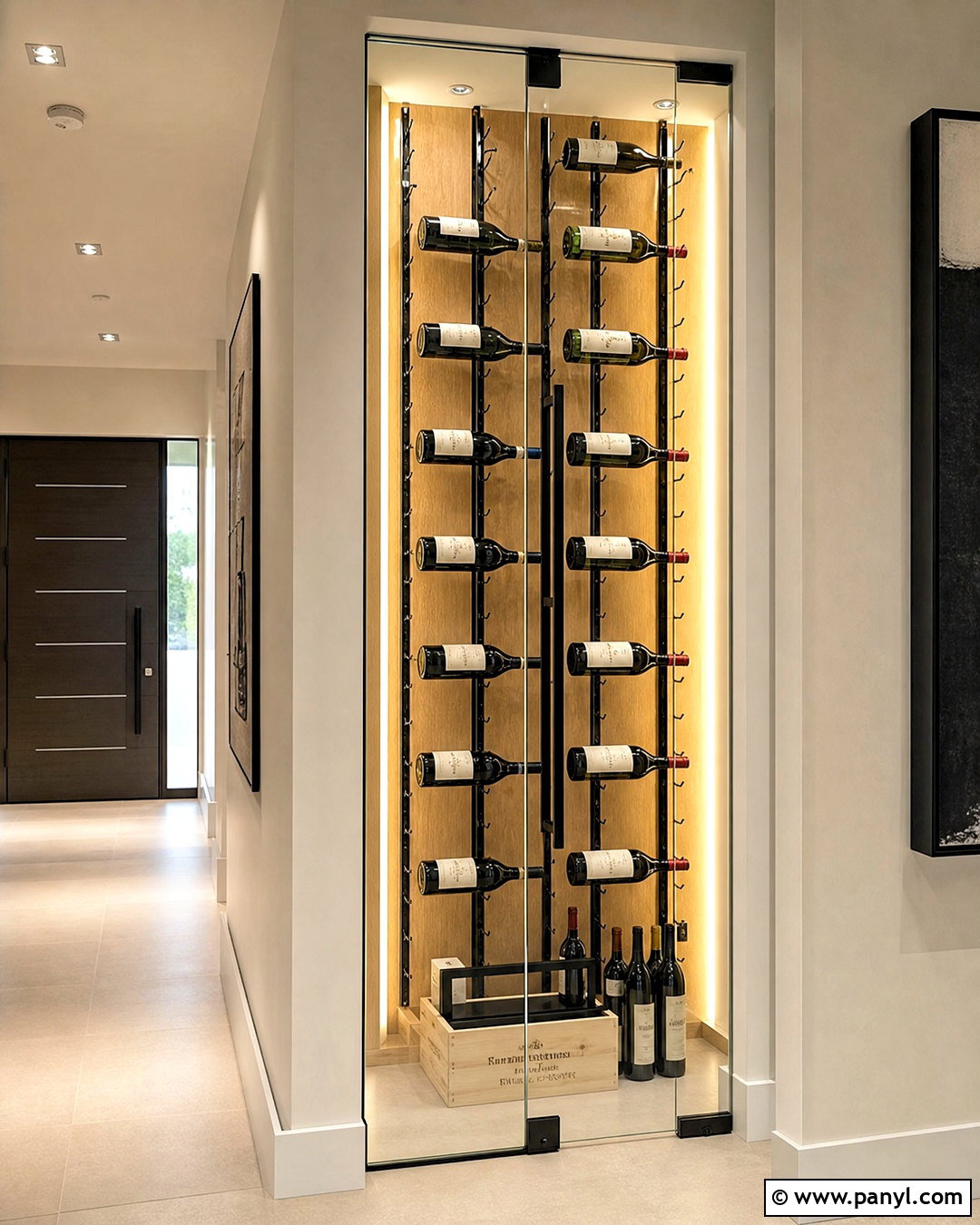
A long, shallow niche can turn a plain hallway into a purposeful display without reducing the walking path. Recess bottle racks between wall studs where possible, then enclose the front with flush clear glass panels. Use label-forward black metal supports against a warm taupe wall to maximize capacity within limited depth. Add a slim oak frame around the glass so the cellar feels connected to nearby doors and flooring. Continuous vertical LEDs at both ends will illuminate the entire wall evenly. Keep the opposite hallway wall simple with one large artwork and low-profile lighting. This full glass wine cellar wall design adds visual interest to a transitional area while preserving clean lines, comfortable movement, and a sense of openness.
15. Kitchen Glass Wine Cellar Wall
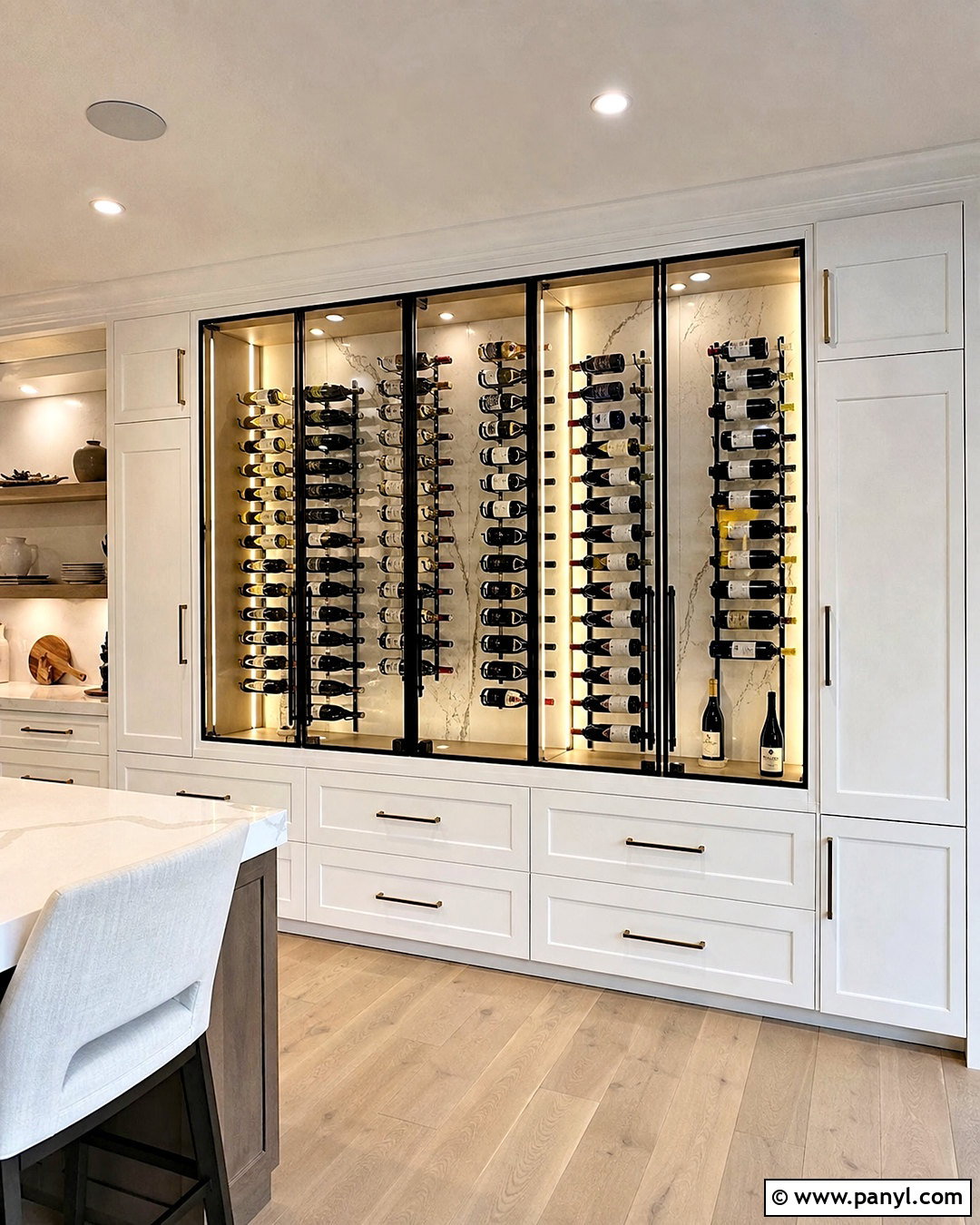
Bring the cellar into the kitchen by fitting a compact glass enclosure at the end of a cabinet run. Match its outer frame to the kitchen cabinetry, whether that means warm white, deep navy, or natural oak. Inside, install dark metal racks against a lightly veined quartz or porcelain wall. A narrow lower cabinet can store accessories while giving the display a finished furniture base. Use clear glass doors with minimal hardware and integrate soft lighting into the side panels. Repeat the kitchen’s flooring inside for continuity. This arrangement works best when the enclosure aligns with tall pantry units or appliances. The complete glass wine cellar wall looks built in, keeps the overall kitchen balanced, and uses an otherwise awkward end section effectively.
16. Floating Rack Glass Wine Cellar Wall
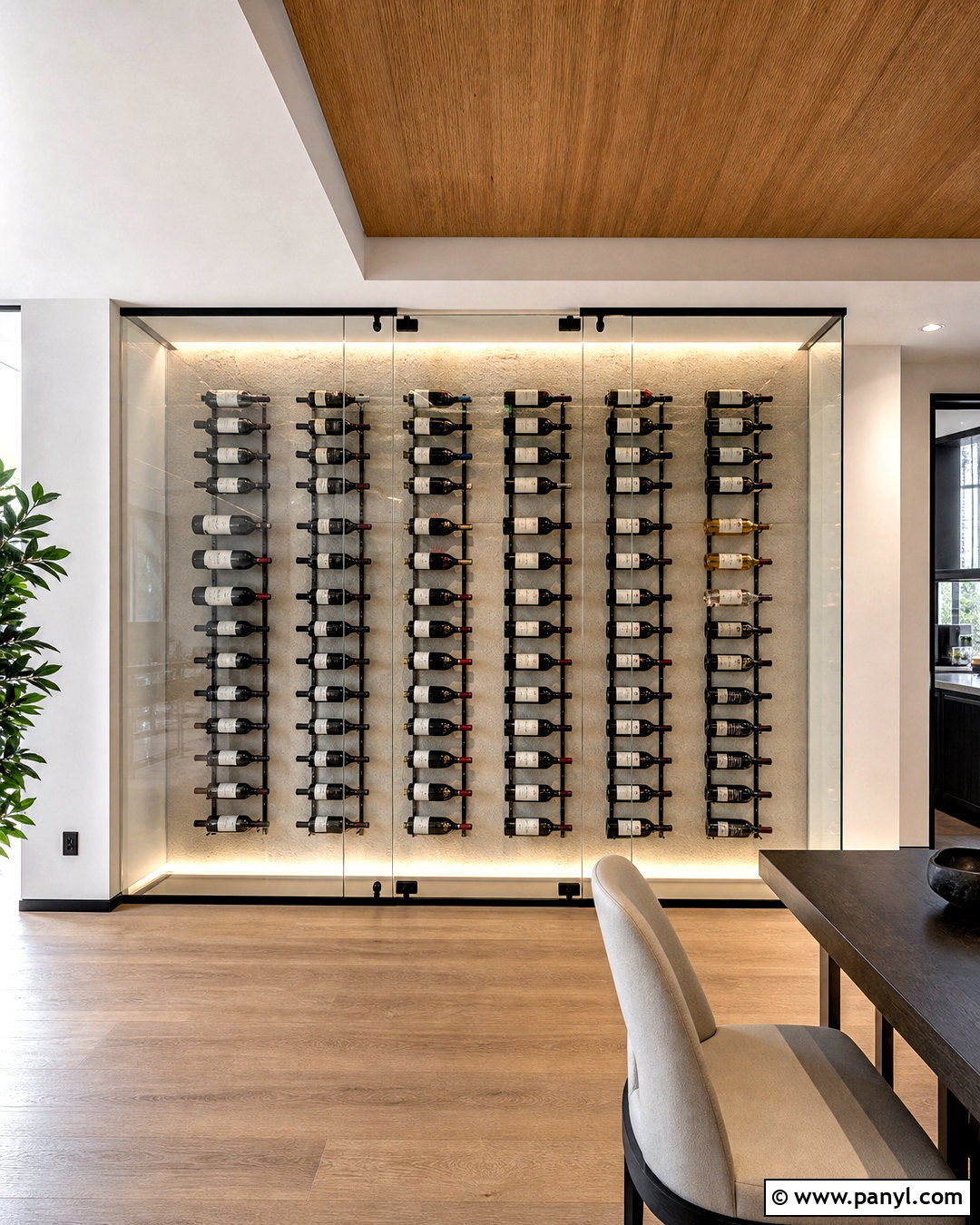
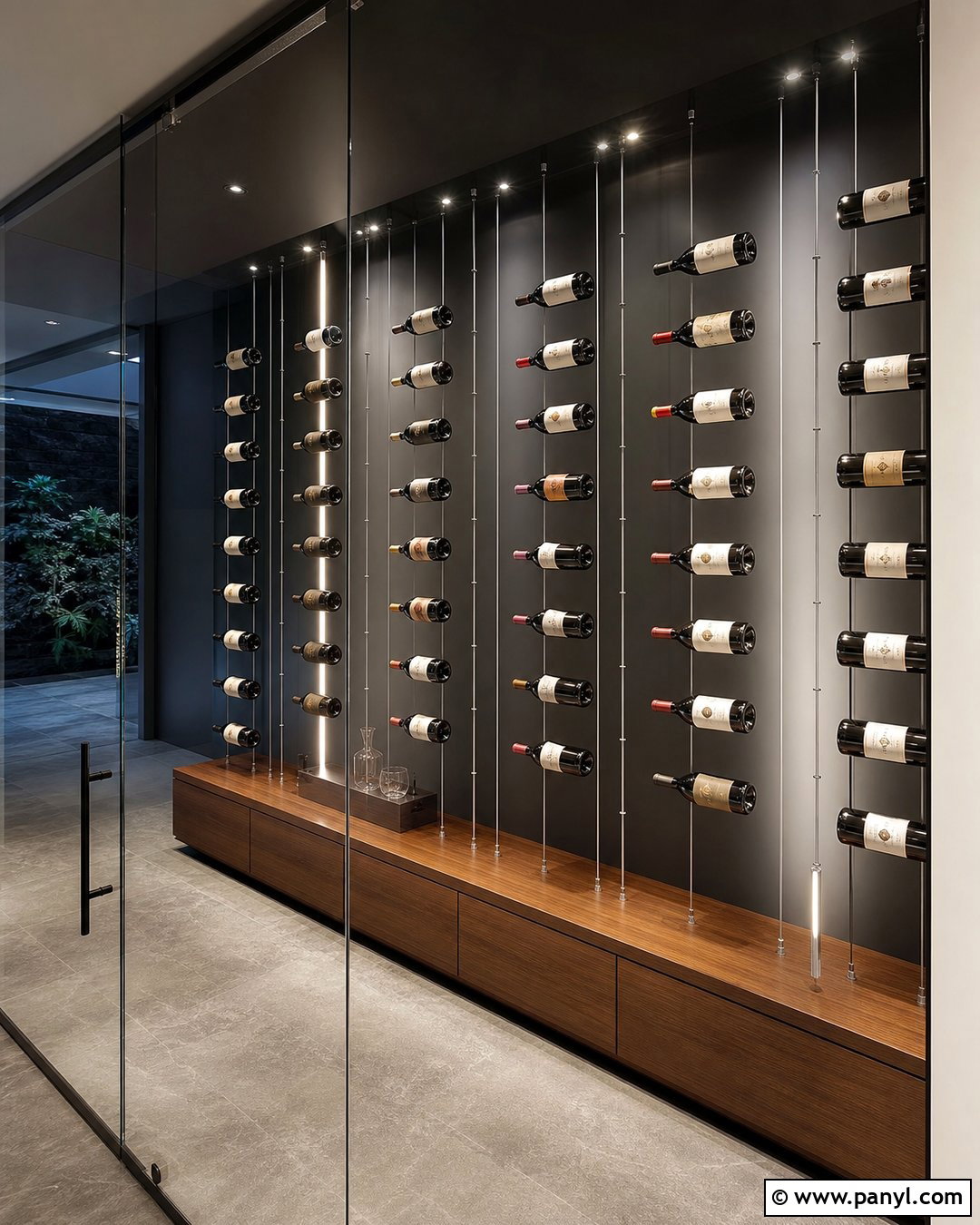
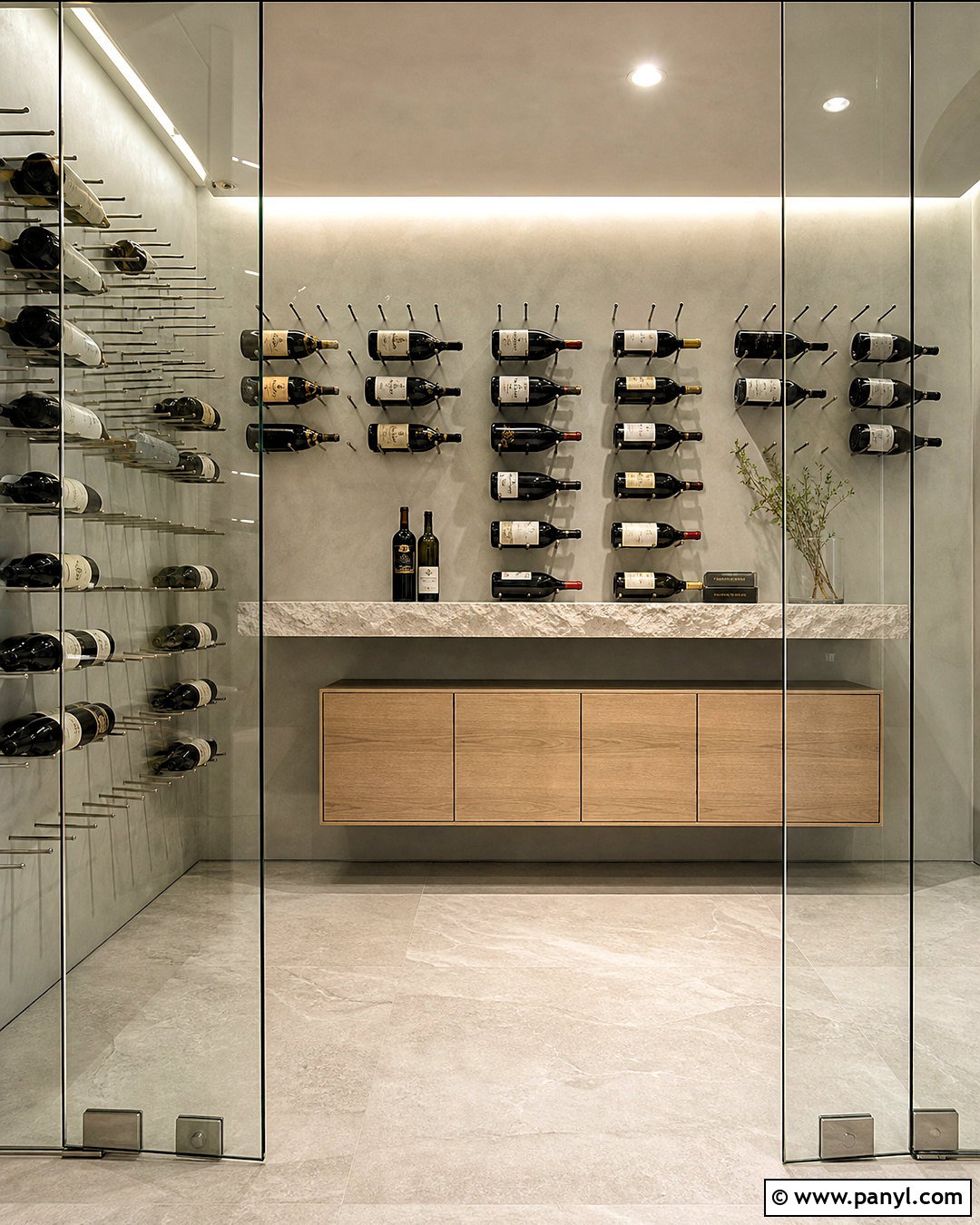
Floating bottle supports create an airy display that suits a very shallow enclosure. Mount precision metal pegs on a reinforced soft gray wall and organize the bottles in evenly spaced horizontal rows. Use frameless glass across the front so there are few visual interruptions. A medium oak floor and matching oak ceiling panel will add warmth above and below the minimalist arrangement. Conceal narrow LED strips behind the glass channels to wash the backdrop with light. Keep the surrounding room equally simple, using streamlined furniture, plain curtains, and one large pendant rather than several small decorations. This complete glass wine cellar wall makes the collection appear suspended while maintaining the practical order and accessibility required in a limited space.
17. Curved Glass Wine Cellar Wall
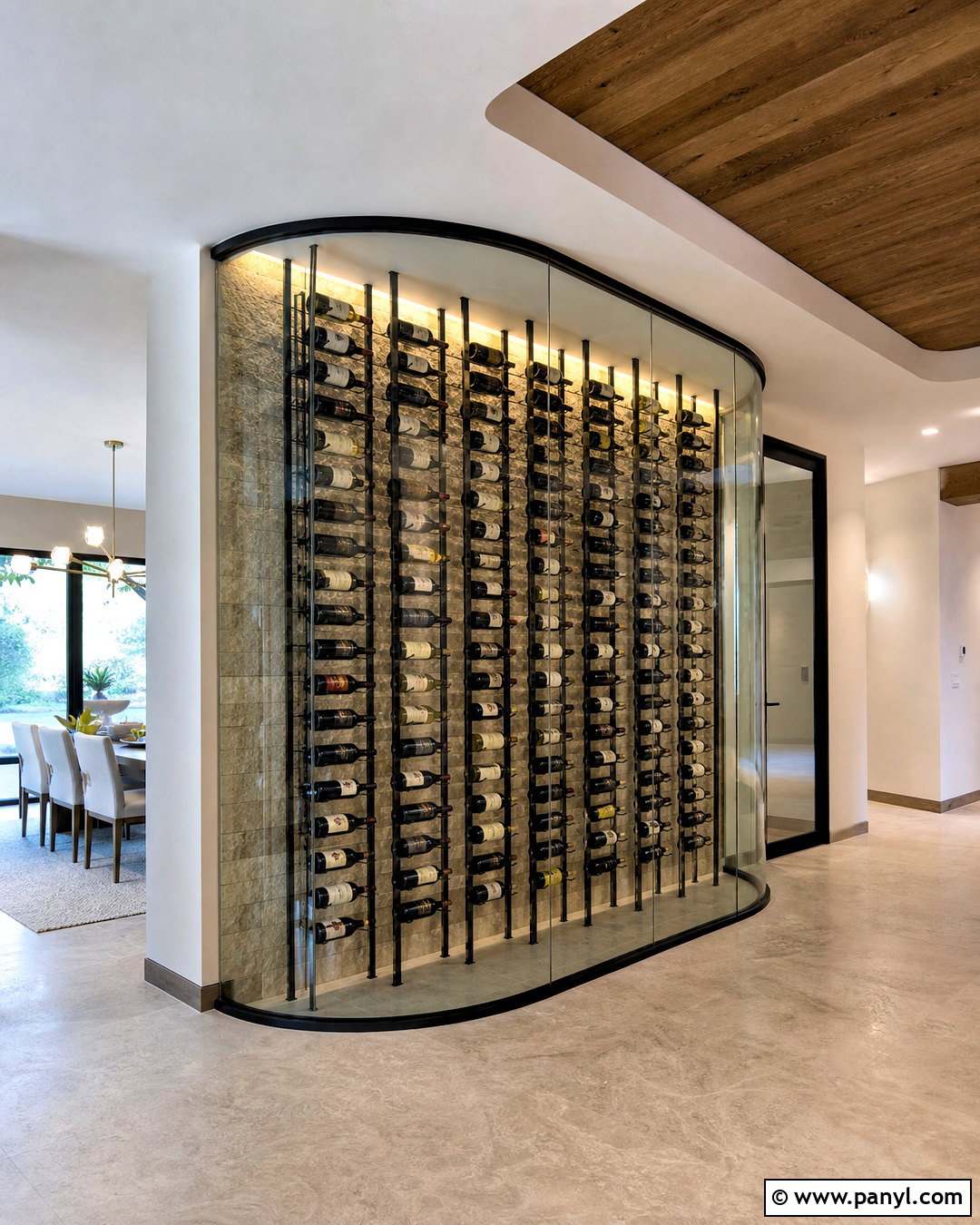
A gently curved enclosure can improve circulation around a tight corner while creating a distinctive focal point. Use custom bent glass or several narrow angled panels to form the rounded front. Inside, follow the curve with dark bronze vertical racks set against a warm travertine wall. A light stone floor and oak ceiling insert soften the composition. Install a narrow glass door at one end, keeping the central curve uninterrupted. Concealed lighting around the upper perimeter will emphasize the shape and illuminate the display evenly. Place the cellar between a dining area and hallway, where the rounded glass can guide movement naturally. This sophisticated glass wine cellar wall feels spacious and sculptural without requiring a large rectangular room.
18. Two Sided Glass Wine Cellar Wall
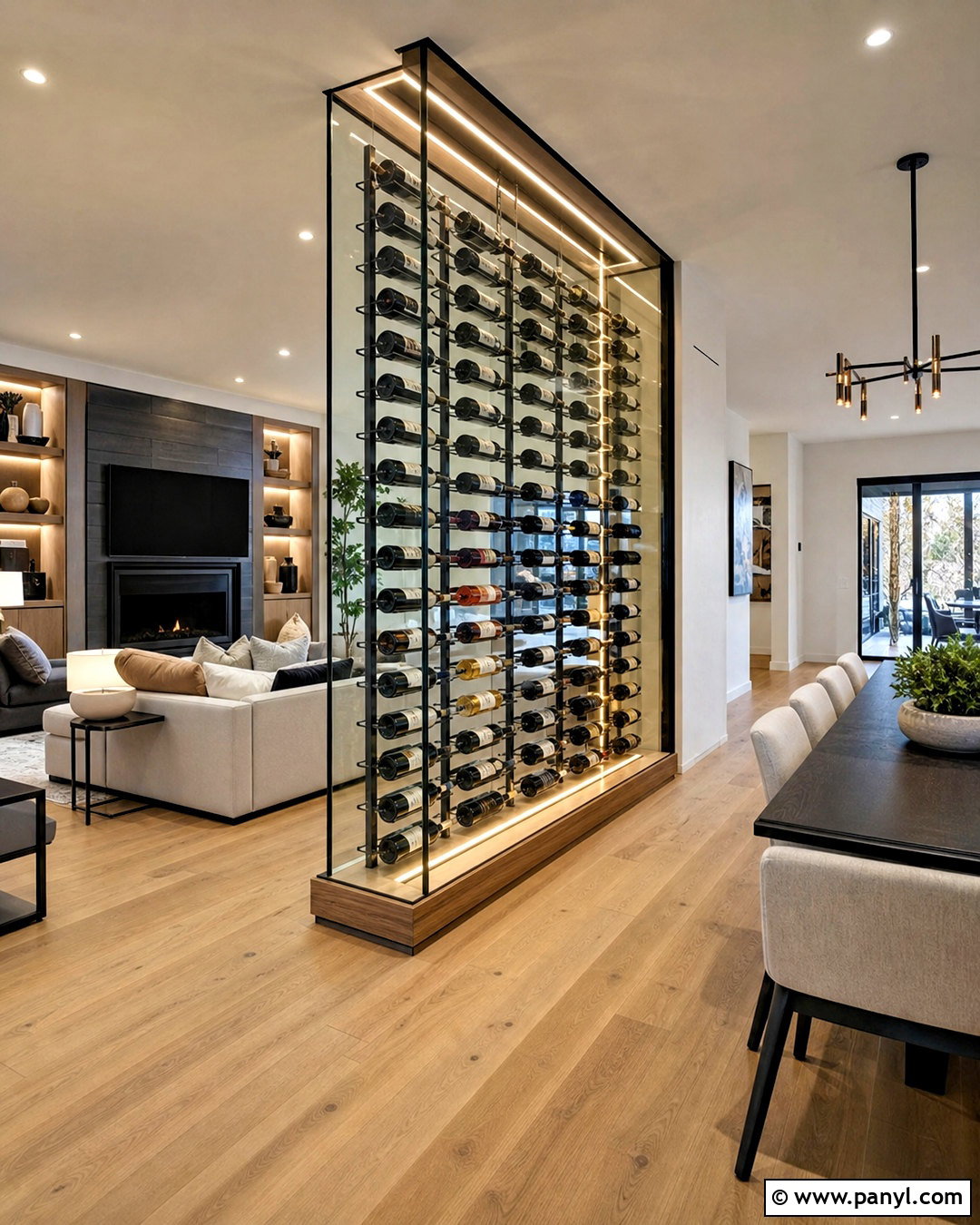
Use a glass cellar as a transparent divider between an open dining room and living area. Build a narrow enclosure with clear glass on both long sides, allowing the display to be appreciated from either space. Position double-sided black metal racks along the center, supported by an oak base and ceiling panel. Keep bottle rows carefully aligned because both views remain visible. Add integrated vertical lighting inside the central supports rather than placing fixtures against either glass wall. A matching oak floor will visually connect both rooms. This complete glass wine cellar wall defines separate zones without blocking daylight or conversation, offering an effective solution for open-plan homes that need stronger organization but cannot accommodate a solid partition.
19. Built In Cabinet Glass Wine Cellar Wall
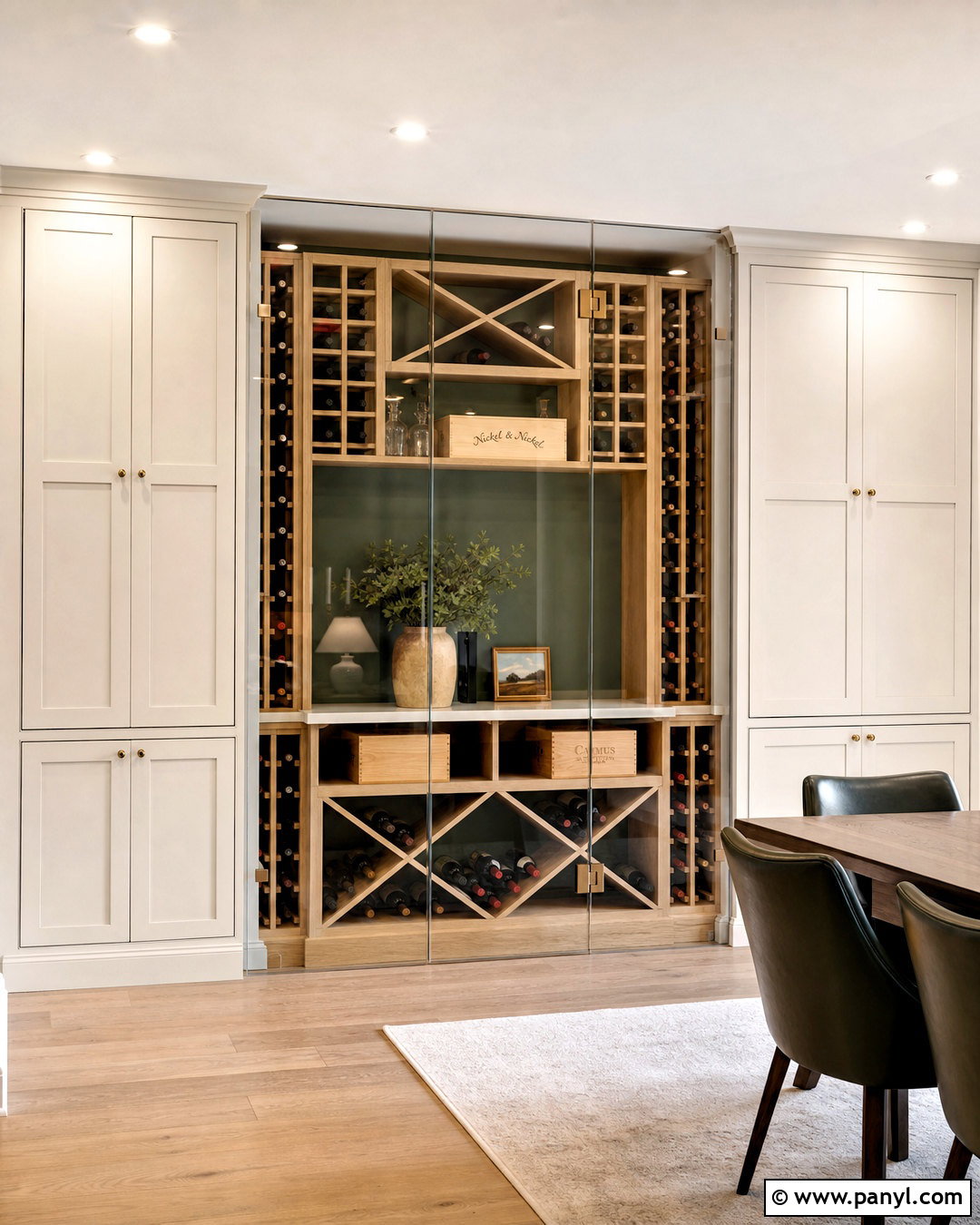
For a softer, more traditional look, surround the glass enclosure with full-height cabinetry. Use painted warm white cabinets on each side and place the clear glass display in the center. Inside, install white oak racks over a muted sage green back wall, adding aged-brass lighting and hardware. Lower drawers can hold serving pieces, while upper cabinets provide concealed household storage. A narrow quartz ledge inside the central section creates a practical preparation surface. Match the built-in unit to existing kitchen or dining-room millwork so it feels original to the house. This glass wine cellar wall is especially useful in smaller homes because it combines display storage, closed cabinetry, and a polished architectural focal point within one organized composition.
20. Minimalist Glass Wine Cellar Wall
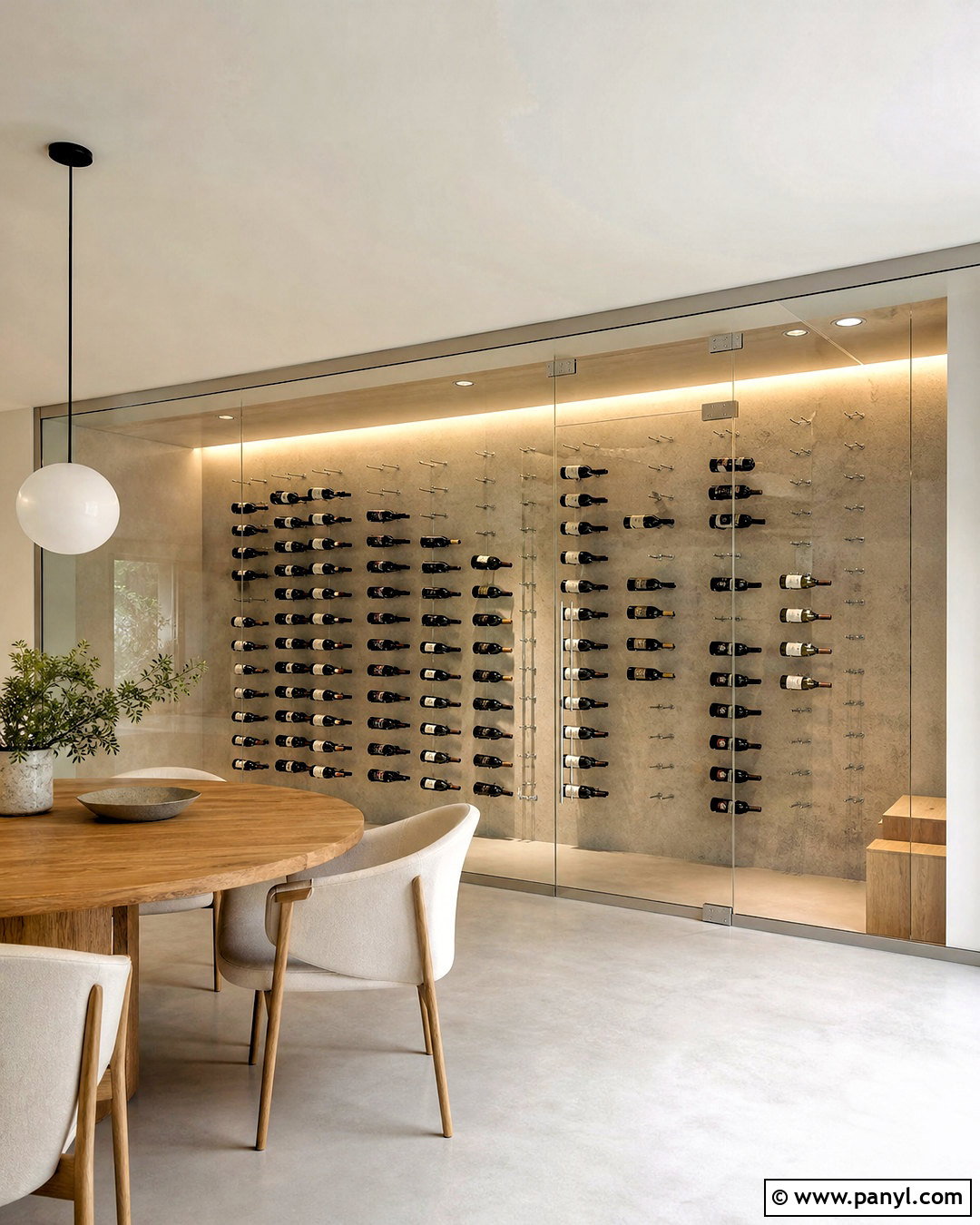
When the surrounding room is small, a restrained palette can prevent the cellar from becoming visually busy. Use one uninterrupted pane of clear glass, a concealed pivot door, and slender stainless-steel bottle supports. Finish the interior wall in smooth warm greige plaster and continue pale concrete-look flooring throughout the room. Organize the display in simple horizontal lines with generous negative space rather than filling every available inch. Add two recessed ceiling lights and hidden vertical illumination along one edge. Furnish the nearby dining area with a round oak table, light neutral chairs, and a single understated pendant. This minimalist glass wine cellar wall delivers a complete, calm design that emphasizes proportion, precision, and openness instead of heavy decoration.
Conclusion:
The best small glass wine cellar wall ideas balance efficient storage with a complete design that complements the surrounding room. Frameless enclosures keep tight spaces open, while black metal, warm wood, marble, brick, and natural stone create different visual moods. Under-stair layouts, corners, hallways, kitchens, and dining-room walls can all work when dimensions, access, lighting, and equipment are planned carefully. Choose racks that suit the available depth, repeat finishes already used nearby, and keep mechanical components as discreet as possible. Most importantly, treat the enclosure as part of the architecture rather than a standalone cabinet. With a thoughtful material palette and organized layout, even a compact glass cellar can become a polished focal point.

Related Ideas and Inspiration:
Leave a Reply