
High end custom residential wine cellars combine precise storage conditions with the craftsmanship of a beautifully finished room. Today’s most desirable cellars are no longer limited to hidden basement spaces. Glass enclosures, label-forward displays, mixed-material racking, integrated tasting areas, and discreet smart controls allow the collection to become part of the home’s architecture. () The strongest designs balance visibility with protection while coordinating the cabinetry, flooring, lighting, and hardware with nearby rooms. Whether you have an unused closet or space for a large entertaining suite, thoughtful planning can create an elegant result. These complete design concepts offer practical inspiration for building 20 high end custom residential wine cellars.

1. Modern Glass Wine Cellar
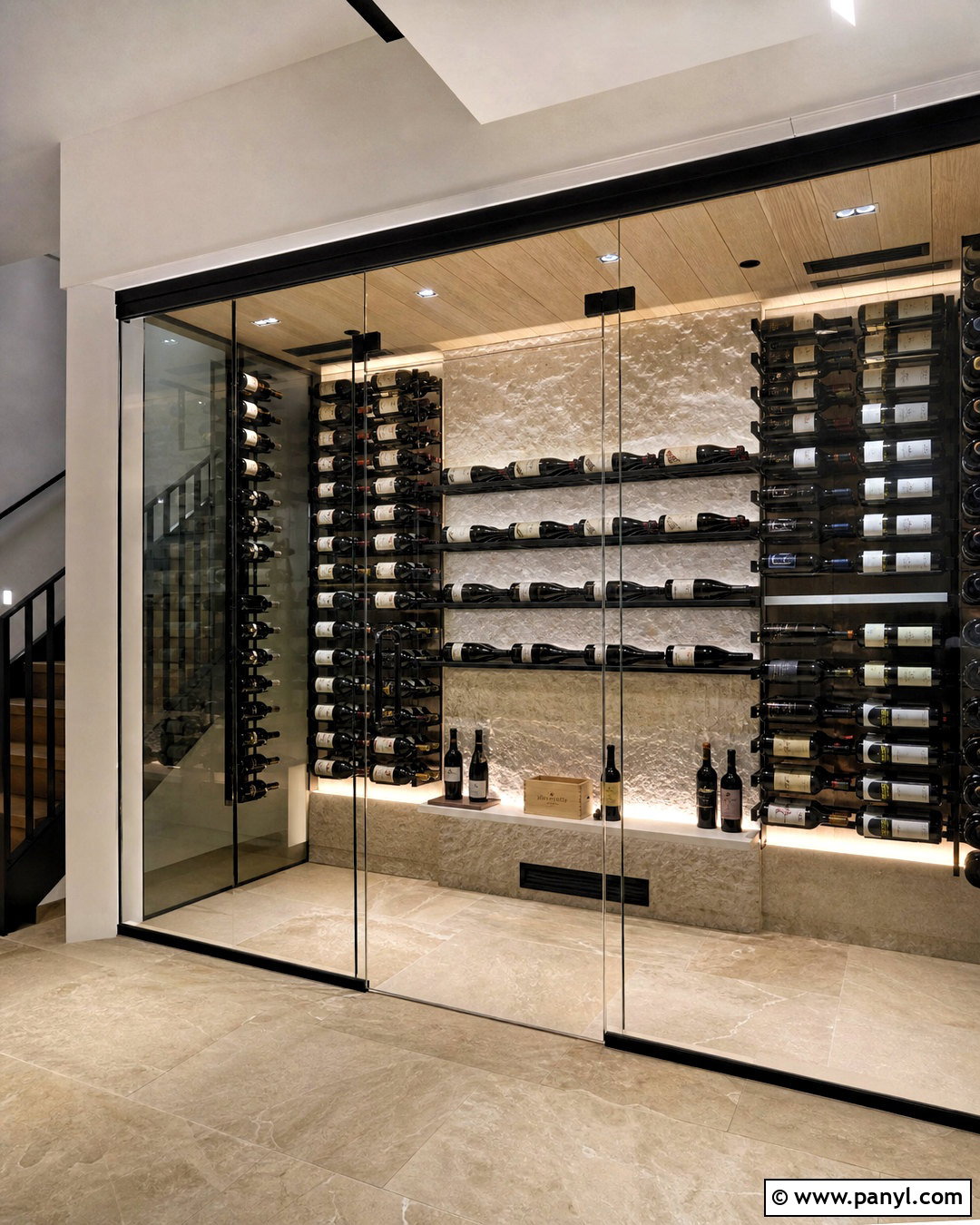
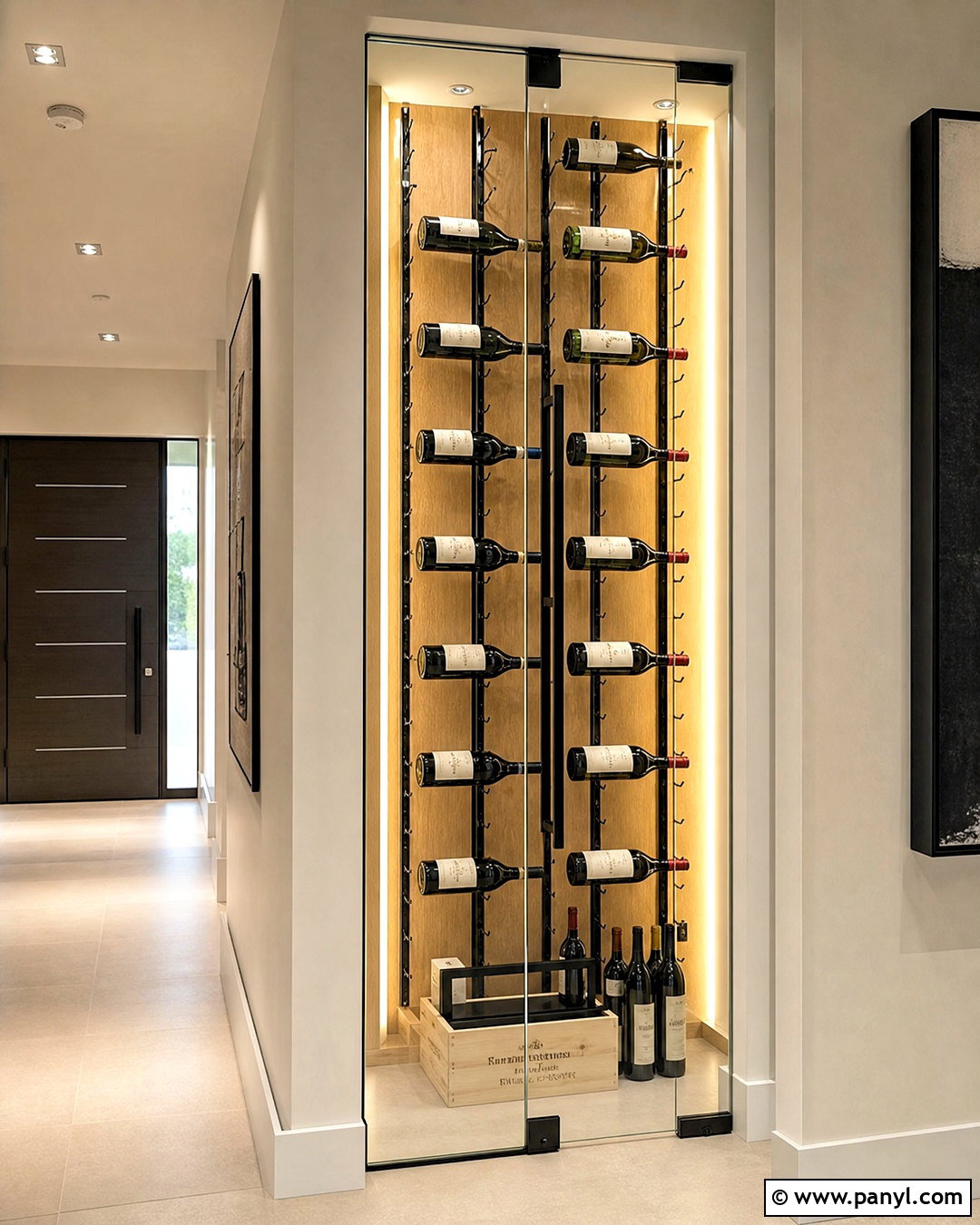
A modern glass wine cellar turns a valuable collection into an architectural feature without making the surrounding room feel closed off. Use insulated, frameless glass walls with a matching pivot door to create a clean enclosure beside the dining or living area. Inside, install matte black metal racks in evenly spaced vertical columns, mixing label-forward rows with horizontal storage. Pale limestone flooring and warm white oak ceiling panels soften the glass and metal. Conceal the cooling equipment behind slatted wood panels so the mechanical elements do not interrupt the view. Slim LED strips can highlight the bottles, while a narrow stone display ledge provides room for featured selections. Keep nearby furniture simple and neutral for a polished, gallery-like result.
2. Walnut Wine Cellar
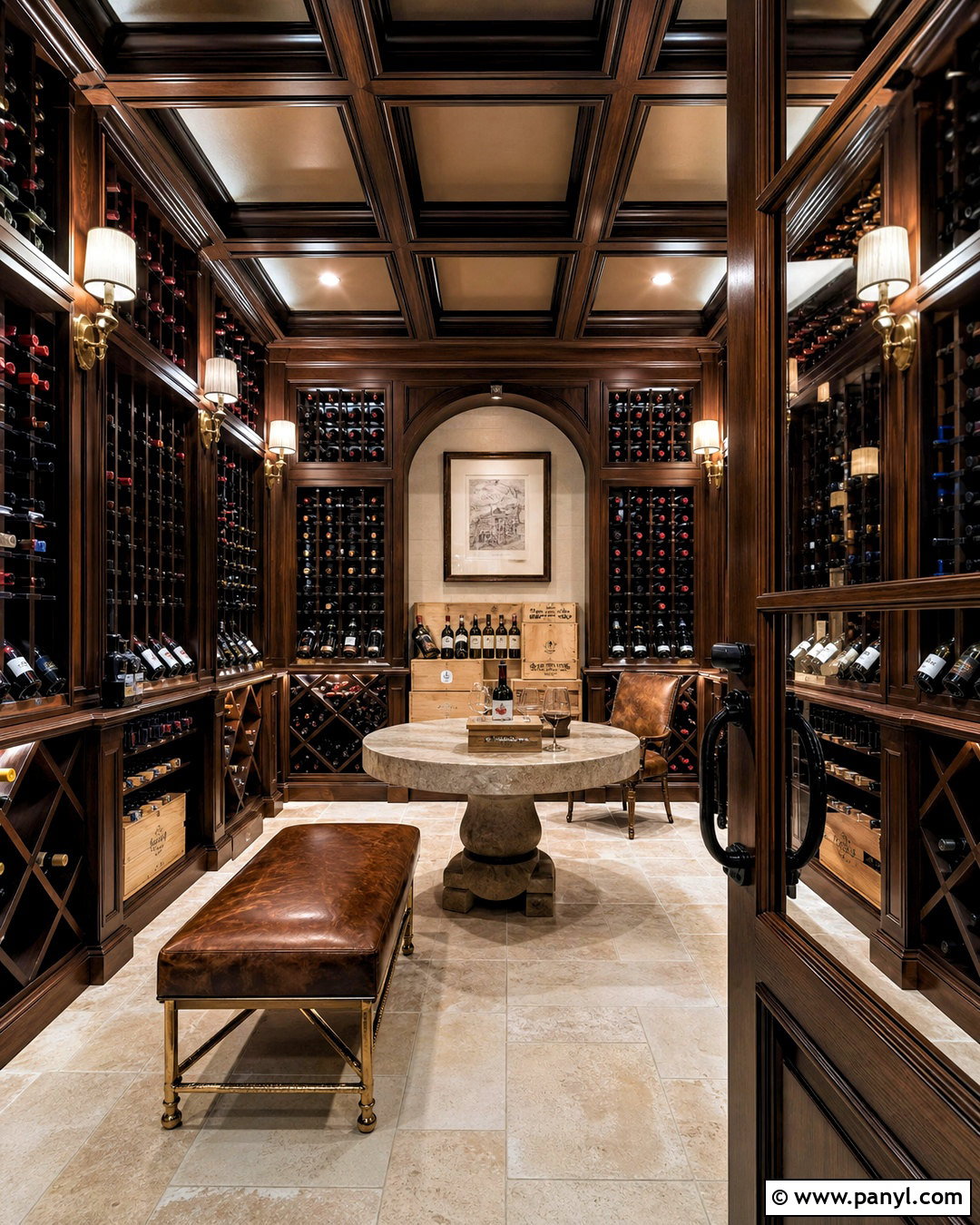
Rich walnut gives a residential wine cellar the warmth and depth associated with traditional custom cabinetry. Cover the back wall with floor-to-ceiling walnut bottle racks, including individual slots, diamond bins, and presentation rows angled toward the viewer. Add matching lower cabinets for accessories and less decorative storage. Cream limestone flooring brightens the darker wood, while an inset coffered ceiling adds architectural structure. Antique brass sconces and cabinet hardware introduce a soft, aged finish without making the room feel overly formal. A glass-paneled walnut door keeps the cellar visually connected to the hallway. Complete the look with a small leather bench and a round stone table, creating an intimate destination that feels integrated with a refined transitional home.
3. White Oak Wine Cellar
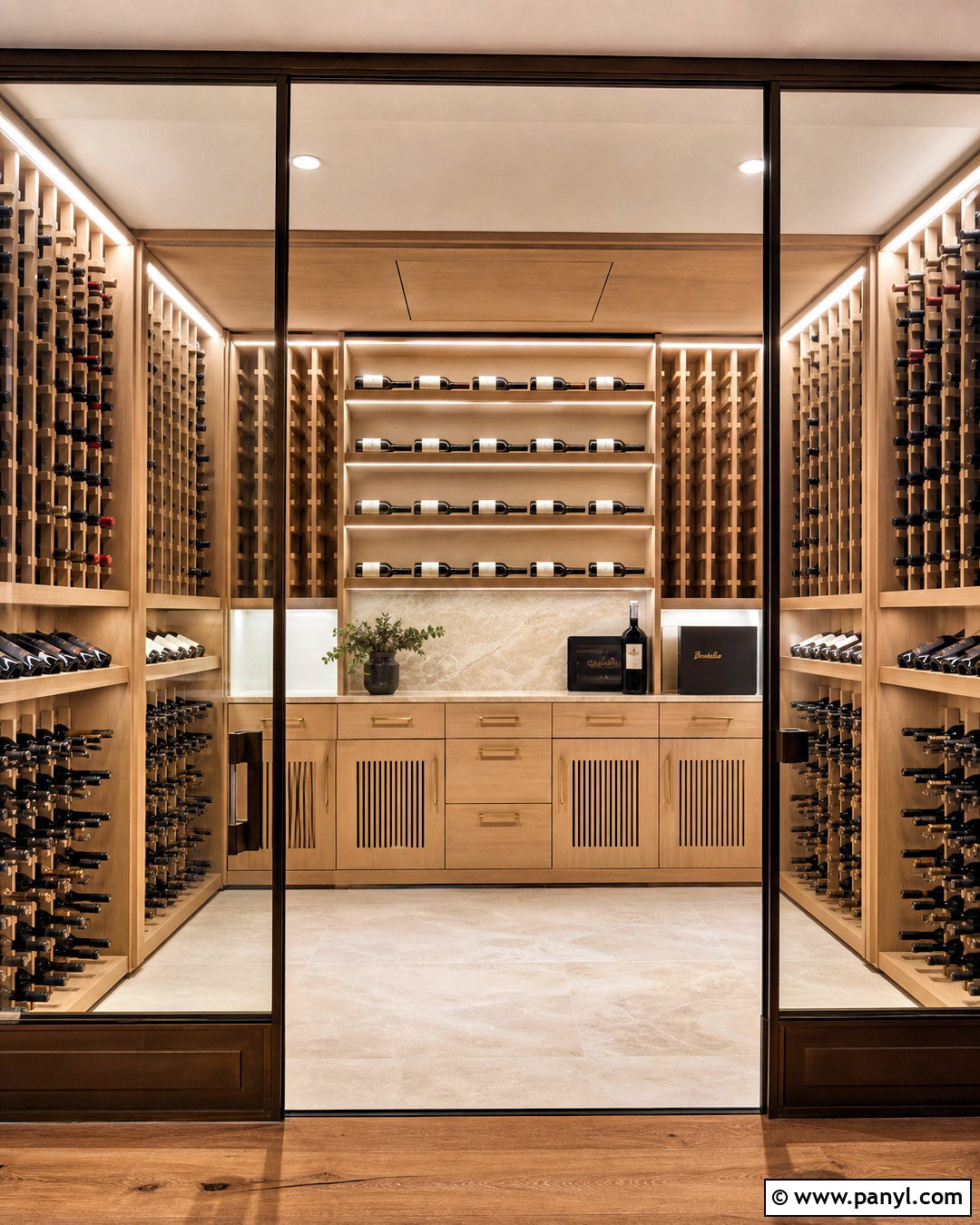
Natural white oak creates a lighter, calmer alternative to dark traditional cellar woodwork. Choose rift-sawn oak cabinetry with a clear matte finish so the straight grain remains visible. Arrange the storage around a symmetrical center display with label-forward bottles, open shelves, and a slim stone counter. Fluted oak panels can conceal cooling vents and service access along the upper wall. Pair the cabinetry with soft greige porcelain flooring, brushed brass hardware, and warm white lighting recessed beneath each shelf. A bronze-framed glass enclosure adds definition while preserving the airy appearance. This complete scheme works especially well near a neutral kitchen or dining room because the wood, stone, and metal finishes can repeat materials already used throughout the home.
4. Black Metal Wine Cellar
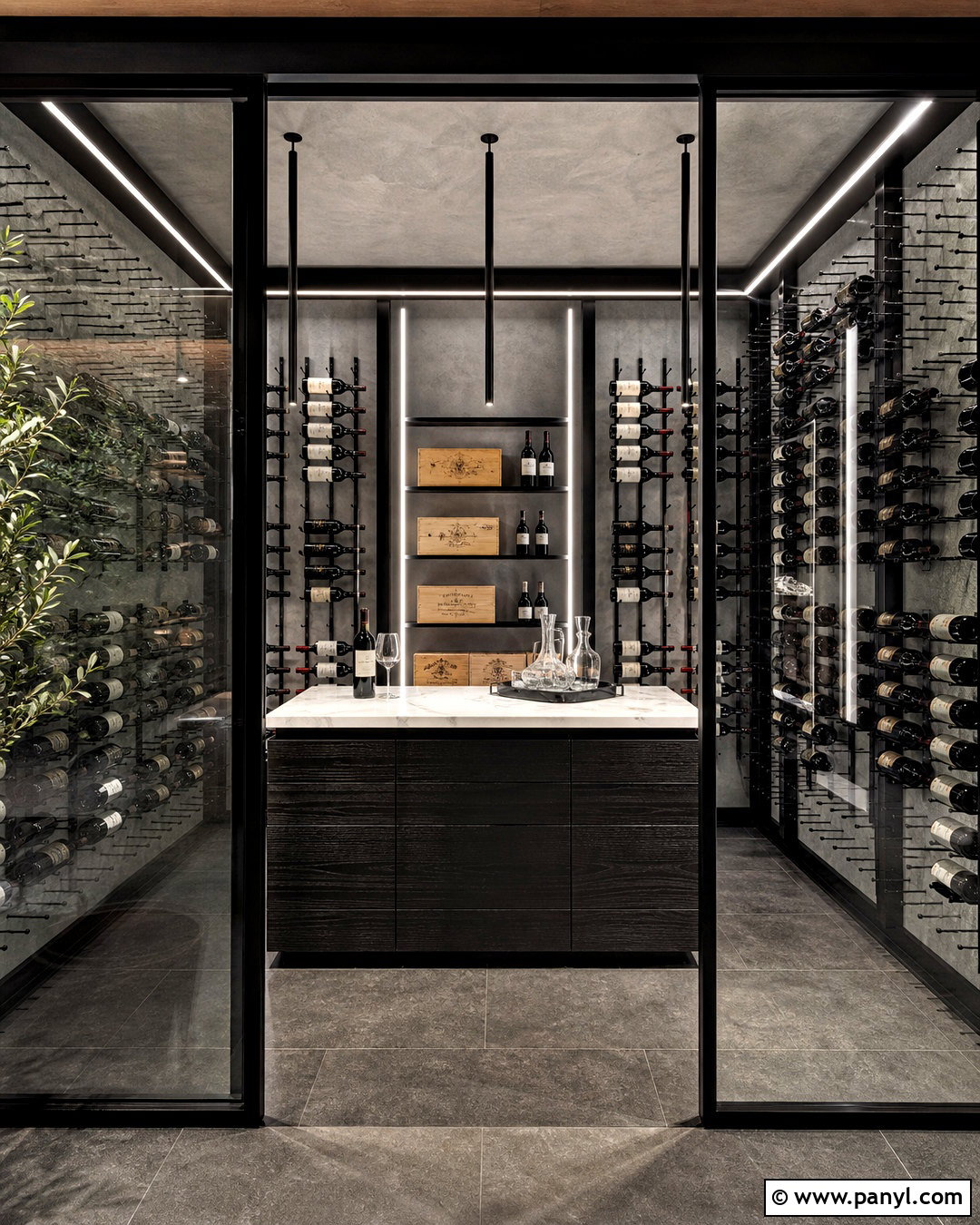
For a dramatic contemporary look, build the cellar around black metal framing and graphic floor-to-ceiling racks. Position slim steel bottle pegs against textured gray plaster walls so each bottle appears to float. A black-framed glass enclosure defines the room, while large charcoal porcelain floor tiles create a seamless foundation. Add a central island with black oak cabinetry and a honed white marble top to provide visual contrast and practical serving space. Integrated linear lights should run vertically beside the racks rather than directly above the bottles. Use a concealed ducted cooling system to preserve the uncluttered ceiling. The final room feels bold and architectural, yet the pale stone surface and clear glass prevent the dark palette from becoming heavy.
5. Stone Wine Cellar
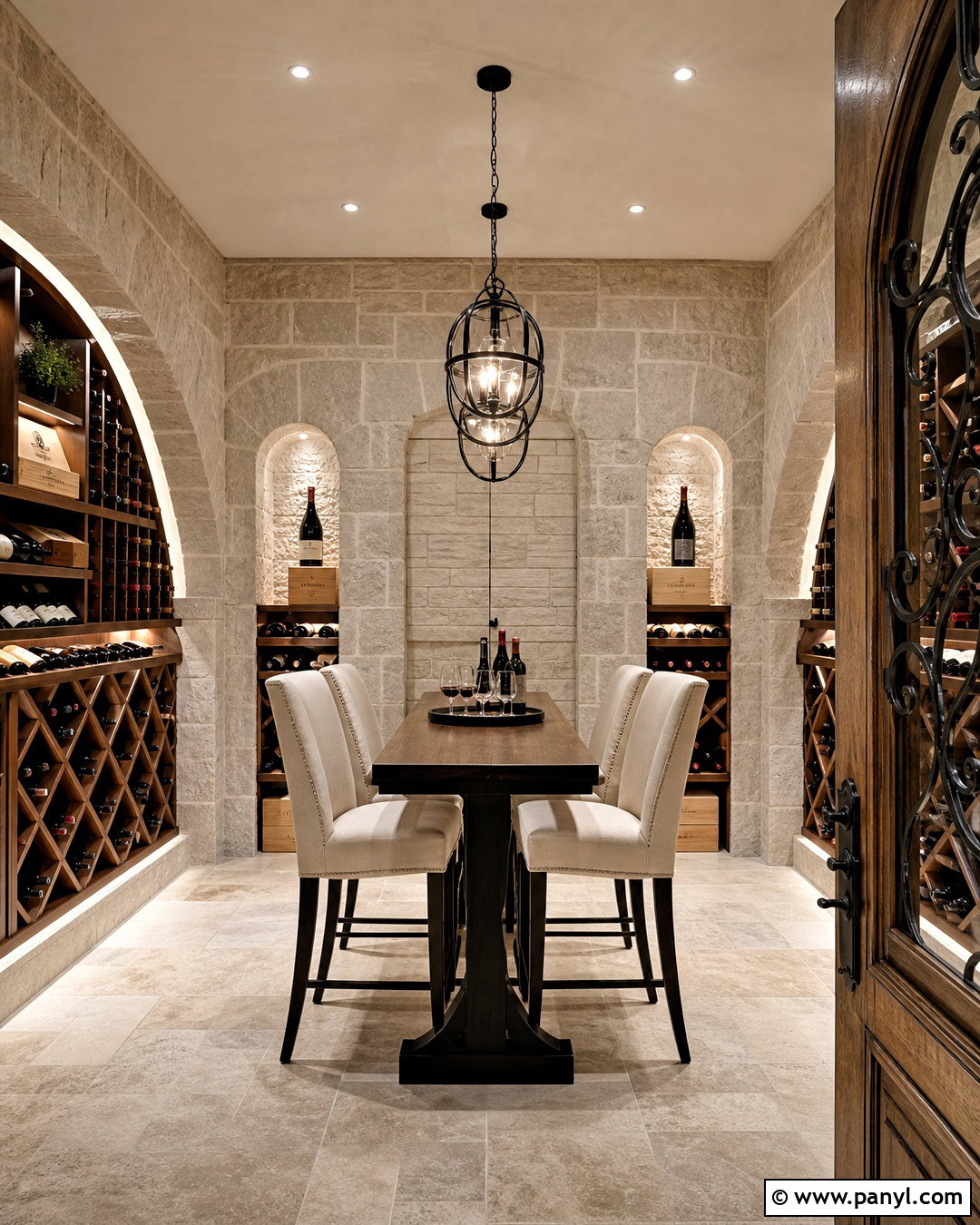
Natural stone can make a new custom wine cellar feel established and connected to the architecture of the house. Cover one focal wall with pale gray limestone or softly textured fieldstone, then frame it with warm oak racks and arched display niches. Use large limestone floor tiles in a complementary tone to create continuity underfoot. A solid oak door with a small iron-framed window adds weight and character at the entrance. Instead of filling every surface with storage, leave space for a narrow tasting table, two upholstered chairs, and a sculptural pendant. Conceal climate equipment behind custom millwork and keep the lighting warm but clear. The completed space should feel sophisticated and inviting rather than like a dark underground cave.
6. Under Stairs Wine Cellar
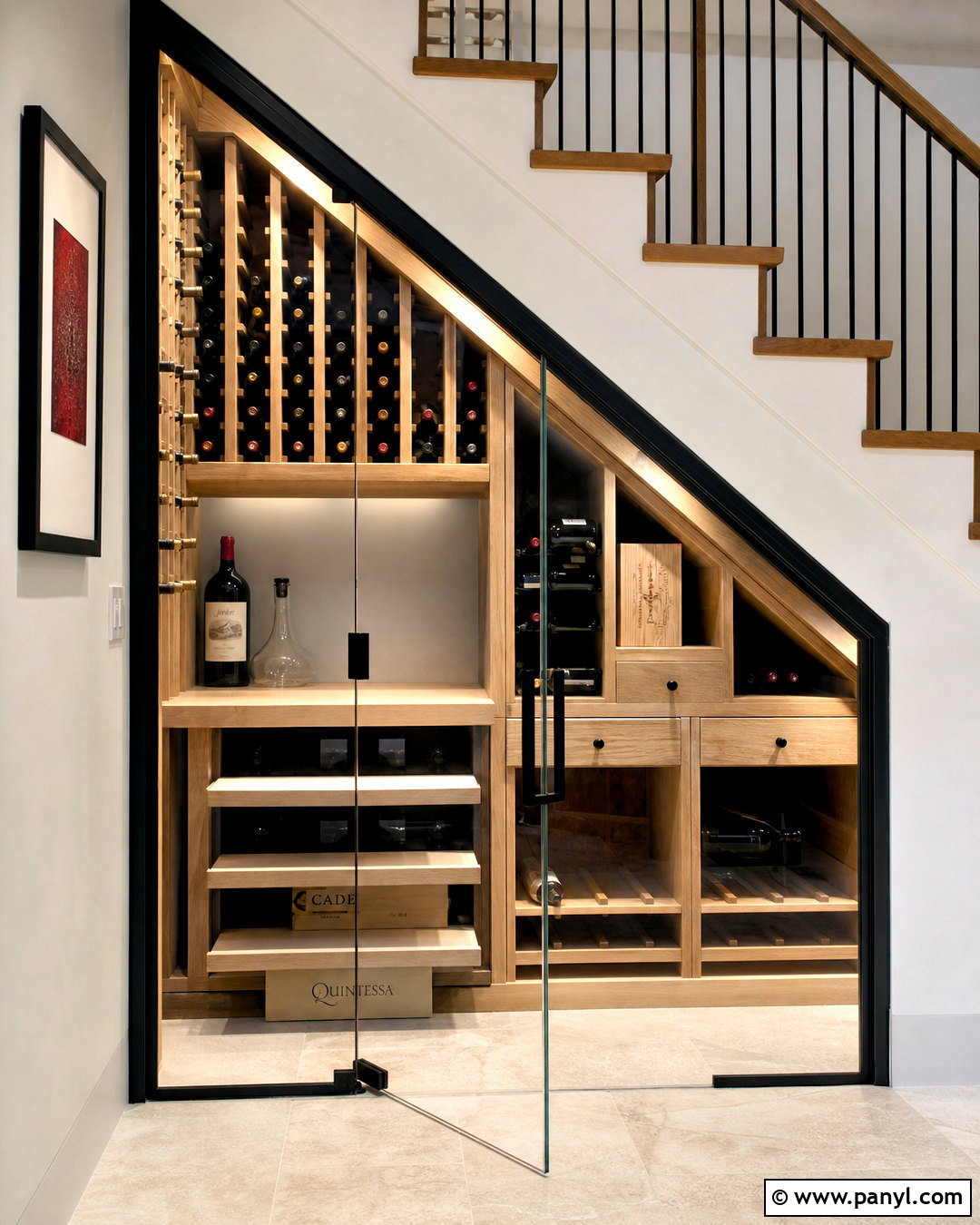
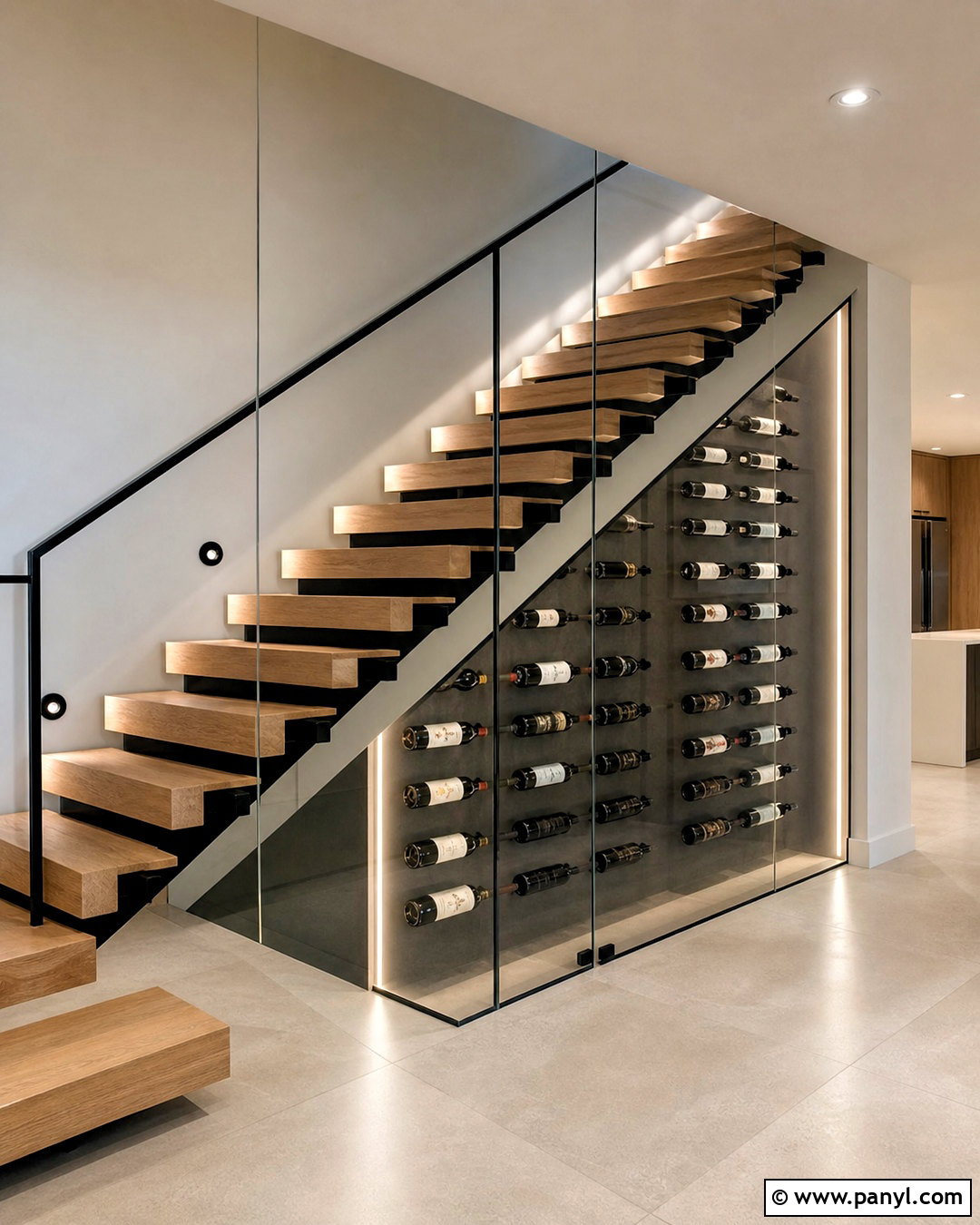
An under stairs wine cellar can provide a luxurious display in a compact, previously unused area. Enclose the full triangular footprint with insulated glass and a slim black metal frame. Follow the staircase angle with custom white oak cabinetry, using taller vertical racks at one end and lower presentation shelves beneath the descending steps. Pale stone flooring visually expands the enclosure, while recessed lighting highlights the varied rack heights. Place a shallow drawer cabinet along the lowest wall for tools and accessories. A concealed cooling system can be routed through nearby cabinetry or a service space, depending on the home’s construction. By coordinating the oak, glass, flooring, and black hardware with the staircase, the cellar becomes a deliberate architectural feature.
7. Dining Room Wine Cellar
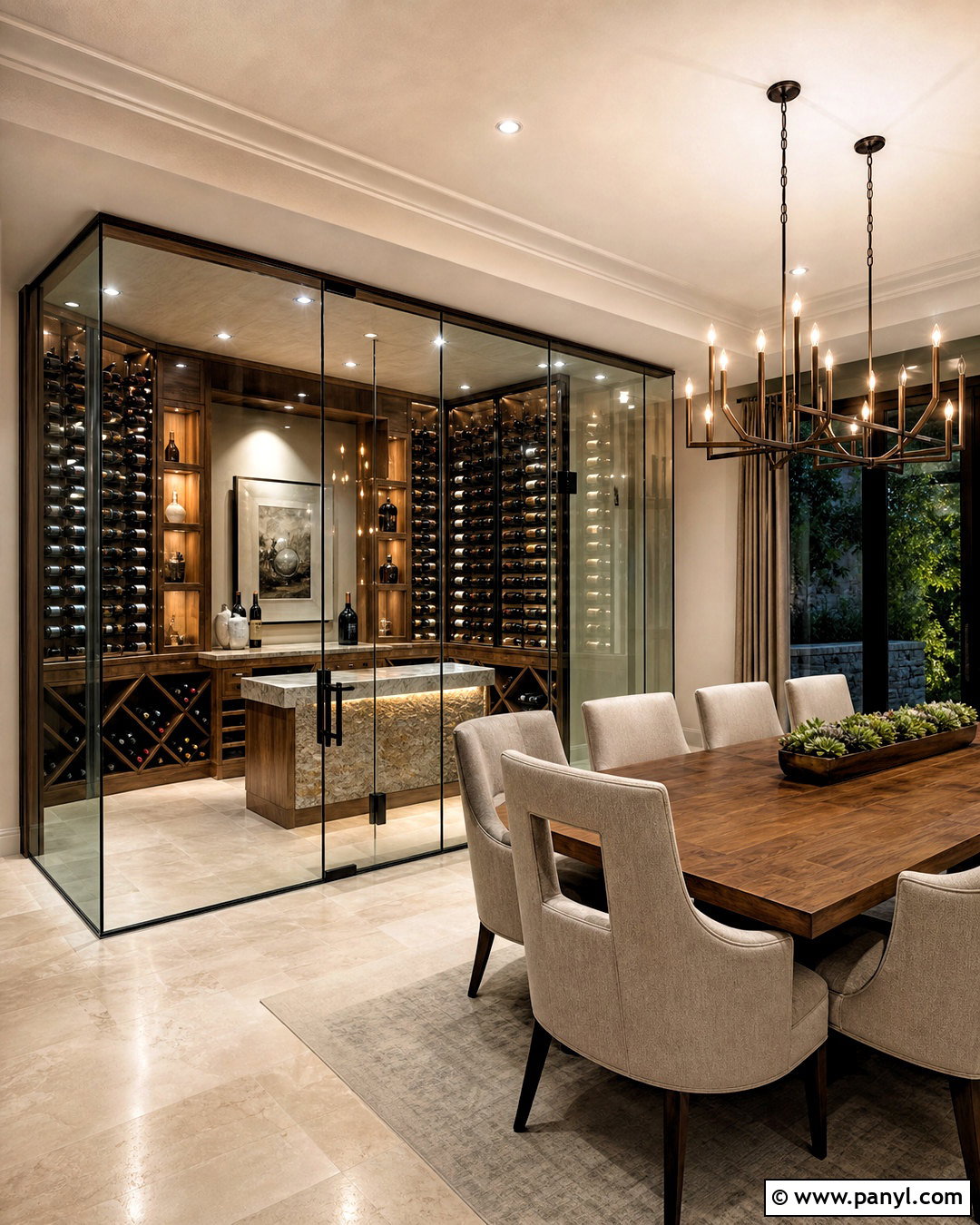
A dining room wine cellar should support entertaining while remaining visually balanced with the table and surrounding furniture. Create a full-height glass enclosure along one wall, using walnut cabinetry and bronze metal bottle supports inside. Center a stone serving counter between two symmetrical storage sections so it can function as a practical staging area. Repeat the walnut finish on the dining room sideboard and choose dining chairs upholstered in warm oatmeal fabric. A large contemporary chandelier can anchor the table without competing with the illuminated collection. Use matching limestone or wide-plank oak flooring across both spaces for continuity. With quiet climate equipment and carefully sealed glass, the cellar can feel like a built-in extension of the dining room rather than a separate utility space.
8. Basement Wine Cellar
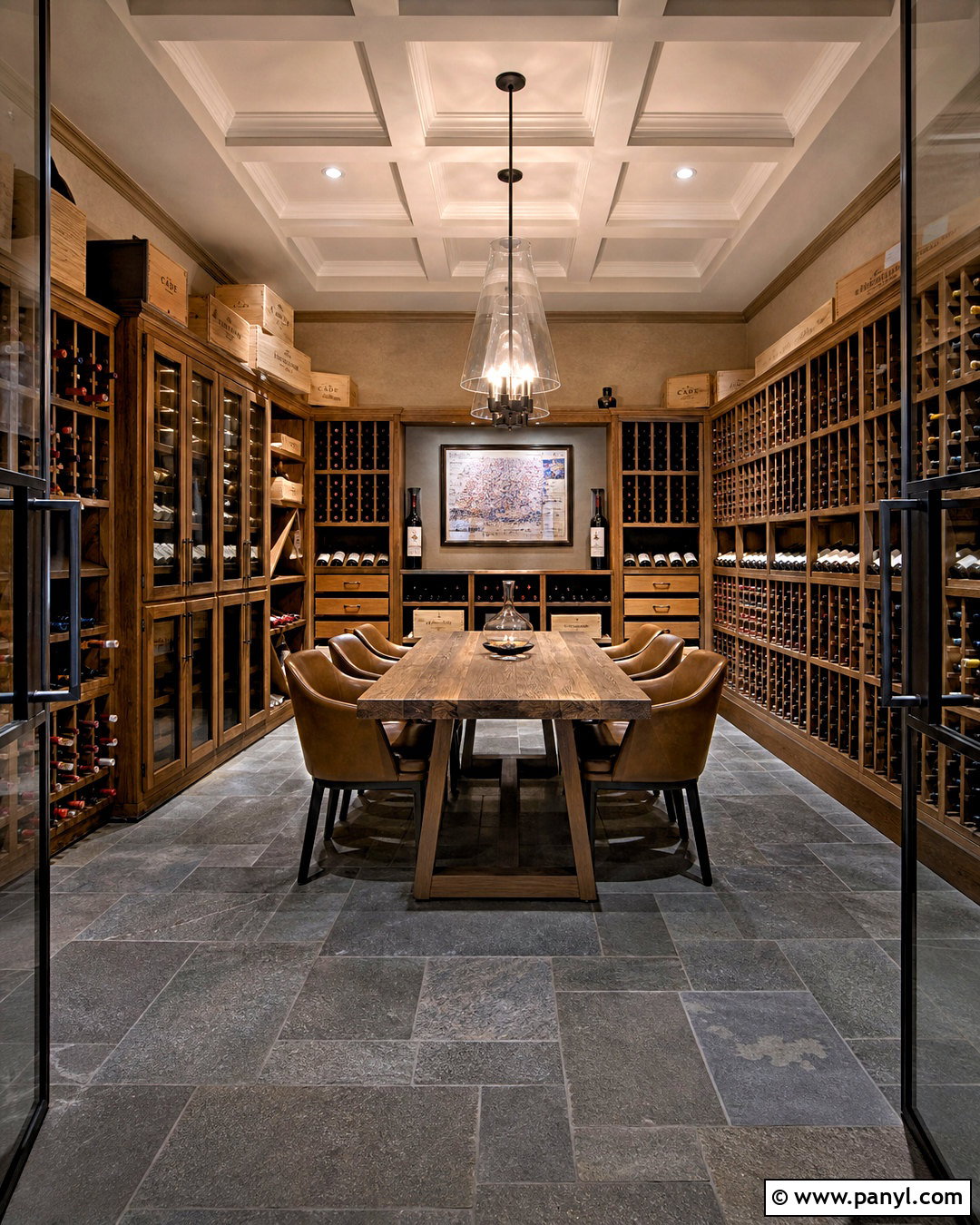
A large basement wine cellar can become a complete entertaining destination instead of a simple storage room. Organize the layout into perimeter bottle racks, a central tasting zone, and closed cabinetry for cases and accessories. Use medium-toned oak for the millwork, charcoal slate flooring, and softly plastered walls to create warmth without excessive ornament. A substantial rectangular table with six leather chairs provides room for relaxed tastings and conversation. Install a glass entry door so the room feels connected to an adjacent lounge. Coffered ceiling panels can conceal ductwork, acoustic treatments, and recessed lighting. Because basements may still experience environmental changes, the room should be professionally insulated, sealed, and climate controlled before decorative finishes and custom racks are installed.
9. Walk In Wine Cellar
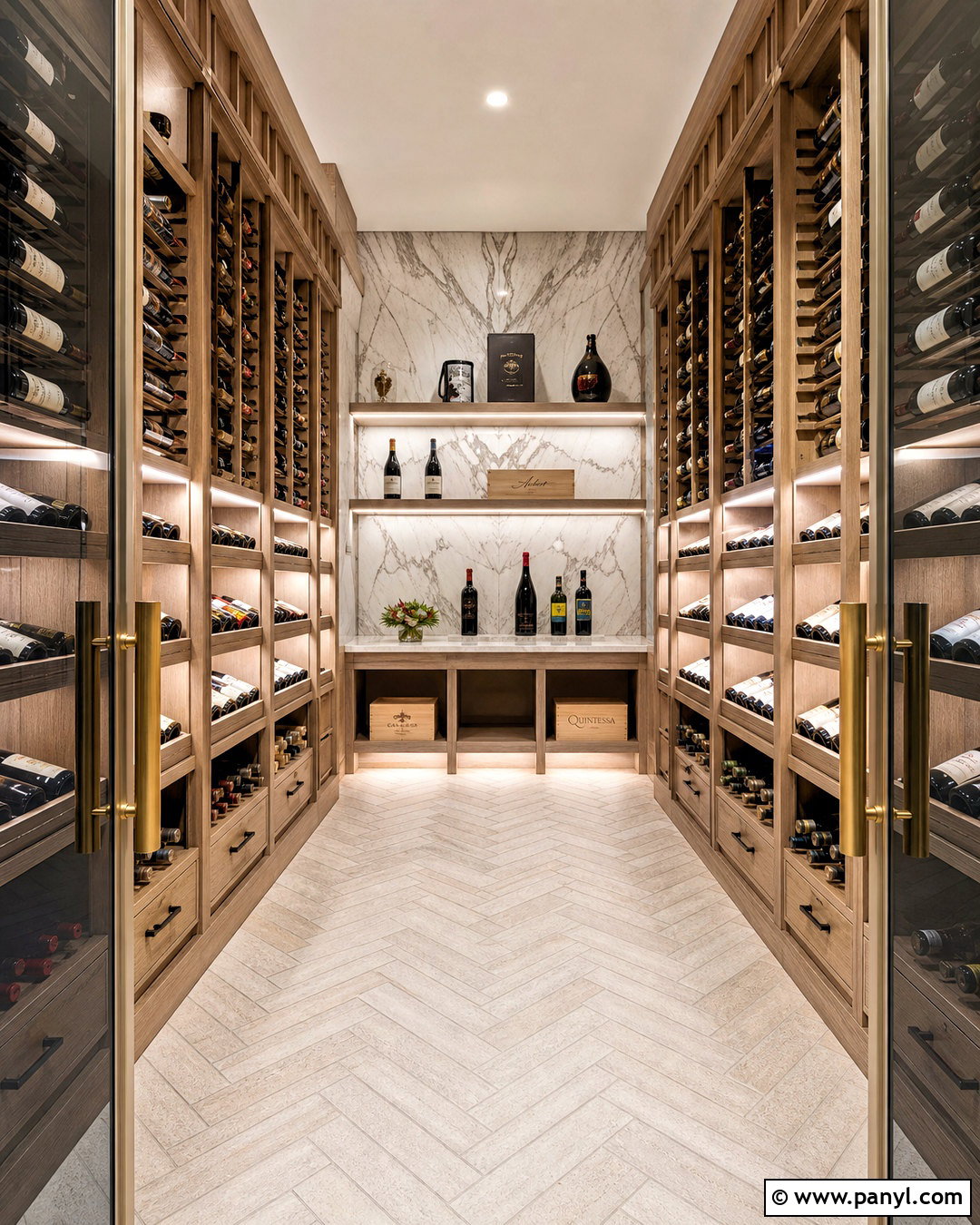
A walk in wine cellar feels especially luxurious when the layout provides a clear aisle and a strong focal point at the far wall. Line both sides with floor-to-ceiling white oak racks, combining individual bottle storage, display rows, and lower case bins. At the end, install a book-matched marble slab behind a floating counter and illuminated shelves for special bottles. Use a pale herringbone stone floor to guide the eye through the narrow space. A full glass door with brushed brass hardware keeps the entrance bright and welcoming. Keep the ceiling simple with small recessed fixtures and hidden linear lighting. This balanced arrangement maximizes capacity while preserving comfortable circulation, visual order, and access to every section of the collection.
10. Wine Cellar With Tasting Room
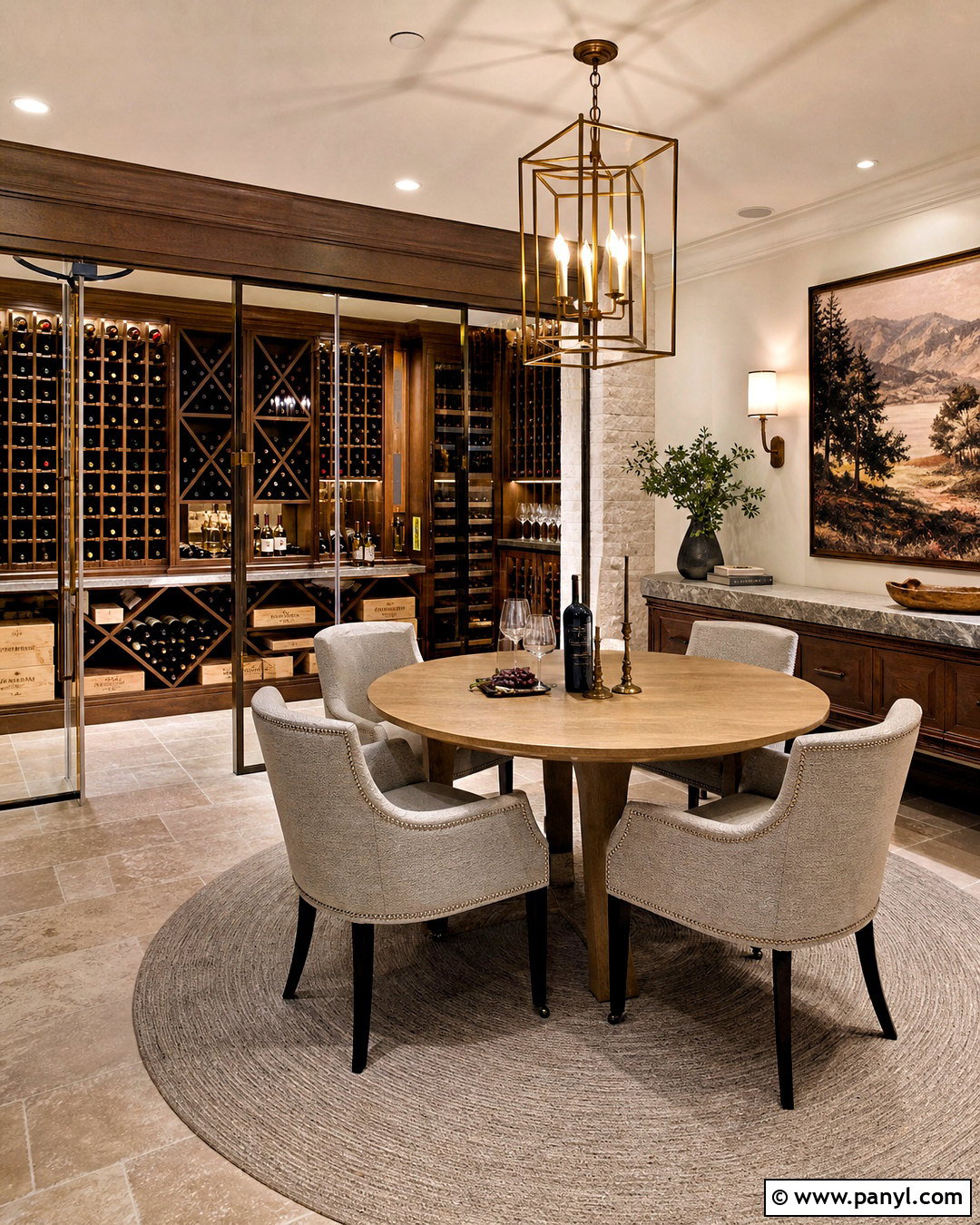
Combining storage with a dedicated tasting area creates a room that can support both collecting and entertaining. Place climate-controlled storage behind an insulated interior glass wall, allowing the seating zone to remain at a more comfortable temperature. Inside the enclosure, use walnut racks, antique brass details, and limestone flooring. In the tasting area, center a round oak table beneath a sculptural chandelier and surround it with four upholstered chairs. Add a built-in sideboard with a stone top, closed drawers, and open shelves for glassware. Soft plaster walls and a large neutral rug make the seating area feel residential. Repeating walnut and brass across both zones connects the complete design while the glass partition maintains the environmental separation required for storage.
11. Wine Cellar With Arched Door
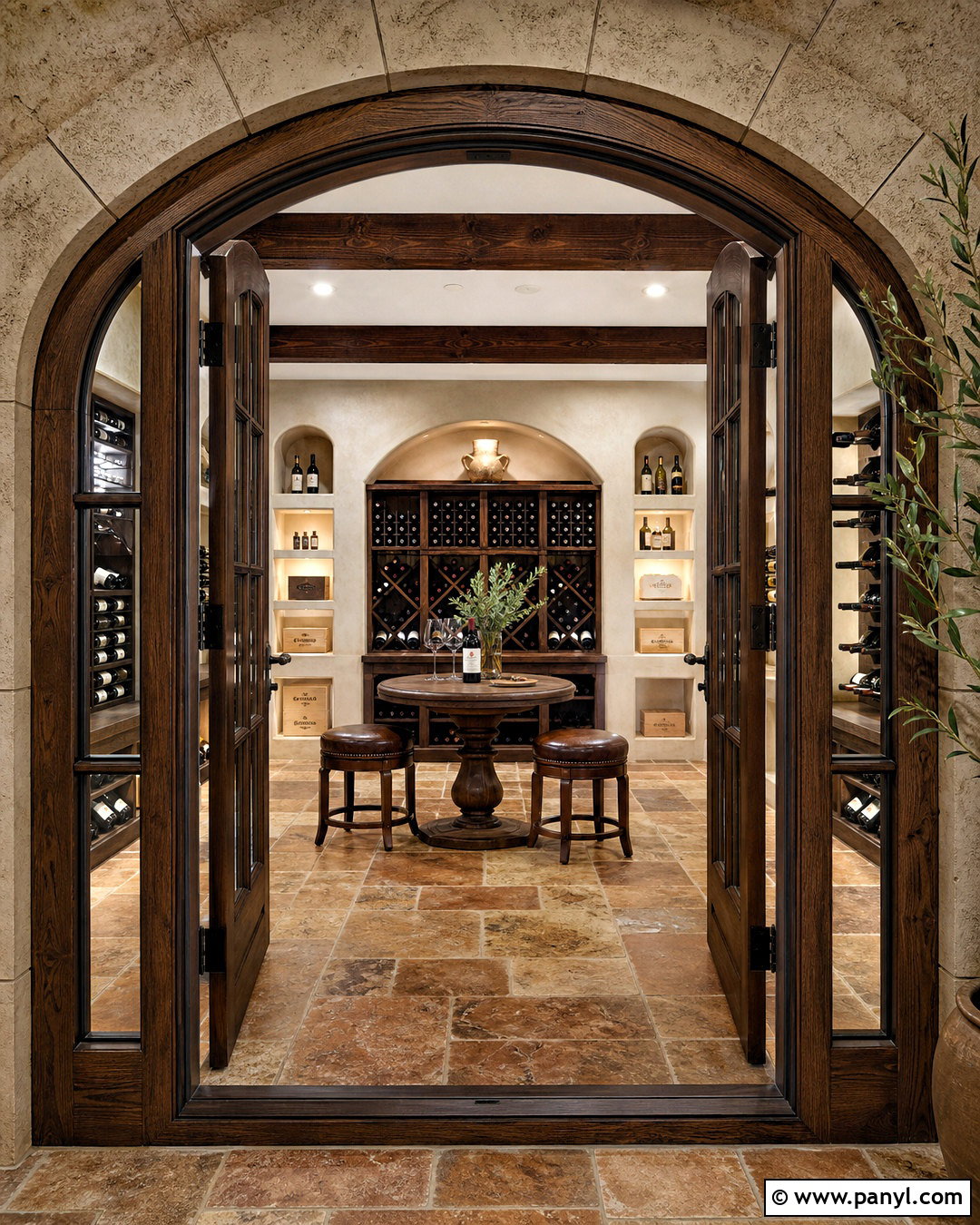
An arched doorway gives a custom wine cellar a strong sense of arrival and works beautifully in Mediterranean, Spanish, and European-inspired homes. Choose a substantial stained oak door with divided glass panels and dark hand-forged hardware. Inside, continue the curved form with shallow arched niches built into warm plaster walls. Fit each niche with walnut racks, soft integrated lighting, and limestone display ledges. Terracotta-toned stone flooring adds warmth, while simple ceiling beams reinforce the traditional architecture. Balance these rustic materials with clean cabinetry lines and an efficient concealed cooling system. A small round pedestal table and two leather stools can occupy the center without blocking circulation. The result feels handcrafted and historic while still functioning as a modern controlled environment.
12. Wine Cellar With Floating Racks
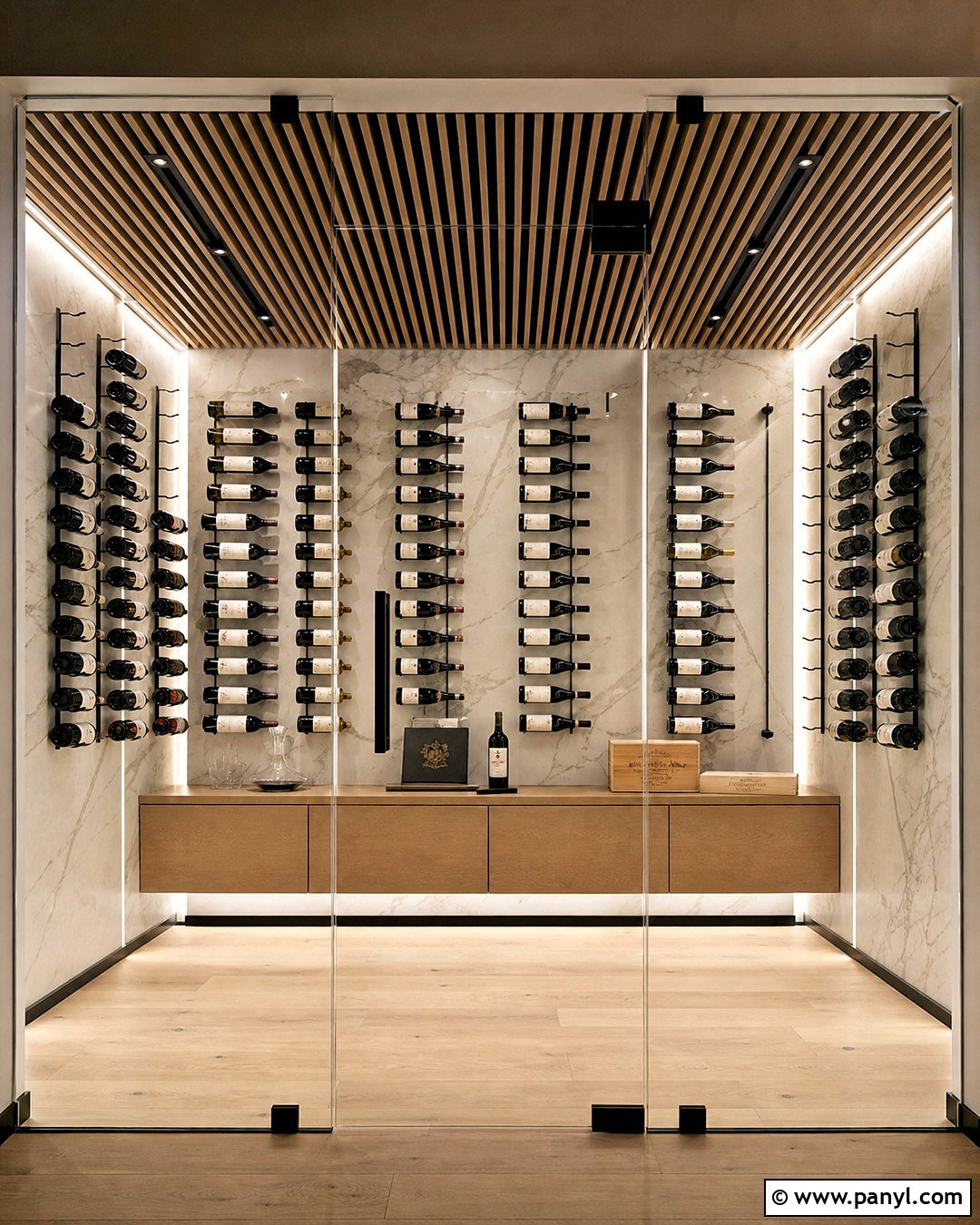
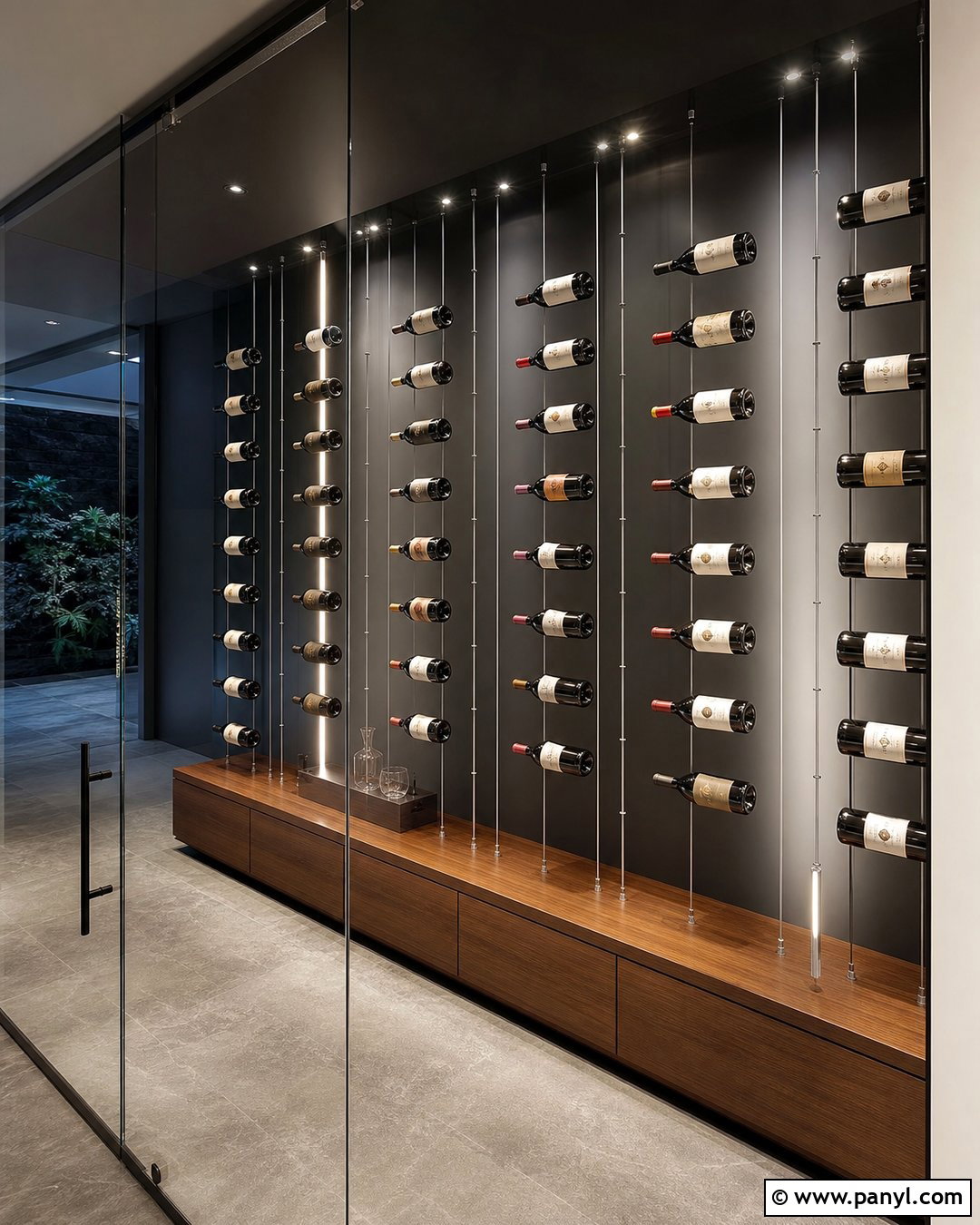
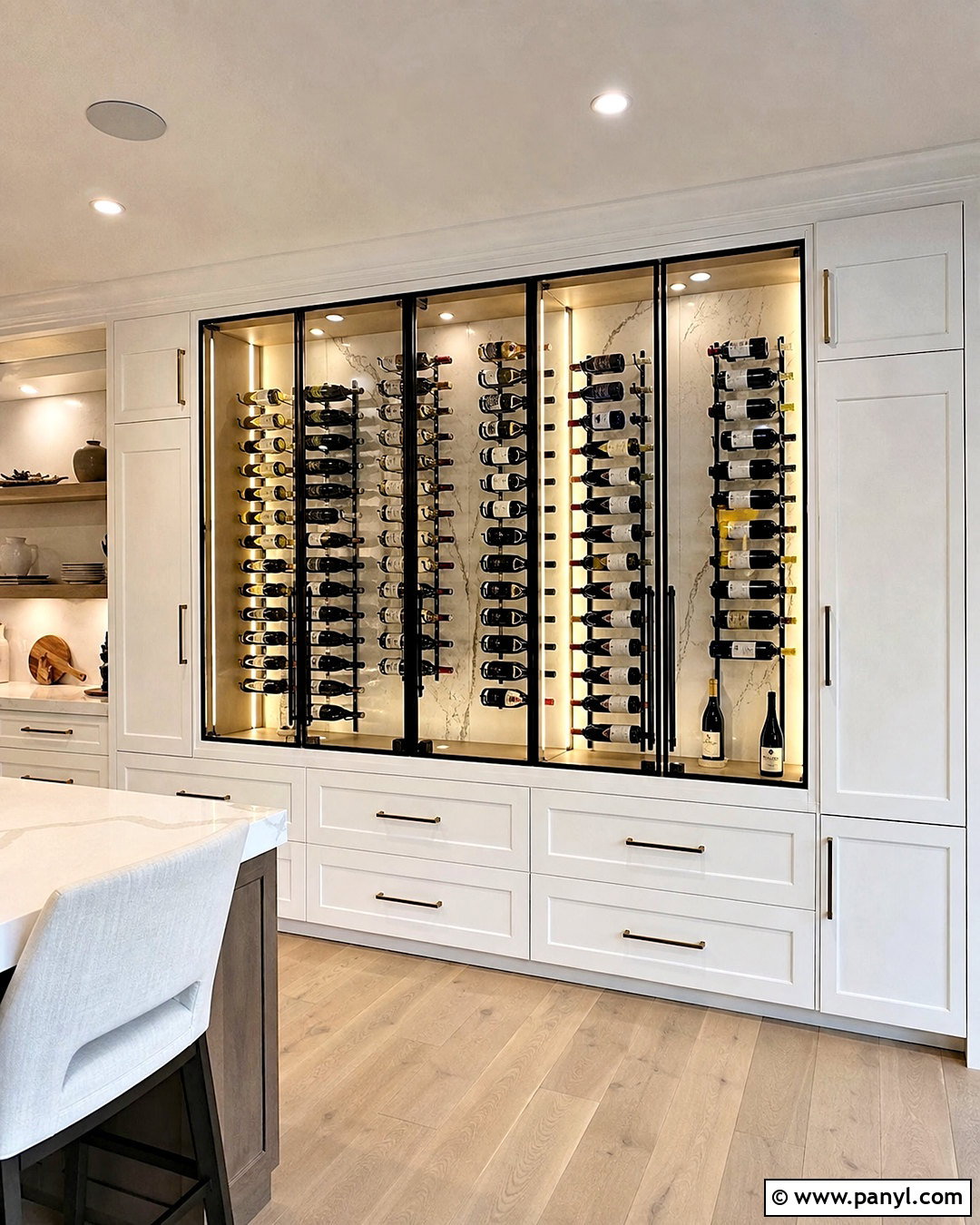
Floating bottle racks create an open, minimalist display that makes the collection appear suspended against the wall. Use precision-mounted brass or matte black pegs on large porcelain slabs with subtle marble veining. Arrange the bottles in consistent label-forward rows, leaving generous negative space around a central feature section. Frame the room with clear insulated glass and a matching narrow-profile door. Pale oak flooring and a slatted wood ceiling add natural texture without distracting from the display. Include a low floating cabinet for cases, accessories, and concealed mechanical components. Vertical LED lighting placed between rack sections produces even illumination and emphasizes the orderly layout. This cellar works best when every mounting point, joint, and cable is carefully planned before the wall finishes are installed.
13. Wine Cellar With Display Shelves
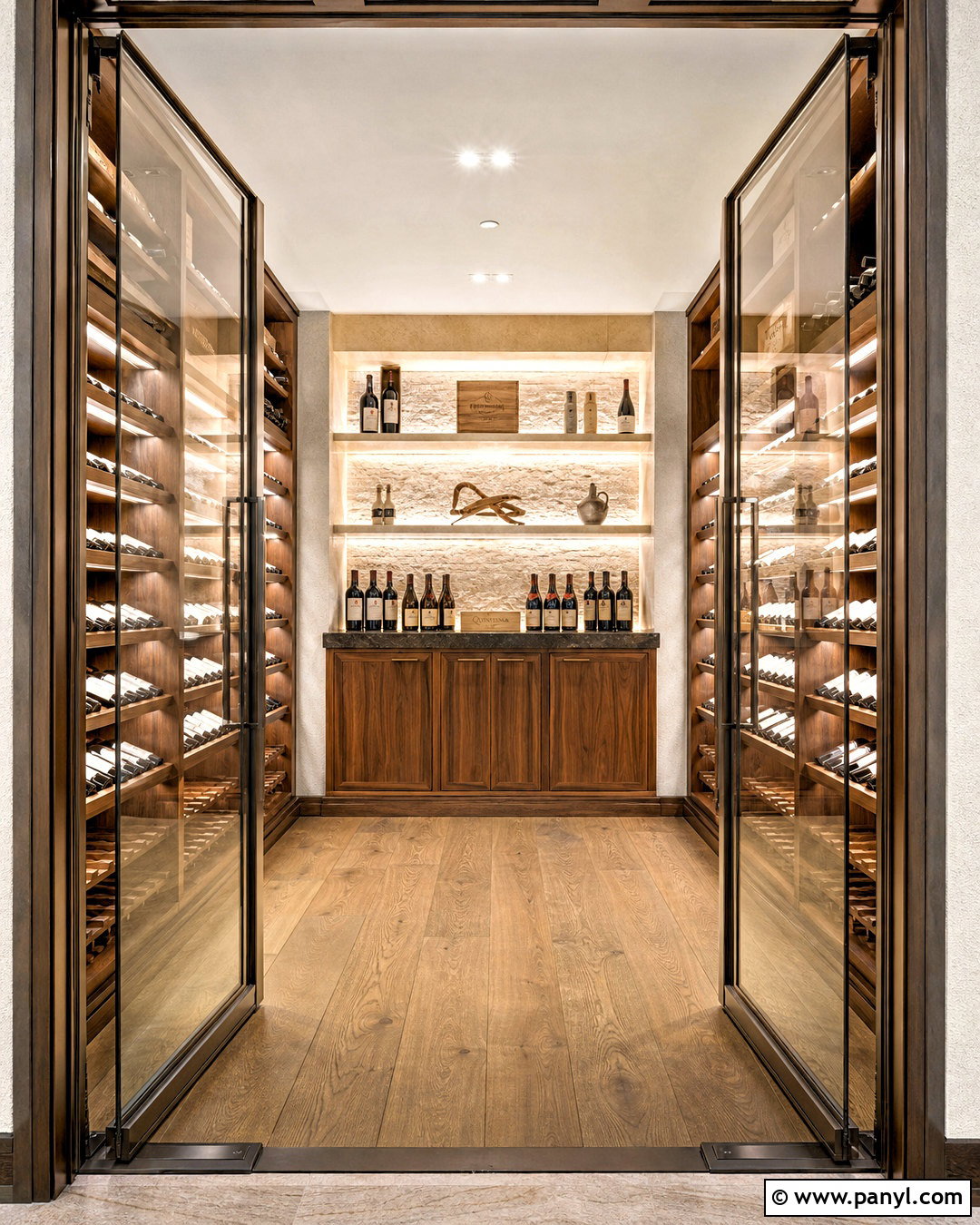
Display shelves allow meaningful or visually distinctive bottles to receive attention without reducing the room’s overall storage capacity. Design the main wall with backlit stone shelves in the center and high-capacity walnut racks on both sides. Tilt selected bottles slightly upward so their labels remain readable, while keeping long-term storage organized horizontally in individual compartments. Add closed lower cabinets with ventilated fronts and a dark stone counter for serving. A bronze-framed glass door, wide-plank oak floor, and softly textured cream walls complete the warm transitional palette. Use dimmable LED lighting that produces minimal heat and avoids harsh glare on the glass. The complete arrangement provides practical organization, a clear focal point, and an attractive backdrop for a nearby dining or lounge space.
14. Small Luxury Wine Cellar
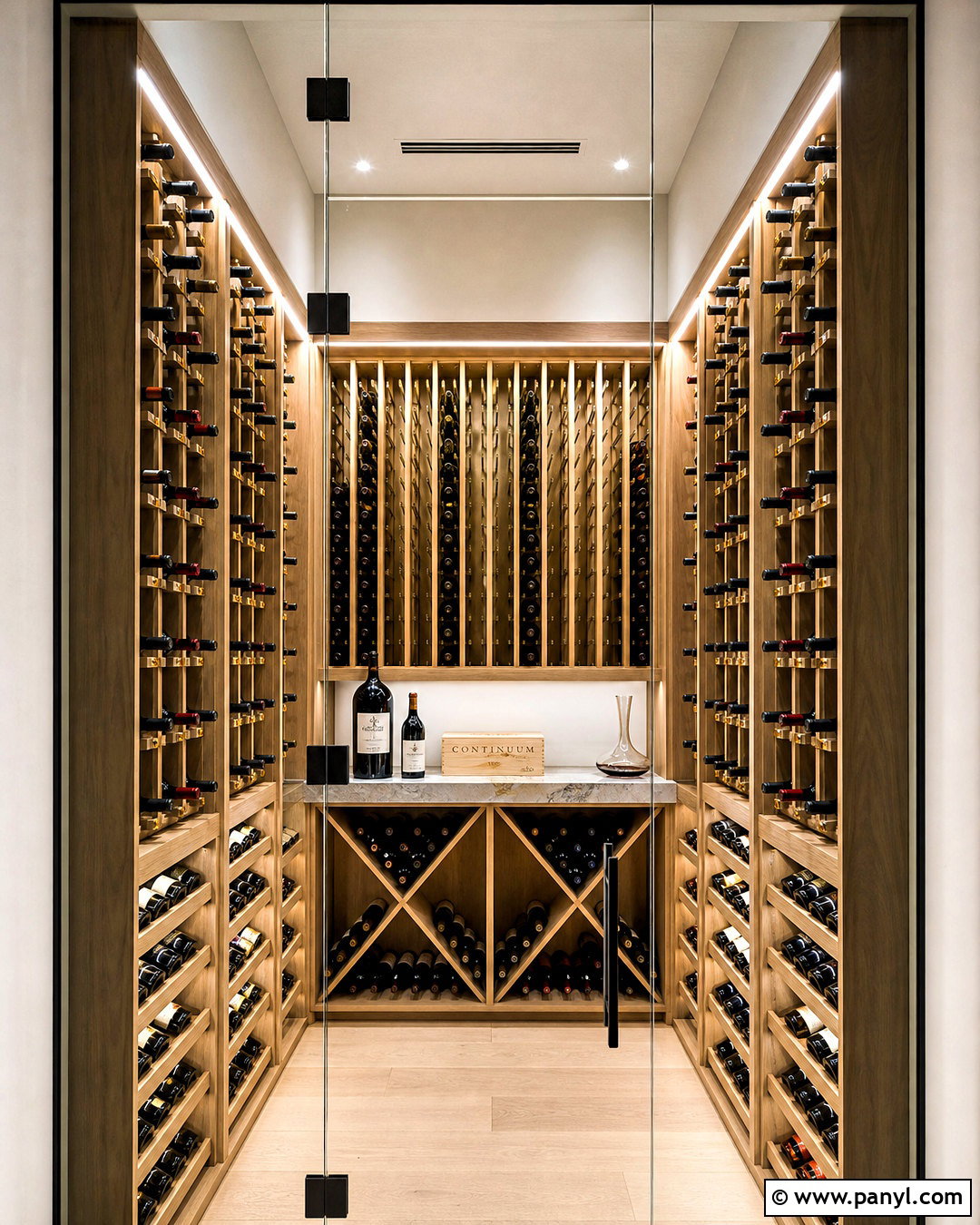
Limited square footage does not prevent a wine cellar from feeling exceptionally finished. Convert a deep closet or compact alcove into a glass-fronted room with white oak racks covering three walls. Use vertical metal supports to increase capacity without adding bulky cabinetry. A slim quartzite ledge at the back creates space for featured bottles and small accessories. Continue the home’s light oak flooring into the enclosure, or use large porcelain tiles if moisture resistance is a priority. Brushed brass hardware and narrow integrated lights provide understated polish. Keep the cooling unit out of sight by placing it above the ceiling or in an adjacent mechanical zone. Careful spacing, pale materials, and clear glass make the completed cellar feel larger, cleaner, and more intentional.
15. Mediterranean Wine Cellar
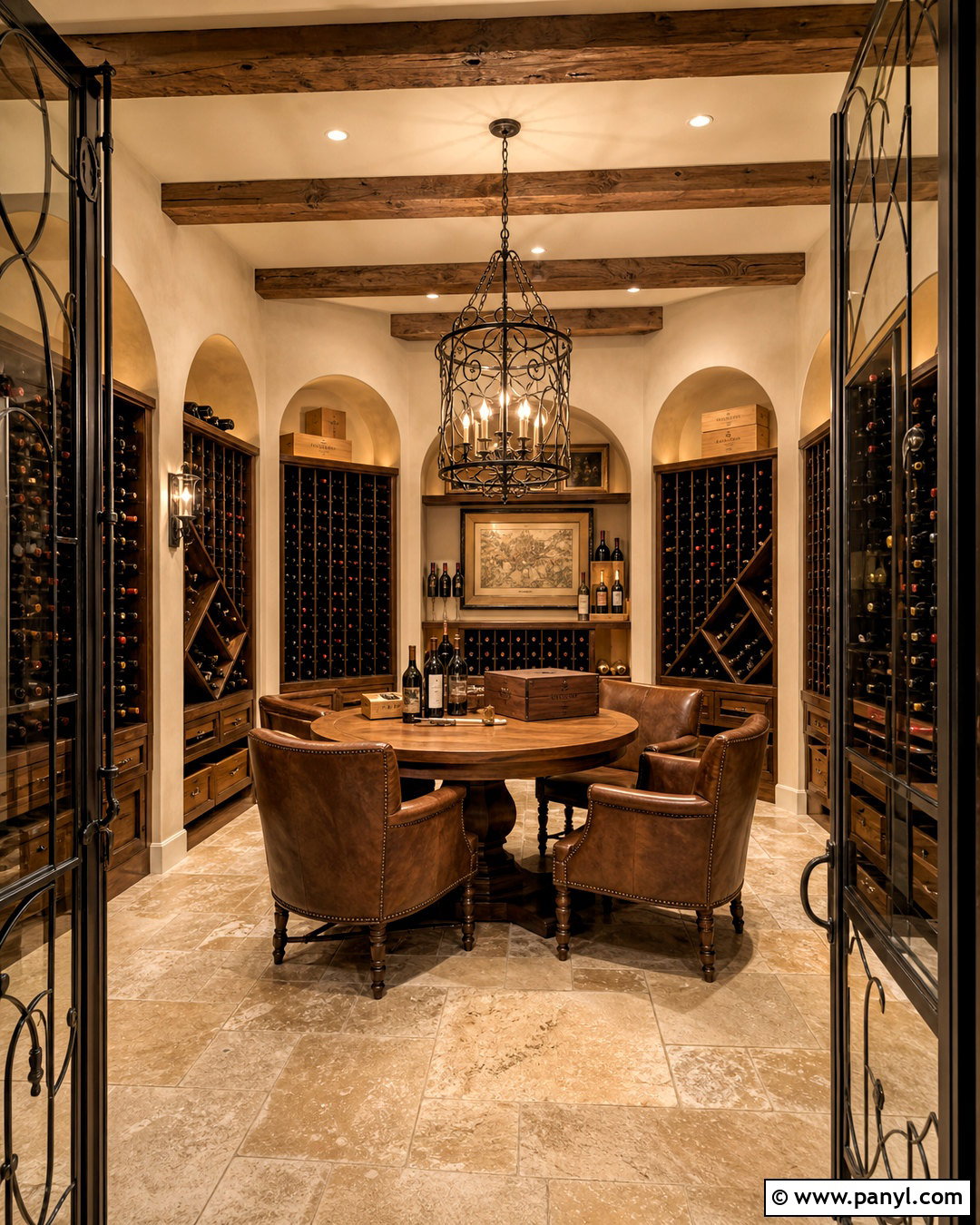
A Mediterranean wine cellar combines earthy finishes, substantial woodwork, and softly curved architectural details. Start with warm ivory plaster walls and a ceiling finished with reclaimed oak beams. Build dark walnut storage into arched wall openings, mixing individual bottle slots with deep case bins below. Tumbled limestone flooring introduces natural variation and remains visually quiet beside the stronger wood tones. Choose an iron-framed glass door with a gentle arch to establish the look before entering the room. In the center, place a heavy round wood table with leather-backed chairs and a simple wrought-iron pendant. Hidden refrigeration and discreet floor-level vents preserve the traditional appearance. The complete room should feel warm and layered, but organized enough to suit a newly built luxury residence.
16. Transitional Wine Cellar
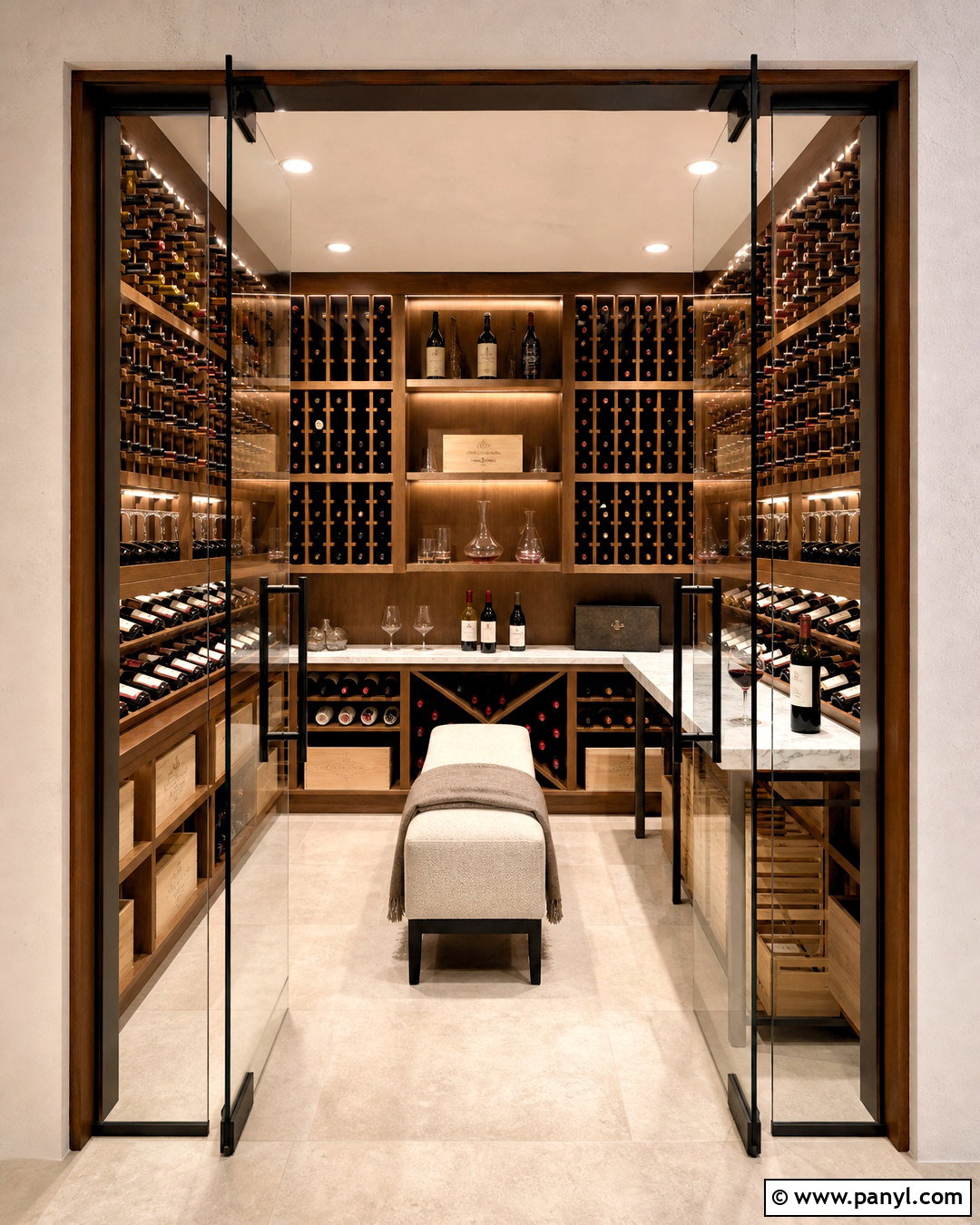
A transitional wine cellar balances classic millwork with streamlined contemporary details, making it easy to coordinate with many upscale homes. Use medium walnut cabinetry with simple recessed panels rather than heavily carved trim. Add slim black metal bottle supports between the wood storage sections to lighten the composition. Cream limestone flooring, warm white plaster walls, and a clear glass entry create a neutral architectural shell. At the back of the room, install a symmetrical presentation wall with a marble counter, illuminated shelves, and closed drawers. A small upholstered bench adds comfort without turning the cellar into a formal tasting room. Keep the cooling grilles, door seals, and wiring carefully concealed. The mix of familiar materials and clean lines produces a refined design with lasting visual flexibility.
17. Minimalist Wine Cellar
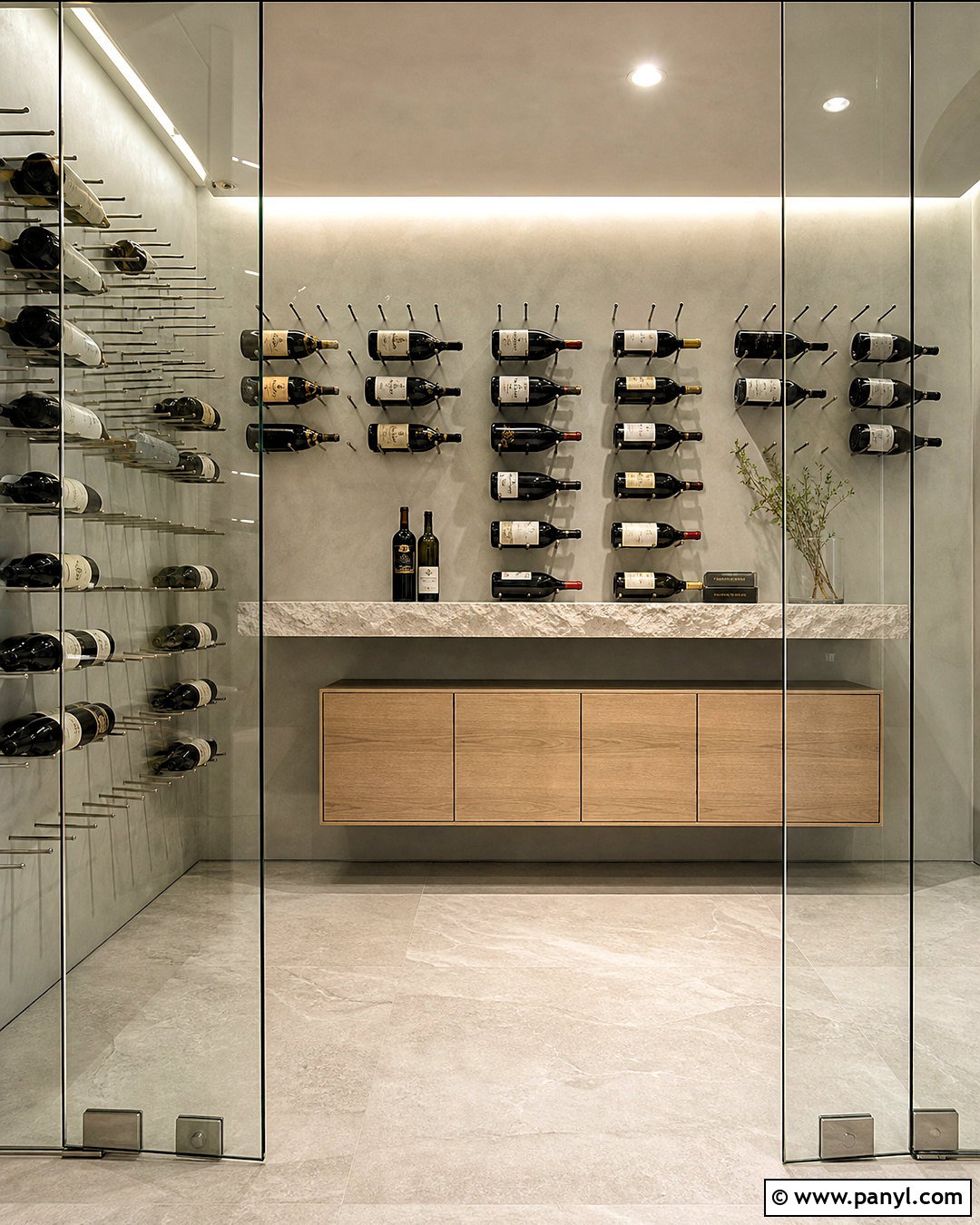
A minimalist wine cellar depends on precise proportions, concealed systems, and a tightly controlled material palette. Cover the walls with pale microcement and install thin stainless steel bottle pegs in uninterrupted horizontal rows. Choose frameless glass for the entrance and continue large-format light gray porcelain tiles from the hallway into the cellar. Instead of a decorative ceiling fixture, use recessed linear lighting hidden within narrow architectural channels. Include one floating white oak cabinet for tools and case storage, keeping its doors flush and handle-free. A single stone display shelf can provide a quiet focal point at the back. Every vent and sensor should align with the surrounding surfaces. The finished room feels calm and spacious because unnecessary trim, color changes, and freestanding furnishings have been removed.
18. Rustic Modern Wine Cellar
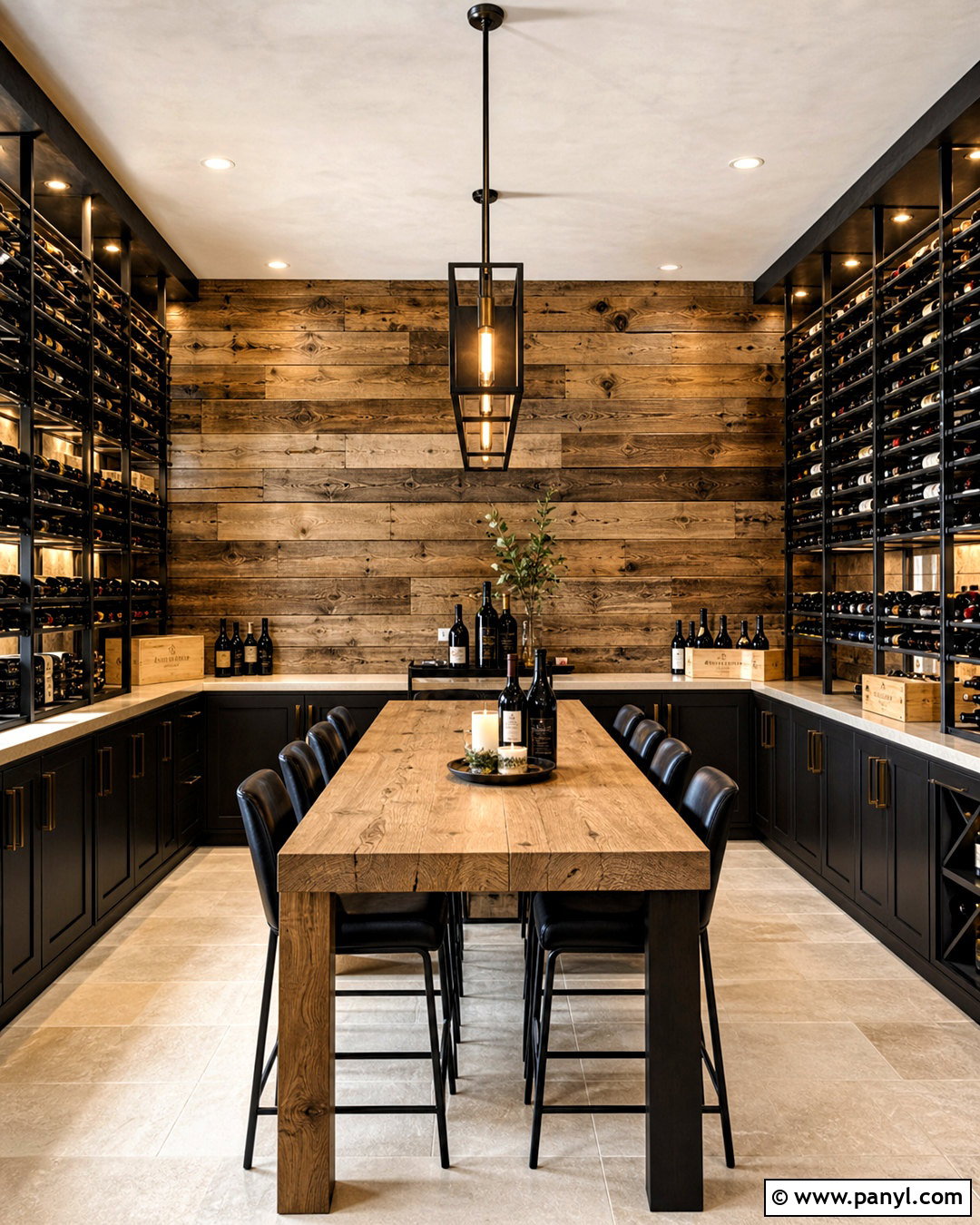
Rustic modern design pairs tactile natural materials with clean contemporary construction. Use reclaimed oak planks on one feature wall, then mount streamlined black metal racks over the textured wood. Balance the darker focal wall with smooth cream plaster, clear glass partitions, and a pale limestone floor. A rectangular tasting table made from solid oak can occupy the center, surrounded by simple black leather chairs. Add a linear bronze pendant and concealed shelf lighting rather than decorative lanterns. Lower cabinetry in charcoal-stained wood provides organized case storage and repeats the color of the racks. Keep beams, stone, and reclaimed surfaces selective so the space does not feel themed. The result should be comfortable and grounded, with modern proportions giving the rustic materials a more polished residential appearance.
19. Hidden Wine Cellar
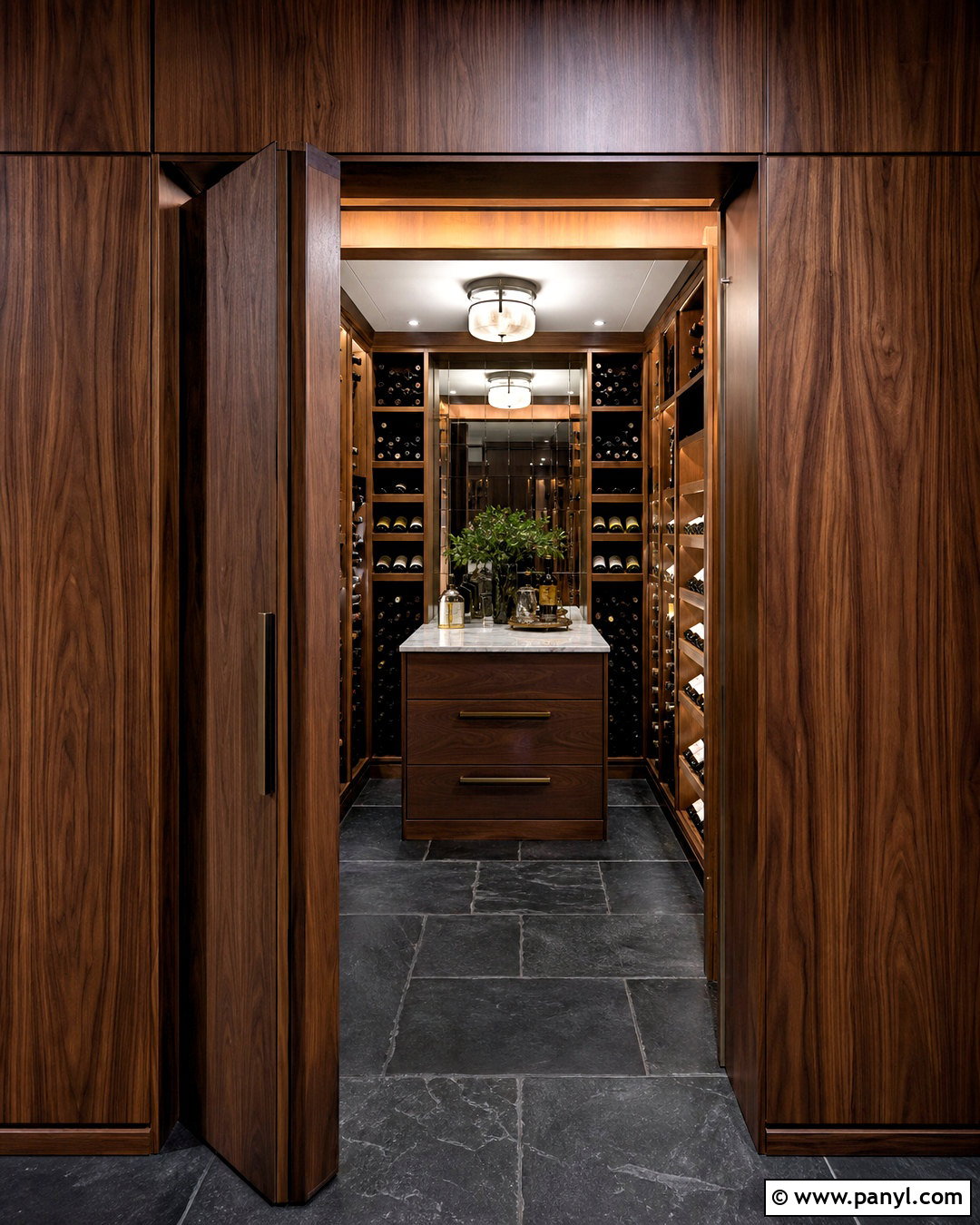
A hidden wine cellar offers a sense of discovery while preserving the clean appearance of a hallway, library, or entertaining room. Conceal the entrance within full-height paneled cabinetry, using touch-latch hardware and continuous wood grain across the door. Beyond it, create a contrasting interior with charcoal stone flooring, walnut racks, and soft bronze lighting. Arrange storage around the perimeter and place a compact marble-topped cabinet at the center for serving and organization. A mirrored panel at the back can visually extend a smaller room without introducing another material color. The concealed door must still include the insulation and airtight sealing needed for the controlled environment. When closed, the entrance reads as custom millwork; when opened, it reveals a fully finished and highly personal architectural space.
20. Smart Wine Cellar
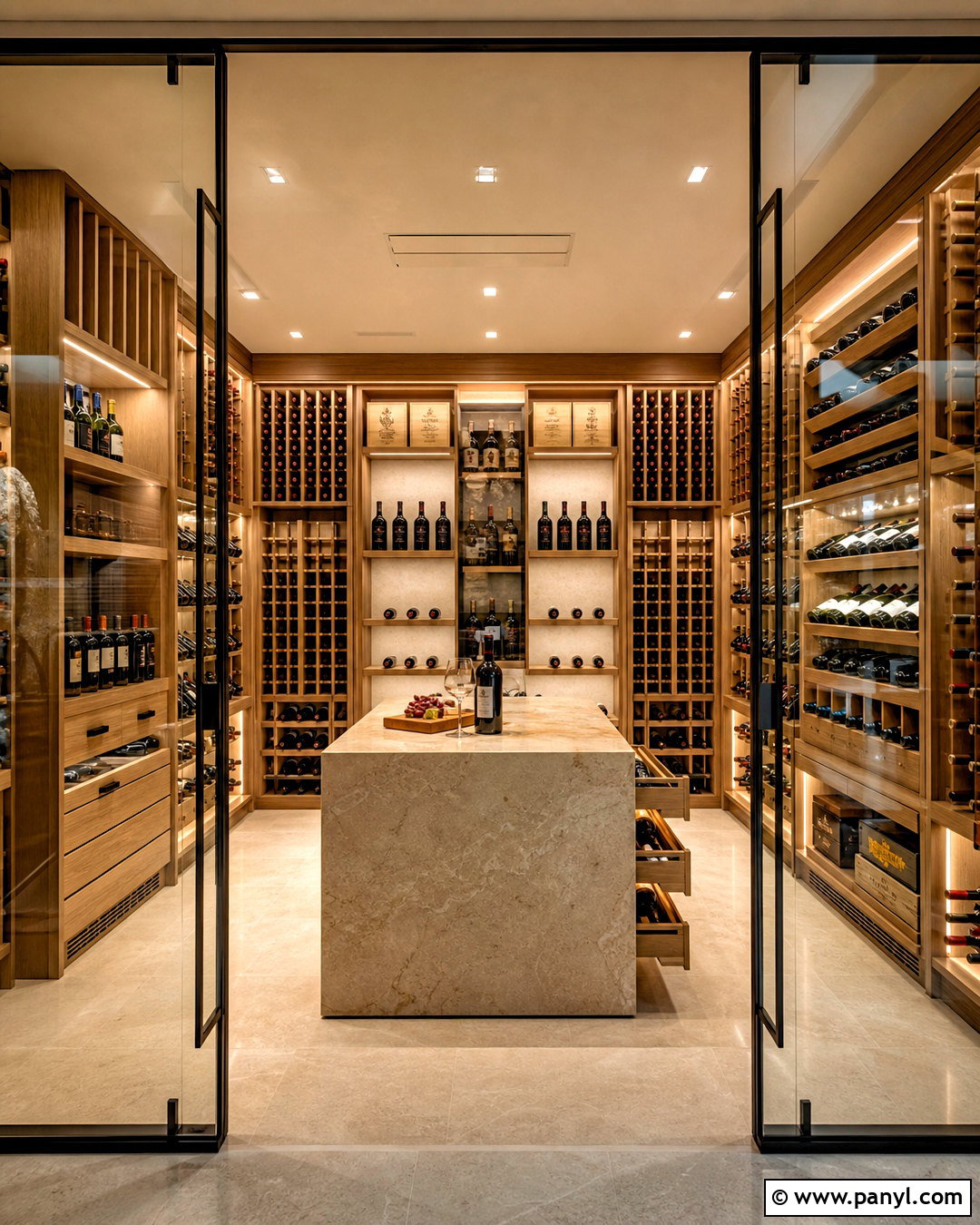
A smart wine cellar integrates monitoring and automation without allowing technology to dominate the design. Build the room with warm white oak racks, blackened steel supports, insulated glass walls, and large limestone floor tiles. Place climate sensors, leak detection, inventory tools, and lighting controls in discreet locations that remain accessible for service. The primary cooling system should operate quietly, with remote alerts providing notice when temperature or humidity moves outside the intended range. Add a central display island with organized drawers and a honed stone top. Automated lighting can brighten presentation rows when the door opens, then return to a lower setting afterward. By coordinating technical planning with cabinetry, electrical work, and ventilation from the beginning, the completed cellar remains elegant, reliable, and easy to manage.
Conclusion:
The best high end custom residential wine cellars feel like a natural part of the home rather than an equipment-filled storage room. Glass, walnut, white oak, stone, and metal can each create a distinct atmosphere when the materials are coordinated across the racks, floor, ceiling, door, lighting, and furnishings. Start by determining collection capacity, available space, display priorities, and whether the room will include seating. Then involve cellar, cooling, electrical, and construction specialists before finalizing decorative details. A well-planned envelope and discreet mechanical system protect the collection, while thoughtful cabinetry and lighting make it enjoyable to view. With the right balance, the cellar becomes both a functional asset and a memorable residential feature.

Related Ideas and Inspiration:
Leave a Reply