
A thoughtfully designed dry bar can turn an unused wall into a practical serving station and a polished focal point. These 20 dry bar wall ideas explore complete looks for dining rooms, living rooms, kitchens, basements, and compact alcoves. Each approach combines cabinetry, counters, shelving, lighting, color, and storage so the finished wall feels intentional rather than improvised. You will find warm wood schemes, bold painted cabinets, reflective backsplashes, concealed units, and budget-friendly arrangements. Adapt the dimensions and materials to your available space, then organize the counter around the drinks and serving pieces you use most. Whether you prefer clean modern lines or relaxed traditional details, these 20 dry bar wall ideas offer practical inspiration for creating a stylish setup at home.
1. Floating Shelf Dry Bar Wall
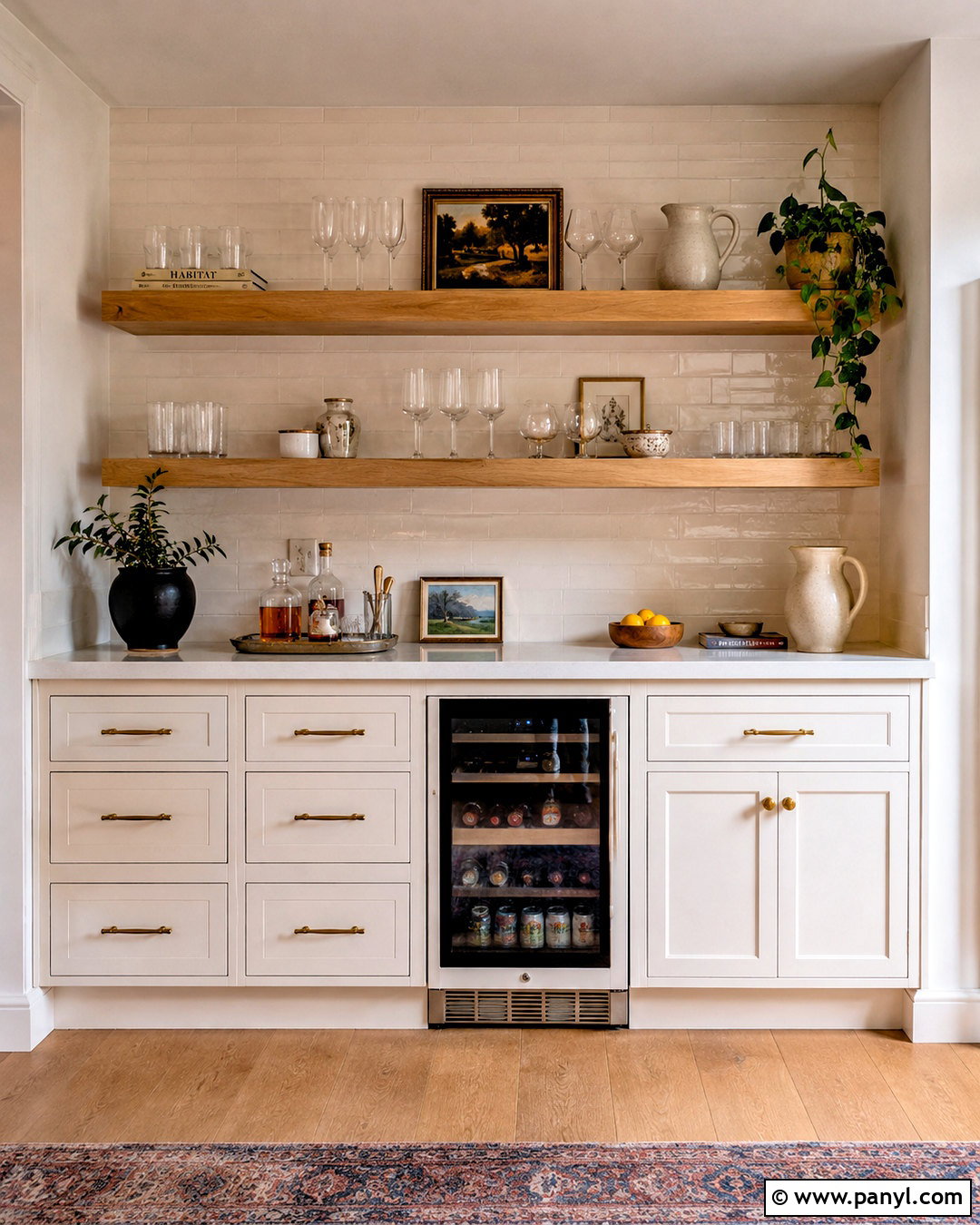
Open shelves give a dry bar wall an airy look while keeping everyday glassware easy to reach. Start with warm white base cabinets and a light quartz counter that can handle spills and frequent serving. Cover the wall above with glossy cream subway tile, then install two thick white oak shelves from edge to edge. Brushed brass brackets, cabinet pulls, and a slim picture light add warmth without making the arrangement feel ornate. Keep the styling balanced with clear glasses, a ceramic pitcher, small bowls, and one trailing plant. Deep drawers can hold napkins, tools, and extra supplies. This complete design works especially well near a dining room because it feels connected to the furniture rather than resembling a separate utility station.
2. Mirrored Backsplash Dry Bar Wall
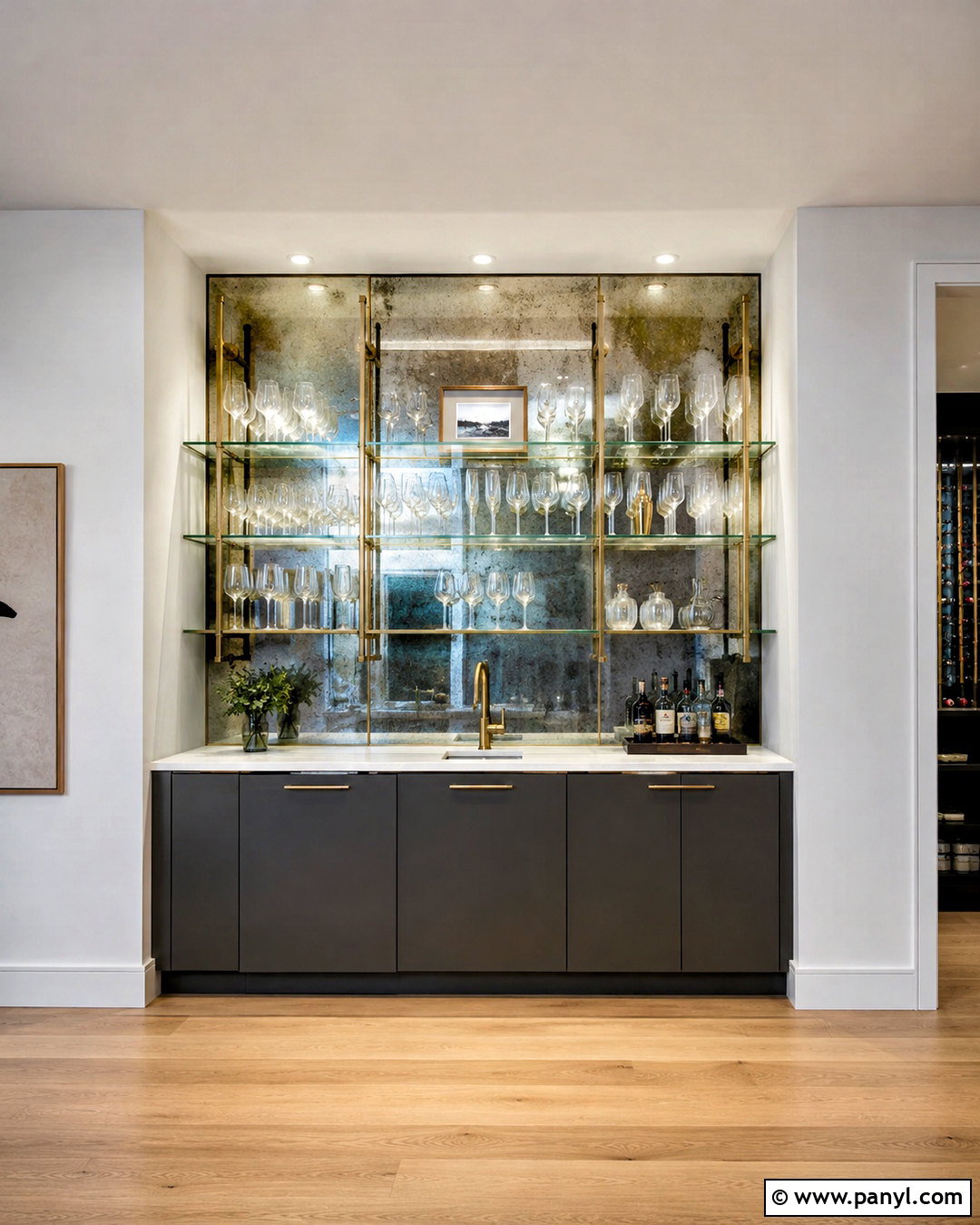
When a bar occupies a narrow alcove, a mirrored backsplash can make the entire wall appear deeper and brighter. Choose charcoal flat-panel cabinets, a crisp white quartz countertop, and aged mirror panels extending from the counter to the ceiling. The slightly clouded finish feels softer than a perfectly reflective mirror and helps disguise fingerprints. Add slender glass shelves supported by brushed brass rails so the backdrop remains visible. Under-shelf lighting should wash evenly across the wall and illuminate the counter for serving. Store less attractive supplies in the lower cabinets, leaving the shelves for coordinated glasses and decorative objects. Finish the space with pale oak flooring and warm white surrounding walls, creating a sophisticated dry bar that still feels balanced within an average-sized home.
3. Black Cabinet Dry Bar Wall
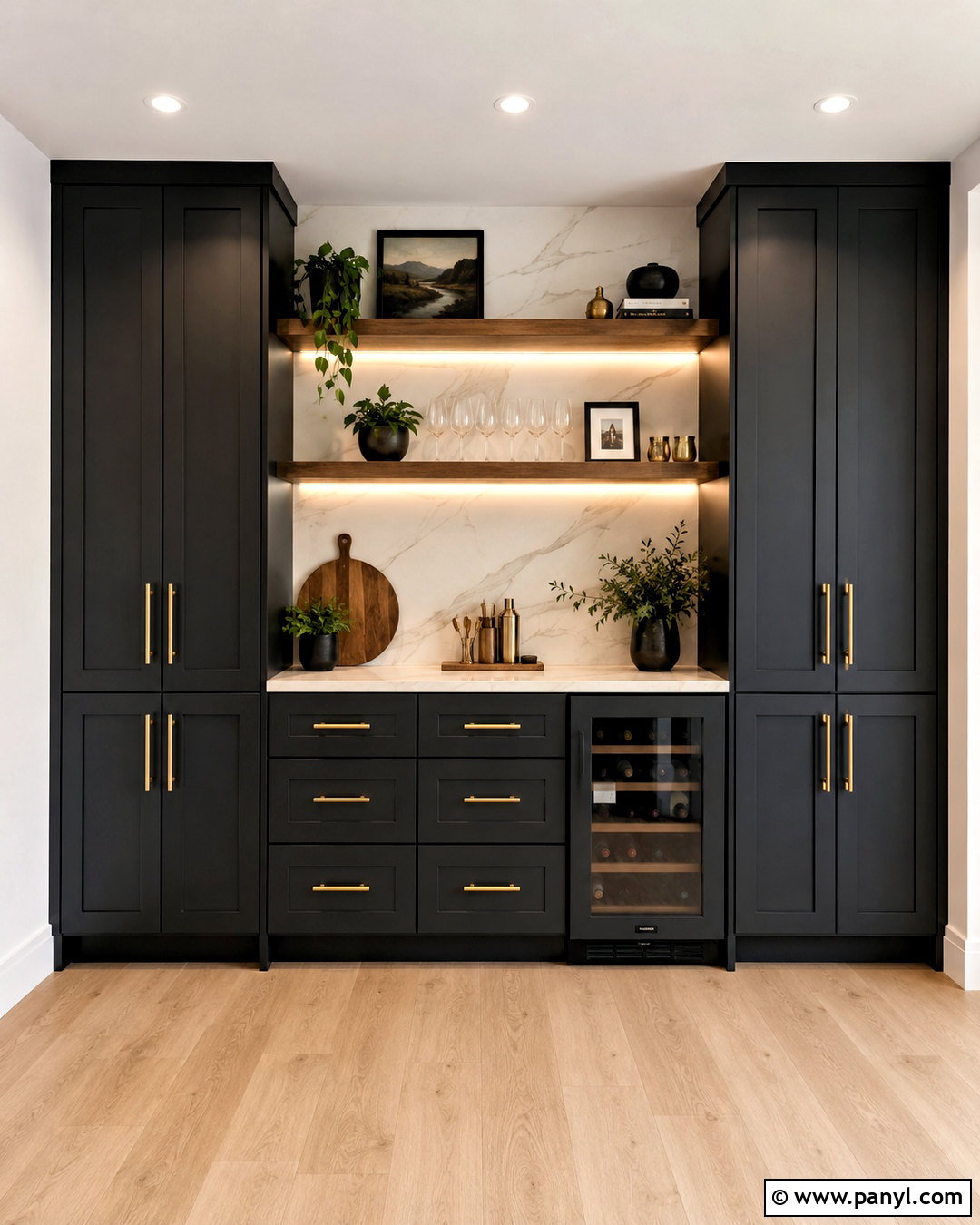
Deep black cabinetry can make a dry bar wall feel tailored and architectural, especially when it is framed by lighter walls. Use matte black shaker base cabinets with matching tall units on both sides, leaving an open serving niche in the center. A creamy marble-look quartz counter and backsplash provide strong contrast without introducing a busy pattern. Install walnut shelves inside the niche to bring natural warmth to the dark scheme. Small recessed lights above each shelf make the display practical and prevent the cabinetry from looking heavy. Satin brass pulls and outlet covers add a clean finishing detail. Use the tall cabinets for serving trays and appliances, while central drawers organize smaller tools. The final wall feels substantial, symmetrical, and neatly integrated into the room.
4. White Oak Dry Bar Wall
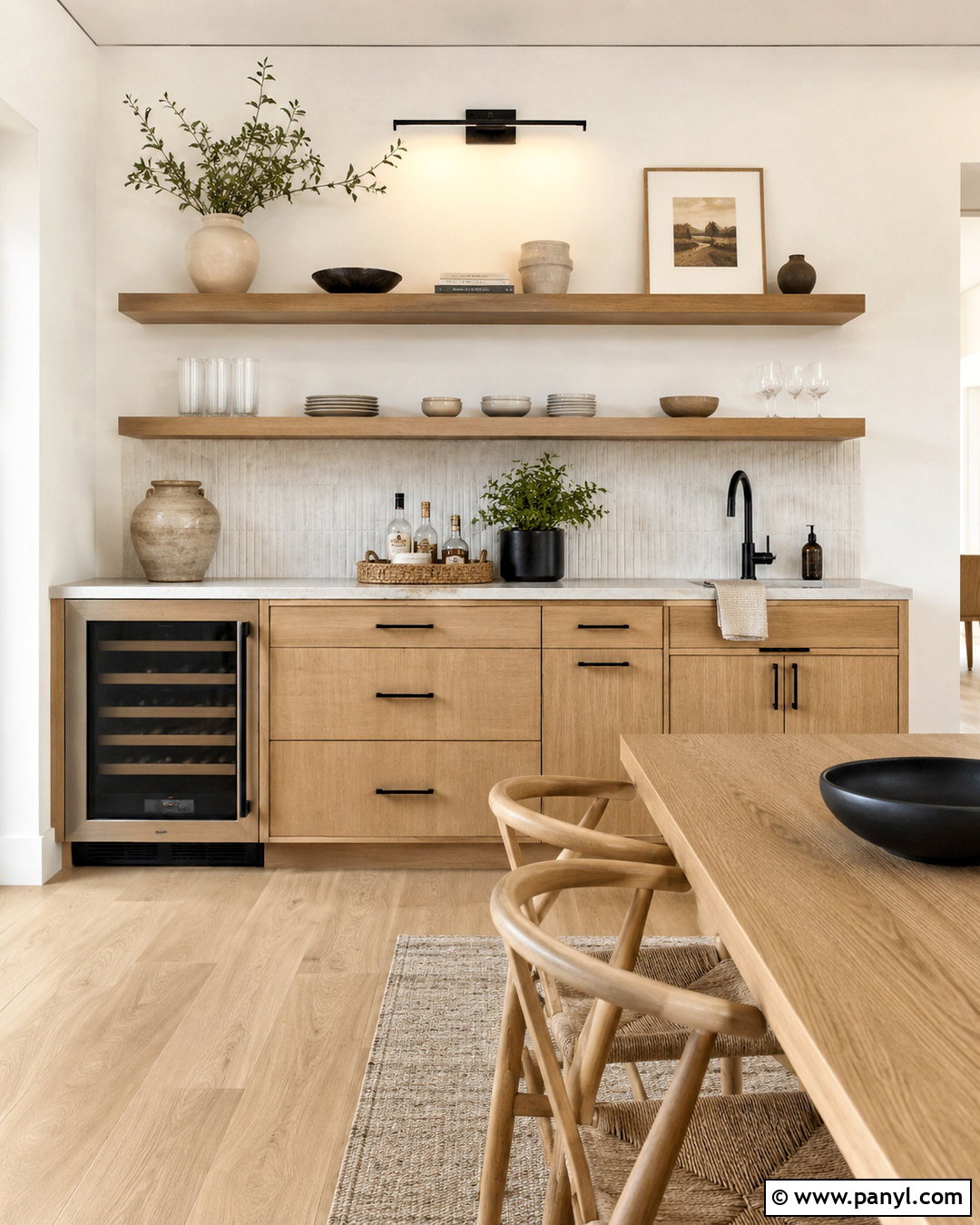
Natural white oak creates a relaxed dry bar that feels equally suitable for modern, Scandinavian, and transitional homes. Cover the full wall with flat-panel oak cabinetry, mixing closed lower storage with two tall cupboards and a central open counter. Choose a soft greige quartz surface with subtle movement, then continue the same material several inches up the wall for an easy-clean backsplash. Three oak shelves can fill the open area without interrupting the quiet wood grain. Add matte black hardware, a black metal picture light, and simple ribbed glassware for definition. Keep surrounding walls warm white and repeat the oak in nearby dining furniture. The combination creates a complete, furniture-like installation that provides generous storage while maintaining a light, uncluttered appearance.
5. Navy Blue Dry Bar Wall
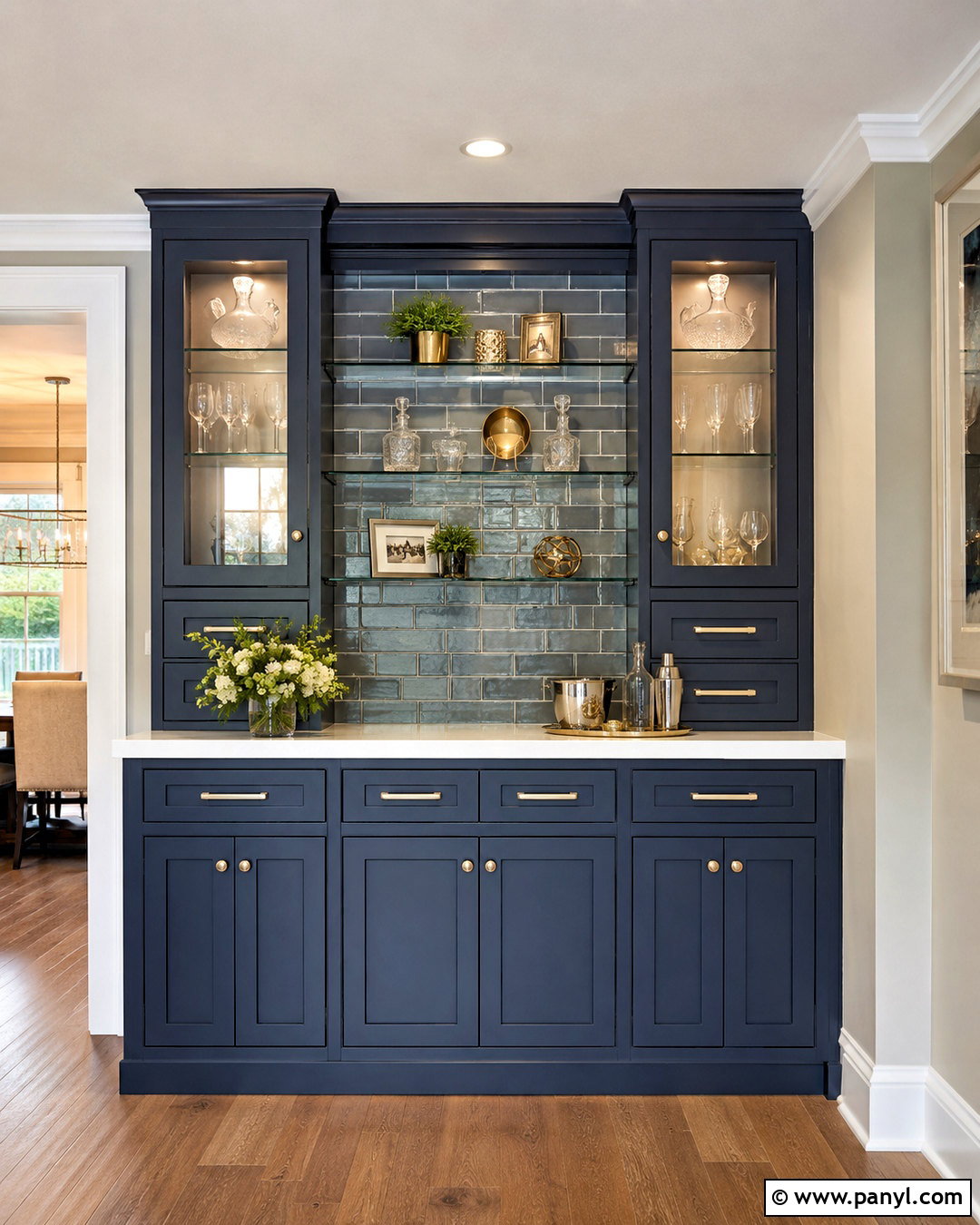
A navy blue dry bar brings rich color to a dining room without overwhelming the entire space. Paint the base cabinets and upper glass-front cabinets a deep, slightly muted navy. Place a white quartz counter between them and use glossy blue-gray rectangular tile for the backsplash. The subtle tonal variation keeps the wall interesting while allowing the cabinetry to remain the main feature. Add polished nickel pulls, clear glass shelves, and small interior cabinet lights for a crisp finish. A central open section provides room for a tray, electric kettle, or compact beverage appliance. Closed lower drawers hold supplies, while the upper cabinets display coordinated serving pieces. Pair the bar with medium oak flooring and creamy walls to soften the strong cabinet color.
6. Sage Green Dry Bar Wall
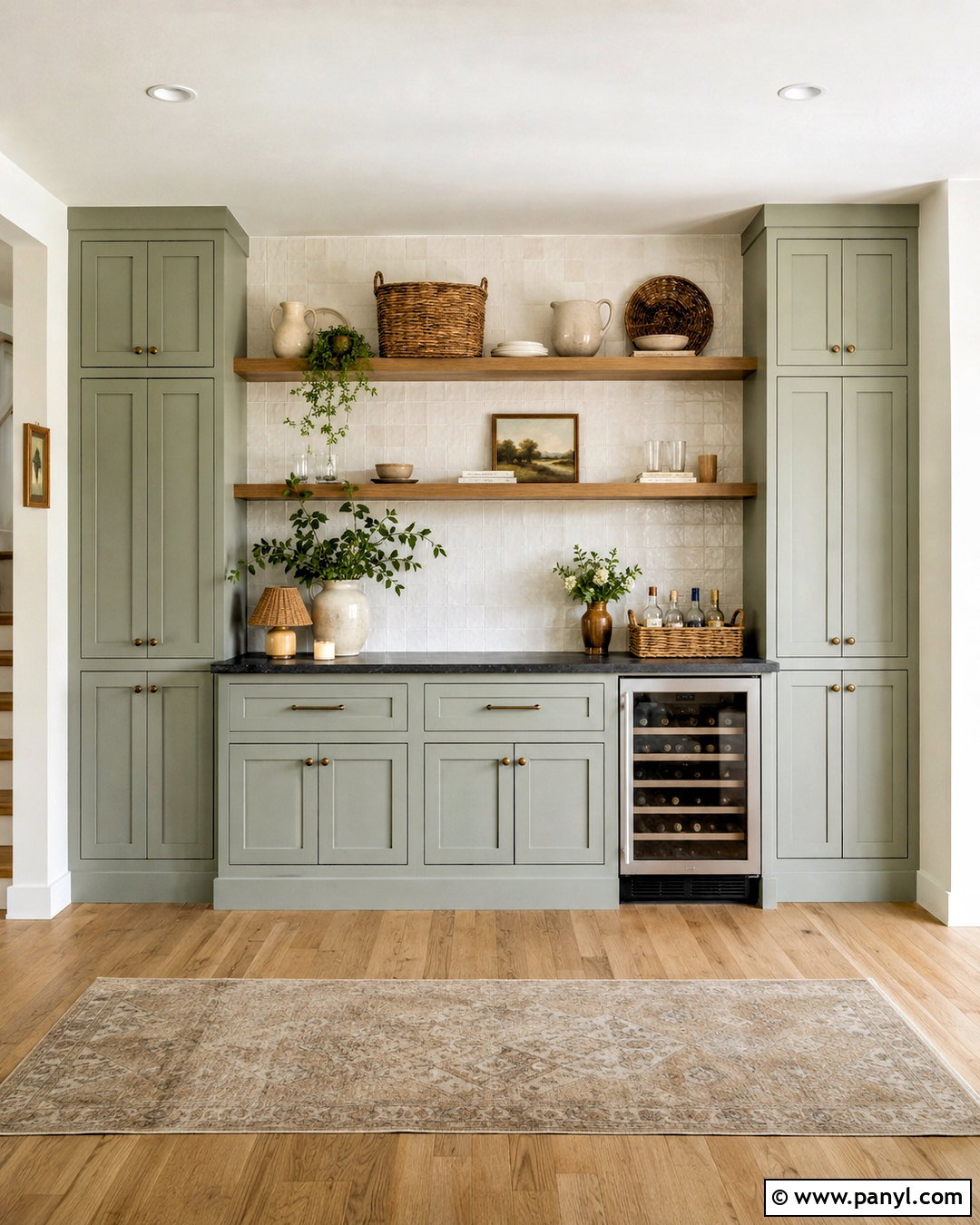
Soft sage green gives a dry bar wall a fresh, approachable appearance that works beautifully with natural materials. Use sage shaker cabinets across the bottom and matching narrow towers at both ends. Fill the central wall with handmade ivory tile and two medium-tone oak shelves. A honed soapstone-look counter introduces gentle contrast and provides a durable-looking work surface. Choose aged brass knobs, warm under-shelf lighting, and a simple ceramic table lamp to make the setup feel welcoming. Woven baskets inside the lower cupboards can organize linens and backup supplies. Display cream pottery, clear glasses, and a few green branches to reinforce the calm palette. This complete look suits breakfast areas and casual dining rooms where a darker, more formal bar might feel out of place.
7. Arched Niche Dry Bar Wall
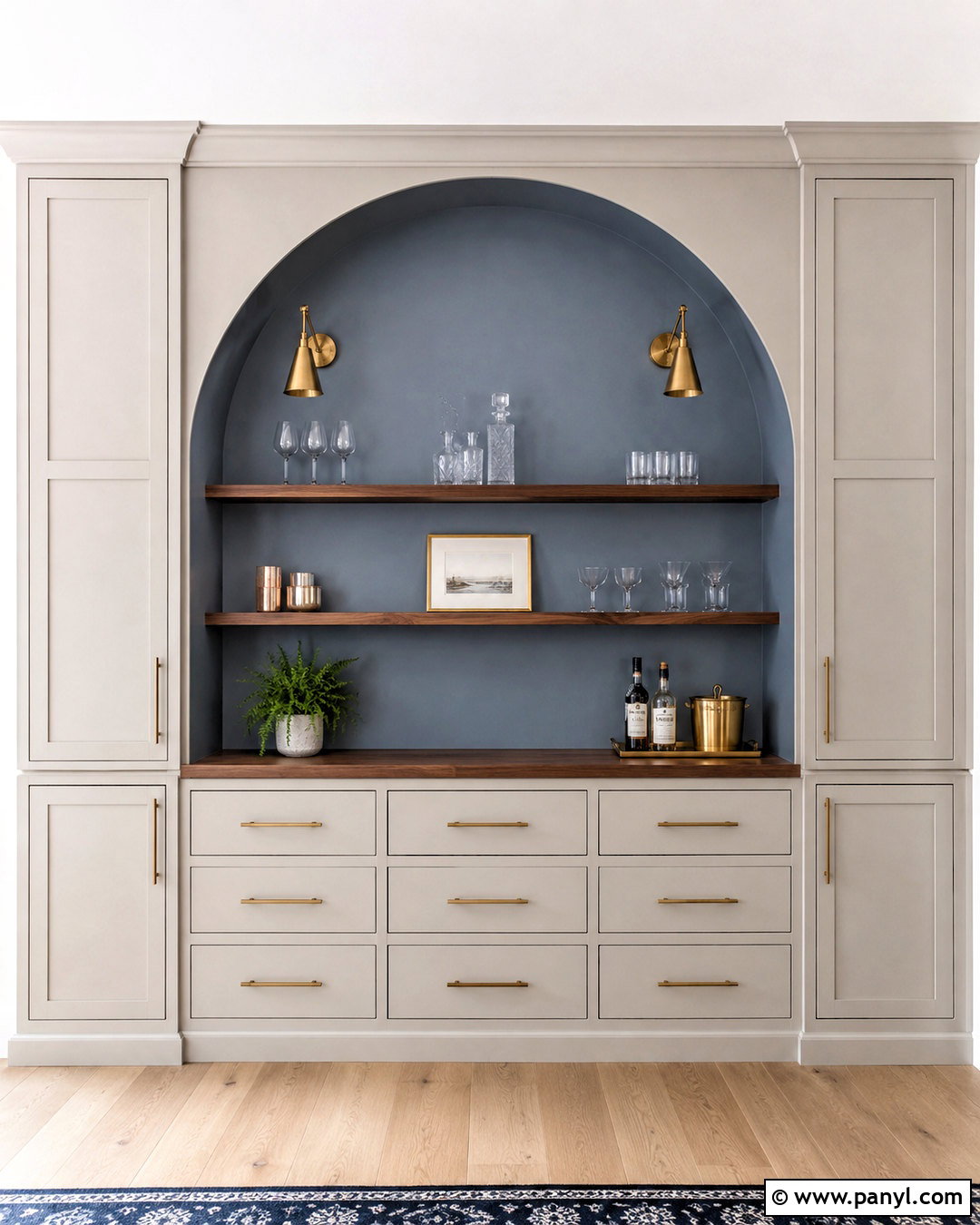
An arched opening can transform a standard bar wall into a memorable built-in feature. Frame a wide central niche with pale greige cabinetry that reaches the ceiling, then shape the top of the opening into a gentle rounded arch. Inside, use dusty blue paint or small blue mosaic tile to emphasize the curve. A walnut counter and matching floating shelves introduce warmth, while slim brass lighting highlights the niche from above. Keep the lower cabinets symmetrical and include one deep drawer for tools, linens, and serving accessories. Tall side cupboards can conceal small appliances and bulk storage. The arch should be generously sized rather than narrow, allowing the counter to remain functional. This wall looks custom and distinctive without relying on excessive decoration.
8. Wallpaper Dry Bar Wall
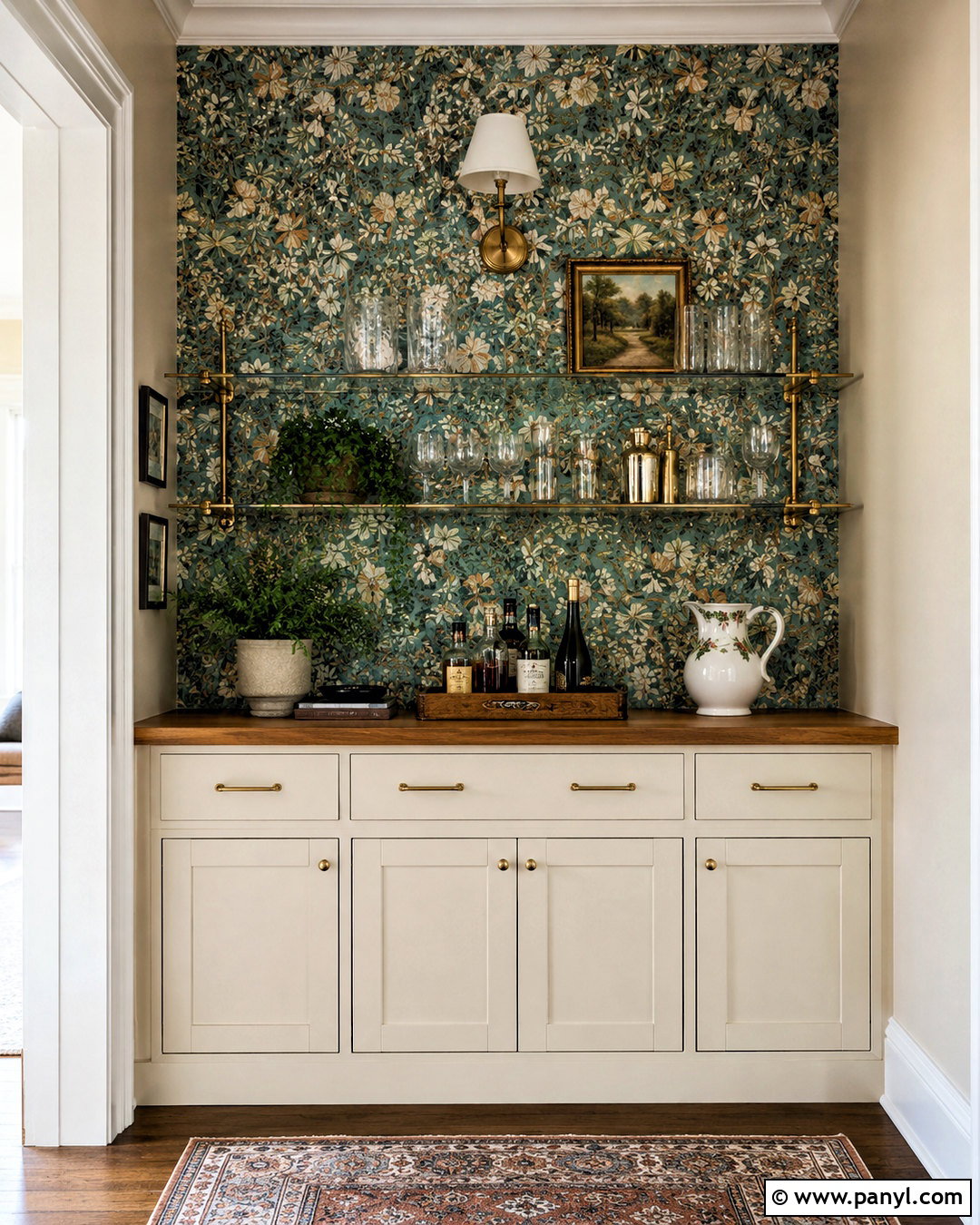
Wallpaper can give a dry bar wall pattern and personality without the cost or permanence of elaborate tile. Begin with simple cream cabinets, a medium oak countertop, and an open wall framed by shallow upper cupboards. Install a washable botanical wallpaper in muted green, blue, and tan across the backsplash area. Protect the lower portion with a clear glass panel if the counter receives frequent use. Two slim brass-and-glass shelves allow the pattern to remain visible while providing display space. Coordinate the cabinet knobs with the shelving, then add a small shaded sconce above the center. Keep nearby walls neutral and limit counter decor to a tray, pitcher, and plant. The complete arrangement feels layered and decorative while remaining organized enough for everyday serving.
9. Marble Slab Dry Bar Wall
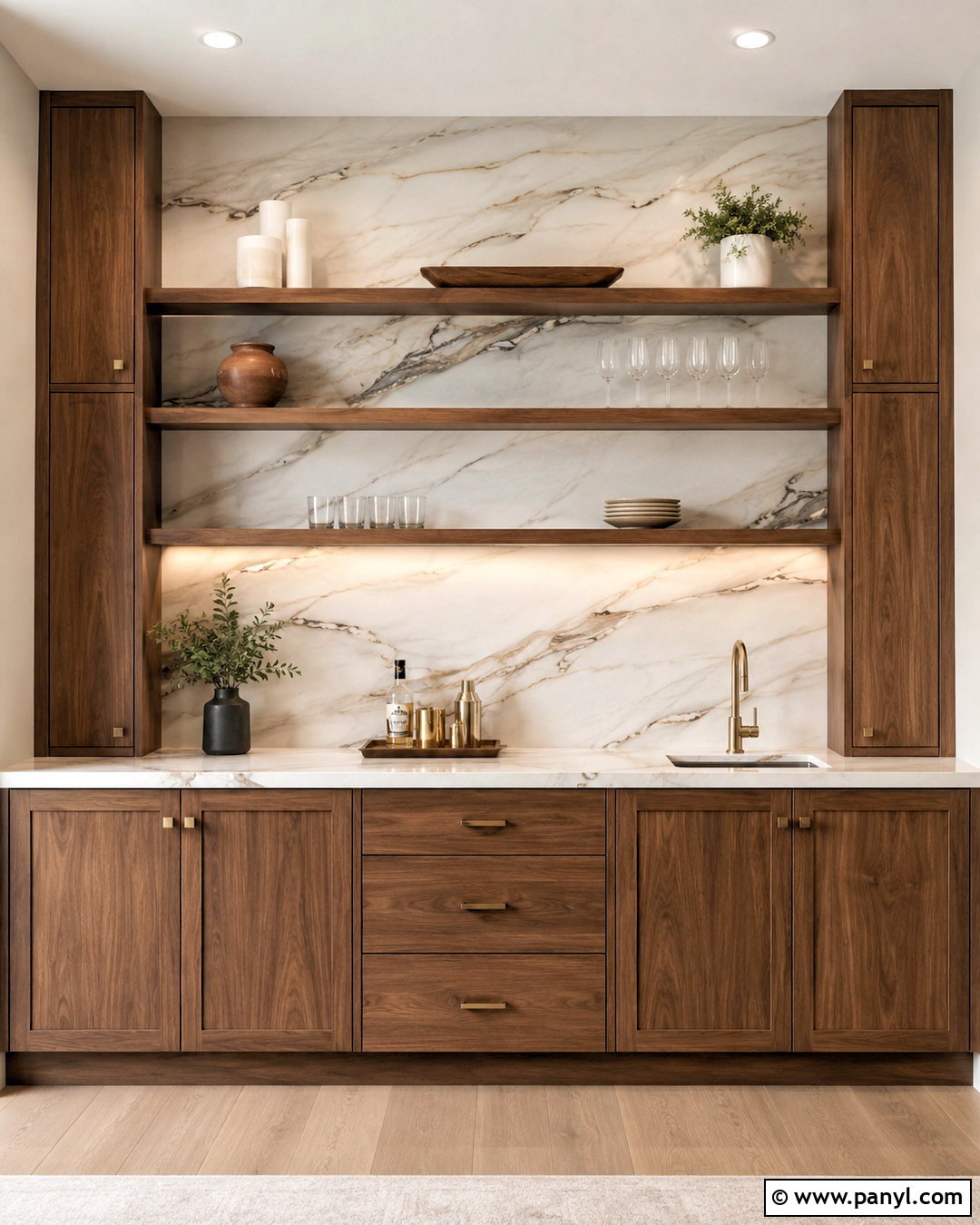
A continuous stone backsplash creates a clean, elevated dry bar wall with fewer visual interruptions. Select medium walnut base cabinets and install creamy white marble-look quartz across the counter and full backsplash. Choose a surface with broad gray and beige veining so the wall has movement without becoming overly dramatic. Floating walnut shelves should align with the cabinet edges and include hidden lighting underneath. Add soft bronze hardware and a matching faucet-style water dispenser only if nearby utilities allow; otherwise, keep the counter open for flexible serving. Large drawers can organize equipment, while cabinet doors conceal bulkier pieces. Frame the installation with warm white paint and understated flooring. This material-focused look feels refined, yet its simple layout is easy to adapt to smaller homes.
10. Zellige Tile Dry Bar Wall
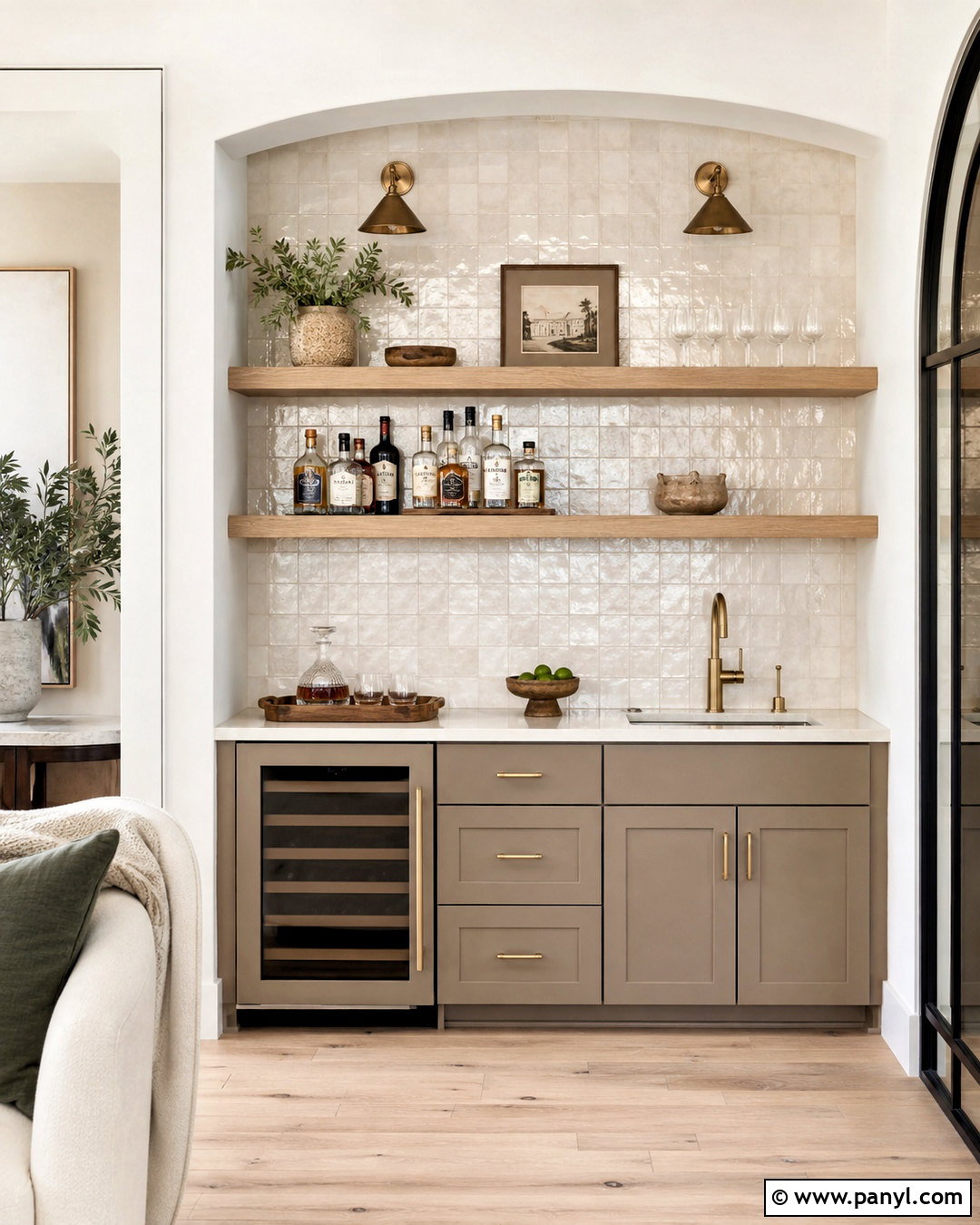
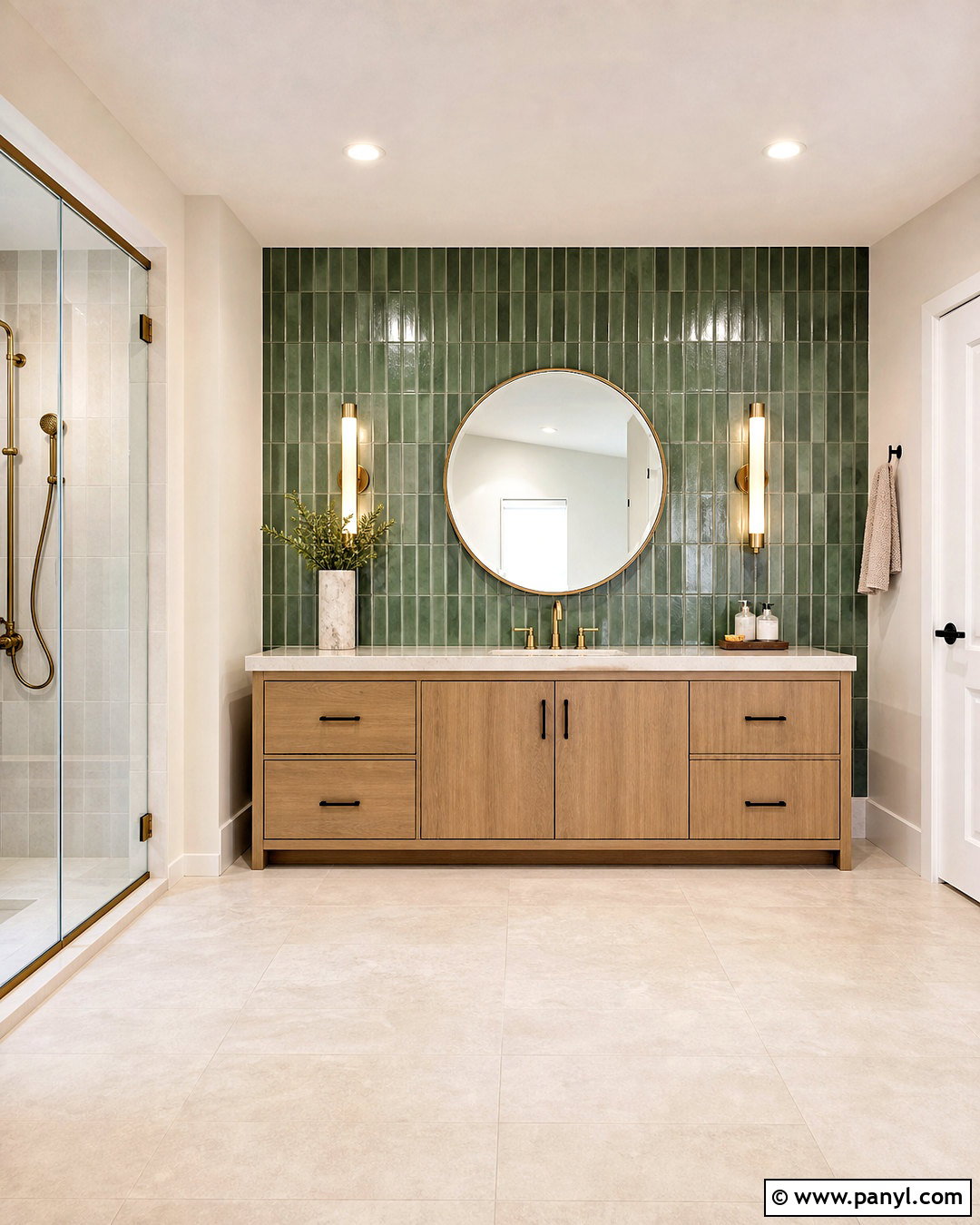
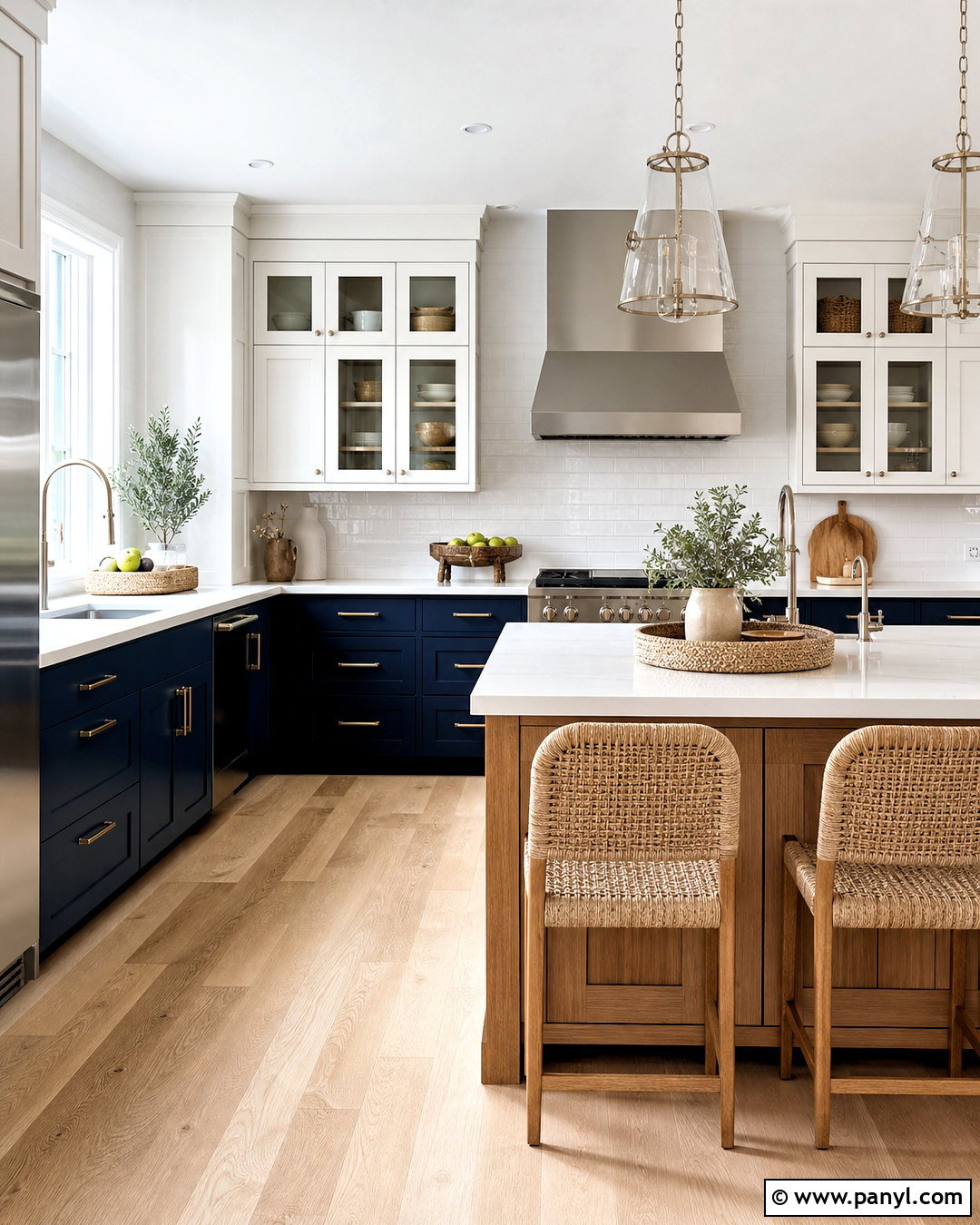
Glossy zellige-style tile adds texture and reflected light to a dry bar without requiring a complicated color palette. Use warm taupe base cabinets, a pale quartz counter, and square ivory tiles installed from the countertop to the ceiling. Slight variations in the tile surface create depth around the open oak shelves. Select shelves with rounded front edges to soften the grid pattern behind them. Antique brass hardware and two compact wall sconces bring warmth to the neutral scheme. Keep the counter mostly clear, using one wood tray to group glasses and serving tools. A compact cooler can fit behind a matching cabinet panel, while adjacent drawers store linens and accessories. The result is bright, tactile, and timeless enough to blend with both traditional and contemporary rooms.
11. Vertical Shiplap Dry Bar Wall
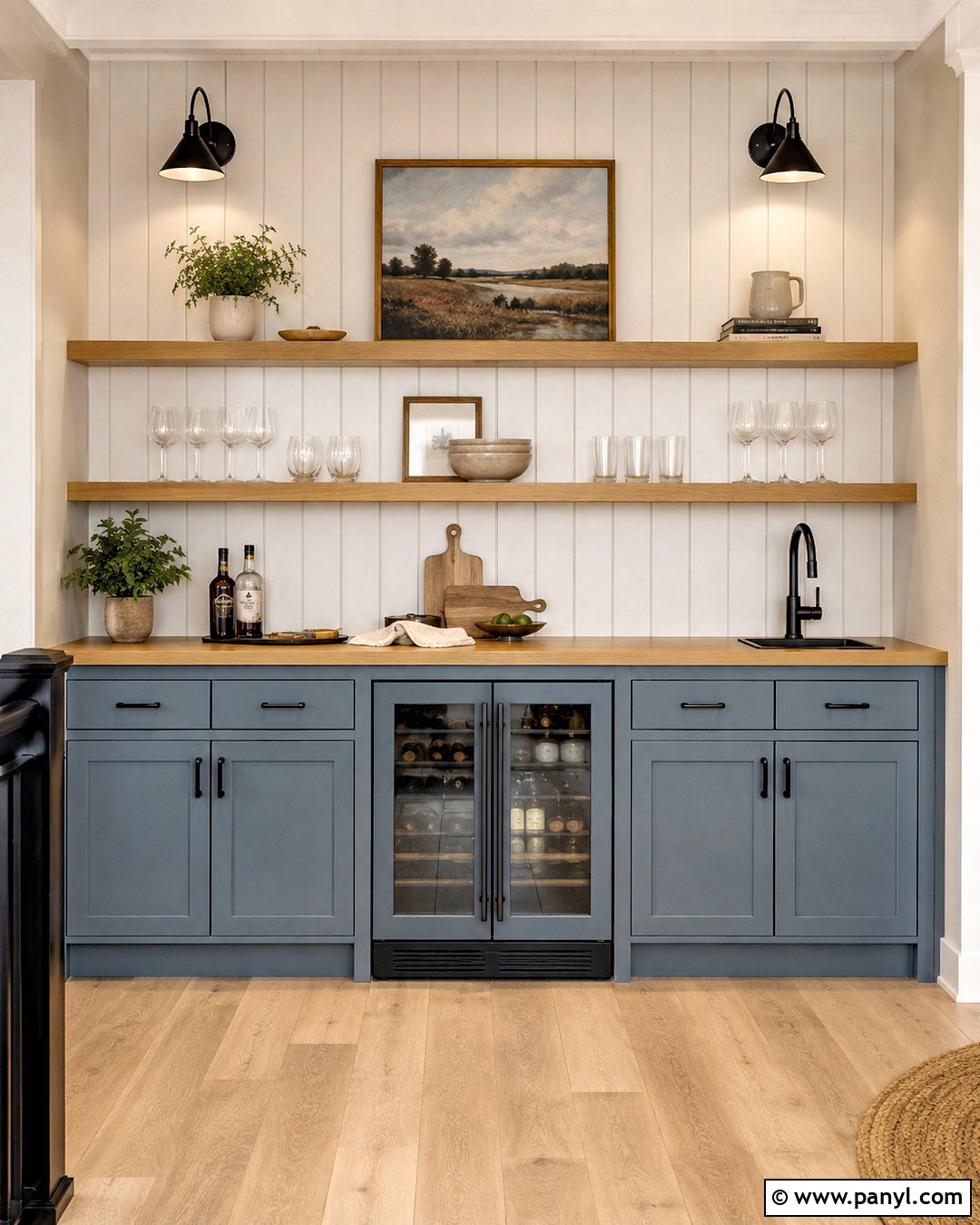
Vertical shiplap gives a casual dry bar wall added height and subtle architectural detail. Paint the paneling and surrounding upper wall a warm white, then anchor the arrangement with dusty blue base cabinets and a light oak counter. Install two oak shelves that span most of the wall, leaving space at the sides for a pair of simple black sconces. Matte black cabinet pulls, shelf brackets, and lighting create a consistent outline against the softer colors. Use drawers for small supplies and one wider cupboard for countertop appliances when they are not needed. Neutral ceramics, clear glassware, and a framed landscape print can complete the display. This design works particularly well in farmhouse, coastal, or cottage-inspired interiors without feeling overly themed.
12. Fluted Wood Dry Bar Wall
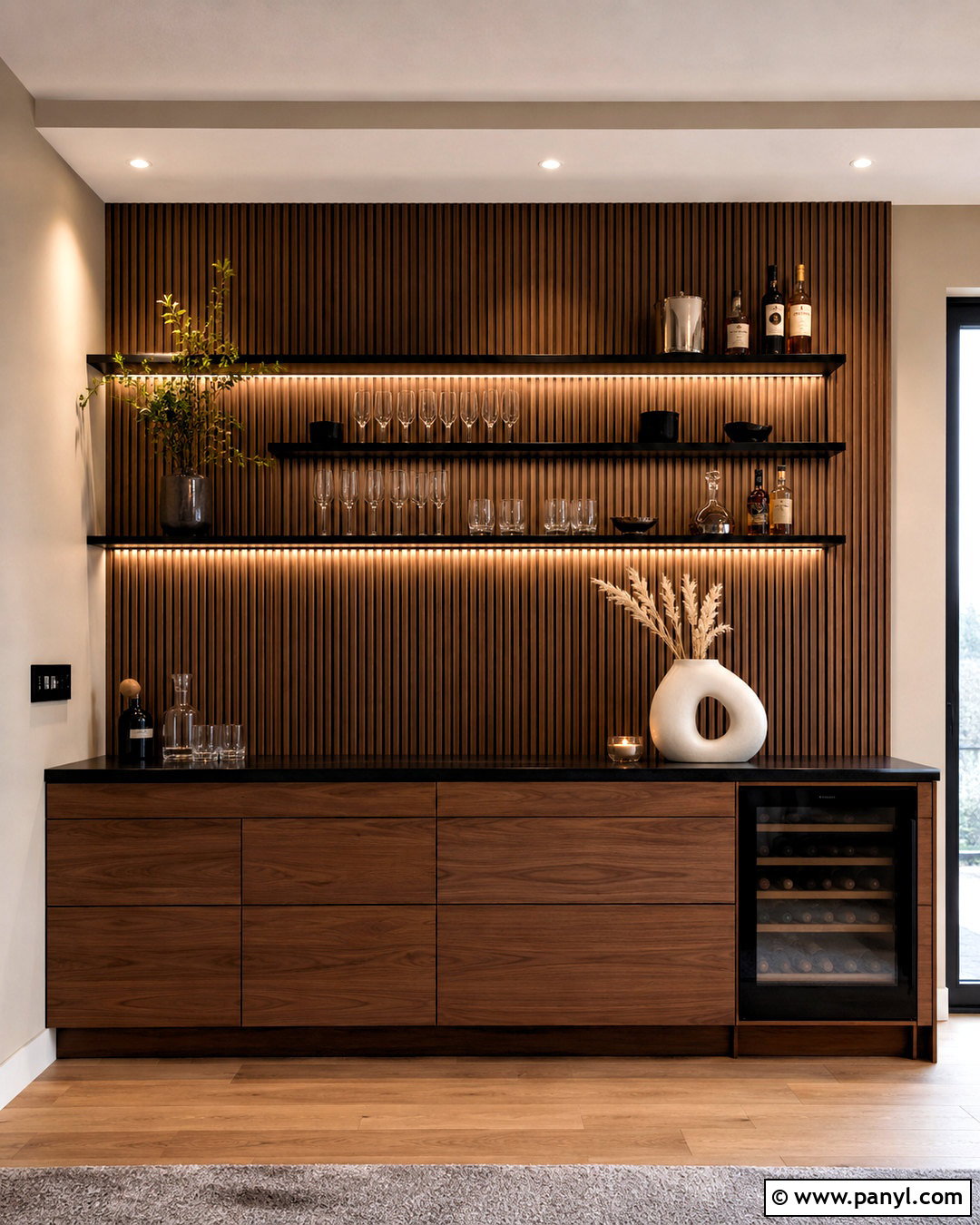
Fluted wood paneling turns a compact dry bar into a warm, modern focal point. Cover the backsplash with narrow vertical walnut slats set against a dark backing, then repeat the walnut on the flat-panel base cabinets. A slim black quartz countertop keeps the material palette grounded and provides a crisp horizontal break. Install two black metal shelves with integrated lighting, placing them far enough apart for tall glasses and pitchers. Handle-free cabinets maintain the streamlined look, while deep drawers keep the counter free from clutter. Surround the installation with soft beige walls and light oak flooring so the walnut does not make the room feel dark. A sculptural ceramic vase and coordinated serving pieces are enough decoration for this rich, texture-driven dry bar wall.
13. Glass Cabinet Dry Bar Wall
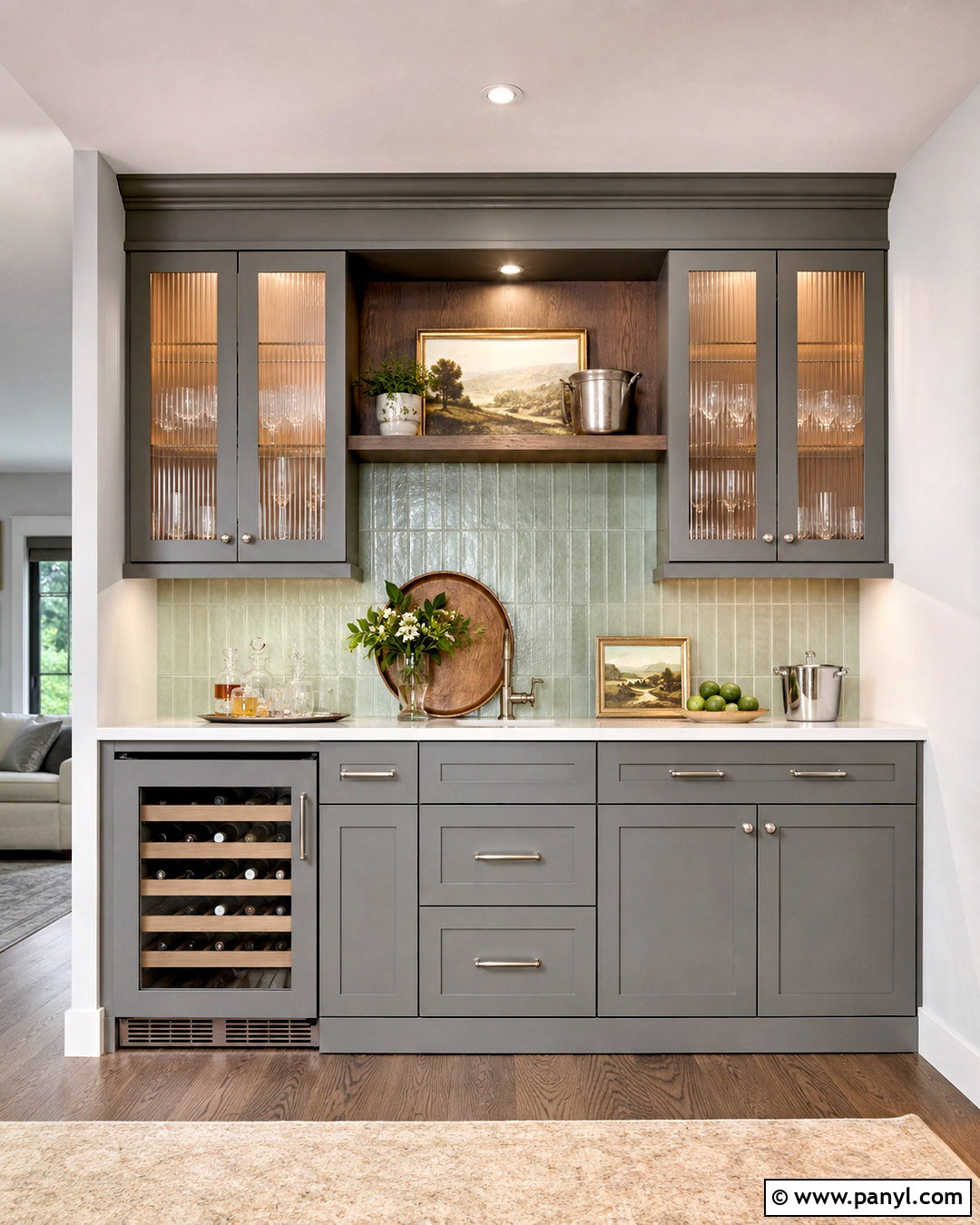
Glass-front cabinets create display space while protecting glassware from dust. Design the wall with warm gray lower cabinets, a white quartz countertop, and matching upper cabinets extending close to the ceiling. Use reeded glass doors for a softly obscured view that looks tidy even when every shelf is not perfectly arranged. A central open backsplash covered in pale green tile keeps the wall from feeling too enclosed. Add a walnut shelf across the niche, under-cabinet lighting, and brushed nickel hardware. Place frequently used glasses in the upper units and store colorful or mismatched supplies below. Crown molding or a narrow top trim can finish the built-in appearance. This balanced arrangement works well in formal dining rooms and open kitchen extensions.
14. Hidden Cabinet Dry Bar Wall
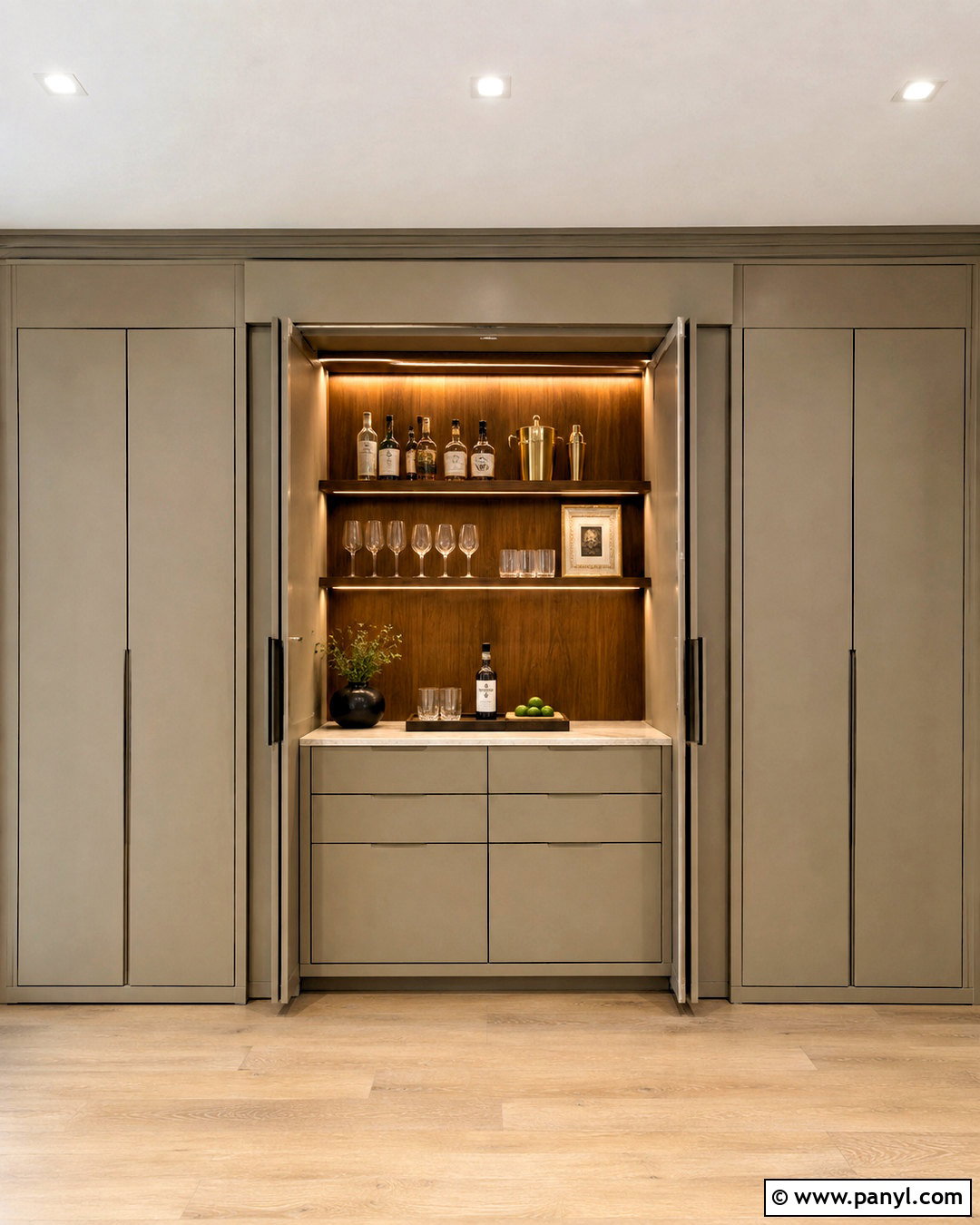
A concealed dry bar is ideal when you want serving convenience without leaving everything visible. Install a floor-to-ceiling wall of soft greige cabinetry with paneled doors that blend into the surrounding millwork. The central pair of doors can fold or slide back to reveal a walnut-lined bar niche with a pale stone counter. Include shallow shelves, integrated lighting, outlets, and drawers inside the hidden section. When closed, the wall looks calm and cohesive, making it suitable for living rooms, home offices, and multipurpose spaces. Use minimal hardware or discreet edge pulls to preserve the seamless effect. Tall cabinets on either side can provide additional household storage. The finished design offers a complete bar setup while maintaining an uncluttered room between gatherings.
15. Closet Dry Bar Wall
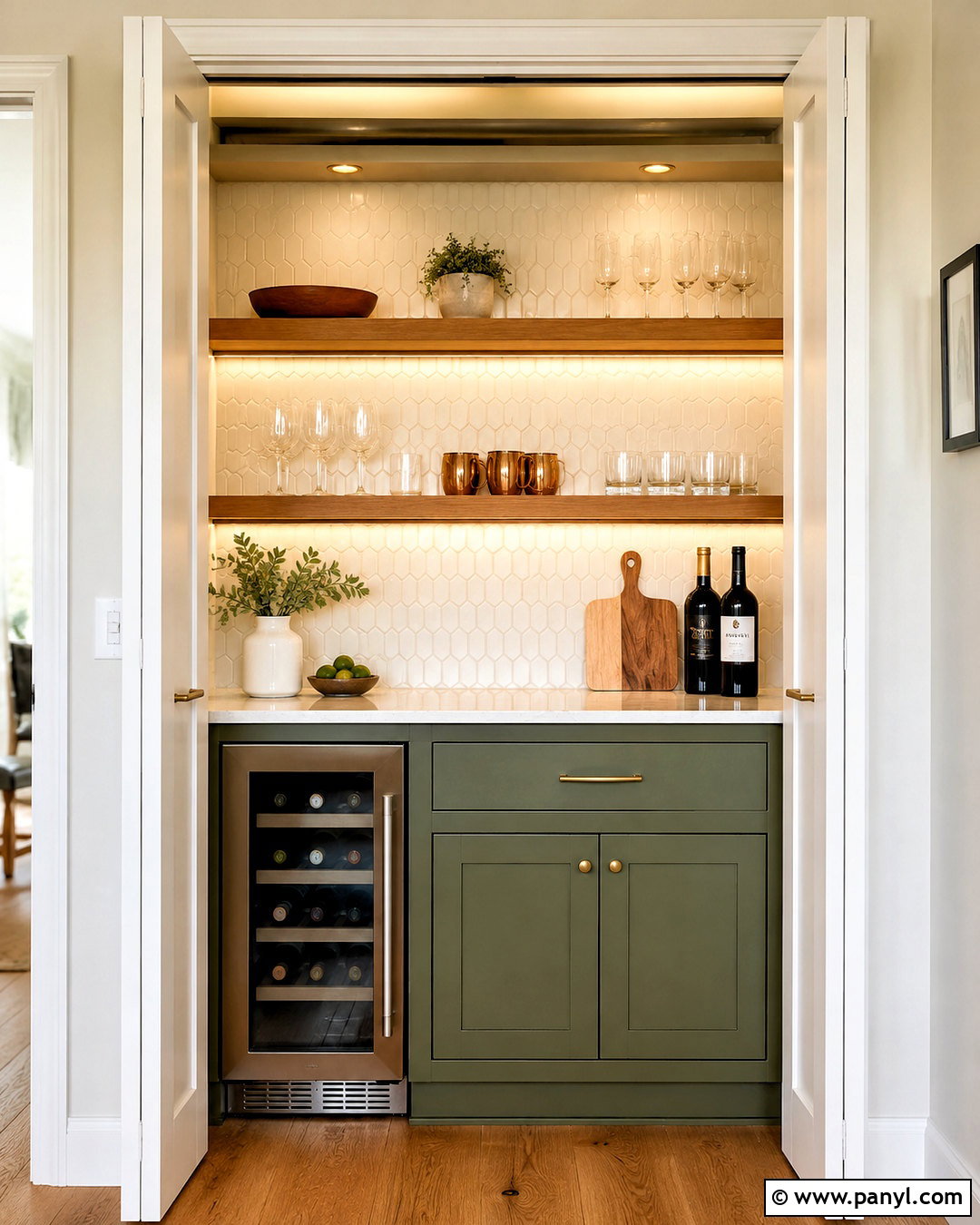
An underused closet can become a practical dry bar without changing the room’s footprint. Remove the doors and interior hanging hardware, then finish the opening with painted trim that matches the walls. Fit narrow olive green base cabinets inside, topped with a white quartz counter. Cover the back wall in small cream hexagon tile and add two oak shelves sized precisely to the opening. A flush ceiling light and concealed shelf lighting will prevent the former closet from feeling shadowy. Include an outlet for a coffee maker or compact beverage cooler if electrical access is available. Use the top shelf for decorative pieces and the lower shelf for everyday glassware. The result feels intentional, compact, and far more useful than an awkward storage closet.
16. Dining Room Dry Bar Wall
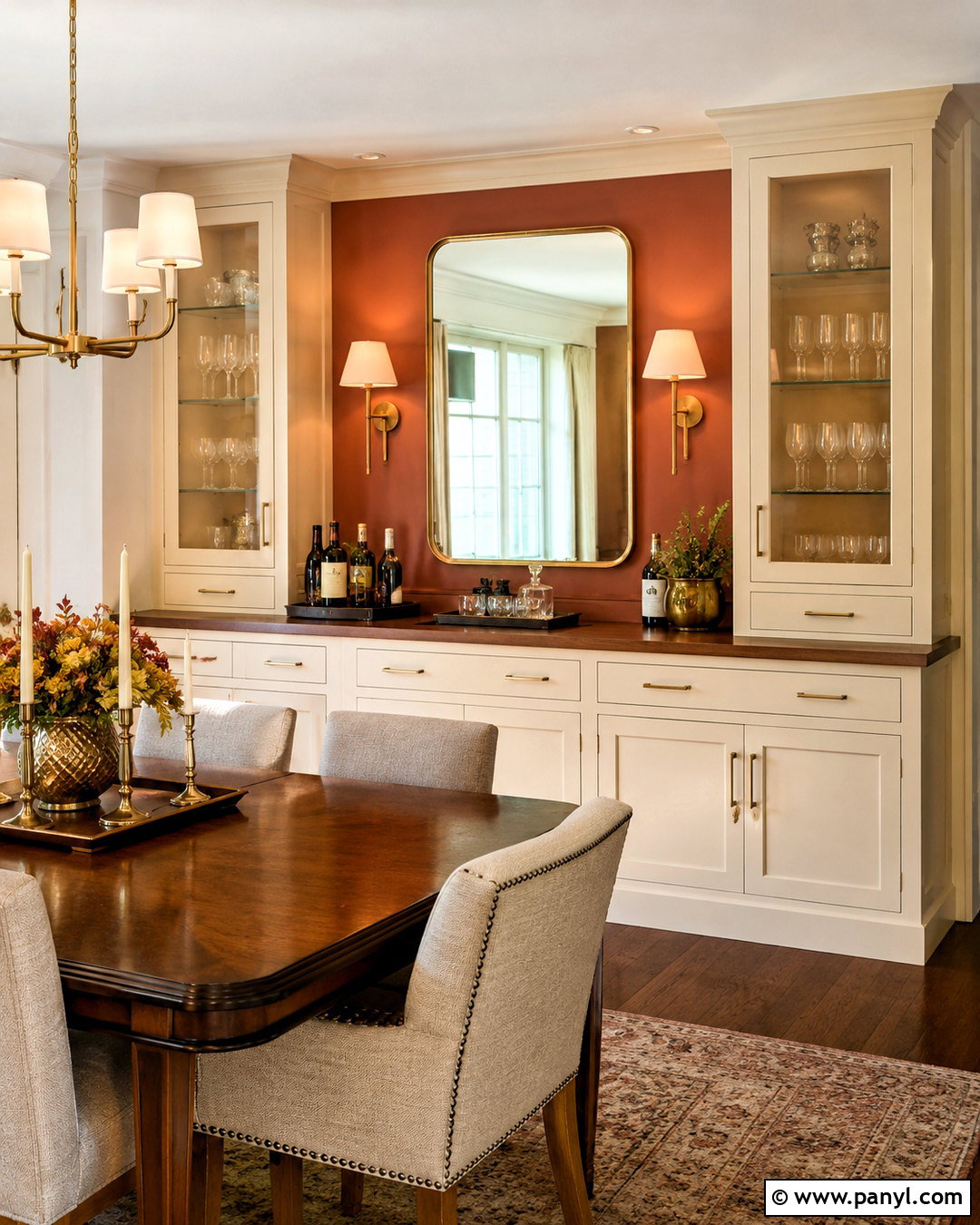
A dining room dry bar should complement the table and provide useful serving space during meals. Choose cabinetry that resembles a built-in sideboard, using warm ivory shaker doors, a medium walnut counter, and upper shelves framed by narrow cabinets. Paint the backsplash a muted terracotta to create a cozy connection with wood dining furniture. A large central mirror can reflect the table and visually expand the room, while small shaded sconces provide flattering light. Store table linens and serving dishes in the lower cabinets, reserving the counter for trays and pitchers. Repeat the cabinet hardware finish on the dining room light fixture for continuity. This complete wall feels decorative every day and becomes a convenient buffet surface when friends or family gather.
17. Basement Dry Bar Wall
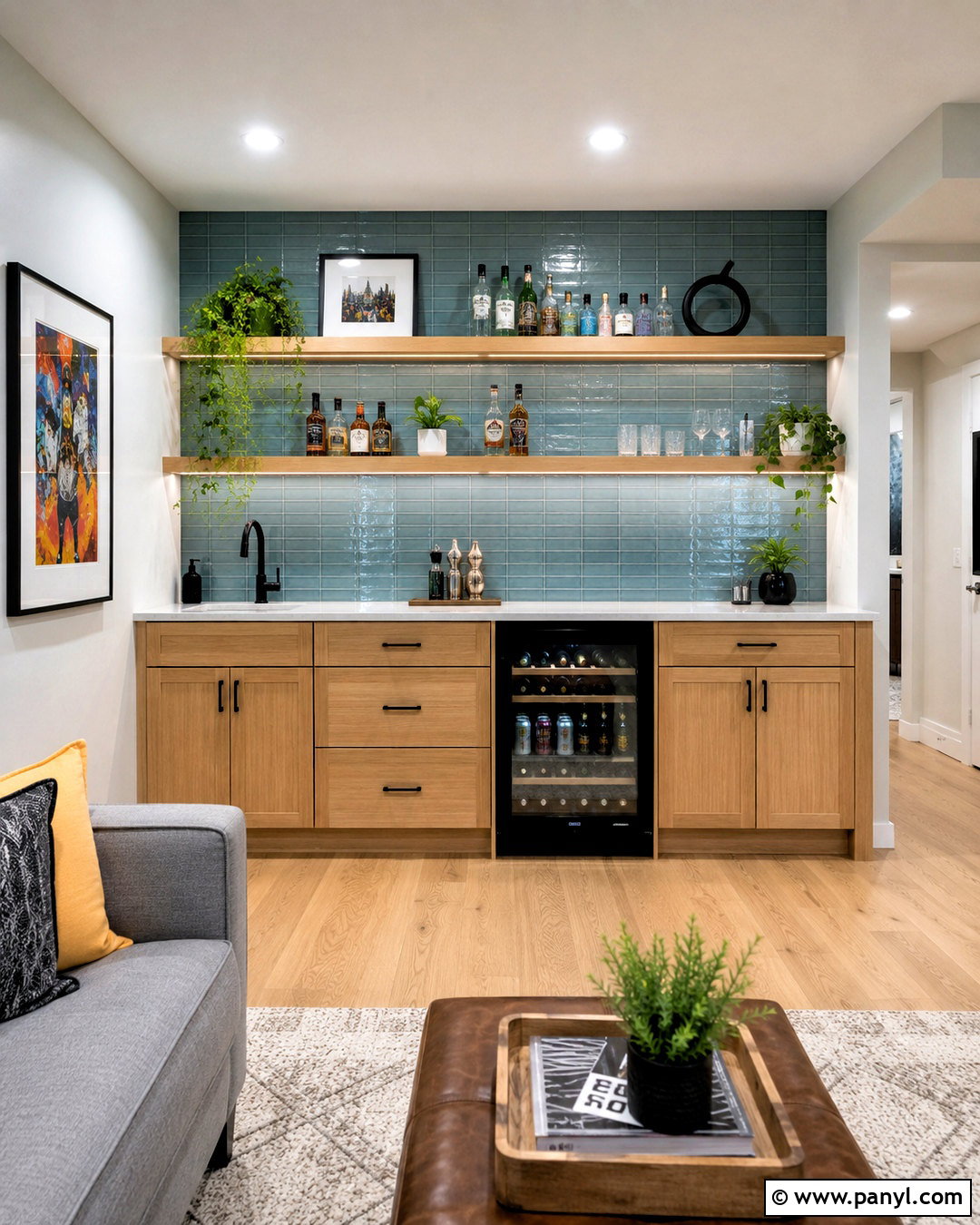
A basement bar wall can feel bright and welcoming when lighter materials balance the limited natural light. Use white oak base cabinets, a pale gray quartz counter, and glossy sea blue tile extending to the ceiling. Add three floating oak shelves with bright integrated lighting, spacing them evenly across the wall. Matte black hardware and a compact black beverage cooler give the light palette enough contrast. Consider durable luxury vinyl flooring in a natural oak tone to connect the bar area with nearby lounge furniture. Closed cabinets can store games, snack supplies, and serving accessories, making the station useful for more than drinks. Finish the surrounding walls in warm white and add one colorful framed print. The full arrangement creates an upbeat basement gathering zone.
18. Coffee Dry Bar Wall
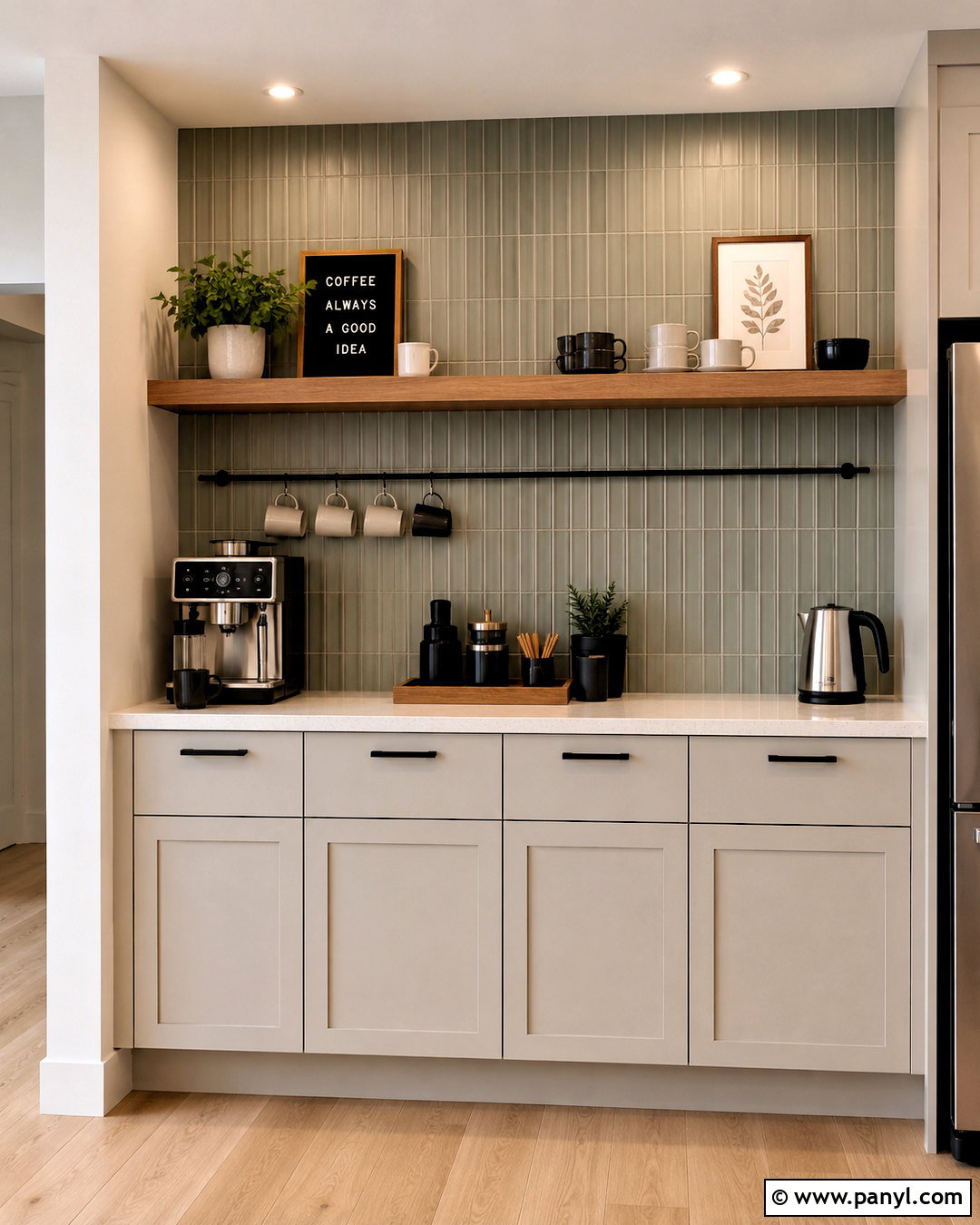
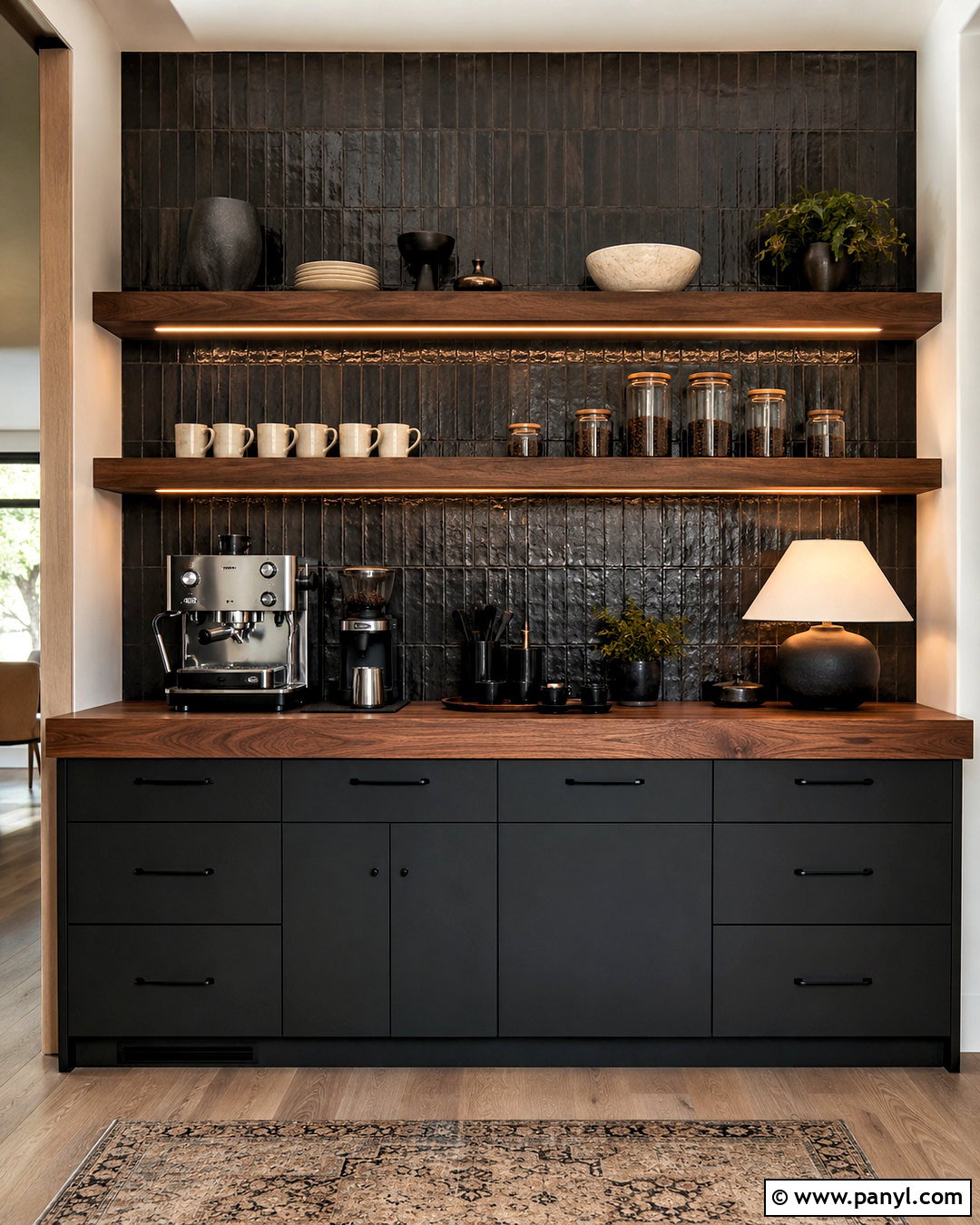
A dry bar can double as an organized coffee station when the counter and storage are planned around daily routines. Use light greige base cabinets with a durable white quartz counter and a backsplash of narrow vertical sage tiles. Install one long oak shelf for mugs and serving pieces, plus a shallow rail underneath for frequently used tools. Place the coffee maker and electric kettle together on a washable tray, leaving open counter space for preparation. Drawers can hold filters, spoons, napkins, and tea supplies, while a lower pullout keeps bins and backup items accessible. Add a small under-shelf light for early mornings. The cohesive palette and concealed storage allow this functional station to remain polished enough for a dining or living area.
19. Art Deco Dry Bar Wall
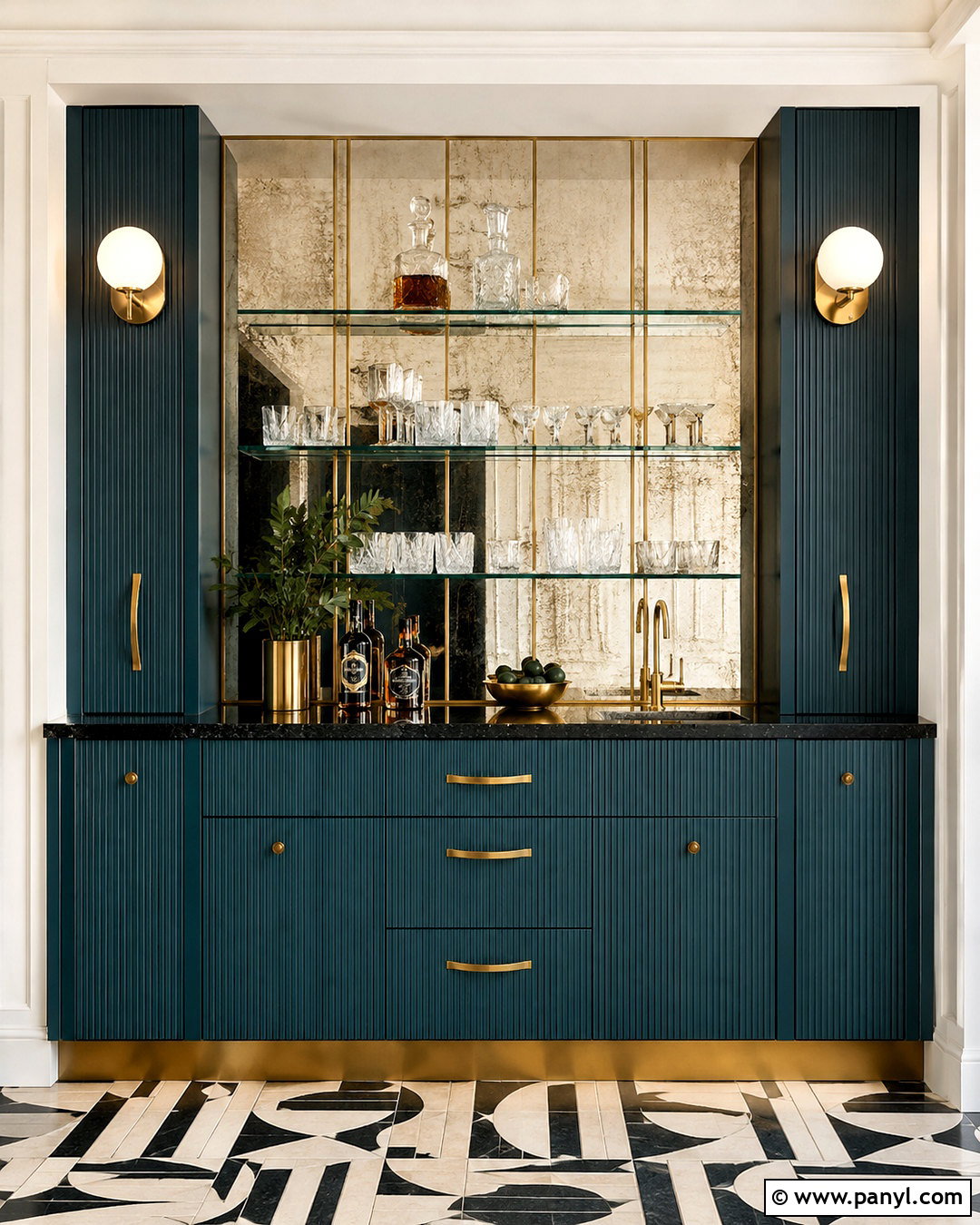
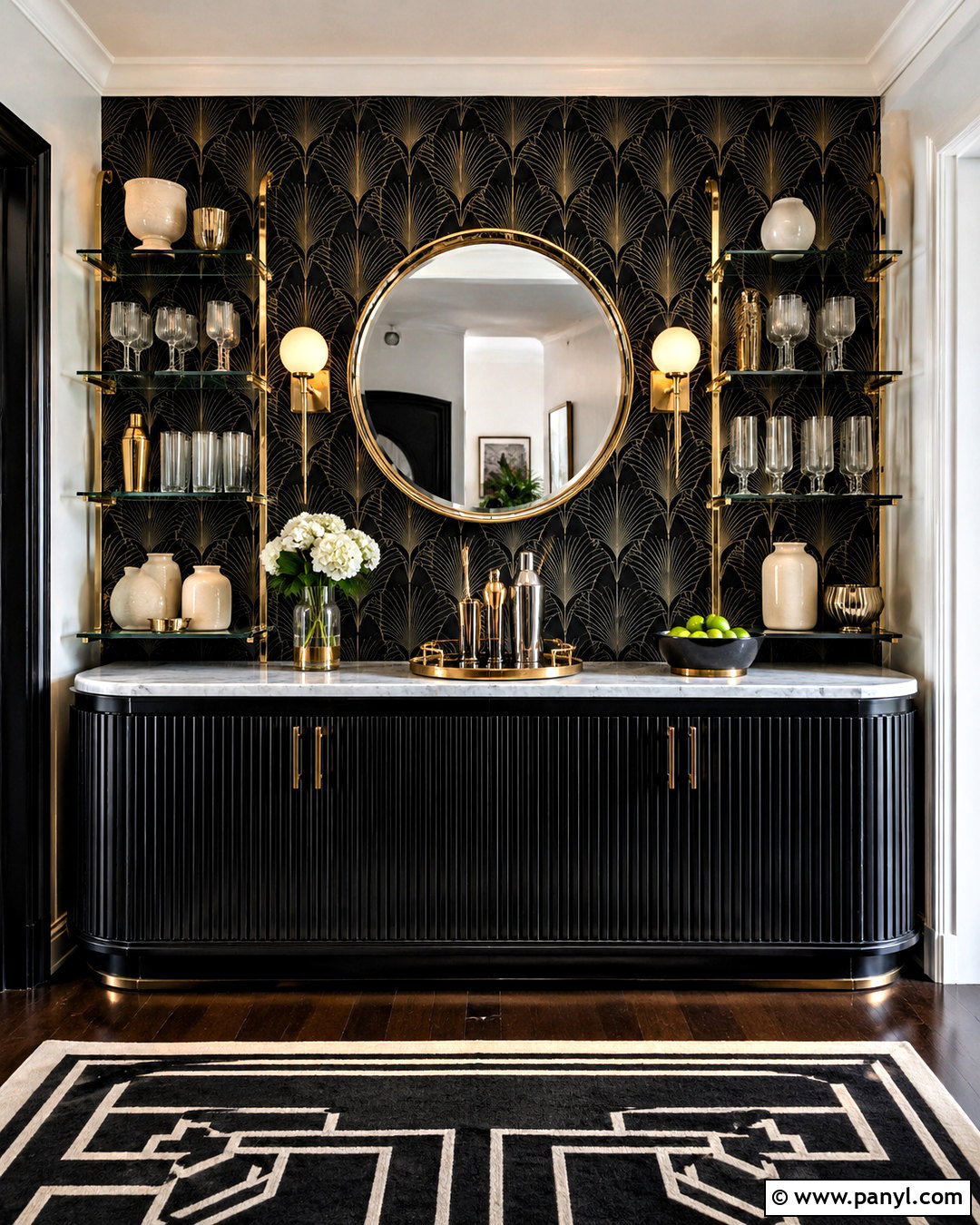
Geometric details and rich finishes can give a dry bar wall an Art Deco influence without turning the room into a theme. Start with deep teal base cabinets and a black quartz countertop. Use antiqued mirror panels on the backsplash, divided by slim brass strips in a simple fan or rectangular pattern. Install two glass shelves with brass supports and place matching globe sconces on either side. Fluted cabinet fronts and curved brass pulls repeat the period-inspired geometry at a practical scale. Keep the surrounding walls warm white so the darker bar remains a focused accent. Black-and-cream flooring or a patterned rug can connect the wall with the room. The complete design feels glamorous, structured, and suitable for an elegant dining or lounge space.
20. Budget Dry Bar Wall
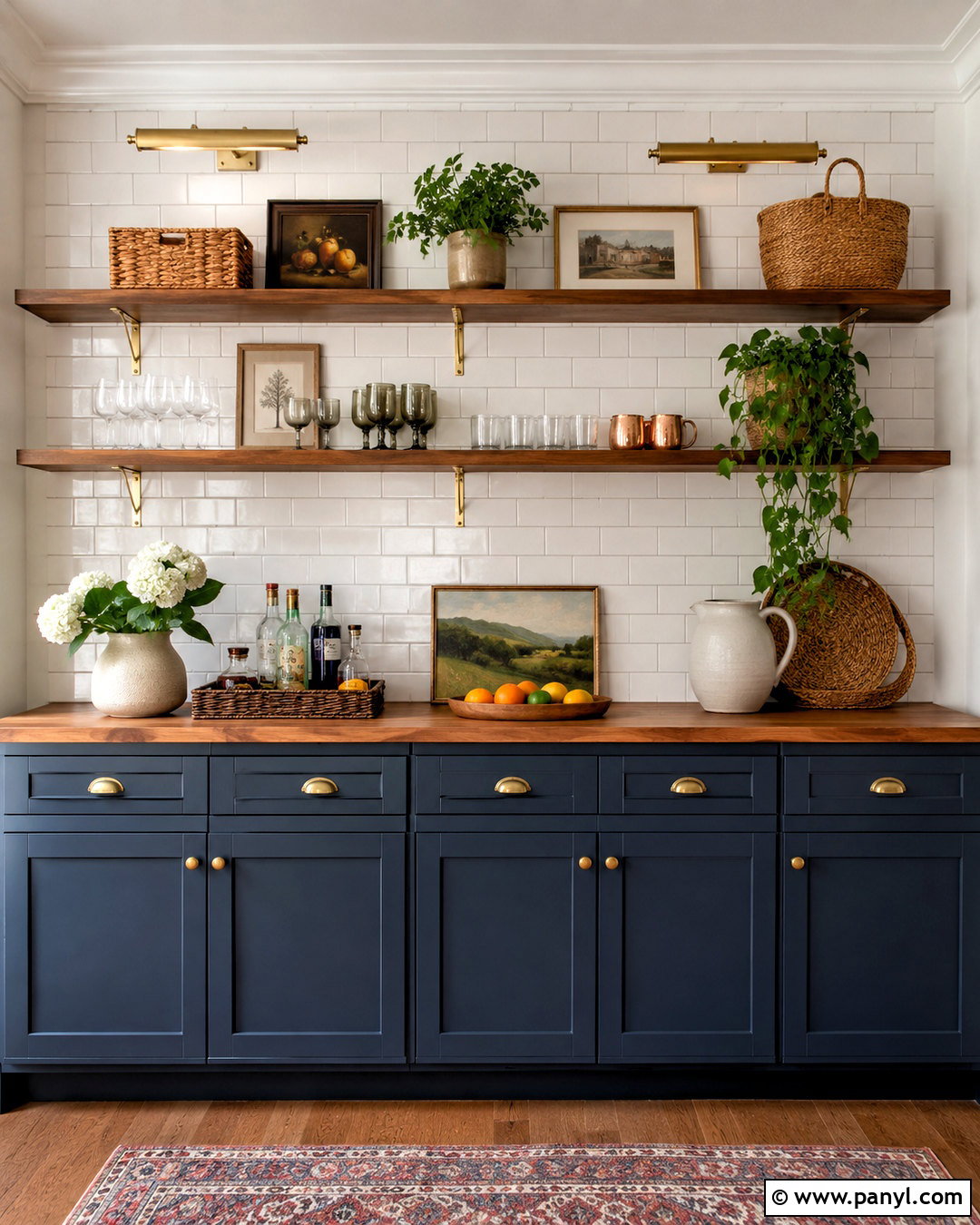
Creating a finished dry bar wall does not require custom cabinetry. Start with two matching stock base cabinets or sturdy storage units, then connect them with an affordable butcher-block countertop. Paint the cabinets a rich blue-gray and mount three pine shelves above, staining them a warm walnut tone. Peel-and-stick cream subway tile can define the backsplash area, while plug-in picture lights eliminate complicated electrical work. Add simple brass knobs and matching shelf brackets for a coordinated finish. Use baskets inside open cupboards and drawer organizers to control small supplies. A framed print, ceramic pitcher, and neatly arranged glassware complete the display. Careful alignment and a limited color palette help these accessible materials look deliberate rather than temporary or pieced together.
Conclusion:
The most successful dry bar walls combine attractive finishes with storage that supports everyday routines. Begin by measuring the available wall, identifying necessary appliances, and deciding which items should remain visible. From there, choose cabinets, a counter, a backsplash, lighting, and shelves that form one cohesive design. Reflective mirror, glossy tile, and lighter colors can brighten compact areas, while walnut, navy, black, and fluted paneling create greater depth. Built-ins deliver a tailored result, but stock cabinets and simple shelves can be equally effective when carefully coordinated. Use these 20 dry bar wall ideas to create a serving station that suits your room, budget, storage needs, and preferred home style.

Related Ideas and Inspiration:
Leave a Reply