
The right wall color can turn a dim workout area into a basement gym that feels bright, focused, and intentionally designed. Because basements often have limited daylight, lower ceilings, and visible mechanical elements, paint should work with the room’s lighting, flooring, mirrors, and equipment. Lighter colors can create a more open effect, while darker tones deliver the focused atmosphere often seen in modern training studios. () Warm neutrals, energetic accent colors, earthy greens, and deep blues all offer practical possibilities. The key is building a complete palette rather than choosing one disconnected shade. Use these coordinated equipment, flooring, lighting, and decor combinations to explore 20 Basement Gym Wall Colors.

1. Warm White Basement Gym Walls
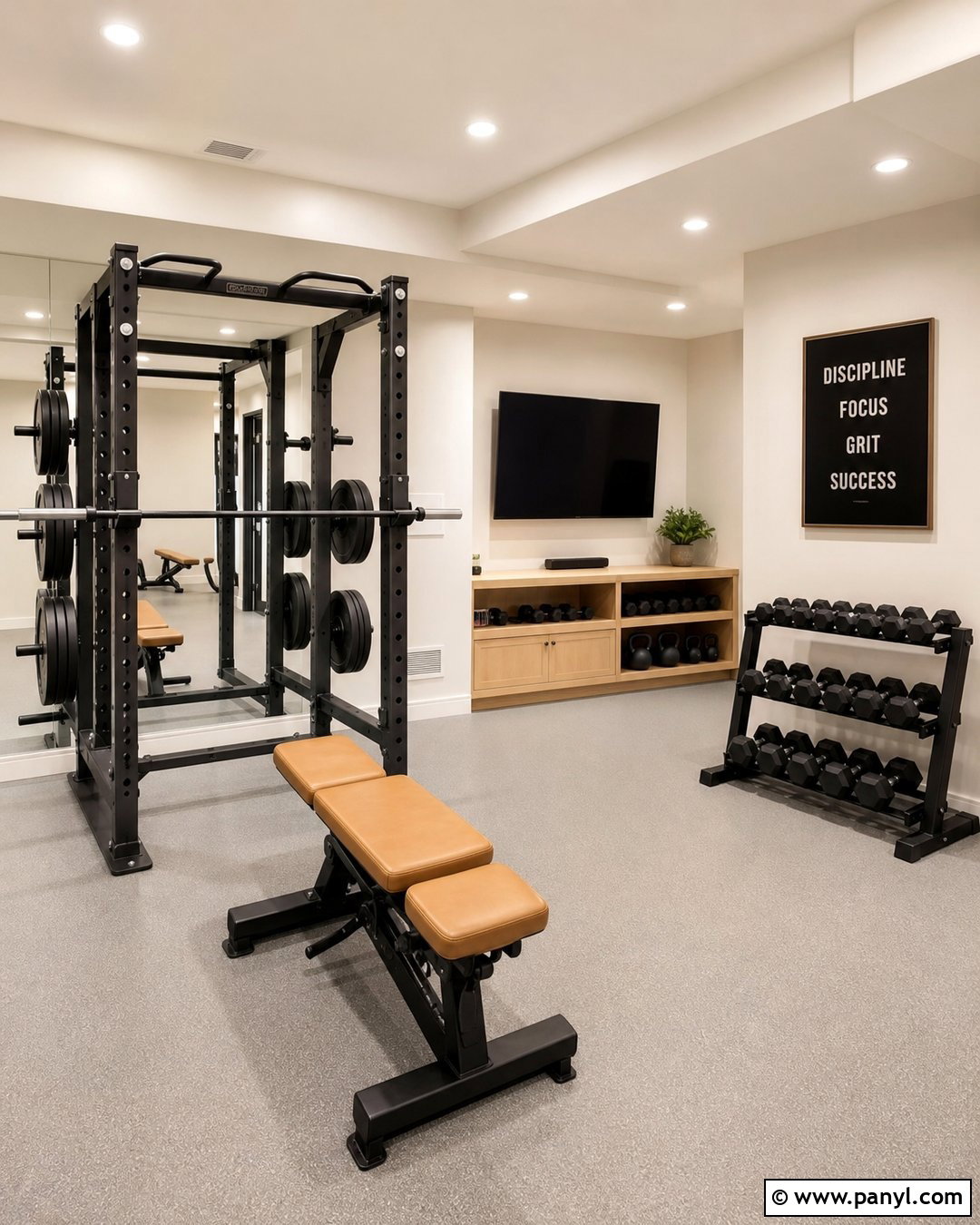
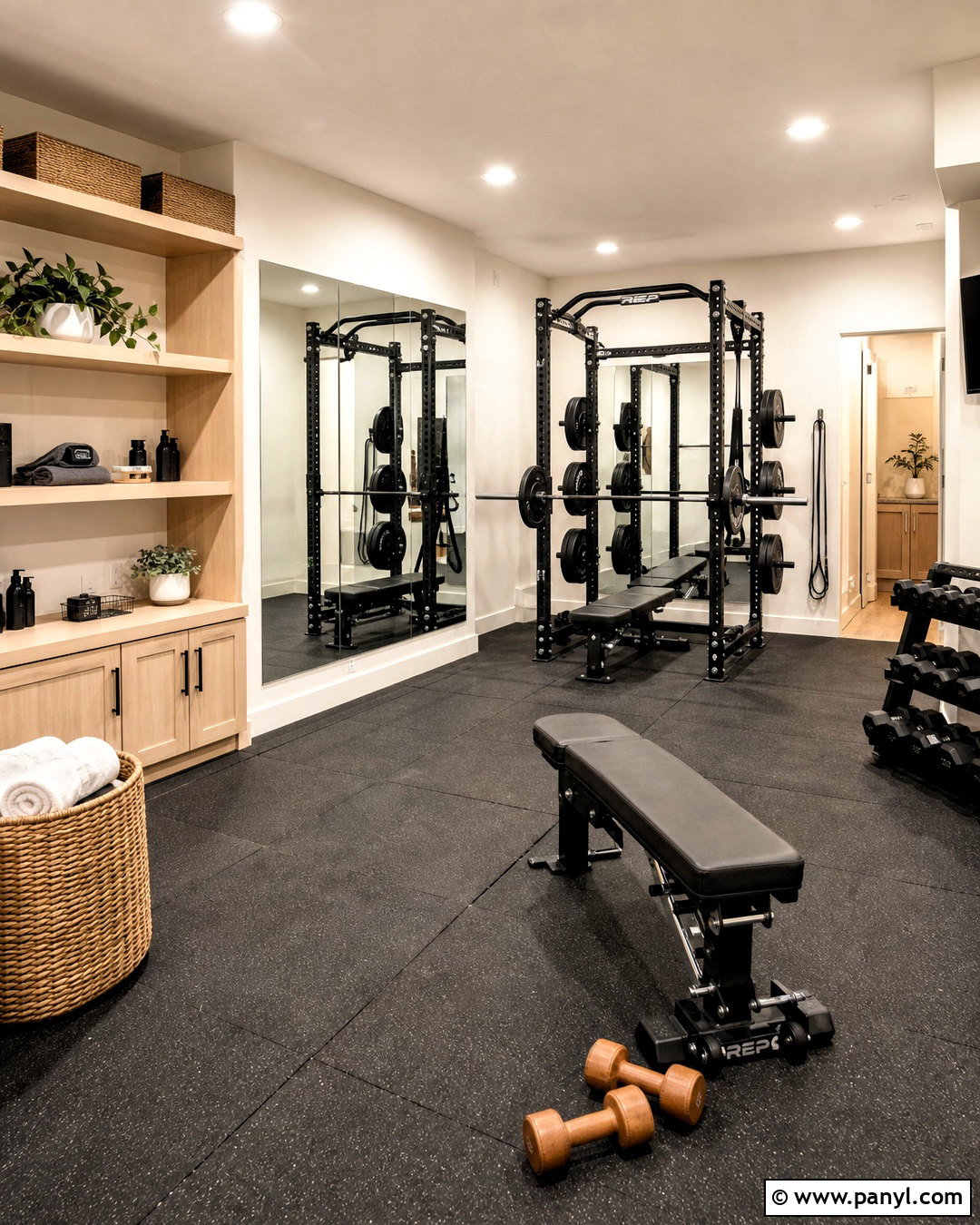
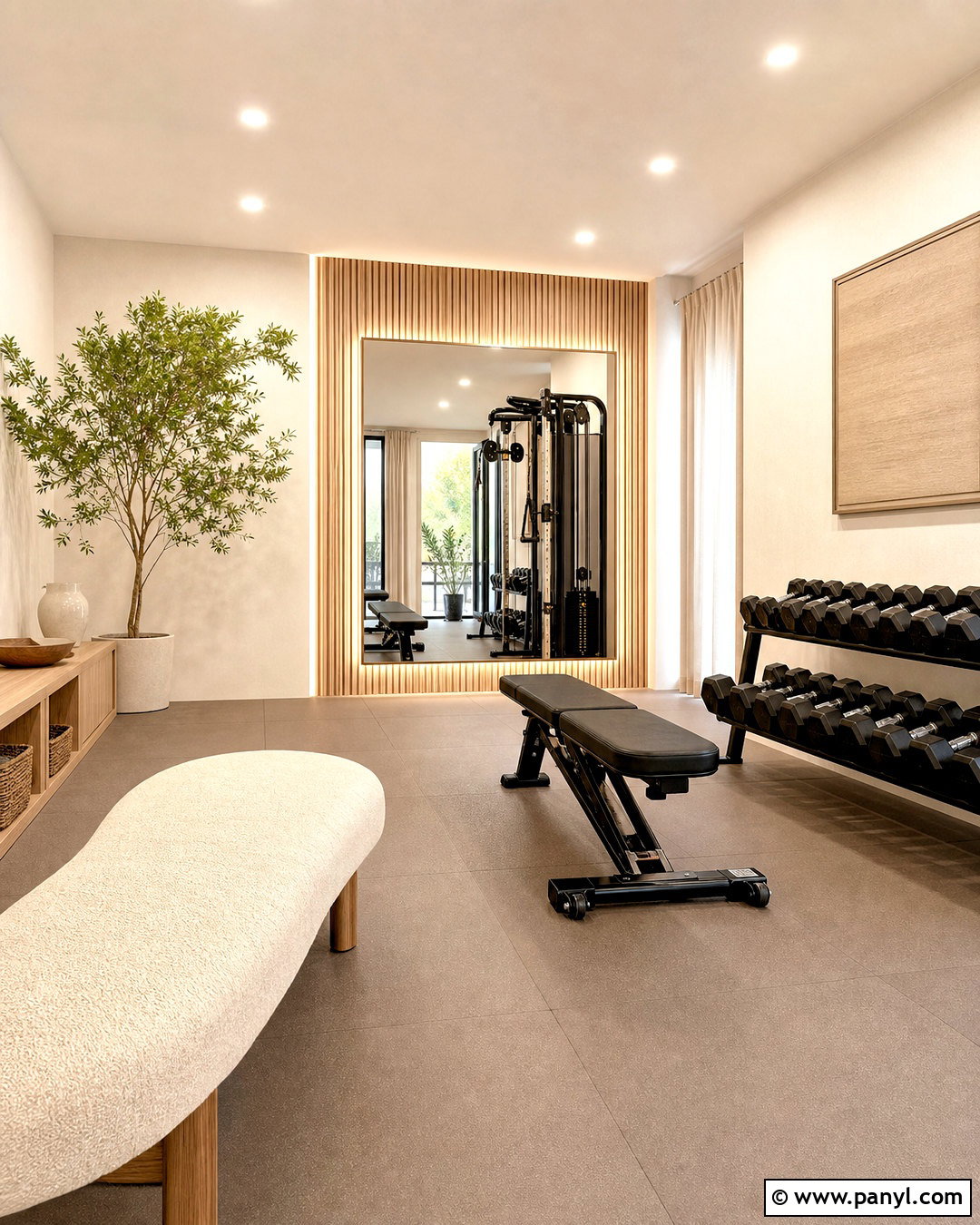
Warm white walls give a small basement gym a clean appearance without making it feel cold or unfinished. Choose a creamy white with subtle beige undertones, then continue it across low ceilings to create one uninterrupted envelope. Add light gray rubber flooring to reduce the harsh contrast sometimes caused by solid black mats. A wall-mounted maple storage system, tan bench upholstery, and matte black equipment bring structure to the pale room. Place a large mirror opposite the brightest fixtures so the light spreads across the training zone. Simple black-framed prints can decorate one wall without creating visual clutter. Finish the room with bright recessed lights or slim linear fixtures in a neutral white temperature for a comfortable, practical workout environment.
2. Soft Greige Basement Gym Walls
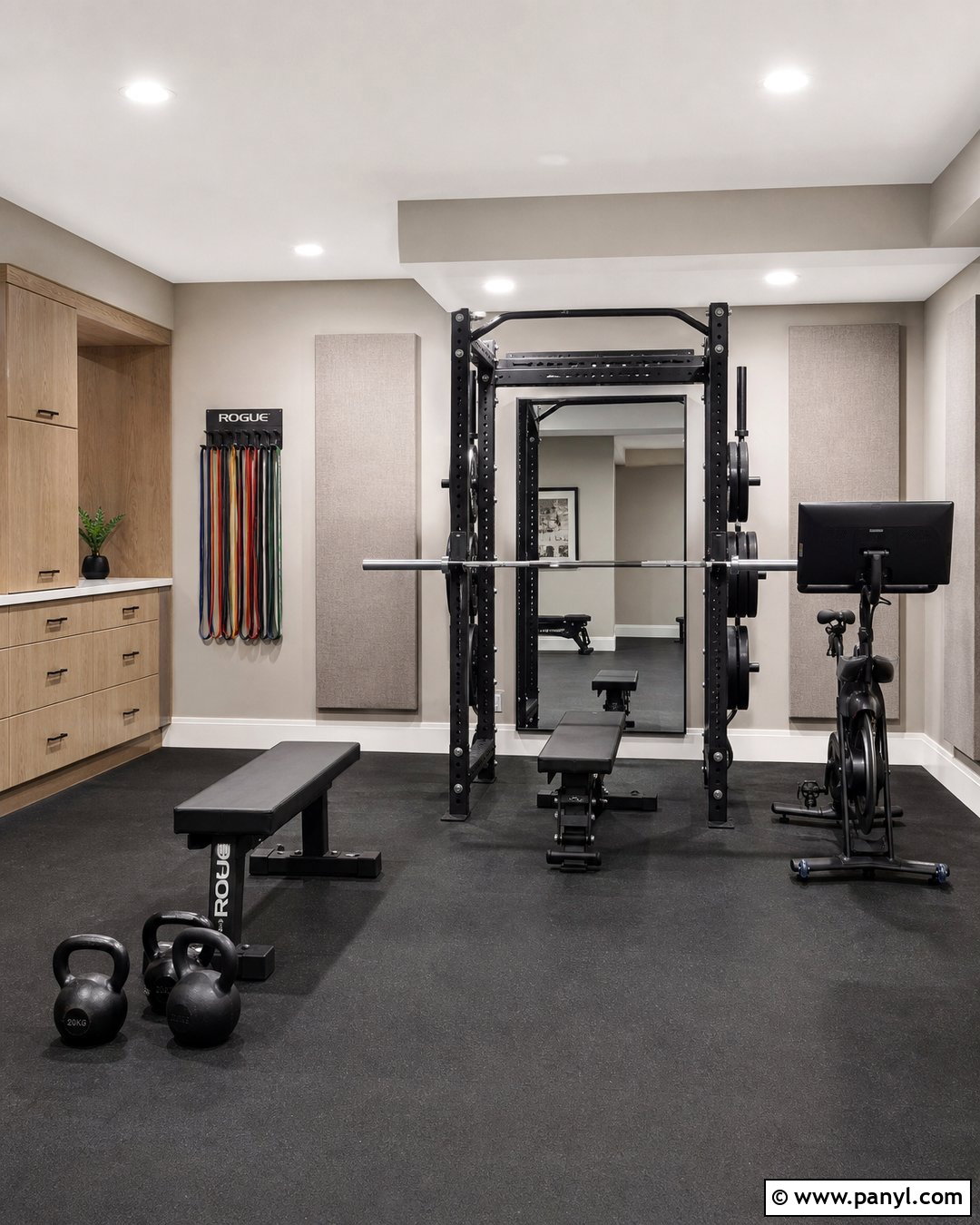
Soft greige is an easy choice when you want a basement gym that feels warmer than gray but more modern than beige. Paint all four walls in a balanced light greige and keep the ceiling warm white to preserve visual height. Charcoal rubber flooring anchors the room, while light oak shelves and storage cabinets soften the industrial equipment. Arrange a power rack and weight bench along one side, leaving the opposite wall open for mirrors and stretching. Black metal hooks can hold resistance bands in an organized vertical display. Add oatmeal-colored acoustic panels if the space needs sound control. Bright ceiling fixtures, a simple woven basket, and one muted green plant complete a calm, polished gym that connects naturally with nearby finished basement rooms.
3. Light Gray Basement Gym Walls
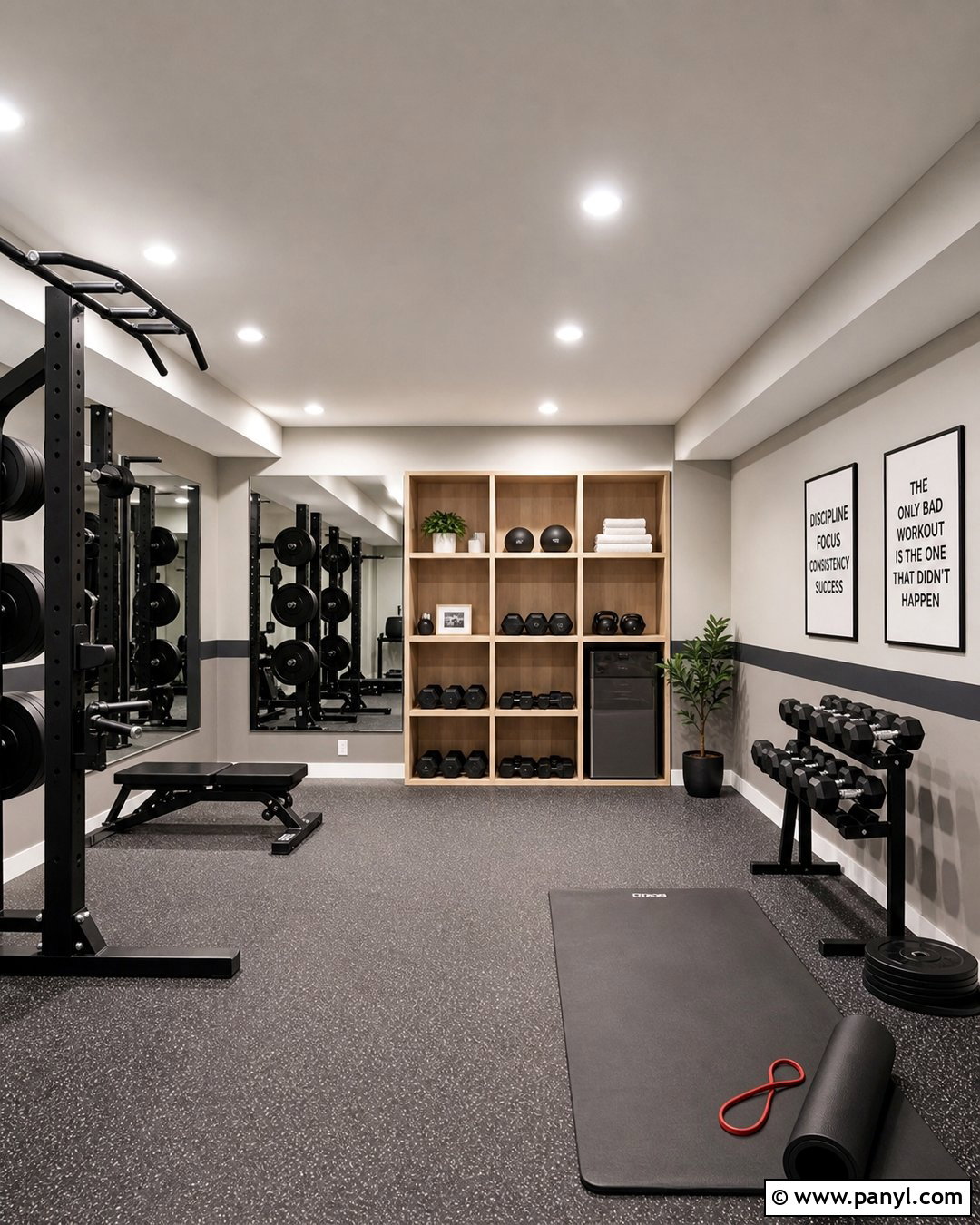
Light gray walls create a crisp backdrop for a basement gym filled with black, chrome, or colorful workout equipment. Select a pale gray with a warm undertone so artificial lighting does not make the room appear blue. Pair it with a bright white ceiling, medium-gray speckled rubber flooring, and streamlined matte black storage. A full mirror wall can sit behind the dumbbell rack, while the power rack faces an open section for functional training. Introduce warmth through birch plywood cubbies, camel-colored leather handles, or natural cork accessories. One narrow charcoal stripe around the room can add definition without lowering the ceiling visually. Use evenly spaced LED panels to eliminate shadowy corners and maintain a bright, straightforward setting for daily strength and cardio sessions.
4. Charcoal Basement Gym Walls
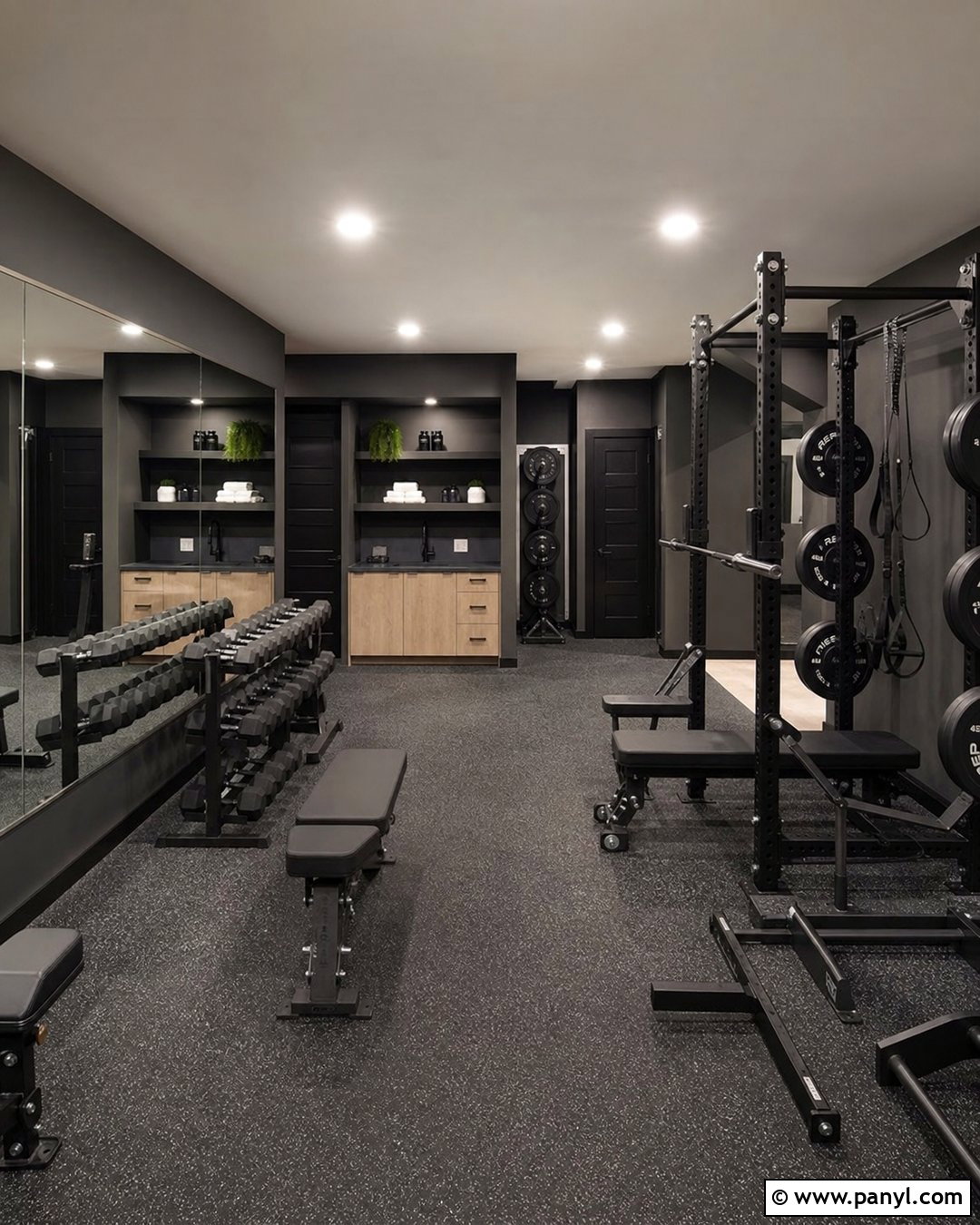
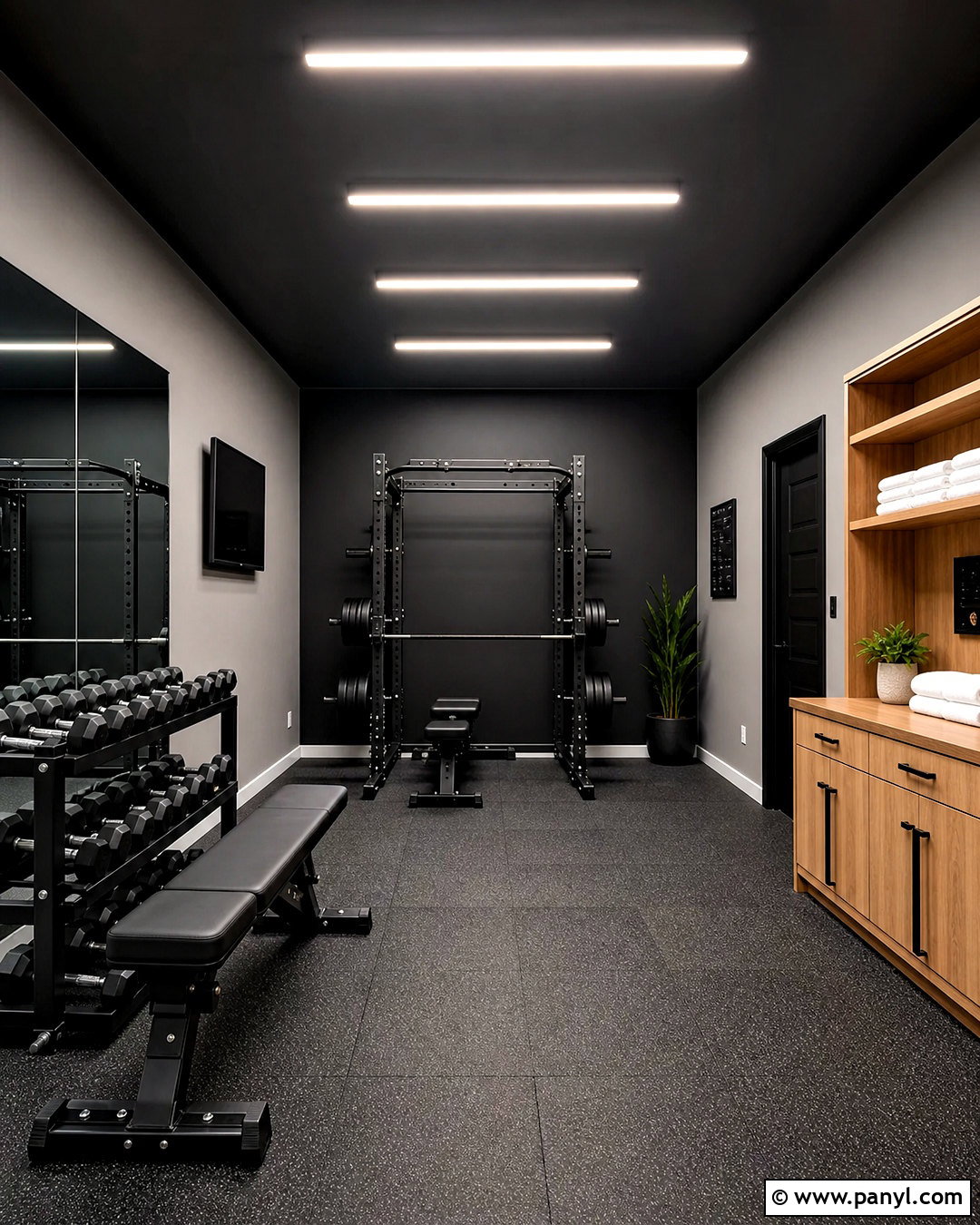
Charcoal walls can make a larger basement gym feel like a focused private training studio. Use the dark color on the main equipment wall and adjacent side walls, then keep the ceiling soft white to prevent the room from becoming too enclosed. Gray-fleck rubber flooring provides subtle contrast beneath a matte black rack, adjustable bench, and organized dumbbell station. Install large frameless mirrors along the lightest wall to reflect the fixtures and balance the deep paint. Pale oak storage, white towels, and brushed steel hardware keep the scheme from feeling heavy. A few slim linear lights positioned parallel to the workout zones will emphasize the room’s length. Choose a durable eggshell or scuff-resistant finish so the charcoal surface remains easier to maintain.
5. Black Basement Gym Accent Wall
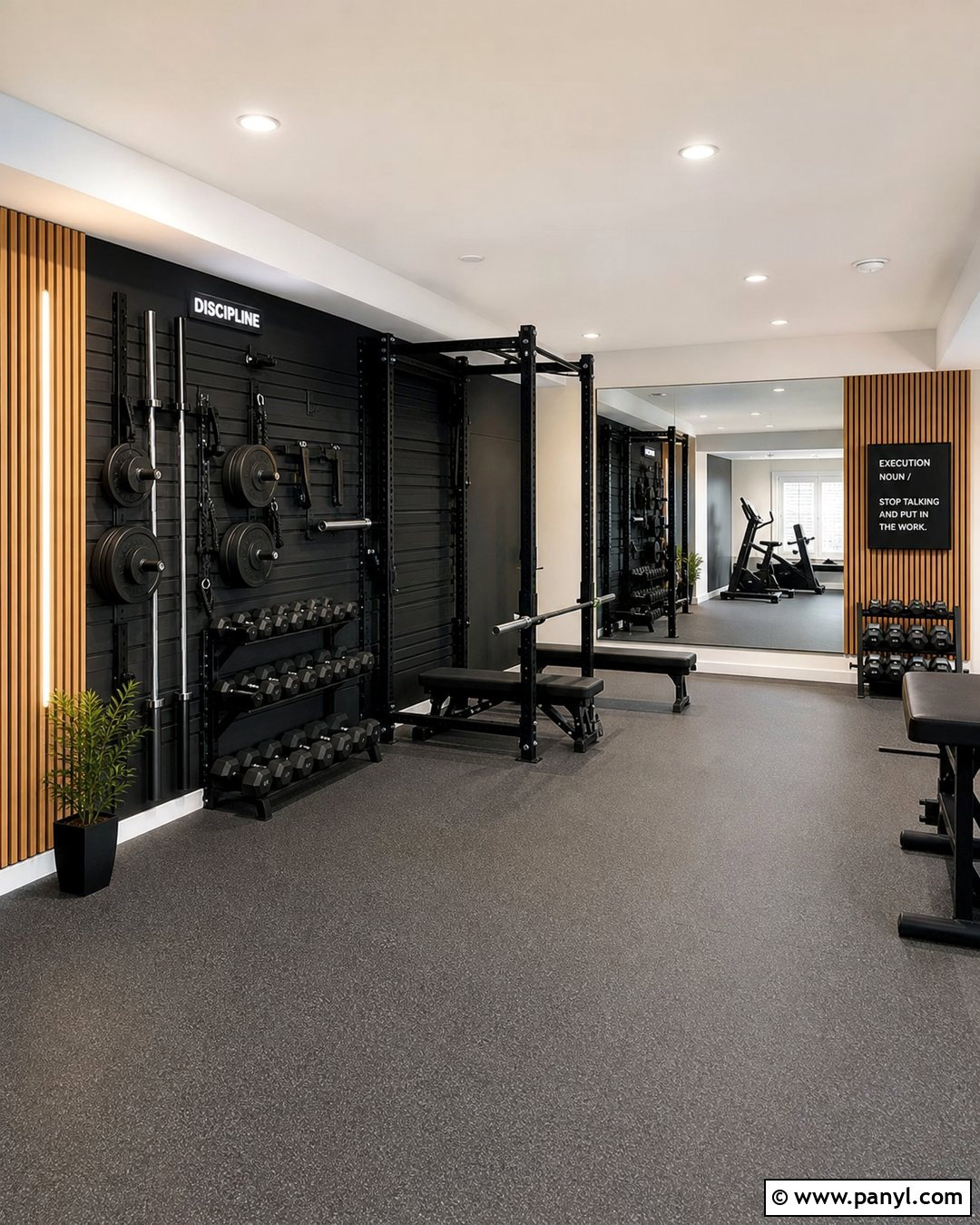
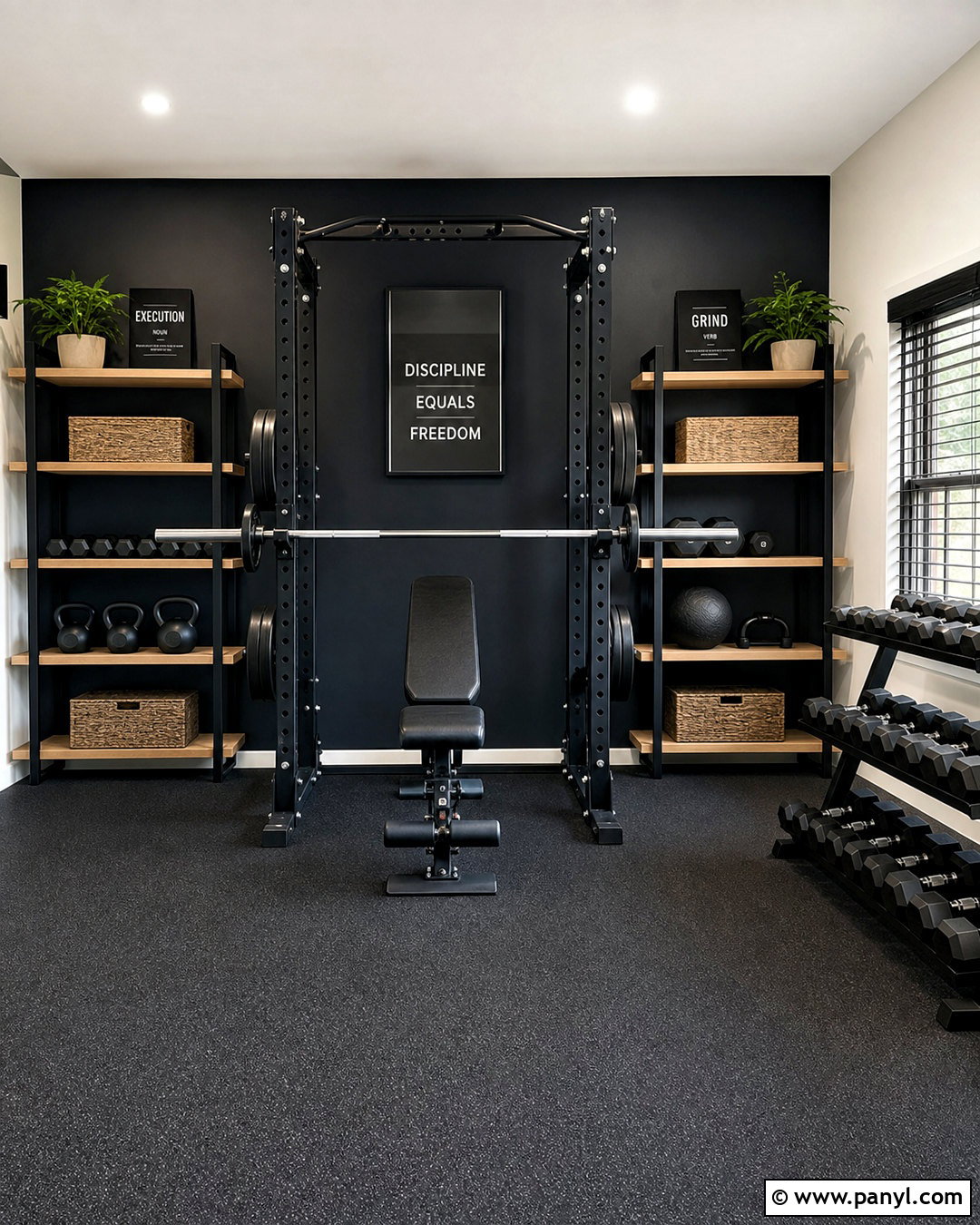
A black accent wall gives a basement gym bold definition without surrounding the entire room in a dark color. Place it behind the main power rack so the equipment and weight plates form one strong focal point. Paint the remaining walls a clean warm white and use a matching white ceiling to retain brightness. Medium-gray rubber tiles offer a softer transition between the black wall and pale surfaces. Add maple slat panels beside the rack for warmth, organization, and acoustic texture. The mirror wall should face the accent color rather than interrupt it. Use bright rectangular ceiling fixtures, minimal white graphics, and black wall-mounted storage to maintain a cohesive appearance. This balanced scheme feels athletic and modern while still working in a low-ceiling basement.
6. Navy Blue Basement Gym Walls
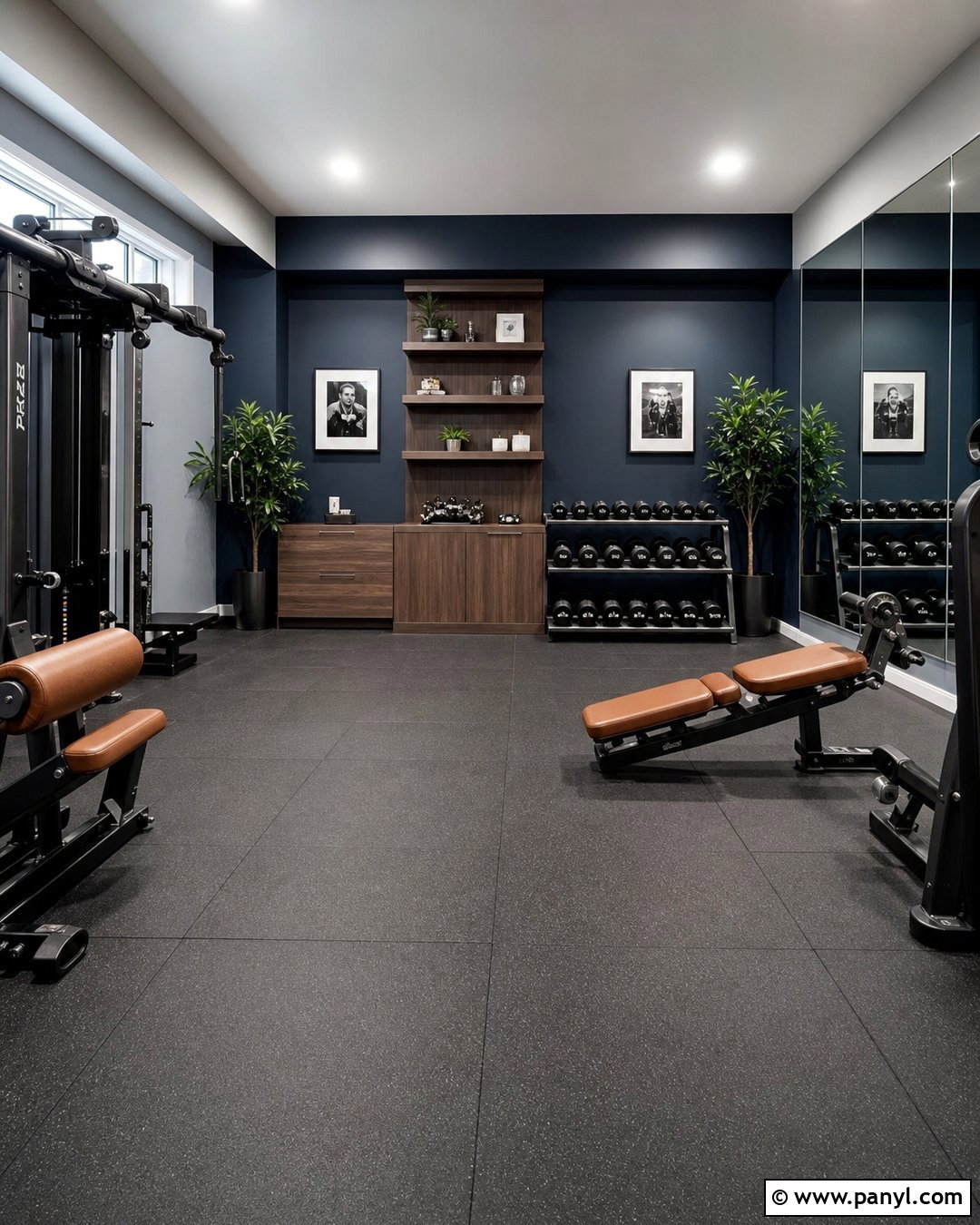
Deep navy blue brings color to a basement gym while maintaining a composed, sophisticated atmosphere. Cover the longest wall in navy and use a pale blue-gray on the remaining walls to keep the overall room open. A white ceiling and bright linear lighting will sharpen the contrast. Choose dark gray rubber flooring, black equipment, and walnut storage cabinets to complement the blue without making the palette overly cool. Position mirrors across from the navy wall so the rich color appears throughout the space. Cognac-colored bench upholstery and warm wood accents add a comfortable residential touch. For a finished look, organize weights by size and conceal smaller accessories in closed cabinets. The result feels like a boutique strength studio rather than an improvised basement workout corner.
7. Cobalt Blue Basement Gym Walls
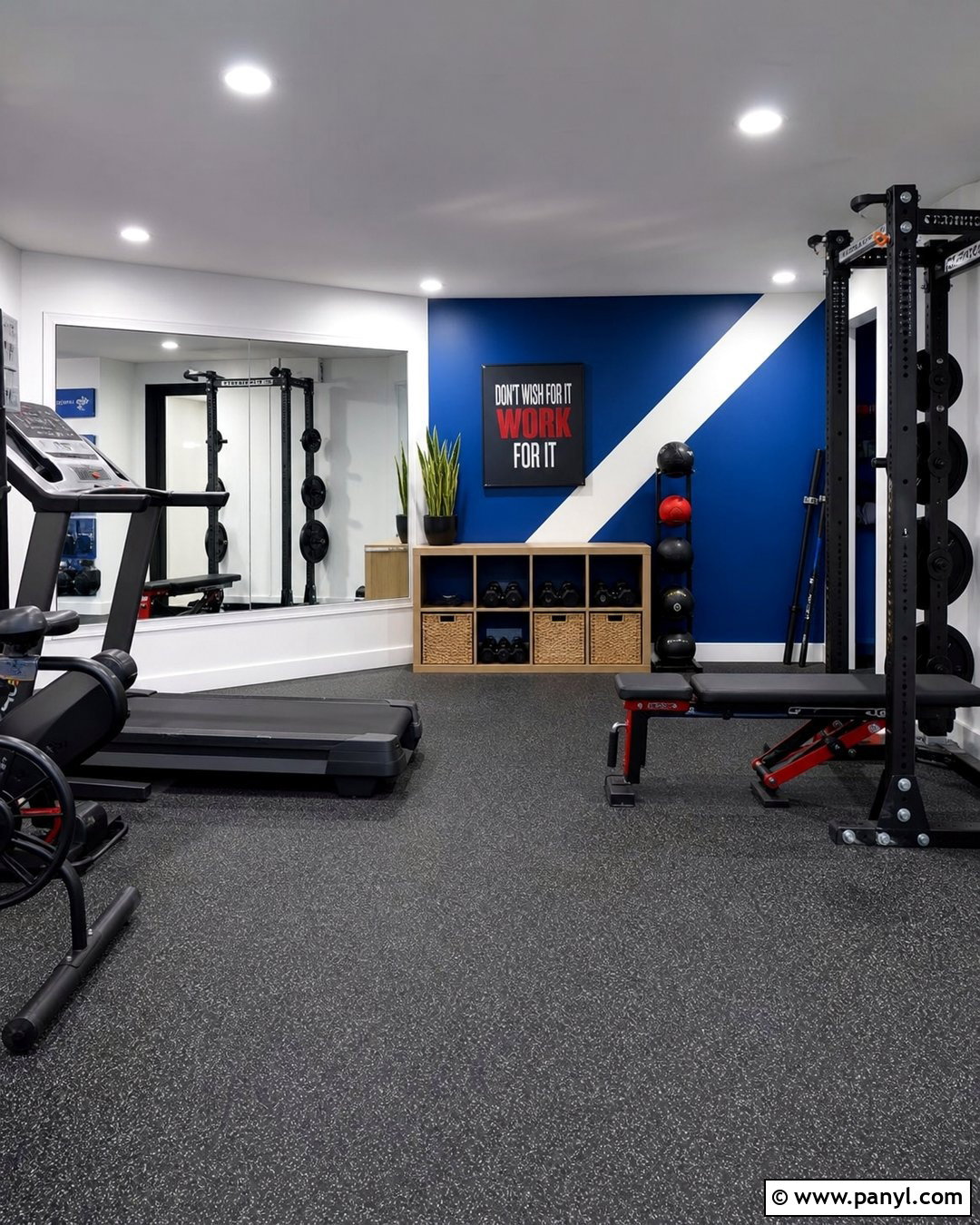
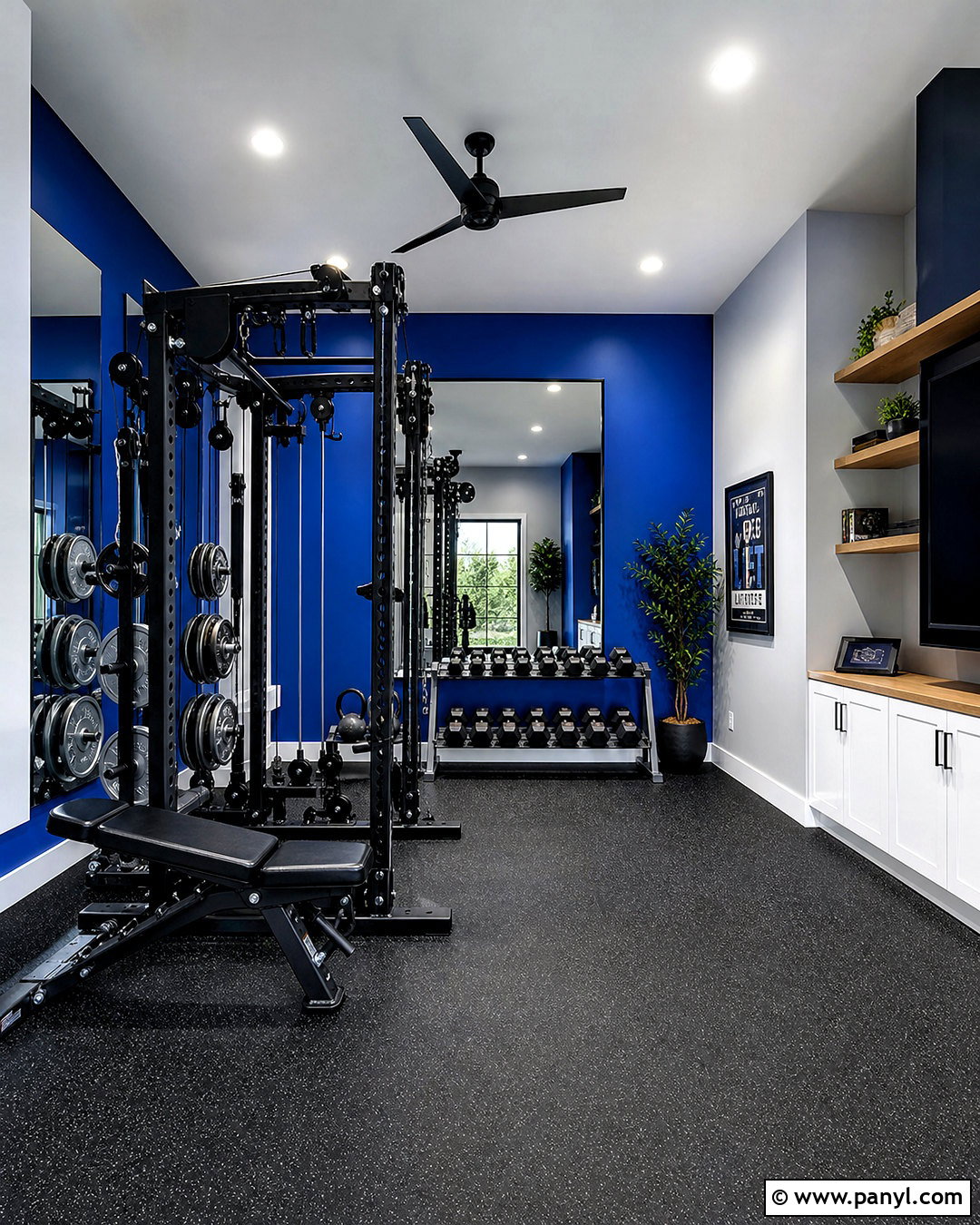
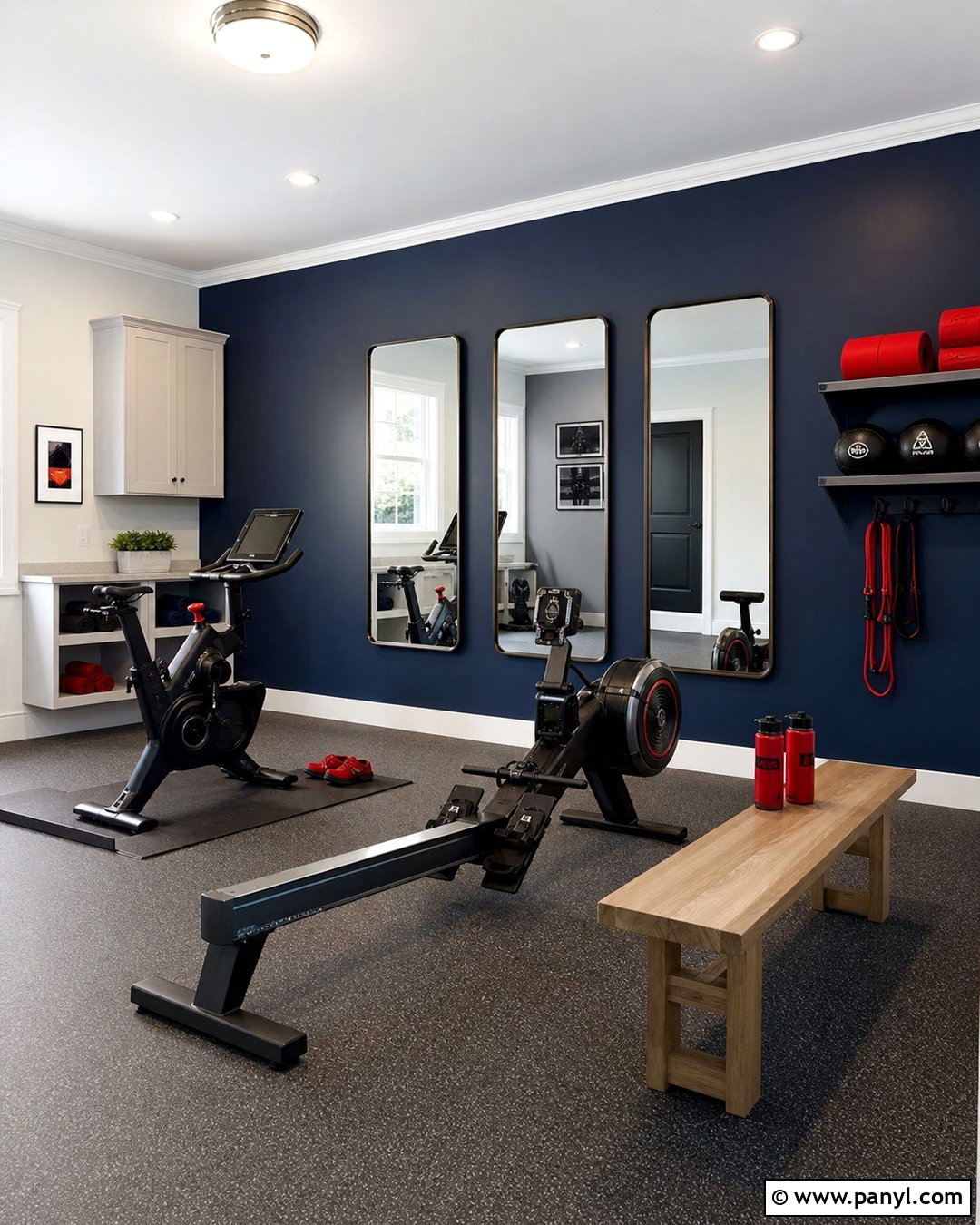
Cobalt blue creates an energetic basement gym that suits cycling, circuit training, or high-intensity workouts. Use the saturated blue on one broad wall, balanced by bright white walls and ceiling around it. A diagonal white stripe can introduce movement while drawing attention upward in a room with limited ceiling height. Choose medium-gray rubber flooring instead of black so the strong blue remains the dominant feature. White-framed mirrors, matte black cardio equipment, and pale birch wall storage keep the palette clean. Add small red accents through weight plates or resistance bands for a controlled athletic contrast. Bright, evenly distributed ceiling panels are essential because cobalt can look much darker in poorly lit corners. Keep decorations minimal and let the organized equipment complete the graphic, performance-driven room.
8. Slate Blue Basement Gym Walls
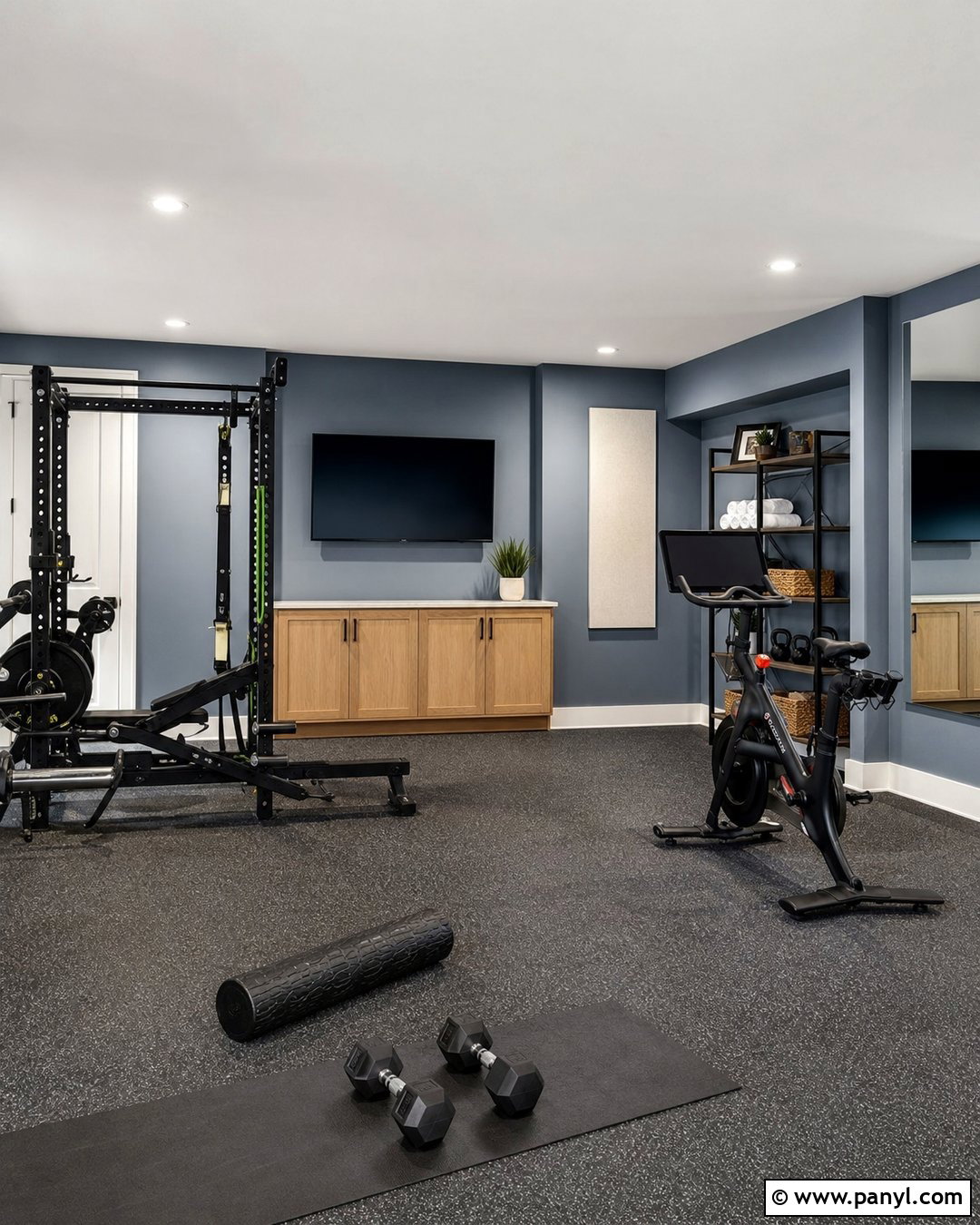
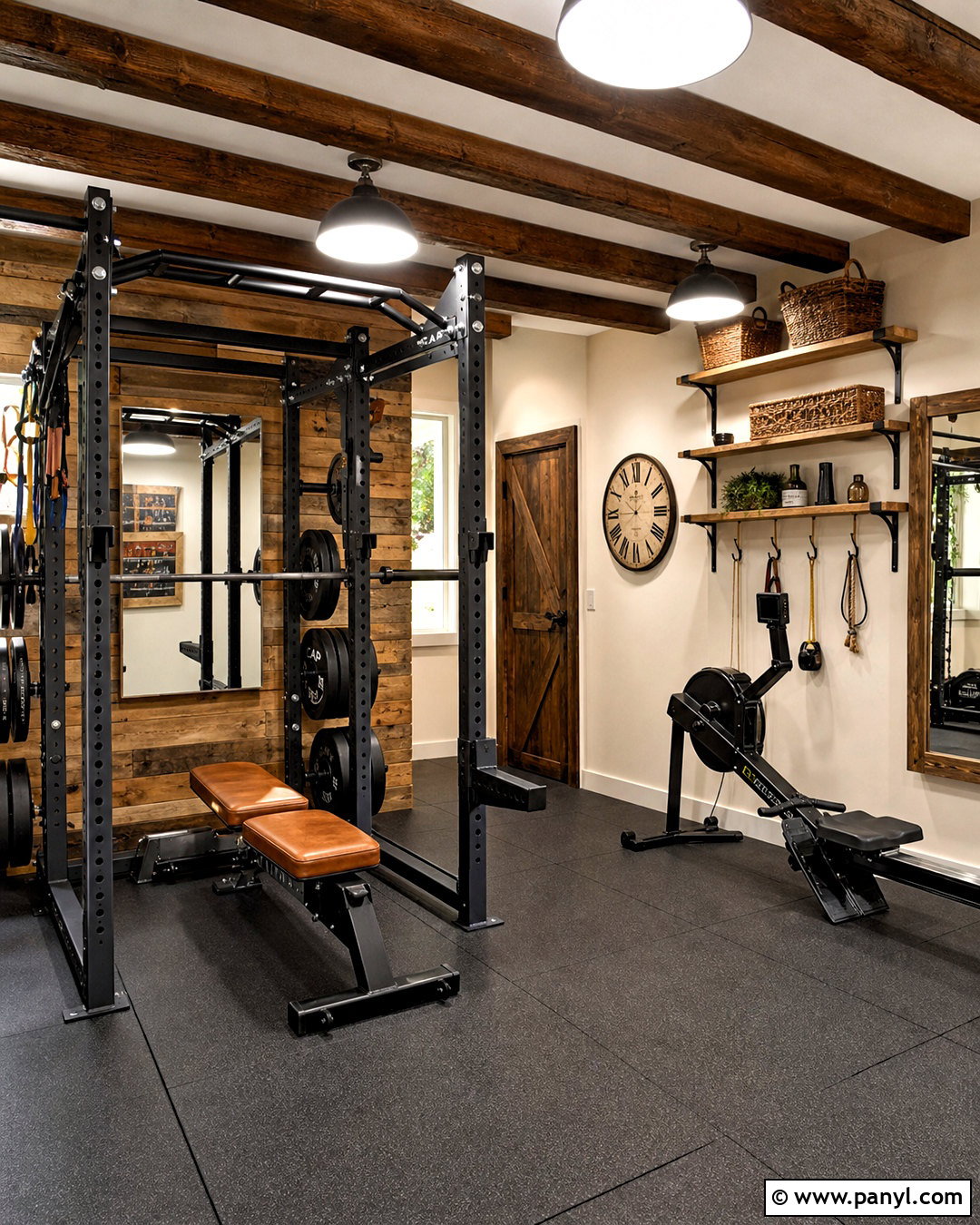
Slate blue walls offer a quieter alternative to vivid athletic colors and work especially well in a multipurpose basement gym. Paint the workout walls in muted blue-gray, then use warm white on the ceiling, doors, and trim. Pair the color with charcoal rubber flooring and natural white oak cabinetry for a balanced mix of cool and warm finishes. Place a compact strength station against one wall and reserve a mirrored corner for yoga, mobility, or barre exercises. Linen-look acoustic panels in light gray can soften echoes without disrupting the palette. Add black metal shelving, rolled neutral towels, and a woven storage basket for a comfortable residential finish. Softened slate blue supports concentration while allowing the room to transition easily between intense training and slower recovery sessions.
9. Deep Teal Basement Gym Walls
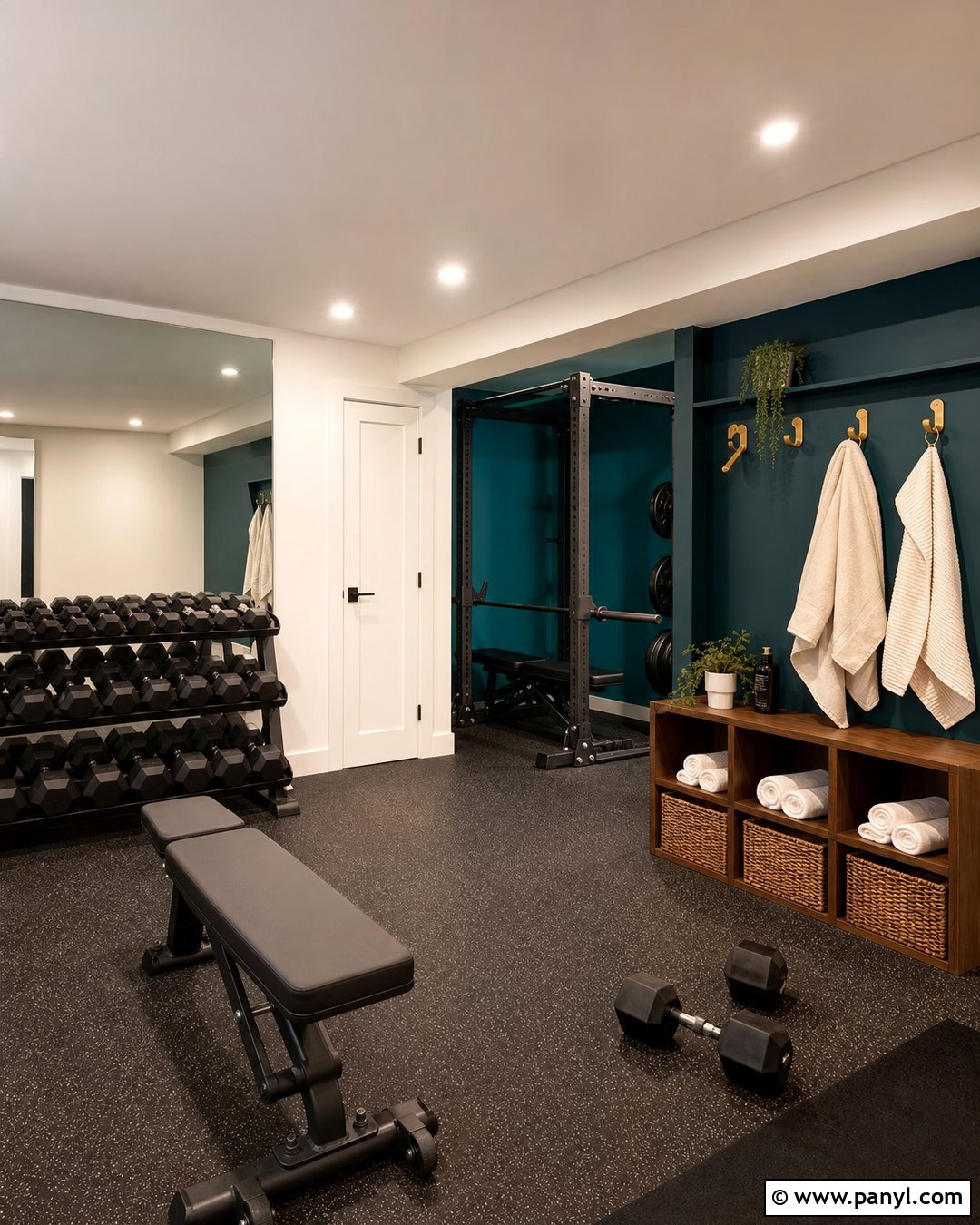
Deep teal can transform a plain basement gym into a rich, contemporary exercise space. Apply it to the wall behind the dumbbell rack and continue the color around a shallow training alcove for an immersive effect. Keep the remaining surfaces warm white, including the ceiling and exposed beams, to balance the saturated shade. Black rubber flooring, walnut cubbies, and brushed brass hooks create an upscale palette without compromising function. A wide frameless mirror should cover the wall opposite the teal feature, reflecting both the color and bright overhead lighting. Use cream towels and light wood accessories to break up darker elements. Compact black equipment and neatly arranged weights maintain the streamlined look. This combination is particularly effective for a gym shared with a finished basement lounge or office.
10. Sage Green Basement Gym Walls
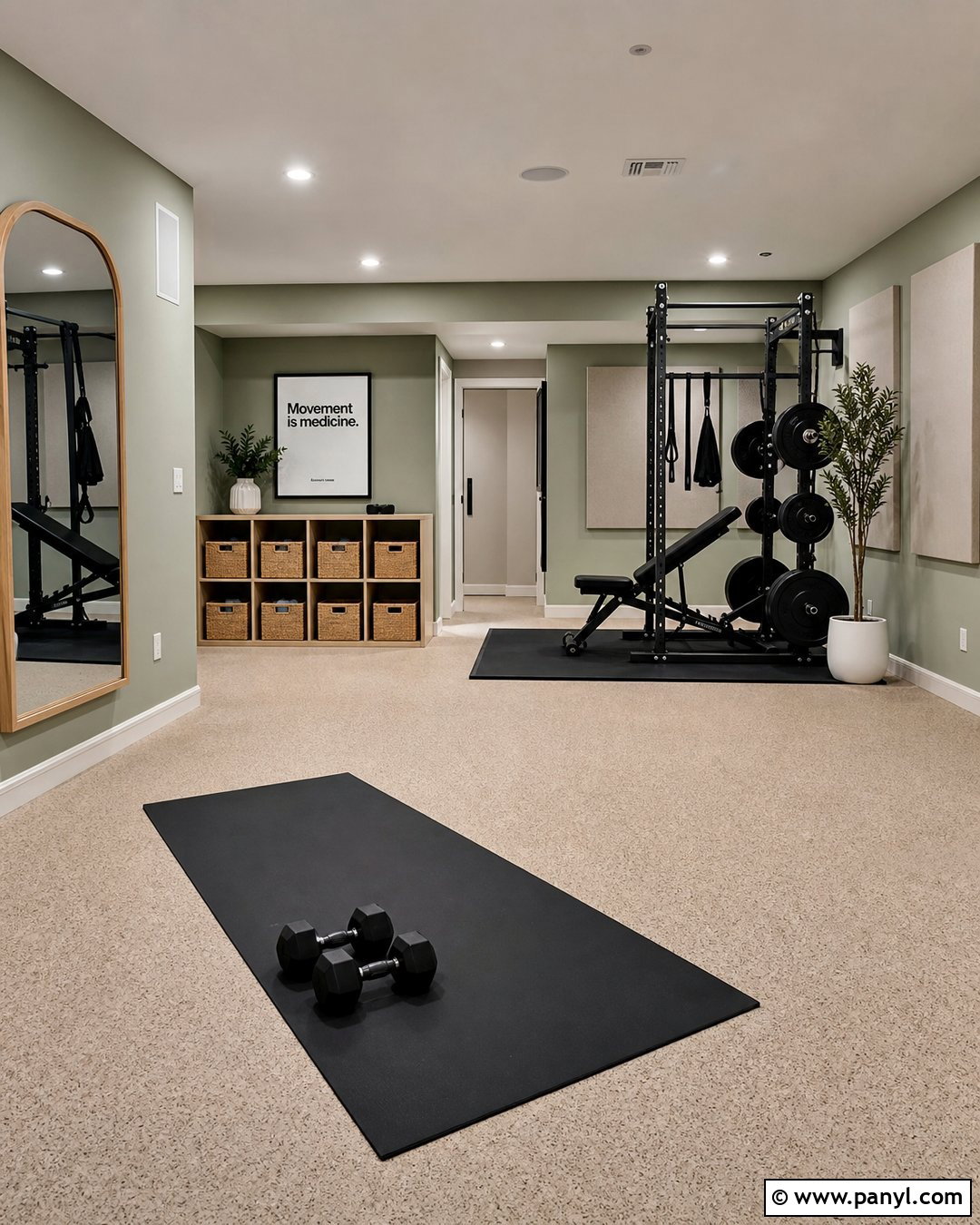
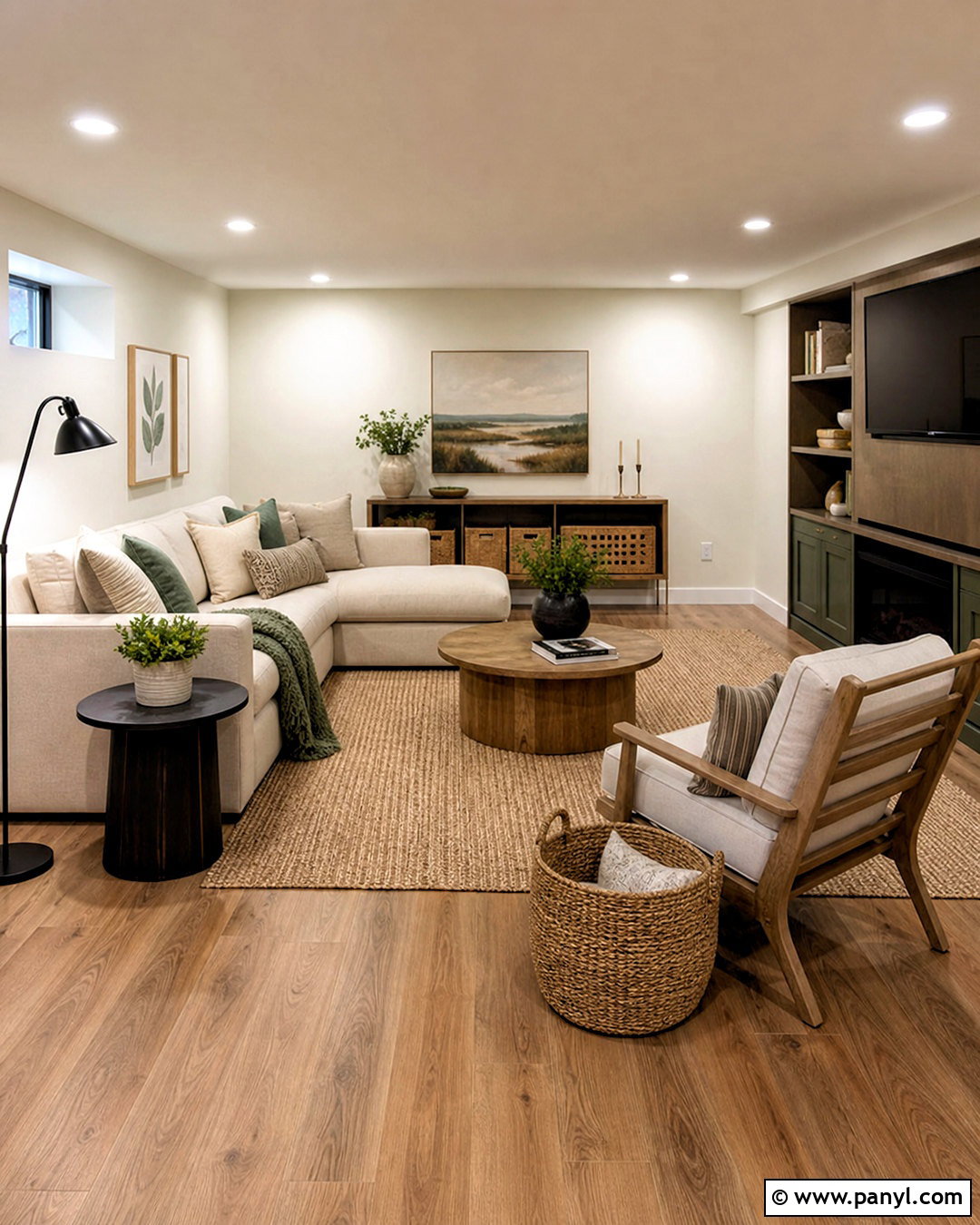
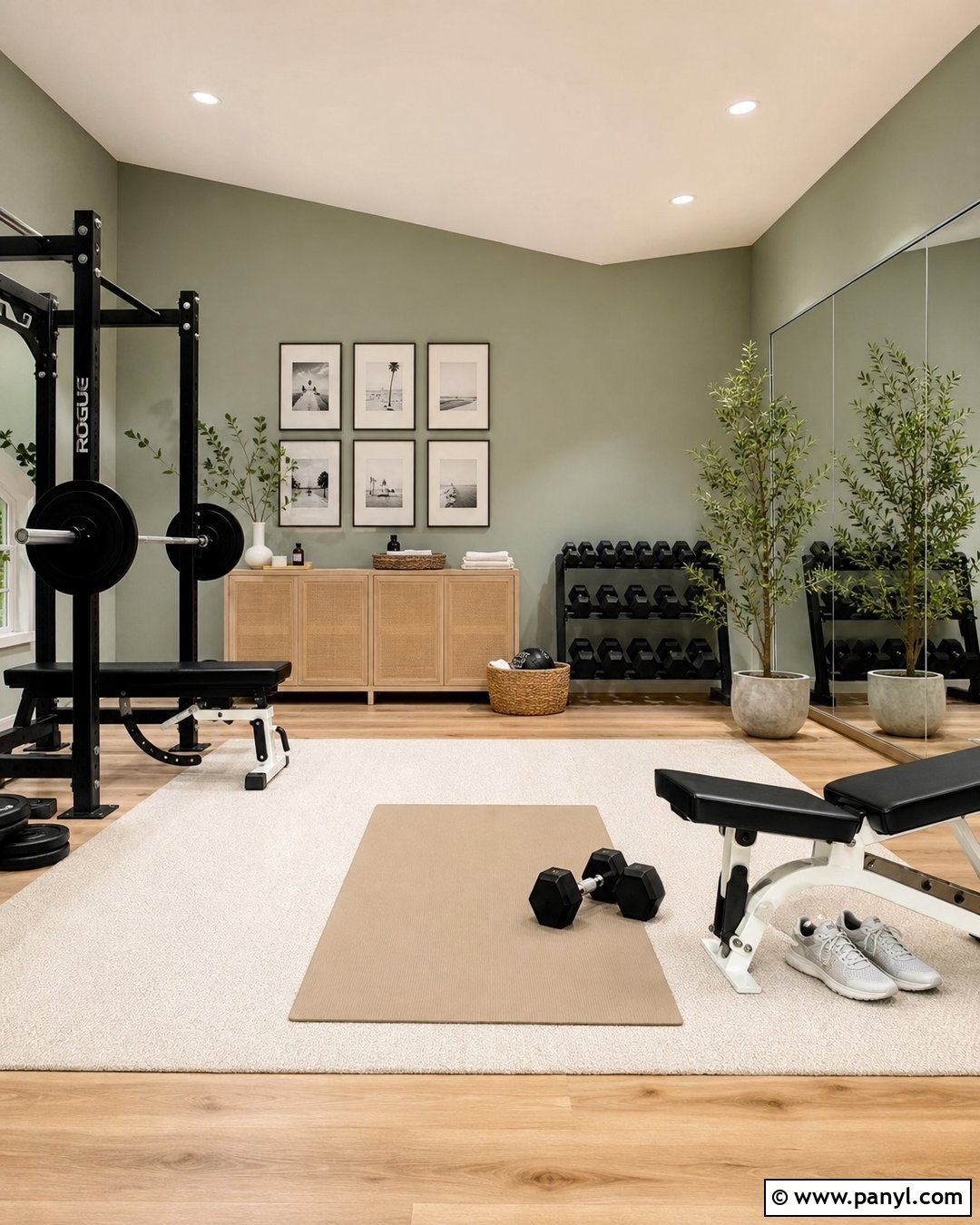
Sage green walls create a refreshing basement gym suited to yoga, Pilates, light strength training, and everyday movement. Choose a soft, warm sage and use it throughout the room, paired with a creamy white ceiling and trim. Light gray rubber or cork-look flooring keeps the space bright while providing a practical workout surface. Add pale oak storage, a simple wood-framed mirror, and woven baskets for mats and bands. Black equipment can remain in the main strength zone, but avoid overcrowding the walls with dark accessories. A few realistic greenery accents reinforce the natural palette, provided they stay clear of exercise areas. Use broad white ceiling fixtures and simple linen acoustic panels to complete a calm, organized gym that feels welcoming enough for consistent daily use.
11. Forest Green Basement Gym Walls
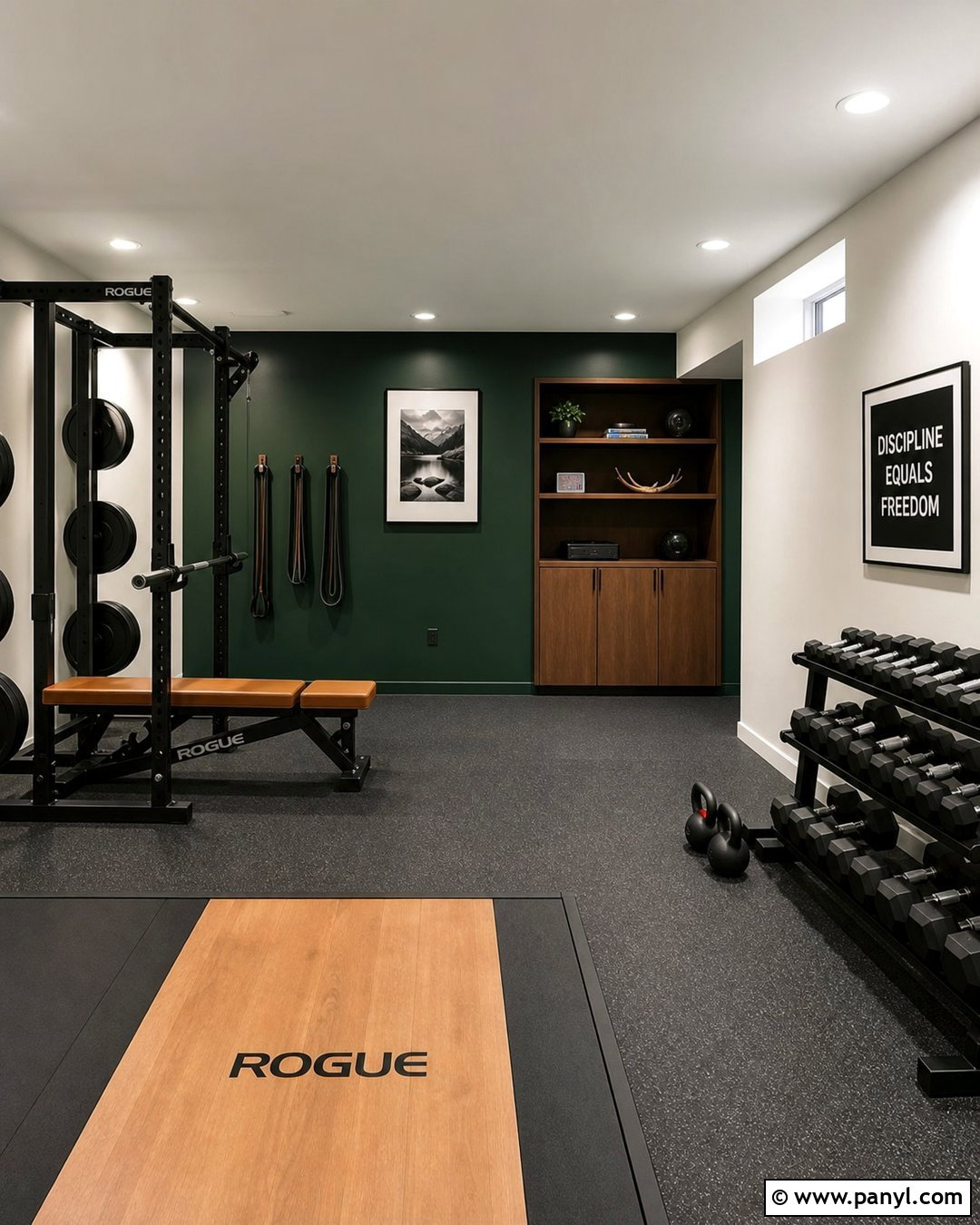
Forest green delivers a grounded, dramatic look for a basement gym centered on strength training. Use the color behind a matte black power rack and carry it onto one adjoining wall to create a defined lifting zone. Paint the other walls a warm off-white and leave the ceiling white so the space maintains enough brightness. Charcoal flooring, walnut shelves, and tan bench upholstery pair naturally with the deep green. Install a large mirror beside the rack rather than behind it, preventing reflected equipment from overwhelming the focal wall. Warm metal hooks can organize bands and jump ropes, while closed wood cabinets hide smaller accessories. Bright linear fixtures should run above each training lane. The finished room feels strong and polished without relying on the all-black palette common in home gyms.
12. Olive Green Basement Gym Walls
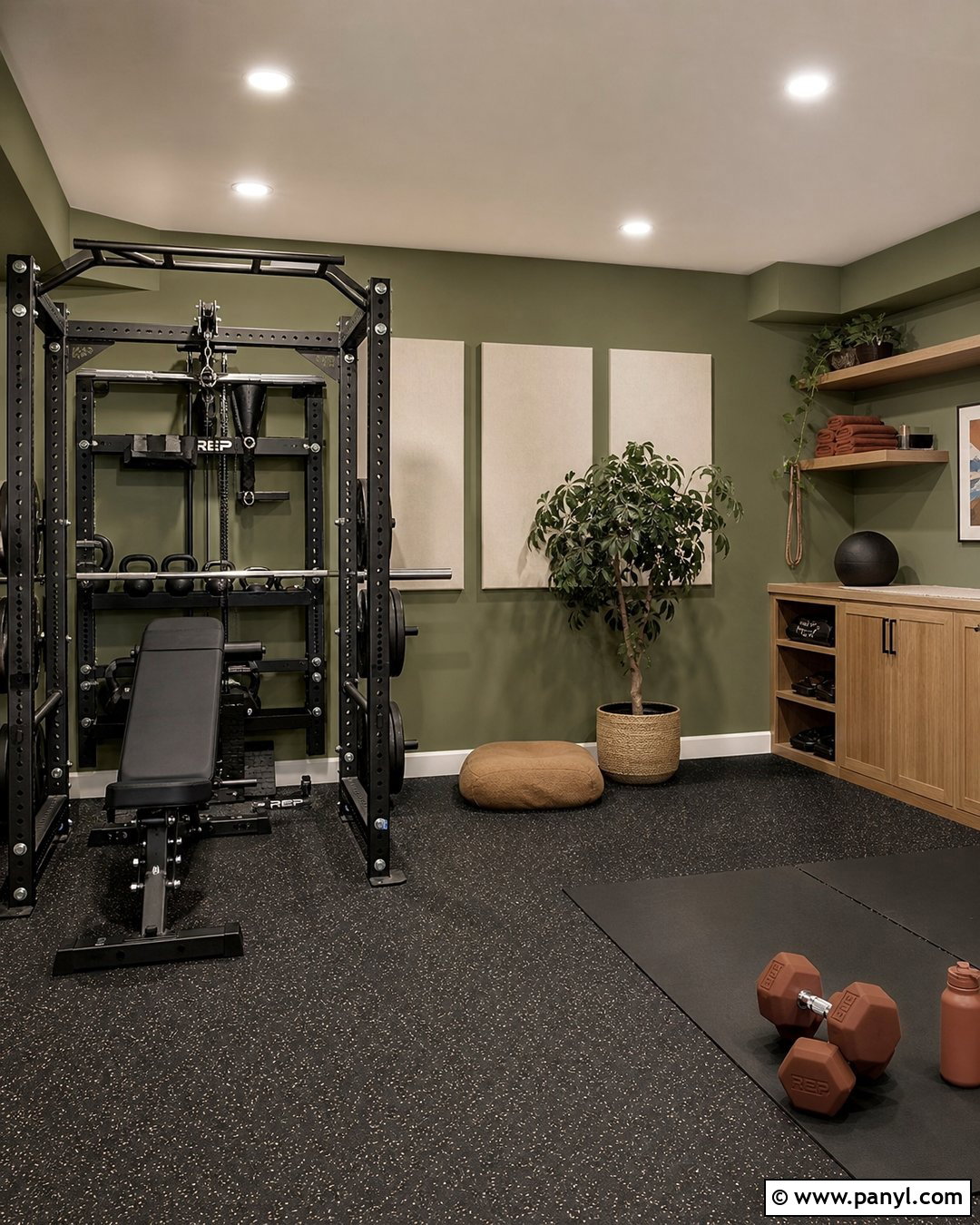
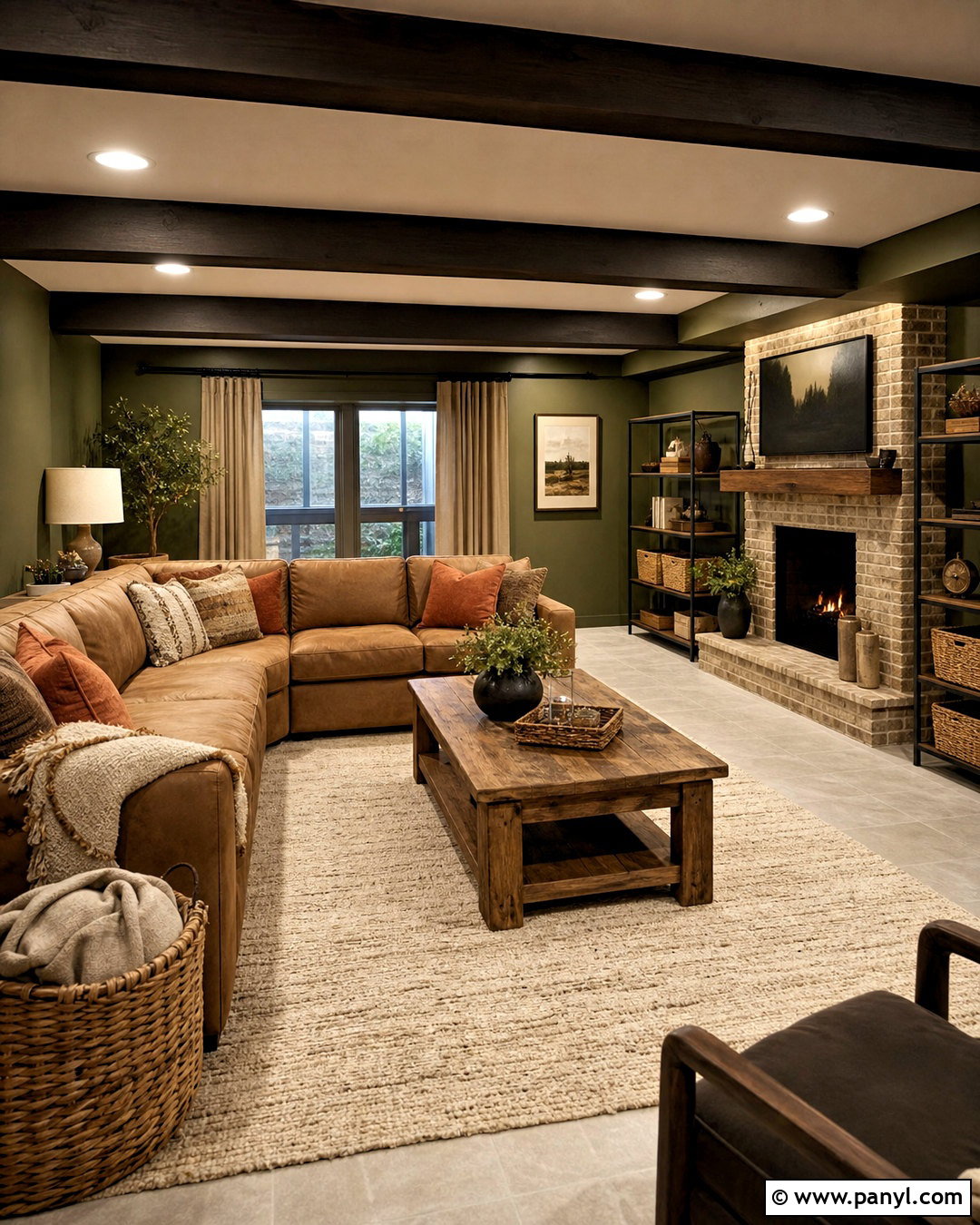
Earthy olive walls make a basement gym feel warm, distinctive, and connected to natural materials. Select a medium olive rather than an extremely dark military green, then combine it with an ivory ceiling and trim. Use black rubber flooring with subtle tan flecks to tie together the paint and light oak equipment storage. A compact rack, adjustable bench, and dumbbell stand can occupy one side, while mirrors and an open mobility area fill the other. Add slatted wood panels behind hooks for resistance bands and foam rollers. Cream acoustic tiles and a few muted terracotta accessories bring softness to the functional layout. Bright ceiling panels keep the olive from appearing muddy. This complete palette works well in traditional homes where a stark industrial gym might feel disconnected from surrounding rooms.
13. Smoky Purple Basement Gym Walls
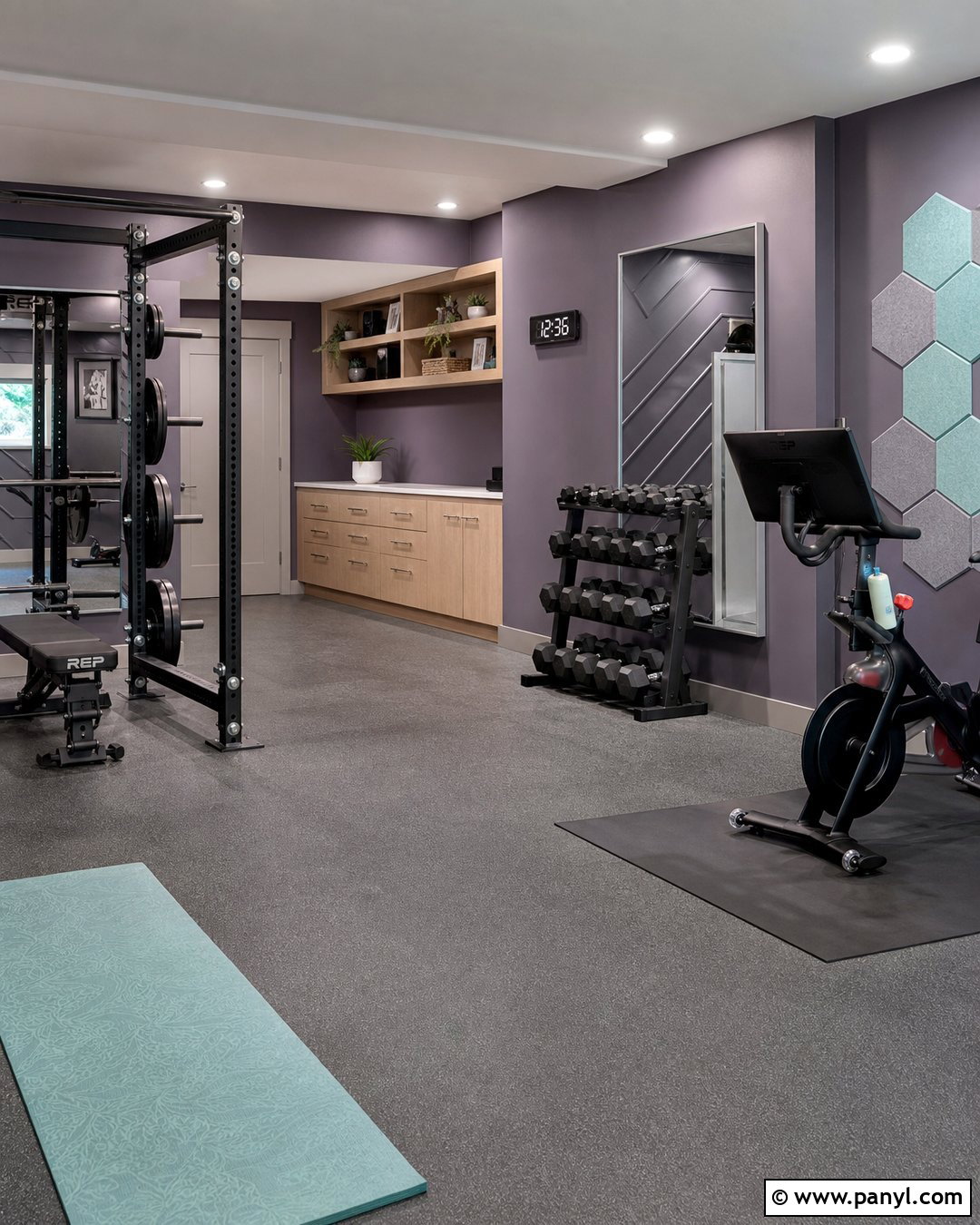
Smoky purple gives a basement gym unexpected character while remaining more relaxed than a bright violet. Choose a muted plum-gray and apply it to the main walls, then use a pale warm gray on the ceiling and trim. Balance the color with medium-gray rubber flooring, black exercise equipment, and white oak storage. A large mirror behind the stretching zone will reflect the purple softly without doubling a crowded weight setup. Introduce dusty aqua through a bench, towels, or small storage bins for a fresh complementary accent. Brushed nickel hardware and simple white lighting keep the room contemporary. Avoid ornate decorations; instead, use clean geometric acoustic panels and neatly aligned equipment. The result is a creative but practical workout room with the atmosphere of a modern wellness studio.
14. Terracotta Basement Gym Walls
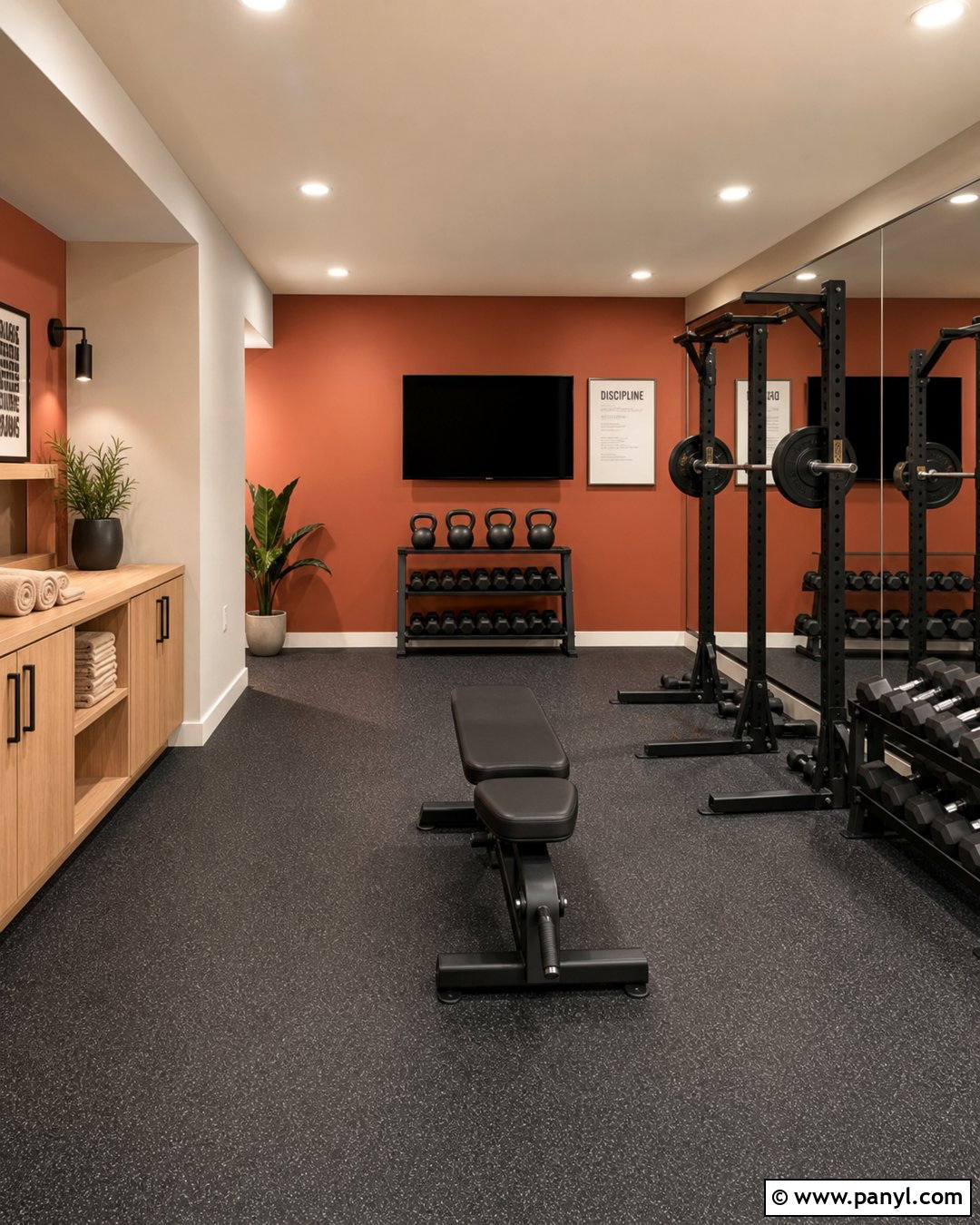
Warm terracotta walls can make a cool basement gym feel inviting and energetic. Use the earthy red-orange on one full wall, then surround it with creamy beige walls and a warm white ceiling. Dark brown or charcoal rubber flooring grounds the palette, while light oak cabinets and matte black equipment add clear structure. Place the cardio machines in front of the terracotta wall and reserve a mirrored side wall for strength exercises and form checks. Natural canvas storage bins, sand-colored towels, and muted clay accessories reinforce the warmth without becoming overly decorative. Bright white ceiling fixtures are important because yellow lighting can exaggerate orange undertones. This coordinated look feels lively enough for active workouts yet comfortable enough for stretching, recovery, or a shared family fitness space.
15. Burnt Orange Basement Gym Walls
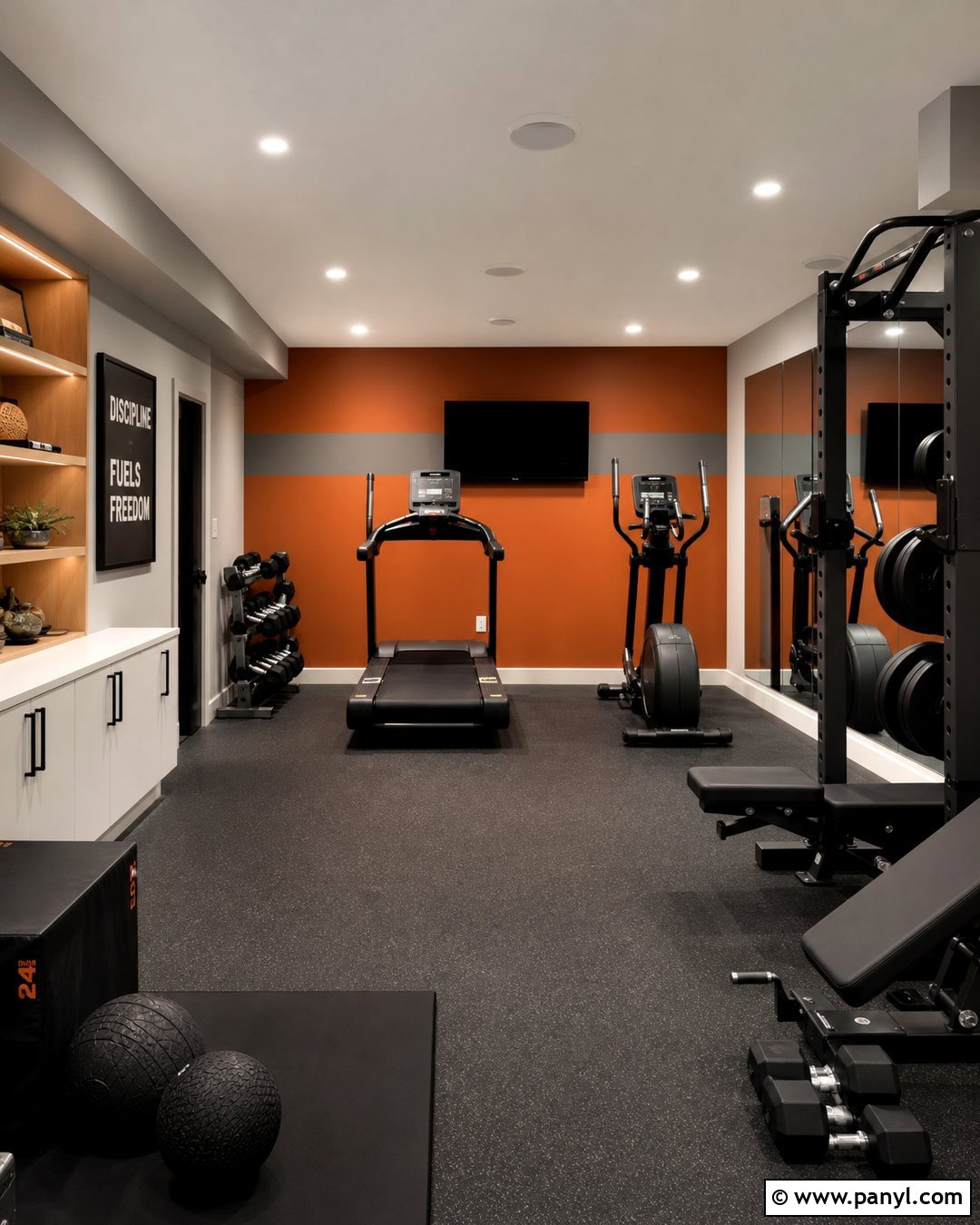
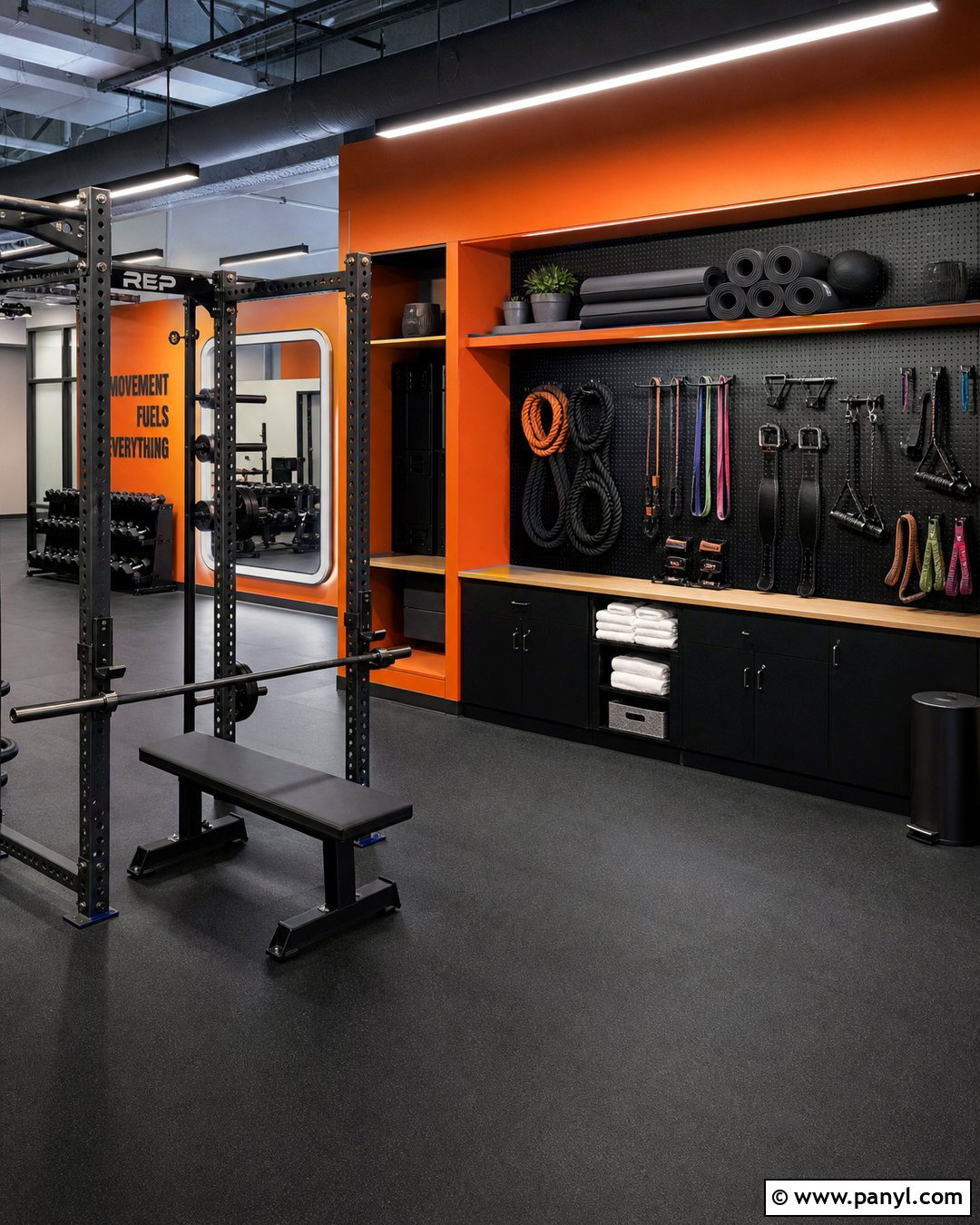
Burnt orange creates a high-energy basement gym when it is used with restraint and balanced by cooler neutrals. Paint the wall behind the cardio equipment in a deep, muted orange, then use light gray on the other walls and crisp white overhead. Charcoal flooring and black equipment provide a strong foundation, while maple shelves prevent the palette from looking too industrial. Add a broad horizontal gray stripe to the orange wall if you want a graphic feature that visually widens a narrow room. Keep the mirror wall simple and frameless so it reflects light rather than adding another heavy outline. White storage cabinets, gray towels, and neatly arranged black accessories complete the design. The final scheme feels motivating, organized, and suitable for fast-paced training sessions.
16. Mustard Yellow Basement Gym Walls
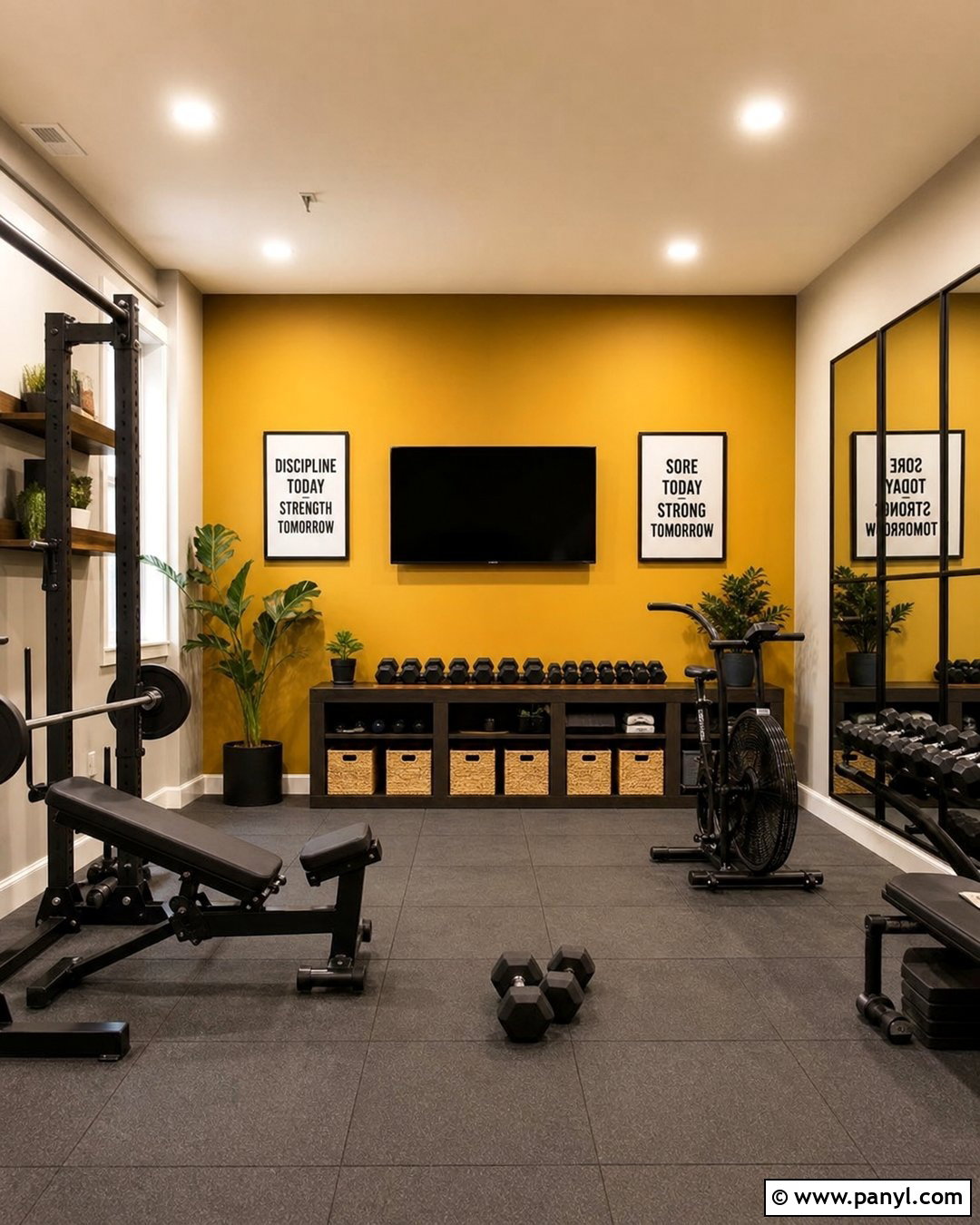
Mustard yellow can brighten a basement gym without the sharp intensity of lemon yellow. Use it on the far wall to create a warm focal point that draws the eye through the room. Paint the side walls soft greige and the ceiling bright warm white for balance. Medium-gray rubber tiles, black-framed mirrors, and matte black equipment give the yellow a modern setting. Introduce walnut shelves and tan storage baskets to repeat its earthy undertones. A rower or stationary bike can sit near the feature wall, while weights and functional equipment remain along the neutral sides. Choose simple white acoustic panels if needed and avoid adding several competing colors. With strong overhead lighting and organized equipment, mustard becomes cheerful and sophisticated rather than loud or overly playful.
17. Dusty Red Basement Gym Walls
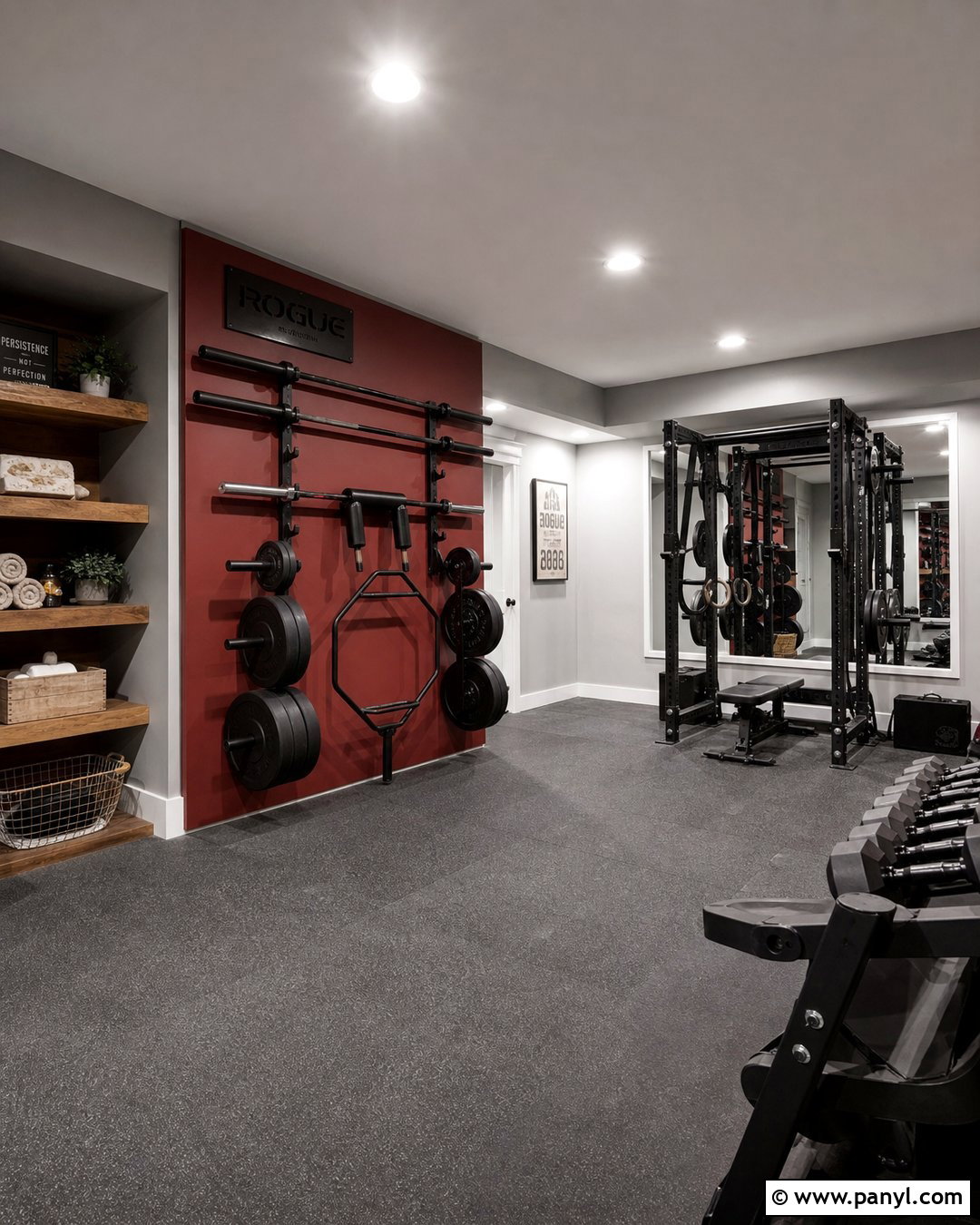
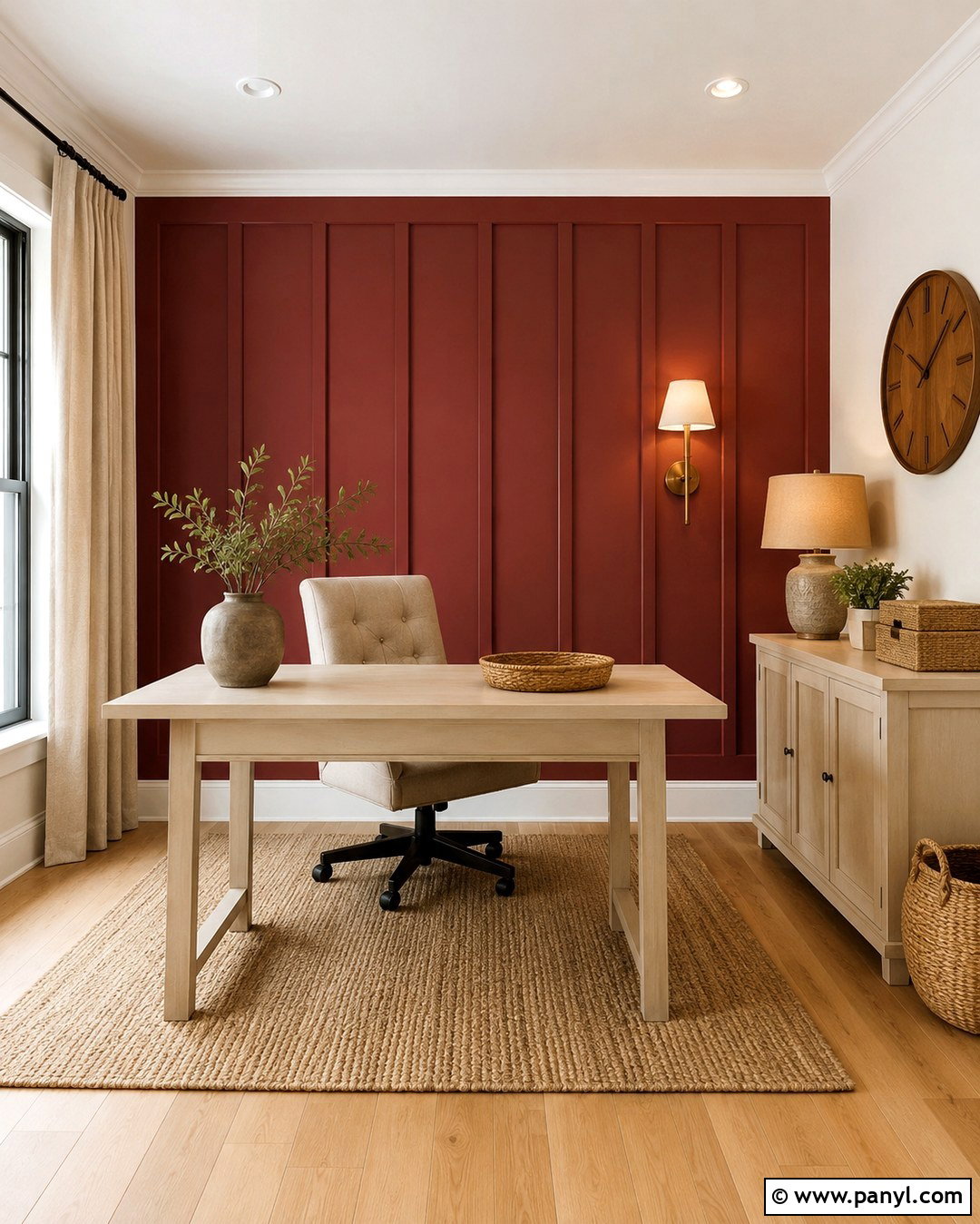
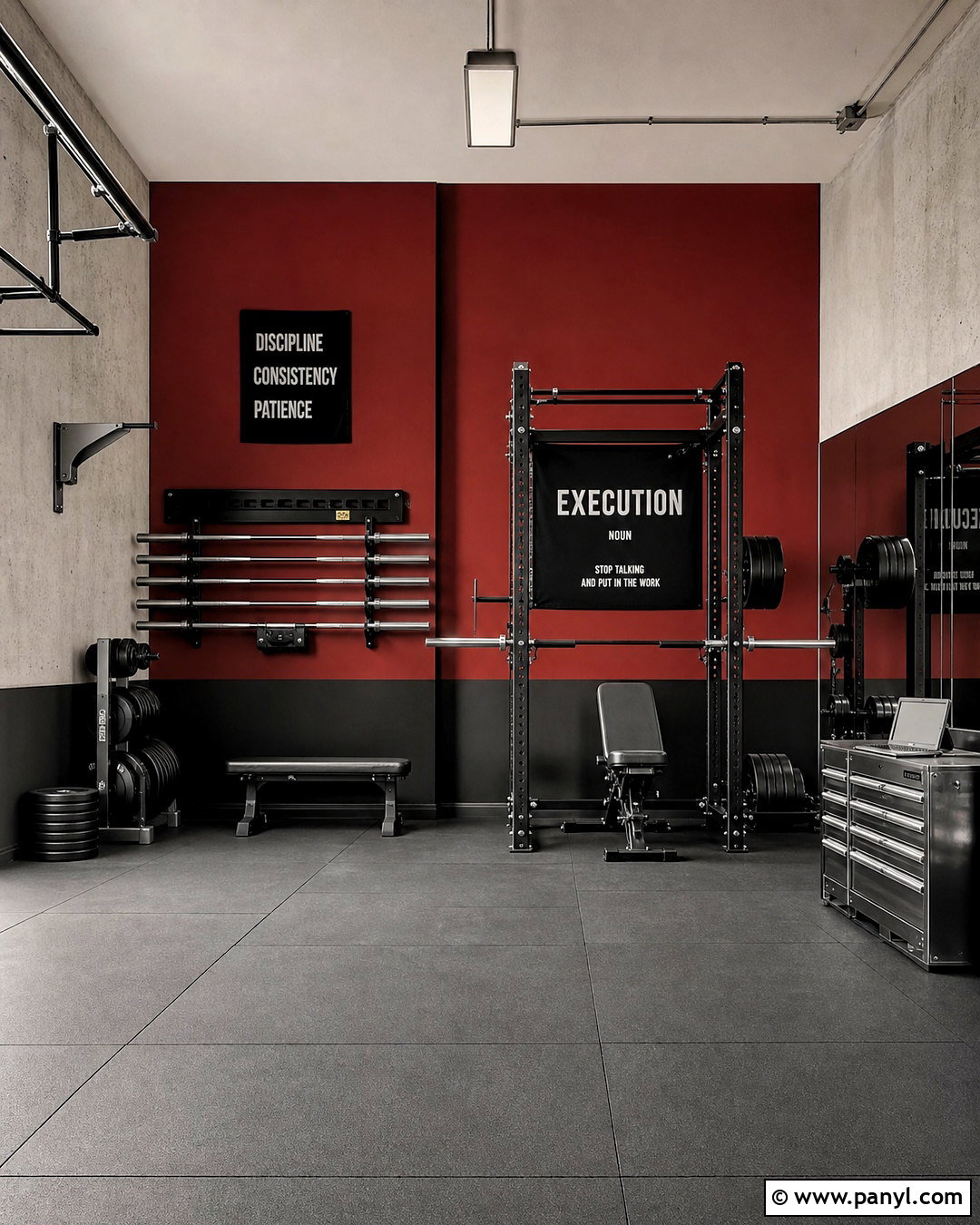
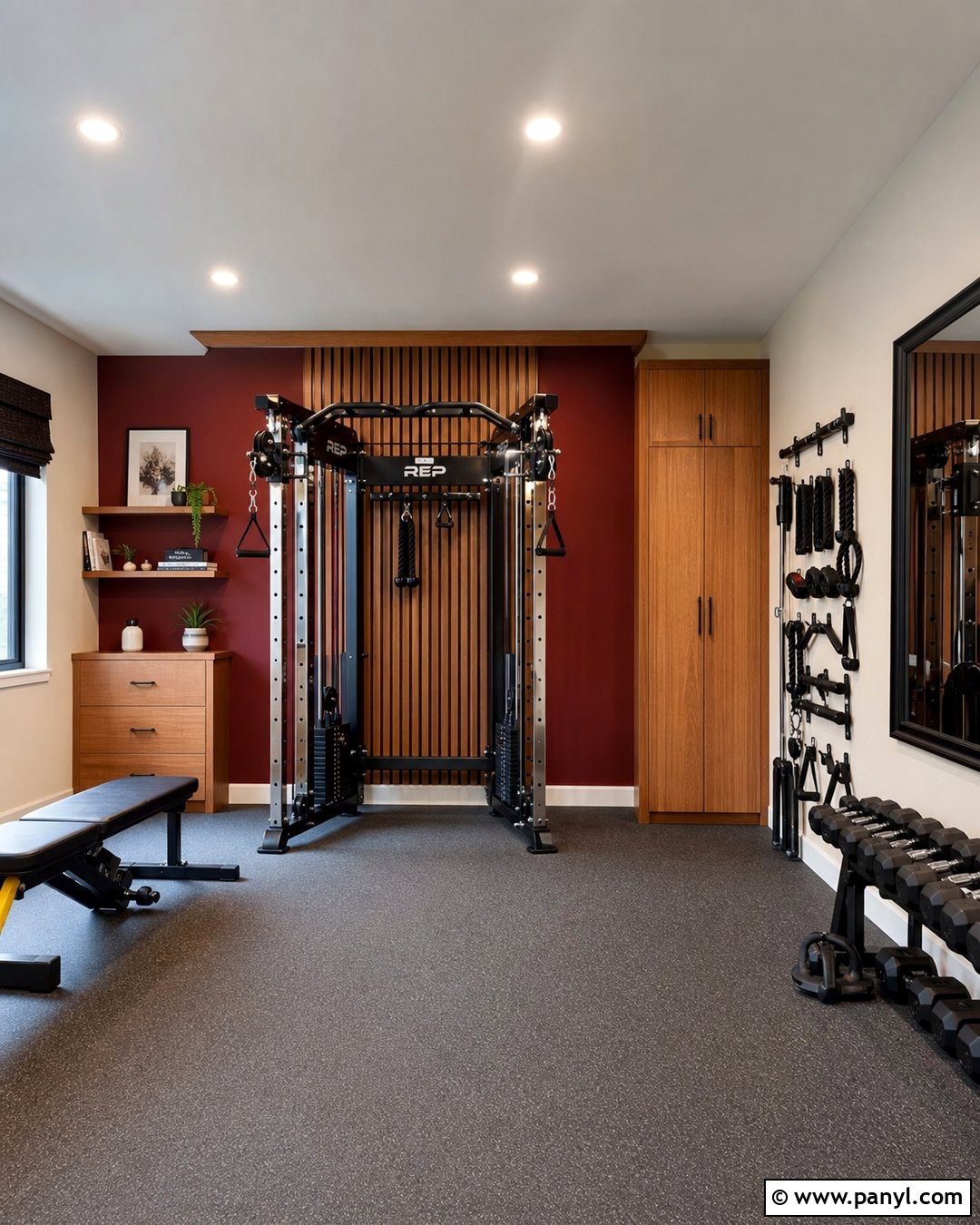
Dusty red walls create a strong workout atmosphere without the visual intensity of a pure primary red. Select a muted brick or clay-red shade for the equipment wall and pair it with warm gray surrounding walls. A white ceiling, bright fixtures, and a full mirror panel will prevent the palette from feeling enclosed. Use dark charcoal flooring, black steel equipment, and medium-tone wood shelving to build a balanced industrial look. Cream towels and neutral storage boxes provide small areas of relief from the deeper colors. Keep exercise accessories arranged in simple rows so the red background feels intentional rather than busy. This palette works especially well for boxing-inspired conditioning, weight training, or circuit workouts while remaining appropriate for a finished residential basement used by the whole household.
18. Taupe Basement Gym Walls
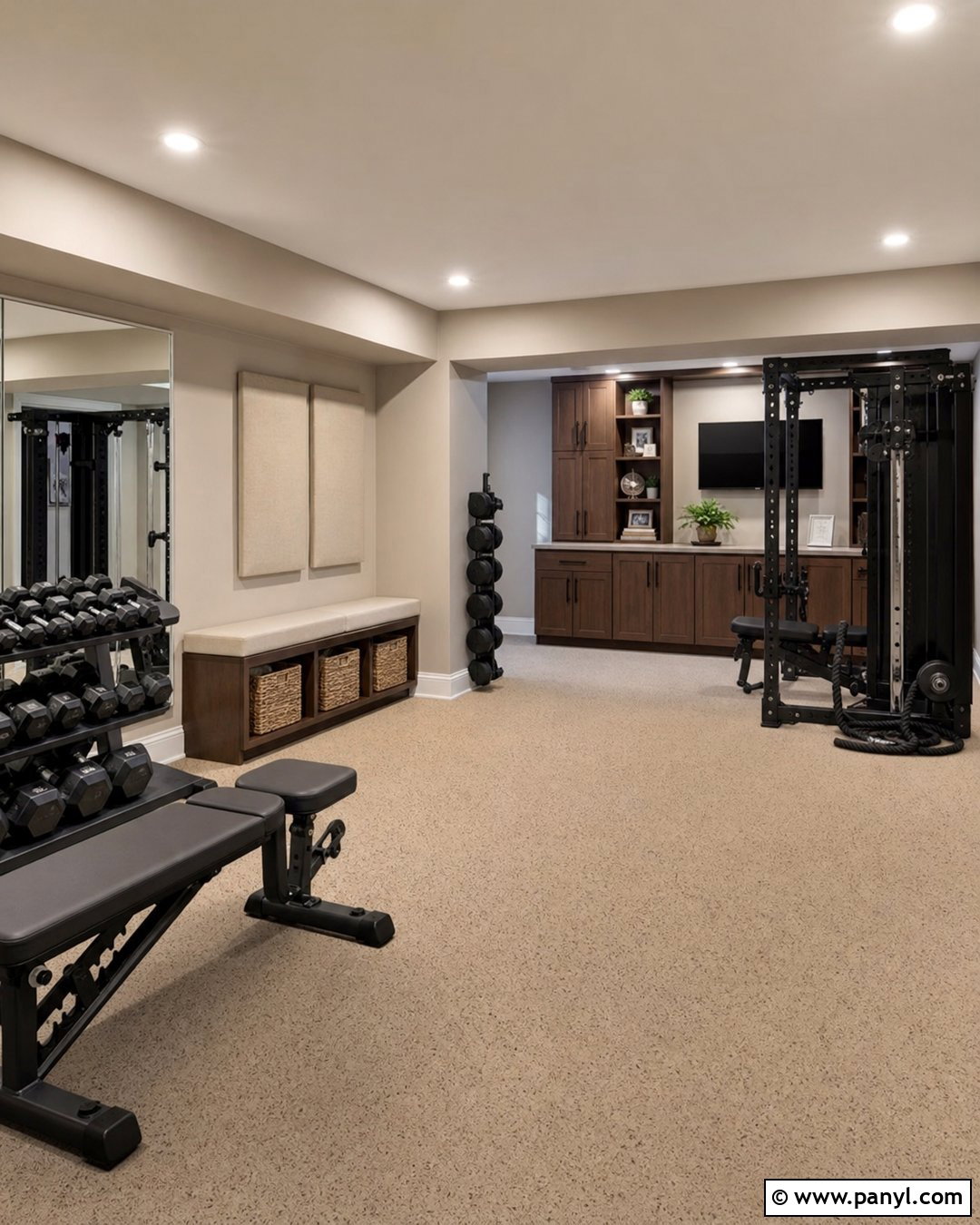
Taupe walls make a basement gym feel comfortable, finished, and closely connected to the rest of a neutral home. Choose a light mushroom taupe with balanced gray and brown undertones, then pair it with ivory ceilings and trim. Black-speckled beige rubber flooring introduces gym-level durability while preserving the softer palette. Use walnut cabinets, matte black exercise equipment, and large frameless mirrors for a clean transitional look. A low storage bench can hold towels, bands, and smaller weights without crowding the floor. Add simple oatmeal acoustic panels and one black-framed wall clock as practical decoration. Bright recessed lighting should cover both the lifting and mobility areas evenly. This understated color supports a calm room that can accommodate strength training, stretching, and general family fitness.
19. Sand Beige Basement Gym Walls
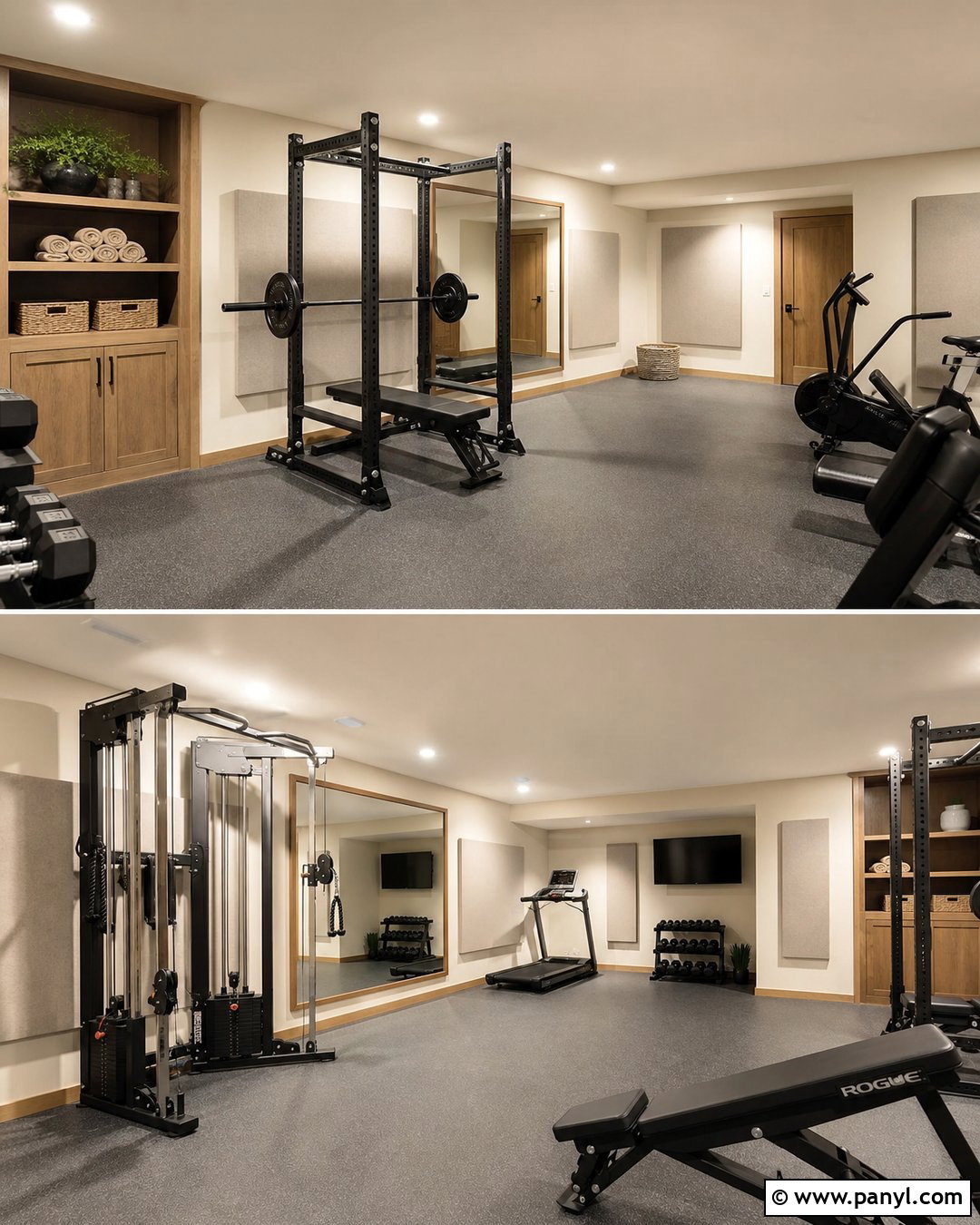
Sand beige is ideal for creating a basement gym that feels light, warm, and less utilitarian. Cover the walls in a pale sandy neutral and keep the ceiling a slightly brighter cream to emphasize height. Choose light gray rubber flooring, white oak storage cabinets, and black equipment for a clean contrast. A mirror wall framed with narrow wood trim can make the space feel more integrated with the natural palette. Add woven baskets for yoga blocks, matching beige towels, and warm gray acoustic panels. Arrange larger equipment along the perimeter so the softly colored center remains open for stretching or bodyweight exercises. Use bright, neutral-white fixtures rather than warm yellow bulbs. The completed room feels airy and relaxed while still providing the organization and durable surfaces expected in a functional gym.
20. White And Charcoal Basement Gym Walls
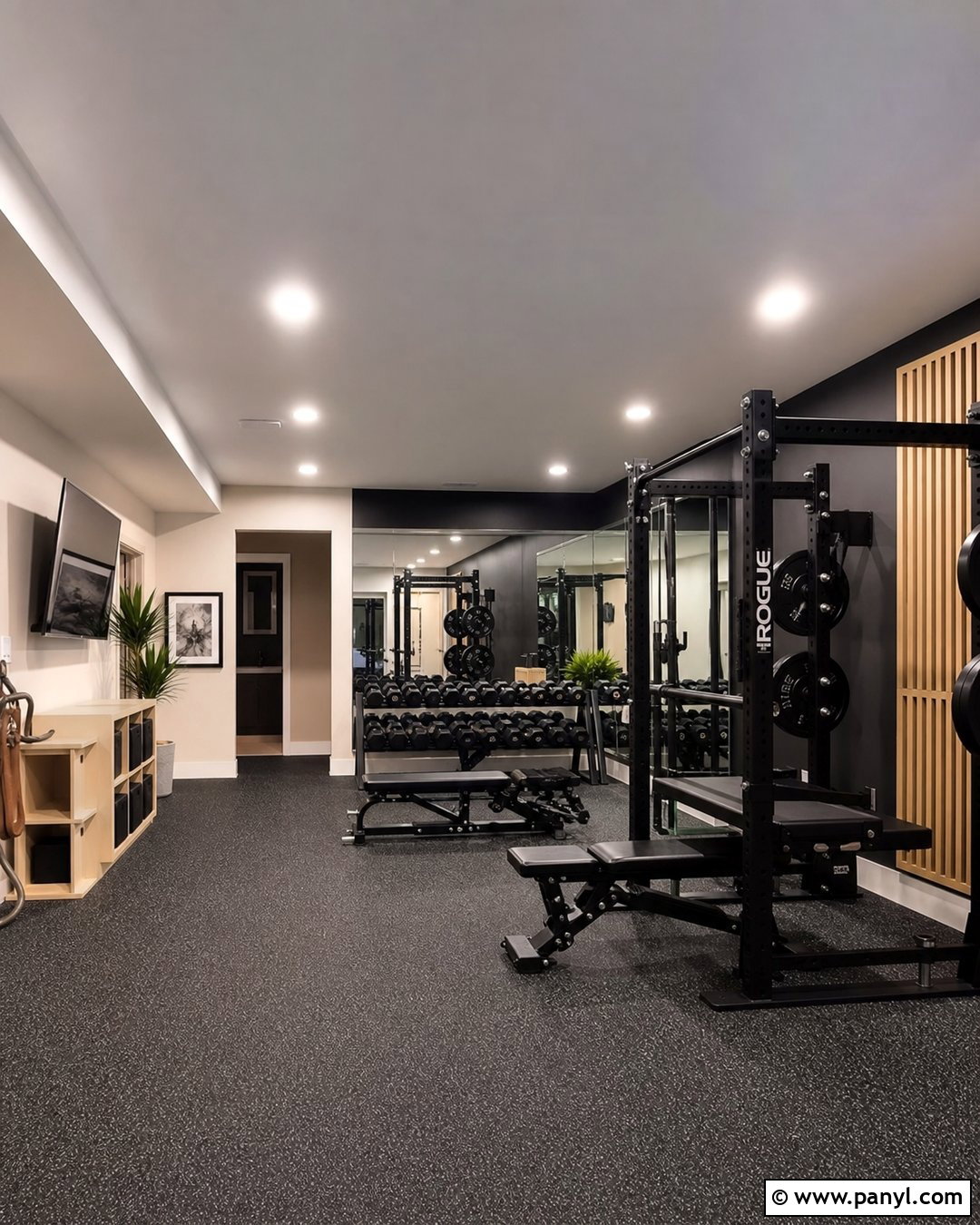
A white and charcoal wall scheme combines basement-friendly brightness with the visual focus of a darker training studio. Paint the two walls nearest the stairs or windows in warm white, then use charcoal behind the rack and free-weight station. Continue white across the ceiling to preserve height, and install gray-fleck rubber flooring that bridges both colors. Black equipment will blend into the charcoal area, while pale wood storage provides contrast and warmth. Place large mirrors on a white wall where they can reflect the brightest ceiling fixtures. A narrow wood-slat section can hold hooks, bands, and recovery tools without interrupting the two-color arrangement. This practical split visually organizes strength and mobility zones, making a medium-size basement gym feel purposeful, balanced, and easy to navigate.
Conclusion:
Choosing among these 20 Basement Gym Wall Colors becomes easier when you consider the entire room rather than paint alone. Review the amount of daylight, ceiling height, flooring, equipment finishes, and type of training before committing to a palette. Warm whites, greiges, and soft earth tones can keep compact rooms open, while charcoal, navy, teal, and forest green create focused studio character. Energetic colors work best when balanced with quieter neutral walls and bright lighting. Always test large paint samples under the fixtures you plan to use, since basement lighting can noticeably change undertones. With coordinated mirrors, storage, flooring, and equipment, the final color will make your gym feel intentionally designed.

Related Ideas and Inspiration:
Leave a Reply