
Orange can make a kitchen feel sunny, welcoming, and full of personality, but the right supporting palette determines whether it looks polished or overpowering. This guide to **35 orange kitchen walls** explores complete kitchen looks built around citrus, peach, terracotta, rust, coral, and burnt orange tones. Each design combines wall color with practical cabinet finishes, countertops, flooring, lighting, hardware, and decor. You will find choices for small kitchens, open layouts, farmhouse rooms, modern apartments, and traditional homes. Some schemes use orange across every wall, while others create balance with a focused accent wall. Whether you prefer earthy warmth or energetic color, the following sections offer approachable ways to recreate **35 orange kitchen walls**.
1. Burnt Orange Kitchen Walls With White Cabinets
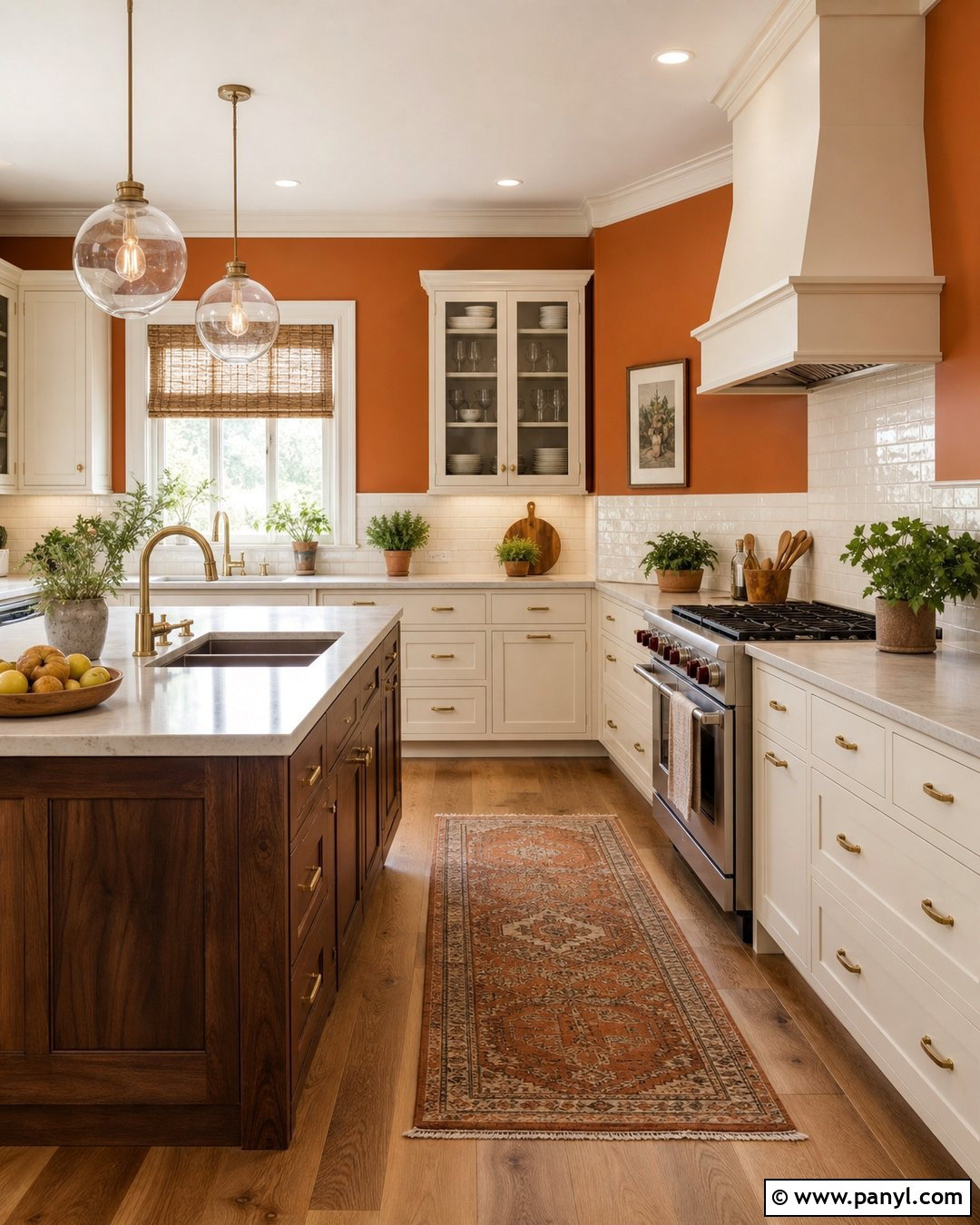
Burnt orange walls give a white kitchen depth without sacrificing its bright, clean character. Choose creamy white Shaker cabinets rather than a sharp blue-white finish, which can make earthy orange appear harsher. Warm quartz countertops, an ivory subway tile backsplash, and medium oak flooring create a smooth transition between the two colors. Use brushed brass pulls and simple glass pendants to introduce subtle shine. A walnut island or butcher-block worktop can make the room feel even more grounded. Keep window treatments light and understated, such as woven shades or natural linen panels. Finish the complete look with ceramic bowls, leafy herbs, and a washable runner containing rust, cream, and muted green.
2. Terracotta Orange Kitchen Walls With Wood Cabinets
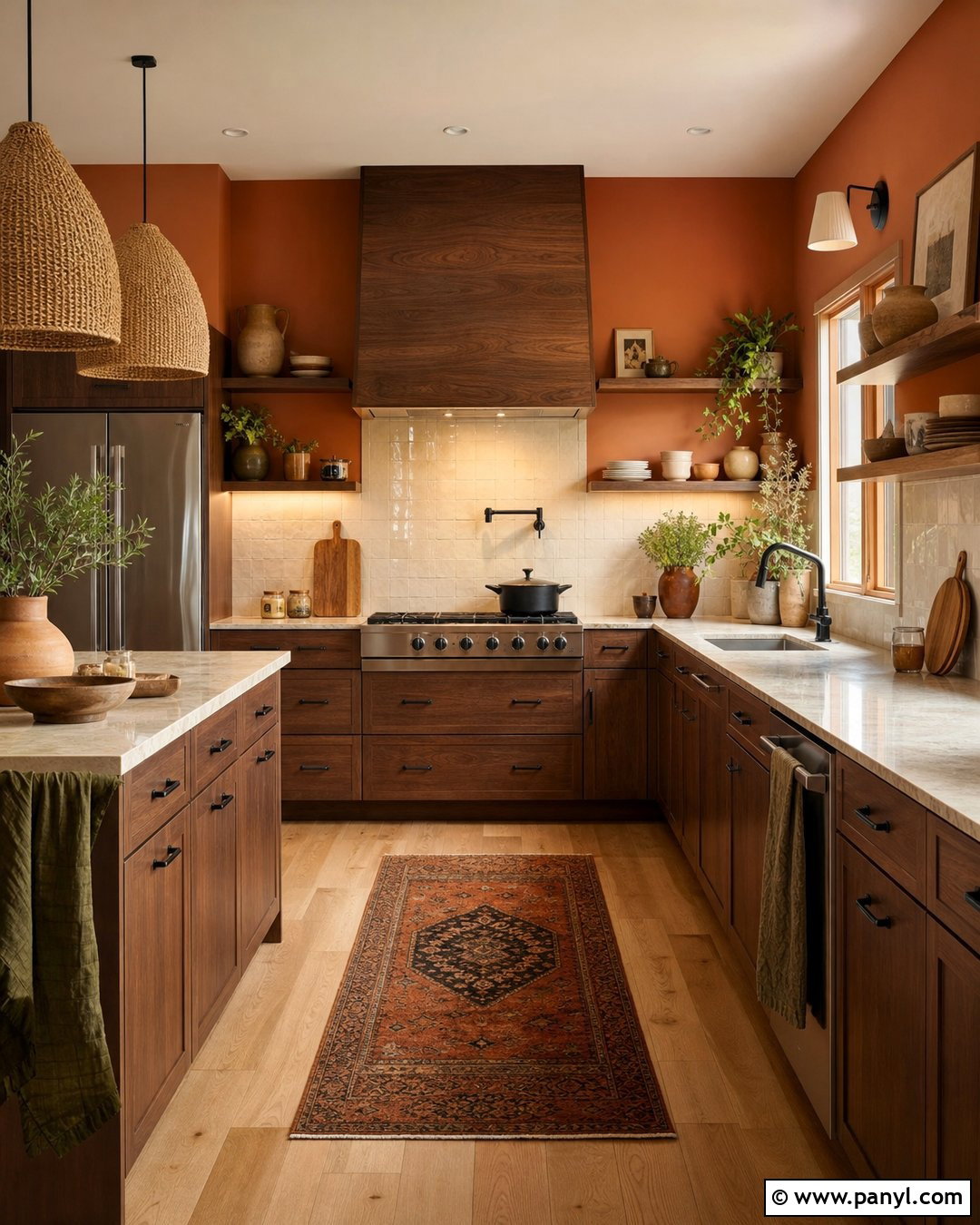
Terracotta orange walls and natural wood cabinetry create a warm, organic kitchen that feels connected to the outdoors. Medium-tone oak or walnut cabinets work especially well because their visible grain adds movement without competing with the wall color. Select pale limestone countertops and a handmade cream tile backsplash to brighten the scheme. Wide-plank wood flooring can continue the natural palette, while matte black hardware adds enough contrast to define the cabinets. Include woven pendant lights over the island and simple pottery on open shelving. Muted olive textiles, clay planters, and fresh herbs bring in a cooler accent. Good daylight and layered task lighting prevent the earthy materials from making the kitchen feel overly dark.
3. Light Orange Kitchen Walls With Cream Cabinets
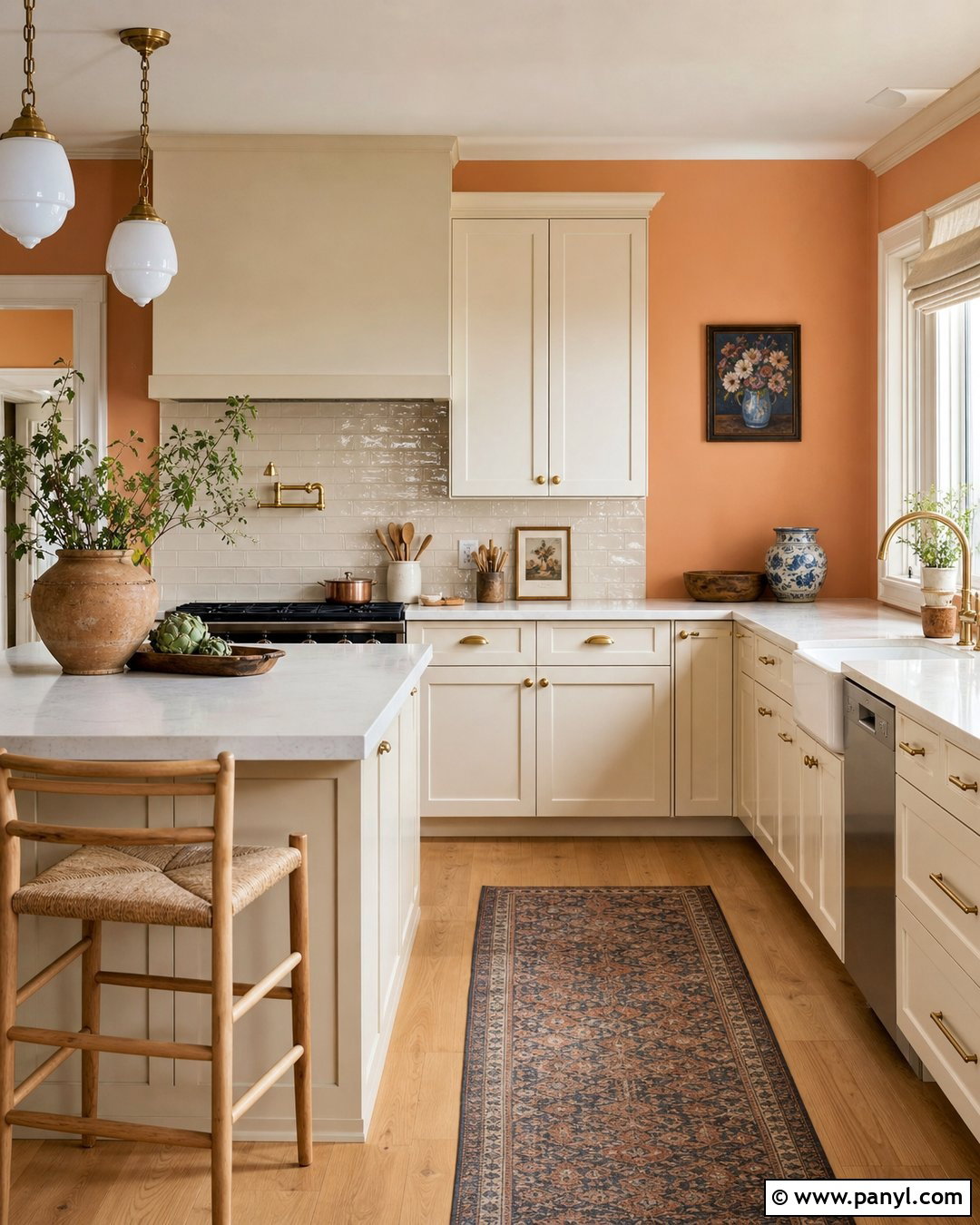
Soft apricot-orange walls can warm a cream kitchen while maintaining a gentle, airy mood. This combination suits rooms with limited daylight because neither color creates a heavy visual boundary. Choose cabinets with a warm ivory undertone, pale quartz counters, and a simple backsplash made from glossy off-white tile. Light maple or natural oak flooring continues the soft palette. Add aged brass knobs, a milk-glass ceiling light, and pale wood stools for understated character. Small touches of dusty blue can provide balance through dish towels, pottery, or a patterned runner. Keep countertops mostly clear so the subtle color relationship remains visible. The finished kitchen feels comfortable, cheerful, and easy to live with throughout the year.
4. Orange Accent Wall With Gray Cabinets
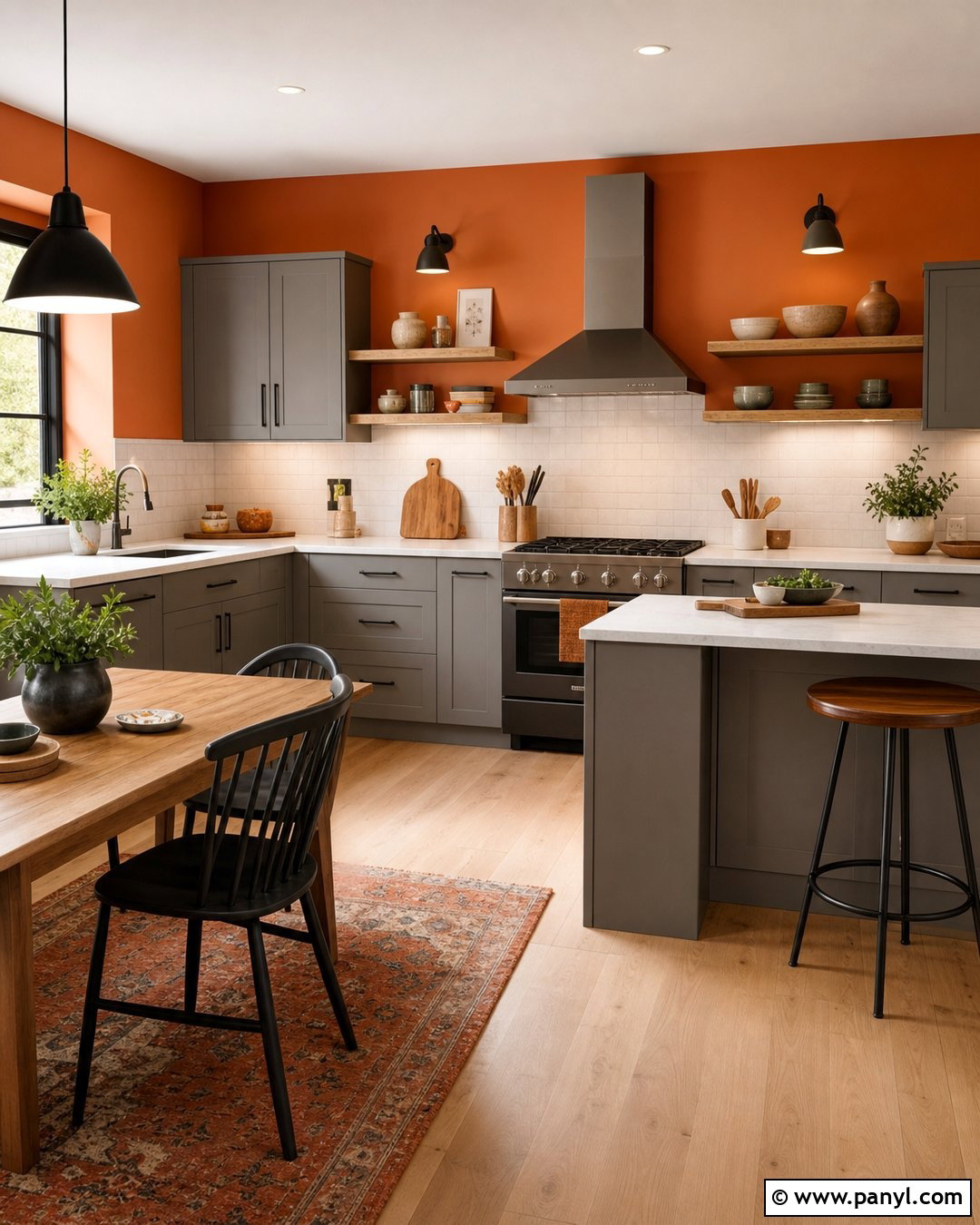
A single orange accent wall can energize gray cabinetry without covering the entire kitchen in bold color. Paint the wall behind a breakfast table, open shelving, or a freestanding hutch so it becomes a deliberate focal point. Midtone warm gray cabinets are easier to pair with orange than cool, bluish gray finishes. Use white quartz countertops, pale oak flooring, and a soft white backsplash to keep the room balanced. Matte black hardware connects naturally with gray, while wood stools introduce needed warmth. Repeat the orange subtly in a rug or ceramic bowl rather than matching every accessory. Position bright pendants or adjustable sconces near the accent wall so its rich color remains clear in the evening.
5. Peach Orange Kitchen Walls With Sage Green Cabinets
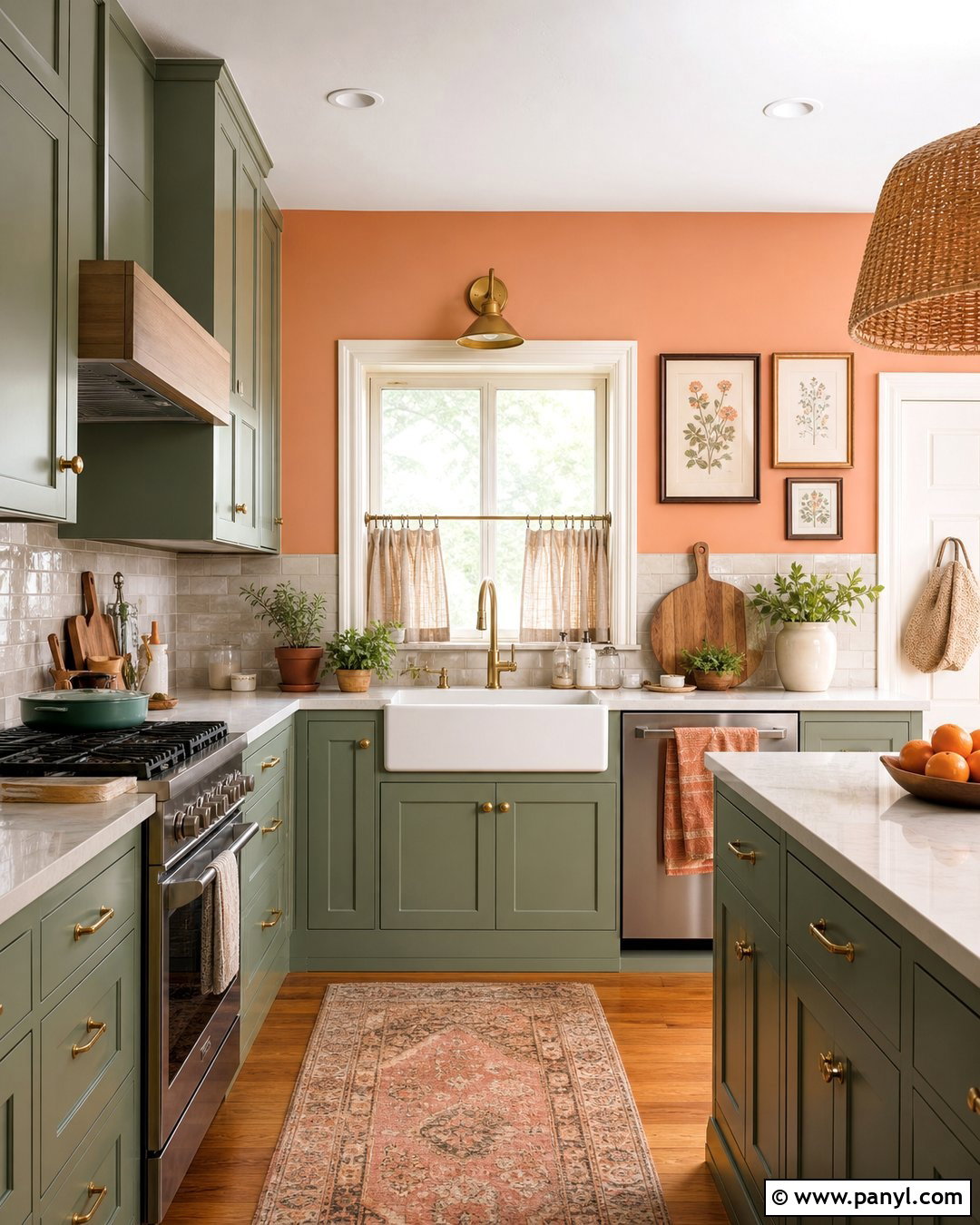
Peach-orange walls and sage green cabinets create a fresh kitchen palette inspired by gardens and sun-warmed fruit. Use a muted peach rather than a candy-bright shade so the walls feel soft beside the earthy cabinetry. Cream quartz countertops and off-white zellige tiles reflect light while preserving the gentle color story. Choose unlacquered brass hardware, a white farmhouse sink, and warm oak flooring for relaxed character. A small island painted sage can provide storage without visually crowding the room. Decorate with botanical prints, linen café curtains, wood cutting boards, and potted herbs. This complete combination works particularly well in cottage kitchens, breakfast rooms, and smaller spaces that need color without strong visual weight.
6. Tangerine Orange Kitchen Walls With Black Cabinets
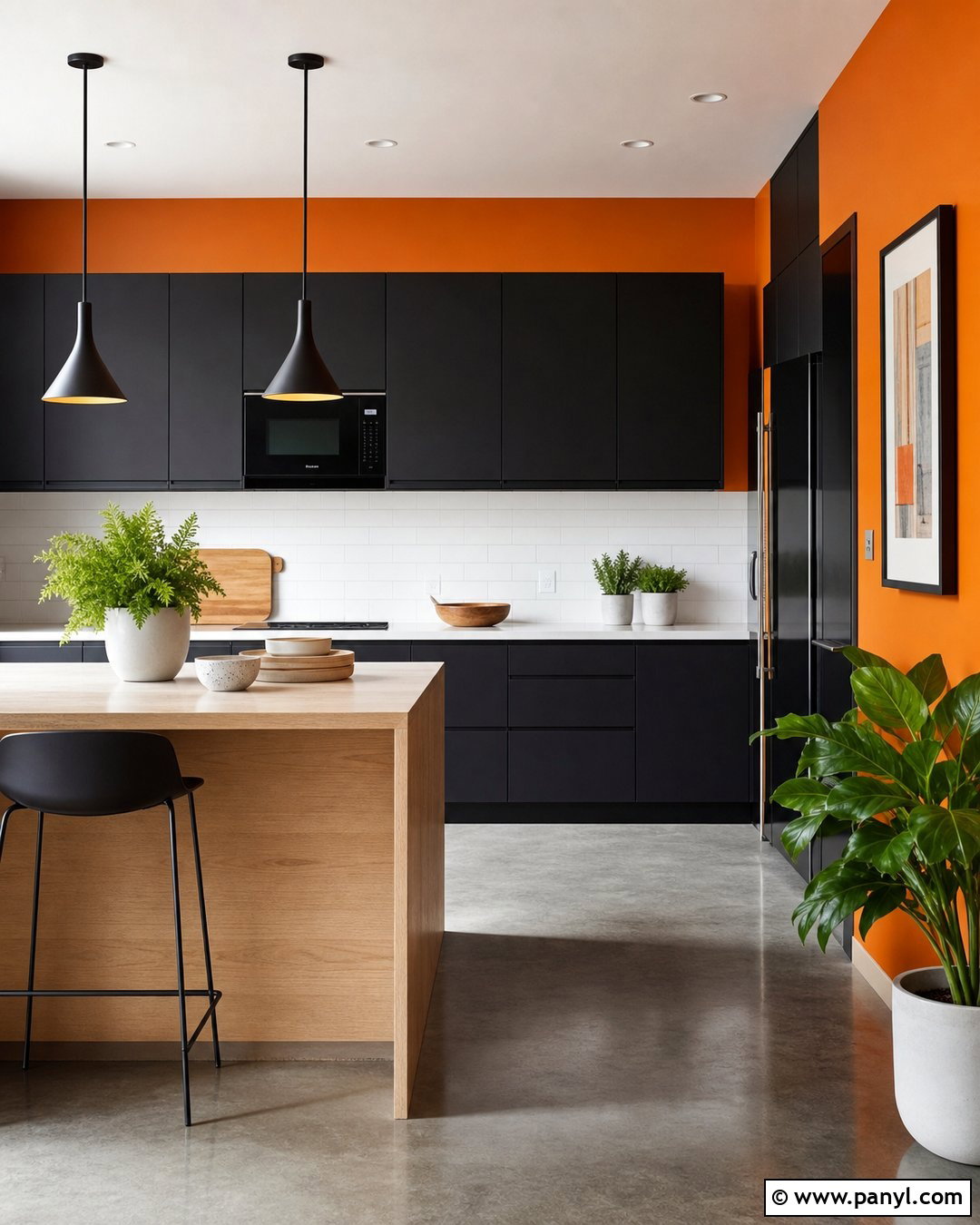
Vivid tangerine walls can transform black cabinetry into a bold contemporary kitchen rather than a dark, serious space. Keep the cabinets flat-front and matte so the bright walls remain the main statement. White quartz countertops and a clean white backsplash provide visual breathing room between the strong colors. Polished concrete or light gray porcelain flooring supports the modern direction without adding another dominant tone. Use slim black pendants, integrated appliances, and minimal hardware to preserve clean lines. A pale wood dining table or butcher-block island softens the contrast. Limit accessories to a few white ceramics and green plants. Strong natural light is important, while under-cabinet LEDs keep preparation areas crisp after sunset.
7. Rust Orange Kitchen Walls With Navy Cabinets
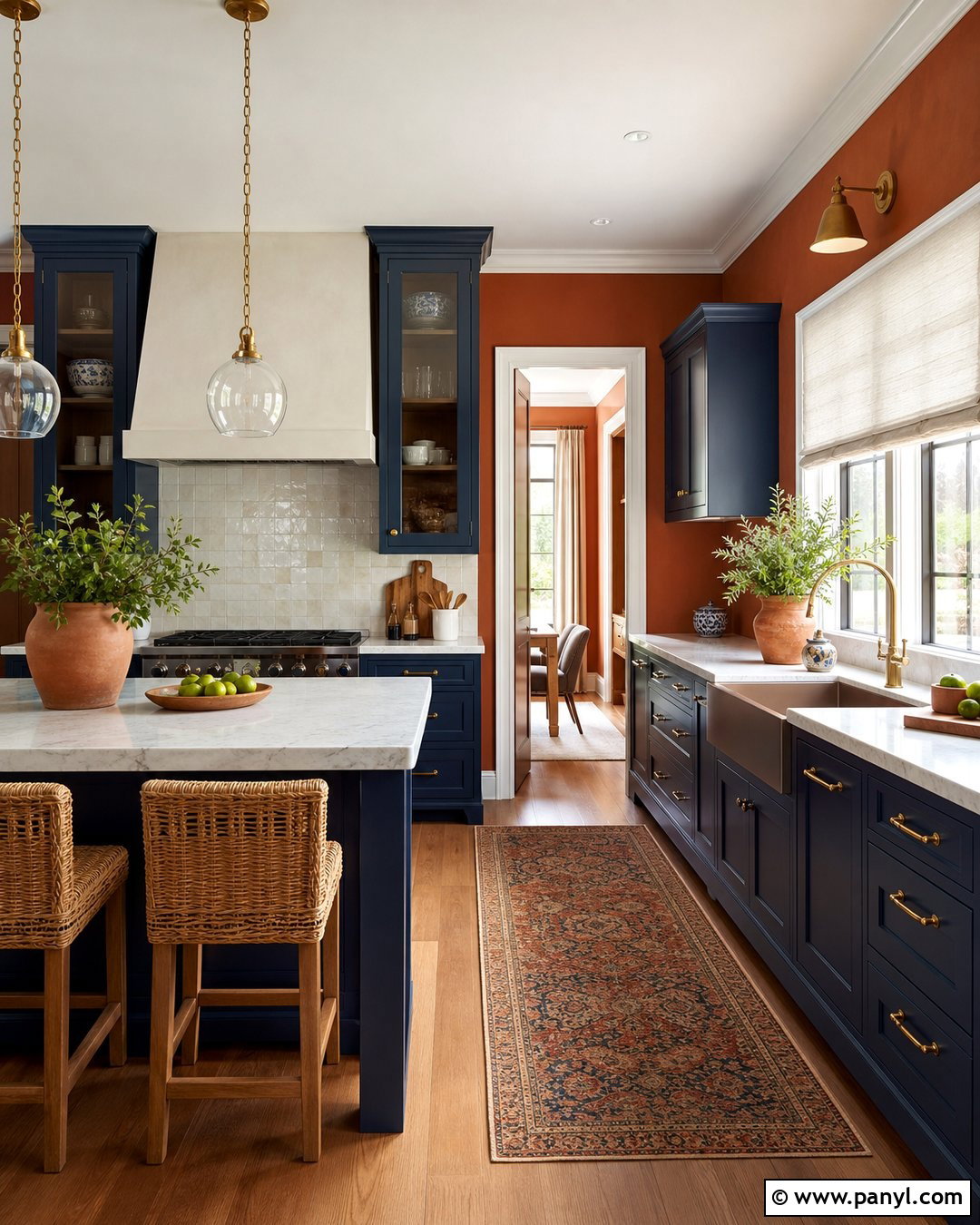
Rust orange and navy blue create a rich complementary scheme that feels confident but still grounded. Choose a muted, red-based orange for the walls and a deep navy with a slightly softened finish for the cabinets. White marble-look quartz countertops prevent the darker palette from becoming visually heavy. An ivory backsplash, warm oak floor, and brass hardware introduce brightness and natural warmth. Consider a navy island with woven counter stools if the kitchen has enough space. Use cream linen shades and simple glass pendants to maintain an open atmosphere. Terracotta pots, blue-and-white ceramics, and a vintage-style runner can tie the colors together. This complete look suits traditional, transitional, and character-filled kitchens particularly well.
8. Coral Orange Kitchen Walls With Teal Cabinets
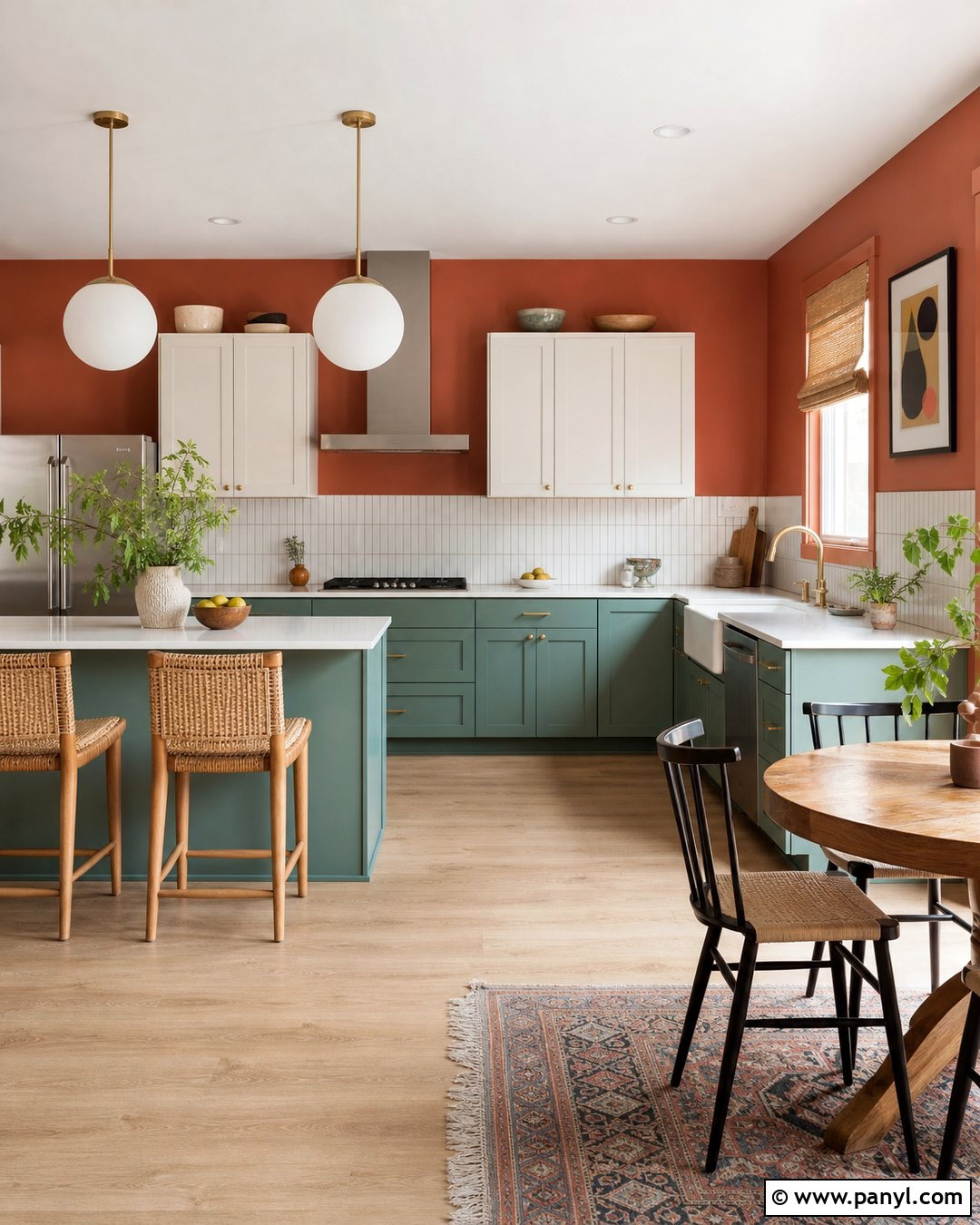
Coral-orange walls paired with teal cabinets create a colorful kitchen that feels playful yet intentionally designed. To avoid a tropical theme, choose dusty, slightly muted versions of both shades. Balance them with white quartz counters, a warm white backsplash, and natural maple flooring. Simple brass pulls add polish, while white globe pendants prevent the room from becoming too visually busy. If teal cabinetry across the entire room feels overwhelming, use it on the lower cabinets and keep the upper cabinets warm white. A compact wood dining set, woven shades, and graphic artwork complete the space. Repeat coral and teal in only a few textiles, allowing the main surfaces to carry the palette without excessive decorative matching.
9. Orange Kitchen Walls With Dark Wood Cabinets
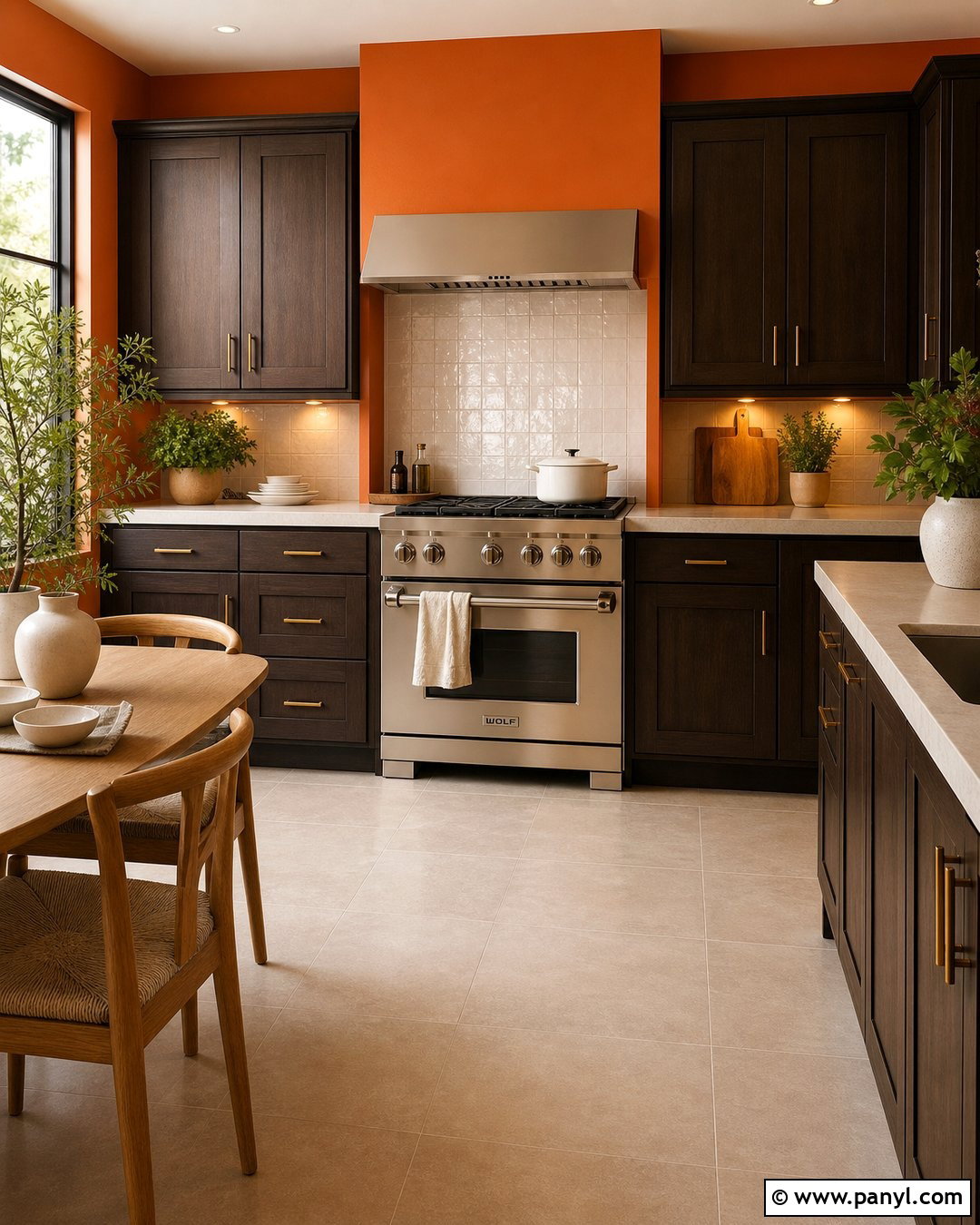
Orange walls can highlight the richness of dark wood cabinets when the room includes enough pale surfaces for balance. Choose a clear, warm orange with brown undertones rather than a neon citrus shade. Cream stone counters and a softly reflective ivory backsplash separate the wall color from espresso or walnut cabinetry. Light porcelain flooring can brighten the lower half of the room, while brushed nickel or aged brass hardware adds definition. Install under-cabinet lighting to reveal the wood grain and prevent shadowed work areas. A light oak breakfast table offers contrast without feeling disconnected. Keep decorative accents simple, using white pottery, linen towels, and green plants. The overall kitchen should feel warm and layered, not dim or overly rustic.

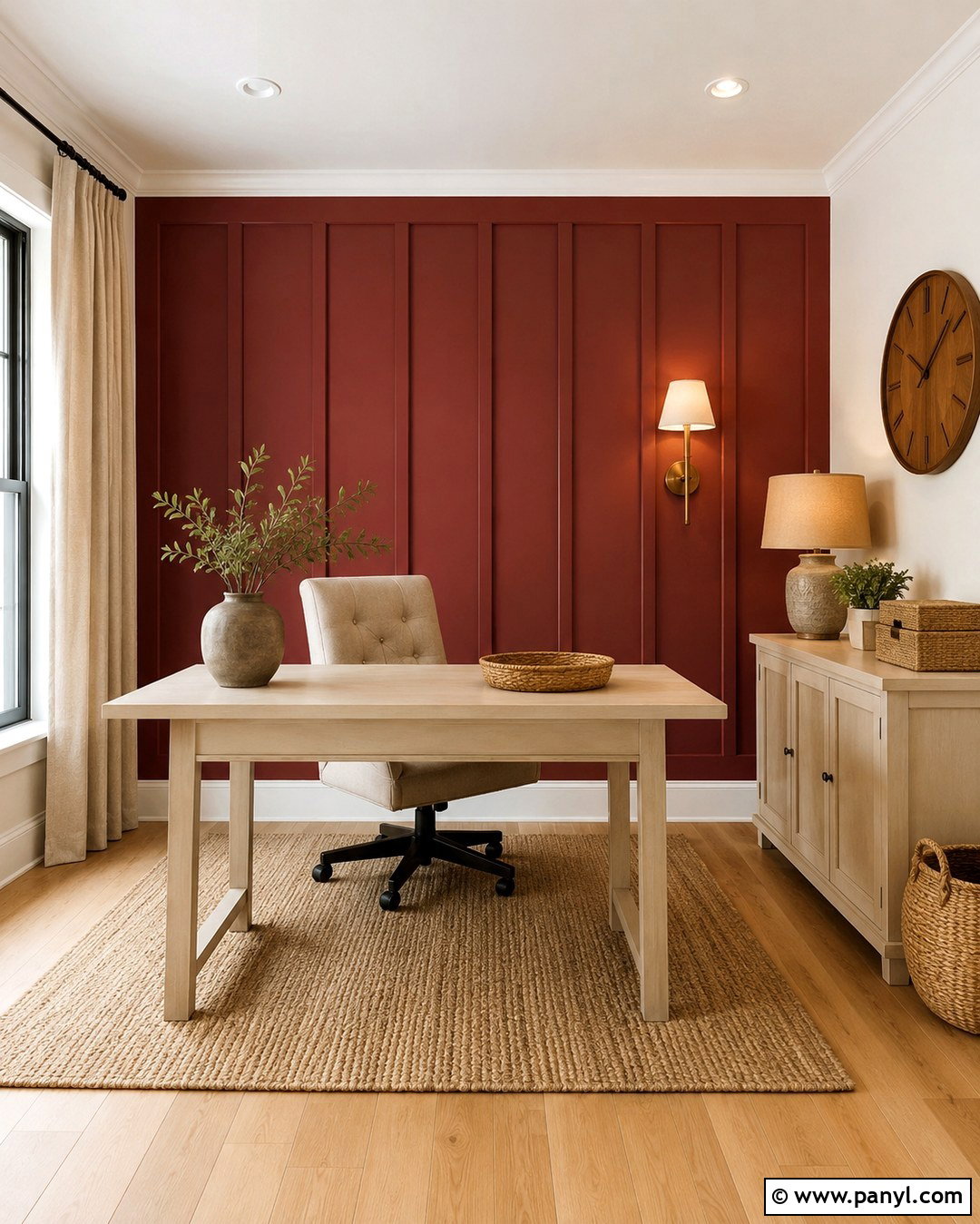
10. Orange Kitchen Walls With Oak Cabinets
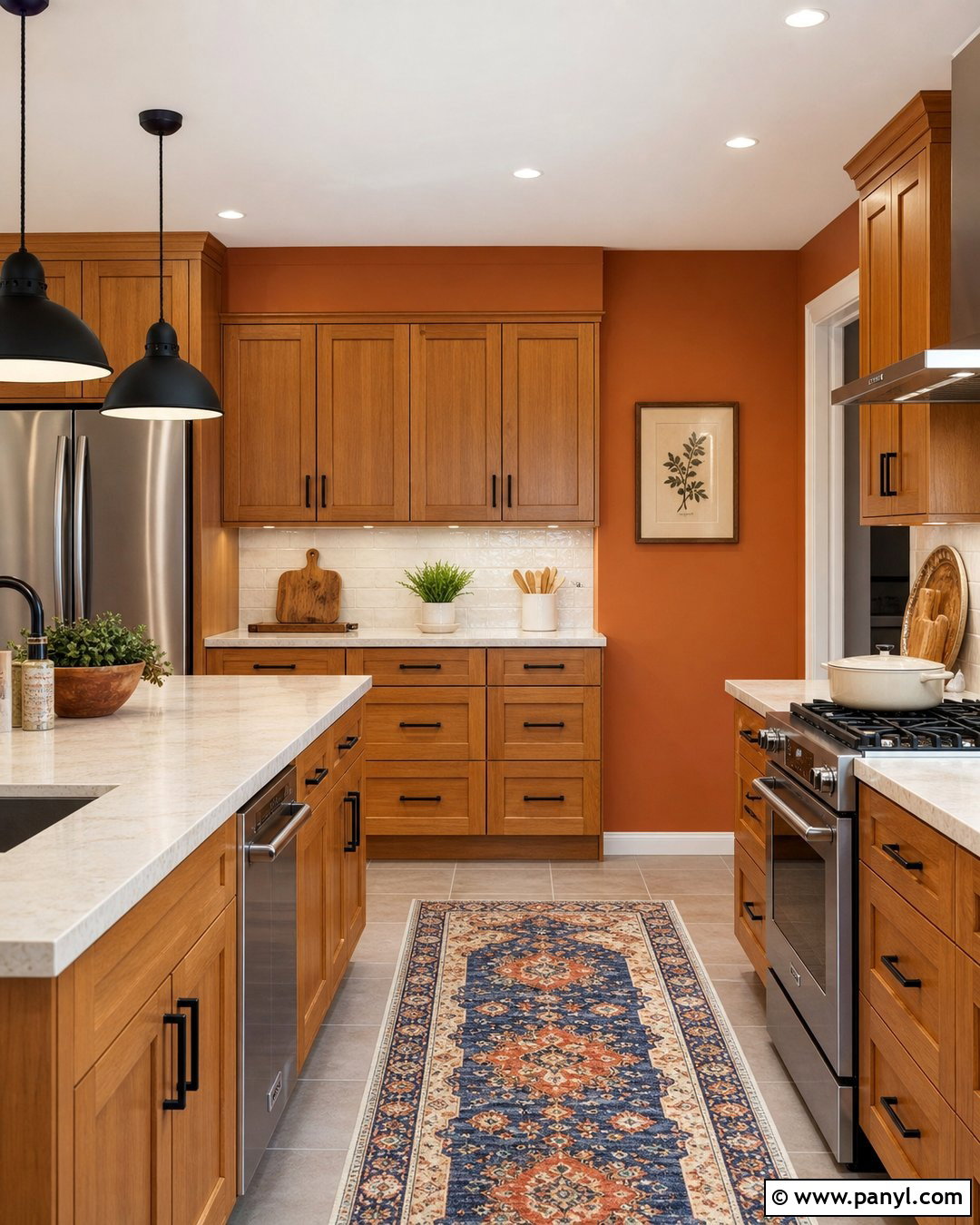
Honey oak cabinetry already contains orange undertones, so the wall color should create gentle coordination rather than exact matching. Select a muted clay orange that is either noticeably lighter or deeper than the wood. This difference helps each surface remain distinct. Use creamy quartz counters, an off-white backsplash, and warm gray floor tile to reduce excessive golden tones. Black hardware and simple black pendants provide crisp contrast that modernizes the cabinetry. Add a washable rug containing blue, cream, and rust for a cooler counterpoint. Keep large appliances in stainless steel or matte white. With the right tonal separation, orange walls can make existing oak cabinets appear intentional, cohesive, and considerably more updated.
11. Orange Kitchen Walls With Walnut Cabinets
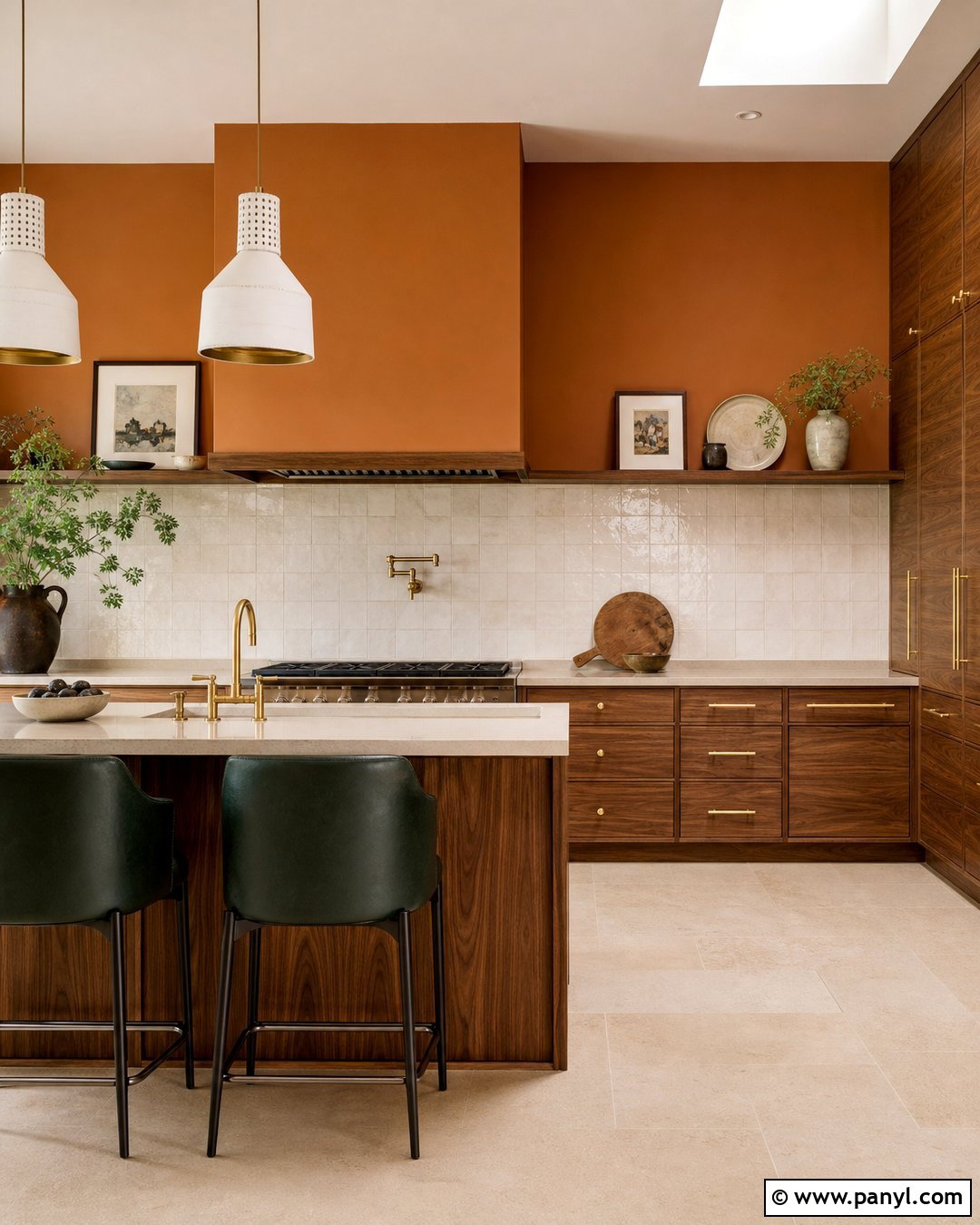
Walnut cabinets and subdued orange walls create a sophisticated kitchen filled with warm, natural color. A cinnamon or paprika orange complements walnut’s varied grain while remaining distinct from the cabinetry. Choose pale cream counters with subtle veining and a backsplash made from handmade ivory tile. Brushed brass fixtures support the warmth, but use them sparingly to avoid an overly coordinated effect. Light oak or creamy limestone flooring prevents the lower cabinets from making the room feel heavy. Add sculptural white pendants above the island and under-cabinet lighting along preparation areas. Dark green stools, simple pottery, and a few leafy branches introduce contrast. The finished room feels refined, welcoming, and suitable for both modern and transitional homes.
12. Orange Kitchen Walls With Blue Cabinets
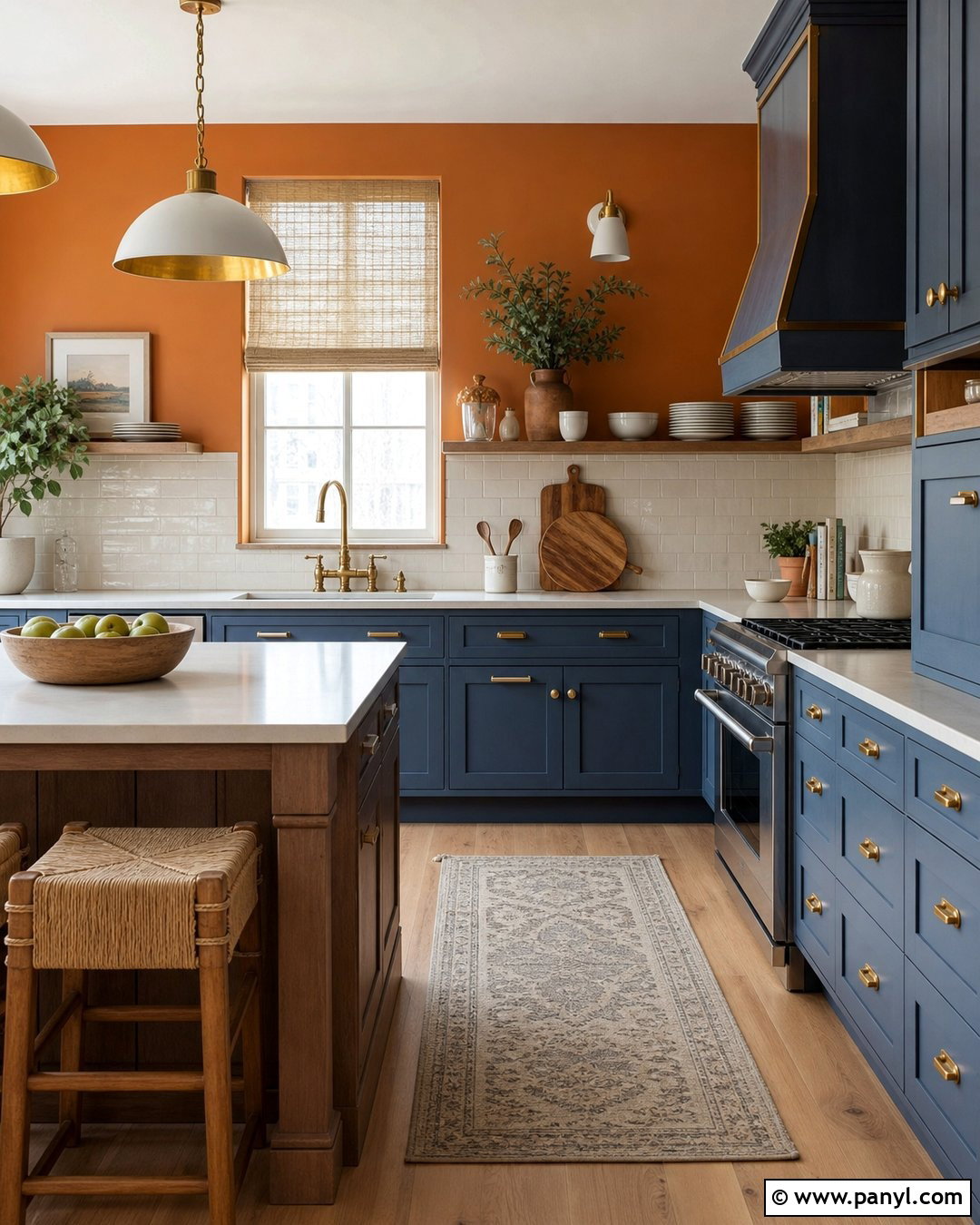
Blue cabinets provide one of the clearest ways to balance warm orange kitchen walls. Choose dusty denim or medium slate blue instead of a highly saturated primary blue. Pair the cabinets with soft orange walls containing earthy undertones, then connect the combination through warm white counters and backsplash tile. Light wood flooring keeps the room casual, while brushed brass hardware adds a refined finishing touch. A blue island can anchor an open layout, especially when paired with natural woven stools. Introduce white dishes, wood cutting boards, and neutral linen window treatments rather than adding more bright colors. The resulting kitchen feels lively but controlled, with enough contrast to make both the walls and cabinets appear deliberate.
13. Orange Kitchen Walls With Green Cabinets
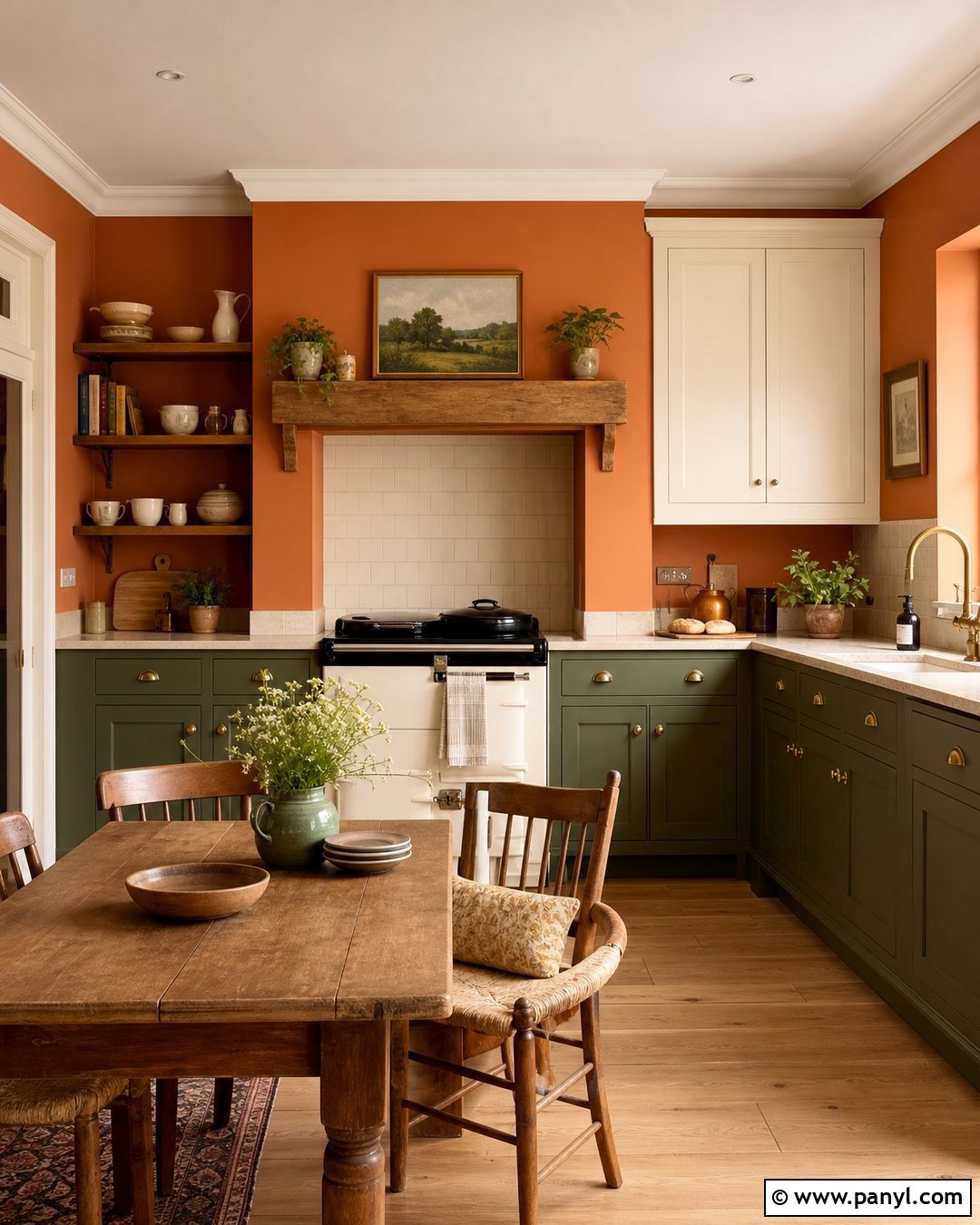
Earthy green cabinets can make orange walls feel grounded and surprisingly natural. Use moss, olive, or forest green cabinetry alongside a mellow pumpkin-orange wall color. Pale stone countertops and cream backsplash tiles create a quiet transition between these strong hues. Choose oak flooring, aged brass hardware, and warm white lighting to reinforce the organic palette. Open shelves can display neutral ceramics and clear glassware without adding clutter. If the kitchen is small, reserve the darker green for lower cabinets and paint the upper cabinets cream. A rustic wood table, woven seat cushions, and potted herbs complete the full room. This combination works especially well in cottage, farmhouse, Mediterranean, and nature-inspired kitchens.
14. Orange Kitchen Walls With White Subway Tile
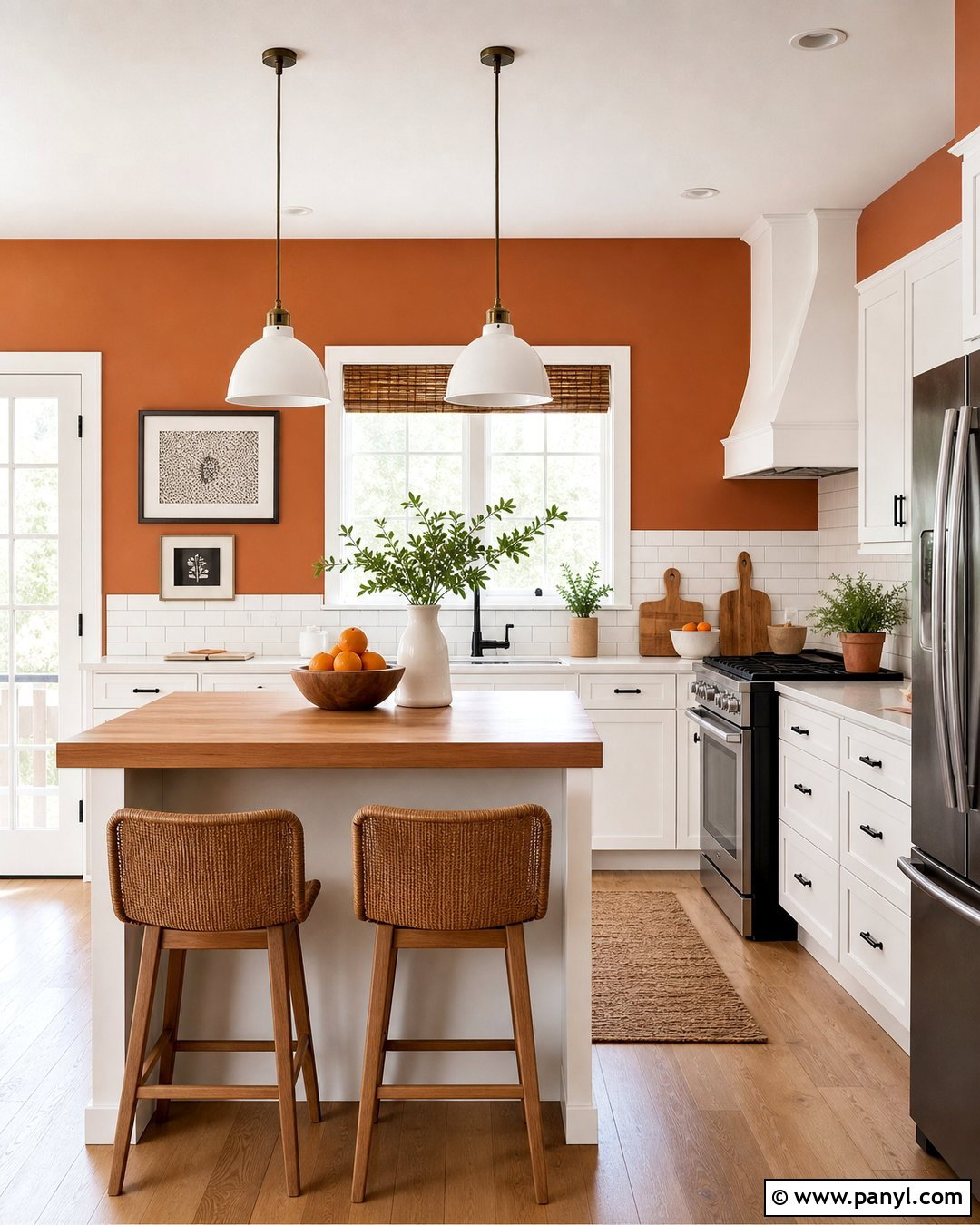
Orange walls above a white subway tile backsplash give a familiar kitchen finish more energy and personality. Extend the tile behind the stove and sink, then allow the orange paint to appear across upper wall areas and around windows. Warm white cabinets maintain continuity, while medium wood flooring keeps the scheme from feeling clinical. Select medium-gray grout for subtle definition without creating a harsh grid. Black or brass hardware can both work, depending on whether you want crisp contrast or traditional warmth. Include a simple wood island, white pendants, and woven counter stools. A few terracotta accessories can reinforce the walls, but use them lightly. The overall design remains practical, bright, and approachable for everyday family life.
15. Orange Kitchen Walls With Marble Backsplash
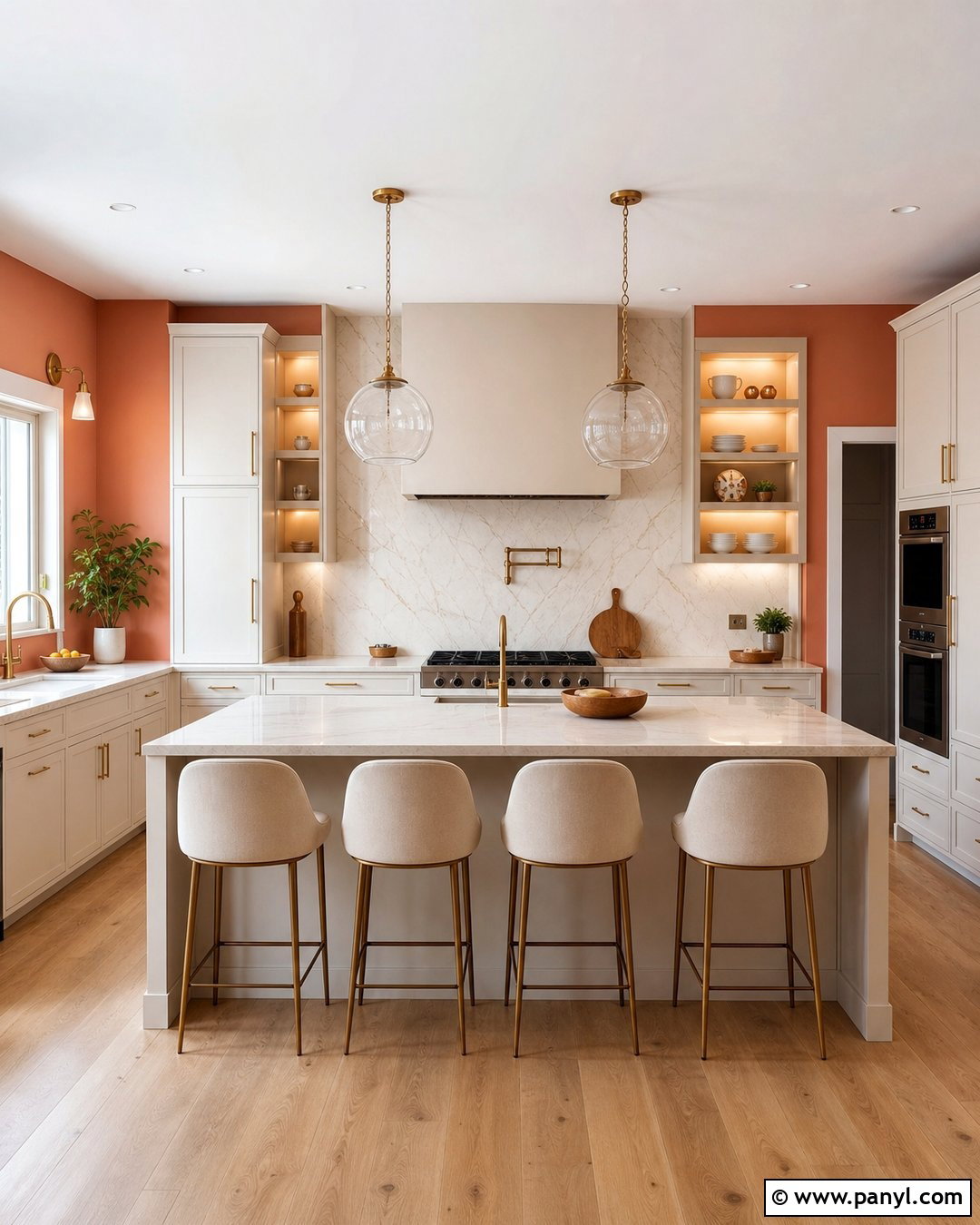
A marble backsplash can elevate orange walls by adding pale color, movement, and a refined natural finish. Choose warm white marble with beige or soft gray veining rather than a strongly cool slab. Extend it from the countertop to the underside of the cabinets for a clean, continuous surface. A muted persimmon wall color looks particularly polished with warm white or greige cabinetry. Add brushed brass fixtures, light oak flooring, and glass pendants to continue the elegant palette. Keep the island simple and generously proportioned, with seating upholstered in cream or tan. Minimal countertop decor allows the marble and orange walls to remain visible. This look feels luxurious without requiring an overly formal kitchen layout.
16. Orange Kitchen Walls With Brick Backsplash
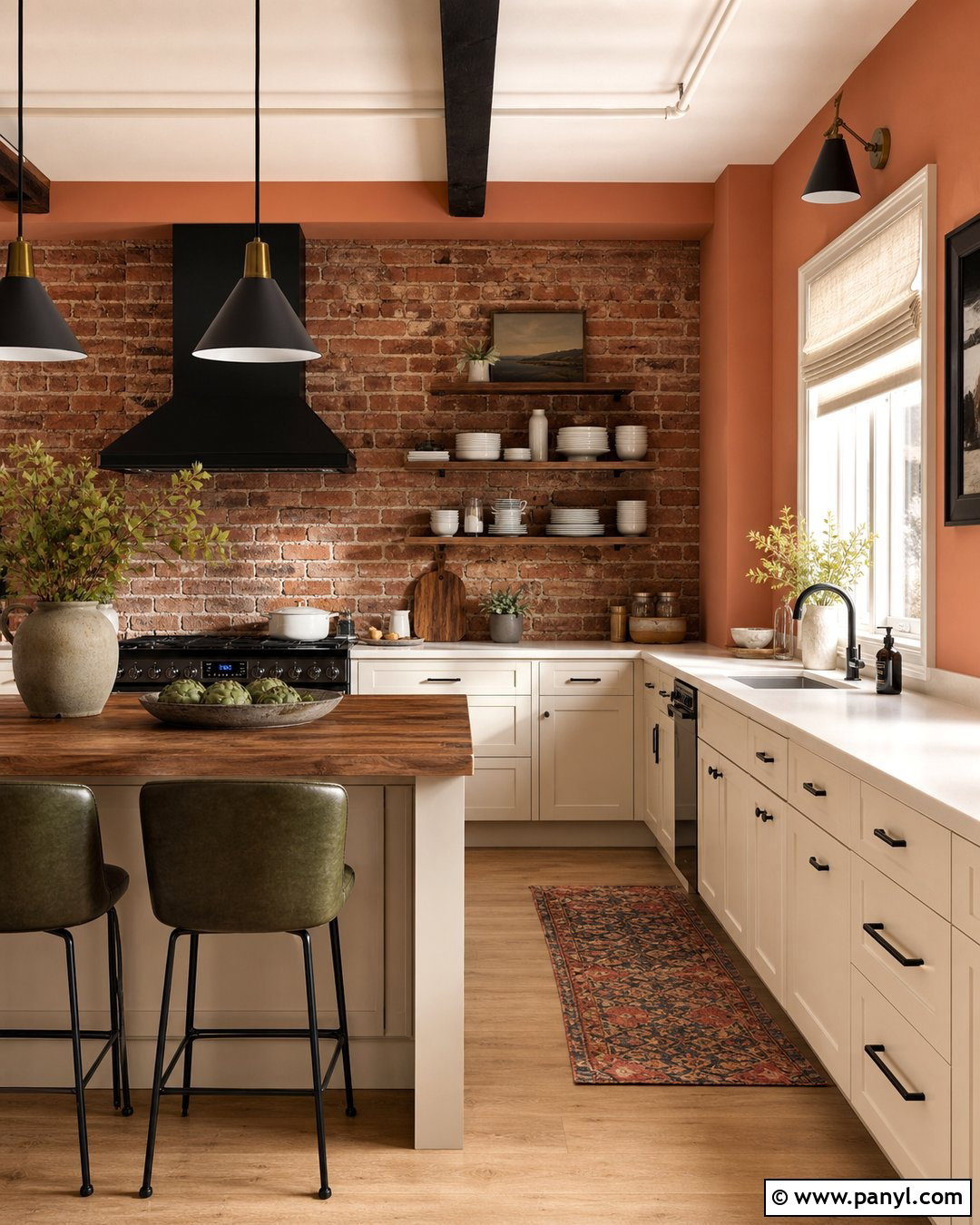
Exposed brick and orange walls can coexist beautifully when their tones are clearly separated. Choose a dusty peach or muted pumpkin paint that is lighter than the brick, allowing the masonry to retain its texture and definition. Cream Shaker cabinets and pale quartz countertops brighten the room, while black hardware references the darker marks within reclaimed brick. Use medium oak floors for continuity and simple industrial pendants over a wood island. Avoid adding too many red accessories, which could make the palette feel overly warm. Instead, include olive green stools, white ceramics, and linen window shades. The complete kitchen combines rustic texture with comfortable color, making it suitable for farmhouse homes, lofts, and relaxed transitional interiors.
17. Orange Kitchen Walls With Open Shelves
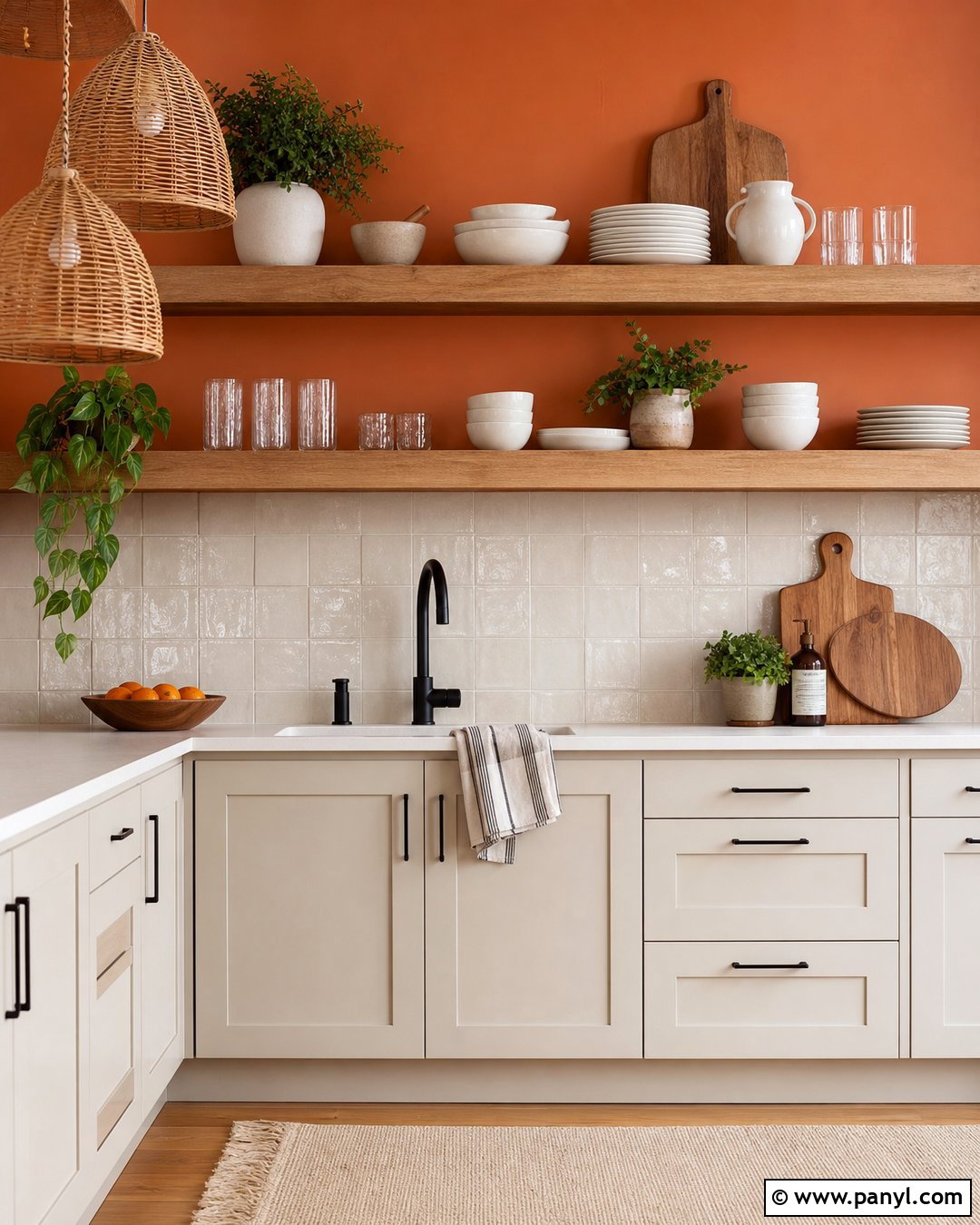
Open shelves stand out beautifully against orange kitchen walls and provide an opportunity to layer practical objects into the color scheme. Install thick natural oak or walnut shelves on a burnt orange wall, using simple black or brass brackets. Keep lower cabinetry cream, warm gray, or muted green to balance the exposed wall area. Pale quartz counters and a handmade ivory backsplash make the preparation zone feel clean. Arrange frequently used white dishes, clear glasses, wood boards, and a few small plants on the shelves. Leave visible space between items so the orange background still shows. Finish the kitchen with woven pendants, oak flooring, and a narrow neutral runner. The result feels collected, functional, and warm without appearing cluttered.
18. Orange Kitchen Walls With Black Accents
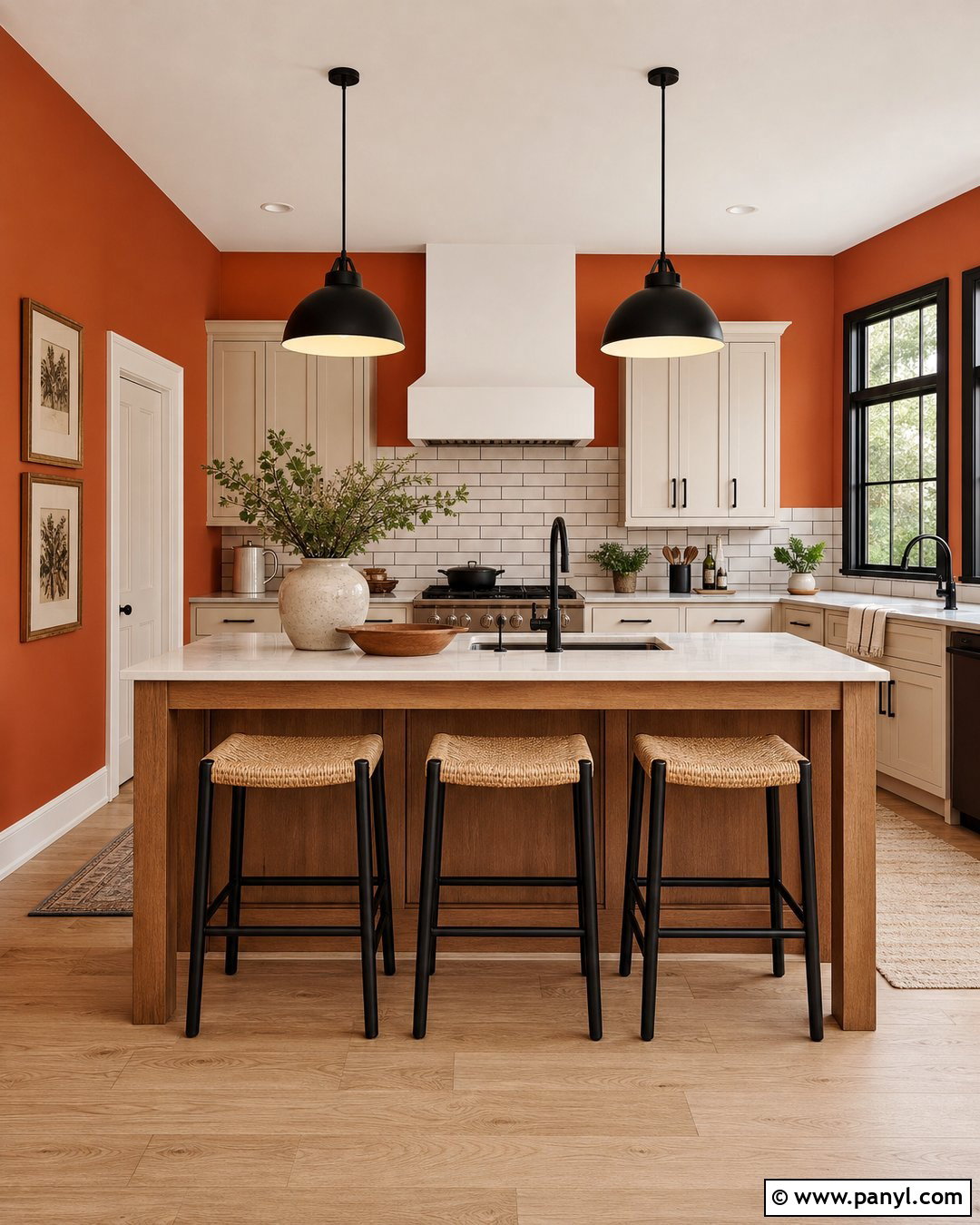
Black accents give orange kitchen walls a crisp outline and prevent the palette from looking overly soft. Start with a muted pumpkin or terracotta wall color, then add black window frames, cabinet pulls, faucets, and pendant lights. Warm white cabinetry and pale quartz countertops keep the room bright, while an oak island introduces natural texture. A white tile backsplash with dark grout can repeat the graphic contrast in a practical way. Limit black to defined structural details rather than using it across every major surface. Natural woven stools and cream textiles soften the edges. This balanced kitchen feels modern and energetic, yet it remains comfortable enough for a busy household and approachable enough for an average-size home.
19. Orange Kitchen Walls With Brass Hardware
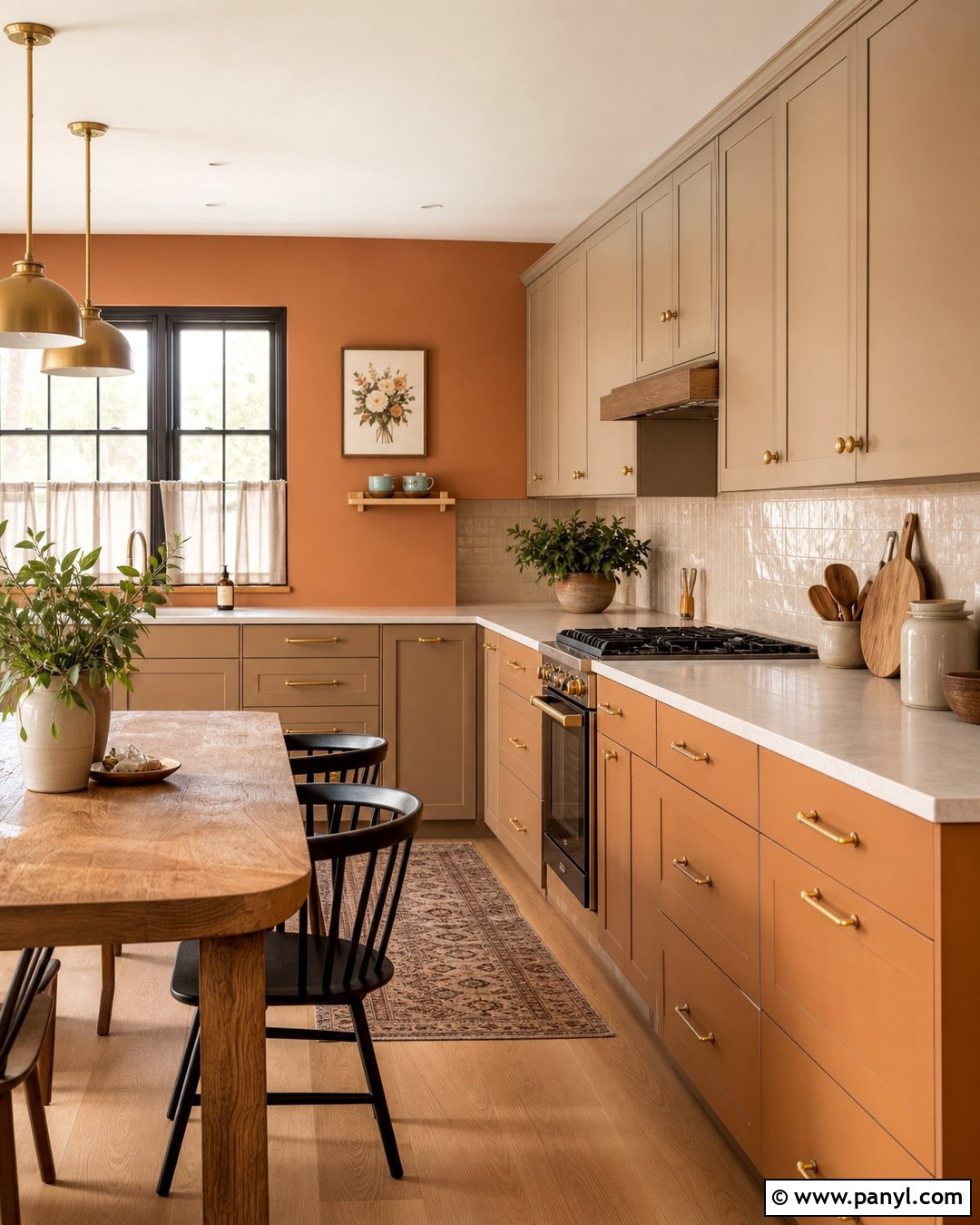
Brass hardware can enhance orange walls by repeating their golden warmth in a smaller, more reflective form. Choose subdued apricot or clay-colored walls, then pair them with cream or mushroom cabinets. Brushed or aged brass pulls generally look more relaxed than highly polished finishes. Use warm white quartz countertops, ivory backsplash tiles, and light oak flooring to build a softly layered room. Brass pendants can continue the metal finish, but select simple shapes so the kitchen does not look overly ornate. Add a wood dining table, linen café curtains, and understated ceramic accessories. A few green plants provide cool contrast. The finished space feels sunny and polished, with warmth distributed evenly rather than concentrated on one surface.
20. Orange Kitchen Walls With Matte Black Hardware
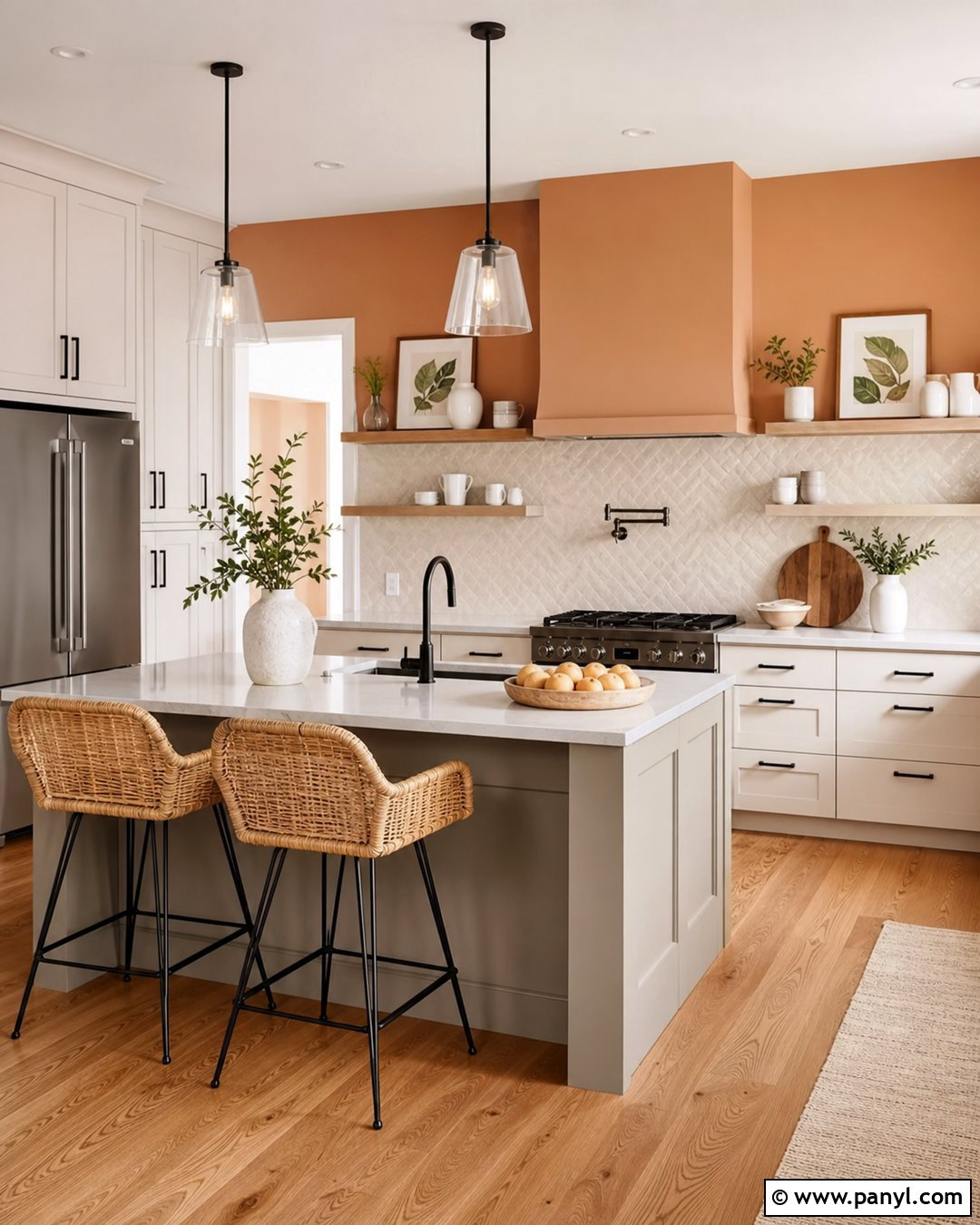
Matte black hardware brings sharp definition to light orange kitchen walls and pale cabinetry. Paint the walls a gentle cantaloupe or peach tone, then use warm white Shaker cabinets with black pulls and hinges. A black bridge faucet and slim pendant lights repeat the contrast without dominating the room. Select pale gray quartz countertops and creamy backsplash tile to mediate between warm walls and dark details. Natural oak flooring and woven stools add texture. A compact island painted soft greige can provide additional preparation space while keeping the room visually open. Finish with simple botanical art and white ceramics. This scheme offers an easy way to give a cheerful orange kitchen a more modern, structured appearance.
21. Orange Kitchen Walls With Concrete Countertops
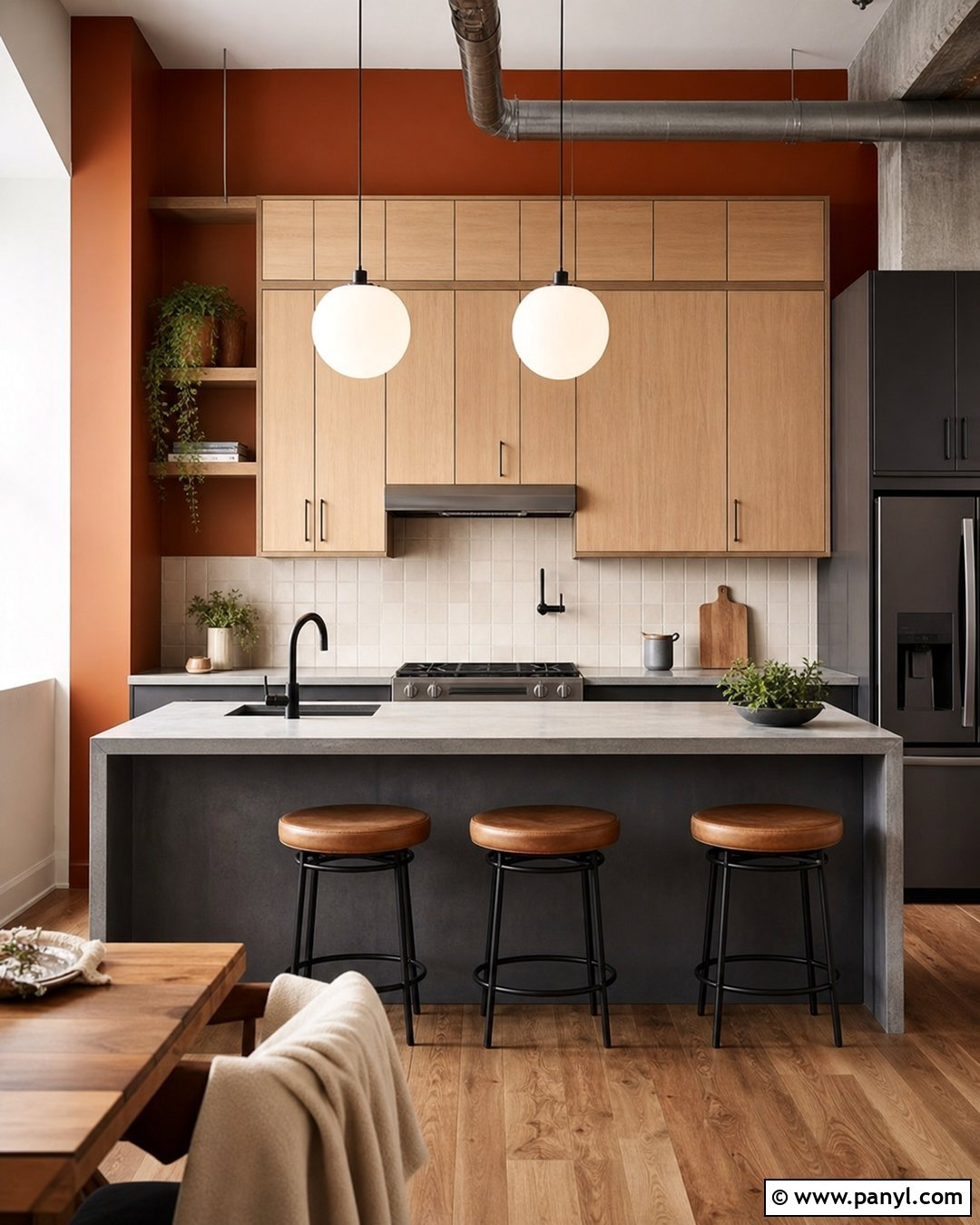
Concrete countertops can cool the warmth of orange walls and create an understated modern kitchen. Use burnt orange or rust paint with a matte finish, then pair it with charcoal lower cabinets and pale wood upper cabinetry. Medium-gray concrete counters provide a durable-looking visual anchor, while a warm white backsplash keeps the walls from feeling enclosed. Choose oak flooring to soften the industrial materials and black fixtures to connect the darker surfaces. Minimal open shelving, globe lights, and streamlined stools support the contemporary layout. Introduce a few green plants and cream textiles for freshness. The complete room should combine clean lines with tactile materials, making the orange feel architectural rather than decorative or theme-driven.
22. Orange Kitchen Walls With Butcher Block Counters
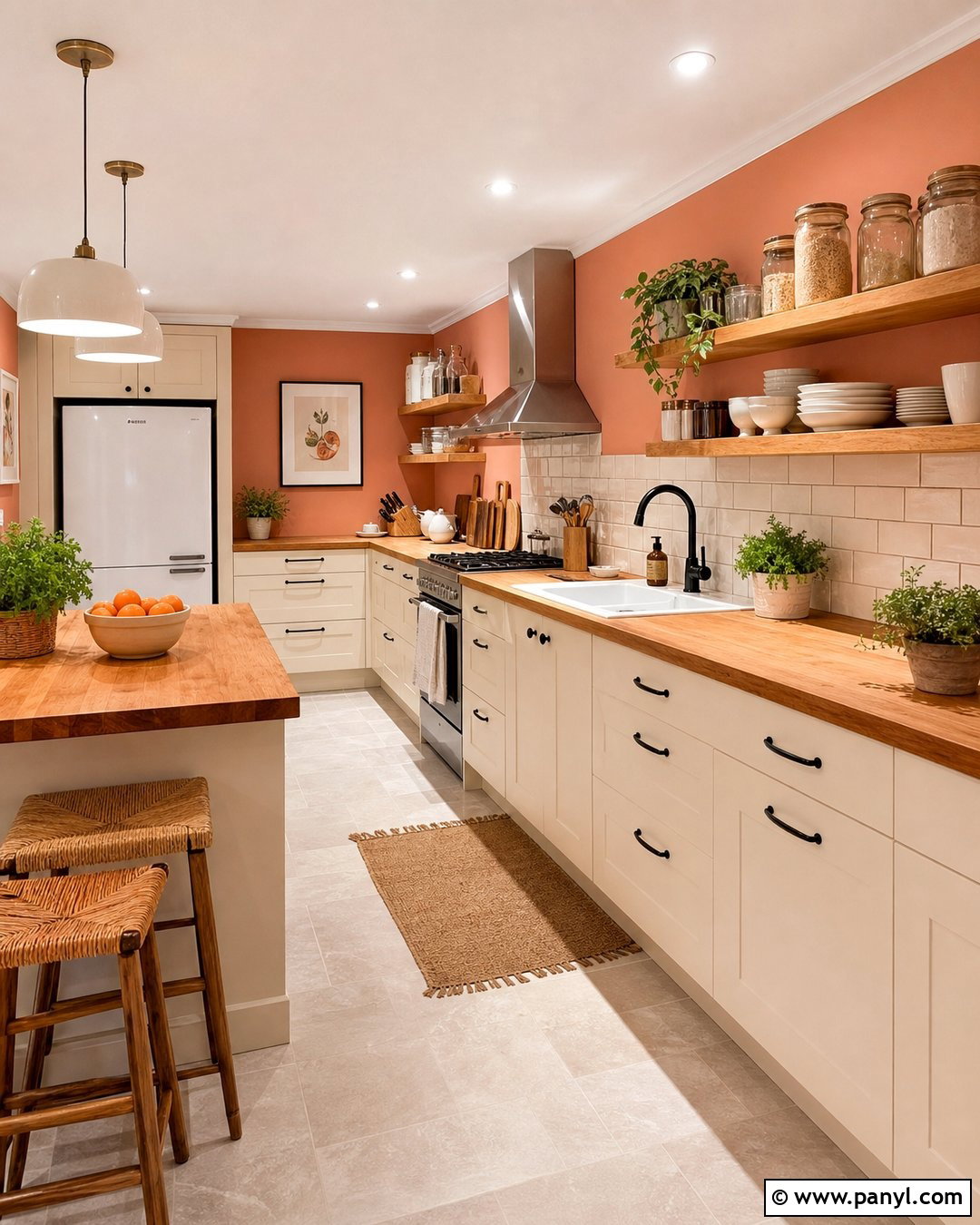
Butcher-block countertops and orange walls produce an inviting kitchen with abundant warmth and natural texture. Avoid matching the wall too closely to the wood. A muted peach or pale clay orange allows the countertop grain to remain distinct. Pair these surfaces with cream cabinets, an ivory subway backsplash, and warm gray floor tile. Use matte black hardware for contrast and simple white pendants to brighten the room. A narrow butcher-block peninsula can provide casual seating in a smaller layout. Display white dishes, clear storage jars, and a few herbs instead of numerous warm-colored accessories. This practical design feels especially appropriate for cottage, farmhouse, and budget-conscious kitchens because the materials are familiar, comfortable, and easy to personalize.
23. Orange Kitchen Walls With Checkerboard Floors
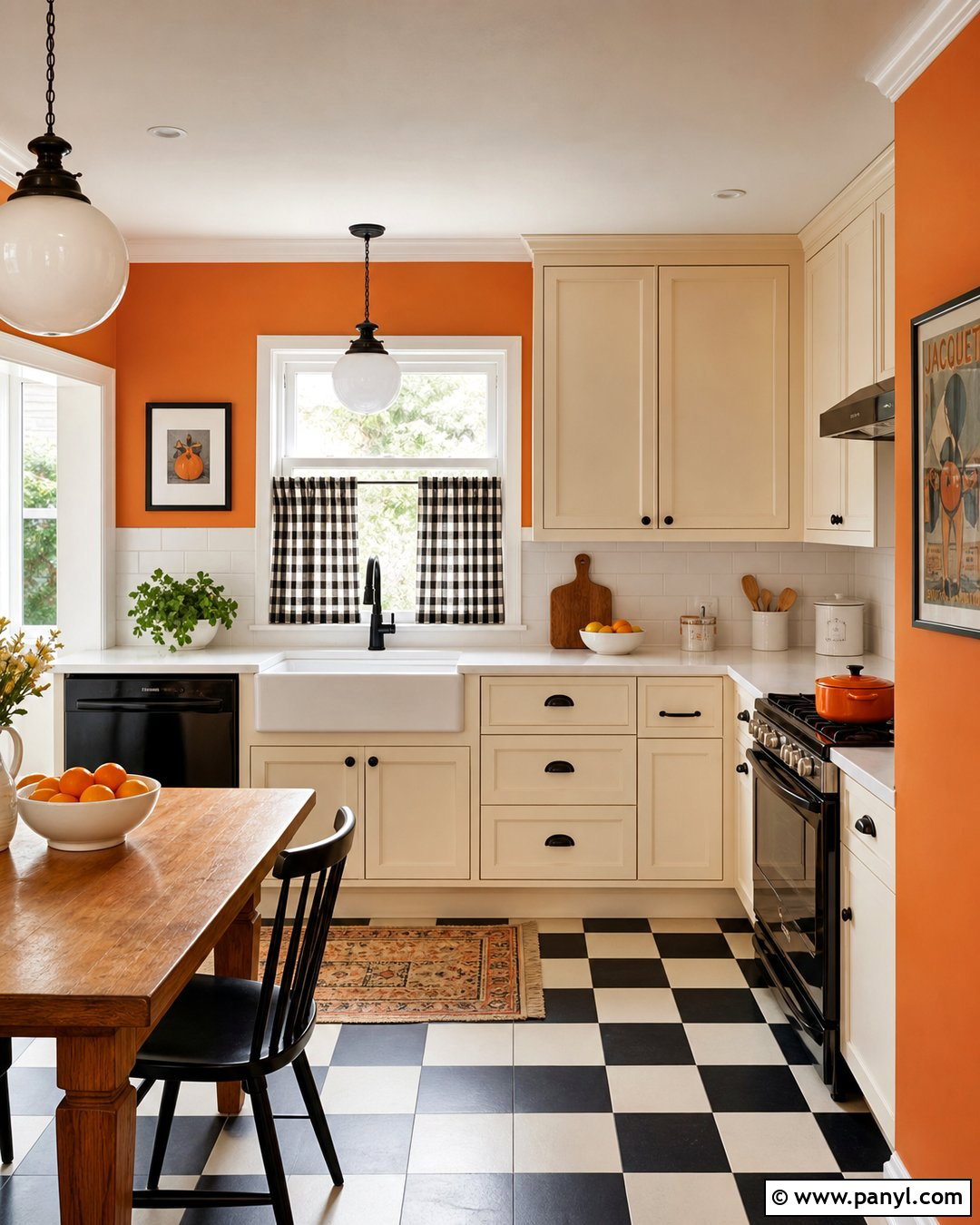
Checkerboard flooring gives orange kitchen walls a graphic foundation with a subtle retro character. Use a warm terracotta or pumpkin wall color above cream cabinetry, then install black-and-white or charcoal-and-ivory floor tiles. Keep the backsplash simple with glossy white tile and choose pale quartz countertops to avoid competing patterns. Black cabinet hardware, globe pendants, and a white farmhouse sink reinforce the classic palette. A small wood breakfast table can soften the stronger contrasts. Add café curtains, framed food illustrations, and one or two orange accessories for continuity. Because the floor and walls already make clear statements, keep cabinetry profiles and countertop decor restrained. The completed kitchen feels cheerful, nostalgic, and practical rather than overly themed.
24. Orange Kitchen Walls With Terrazzo Floors
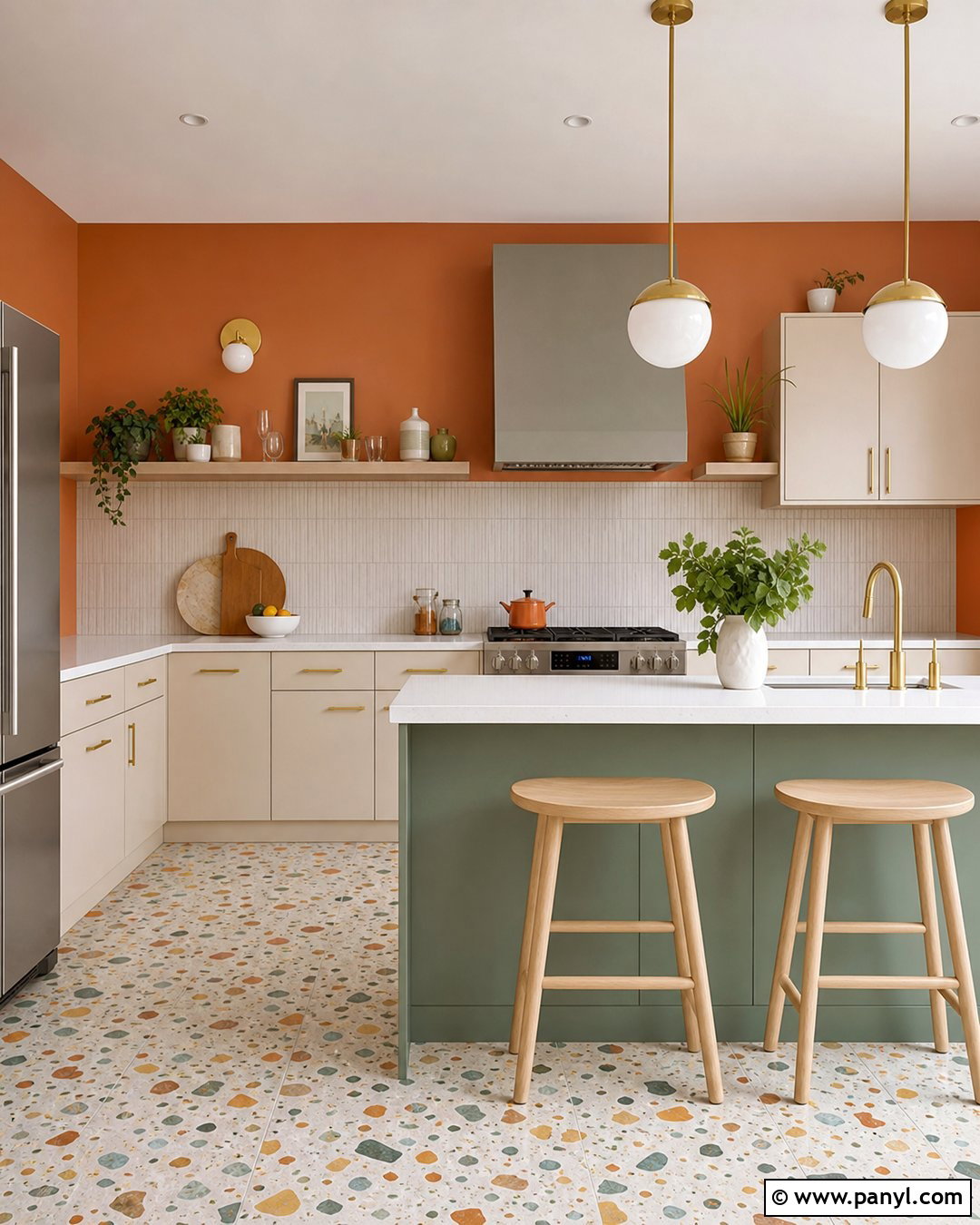
Terrazzo floors can connect orange walls to several supporting colors through their scattered chips. Select flooring with cream, tan, rust, gray, and muted green fragments, then pull a soft orange tone from the material for the walls. Flat-front cream cabinets and white quartz counters keep the room contemporary and visually calm. Choose a plain off-white backsplash so it does not compete with the floor. Pale wood stools and brushed brass hardware introduce warmth, while globe pendants add a clean finishing detail. If space allows, use a compact island in muted sage to reference the green terrazzo chips. The complete design feels playful and modern, with the floor and wall color working as one coordinated composition.
25. Orange Kitchen Walls With Midcentury Cabinets
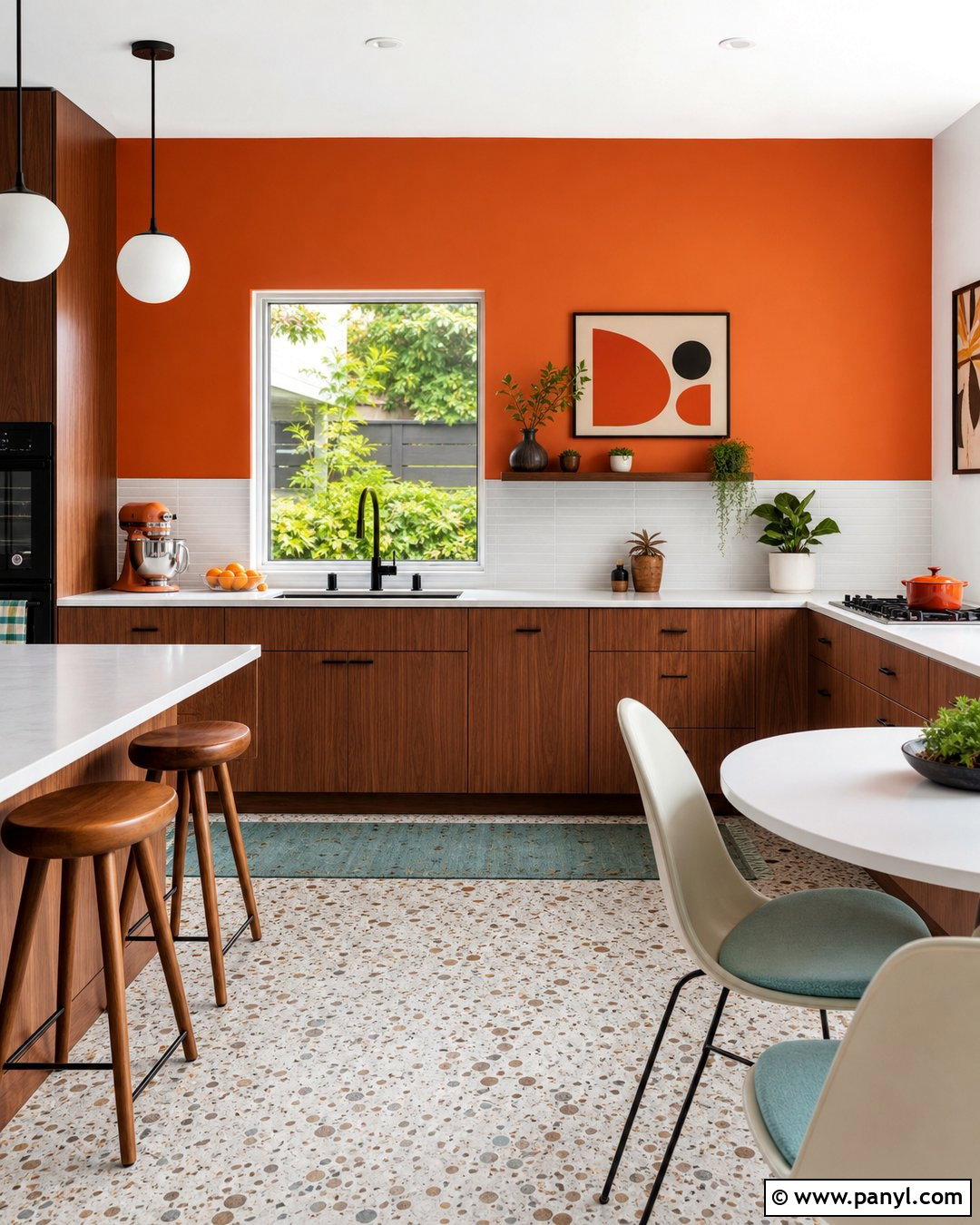
Orange walls naturally complement a midcentury kitchen built around wood grain and simple geometric lines. Choose a deep persimmon accent wall behind flat-front walnut cabinets or a compact breakfast nook. Use white countertops and a long horizontal backsplash tile to emphasize the room’s streamlined shape. Terrazzo or pale gray flooring provides a period-friendly foundation without darkening the kitchen. Add globe pendants, tapered-leg stools, and minimal black hardware. A round white dining table with molded chairs can complete an adjoining eating area. Introduce muted teal through a runner or small appliances for contrast. Keep decorative objects limited and sculptural. This full scheme captures midcentury character while still feeling practical, uncluttered, and suitable for a modern household.
26. Orange Kitchen Walls With Farmhouse Cabinets
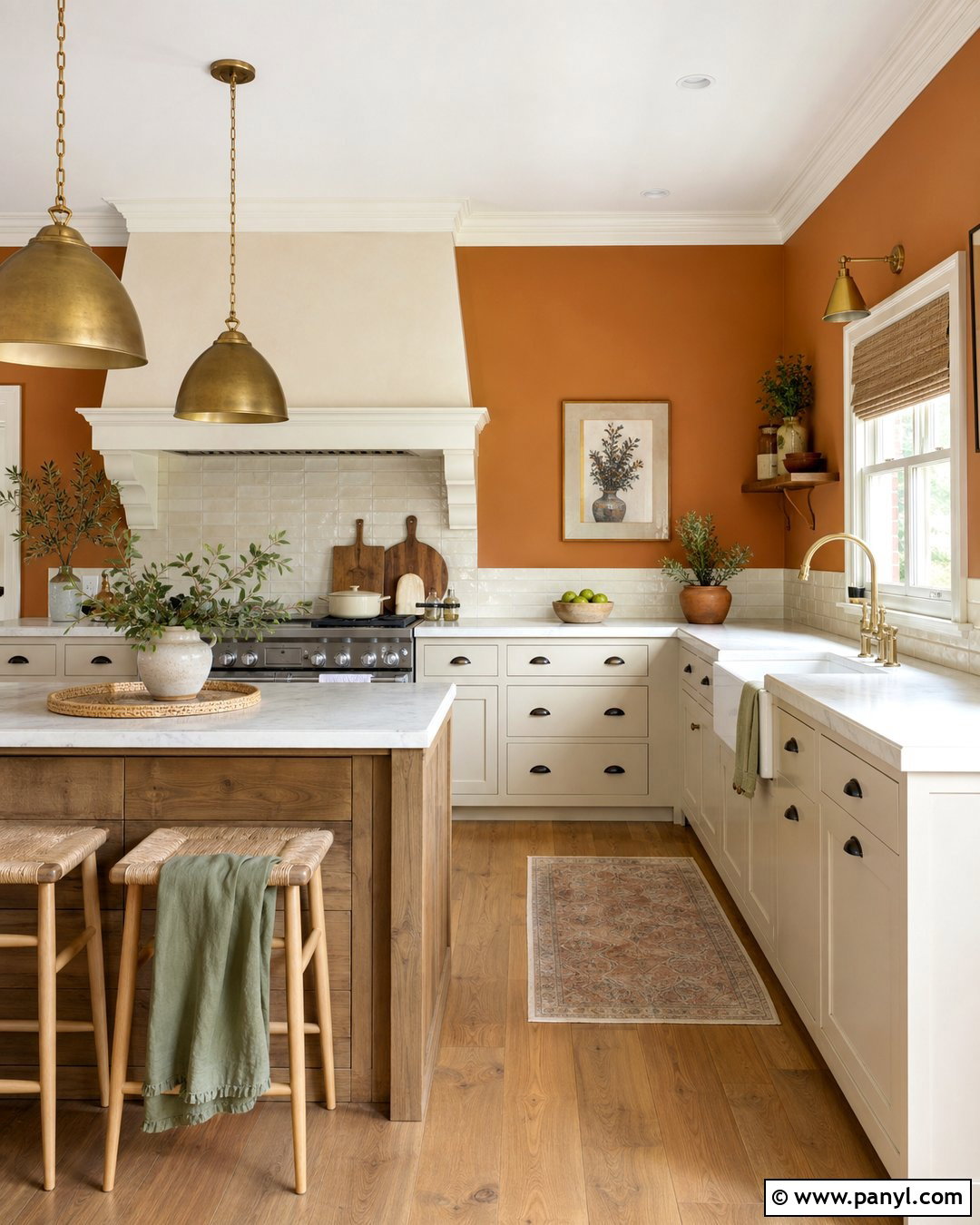
A soft pumpkin-orange wall color can bring warmth and individuality to a farmhouse kitchen. Pair it with creamy white inset cabinets, a deep apron-front sink, and lightly veined quartz countertops. Use handmade ivory backsplash tile and medium oak flooring for a relaxed, timeworn appearance. Black cup pulls provide contrast, while aged brass pendants add gentle variation rather than forcing every metal to match. A substantial wood island creates a useful central work surface and casual gathering point. Include woven shades, linen towels, and simple stoneware in cream and sage. Avoid overly distressed signs or decorative themes. The strongest farmhouse spaces rely on honest materials, practical storage, and comfortable color, allowing the orange walls to feel established rather than trendy.
27. Orange Kitchen Walls With Modern White Cabinets
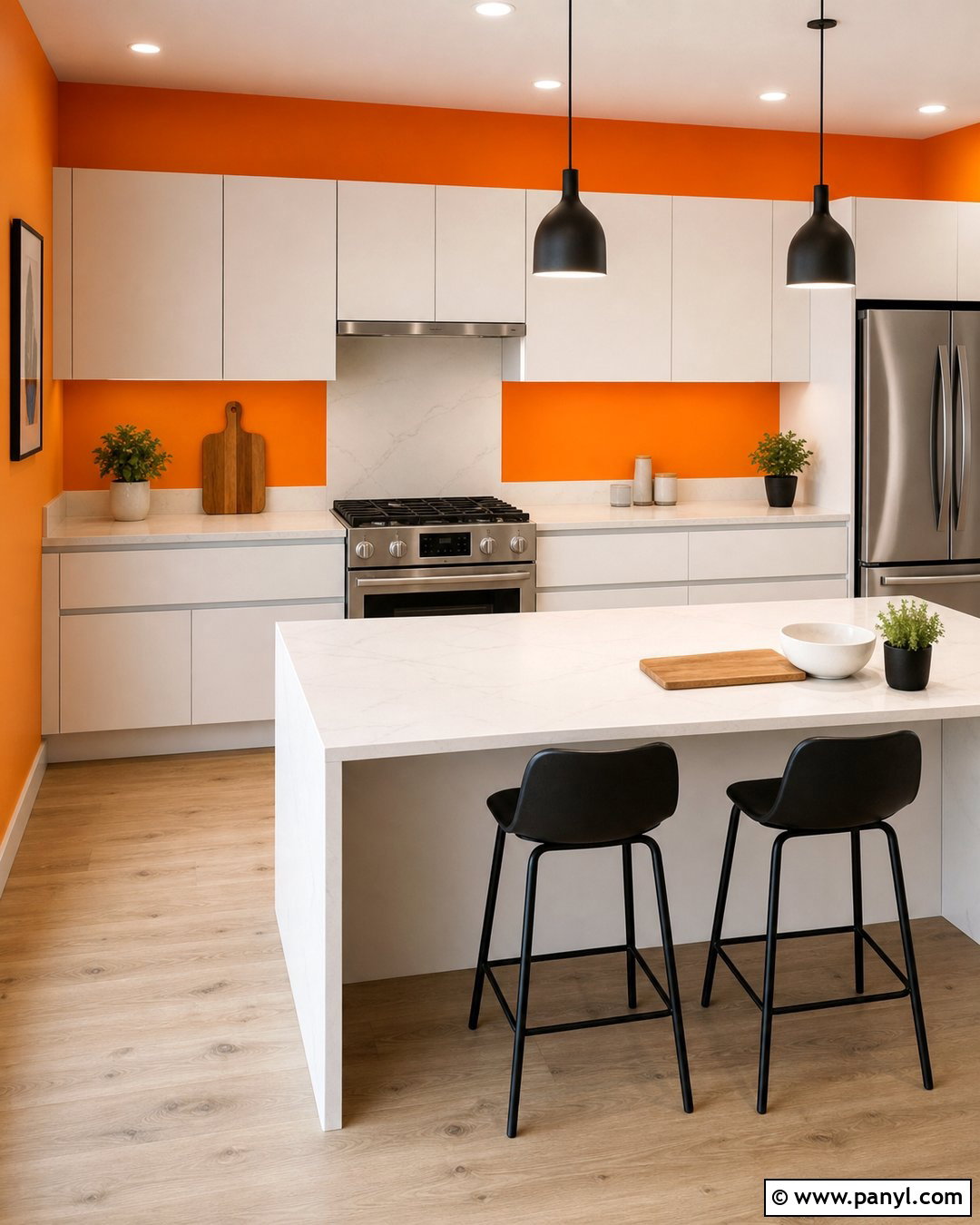
Clean white cabinets offer a crisp framework for vivid orange walls in a modern kitchen. Choose a clear citrus or tangerine shade on the wall behind the dining area, range, or open shelves. Keep the cabinetry flat-front, with minimal pulls or integrated handles. White quartz counters and a matching slab backsplash maintain a streamlined look, while light oak flooring adds necessary warmth. Use black pendants and bar stools to introduce a controlled graphic contrast. Stainless steel appliances fit naturally into this palette without adding another color. Countertop accessories should be limited to useful pieces, such as a wood board, white bowl, and small herb planter. The completed kitchen feels fresh, energetic, and highly organized.
28. Orange Kitchen Walls With Rustic Wood Beams
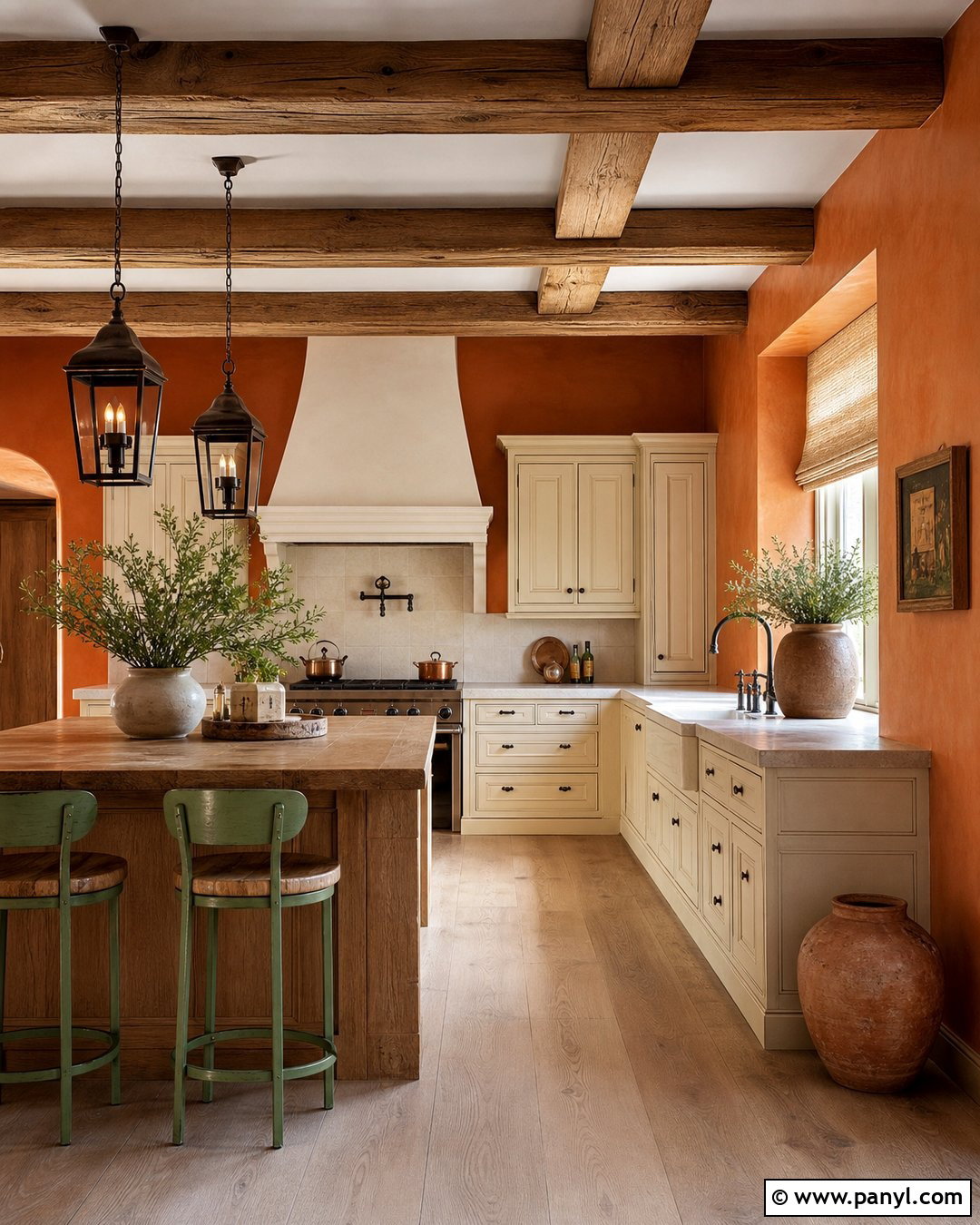
Rustic beams can make orange kitchen walls feel warm and architectural, especially in a room with a high or sloped ceiling. Choose a mellow clay-orange paint that complements the aged brown wood without matching it exactly. Cream cabinets, pale stone counters, and an ivory backsplash keep the lower space bright. Repeat the beam tone through a substantial wood island or dining table. Iron pendants and black cabinet hardware introduce definition, while wide-plank oak flooring strengthens the rustic foundation. Use simple linen window coverings and neutral pottery rather than heavily themed decor. Soft green accents can appear through stools, herbs, or a vintage runner. The finished kitchen feels grounded, spacious, and naturally connected to its structural features.
29. Orange Kitchen Walls With Coastal Blue Decor
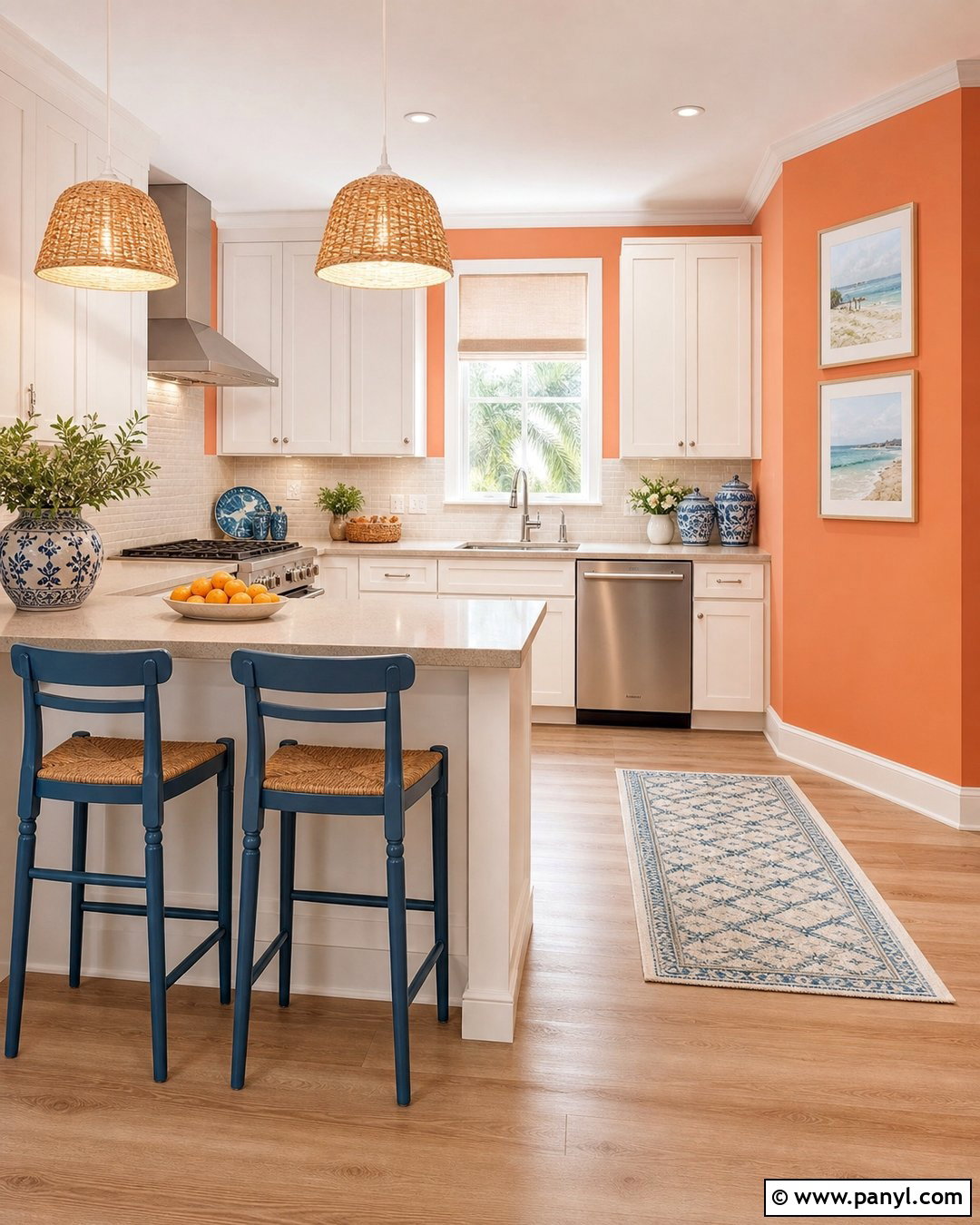
Orange walls can work in a coastal kitchen when the shade is light, sun-washed, and paired with restrained blue accents. Select pale coral or soft apricot paint, warm white cabinets, and sandy beige quartz counters. A white backsplash with a gentle handmade texture reflects light and supports the breezy palette. Introduce coastal blue through counter stools, a washable runner, ceramics, and simple framed artwork. Light oak flooring and woven pendants add relaxed natural texture without relying on literal seaside decorations. Use brushed nickel hardware for a clean, quiet finish. Linen shades and uncluttered counters keep the room airy. The result is colorful and casual, with a coastal influence that feels subtle rather than themed.
30. Orange Kitchen Walls With Mediterranean Tile
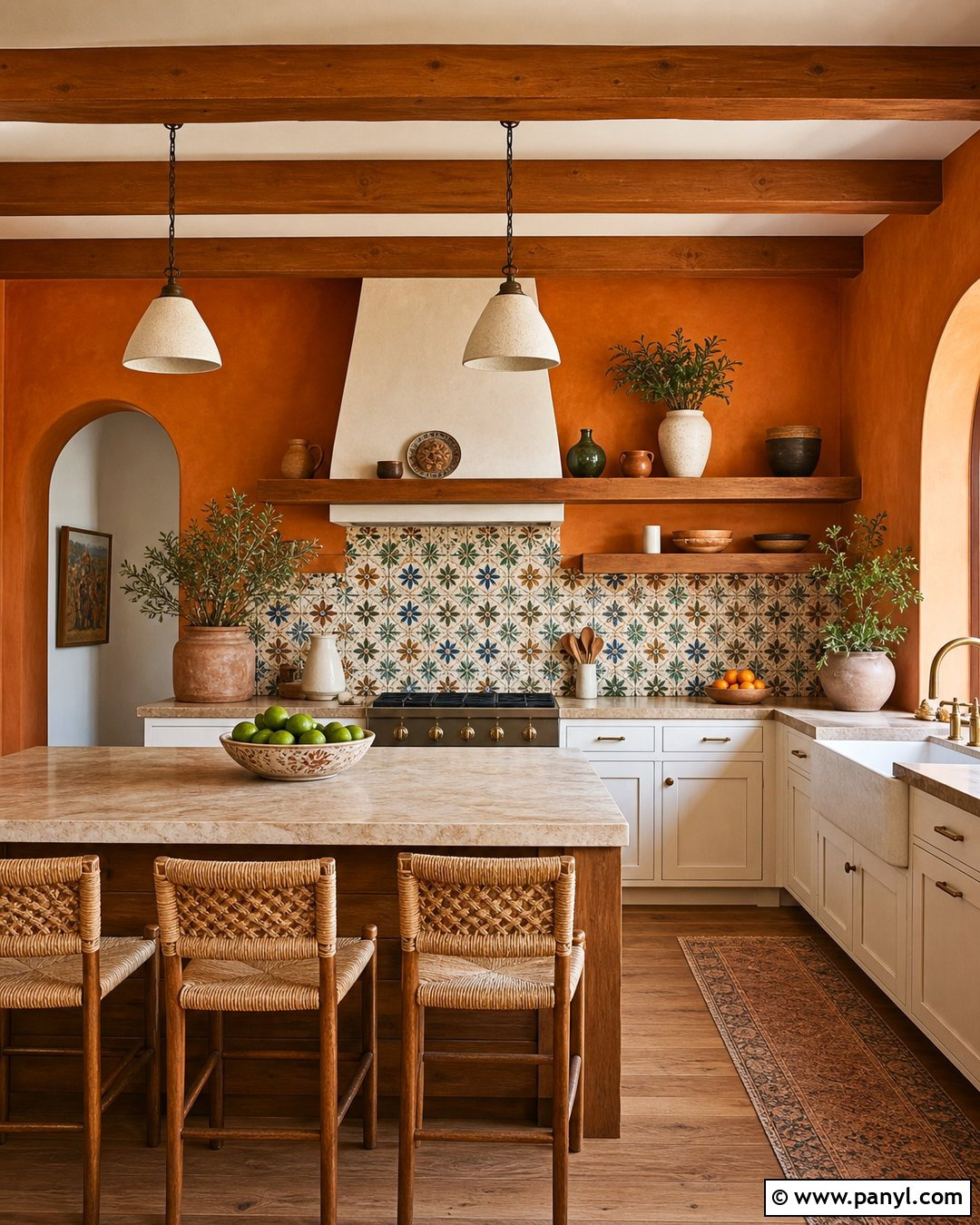
Terracotta-orange walls provide a natural background for patterned Mediterranean tile. Place the tile on the backsplash or floor, choosing a design that combines cream, cobalt blue, muted green, and rust. Warm white cabinets prevent the patterns from overwhelming the kitchen, while honed stone countertops introduce a quiet, tactile surface. Use aged brass hardware, open oak shelves, and simple plaster-style pendants to continue the handcrafted character. A wood island with woven stools creates a comfortable central gathering area. Keep pottery and textiles within the established palette, but avoid filling every surface. The completed kitchen feels layered and sun-warmed, with strong pattern balanced by simple cabinetry, useful storage, natural materials, and generous white surfaces.
31. Orange Kitchen Walls With Industrial Details
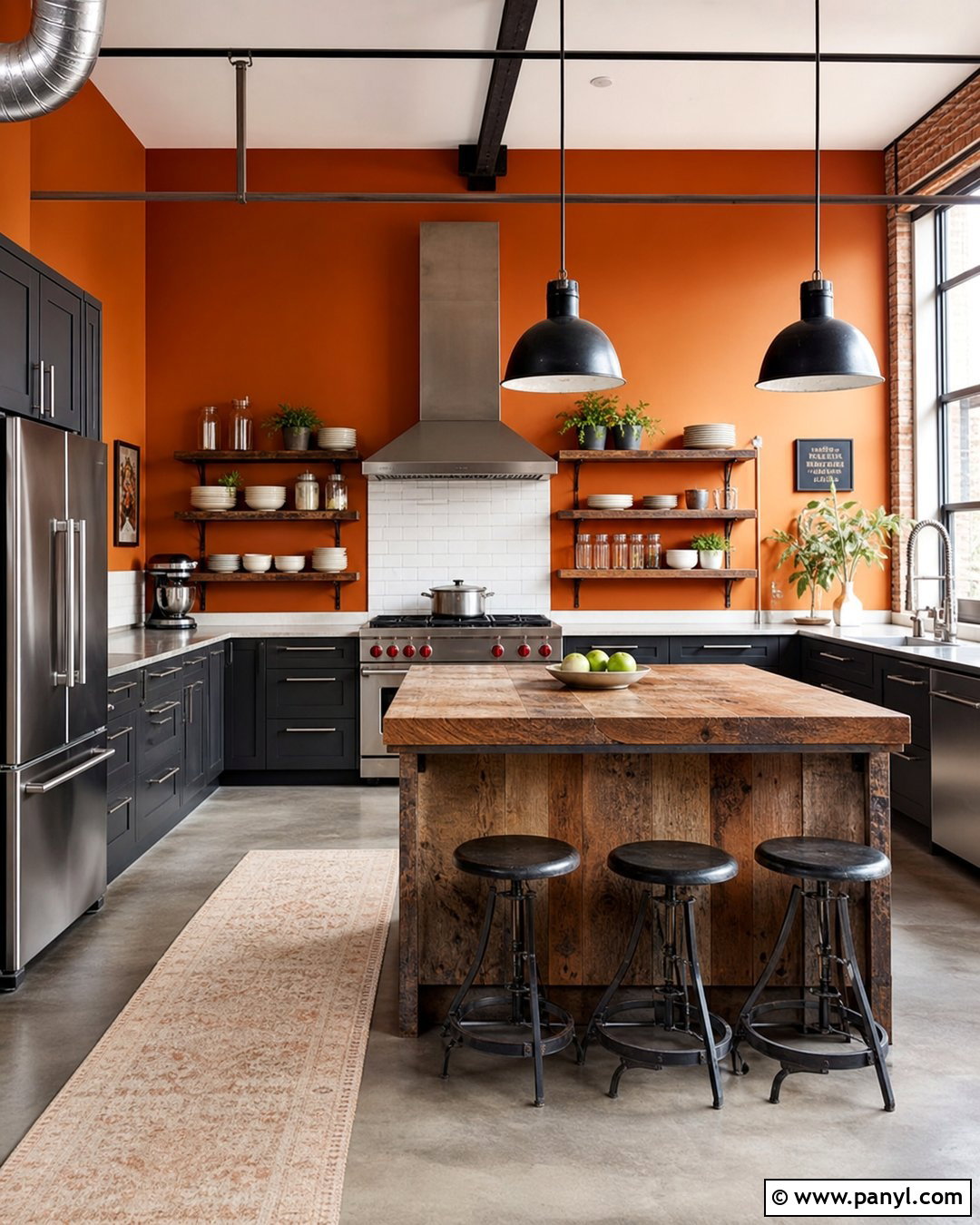
Rust-orange walls can soften an industrial kitchen and make its harder finishes feel more welcoming. Combine the wall color with charcoal cabinets, stainless steel appliances, and a white or light gray tile backsplash. Concrete-look flooring provides durability and visual continuity, while a reclaimed wood island introduces warmth. Choose black metal pendants, open shelving, and straightforward cabinet pulls to emphasize functional lines. Bright task lighting is essential because charcoal finishes can absorb light. Add cream dishware, green plants, and a neutral runner to break up the darker materials. Instead of using distressed decor everywhere, focus on a few authentic textures. The completed room feels practical and urban, with orange providing warmth against metal, concrete, and black details.
32. Orange Kitchen Walls With Boho Decor
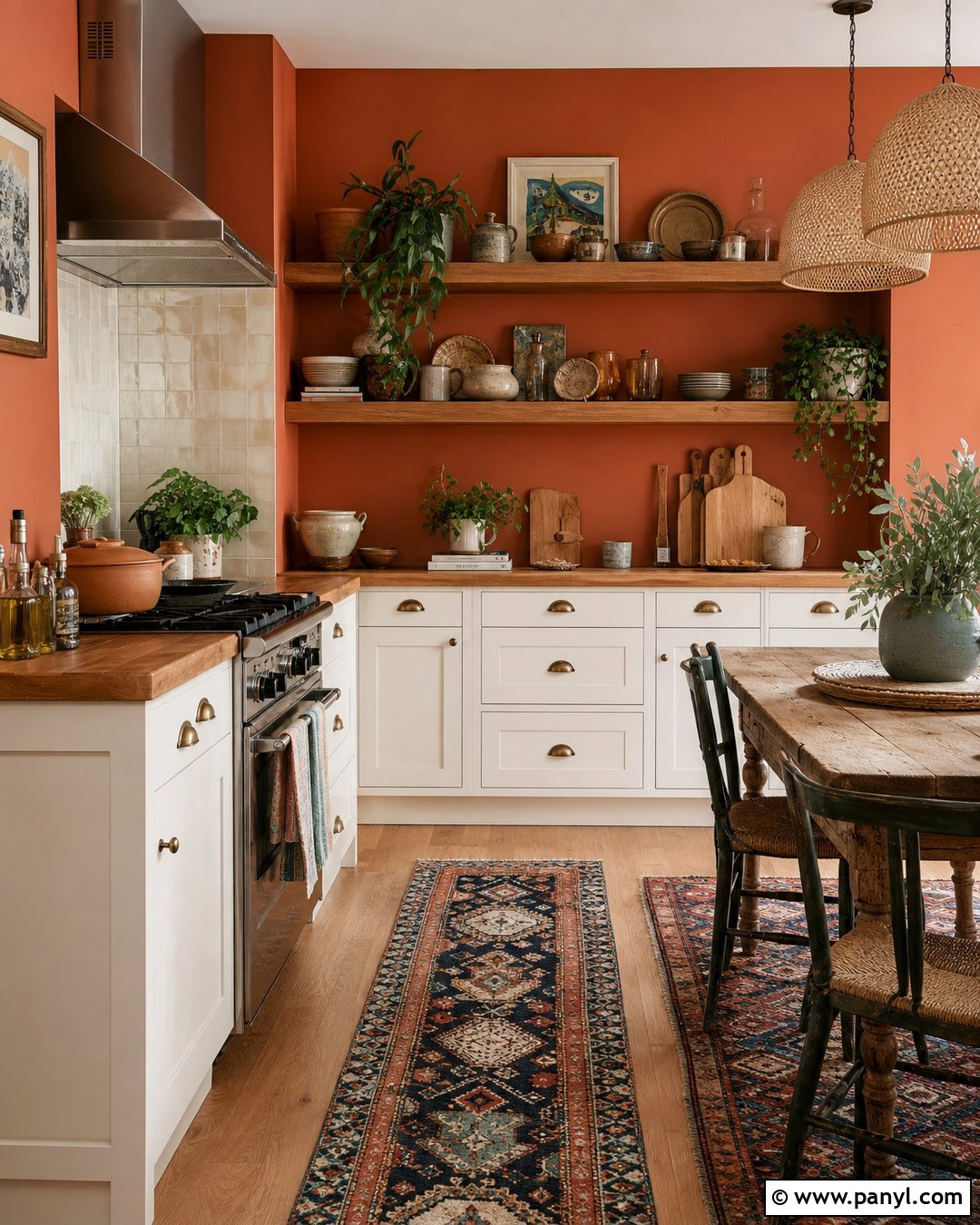
A boho kitchen with orange walls should feel layered and personal without becoming crowded. Start with a dusty terracotta paint, then combine it with warm white cabinets, butcher-block counters, and open wood shelving. Use a cream handmade tile backsplash and light wood flooring to keep the base bright. Woven pendants, patterned runner rugs, pottery, and trailing plants introduce texture and relaxed movement. Choose accent colors such as olive, mustard, and faded blue, but repeat each sparingly. A small vintage wood table can create an inviting breakfast area. Keep frequently used tools accessible in baskets and ceramic containers. The overall kitchen should remain functional, allowing the collected textiles and natural materials to enrich rather than overwhelm the orange background.
33. Orange Kitchen Walls With Minimalist Decor
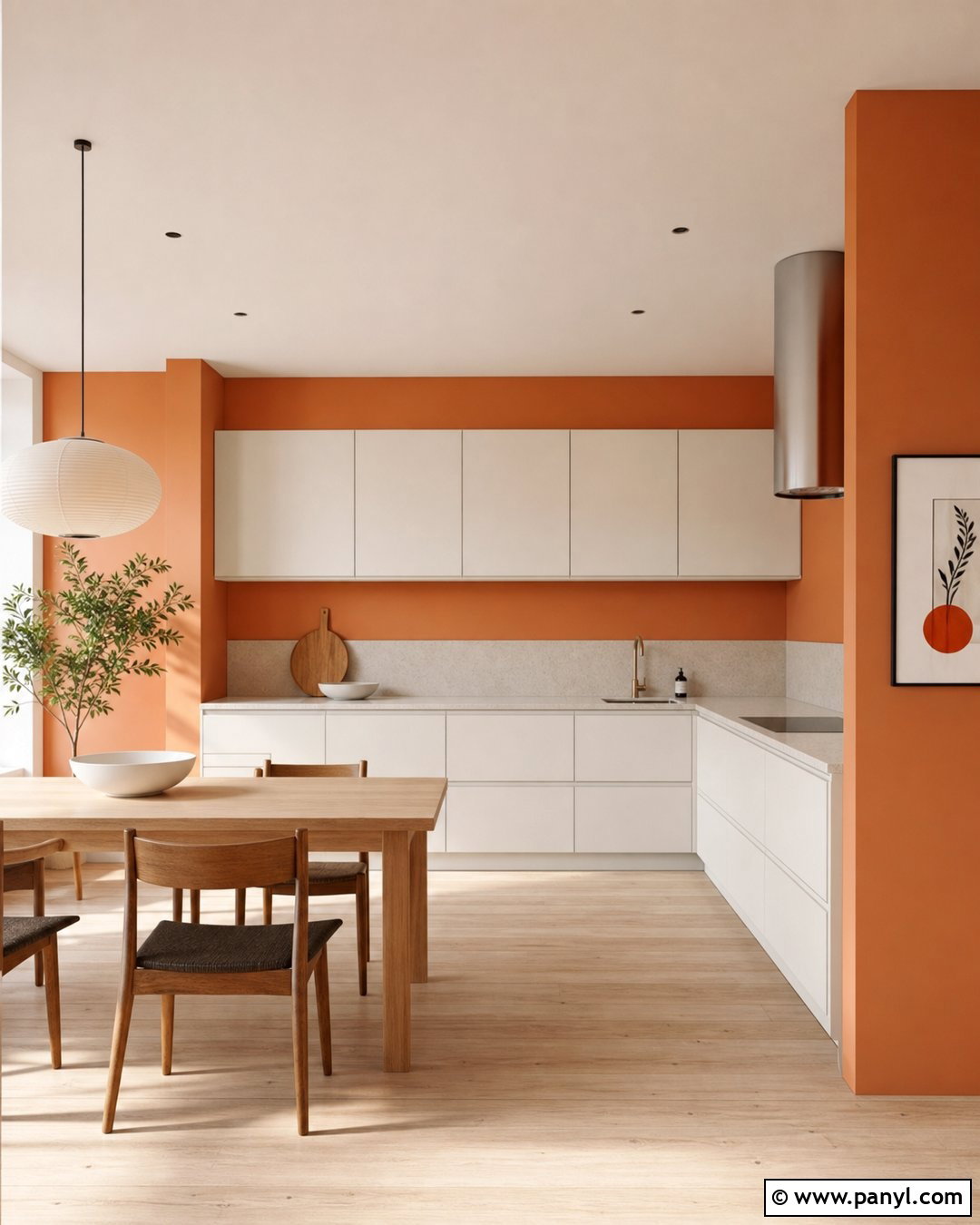
Orange walls can suit a minimalist kitchen when the palette and materials are carefully edited. Choose a muted apricot or clay orange and pair it with handleless warm white cabinets. Install a pale quartz countertop and matching short backsplash for a nearly seamless work surface. Light oak flooring and a single wood dining table add natural warmth without unnecessary ornament. Use one streamlined pendant over the table and discreet under-cabinet lighting along the counters. Hide small appliances inside dedicated storage to maintain clear surfaces. A white ceramic bowl, simple cutting board, and one green plant provide enough decoration. The completed kitchen feels calm rather than empty, with the wall color supplying personality that a more neutral minimalist room might lack.
34. Orange Kitchen Walls In A Small Kitchen
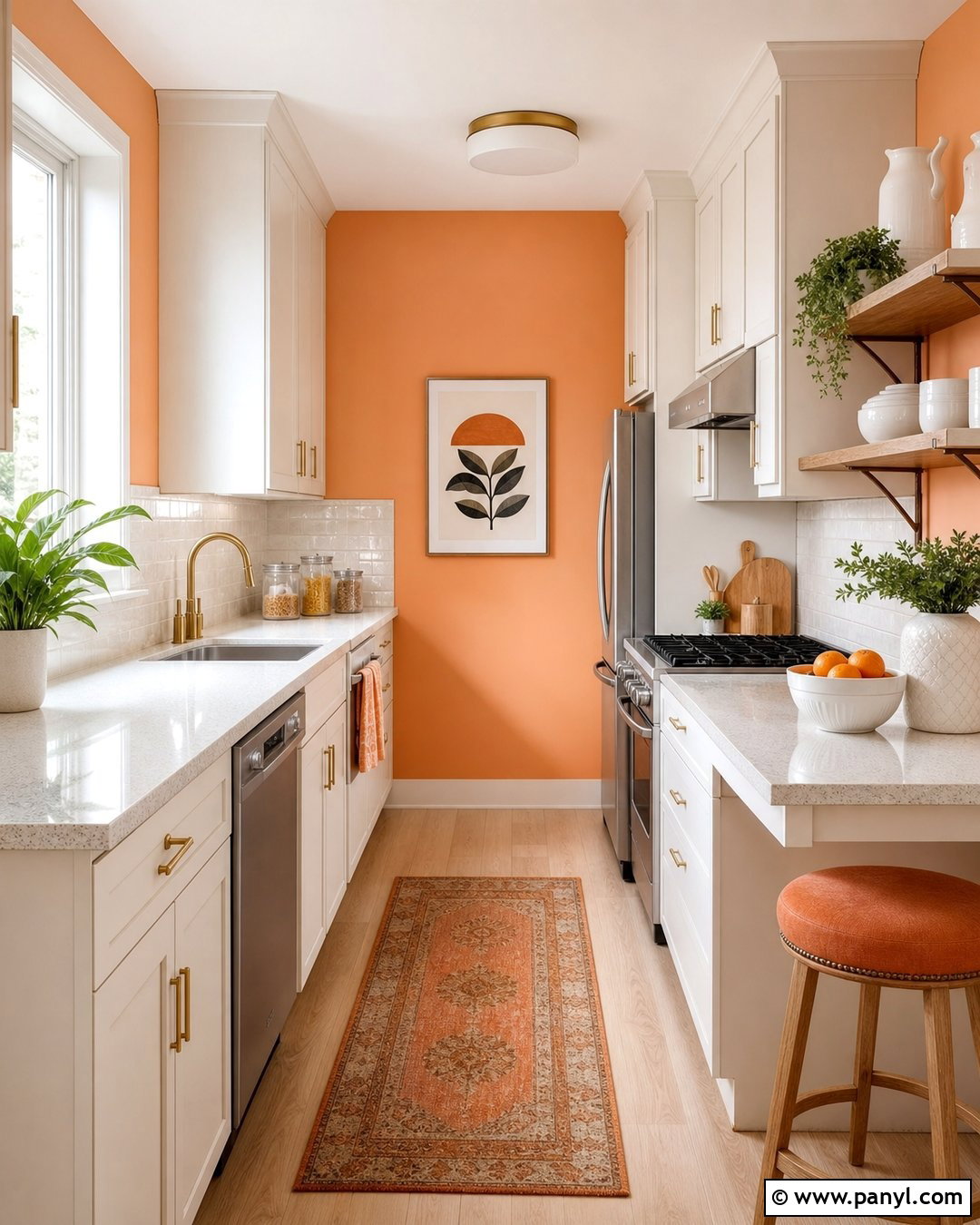
A small kitchen can handle orange walls when the shade is light and the larger fixtures reflect plenty of light. Paint the walls soft peach-orange, then use warm white cabinets that extend to the ceiling for maximum storage. Pale quartz countertops and glossy ivory backsplash tiles brighten narrow work areas. Choose light oak flooring laid lengthwise to support a more open visual flow. Compact brass hardware and simple flush-mount lighting save visual space. If possible, replace a few upper cabinets with one open shelf, but retain enough closed storage to control clutter. A slim rolling cart or narrow peninsula can add function. White ceramics, clear containers, and one patterned runner complete this cheerful, efficient kitchen without making it feel crowded.
35. Orange Kitchen Walls In An Open Kitchen
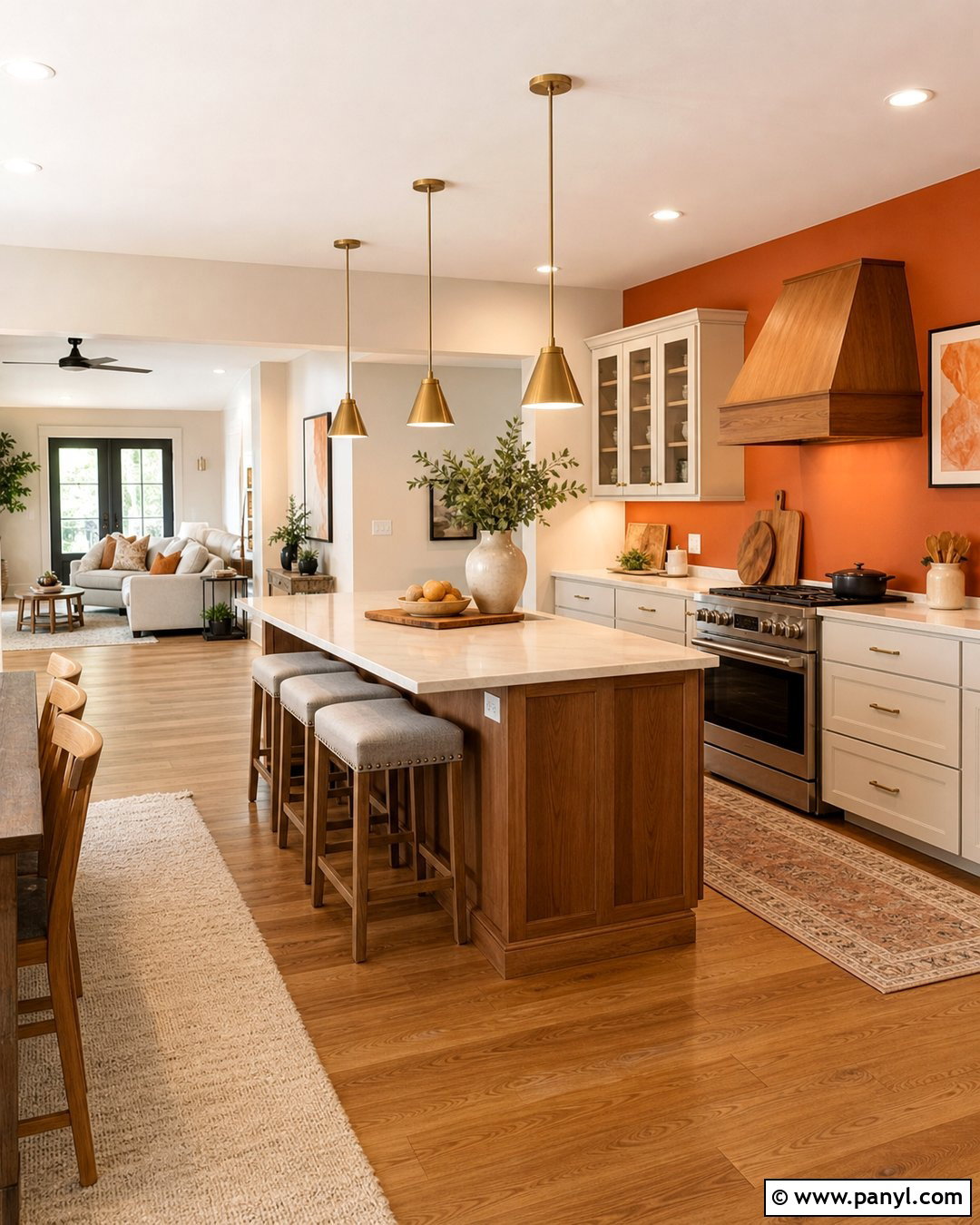
In an open kitchen, orange walls should connect naturally with the adjoining dining or living area. Use a muted terracotta shade on the main kitchen wall, then repeat it through smaller accents elsewhere, such as cushions, artwork, or a rug. Warm white cabinets and pale quartz countertops create a clean transition, while medium oak flooring can run continuously throughout the open space. Paint neighboring walls a warm off-white to prevent abrupt color changes. A wood island with neutral upholstered stools helps define the kitchen without closing it off. Use coordinated brass or black lighting across both zones for continuity. The finished layout feels unified and intentional, with orange establishing warmth while neutral surfaces maintain balance and visual flow.
Conclusion:
Orange is flexible enough to create energetic modern kitchens, relaxed cottage rooms, earthy rustic spaces, and polished transitional interiors. The key is choosing an orange tone that responds well to the room’s daylight, cabinet undertones, flooring, and existing fixed finishes. Soft peach and apricot keep small spaces airy, while terracotta, rust, and burnt orange bring depth to larger kitchens. White, cream, gray, wood, blue, and green can all provide effective balance. Always test paint samples on multiple walls and observe them throughout the day before committing. With thoughtful lighting and a controlled supporting palette, these **35 orange kitchen walls** can inspire a complete, cohesive kitchen that feels warm, practical, and personal.

Related Ideas and Inspiration:
Leave a Reply