
Light blue kitchen walls bring a fresh, calming quality to one of the busiest spaces in the home. The color can brighten a compact kitchen, soften bright white cabinetry, or balance the visual weight of dark wood and dramatic finishes. The key is choosing the right undertone and building a complete palette around it. Icy blue works well with crisp contemporary details, while blue-gray feels quieter and more traditional. Warmer shades, including powder blue and pale aqua, pair naturally with cream, oak, brass, and woven textures. Flooring, countertops, backsplash tile, lighting, and hardware should all support the wall color rather than compete with it. The following complete designs offer practical ways to decorate with light blue kitchen walls.
1. Light Blue Kitchen Walls With White Cabinets
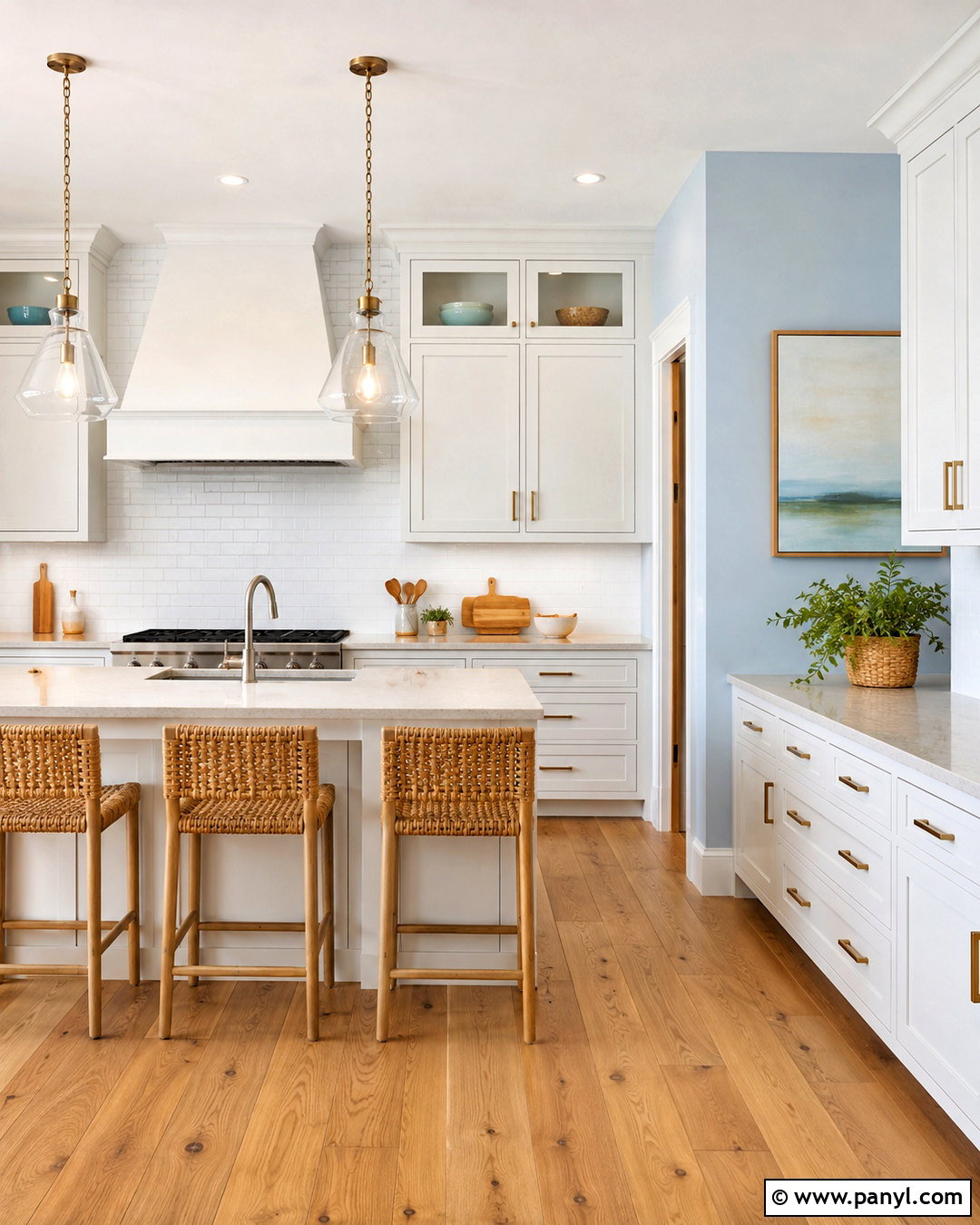
Crisp white cabinets make light blue walls feel especially clean, open, and welcoming. Choose simple Shaker doors for a timeless foundation, then add pale quartz countertops and a glossy white subway tile backsplash. The reflective surfaces help distribute daylight without making the room feel cold. Warm the palette with honey-toned oak flooring, woven counter stools, and a few wooden cutting boards displayed near the range. Brushed brass knobs and pendant lights provide soft contrast against the white cabinetry. Keep window treatments simple with white linen shades, and use navy or blue-striped textiles in small amounts. This balanced kitchen works particularly well when the wall paint has a subtle gray undertone rather than a bright, sugary finish.
2. Light Blue Kitchen Walls With Cream Cabinets
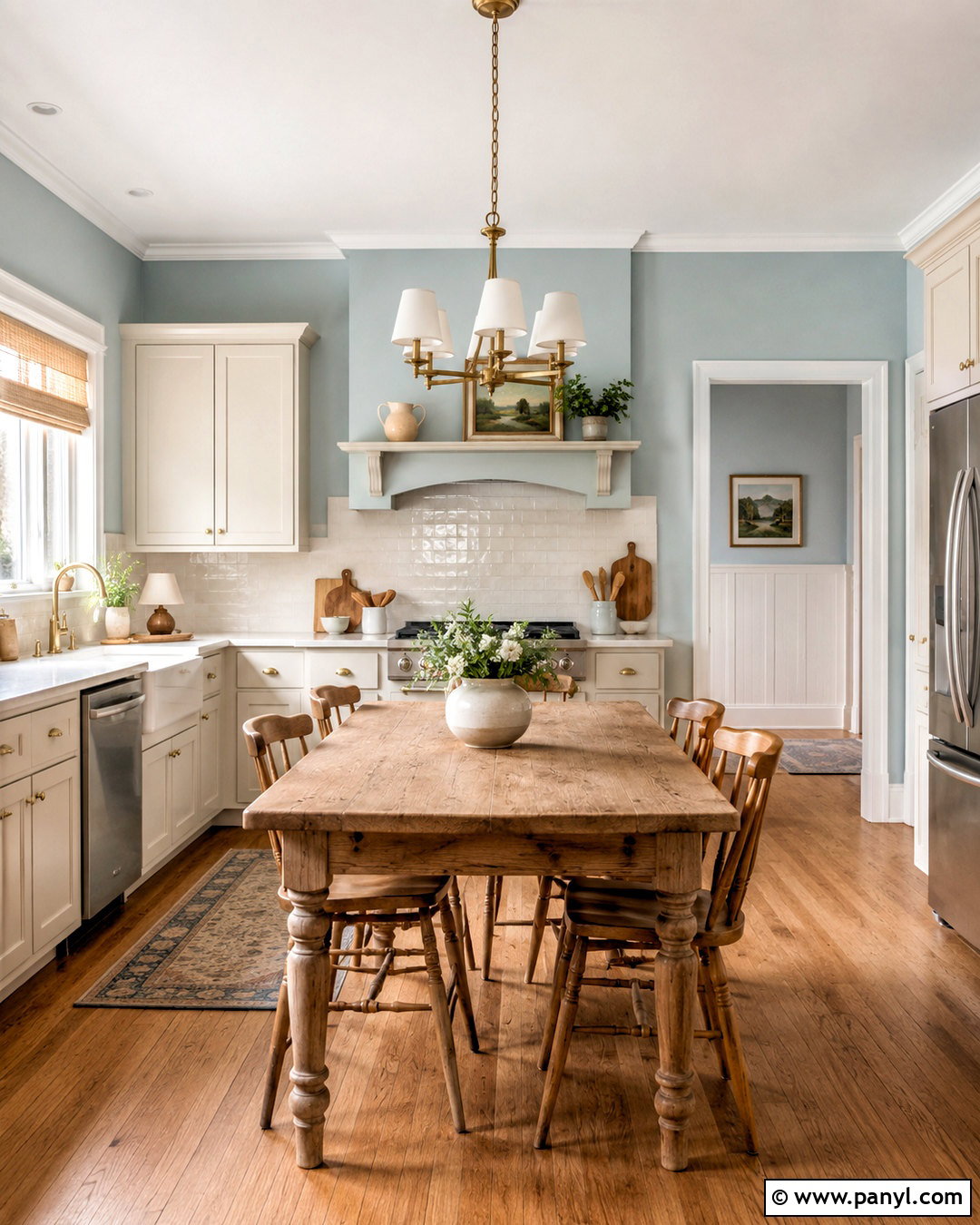
Cream cabinetry gives pale blue walls a softer and more inviting appearance than brilliant white. Select a warm light blue with a faint green undertone so the two colors connect naturally. Traditional inset cabinets, an off-white range hood, and lightly veined quartz countertops create a comfortable, collected backdrop. Continue the warmth with aged brass hardware, medium oak flooring, and a farmhouse table rather than a formal island. Handmade ivory backsplash tiles introduce gentle variation without adding another strong color. Finish the room with linen Roman shades, ceramic crocks, and woven pendant lights. This palette feels relaxed but polished, making it suitable for cottage, transitional, or traditional homes where sharp black-and-white contrast might appear too severe.
3. Light Blue Kitchen Walls With Oak Cabinets
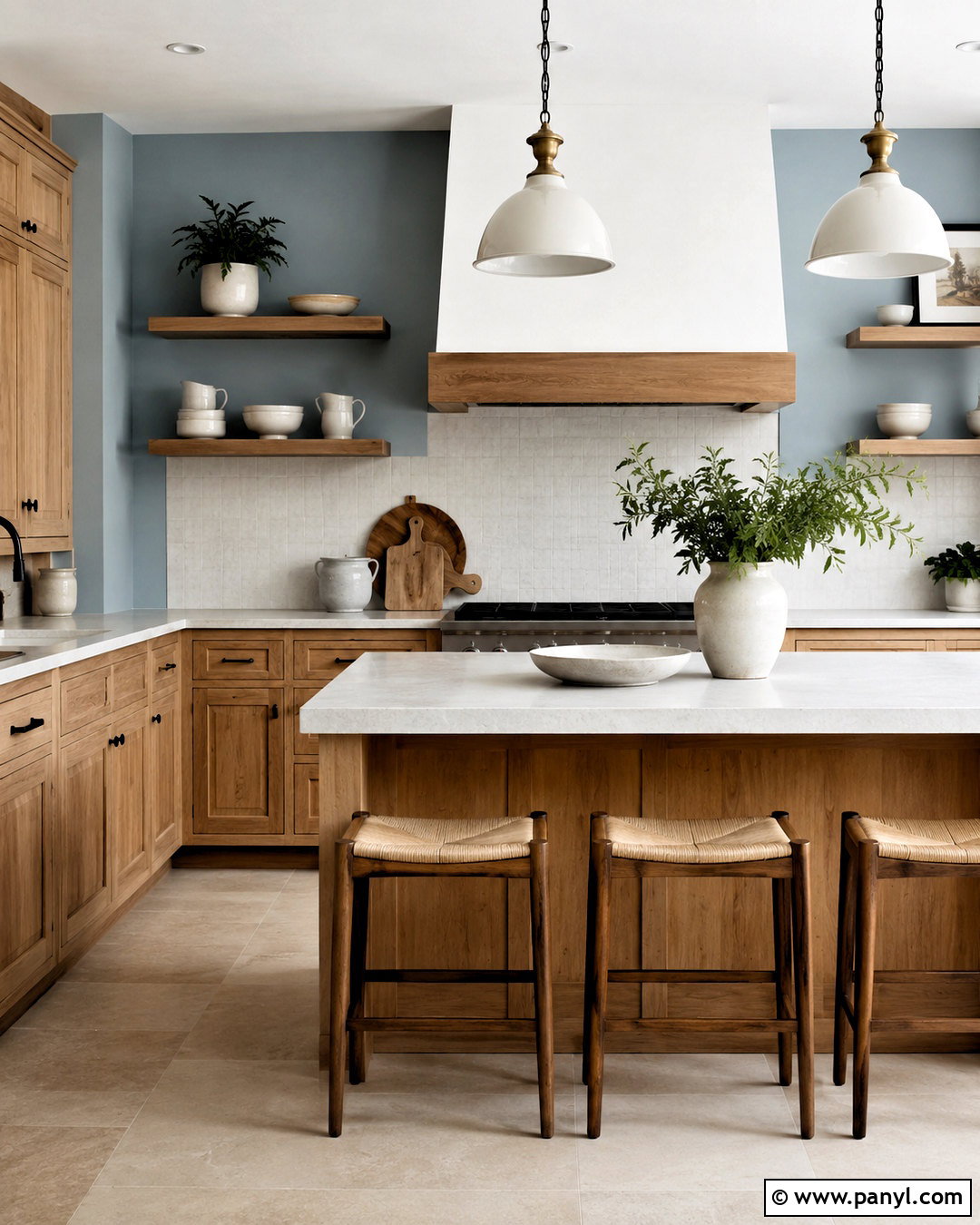
Natural oak cabinets bring essential warmth and texture to light blue kitchen walls. Choose flat-panel or slim Shaker cabinetry in a clear matte finish that allows the wood grain to remain visible. A muted blue-gray wall color prevents yellow oak tones from looking overly orange. Use creamy quartz counters, an off-white tile backsplash, and pale oak or limestone flooring to keep the overall room airy. Matte black hardware adds definition, while ceramic pendant lights introduce a softer handcrafted detail. Keep accessories restrained with white stoneware, clear glass containers, and a few leafy herbs. This complete scheme feels organic and contemporary without becoming stark. It is also an effective way to refresh existing wood cabinetry without painting over its natural character.
4. Light Blue Kitchen Walls With Walnut Cabinets
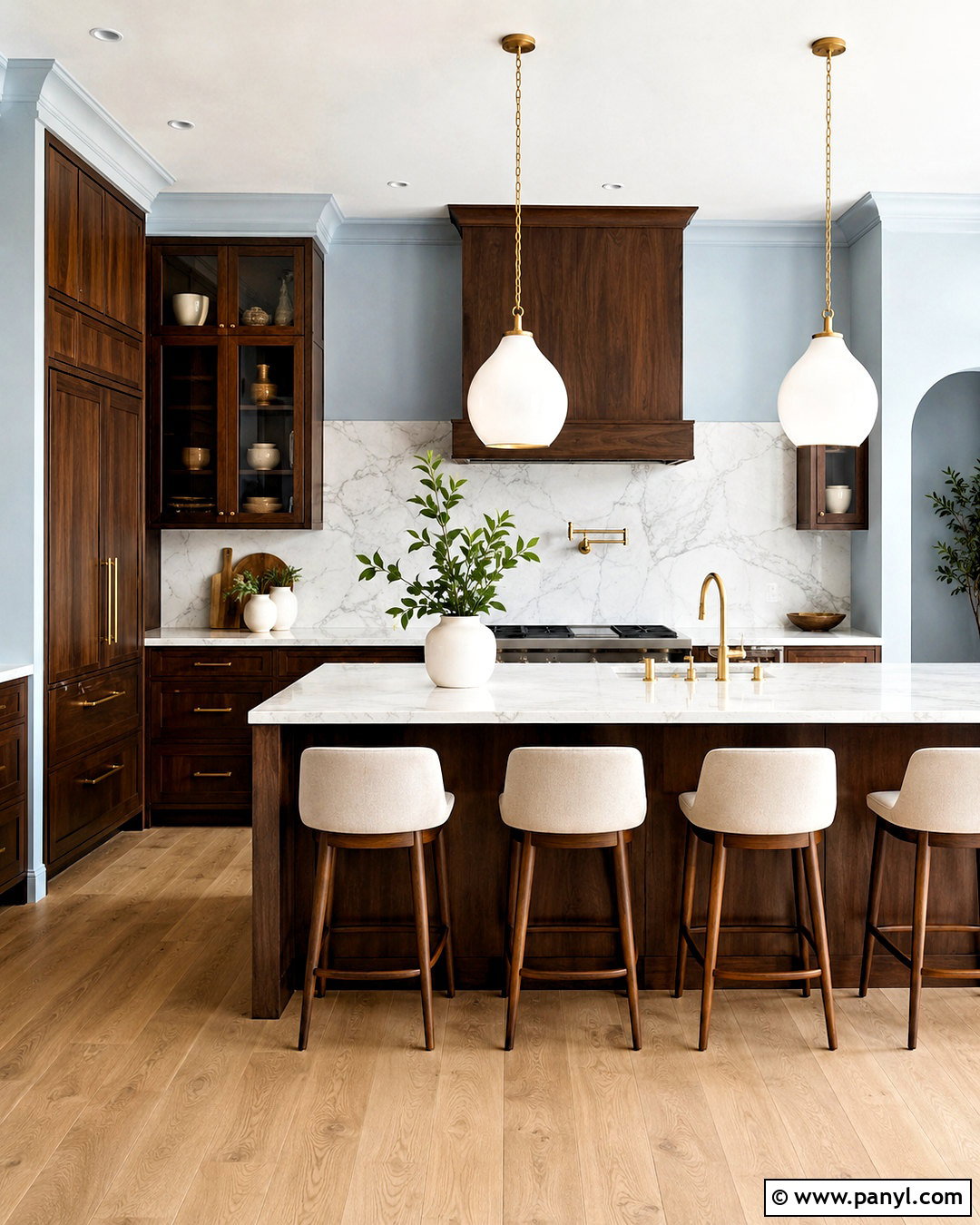
Deep walnut cabinetry turns light blue walls into a refined, high-contrast backdrop. Let the dark brown grain anchor the lower half of the kitchen while the pale wall color keeps the upper area visually open. Choose streamlined cabinet doors, white marble-look countertops, and a simple slab backsplash for a polished appearance. Brushed nickel or aged brass hardware works better than heavy black accents because it reflects light against the darker wood. Add light oak flooring to prevent the room from becoming too brown, then introduce linen stools and milky glass pendants. A dusty blue with a quiet gray undertone will complement walnut more gracefully than a vivid pastel. The finished kitchen feels warm, tailored, and comfortably modern.
5. Light Blue Kitchen Walls With Navy Cabinets
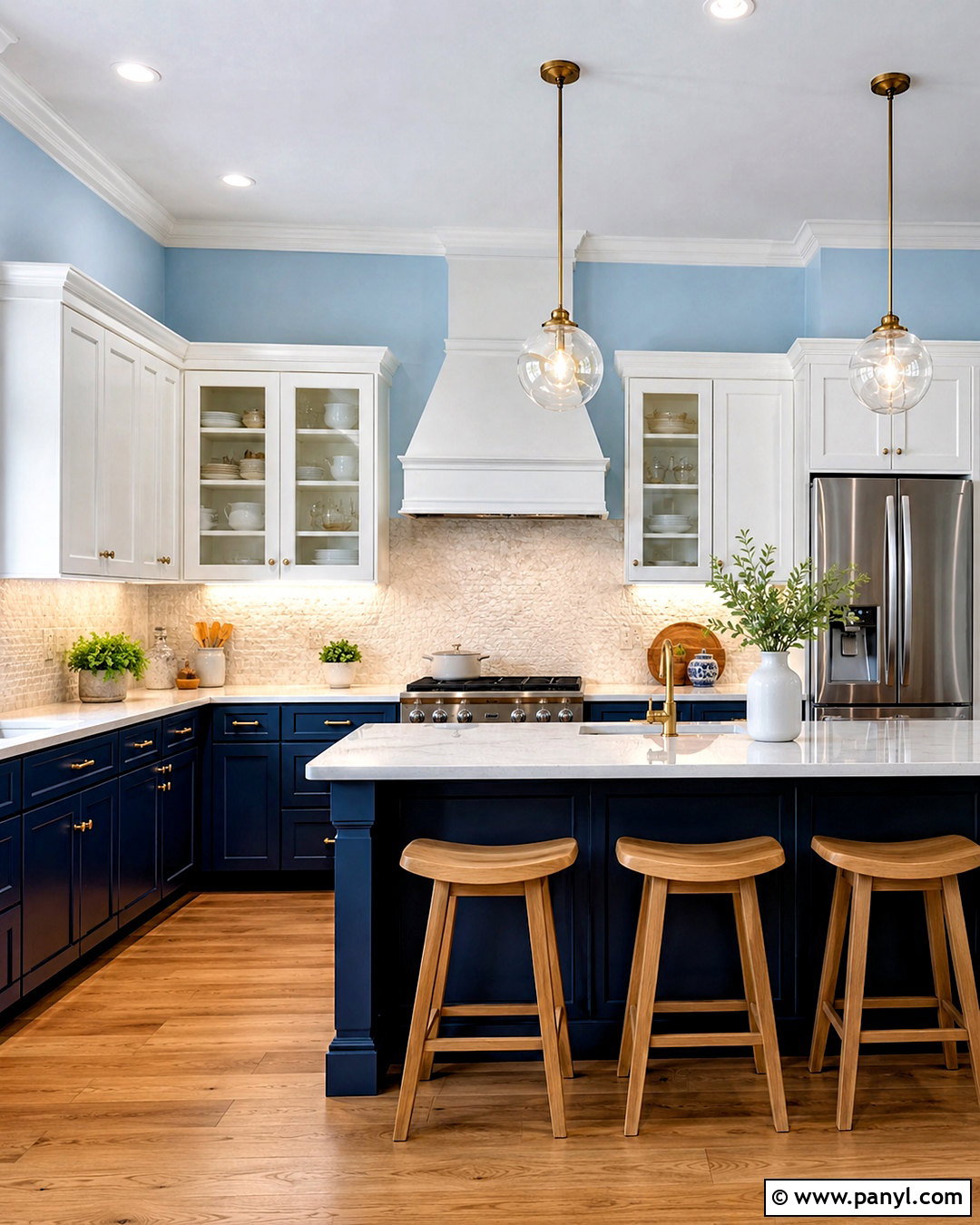
Pairing pale blue walls with navy cabinets creates a layered blue kitchen that still feels balanced. Place navy on the base cabinets and island, then use white uppers or open shelves to preserve brightness. White quartz countertops and a lightly textured backsplash provide a clean pause between the two blue tones. Select warm brass hardware and natural oak stools to counter the cool palette. Medium-tone wood flooring adds further warmth without competing with the cabinetry. The wall color should be several shades lighter than the navy so every surface remains distinct. Repeat the deeper blue through a striped runner or ceramic accessories. This look delivers bold contrast while maintaining the restful, cohesive quality that makes blue kitchens so appealing.
6. Light Blue Kitchen Walls With Charcoal Cabinets
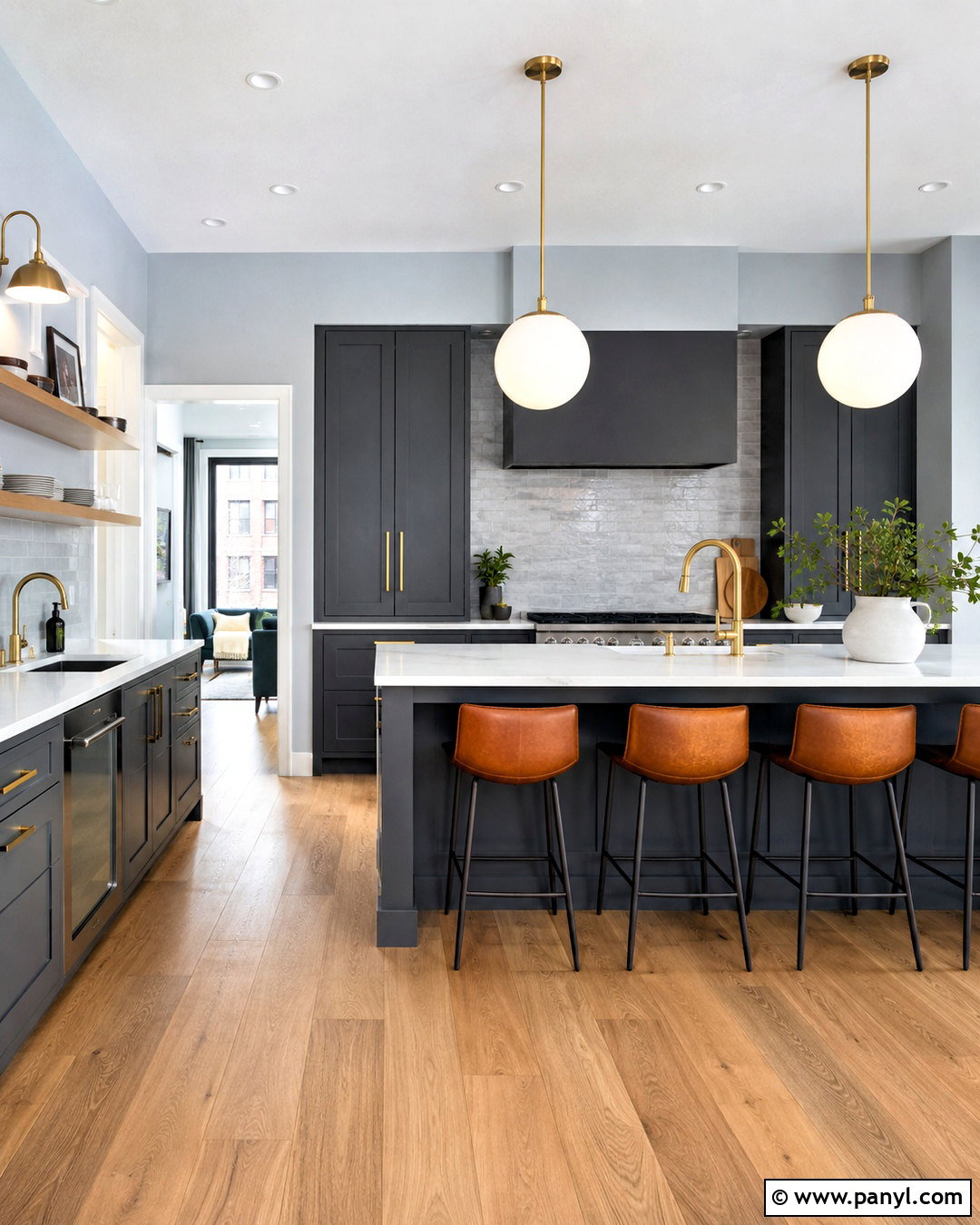
Charcoal cabinets give light blue walls a sophisticated urban edge without the severity of pure black. Use the dark gray finish on lower cabinets and a substantial island, balanced by pale blue walls and a white ceiling. A honed white quartz countertop keeps the working surfaces bright, while soft gray backsplash tile connects the cabinets to the wall color. Add brushed brass fixtures for warmth or polished nickel for a cooler contemporary result. Wide-plank oak flooring and camel-colored leather stools prevent the palette from becoming flat. Simple globe pendants provide clean overhead lighting. Choose a light blue with a noticeable gray base, allowing it to sit comfortably beside charcoal while still adding more personality than an ordinary neutral wall.
7. Light Blue Kitchen Walls With Sage Green Cabinets
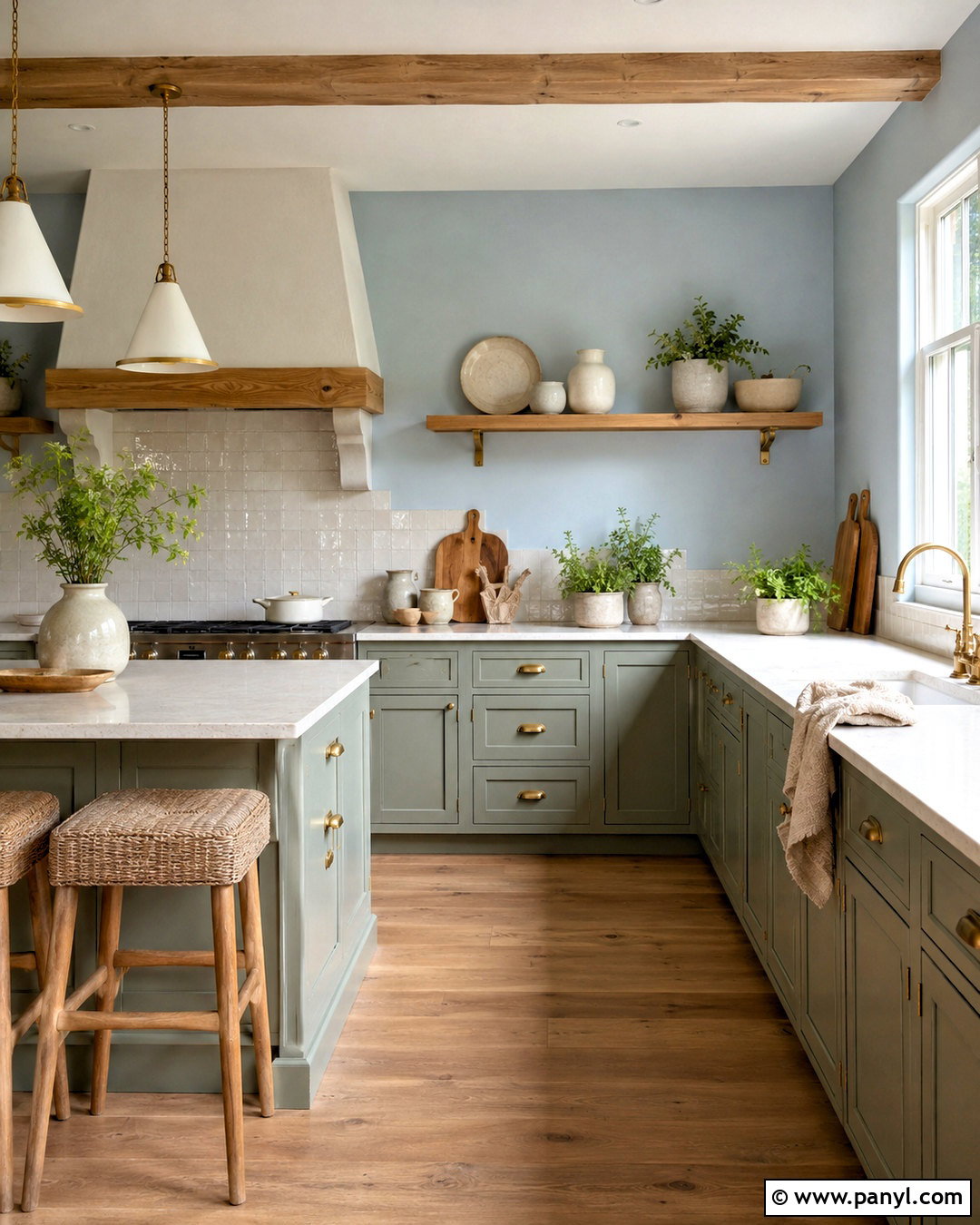
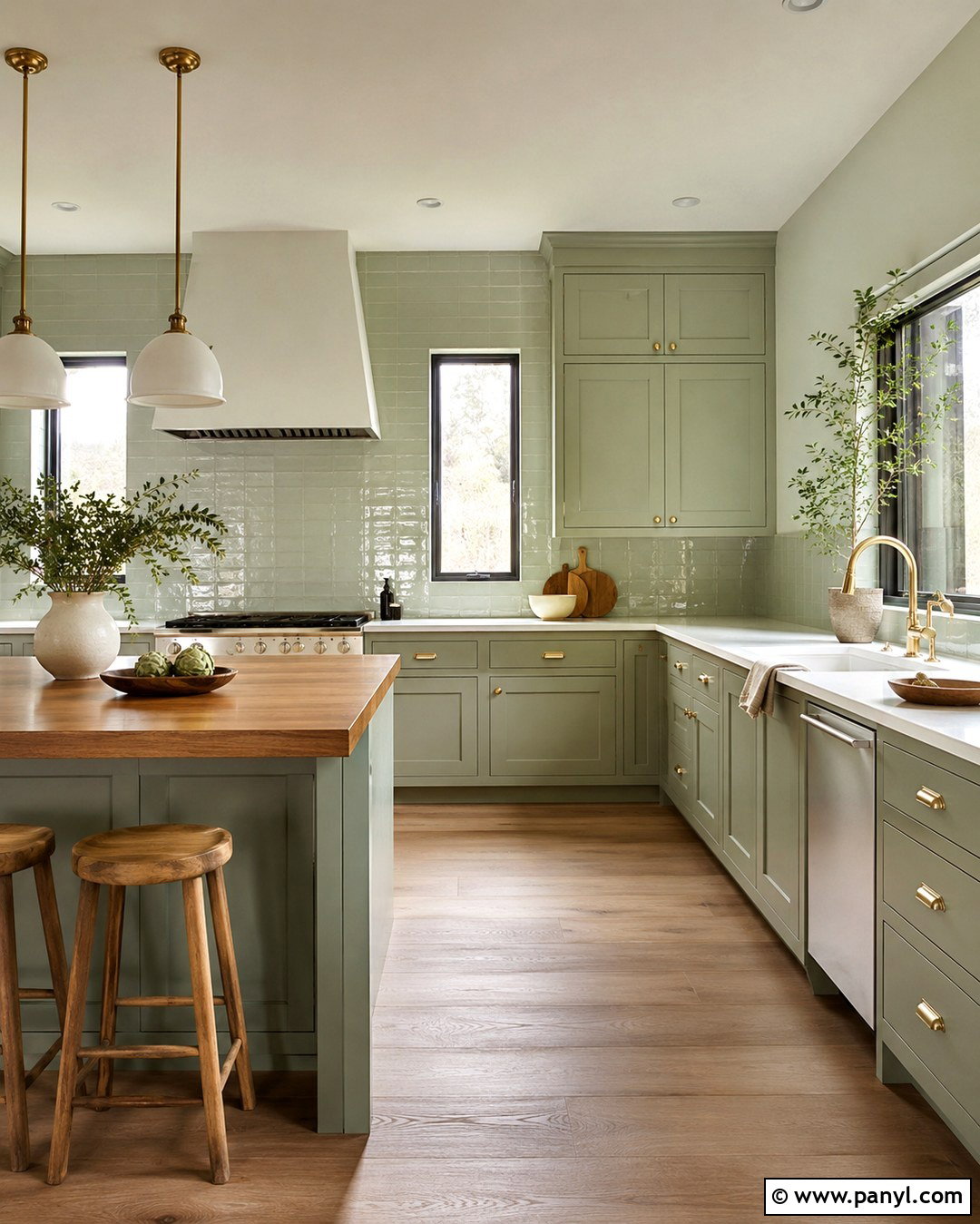
Soft sage cabinets and light blue kitchen walls create a nature-inspired palette that feels gentle rather than overly colorful. Select a dusty sage with gray undertones and a pale blue that leans slightly green. These related tones will flow together more smoothly. Use warm white quartz counters, creamy handmade tile, and unlacquered brass hardware to introduce a soft traditional finish. Natural oak flooring and woven counter stools reinforce the organic character. Keep decorative pieces simple, such as ivory ceramics, wooden boards, and potted herbs. A white ceiling and warm white trim give both colors a clear boundary. This finished design is especially appealing in kitchens overlooking a garden because it creates an easy visual connection with the surrounding greenery.
8. Light Blue Kitchen Walls With Black Lower Cabinets
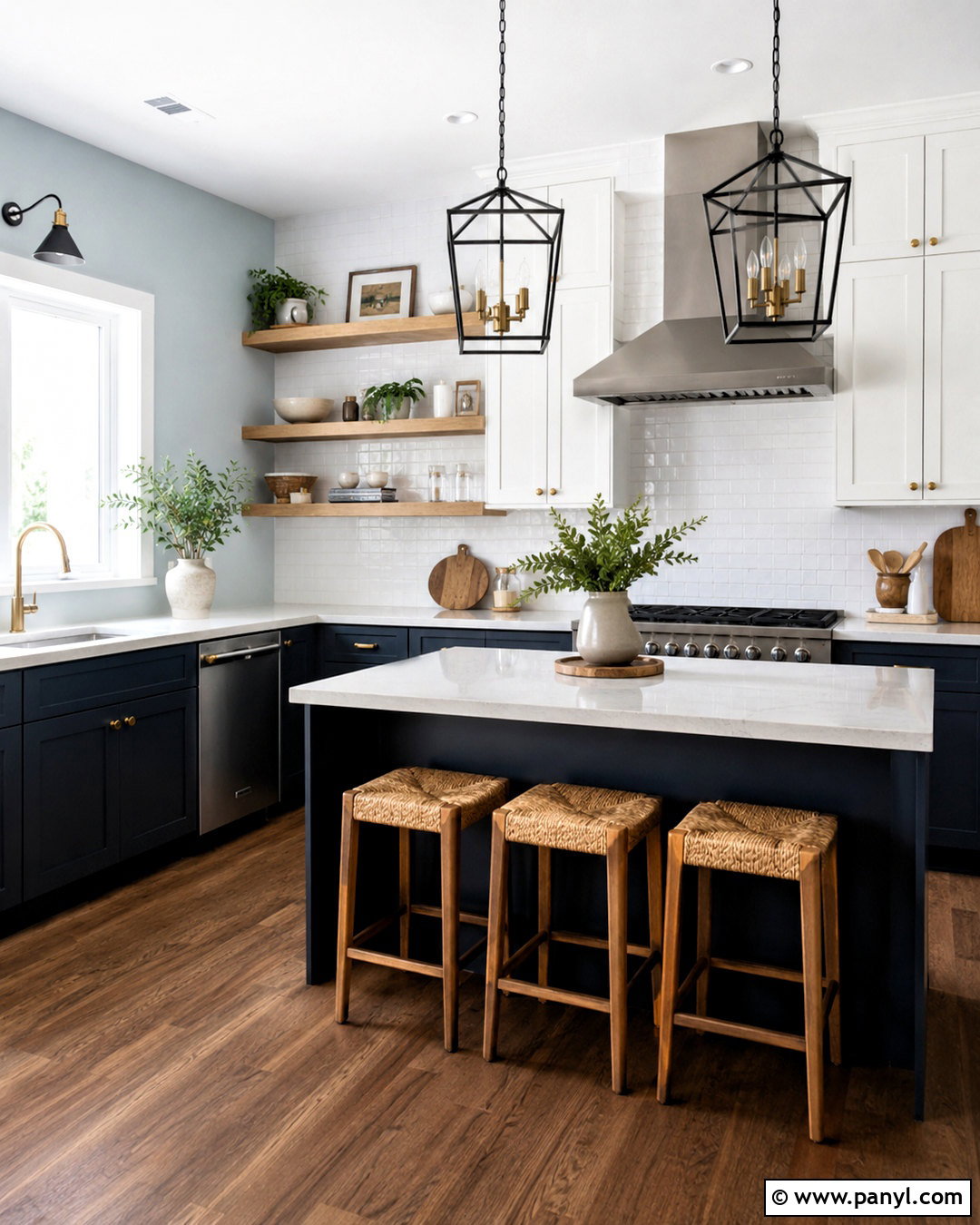
Black lower cabinets can ground light blue walls while leaving the kitchen feeling open above counter height. Combine matte black base units with white upper cabinets or natural wood shelves. This breaks up the dark finish and keeps it from dominating the room. Choose pale quartz counters, white rectangular backsplash tile, and light oak flooring for contrast. Black-framed pendants and matching faucets connect visually with the lower cabinets, while brass knobs add a warmer layer. The wall color should be airy and slightly muted rather than icy. Introduce texture through woven stools, linen shades, and handmade pottery. The result is a practical contemporary kitchen with strong architectural lines, softened by approachable color and natural materials.
9. Light Blue Kitchen Walls With Light Gray Cabinets
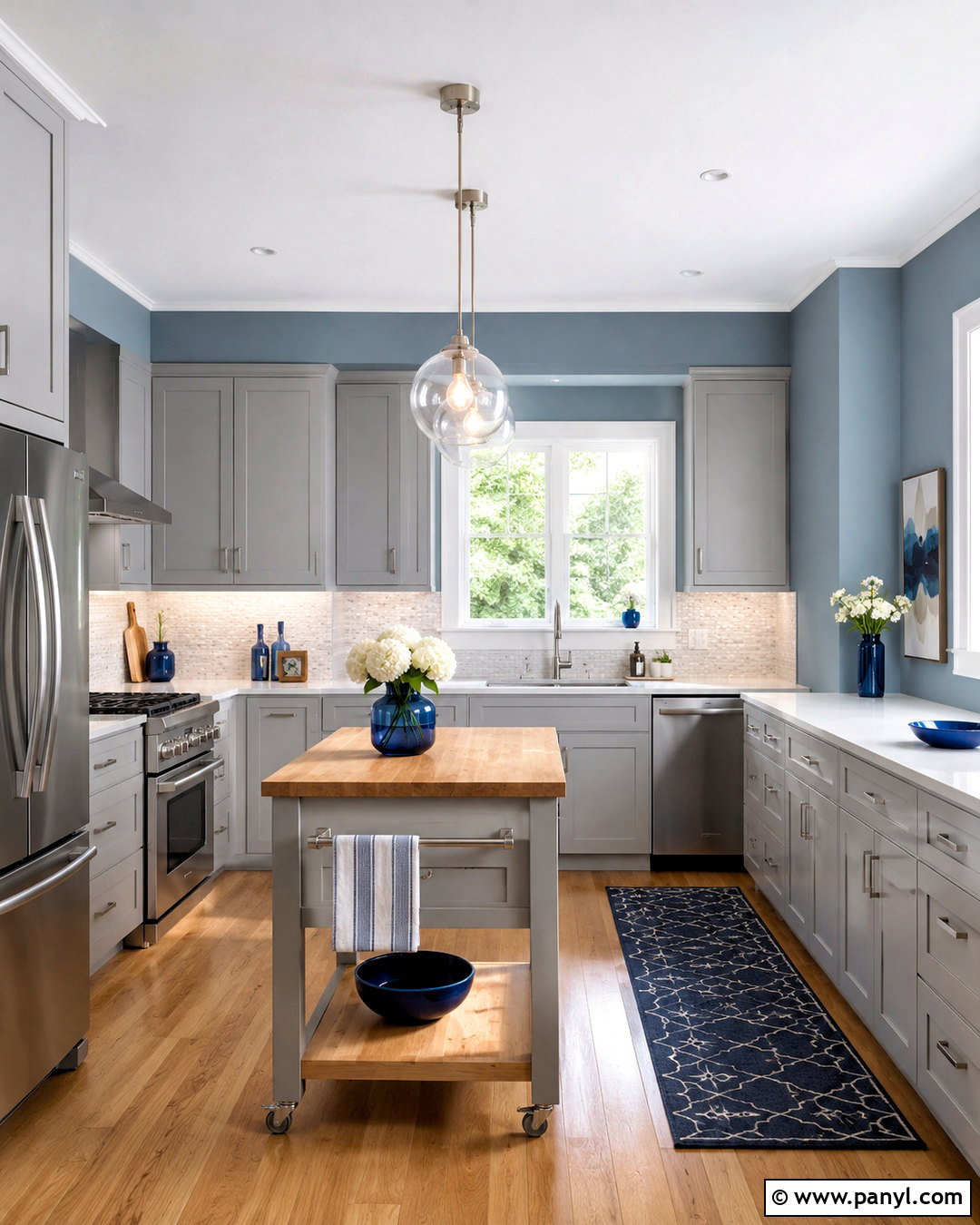
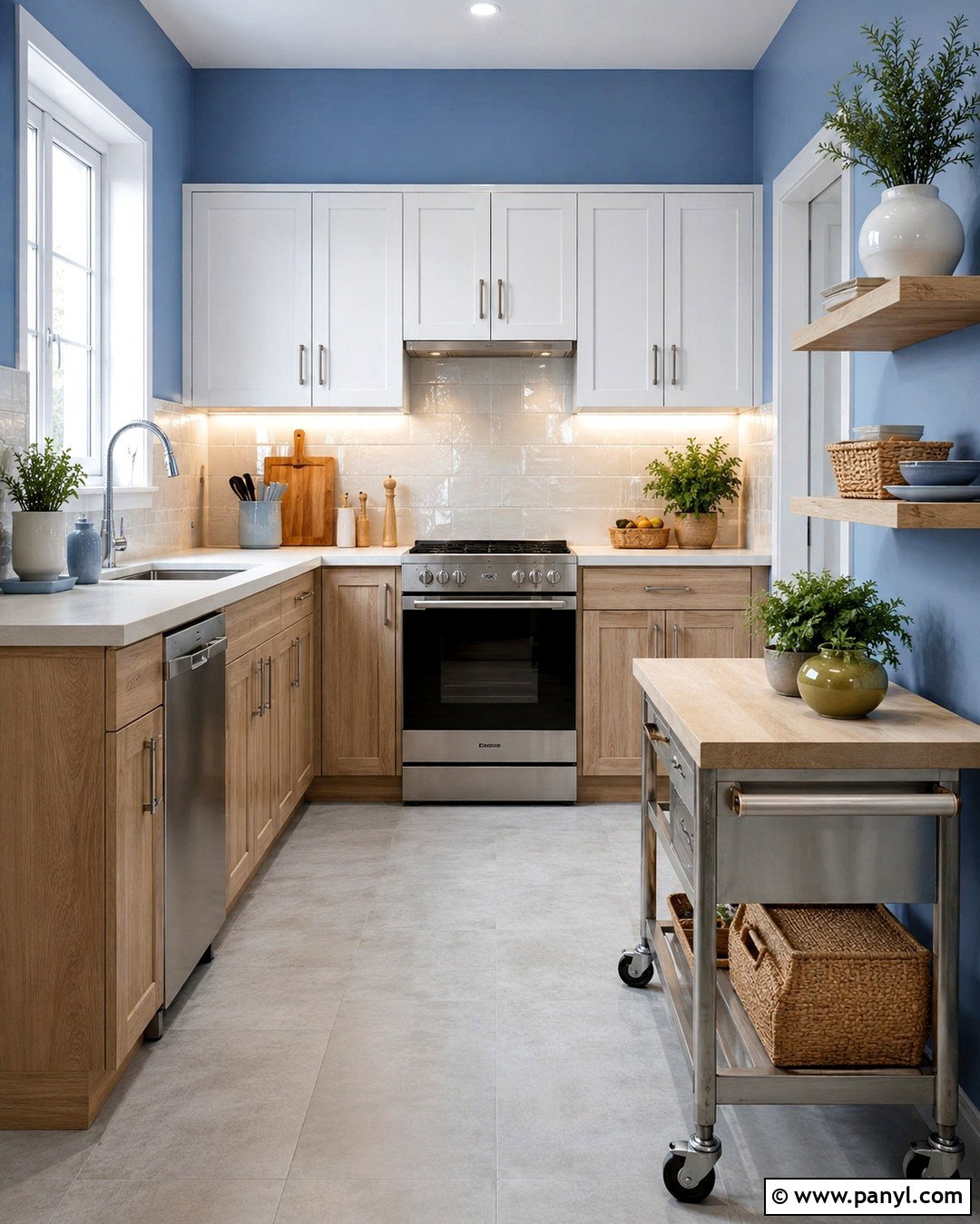
Light gray cabinets create a subtle transition against blue-gray kitchen walls. For enough definition, choose cabinets that are slightly deeper and more neutral than the wall paint. White quartz countertops, pearly backsplash tile, and polished nickel hardware will maintain a cool, luminous palette. Add warmth underfoot with natural oak planks and bring in a small butcher-block cart or wooden stools. Clear glass pendants keep sightlines open, which is helpful in modest kitchens. Avoid using too many competing gray shades; repeat the cabinet color in the grout or window treatment for continuity. A few navy accessories can provide depth. This understated combination feels calm and versatile, making it easy to update later with different metals, textiles, or decorative accents.
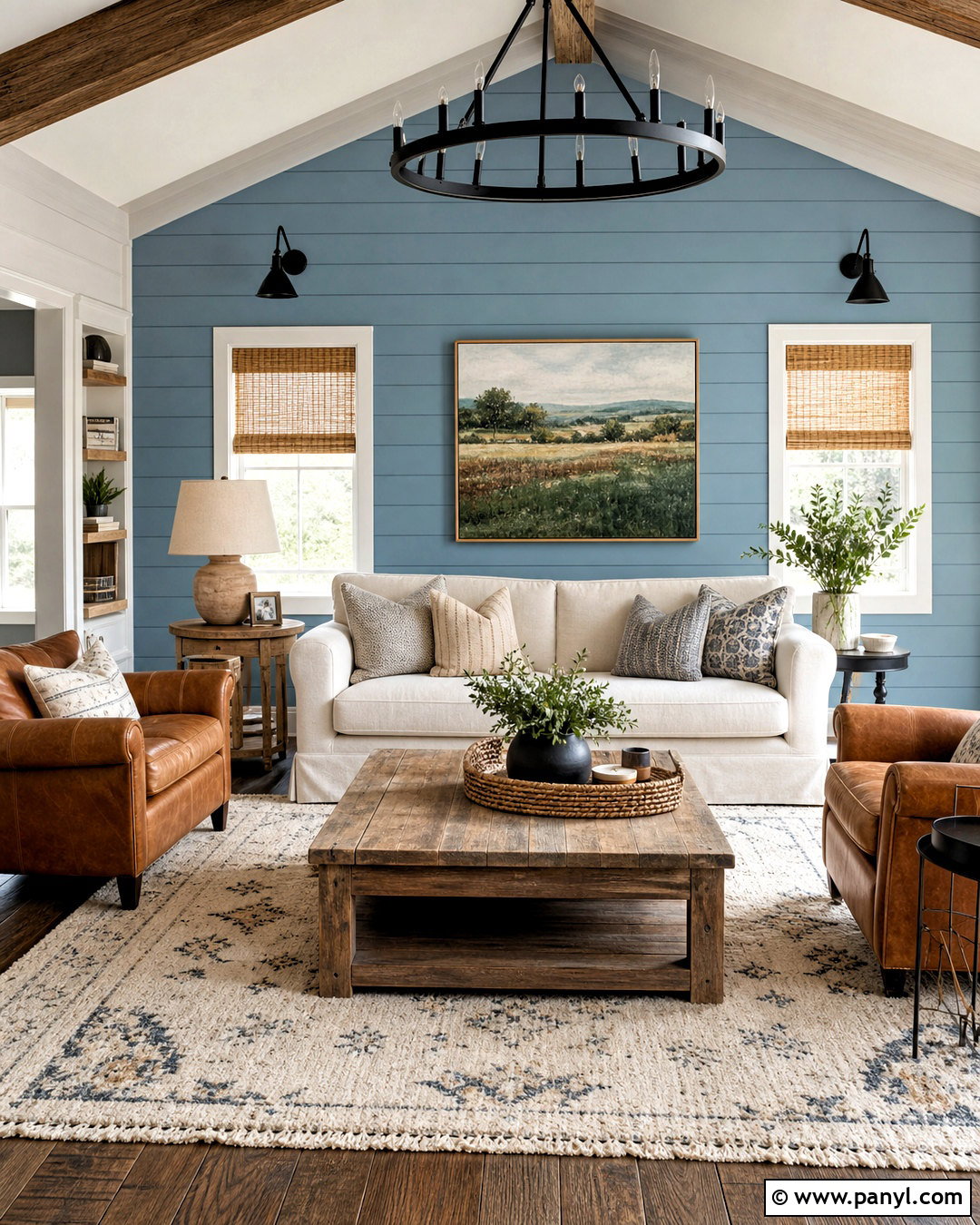
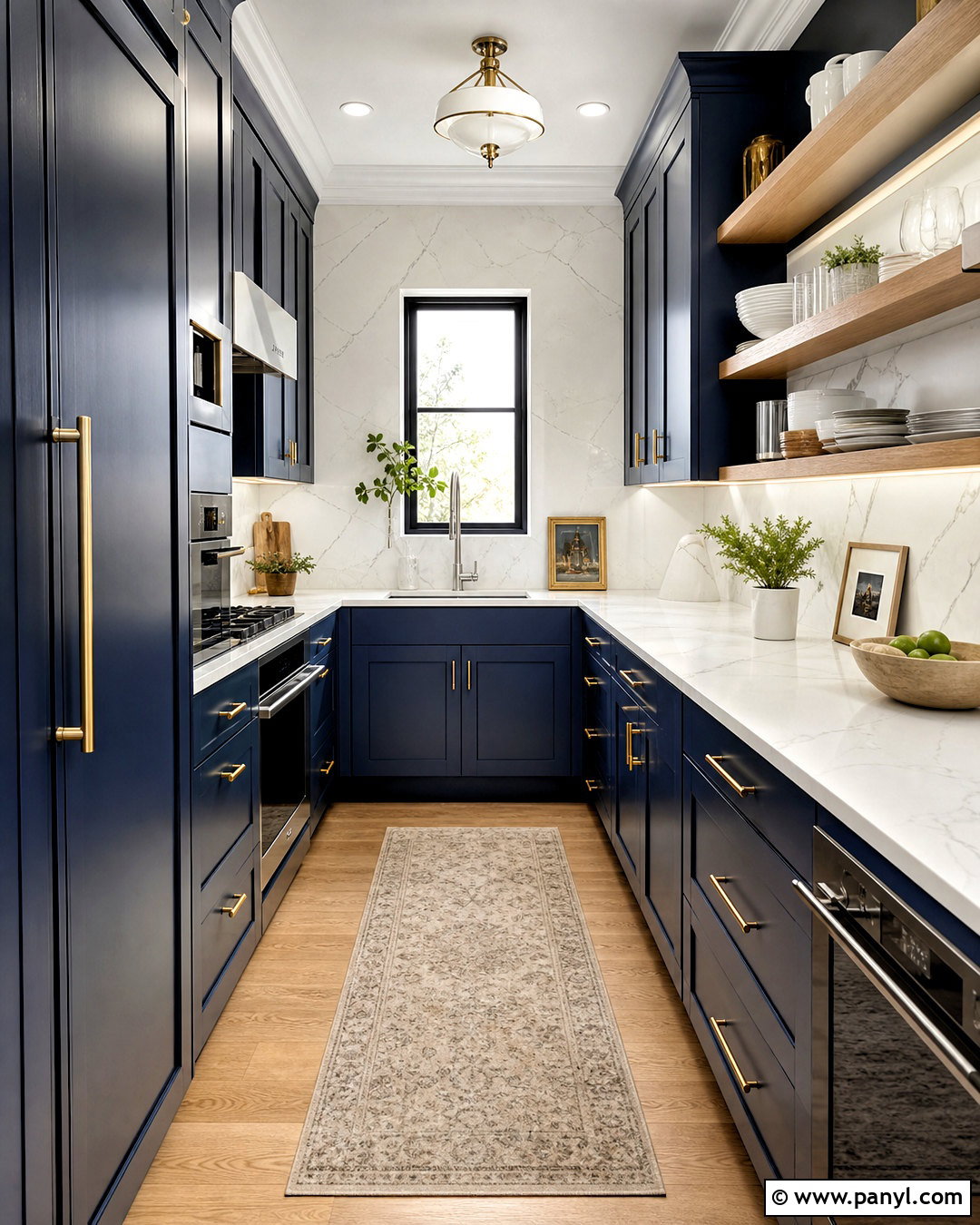
10. Light Blue Kitchen Walls With Greige Cabinets
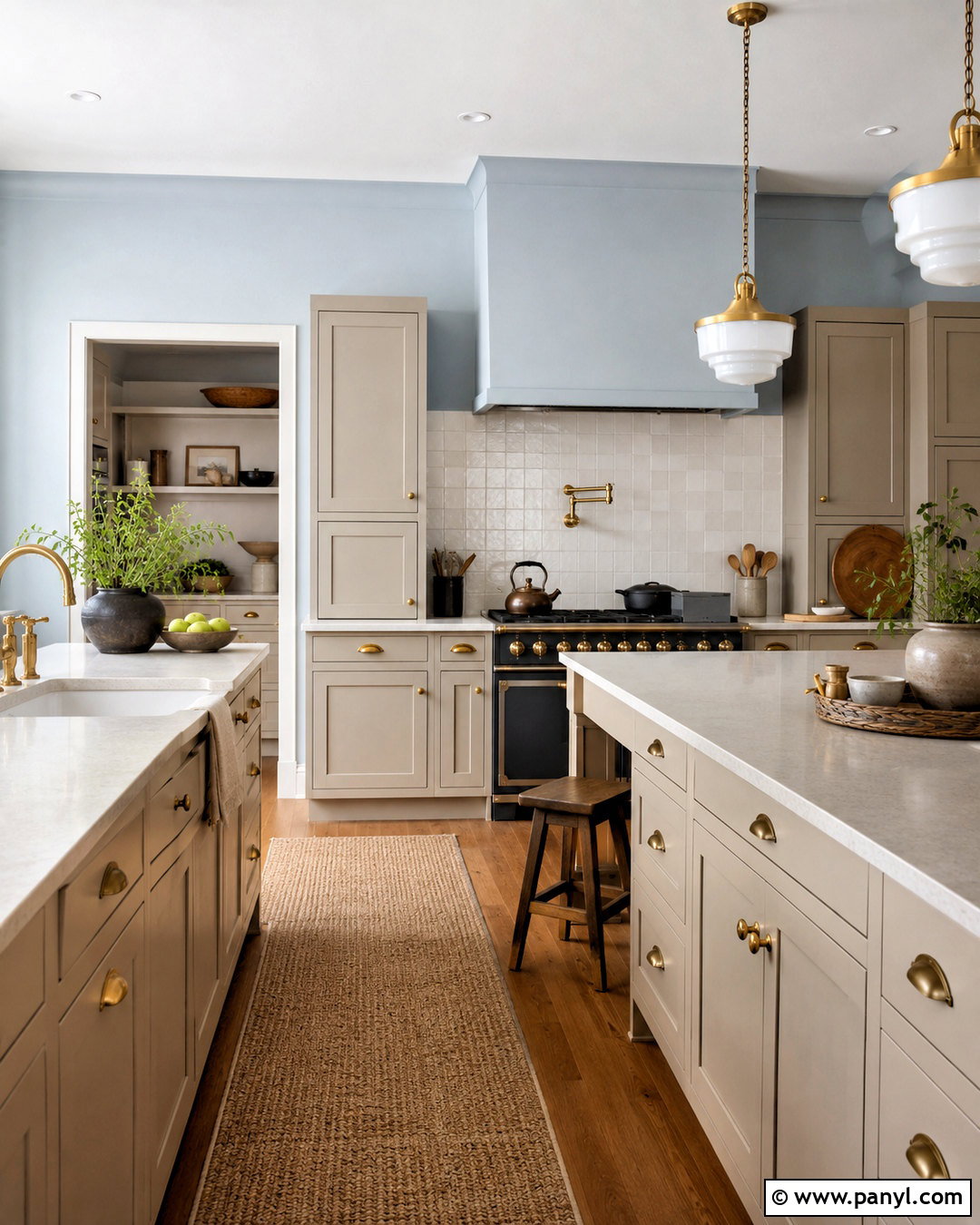
Greige cabinetry balances the freshness of light blue walls with a warmer neutral base. Look for a mushroom-toned greige that contains beige rather than purple undertones. Pair it with soft blue-gray paint, creamy quartz counters, and an ivory backsplash with subtle texture. Aged brass pulls and warm oak flooring will strengthen the welcoming quality of the scheme. Use off-white trim instead of sharp white to keep the transitions gentle. Over the island, hang simple linen or ceramic pendant lights that add texture without introducing another bold color. Finish the room with woven shades and understated stoneware. This kitchen feels composed and comfortable, offering enough color to remain interesting while maintaining the flexibility associated with a mostly neutral design.
11. Light Blue Walls With Matching Blue Cabinets
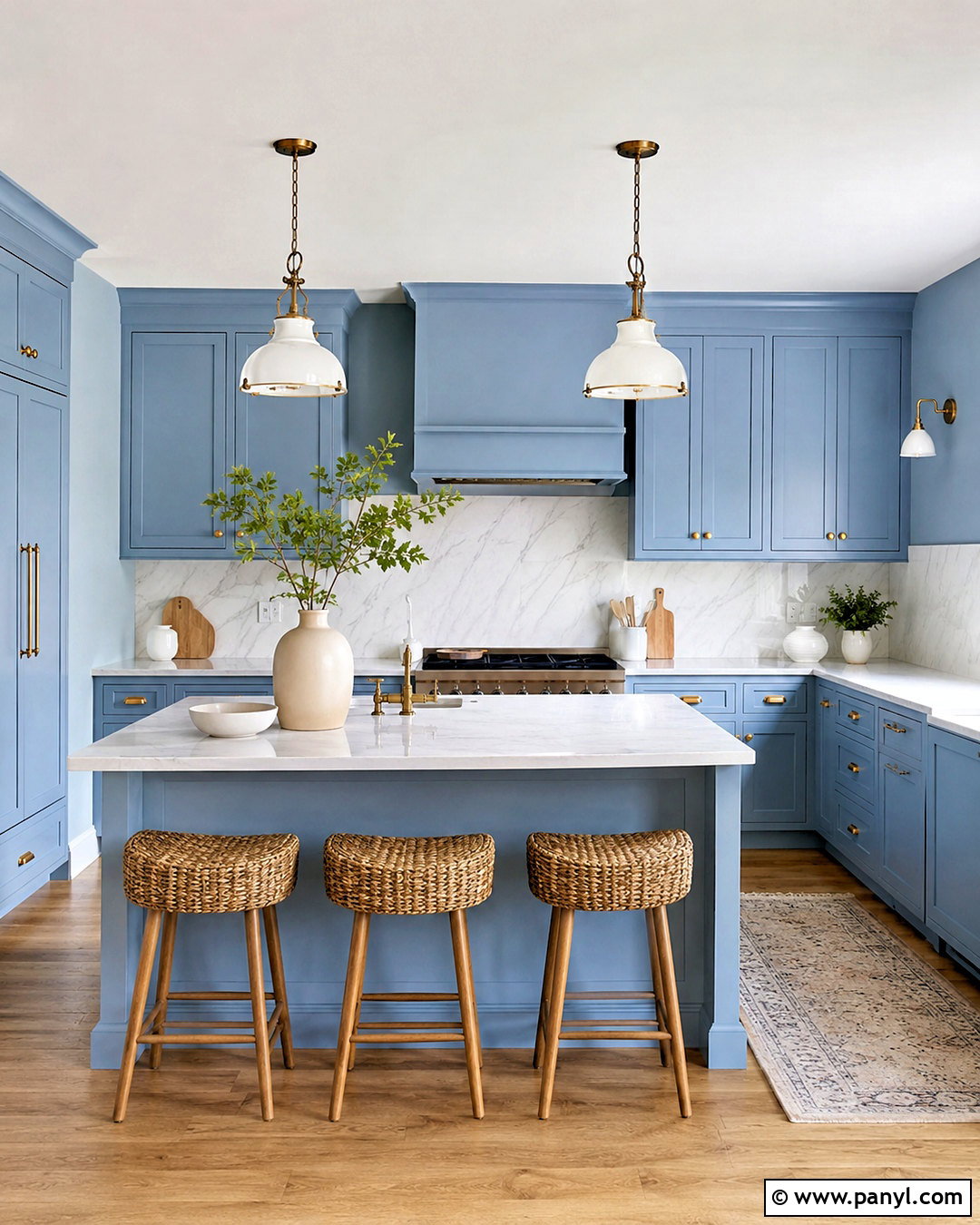
Color-drenching the walls and cabinets in one light blue creates a seamless kitchen with surprising depth. Use the same paint color in different sheens: washable eggshell on the walls and durable satin or semi-gloss on the cabinetry. White marble-look counters and backsplash slabs provide a crisp visual break. Warm the continuous blue with oak flooring, aged brass hardware, and natural woven stools. Paint the ceiling a soft white if the kitchen has limited light, or continue the blue overhead in a bright room for a more immersive effect. Keep decorative accessories quiet and purposeful. Cream ceramics, clear glass, and wooden boards complement the palette without clutter. The final look feels coordinated, spacious, and more sophisticated than a typical pastel kitchen.
12. Light Blue Walls With Two-Tone Cabinets
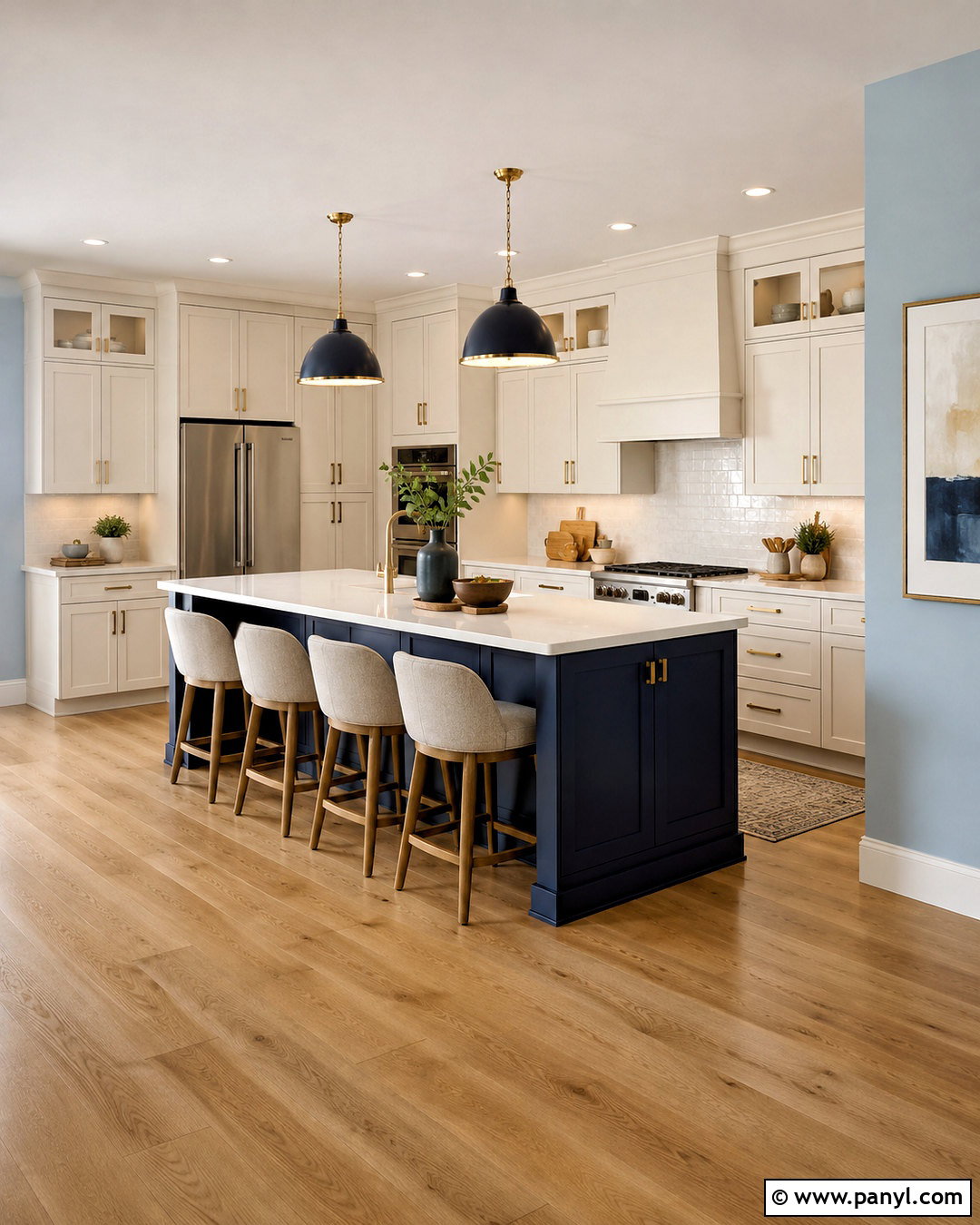
Two-tone cabinetry gives light blue walls more dimension while allowing you to balance dark and light finishes. Use warm white cabinets around the perimeter and deep navy on the island. The pale blue walls form a soft bridge between these contrasting colors. Add white quartz countertops throughout, then install glossy off-white backsplash tile to reflect light around the work zone. Brushed brass hardware connects both cabinet finishes, while natural oak flooring keeps the palette grounded. Choose upholstered island stools in oatmeal fabric for comfort and texture. Navy pendant lights can reinforce the island color without overwhelming the room. This complete design works well in open kitchens because the island becomes a clear focal point while the lighter perimeter recedes gently.
13. Coastal Light Blue Kitchen Walls
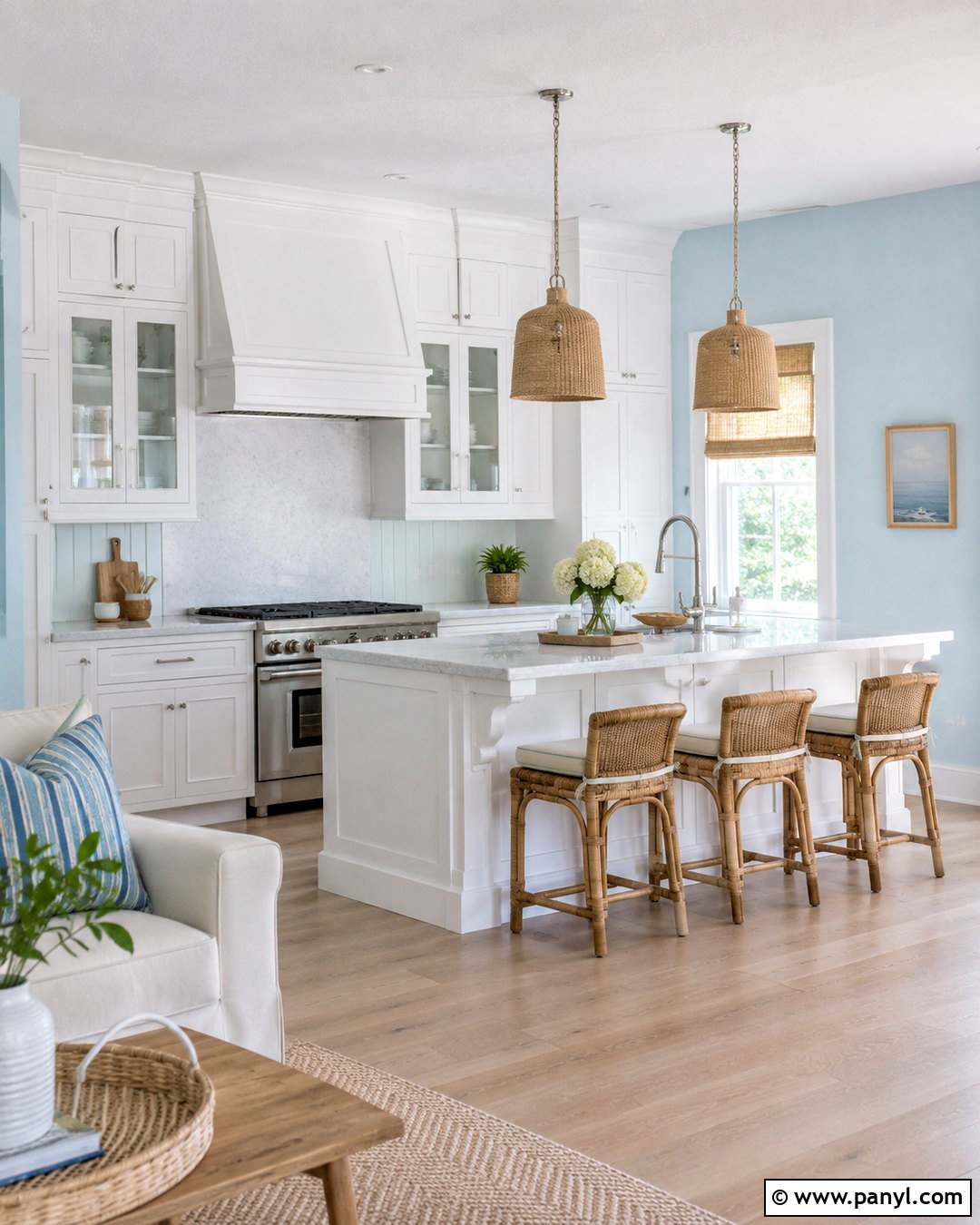
A coastal kitchen can feel relaxed without relying on obvious seaside decorations. Begin with watery light blue walls, bright white Shaker cabinets, and pale marble or quartz countertops. Add a white beadboard backsplash or tongue-and-groove range hood for subtle texture. Light oak flooring, rattan stools, and woven pendant lights create warmth while preserving the breezy palette. Use polished nickel fixtures to introduce a clean reflective finish. Window treatments should be simple white linen, allowing daylight to remain central to the room. Finish with blue-striped textiles, clear glass jars, and a small collection of white ceramics. By focusing on natural materials and airy colors instead of themed accessories, the completed kitchen feels timeless, comfortable, and connected to the coast.
14. Farmhouse Light Blue Kitchen Walls
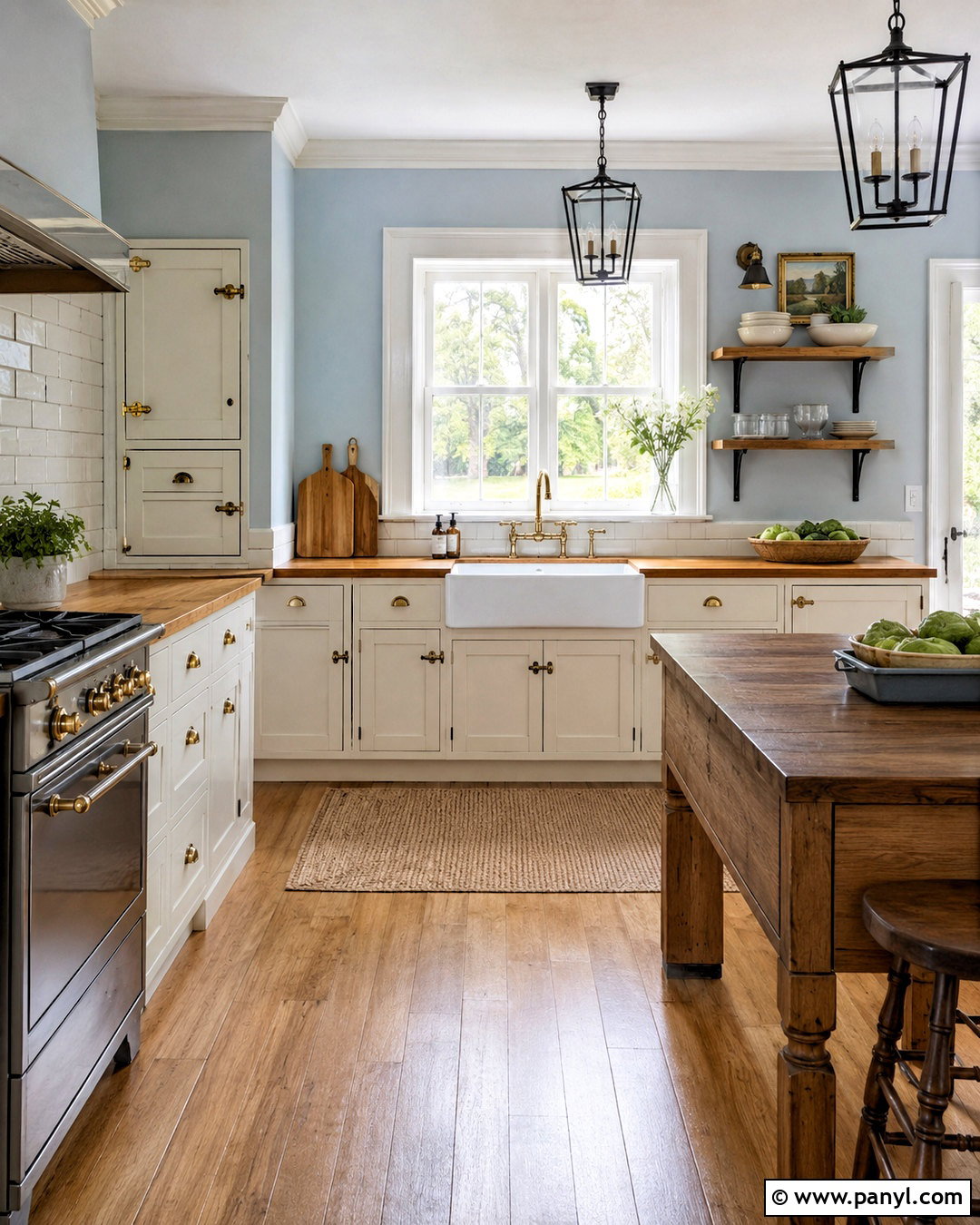
Light blue walls can soften a farmhouse kitchen filled with practical, substantial features. Pair a muted powder blue with creamy Shaker cabinets, a deep apron-front sink, and warm butcher-block accents. Use white subway tile with light gray grout for an easy-to-maintain backsplash. Medium oak flooring, a sturdy wood island, and black lantern pendants provide rustic structure. Instead of making every fixture black, mix in aged brass cabinet latches for a more collected appearance. Open shelves can display ironstone dishes and everyday glassware without becoming overcrowded. Add simple linen café curtains and a washable patterned runner. The finished space feels fresh and hardworking, combining familiar farmhouse materials with a light wall color that keeps heavier furniture and dark accents from overwhelming the kitchen.
15. Cottage Light Blue Kitchen Walls
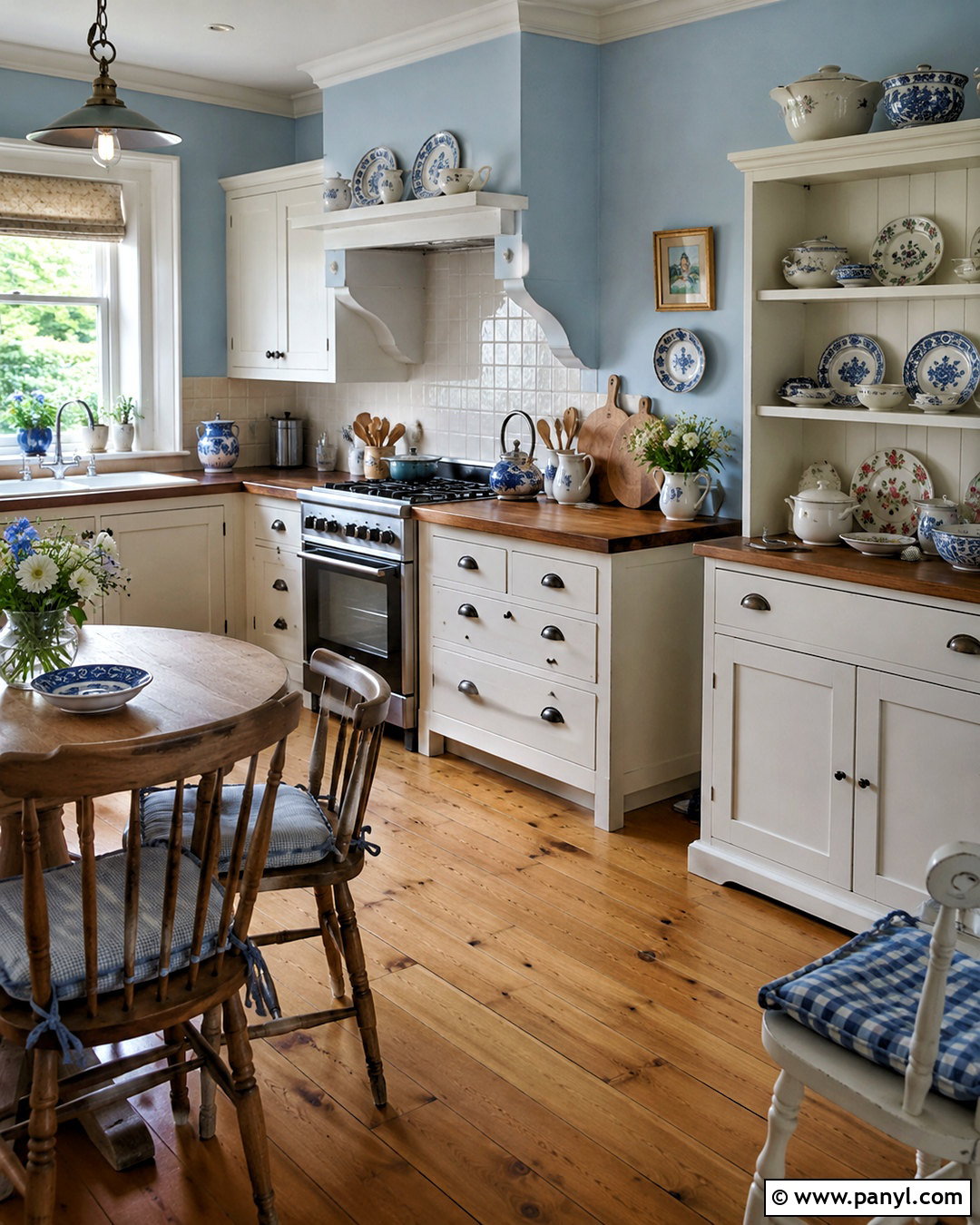
For a cozy cottage kitchen, use light blue walls as the backdrop for creamy cabinetry and small-scale vintage-inspired details. Choose inset cabinet doors, cup pulls in aged brass, and warm butcher-block counters on at least one work surface. An ivory square-tile backsplash adds character without distracting from the wall color. Paint a freestanding hutch soft white and fill it with everyday ceramics in blue, cream, and muted green. Honey-toned wood flooring and a small round breakfast table make the room feel inviting. Floral or checked fabric can appear on Roman shades and seat cushions, but keep the patterns understated. This design feels layered and personal while maintaining enough visual restraint to prevent a compact cottage kitchen from looking crowded.
16. Modern Light Blue Kitchen Walls
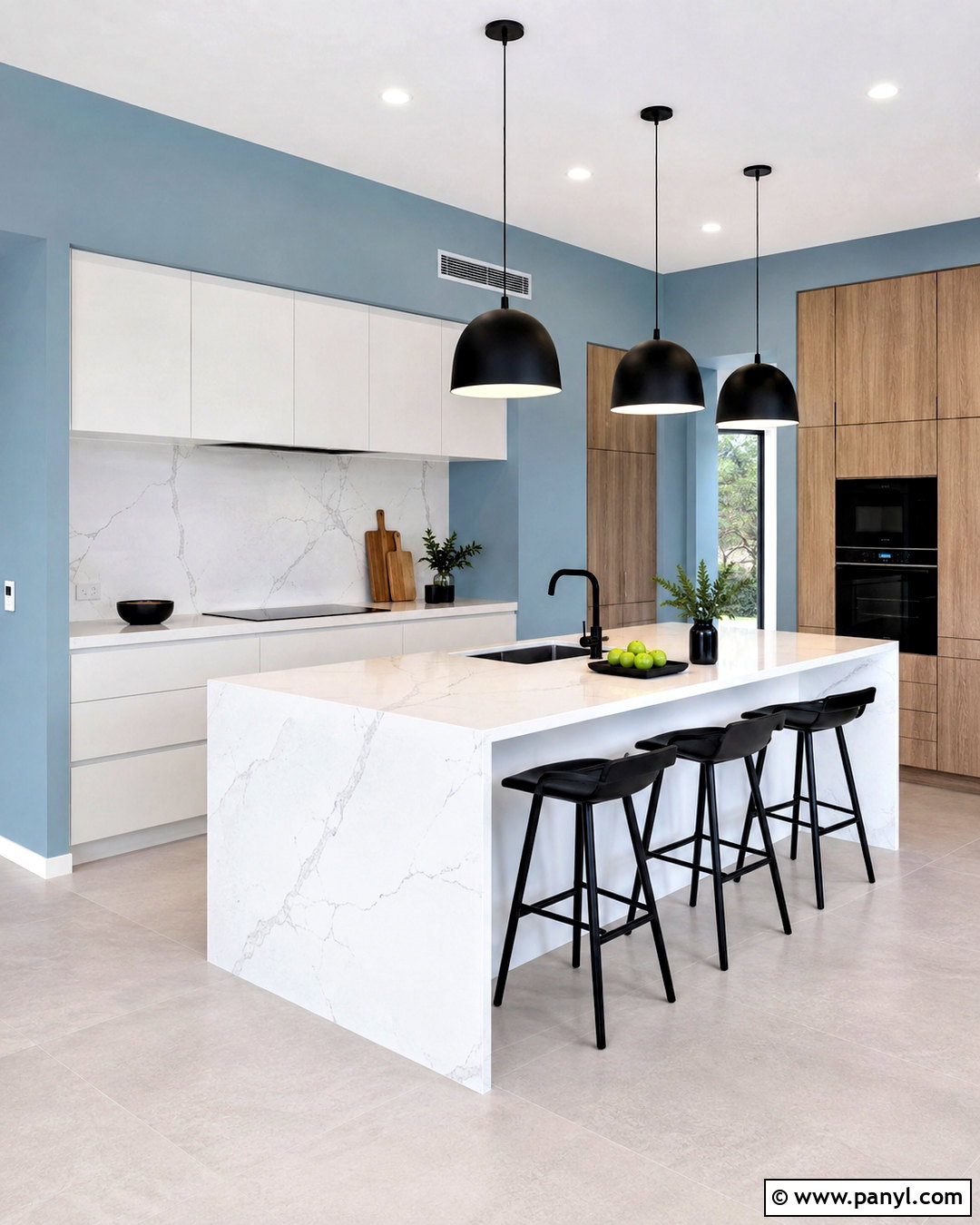
Clean lines allow light blue kitchen walls to bring softness into a modern space. Pair the color with handleless white cabinets, waterfall-edge quartz counters, and a simple full-height slab backsplash. Use pale wood for the island or tall pantry units to add warmth without interrupting the streamlined layout. Matte black pendants and a matching faucet create sharp, controlled contrast. Large-format porcelain floor tile supports the minimal look and reduces visible grout lines. Keep appliances integrated where possible, and limit countertop decor to a wooden bowl or a few ceramic containers. An icy light blue works particularly well here because the crisp cabinetry keeps it looking intentional. The result is uncluttered and contemporary, yet more welcoming than an entirely white kitchen.
17. Traditional Light Blue Kitchen Walls
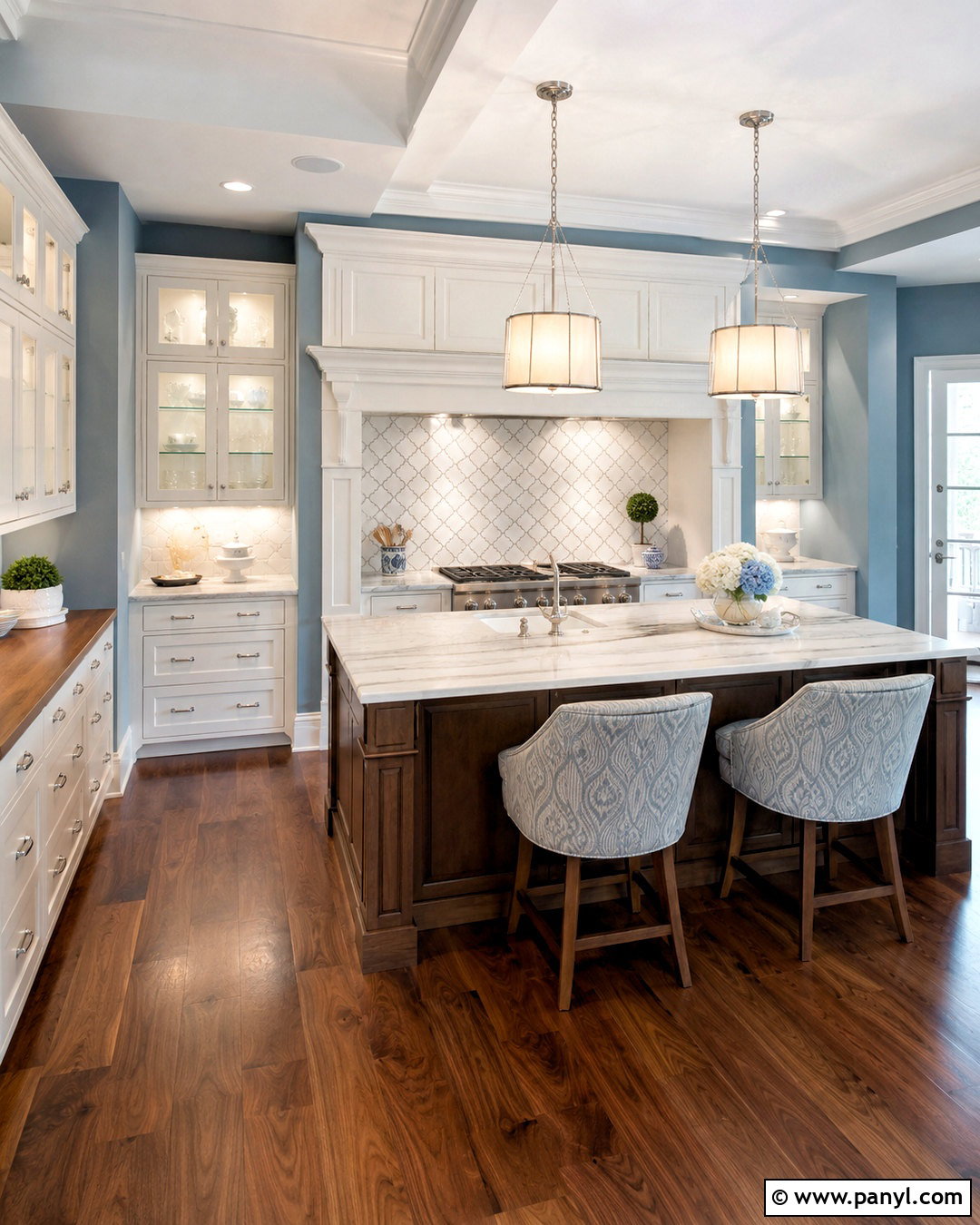
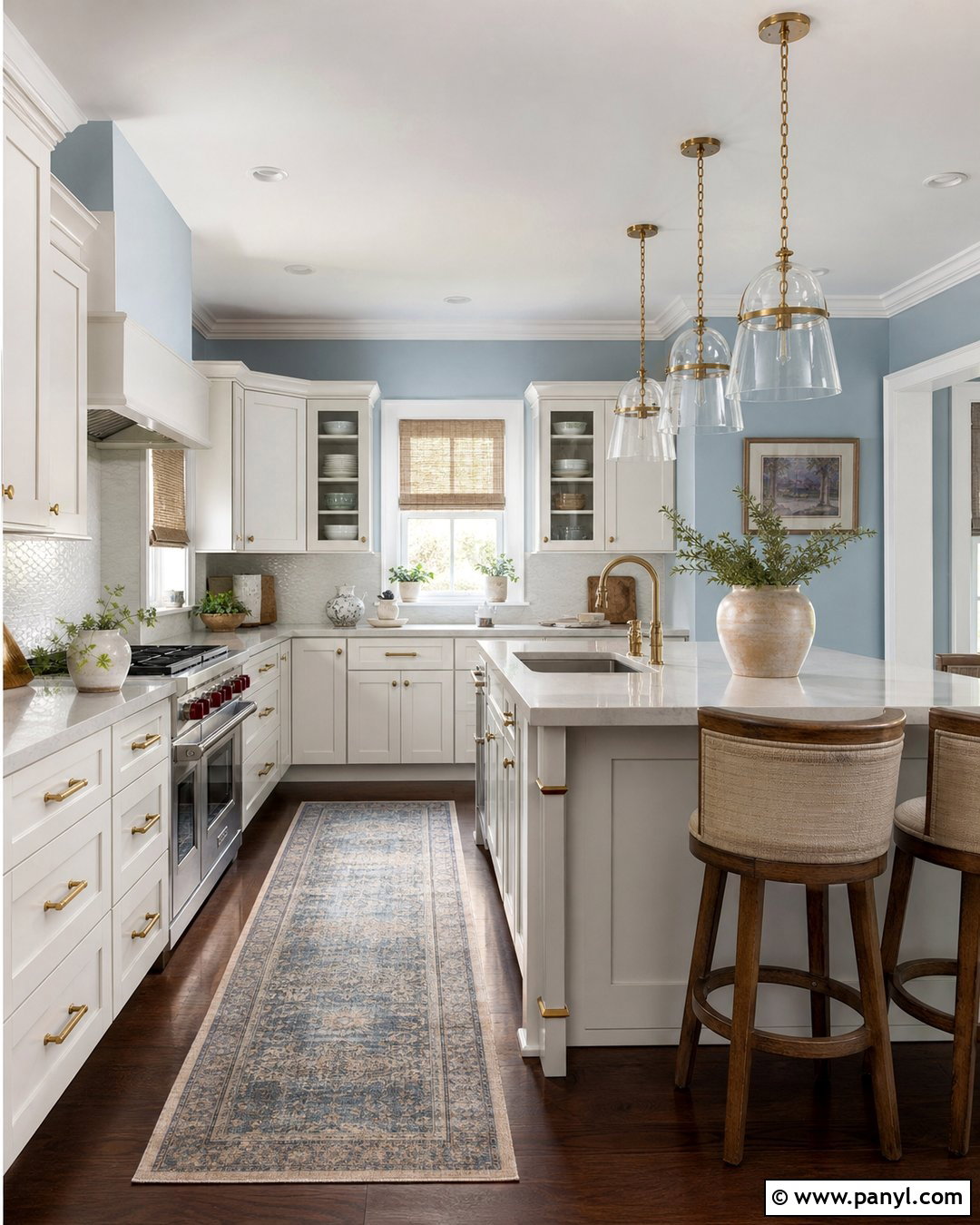
Traditional kitchens benefit from a blue wall color that highlights millwork and detailed cabinetry. Choose a subdued blue-gray for the walls, then add warm white inset cabinets with crown molding and glass-front uppers. Lightly veined marble or quartz counters reinforce the classic character. Use a patterned stone backsplash behind the range and simpler ivory tile elsewhere. Polished nickel fixtures, turned island legs, and shaded pendant lights introduce elegant details without excessive ornament. Medium walnut flooring anchors the pale palette, while an antique-inspired runner adds warmth and pattern. Keep the trim creamy rather than brilliant white. This complete scheme respects traditional proportions and finishes while allowing the light blue walls to make the kitchen feel refreshed, calm, and approachable.
18. Scandinavian Light Blue Kitchen Walls
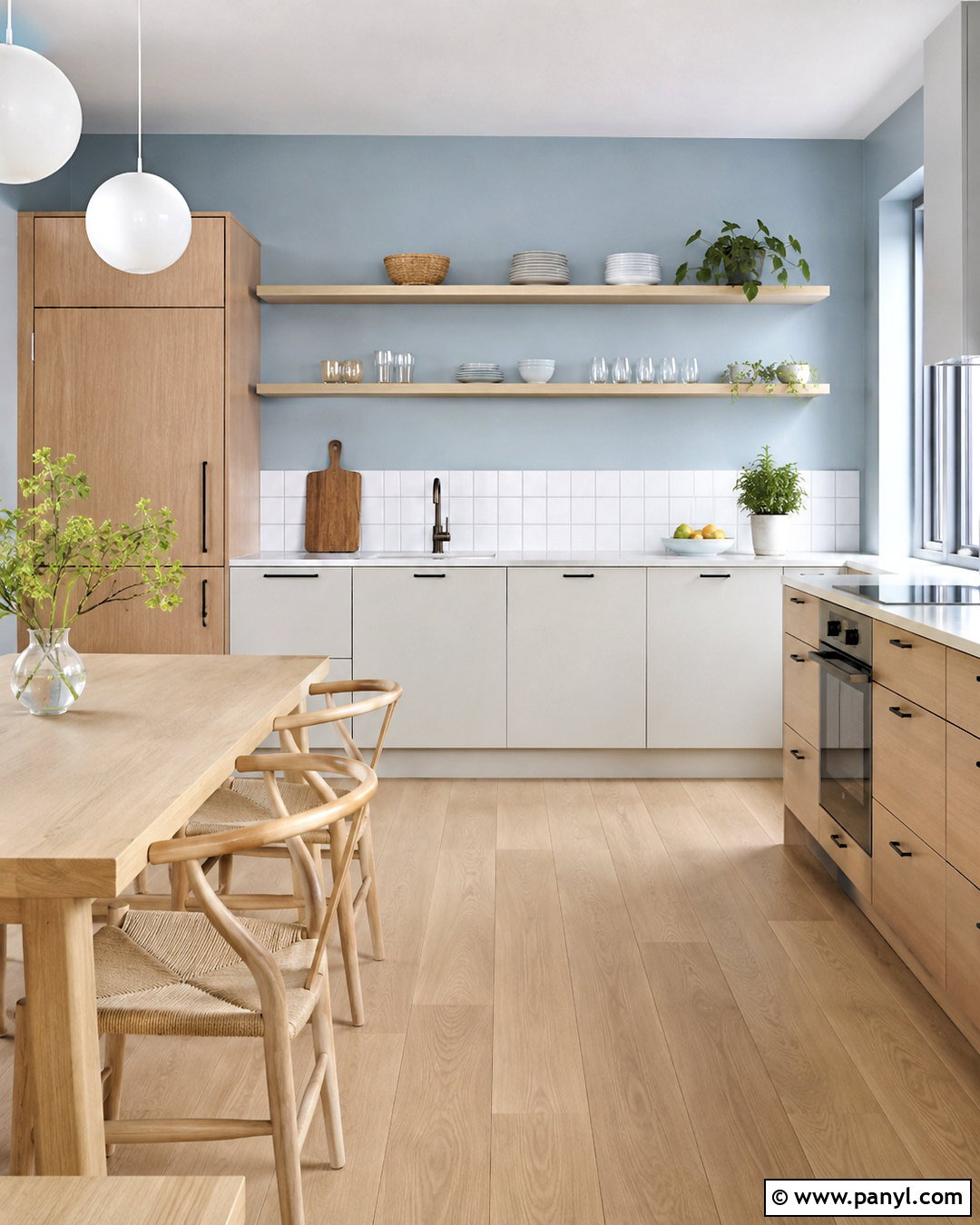
A Scandinavian-inspired kitchen pairs light blue walls with simplicity, function, and natural texture. Choose flat-front cabinets in soft white or pale oak, then add thin white quartz countertops and a restrained square-tile backsplash. Light wood flooring should continue through the room to create an uninterrupted foundation. Use matte black or brushed steel hardware sparingly, keeping the cabinet faces visually quiet. A compact oak dining table, simple wishbone chairs, and white globe pendants complete the functional layout. Bring in warmth through linen towels, woven baskets, and a few handmade ceramics. The blue should be pale and slightly gray, similar to a hazy morning sky. This balanced design feels bright and peaceful without appearing empty, cold, or overly minimal.
19. French Country Light Blue Kitchen Walls
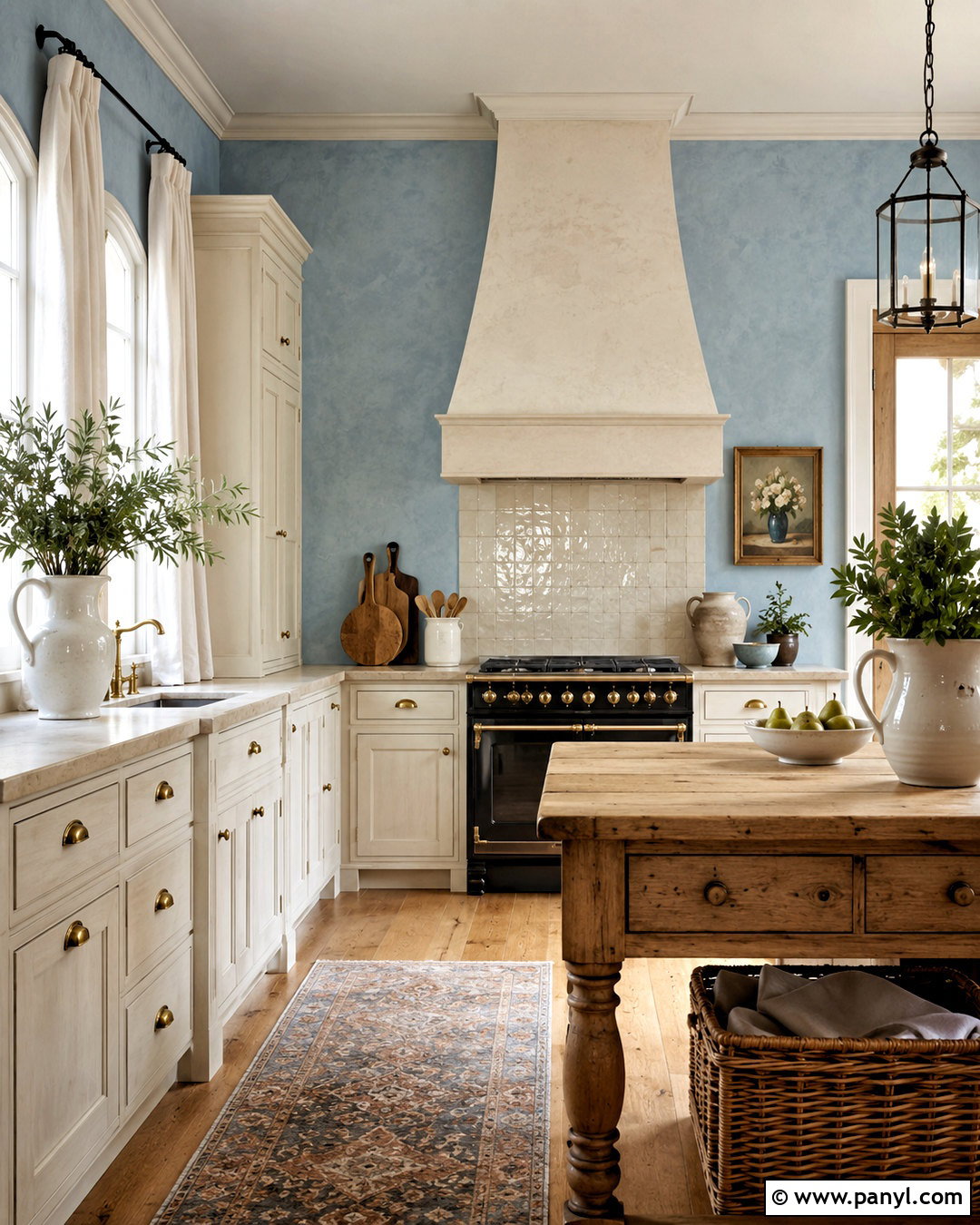
Light blue walls provide an elegant foundation for a French country kitchen with warm, weathered finishes. Pair dusty blue paint with creamy cabinets, antique brass hardware, and pale limestone-look counters. A plaster-style range hood can become the central feature, framed by simple sconces and handmade ivory tile. Use medium oak flooring in a natural matte finish, then add a rustic wood table or island for warmth. Linen café curtains, woven baskets, and ceramic pitchers contribute soft texture without turning the room into a themed display. Include a few black accents, such as a metal pot rack or window frame, to sharpen the pale palette. The finished kitchen feels graceful and lived-in, with a pleasing balance of color, age, and practicality.
20. Midcentury Light Blue Kitchen Walls
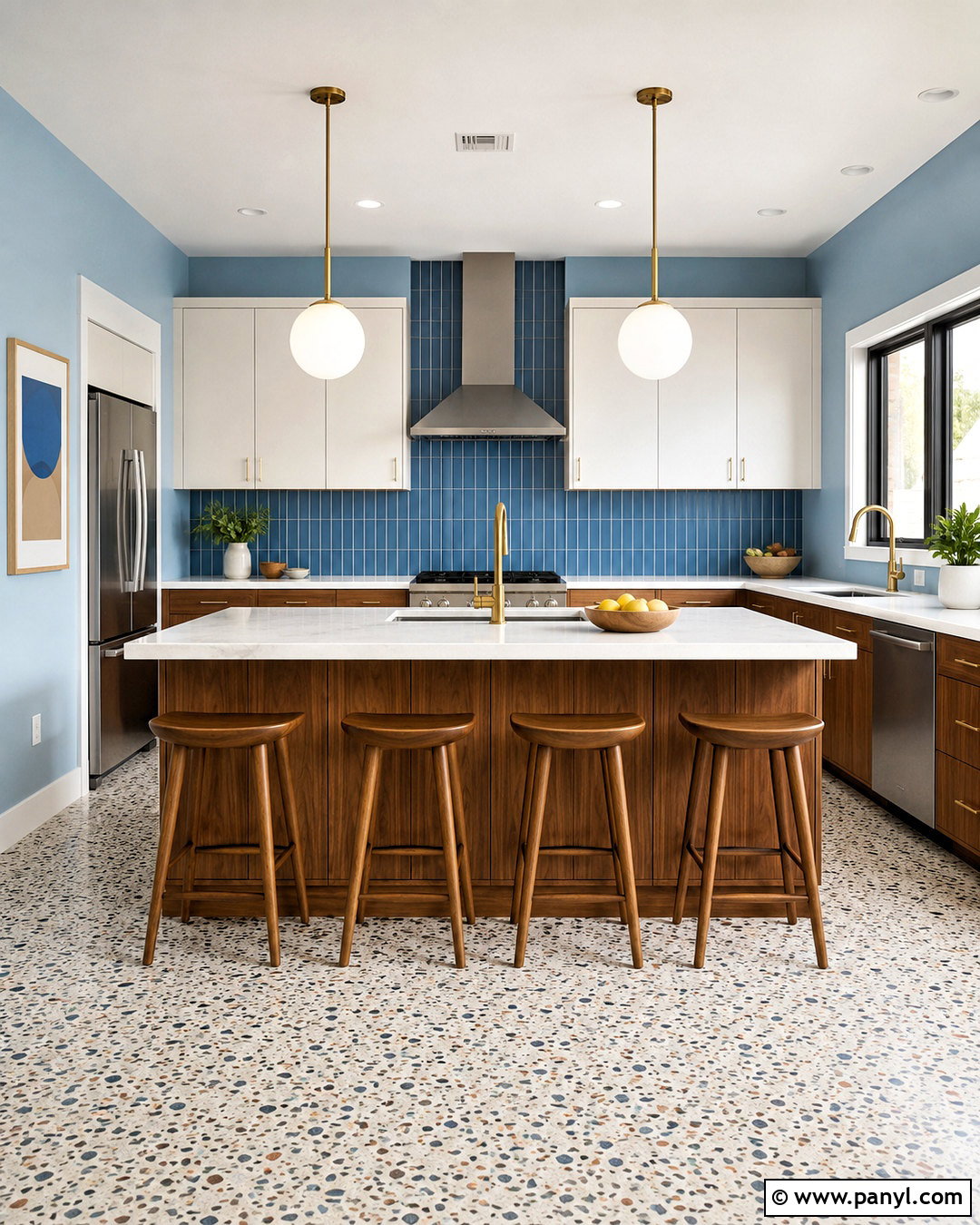
A midcentury kitchen gains playful warmth when light blue walls are paired with walnut and clean geometric details. Use flat-panel walnut base cabinets with warm white upper cabinets to keep the room from feeling heavy. Select off-white quartz counters and a vertically stacked tile backsplash in a slightly deeper blue. Globe pendant lights, slim brass pulls, and tapered wood stools reinforce the period influence. Terrazzo or light cork flooring can add subtle pattern and a comfortable natural tone. Keep decorative objects sculptural but limited, such as a ceramic bowl and one graphic print. A clear, optimistic sky blue works well with the warm wood. This complete design references midcentury interiors while remaining practical, current, and suitable for an everyday home.
21. Small Kitchen With Light Blue Walls
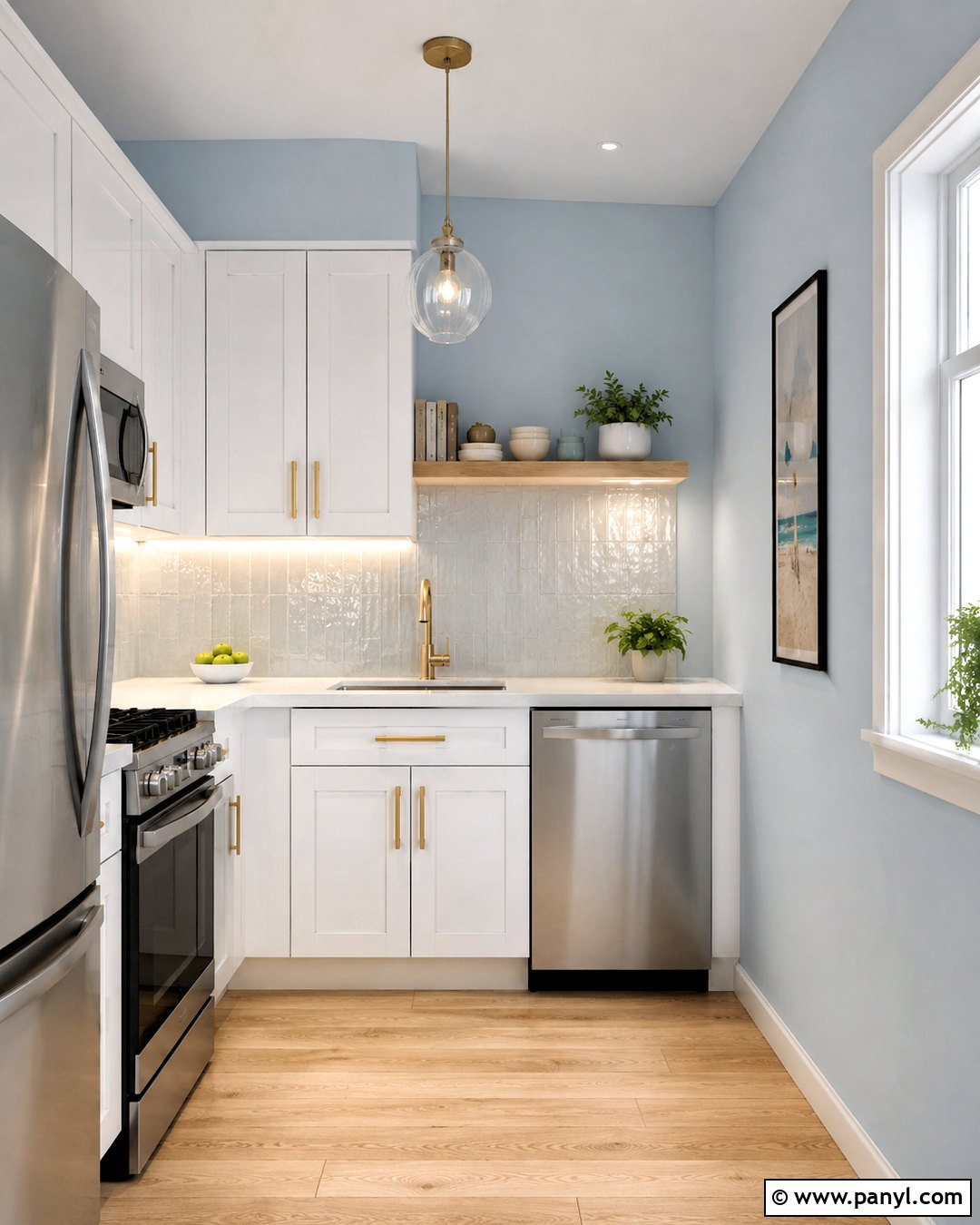
In a small kitchen, pale blue walls can create a gentle backdrop that prevents cabinetry from feeling visually crowded. Use compact white Shaker cabinets, slim hardware, and light quartz counters to maintain a continuous bright surface. A glossy backsplash will reflect both natural and electric light. Choose open shelving only on one short wall so storage remains practical and the room stays organized. Light oak flooring laid lengthwise can emphasize the kitchen’s longest dimension. Add under-cabinet lighting, a flush ceiling fixture, and one small glass pendant if space permits. Keep appliances and countertop accessories visually consistent in white or stainless steel. The completed layout feels efficient and cheerful, with enough warmth from wood and brass accents to avoid a clinical appearance.
22. Galley Kitchen With Light Blue Walls
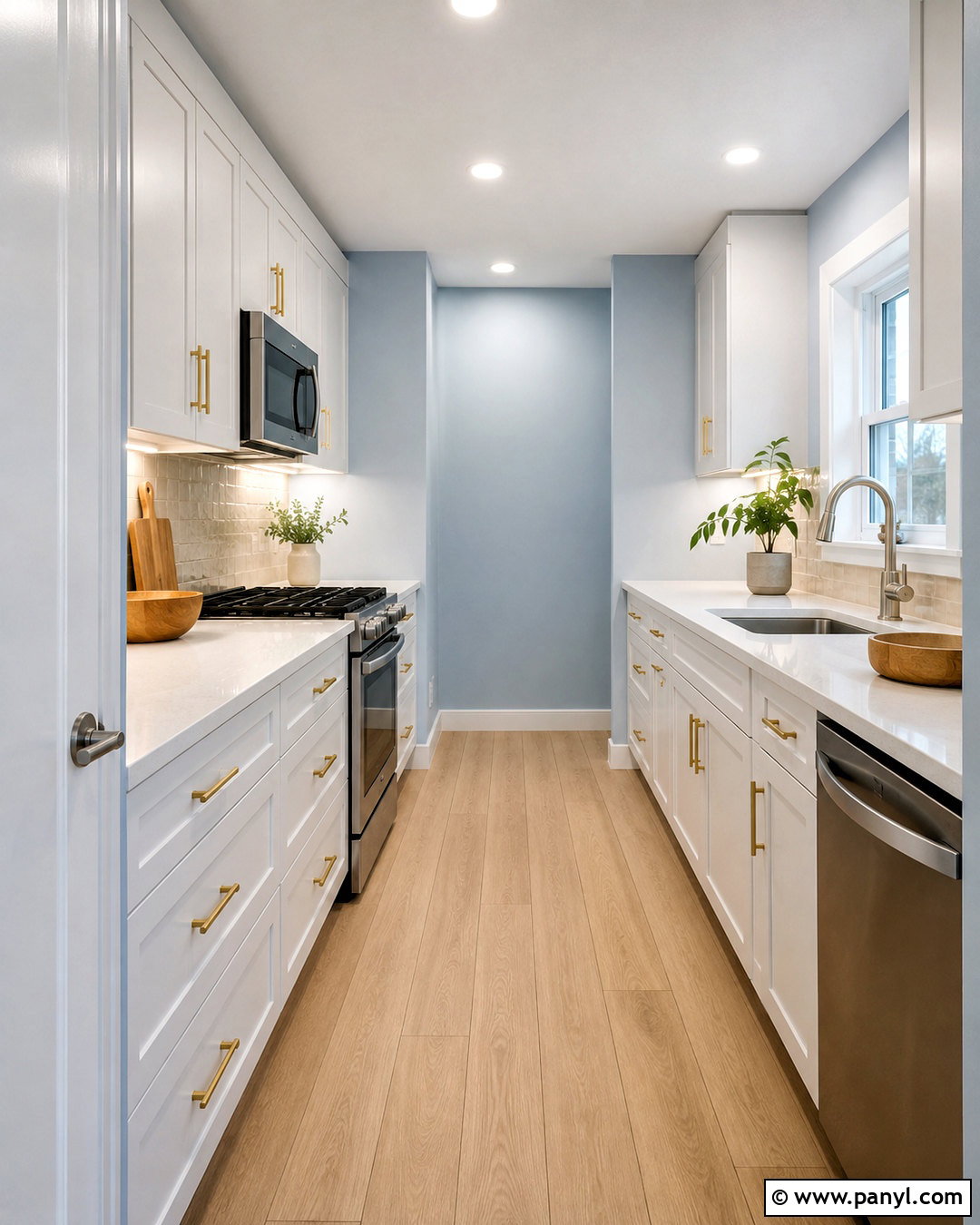
Light blue walls can make a narrow galley kitchen feel less enclosed when paired with a carefully balanced layout. Install white cabinets on both sides, but limit tall units to one end so the central walkway remains visually open. Choose low-contrast white quartz counters and a glossy ivory backsplash. Pale blue paint above the cabinets and around the window brings color without narrowing the space. Run light wood flooring lengthwise to reinforce the room’s direction. Under-cabinet strips and simple ceiling lights should illuminate every work surface evenly. Add brass pulls and one or two wooden accessories for warmth. With streamlined storage and minimal countertop clutter, this complete galley design feels orderly, bright, and comfortable rather than tight or overly utilitarian.
23. Open Kitchen With Light Blue Walls
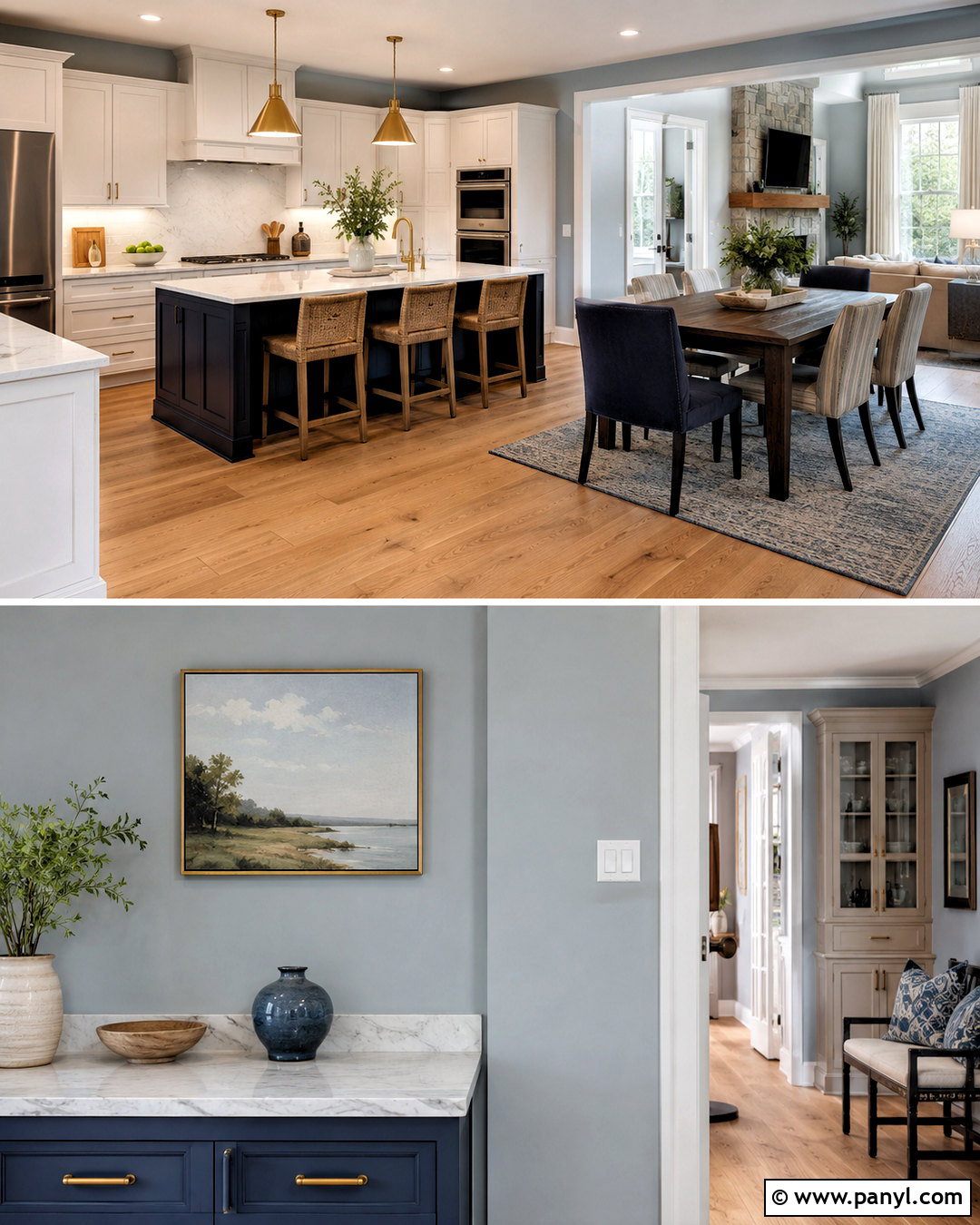
An open kitchen needs a wall color that connects naturally with nearby living and dining spaces. Choose a muted light blue-gray that can continue across shared walls without appearing overly themed. Pair it with warm white perimeter cabinets, a navy island, and natural oak flooring that runs throughout the entire open plan. White quartz counters create continuity, while brass pendants define the island as the kitchen’s focal point. Repeat the blue subtly in dining chair fabric or living room cushions, but avoid exact matching everywhere. A simple backsplash and restrained hardware keep the kitchen from competing with adjoining furnishings. This coordinated approach gives each zone a clear purpose while making the complete interior feel intentional, connected, and visually comfortable.
24. Eat-In Kitchen With Light Blue Walls
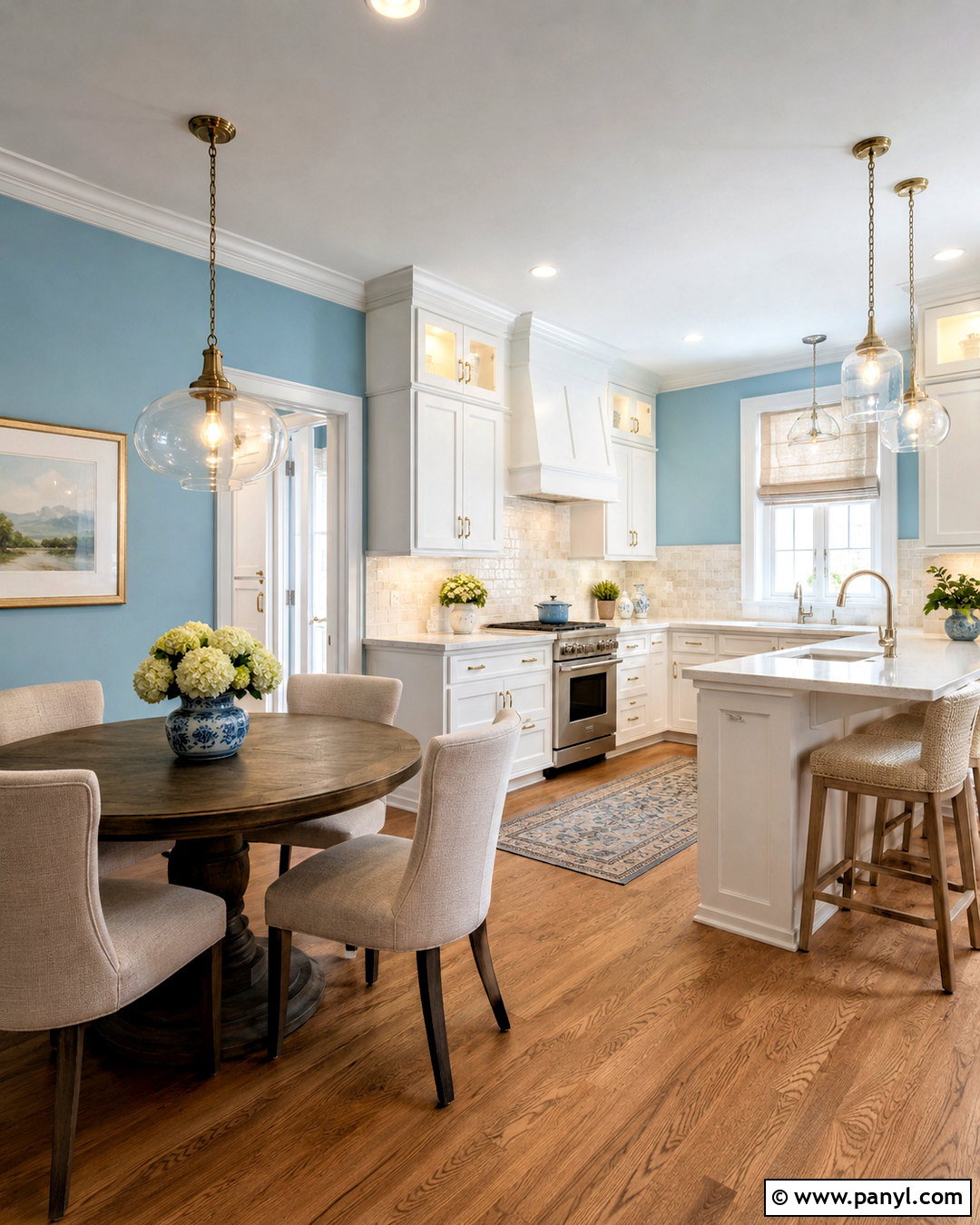
Create a welcoming eat-in kitchen by pairing pale blue walls with warm white cabinetry and a comfortable breakfast area. Use quartz counters, an ivory tile backsplash, and medium oak flooring throughout the entire room. Place a round pedestal table near the window with upholstered chairs in oatmeal or subtle blue-striped fabric. A small pendant centered over the table gives the dining zone its own identity. In the work area, brushed brass hardware and clear glass lighting maintain a light, polished appearance. Add washable linen Roman shades and a narrow patterned runner near the sink. The finished design supports cooking, casual meals, and conversation without crowding the layout. Light blue visually unites both zones and keeps the room feeling relaxed.
25. Light Blue Kitchen Walls With A White Island
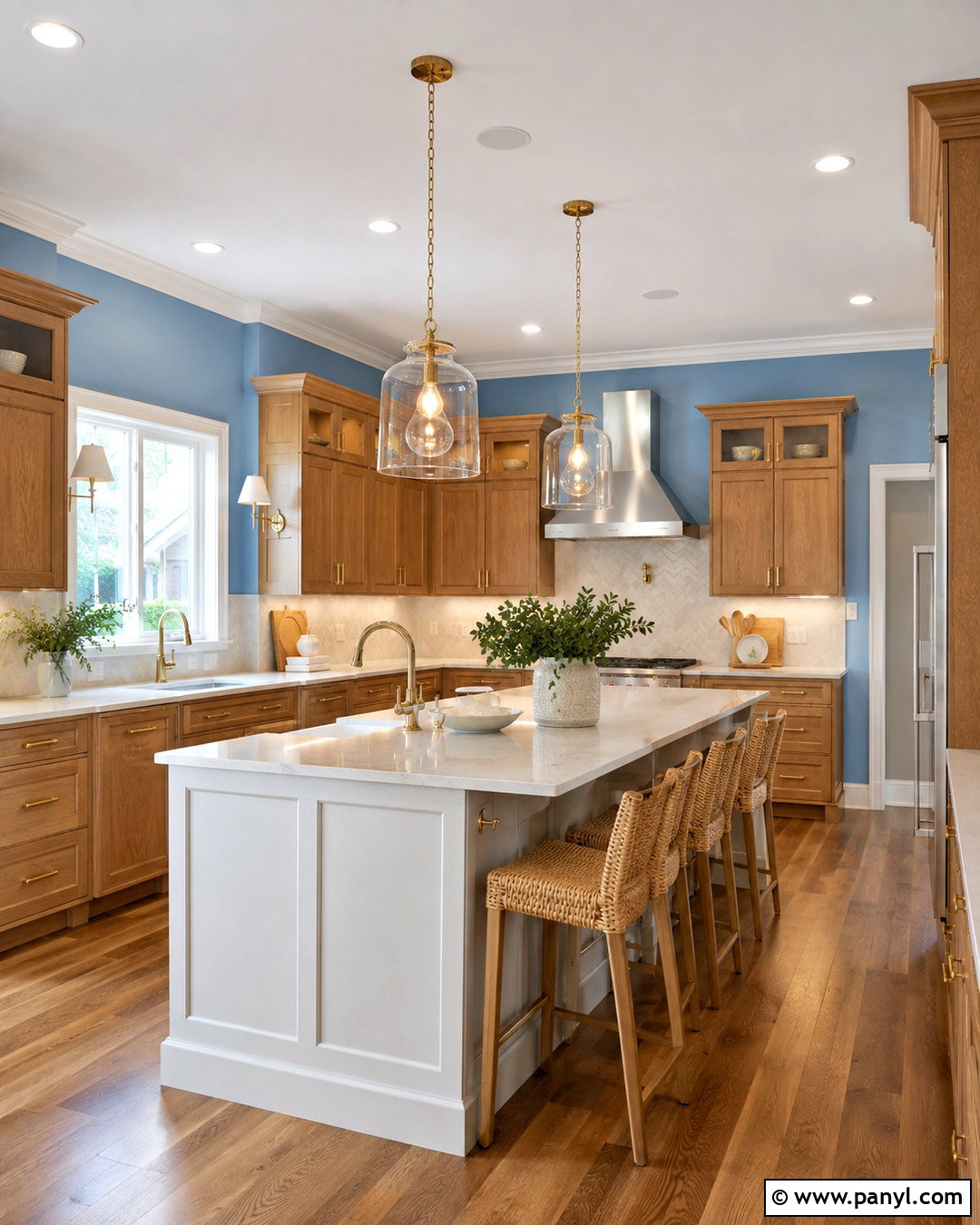
A substantial white island stands out beautifully against light blue walls, especially when the perimeter cabinets feature warm natural wood. Use oak cabinetry around the room, then paint the island a clean soft white and top every surface with pale quartz. The contrasting finishes create definition without making the kitchen feel disconnected. Add an ivory backsplash, brass hardware, and woven stools that repeat the warm tones in the oak. Three simple glass pendants keep the island bright and unobstructed. Medium-width plank flooring in a slightly lighter wood prevents too much visual matching. The blue walls provide a calm backdrop for both cabinet finishes. This layered scheme feels balanced, family-friendly, and polished enough for an open kitchen used for entertaining.
26. Light Blue Kitchen Walls With Subway Tile
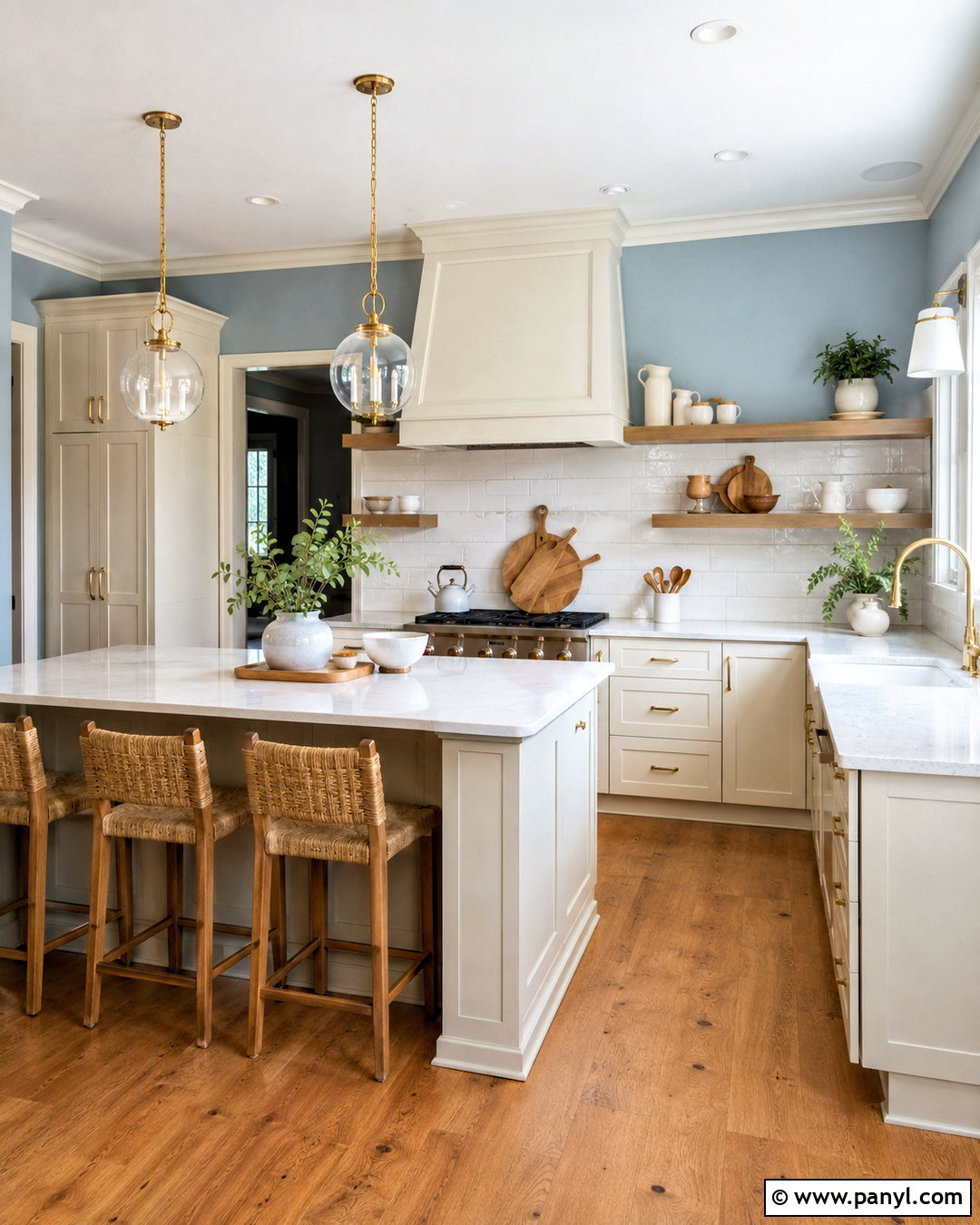
White subway tile gives light blue walls a crisp, practical companion. Run the tile from the countertops to the upper cabinets, using warm white grout for a softer transition. Pair the walls and backsplash with creamy Shaker cabinetry, pale quartz counters, and brushed nickel or brass hardware. Medium oak flooring adds warmth below, while clear glass pendants maintain an airy view across the room. To keep the classic tile from looking generic, choose a handmade finish with slight surface variation or use a vertical stacked layout. Display only a few wooden boards and white ceramic pieces on the counters. The finished kitchen feels bright and familiar, but subtle changes in texture and layout give the traditional blue-and-white palette more depth.
27. Light Blue Kitchen Walls With Marble Backsplash
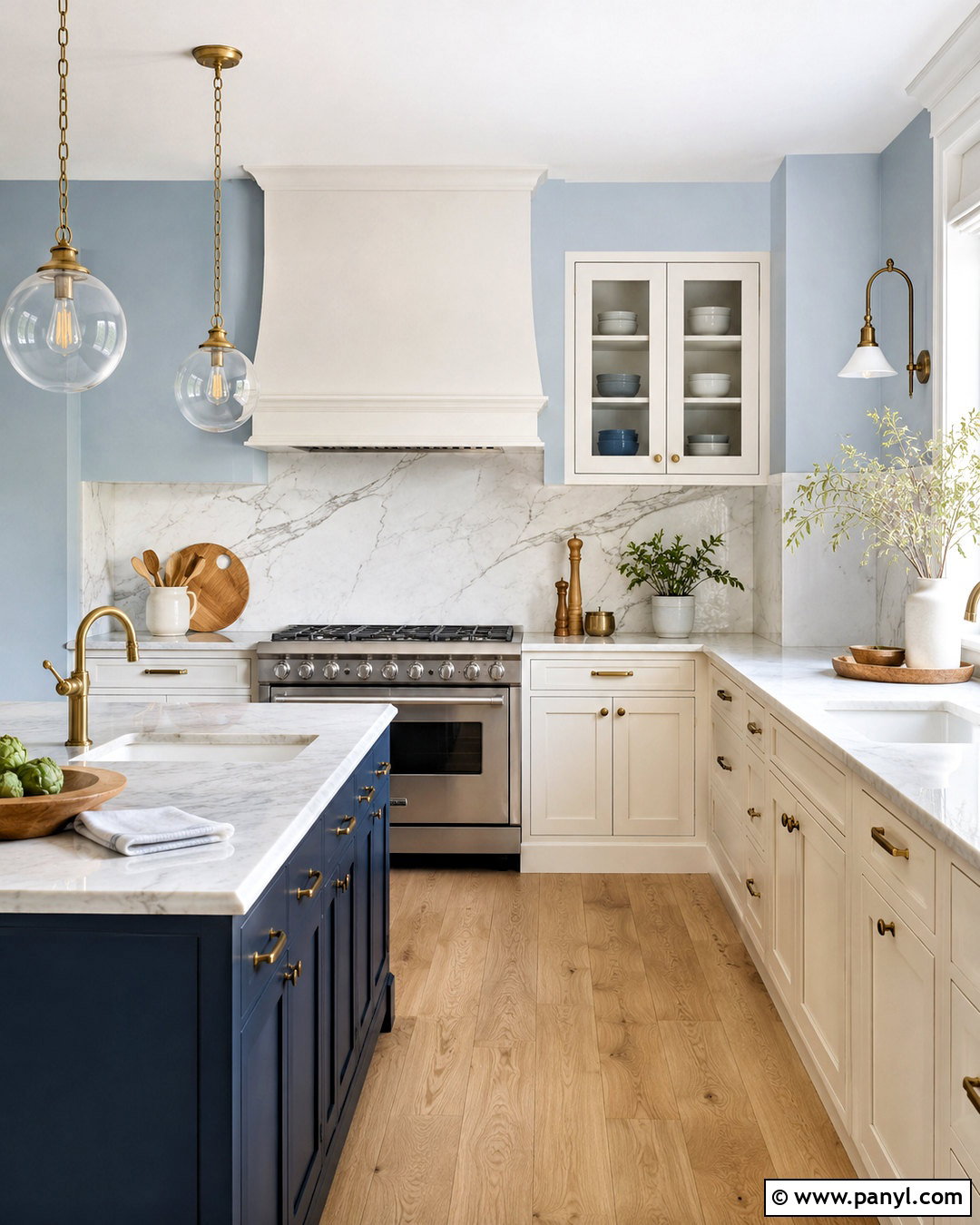
A marble backsplash elevates light blue kitchen walls by adding movement and a softly polished surface. Choose white marble or quartz with fine gray veining rather than strong dramatic patterns. Continue the material onto the countertops for an uninterrupted, tailored appearance. Warm white cabinets keep the room light, while a navy island adds visual weight. Use aged brass hardware and pale oak flooring to balance the cool blue and stone. Simple globe pendants work well above the island because they do not compete with the veining. Keep accessories quiet, selecting white ceramics, clear glass, and natural wood. This complete kitchen feels refined but approachable, proving that a pale blue wall color can work comfortably with upscale finishes without becoming formal or fragile.
28. Light Blue Kitchen Walls With Zellige Tile
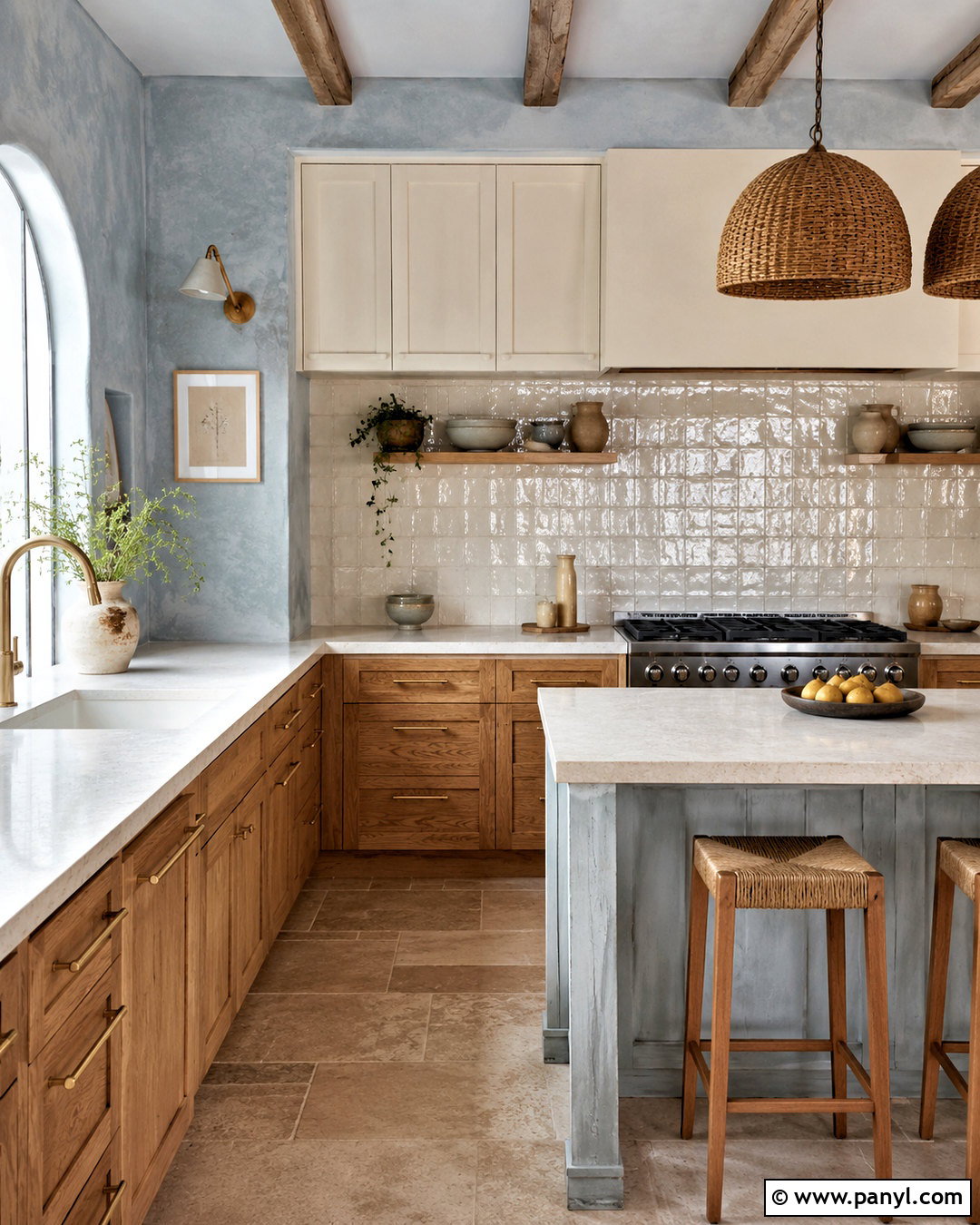
Glossy zellige-style tile adds handcrafted texture to a kitchen with light blue walls. Select warm white tiles with uneven edges and subtle tonal variation, allowing them to catch light without introducing a competing color. Pair the backsplash with natural oak lower cabinets and creamy upper cabinets. Pale quartz countertops provide a smooth visual pause between the textured tile and wood grain. Unlacquered brass hardware and woven pendants contribute warmth, while limestone-look flooring keeps the palette soft and organic. Choose a dusty light blue for the walls so the finish feels relaxed rather than pristine. Add a few stoneware vessels and wooden utensils, but leave most surfaces clear. The completed kitchen feels tactile, sunlit, and comfortably refined.
29. Light Blue Kitchen Walls With Patterned Floors
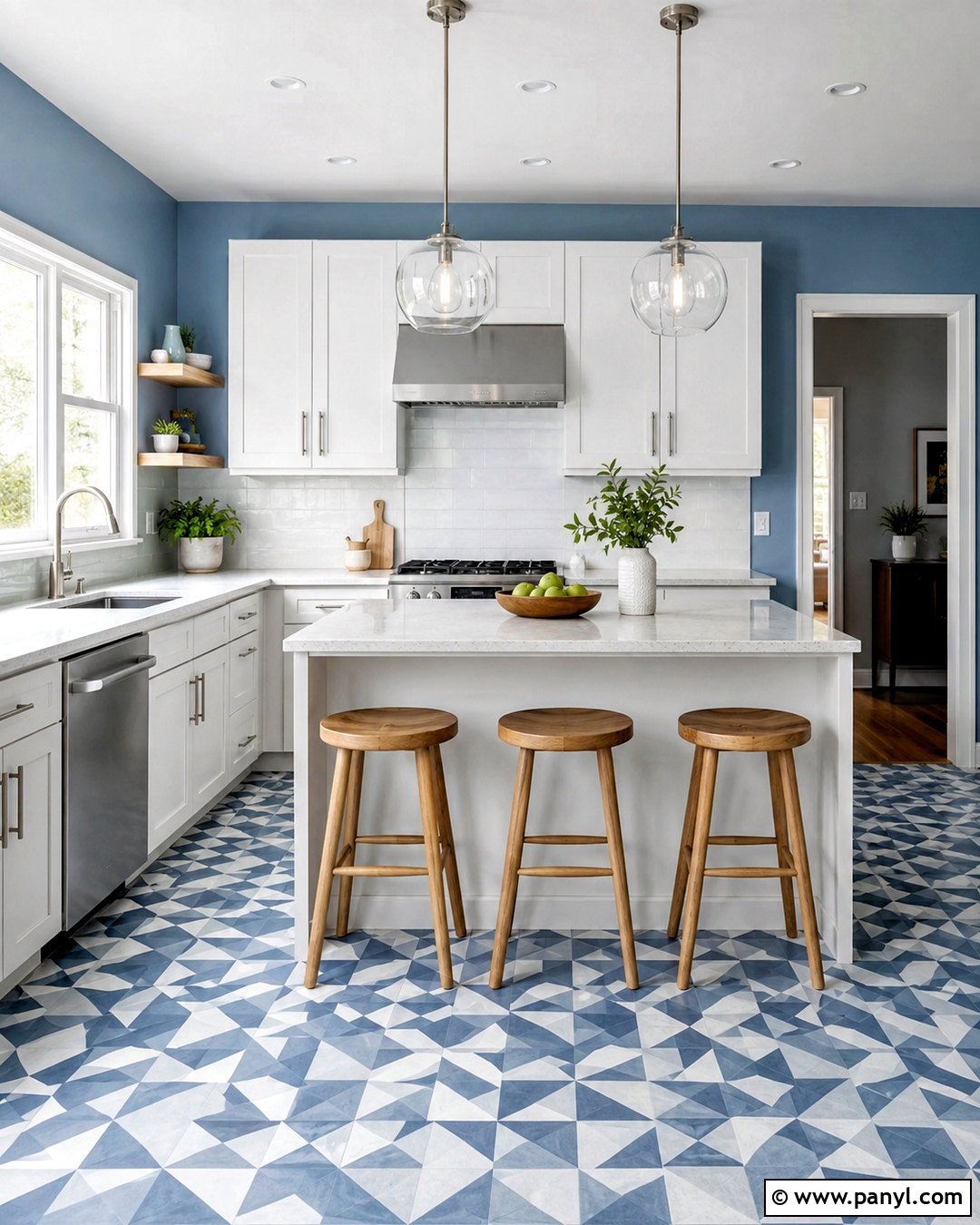
Patterned floors can energize light blue walls when the rest of the kitchen remains visually controlled. Choose small-scale geometric tile in blue, white, and soft gray, then pair it with simple white cabinetry and pale quartz counters. Keep the backsplash quiet with plain white tile or a short quartz upstand. Brushed nickel hardware and clear glass pendants will support the cool palette without adding heaviness. Use the light blue wall color found within the floor pattern so the room feels coordinated rather than busy. Limit open shelving and decorative accessories to preserve clear sightlines. A natural wood table or pair of oak stools adds necessary warmth. The finished space feels lively and personal while maintaining practical balance from floor to ceiling.
30. Light Blue Kitchen Walls With Terrazzo
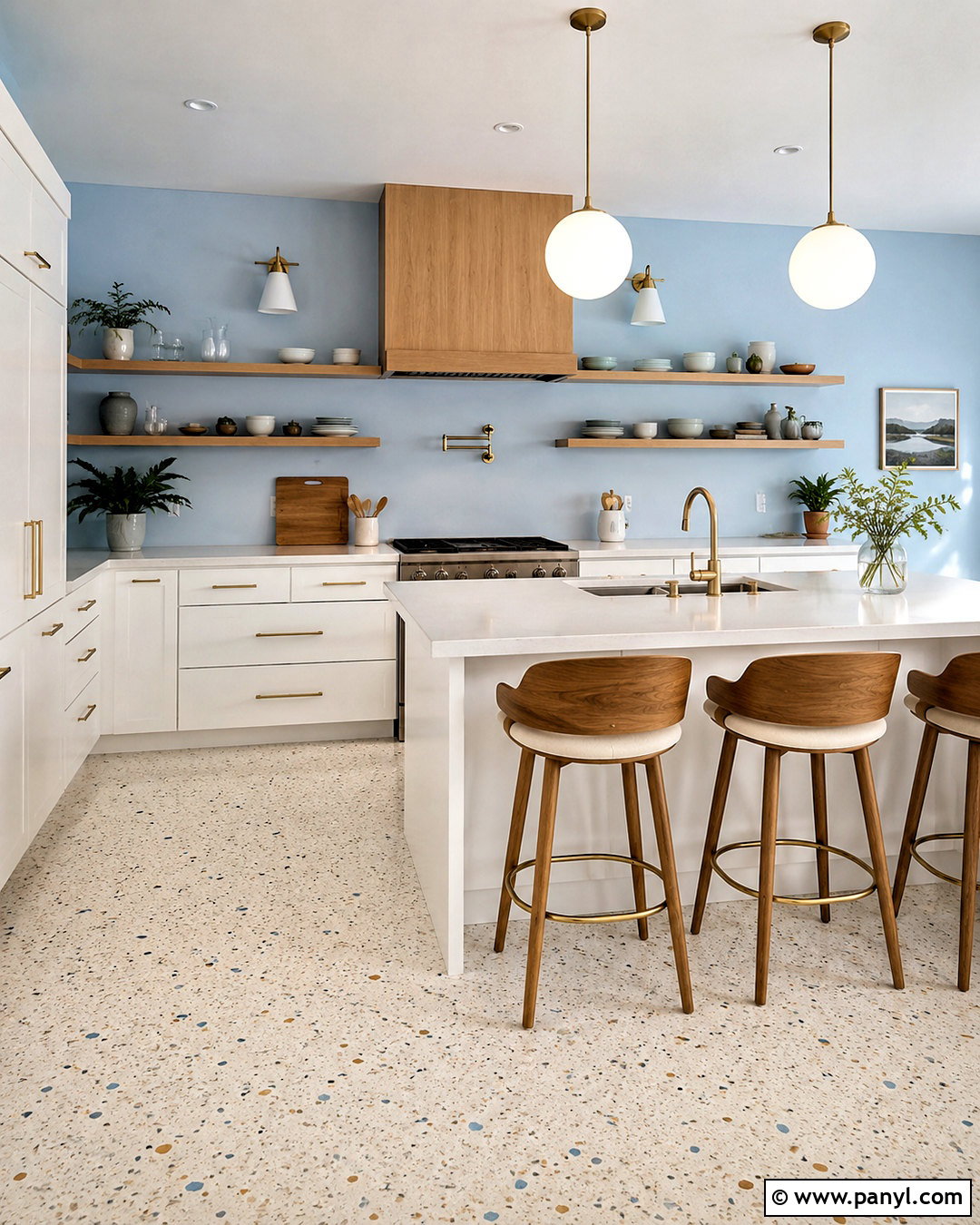
Terrazzo introduces subtle color and movement that can connect beautifully with light blue kitchen walls. Choose a pale cream terrazzo containing small blue, tan, and gray chips, then use it for the floor or backsplash rather than every surface. Pair it with flat-panel white cabinets, light oak accents, and uncomplicated quartz countertops. Slim brass pulls add warmth, while white globe lights maintain the clean contemporary character. Match the wall paint to one of the softer blue chips for a coordinated finish. Keep the island streamlined and use pale wood stools with curved seats. The complete kitchen feels modern and playful without becoming chaotic. Restricting the terrazzo to one primary area allows its pattern to remain noticeable while the walls provide a calm visual background.
31. Light Blue Kitchen Walls With Dark Wood Floors
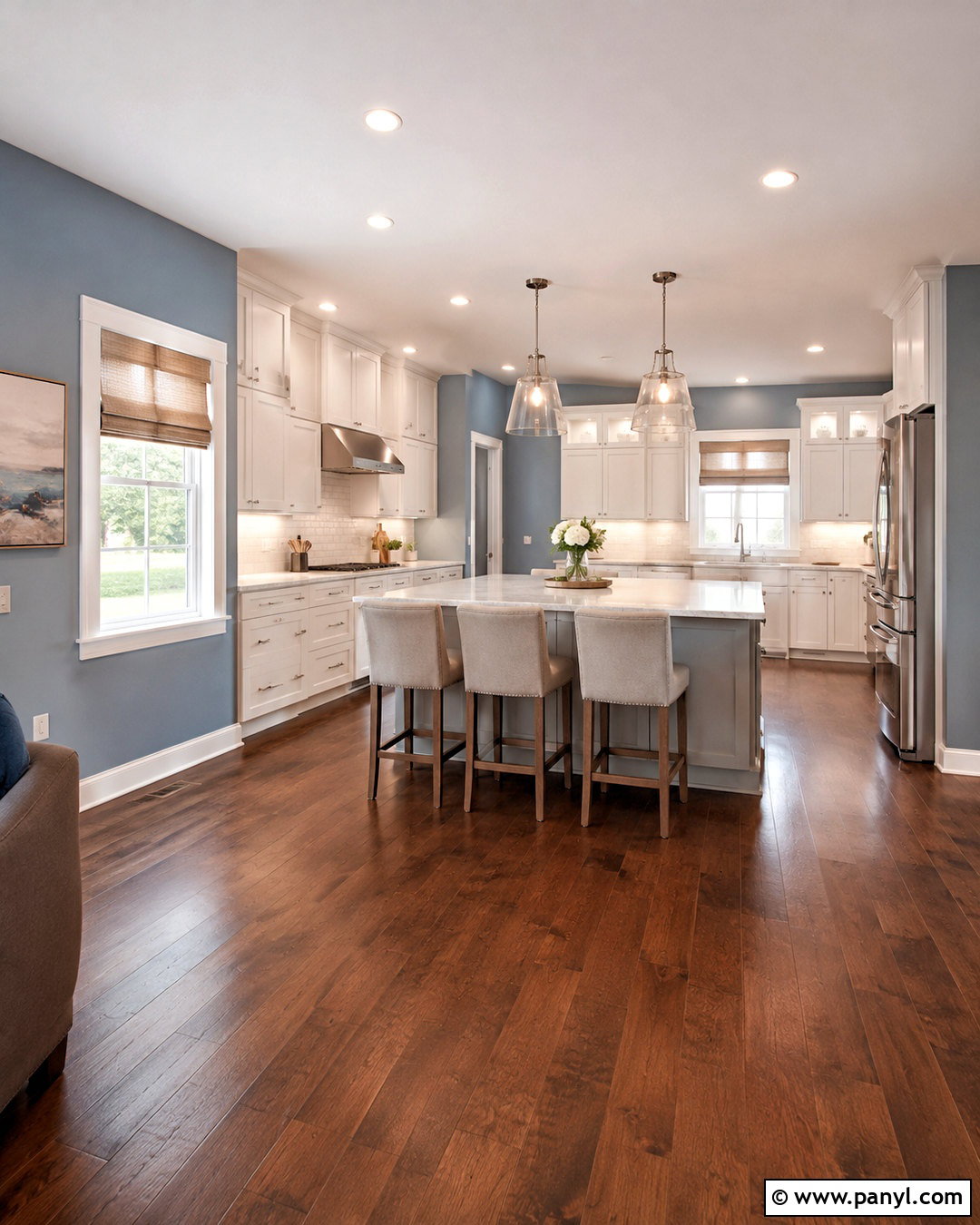
Dark wood flooring grounds pale blue walls and creates a warm, traditional contrast. Prevent the floor from making the room feel heavy by choosing warm white cabinets, creamy quartz counters, and a light backsplash. A blue-gray wall shade will complement the deep brown boards without appearing too bright. Use polished nickel fixtures for gentle reflection, then add natural linen shades and upholstered stools in a light neutral fabric. An island painted soft gray can create another layer between the pale walls and dark flooring. Keep rugs small and low contrast so the wood remains visible. With generous ceiling and under-cabinet lighting, the completed kitchen feels rich, balanced, and comfortable rather than dark. The result suits both classic and transitional homes.
32. Light Blue Kitchen Walls With Light Oak Floors
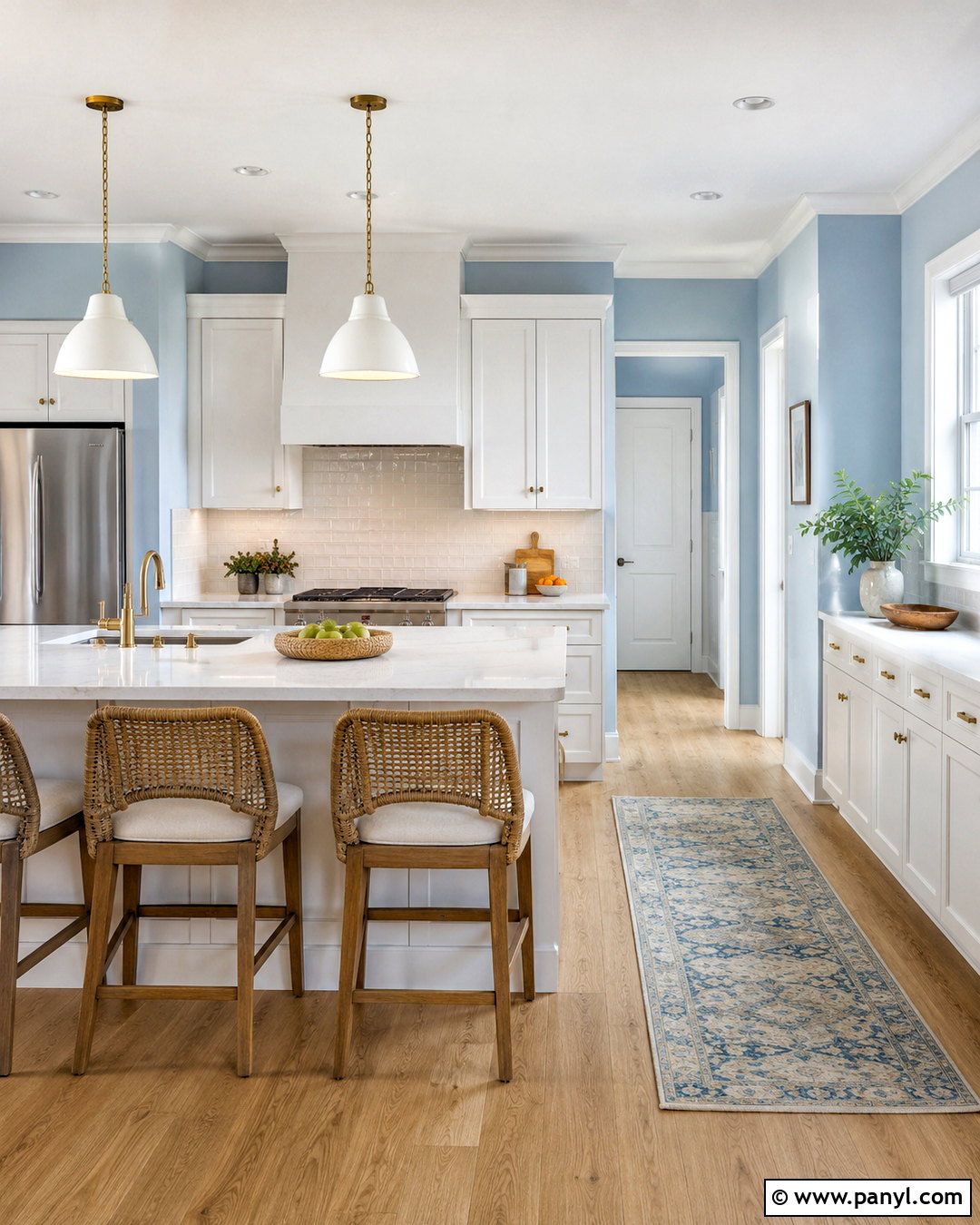
Light oak floors enhance the airy effect of blue kitchen walls while bringing natural warmth to the lower half of the room. Pair them with soft white cabinets, white quartz counters, and a backsplash of glossy ivory tiles. Choose a muted sky blue that has enough pigment to remain distinct from the cabinetry. Brass hardware and woven island stools can repeat the floor’s golden tones, creating a connected palette. Use white or clear pendants to preserve brightness above the island. A washable runner in blue, cream, and tan adds pattern without hiding too much wood. This complete combination is particularly effective for casual contemporary kitchens. Every finish feels light and approachable, yet the natural grain prevents the pale room from appearing flat or unfinished.
33. Light Blue Kitchen Walls With Brass Hardware
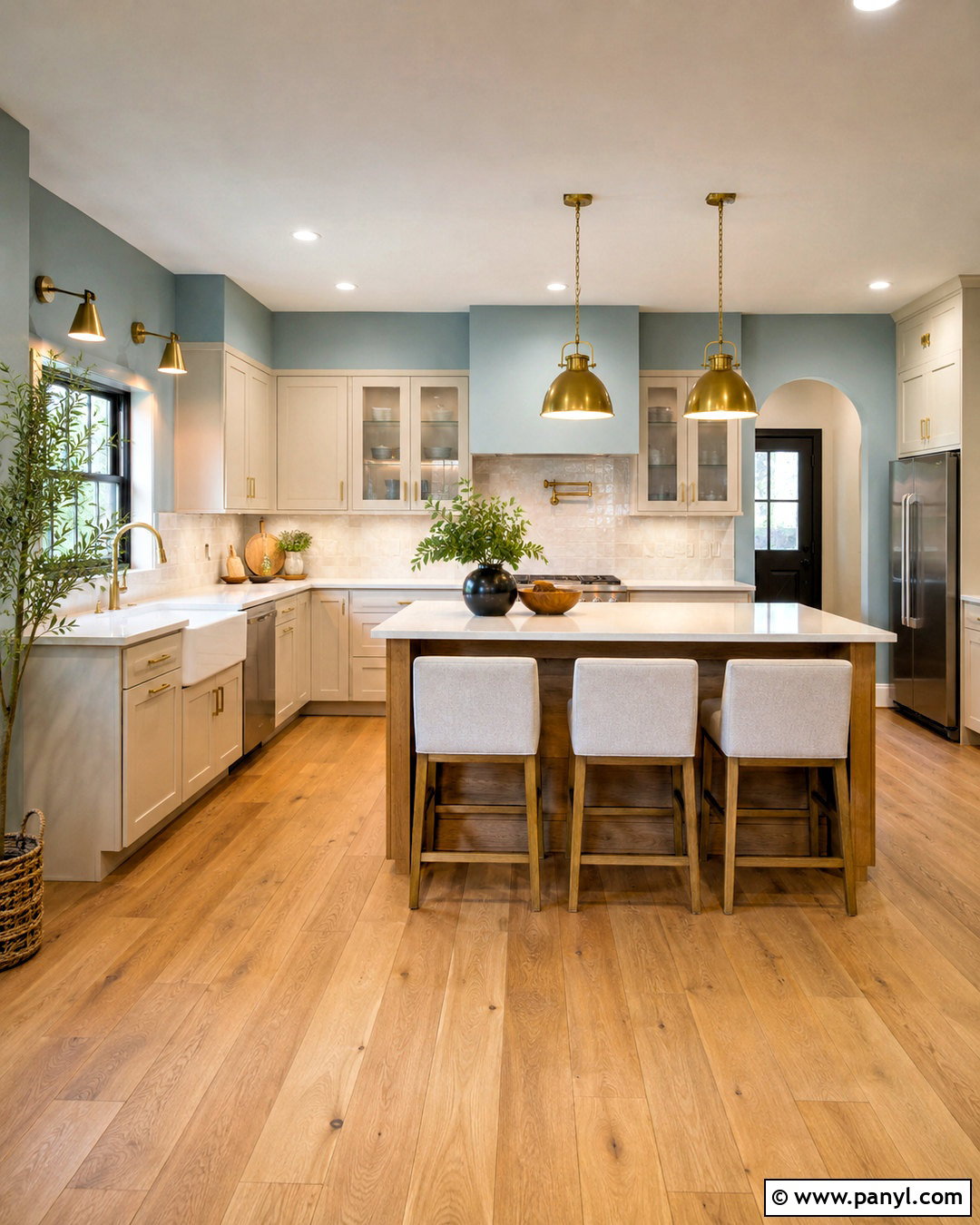
Brass hardware adds warmth and definition against light blue kitchen walls, especially when paired with creamy cabinetry. Use simple knobs and slim pulls in a brushed or aged finish rather than a highly reflective yellow gold. Continue the metal through the faucet and pendant lights, but avoid matching every small accessory. White quartz counters, ivory backsplash tile, and medium oak flooring create a soft foundation around the blue and brass. Add an island in natural wood or warm white, along with linen-upholstered stools. The light blue should contain a slight gray or green undertone, which keeps the metallic accents from appearing overly sweet. This completed palette feels polished and welcoming, with enough contrast to make each carefully selected finish easy to appreciate.
34. Light Blue Kitchen Walls With Matte Black Hardware
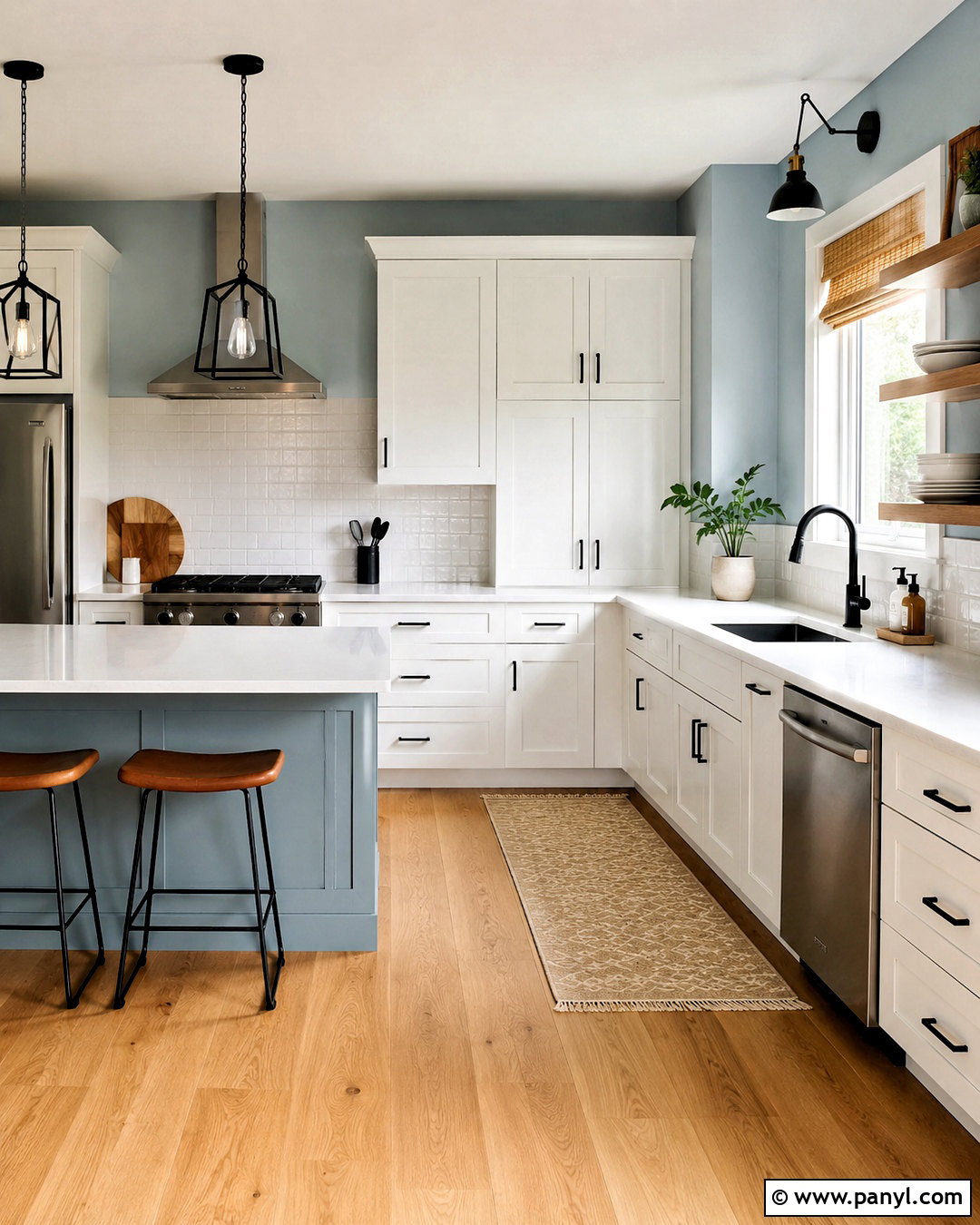
Matte black hardware gives light blue walls a sharper, more contemporary structure. Pair the combination with white flat-panel or slim Shaker cabinets and pale quartz countertops. Use a simple white backsplash so the black pulls, faucet, and pendant frames remain clear graphic accents. Introduce natural oak through flooring, open shelves, or the island to soften the high contrast. Keep the number of black elements controlled; a few repeated details will feel intentional without outlining every surface. A smoky light blue works better than a bright pastel because it supports the modern palette. Finish with white ceramics, textured linen shades, and warm under-cabinet lighting. The completed kitchen feels clean and confident while retaining the calm, approachable character of soft blue walls.
35. Light Blue Kitchen Walls With Copper Accents
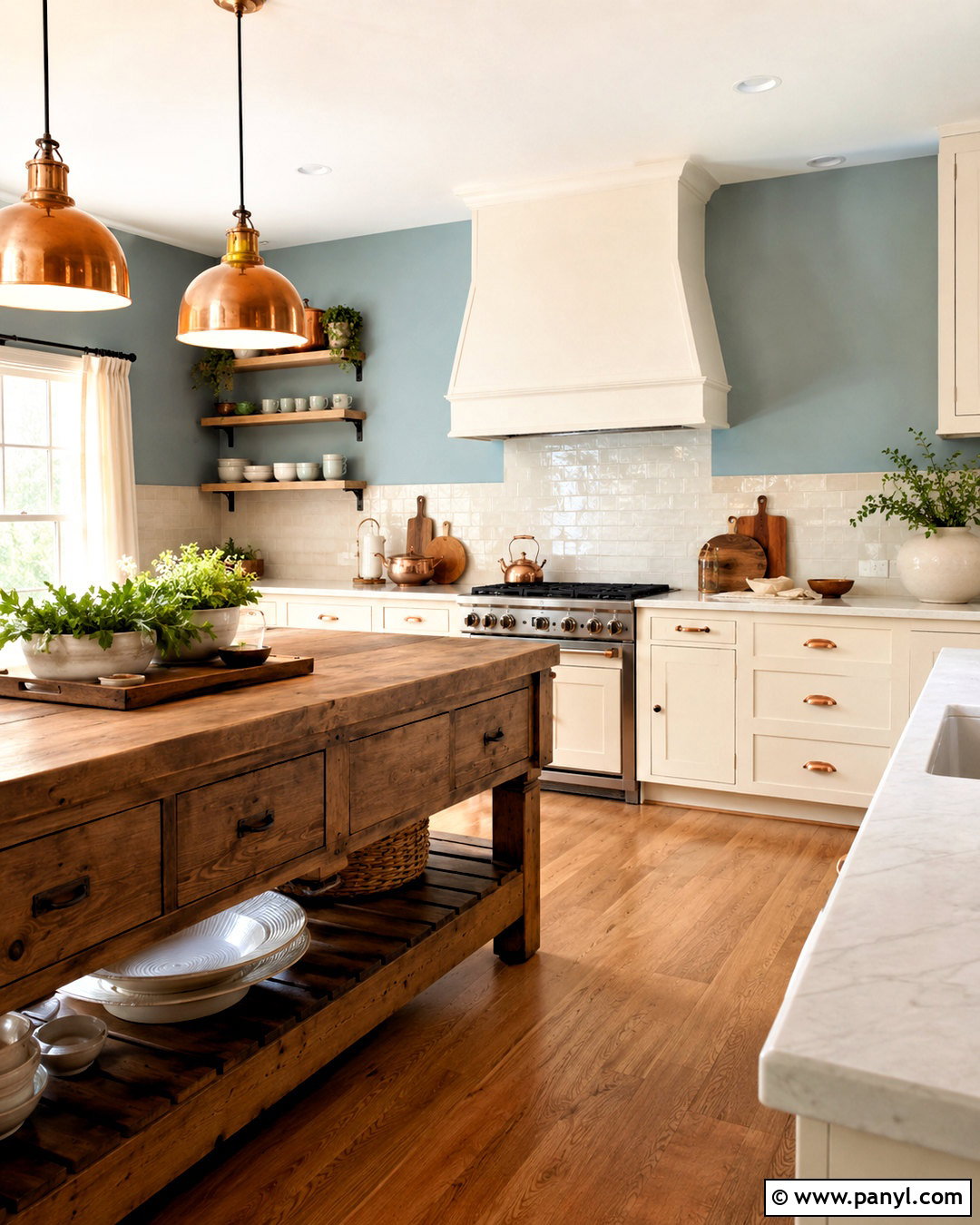
Copper accents bring a warm glow to light blue kitchen walls and work especially well in a relaxed traditional space. Choose cream cabinets, butcher-block sections, and an ivory tile backsplash as the main foundation. Introduce copper through pendant lights, cabinet knobs, and a small group of useful cookware rather than covering large surfaces. Medium oak floors and a rustic wood island reinforce the warmth. Select a slightly green light blue, which complements copper’s orange-brown character. Use white quartz around the sink and range to keep maintenance practical. Linen curtains and ceramic accessories complete the softer look. The finished kitchen feels collected and welcoming, with copper providing an attractive living finish that can develop character naturally alongside the wood and painted surfaces.
36. Light Blue Kitchen Walls With Open Shelves
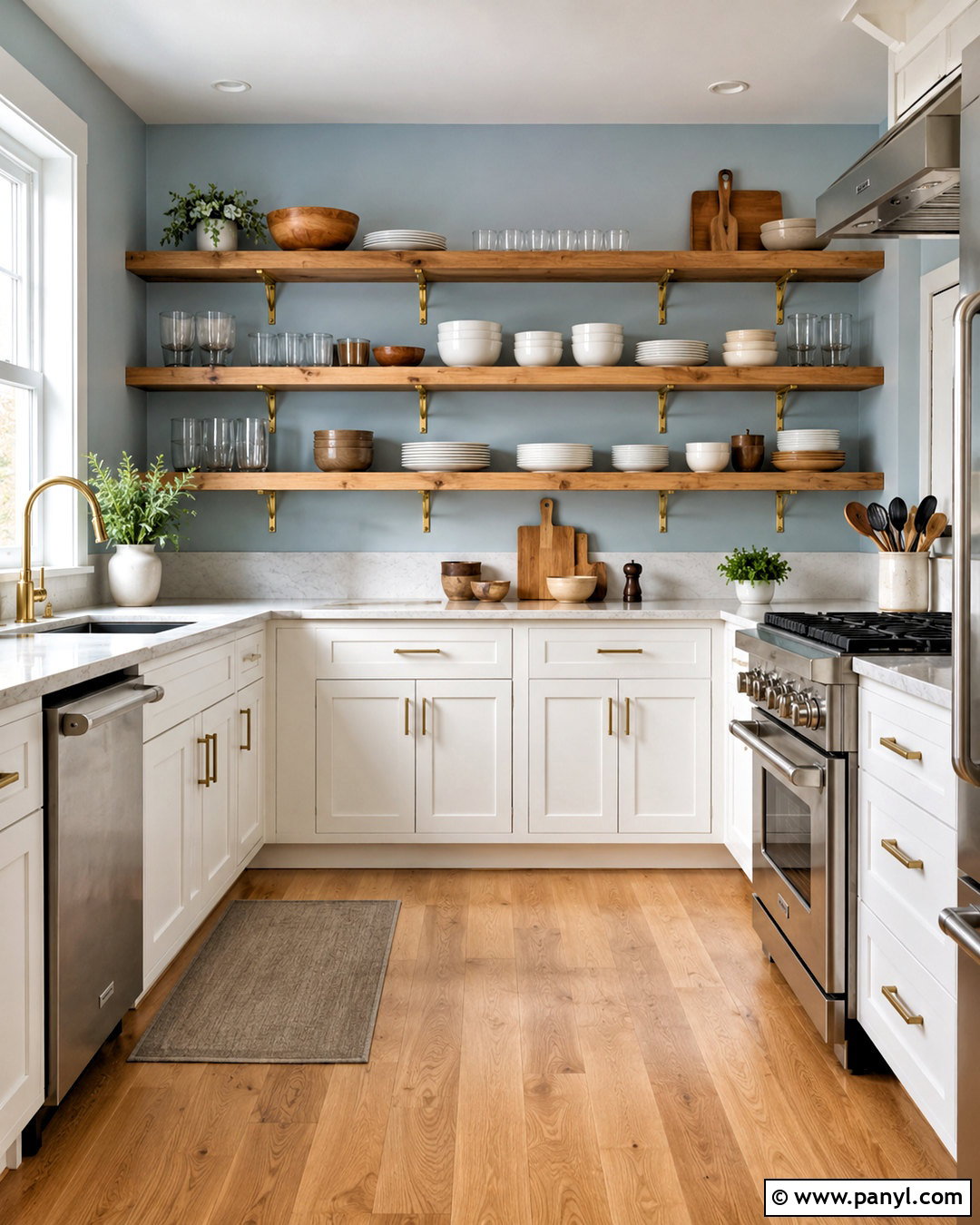
Open wood shelves allow light blue walls to remain visible and become an active part of the kitchen design. Install two or three thick oak shelves on one wall, then use closed white cabinetry everywhere else for practical storage. Style the shelves with everyday white dishes, clear glasses, wooden bowls, and only a few decorative pieces. Pale quartz counters and an ivory backsplash around the main work area keep the room bright. Repeat the shelf finish through oak flooring or island stools. Brushed brass brackets and hardware add warmth without distracting from the blue backdrop. Good spacing is essential, so leave open areas between objects. The completed kitchen feels personal and airy while still offering enough concealed storage to remain organized and functional.
37. Light Blue Beadboard Kitchen Walls
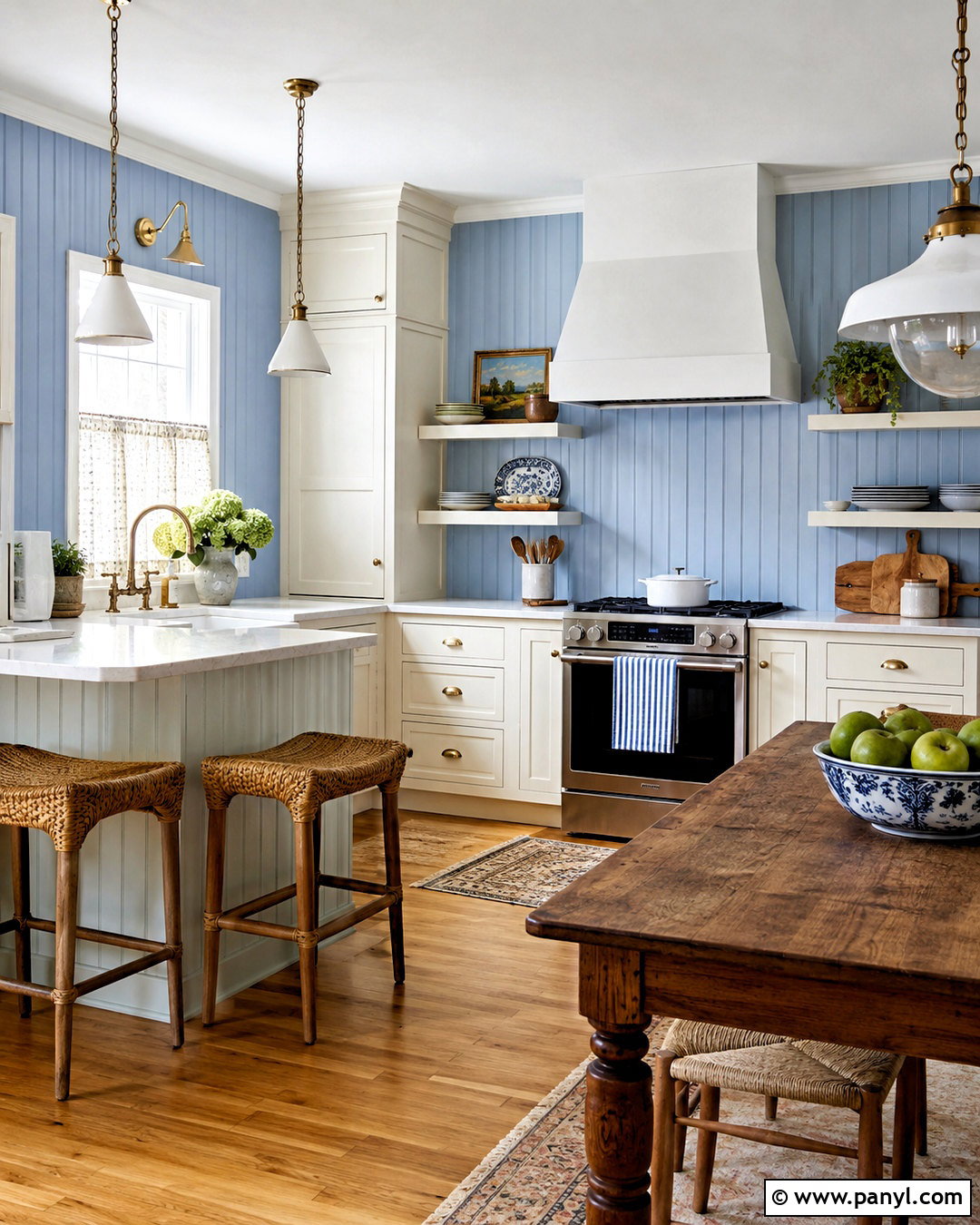
Beadboard painted light blue gives kitchen walls subtle architectural texture without requiring a bold pattern. Use it as full-height paneling on the breakfast-area walls or as a backsplash with a washable, moisture-resistant finish. Pair it with creamy Shaker cabinets, white quartz counters, and warm oak flooring. A farmhouse sink, aged brass hardware, and simple ceramic pendants reinforce the relaxed cottage character. Keep the upper walls and ceiling soft white if the room is small, allowing the blue paneling to remain distinct. Add woven stools, linen café curtains, and a sturdy wood table for warmth. The finished design feels detailed yet approachable. Vertical grooves also create a strong visual rhythm, so decorative accessories should remain simple and carefully edited.
38. Light Blue Kitchen Walls And Ceiling
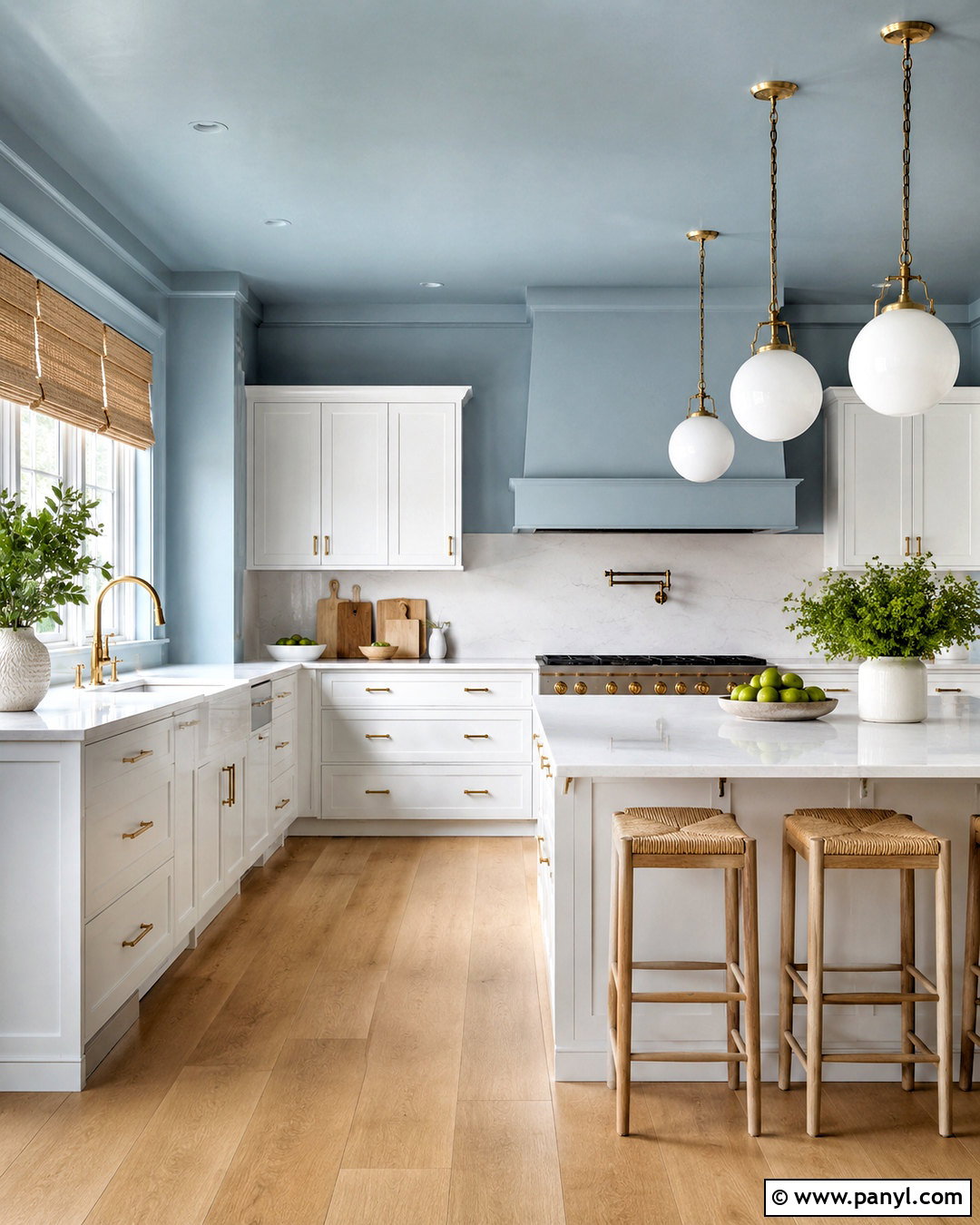
Painting both the kitchen walls and ceiling light blue creates a gently enveloping effect. This approach works best in a bright room with white or cream cabinets that provide clear contrast. Use one continuous pale blue shade in a matte ceiling finish and a washable eggshell on the walls. White quartz counters, a matching slab backsplash, and light oak floors prevent the color-drenched room from feeling enclosed. Add brushed brass hardware and white globe pendants for warmth and definition. Keep trim minimal or paint it blue as well for a seamless result. Natural linen stools and woven shades introduce needed texture. The completed kitchen feels cohesive and distinctive, yet the pale color maintains a comfortable visual softness across every painted surface.
39. Light Blue Kitchen Accent Wall
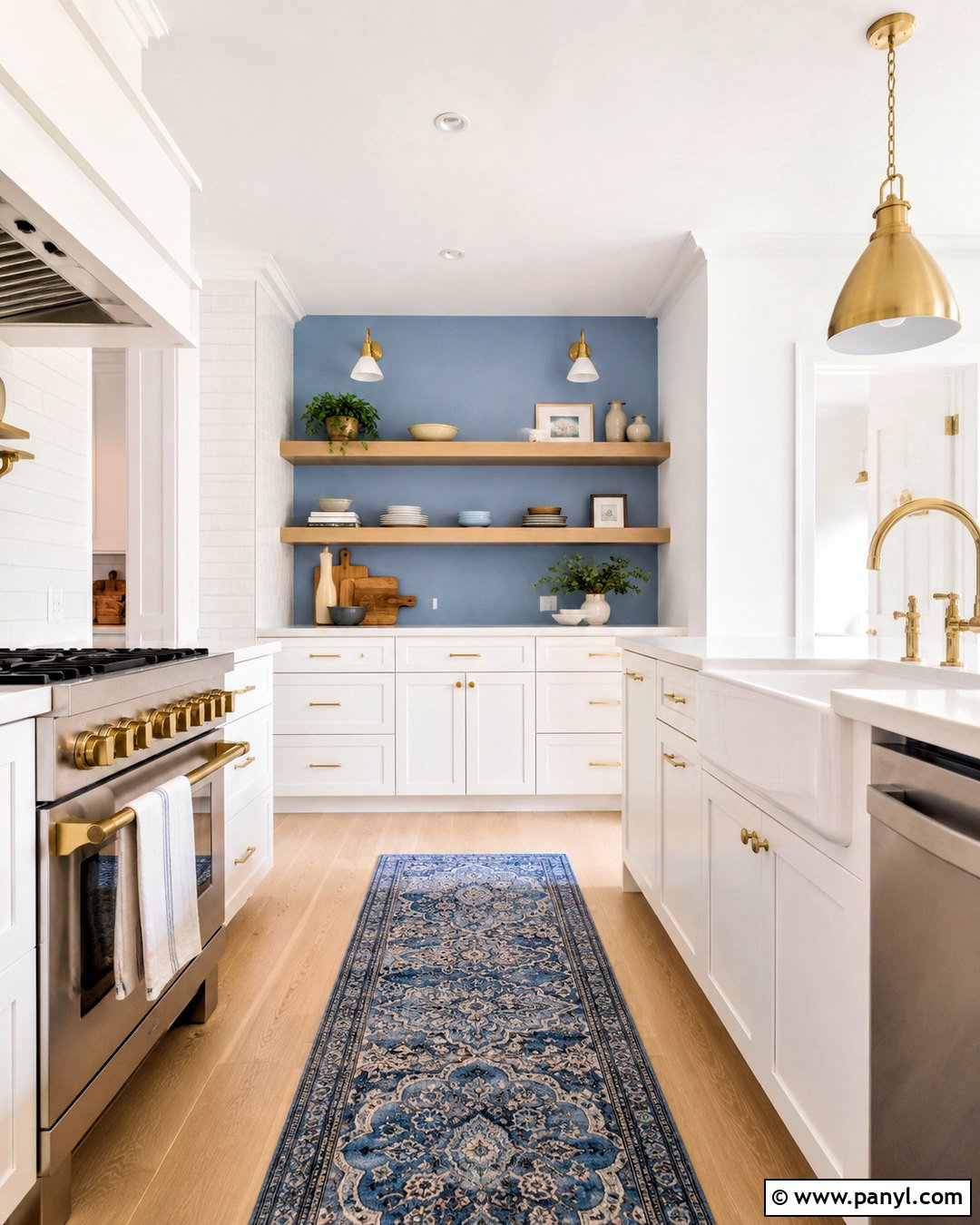
A light blue accent wall offers a focused way to introduce color without repainting the entire kitchen. Choose the wall behind open shelves, a breakfast nook, or a freestanding hutch so the blue has a clear purpose. Keep surrounding walls warm white and use matching white cabinetry for continuity. Natural oak shelves or furniture will stand out attractively against the colored background. Complete the room with pale quartz counters, white backsplash tile, brass hardware, and light wood flooring. Repeat the accent color in one runner or piece of artwork rather than throughout every accessory. The finished kitchen remains mostly neutral, but the carefully positioned blue wall creates depth and draws attention to a useful architectural or functional zone.
40. Budget Kitchen With Light Blue Walls
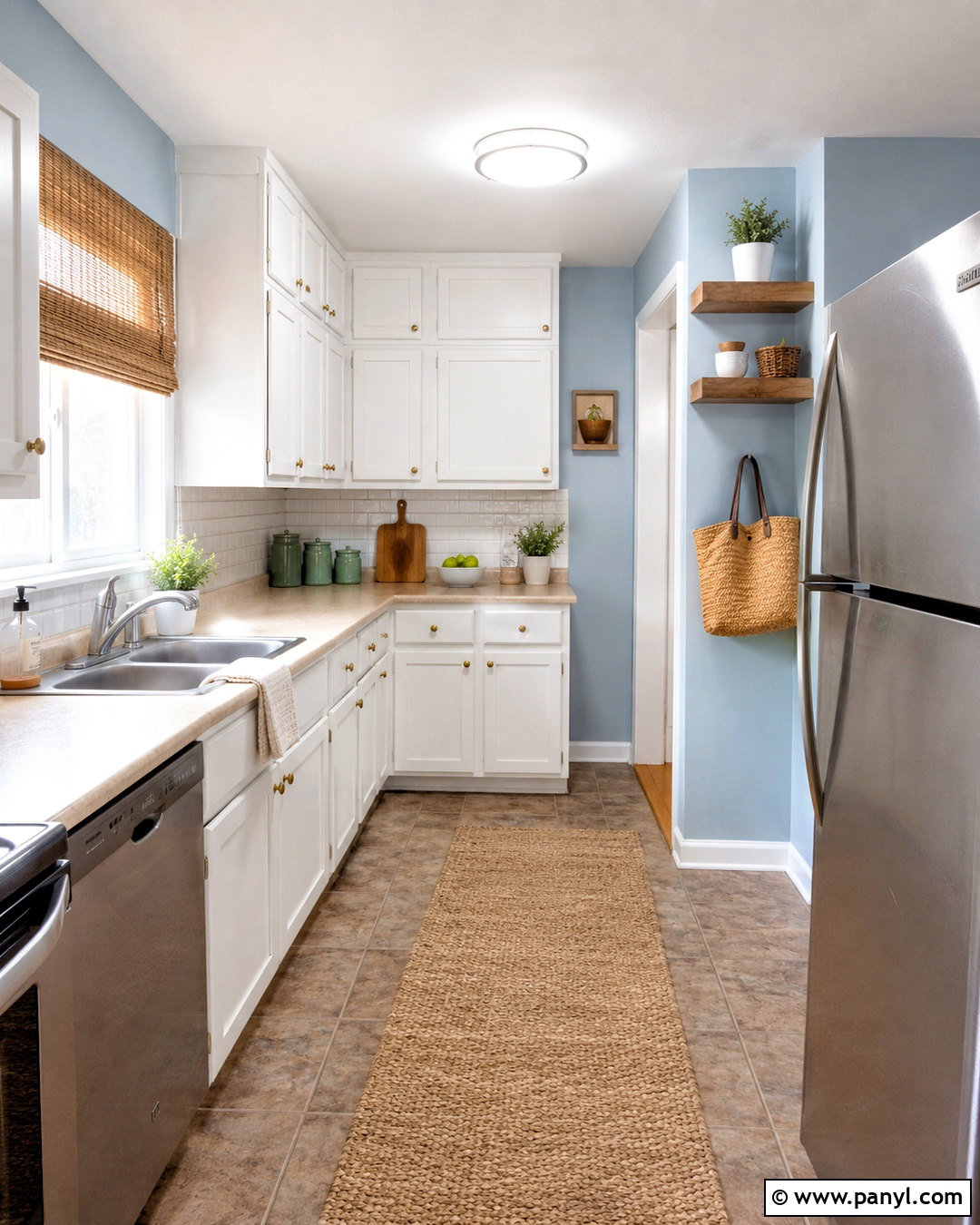
A budget-friendly kitchen refresh can begin with light blue wall paint and a few coordinated surface updates. Keep existing white or wood cabinets, then replace dated knobs with simple brushed brass or matte black hardware. Add peel-and-stick white backsplash tile only if it suits the condition of the wall and can be installed safely near work areas. Use washable blue-gray paint for a durable, forgiving finish. A low-cost woven shade, neutral runner, and matching countertop containers can make the room feel organized. Replace one outdated ceiling fixture with a bright, simple design, and use under-cabinet lighting to improve the work zone. The completed kitchen feels intentional because every affordable change supports the same calm blue, white, and warm wood palette.
Conclusion:
Light blue kitchen walls can support far more than one decorative direction. They look crisp with white cabinetry, warm beside oak and walnut, sophisticated with navy or charcoal, and inviting with cream, brass, and natural textures. Before choosing paint, compare samples beside the existing cabinets, countertops, backsplash, and flooring at different times of day. A blue with the correct undertone will connect these permanent finishes instead of fighting them. Build the rest of the room as a complete palette, repeating key colors and materials with restraint. Whether the goal is coastal, modern, farmhouse, cottage, or traditional, thoughtfully designed light blue kitchen walls can make the entire space feel brighter, calmer, and more cohesive.

Related Ideas and Inspiration:
Leave a Reply