
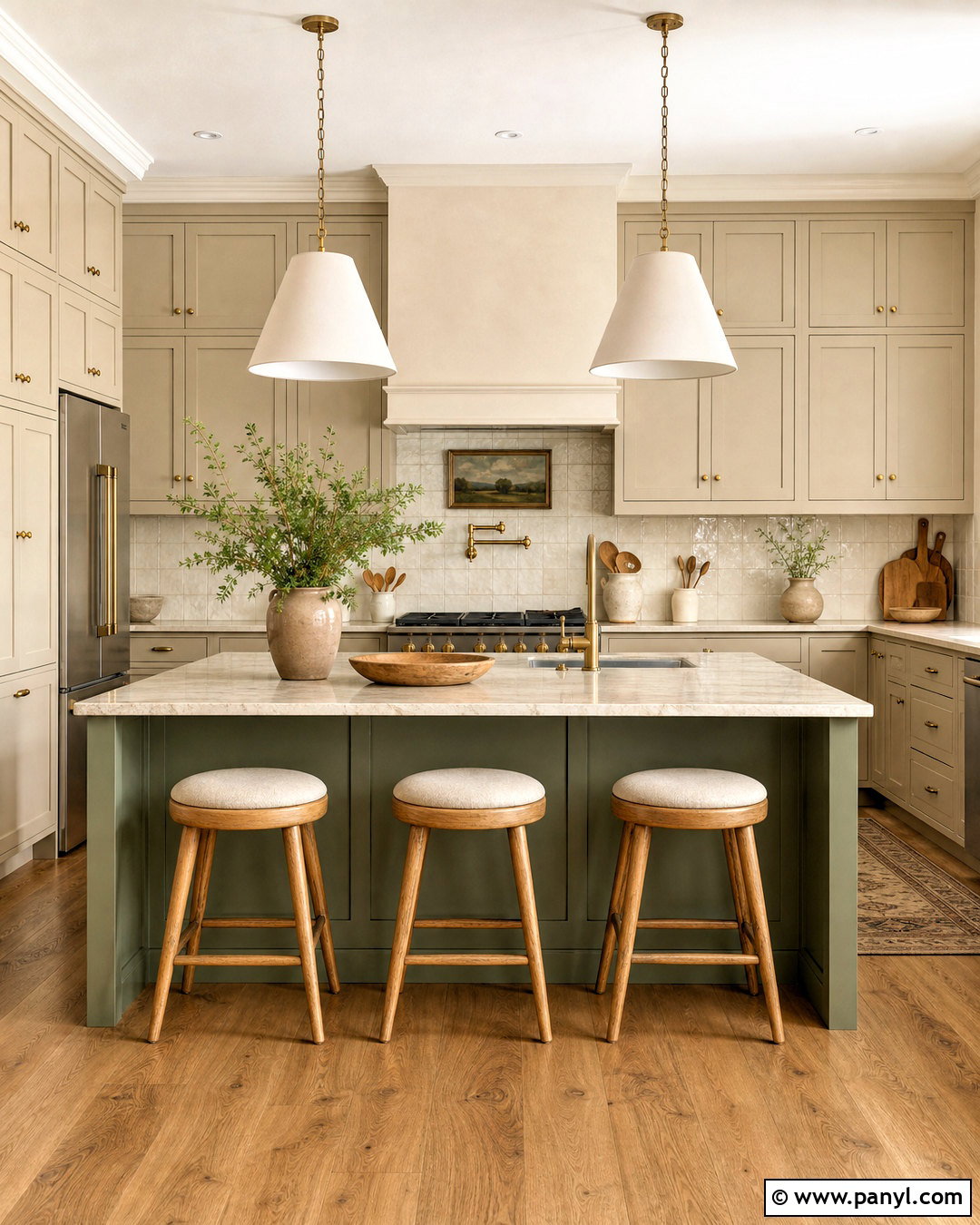
Earthy, versatile, and full of character, olive green can make a kitchen feel warmer without overpowering the room. The best 20 olive kitchen ideas pair this grounded color with finishes that sharpen, soften, or deepen its natural undertones. Recent kitchen designs often combine olive cabinetry with white stone, warm wood, aged brass, handmade tile, and terracotta, creating schemes that feel current yet comfortable. () You can use olive across every cabinet, limit it to a statement island, or introduce it through walls and backsplash tile. Lighting, cabinet finish, and surrounding colors will affect how green or brown the shade appears. The complete looks below offer practical inspiration for different layouts, budgets, and decorating preferences using 20 olive kitchen ideas.
1. Olive Green Kitchen With White Countertops
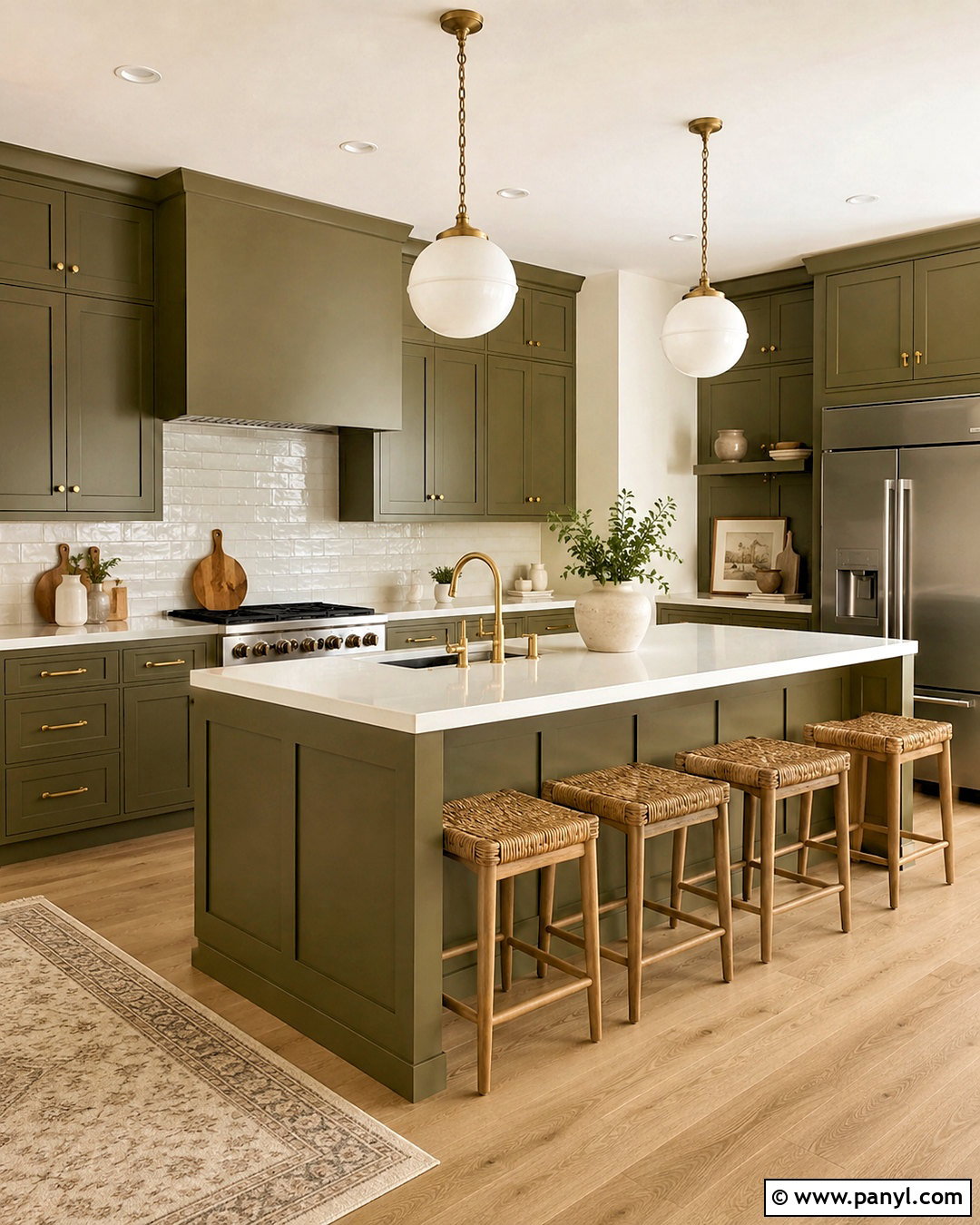
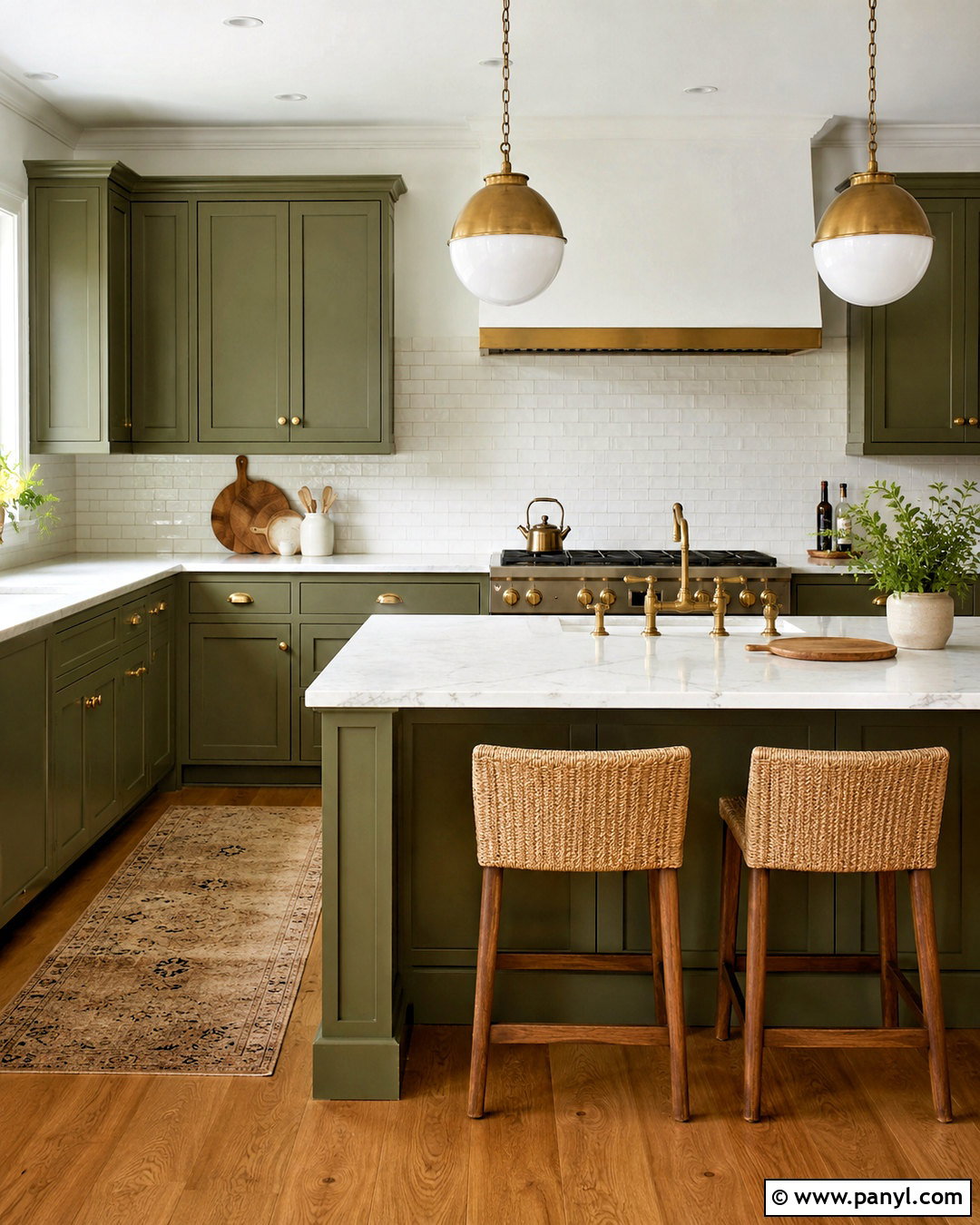
Crisp white countertops give olive cabinetry a fresh, balanced appearance. Choose medium olive shaker cabinets, simple quartz counters, and a warm white backsplash to create an approachable transitional kitchen. Continue the countertop material a few inches up the wall for a clean finish, or install glossy off-white subway tile for gentle texture. Brushed brass pulls bring out the warmer notes in the green, while light oak flooring keeps the room from feeling formal. Add two white globe pendants over the island and use woven counter stools for softness. Keep small appliances and countertop decor minimal. Cream pottery, wooden cutting boards, and a small potted herb are enough to make this olive kitchen feel welcoming and complete.
2. Olive Green Kitchen With Brass Hardware
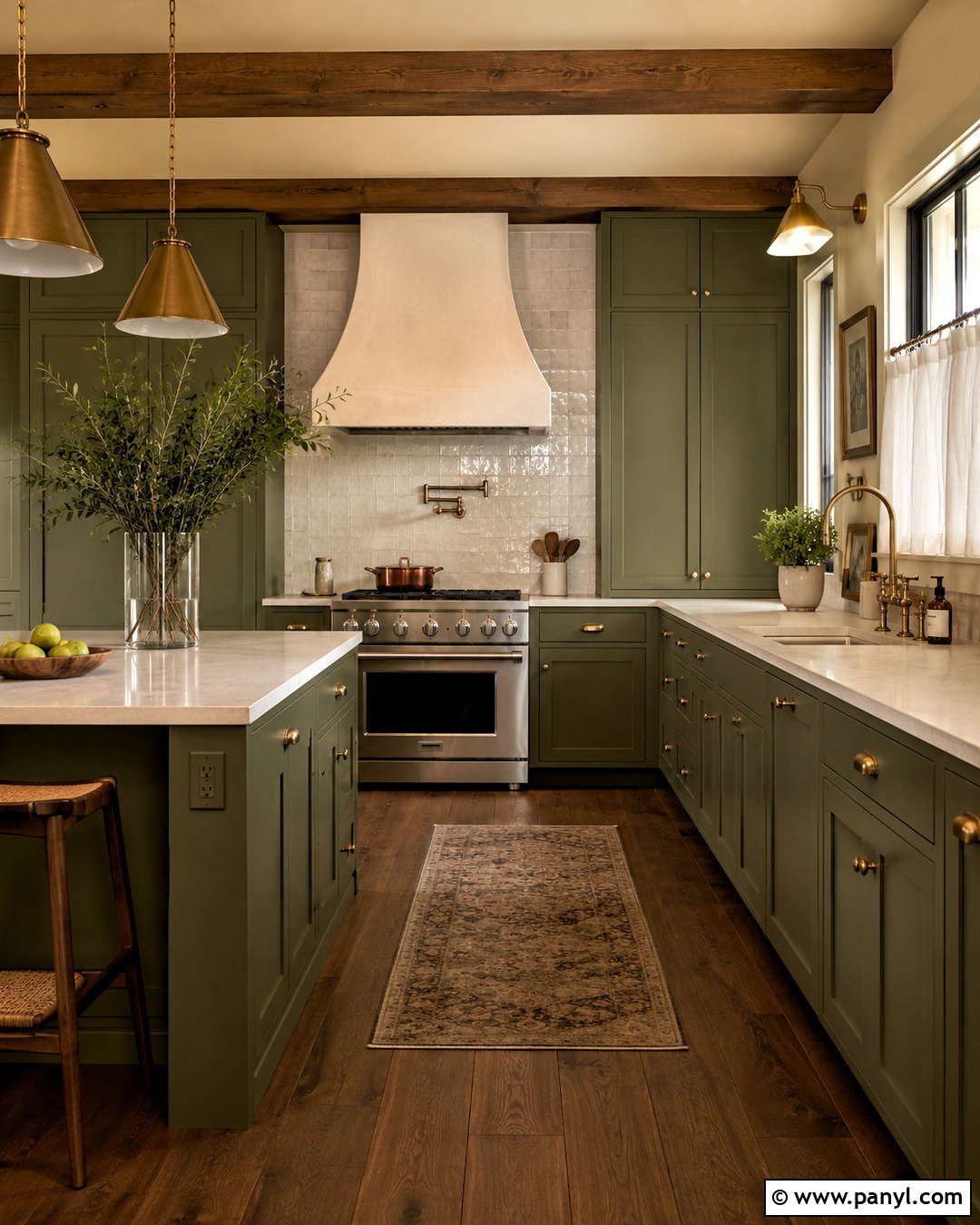
Warm metal details can turn olive cabinets into the strongest feature in the room. Start with deep olive inset cabinetry and install aged brass knobs, cup pulls, and a matching bridge faucet. Use the metal selectively so the finished kitchen feels refined rather than overly decorative. Cream quartz countertops and handmade ivory backsplash tile create a calm background, while medium walnut flooring adds depth. A plaster range hood painted in soft cream breaks up the surrounding cabinetry and gives the cooking area a clear focal point. Finish the room with antique brass pendants, woven shades, and simple linen cafe curtains. This complete palette works especially well in kitchens where traditional cabinet details need a more relaxed, updated color scheme.
3. Olive Green And Wood Kitchen
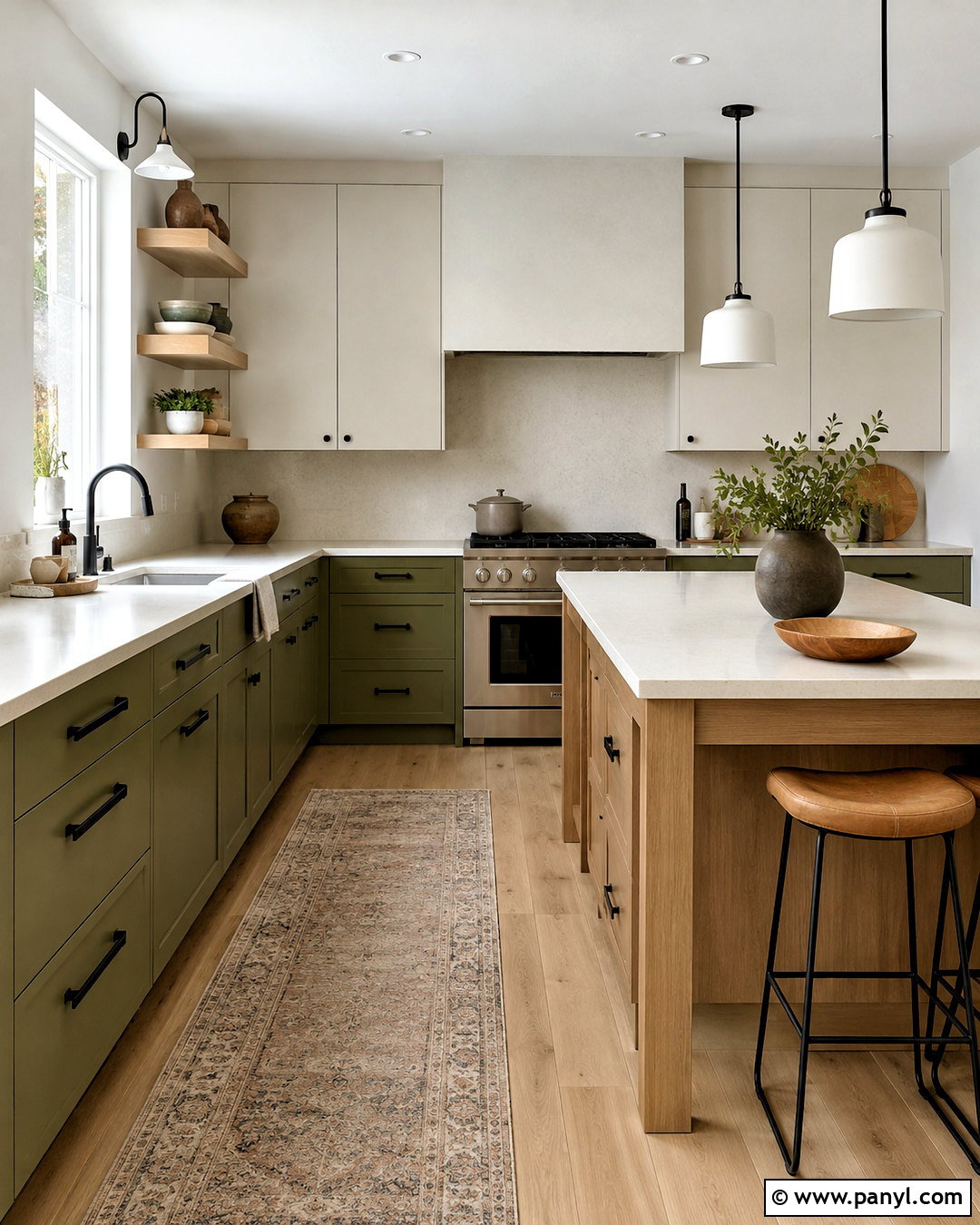
Natural wood enhances the earthy character of olive green while preventing painted cabinetry from feeling flat. Use olive lower cabinets beneath white oak open shelves, then repeat the oak on a wide kitchen island or tall pantry wall. Soft white upper cabinets can keep the layout light, especially when the room has limited windows. Select creamy stone counters with subtle beige veining and a warm white square-tile backsplash. Matte black pulls provide a crisp outline without competing with the wood grain. Add saddle-colored counter stools, a neutral runner, and simple ceramic serving pieces. Keeping the wood tone consistent across shelves, flooring, and seating creates unity. The result is a casual olive kitchen that feels natural, functional, and easy to personalize.
4. Dark Olive Green Kitchen
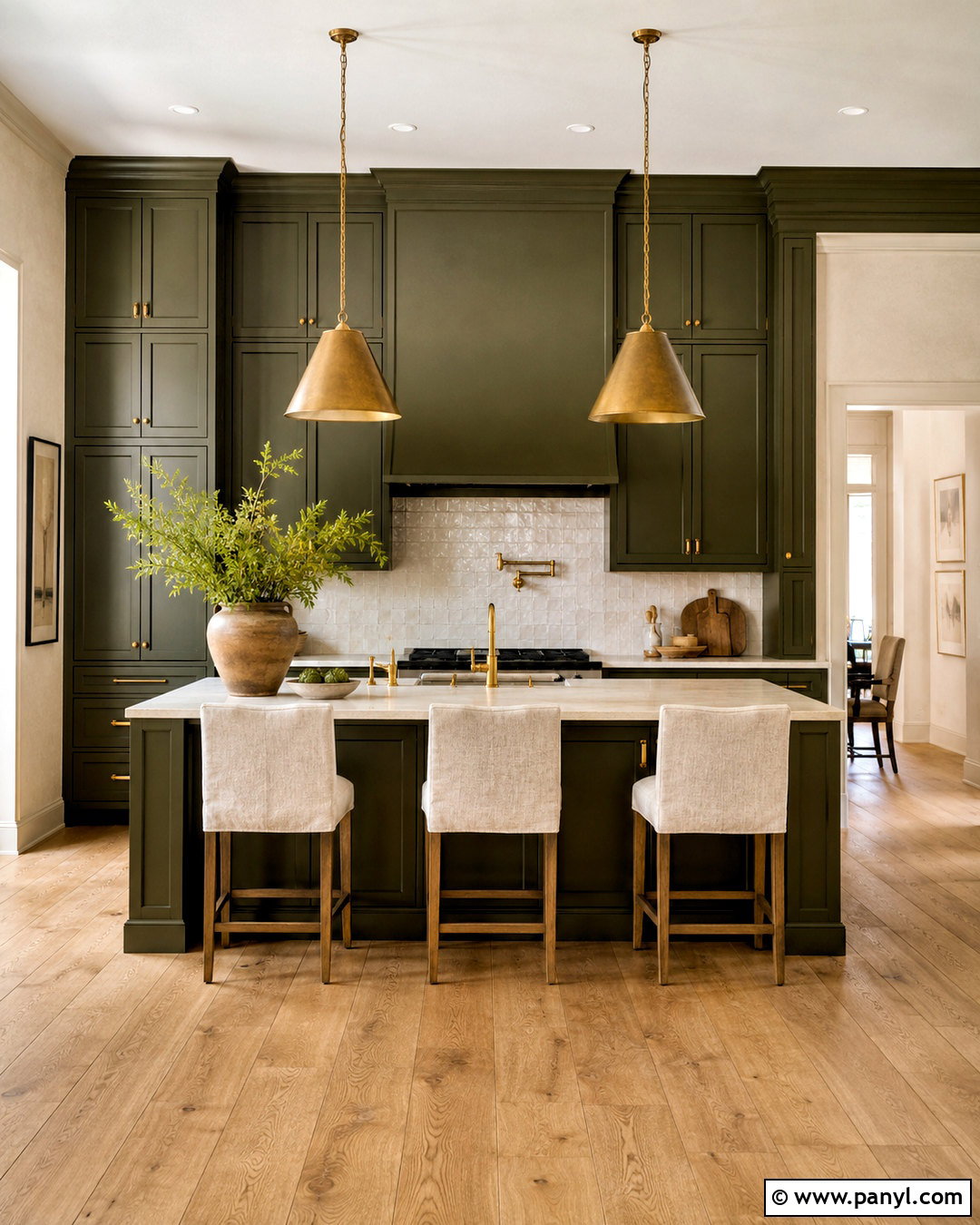
Deep olive cabinetry creates an intimate kitchen without the starkness of pure black. Use the color on floor-to-ceiling cabinets, the island, and the paneled range hood for a cohesive, furniture-like effect. Balance that depth with creamy marble-look quartz, pale plaster walls, and a white oak ceiling beam or floor. A lightly glazed backsplash adds reflection and keeps the work area visually open. Choose unlacquered brass hardware and warm metal pendants to highlight the shade’s golden undertones. If the kitchen is compact, replace several upper cabinets with open shelves and include strong under-cabinet lighting. Finish with linen stools and restrained countertop decor. This look feels dramatic, but its natural materials make it comfortable enough for an everyday family kitchen.
5. Light Olive Green Kitchen
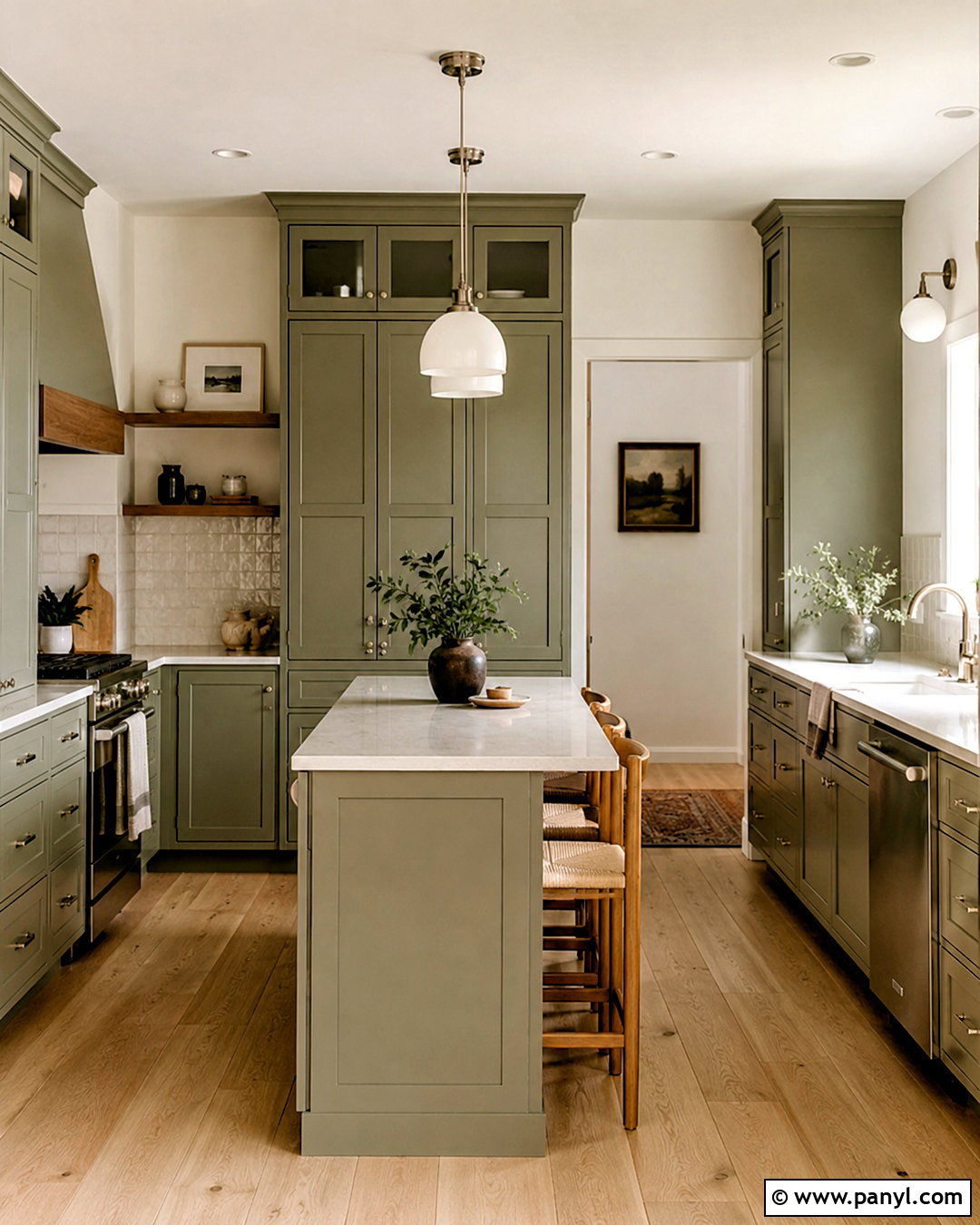
Soft olive green offers color while maintaining the open feeling many smaller kitchens need. Paint simple shaker cabinets in a muted olive with gray undertones, then pair them with warm white walls and pale quartz countertops. A stacked ivory tile backsplash creates subtle lines without adding visual clutter. Choose light oak flooring and matching floating shelves to reinforce the airy palette. Satin nickel hardware gives the room a cleaner, cooler finish than brass, making this combination suitable for Scandinavian or modern transitional homes. Install a single milk-glass pendant above a narrow island and use backless oak stools to preserve walking space. A striped washable runner, white stoneware, and a few green herbs complete this bright, practical olive kitchen.
6. Olive Green Farmhouse Kitchen
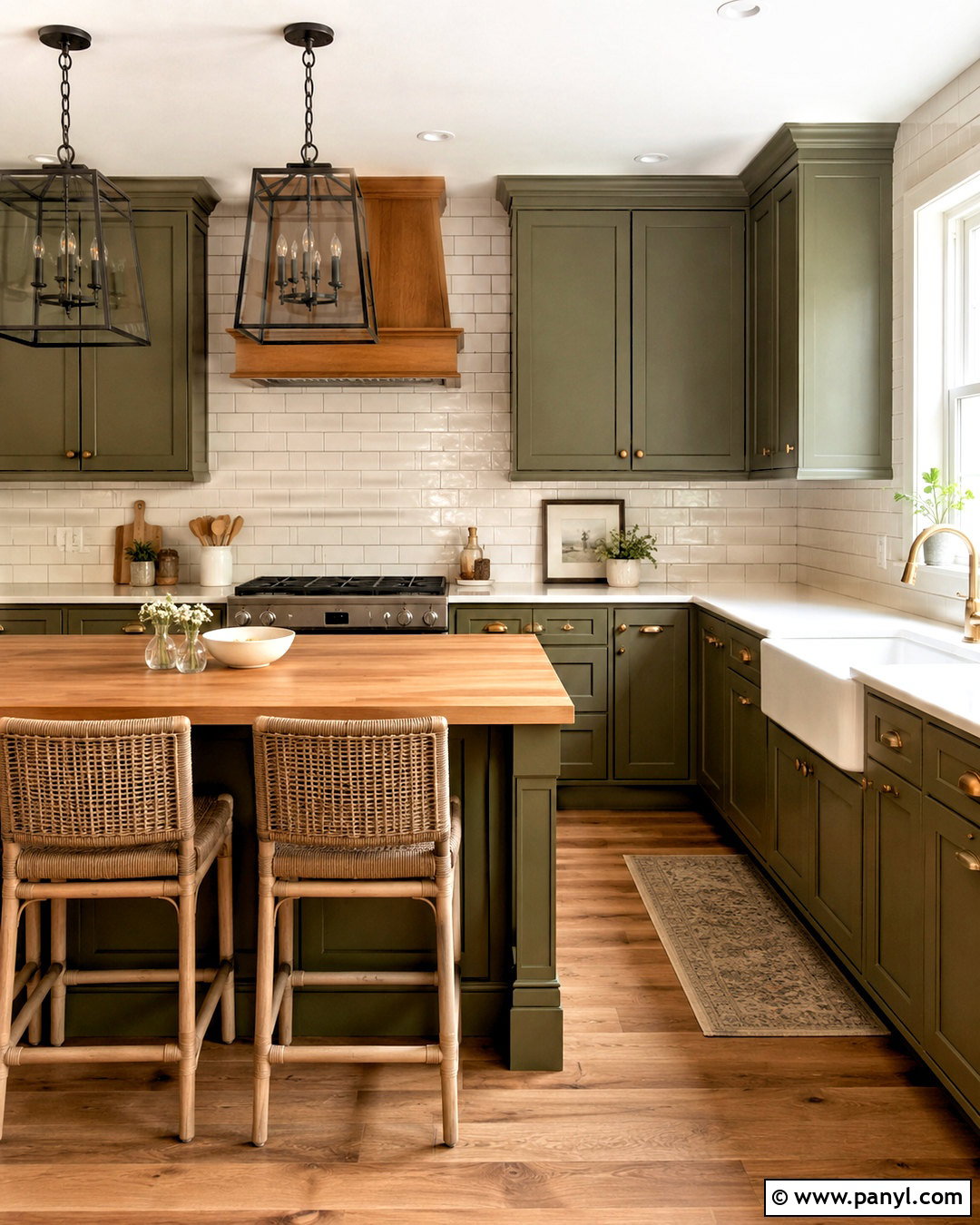
Could your farmhouse kitchen use color without losing its familiar warmth? Olive shaker cabinets, butcher block accents, and an apron-front sink create a comfortable foundation with plenty of character. Use creamy quartz on the main counters for easier maintenance, then reserve natural wood for the island top or open shelving. Install handmade white subway tile with warm grout and add black iron lantern pendants above the island. A painted beadboard ceiling or backsplash detail can strengthen the farmhouse look without making it feel themed. Choose aged brass cup pulls, medium oak flooring, and woven counter stools. Finish the room with linen curtains, stoneware crocks, and wooden boards arranged sparingly, leaving clear preparation areas for everyday cooking.
7. Modern Olive Green Kitchen
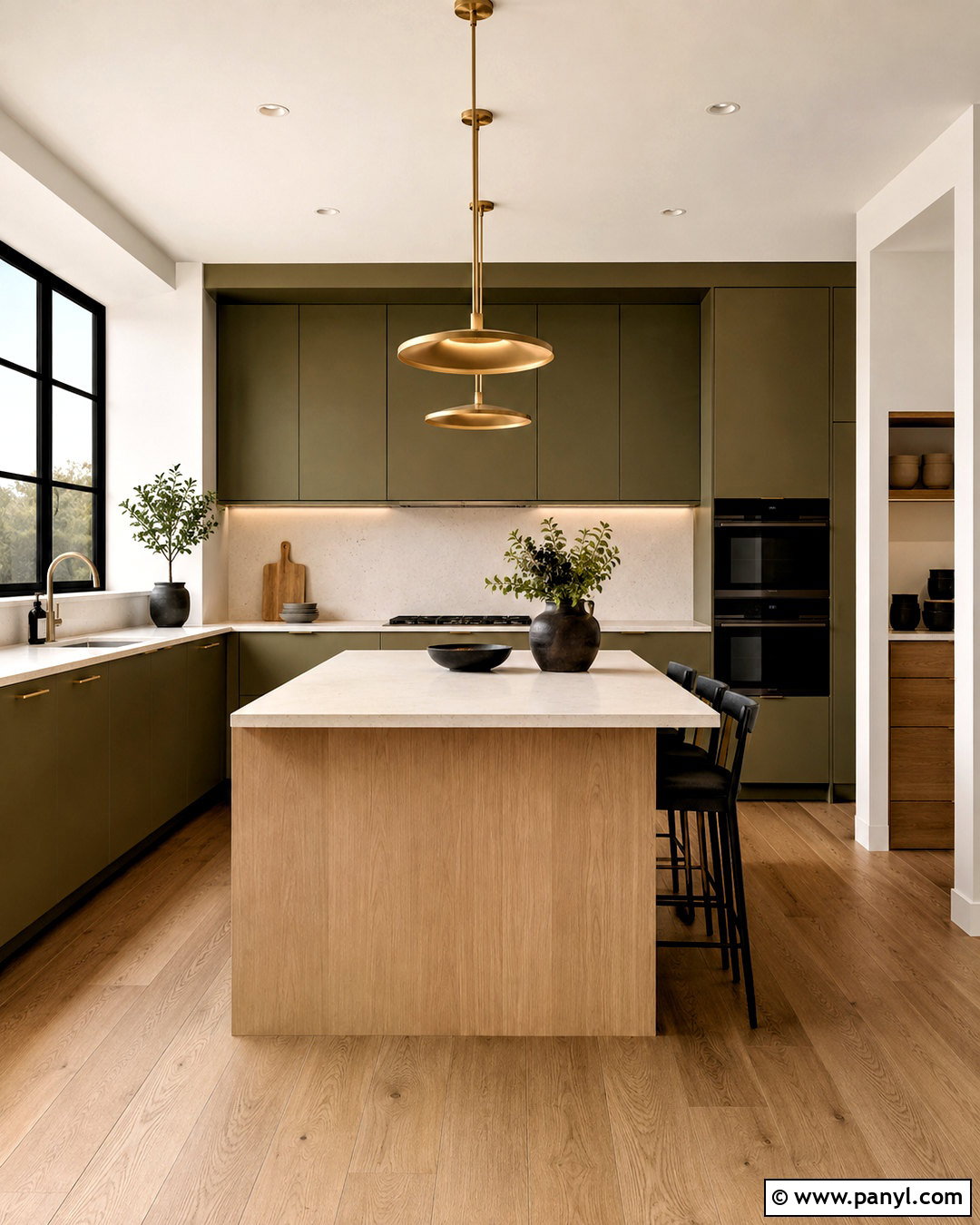
Flat-panel olive cabinets deliver a streamlined look while the color keeps the kitchen from appearing cold. Select a matte, mid-tone olive finish and pair it with thin white quartz countertops and a full-height backsplash in the same material. Integrated appliances and discreet edge pulls maintain smooth cabinet lines. Introduce warmth through a white oak island, pale wood flooring, and two sculptural brass pendants. Avoid filling every wall with cabinets; one open section with a long oak shelf will give the composition breathing room. Black-framed windows or a matte black faucet can add controlled contrast. Keep accessories functional and simple, such as a ceramic fruit bowl and matching canisters. The finished olive kitchen feels modern, calm, and highly organized.
8. Olive Green Kitchen With Black Countertops
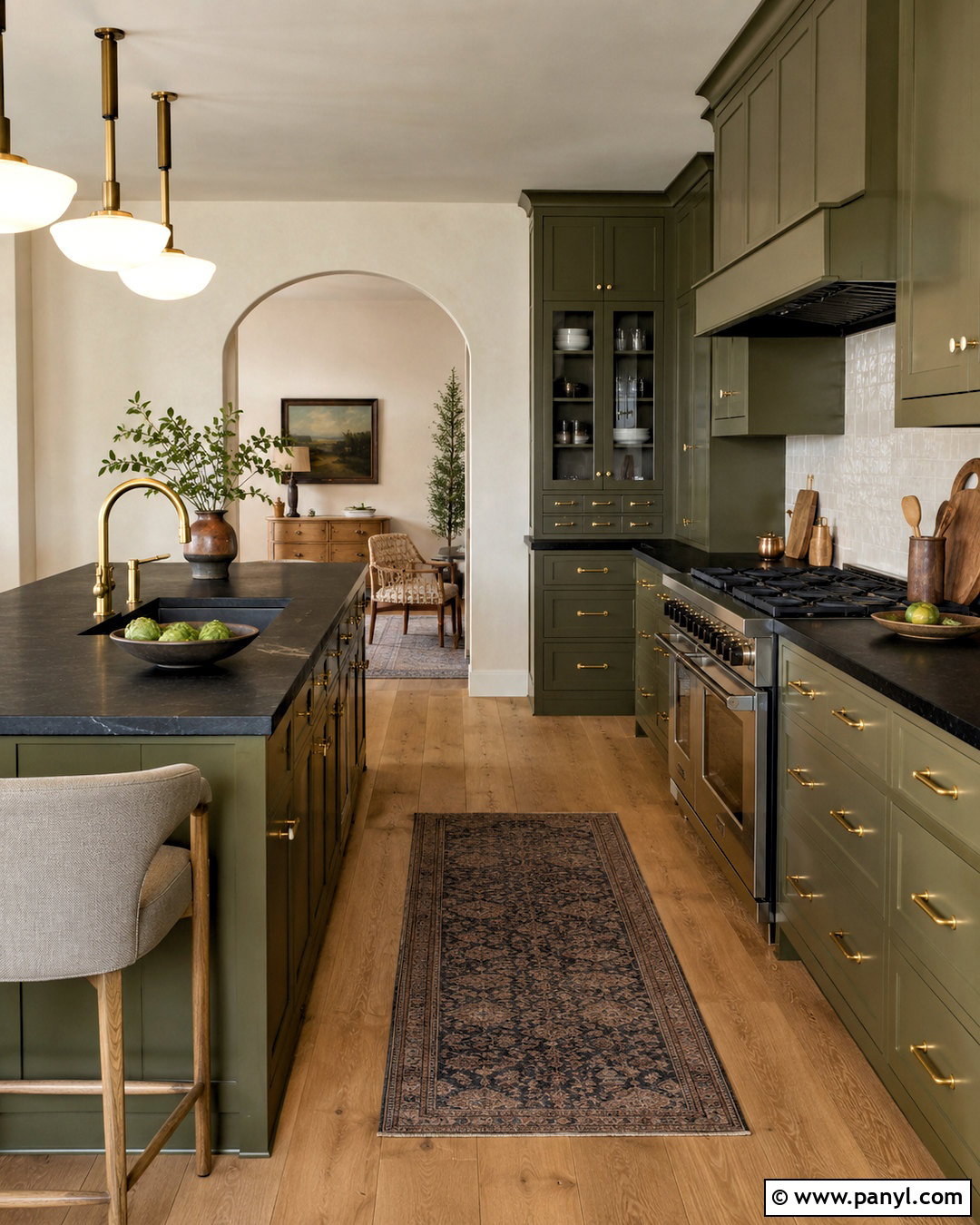
Black countertops bring definition to olive cabinets and produce a rich, sophisticated palette. Choose honed black granite or soapstone with subtle movement rather than a glossy surface that may feel severe. Medium olive cabinetry, aged brass hardware, and creamy plaster walls will soften the dark worktops. Carry the black material a short distance up the backsplash, then finish the upper wall with warm white tile or washable paint. Wide-plank oak flooring prevents the scheme from becoming too heavy. Over the island, hang opal glass pendants with dark metal fittings. Add natural linen stools and a vintage-inspired runner containing olive, tan, and charcoal. This complete kitchen works best with layered task lighting and uncluttered counters that allow the materials to stand out.
9. Olive Green Kitchen With Marble Backsplash
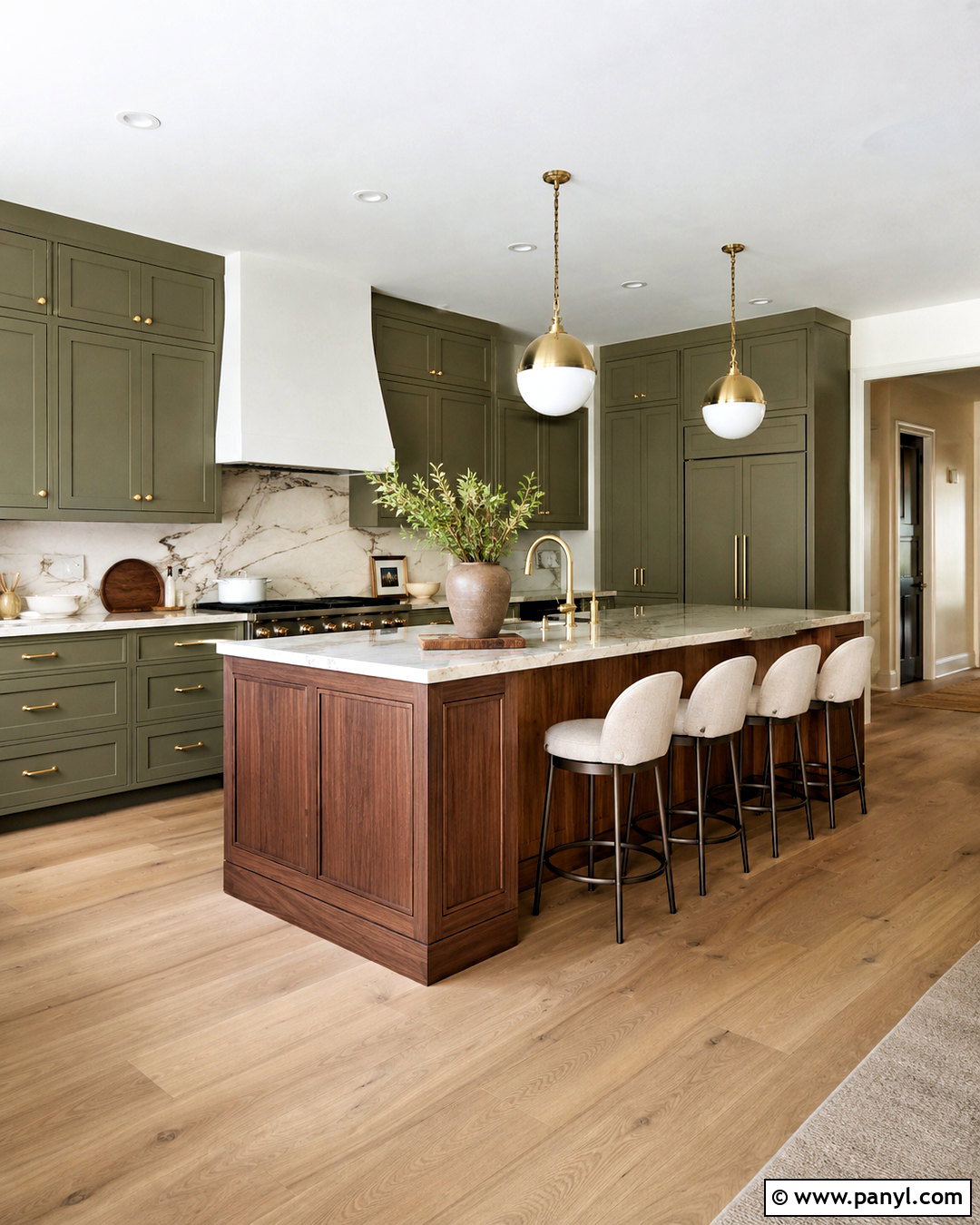
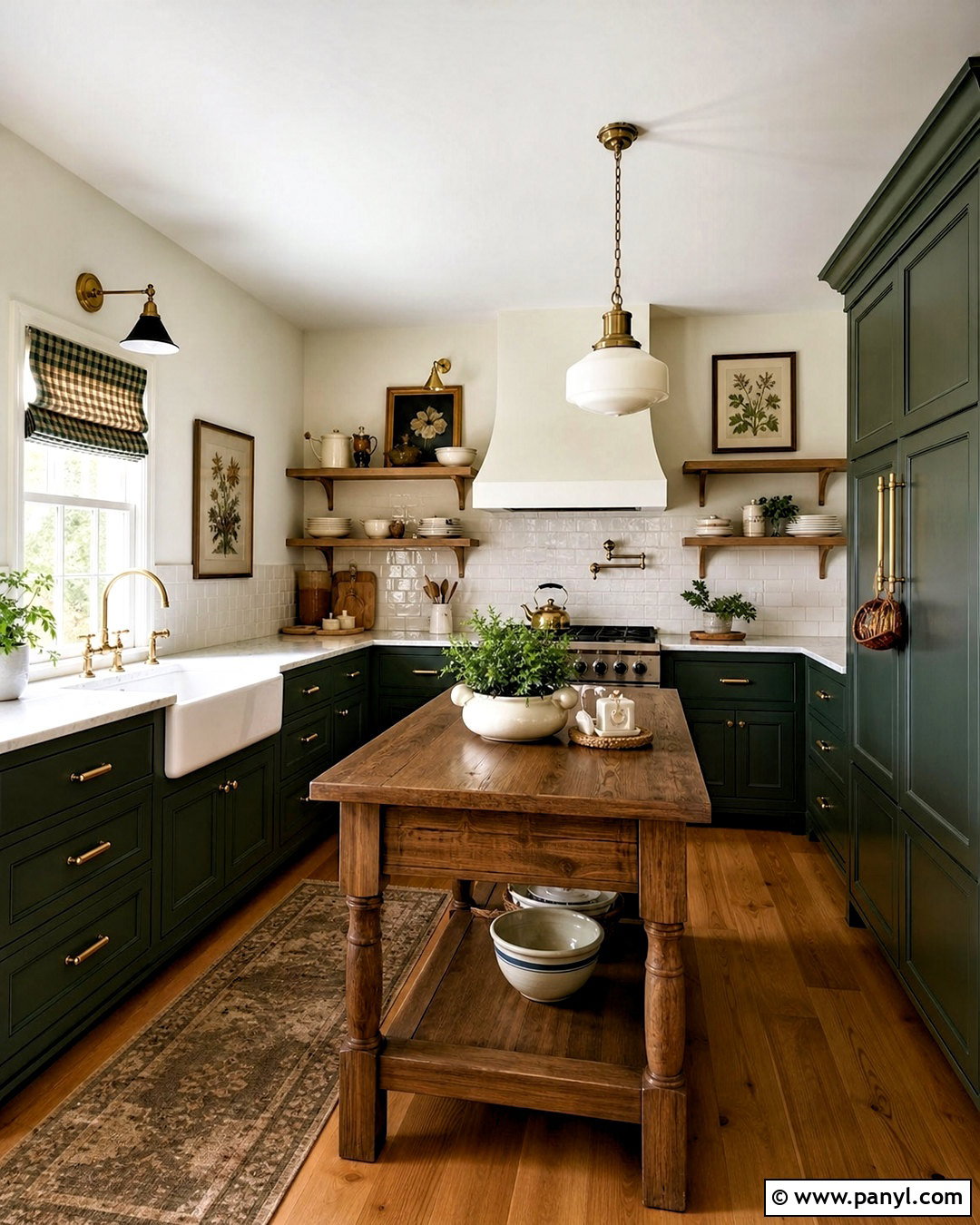
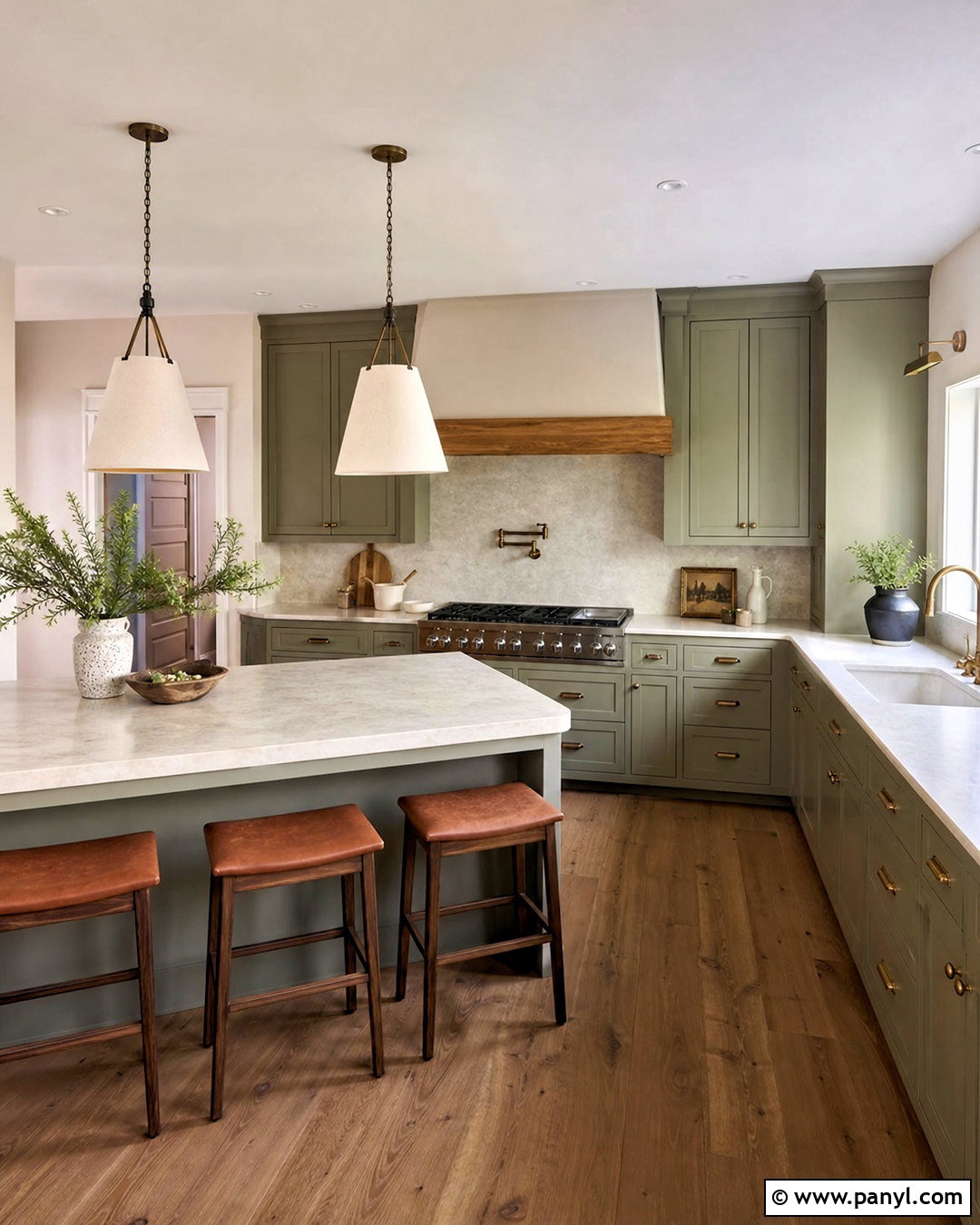
A marble backsplash introduces movement and brightness behind solid olive cabinetry. Select warm white marble with soft gray, beige, or muted plum veining, then run it from the countertop to the upper cabinets for a seamless effect. Keep the cabinet design simple so the stone remains readable rather than busy. Use a medium olive tone, brushed brass pulls, and a matching brass faucet to connect the green with the warmer veins. White oak flooring and a walnut island create another natural layer. If real marble requires more care than you prefer, consider porcelain slab or quartz with restrained veining. Complete the space with cream upholstered stools, globe pendants, and minimal pottery for a polished yet livable olive kitchen.
10. Olive Green Kitchen With Terracotta Floor
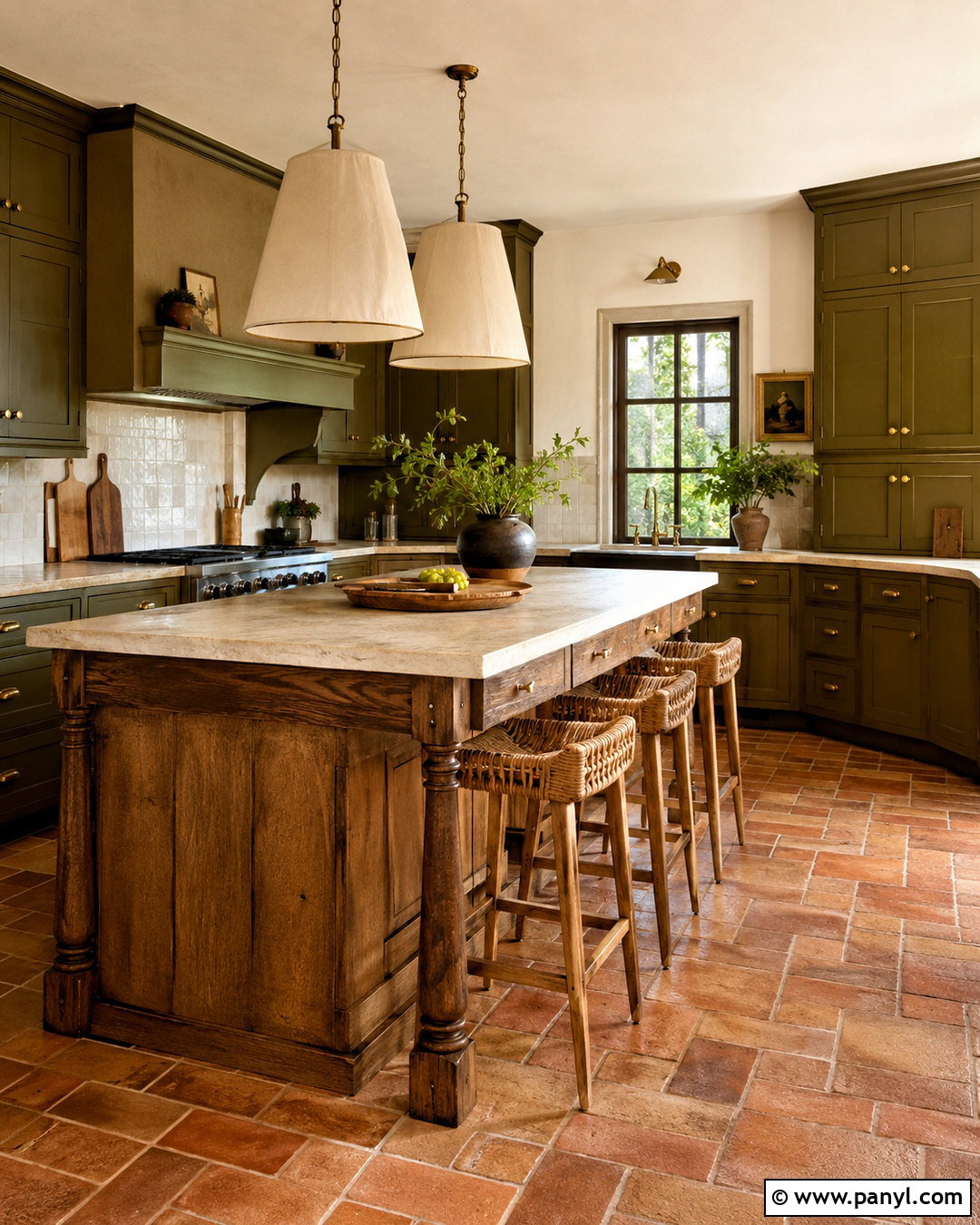
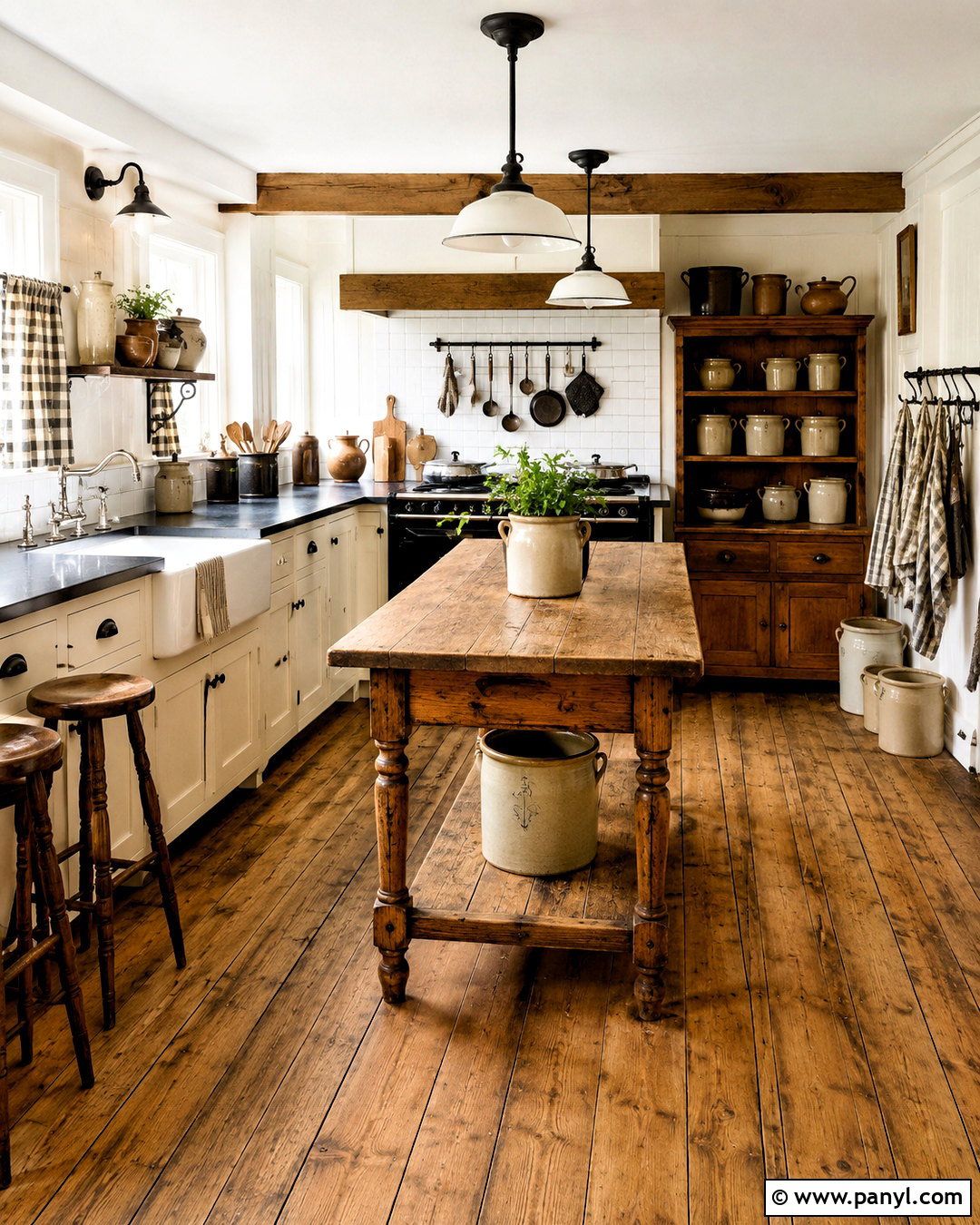
Sun-warmed terracotta flooring gives olive cabinetry a relaxed Mediterranean character. Choose handmade or tumbled tiles in varied clay tones, then arrange them in a square, brick, or subtle checkerboard pattern. Medium-dark olive cabinets will balance the floor’s rusty orange color, while cream walls and pale limestone-look countertops brighten the upper half of the room. Use aged bronze or antique brass hardware rather than polished metal. An ivory zellige backsplash adds texture and reflects light around the work surfaces. Include a rustic oak table or island with woven stools to make the kitchen feel collected. Linen Roman shades, glazed pottery, and a few practical wooden accessories complete the room without distracting from the rich relationship between olive green and terracotta.
11. Olive Green Kitchen With Cream Cabinets
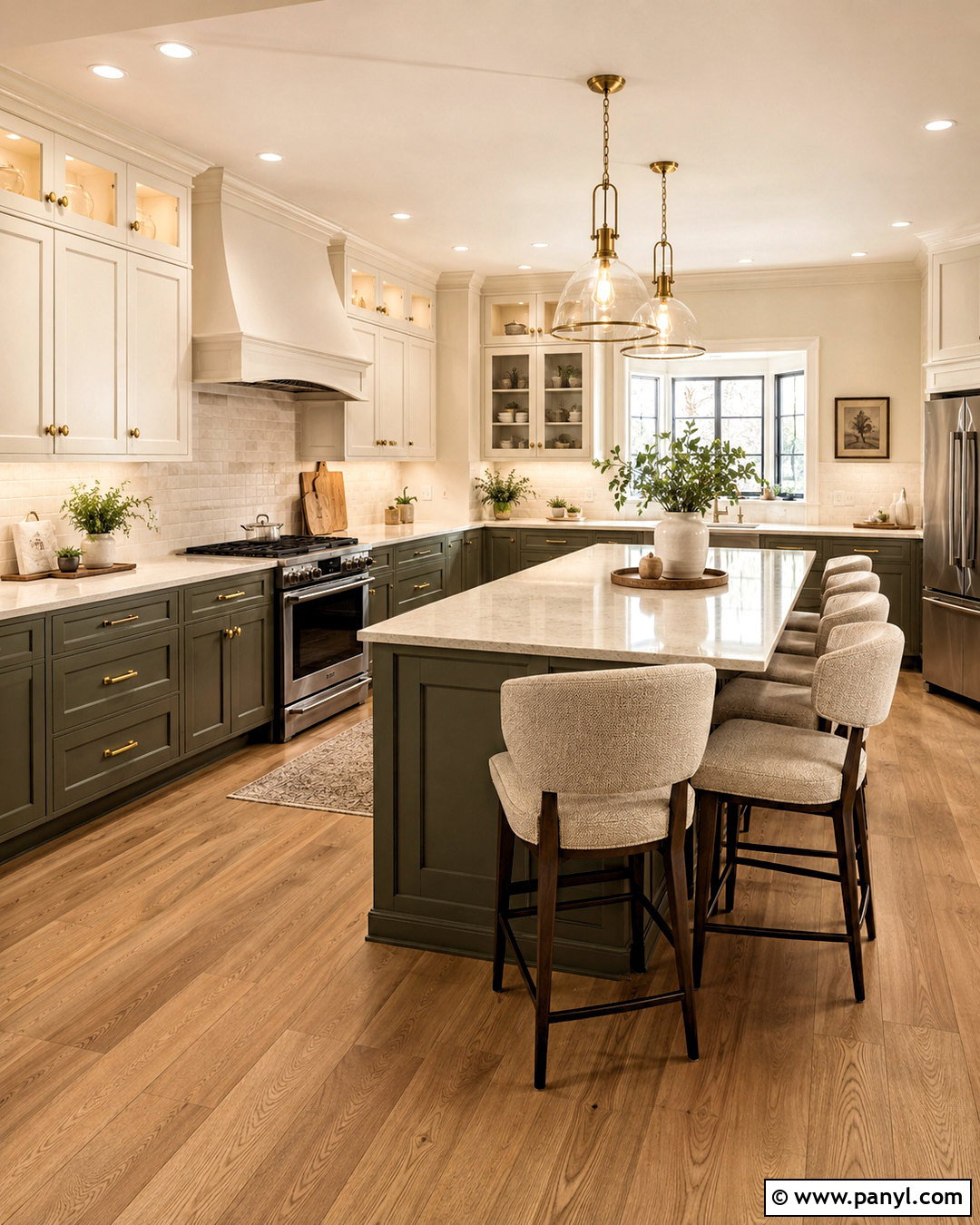
Two-tone cabinetry is an effective option when an entirely green kitchen would feel too dark. Place olive green on the lower cabinets and island, then use warm cream on the upper cabinets and tall pantry units. Keeping the lightest color near eye level helps the room appear open and balanced. Select beige quartz counters, ivory backsplash tile, and medium oak flooring to connect both cabinet colors. Brass hardware provides consistency across the contrasting finishes. A cream range hood surrounded by olive base cabinets makes the cooking zone feel intentional. Add oatmeal-colored stools, a muted patterned runner, and wooden cutting boards. This combination is softer than olive and bright white, making it especially suitable for traditional, cottage, and north-facing kitchens.
12. Olive Green Kitchen Island
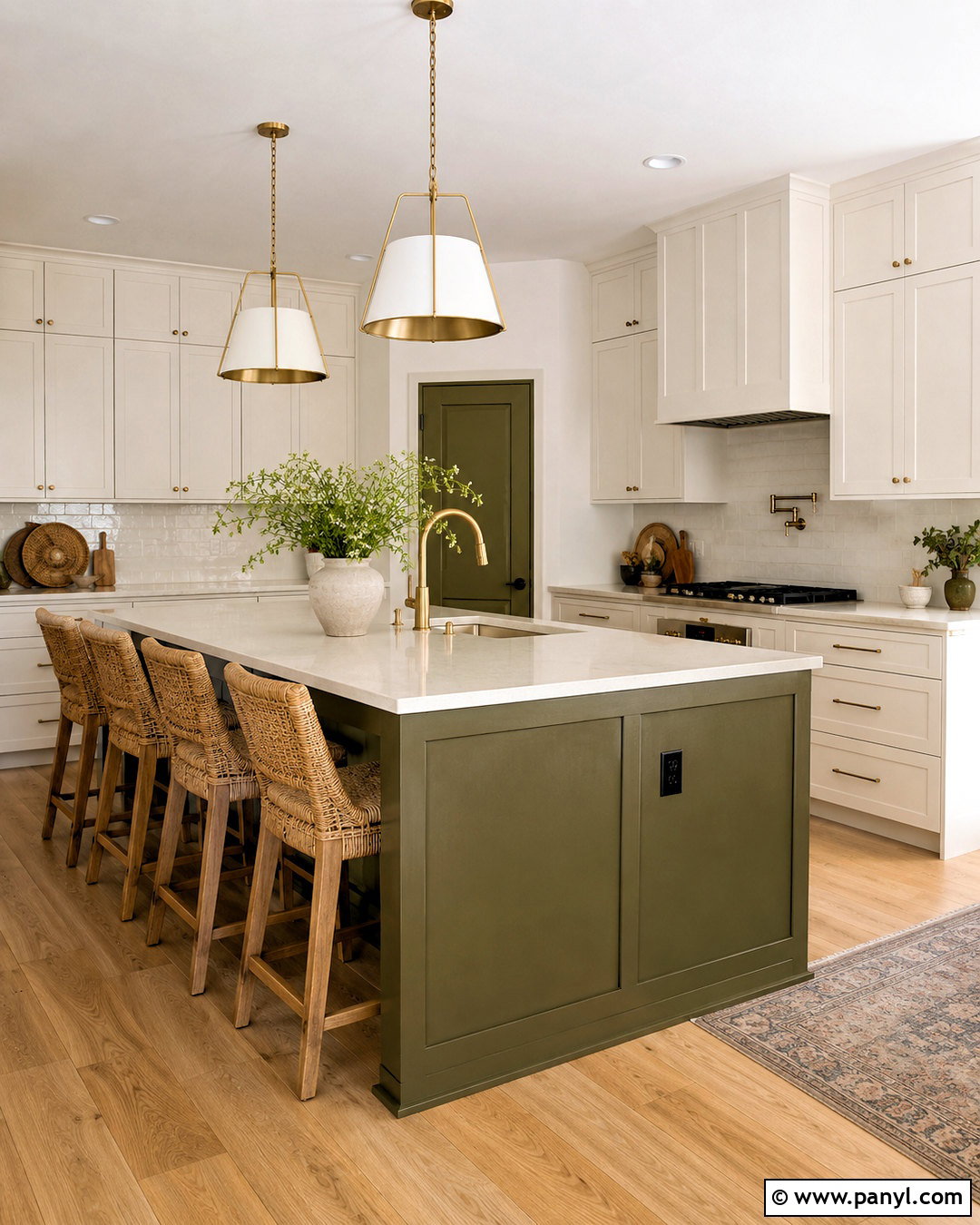
An olive island offers a manageable way to introduce color while keeping the surrounding kitchen neutral. Paint a generously sized island in medium olive, then pair it with warm white perimeter cabinets and pale quartz countertops. A walnut or butcher block island top can create extra distinction, although using matching quartz throughout will look cleaner. Repeat the olive color on a small pantry door or window trim to prevent the island from appearing disconnected. Install brass pendants above the workspace and use coordinating pulls across all cabinets. Light oak flooring and woven counter stools maintain a relaxed mood. Finish with a simple ceramic bowl and low greenery, ensuring the island remains useful for meal preparation, storage, casual dining, and entertaining.
13. Olive Green Galley Kitchen
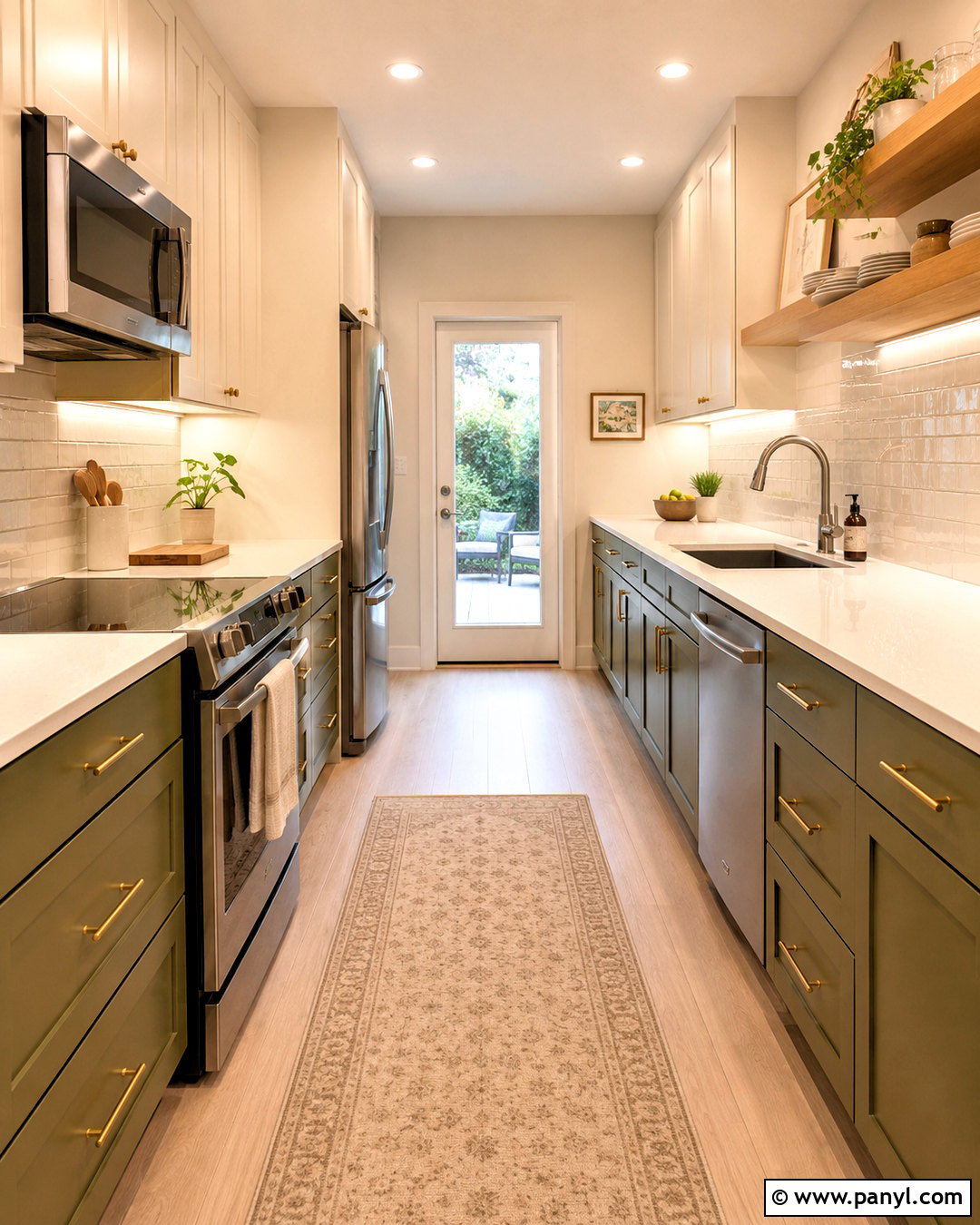
A narrow galley kitchen benefits from careful color placement and strong lighting. Use olive green on the lower cabinets along both walls, then select warm white uppers or open oak shelving to reduce visual weight. Pale quartz countertops and glossy ivory tile will reflect light across the walkway. Keep cabinet hardware slim and consistent, using brushed brass or satin nickel depending on the nearby fixtures. Continuous under-cabinet lighting eliminates dark corners and makes the counters easier to use. Choose light wood or cream porcelain flooring laid lengthwise to emphasize the room’s longer dimension. A washable runner can add pattern without taking up valuable space. The finished galley feels colorful and efficient, with every material supporting a brighter, more comfortable layout.
14. Olive Green Small Kitchen
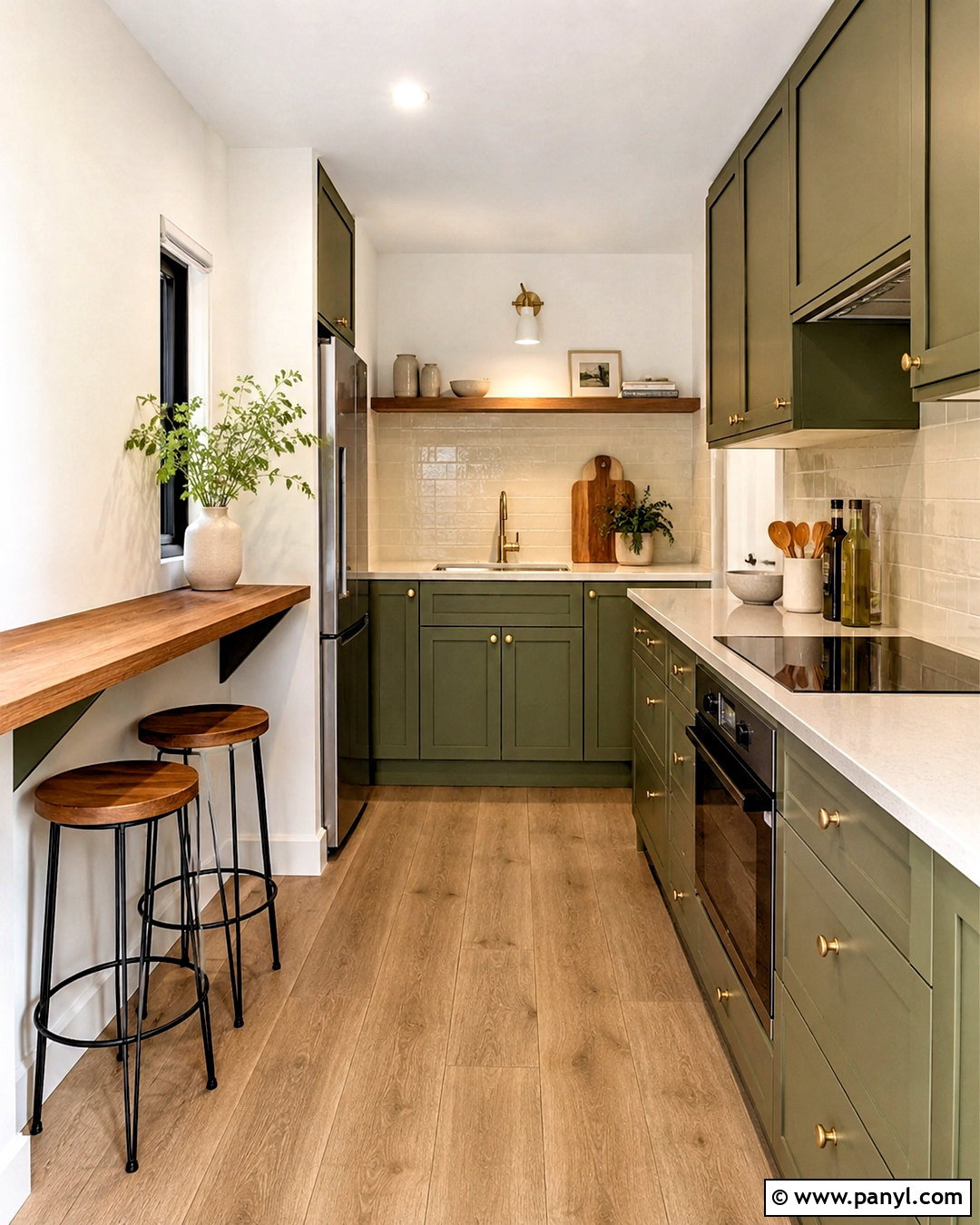
In a compact kitchen, olive works best when it is balanced with pale surfaces and an uncluttered layout. Choose a soft, gray-toned olive for the lower cabinets and one shallow wall of uppers. Use white walls, slim quartz countertops, and a glossy cream backsplash to keep light moving through the space. Open oak shelves can replace bulky cabinets near a window or doorway. Select compact appliances with integrated fronts when possible, and extend cabinetry to the ceiling to maximize storage. Small brass knobs feel more proportional than oversized bar pulls. Add a narrow rolling island or wall-mounted breakfast ledge with two simple stools. Restrained decor, clear counters, and layered lighting make this olive kitchen feel organized instead of crowded.
15. Olive Green Rustic Kitchen
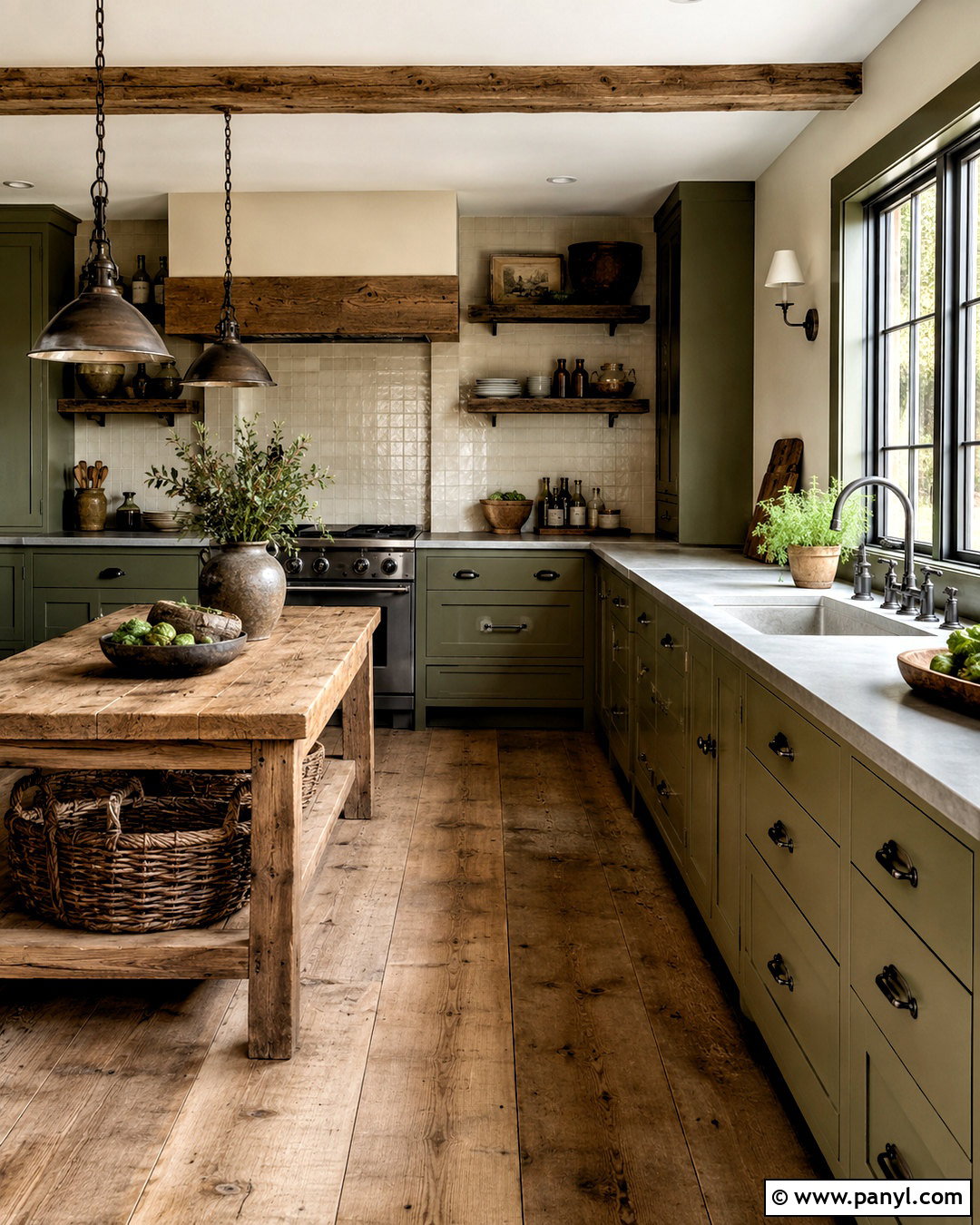
Rugged materials give olive cabinetry a comfortable, established appearance. Begin with distressed or lightly brushed olive shaker cabinets, then combine them with honed stone countertops and reclaimed oak shelving. A textured cream backsplash, such as handmade square tile, will brighten the room without looking overly polished. Choose dark bronze hardware, a bridge faucet, and substantial iron pendants for practical contrast. Wide-plank oak flooring supports the rustic direction, while a freestanding wooden worktable can replace a built-in island. Include woven baskets for produce, linen cafe curtains, and stoneware displayed on one open shelf. Avoid excessive distressing or decorative signs. The most convincing rustic olive kitchen uses honest materials, useful storage, and a simple layout that improves naturally with age.
16. Olive Green Midcentury Kitchen
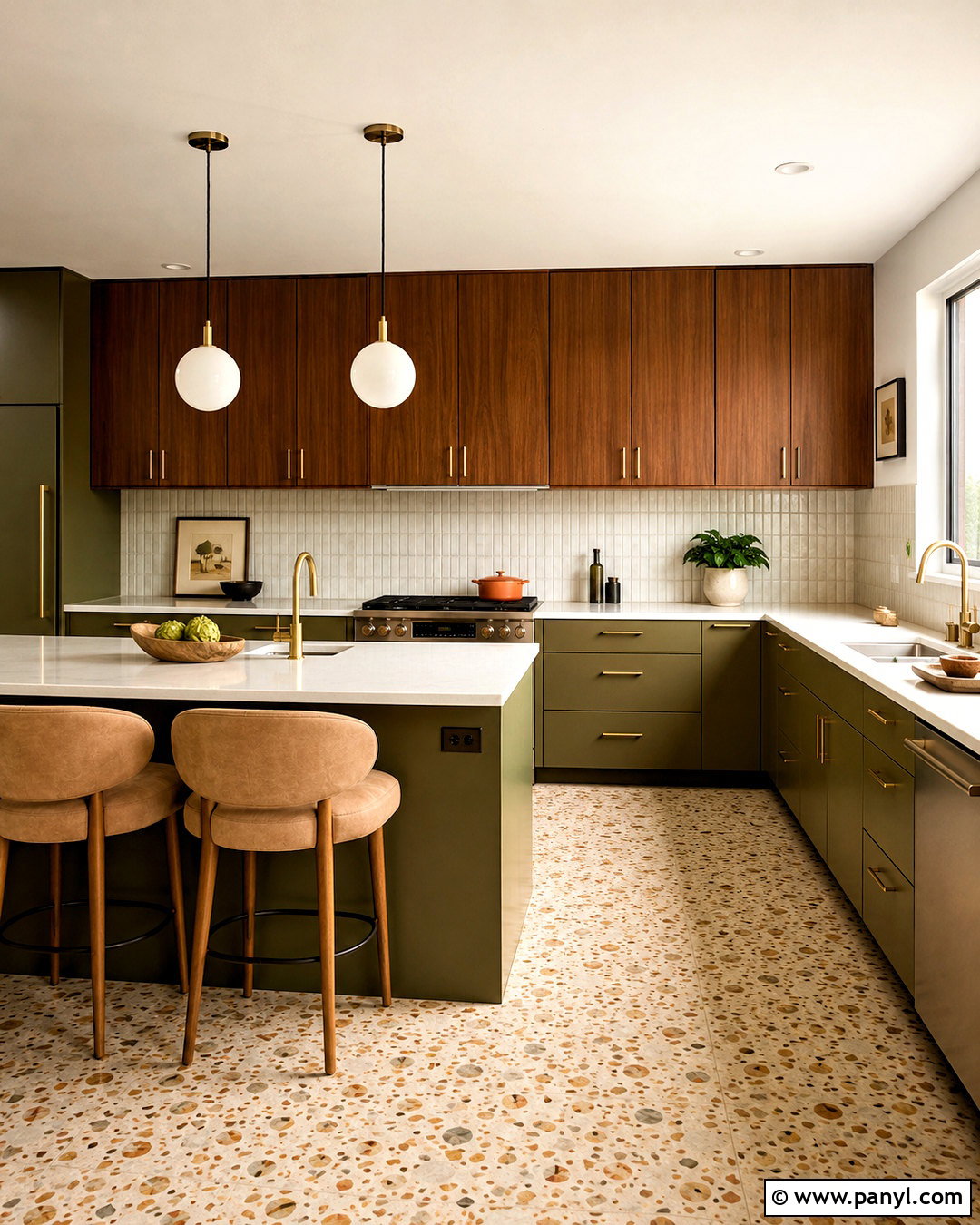
Olive green fits naturally into a midcentury kitchen when paired with walnut and clean geometric details. Choose flat-panel olive lower cabinets and walnut uppers, keeping the cabinet frames simple and lightly finished. Use off-white quartz countertops and a vertical stacked-tile backsplash in cream or muted mustard. Slim brass pulls and globe pendants introduce period character without turning the room into a retro set. A terrazzo floor or warm cork flooring adds pattern and softness underfoot. Build the island with an olive base, walnut side panels, and curved-edge counter stools. Finish with a restrained ceramic bowl and one sculptural light fixture. The balanced mix of green, wood, and graphic shapes creates a functional kitchen with recognizable midcentury warmth.
17. Olive Green Cottage Kitchen
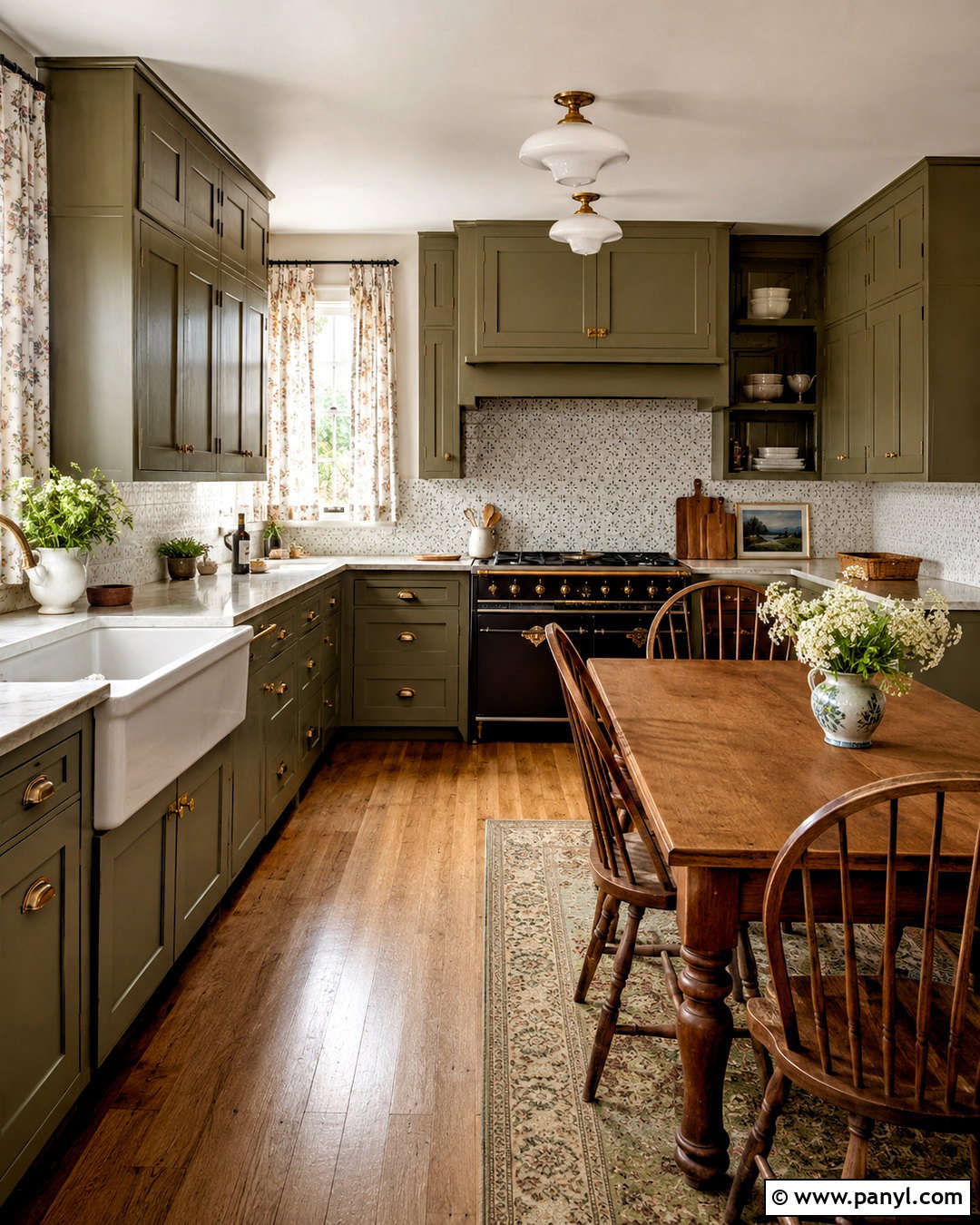
A cottage kitchen should feel charming, useful, and gently layered rather than perfectly matched. Paint inset cabinets a muted olive and combine them with warm white walls, creamy stone counters, and a small-patterned tile backsplash. A skirted sink cabinet or fabric-lined glass doors can introduce softness while preserving storage. Choose aged brass latches and knobs, then add an enamel farmhouse sink and traditional bridge faucet. Medium oak flooring, a small wooden table, and mixed spindle-back chairs create an inviting eating area. Use floral linen curtains in subdued rust, cream, and green rather than bright colors. Open shelves can display everyday plates and pottery, but leave open space around each group. This olive kitchen feels personal without becoming cluttered or overly decorative.
18. Olive Green Kitchen With Stainless Steel
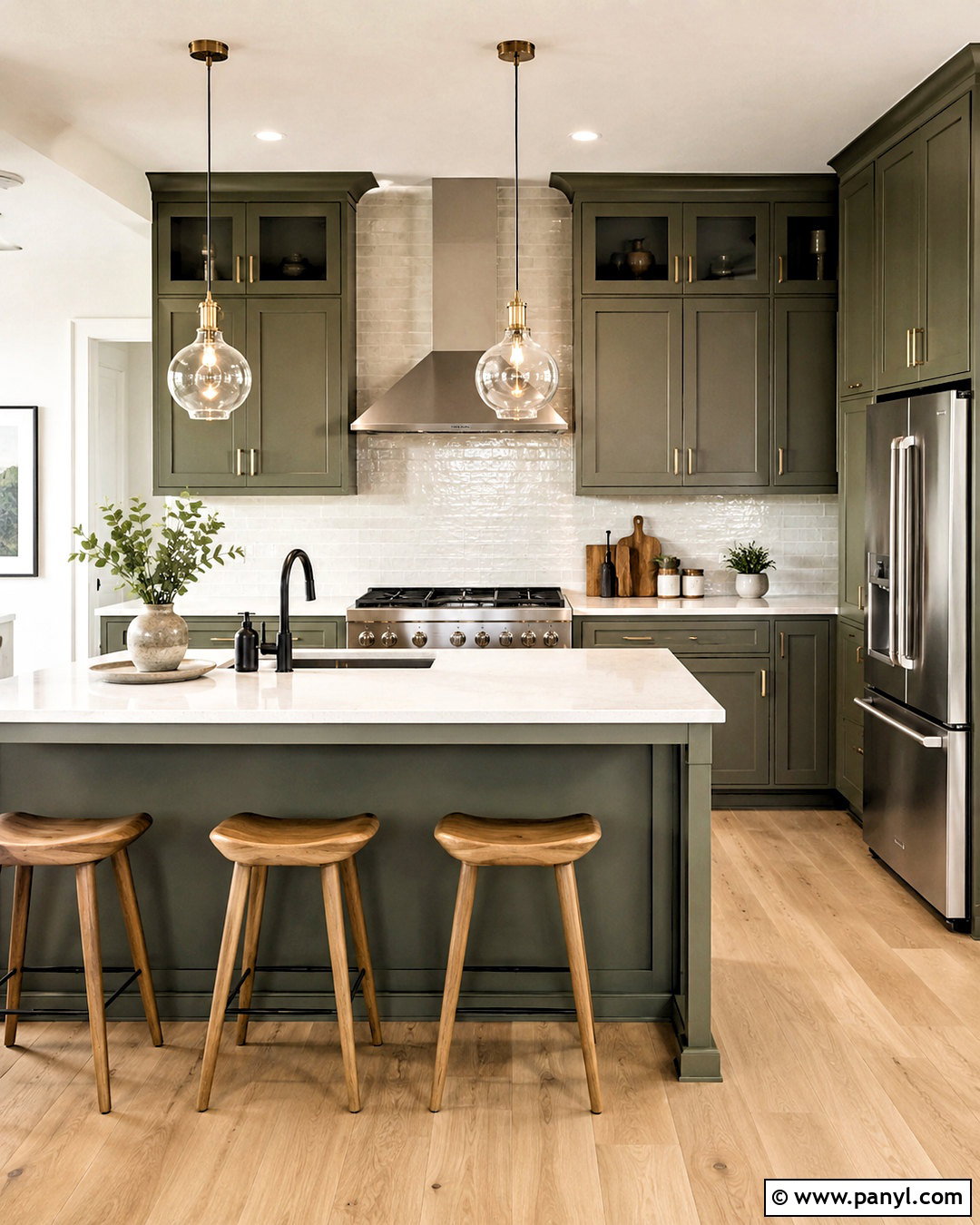
Stainless steel appliances can look surprisingly warm when surrounded by earthy olive cabinets. Select a medium, slightly gray olive that complements the metal’s cool surface without creating harsh contrast. Use flat-panel or narrow shaker doors, brushed nickel pulls, and a stainless steel faucet for a coordinated modern finish. White quartz counters and pale gray backsplash tile will connect the metal and cabinetry. Bring in warmth through white oak flooring, natural wood stools, and a few walnut accessories. A stainless range hood can remain exposed as a strong focal point, especially when framed by olive cabinets. Add bright under-cabinet lights and simple glass pendants. The result is a practical, contemporary olive kitchen that works well with existing appliances.
19. Olive Green Color-Drenched Kitchen
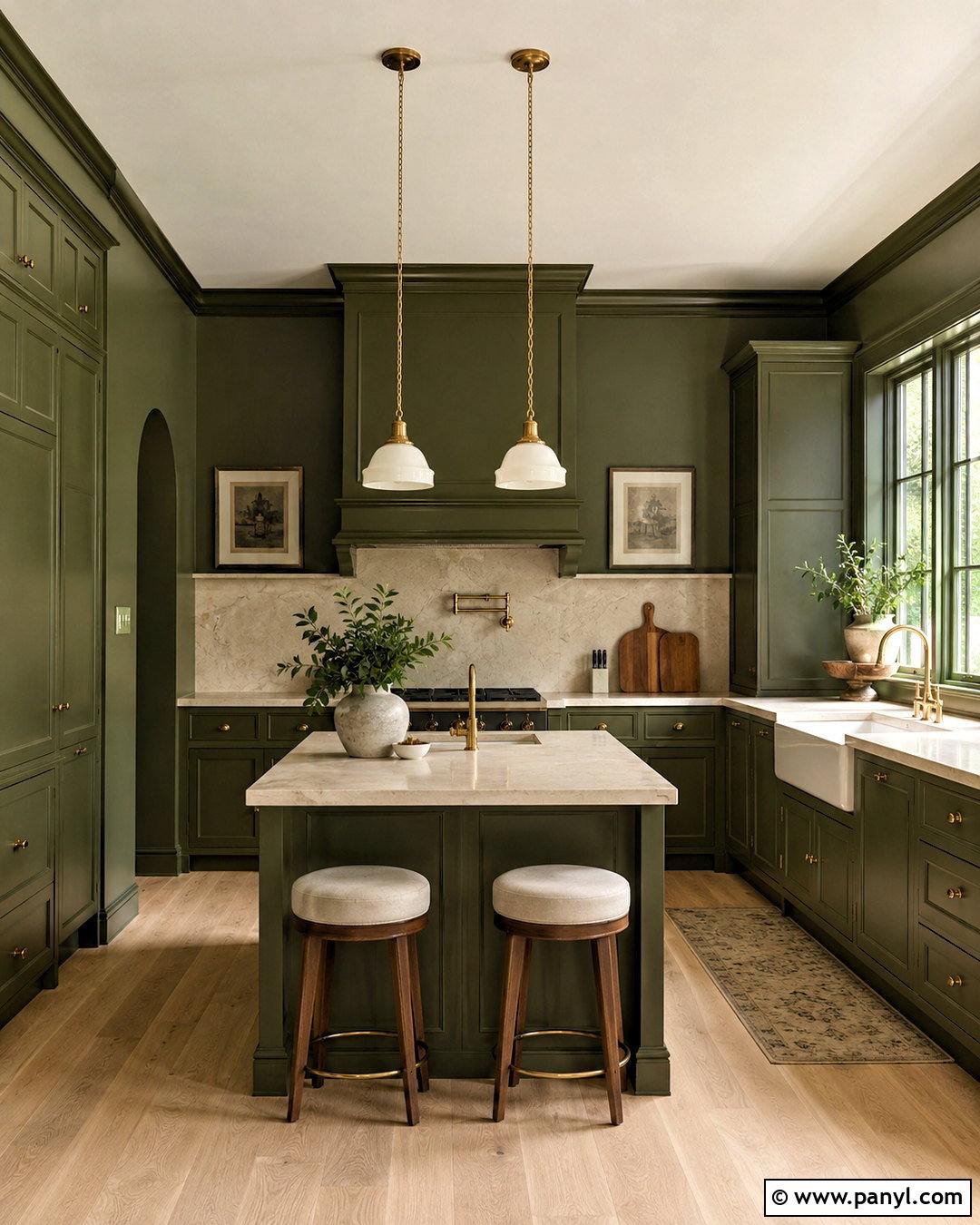
For a bold, enveloping look, carry olive green beyond the cabinets and onto the walls, trim, and paneled range hood. Use closely related olive tones rather than one identical finish everywhere. Slight variation will reveal architectural details and prevent the room from appearing flat. Choose a washable matte wall paint and a more durable satin finish for cabinetry. Cream marble-look countertops, an ivory sink, and pale oak flooring provide necessary relief. Aged brass hardware and warm white pendant lights enhance the room without introducing another strong color. Keep the ceiling soft white if natural light is limited. Minimal window treatments, open shelves, and carefully edited decor help this complete olive kitchen feel immersive, sophisticated, and comfortable rather than dark or overwhelming.
20. Olive Green Budget Kitchen Makeover
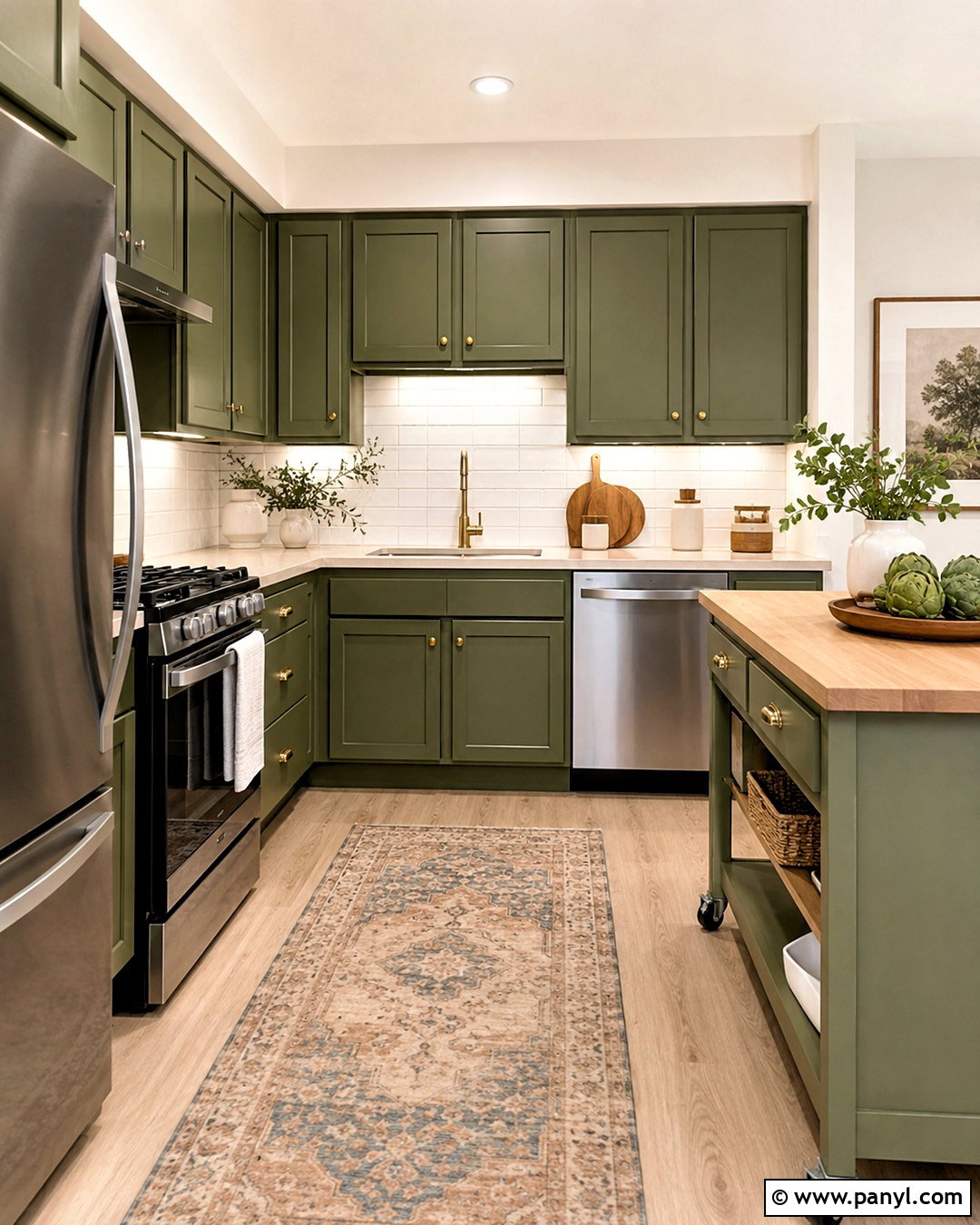
A thoughtful makeover can create an olive kitchen without replacing every major surface. Paint sound cabinet boxes and doors in a medium olive after cleaning, sanding, priming, and making necessary repairs. Add simple brass or matte black hardware, then refresh the backsplash with affordable white ceramic tile. If the existing countertop is neutral and in good condition, design the new palette around its undertones rather than removing it. Warm white walls and improved LED task lighting will make the cabinet color look clearer. Use a washable runner, wood cutting boards, and coordinated countertop containers as inexpensive finishing touches. Repaint a freestanding cart to match the cabinets for extra workspace. Careful preparation and consistent finishes make the update look intentional.
Conclusion:
Olive green can support far more than one kitchen aesthetic. It feels fresh with white quartz, established with aged brass, relaxed with terracotta, and streamlined beside stainless steel. Before selecting a shade, compare large cabinet samples beside your countertops, flooring, backsplash, and appliances throughout the day. Olive colors can appear greener, browner, warmer, or grayer as the light changes. Once the undertones work together, repeat a small group of finishes across the room for a cohesive result. Whether you repaint one island or remodel the entire space, these 20 olive kitchen ideas provide complete, practical combinations that can be adjusted for your home’s size, architecture, natural light, and available budget.

Related Ideas and Inspiration:
Leave a Reply