
Navy kitchen walls bring depth, contrast, and polished character to one of the hardest-working spaces in the home. This versatile dark blue can feel traditional, coastal, modern, rustic, or dramatic depending on the cabinetry and finishes around it. The key is creating balance across the entire room. Pale counters reflect light, warm wood prevents the palette from feeling cold, and thoughtful lighting keeps deep blue surfaces clear and inviting. Navy also creates a striking background for white cabinets, open shelving, metallic hardware, artwork, and natural textures. Whether you want one painted feature wall or an immersive color-drenched kitchen, these complete designs offer practical combinations for different layouts and budgets. Explore these distinctive ways to decorate with navy kitchen walls.

1. Navy Kitchen Walls With White Cabinets
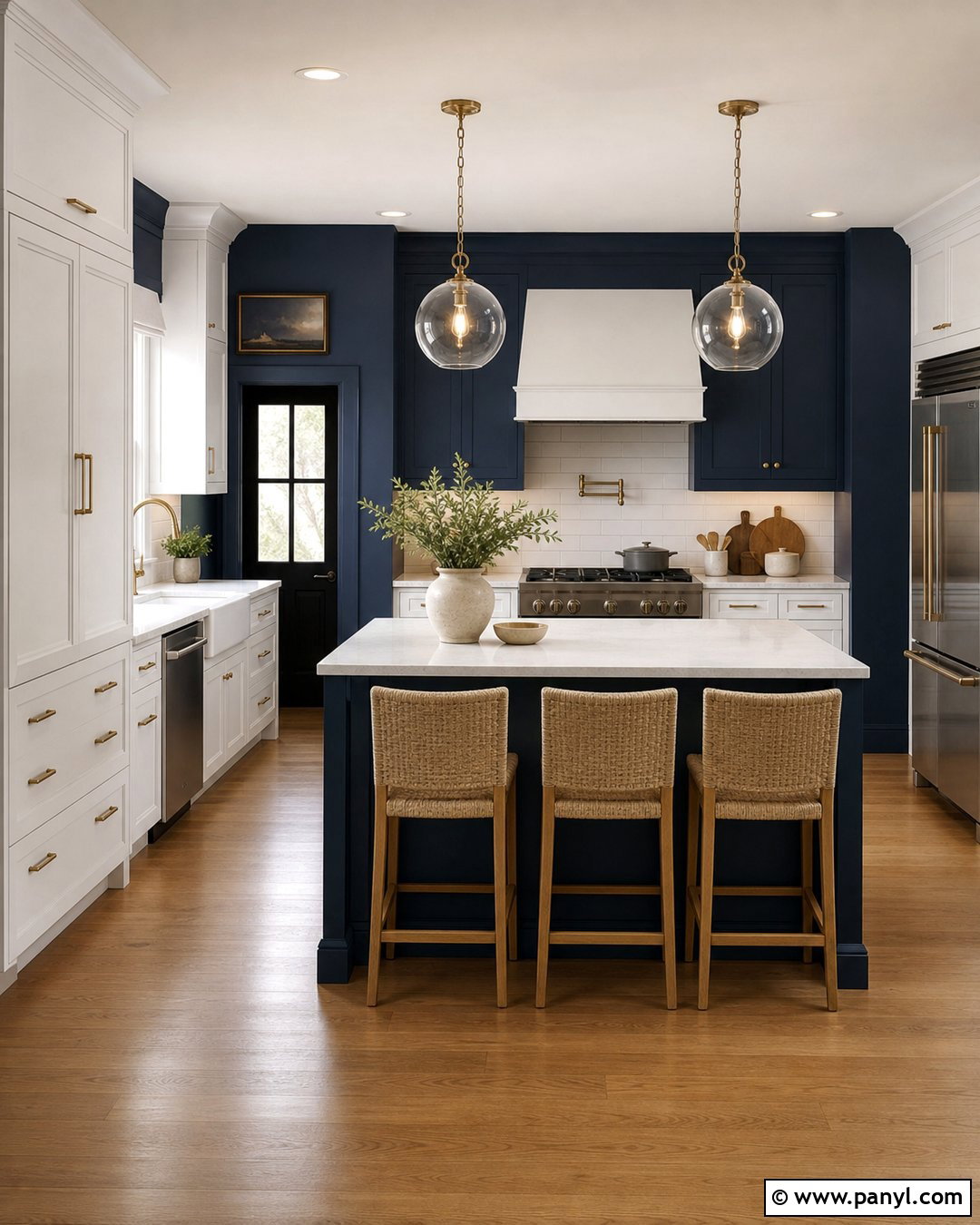
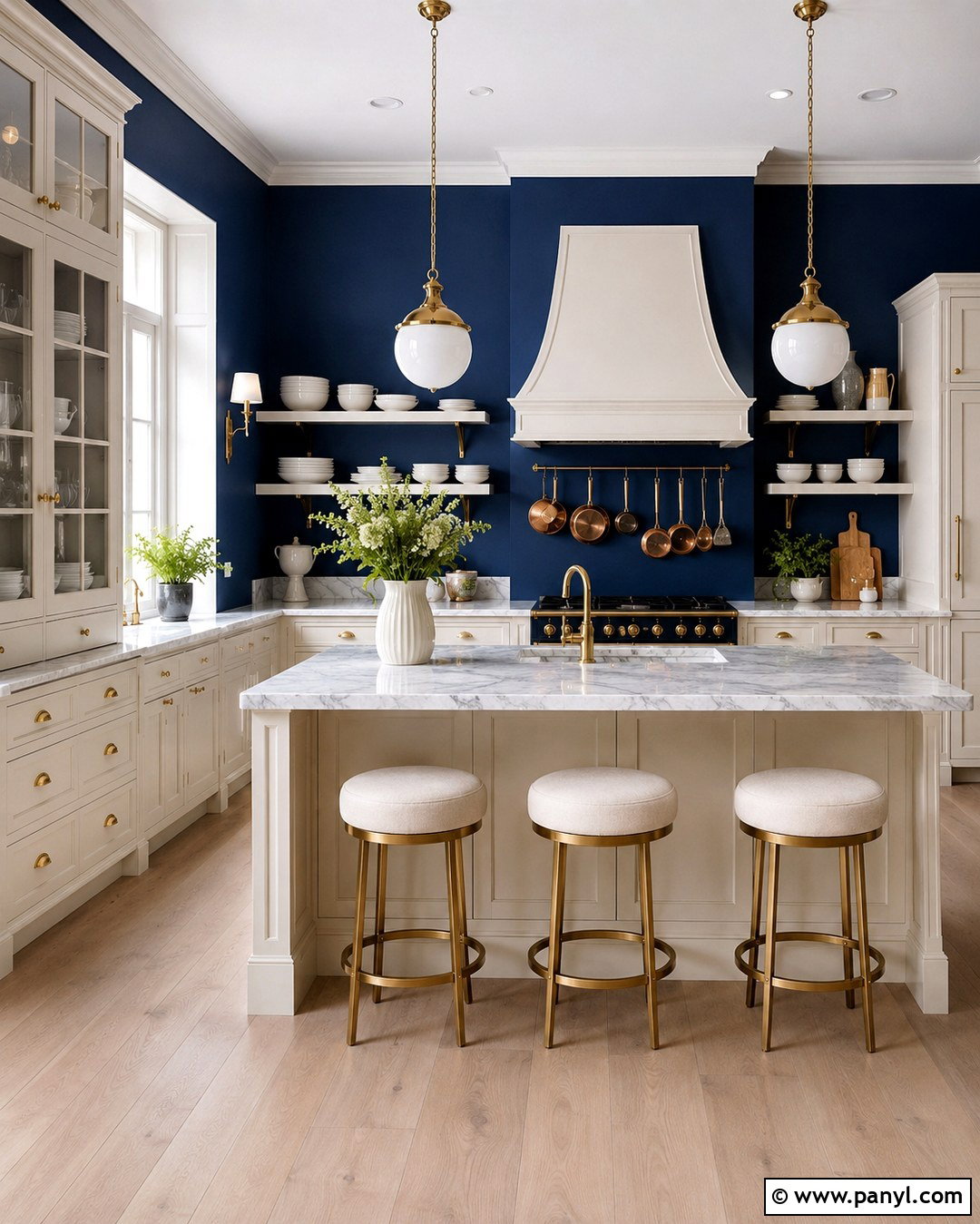
Crisp white cabinets stand out beautifully against deep navy kitchen walls, creating a classic scheme that feels fresh rather than nautical. Choose simple Shaker doors in a soft white and repeat that tone on the ceiling, window trim, and range hood. White quartz counters and a lightly textured subway tile backsplash reflect light across the darker walls. Bring warmth through honey-toned oak flooring, woven counter stools, and small wooden accessories. Brushed brass pulls, a matching faucet, and clear glass pendants add gentle shine without making the room overly formal. Keep countertop styling minimal, using cream ceramics, a wooden cutting board, and one leafy plant. This balanced combination works especially well in a bright medium-size kitchen with a central island.
2. Navy Kitchen Accent Wall With Wood Shelves
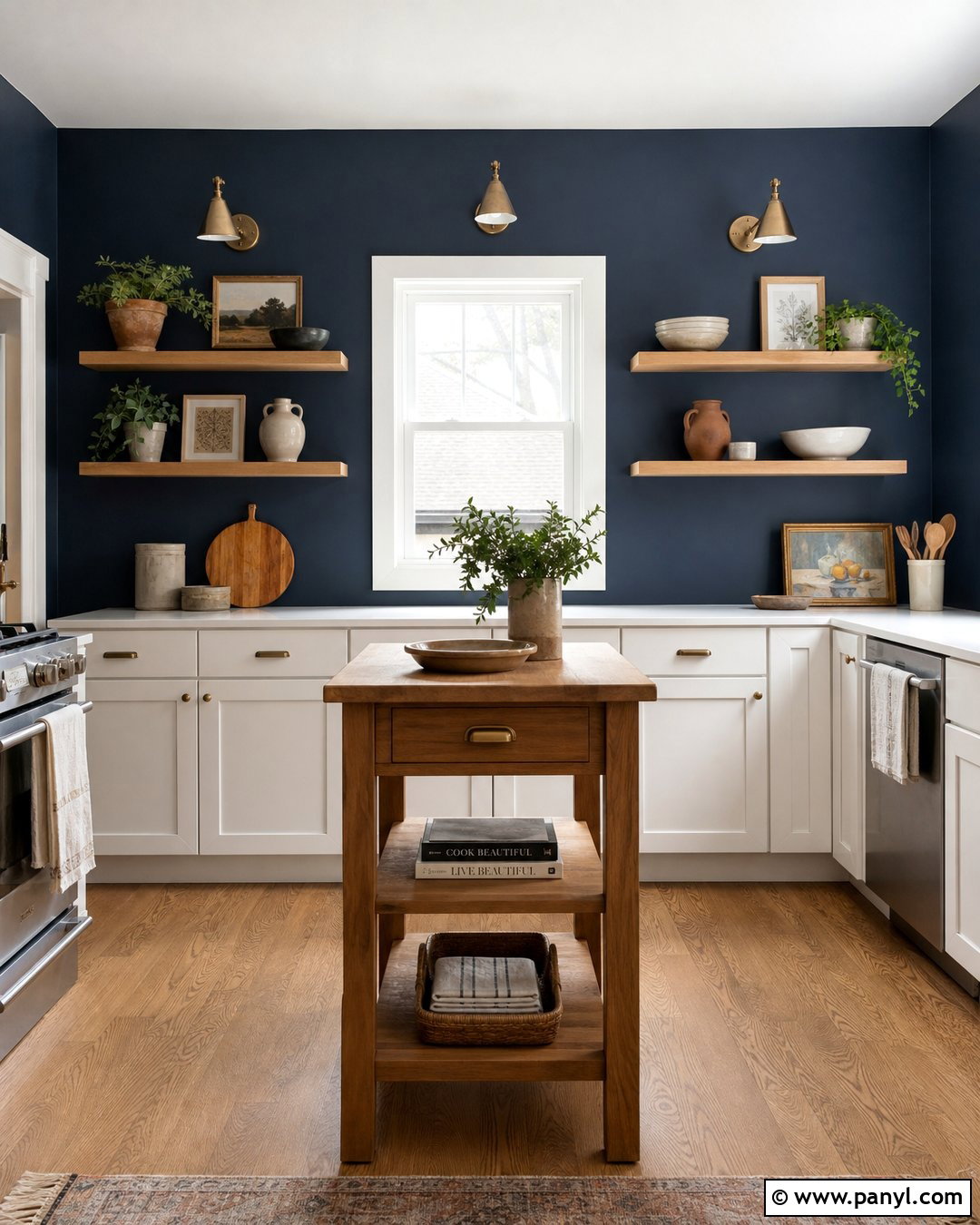
A single navy kitchen accent wall can create a strong focal point without darkening the entire room. Position it behind two or three thick floating shelves made from warm white oak. Display cream dishes, clear glassware, small framed artwork, and a few terracotta pieces for a relaxed layered effect. Use warm white paint on the surrounding walls and matching flat-panel cabinets to keep the layout bright. Pale quartz counters, an off-white backsplash, and natural oak flooring connect the color palette. A compact wood island with black metal stools provides additional preparation space. Finish the room with aged brass sconces mounted above the shelves and recessed ceiling lights, ensuring that the rich blue wall remains clearly illuminated throughout the day.
3. Navy Kitchen Walls With Natural Wood Cabinets
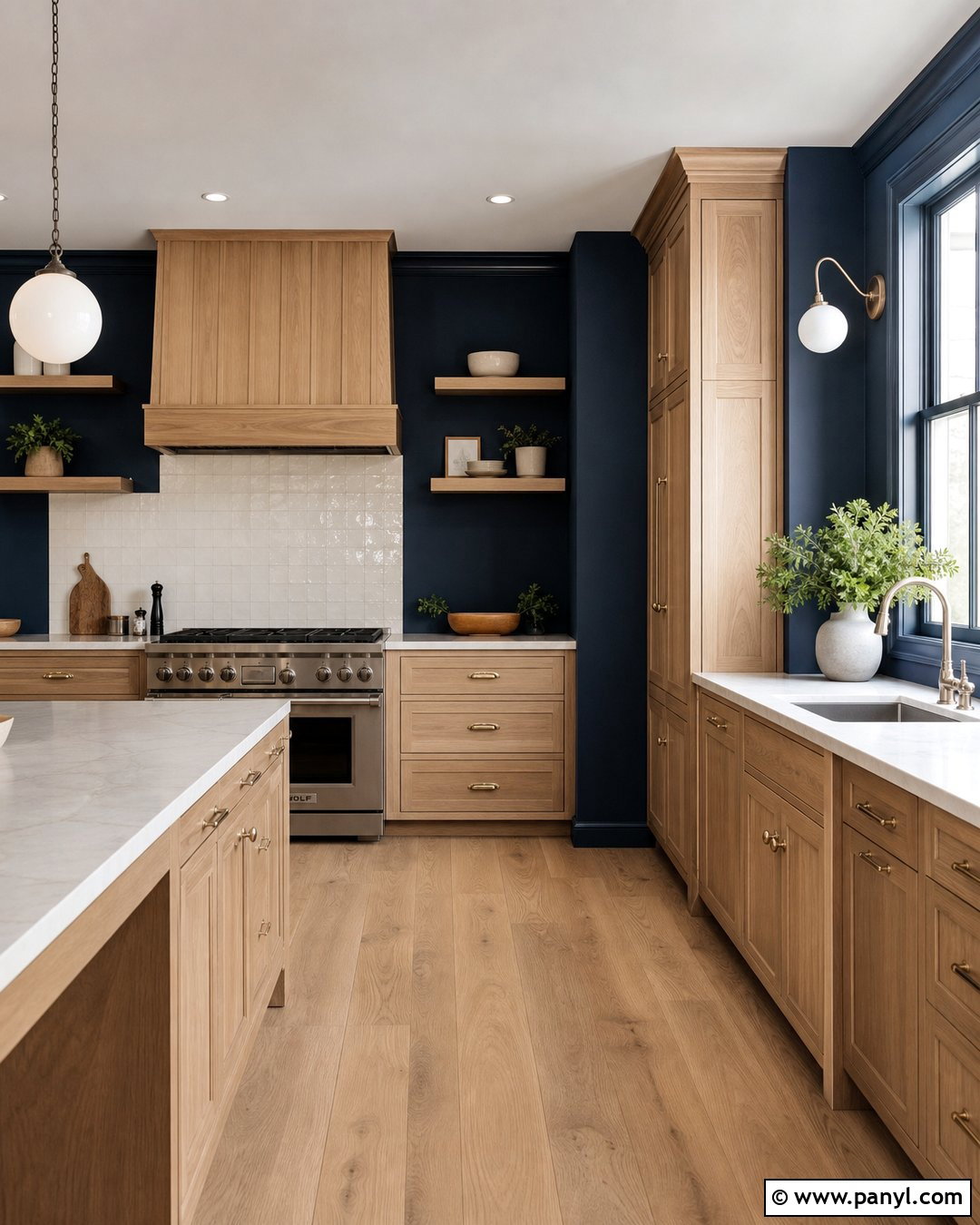
Natural wood cabinetry gives navy kitchen walls the warmth needed for an inviting, grounded appearance. Select white oak cabinets with a clear matte finish so the grain remains visible but not overly yellow. Run navy paint across the open wall areas and around a large window for a seamless backdrop. Cream quartz counters and handmade ivory backsplash tiles lighten the central work zone. Add brushed nickel hardware for a clean contemporary touch, or aged brass for greater warmth. Wide-plank oak flooring can match the cabinets while a muted blue-and-tan runner introduces softness. Simple white globe pendants, open cubbies, and a plaster range hood complete the room. Limit accessories to practical wooden boards, neutral pottery, and fresh greenery for an uncluttered finish.
4. Navy Kitchen Walls With Cream Cabinets
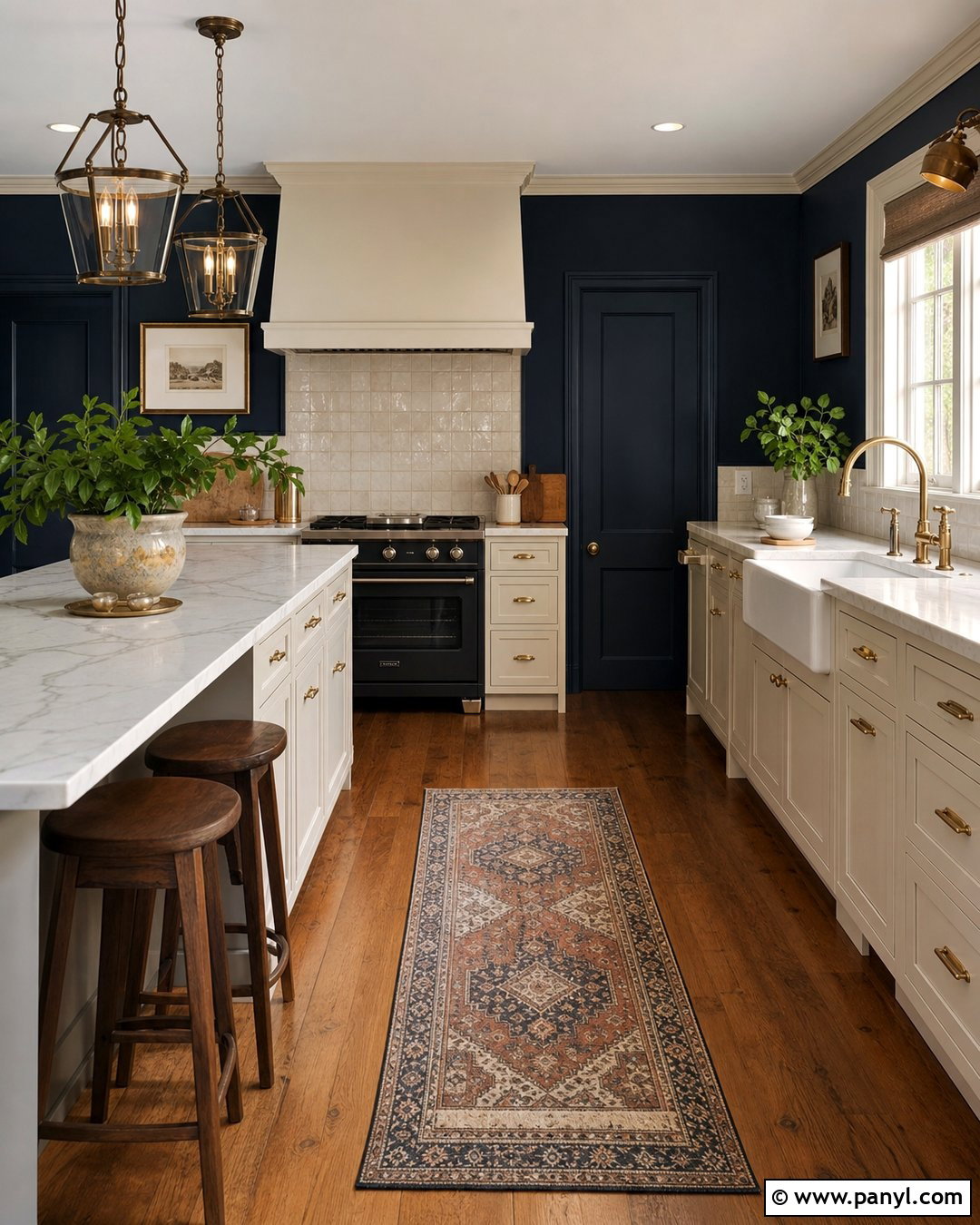
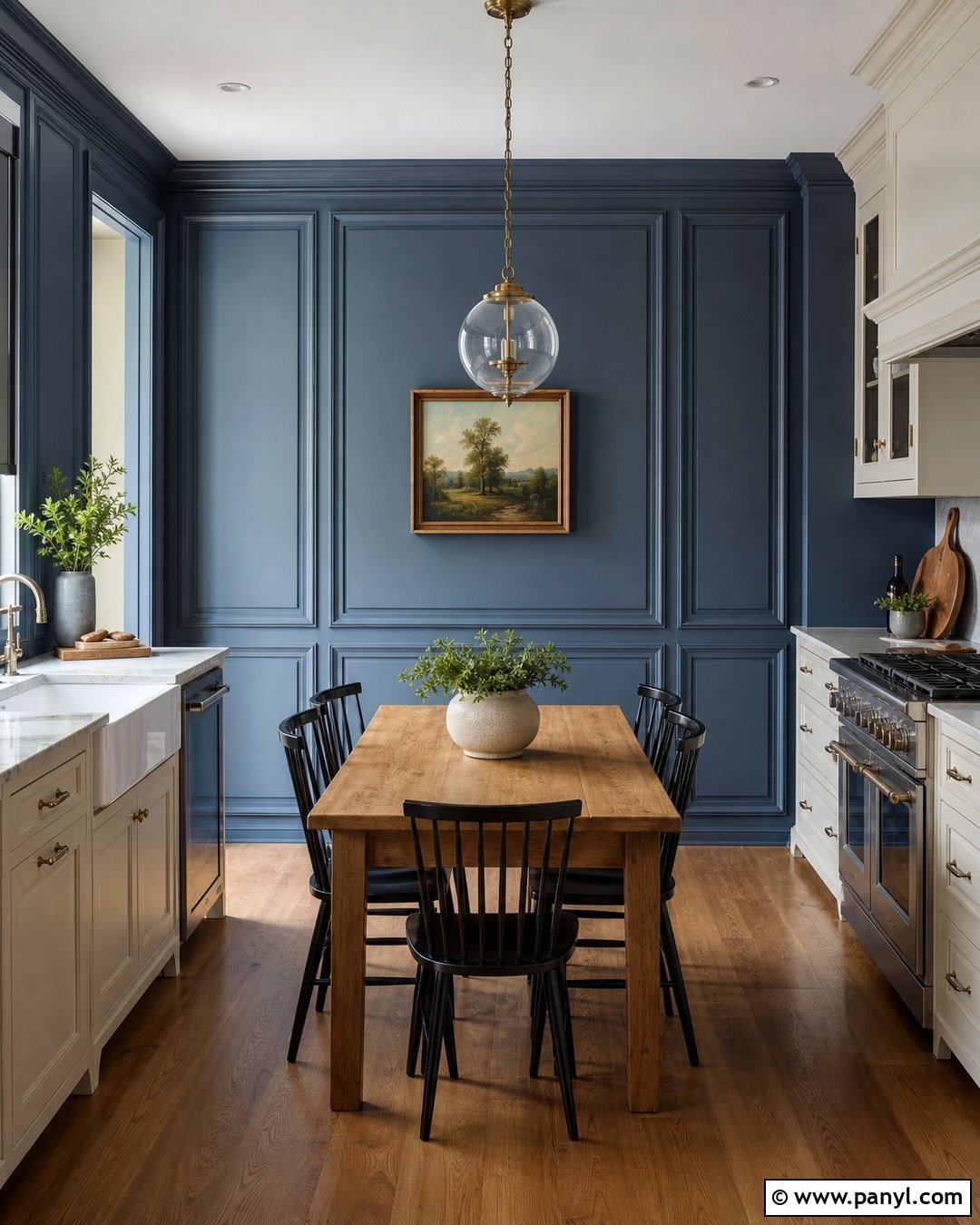
Cream cabinets soften the bold character of navy kitchen walls and produce a warm alternative to high-contrast white. Choose cabinets with understated recessed panels and paint the trim in the same creamy shade for consistency. Add lightly veined quartz counters and an ivory zellige tile backsplash that reflects light through its uneven surface. Medium oak floors, walnut counter stools, and a vintage-inspired runner prevent the palette from feeling too formal. Aged brass knobs and lantern pendants contribute a classic finish, while a white farmhouse sink keeps the work area practical. Use the navy across all visible walls but leave the ceiling pale. This complete scheme suits traditional kitchens, updated cottages, and newer homes that need a comfortable sense of age and character.
5. Navy Kitchen Walls With Gray Cabinets
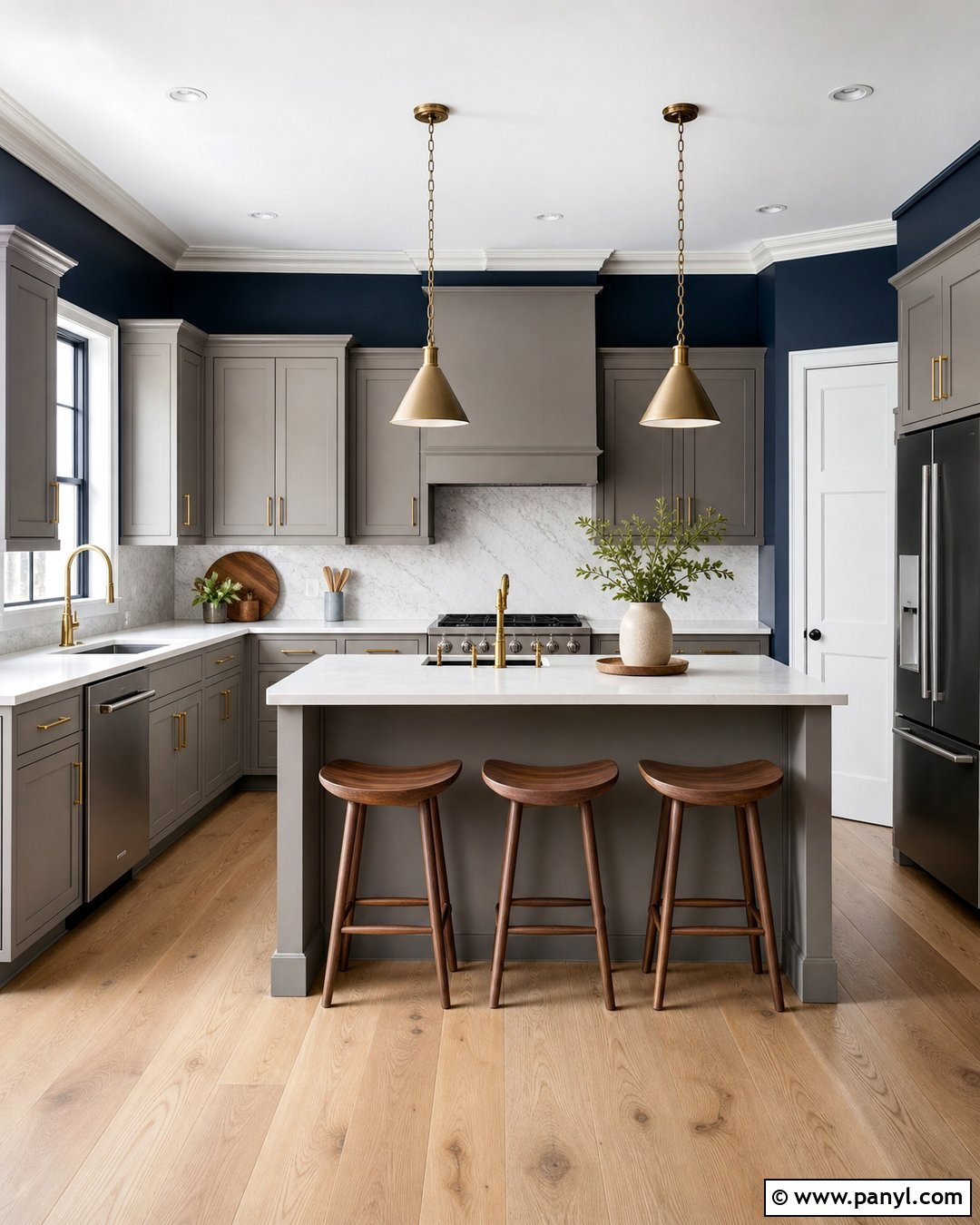
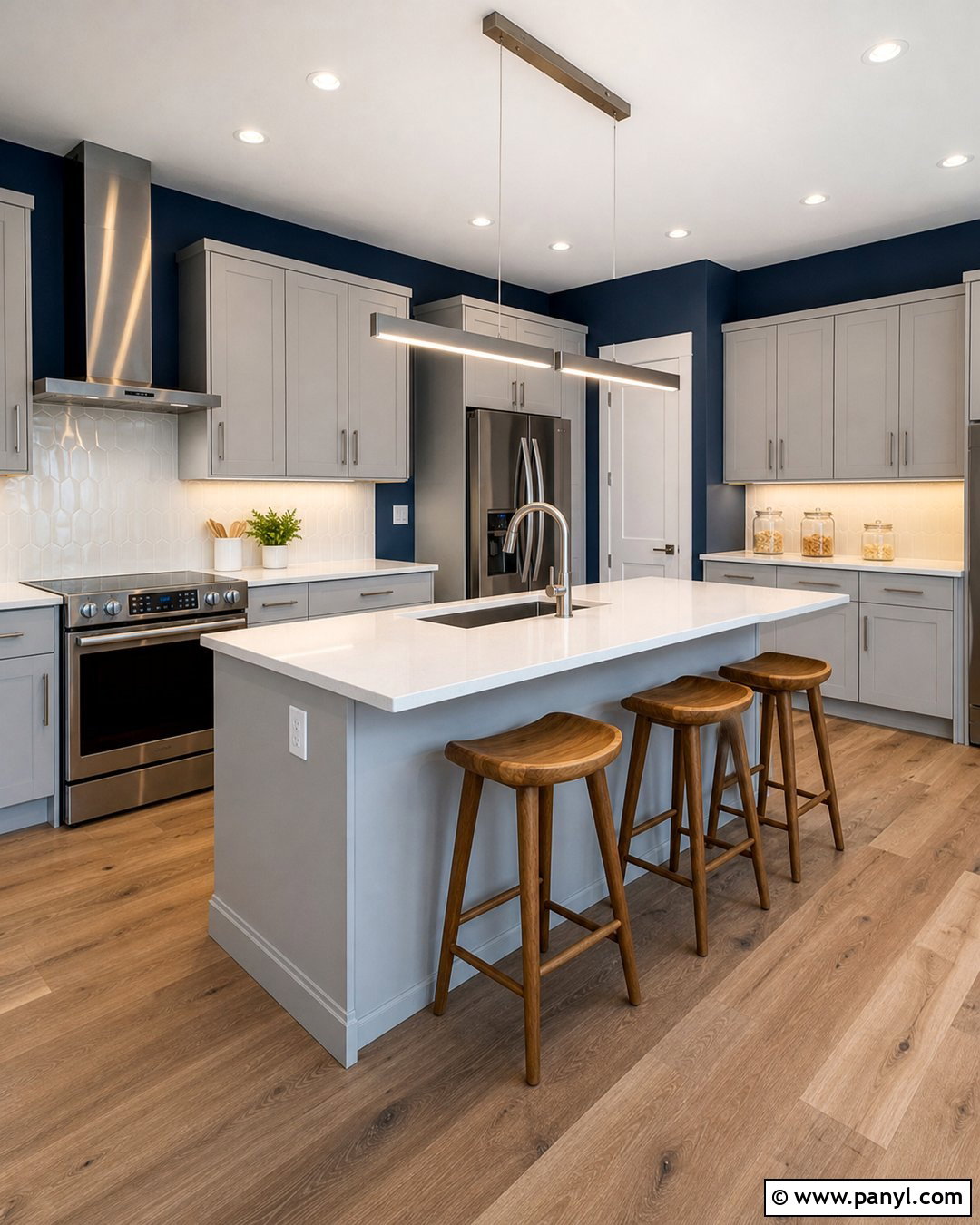
Soft gray cabinets create a calm transition between dark navy kitchen walls and lighter countertops. Look for a warm gray with subtle beige undertones rather than a cool silver shade, which could make the room feel cold. Use the gray on streamlined Shaker cabinetry and the island, then add white quartz counters with delicate gray veining. A pale marble backsplash connects the cabinet and counter colors while introducing natural movement. Warm oak flooring and walnut stools balance the cool side of the palette. Choose brushed brass hardware and simple cone pendants to add warmth without overpowering the design. White ceiling paint, bright under-cabinet lighting, and minimal window treatments help maintain an open atmosphere, particularly in kitchens with limited natural light.
6. Navy Kitchen Walls With Black Cabinets
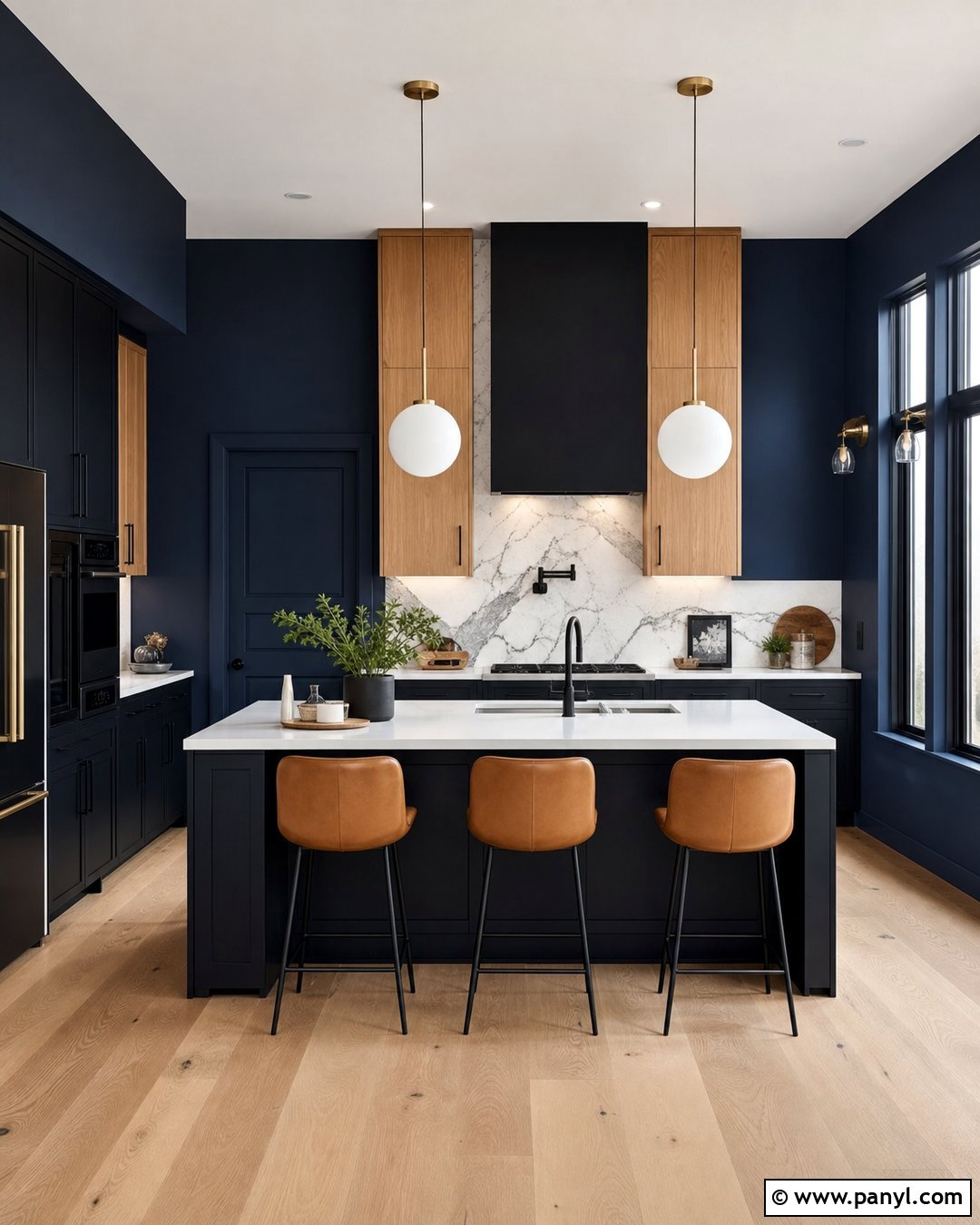
For a dramatic contemporary kitchen, combine navy walls with matte black lower cabinets and lighter wood upper storage. The related dark tones create a seamless foundation, while white quartz counters prevent the design from becoming visually heavy. Install a full-height backsplash in softly veined white stone behind the range for a bright central focal point. Pale oak flooring, a matching wood ceiling beam, and camel-colored counter stools add necessary warmth. Use slim black pulls so the cabinetry reads as one clean surface. Oversize white globe pendants provide contrast above the island, and integrated lighting brightens each work zone. This bold approach works best in an open kitchen with large windows, a pale ceiling, and clear sightlines into an adjoining neutral living space.
7. Navy Kitchen Walls With Navy Cabinets
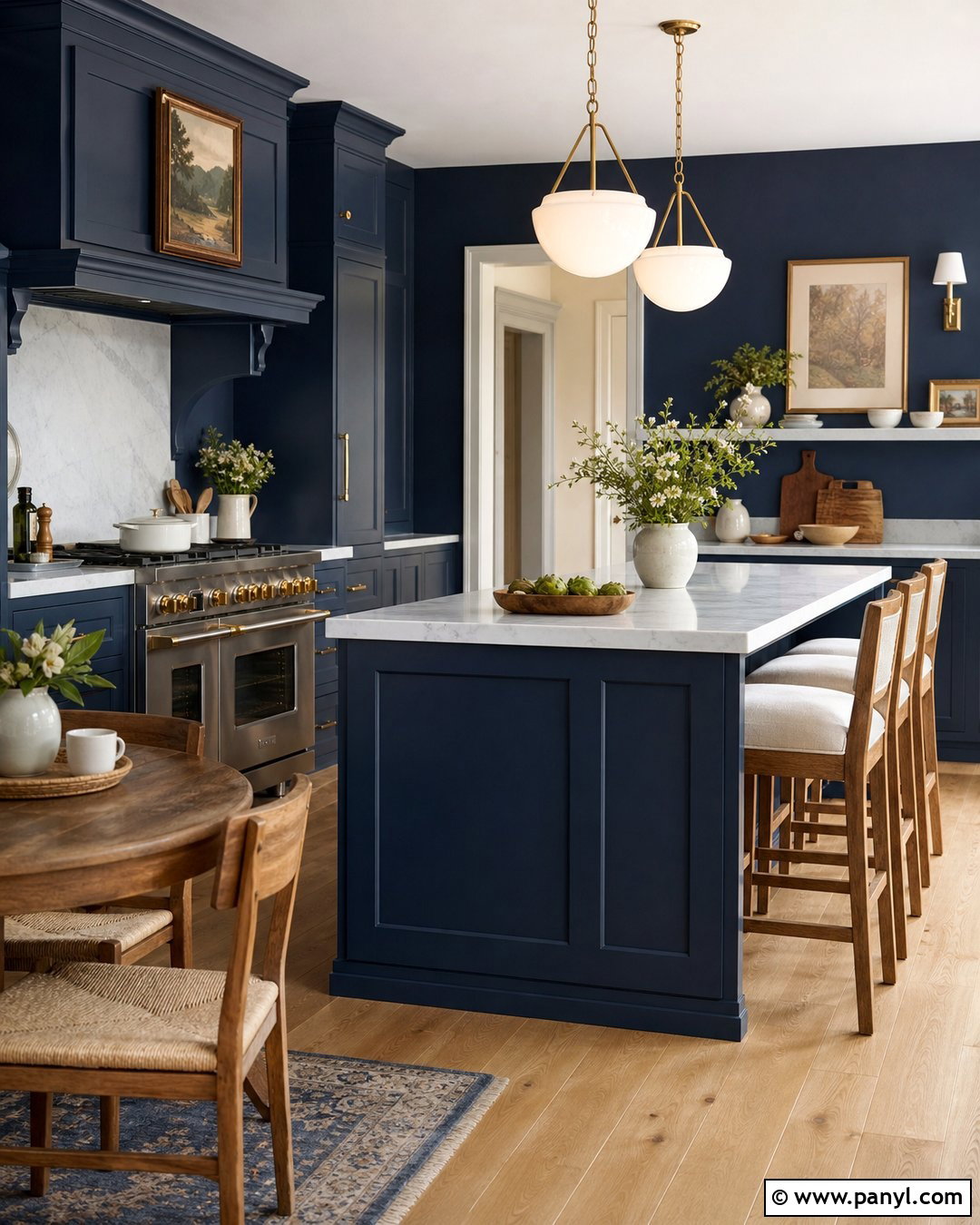
Color drenching navy kitchen walls and cabinets creates an immersive, custom-looking room. Use the same deep blue family across the walls, trim, and Shaker cabinetry, but vary the finish slightly. Washable eggshell paint suits the walls, while satin enamel defines the cabinets. Break up the dark surfaces with thick white quartz counters and a full-height creamy marble backsplash. Light oak flooring and a natural wood dining table keep the room approachable. Unlacquered brass hardware, a warm metal faucet, and opal glass pendants bring reflected light into the scheme. Keep the ceiling bright white unless the kitchen is exceptionally large and sunny. Open shelving beside the range can provide visual breathing room while displaying pale ceramics that remain easy to see against the blue background.
8. Navy Kitchen Walls With Marble Backsplash
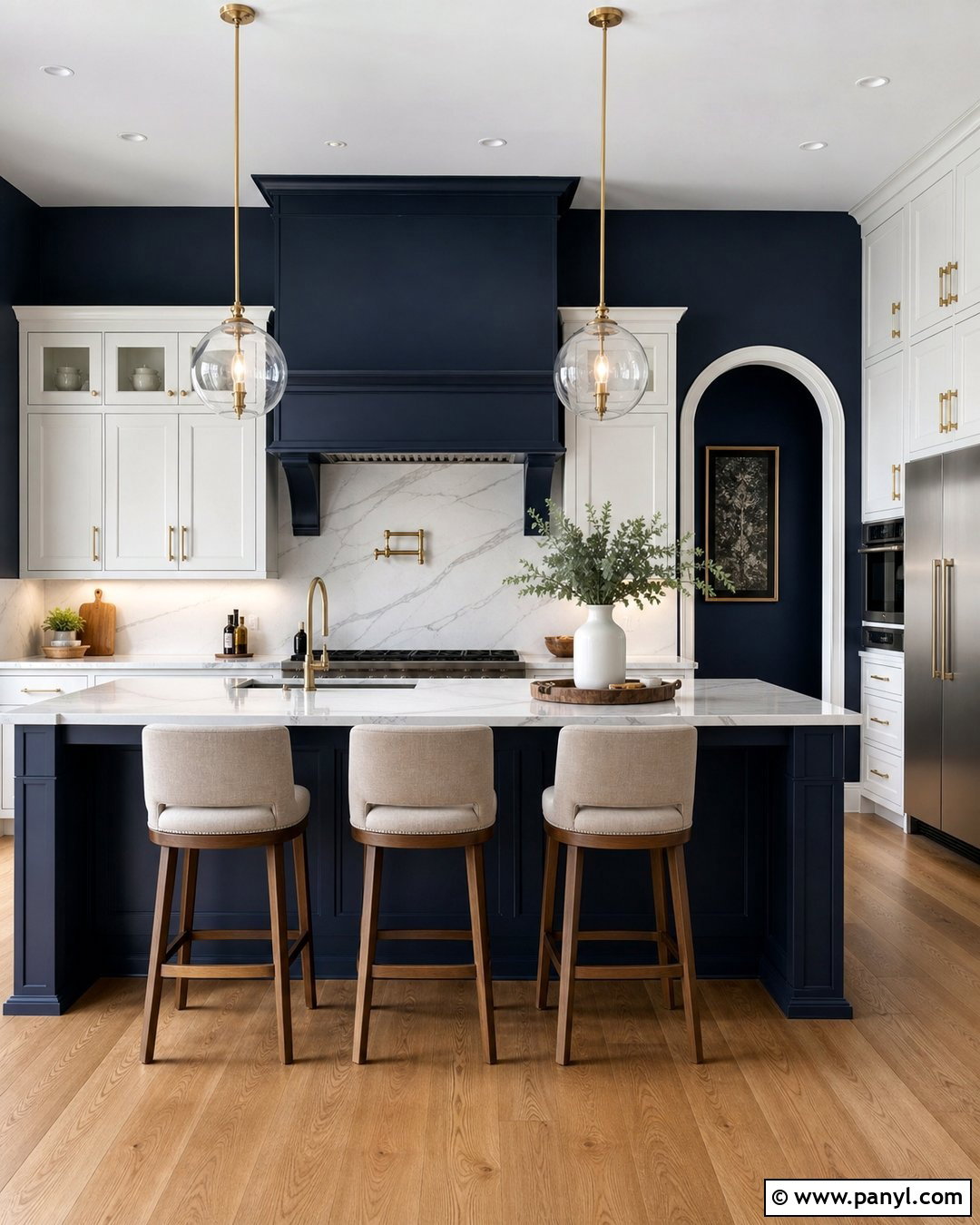
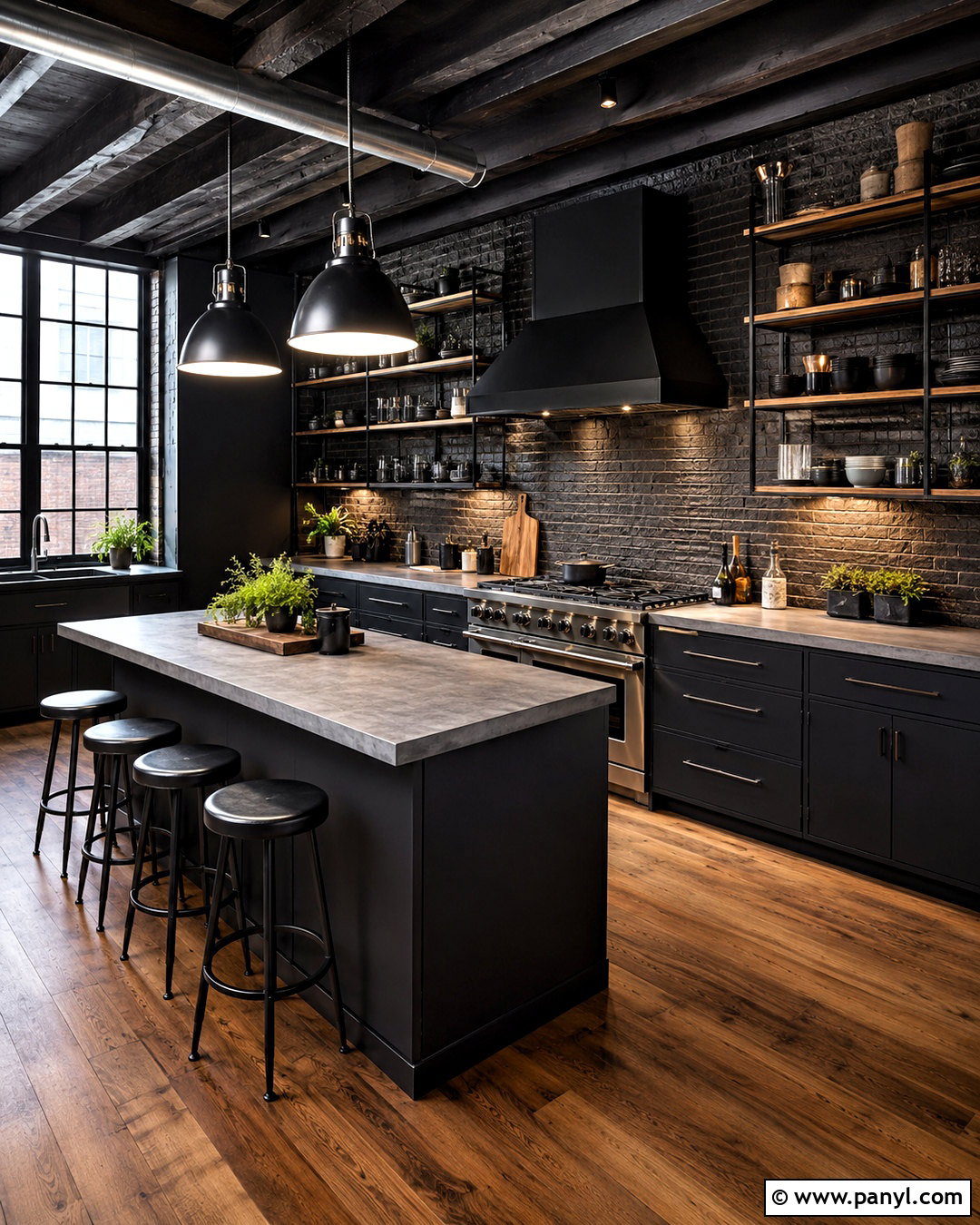
A marble backsplash turns navy kitchen walls into an elegant frame for a bright, naturally patterned focal surface. Carry white marble with soft gray veining from the countertop to the ceiling behind the cooktop. Keep the perimeter cabinets warm white and introduce navy on the island to connect it visually with the walls. Medium-tone oak floors and upholstered oatmeal counter stools soften the polished stone. Brushed brass hardware, a bridge faucet, and simple globe pendants add restrained warmth. Avoid filling the backsplash with accessories; a small wooden board and one ceramic container are enough. Bright under-cabinet lighting will emphasize the marble while helping the room function after sunset. This complete palette feels refined but remains practical for an everyday family kitchen.
9. Navy Kitchen Walls With White Subway Tile
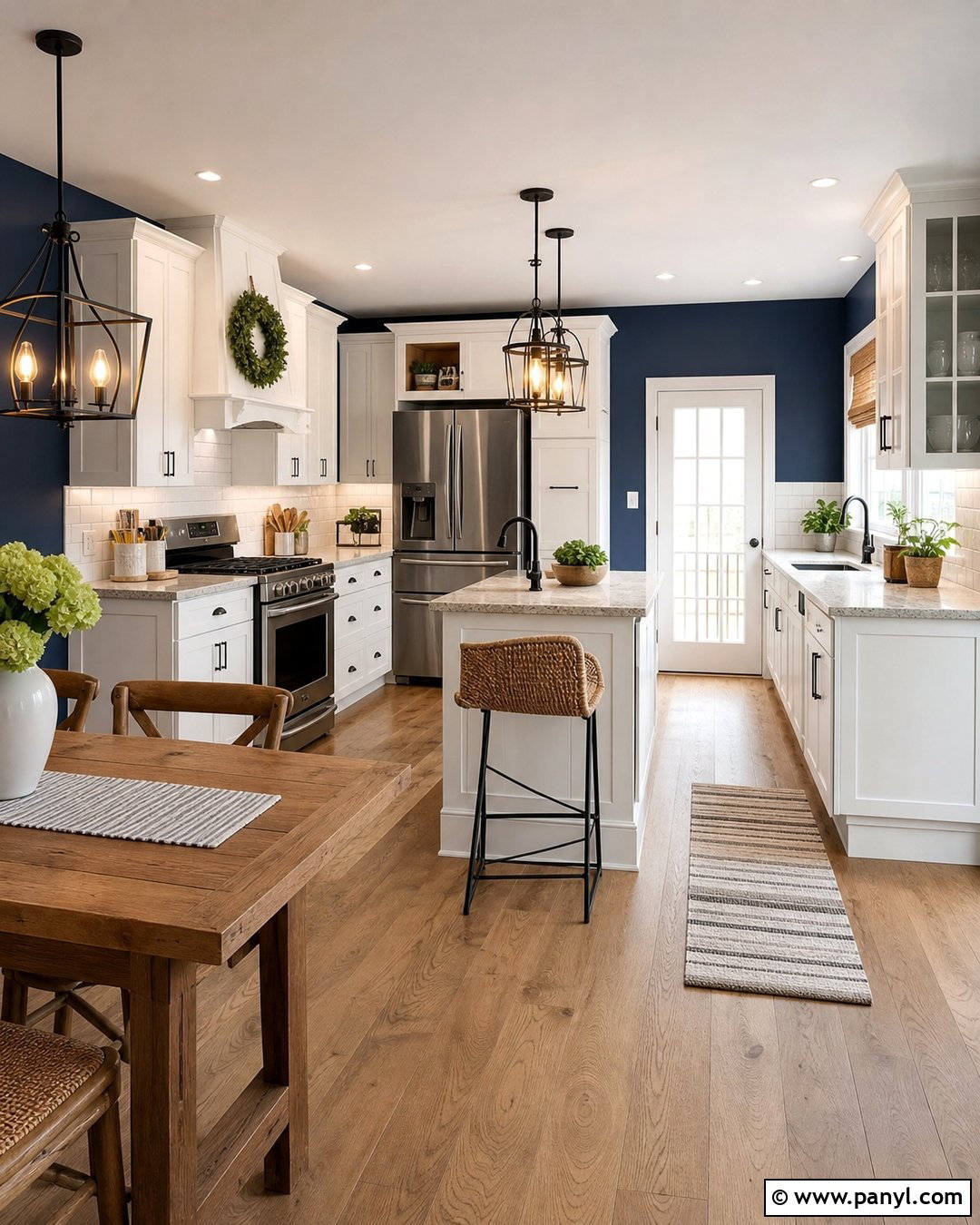
White subway tile provides an affordable, dependable partner for navy kitchen walls. Install the tile from the countertop to the upper cabinets, using warm gray grout to define the pattern without creating harsh lines. White Shaker cabinets and pale quartz counters keep the work areas bright, while the navy paint adds richness around windows, doors, and the breakfast space. Choose medium oak flooring and a simple wooden table to warm the blue-and-white palette. Black cup pulls, a matte black faucet, and industrial pendants give the classic materials a slightly modern edge. Add woven shades and a striped neutral runner for texture. The result is a flexible kitchen that can easily be updated later through hardware, stools, artwork, and other relatively inexpensive accessories.
10. Navy Kitchen Walls With Brass Hardware
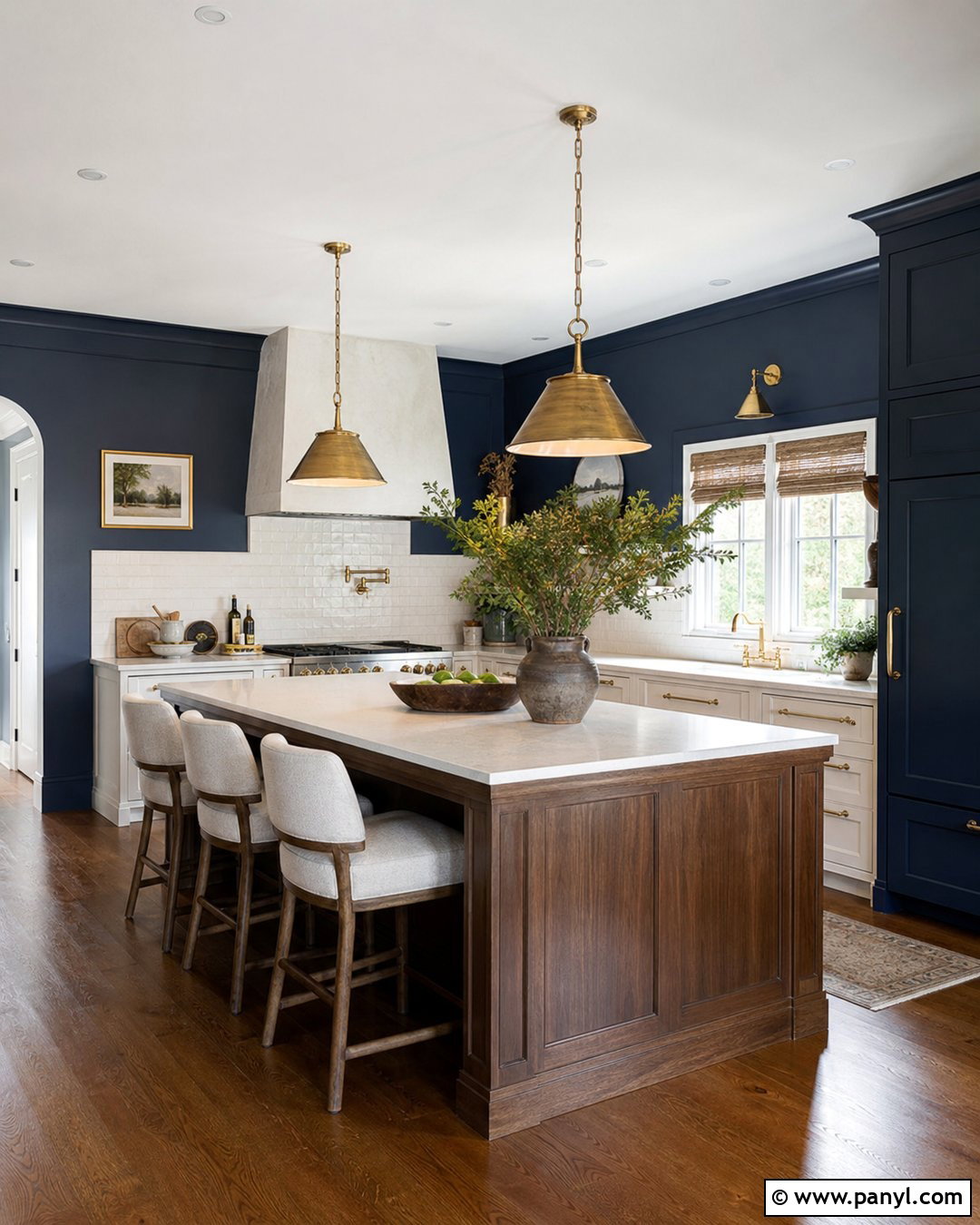
Warm brass details glow against navy kitchen walls, making even a straightforward kitchen feel carefully finished. Choose white inset cabinets with brass knobs, cup pulls, and visible hinges for a tailored traditional appearance. Repeat the metal through a brass bridge faucet and two compact pendant lights, but avoid using it on every accessory. White quartz counters and creamy handmade tile will create a softer contrast than bright blue-white materials. Add walnut flooring, a dark wood island, and linen counter stools to establish warmth at floor level. Frame the windows in white and use woven shades that filter rather than block daylight. The navy walls should remain the dominant color, while brass functions as a small repeating accent that guides the eye naturally around the entire room.
11. Navy Kitchen Walls With Copper Accents
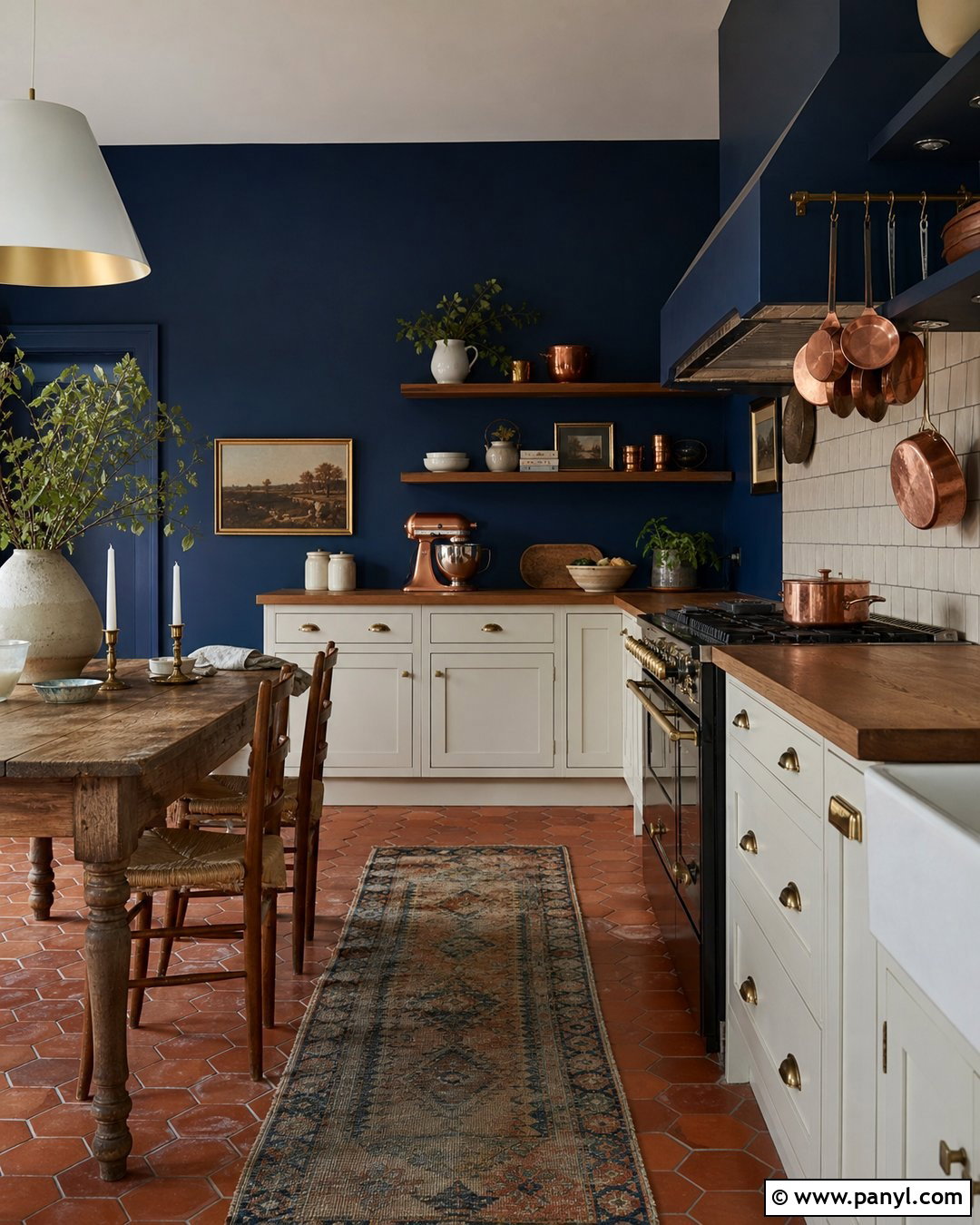
Copper brings a rich, earthy glow to navy kitchen walls and makes the deep blue feel warmer. Build the room around cream cabinets, butcher block counters, and a simple ivory backsplash. Display a small collection of functional copper pans on a rail above a preparation counter, then repeat the metal through pendant shades and cabinet knobs. Terracotta floor tile reinforces the warmth and gives the kitchen a relaxed European influence. Use open oak shelving for everyday dishes and closed base cabinets for visual order. A farmhouse table, rush-seat chairs, and a faded blue runner complete the dining zone. Keep the ceiling and window trim creamy white, allowing natural and overhead light to bounce downward. The finished kitchen feels collected, practical, and comfortably established rather than overly themed.
12. Navy Kitchen Walls With Butcher Block Counters
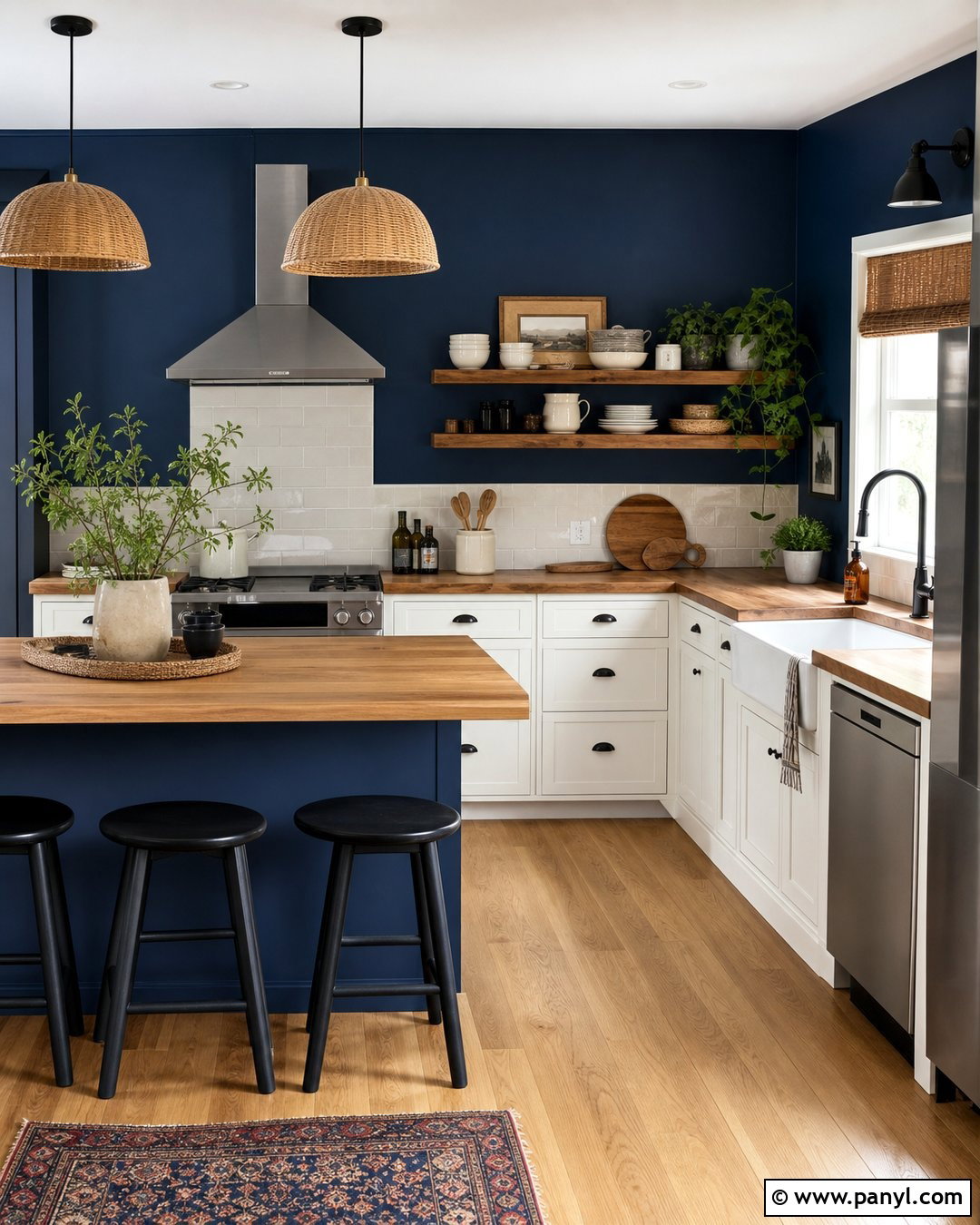
Butcher block counters create a casual, budget-conscious foundation for navy kitchen walls. Pair the warm wood worktops with simple white cabinets and a matching white apron-front sink. Protect the busiest sections with a durable clear finish, and use white quartz around the sink if additional water resistance is needed. Continue the navy behind open shelving and into a compact breakfast nook to connect both zones. Light oak floors, woven pendant lights, and black metal stools add texture without competing with the wall color. Install a short backsplash of glossy ivory tile to make cleaning easier near the range. Wooden boards, white pottery, and a few herbs are enough for decoration. The overall design feels approachable and works especially well in cottages, rentals, and modest kitchen renovations.
13. Navy Kitchen Walls With Oak Flooring
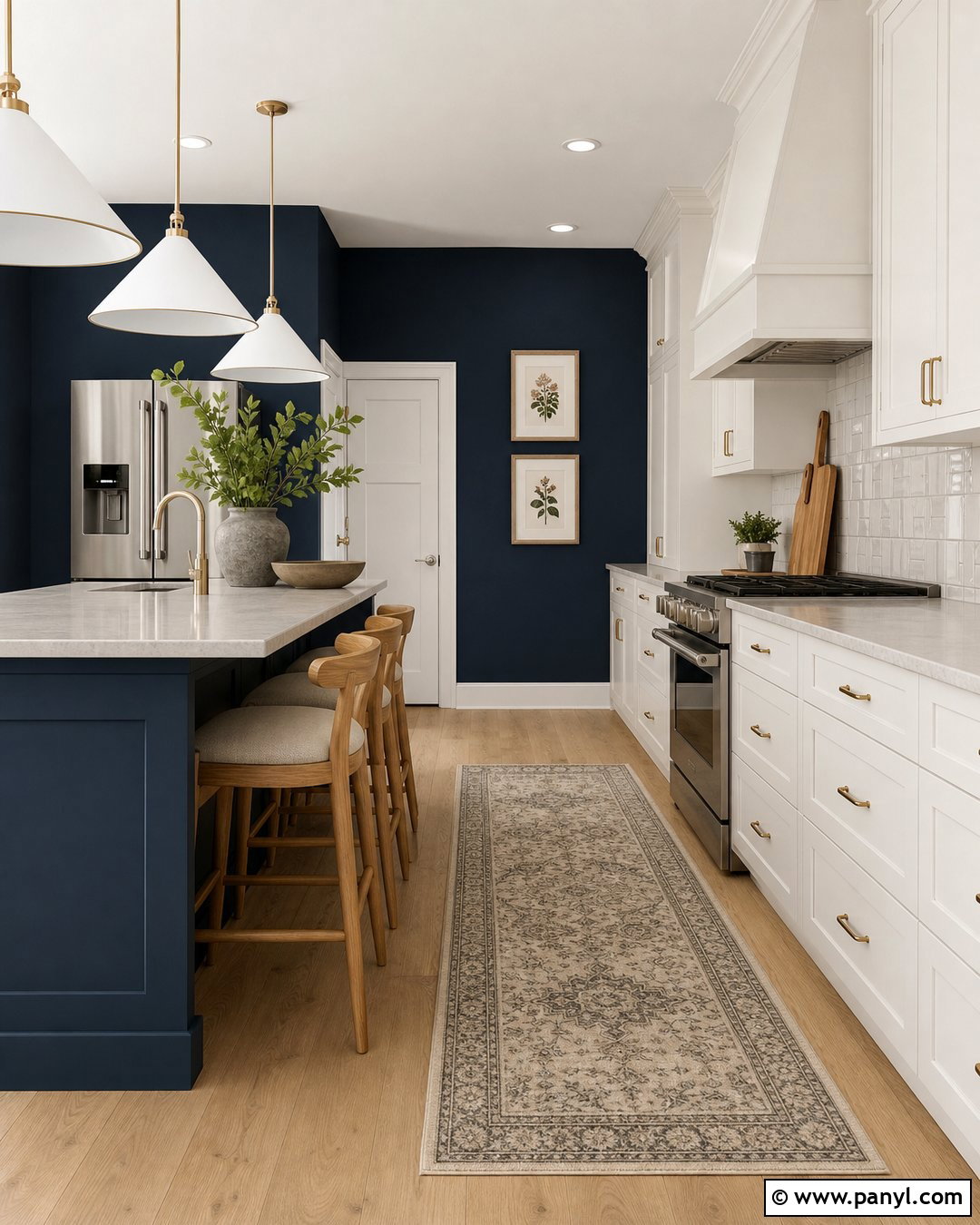
Light oak flooring can keep navy kitchen walls from making a room appear closed in. Select wide planks with a natural matte finish and minimal gray undertones. Pair them with warm white flat-panel cabinets, pale quartz counters, and a softly textured cream backsplash. A navy island can extend the wall color into the center of the room, while oak counter stools repeat the flooring. Choose brushed nickel hardware and white pendants for a clean, understated appearance. Keep tall storage concentrated on one wall so other areas remain visually open. A washable runner in muted rust, blue, and beige adds pattern along the main walkway. With strong task lighting and simple window coverings, the entire kitchen feels bright, balanced, and connected from the walls down to the floor.
14. Navy Kitchen Walls With Checkerboard Flooring
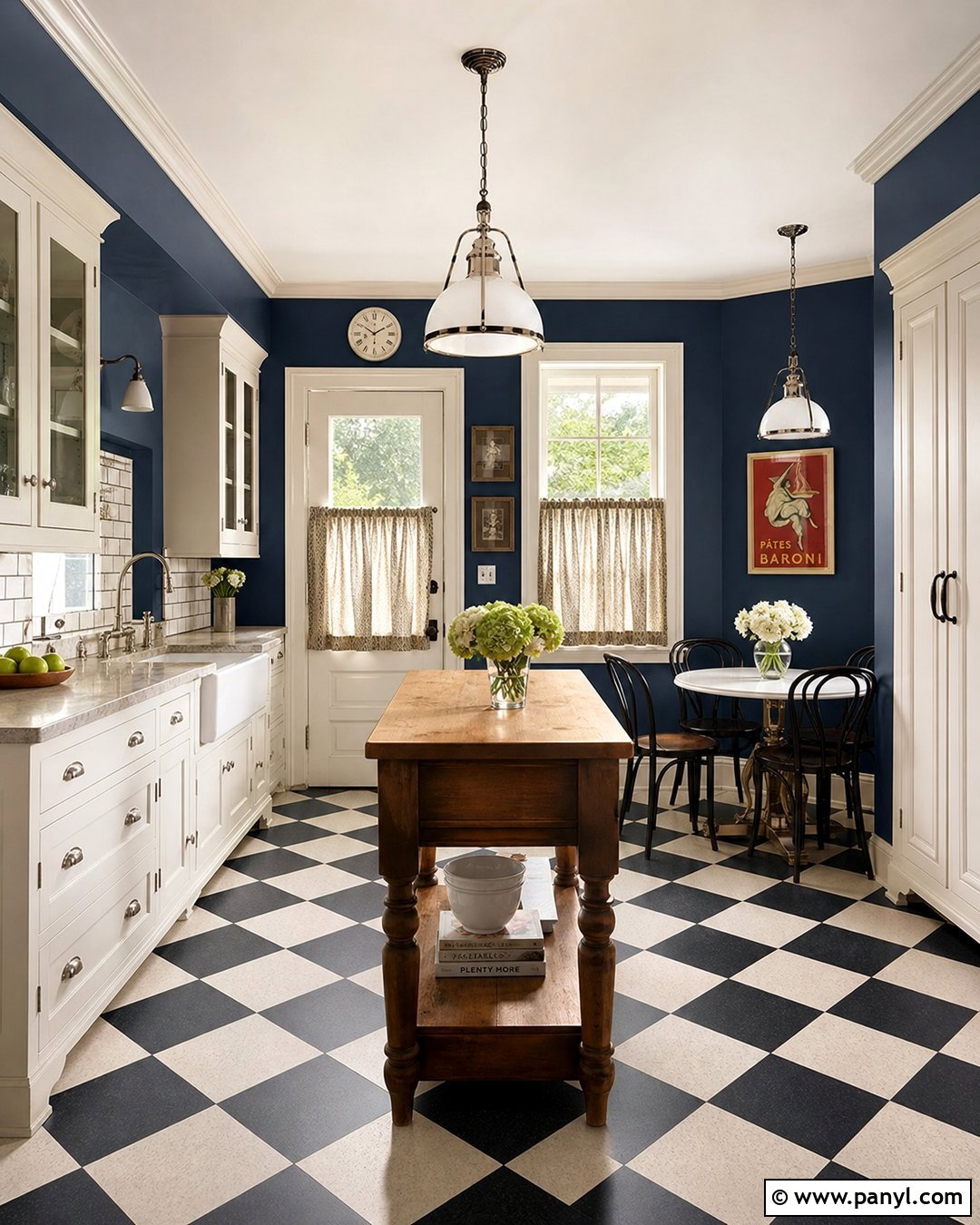
Black-and-white checkerboard flooring gives navy kitchen walls a classic graphic foundation. Use medium-size tiles set on the diagonal to make a compact room appear wider. Warm white cabinets and counters provide a visual pause between the patterned floor and dark walls. Add a freestanding wood island rather than a solid built-in model, preserving a sense of openness and displaying more of the flooring. Polished nickel hardware, milk-glass pendants, and a chrome faucet contribute subtle vintage character. A white range and paneled hood keep the cooking wall cohesive. Finish the windows with simple café curtains and place a narrow wooden shelf above the breakfast table. This coordinated design feels playful but orderly, making it suitable for an older home or a character-filled apartment kitchen.
15. Navy Kitchen Walls With Patterned Floor Tile
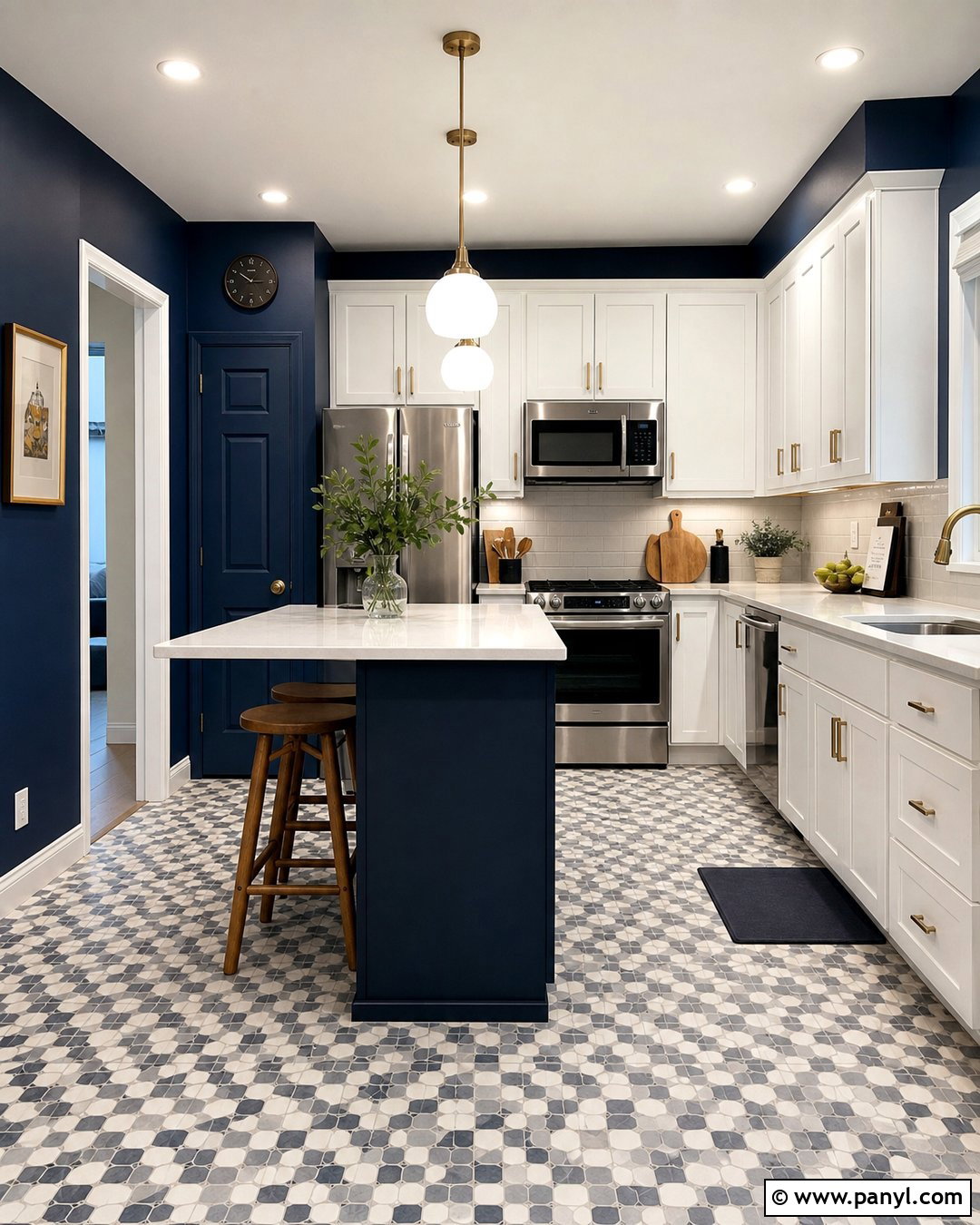
Patterned floor tile can transform navy kitchen walls into part of a lively, layered design. Choose encaustic-look porcelain tiles that combine navy, cream, and muted gray in a medium-scale geometric pattern. Keep the cabinets warm white and the countertops plain to prevent too many surfaces from competing. A simple cream subway backsplash, stainless steel appliances, and brushed nickel hardware maintain a practical modern foundation. Add a narrow navy island with a pale counter and light wood stools. Use white ceiling paint and bright recessed lighting to keep the detailed floor from darkening the room. Limit decorative objects to a few cream ceramics and natural wood pieces. Because the wall and floor colors repeat, the finished kitchen feels coordinated rather than busy, even with a strong pattern underfoot.
16. Navy Kitchen Walls With Open Shelving
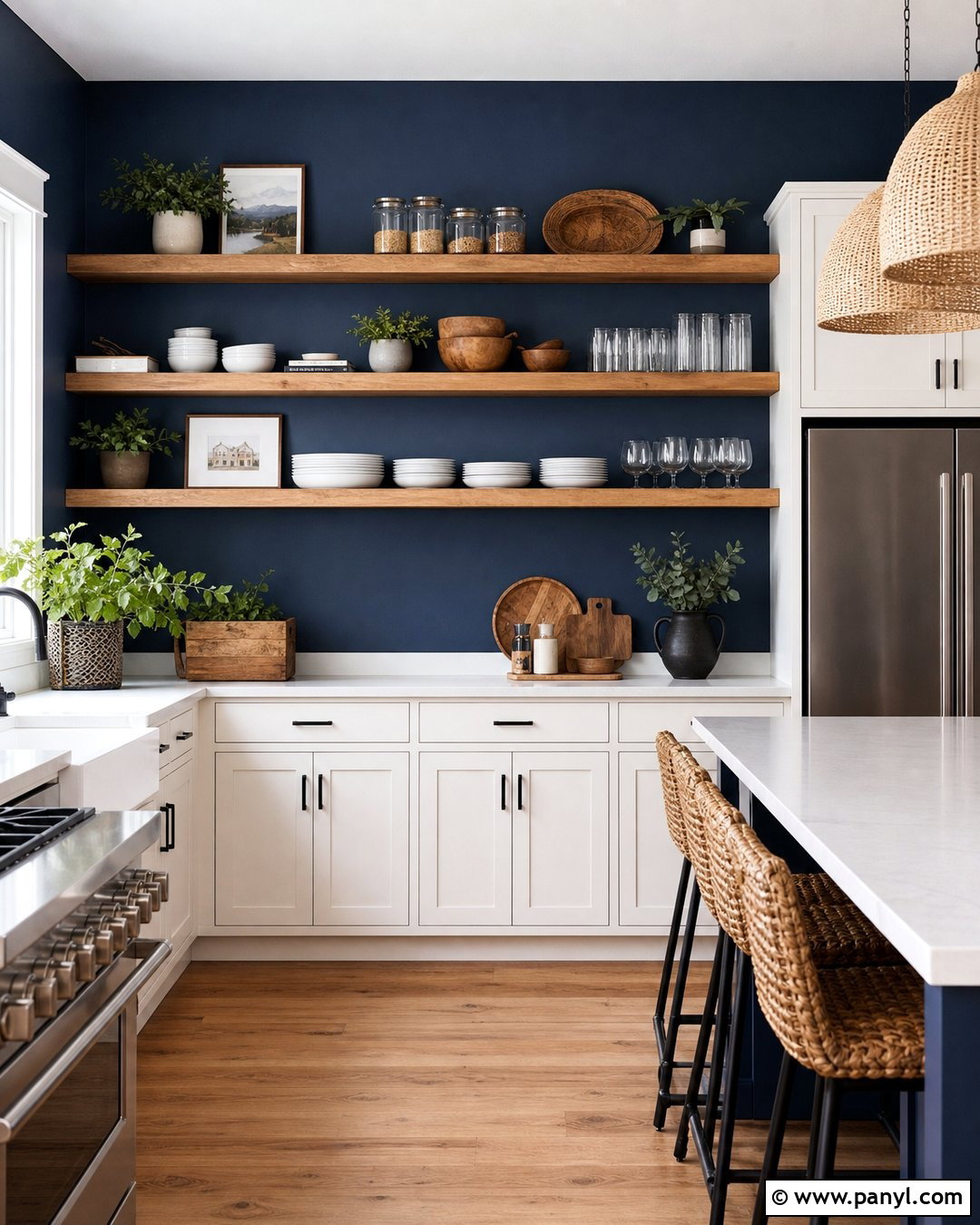
Open shelving becomes especially striking when installed across navy kitchen walls. Select thick oak shelves with concealed brackets so the natural wood appears clean and substantial against the blue background. Place them above white lower cabinets fitted with pale quartz counters and a short ivory tile backsplash. Arrange frequently used white dishes, glass containers, wooden bowls, and a few small plants, leaving open space between groups. Match the flooring to the shelves for continuity. Black hardware and a simple black faucet create crisp definition, while woven pendants soften the straight lines. Include closed pantry cabinets on an adjacent wall so the shelves never become overcrowded. This layout provides convenient storage and decoration while maintaining a realistic, organized kitchen that feels warm, modern, and lived in.
17. Navy Kitchen Walls With White Floating Shelves
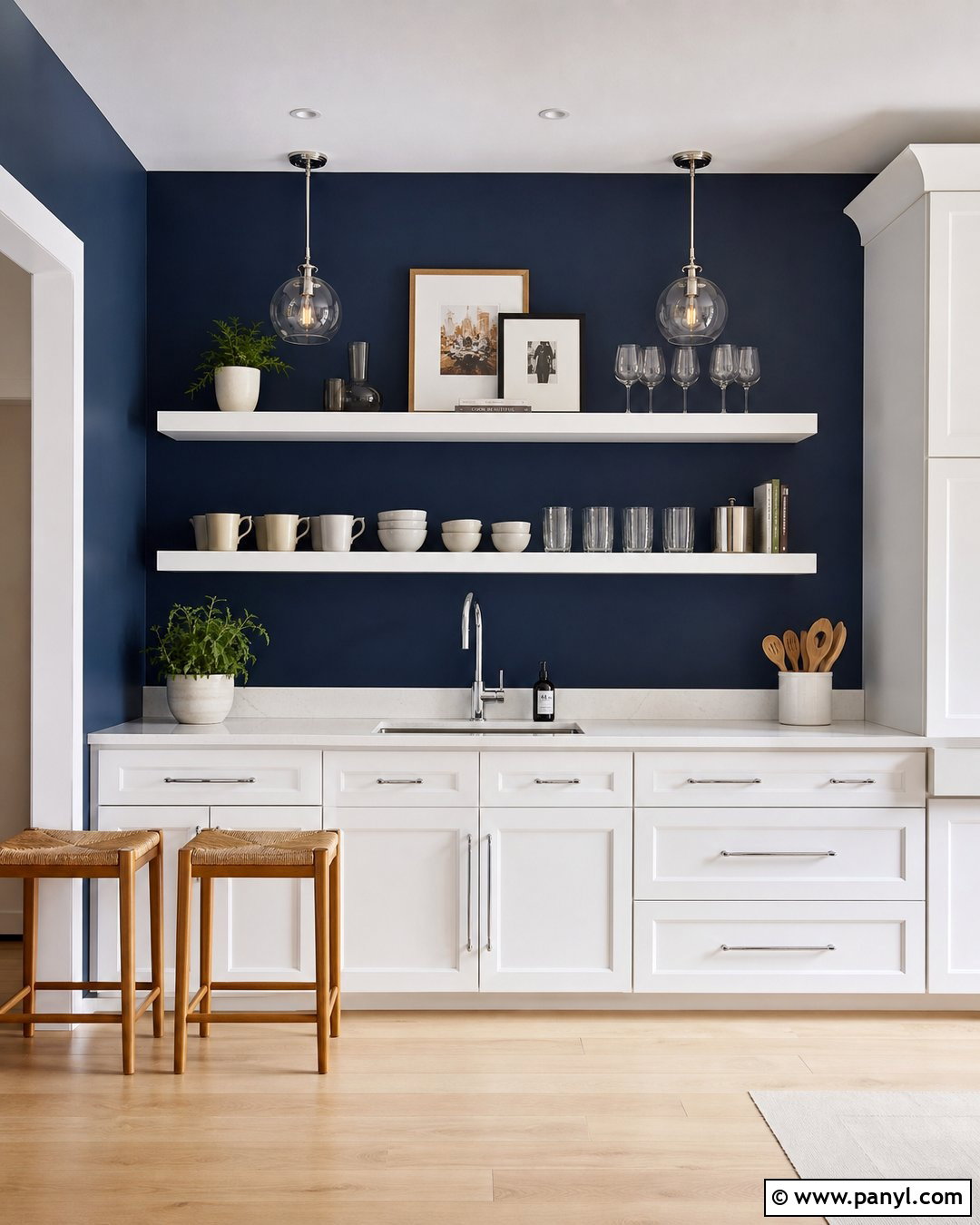
White floating shelves almost disappear into matching cabinetry while standing out sharply against navy kitchen walls. Use two long shelves above a beverage or breakfast counter, aligning their edges with the base cabinets below. Style them with glassware, cream mugs, small prints, and pale stoneware for a clean but personal arrangement. Continue white quartz across the counter and install a narrow slab backsplash for easy maintenance. Light maple floors and natural woven stools introduce warmth. Choose polished chrome hardware and simple clear-glass pendants for a brighter, slightly contemporary finish. Keep larger appliances and food packages inside closed cabinets to protect the uncluttered look. This complete setup works particularly well on a blank kitchen wall that needs both useful storage and a strong visual purpose.
18. Navy Kitchen Walls With Shiplap
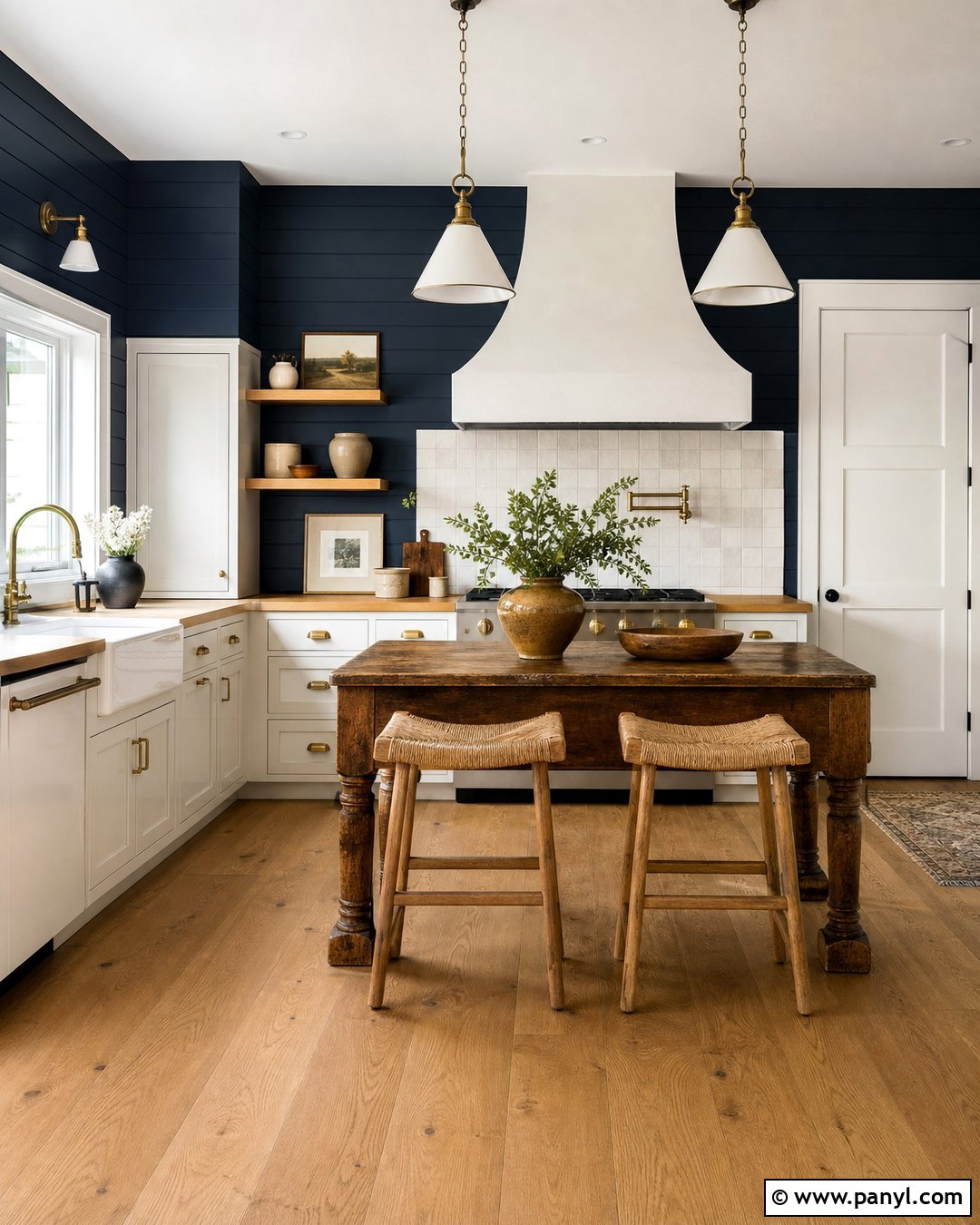
Horizontal shiplap gives navy kitchen walls texture and casual architectural character. Use smooth boards with narrow gaps and coat them in washable satin navy paint, especially around cooking and preparation areas. Pair the treatment with warm white Shaker cabinets, butcher block counters, and a tall plaster range hood. A short backsplash of cream tile protects the wall directly behind the cooktop without hiding all the paneling. Wide oak floorboards, a vintage-style wood island, and woven counter stools create a relaxed farmhouse foundation. Add aged brass pulls and practical wall sconces for warmth. Keep the ceiling white and avoid excessive rustic signs or themed accessories. Simple pottery, linen towels, and wooden utensils are enough to make the completed kitchen feel welcoming, updated, and authentically functional.
19. Navy Kitchen Walls With Board And Batten
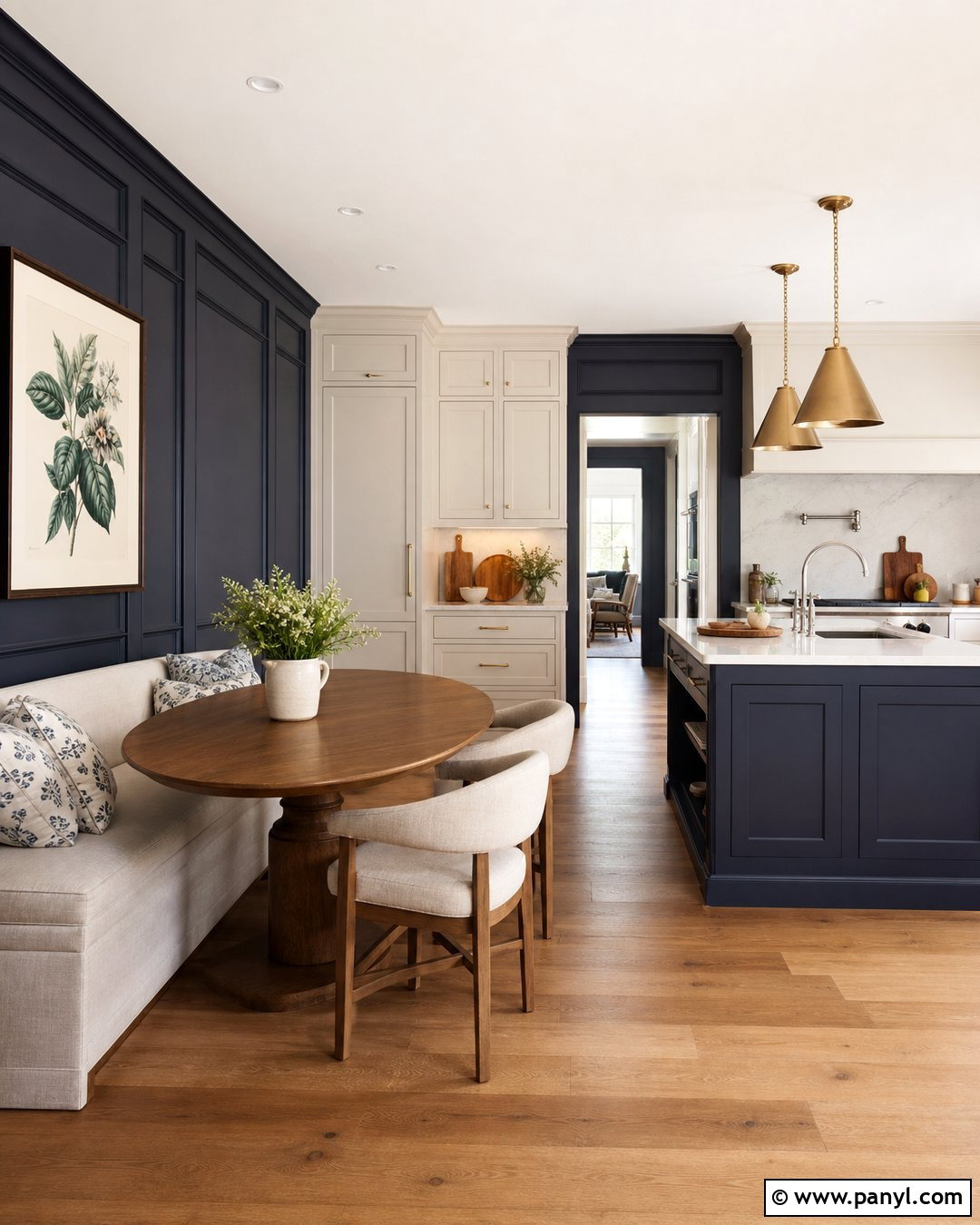
Board-and-batten paneling creates a structured version of navy kitchen walls that works especially well around an eat-in area. Install the vertical trim from floor to ceiling on the dining wall, then continue plain navy paint through the cooking space. Use cream cabinetry, marble-look quartz counters, and warm oak flooring to balance the saturated color. A built-in banquette upholstered in durable beige fabric can sit against the paneled wall, paired with a round oak table and curved wood chairs. Choose aged brass lighting and simple framed botanical artwork for a comfortable transitional look. White window trim and a pale ceiling provide necessary contrast. By repeating navy on the island base, the breakfast zone and main kitchen will feel connected instead of reading as separate decorating projects.
20. Navy Kitchen Walls With Wallpaper
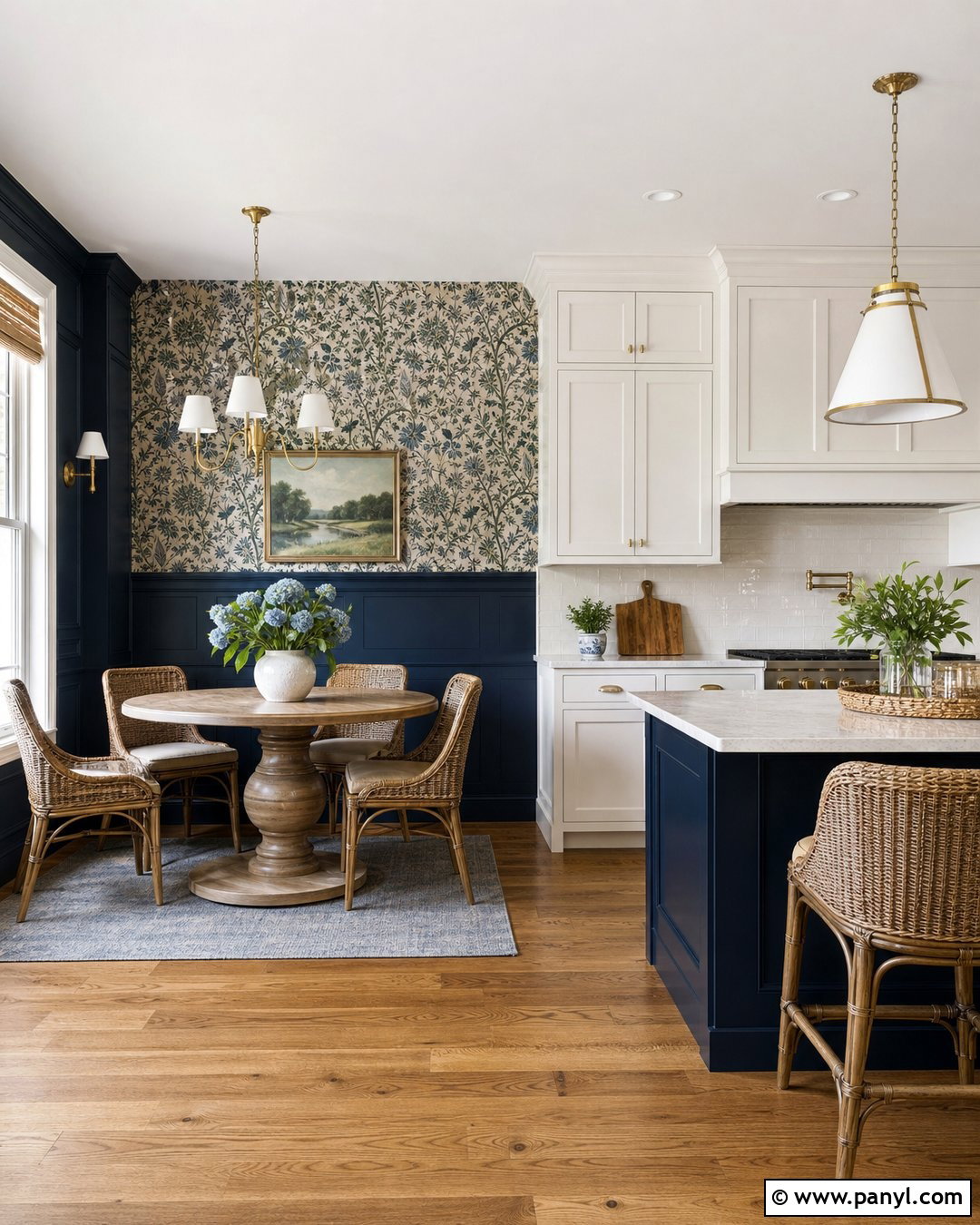
A carefully selected wallpaper can soften navy kitchen walls while adding pattern to an adjoining breakfast nook. Paint the working portion of the kitchen navy, then use botanical wallpaper containing blue, cream, muted green, and touches of rust above a navy paneled wainscot. Choose warm white cabinets and pale quartz counters to keep the cooking area calm. Oak flooring, a round pedestal table, and woven chairs connect the two zones through natural texture. Add an ivory tile backsplash and aged brass hardware for a warm traditional finish. Wallpaper should remain away from direct splashes and heavy steam, making the dining wall the safest location. Keep window treatments simple and repeat one wallpaper color through a washable runner so the complete room appears intentional and balanced.
21. Navy Kitchen Walls With Pink Accents
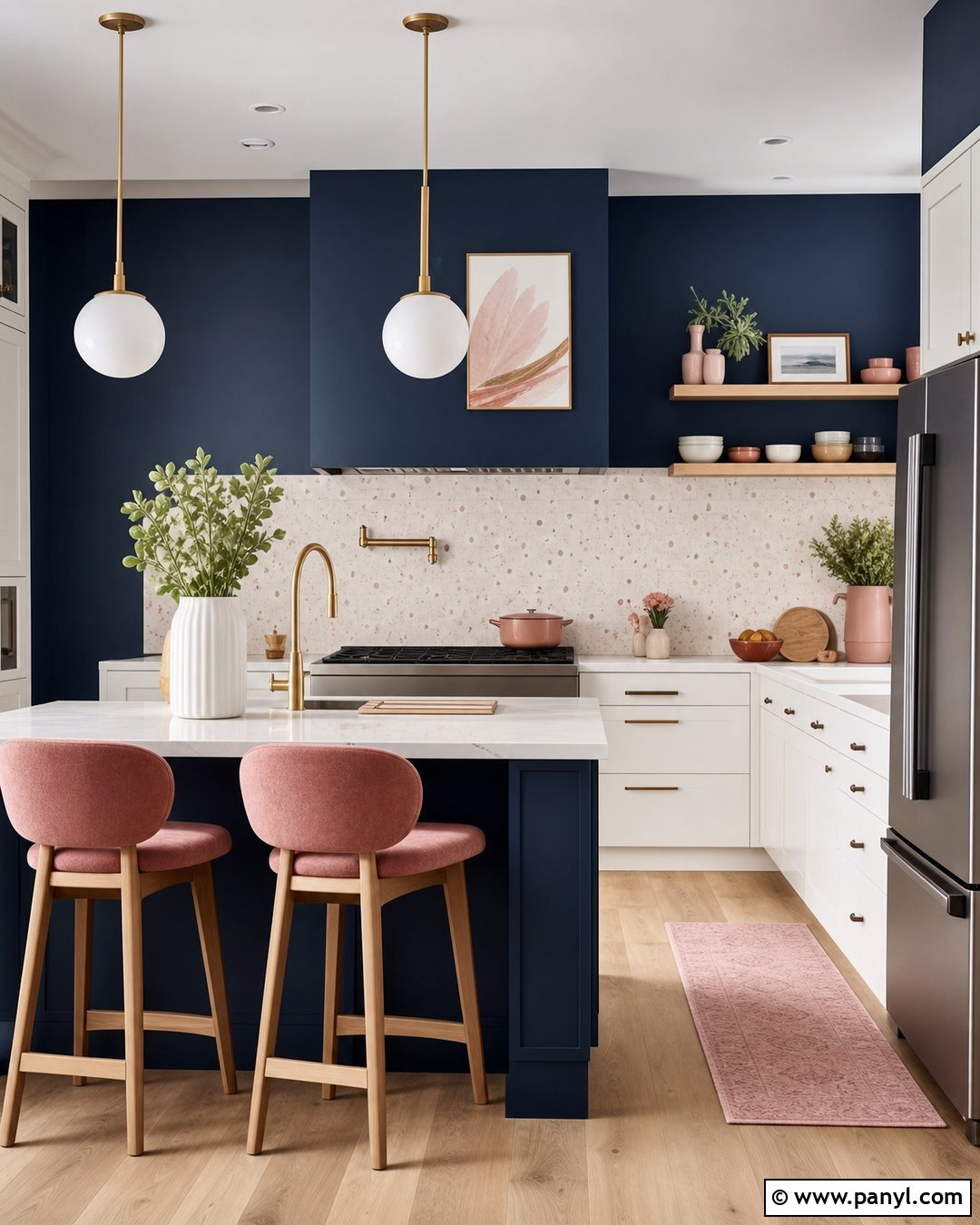
Dusty pink creates an unexpected but sophisticated contrast with navy kitchen walls. Start with white flat-panel cabinets, white quartz counters, and a pale terrazzo backsplash containing subtle blush and gray flecks. Introduce pink through upholstered counter stools, a washable runner, and two understated ceramic pieces rather than covering large permanent surfaces. Light oak flooring and wood shelving keep the palette grounded. Choose brushed brass hardware and opal globe pendants to reinforce the warm undertones. The navy should cover the main walls and frame the lighter cabinetry, ensuring it remains the dominant color. Avoid bright bubblegum shades, which can make the design feel juvenile. Muted rose and clay-pink accents produce a softer, more mature kitchen that still feels colorful, distinctive, and easy to update.
22. Navy Kitchen Walls With Terracotta Accents
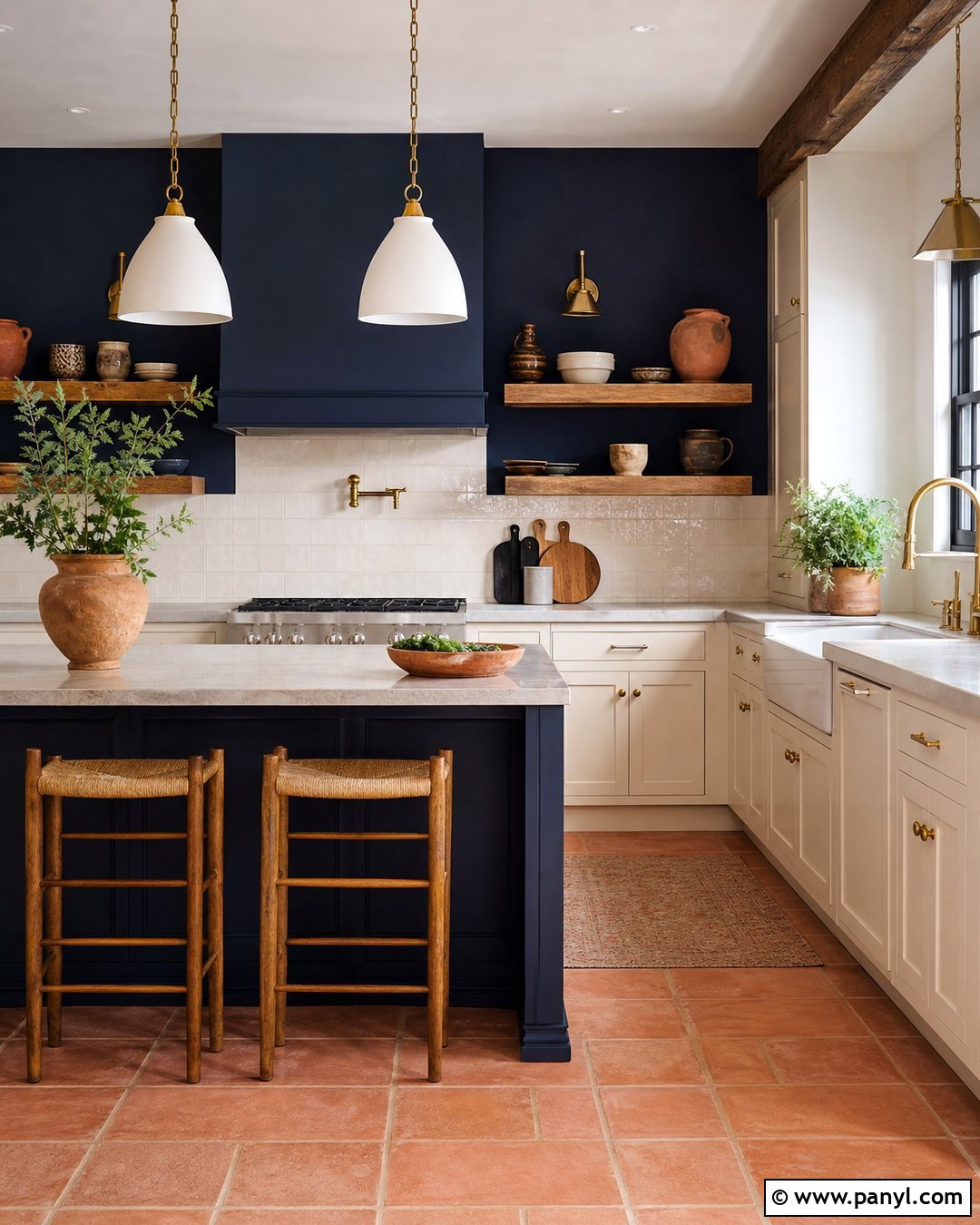
Terracotta adds sunbaked warmth to navy kitchen walls and creates a grounded Mediterranean-inspired palette. Use handmade-look terracotta floor tiles with natural color variation, then balance them with creamy cabinets and pale stone counters. A simple off-white backsplash keeps the central work zone bright. Paint all remaining walls navy and repeat the blue on a compact island for continuity. Add oak shelves, rush-seat stools, and aged brass hardware to emphasize natural texture. Clay pots, rust-colored linen, and one patterned runner can reinforce the floor without making the room overly rustic. Choose large white pendants and strong under-cabinet lights to maintain clear illumination. The contrast between deep blue, earthy orange, and warm cream results in a kitchen that feels vibrant, comfortable, and naturally layered.
23. Navy Kitchen Walls With Green Accents
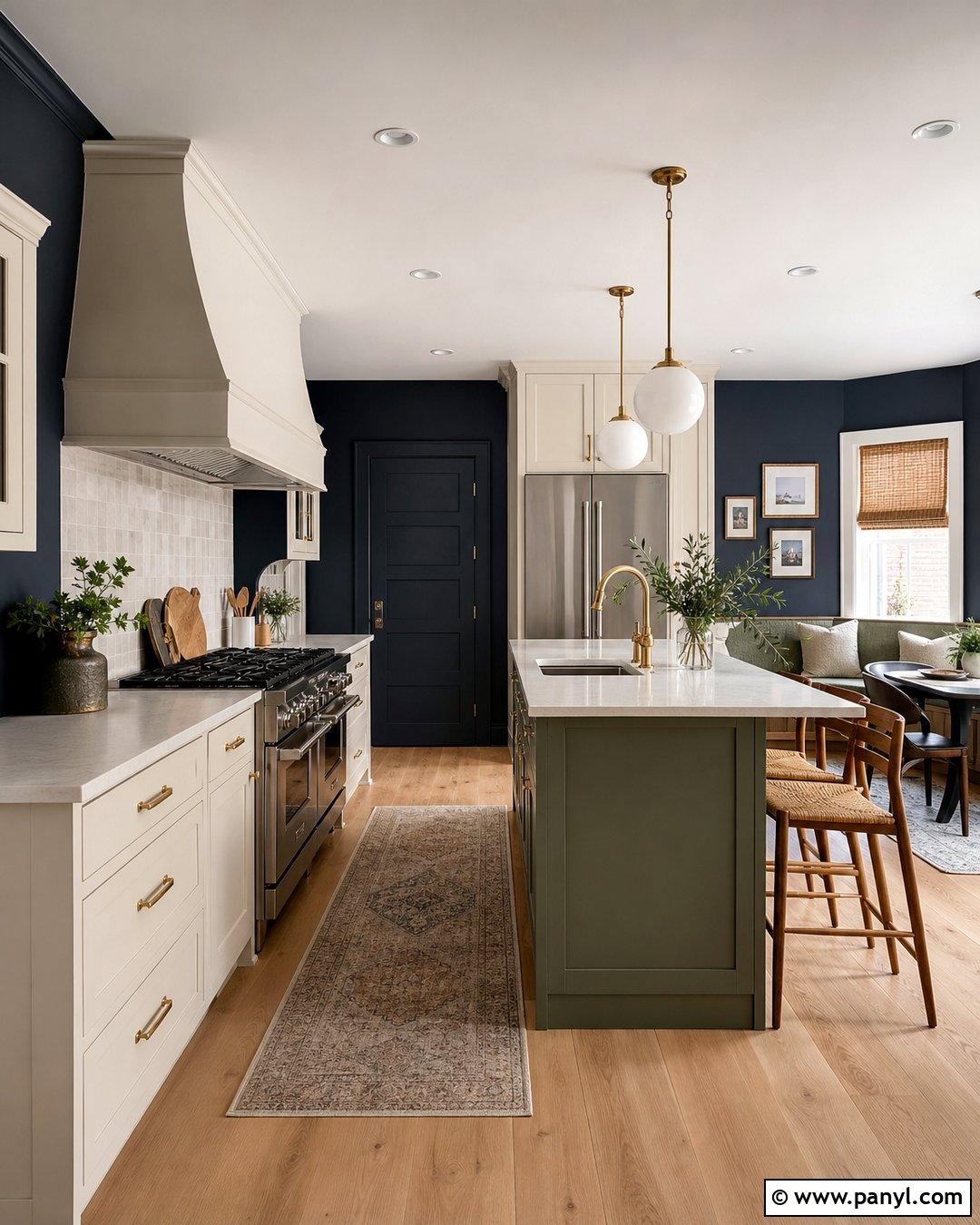
Muted green accents can give navy kitchen walls an organic, garden-inspired character. Choose sage green for a freestanding island or built-in breakfast banquette, keeping the perimeter cabinets warm white. Pale quartz counters and a creamy backsplash provide separation between the two darker colors. Natural oak flooring, woven shades, and wood stools bring the palette back to earth. Use brushed brass hardware and milk-glass pendants for a soft traditional finish. Greenery in simple ceramic pots can reinforce the sage tones without becoming the only source of color. Keep the ceiling white and install generous task lighting around the sink, range, and counters. Because navy and sage are both visually substantial, repeat each color in defined areas rather than scattering small mismatched blue and green accessories throughout the room.
24. Navy Kitchen Walls With Stainless Steel Appliances
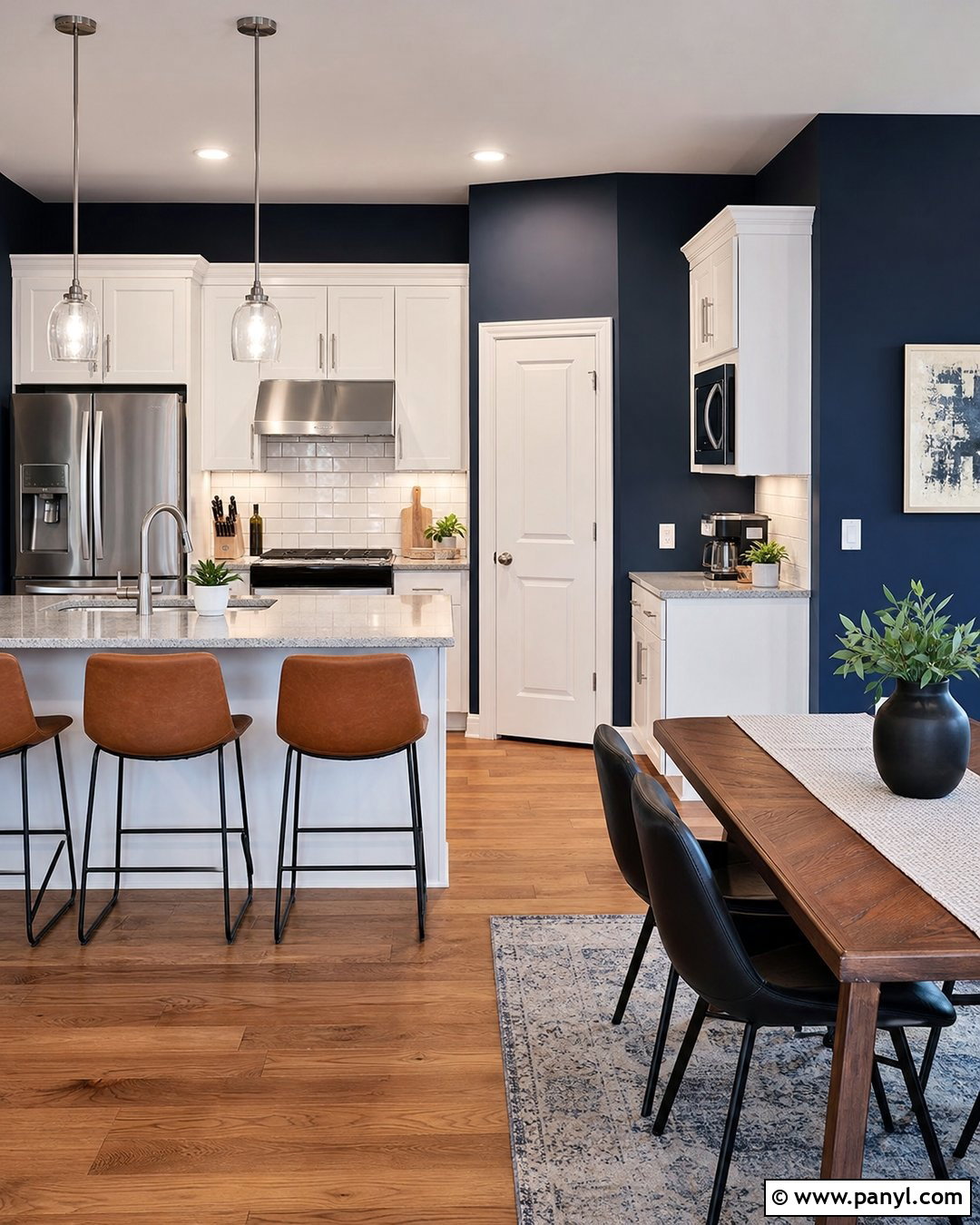
Stainless steel appliances bring a professional, practical edge to navy kitchen walls. Surround the range and refrigerator with white flat-panel cabinets so the metal does not disappear into an overly dark background. Use light gray quartz counters and a full-height white tile backsplash with pale grout. Continue navy paint around the windows, doorway, and open dining wall to establish depth. Brushed nickel hardware and a stainless faucet repeat the appliance finish without adding another metal color. Warm oak floors, tan leather counter stools, and a wooden dining table prevent the blue, white, and silver palette from feeling clinical. Add bright recessed fixtures and under-cabinet lighting for safe food preparation. The completed kitchen feels streamlined and contemporary but remains comfortable enough for an everyday family home.
25. Navy Kitchen Walls In A Small Kitchen
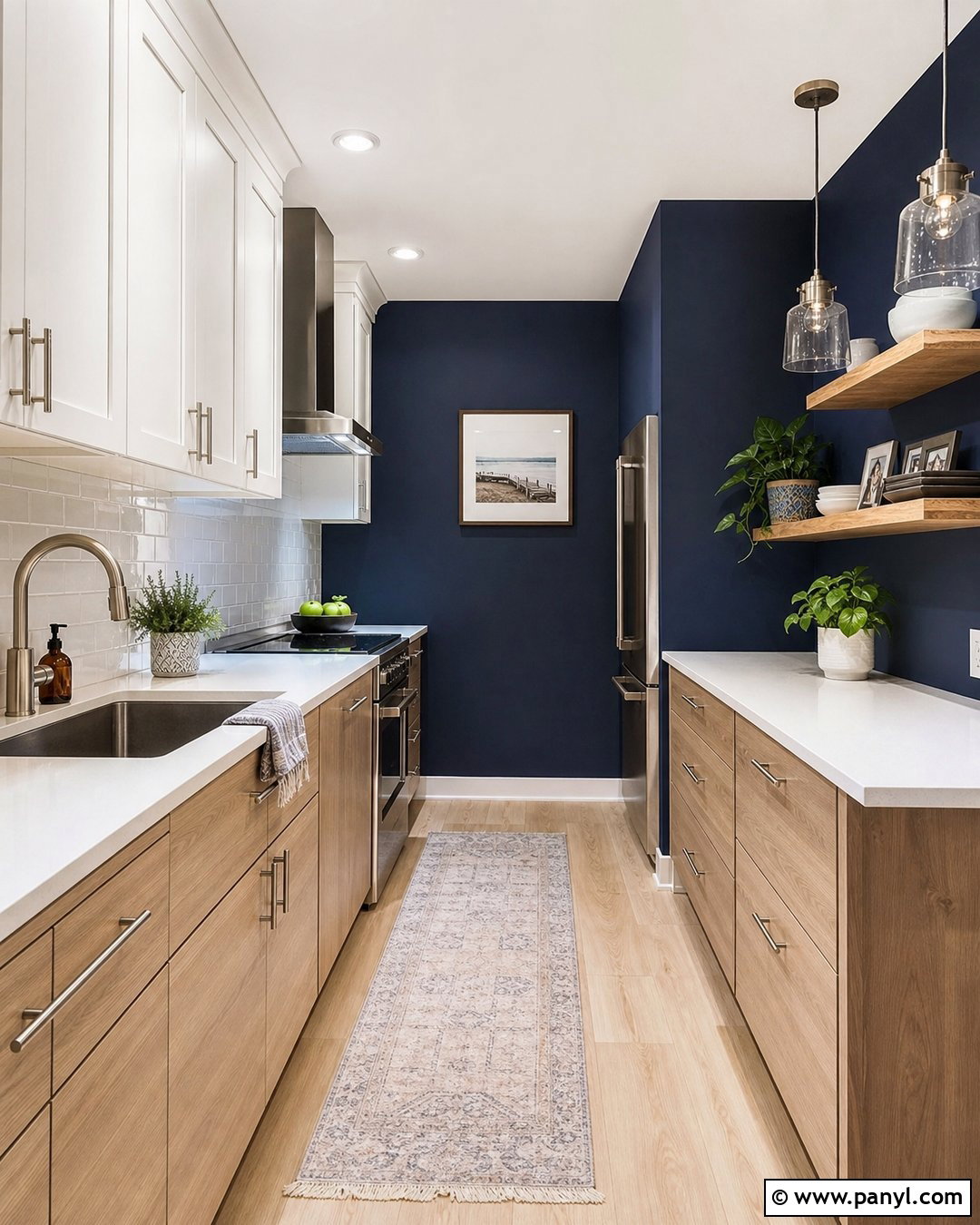
Navy kitchen walls can work in a small room when light surfaces and an efficient layout provide balance. Use navy on the longest uninterrupted wall and warm white on the remaining surfaces. Install white upper cabinets, pale oak lower cabinets, and slim quartz counters to create storage without forming a solid block of dark color. A glossy ivory backsplash will reflect both daylight and task lighting. Choose continuous light oak flooring and a narrow runner to visually lengthen the space. Polished nickel hardware and clear-glass pendants add brightness without visual bulk. Keep window coverings minimal and select compact appliances with simple fronts. Open shelves at the far end can display pale dishes, drawing attention through the kitchen and making the limited footprint feel more deliberate and spacious.
26. Navy Kitchen Walls In A Galley Kitchen
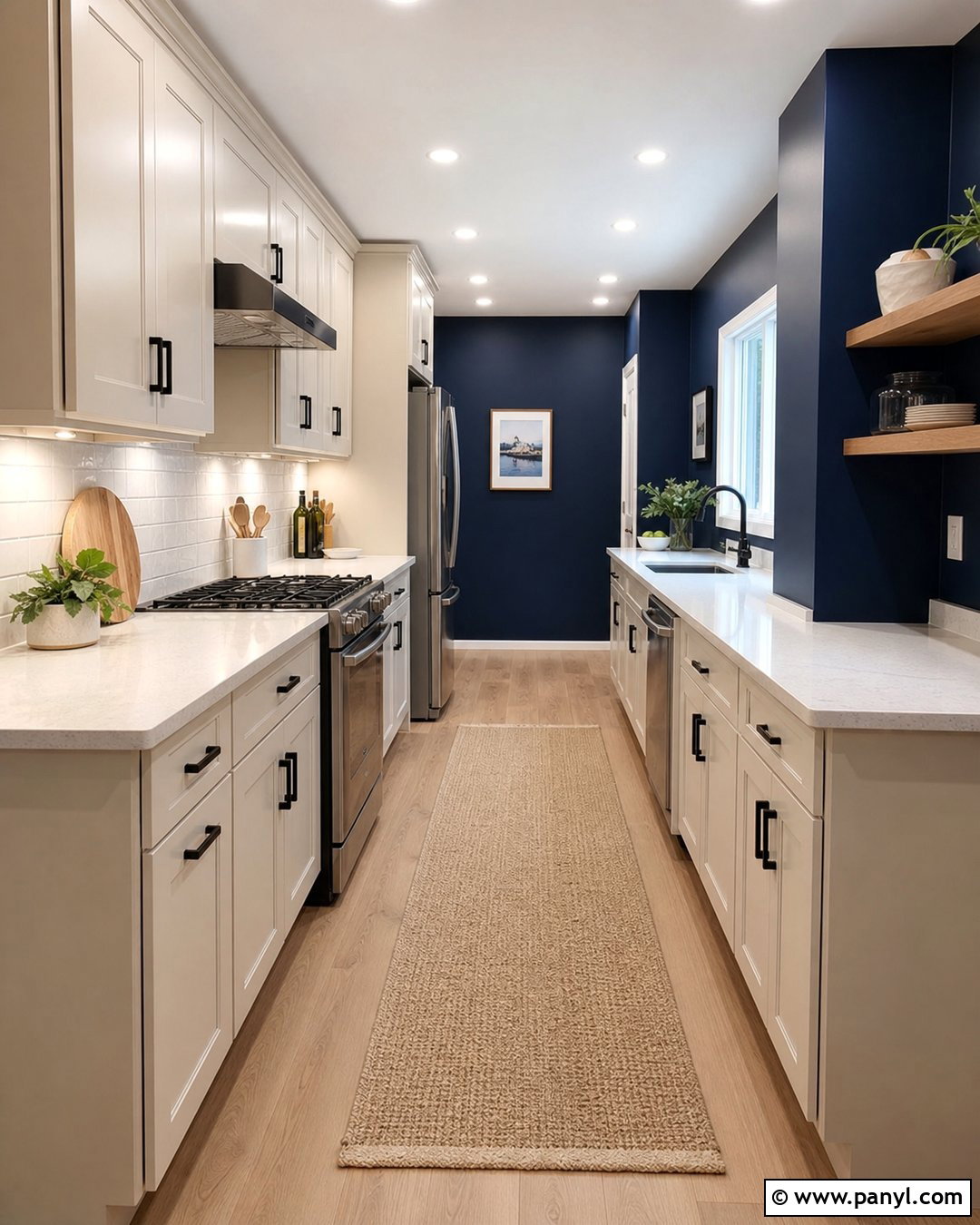
A galley layout benefits from navy kitchen walls when the color is used to emphasize its length rather than close it in. Paint the end wall navy and continue the shade in narrow sections above the backsplash. Use warm white cabinets on both sides, with light quartz counters and glossy cream tile to reflect illumination across the walkway. Run pale oak floorboards lengthwise toward the navy wall, creating a clear visual direction. A small oak shelf and one framed print can turn the end wall into a simple focal point. Choose recessed ceiling lights, bright under-cabinet strips, and minimal pendants to avoid crowding the center. Slim black pulls and a matching faucet provide definition, while an oatmeal runner softens the practical linear layout.
27. Navy Kitchen Walls In A Coastal Kitchen
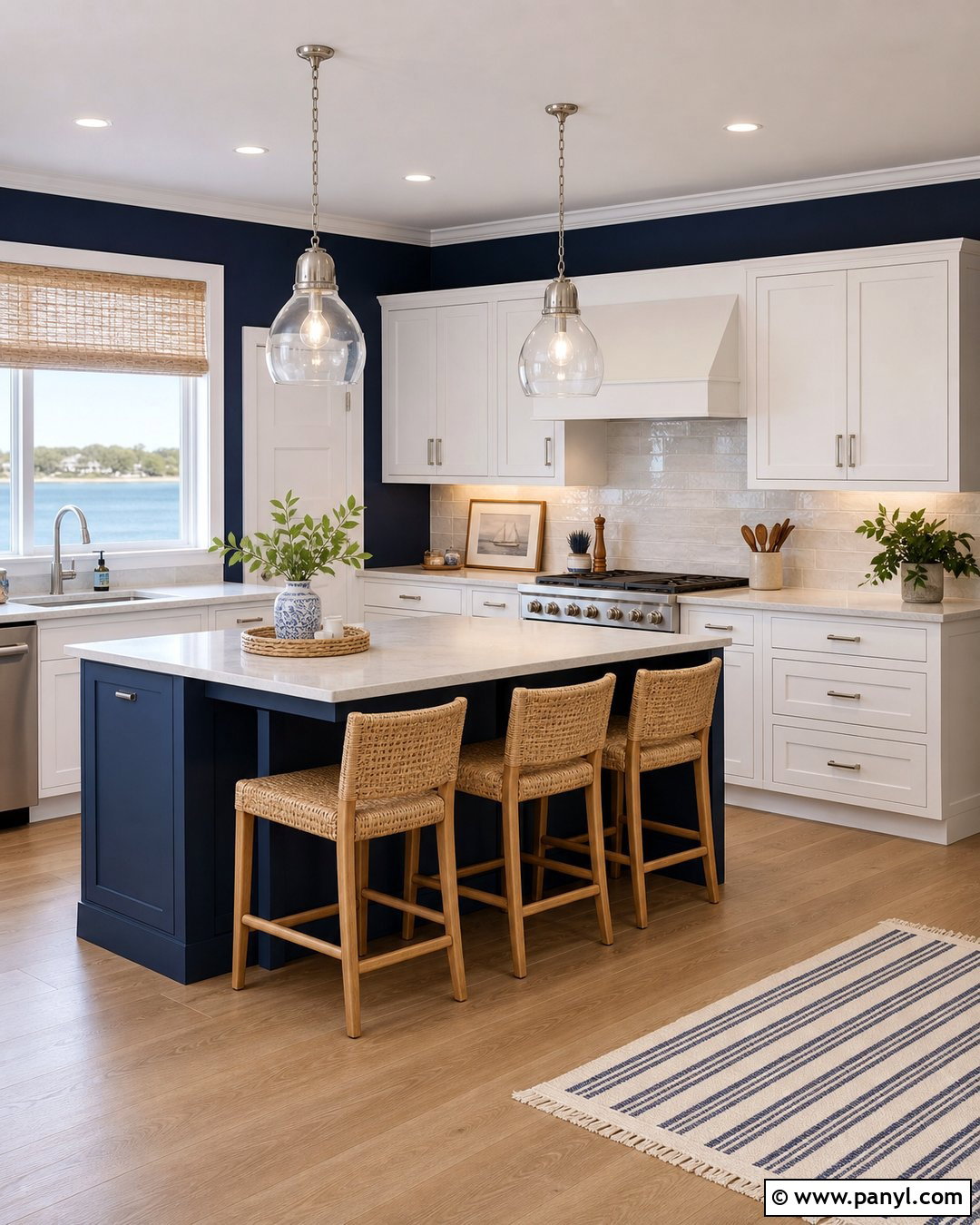
A coastal kitchen with navy walls should feel relaxed and natural rather than heavily themed. Pair the blue with warm white Shaker cabinets, pale quartz counters, and a backsplash of softly glazed ivory tile. White oak flooring, woven rattan stools, and a light wood dining table establish a sun-washed foundation. Use brushed nickel hardware and clear-glass pendants for a clean reflective finish. Linen Roman shades in sandy beige soften the windows without blocking daylight. Add one striped runner and simple white pottery, but avoid anchors, ropes, and novelty signs. A navy island can connect the walls to the central workspace, while open oak shelves provide space for everyday dishes. This restrained mix creates a bright coastal atmosphere suitable for homes far beyond the shoreline.
28. Navy Kitchen Walls In A Modern Kitchen
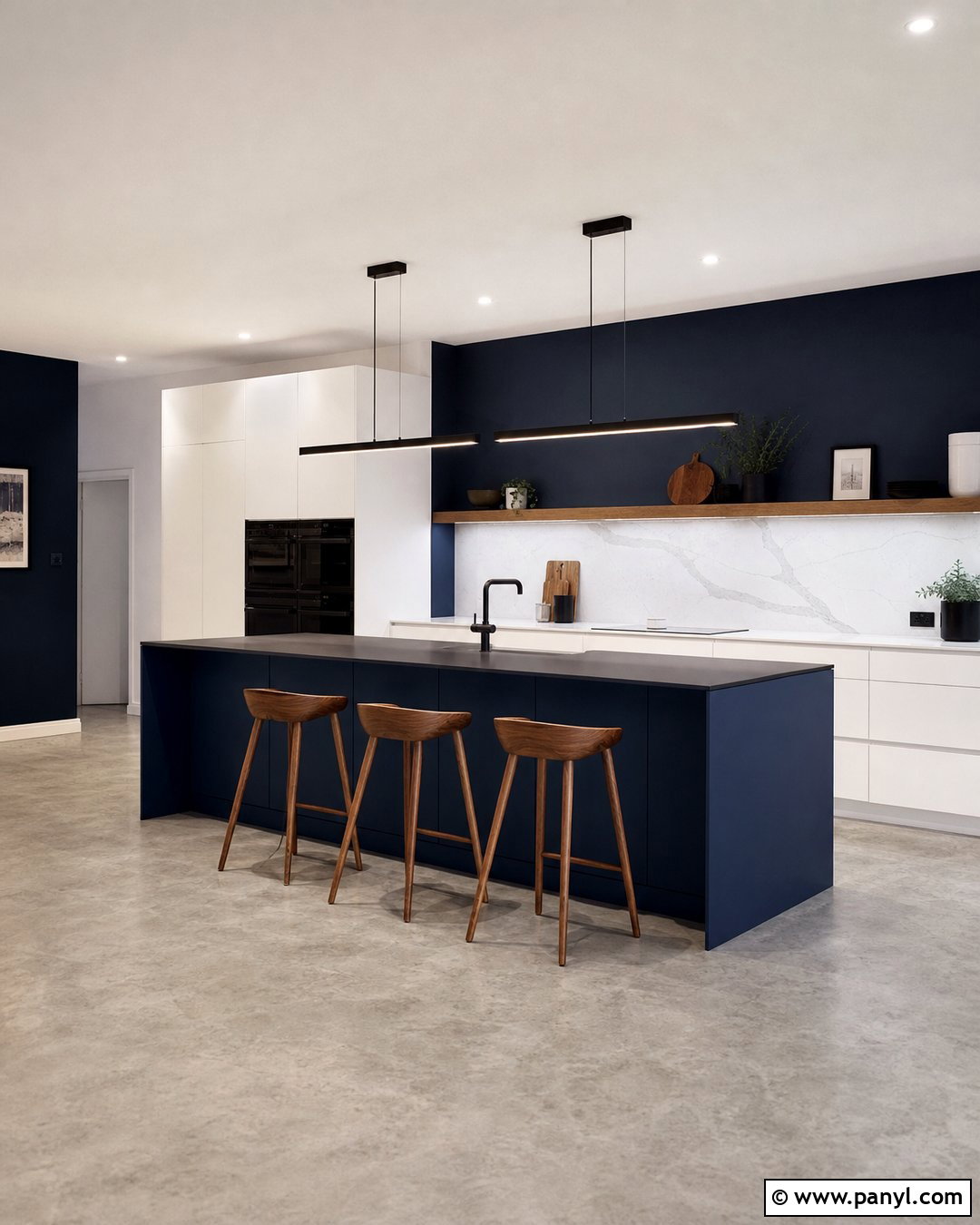
Clean lines allow navy kitchen walls to become the strongest feature in a modern kitchen. Select handle-free white cabinets with flat fronts and pair them with a long navy island. Use white quartz counters with square edges and continue the same material up the wall as a seamless backsplash. Pale concrete-look flooring adds subtle texture without introducing visible grain or pattern. Choose matte black faucets, slim linear pendants, and integrated appliances for a precise finish. Warm the room with walnut stools and one floating wood shelf holding neutral ceramics. Concealed under-cabinet lighting and recessed ceiling fixtures will keep every work surface bright. Maintain generous empty wall space and clear counters so the navy appears architectural, giving the completed room a sharp but welcoming contemporary character.
29. Navy Kitchen Walls In A Farmhouse Kitchen
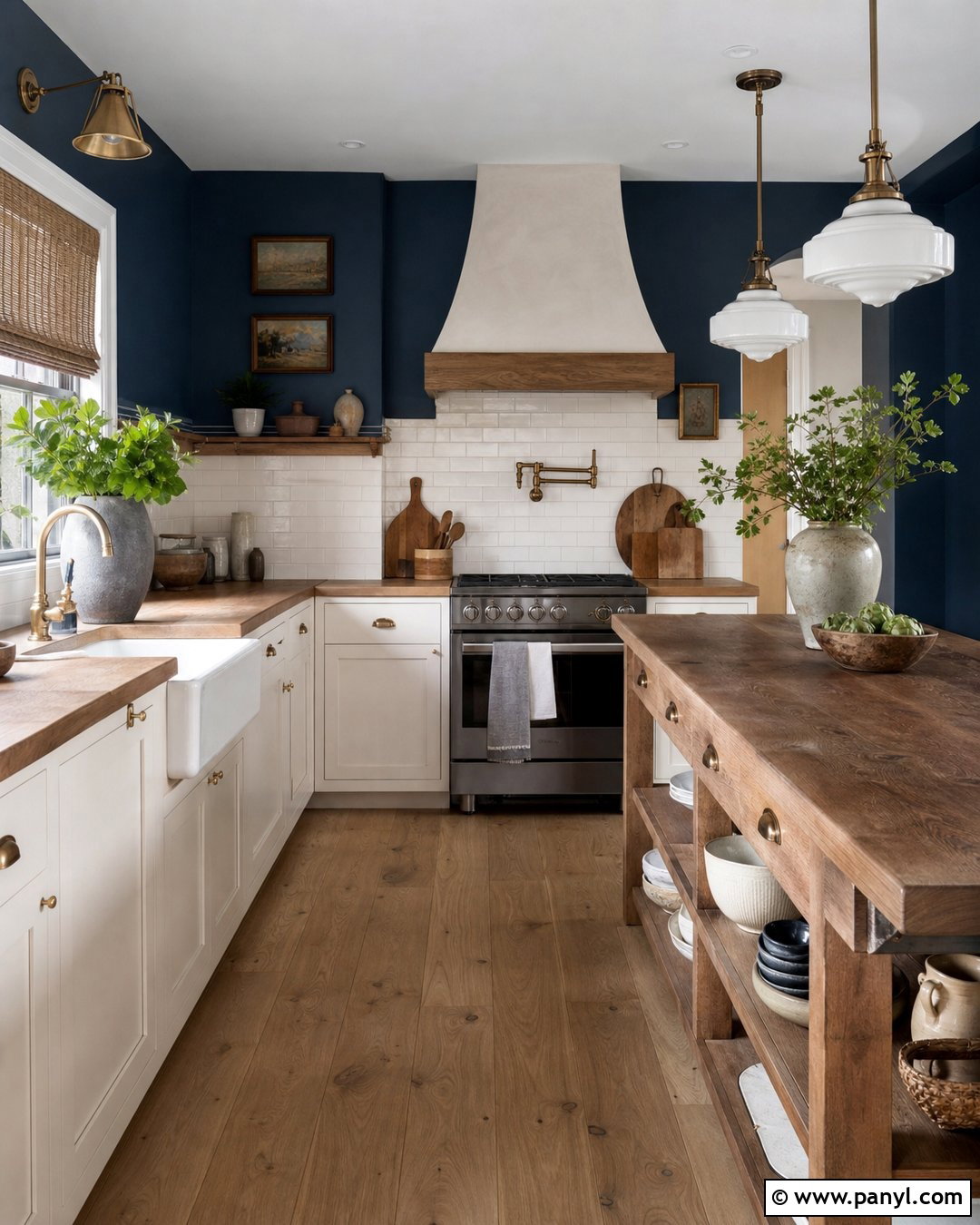
Navy kitchen walls add welcome depth to a farmhouse kitchen built around practical, familiar materials. Combine them with creamy inset cabinets, butcher block counters, and a large white apron-front sink. Use ivory subway tile behind the range and install a simple plaster hood with a natural oak trim band. Wide-plank oak flooring and a sturdy wood island establish a warm, durable base. Choose aged brass cup pulls, bridge faucets, and classic schoolhouse pendants for period-inspired detail. A small open shelf can display stoneware, mixing bowls, and wooden boards without excessive decoration. Finish the windows with natural woven shades and place a faded neutral runner beside the sink. The complete design feels established and comfortable while the navy paint prevents the farmhouse elements from appearing predictable.
30. Navy Kitchen Walls In An Open Plan Kitchen
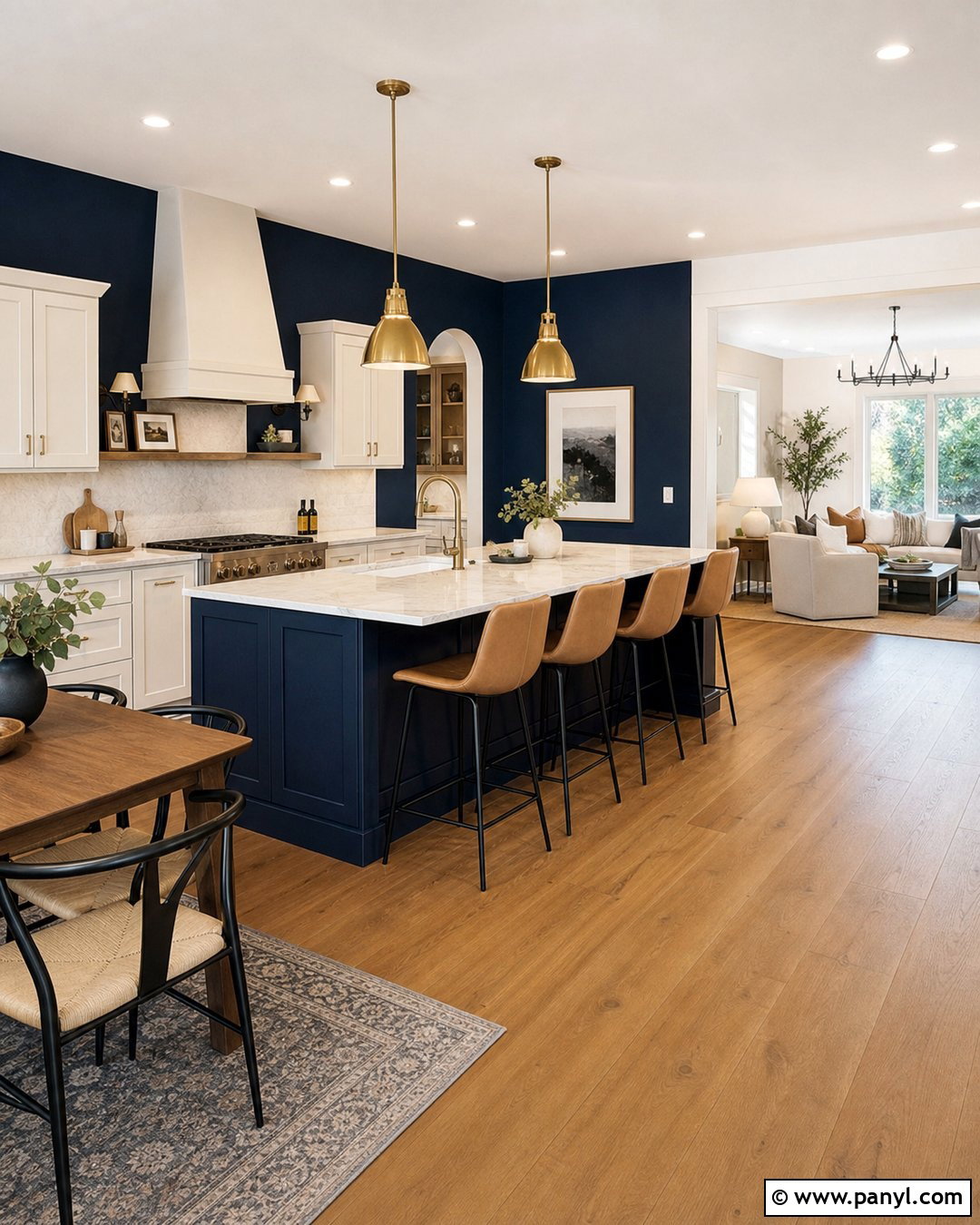
In an open-plan home, navy kitchen walls can visually define the cooking area without adding physical partitions. Paint the main kitchen wall navy and repeat the color on the island base, creating two strong anchors within the larger room. Use warm white cabinets, pale quartz counters, and a creamy full-height backsplash to balance the dark paint. Carry medium oak flooring continuously through the kitchen, dining, and living zones for a connected foundation. Choose tan counter stools and a matching leather chair in the nearby seating area to repeat warm accents. Brass pendants can define the island while a coordinating dining fixture marks the table. Keep adjoining walls warm white, allowing the navy kitchen to feel distinctive while remaining connected to the surrounding space.
Conclusion:
Navy kitchen walls offer far more flexibility than their bold appearance might suggest. They can frame white cabinets, enrich natural wood, support dramatic dark finishes, or provide a grounded background for warmer colors. Successful rooms balance the deep blue with reflective counters, practical lighting, lighter ceilings, and materials that introduce warmth. Before painting, test the chosen navy on several walls and view it throughout the day, since natural and artificial light can change its undertones. Consider the cabinetry, flooring, backsplash, and hardware as one connected palette rather than separate decisions. With thoughtful planning, navy kitchen walls can create a welcoming, functional kitchen that feels personal, polished, and visually balanced for years.

Related Ideas and Inspiration:
Leave a Reply