
Navy blue kitchen walls create a rich backdrop that can make cabinetry, counters, metals, and natural wood look more defined. The color works across farmhouse, coastal, traditional, modern, and compact kitchens when the surrounding finishes provide enough warmth or contrast. White cabinets offer a crisp balance, while oak, walnut, and butcher block soften navy’s cooler character. Brass adds glow, stainless steel keeps the palette practical, and pale stone surfaces help reflect light. Thoughtful placement matters too. You might paint every wall for an enveloping room or use navy behind a breakfast nook, range, or open shelving as a focused accent. These 30 navy blue kitchen walls explore complete, coordinated looks that are stylish, functional, and realistic to recreate. ()
1. Navy Blue Kitchen Walls With White Cabinets
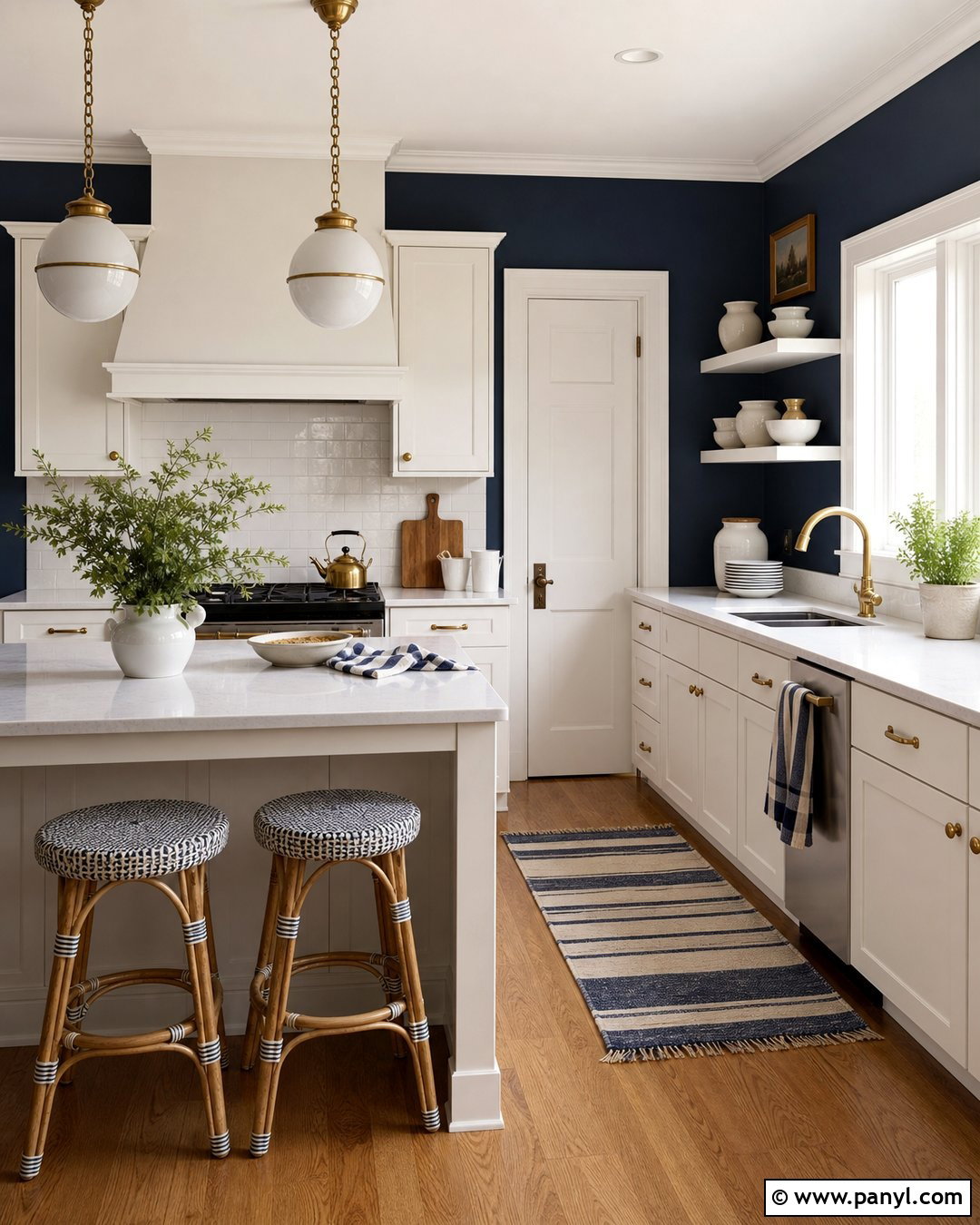
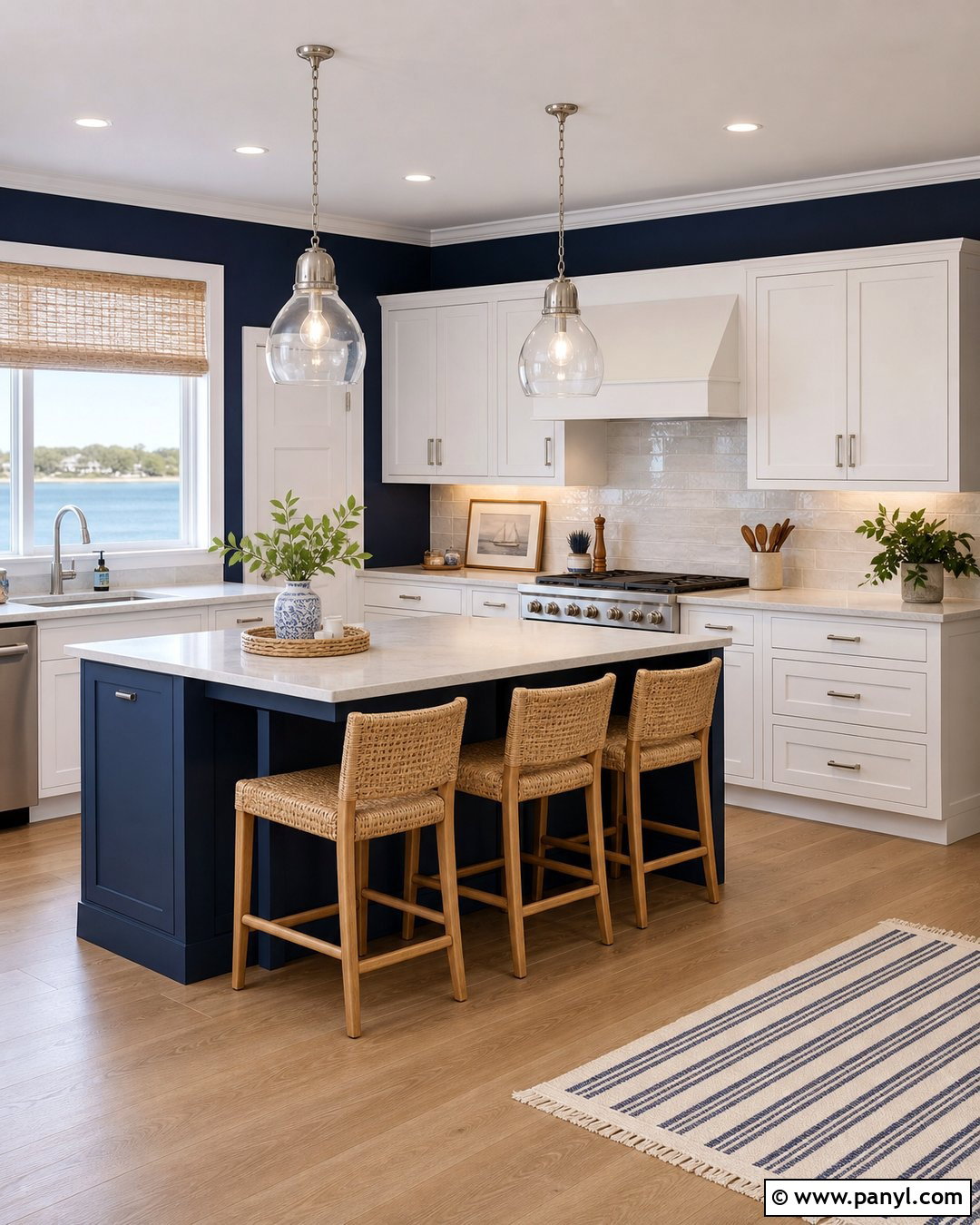
Crisp white cabinets make navy blue kitchen walls feel balanced rather than heavy. Choose simple Shaker doors in a warm white, then add pale quartz counters and a white subway tile backsplash. The light surfaces will break up the dark wall color and give the room a clean, classic structure. Brushed brass knobs, a matching faucet, and milk-glass pendants introduce gentle warmth. Medium oak flooring prevents the blue-and-white palette from feeling too formal. Keep windows lightly dressed so daylight can reach the deepest corners. A striped runner, wooden cutting boards, and a few cream ceramic pieces finish the room without clutter. This combination suits both traditional family kitchens and straightforward builder-grade renovations.
2. Navy Blue Kitchen Walls With Oak Cabinets
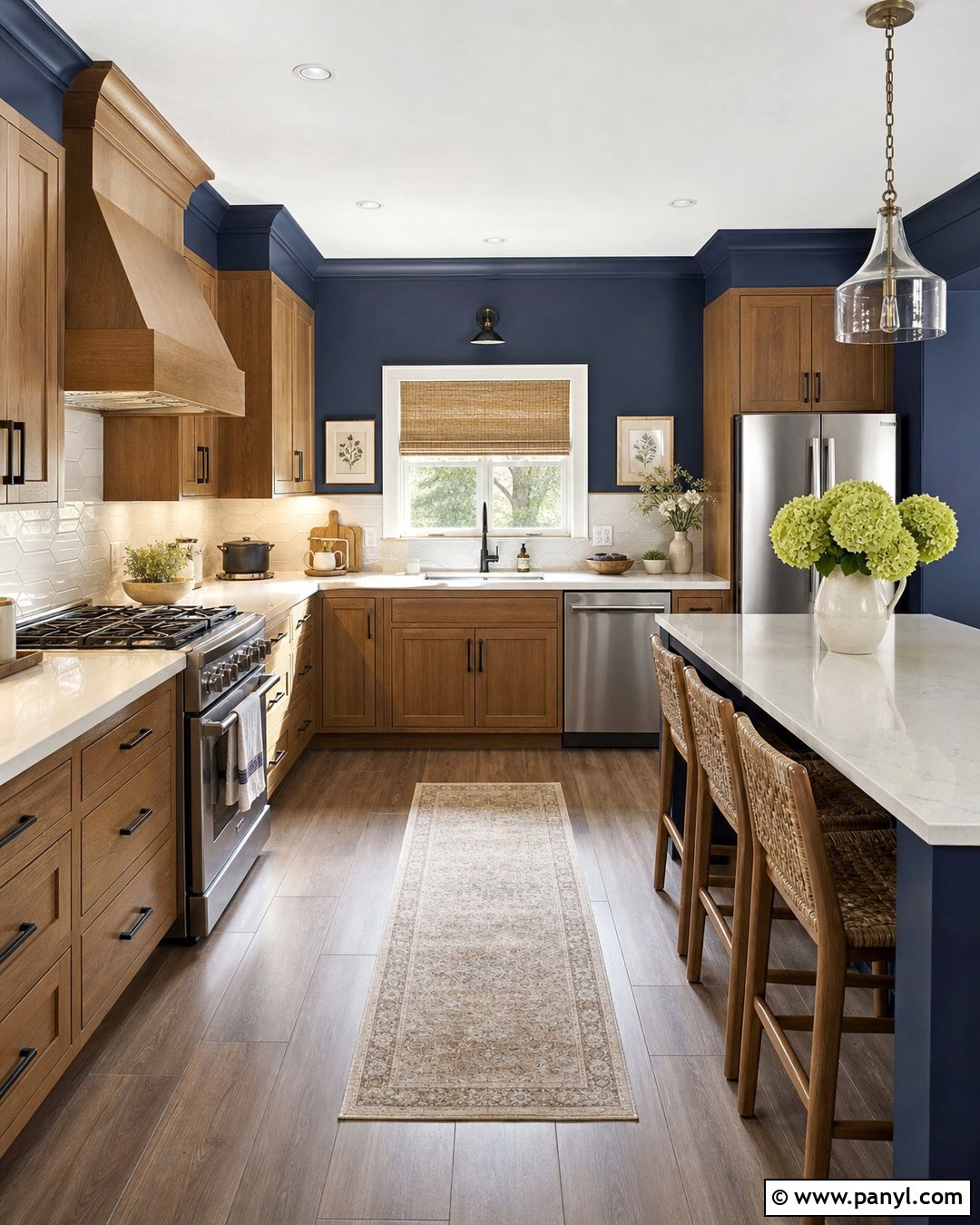
Existing oak cabinetry can look surprisingly fresh against deep navy walls. The blue provides a strong, cooler contrast that brings out the wood’s natural honey and caramel tones. Keep the countertops uncomplicated with creamy quartz or lightly speckled off-white stone. A warm white backsplash will connect the work surfaces while preventing too many competing colors. Update dated hardware with matte black or aged brass pulls, depending on whether you want a modern or traditional finish. Add woven counter stools, natural linen shades, and a washable neutral runner. Warm LED lighting under the upper cabinets will keep the work zone bright. This complete scheme is especially useful when you want a meaningful kitchen update without painting solid wood cabinets.
3. Navy Blue Kitchen Walls With Butcher Block Counters
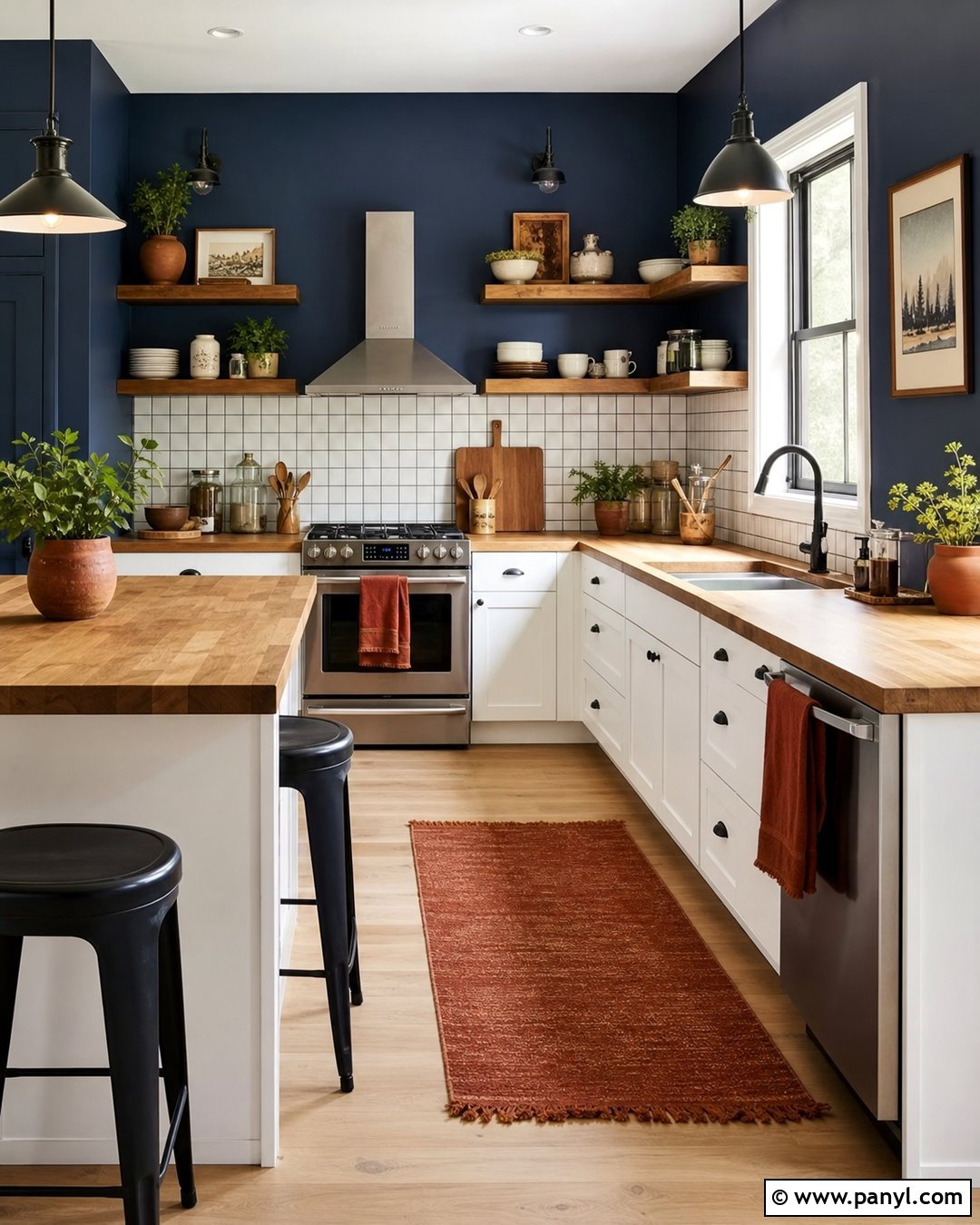
A navy and butcher block kitchen feels warm, relaxed, and easy to personalize. Paint the walls a deep true navy, then use white or soft cream cabinetry to keep the room open. Butcher block countertops bring enough natural texture to soften the dramatic wall color without competing with it. Repeat the wood tone through floating shelves, stool seats, and simple cutting boards. A white square-tile backsplash keeps the work area practical and bright. Choose black metal lighting and cabinet hardware for a slightly industrial finish. Terracotta planters, cream stoneware, and a rust-colored runner add restrained earthy accents. Use a durable satin or washable matte wall paint so the navy surface is easier to clean near busy cooking and dining areas.
4. Navy Blue Kitchen Walls With Brass Hardware
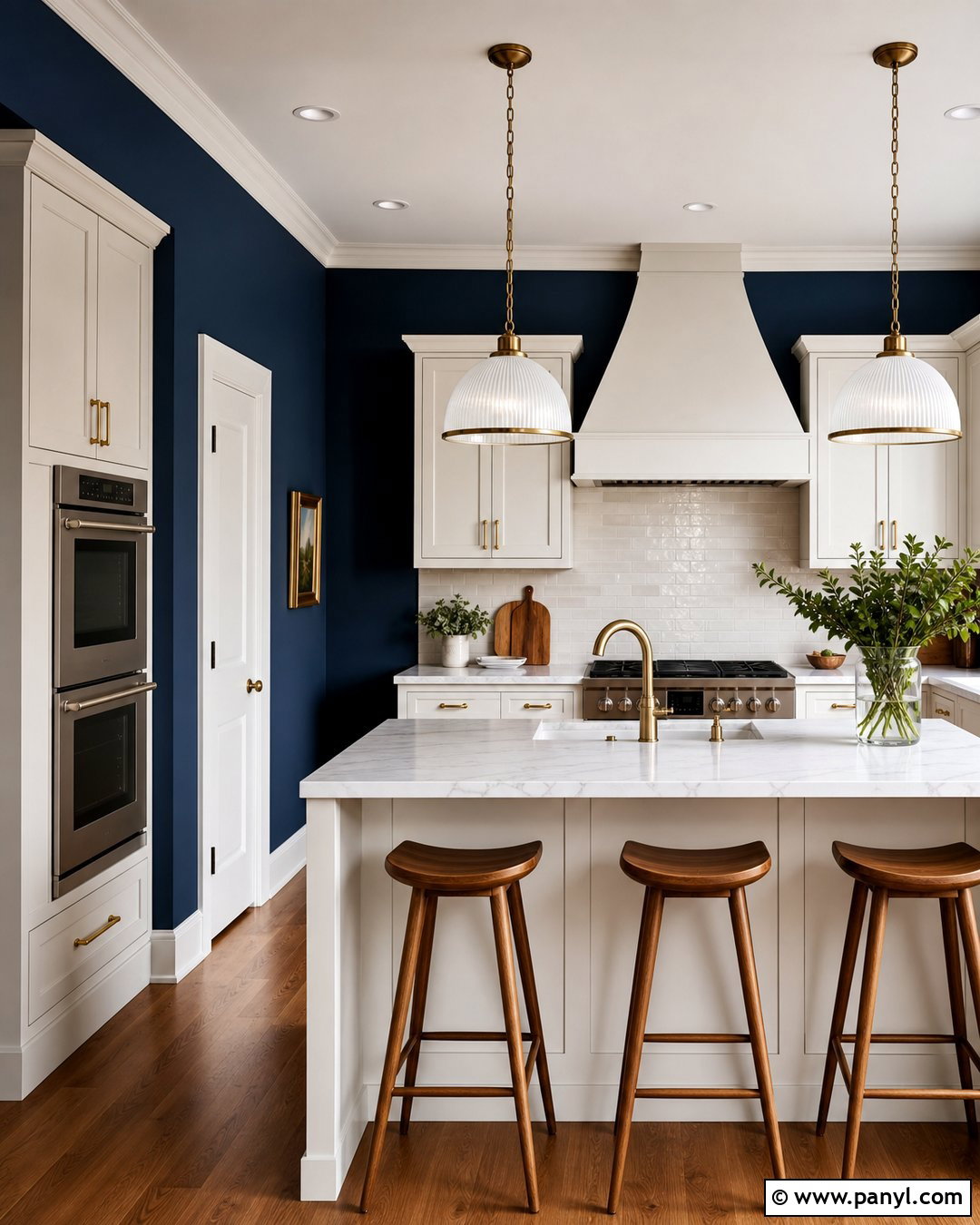
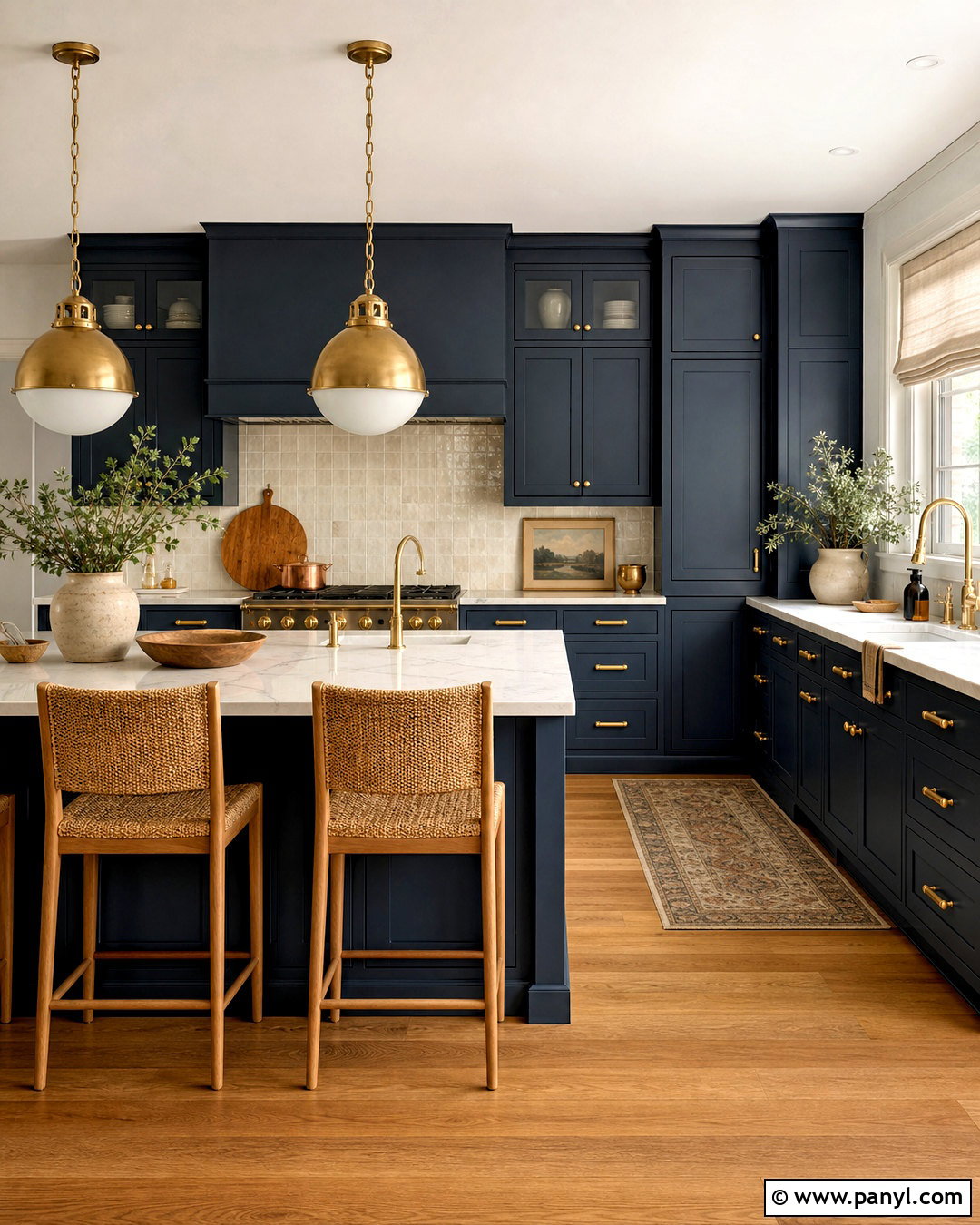
Brass details glow beautifully against navy blue kitchen walls, making this palette ideal for a polished transitional space. Start with warm white cabinets and pale marble-look quartz countertops. Use brushed brass pulls, a brass bridge faucet, and two simple pendant lights to distribute the metallic finish evenly rather than concentrating it in one spot. A creamy handmade-tile backsplash adds subtle movement and prevents the room from looking flat. Choose walnut stools or medium-toned wood flooring to reinforce the warmth. Keep accessories limited to white ceramics, clear glass, and a few green plants. The final room should feel refined but still comfortable for everyday use. Avoid highly reflective gold finishes, which can appear too sharp beside such a saturated wall color.
5. Navy Blue Kitchen Walls With Black Cabinets
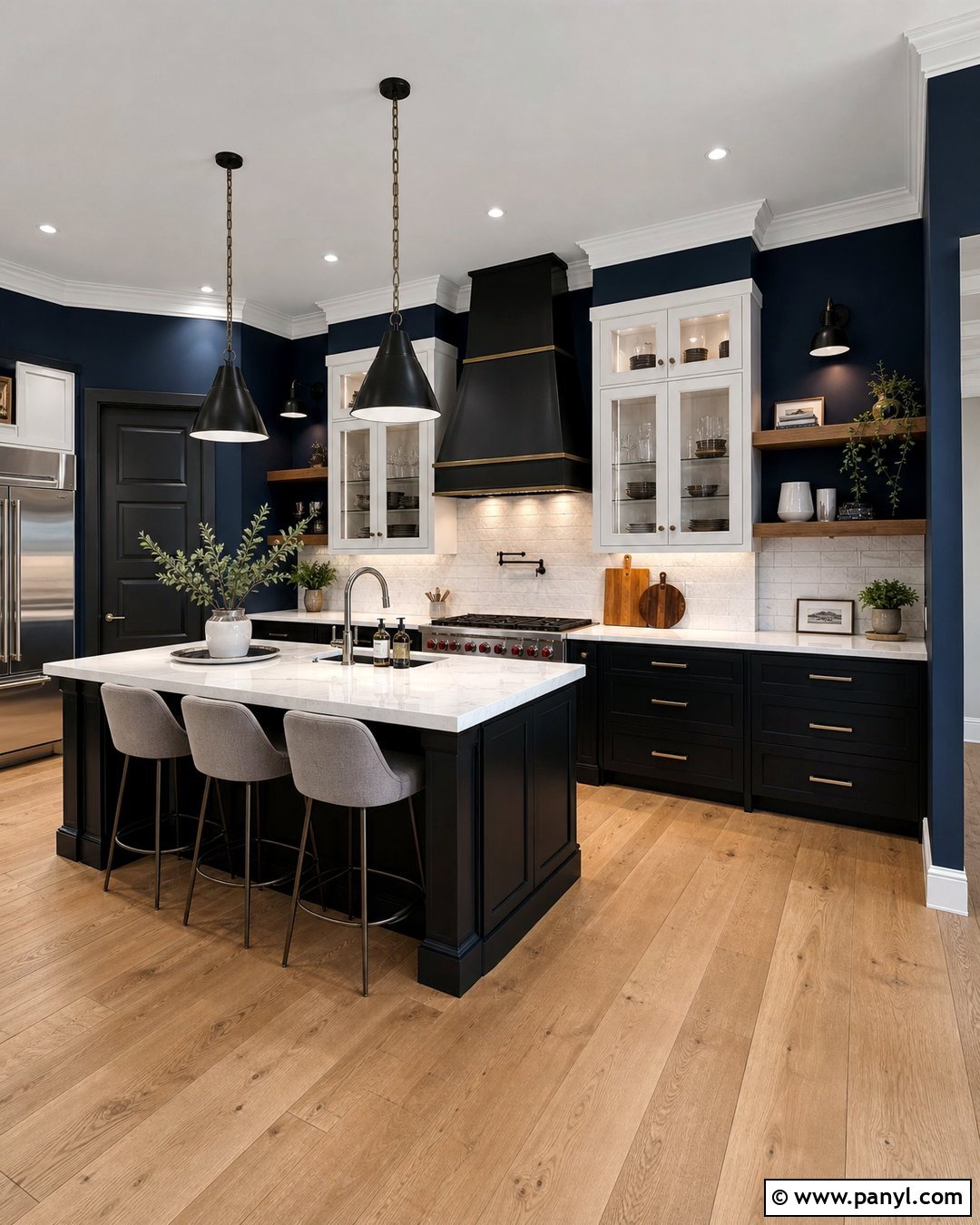
For a dramatic kitchen, combine navy walls with matte black lower cabinets and light upper storage. The dark surfaces should be balanced with generous white quartz countertops, a pale backsplash, and strong task lighting. Glass-front upper cabinets can visually open the room while providing a place for white dishes that stand out against the deeper palette. Use medium oak flooring and matching wood shelves to keep the navy and black from feeling cold. Brushed nickel hardware adds a softer contrast than polished chrome. A large window, bright ceiling paint, and under-cabinet lighting are especially important in this scheme. The result works best in a medium or large kitchen where several light surfaces remain visible between the darker finishes.
6. Navy Blue Kitchen Walls With Gray Cabinets
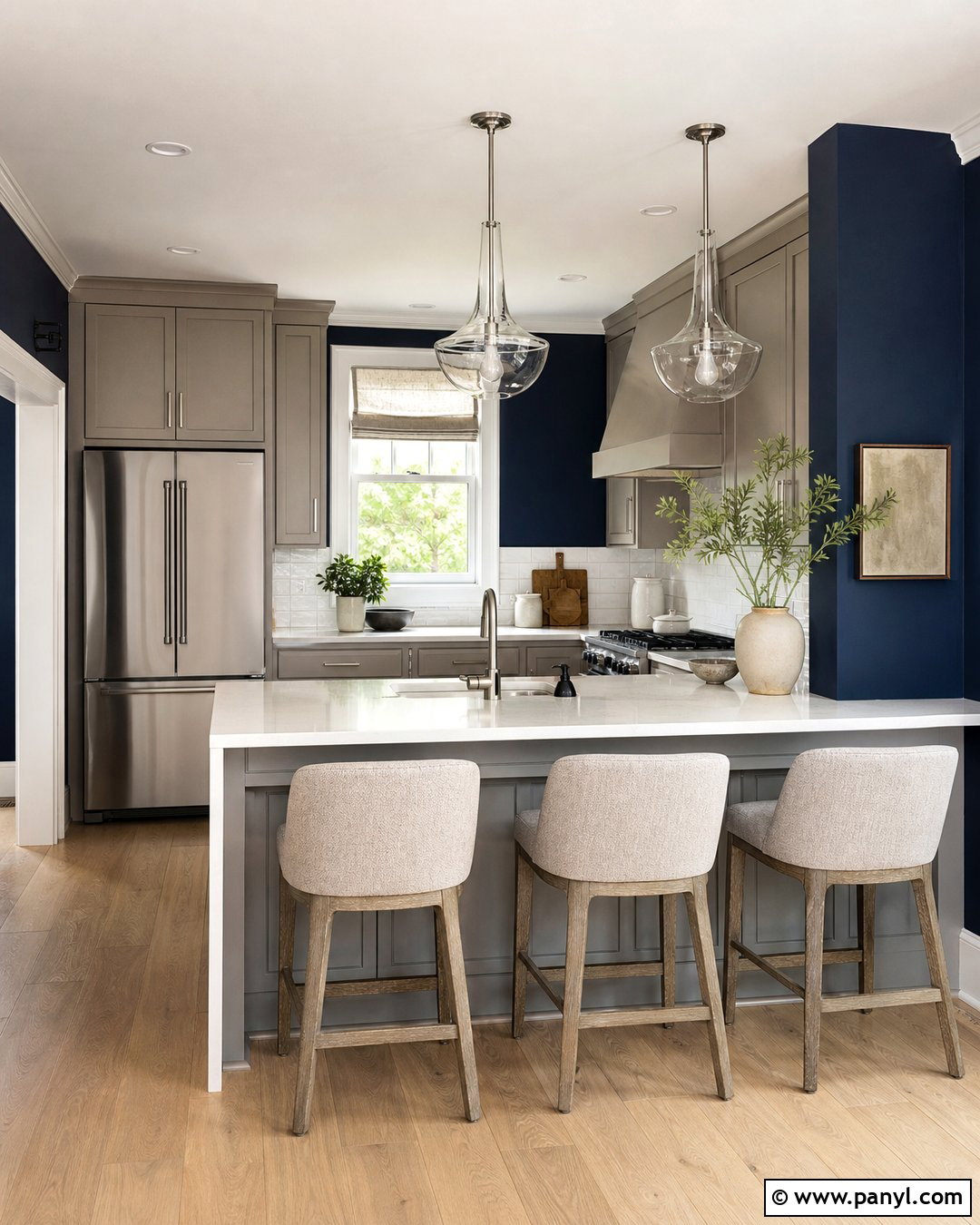
Soft gray cabinets offer a quieter alternative to bright white and give navy blue kitchen walls a tailored appearance. Select a warm gray with beige undertones rather than a cool silver shade. Pair it with white quartz counters, a pale gray backsplash, and brushed nickel hardware for a connected palette. Light oak flooring will warm the room and create separation between the cabinet color and the walls. Over an island, hang clear glass pendants that provide light without adding visual weight. Introduce texture with oatmeal-colored stools, linen Roman shades, and handmade ceramic accessories. Keep the ceiling and trim soft white. This balanced combination is well suited to open-plan homes because the gray cabinetry can transition naturally into neighboring neutral living and dining spaces.
7. Navy Blue Kitchen Walls With Cream Cabinets
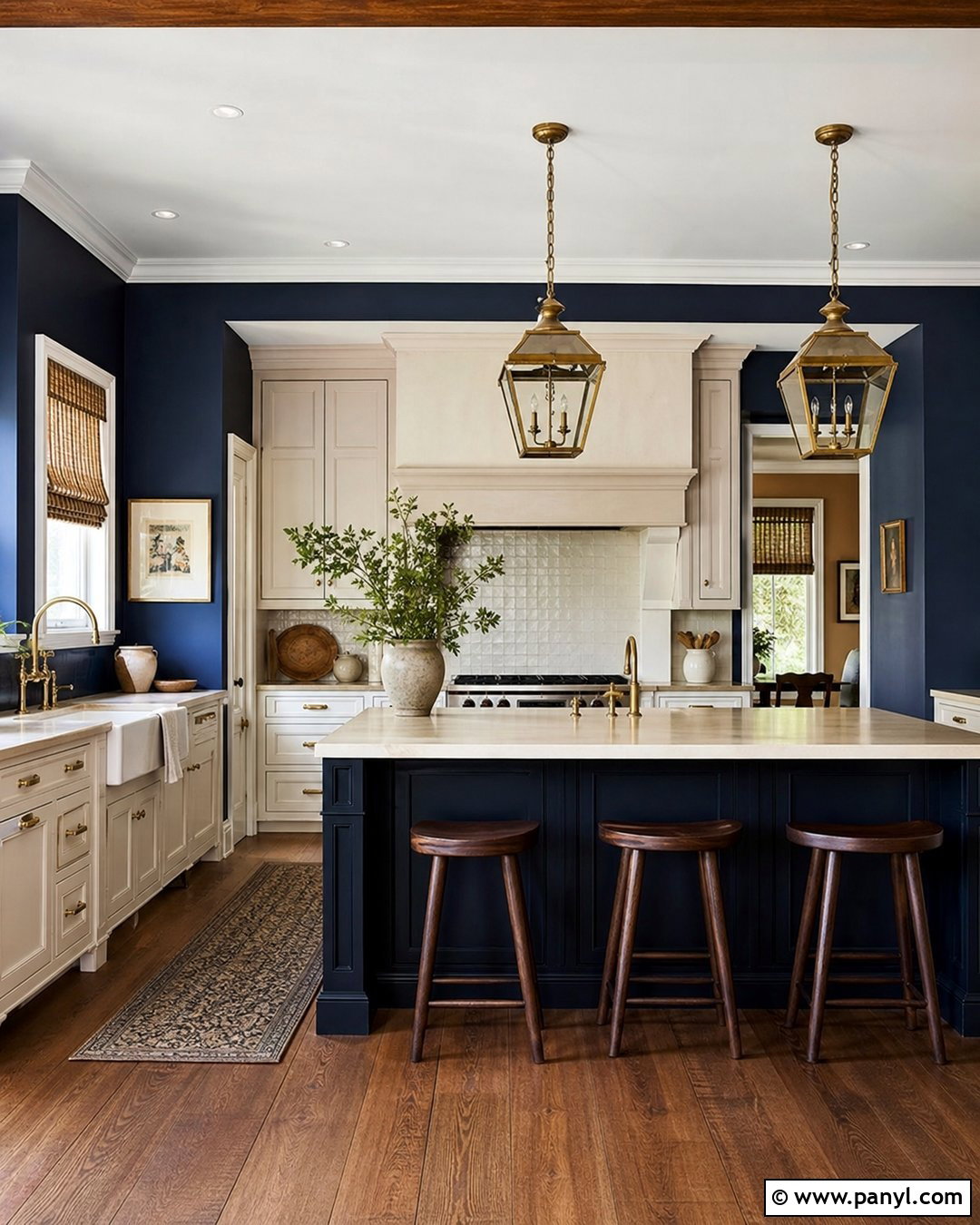
Cream cabinetry gives navy blue kitchen walls a softer, more welcoming contrast than pure white. This pairing works especially well in a traditional kitchen with paneled cabinet doors, crown molding, and warm wood floors. Choose countertops with a creamy base and subtle tan veining. Add an off-white zellige backsplash for gentle variation and reflected light. Aged brass hardware, a warm metal faucet, and lantern-shaped pendants support the classic character. Dark walnut stools can provide a grounding note without making the room feel crowded. Finish the kitchen with woven shades, linen towels, and understated pottery. Keep appliances in stainless steel or conceal them behind matching panels. The result feels established and elegant while remaining practical enough for a busy household.
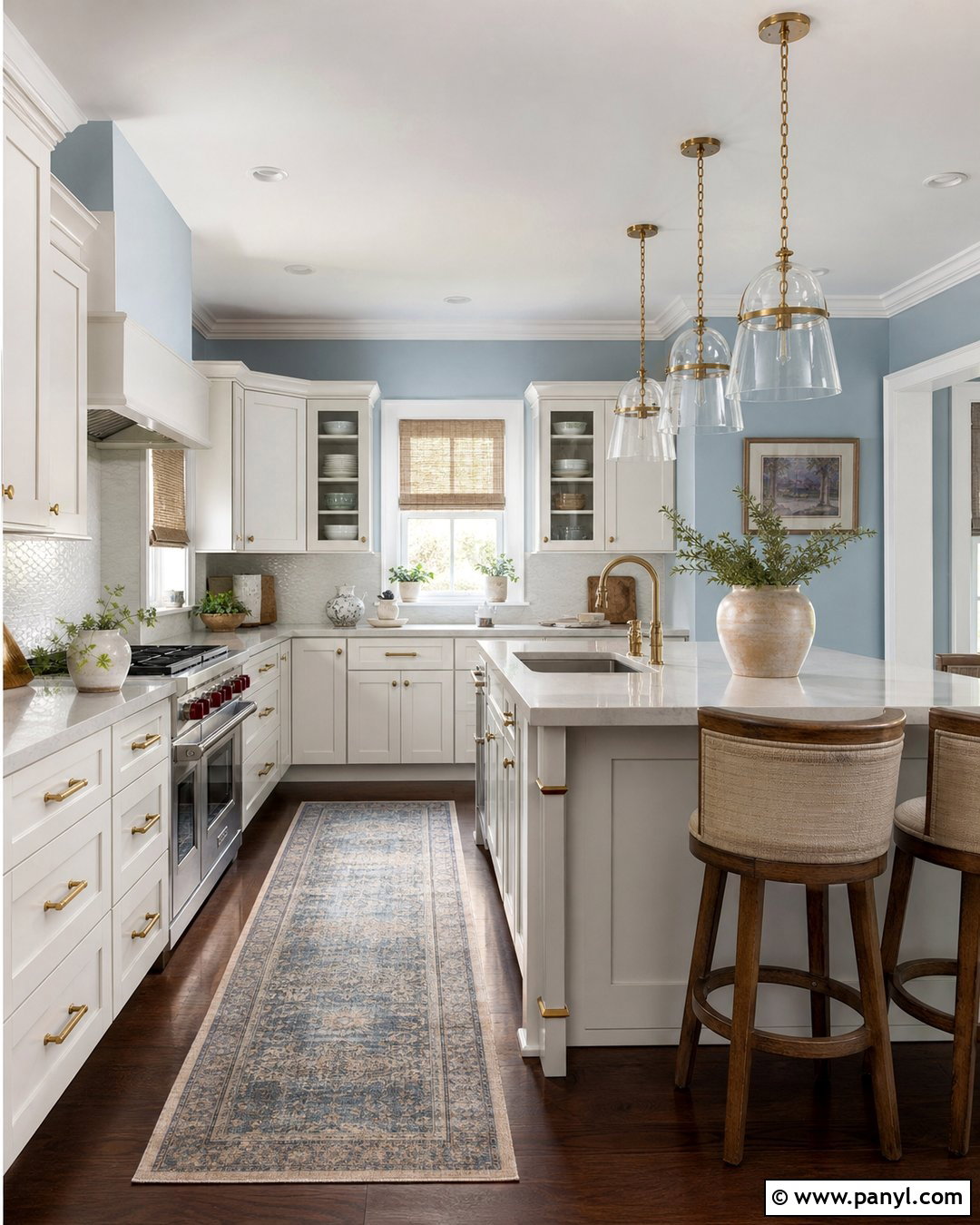
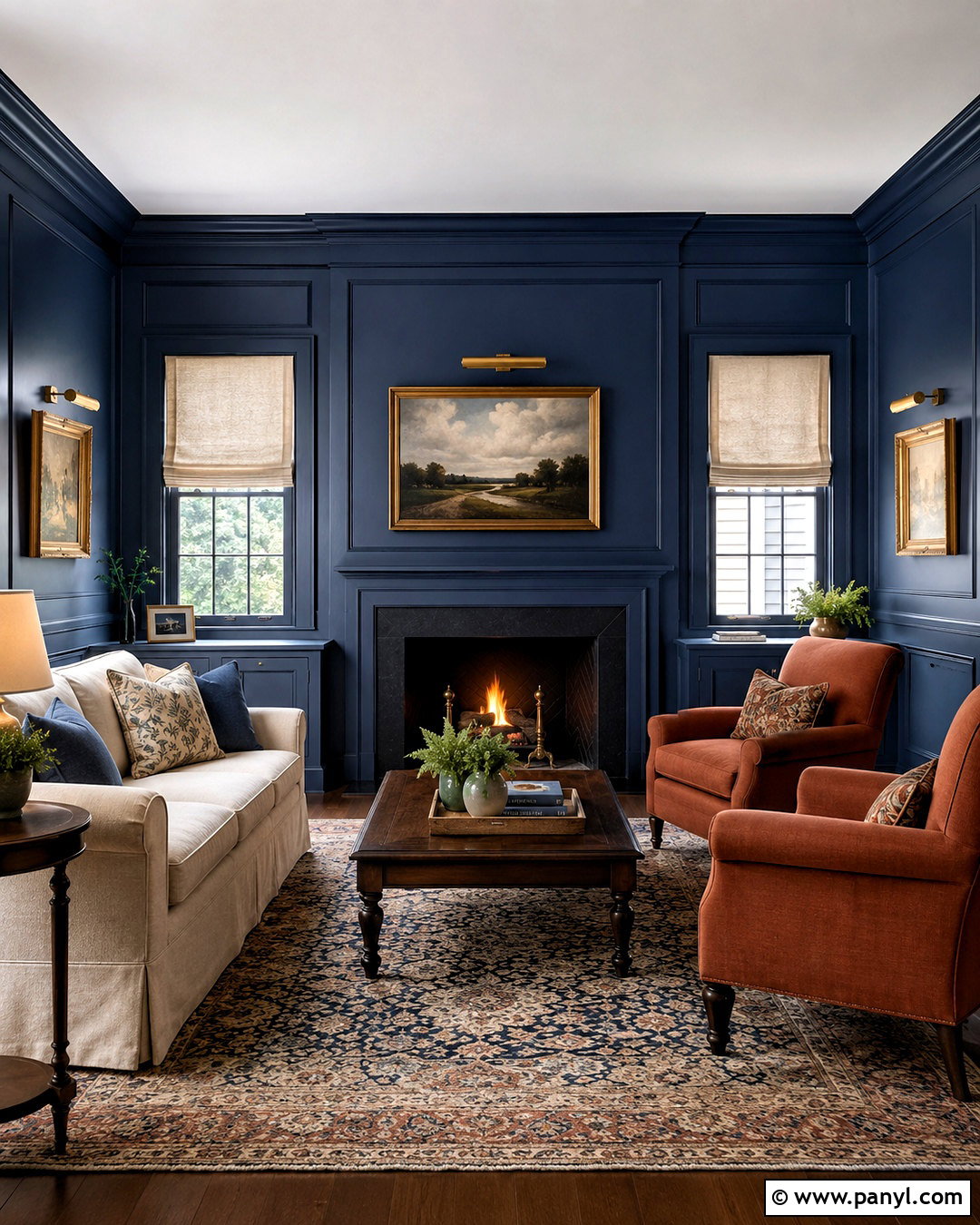
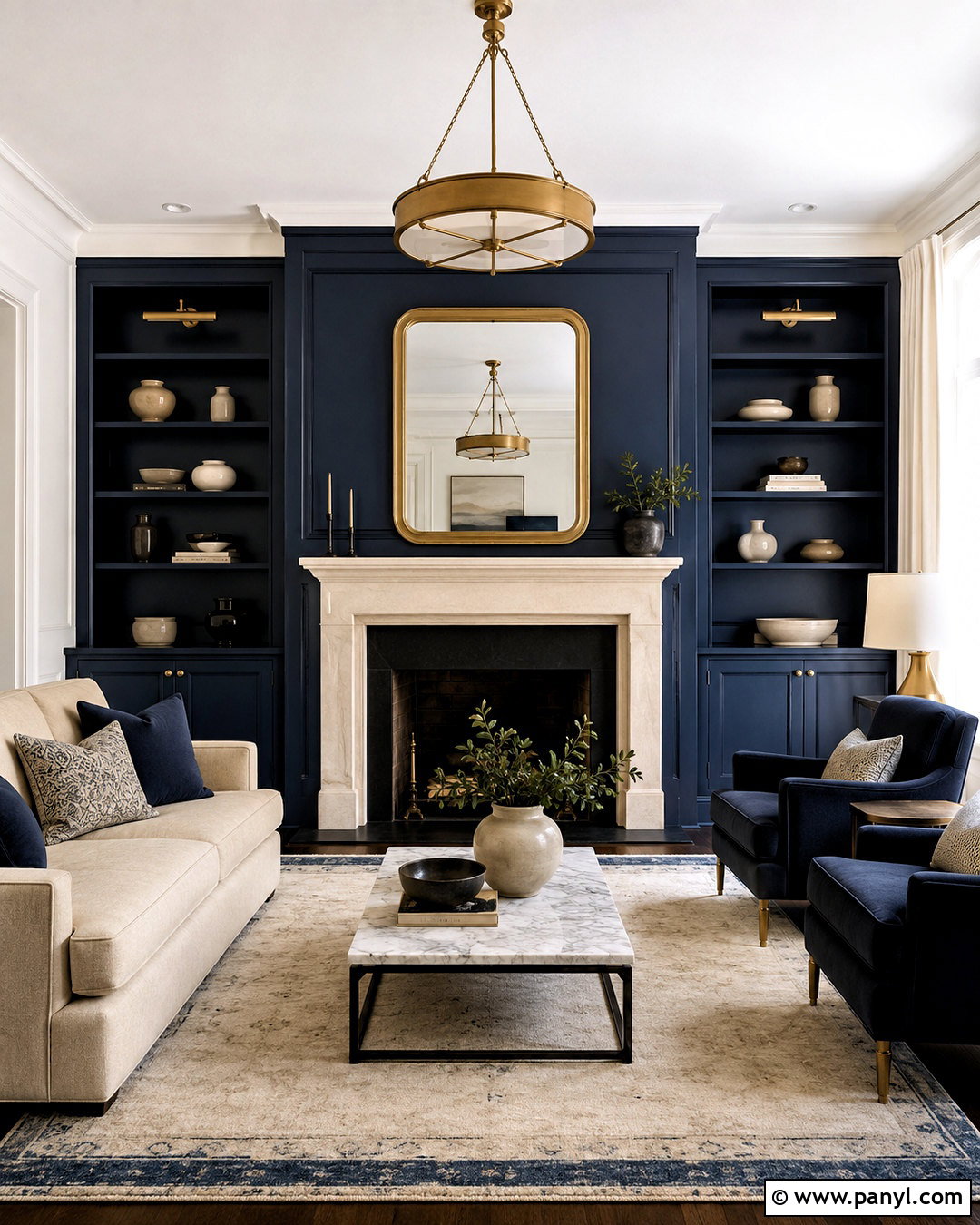
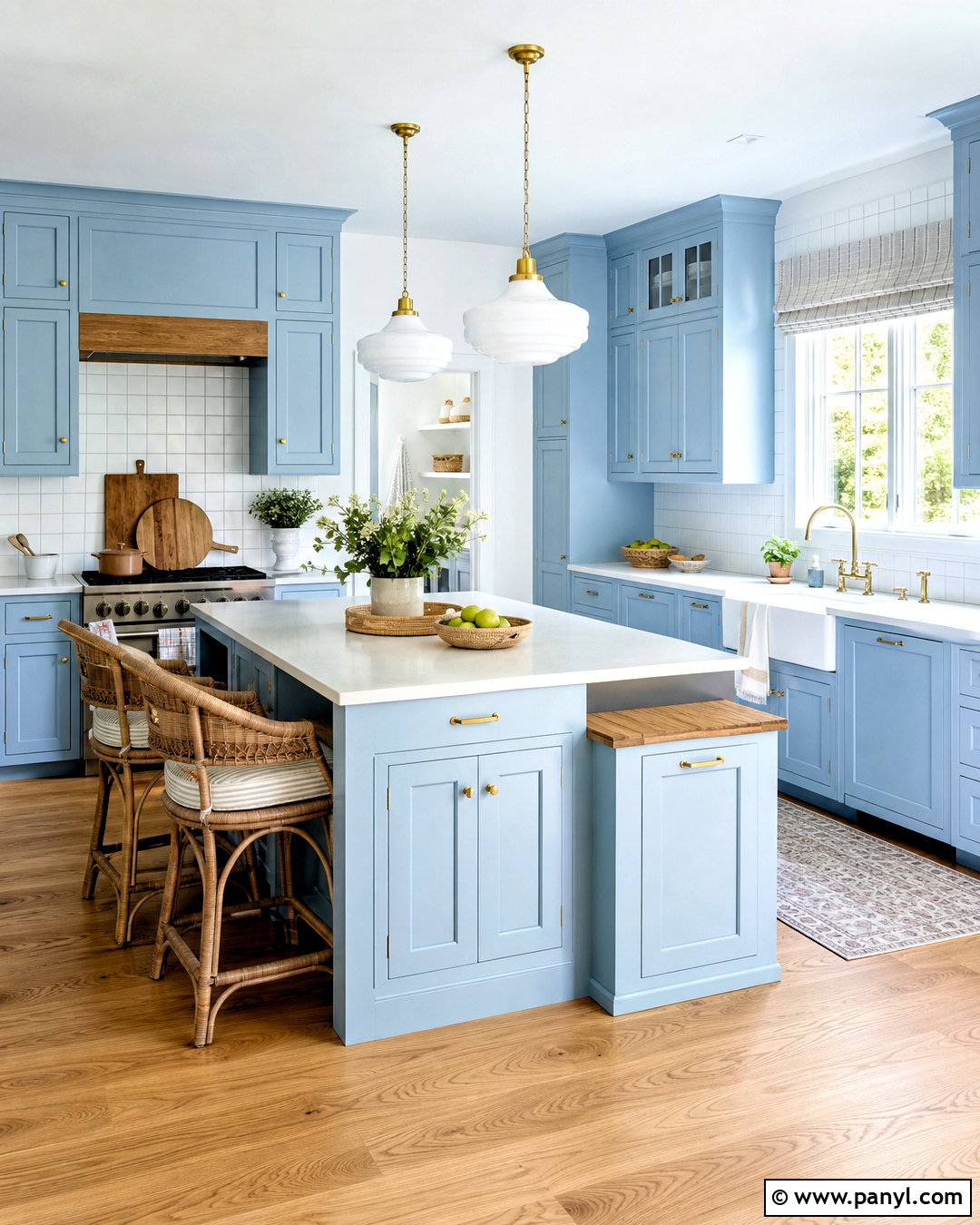
8. Navy Blue Kitchen Walls With Green Cabinets
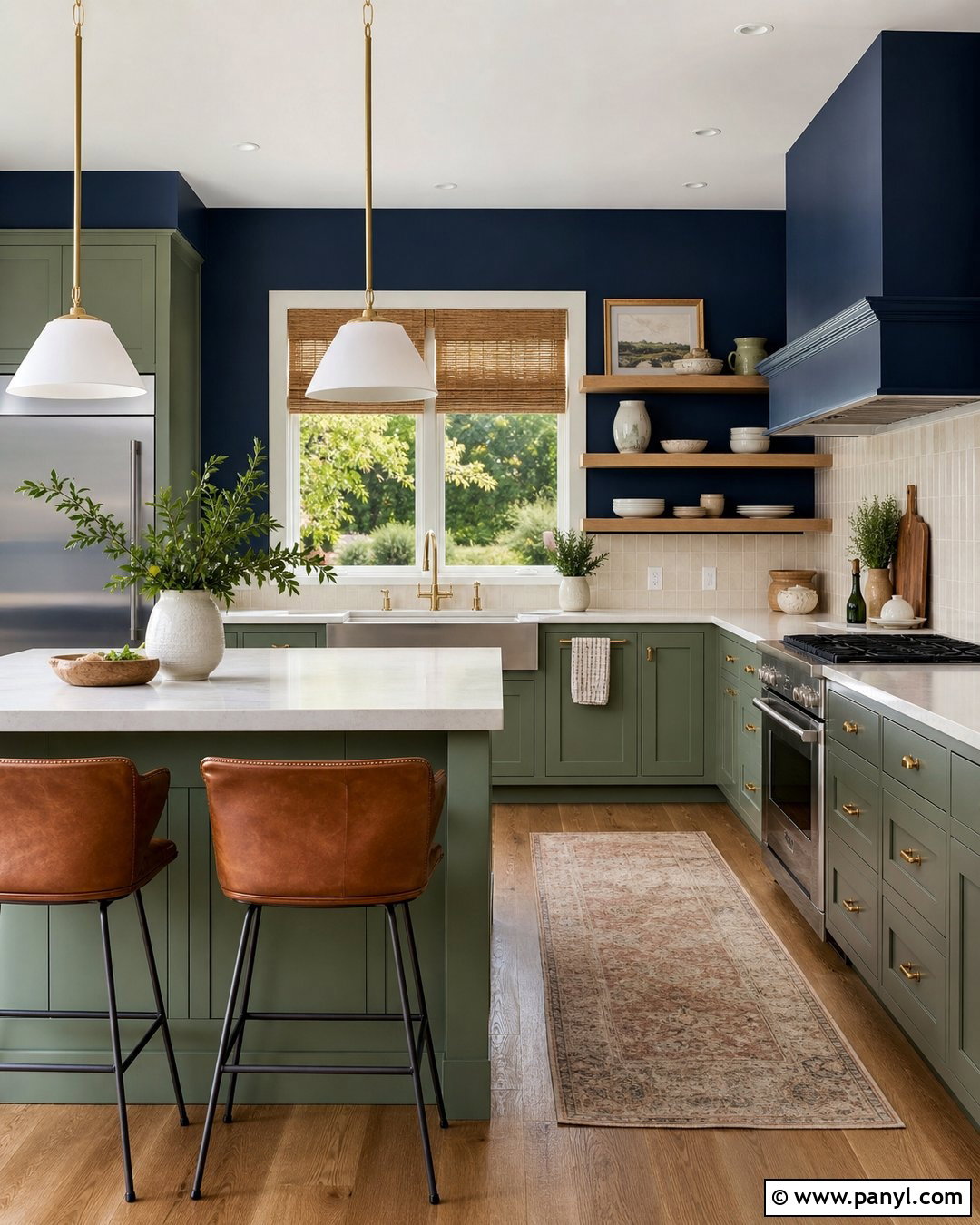
Navy walls and muted green cabinets form a layered, nature-inspired palette with plenty of depth. Choose a subdued sage or gray-green for the cabinetry so it complements the navy instead of fighting for attention. Use creamy quartz countertops and a simple warm white backsplash to give the two colors breathing room. Natural oak shelves, tan leather stools, and woven window coverings connect the cooler shades with earthy materials. Aged brass hardware works well because its muted finish feels softer than shiny gold. Limit additional colors to ivory, brown, and small touches of black. This look is particularly effective in kitchens with garden views or strong daylight. Test both paint colors together before committing, since their undertones should appear harmonious throughout the day.
9. Navy Blue Kitchen Walls With Natural Wood Shelves
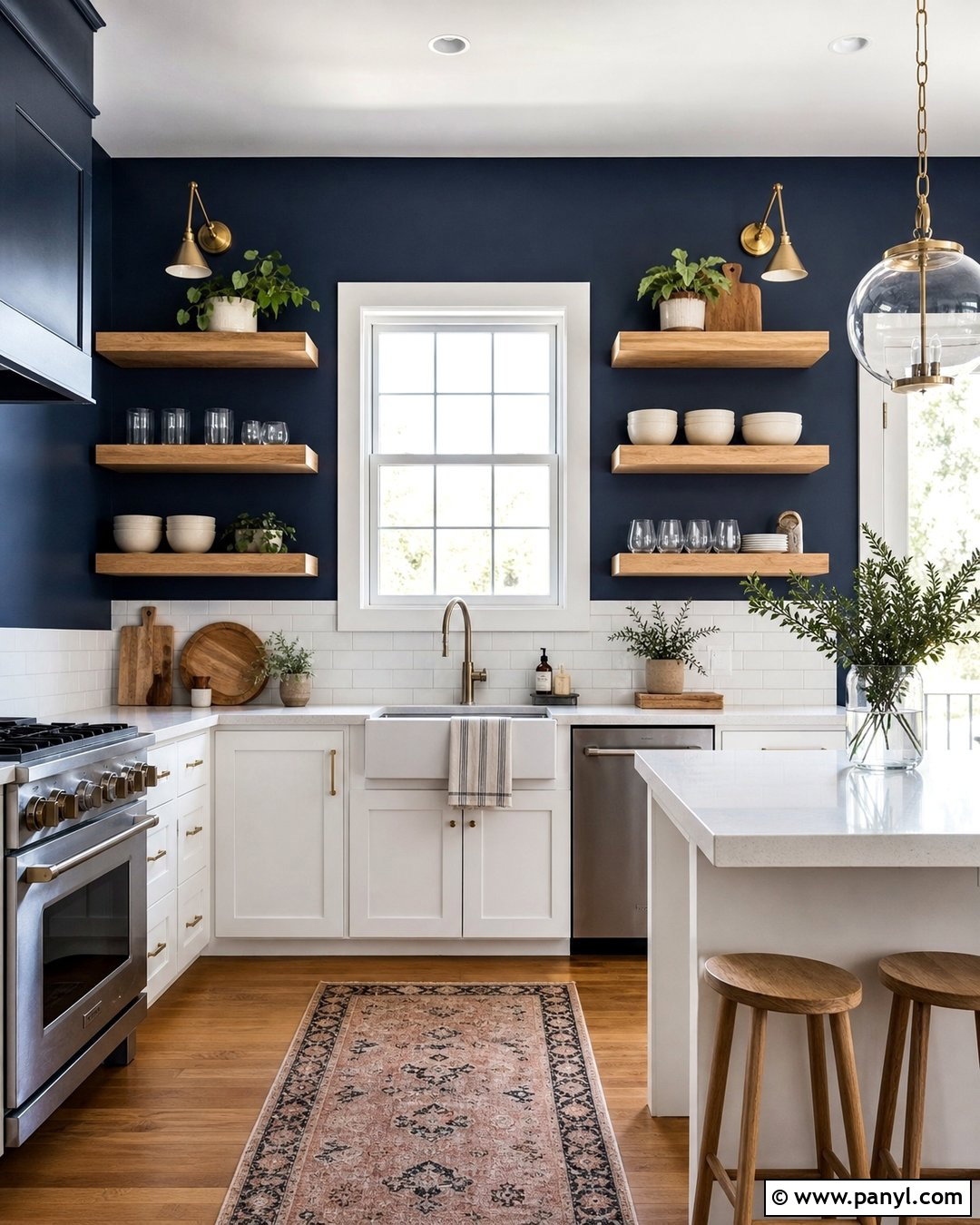
Open wood shelving breaks up navy blue kitchen walls while giving everyday pieces a useful display area. Choose thick oak or walnut shelves with simple concealed supports. Place them above white lower cabinets topped with pale quartz, leaving enough navy visible to frame the arrangement. Display practical items such as cream bowls, clear glasses, wooden boards, and a few small plants. Avoid filling every inch, since open space helps the shelves look intentional. A white tile backsplash can stop below the shelves, allowing the upper wall color to remain prominent. Add warm brass sconces above the display and repeat the metal on cabinet pulls. Wide-plank wood flooring and a neutral runner complete this approachable kitchen without distracting from the navy backdrop.
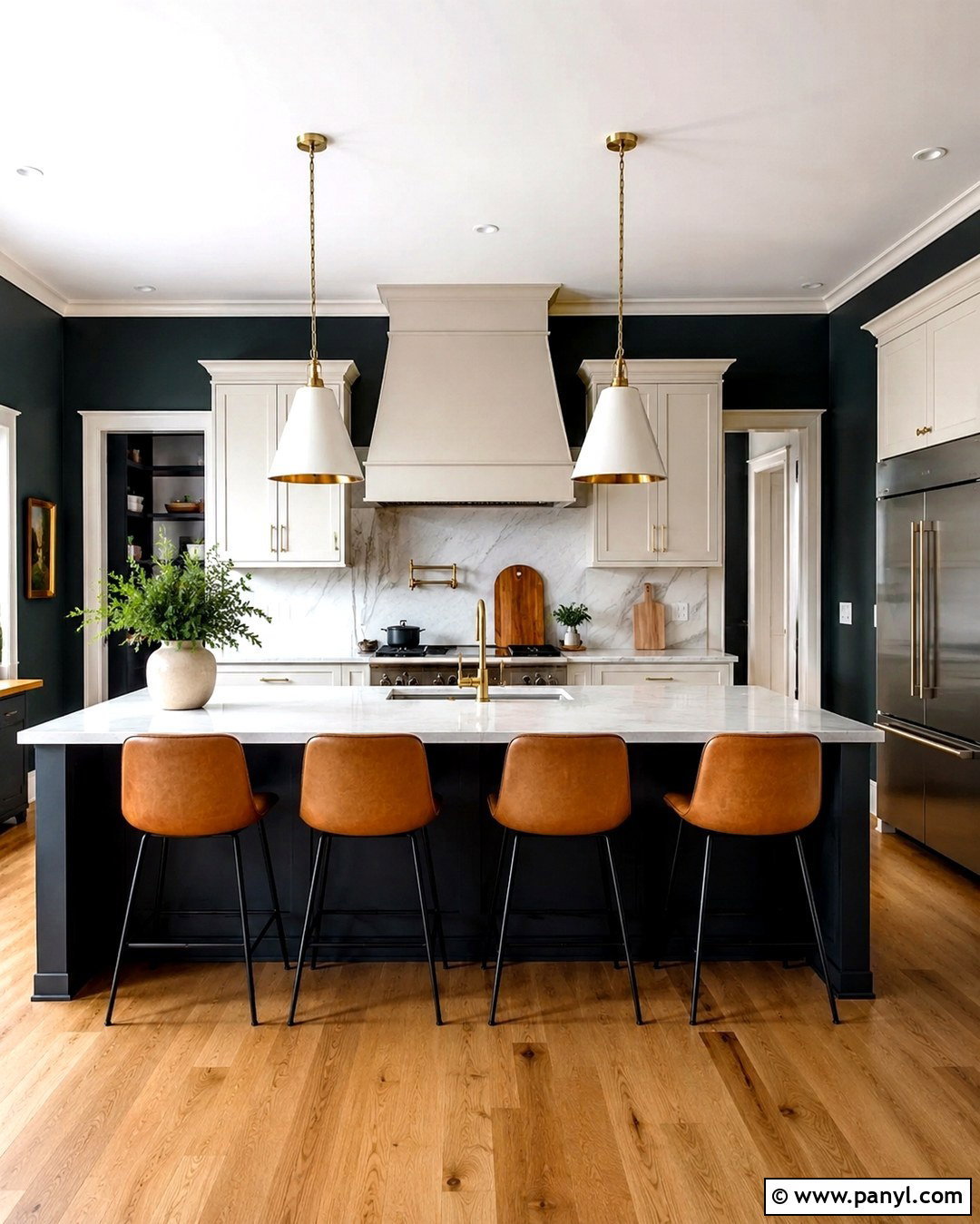
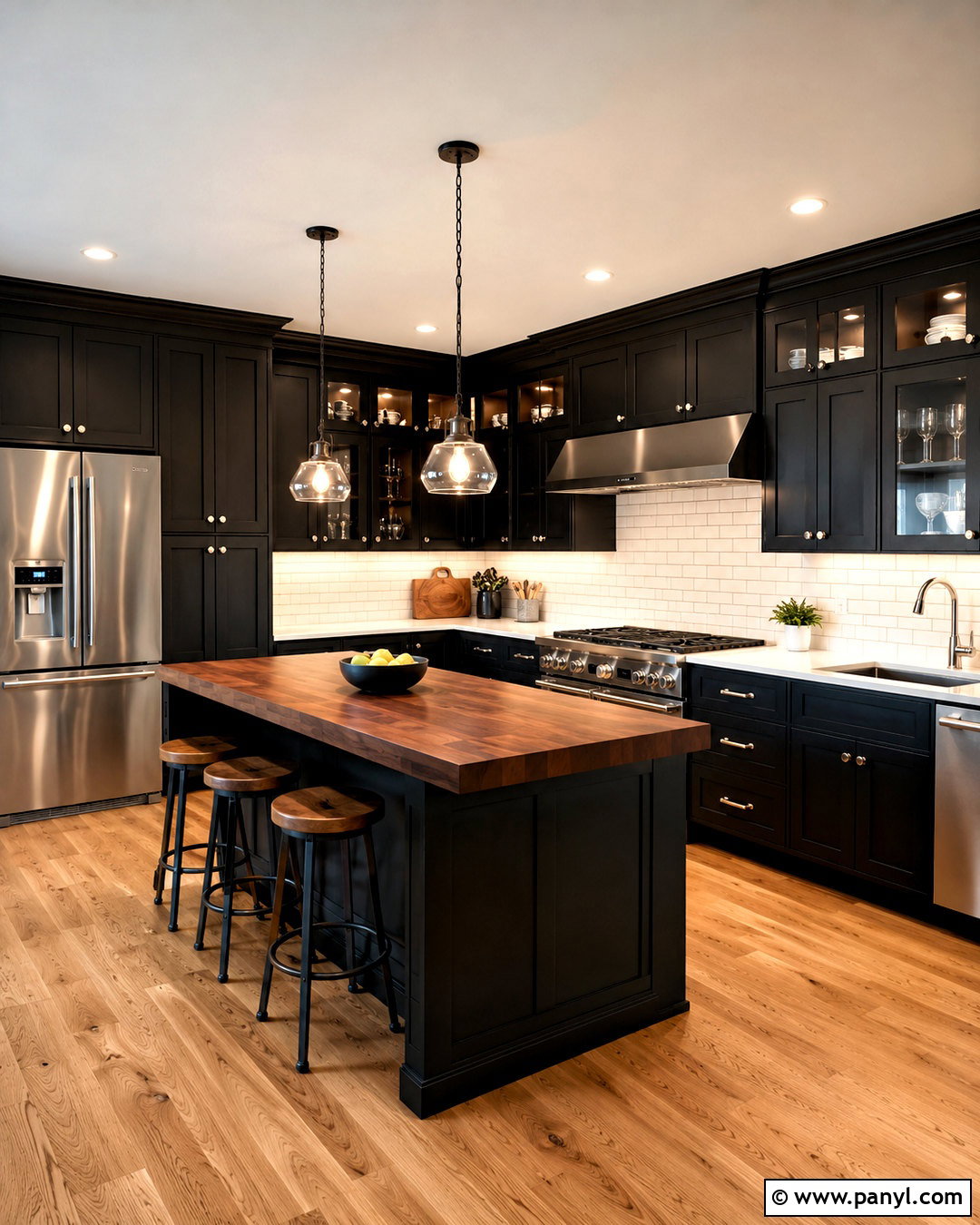
10. Navy Blue Kitchen Walls With Marble Counters
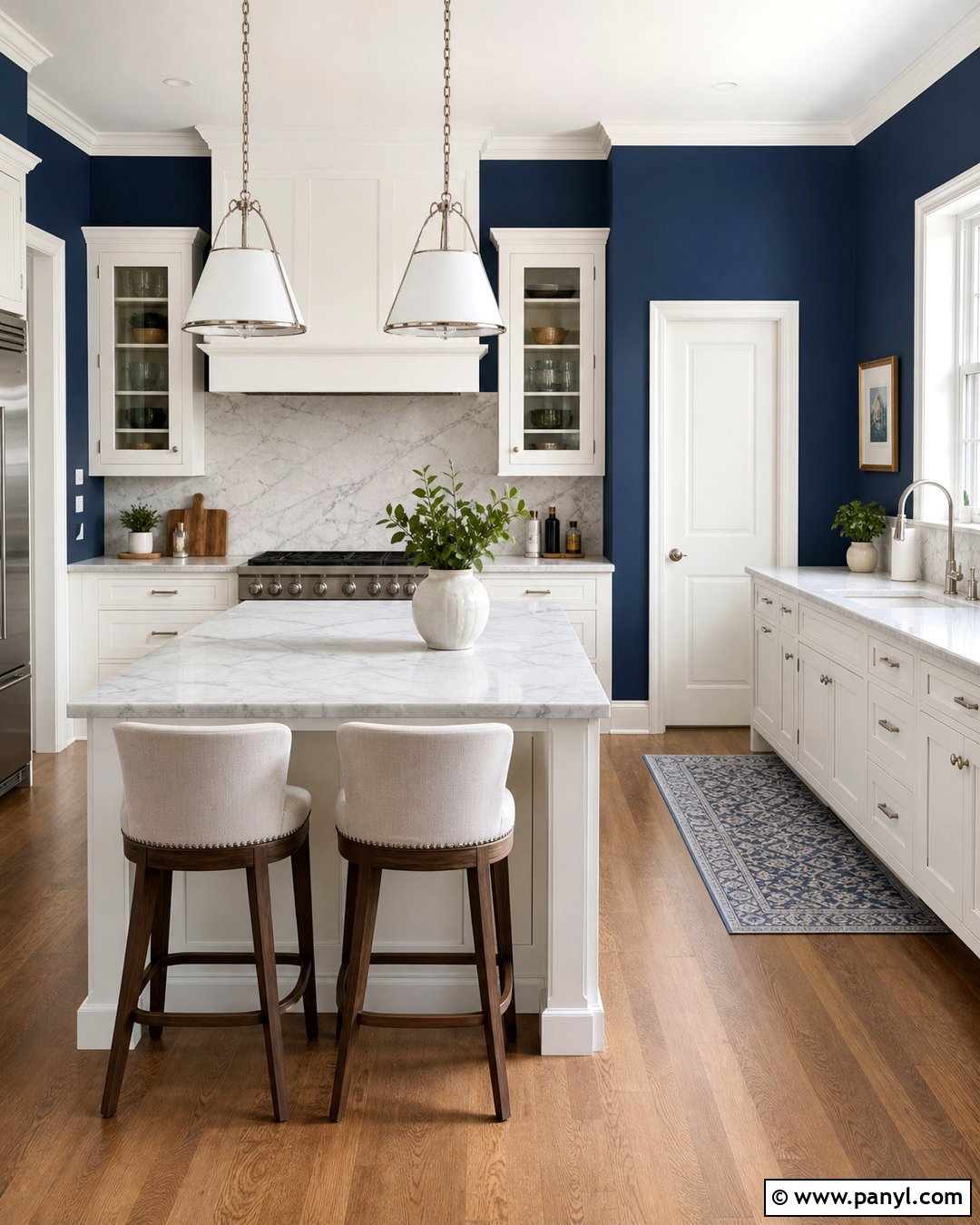
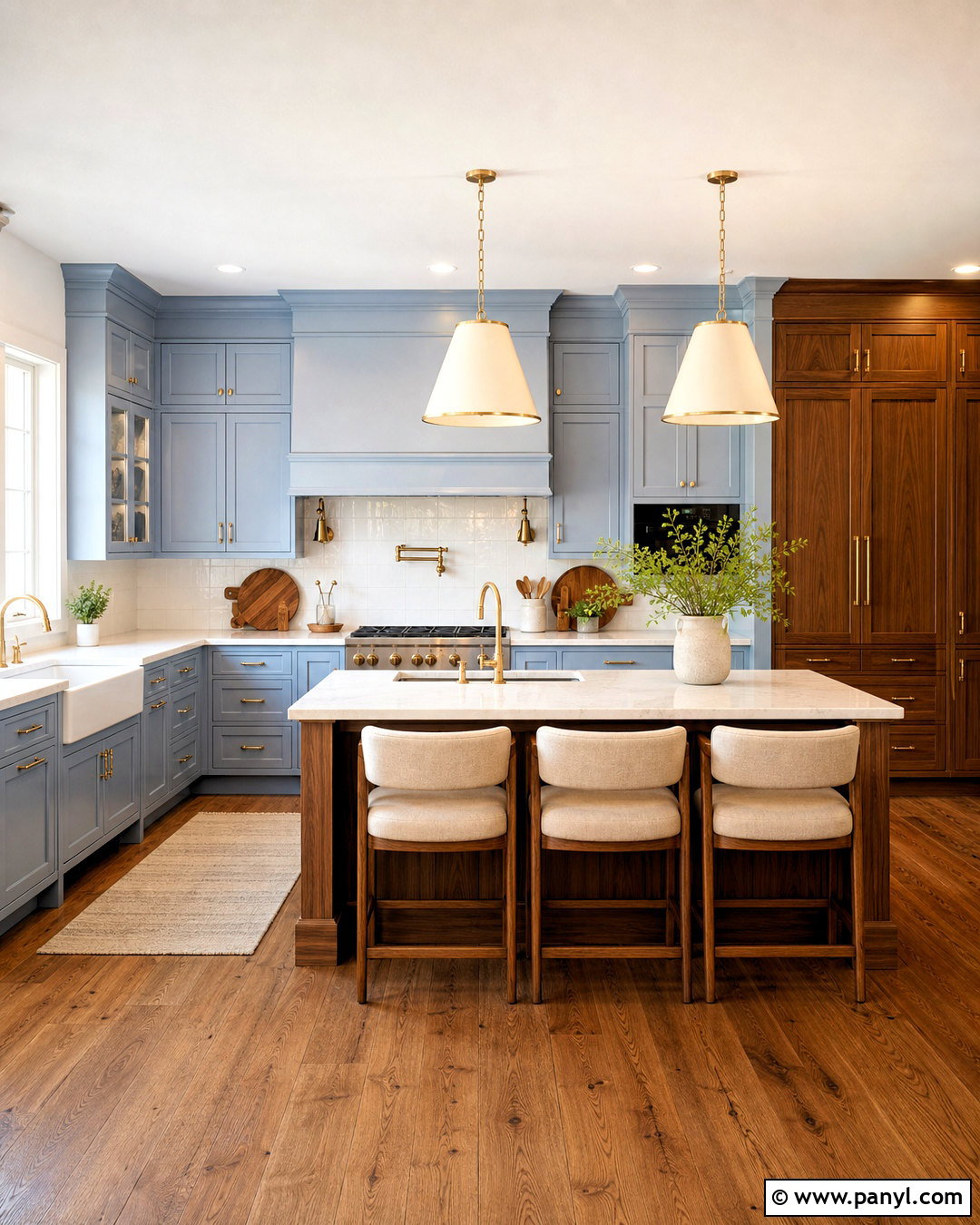
Elegant marble surfaces become a bright focal point when placed against navy blue kitchen walls. Use white cabinetry to frame the room and select marble or marble-look quartz with soft gray veining. Carry the same material up the backsplash for a smooth, continuous work zone that reflects light. Polished nickel hardware adds a cooler, classic finish, while medium wood flooring keeps the room from becoming overly formal. A navy-painted breakfast wall can connect visually with the remaining walls without hiding the stone. Choose upholstered counter stools in light beige and pendants with white glass shades. Keep decorative objects simple and sculptural. Because marble patterns already provide movement, avoid a busy floor or strongly patterned textiles that could compete with the countertops.
11. Navy Blue Kitchen Walls With White Subway Tile
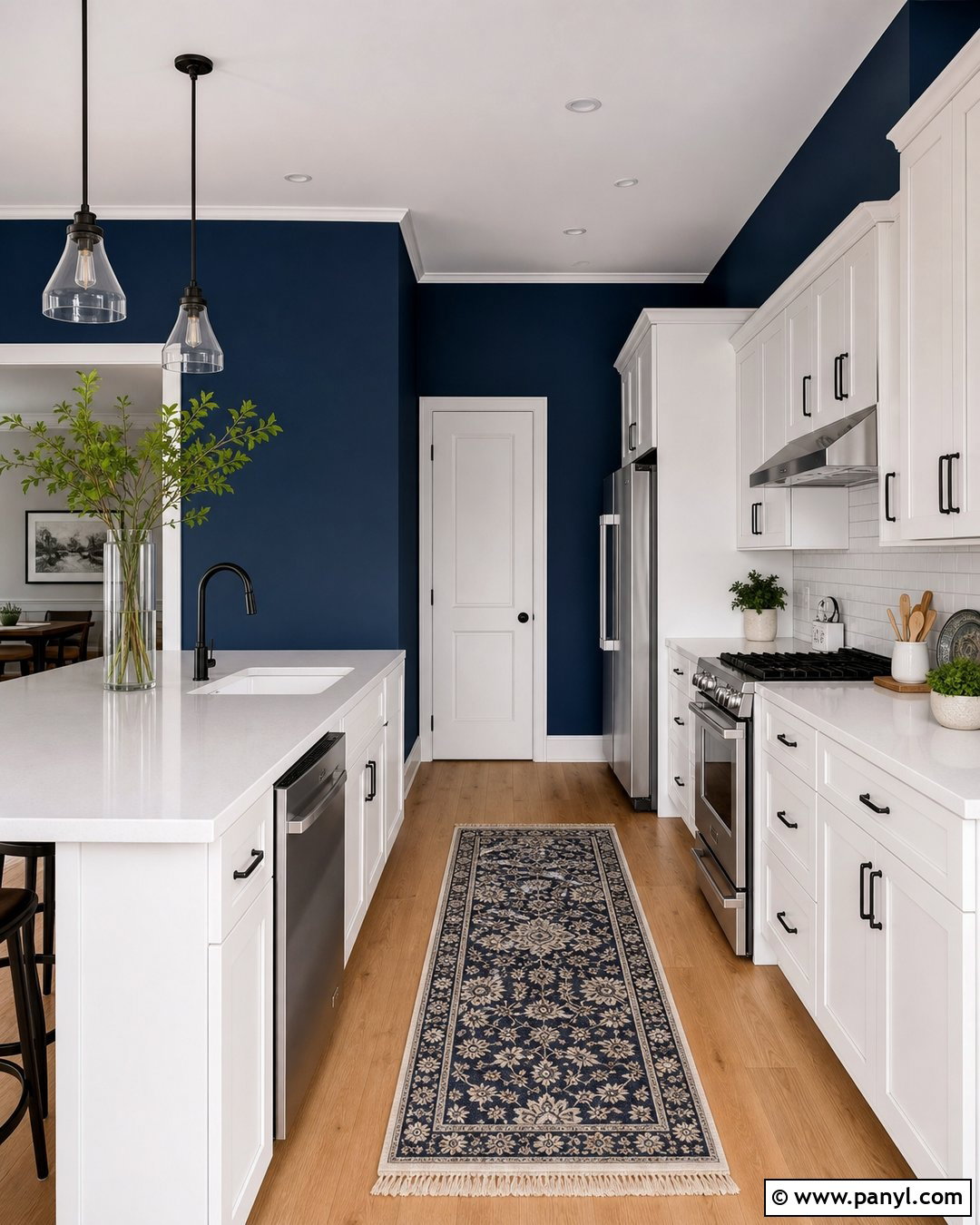
White subway tile provides a practical, familiar contrast to deep navy walls. Install the tile across the cooking and sink areas, then let navy paint cover the remaining wall surfaces and the space above the backsplash. White Shaker cabinetry and light quartz counters will create a fresh foundation. For a more relaxed look, use warm gray grout rather than stark white grout. Add black hardware, a stainless steel range, and industrial glass pendants for clean definition. Medium oak flooring brings warmth, while a navy-and-cream runner links the wall color to the center of the room. Keep open surfaces mostly clear. A few wooden utensils, white crocks, and potted herbs are enough to make the kitchen feel lived-in without obscuring the strong color contrast.
12. Navy Blue Kitchen Walls With Patterned Tile
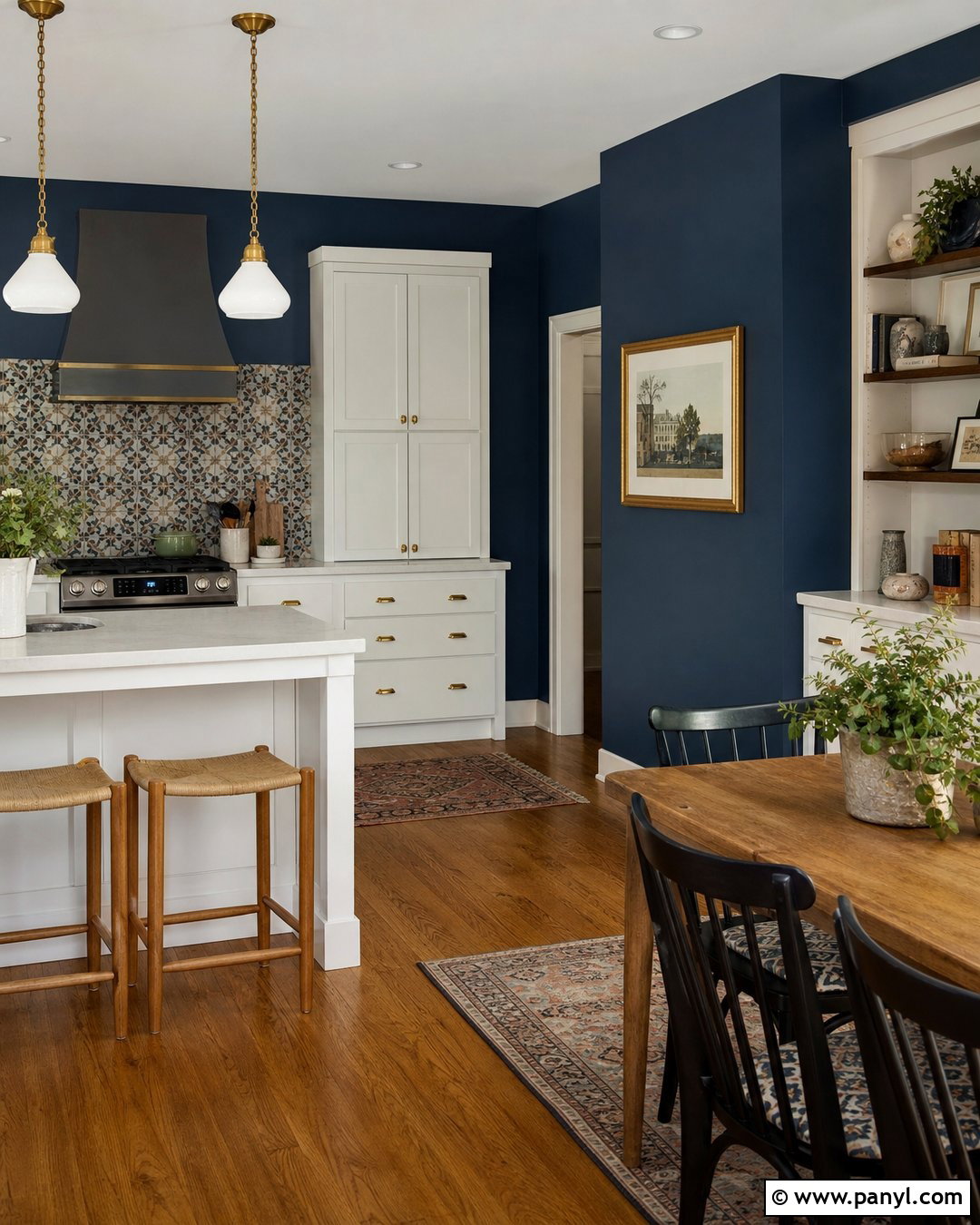
Patterned backsplash tile can turn navy blue kitchen walls into part of a lively but coordinated design. Select tile containing navy, warm white, and one restrained accent such as soft gray or muted terracotta. Use plain white cabinets and simple quartz countertops so the pattern remains the primary decorative feature. Continue navy paint around the room but stop it cleanly where the tile begins. Natural wood stools and flooring will calm the stronger graphics. Choose uncomplicated cabinet pulls and pendant lights in matte black or aged brass. Repeat only one tile color in the runner or accessories. This approach works well in an eat-in kitchen where the pattern can connect the cooking area with a nearby table, creating one complete and visually intentional space.
13. Navy Blue Kitchen Walls With White Shiplap
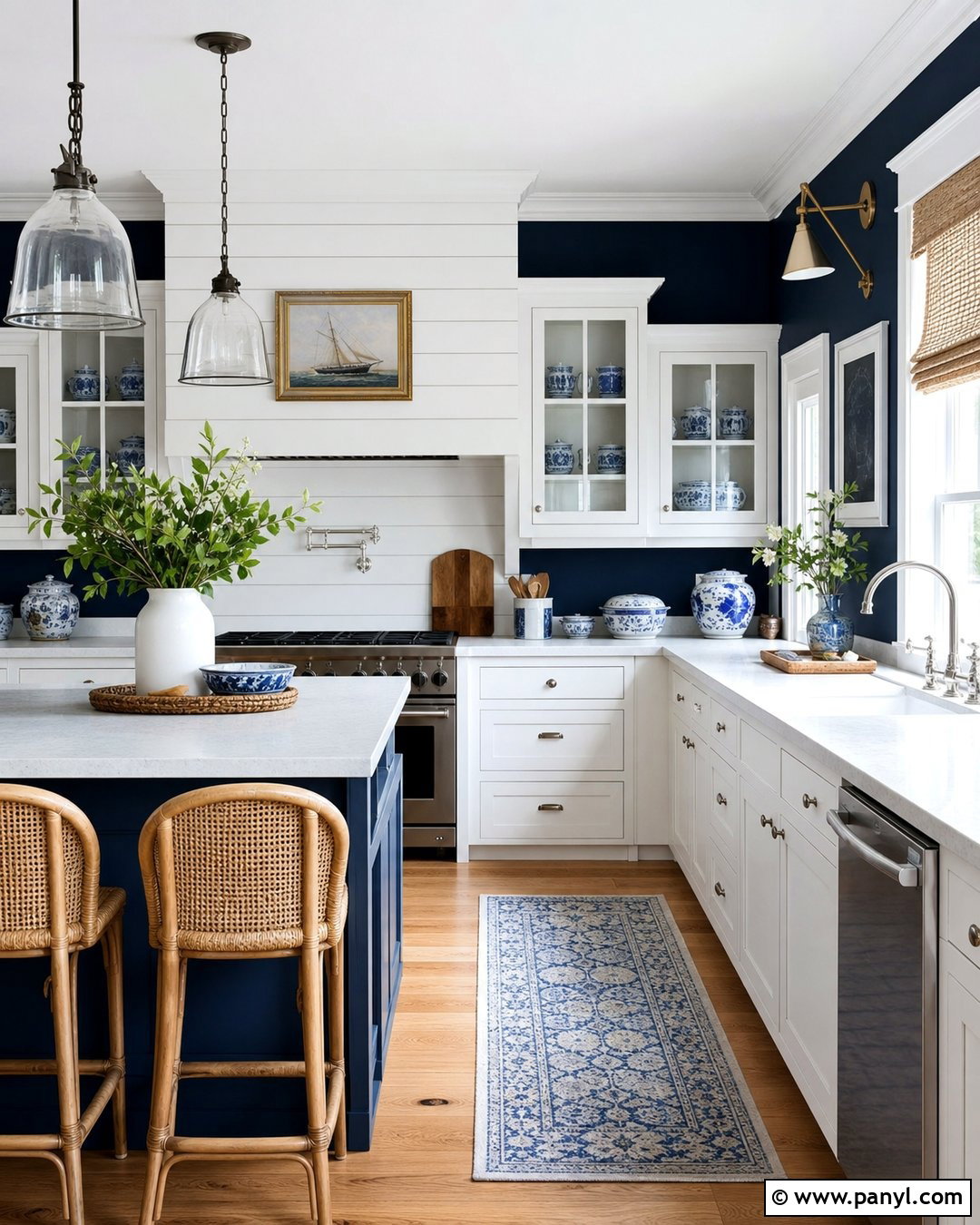
White shiplap and navy blue kitchen walls create a clean coastal farmhouse combination without requiring themed decor. Use navy on the main walls and install horizontal white shiplap behind open shelves or around the breakfast area. Pair the walls with white inset cabinets, pale counters, and medium oak flooring. Woven counter stools and natural fiber shades introduce relaxed texture. Choose brushed nickel or aged brass hardware, depending on whether you prefer a cooler coastal finish or a warmer farmhouse look. Clear glass pendants will keep the sightlines open over the island. Add blue-and-white ceramics sparingly, along with wooden boards and simple greenery. Keeping the architectural materials consistent allows the room to feel casual and cohesive instead of overly decorative or nautical.
14. Navy Blue Kitchen Walls With Wood Paneling
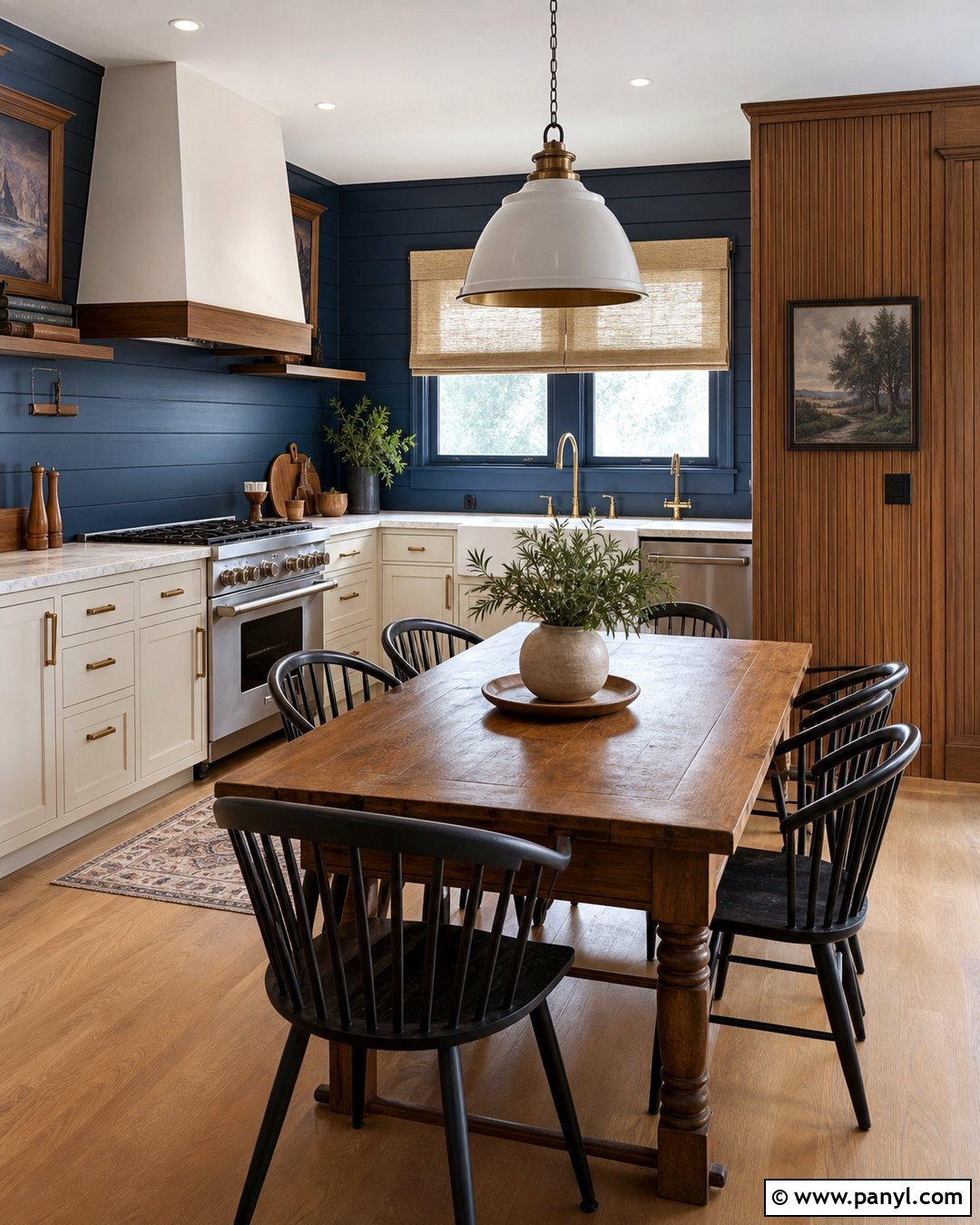
Wood paneling gives a navy kitchen extra architectural depth and can make a plain eating area feel more finished. Cover the lower half of the walls with vertical oak paneling, then apply navy paint above it. Alternatively, paint narrow tongue-and-groove paneling navy and keep the upper wall warm white. Pair this treatment with cream cabinets, pale stone counters, and simple bronze hardware. A solid wood dining table and spindle-back chairs will connect naturally with the paneled surface. Use a wide pendant with a white shade above the table for focused brightness. Keep window coverings light and textural. This complete scheme suits Craftsman, cottage, and transitional homes, particularly when the kitchen includes a breakfast corner that needs stronger visual separation from the work area.
15. Navy Blue Kitchen Accent Wall
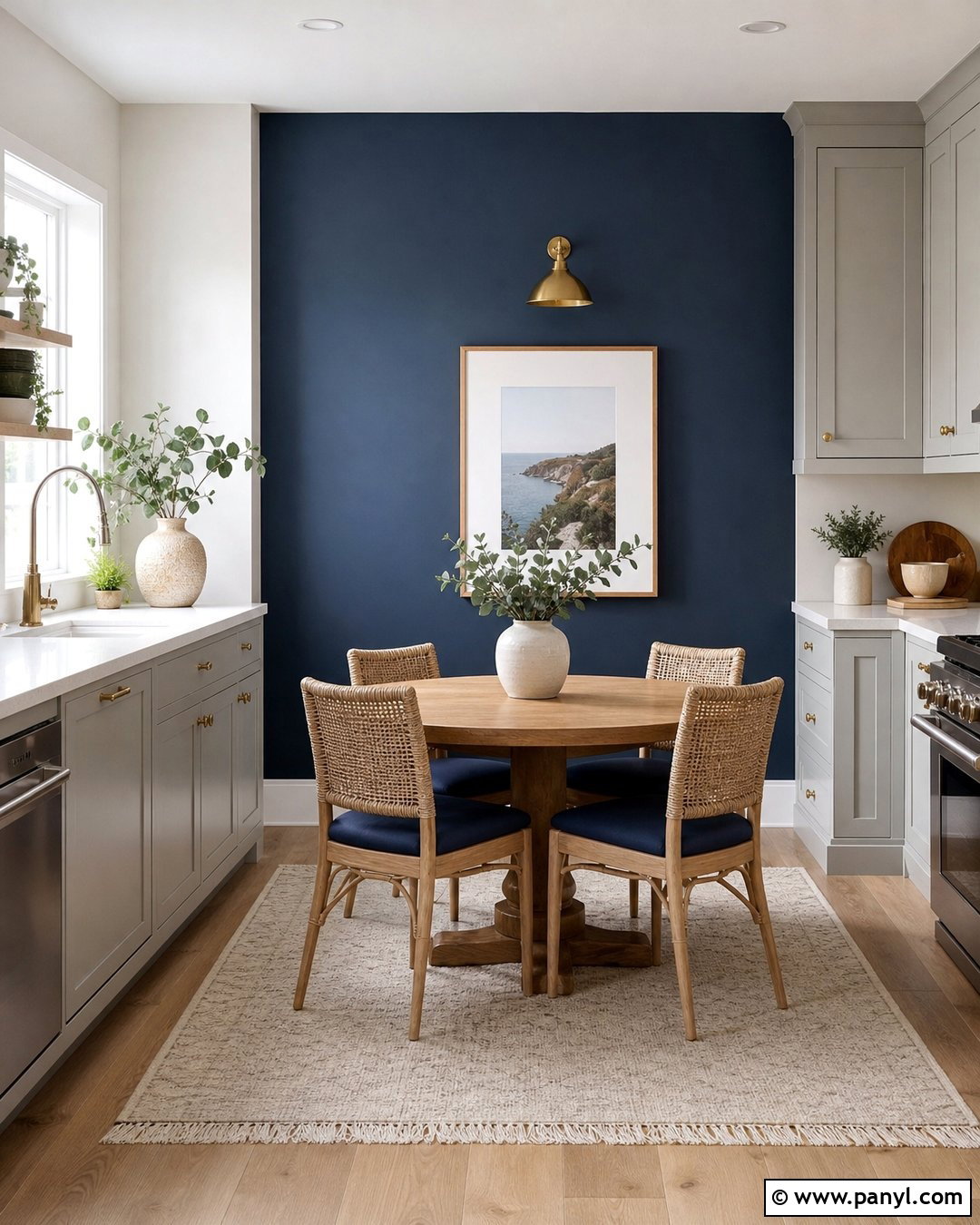
A single navy blue kitchen accent wall can provide definition without making the whole room dark. Choose the wall behind the breakfast table, open shelving, or freestanding storage so the color frames a clear focal point. Keep the other walls warm white and use light gray or cream cabinets. A round oak table, woven chairs, and a pale rug will stand out clearly against the navy backdrop. Add one large piece of simple artwork or a brass wall light rather than a crowded gallery. Repeat navy in small amounts through seat cushions or a runner to connect the accent wall with the cooking area. This layout is useful in smaller kitchens, rentals, and open rooms where a full navy treatment might visually interrupt neighboring spaces.
16. Navy Blue Kitchen Breakfast Nook
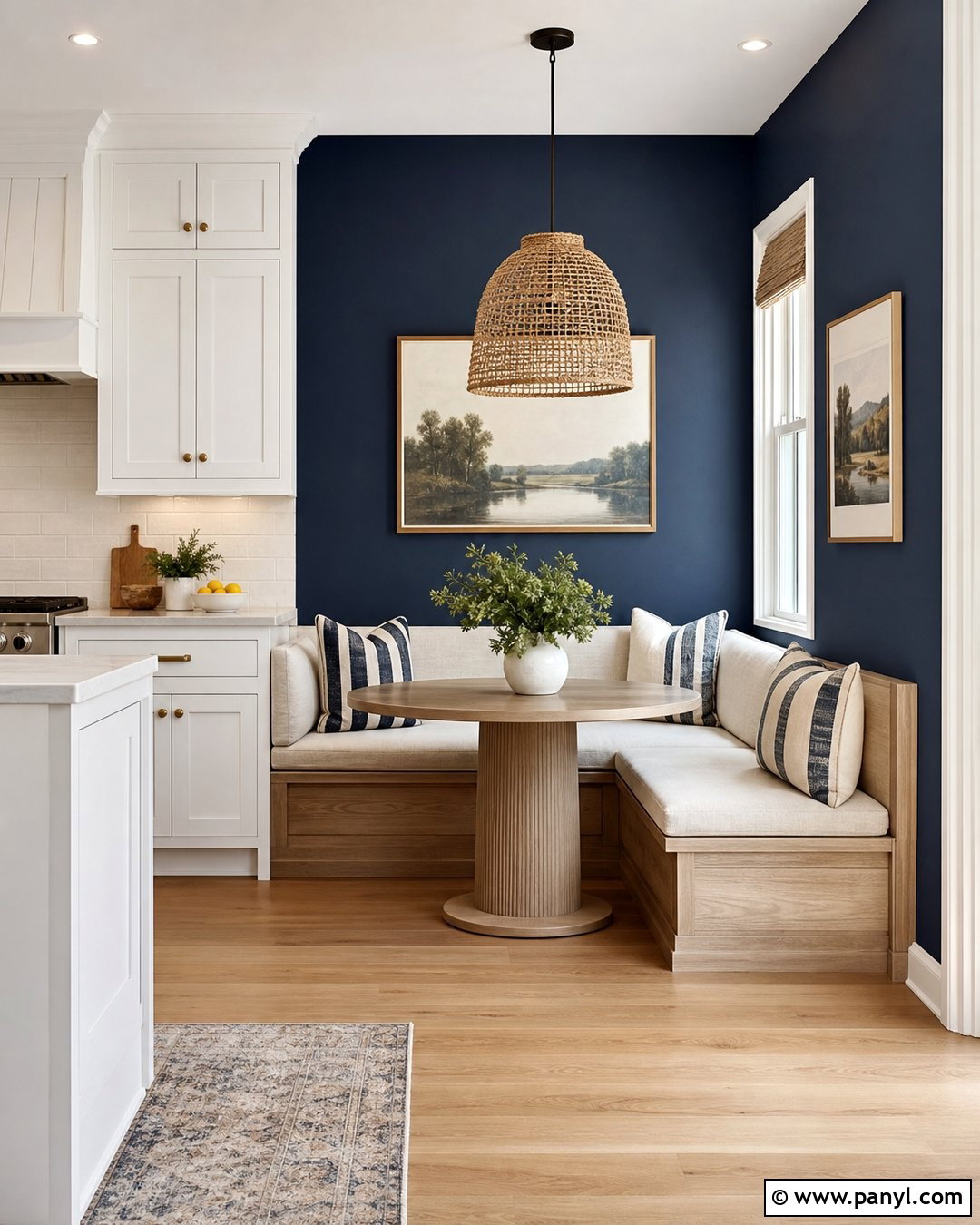
A navy breakfast nook can feel cozy while the main kitchen remains light and open. Paint the nook’s walls navy, then install an L-shaped bench in natural oak or warm white. Add oatmeal-colored seat cushions, striped pillows, and a round pedestal table that allows easy movement. Keep the connected kitchen cabinets white with pale counters so the darker dining zone feels purposeful rather than overpowering. A woven pendant centered above the table will introduce warmth and texture. Hang a simple landscape print or small group of light-framed artwork against the navy wall. Use the same oak tone for the kitchen stools and flooring. This repetition creates a complete, connected design while giving the breakfast area its own welcoming identity.
17. Navy Blue Kitchen Walls With A White Island
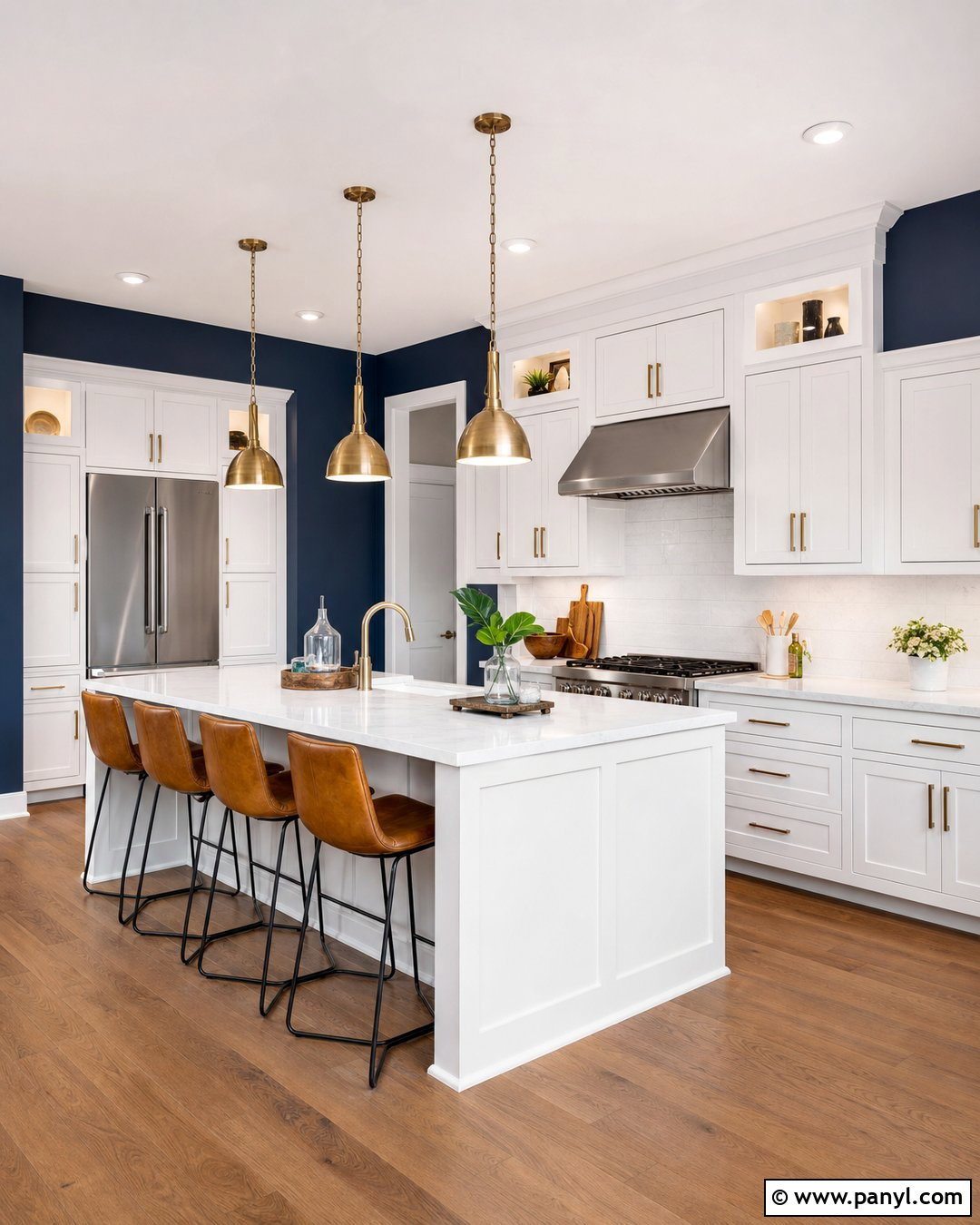
A large white island can balance navy blue kitchen walls and create a bright center for cooking and gathering. Choose white perimeter cabinetry and continue the same color onto the island for a calm, unified foundation. Top it with pale quartz or lightly veined stone. Navy walls will provide enough contrast to define the cabinetry without requiring additional strong colors. Use medium wood flooring, cognac leather stools, and aged brass pendants to warm the room. A white backsplash and stainless steel appliances maintain brightness around the perimeter. Keep the island decor functional with a wooden bowl, a small plant, and clear glass containers. This arrangement works best when navy remains visible above cabinets, around windows, and beside tall pantry units.
18. Navy Blue Kitchen Walls With A Wood Island
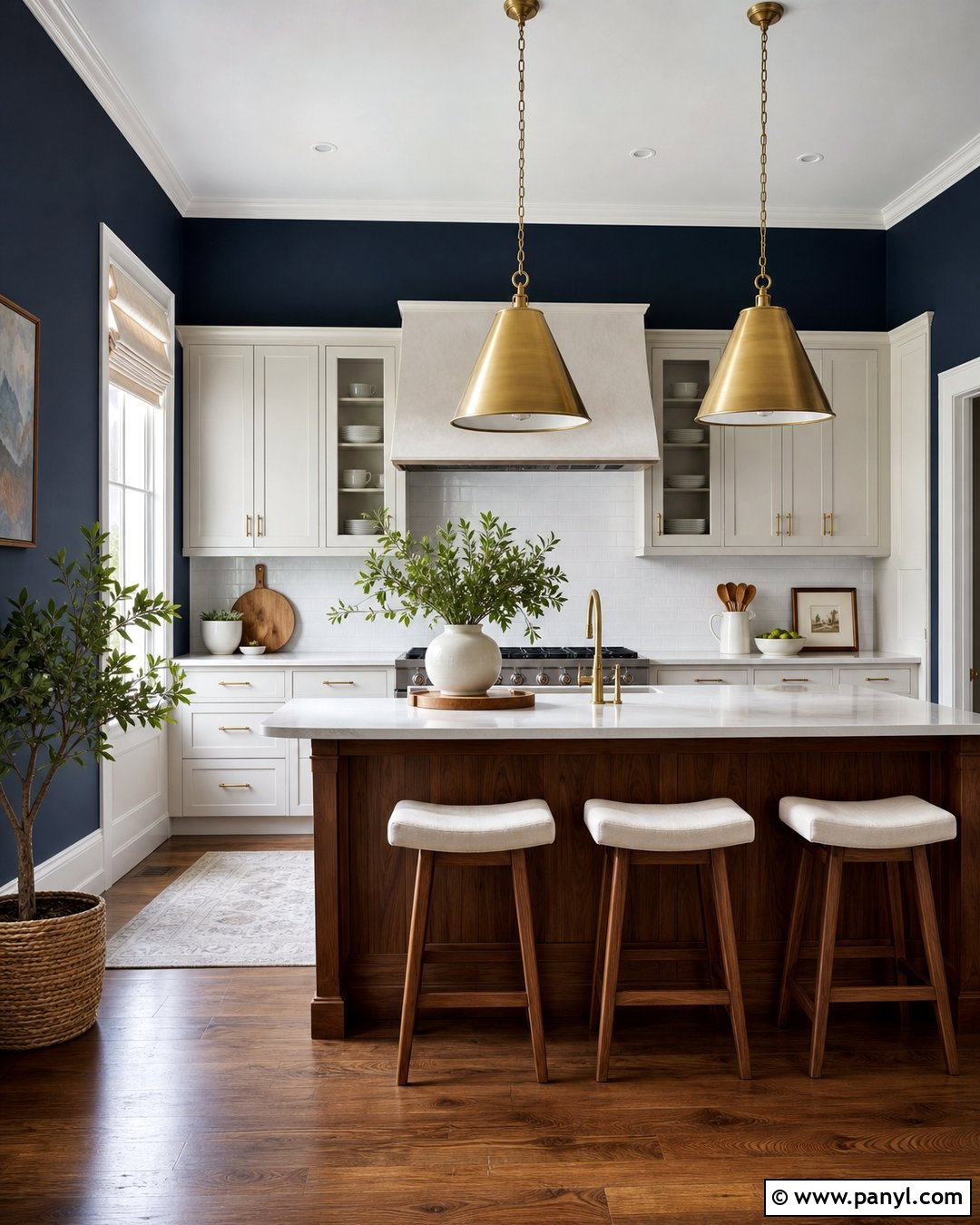
A natural wood island adds warmth and visual weight to a kitchen surrounded by navy walls. Select oak, walnut, or stained maple in a finish that coordinates with the flooring without matching it perfectly. Use warm white perimeter cabinets and pale quartz countertops to keep the outer work zones bright. A white backsplash will create clean separation between the cabinets and wall color. Repeat the island’s wood tone through floating shelves or stool frames, but avoid adding too many competing wood species. Brushed brass pendants and cabinet pulls lend subtle warmth. Finish the room with linen shades, cream ceramics, and a low-pattern runner. The island becomes the inviting center, while navy walls give the overall kitchen a structured, grounded background.
19. Navy Blue Kitchen Walls With A Black Island
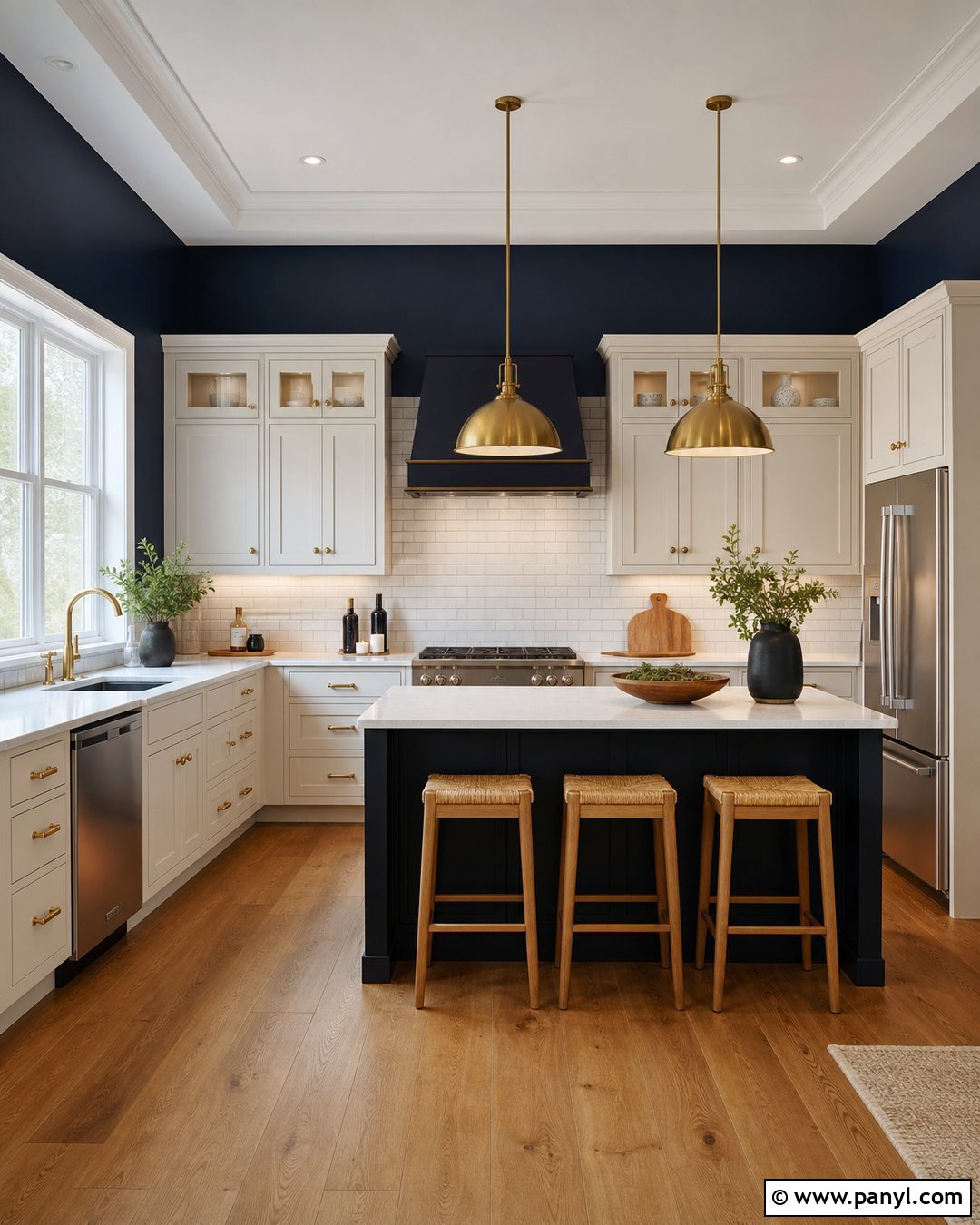
A black island can work with navy blue kitchen walls when lighter finishes clearly separate the two dark colors. Choose warm white perimeter cabinets, a white tile backsplash, and bright quartz counters. Top the island with the same pale material so its edges remain easy to see. Use black only on the island and a few lighting details rather than repeating it across every fixture. Medium oak floors, wood stools, and aged brass hardware will soften the strong contrast. Keep the ceiling bright white and include layered lighting above, below, and inside the cabinetry. This bold combination is best for kitchens with broad windows or open sightlines. The finished space should feel graphic and deliberate, not dim or crowded with dark surfaces.
20. Navy Blue Kitchen Walls With Stainless Steel
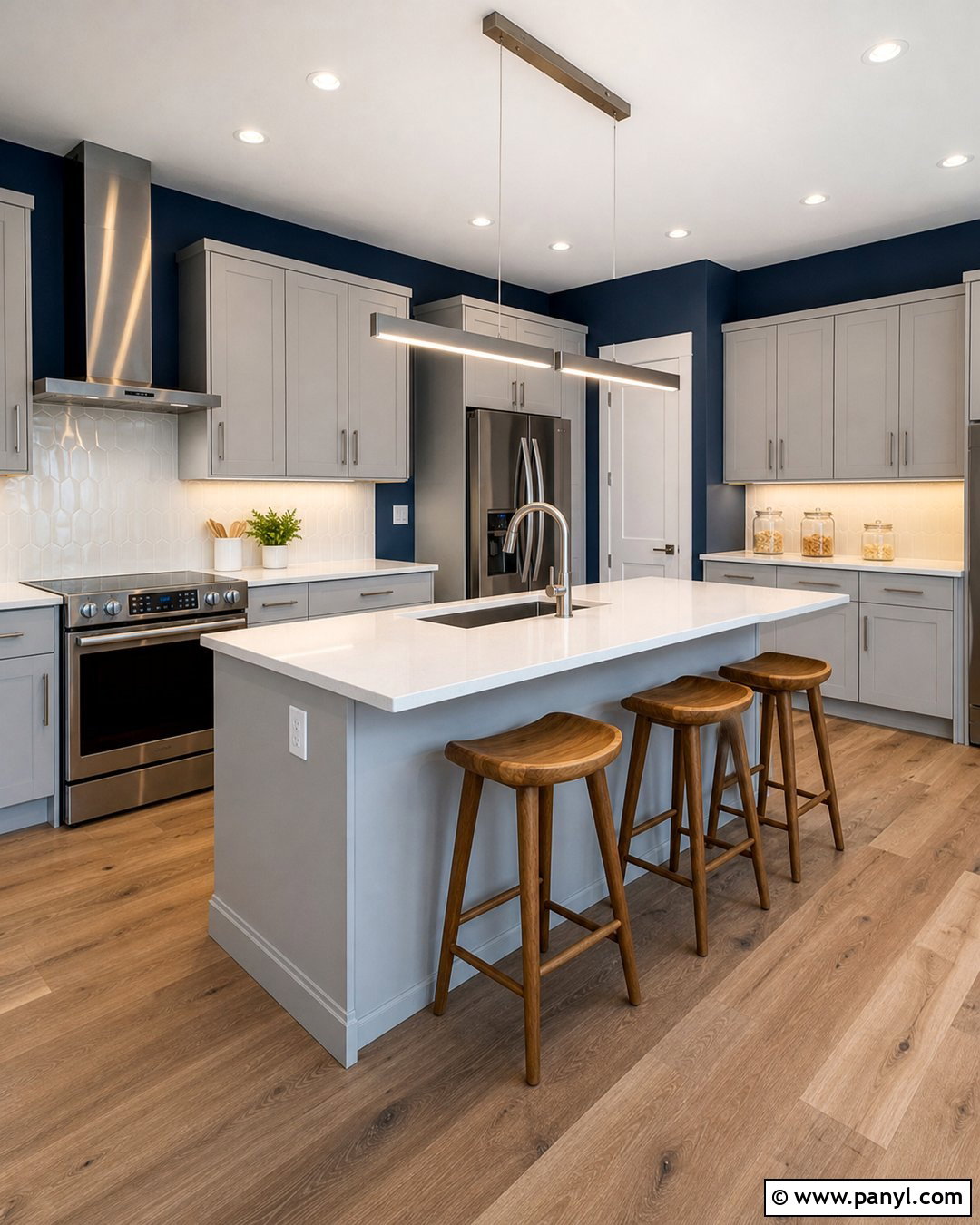
Stainless steel brings a practical, contemporary edge to navy blue kitchen walls. Build the room around flat-panel white or pale gray cabinets, simple quartz countertops, and a stainless steel range, refrigerator, and vent hood. The cool metal will look crisp against the wall color, while oak flooring and wood stools prevent the space from feeling industrial. Use brushed nickel pulls and a matching faucet to connect the appliances with the smaller fixtures. Install bright under-cabinet lights and white backsplash tile around the cooking area. A linear pendant over the island can strengthen the modern layout. Finish with clear glass containers, white dishware, and one or two leafy plants. The result feels streamlined but comfortable enough for everyday family cooking.
21. Navy Blue Kitchen Walls With Copper Accents
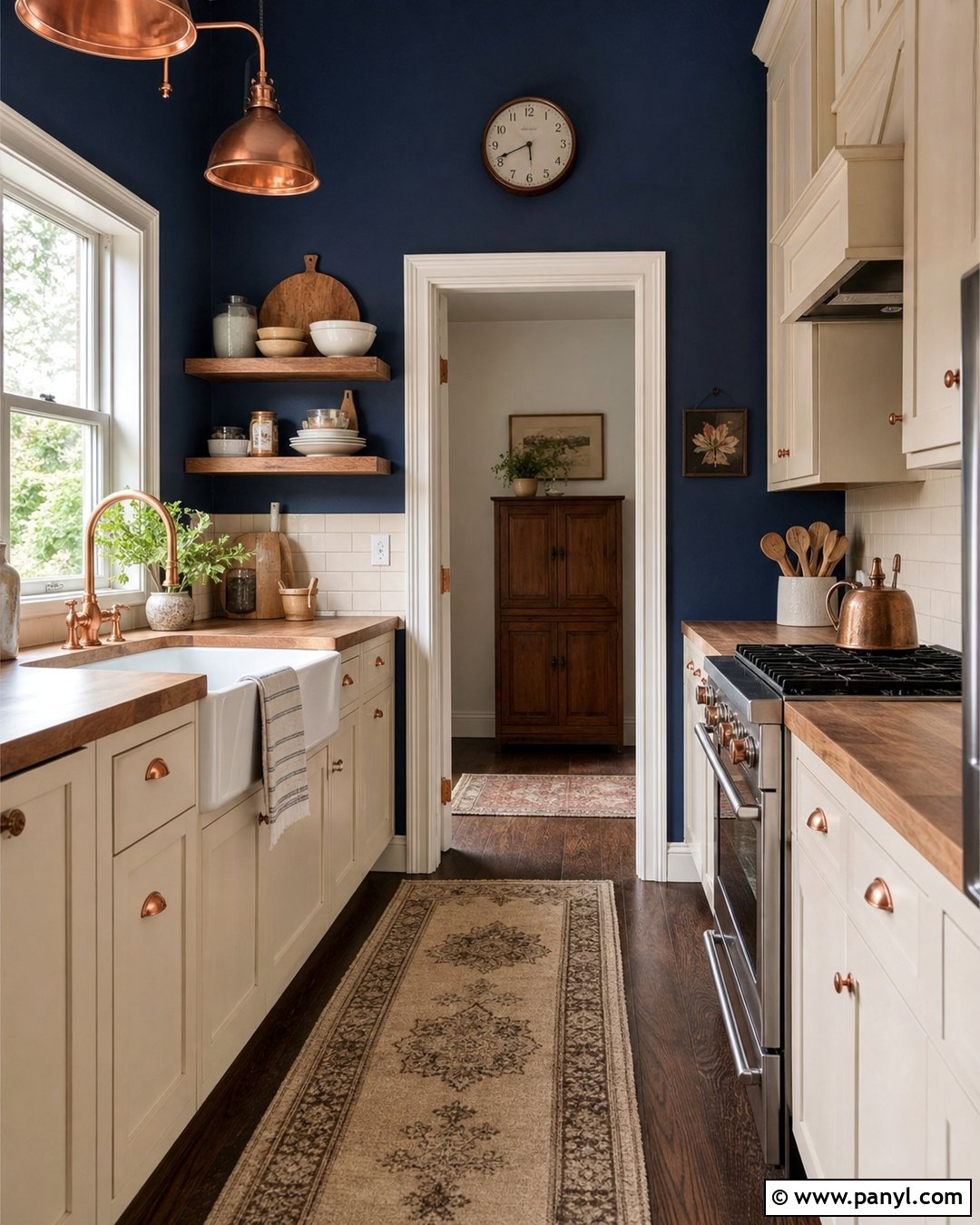
Copper adds a warm, slightly rustic glow to navy walls and works best when used in a few deliberate places. Choose cream cabinets, butcher block counters, and a simple off-white backsplash as the room’s foundation. Introduce copper through pendant lights, a faucet, cabinet knobs, or neatly arranged cookware on a rail. Avoid filling every surface with metallic accessories, since copper becomes more effective when surrounded by quieter materials. Dark wood flooring and a vintage-inspired neutral runner will support the cozy palette. Use open shelves for cream pottery and wooden kitchen essentials. Soft white ceiling paint and bright task lighting will keep the room clear and functional. This complete look suits traditional, cottage, and updated farmhouse kitchens particularly well.
22. Navy Blue Kitchen Walls With Terracotta Floors
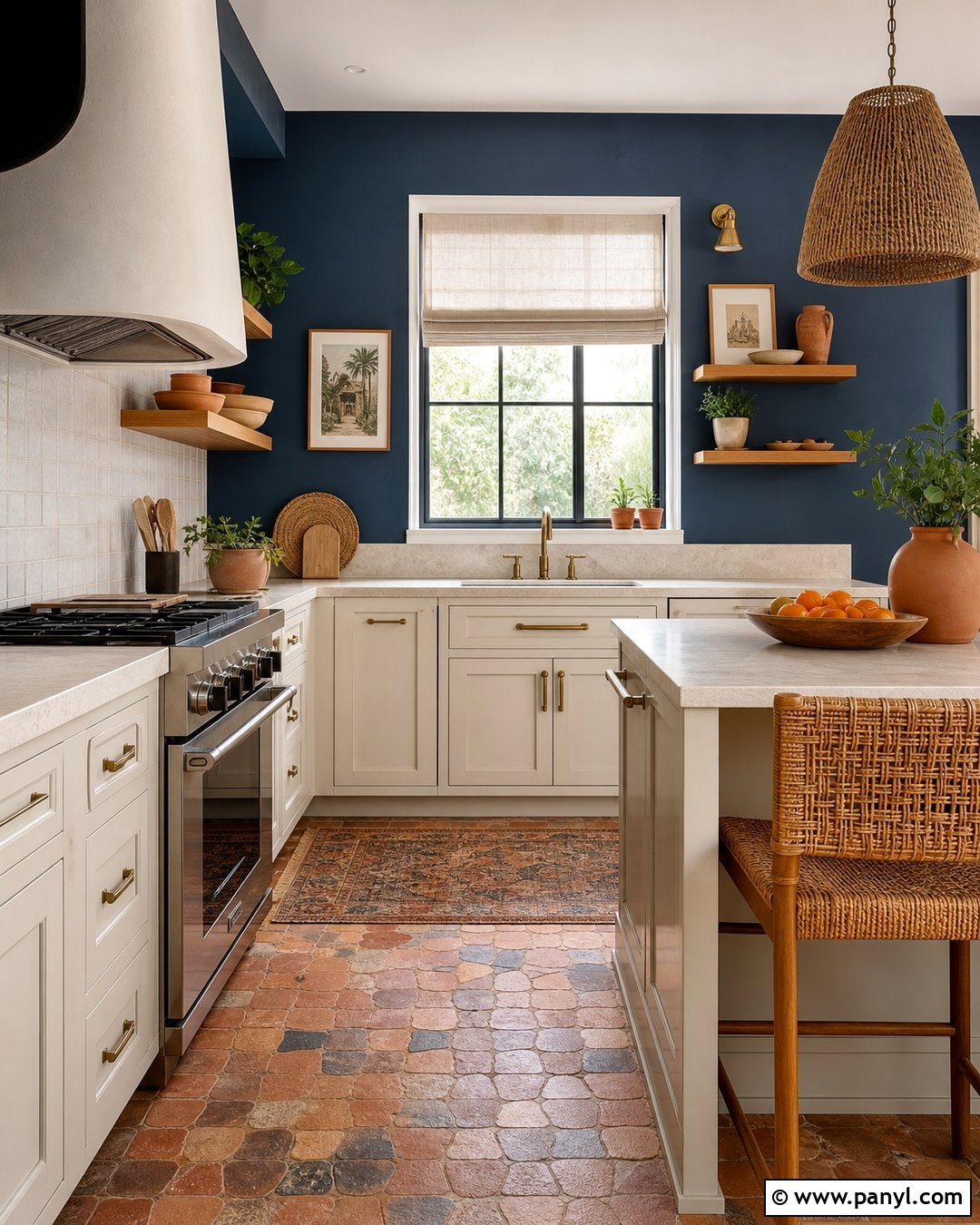
Terracotta flooring creates an earthy contrast that makes navy blue kitchen walls feel warmer and more relaxed. Use cream or soft white cabinetry with uncomplicated Shaker doors. Pale stone countertops and an ivory backsplash will provide a calm transition between the dark walls and warm floor. Repeat the terracotta color sparingly through small planters or a patterned runner. Natural wood shelves and aged brass hardware complement both major colors. Choose simple linen window treatments that allow plenty of daylight into the room. Because terracotta already has visible variation, keep the backsplash and countertop patterns restrained. This palette is especially effective in Spanish-inspired, Mediterranean, cottage, or older kitchens where handmade materials and natural imperfections contribute to the room’s established character.
23. Navy Blue Kitchen Walls With Light Wood Floors
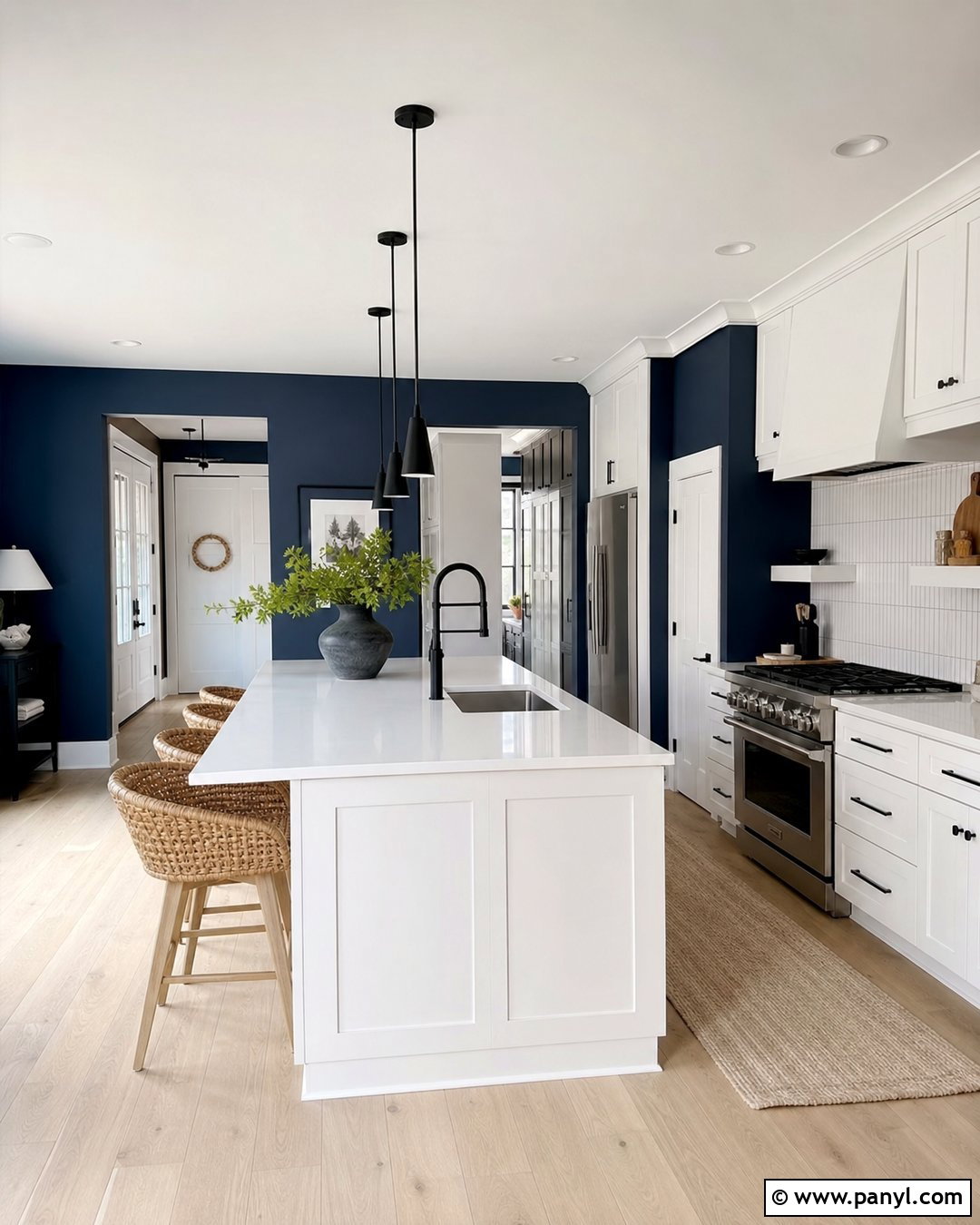
Light wood floors can make navy blue kitchen walls feel crisp, current, and less visually heavy. Choose white oak or pale maple with a natural matte finish. Pair the flooring with warm white cabinets, white quartz counters, and a vertically stacked tile backsplash. Matte black hardware and slim black pendants will provide definition without introducing another major color. Use woven stools and a beige runner to connect the pale flooring with the island area. Keep the ceiling bright white and allow the navy to cover the walls from baseboard to crown molding for a confident finish. This scheme works well in Scandinavian-influenced and modern transitional kitchens. Its success comes from combining a deep background with broad, uninterrupted areas of light wood and white.
24. Navy Blue Kitchen Walls With Dark Wood Floors
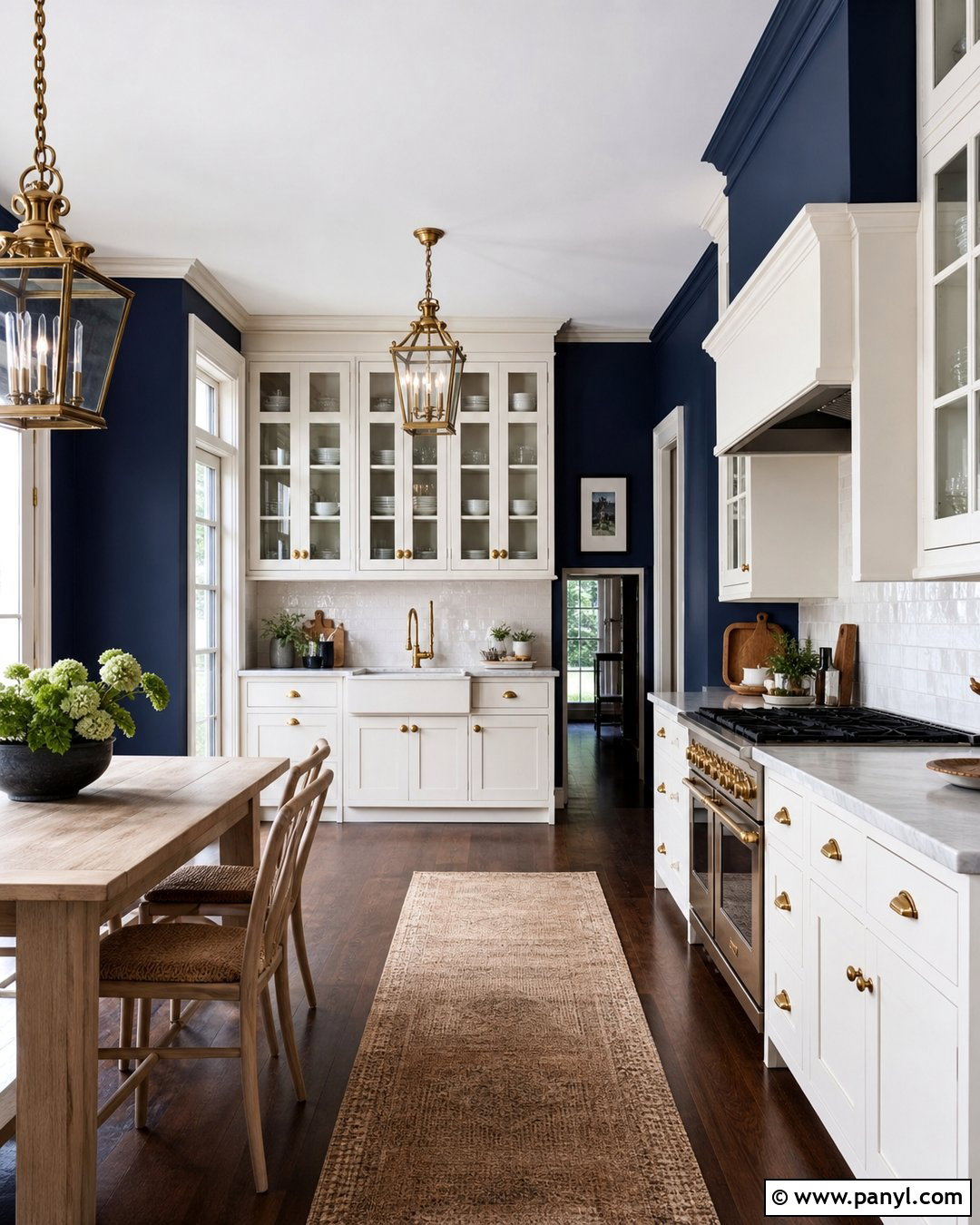
Dark wood flooring gives navy kitchen walls a traditional, enveloping character. To prevent the room from becoming too heavy, use cream cabinetry, pale countertops, and a reflective off-white backsplash. Choose cabinetry with glass doors in a few upper sections so lighter dishes can remain visible. Aged brass hardware and traditional lantern pendants will suit the richer palette. Introduce a muted beige runner to create separation between the navy walls and brown flooring. Keep window treatments minimal and add strong under-cabinet lighting throughout the work area. A light wood breakfast table can provide another useful contrast. This look is best in a kitchen with good natural light, a high ceiling, or an open connection to a brighter dining room.
25. Navy Blue Kitchen Walls In A Small Kitchen
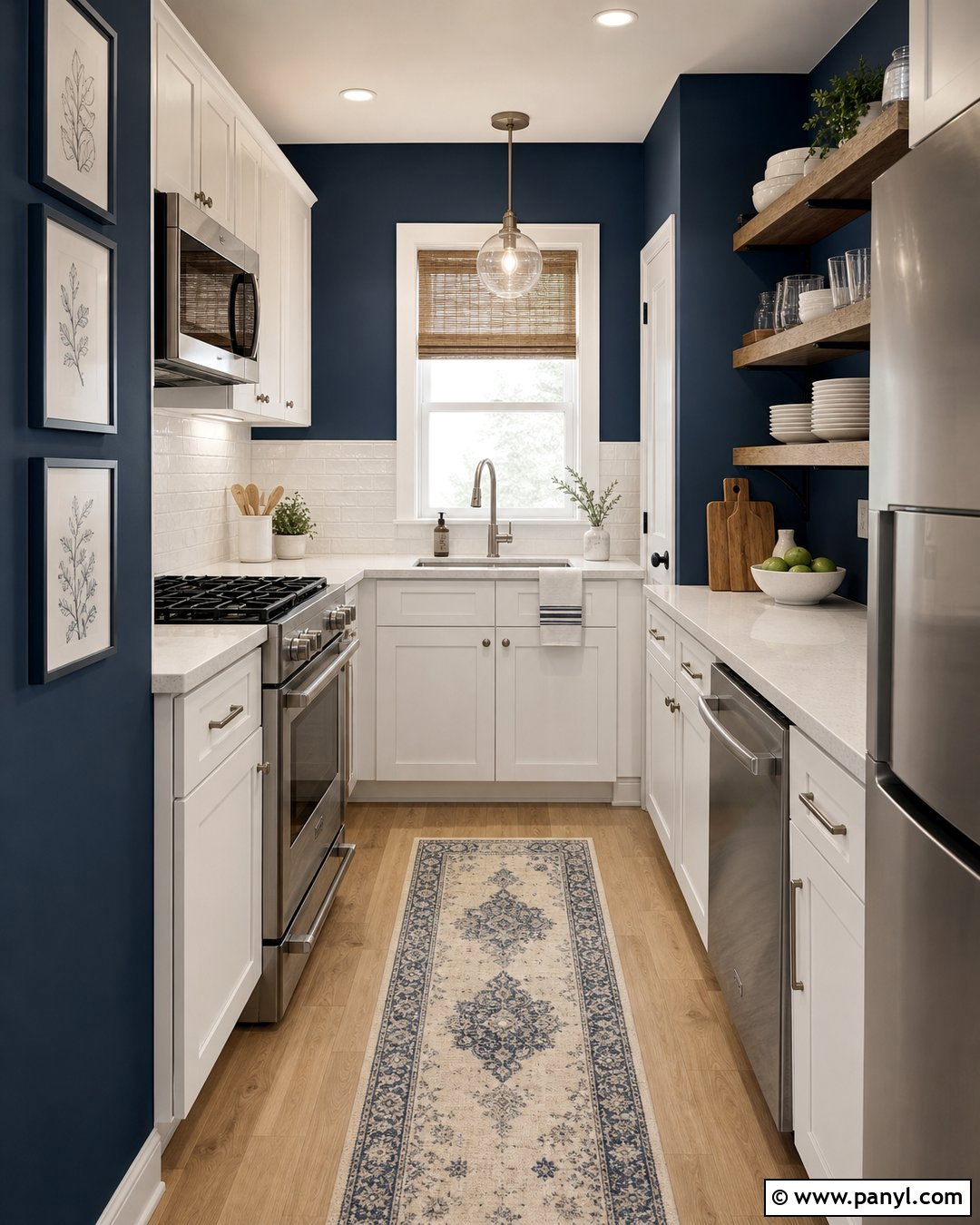
In a small kitchen, navy walls should create focus without covering every available surface. Paint one or two uninterrupted walls navy and keep the ceiling, cabinets, backsplash, and countertops light. Choose compact white Shaker cabinets or flat-front units with minimal hardware. Reflective white tile, polished nickel fixtures, and clear glass lighting can help distribute brightness around the room. Use pale wood or light vinyl flooring to visually widen the footprint. Open shelves may work better than bulky upper cabinets on the navy wall, provided they remain neatly organized. Add a narrow runner with cream and blue details to lengthen the floor. The final design feels colorful and intentional while preserving enough light surfaces to keep the compact layout comfortable.
26. Navy Blue Kitchen Walls In A Galley Kitchen
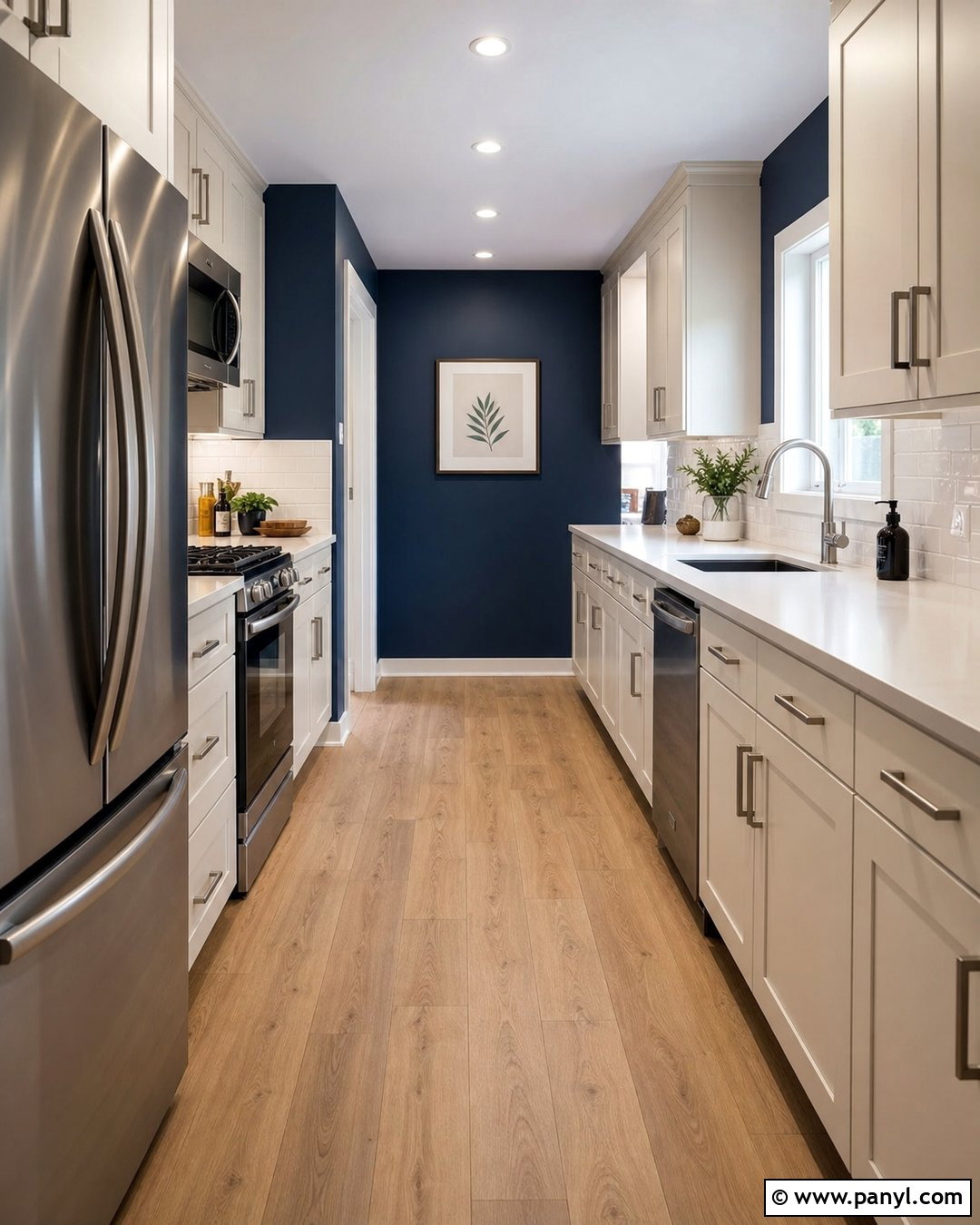
A galley kitchen can handle navy walls when the color emphasizes its length rather than closing it in. Apply navy to the far end wall or above the backsplash on both sides. Use warm white cabinets, continuous pale counters, and a glossy off-white backsplash to reflect light along the narrow walkway. Keep cabinet hardware slim and choose recessed ceiling lights instead of oversized pendants. Light oak flooring laid lengthwise can reinforce the room’s natural direction. At the far wall, add a small framed print, open shelf, or window treatment that creates a finished focal point. Stainless steel appliances and brushed nickel fixtures will maintain a clean appearance. This balanced layout delivers strong color while protecting the galley’s limited visual width.
27. Navy Blue Kitchen Walls In An Open Floor Plan
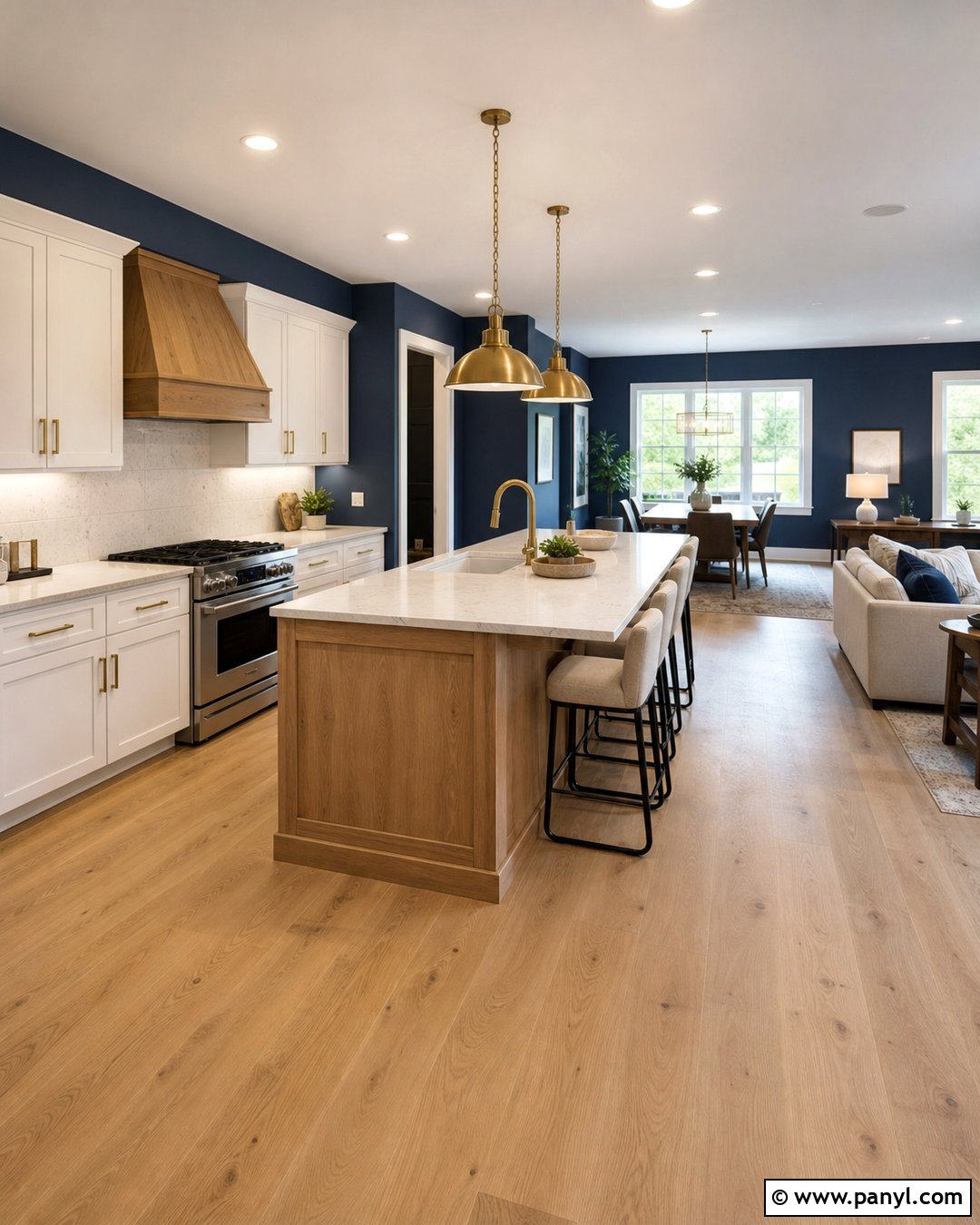
Navy walls can define an open kitchen without relying on physical dividers. Keep the blue within the kitchen zone, ending it at architectural corners, cabinetry edges, or a change in ceiling height. Use warm white cabinets and a large oak island to create a smooth transition toward the living and dining spaces. Repeat navy subtly in nearby upholstery, artwork, or a rug so the color does not appear isolated. Pale quartz counters and a light backsplash will keep the cooking zone bright. Choose consistent flooring throughout the open layout to maintain flow. Brass pendants over the island can visually mark the kitchen while adding warmth. This approach creates clear zoning while allowing all connected areas to feel like parts of one considered interior.
28. Navy Blue Kitchen Walls In A Farmhouse Kitchen
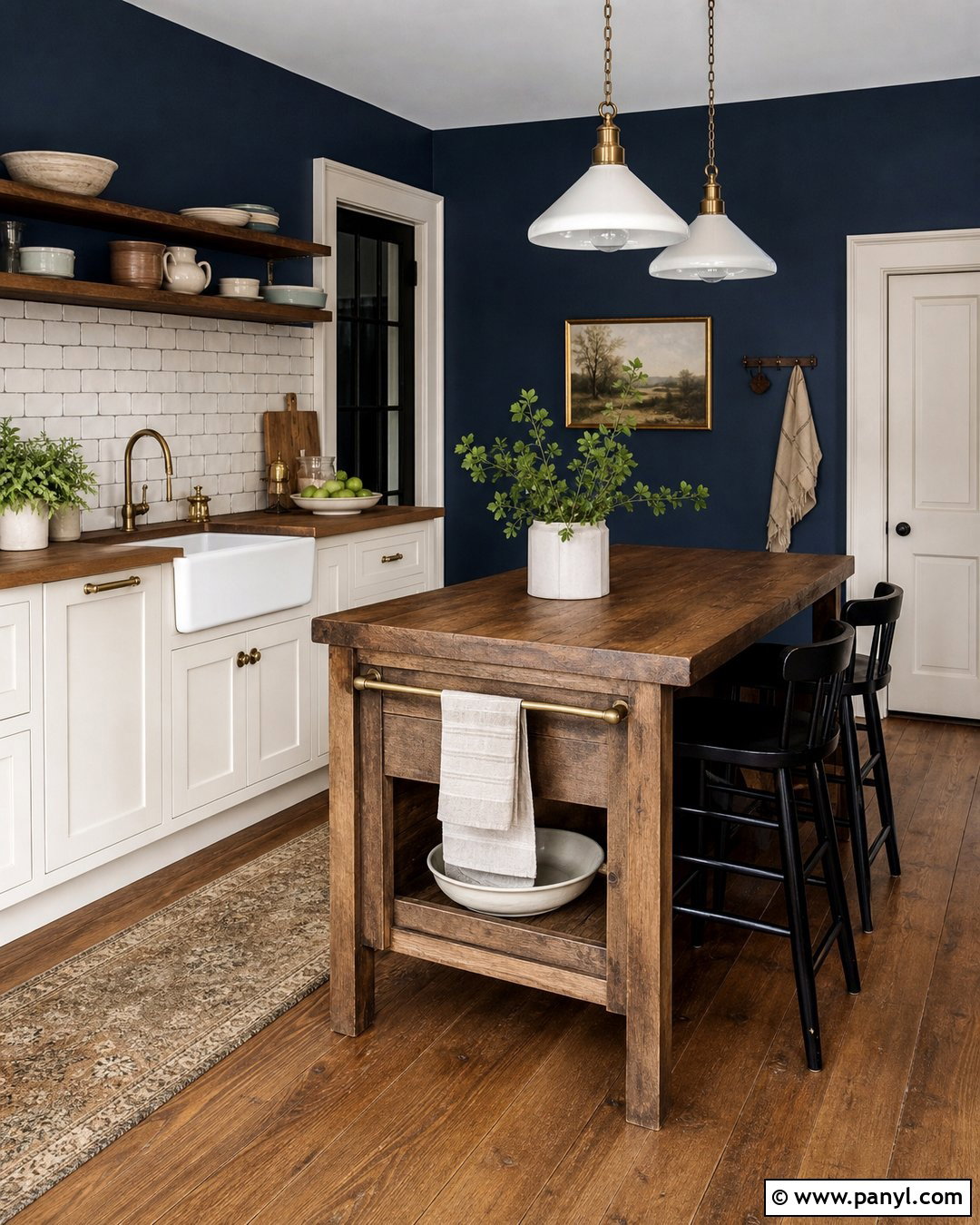
For a farmhouse kitchen, navy walls should sit alongside honest materials and practical furniture. Use warm white Shaker cabinets, butcher block work surfaces, and a deep white apron-front sink. Add an off-white subway tile backsplash with slightly irregular edges for texture. A reclaimed oak island or worktable can become the center of the room, surrounded by simple black stools. Choose aged brass or matte black hardware and large white enamel pendants. Wide-plank wood flooring, striped linen towels, and woven shades complete the casual character. Keep decorative signs and themed accessories to a minimum. Instead, display useful objects such as wooden boards, stoneware bowls, and potted herbs. The result feels updated, functional, and genuinely welcoming rather than overly staged.
29. Navy Blue Kitchen Walls In A Modern Kitchen
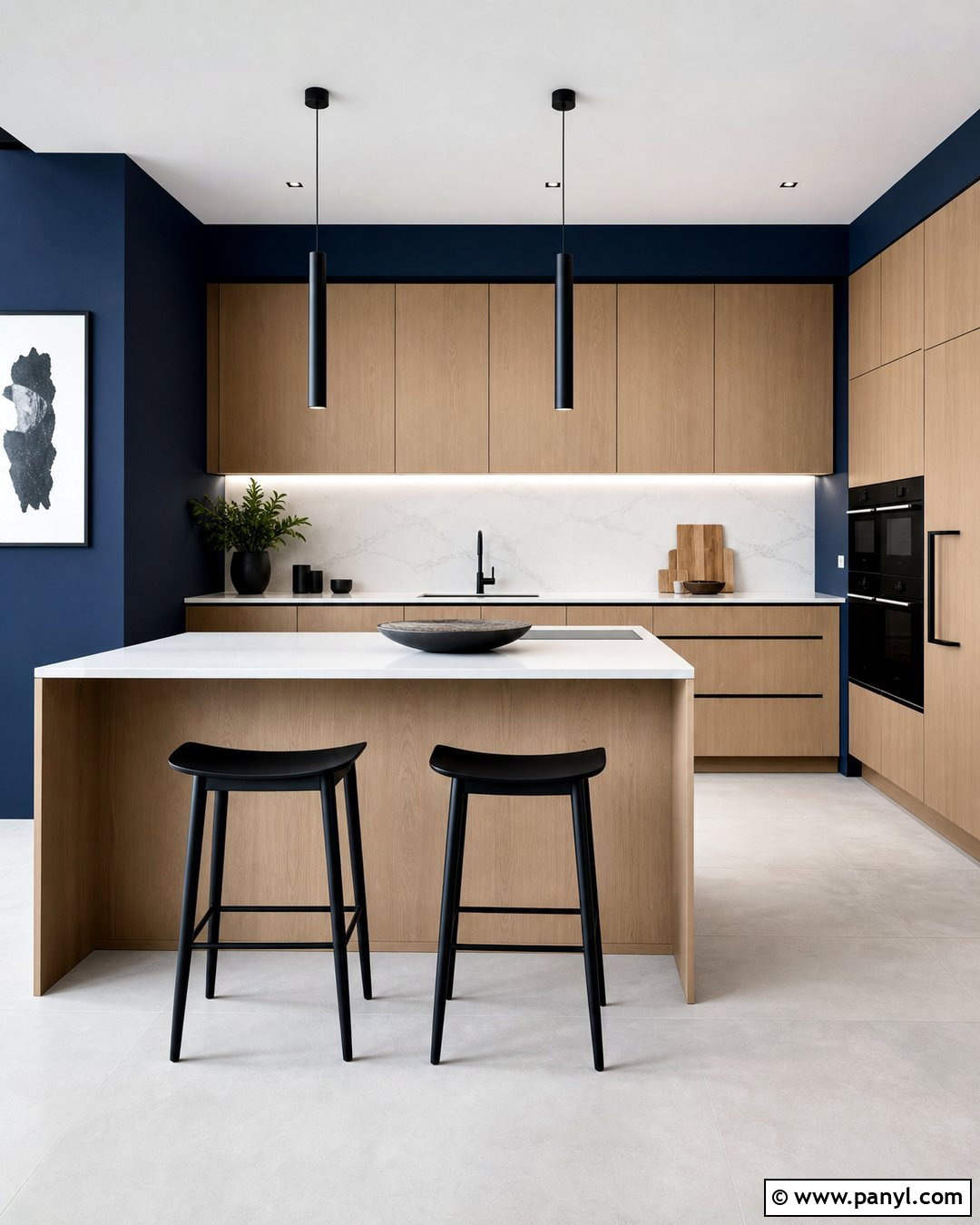
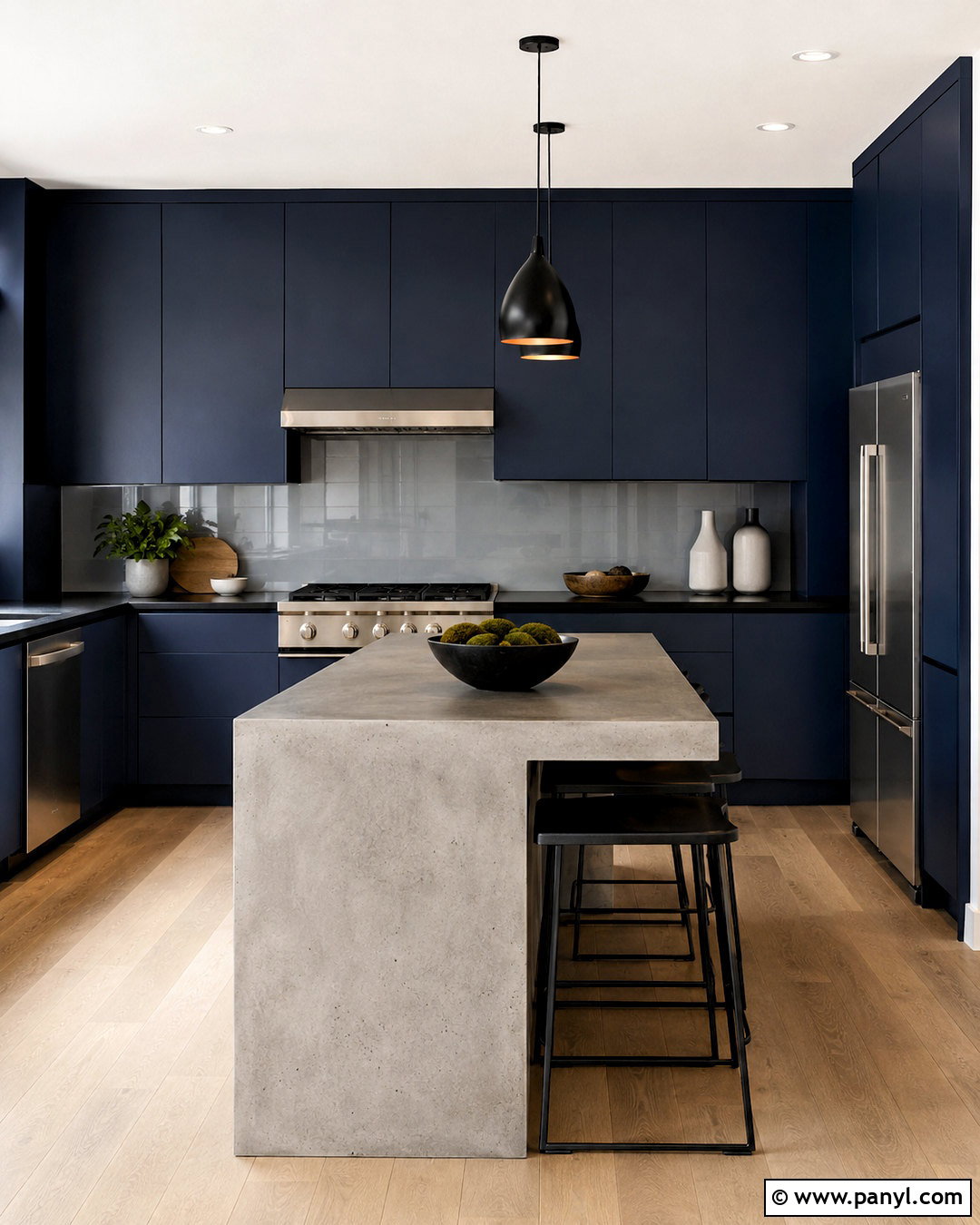
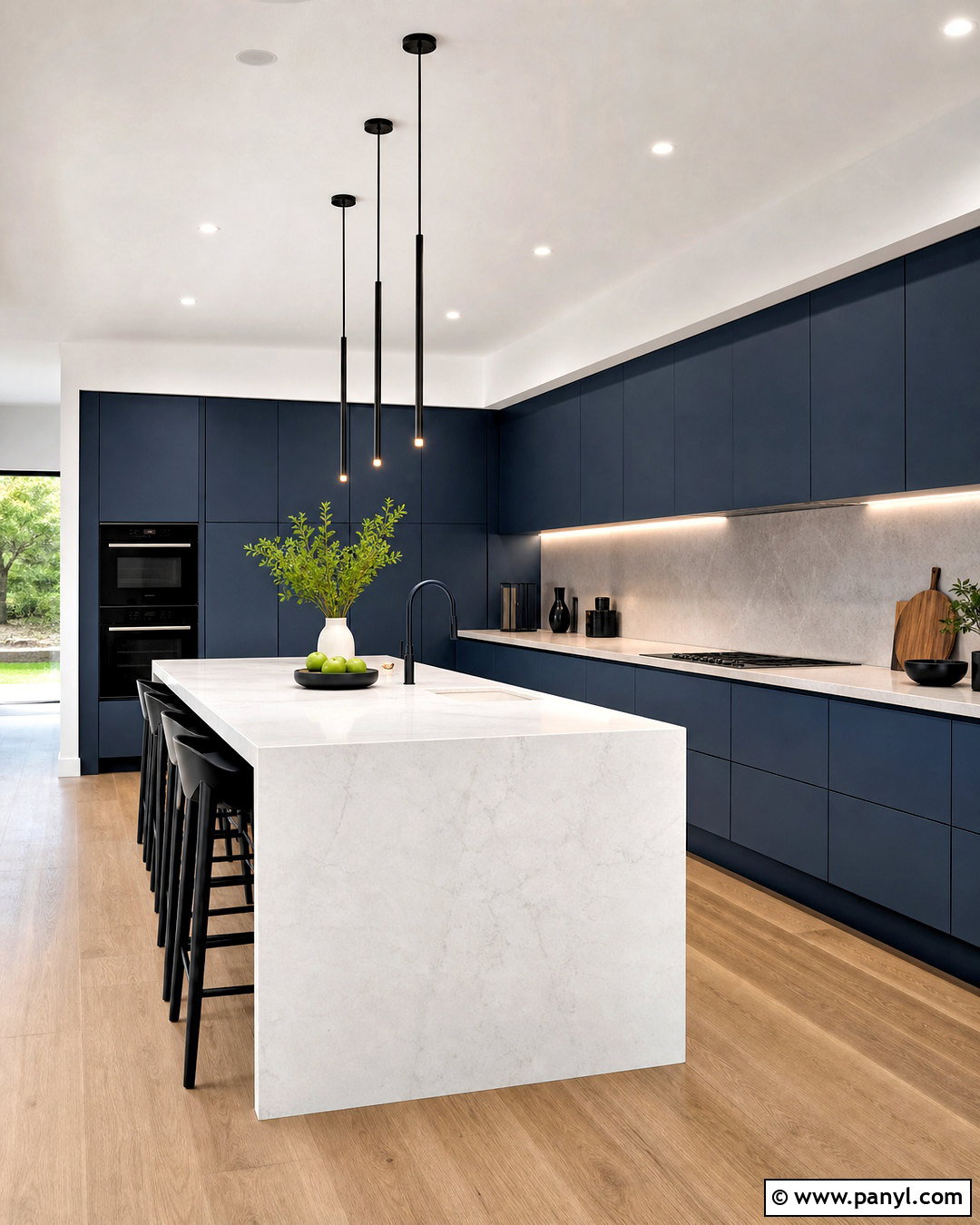
A modern navy kitchen depends on clean lines, limited materials, and precise color placement. Paint the walls a saturated navy and pair them with flat-panel cabinets in warm white or pale oak. Choose thin white quartz countertops and a matching slab backsplash for an uninterrupted surface. Use integrated appliances where possible, along with minimal black or brushed nickel hardware. A streamlined island with backless stools will preserve clear sightlines. Install simple cylindrical pendants and concealed under-cabinet lighting to illuminate the dark walls evenly. Large-format pale flooring can make the room feel more spacious. Keep decor restrained to one sculptural bowl, a wooden cutting board, and a plant. Every visible item should support the kitchen’s practical, uncluttered structure.
30. Navy Blue Kitchen Walls In A Traditional Kitchen
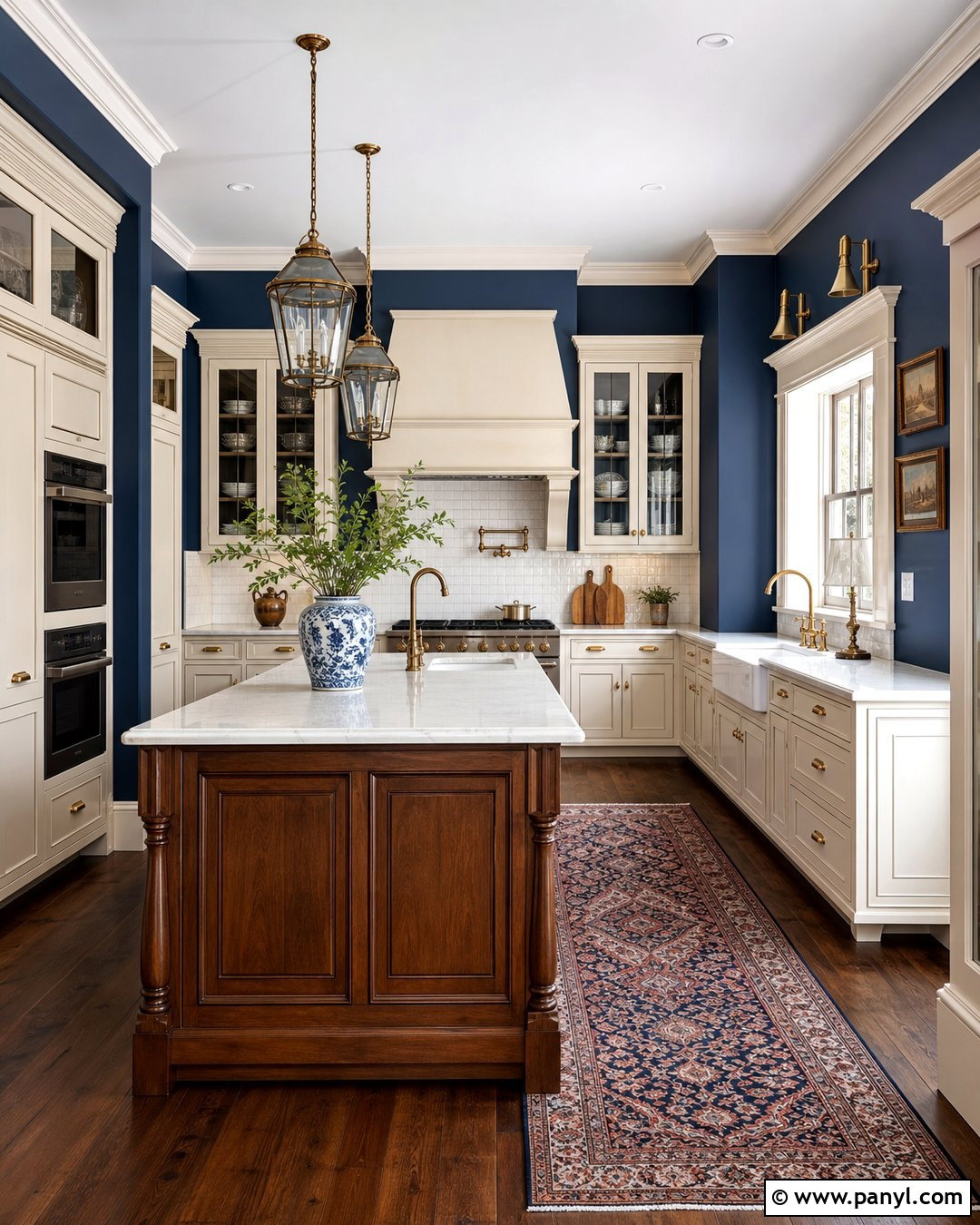
Traditional details give navy blue kitchen walls a stately but comfortable presence. Choose cream inset cabinets with crown molding, glass-front doors, and a substantial range hood. Add pale marble-look counters and a warm white backsplash laid in a classic offset pattern. Aged brass knobs, bridge faucets, and lantern pendants complement the room’s architectural character. Medium walnut flooring and an antique-style runner introduce depth without competing with the walls. Include a freestanding wood table or furniture-style island to make the kitchen feel collected over time. Window trim and baseboards should remain creamy white for definition. Display restrained groups of white china, glassware, and wooden boards. This layered design feels established and elegant while supporting the needs of a modern household.
Conclusion:
These 30 navy blue kitchen walls show how one dramatic color can support many complete kitchen looks. Navy can sharpen white cabinetry, enrich natural oak, modernize stainless steel, and bring warmth to brass, copper, or terracotta accents. The key is balancing the dark walls with thoughtful lighting, pale work surfaces, and materials that add warmth or reflection. Consider the room’s size, daylight, cabinet undertones, and connection to neighboring spaces before selecting a shade. Test a large painted sample on more than one wall and view it throughout the day. With a balanced palette and a practical layout, navy walls can make a kitchen feel distinctive, comfortable, and carefully finished.

Related Ideas and Inspiration:
Leave a Reply