
Navy and cream create a balanced wall palette that feels dramatic without losing warmth. Deep navy adds structure and visual depth, while soft cream reflects light and keeps a room comfortable. The combination works especially well with natural wood, brushed brass, woven fibers, tailored upholstery, and layered lighting. It can also suit many spaces, from compact bedrooms and home offices to traditional dining rooms and relaxed coastal living areas. Current design galleries show this pairing used with accent walls, painted trim, built-ins, paneling, and patterned finishes. () The key is deciding how much navy the room can handle and repeating both colors throughout the furnishings. Explore these complete, practical looks for **20 Navy And Cream Walls**.

1. Navy Accent Wall With Cream Walls

A single navy accent wall is an easy way to give a cream room more depth. Choose the wall behind the sofa, bed, dining table, or fireplace so the darker color establishes a clear focal point. Paint the remaining walls warm cream, then repeat navy through curtains, pillows, or a patterned rug. A cream sofa and pale oak furniture will prevent the arrangement from feeling heavy. Add brushed brass lamps and a few medium-toned wood accents for warmth. This approach is particularly helpful in smaller rooms because most surfaces remain light. Use eggshell paint on the walls for a soft, practical finish, and keep the ceiling cream to create one uninterrupted, airy background.
2. Navy Walls With Cream Trim
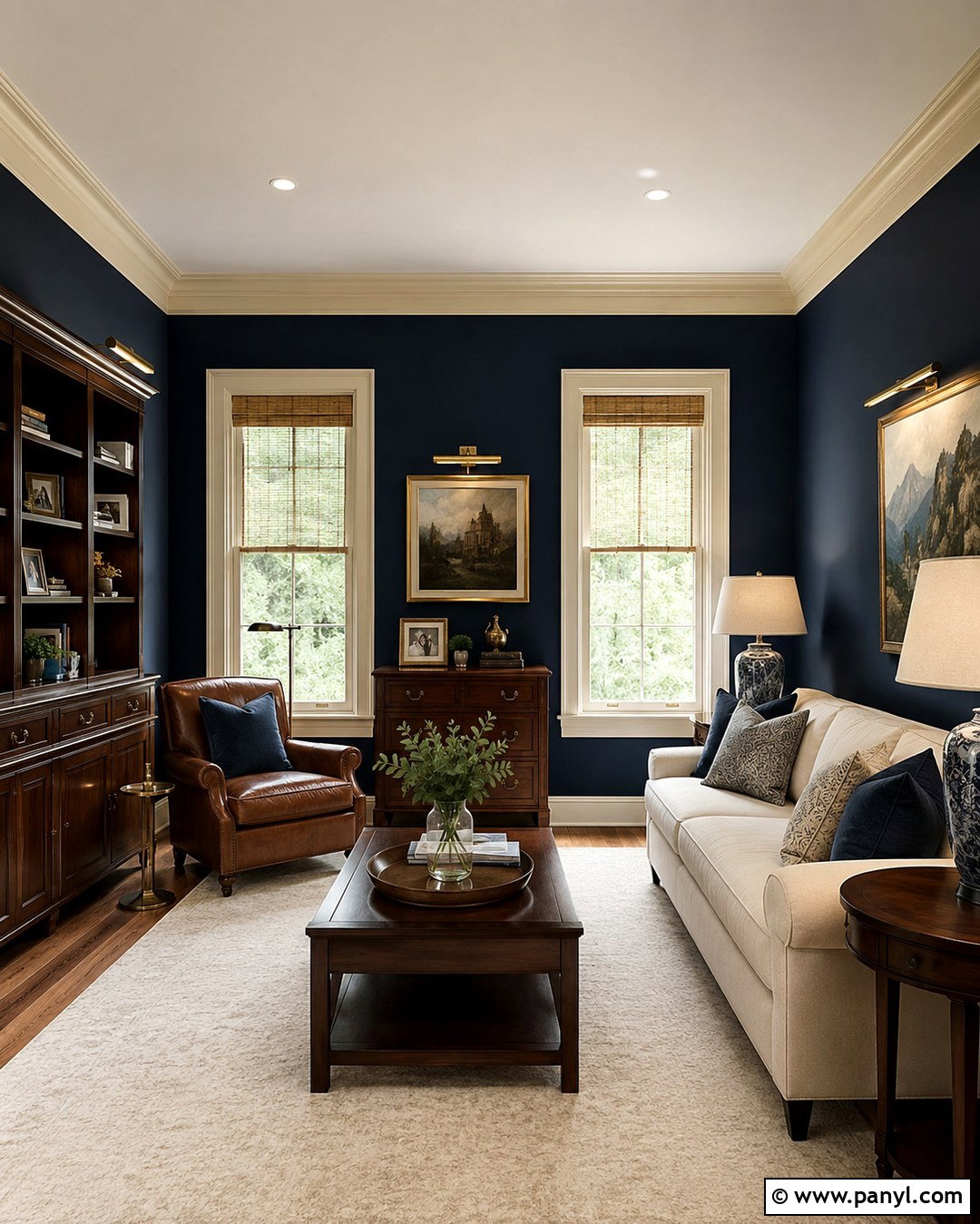
Wrapping every wall in navy creates a cozy, tailored room with plenty of character. Balance the dark color with wide cream baseboards, window casings, crown molding, and doors. The trim will outline the architecture and stop the navy from appearing flat. Use a cream upholstered sofa, a pale area rug, and medium walnut furniture to distribute warmth across the room. Brass picture lights, table lamps, and framed artwork add controlled brightness without weakening the color scheme. This treatment works beautifully in a library, den, dining room, or naturally bright living room. Paint the navy walls in a low-sheen finish and the cream woodwork in satin so the architectural edges remain crisp and easy to clean.
3. Navy And Cream Half Walls

Two-tone half walls offer strong contrast while keeping the room approachable. Paint the lower portion navy and the upper portion cream, separating the colors with a simple chair rail. The darker base visually grounds furniture and handles everyday marks better than a very pale color. Bring in a cream sofa, navy-patterned drapery, and an oatmeal wool rug to connect both wall colors. Natural oak tables and woven baskets make the contrast feel relaxed rather than formal. This design works well in entryways, dining rooms, family rooms, and children’s bedrooms. Keep the dividing line level with nearby windowsills or architectural features. That thoughtful alignment makes the finished room look intentional instead of randomly divided.
4. Navy Paneled Wall With Cream Paint
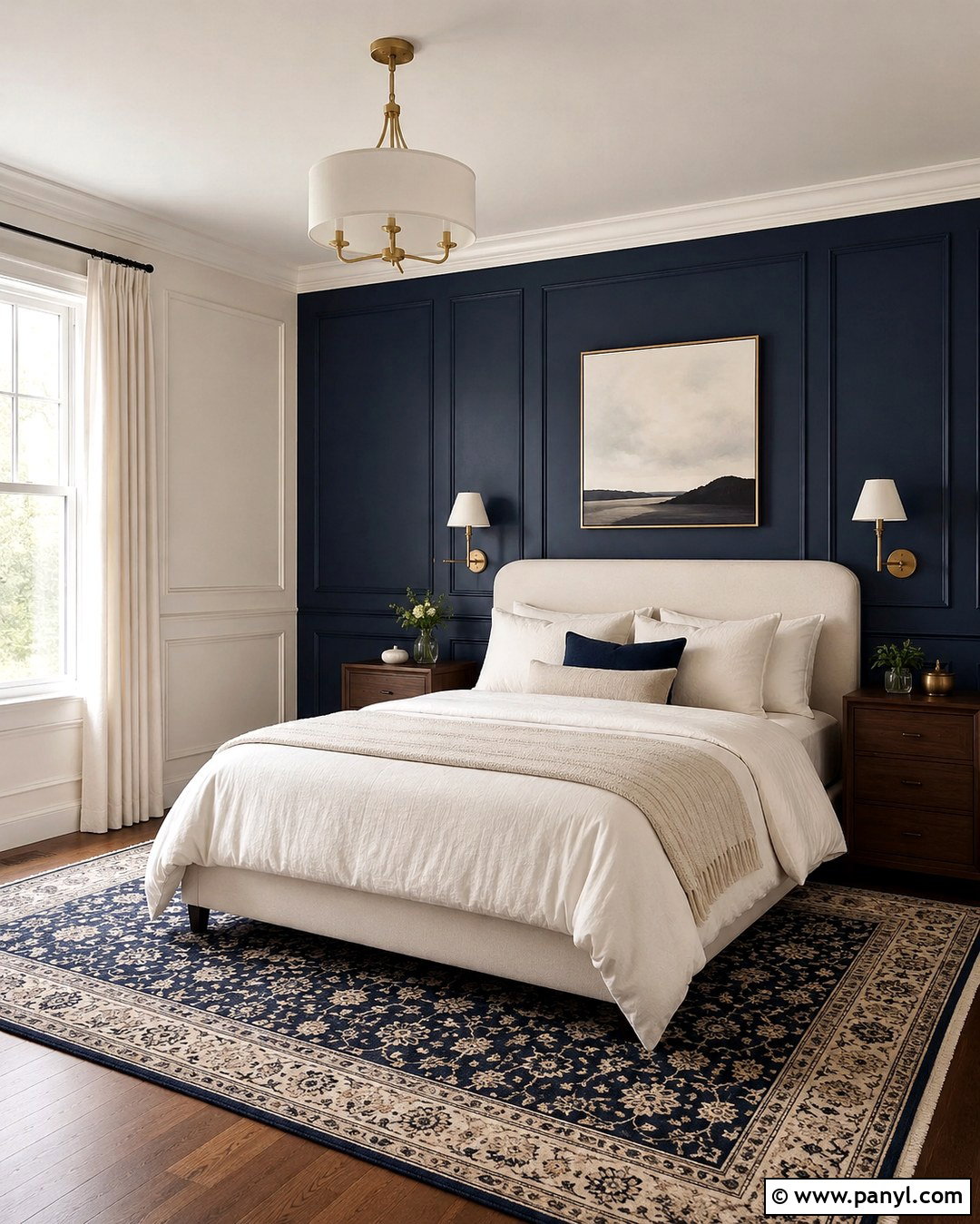
A navy paneled feature wall can give a plain room an architectural focal point without requiring major construction. Install slim molding in evenly spaced rectangles, then paint the molding and wall in the same deep navy finish. Keep the adjoining walls, ceiling, and trim soft cream. Place a cream upholstered bed or sofa against the paneling so its light silhouette stands out. Complete the room with walnut nightstands, brass lighting, ivory linen curtains, and a navy-and-cream rug. The panel dimensions should relate to the furniture rather than forming tiny, busy boxes. Large balanced sections usually appear calmer. Use this treatment behind one primary furnishing and leave the remaining walls simple, allowing the texture and color to command attention.
5. Cream Walls With Navy Built-Ins

Cream walls become more distinctive when surrounded by floor-to-ceiling navy built-ins. Paint bookcases, lower cabinets, and interior shelving in the same navy for a seamless custom appearance. Leave the central wall cream to frame a fireplace, television, desk, or favorite artwork. Use warm wood shelves if you want additional contrast, or keep everything navy for a more tailored finish. A cream sectional, striped rug, and caramel leather chair will balance the cabinetry and make the room feel welcoming. Add aged brass handles and library lights for a polished detail. Carefully edit shelf decor, mixing books, pottery, baskets, and framed pieces while leaving some open space. This keeps the dark storage wall attractive rather than visually crowded.
6. Navy Fireplace Wall With Cream Surround
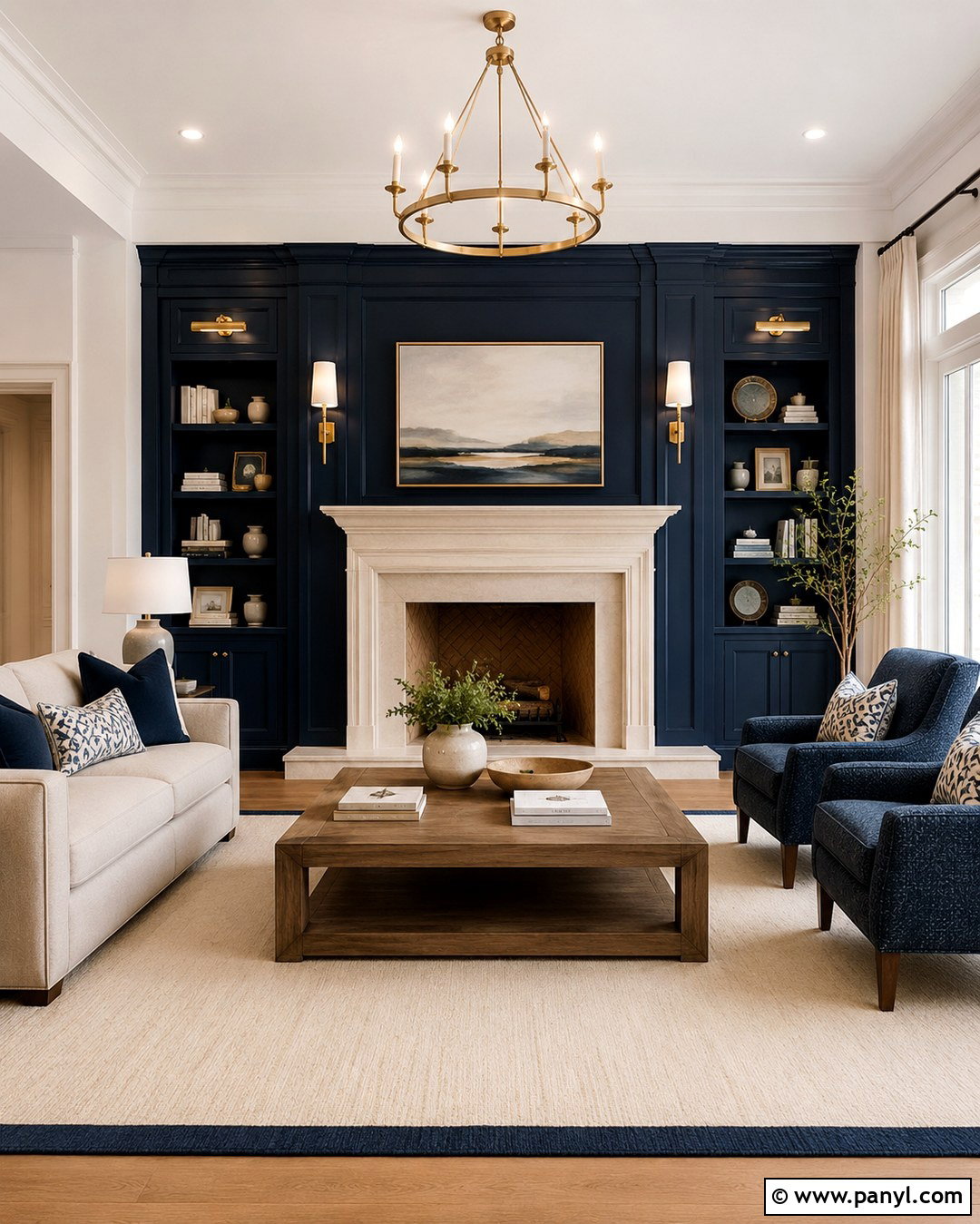
Make the fireplace the center of the room by painting its full wall navy and keeping the mantel and surround creamy white. The dark backdrop strengthens the fireplace shape while the lighter material prevents the center from disappearing. Use limestone, painted brick, or cream ceramic tile around the firebox, depending on the home’s character. Arrange a cream sofa and two textured navy chairs around a warm wood coffee table. An ivory rug with a subtle blue border will anchor the seating area. Finish the wall with restrained artwork, brass sconces, and a simple mantel display. Avoid placing too many small accessories against the navy. One large framed piece or rounded mirror creates a clearer focal point and keeps the complete arrangement balanced.
7. Navy Bedroom Wall With Cream Bedding

Imagine waking up to a navy wall softened by layers of warm cream linen. Use deep navy behind the bed and paint the other walls cream to maintain a restful, open feeling. Choose a cream upholstered headboard, ivory duvet, navy quilt, and striped accent pillows for a balanced bed arrangement. Light oak nightstands and woven shades will introduce natural texture, while brushed brass sconces add gentle contrast. An oatmeal rug beneath the bed keeps the palette warm from the floor upward. Hang simple artwork with cream mats against the navy wall rather than filling every open area. Matching bedside lighting and uncluttered surfaces create symmetry. The result feels comfortable and finished without relying on excessive decorative objects or complicated patterns.

8. Cream Bedroom Walls With Navy Trim

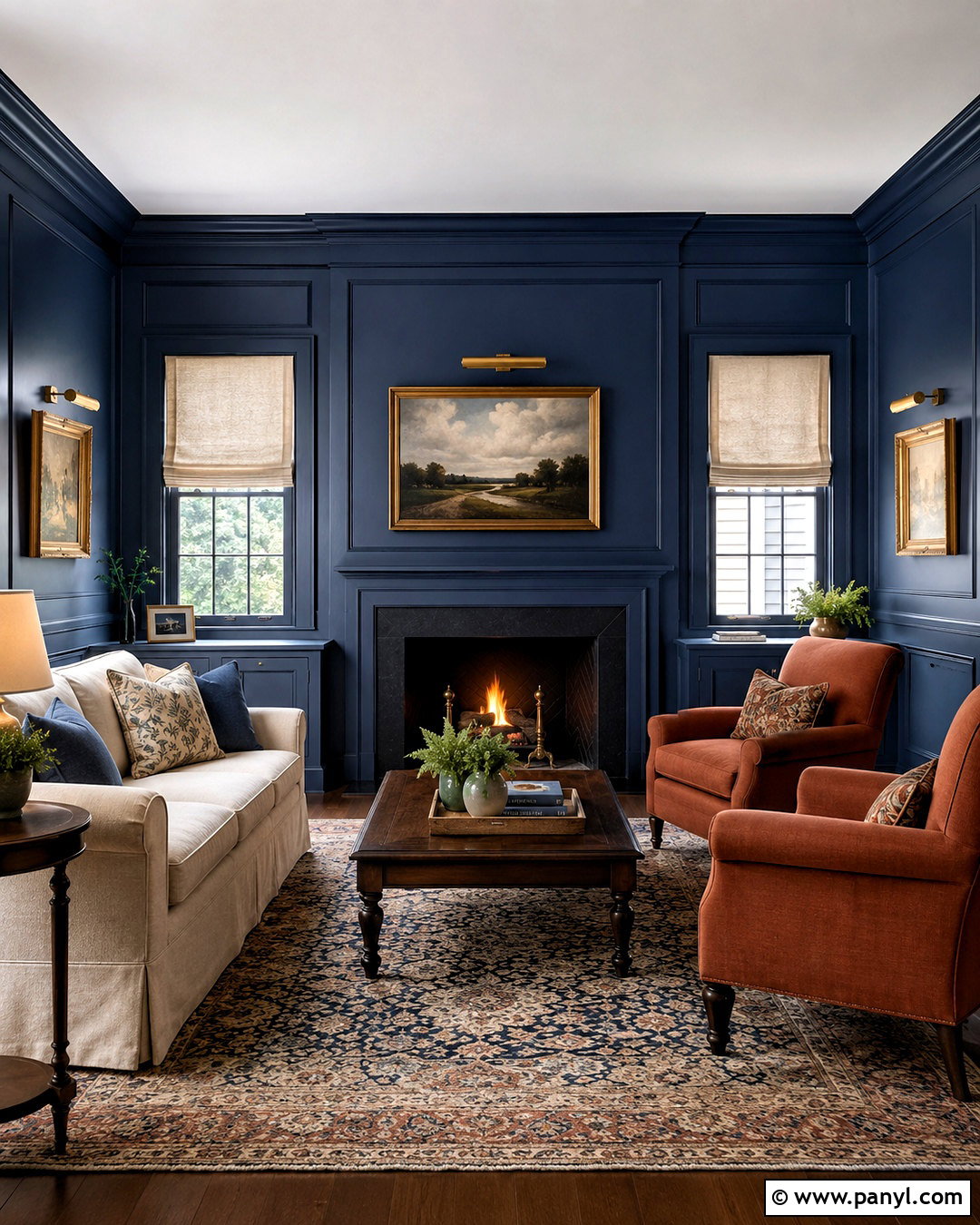
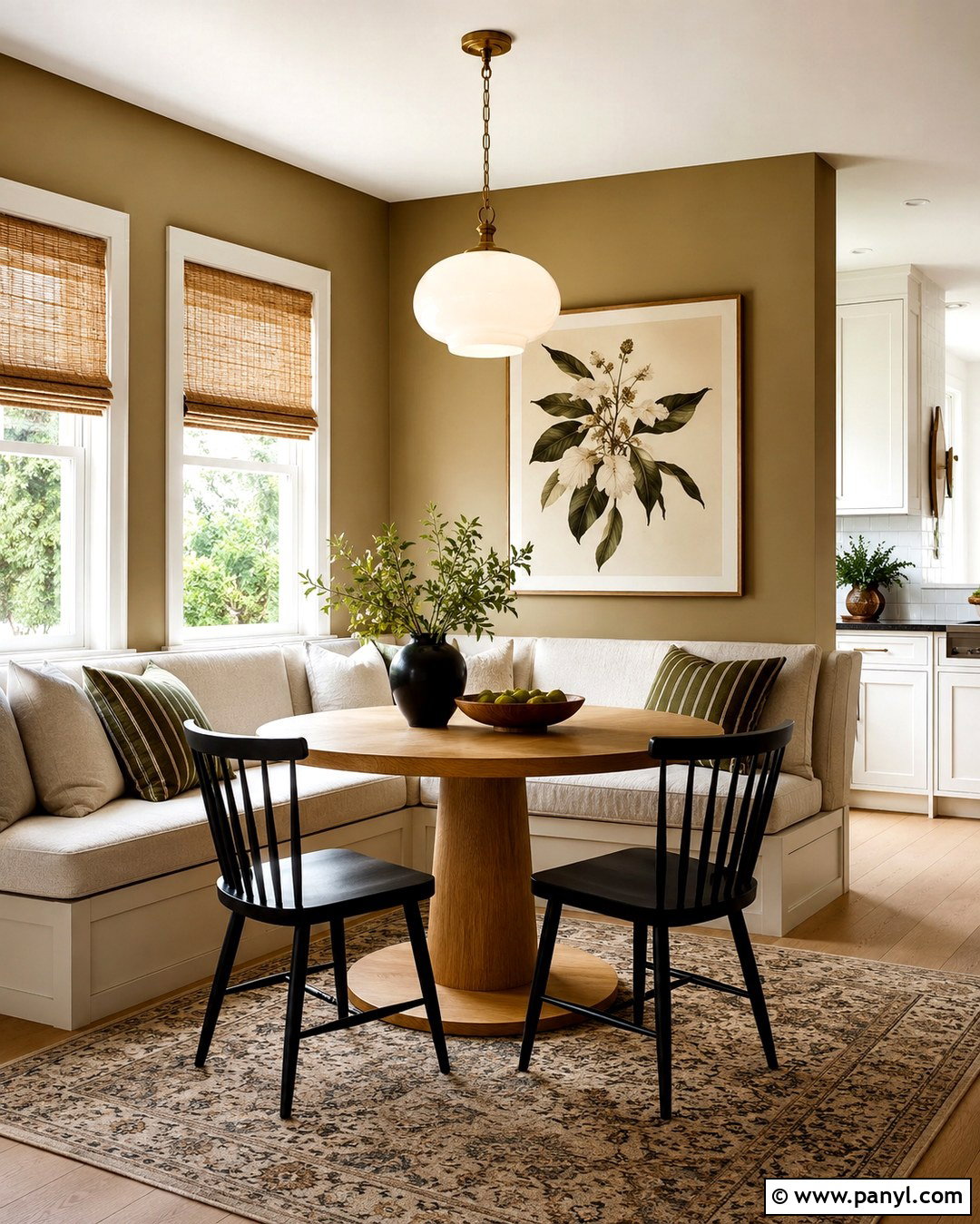
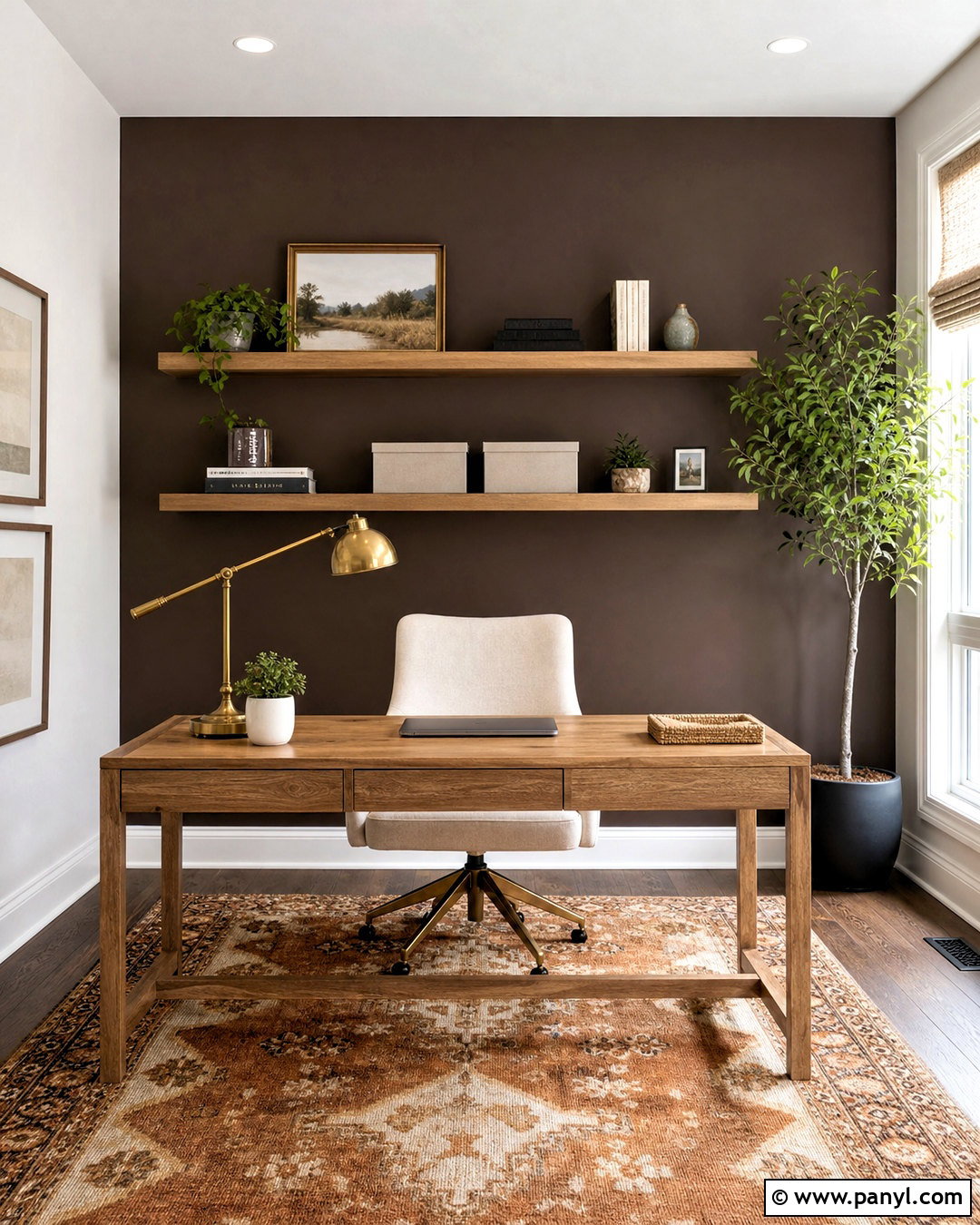
For a lighter bedroom, use warm cream across the walls and introduce navy on the baseboards, doors, window trim, and crown molding. This reversed color placement outlines the room and makes ordinary architectural details look more intentional. A navy upholstered bed will connect with the trim, while cream bedding prevents the center of the space from becoming too dark. Add walnut nightstands, linen curtains, and an ivory rug with a subtle geometric border. Use ceramic lamps in muted blue or off-white and include one natural accent, such as a woven bench. Navy trim requires careful preparation because uneven edges become noticeable. Smooth the woodwork first, apply painter’s tape carefully, and use a durable satin finish for a clean, tailored result.
9. Navy Dining Room Walls With Cream Wainscoting
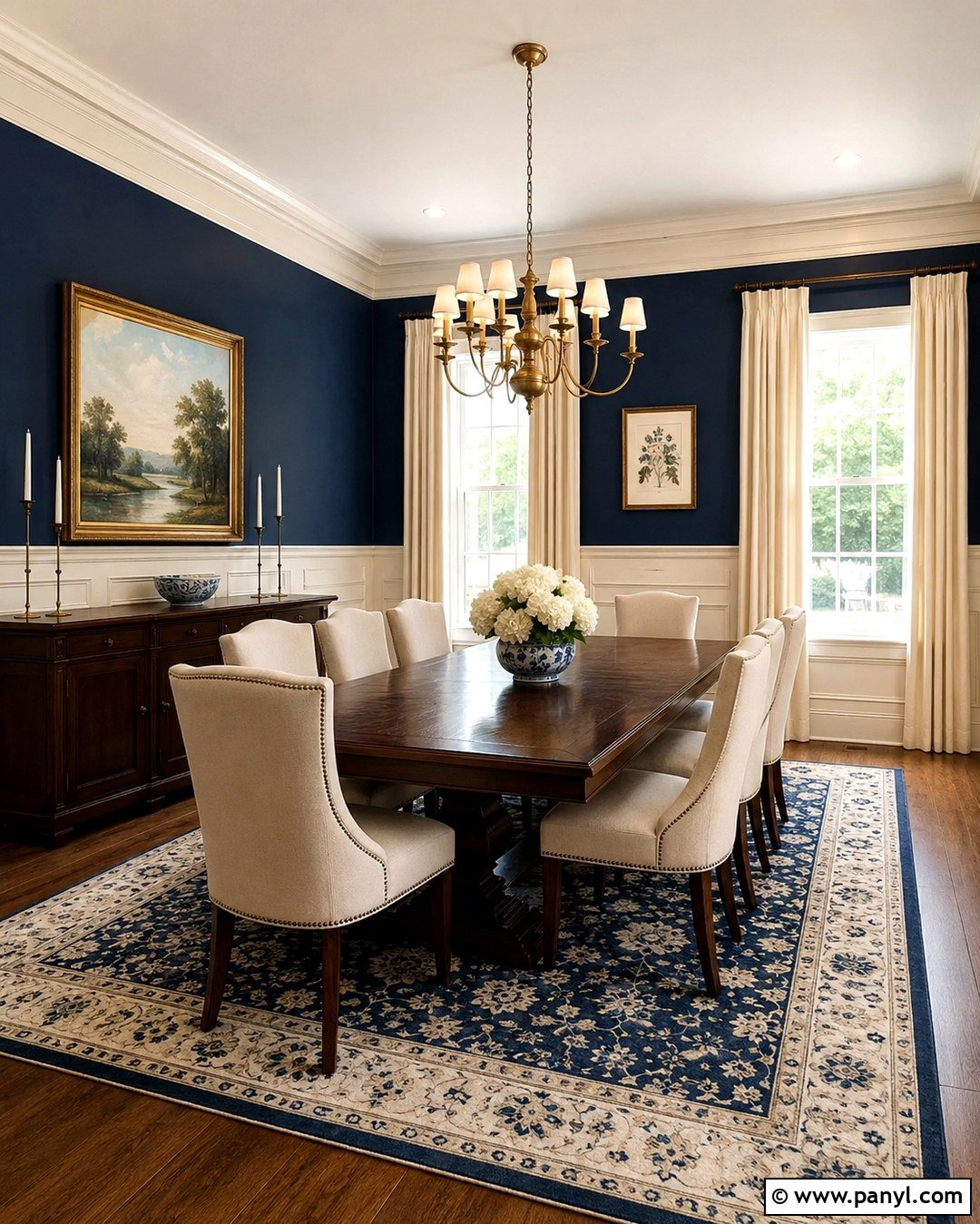
A dining room can carry dark color beautifully when the lower walls remain light. Paint the upper walls navy and cover the bottom third with cream wainscoting. A medium walnut dining table grounds the scheme, while cream upholstered chairs bring the wall colors into the furniture arrangement. Add a navy-and-ivory rug large enough to hold every chair, even when pulled out. A brass chandelier and matching framed artwork introduce warmth against the blue background. Keep window treatments cream and hang them close to the ceiling to emphasize height. Traditional panel molding suits classic interiors, while simple vertical boards create a more casual appearance. Either choice provides a complete backdrop that feels distinctive during meals but remains comfortable for everyday use.

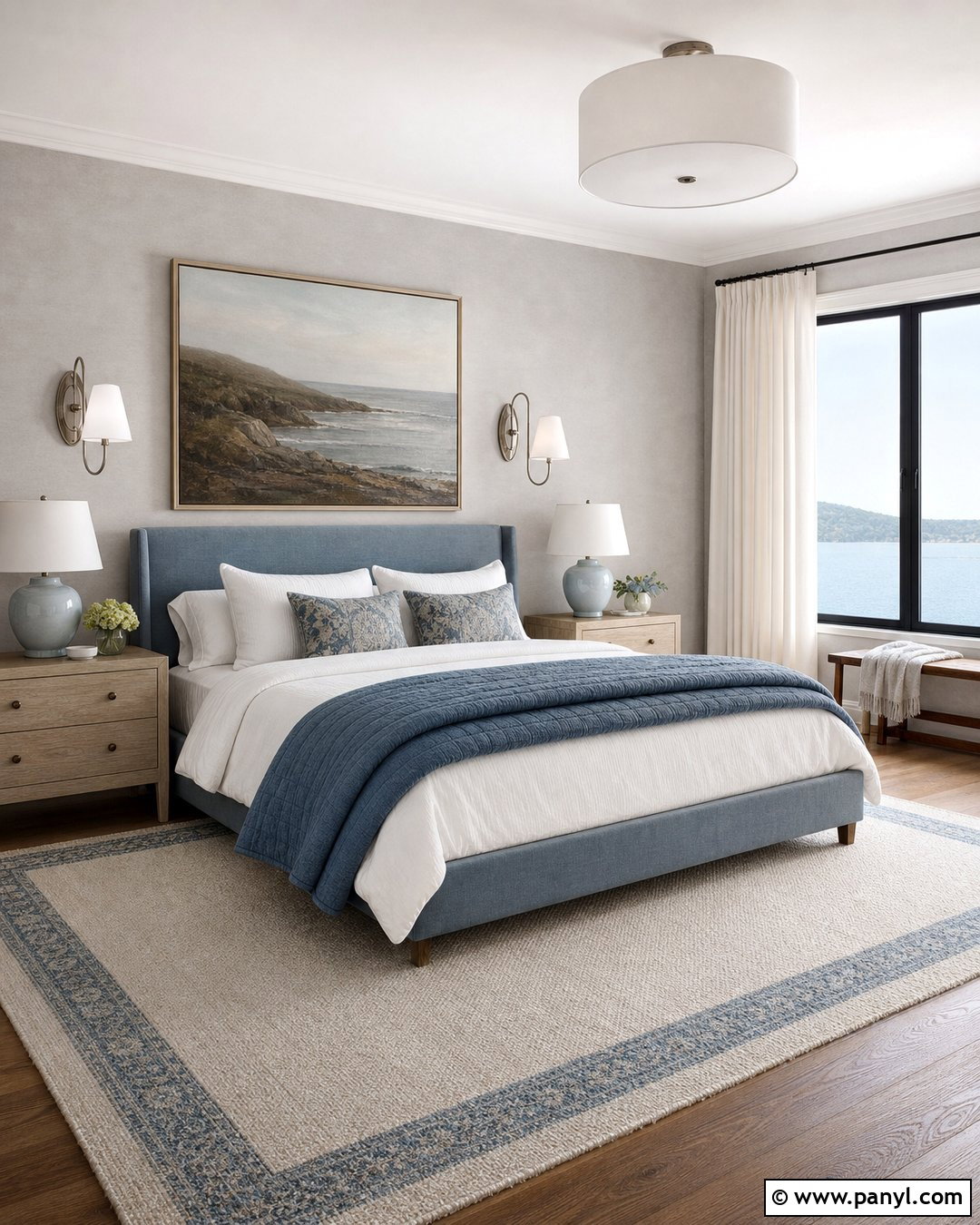
10. Cream Dining Room Walls With Navy Ceiling
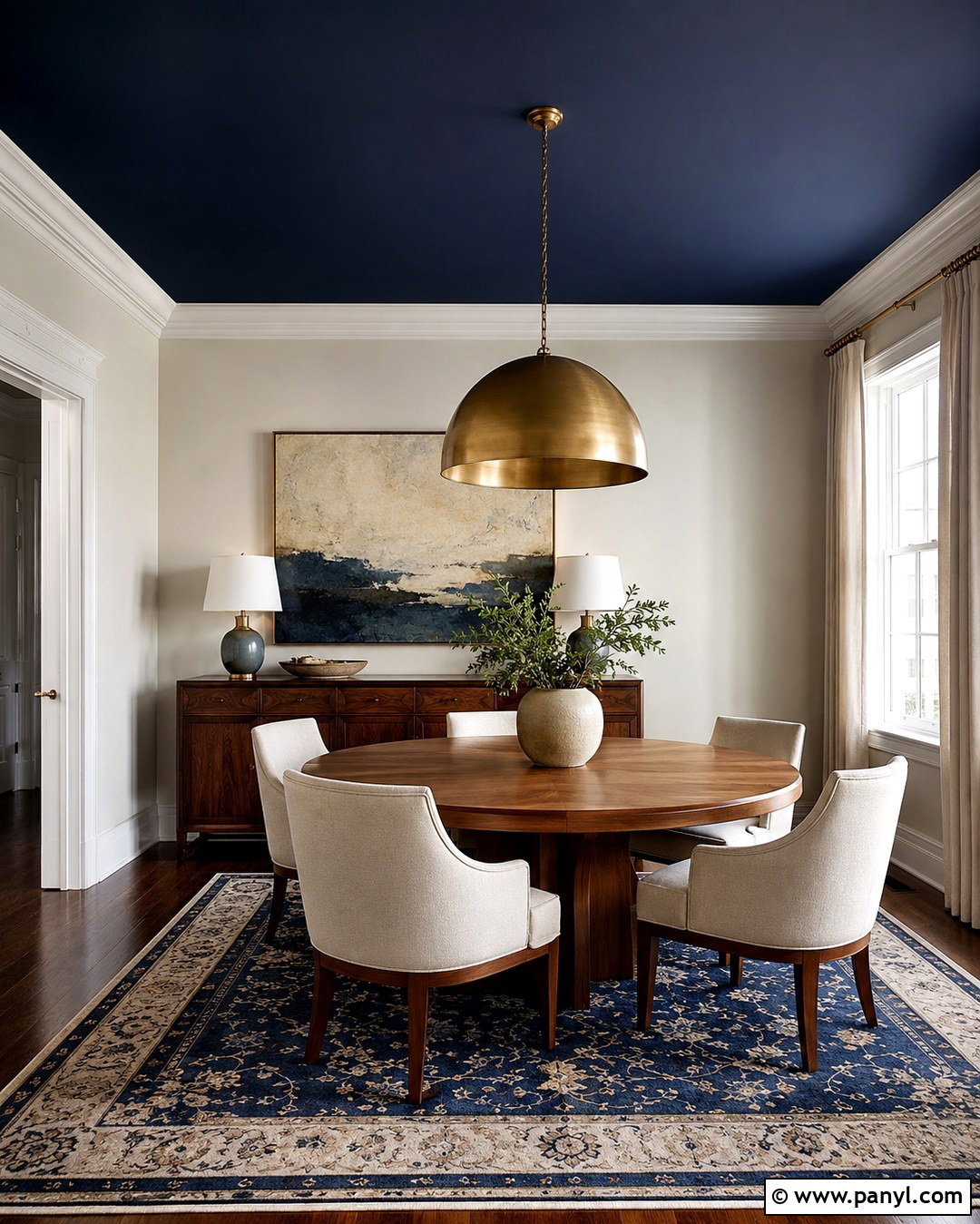
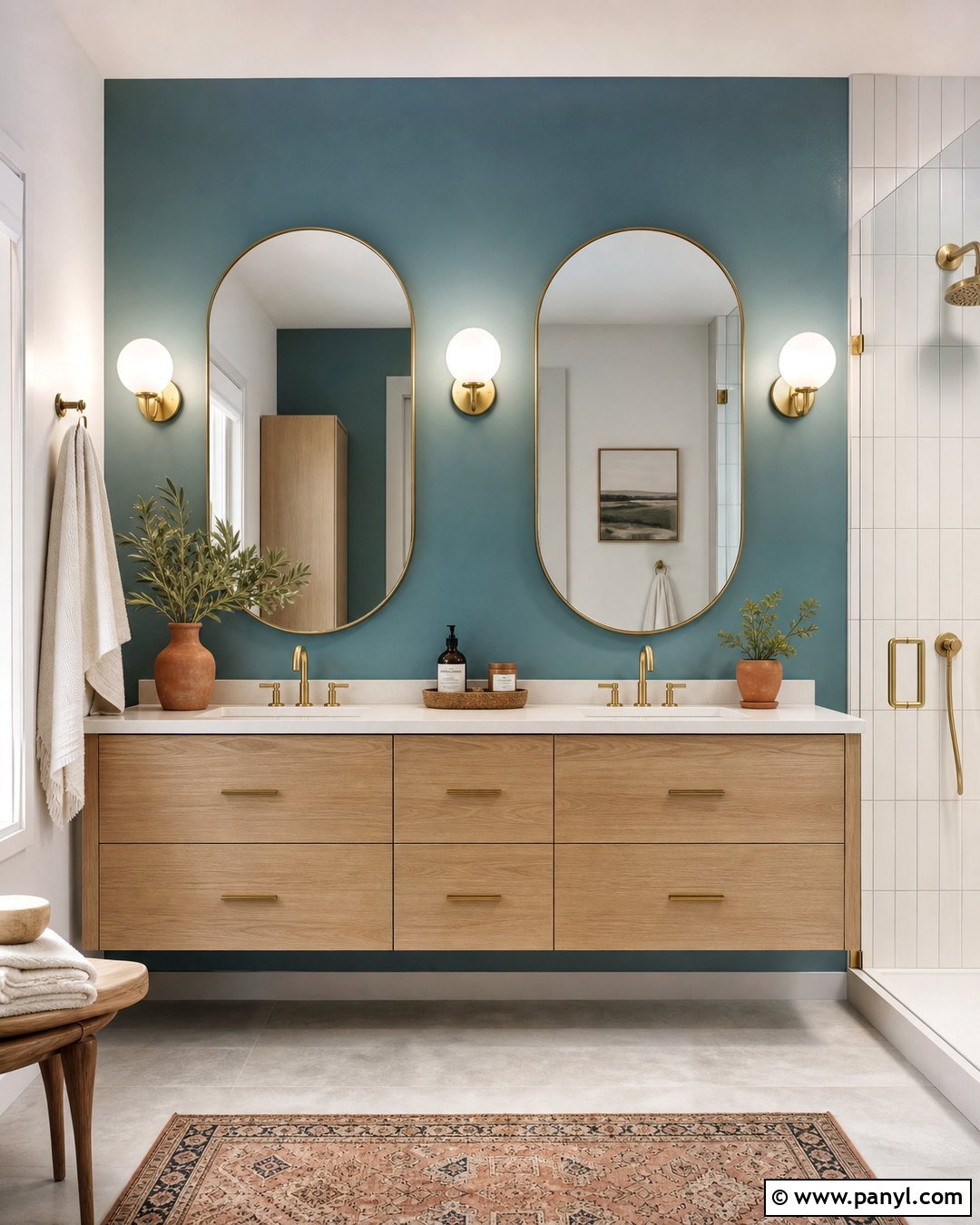
Turn attention upward by pairing cream walls with a navy ceiling. This treatment creates drama without surrounding the entire room in dark color. Continue the navy onto the crown molding for a smooth transition, or keep the molding cream for a sharper outline. Below, arrange a round oak table with cream upholstered chairs and a navy patterned rug. A large brass or matte white pendant will stand out clearly against the blue ceiling. Add a sideboard in walnut or painted navy and keep wall artwork simple. This design works best when the room has generous daylight or layered lighting. Use ceiling paint with a flat finish to reduce glare, and test the navy overhead before committing because horizontal surfaces often appear darker than expected.
11. Navy Home Office Walls With Cream Shelves
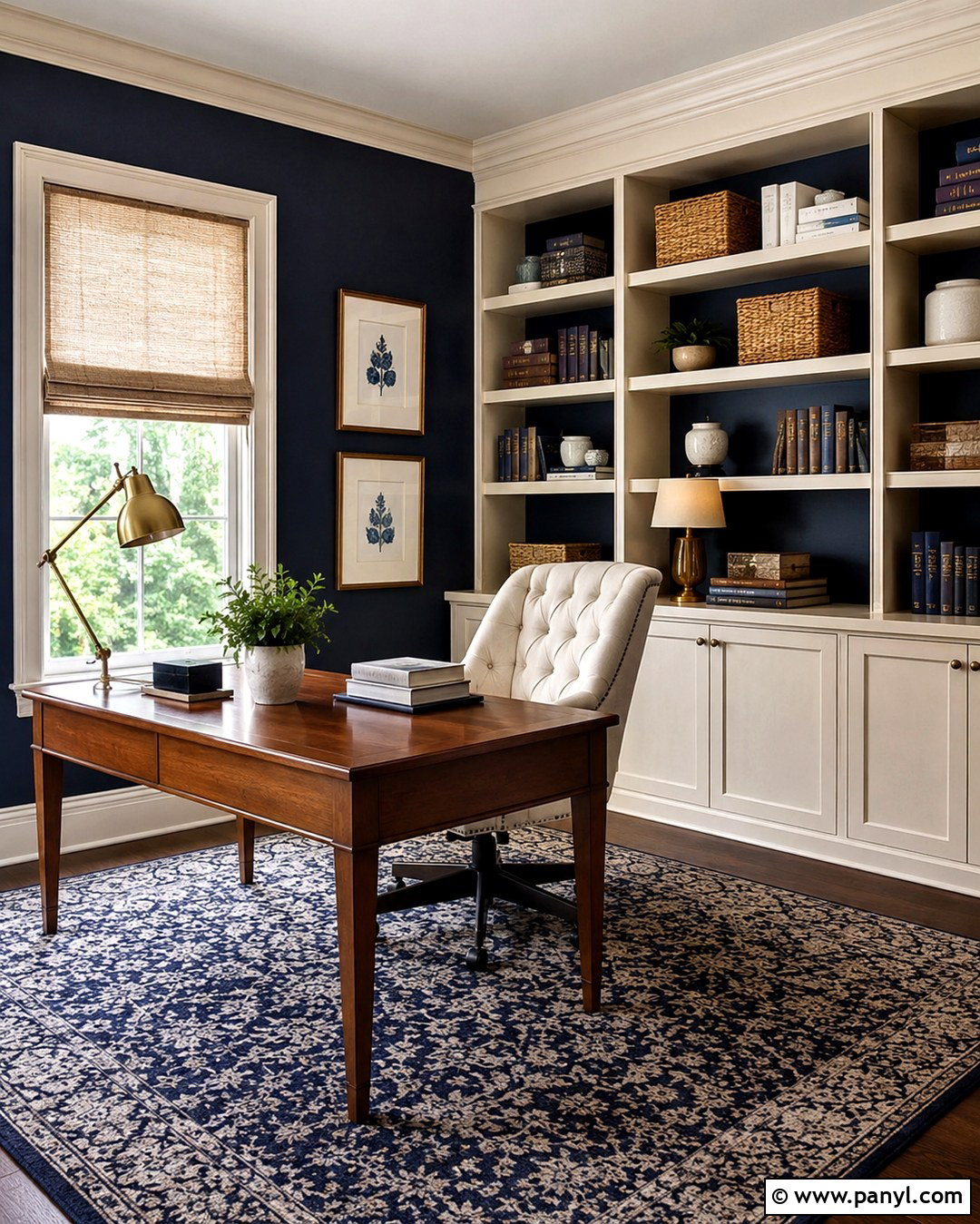
Navy walls can make a home office feel focused and organized when balanced by cream storage. Paint the room navy, then install cream bookcases, floating shelves, or upper cabinets to break up the darker perimeter. Position a warm wood desk near the window and pair it with a cream upholstered chair. A flat-woven navy-and-ivory rug will define the work area without making chair movement difficult. Add an adjustable brass desk lamp, cream linen shade, and a few green plants for freshness. Keep cords and supplies hidden in navy lower cabinets or woven boxes. Rather than spreading small decorations everywhere, create one controlled artwork grouping. The finished office will feel professional, comfortable, and visually calm enough for regular use.
12. Cream Home Office Walls With Navy Desk Wall
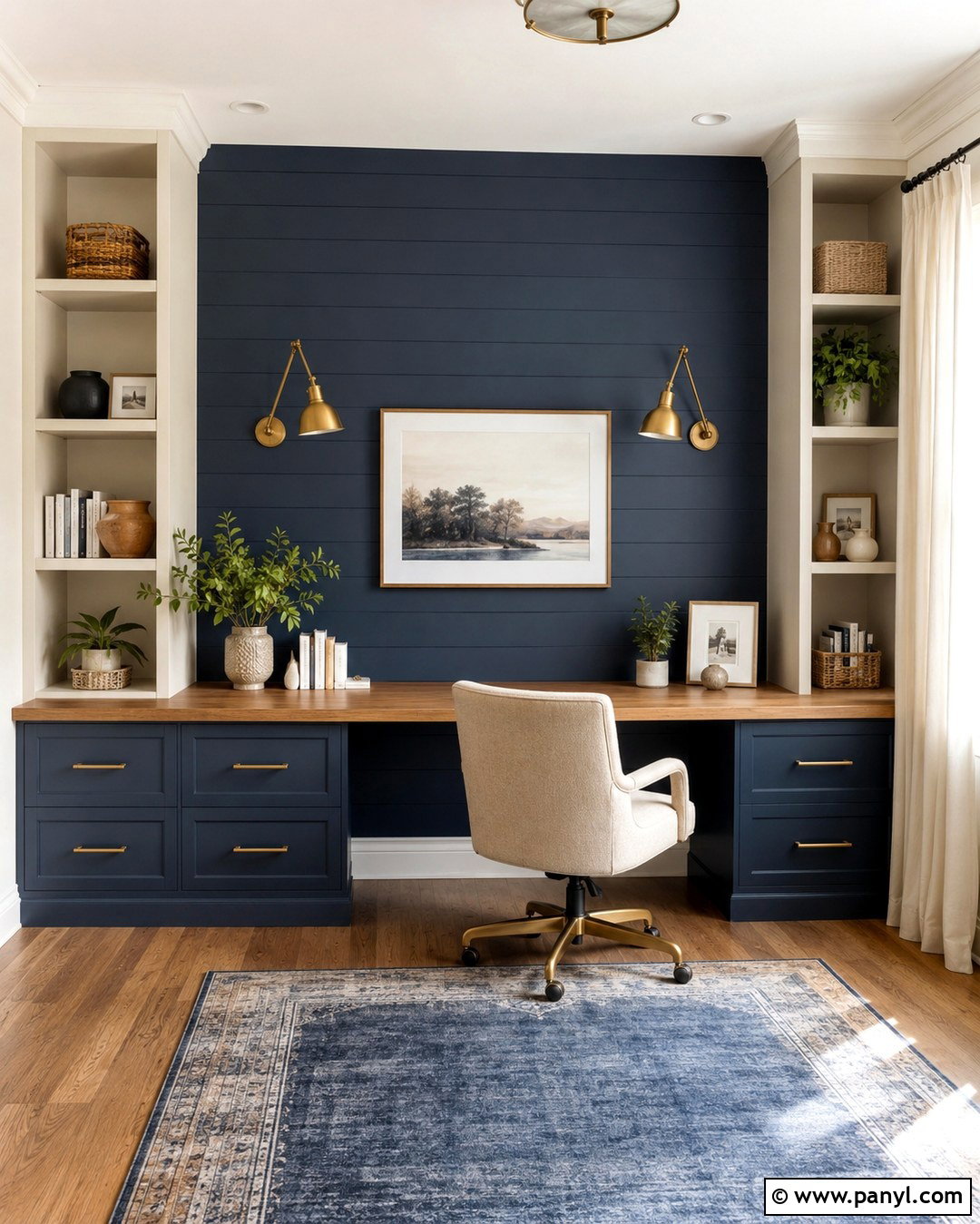
If an all-navy office feels too enclosed, reserve the dark color for the desk wall. Paint that surface navy and leave the other walls warm cream. Install a long oak desktop with navy lower cabinets and cream open shelving above it. The repeated colors will make the workstation appear integrated rather than assembled from unrelated pieces. Use a supportive cream desk chair, a small navy rug, and linen curtains with a thin blue border. Matte black or brushed brass lighting can provide contrast, depending on whether you prefer a modern or traditional look. Place task lighting directly over the work surface and keep decorative items limited. This layout delivers a strong video-call background while preserving brightness around the rest of the room.
13. Navy Entryway Walls With Cream Doors
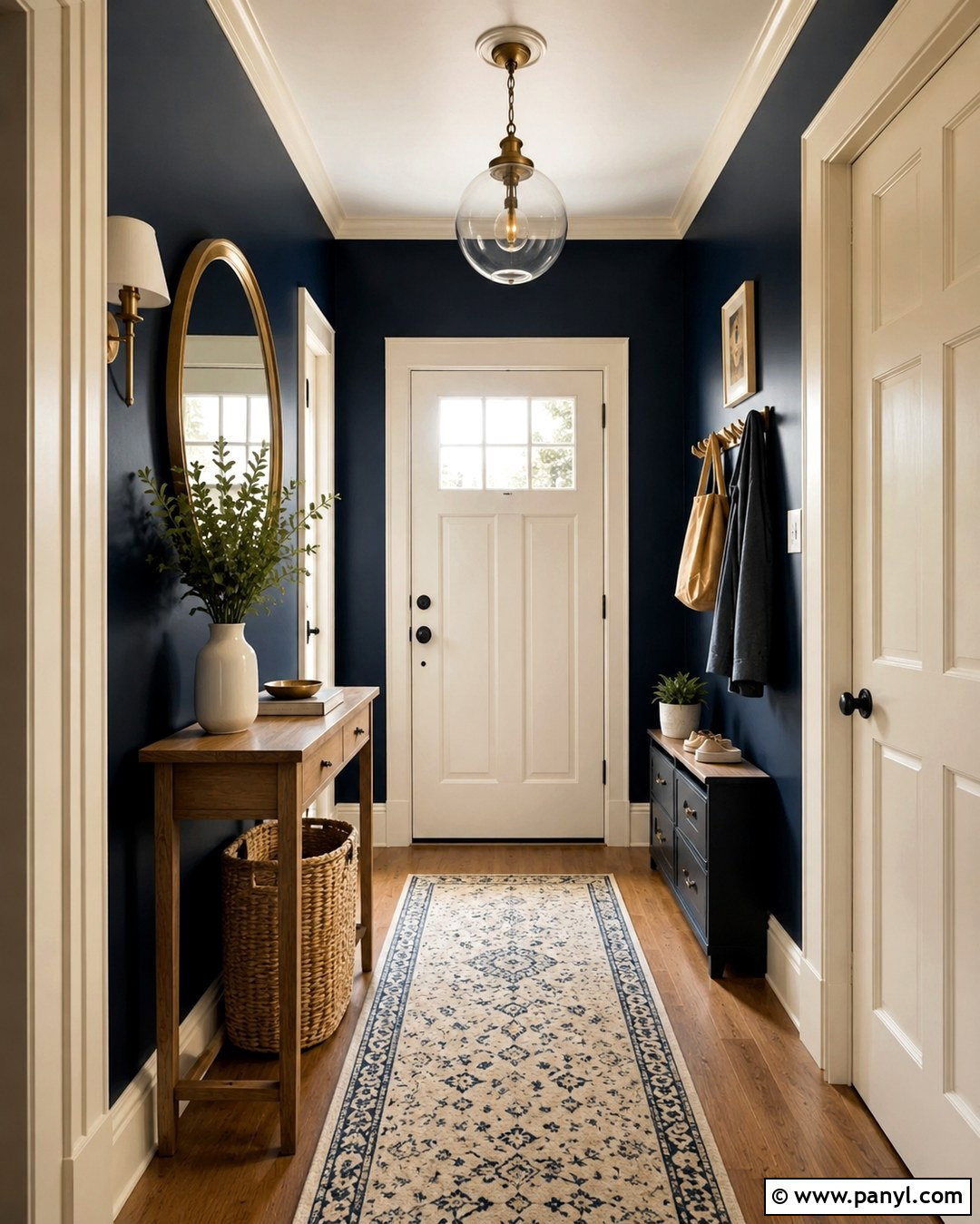
A compact entryway is an ideal place to experiment with rich navy walls. Paint the surrounding walls blue, but keep the front door, interior doors, ceiling, and trim cream. This contrast gives the small area definition while maintaining clear, bright architectural edges. Add a narrow oak console, a round brass mirror, and a cream runner with navy detailing. A woven basket beneath the console provides storage without adding visual clutter. Choose a simple wall sconce or bright overhead fixture so the navy remains readable instead of looking black. Hooks, a small bench, or a closed shoe cabinet can make the space practical. Repeating cream through accessories and textiles ensures that the entrance feels welcoming, organized, and connected to nearby rooms.
14. Navy And Cream Striped Walls
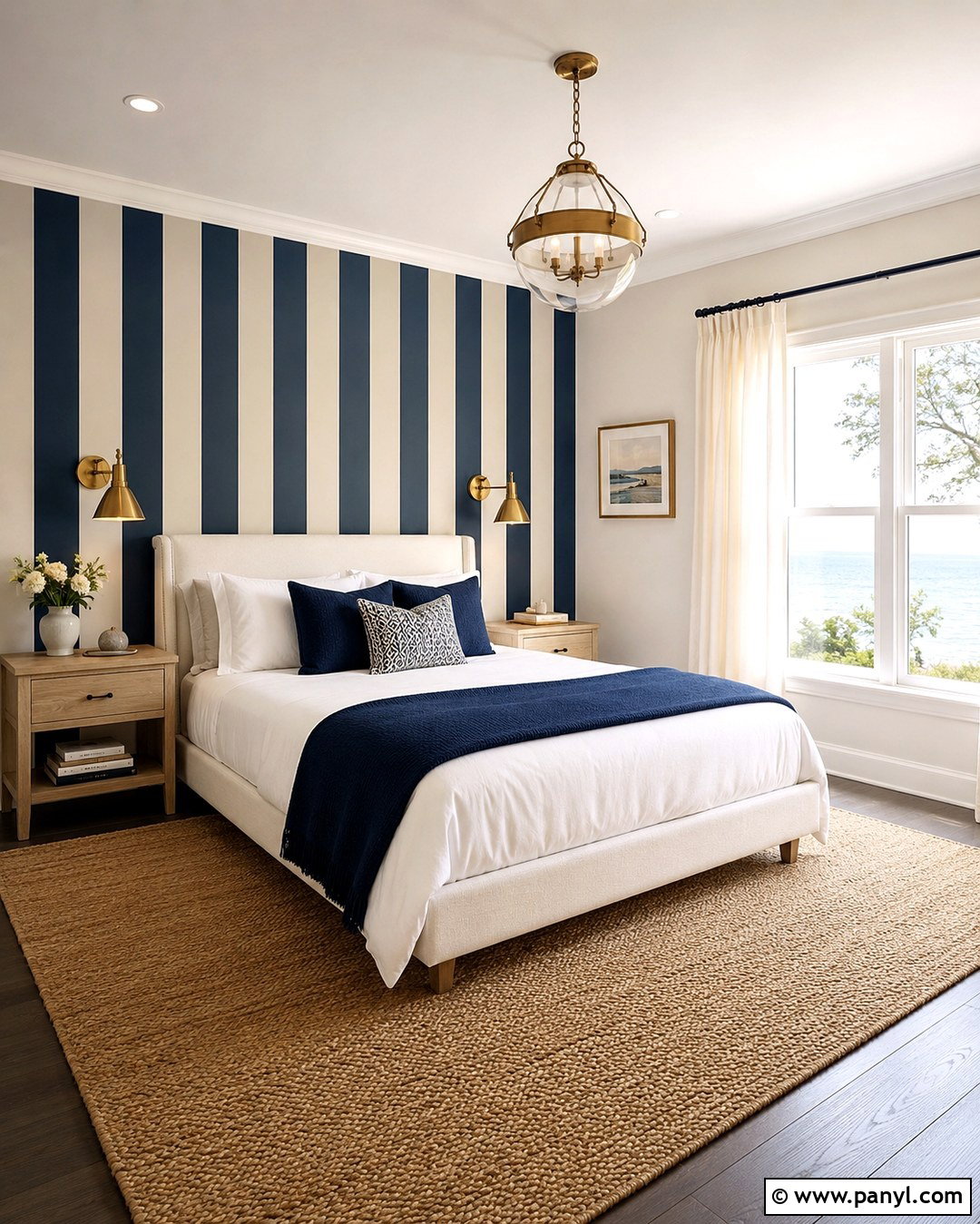
Wide navy and cream stripes create a confident wall treatment when the rest of the room stays simple. Horizontal stripes can visually widen a narrow room, while vertical stripes emphasize ceiling height. Limit the pattern to one feature wall and paint the remaining surfaces cream. Use equal-width bands for a crisp appearance, measuring carefully before applying painter’s tape. Furnish the space with a solid cream sofa or bed, medium wood tables, and a mostly neutral rug. Repeat navy through one or two textiles rather than adding several competing prints. Brass lighting and woven accents will soften the geometry. This look suits a coastal guest room, casual sitting area, or playroom, provided the stripes are broad enough to remain visually comfortable.
15. Navy Arch On Cream Walls
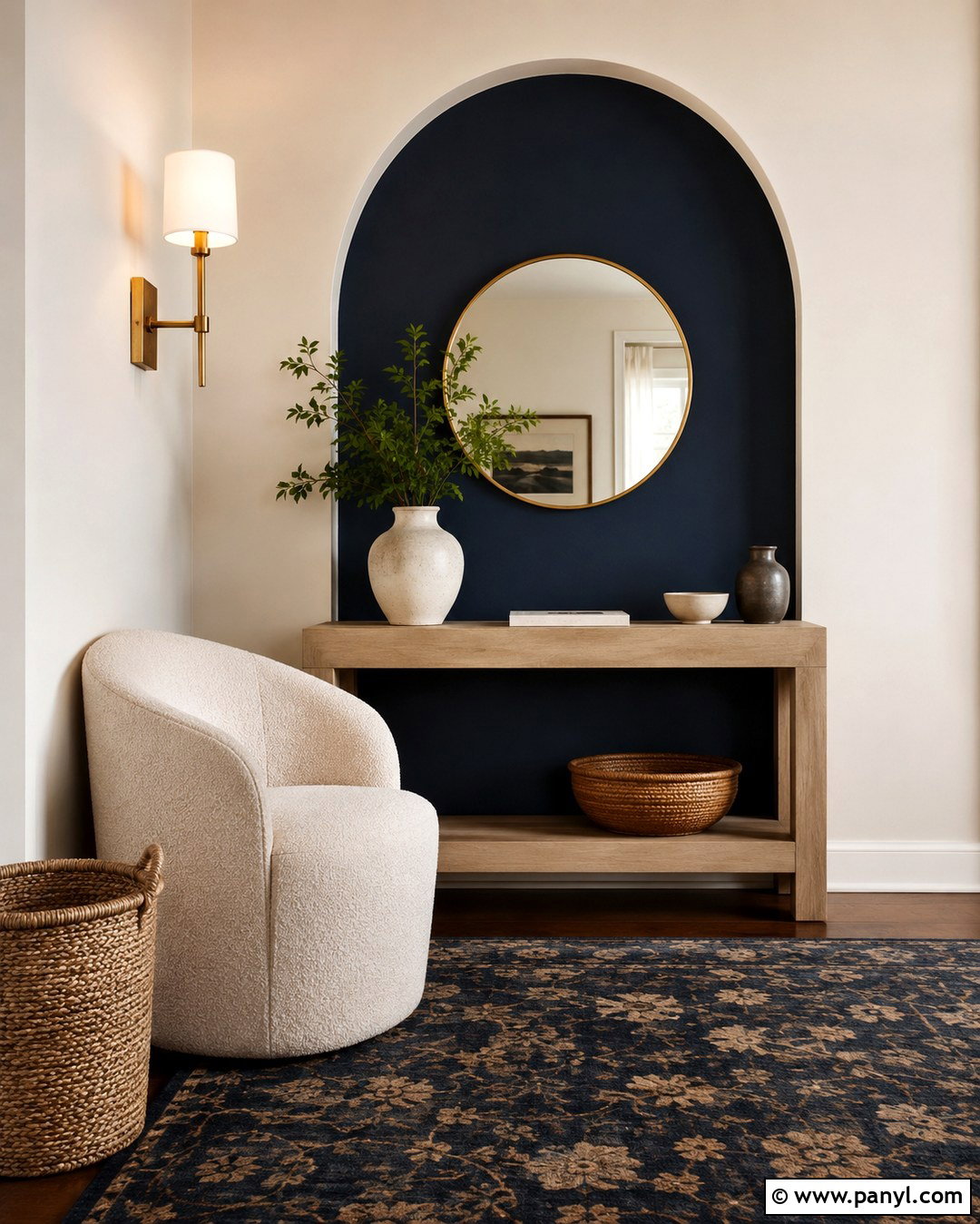
A painted navy arch gives cream walls an architectural focal point without permanent construction. Create the shape behind a console, bed, reading chair, or compact desk, making sure the arch is slightly wider than the furniture it frames. Keep the remaining room cream and repeat navy through a rug, pillow, or cabinet finish. A light oak console, cream boucle chair, and brass wall sconce will produce a warm modern arrangement. For a clean curve, use a pencil tied to string as a simple compass, then finish the outline with a small angled brush. Avoid filling the arch with too many objects. One mirror, artwork, or shelf is enough to emphasize the form while preserving the calm balance of the complete room.
16. Navy Color Block Walls With Cream Furniture

Modern color blocking allows navy and cream to share a wall in a less traditional way. Paint a large navy rectangle across the lower and central portion of the feature wall, leaving a generous cream border around it. Align the shape with a sofa, media cabinet, or dining bench so it relates directly to the furniture. Choose a streamlined cream sofa, pale wood coffee table, and navy geometric rug to reinforce the clean composition. Matte black lighting can sharpen the modern effect, while a woven floor basket adds softness. Maintain straight lines and avoid several unrelated blocks. One substantial navy section will create a clearer focal point. The finished room feels graphic and contemporary while still remaining practical, warm, and easy to furnish.
17. Navy Walls With Cream Wallpaper Panels
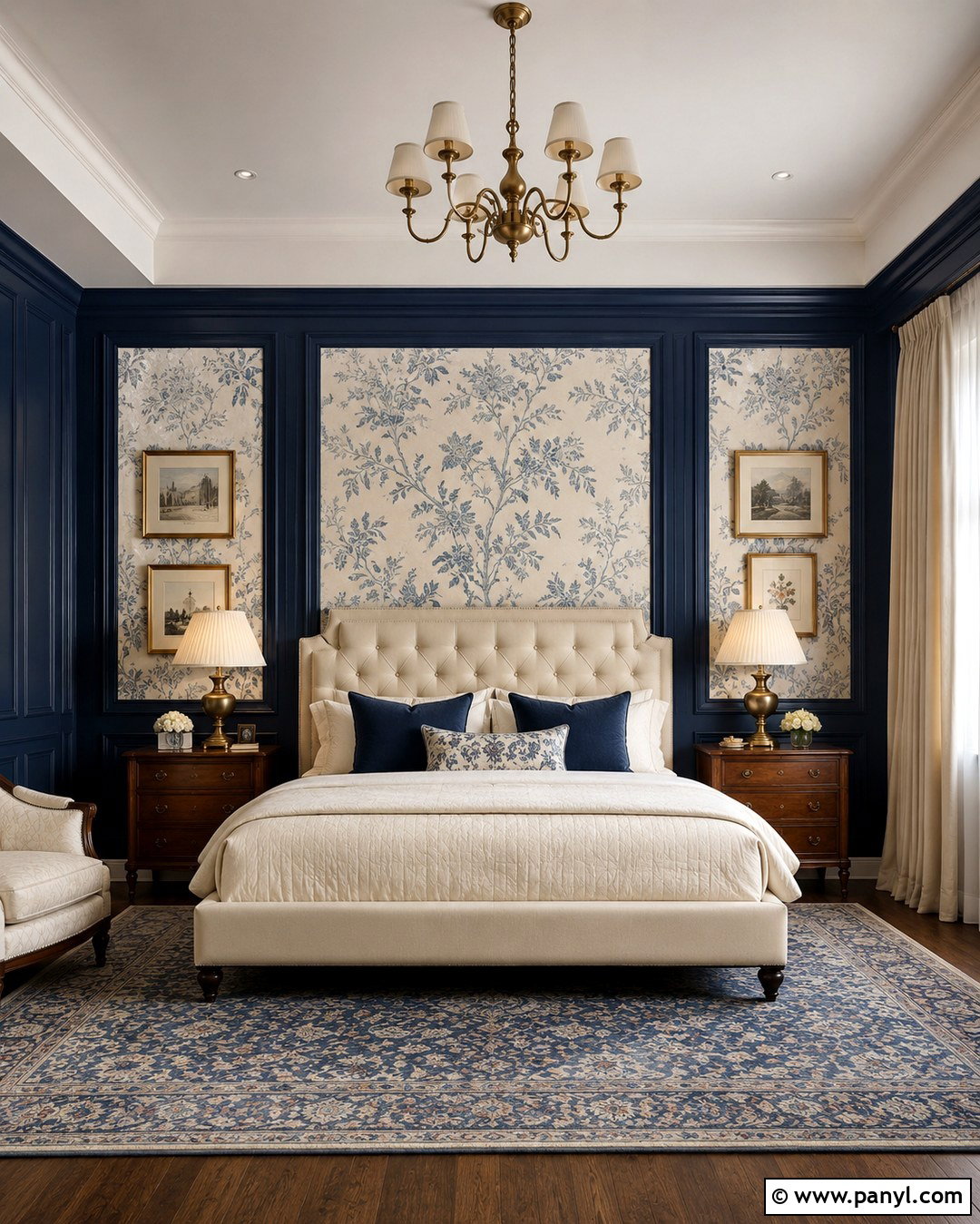
Wallpaper panels can add pattern to navy walls without overwhelming the room. Paint the full space navy, then frame cream wallpaper inside large molding rectangles. Choose a restrained botanical, stripe, or geometric pattern containing navy details so the panels blend with the surrounding paint. Use the treatment behind a bed, dining table, or console and keep the other walls less decorative. A cream upholstered bed or chairs, walnut furniture, and brass lighting will complete the layered look. Select furniture with simple silhouettes to prevent competition with the wallpaper. Cream curtains and a lightly patterned rug will distribute the pale color throughout the room. This approach feels collected and distinctive while allowing the strong pattern to remain controlled within clear architectural boundaries.
18. Cream Walls With Navy Door Frames
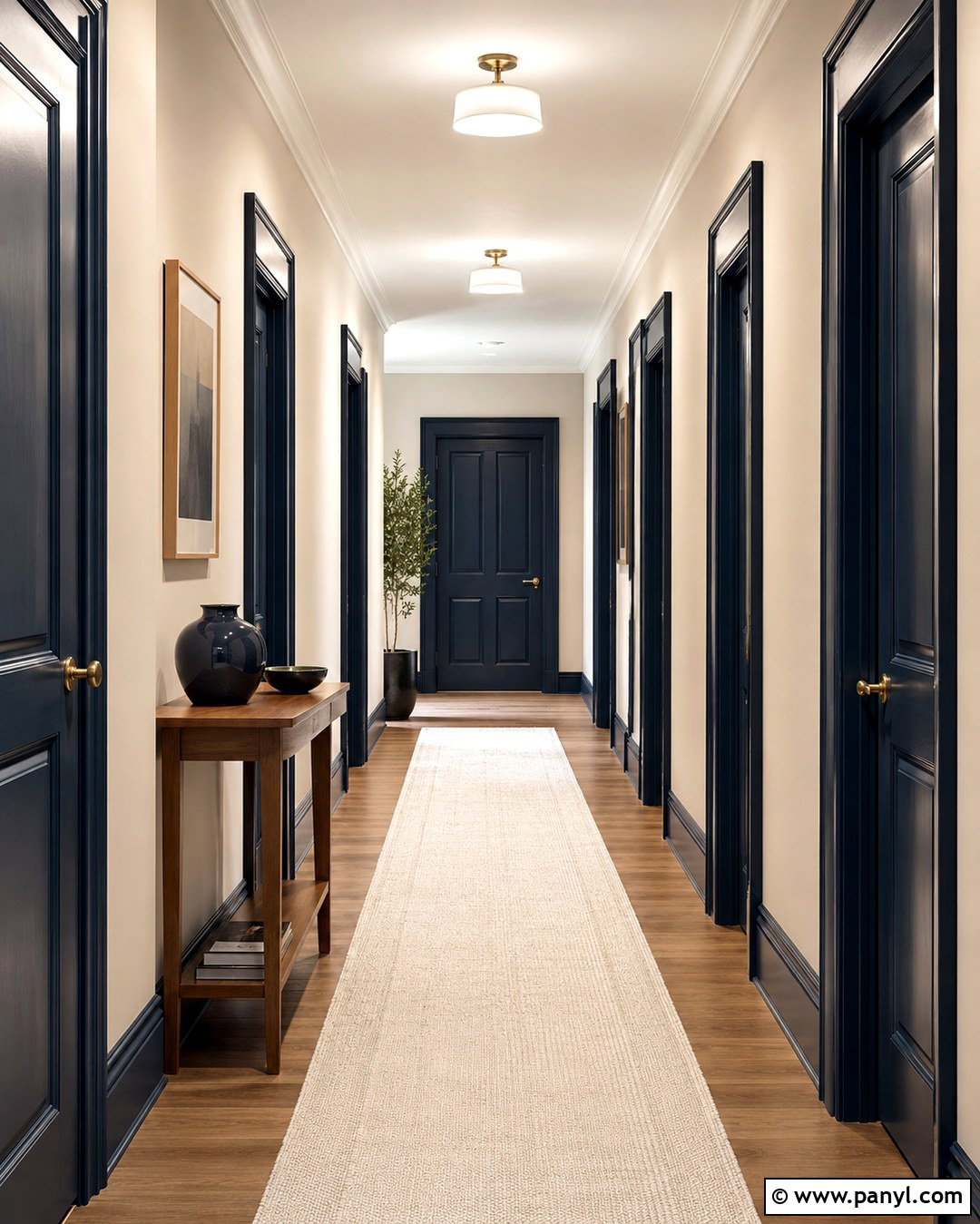
Painting door frames and doors navy can transform plain cream walls without requiring a full-room color change. Use the dark color on every visible door in the space so the treatment appears consistent. Keep baseboards and crown molding cream if you want the navy doors to stand alone, or extend navy onto the baseboards for a more graphic outline. Furnish the room with light upholstery, medium oak pieces, and an ivory rug. Navy cushions or ceramics will connect the doors to the rest of the decor. Choose satin or semi-gloss paint for the woodwork because these surfaces receive frequent contact. Matte brass handles add warmth, while black hardware creates a sharper modern effect. The final space feels coordinated, practical, and architecturally defined.
19. Navy Mudroom Walls With Cream Cabinets
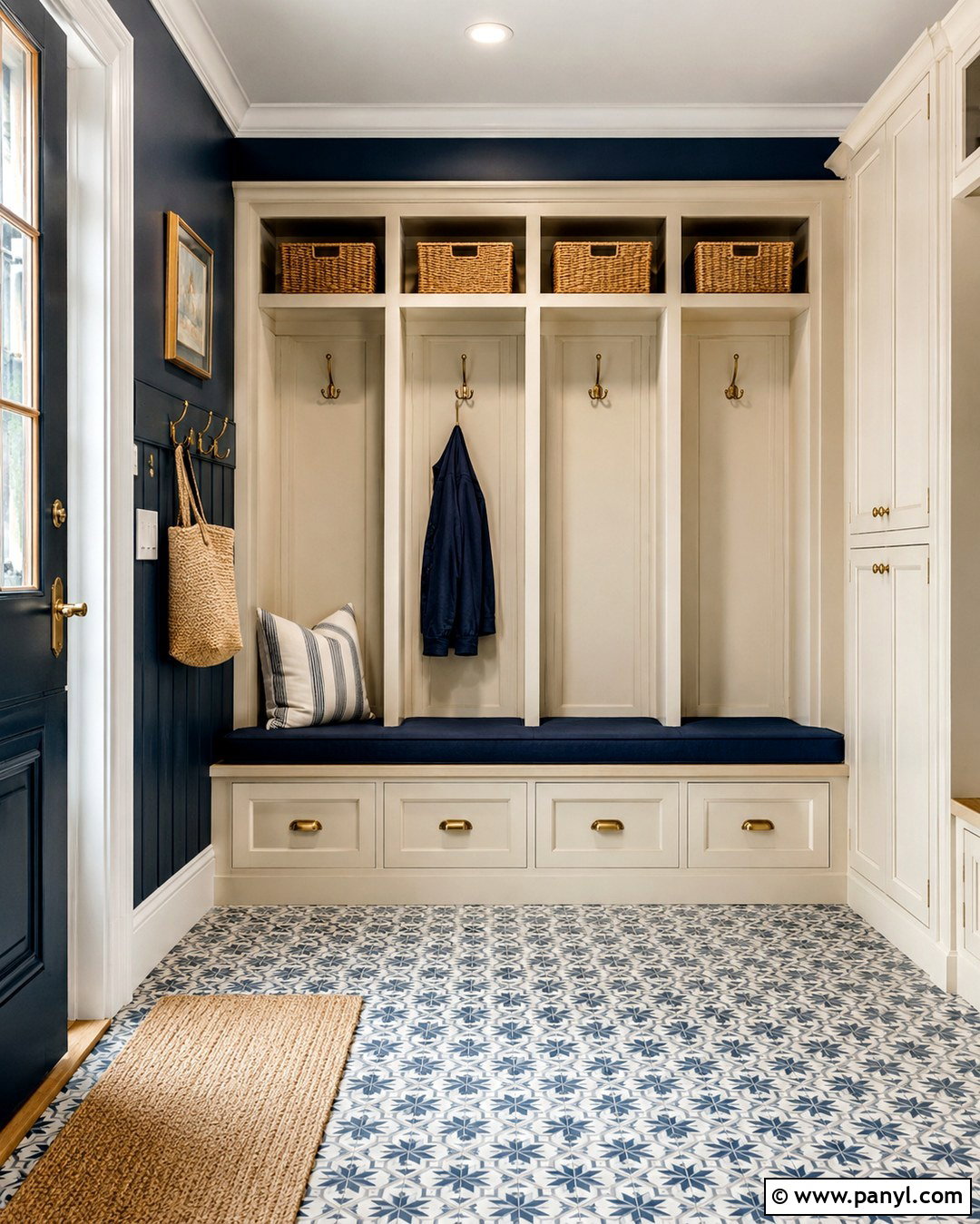
A navy and cream mudroom can combine hardworking storage with a polished appearance. Paint the walls navy and use cream cabinets, lockers, and bench drawers to keep the room bright. Add a natural oak bench seat, navy seat cushion, and labeled woven baskets for everyday organization. Durable cream-and-blue patterned floor tile will disguise dirt better than a solid pale surface while reinforcing the palette. Use brass or matte black hooks and install a bright ceiling fixture for clear visibility. Closed lower cabinets can hold shoes, while upper cubbies provide space for seasonal accessories and bags. Keep the navy visible between storage sections so the wall color still contributes depth. This complete layout feels orderly, welcoming, and suitable for busy household routines.
20. Navy Bathroom Walls With Cream Tile
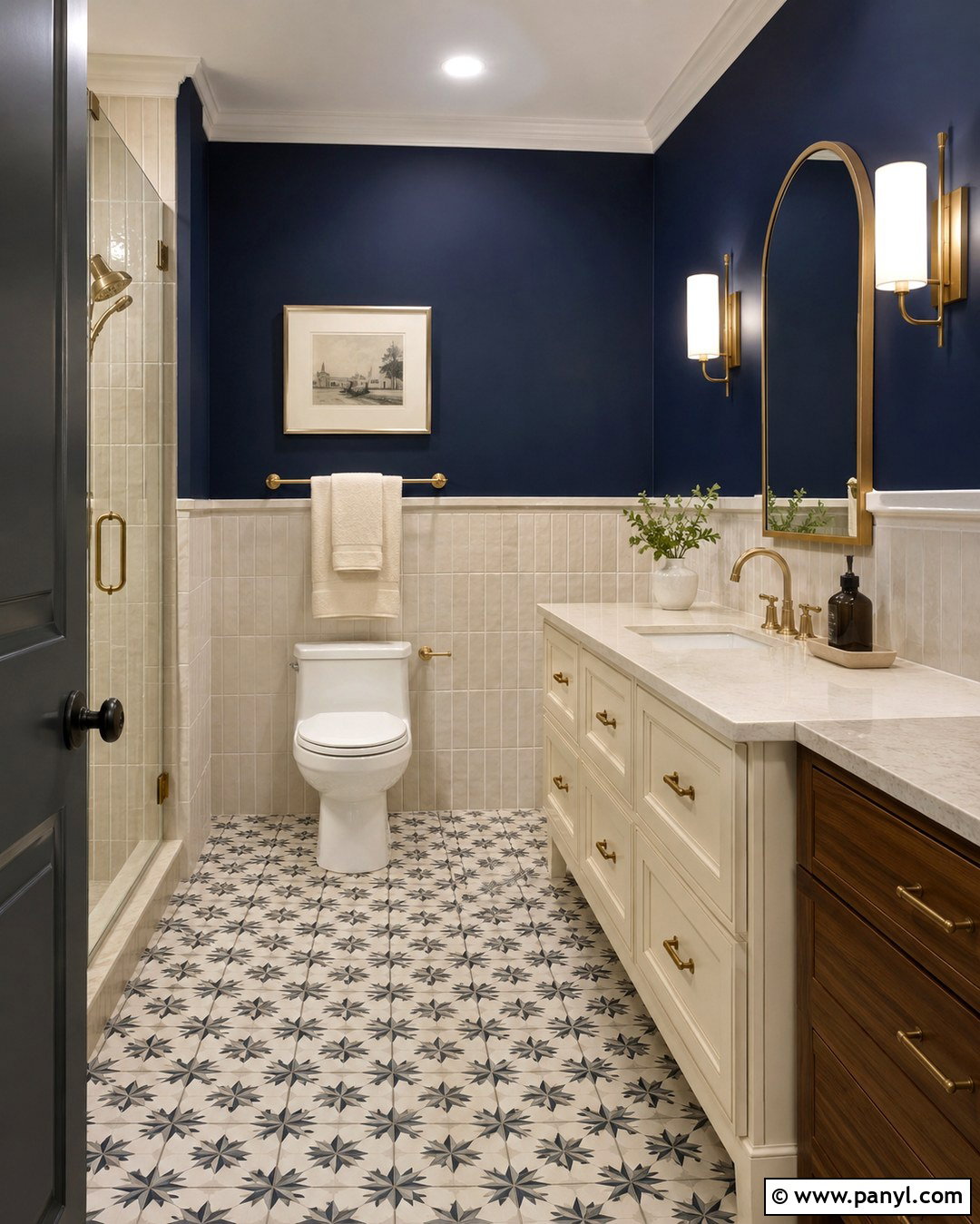
Navy walls can make a bathroom feel refined when paired with warm cream tile and strong lighting. Use navy paint above cream wainscot tile or on the vanity wall, choosing a moisture-resistant finish. Install cream subway tile, limestone-look porcelain, or simple square tile around wet areas. A cream vanity with a pale stone countertop will brighten the room, while walnut drawers can add natural warmth. Complete the design with brushed brass fixtures, a navy-and-cream floor pattern, and an arched mirror. Use bright sconces on both sides of the mirror rather than relying only on overhead lighting. White fixtures can still work, but warmer ivory towels and accessories will blend more smoothly with the cream surfaces and maintain the intentional two-color palette.
Conclusion:
The best navy and cream rooms balance bold color with warm, light surfaces. Navy can frame architecture, anchor furniture, or create a memorable focal point, while cream keeps the overall space inviting. Before painting, test both colors on large boards and view them during the morning, afternoon, and evening. Consider the room’s natural light, ceiling height, flooring, and permanent finishes. Then repeat each wall color through furniture, textiles, or small accents so the design feels connected. Whether you prefer paneling, trim, built-ins, stripes, or a simple feature wall, these **20 Navy And Cream Walls** offer complete looks that can be adapted to traditional, coastal, modern, and relaxed homes.

Related Ideas and Inspiration:



Leave a Reply