
Navy and cream kitchens strike a beautiful balance between bold color and inviting warmth. Deep navy gives cabinets, islands, and architectural features a strong visual foundation, while soft cream prevents the room from feeling cold or overly dark. The combination also works across many aesthetics, including farmhouse, coastal, traditional, transitional, and modern interiors. Details such as brushed brass hardware, natural wood, warm stone, and layered lighting can further soften the contrast. For the best result, repeat both colors in several places and pay attention to their undertones. Cream should feel warm rather than yellow, while navy should look rich instead of nearly black. The complete spaces below offer practical and distinctive ways to recreate these 20 navy and cream kitchen ideas.

1. Navy Lower Cabinets And Cream Upper Cabinets
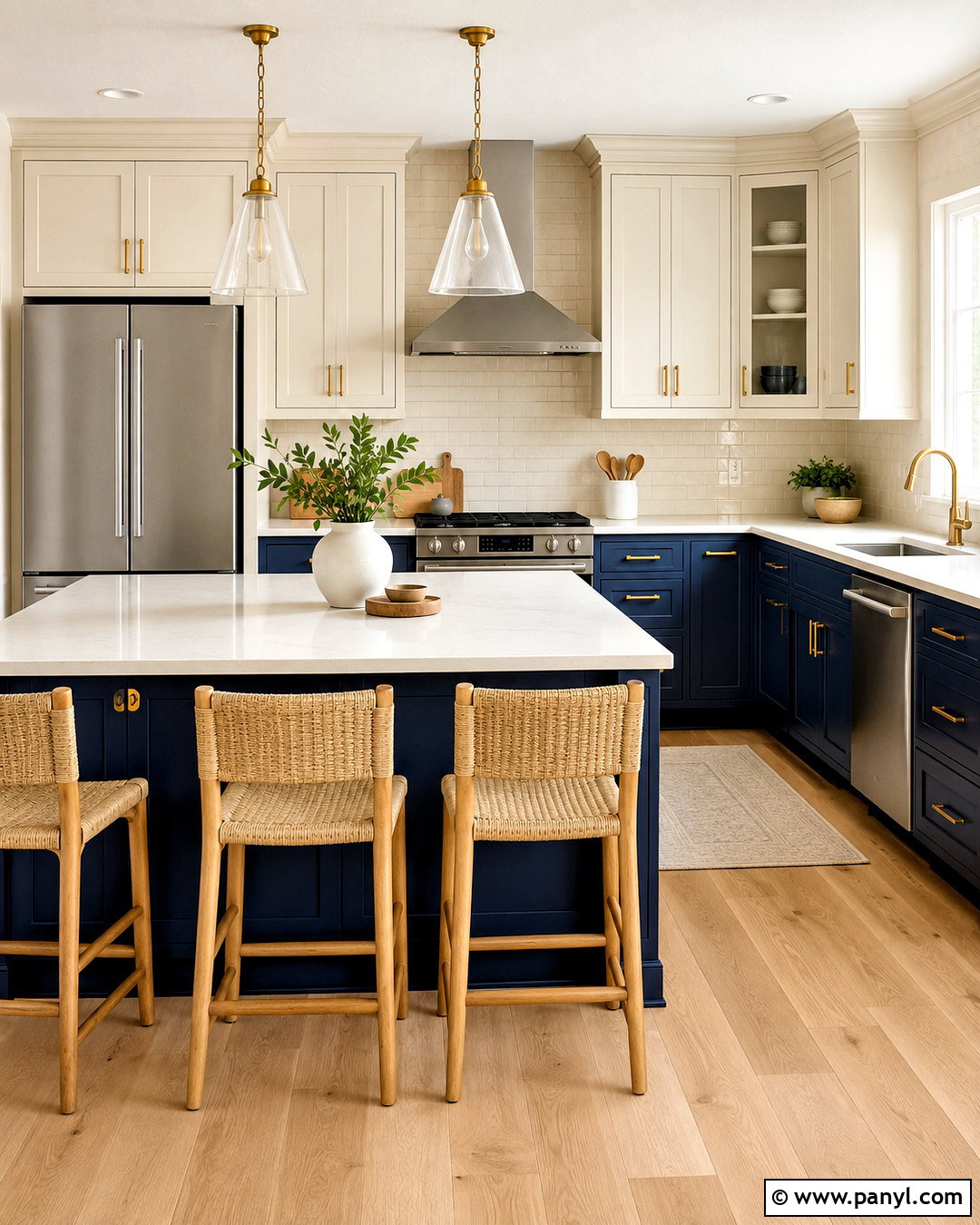
Navy lower cabinets and cream upper cabinets create a balanced two-tone kitchen that feels grounded but not heavy. Use simple Shaker doors throughout so the color contrast becomes the main feature. Add warm cream quartz countertops with subtle beige veining and a matching cream subway tile backsplash. Brushed brass pulls introduce gentle warmth, while light oak flooring keeps the room relaxed and approachable. A white oak dining table or a few woven counter stools can repeat that natural finish. Keep appliances stainless steel for a clean transition between the two cabinet colors. Under-cabinet lights will brighten the prep areas and emphasize the creamy backsplash. This arrangement works especially well in medium-size kitchens where full navy cabinetry might absorb too much light.
2. Cream Cabinets With Navy Kitchen Island
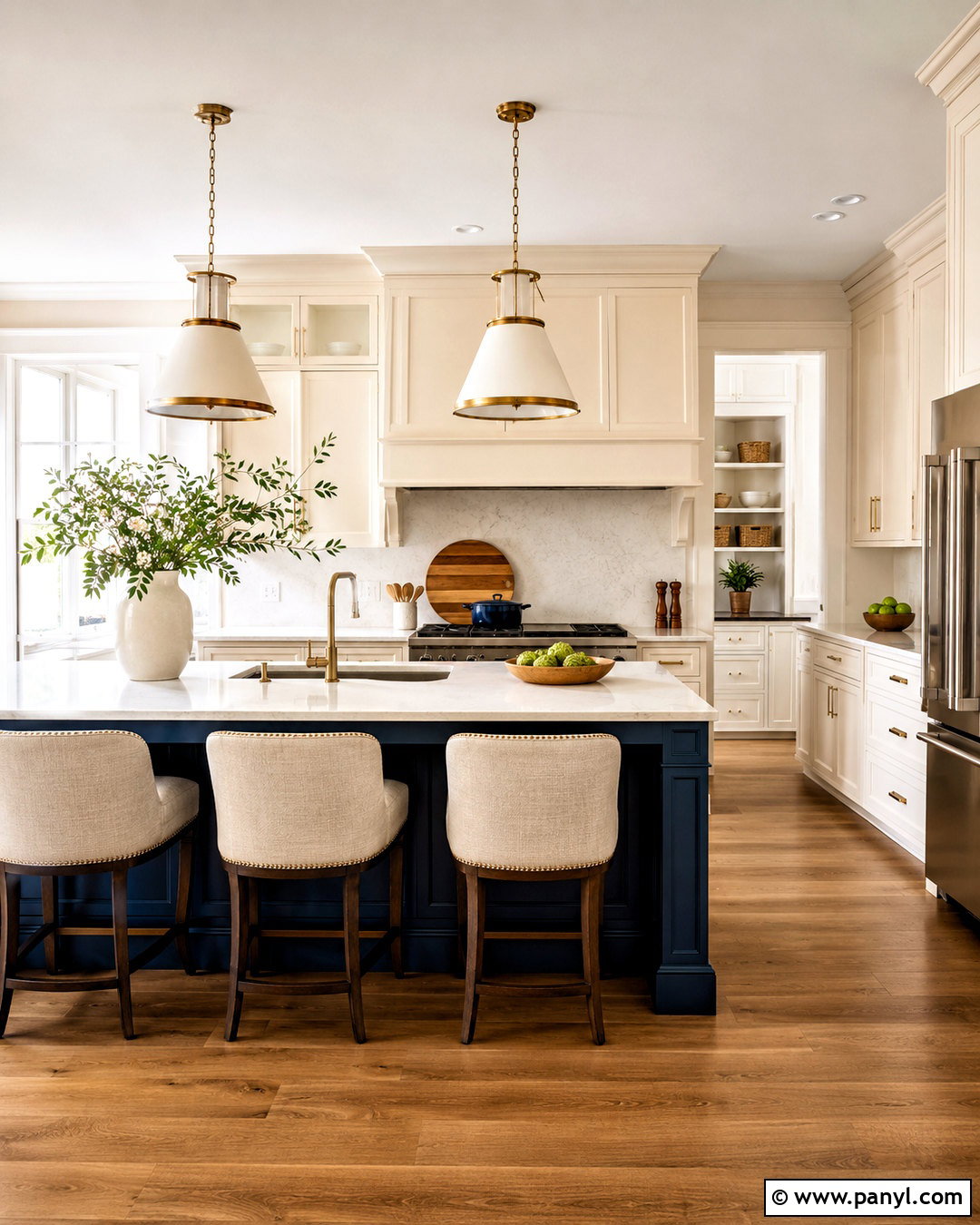
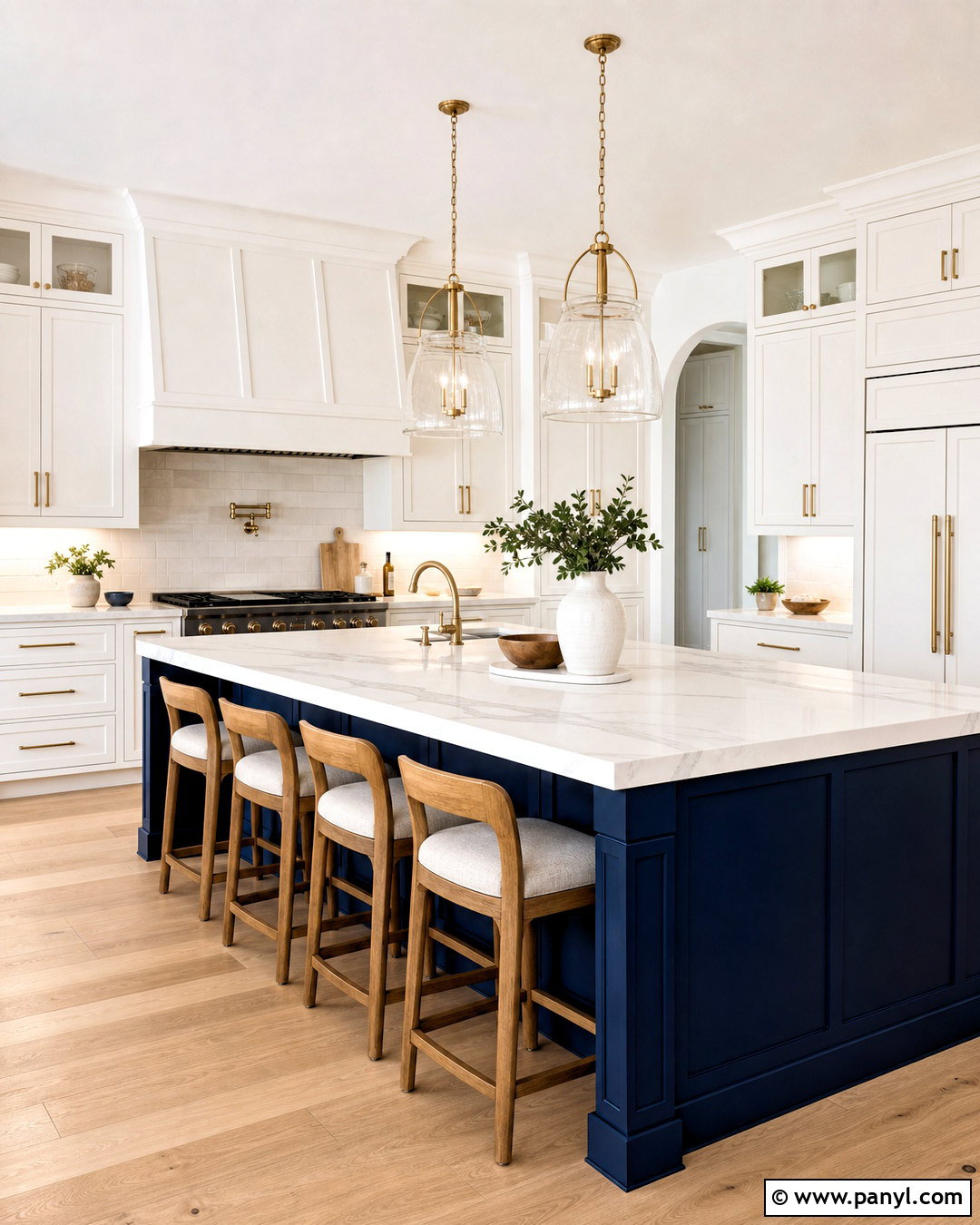
Picture a bright kitchen lined with creamy cabinets and anchored by one substantial navy island. This layout makes the island an intentional focal point without surrounding the entire room in dark color. Choose warm ivory perimeter cabinetry, cream quartz counters, and a deep navy island with a thick pale stone top. The island can include wide storage drawers, an undermount sink, and seating for three or four. Hang aged brass pendants above it to connect the cool navy base with the warmer cabinets. Medium-tone oak flooring adds another comfortable layer. Finish the room with a handmade cream tile backsplash and a few navy accessories near the range. The repeated color keeps the island connected to the rest of the kitchen.
3. Navy Cabinets With Cream Quartz Countertops
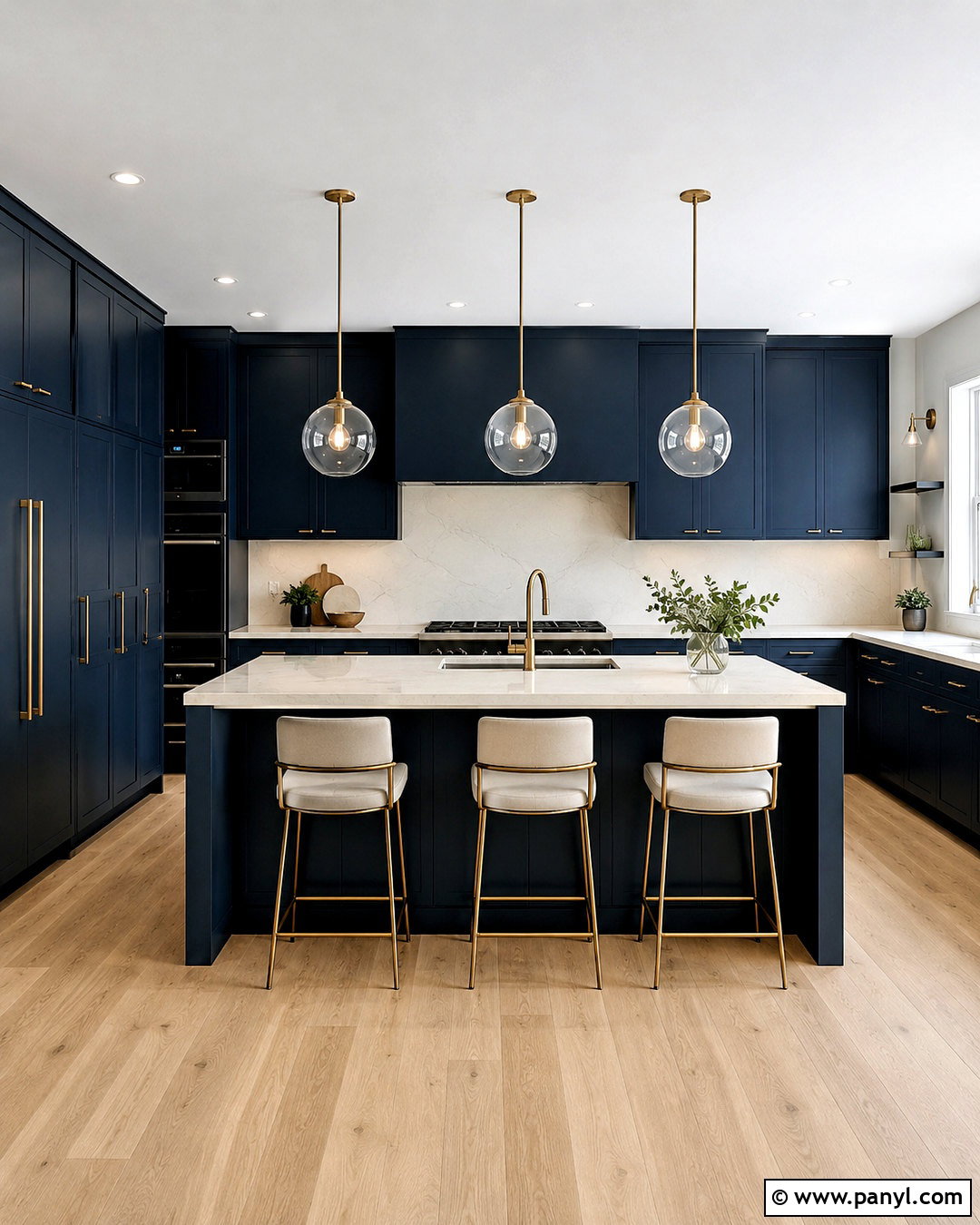
Rich navy cabinetry looks crisp and practical when every work surface is topped with cream quartz. Select a quartz pattern with restrained taupe or warm gray veining rather than a stark white background. Run the same material several inches up the wall or use it as a full-height backsplash for a seamless appearance. Flat-panel navy cabinets create a contemporary foundation, while slim champagne bronze pulls add a polished accent. Balance the dark cabinetry with pale oak flooring and a cream-painted ceiling. Glass globe pendants will preserve open sightlines above the island. If the kitchen lacks natural light, add LED strips beneath the upper cabinets and inside glass-front cupboards. The finished room feels dramatic, clean, and comfortably warm rather than sharply contrasting.
4. Cream Cabinets With Navy Backsplash
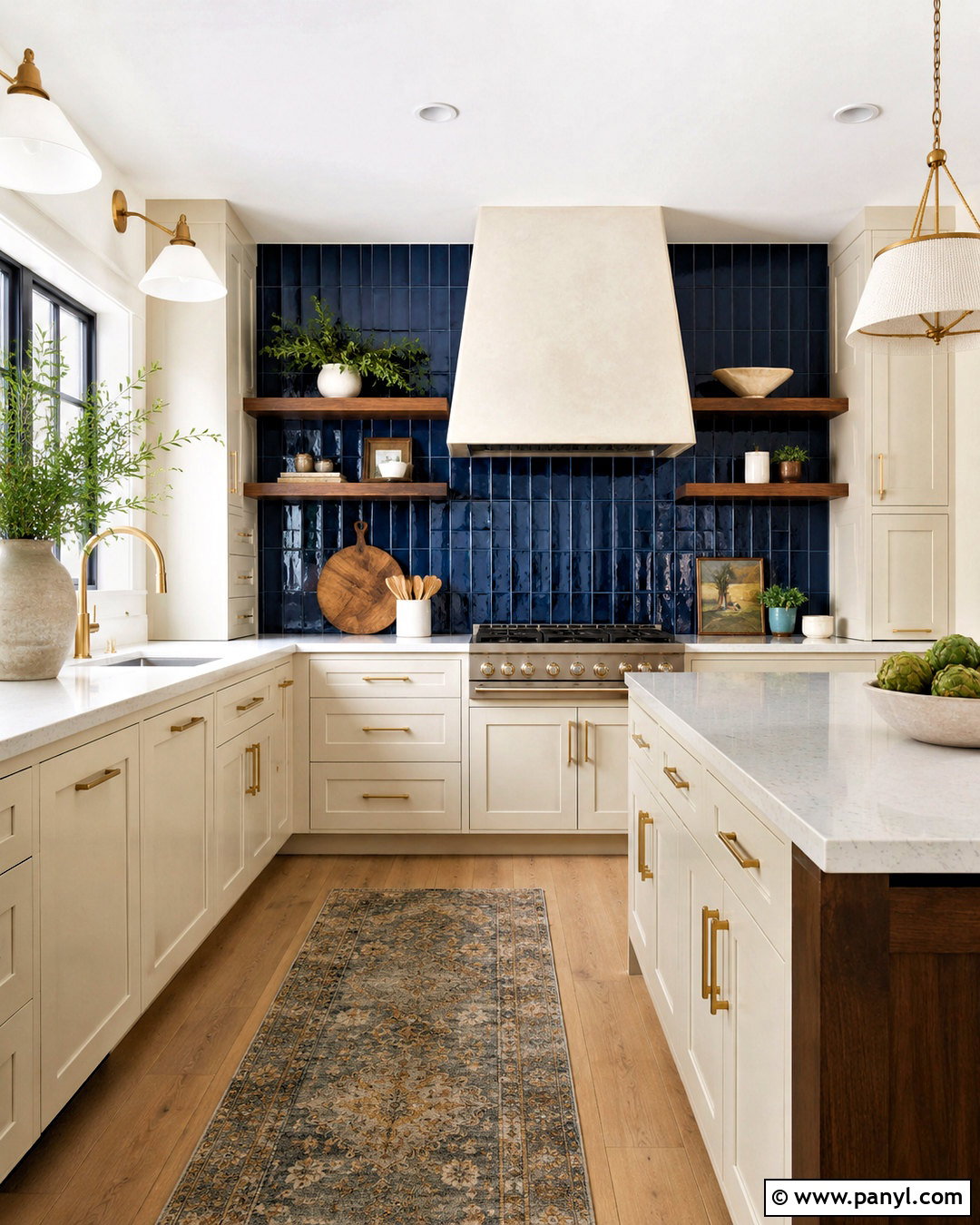
What if the cabinetry stayed light while the backsplash carried the strongest color? Begin with cream Shaker cabinets, lightly veined quartz countertops, and a glossy navy tile backsplash. Vertical subway tiles can make a low ceiling appear taller, while navy hexagons bring a more graphic character. Continue the tile from the countertop to the upper cabinets and behind the range for a complete, connected look. Use warm gray grout if you want the tile shape to remain visible without creating harsh lines. Walnut shelves, brass hardware, and oak flooring soften the saturated blue. A cream plaster range hood prevents the backsplash from overpowering the room. Finish with warm white walls and simple ceramic accessories that allow the navy surface to remain the clear focal point.
5. Navy And Cream Farmhouse Kitchen
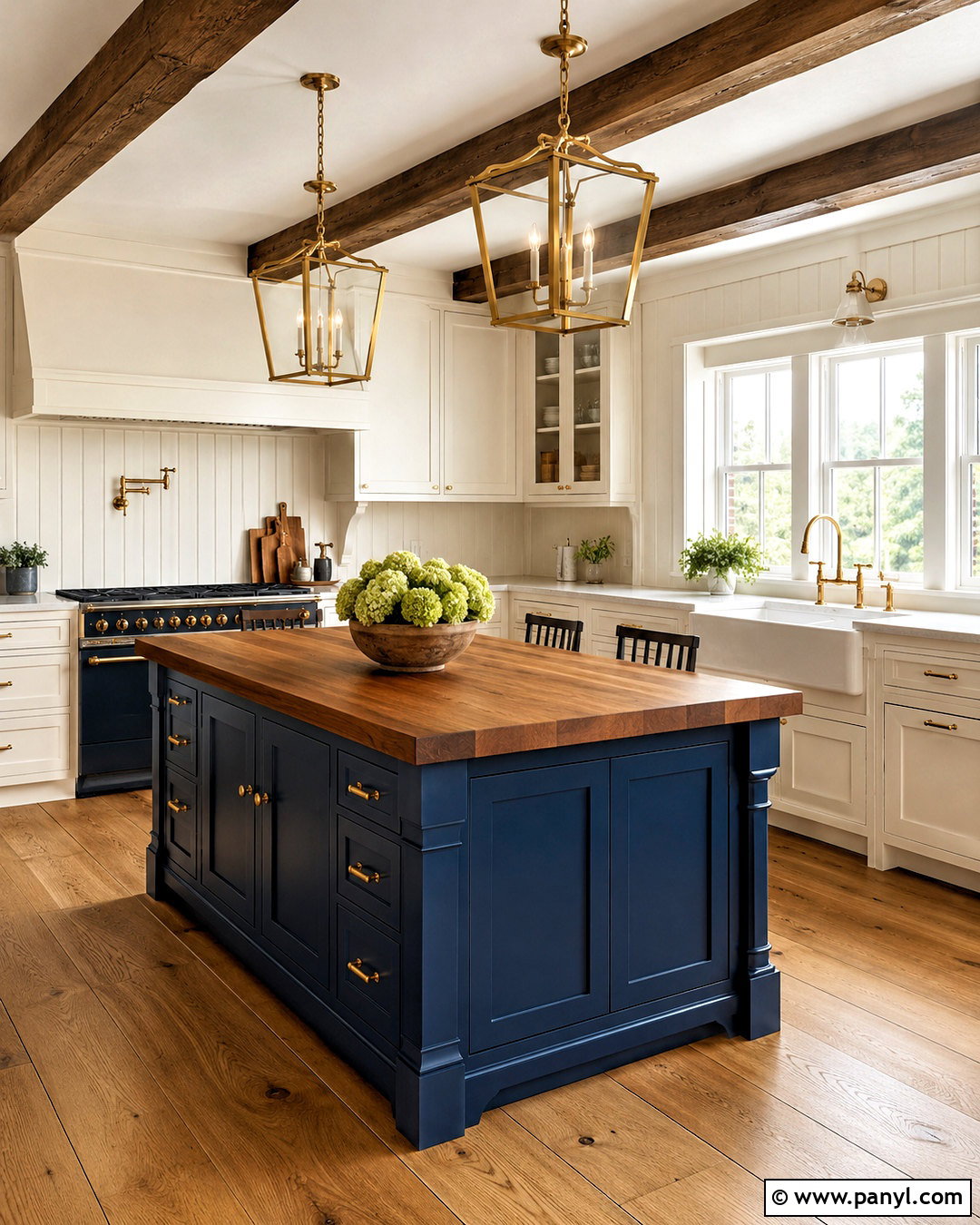
A farmhouse kitchen feels more refined when classic cream cabinetry is paired with a deep navy island. Choose inset Shaker doors, cup pulls, and a large cream apron-front sink beneath a wide window. Butcher block can top the navy island, while durable cream quartz covers the perimeter counters. Add a softly textured beadboard backsplash or handmade cream subway tile for subtle character. Wide-plank oak flooring and two simple wooden ceiling beams bring natural warmth into the room. Instead of overly rustic accessories, use practical pieces such as woven stools, ceramic canisters, and wooden cutting boards. A pair of aged brass lantern pendants completes the look. The result is comfortable and familiar, yet the disciplined navy and cream palette keeps everything fresh and visually organized.
6. Navy And Cream Modern Kitchen
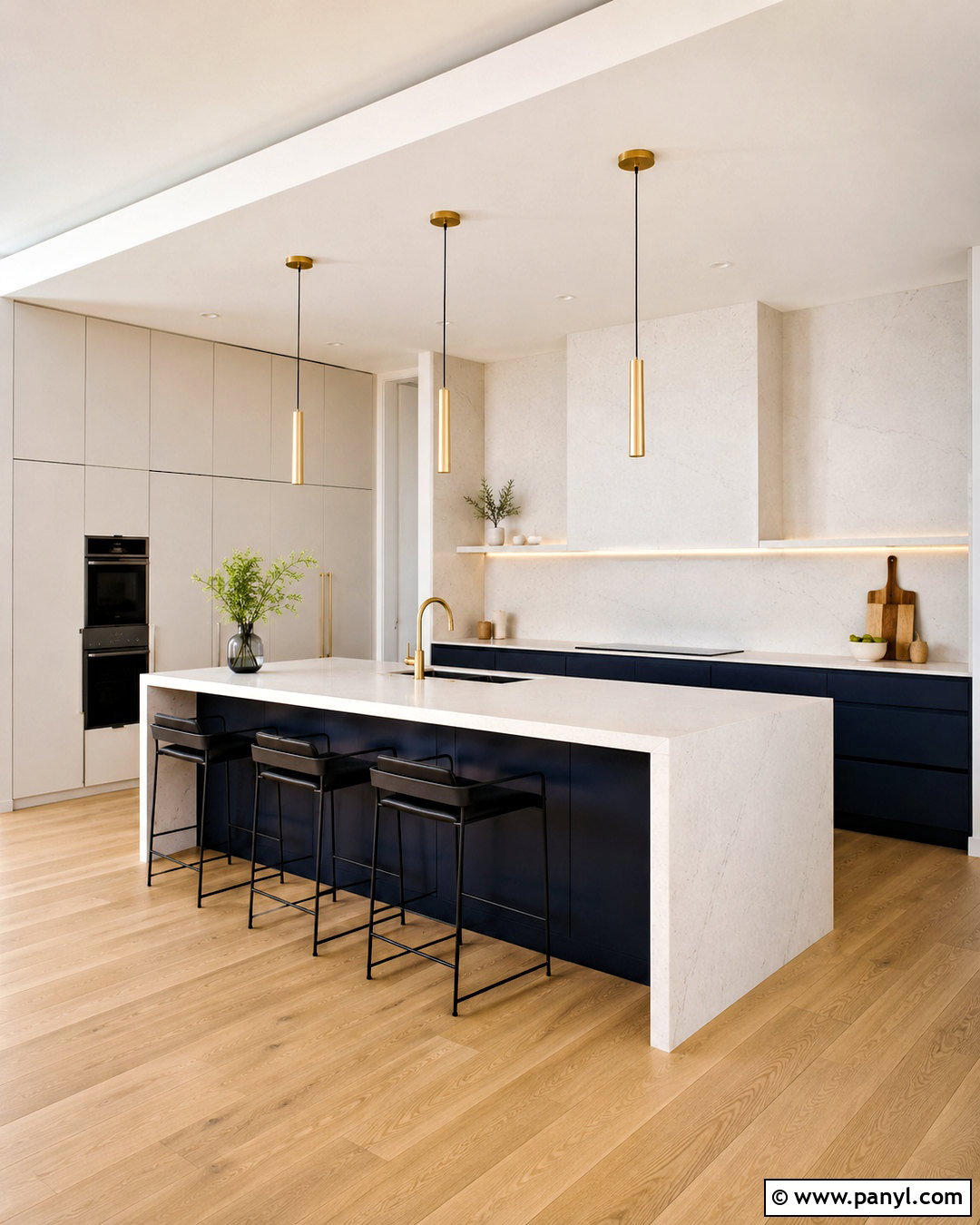
Clean lines allow navy and cream to look sharp without becoming cold. Use handleless navy base cabinets, tall cream storage cabinets, and a long cream quartz island with a waterfall edge. Keep the backsplash simple by extending the same quartz behind the cooktop. Integrated appliances and a paneled refrigerator reduce visual interruption, making the color blocking feel deliberate. Pale oak flooring adds warmth without competing with the smooth cabinetry. Above the island, install narrow black or brass pendants with simple geometric forms. Recessed ceiling lights and under-cabinet strips should provide even illumination across every work zone. Limit countertop decor to a wooden tray, cream stoneware, and one leafy plant. This complete scheme feels streamlined, functional, and suitable for an open-concept home.
7. Navy And Cream Traditional Kitchen
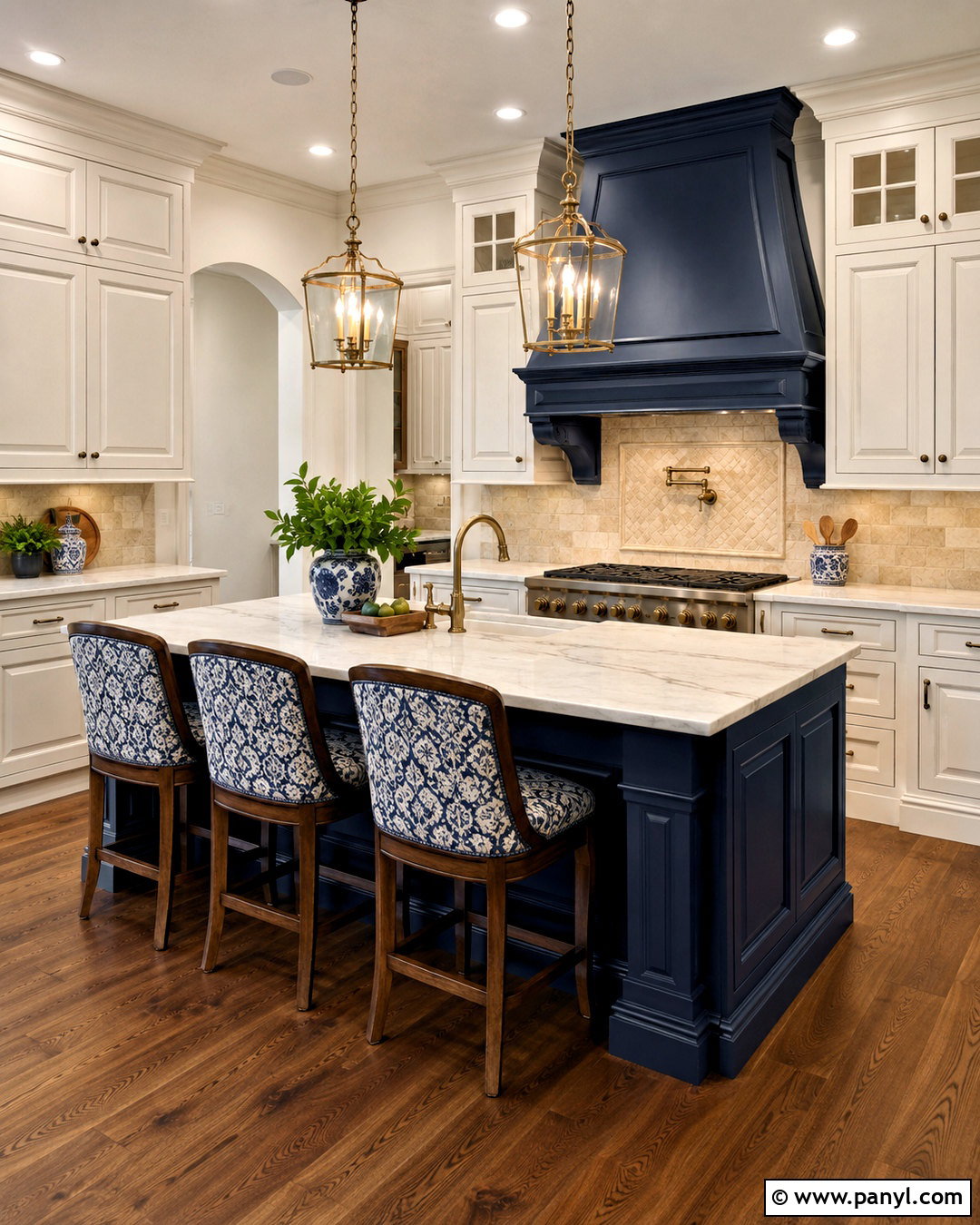
Traditional kitchens can handle deeper color, detailed millwork, and layered materials beautifully. Paint the perimeter cabinets a soft cream and use navy for the island, glass-front display cabinets, and a decorative range hood surround. Choose raised-panel doors, antique brass knobs, and cream marble-look countertops with warm gray veining. A patterned stone backsplash behind the range can add detail, while quieter cream tile covers the remaining walls. Medium walnut flooring grounds the formal cabinetry and complements the brass. Include crown molding, furniture-style island legs, and paneled appliance fronts for a built-in appearance. Fabric counter stools in a small navy-and-cream pattern provide a subtle finishing touch. The room will feel established and elegant without appearing overly ornate or disconnected from everyday family life.

8. Navy And Cream Coastal Kitchen
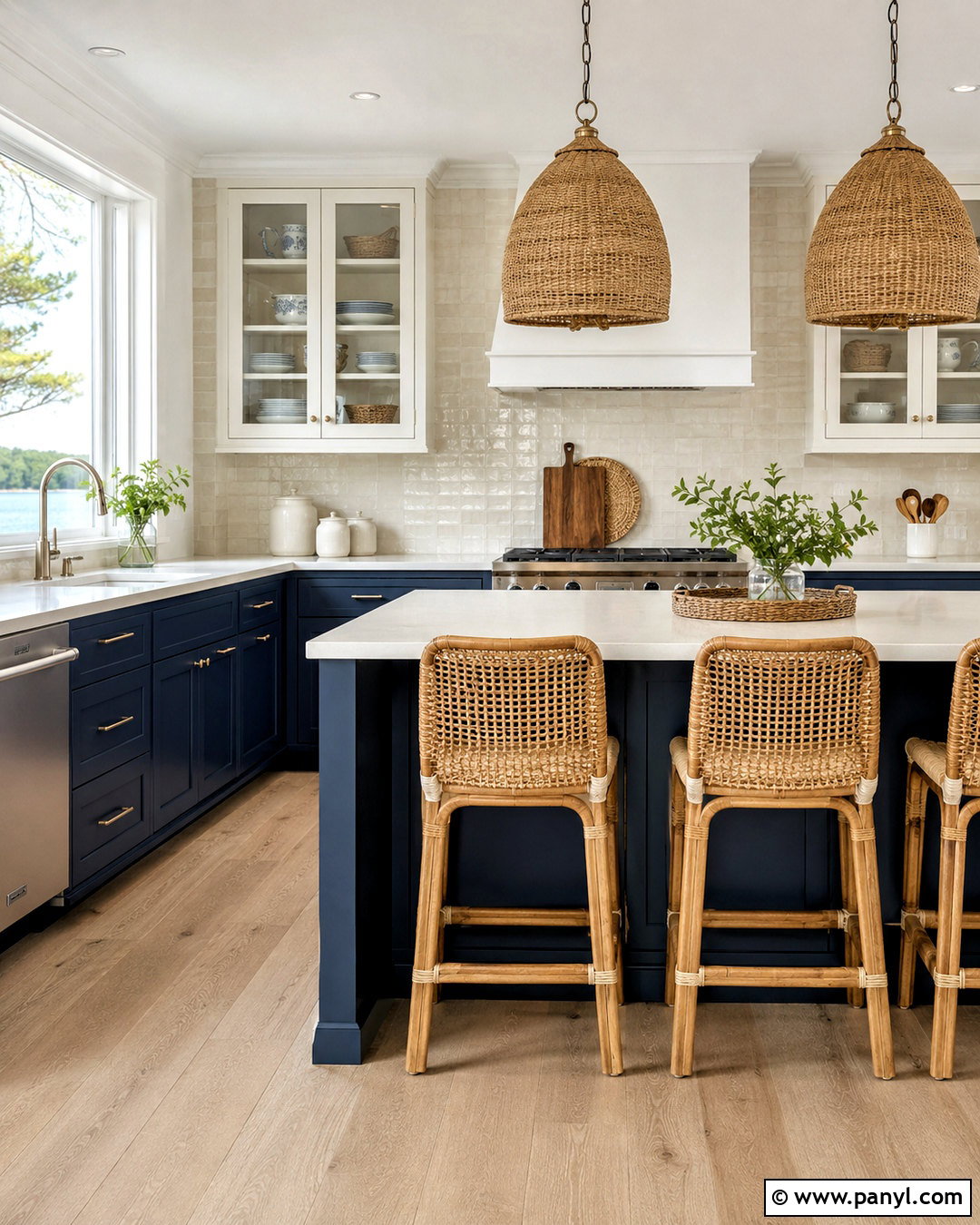
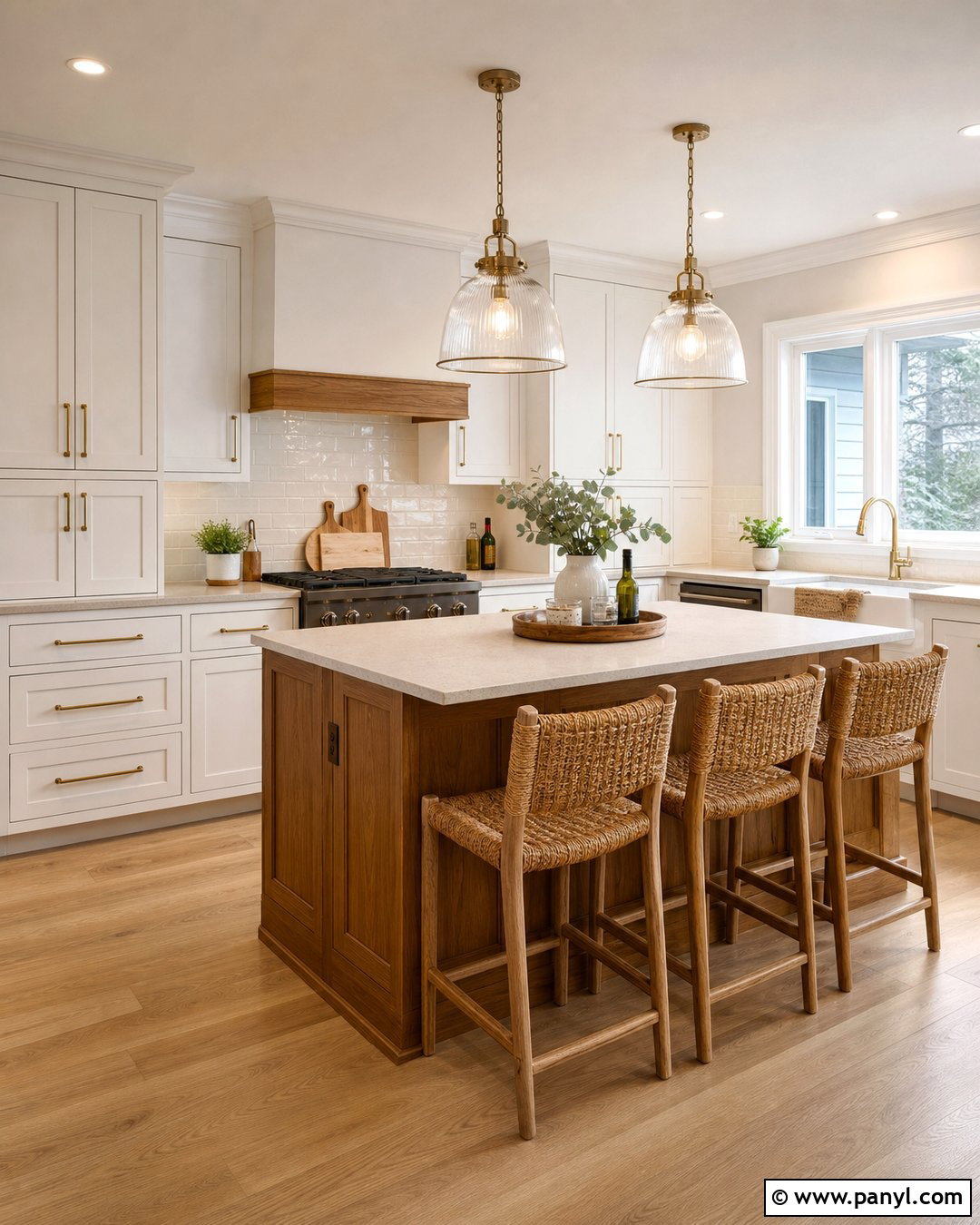
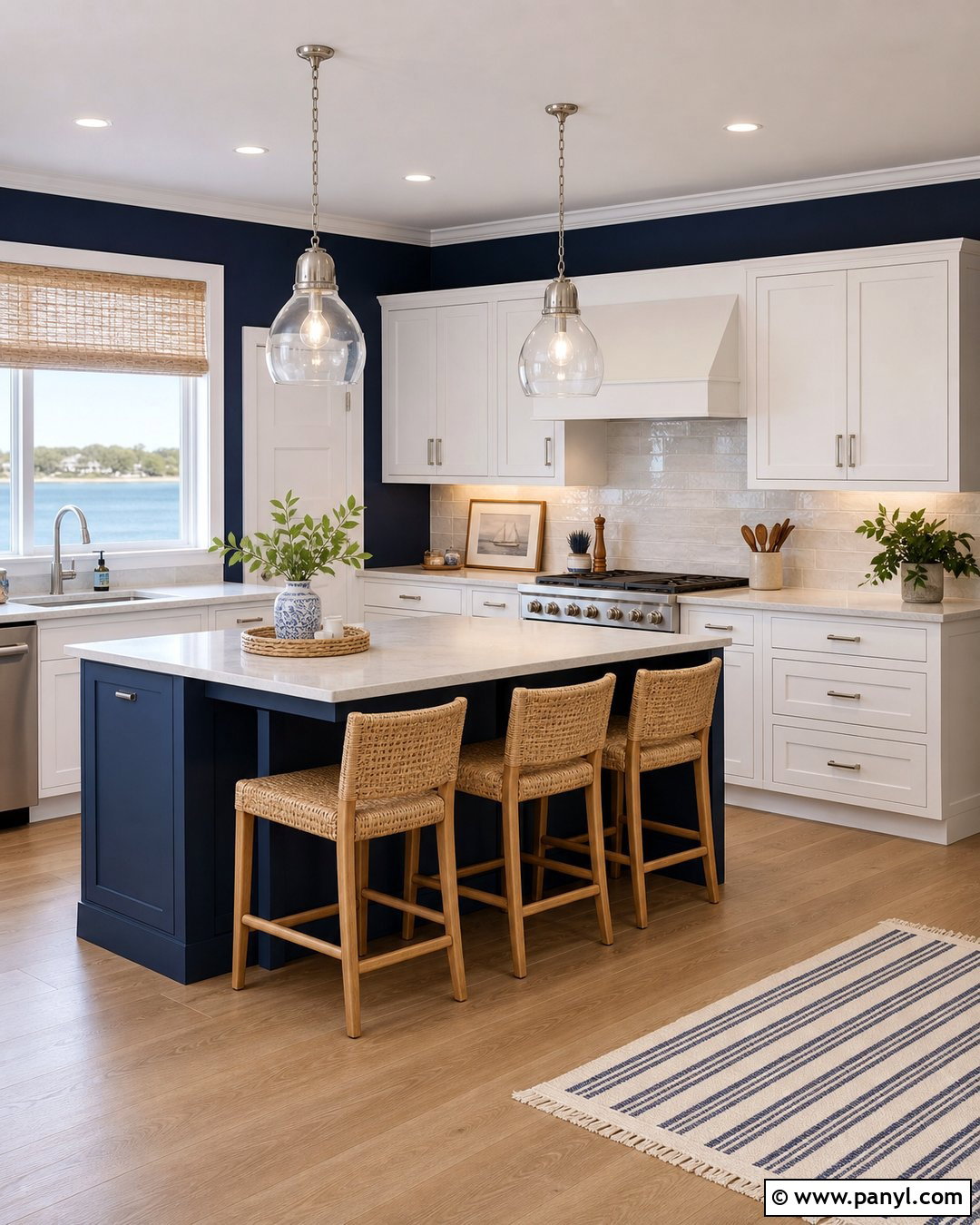
For a coastal look, combine navy cabinetry with creamy surfaces and weathered natural textures instead of obvious seaside decorations. Use navy Shaker cabinets on the lower level and cream glass-front cabinets above. Add pale cream quartz counters, a pearly ceramic backsplash, and lightly washed oak flooring. Rattan stools and woven pendant lights introduce texture while keeping the palette breezy. A large window over the sink should remain minimally dressed to maximize daylight. Choose brushed nickel hardware for a cleaner, more casual finish than polished brass. Soft striped Roman shades can repeat the navy and cream without dominating the room. Finish with clear glass vessels, white ceramics, and a few natural wood boards. The overall kitchen feels airy, relaxed, and connected to the coast in a subtle way.
9. Navy And Cream Small Kitchen
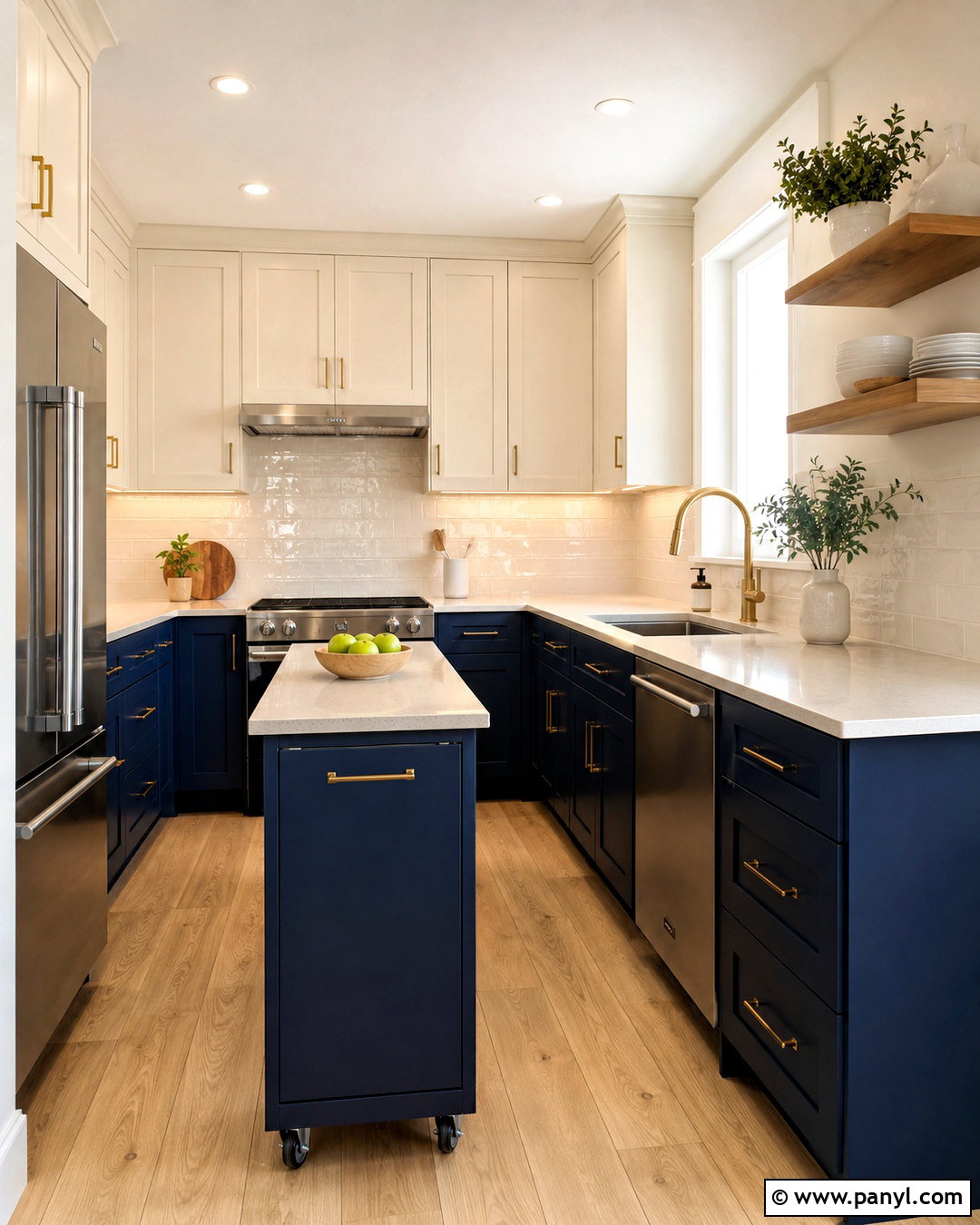
In a small kitchen, place navy where it can provide depth without closing in the walls. Paint the base cabinets navy, then use cream upper cabinets, cream walls, and a light countertop to lift the eye. Simple slab or narrow Shaker doors prevent the compact room from looking overly detailed. A glossy cream backsplash reflects light around the work surfaces, especially when paired with bright under-cabinet fixtures. Keep hardware slim and warm brass, and choose a pale oak or cream-toned floor. Replace one bulky upper cabinet with open wood shelving if storage allows. A narrow rolling island or peninsula can add preparation space without blocking the walkway. Repeating navy through one shade, rug, or countertop accessory makes the limited palette feel intentional and complete.


10. Navy And Cream Galley Kitchen
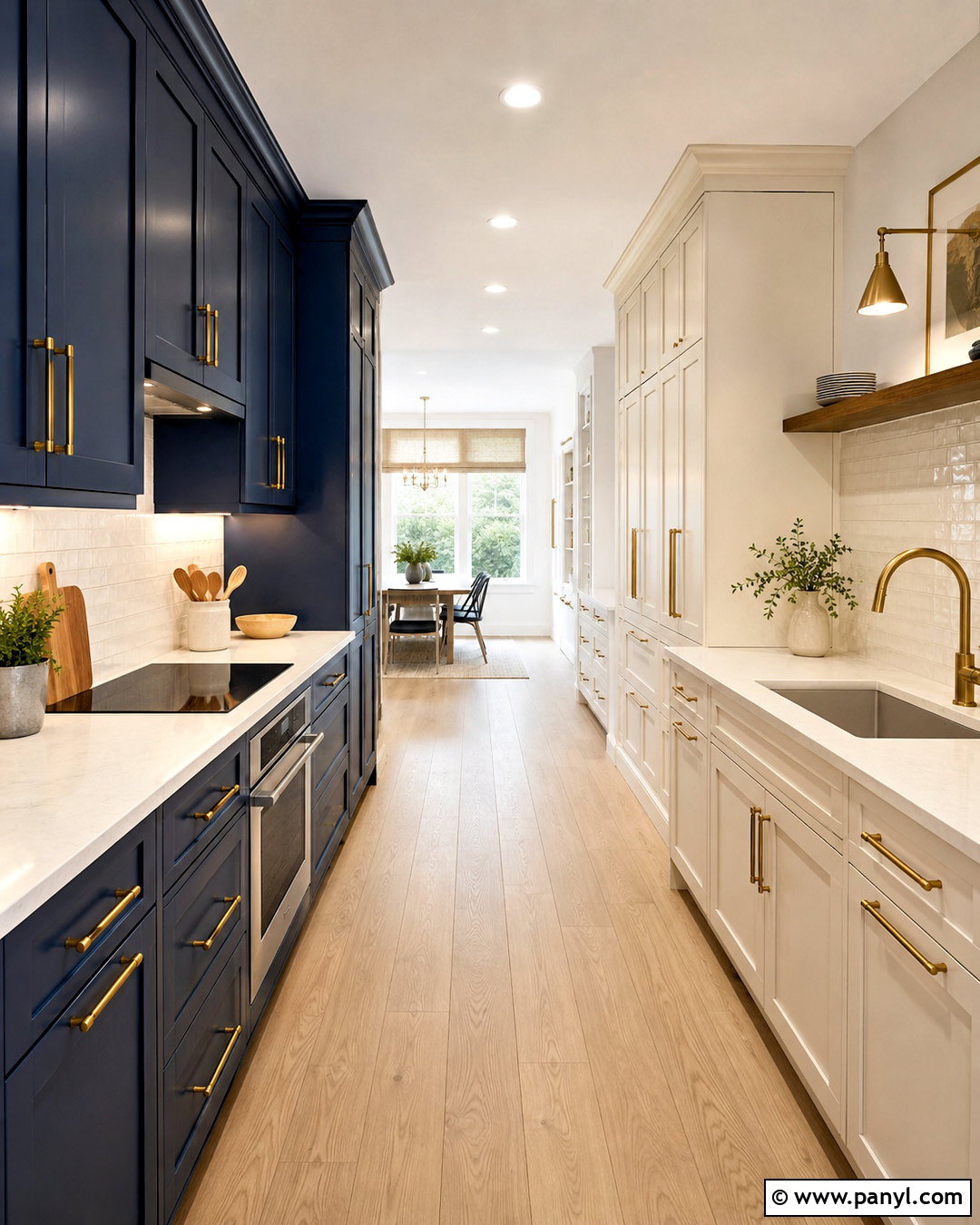
A galley layout benefits from clear color placement and uninterrupted work surfaces. Use navy cabinets along one wall and cream cabinets along the opposite side to create depth without making the narrow aisle feel enclosed. Connect both sides with matching cream quartz countertops and a warm ivory backsplash. Keep upper cabinetry cream wherever possible, allowing the darker color to remain below eye level. Long brass pulls emphasize the linear layout, while continuous under-cabinet lighting makes preparation areas easier to use. Choose light oak flooring installed lengthwise to reinforce the room’s direction. At the far end, a cream-painted wall or window will visually open the space. Paneled appliances and neatly integrated storage reduce clutter, giving this compact kitchen an efficient, coordinated, and surprisingly spacious appearance.
11. Navy And Cream Kitchen With Brass Hardware
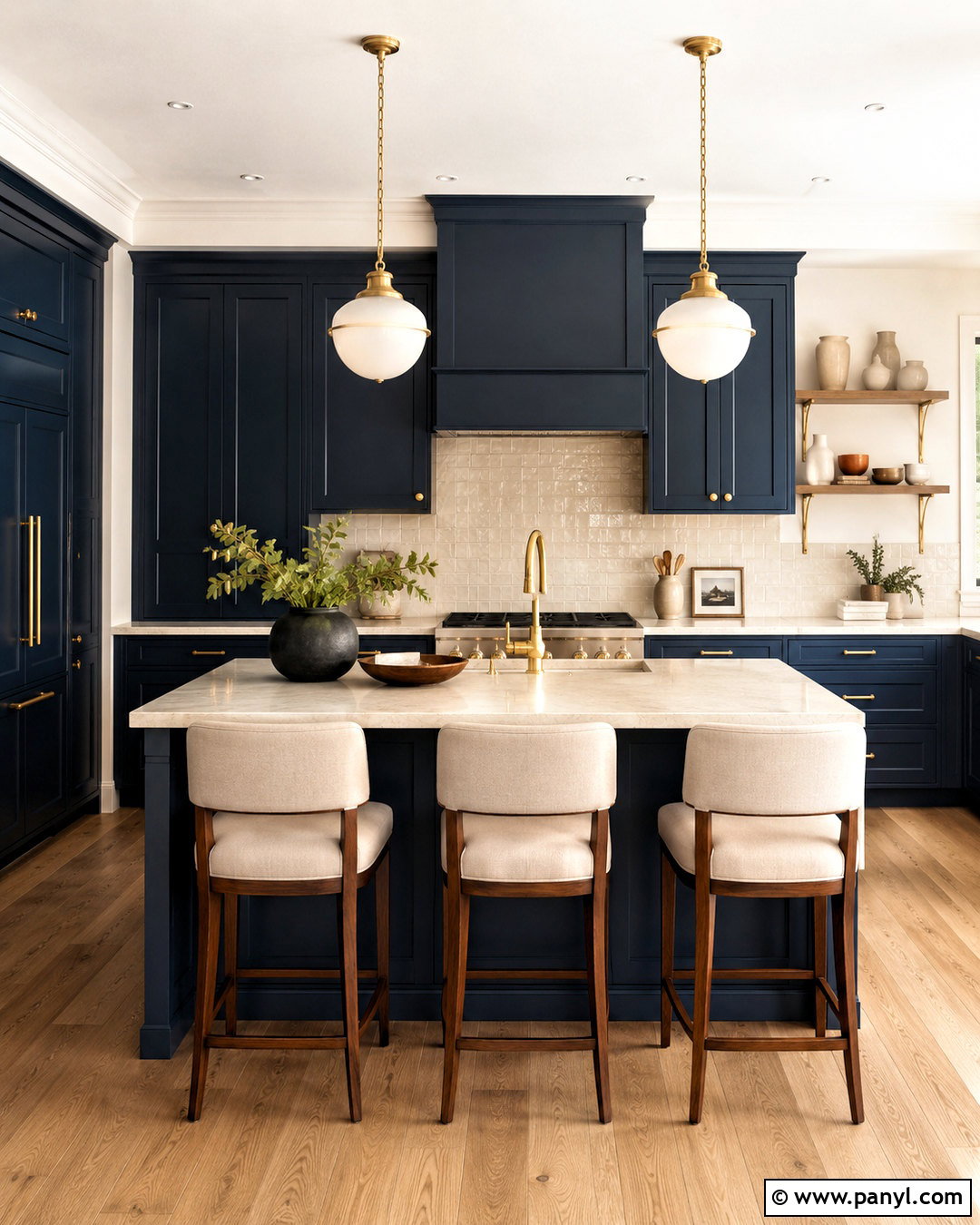
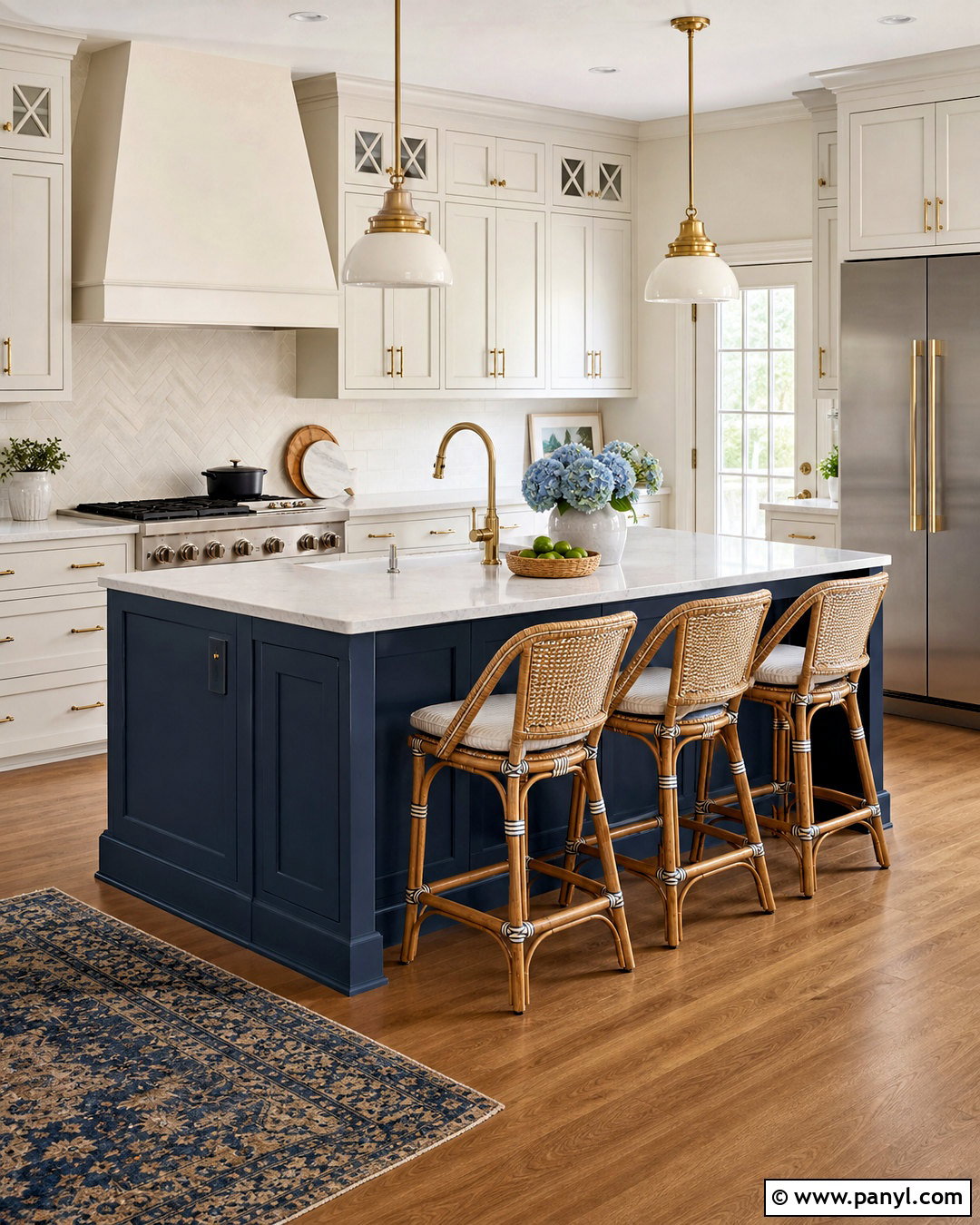
Brushed brass brings out the warmth hidden within a navy and cream palette. Start with deep navy Shaker cabinets, cream stone counters, and a softly glazed cream backsplash. Use brass consistently on cabinet pulls, the faucet, pendant details, and perhaps the pot filler. Select a muted, brushed finish rather than highly reflective gold so the room remains sophisticated. Cream walls and light oak flooring prevent the dark cabinetry from feeling too formal. Above a central island, hang two or three milk-glass pendants with brass fittings. Add counter stools with cream upholstery and walnut frames to connect the color scheme to warmer natural materials. Keep other metal finishes limited to stainless steel appliances. Controlled repetition makes the brass look purposeful, giving the complete kitchen a polished, cohesive character.
12. Navy And Cream Kitchen With Black Accents
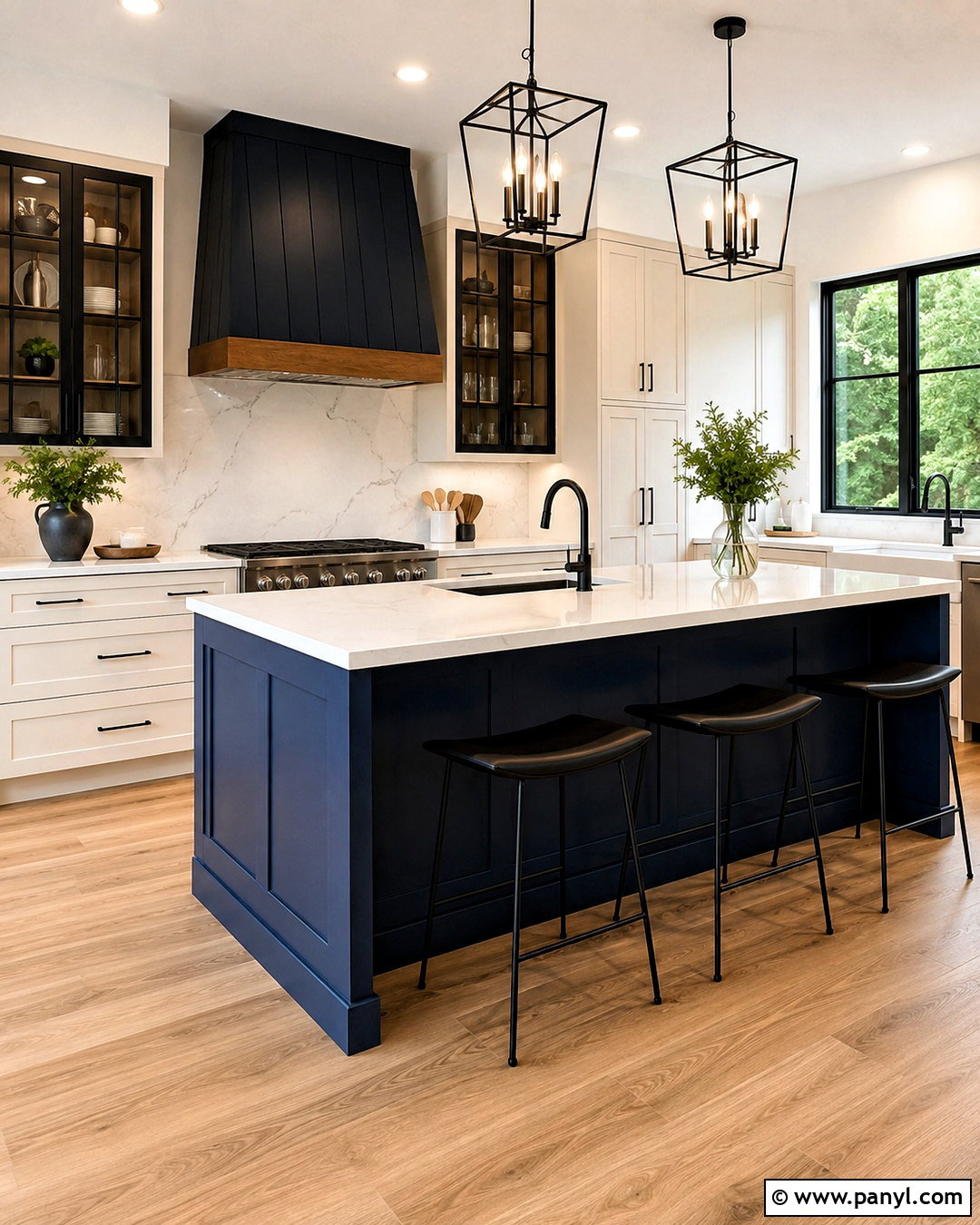
Black accents can give navy and cream kitchens a crisp architectural edge. Choose cream perimeter cabinets and a navy island, then introduce matte black through slim cabinet pulls, window frames, faucets, and pendant lights. Use cream quartz countertops and a matching backsplash so the three-color palette remains clean rather than busy. Black-framed counter stools can sit at the island without adding much visual weight. Medium oak flooring will warm the sharper finishes and keep the room comfortable. Consider a black range with simple brass knobs as a controlled focal point, but avoid spreading black across every appliance and surface. Cream walls, generous daylight, and under-cabinet lighting are essential. The finished kitchen feels contemporary and structured while still retaining the softer appeal of warm neutral cabinetry.
13. Navy And Cream Kitchen With Wood Accents
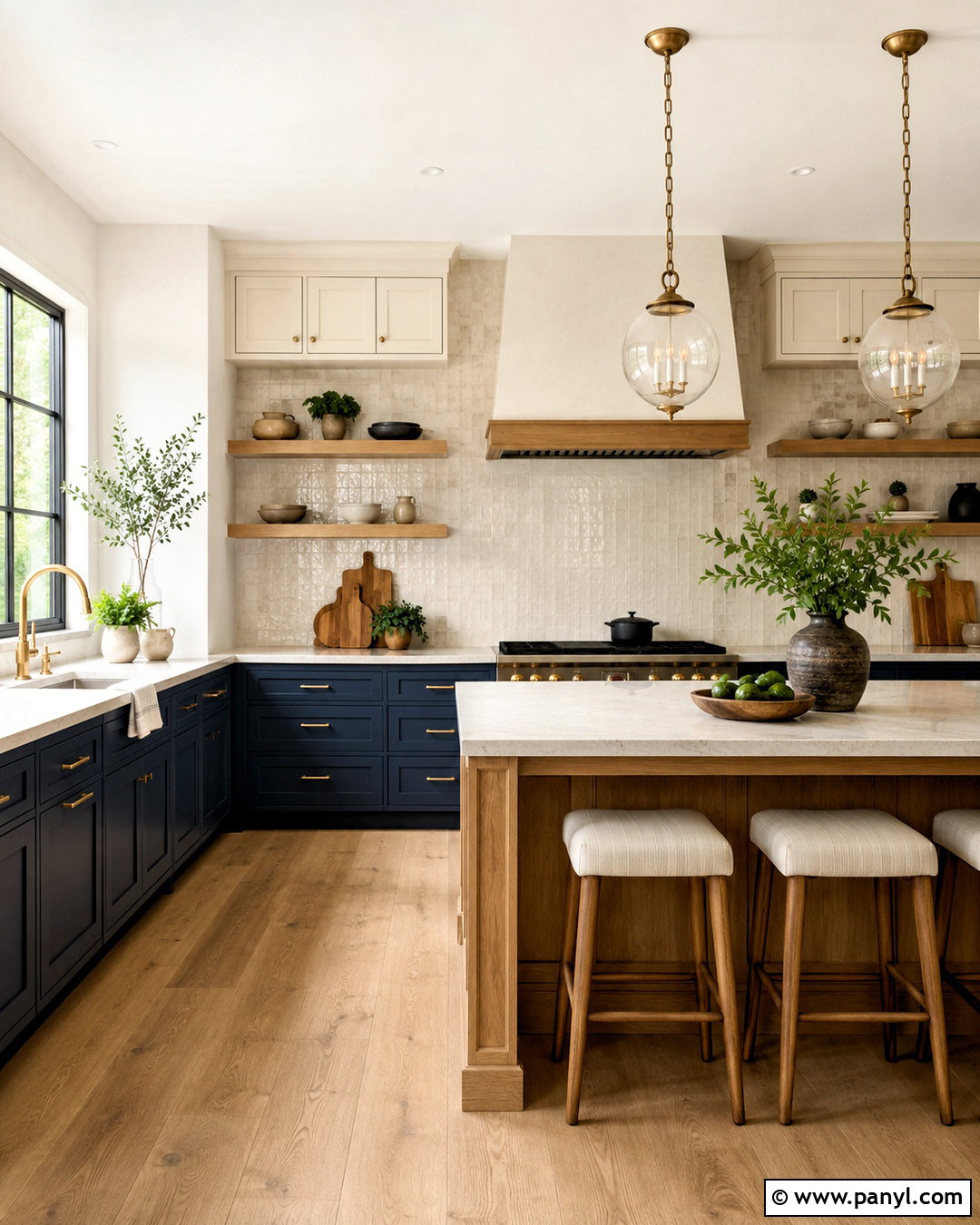
Natural wood makes navy and cream feel relaxed, layered, and welcoming. Use navy lower cabinets, cream upper cabinets, and pale quartz counters as the main foundation. Introduce white oak through floating shelves, the island base, counter stools, and wide-plank flooring. Keeping the wood species consistent prevents the room from becoming visually fragmented. A cream zellige-style backsplash adds gentle texture and reflects light unevenly across the walls. Choose understated brass hardware and simple glass pendants so the wood remains noticeable. On the shelves, arrange useful ceramics, bowls, and cutting boards rather than filling every inch with decor. A navy range hood or pantry door can repeat the lower cabinetry at eye level. This balanced material mix works particularly well in transitional and organic modern kitchens.
14. Navy And Cream Kitchen With Marble Backsplash
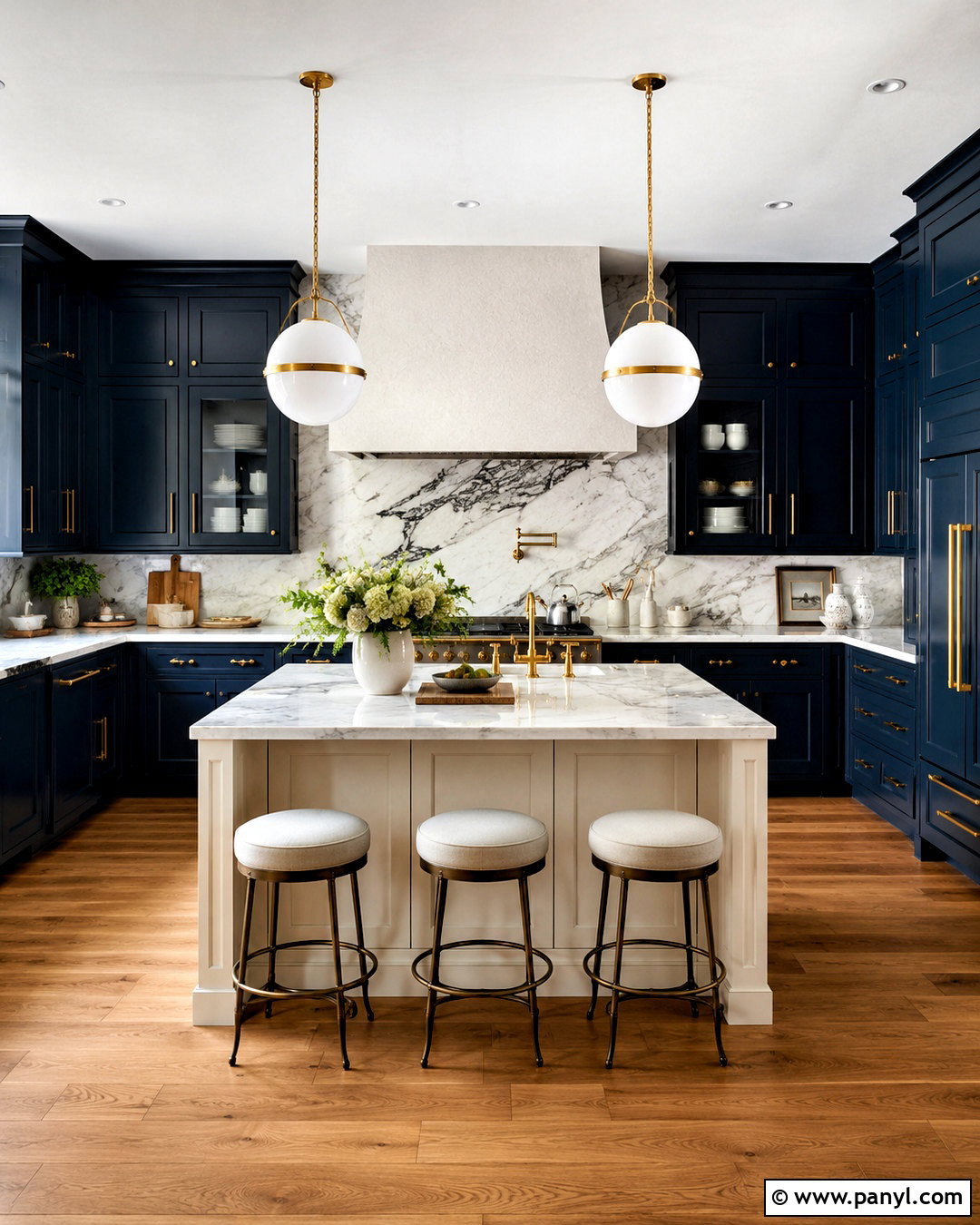
A marble backsplash can turn this familiar color combination into a graceful, high-impact kitchen. Install navy cabinets around the perimeter and use warm cream cabinetry on a large central island. Select marble with a creamy base and flowing navy-gray or taupe veining. Continue it from the countertop to the ceiling behind the range to create a dramatic but unified focal wall. Keep the remaining countertops quieter so the natural pattern does not compete with itself. Add unlacquered brass hardware, cream globe pendants, and medium oak flooring. A simple cream plaster hood will break up the stone and coordinate with the island. Because marble patterns vary, choose slabs in person and plan the vein placement carefully. The complete scheme feels luxurious without relying on oversized or impractical features.
15. Navy And Cream Kitchen With Butcher Block
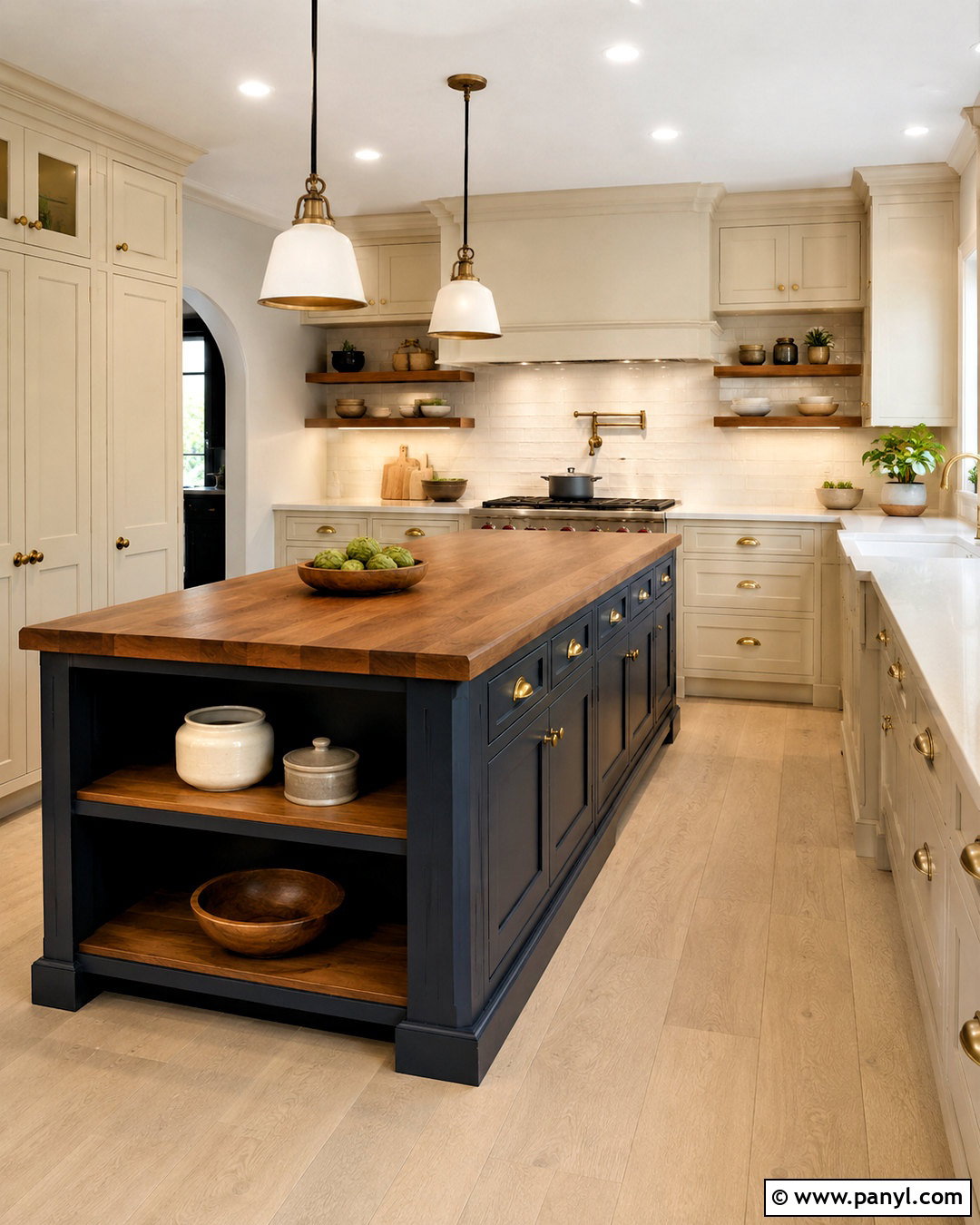
Butcher block introduces a practical, casual warmth that softens bold navy cabinetry. Use navy base cabinets with a thick walnut or oak butcher-block counter, then place cream cabinets and cream quartz around the remaining perimeter. This approach limits wood to a focused surface while providing a sturdy preparation or serving area. Add a warm cream tile backsplash, brass cup pulls, and open wooden shelves that match the butcher block. Cream-painted walls and a pale floor will keep the room bright. Over the island, use simple enamel pendants with cream shades and brass fittings. Apply a food-safe finish to the wood and maintain it according to the manufacturer’s directions. The finished kitchen blends farmhouse comfort with clean transitional lines, making the navy feel rich rather than overly formal.
16. Navy And Cream Kitchen With Open Shelving
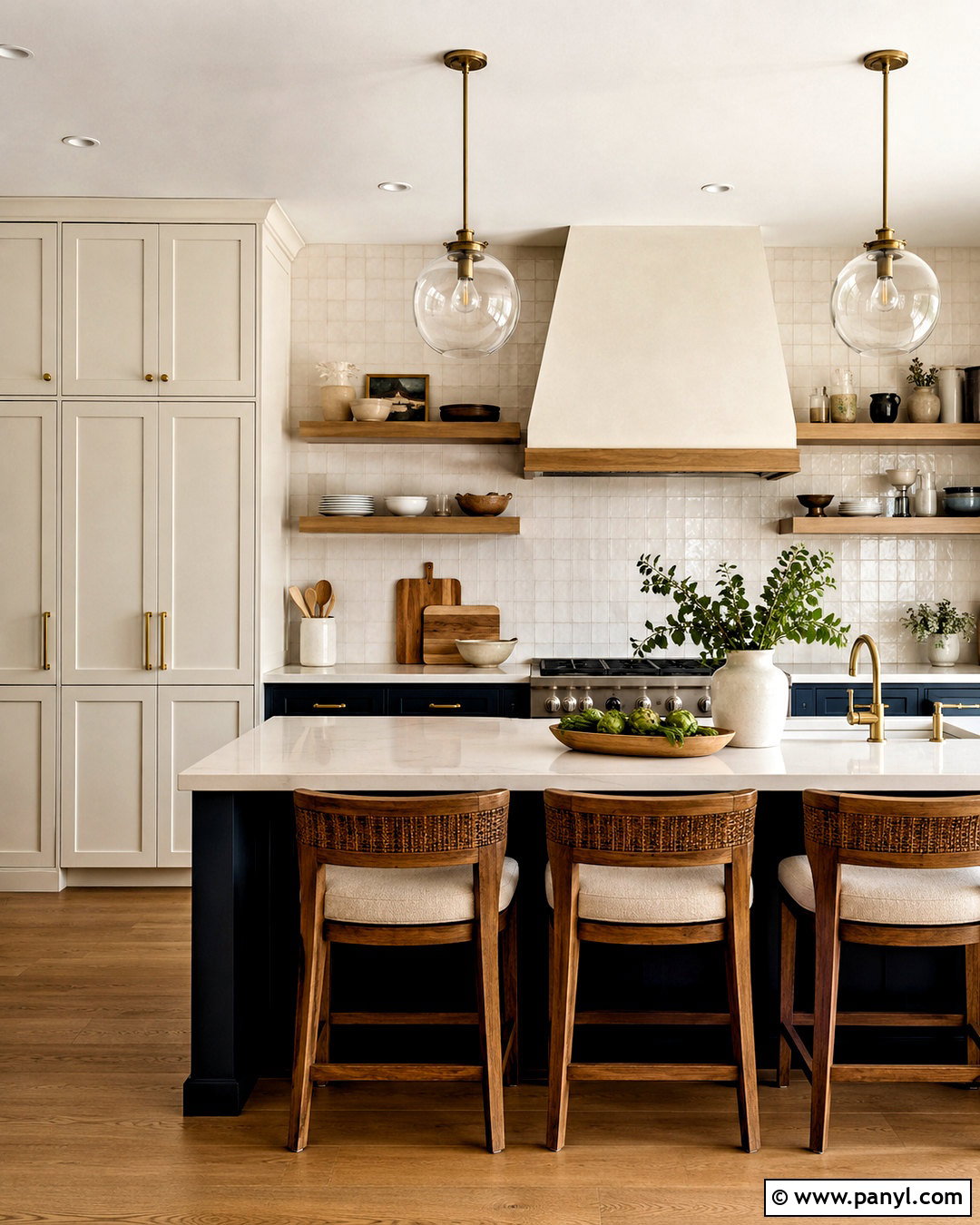
Open shelving can lighten a navy kitchen while creating useful display and storage space. Start with navy base cabinets and one wall of tall cream pantry cabinets. Replace selected uppers with thick white oak shelves mounted against a cream handmade-tile backsplash. Arrange everyday plates, mixing bowls, clear glasses, and a few navy ceramics in simple groups. Keep the shelf color close to the flooring so the room feels connected. Cream quartz counters provide a quiet transition between the dark base cabinets and textured wall. Add aged brass pulls, a matching faucet, and clear globe pendants above a compact island. Reserve closed cabinets for less attractive supplies and small appliances. This combination maintains a bright, open appearance while still providing enough organized storage for a functional family kitchen.
17. Navy And Cream Kitchen With Patterned Floor
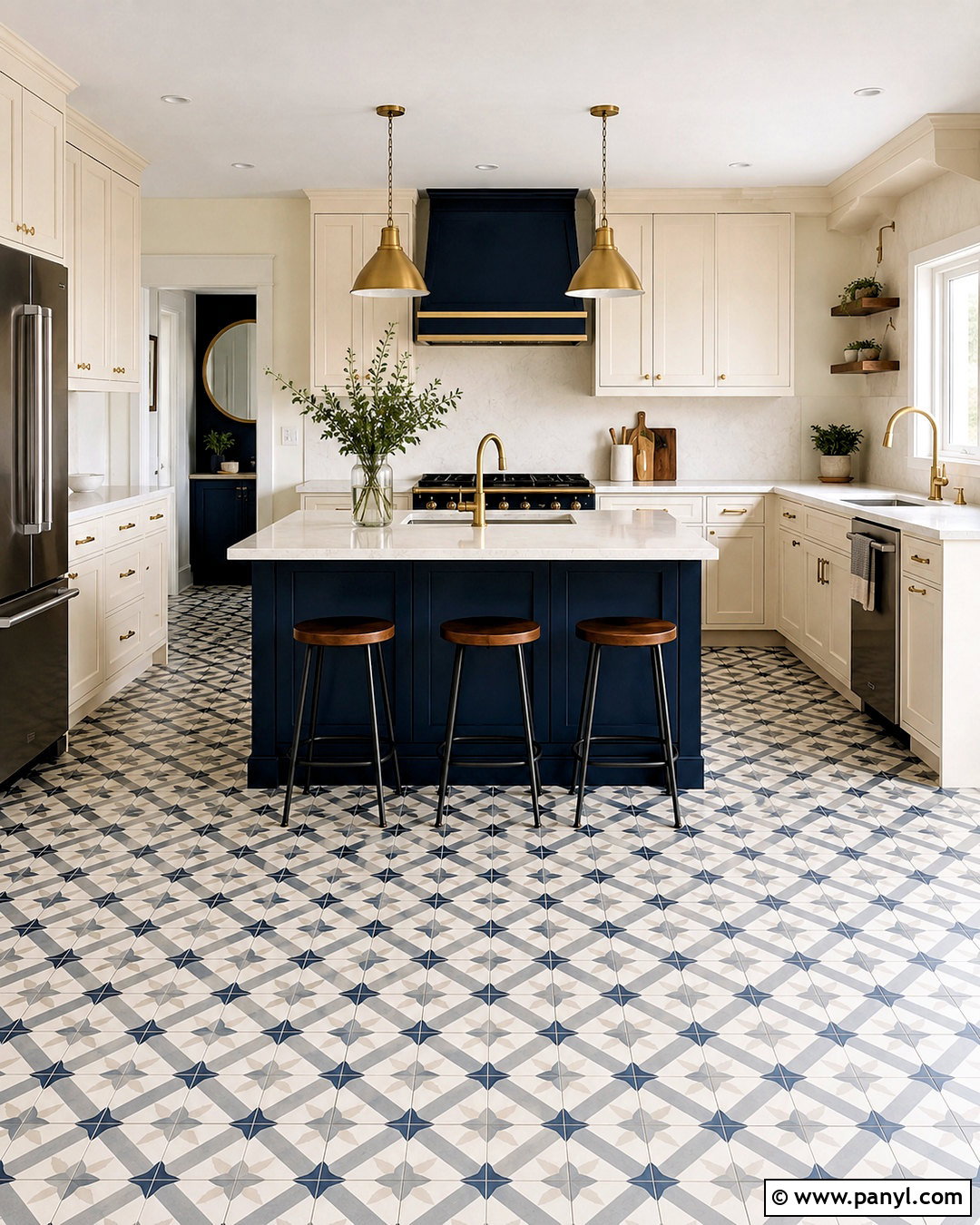
A patterned floor gives navy and cream kitchens personality without requiring elaborate cabinetry. Choose cream Shaker cabinets, a navy island, and a coordinating navy range hood. Underfoot, install durable porcelain tile in a restrained navy, cream, and soft gray geometric pattern. Keep countertops light and minimally veined so they do not compete with the floor. A plain cream backsplash and warm white walls will give the patterned surface room to stand out. Use simple brass hardware and pendants for warmth, then select navy counter stools with clean silhouettes. The floor pattern should be scaled to the room; smaller kitchens usually benefit from compact motifs rather than oversized graphics. When every other surface remains controlled, the finished kitchen looks energetic, balanced, and thoughtfully planned instead of visually crowded.
18. Navy And Cream Kitchen With Breakfast Nook
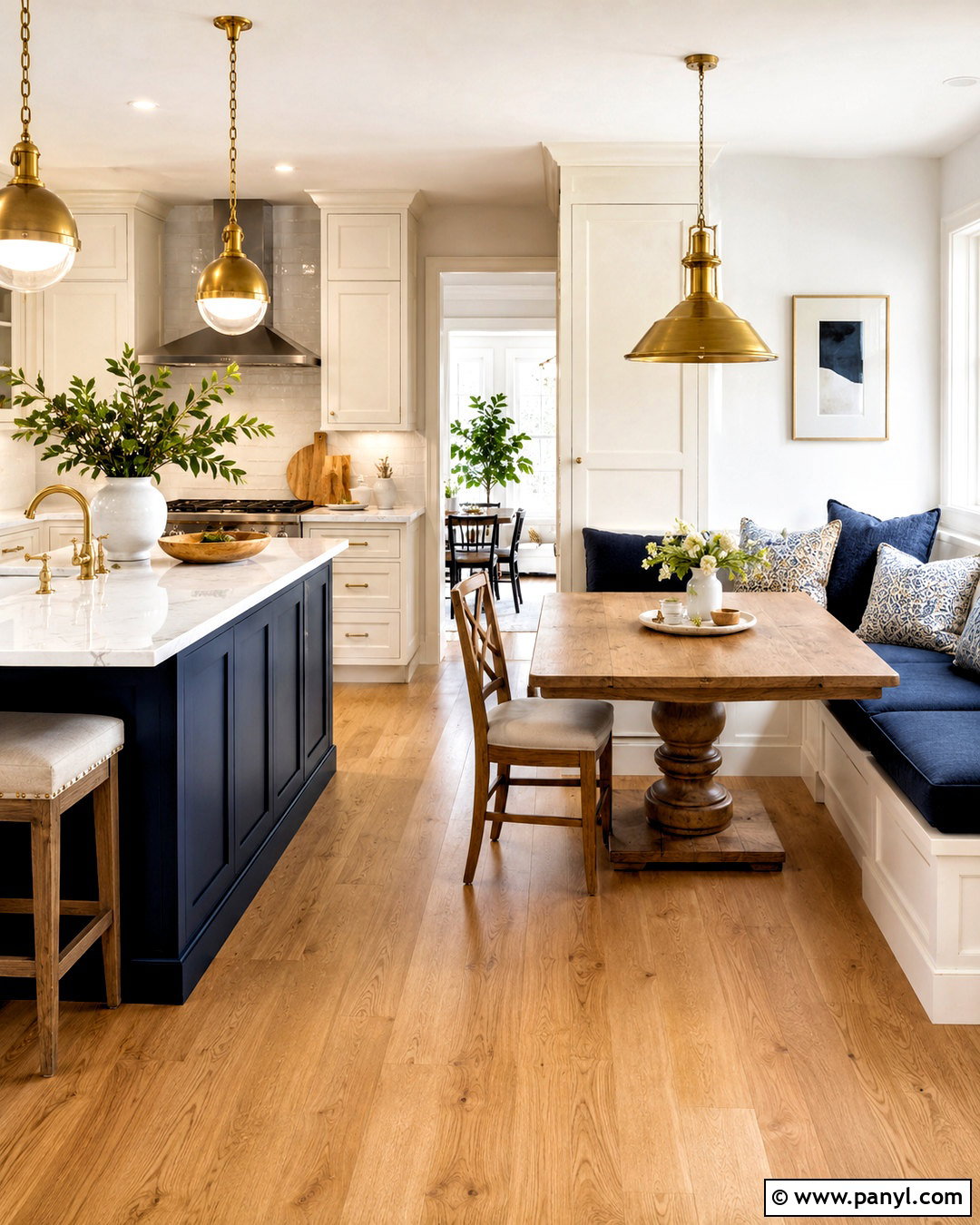
A built-in breakfast nook can extend the navy and cream palette beyond the cooking zone. Use cream cabinetry around the main workspace and paint the island a deep, classic navy. In a nearby corner, install an L-shaped cream banquette with storage drawers underneath. Add navy seat cushions, cream-and-blue patterned pillows, and a warm oak pedestal table. A brass pendant centered over the table will make the nook feel like a defined destination. Repeat the oak on the kitchen flooring and perhaps on two small shelves near the range. Cream quartz counters and a pale tile backsplash maintain brightness around the cabinets. This complete layout provides cooking space, casual dining, hidden storage, and comfortable seating while repeating the kitchen colors in a natural, family-friendly way.
19. Navy And Cream Kitchen With Statement Range Hood
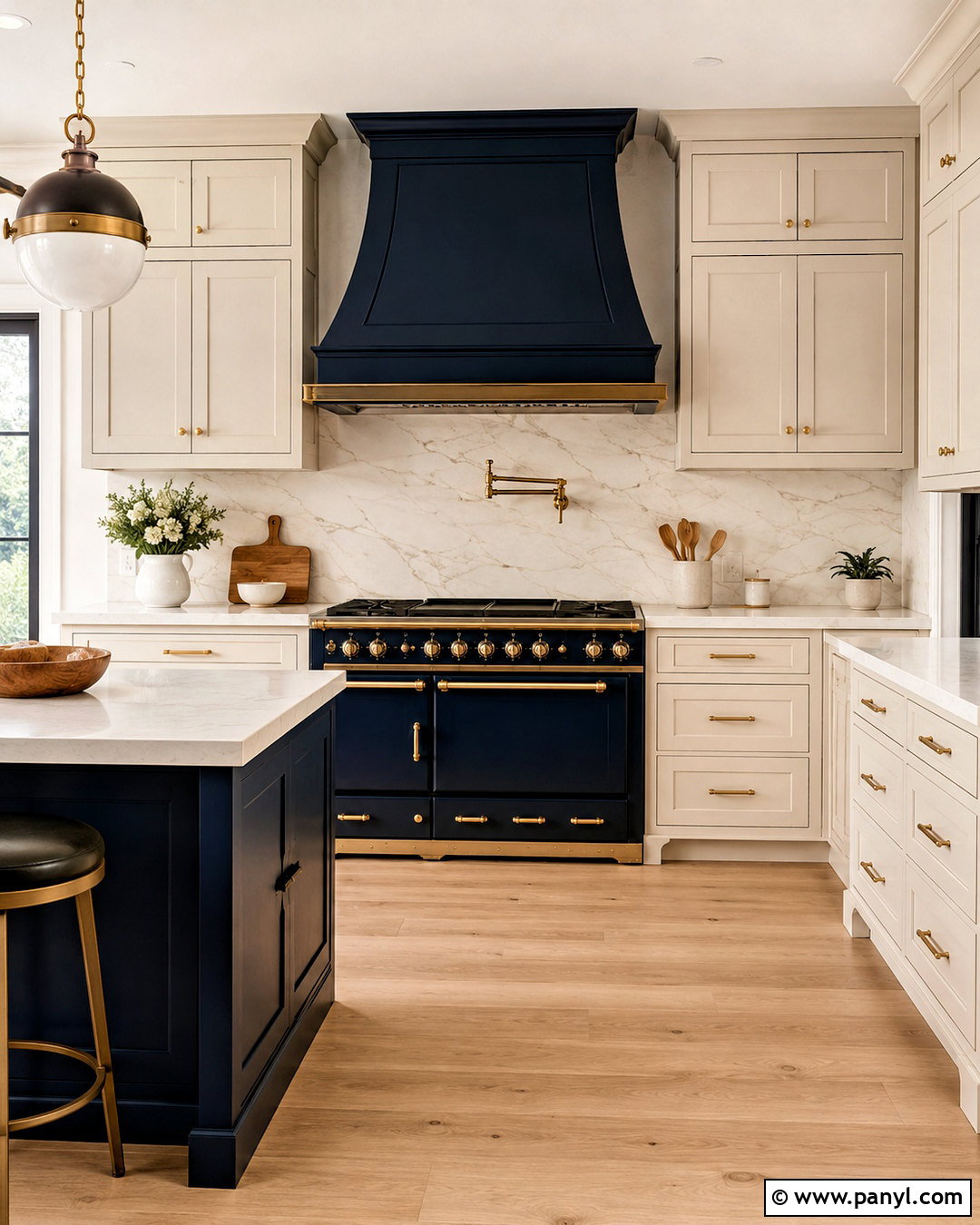
A statement range hood offers a strong place to unite both colors. Surround the room with cream Shaker cabinets, then install a wide navy range hood above a coordinating navy range. Frame the hood with narrow cream cabinets so the dark feature appears centered and intentional. Use a cream marble or quartz backsplash behind the cooking area and continue simpler cream tile across the other walls. A navy island can repeat the focal color and balance the composition. Add brass pulls, a brass pot filler, and warm wood flooring for depth. Keep pendant lights and counter stools understated so they do not compete with the hood. This layout creates a clear visual hierarchy, making the cooking wall memorable while preserving a bright and practical kitchen around it.
20. Navy And Cream Kitchen Pantry
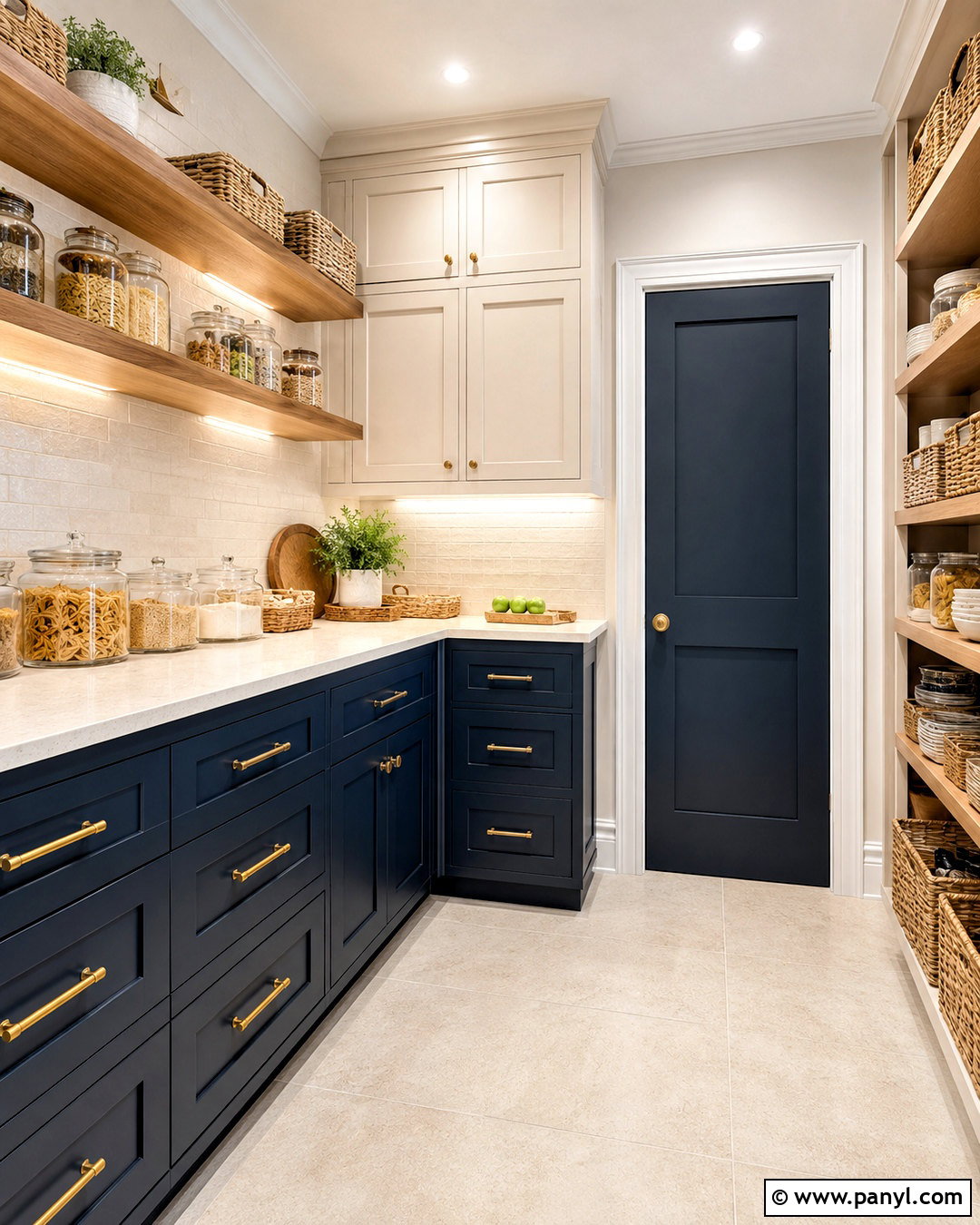
A navy and cream pantry can feel like a designed extension of the kitchen rather than a forgotten storage area. Use navy lower cabinets for concealed bulk storage and cream upper cabinets to keep the narrow space bright. Add a cream quartz counter for small appliances, along with a washable cream tile backsplash. Open oak shelves can hold matching jars, baskets, and frequently used ingredients, while labeled containers remain grouped inside cabinets to reduce visual clutter. Install bright ceiling lighting and under-shelf strips so every corner is easy to see. Brass pulls and a small brass faucet can connect the pantry to the main kitchen. If the doorway is visible, paint the pantry door navy and keep the surrounding trim cream for a polished, coordinated transition.
Conclusion:
These 20 navy and cream kitchen ideas show how adaptable this timeless color pairing can be. Navy creates depth, structure, and a confident focal point, while cream keeps the kitchen soft, bright, and comfortable. The key is deciding where each color will carry the most visual weight. Navy works beautifully on lower cabinets, islands, backsplashes, hoods, and pantry doors. Cream is especially effective on upper cabinetry, walls, counters, and tile. Brass, natural wood, marble, and warm lighting can connect the contrasting tones. Before selecting permanent finishes, view every sample together in the actual kitchen throughout the day. This simple step will help you create a cohesive room with balanced undertones and lasting appeal.

Related Ideas and Inspiration:

Leave a Reply