
Coastal kitchens feel fresh because they balance ocean-inspired color with natural texture, practical storage, and plenty of light. The best **coastal blue kitchen ideas** move beyond obvious beach decorations. Instead, they combine soft blue or deep navy cabinetry with white counters, warm wood, handcrafted tile, woven lighting, and simple hardware. Current coastal kitchens often use blue as an anchor while allowing white finishes and natural materials to keep the room bright and relaxed. () Whether you are planning a complete renovation or updating an existing kitchen, choose a blue tone that works with your room’s daylight, flooring, and surrounding spaces. The following complete designs offer practical inspiration for creating polished, comfortable, and timeless **coastal blue kitchen ideas**.

1. Light Blue Coastal Kitchen Cabinets
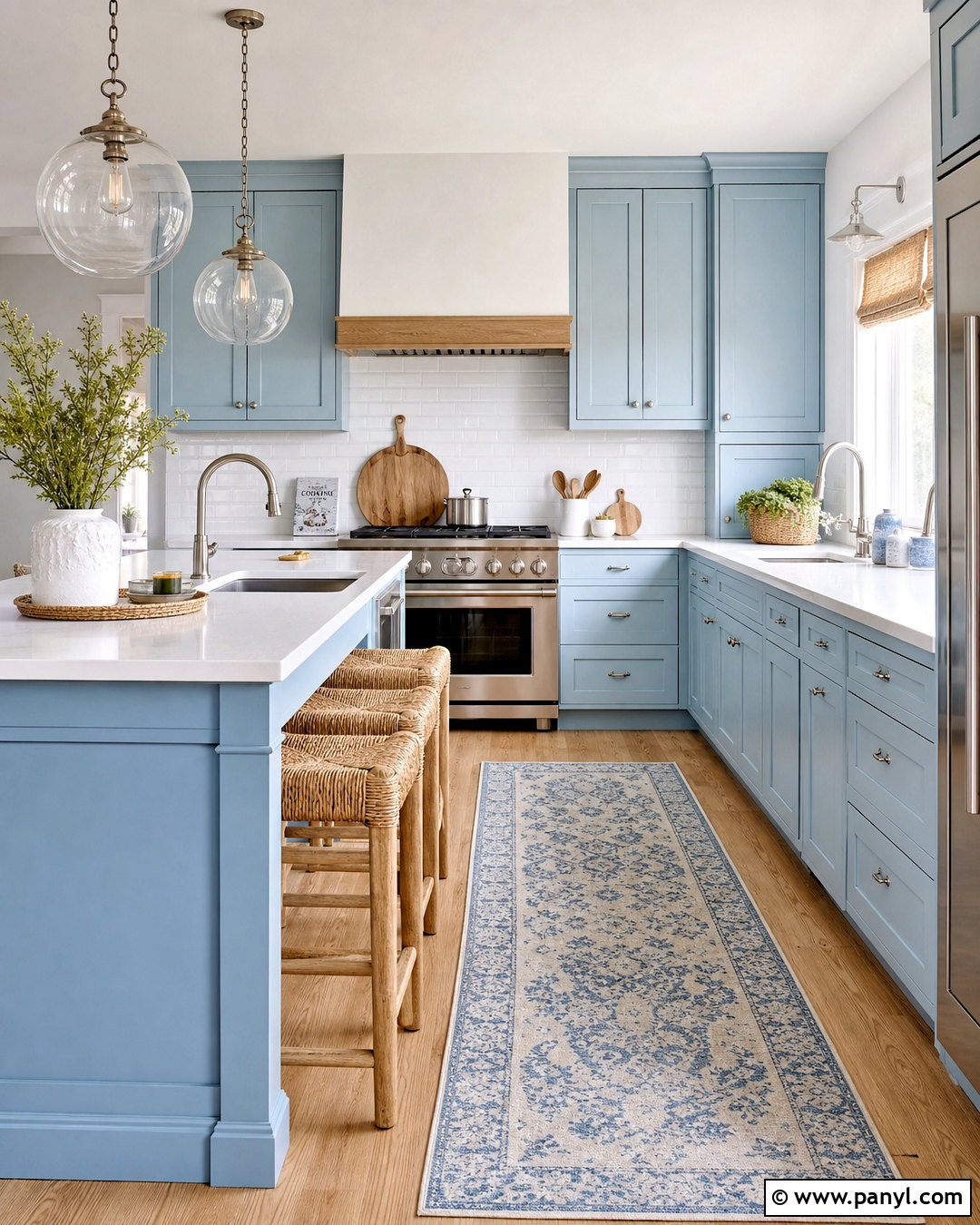
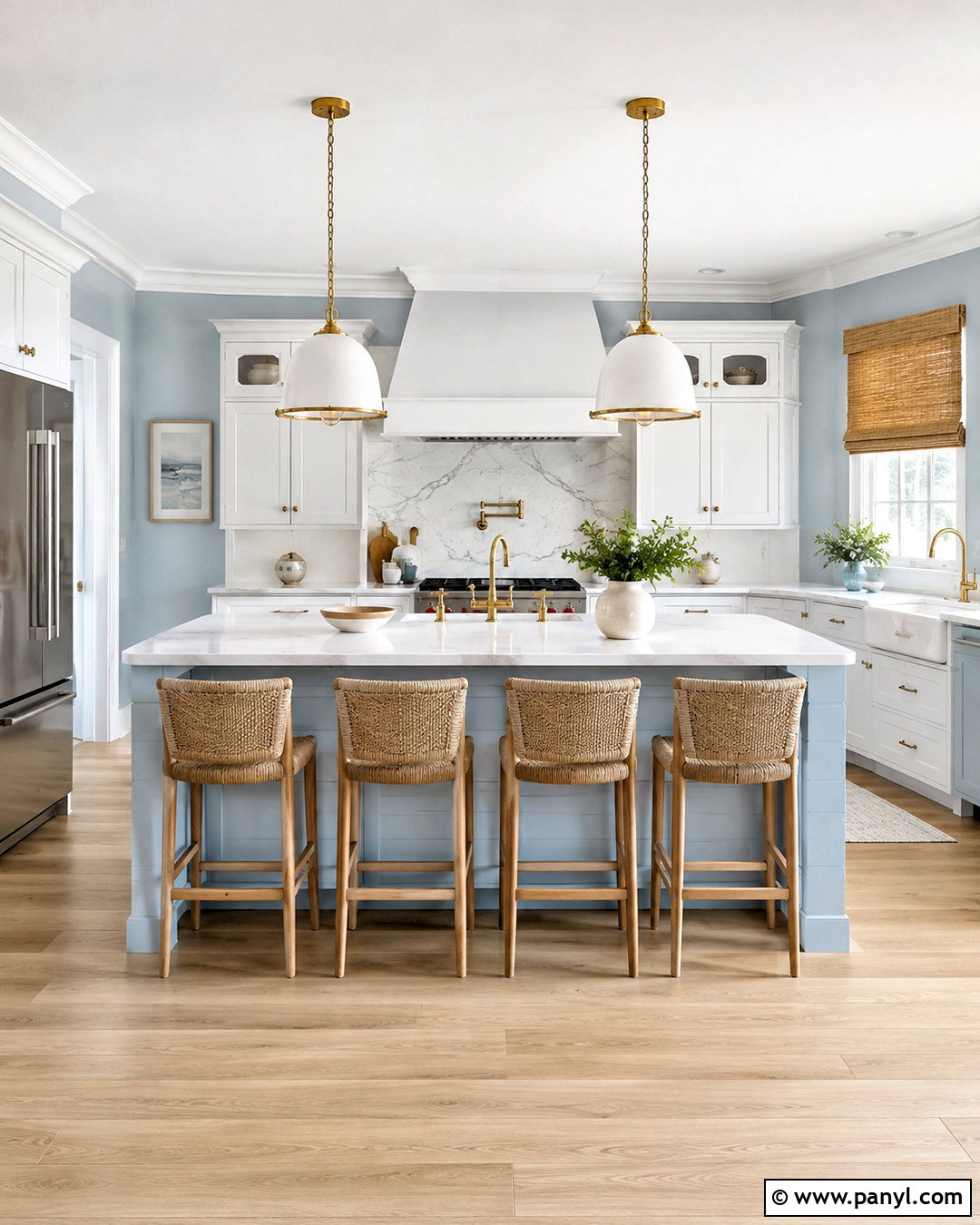
Soft powder-blue cabinets create a calm foundation without making the kitchen feel overly themed. Choose simple Shaker doors, polished nickel knobs, and white quartz counters with very light gray veining. A glossy white subway tile backsplash reflects daylight and keeps the cabinetry from appearing dull. Warm the room with natural white oak flooring, backless woven counter stools, and a pale wood cutting board displayed near the range. Glass globe pendants provide an airy finishing touch above the island. Keep walls and trim creamy white rather than stark white, especially if the blue has warm undertones. Finish the complete look with linen window shades, a washable blue-and-cream runner, and a few small ceramic pieces instead of obvious seashell decorations.
2. Navy Blue Coastal Kitchen Island
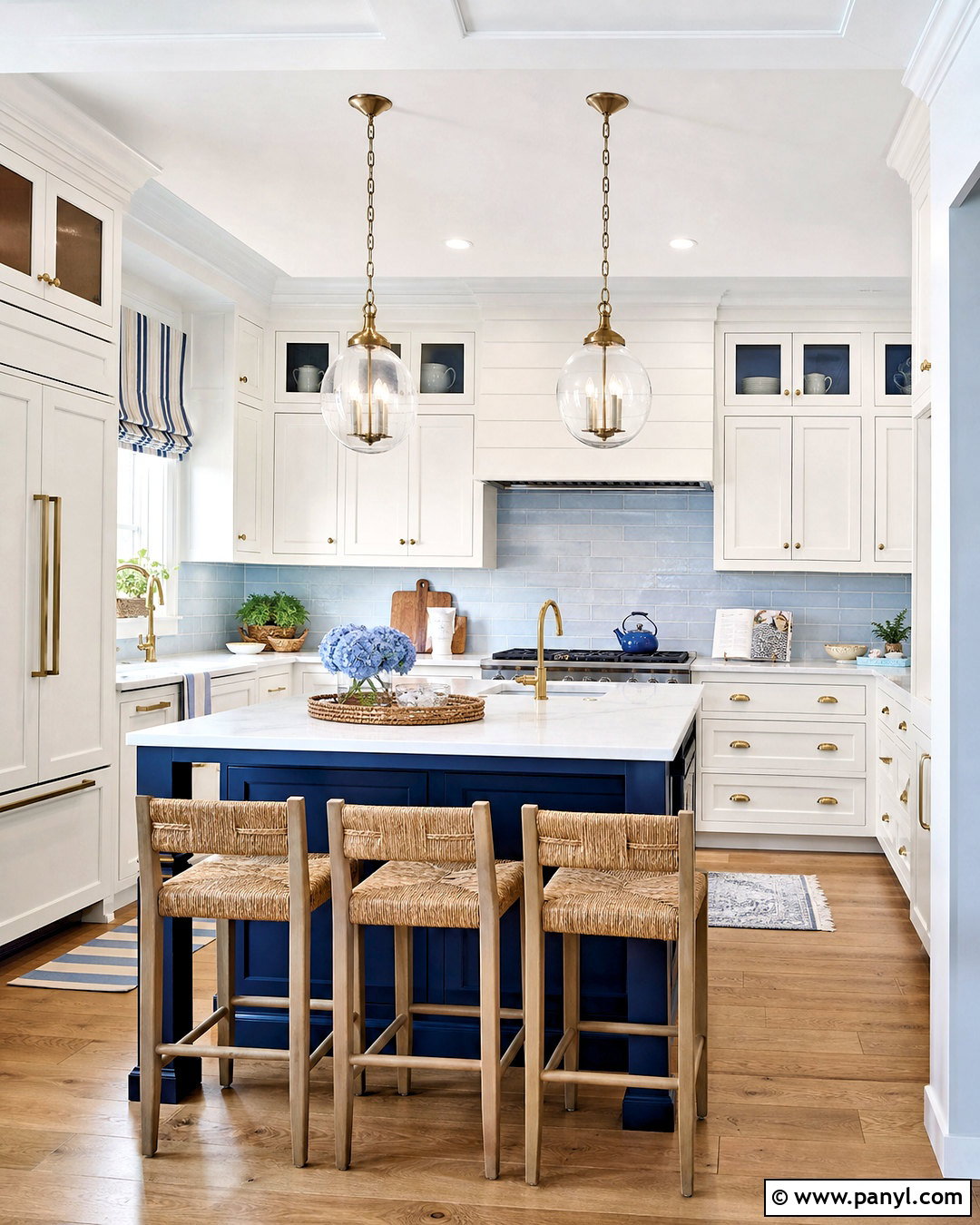
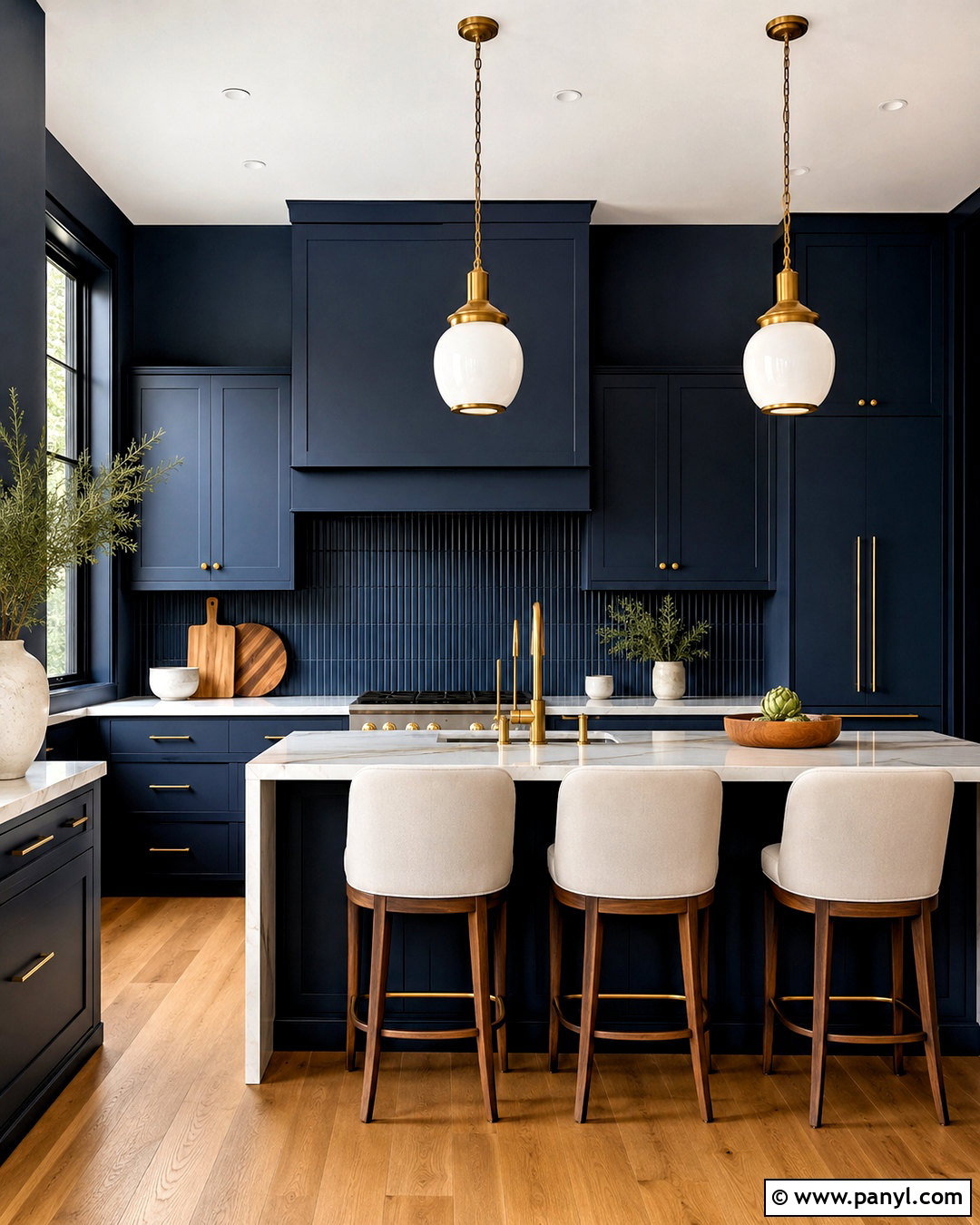
A navy island gives a white kitchen a strong visual center while preserving an open, sunlit feeling. Keep the perimeter cabinetry warm white and select a large island with navy Shaker panels, deep drawers, and comfortable seating. White quartz or marble-look countertops connect both cabinet colors and prevent the island from becoming too heavy. Add warm oak flooring, woven rush stools, and oversized clear glass pendants with aged brass fittings. A pale blue backsplash can repeat the coastal palette without competing with the island. Use brushed brass pulls in a simple shape, then introduce one or two striped textiles for subtle pattern. This arrangement works especially well in an open kitchen because the dark blue visually separates the cooking area from the adjoining living space.
3. Blue And White Coastal Kitchen
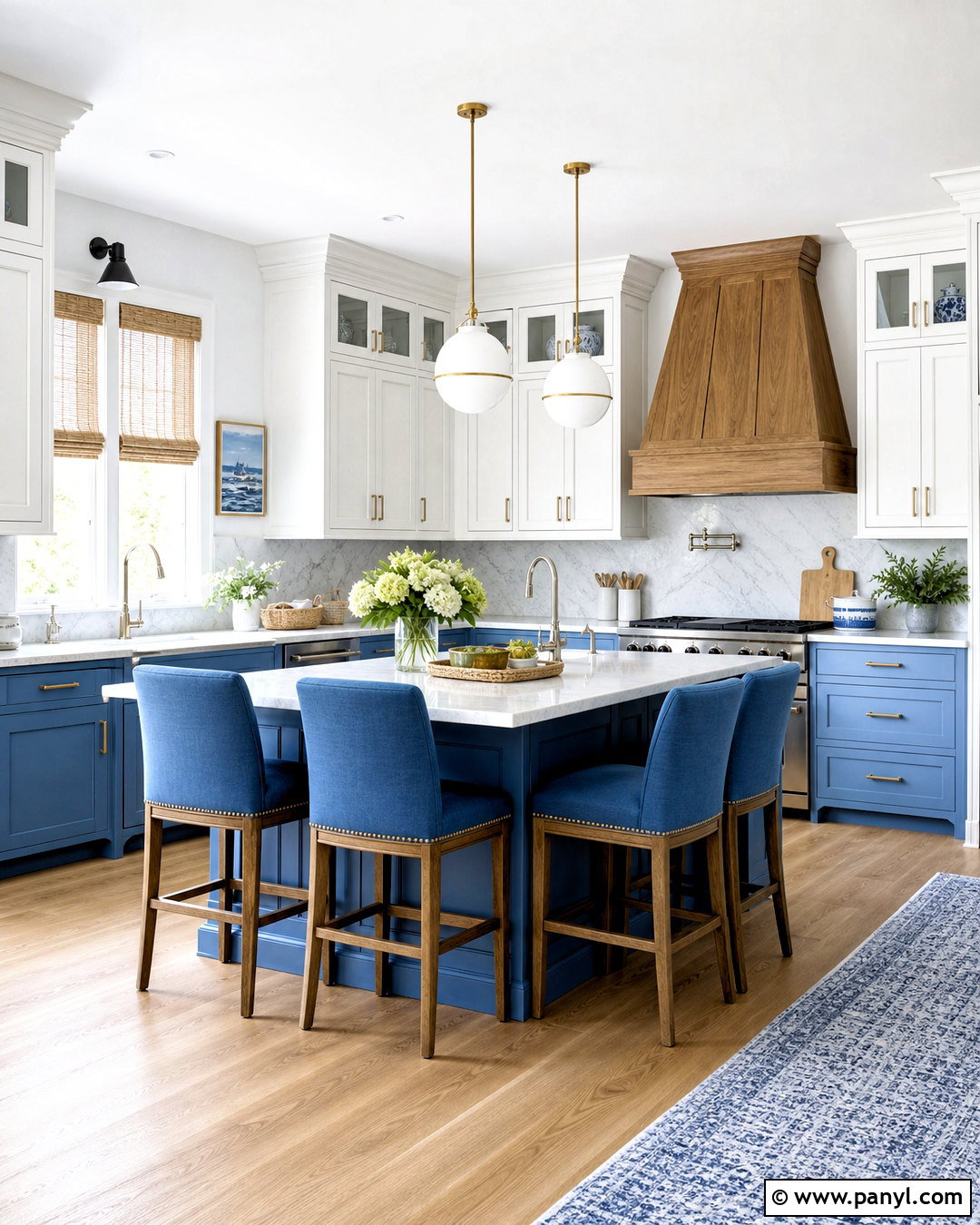
Crisp blue and white can feel sophisticated when both colors are distributed evenly throughout the room. Paint lower cabinets a medium ocean blue and keep upper cabinets white so the kitchen looks grounded but not enclosed. Continue the white onto quartz countertops, walls, and a full-height backsplash with gentle gray movement. Light oak floors and a matching wood range hood introduce warmth between the cool colors. Choose brushed nickel hardware for a clean finish, or aged brass if the room needs extra warmth. A white island with blue upholstered stools helps repeat the palette across the space. Complete the kitchen with glass-front cabinets, linen Roman shades, and simple ceramic serving pieces. Avoid filling every surface with coastal accessories; the color combination already establishes the relaxed waterside character.
4. Coastal Blue Kitchen With Wood Accents
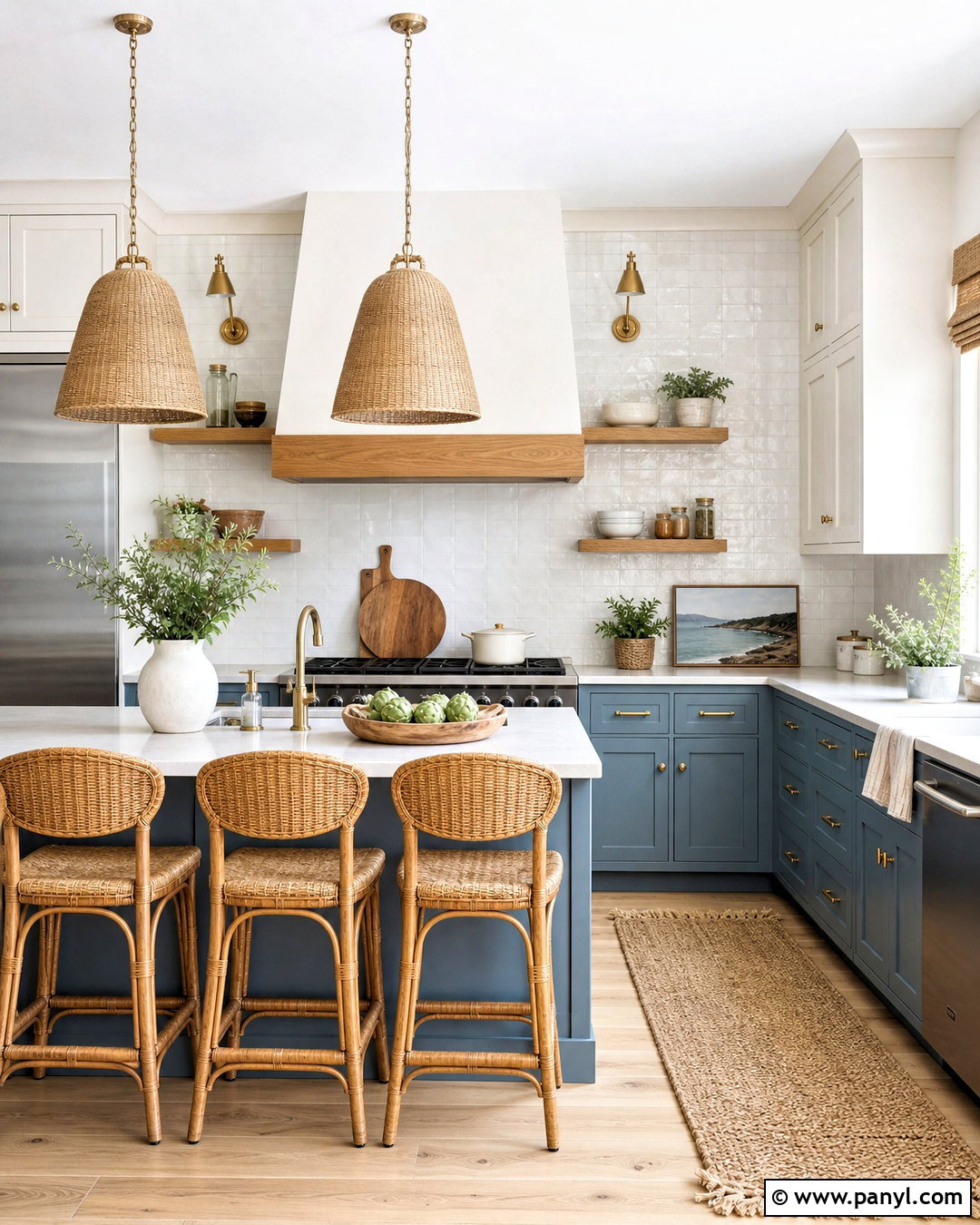
Natural wood makes coastal blue cabinetry feel warmer, softer, and more connected to the outdoors. Begin with muted blue-gray lower cabinets and warm white upper cabinets. Use medium-toned oak for the flooring, floating shelves, range hood trim, and island seating so the wood appears intentional throughout the kitchen. Creamy quartz countertops and handmade off-white backsplash tiles provide a quiet bridge between the blue and brown tones. Choose understated antique brass hardware, a brushed brass faucet, and woven pendant lights with open shades. A farmhouse sink can enhance the casual look without pushing the room too far into rustic territory. Finish with linen towels, earthenware bowls, and potted herbs near a bright window. The result feels collected and comfortable while remaining practical for everyday cooking and family gatherings.
5. Coastal Blue Kitchen With White Oak
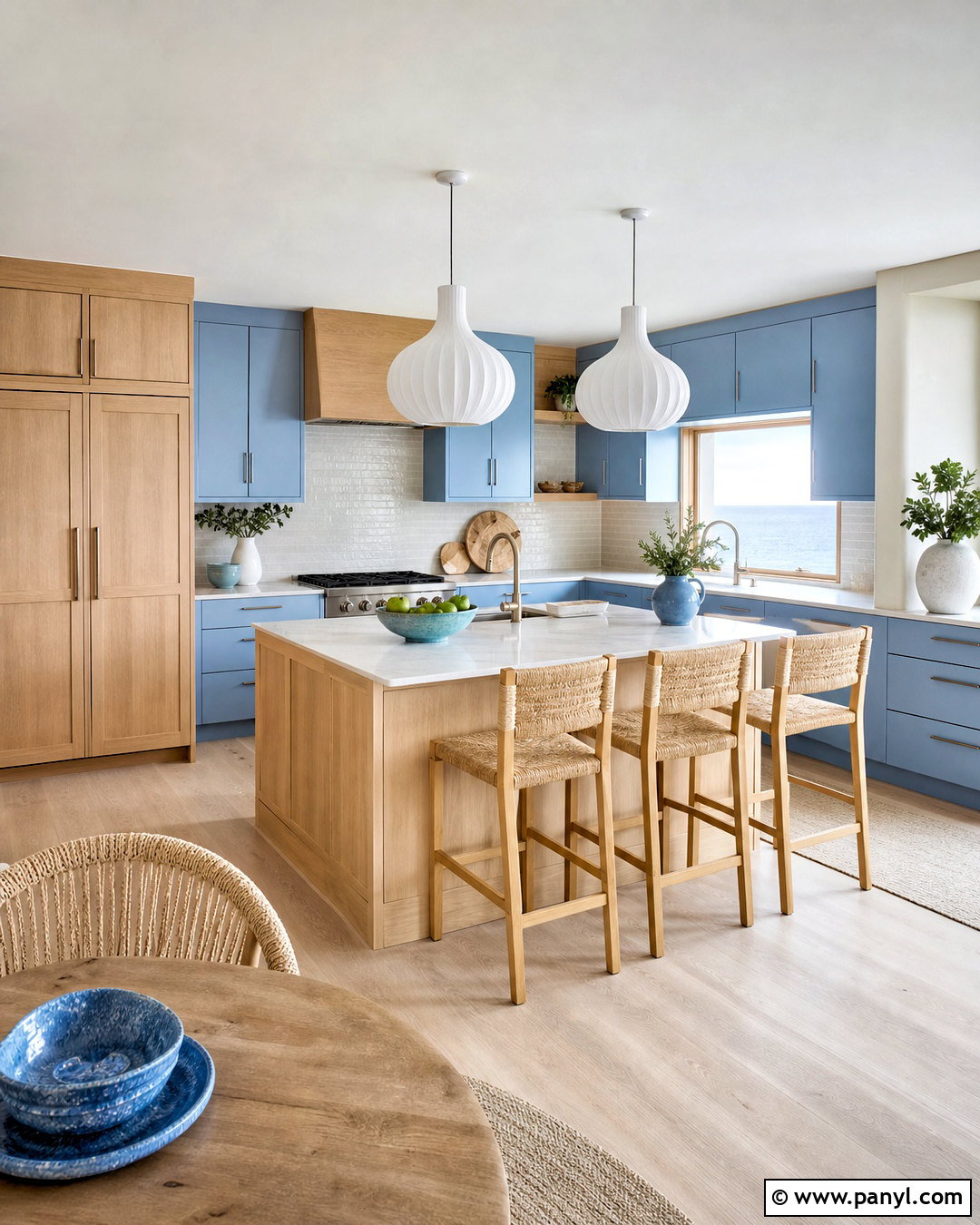
Pale white oak brings a clean Scandinavian influence to a coastal blue kitchen. Use light blue flat-panel cabinets along the main work wall and reserve white oak for the tall pantry units and island. The combination creates gentle contrast while maintaining a streamlined appearance. Select white quartz counters, a soft ivory stacked-tile backsplash, and wide-plank oak flooring in a coordinating natural finish. Minimal brushed nickel pulls support the contemporary design, while sculptural white pendants keep the island bright. Add counter stools with oak frames and woven seats to connect the furniture with the cabinetry. Keep decorations limited to blue stoneware, a small herb planter, and a light linen runner. This complete palette works particularly well in smaller open-plan homes because the low-contrast materials make the kitchen feel spacious and cohesive.
6. Coastal Blue Kitchen With Shiplap
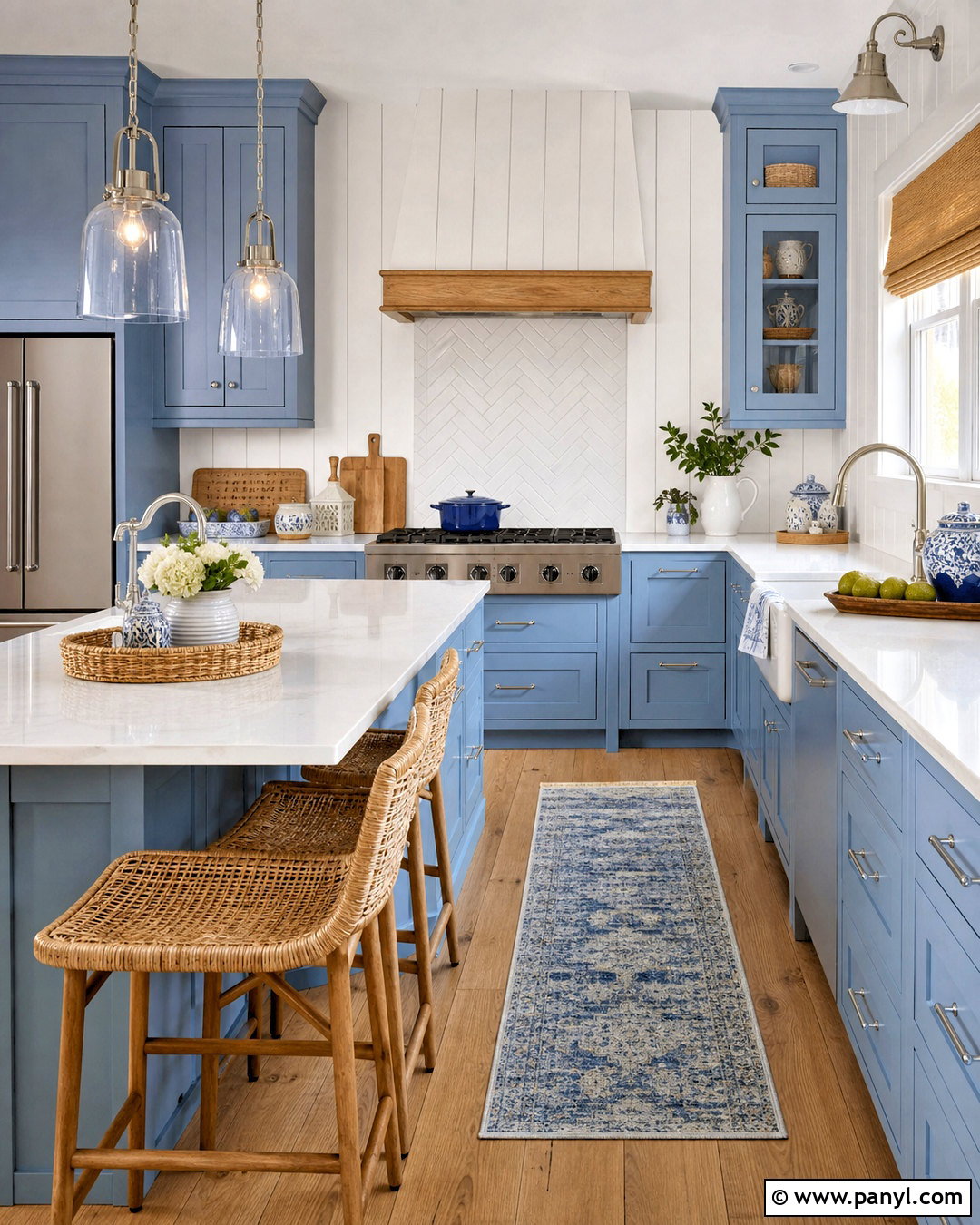
White shiplap can add coastal character when it is used as a supporting texture rather than covering every surface. Install vertical shiplap behind a pale blue range wall or around a matching blue island, then keep the remaining walls smooth and warm white. Traditional Shaker cabinets, white quartz counters, and medium oak floors provide a familiar foundation. Use a simple plaster or wood-trimmed range hood to create a clean focal point. Glass pendants, polished nickel hardware, and woven counter stools contribute texture without clutter. Consider a durable white tile backsplash behind the cooking area to make cleaning easier while preserving the paneled look elsewhere. Finish with a faded blue runner and a few practical wood accessories. The completed space feels casual, bright, and architectural instead of heavily nautical.
7. Coastal Blue Kitchen With Zellige Backsplash
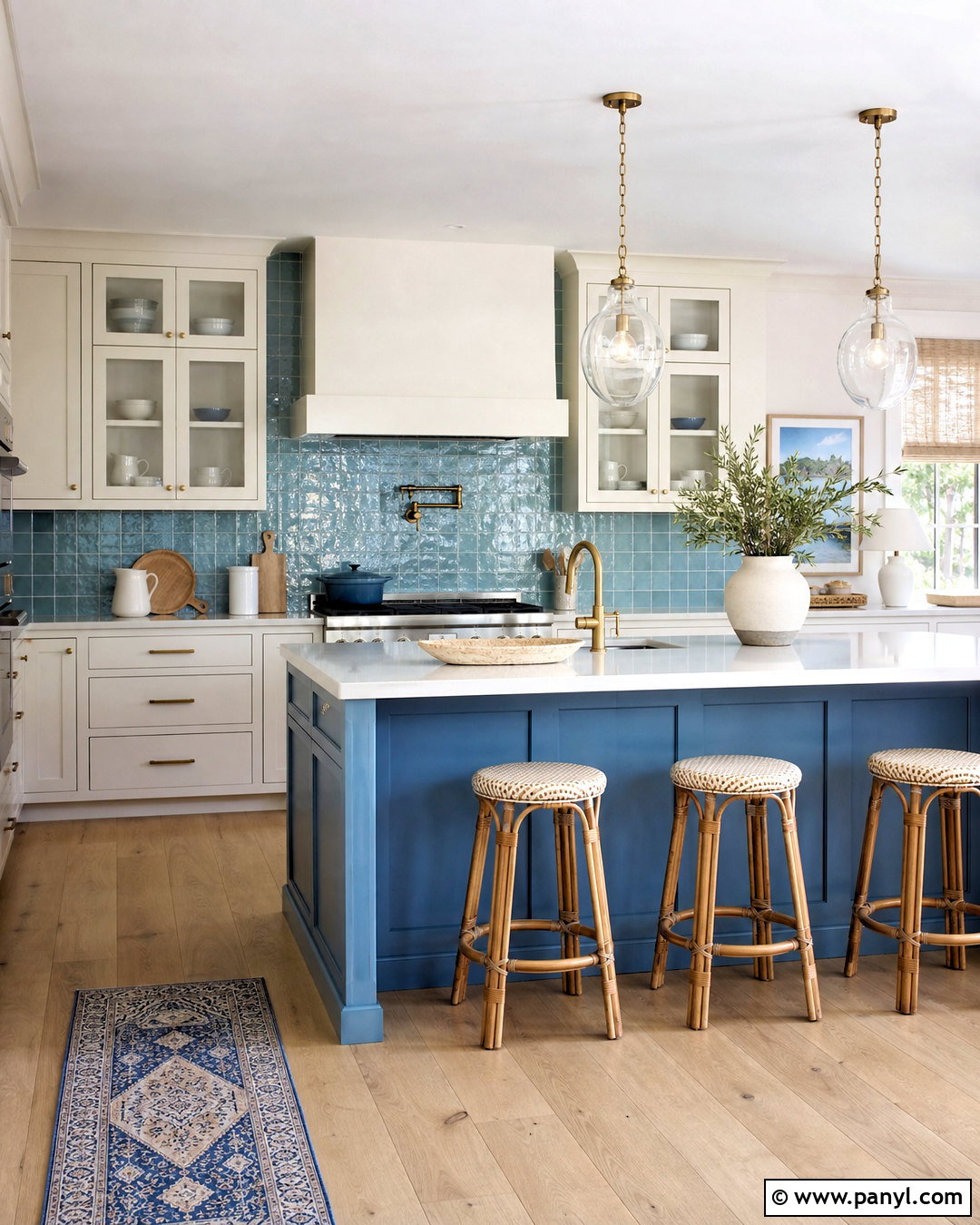
A blue zellige backsplash introduces watery color, reflective texture, and handcrafted variation to a coastal kitchen. Choose soft aqua or misty blue tiles rather than highly saturated turquoise, then install them from the countertop to the upper cabinets. Pair the backsplash with warm white Shaker cabinetry and a medium blue island for a layered blue-and-white scheme. Pale quartz counters allow the uneven tile surfaces to remain the main feature. Add white oak flooring, aged brass pulls, and simple glass pendants that do not block the backsplash from view. Woven stools and light linen shades soften the harder surfaces. Because zellige tile naturally creates movement, keep surrounding decorations restrained. A ceramic fruit bowl, wood cutting boards, and a small plant are enough to complete this bright, tactile coastal kitchen.
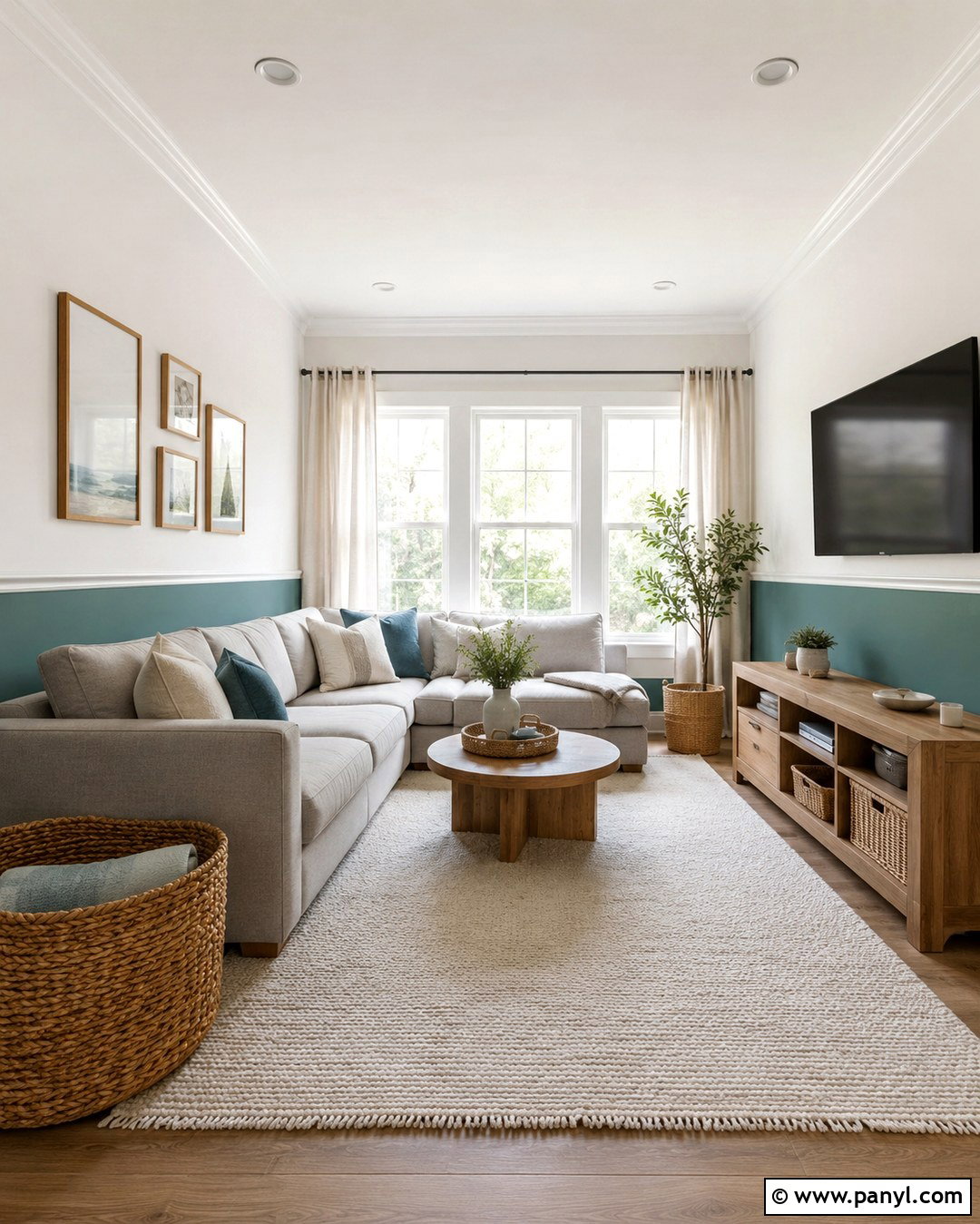
8. Coastal Blue Kitchen With Herringbone Tile
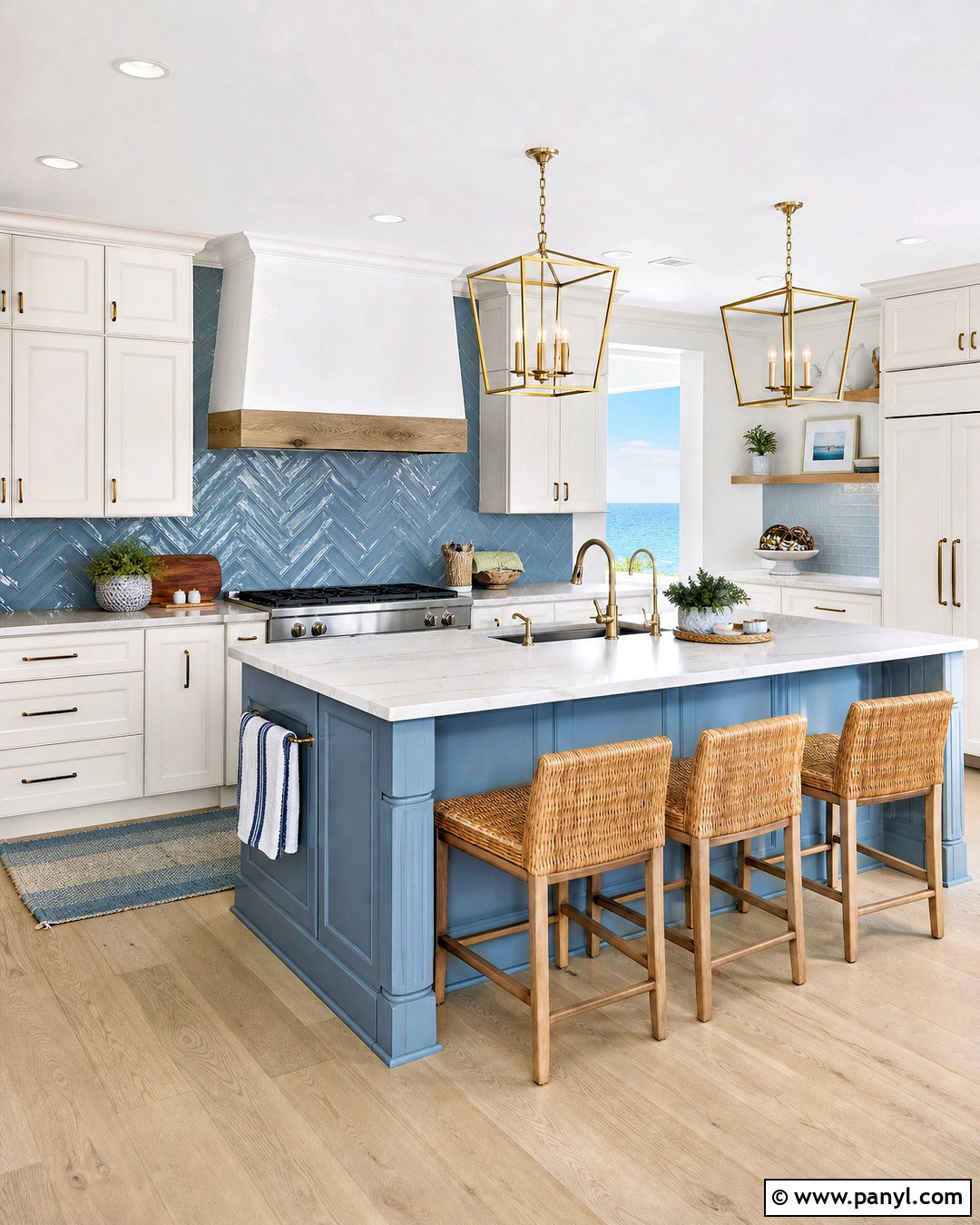
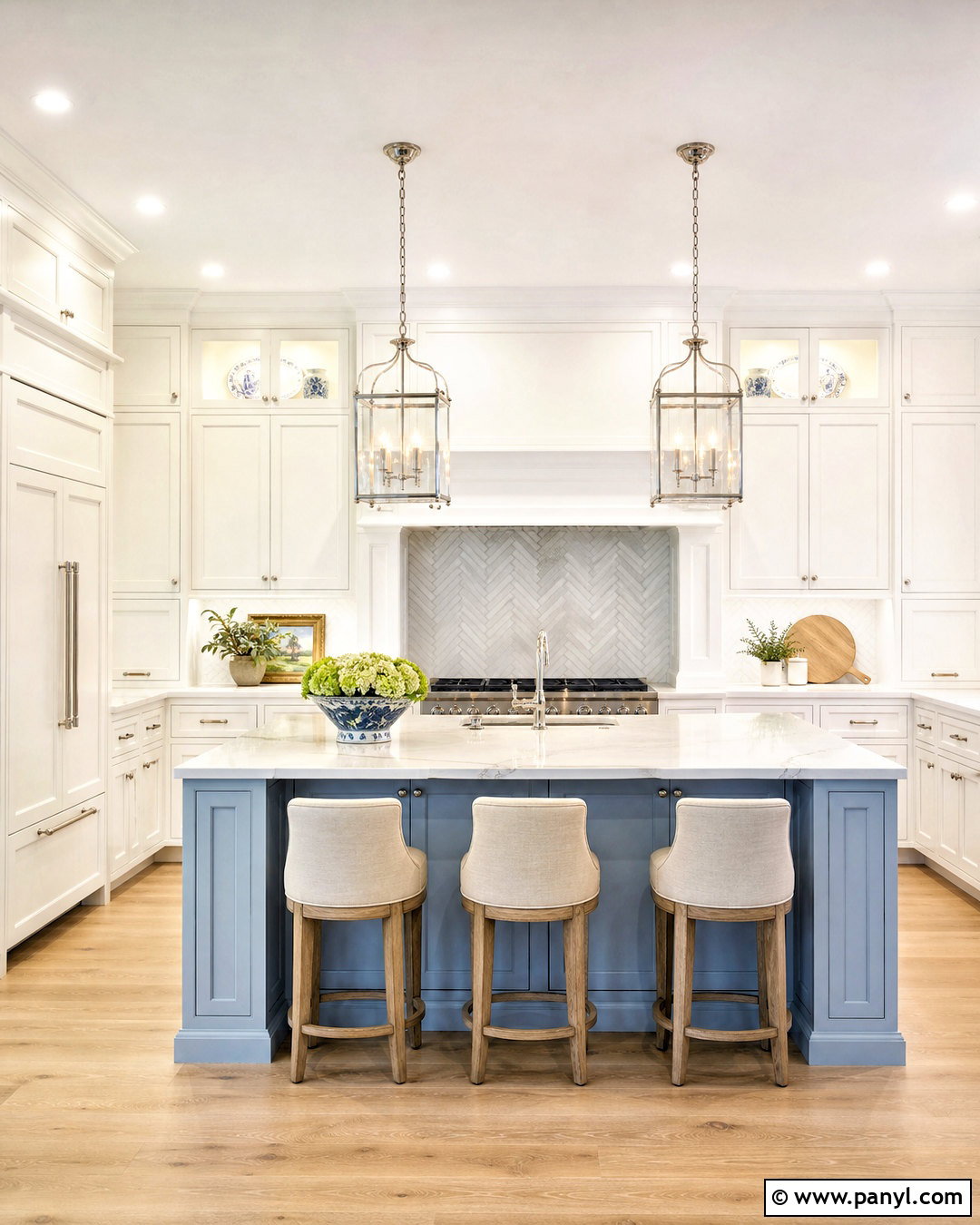
A herringbone backsplash adds movement while giving the kitchen a polished focal point. Select narrow blue-gray ceramic tiles with slight shade variation and carry them behind the range or across the entire counter wall. Combine the patterned installation with soft white perimeter cabinets and a dusty blue island. White marble-look quartz counters provide a clean separation between the cabinetry and tile. Choose pale oak floors, backless woven stools, and oversized lantern pendants with warm brass frames. Matching brass cabinet pulls bring subtle warmth to the cool blue surfaces. Keep the range hood simple and white so it blends into the background rather than interrupting the tile pattern. Finish with striped linen towels and clear glass storage jars. The room feels detailed and coastal without relying on novelty beach motifs.
9. Coastal Blue Kitchen With Marble Counters
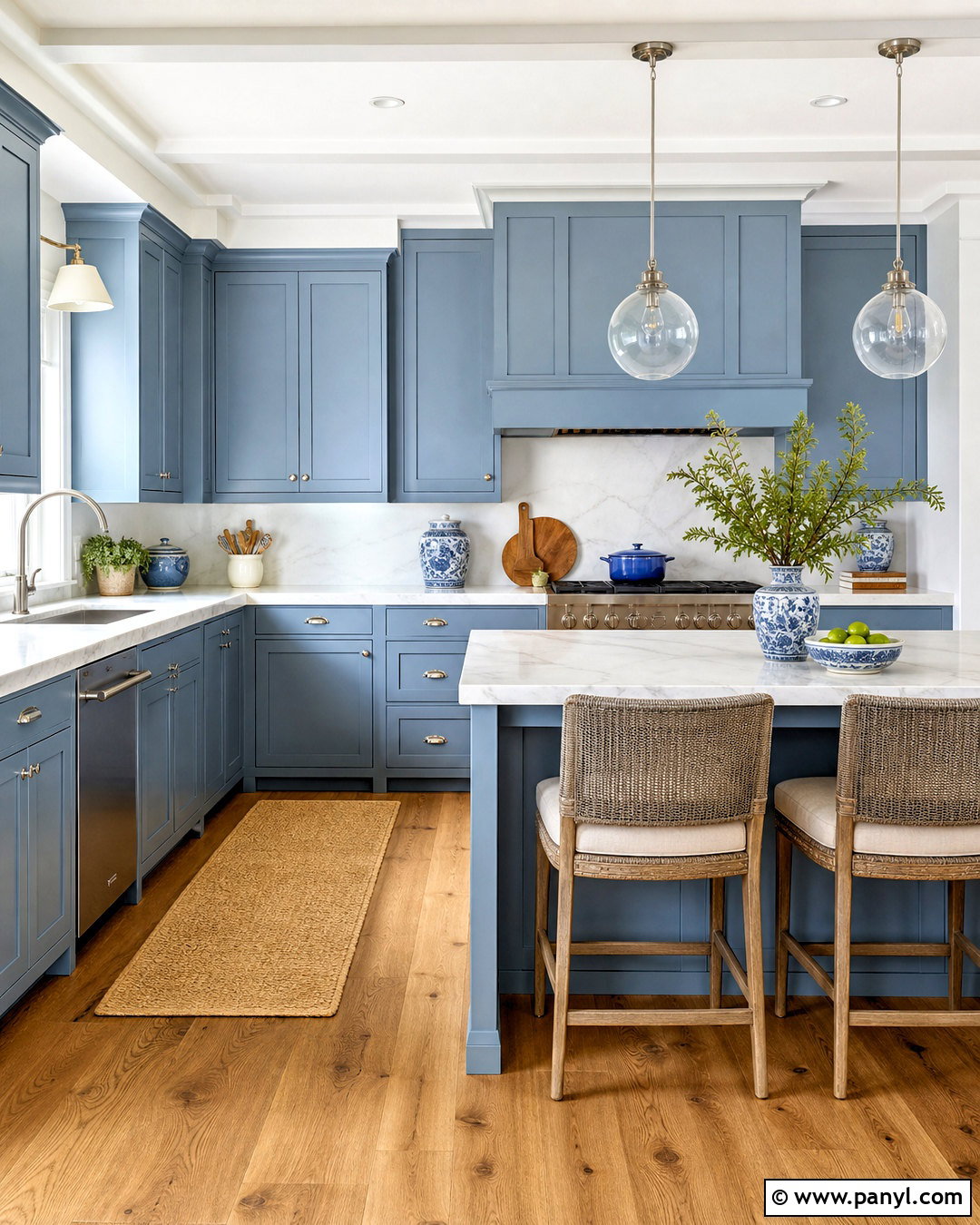
Blue cabinetry and marble create an elegant coastal kitchen that still feels relaxed enough for everyday use. Choose dusty blue Shaker cabinets with a large island in the same finish. Top both areas with white marble or durable quartz featuring soft gray veining. Continue the counter material a short distance up the wall or pair it with a plain white backsplash to keep the room balanced. Warm oak flooring, woven counter stools, and natural linen shades prevent the stone from feeling formal or cold. Use polished nickel hardware for a cooler seaside palette or brushed brass for a warmer interpretation. Add clear glass pendants above the island and layered under-cabinet lighting around the perimeter. Keep styling simple with blue pottery, wood boards, and fresh greenery placed away from busy preparation areas.
10. Small Coastal Blue Kitchen
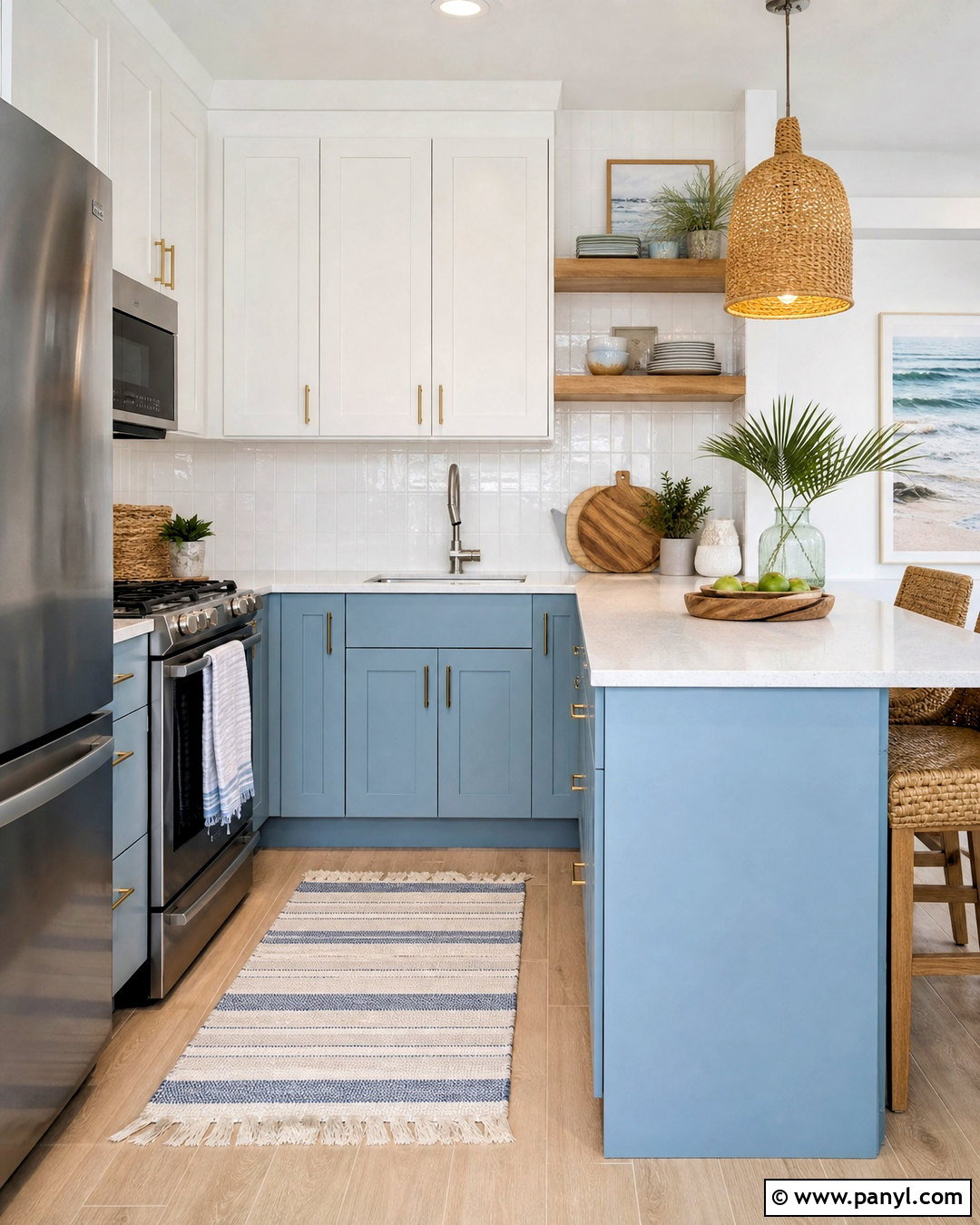
A compact kitchen can handle blue when the color is balanced with bright surfaces and efficient storage. Paint lower cabinets a soft ocean blue while keeping the upper cabinetry, walls, and ceiling warm white. This arrangement visually grounds the room without reducing its sense of height. Choose slim Shaker doors, white quartz counters, and glossy vertical backsplash tiles that reflect light upward. Light wood flooring and open oak shelves add warmth without creating visual heaviness. Use small polished nickel knobs, an undermount sink, and compact appliances with clean fronts. A narrow peninsula can provide preparation space and seating without blocking the walkway. Complete the room with one woven pendant, a washable striped runner, and neatly grouped ceramics. Limiting decorations helps the small coastal kitchen remain functional, open, and easy to maintain.
11. Modern Coastal Blue Kitchen
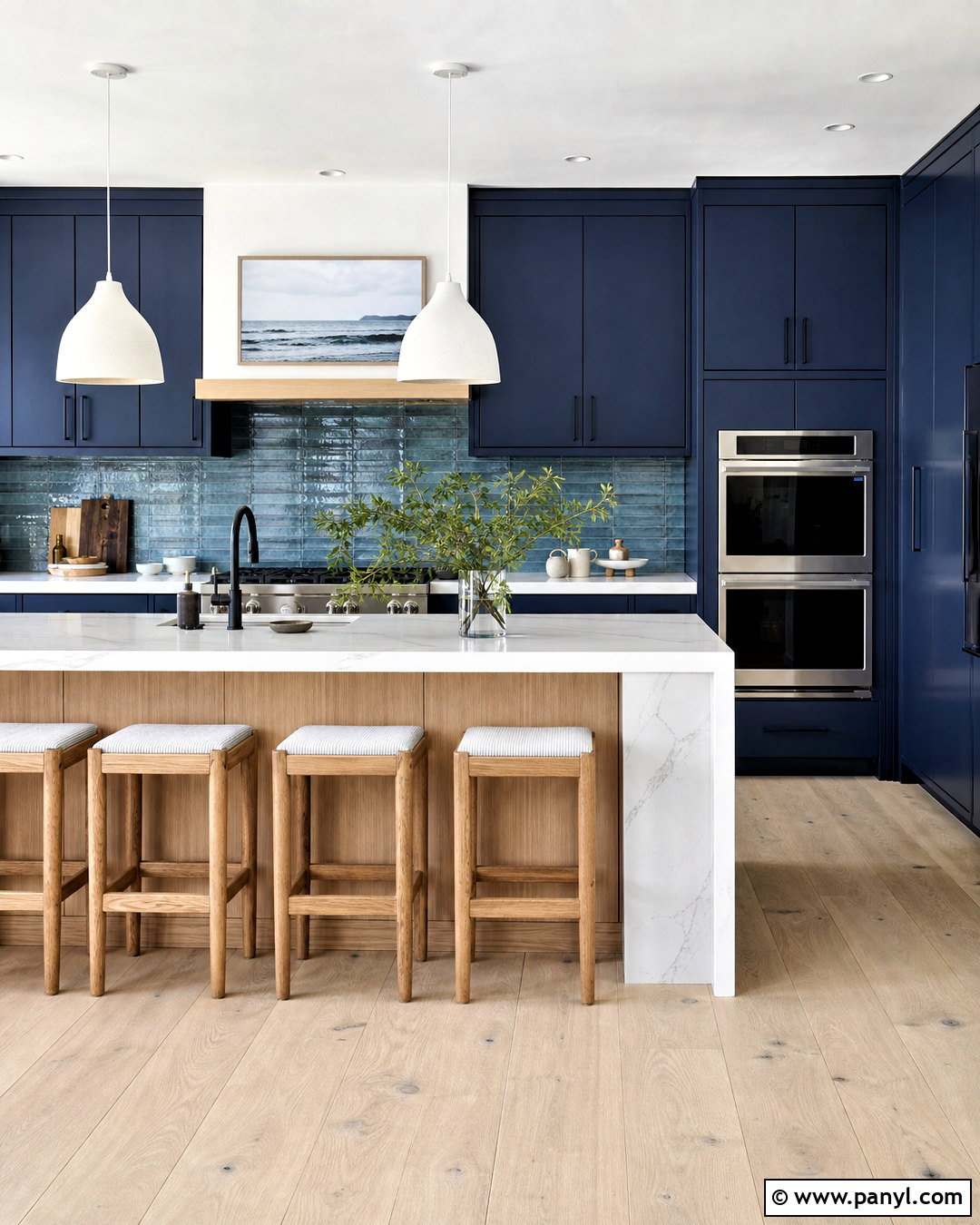
For a cleaner interpretation of coastal design, combine deep blue flat-panel cabinetry with light wood and streamlined white surfaces. Run navy cabinets along one wall, then use a pale oak island to break up the darker color. Waterfall-edge white quartz counters give the island a crisp architectural shape. Choose a simple blue-gray slab or large-format tile backsplash with very few grout lines. Matte black hardware can sharpen the palette, while brushed nickel fixtures offer a softer alternative. Add sculptural white pendants, low-profile oak stools, and wide-plank pale flooring. Keep appliances integrated where possible so the cabinetry reads as one continuous feature. Instead of themed decorations, display a single ceramic vessel, a wood bowl, and a small plant. The finished room feels coastal through color and material rather than literal beach references.
12. Farmhouse Coastal Blue Kitchen
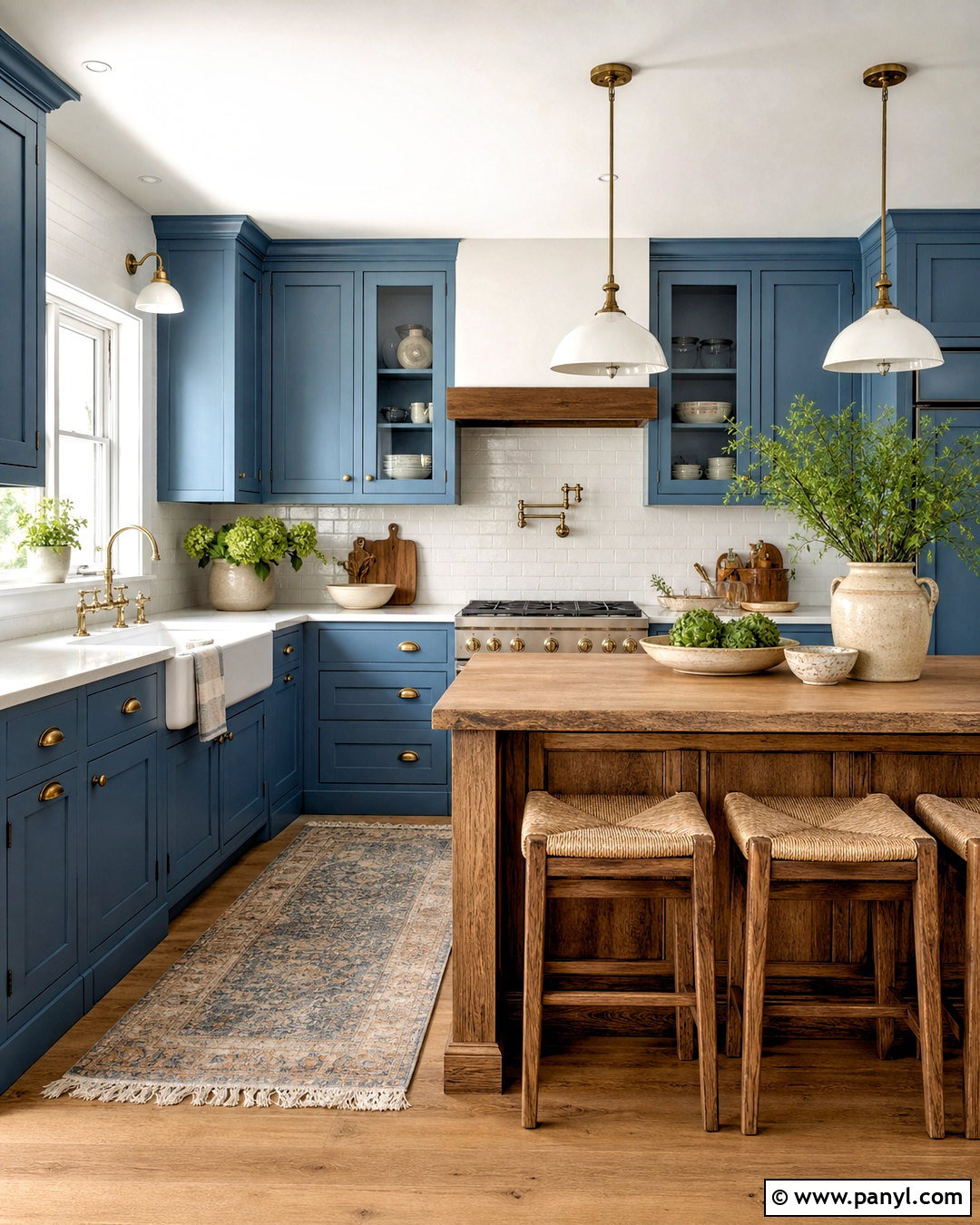
A coastal farmhouse kitchen blends familiar country details with a fresh blue, white, and natural wood palette. Use medium blue Shaker cabinets, a white apron-front sink, and creamy quartz countertops. Add a white subway backsplash with slightly uneven edges to keep the surfaces relaxed rather than perfectly polished. A stained oak island can introduce warmth and provide generous drawers, open shelving, and family seating. Choose aged brass cup pulls, bridge-style faucets, and simple milk-glass pendants. Wide-plank oak floors and woven rush stools connect the kitchen to the casual coastal setting. Keep farmhouse accents practical, such as wood cutting boards, stoneware crocks, and linen towels. Limit distressed finishes and decorative signs. Clean cabinetry and restrained accessories allow the room to feel current while retaining its welcoming farmhouse character.
13. Coastal Blue Galley Kitchen
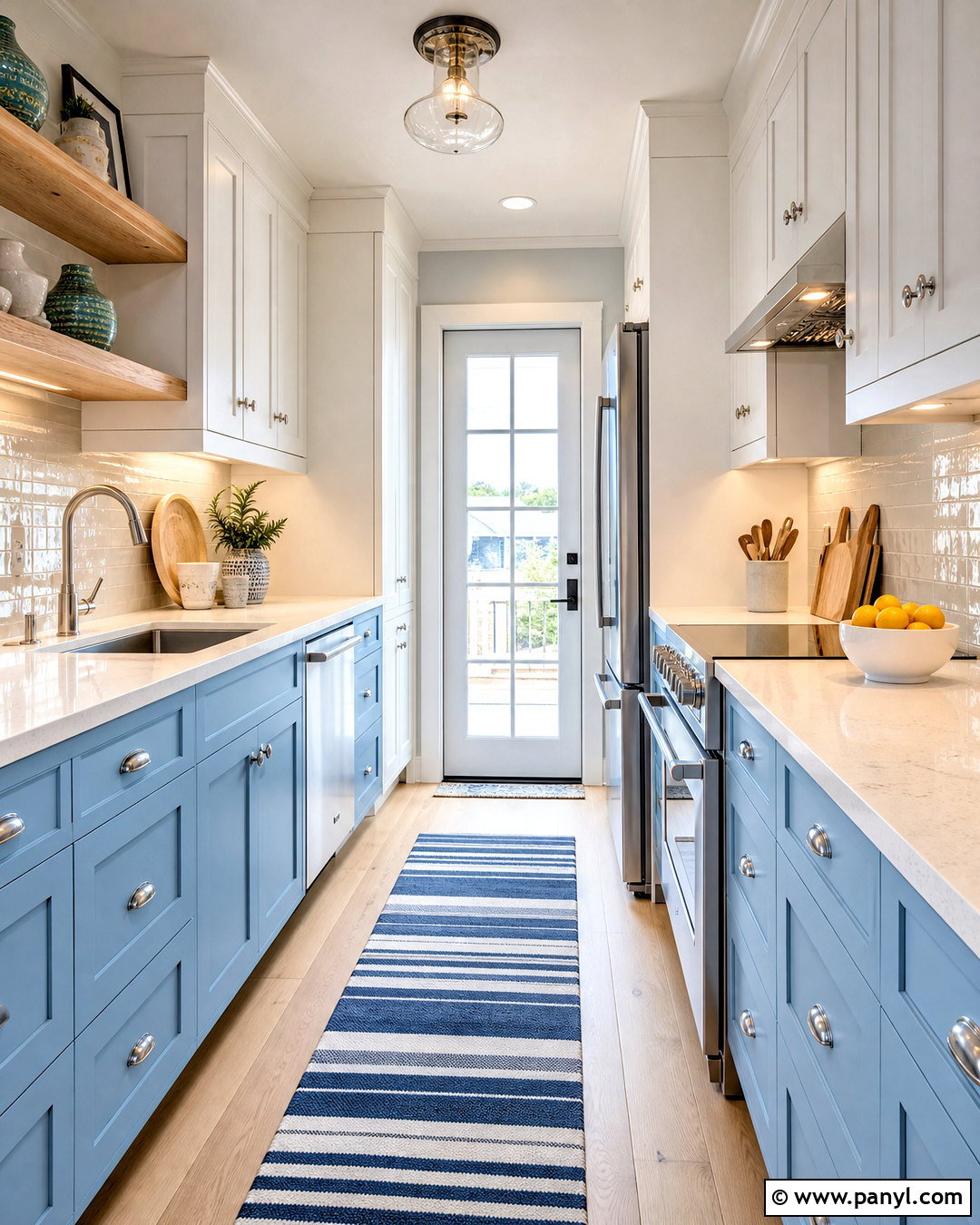
A galley layout becomes more inviting when blue cabinetry is paired with uninterrupted light surfaces. Use pale blue lower cabinets on both sides and warm white upper cabinets that blend into the walls. White quartz countertops and a glossy off-white backsplash will bounce light through the narrow space. Run pale wood flooring lengthwise to emphasize the kitchen’s full depth. Recessed ceiling lights, under-cabinet lighting, and a clear glass fixture near the entrance prevent shadowy corners. Choose compact polished nickel hardware and keep countertop appliances inside an appliance garage when possible. At the far end, install open oak shelves or a glass-front cabinet to create a lighter visual destination. A narrow striped runner can lead the eye forward while adding softness. This complete arrangement makes the galley feel organized, balanced, and comfortably coastal.
14. Coastal Blue Kitchen With Brass Hardware
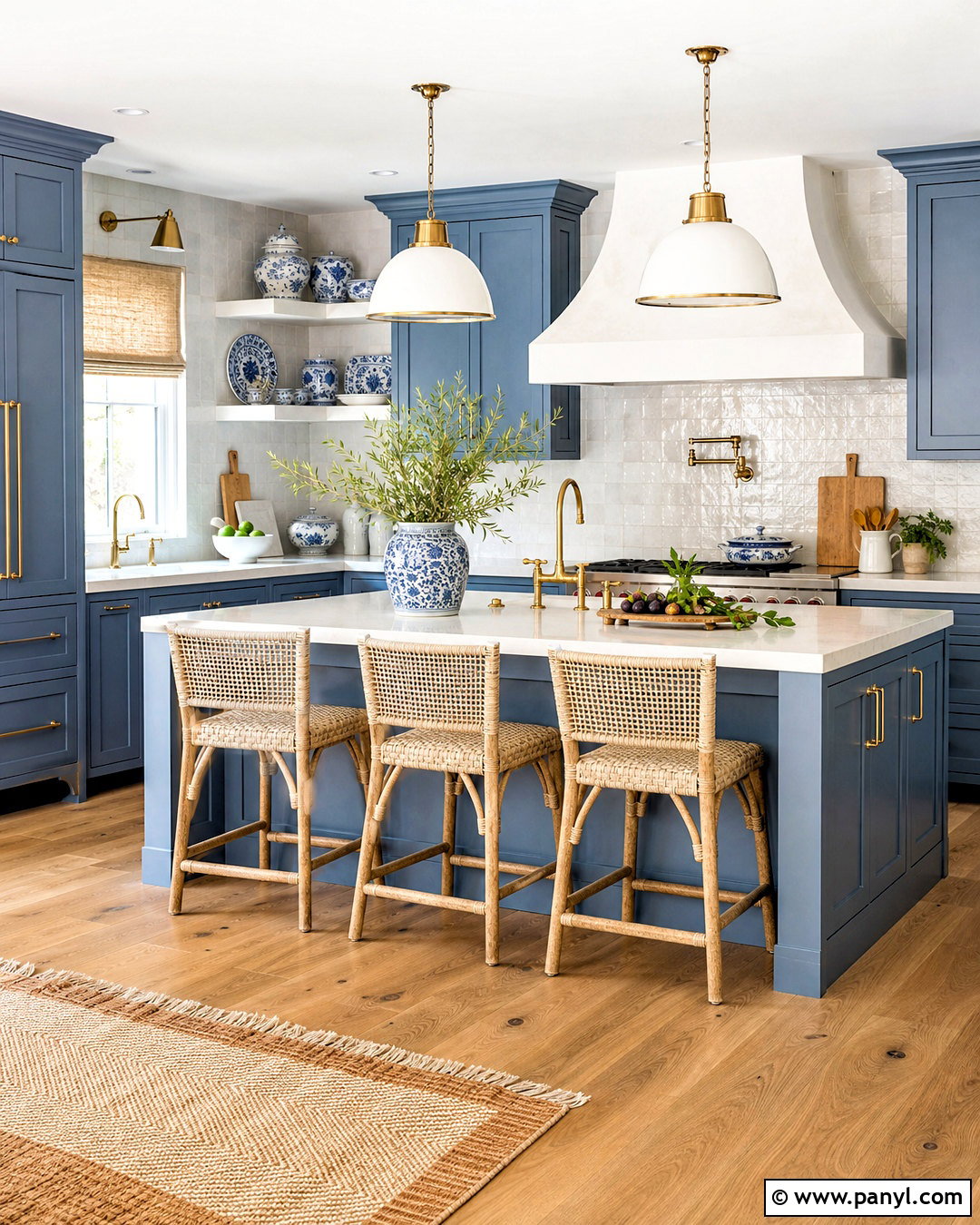
Brass hardware brings a sunny warmth that complements cool blue cabinetry. Start with muted denim-blue cabinets, white quartz counters, and a creamy handmade tile backsplash. Choose brushed or aged brass rather than a highly reflective yellow finish for cabinet pulls, the faucet, and pendant details. Repeating the metal in three or four places makes the design feel coordinated, but every fixture does not need to match perfectly. Add warm oak flooring and woven stools to strengthen the connection between the brass and natural textures. White upper walls and a simple plaster range hood keep the kitchen bright. Finish with linen window shades, blue-and-white ceramics, and a shallow wood bowl on the island. The overall room feels cheerful and refined while the softened finishes prevent the blue-and-brass pairing from appearing overly glamorous.
15. Coastal Blue Kitchen With Black Accents
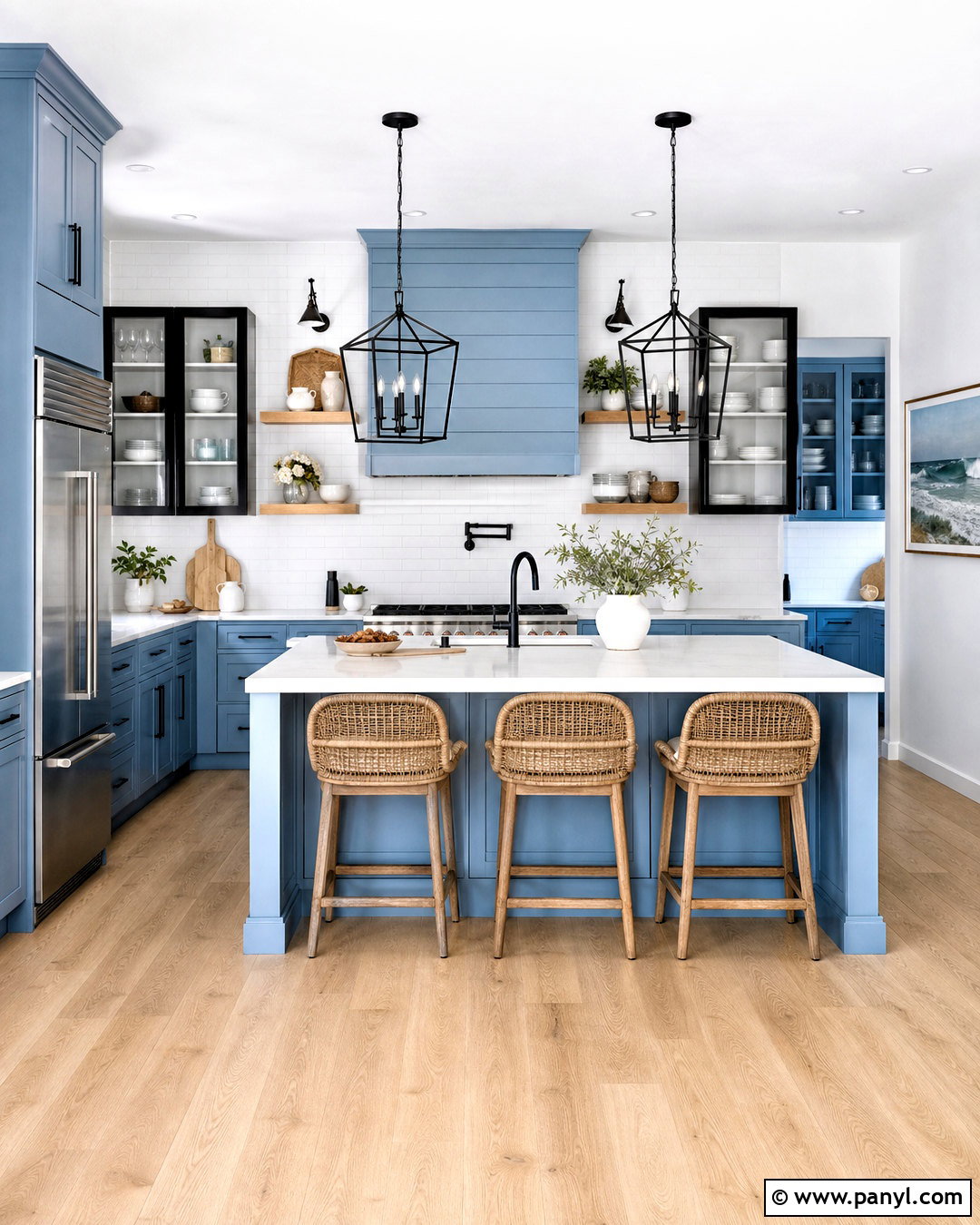
Black accents can give a coastal blue kitchen definition without removing its breezy quality. Choose light blue-gray cabinets, white counters, and a simple white tile backsplash as the main palette. Introduce matte black through slim cabinet pulls, window frames, a bridge faucet, and lantern-style island pendants. Keep these dark elements narrow and evenly distributed so they outline the room rather than dominate it. Light oak flooring, woven counter stools, and wood shelves add enough warmth to balance the black. A white range hood and pale ceiling preserve an open feeling overhead. Consider black-framed glass cabinet doors for one small display area instead of using them across the entire kitchen. Complete the scheme with neutral pottery, striped textiles, and fresh greenery for a modern coastal room with crisp architectural contrast.
16. Coastal Blue Kitchen With Rattan Lighting
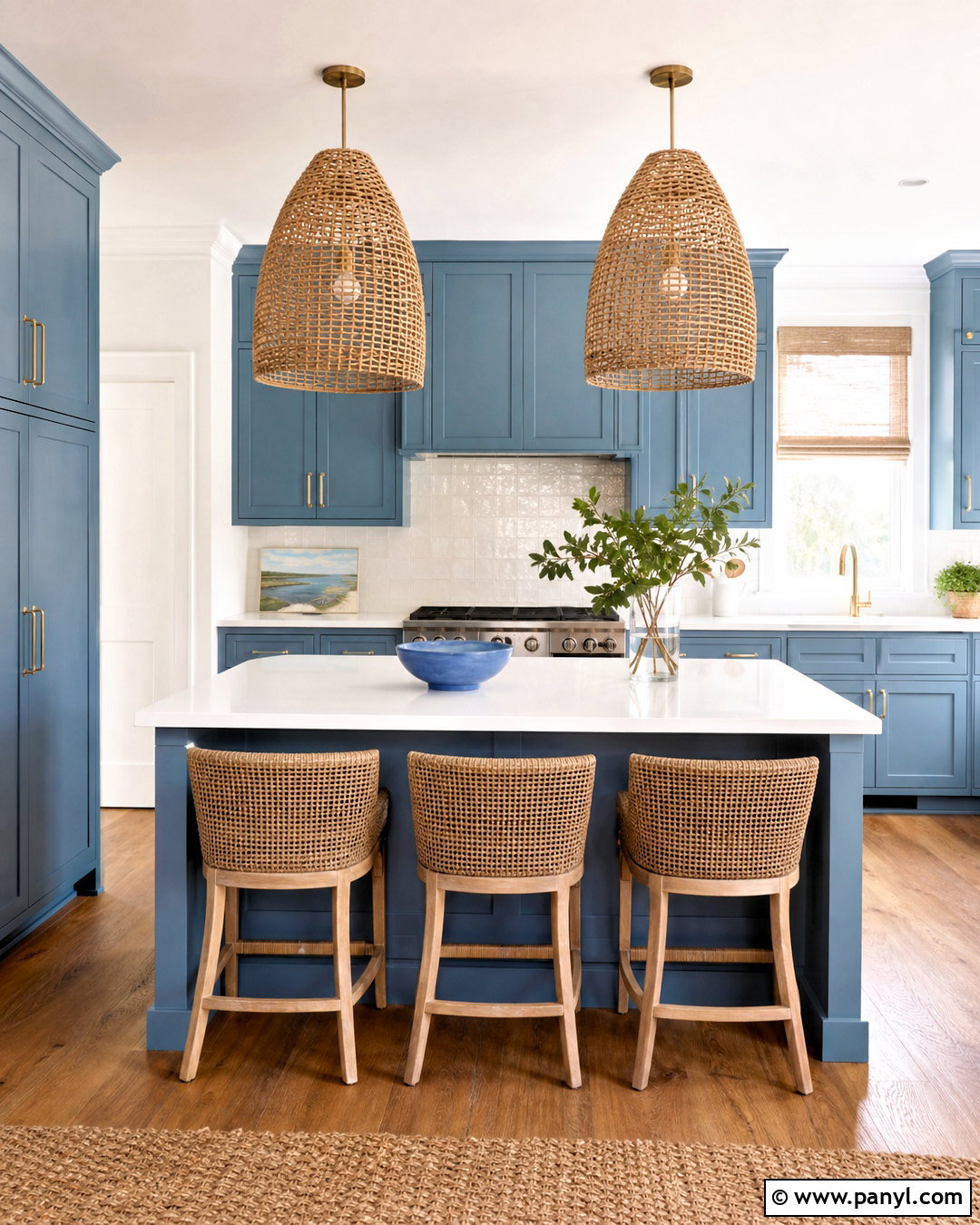
Large woven pendants instantly soften blue cabinetry and create a relaxed coastal atmosphere above the island. Select open rattan shades that allow plenty of light to pass through, especially in a kitchen with limited windows. Pair them with medium blue Shaker cabinets, white quartz counters, and a pearly white tile backsplash. A light oak island or matching blue island can anchor the center, while woven stools repeat the pendants at a lower level. Use simple brass or polished nickel hardware and warm wood flooring to complete the material palette. Keep the ceiling and walls white so the textured fixtures stand out clearly. Add linen shades, ceramic bowls, and a small arrangement of leafy stems. The layered natural fibers make the finished kitchen feel comfortable and beach-inspired without requiring decorative anchors, shells, or signs.
17. Coastal Blue Kitchen With Open Shelves
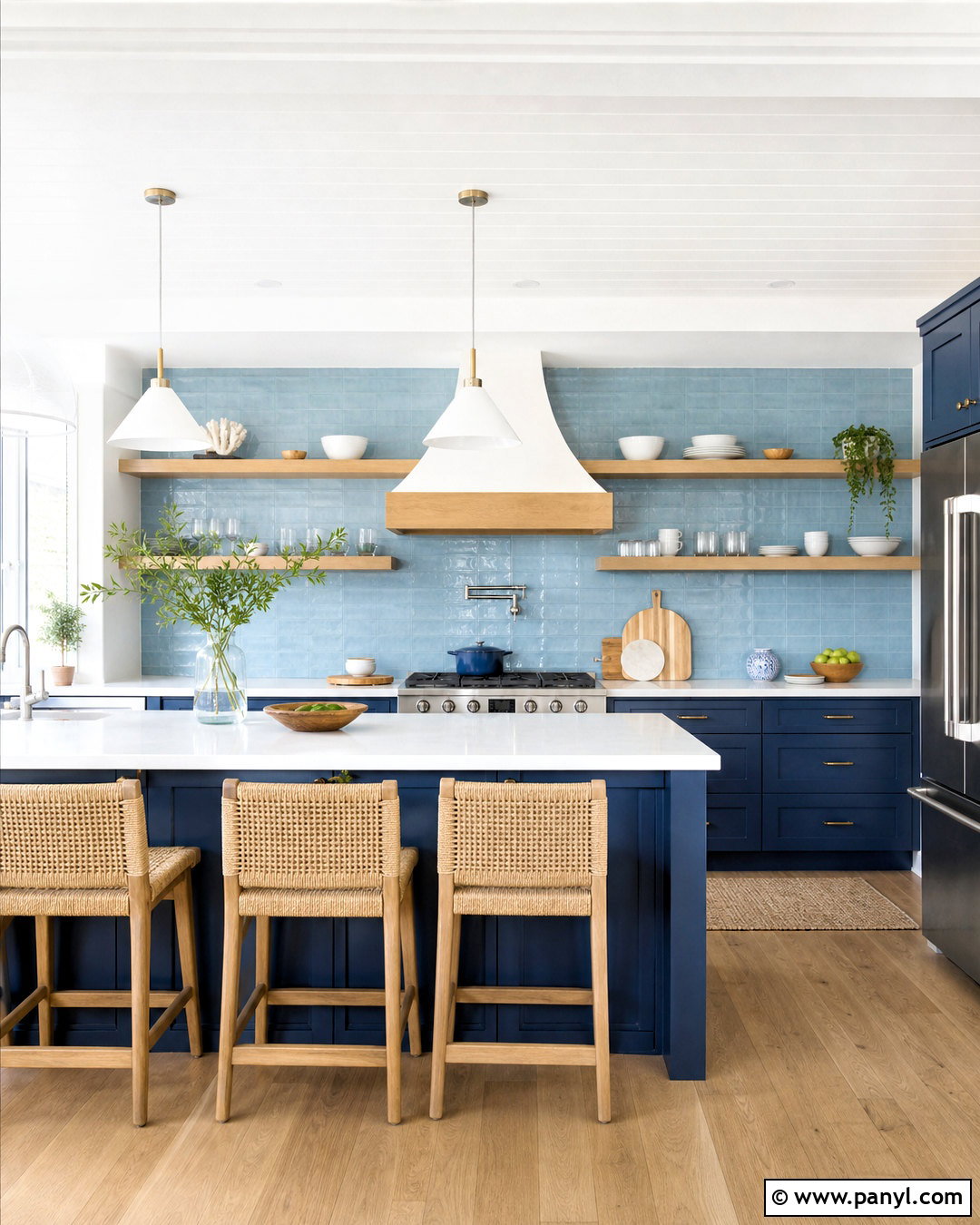
Open shelves can make blue cabinetry feel lighter while keeping everyday dishes close at hand. Use deep ocean-blue lower cabinets and limit upper cabinets to one practical storage wall. Install thick white oak shelves near the sink or breakfast area, leaving enough space between them for plates, bowls, and glassware. A white quartz countertop and soft blue backsplash connect the dark base cabinets with the lighter upper wall. Add oak flooring, woven stools, and simple white pendants for a balanced coastal palette. Keep shelf displays useful and restrained, using mostly white dishes, clear glasses, and a few blue ceramics. Conceal less attractive supplies inside deep drawers and pantry cabinets. This combination gives the room an airy appearance while retaining the closed storage needed to prevent a hardworking kitchen from looking cluttered.
18. Coastal Blue Kitchen With Patterned Floor
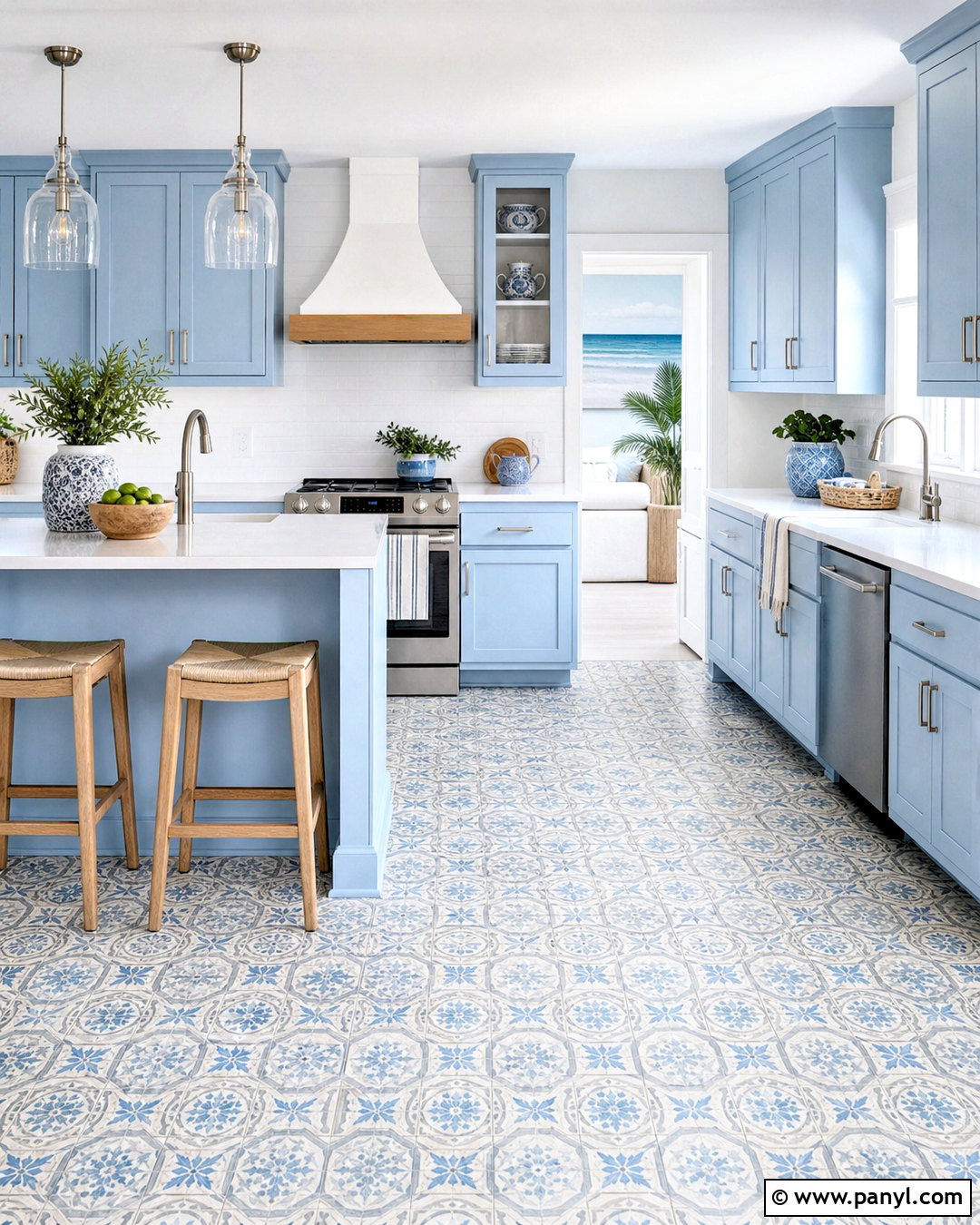
A patterned floor can bring personality to a coastal blue kitchen while leaving the cabinets and counters relatively simple. Choose durable porcelain tile with a faded blue, white, and soft gray geometric motif. Pair it with pale blue Shaker cabinetry, plain white quartz countertops, and an uncomplicated white backsplash. Use brushed nickel hardware and clear glass pendants to avoid introducing too many competing details. A natural oak island top or several wood stools will warm the cooler tile palette. Keep the walls white and window treatments light so the floor pattern does not make the room feel busy. Repeat the floor’s blue in a few ceramics or linen towels for continuity. The completed kitchen feels cheerful and distinctive, yet the limited color scheme ensures the patterned surface remains easy to live with.
19. Coastal Blue Kitchen With Glass Cabinets
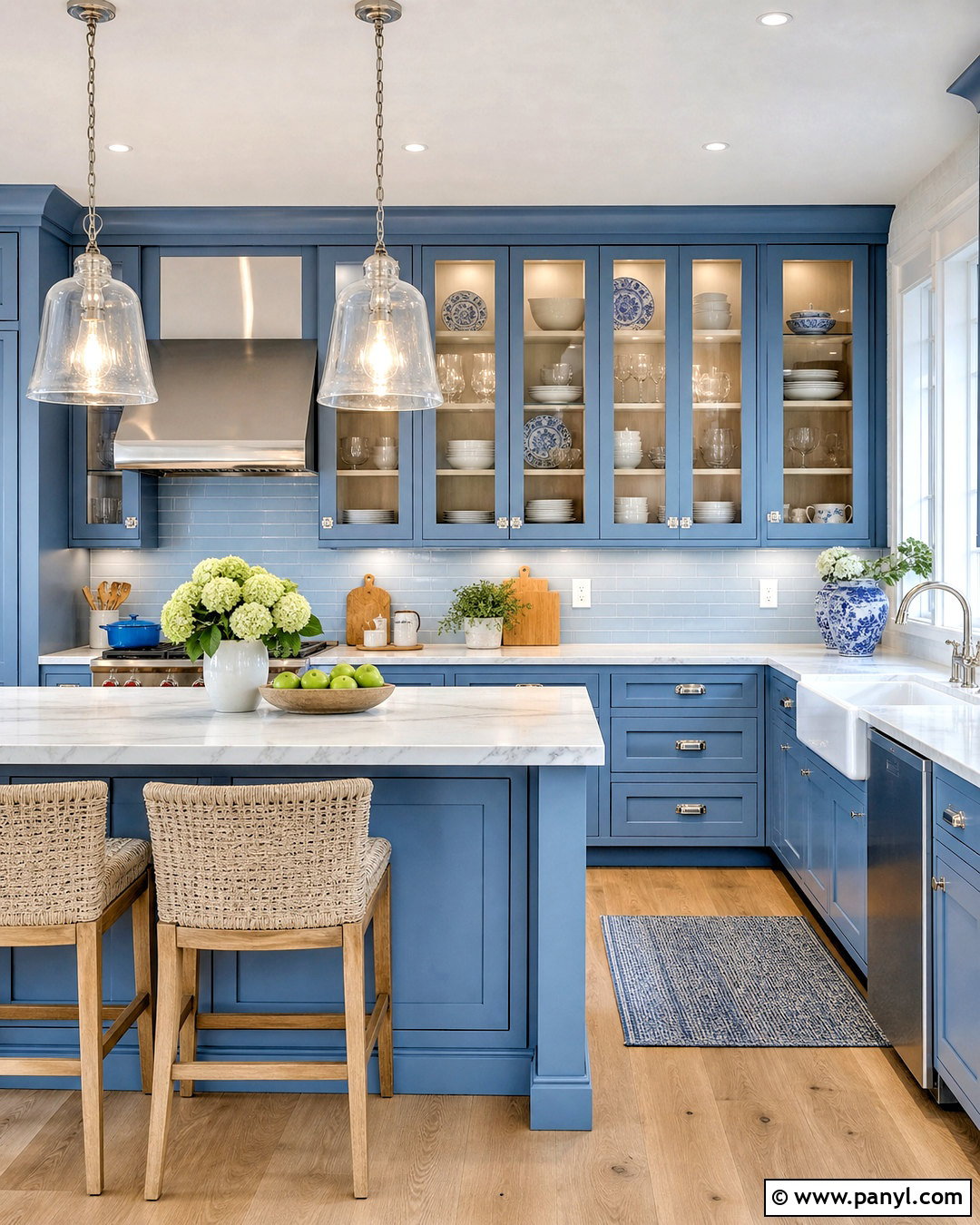
Glass-front cabinets bring depth and sparkle to a blue kitchen while breaking up a long run of solid doors. Use medium blue Shaker cabinets around the room, then place glass doors on the cabinets beside the range hood or above a beverage area. Paint the cabinet interiors warm white so dishes remain visible and the upper section feels lighter. Combine the cabinetry with white marble-look quartz, a pale blue subway backsplash, and natural oak flooring. Add polished nickel latches, clear glass pendants, and woven counter stools for a refined coastal finish. Inside the display cabinets, arrange white dishes, clear glasses, and a few blue serving pieces with breathing room between them. The thoughtful storage arrangement makes the complete kitchen feel open and decorative without sacrificing the practical cabinetry required for cookware and pantry supplies.
20. Budget Coastal Blue Kitchen Makeover
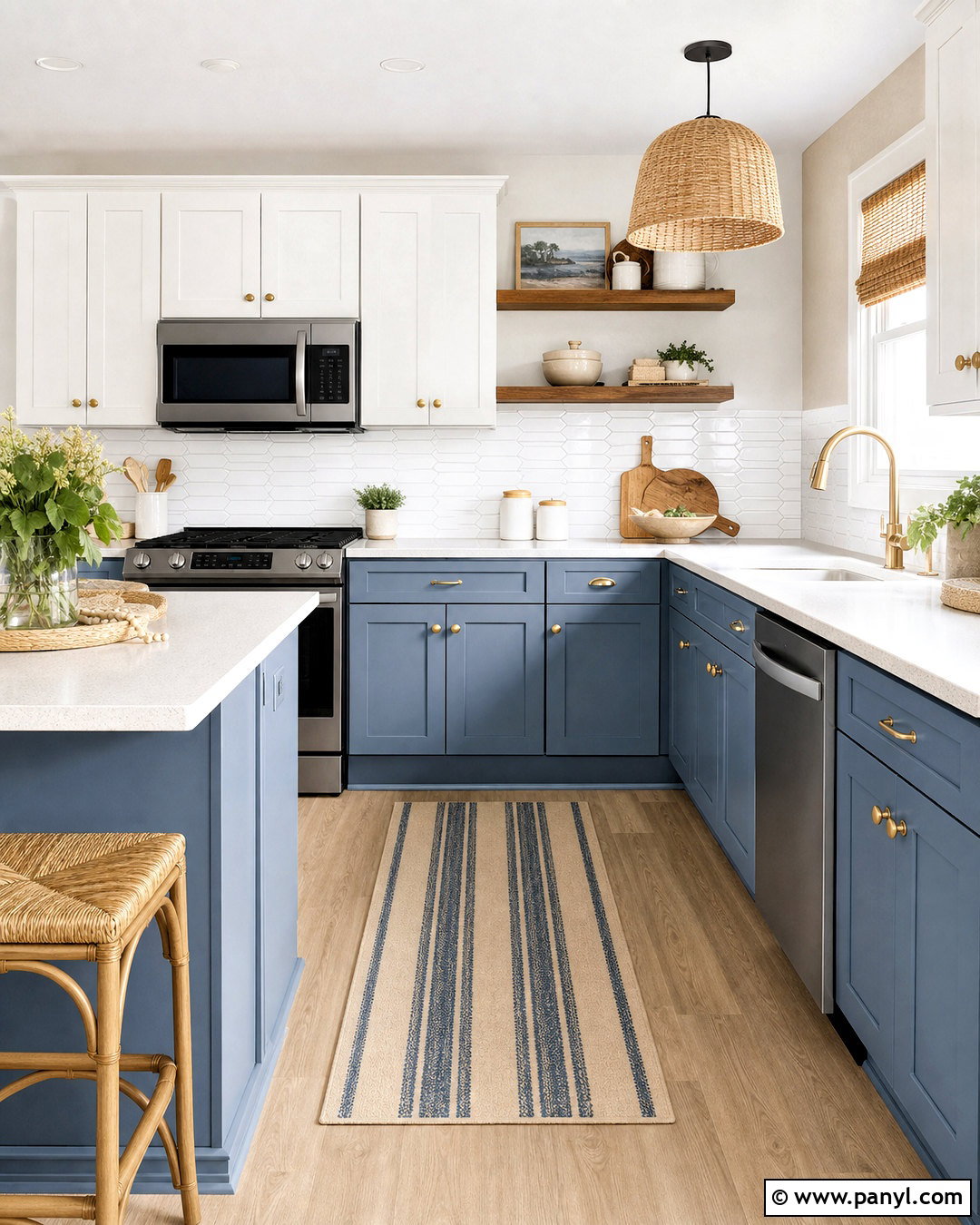
A complete coastal update does not always require replacing cabinets or changing the layout. Paint structurally sound lower cabinets a soft blue-gray and leave the upper cabinets white to reduce labor and material costs. Install affordable brushed brass knobs, a white peel-and-stick backsplash, and a durable wood-look vinyl floor if the existing surfaces feel dated. Update the lighting with a woven pendant above the sink or breakfast bar. A striped washable runner, bamboo shade, and simple oak shelves can add texture without taking up counter space. Keep existing counters if they are neutral, then disguise small imperfections with a few useful wood boards and ceramic containers. By repeating blue, white, and natural brown throughout the room, these affordable changes create a coordinated coastal kitchen rather than a collection of unrelated decorative additions.
Conclusion:
The most successful **coastal blue kitchen ideas** combine color, texture, lighting, and function as one complete design. Soft blues make compact rooms feel peaceful, while navy islands and cabinets create stronger contrast in larger kitchens. White counters, pale walls, warm wood, woven fibers, and handcrafted tile keep every shade of blue feeling balanced and welcoming. Before selecting finishes, compare samples in morning and evening light and consider how they relate to existing floors and nearby rooms. You can create a coastal look through a full renovation or a focused makeover using paint, hardware, lighting, and textiles. Keep decorative references subtle, prioritize practical storage, and choose durable materials. The finished kitchen will feel fresh, comfortable, and timeless rather than overly themed.

Related Ideas and Inspiration:
Leave a Reply