
Blue kitchen walls can feel airy, dramatic, coastal, traditional, or modern depending on the shade and surrounding finishes. Pale blues brighten compact rooms, while navy and teal bring depth to larger kitchens. Blue also works almost like a neutral, making it surprisingly easy to combine with white cabinetry, warm wood, marble, brass, stainless steel, and colorful tile. () The secret is creating a complete palette rather than choosing wall paint in isolation. Consider the room’s natural light, cabinet undertones, flooring, countertops, backsplash, and hardware before making a final choice. From renter-friendly updates to full color-drenched spaces, these 45 blue kitchen walls offer practical inspiration for creating a cohesive kitchen you will enjoy every day.
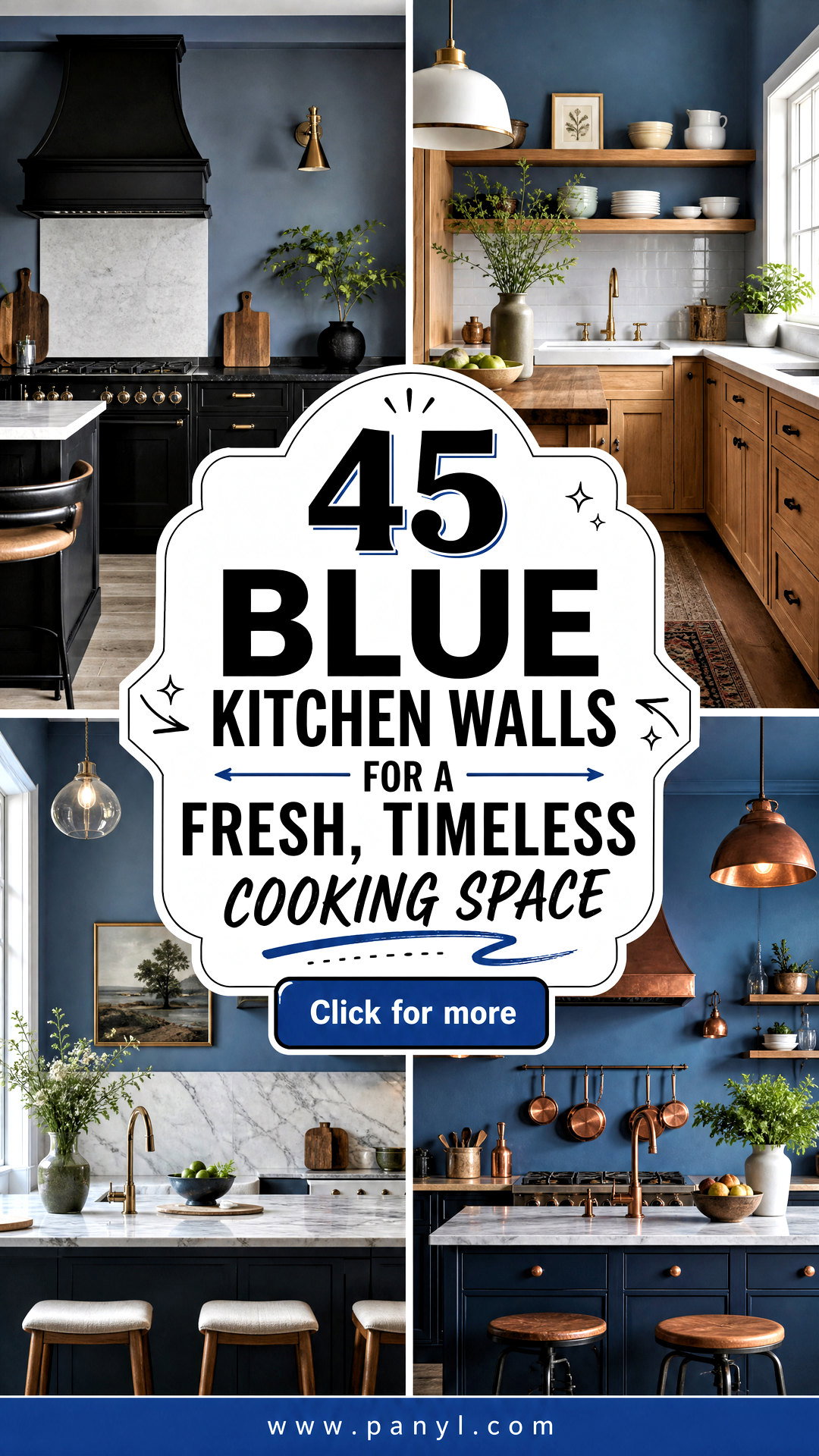
1. Light Blue Kitchen Walls With White Cabinets
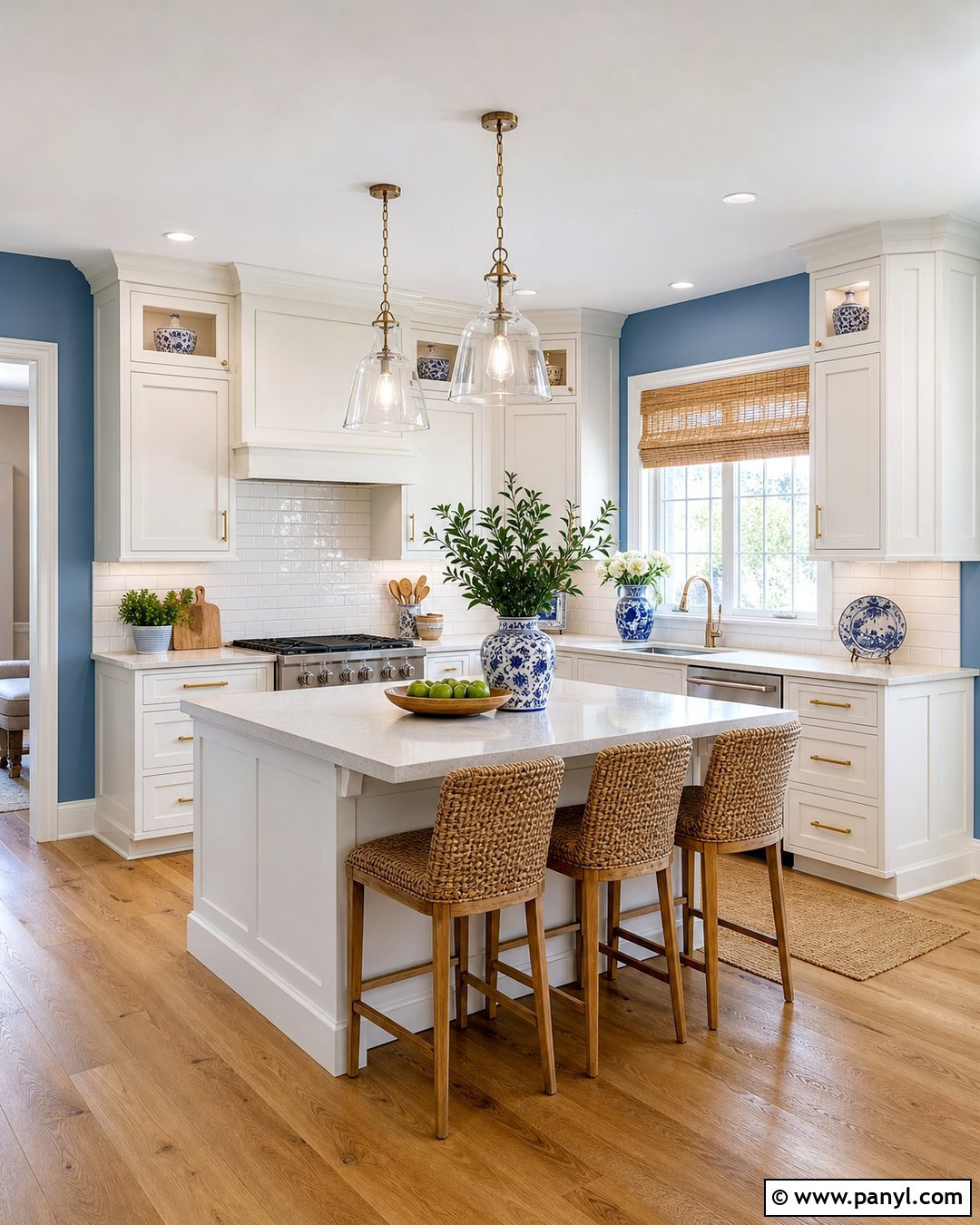
Light blue walls give white cabinetry a softer, more welcoming backdrop than plain gray or beige. Choose a slightly muted blue that stays fresh without looking icy, then repeat crisp white across the trim, ceiling, and subway tile backsplash. Pale quartz counters keep the room bright, while natural oak flooring introduces warmth. Add brushed brass pulls and simple glass pendants for a polished finish. A woven runner, wood cutting boards, and blue-and-white pottery make the kitchen feel lived-in without adding clutter. This combination is especially effective in a small or north-facing room because the reflective surfaces help distribute available light. Test the blue beside the cabinets at several times of day before painting every wall.
2. Navy Blue Kitchen Walls With Oak Cabinets
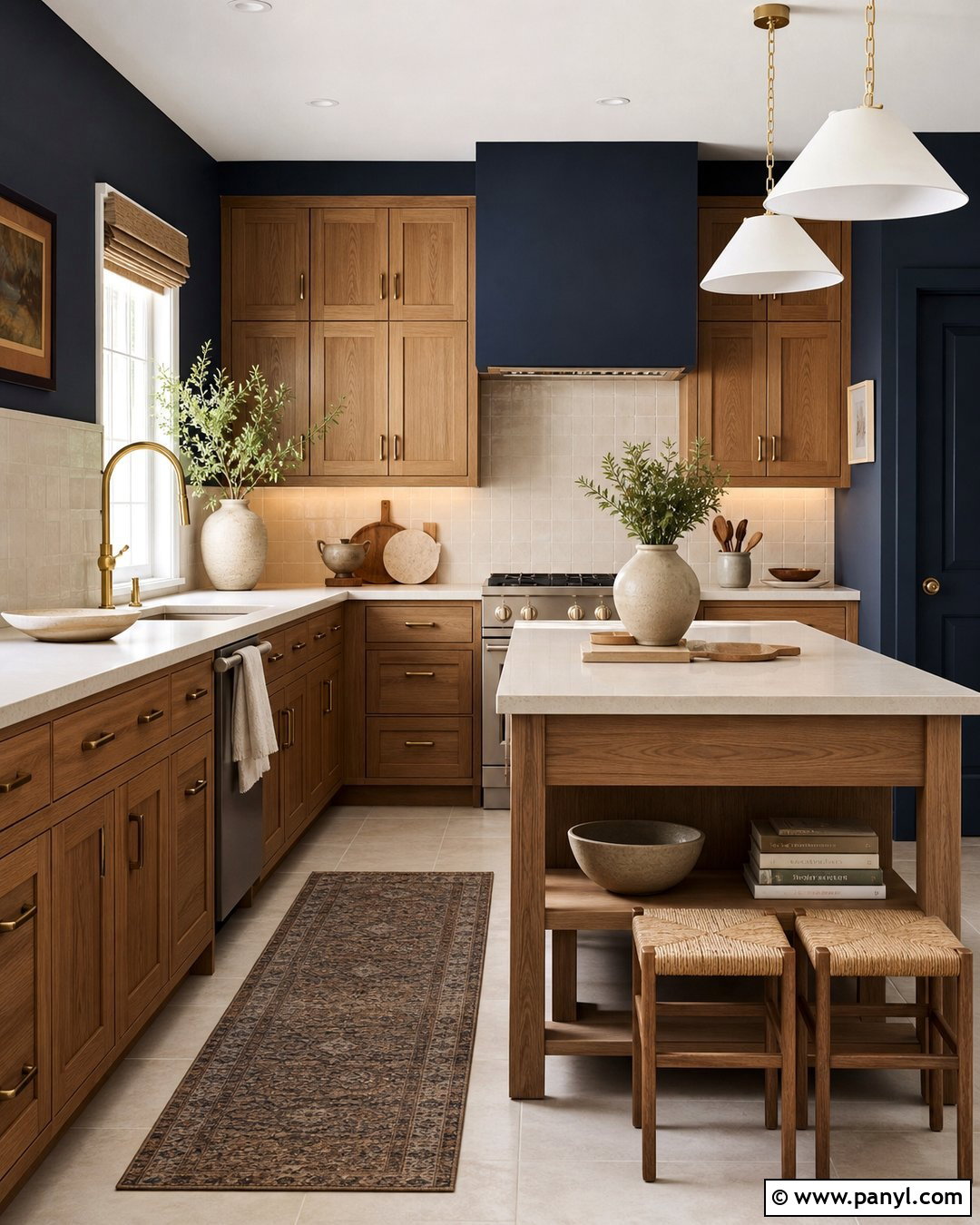
Deep navy walls can make honey oak or white oak cabinetry look richer and more intentional. Keep the surrounding scheme balanced with warm white countertops, a cream backsplash, and light-colored flooring. The navy creates a strong background, while the visible wood grain prevents the space from feeling cold. Matte black hardware offers a modern direction, but aged brass works better when you want warmth and character. Install bright under-cabinet lighting so the work surfaces remain clear and practical. A few earthenware pieces, linen shades, and woven stools can connect the natural finishes. This complete palette suits kitchens with generous daylight, open shelving, or large windows that stop the dark wall color from overwhelming the room.
3. Dusty Blue Kitchen Walls With Cream Cabinets
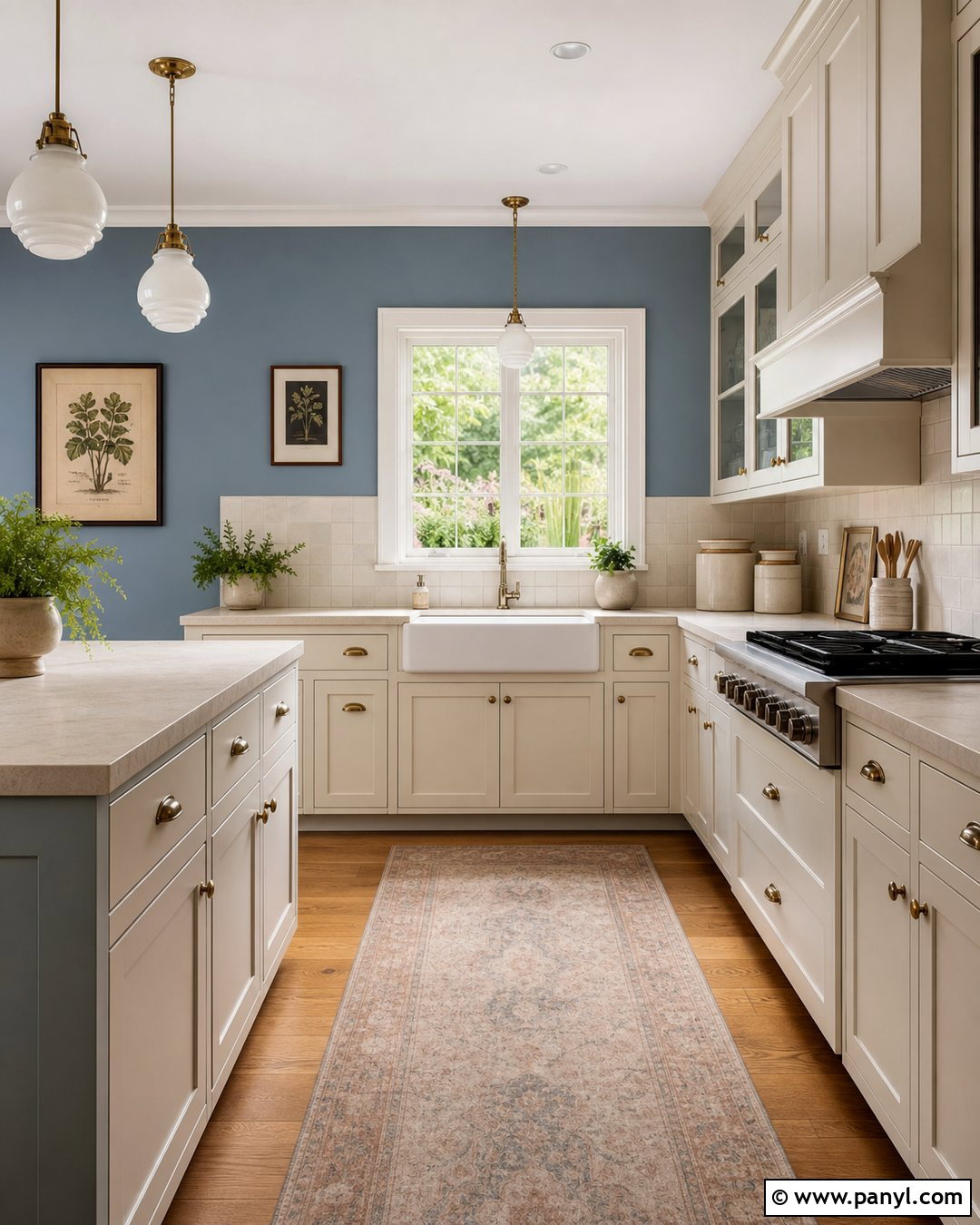
Dusty blue and cream create a relaxed kitchen that feels softer than a classic blue-and-white scheme. Select a blue with gentle gray undertones and pair it with warm ivory cabinets rather than bright white. Honed limestone-look counters, antique brass hardware, and a lightly patterned backsplash reinforce the understated palette. Medium oak flooring brings in another warm layer without competing with the wall color. For lighting, choose milk glass pendants or simple fabric shades that spread an even glow. Finish the room with framed botanical prints, ceramic canisters, and a faded washable runner. This look works well in older homes because it complements traditional trim and cabinet profiles while still feeling clean, current, and easy to maintain.
4. Coastal Blue Kitchen Walls With White Oak
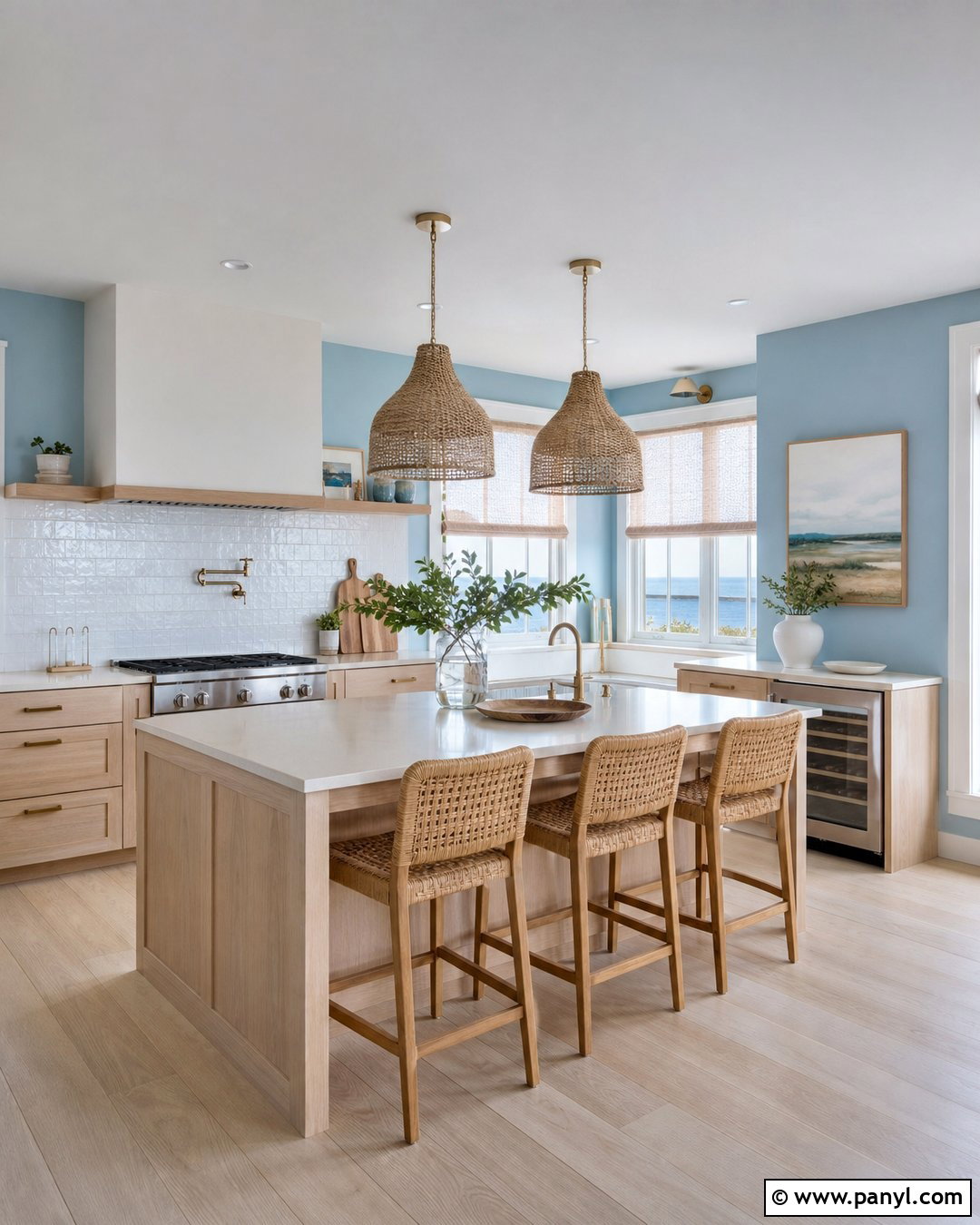
Want a coastal kitchen without obvious nautical decorations? Start with clear, breezy blue walls and streamlined white oak cabinets. Use sandy beige quartz counters, glossy white tile, and pale wood flooring to suggest the colors of water and shoreline in a subtle way. Brushed nickel or soft brass hardware keeps the palette light. Woven pendant lights, linen window shades, and backless rattan stools introduce texture while maintaining an uncluttered layout. Instead of anchors and seashells, decorate with simple glass vessels, handmade pottery, and one framed landscape. The result should feel open and natural rather than themed. This scheme is particularly appealing in kitchens connected to a patio, breakfast nook, or bright family room.
5. Slate Blue Kitchen Walls With Black Cabinets
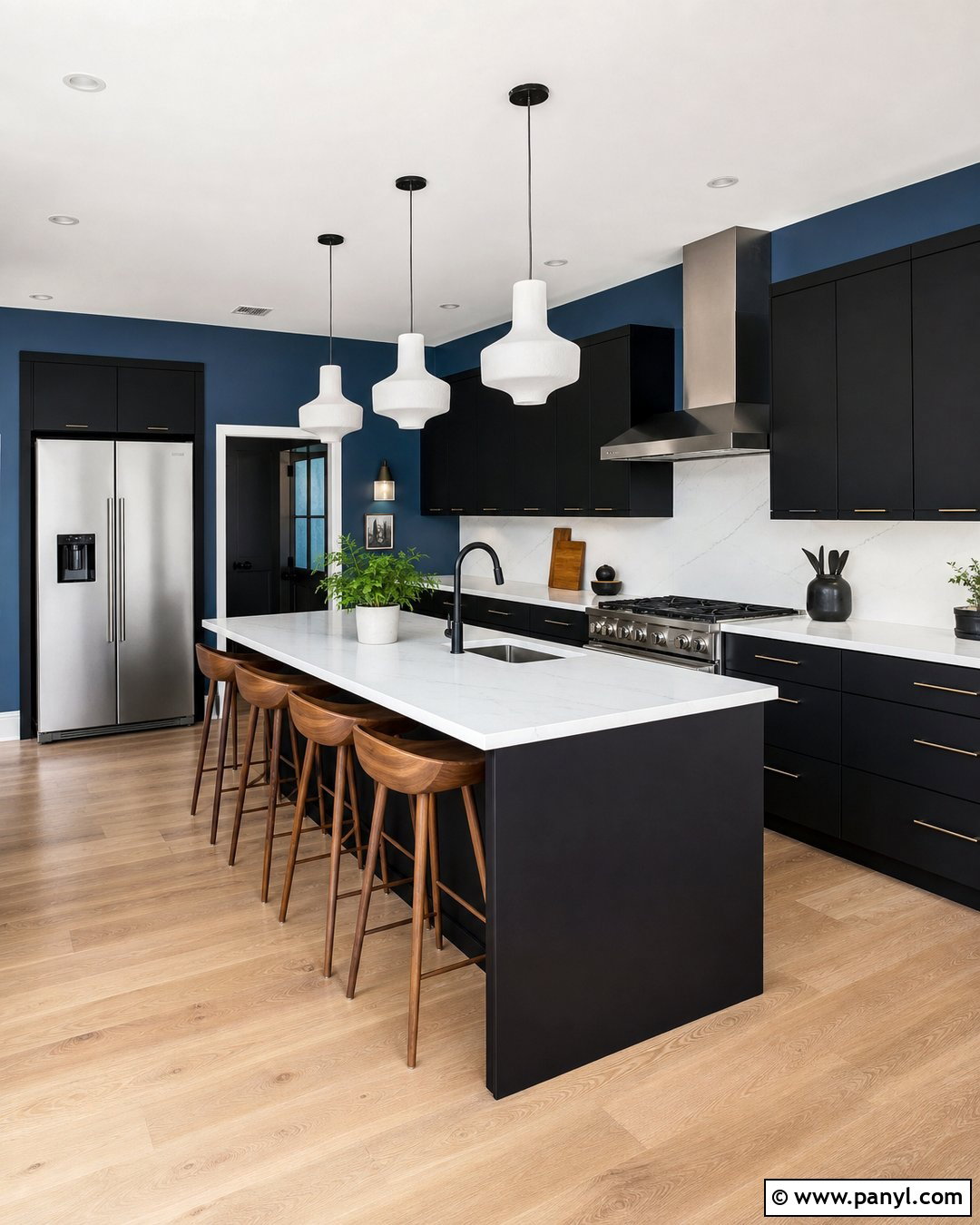
Slate blue walls can soften black cabinetry while preserving a bold, contemporary appearance. Choose a medium blue with noticeable gray undertones so the walls bridge the dark cabinets and lighter work surfaces. White quartz counters and a matching slab backsplash create contrast without adding busy patterns. Use pale oak flooring to keep the overall room from feeling heavy. Matte black pulls can disappear into the cabinet fronts, while brushed steel appliances add a small amount of shine. Complete the room with sculptural white pendants, minimal counter decor, and warm wood barstools. This balanced kitchen works best when the blue continues across several visible walls, creating a deliberate envelope around the streamlined cabinetry and central island.
6. Sky Blue Kitchen Walls With Butcher Block Counters
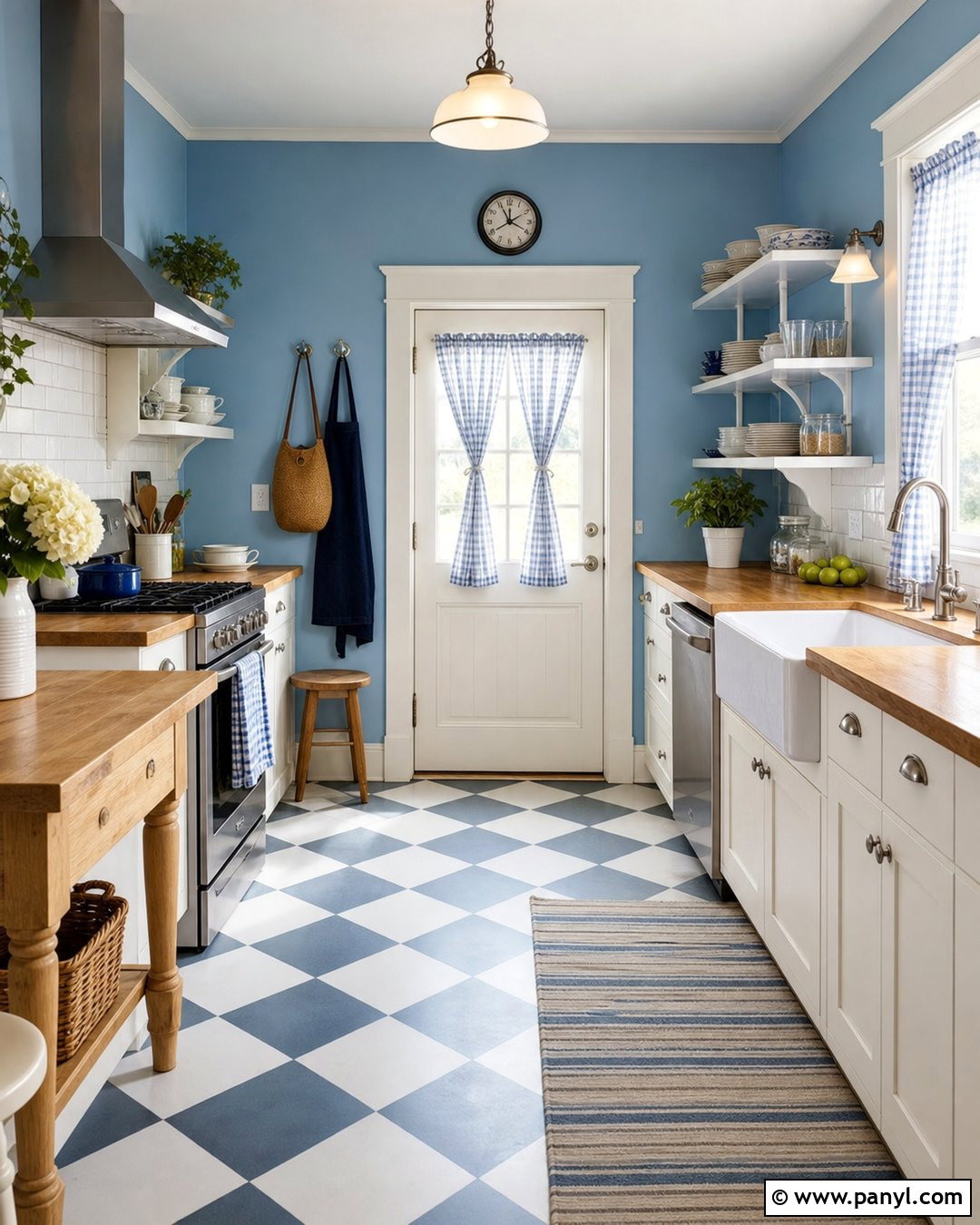
Sky blue walls and butcher block countertops make a kitchen feel cheerful, casual, and approachable. Keep the cabinetry simple with warm white shaker doors, then use the wood counters as the room’s main source of natural color. A small white tile backsplash protects the busiest areas without covering too much of the blue. Choose satin nickel hardware, practical open shelves, and a white farmhouse sink to continue the easygoing look. Checkerboard flooring in cream and soft gray can add personality while remaining neutral. Finish with cotton café curtains, a washable striped rug, and neatly arranged everyday dishes. The combination is ideal for a cottage kitchen, breakfast room, or affordable makeover using existing white cabinets.
7. Teal Blue Kitchen Walls With Walnut Cabinets
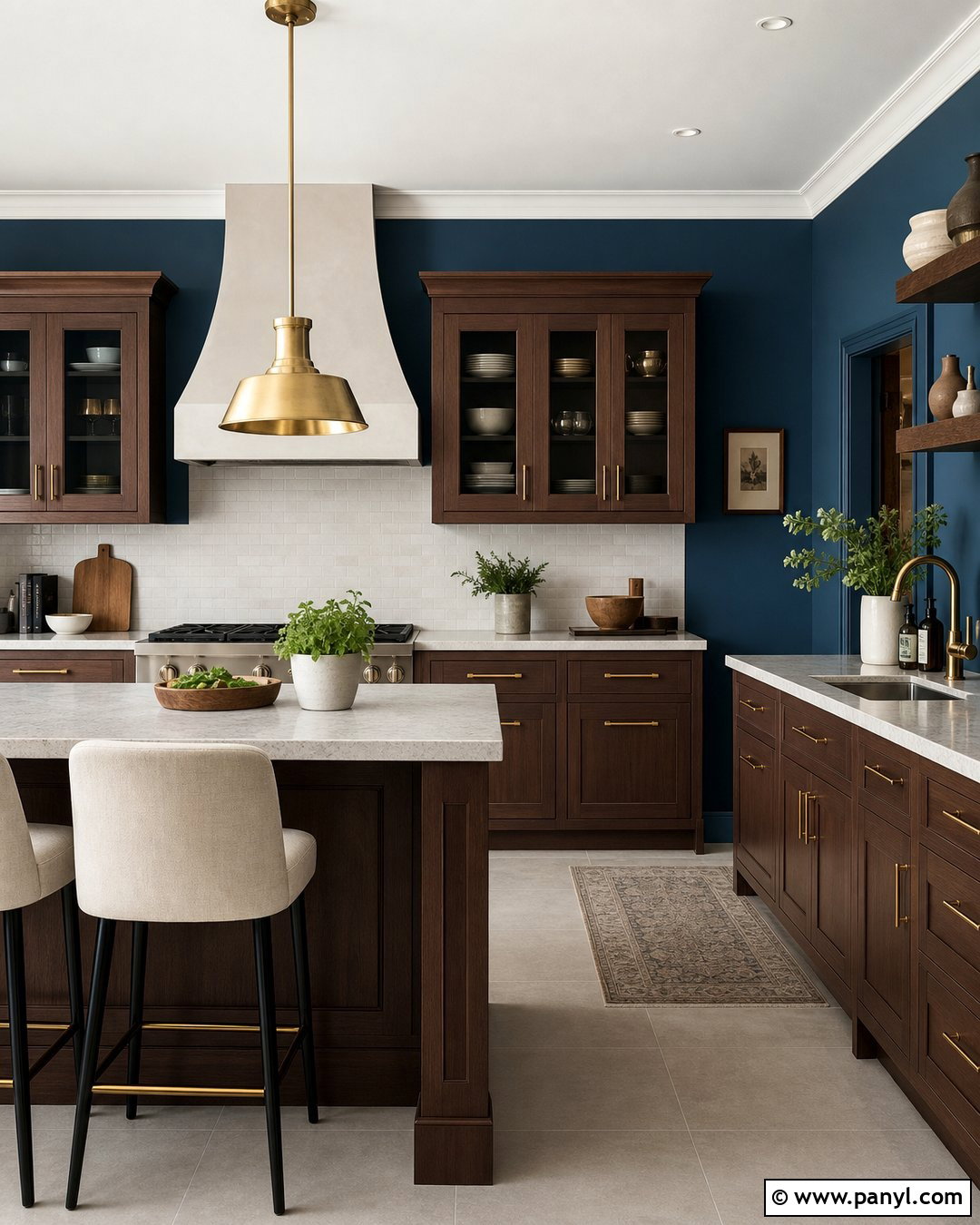
Rich teal walls bring out the chocolate and amber tones found in walnut cabinetry. Because both finishes have visual weight, balance them with pale stone countertops and a simple off-white backsplash. Slim brass pulls and warm metallic pendants complement the wood without becoming overly decorative. Use light oak or neutral porcelain flooring to prevent the lower half of the room from appearing too dark. A walnut island can anchor the layout, while a cream upholstered stool adds softness. Keep accessories limited to sculptural pottery, clear glass, and a few leafy herbs. This sophisticated combination works particularly well in open-concept kitchens where the teal can connect with artwork, textiles, or furniture in the neighboring living area.
8. Powder Blue Kitchen Walls With Gray Cabinets
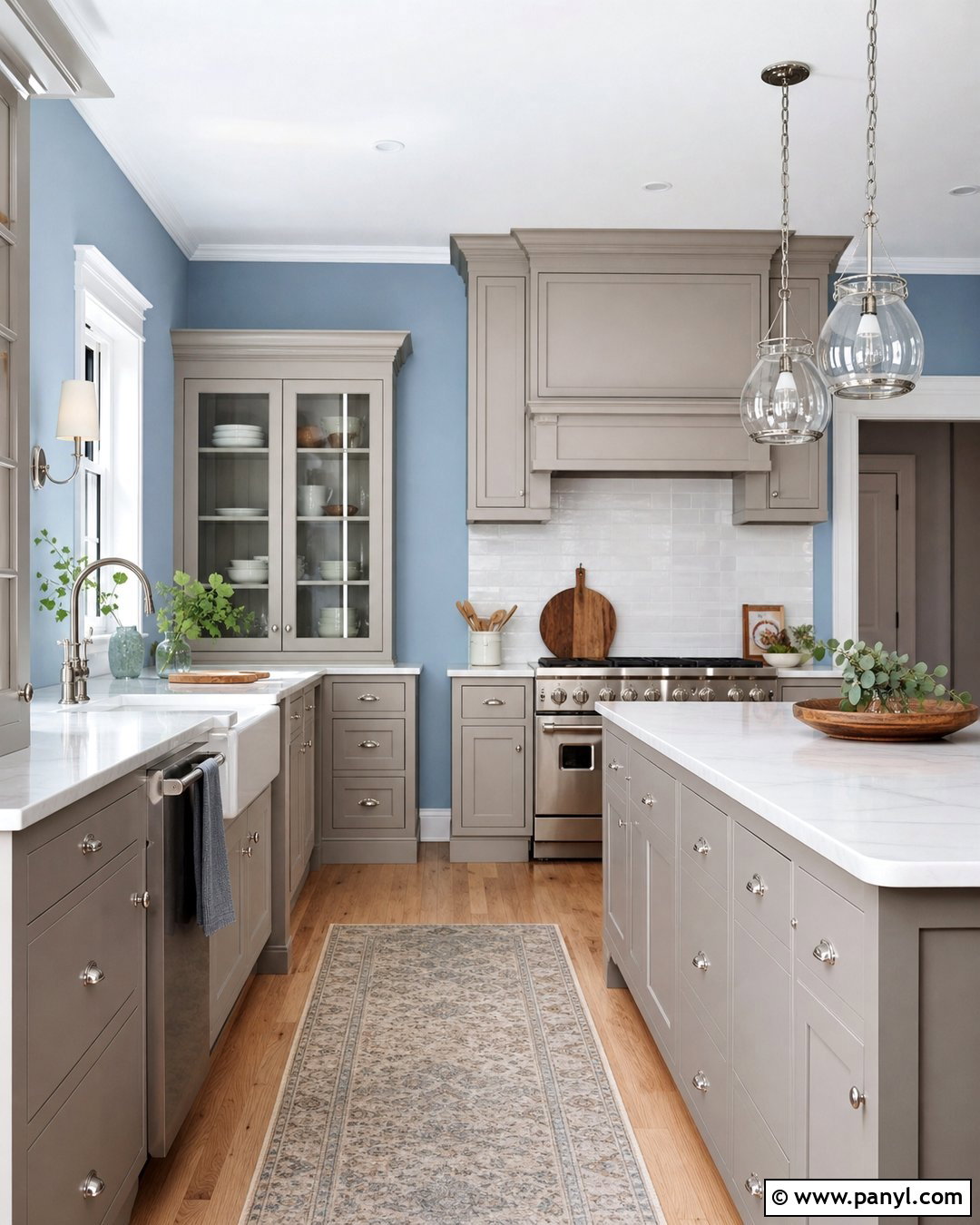
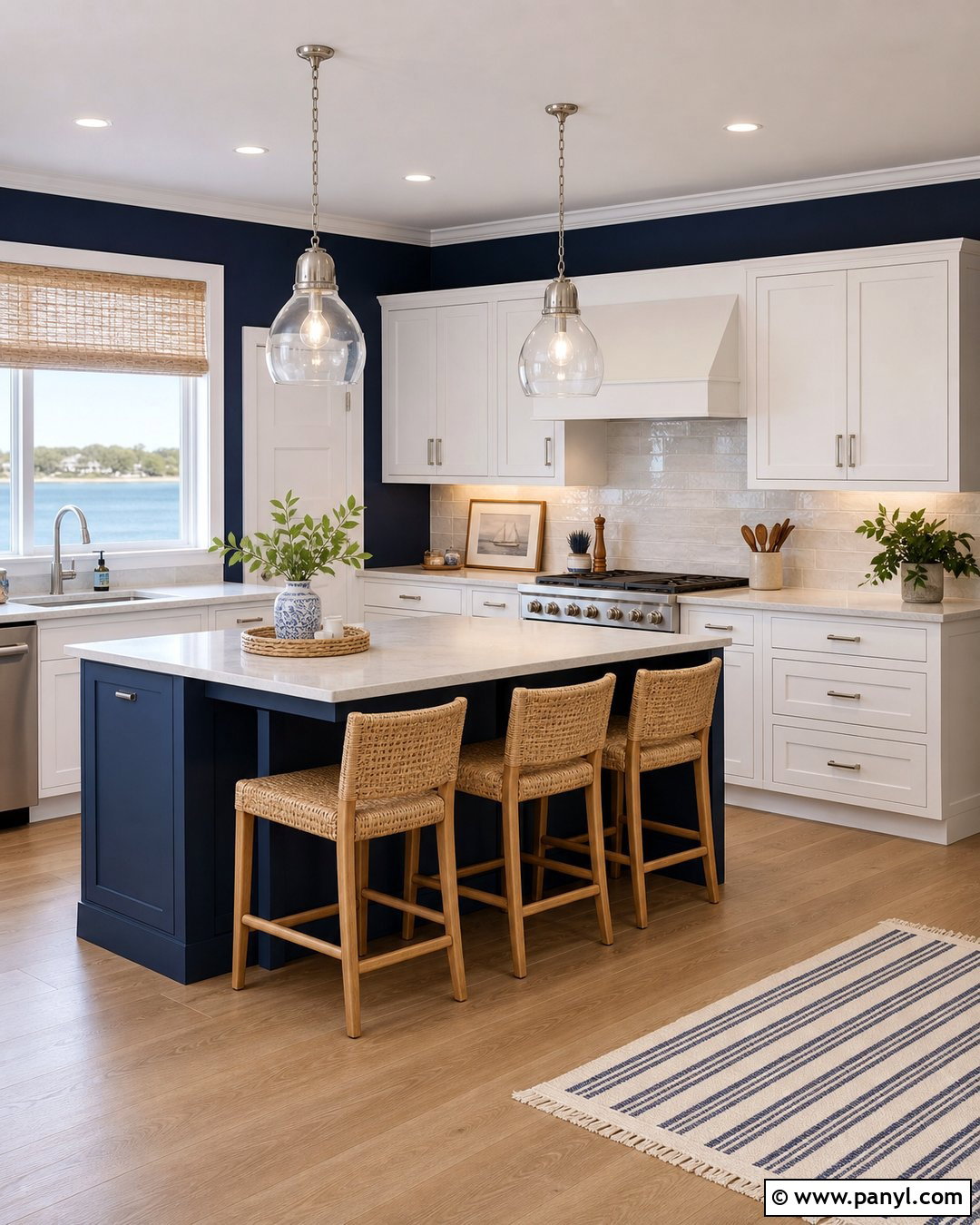
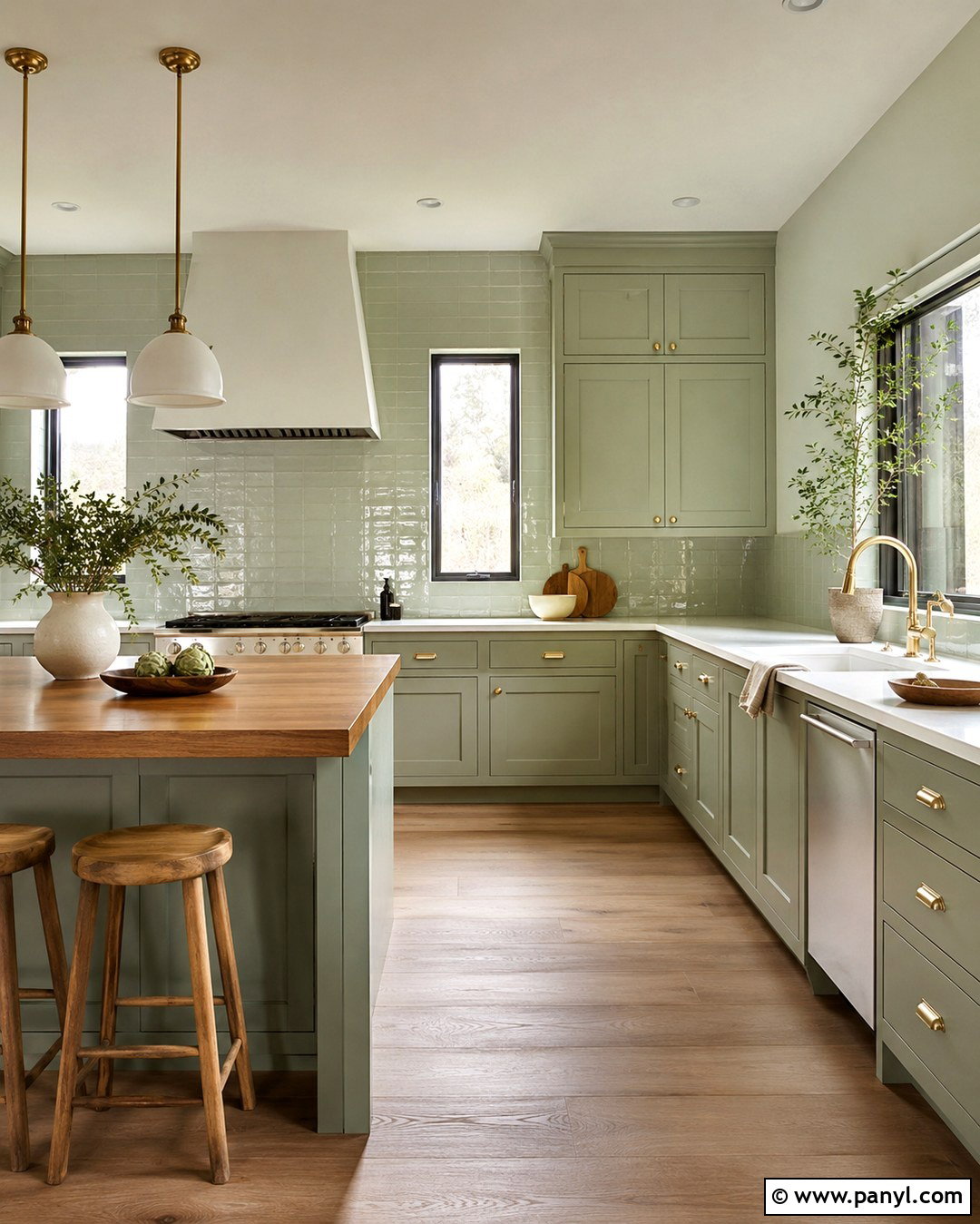
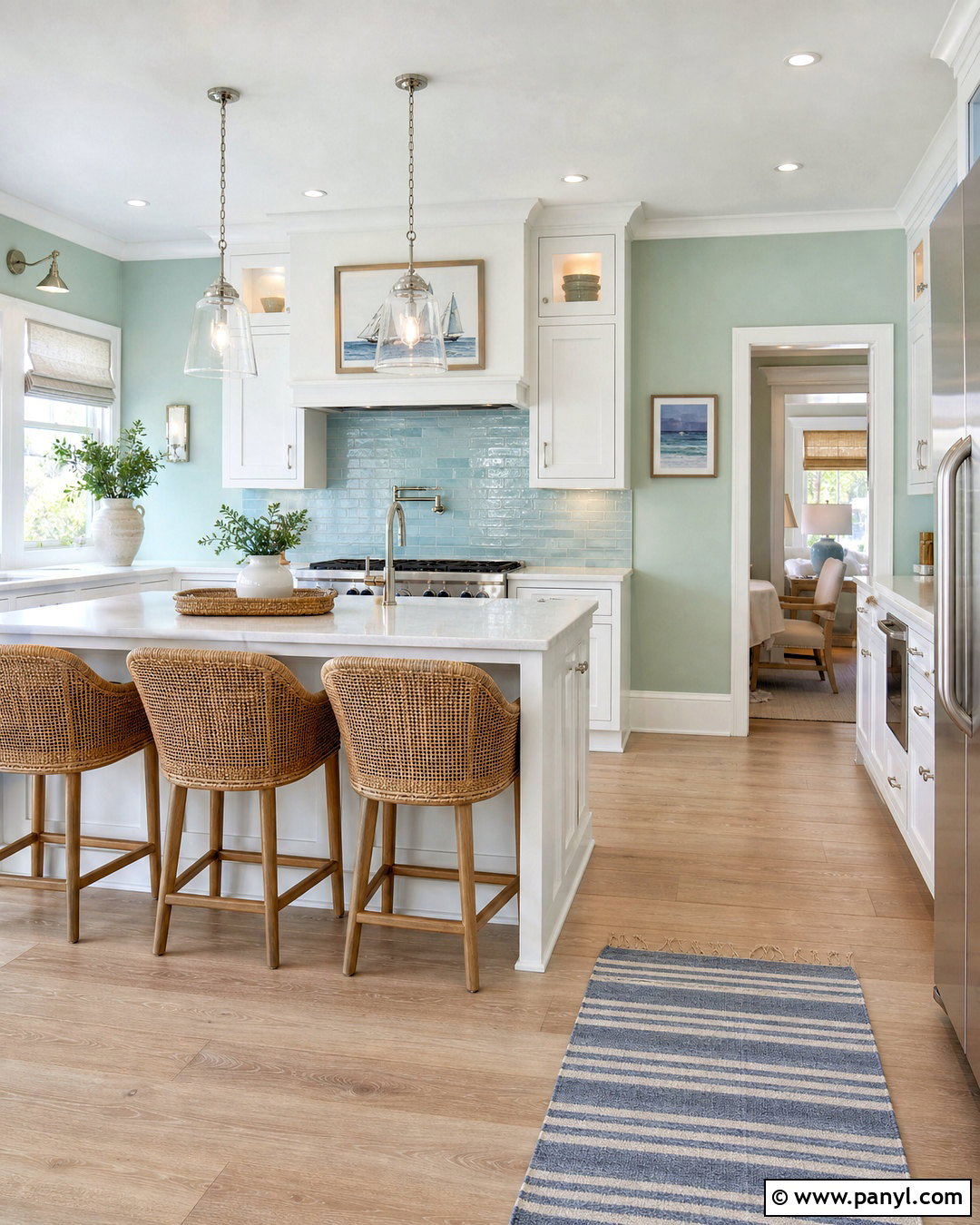
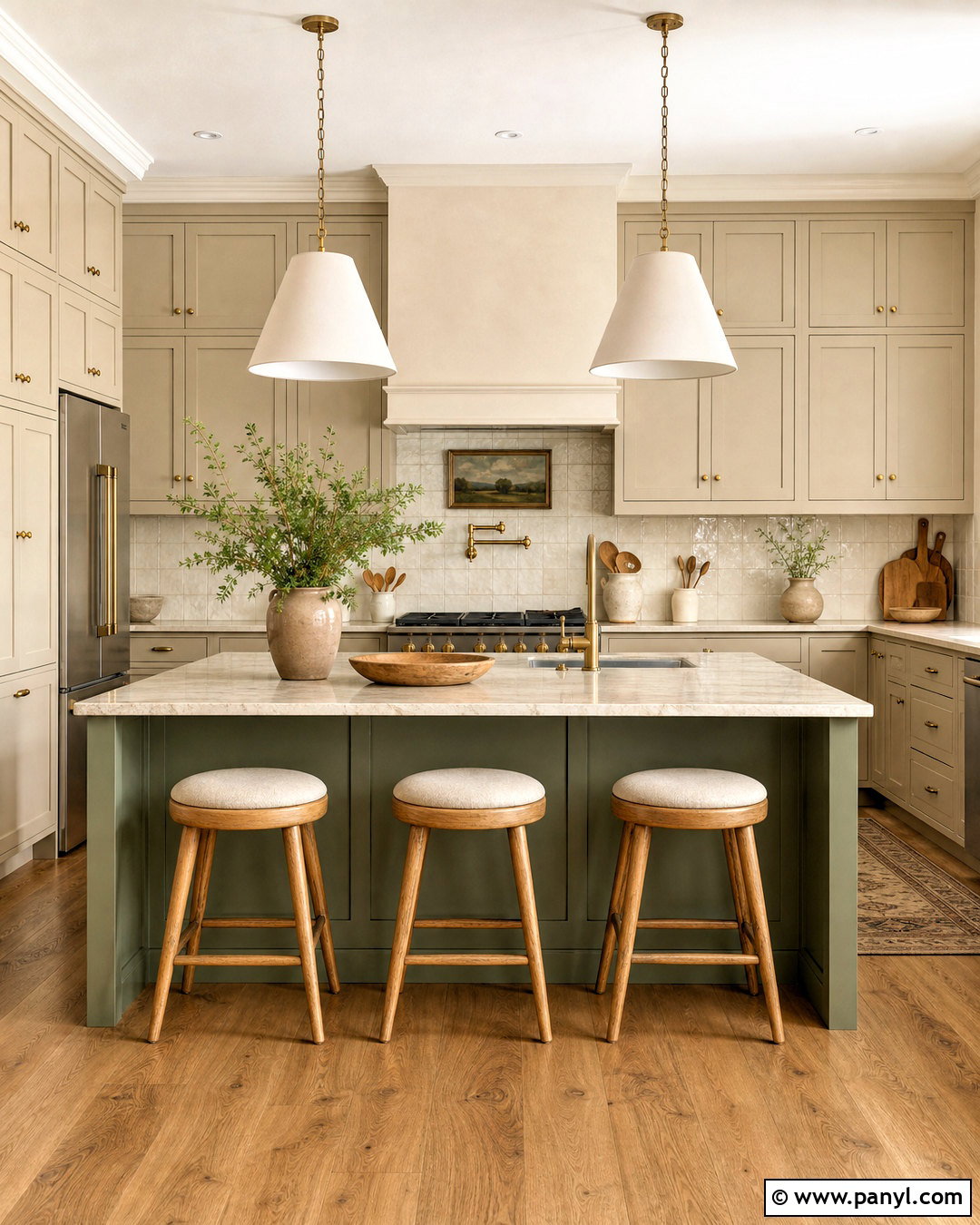
Powder blue walls can lift gray cabinets and keep them from feeling flat or industrial. Choose a gentle blue with enough warmth to coordinate with greige or mushroom-gray cabinetry. White marble-look quartz, polished nickel hardware, and a glossy tile backsplash reflect light throughout the room. Natural maple flooring adds a quiet golden tone that balances the cool colors. Use clear glass pendants above the island so sightlines remain open, especially in a smaller kitchen. A pale patterned runner and a few wood serving boards can supply texture without disrupting the calm palette. The finished room feels clean and adaptable, making it a useful choice for homeowners who already have gray cabinetry but want a brighter, more personal background.
9. Cobalt Blue Kitchen Walls With White Cabinets
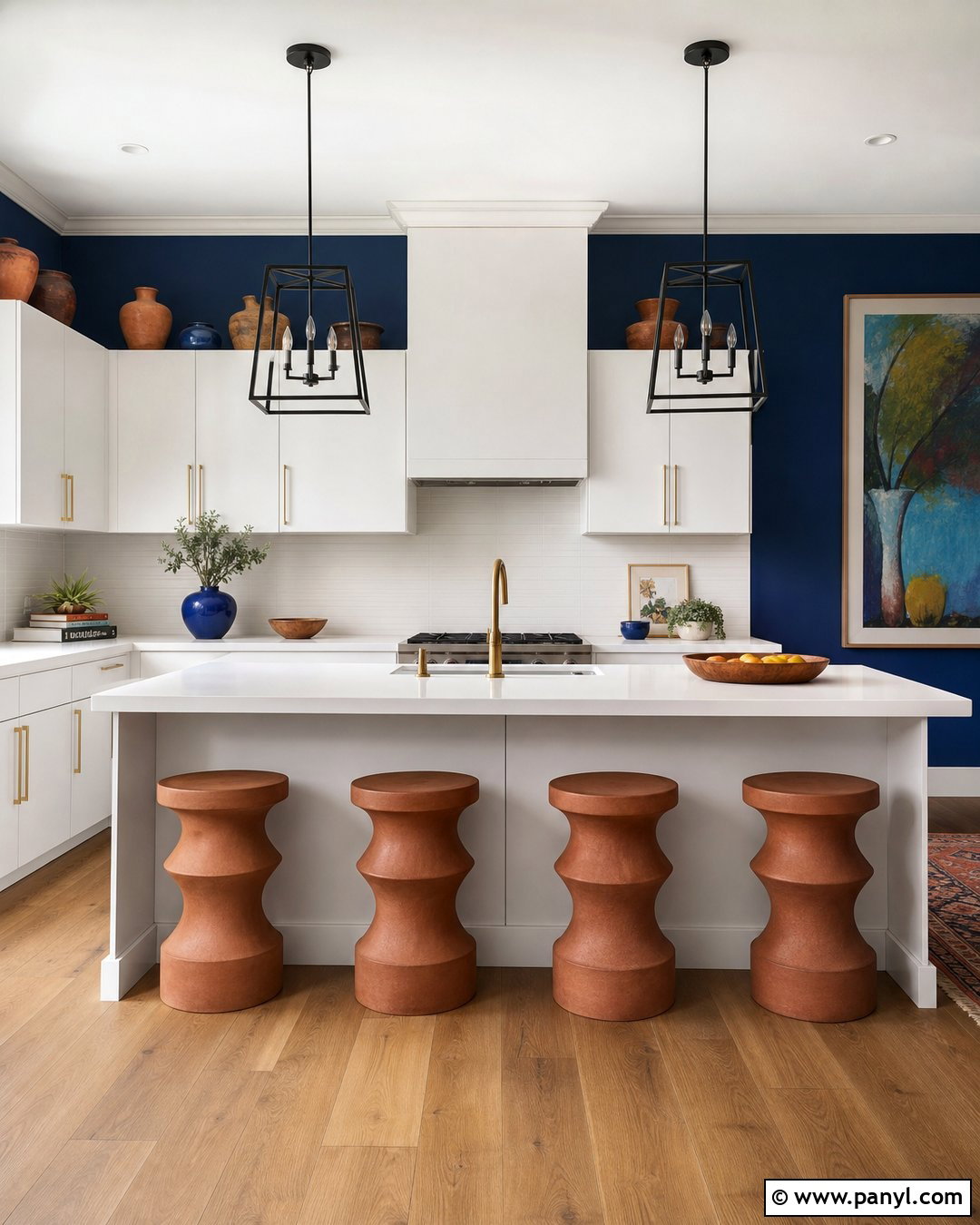
Cobalt blue walls turn an ordinary white kitchen into an energetic, high-contrast space. For the strongest result, use the saturated color on one uninterrupted wall and keep the remaining surfaces crisp and simple. Flat-panel white cabinets, solid white counters, and a restrained backsplash allow the blue to remain the focus. Add small amounts of warm orange or terracotta through stools, pottery, or a washable rug to balance the cool hue. Brushed brass hardware introduces warmth, while black-framed lighting gives the room definition. This palette suits a contemporary kitchen with abundant natural light. Avoid filling every surface with additional color; controlled repetition makes bold cobalt appear intentional rather than visually chaotic.
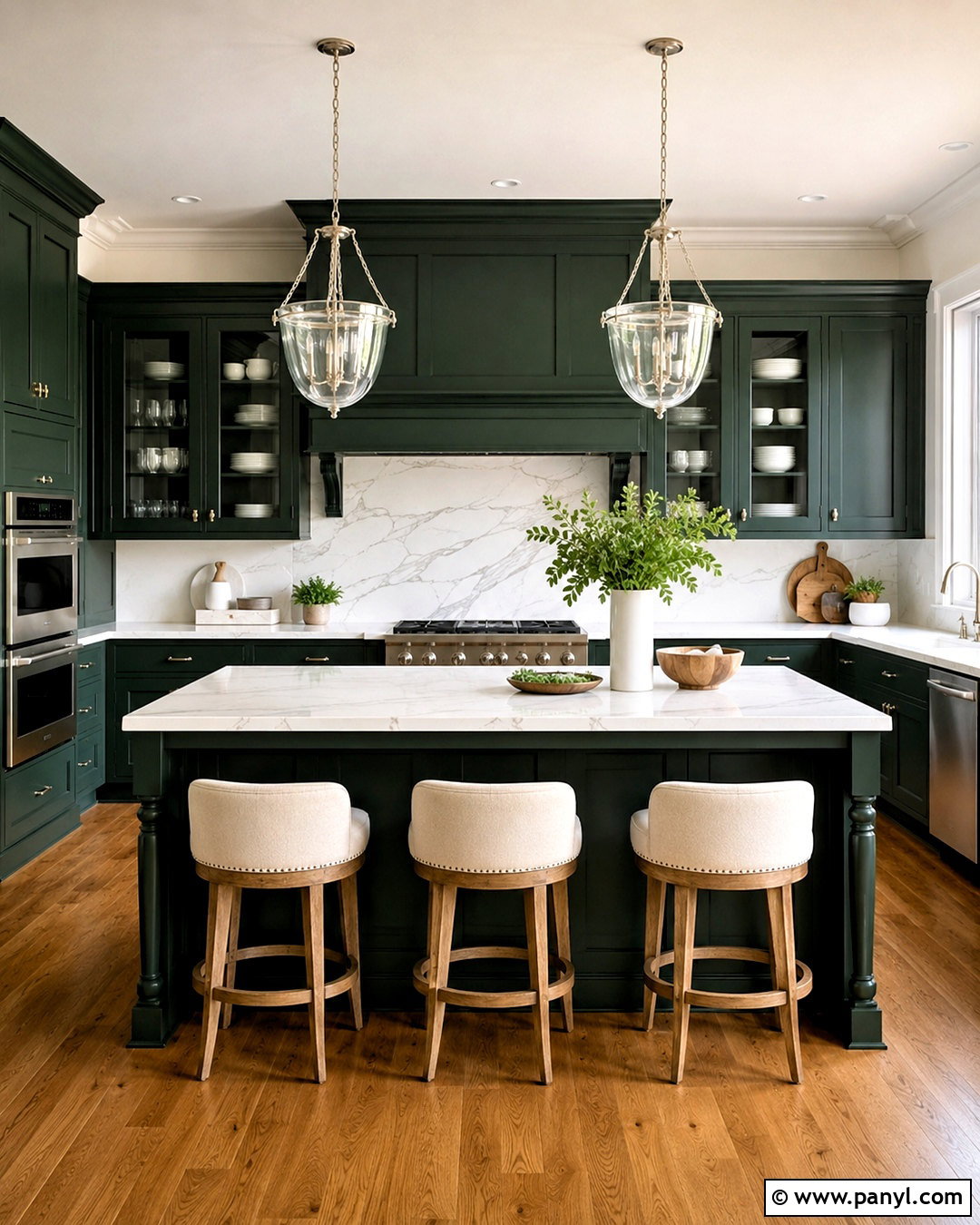
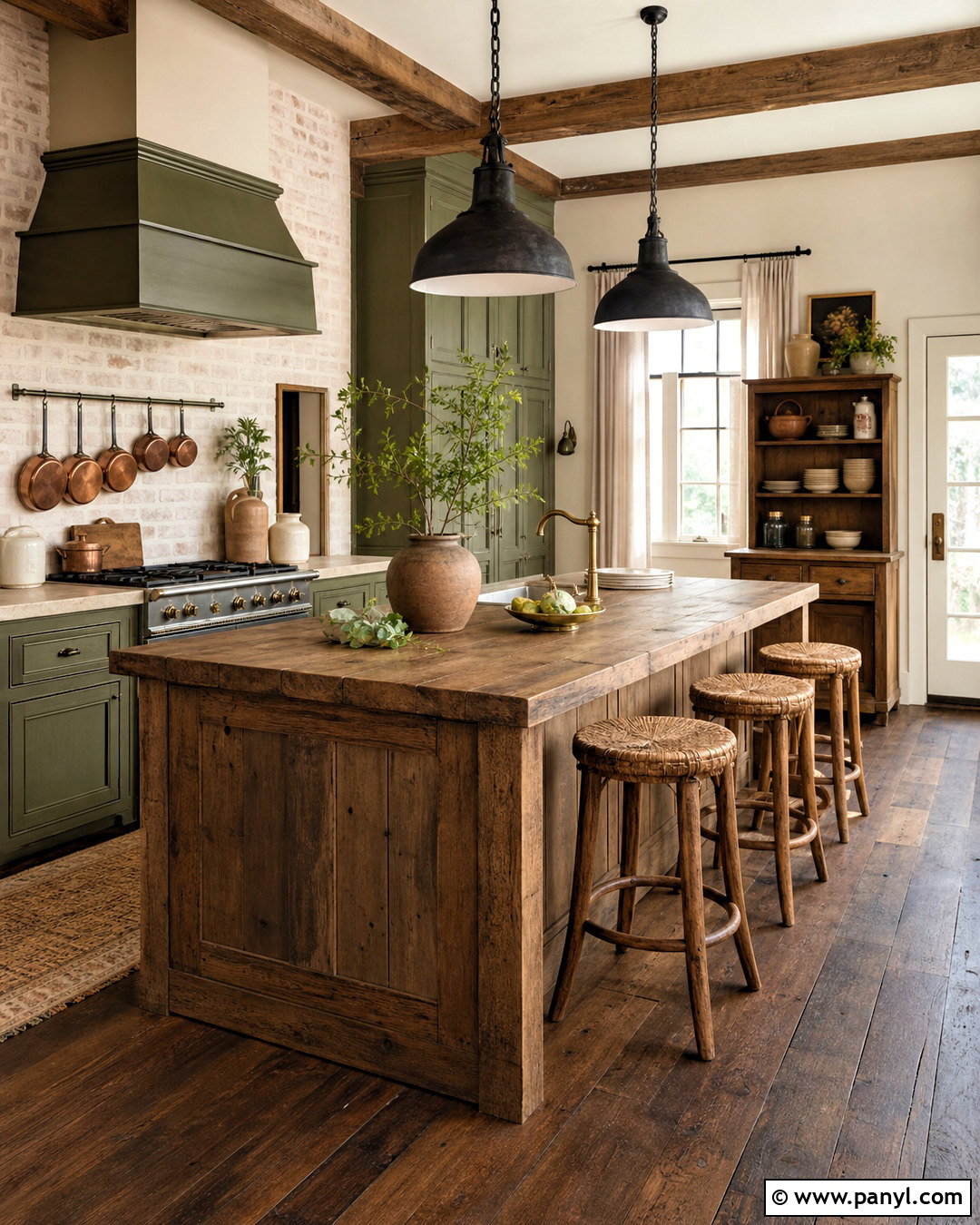
10. Blue Gray Kitchen Walls With Cherry Cabinets
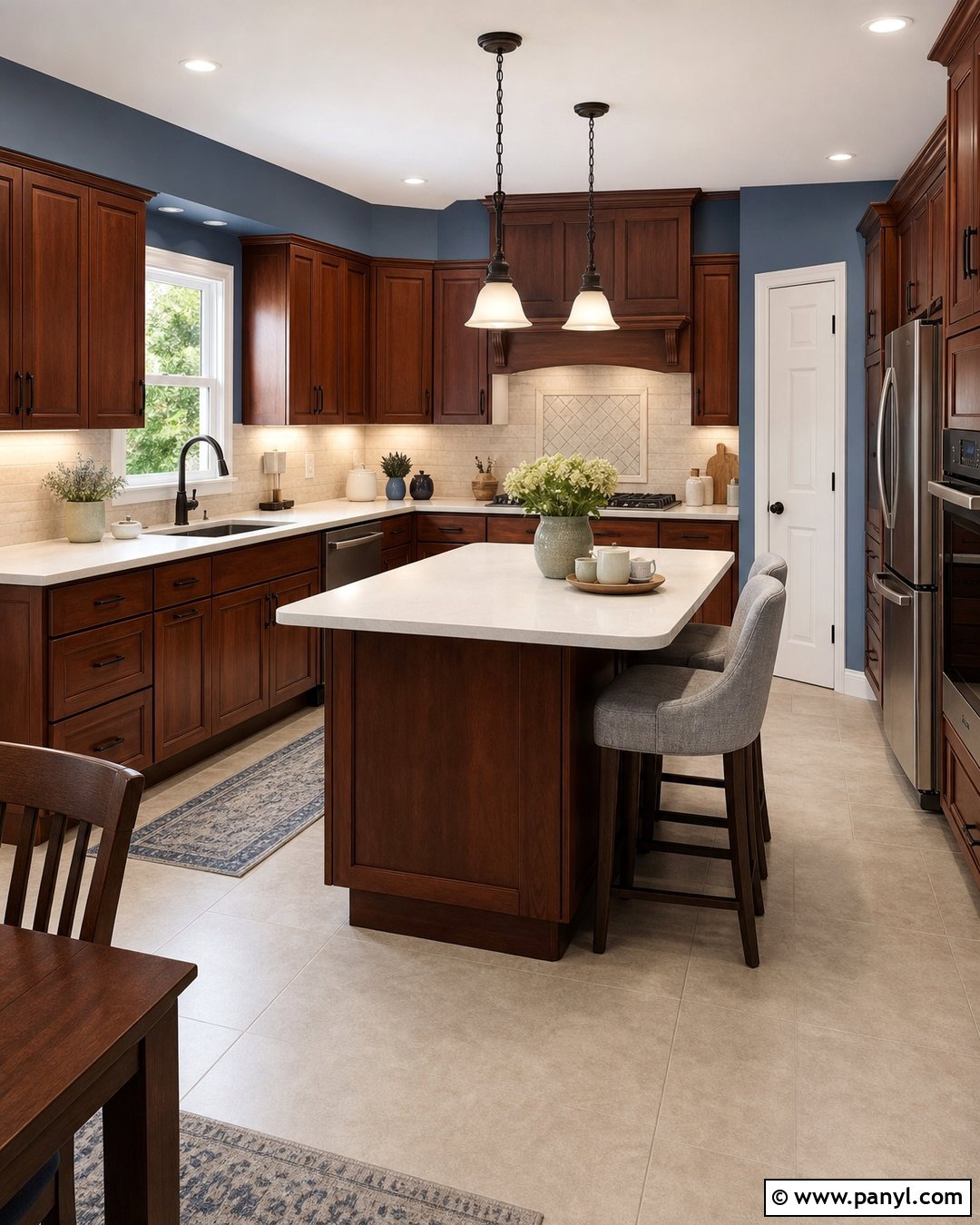
Blue-gray walls can modernize cherry cabinetry by balancing its strong red undertones. Look for a muted, medium-light blue that leans slightly cool but does not appear icy. Cream quartz counters, an off-white backsplash, and soft beige flooring help connect the wall color to the warm wood. Replace overly ornate hardware with simple aged brass or dark bronze pulls. Under-cabinet lighting is important because it reveals the cabinet grain and keeps the counters bright. Use blue-gray upholstery, a neutral runner, and a few cream ceramics to repeat the palette naturally. Rather than fighting the cherry finish, this scheme treats it as a valuable source of warmth and builds a calm, updated kitchen around it.
11. Pale Blue Kitchen Walls With Dark Floors
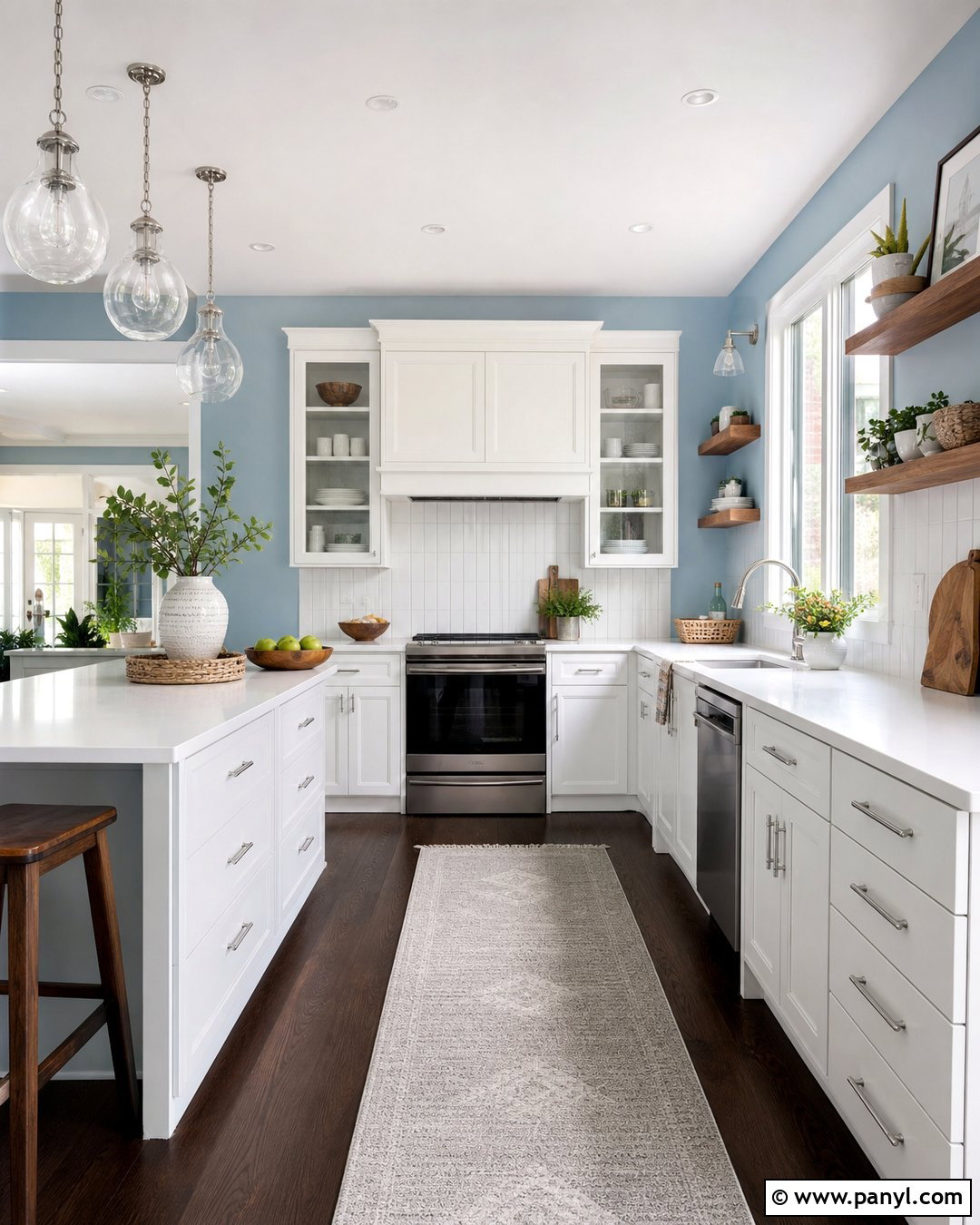
Pale blue walls can counterbalance dark kitchen flooring and make the upper half of the room feel lighter. Pair the blue with clean white cabinets and warm white countertops, allowing espresso wood or charcoal tile floors to ground the design. A vertical white backsplash visually stretches the walls and introduces subtle texture. Choose chrome or polished nickel hardware to maintain the bright appearance. Glass-front cabinets, open shelving, and simple pendant lights prevent the layout from looking top-heavy. Add a light washable runner to break up a broad expanse of dark flooring. This complete scheme is useful when replacing the floor is not practical, since the airy blue background changes the room’s visual balance without requiring major construction.
12. Denim Blue Kitchen Walls With Farmhouse Cabinets
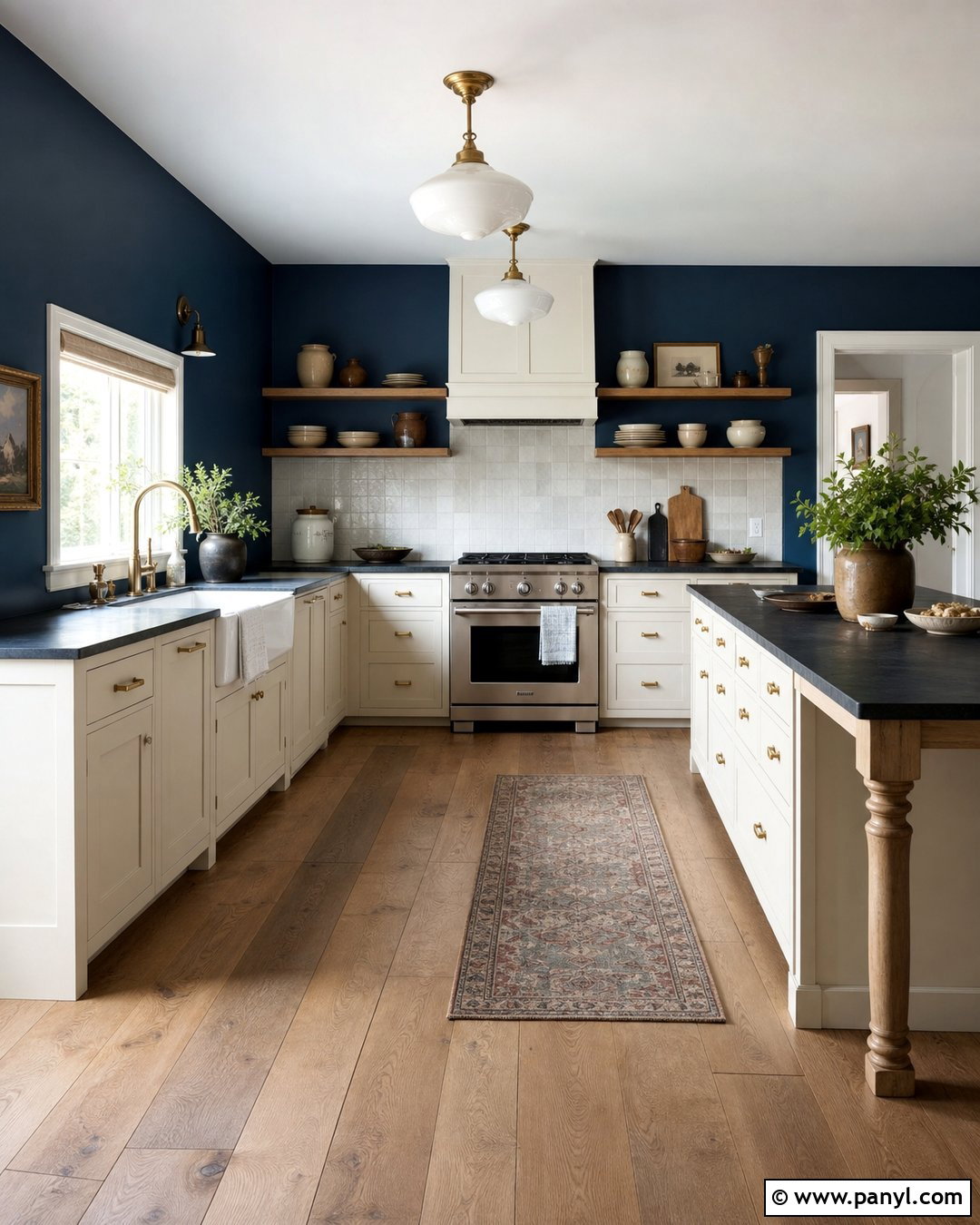
Denim blue walls give a farmhouse kitchen color without making it look overly rustic. Combine the medium blue with warm white shaker cabinets, soapstone-look counters, and a handmade cream tile backsplash. Natural oak shelves can hold practical dishes and a few stoneware pieces. Choose unlacquered brass hardware, a substantial white sink, and simple schoolhouse pendants for traditional character. Wide-plank wood flooring and a muted patterned runner complete the welcoming foundation. Keep signs and themed decorations to a minimum; the blue, wood, and handcrafted finishes provide enough personality. This design works in both historic and newer homes because it pairs familiar farmhouse materials with a wall color that feels relaxed, durable, and pleasantly modern.
13. Aqua Blue Kitchen Walls With Maple Cabinets
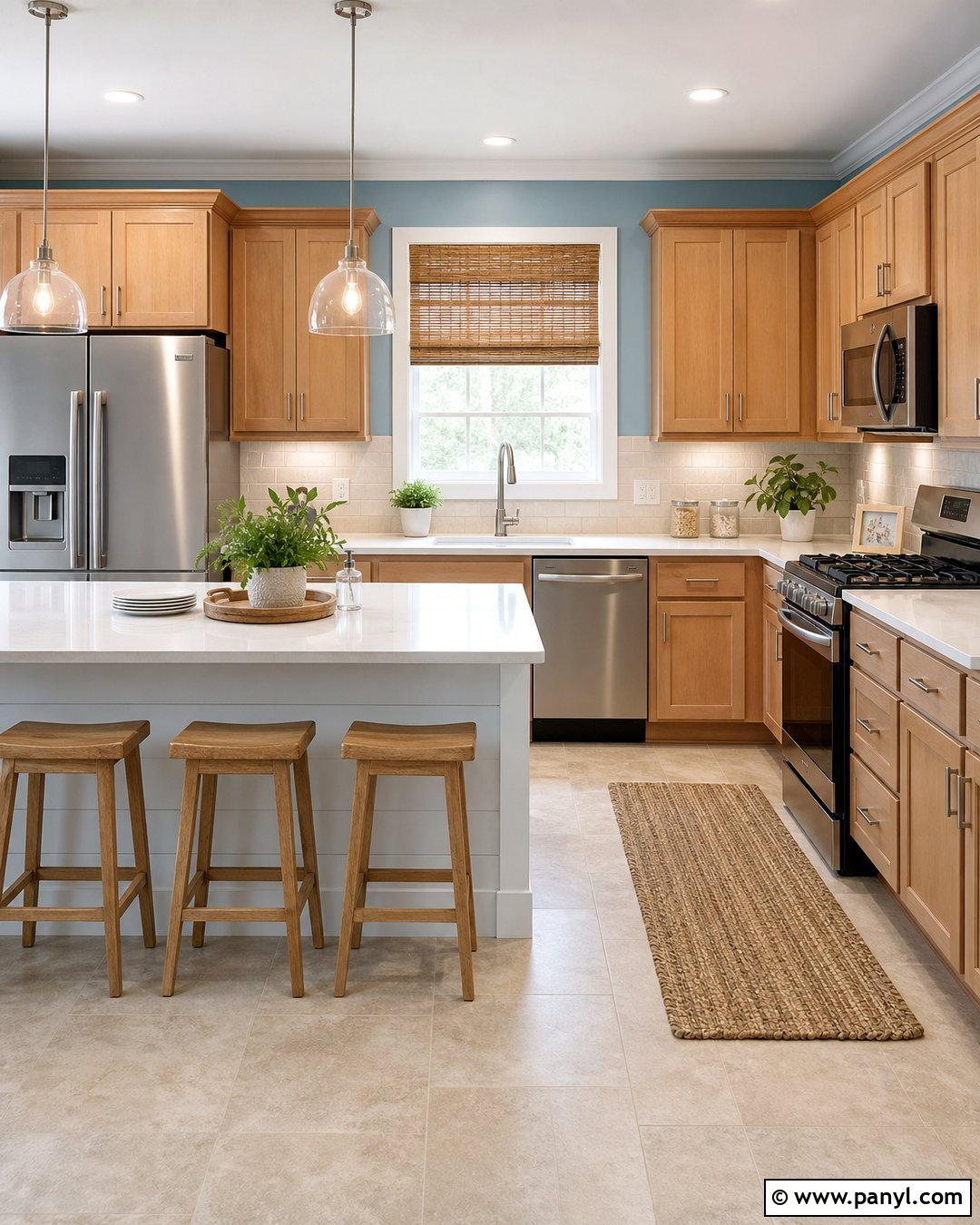
Aqua blue walls bring fresh contrast to the soft golden color of maple cabinets. Choose a muted aqua rather than a highly tropical shade, then add white quartz counters and a clean cream backsplash. Satin nickel pulls and stainless steel appliances fit naturally into the light, practical palette. For flooring, consider pale stone-look porcelain or a neutral luxury vinyl plank that does not compete with the maple grain. A white island with wood stools can break up long runs of matching cabinetry. Finish with woven shades, clear glass lighting, and restrained aqua accessories. This bright combination is particularly successful in family kitchens because it feels cheerful and casual while relying on durable, easy-to-clean finishes suitable for everyday cooking.
14. Steel Blue Kitchen Walls With Stainless Steel Appliances
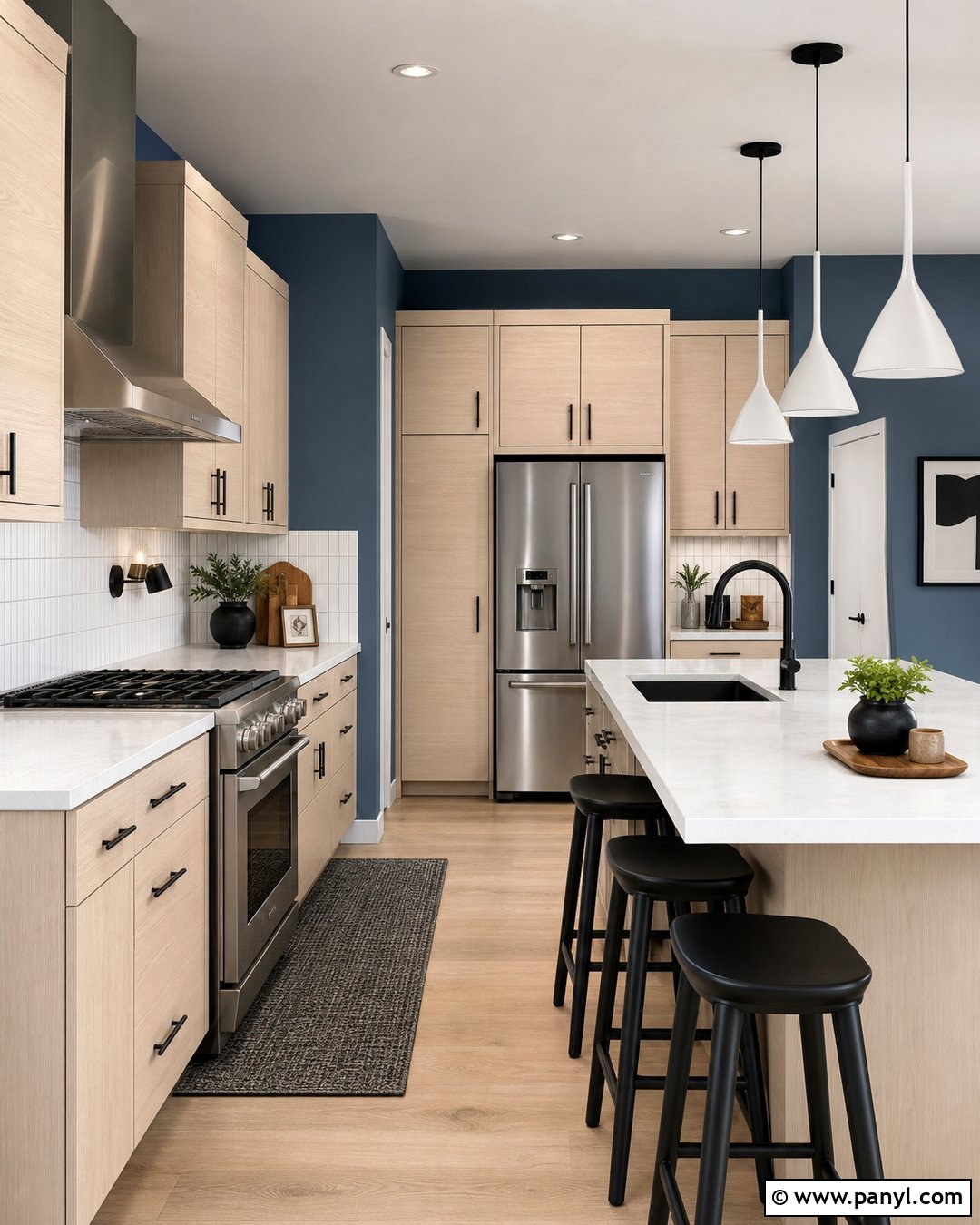
Steel blue walls create a smooth transition between colored surfaces and stainless steel appliances. Use a medium blue with gray undertones, then add white or pale ash cabinets to keep the kitchen from feeling overly cool. Light quartz counters and a vertically stacked white backsplash sharpen the contemporary look. Matte black hardware provides definition, while light oak flooring introduces needed warmth. Choose streamlined pendants with white shades rather than more metallic finishes, which could make the room feel commercial. A few black-framed prints and natural wood accessories complete the scheme. This approach helps appliances feel integrated into the design instead of standing apart, making it effective for kitchens with several visible stainless steel pieces.
15. Royal Blue Kitchen Walls With Brass Accents
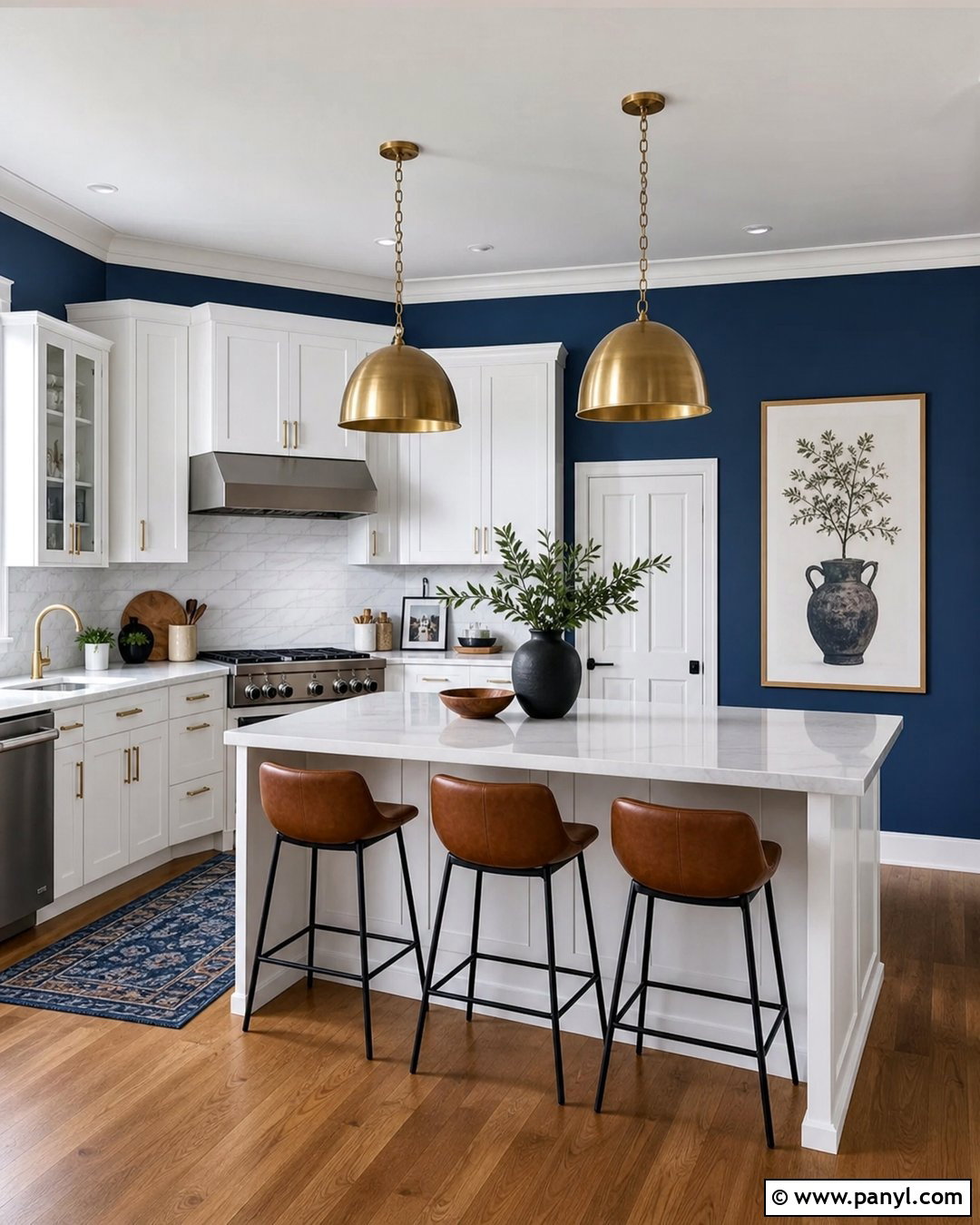
Royal blue walls and brass accents create an expressive kitchen that still feels polished when the rest of the palette is controlled. Use bright white cabinets, white quartz counters, and a simple marble-look backsplash as a clean foundation. Repeat brass through cabinet pulls, a bridge faucet, and compact pendant lights, but avoid mixing too many additional metal finishes. Medium-tone wood flooring gives the saturated blue a warmer base. Upholster counter stools in cream or cognac for comfort and contrast. One large framed print is more effective than several small accessories on the walls. This combination works well in a dining kitchen or entertaining space where strong color can become part of the room’s lively, sociable character.
16. Blue Kitchen Walls With Natural Wood Cabinets
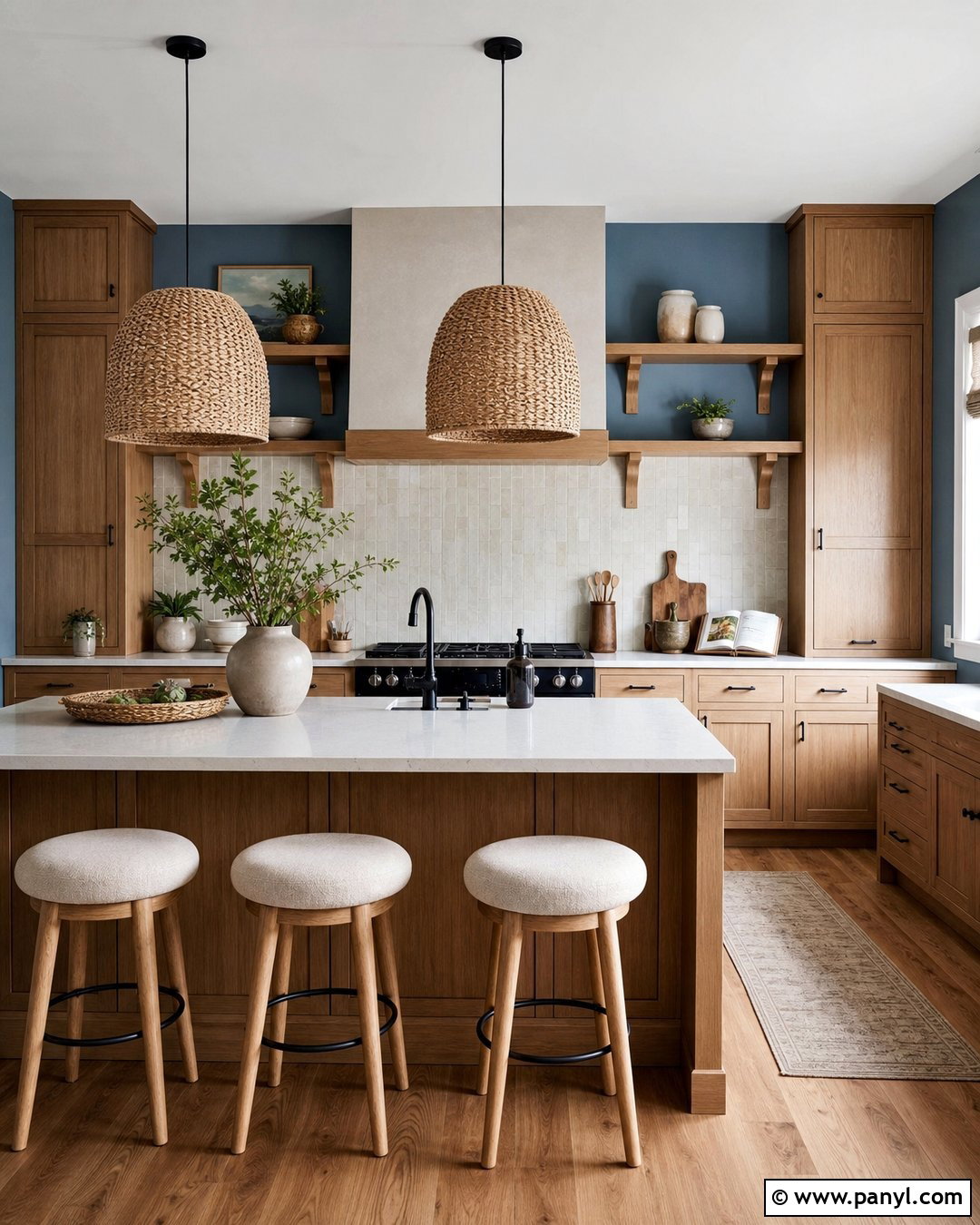
Natural wood cabinets and blue walls form one of the most flexible kitchen combinations. A medium muted blue highlights oak, maple, birch, or walnut without hiding the unique grain. Select warm white countertops and a backsplash with subtle cream variation to connect the cool walls and warm cabinetry. Black hardware can create crisp definition, while brass produces a softer traditional finish. Keep the floor a shade lighter or darker than the cabinets so the wood surfaces do not blend together. Add woven pendant lights, neutral stools, and handmade ceramic accessories for texture. The finished design feels grounded and balanced, proving that colorful kitchen walls can work beautifully without painting or replacing good-quality wood cabinets.
17. Blue Kitchen Walls With Greige Cabinets
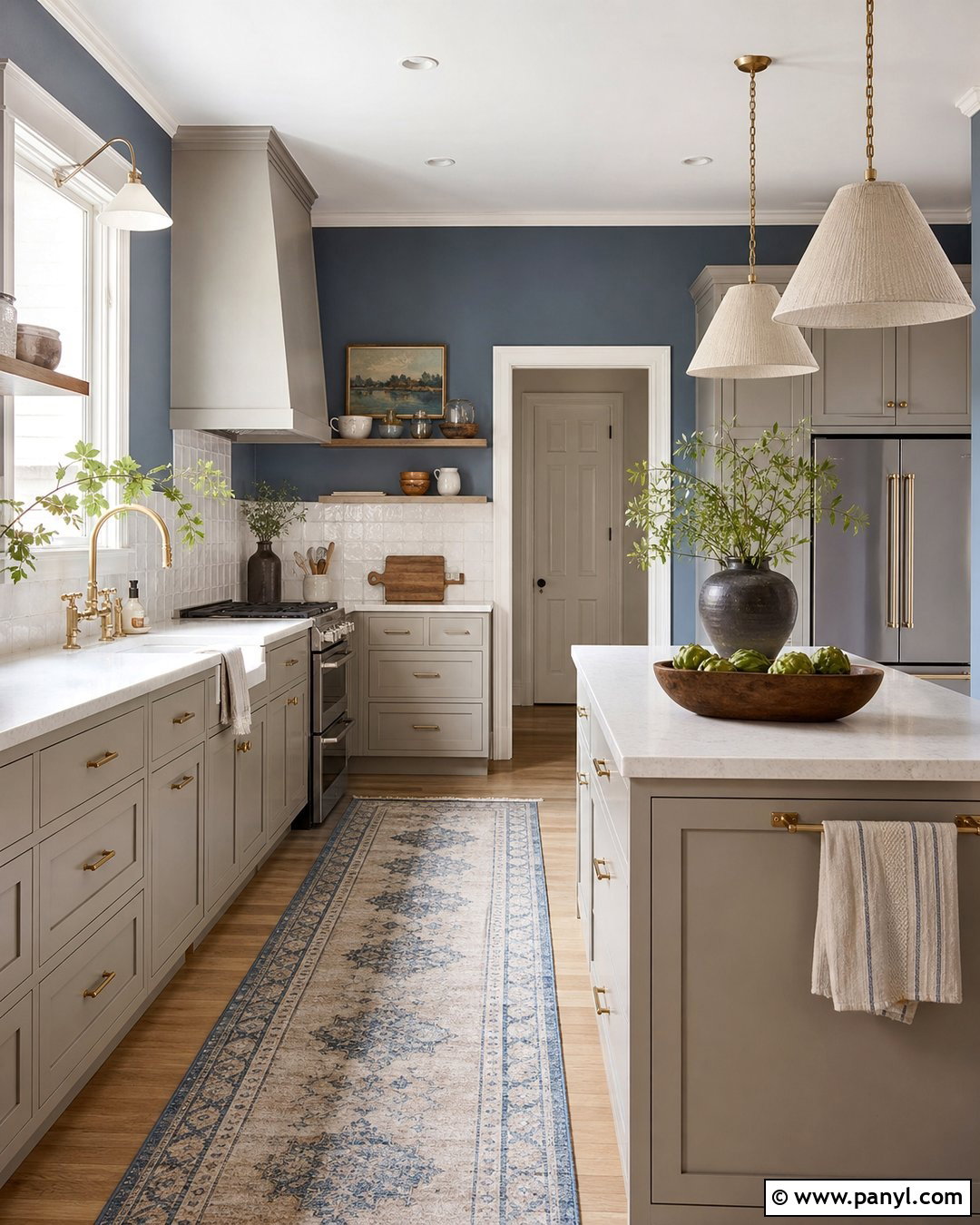
Soft blue walls and greige cabinets offer color in a calm, low-contrast format. Choose a blue with gray undertones and a greige that leans warm enough to prevent the kitchen from looking chilly. Cream quartz counters, a softly textured white backsplash, and light oak floors support the restrained palette. Aged brass hardware and linen pendant shades introduce gentle warmth. Keep the island in the same greige finish for continuity, especially in an open floor plan. Add a blue-and-cream runner and a few dark wood accessories to create depth. This kitchen works well for homeowners moving away from all-gray interiors who still prefer neutral cabinetry and an easy background that coordinates with adjacent living spaces.
18. Blue Kitchen Walls With Black Countertops
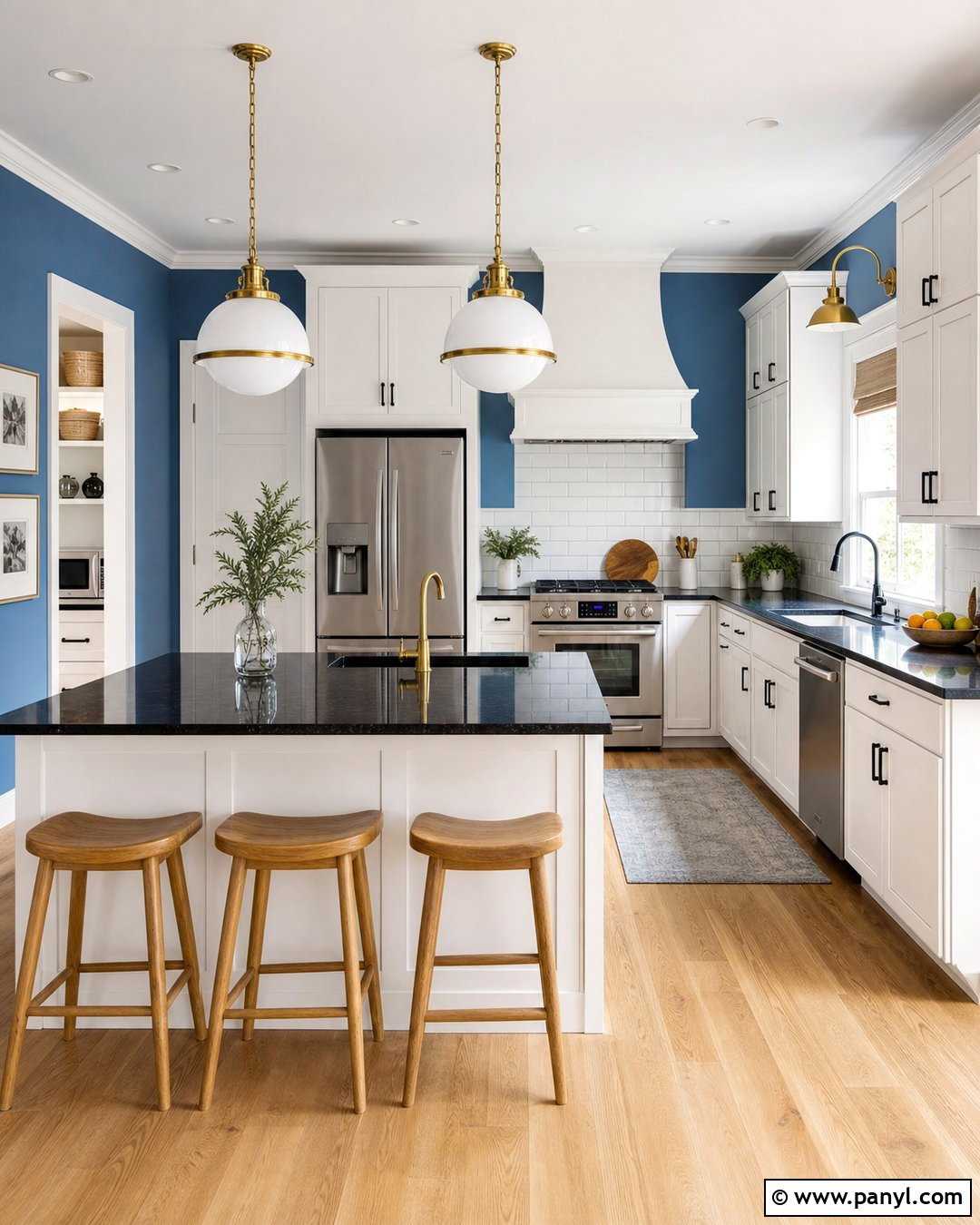
Blue walls and black countertops can create a grounded kitchen without feeling gloomy. Use a clear medium blue rather than navy so there is visible separation between the vertical walls and dark work surfaces. Warm white cabinets provide contrast, while a white backsplash with dark grout connects both ends of the palette. Choose light oak flooring and natural wood stools to soften the black. Matte black hardware repeats the counters, and simple brass lighting can add one controlled warm accent. Keep small appliances stored away so the strong color blocking remains clean. This full design is especially effective in a bright kitchen, where the blue stays vivid and the black counters provide a practical, substantial-looking foundation.
19. Blue Kitchen Walls With Marble Counters
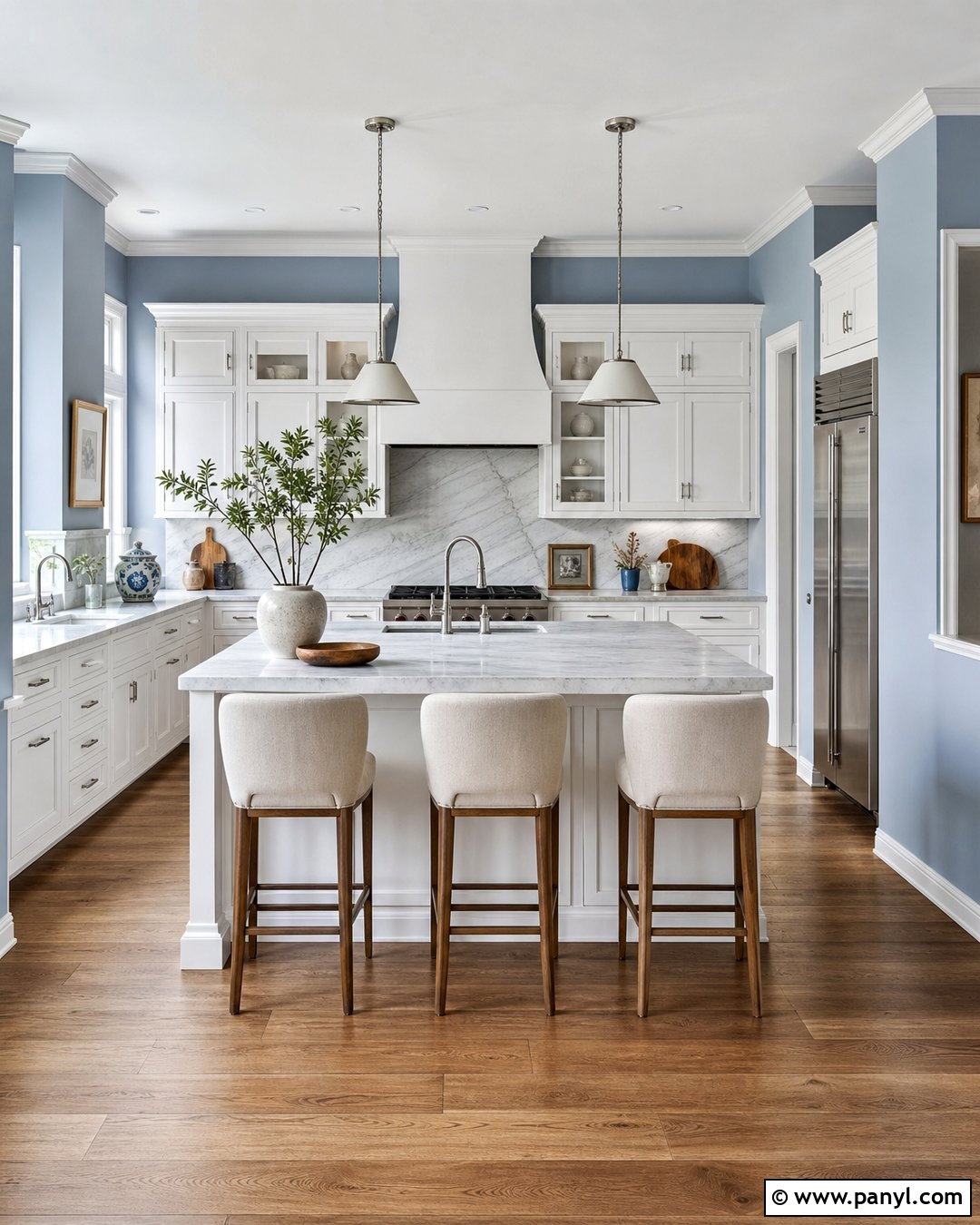
Marble counters become more prominent against blue kitchen walls because their pale background and natural veining stand out clearly. Choose a dusty blue for a traditional room or a stronger marine blue for a contemporary one. White cabinetry keeps the stone and walls connected, while polished nickel hardware complements gray marble veining. Continue the marble or a similar quartz up the backsplash for a quiet, seamless surface. Medium oak flooring prevents the design from becoming too cool or formal. Add streamlined pendants, linen stools, and limited ceramic decor. This balanced scheme allows the stone to feel luxurious without requiring an oversized kitchen, and it can be recreated with durable marble-look quartz when easier maintenance is a priority.
20. Blue Kitchen Walls With White Subway Tile
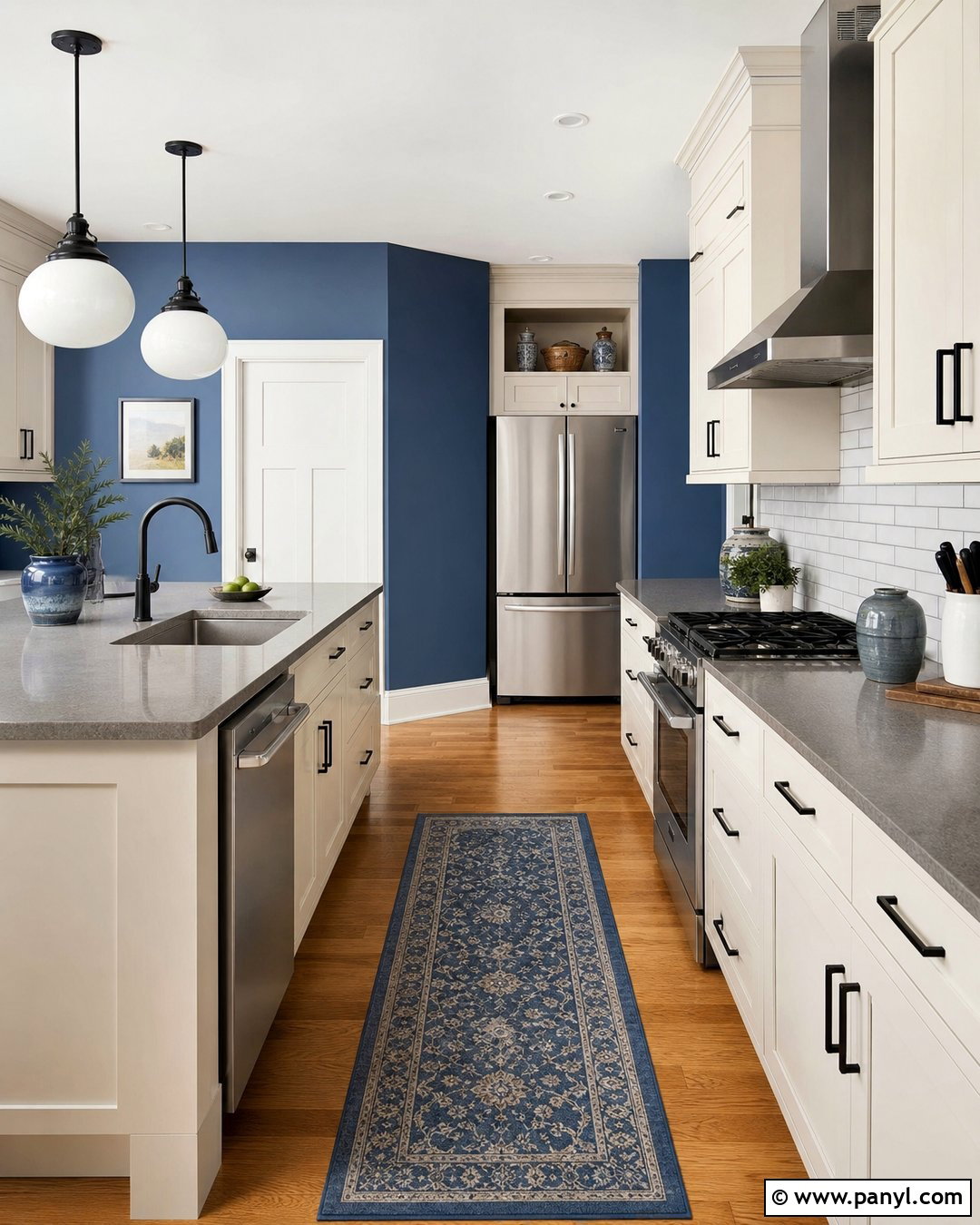
White subway tile offers a crisp break against blue walls and creates a kitchen that feels familiar but not plain. Let the tile cover the cooking and sink zones, then use a medium blue on the surrounding walls. Warm white cabinets soften the contrast, while gray quartz counters form a practical bridge between both colors. For a classic look, select offset tile and matching grout. For a cleaner modern finish, use a vertical stack. Natural oak flooring, black hardware, and opal glass lighting complete the room. Repeat blue through one small runner or piece of pottery rather than numerous accessories. The clear material hierarchy makes this design easy to adapt to kitchens of almost any size.
21. Blue Kitchen Walls With Patterned Backsplash
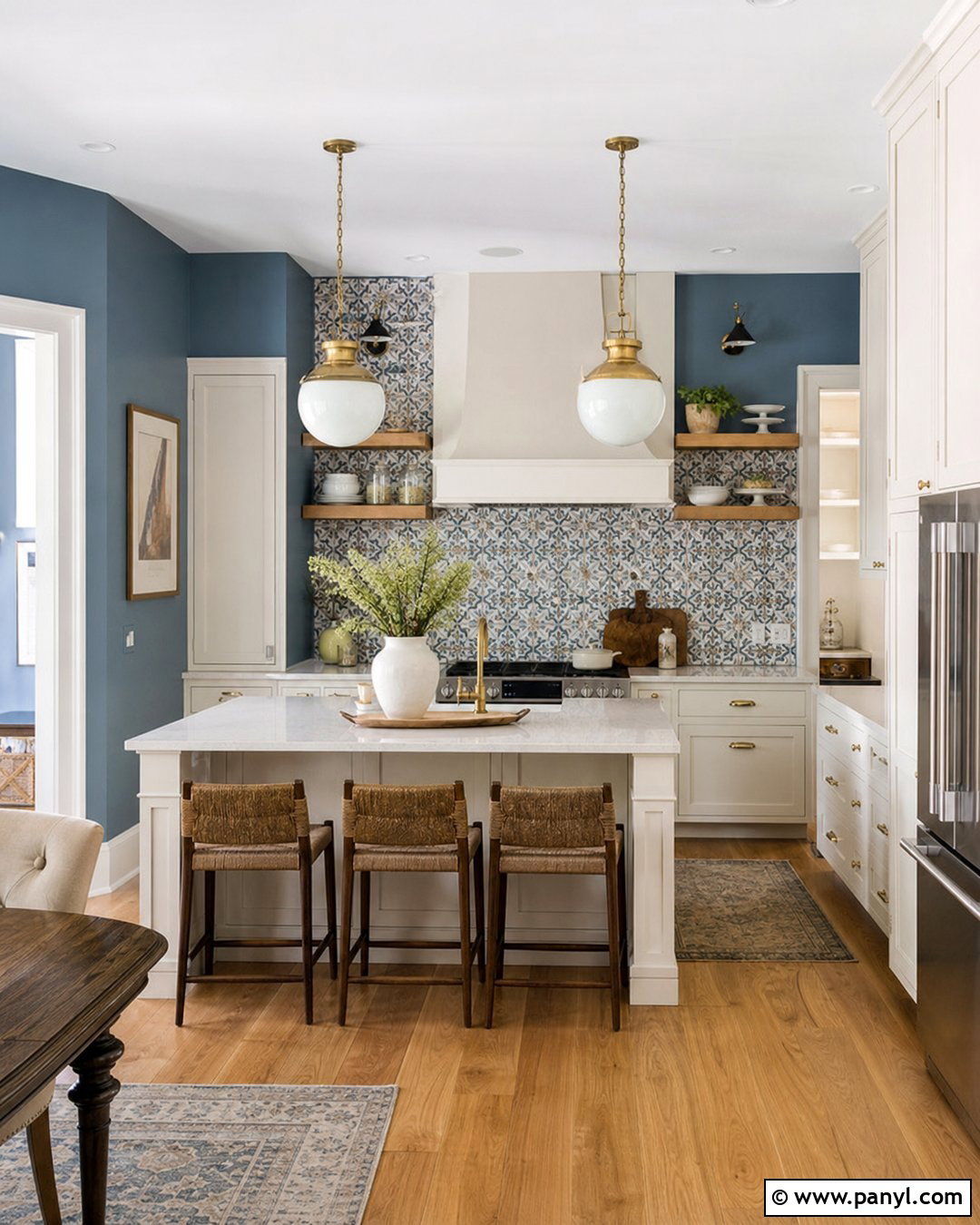
Patterned backsplash tile can work with blue walls when both elements share a clear color connection. Choose tile containing the wall blue alongside cream, white, or warm gray, then keep the cabinets and countertops simple. Warm white cabinets and solid pale quartz give the pattern breathing room. Use a restrained wall shade rather than the brightest blue in the tile, allowing the backsplash to remain the detailed focal point. Wood flooring and aged brass hardware add warmth around the cooler palette. Limit open shelving and decorative objects so the kitchen does not become visually crowded. This coordinated approach delivers personality while ensuring the pattern, paint, cabinetry, and finishes read as one complete and carefully planned room.
22. Blue Kitchen Walls With Terracotta Floors
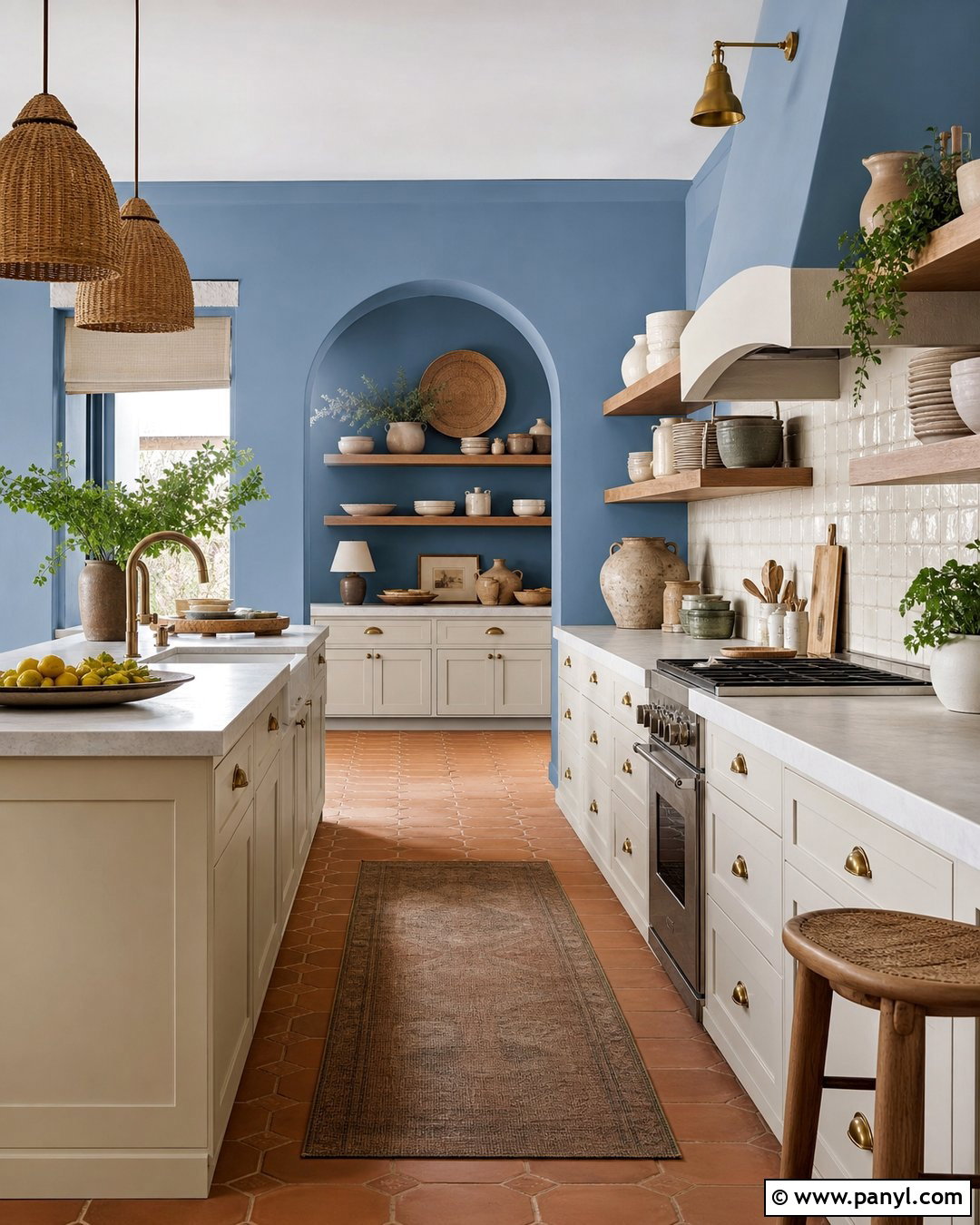
Blue walls provide beautiful contrast to the earthy orange undertones of terracotta flooring. Choose a softened marine, denim, or dusty blue that feels substantial enough to balance the visually active tile. Cream cabinets and warm white counters keep the transition between blue and terracotta comfortable. A simple handmade backsplash in ivory adds texture without introducing another strong color. Use aged brass or dark bronze hardware, natural wood shelves, and woven pendant lights to enhance the warm Mediterranean character. Keep window treatments light so sunlight can reveal variation in the floor. The completed kitchen feels collected and inviting, with the cool walls refreshing the rustic materials and preventing the terracotta from making the room appear overly warm.
23. Blue Kitchen Walls With Brick Backsplash
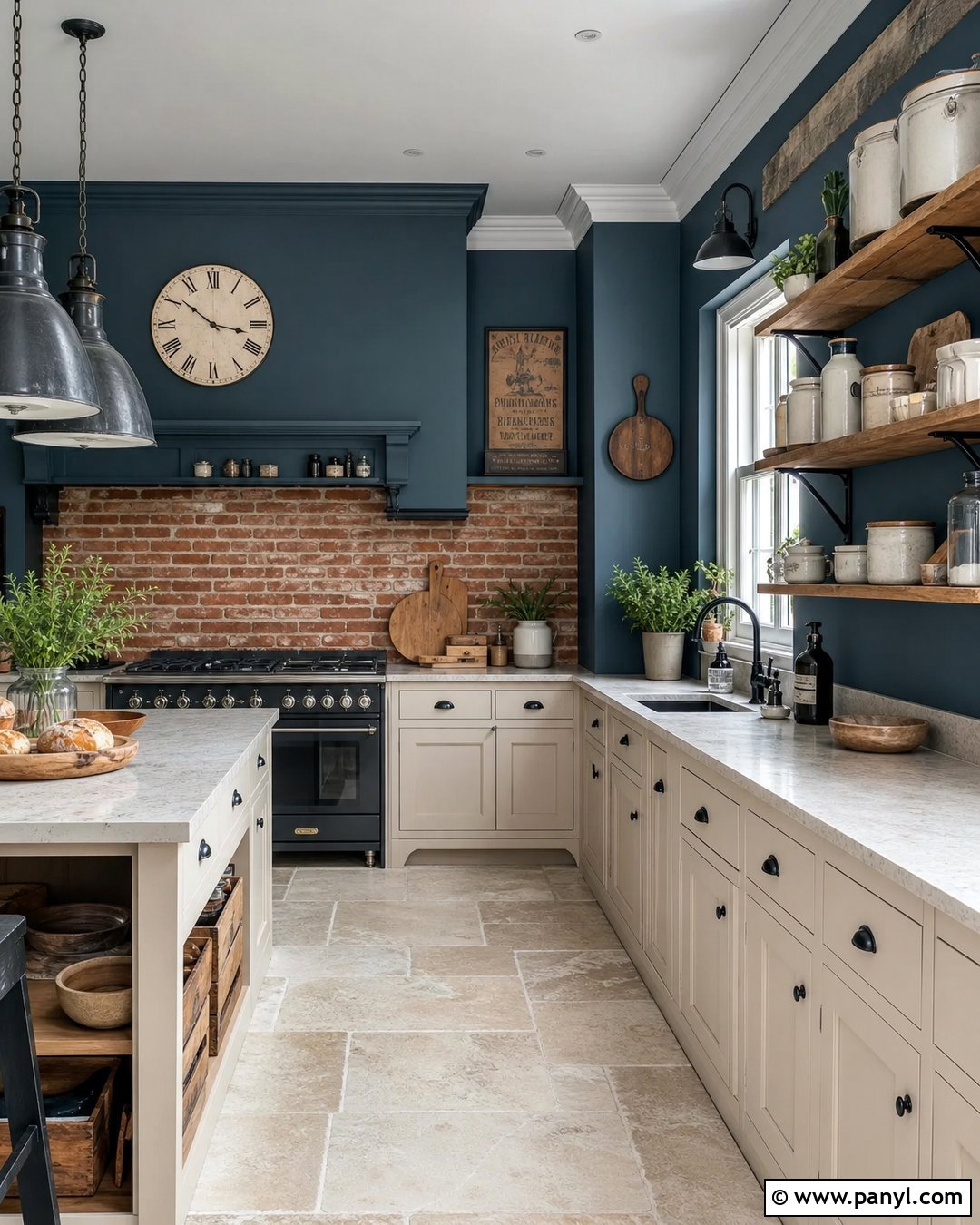
Exposed brick and blue-painted walls create a kitchen filled with texture and comfortable contrast. A medium slate or denim blue works well because it relates to the brick’s weathered variation without competing with it. Pair these surfaces with simple cream cabinets and pale stone counters. Black hardware and industrial-inspired pendants can define the cabinetry, while oak shelves soften the harder finishes. Choose wood flooring in a different tone from the brick, or use neutral stone tile for clearer separation. Keep accessories functional, such as ceramic crocks and cutting boards, rather than adding excessive rustic decoration. The result feels appropriate for a loft, farmhouse, or renovated older home while still offering a clean and practical workspace.
24. Blue Kitchen Walls With Open Shelving
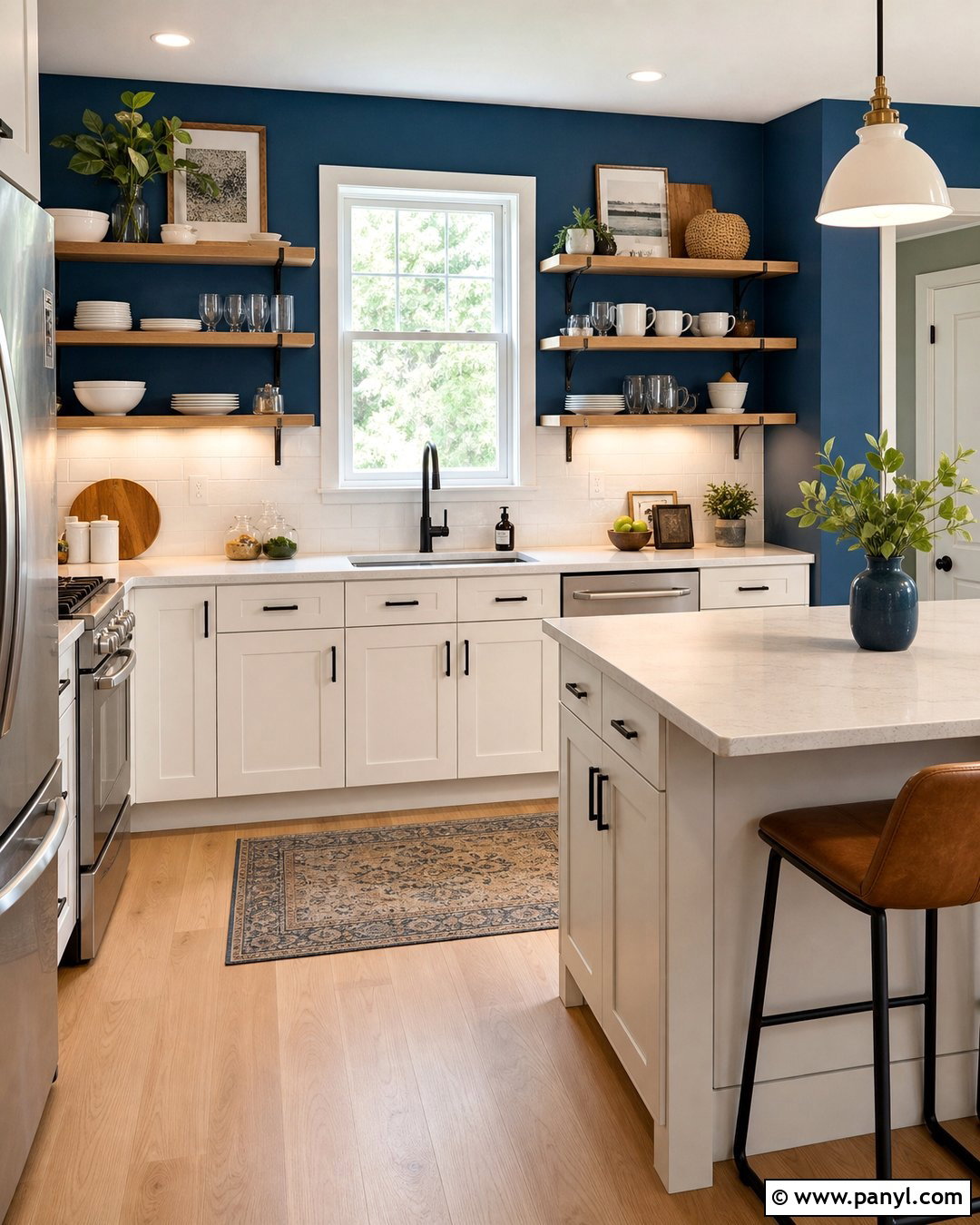
Blue walls can turn open kitchen shelving into a strong, organized feature. Install natural oak or painted white shelves against a medium blue background, then arrange frequently used dishes in a limited palette of white, cream, and clear glass. Keep the lower cabinets warm white or light wood to maintain an airy room. Pale quartz counters and a simple backsplash protect work areas without covering all the color. Add under-shelf lighting so the blue remains visible and the counters stay functional. Black brackets offer a casual look, while concealed supports feel more modern. The finished kitchen should include enough closed storage to control clutter, allowing the open shelves and blue background to look intentional rather than crowded.
25. Blue Kitchen Walls With Two Tone Cabinets
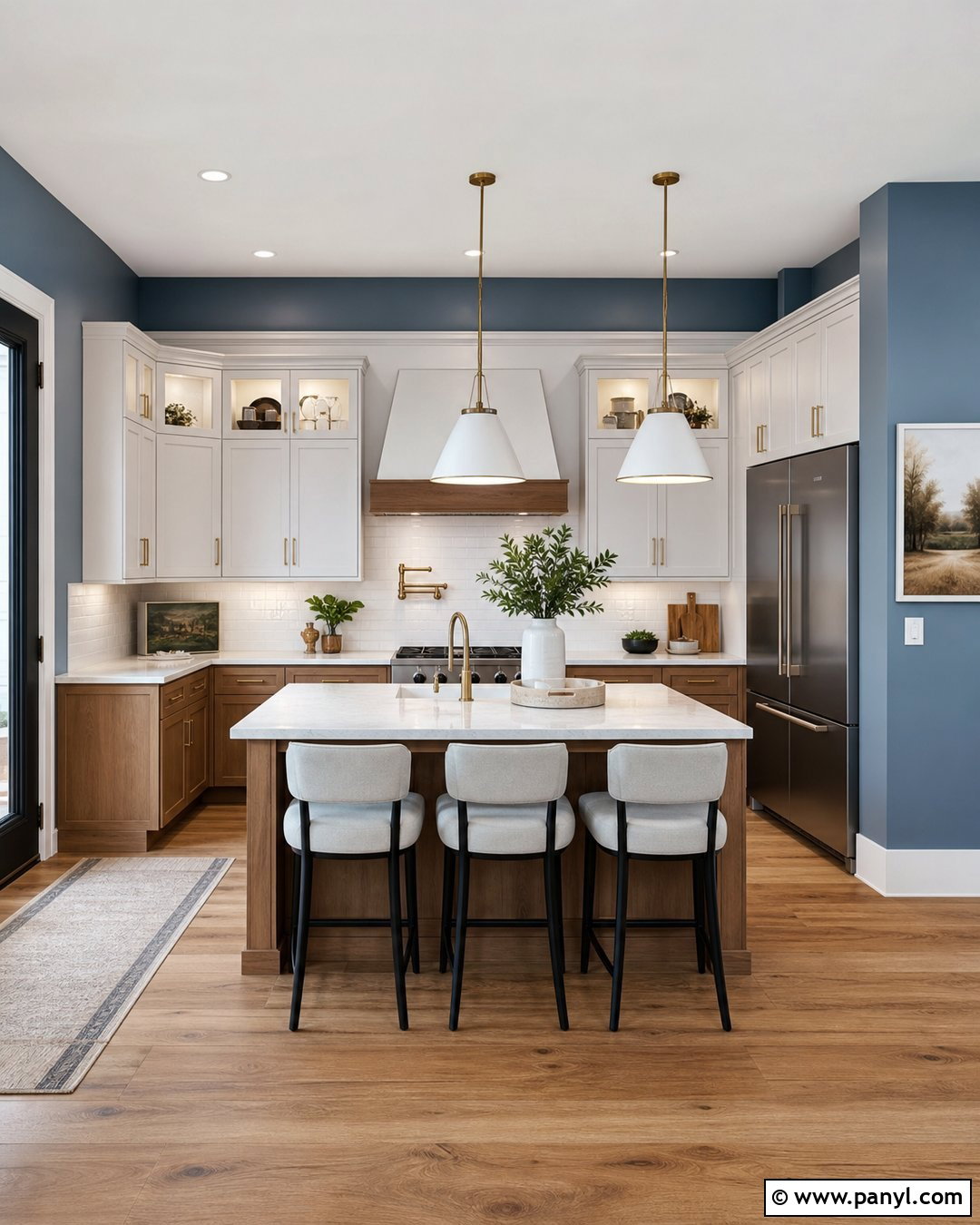
Two-tone cabinetry allows blue walls to connect several kitchen finishes in one balanced layout. Use warm white upper cabinets to keep the room open, then select natural wood or charcoal lower cabinets for grounding. A muted blue wall color sits comfortably between the light and dark tones. Choose pale quartz counters and a quiet white backsplash so the cabinetry arrangement remains easy to read. Repeat one hardware finish across all doors for unity, preferably aged brass or matte black. Medium oak flooring can link the lower cabinets to the rest of the home. This combination is especially helpful in a large kitchen because the layered colors divide broad cabinet runs while still producing one cohesive, thoughtfully planned design.
26. Blue Kitchen Accent Wall
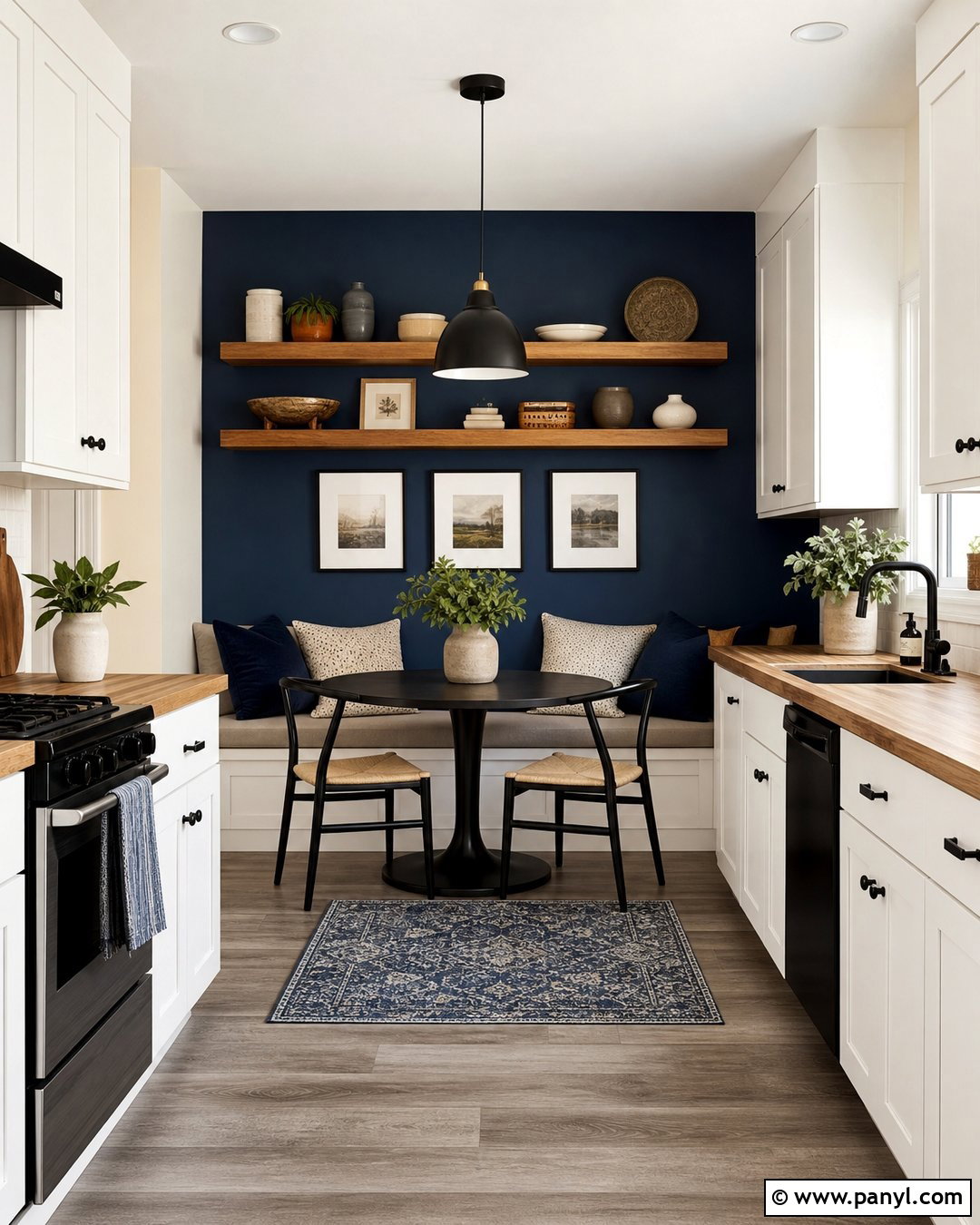
A blue accent wall works best when it highlights an architectural feature rather than ending at an arbitrary corner. Paint the breakfast nook, range wall, or wall behind open shelving in a rich medium blue. Keep adjacent walls warm white and use matching white cabinets for a smooth transition. Natural wood counters or stools introduce warmth, while black lighting outlines the focal zone. Repeat the wall blue in a small rug or upholstered seat so the color does not feel isolated. A framed print, floating shelf, or slim display ledge can complete the accent wall without covering it. This focused approach is practical for renters, cautious decorators, and compact kitchens that may not need blue on every surface.
27. Blue Kitchen Walls And Ceiling
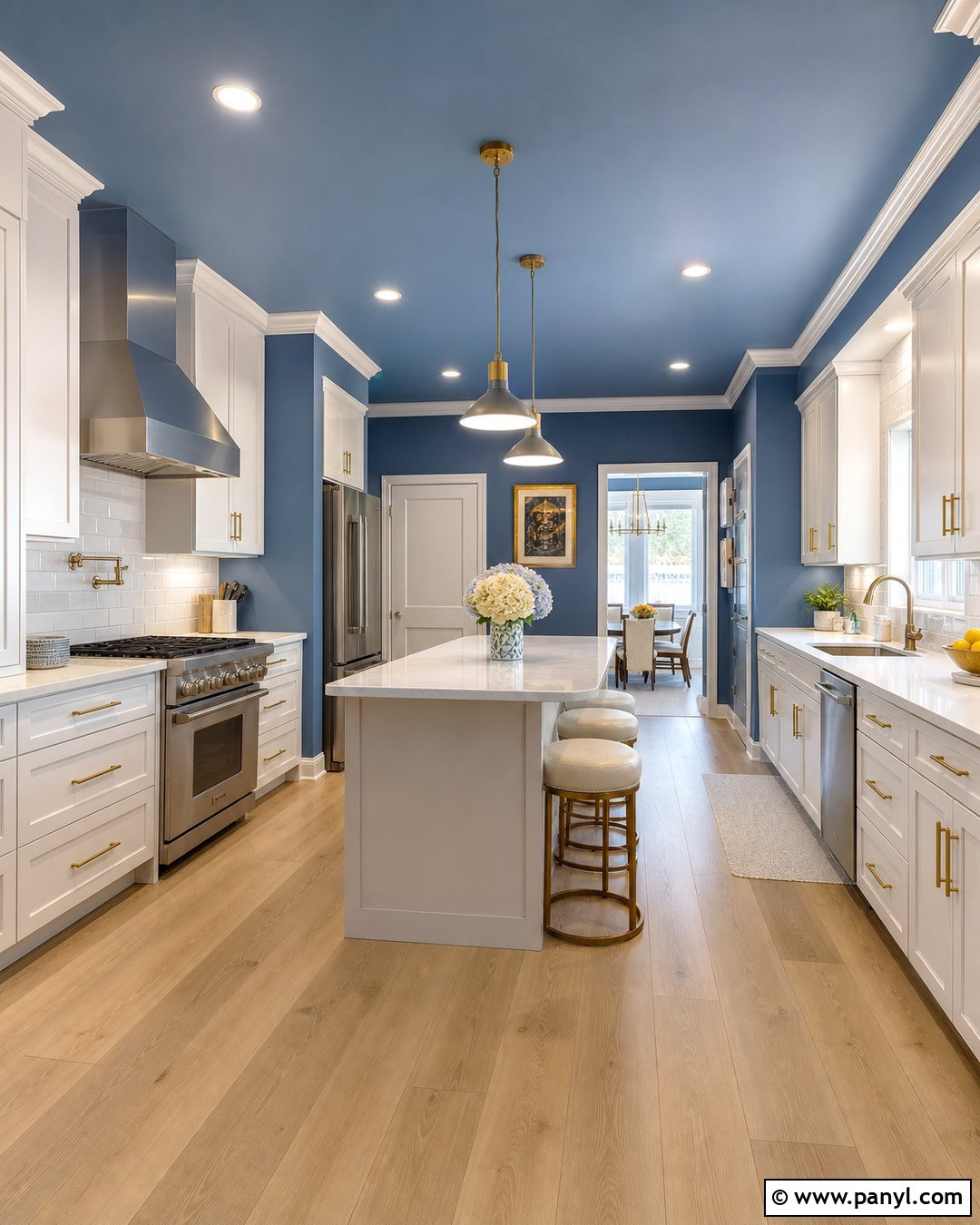
Painting both the kitchen walls and ceiling blue creates an enveloping look that can make awkward angles feel more unified. Select a soft or medium blue rather than an extremely dark shade, particularly when the ceiling is low. Pair the color-drenched shell with warm white cabinets, pale counters, and reflective backsplash tile. Light oak flooring and brass hardware provide warmth beneath the continuous blue. Use strong layered lighting, including recessed ceiling lights, pendants, and under-cabinet strips, to preserve functionality. Keep window trim blue for a seamless result or white for sharper architectural definition. This complete treatment suits kitchens with abundant daylight and creates a distinctive room without relying on elaborate cabinetry or decorative accessories.
28. Dark Blue Kitchen Walls With White Trim
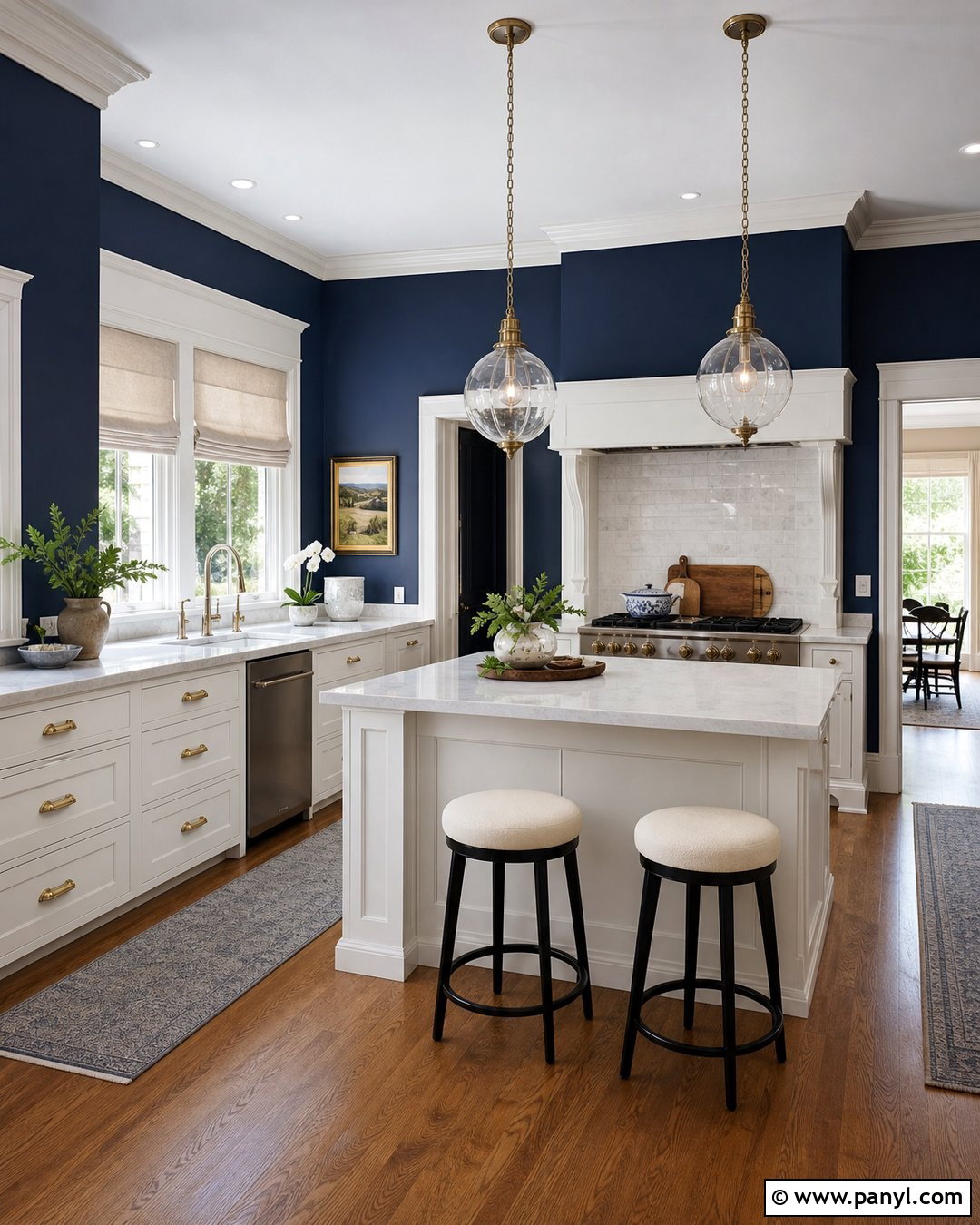
Dark blue walls and crisp white trim can emphasize windows, doors, molding, and other architectural details. Choose a navy with slightly softened undertones so it feels rich rather than harsh. Repeat the trim white on the cabinets and ceiling, creating a clear framework around the deeper color. White quartz counters and a marble-look backsplash maintain brightness, while medium oak floors keep the palette warm. Add aged brass hardware and white glass pendants for a traditional finish. Roman shades in a simple cream fabric soften the windows without hiding the trim. This scheme is particularly effective in a kitchen with substantial molding because the contrast turns everyday architectural elements into an intentional part of the overall design.
29. Blue Kitchen Walls With Wood Trim
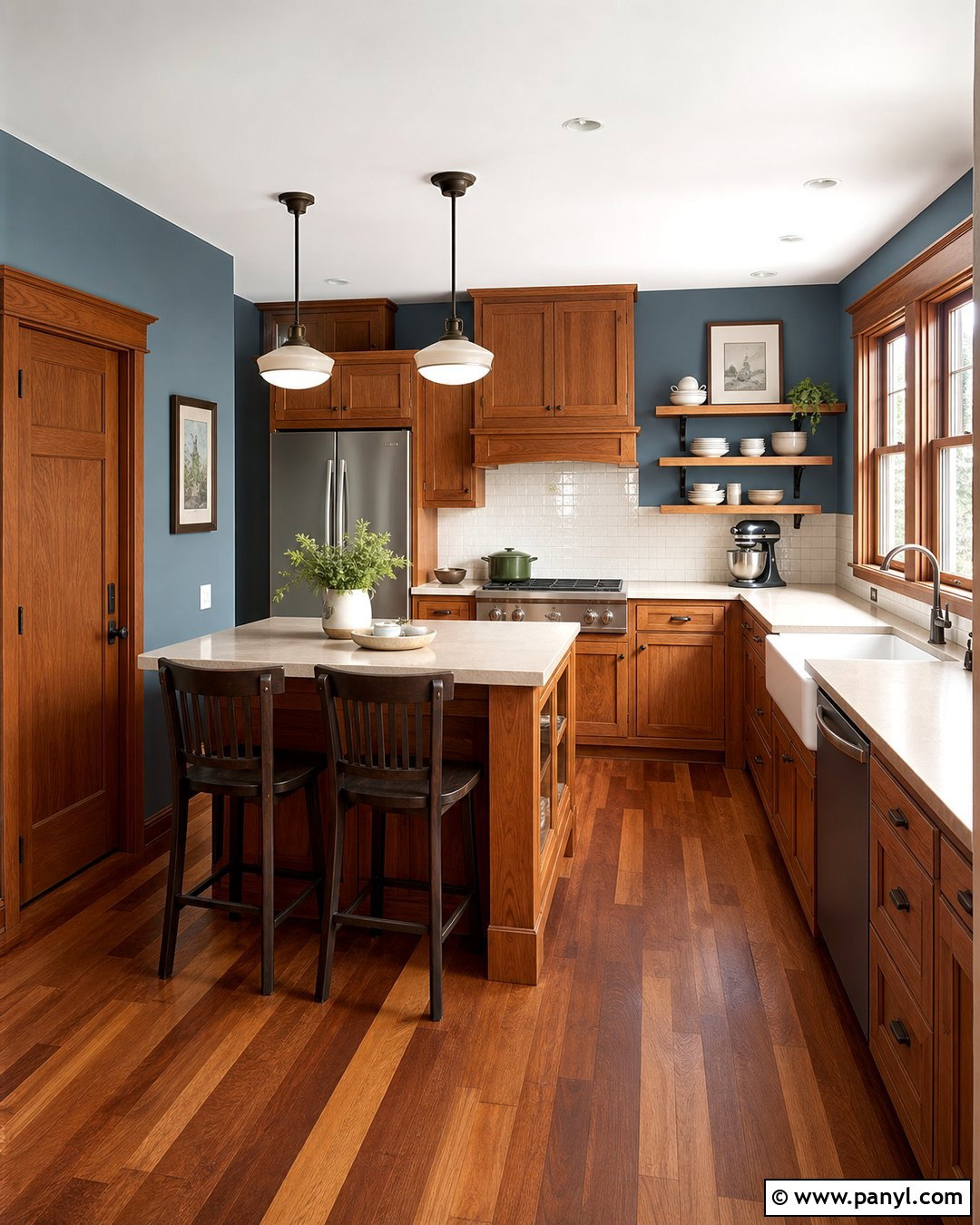
Instead of painting original wood trim, place it against blue walls so its craftsmanship becomes more noticeable. Muted slate, mineral, and denim blues complement oak, walnut, or chestnut without exaggerating orange undertones. Continue the wood finish on selected cabinets or open shelves, then use cream counters and backsplash tile to lighten the composition. Dark bronze hardware fits naturally with the warm trim, while simple white pendants prevent the room from becoming too traditional. Choose flooring that differs slightly from the trim so each wood surface remains distinct. This complete approach respects older architectural details and gives them a fresh background, making it well suited to Craftsman homes, cabins, and thoughtfully renovated vintage kitchens.
30. Blue Kitchen Walls With Brass Hardware
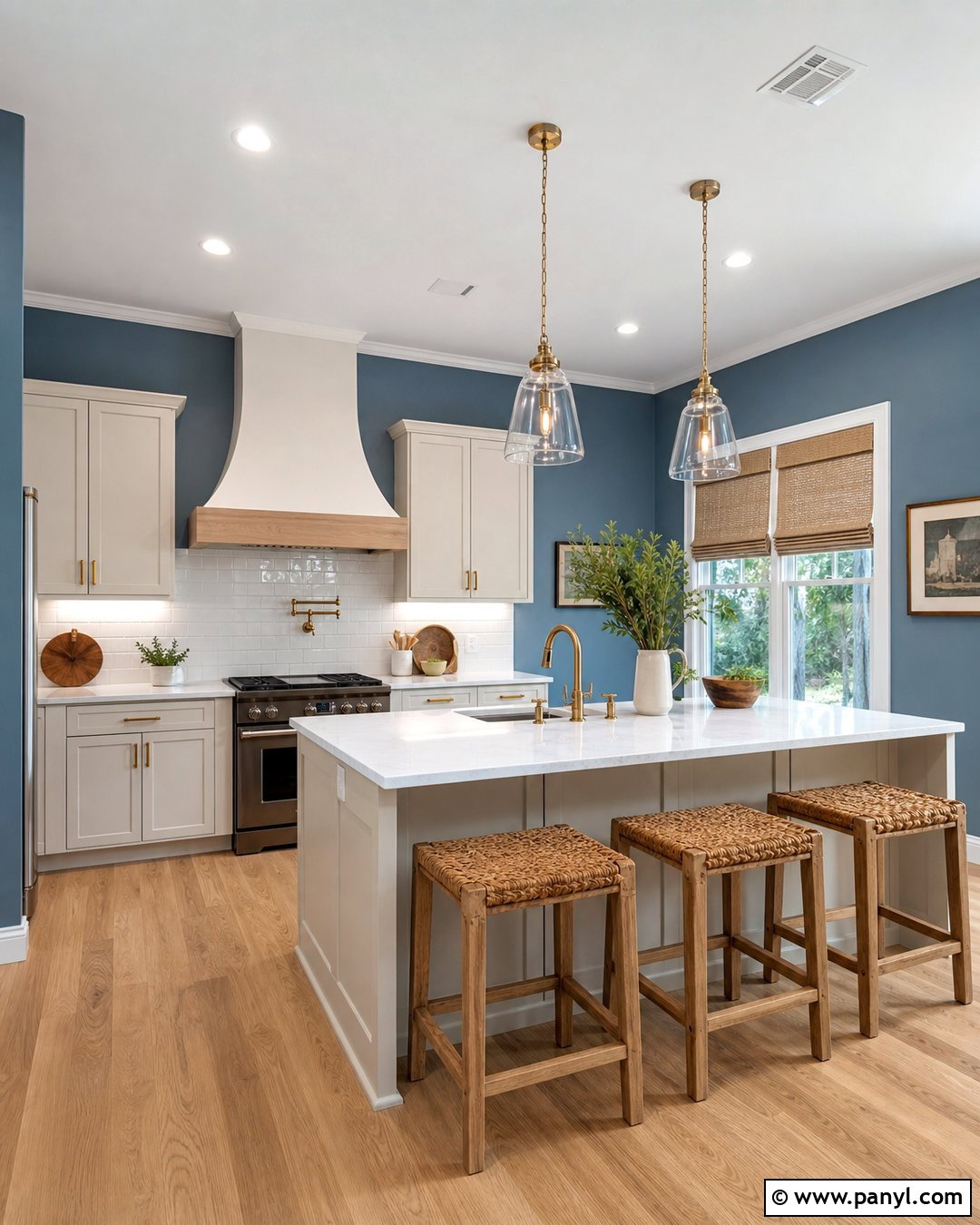
Brass hardware adds warmth and a subtle glow to nearly every shade of blue kitchen wall. For an elegant but approachable scheme, combine muted marine walls with cream shaker cabinets and softly veined white quartz. Use the same brass finish on cabinet pulls, the faucet, and pendant details, but avoid filling the room with competing metallic surfaces. A glossy white backsplash reflects light around the brass, while natural oak flooring keeps the kitchen relaxed. Add counter stools with woven seats and simple linen shades at the windows. The finished space balances cool and warm elements carefully. It feels polished without becoming formal, and the hardware provides an update that can be completed without changing the entire kitchen.
31. Blue Kitchen Walls With Matte Black Fixtures
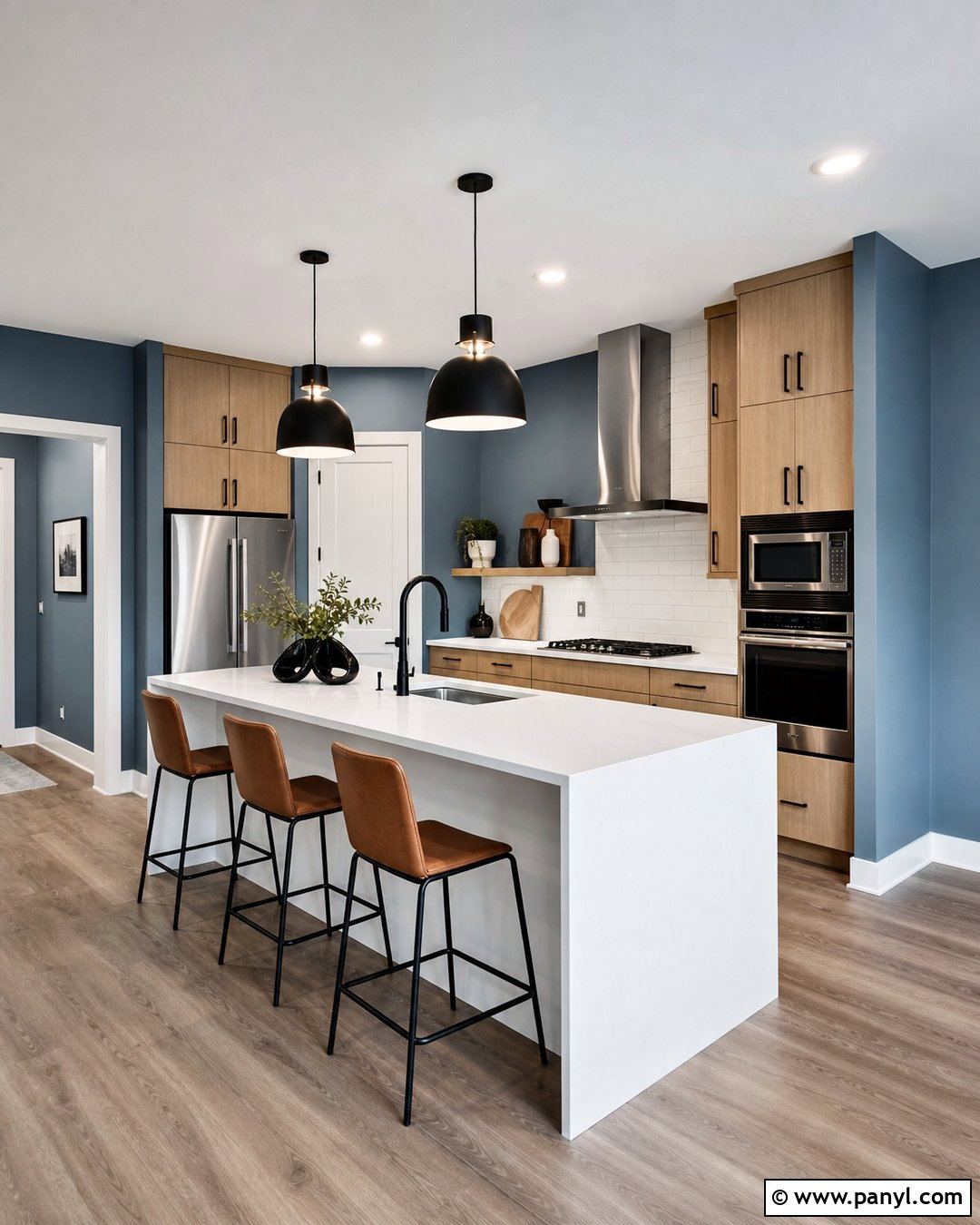
Matte black fixtures give blue walls a crisp, graphic edge that suits modern and transitional kitchens. Begin with a midtone gray-blue and add flat-panel white or pale wood cabinets. Use solid white countertops and a backsplash with minimal pattern to maintain clean lines. Repeat matte black on the faucet, pulls, pendants, and window frames, but leave breathing room between these dark elements. Light wood flooring and tan leather stools introduce warmth. Keep decorative pieces sculptural and limited, such as a black bowl and one wood board. This cohesive plan makes the black accents feel integrated rather than scattered, while the blue walls prevent the familiar black-and-white palette from looking too stark or predictable.
32. Blue Kitchen Walls With Copper Accents
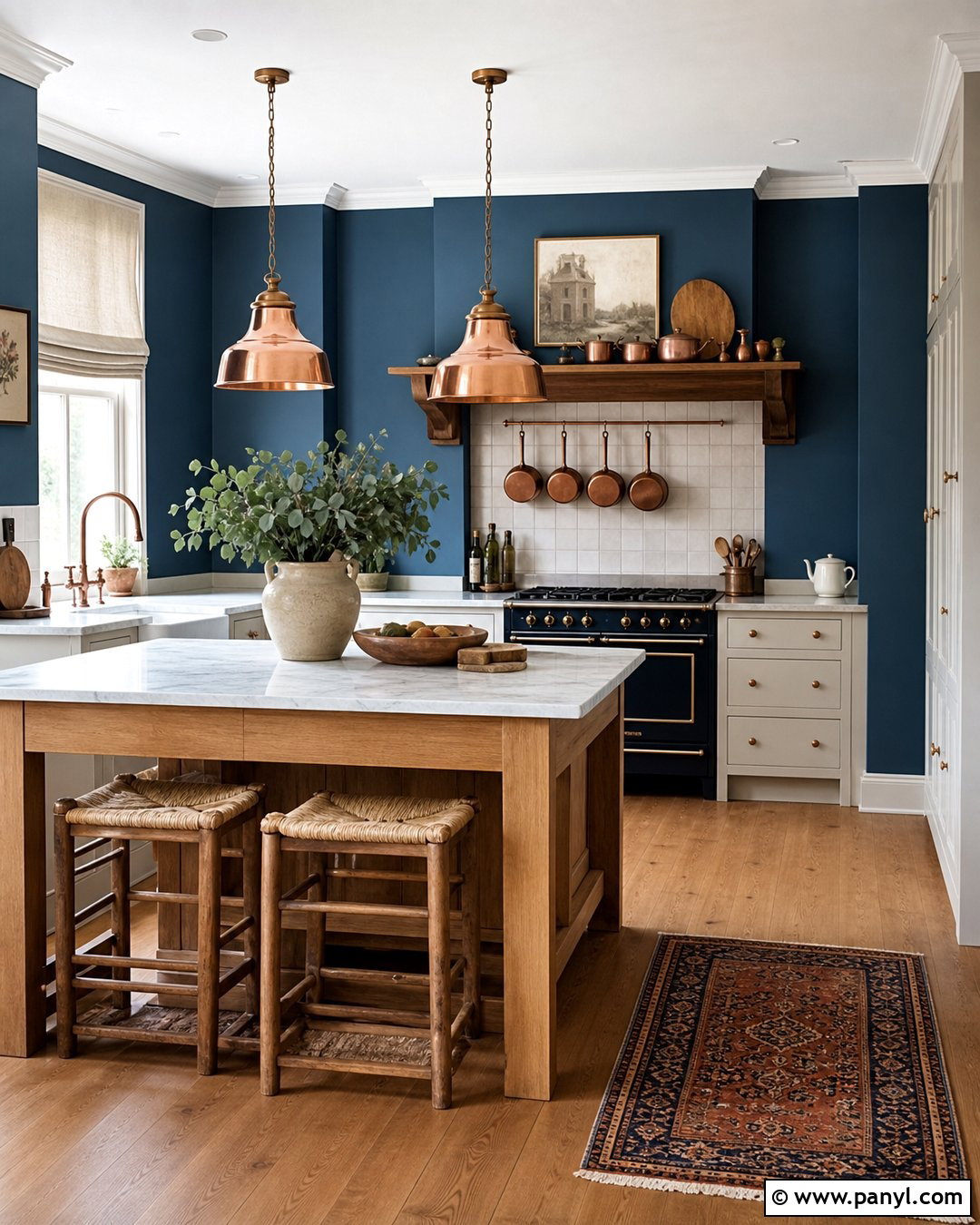
Copper accents look especially warm against blue walls because the colors create natural visual contrast. Choose a deep teal-blue or clear denim shade, then use cream cabinets and pale stone counters to keep the kitchen balanced. Introduce copper through pendant lights, a faucet, and a small selection of useful cookware rather than covering every surface. Warm oak flooring and handmade ivory backsplash tile reinforce the inviting character. Add simple wooden stools and natural linen window shades to soften the metallic shine. Because copper develops variation over time, the finished kitchen can feel collected rather than overly polished. This palette works beautifully in farmhouse, cottage, and transitional rooms where warmth and practical materials are important.
33. Blue Kitchen Walls With Colorful Art
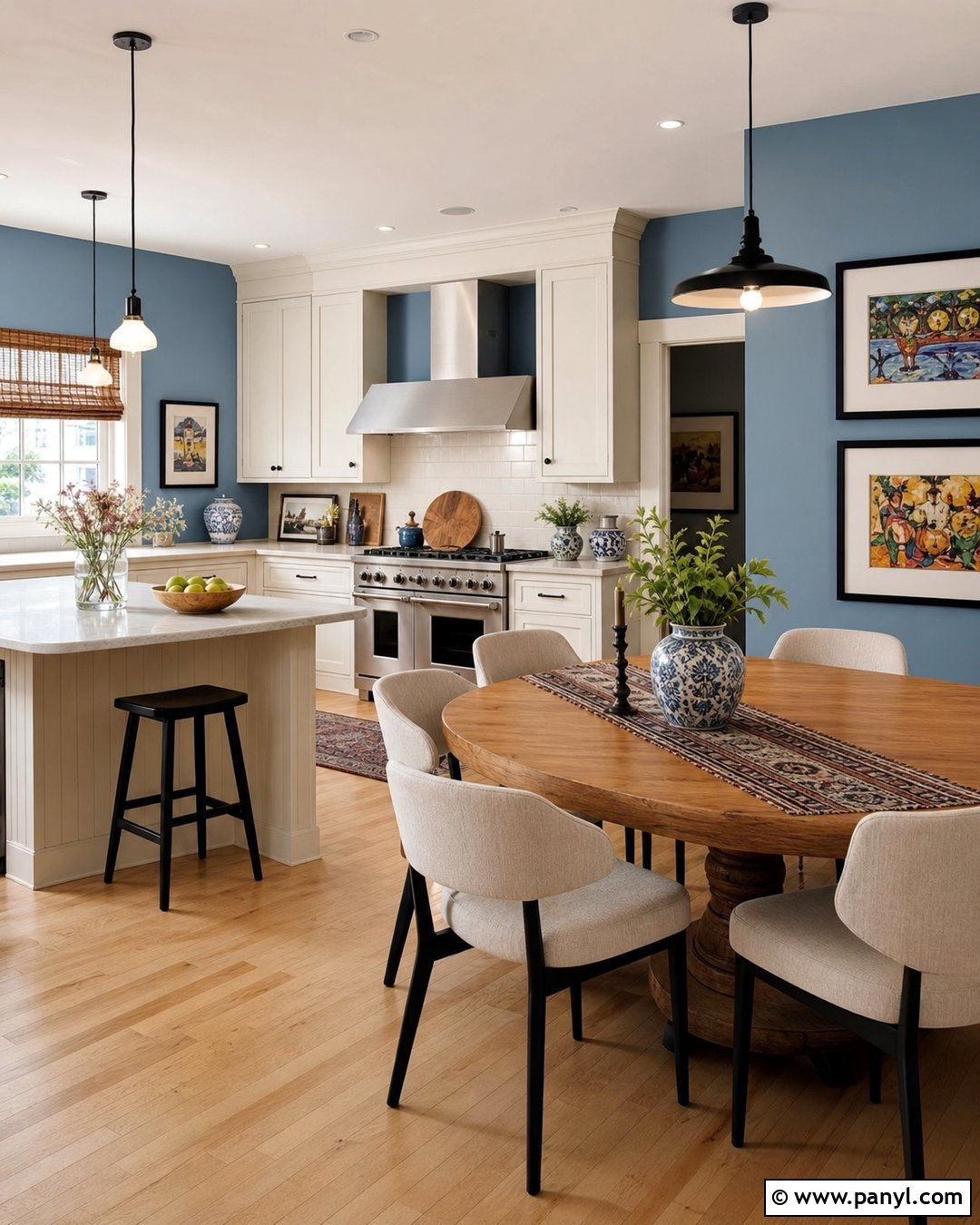
Blue walls can provide a gallery-like background for colorful artwork in an eat-in kitchen. Use a medium, slightly muted blue that supports rather than competes with the artwork. Keep the cabinets warm white and the counters pale so attention moves naturally toward the dining wall. Frame one oversized print or a small coordinated group using black, oak, or brass frames. Pull one secondary color from the artwork into upholstered chairs, a runner, or a ceramic bowl. Simple pendant lighting and light wood flooring keep the room casual. Protect valuable pieces from direct heat and moisture by positioning them away from the range and sink. The final kitchen feels personal, layered, and connected to adjoining living spaces.
34. Blue Kitchen Walls With Floral Wallpaper
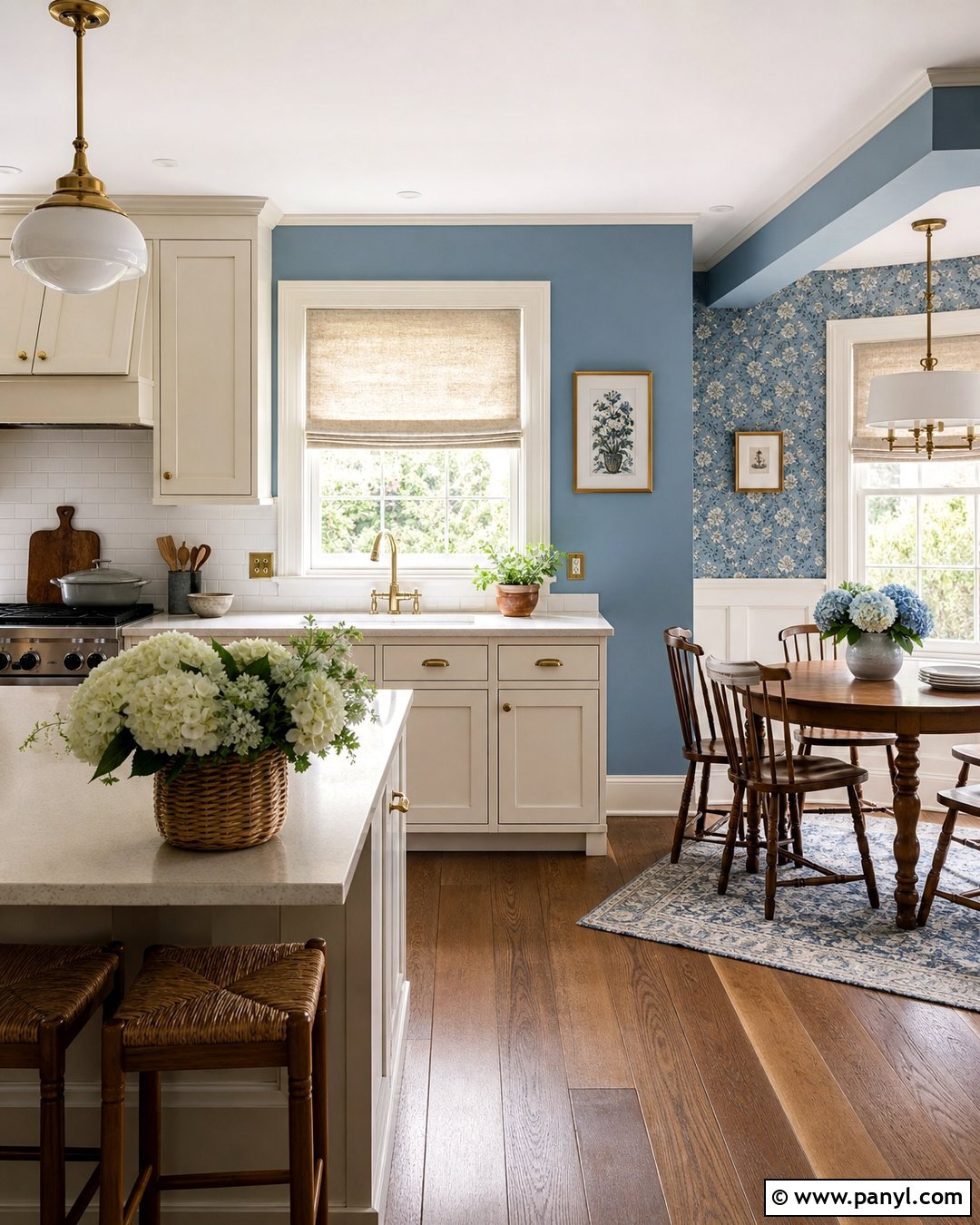
Blue paint and floral wallpaper can share a kitchen when the pattern is used in a defined, low-splash area. Select wallpaper with blue, cream, and soft green details for a breakfast nook or upper wall, then match its blue background with painted kitchen walls. Cream cabinets, warm quartz counters, and simple ivory tile prevent the room from appearing busy. Use natural wood furniture, aged brass hardware, and a plain linen window shade to support the cottage character. Keep the flooring quiet, such as medium oak or neutral checkerboard tile. This combined treatment creates a complete decorative story while allowing durable painted and tiled surfaces to cover the areas exposed to cooking splashes and frequent cleaning.
35. Blue Kitchen Walls With Beadboard
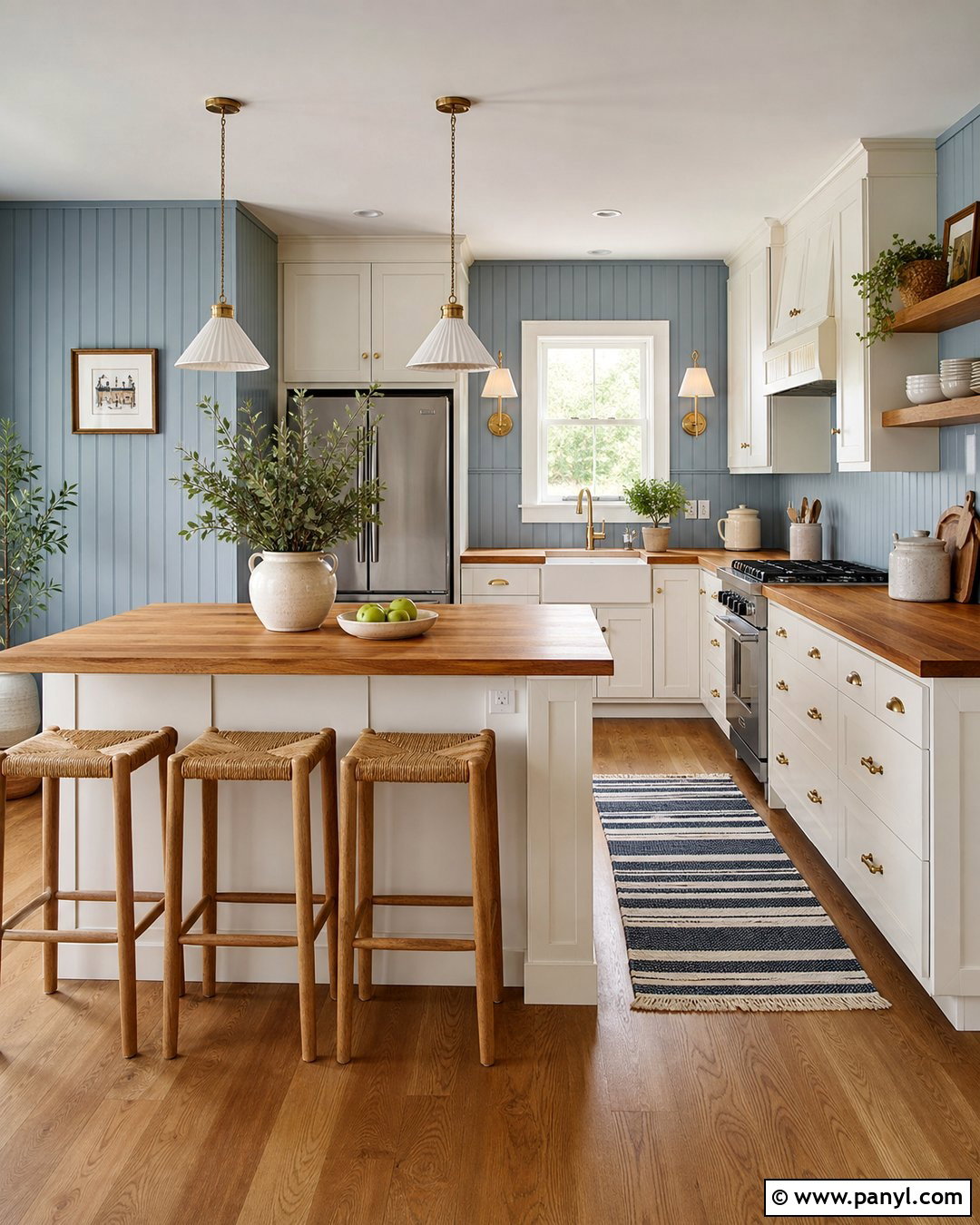
Beadboard gives blue kitchen walls added depth while maintaining a practical, familiar appearance. Install it as a full-height treatment on a breakfast wall or as wainscoting around the room, then paint it a soft denim or coastal blue. Use warm white above the paneling and repeat that color on shaker cabinets. Butcher block or pale quartz counters work equally well, depending on the desired maintenance level. Add aged brass pulls, simple wall sconces, and medium oak flooring for warmth. A striped runner and woven stools complete the casual design. Choose a washable, moisture-resistant paint finish so the grooves can be cleaned easily. The resulting kitchen feels detailed and inviting without requiring expensive architectural changes.
36. Blue Kitchen Walls With Picture Frame Molding
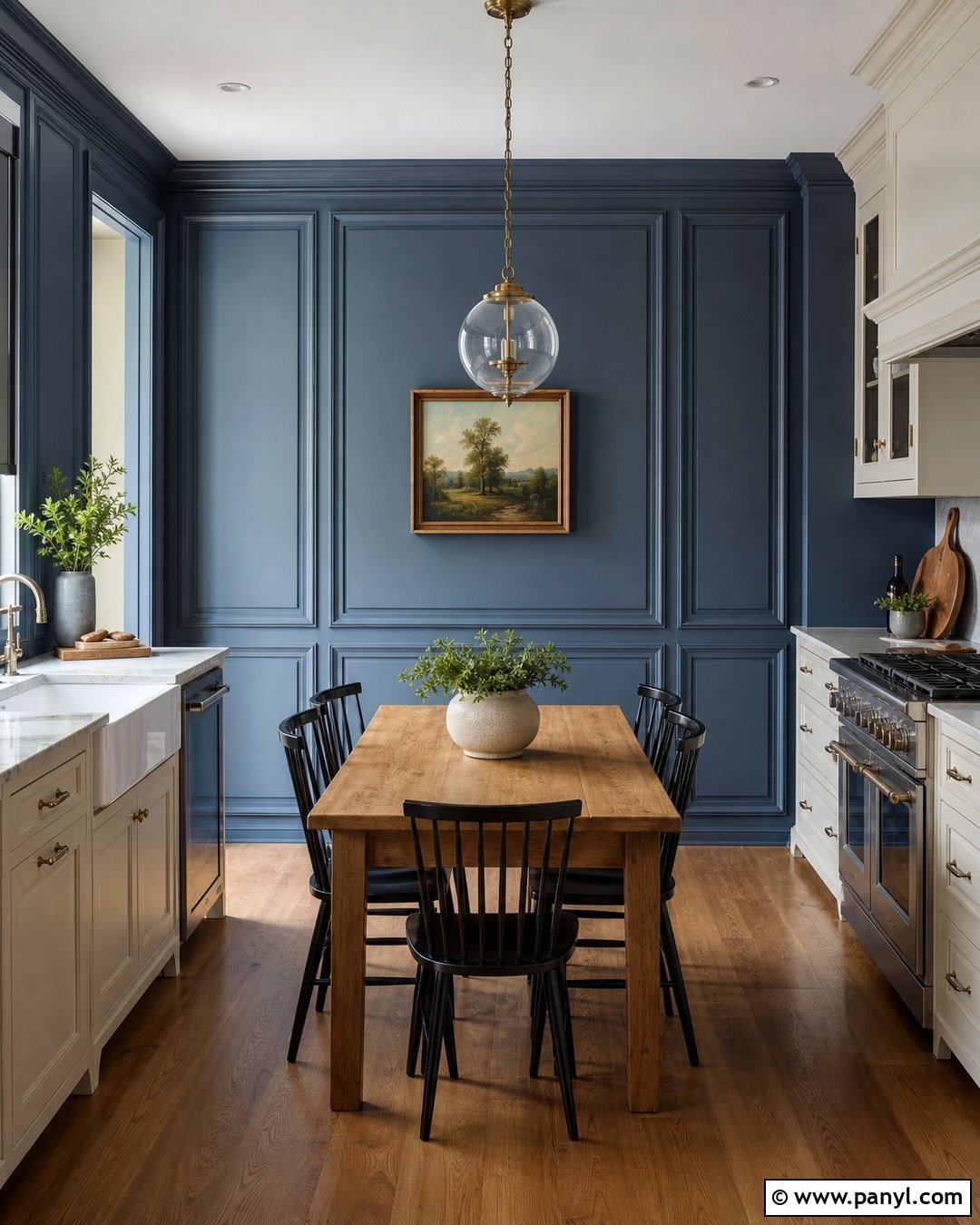
Picture frame molding transforms blue kitchen walls into an architectural feature, especially around a dining nook or open wall. Paint the molding and wall in the same muted navy or slate blue for a seamless, dimensional finish. Pair this treatment with cream cabinets, marble-look counters, and polished nickel hardware. Medium wood flooring and a round oak dining table soften the tailored wall detail. Use one pendant above the table and a single framed artwork centered within the molding. Keep the backsplash and counter accessories restrained so the room does not feel overly formal. This scheme works best when molding proportions align with doors and windows, creating a balanced kitchen that appears customized without major structural remodeling.
37. Blue Kitchen Walls With White Wainscoting
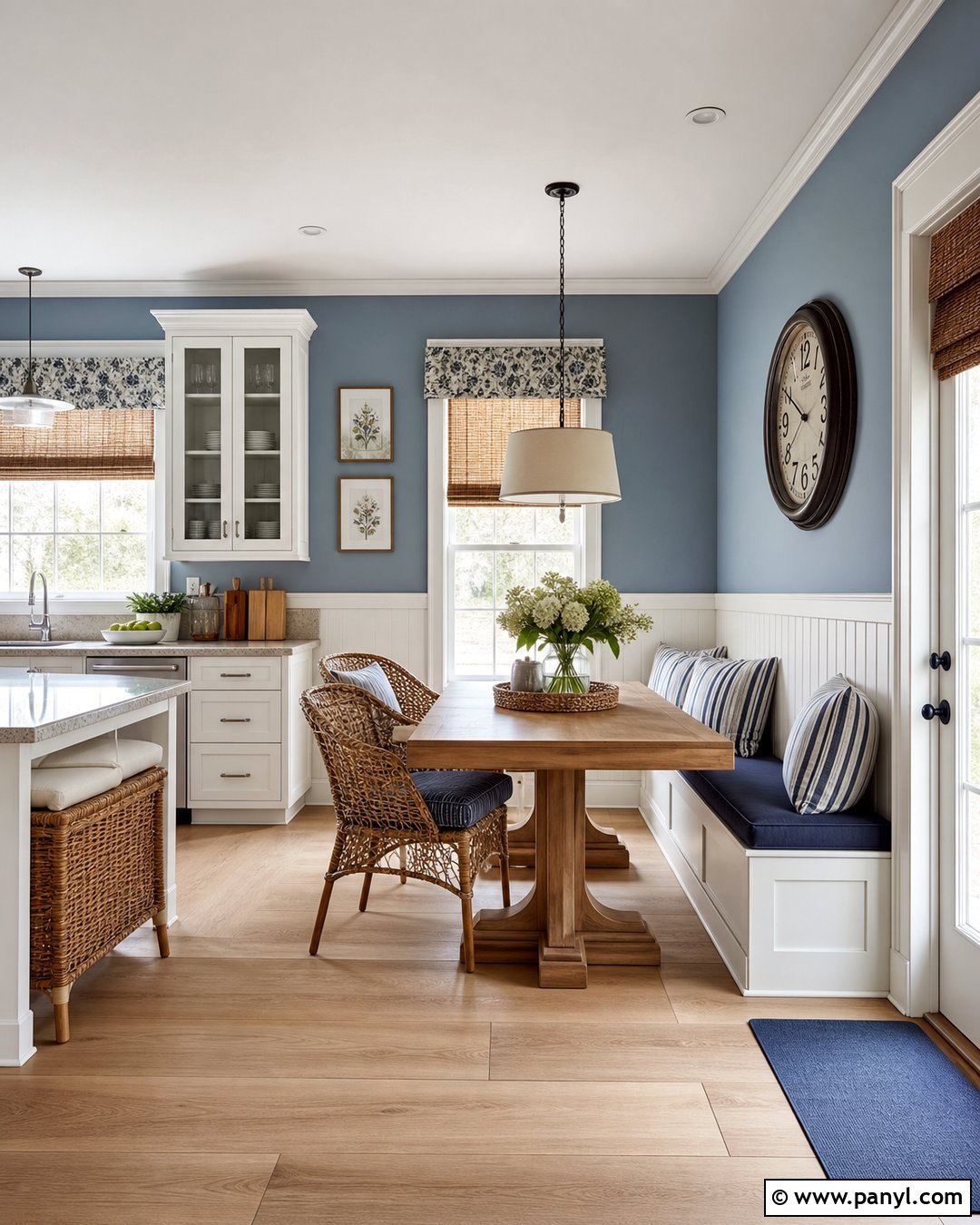
White wainscoting can make blue kitchen walls feel brighter and more structured. Install simple paneling or beadboard on the lower portion of a breakfast area, then use clear sky blue or dusty blue above it. Match the lower treatment to warm white cabinets and trim for continuity. Pale stone counters, light oak flooring, and nickel hardware keep the overall palette relaxed. Add a wood dining table, upholstered bench, and washable striped cushions to create a useful family seating zone. One simple pendant and woven window shade provide softness. The divided wall treatment is helpful in busy kitchens because the durable lower surface protects against chair marks, while the upper blue area delivers color without visually overwhelming the room.
38. Blue Kitchen Walls For A Small Kitchen
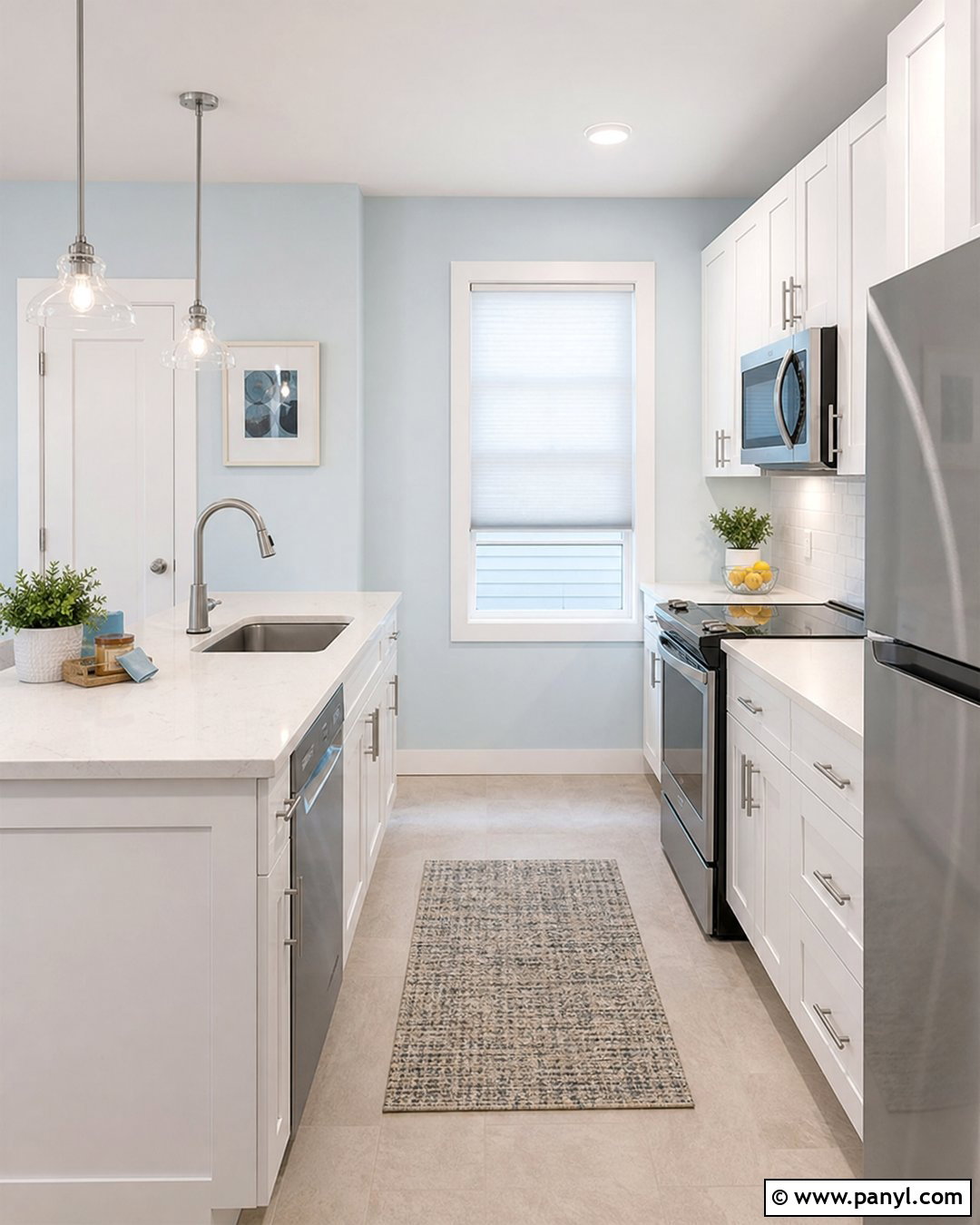
In a small kitchen, pale blue walls can create gentle color while preserving an open feeling. Use the same blue across uninterrupted wall areas, then add white flat-panel cabinets to reduce visual detail. Pale quartz countertops and a glossy white backsplash bounce light around the narrow layout. Choose compact brushed nickel hardware and clear glass pendants that do not block sightlines. Light wood or warm beige flooring keeps the room from feeling cold. Limit counter decor to a few practical pieces, and use closed storage whenever possible. If the kitchen has one window, add a simple white shade rather than heavy curtains. This coordinated, low-contrast approach makes the limited footprint look calmer, cleaner, and more intentionally designed.
39. Blue Kitchen Walls For A Galley Kitchen
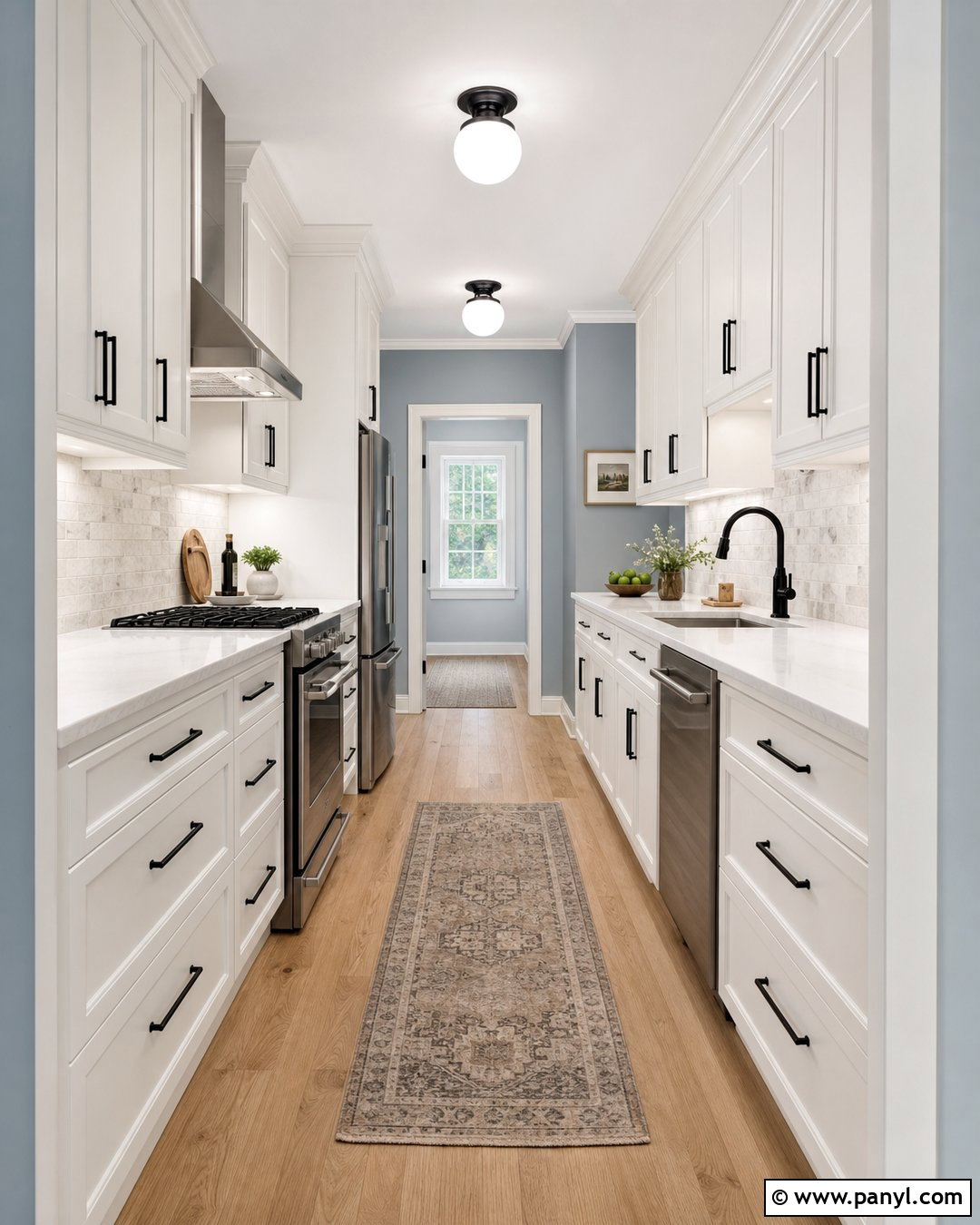
A galley kitchen benefits from blue walls when the color emphasizes its length without narrowing the aisle. Choose a soft gray-blue for the end wall and visible upper sections, then use warm white cabinetry on both sides. White counters and a matching backsplash create continuous horizontal lines that make the workspace feel orderly. Light oak flooring laid lengthwise subtly extends the room. Install bright under-cabinet lighting and simple ceiling fixtures so shadows do not deepen the narrow layout. Matte black pulls add definition, while one small runner provides softness. Keep tall cabinets grouped together instead of scattering them through the room. The result is a streamlined galley with useful color, strong lighting, and uncluttered circulation.
40. Blue Kitchen Walls For A Modern Kitchen
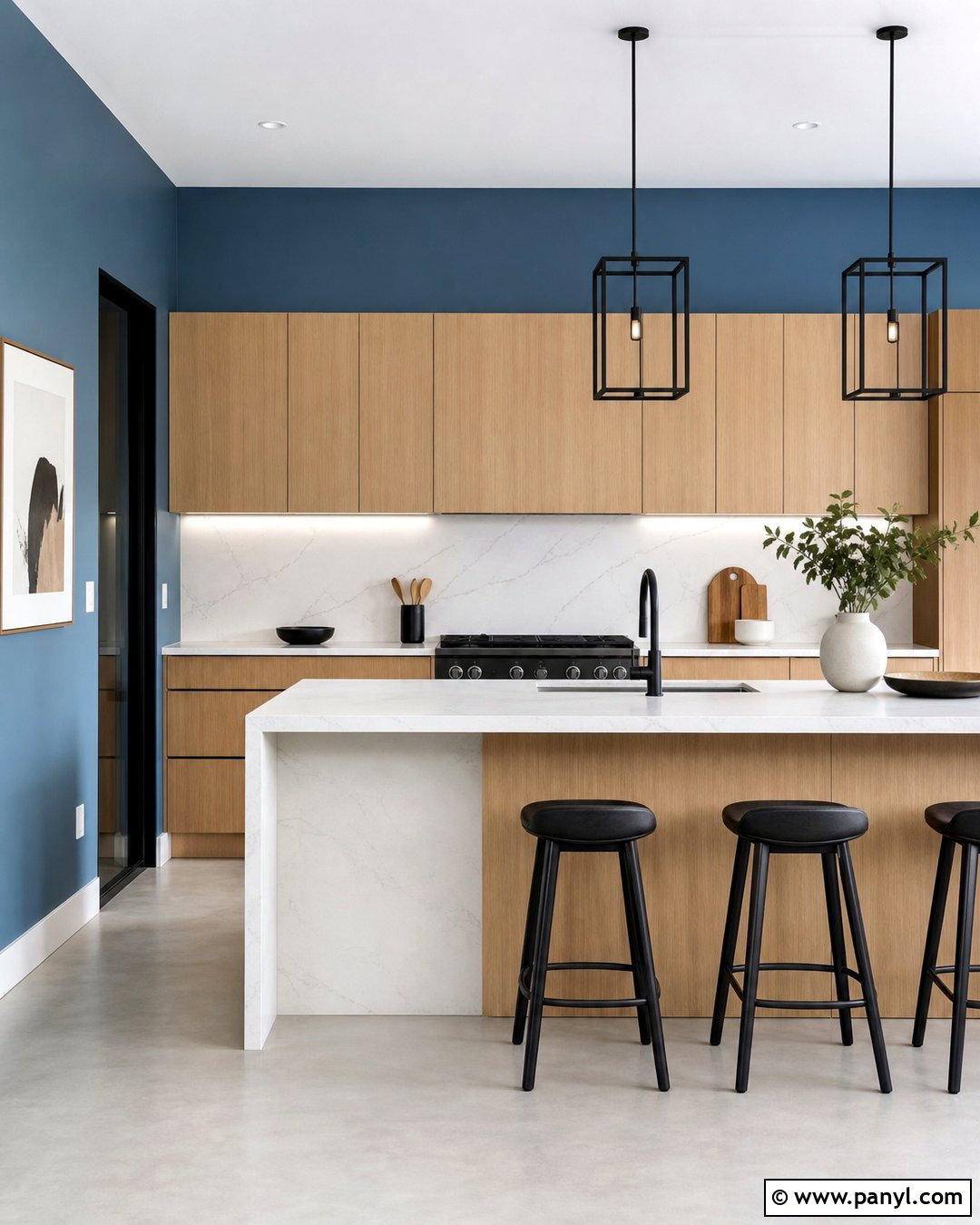
Modern blue kitchen walls look strongest beside streamlined cabinetry and a limited material palette. Use a clear steel or ocean blue with handleless white oak cabinets and thin white quartz countertops. Continue the countertop material up the backsplash for a seamless, easy-clean surface. Black-framed pendants and a matching faucet establish crisp lines, while pale concrete-look flooring provides a neutral foundation. Choose a simple rectangular island with low-profile stools and concealed storage. Avoid excessive countertop accessories; one ceramic vessel and a wood board are enough. Large windows, bright recessed lighting, and under-cabinet strips keep the blue vivid. This complete design feels colorful and current without relying on decorative trends that may quickly date the room.
41. Blue Kitchen Walls For A Farmhouse Kitchen
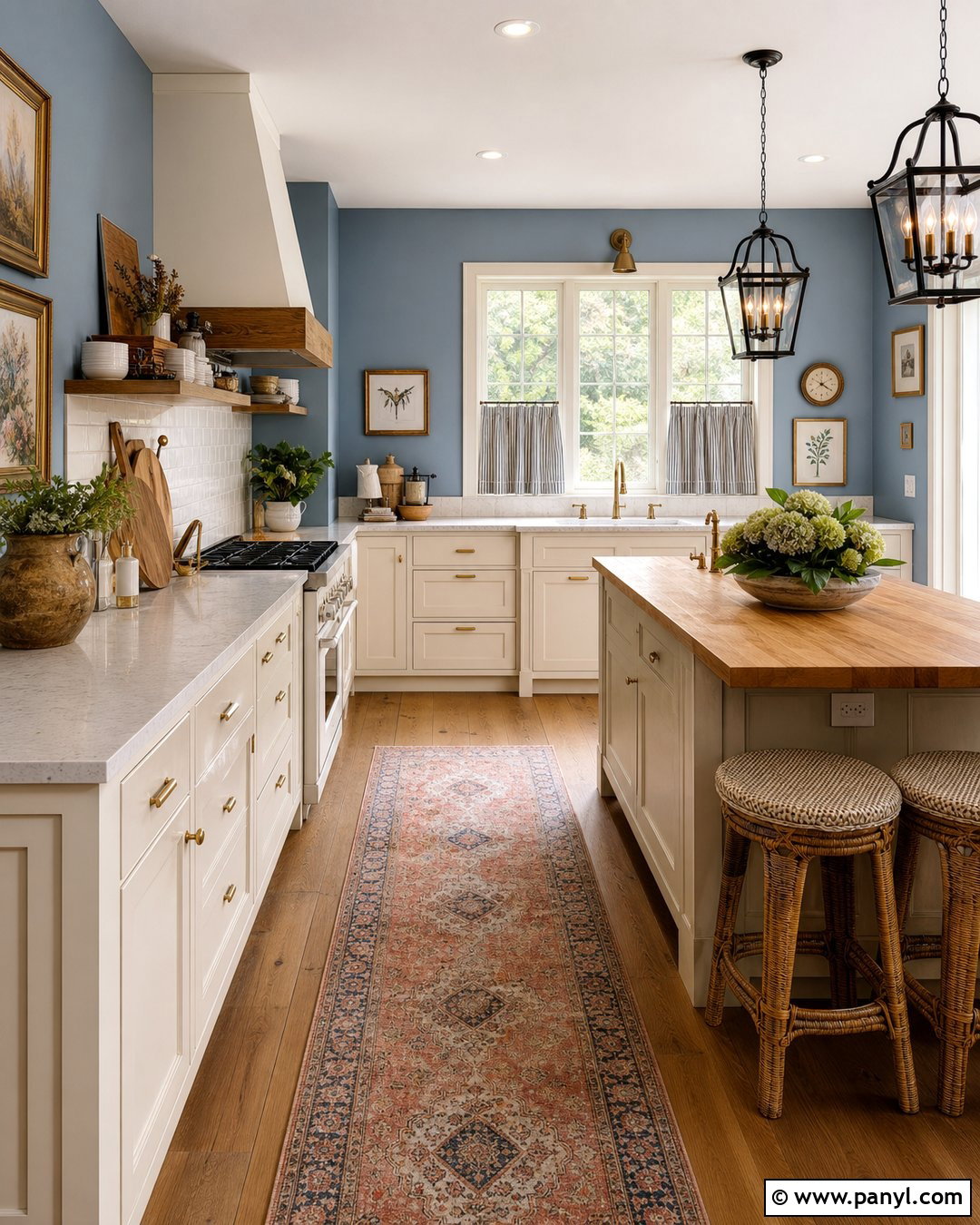
Blue walls can refresh a farmhouse kitchen while preserving its warm, practical character. Choose a muted cornflower or denim blue and combine it with cream shaker cabinets. Add butcher block on the island, durable pale quartz around the sink, and handmade ivory backsplash tile. A white apron-front sink, aged brass bridge faucet, and black lantern pendants provide familiar farmhouse details without becoming overly themed. Wide-plank oak flooring and woven stools introduce natural texture. Use open shelves sparingly for everyday dishes, keeping most storage behind cabinet doors. Finish with a washable vintage-style runner and linen café curtains. The result feels comfortable and established, yet the restrained color palette keeps the space looking clean, bright, and suitable for modern family life.
42. Blue Kitchen Walls For A Cottage Kitchen
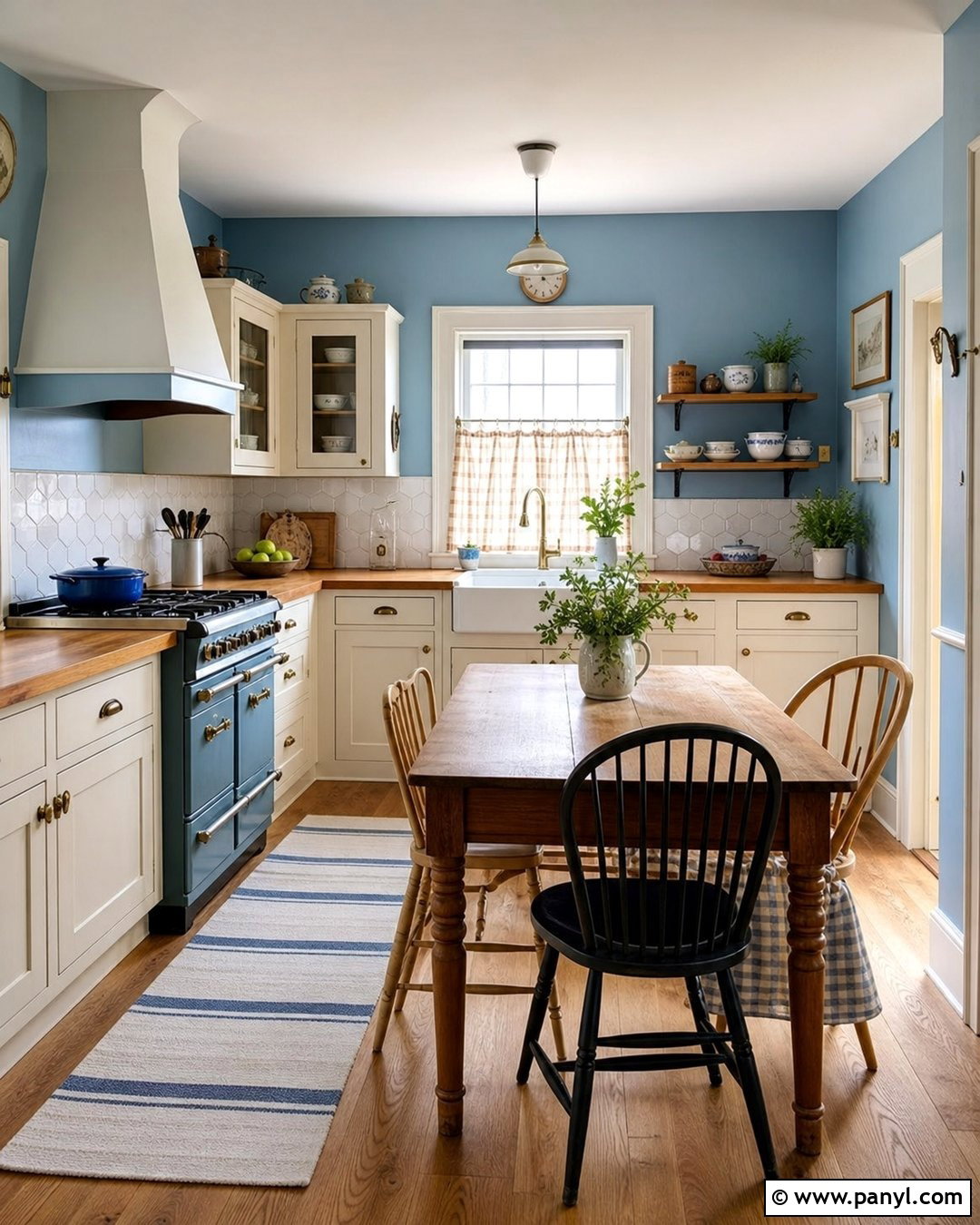
A cottage kitchen welcomes soft blue walls, warm materials, and details that feel gathered over time. Begin with a powder or dusty blue, then add cream inset cabinets and a lightly irregular white tile backsplash. Wood countertops on one section and pale quartz around wet areas create both charm and practicality. Choose brass latches, glass knobs, and simple painted shelves for subtle vintage character. Medium oak floors, a small freestanding table, and mixed wooden chairs keep the layout relaxed. Add café curtains, striped textiles, and a few handmade ceramics without overcrowding the counters. The completed room should feel personal rather than perfectly matched, with the blue walls quietly connecting the different woods, metals, fabrics, and traditional cabinet details.
43. Blue Kitchen Walls For A Scandinavian Kitchen
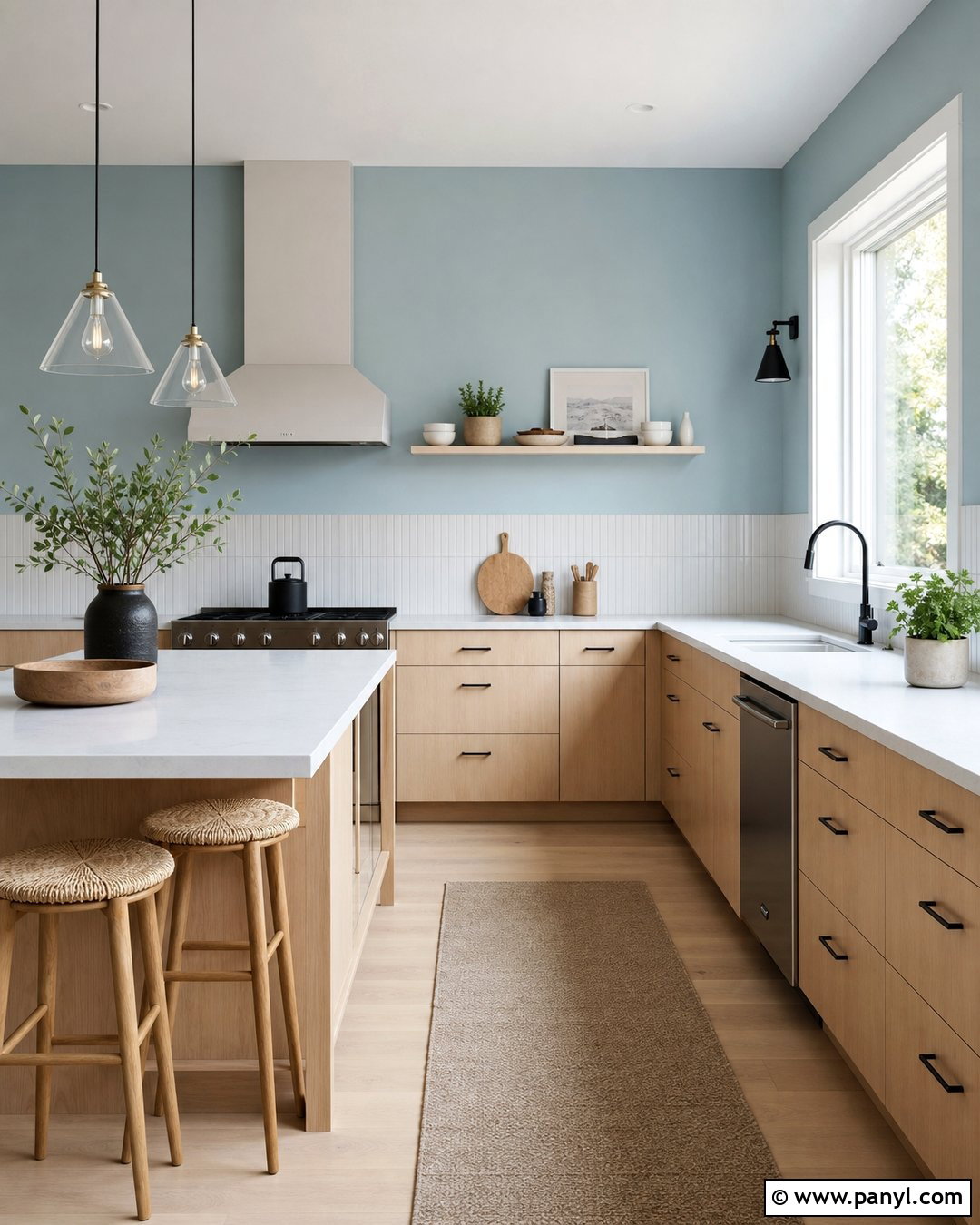
Blue walls add gentle color to a Scandinavian-inspired kitchen built around simplicity, light wood, and practical storage. Select a pale mineral blue and pair it with smooth birch or white oak cabinets. Use thin white quartz counters, a small vertical tile backsplash, and pale wood flooring for a bright, continuous foundation. Black pulls and slim pendant lights provide just enough contrast. Keep the window uncovered when privacy allows, or install a plain white roller shade. Add woven stools, a neutral wool runner, and a few functional ceramic pieces. The overall layout should remain open and easy to navigate. This scheme feels calm and modern while the blue prevents the minimal room from becoming sterile or visually unfinished.
44. Blue Kitchen Walls For A Mediterranean Kitchen
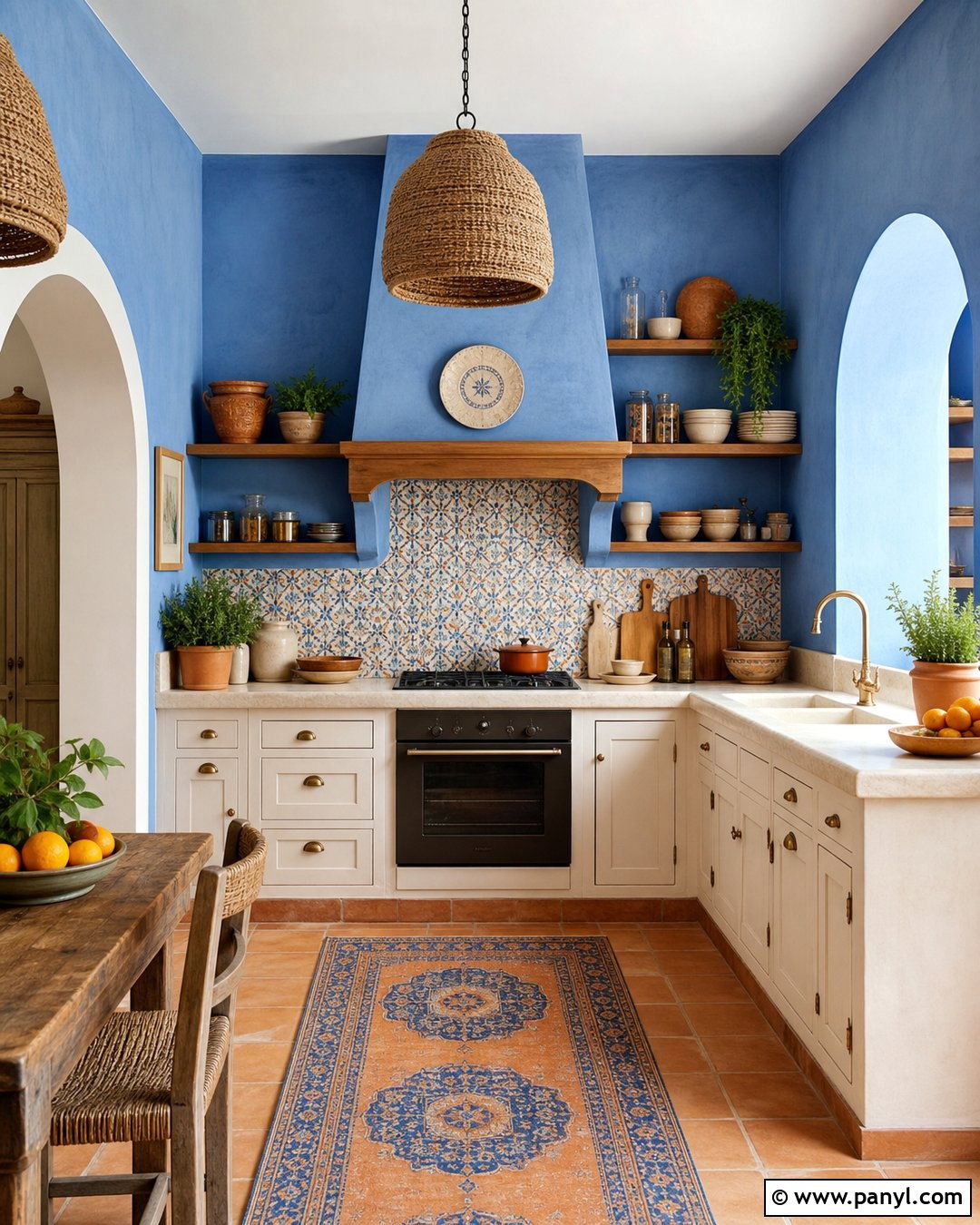
Mediterranean blue kitchen walls feel most authentic when paired with warm stone, handmade tile, and natural wood. Choose a sun-washed azure or muted teal rather than an icy pastel. Cream cabinets and pale limestone counters soften the saturated color, while a patterned blue-and-terracotta backsplash introduces controlled detail behind the range. Use aged brass hardware, open oak shelves, and woven pendant lights to reinforce the warm atmosphere. Terracotta floor tile anchors the design and connects beautifully with the cooler walls. Keep decor useful and simple, including earthenware bowls, wood boards, and potted herbs. The finished kitchen should feel bright and relaxed, with enough neutral space to stop the strong colors and textured materials from competing.
45. Blue Color Drenched Kitchen Walls
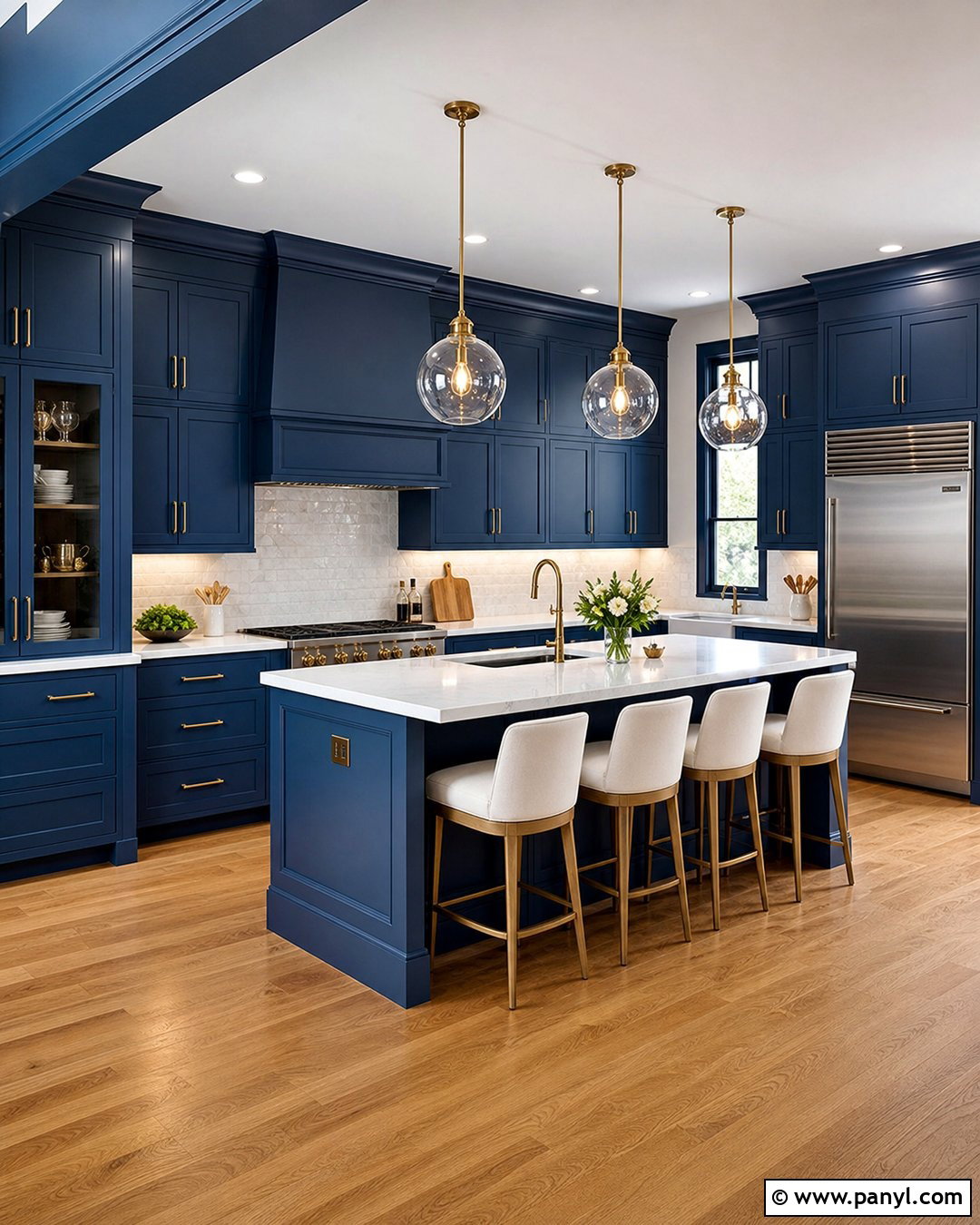
A color-drenched kitchen uses blue across the walls, cabinets, trim, and selected architectural details for an immersive finish. Choose a sophisticated midtone blue that remains attractive in both daylight and artificial light. Vary the paint sheen rather than the color: washable matte on walls, satin on cabinets, and semigloss on trim. Use white quartz countertops and a pale backsplash to create practical visual breaks around work areas. Warm oak flooring, brass hardware, and cream stools prevent the blue envelope from feeling cold. Layer recessed, pendant, and under-cabinet lighting to keep every surface clear. This bold design works best with restrained decor and organized counters, allowing the continuous color treatment to provide the kitchen’s main visual impact.
Conclusion:
The best blue kitchen walls do more than add color. They connect cabinetry, counters, flooring, lighting, hardware, and decor into one balanced room. Pale sky and powder blues can brighten compact kitchens, while navy, teal, cobalt, and slate create stronger definition. Warm wood, cream paint, brass, terracotta, and natural textiles help balance blue’s cooler character. Before committing, sample the color beside every permanent finish and observe it during morning, afternoon, and evening light. Also choose a washable paint suitable for a hardworking kitchen. Whether you prefer a quiet coastal palette or a fully color-drenched interior, these 45 blue kitchen walls provide a practical starting point for designing a distinctive and comfortable space.

Related Ideas and Inspiration:
Leave a Reply