
These 45 dark blue walls show how a deep, confident color can transform almost any room without making it feel gloomy. The secret is creating a complete scheme around the wall color. Crisp whites sharpen navy, warm woods soften it, and brass or copper adds a polished glow. Natural light also matters because dark blue changes noticeably from morning to evening. Matte paint creates a velvety finish, while eggshell reflects a little more light and is easier to clean. () From compact bathrooms to spacious living rooms, every example below combines color, furniture, lighting, textiles, and practical details. Use the complete rooms below as a practical guide to 45 dark blue walls.

1. Dark Blue Walls With White Furniture
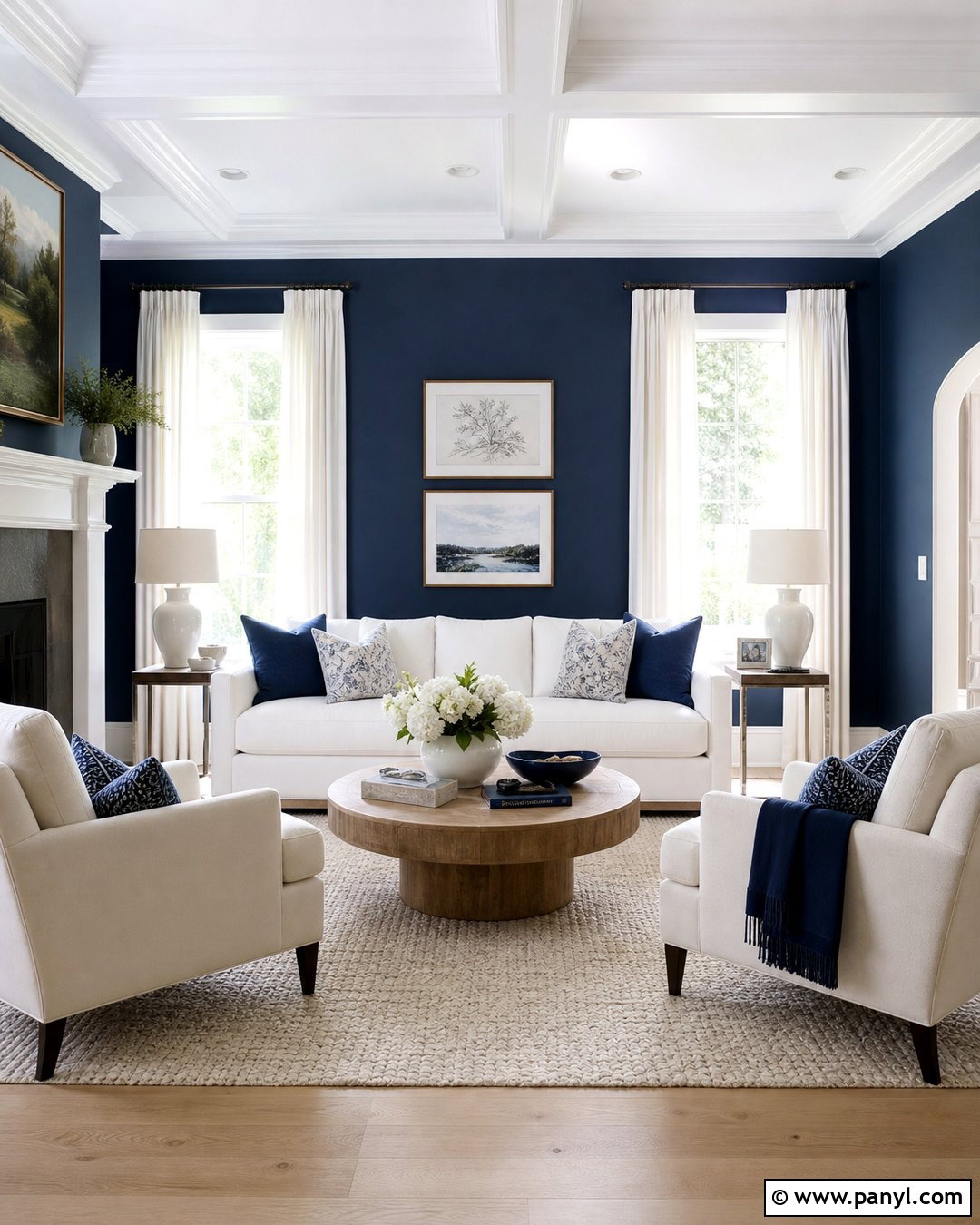
Crisp white furniture creates one of the cleanest contrasts for dark blue walls. In a living room, place a comfortable white or ivory sofa against the deepest wall, then add two light upholstered chairs to keep the arrangement balanced. Choose pale oak flooring and a woven cream rug to brighten the lower half of the room. White curtains should hang near the ceiling and extend to the floor, making the windows appear taller. A round oak coffee table introduces warmth without disturbing the simple palette. Finish with navy, tan, and subtly patterned pillows, plus a few ceramic lamps. This complete scheme feels polished and fresh, especially in a room with generous daylight and uncluttered surfaces.
2. Dark Blue Walls With Natural Wood
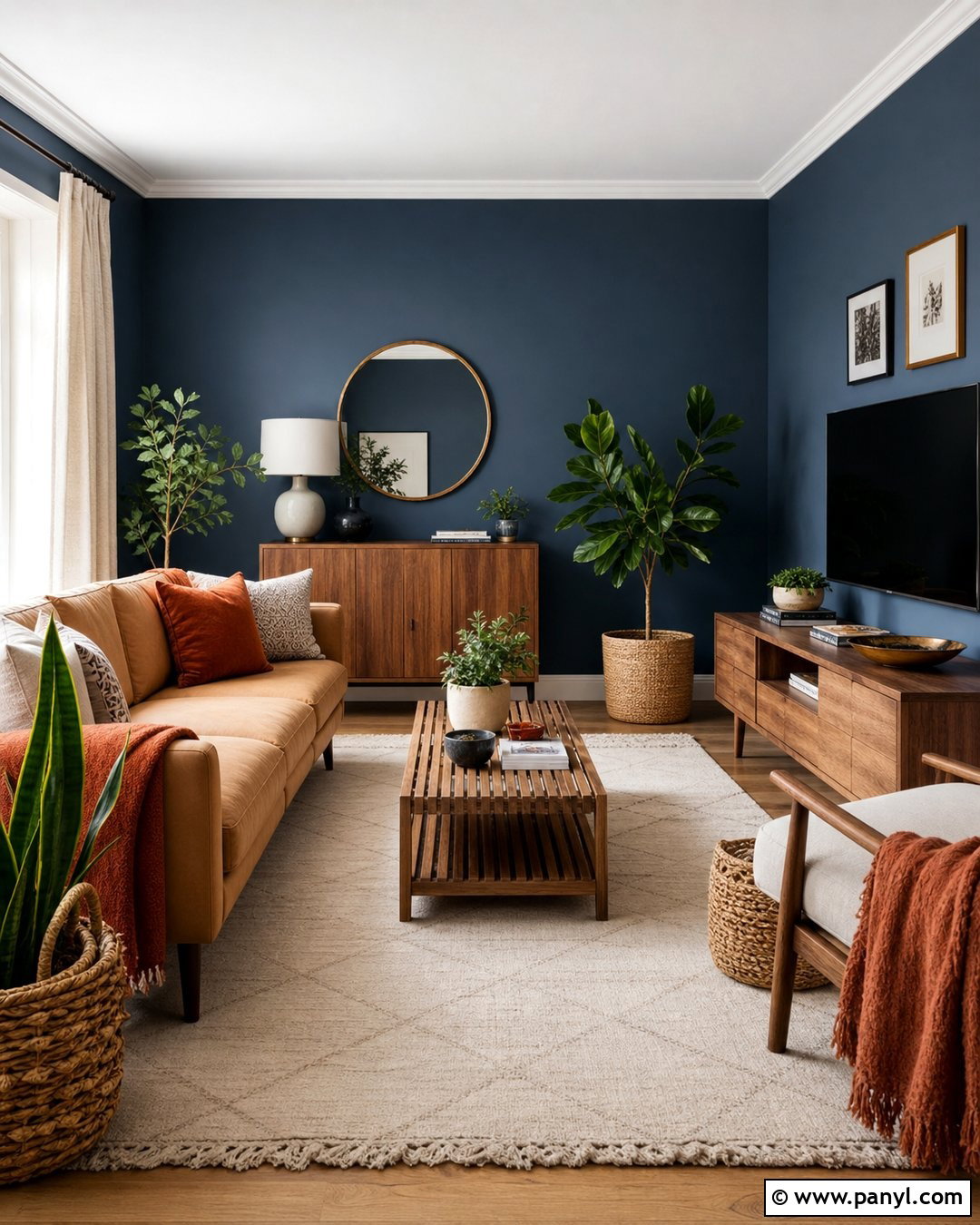
Natural wood gives dark blue walls an inviting, grounded character. Build the room around medium-toned oak or walnut furniture rather than cool gray pieces. A streamlined wood media console, slatted coffee table, and open shelving create warmth while allowing the blue background to remain visible. Choose a camel-colored sofa or oatmeal sectional, then layer cream, rust, and muted blue textiles. A large neutral rug will connect the furniture and prevent the floor from appearing disconnected. Add linen curtains, woven baskets, and leafy plants for softer texture. Black metal lighting can provide definition, but keep it minimal. The finished living room feels comfortable and modern, with enough natural variation to keep the bold walls from looking flat.
3. Dark Blue Walls With Brass Accents
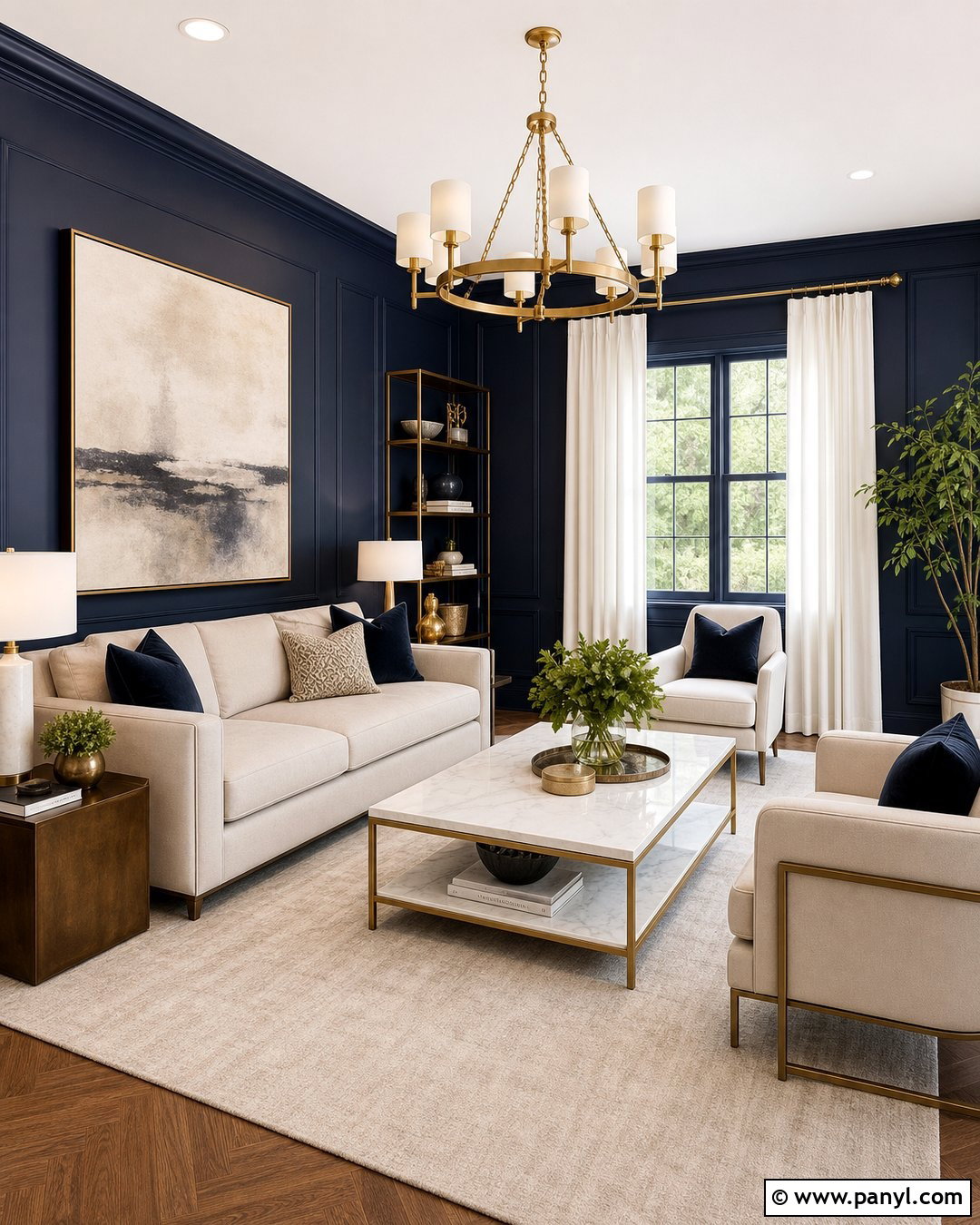
Dark blue walls and brass accents create an elegant living room that still feels approachable. Begin with a warm beige sofa and a pair of navy or cream armchairs arranged around a marble-topped coffee table. Use brass through several small, repeated details, such as a floor lamp, picture frames, curtain rods, and cabinet handles. Avoid covering every surface in metallic finishes. A few measured touches will appear more refined. Hang large neutral artwork to break up the blue, and place a light wool rug beneath the seating area. Walnut side tables add another layer of warmth. Soft white curtains and multiple shaded lamps complete the room, giving the brass a gentle glow instead of a harsh, overly glamorous shine.
4. Dark Blue Walls With Gray Sofa
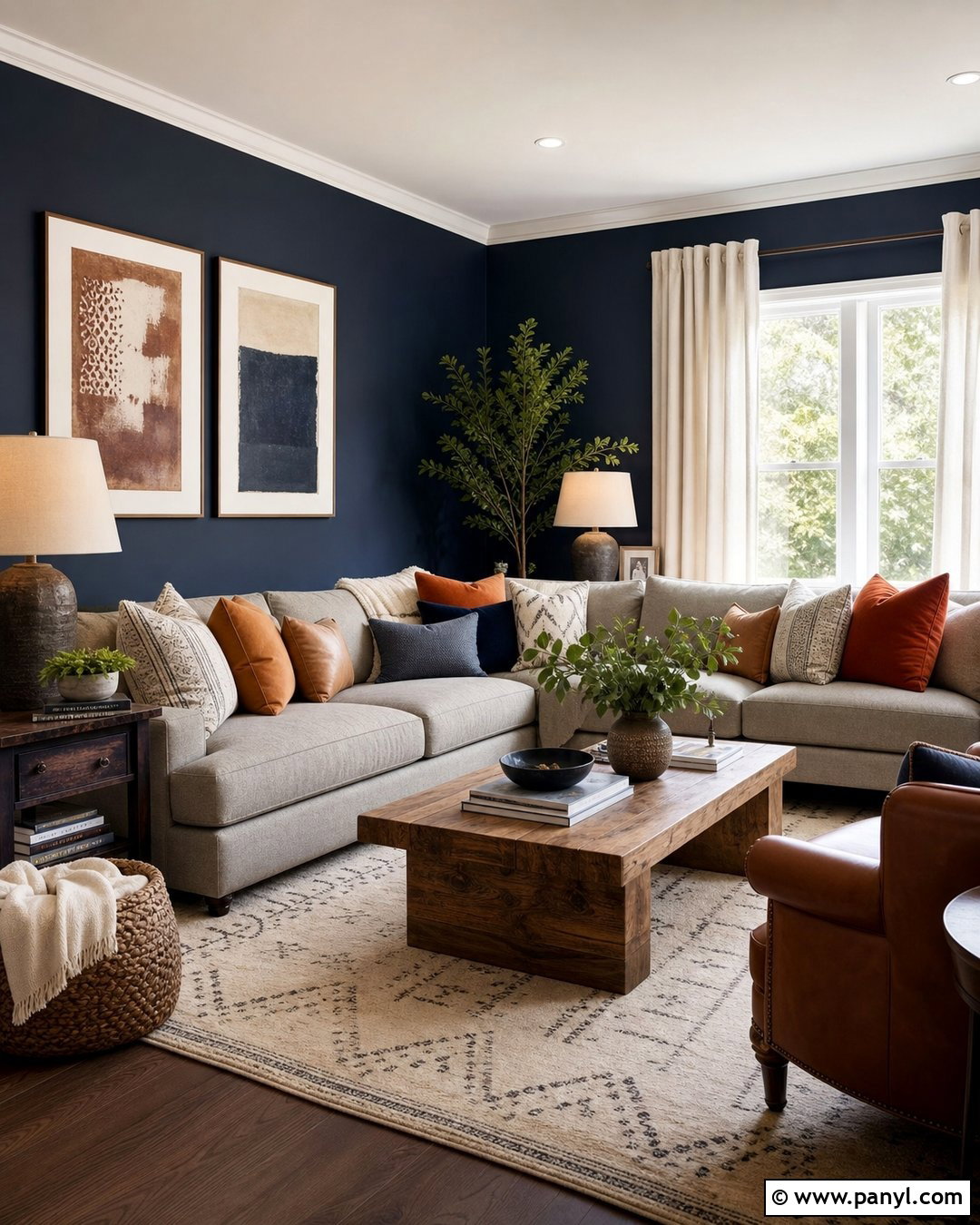
A gray sofa can look sophisticated against dark blue walls when the undertones and textures are carefully balanced. Choose a medium warm gray rather than an icy silver shade. Anchor it with a cream-and-gray patterned rug and a substantial oak coffee table. Add pillows in ivory, faded denim, caramel, and muted rust to bridge the cool walls and neutral upholstery. Hang warm-toned abstract art above the sofa, using natural wood or slim brass frames. A tall floor lamp and two table lamps will illuminate the dark surfaces after sunset. Finish with off-white curtains and a few green plants. The result is a practical, family-friendly living room that feels layered, calm, and intentionally coordinated rather than predominantly gray and blue.
5. Dark Blue Walls With Leather Sofa
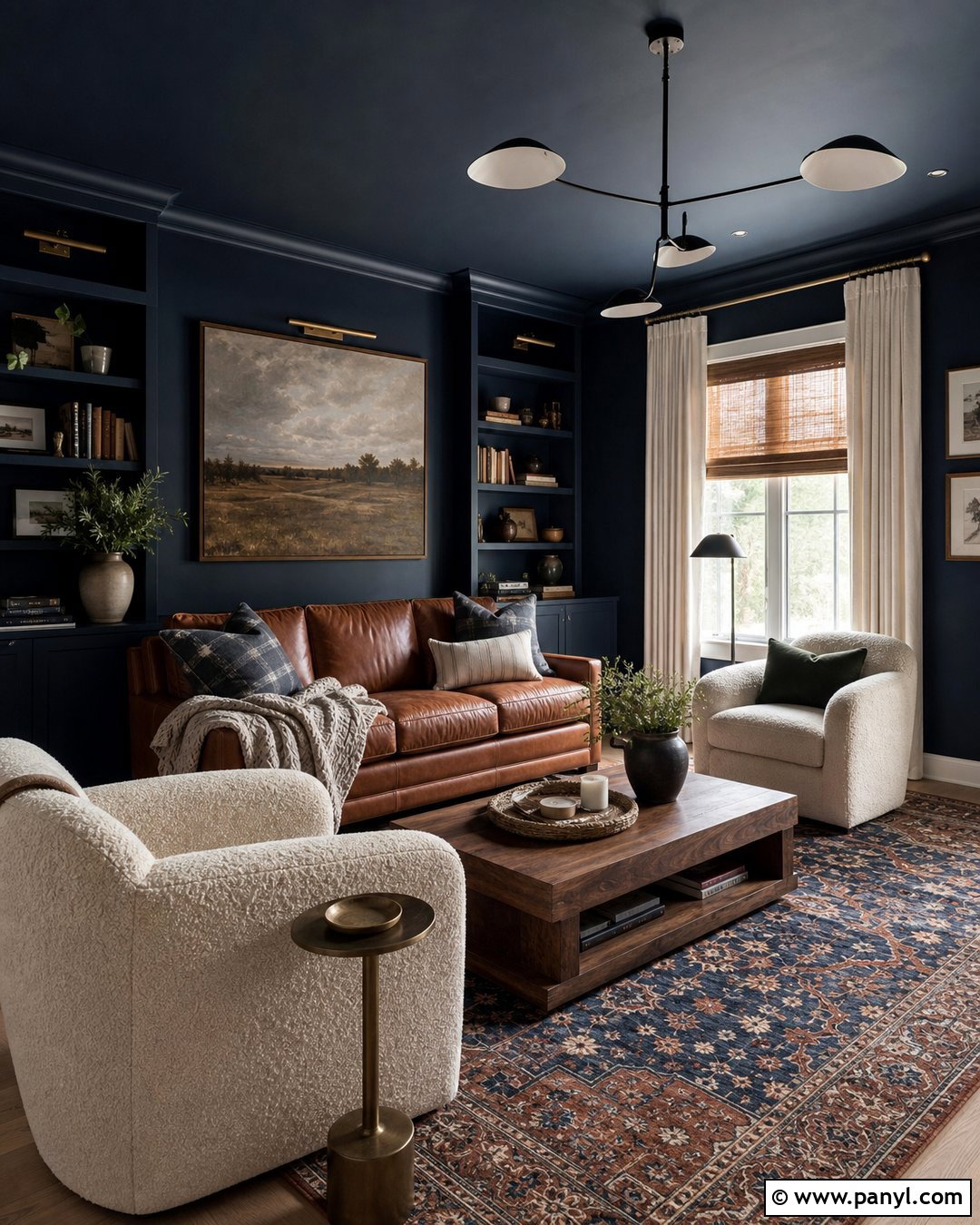
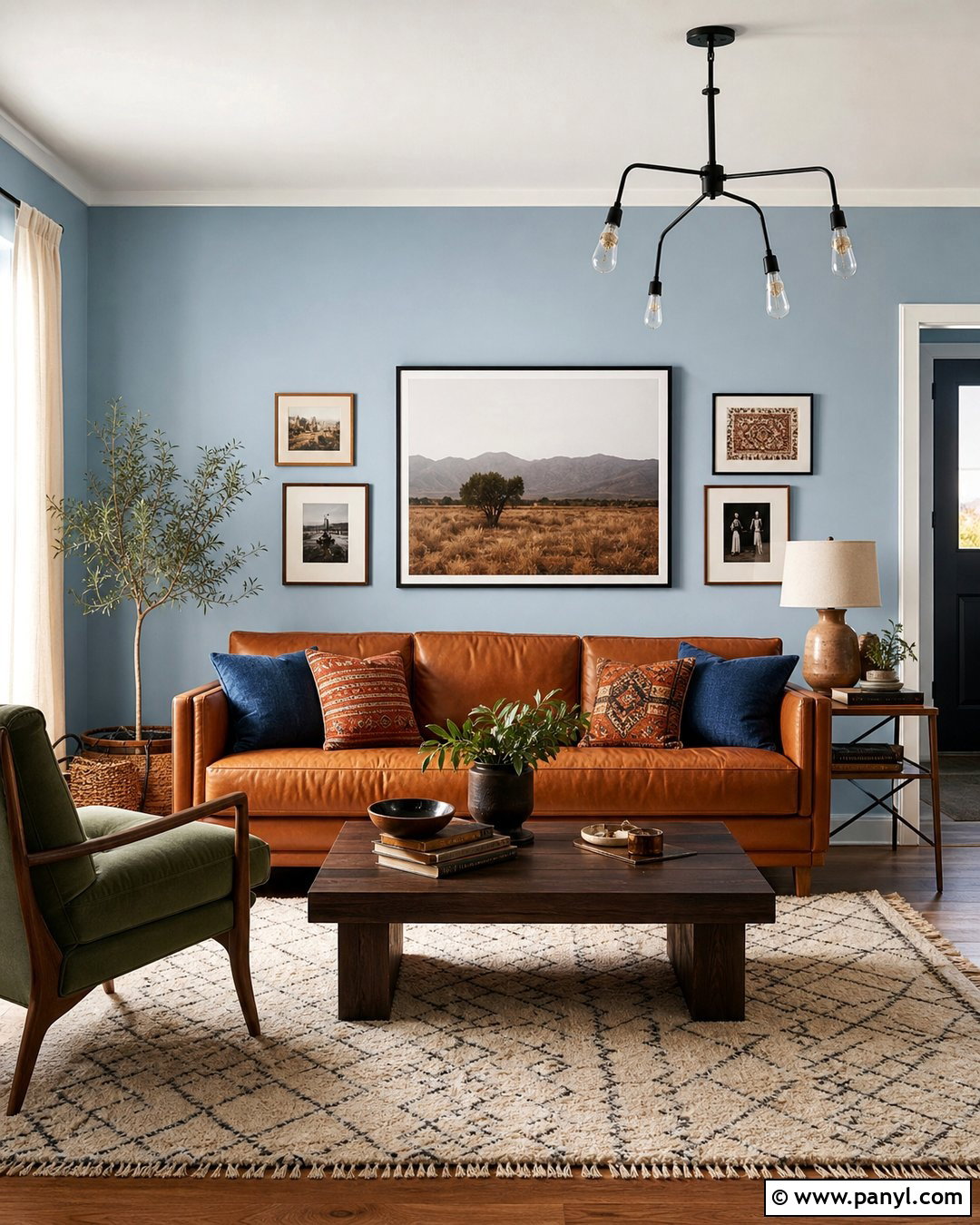
The rich surface of a cognac leather sofa brings instant warmth to dark blue walls. Center the sofa beneath a large landscape print, then position two cream bouclé chairs opposite it to create a comfortable conversation area. A vintage-style rug containing navy, rust, beige, and faded red will tie the main colors together. Select a solid walnut coffee table and simple black metal lighting for an understated masculine edge. Soft linen curtains prevent the room from becoming too heavy, while a knitted throw and patterned pillows make the leather more inviting. Include closed storage to control clutter. This complete design works especially well in a den or family room where durability matters as much as atmosphere.
6. Dark Blue Walls With Cream Decor
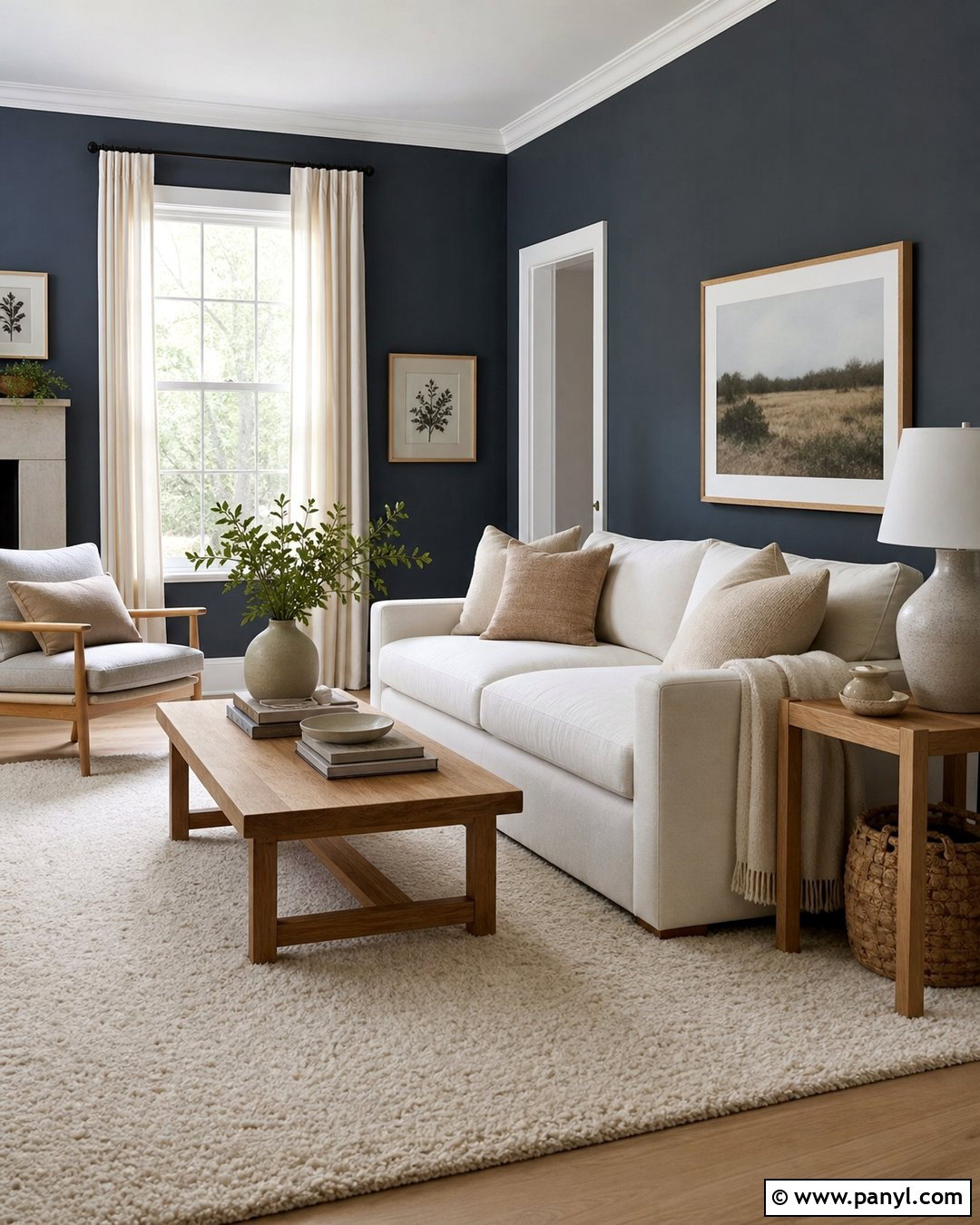
Cream decor softens dark blue walls without creating the sharp contrast of bright white. Choose a plush cream sofa, matching curtains, and a thick wool rug to establish a warm, quiet foundation. Add light oak side tables and a rounded coffee table so the furniture feels relaxed rather than formal. Pillows in sand, pale blue, and subtle botanical patterns provide gentle variation. Keep artwork simple, using cream mats and wood frames that stand out clearly against the blue. Ceramic lamps with linen shades will spread soft light across the walls. A few handcrafted bowls, books, and woven baskets complete the room. This tonal approach produces an elegant retreat that feels cozy throughout the year without appearing dark or overly dramatic.
7. Dark Blue Walls With Beige Furniture
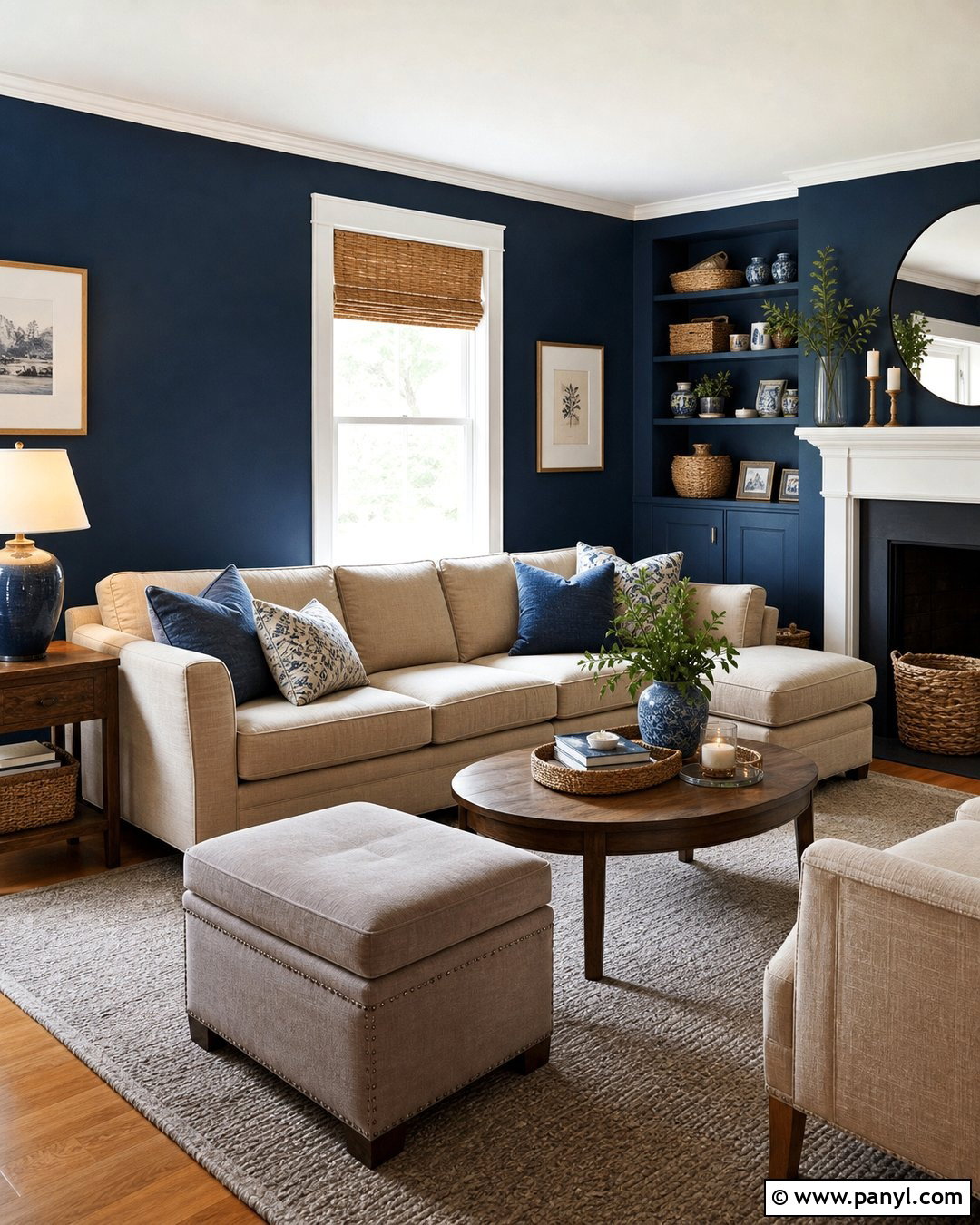
Beige furniture gives dark blue walls an adaptable look that suits busy living spaces. Start with a deep, comfortable sectional in warm beige, then define the seating area with a large textured rug in cream and taupe. Add an oval wood coffee table to improve movement around the sectional. Natural linen curtains, woven shades, and rattan baskets introduce casual texture. Use black sparingly through a floor lamp or narrow picture frames, while ceramic accessories in blue and off-white reinforce the palette. An upholstered ottoman can provide extra seating and hidden storage. The completed room should feel light at eye level and grounded below, allowing the dark blue paint to create depth without overwhelming the practical, neutral furnishings.
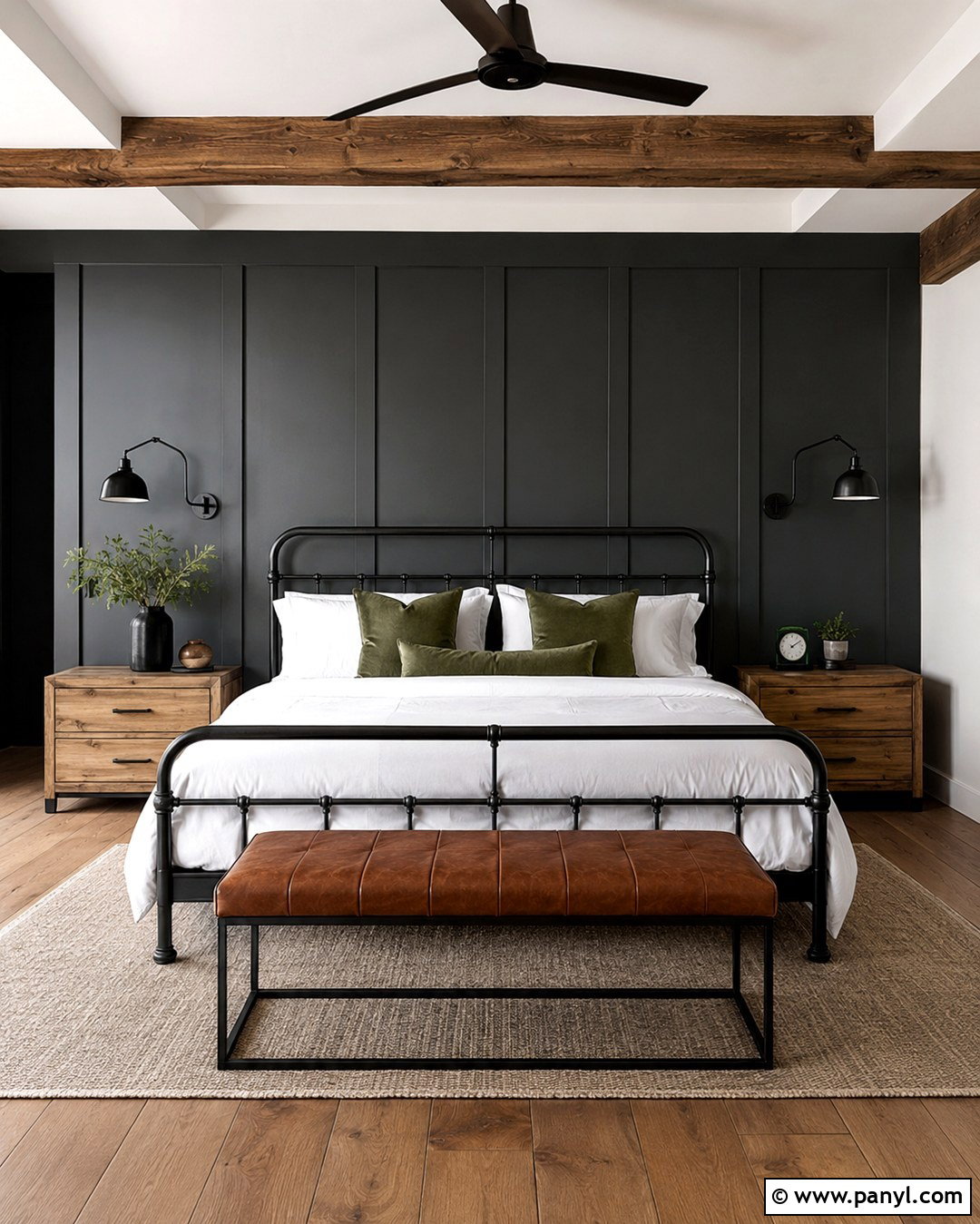
8. Dark Blue Walls With Black Trim
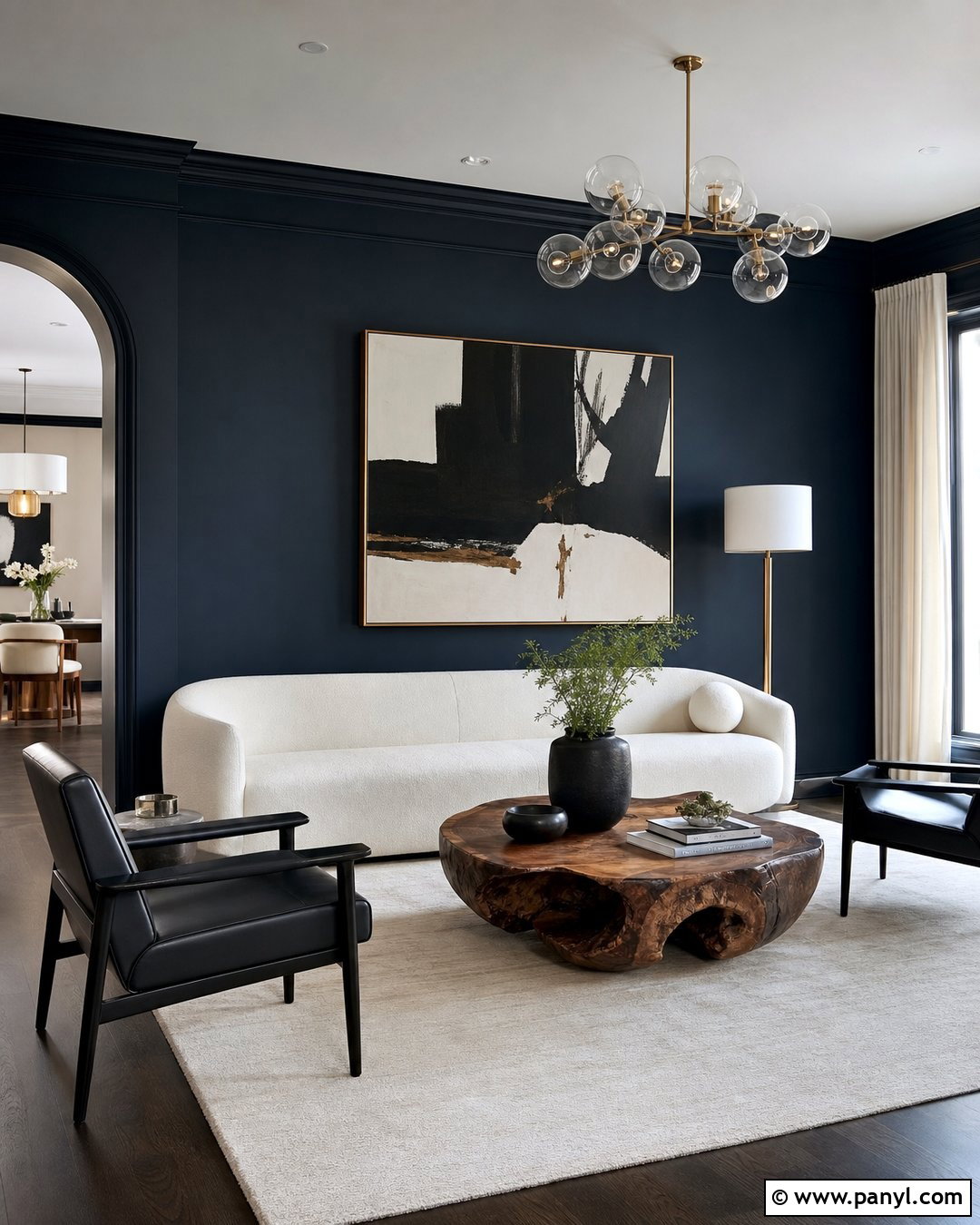
Black trim makes dark blue walls feel architectural and contemporary. This combination works best in a well-lit room where windows, doorways, and moldings can create strong lines. Furnish the space with a low ivory sofa, a sculptural wood coffee table, and streamlined black chairs. Keep the rug pale and lightly textured to offset the dark vertical surfaces. Large modern artwork with white space will prevent the walls from feeling uninterrupted. Add glass or brushed metal lighting rather than bulky black fixtures everywhere. Window treatments can be simple off-white panels or woven shades. With careful restraint, the room becomes bold and tailored. Repeating black only through trim, furniture legs, and frames keeps the finished design cohesive instead of visually severe.
9. Dark Blue Walls With White Trim
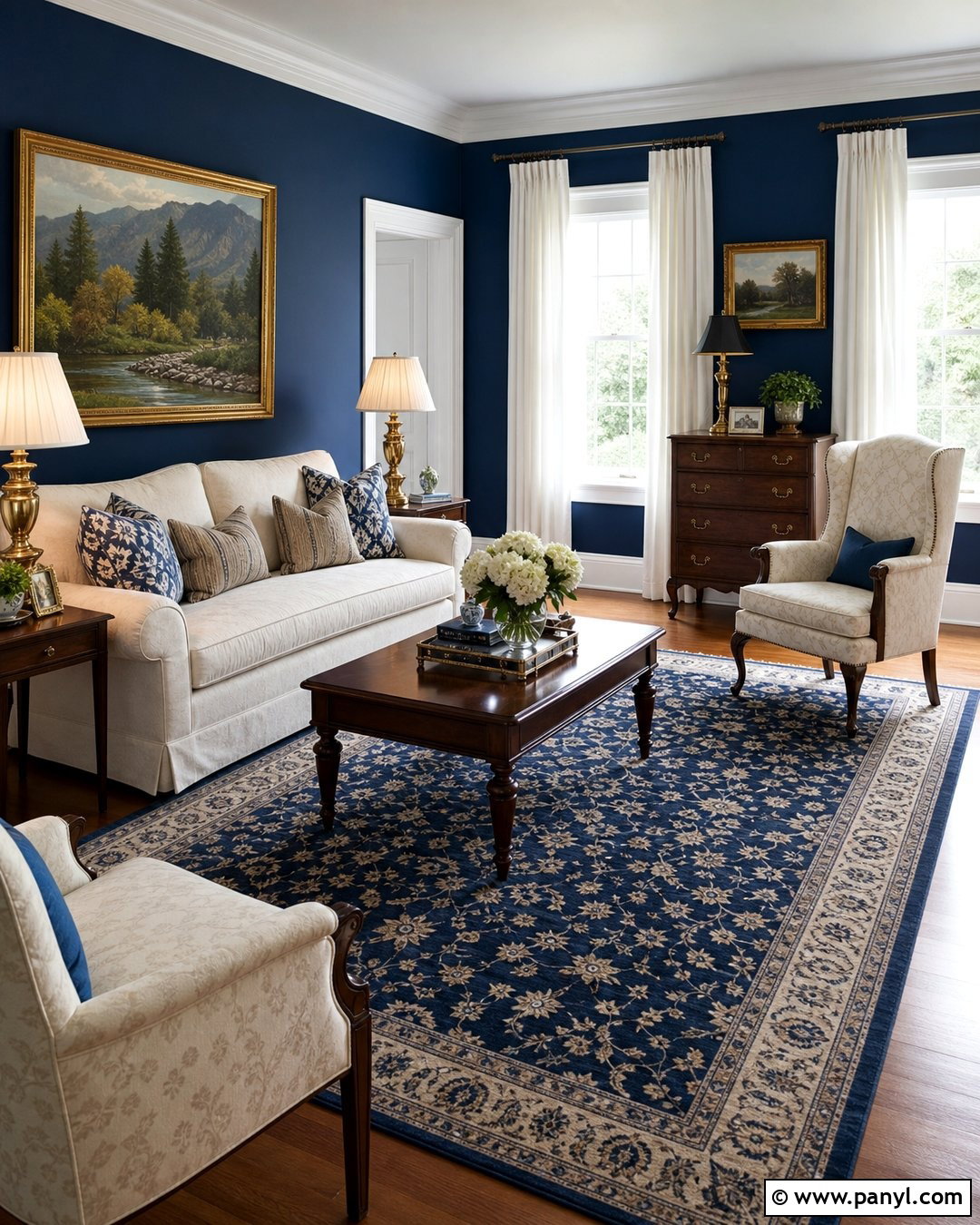
Traditional white trim provides a bright frame around dark blue walls and emphasizes the room’s architecture. Paint baseboards, crown molding, doors, and window casings in a soft white with a slightly warm undertone. Arrange a neutral sofa and two classic armchairs around a substantial wood coffee table. A patterned rug containing blue, cream, and muted red will give the room established character. Hang framed landscapes or botanical prints in an orderly arrangement. White curtains should blend with the trim and visually enlarge the windows. Add polished nickel or antique brass lighting, depending on the age of the home. The finished room feels timeless, balanced, and especially appropriate for spaces with detailed moldings, fireplaces, or built-in cabinetry.
10. Dark Blue Walls With Oak Flooring
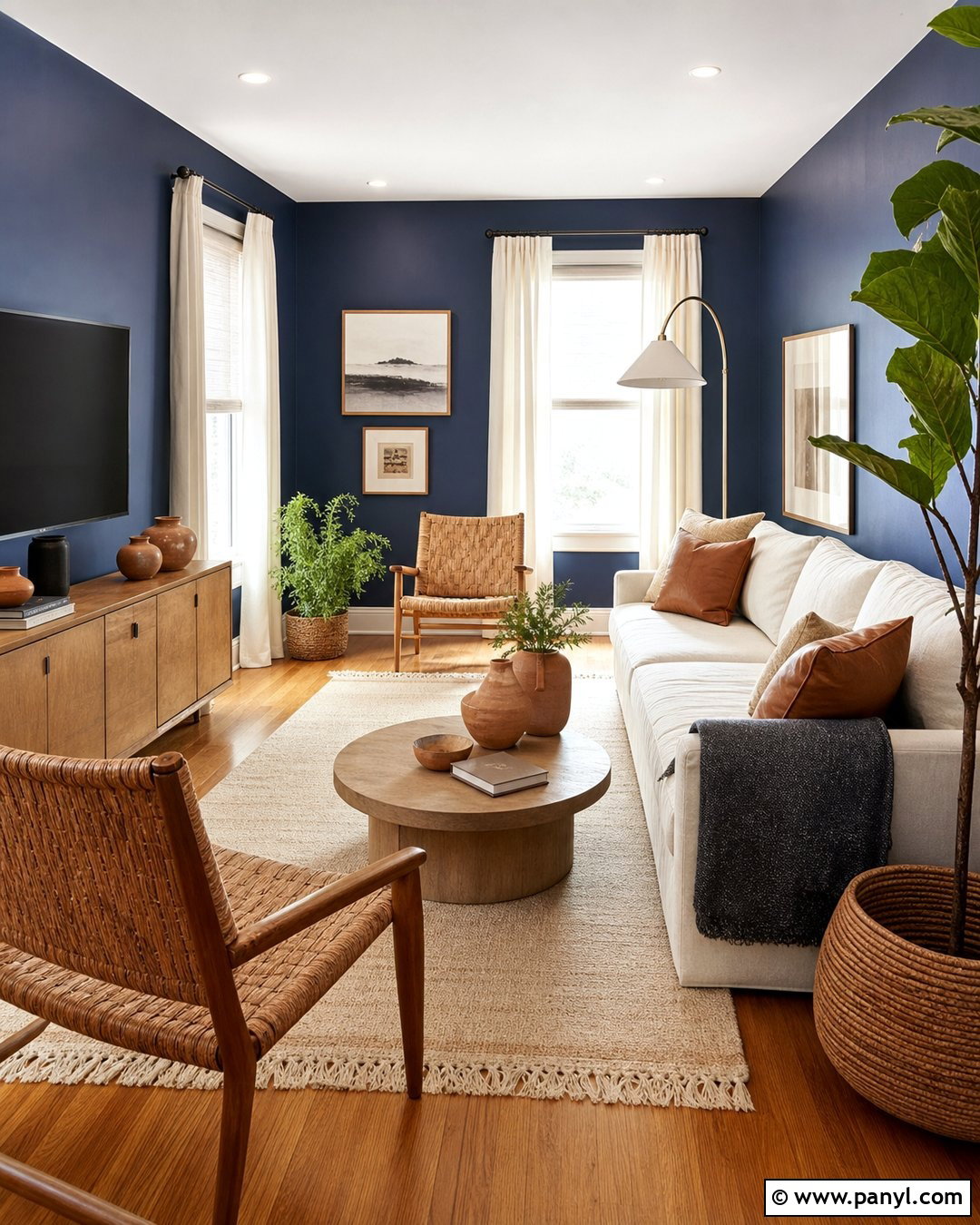
Honey-toned oak flooring can keep dark blue walls from feeling cold. Let the floor remain visible by using a generously sized but lightly colored rug under the main seating group. A linen sofa, oak media cabinet, and two woven accent chairs create a relaxed foundation. Choose curtains in warm white and mount them high to emphasize the ceiling. Terracotta pottery, tan leather cushions, and leafy plants will repeat the floor’s natural warmth around the room. Use matte black lighting for contrast, but avoid an excessive number of dark accessories. The completed living room should include clear pathways and plenty of open floor area. This allows the blue walls and distinctive wood grain to complement each other rather than compete for attention.
11. Dark Blue Walls In A Bedroom
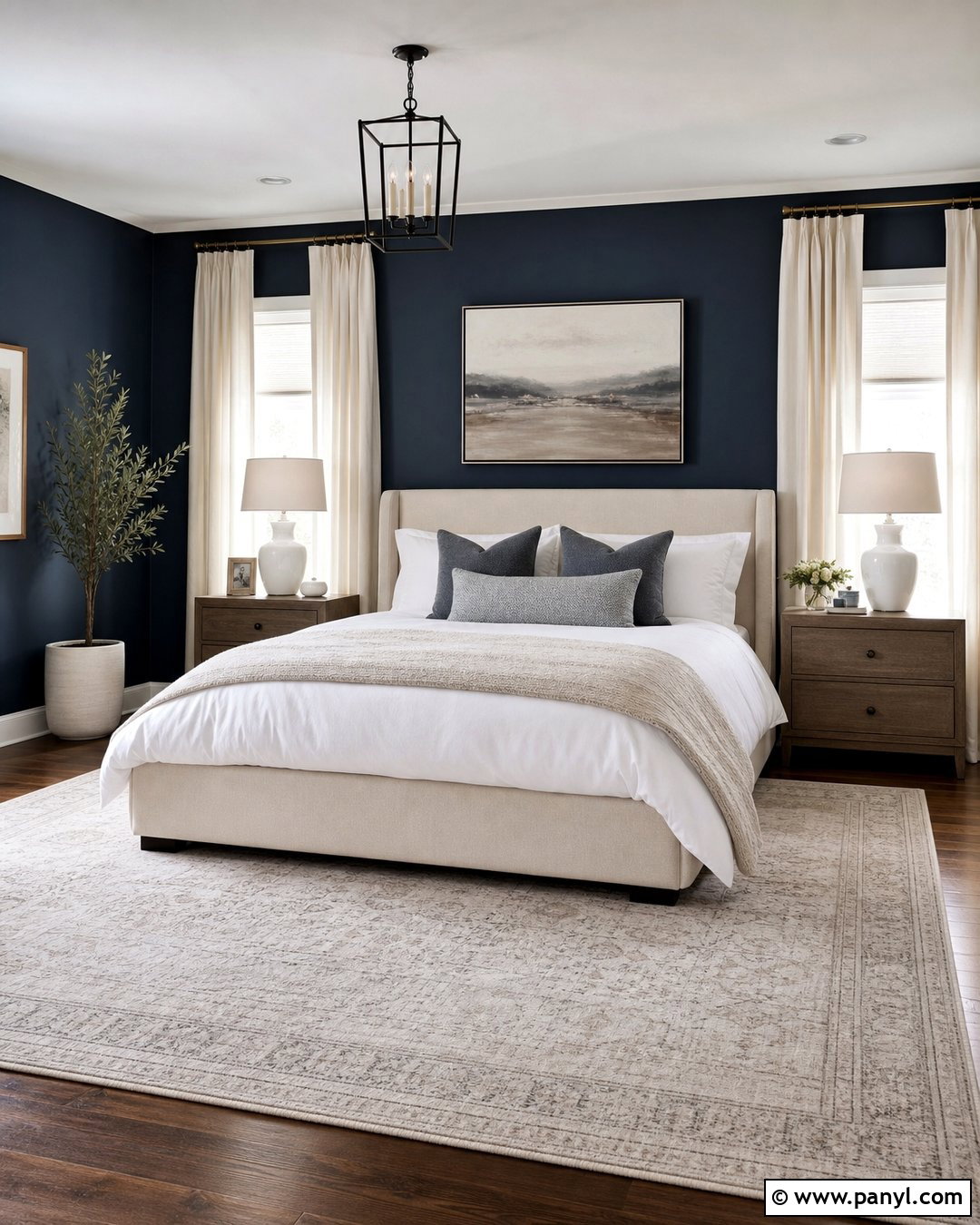
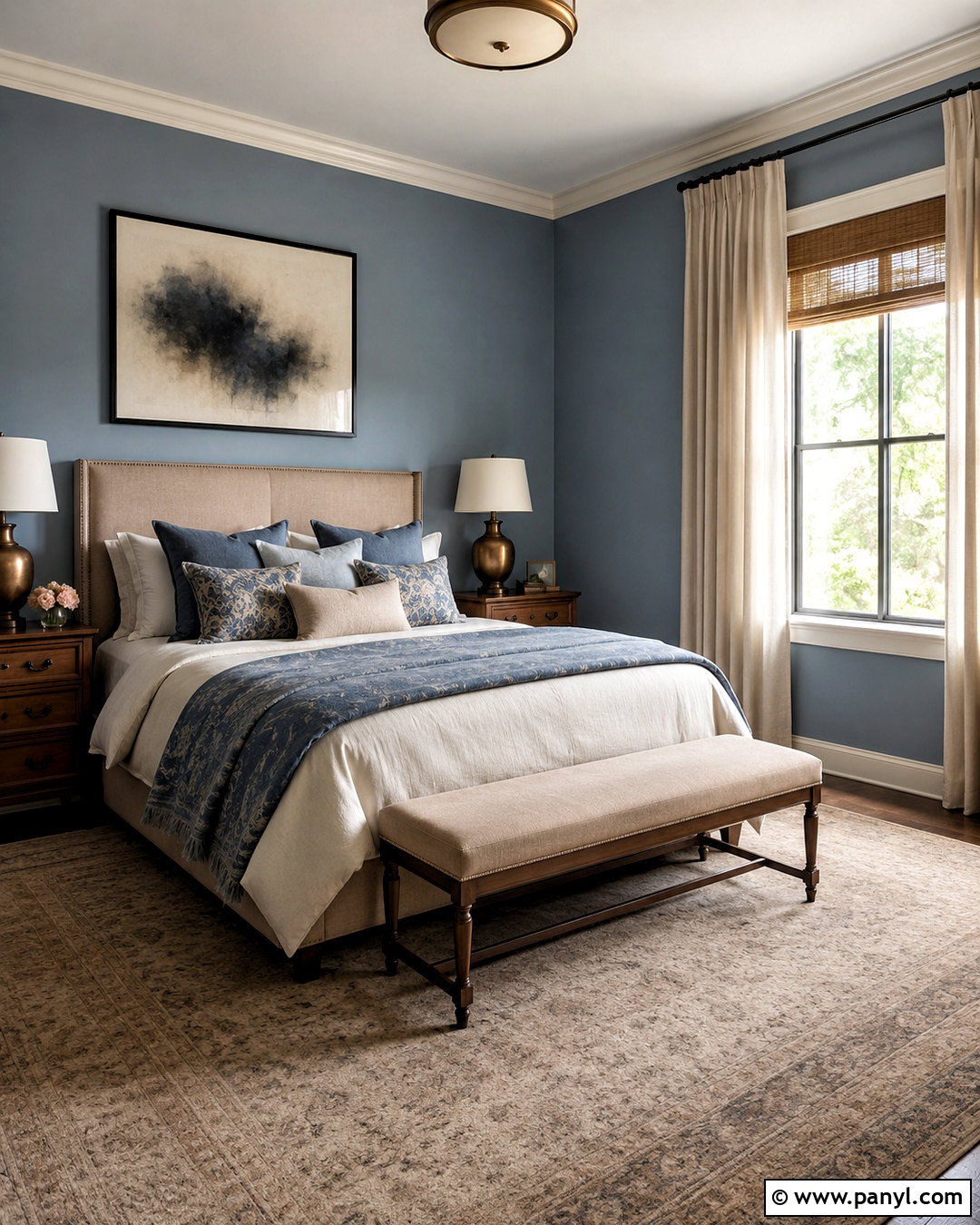
A dark blue bedroom can feel restful when the bed and textiles provide enough contrast. Place an upholstered oatmeal headboard against the main blue wall, then dress the bed in crisp white sheets, a cream quilt, and layered blue-gray pillows. Matching wood nightstands will warm both sides of the arrangement. Install wall sconces or shaded lamps to create an even glow without crowding the surfaces. A large neutral rug should extend beyond the bed, particularly if the flooring is dark. Use full-length ivory curtains and simple artwork with pale backgrounds. Keep the remaining furniture limited to a wood dresser and comfortable reading chair. This uncluttered layout lets the enveloping wall color create comfort while the lighter materials preserve visual balance.
12. Dark Blue Walls With A Wood Bed
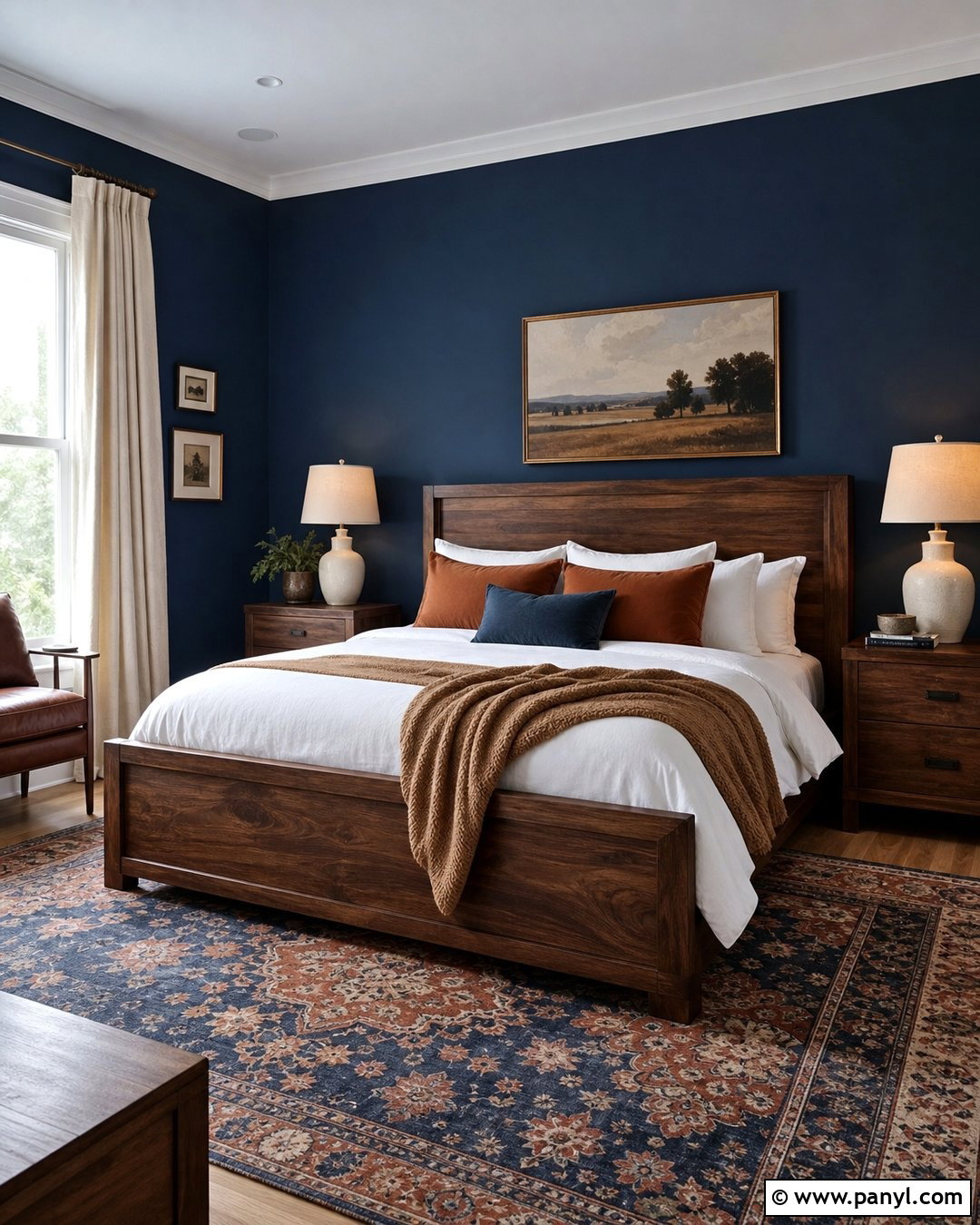
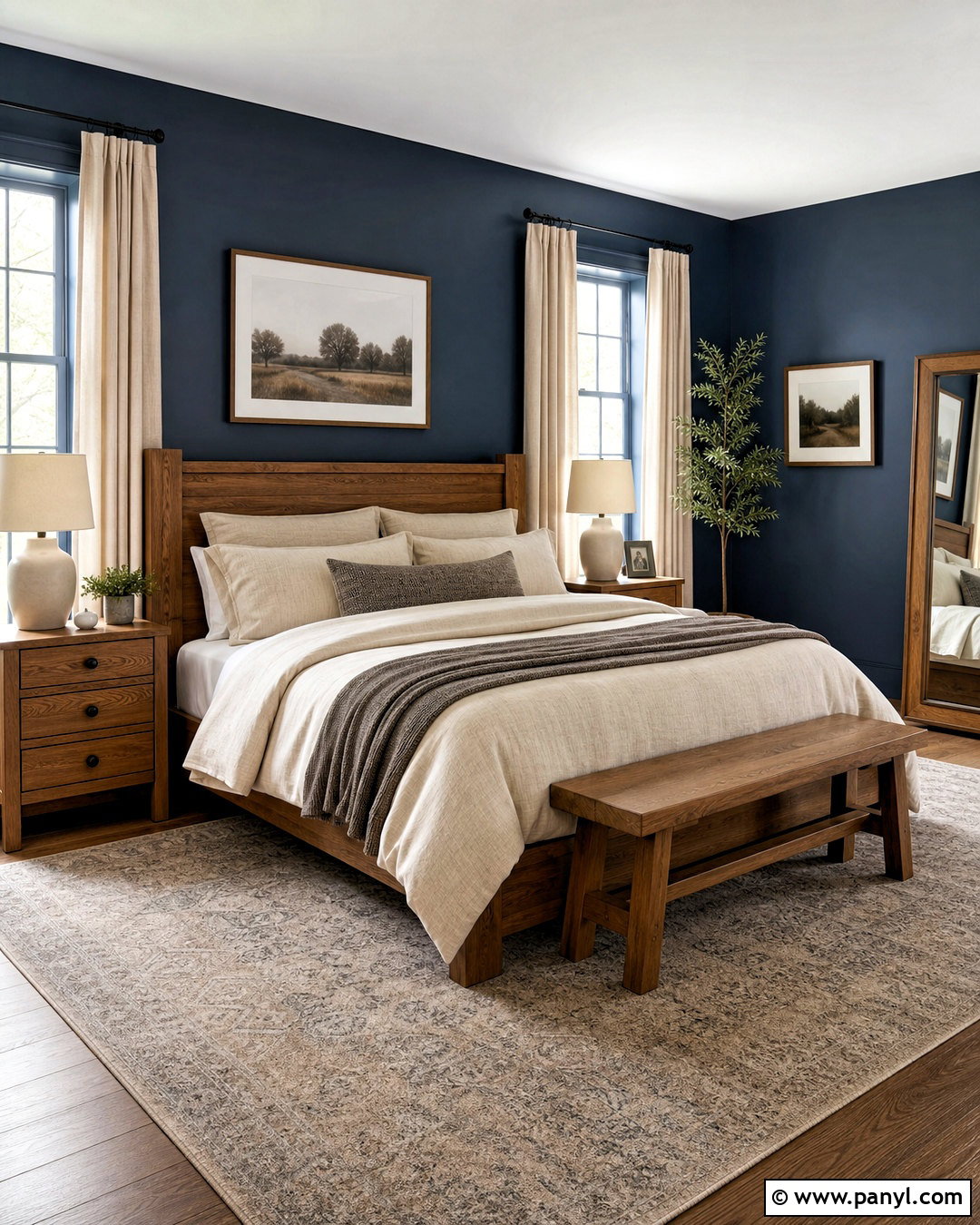
A solid wood bed becomes a warm focal point against dark blue walls. Choose walnut, oak, or acacia with visible grain and a clean, substantial headboard. Layer the bed with white bedding, a camel throw, and patterned pillows containing muted blue and rust. Place matching wood nightstands on both sides, then add ceramic lamps with cream shades. A vintage-inspired rug can introduce softer color and pattern beneath the bed. Keep window treatments pale and simple so natural light reaches the dark surfaces. One large framed print above the headboard is usually more effective than several small pieces. The full scheme feels grounded and welcoming, combining the richness of blue paint with the familiar comfort of natural wood.
13. Dark Blue Walls With Blush Bedding
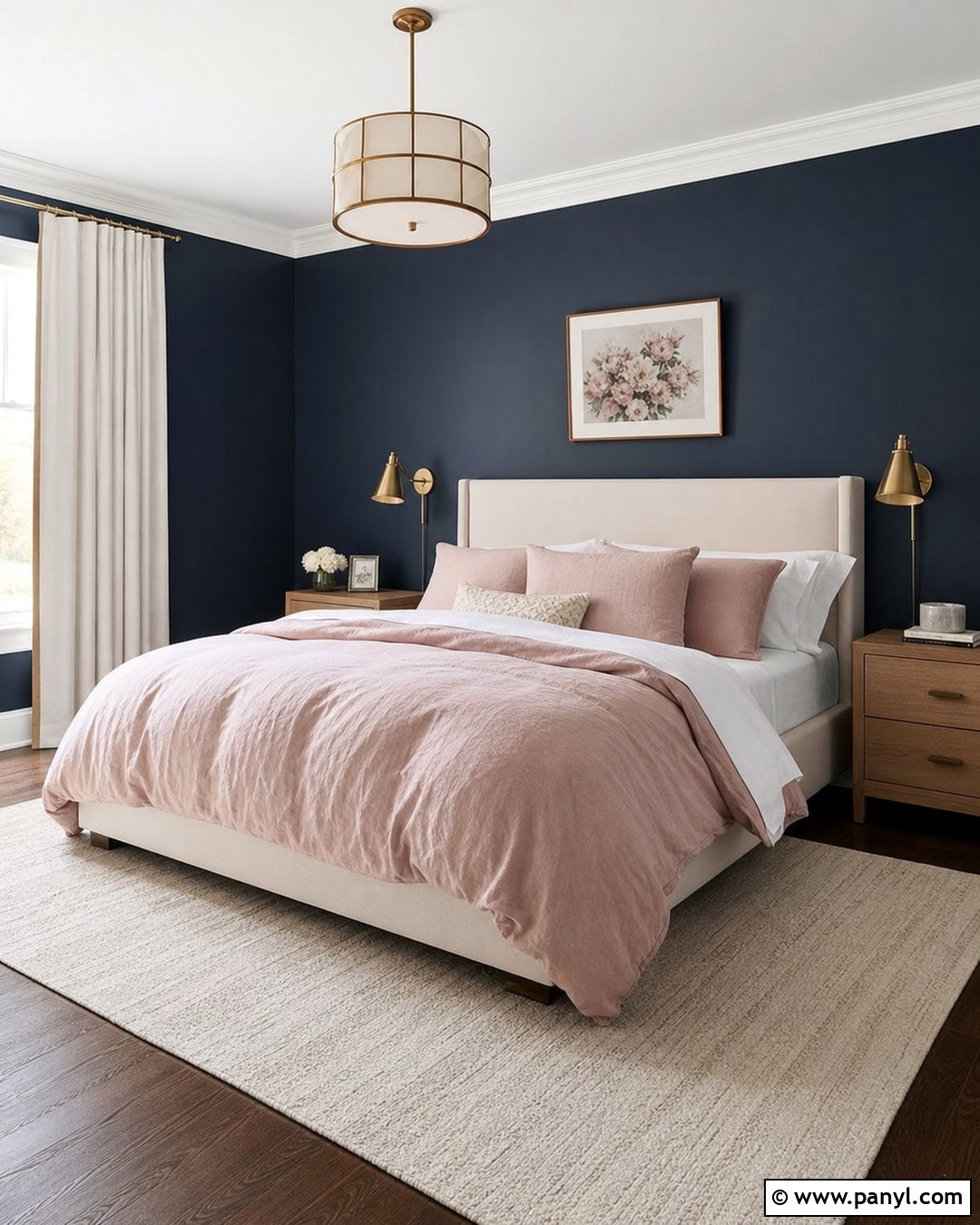
Blush bedding gives dark blue bedroom walls a soft, modern contrast without making the room feel overly sweet. Select a simple cream upholstered bed and layer it with dusty blush linen, white sheets, and a deep blue lumbar pillow. Warm oak nightstands and brushed brass sconces bring balance to the cool wall color. Use a cream rug with a faint blush pattern to connect the bed to the rest of the room. Curtains can be warm white or pale beige, depending on the flooring. Add minimal floral artwork and one upholstered bench at the foot of the bed. Keeping the blush muted and repeating it only a few times creates a grown-up bedroom that feels calm, warm, and carefully edited.
14. Dark Blue Walls With Mustard Bedding
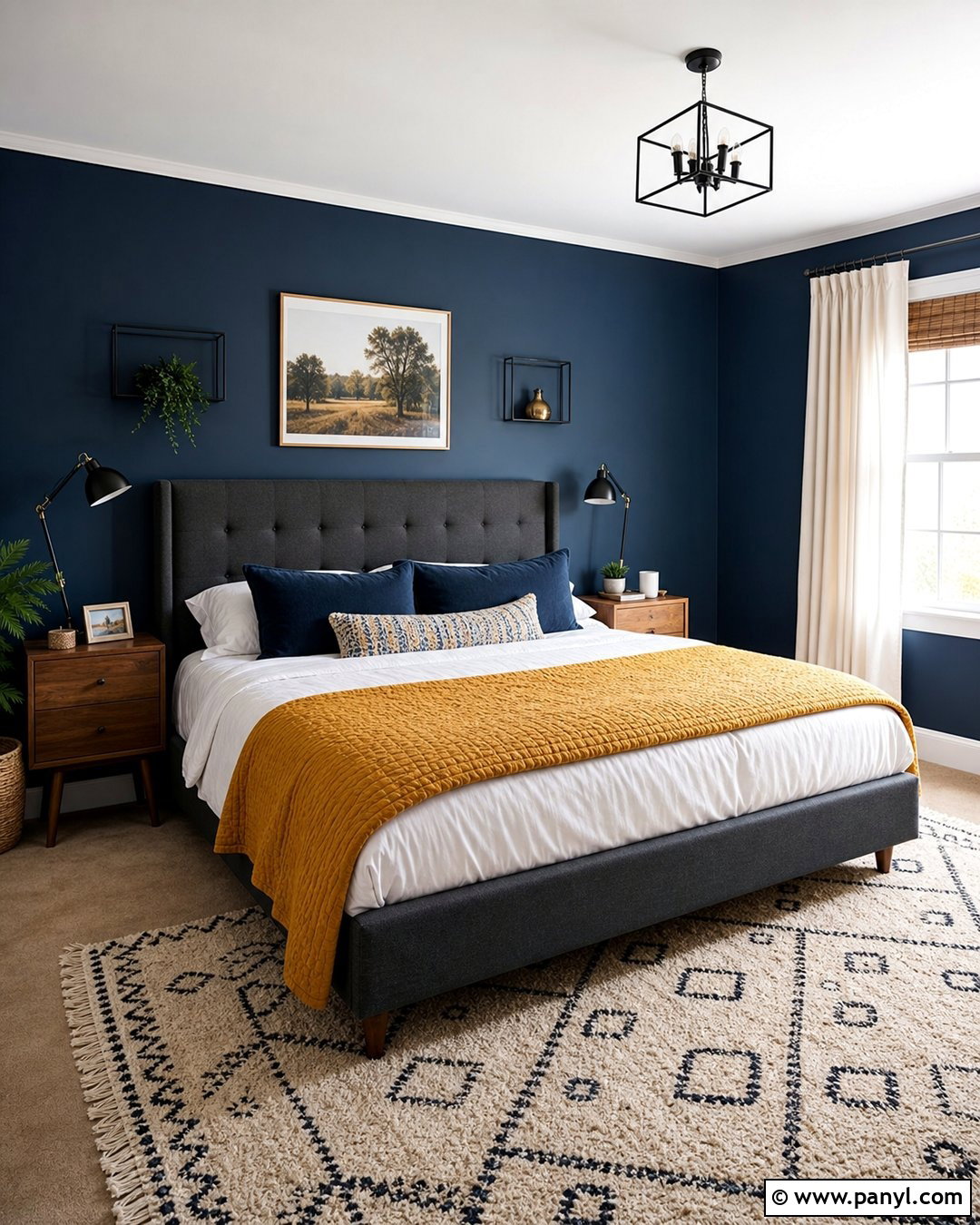
Mustard yellow makes dark blue walls feel lively, especially in a guest room or teenager’s bedroom. Begin with a wood or charcoal upholstered bed, then use white bedding as the primary layer. Add a mustard quilt, dark blue pillows, and one patterned cushion that combines both colors. A geometric rug in cream, blue, and muted yellow will distribute the contrast across the floor. Choose simple oak nightstands and black reading lamps for a casual modern finish. Artwork should include warm neutrals rather than more bright yellow. Finish with off-white curtains and a small wood desk or bench. The room feels cheerful and confident because mustard appears as a controlled accent instead of covering every textile and decorative surface.
15. Dark Blue Walls With A Canopy Bed
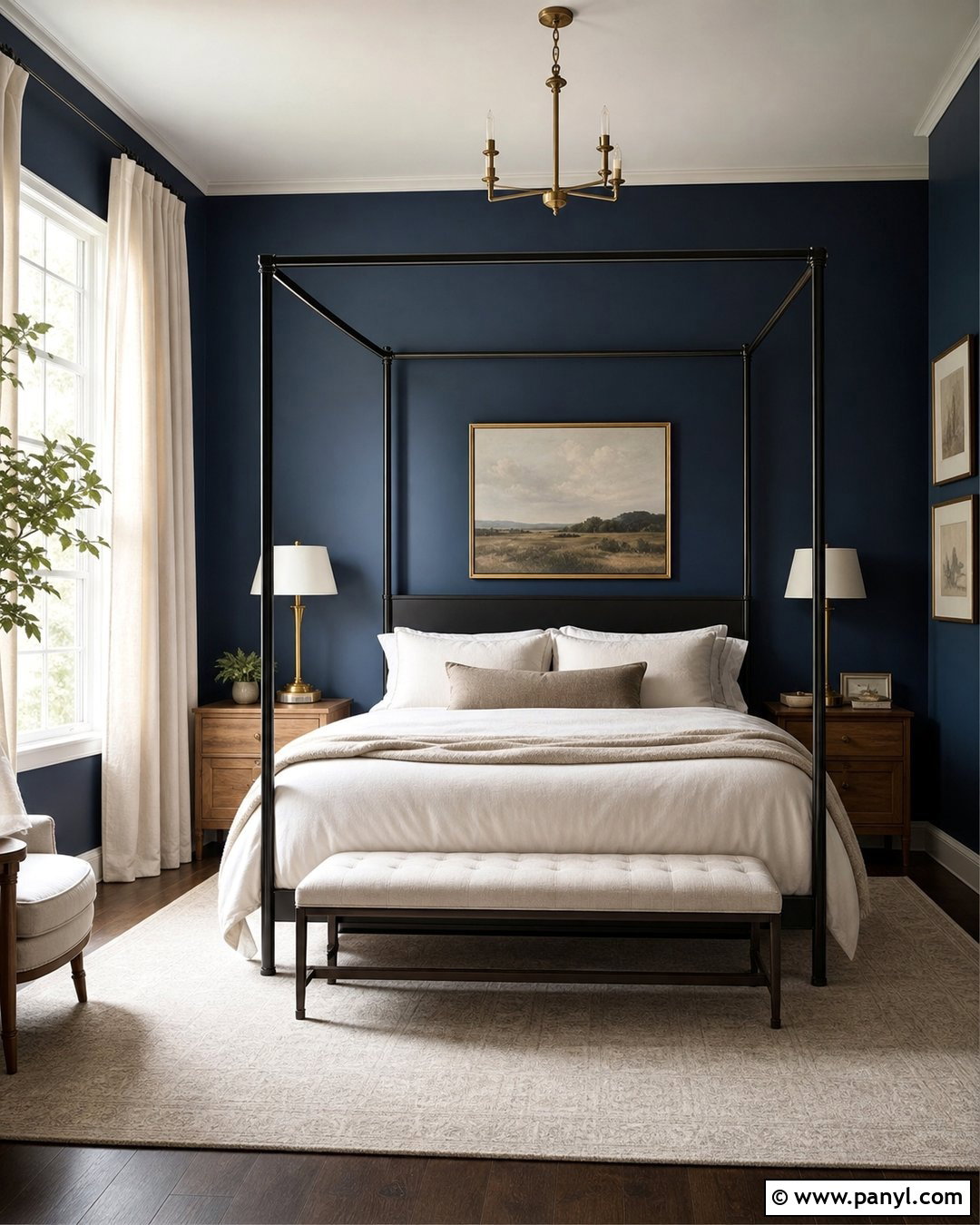
A slim canopy bed adds vertical structure to a bedroom with dark blue walls. Choose a matte black or dark bronze frame that remains visually light, then soften it with ivory bedding and a textured cream blanket. Natural wood nightstands and warm brass lamps prevent the black framework from becoming severe. Place a large pale rug beneath the bed, leaving a generous border on every side. Floor-length linen curtains will introduce movement and balance the strong geometry of the canopy. Add one upholstered bench and a small landscape painting above it rather than crowding the wall behind the bed. The finished bedroom feels intimate and dramatic, yet the bright fabrics and open frame keep the design comfortable and breathable.
16. Dark Blue Walls In A Dining Room
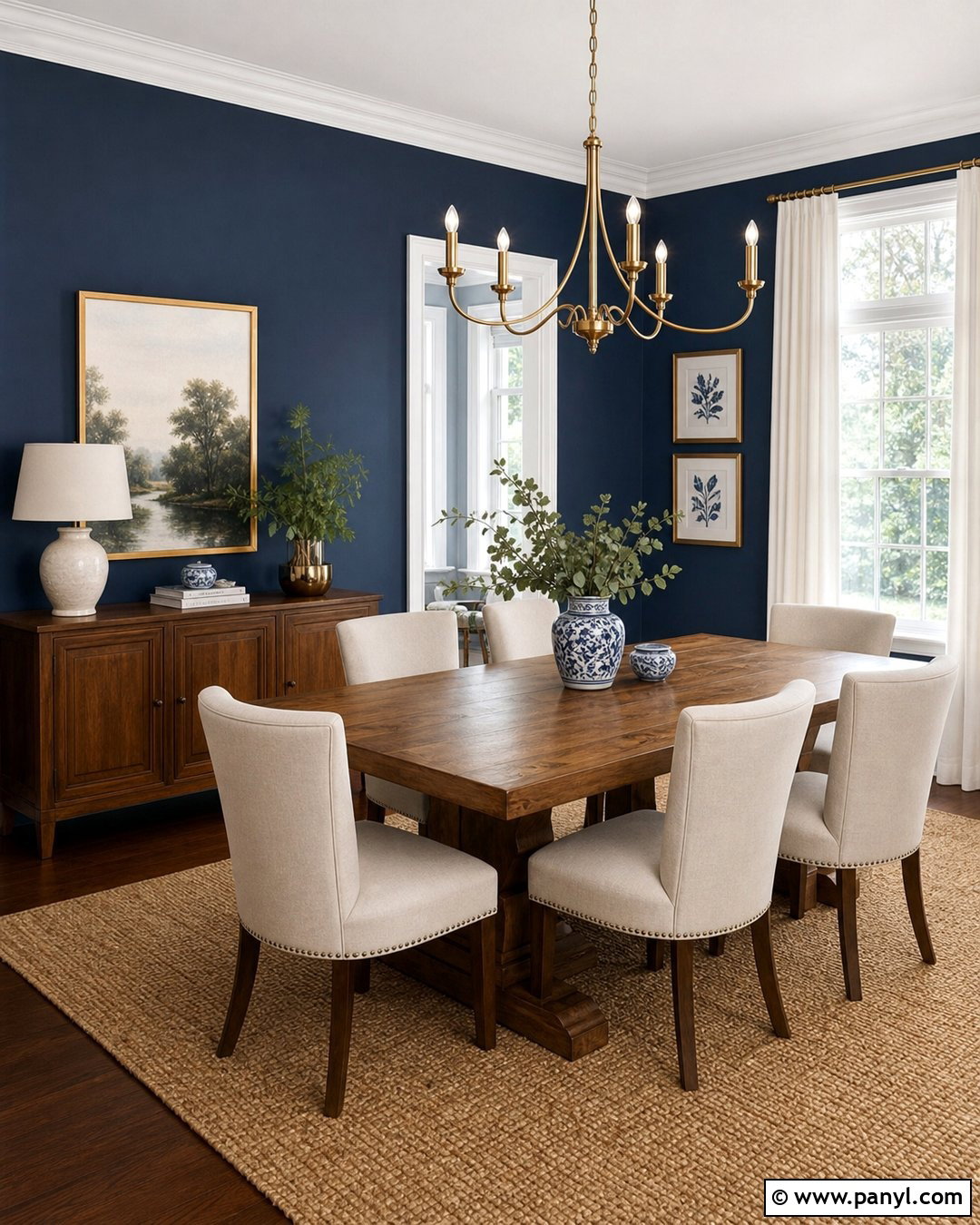
Dark blue walls can turn a dining room into a welcoming destination for everyday meals and gatherings. Center a solid oak table beneath a simple brass or linen-shaded chandelier. Surround it with cream upholstered chairs or woven seats that remain visible against the darker background. Use a low wood sideboard for storage and display one large piece of artwork above it. A flat-weave rug in beige and faded blue will soften the room without creating cleaning difficulties. White curtains and warm table linens introduce brightness. Complete the scheme with ceramic serving pieces, a leafy centerpiece, and candle-free ambient lighting from wall sconces. The room should feel intimate but not formal, with enough open space for chairs to move comfortably.
17. Dark Blue Walls With A Round Dining Table
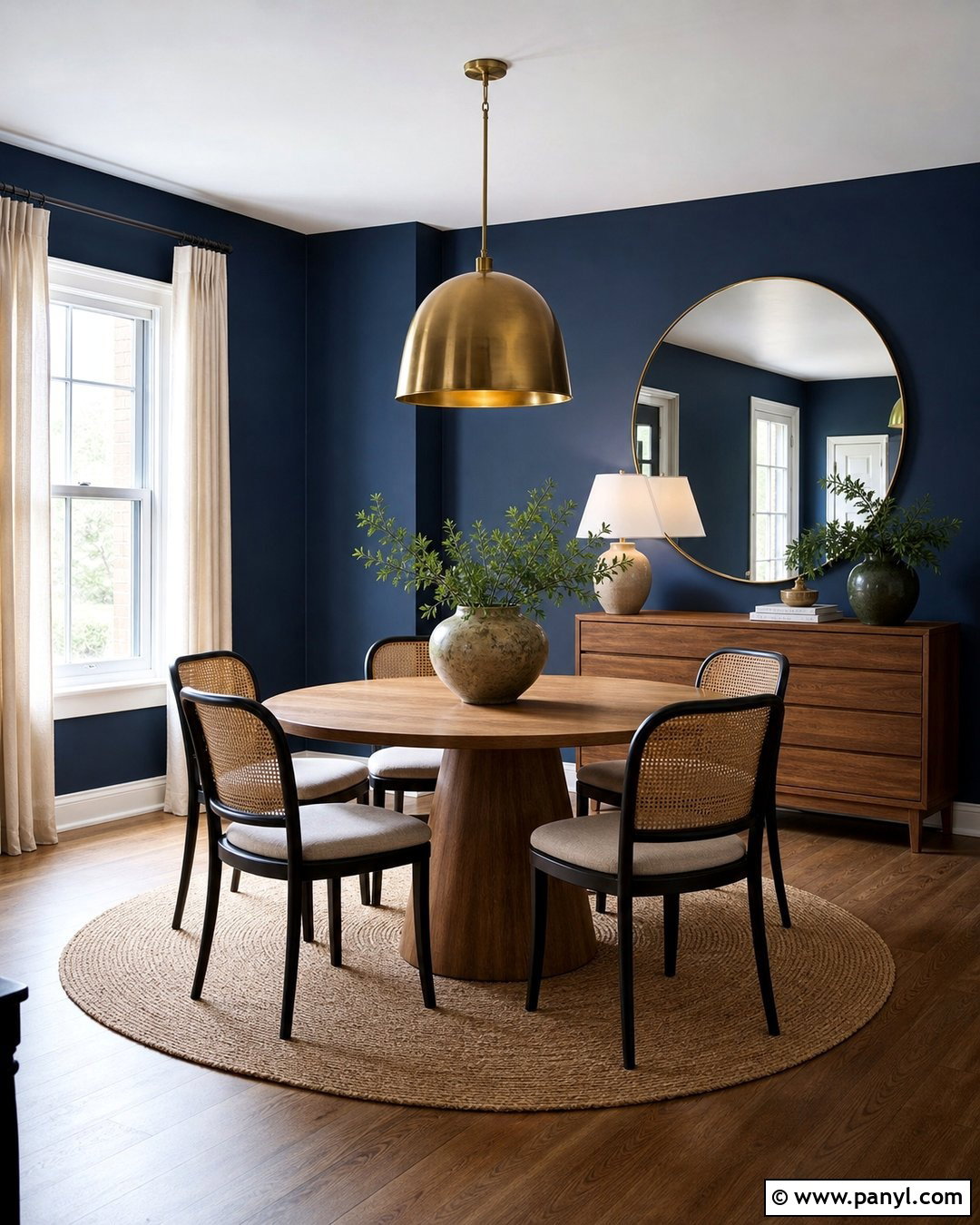
A round dining table is ideal for a compact room with dark blue walls because it improves circulation and softens the color’s strong visual presence. Choose a medium-toned oak pedestal table and four cream, cane, or light gray chairs. Hang a rounded white or brass pendant directly above the center to reinforce the curved layout. A circular woven rug can define the dining area while adding natural texture. Install a shallow sideboard on the widest wall and top it with a large mirror to reflect light. Use warm white curtains and uncomplicated table decor. This complete arrangement makes a small dining room feel purposeful and comfortable, while the dark blue background provides depth around the lighter, curved furniture.
18. Dark Blue Walls With Traditional Molding
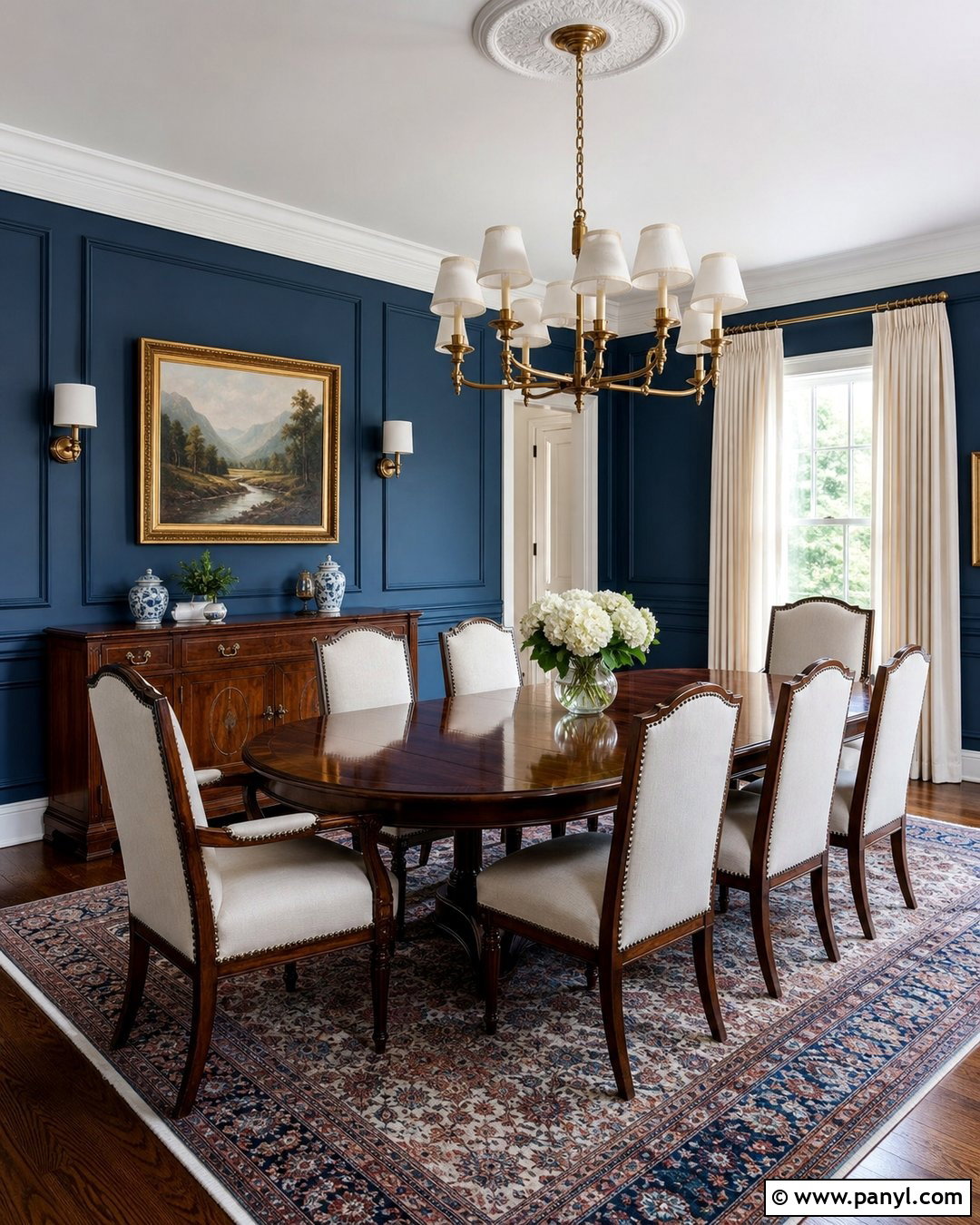
Applied molding gives dark blue walls greater depth and makes a dining room feel established. Paint the walls and molding in the same dark blue eggshell finish so shadows define the panels naturally. Add a polished wood dining table, upholstered cream chairs, and a traditional rug with faded blue, rust, and tan details. A warm brass chandelier will highlight the wall texture without competing with it. Place a wood sideboard beneath a large landscape painting in an antique-style frame. White or pale beige curtains should extend from ceiling to floor, balancing the saturated paint. The completed room combines classic architecture with comfortable furnishings, creating a refined space that still works for family meals and casual entertaining.
19. Dark Blue Walls In A Home Office
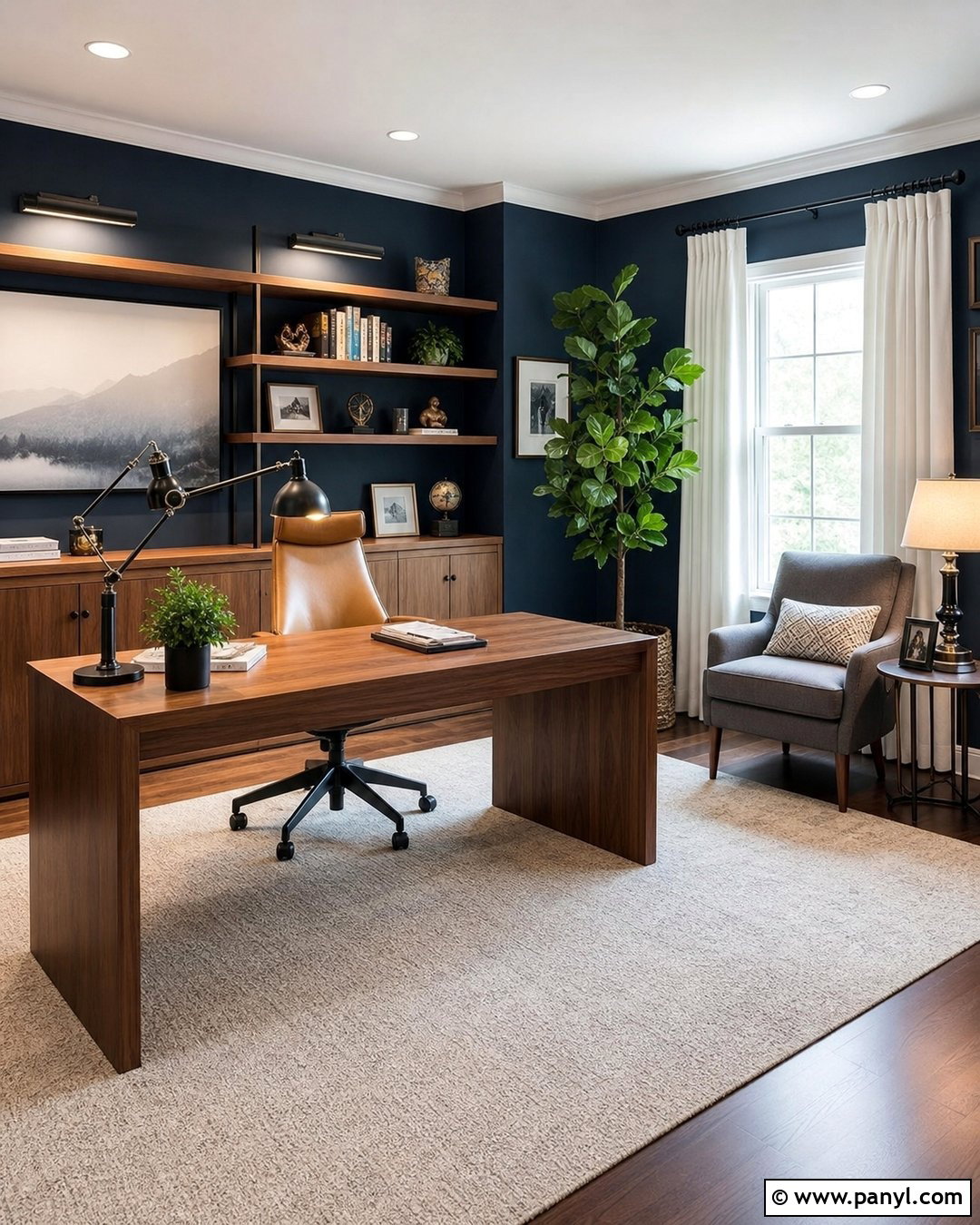
Dark blue walls can provide a focused backdrop for a practical home office. Position a walnut desk where daylight falls from the side rather than directly behind the monitor. Add an ergonomic chair in tan leather or oatmeal fabric and place a light neutral rug beneath the work area. Closed wood cabinets will manage supplies, while a few open shelves can hold books, framed art, and ceramics. Use a bright adjustable desk lamp, an overhead fixture, and one floor lamp to eliminate shadowy corners. Off-white curtains or woven shades will soften the window. A leafy plant and a comfortable reading chair complete the layout. The finished office feels professional and calm without resembling a dark, overly formal study.
20. Dark Blue Walls With Built-In Shelves
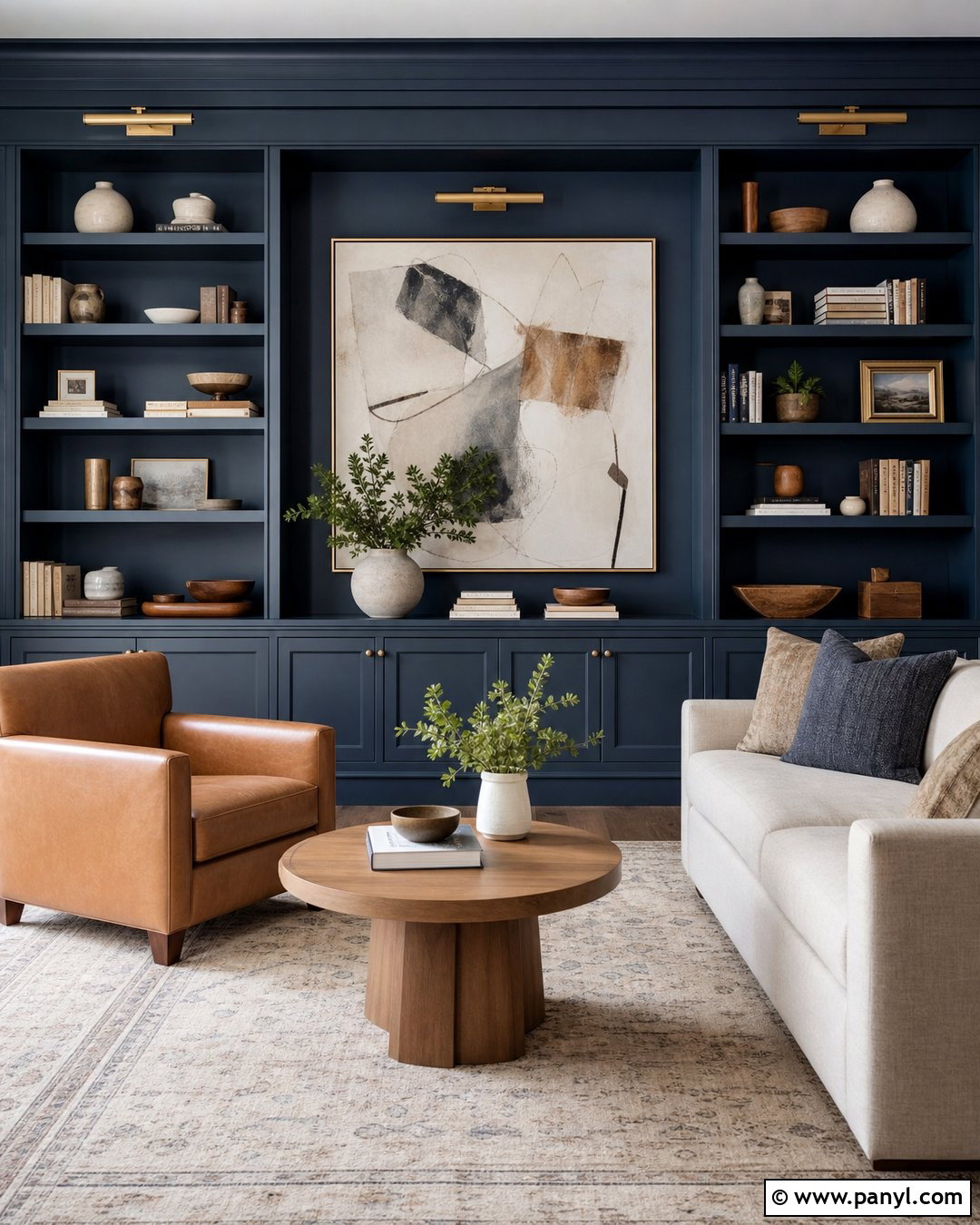
Built-in shelves painted to match dark blue walls create a seamless, custom appearance. Use this treatment in an office, library, or den where storage is part of the overall architecture. Break up the blue with books, cream pottery, framed photographs, and small wood objects. Leave some shelf space empty so the display remains easy to read. A camel leather chair, light upholstered sofa, and patterned neutral rug will warm the room. Include picture lights or integrated shelf lighting in aged brass to brighten the recessed areas. A round wood coffee table keeps the seating arrangement relaxed. By combining closed lower cabinets with open upper shelves, the finished design delivers practical storage while preserving a polished, uncluttered look.
21. Dark Blue Walls In A Reading Room
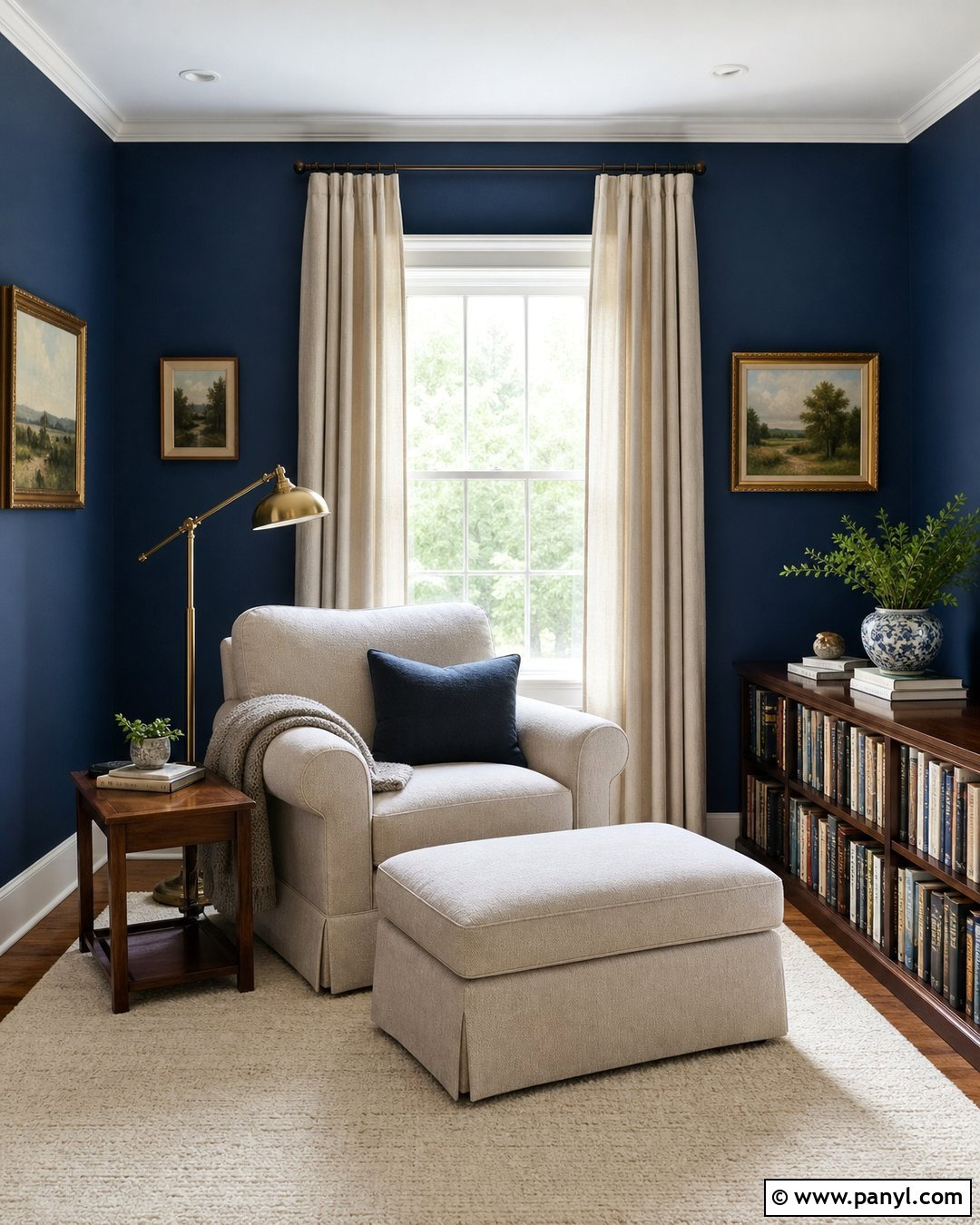
Imagine settling into a deep chair surrounded by dark blue walls, soft textiles, and neatly arranged books. Place a comfortable oatmeal armchair near the window with a small walnut table and adjustable brass floor lamp beside it. Add a matching ottoman or upholstered footstool for longer reading sessions. A low bookcase can run along one wall without making the room feel crowded. Use a thick cream rug and full-length linen curtains to soften sound and introduce lighter surfaces. Hang a few small landscapes in warm wood frames above the shelves. A second chair allows the room to function as a quiet conversation space. The complete look feels cozy and purposeful, with every piece supporting relaxation rather than serving as decoration alone.
22. Dark Blue Walls In A Small Living Room
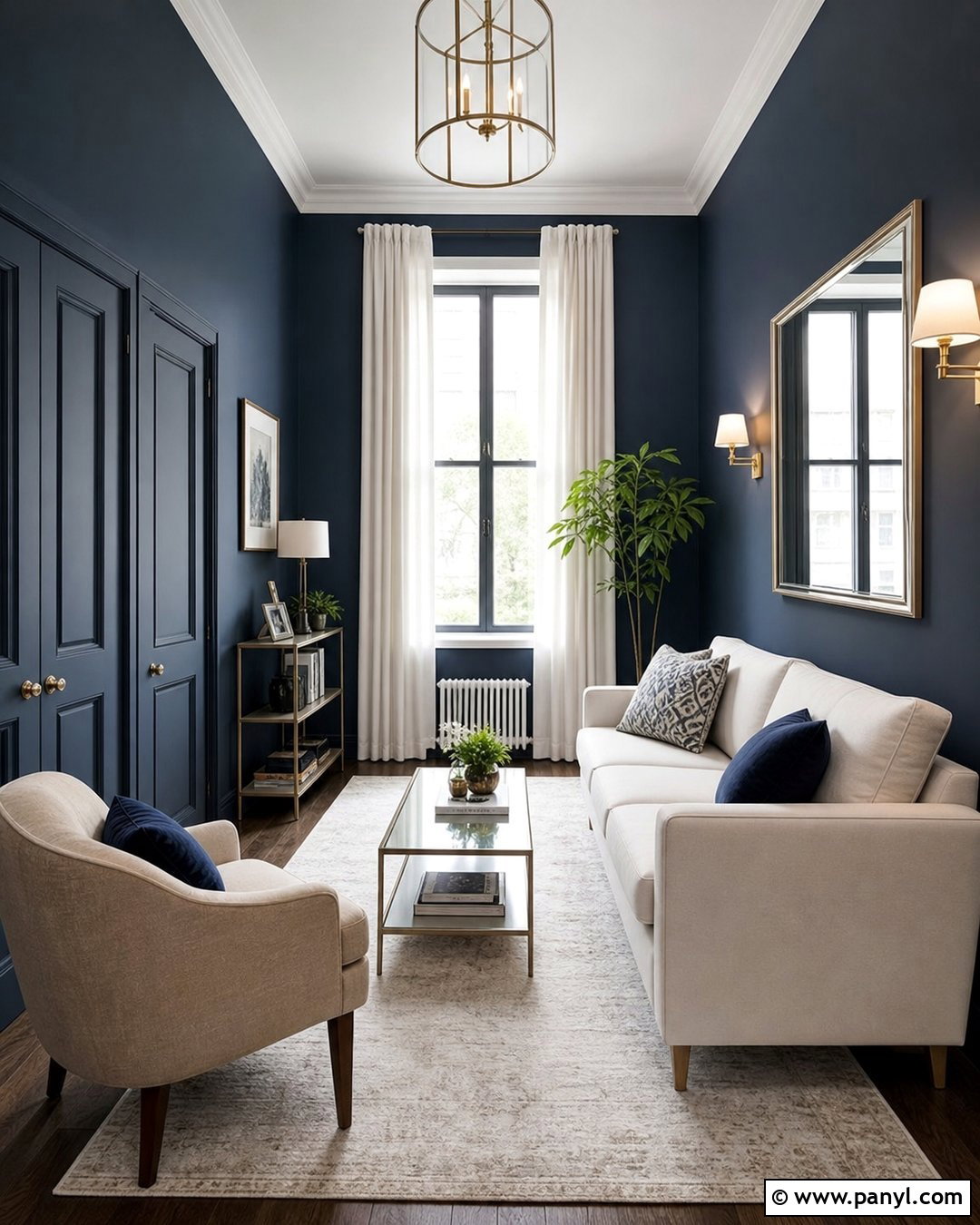
Small rooms can handle dark blue walls when the furniture is appropriately scaled and the lighting is layered. Choose a compact cream sofa with exposed legs, then add one light accent chair instead of a bulky matching set. A glass or narrow oval coffee table will preserve visual space and make movement easier. Use a pale rug that nearly fills the room, creating one continuous foundation. Hang curtains high and wide around the window, and place a mirror where it can reflect daylight. Wall-mounted sconces save floor and table space. Keep accessories limited to a few framed prints, pillows, and plants. This finished layout feels cozy rather than cramped because the lighter furnishings and clear pathways balance the deep wall color.
23. Dark Blue Walls With Color Drenching
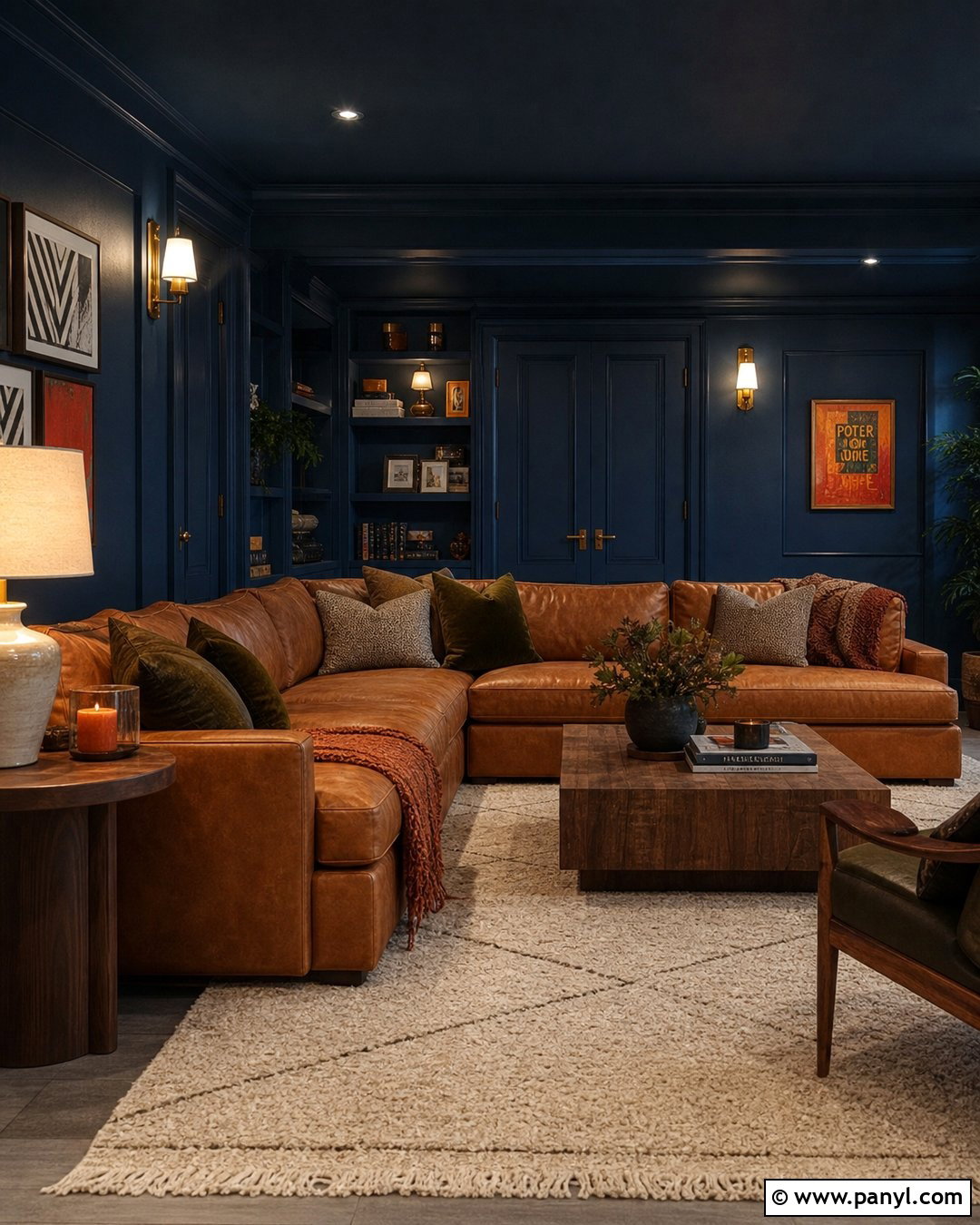
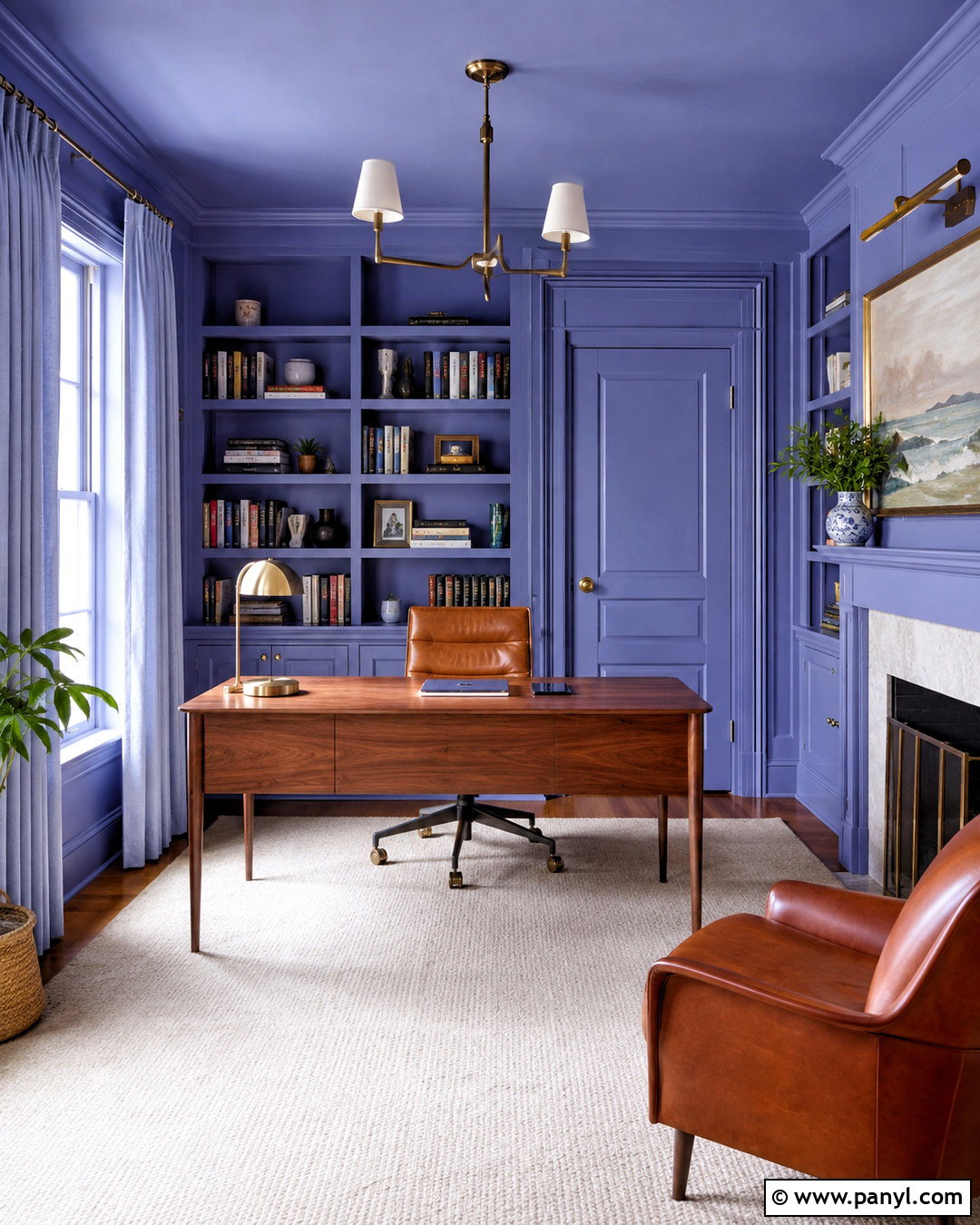
Color drenching extends dark blue across the walls, trim, doors, and ceiling for an immersive effect. It works particularly well in a den, library, or media room designed for evening relaxation. Use slightly different paint sheens to reveal architectural details: matte on walls, durable satin on trim, and flat paint overhead. Furnish the room with a caramel sectional, an oversized cream rug, and walnut tables. Add rust, olive, and patterned blue cushions to create warmth and variation. Brass sconces and shaded lamps should provide light at several heights. Keep artwork bold but limited. The completed room feels intentional because the blue surrounds a carefully balanced collection of warm furniture, tactile textiles, and reflective accents rather than standing alone.
24. Dark Blue Walls With A Lighter Blue Ceiling
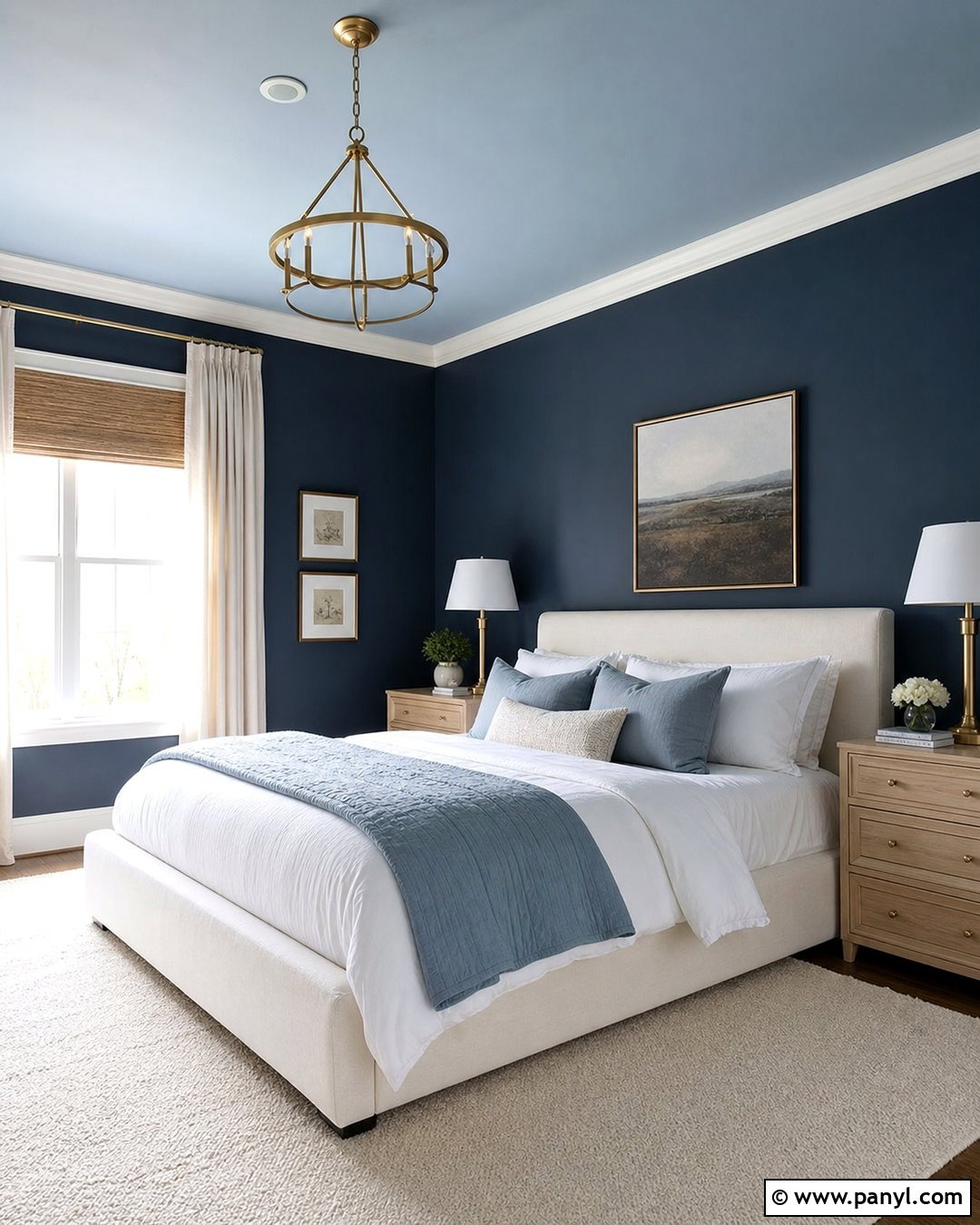
A lighter blue ceiling softens dark blue walls while maintaining a cohesive tonal palette. Choose a misty or mineral blue overhead, then use warm white trim to create a clean boundary between the two shades. In a bedroom, add an ivory upholstered bed, pale wood nightstands, and layered bedding in white, dusty blue, and sand. A cream rug will brighten the floor, while linen curtains keep the window treatment relaxed. Use warm brass or brushed nickel lamps to reflect light gently. Artwork can include skies, water, or abstract blue forms without becoming overly themed. The completed room feels expansive above and cocooning around the sides, making the two-tone treatment a useful alternative to an entirely dark ceiling.
25. Dark Blue Walls With A White Ceiling
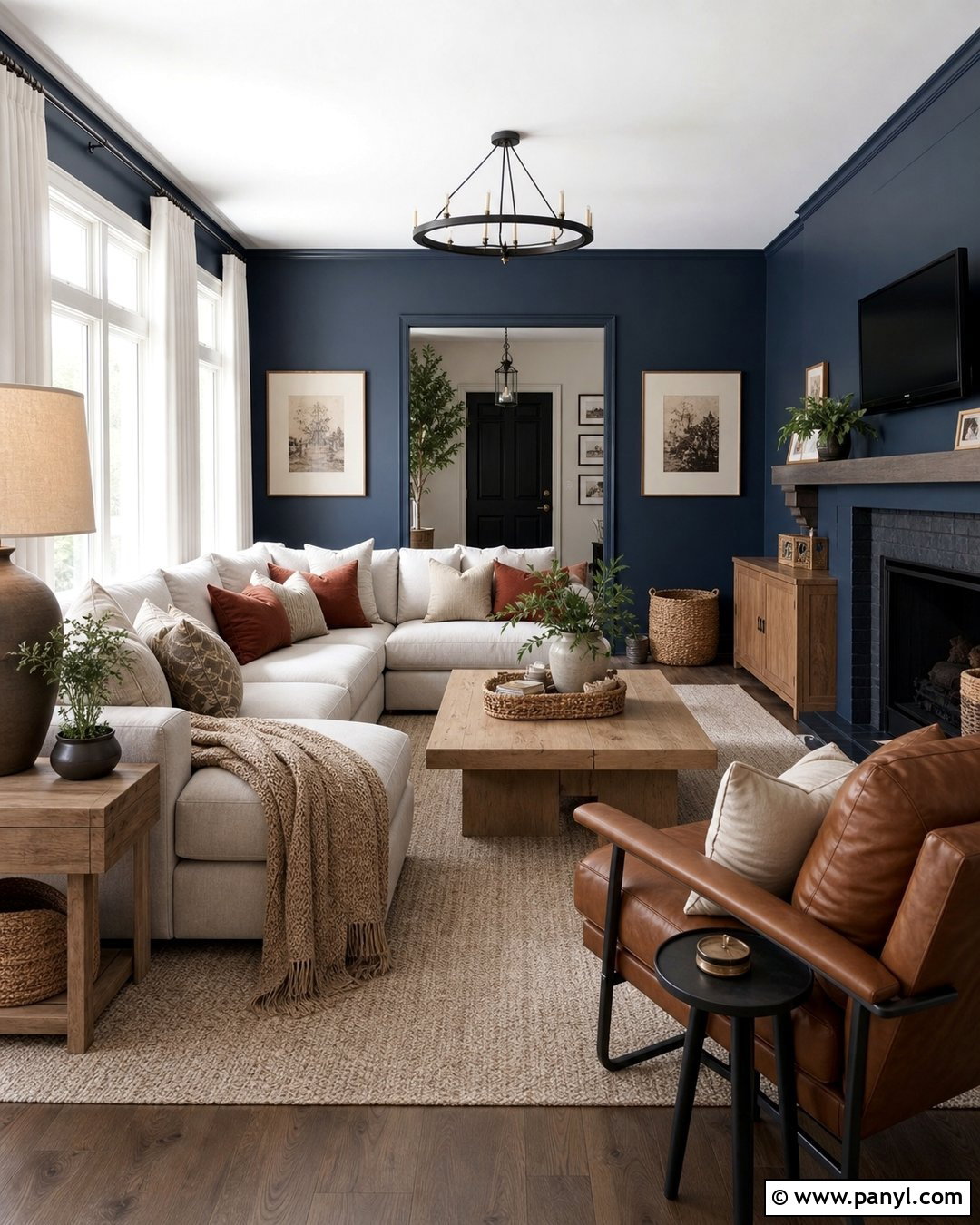
A bright white ceiling provides straightforward balance for rooms with dark blue walls. To make the transition look intentional, repeat the same white across crown molding, window trim, doors, and baseboards. Furnish the room with a light sectional, pale oak tables, and a generously sized cream rug. Hang white curtains near the ceiling so the upper portion of the room appears connected and airy. Add warmth with tan leather, woven baskets, and rust-colored pillows. A black chandelier or ceiling fixture will stand out clearly without introducing another large color area. This complete approach is particularly useful in family rooms and open living spaces, where the dark walls need to coexist with bright adjoining rooms and practical everyday furnishings.
26. Dark Blue Half Walls
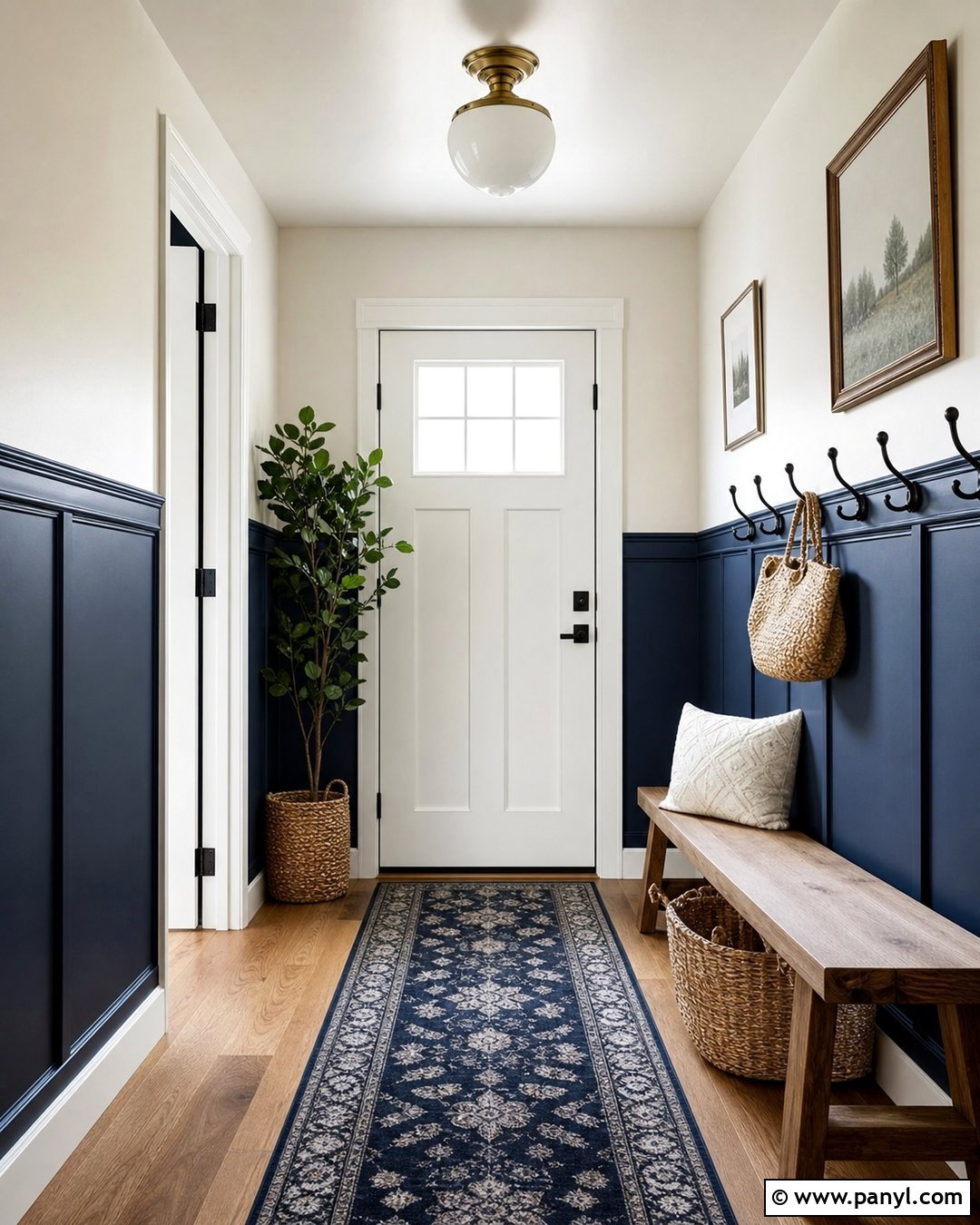
Dark blue half walls offer bold color without enclosing the entire room. Apply the blue below a chair rail or simple horizontal trim, then paint the upper walls warm white. In an entryway or dining nook, pair the treatment with an oak bench, woven baskets, and black wall hooks. A patterned runner containing navy, tan, and cream will connect both wall colors at floor level. Hang framed art on the lighter upper section, keeping the arrangement orderly. Add a brass or opal-glass ceiling fixture for gentle shine. This design is practical in high-traffic spaces because the darker lower area visually disguises everyday marks, while the pale upper walls preserve brightness. The finished look feels structured, casual, and easy to adapt.
27. Dark Blue Paneled Walls
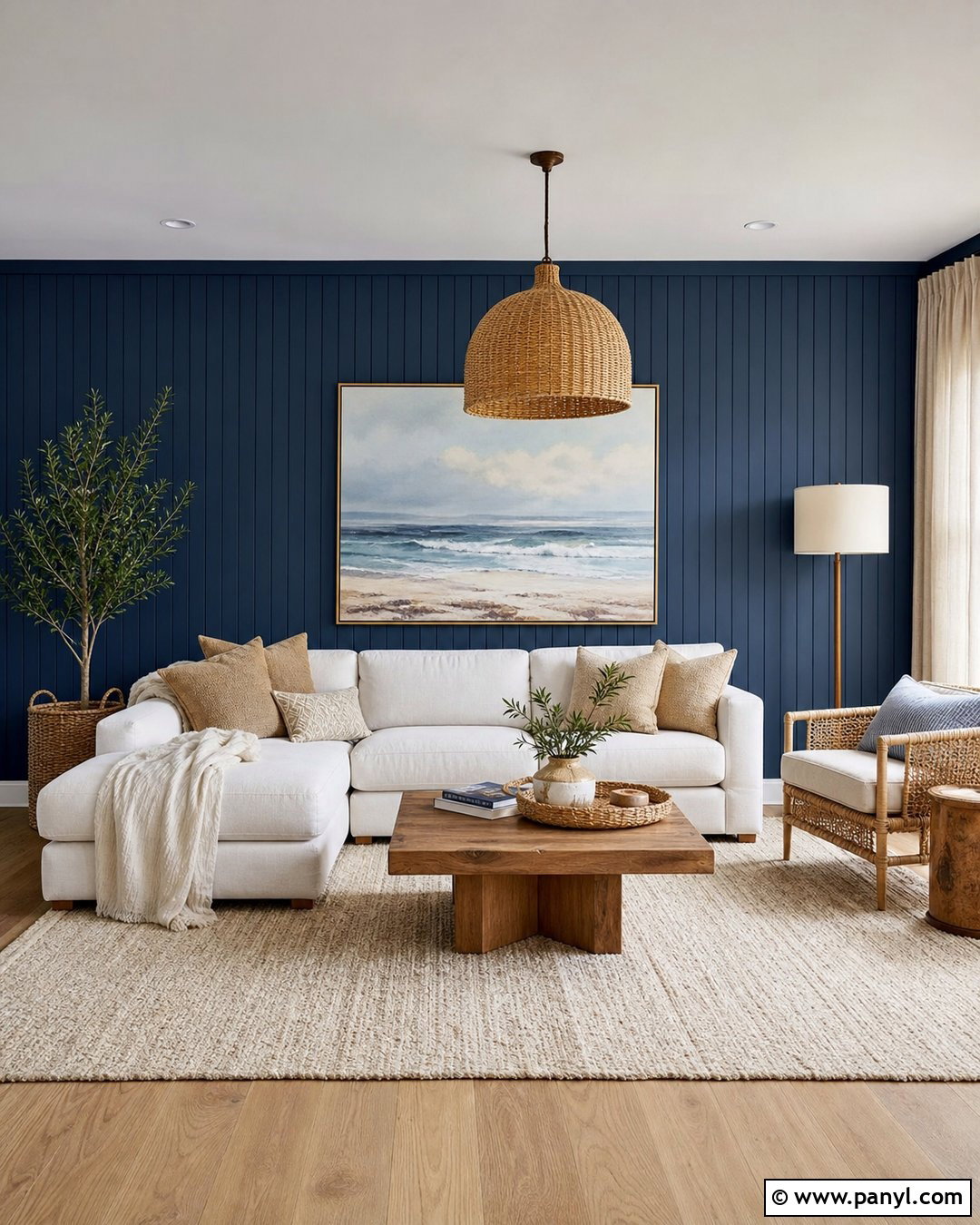
Vertical paneling painted dark blue adds architectural texture to a room without requiring elaborate decoration. Use narrow tongue-and-groove boards or simple wood strips across one complete wall, then repeat the same blue on adjacent smooth walls for continuity. Place a low cream sofa or upholstered bed against the paneling so the ridged surface remains visible above it. Add oak furniture, woven lighting, and a pale textured rug to introduce warmth. Artwork should be large and limited, preventing the panel lines from looking busy. Linen curtains and tan textiles complete the natural palette. This finished treatment suits coastal, farmhouse, and modern interiors because the color feels substantial while the paneling creates a relaxed, handcrafted layer.
28. Dark Blue Walls With Wallpaper
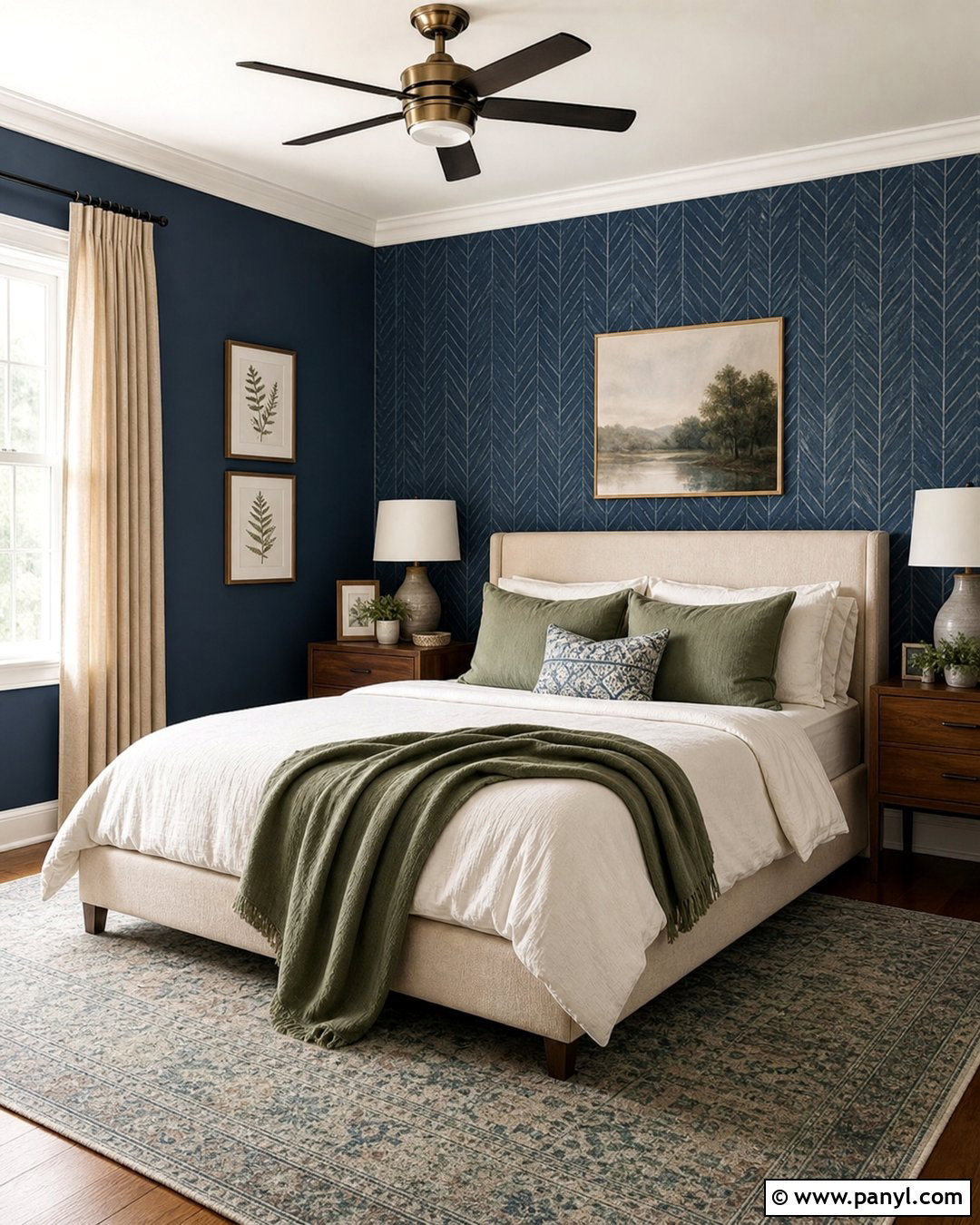
Wallpaper can complement dark blue walls when its background or pattern repeats the same deep hue. Use a botanical or geometric paper on one feature wall, then paint the remaining walls in the coordinating dark blue. In a bedroom, choose an upholstered cream headboard, pale bedding, and walnut nightstands to balance the pattern. Pull one secondary wallpaper color, such as sage, blush, or tan, into the pillows and rug. Keep lamps and window treatments simple so they do not compete with the print. Paint trim warm white for a clear frame. The completed design feels layered and intentional because the wallpaper establishes the palette while the painted walls provide visual rest around the room.
29. Dark Blue Walls With A Fireplace
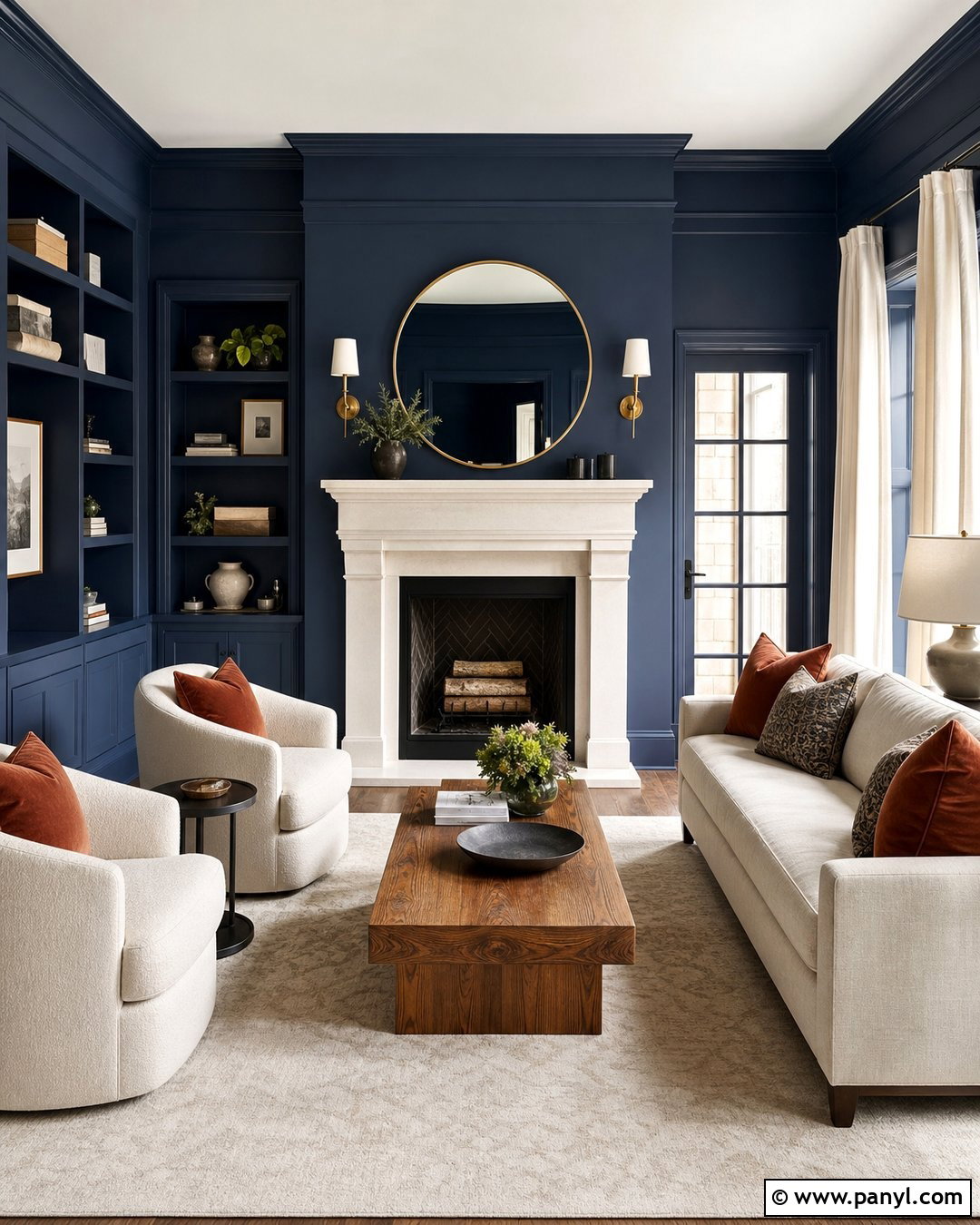
A fireplace becomes an impressive focal point when surrounded by dark blue walls. Keep the mantel and surround light by using warm white paint, pale limestone, or subtle gray marble. Arrange a neutral sofa and two comfortable chairs around a central wood coffee table, maintaining a clear view of the fireplace. A large cream rug will brighten the entire seating area. Hang one artwork or rounded mirror above the mantel, then add only a few simple objects. Use brass sconces on either side to distribute warm light across the blue. Natural wood, linen curtains, and rust-colored pillows complete the palette. The room feels balanced because the pale fireplace provides a strong visual pause within the saturated wall color.
30. Dark Blue Walls With A Gallery Wall
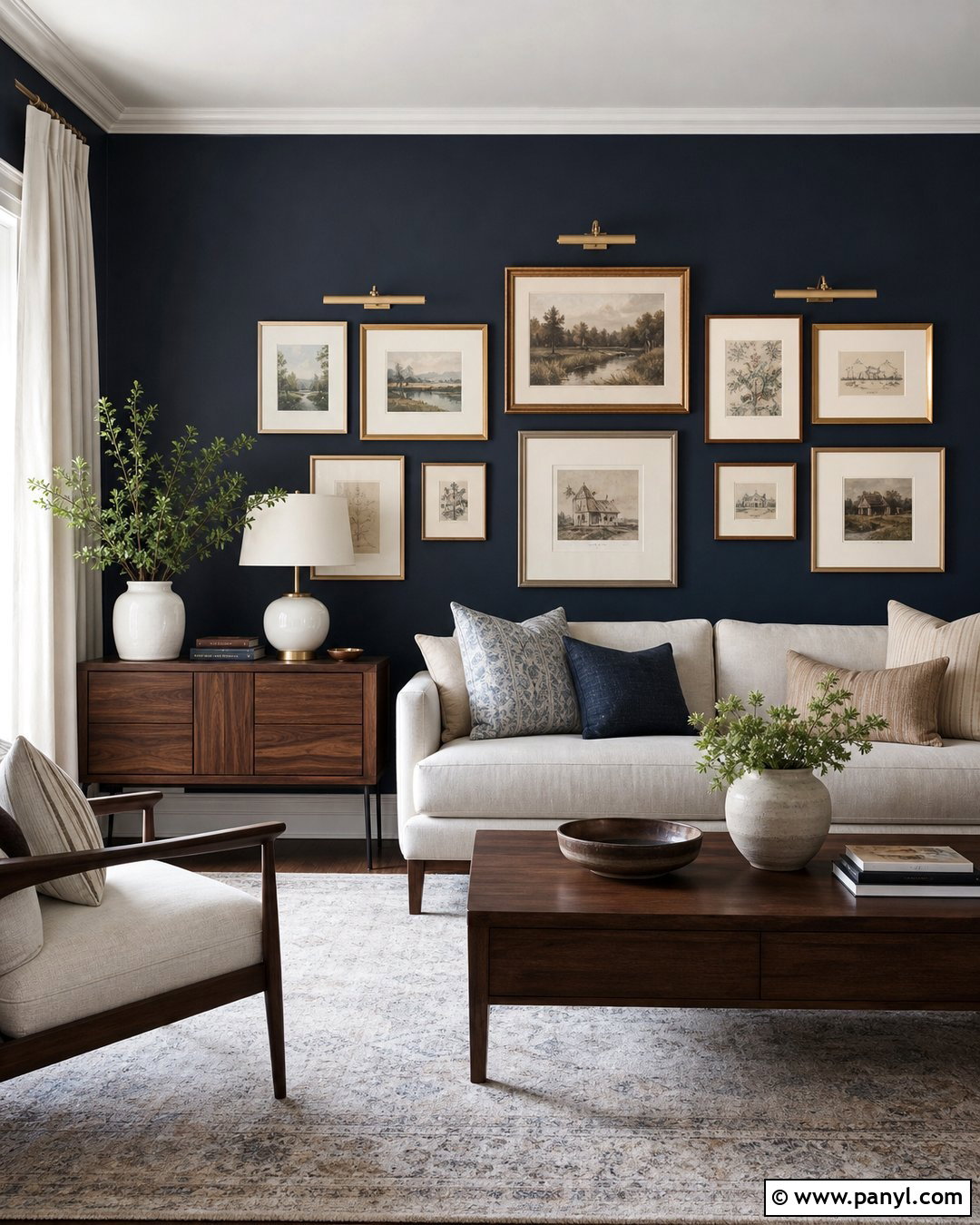
A gallery wall can bring personality to dark blue walls while keeping the room cohesive. Select artwork with cream mats, warm landscapes, line drawings, and small touches of rust or green. Use matching wood or brass frames for structure, or combine two frame finishes for a more relaxed look. Arrange the collection above a light sofa or streamlined console so it has a clear anchor. Include a large neutral rug, walnut tables, and linen curtains throughout the room. Picture lights or nearby lamps will prevent the art from disappearing after sunset. Leave consistent spacing between frames and avoid extending the arrangement onto every wall. The completed living space looks collected over time while remaining organized, readable, and comfortably balanced.
31. Dark Blue Walls In An Entryway
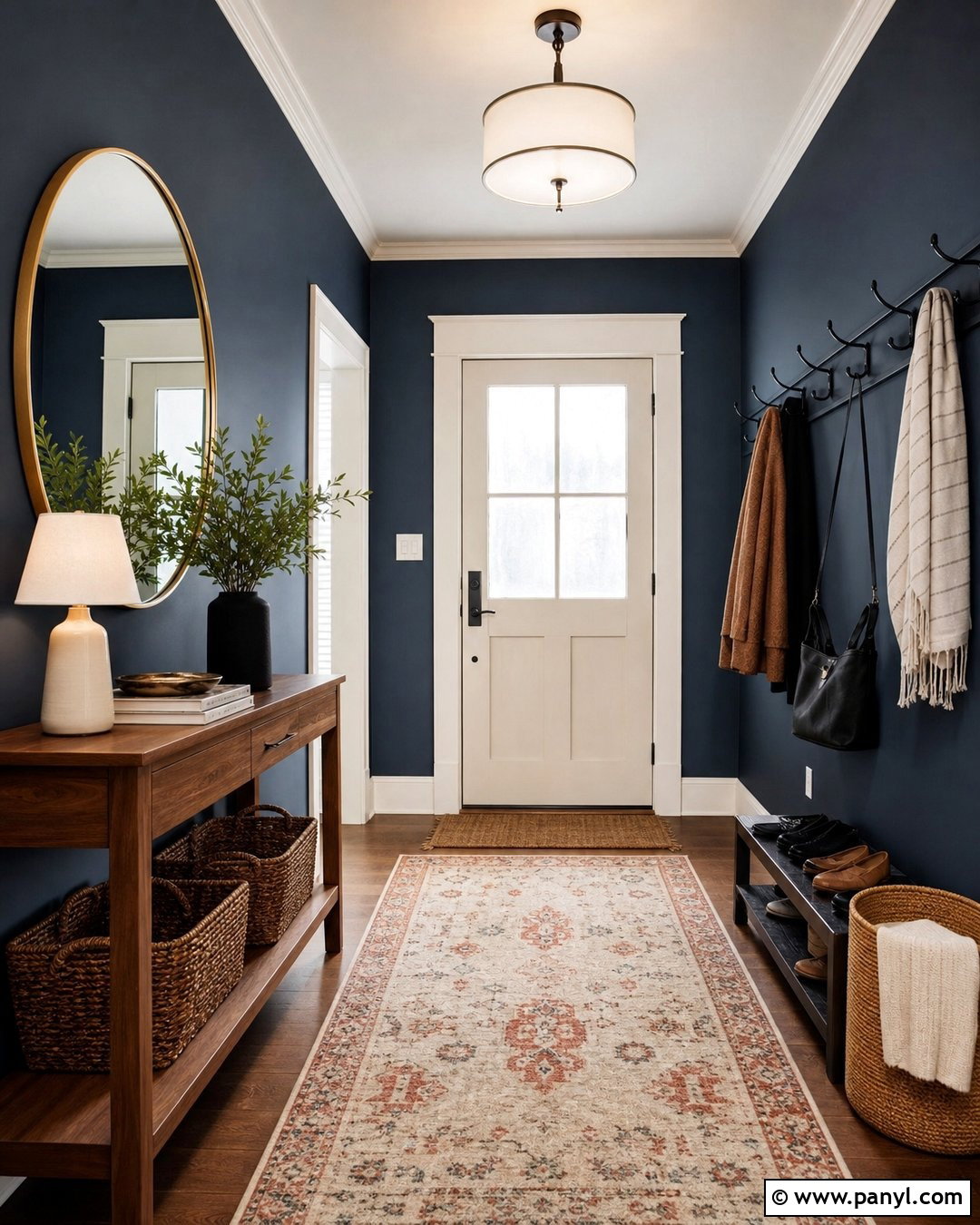
Dark blue walls can make an entryway feel defined from the moment the door opens. Place a narrow oak or walnut console along the main wall, leaving enough clearance for daily movement. Add a large round mirror to reflect light and provide a practical last-minute check. A patterned runner in cream, blue, and rust will disguise dirt while introducing warmth. Install black or brass hooks for coats and bags, plus baskets below the console for shoes and accessories. Use a bright ceiling fixture and a small table lamp if an outlet is available. Warm white trim will outline doors and baseboards. The finished entry feels welcoming, durable, and organized instead of serving as a dark passage between rooms.
32. Dark Blue Walls In A Hallway
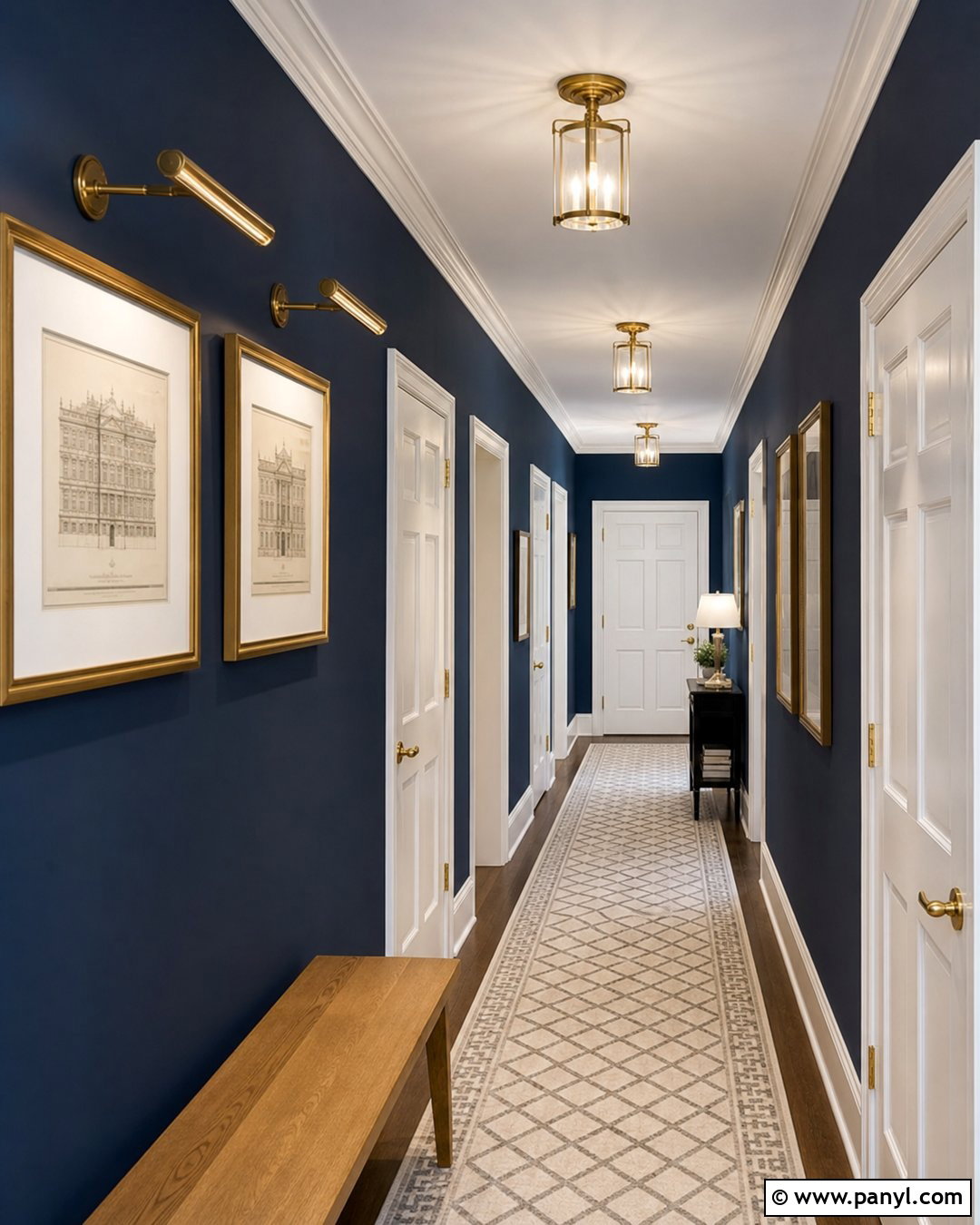
A hallway with dark blue walls can become a deliberate design feature rather than an overlooked connector. Paint the doors and trim warm white to create a repeating architectural rhythm along the passage. Use a light runner with a simple geometric pattern to brighten the floor and guide movement. Hang an orderly series of framed photographs or prints at consistent eye level. Brass picture lights or compact ceiling fixtures will illuminate the artwork and eliminate deep shadows. If space allows, add a narrow wood bench or shallow console at the widest point. Keep accessories minimal so circulation remains clear. The completed hallway feels polished and engaging, with enough light surfaces and warm accents to balance its enclosed dimensions.
33. Dark Blue Walls In A Stairway
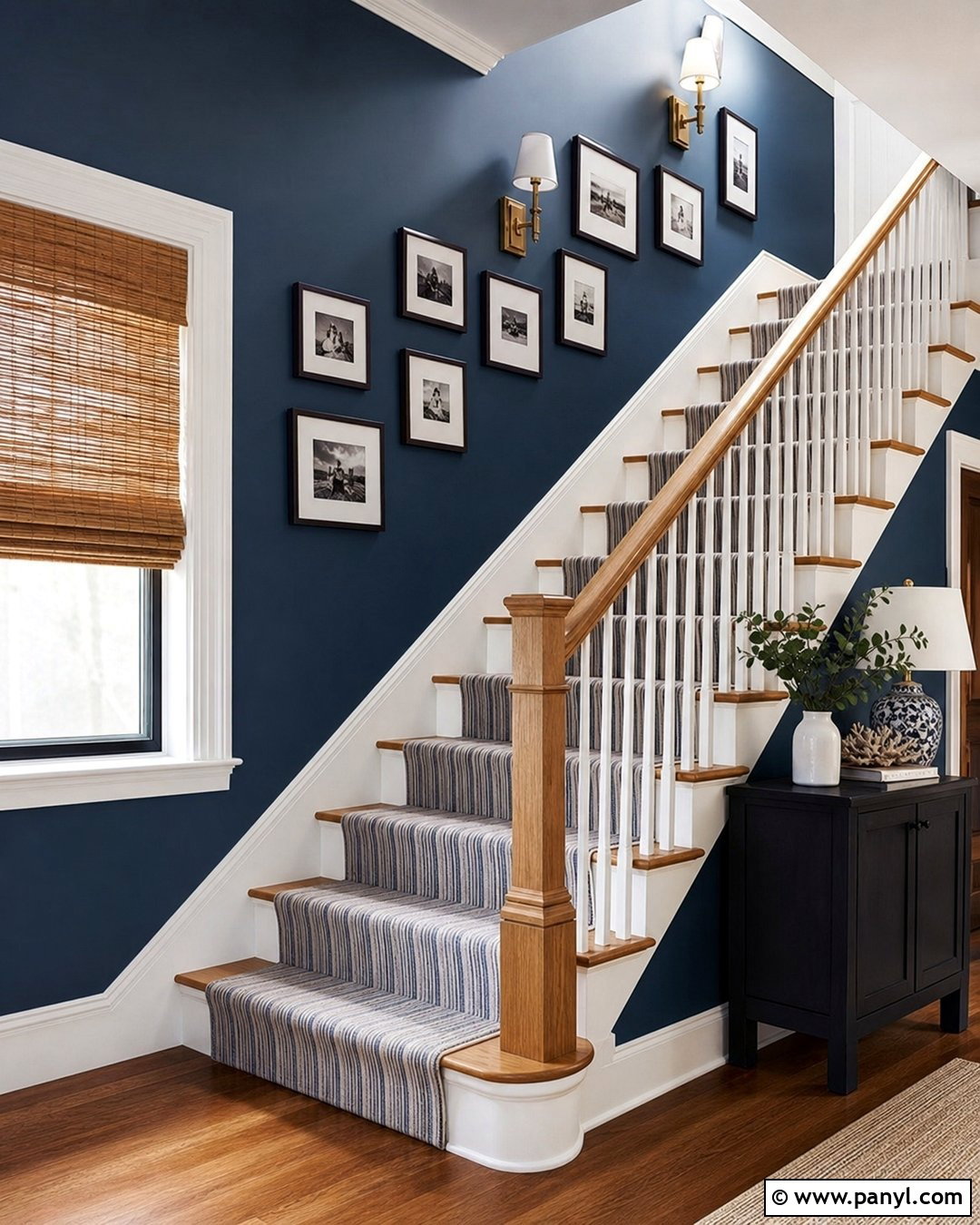
Dark blue walls bring depth to a stairway and create a striking backdrop for railings and artwork. Pair the color with a natural oak handrail, white balusters, and warm white trim for a crisp but welcoming contrast. Install a neutral runner with a subtle stripe to make the stairs safer and visually softer. Follow the upward angle with framed art or family photographs, maintaining even spacing between pieces. A pendant at the landing and wall sconces along the route will keep the blue from appearing flat. If there is a window, use an uncomplicated woven shade. The complete stairway feels connected to adjoining rooms while gaining its own architectural identity through the combination of saturated paint, wood, textiles, and lighting.
34. Dark Blue Walls In A Powder Room
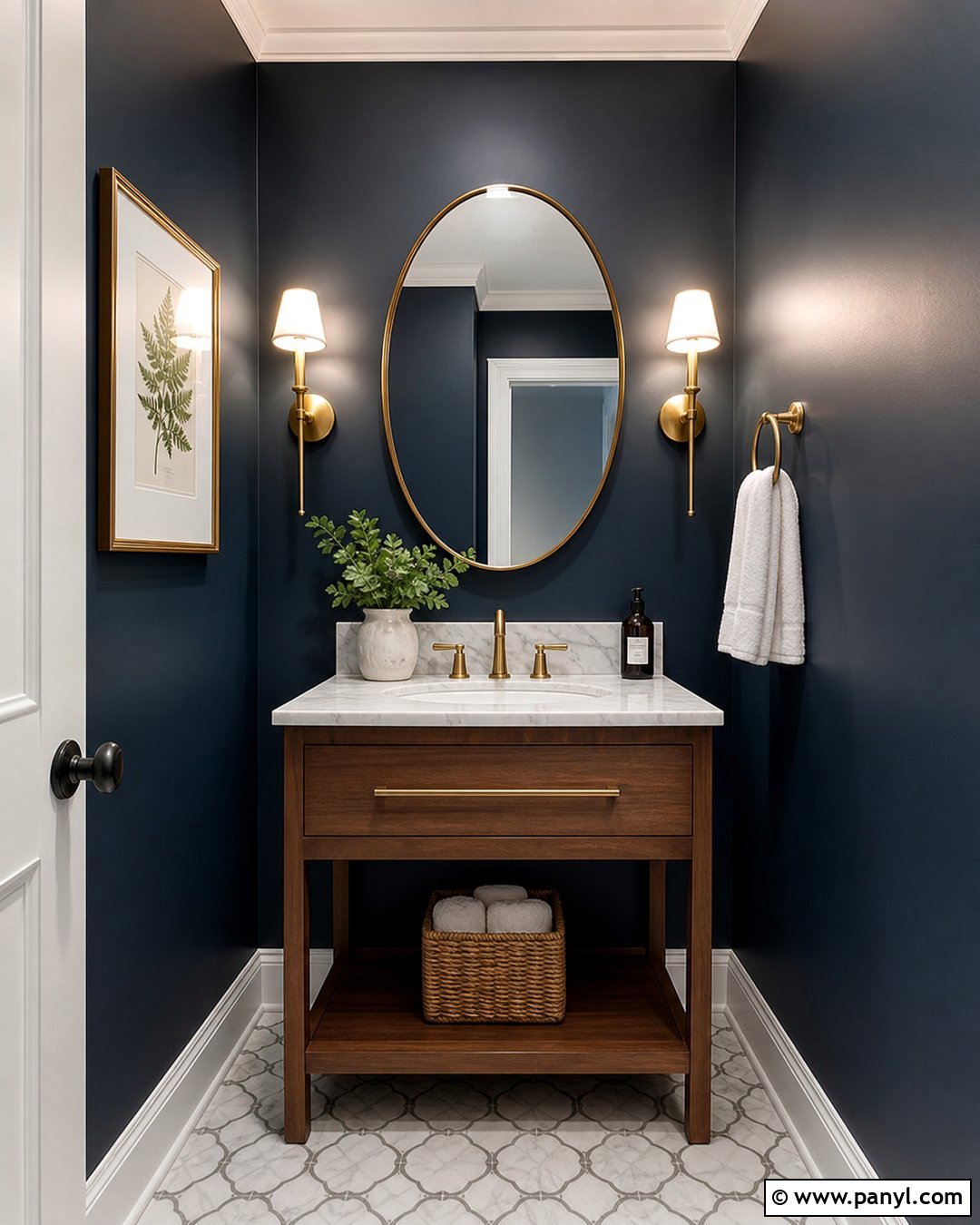
A powder room is an ideal place to use dark blue walls confidently. Install a compact wood vanity with a white quartz or marble top to introduce natural warmth and crisp contrast. Choose an oval brass-framed mirror and matching sconces that cast bright, even light around the sink. White or pale patterned floor tile will prevent the small space from feeling visually heavy. Use polished nickel or brass fixtures, but keep the finish consistent throughout. A framed botanical print and neatly folded hand towel provide simple decoration. Paint the ceiling and trim warm white unless you want a fully color-drenched effect. The completed powder room feels special and polished while remaining practical for guests and everyday use.
35. Dark Blue Walls In A Bathroom
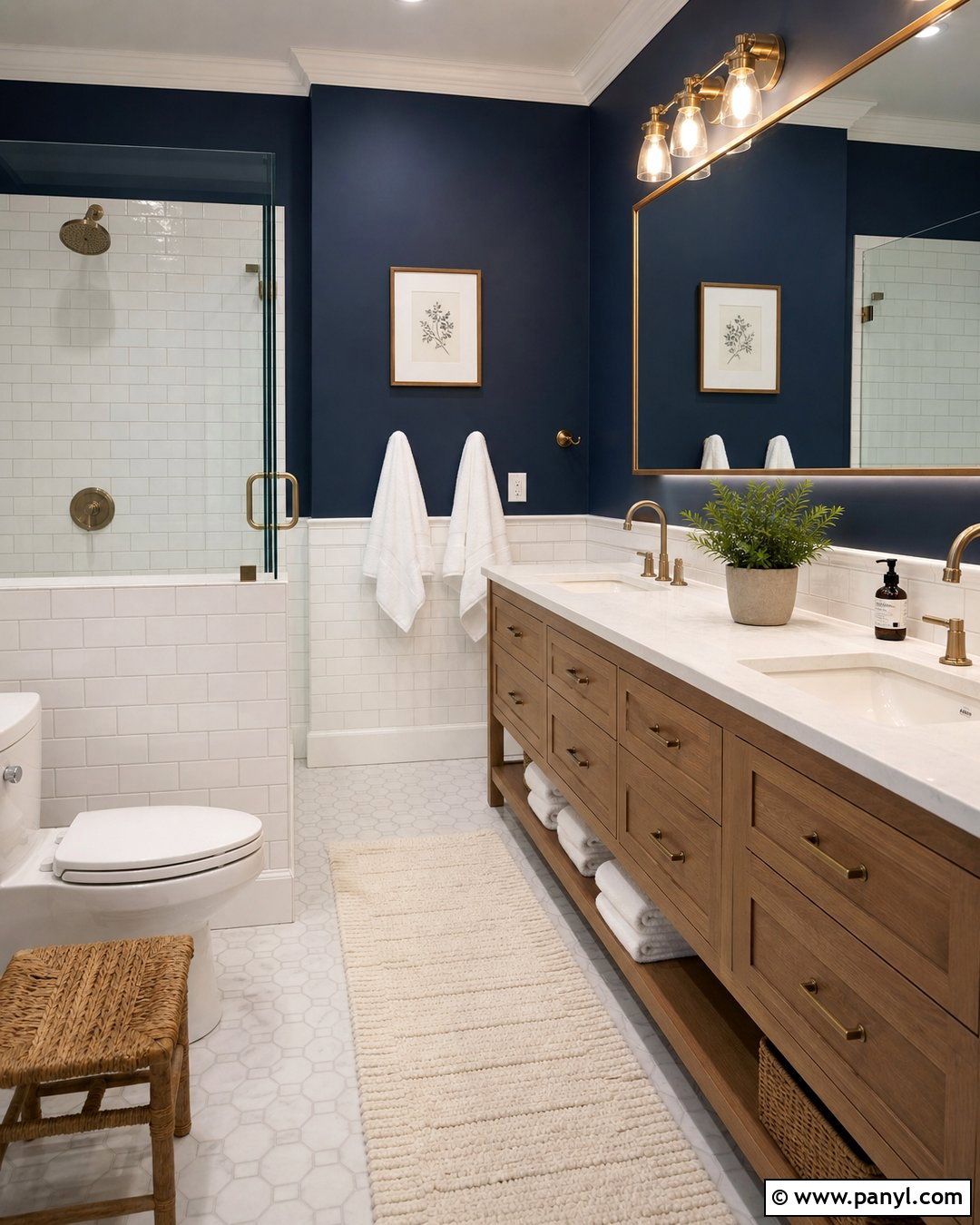
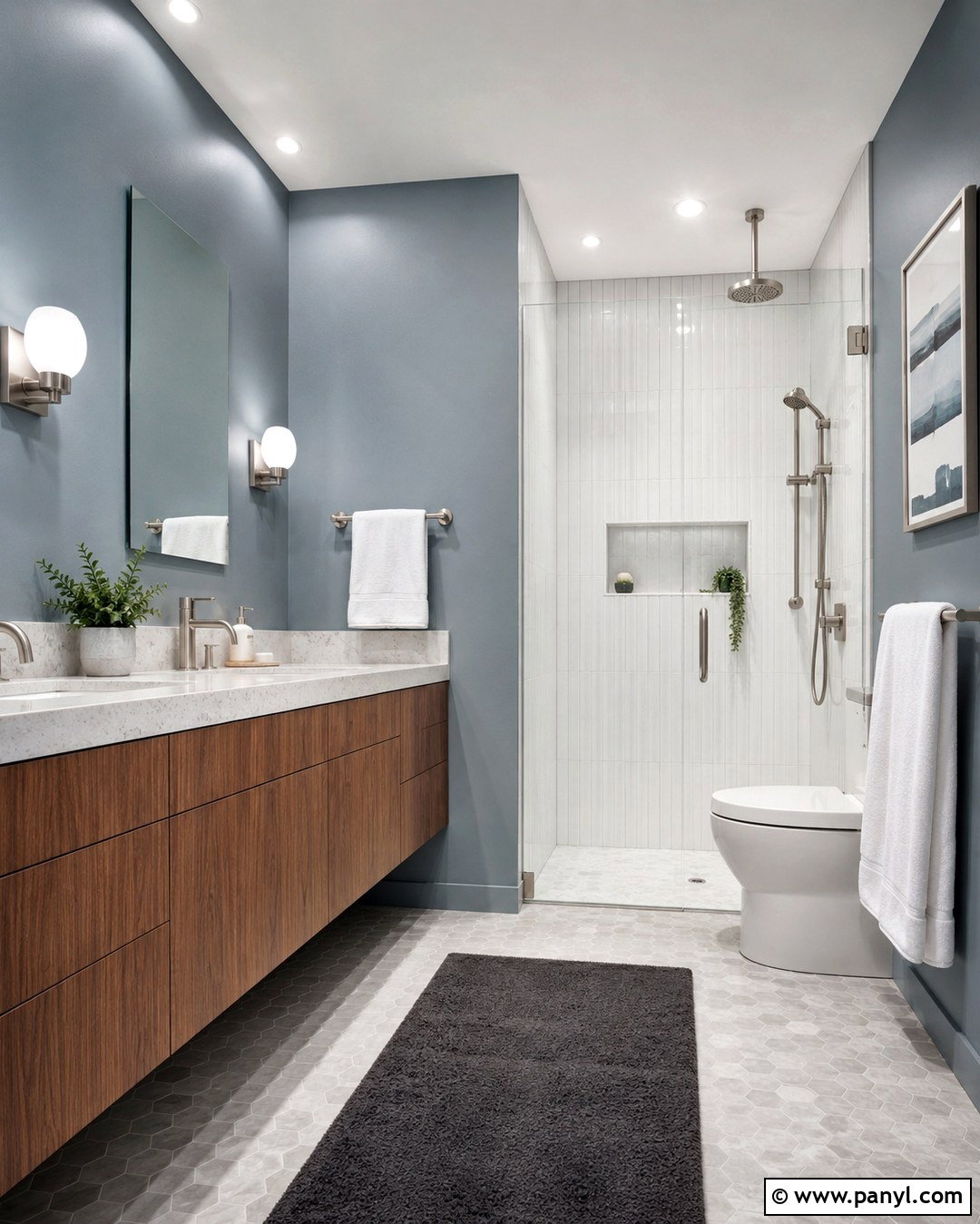
Dark blue walls can work in a full bathroom when they are balanced with reflective, moisture-resistant surfaces. Use the color above white subway tile, marble-look porcelain, or a pale stone backsplash. Install a natural wood vanity with a white countertop and a large mirror that returns light to the room. Brushed brass fixtures add warmth, while polished nickel offers a cooler, cleaner finish. Choose one metal and repeat it consistently. Keep shower curtains, towels, and bath mats white or cream. Add a woven stool and one small plant for texture. Bright ceiling lighting and vanity sconces are essential. The finished bathroom feels fresh and substantial, with the blue providing character around a practical foundation of light tile and streamlined storage.
36. Dark Blue Walls In A Kitchen
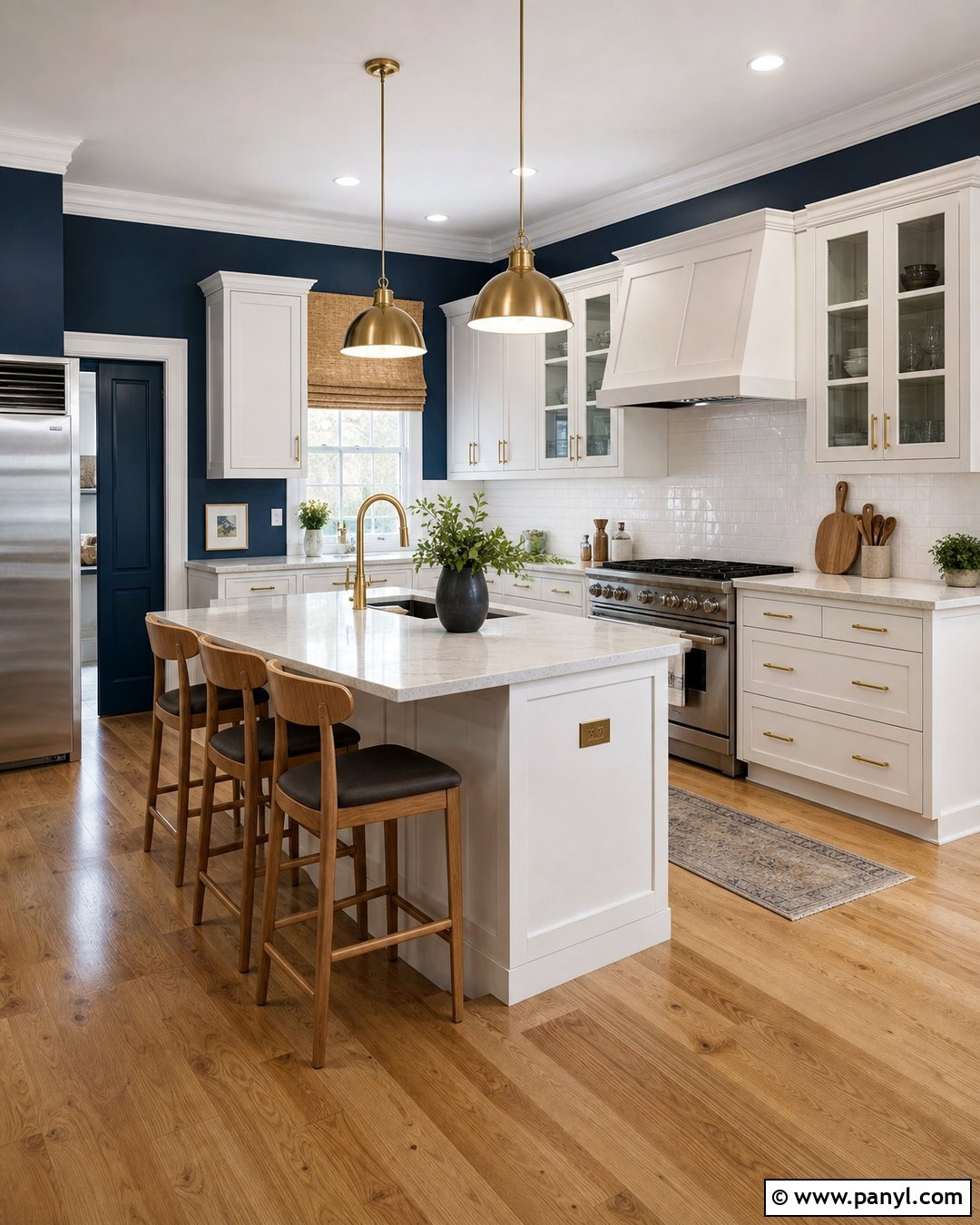
Dark blue walls can give a kitchen depth without requiring dark cabinetry. Pair them with warm white cabinets, pale quartz countertops, and a simple backsplash in white tile or lightly veined stone. Natural oak flooring and wood counter stools will soften the contrast. Use brushed brass hardware and pendants for warmth, or matte black details for a sharper modern appearance. Keep countertops mostly clear, displaying only a few wood boards, ceramic containers, and useful appliances. Woven shades can filter daylight without hiding the windows. If the kitchen is small, restrict the blue to the dining side or backsplash wall. The finished space feels clean and distinctive because the dark paint frames the lighter working surfaces rather than competing with them.
37. Dark Blue Walls In A Breakfast Nook
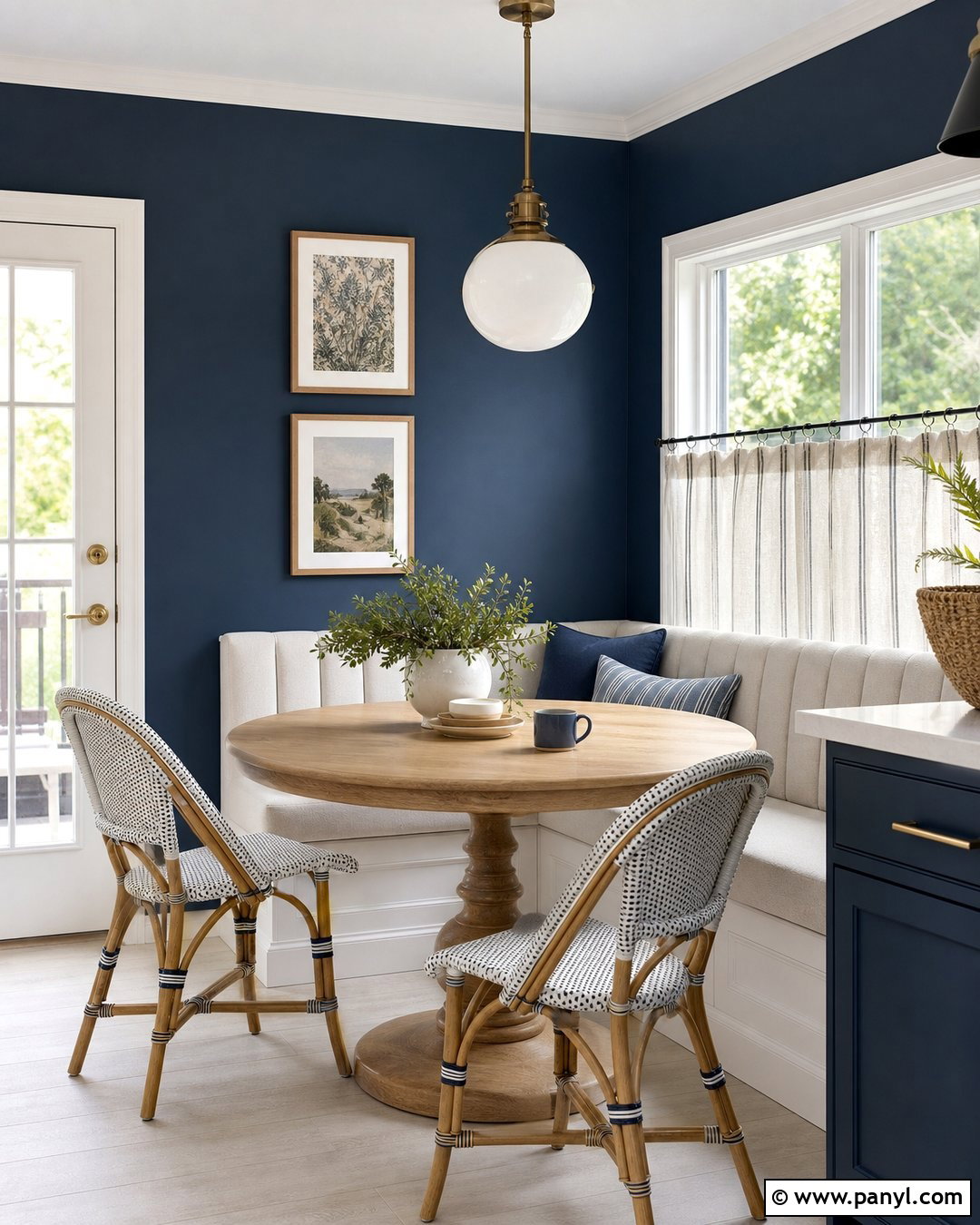
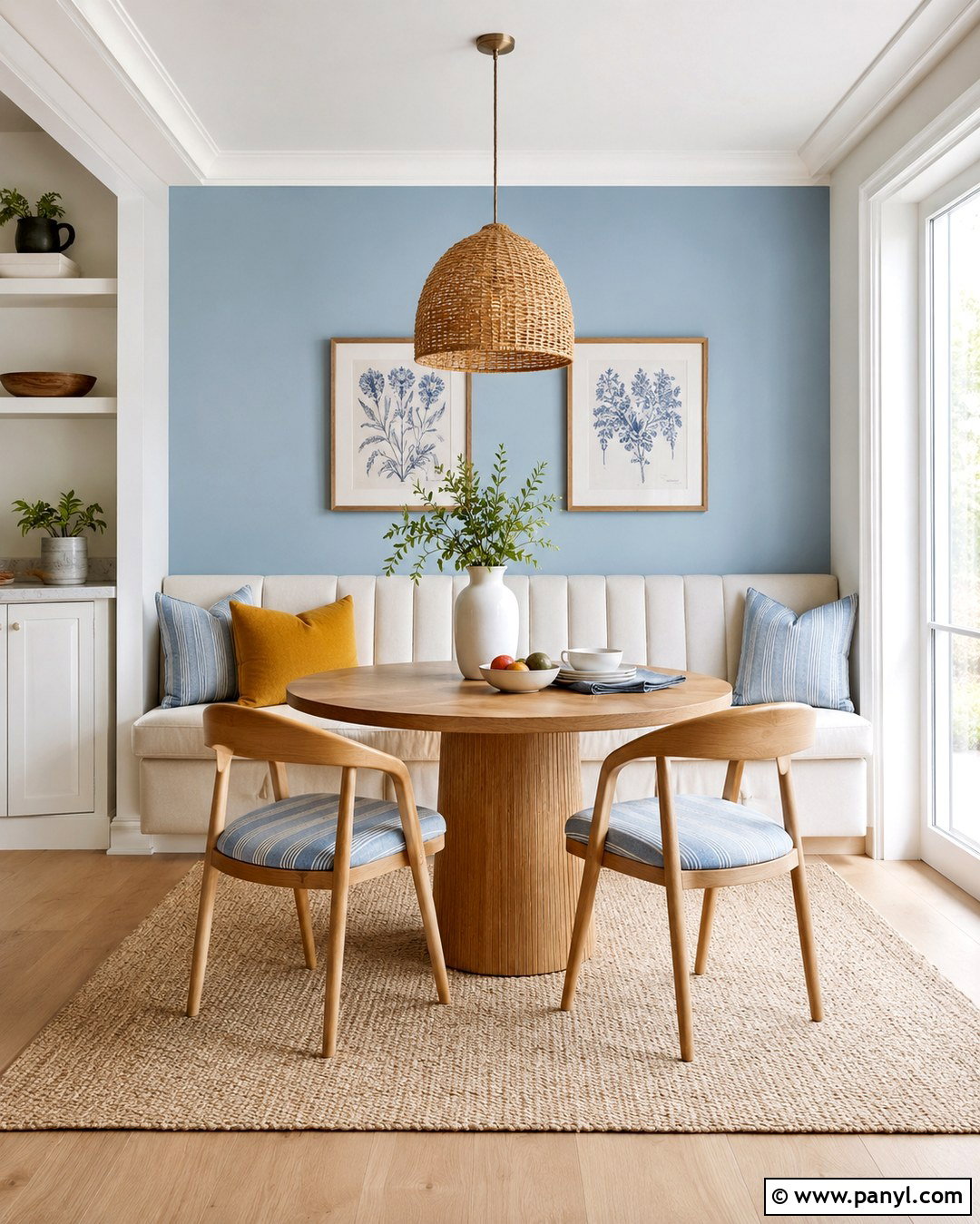
A breakfast nook wrapped in dark blue walls can feel cozy without becoming formal. Build the layout around a light oak pedestal table and an upholstered banquette in cream or sandy beige. Add two movable chairs with woven seats, allowing the space to accommodate extra guests. Use washable cushions in blue, tan, and a subtle stripe. A white globe pendant will provide a bright focal point above the table, while a small framed print adds interest to the wall. Choose woven shades or café curtains that preserve daylight and privacy. Pale flooring or a compact neutral rug will complete the arrangement. The result is a comfortable dining corner that feels connected, practical, and visually separate from the main kitchen.
38. Dark Blue Walls In A Laundry Room
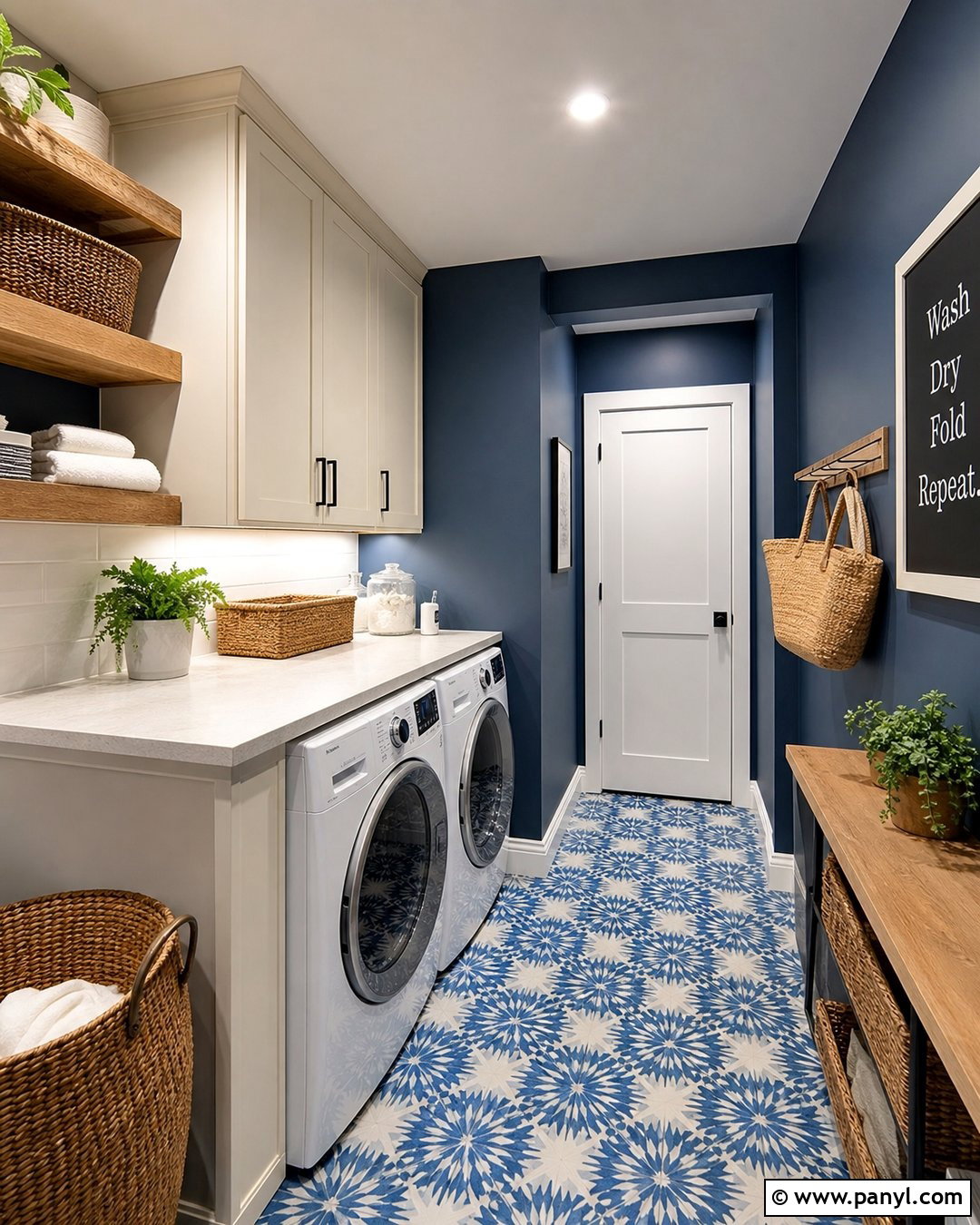
Dark blue walls can make a hardworking laundry room feel more finished. Pair the paint with warm white cabinetry, a pale countertop, and natural wood shelves above the washer and dryer. Use woven baskets and labeled-looking but text-free storage containers to organize supplies without creating visual clutter. A patterned tile floor in white, blue, and soft gray will add personality while hiding small marks. Install bright overhead lighting and an under-cabinet strip above the folding surface. Brass or black cabinet pulls can provide crisp contrast. Include a hanging rail, compact sink, and slim hamper if space permits. The completed room feels orderly and attractive, turning practical functions into part of a coordinated home design rather than an afterthought.
39. Dark Blue Walls In A Mudroom
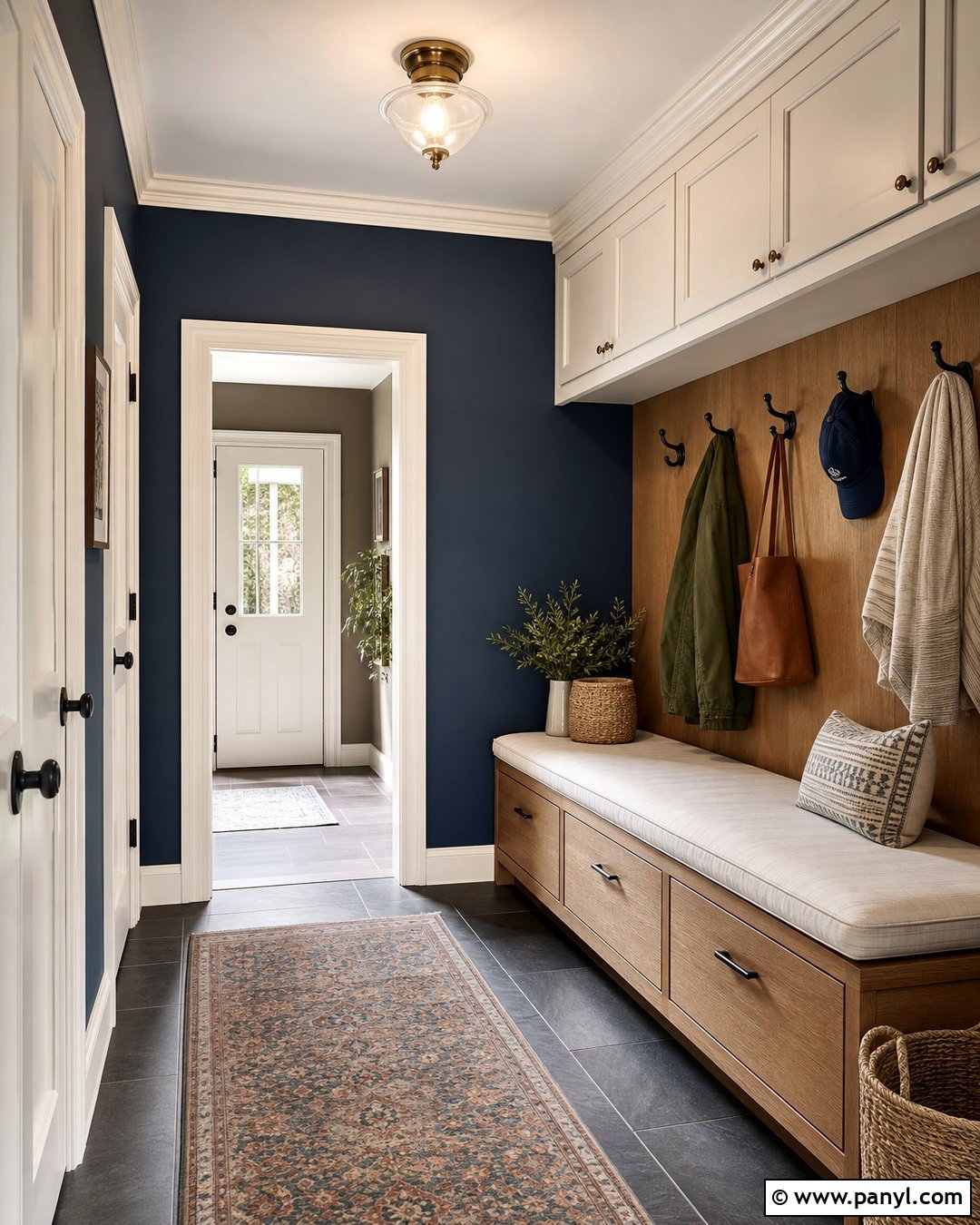
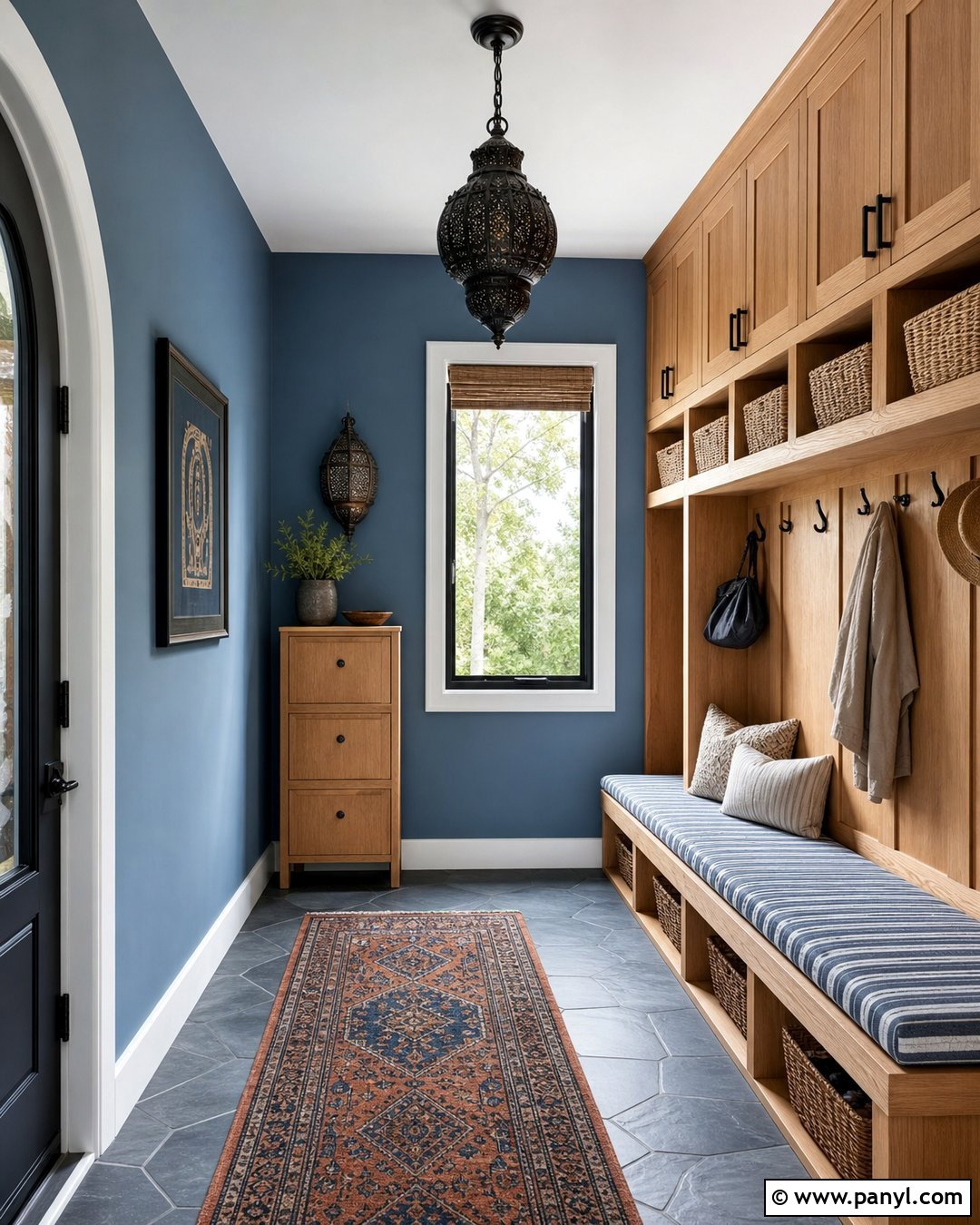
A mudroom with dark blue walls can withstand a visually busy collection of coats, shoes, and bags. Install a built-in oak bench with deep drawers or baskets below, then add warm white upper cabinets to keep the room from becoming too dark. Black hooks provide durable hanging space, while a light cushion and patterned pillows soften the seating area. Choose slate-look porcelain or patterned tile flooring that is easy to clean. A washable runner can introduce cream and muted rust. Use bright ceiling lighting and, if possible, a window with a woven shade. The completed mudroom feels practical and welcoming because every item has a place and the blue walls create a tidy, unifying background.
40. Dark Blue Walls With Terracotta Decor
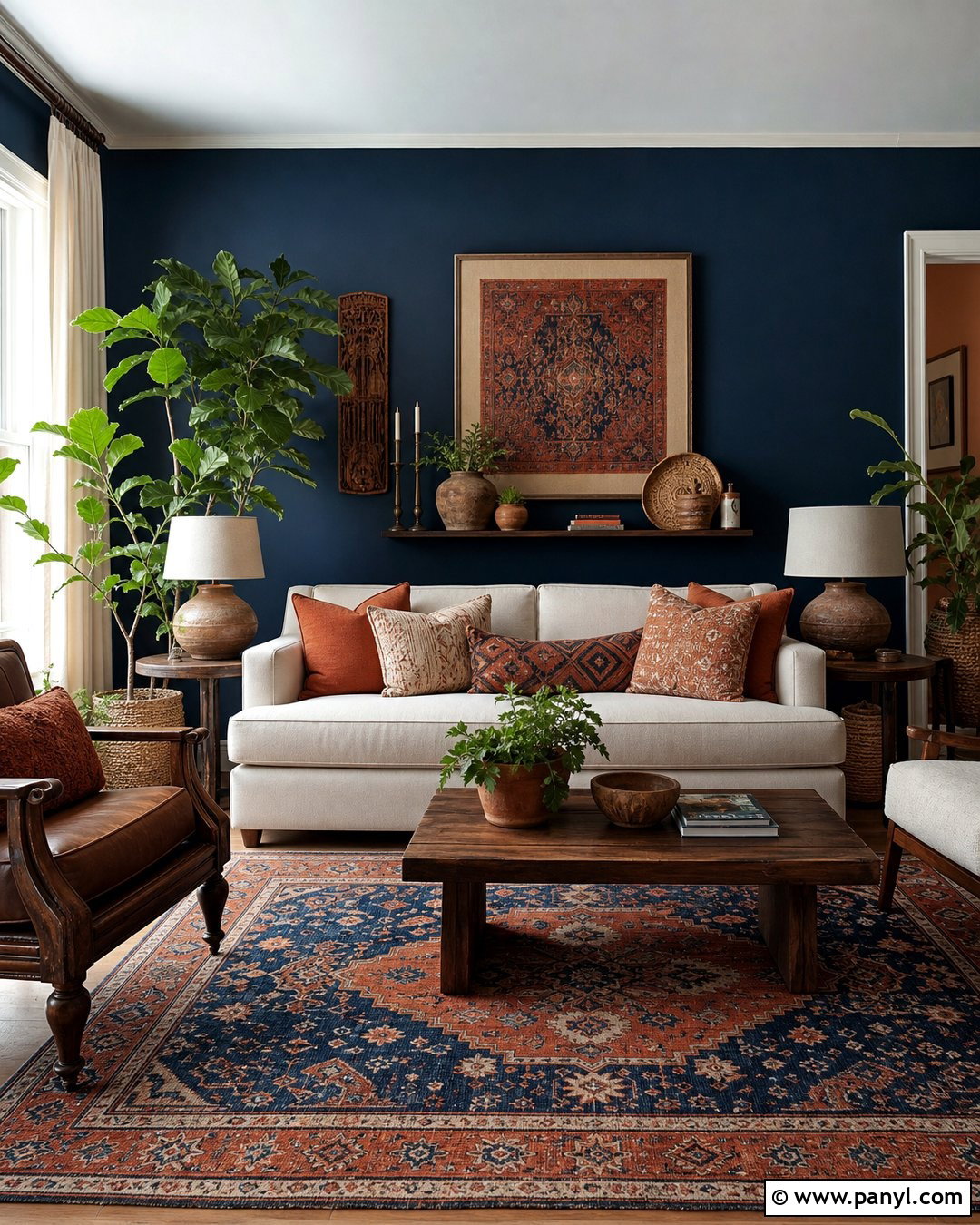
Terracotta decor brings earthy warmth to dark blue walls and works especially well in relaxed living rooms. Choose a neutral linen sofa, then layer it with rust, clay, cream, and navy pillows. A vintage-style rug containing muted terracotta and blue will distribute the palette throughout the seating area. Add oak or walnut tables, woven baskets, and unglazed ceramic planters for natural texture. Linen curtains should remain light and uncomplicated. Include a few black details through frames or lighting to sharpen the softer materials. Large green plants will strengthen the organic character of the room. The completed look feels warm, collected, and balanced, with terracotta acting as a repeated supporting color rather than an isolated bright accent.
41. Dark Blue Walls With Green Accents
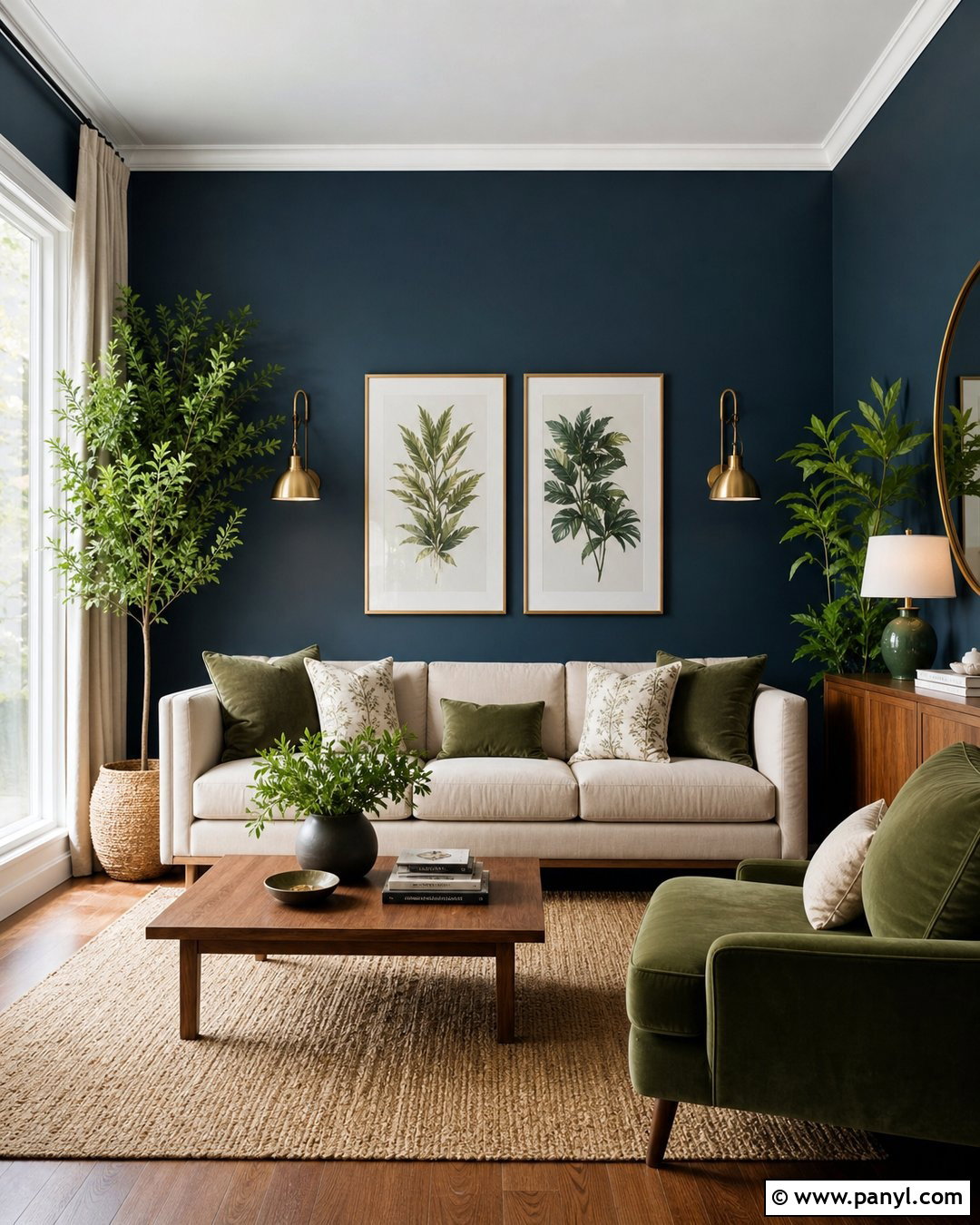
Green accents can make dark blue walls feel connected to nature. Use an olive or moss green chair as the main contrasting piece, then repeat the shade through pillows, artwork, and leafy plants. Keep the sofa cream or light beige so the two saturated colors have breathing room. Natural oak furniture and a woven rug will provide a warm, neutral bridge between blue and green. Choose curtains in linen or warm white cotton, and add brass lamps for a gentle reflective detail. Botanical artwork can support the palette without making the room feel themed. The finished living space feels layered and refreshing because the greens vary slightly while the dark blue walls remain the steady, grounding background.
42. Dark Blue Walls With Orange Accents
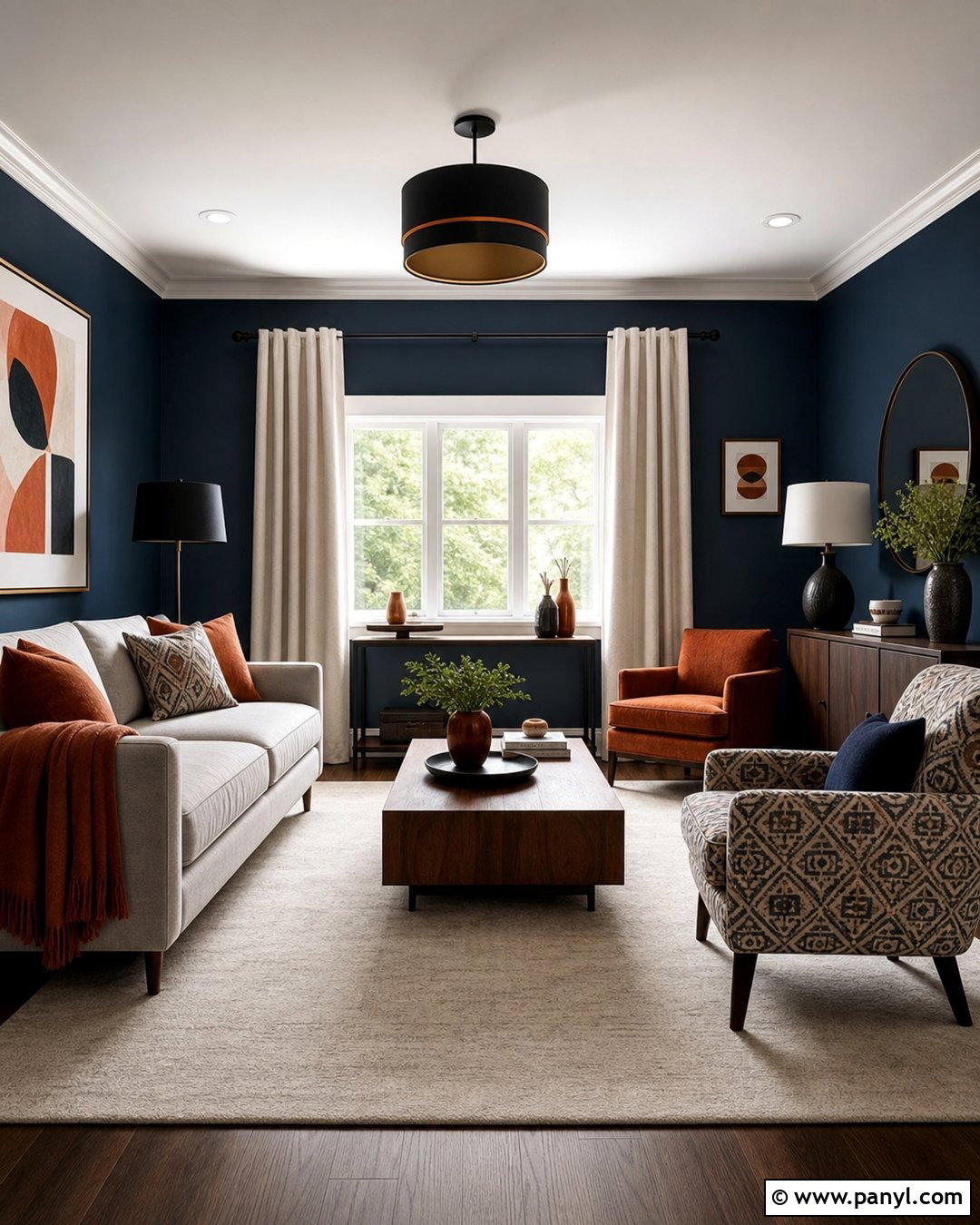
Muted orange brings energy to dark blue walls through a strong complementary contrast. Begin with a beige or oatmeal sofa and add burnt orange pillows, a rust throw, and one patterned accent chair. Ground the room with a cream rug that includes small blue and orange details. Walnut furniture will deepen the warm side of the palette, while black lighting adds definition. Keep curtains pale and artwork balanced, choosing pieces that include off-white areas rather than solid blocks of orange. A ceramic lamp or planter can repeat the accent color at another height. The completed room feels bold but comfortable because orange is spread through several modest details instead of dominating one large piece of furniture.
43. Dark Blue Walls With Pink Accents
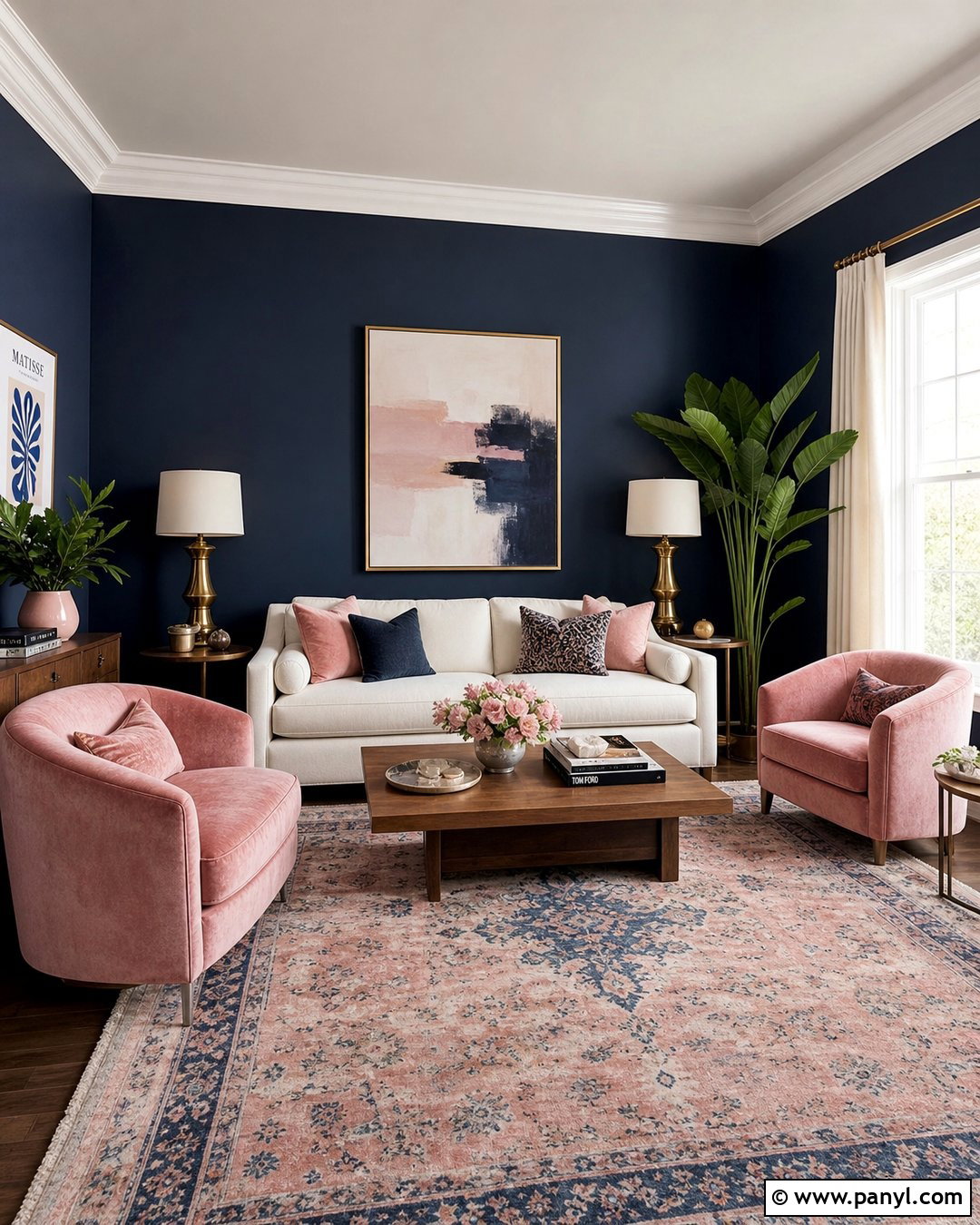
Dusty pink and dark blue create a sophisticated room when both colors are supported by warm neutrals. Choose a cream sofa and introduce pink through two velvet chairs, patterned pillows, or a textured throw. Add a pale rug with faded blush and navy details, then use walnut tables and brushed brass lamps to enrich the scheme. Curtains should be ivory or light beige rather than pink, keeping the windows bright. Hang abstract art that includes cream, blue, blush, and a small amount of brown. Green plants will prevent the palette from feeling overly coordinated. The finished living room appears soft and polished, with enough wood and neutral fabric to make the blue-and-pink contrast feel natural.
44. Dark Blue Walls With Coastal Decor
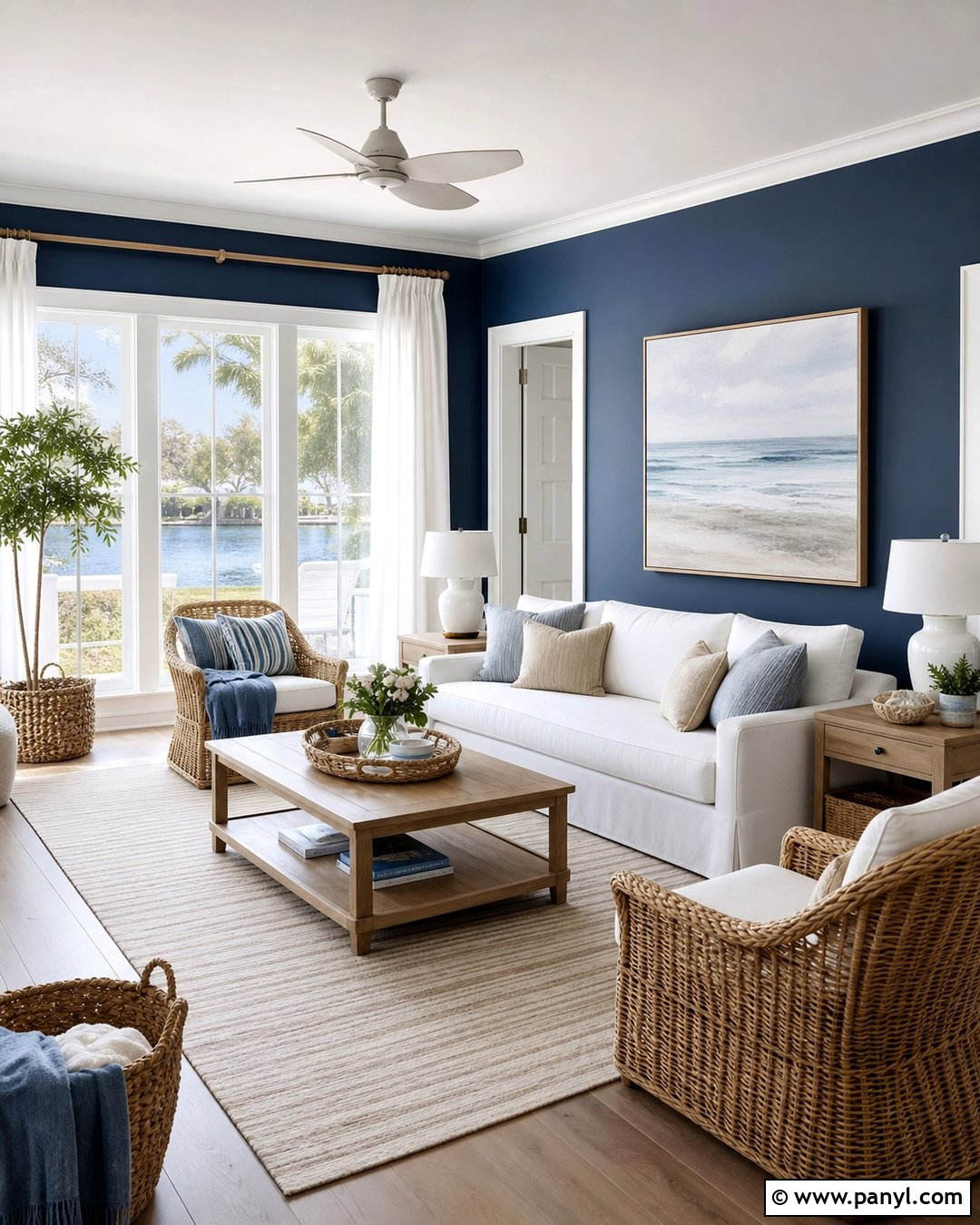
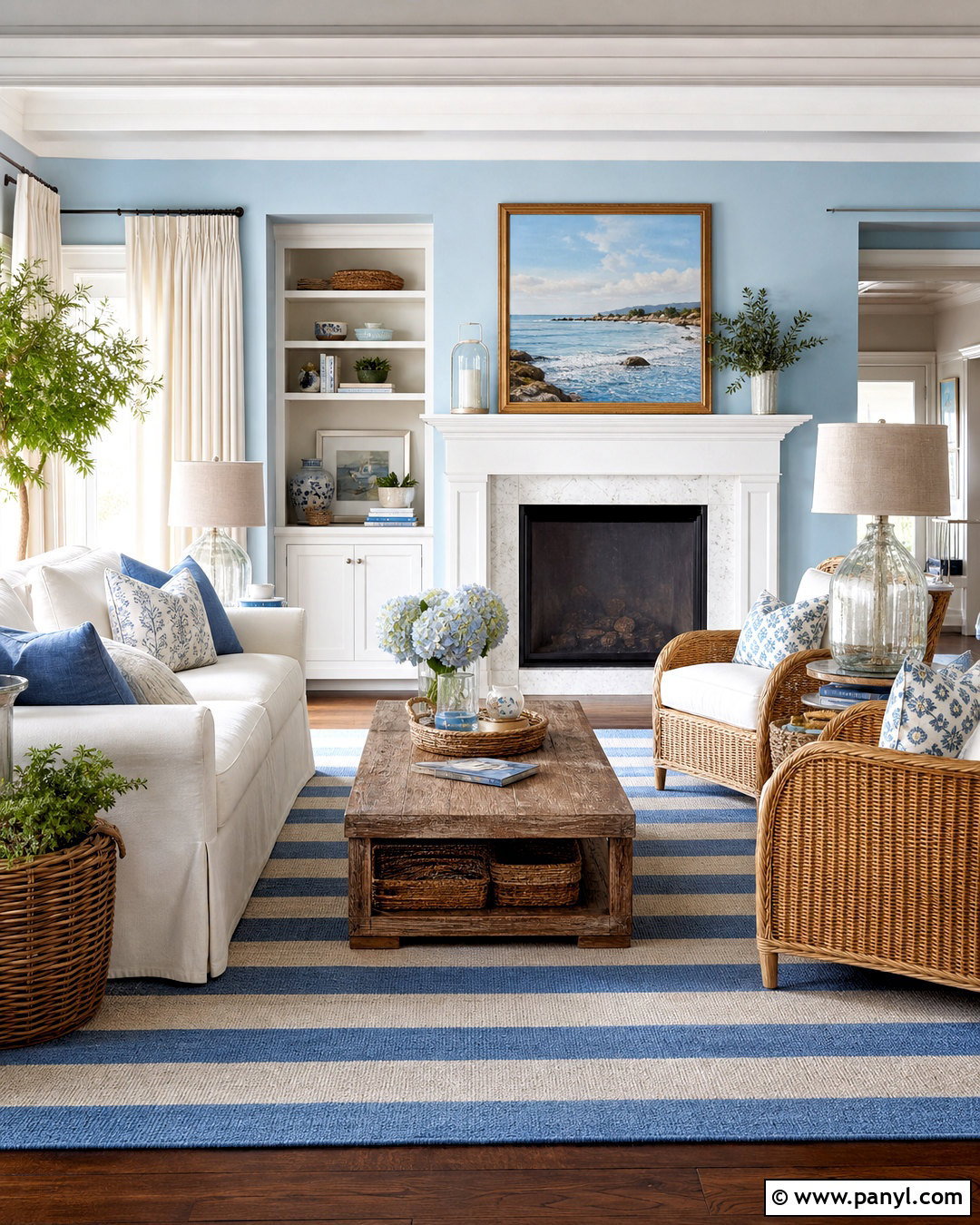
A coastal room with dark blue walls should feel relaxed rather than heavily themed. Pair the paint with a slipcovered white sofa, pale oak tables, and woven rattan chairs. Use a striped rug or pillows sparingly, combining navy with cream and sandy beige. Full-length white curtains will move gently near the windows and maximize available daylight. Add natural materials through seagrass baskets, linen upholstery, and simple ceramic lamps. Artwork can feature abstract water, soft horizons, or coastal plants without relying on obvious decorative symbols. Keep the flooring light and the layout open. The completed room captures the clean contrast of deep water and pale sand while remaining comfortable enough for an everyday family living space.
45. Dark Blue Walls With Modern Farmhouse Decor
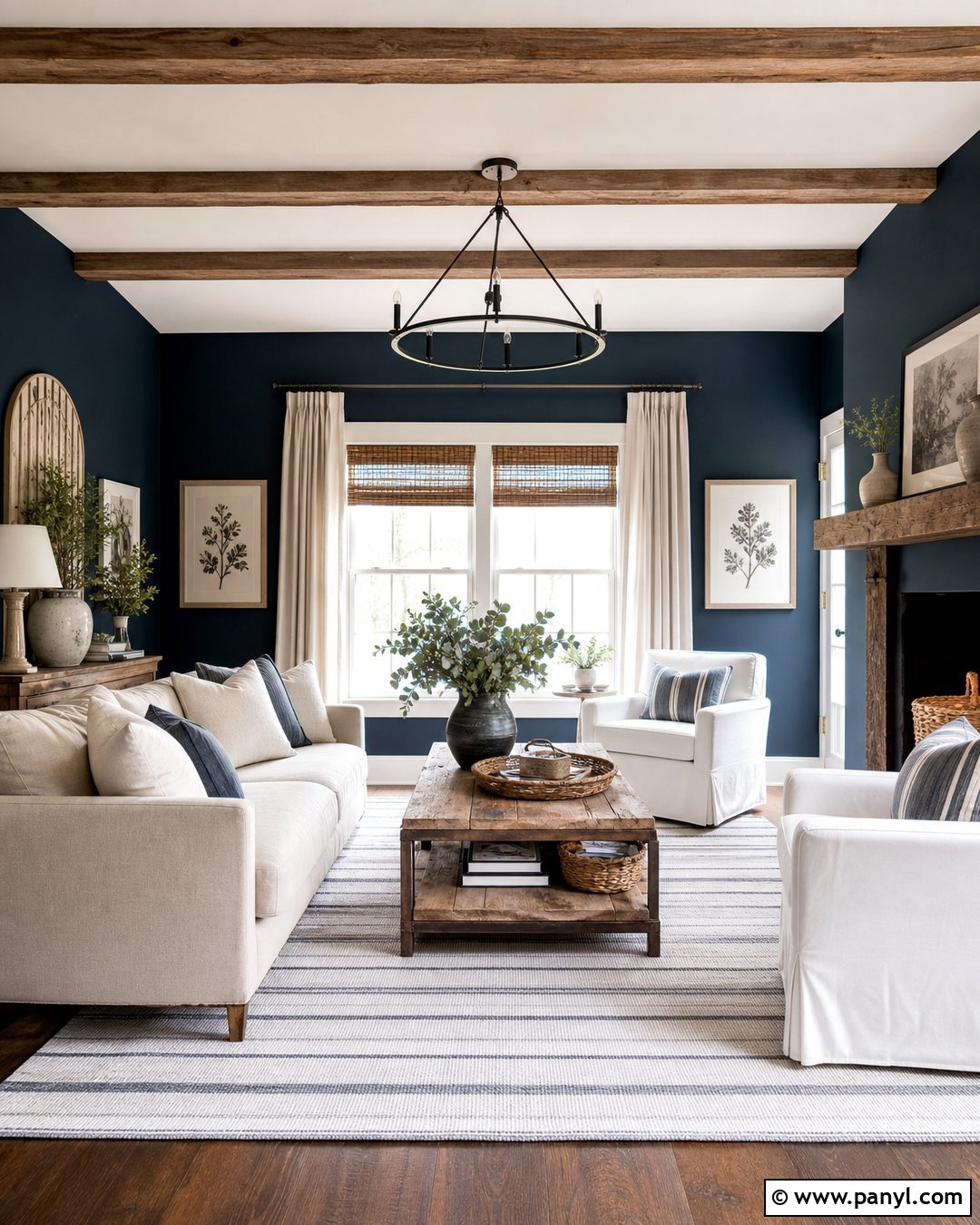
Dark blue walls offer a richer alternative to the white and gray surfaces often used in modern farmhouse rooms. Begin with a comfortable oatmeal sofa, two light slipcovered chairs, and a large reclaimed-wood coffee table. Add a cream rug with a simple charcoal stripe, plus linen curtains and woven shades. Black metal lighting and curtain rods will introduce the familiar farmhouse outline, while warm wood prevents the room from feeling stark. Use pottery, baskets, and restrained botanical prints instead of numerous small signs or themed accessories. White trim can frame the blue and connect it to adjoining spaces. The finished room feels casual and updated, blending practical farmhouse materials with a stronger, more confident background color.
Conclusion:
Dark blue walls can feel classic, modern, cozy, or energetic depending on the complete palette surrounding them. Before painting, compare large samples throughout the day because natural and artificial light can reveal unexpected green, gray, or purple undertones. Decide whether the room needs crisp white, warm cream, natural wood, or a stronger accent color to create balance. Then coordinate the flooring, furniture, window treatments, lighting, artwork, and storage as one unified design. A thoughtfully layered room will make deep blue feel intentional instead of heavy. Whether you prefer a calm bedroom or a dramatic dining space, these 45 dark blue walls provide practical starting points for building a finished look that suits your home.

Related Ideas and Inspiration:
Leave a Reply