
Olive green kitchen walls bring natural warmth, depth, and character into the heart of the home. This earthy color can feel rustic, modern, elegant, or relaxed depending on the cabinets, countertops, lighting, and finishes surrounding it. Pale olive helps a small kitchen appear soft and inviting, while deep olive creates a richer, more dramatic atmosphere. The shade also works beautifully with white, cream, black, oak, walnut, brass, terracotta, and natural stone. Before choosing paint, test several samples throughout the day because olive undertones can shift with changing light. Whether you want a simple accent wall or a fully color-drenched room, these complete looks make Olive Green Kitchen Walls easier to plan with confidence.
1. Olive Green Kitchen Walls With White Cabinets
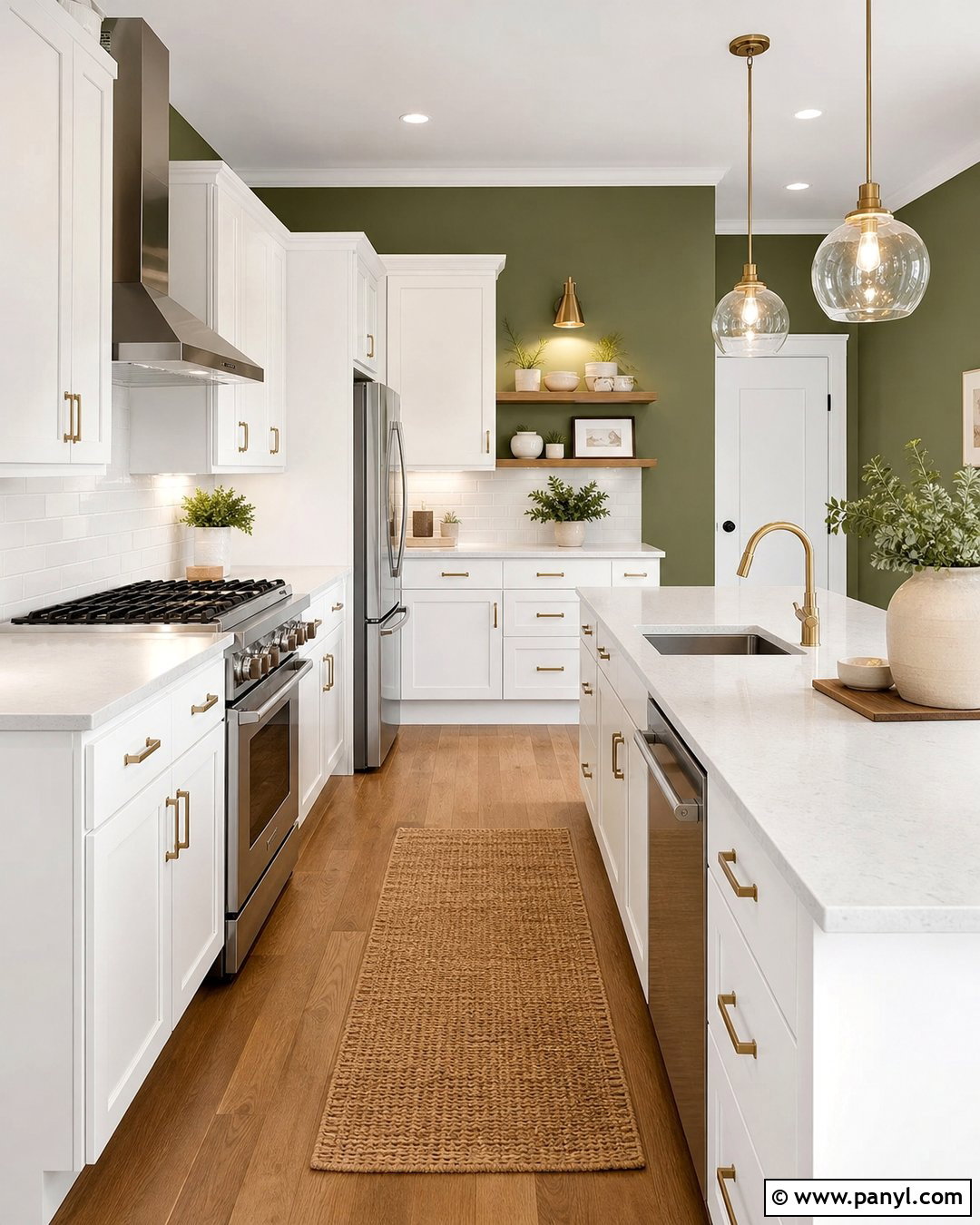
Crisp white cabinets give olive green walls a fresh, balanced appearance that works in kitchens of almost every size. Choose a medium olive with warm undertones, then use soft white Shaker cabinets rather than a cold, blue-based white. White quartz countertops and a matching subway tile backsplash reflect light, preventing the wall color from feeling heavy. Add brushed brass pulls, a brass faucet, and warm oak flooring to connect the green with natural materials. A woven runner and simple ceramic accessories introduce softness without creating clutter. Finish the room with clear glass pendants and under-cabinet lighting. This complete combination feels clean and classic while allowing the olive walls to provide enough personality and warmth.
2. Olive Green Kitchen Walls With Oak Cabinets
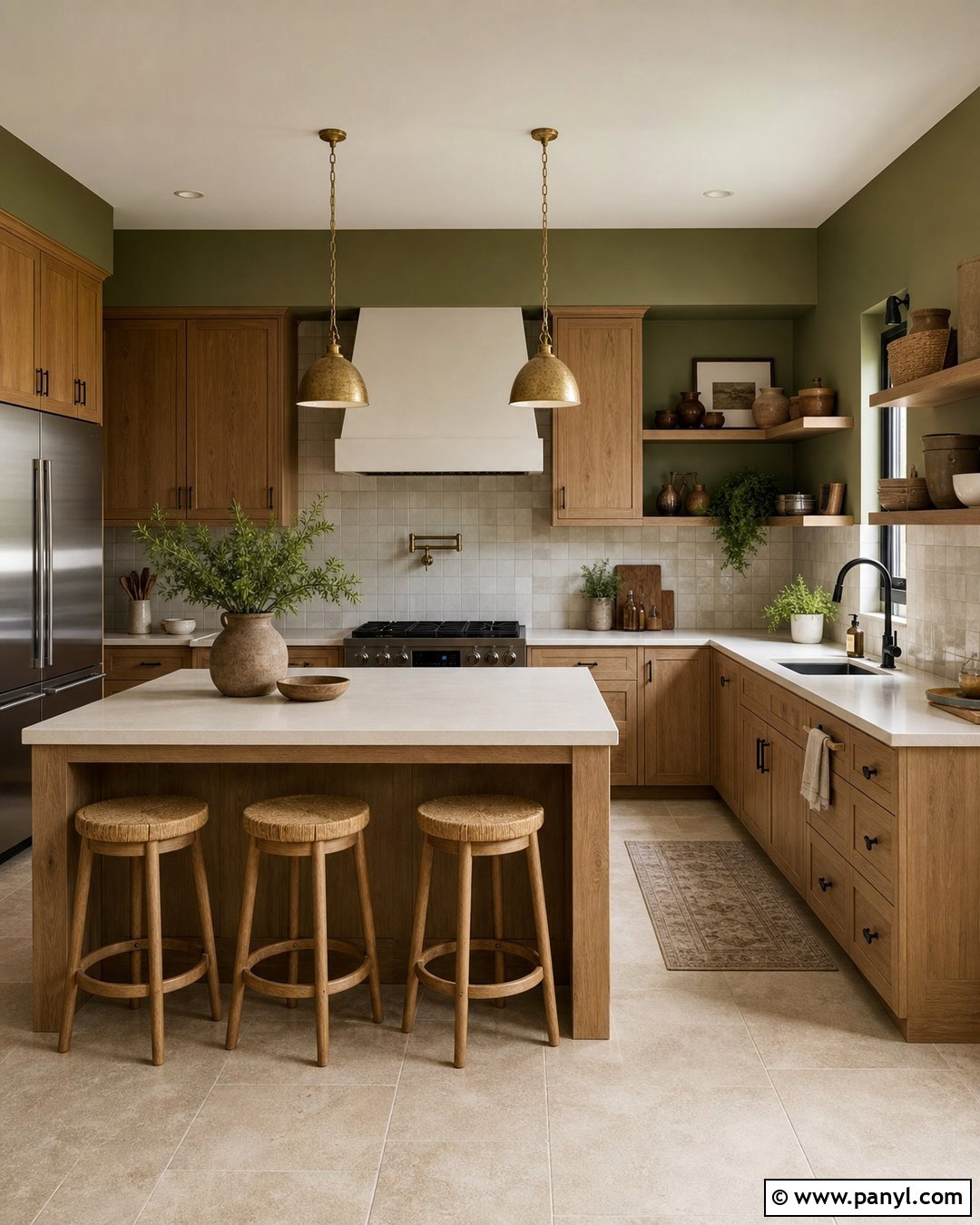
Honey-toned or natural oak cabinets can make olive green kitchen walls feel especially warm and organic. Select a muted olive that contains subtle brown or yellow undertones, helping it blend with the cabinet grain instead of competing with it. Keep the countertops light with creamy quartz or honed limestone, and install a simple off-white backsplash for breathing room. Matte black cabinet hardware adds definition, while aged brass lighting can introduce a softer decorative note. Medium oak flooring creates continuity, although pale stone-look tile also works well. Decorate with handmade pottery, woven baskets, and a few leafy herbs. The finished kitchen should feel layered and earthy, with plenty of bright task lighting to keep the wood-and-green palette from becoming too dark.
3. Light Olive Green Kitchen Walls
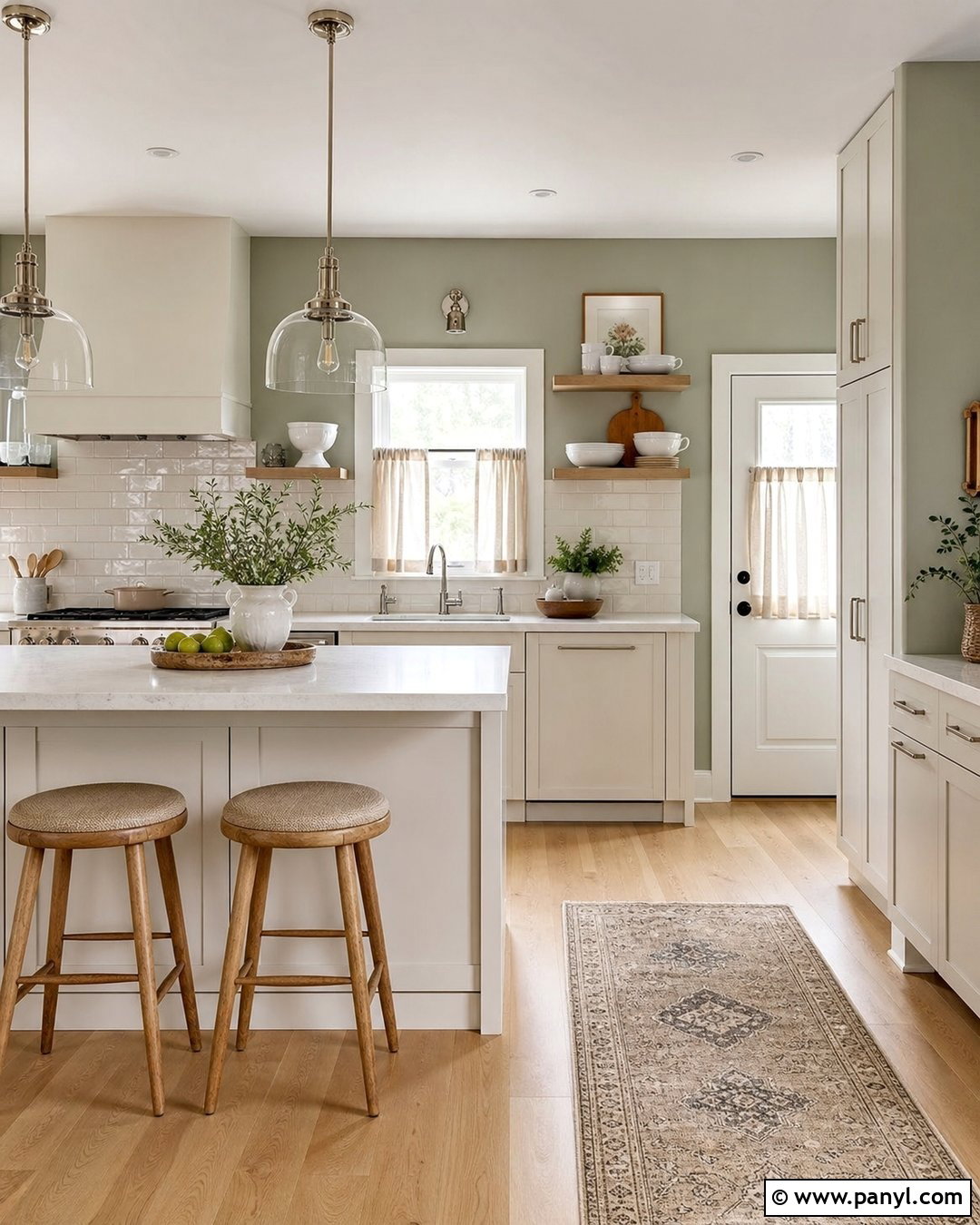
A pale olive wall color offers a gentle alternative to beige while keeping the kitchen calm and open. Pair it with warm white cabinets, light maple flooring, and creamy quartz countertops for a bright, easygoing scheme. A backsplash of glossy ivory tile will bounce light around the room and reveal the green undertones without adding visual noise. Choose polished nickel or brushed brass hardware, depending on whether you prefer a cooler or warmer finish. Natural linen café curtains, pale wood stools, and simple white dishes reinforce the airy appearance. Keep darker accents limited to a slim black window frame or a few small appliances. This complete look works particularly well in compact kitchens and rooms that receive limited natural sunlight.
4. Dark Olive Green Kitchen Walls
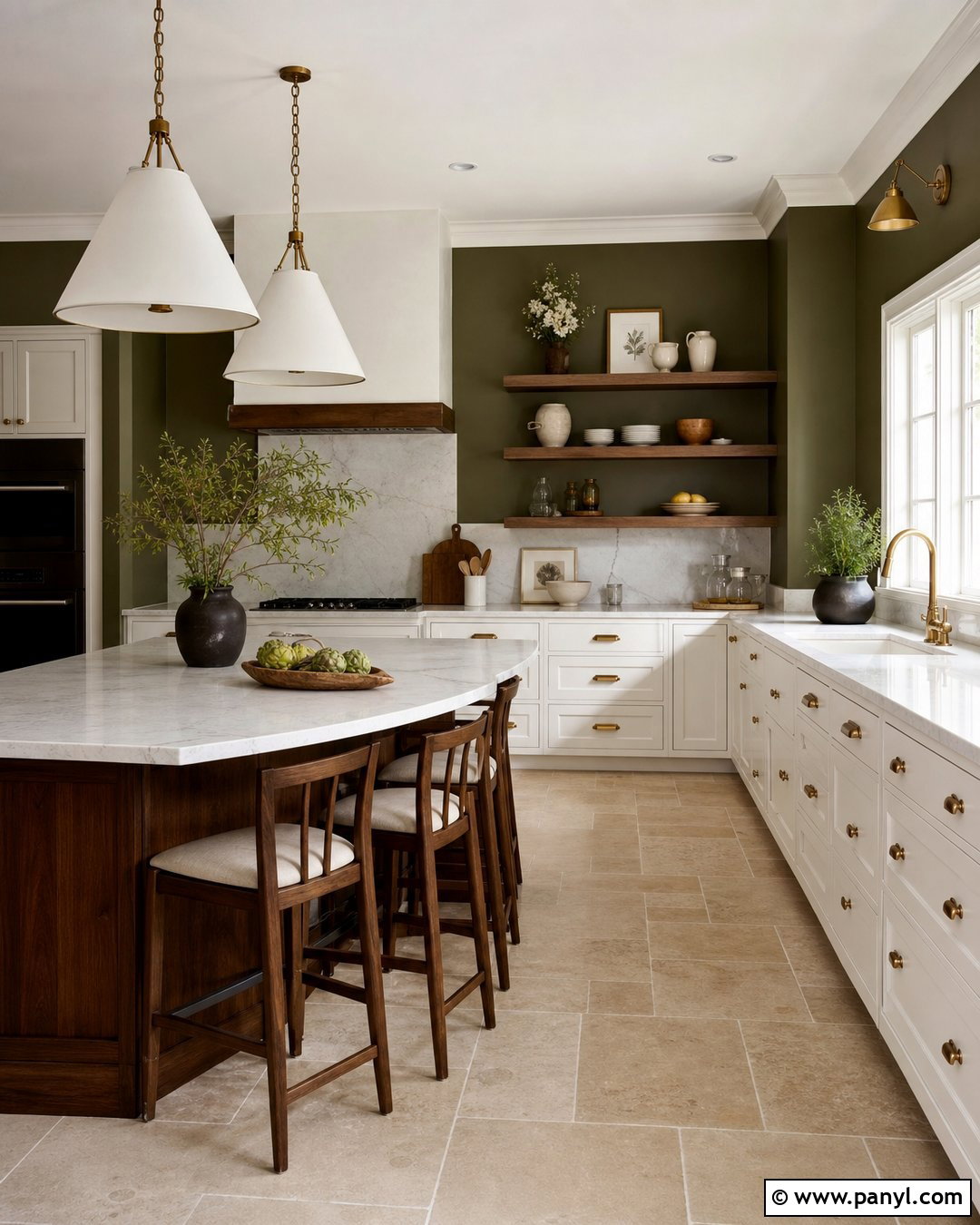
Deep olive green walls can create a sophisticated kitchen when they are balanced with reflective and light-colored finishes. Use warm white cabinetry, pale marble-look counters, and an off-white backsplash to prevent the saturated color from closing in the room. Walnut shelves and aged brass hardware enhance the richness of the walls, while a light oak or limestone floor keeps the lower half visually open. Add oversized white pendants or globe sconces to provide strong, even illumination. Rather than filling every wall with decor, display a few cream ceramics and framed botanical prints. The resulting kitchen feels dramatic but comfortable. This approach works best in a room with generous windows, layered lighting, and enough pale surfaces to maintain practical brightness.
5. Olive Green Kitchen Accent Wall
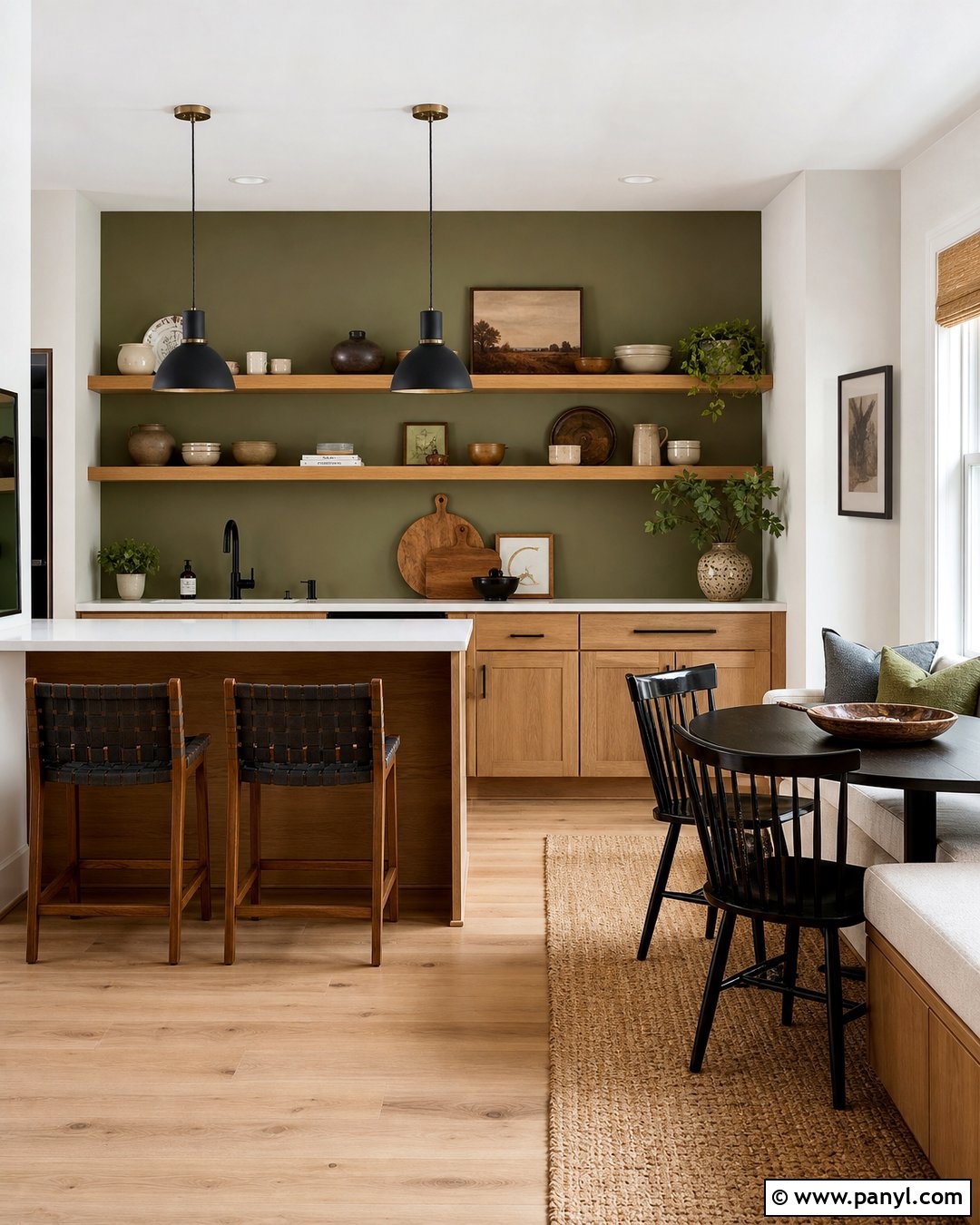
An olive green accent wall provides noticeable color without requiring every kitchen wall to be painted. Choose the wall behind a breakfast nook, freestanding pantry, or open shelving so the color has a clear visual purpose. Keep surrounding walls warm white and repeat the olive shade through small details such as seat cushions, pottery, or a patterned runner. Natural wood cabinets and white quartz counters create a relaxed foundation, while black-framed lighting adds definition. If the accent wall sits behind shelves, use pale oak boards and limit displays to useful dishes, cutting boards, and herbs. The finished room feels connected rather than randomly colorful because the green focal point is supported by coordinating materials throughout the kitchen and dining area.
6. Olive Green Kitchen Walls With Cream Cabinets
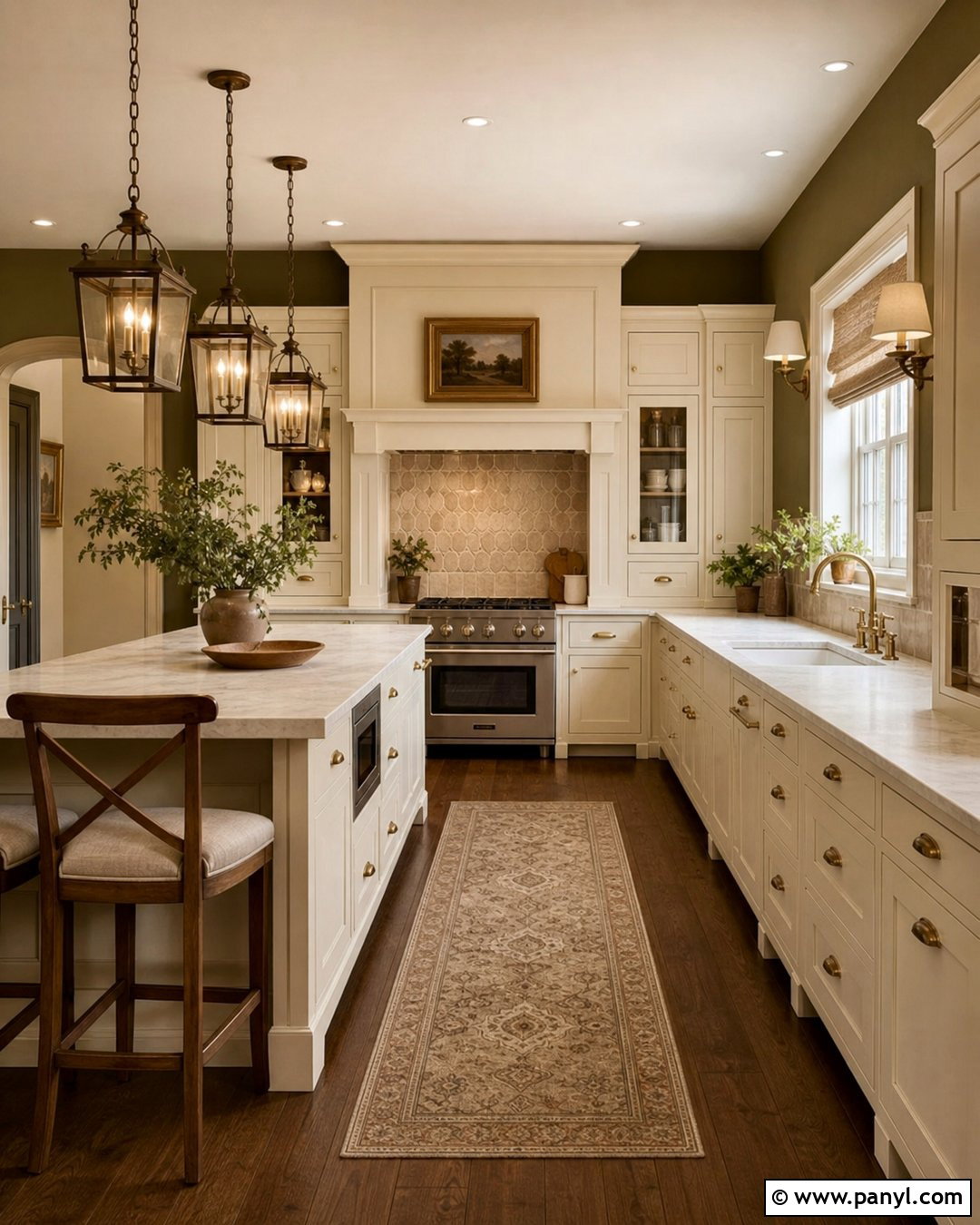
Cream cabinetry softens olive green walls and creates a warm, traditional kitchen without looking overly formal. Choose an olive paint with muted golden undertones, then pair it with cabinets in a gentle ivory or vanilla shade. Honed marble or cream quartz countertops maintain the light palette, while a handmade beige tile backsplash adds subtle movement. Aged brass knobs, bridge faucets, and lantern pendants provide an established, collected character. Introduce medium walnut or oak flooring for natural contrast, then add linen shades and a muted patterned runner. Avoid bright white appliances and accessories, which may appear harsh beside the warmer finishes. The completed kitchen feels comfortable, cohesive, and timeless, with every surface supporting the earthy wall color.
7. Olive Green Kitchen Walls With Black Cabinets
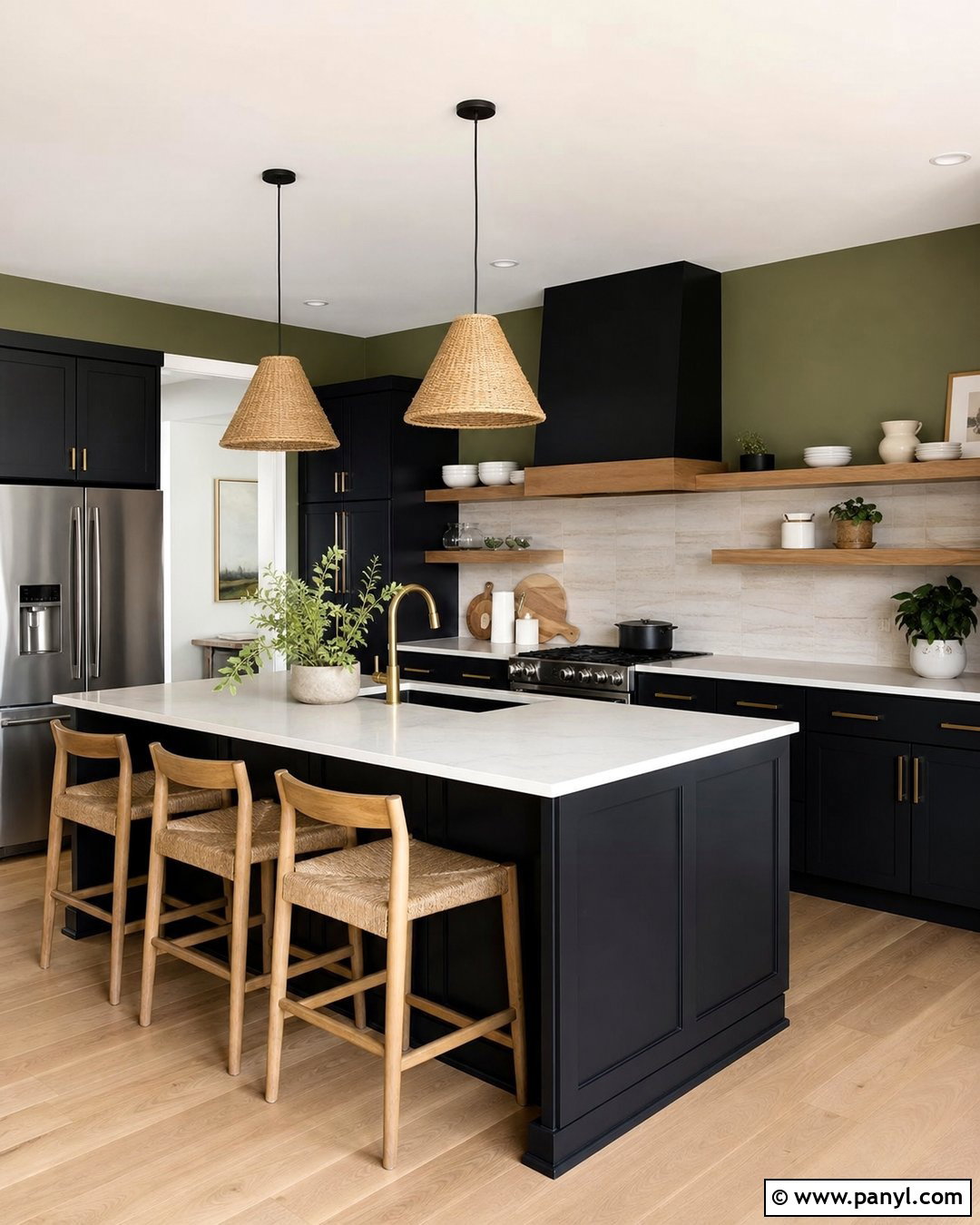
For a bold contemporary kitchen, combine olive green walls with matte black cabinets and plenty of lighter surfaces. Select a medium olive rather than the darkest shade so the walls remain clearly distinguishable from the cabinetry. White quartz countertops and a full-height creamy stone backsplash will brighten the work area. Pale oak flooring, wood bar stools, and woven pendant shades introduce warmth that prevents the black elements from feeling severe. Use minimal brushed brass hardware for a refined contrast, or choose black pulls for a quieter finish. Open shelves can display white dishes and clear glassware against the green background. Strong ceiling fixtures, under-cabinet strips, and natural daylight are essential for making this dramatic combination feel functional, welcoming, and visually balanced.
8. Olive Green Kitchen Walls With Gray Cabinets
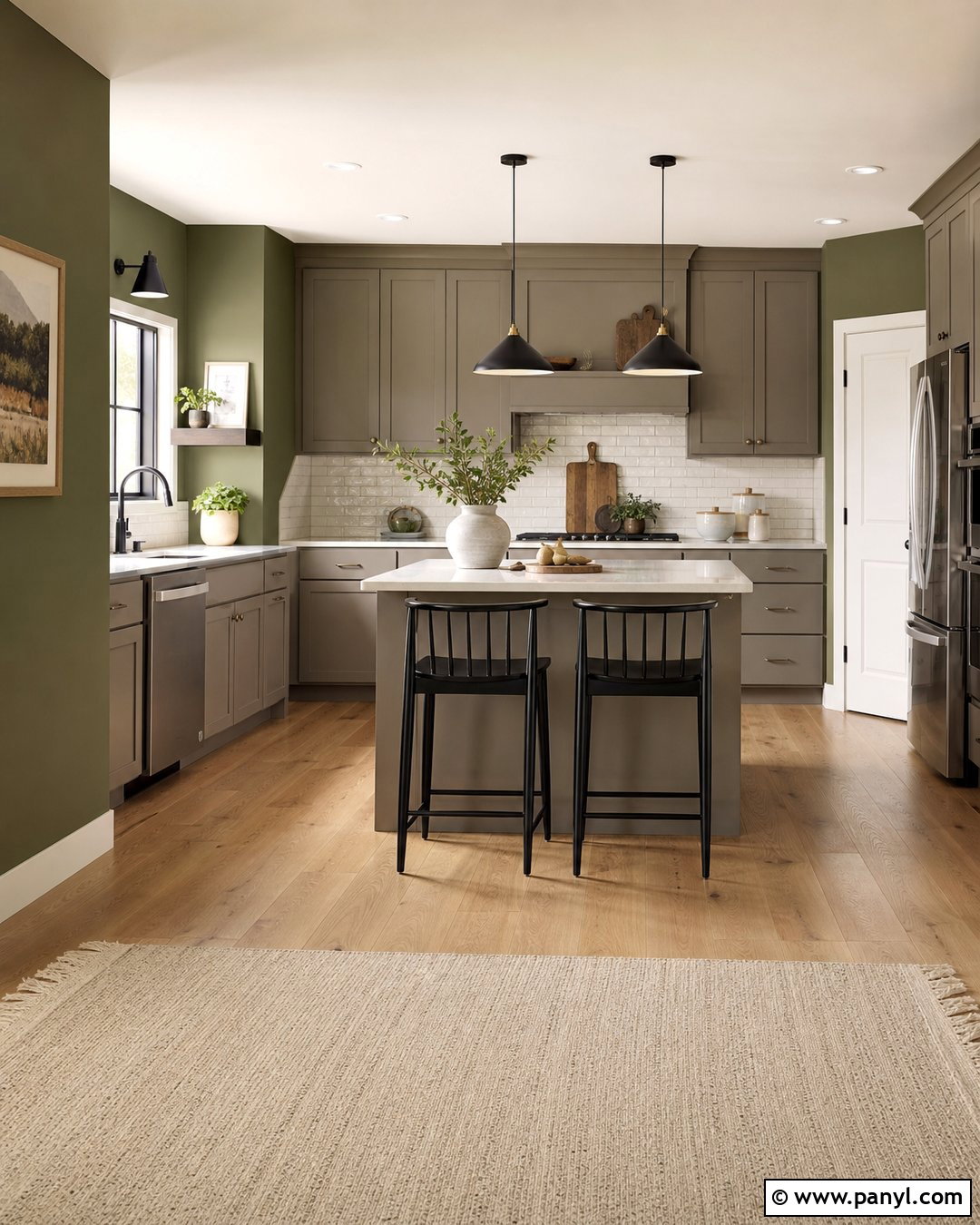
Warm gray cabinets can sit beautifully beside olive green walls when both colors share soft, earthy undertones. Avoid blue-gray cabinetry, which may make yellow-based olive paint look muddy. Instead, choose mushroom gray or gentle greige cabinet fronts with simple Shaker detailing. White or lightly veined quartz counters keep the palette fresh, while a backsplash of warm white rectangular tile adds texture. Brushed nickel hardware creates a clean transition between gray and green, although aged brass can provide extra warmth. Complete the room with light oak flooring, cream textiles, and understated black lighting. A few wooden cutting boards and ceramic planters bring natural variety. The finished design feels calm and contemporary rather than overly colorful, making it easy to live with long term.
9. Olive Green Kitchen Walls With Walnut Cabinets
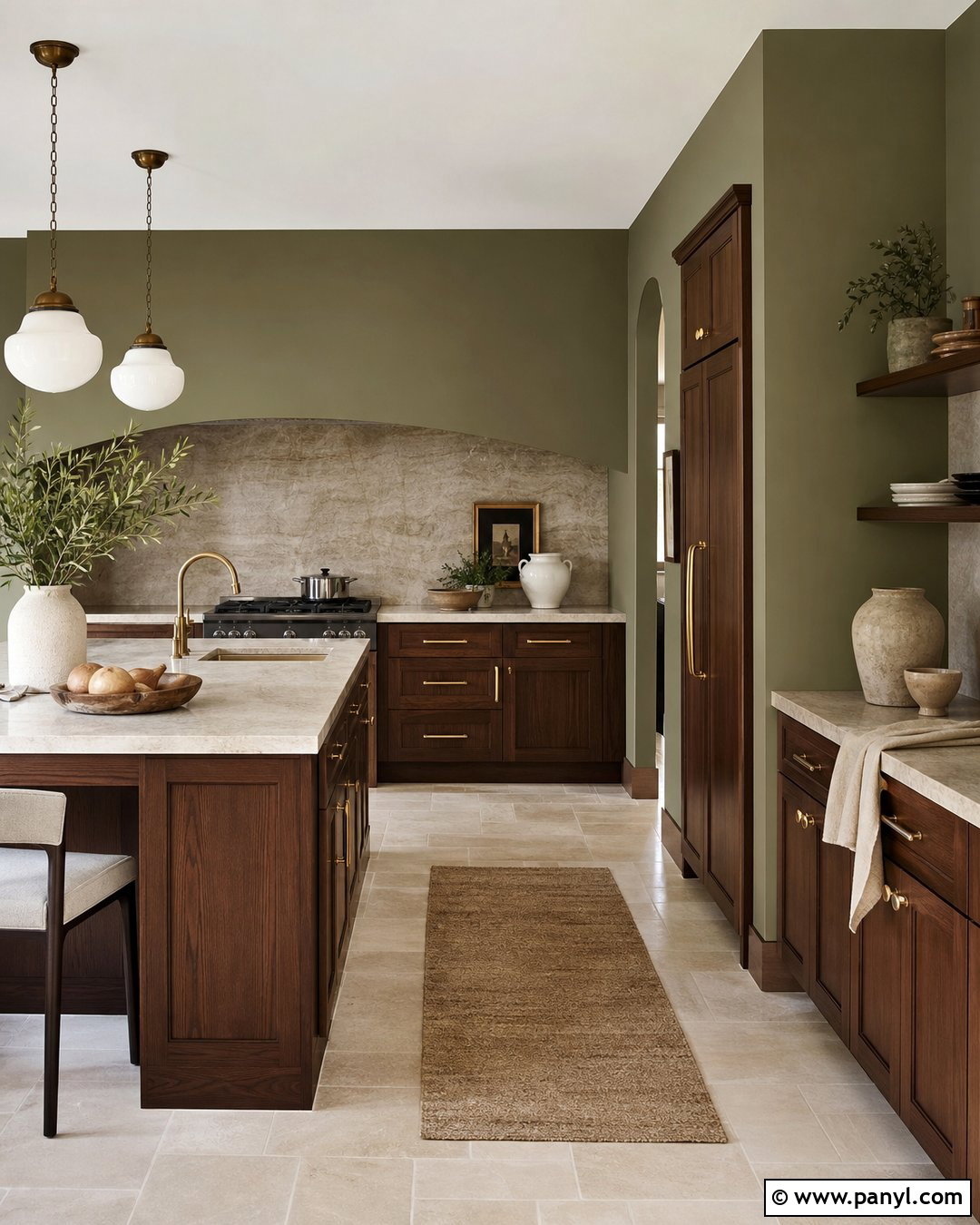
Rich walnut cabinetry and olive green walls create a luxurious, nature-inspired kitchen with strong visual depth. Use a softened olive paint that is slightly lighter than the wood so the cabinet grain remains distinct. Cream quartzite or warm white quartz countertops provide essential brightness, and a full-height backsplash in the same material gives the room a polished finish. Choose understated aged brass pulls and opal glass pendants to complement the brown and green tones. Pale stone flooring can lighten the overall scheme, while a walnut island maintains continuity. Keep accessories simple with cream ceramics, linen towels, and a few sculptural branches. Proper under-cabinet lighting will reveal both the wall color and wood grain, ensuring the finished space feels rich rather than shadowy.
10. Olive Green Kitchen Walls With Butcher Block Counters
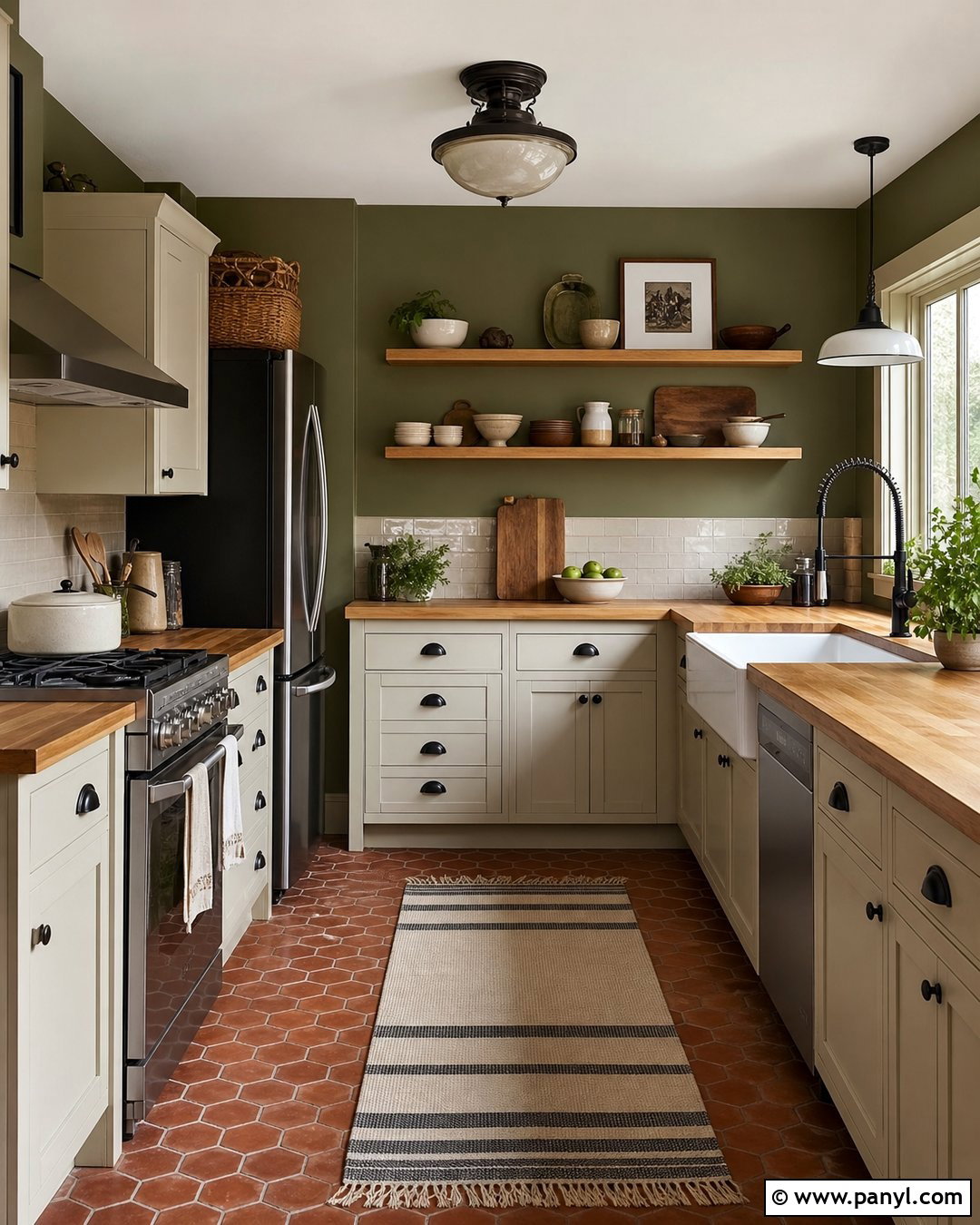
Butcher block countertops enhance the relaxed, natural quality of olive green kitchen walls. Build the design around warm olive paint, simple cream cabinets, and medium-tone oak or maple worktops. Protect busy sink areas with a short backsplash of ivory tile while allowing more painted wall to remain visible elsewhere. Matte black cup pulls and a black bridge faucet add practical contrast without disrupting the earthy palette. Use terracotta or warm stone-look floor tiles to ground the kitchen, then soften them with a washable striped runner. Wooden shelves, cream stoneware, and potted herbs complete the welcoming look. Because both olive and butcher block absorb light visually, include bright pendants and under-cabinet fixtures to keep food preparation areas clear and comfortable.
11. Olive Green Kitchen Walls With Marble Counters
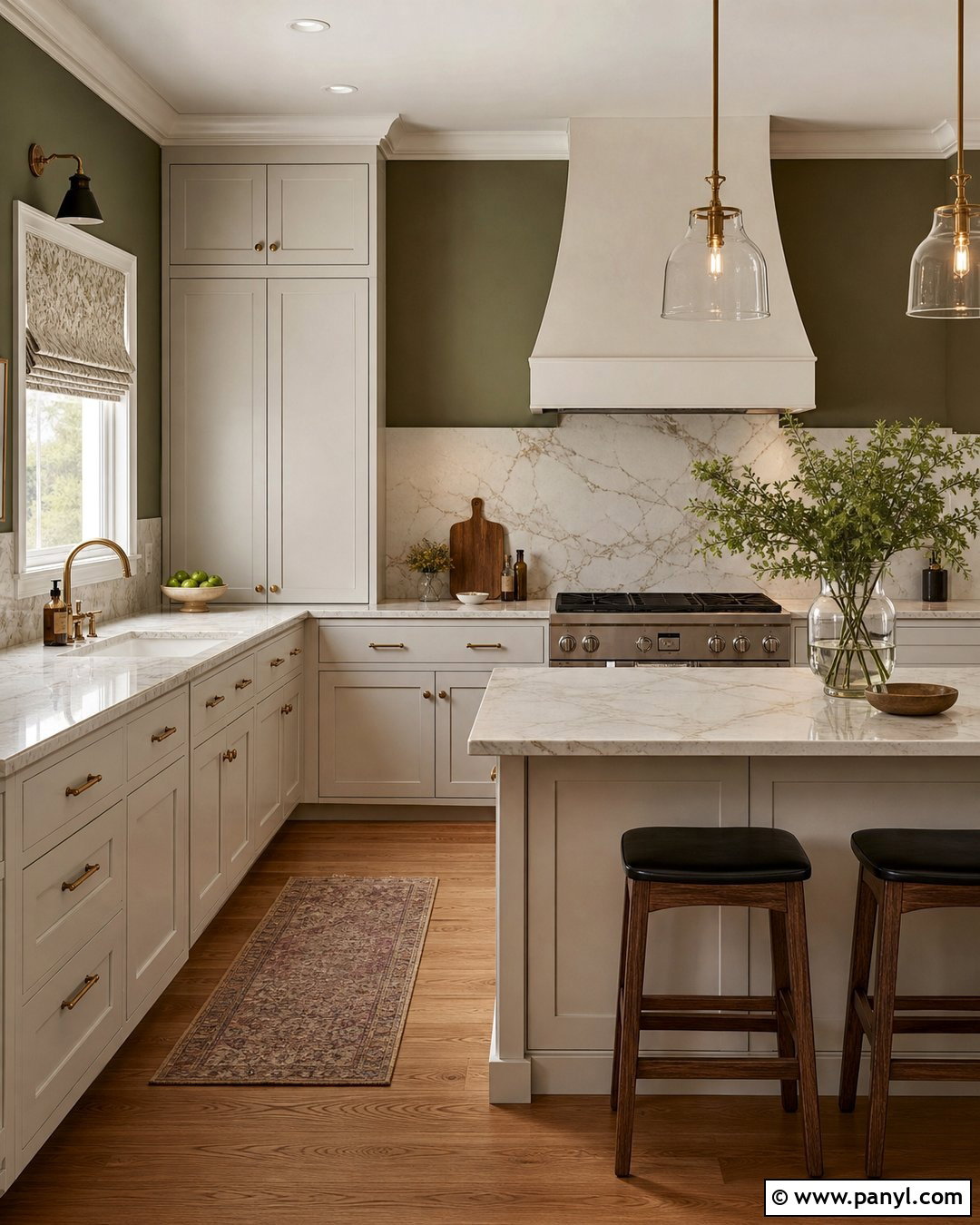
Veined marble countertops give olive green kitchen walls an elegant quality while maintaining a strong connection to natural materials. Choose a warm olive paint and marble featuring creamy white, soft gray, or subtle golden veining. Cabinets can be painted off-white or finished in medium oak, depending on how formal you want the kitchen to feel. Continue the marble a short distance up the wall or use it as a full-height backsplash behind the range. Brushed brass hardware highlights warmer veining and provides a refined finishing touch. Add oak flooring, tailored Roman shades, and simple glass pendants to balance luxury with everyday comfort. Limit countertop accessories so the stone and saturated wall color remain the room’s primary visual features.
12. Olive Green Kitchen Walls With White Subway Tile
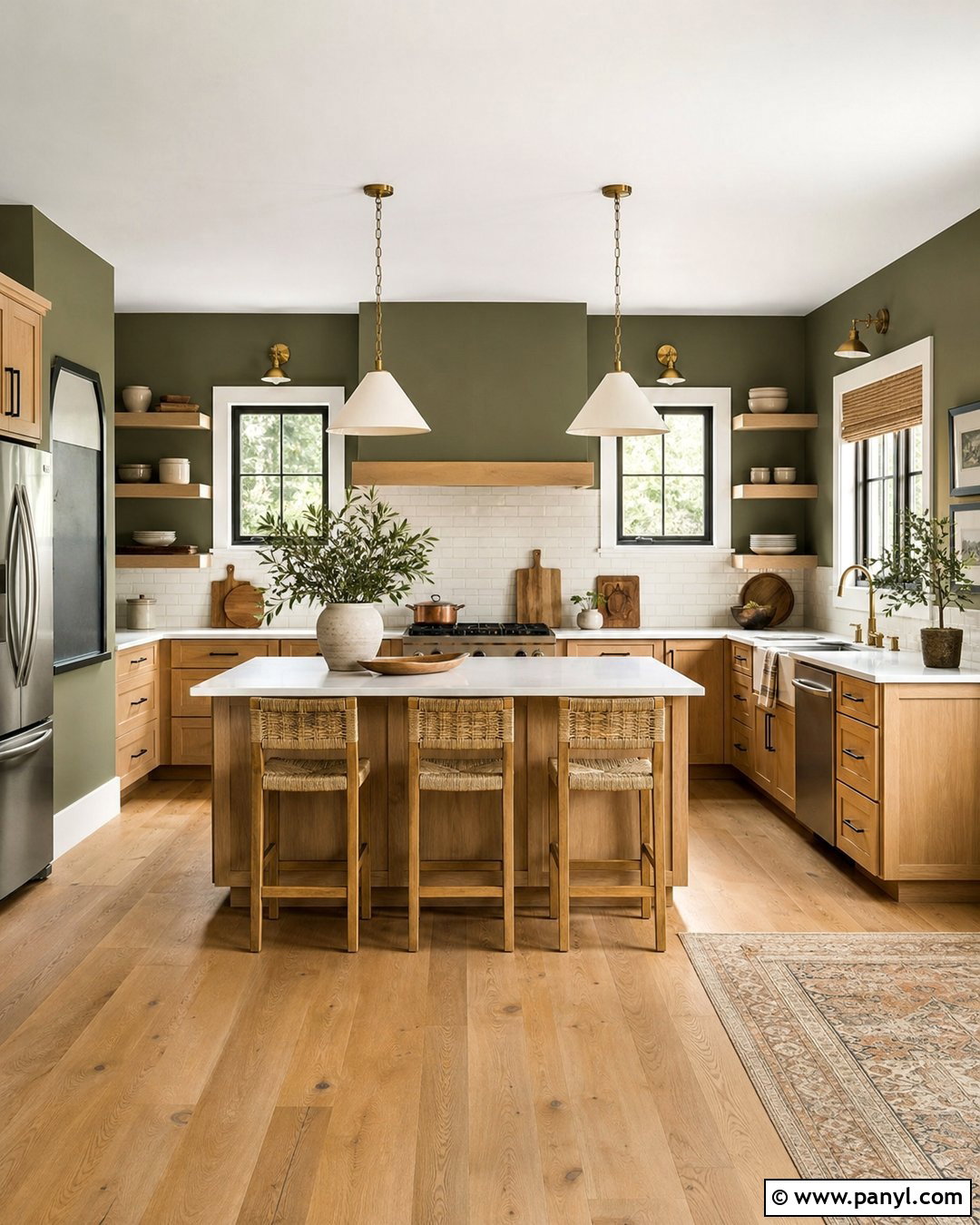
A white subway tile backsplash creates a clean break between olive green walls and busy kitchen work surfaces. Use warm white tile with slightly irregular edges rather than a stark, cool white finish. Cream or pale wood cabinets keep the palette approachable, while dark grout can outline the tile for an industrial touch. For a softer result, select beige or off-white grout. White quartz counters maintain visual continuity, and medium oak flooring adds warmth below. Brass sconces, black cabinet pulls, and natural woven stools introduce carefully controlled contrast. Paint the exposed walls above the backsplash and around windows in olive green. This placement lets the color frame the room while durable tile protects the sink and cooking zones from splashes.
13. Olive Green Kitchen Walls With Zellige Tile
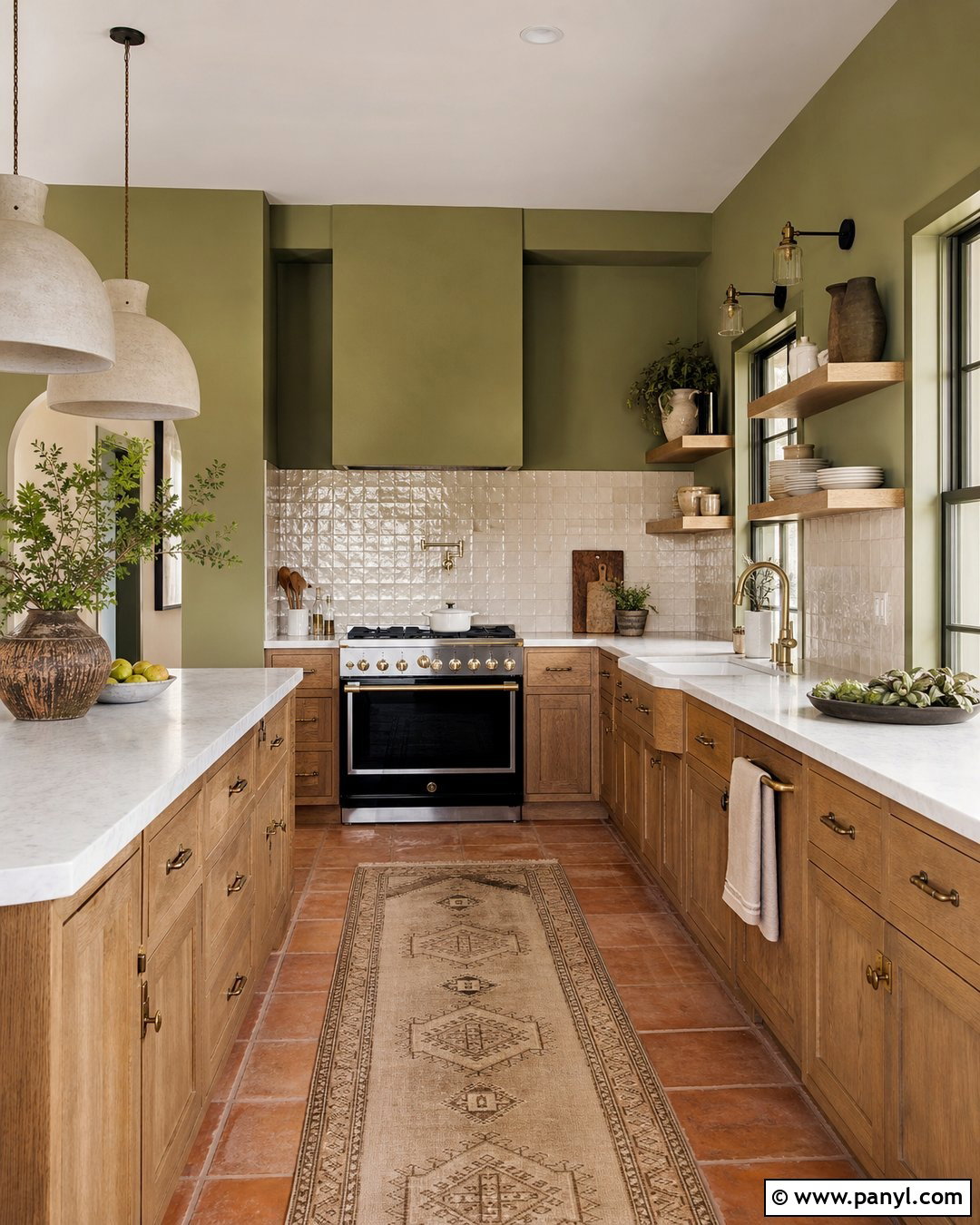
Glossy zellige tile can add handcrafted texture to a kitchen with olive green walls. Select creamy white or pale sage tiles so their uneven surfaces catch the light without competing with the paint. Use the tile behind the sink and range, leaving the upper portions of the walls olive for a layered appearance. Natural oak cabinets, off-white quartz counters, and aged brass hardware support the relaxed artisanal look. Terracotta flooring provides warmth, while a flat-woven neutral runner improves comfort underfoot. Choose simple plaster pendants or clear glass fixtures to avoid overwhelming the varied surfaces. Finish with open oak shelves holding practical ceramics. The combination feels distinctive and inviting because smooth painted areas balance the movement and shine of the handmade backsplash.
14. Olive Green Kitchen Walls With Terracotta Floors
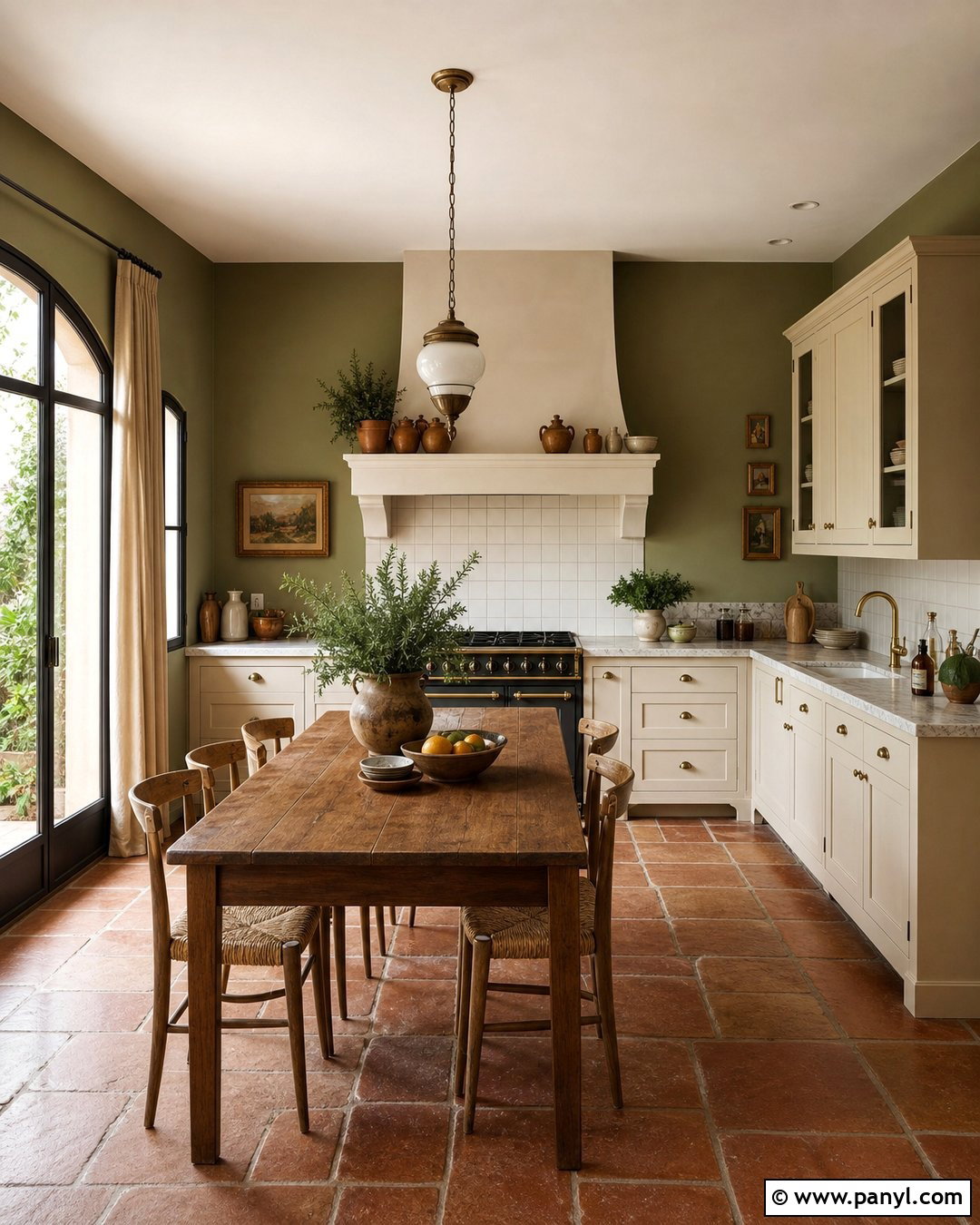
Terracotta flooring brings out the golden and brown undertones found in many olive green wall colors. Use softly weathered clay tiles in a square, brick, or subtle checkerboard layout, then pair them with cream Shaker cabinets and pale stone countertops. An ivory backsplash will keep the center of the kitchen bright, while aged brass hardware strengthens the warm Mediterranean influence. Add a rustic oak table or butcher block island, woven seating, and natural linen window treatments. Keep decorative pieces simple, choosing earthenware bowls, wood boards, and small pots of herbs. Seal the terracotta properly for easier kitchen maintenance. With abundant white lighting, the completed room feels sunny and grounded rather than dark, even though the main colors are warm and earthy.
15. Olive Green Kitchen Walls With Wood Floors
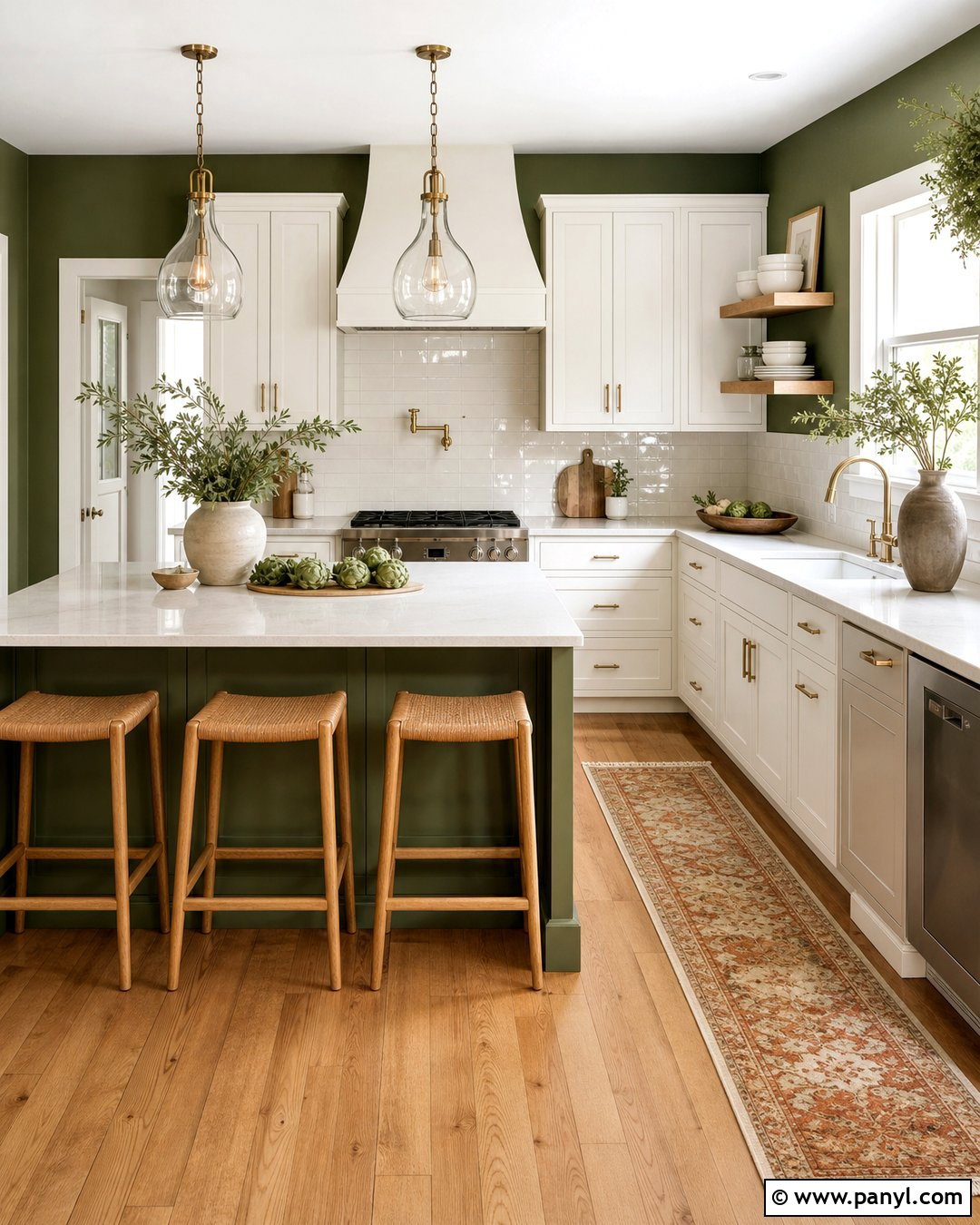
Medium-tone wood floors provide a versatile foundation for olive green kitchen walls. Choose oak flooring with a matte finish and restrained grain so it adds warmth without making the room visually busy. Pair the walls with soft white cabinets, pale quartz countertops, and a glossy ivory backsplash. Black or brass hardware can define the cabinetry, while simple glass pendants maintain openness. Use a narrow washable runner in beige, rust, and muted green to connect the walls and flooring. Wooden stools should be slightly lighter or darker than the floor to prevent everything from blending together. Finish with white stoneware and a few leafy plants. This balanced kitchen feels natural and familiar, making it suitable for farmhouse, transitional, or quietly modern homes.
16. Olive Green Kitchen Walls With Black Accents
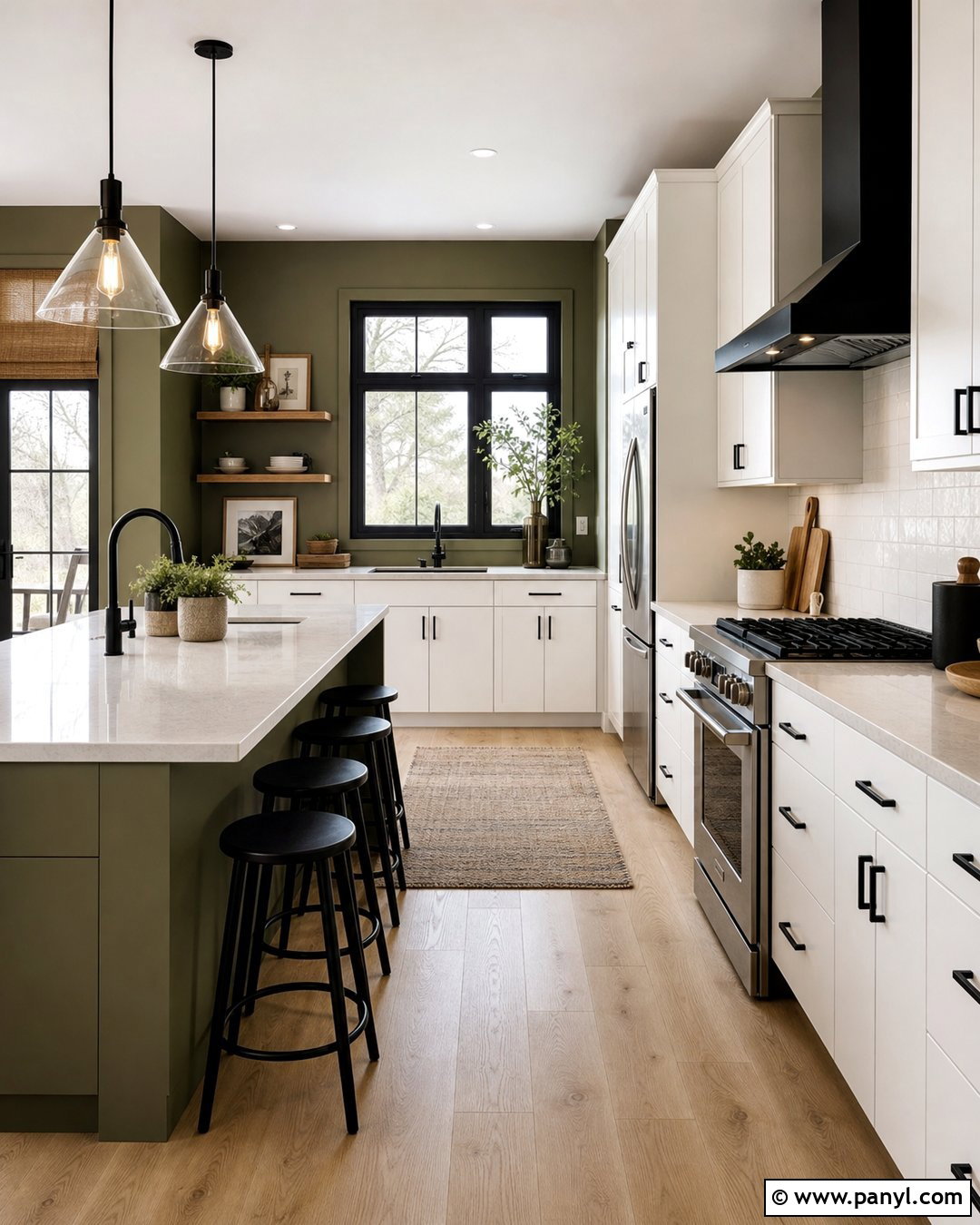
Small black accents can sharpen olive green kitchen walls without dominating the room. Start with warm olive paint, white flat-panel cabinets, and pale quartz countertops. Introduce matte black through a faucet, slim cabinet pulls, window frames, pendant lights, and counter stools. Keep the black pieces narrow and repeated evenly so they form a consistent outline rather than isolated dark spots. A white backsplash and light oak floor will preserve brightness, while woven shades and wooden cutting boards soften the contrast. Use open shelves sparingly and keep visible dishes neutral. The finished kitchen has a clear modern structure, but the olive walls prevent it from feeling cold. This approach is especially effective in open-plan homes with existing black doors or window trim.
17. Olive Green Kitchen Walls With Brass Hardware
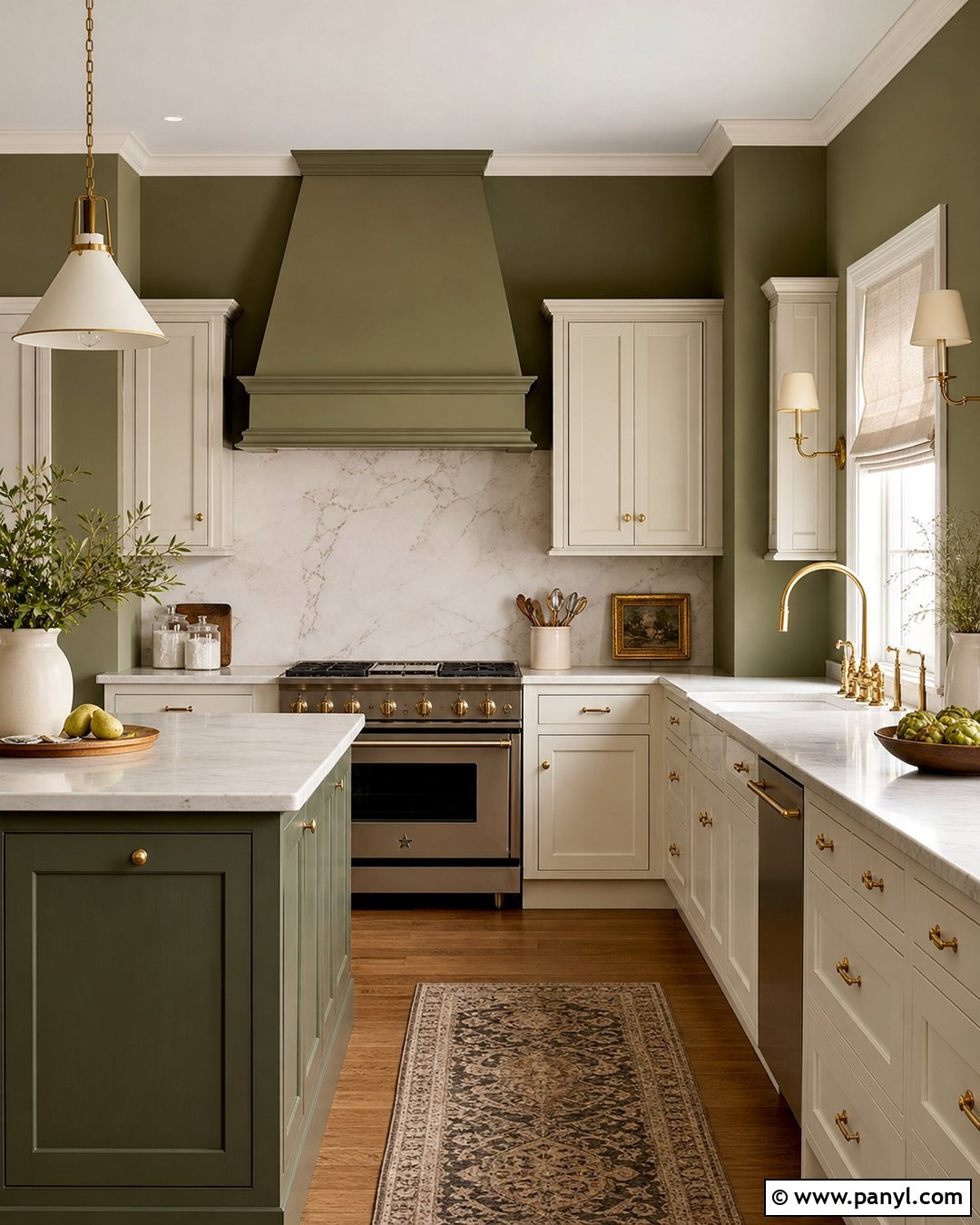
Brass hardware brings a warm glow to olive green kitchen walls, creating a polished yet comfortable atmosphere. Choose unlacquered, aged, or softly brushed brass rather than an extremely shiny finish. Cream cabinets and white quartz countertops provide a light foundation, while a warm marble backsplash adds gentle pattern. Repeat the brass through cabinet knobs, a faucet, wall sconces, and narrow pendant details, but avoid making every accessory metallic. Medium oak flooring and linen window shades help the space stay relaxed. Decorate with cream ceramics, clear glass containers, and one or two dark wood pieces for depth. The completed palette feels carefully coordinated because the golden hardware echoes olive’s warm undertones without drawing attention away from the walls or cabinetry.
18. Olive Green Kitchen Walls With Stainless Steel
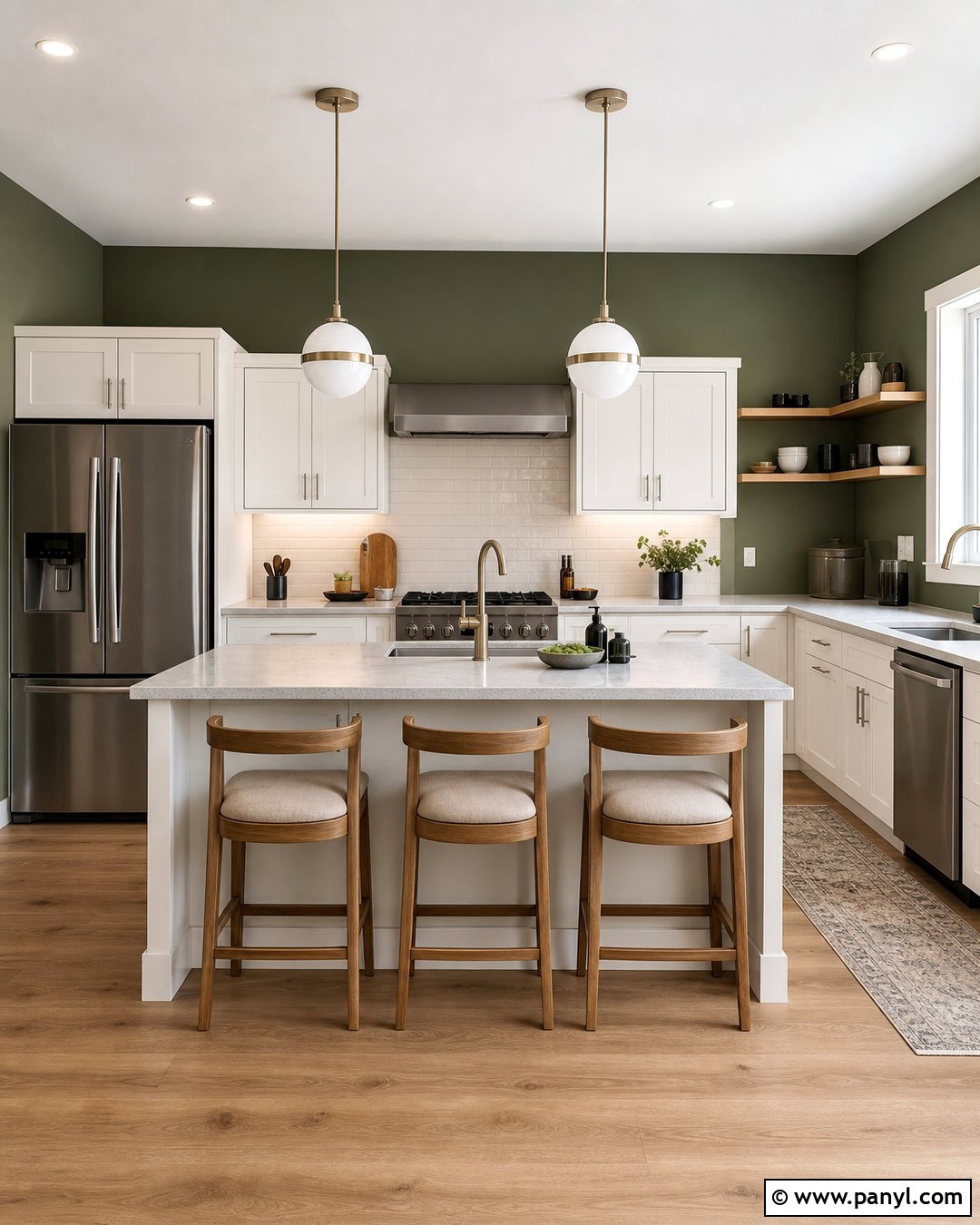
Stainless steel appliances can look softer and more integrated when surrounded by olive green kitchen walls. Use a balanced medium olive, warm white cabinets, and light gray quartz countertops to create an easy transition between earthy color and cool metal. A backsplash of off-white tile with pale gray grout links the appliances to the surrounding surfaces. Choose simple stainless steel cabinet pulls and a matching faucet for consistency. Light oak floors and wooden stools introduce warmth, while white globe pendants keep the room bright. Avoid adding several competing metal finishes, which may make the kitchen feel disconnected. A few black accessories can provide definition. The final design feels practical, clean, and contemporary, with olive paint adding personality to standard appliance finishes.
19. Olive Green Kitchen Walls With Open Shelves
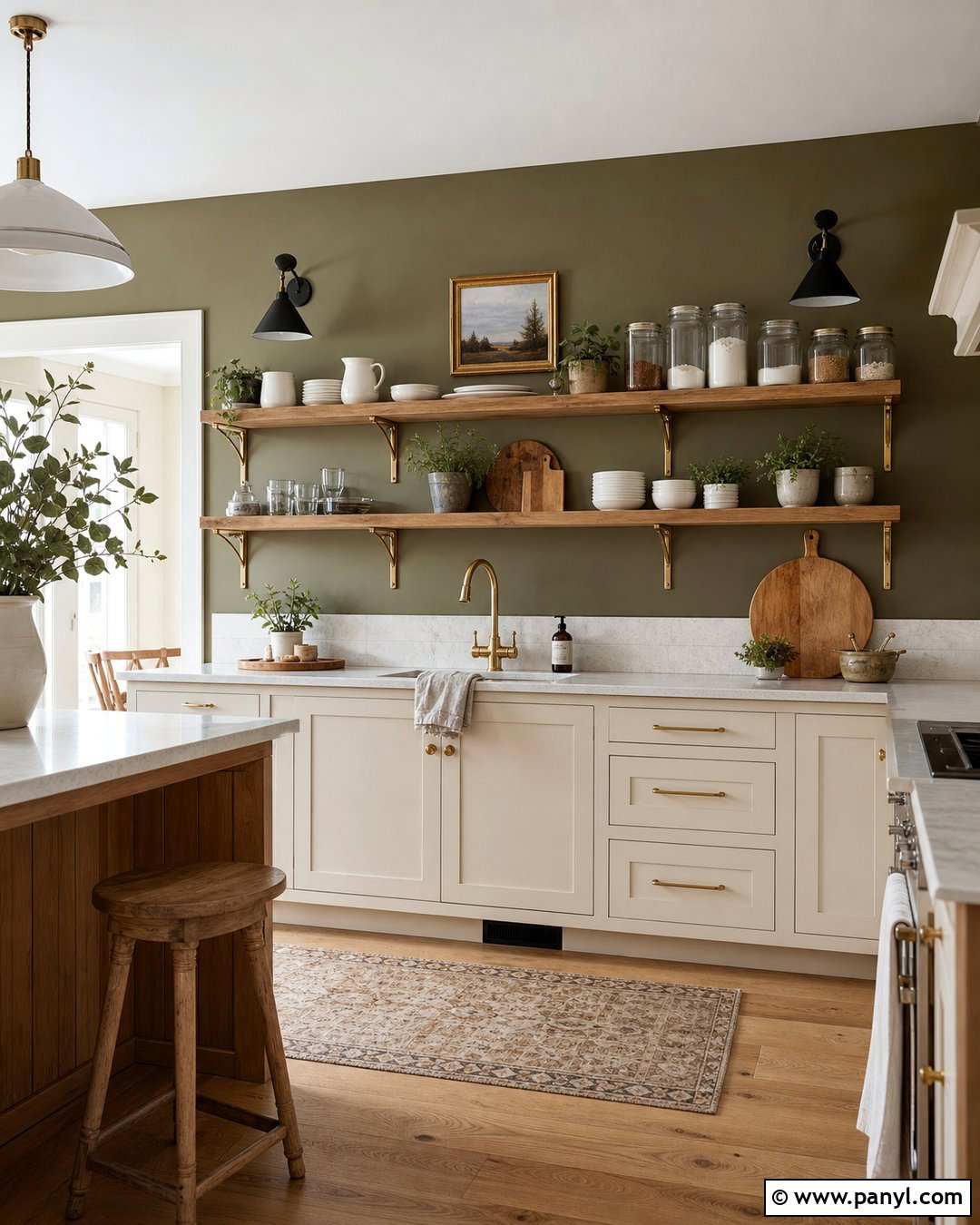
Open wood shelving allows olive green kitchen walls to remain visible while adding useful storage and display space. Install two or three thick oak shelves above a base cabinet run, leaving enough wall around them for the green color to frame the arrangement. Use cream lower cabinets, white quartz counters, and an ivory tile backsplash limited to the splash zone. Brass brackets and a matching faucet introduce warmth, while simple black sconces offer contrast. Style the shelves with frequently used white dishes, glass jars, wooden boards, and a small plant. Avoid filling every inch, since open space helps the wall color read clearly. The complete kitchen feels airy and informal, with storage that supports daily routines rather than functioning as decoration alone.
20. Olive Green Kitchen Walls With Floating Shelves
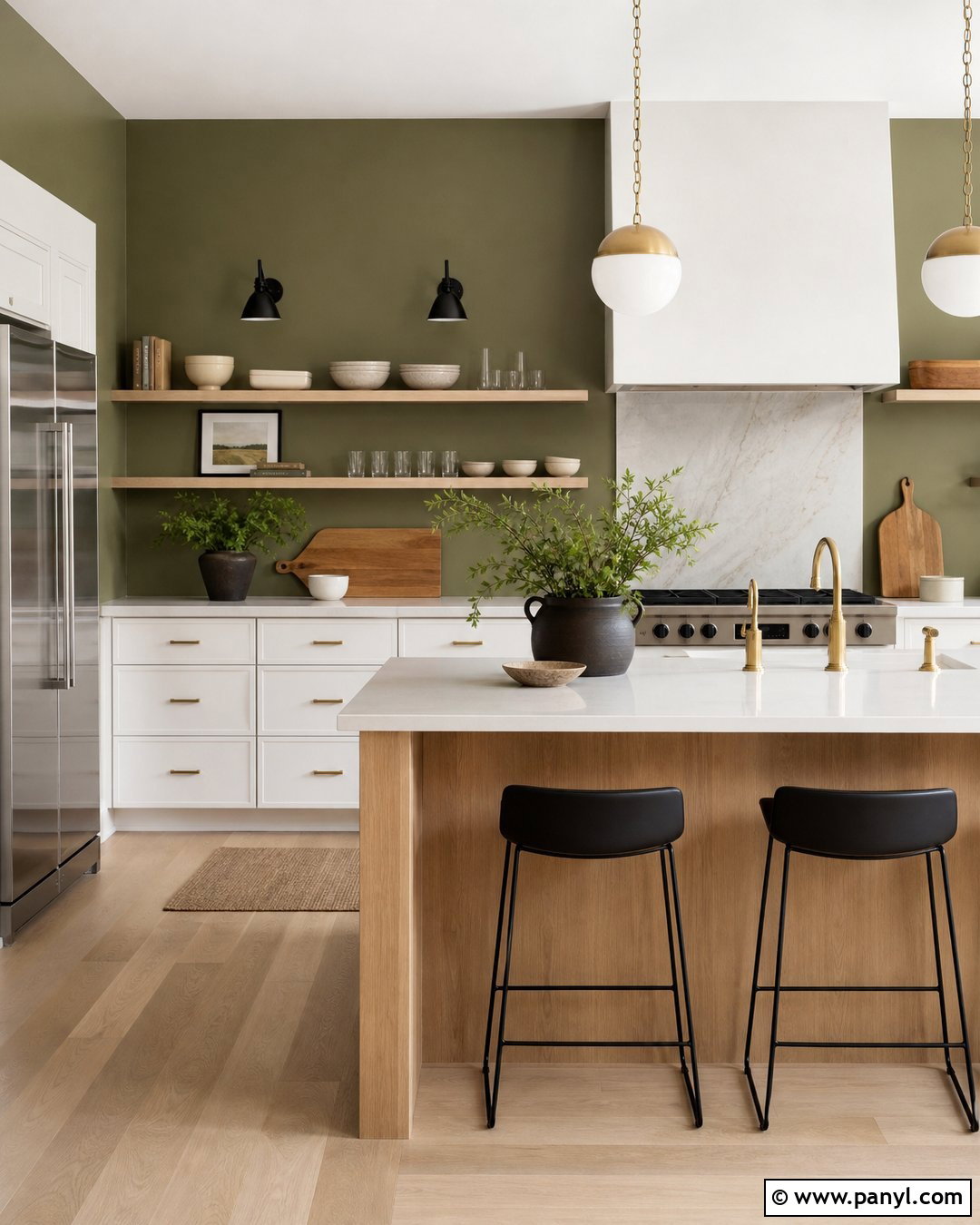
Slim floating shelves create a lighter, more contemporary treatment for olive green kitchen walls. Choose pale oak or walnut shelves with concealed brackets, then position them over a clean run of white or greige base cabinets. Continue a short white quartz backsplash behind the counter, leaving most of the olive wall exposed. Flat-panel cabinetry, minimal brass pulls, and a streamlined faucet maintain the uncluttered appearance. Display only coordinated essentials, such as cream bowls, clear glasses, and small cookbooks with muted covers. Pale wood flooring and simple globe pendants complete the room. Allow generous spacing between objects and shelves. This thoughtful layout makes the kitchen feel larger while giving the olive walls a strong role in the design instead of hiding them behind upper cabinetry.
21. Olive Green Kitchen Walls With A Gallery Wall
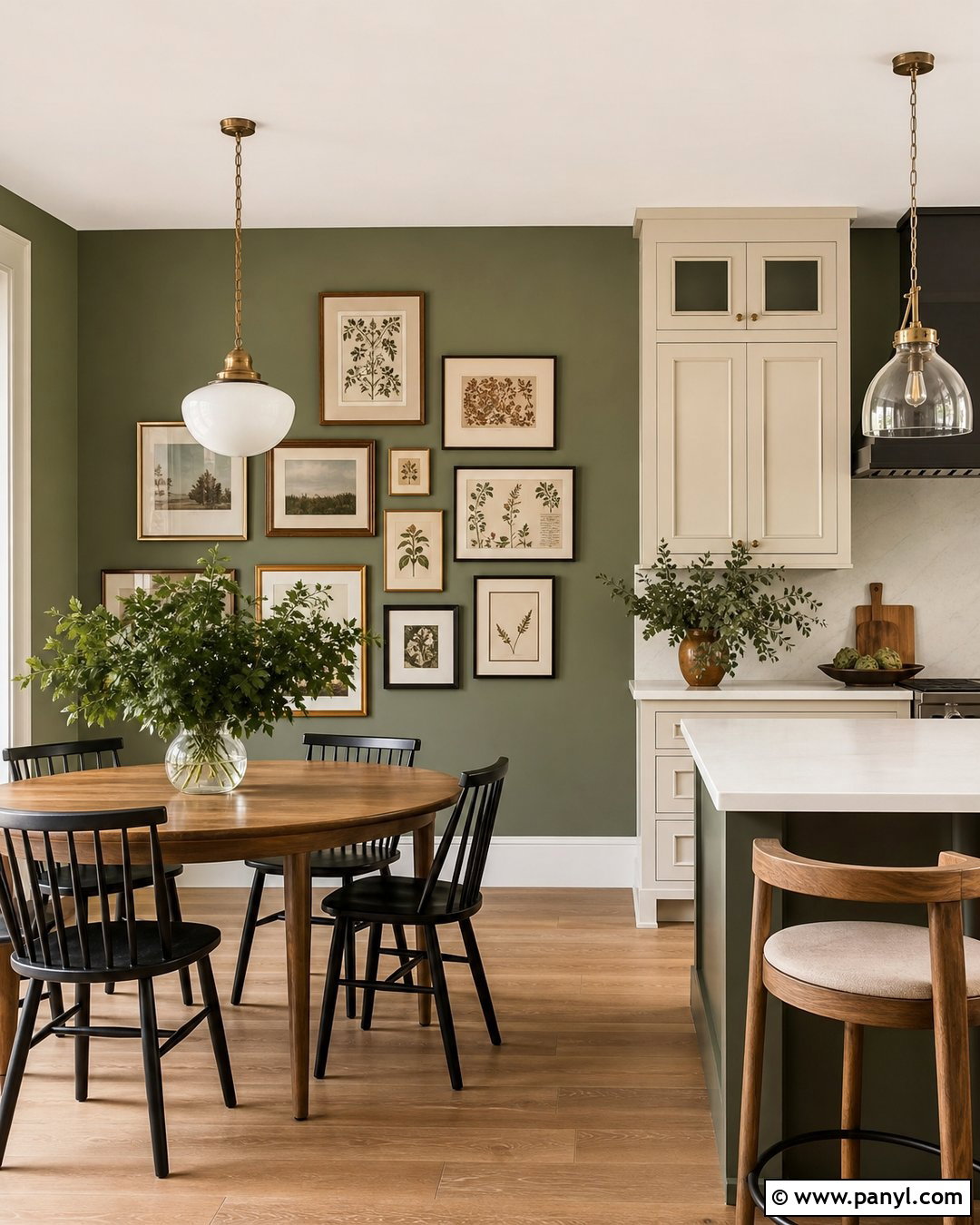
A small gallery arrangement can turn olive green kitchen walls into a personal focal point near a breakfast table or empty passage. Use vintage botanical prints, food illustrations, or quiet landscapes in wood, black, and aged brass frames. Keep the artwork palette restrained so it complements the wall rather than disappearing against it. Pair the display with cream cabinets, white quartz counters, oak flooring, and a simple wood dining table. A linen pendant or opal globe light will softly illuminate the grouping. Leave cooking and sink walls less decorated for easier cleaning. Repeat one or two frame colors through cabinet hardware and seating. The complete room feels collected and welcoming, while the organized frame layout prevents a relatively compact kitchen from becoming visually cluttered.
22. Olive Green Kitchen Walls With A Breakfast Nook
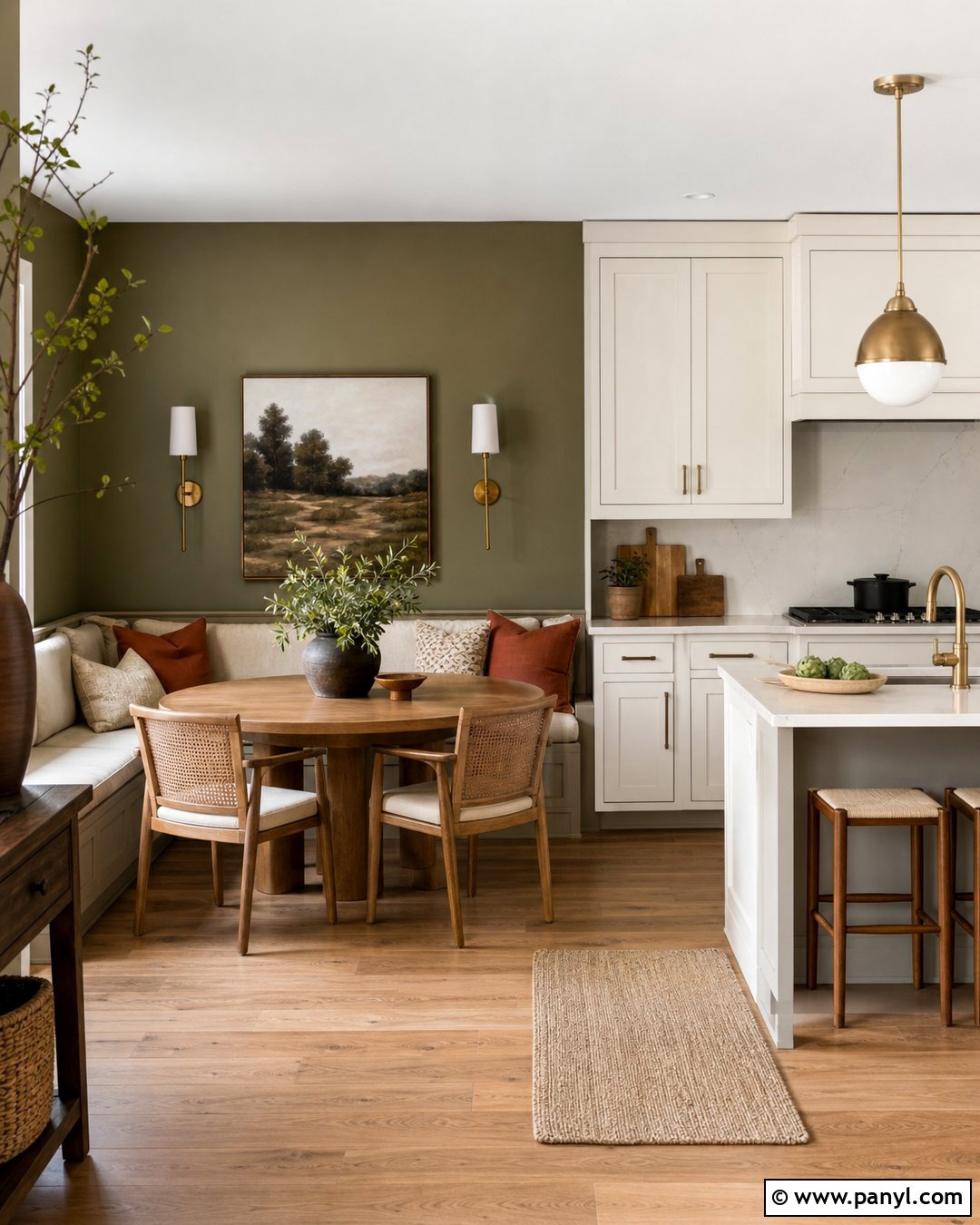
Olive green walls can make a breakfast nook feel cozy and connected to the main kitchen. Paint the nook and surrounding kitchen walls in the same muted olive, then install a built-in bench upholstered in durable cream or beige fabric. Add a round oak table, woven chairs, and patterned cushions featuring rust, ivory, and soft green. Use warm white cabinets and pale quartz counters elsewhere in the room to balance the deeper wall color. Brass sconces above the bench provide focused lighting without taking up table space. Oak flooring should continue through both areas for visual flow. Keep accessories practical with a ceramic bowl and washable textiles. The finished layout creates an inviting everyday dining destination rather than an unused corner.
23. Olive Green Kitchen Walls With A White Ceiling
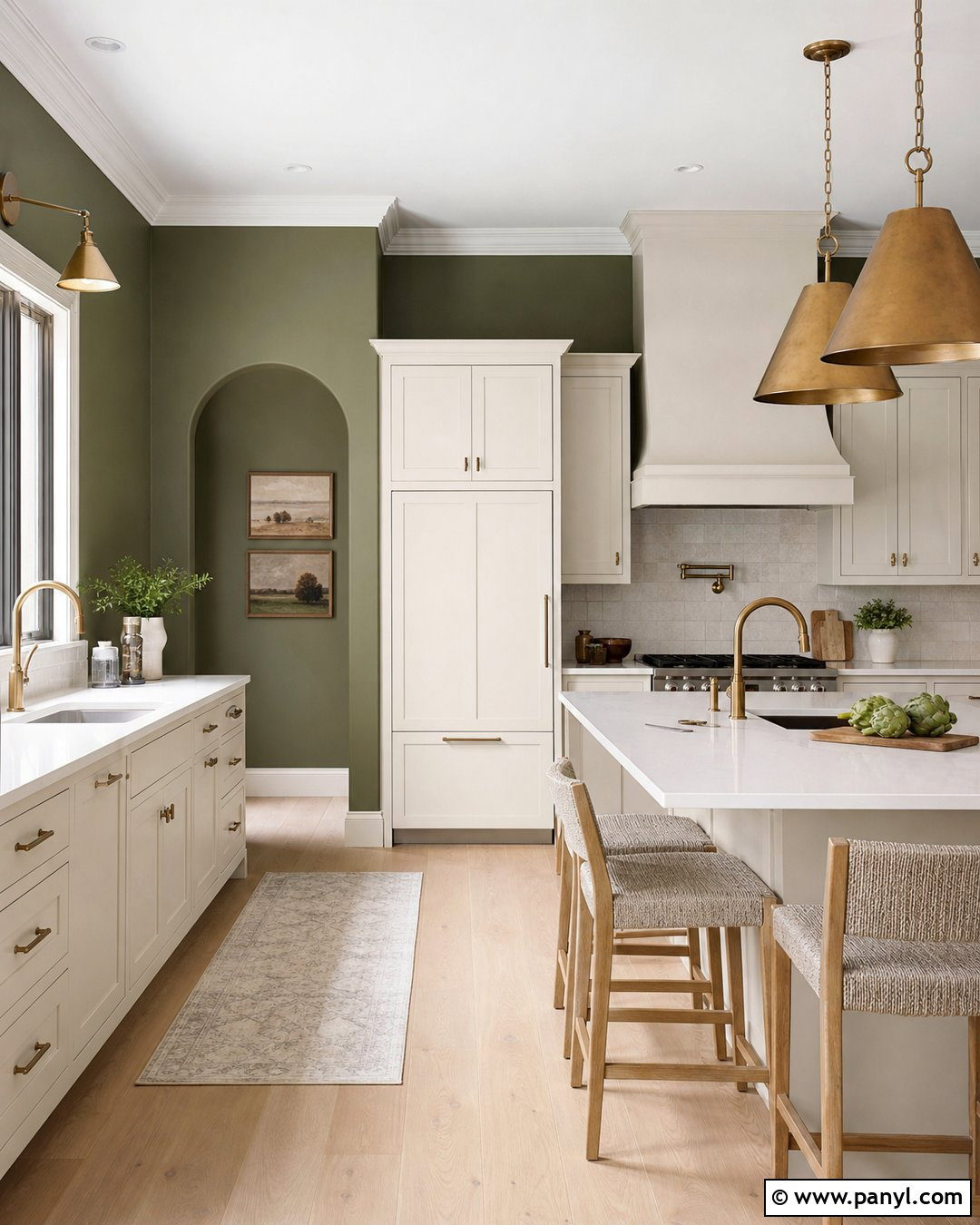
A bright white ceiling gives olive green kitchen walls a crisp stopping point and helps the room feel taller. Use a warm, soft white rather than a cool gallery white, particularly if the olive has golden undertones. Paint crown molding and window trim in the same ceiling color for a clean frame around the walls. Pair the scheme with cream cabinets, white quartz counters, and pale oak floors. Simple brass pendants can draw attention upward, while under-cabinet lighting keeps work surfaces bright. If the kitchen has low ceilings, choose streamlined fixtures that do not hang too far into the room. White dishes, light textiles, and a restrained backsplash complete the design. The contrast creates definition without making the kitchen appear overly formal or sharply divided.
24. Olive Green Kitchen Walls And Ceiling
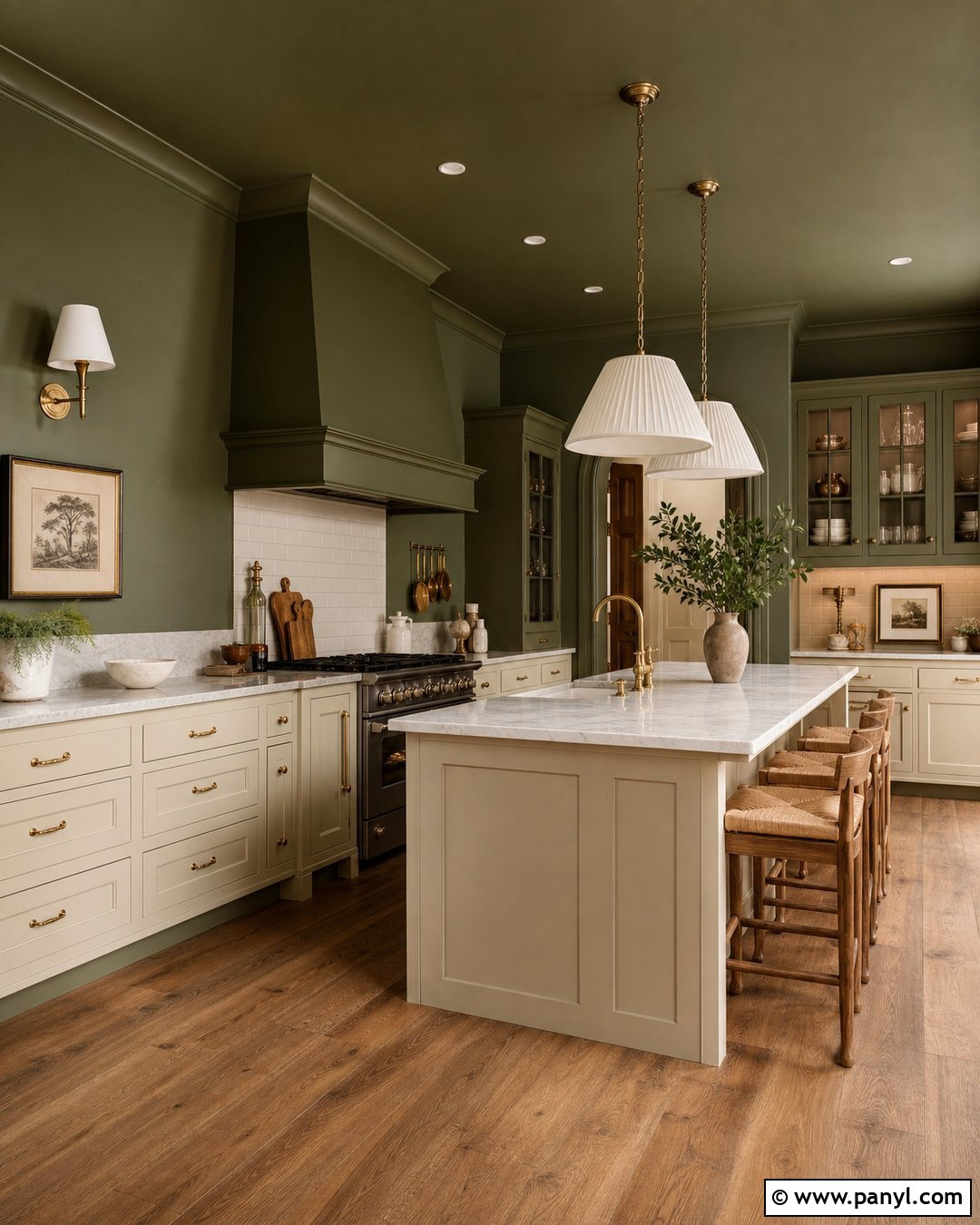
Color-drenching the walls and ceiling in olive green produces an enveloping, highly intentional kitchen. Choose a mid-tone or muted olive rather than an extremely dark shade, especially in a small room. Use the same color across walls, ceiling, trim, and possibly the range hood, varying the sheen slightly for durability and subtle depth. Cream cabinets, pale marble counters, and a warm white backsplash provide necessary contrast. Oak flooring and aged brass hardware reinforce the natural character of the palette. Add several light sources, including ceiling fixtures, sconces, and under-cabinet strips. Keep window treatments light and simple. When carefully illuminated, the finished space feels cozy and architectural, with fewer visual interruptions and a stronger sense of unity than a conventionally painted kitchen.
25. Olive Green Kitchen Walls In A Small Kitchen
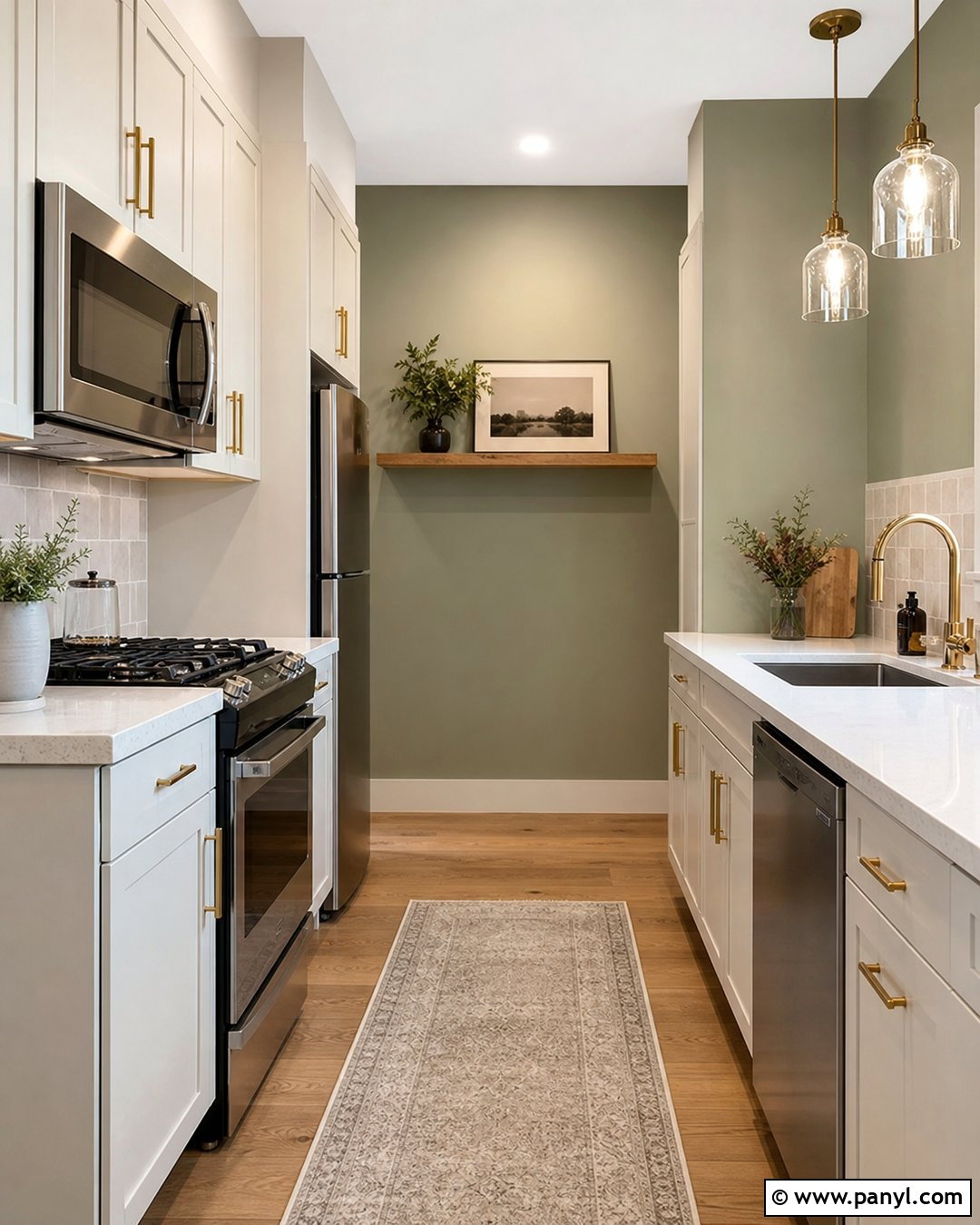
A small kitchen can handle olive green walls when the layout includes enough reflective and pale surfaces. Select a lighter, grayed olive and pair it with warm white cabinets that reach the ceiling. White quartz countertops and glossy ivory backsplash tiles will move light through the room, while pale oak flooring prevents the lower half from feeling heavy. Use compact brass hardware, clear glass pendants, and discreet under-cabinet lighting. Reduce countertop clutter by adding internal cabinet organizers and wall-mounted rails near the cooking area. A single floating shelf can provide display space without replacing too many upper cabinets. Keep textiles light and minimally patterned. This complete design gives a compact kitchen personality while preserving the clean sightlines and practical storage needed for everyday use.
26. Olive Green Kitchen Walls In A Galley Kitchen
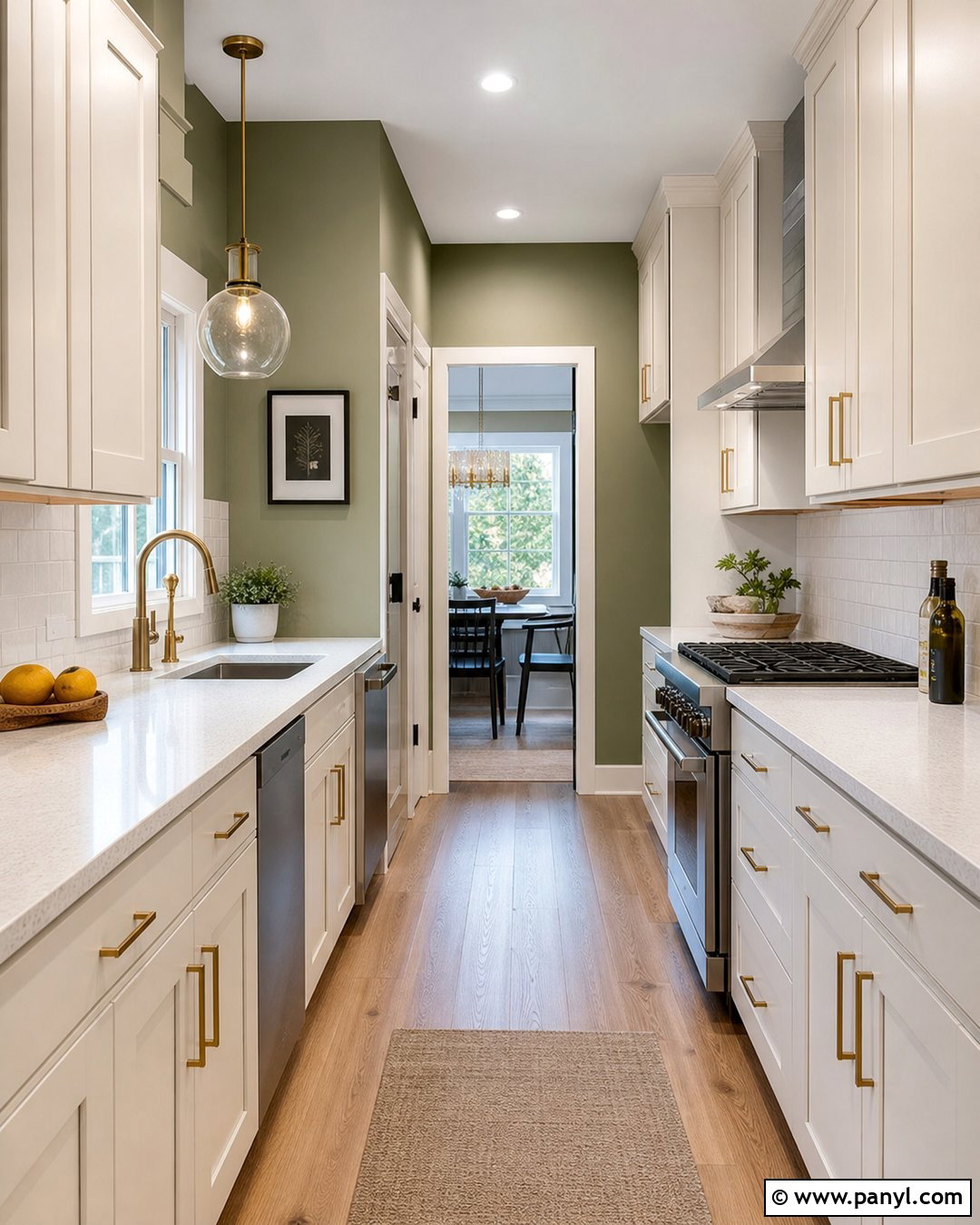
In a narrow galley kitchen, olive green walls can add depth without making the passage feel closed. Paint the short end wall olive to create a focal point, or use a light olive throughout if enough natural light is available. Choose warm white cabinets on both sides, slim brass pulls, and pale quartz countertops. A glossy white backsplash helps widen the room visually by reflecting light across the walkway. Lay light oak flooring lengthwise to emphasize the kitchen’s full span. Replace heavy decorative fixtures with streamlined ceiling lights and bright under-cabinet strips. Keep counters clear and use closed storage for small appliances. The completed galley feels organized and purposeful, with the olive paint introducing warmth while the lighter finishes maintain an open, efficient working corridor.
27. Olive Green Kitchen Walls In A Farmhouse Kitchen
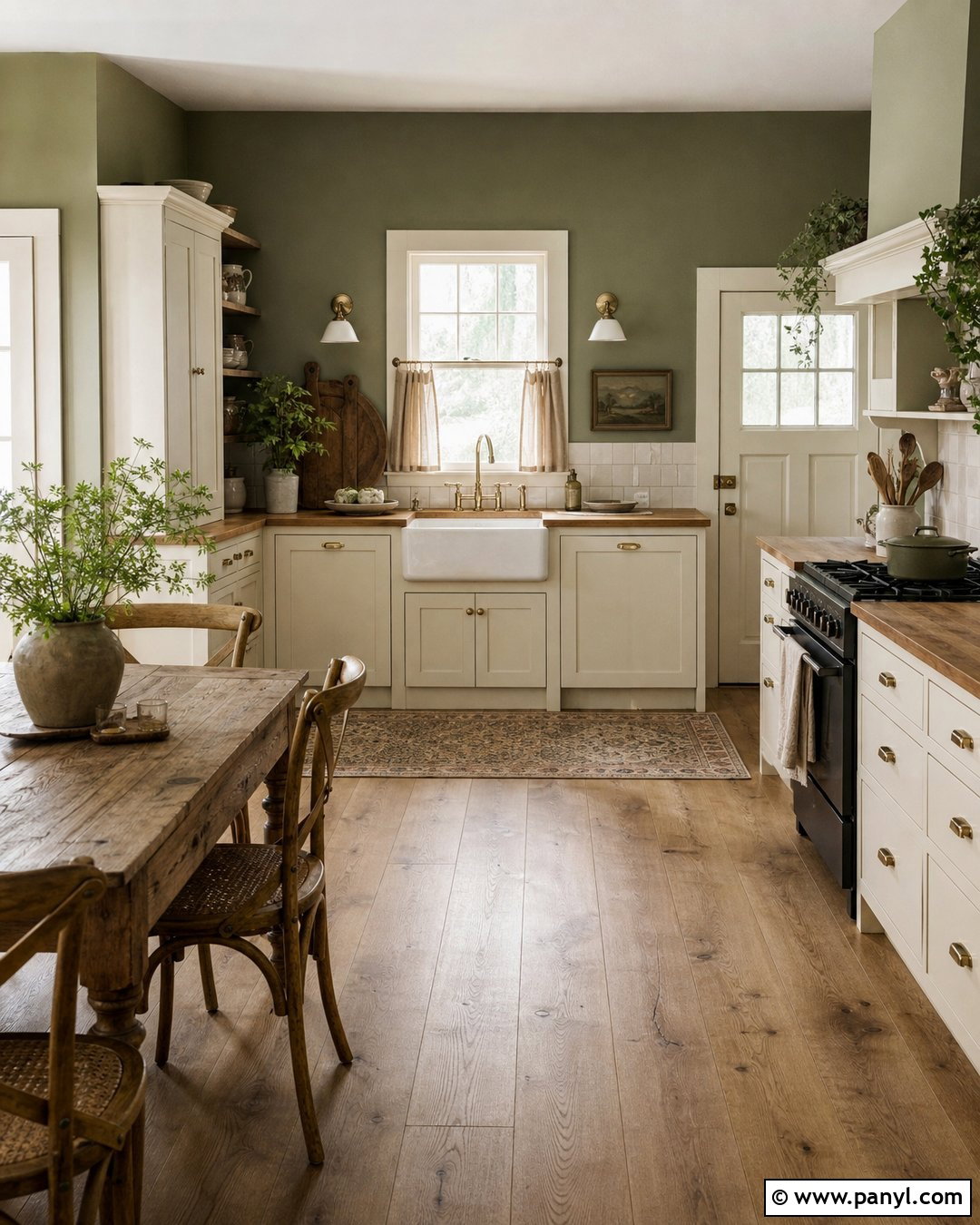
Olive green walls fit naturally into a farmhouse kitchen filled with warm, durable materials. Combine muted olive paint with cream Shaker cabinets, a white apron-front sink, and butcher block or honed stone countertops. Use handmade ivory backsplash tile behind the range and sink, leaving generous painted wall areas visible. Aged brass latches, cup pulls, and a bridge faucet reinforce the traditional character. Wide-plank oak flooring, a sturdy wood table, and woven seating create an informal gathering space. Add linen café curtains, simple pottery, and open shelves holding everyday dishes. Avoid excessive themed signs or decorative clutter. The finished kitchen should feel practical and lived-in, allowing the wall color, natural wood, and classic cabinet details to establish a convincing farmhouse atmosphere.
28. Olive Green Kitchen Walls In A Modern Kitchen
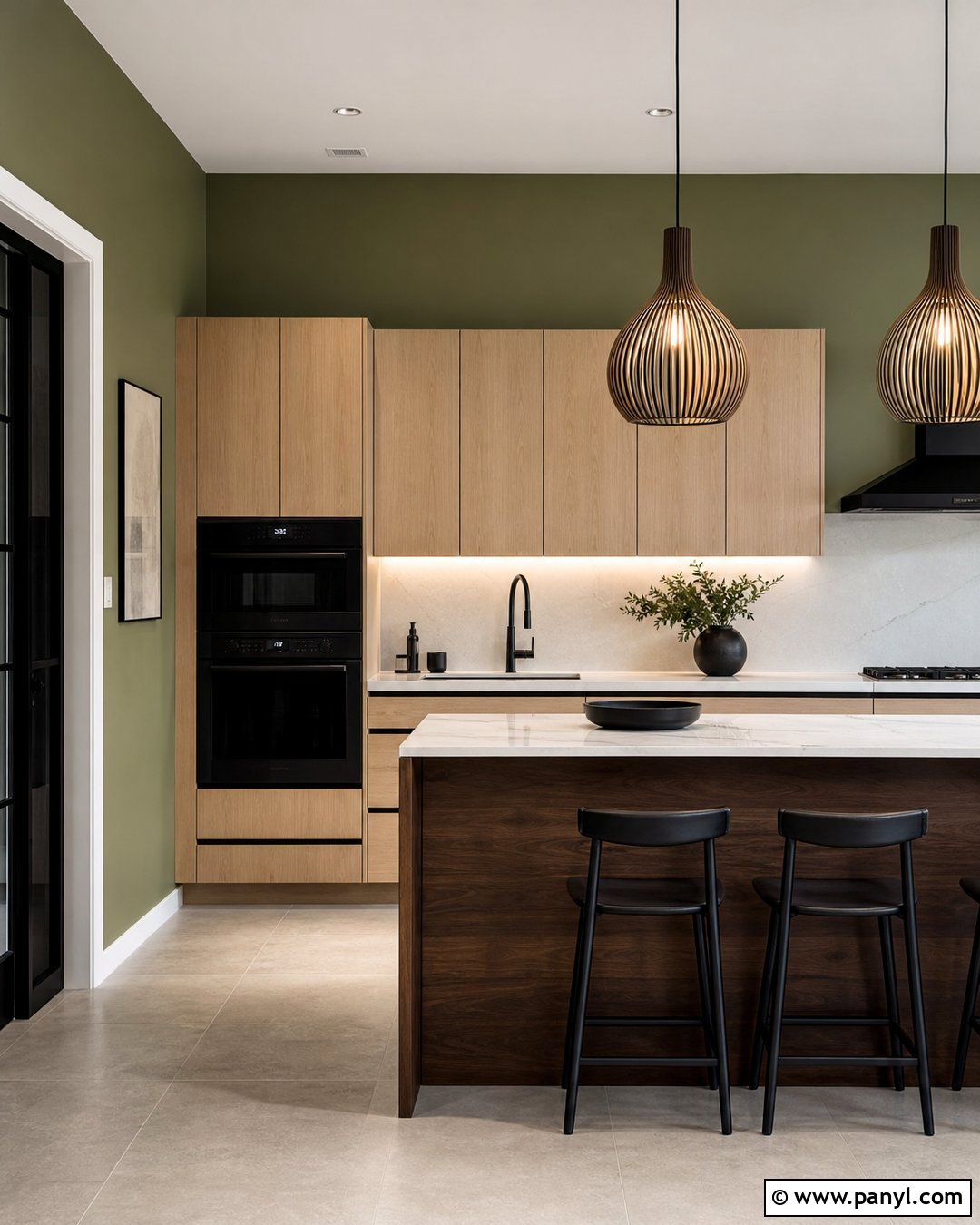
Clean lines give olive green walls a distinctly modern direction. Choose a smooth, medium olive finish and combine it with white or pale oak flat-panel cabinets. Use thin-profile quartz countertops and a matching slab backsplash to reduce visual breaks. Matte black pulls, a streamlined faucet, and sculptural pendant lights provide sharp definition. Large-format warm gray floor tiles create a simple base, while one walnut element, such as an island or dining table, brings depth. Keep appliances integrated where possible and limit countertop displays to a wooden tray or ceramic bowl. Bright recessed lighting and under-cabinet strips should illuminate every work zone evenly. The completed kitchen feels streamlined but not sterile because the earthy green walls soften the precise cabinetry and minimal architectural details.
29. Olive Green Kitchen Walls In A Rustic Kitchen
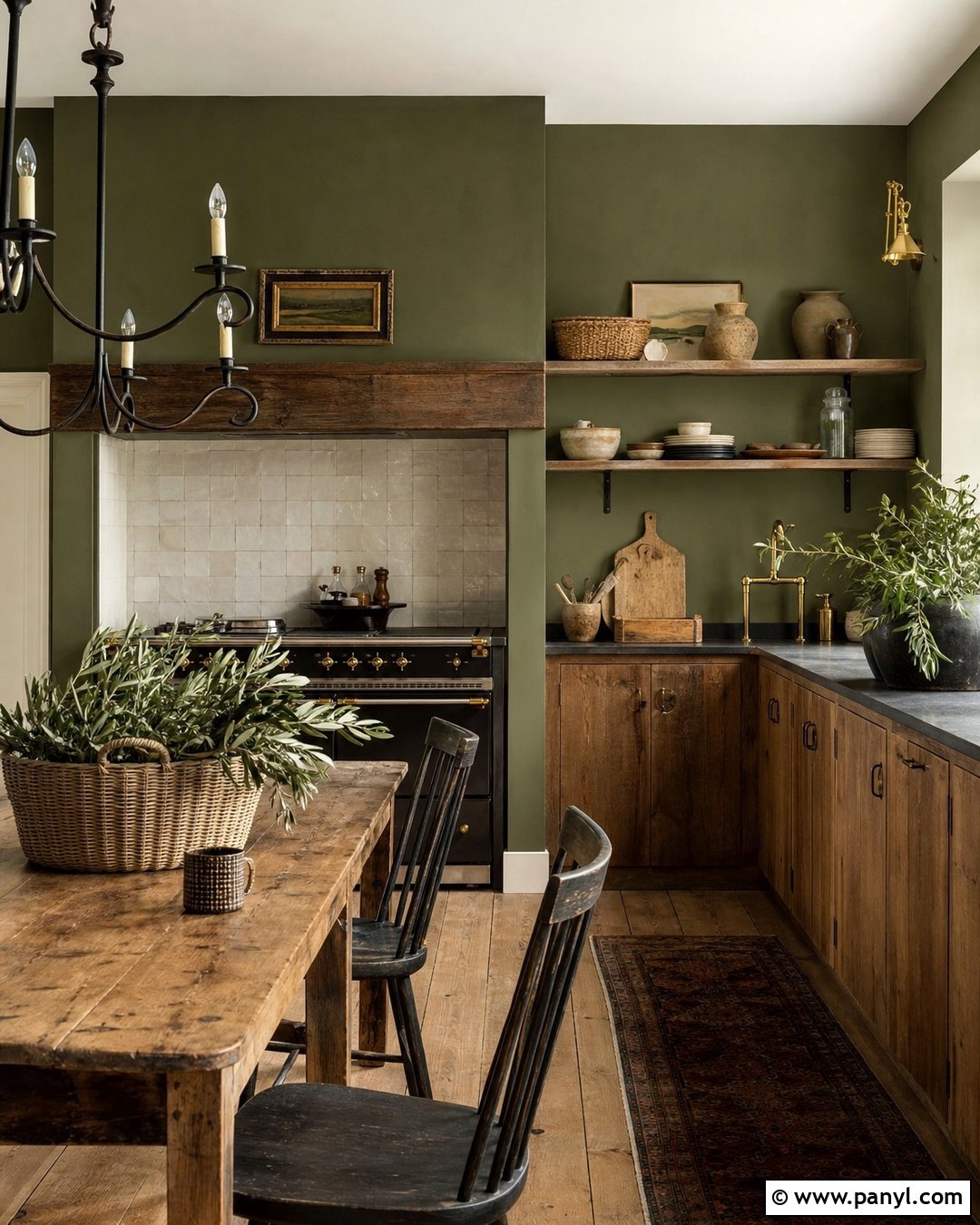
Rougher textures and aged finishes can make olive green walls feel deeply comfortable in a rustic kitchen. Select a dusty olive paint with a matte appearance, then pair it with natural wood cabinets or cream-painted cabinetry with simple inset doors. Soapstone or honed granite counters provide durable contrast, while an irregular off-white tile backsplash keeps the room bright. Use wrought iron lighting, aged brass hardware, and open timber shelves for a collected effect. Wide wood floorboards and a heavy farmhouse table anchor the scheme. Display stoneware, wooden utensils, and practical woven baskets rather than delicate accessories. Good task lighting is important because matte walls and darker materials absorb light. The final room feels authentic, useful, and warm without becoming overly themed.
30. Olive Green Kitchen Walls In A Cottage Kitchen
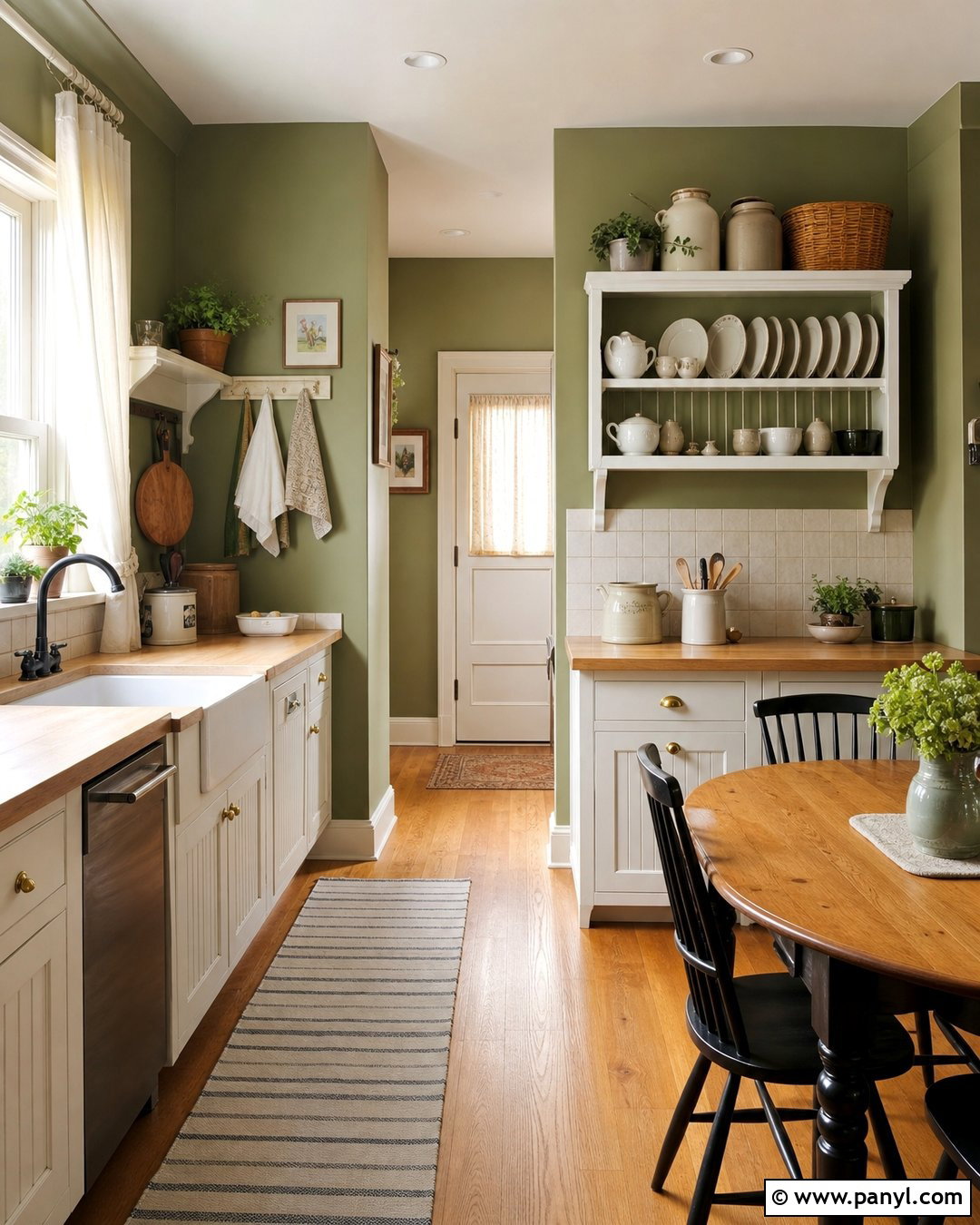
A cottage kitchen becomes cheerful and inviting with softly muted olive green walls. Pair the color with warm white cabinets, beadboard details, pale wood countertops, and a small farmhouse sink. Use a cream square-tile backsplash with matching grout for a quiet background. Brass knobs, simple wall sconces, and a painted plate rack add traditional charm without requiring excessive decoration. Choose honey oak flooring and a washable floral or striped runner containing faded rust, blue, and green. A compact wood table with mismatched but coordinated chairs can create an informal dining corner. Finish with linen curtains, ceramic crocks, and a few garden herbs. The complete look feels cozy and personal, while the consistent palette prevents the smaller scale and decorative details from becoming cluttered.
31. Olive Green Kitchen Walls In A Scandinavian Kitchen
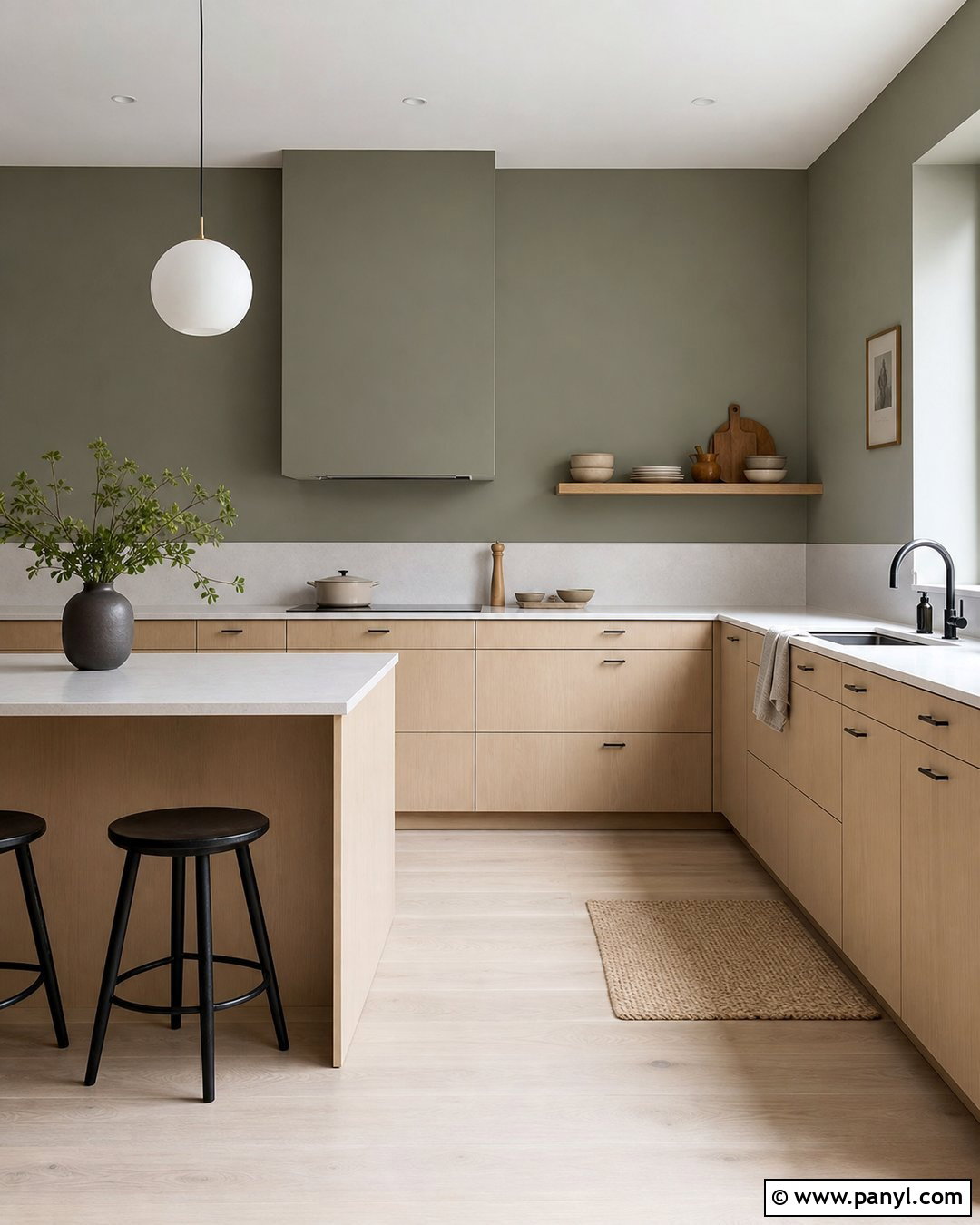
Olive green walls can warm a Scandinavian kitchen while preserving its simple, light-filled character. Choose a pale, slightly gray olive and pair it with flat-front birch or light oak cabinets. White quartz counters, a short white backsplash, and pale matte wood flooring create an open foundation. Use minimal black or brushed steel hardware, depending on the appliance finish. A white globe pendant and under-cabinet lighting provide clear, even illumination during darker hours. Keep decor functional with wooden boards, cream stoneware, linen towels, and one leafy plant. Avoid heavy window treatments or crowded shelving. The finished space feels calm and practical, using the olive walls as a gentle natural backdrop rather than a dramatic feature that competes with the kitchen’s clean forms.
32. Olive Green Kitchen Walls In A Mediterranean Kitchen
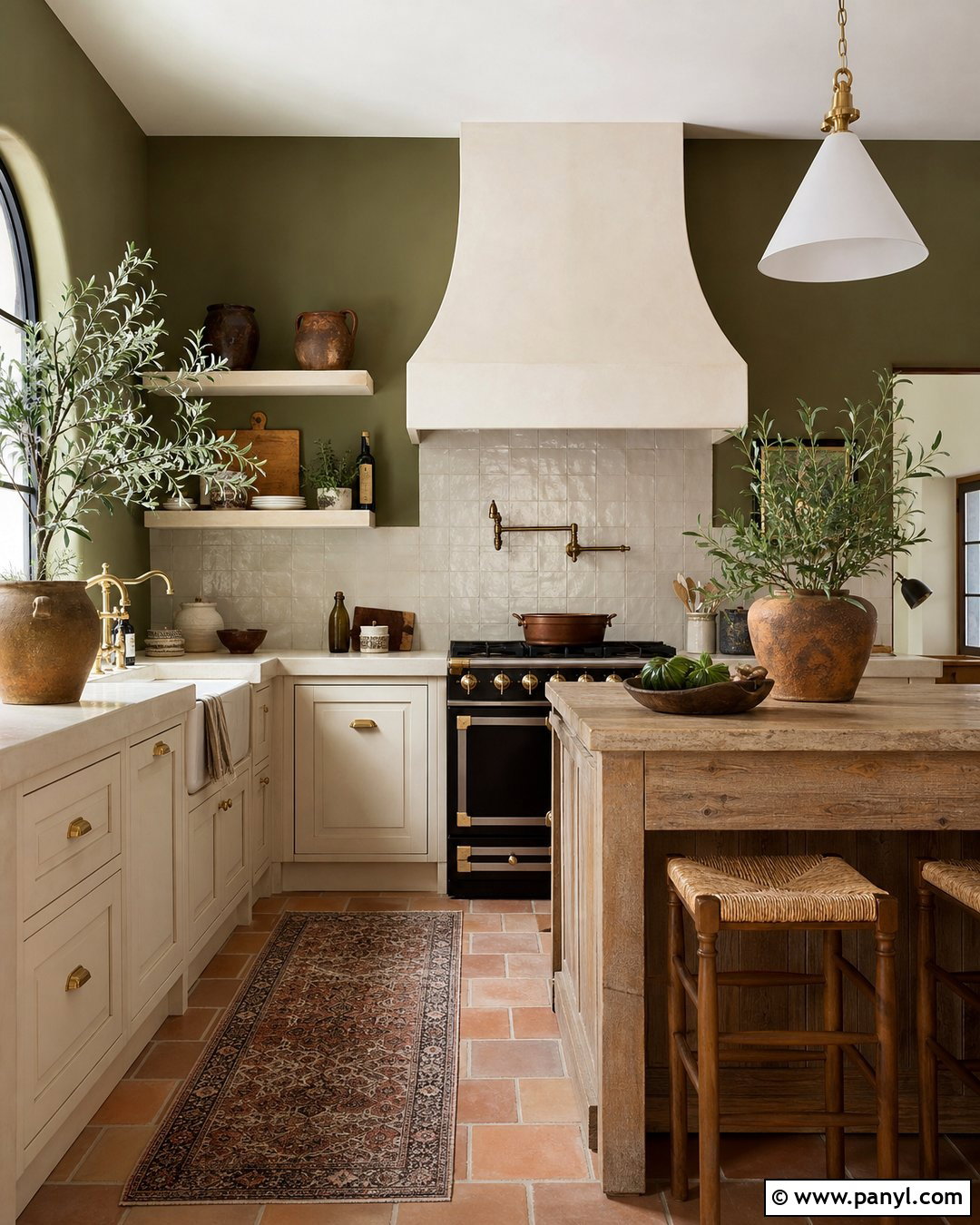
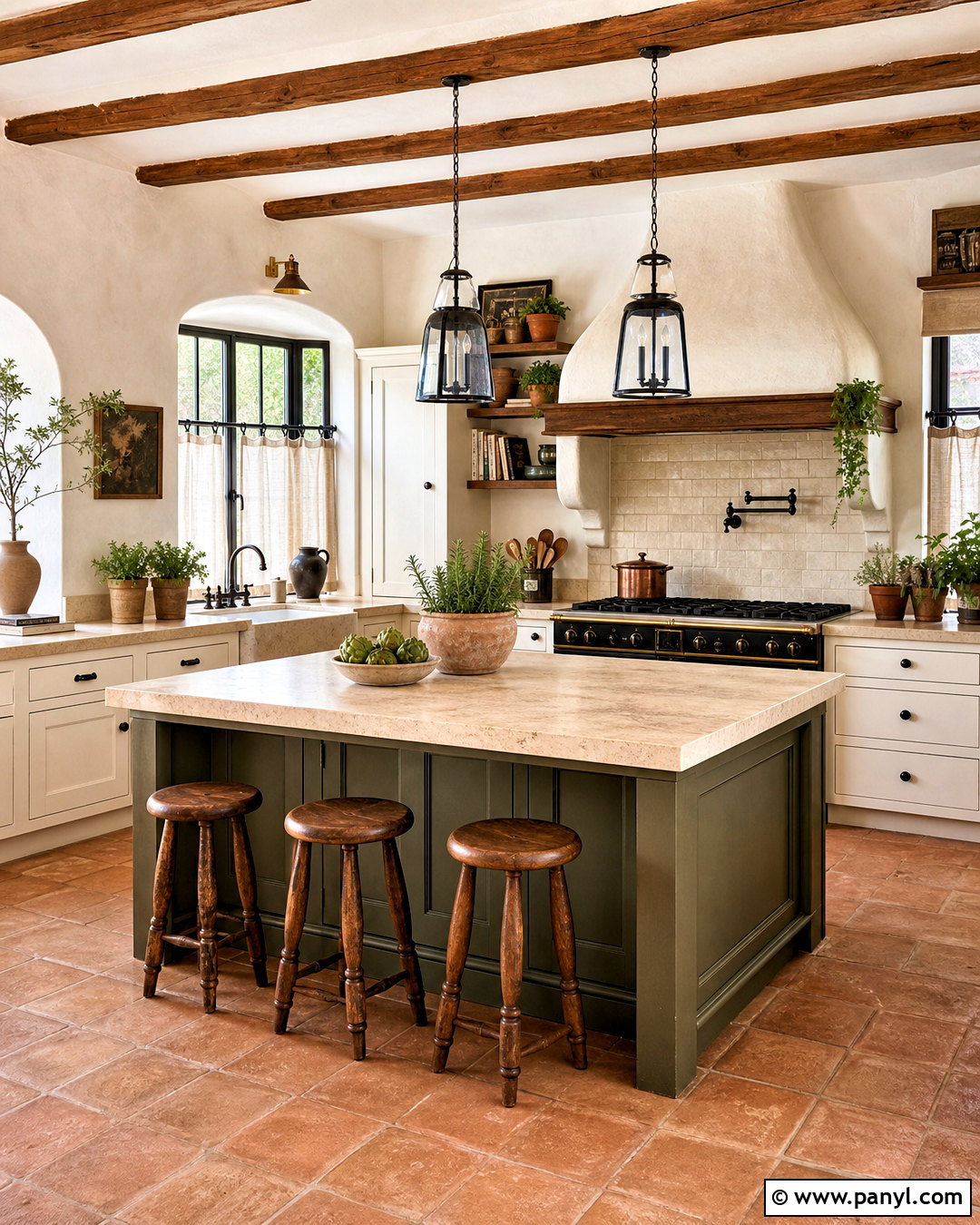
Warm olive green walls create an ideal backdrop for a relaxed Mediterranean kitchen. Combine them with creamy plaster-look cabinetry, terracotta flooring, and counters made from pale limestone or warm quartz. Use handmade ivory tile behind the range, perhaps arranged in a simple square pattern with sandy grout. Aged brass hardware and a plaster range hood add soft architectural character. Introduce a rustic oak island, woven counter stools, and linen curtains in natural beige. Decorative touches might include earthenware bowls, wooden serving boards, and small pots of herbs, but keep surfaces open for food preparation. White pendant lighting and sunlight should brighten the earthy materials. The completed kitchen feels warm, tactile, and established without relying on heavy ornament or overly saturated accent colors.
33. Olive Green Kitchen Walls In A Vintage Kitchen
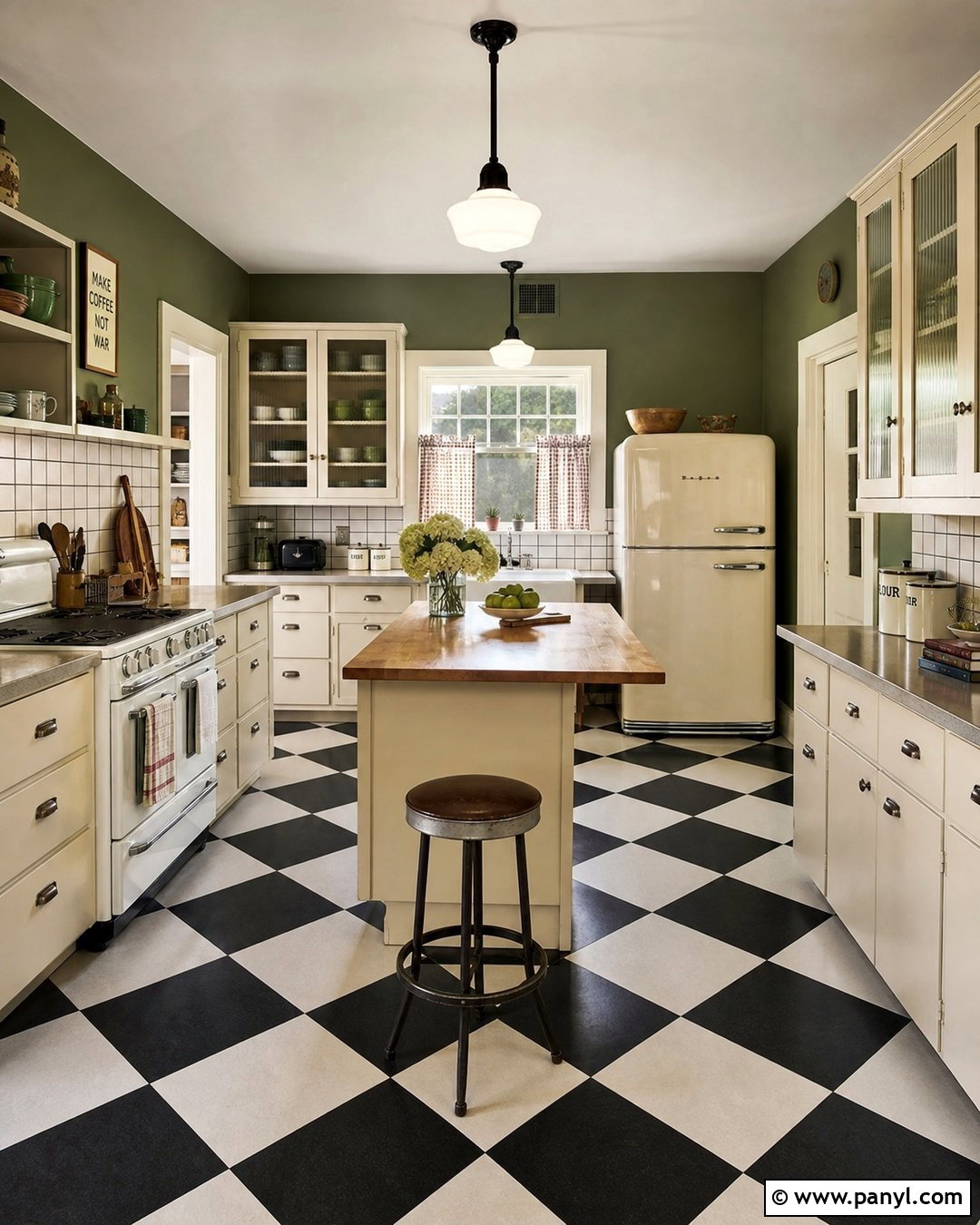
Olive green walls can support a vintage-inspired kitchen while still feeling functional for modern life. Pair muted olive paint with cream inset cabinets, a black-and-white checkerboard floor, and warm white laminate or quartz countertops. Choose a simple square-tile backsplash and hardware in aged nickel or unlacquered brass. A retro-style range or refrigerator can become a focal point, but keep the appliance color cream, white, or stainless steel for flexibility. Add glass-front upper cabinets, schoolhouse lights, and a small chrome-edged table with wooden chairs. Limit decorative objects to useful canisters, framed prints, and patterned café curtains. The completed room feels nostalgic rather than dated because the layout remains uncluttered and the vintage details share a restrained color palette.
34. Olive Green Kitchen Walls With A Natural Stone Backsplash
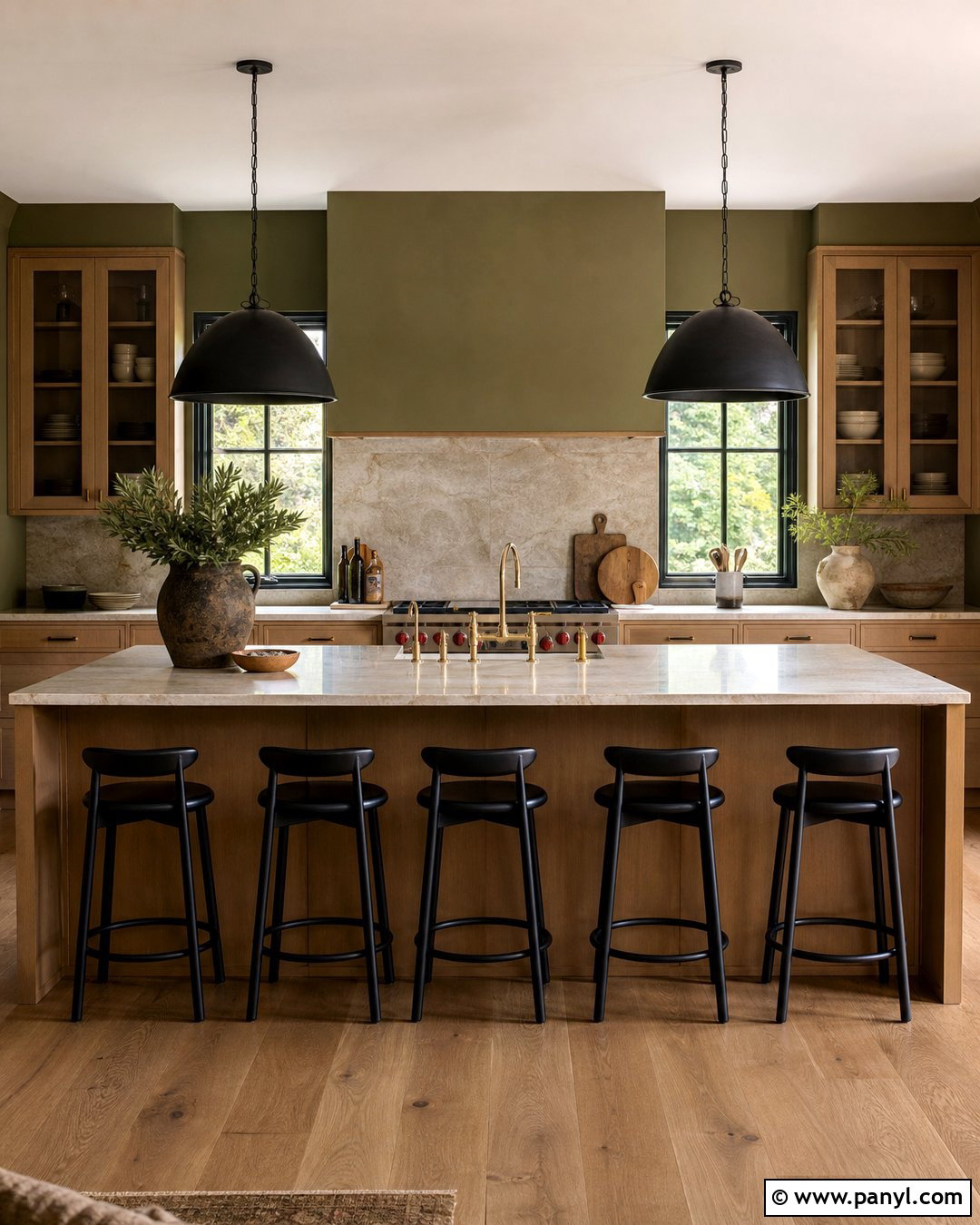
Natural stone gives olive green kitchen walls a refined, organic companion. Select a limestone, travertine, or softly veined quartzite backsplash in cream, beige, and warm gray. Pair it with light oak cabinets and matching pale stone countertops for a continuous, understated work zone. Leave olive-painted wall sections visible around windows, doorways, and the dining area so the color remains prominent. Brushed brass fixtures highlight warmer mineral tones, while simple black pendants provide structure. Use wide oak flooring or large limestone-look tiles underfoot. Keep accessories minimal with cream pottery and wooden boards. Carefully position under-cabinet lights to reveal the stone texture. The completed kitchen feels elevated yet natural, with paint, wood, and stone contributing equally to the overall composition.
35. Two Tone Olive Green Kitchen Walls
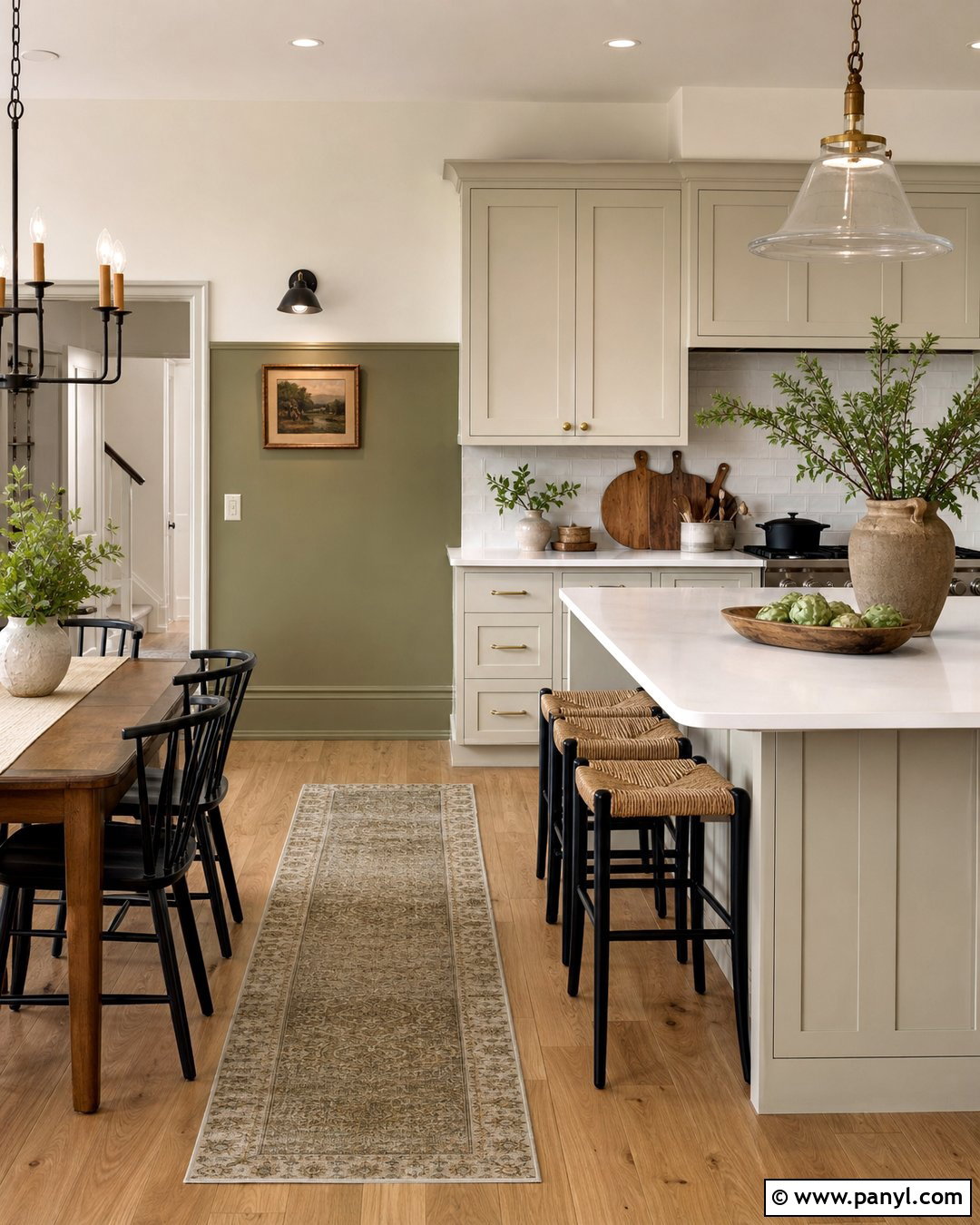
A two-tone wall treatment can introduce olive green while adding useful architectural definition. Paint the lower half of the walls in medium olive and the upper half in warm white, dividing them with a narrow chair rail, tile edge, or painted molding. Pair the walls with cream cabinets, white quartz counters, and natural oak flooring. Keep the backsplash simple and aligned with the horizontal division for a tidy appearance. Brass hardware, black sconces, and woven stools provide balanced accents. This treatment works especially well in an eat-in kitchen, where the darker lower wall can visually ground a table and seating area. Repeat the olive in a runner or small ceramic pieces so the split wall feels connected to the rest of the complete kitchen design.
Conclusion:
Olive Green Kitchen Walls can transform an ordinary cooking space into a warm, grounded, and memorable room. The most successful design begins with an olive shade that complements the kitchen’s natural light, cabinet undertones, and existing floors. White and cream finishes create brightness, while oak, walnut, terracotta, marble, and brass emphasize the color’s earthy character. Dark accents can add definition, but layered lighting remains essential, especially with deeper wall shades. Test paint samples beside permanent surfaces before committing, and view them at different times of day. By coordinating the walls with countertops, cabinetry, flooring, lighting, and practical decor, you can create a complete olive kitchen that feels balanced, personal, and comfortable.

Related Ideas and Inspiration:
Leave a Reply