
Stone surfaces can make a digital rendering or finished room feel grounded, dimensional, and believable. These 20 stone wall texture seamless ideas explore complete looks built around limestone, slate, travertine, quartzite, granite, fieldstone, and other natural finishes. Current collections include everything from irregular rubble patterns and stacked ledgers to running-bond layouts and large-format panels, giving designers plenty of ways to create realistic depth. () The key is choosing a texture with balanced color variation, convincing joints, and a scale that fits the architecture. Supporting materials also matter. Wood, plaster, metal, flooring, lighting, and landscaping should strengthen the stone rather than compete with it. Use the following complete design looks as inspiration when exploring 20 stone wall texture seamless ideas.

1. Stacked Limestone Wall Texture
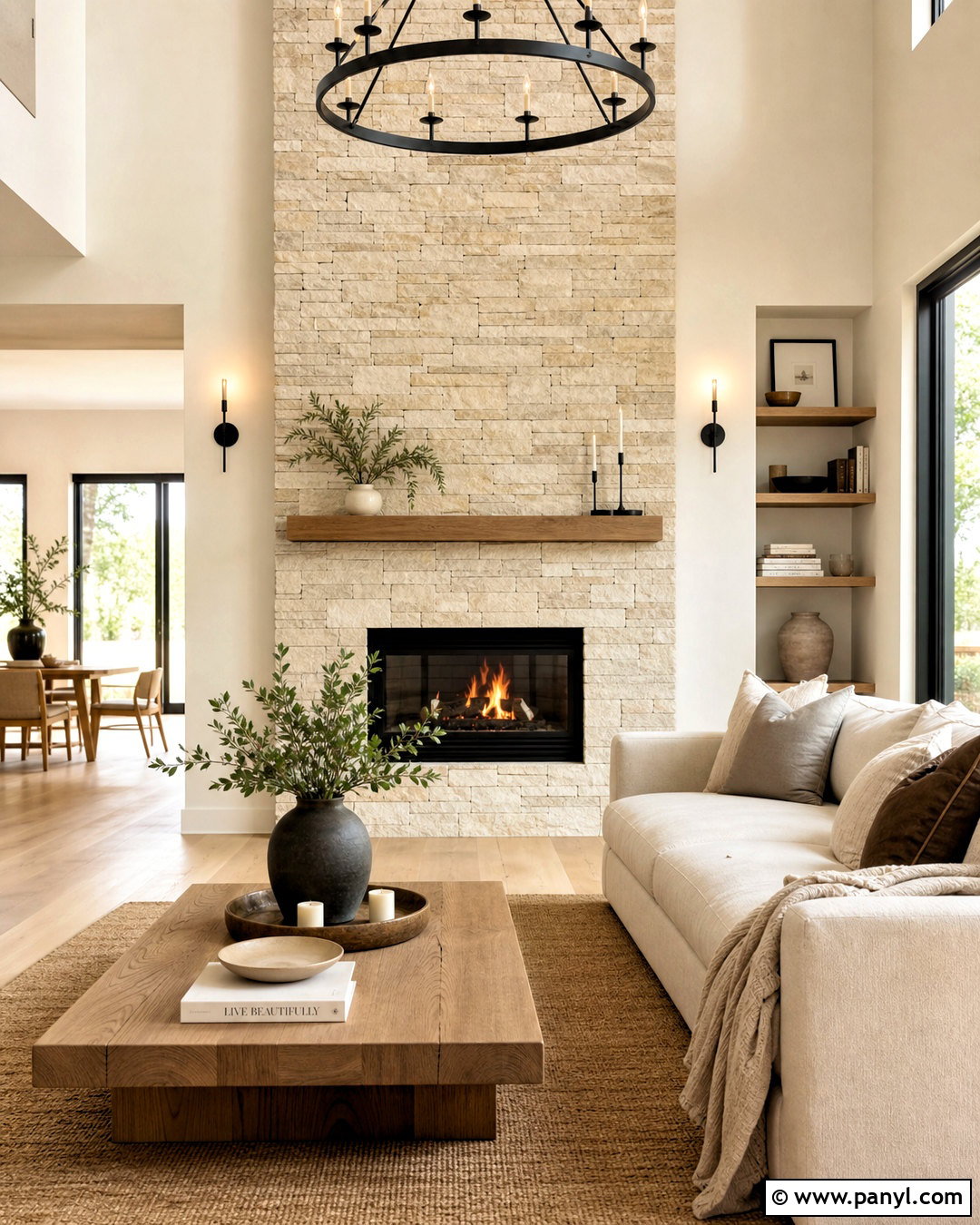
A stacked limestone wall brings gentle texture to a warm, modern living room without making the space feel heavy. Choose narrow horizontal stones in soft cream, pale beige, and muted taupe. Keep the joints tight so the surface creates a continuous, seamless rhythm. Extend the limestone across the main fireplace and television wall, then balance it with smooth ivory plaster on the remaining walls. A low oatmeal sofa, natural oak coffee table, and woven wool rug reinforce the quiet palette. Add black metal sconces to define the stone after sunset, while recessed ceiling lights provide even illumination. Light oak flooring keeps the room open and welcoming. Limit accessories to ceramic vessels, linen pillows, and one leafy plant so the detailed limestone remains the visual focus.
2. Gray Ledger Stone Wall Texture
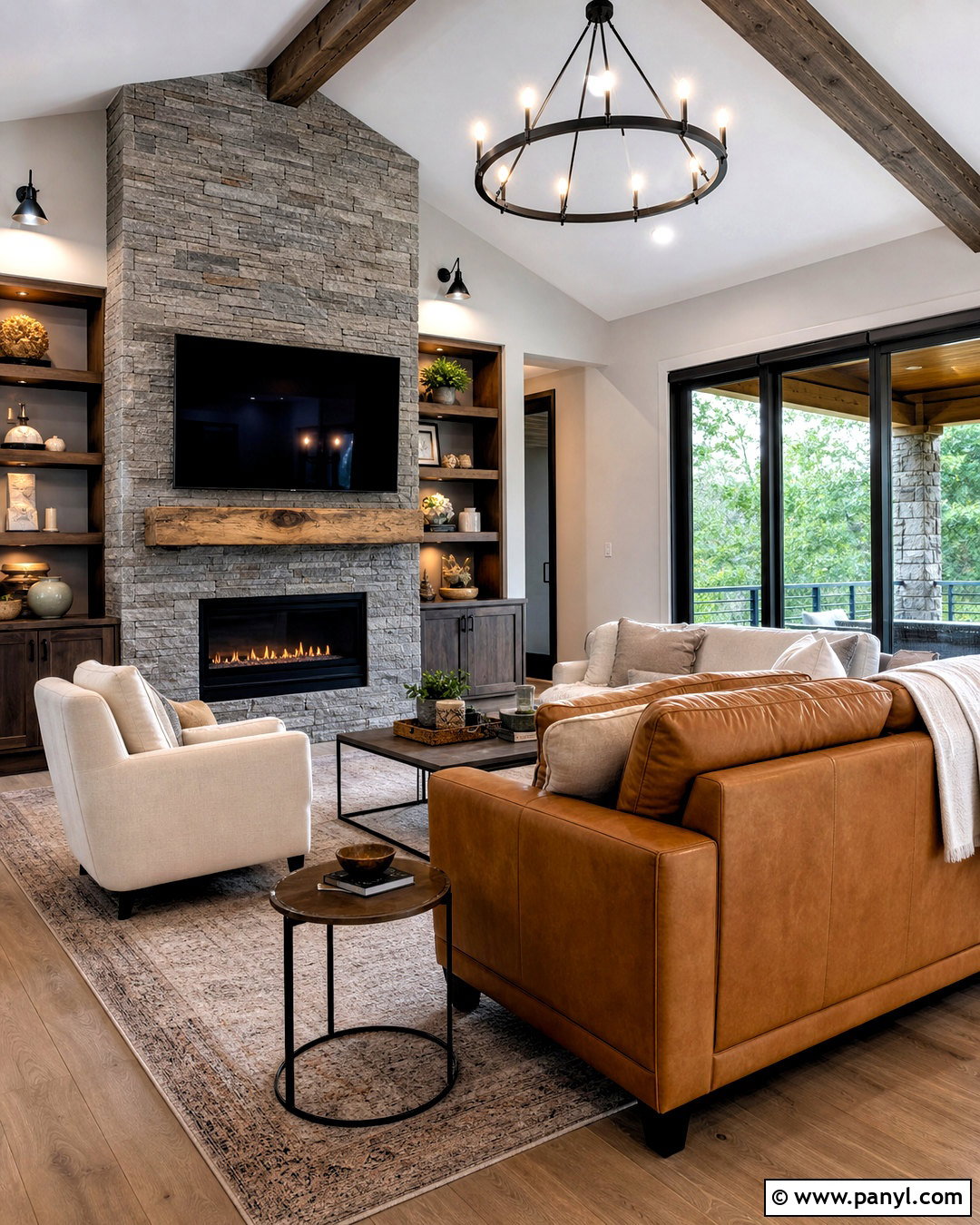
Could a cool gray wall still feel comfortable? A mixed gray ledger stone texture creates a strong backdrop when it is softened with warm furnishings and natural finishes. Cover a broad living room wall with slim stones in charcoal, silver gray, and subtle brown. Use staggered lengths and nearly invisible joints to prevent obvious repeating blocks. Place a simple black firebox at the center and add a thick reclaimed oak mantel for contrast. Furnish the space with a camel leather sofa, cream lounge chairs, and a gray-beige rug. Medium-tone wood flooring keeps the palette from becoming cold. Large windows, sheer curtains, and ceiling-mounted spotlights reveal the ledges and shadows. A few matte black accents connect the fireplace, lighting, and furniture into one complete contemporary look.
3. Beige Travertine Wall Texture
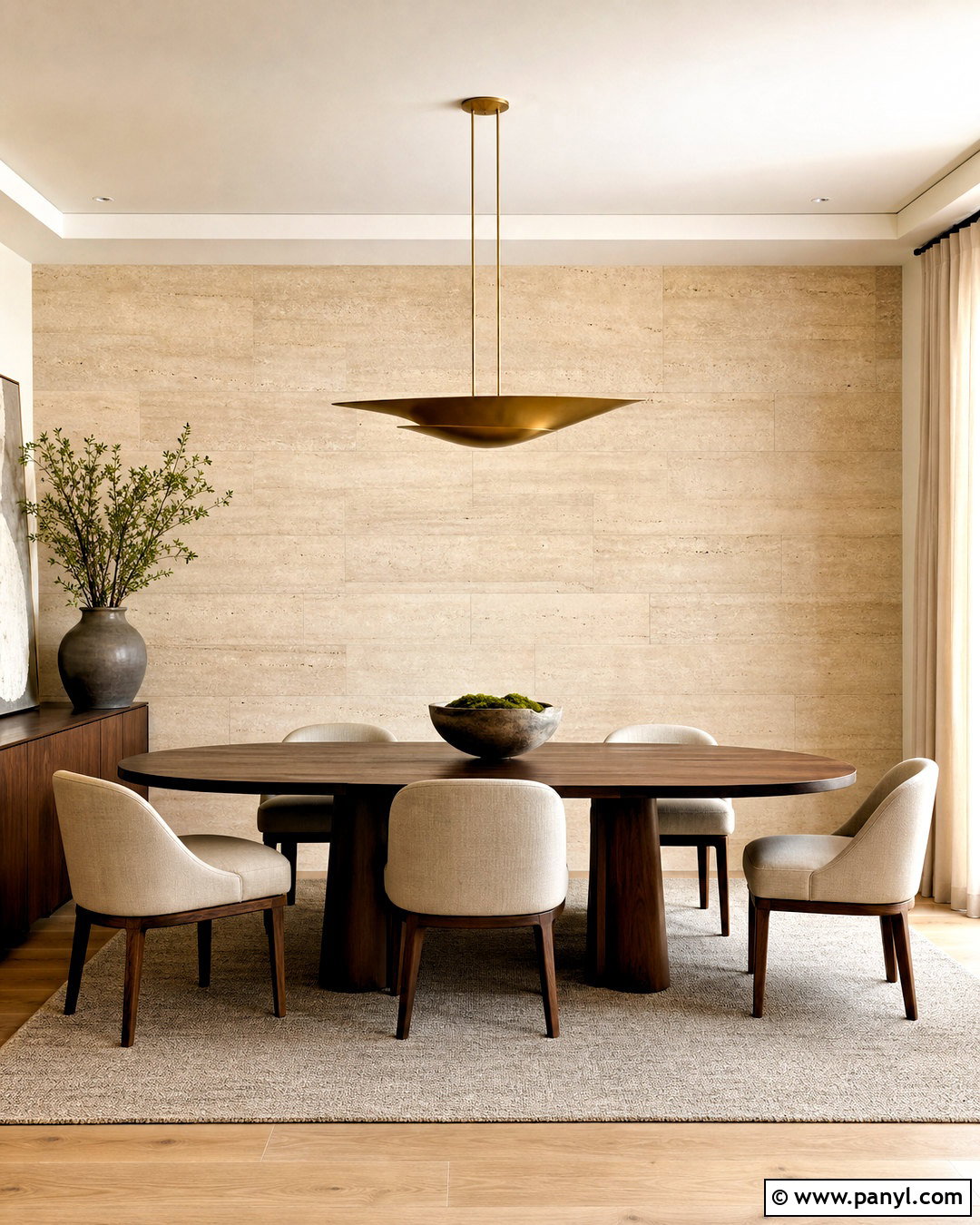
Soft beige travertine gives a dining room the calm character of natural stone while maintaining a clean, refined appearance. Select rectangular tiles with delicate pores, cloudy cream variation, and a matte honed finish. Arrange them in a running-bond pattern with color-matched grout to create a seamless wall texture behind the dining table. Pair the feature wall with warm white paint, pale oak flooring, and an oval walnut table. Upholstered chairs in flax-colored linen add comfort without introducing distracting patterns. Hang a sculptural brushed brass pendant over the table and place slim wall washers along the ceiling to highlight the travertine’s surface. Finish the room with sandy ceramic bowls, an understated wool rug, and soft off-white curtains. The final palette feels natural, polished, and suitable for everyday family dining.
4. Black Slate Wall Texture
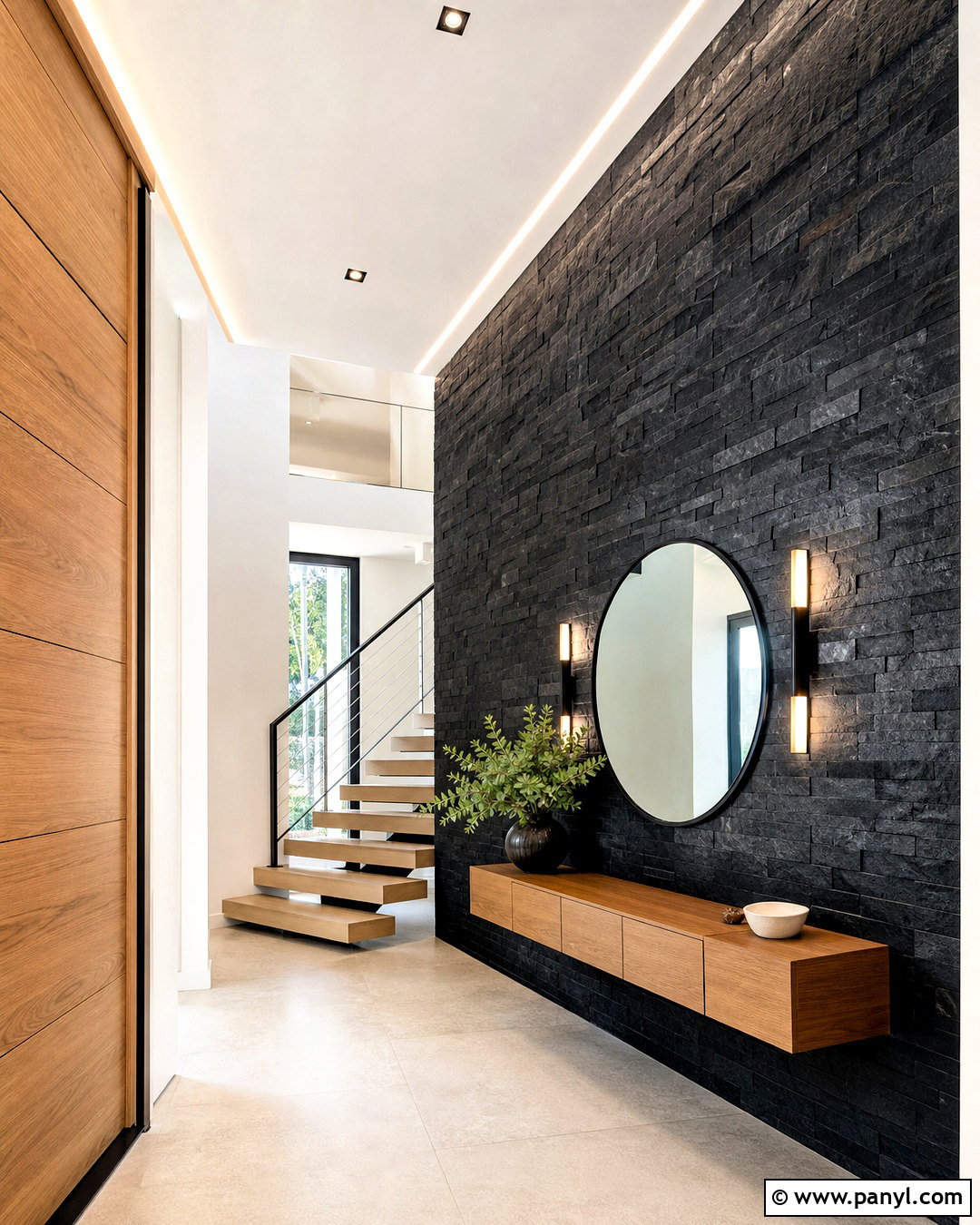
Deep black slate can turn an ordinary entryway into a crisp architectural statement. Use narrow split-face slate pieces with shades of charcoal, graphite, and soft blue-black. Install them across the main stair wall in an irregular horizontal arrangement, keeping the pattern continuous from the floor to the ceiling. Balance the rugged surface with pale oak stair treads, simple white walls, and a light limestone floor. A slim floating console in natural wood prevents the entry from becoming too dark. Add a round mirror with a brushed steel frame and two minimalist wall lights that skim across the slate. A charcoal runner and one large planter complete the look. Bright natural light from a glazed front door ensures the dark stone appears richly textured rather than flat, gloomy, or visually overpowering.
5. White Quartzite Wall Texture
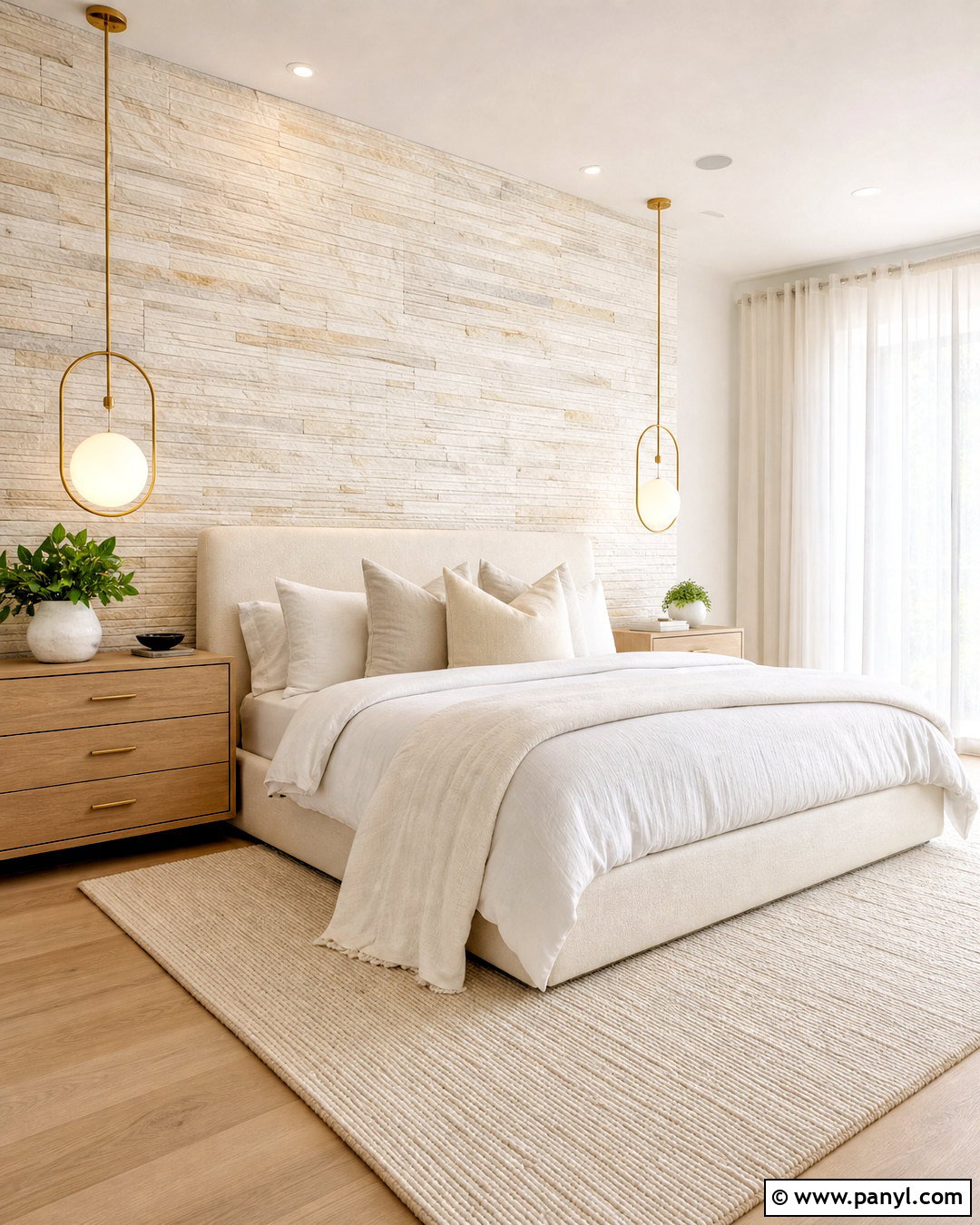
Sunlight makes white quartzite shimmer with subtle layers of pearl, cream, and pale silver. This seamless stone wall texture works especially well in an airy modern bedroom where softness is essential. Cover the wall behind the bed with thin stacked quartzite panels, carefully blending panel edges to avoid noticeable vertical seams. Choose an upholstered bed in warm ivory, light oak nightstands, and simple linen bedding in white and sand. Pale wood flooring and a textured cream rug continue the relaxed tonal palette. Use small brass pendant lights on each side of the bed to add gentle warmth. Sheer curtains diffuse daylight across the crystalline surface. Keep artwork off the stone wall and use only a few sculptural objects elsewhere, allowing the quartzite to provide pattern, movement, and a refined natural focal point.
6. Rustic Fieldstone Wall Texture
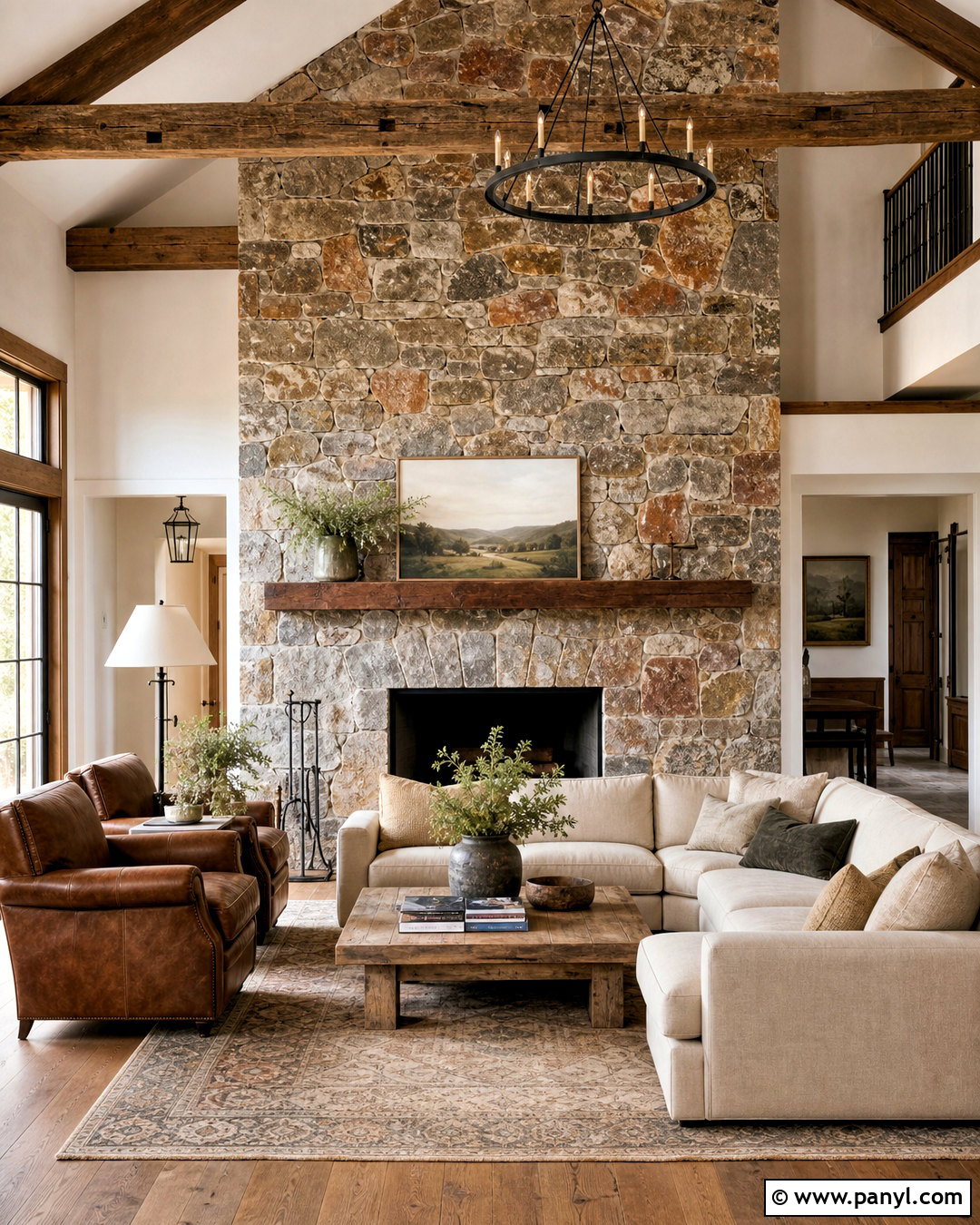
Irregular fieldstone creates the welcoming atmosphere of an older country house when the surrounding room feels equally relaxed. Build the fireplace wall with rounded and angular stones in warm gray, faded brown, mossy beige, and muted rust. Use recessed mortar joints in a soft taupe tone, making the complete surface look naturally assembled rather than tiled. A chunky timber mantel strengthens the rustic character. Place a deep linen sectional opposite the fireplace, then add leather armchairs, an aged wood coffee table, and a braided wool rug. Wide-plank oak flooring complements the uneven stone shapes. Black iron fireplace tools and simple beam-style ceiling lighting introduce contrast. Avoid overly polished accessories. Woven baskets, handmade pottery, neutral throws, and understated landscape artwork produce a comfortable room that feels authentic, balanced, and practical.
7. River Rock Wall Texture
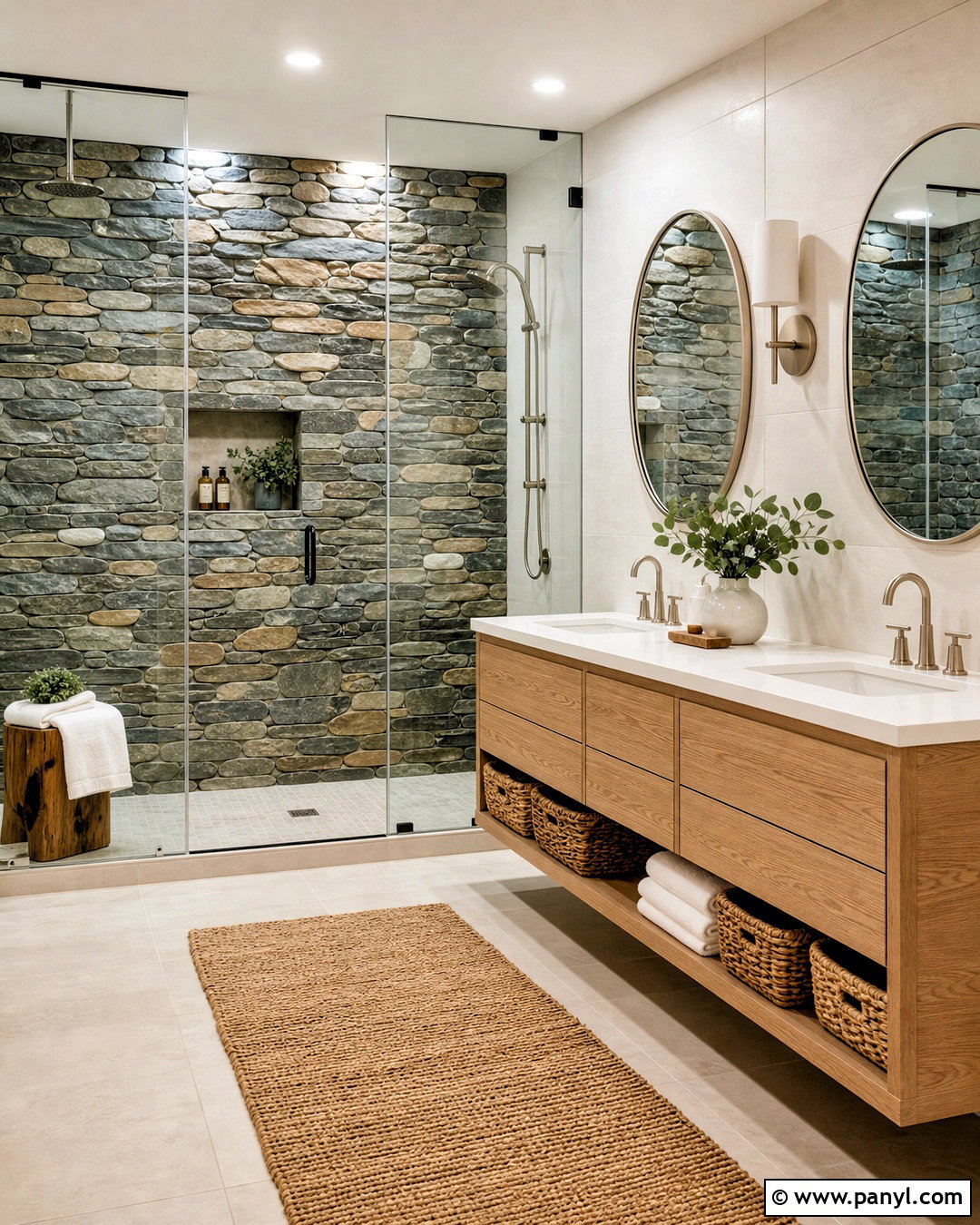
Smooth river rock introduces rounded shapes and natural movement to a bright bathroom retreat. Cover the shower’s main wall with flat-cut stones in soft gray, tan, cream, and muted charcoal. Choose similarly sized pieces and neutral grout so the pattern reads as continuous rather than patchy. Surround the feature wall with large warm-white porcelain tiles to keep cleaning simple and prevent visual clutter. A floating white oak vanity, oval mirrors, and brushed nickel fixtures complement the organic surface. Use a clear glass shower enclosure so the stone remains visible from across the room. Pale gray floor tiles provide a quiet foundation, while folded white towels and woven storage baskets add softness. Even ceiling lighting and a narrow skylight reveal the rock contours, creating a fresh spa-like bathroom without relying on dark colors or excessive decoration.
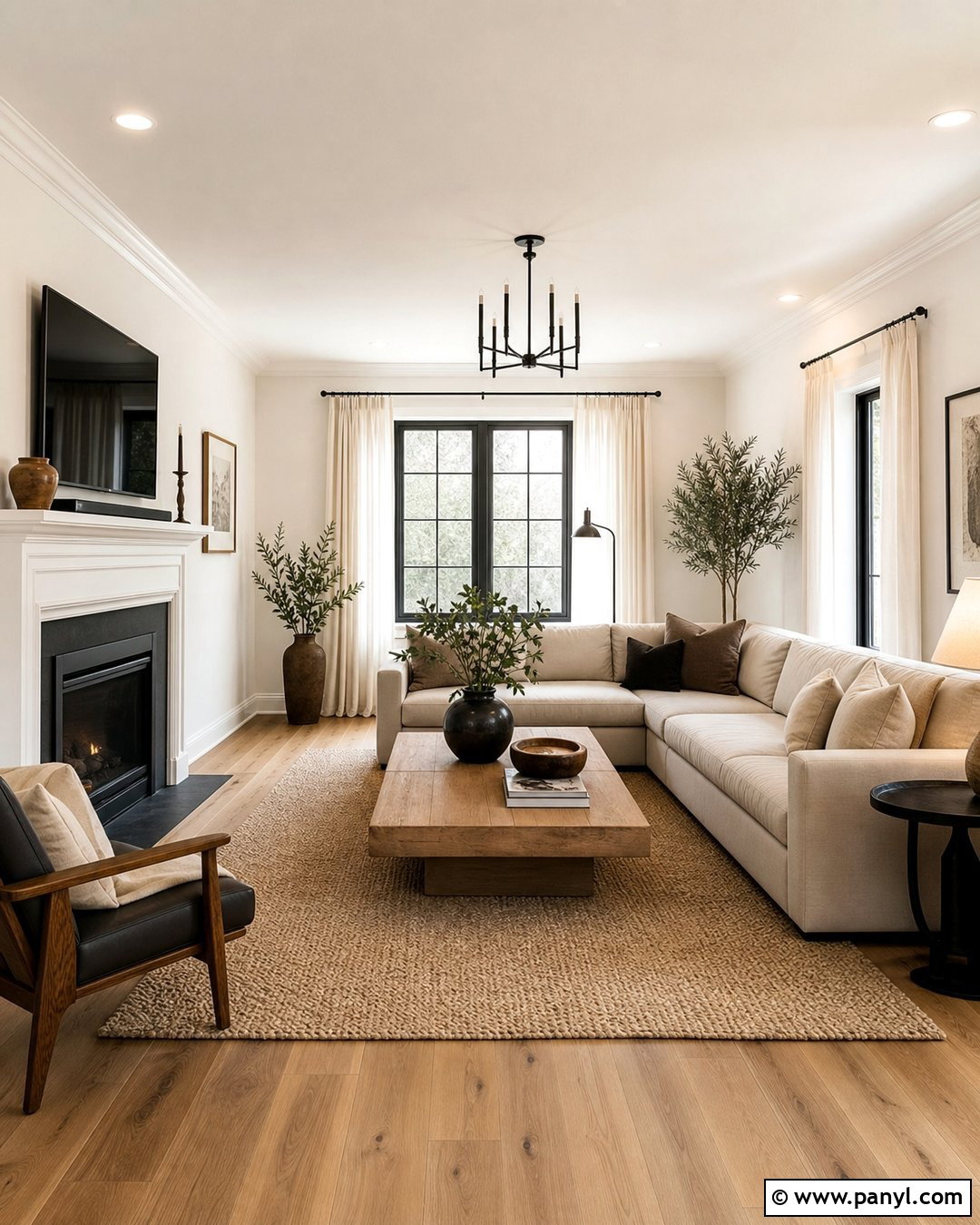
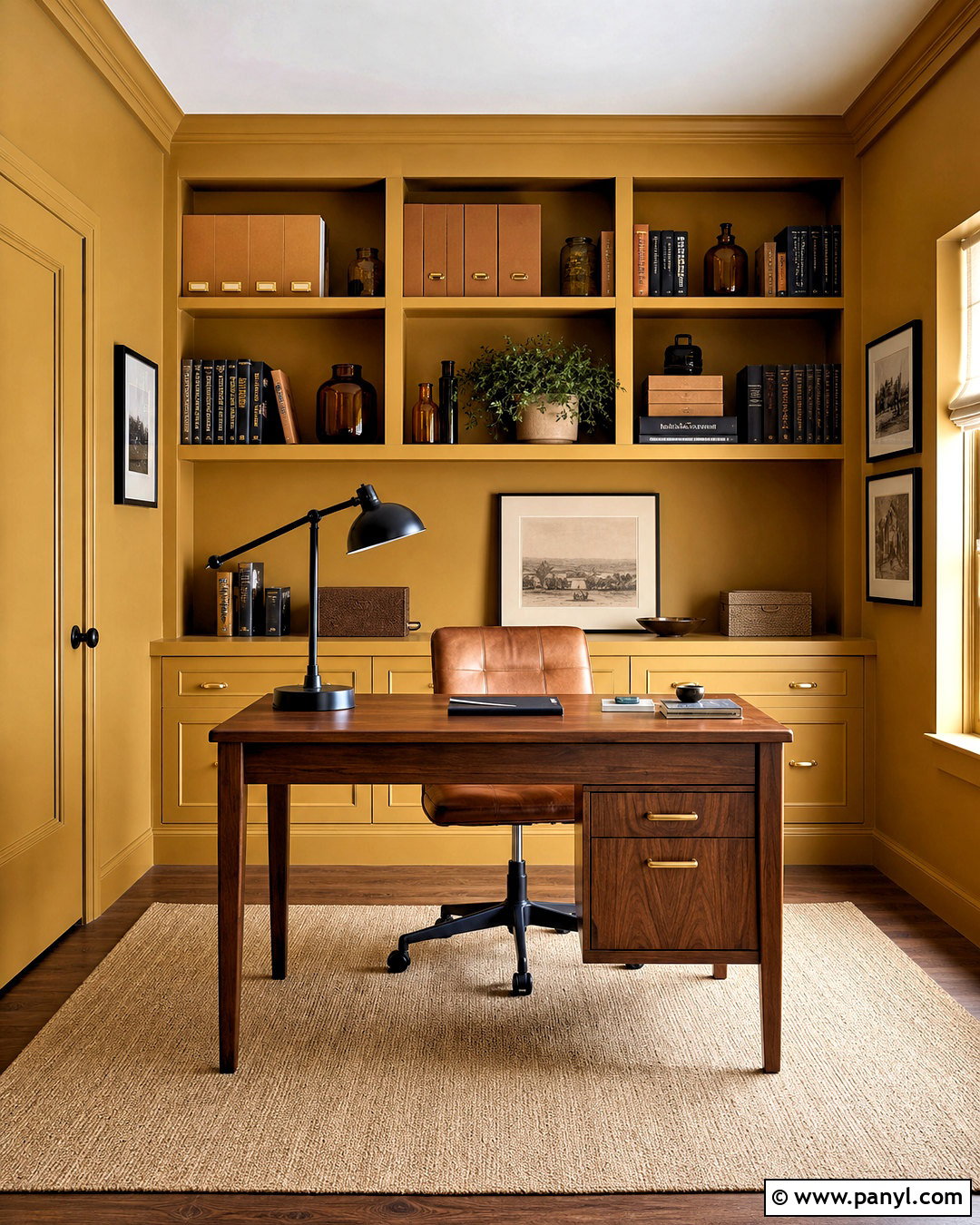
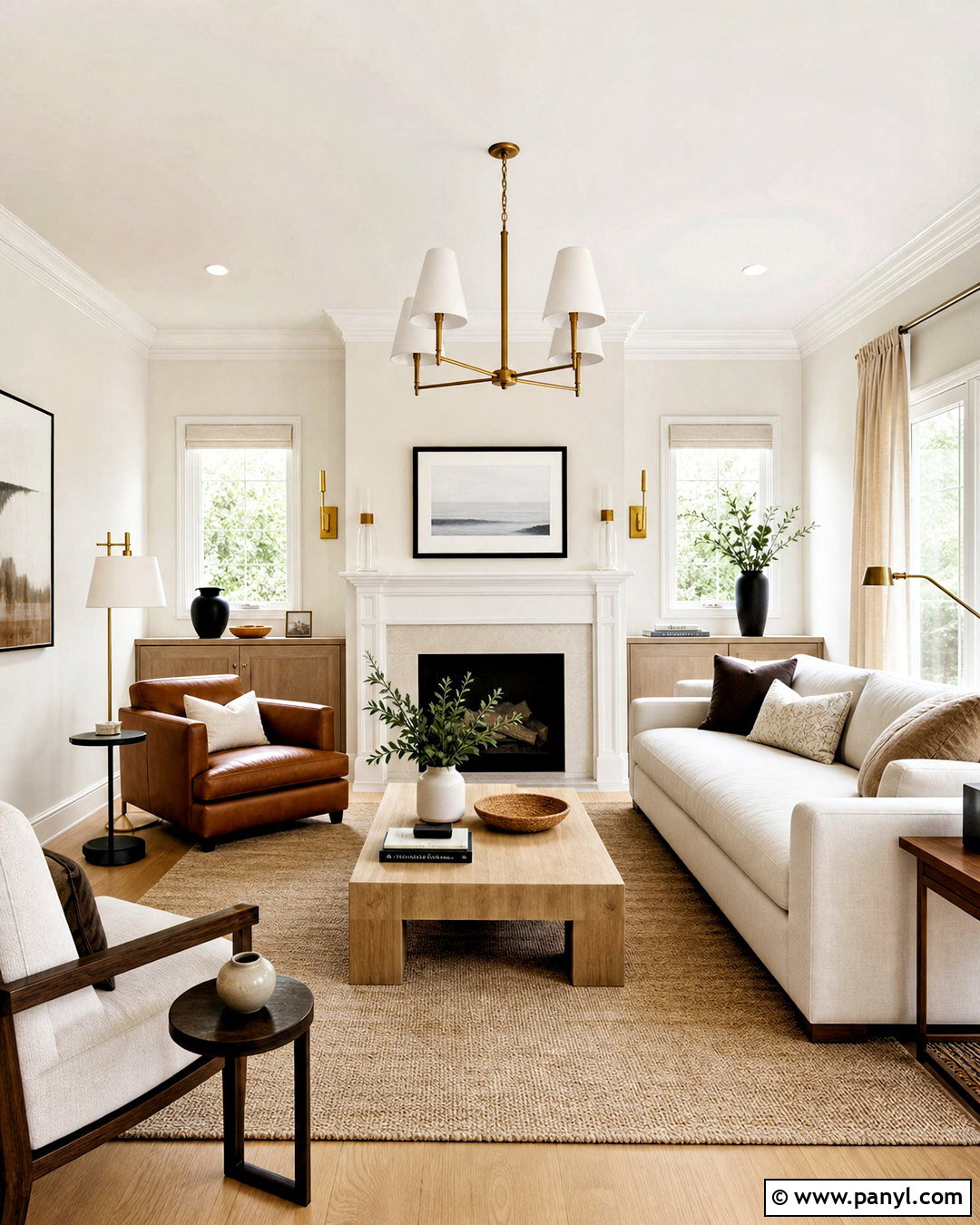
8. Dry Stack Stone Wall Texture
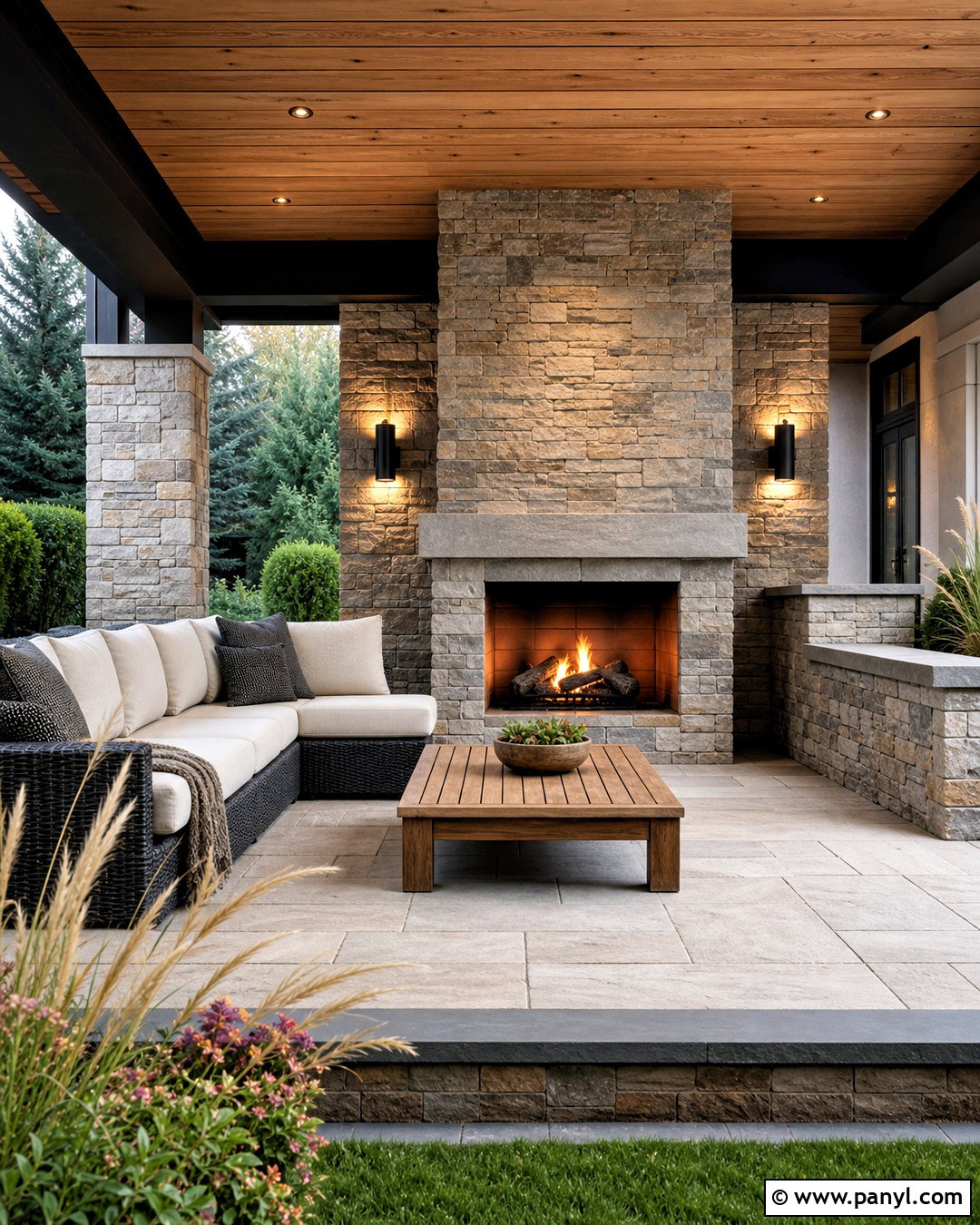
A dry stack stone surface can give a covered patio convincing depth without bulky, visible mortar lines. Choose flat, irregular stones in sandy beige, weathered gray, and muted brown. Wrap the texture around an outdoor fireplace and continue it along a low seating wall to make the design feel integrated. Use large limestone-look pavers underfoot and a stained cedar ceiling overhead. A charcoal outdoor sectional, cream performance cushions, and a rectangular teak table create a practical conversation zone. Install matte black sconces on both sides of the fireplace and recessed lights above the seating area. Native grasses, low evergreen shrubs, and gravel borders soften the patio edges. Repeating the same stone on two connected features helps the outdoor room appear planned, cohesive, and visually seamless from every viewing angle.
9. Ashlar Limestone Wall Texture
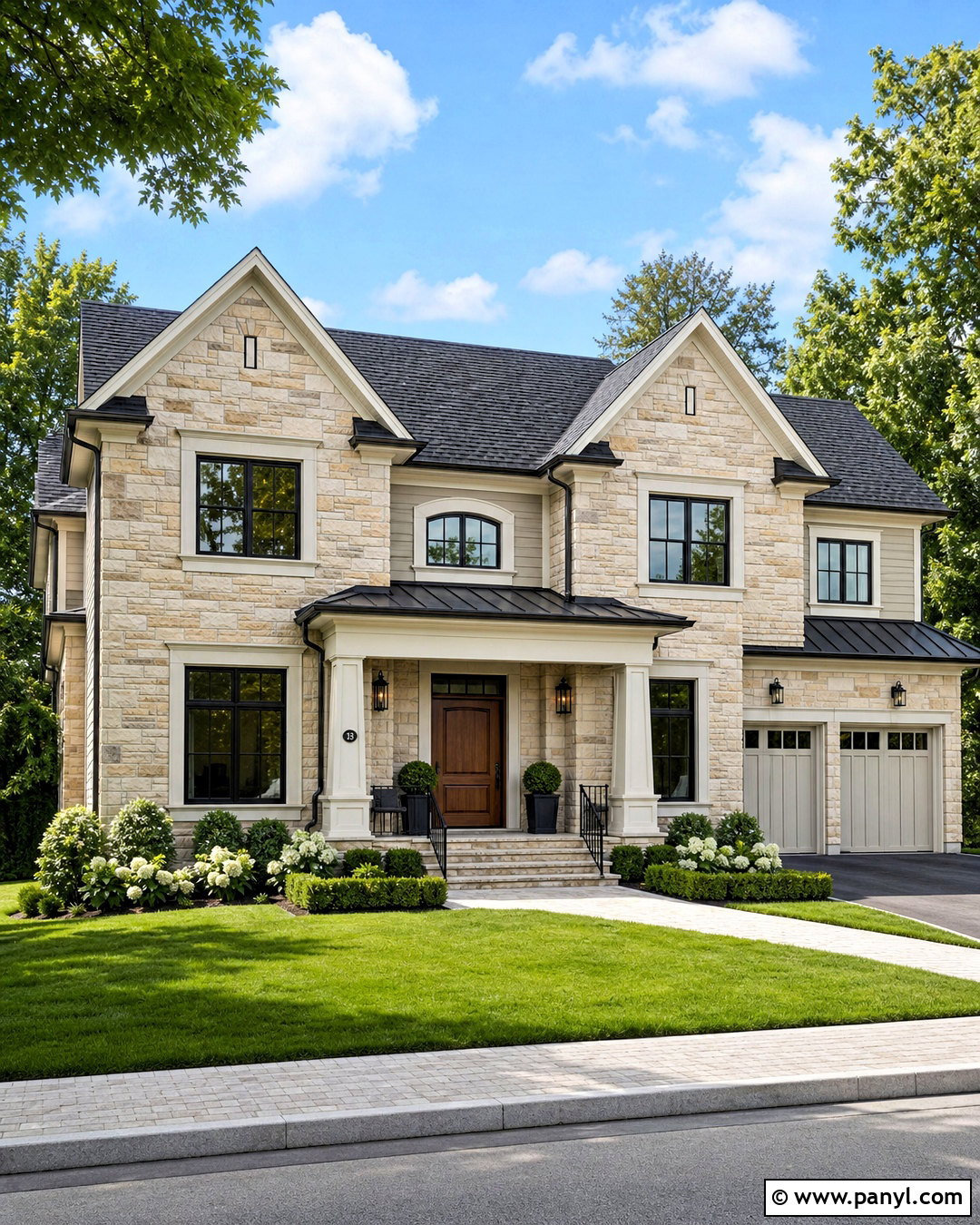
Orderly ashlar limestone suits a transitional home exterior where classic proportions meet simplified modern details. Select rectangular stones in light buff, warm cream, and pale greige, then arrange them in varied horizontal courses. Thin, color-matched mortar joints should connect the blocks without creating a distracting grid. Cover the lower facade and front entry surround, while using soft greige siding on the upper level. Crisp ivory trim, a medium brown wood door, and a charcoal architectural-shingle roof complete the exterior scheme. Add black lanterns and dark bronze gutters for definition. A straight limestone walkway, clipped boxwood, ornamental grasses, and white flowering shrubs create balanced curb appeal. Because the masonry contains gentle tonal variation, the exterior feels detailed in bright daylight while remaining calm enough for a typical suburban house.
10. Sandstone Block Wall Texture
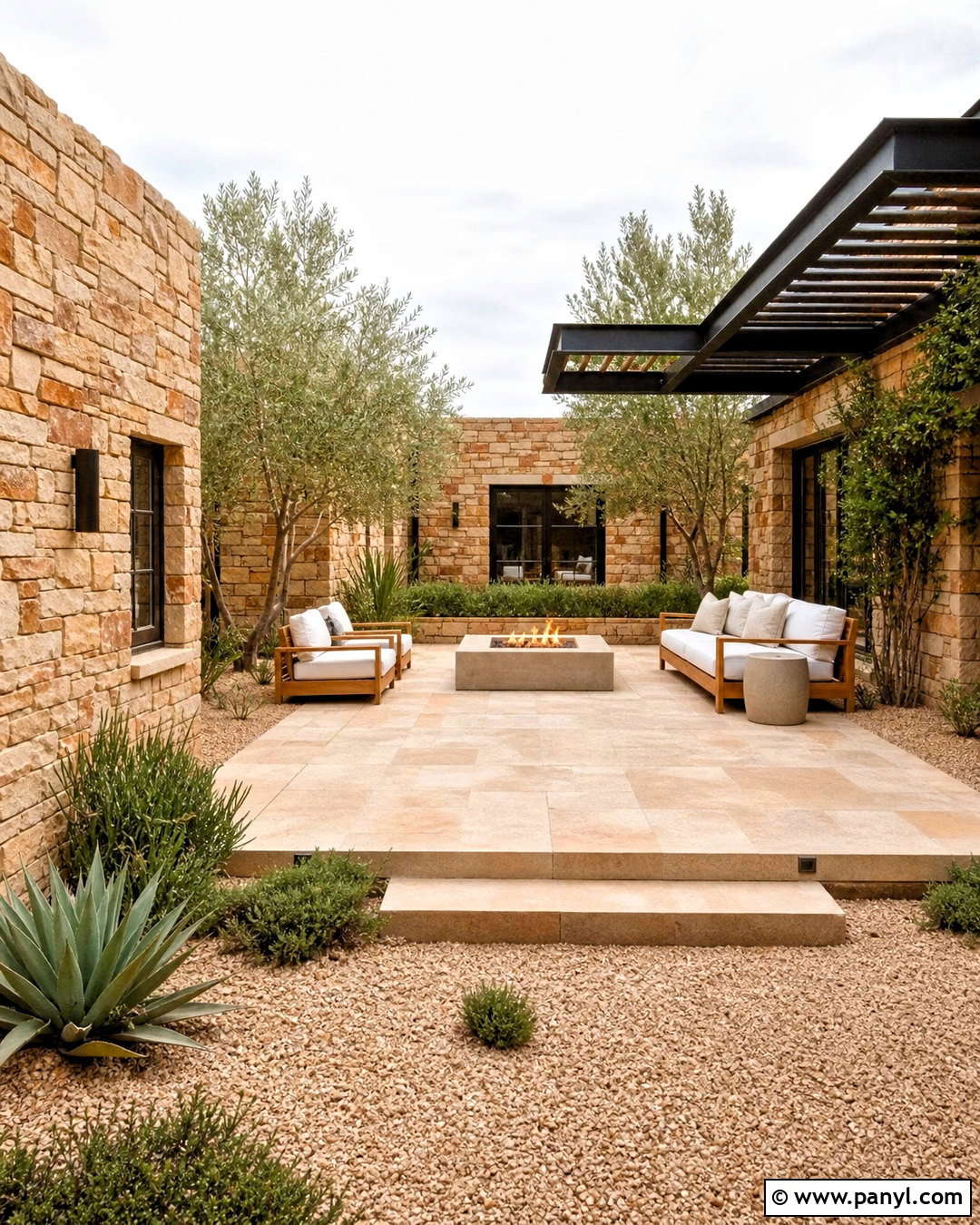
Warm sandstone blocks give a courtyard the sun-washed character of a desert landscape. Choose rectangular stones in honey beige, muted peach, dusty tan, and pale rust. Arrange them in a staggered bond with narrow sand-colored joints to create a smooth visual repeat across the boundary walls. Underfoot, use large cream concrete pavers separated by strips of light gravel. Furnish the courtyard with a low teak sofa, off-white cushions, and two woven lounge chairs. A simple black metal pergola adds structure without competing with the stone. Plant olive trees, ornamental grasses, agave, and low thyme beds for drought-conscious texture. Soft white wall lights should wash across the sandstone in the evening. The finished space feels warm and natural, yet the clean layout keeps it contemporary, uncluttered, and easy to navigate.
11. Granite Rubble Wall Texture
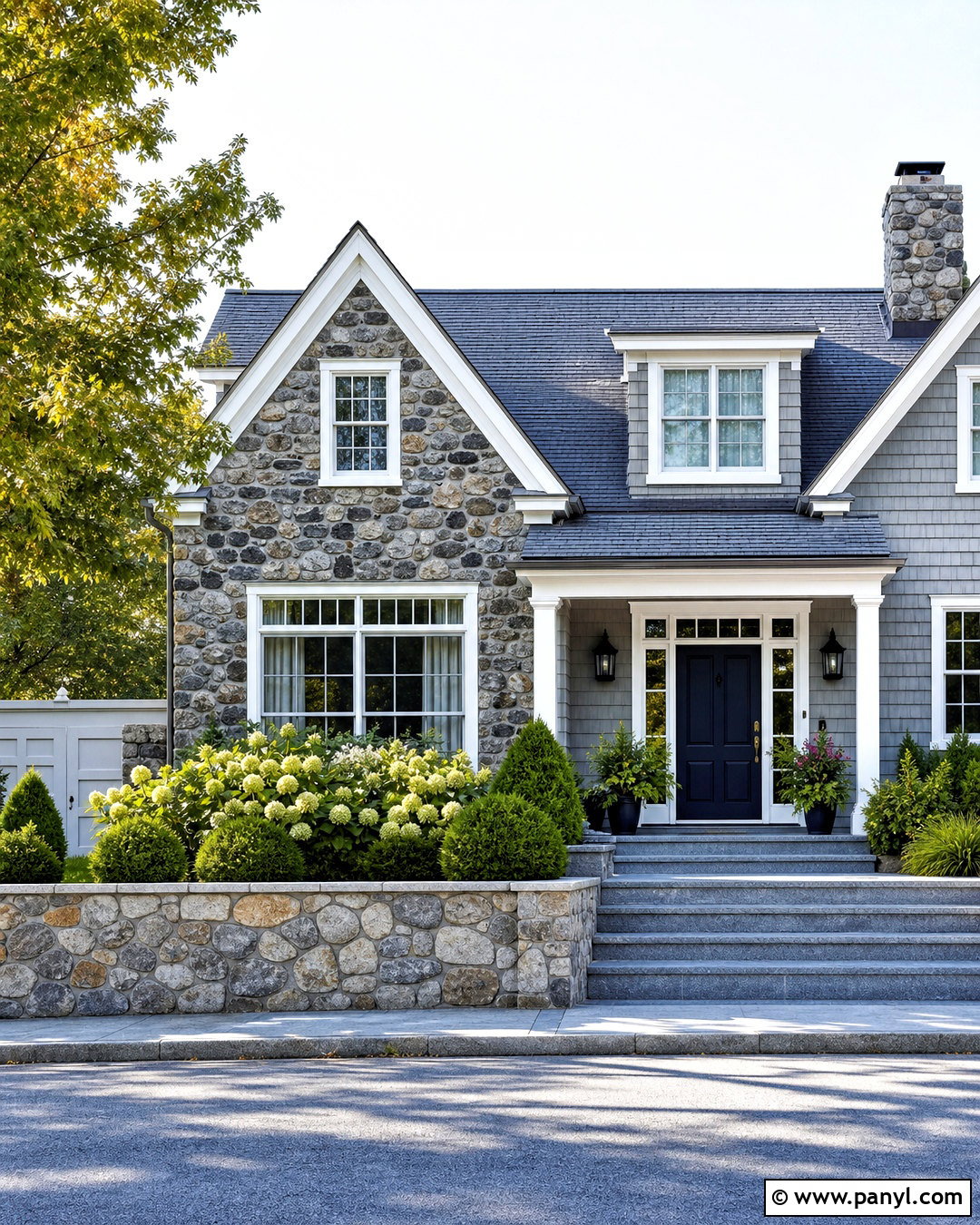
Granite rubble stone creates a durable-looking exterior with rich variation and an established New England character. Use irregular stones in medium gray, charcoal, silver, and occasional warm brown, connected with slightly recessed light gray mortar. Apply the granite across the chimney, porch foundation, and lower front facade rather than scattering small accents around the house. Weathered gray siding, clean white trim, and a deep navy front door produce a coordinated color scheme. Choose a charcoal roof that relates to the darkest stones. Wide granite steps and a simple flagstone path continue the natural material palette. Hydrangeas, ferns, evergreen shrubs, and a neatly edged lawn soften the rugged masonry. Black metal porch lights provide a modern finishing touch while maintaining the straightforward, practical appearance of this complete residential exterior.
12. Ledgestone Fireplace Wall Texture
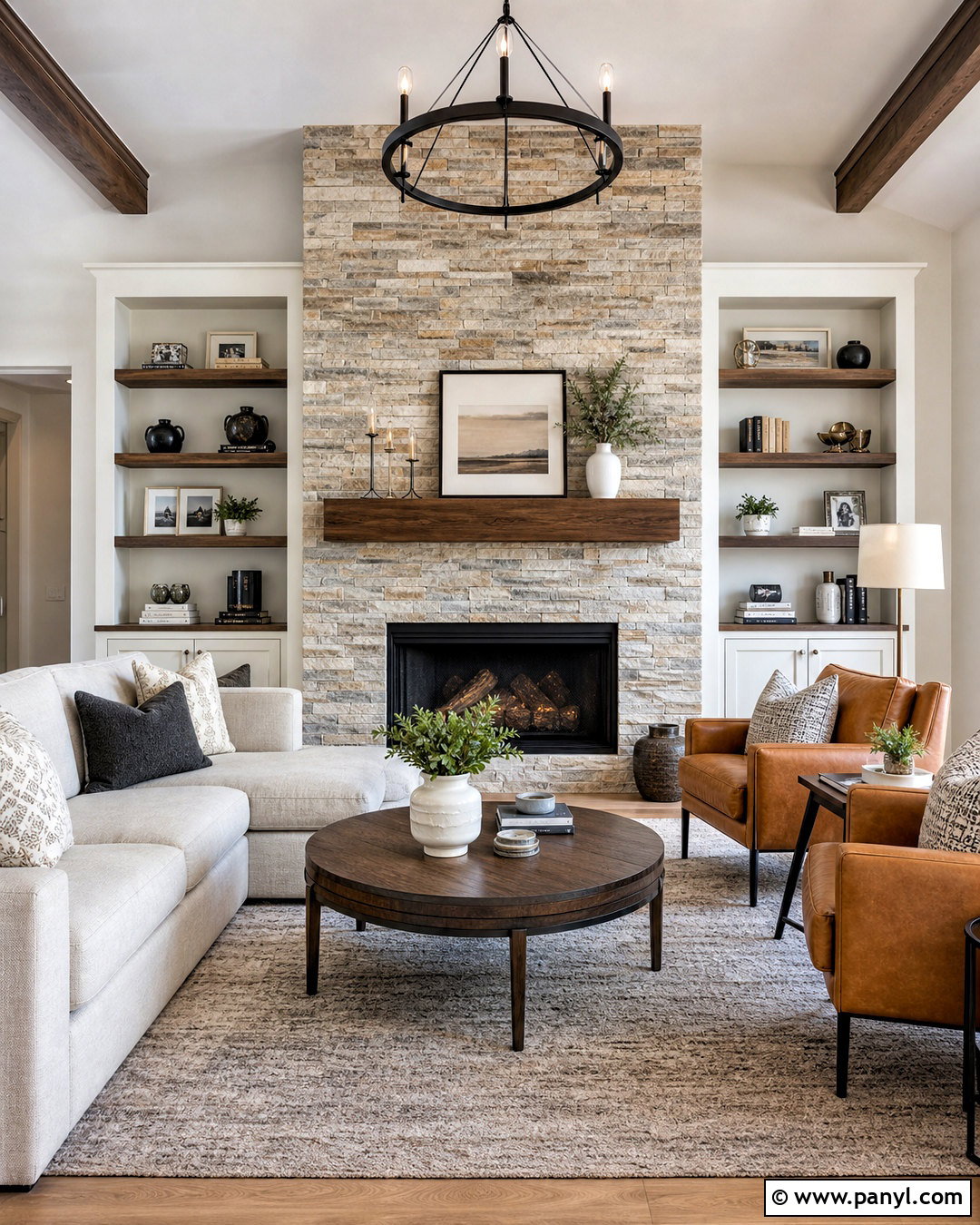
A floor-to-ceiling ledgestone fireplace gives an open family room a clear visual anchor. Select mixed-width stone strips in warm gray, beige, taupe, and subtle cream. Blend short and long pieces across the wall so panel boundaries disappear and the horizontal pattern feels natural. Center a wide black fireplace insert within the stone and add a thick walnut mantel. Built-in cabinets in warm white can flank the feature wall, providing storage and reducing visual clutter. Arrange a large oatmeal sectional, two cognac leather chairs, and a round wood coffee table around the fireplace. A textured greige rug defines the seating area over pale oak flooring. Ceiling spotlights aimed toward the ledgestone reveal its uneven surface. Keep mantel decor low and simple so the complete fireplace composition remains balanced and functional.
13. Veined Marble Wall Texture
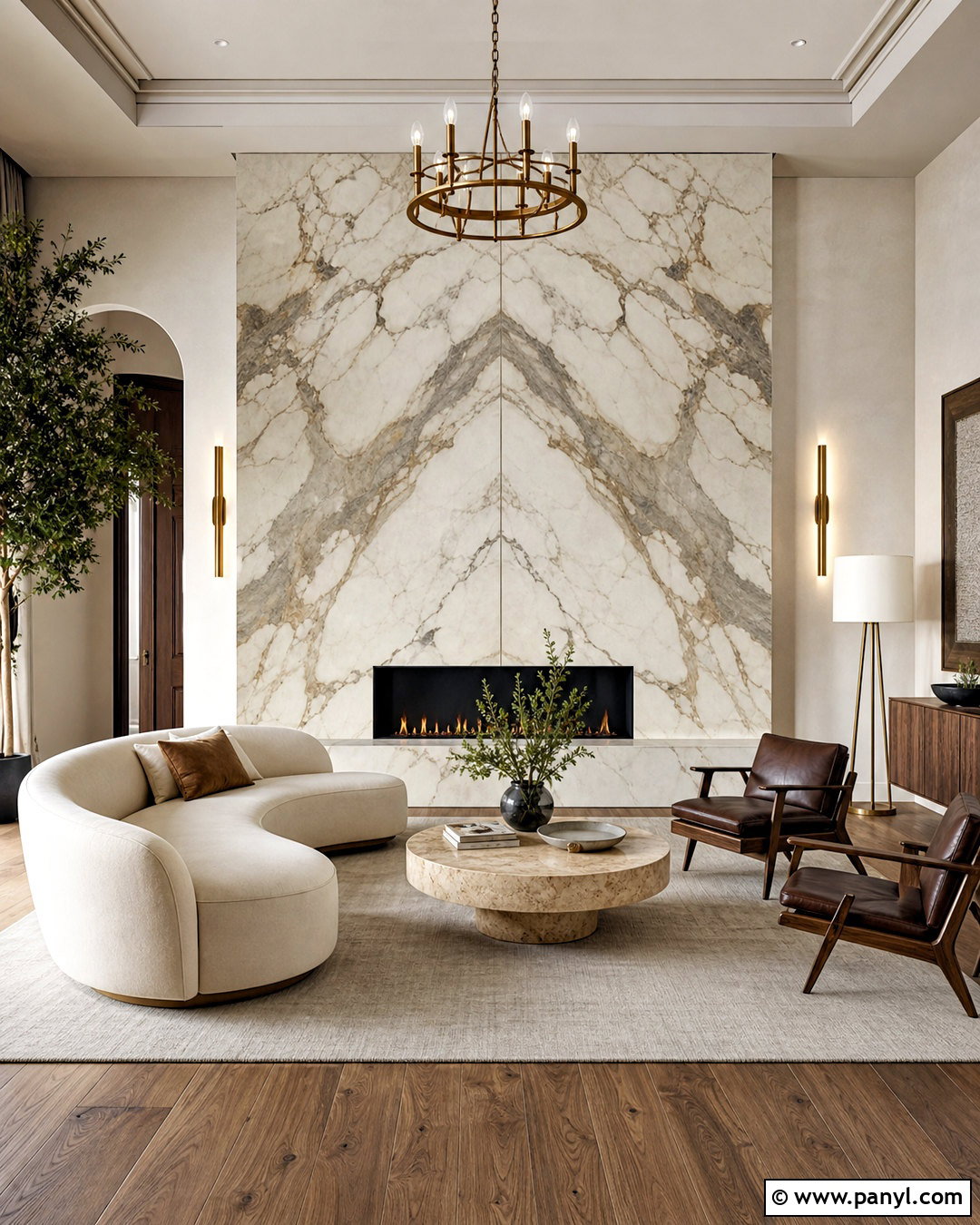
Large marble panels create a nearly seamless wall when their veins are carefully matched across the surface. For a refined living room, choose warm white marble with broad gray and soft taupe movement rather than a stark, high-contrast pattern. Cover one uninterrupted wall and integrate a slim linear fireplace near the floor. Avoid adding a mantel, shelving, or artwork that would break the continuous veining. Furnish the room with a curved ivory sofa, walnut lounge chairs, a travertine coffee table, and a plush pale gray rug. Brushed brass floor lamps introduce restrained warmth. Use smooth off-white plaster on adjacent walls and medium oak flooring underfoot. Large windows and bright neutral lighting make the marble appear luminous. The complete design feels polished but remains comfortable because the furniture uses soft shapes and tactile materials.
14. Fluted Stone Wall Texture
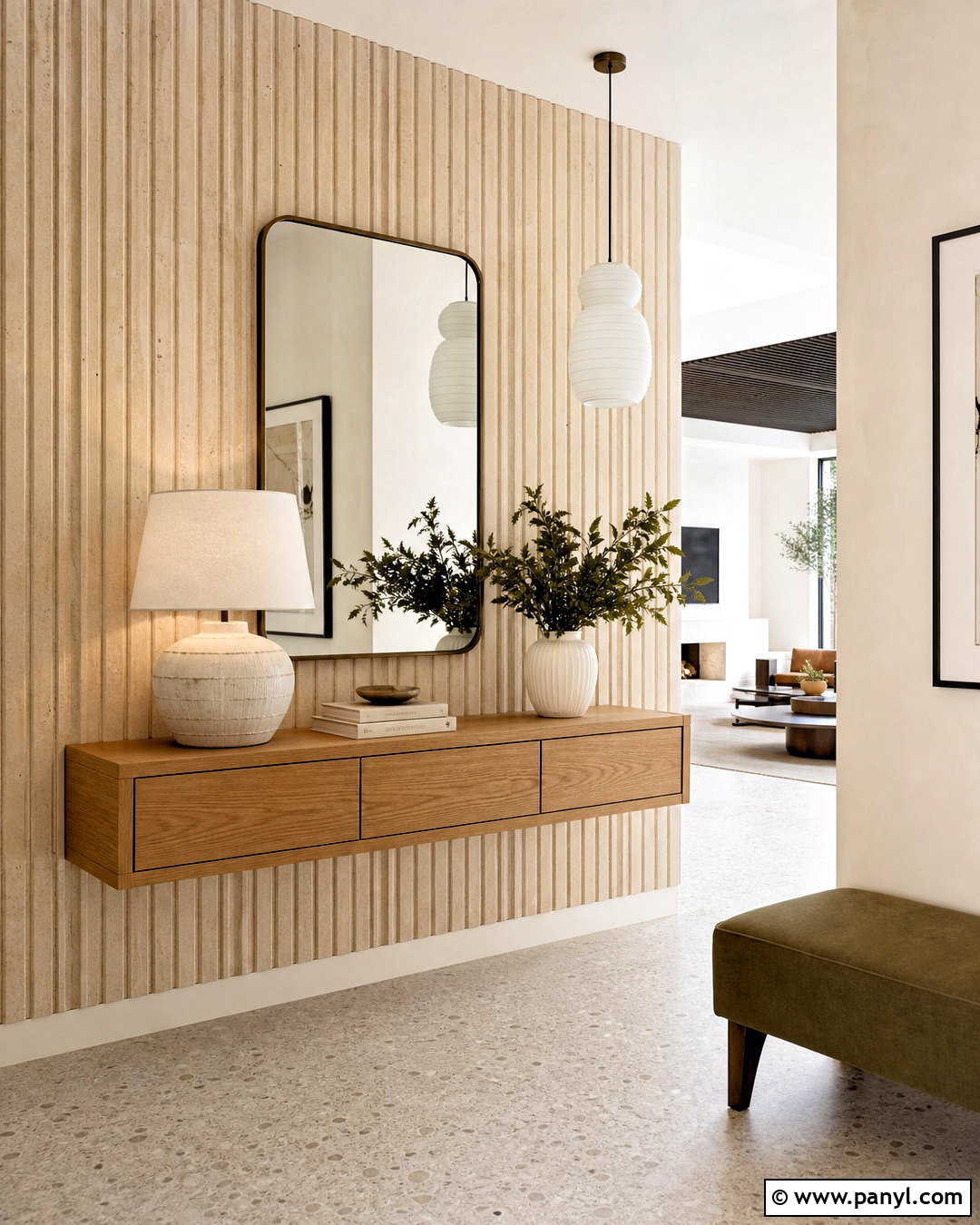
Vertical fluted stone brings rhythm to a small reception area, hallway, or formal entry without requiring bold color. Choose carved limestone panels in warm ivory with narrow rounded grooves. Install the panels from floor to ceiling behind a floating oak console, aligning every section so the channels continue without visible breaks. Use smooth creamy plaster on adjacent walls and large pale terrazzo tiles on the floor. A slim bronze-framed mirror provides contrast while keeping most of the carved wall visible. Add a sculptural white pendant, concealed ceiling lights, and a small ceramic lamp to illuminate the vertical relief. One upholstered bench in muted olive introduces gentle color. The repeated grooves make the ceiling feel taller, while the limited material palette keeps this textured stone feature clean, calm, and suitable for a realistic residential interior.
15. Irregular Limestone Wall Texture
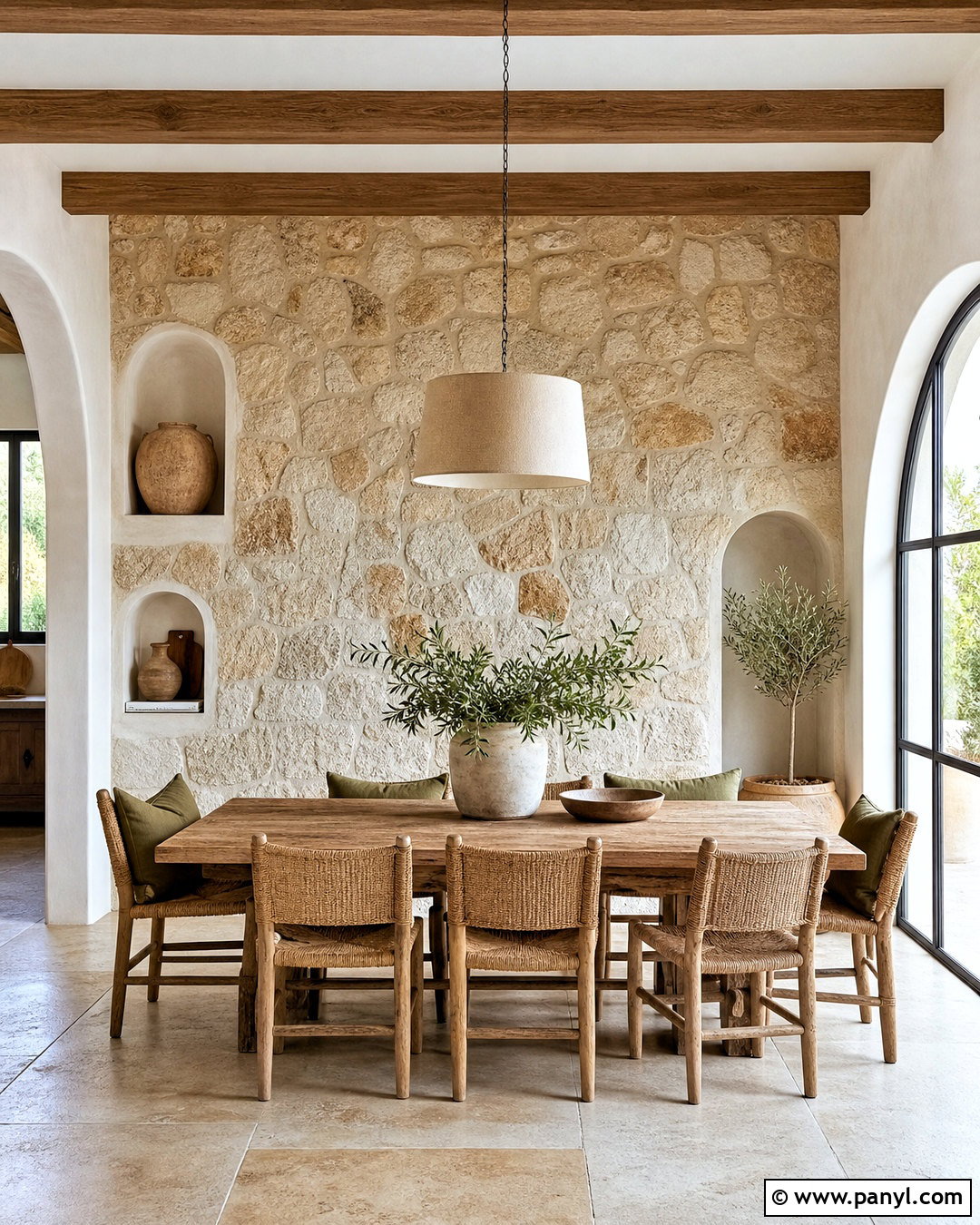
An irregular limestone wall can create relaxed Mediterranean character when it is paired with simple architectural finishes. Use loosely shaped stones in chalky cream, pale sand, and light oatmeal, joined with wide flush mortar in a matching warm tone. Cover the dining room’s longest wall, allowing the uneven stone outlines to become the main decorative pattern. Pair it with softly textured white plaster, reclaimed oak ceiling beams, and a matte limestone floor. A long farmhouse table, woven dining chairs, and a large linen pendant establish a casual gathering area. Add built-in arched niches at one end of the wall for ceramics and serving pieces. Cream curtains and olive green seat cushions bring subtle softness. Bright daylight emphasizes the handmade surface while the tonal mortar prevents the pattern from looking busy or fragmented.
16. Cobblestone Wall Texture
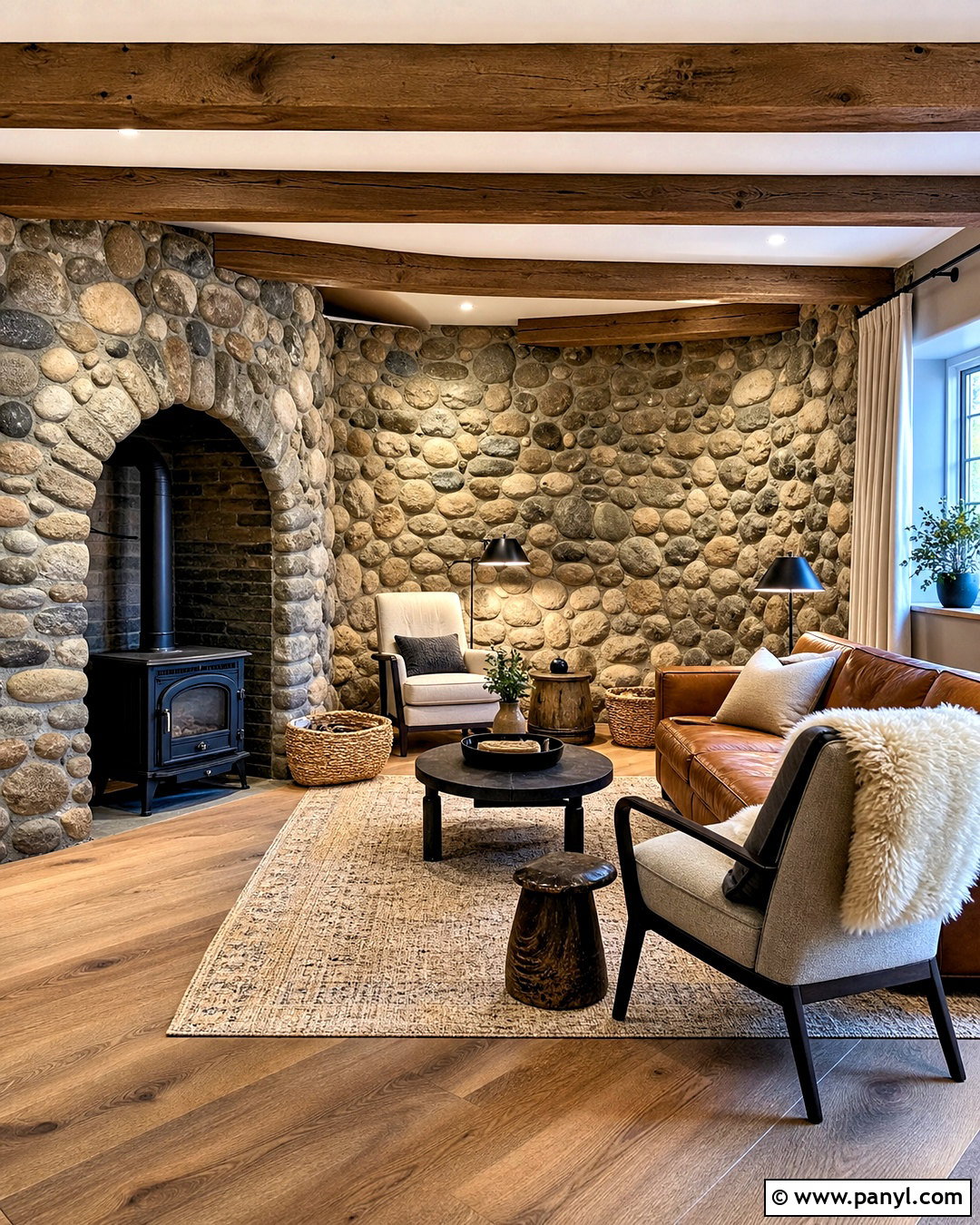
Rounded cobblestone gives a basement lounge or casual den a distinctive old-world foundation. Choose compact stones in smoky gray, faded tan, dark brown, and dusty beige. Set them into medium gray mortar with balanced spacing, ensuring the texture repeats naturally across a broad wall. Build a shallow arched niche into the cobblestone and use it to frame a simple black stove or decorative log display. Warm the room with wide-plank oak flooring, a caramel leather sofa, wool armchairs, and a large neutral rug. Exposed ceiling beams strengthen the traditional character without turning the space into a themed interior. Black metal floor lamps and soft white ceiling lights reveal the curved stone surfaces. Finish with woven baskets, linen curtains, and restrained botanical artwork on the adjacent plaster walls.
17. Mossy Garden Stone Wall Texture
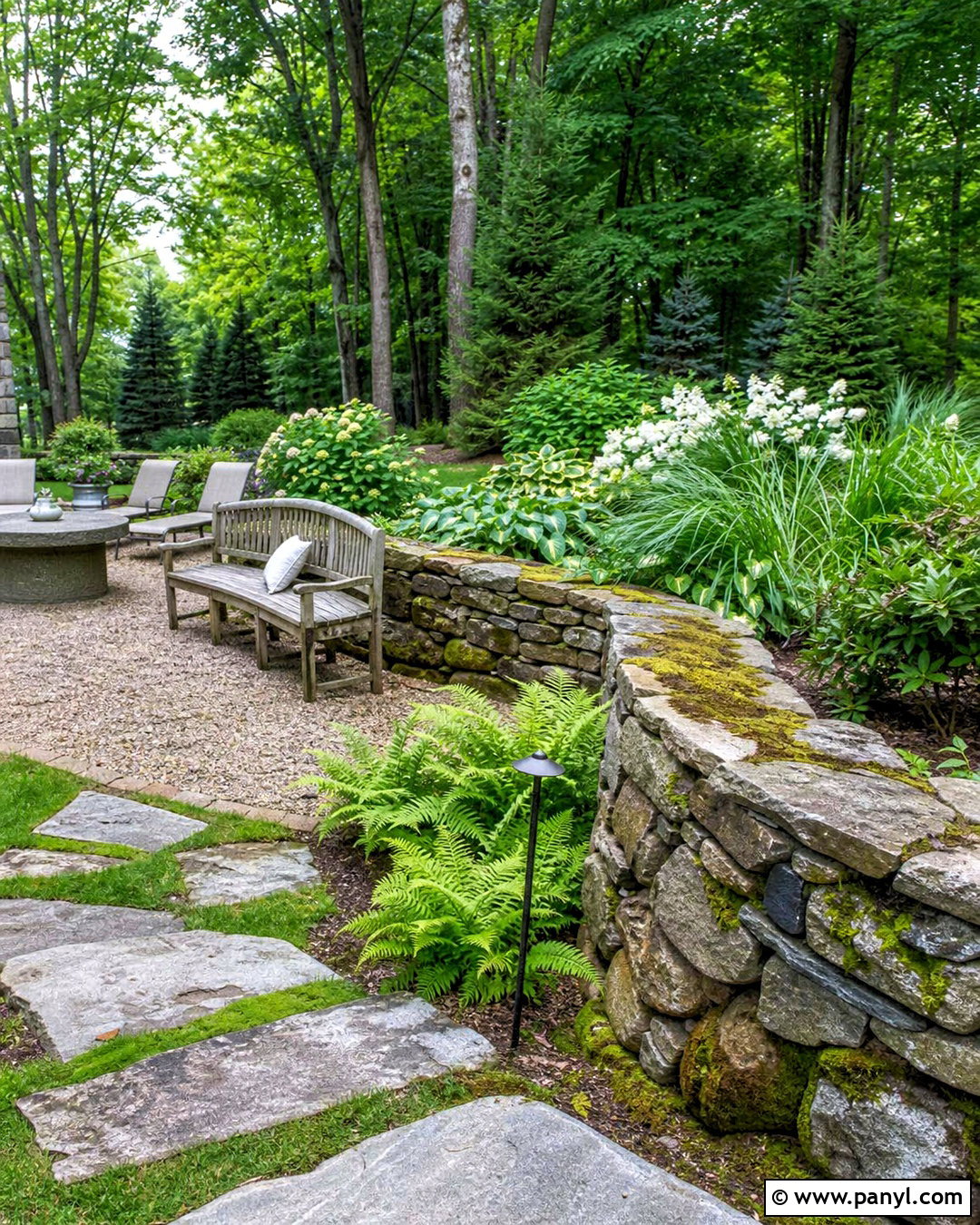
A lightly mossed stone wall can make a backyard garden feel established while still looking cared for. Construct a low boundary wall from irregular gray and brown stones, allowing small areas of green moss to appear in sheltered joints rather than covering the entire surface. Curve the wall around a gravel seating terrace to create a natural sense of enclosure. Add a weathered teak bench, two simple lounge chairs, and a round stone table. Layer the planting with ferns, hostas, woodland grasses, white flowering perennials, and compact evergreen shrubs. Flat stepping stones should connect the terrace to the house. Keep the central gravel area open and easy to maintain. The complete design combines masonry, planting, circulation, and seating, producing a realistic garden where the textured wall feels naturally connected to its surroundings.
18. Mixed Beige Gray Stone Wall Texture
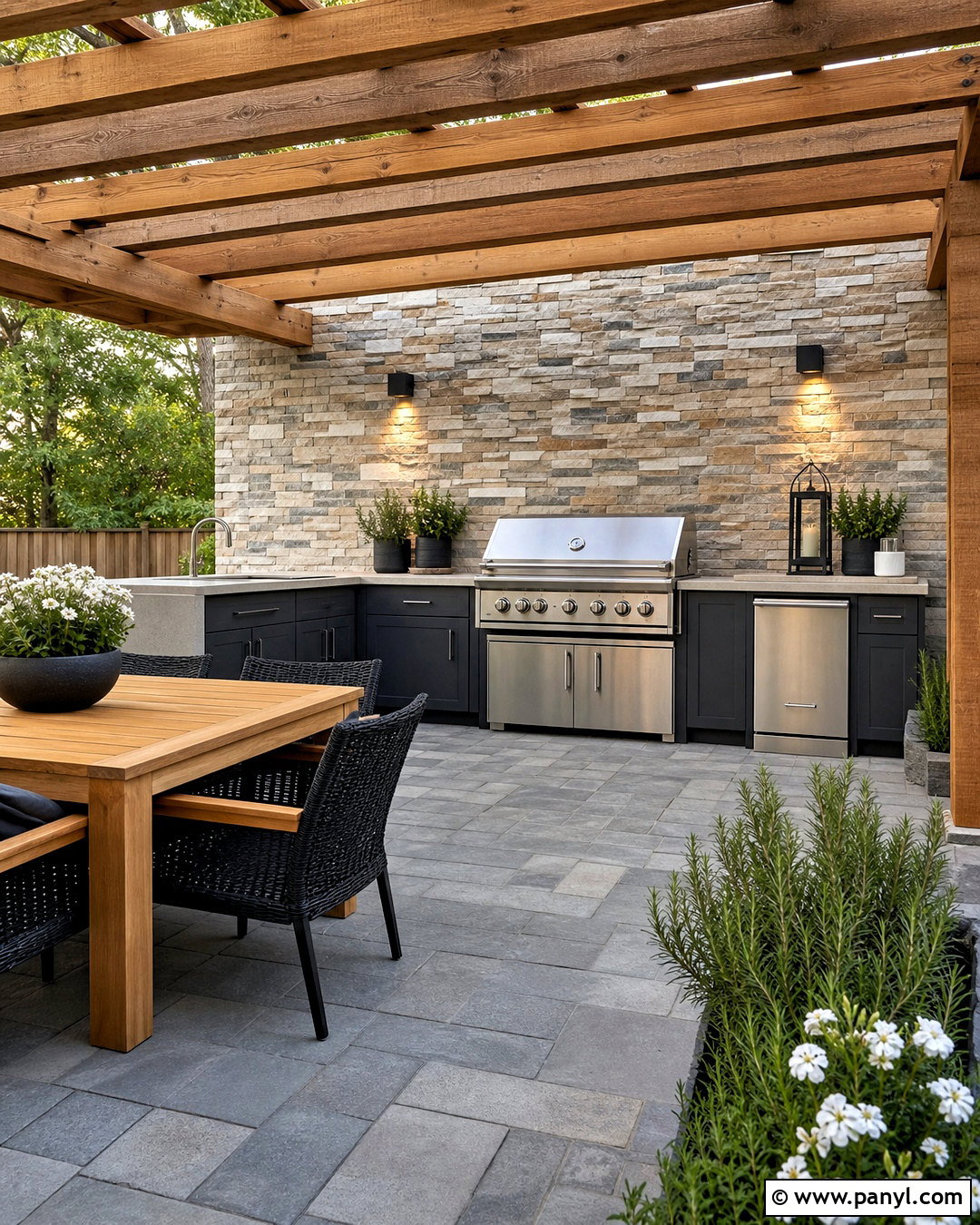
Mixing beige and gray stone creates a flexible neutral backdrop that works with both warm and cool materials. Use rectangular ledger pieces in greige, pale taupe, silver gray, cream, and occasional charcoal. Apply the texture to an outdoor kitchen wall and island base, blending colors evenly so dark patches do not repeat. Choose matte charcoal cabinets, a light concrete countertop, and stainless steel appliances for a clean contemporary contrast. Large greige porcelain pavers keep the floor practical and visually quiet. Add a teak dining table, woven black chairs, and cream outdoor cushions beneath a cedar pergola. Planters filled with rosemary, ornamental grasses, and white flowers soften the hard surfaces. Bright task lights and simple black sconces complete a functional entertaining area in which every finish relates naturally to the mixed stone palette.
19. Large Format Stone Panel Texture
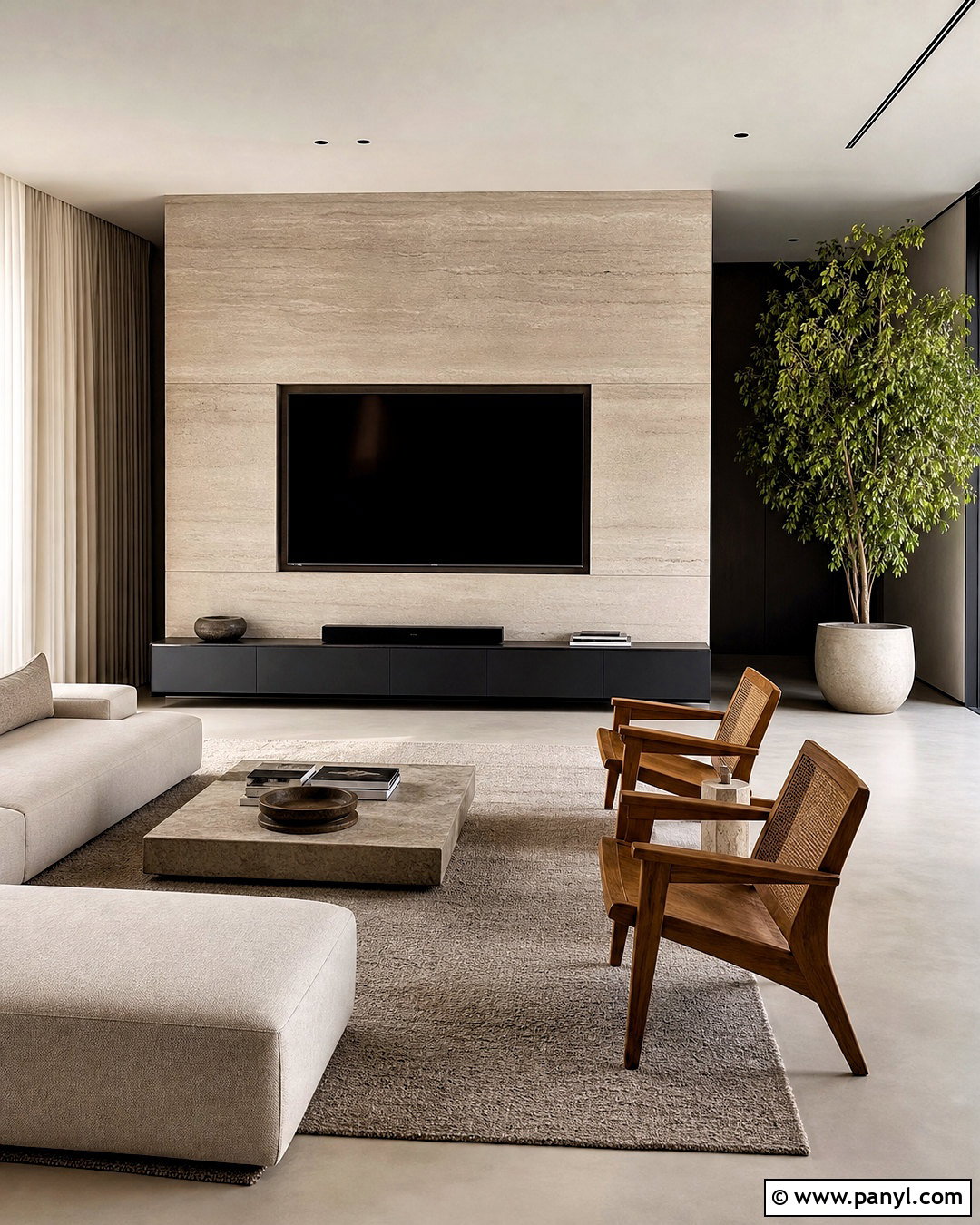
Large-format stone panels create the cleanest look for a minimalist wall because fewer joints interrupt the natural movement. () Choose honed limestone or porcelain stone panels in soft greige with faint horizontal clouds. Cover the complete television wall in a modern living room, aligning the pattern between panels for continuous visual flow. Recess the television and a slim black media cabinet into the surface so they sit flush. Add a low cream sectional, sculptural oak chairs, and a broad wool rug in warm gray. Pale microcement flooring strengthens the streamlined appearance. Concealed ceiling lighting should wash evenly over the panels without producing harsh glare. Use natural linen curtains and one large indoor tree for softness. With minimal accessories and disciplined alignment, the room feels spacious, warm, and intentionally detailed rather than plain.
20. Reclaimed Stone Wall Texture
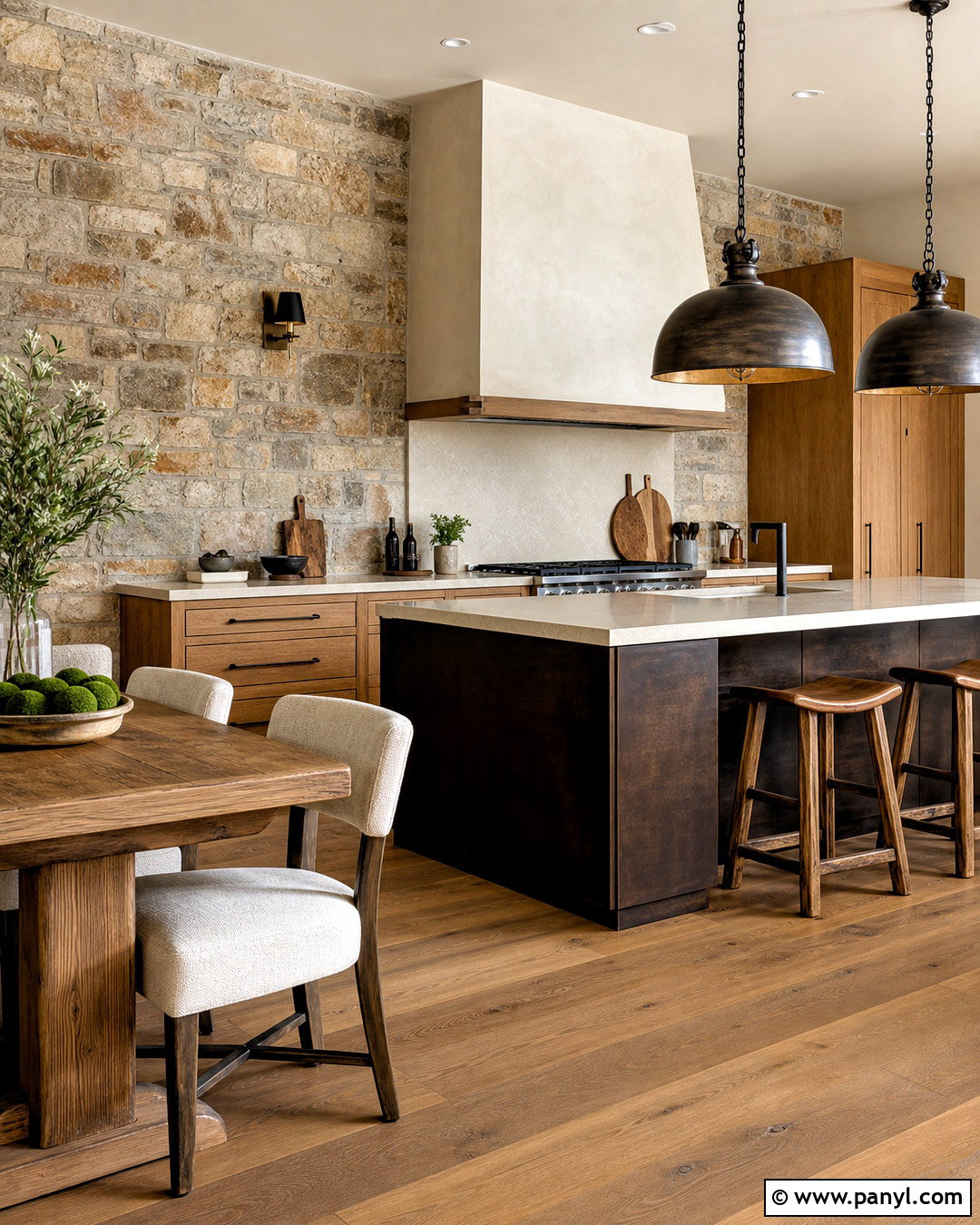
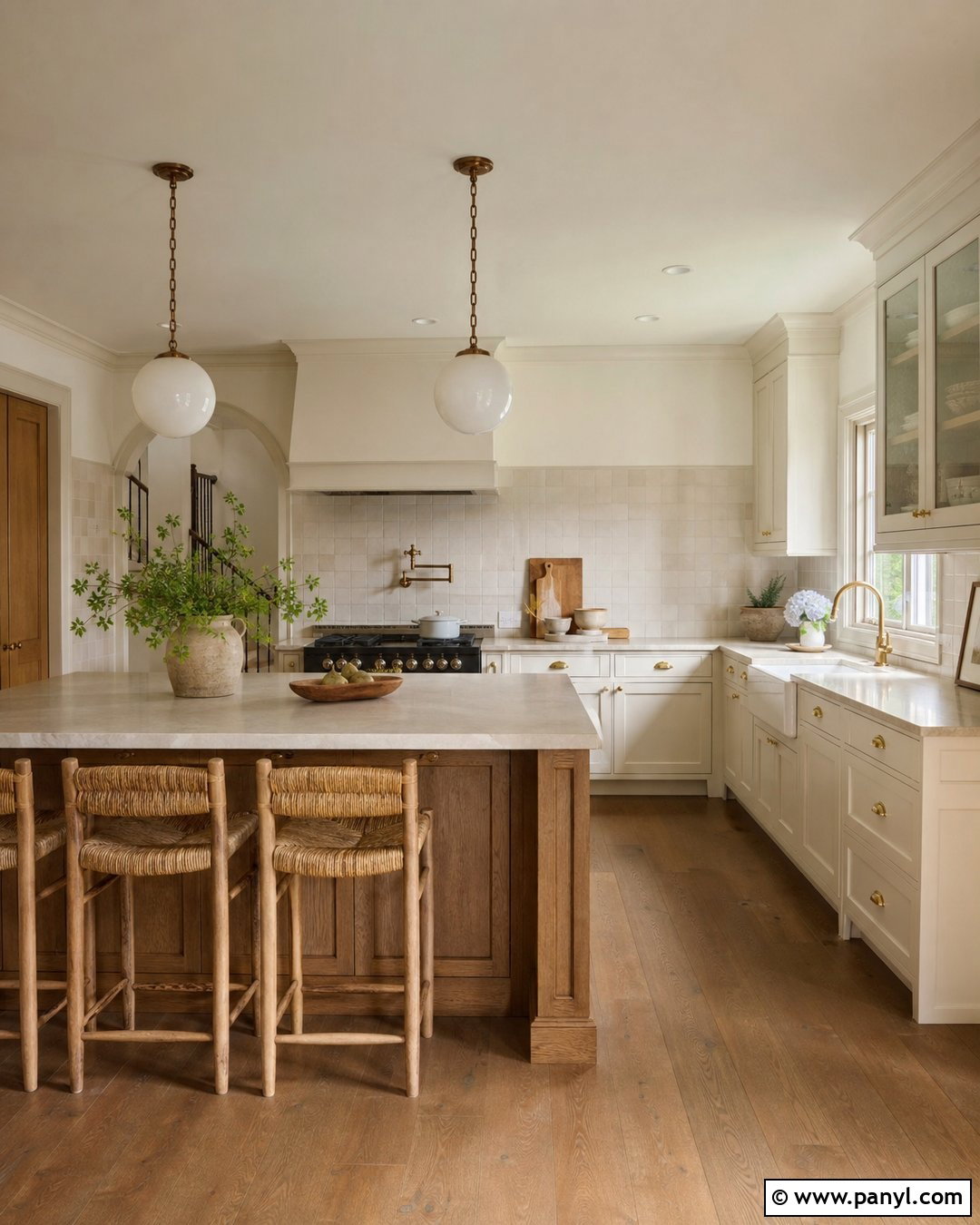
Reclaimed stone brings age, color variation, and visible wear to a modern kitchen without sacrificing function. Choose salvaged rectangular stones in faded beige, gray, brown, and soft rust, then install them across one full dining wall with warm gray mortar. Balance the rough surface with flat-panel oak cabinets, creamy quartz counters, and a large plaster range hood. A dark bronze island base and simple metal pendants add depth. Use wide oak boards on the floor and place a long trestle table beside the stone wall to create a comfortable breakfast area. Upholstered dining chairs prevent the room from feeling overly rustic. Bright windows and ceiling lights reveal softened edges and natural marks. Keeping the cabinetry streamlined allows the reclaimed texture to feel authentic while the complete kitchen remains current, organized, and easy to use.
Conclusion:
The strongest stone wall designs combine believable texture with a complete material and color plan. Limestone can soften a modern room, slate can add dramatic contrast, and irregular fieldstone can create a more traditional atmosphere. Seamless results depend on balanced variation, properly scaled stones, thoughtful joint colors, and careful alignment. It is also important to view samples under the lighting used in the finished space. Surrounding wood, plaster, metal, furniture, paving, and plants should support the masonry rather than fight for attention. Whether you are developing a digital rendering or planning a real feature wall, these 20 stone wall texture seamless ideas offer practical starting points for creating surfaces that look natural, cohesive, dimensional, and appropriate for their setting.

Related Ideas and Inspiration:
Leave a Reply