
Matching cabinets to the wall color creates a seamless, custom look that can make a kitchen feel calmer, larger, and more intentional. The key is preventing the room from becoming flat. Different paint sheens, natural wood, stone counters, metal hardware, layered lighting, and textured backsplashes give a single-color scheme depth and definition. This approach works especially well in compact kitchens because fewer visual breaks allow the eye to move smoothly through the space. It can also soften bulky cabinetry or help upper cabinets blend into the background. () Whether you prefer quiet neutrals, earthy greens, or dramatic dark tones, these complete looks offer practical inspiration for **Cabinets Matching Wall Color Ideas**.
1. Warm White Cabinets Matching White Walls
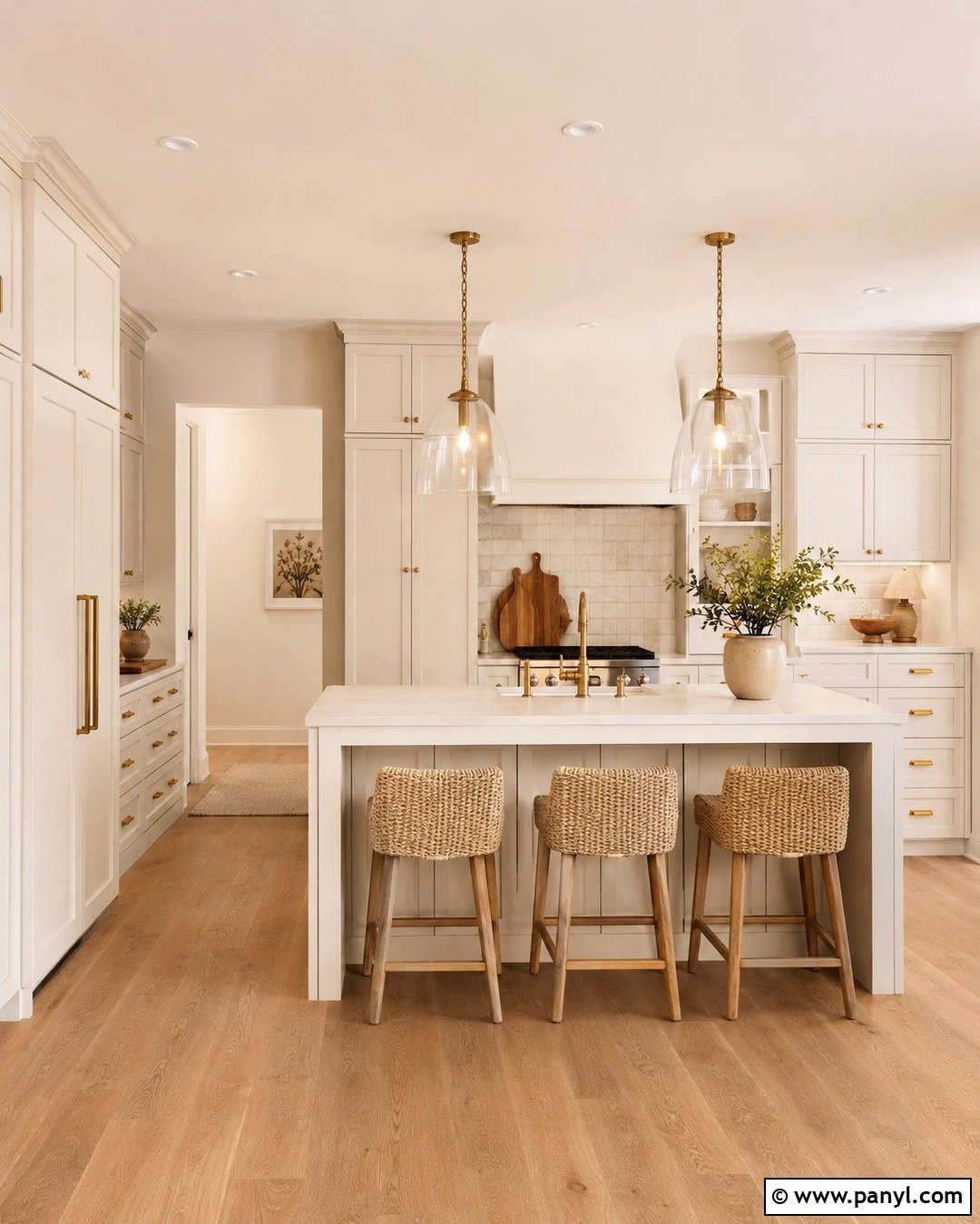
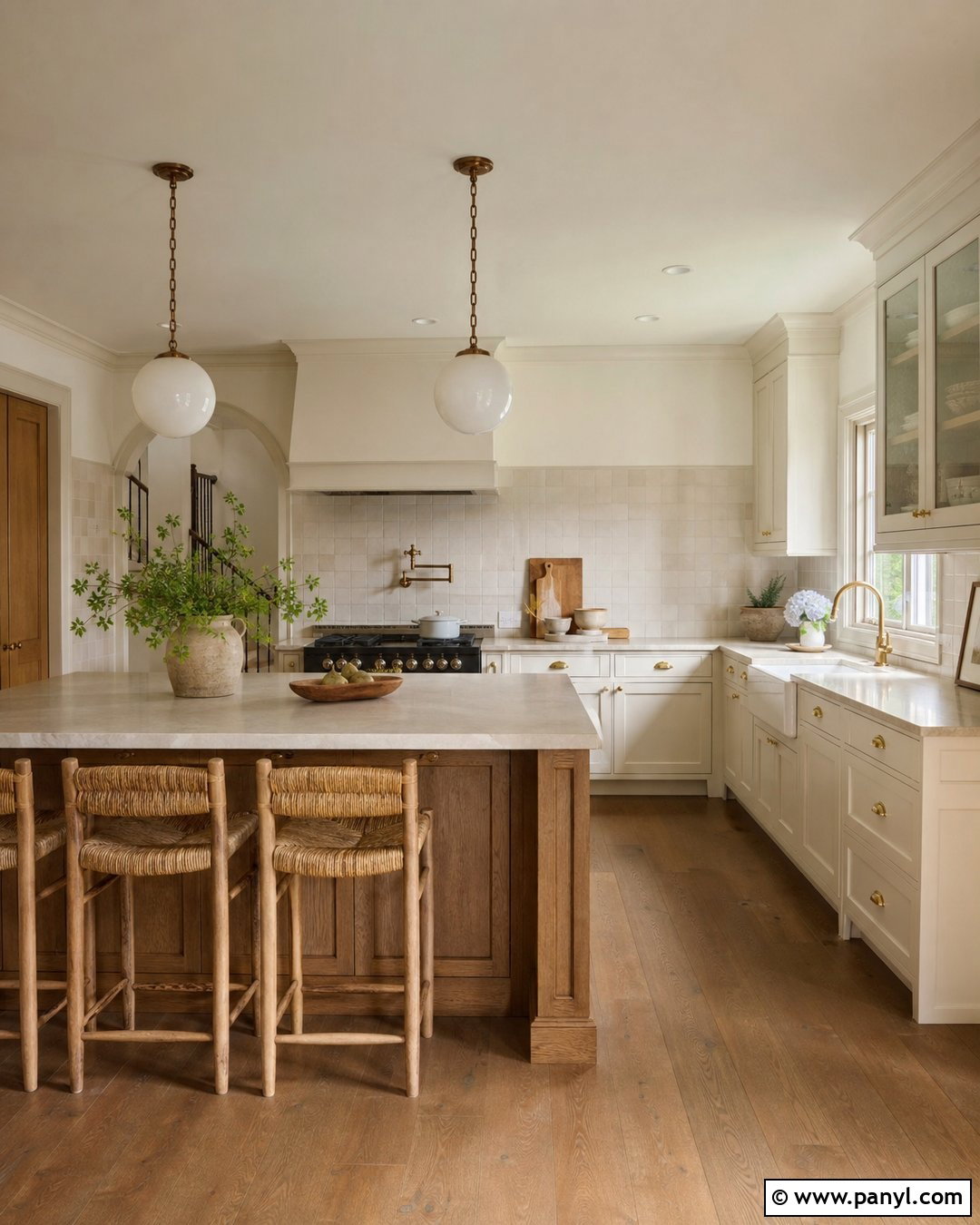
Warm white cabinets and walls create an inviting kitchen without the harsh feeling that can come from cooler whites. Choose a creamy white with subtle beige undertones for both surfaces. Use eggshell paint on the walls and a durable satin finish on the cabinetry so light creates gentle contrast. White oak flooring, woven counter stools, and aged brass hardware bring natural warmth into the room. Complete the scheme with softly veined quartz counters and a handmade ivory tile backsplash. Glass pendant lights keep an island visually open, while ceramic bowls and wood cutting boards add texture. This combination is especially useful in smaller kitchens where a continuous light backdrop makes bulky upper cabinets appear less prominent.
2. Soft Greige Cabinets Matching Greige Walls
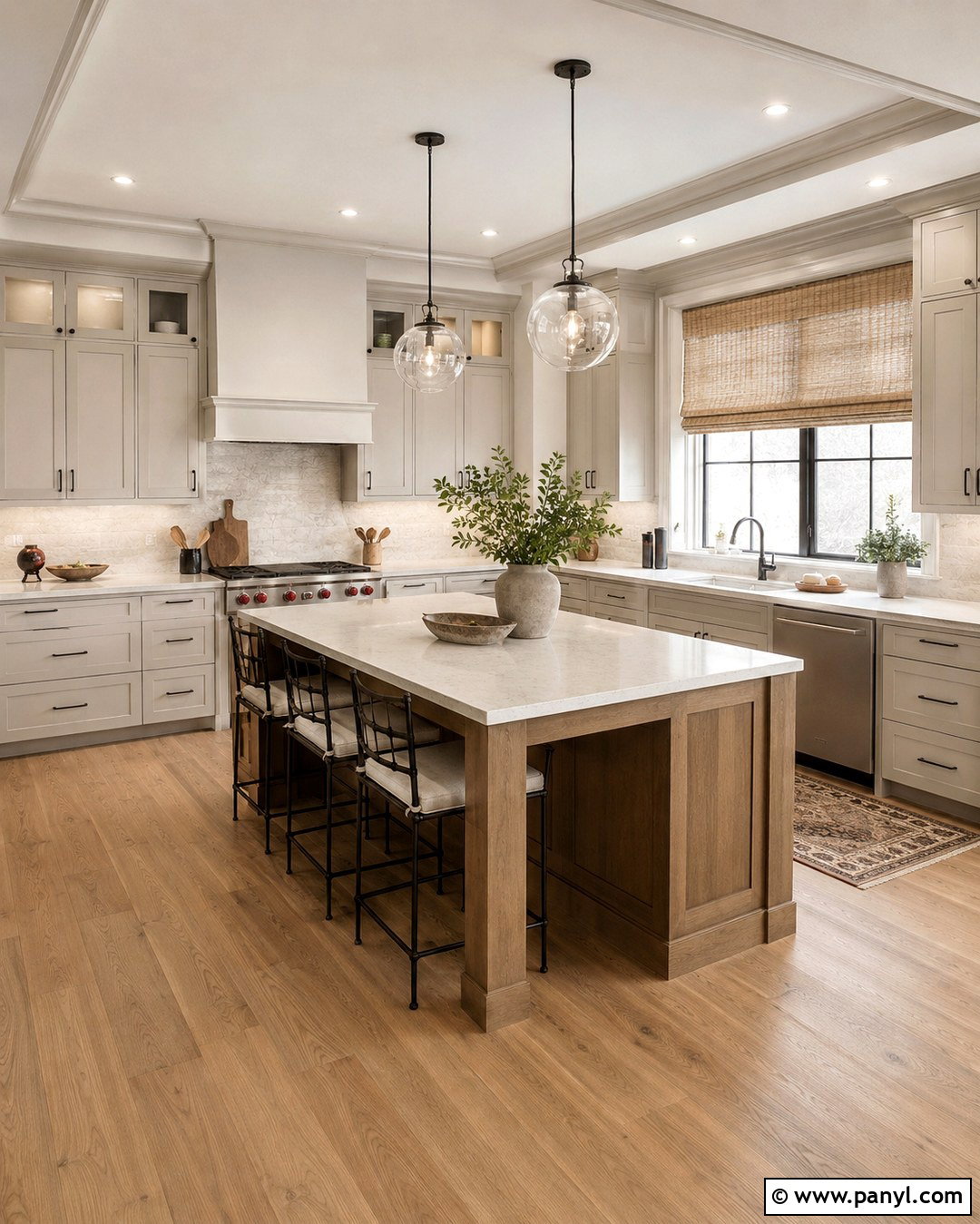
Soft greige offers more depth than white while remaining flexible enough for modern or traditional kitchens. Paint Shaker cabinets and surrounding walls in the same balanced gray-beige shade. Pair them with creamy quartz countertops, a pale limestone backsplash, and medium-tone oak flooring. Matte black pulls provide clear definition without overwhelming the quiet palette. A simple oak island can introduce natural contrast and prevent the matched surfaces from looking too uniform. Add linen window shades, off-white counter stools, and clear glass pendants for an airy finish. Under-cabinet lighting is important because greige can shift throughout the day. Test the color near windows and darker corners to ensure its undertones stay warm and consistent under both natural and artificial light.
3. Taupe Cabinets Matching Taupe Walls
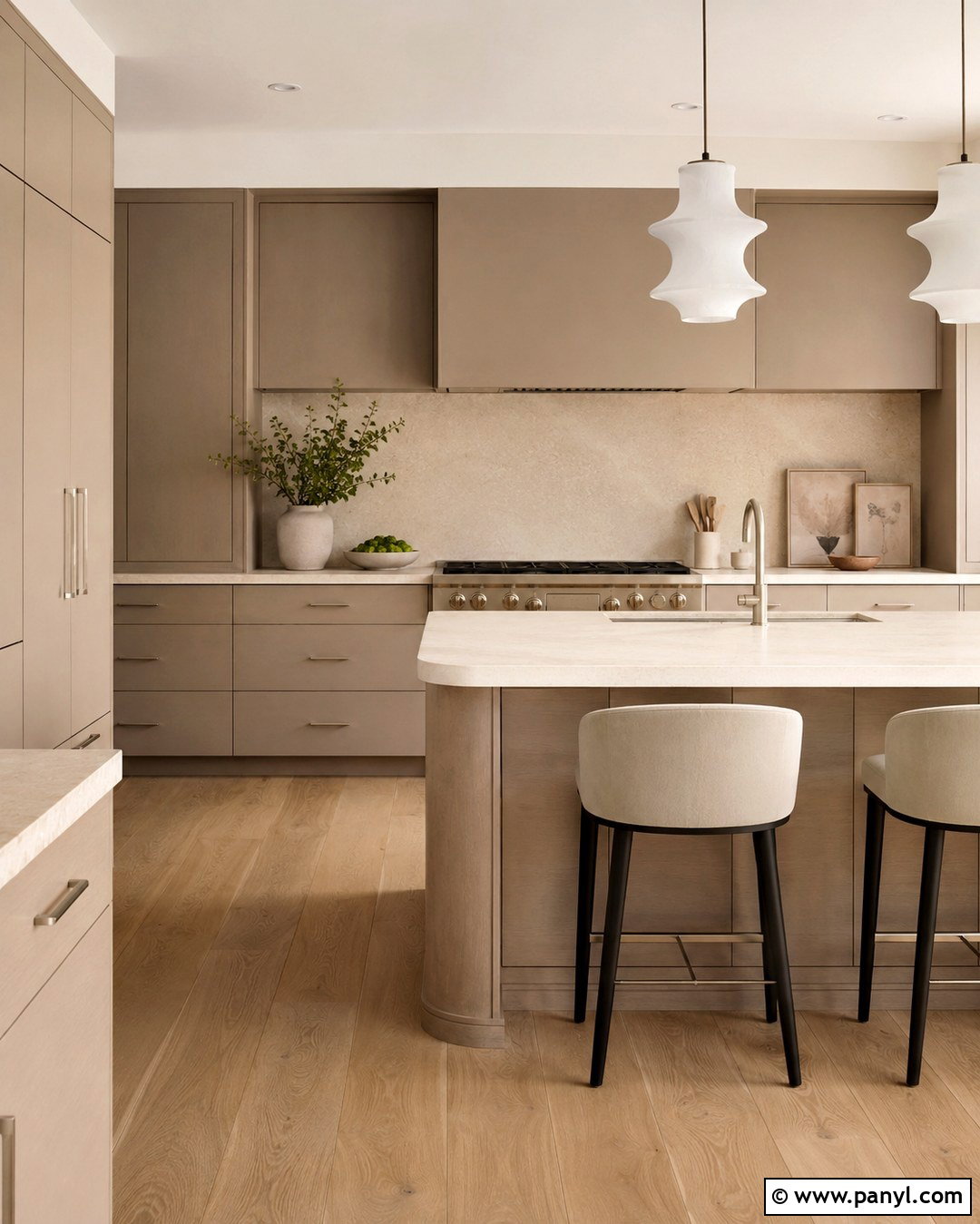
A taupe color-drenched kitchen feels sophisticated, grounded, and easy to live with. Choose a medium taupe that combines warm brown with a slight gray undertone, then carry it across flat-panel cabinets, walls, and tall pantry doors. A honed cream limestone counter softens the darker color, while a full-height stone backsplash makes the room feel polished. Use brushed nickel hardware for subtle contrast and install warm oak flooring to balance the cool notes in the paint. An island with rounded corners can make the monochromatic design feel more relaxed. Finish the space with sculptural white pendants, beige upholstered stools, and a few dark ceramic accessories. These small changes in texture keep the matched palette dimensional rather than heavy.
4. Mushroom Cabinets Matching Mushroom Walls
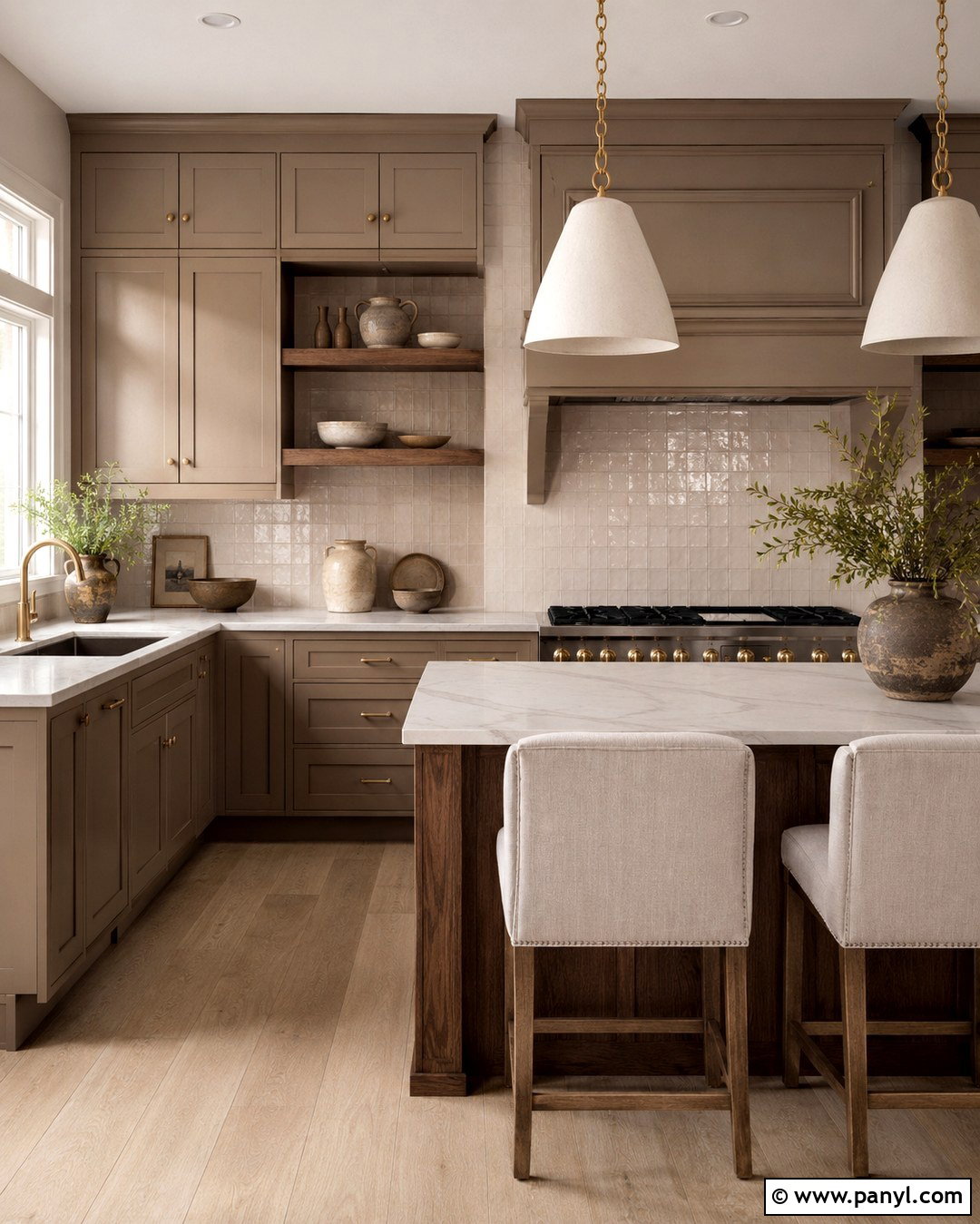
Mushroom-colored cabinets and walls bring earthy character to a kitchen while still functioning as a neutral backdrop. Select a muted brown-beige with soft gray undertones and use it throughout the main cabinetry and breakfast nook. Natural walnut accents, including open shelves or an island base, add richness without disrupting the calm effect. Choose creamy marble-look quartz counters and small square backsplash tiles in a slightly lighter mushroom tone. Antique brass knobs complement the warmth of the paint. A plaster pendant above the island and linen seating create additional softness. Keep the ceiling a warm off-white to preserve brightness. This complete palette works particularly well with transitional cabinet doors, arched openings, and understated architectural details that deserve gentle definition.
5. Sage Green Cabinets Matching Sage Green Walls
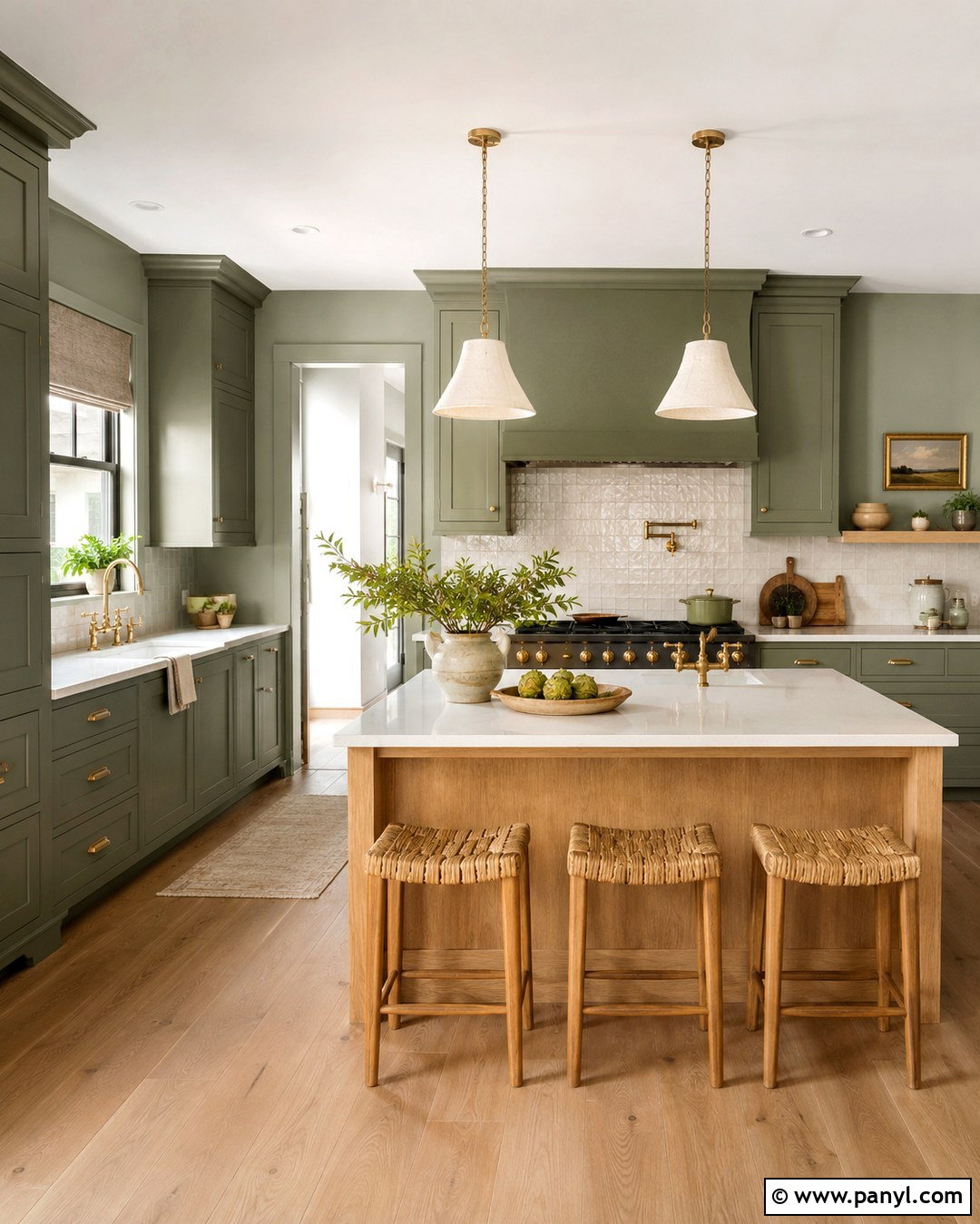
Soft sage green turns a functional kitchen into a soothing, nature-inspired space. Paint the walls and simple Shaker cabinets in the same muted green, using a washable matte finish on walls and satin enamel on doors. White oak flooring, an oak island, and woven stools reinforce the organic atmosphere. For contrast, add creamy quartz counters and an off-white zellige tile backsplash with subtle surface variation. Aged brass handles and bridge faucets introduce warmth without making the room feel formal. Keep window treatments light and uncomplicated so natural light reaches the green surfaces. Potted herbs, handmade pottery, and neutral linens provide restrained decoration. The result feels cohesive and fresh, with enough varied materials to ensure the matching color never looks one-dimensional.
6. Olive Green Cabinets Matching Olive Green Walls
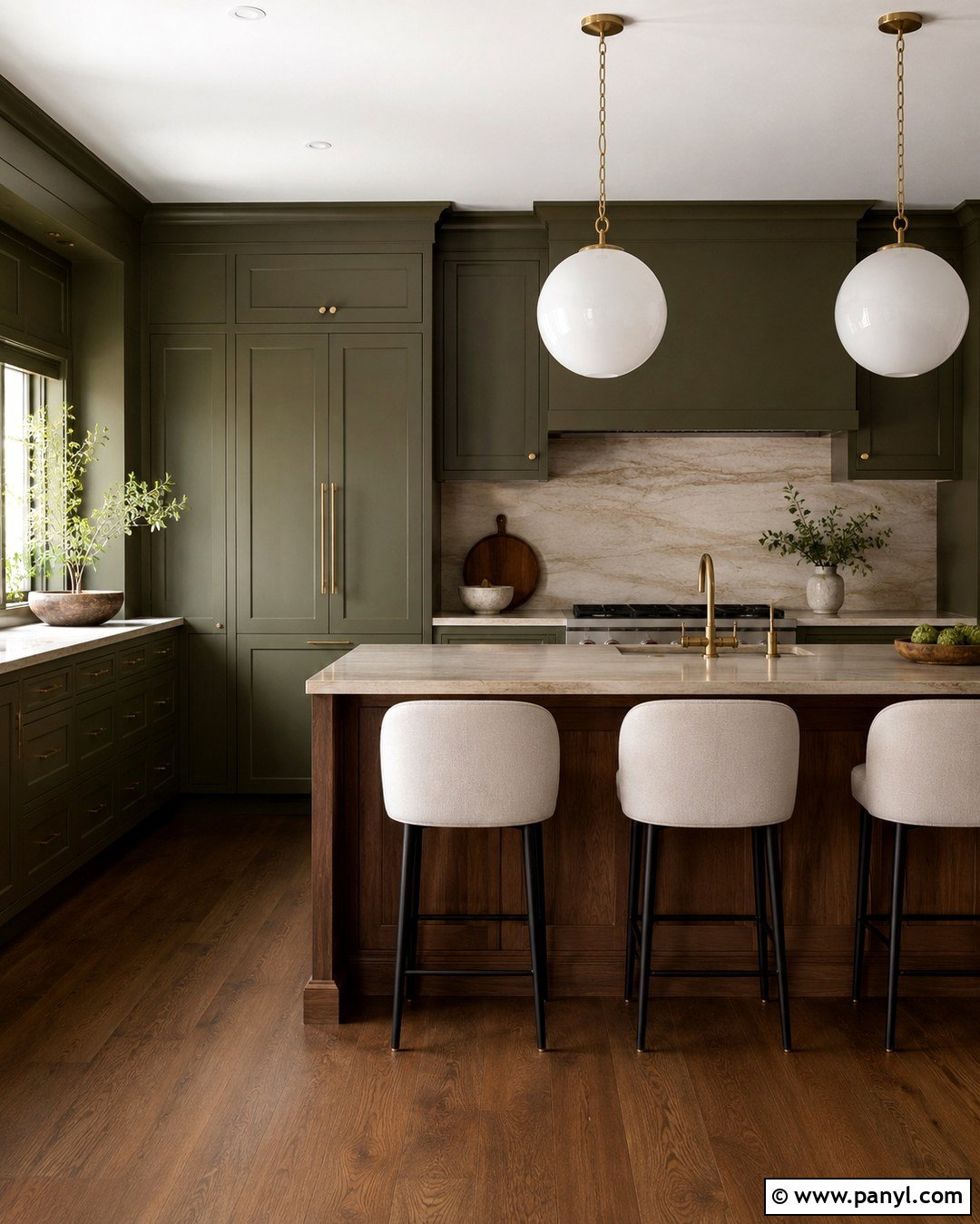
Deep olive creates a rich kitchen that feels warm rather than overly dark when paired with natural materials. Use the same earthy olive shade on cabinets, walls, and a concealed pantry door. Choose walnut flooring or a walnut island to enhance the brown undertones in the paint. Light beige quartzite counters and a matching slab backsplash provide a strong reflective surface that breaks up the saturated color. Add antique brass hardware, cream counter stools, and oversized white globe pendants. If the kitchen receives limited daylight, install under-cabinet strips and small ceiling spotlights to illuminate work zones. Keep decorative items simple, such as wood boards and pale stoneware. This balanced scheme suits traditional cabinet profiles as well as cleaner, modern fronts.
7. Forest Green Cabinets Matching Green Walls
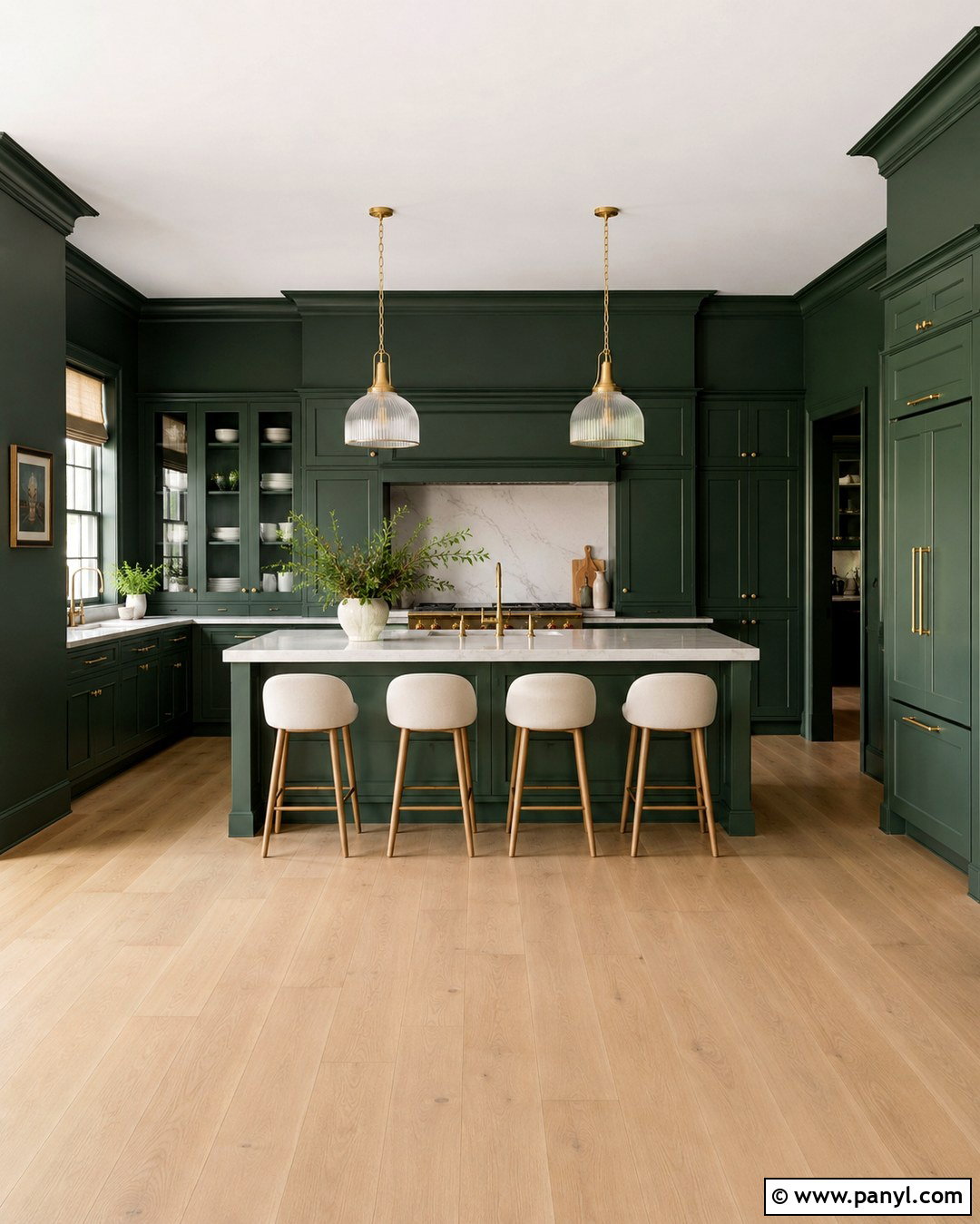
Forest green cabinets against matching walls create an enveloping kitchen with dramatic architectural presence. This color works best when the room includes large windows, generous artificial lighting, or an open connection to a brighter dining area. Pair the green surfaces with heavily veined white marble counters and a matching backsplash. Pale oak floors keep the lower half of the room from feeling too weighty. Use unlacquered brass hardware, a brass faucet, and ribbed glass pendants to introduce warm highlights. A substantial island painted forest green maintains the immersive effect, while cream stools add necessary relief. Display only a few pale ceramics or glass pieces. The finished room feels collected and distinctive, yet the consistent color helps detailed cabinetry appear orderly.
8. Dusty Blue Cabinets Matching Blue Walls
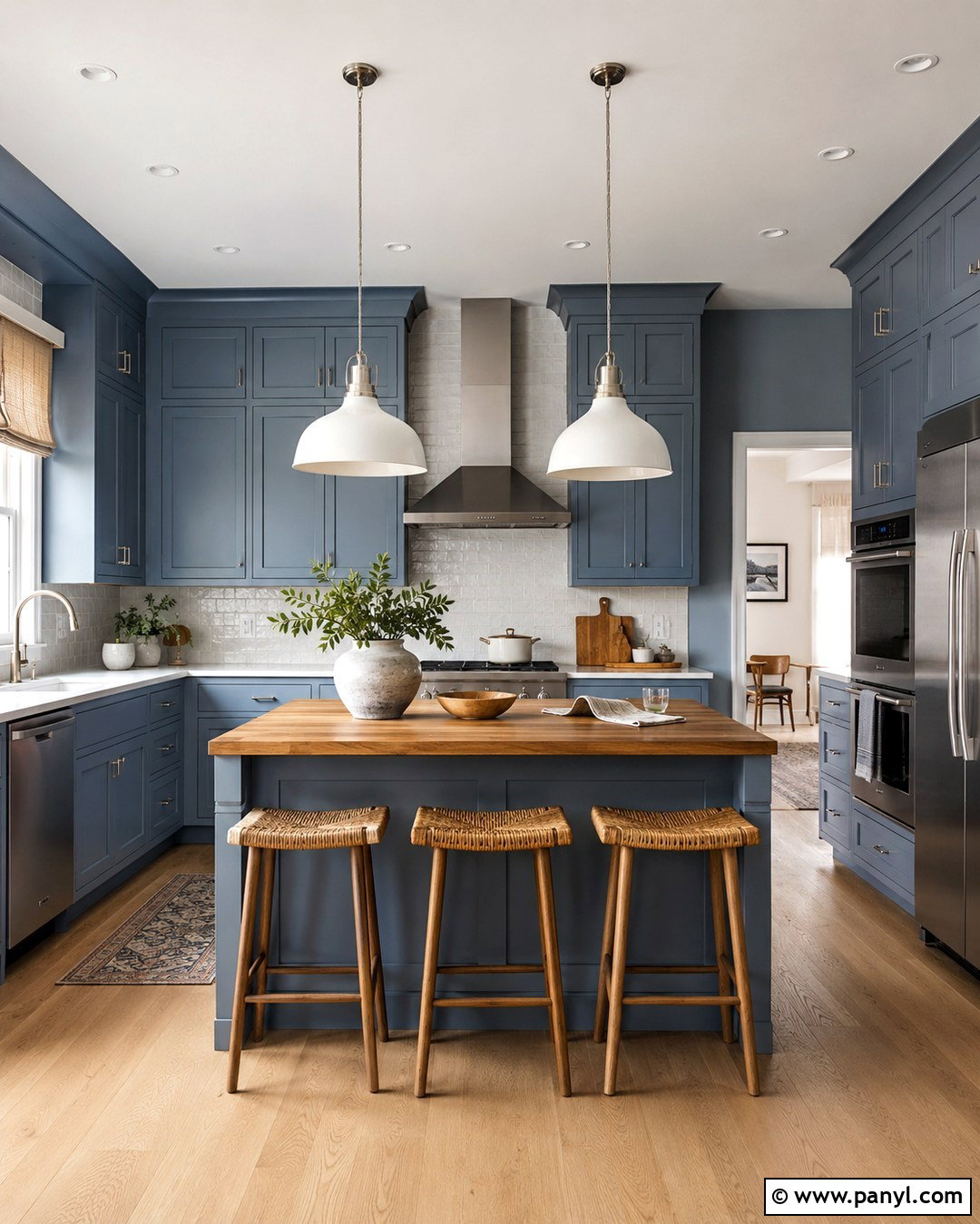
Dusty blue delivers gentle color without making the kitchen feel overly coastal or themed. Choose a gray-based blue for the cabinets and walls, then combine it with pale oak flooring and creamy white countertops. A backsplash made from softly textured white tiles adds movement while maintaining the airy palette. Brushed nickel pulls and a stainless steel range blend naturally with the cool undertones. Introduce warmth through a butcher-block island, woven counter stools, and natural linen shades. Open shelving painted blue can hold white dishes and clear glasses without creating visual clutter. Use warm-white bulbs rather than cool lighting, which may make the blue appear icy. The completed kitchen feels fresh, relaxed, and suitable for both compact and open-plan homes.
9. Navy Cabinets Matching Navy Walls
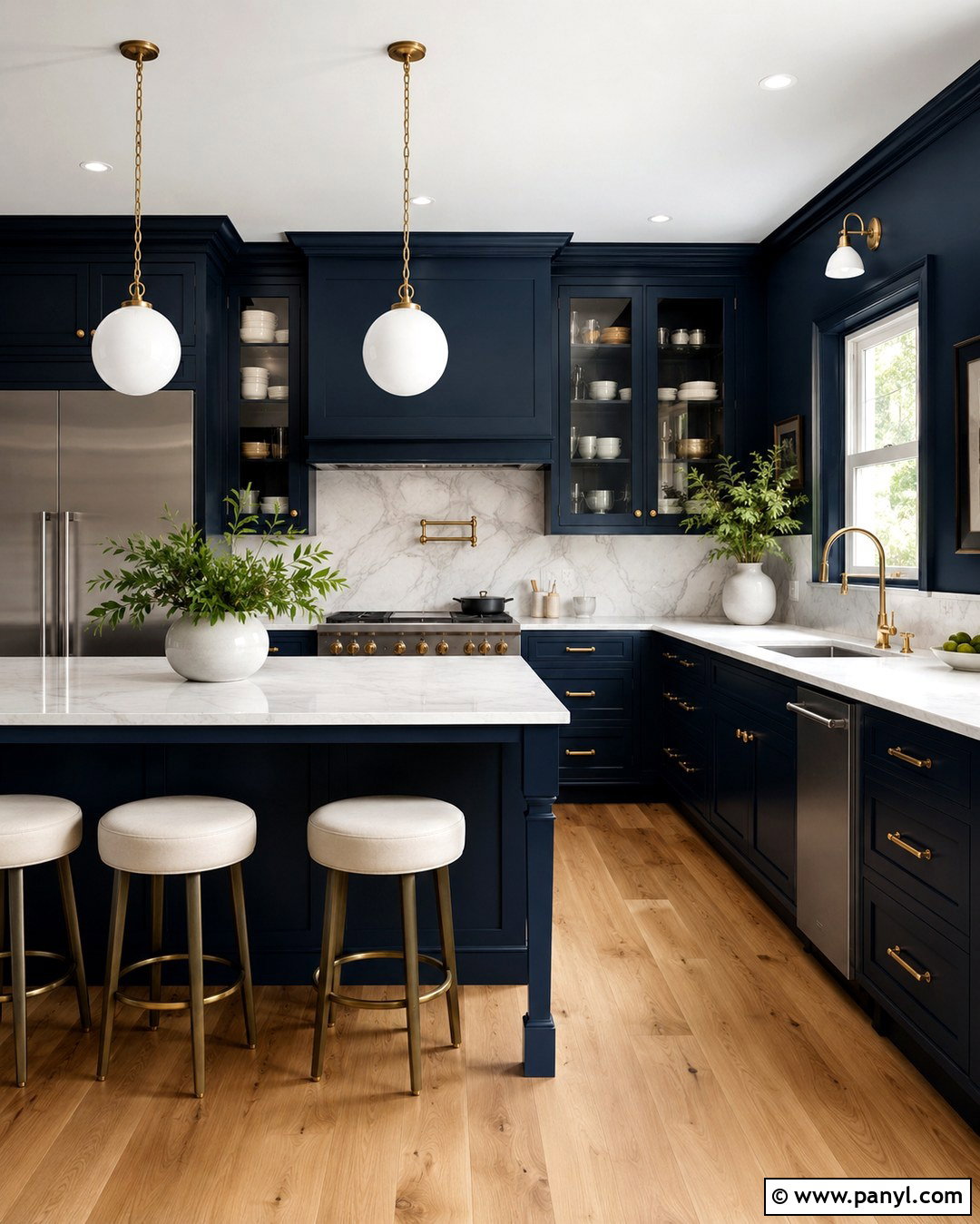
A navy kitchen can feel tailored and elegant when bright surfaces are used to balance its depth. Paint cabinets and walls in the same classic navy, including any trim around windows or built-in pantry units. Select white quartz countertops and a full-height marble backsplash to reflect light across the room. Medium oak floors and a natural wood dining table prevent the blue from feeling cold. Polished nickel hardware offers a crisp finish, while white globe pendants brighten an island or peninsula. Consider glass-front upper cabinets in one area to break up the solid doors. Keep the ceiling white and use abundant under-cabinet lighting. This scheme creates strong visual impact while allowing the matching walls to visually simplify extensive cabinetry.
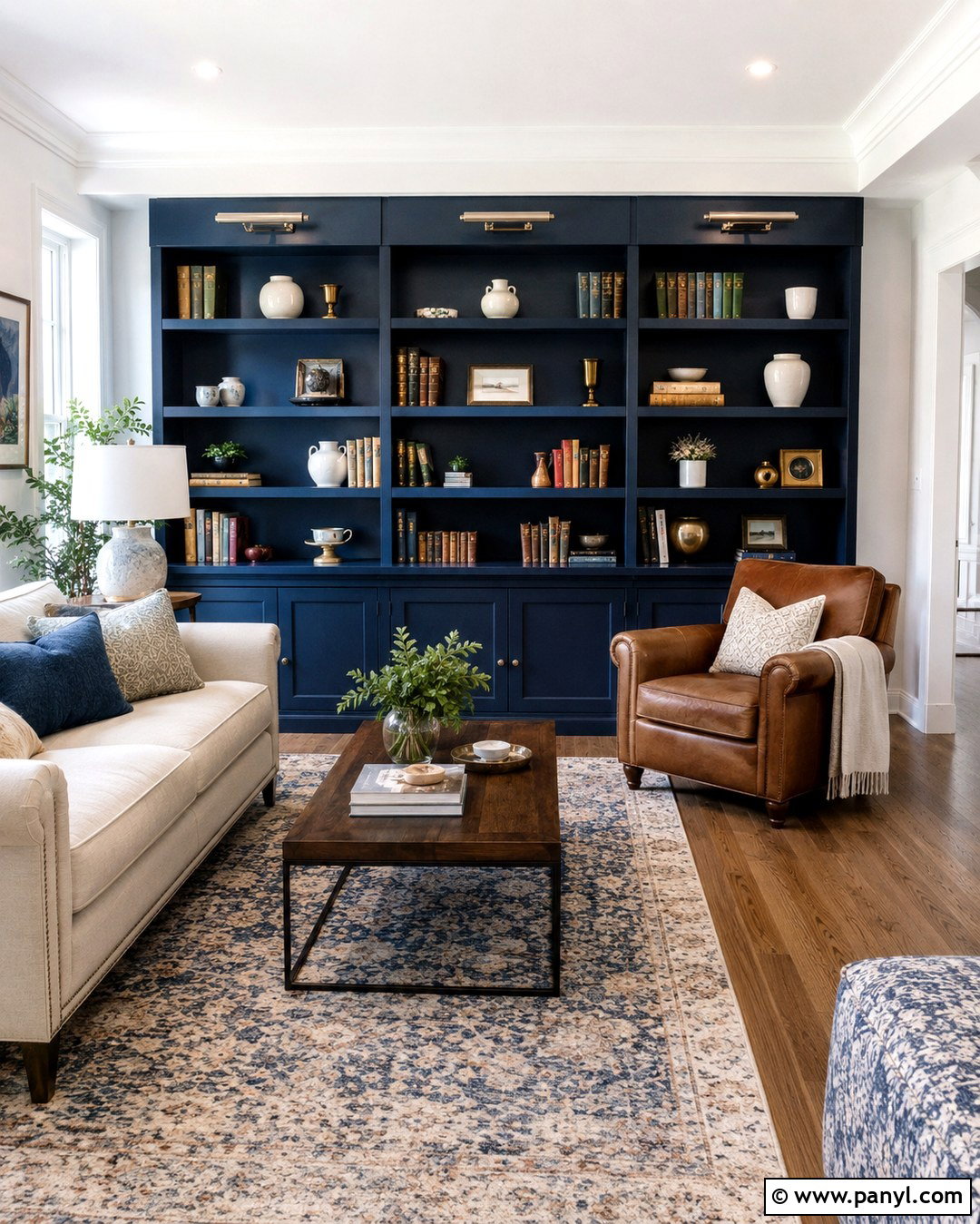
10. Deep Teal Cabinets Matching Teal Walls
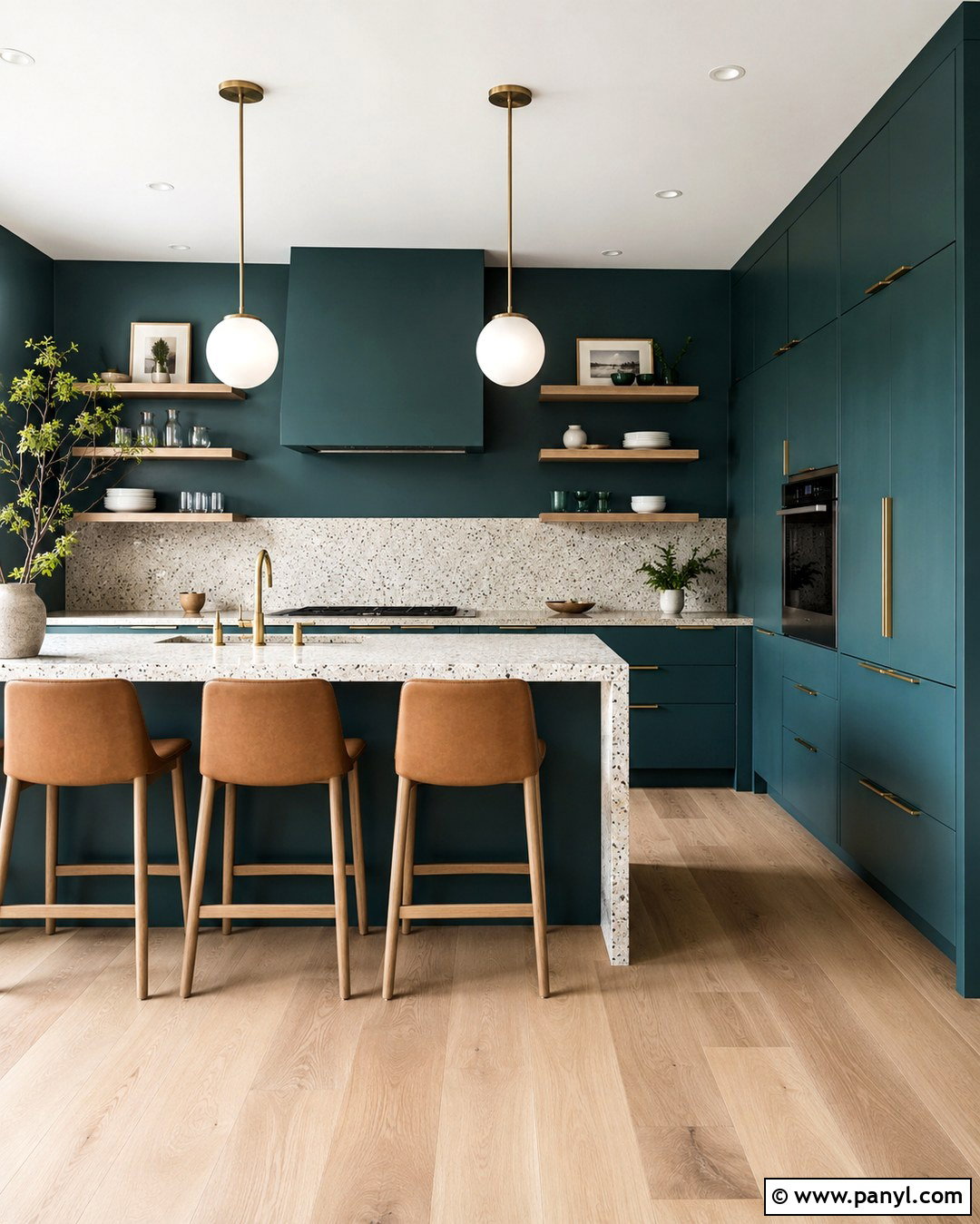
Deep teal combines the calming quality of blue with the organic character of green. Carry the color across flat-panel cabinets, walls, and a built-in range hood for a smooth, contemporary appearance. Pair it with pale terrazzo counters containing cream and warm gray chips. A simple matching slab backsplash keeps the design clean. White oak flooring, oak shelves, and tan leather-look stools add warmth against the saturated backdrop. Choose brushed brass pulls and a streamlined brass faucet to create small points of brightness. Frosted glass pendants and concealed under-cabinet lighting help reveal the teal undertones. Limit accessories to cream ceramics, wood boards, and one or two plants. The complete room feels colorful and polished without becoming visually busy.
11. Charcoal Cabinets Matching Charcoal Walls
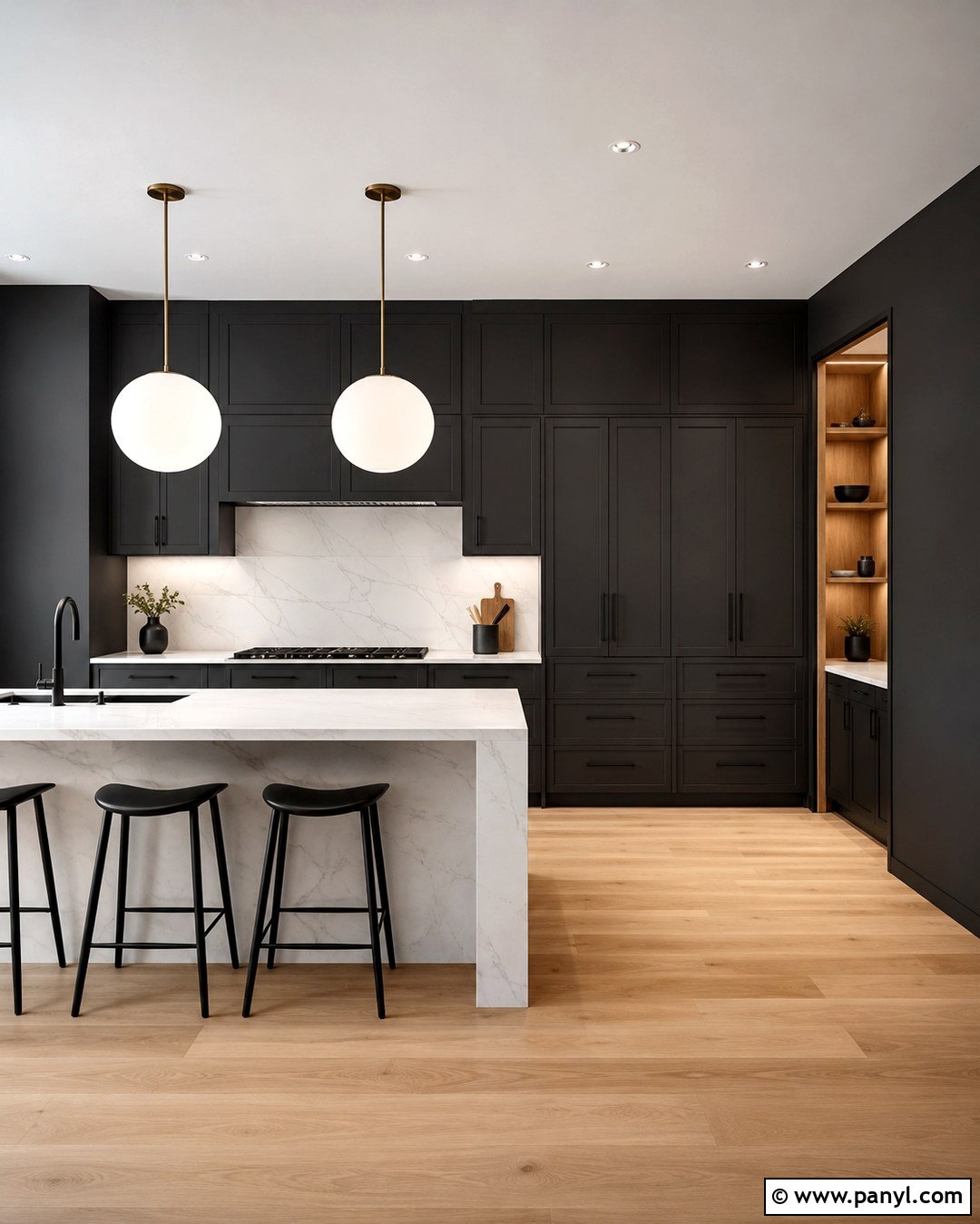
Charcoal cabinets and walls provide modern drama while remaining softer than pure black. Use a warm charcoal with brown undertones, especially if the kitchen receives mainly northern or indirect light. Waterfall-edge white quartz counters create a clean break through the dark surfaces. Add rift-cut oak flooring and an oak-lined pantry niche to bring warmth and visible grain into the room. Matte black hardware blends with the cabinets, allowing the stone and wood to become the focal points. Large opal glass pendants provide strong illumination above the island. Include a reflective backsplash, such as lightly veined marble or glossy gray tile. The unified charcoal backdrop can disguise large appliances and storage walls, producing an organized, architectural look with fewer distracting outlines.
12. Black Cabinets Matching Black Walls
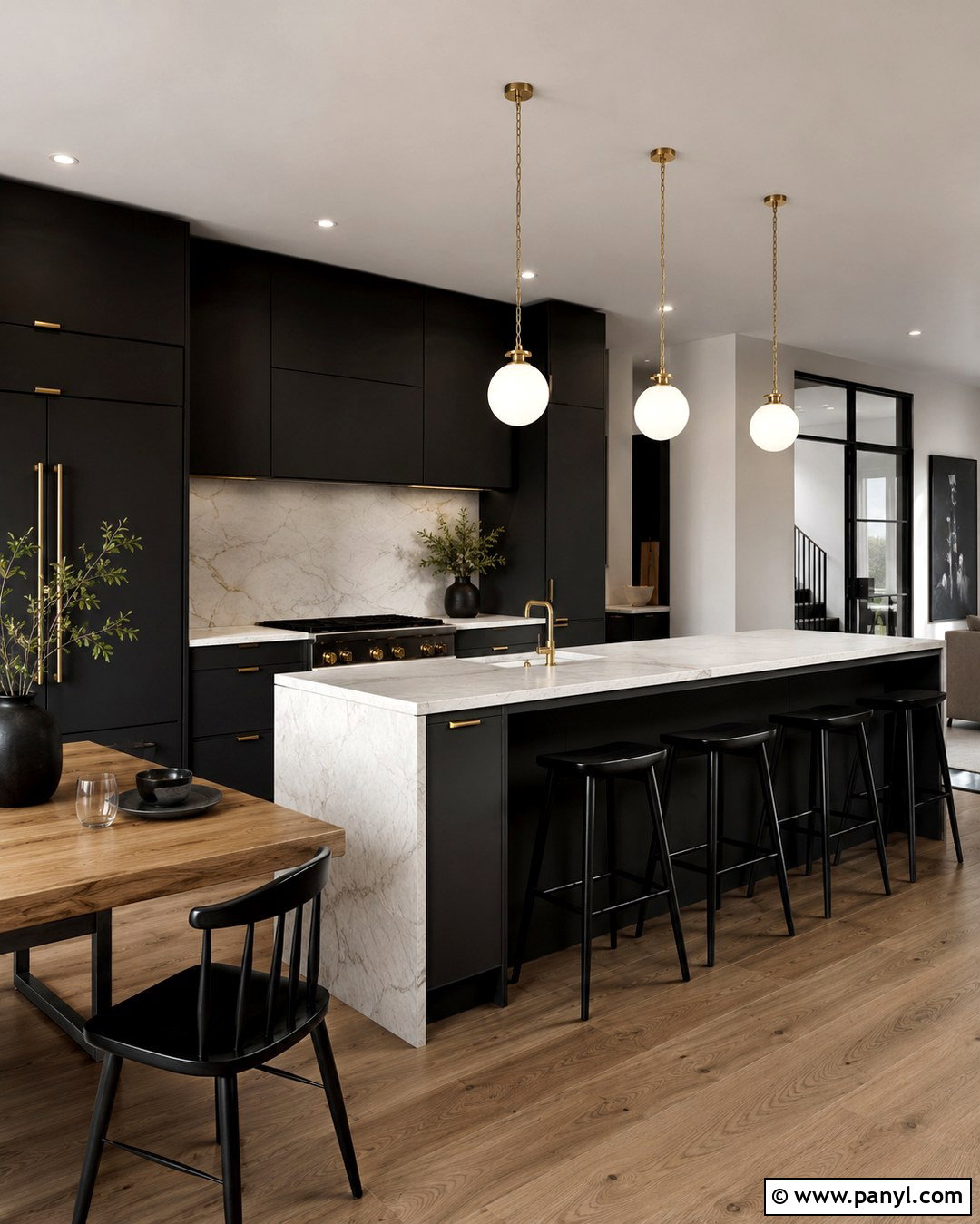
Black cabinetry and matching walls create a bold kitchen that depends on careful lighting and strong material contrast. Choose a softened black rather than a blue-black, then apply it to slab cabinets, walls, and tall appliance panels. Use white marble counters with pronounced gray veining and continue the stone up the backsplash. Light oak flooring and an oak dining extension keep the room approachable. Minimal brass edge pulls add warmth without interrupting the clean cabinet fronts. Install several lighting layers, including ceiling fixtures, pendants, and under-cabinet strips. Keep window coverings sheer or absent where privacy allows. A few white ceramics and clear glass accessories complete the design. The resulting space feels sleek, intentional, and surprisingly balanced rather than stark.
13. Blush Pink Cabinets Matching Pink Walls
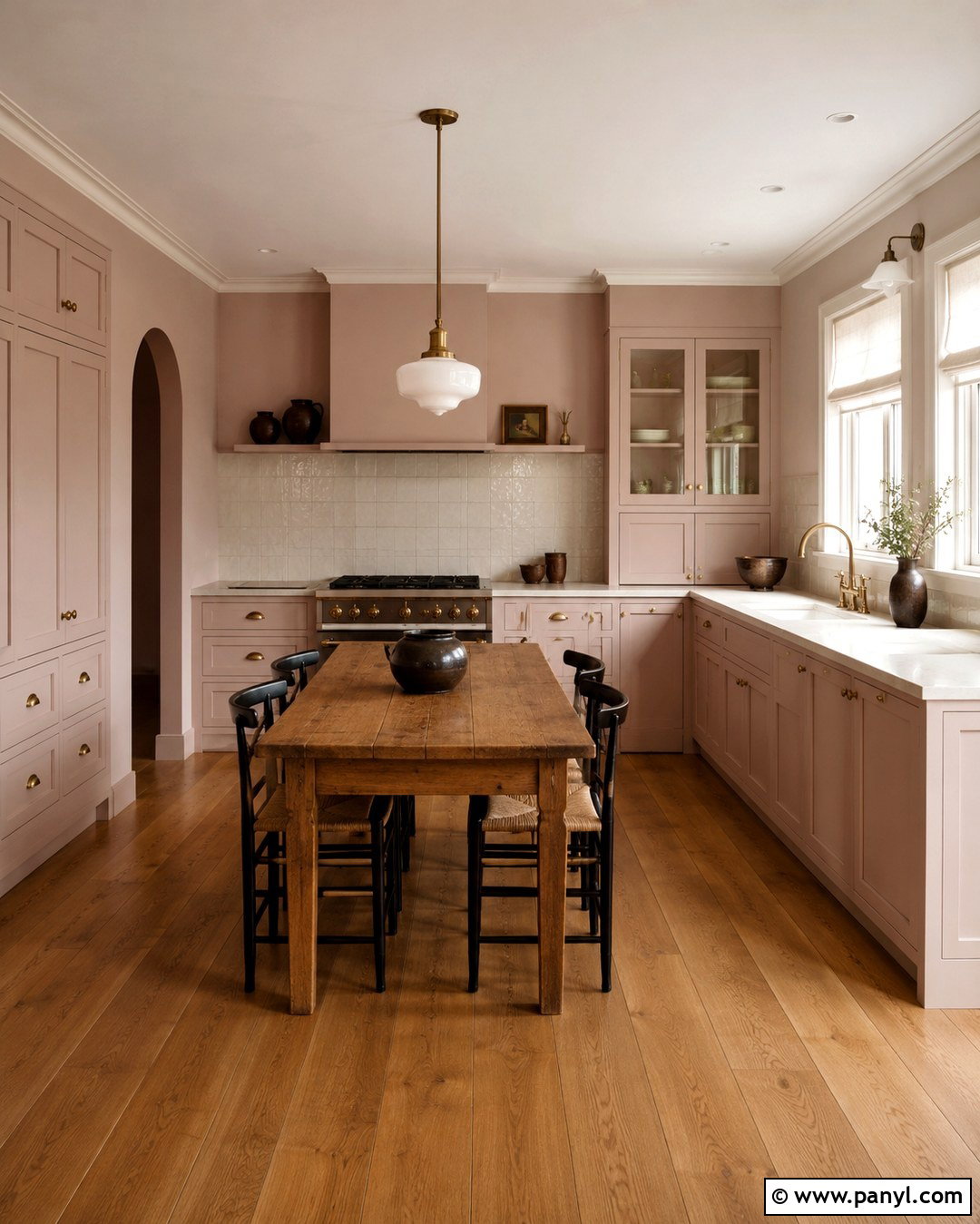
Muted blush pink can create a warm, grown-up kitchen when it contains dusty beige or clay undertones. Paint Shaker cabinets and walls in the same restrained pink, then ground the palette with medium oak flooring. Cream quartz countertops and a lightly textured ivory backsplash maintain a soft transition between surfaces. Use aged brass cup pulls, a brass faucet, and milk-glass pendants for understated vintage character. A freestanding oak table can replace a formal island in a smaller room, giving the kitchen a relaxed, practical center. Add linen Roman shades and cream upholstered chairs. Avoid overly sweet accessories or multiple pastel colors. Dark brown pottery and natural wood boards provide enough contrast to make the completed pink kitchen feel refined and balanced.
14. Terracotta Cabinets Matching Terracotta Walls
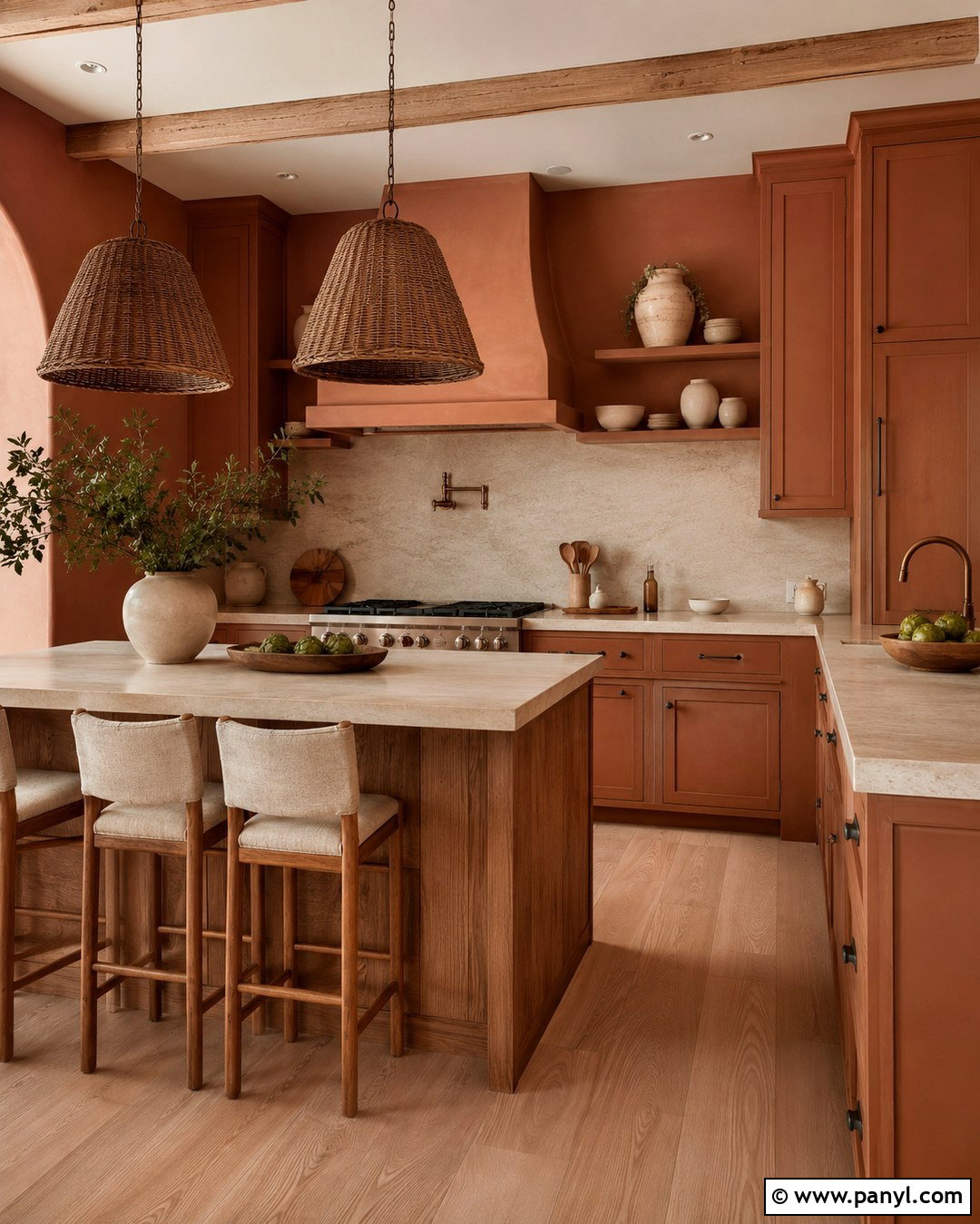
Warm terracotta brings an earthy, sunbaked quality to kitchen walls and cabinetry. Select a muted clay shade rather than a highly saturated orange, and apply it across simple cabinet fronts, walls, and a plaster-style range hood. Cream limestone counters and a matching backsplash calm the stronger color. Use pale oak floors and a substantial wood island to introduce organic texture. Aged bronze hardware works especially well because it offers definition without looking too shiny. Complete the space with woven pendants, natural linen stools, and handmade cream pottery. Bright task lighting will help the terracotta stay clear instead of becoming muddy. This coordinated palette works beautifully in Mediterranean, Southwestern, and relaxed contemporary homes while still feeling practical for everyday use.
15. Butter Yellow Cabinets Matching Yellow Walls
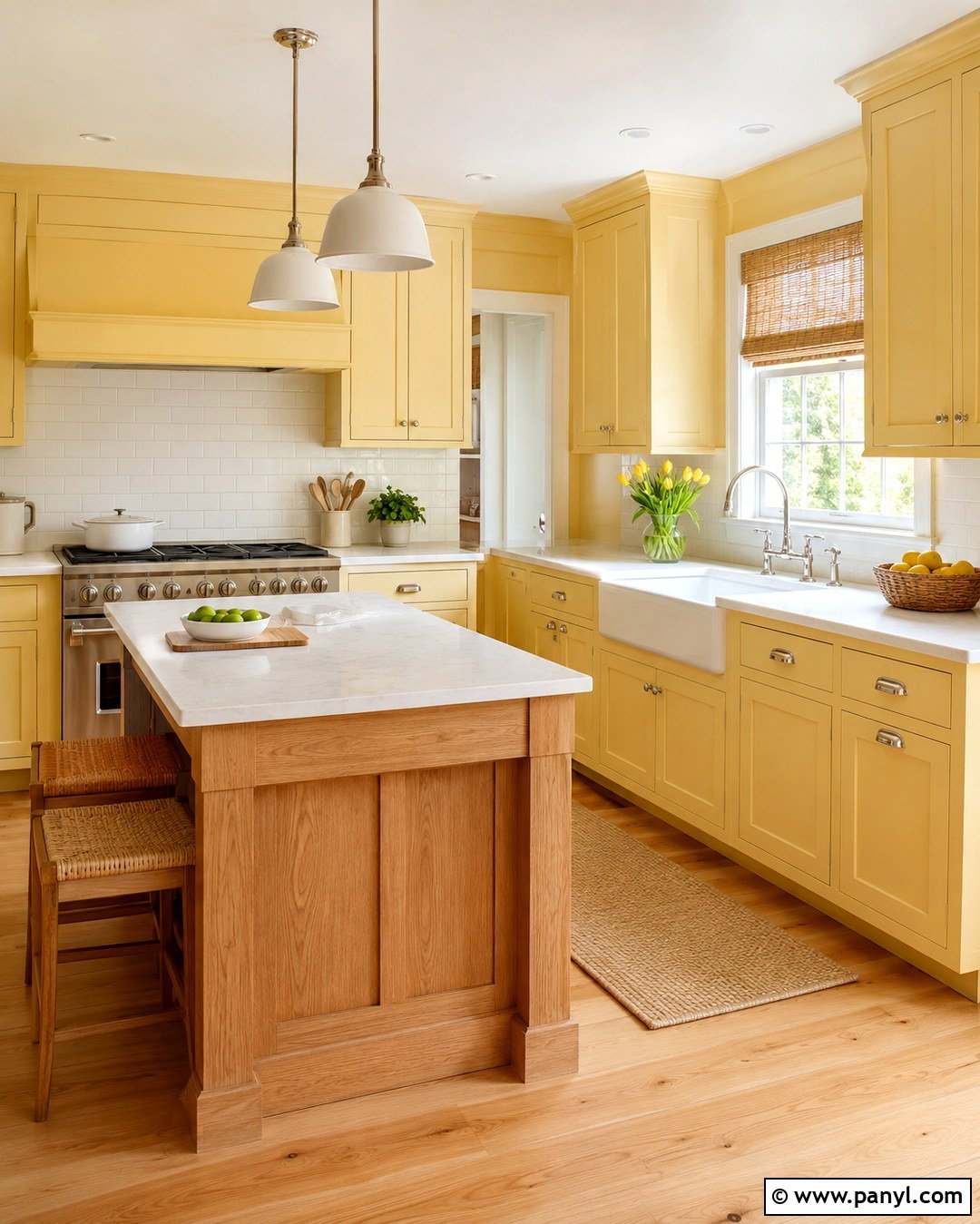
A soft butter yellow kitchen feels cheerful and bright without becoming overwhelming. Choose a creamy yellow with restrained saturation and use it on both the walls and traditional inset cabinets. White quartz counters, a white farmhouse sink, and a glossy ivory subway tile backsplash keep the room fresh. Natural maple flooring adds gentle warmth without competing with the yellow. Use polished nickel knobs and a matching bridge faucet for a clean, classic finish. A small island in light oak can provide useful contrast and casual seating. Add simple white pendants, woven shades, and pale blue-gray linens in small amounts. The complete scheme is particularly effective in kitchens with limited sunlight because it creates a naturally warm, welcoming atmosphere throughout the day.
16. Burgundy Cabinets Matching Burgundy Walls
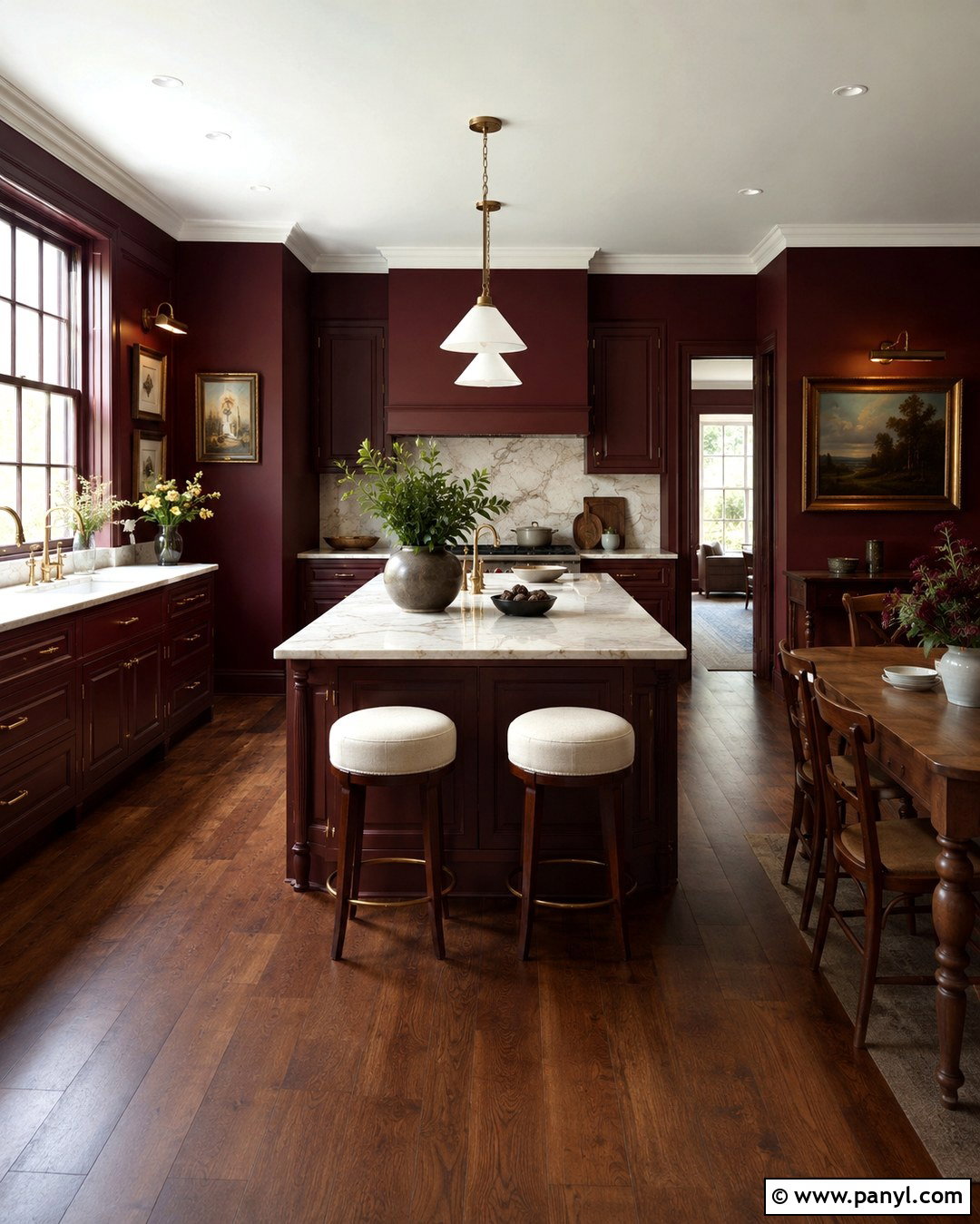
Burgundy cabinets and matching walls can make a kitchen feel luxurious, intimate, and deeply personal. Select a red with strong brown undertones rather than a bright jewel tone. Balance the enveloping color with creamy marble countertops and a full-height backsplash featuring subtle warm veining. Medium walnut flooring and a walnut dining table strengthen the sophisticated palette. Antique brass hardware and wall-mounted picture lights create rich highlights across the cabinetry. Keep the ceiling warm white so the room retains visual lift. Cream counter stools and pale ceramic dishes offer welcome contrast. This scheme is especially successful in a spacious kitchen or a room with generous windows. In smaller spaces, use burgundy on the lower cabinets and matching lower wall area.
17. Lavender Gray Cabinets Matching Lavender Walls
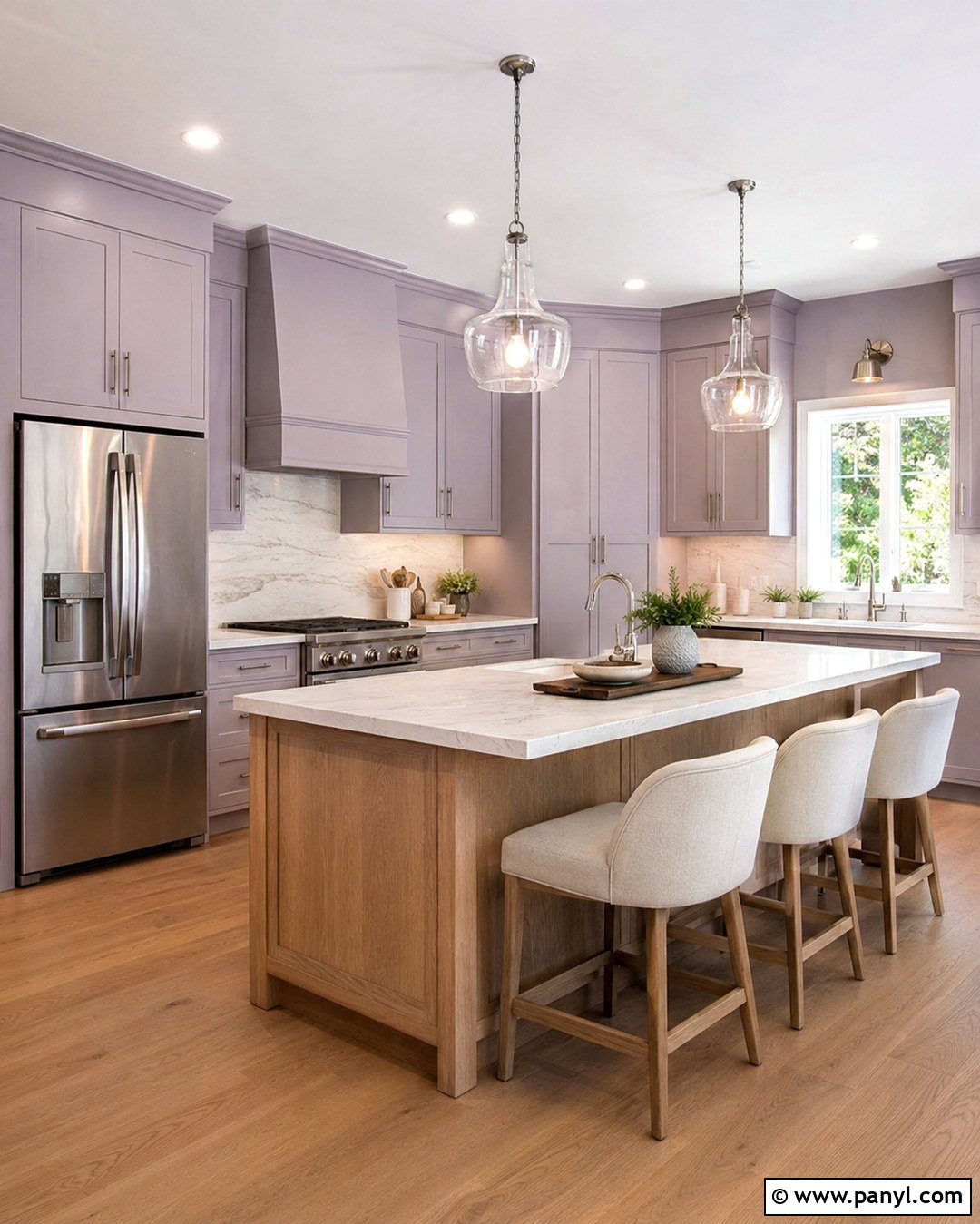
Lavender gray offers a subtle alternative to standard neutral cabinetry. The color should read primarily as soft gray, with a muted purple undertone appearing as the light changes. Use it on slim Shaker cabinets and walls, then pair it with white quartzite counters and a pale marble backsplash. Light oak floors keep the room relaxed and prevent the palette from becoming too cool. Choose brushed nickel handles, clear glass pendants, and a simple stainless steel range. An oak island with lavender-gray end panels can connect the wood and painted finishes. Finish the room with cream stools, gray linen shades, and minimal pottery. The result feels calm and distinctive while remaining neutral enough to complement nearby living or dining spaces.
18. Pale Blue Cabinets Matching Pale Blue Walls
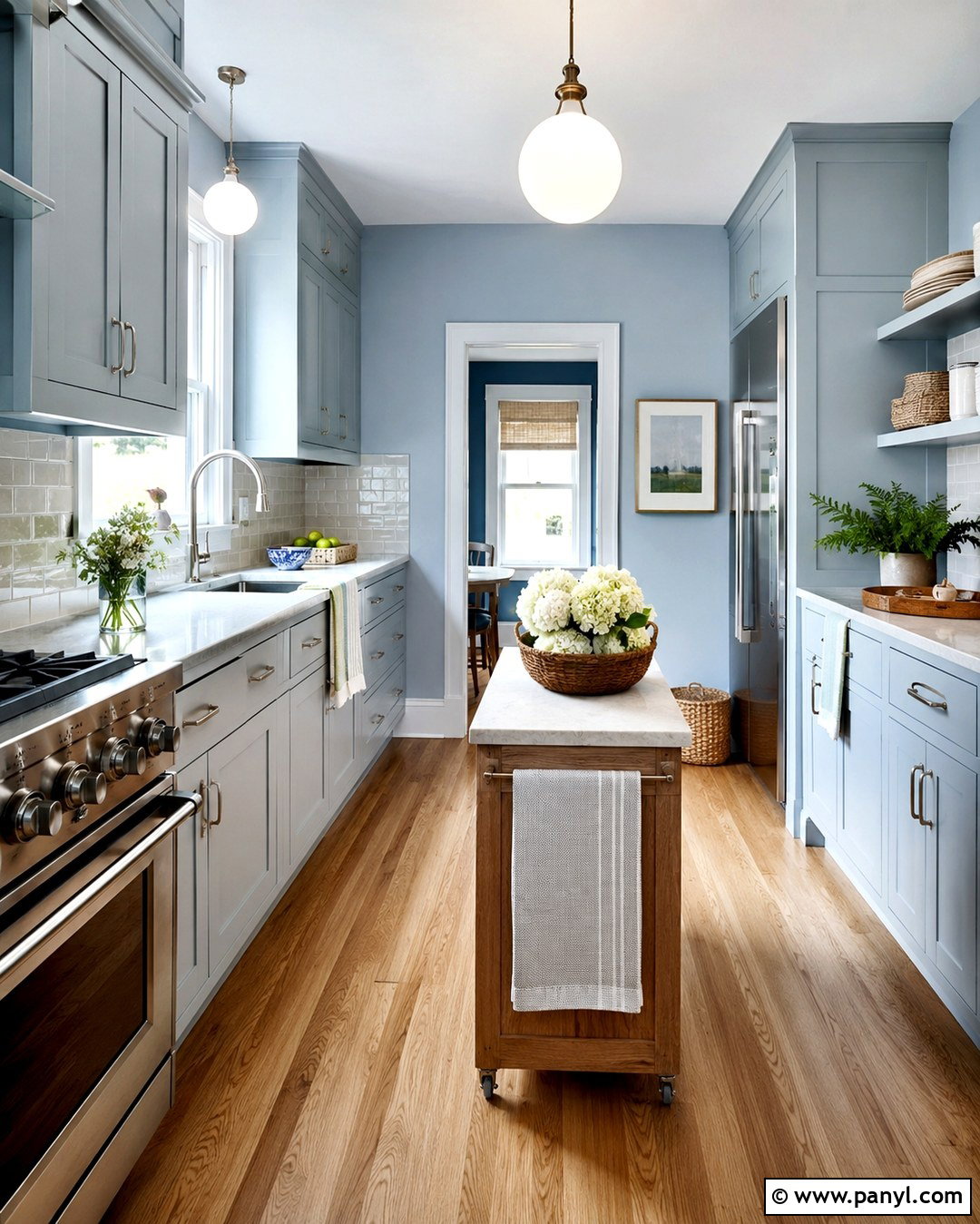
Pale blue walls and cabinets give a narrow kitchen an open, breezy quality while adding more personality than plain white. Choose a soft blue with gray undertones and apply it to the full cabinet run, walls, and any shallow storage surrounding a window. Pair the color with warm white quartz countertops and a backsplash of pearly rectangular tiles. Honey-toned oak flooring provides contrast and keeps the blue from feeling chilly. Satin nickel pulls and a chrome faucet maintain a light appearance. Include a compact wood table or movable island rather than a heavy built-in centerpiece. White ceiling paint, globe fixtures, and under-cabinet lighting maximize brightness. Natural baskets and linen towels finish this practical, uncluttered kitchen.
19. Cream Cabinets Matching Cream Walls
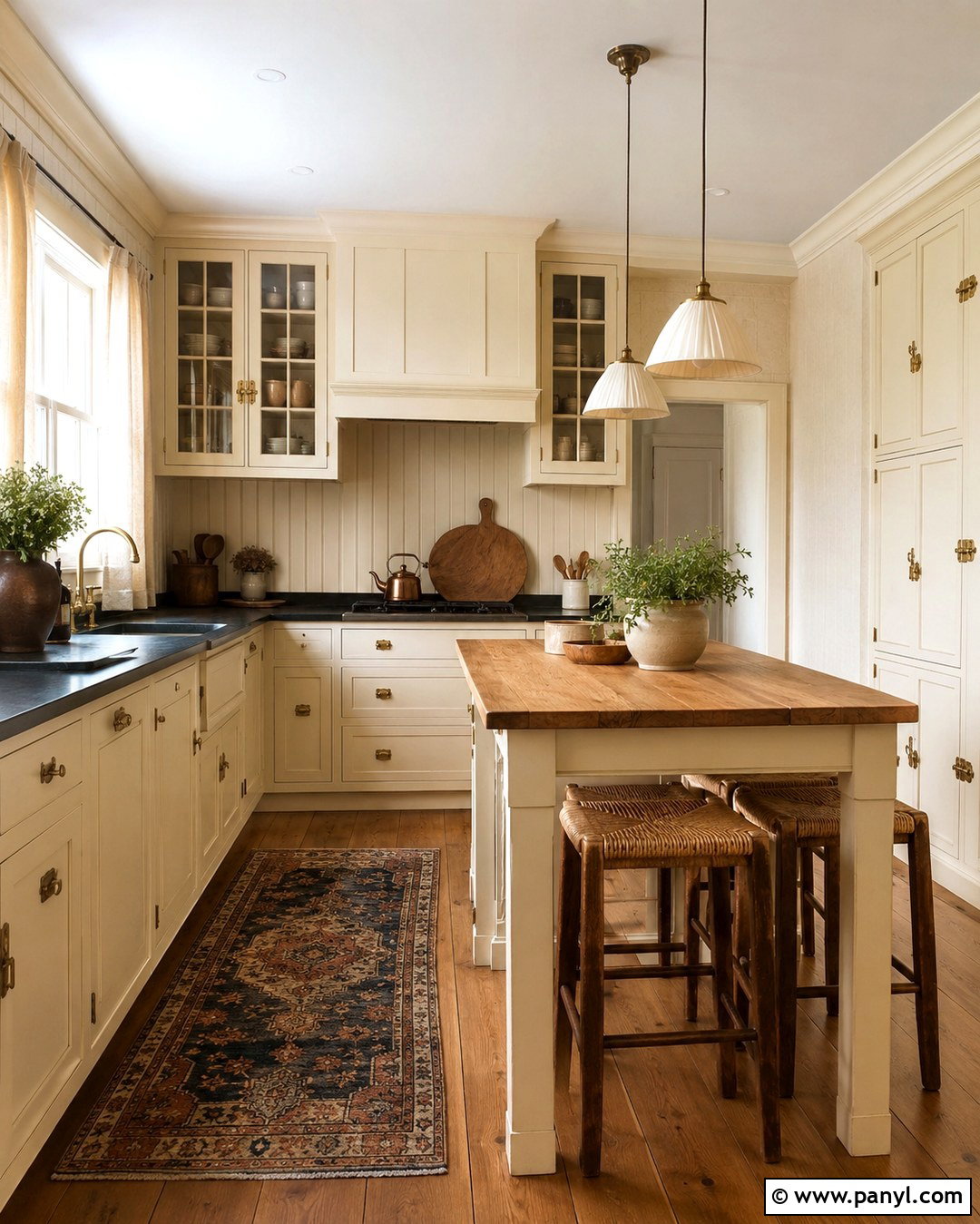
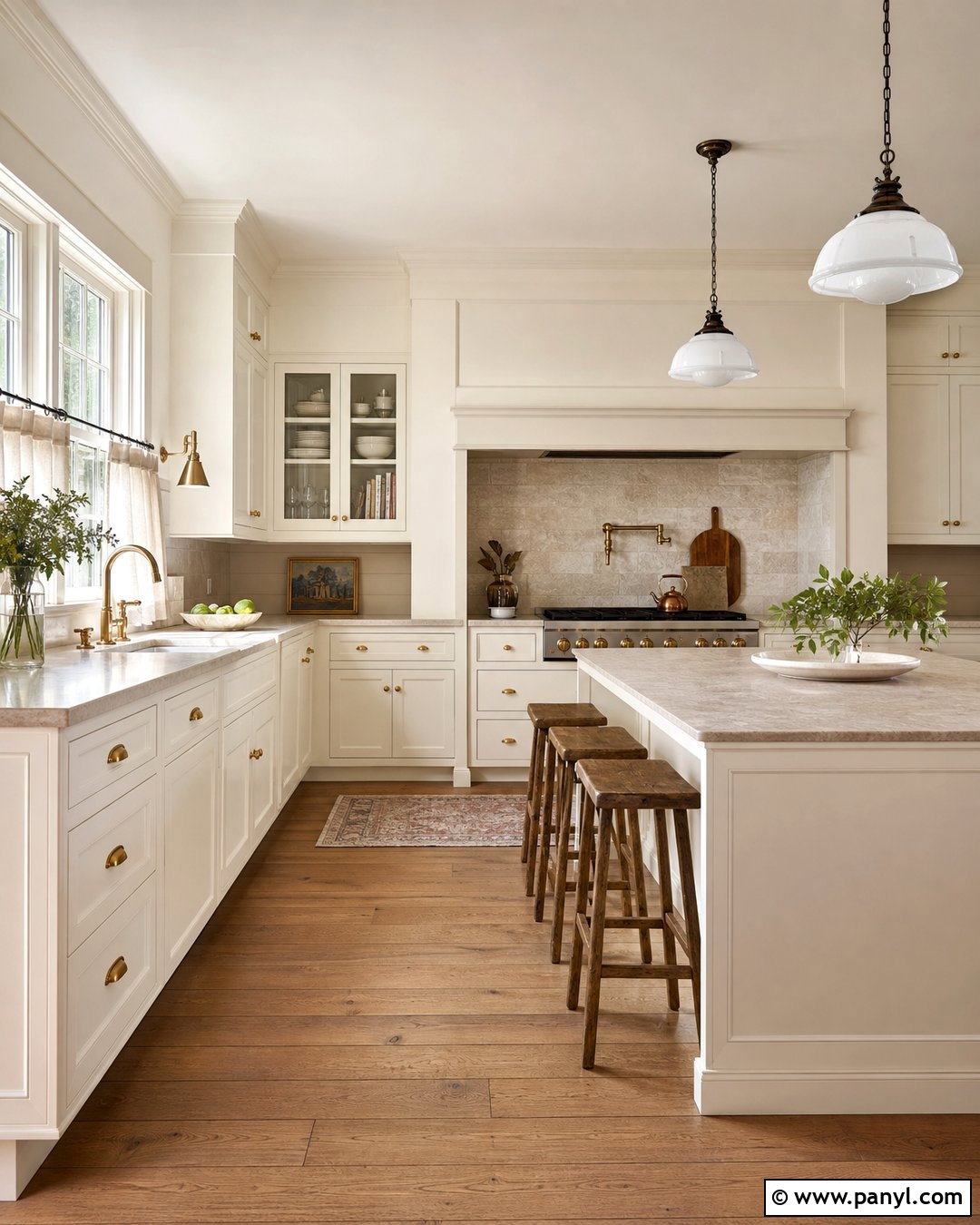
Cream cabinets and walls create a soft traditional kitchen that feels warmer and more layered than an all-white space. Select a rich cream with gentle yellow-beige undertones, using satin paint on inset cabinetry and washable matte paint on surrounding walls. Soapstone counters introduce dark contrast, while a cream beadboard backsplash reinforces the classic character. Wide-plank oak flooring, an oak island top, and woven stools add rustic texture. Use antique brass latches and cup pulls for an established, furniture-like appearance. Glass-front cabinets can display white dishes without disturbing the limited palette. Finish the room with simple shaded pendants, linen curtains, and a vintage-inspired runner. The unified background lets traditional cabinet details remain visible without making the kitchen look crowded.
20. Clay Beige Cabinets Matching Beige Walls
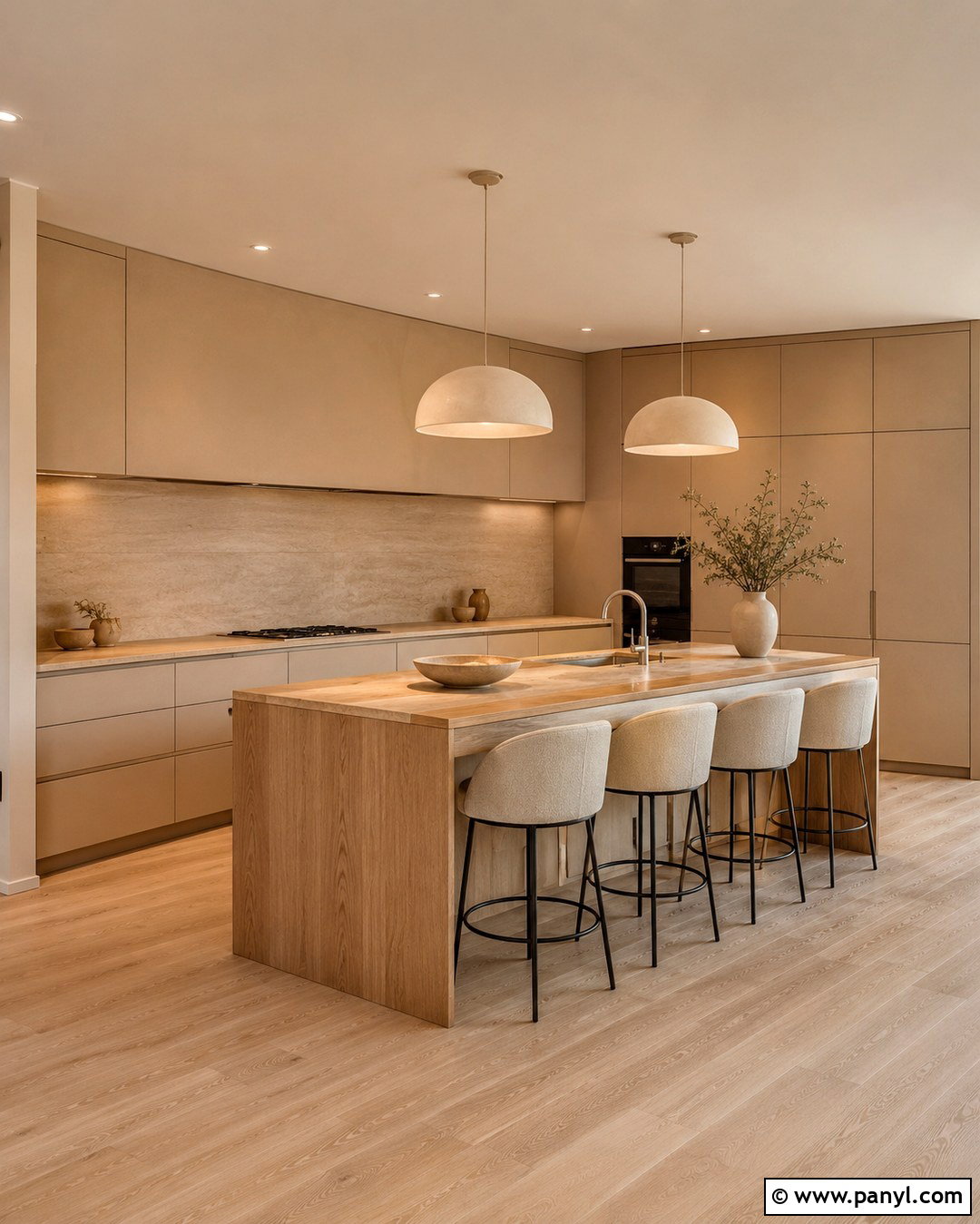
Clay beige creates a quiet, modern kitchen with warmer character than conventional gray. Use the same mineral-inspired beige on handleless cabinets, walls, and concealed storage doors. A honed travertine backsplash and matching counters build subtle variation through natural pits and tonal movement. Pale oak flooring and a streamlined oak island keep the room light and grounded. Choose brushed stainless steel fixtures for a contemporary contrast that does not compete with the earthy palette. Rounded plaster pendants, oatmeal-colored stools, and simple stoneware complete the restrained design. Integrate appliances behind matching cabinet panels wherever possible to maintain the seamless effect. This full-room approach feels calm and architectural, making it well suited to open-plan homes where the kitchen remains visible from nearby living areas.
Conclusion:
Successful **Cabinets Matching Wall Color Ideas** rely on more than choosing one appealing paint shade. The strongest kitchens combine continuous color with noticeable differences in finish, texture, and material. Satin cabinets can stand against matte walls, while stone counters, wood floors, distinctive hardware, and layered lighting provide definition. Light neutrals create an airy background, earthy colors deliver warmth, and dark shades establish an intimate architectural mood. Before committing, paint large samples on both the wall and a cabinet door. Observe them during the morning, afternoon, and evening. Also consider the countertop, backsplash, floor, and adjoining rooms. When every surface supports the palette, matching cabinets and walls can look purposeful, spacious, and completely customized.

Related Ideas and Inspiration:
Leave a Reply