
Exterior texture can make a simple home feel more dimensional, balanced, and thoughtfully designed. The best **20 exterior wall texture patterns** combine surface depth with coordinated colors, roofing, trim, doors, and landscaping. Current exterior projects increasingly mix stucco, vertical cladding, wood, masonry, and contrasting trim to create depth without overwhelming the architecture. () Some finishes deliver subtle movement across the entire facade, while others work best as focused accents around an entrance, garage, or lower story. Climate, installation quality, maintenance, and neighborhood character should also guide the final selection. The complete looks below cover modern, traditional, rustic, coastal, farmhouse, and contemporary homes, making it easier to compare and recreate **20 exterior wall texture patterns**.
1. Smooth Stucco Exterior Wall
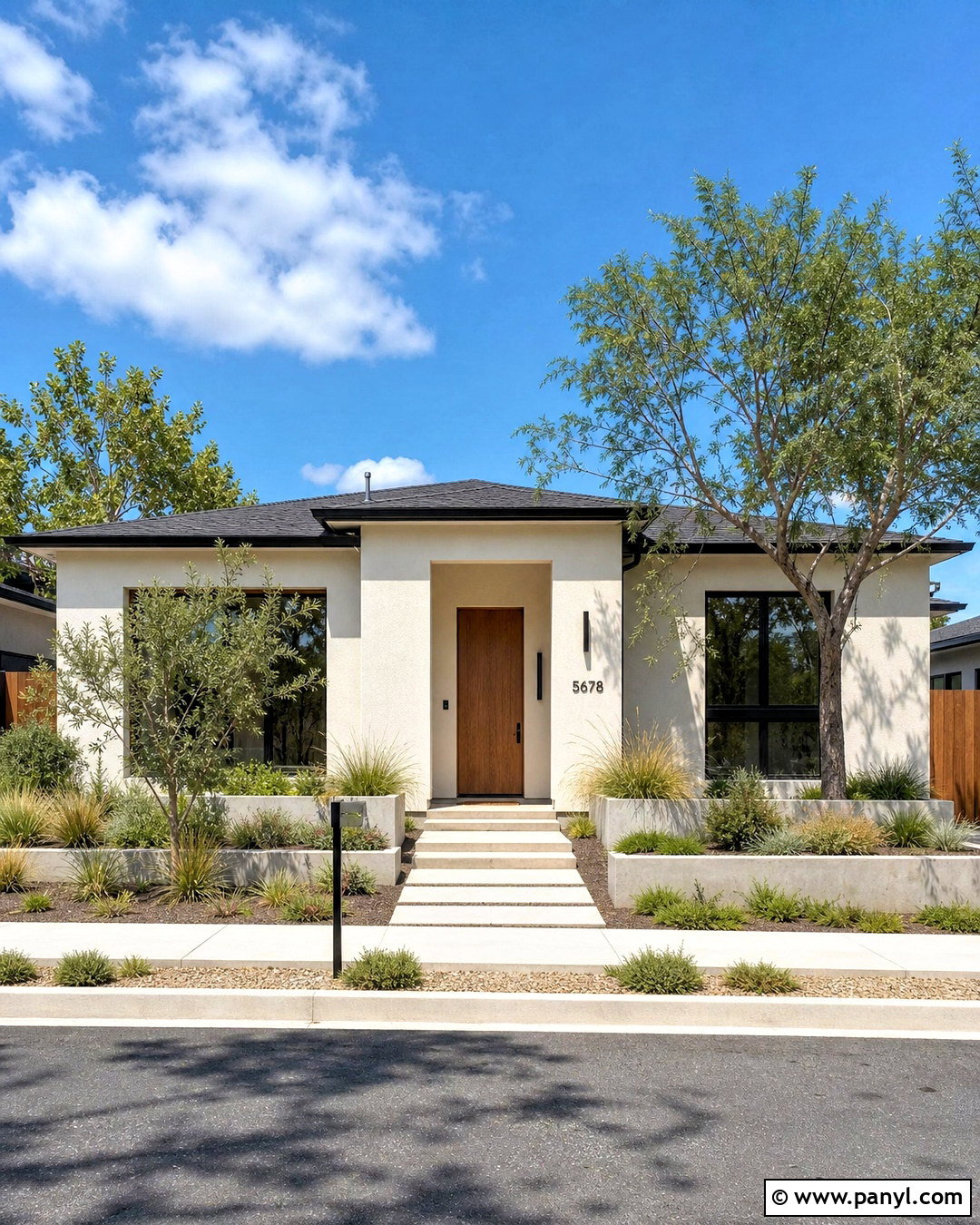
Smooth stucco creates a clean, uninterrupted surface that works especially well on modern and Mediterranean-inspired homes. Cover the main exterior in warm white or pale greige stucco, then add charcoal window frames and a natural oak front door for contrast. A low-slope dark gray roof keeps the architecture streamlined. Use limestone pavers, simple concrete planters, and drought-tolerant grasses to extend the quiet palette into the landscape. Because smooth walls reveal shadows and imperfections more easily than heavily textured finishes, careful preparation and skilled application matter. Deep window recesses can introduce extra dimension without adding another cladding material. This complete scheme feels calm and refined while still offering enough warmth, texture, and contrast to prevent the house from looking flat.
2. Sand Finish Stucco Exterior Wall
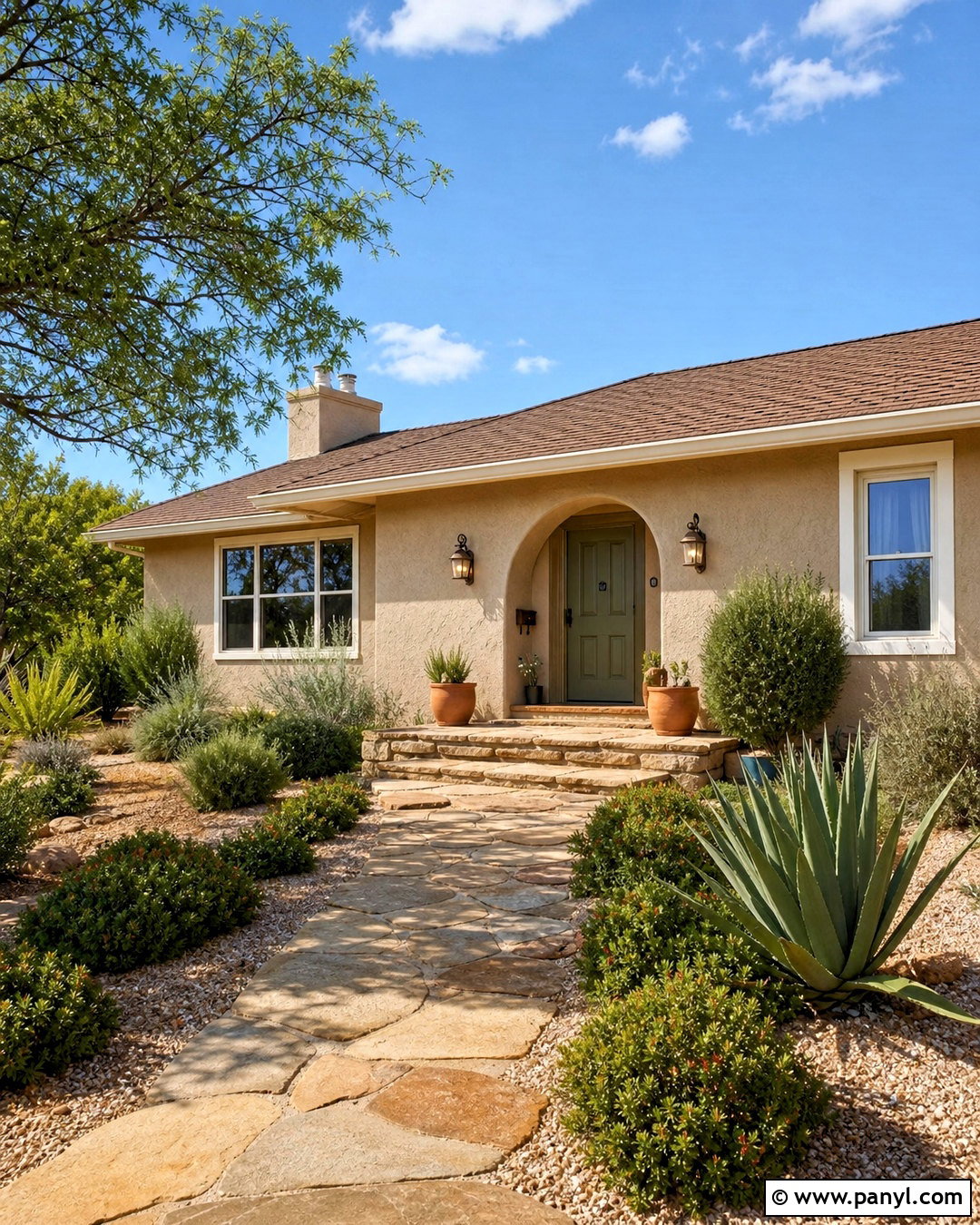
A sand finish gives stucco a fine, even grain that feels softer and more forgiving than a perfectly smooth surface. Try light taupe walls with creamy white trim, a muted olive front door, and a medium-brown shingle roof. The subtle texture catches daylight without creating harsh shadows, making it suitable for ranch homes, Southwestern houses, and relaxed suburban exteriors. Frame the entrance with terracotta pots, natural stone steps, and loosely shaped shrubs. Bronze exterior lights and matching gutters reinforce the warm color story. Keep decorative trim simple so the grain remains the main visual detail. When the finish continues across every elevation, the home appears cohesive from all angles. The result is understated, practical, and easy to coordinate with established landscaping.
3. Lace Stucco Exterior Wall
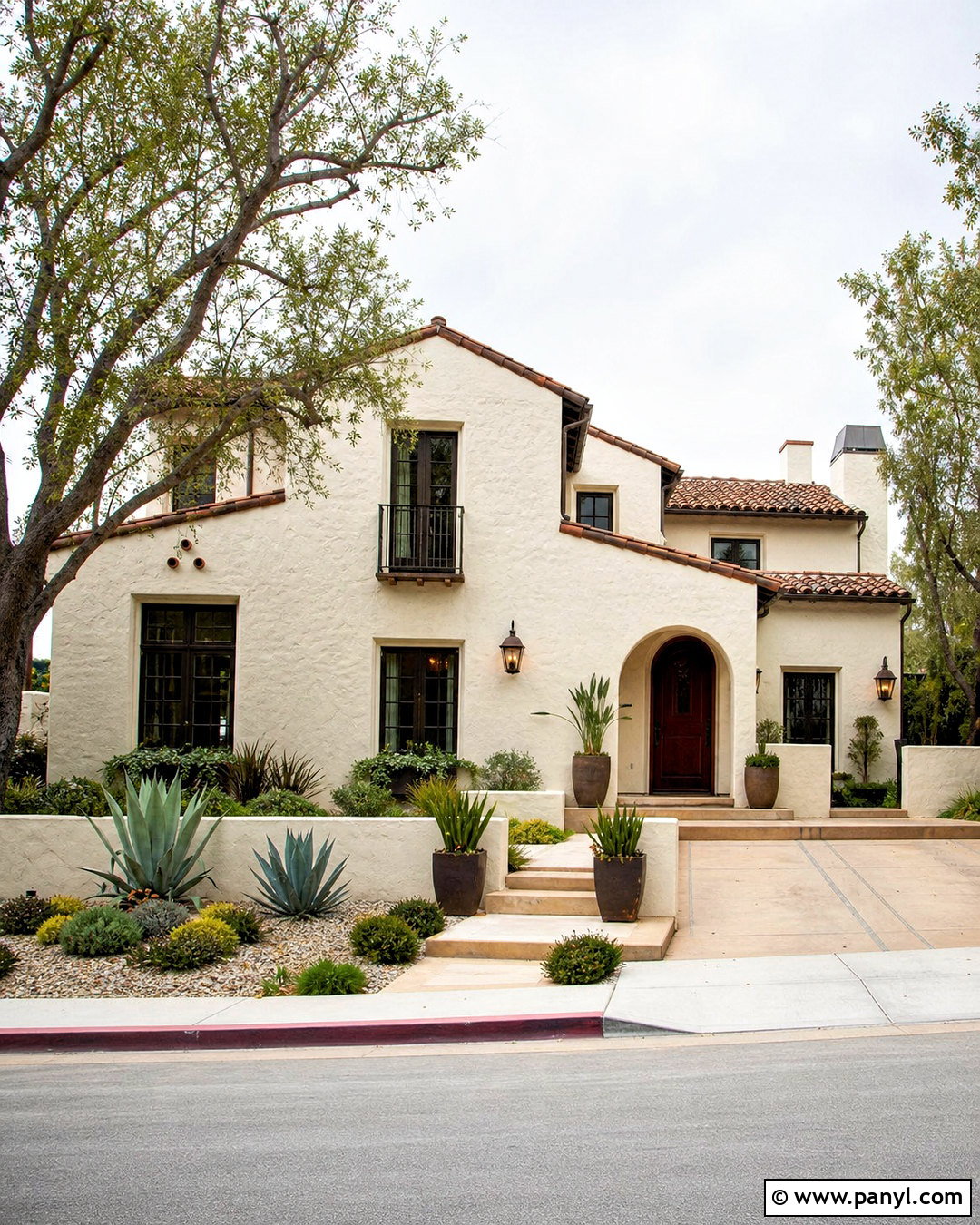
Lace stucco has raised, irregular patches over a flatter base, creating a traditional pattern with noticeable depth. Use it across a Spanish-style exterior in soft ivory, paired with a clay tile roof, dark bronze windows, and a medium walnut door. Arched openings and a small covered entry make the texture feel connected to the architecture rather than applied as decoration. Add warm concrete paving, aged brass lights, and drought-tolerant plants such as agave, rosemary, and ornamental grasses. Keep the color contrast controlled because the wall already has plenty of movement. Painting the trim only one or two shades lighter maintains a relaxed appearance. This finish can also disguise small surface variations, making it useful when updating an older stucco facade with traditional character.
4. Skip Trowel Stucco Exterior Wall
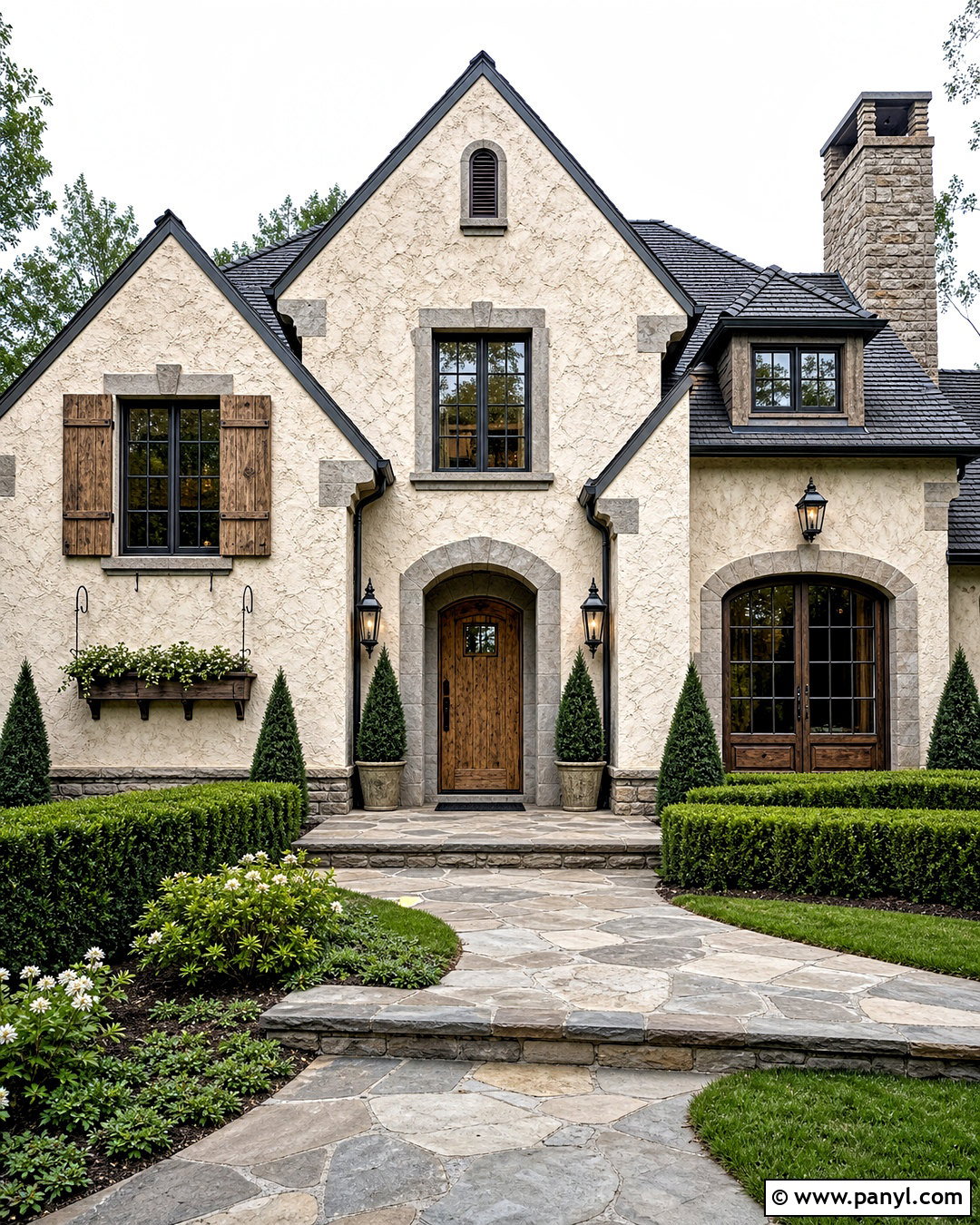
Skip trowel stucco creates broad sweeps and shallow ridges that resemble hand-worked plaster. It suits a relaxed European or modern rustic house where a completely uniform wall would feel too polished. Choose warm cream for the body, soft stone gray for the trim, and weathered cedar for the garage and front doors. A charcoal roof grounds the lighter colors, while a stone base protects the lower facade visually. Extend the handcrafted look with irregular flagstone paths, clipped evergreen shrubs, and black iron lanterns. Avoid adding several competing wall materials because the trowel marks already provide strong character. Applied consistently, the pattern gives new construction an established feel. It looks especially attractive around deep windows, curved entries, and sheltered porch walls where shadows reveal the surface.
5. Combed Stucco Exterior Wall
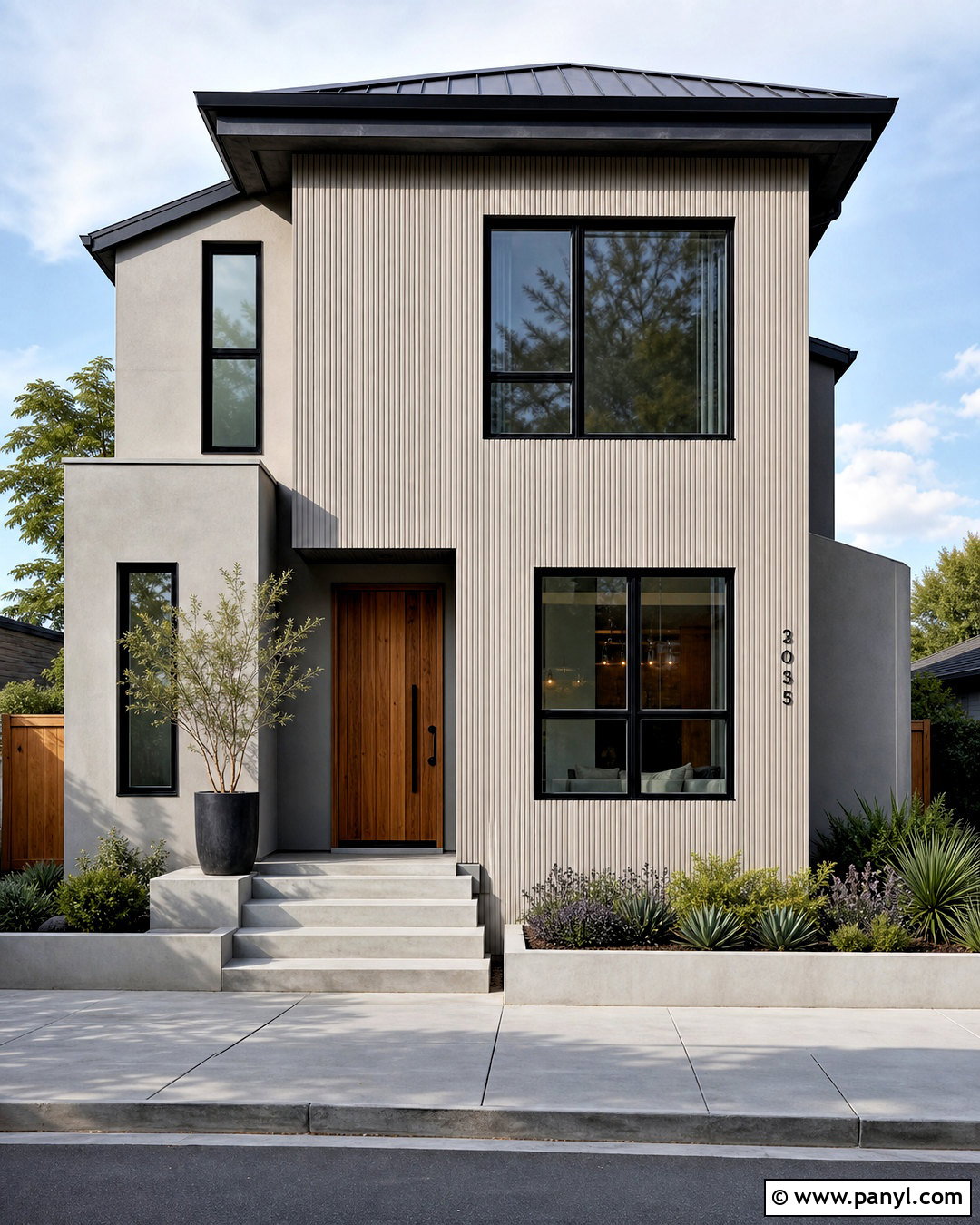
Combed stucco features repeated grooves that can run vertically, horizontally, or in gentle curves. For a contemporary facade, use narrow vertical grooves on a projecting entry volume and quieter smooth stucco across the remaining walls. A warm gray finish, black-framed windows, and a rich teak door create a balanced modern palette. Flat concrete steps and rectangular planting beds repeat the strong lines without making the composition too rigid. Vertical grooves visually emphasize height, making them useful on compact two-story homes or tall entrance walls. Keep gutters, vents, and exterior fixtures aligned with the pattern whenever possible. A consistent groove width will look more intentional than a heavily varied design. This approach delivers architectural texture while preserving a simple, uncluttered exterior with clear focal points.
6. Exposed Aggregate Concrete Exterior Wall
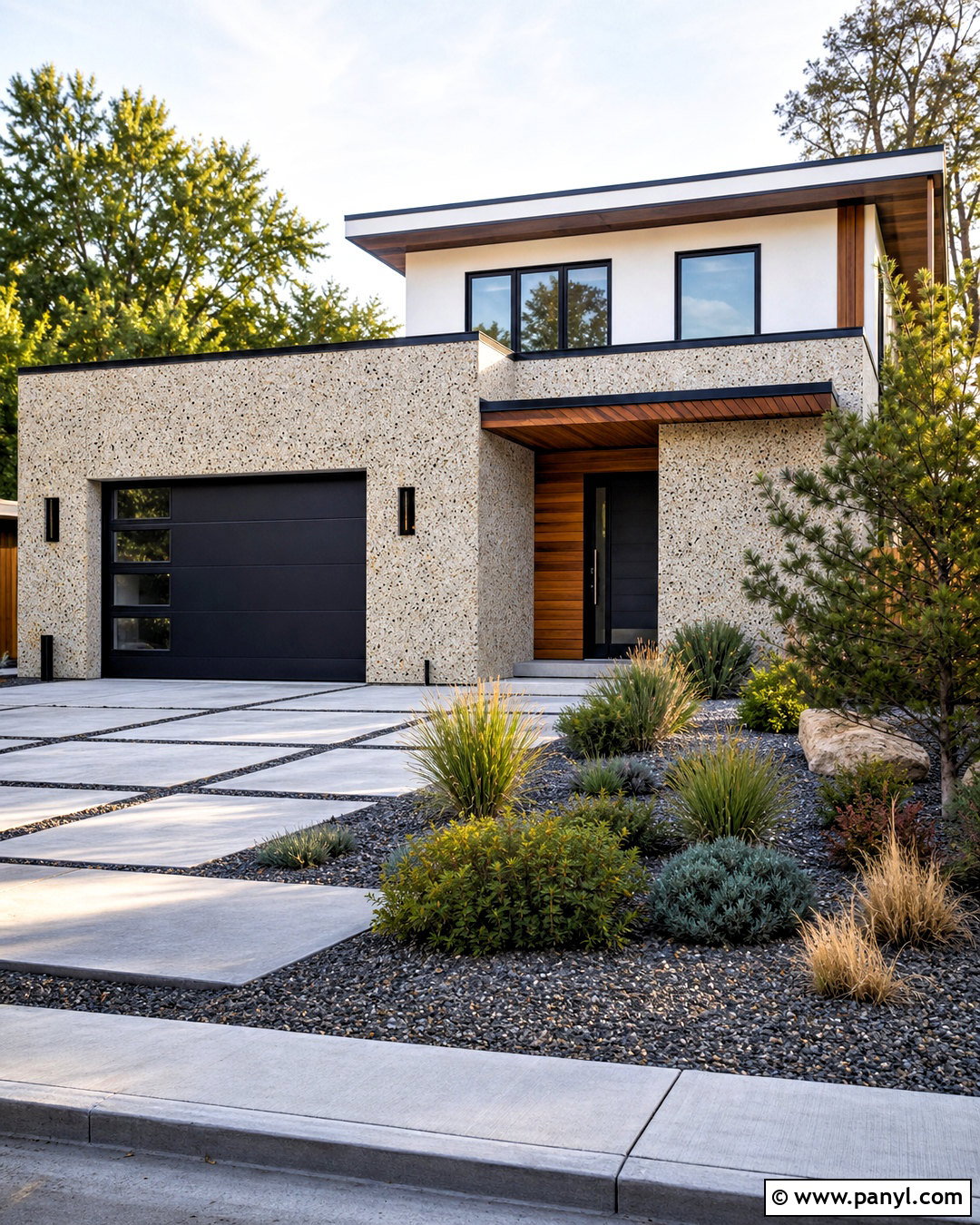
Exposed aggregate concrete reveals small stones within the surface, producing a durable-looking texture with natural color variation. Use it on the lower story of a contemporary home, paired with smooth warm-white walls above and cedar siding around the entrance. Choose aggregate containing beige, gray, and muted brown stones so it coordinates with both the roof and landscaping. Matte black windows provide a crisp outline, while large concrete pavers and gravel beds continue the mineral palette through the front yard. Reserve the roughest texture for foundation walls, garden walls, or a garage volume rather than covering every surface. This allows the material to feel grounded instead of visually heavy. Simple grasses and low shrubs soften the concrete while keeping the overall exterior modern and organized.
7. Board Formed Concrete Exterior Wall
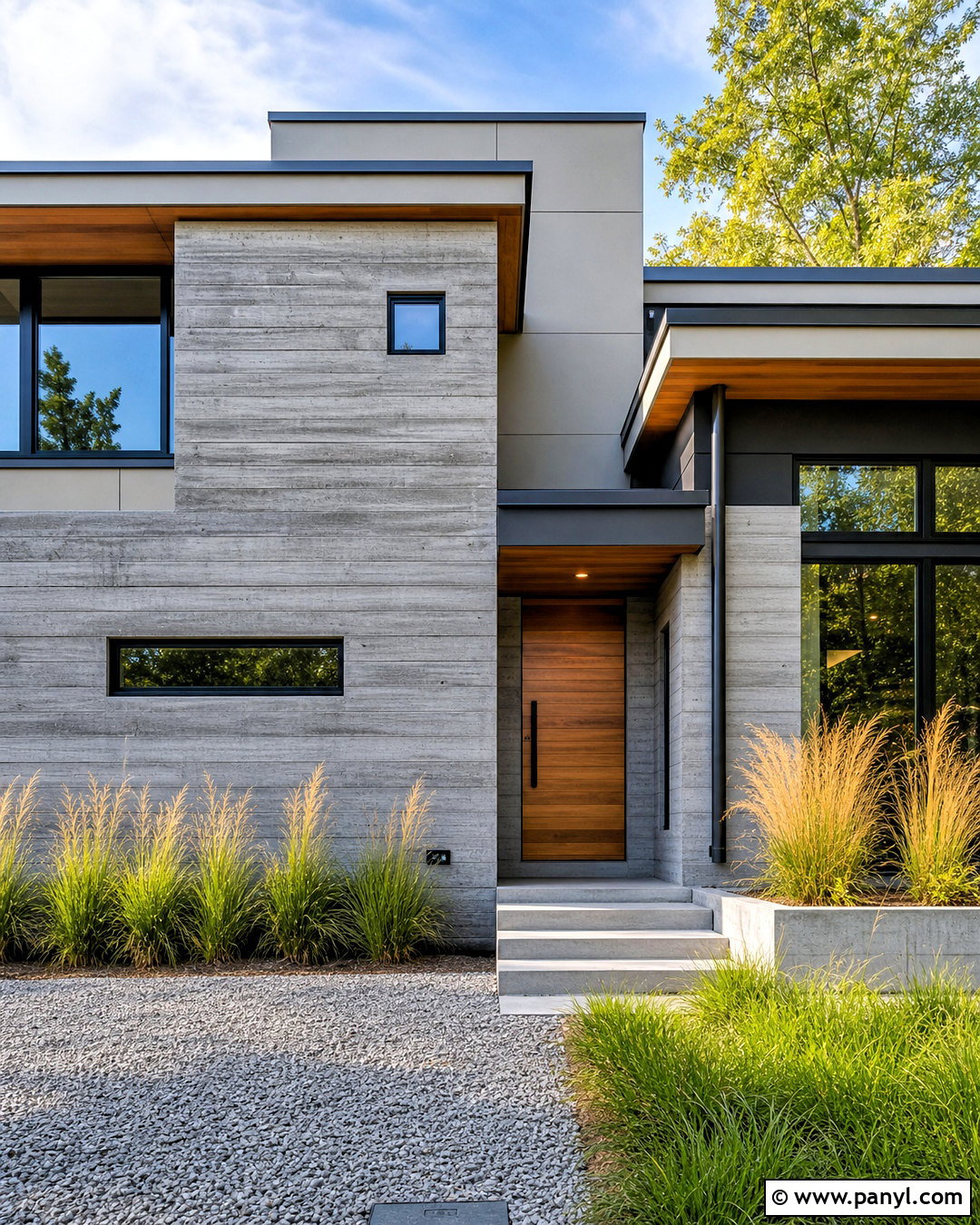
Board formed concrete retains the lines and wood-grain impressions created by its construction molds. The result offers the strength of concrete with a warmer, handcrafted appearance. Feature it on a modern entry wall or one full ground-floor volume, then balance it with pale gray fiber cement panels and natural cedar soffits. Black steel windows, a flush wood door, and a charcoal standing-seam roof reinforce the clean architecture. Landscape with gravel, sculptural grasses, and broad concrete steps rather than ornate planting beds. Horizontal form lines can visually widen a narrow facade, while vertical lines can emphasize height. Keep the concrete color naturally gray or lightly warmed instead of using a bright coating. Strategic lighting under the overhang will reveal the grain and seams without turning the wall into an overly dramatic feature.
8. Fluted Concrete Exterior Wall
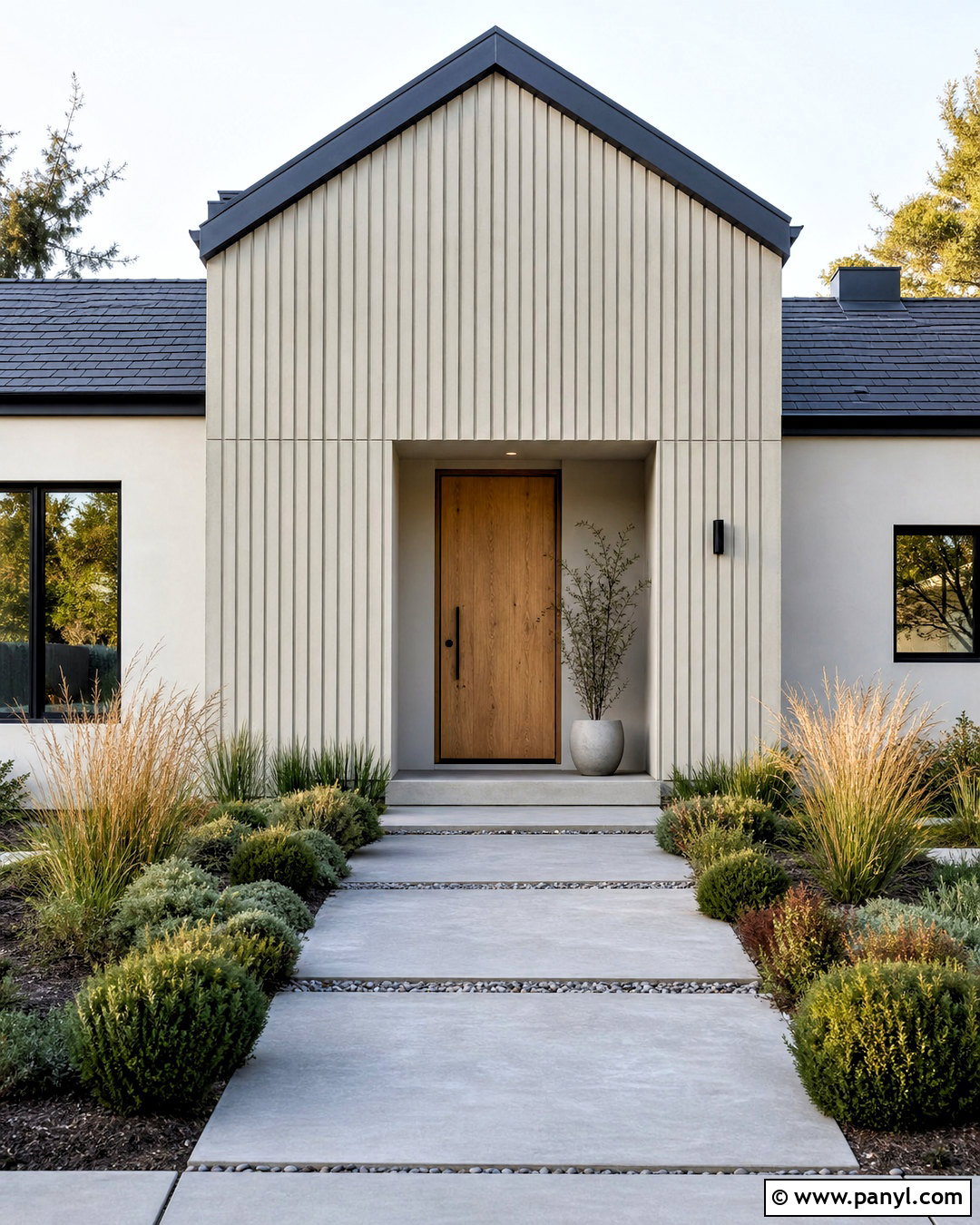
Fluted concrete uses repeated vertical channels to produce bold light and shadow. It works best as a focused feature around an entrance, stair tower, or projecting front wall. Choose pale mushroom-gray concrete fluting, smooth off-white side walls, black windows, and a medium-toned oak front door. A flat or low-pitched charcoal roof complements the structured lines. Keep the driveway and walkway simple with large-format concrete slabs, then introduce softer shapes through rounded shrubs and wispy ornamental grasses. The grooves should be appropriately scaled to the house; very narrow fluting can look busy across a large facade. Repeating a smaller version on a planter or low garden wall creates continuity. This complete treatment feels distinctive and contemporary without relying on bright colors or excessive exterior decoration.
9. Split Face Stone Exterior Wall
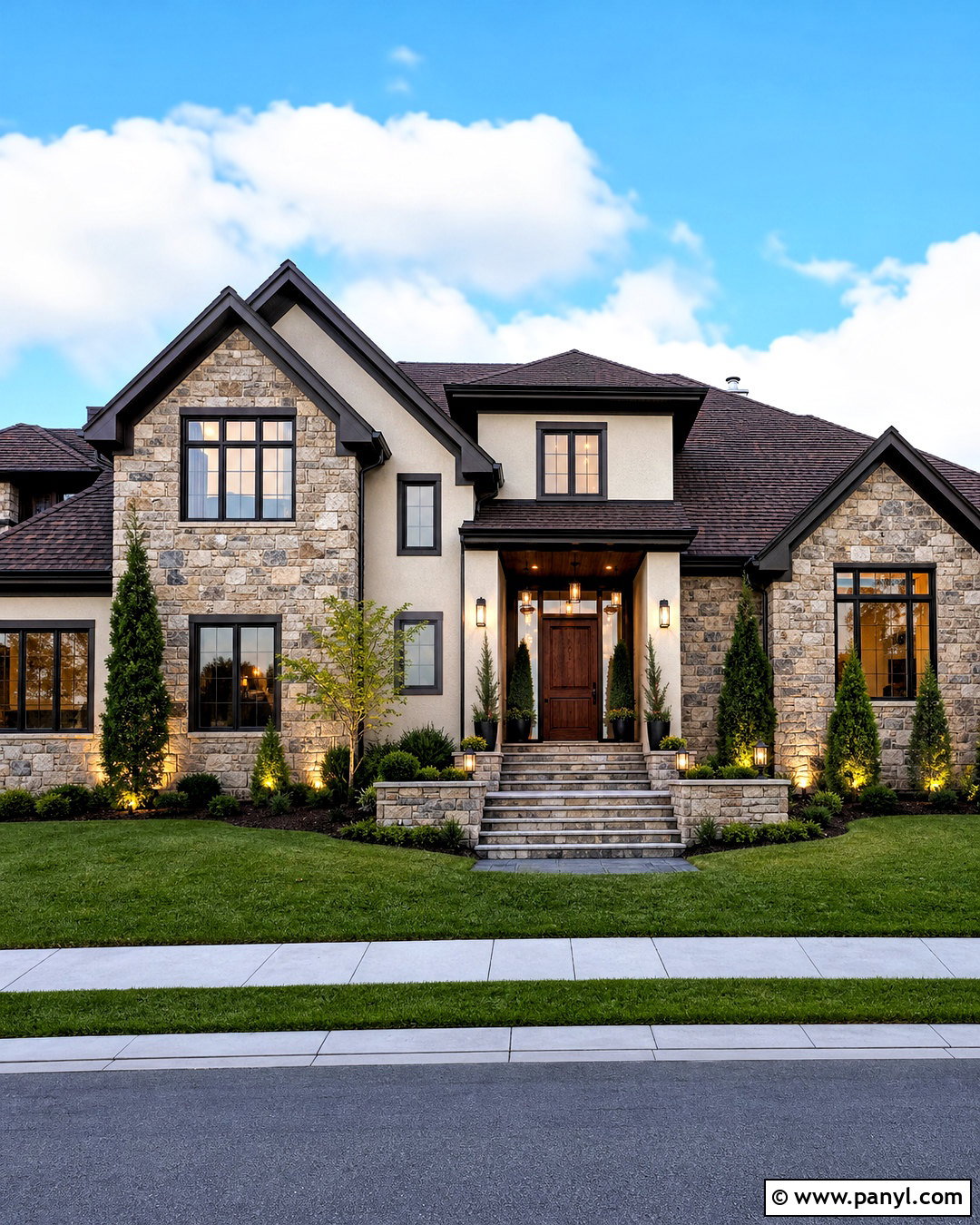
Split face stone has an uneven, fractured surface that gives an exterior substantial depth. Use warm gray and beige stone around the entrance and across the lower third of the house, then finish the upper walls in creamy stucco. A dark brown roof, bronze windows, and a stained walnut door support the stone’s earthy undertones. Wrap the masonry around corners instead of stopping it abruptly at the front elevation, which helps the material look structurally believable. Wide stone steps, soft landscape lighting, and layered evergreen planting create a welcoming transition from the yard. Because the stone is visually active, choose simple trim profiles and limited accent colors. This scheme works especially well for mountain, Craftsman, ranch, and transitional homes that need a strong but natural-looking foundation.
10. Dry Stacked Fieldstone Exterior Wall
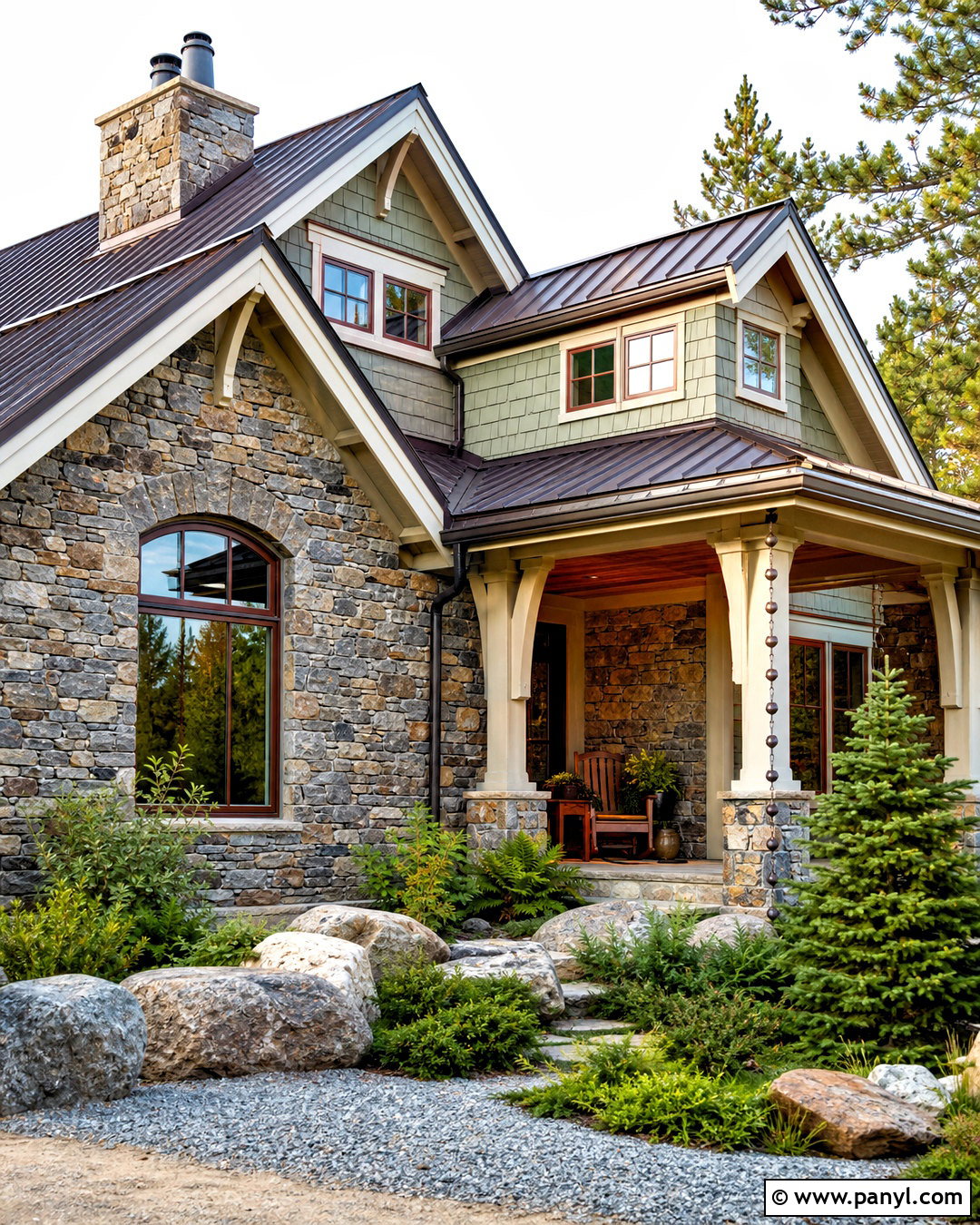
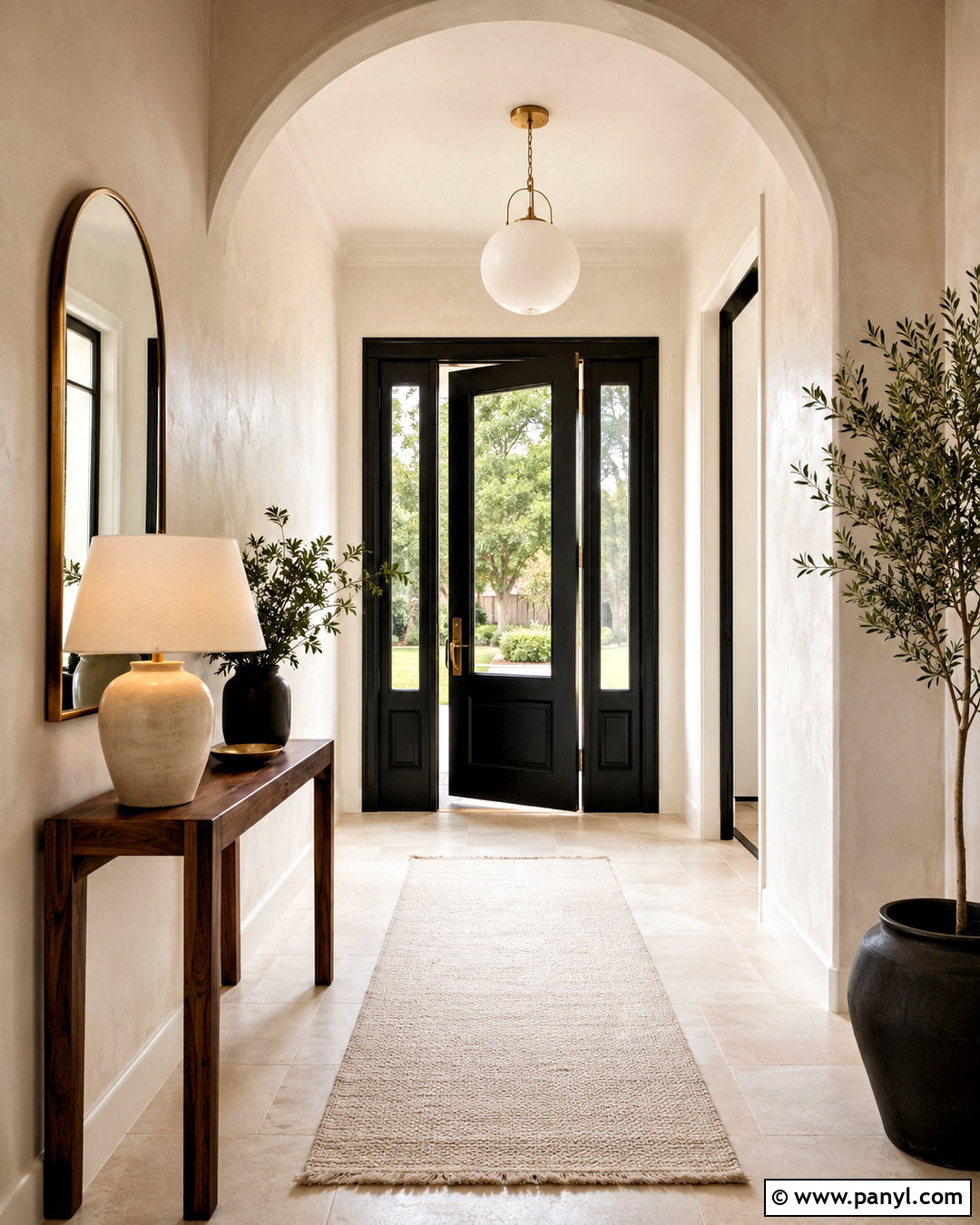
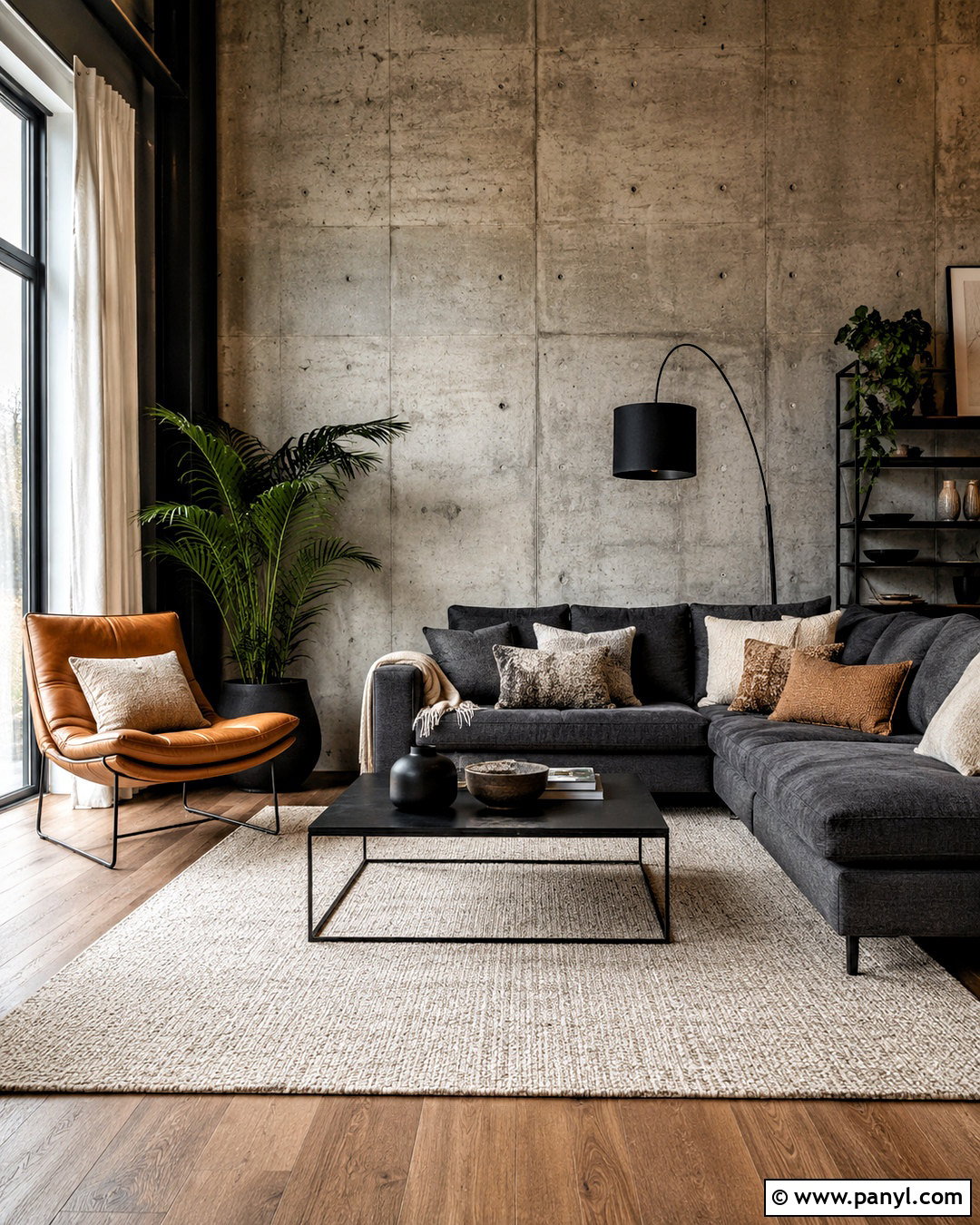
Dry stacked fieldstone combines irregular shapes and tight joints for a rustic, weighty appearance. Apply it to a chimney, porch columns, and the foundation of a cottage or lodge-inspired home. Use mixed gray, tan, and brown stone with muted sage siding, creamy trim, and a dark bronze metal roof. A heavy timber front door and cedar porch ceiling bring warmth to the mineral surfaces. Complete the landscape with natural boulders, gravel paths, ferns, and informal evergreen groupings. Keep the stone placement connected to elements that could visually support the building, rather than adding thin, isolated patches high on the facade. The varied shapes already create movement, so simple window trim and restrained rooflines are preferable. This complete exterior feels grounded, comfortable, and closely connected to its setting.
11. Linear Ledgestone Exterior Wall
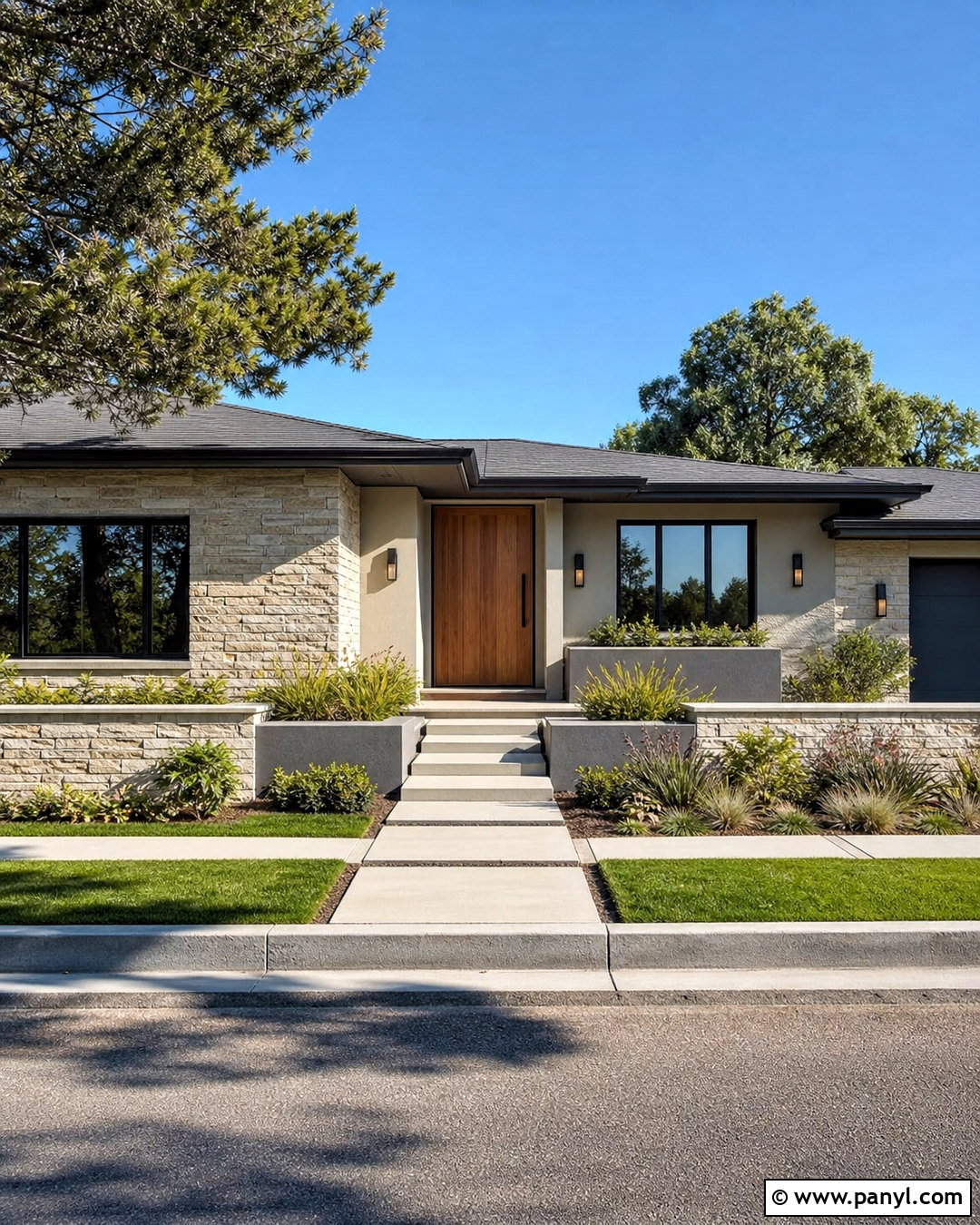
Linear ledgestone uses long, narrow pieces to create a cleaner masonry pattern than irregular fieldstone. Cover a central entrance wall or low horizontal wing with pale beige and warm gray ledgestone. Combine it with soft greige stucco, dark bronze window frames, and a natural wood pivot door. A charcoal roof and matching metal gutters provide definition without competing with the stone. Repeat the long horizontal lines in broad steps, rectangular planters, and a straight walkway. Avoid combining ledgestone with ornate shutters or heavily detailed trim because its slim proportions look best beside simple architecture. Warm exterior sconces can graze the surface and reveal its layered edges. This coordinated facade offers natural variation while remaining suitable for streamlined ranch homes, contemporary builds, and updated midcentury exteriors.
12. Running Bond Brick Exterior Wall
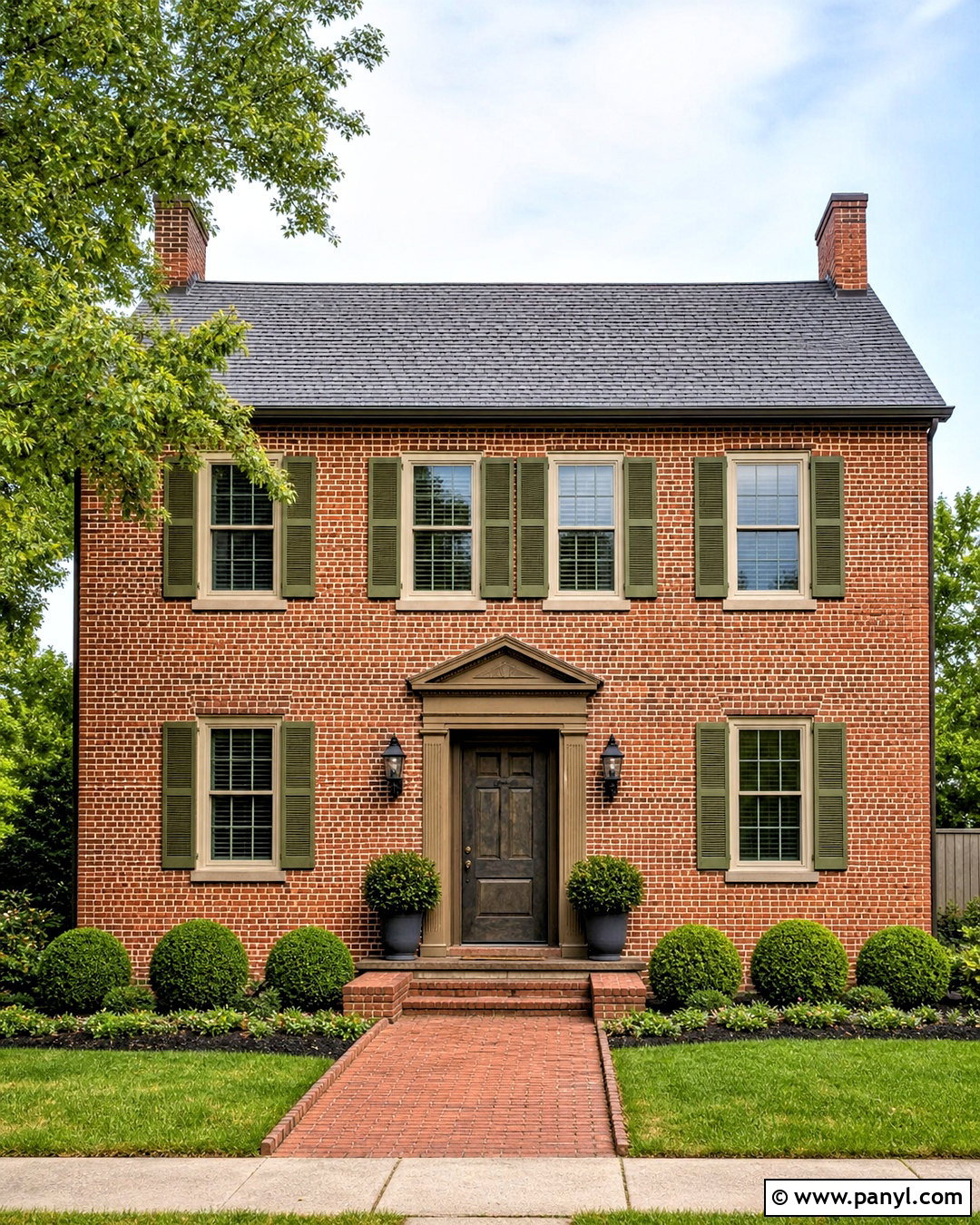
Running bond brick arranges each row so the joints are offset, creating the familiar pattern seen on many traditional homes. Give it a refreshed appearance with warm red-brown brick, soft cream mortar, olive green shutters, and an aged bronze front door. A medium charcoal shingle roof keeps the palette grounded. Use brick across the full first story or entire facade rather than limiting it to small decorative patches. Stone or concrete window sills can add subtle contrast while respecting the classic structure. Finish the curb view with a straight brick walkway, rounded boxwood shrubs, and a simple covered porch. Because the pattern is orderly, it pairs well with symmetrical window placement. The completed look feels established and welcoming without requiring complicated architectural details or trendy color combinations.
13. Herringbone Brick Exterior Wall
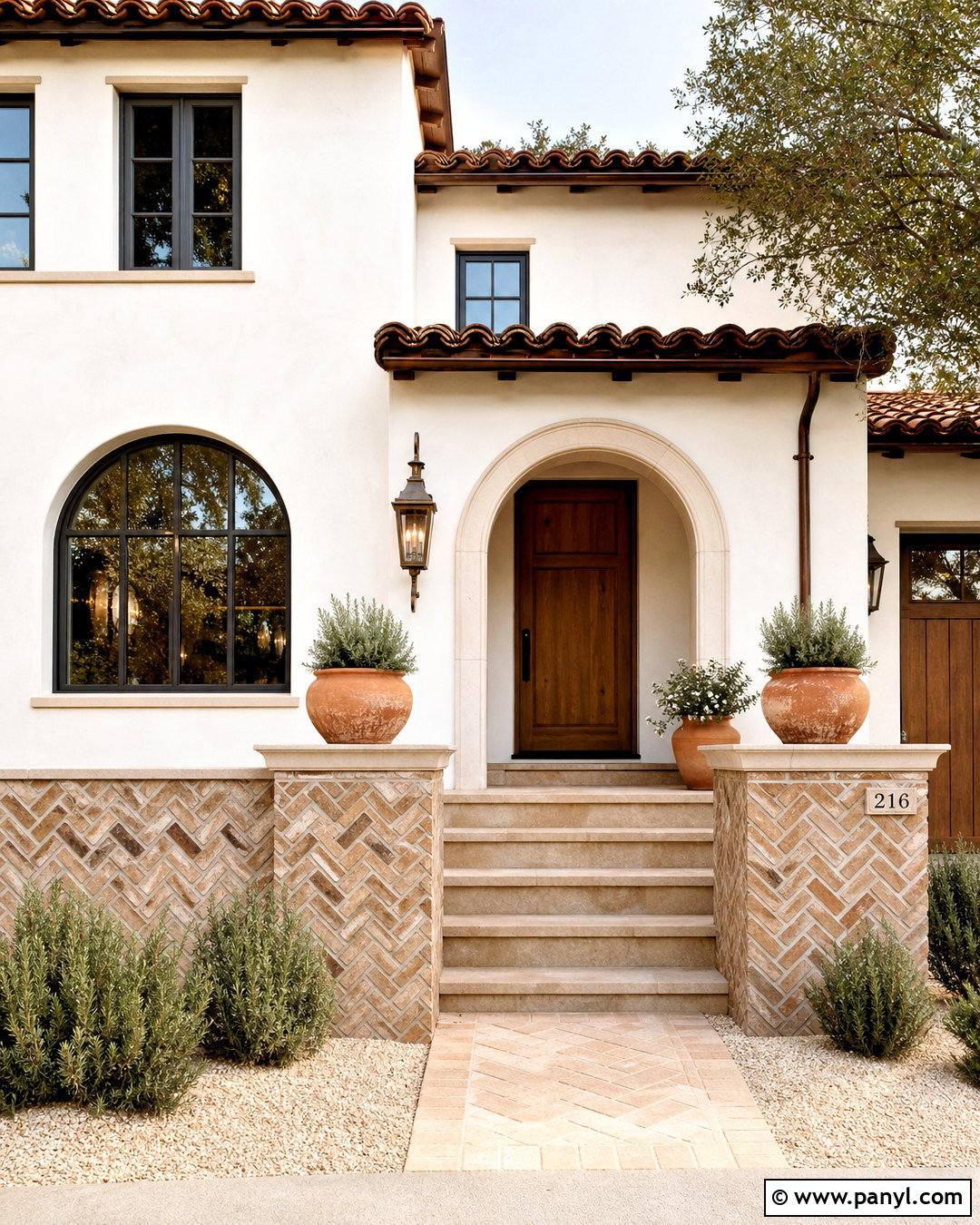
Herringbone brick introduces diagonal movement by arranging rectangular bricks in repeating V-shaped sections. Since the pattern is strong, use it on a defined entrance wall, porch floor, gable panel, or chimney rather than every elevation. Select muted terracotta brick with warm beige mortar, then surround it with creamy white stucco and medium-brown wood accents. Bronze windows and a clay-toned roof maintain a cohesive, earthy palette. Frame the feature with simple stucco borders so the angled pattern has a clean stopping point. Terracotta planters, rosemary, and pale gravel can continue the colors into the landscape. Keeping the other surfaces quiet allows the brickwork to remain visible from the street. This complete exterior has traditional warmth but feels more customized than a standard masonry facade.
14. Brick Relief Exterior Wall
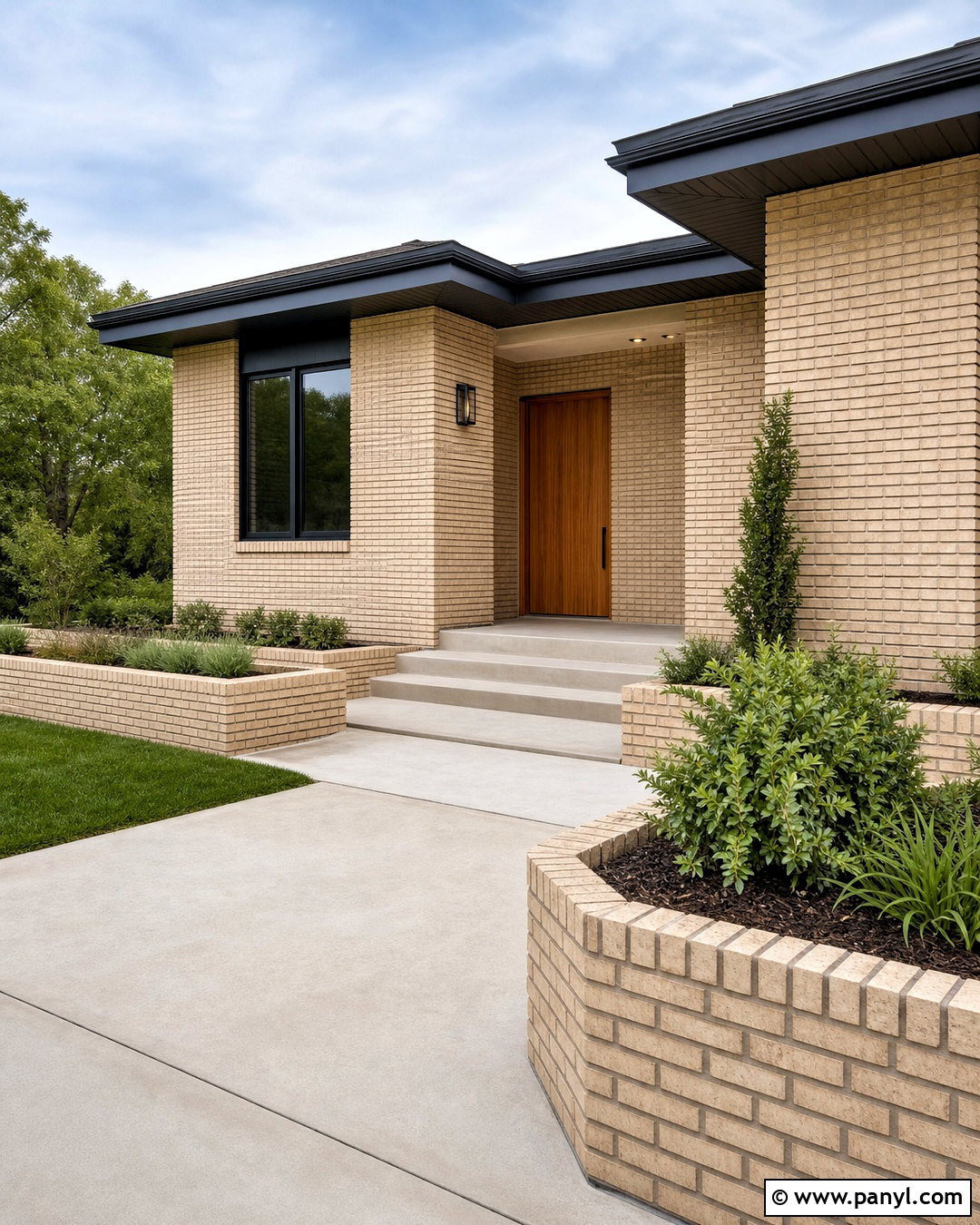
Brick relief patterns use selected bricks that project or recess from the wall, forming geometric bands, grids, or perforated screens. Create a contemporary facade with pale buff brick, light beige mortar, black-framed windows, and a medium oak entrance door. Use the relief across one tall stair wall or around a sheltered courtyard, while keeping the remaining brickwork flat. A low charcoal roof and smooth concrete path balance the detailed masonry. Repeating the brick color in low planters helps connect the feature to the landscape. The pattern should relate to window and door spacing instead of floating randomly across the surface. Limiting the relief to a controlled area prevents distracting shadows. This design gives a simple rectangular home depth, craftsmanship, and a clear focal point without adding unrelated cladding materials.
15. Board And Batten Exterior Wall
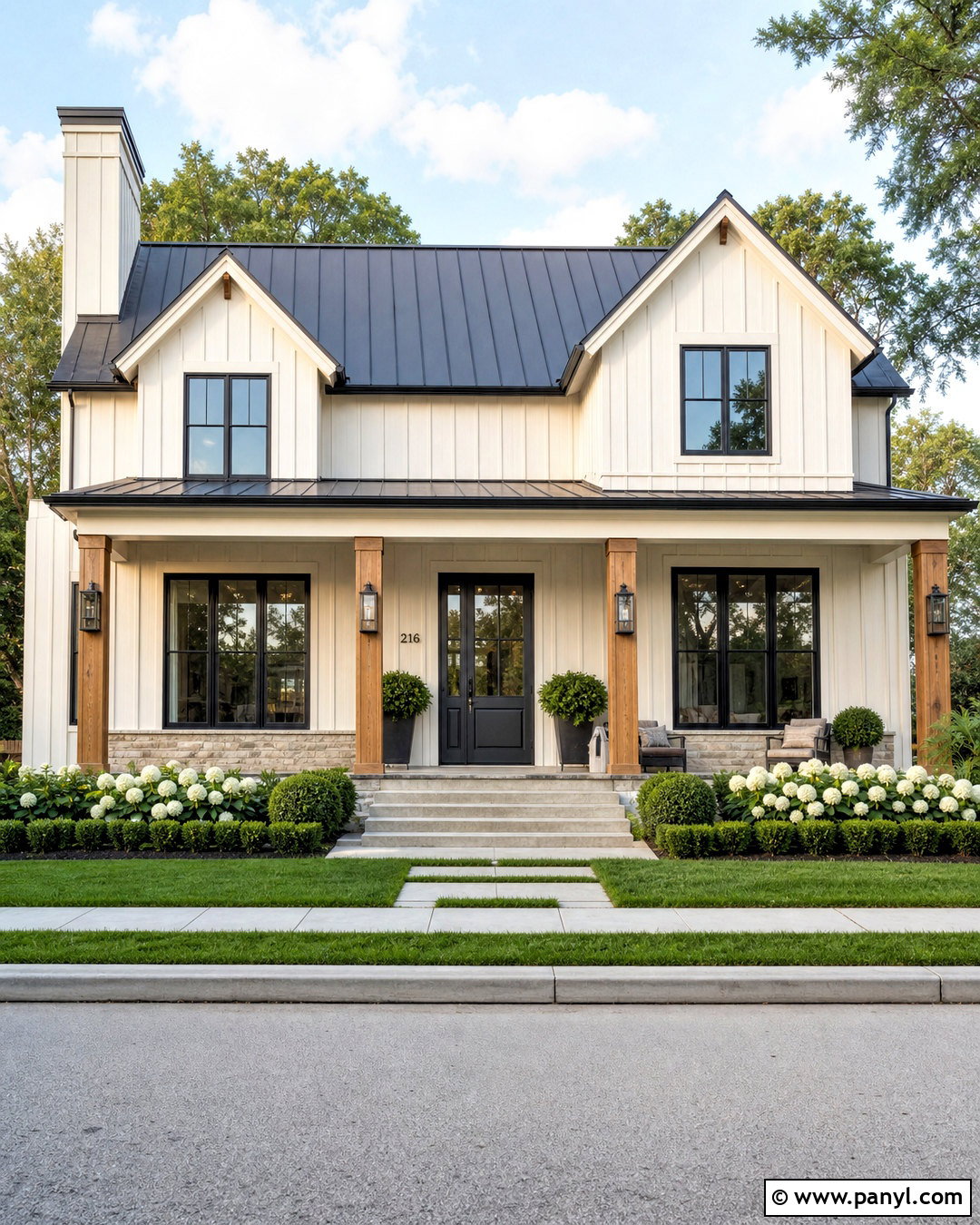
Board and batten siding uses wide vertical boards with narrow raised strips covering the joints. Cover the main body of a modern farmhouse in warm white fiber cement, then add a soft charcoal front door and natural cedar porch posts. A dark gray metal roof emphasizes the vertical rhythm and creates a crisp outline. Use stone only at the foundation or chimney so the siding remains dominant. Black windows, simple barn-style lights, and broad concrete steps complete the practical palette. On a smaller house, slightly wider board spacing can keep the facade from looking overly busy. Carry the vertical siding around every visible elevation for consistency. Boxwood hedges and white flowering plants soften the strong lines, producing a clean exterior that feels structured, welcoming, and easy to personalize.
16. Horizontal Wood Lap Exterior Wall
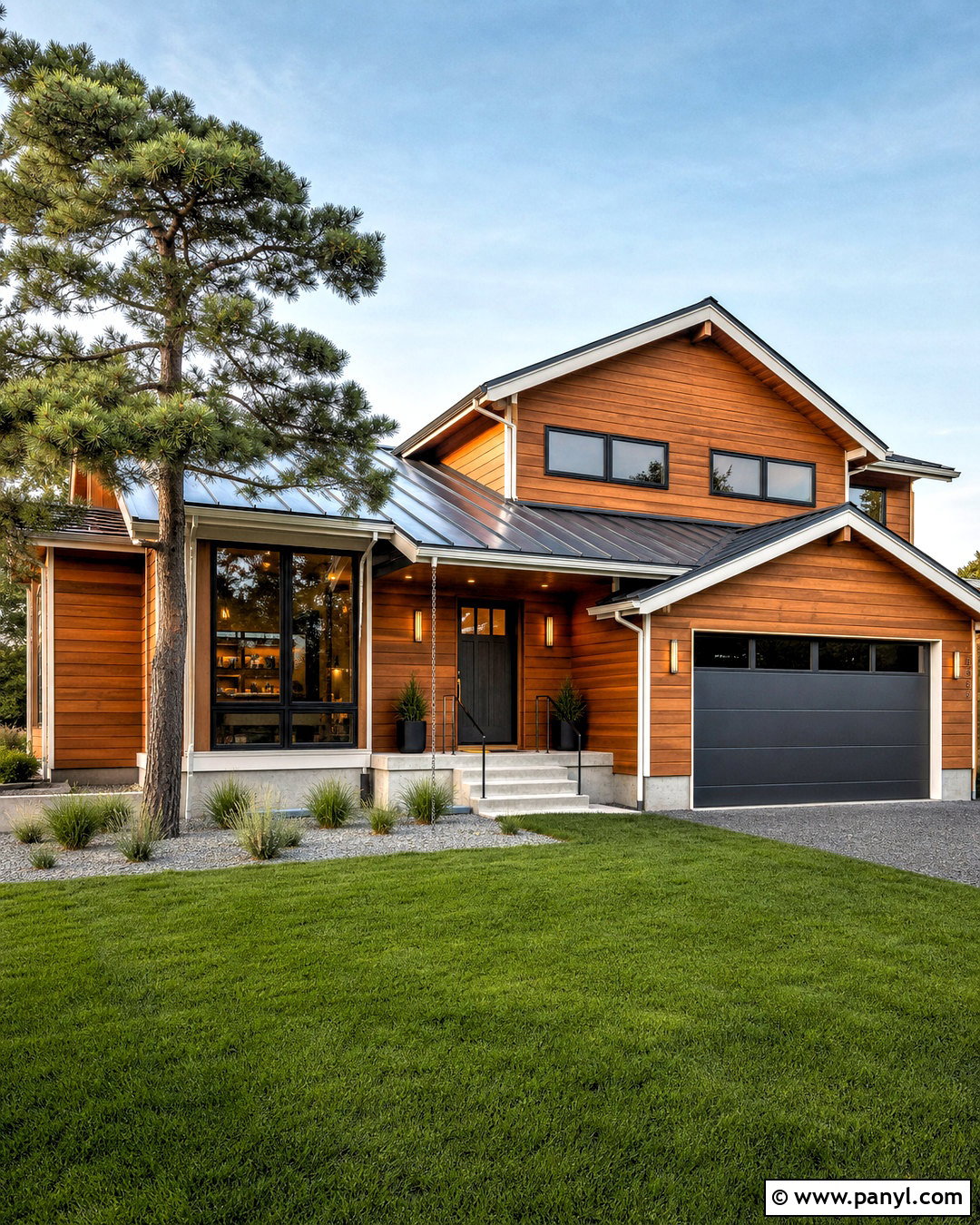
Horizontal wood lap siding creates long shadow lines that can make a compact house appear wider. For a warm contemporary look, use clear-finished cedar across the main living volume, smooth dark gray panels around the garage, and off-white trim near the entry. A black standing-seam roof and matching windows give the natural grain a sharp frame. Protect the design visually with generous roof overhangs and a raised stone or concrete base. Keep the landscaping simple through gravel beds, ornamental grasses, and one sculptural tree. Boards with consistent widths create a calm pattern, while controlled tonal variation preserves the character of real wood. Repeat cedar on the porch ceiling or front gate to connect separate areas. The finished scheme feels natural, modern, and balanced rather than cabin-like.
17. Cedar Shake Exterior Wall
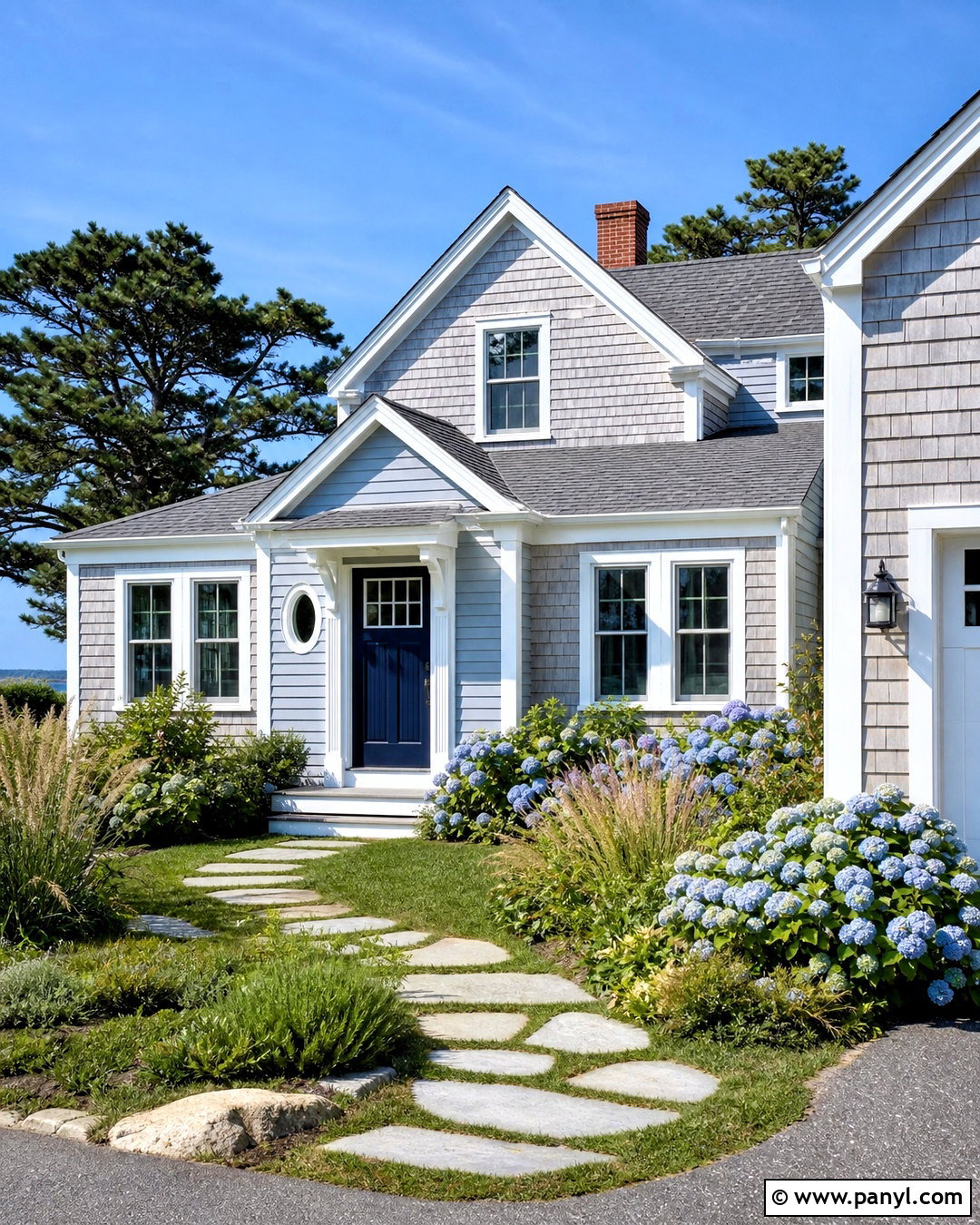
Cedar shakes create a layered surface with small variations in thickness, grain, and edge alignment. Use weathered gray cedar shakes on the upper story or gables of a coastal cottage, paired with soft blue-gray lap siding below. Crisp white trim, a navy front door, and a medium-gray shingle roof complete the relaxed palette. Keep the foundation in pale natural stone or smooth painted masonry to prevent the exterior from becoming overly textured. Window boxes, hydrangeas, beach grasses, and a simple stone path add softness without hiding the facade. Uniform shake exposure creates an orderly look, while slight color variation keeps it natural. This full scheme also suits Cape Cod and cottage architecture, especially when the shakes are concentrated where their smaller scale complements windows and rooflines.
18. Fluted Fiber Cement Exterior Wall
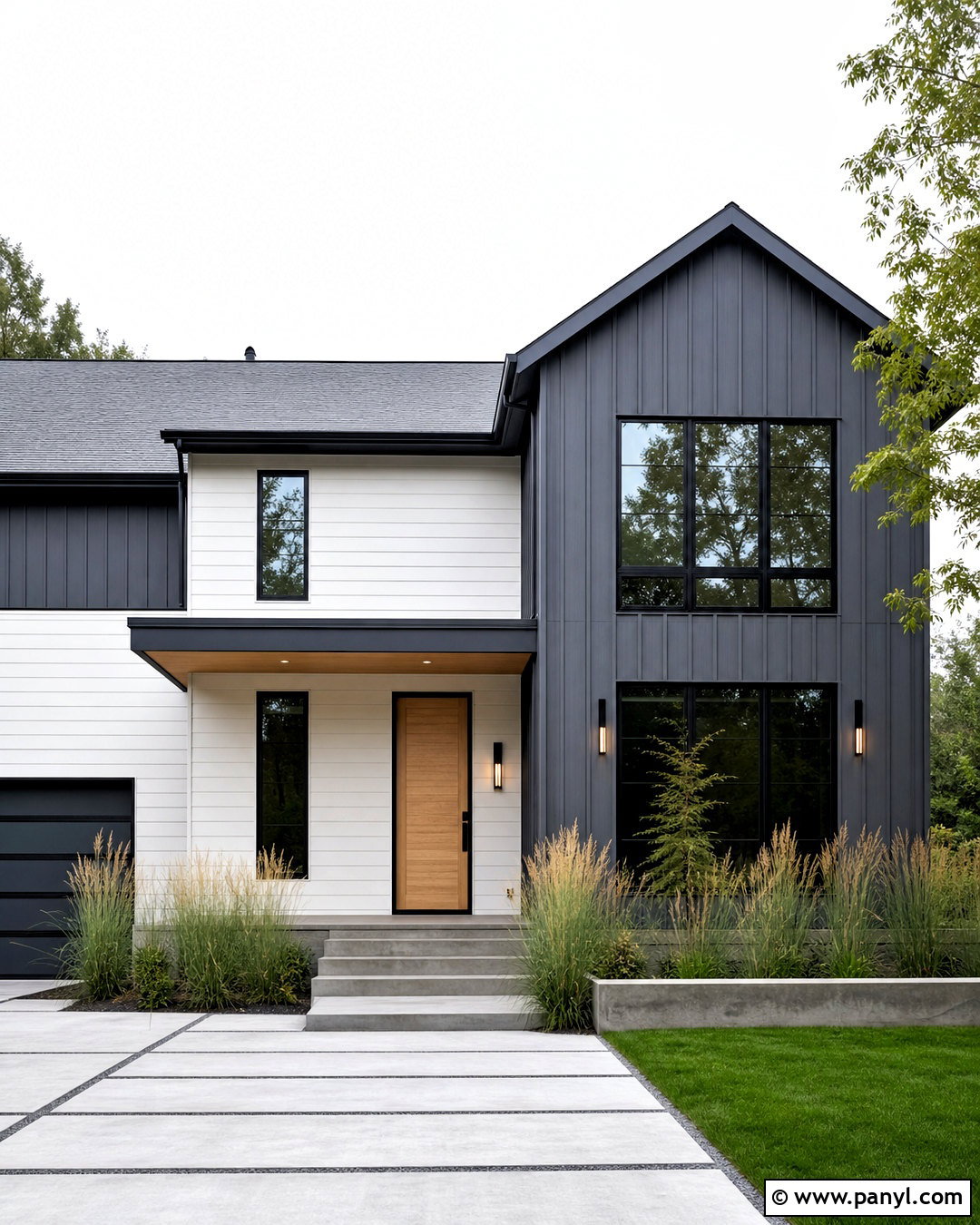
Fluted fiber cement panels provide linear texture with a more controlled and lightweight appearance than deeply grooved concrete. Install vertical charcoal-gray panels on a modern two-story entry volume, then surround them with warm white horizontal siding. Use black windows, a pale oak door, and a medium-gray roof to keep the palette cohesive. Thin metal reveals between panels will sharpen the layout and help each section look intentional. Continue the vertical rhythm through tall grasses and narrow wall lights, while using wide concrete steps to balance the composition. Fluted panels are most effective when corners, vents, and openings are carefully planned around the grooves. This complete exterior combines a strong contemporary focal point with familiar residential materials, making it suitable for both new homes and major facade updates.
19. Corrugated Metal Exterior Wall
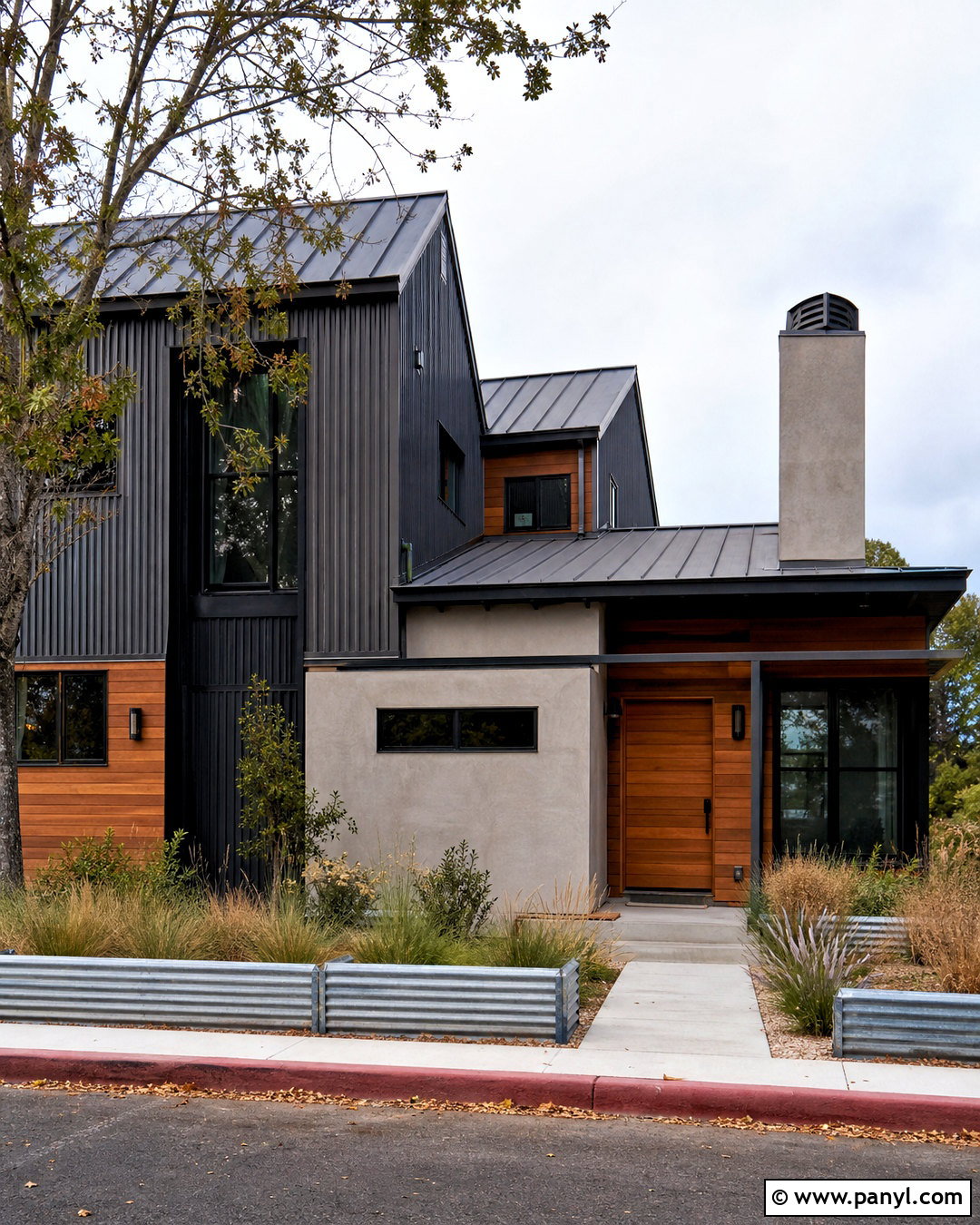
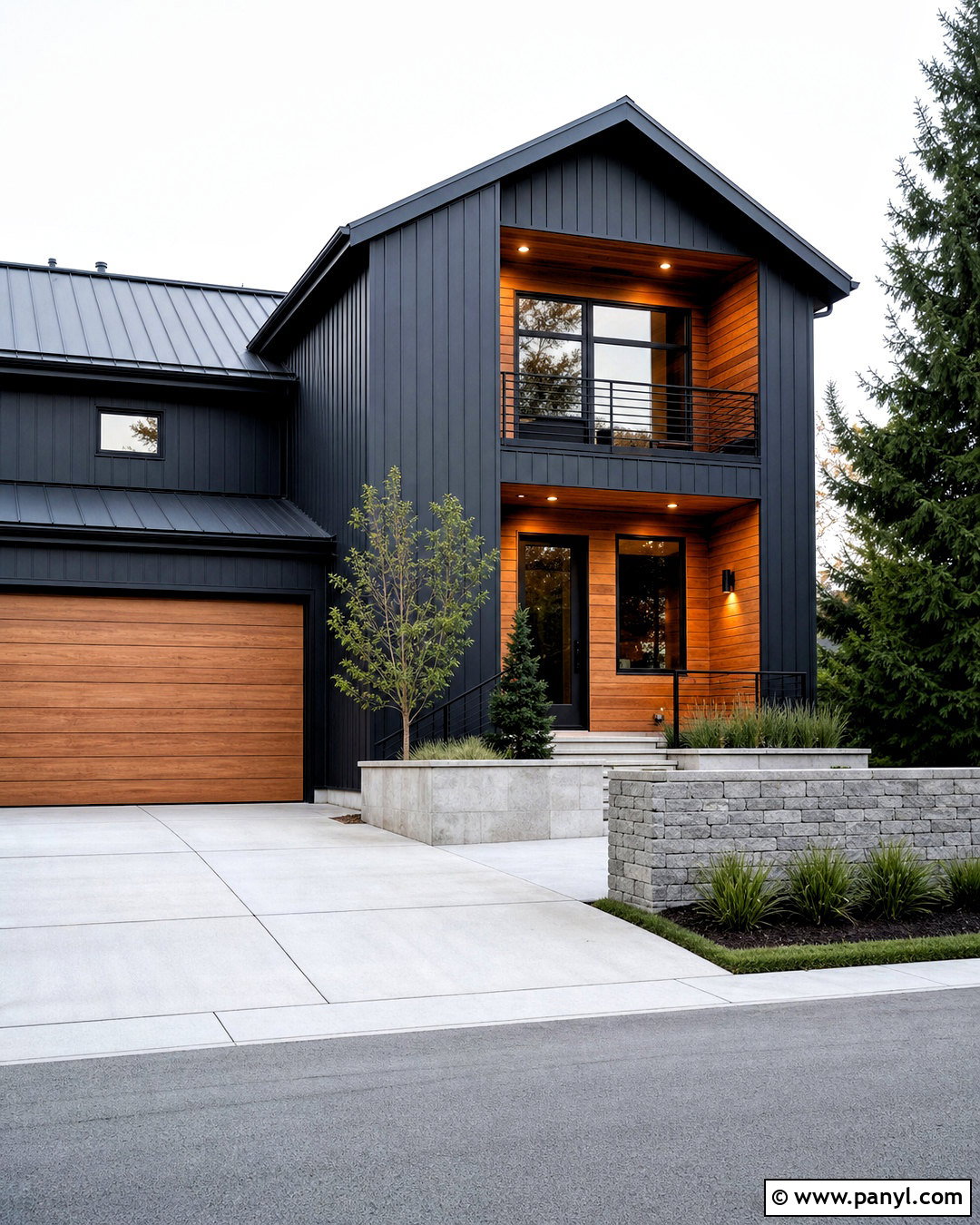
Corrugated metal brings a repeating ribbed pattern and a practical agricultural character to exterior walls. Use matte charcoal vertical panels on a garage or side wing, then balance them with warm cedar siding and light gray stucco on the main house. A matching standing-seam roof, black windows, and a solid wood door tie the materials together. Keep the rib direction vertical to emphasize height and guide rainwater visually downward. Concrete paving, galvanized planters, and loose native grasses support the modern industrial palette. Avoid shiny metal finishes on a typical residential facade because they can create distracting reflections. Limiting the metal to one connected volume keeps it from overpowering the home. The overall look feels crisp, durable, and contemporary while retaining a comfortable, approachable scale.
20. Mixed Material Geometric Exterior Wall
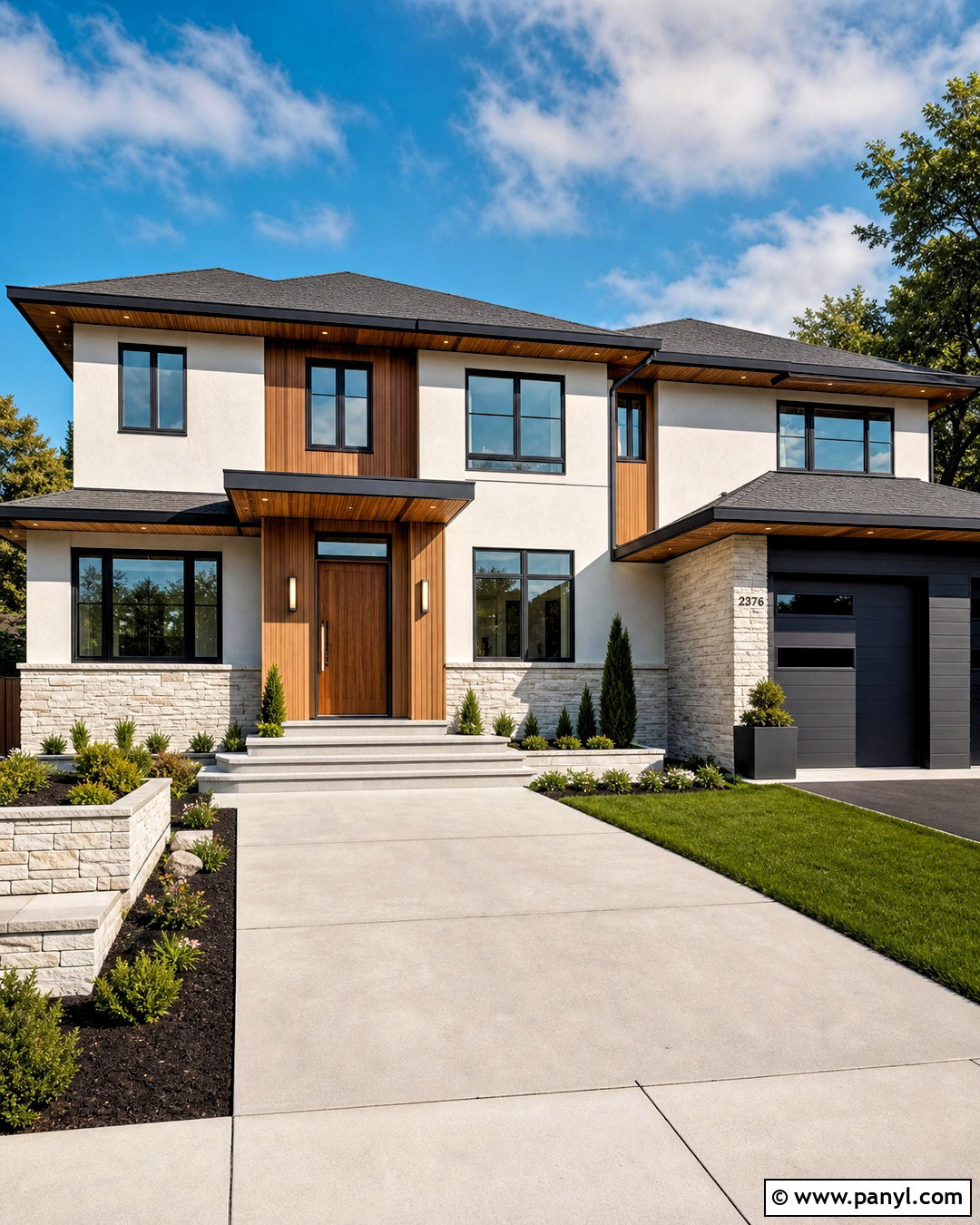
A mixed material exterior combines several textures through clear geometric zones instead of scattering accents randomly. Use smooth warm-white stucco on the main walls, vertical cedar around the entrance, charcoal fiber cement on the garage, and pale ledgestone along the foundation. Black windows and a medium-gray roof unify the separate surfaces. Align every material change with an architectural feature, such as a corner, floor line, window edge, or recessed wall. This prevents the facade from looking patched together. Repeat each material at least once, perhaps with cedar on the soffit and stone on a low planter. Simple landscaping and broad concrete paths keep attention on the composition. The resulting home has depth and variety, yet still reads as one complete exterior rather than a collection of unrelated finishes.
Conclusion:
These **20 exterior wall texture patterns** show how surface, scale, color, and material placement can transform an entire facade. Smooth and sand-finish stucco create subtle depth, while fluted panels, masonry relief, shakes, and corrugated metal produce stronger shadow lines. Natural stone and wood introduce warmth, and concrete brings a more architectural character. For the most cohesive result, connect every texture change to the home’s structure and repeat important colors across the roof, trim, doors, hardscape, and landscaping. Consider local weather, maintenance needs, installation requirements, and existing architectural features before committing. A successful exterior does not need every available material. One dominant texture, one supporting finish, and a coordinated accent are often enough.

Related Ideas and Inspiration:
Leave a Reply