
Warm color can change more than a wall. It can make an entire room feel calmer, richer, and more connected to nature. **20 Warm Earthy Tone Walls** explores complete interiors built around terracotta, clay, olive, ochre, sand, taupe, rust, and warm brown. These grounded colors are especially relevant now as interiors shift toward saturated mineral shades, natural textures, and warmer alternatives to cool gray. () The key is coordinating the wall finish with flooring, furniture, textiles, lighting, and trim. Natural wood, aged metal, woven fibers, and creamy fabrics help each palette feel intentional rather than heavy. From subtle neutral rooms to dramatic color-drenched spaces, the following looks offer practical inspiration for recreating **20 Warm Earthy Tone Walls**.

1. Terracotta Living Room Walls
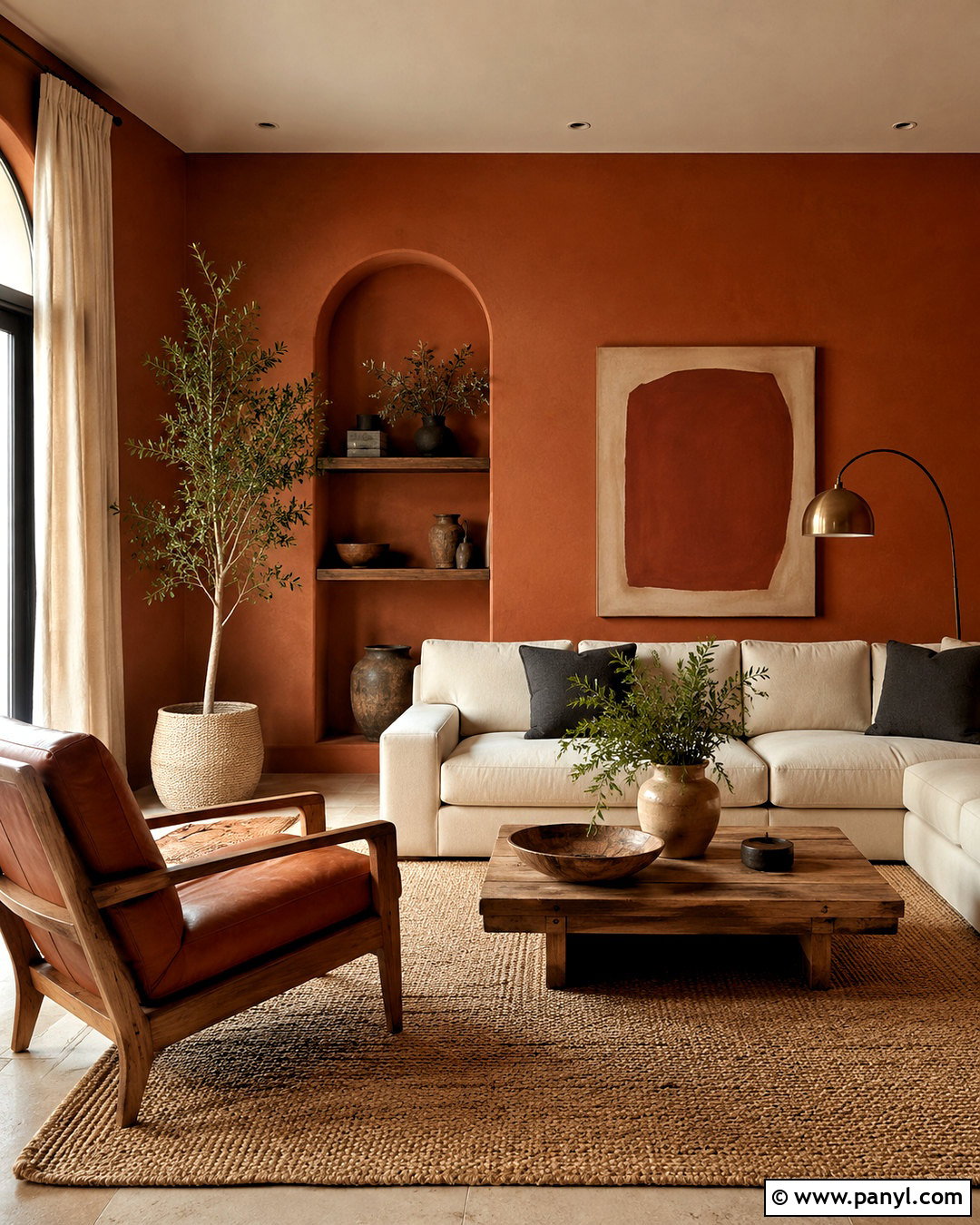
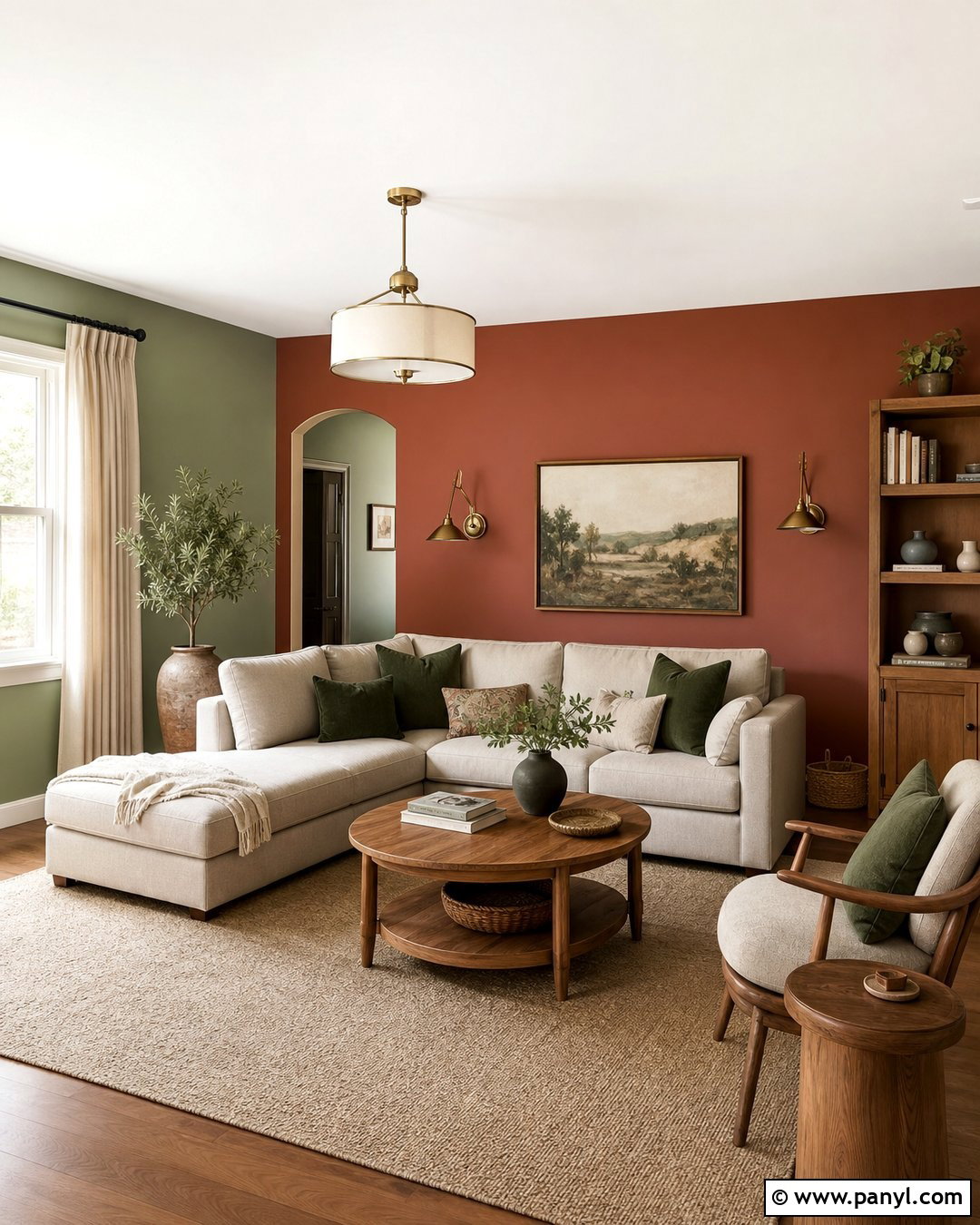
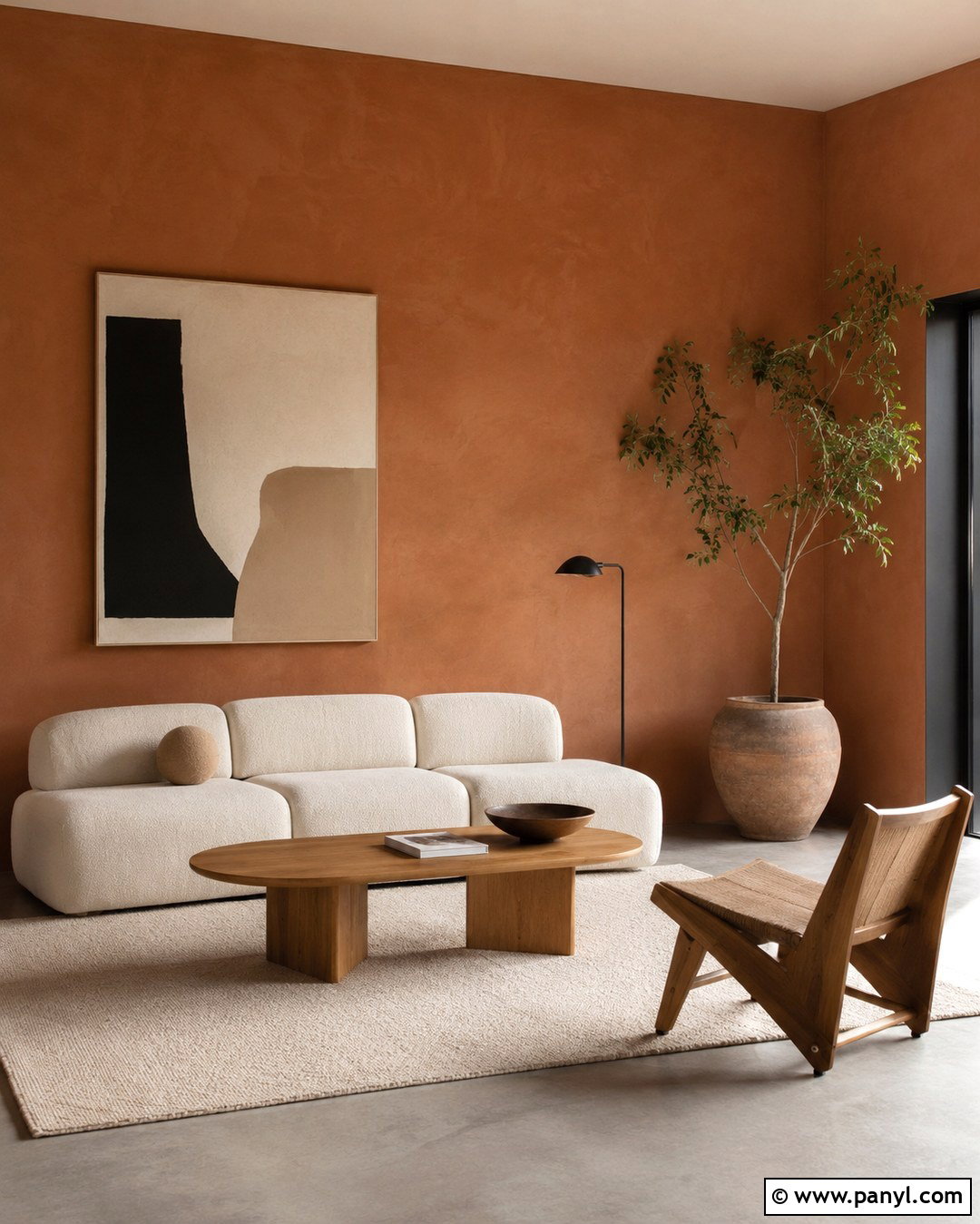
Terracotta walls bring sunbaked warmth to a living room without requiring a complicated color scheme. Choose a muted orange-brown shade rather than a bright pumpkin tone. Pair it with a low cream sofa, cognac leather chair, and medium-toned oak coffee table. A large natural wool rug softens the palette, while charcoal pillows create useful contrast. Hang simple landscape artwork with olive, sand, and rust details so the wall color repeats naturally throughout the room. Linen curtains in warm ivory keep the windows bright. For lighting, use a sculptural plaster pendant and aged brass floor lamp. Finish the look with handmade pottery, dark wood frames, and leafy plants in woven baskets. The result feels collected, comfortable, and suitable for everyday living.
2. Clay Bedroom Walls
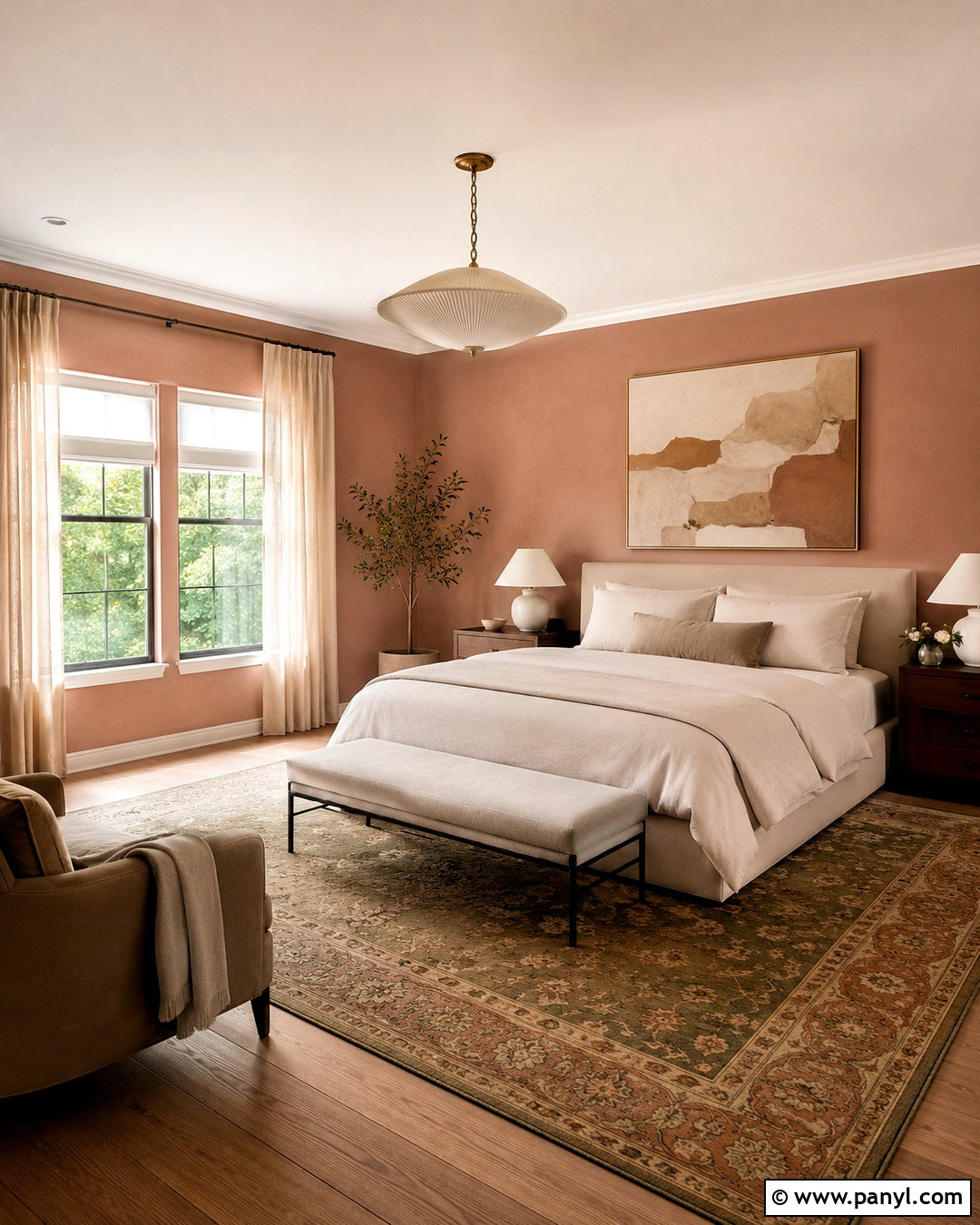
Soft clay walls create a restful bedroom that feels warm without becoming overly colorful. Select a dusty clay shade with beige and muted pink undertones. Paint every wall for an enveloping effect, then use creamy white on the ceiling and simple baseboards. An upholstered oatmeal bed keeps the center of the room light. Add walnut nightstands, ceramic lamps, and linen bedding in ivory, cocoa, and faded terracotta. A vintage-inspired rug can introduce small touches of olive and charcoal. Keep window treatments relaxed with full-length flax linen curtains. Above the bed, display one large abstract piece rather than several small frames. Natural wood, soft fabrics, and rounded furniture prevent the room from looking rigid. Warm white bulbs make the clay walls appear especially comfortable after sunset.
3. Warm Beige Open Plan Walls
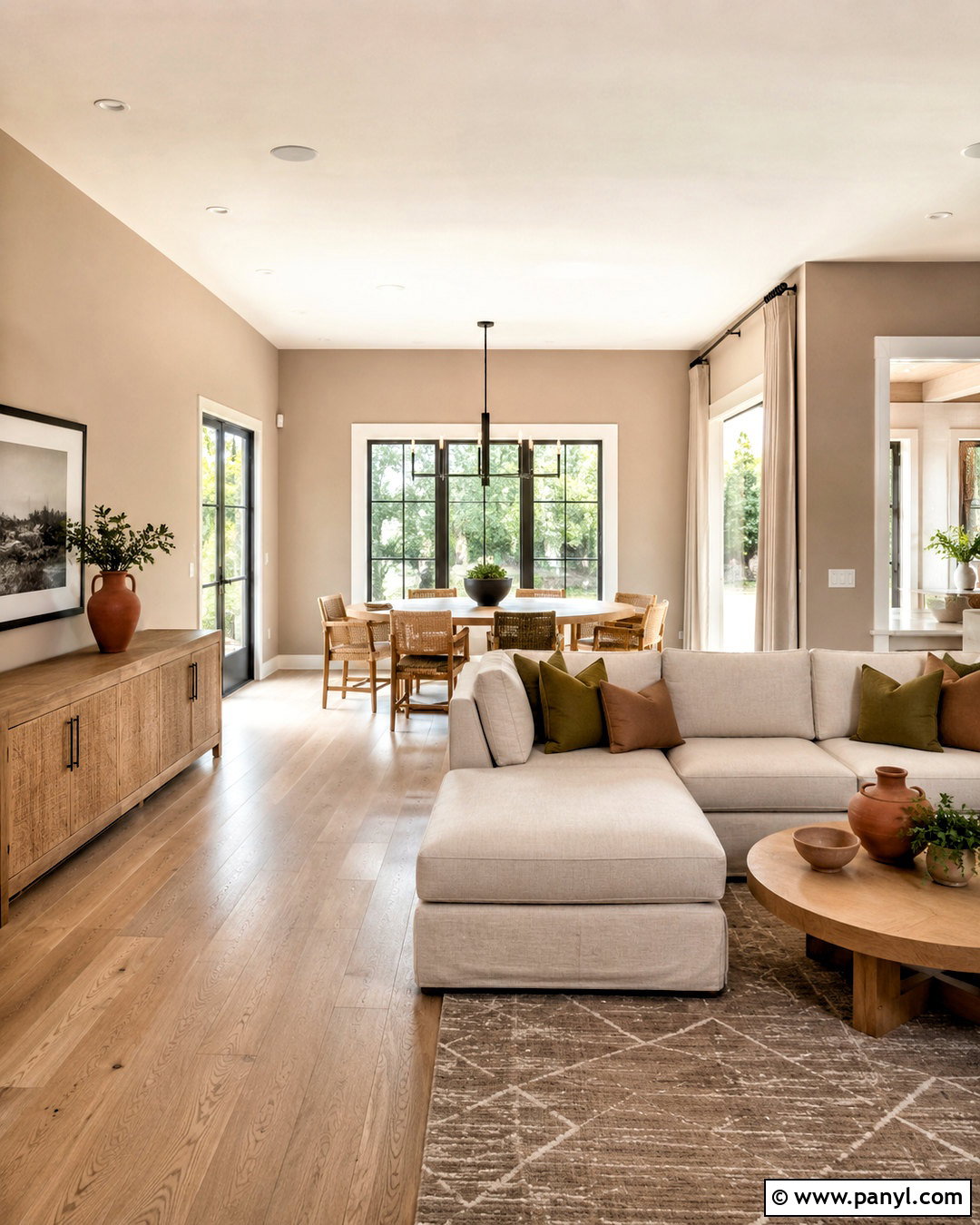
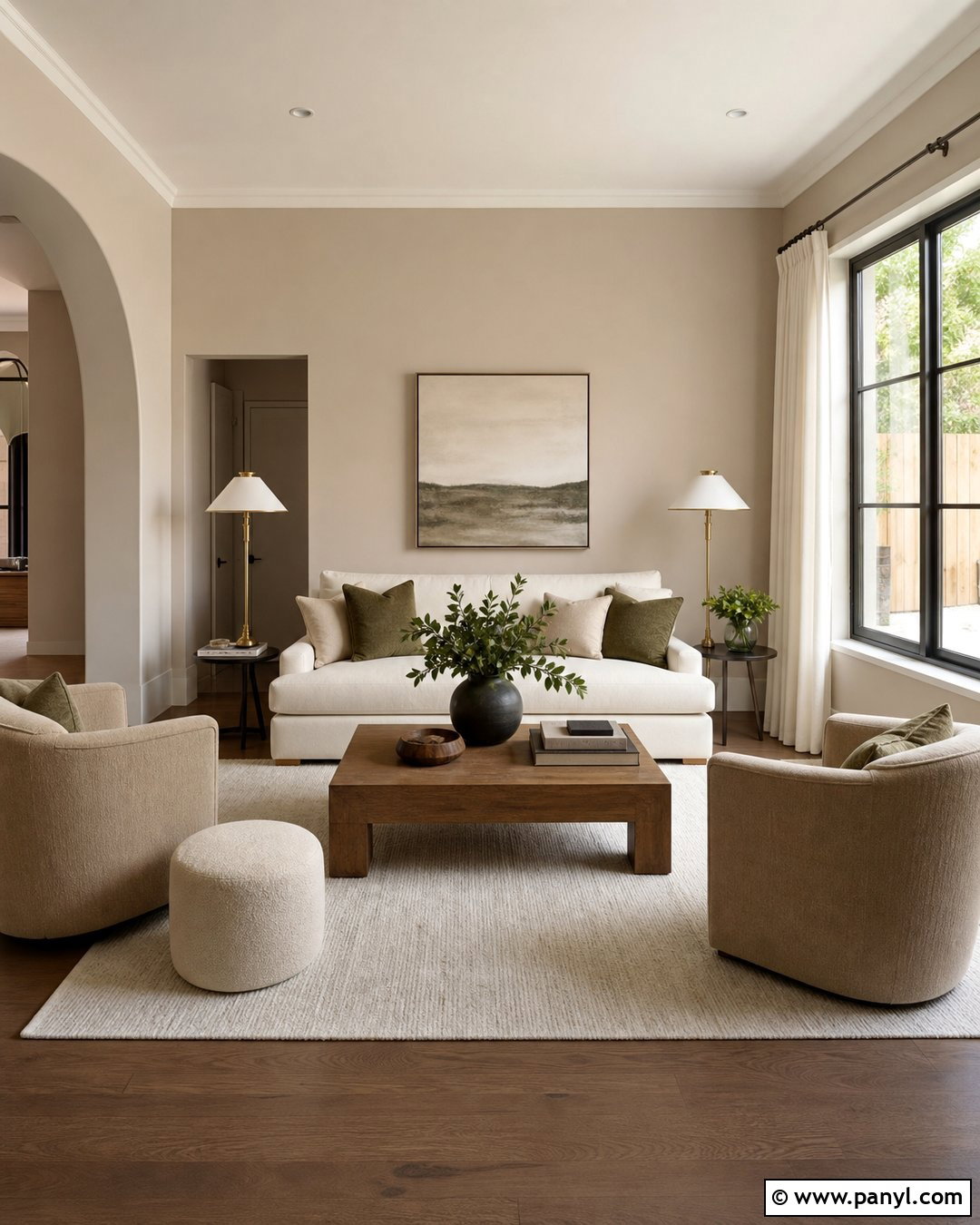
Could an open-plan space feel warmer without using a dark color? Warm beige walls provide an easy answer. Choose a sandy beige with subtle brown undertones and carry it through the living, dining, and kitchen areas. This uninterrupted backdrop helps different zones feel connected. Use white oak furniture, a cream sectional, and woven dining chairs to build gentle tonal variation. Define the living space with a patterned taupe rug and the dining area with a large natural-fiber pendant. Matte black accents on lighting and cabinet hardware provide crisp definition. Introduce deeper color through olive cushions, rust ceramics, and dark brown artwork. Keep ceilings and trim a soft warm white. The finished space remains bright and flexible, yet it feels far more grounded than one covered in cool white or pale gray.
4. Ochre Dining Room Walls
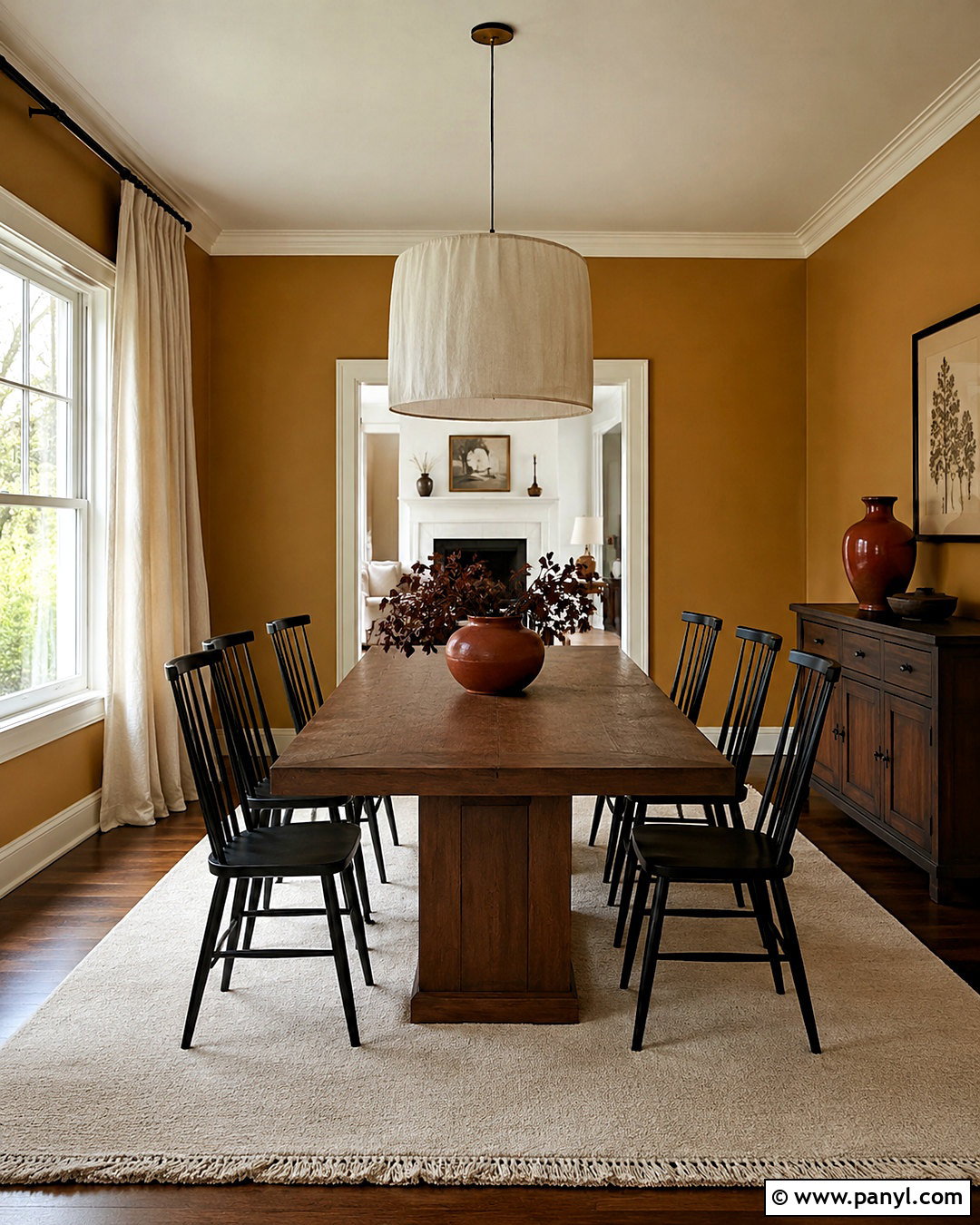
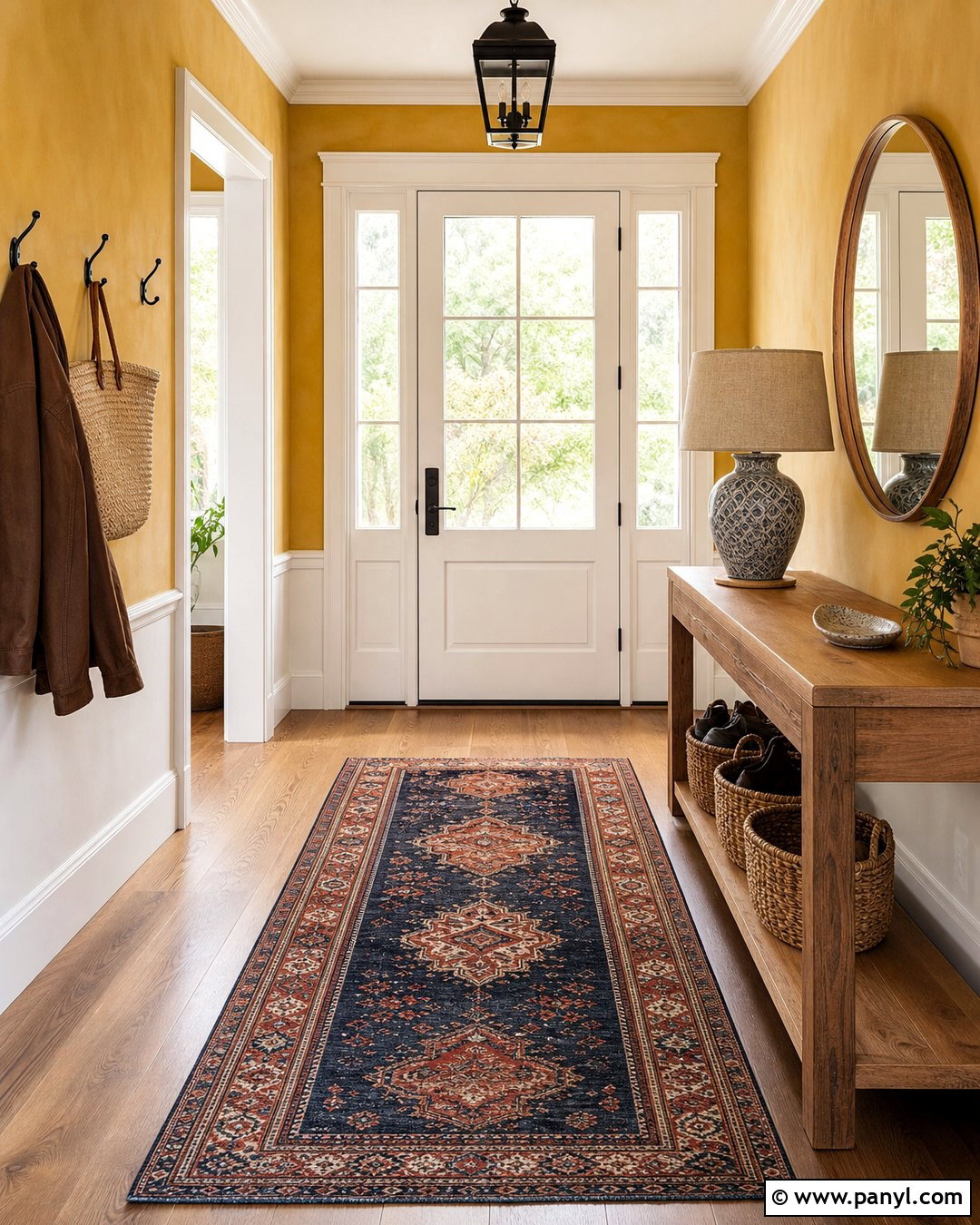
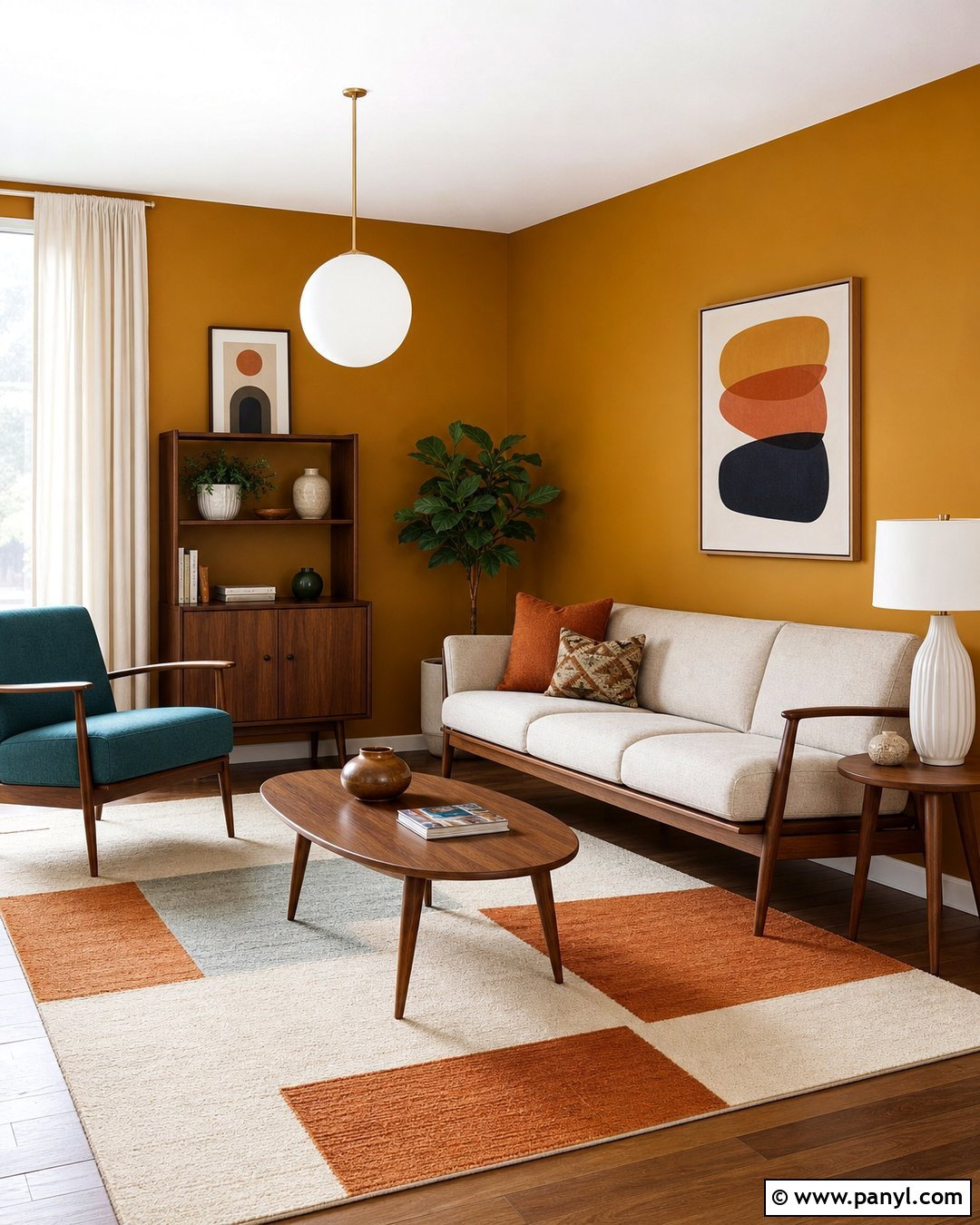
Golden ochre walls can turn a plain dining room into a welcoming space for everyday meals. Look for a muted mustard-brown shade that feels mineral rather than sharply yellow. Pair it with a solid walnut dining table and black spindle-back chairs for a strong, balanced foundation. A cream wool rug lightens the floor, while an oversized linen pendant spreads soft light across the table. Use off-white curtains and simple warm white trim to frame the saturated walls. A sideboard in dark wood provides storage and supports matte ceramic vessels in rust, cream, and brown. Add one large botanical print containing green and ochre. Avoid filling every surface. Negative space helps this bold wall color look refined. The complete room feels sunny, intimate, and comfortable during every season.
5. Olive Green Kitchen Walls
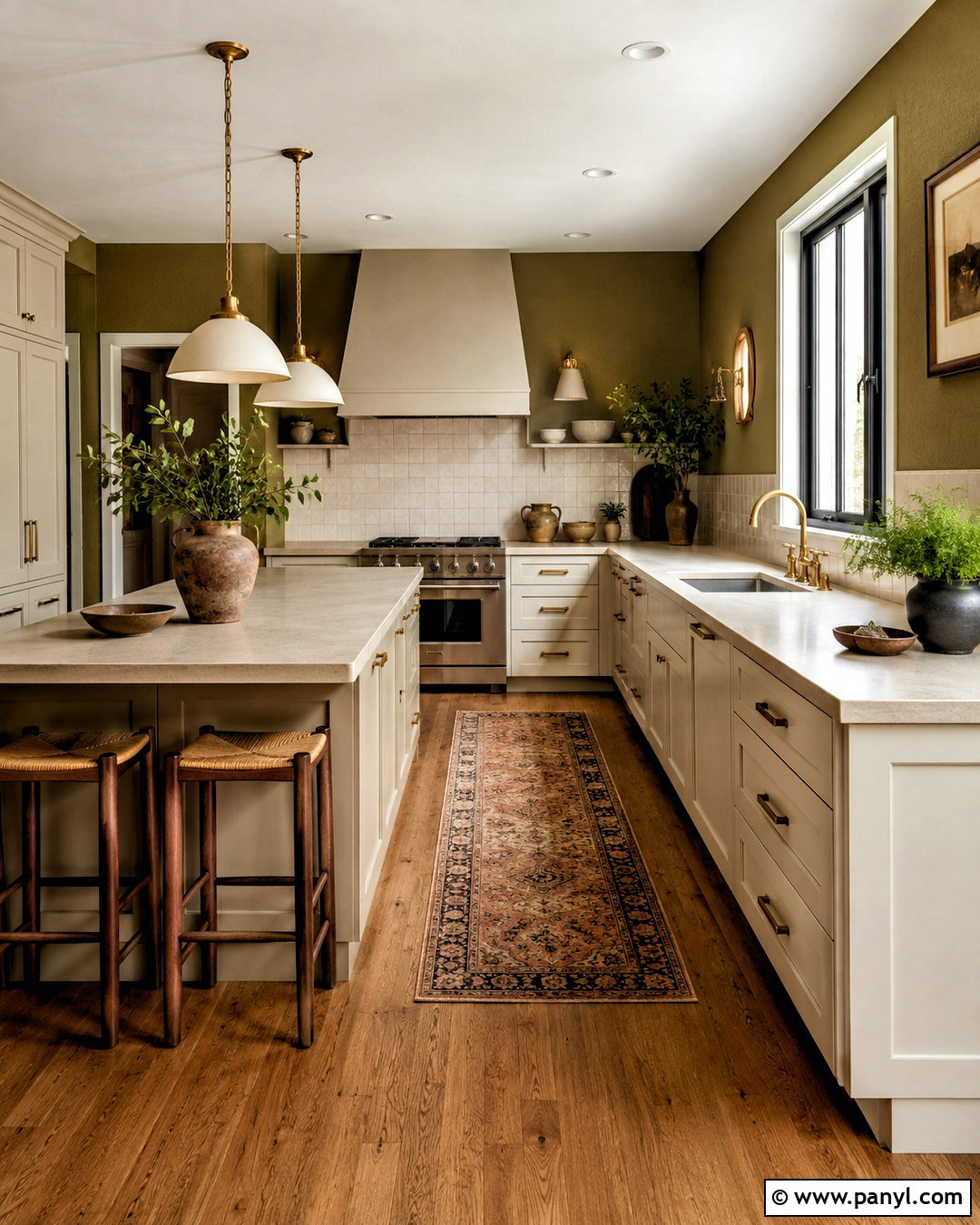
Muted olive green walls work beautifully in a kitchen filled with warm natural materials. Combine the wall color with cream cabinets, honed beige stone counters, and a handmade off-white tile backsplash. Medium oak flooring keeps the palette earthy, while aged brass handles bring in quiet warmth. If the room includes an island, paint it a deep walnut brown or use stained wood to create contrast. Hang woven counter stools beneath simple brass pendants with white shades. Open shelves can hold neutral pottery, wood boards, and clear glassware without making the room look cluttered. Add a small vintage runner with rust and faded red details. Olive is especially effective when plants or garden views are nearby because it forms a gentle visual connection between the kitchen and the landscape.
6. Mushroom Home Office Walls
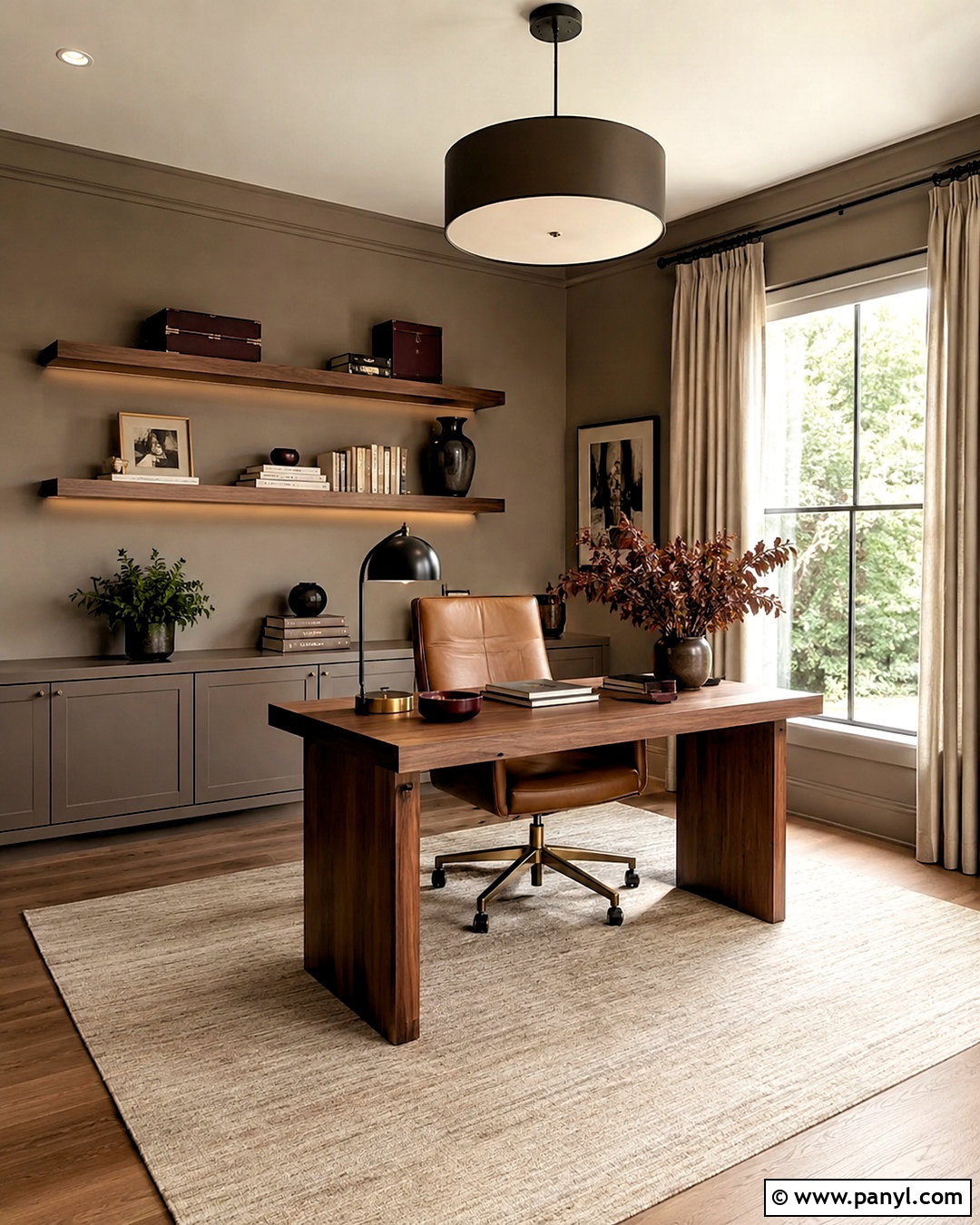
Mushroom walls give a home office more character than standard beige while remaining calm enough for focused work. Choose a medium taupe with warm gray-brown undertones. Build the room around a streamlined walnut desk and a comfortable chair upholstered in camel-colored fabric. A textured cream rug brightens the floor, and full-length oatmeal curtains soften outside light. Install floating wood shelves for books, closed storage boxes, and a few sculptural objects. Use an adjustable matte black desk lamp and a simple flush-mount ceiling fixture for practical lighting. Deep burgundy or forest green accessories can add controlled color. Paint the trim in the same mushroom shade for a seamless effect. The coordinated walls, storage, lighting, and furniture create a polished workspace that feels professional without resembling a corporate office.
7. Rust Entryway Walls
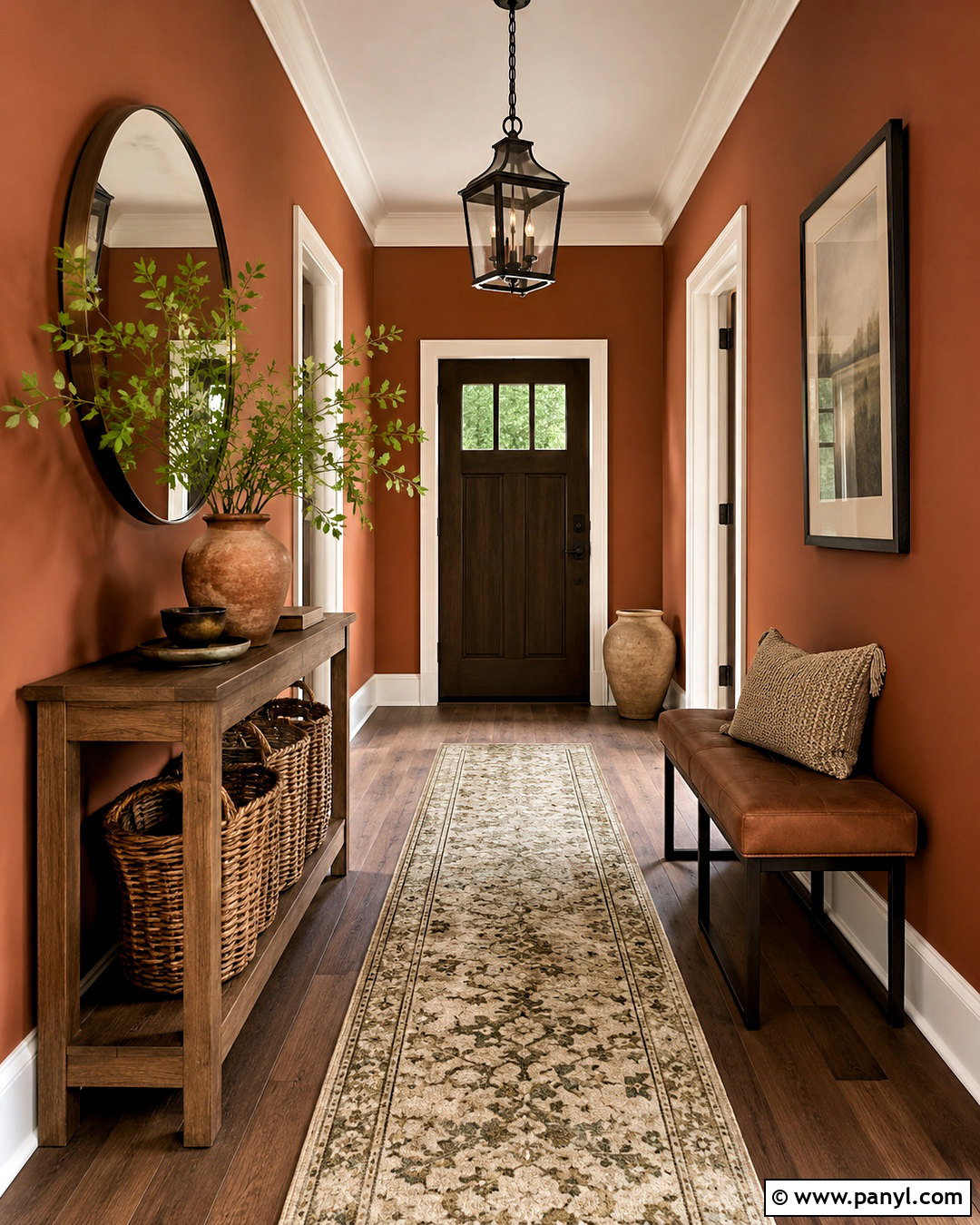
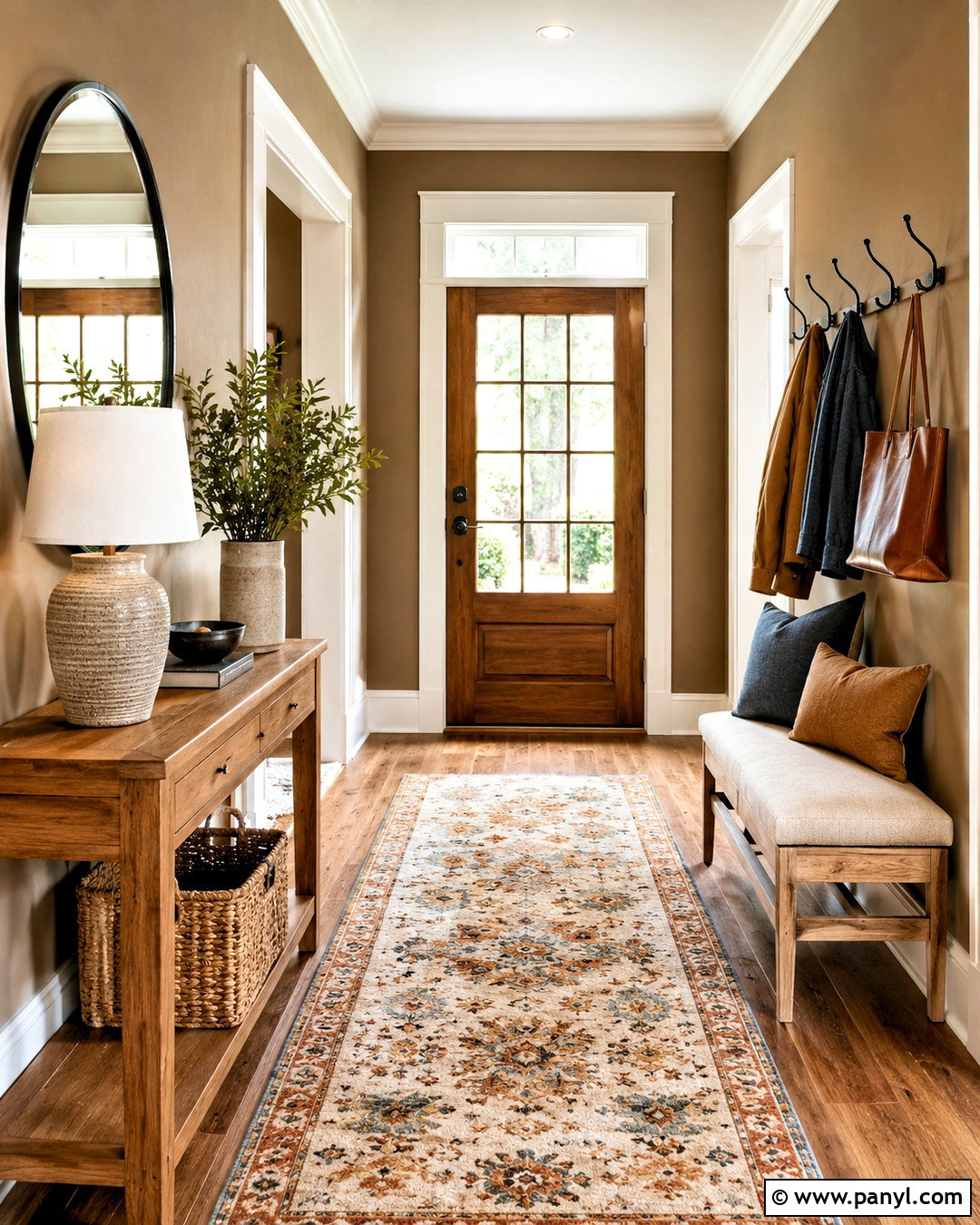
An entryway is an ideal place to use rich rust walls because the color creates an immediate sense of warmth. Select a softened red-brown rather than a vivid orange-red. Place a narrow oak console against the main wall and hang a large round mirror with a dark bronze frame above it. A patterned runner in cream, black, and muted olive guides the eye through the space. Add a small upholstered bench if the layout allows, along with baskets for shoes and daily accessories. Cream trim and a pale ceiling prevent the compact area from feeling enclosed. A black metal lantern or globe pendant gives the room a defined focal point. Finish with terracotta pottery, a leafy branch, and one practical table lamp. This complete arrangement makes the entrance feel organized, memorable, and inviting.
8. Caramel Family Room Walls
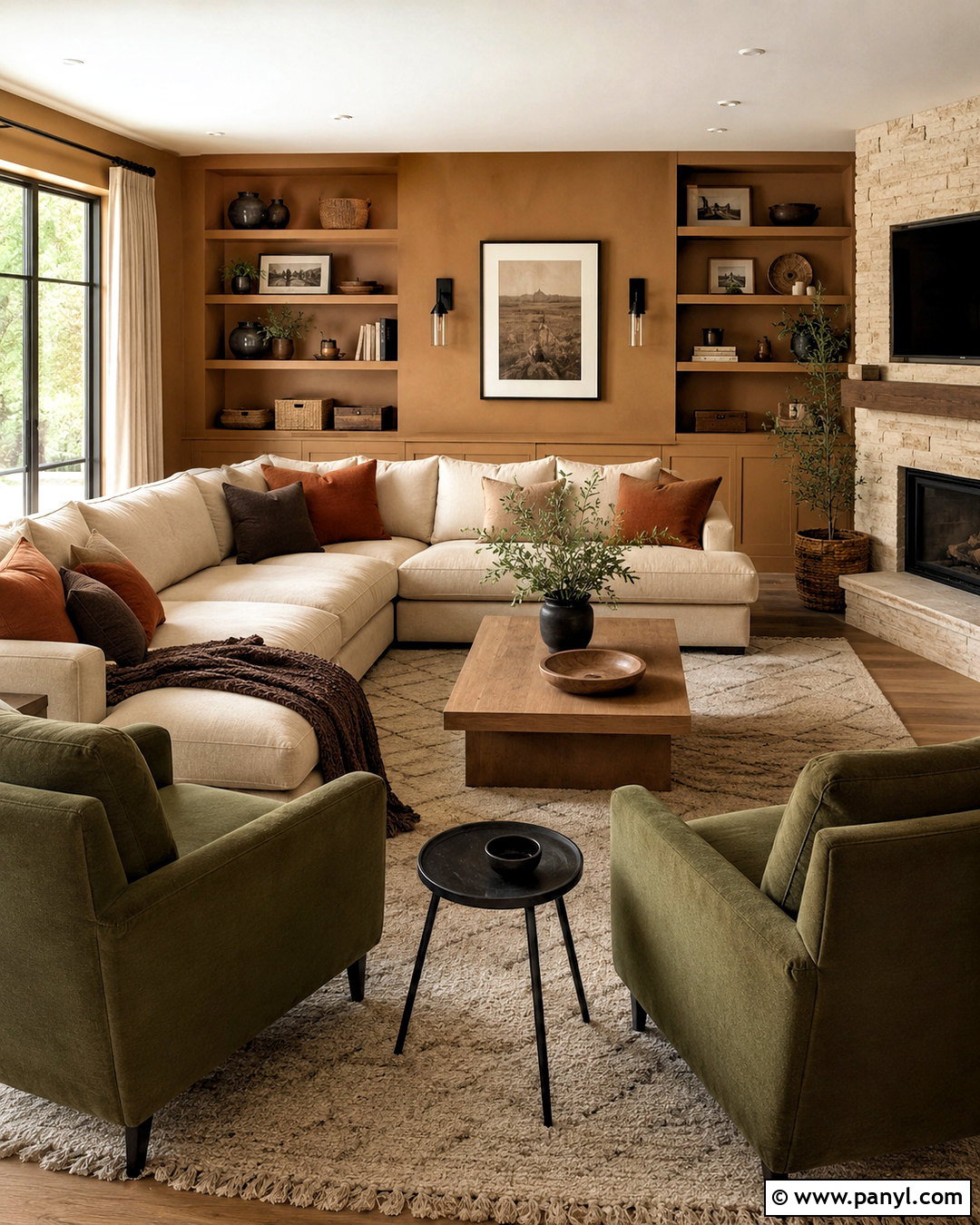
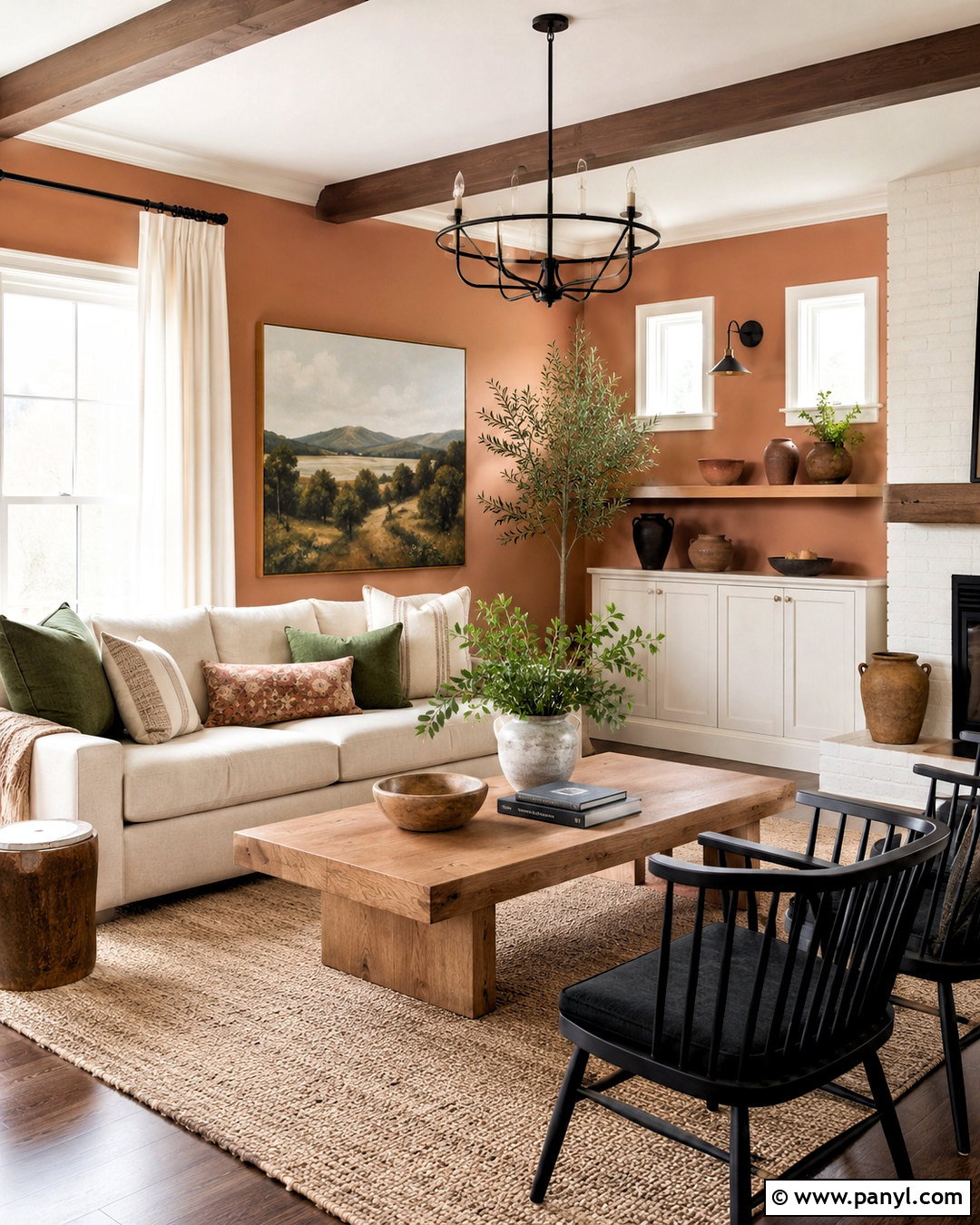
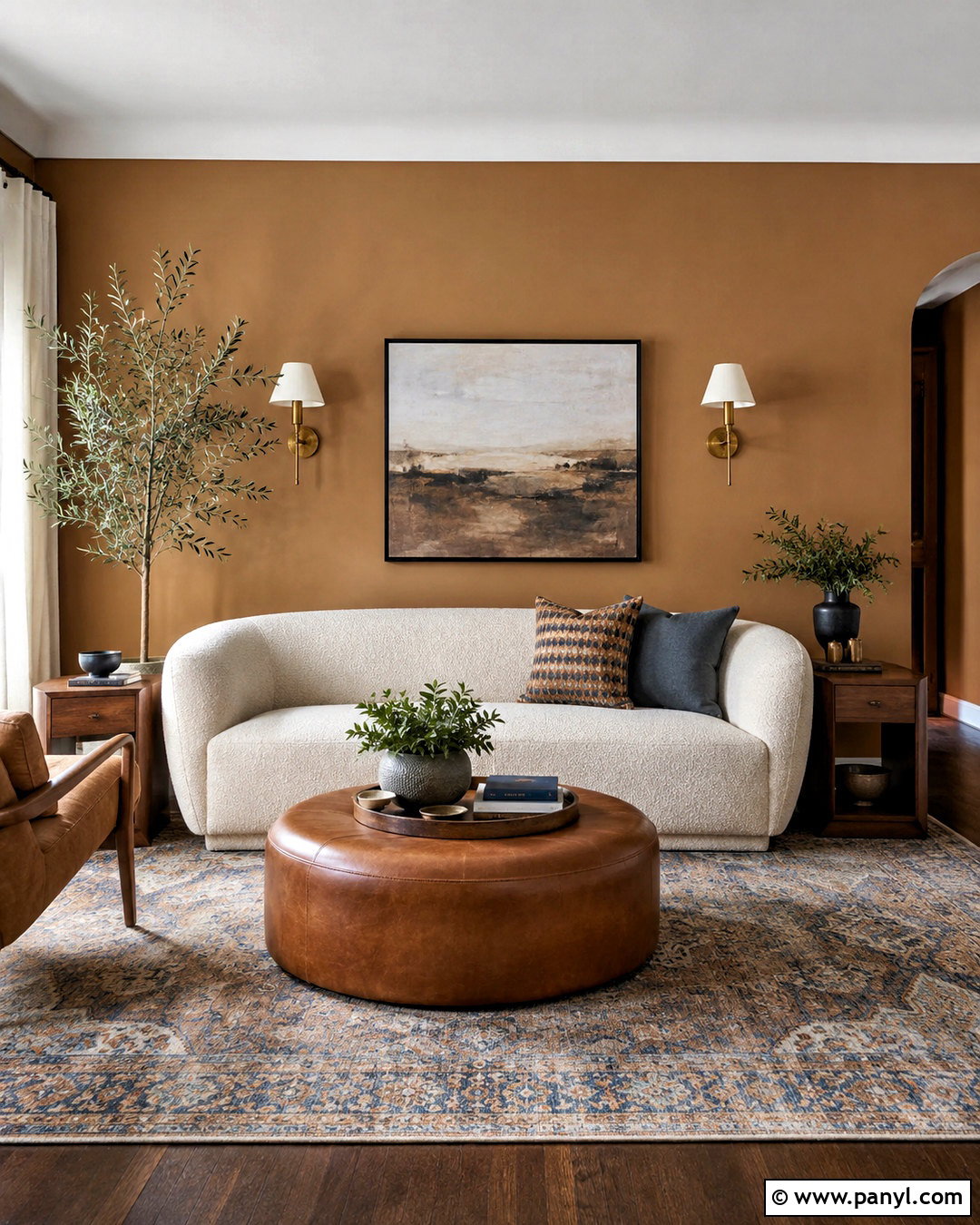
Caramel walls add depth to a family room while supporting a comfortable, casual layout. Pick a toasted tan shade with clear golden-brown undertones. Arrange a deep cream sectional around a substantial oak coffee table, leaving open paths for easy movement. Upholstered accent chairs in olive or dark brown help balance the light sofa. Choose a large rug with a low-contrast geometric pattern in beige, camel, and charcoal. Built-in shelves can be painted caramel to blend with the walls, allowing books and objects to stand out cleanly. Add washable linen-blend curtains, sturdy woven baskets, and layered pillows in rust and chocolate. Black picture frames and lighting provide definition. With durable fabrics and practical storage worked into the palette, the room feels relaxed, cohesive, and ready for daily use.
9. Adobe Bathroom Walls
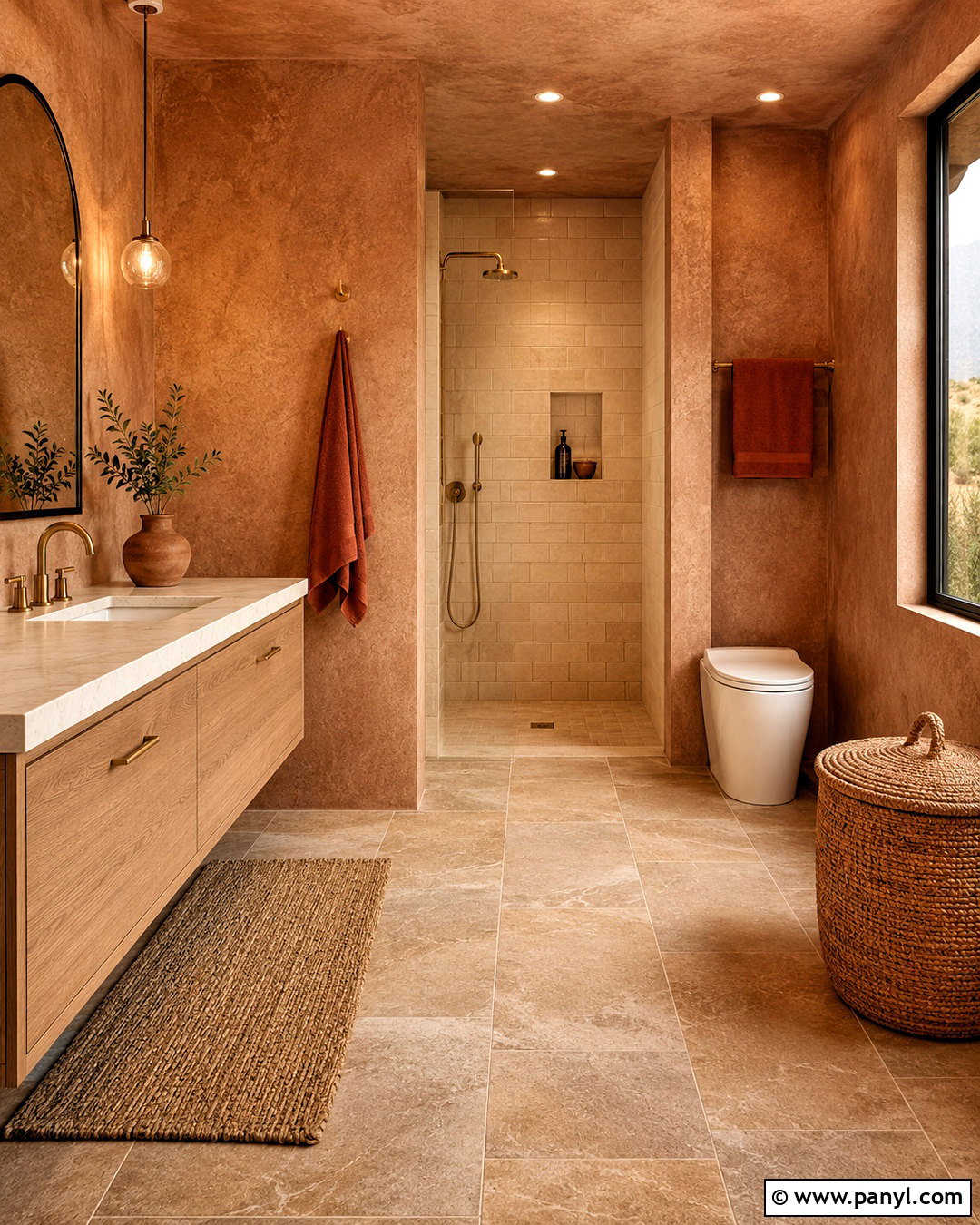
Adobe-colored walls can make a bathroom feel like a quiet desert retreat. Use a mineral paint or matte finish in a dusty peach-brown hue. Pair it with a floating white oak vanity, an ivory stone counter, and brushed brass fixtures. Large warm beige floor tiles keep grout lines minimal and make the room easier to maintain. Above the vanity, install an arched mirror with a thin bronze frame and two frosted globe sconces. A frameless glass shower preserves the open feeling, while handmade cream tiles introduce subtle variation. Complete the space with rust-colored towels, a natural wood stool, and a woven hamper. Keep accessories limited and functional. The combination of adobe walls, light stone, warm metal, and clean-lined wood produces a bathroom that feels earthy without becoming theme-driven.
10. Warm Taupe Nursery Walls
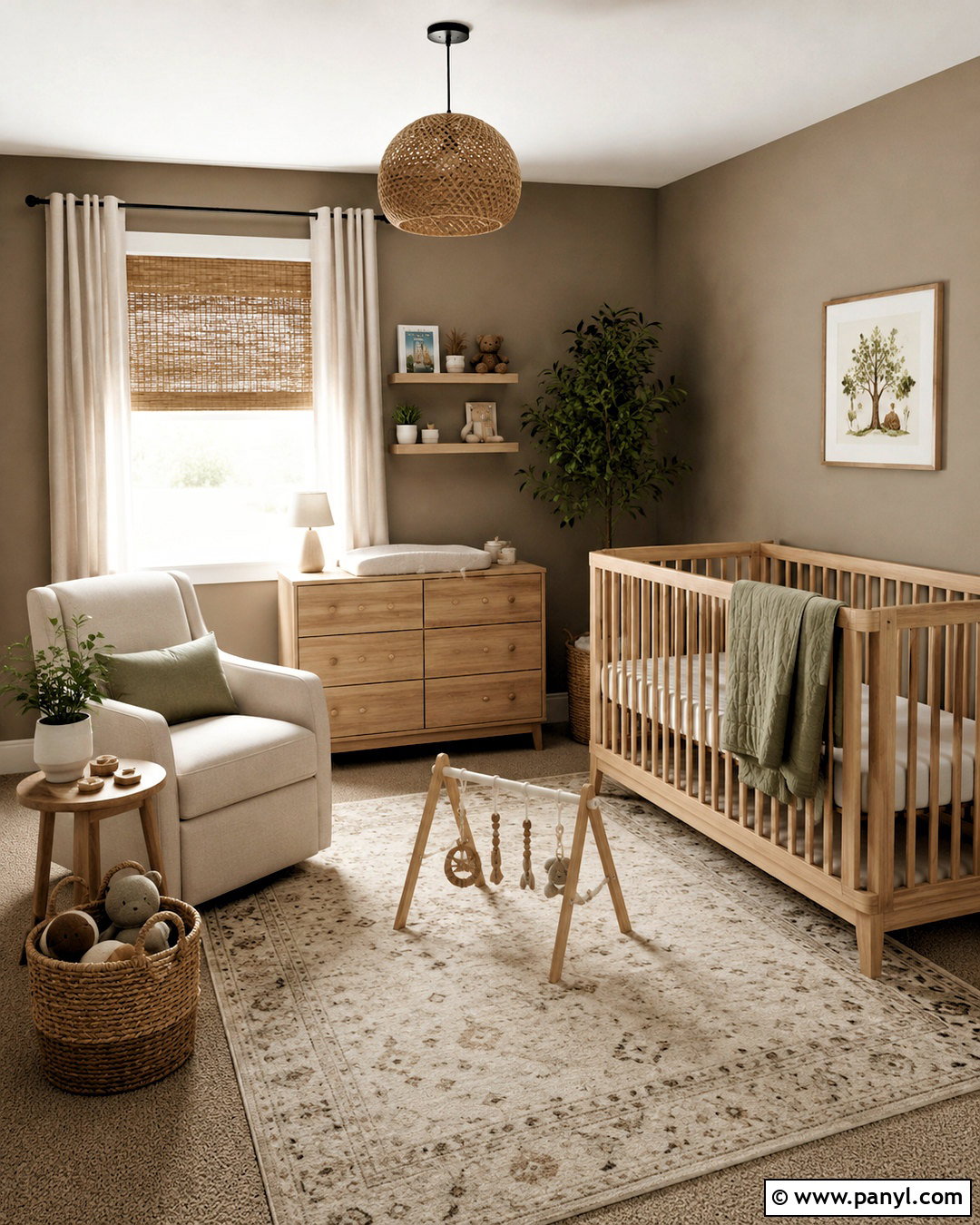
Warm taupe walls create a soothing nursery that can adapt as a child grows. Choose a gentle brown-gray shade with no obvious purple undertone. Pair it with a natural maple crib, an ivory upholstered glider, and a low oak dresser that doubles as a changing station. A washable cream rug with a simple tan pattern makes the room feel soft underfoot. Use blackout curtains in warm white linen and add woven shades for layered light control. Keep the decor quiet with framed animal sketches, wood toys, and storage baskets. A muted sage throw or clay-colored pillow introduces restrained color. Paint the ceiling creamy white to maintain brightness. By avoiding strongly themed furniture, the taupe walls become part of a flexible room that can later transition into a calm bedroom or play space.
11. Cinnamon Breakfast Nook Walls
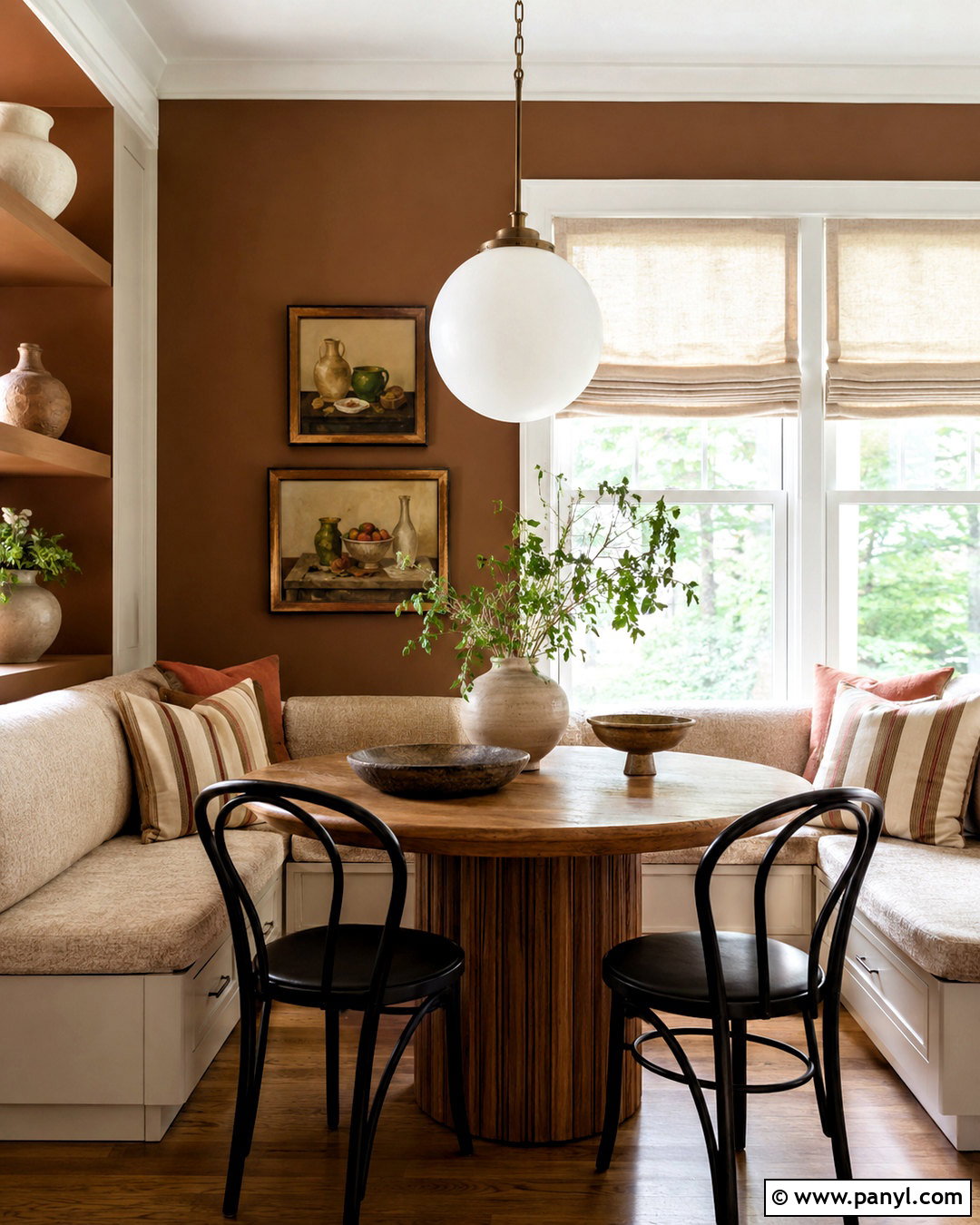
Cinnamon walls give a breakfast nook energy while maintaining the relaxed character of an earthy palette. Choose a brown-based spice shade and use it around the entire dining corner. A built-in banquette upholstered in oatmeal performance fabric offers practical seating without competing with the walls. Add a round pedestal table in medium oak and two curved black dining chairs. A globe pendant with an opal glass shade creates a clean focal point above the table. Use striped pillows in cream, rust, and olive for pattern. Roman shades in natural linen keep the windows tailored but soft. Finish with a small gallery of food-inspired still-life prints and one ceramic vase. The result is a complete, cheerful nook that feels distinct from the kitchen while remaining connected through coordinated wood and neutral finishes.
12. Mocha Primary Bedroom Walls
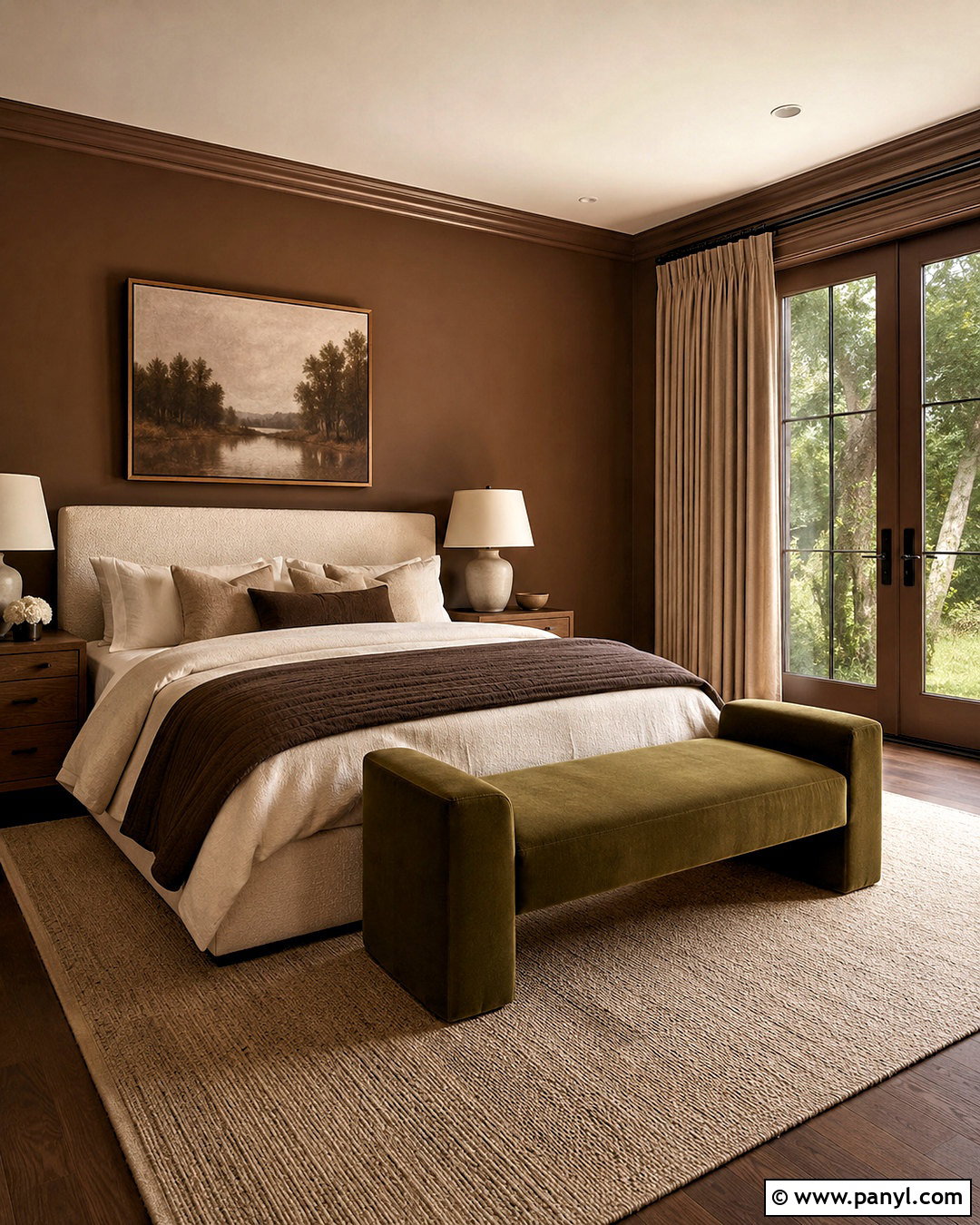
Deep mocha walls can make a primary bedroom feel peaceful and cocooning rather than dark. Look for a rich milk-chocolate brown with a slightly muted finish. Continue the color across doors and trim to reduce visual breaks. Center a tall cream bouclé bed on the main wall and layer it with white sheets, taupe linen, and a chocolate quilt. Wide walnut nightstands reinforce the warm palette, while pale ceramic lamps create contrast. Use a large oatmeal rug to brighten dark flooring and hang full-length sand-colored curtains. A bench in muted olive adds one natural accent at the foot of the bed. Keep artwork minimal, choosing soft landscapes or abstract forms. Balanced with light textiles and carefully placed lamps, mocha walls deliver drama while preserving a comfortable, restful atmosphere.
13. Sandstone Hallway Walls
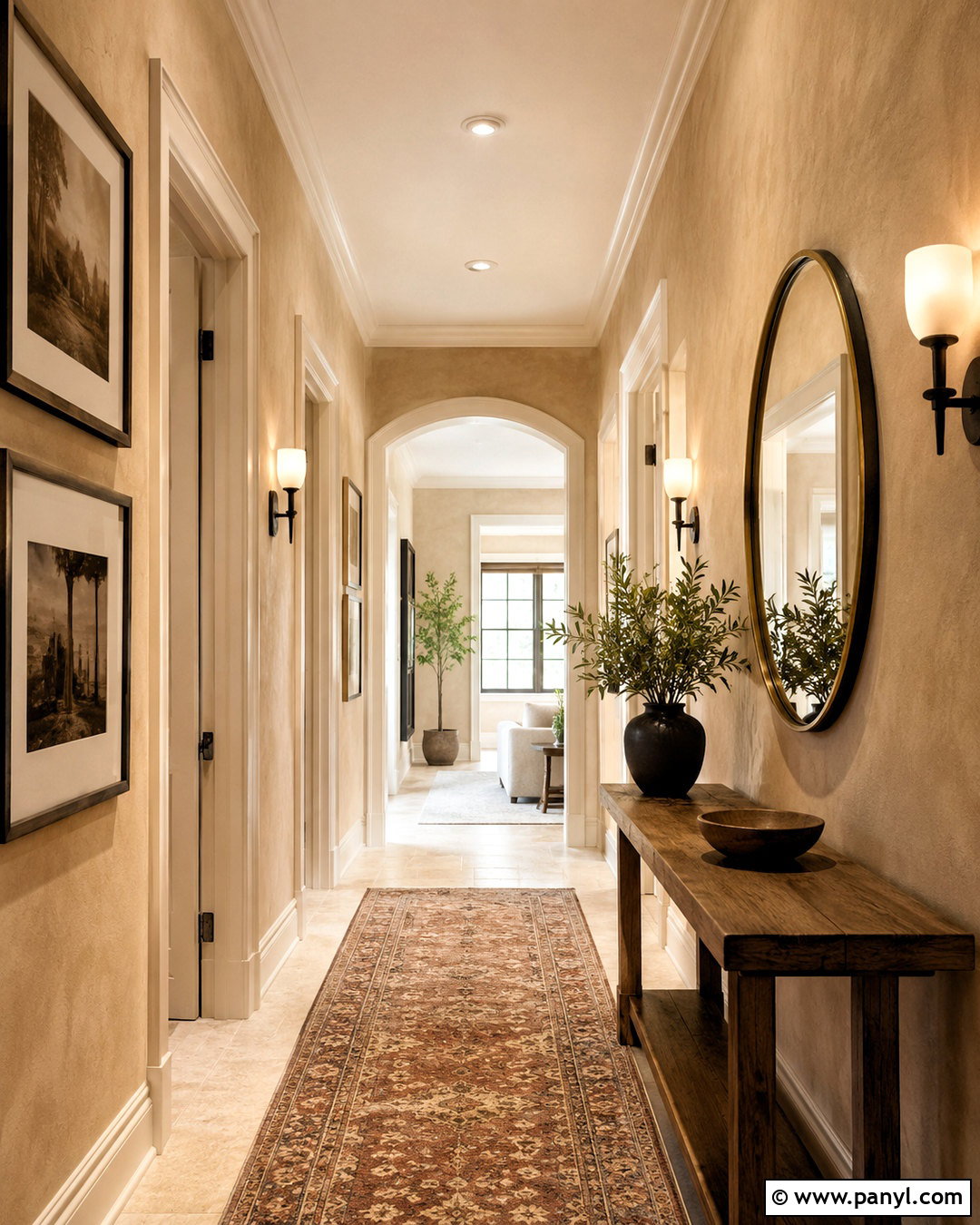
Sandstone walls help a narrow hallway feel warm, continuous, and thoughtfully designed. Choose a light tan shade inspired by natural limestone. Paint the trim in a creamy white with a similar undertone so the transition looks gentle rather than sharp. Use a slim wood console where space permits and add a long runner with faded rust, beige, and charcoal details. Repeating black-framed artwork creates rhythm without overwhelming the passage. If the hallway lacks windows, install several evenly spaced wall sconces with warm white glass shades. A round mirror at the far end can reflect light and make the area feel more open. Keep doors either creamy white or sandstone for consistency. These coordinated details turn a frequently overlooked circulation area into a calm visual link between the surrounding rooms.
14. Muted Coral Guest Room Walls
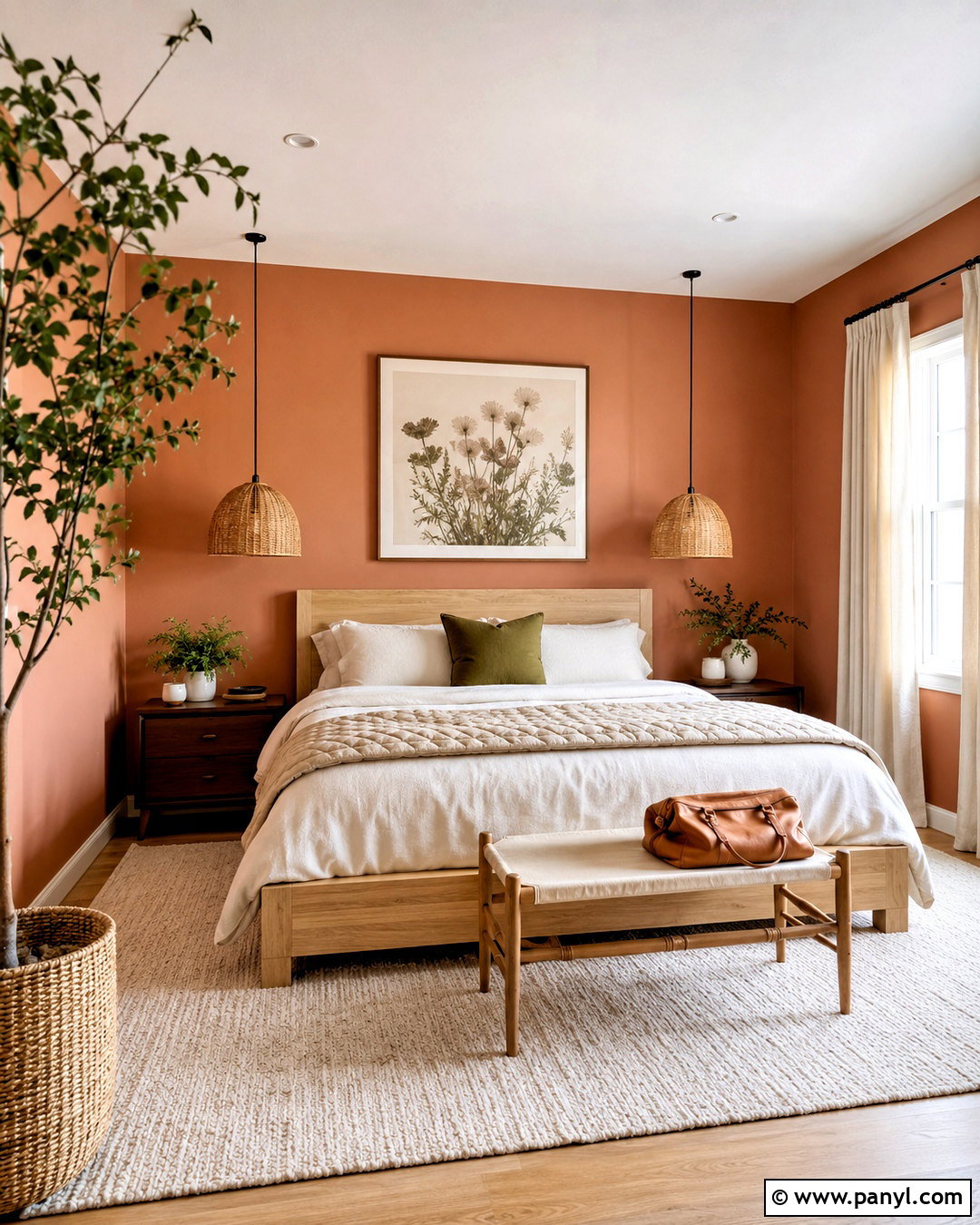
Muted coral walls offer a welcoming alternative to pink in a guest room. Select a dusty coral shade softened with clay and beige undertones. Balance it with a simple white oak bed, crisp ivory bedding, and a lightweight quilt in warm taupe. A pair of compact walnut nightstands gives the palette depth without making the room heavy. Use woven pendant lights or ceramic sconces to free the bedside surfaces. Curtains in flax linen soften the windows, while a cream rug adds comfort. Introduce olive through one lumbar pillow, a throw, or understated botanical artwork. Keep the ceiling and trim warm white. Include practical guest features such as a luggage bench, accessible outlets, and an empty drawer. The complete room feels cheerful, earthy, and comfortable without relying on decorative clutter.
15. Khaki Family Room Walls
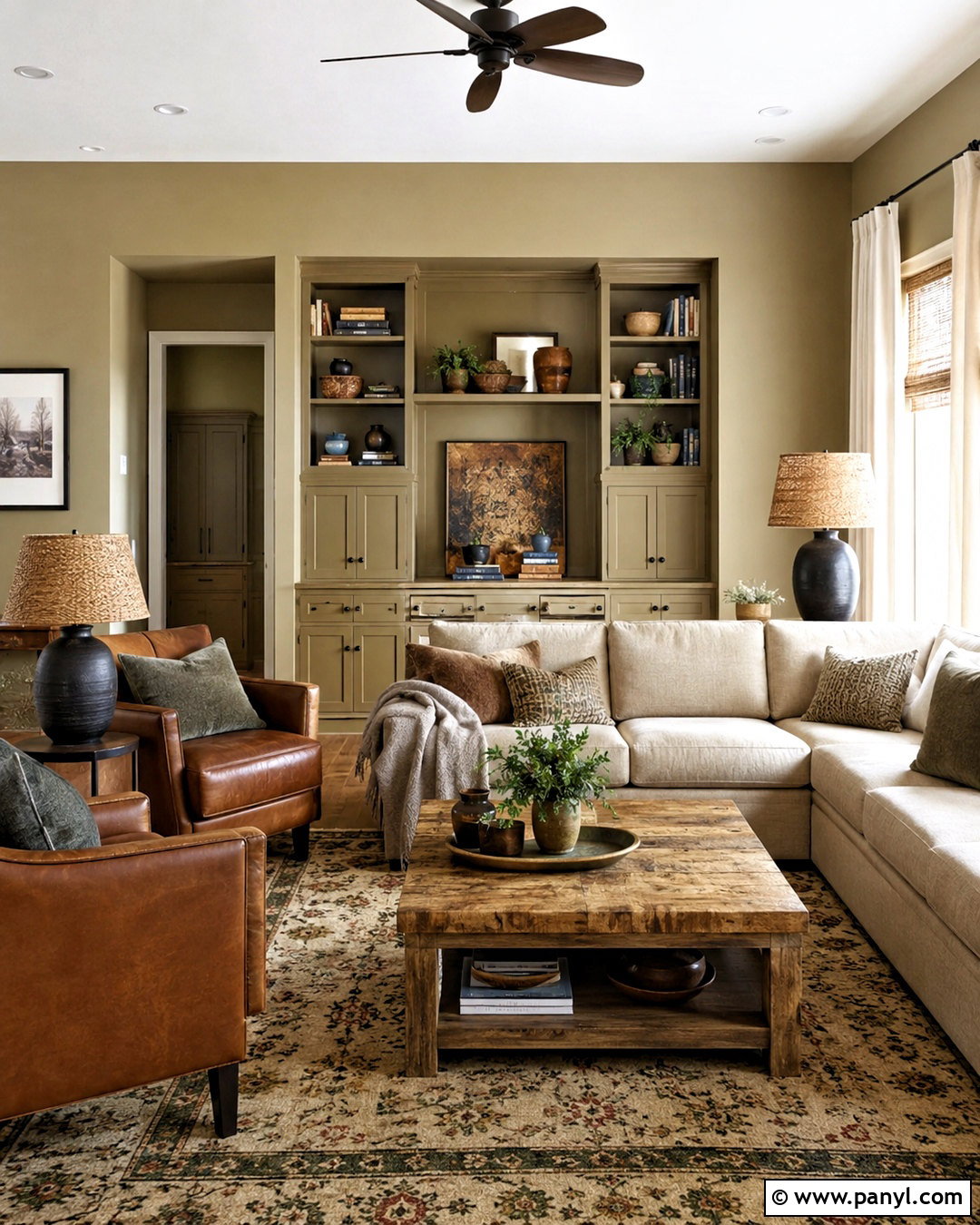
Khaki walls provide a grounded neutral background for a busy family room. Choose a warm green-beige that changes subtly as daylight moves through the space. Pair it with a durable oatmeal sofa, cognac leather armchairs, and a broad reclaimed wood coffee table. A patterned rug containing cream, olive, and brick red hides everyday wear while tying the furnishings together. Use closed cabinets along one wall for games, electronics, and extra blankets. Above them, display a balanced mix of books, pottery, and framed family photographs. Matte black lamps and curtain rods give the soft palette sharper edges. Add woven shades beneath ivory curtains for flexible light control. Khaki makes the room feel connected to nature, while the practical layout, resilient materials, and generous storage keep it comfortable for real family life.
16. Burnt Sienna Dining Room Walls
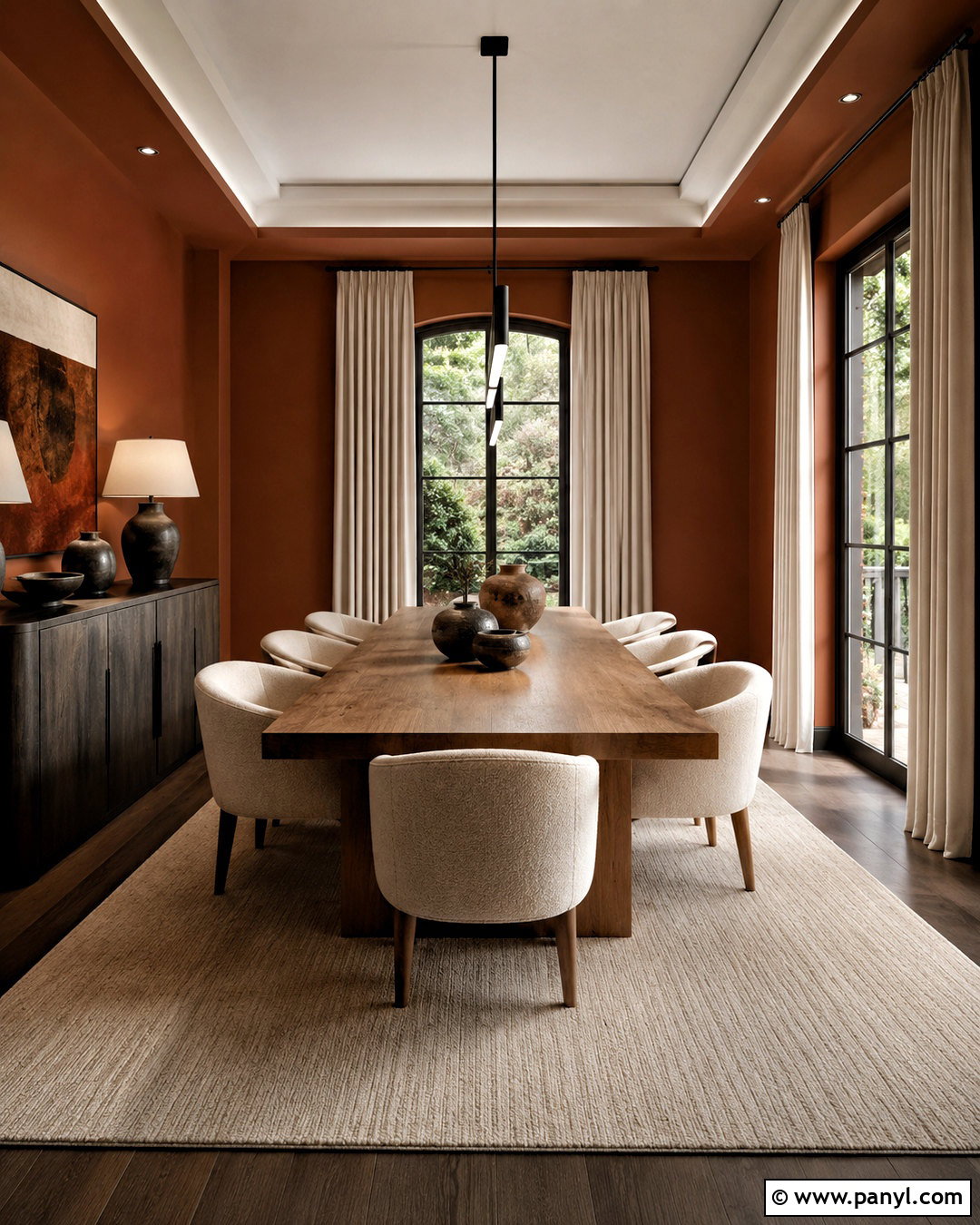
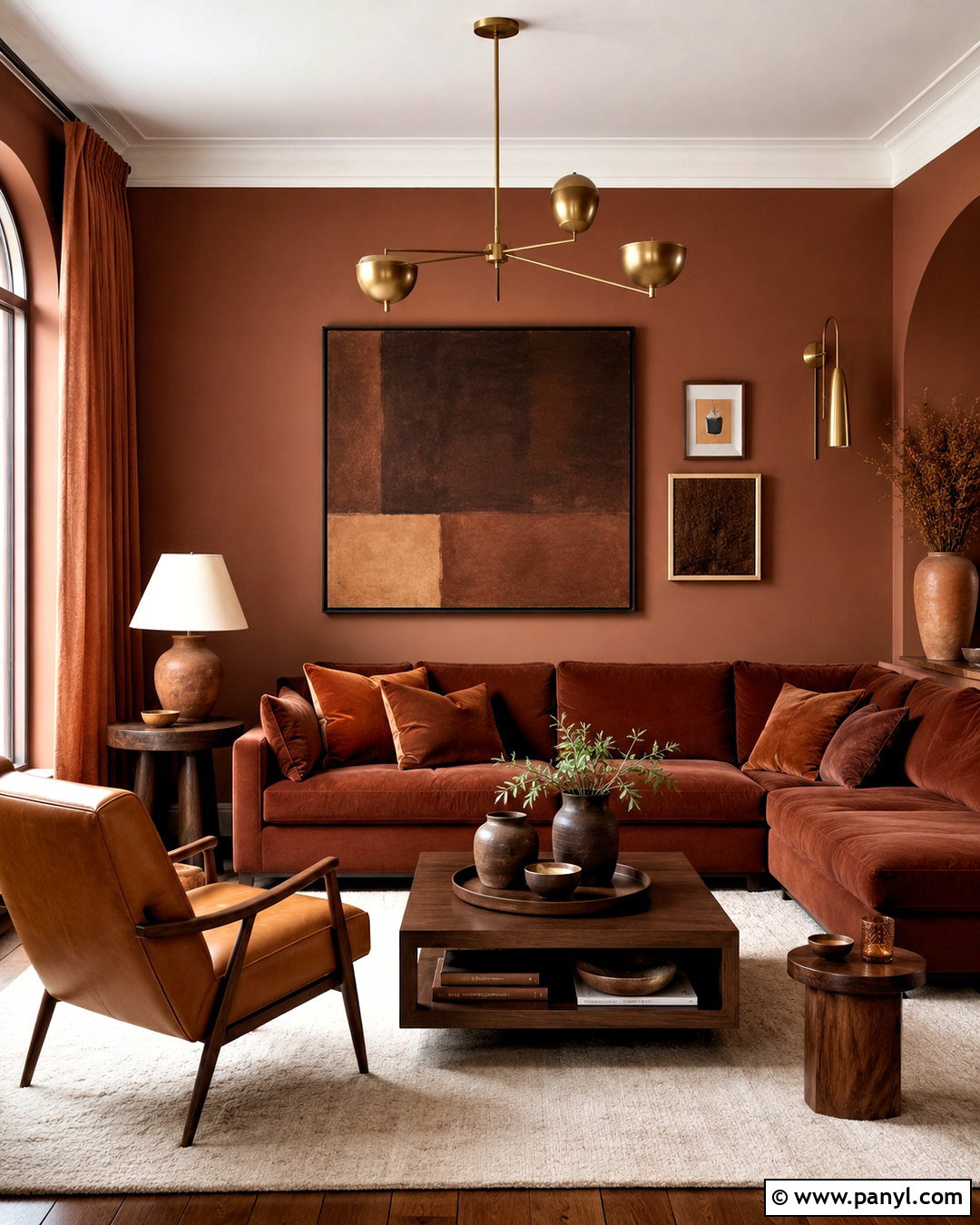
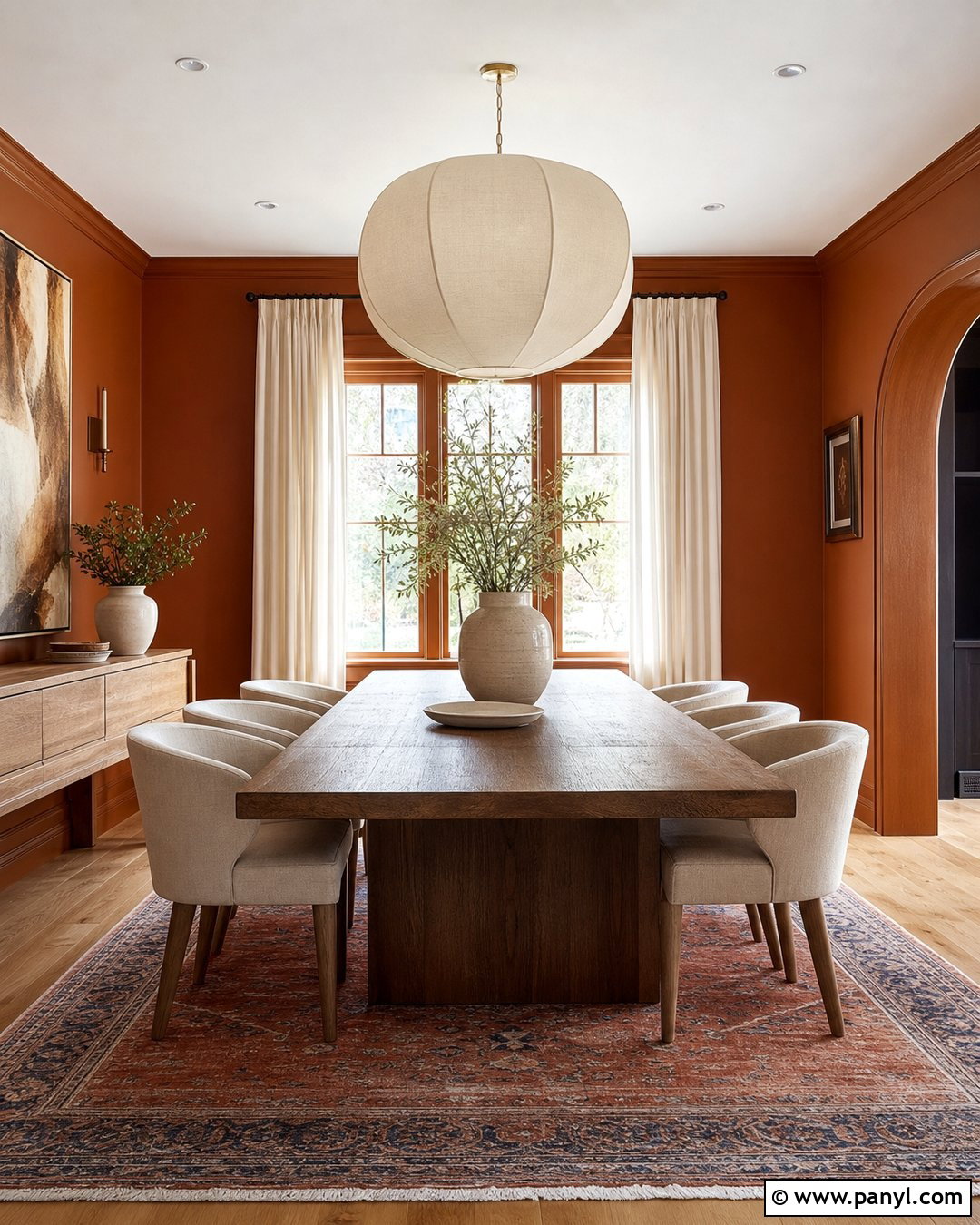
Burnt sienna walls create a dramatic dining room with an unmistakably earthy foundation. Choose a dark reddish brown with enough gray to prevent it from looking overly bright. Place a long oak table at the center and surround it with chairs upholstered in textured cream fabric. A black linear chandelier introduces a modern line above the table. Ground the arrangement with a large neutral rug and use full-height ivory curtains to lighten the perimeter. A dark wood sideboard can hold serving pieces and support a pair of sculptural lamps. Add one oversized abstract artwork containing black, rust, and sand. Keep table decor simple with a low ceramic bowl and natural branches. The finished room feels intimate for evening meals but remains balanced and attractive in bright daytime light.
17. Dusty Rose Bedroom Walls
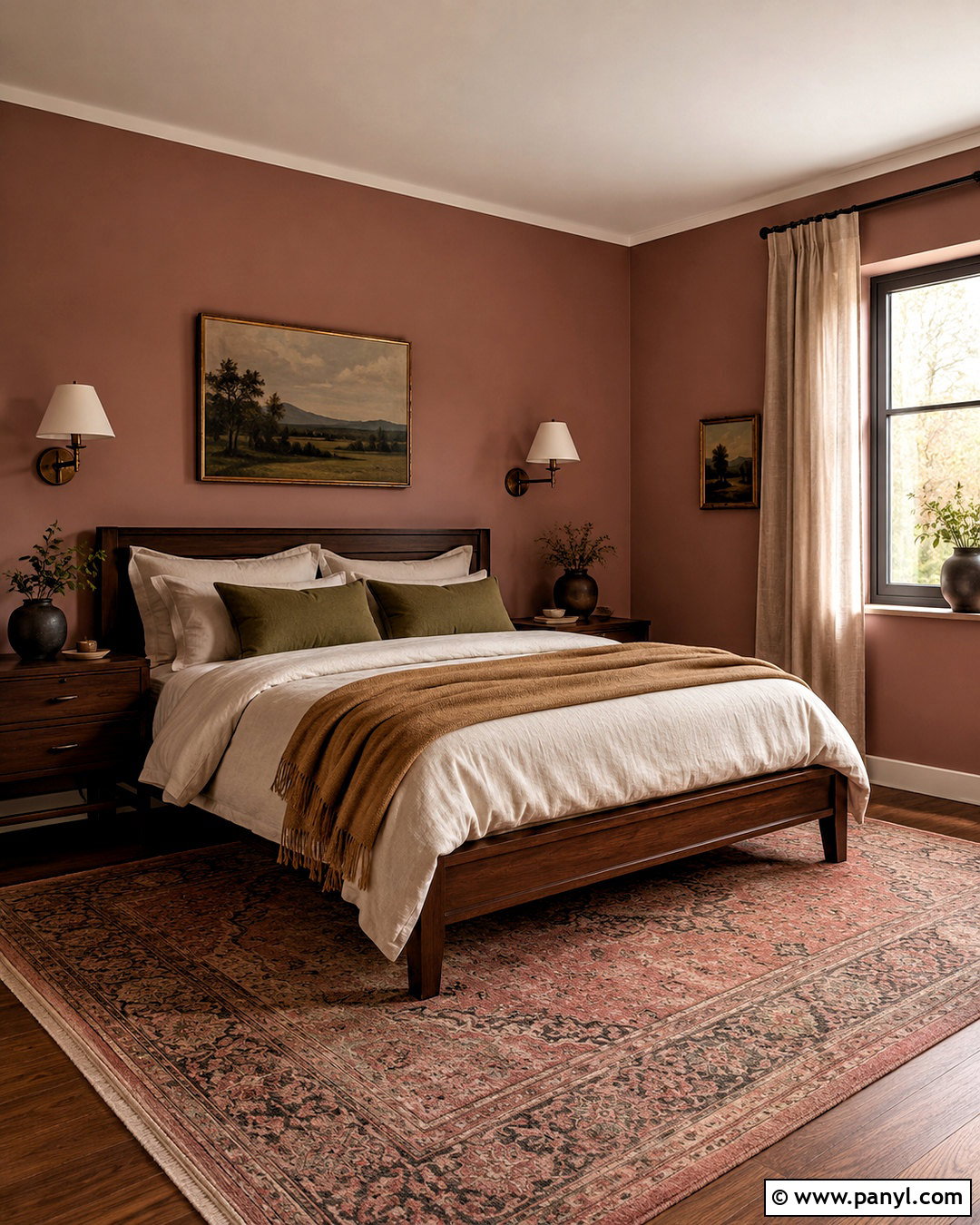
Dusty rose walls can feel earthy and sophisticated when the shade contains muted brown undertones. Use the color throughout a bedroom and pair it with warm white trim for a clean outline. A dark walnut bed introduces contrast, while ivory linen bedding keeps the center light and restful. Add a camel wool blanket and pillows in faded olive to move the palette away from an overly sweet look. Matching wood nightstands and aged brass sconces create symmetry. Choose a vintage-style rug with rose, taupe, and rust details to connect the room from floor to wall. Window treatments in natural flax bring in texture without additional color. Complete the setting with understated pottery and landscape art. This coordinated approach makes dusty rose suitable for both traditional and modern bedrooms.
18. Tobacco Brown Library Walls
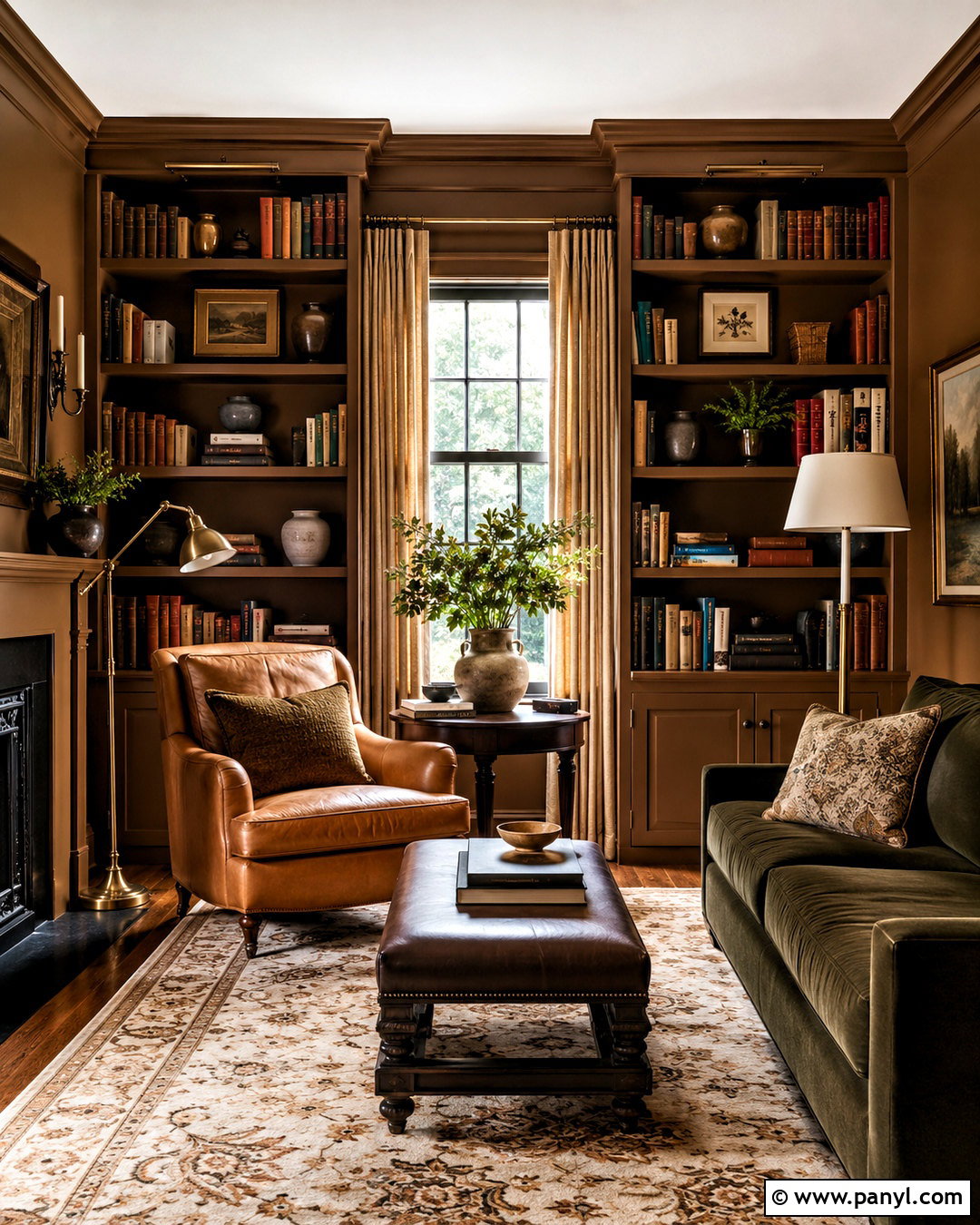
Tobacco brown walls give a home library or reading room a rich, established character. Paint the walls, bookcases, and trim in the same warm medium-brown shade for a seamless, color-drenched effect. Arrange a comfortable caramel leather chair beside a small dark wood table and an adjustable brass reading lamp. A cream and brown patterned rug provides contrast beneath the seating area. Fill the shelves thoughtfully, leaving occasional open spaces for pottery, framed art, and small objects. Add linen curtains in oatmeal to soften the room and reflect daylight. If space allows, include a compact sofa upholstered in muted olive velvet. Warm white ceiling lighting prevents the brown surfaces from appearing flat. The final room feels layered, useful, and intimate while maintaining clear walkways and practical reading light.
19. Warm Greige Kitchen Walls
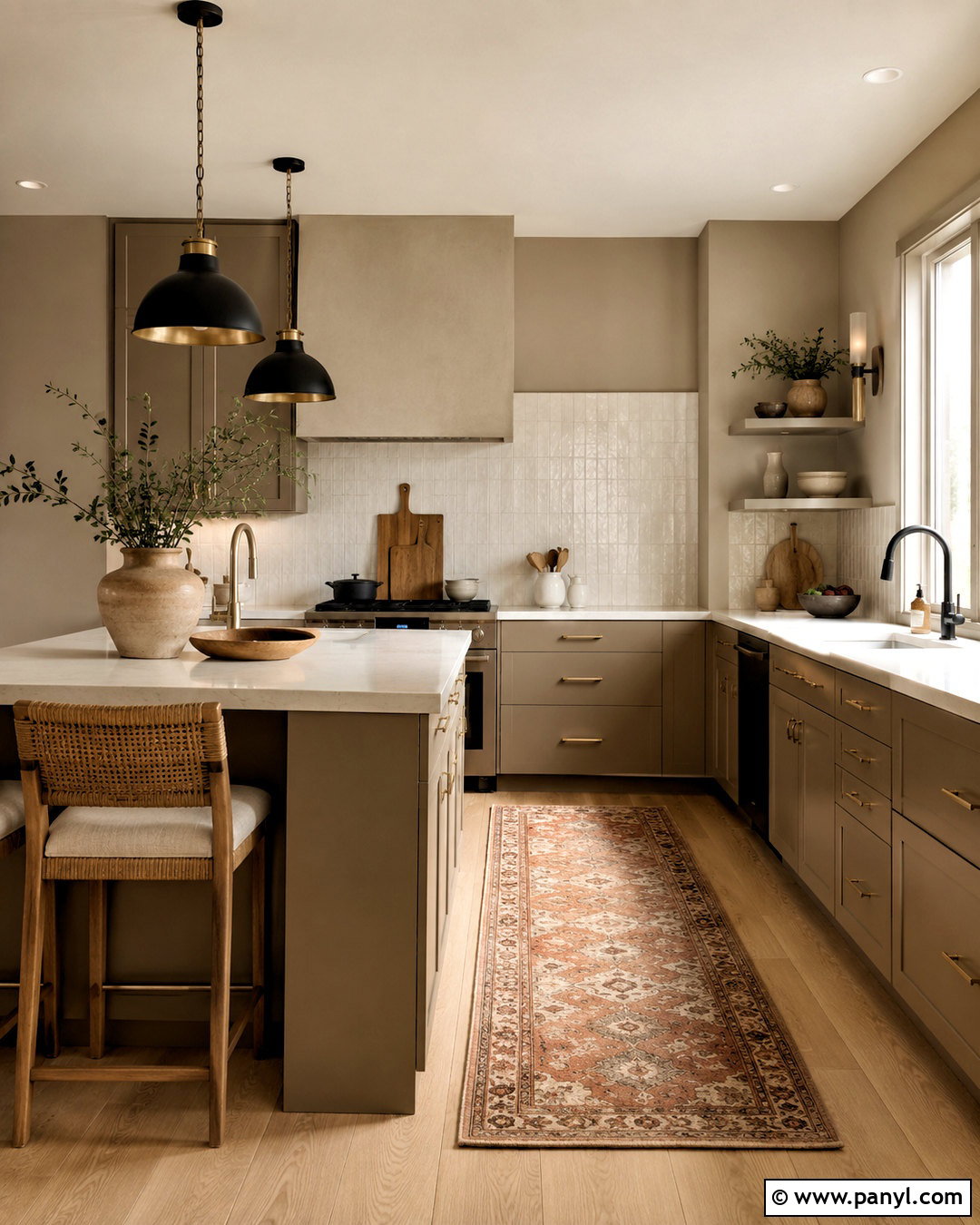
Warm greige walls are a flexible choice for a kitchen where several materials need to work together. Pick a beige-forward greige instead of a cool silver shade. Combine it with mushroom-painted cabinets, white oak flooring, creamy quartz counters, and a lightly textured ivory backsplash. Brushed brass pulls add warmth, while slim black pendants create definition over the island. Use wood counter stools with woven seats to reinforce the natural palette. Keep open surfaces mostly clear, displaying only a few ceramic vessels and wood cutting boards. A washable runner in rust and taupe adds pattern near the sink. Warm greige also allows adjoining rooms to carry stronger earth colors without producing a harsh transition. The finished kitchen feels bright, connected, and warmer than a conventional gray-and-white scheme.
20. Chocolate Brown Powder Room Walls
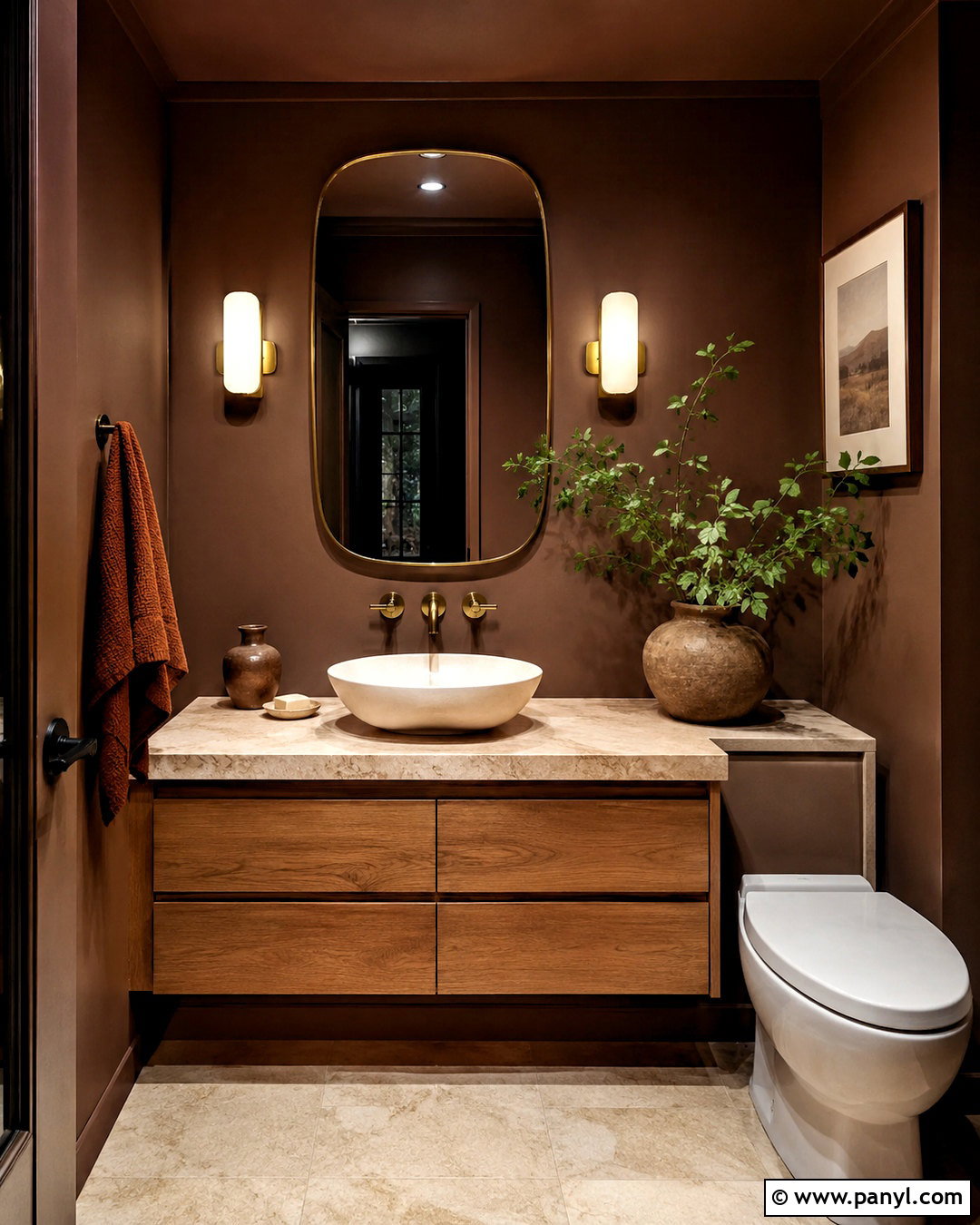
A powder room can carry chocolate brown walls especially well because its smaller scale supports a more dramatic approach. Choose a deep cocoa shade and paint the ceiling and trim to match. Install a compact floating vanity in medium oak with a creamy stone top. A sculptural white basin provides clear contrast, while an aged brass faucet brings warmth and shine. Use a large rounded mirror to reflect the light from two frosted glass sconces. Natural stone or warm beige porcelain flooring prevents the room from becoming too dark. Add one rust hand towel, a small ceramic vessel, and a simple framed print. With few objects and strong material contrast, the space feels intentional rather than crowded. The complete design turns a practical powder room into a memorable, polished interior.
Conclusion:
The best earthy interiors balance color, texture, function, and light instead of treating wall paint as an isolated choice. These **20 Warm Earthy Tone Walls** demonstrate how terracotta, clay, olive, ochre, sand, taupe, rust, and brown can shape complete rooms with distinct personalities. Before committing, paint large samples on more than one wall and observe them during the morning, afternoon, and evening. Flooring can significantly affect how a wall color reads, so evaluate every sample beside permanent wood, tile, or stone finishes. () Coordinate the final shade with warm trim, natural materials, and varied light-to-dark values. With those elements working together, earthy walls can feel current, comfortable, and enduring.

Related Ideas and Inspiration:
Leave a Reply