
These 20 tan walls show how a warm neutral backdrop can support rooms that feel fresh, inviting, and full of personality. Tan works best when its undertone connects naturally with the furniture, flooring, textiles, and accent colors around it. Golden tan feels comfortable beside cream, rust, olive, and warm wood. Cooler taupe-tan looks cleaner with navy, charcoal, black, and muted blue. Before decorating, view your walls throughout the day because changing light can reveal yellow, pink, gray, or green undertones. () The complete looks below include cozy bedrooms, polished living rooms, practical kitchens, and other spaces you can realistically recreate. Use their coordinated palettes, materials, layouts, and finishing touches as inspiration for your own 20 tan walls.

1. Tan Walls With White Trim
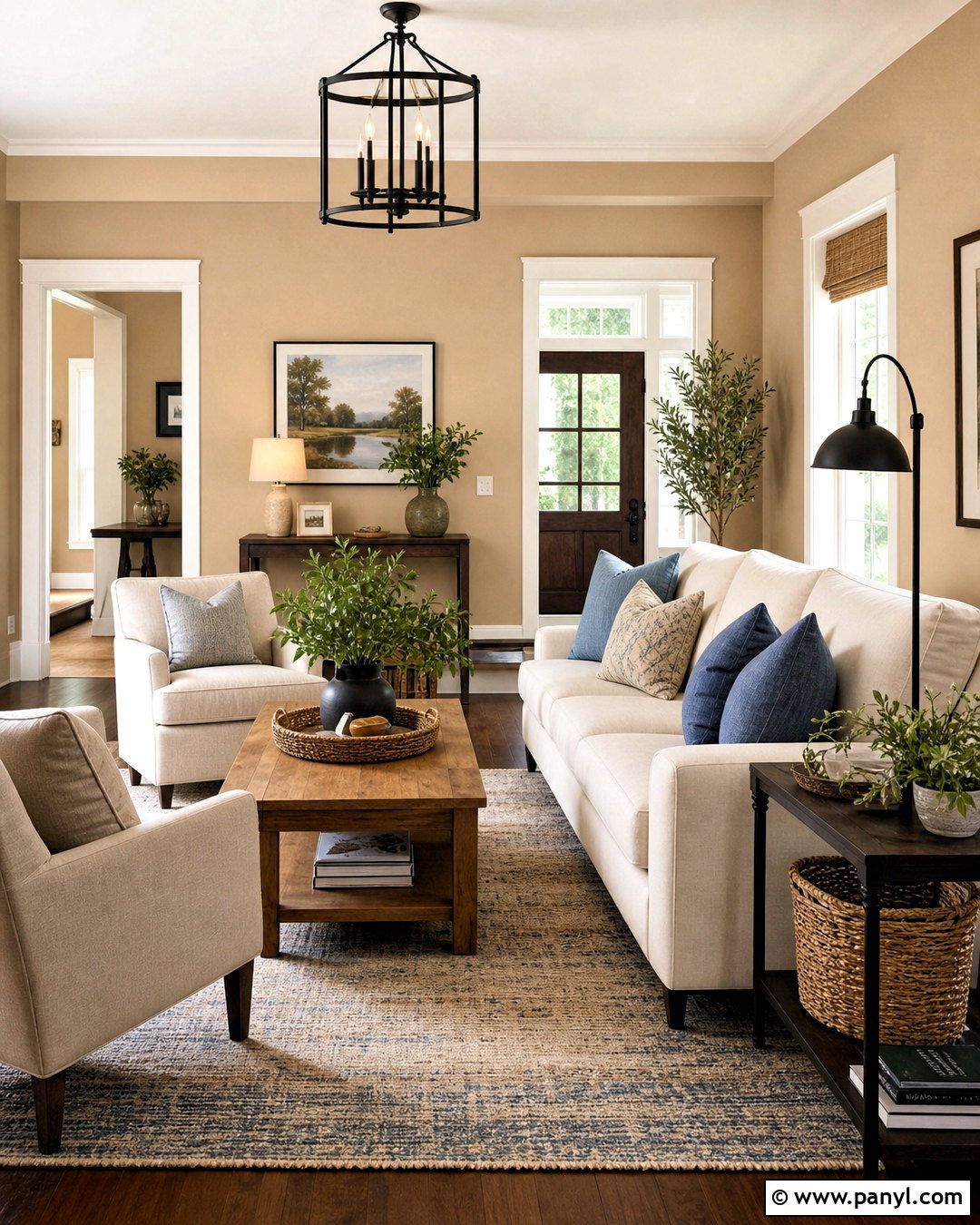
Crisp white trim gives tan walls a brighter, more defined appearance without removing their natural warmth. Build a welcoming living room around a cream sofa, two oatmeal armchairs, and a medium-tone oak coffee table. Use warm white rather than icy white for the curtains, rug, and painted molding so the contrast remains soft. A few matte black details, such as a floor lamp and thin picture frames, add structure. Place muted blue and camel pillows across the seating for gentle color variation. Finish the room with woven baskets, ceramic table lamps, and leafy greenery. This complete palette feels timeless because the white refreshes the tan while the wood, textiles, and natural accessories prevent the room from looking flat or overly formal.
2. Tan Walls With Navy Blue Decor
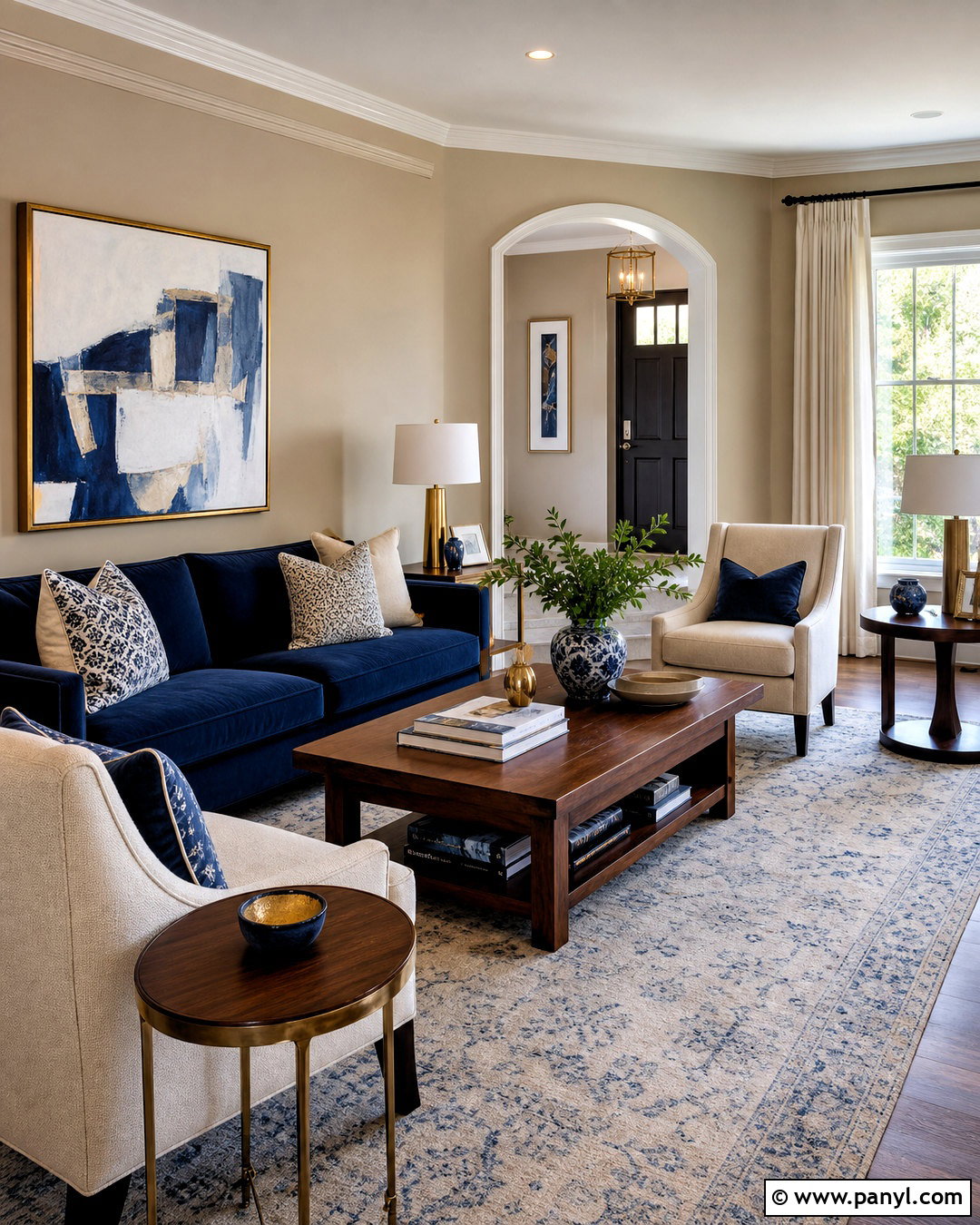
Navy blue brings strong, tailored contrast to tan walls and makes an everyday living room feel more intentional. Start with a deep navy sofa as the visual anchor, then balance its weight with ivory armchairs and a light tan area rug. Choose walnut side tables and a rectangular coffee table to reinforce the warm wall color. Add navy-and-cream patterned pillows, off-white linen curtains, and brushed brass lamps for a polished finish. Large artwork featuring blue, beige, and touches of rust can connect the entire palette. Keep the furniture layout open, with seating grouped around the rug rather than pushed against every wall. The final room feels comfortable and sophisticated, with enough contrast to look modern but enough warm texture to remain relaxed.
3. Tan Walls With Sage Green Decor
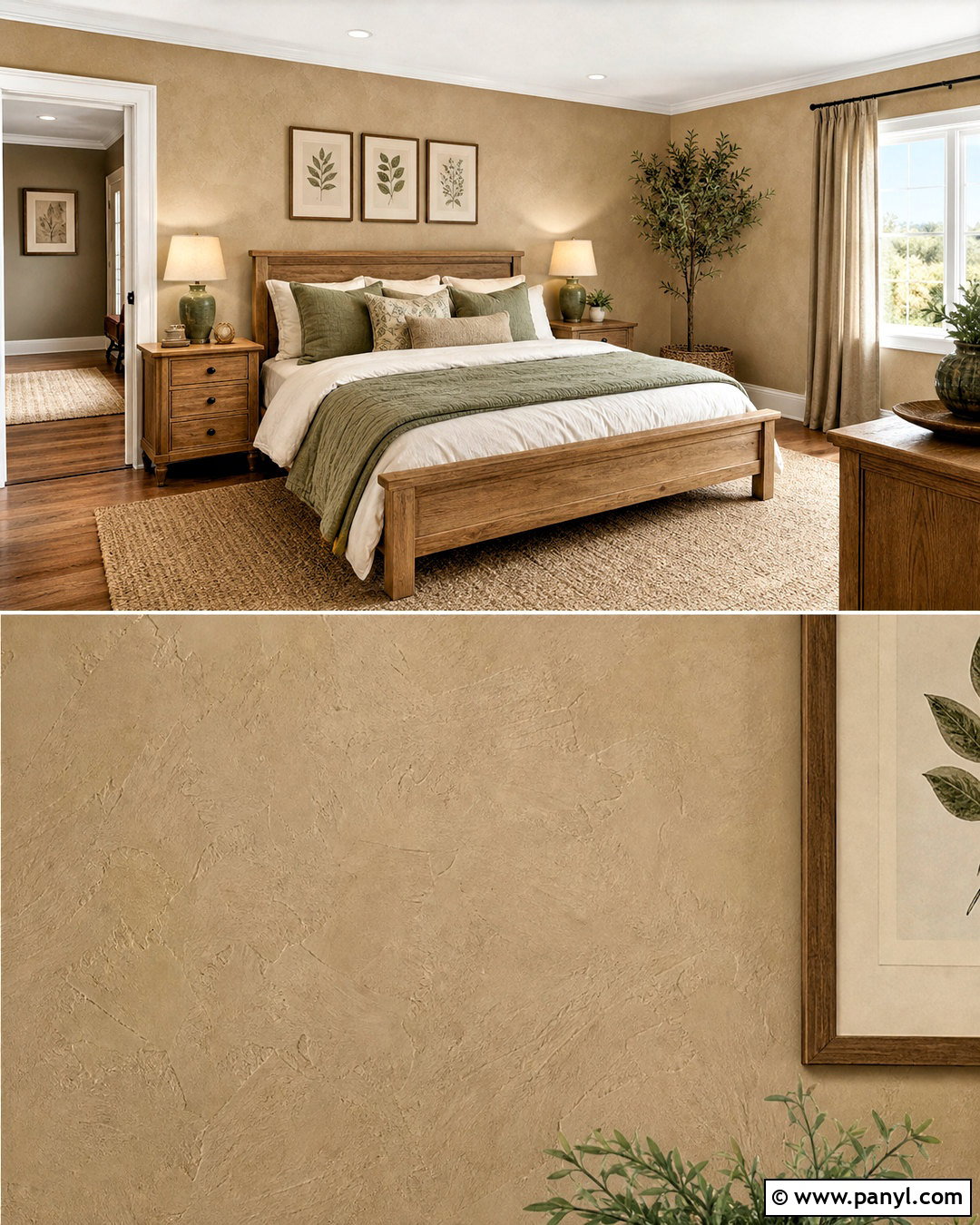
For a calm bedroom inspired by nature, pair tan walls with muted sage green and warm wood. Position an oak bed against the main wall and layer it with ivory sheets, a sage quilt, and pillows in cream, moss, and soft brown. Matching oak nightstands keep the arrangement balanced, while ceramic lamps with linen shades provide gentle texture. Hang simple botanical prints above the headboard in thin wood frames. A natural jute rug and light beige curtains reinforce the earthy palette without making everything the same shade. Add one upholstered bench at the foot of the bed and a tall plant near the window. This coordinated design feels restful and organic, making it especially effective for tan walls with yellow, olive, or slightly green undertones.
4. Tan Walls With Black Furniture
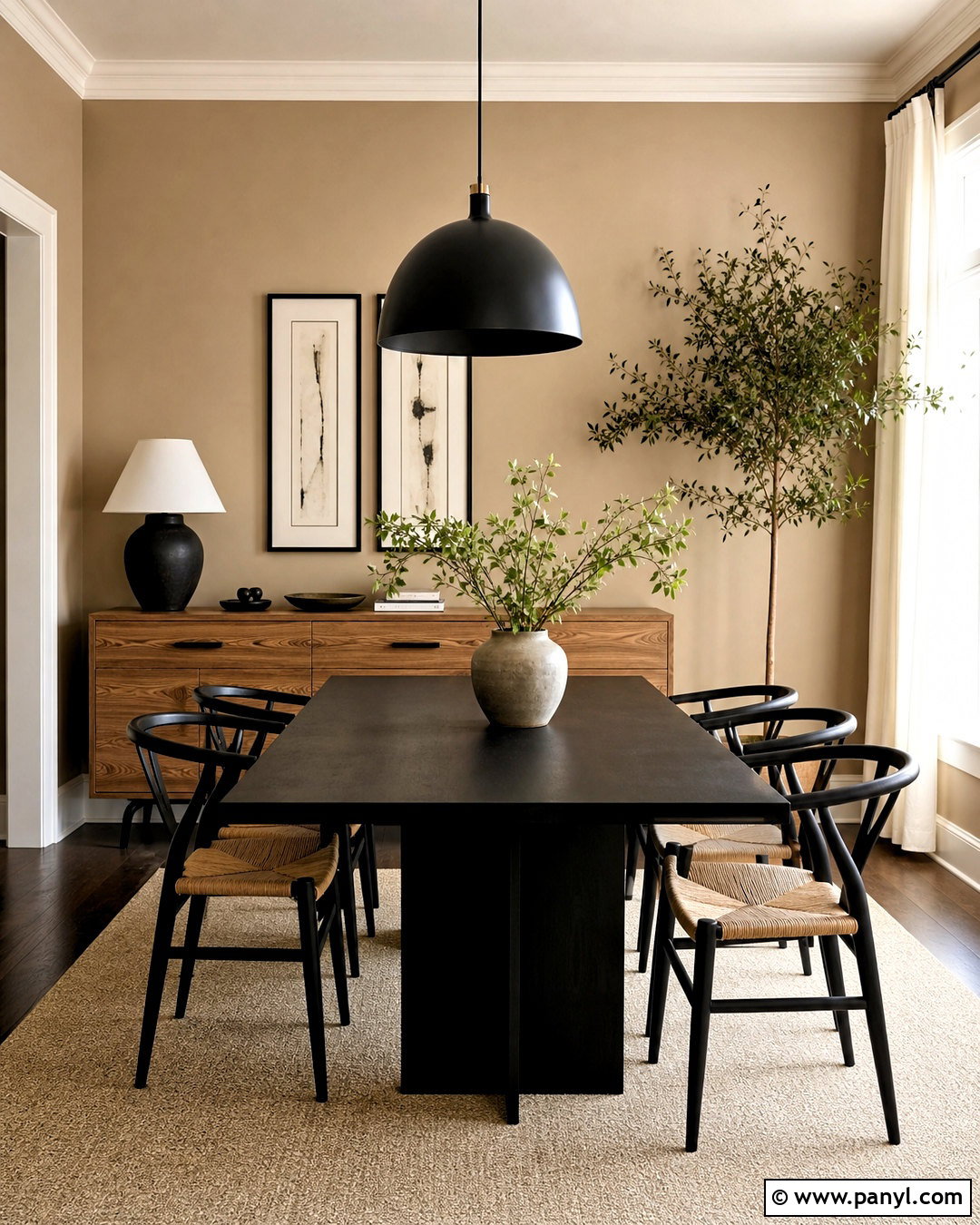
Can black furniture work without making tan walls feel heavy? The key is balancing strong dark shapes with pale fabrics and open space. In a dining room, use a matte black table with slender legs, woven-seat chairs, and a large cream rug underneath. Install a simple black pendant above the table, then repeat the finish through curtain rods and narrow artwork frames. Warm white curtains soften the windows, while an oak sideboard keeps the room from becoming too stark. Style the tabletop with a low ceramic bowl and leafy branches rather than numerous small objects. Black, tan, white, and natural wood create a clean modern palette. The result feels grounded and graphic, yet the warm walls and woven materials preserve an approachable, comfortable atmosphere.
5. Tan Walls With Cream Furniture
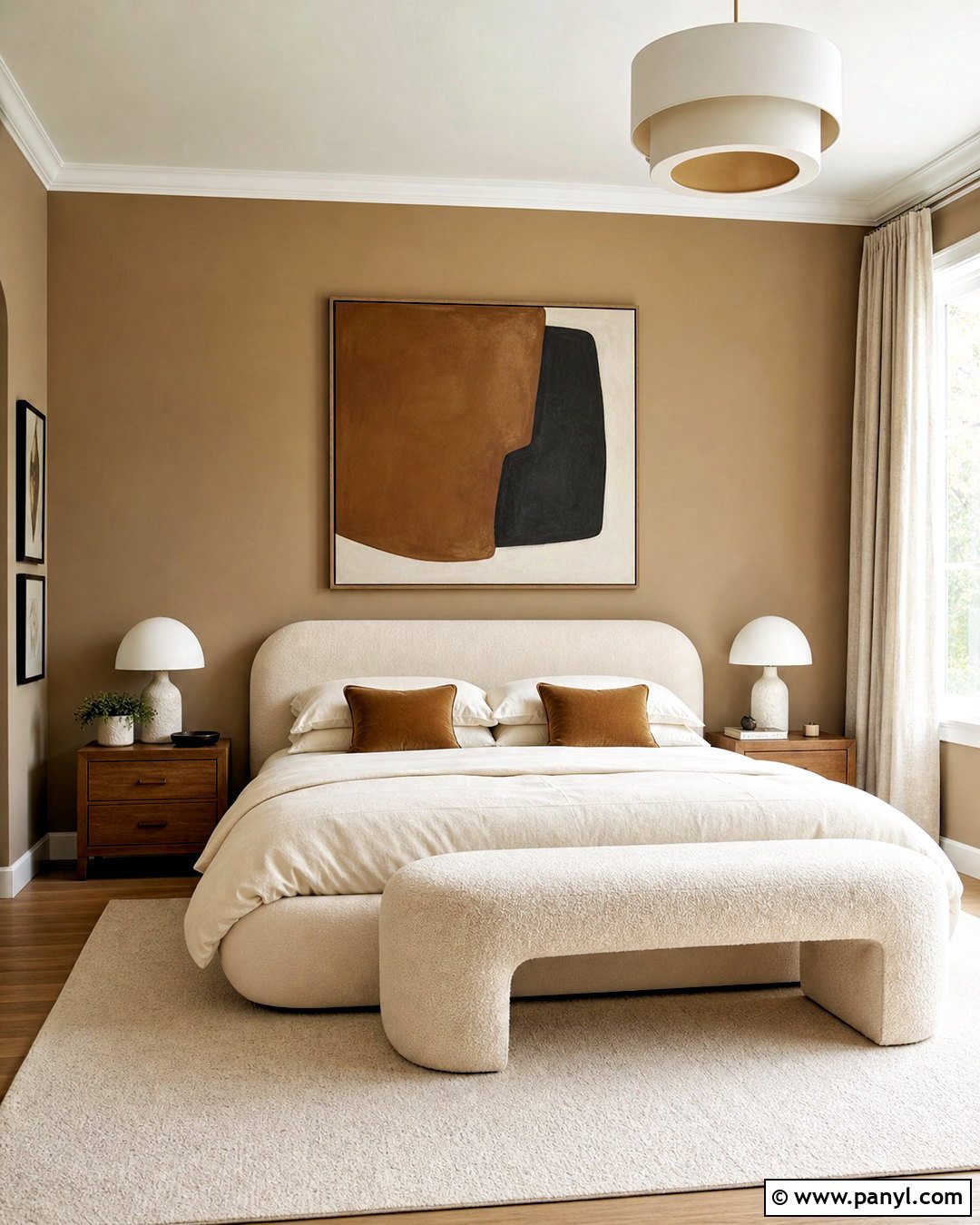
A cream-on-tan bedroom creates a soft, restful setting when the materials have enough visible texture. Choose a cream upholstered bed with a gently rounded headboard and place it against the tan feature wall. Dress the bed with white sheets, an ivory duvet, and layered pillows in camel, taupe, and muted gold. Use medium oak nightstands to establish contrast between the light furniture and walls. A wool rug, bouclé bench, linen curtains, and woven pendant introduce different finishes while staying within the neutral palette. Add two oversized abstract prints with brown and charcoal details above the bed. Instead of filling every surface, leave breathing room around a few ceramic accessories. The finished space feels warm and luxurious without depending on bright accent colors or elaborate decoration.
6. Tan Walls With Terracotta Decor
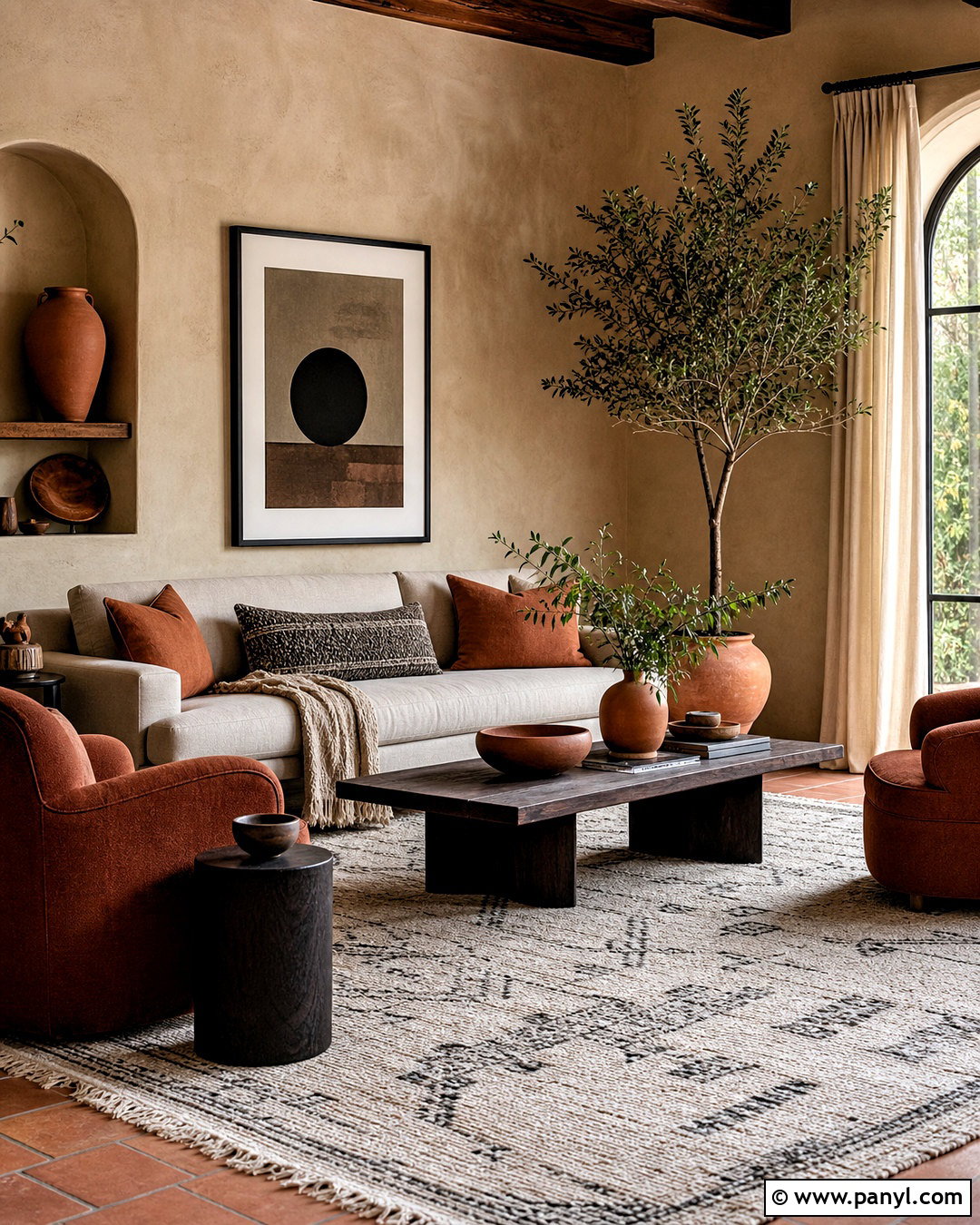
Sun-baked terracotta tones emphasize the earthy character of tan walls and create an inviting living room with plenty of depth. Begin with an oatmeal sofa and add a pair of rust-colored lounge chairs arranged around a dark wood coffee table. Choose a patterned rug that combines cream, tan, muted red, and faded brown. Terracotta pillows and a textured throw can repeat the chair color without overwhelming the space. Ground the warm palette with charcoal picture frames and one black metal floor lamp. Linen curtains, clay pottery, and a tall indoor tree complete the natural look. Keep the ceiling and trim warm white to preserve brightness. This layered scheme is particularly attractive in rooms receiving abundant daylight, which helps the rich orange and brown accents remain lively rather than overly dark.
7. Tan Walls With Coastal Blue Decor
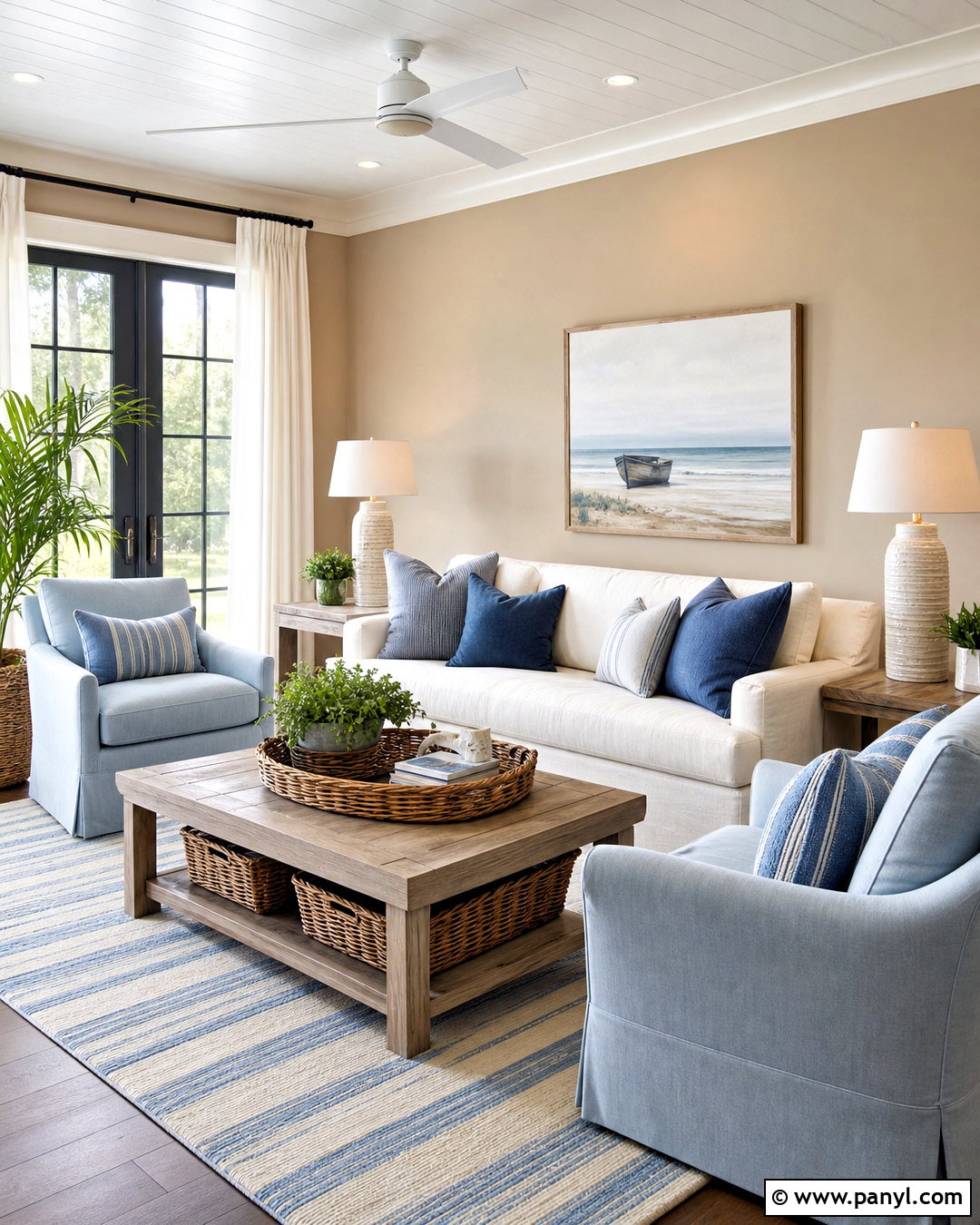
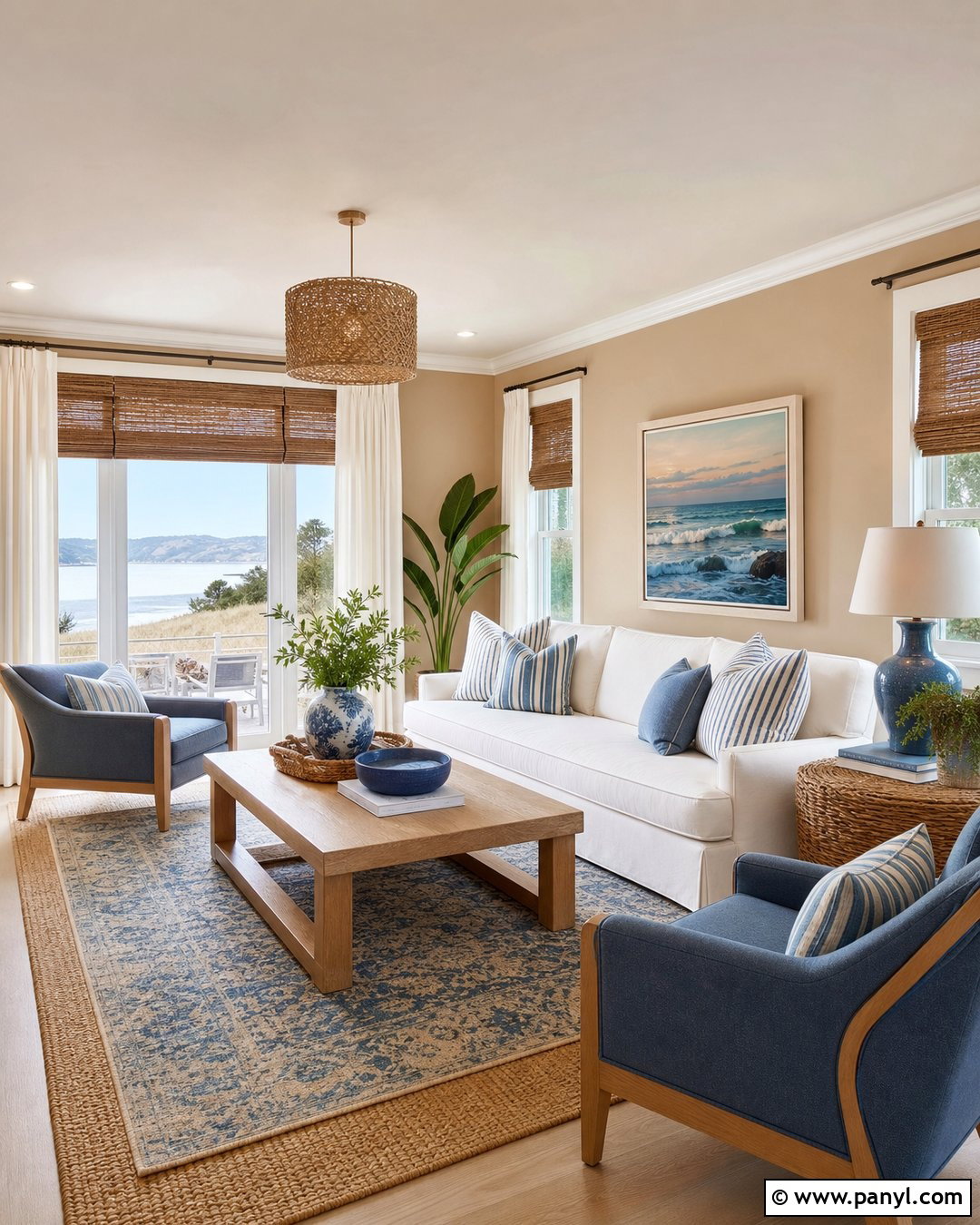
Tan walls can support a relaxed coastal living room without relying on obvious beach-themed accessories. Select a slipcovered ivory sofa, pale blue armchairs, and a weathered oak coffee table with a simple shape. Place everything on a large cream-and-blue striped rug to organize the seating area. Hang airy white linen curtains high above the windows, allowing natural light to brighten the tan backdrop. Use pillows in denim blue, sand, and off-white, then add woven baskets and a subtle rope-detail lamp for texture. A large abstract seascape can become the main artwork without making the theme feel literal. Limit smaller decorations to glass vessels, driftwood-toned frames, and greenery. The complete room feels breezy, comfortable, and suitable for both coastal homes and ordinary suburban interiors.
8. Tan Walls With Dark Green Decor
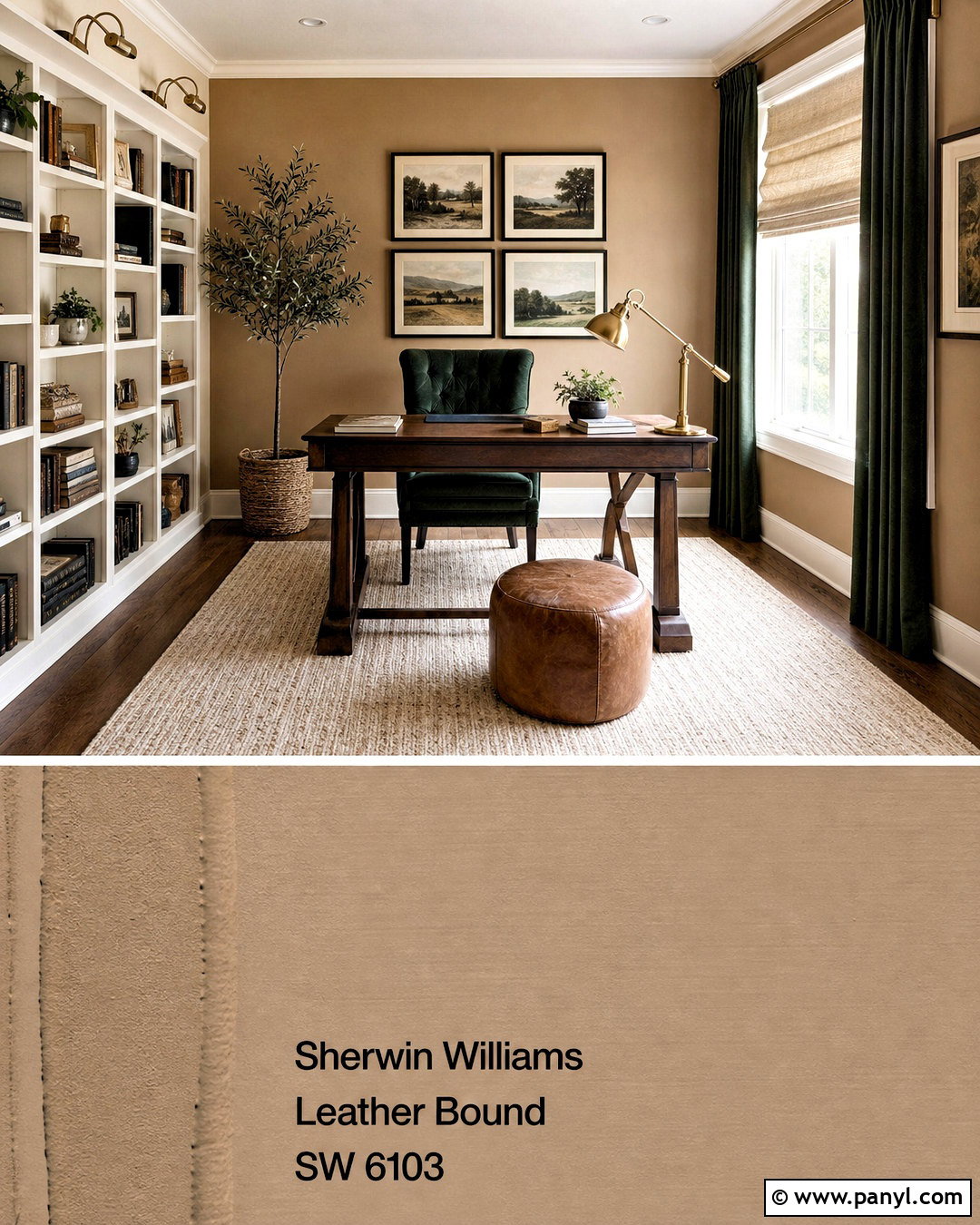
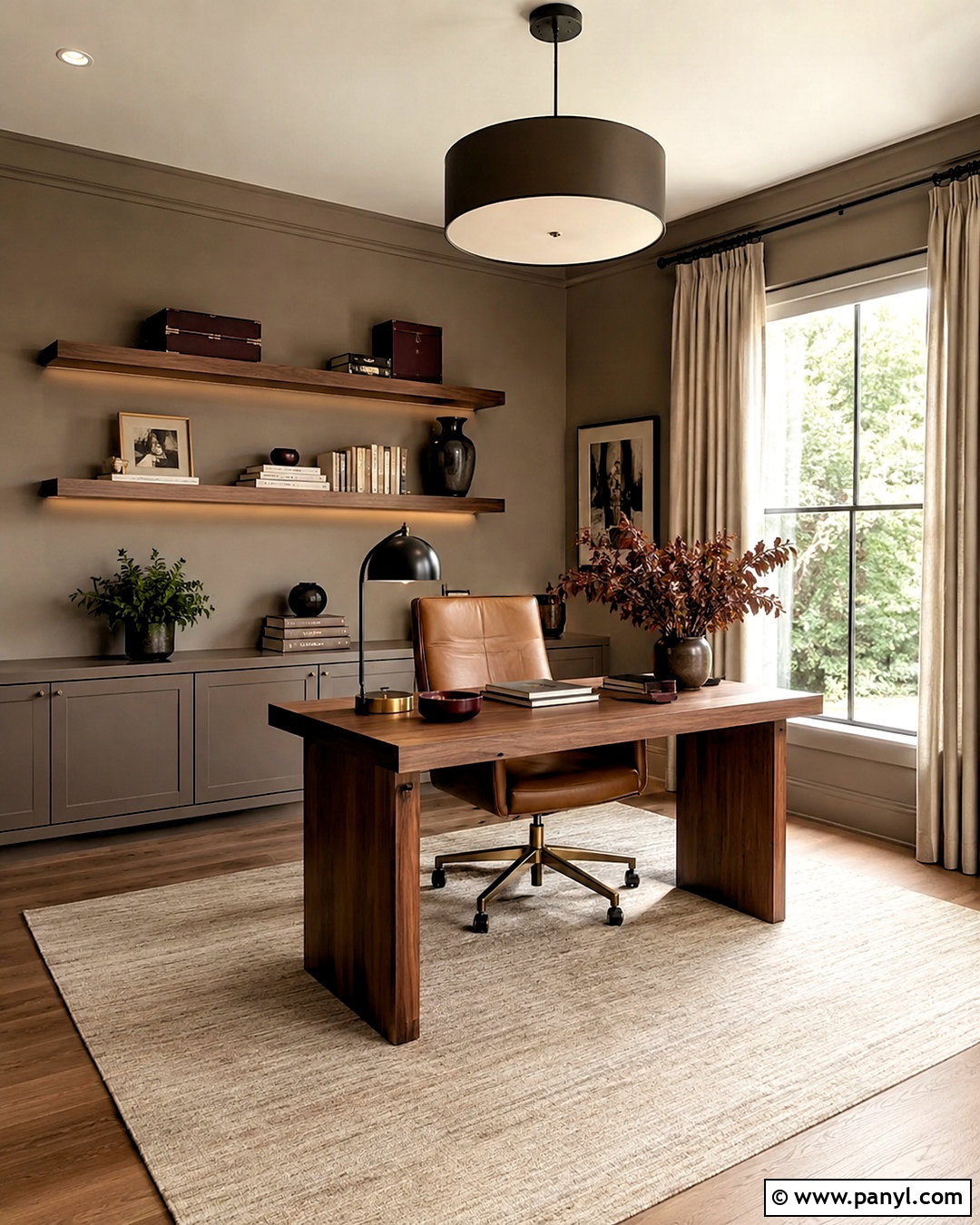
Deep green adds richness to tan walls and works especially well in a home office or reading room. Place a dark forest green velvet chair beside a walnut desk with clean, substantial lines. Add a cream wool rug to brighten the floor and separate the furniture from the walls. Built-in shelves or a freestanding bookcase painted warm white will provide practical storage without competing with the darker accents. Use an aged brass desk lamp, green ceramic accessories, and framed landscape prints to connect the colors. A Roman shade in natural linen keeps the window simple and tailored. Include a small leather ottoman and one tall plant if space allows. Together, dark green, tan, walnut, cream, and brass create a focused workspace that feels traditional, comfortable, and quietly sophisticated.
9. Tan Walls With Blush Pink Decor
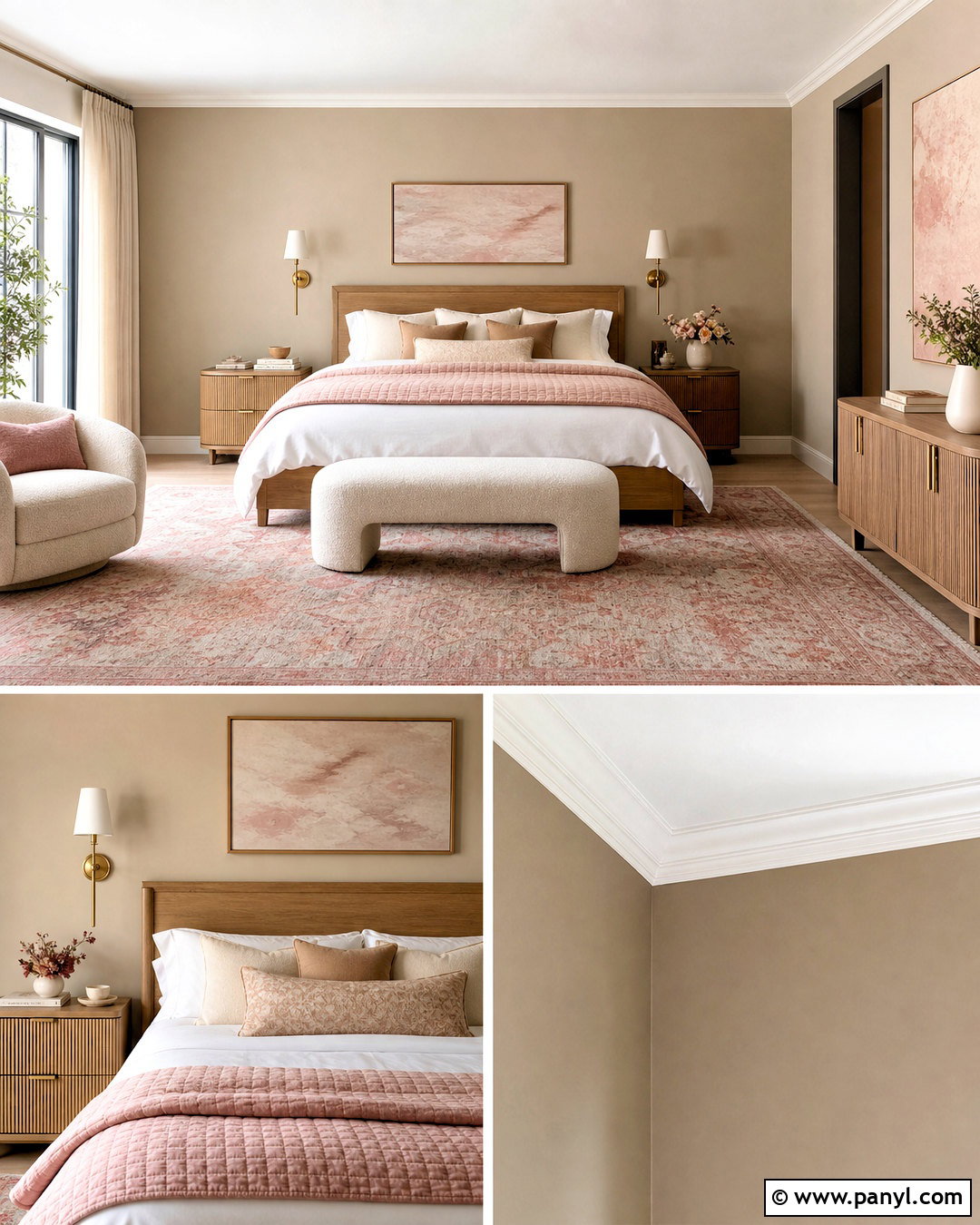
Soft blush pink can make tan walls feel lighter and more graceful when it appears through textiles rather than every major surface. Create a balanced bedroom with a natural oak bed, white bedding, and a dusty blush coverlet folded across the foot. Add blush velvet pillows beside larger cream and camel cushions. Fluted wood nightstands and warm brass sconces support the gentle palette while adding useful bedside lighting. Choose an ivory rug with a faded rose pattern and hang full-length cream curtains to brighten the room. Above the bed, display abstract artwork combining pink, beige, brown, and a small amount of charcoal. A curved cream bench completes the layout. The finished bedroom feels mature and peaceful, avoiding the overly sweet appearance that can result from using highly saturated pink.
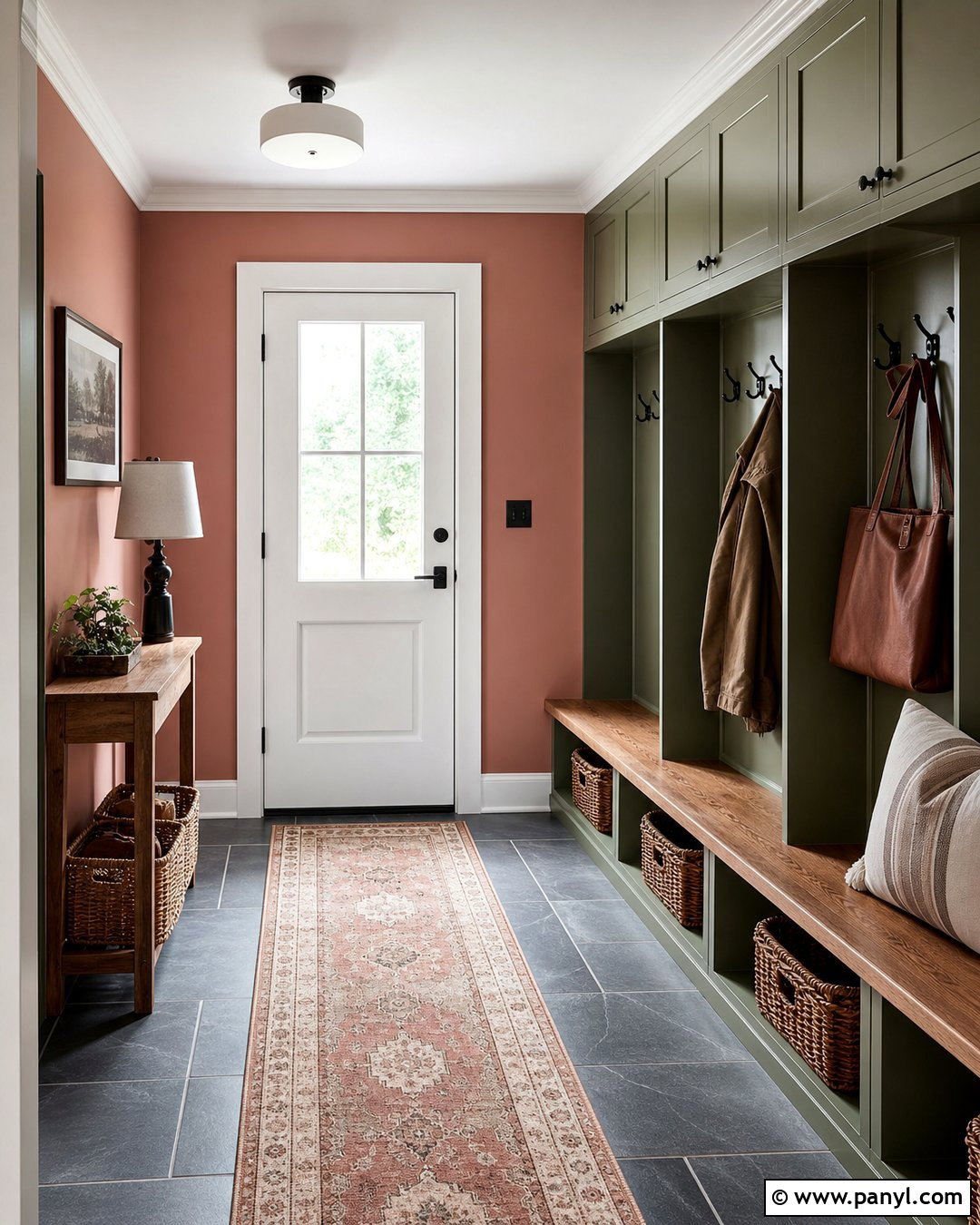
10. Tan Walls With Charcoal Gray Decor
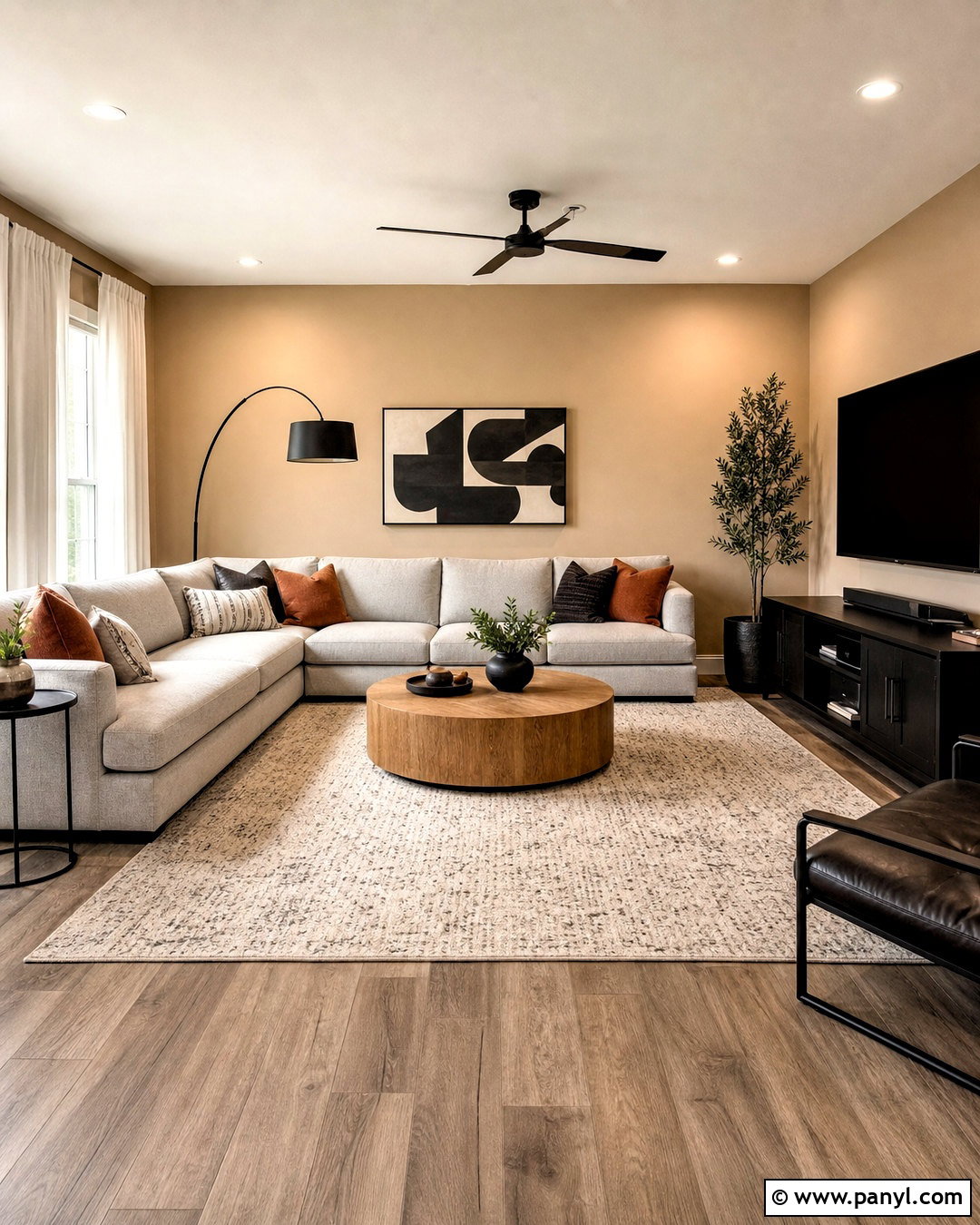
Charcoal gray gives tan walls a contemporary edge, but lighter upholstery is essential for keeping the room welcoming. In a family room, arrange a pale gray sectional opposite a low charcoal media console. Add a round oak coffee table to soften the straight furniture lines and connect with the warmth of the walls. A large rug combining ivory, taupe, and subtle gray should extend beneath the front legs of the seating. Use charcoal curtains only in a room with generous daylight; otherwise, choose light linen panels and repeat gray through pillows and artwork. Matte black lighting and a few rust-colored cushions supply definition and warmth. This complete scheme feels practical enough for daily use while offering a more updated alternative to an entirely brown or beige room.
11. Tan Walls With Natural Wood Furniture
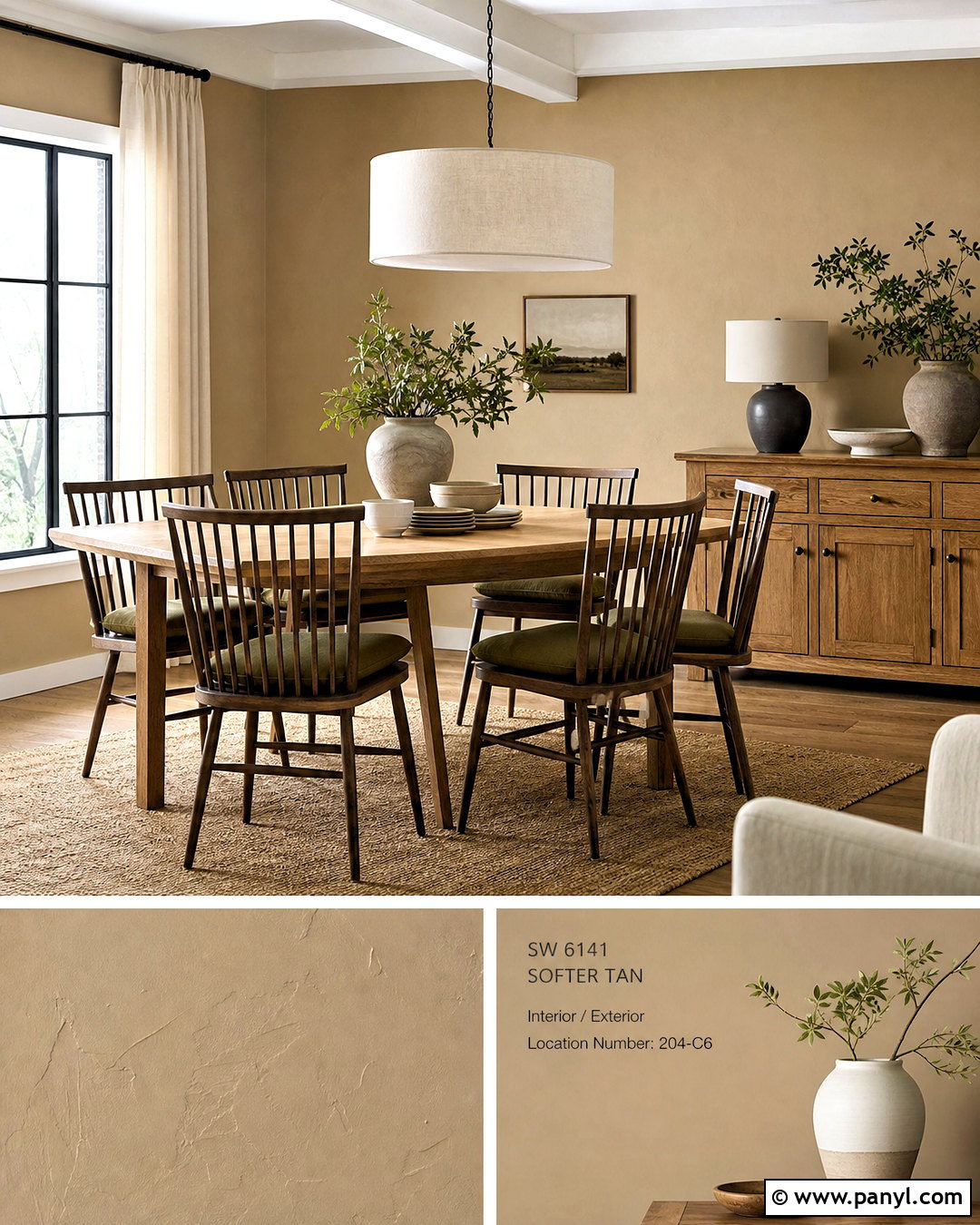
Natural wood enhances the warmth of tan walls, especially when several tones are used with care. Design a comfortable dining room around a solid oak table, walnut spindle-back chairs, and a light woven rug. The slight difference between the wood finishes creates depth while preserving a cohesive appearance. Hang an oversized linen pendant over the table to introduce a softer material and spread light evenly. An oak sideboard can hold ceramic serving pieces, framed artwork, and a simple table lamp. Use cream curtains and warm white trim to keep the room from becoming too brown. Add olive seat cushions and a bowl filled with fresh greenery for restrained color. The finished dining space feels collected and natural, with durable materials that become more appealing as they age.
12. Tan Walls In A Modern Kitchen
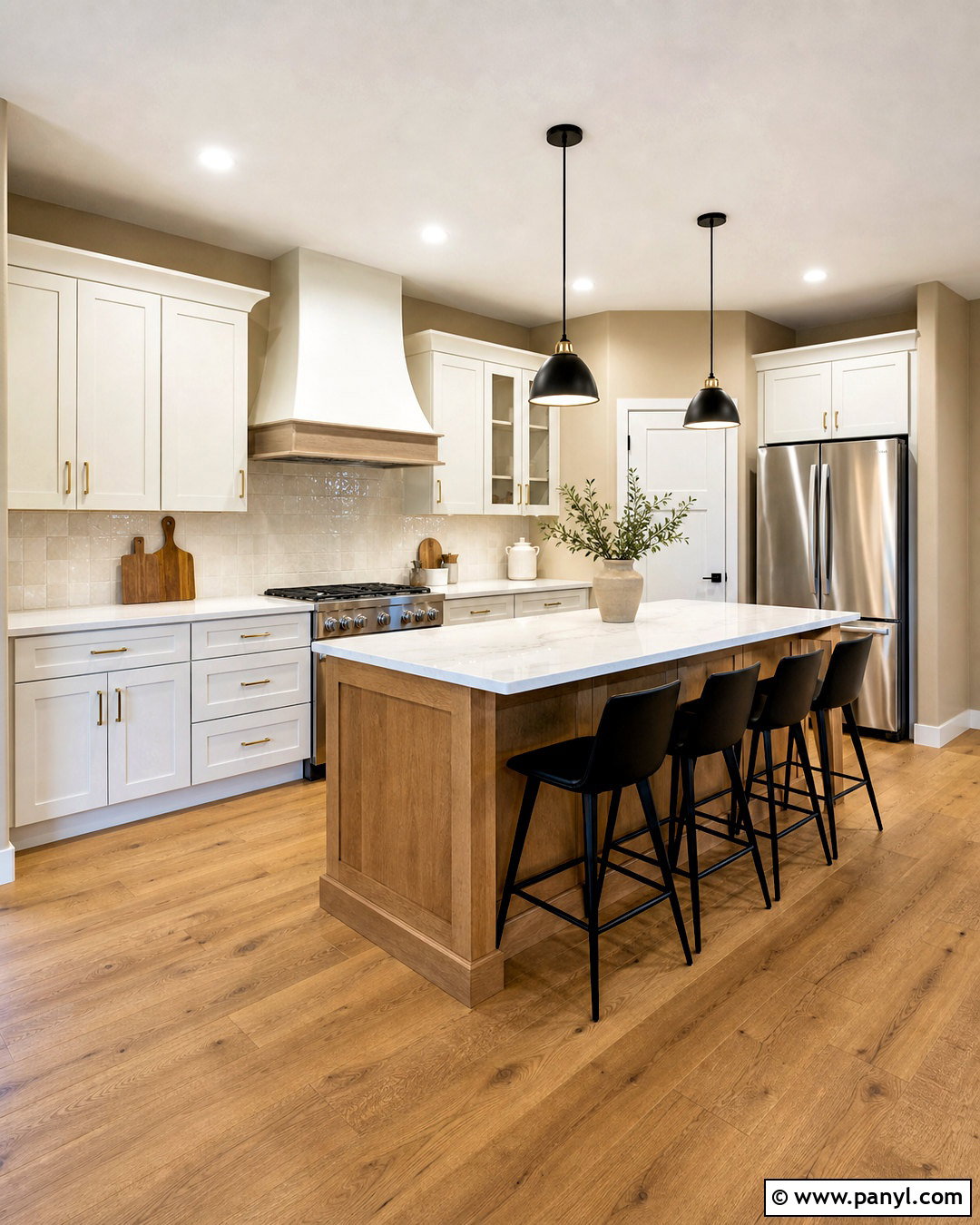
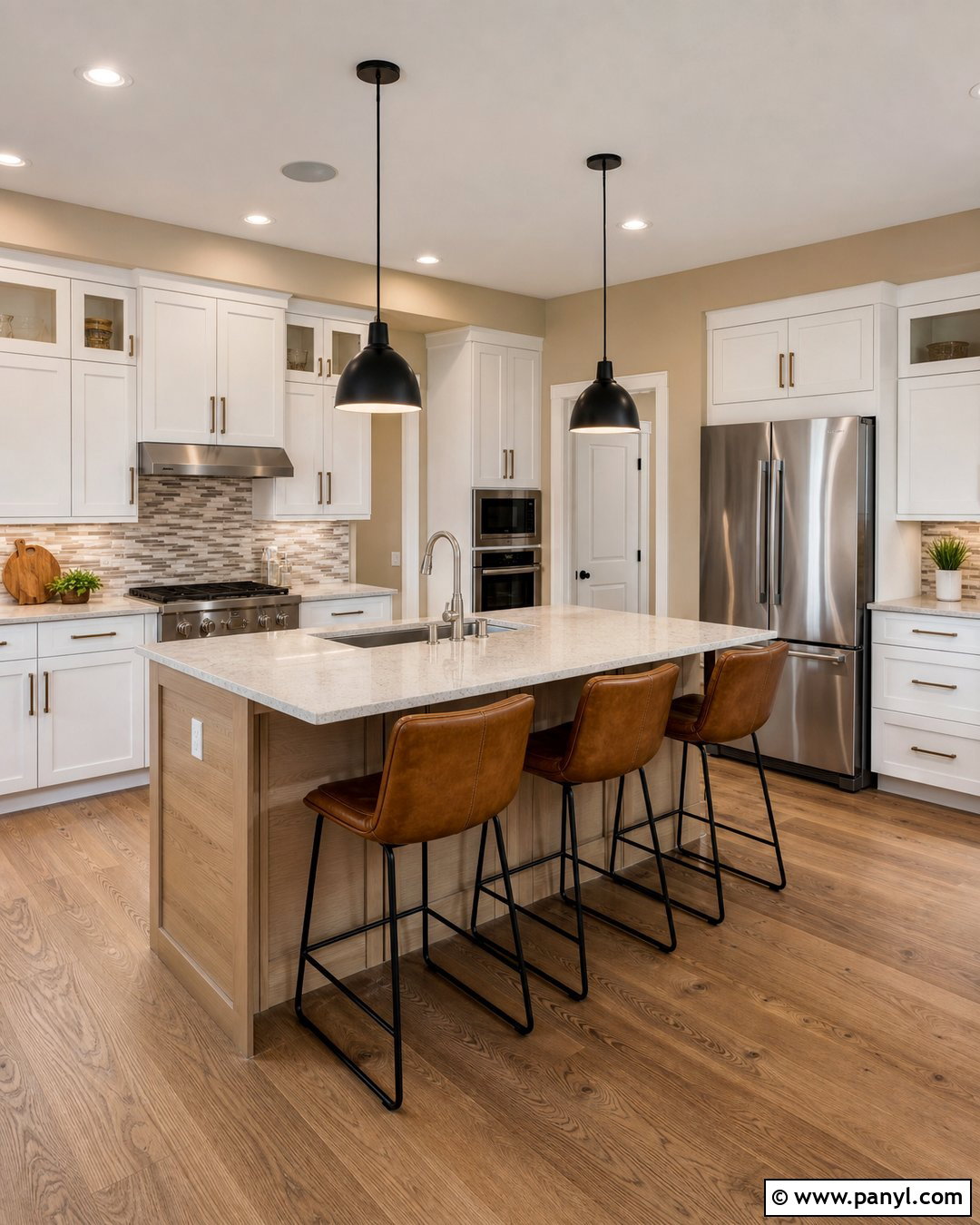
Warm tan walls can soften a modern kitchen filled with straight lines and practical finishes. Pair them with creamy white shaker cabinets, brushed brass hardware, and lightly veined quartz countertops. A backsplash of glossy off-white rectangular tile reflects light and creates subtle texture behind the counters. Use medium oak for the island or open shelving so the kitchen feels connected to the wall color. Matte black counter stools and pendant lights offer crisp contrast without dominating the design. Keep countertop accessories minimal, choosing a wood cutting board, white ceramic canisters, and a small herb planter. For flooring, wide oak planks or warm stone-look tile will complete the palette. This coordinated kitchen feels current and bright while retaining the comfortable character that makes tan such a livable neutral.
13. Tan Walls In A Boho Living Room
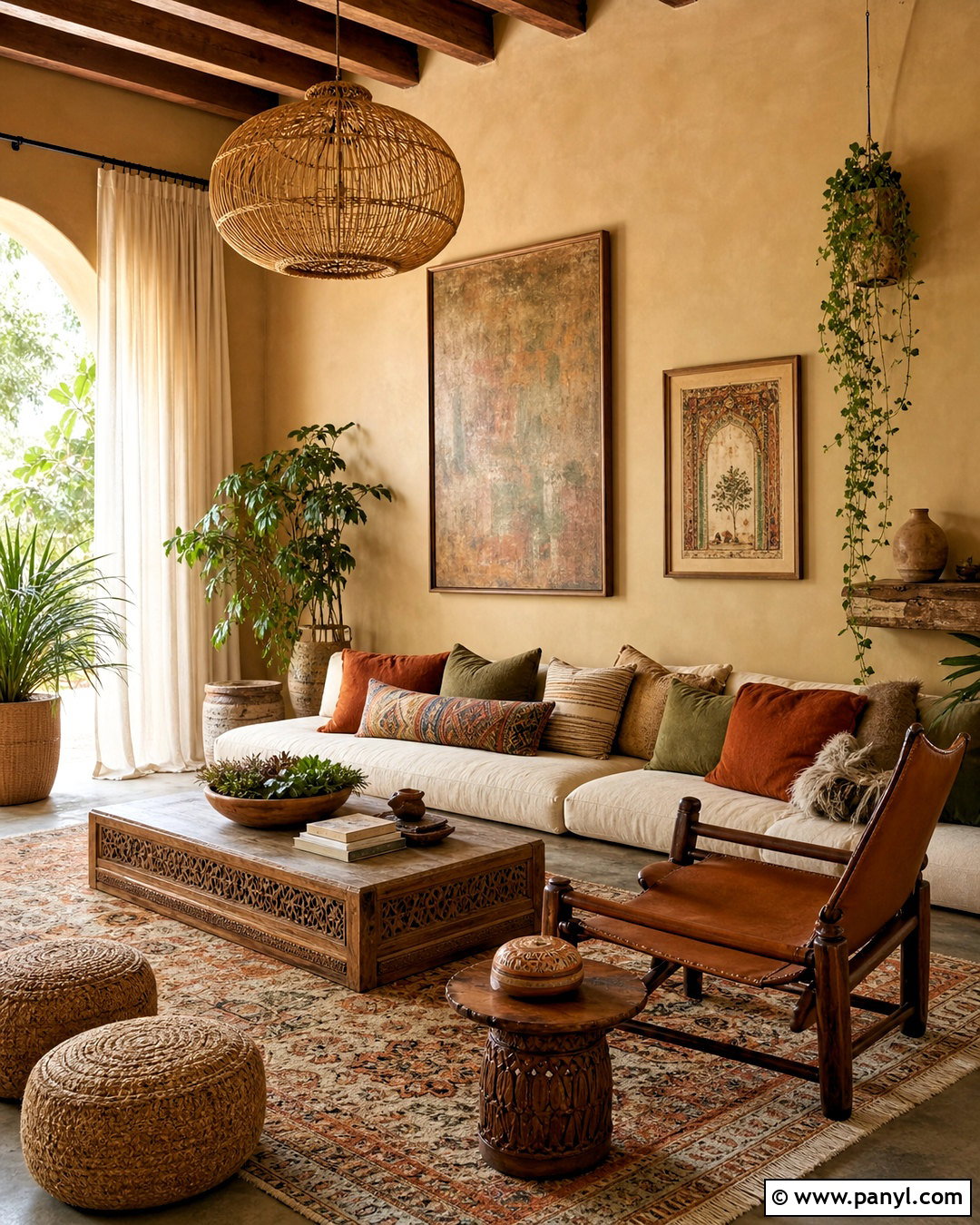
Texture, pattern, and relaxed furniture can turn tan walls into a warm foundation for a boho living room. Start with a low cream sofa and add a cognac leather chair, a carved wood coffee table, and two woven poufs. Layer a faded patterned rug over natural wood flooring to define the main seating area. Pillows in rust, mustard, olive, and black introduce color while staying connected to the earthy background. Use one large textile wall hanging or a grouped collection of framed prints rather than scattering small decorations everywhere. Rattan lighting, linen curtains, trailing plants, and handmade pottery complete the design. Maintain open walking paths and leave some wall space visible. The room should feel personal and layered, but thoughtful editing will keep the overall look comfortable rather than cluttered.
14. Tan Walls In A Farmhouse Bedroom
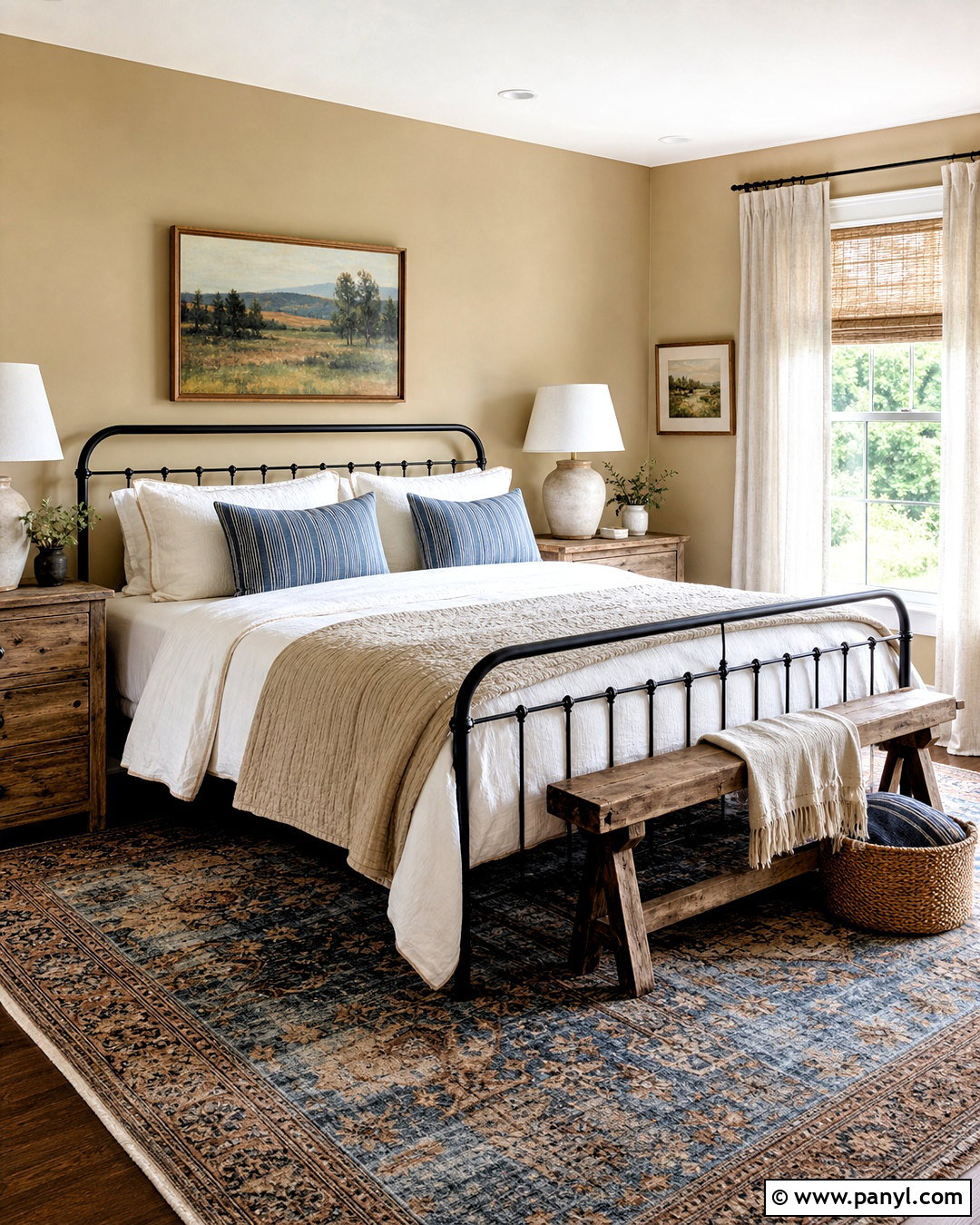
A farmhouse bedroom with tan walls should feel simple, useful, and gently weathered rather than overly themed. Center a black metal bed against the main wall and dress it in white cotton bedding, a beige quilt, and muted blue striped pillows. Place small reclaimed wood nightstands on both sides, topped with cream ceramic lamps. A vintage-style wool rug in faded blue and brown will ground the bed and provide softness underfoot. Use white-painted trim and natural linen curtains to brighten the tan background. One wood bench at the foot of the bed offers practical seating and storage for extra blankets. Complete the room with a landscape print, a woven basket, and a few leafy stems. The coordinated materials create farmhouse character without depending on decorative signs or unnecessary rustic accessories.
15. Tan Walls In A Minimalist Living Room
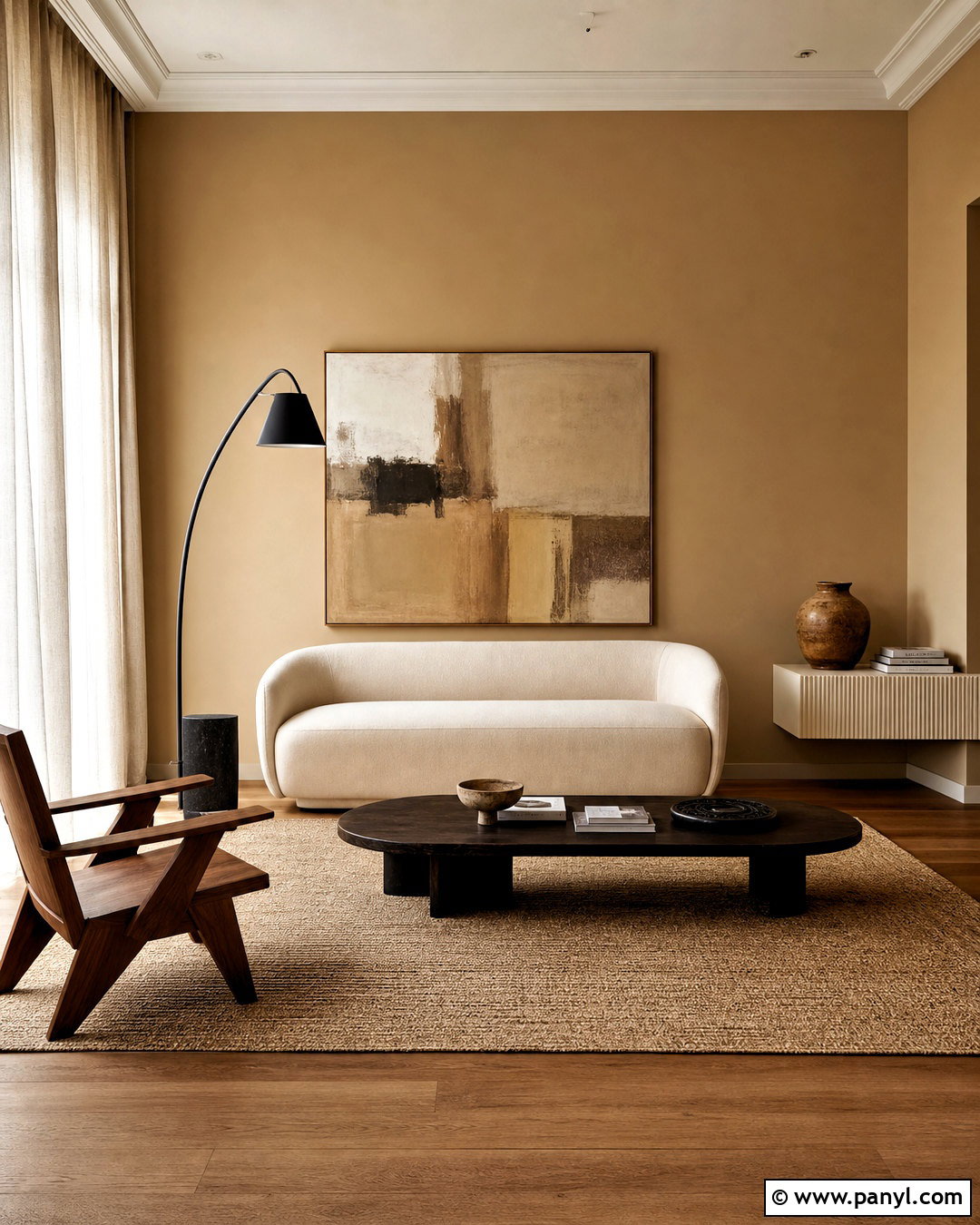
Minimalist decorating prevents tan walls from looking busy while allowing their warm tone to become an important part of the room. Choose a streamlined ivory sofa, one sculptural oak chair, and a low rectangular coffee table in dark wood. Anchor the arrangement with a plain wool rug in a slightly lighter tan than the walls. Instead of numerous accessories, display one oversized abstract artwork and a single ceramic vessel with branches. Concealed storage inside a wall-mounted cream console keeps everyday objects out of view. Add an arched black floor lamp for contrast and full-length linen curtains for softness. Every item should have enough space around it to be clearly appreciated. The complete room feels calm and purposeful, proving that a limited palette can still offer warmth, texture, and strong visual interest.
16. Tan Walls With A Gallery Wall
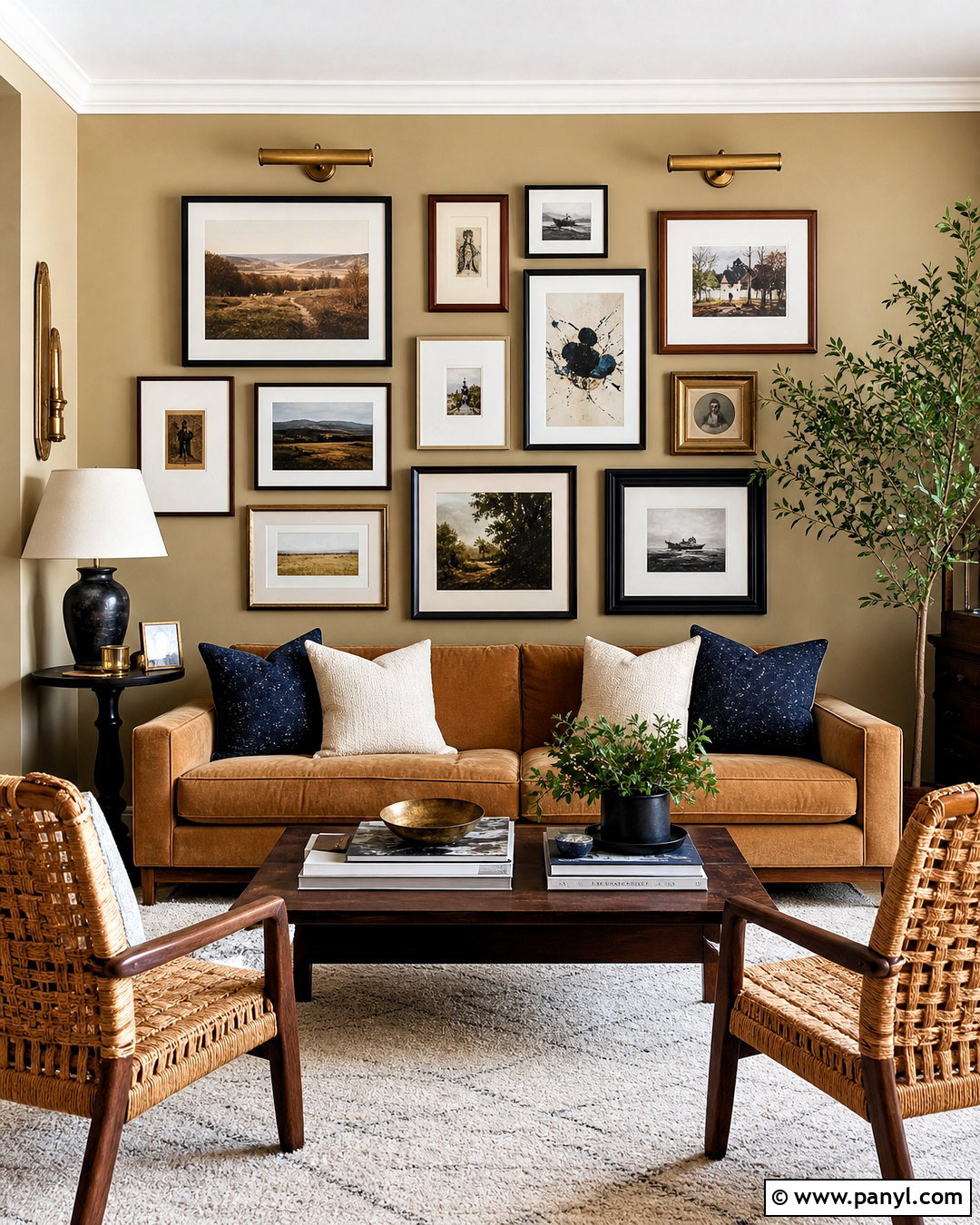
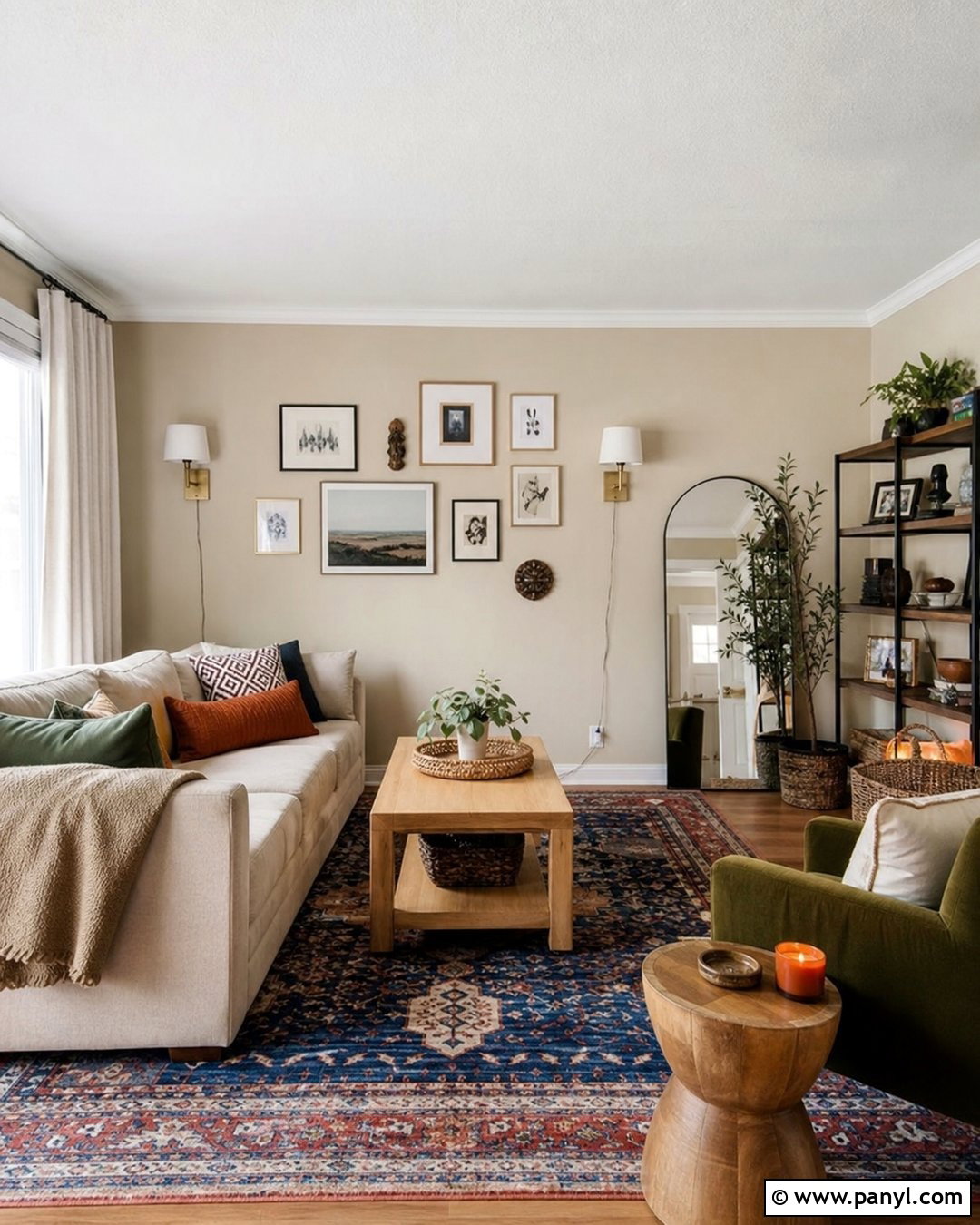
A well-planned gallery wall can transform a plain tan living room into a layered, personal space. Build the display above a camel-colored sofa using black, walnut, and aged brass frames in varied but balanced sizes. Include landscapes, abstract prints, and family photographs with similar warm tones so the collection feels connected. Arrange the frames on the floor first, maintaining consistent spacing before hanging them. Underneath, style the sofa with cream, navy, and rust pillows. A walnut coffee table, ivory rug, and two woven chairs complete the seating group without competing with the artwork. Install picture lights or nearby sconces to make the display readable in the evening. The finished design uses the tan wall as a unifying background, allowing different images and frame materials to coexist comfortably.
17. Tan Walls In A Small Living Room
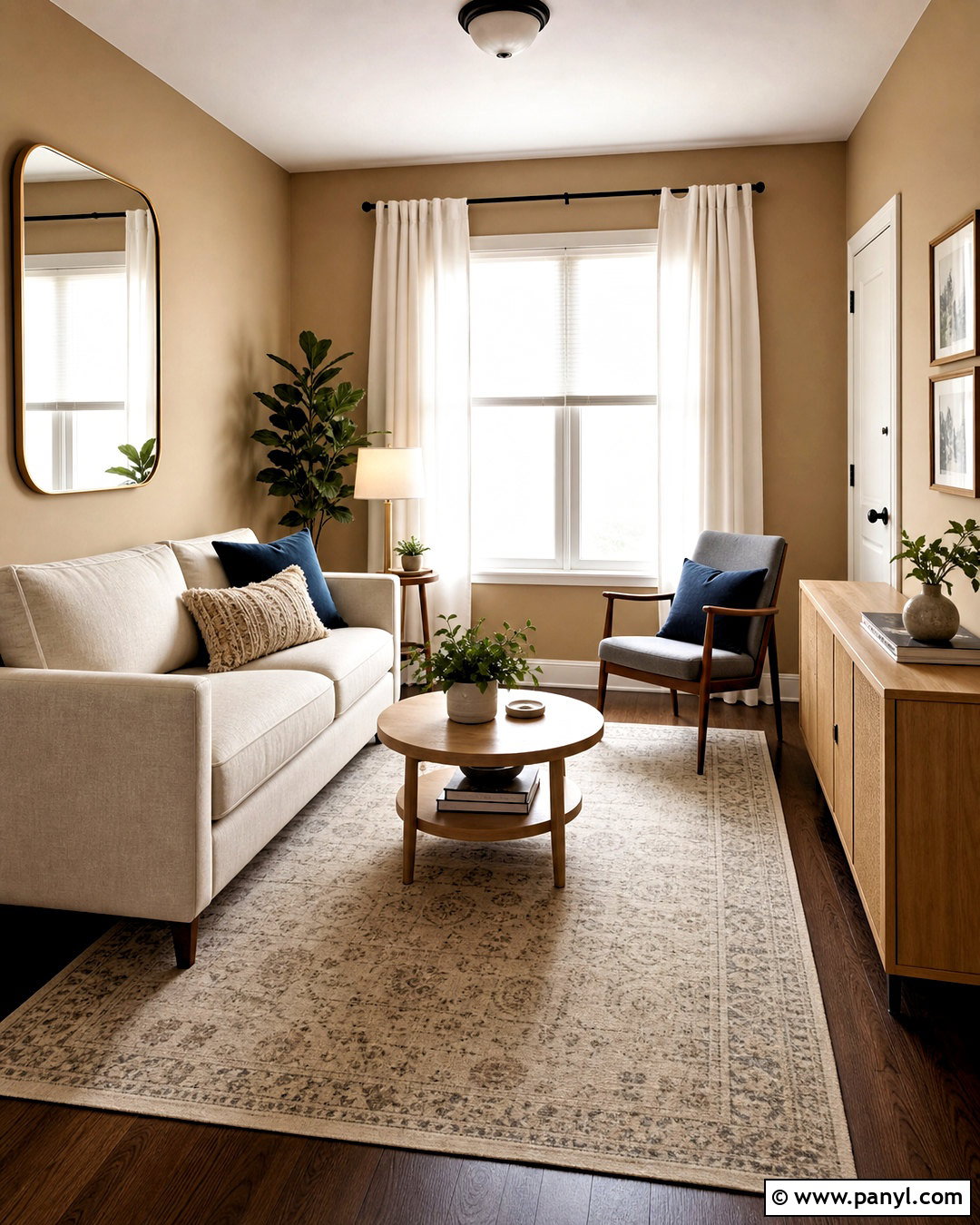
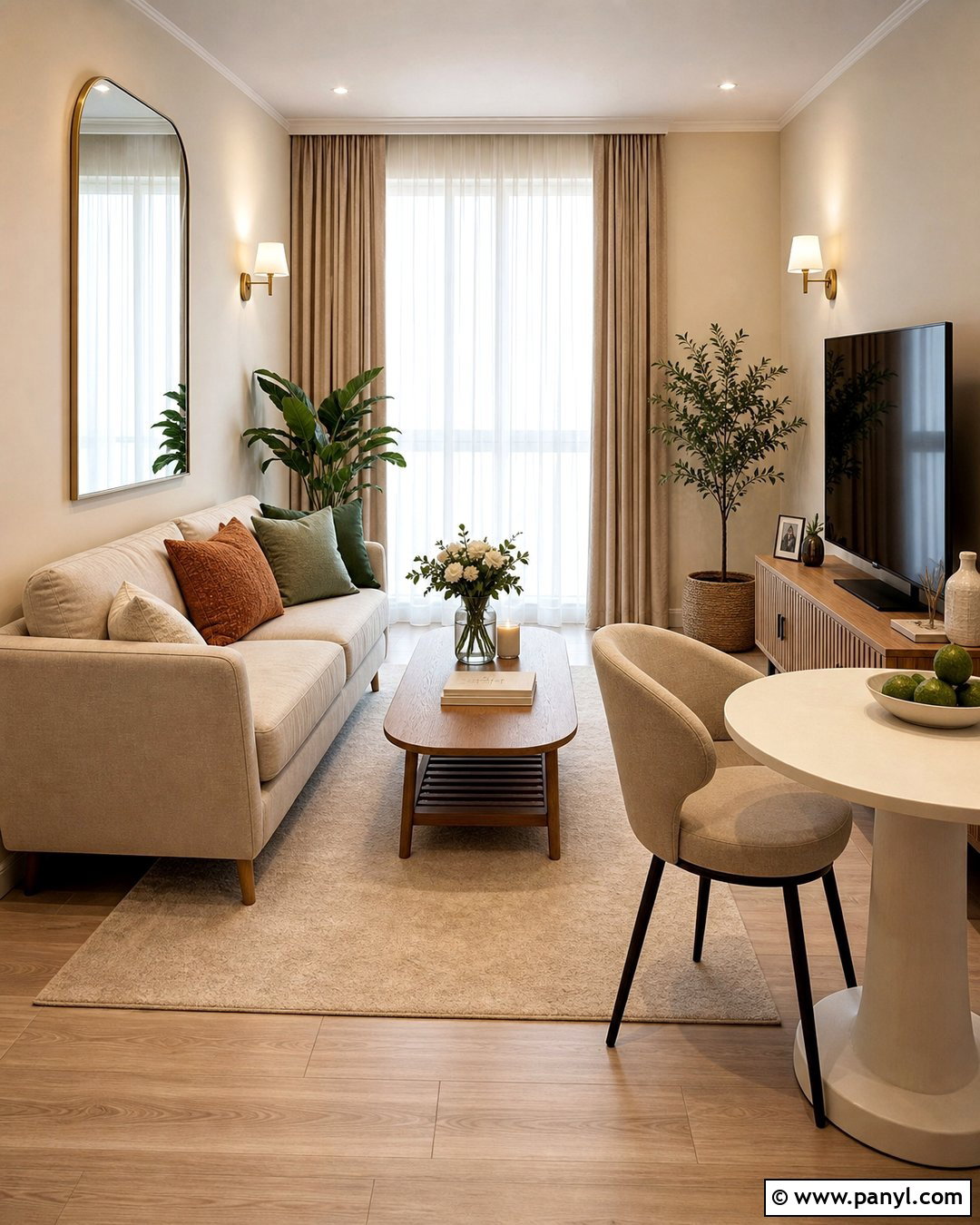
In a compact living room, tan walls can create warmth without visually shrinking the space when the furniture remains appropriately scaled. Choose a light cream loveseat with raised legs, one slim wood armchair, and a round coffee table that allows easy movement. Place a pale patterned rug beneath the full seating arrangement to make the floor feel broader. Hang curtains close to the ceiling and use warm white fabric to maximize the sense of height. A narrow oak console can provide storage without projecting far into the room. Add one large mirror opposite or near a window to distribute light. Limit accents to muted blue pillows, a small table lamp, and one healthy plant. This complete layout feels open and useful because every item supports comfort without overcrowding the available floor area.
18. Dark Tan Walls In A Bedroom
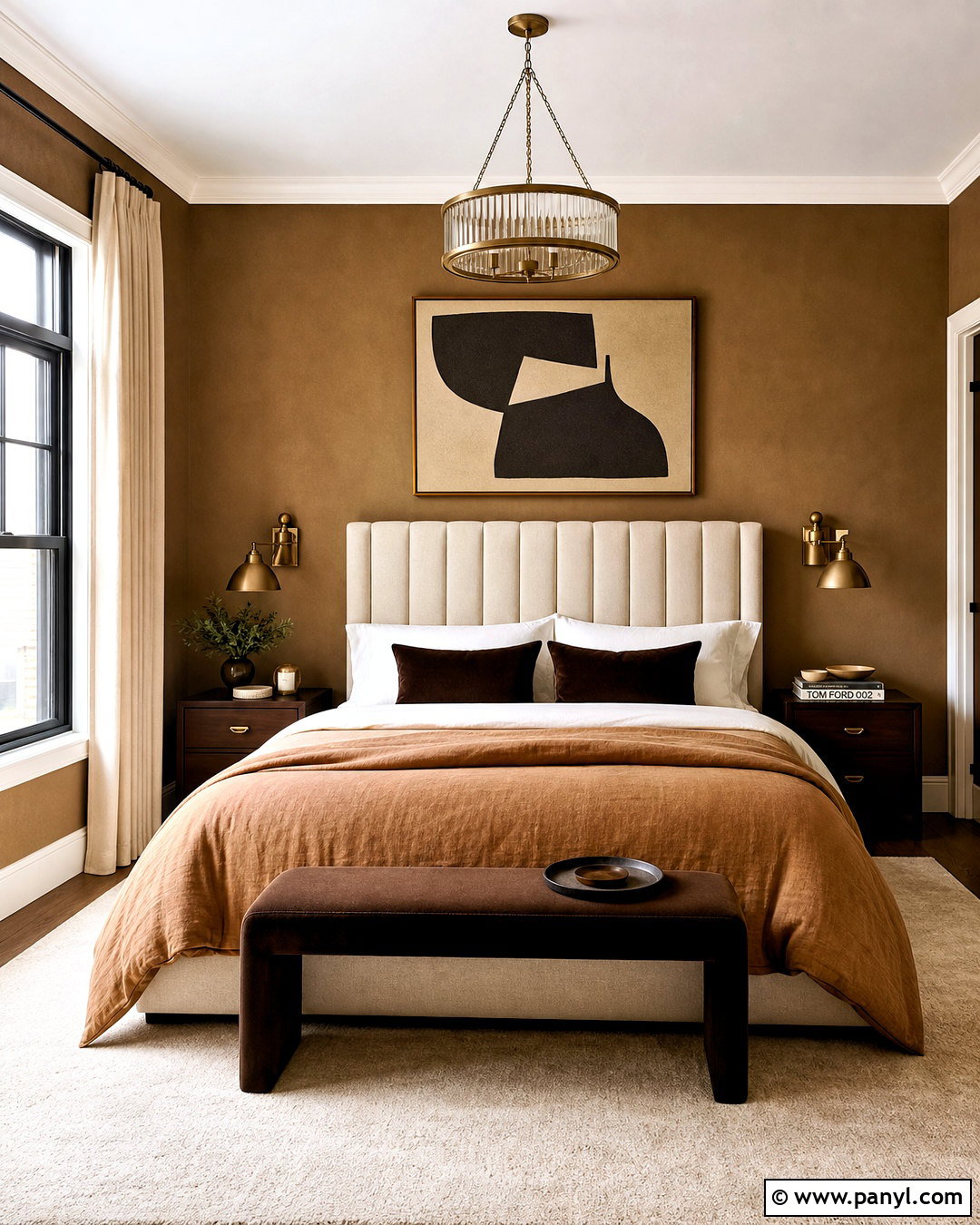
Dark tan walls create a cocooning bedroom when they are balanced with light bedding and reflective details. Use a tall cream upholstered headboard to establish a bright focal point against the deeper wall color. Layer the bed with white sheets, a camel duvet, and chocolate brown pillows for a rich tonal effect. Choose dark walnut nightstands and aged brass wall sconces to reinforce the room’s warmth. A large ivory rug will prevent the floor and walls from blending into one heavy surface. Hang simple cream curtains and keep the ceiling warm white to maintain brightness overhead. Artwork with beige, black, and muted red can add personality without disrupting the calm palette. The finished bedroom feels intimate and restful, making dark tan particularly suitable for larger rooms or spaces with generous natural light.
19. Light Tan Walls In A Nursery
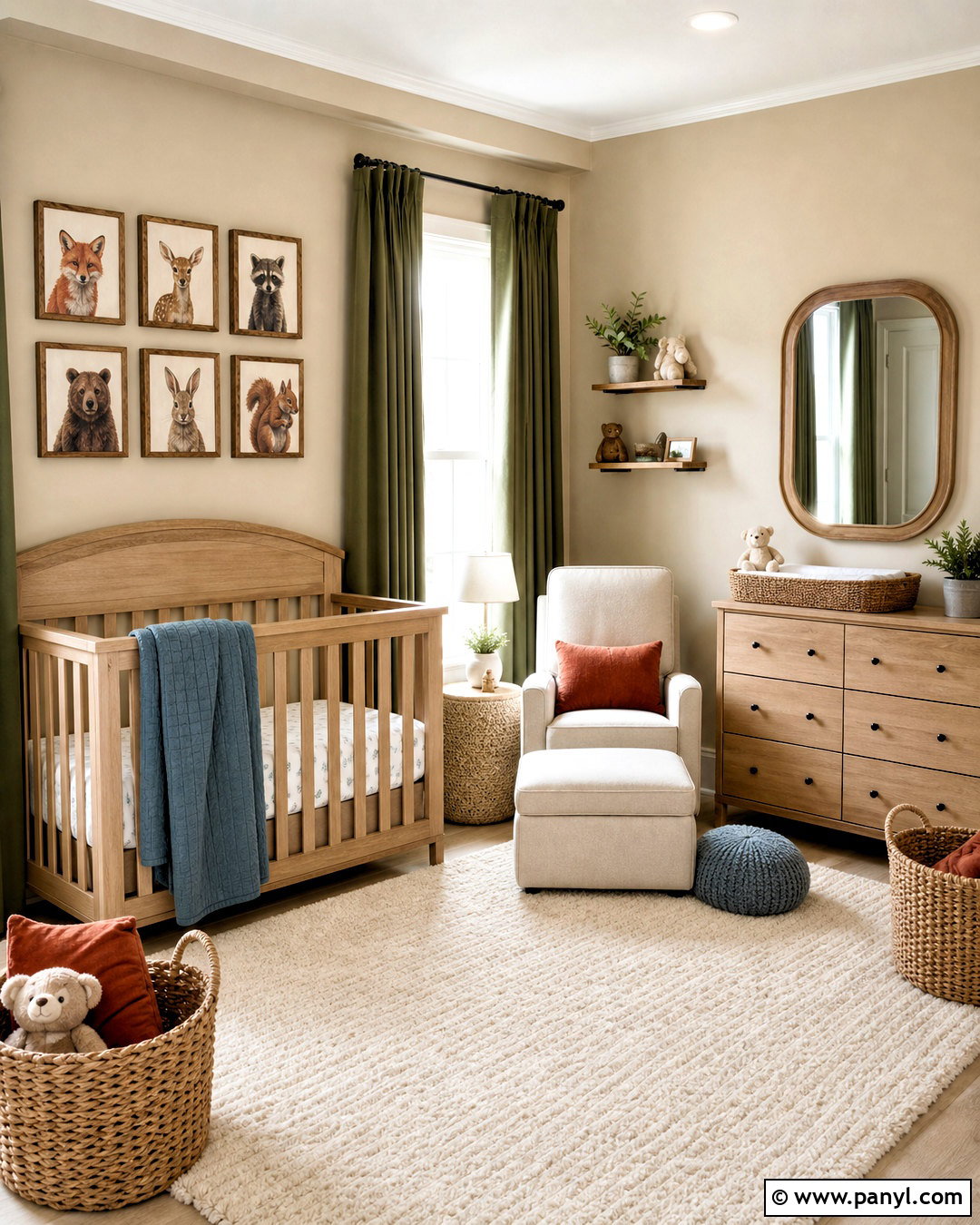
Light tan walls offer a flexible nursery backdrop that can adapt as a child grows. Create a peaceful room with a natural oak crib, a cream upholstered glider, and a matching wood dresser used as a changing station. Place a washable ivory rug in the center to soften the floor and define the main furniture arrangement. Sage green curtains, a muted blue throw, and small rust accents add gentle color without overwhelming the space. Above the crib, hang simple woodland artwork in secure wood frames while keeping the sleeping area free of loose accessories. Use woven baskets for toys, closed bins for supplies, and a dimmable ceiling fixture for practical lighting. The completed nursery feels warm, organized, and age-neutral, with furnishings that can transition easily into a toddler room later.
20. Tan Walls In A Bathroom
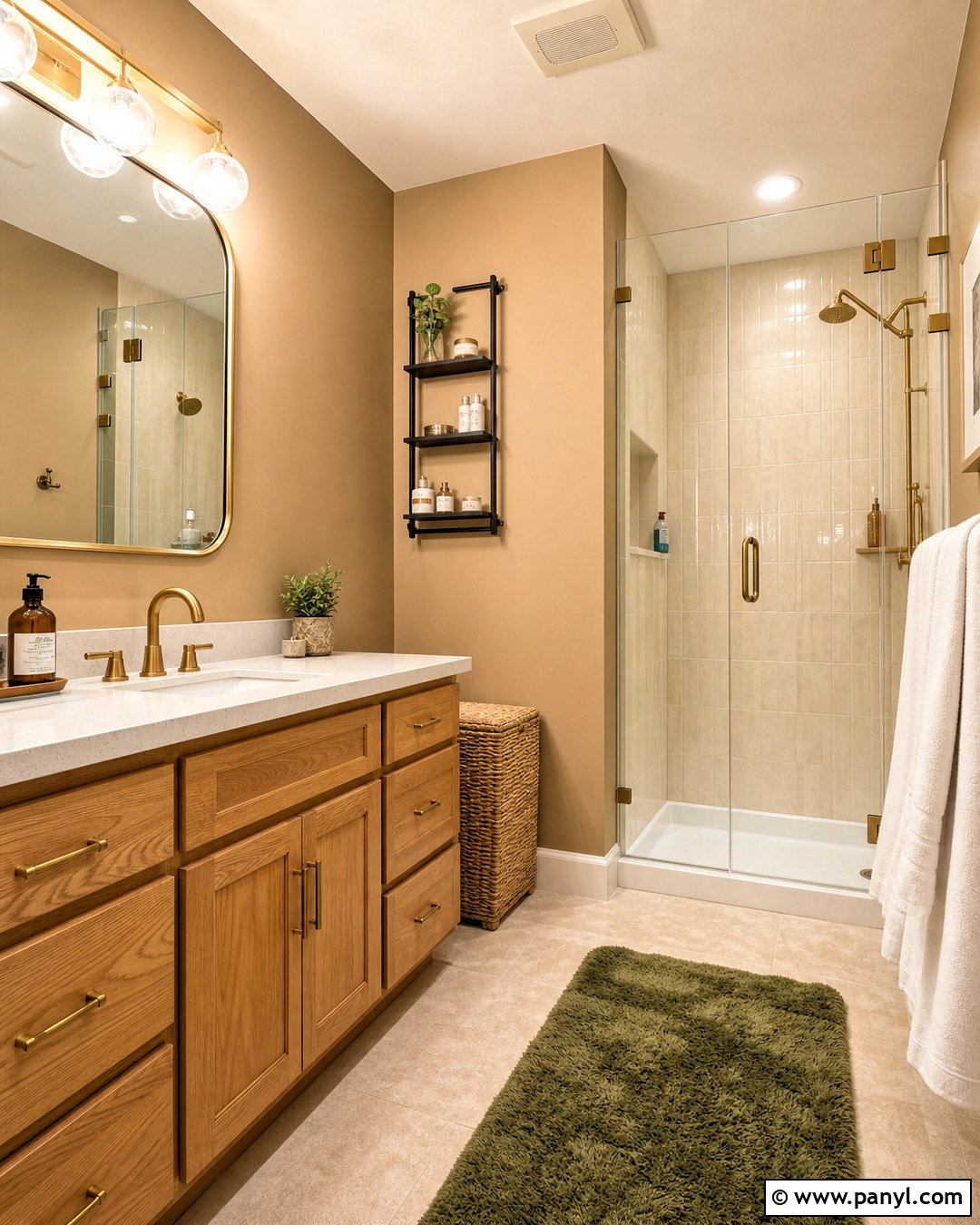
Tan walls can make a bathroom feel warm and polished when combined with clean tile, wood, and metal finishes. Install a medium oak vanity with a white quartz top and brushed brass faucets. Above it, use a large rounded mirror framed in thin brass to reflect light around the room. Cream stone-look floor tile will complement the walls while remaining slightly lighter for definition. Keep the shower bright with glossy off-white subway tile and clear glass doors. Add white towels, a woven hamper, and a muted green bath mat for softness and restrained color. Matte black details can appear through a small wall shelf or framed artwork. This complete bathroom scheme feels natural and updated, giving tan walls a purposeful role rather than treating them as a leftover builder-grade finish.
Conclusion:
Decorating with tan does not mean settling for a plain or dated room. The most successful 20 tan walls combine color, texture, furniture, lighting, and practical layouts to create complete spaces with a clear personality. White and cream can brighten the backdrop, while navy, green, charcoal, blush, and terracotta introduce contrast. Natural wood, woven fibers, stone, brass, and black metal add depth without fighting the wall color. Always identify whether your tan leans golden, pink, gray, or green before selecting major furnishings. Test fabrics and finishes beside the wall in both daylight and evening light. With thoughtful coordination, tan becomes a flexible foundation for comfortable rooms that can evolve without requiring a complete redesign.

Related Ideas and Inspiration:

Leave a Reply