
Orange can feel sunny, earthy, playful, or surprisingly sophisticated, depending on the shade and the colors around it. The best orange wall paint ideas go beyond bright citrus tones. They include soft apricot, muted clay, deep rust, warm terracotta, and modern coral. Orange also works across many decorating styles, from midcentury and bohemian to farmhouse and minimalist interiors. The key is building a complete palette that balances the wall color with flooring, furniture, textiles, lighting, and trim. Test large paint samples during the day and evening because natural and artificial light can noticeably change orange undertones. Whether you want a dramatic living room or a welcoming entryway, these 35 orange wall paint ideas offer complete, practical looks for creating a warm and memorable home.

1. Burnt Orange Living Room
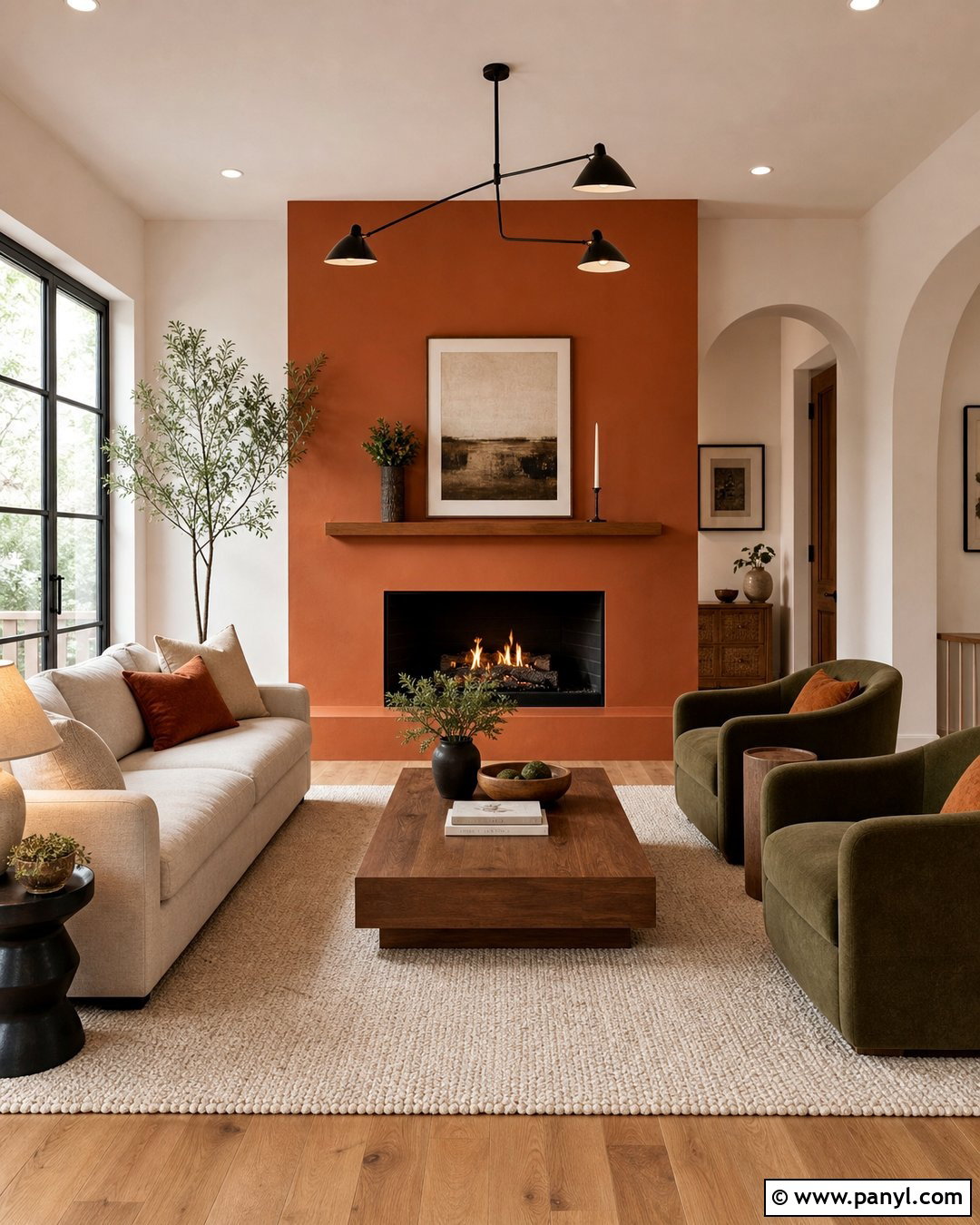
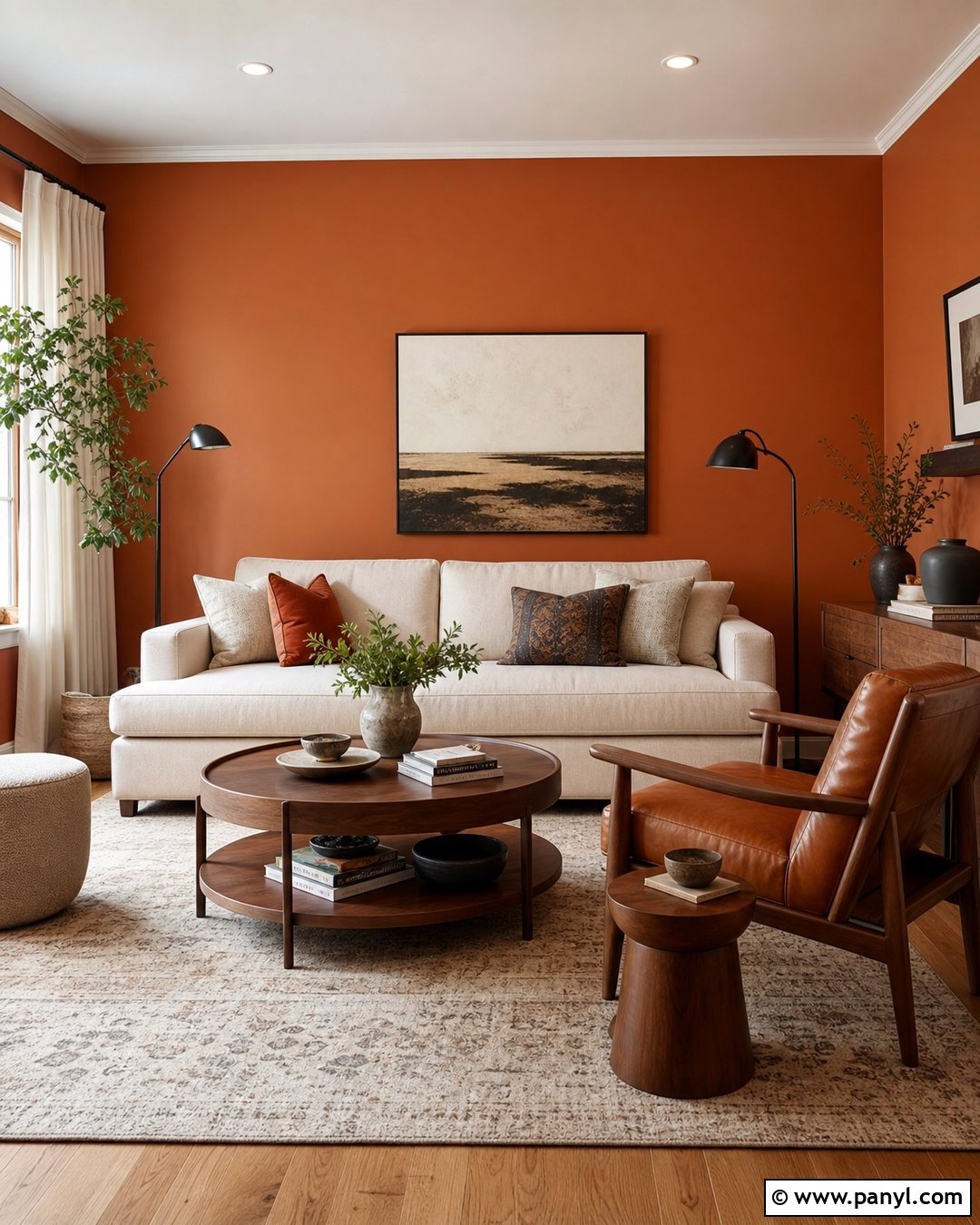
A burnt orange feature wall gives a living room warmth without the intensity of a brighter citrus shade. Place it behind the main sofa or fireplace so the color creates a clear focal point. Choose an oatmeal-colored sofa, walnut coffee table, and cream wool rug to soften the rich wall. A pair of olive green chairs brings an earthy contrast, while matte black lighting keeps the room contemporary. Repeat small amounts of orange through patterned cushions or pottery rather than matching every accessory. Warm white paint on the remaining walls prevents the palette from becoming heavy. Medium-toned wood flooring completes this comfortable, balanced look. It works especially well in rooms that receive steady natural light throughout the day.
2. Terracotta Orange Bedroom
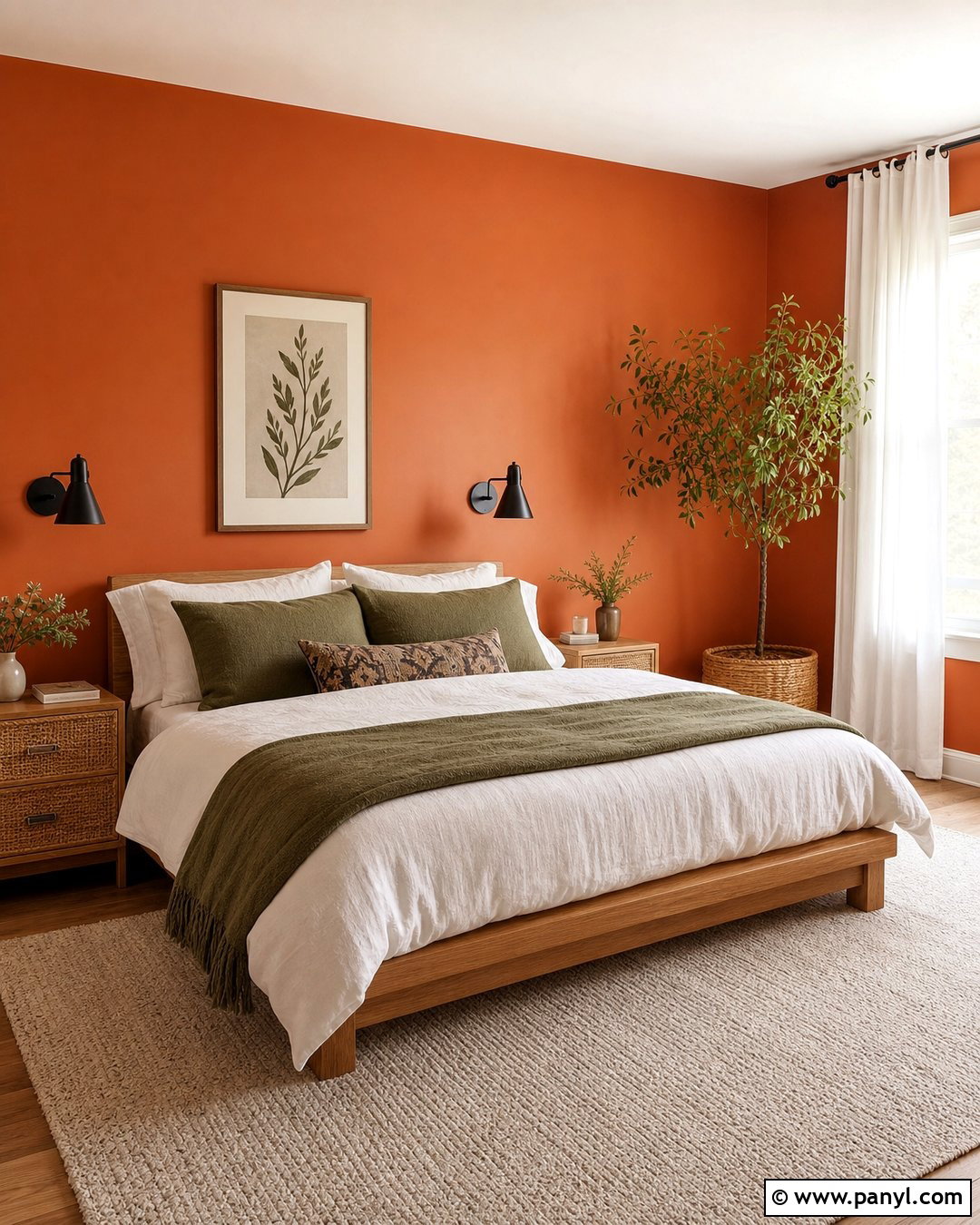
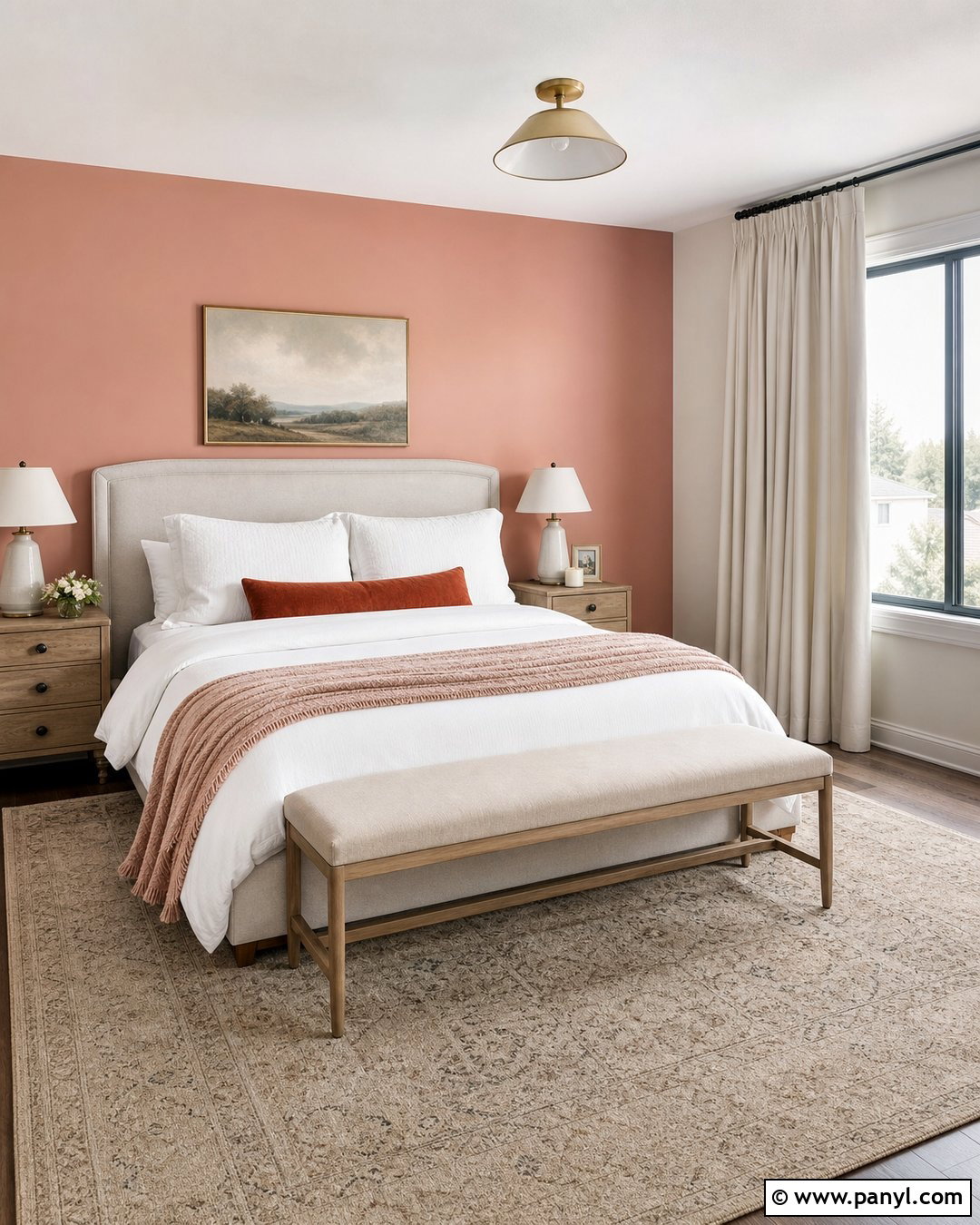
Terracotta orange creates a grounded bedroom that feels warm, restful, and connected to natural materials. Paint the wall behind the bed and keep the other surfaces creamy white or pale sand. A low oak bed, linen bedding, and woven nightstands complement the clay-inspired color without making the room feel overly rustic. Layer ivory, beige, and faded olive textiles for a calm palette. Black reading sconces provide crisp definition and free up space on the nightstands. Complete the room with a flat-weave rug, simple ceramic pieces, and one large botanical print. Use soft white curtains instead of dark window treatments so daylight can brighten the orange. The finished bedroom feels cozy and polished while remaining simple enough for everyday living.
3. Soft Peach Orange Dining Room
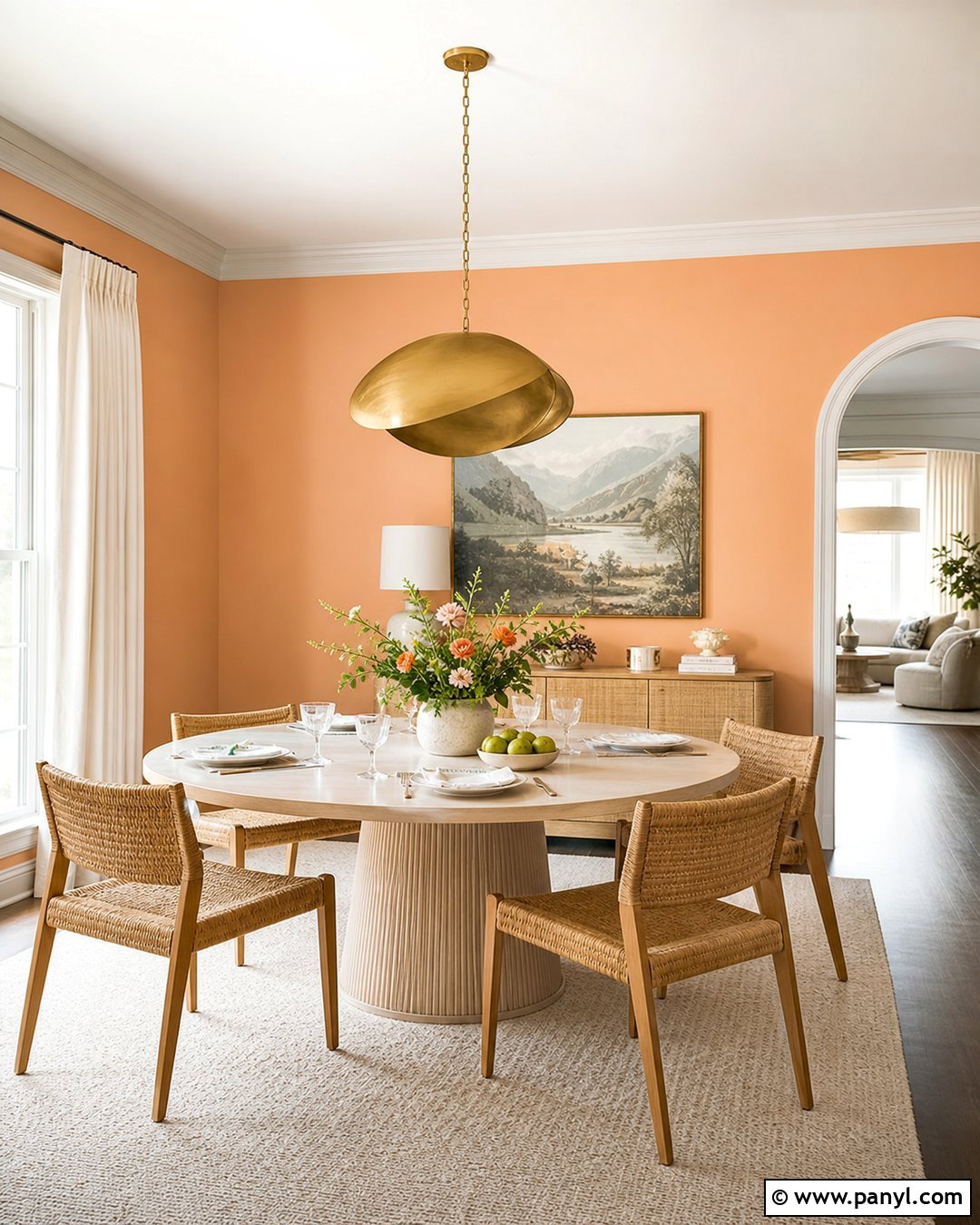
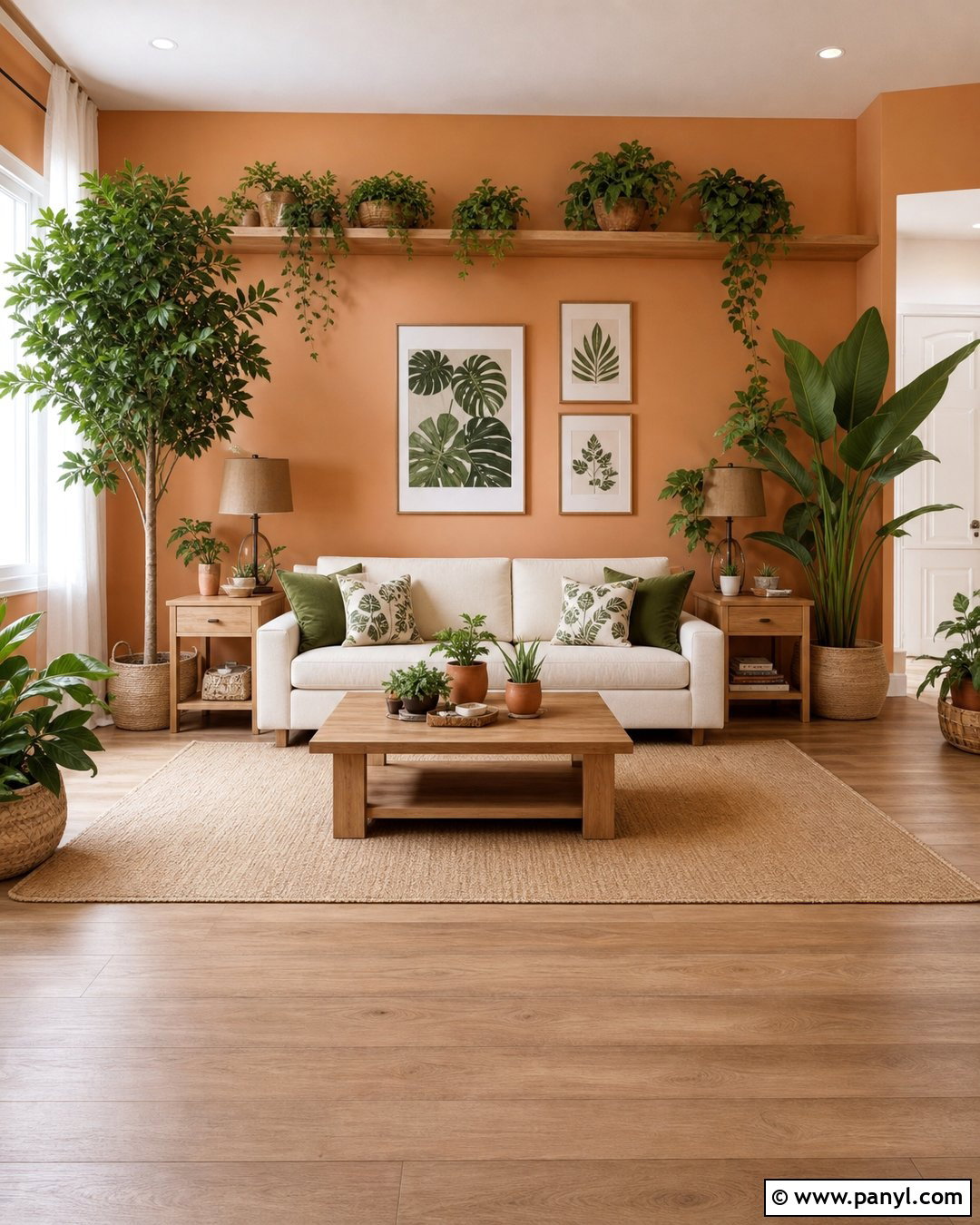
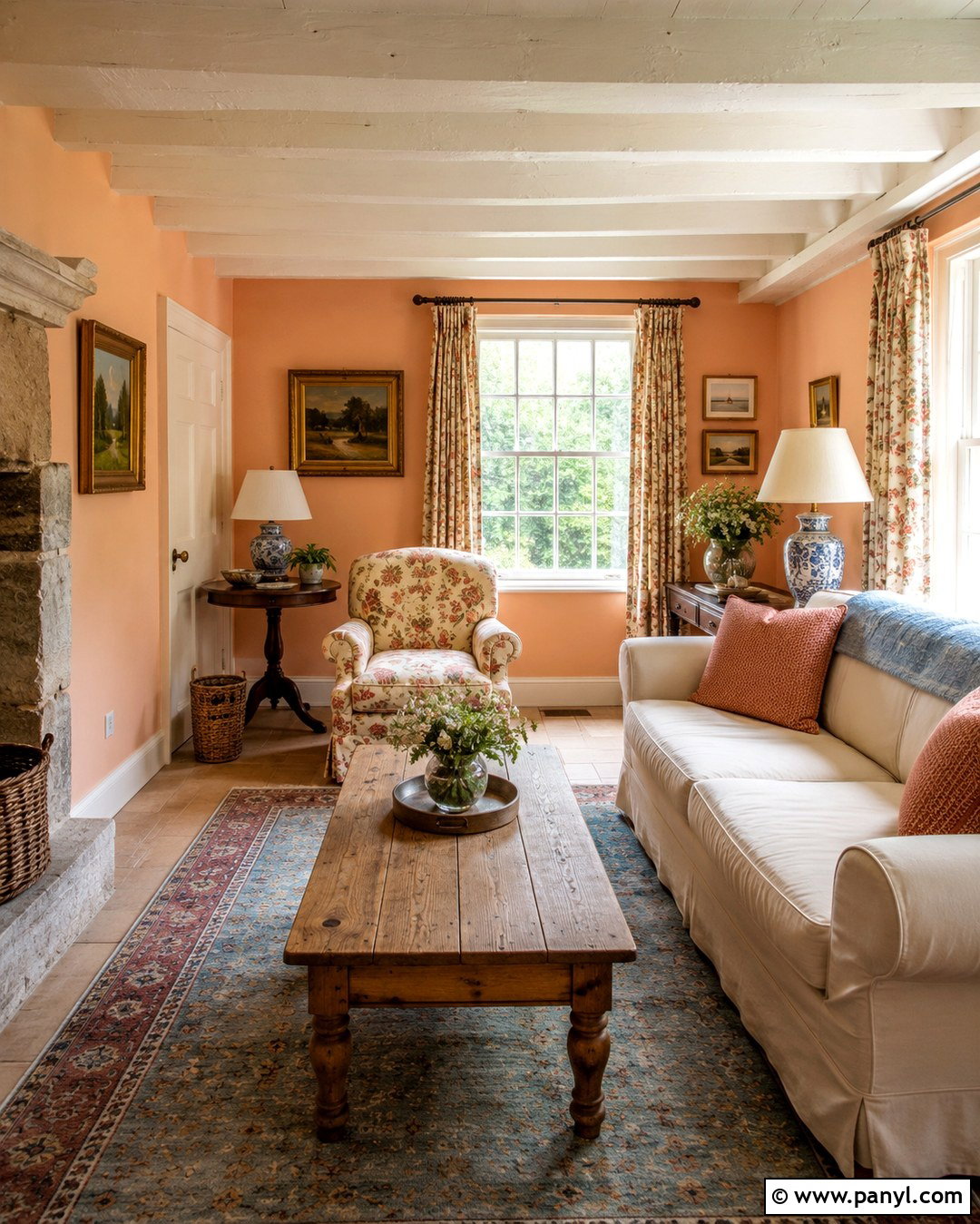
Could your dining room use more warmth without becoming too bold? Soft peach-orange walls provide a gentle glow that is flattering in both daylight and evening light. Pair them with a round white oak table, woven dining chairs, and an ivory rug for an airy foundation. A sculptural brass pendant introduces warmth while giving the space a defined center. Use pale gray or warm white trim to prevent sharp contrast around doors and windows. Cream drapery, clear glassware, and understated ceramic tableware keep the room refined. Add one muted landscape painting with green and blue details to balance the warm walls. This complete scheme works particularly well in compact dining areas where a deeper orange might visually close in the room.
4. Tangerine Orange Accent Wall
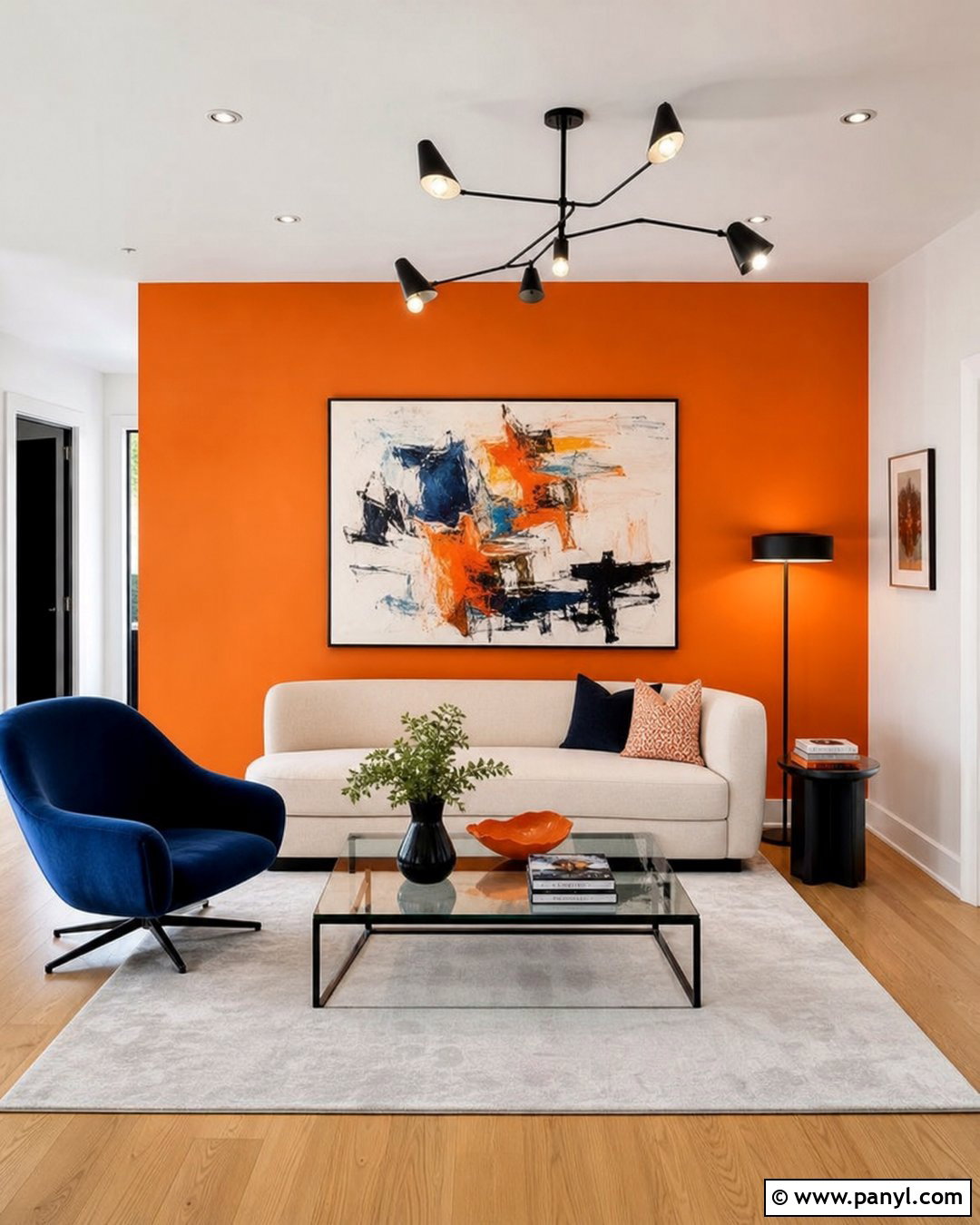
A tangerine accent wall brings energetic color to a modern room, but it needs calm supporting elements to remain comfortable. Use the orange behind a streamlined cream sofa and leave the surrounding walls clean white. Light oak flooring, a pale gray rug, and a simple glass coffee table prevent the saturated feature from appearing bulky. Introduce cobalt blue through one chair or a few graphic cushions for a lively complementary contrast. Keep window treatments white and lightweight to maximize natural light. Black metal frames, slim lighting, and minimal artwork sharpen the design. Avoid filling the wall with many small decorations. One oversized abstract canvas or a low floating console gives the bright paint enough open space to become the intentional focus.
5. Rust Orange Home Office
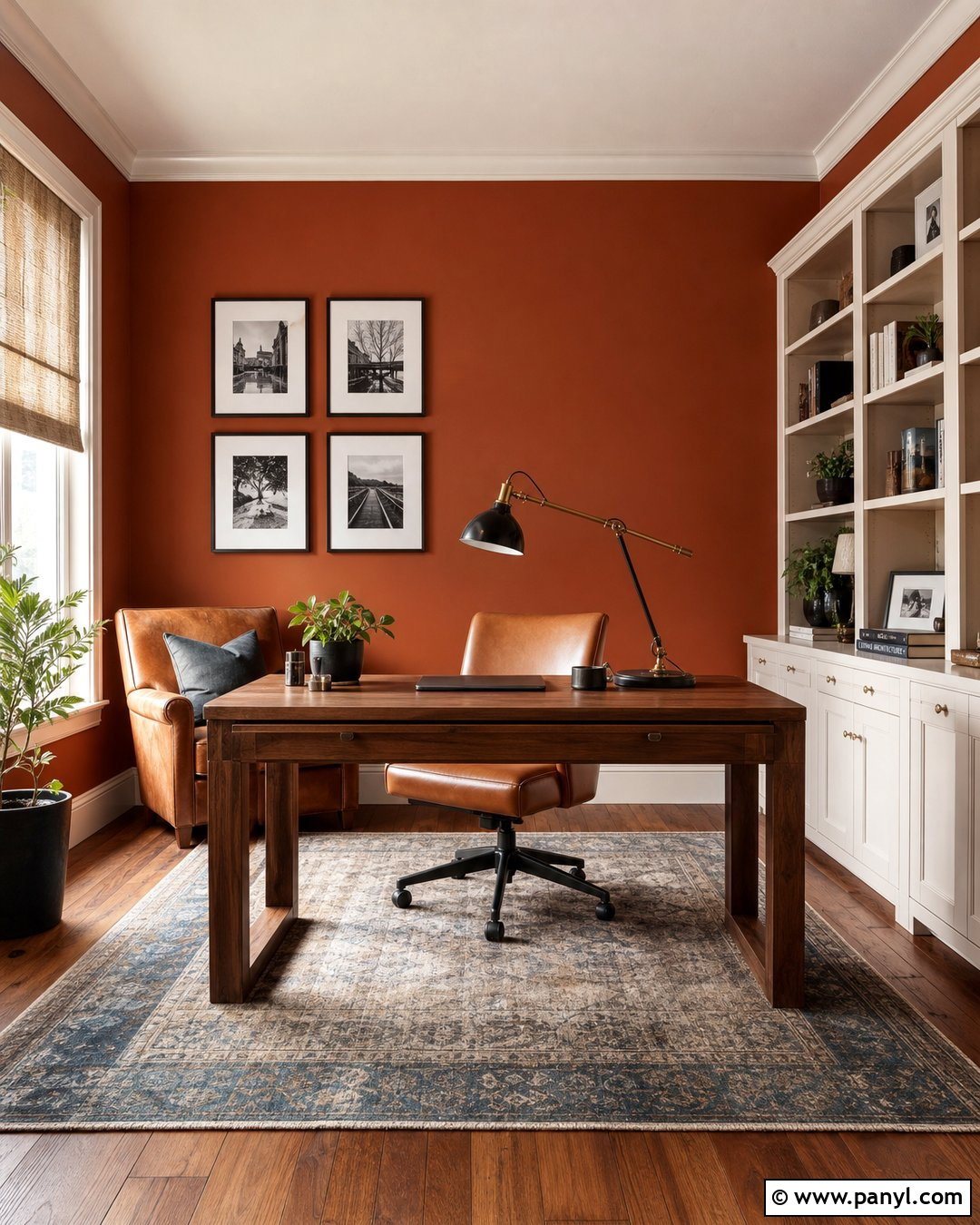
Rust orange walls can turn a practical home office into a focused, welcoming workspace. Paint the entire room in a muted rust if it has good daylight, or limit the color to the desk wall in a smaller area. Choose a substantial walnut desk, tan leather chair, and dark bronze task lamp for a cohesive, professional appearance. Built-in shelves painted warm cream create storage while breaking up the orange. Add a faded blue rug to cool the palette and absorb sound. Natural linen shades control glare without blocking the windows completely. Keep desktop accessories simple and use closed cabinets for visual calm. Framed black-and-white photography and a few leafy plants finish the room without making the workspace feel overly decorated or distracting.
6. Apricot Orange Kitchen
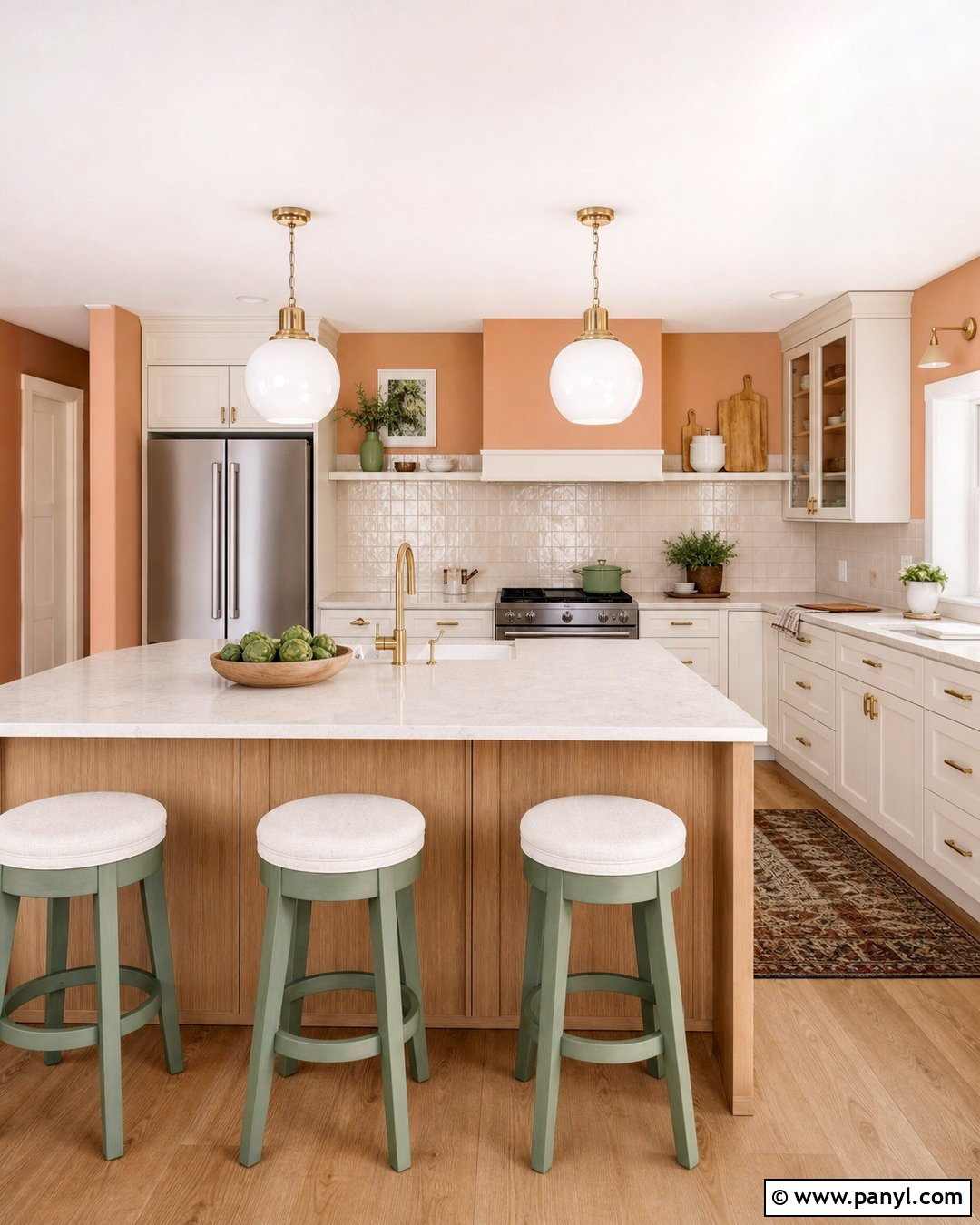
Soft apricot walls can warm a kitchen while allowing cabinets, counters, and natural materials to remain the main features. Pair this light orange with warm white shaker cabinets and creamy quartz countertops for a fresh, approachable scheme. A white oak island and matching floating shelves add depth without creating harsh contrast. Use unlacquered brass hardware, milk-glass pendants, and pale handmade backsplash tile to support the gentle color. Medium oak flooring grounds the room and disguises everyday wear. Add sage green through bar stools, pottery, or small countertop accessories. Keep the ceiling and trim bright white for definition. This orange kitchen palette is cheerful but not loud, making it practical for an open-plan home where several surrounding spaces must coordinate.
7. Pumpkin Orange Breakfast Nook
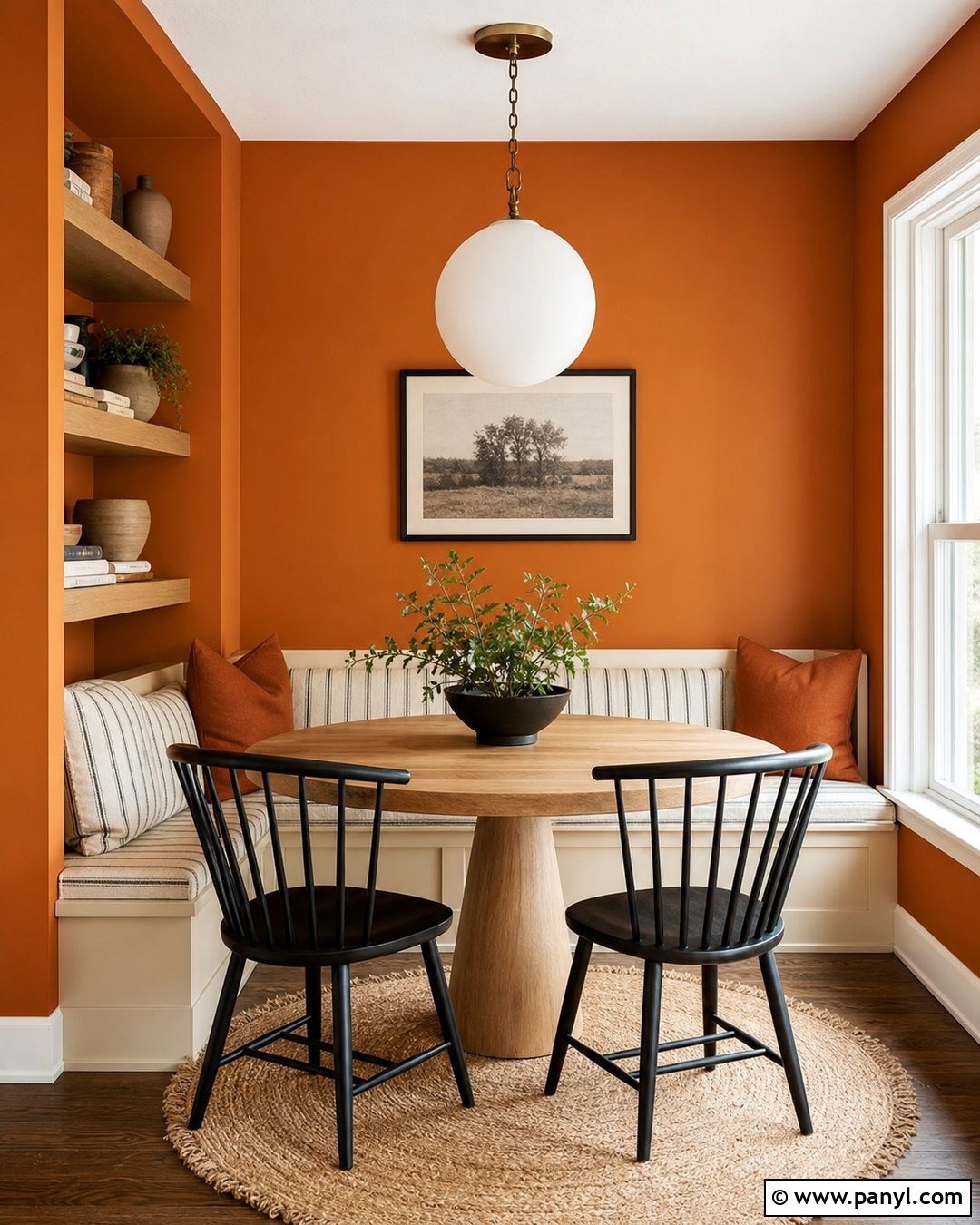
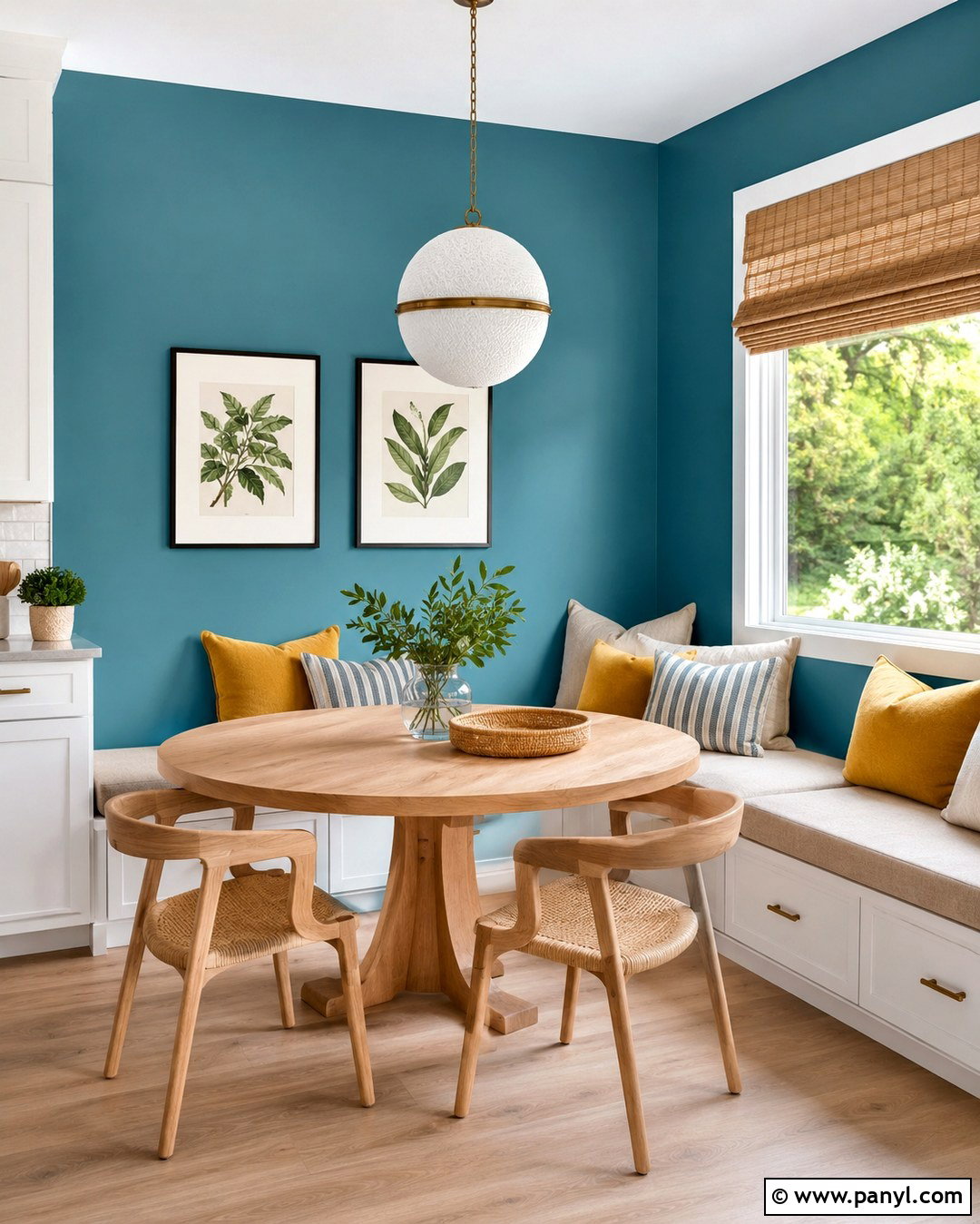
Pumpkin orange gives a breakfast nook the warm, inviting character of a favorite neighborhood café. Paint the walls surrounding a built-in banquette, then balance them with cream upholstery and a light oak pedestal table. Black spindle chairs create contrast and keep the arrangement from feeling too sweet. Add a washable striped cushion, rust-colored pillows, and a compact jute rug for durable texture. A simple white globe pendant provides even lighting above the table. Display a small collection of white and blue dishes on shallow wood shelves to cool the orange background. If the nook is small, paint the ceiling and trim creamy white. The completed space feels cheerful in the morning yet comfortable enough for homework, casual dinners, or weekend conversations.
8. Coral Orange Bathroom
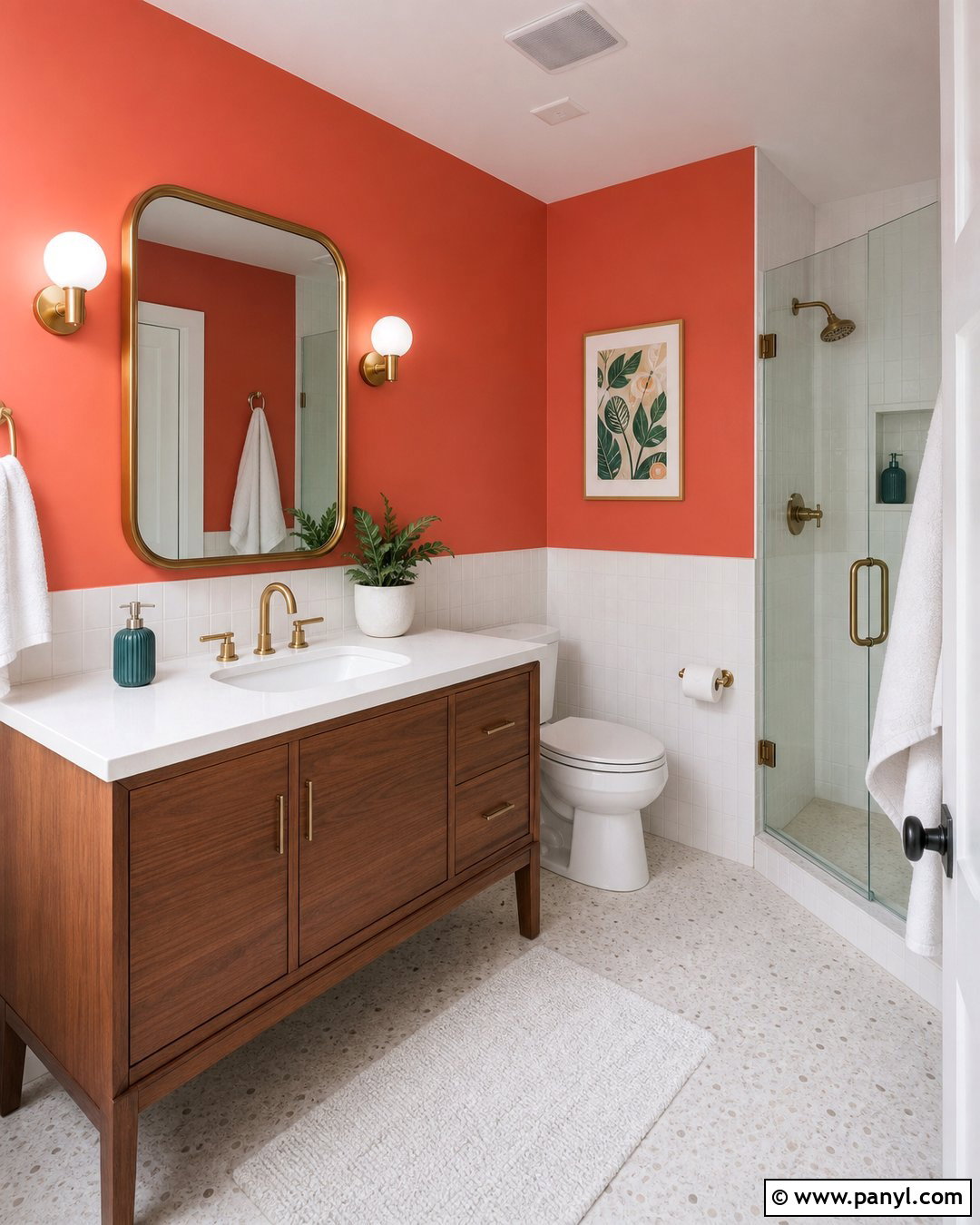
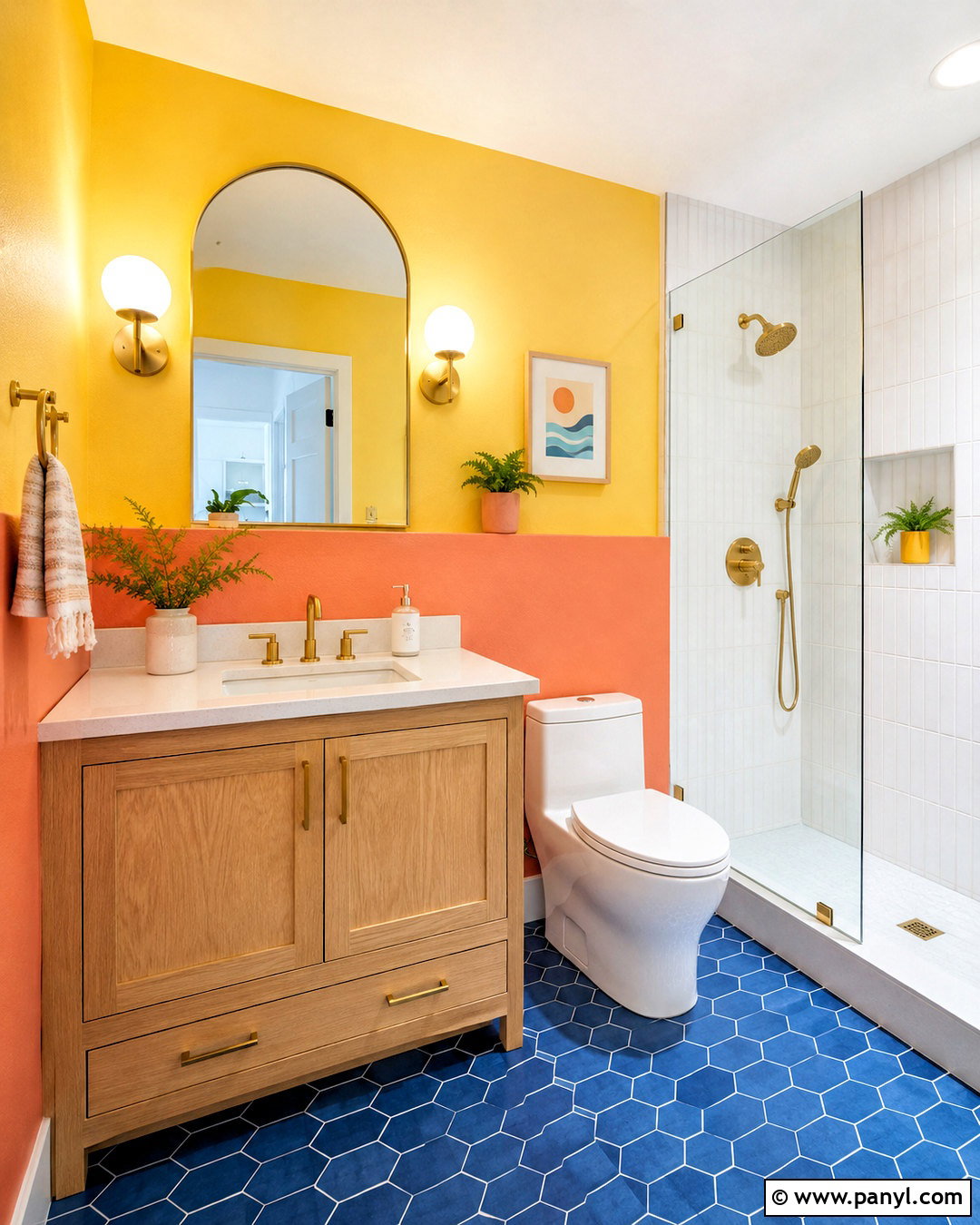
Coral-orange walls can make a small bathroom feel vibrant and polished when paired with clean, restrained finishes. Use the color above white vertical wall tile or traditional board-and-batten paneling. A walnut vanity adds natural warmth, while a white quartz counter and undermount sink keep the room bright. Select brushed brass faucets, rounded mirrors, and simple globe sconces for a softly modern look. Pale terrazzo flooring with subtle coral flecks can connect the palette without appearing overly coordinated. Add white towels and one muted teal accessory for contrast. Choose paint designed for humid rooms and use a washable finish around frequently touched areas. The finished bathroom feels joyful and distinctive while retaining enough white space to look fresh, open, and practical.
9. Clay Orange Entryway
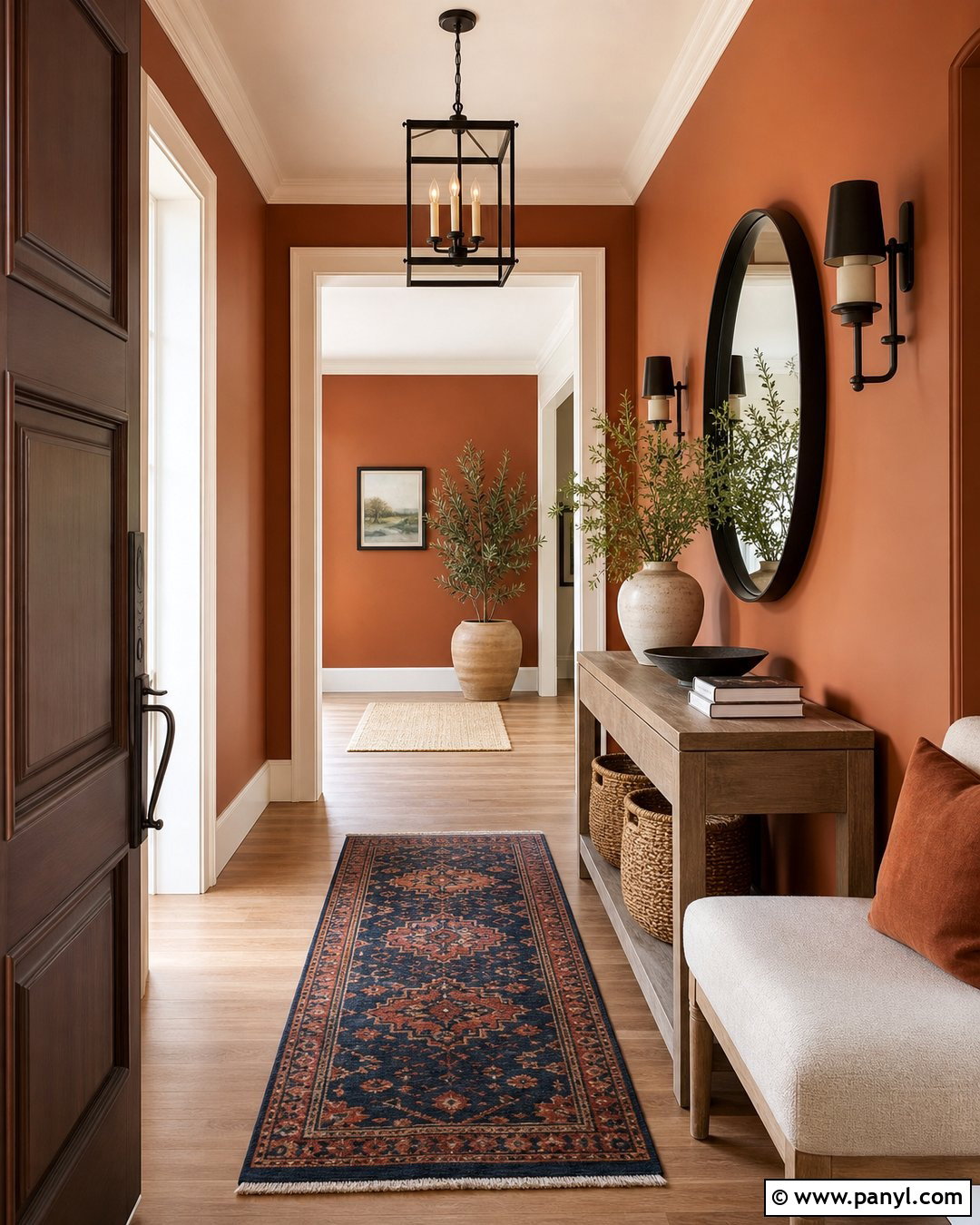
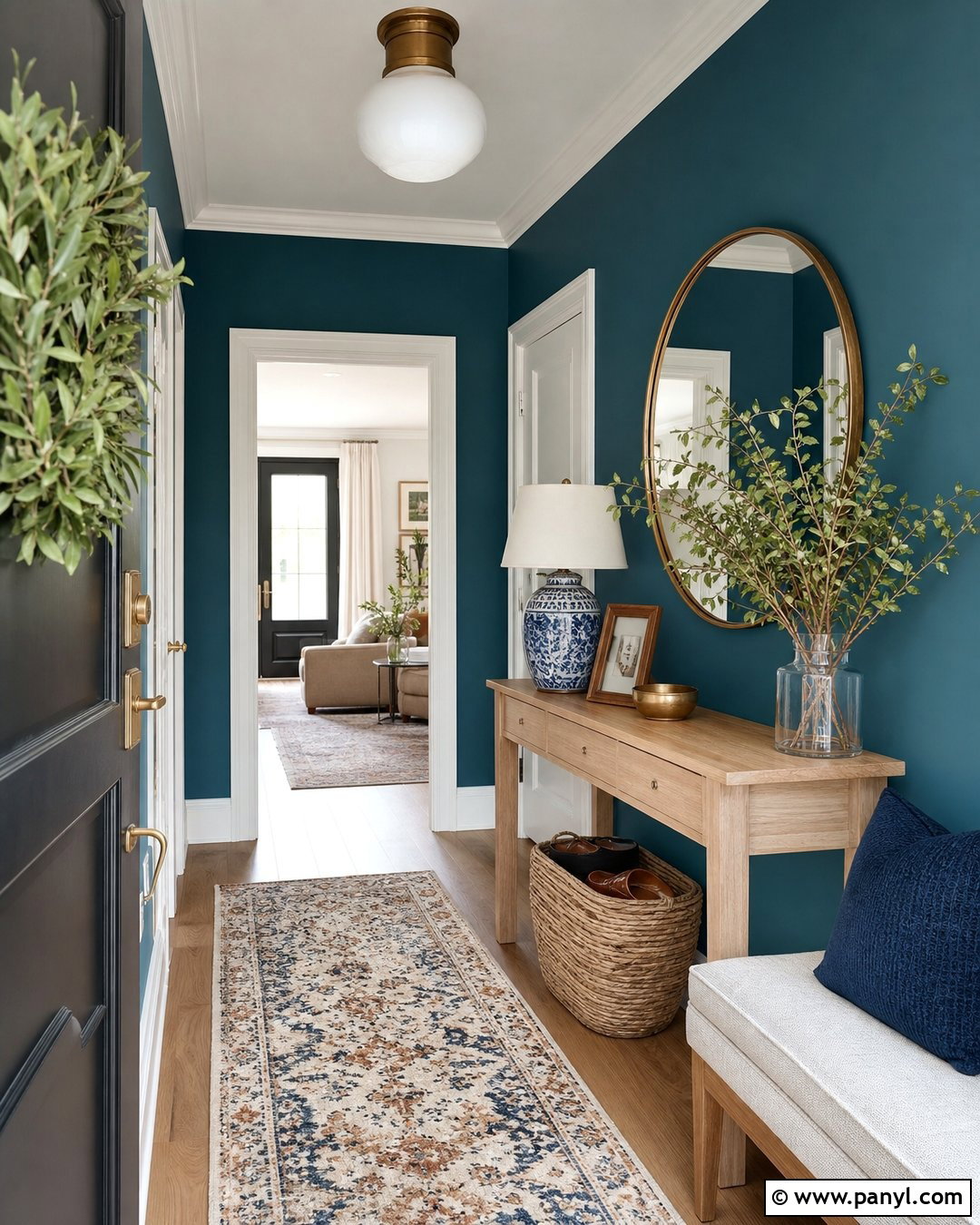
An entryway painted clay orange immediately creates a warm welcome and helps define the transition into the home. Cover all the walls in a subdued earthen shade, then use creamy white on the ceiling and trim. A narrow oak console, woven storage baskets, and a large round black-framed mirror provide function without crowding the walkway. Ground the area with a vintage-style runner containing muted navy, tan, and rust. A small upholstered bench offers a convenient place for removing shoes. Add bronze wall sconces or a compact flush-mount fixture for comfortable lighting. Keep decorative objects limited to a ceramic bowl, one plant, and a framed print. This complete arrangement feels collected and practical while giving even a modest entrance a clear design identity.
10. Orange And Navy Living Room
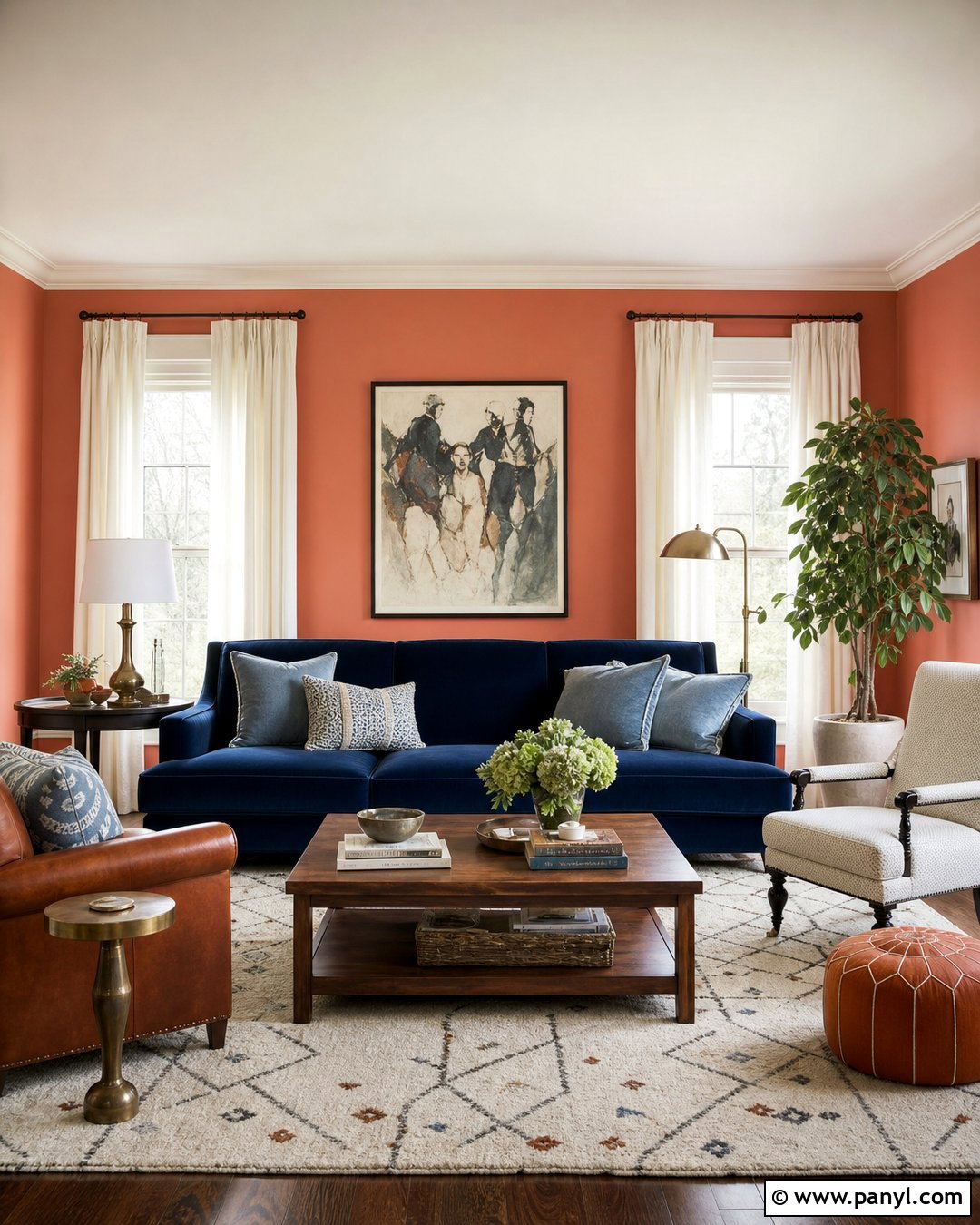
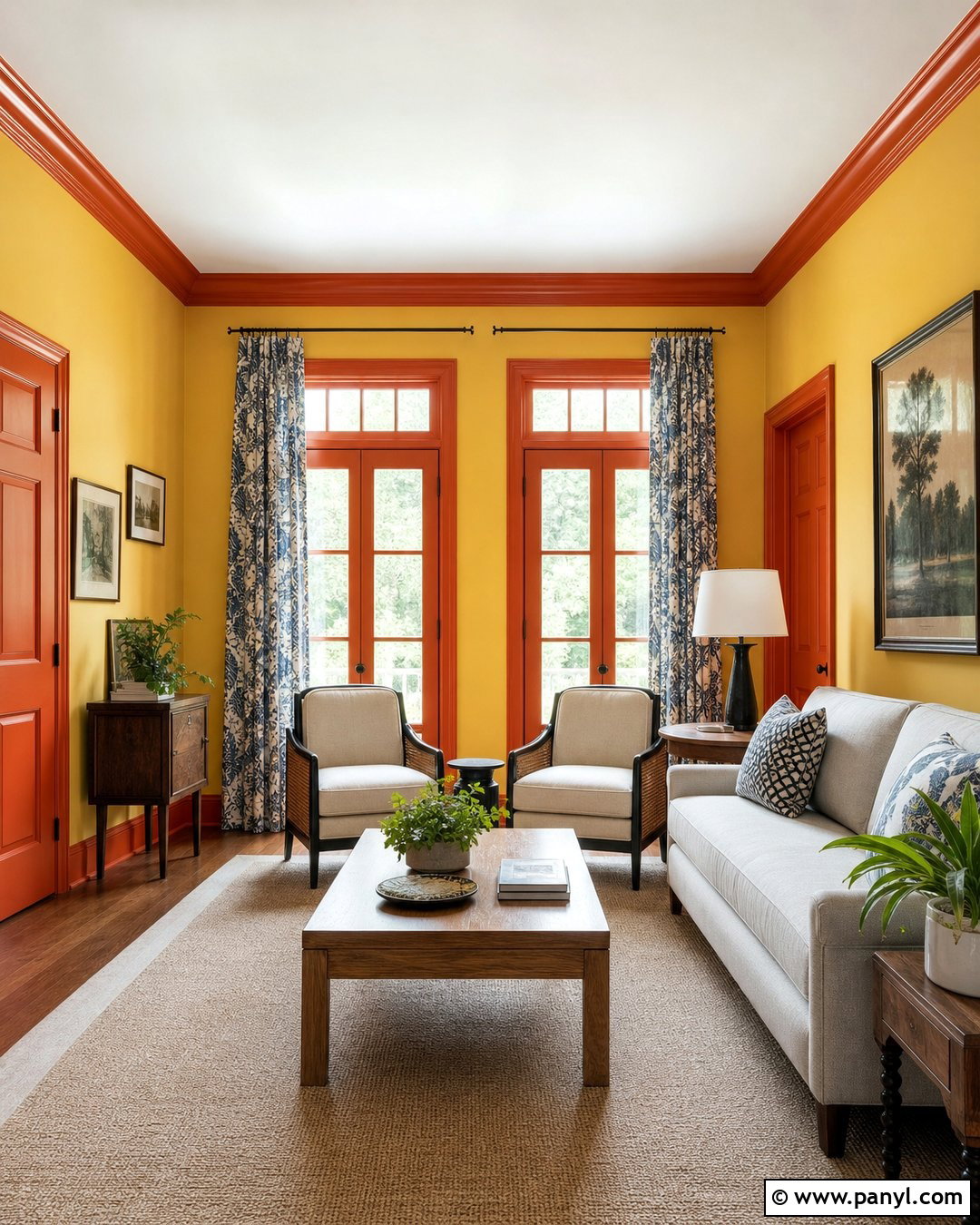
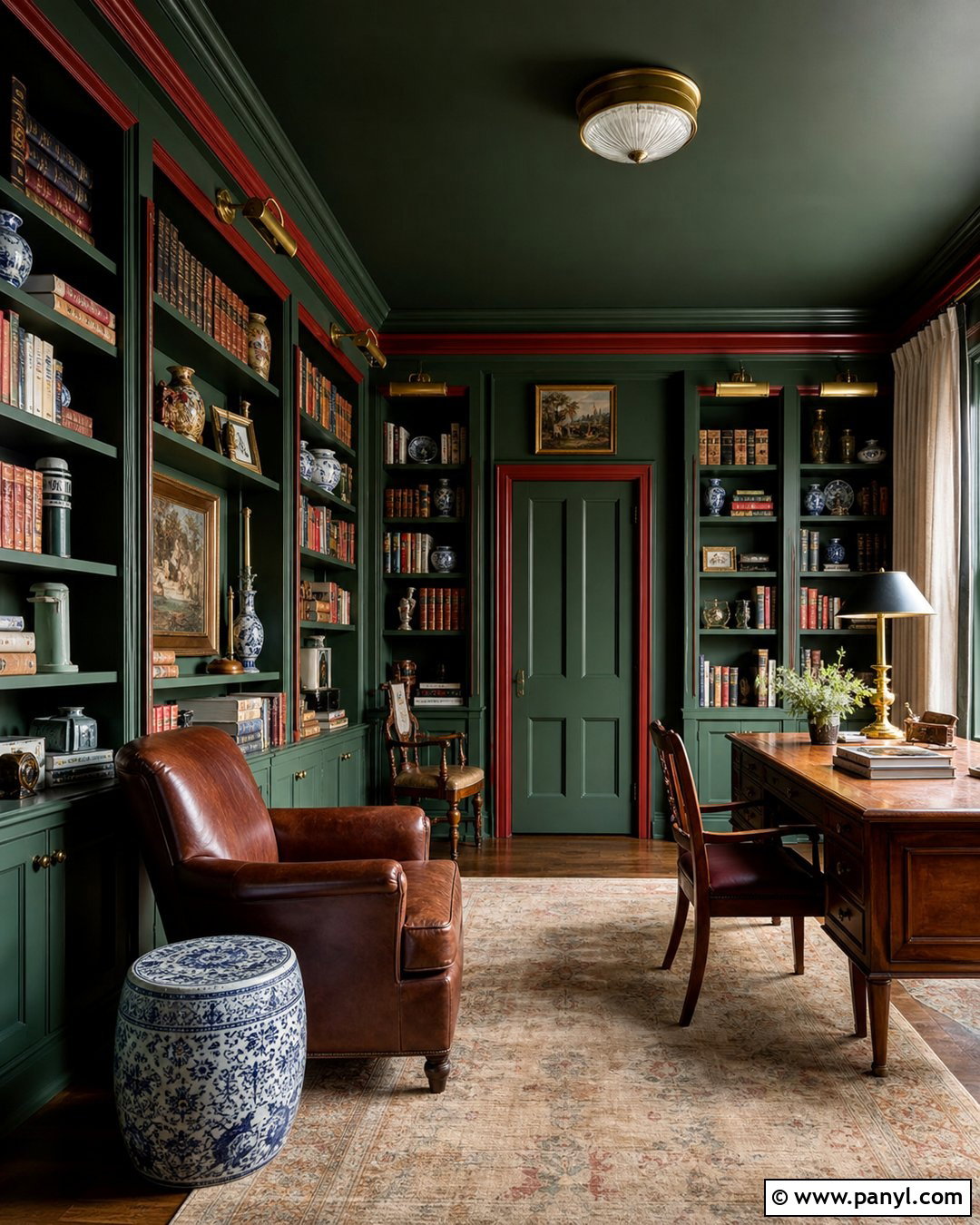
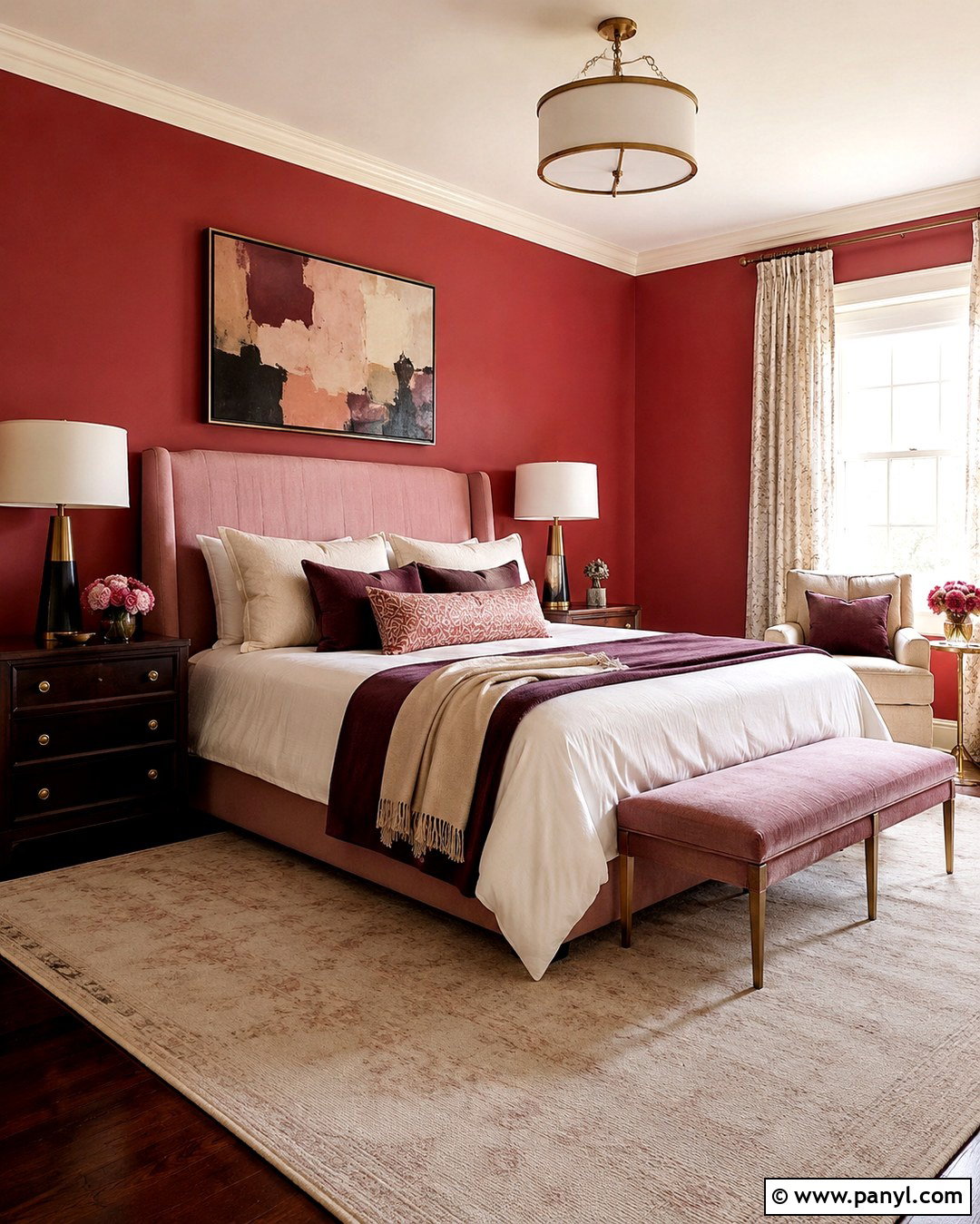
Orange and navy create a bold living room palette because the cool blue furniture visually balances the warm walls. Choose a muted persimmon-orange paint rather than neon orange, then introduce navy through a substantial velvet sofa or two upholstered chairs. Keep the rug ivory with a subtle geometric pattern to provide breathing room between the strong colors. Walnut tables and aged brass lighting enhance the warmth, while white curtains and trim maintain freshness. Use artwork containing both colors sparingly so the design feels connected instead of overly matched. A few pale blue cushions can soften the transition between navy and orange. This finished room suits traditional, transitional, or eclectic homes and feels especially inviting when layered with books, plants, and warm ambient lighting.
11. Orange And Sage Green Bedroom
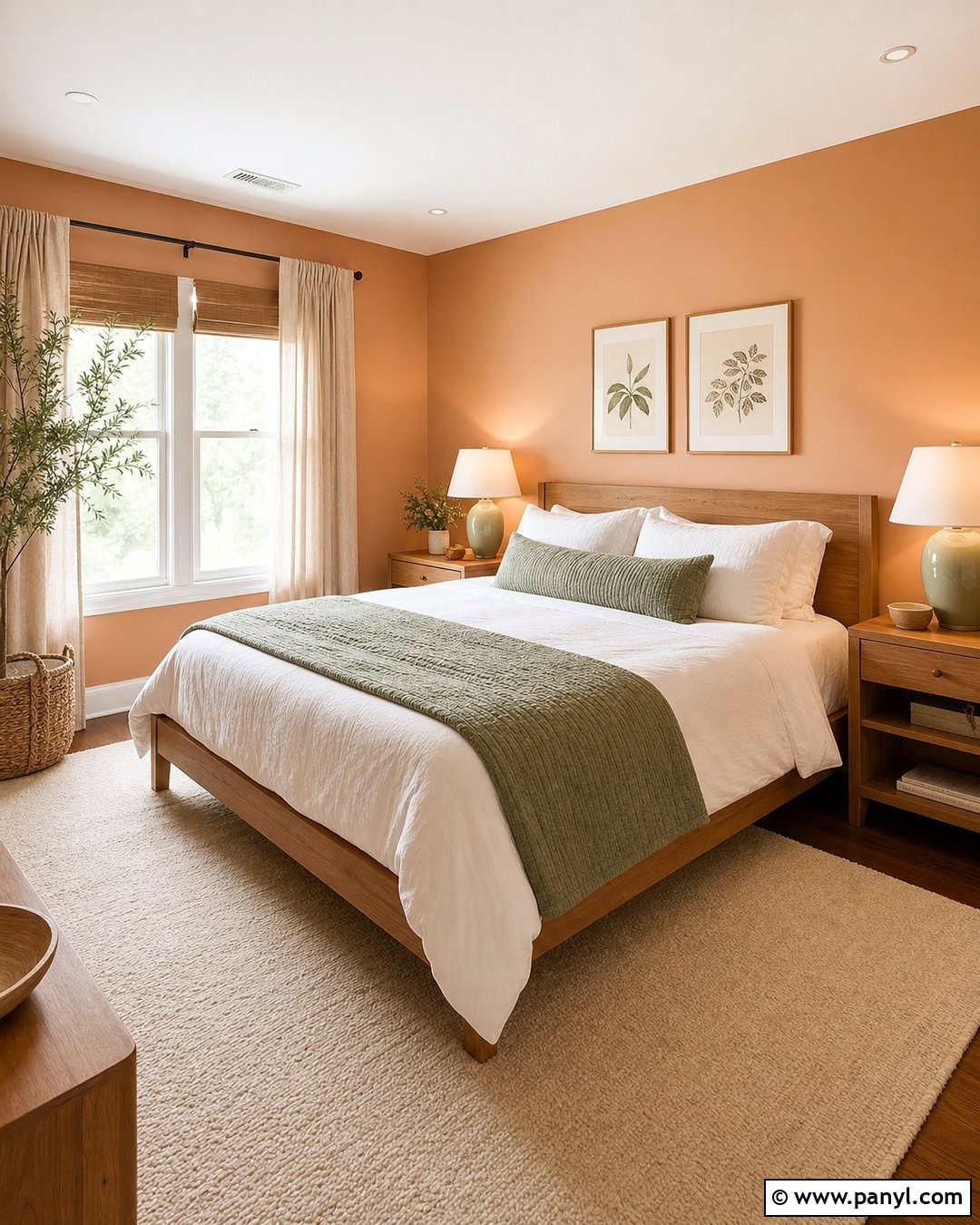
For a soothing interpretation of orange, combine muted apricot walls with sage green textiles and natural wood. Paint all four bedroom walls in a chalky, low-saturation orange that feels warm rather than stimulating. Dress a simple oak bed with white linen sheets, a sage quilt, and oatmeal-colored cushions. Matching oak nightstands and ceramic lamps create symmetry without making the arrangement formal. Use a cream wool rug to lighten the floor and soft flax curtains to filter daylight. Botanical prints in thin wood frames subtly reinforce the green accents. Avoid glossy finishes and highly saturated accessories, which can interrupt the restful atmosphere. The resulting bedroom has a balanced garden-inspired palette that works comfortably through every season and is easy to update with different bedding.
12. Orange And Teal Dining Room
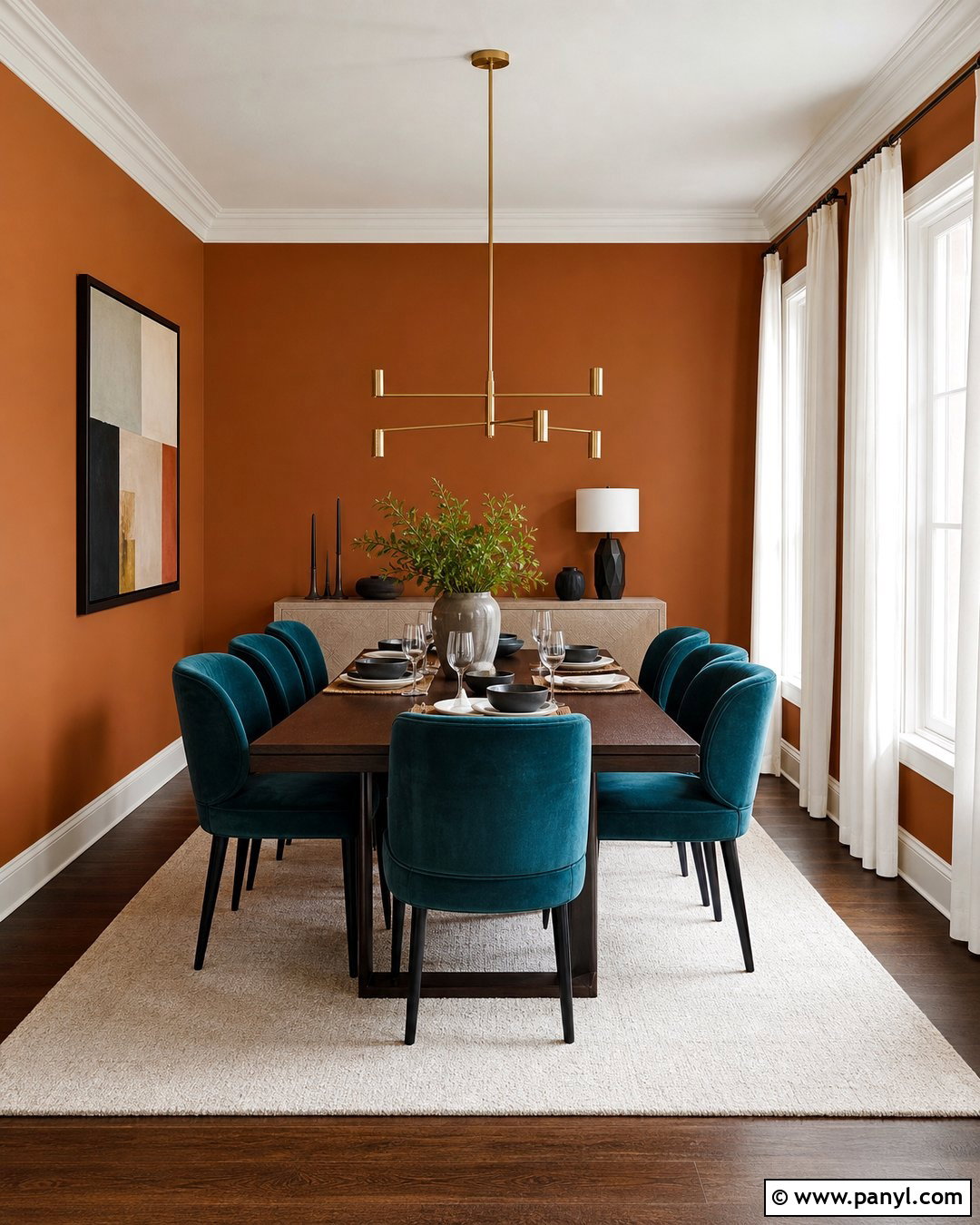
A deep orange dining room paired with teal seating creates a confident look suited to entertaining. Use a rich, slightly brown-toned orange on every wall, then introduce teal through velvet dining chairs or an upholstered banquette. A dark walnut table anchors the saturated palette, while a cream rug prevents the arrangement from becoming visually heavy. Add a brass linear chandelier above the table and warm white curtains at the windows. Simple white dishes and clear glass accessories give the eye a place to rest. Hang one large contemporary painting rather than a crowded gallery wall. Painting the trim the same orange can create a seamless, enveloping finish, but warm white trim offers a more traditional alternative. Both approaches produce a layered, memorable dining space.
13. Orange And Charcoal Bedroom
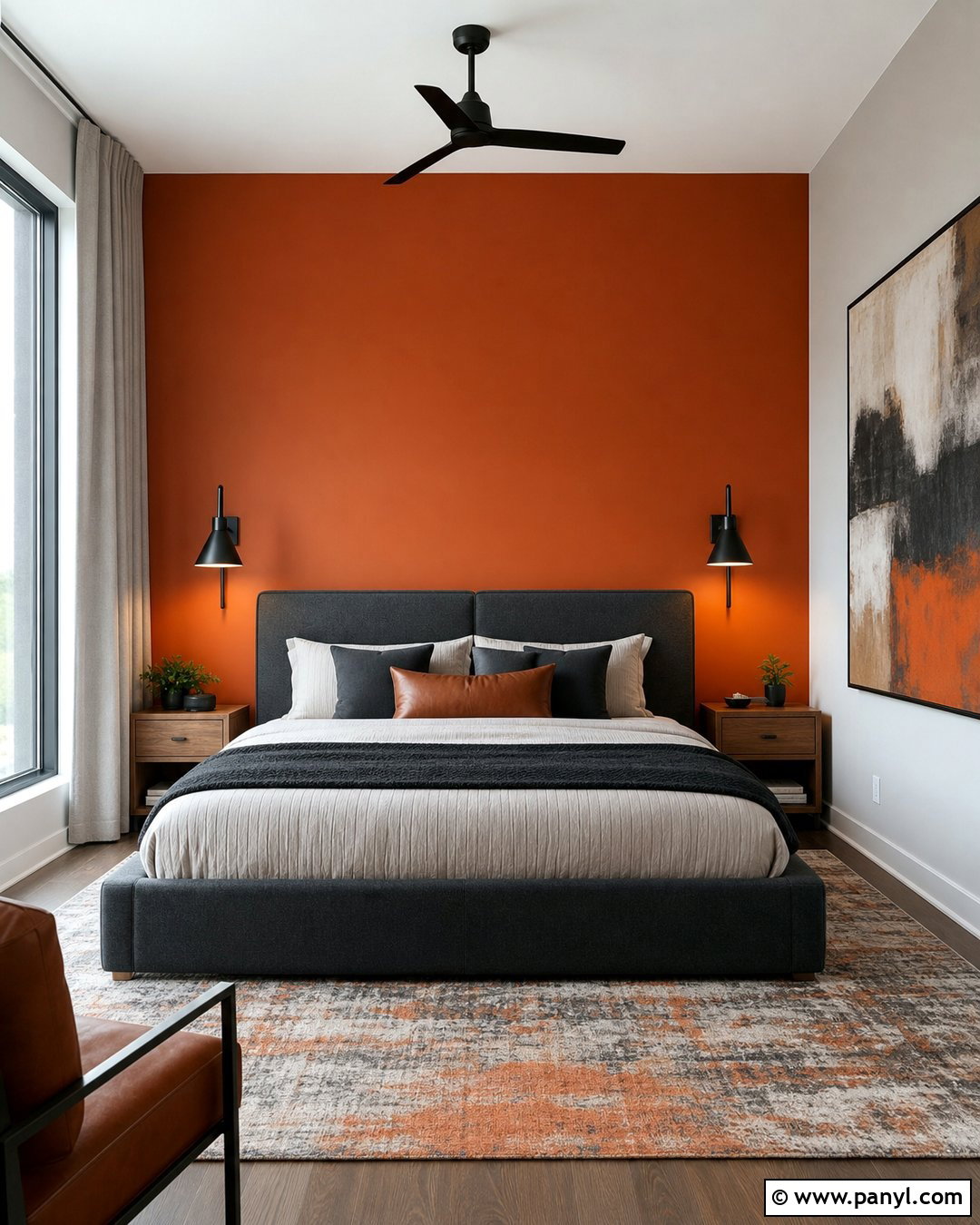
Deep orange and charcoal can create a mature bedroom that feels dramatic without becoming gloomy. Use burnt orange on the headboard wall and a pale warm gray on the remaining surfaces. Choose a charcoal upholstered bed, medium oak nightstands, and crisp ivory bedding to balance the darker tones. A patterned rug containing gray, rust, and cream ties the room together at floor level. Install matte black sconces above the nightstands and use simple linen curtains to soften the windows. One oversized abstract artwork can add interest without competing with the orange wall. Keep the ceiling white and include several warm light sources to preserve an open feeling after sunset. The finished scheme has strong contrast, clean lines, and enough neutral texture for everyday comfort.
14. Orange And White Two Tone Wall
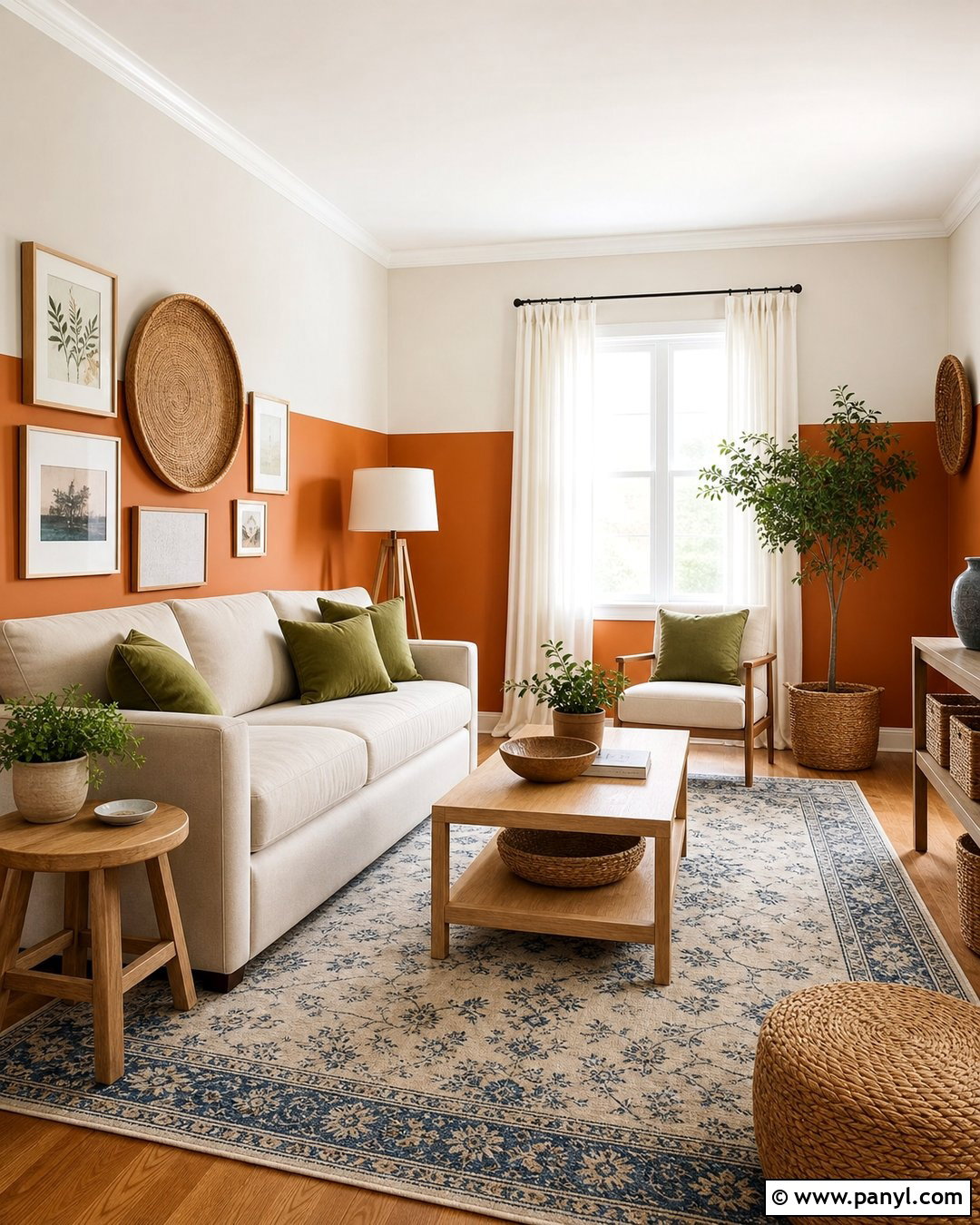
A two-tone orange and white wall treatment brings color into a room while keeping the overall effect light. Paint the lower third or lower half in muted pumpkin orange and the upper wall in warm white. A narrow painted line or simple chair rail can create a crisp transition. Continue the orange across doors or built-in cabinets for a more cohesive look. In a living room, add a beige sofa, pale oak tables, and a blue-and-cream rug. White curtains visually connect with the upper walls and make the ceiling appear taller. Keep accessories earthy and understated, using pottery, woven baskets, and olive green cushions. This treatment is particularly helpful in small rooms where full orange walls might feel too intense but plain white lacks character.
15. Orange Color Drenched Room
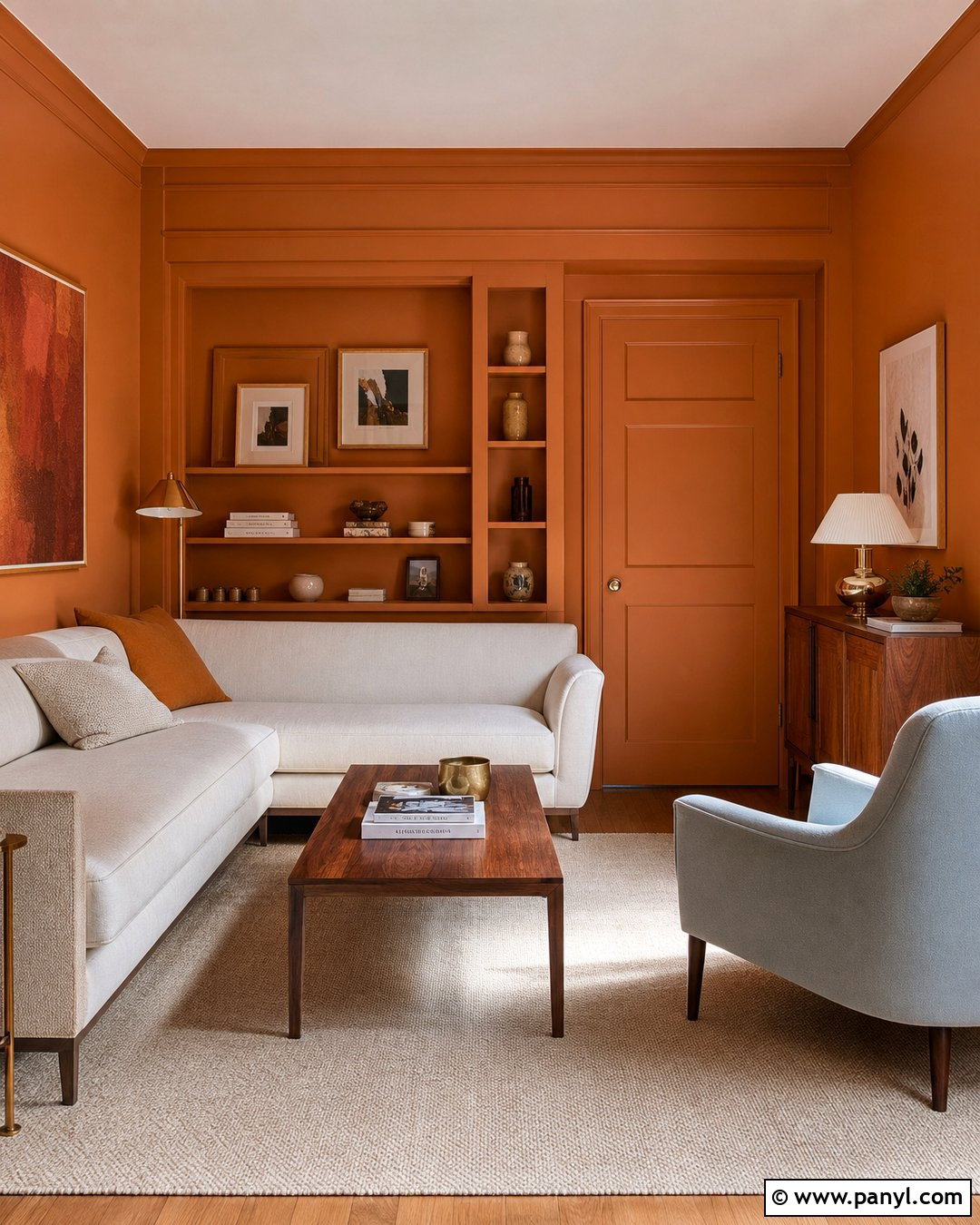
Color drenching can make orange feel more sophisticated by removing contrasting lines between walls, trim, doors, and built-ins. Choose a muted cinnamon or clay orange rather than a highly saturated shade, then carry it across every painted surface. Use a flat or matte finish on walls and a durable satin finish on woodwork for subtle dimension. Furnish the room with a cream sofa, walnut cabinet, and neutral wool rug to provide visual relief. A pale blue chair introduces a cool accent without disturbing the enveloping effect. Hang tonal artwork and use warm brass lamps for gentle highlights. This approach works best when the orange has earthy undertones. The complete room feels intentional, cozy, and architecturally unified rather than busy or broken into separate pieces.
16. Orange Ceiling And Neutral Walls
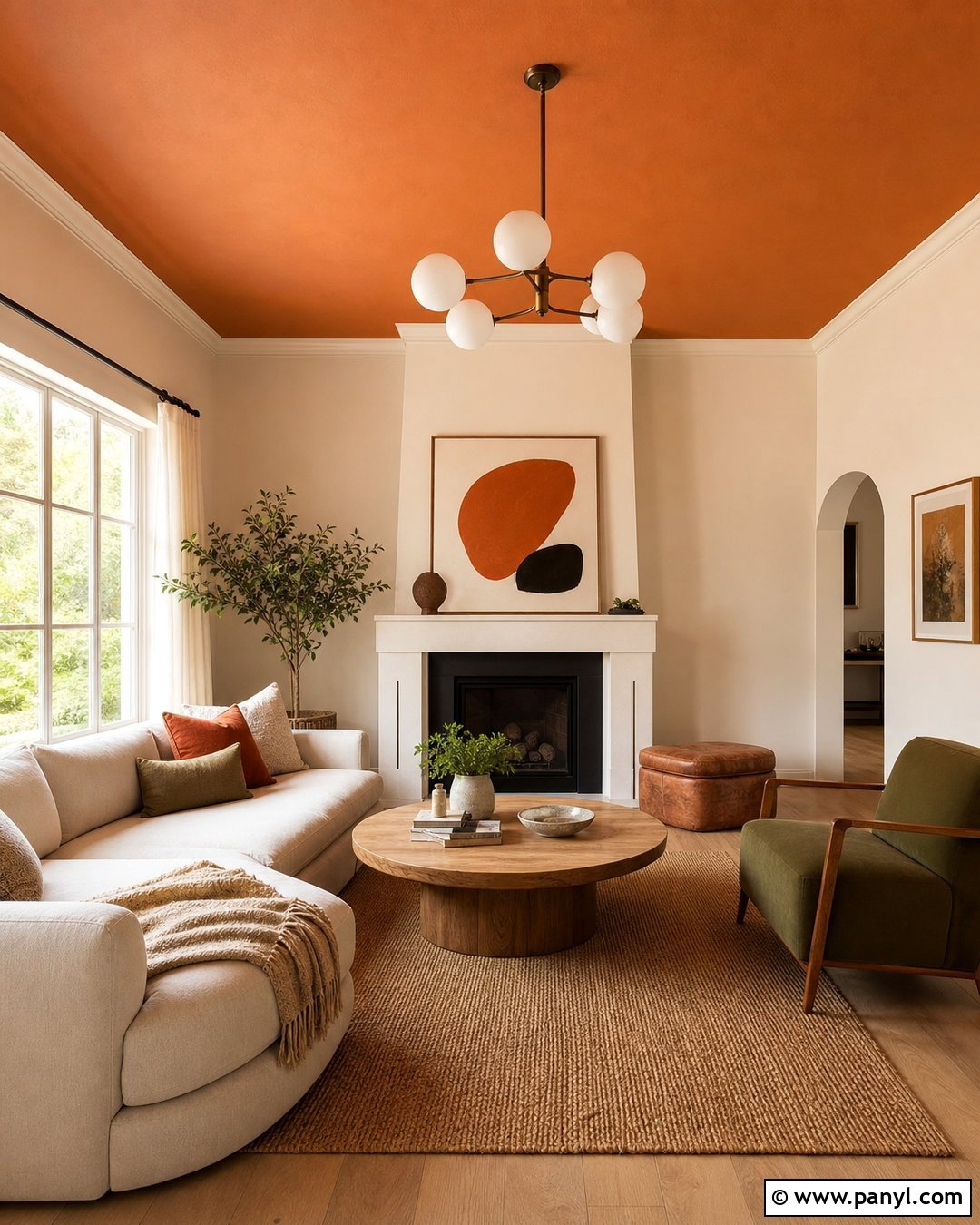
Painting the ceiling orange offers an unexpected way to use color while leaving the walls calm and versatile. Select a softened persimmon or terracotta shade and pair it with warm ivory walls. Repeat the orange through one or two small textiles so the ceiling feels connected to the room below. In a living room, use a cream sectional, oak coffee table, woven rug, and olive green chair. Keep crown molding the same orange as the ceiling for a continuous canopy effect, or paint it ivory for a crisp border. A central white globe fixture provides contrast without blocking the color. This complete design works especially well in rooms with tall ceilings, where the warm overhead tone can make the space feel more comfortable and intimate.
17. Orange Painted Wainscoting
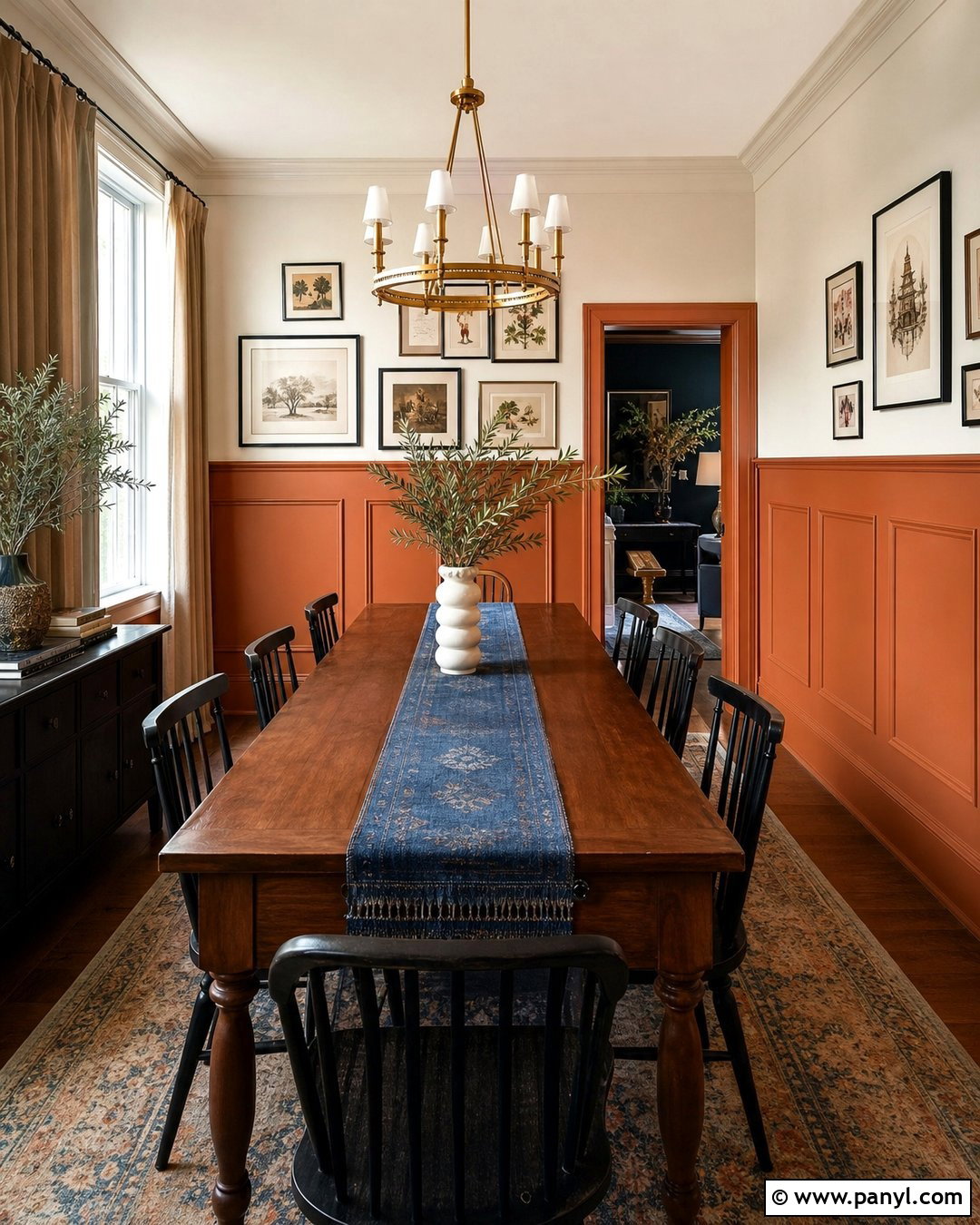
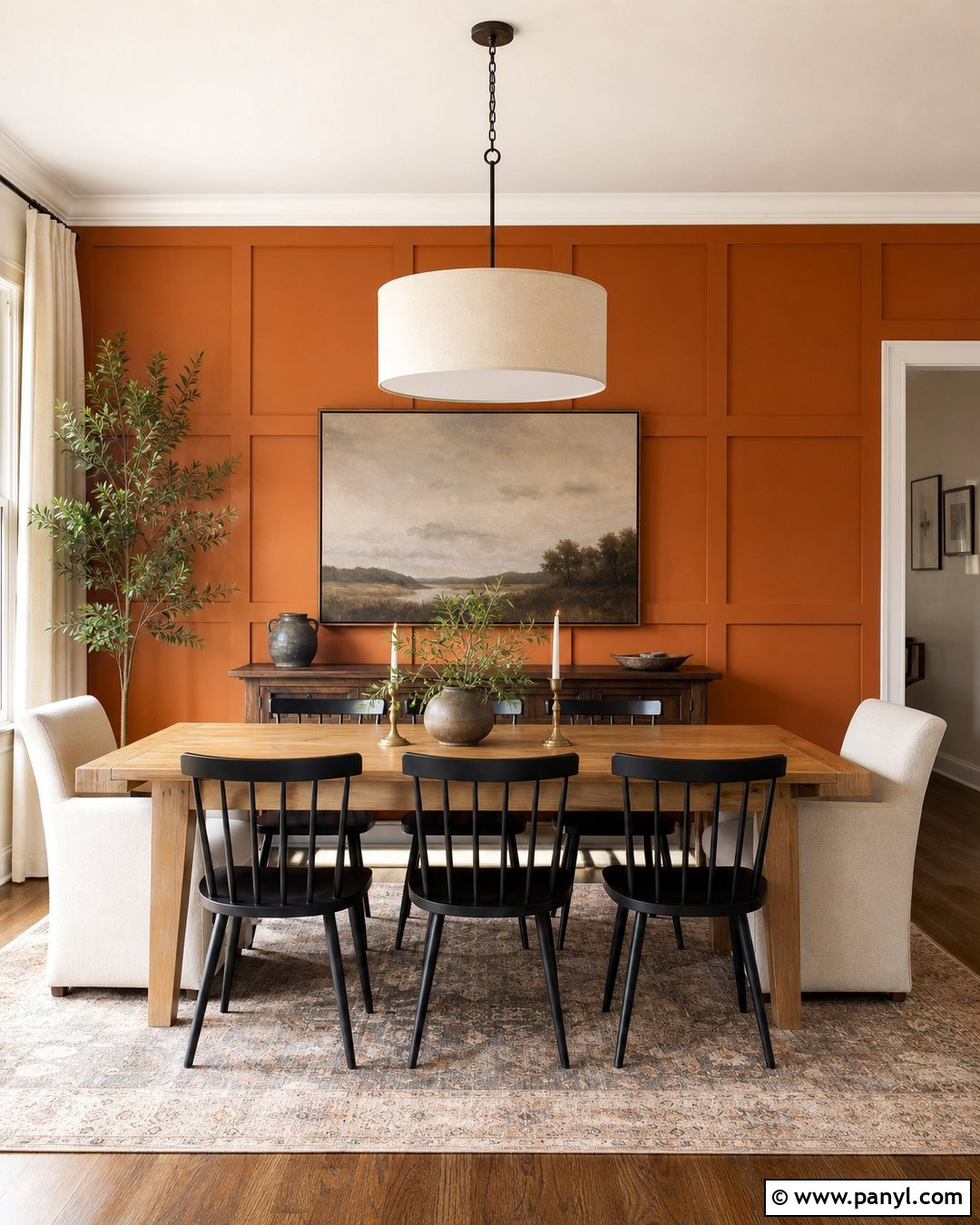
Orange-painted wainscoting adds architecture and warmth while keeping stronger color below eye level. Choose muted clay orange for the paneling and use soft cream on the upper walls. This pairing works beautifully in an entryway, dining room, or home office. Add a dark wood console or dining table to give the pale upper walls more visual weight. Black-framed artwork, antique brass lighting, and a faded blue runner create a collected look. Paint baseboards and lower trim orange for a seamless finish, while keeping the ceiling cream. The upper wall can remain plain or hold a simple botanical wallpaper with plenty of negative space. The finished room feels detailed and classic, yet the earthy orange color prevents the wall treatment from appearing overly formal or predictable.
18. Orange Geometric Accent Wall
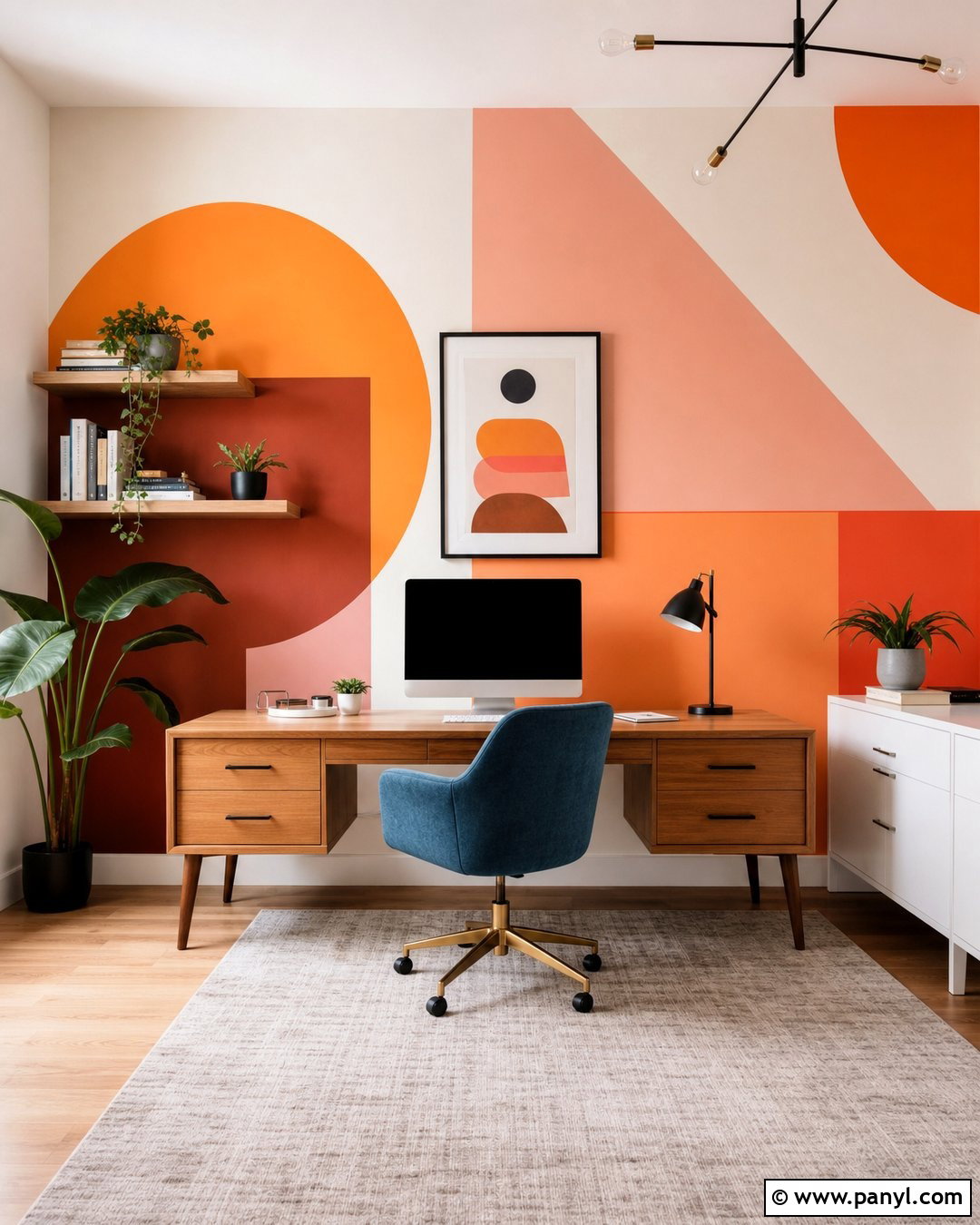
An orange geometric wall can energize a playroom, teen bedroom, or creative workspace without requiring elaborate decor. Begin with a warm white base, then add broad shapes in tangerine, pale peach, rust, and muted coral. Keep the geometry large and simple so the wall reads as a composition rather than a busy pattern. Place a streamlined oak desk or low white storage unit against it. Use a denim blue chair, neutral rug, and black task lighting to ground the playful palette. Repeat only one orange tone in nearby accessories to avoid excessive matching. Leave the surrounding walls white and organize supplies in closed cabinets. The complete room feels imaginative and modern while remaining practical enough to adapt as needs and furnishings change.
19. Orange Ombre Wall
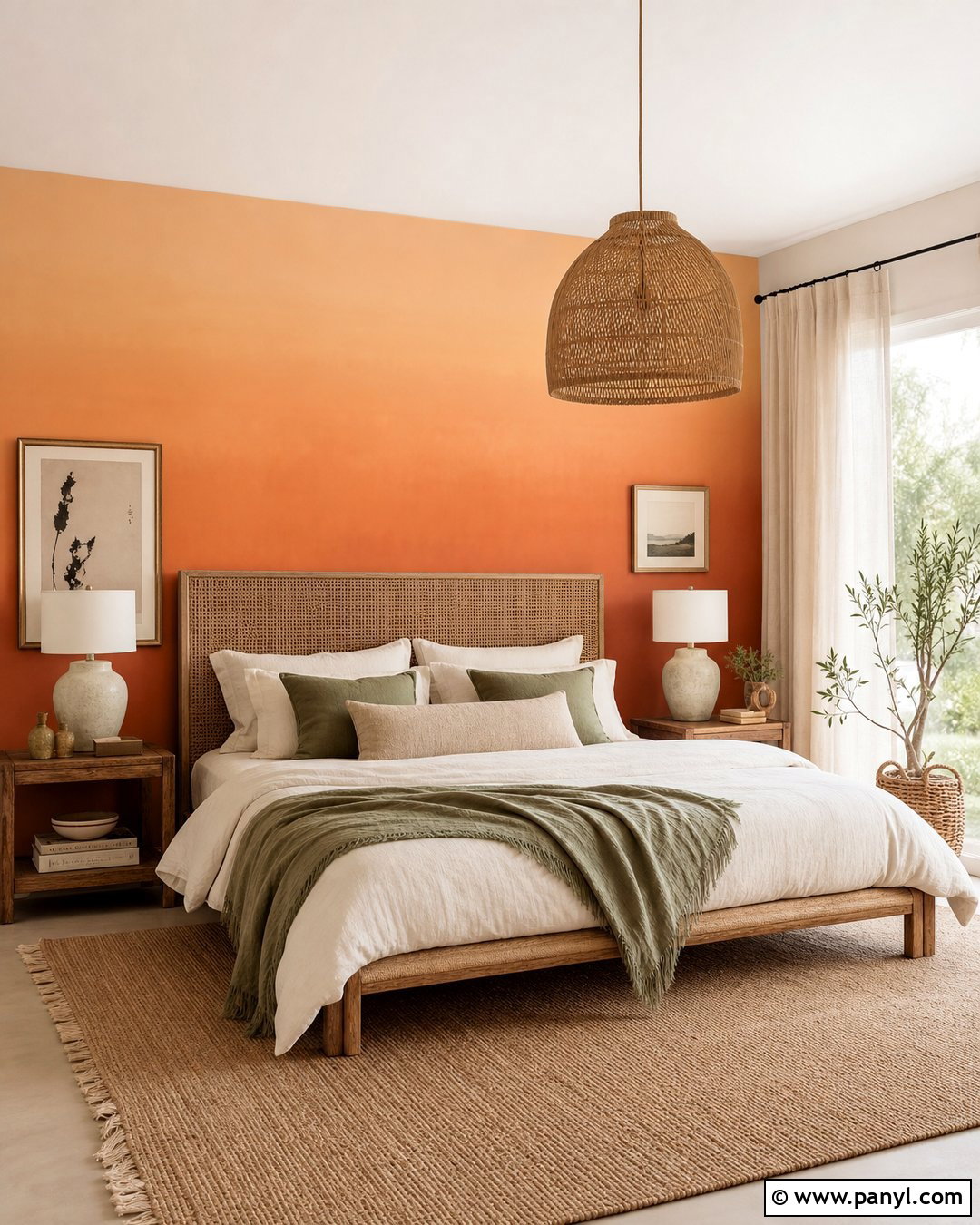
A peach-to-terracotta ombre wall creates softness, movement, and a striking backdrop without using a hard color boundary. Start with creamy peach near the ceiling, blend through warm apricot, and finish with deeper clay orange near the floor. Keep the remaining walls warm white so the gradient remains the focus. In a bedroom, place a low cane or oak bed against the ombre surface and use ivory bedding with faded sage accents. A natural jute rug, linen curtains, and ceramic lamps reinforce the relaxed palette. Limit artwork because the painted transition already supplies visual interest. Smooth blending and restrained furnishings are important for avoiding a themed appearance. The finished bedroom feels warm, artistic, and calming, with the deeper lower color visually anchoring the bed.
20. Orange Arch Accent Wall
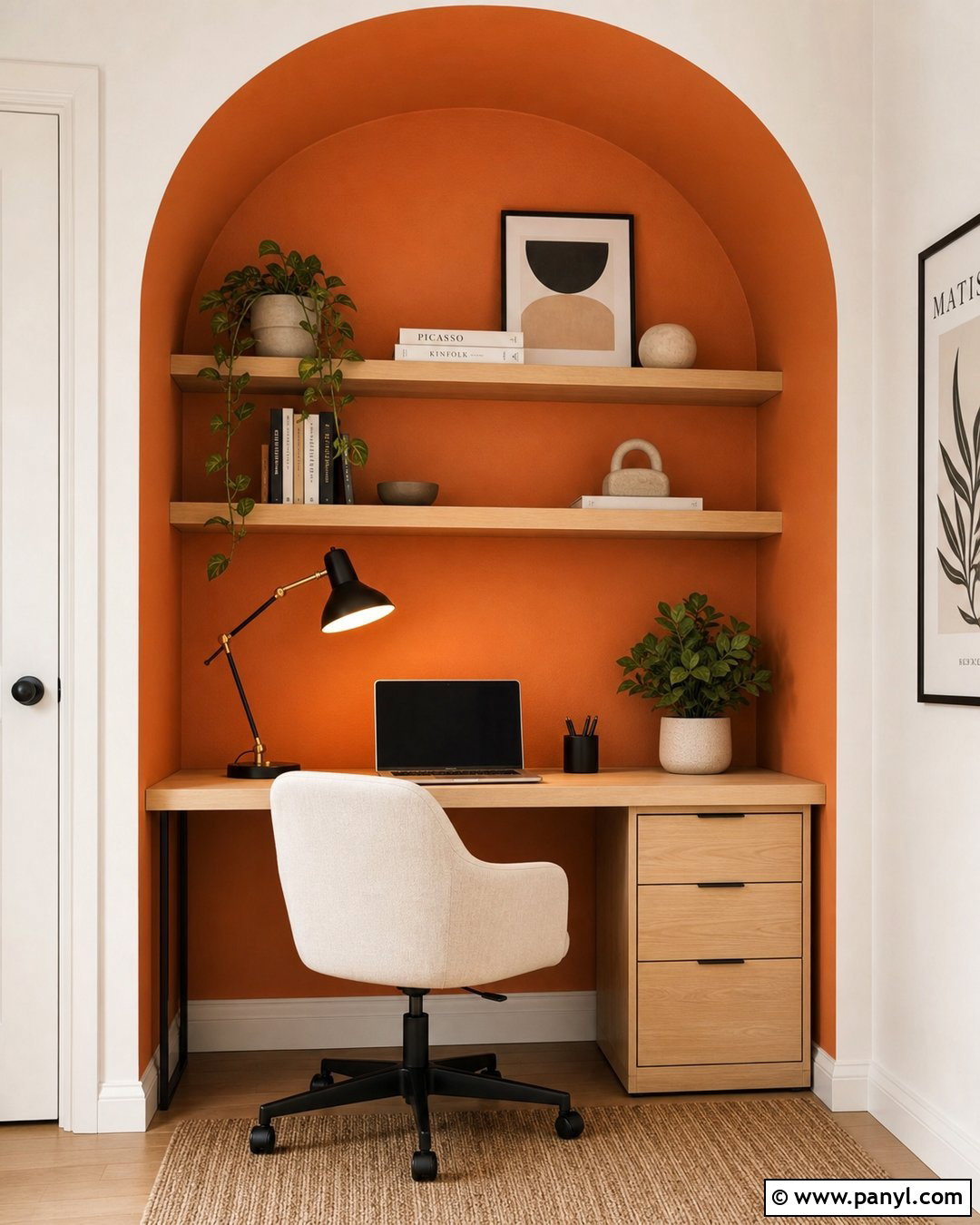
A painted orange arch can frame furniture and create the suggestion of architecture in a plain room. Use a soft terracotta arch behind a desk, console, bed, or reading chair, leaving the surrounding wall warm white. Make the shape wide enough to extend beyond the main furniture so it does not look cramped. Pair it with a light oak desk, cream chair, and black metal lamp for a simple home office arrangement. A small woven rug and floating shelves provide useful texture and storage. Keep the shelves inside the painted boundary to strengthen the framed effect. This budget-friendly feature works especially well in rentals or compact homes. The completed space looks purposeful and distinctive without requiring a full accent wall or permanent architectural changes.
21. Orange Limewash Living Room
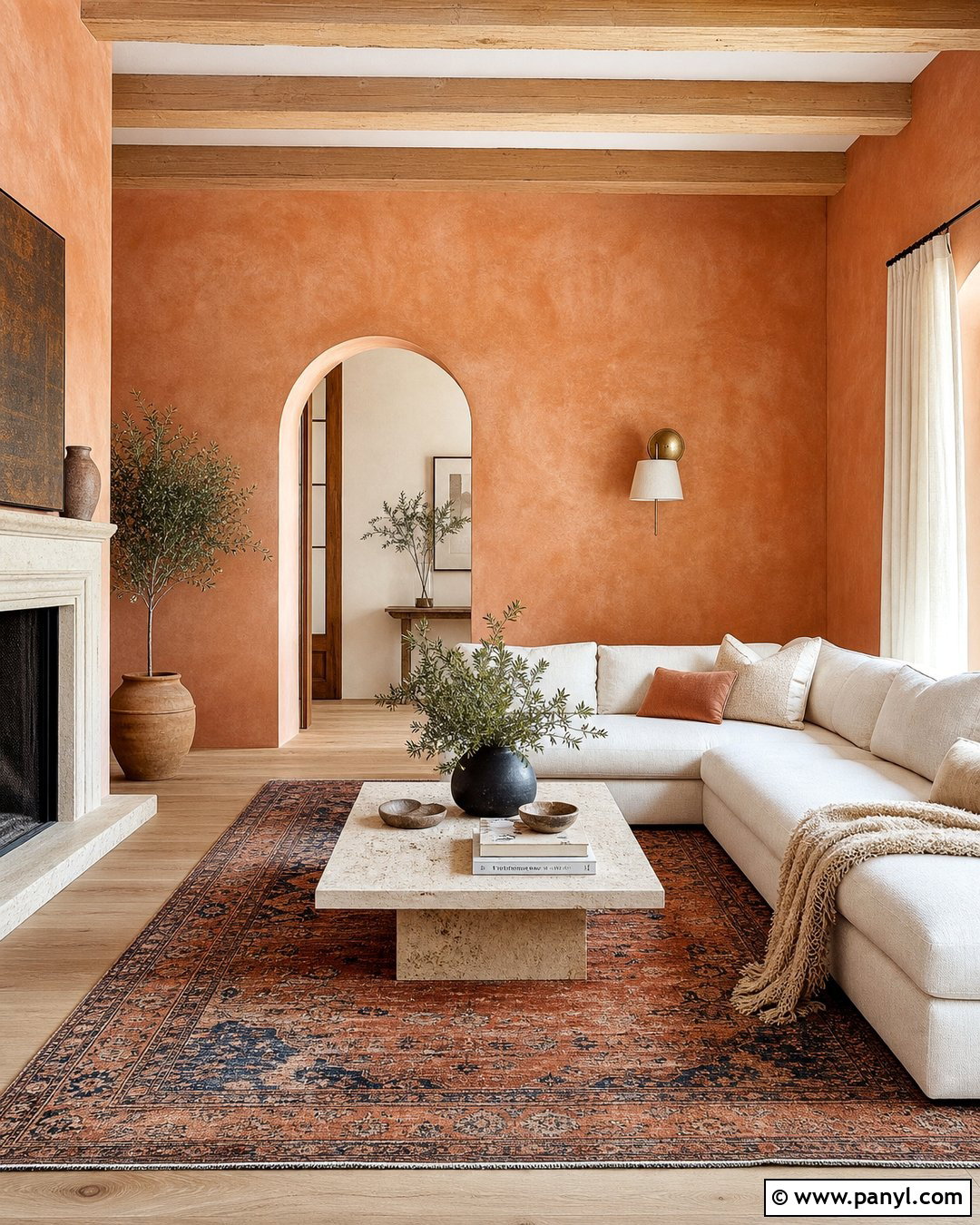
Orange limewash gives a living room subtle movement and an aged, mineral-like character. Choose a pale terracotta or dusty peach tone so the tonal variation remains soft instead of patchy. Apply it across the main walls and pair it with a relaxed ivory linen sofa, travertine coffee table, and light oak flooring. A rust-and-blue vintage rug adds pattern while connecting to the warm background. Use off-white curtains, aged brass sconces, and handmade pottery to complement the imperfect finish. Keep furniture silhouettes simple because the walls already provide texture. Test the application method before covering the room, since layered brushwork affects the final appearance. The finished space feels warm, artisanal, and collected while still looking bright enough for a modern everyday home.
22. Orange Textured Dining Room
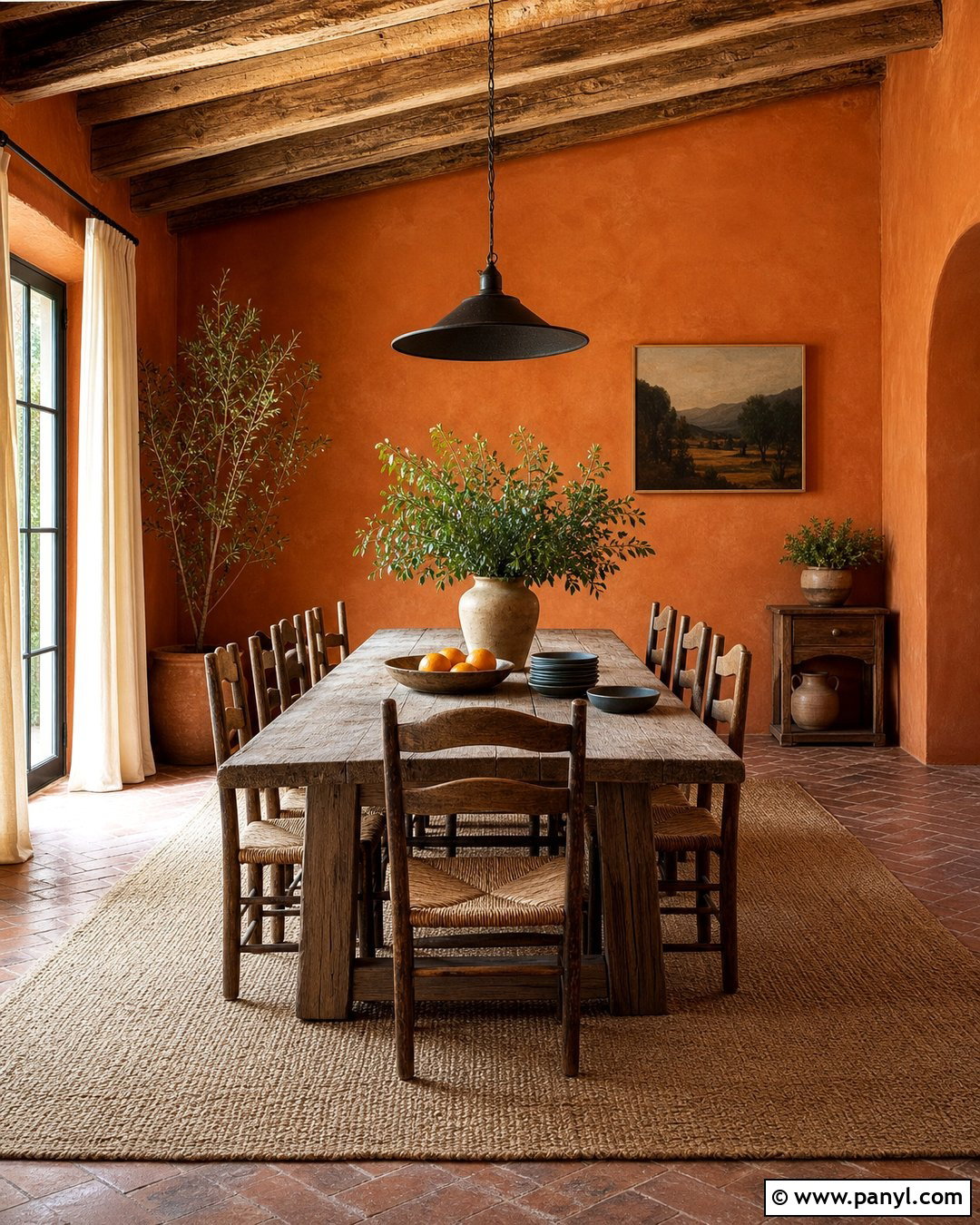
A textured orange finish can make a dining room feel grounded and inviting, particularly when combined with rustic materials. Select an earthy adobe-orange plaster effect with gentle tonal variation. Pair it with a long reclaimed oak table, woven rush chairs, and a natural fiber rug. A large black iron pendant adds definition above the table, while cream curtains lighten the edges of the room. Keep tableware simple in matte white and brown ceramics. Use one substantial landscape painting or a handwoven wall hanging rather than several small decorations. Medium-toned wood flooring strengthens the warm palette, and leafy plants add fresh contrast. The completed dining room has depth and character, but its straightforward furniture arrangement keeps the textured walls from feeling theatrical or overly themed.
23. Orange Fireplace Wall
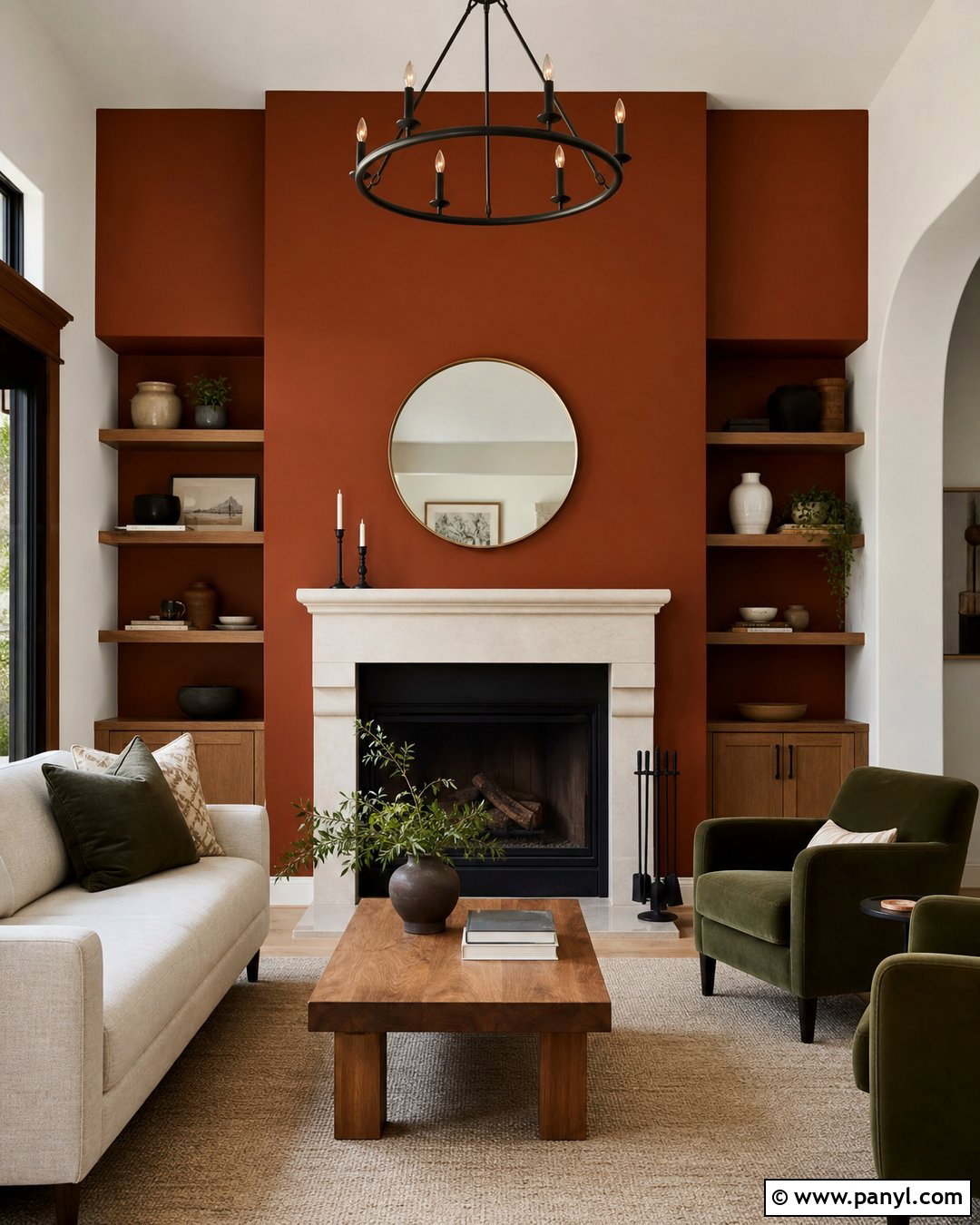
Painting a fireplace wall orange turns an existing architectural feature into a strong focal point. Choose deep rust or burnt orange and cover the entire chimney breast from floor to ceiling. Keep the fireplace surround simple with pale limestone, white brick, or smooth cream plaster. Arrange a light beige sofa and two olive chairs around a solid oak coffee table to balance the warm wall. A neutral rug defines the conversation area, while black fireplace tools and picture frames add crisp contrast. Display one large artwork or an understated round mirror above the mantel. Avoid covering the wall with many accessories. The completed living room feels structured and welcoming because the orange directs attention toward the fireplace while the natural neutrals support comfortable everyday use.
24. Orange Built In Bookshelves
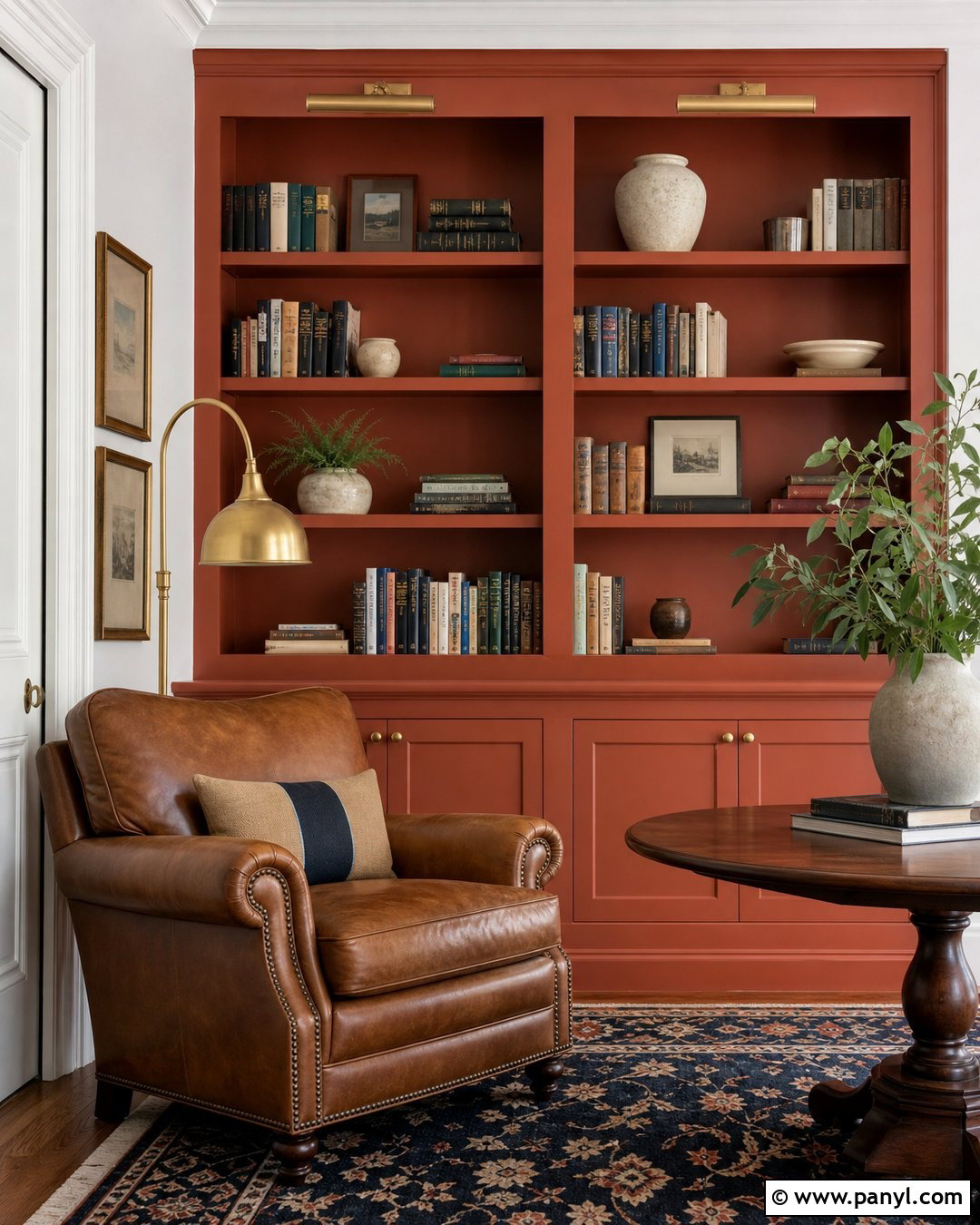
Orange-painted built-in bookshelves can add depth, storage, and color to a living room or study. Use a muted paprika shade on the shelving, cabinet doors, and wall behind the shelves. Keep the surrounding room creamy white to let the built-ins read as one unified architectural feature. Add a camel leather chair, small walnut table, and patterned navy rug nearby to create a comfortable reading area. Style the shelves with books, cream pottery, framed photographs, and a few plants, leaving some open space around each grouping. Antique brass picture lights bring a warm glow to the paint. Painting both the shelf fronts and interiors orange creates a polished finish. The resulting space feels custom, functional, and colorful without overwhelming the entire room.
25. Orange Kitchen Accent Wall
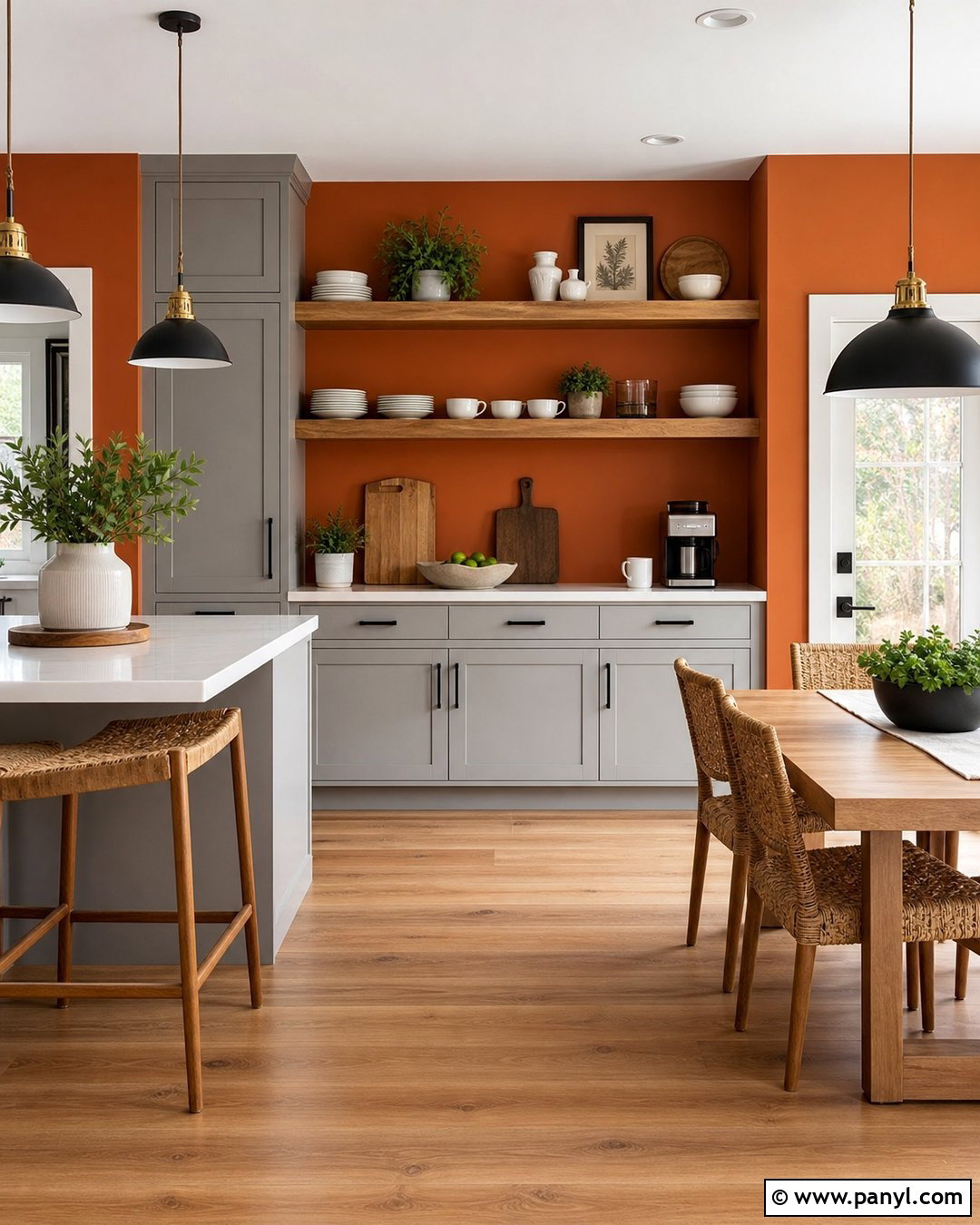
A burnt orange kitchen accent wall can provide warmth while keeping cabinets and work surfaces neutral. Place the color on a wall surrounding a breakfast table, open shelving, or pantry door rather than directly behind a busy cooking area. Pair it with mushroom-gray cabinets, white quartz counters, and medium oak flooring. Black hardware and simple black pendants add clean contrast. Install oak shelves on the orange wall and display white dishes, glass containers, and a few green plants. A compact table with woven chairs turns the feature into a useful dining zone. Keep the other walls warm white to support the open feel. This complete kitchen scheme looks modern and welcoming, with enough muted color to remain easy to live with over time.
26. Orange Pantry Walls
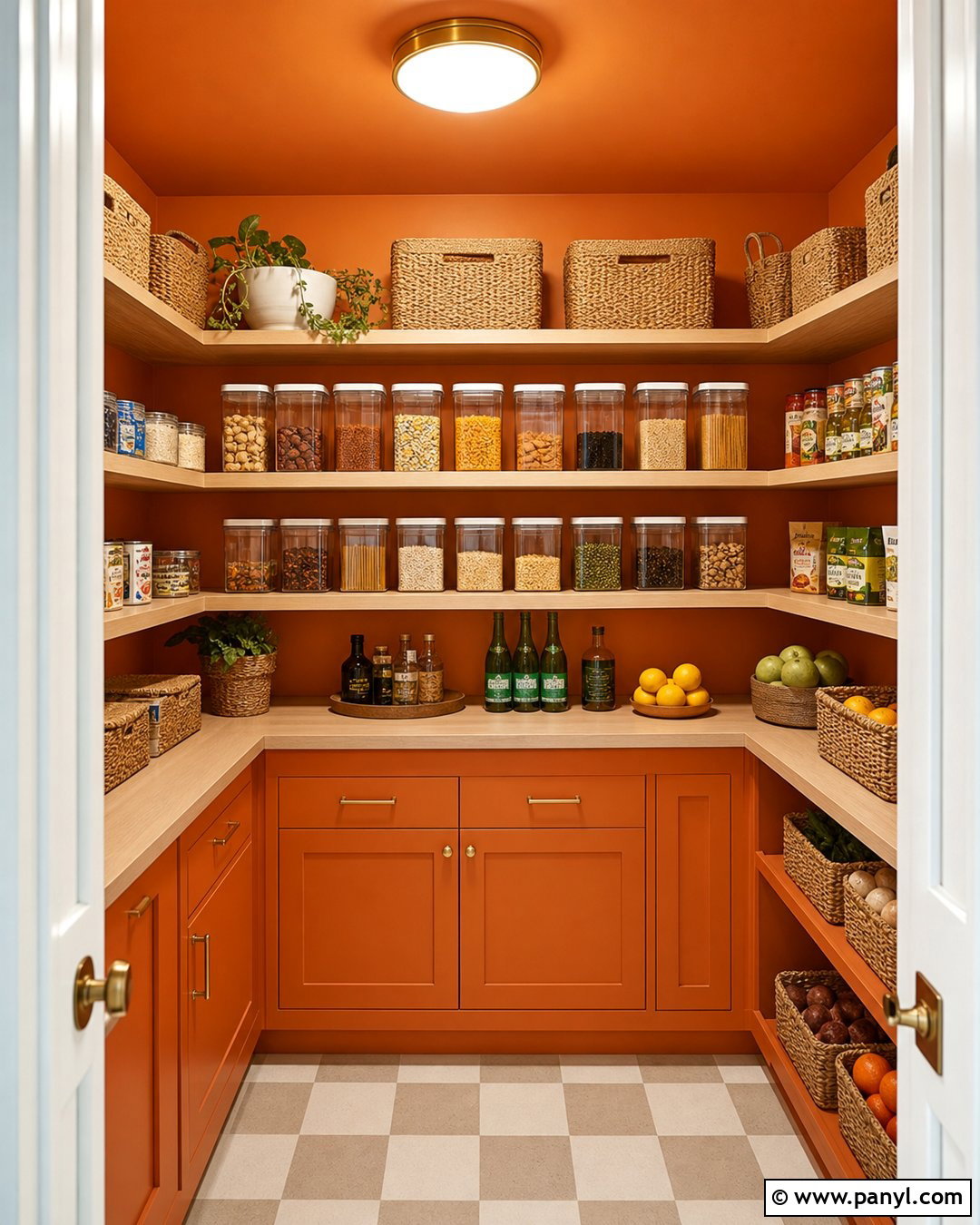
A small pantry offers the perfect setting for experimenting with joyful orange paint. Cover the walls and ceiling in bright but softened tangerine, then use white oak shelves to create natural contrast. Organize dry goods in clear containers and neutral woven baskets so the room remains visually calm. Paint lower cabinetry the same orange for a built-in effect, adding brass pulls for a warm metallic detail. A pale stone or checkerboard floor introduces pattern without taking attention away from the walls. Use a bright flush-mount ceiling light to eliminate shadowy corners. If the pantry has a door, paint its interior orange and leave the exterior coordinated with the kitchen. The completed space feels cheerful, tidy, and surprisingly special despite its practical purpose and compact dimensions.
27. Orange Hallway Walls
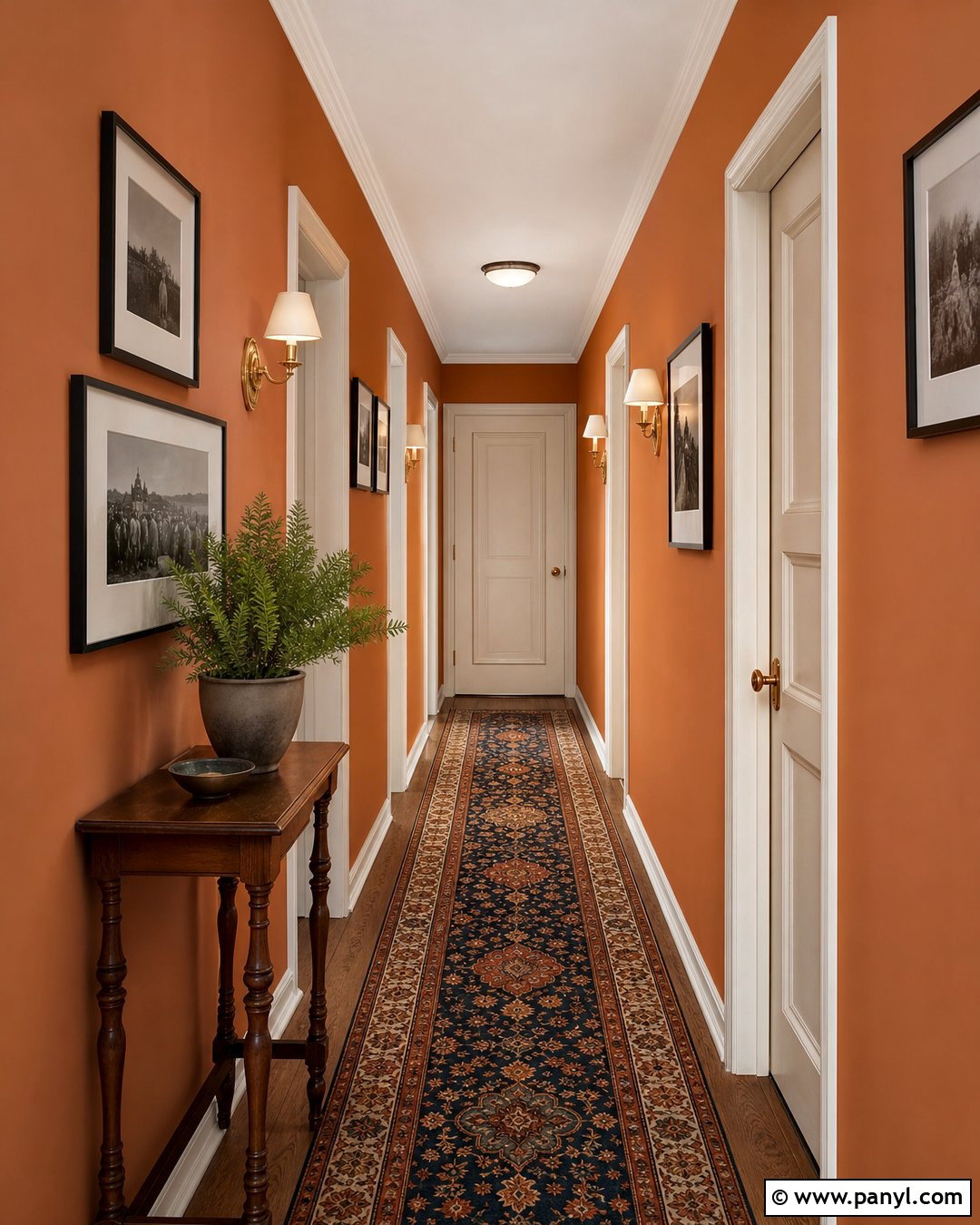
Long hallways often lack natural interest, making muted orange an effective way to add warmth and direction. Paint the walls in a dusty apricot or pale clay shade and keep the ceiling, doors, and trim creamy white. Use a narrow vintage-style runner containing navy, rust, and beige to visually extend the path. Install simple brass or black wall sconces at regular intervals for consistent lighting. A small gallery of black-and-white photographs adds personality without introducing competing colors. If space permits, place a shallow wood console near the end of the hallway to create a destination. Keep furniture and frames slim so movement remains comfortable. This complete approach transforms a pass-through area into a connected part of the home while preserving a bright, uncluttered appearance.
28. Orange Laundry Room
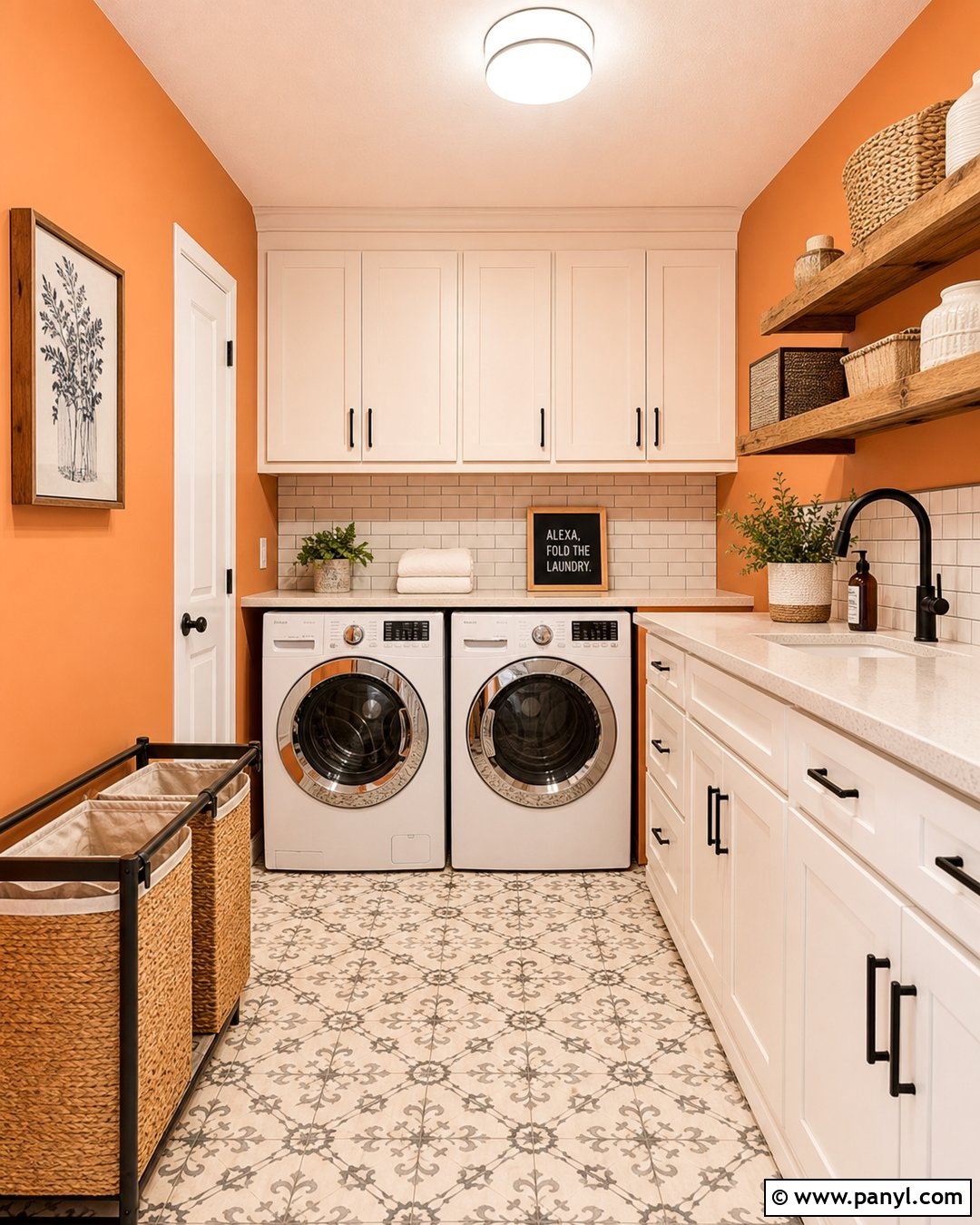
Orange walls can make a hardworking laundry room feel more upbeat without reducing its practicality. Choose a muted peach-orange that reflects light and pair it with warm white cabinetry. Install a pale quartz counter above front-loading machines and use white subway tile in splash-prone areas. Natural wood shelves introduce warmth, while black hooks, cabinet pulls, and a hanging rail add definition. Patterned floor tile in cream, gray, and small orange details can disguise everyday dust and reinforce the palette. Use woven baskets for sorting and closed cabinets for cleaning supplies. A bright ceiling fixture and under-shelf lighting keep the room functional. The finished laundry space feels organized, cheerful, and coordinated, proving that utility rooms can have personality without sacrificing durable materials or efficient storage.
29. Orange Powder Room
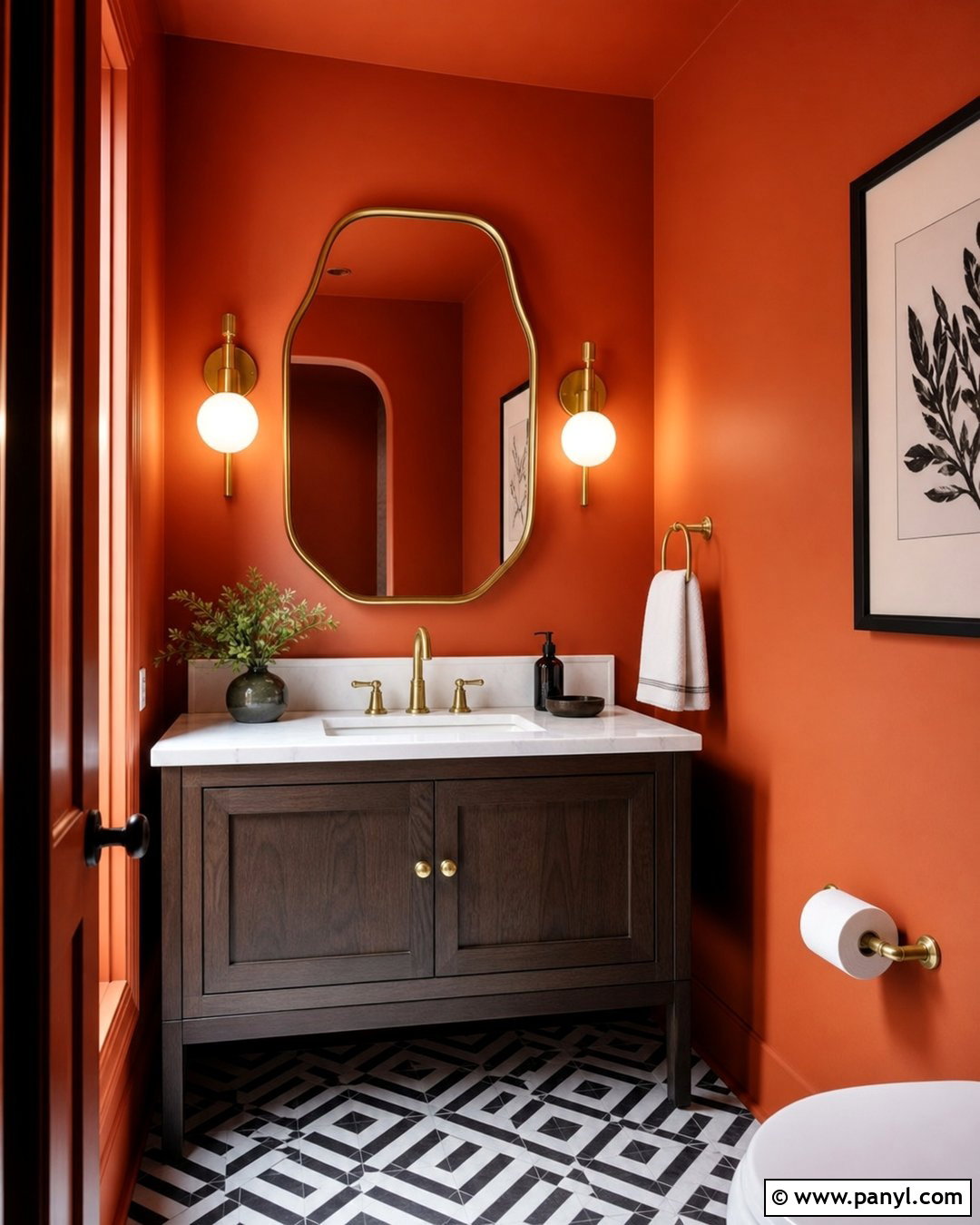
A powder room can handle a bold orange treatment because its smaller size encourages a memorable, immersive look. Paint the walls and ceiling in deep persimmon, using a satin finish on trim and a washable matte finish elsewhere. Add a compact dark walnut vanity with a white stone counter to ground the color. A sculptural brass mirror, matching faucet, and opal glass sconces introduce warm highlights. Choose graphic black-and-white floor tile for crisp contrast. White towels and minimal countertop accessories prevent visual clutter. One small framed artwork is enough decoration in this saturated setting. The completed room feels dramatic and polished rather than overwhelming because every supporting element has a clear role. Bright, evenly distributed lighting is essential for keeping the orange rich and flattering.
30. Orange Kids Bedroom
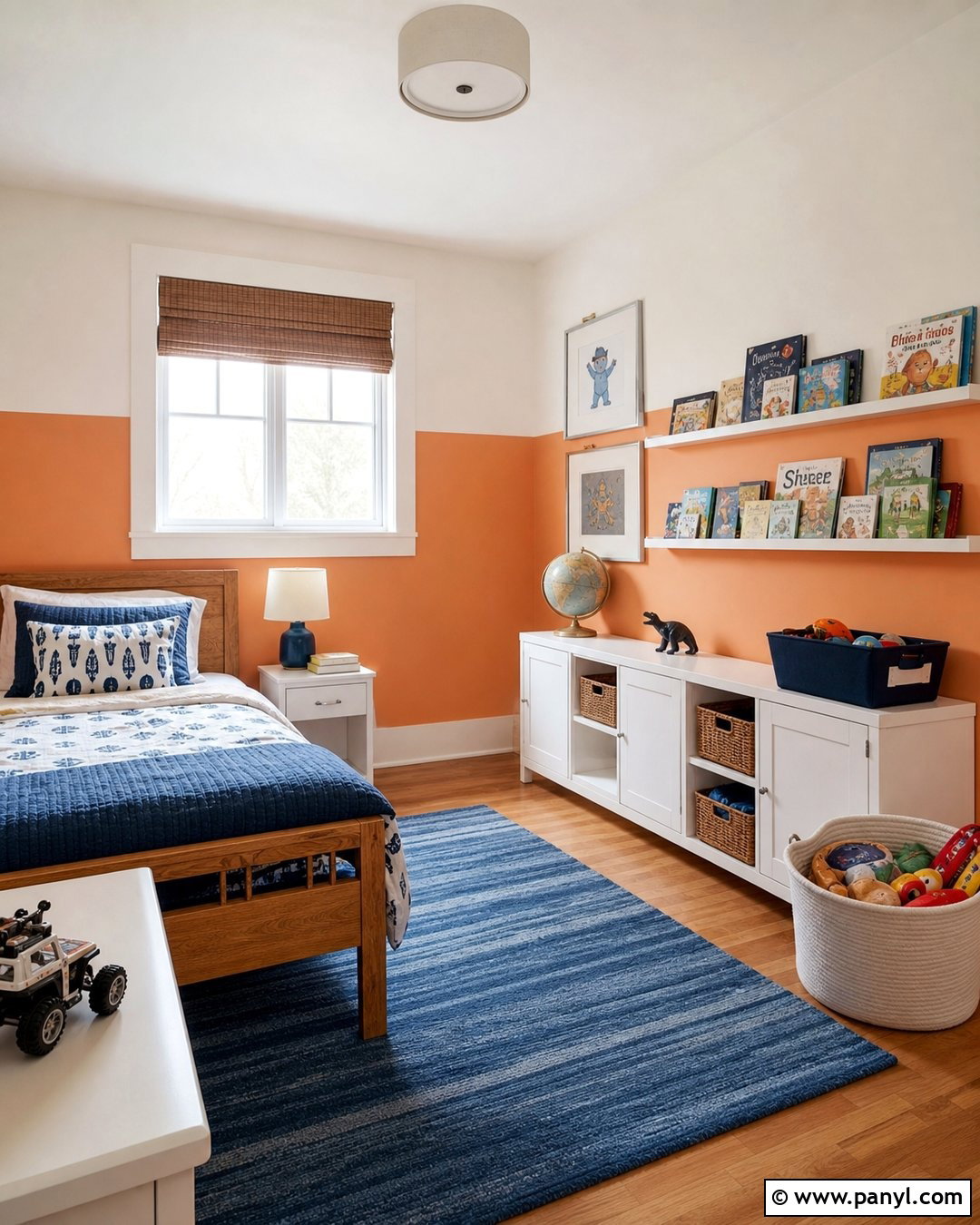
A child’s bedroom can include orange walls while still feeling calm, organized, and adaptable. Use soft cantaloupe orange on the lower half of the walls and warm white above. A clean painted line avoids the need for additional molding. Choose a natural wood bed, white storage cabinets, and a washable blue rug to balance the warmth. Bedding in navy, pale aqua, cream, and small orange accents creates a playful but controlled palette. Add wall-mounted book ledges and labeled storage baskets to keep favorite items accessible. A simple white ceiling light and adjustable reading lamp support different activities. Avoid using orange on every accessory. The finished bedroom remains fun and energetic, yet the neutral furniture can continue working as the child’s interests and decorating preferences change.
31. Orange Nursery Walls
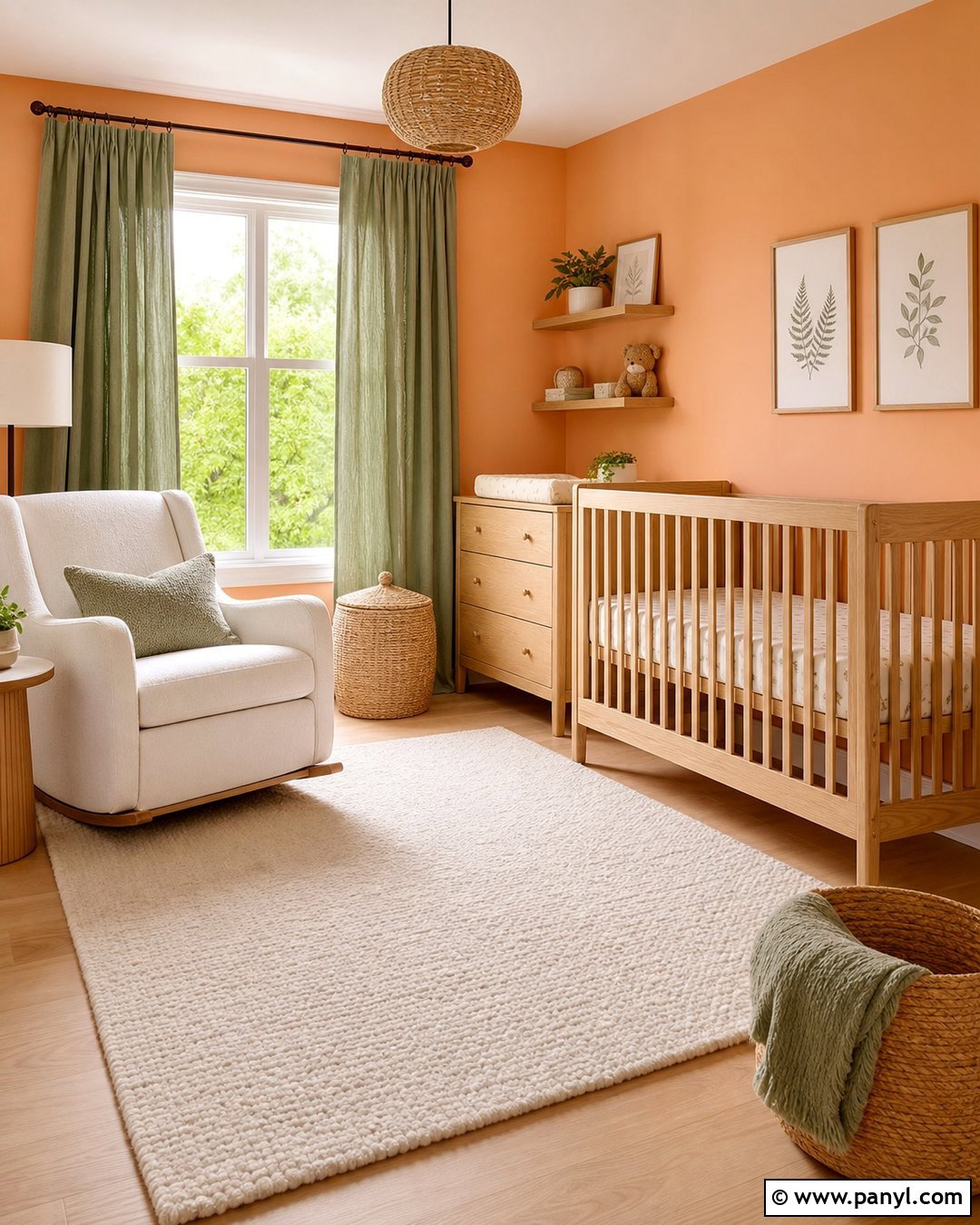
Soft peach-orange walls give a nursery gentle warmth without depending on a strongly themed design. Choose a pale, muted shade and pair it with a white or natural oak crib. Add an ivory glider, light wood dresser, and washable cream rug for a calm foundation. Sage green curtains and botanical artwork introduce a cool, nature-inspired contrast. Use woven baskets, linen storage bins, and simple floating shelves to keep essential items organized. A dimmable ceiling fixture and shaded table lamp support both daytime play and quieter routines. Keep the ceiling bright white and avoid highly saturated orange near the crib. The completed nursery feels sunny, peaceful, and flexible. Its natural materials and restrained color palette can transition easily into a toddler room with only minor updates.
32. Orange Guest Bedroom
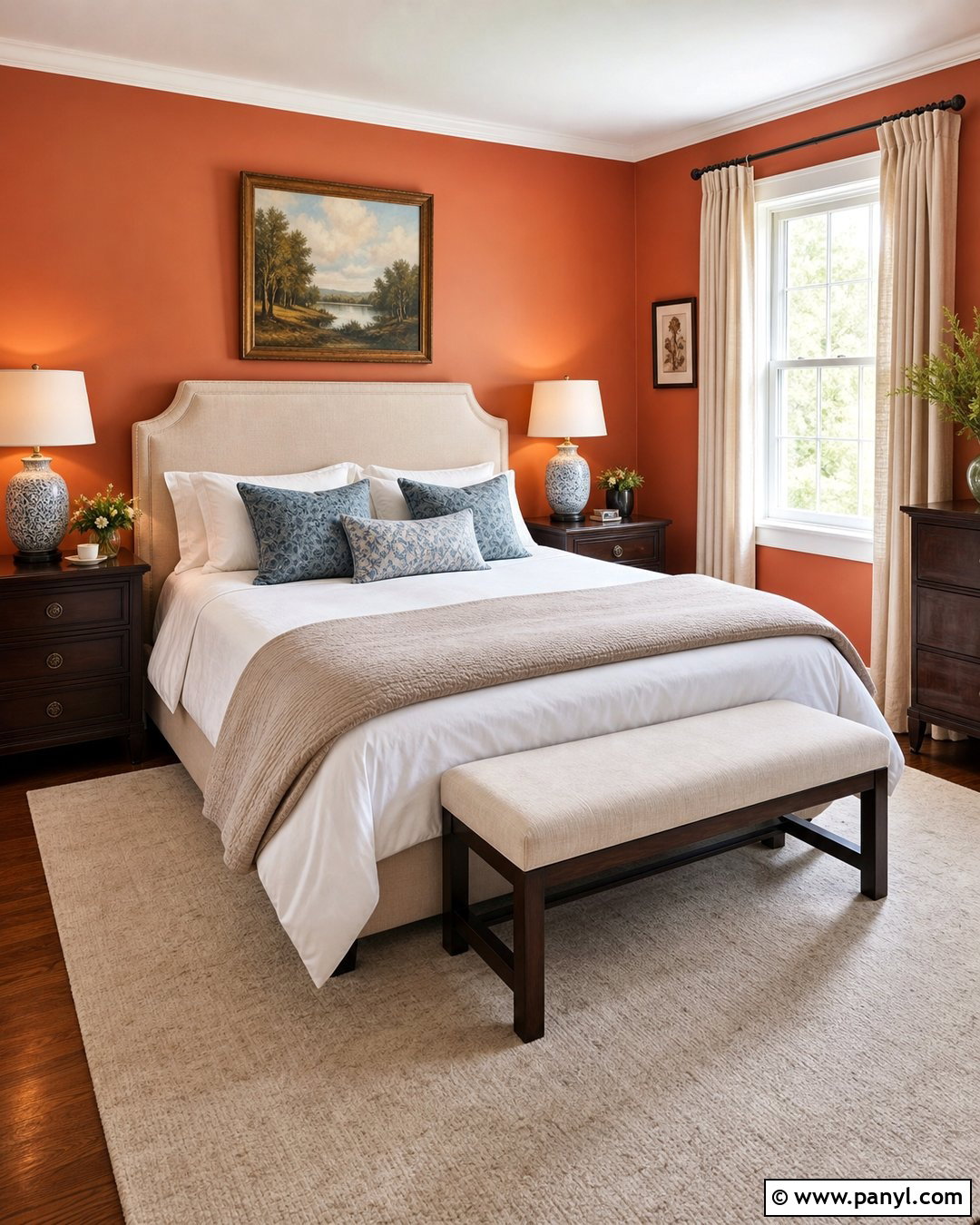
Muted coral-orange walls can give a guest bedroom warmth and personality while remaining broadly welcoming. Paint all four walls in a dusty shade, then balance them with a cream upholstered bed and crisp white sheets. Layer a taupe coverlet, rust throw, and faded blue cushions for depth. Dark wood nightstands add contrast, while ceramic lamps provide comfortable bedside lighting. Choose a neutral rug large enough to extend around the bed and use off-white linen curtains to soften the windows. One framed landscape above the headboard supplies a quiet focal point. Leave open surfaces and accessible storage for visitors instead of filling the room with decor. The complete guest bedroom feels considered and cozy, with enough neutral color to accommodate different tastes and seasonal bedding.
33. Orange Midcentury Living Room
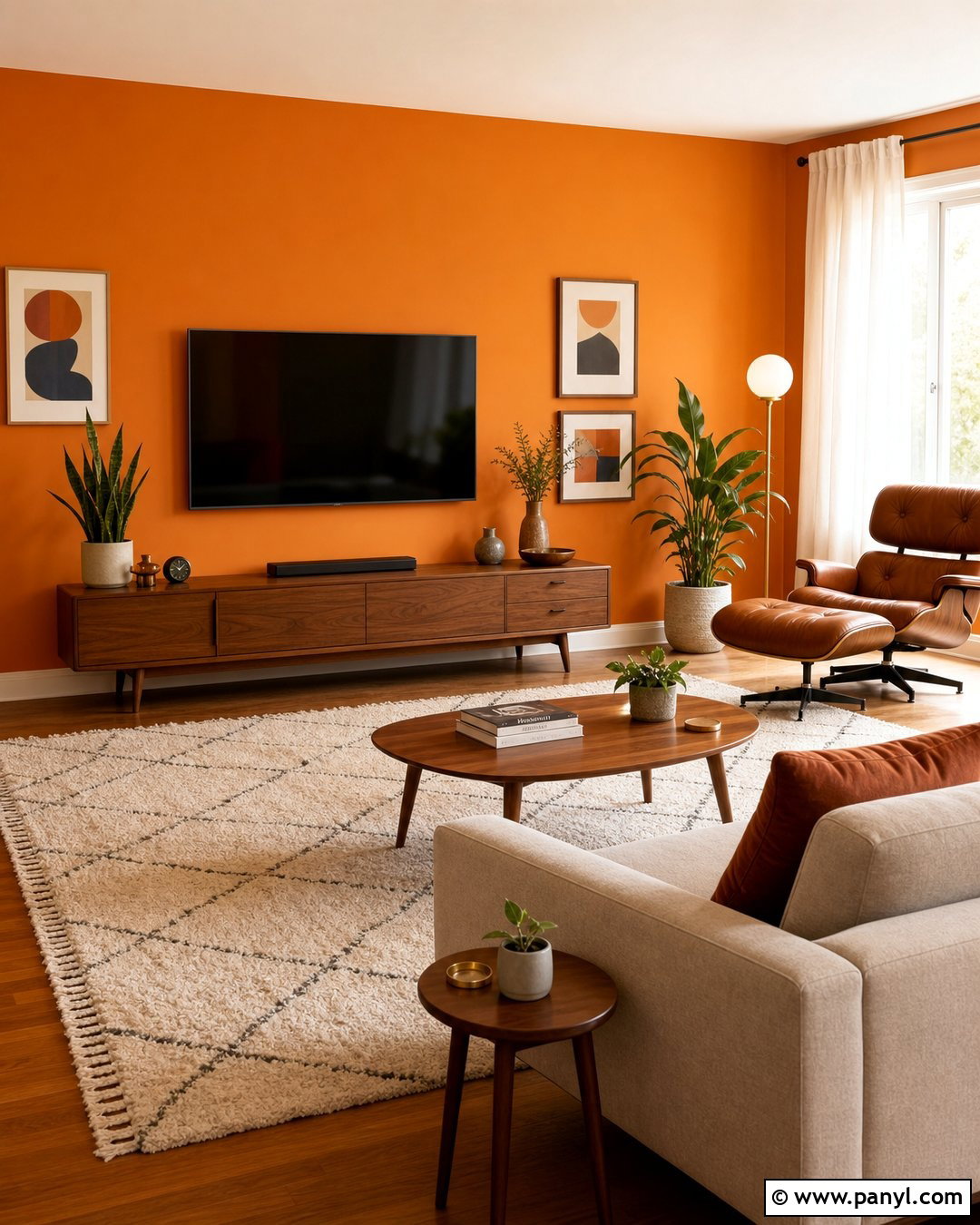
A midcentury living room suits orange particularly well when the color is balanced with wood and clean geometric forms. Use a warm pumpkin-orange wall behind a low-profile walnut media console. Add an oatmeal sofa, caramel leather lounge chair, and rectangular wood coffee table with tapered legs. A cream rug with simple navy and rust shapes reinforces the period influence without making the room feel like a set. Choose a brass globe floor lamp, minimal abstract artwork, and plain white curtains. Include one leafy plant to soften the structured furniture. Keep the remaining walls warm white if the room is small, or continue the muted orange throughout a larger space. The completed look feels retro-inspired, functional, and comfortable enough for a modern home.
34. Orange Boho Bedroom
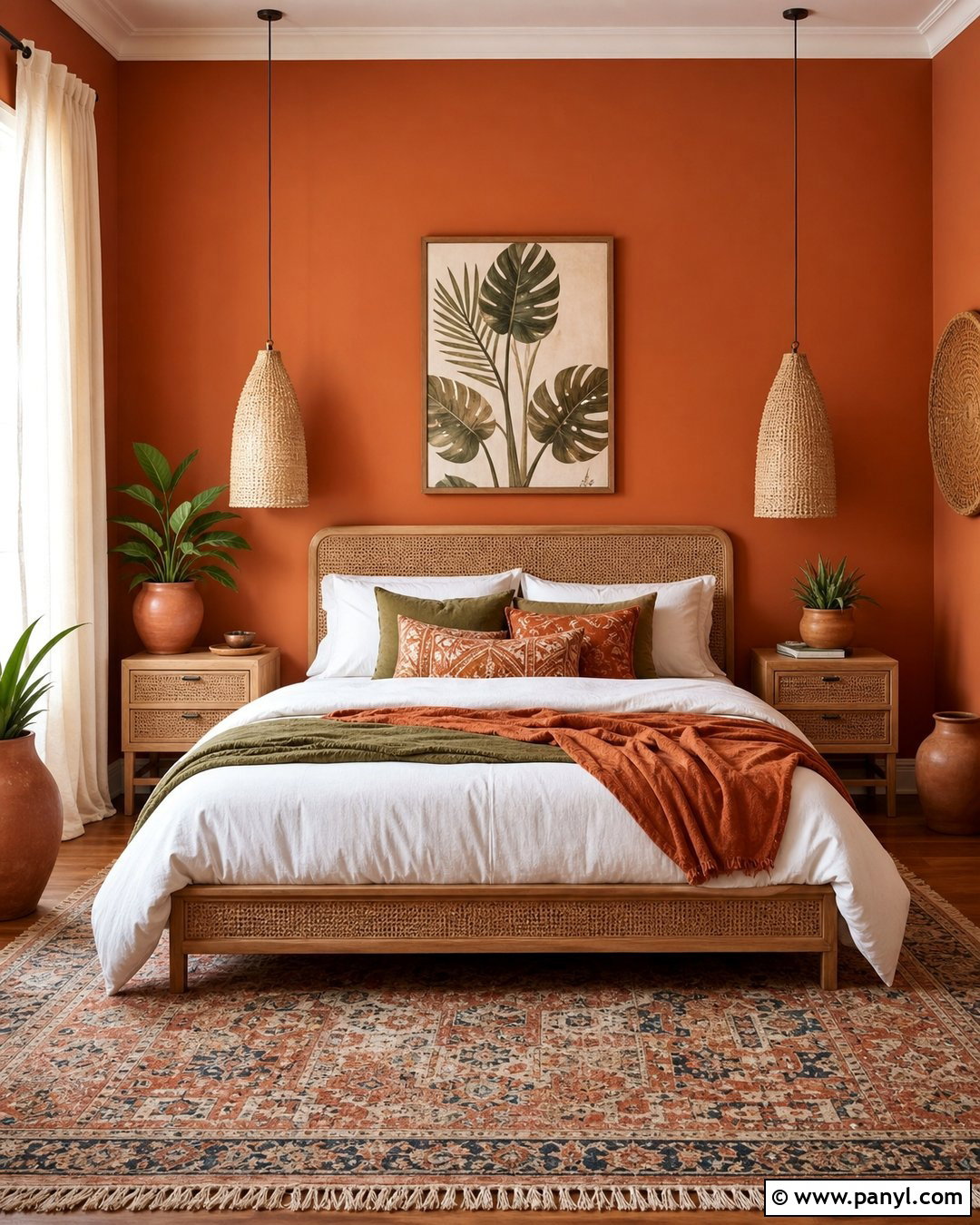
Earthy orange walls provide a natural foundation for a layered bohemian bedroom. Choose a matte terracotta shade and pair it with a low cane bed, white linen bedding, and a faded patterned rug. Add ochre, cream, rust, and olive textiles in restrained amounts so the room feels collected rather than chaotic. Woven pendant lighting and light wood nightstands introduce texture without competing with the walls. Hang one substantial textile or a simple gallery of neutral botanical prints above the bed. Use full-length ivory curtains to keep daylight soft and bright. Plants in clay pots bring the palette to life, while closed storage reduces visual clutter. The finished bedroom captures the relaxed character of boho decorating while maintaining a thoughtful layout and an easy, restful atmosphere.
35. Orange Minimalist Living Room
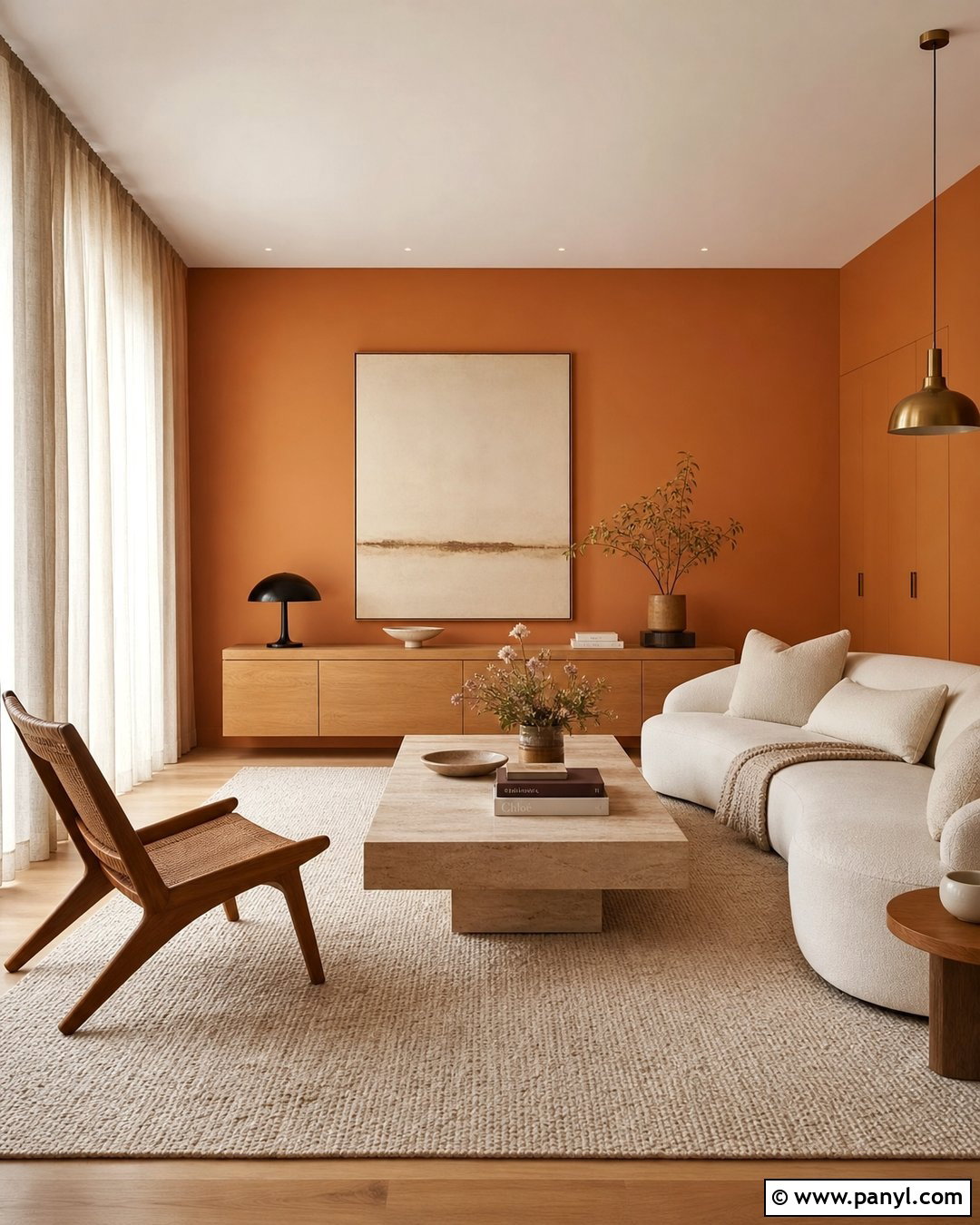
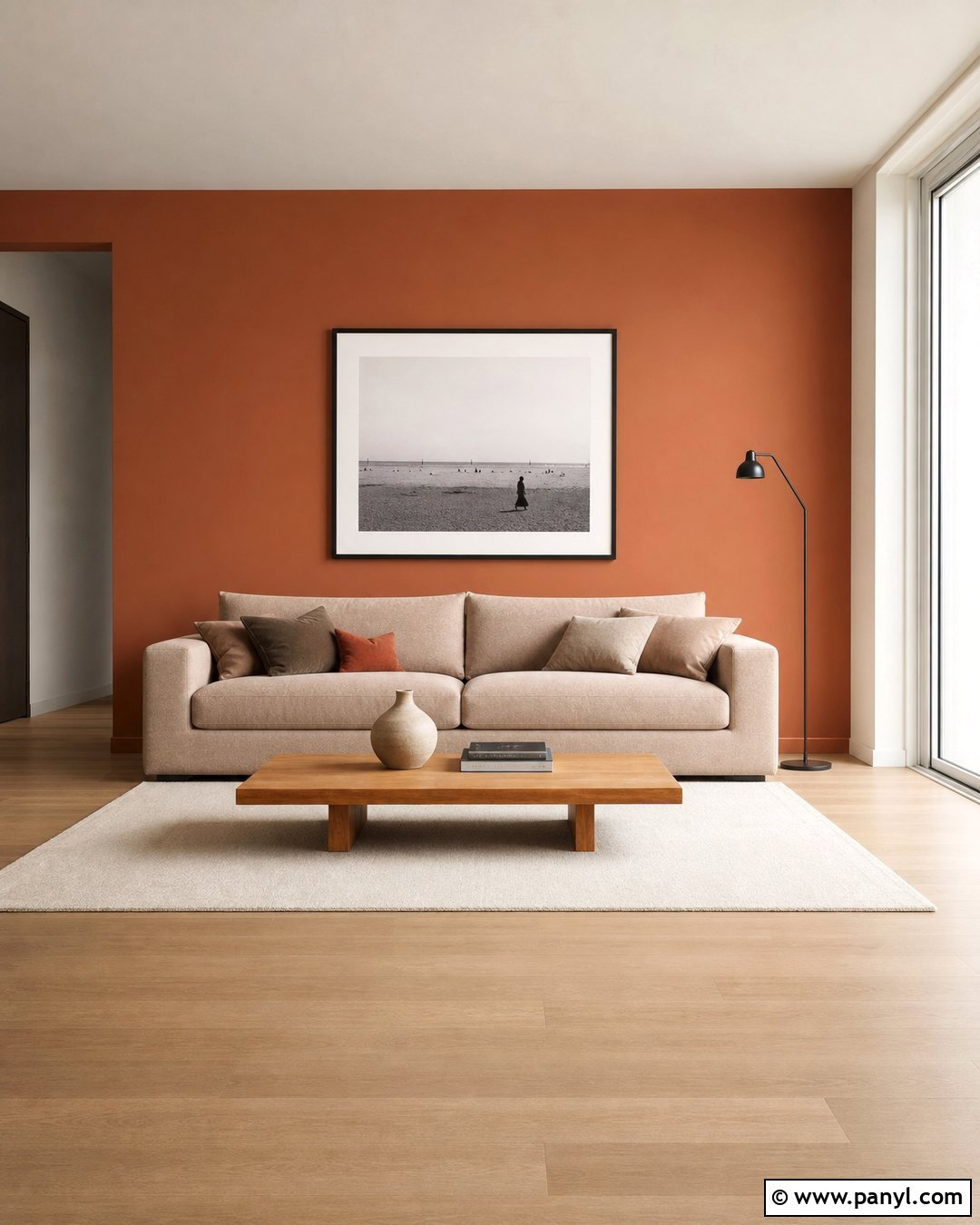
Orange can work in a minimalist living room when the shade is muted and every furnishing has a clear purpose. Paint the walls a soft adobe orange with brown or pink undertones rather than using a loud citrus hue. Add a low cream sofa, one sculptural oak chair, and a simple travertine coffee table. A large ivory wool rug creates a quiet foundation and reduces visual breaks across the floor. Use concealed storage, plain linen curtains, and a single oversized artwork in neutral tones. Black or bronze lighting adds definition without introducing unnecessary decoration. Leave generous open space around furniture so the orange walls can supply most of the room’s visual warmth. The completed design feels calm, modern, and expressive despite its limited number of objects.
Conclusion:
The most successful orange wall paint ideas balance warmth with thoughtful furniture, finishes, and accent colors. Bright tangerine can energize a focused feature wall, while terracotta, apricot, rust, and clay create softer rooms that are easy to live with. Cream, warm white, natural wood, and beige provide dependable balance. Navy, teal, sage, and pale blue add cooler contrast. Before painting, place large samples on several walls and observe them in morning, afternoon, and artificial light. Consider the room’s size, existing flooring, and fixed materials as well as the color itself. With careful planning, orange walls can feel welcoming, sophisticated, and surprisingly versatile in nearly every area of the home.

Related Ideas and Inspiration:
Leave a Reply