
Pale orange brings a soft, sun-warmed glow to interiors without the intensity of brighter citrus shades. Depending on its undertone, it can resemble delicate peach, creamy apricot, muted coral, or lightly washed clay. These versatile variations work with crisp white, warm wood, sage green, charcoal, navy, and many other popular decorating colors. Pink-leaning peach feels gentle and airy, while yellow-based apricot creates a cheerful, golden effect. () Before choosing a shade, test it beside your flooring, trim, and largest furniture pieces throughout the day. Natural and artificial light can noticeably change its appearance. The complete room schemes below make it easier to visualize and recreate 20 Pale Orange Wall Paint Ideas.

1. Pale Orange Living Room With Cream Furniture
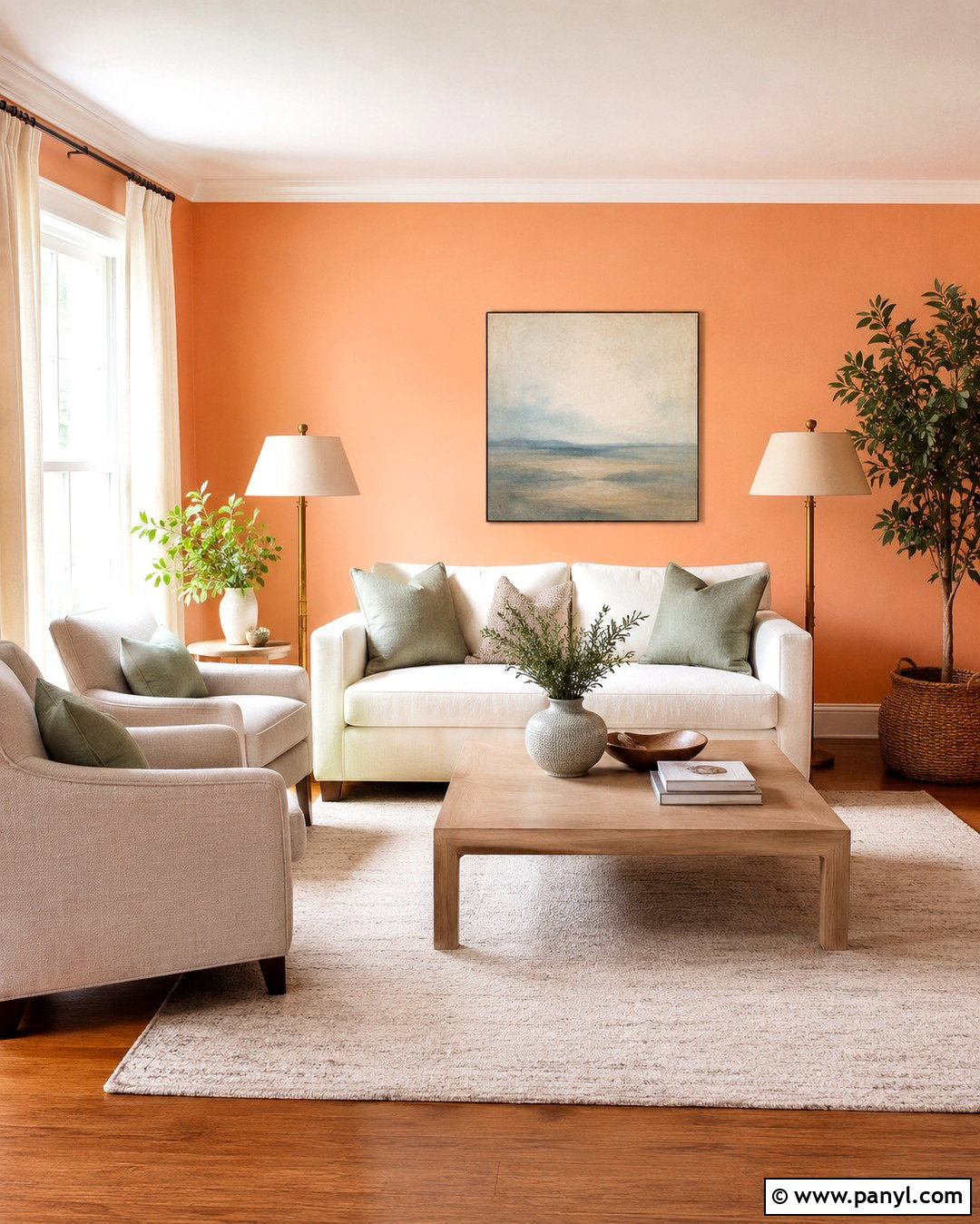
Create an inviting living room by covering every wall in a pale orange with soft peach undertones. Add a cream linen sofa, two oatmeal armchairs, and a light oak coffee table to keep the palette calm and approachable. A large ivory rug will soften the floor while making the wall color appear brighter. Choose curtains in warm white rather than stark white, which can look overly sharp beside peach. Finish the room with brushed brass lamps, ceramic tableware, and artwork containing muted blue and earthy brown. A few olive or sage pillows provide gentle contrast. This complete combination feels comfortable in traditional and modern homes, especially when the ceiling, baseboards, and window trim are painted a creamy off-white.
2. Pale Orange Bedroom With Sage Green
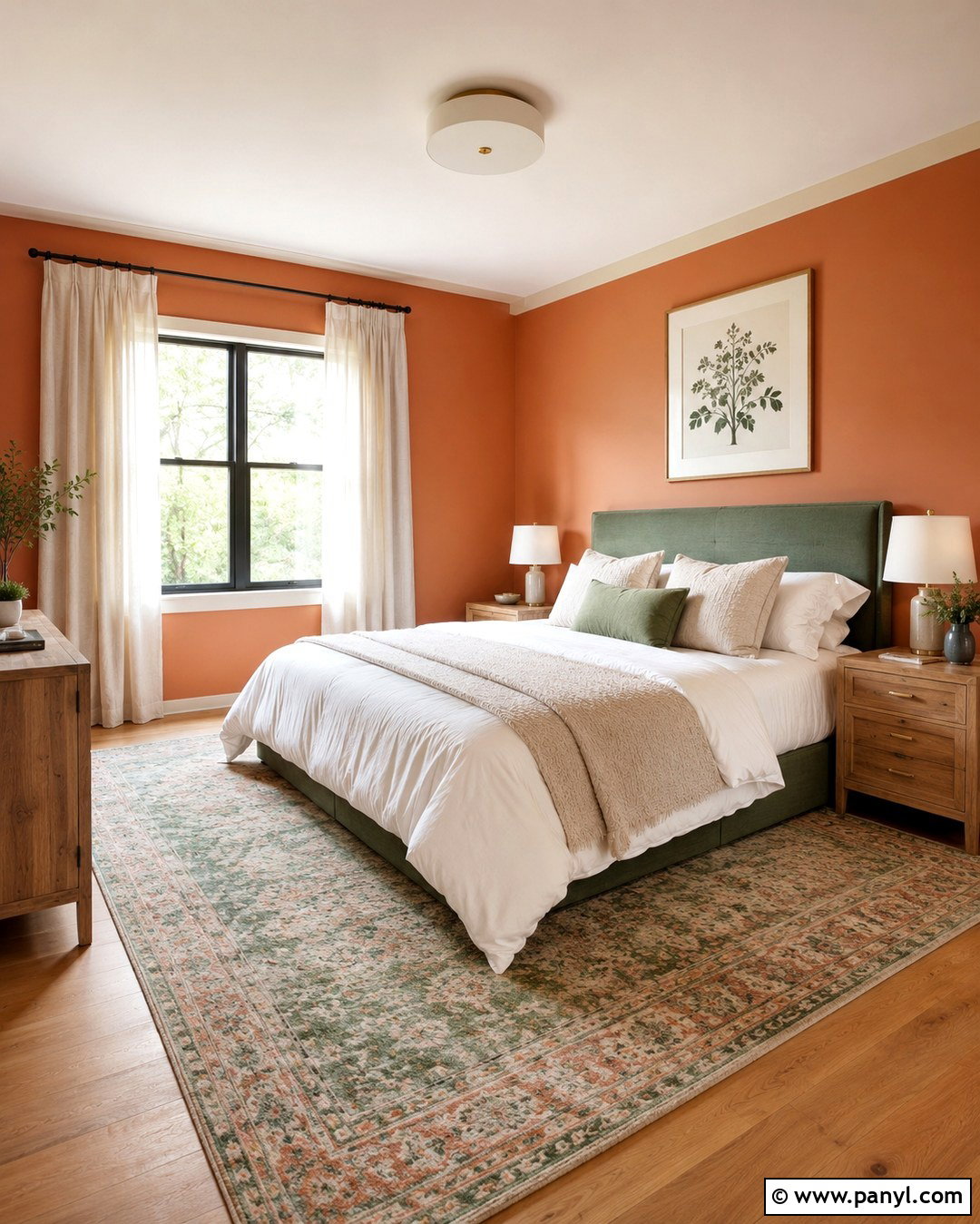
Imagine waking up in a bedroom that feels warm, quiet, and connected to nature. Paint the walls a dusty pale orange with a slightly muted finish, then introduce sage green through an upholstered headboard, bedside lamps, and a folded blanket. Choose natural oak nightstands and a simple wood dresser to strengthen the earthy palette. White cotton sheets will keep the bed fresh, while oatmeal linen bedding makes the room feel layered and relaxed. Add a vintage-inspired rug containing faded green, peach, and beige. Soft cream curtains should extend from near the ceiling to the floor. Complete the bedroom with matte brass hardware, botanical artwork, and one leafy plant. The balanced colors prevent pale orange from appearing overly sweet or juvenile.
3. Pale Orange Dining Room With Navy Blue
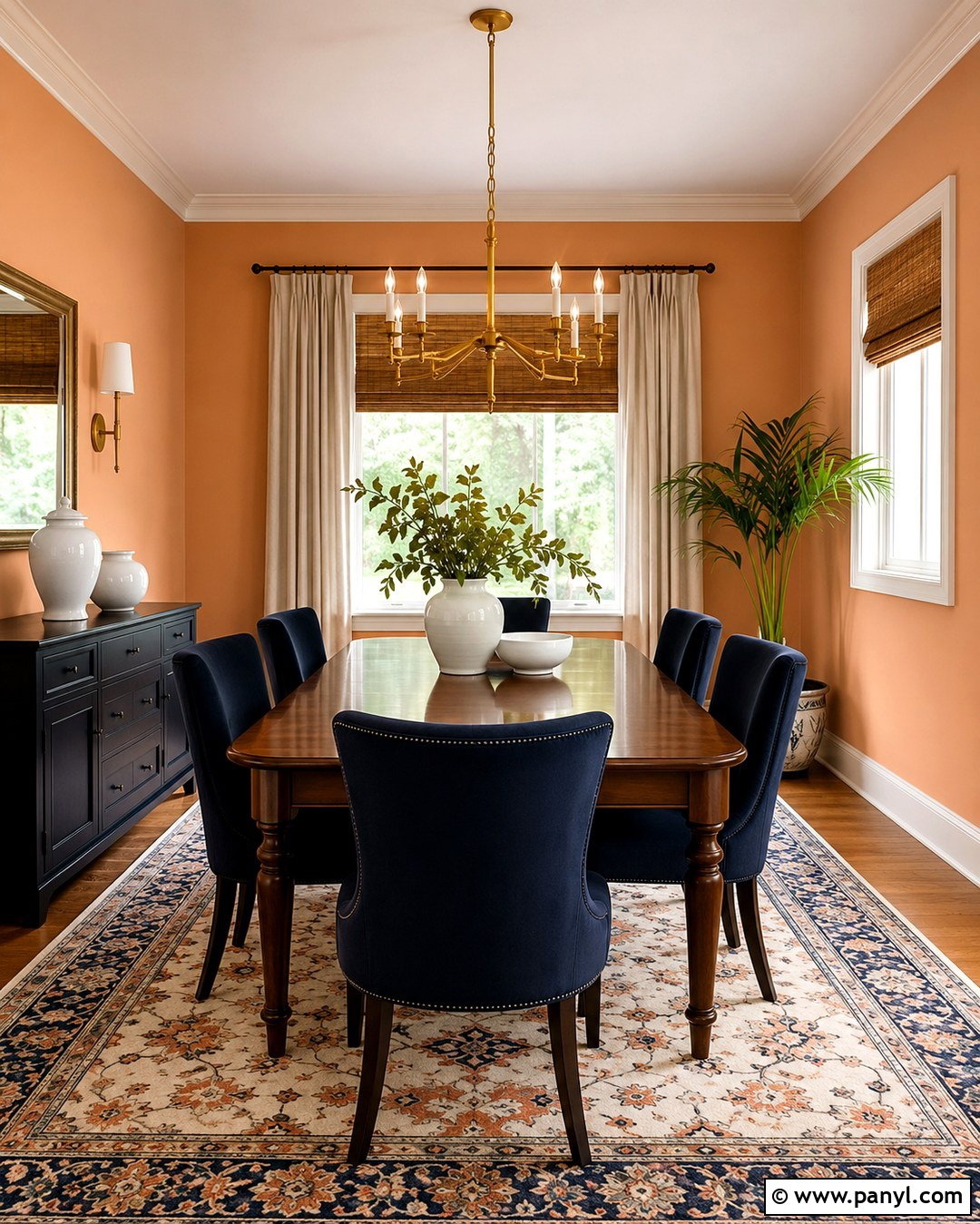
For a more sophisticated interpretation, surround a dining room with pale orange walls and strong navy blue accents. Select a medium walnut dining table with clean lines, then arrange navy upholstered chairs around it for clear contrast. A patterned rug containing peach, ivory, navy, and muted gold will visually connect the furniture and paint. Hang a sculptural brass chandelier above the table and use warm white trim around doors and windows. Navy curtains can make the room feel formal, while woven bamboo shades create a more casual result. Add a dark blue sideboard topped with white ceramics and simple branches. This scheme works especially well in a dining room with generous daylight because the deeper elements ground the soft wall color without making the room feel heavy.
4. Pale Orange Kitchen With Light Oak Cabinets
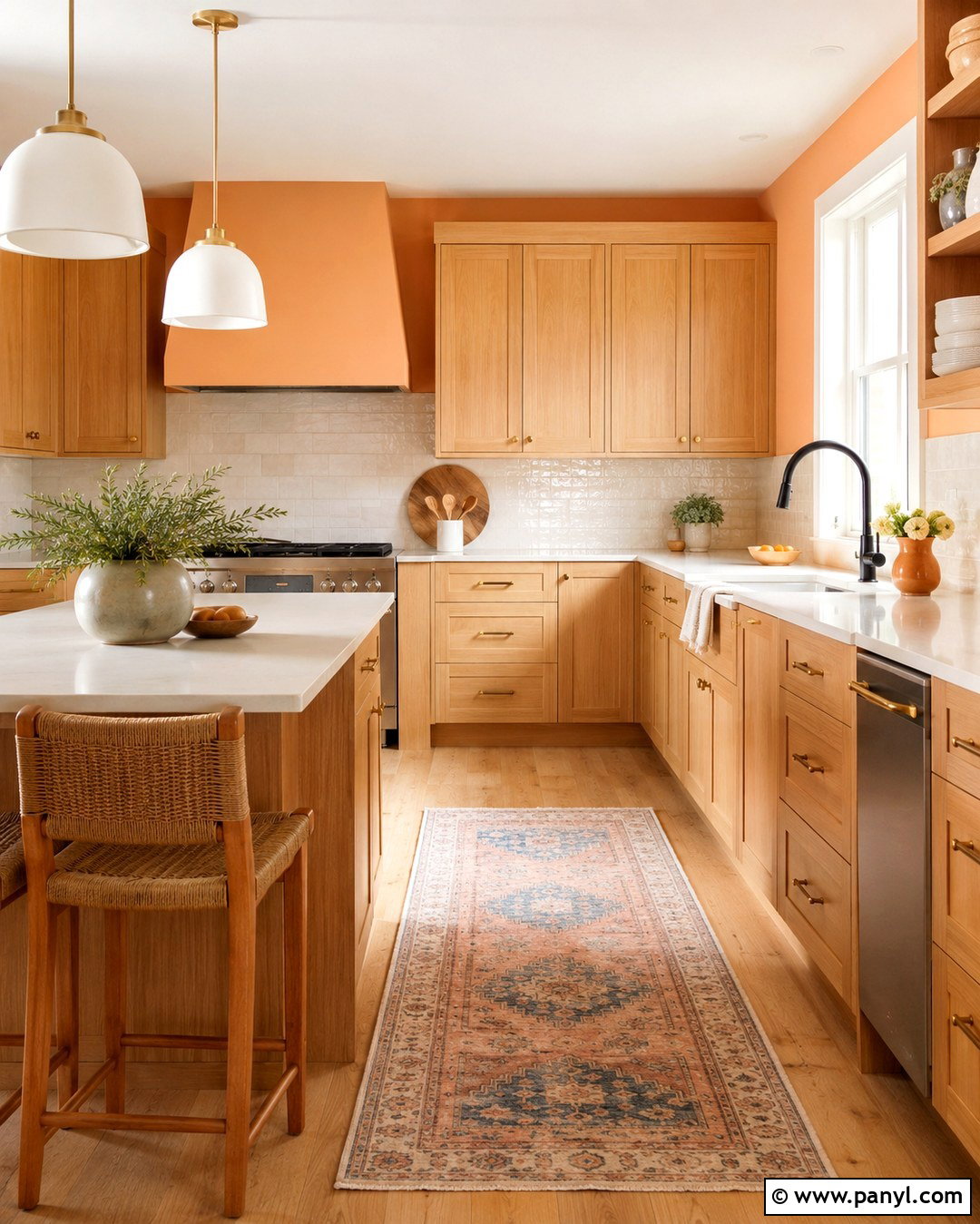
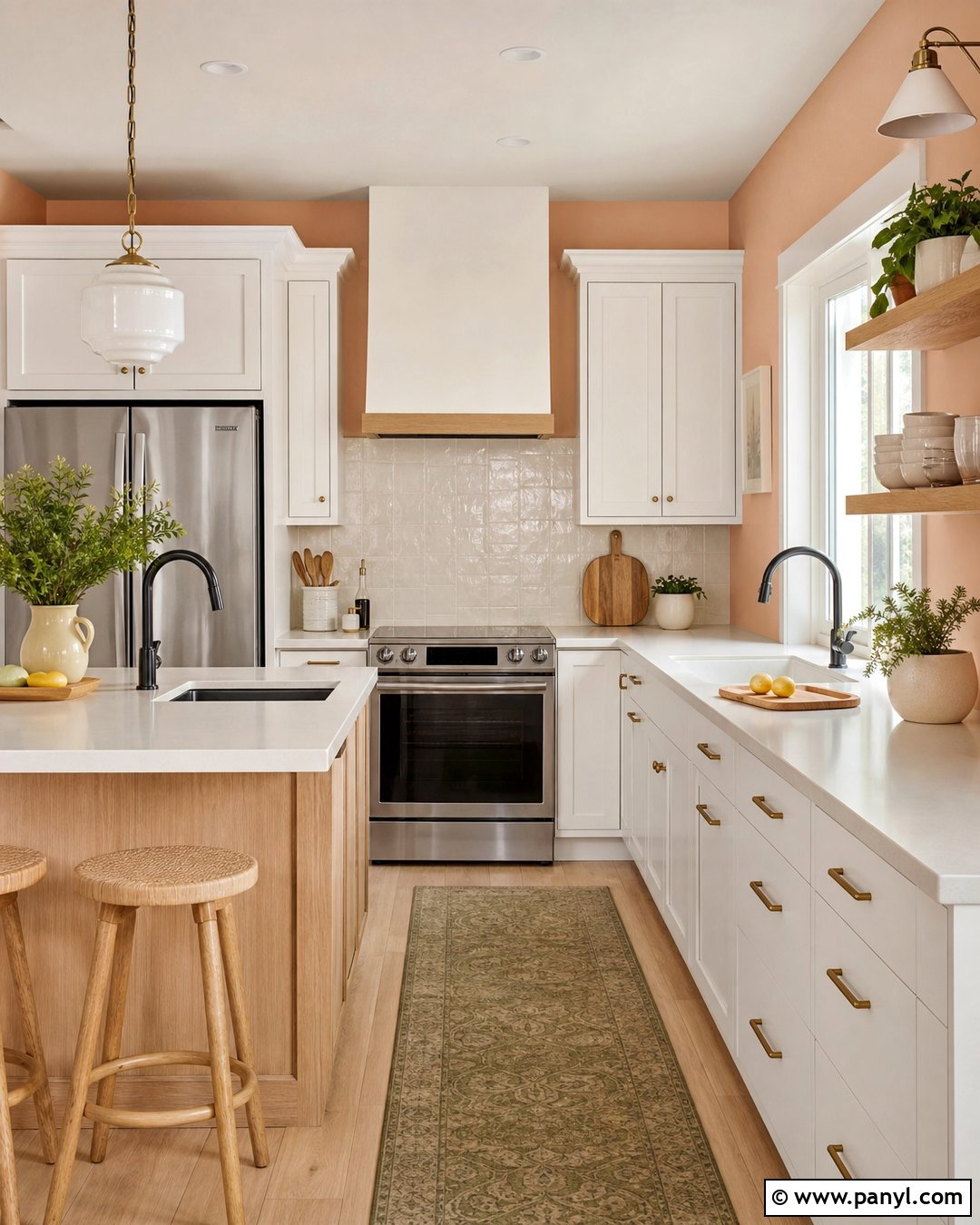
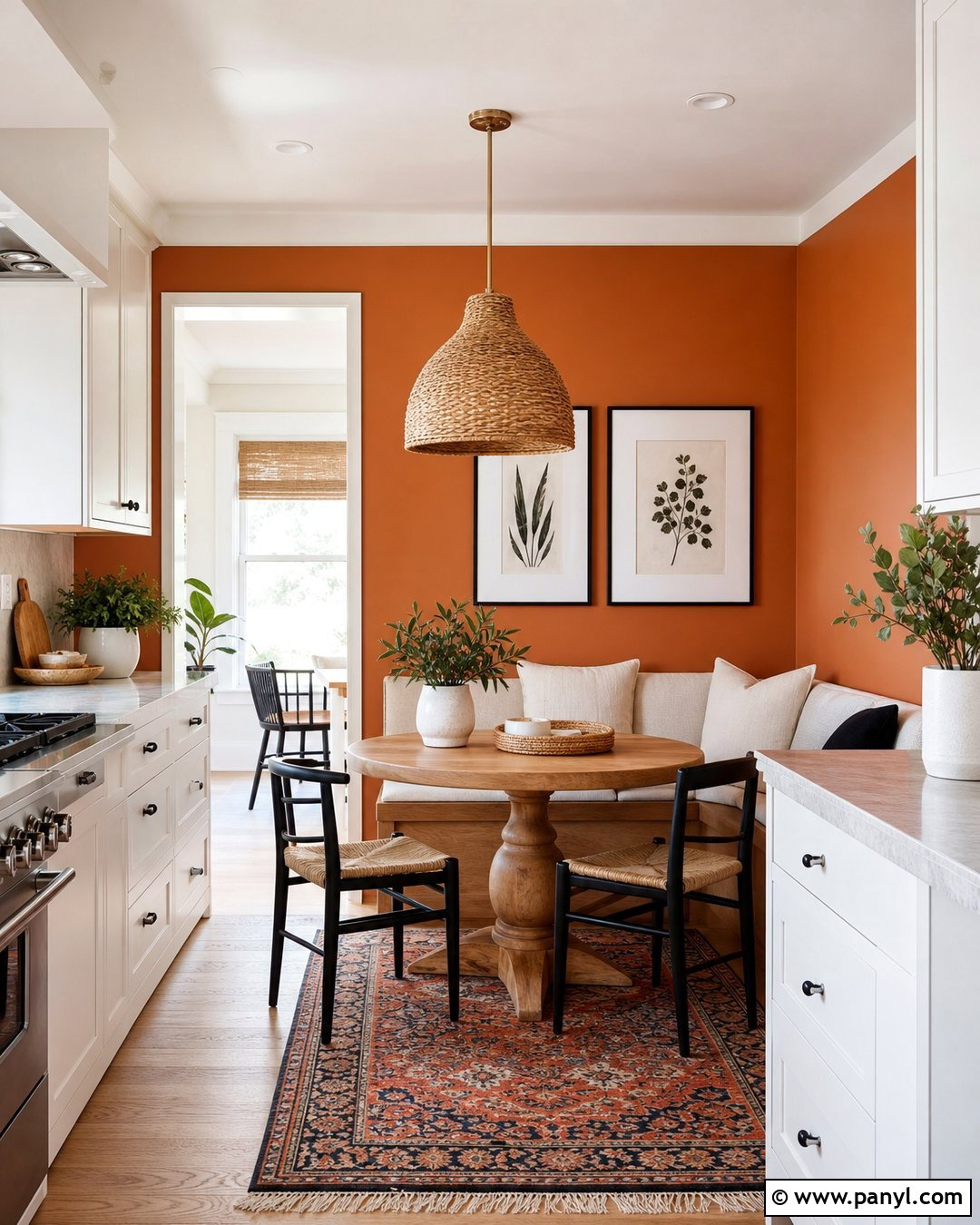
Pale orange walls can give a kitchen a cheerful glow when paired with restrained finishes. Use a creamy apricot paint between light oak cabinets and around the breakfast area. Keep the countertops warm white quartz and install a simple backsplash of glossy ivory subway tile. The reflective surface helps balance the warmth of the walls and wood. Choose brushed nickel or aged brass hardware, depending on whether you prefer a cleaner or more traditional look. Add counter stools with woven seats, white pendant lights, and a washable runner containing muted peach and blue. Small black details, such as window frames or a faucet, will sharpen the overall scheme. The finished kitchen feels bright, natural, and welcoming without depending on a bold orange feature wall.
5. Pale Orange Bathroom With White Tile
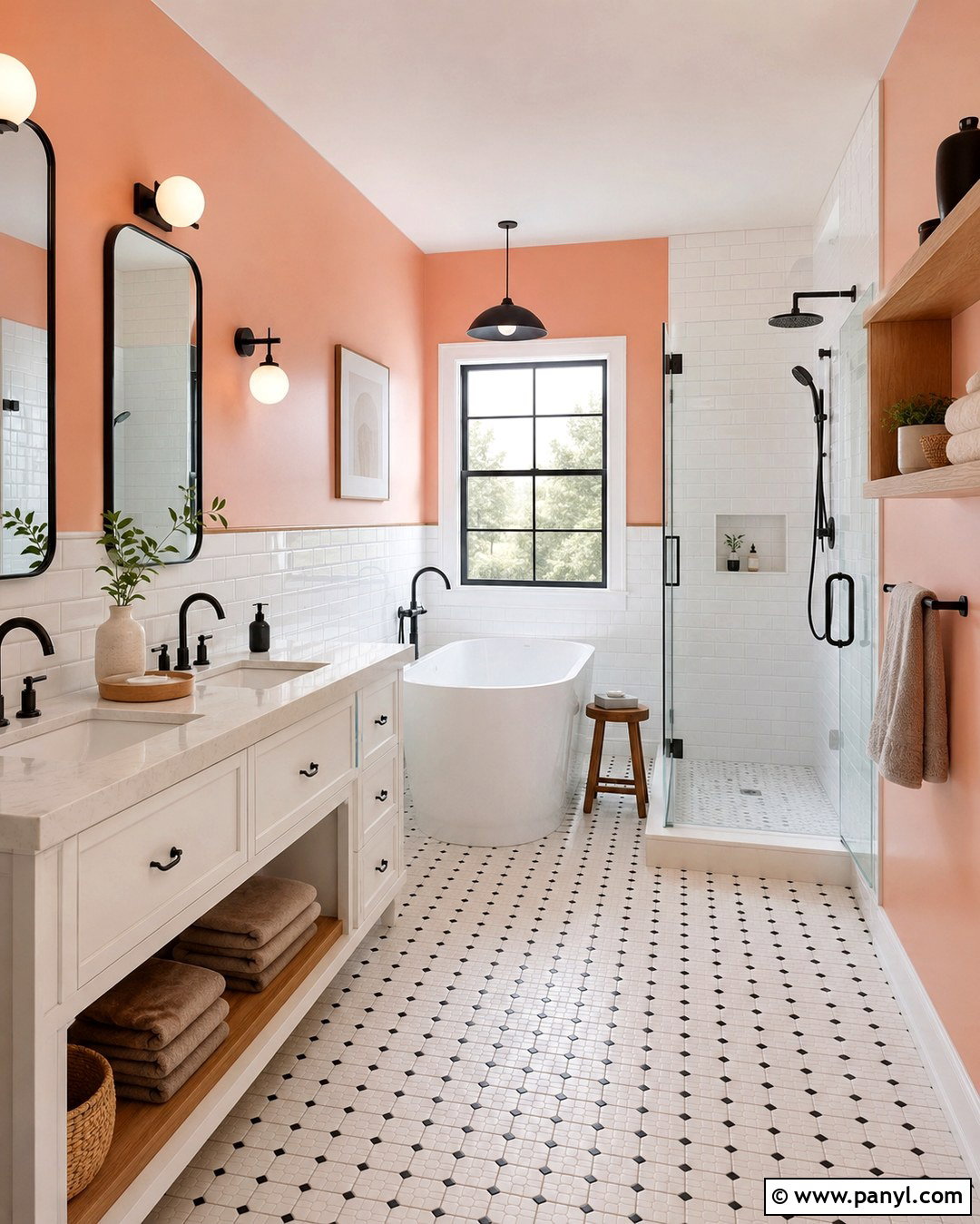
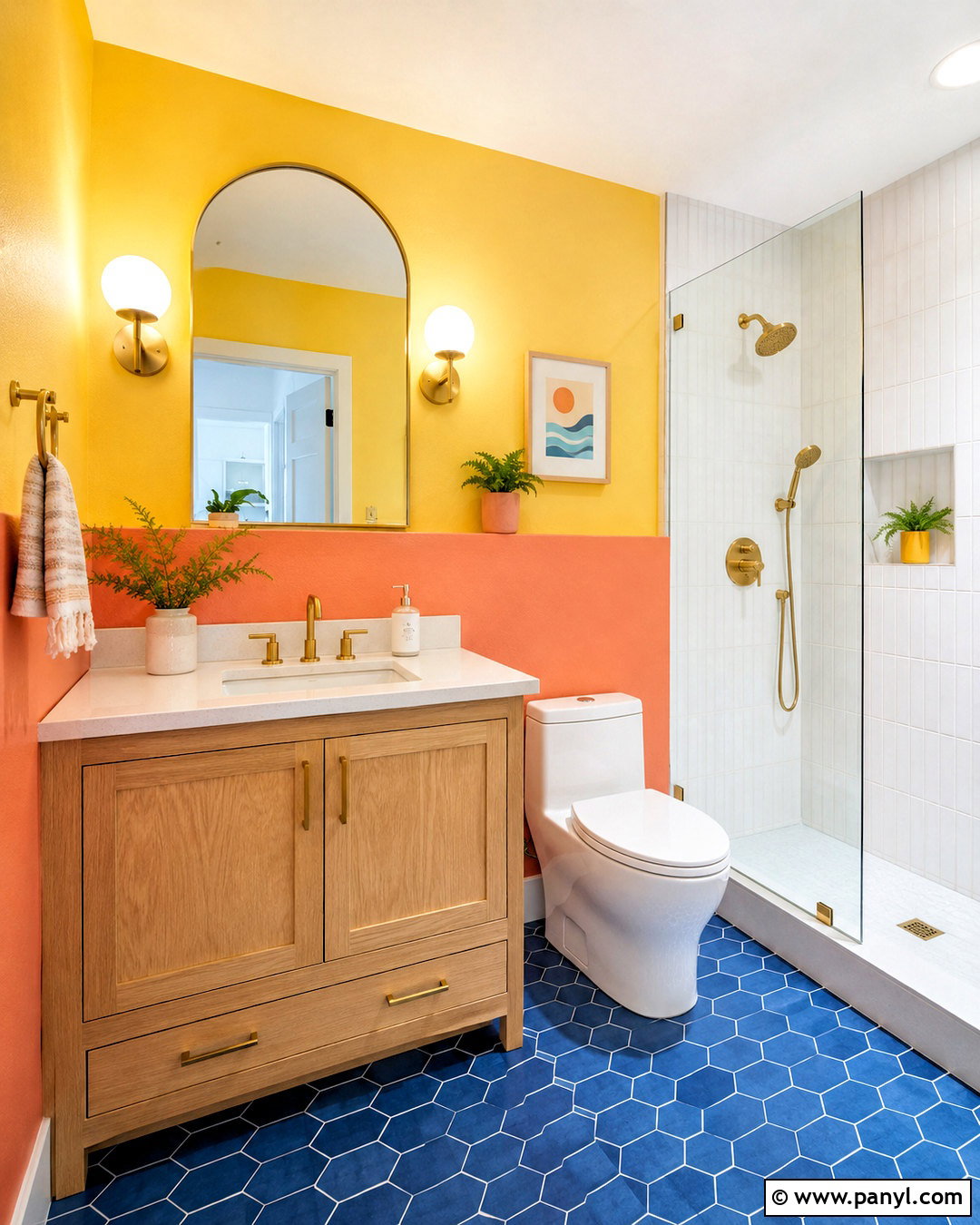
A bathroom is an easy place to explore pale orange because white fixtures provide an automatic visual balance. Paint the upper walls a gentle peach-orange and cover the lower portion with glossy white tile or classic beadboard. Add a white vanity with a pale stone countertop, then introduce definition through matte black faucets, cabinet pulls, and mirror frames. Light oak shelves can hold neatly folded towels and simple ceramic containers. Choose a shower curtain with a small peach, green, or tan pattern to connect the surfaces. Underfoot, use warm gray porcelain tile or a subtle black-and-white mosaic. Bright sconces with frosted glass will illuminate the wall color evenly. This complete bathroom feels fresh and playful but remains polished enough for long-term use.
6. Pale Orange Nursery With Warm Neutrals
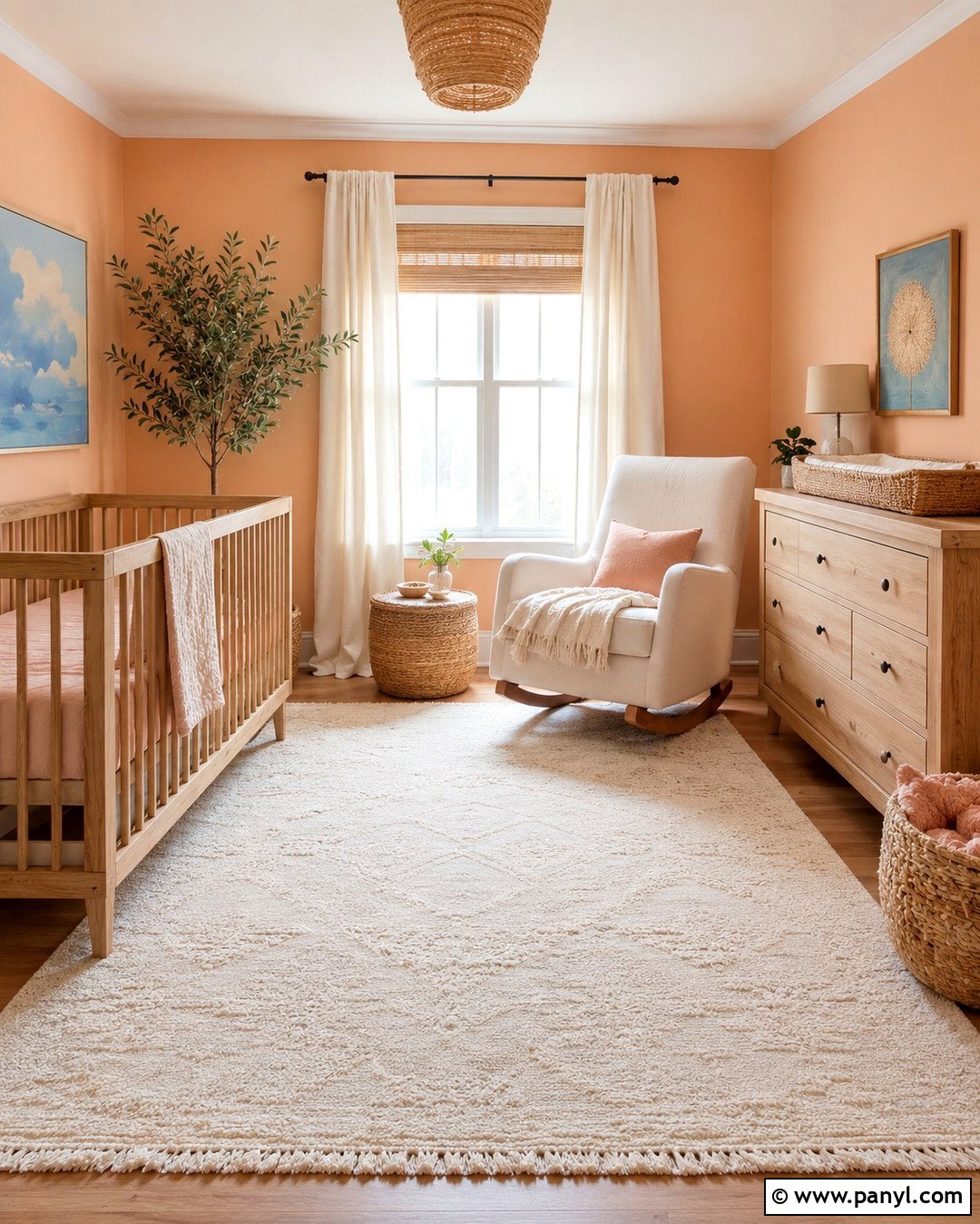
Soft apricot walls offer a cozy background for a nursery without relying on a strongly themed color palette. Place a natural wood crib against the main wall and add a cream upholstered rocking chair beside a small oak table. Use an ivory rug with a washable, low-pile surface to make the room practical and comfortable. Curtains in warm white will diffuse daylight and prevent the pale orange paint from looking too saturated. Add storage baskets made from woven seagrass and choose a light wood dresser that can double as a changing station. Gentle touches of beige, muted blush, and dusty blue can appear in bedding and framed art. The finished nursery will feel calm, flexible, and easy to update as the room’s needs change.
7. Pale Orange Home Office With Charcoal Accents
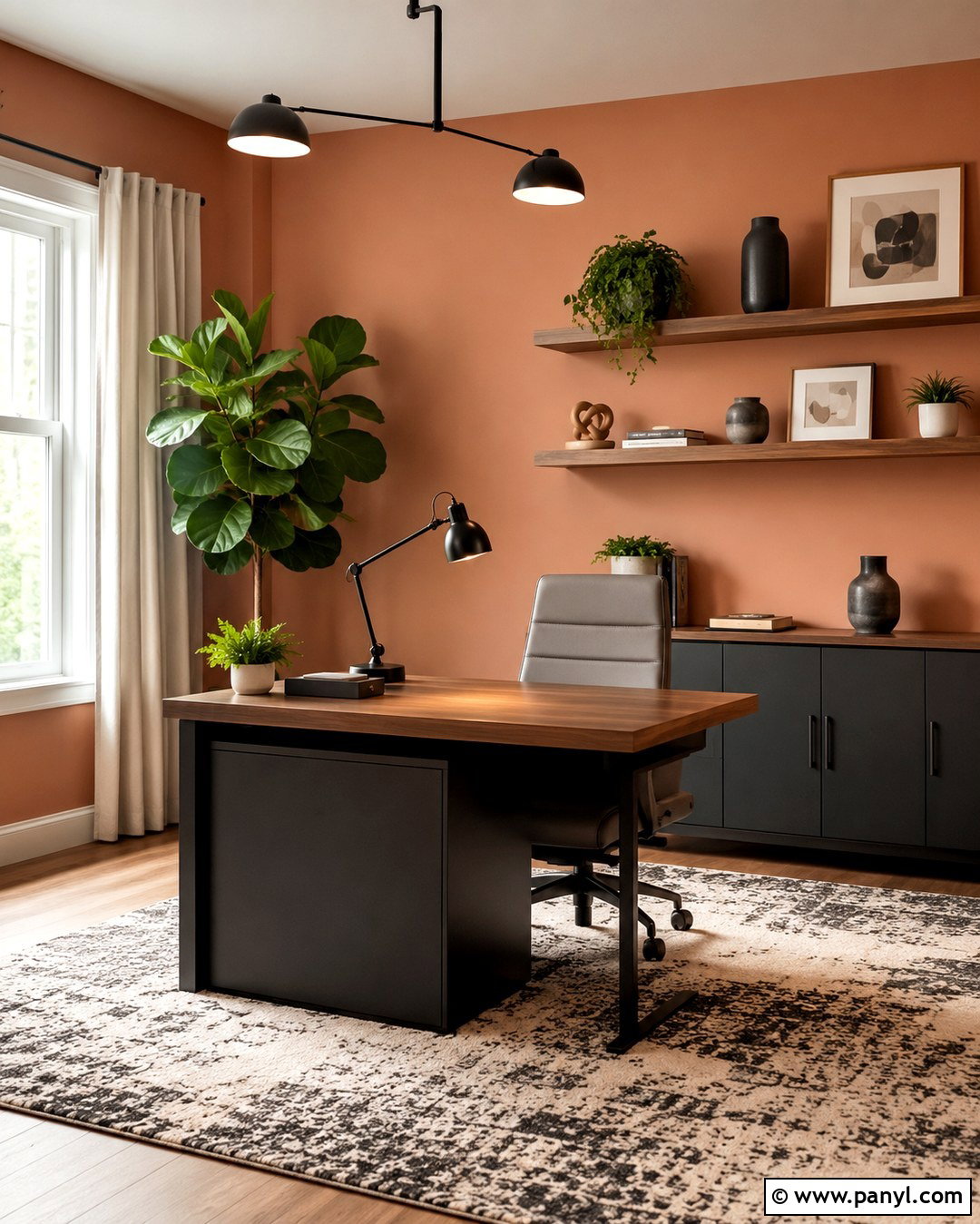
Could your workspace use more energy without becoming visually distracting? Try pale orange walls with a muted clay undertone, balanced by a charcoal desk and matching storage cabinet. A medium-tone wood desktop can soften the darker furniture and coordinate with floating oak shelves. Choose a supportive chair upholstered in warm gray, then place a cream-and-charcoal rug beneath the work area. Black-framed artwork, a matte black task lamp, and streamlined hardware create a crisp outline against the softer paint. Add linen curtains in ivory and one large green plant to introduce natural color. Keep accessories minimal and organized in tan boxes or woven baskets. This complete office scheme feels focused and professional while remaining warmer than a standard white or gray workspace.
8. Pale Orange Entryway With Deep Teal
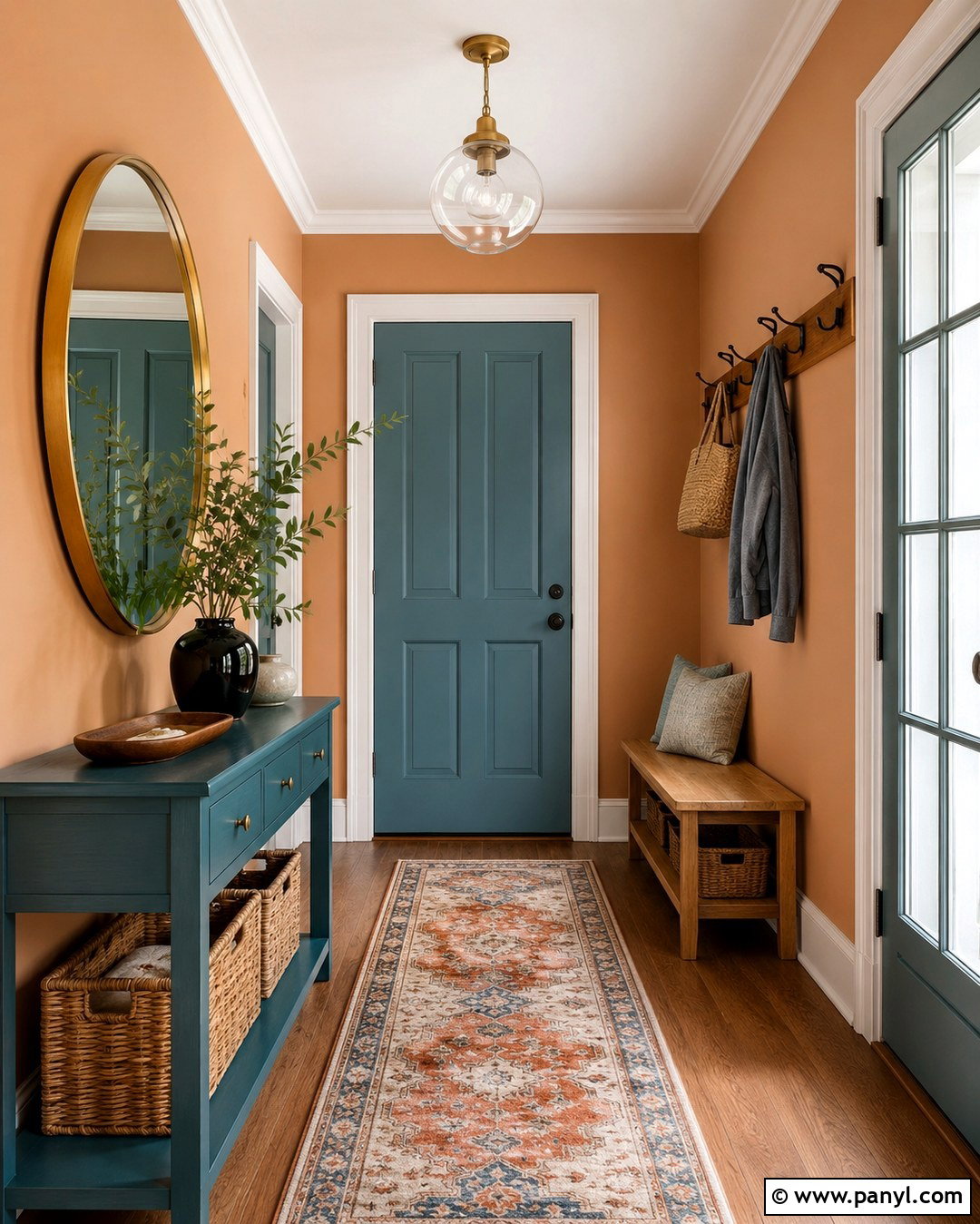
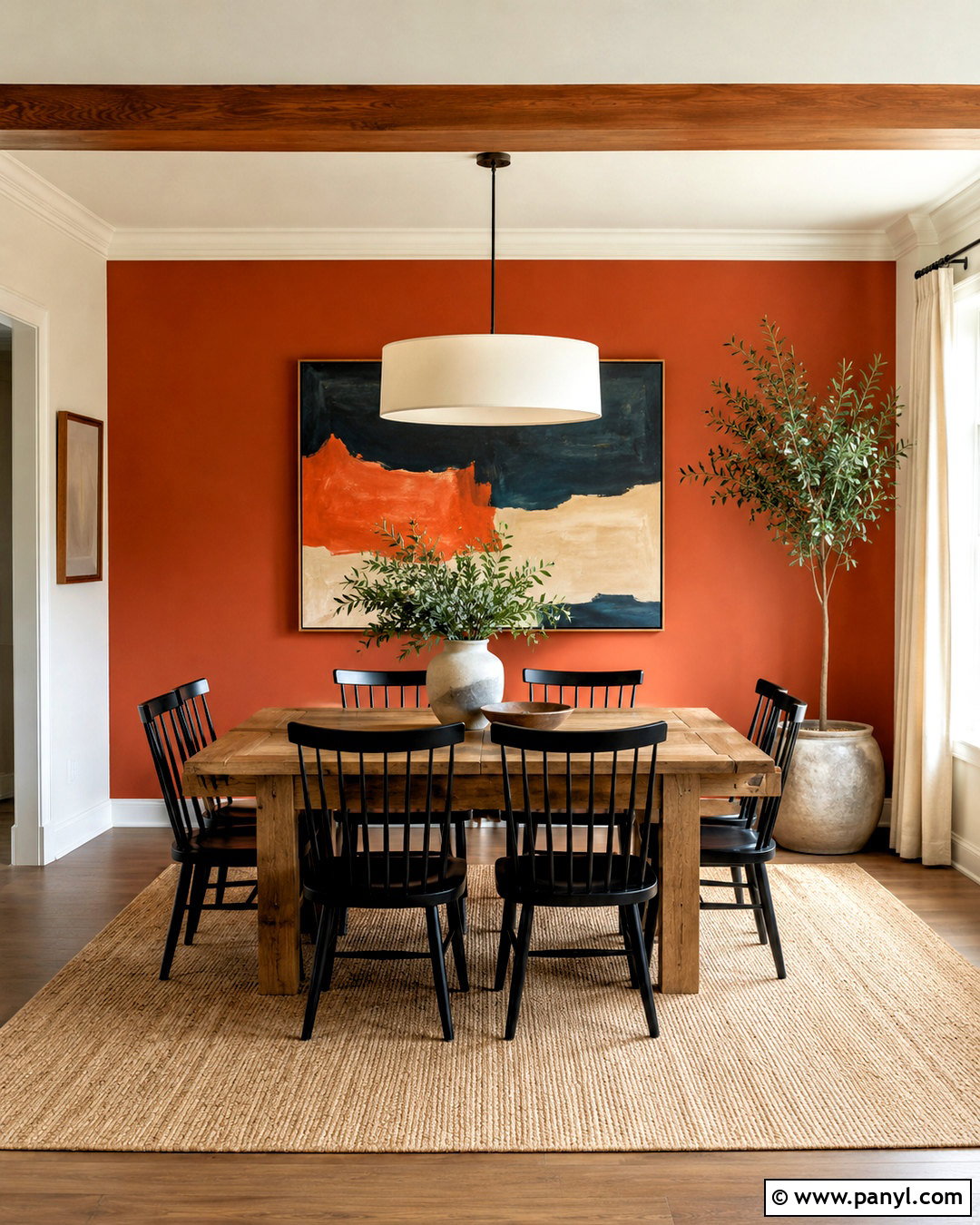
Make a memorable first impression by combining pale orange entryway walls with deep teal furniture. A narrow teal console table or painted storage bench gives the space a clear focal point without covering much of the wall. Add a round brass-framed mirror above it to reflect daylight and emphasize the warmth of the paint. Use a durable runner with cream, rust, teal, and tan details to handle foot traffic while connecting the palette. Natural wood hooks and woven baskets provide practical storage for everyday belongings. Paint the trim warm white and consider a muted teal interior door for extra definition. A simple glass pendant keeps the hallway bright. Together, these elements create an entryway that feels colorful, organized, and connected to the rest of the home.
9. Pale Orange Color Drenched Small Room
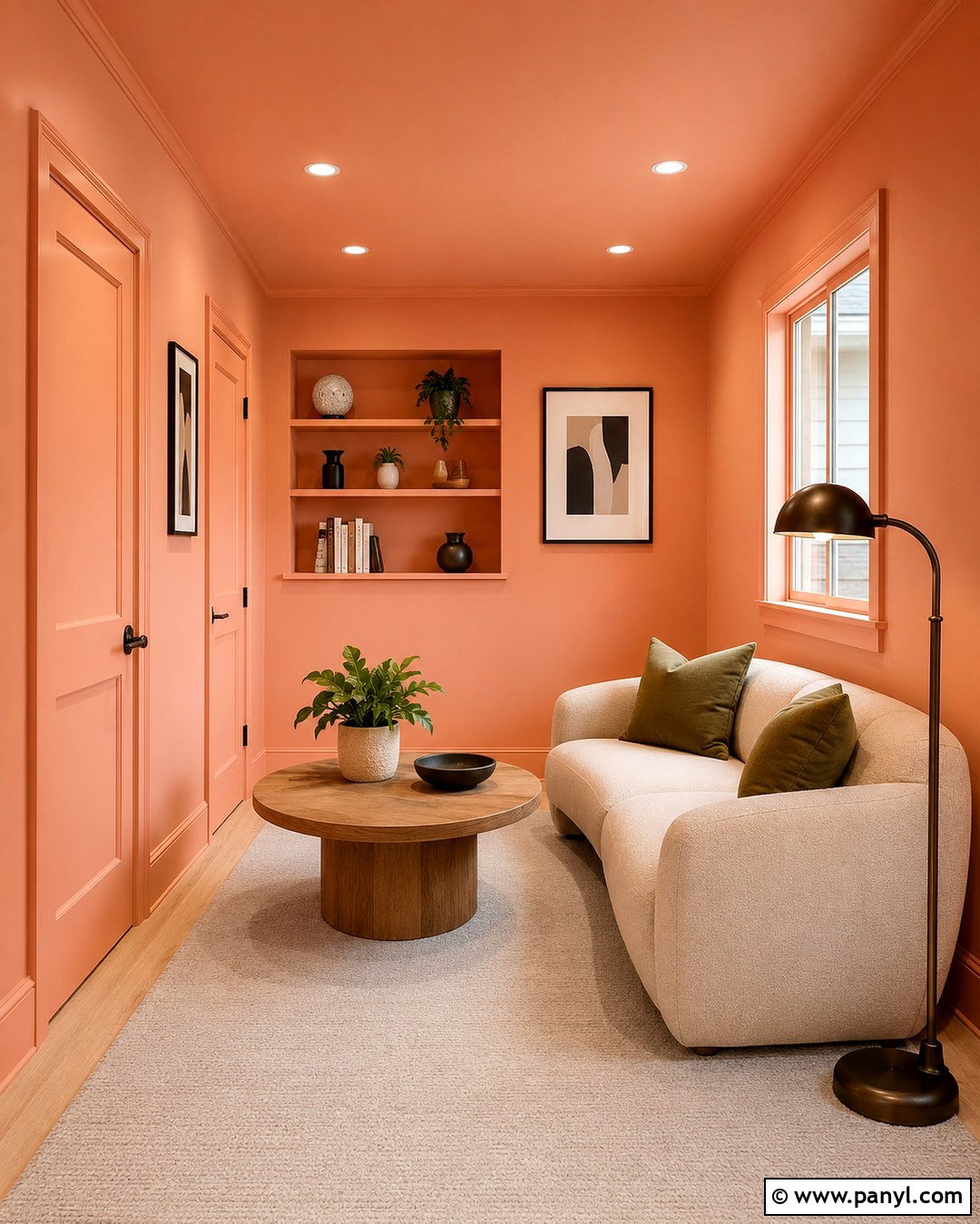
In a compact room, using one pale orange across the walls, trim, doors, and ceiling can reduce visual breaks and create a surprisingly seamless effect. Choose a very light peach with a muted beige undertone so the color does not feel overwhelming. Furnish the space with a low cream loveseat, one small round oak table, and wall-mounted shelving rather than bulky floor cabinets. A pale neutral rug will reflect light and make the floor feel less crowded. Bring in contrast through a dark bronze floor lamp, two olive cushions, and simple black-framed artwork. Keep curtains close to the wall color for continuity. This color-drenched approach transforms an awkward den, box room, or studio corner into a cohesive space with intentional character.
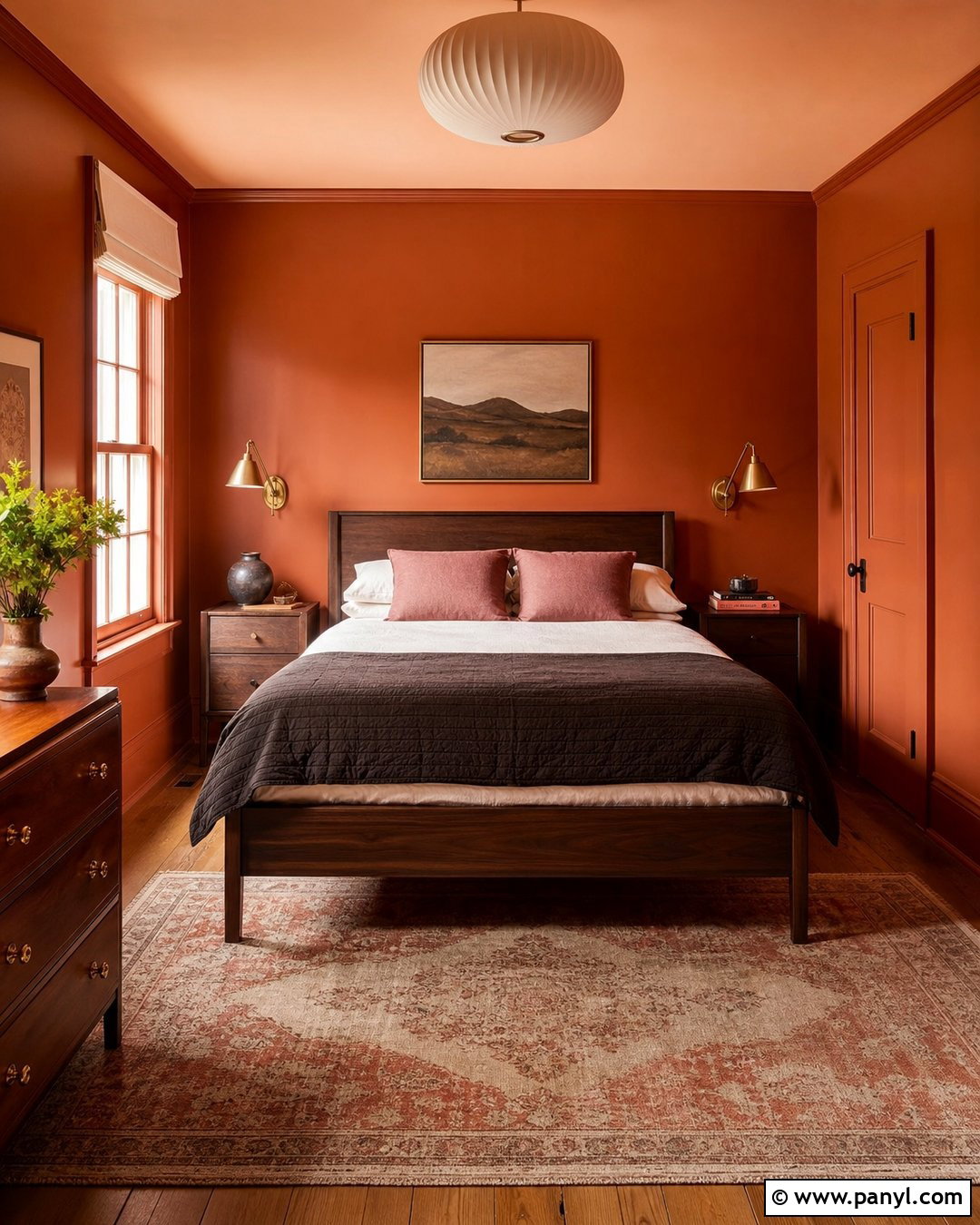
10. Pale Orange Cottage Living Room
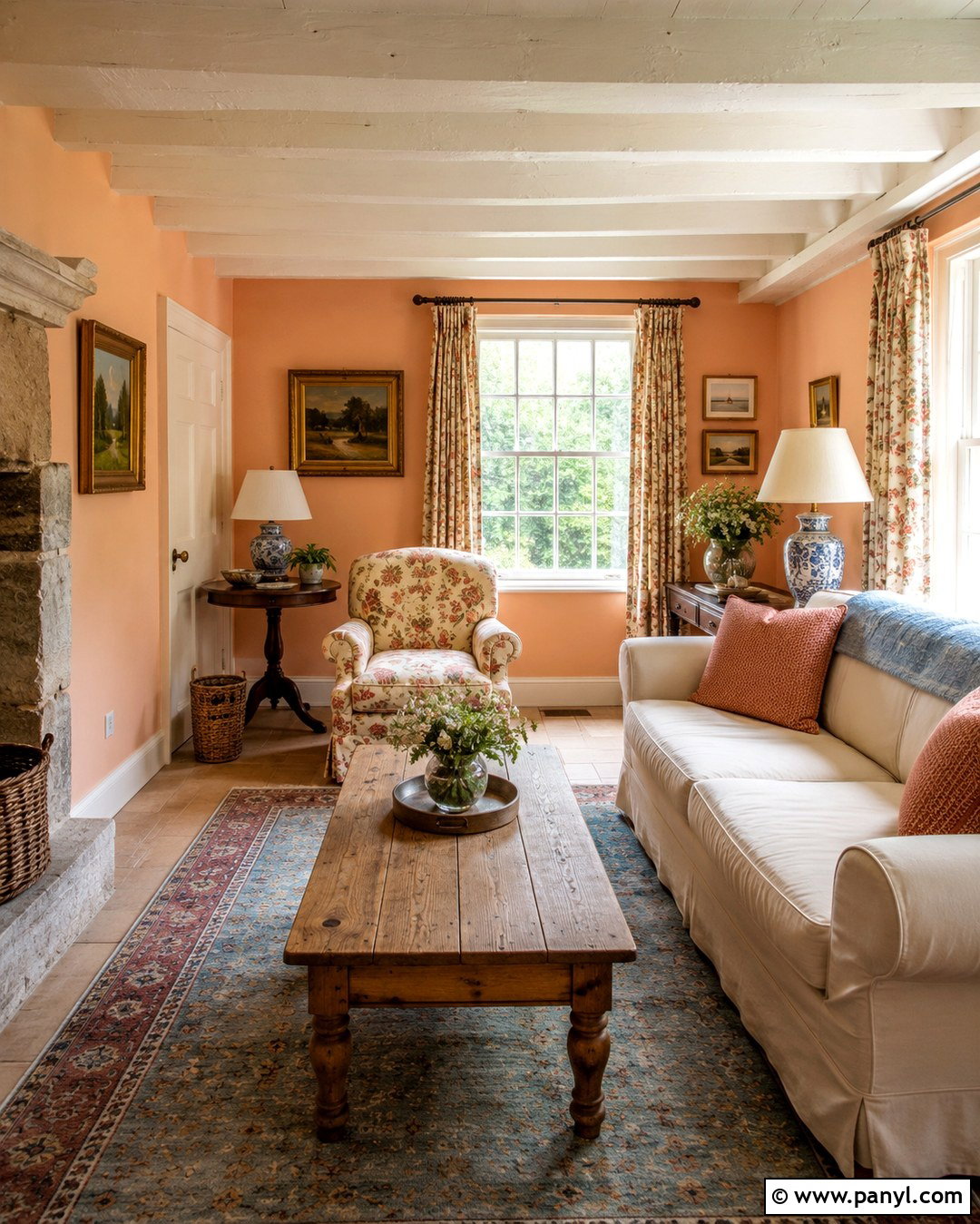
Pale orange naturally complements the collected finishes commonly found in comfortable cottage interiors. Cover the walls in a chalky peach shade and pair them with warm white trim, painted ceiling beams, and medium-tone wood flooring. Choose a slipcovered cream sofa, a small floral armchair, and an aged pine coffee table with visible grain. Layer a traditional rug in faded blue, rust, and beige beneath the seating. Floral curtains can work beautifully when their background is ivory and their pattern repeats the wall color in small amounts. Add ceramic lamps, woven baskets, framed landscapes, and a few well-chosen vintage accessories. Avoid filling every surface. Leaving breathing room around each piece will help the finished cottage living room feel charming and lived-in rather than cluttered.
11. Pale Orange Modern Minimalist Room
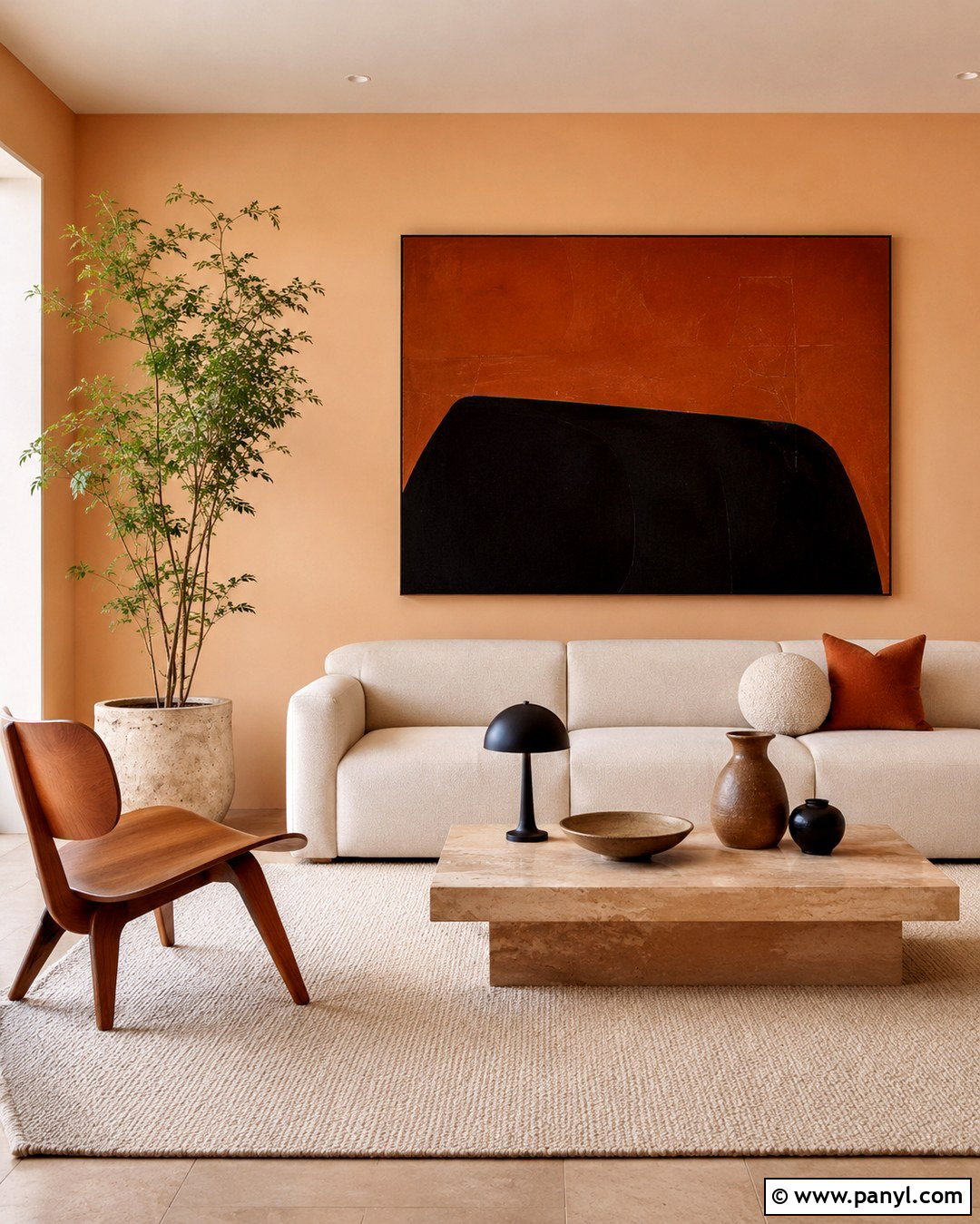
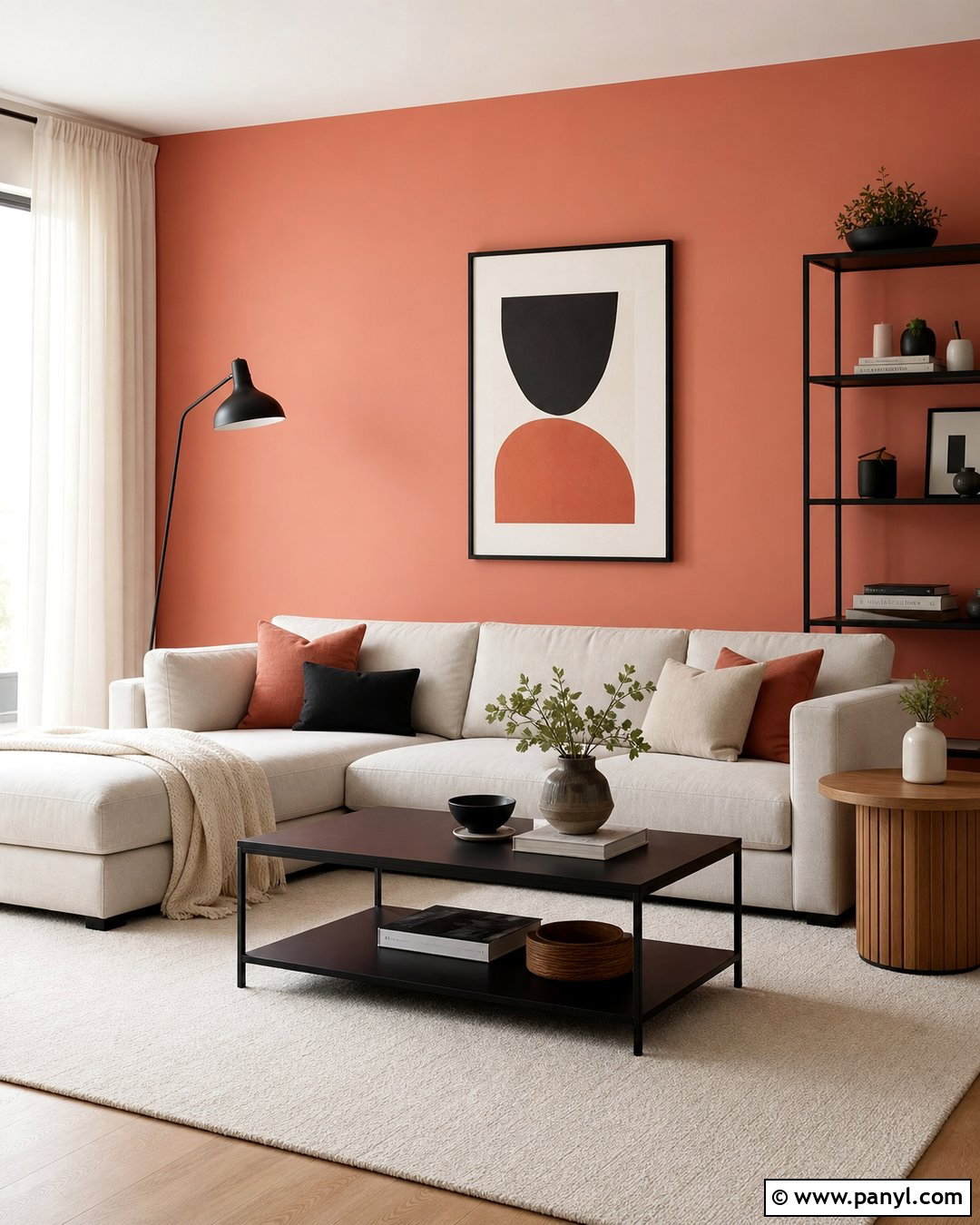
Clean-lined interiors do not have to feel cold or colorless. Use a pale orange with beige undertones as the warm foundation for a modern minimalist living space. Choose a low-profile off-white sofa, one sculptural oak chair, and a simple travertine coffee table. Keep window treatments plain with full-length ivory curtains or concealed roller shades. A large cream wool rug will create a soft visual boundary without introducing a distracting pattern. Add one oversized abstract artwork featuring rust, black, and warm white. Matte black lighting and a few dark accessories will give the room necessary definition. Limit decorative objects to textured ceramics and one substantial plant. The result is a calm, contemporary space where pale orange provides personality while the furniture remains functional and restrained.
12. Pale Orange Boho Bedroom
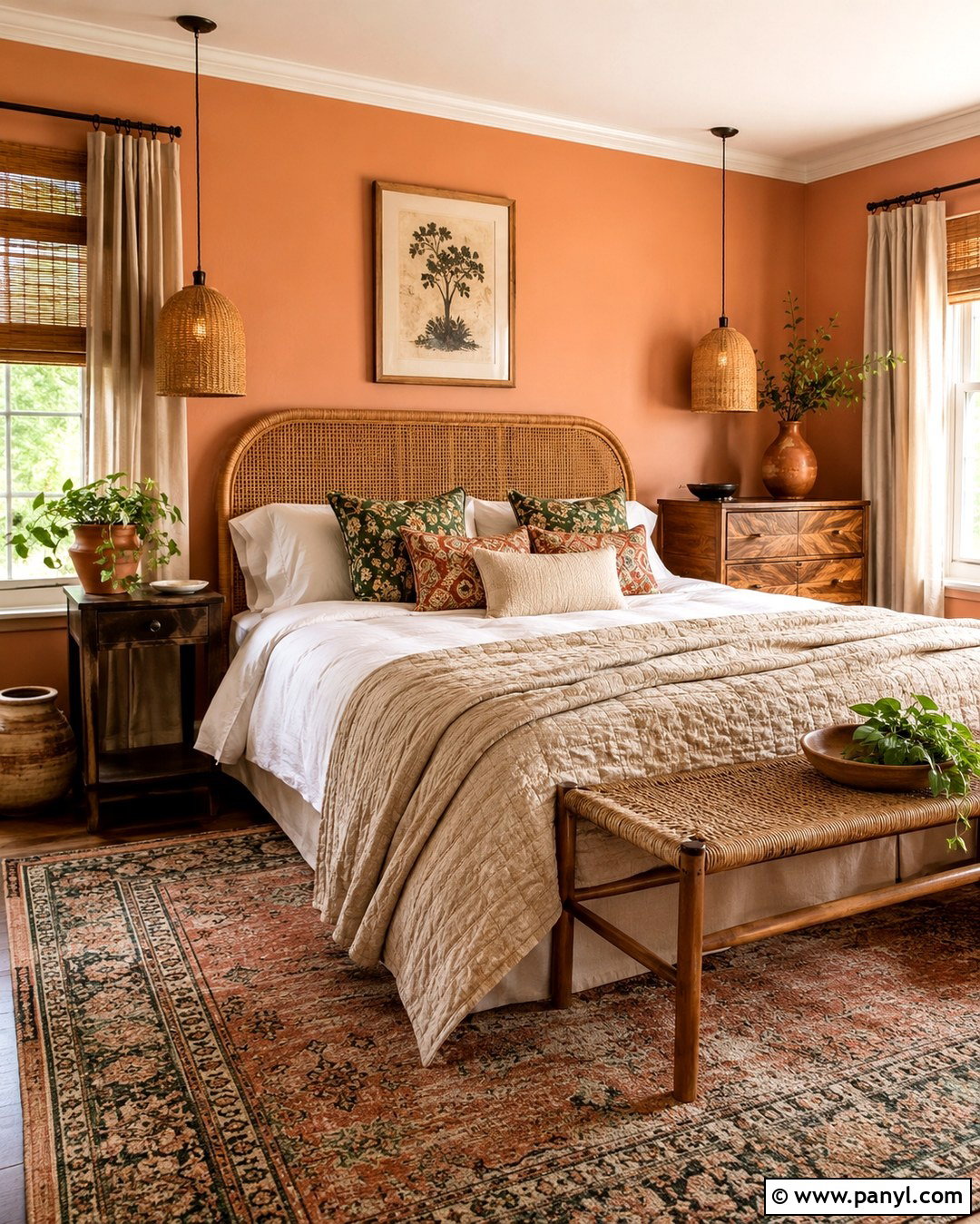
Layer pale orange walls with natural textures to build a relaxed boho bedroom that still looks polished. Begin with a rattan headboard and dress the bed in white cotton sheets, a sand-colored quilt, and patterned pillows featuring muted green, terracotta, and black. Place mismatched wood nightstands on either side to create an easy collected look. A large woven or vintage-style rug should extend beneath the bed and repeat several colors from the textiles. Add linen curtains, bamboo shades, and a woven pendant for softness overhead. Instead of filling the walls with many small decorations, display one textile hanging and a few framed botanical prints. Trailing plants and handmade pottery complete the design. The pale orange background unifies every layer while maintaining a light, restful atmosphere.
13. Pale Orange Coastal Living Room
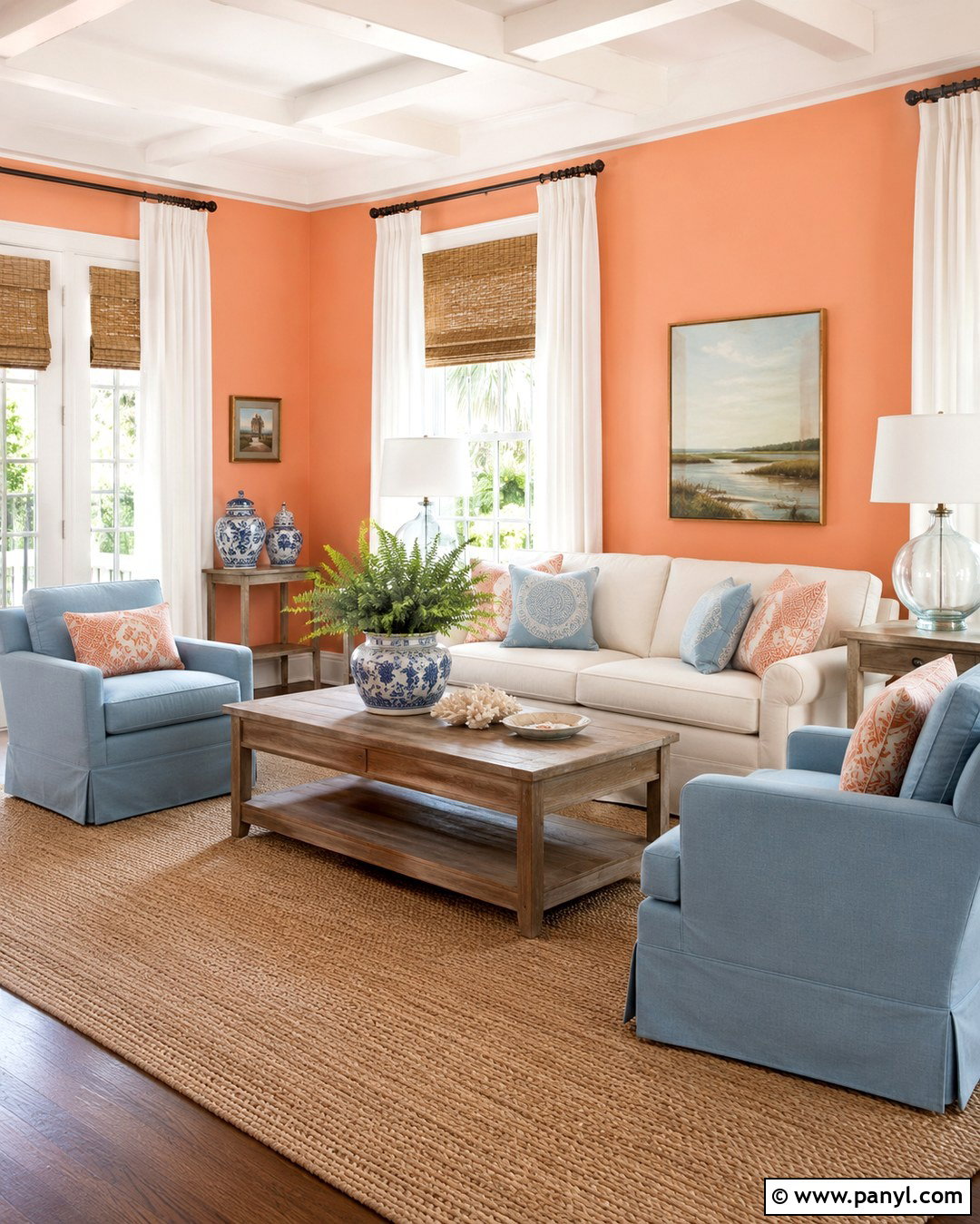
For a warmer alternative to an all-blue coastal room, combine pale orange walls with powder blue and sandy neutrals. Select a white or cream sofa with washable upholstery and add light blue armchairs with simple silhouettes. Use a weathered oak coffee table, a natural jute rug, and woven window shades to bring in familiar shoreline textures. Full-length white curtains will make the windows appear larger and keep the palette breezy. Decorate with blue-and-white ceramics, clear glass lamps, and understated landscape art rather than themed accessories. Small touches of navy can appear in piping, pillows, or picture frames. This complete scheme captures the brightness of coastal decorating while the soft peach-orange walls create a gentle sunset warmth that feels comfortable throughout the year.
14. Pale Orange Midcentury Modern Room
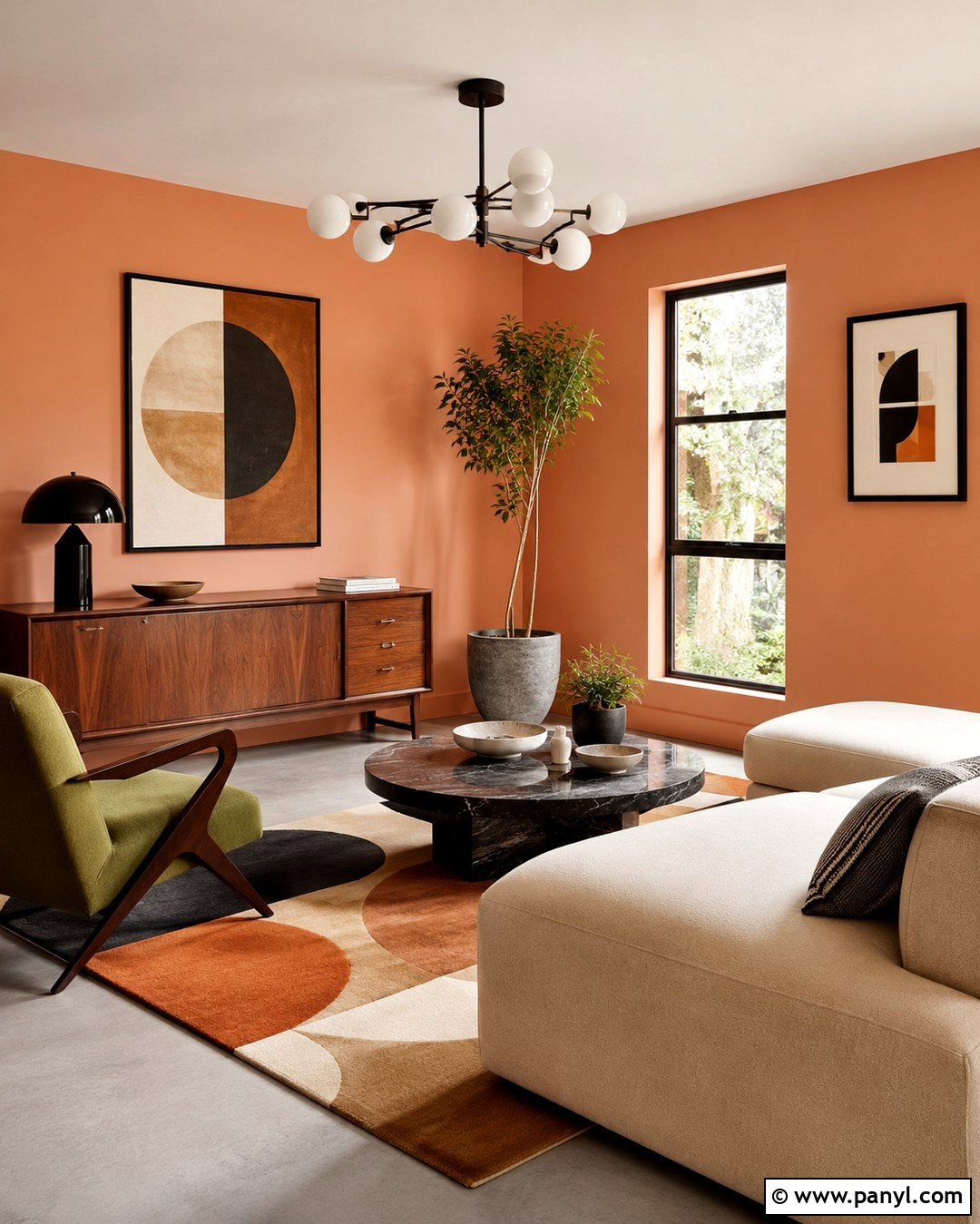
Pale orange fits naturally into a midcentury modern palette when it is paired with walnut, olive green, and graphic black details. Paint all the walls a lightly muted apricot, then anchor the room with a streamlined walnut media console and a low sofa in warm cream. Add one olive lounge chair with tapered wooden legs and a round coffee table featuring a dark stone top. A geometric rug in beige, brown, black, and faded orange will tie the major colors together. Choose globe lighting, slim black picture frames, and simple ceramic planters. Keep the curtains plain and close to the wall color. The completed room references retro color combinations without looking like a themed set, making it suitable for both vintage furniture and newer pieces.
15. Pale Orange Farmhouse Dining Room
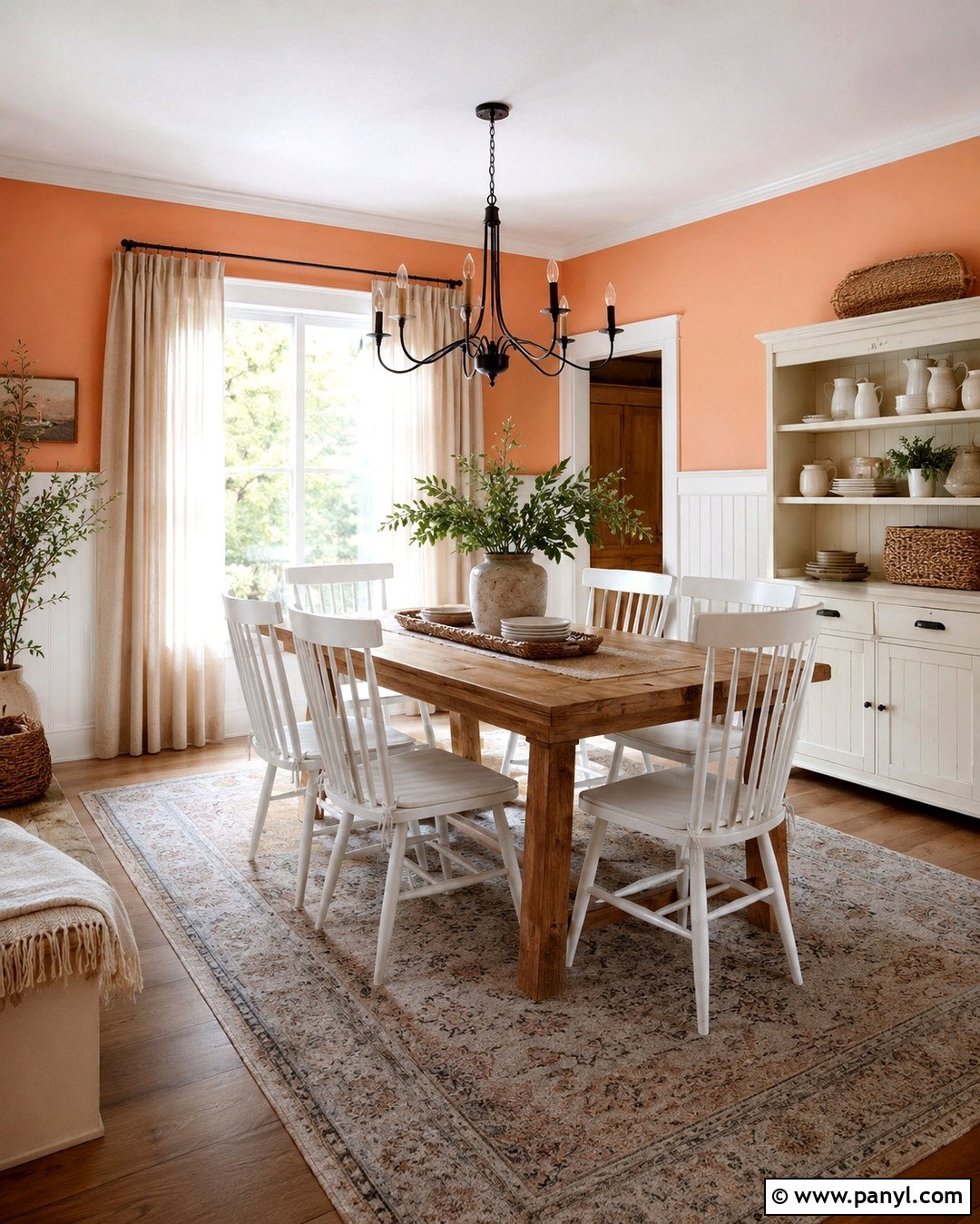
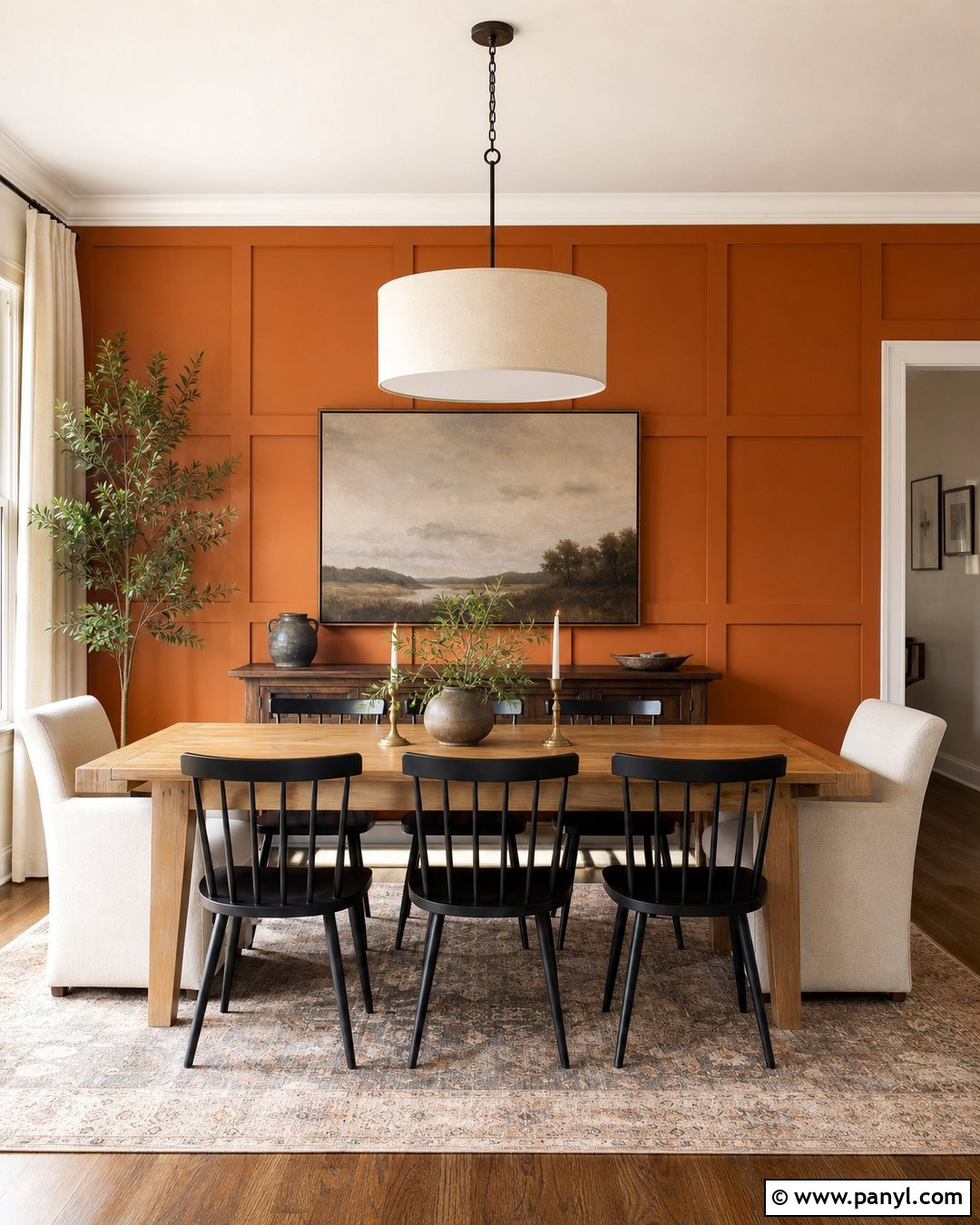
Bring warmth to a farmhouse dining room with pale orange walls, creamy white millwork, and rustic wood furniture. A long oak table with a matte finish should form the center of the space, surrounded by white spindle chairs or mixed wood seating. Install simple board-and-batten paneling on the lower walls and paint it a soft ivory. The pale orange above will provide color while keeping the room bright. Add a woven pendant or black metal chandelier over the table for contrast. Linen curtains, a neutral patterned rug, and stoneware dishes reinforce the relaxed materials. A painted cream hutch can offer storage without making the palette feel too wood-heavy. Keep accessories useful and uncluttered, using bowls, branches, and baskets instead of overly themed farmhouse signs.
16. Pale Orange Guest Bedroom With Lavender
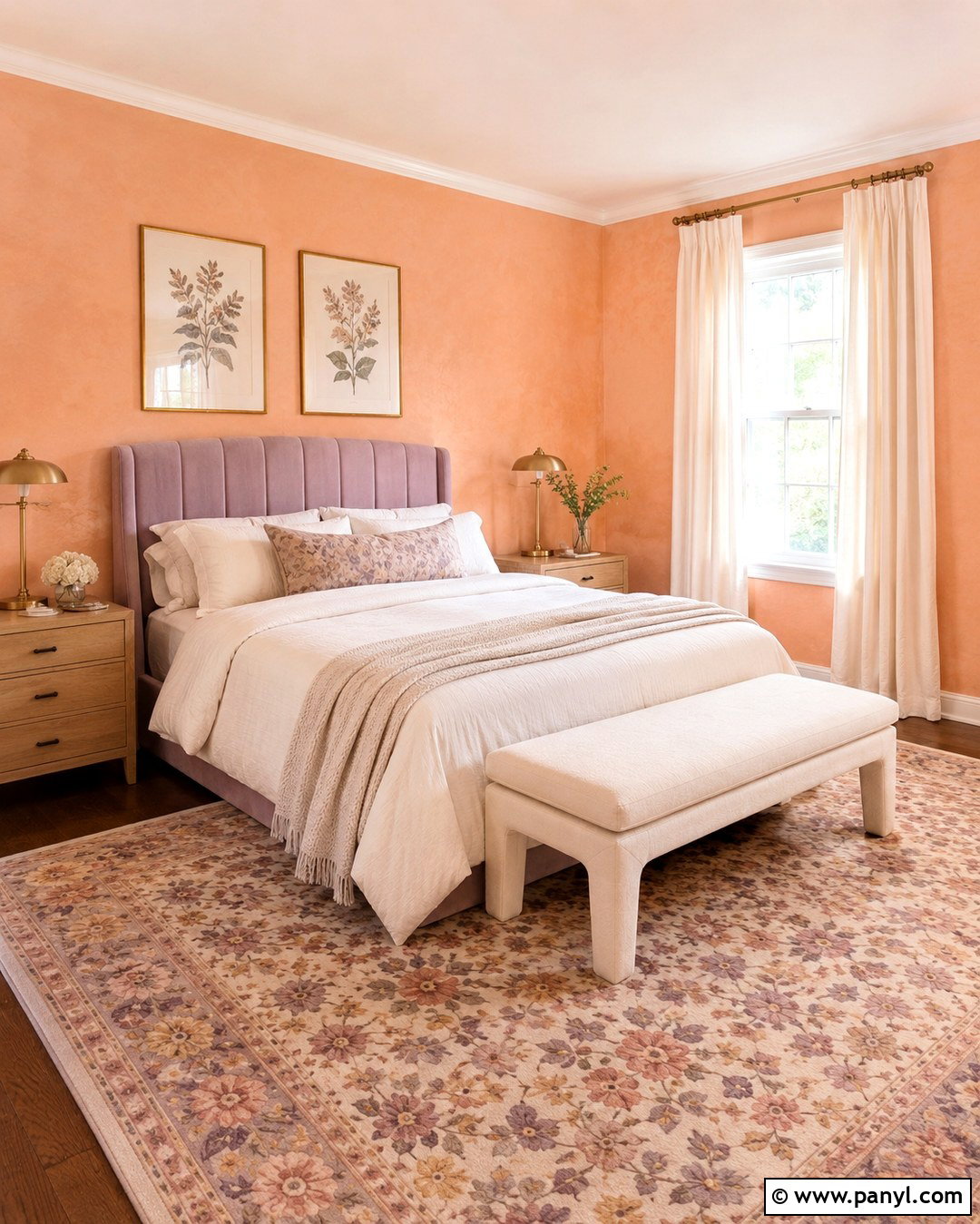
Pale orange and dusty lavender create an unexpected guest bedroom palette that feels gentle rather than overly colorful. Choose a peach paint with noticeable pink undertones, then add a lavender upholstered headboard or a soft purple quilt. Keep the remaining bedding white and layer it with oatmeal throws for balance. Light oak nightstands and brushed brass lamps will complement both colors without adding visual weight. Use a faded floral rug containing peach, lavender, cream, and sage to connect the room. Hang warm white curtains and select framed botanical artwork with quiet purple details. A small cream bench at the foot of the bed completes the arrangement. This thoughtful combination gives visitors a welcoming, distinctive room while maintaining the restful quality expected in a bedroom.
17. Pale Orange Reading Nook With Built-In Shelves
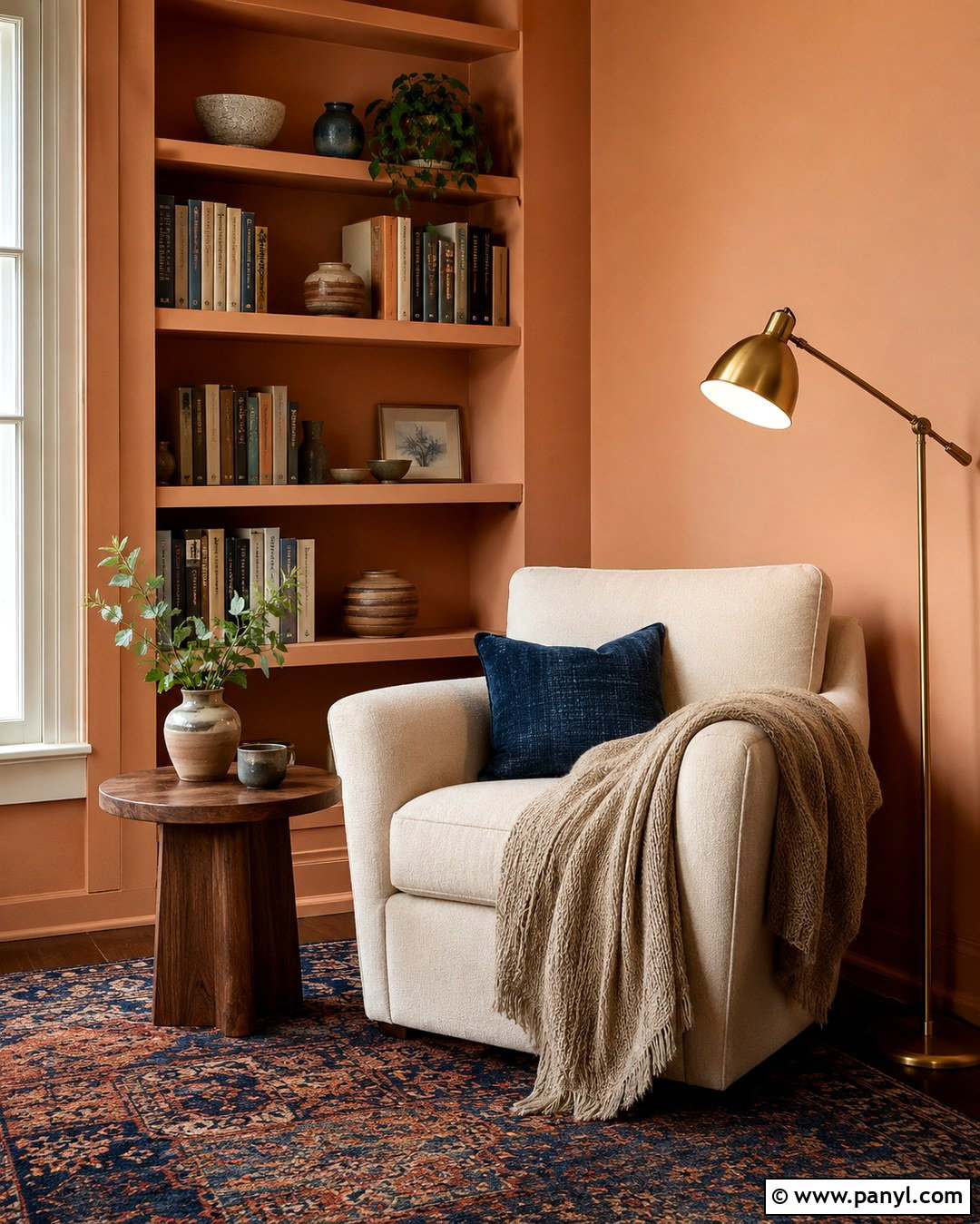
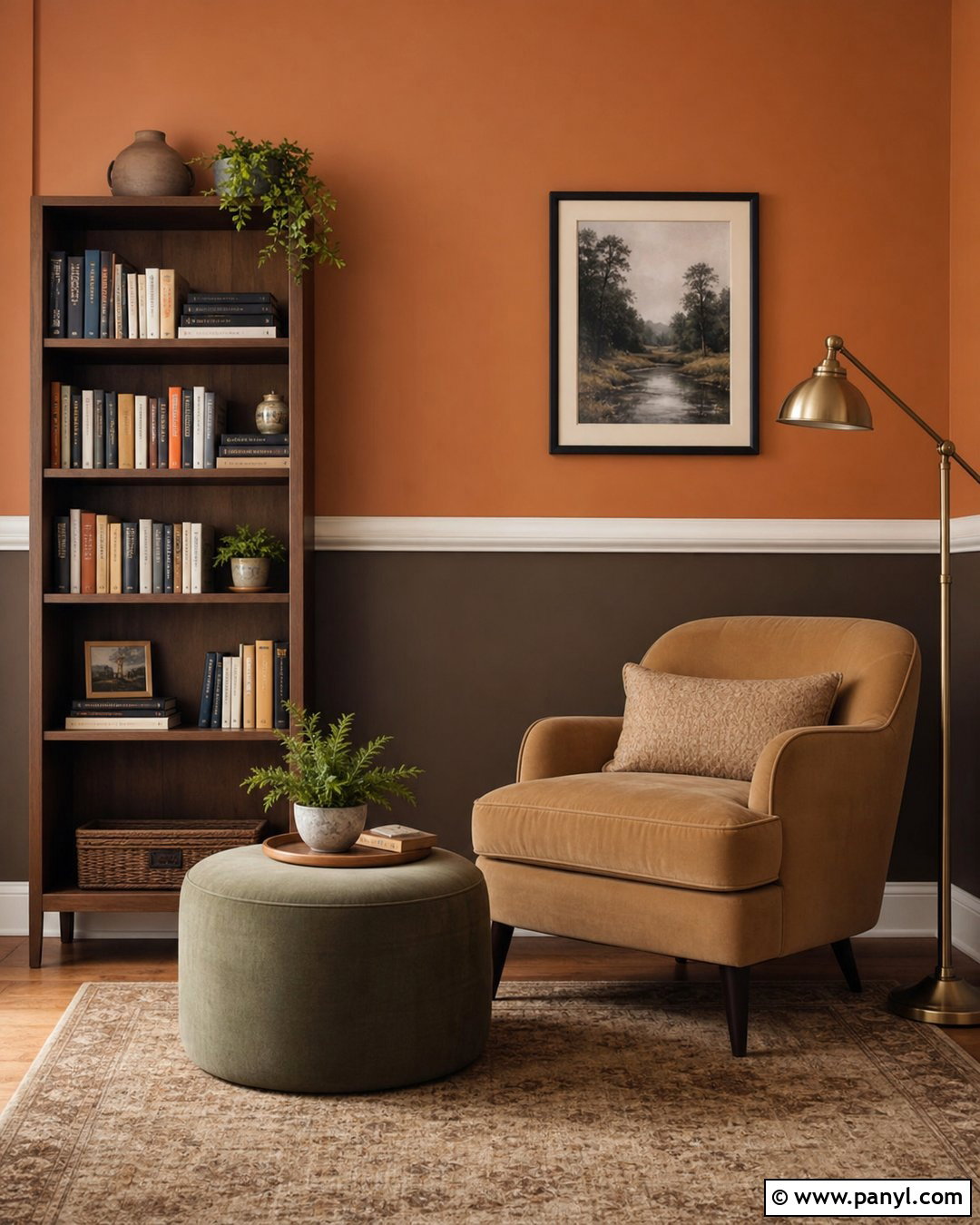
Turn an unused corner into a finished reading nook by painting the walls and built-in shelves the same pale orange. A muted apricot finish creates warmth and allows books, pottery, and framed pieces to stand out. Place a comfortable cream armchair beside the shelving and add a small walnut table for drinks or reading glasses. A brass floor lamp with an adjustable shade provides focused light without occupying shelf space. Choose a compact rug with navy, rust, and beige details to define the nook. Arrange books both vertically and horizontally, leaving some open space around decorative objects. Add one dark blue cushion and a soft oatmeal throw. The coordinated paint treatment makes the nook feel architecturally intentional, even when the shelves are simple or recently installed.
18. Pale Orange Hallway With Two-Tone Walls
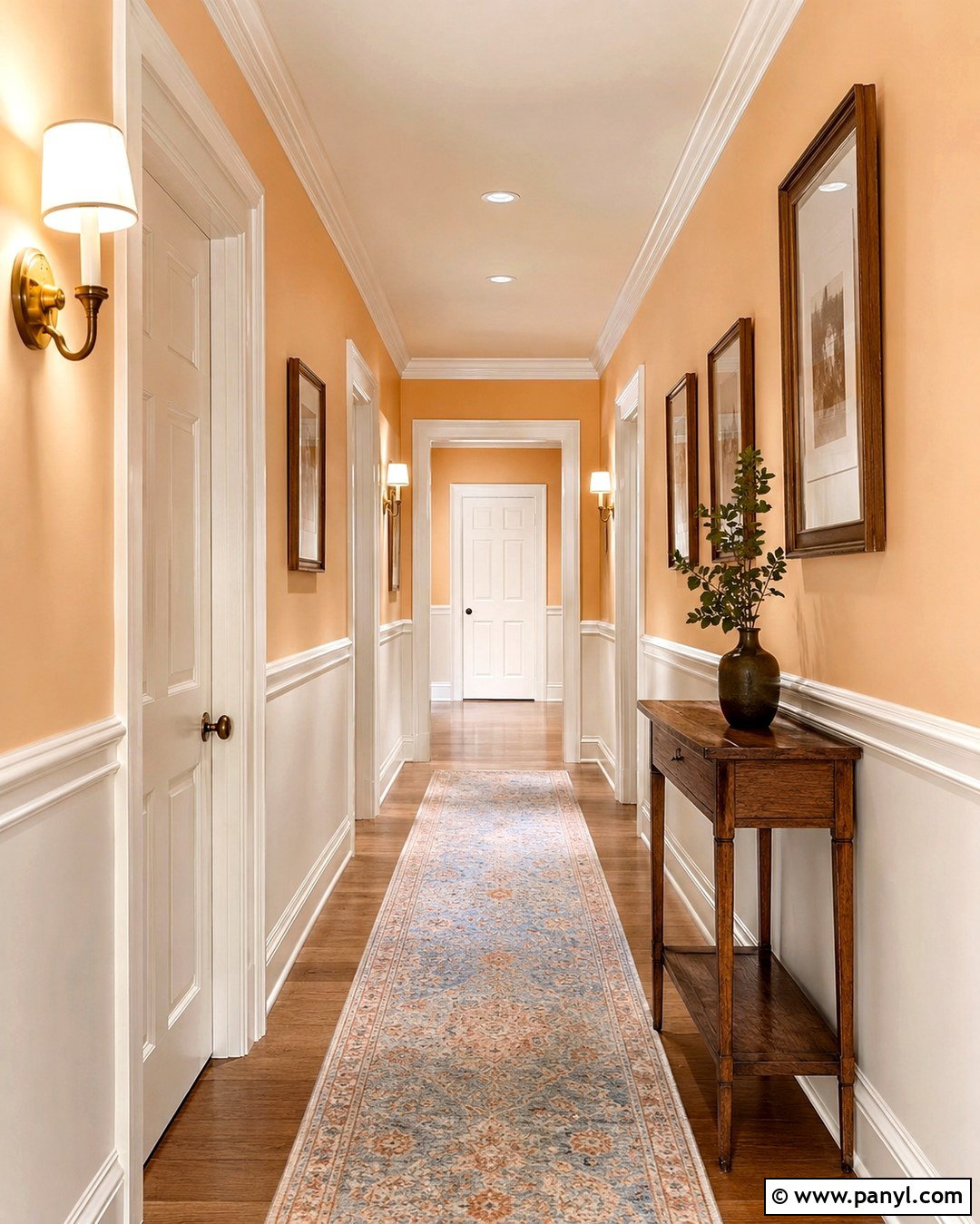
Long hallways become more interesting when pale orange is combined with a practical two-tone paint treatment. Apply creamy off-white to the lower third of the wall and pale apricot above it, separating the colors with a narrow wood or painted chair rail. This arrangement keeps the walkway bright while adding enough contrast to highlight its length. Use a natural runner containing faded blue, peach, and tan, then install black or aged brass wall sconces at even intervals. A series of matching wood frames will create an orderly gallery without crowding the passage. If space allows, add one shallow oak console near the entrance. Paint all doors warm white for consistency. The result is a welcoming hallway that connects adjoining rooms through color and repeated materials.
19. Pale Orange Laundry Room With Sage Cabinets
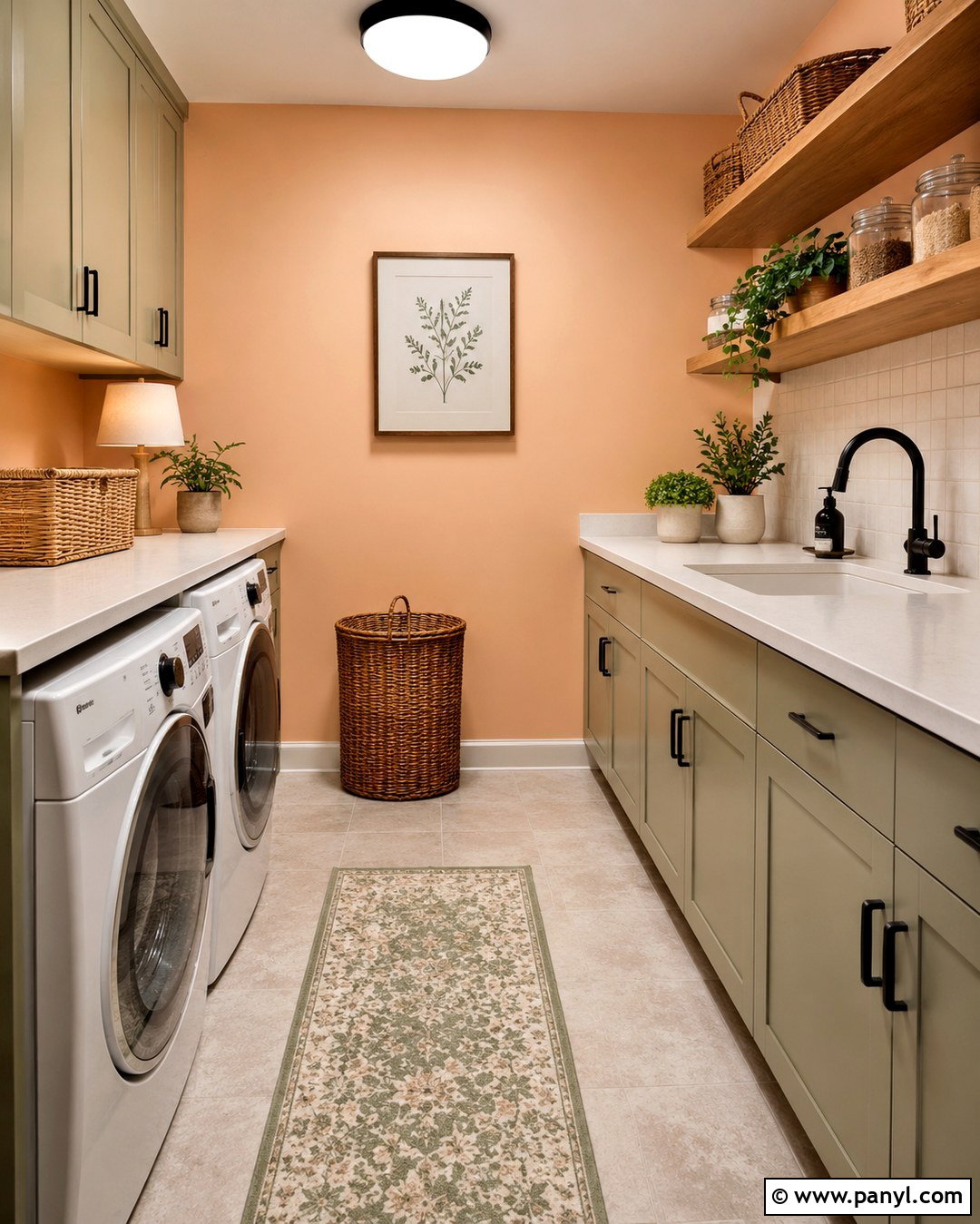
A practical laundry room can still feel carefully designed. Cover the walls in a light peach-orange and pair them with muted sage green cabinets for an earthy, balanced look. Install warm white quartz counters above the machines and use ivory square tile for the backsplash. Open oak shelves can hold glass containers, folded towels, and matching storage baskets. Choose brushed brass or matte black cabinet hardware, then repeat that finish on the faucet and hanging rail. A washable striped runner in cream and green will make the narrow floor more comfortable. Keep the ceiling and trim warm white to prevent the room from becoming overly colorful. This complete palette makes everyday tasks feel more pleasant while giving cleaning supplies and household essentials clearly organized places.
20. Pale Orange Sunroom With Green Plants
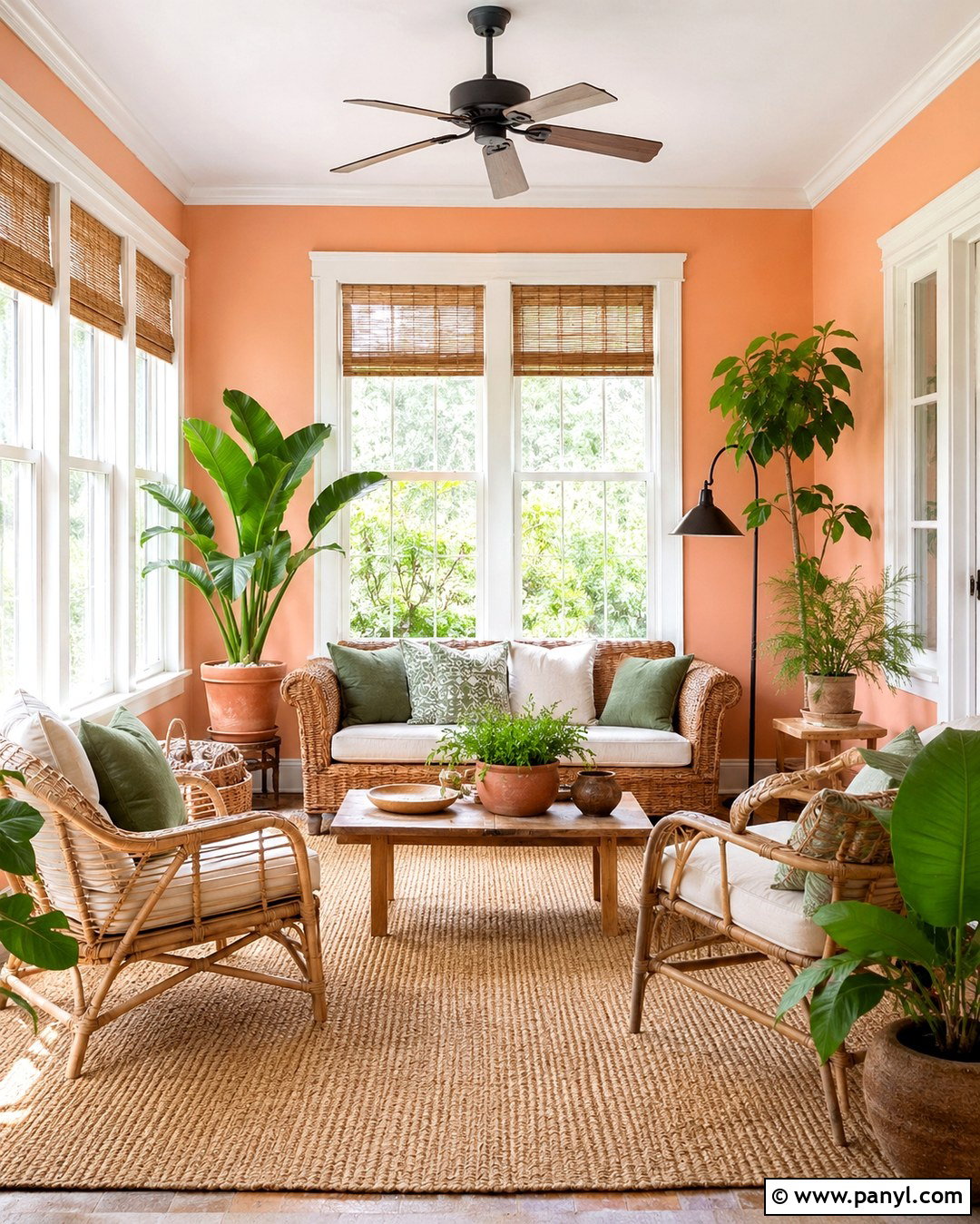
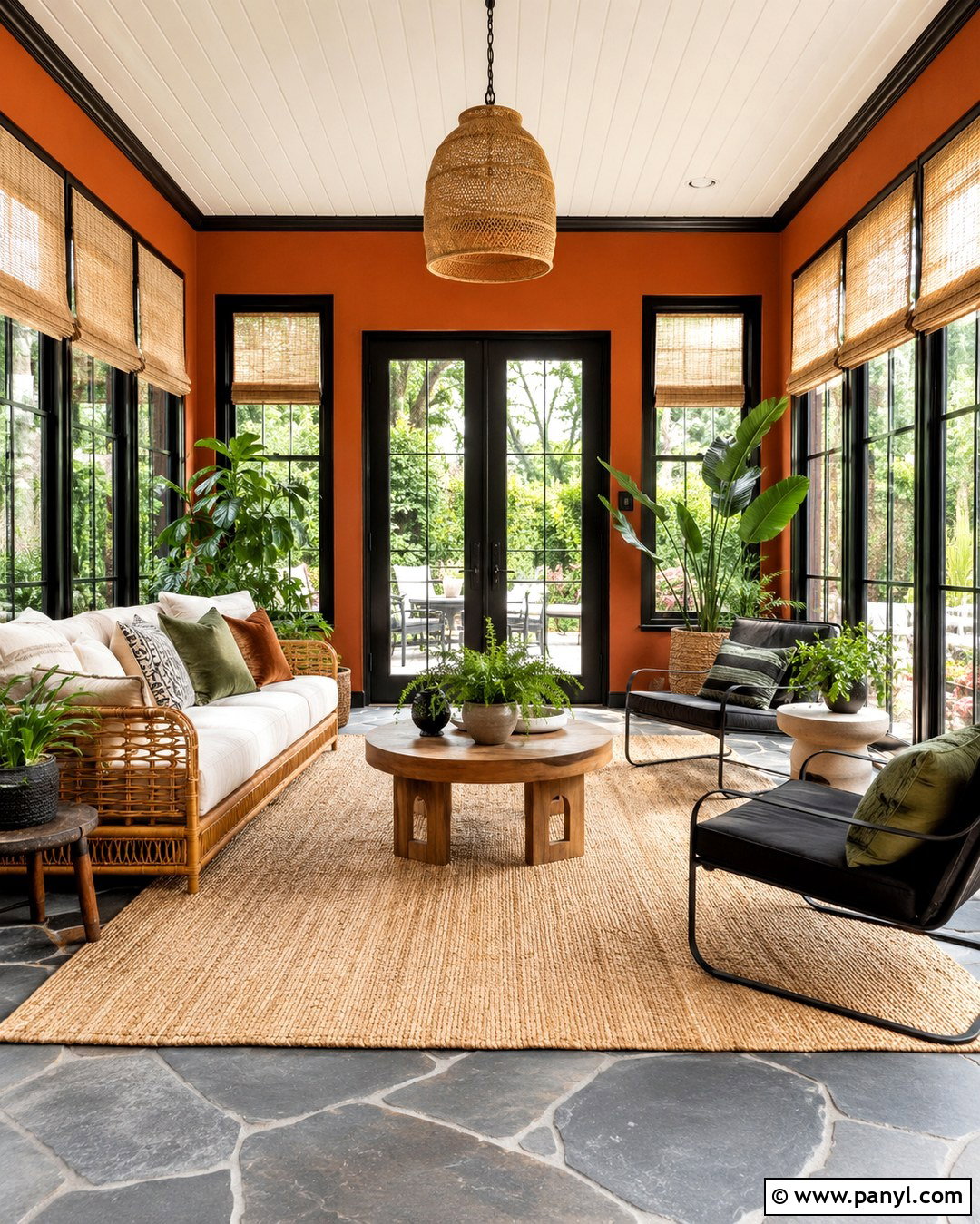
Sunlight can make a pale orange sunroom feel especially cheerful, provided the shade remains soft enough for large wall areas. Select a washed apricot paint and combine it with white window trim, natural rattan seating, and light wood side tables. Add seat cushions in cream or oatmeal, then introduce sage and deep green through pillows and leafy plants. A flatwoven jute rug will define the seating arrangement while tolerating regular foot traffic. Use woven shades to control strong afternoon light without hiding the windows. Terracotta planters can repeat the warmth of the walls in a deeper tone. Complete the room with simple ceramics and one black floor lamp. The finished sunroom feels connected to the outdoors while remaining comfortable, bright, and visually organized.
Conclusion:
The best pale orange interiors combine warmth with enough contrast to keep the room clear and balanced. Cream, ivory, oak, and linen create a quiet foundation, while sage, navy, teal, lavender, or charcoal can add definition. Pay close attention to undertones before committing. Pink-based peach feels soft and flattering, golden apricot looks sunny, and muted clay produces an earthier result. Always test large painted samples beside your flooring, trim, cabinets, and furniture. Check them during the morning, afternoon, and evening before making a final choice. Whether you prefer coastal, cottage, minimalist, boho, or traditional decor, these 20 Pale Orange Wall Paint Ideas offer complete looks that can be adapted to real homes.

Related Ideas and Inspiration:
Leave a Reply