
Warm, energetic, and full of personality, **20 Yellow And Orange Walls** explores how these sunny colors can transform an ordinary room into a welcoming, thoughtfully designed space. Current interiors are embracing everything from soft butter yellow and peach to saturated mango orange, mustard, and terracotta. () The secret is balancing their warmth with grounded materials, comfortable furniture, and carefully chosen neutrals. Natural wood, creamy white, muted blue, olive green, and woven textures can make these colors feel stylish rather than overwhelming. You can paint separate walls, create color-blocked details, or use one shade as trim. Whether you prefer subtle warmth or cheerful drama, the complete room designs below offer practical inspiration for recreating **20 Yellow And Orange Walls**.
1. Butter Yellow And Burnt Orange Living Room Walls
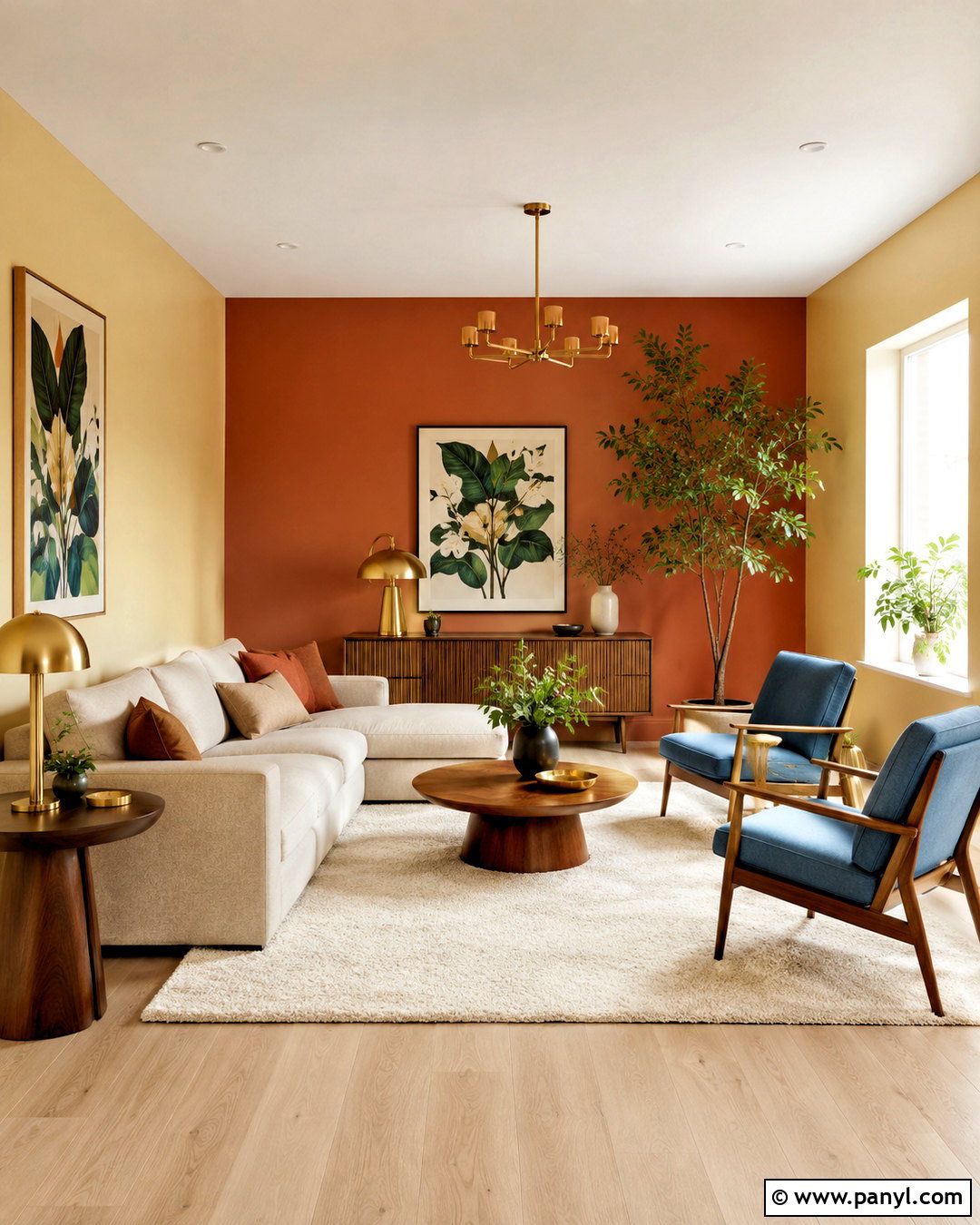
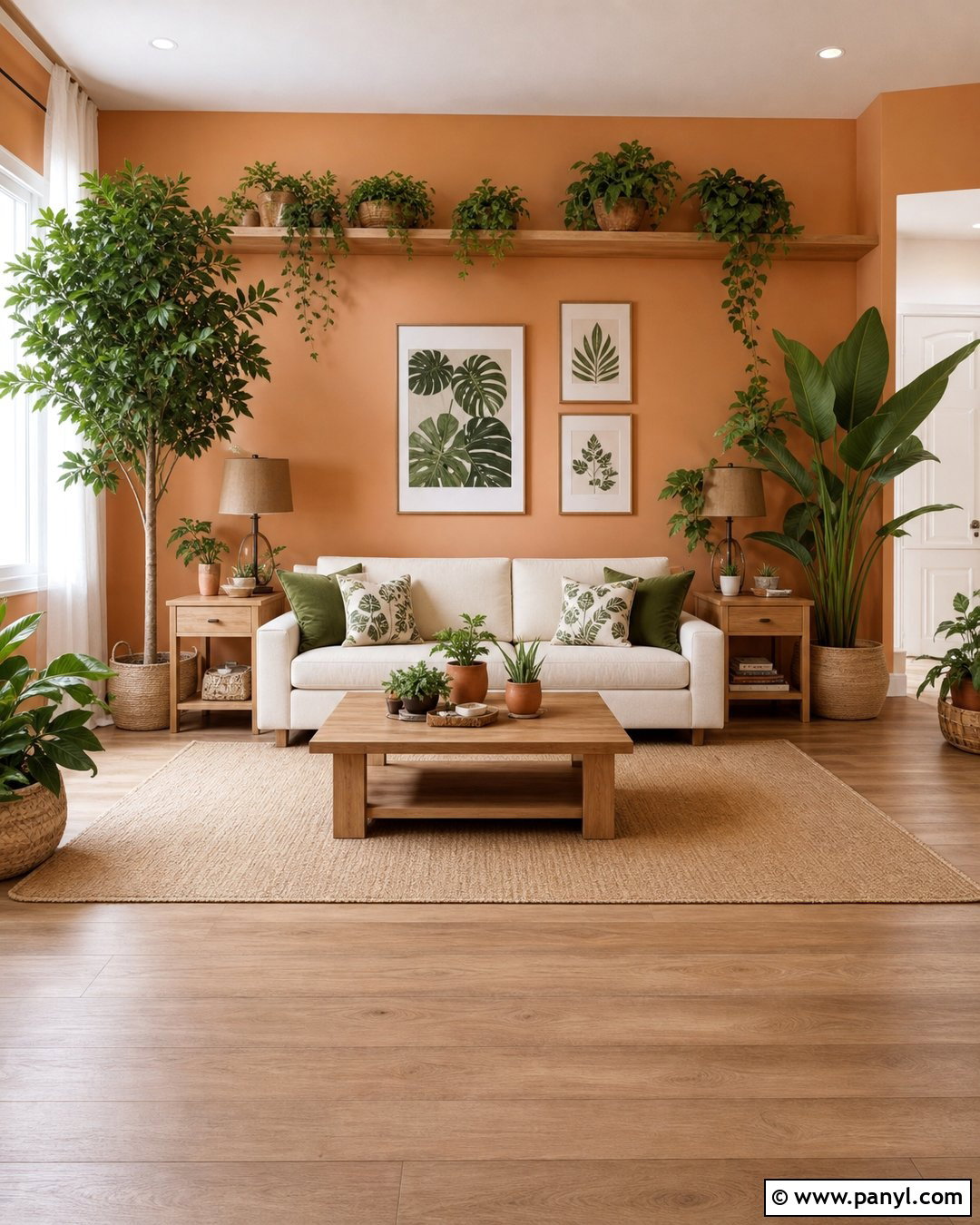
Butter yellow walls create a gentle, sunlit foundation, while one burnt orange wall behind the sofa gives the living room a stronger focal point. Choose a relaxed oatmeal sofa with rounded edges, then add two walnut-framed chairs upholstered in muted blue. A cream wool rug keeps the floor light and separates the seating area from the intense wall color. Repeat orange sparingly through a patterned pillow and ceramic lamp, rather than covering every surface with it. Linen curtains, white oak flooring, and a simple brass ceiling fixture add warmth without competing for attention. Finish the complete look with large botanical artwork, leafy plants, and a low walnut coffee table. The result feels colorful, comfortable, and easy to live with.
2. Mustard Yellow And Terracotta Dining Room Walls
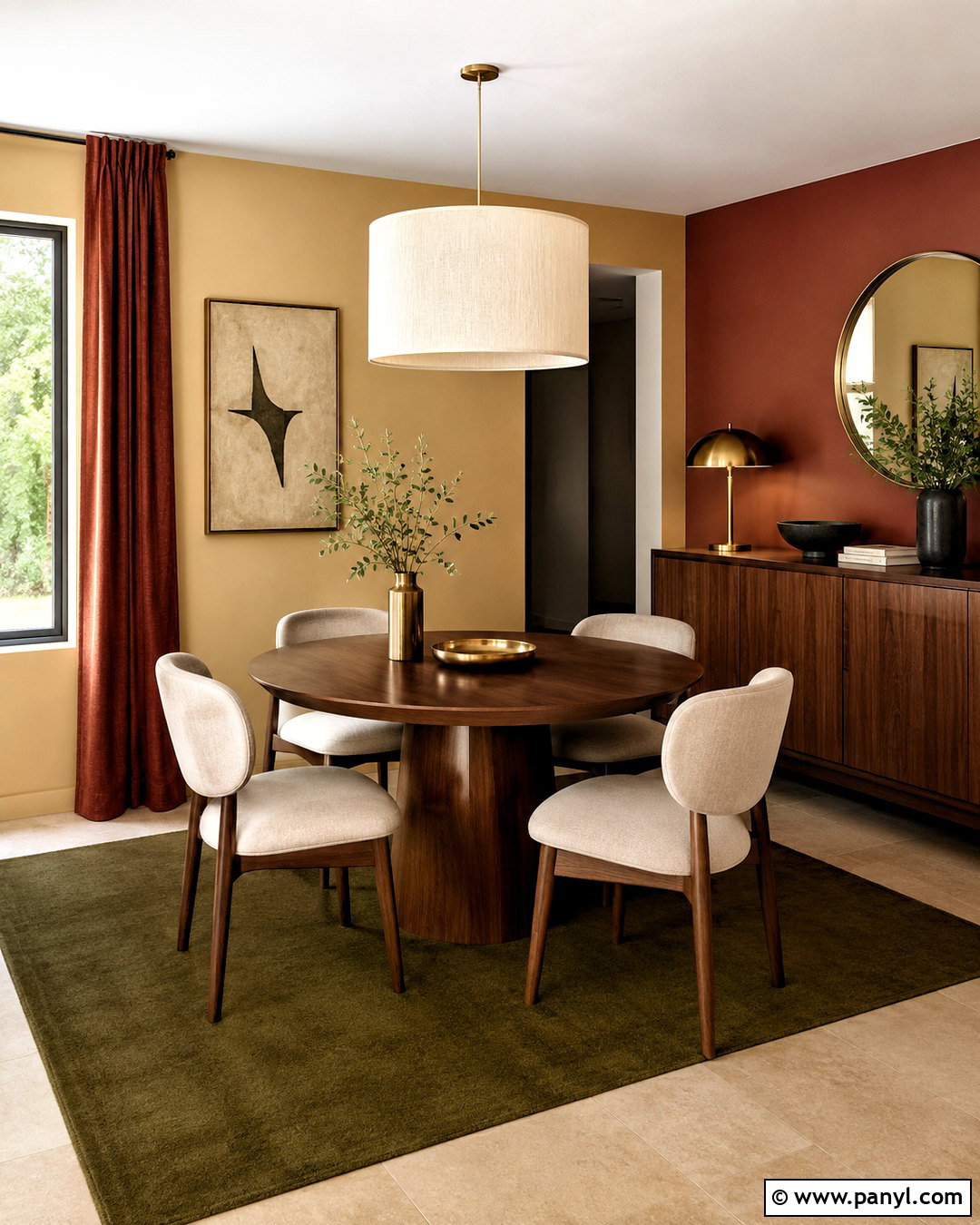
Imagine a dining room wrapped in earthy color rather than predictable white. Paint three walls muted mustard yellow and use rich terracotta on the wall behind a natural oak sideboard. A round walnut dining table softens the room’s strong color boundaries, while oatmeal upholstered chairs provide a quiet visual break. Hang a wide linen pendant above the table and place a large cream ceramic bowl at its center. An olive green rug introduces a cooler note that keeps the palette balanced. Add framed landscapes with cream mats, aged brass candleholders, and rust-colored linen curtains. Keep the ceiling, baseboards, and door trim warm white for clean definition. This layered dining room feels intimate and grounded without becoming dark or overly formal.
3. Pale Yellow And Peach Bedroom Walls
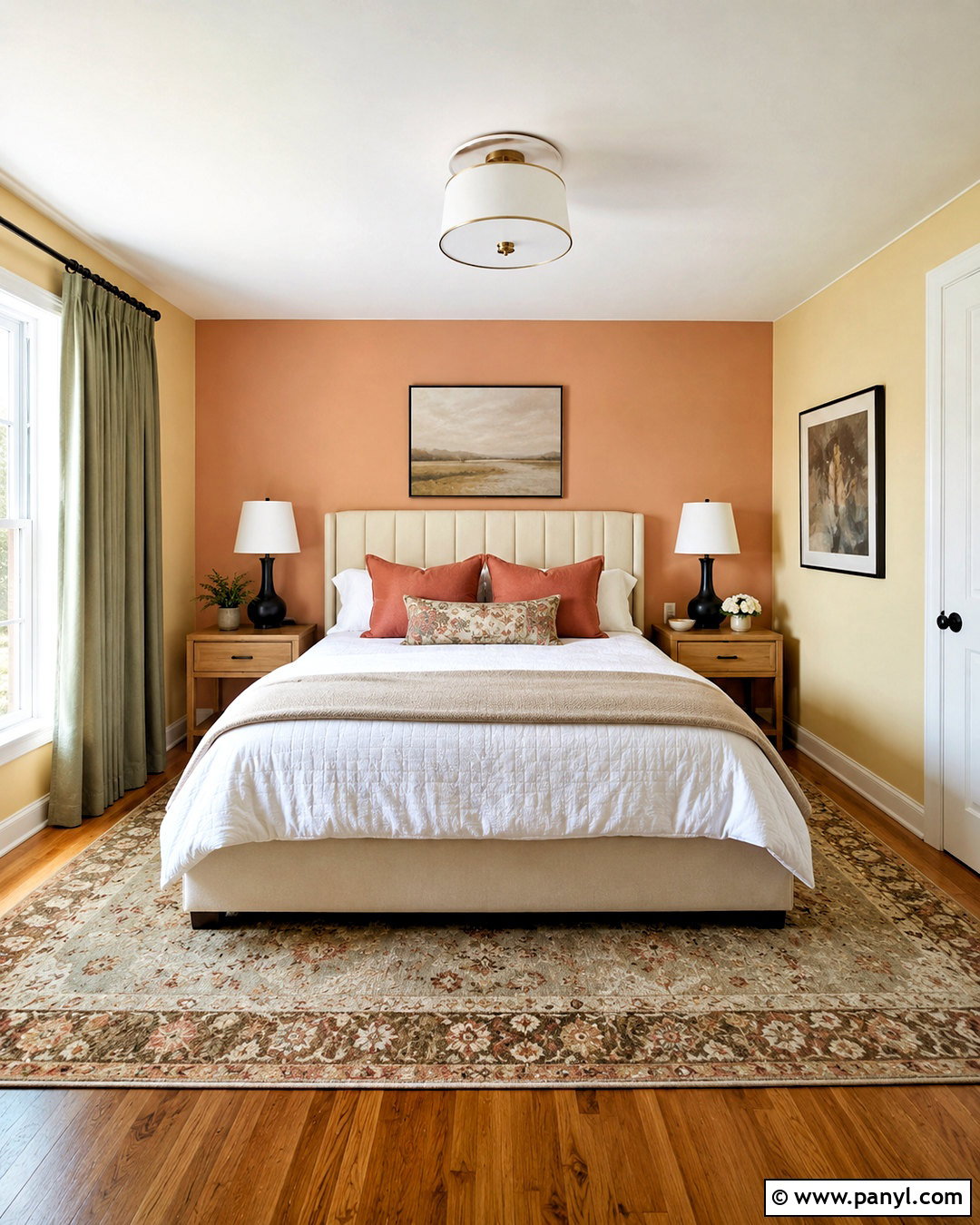
For a bedroom that feels warm but restful, pair pale yellow walls with a soft peach accent wall behind the bed. Select shades with muted undertones instead of highly saturated paint. An ivory upholstered bed, light oak nightstands, and a woven bench create a calm neutral framework. Dress the bed with white cotton sheets, a sand-colored quilt, and two small rust accent pillows. Soft sage curtains add gentle contrast and connect the room to natural greenery outside. Use ceramic table lamps with creamy shades for comfortable bedside lighting. A faded floral rug can bring yellow, peach, and green together beneath the bed. Keep artwork simple and spacious. This complete combination delivers color and character while preserving the peaceful mood expected in a bedroom.
4. Golden Yellow And Tangerine Kitchen Walls
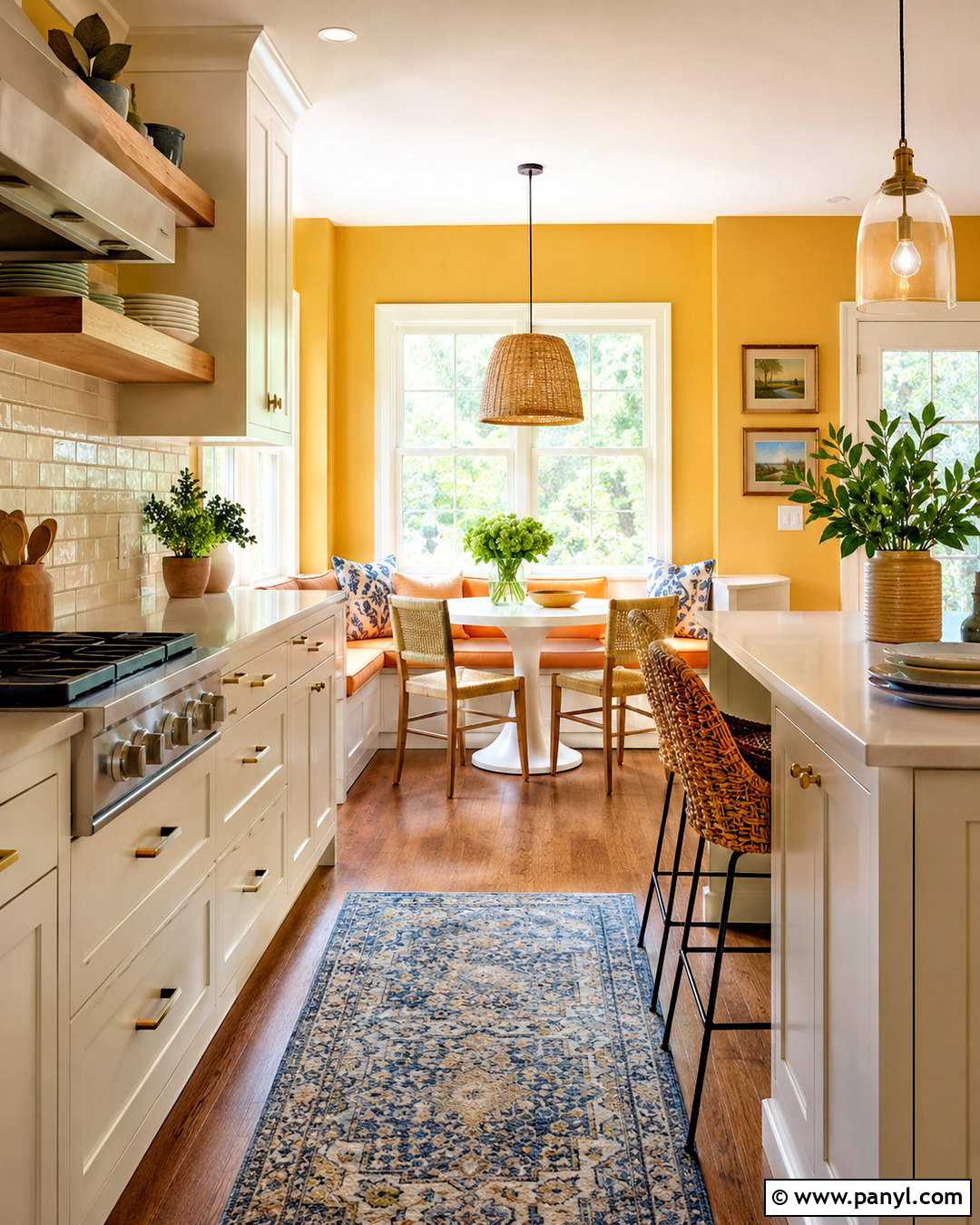
Golden yellow and tangerine can give a kitchen cheerful energy when the cabinetry and surfaces remain simple. Use golden yellow across the main walls, then paint the breakfast nook tangerine to visually define it without building a divider. Choose warm white Shaker cabinets, pale quartz counters, and a glossy cream subway tile backsplash. Natural oak shelves and woven counter stools soften the brighter paint. Inside the nook, place a small white pedestal table with curved oak chairs and a washable blue-and-cream rug. Matte brass hardware adds warmth without creating too much shine. Keep appliances stainless steel and window treatments plain white. A few herbs in terracotta pots complete this lively kitchen, making the contrasting walls feel intentional, connected, and practical for everyday use.
5. Ochre Yellow And Rust Home Office Walls
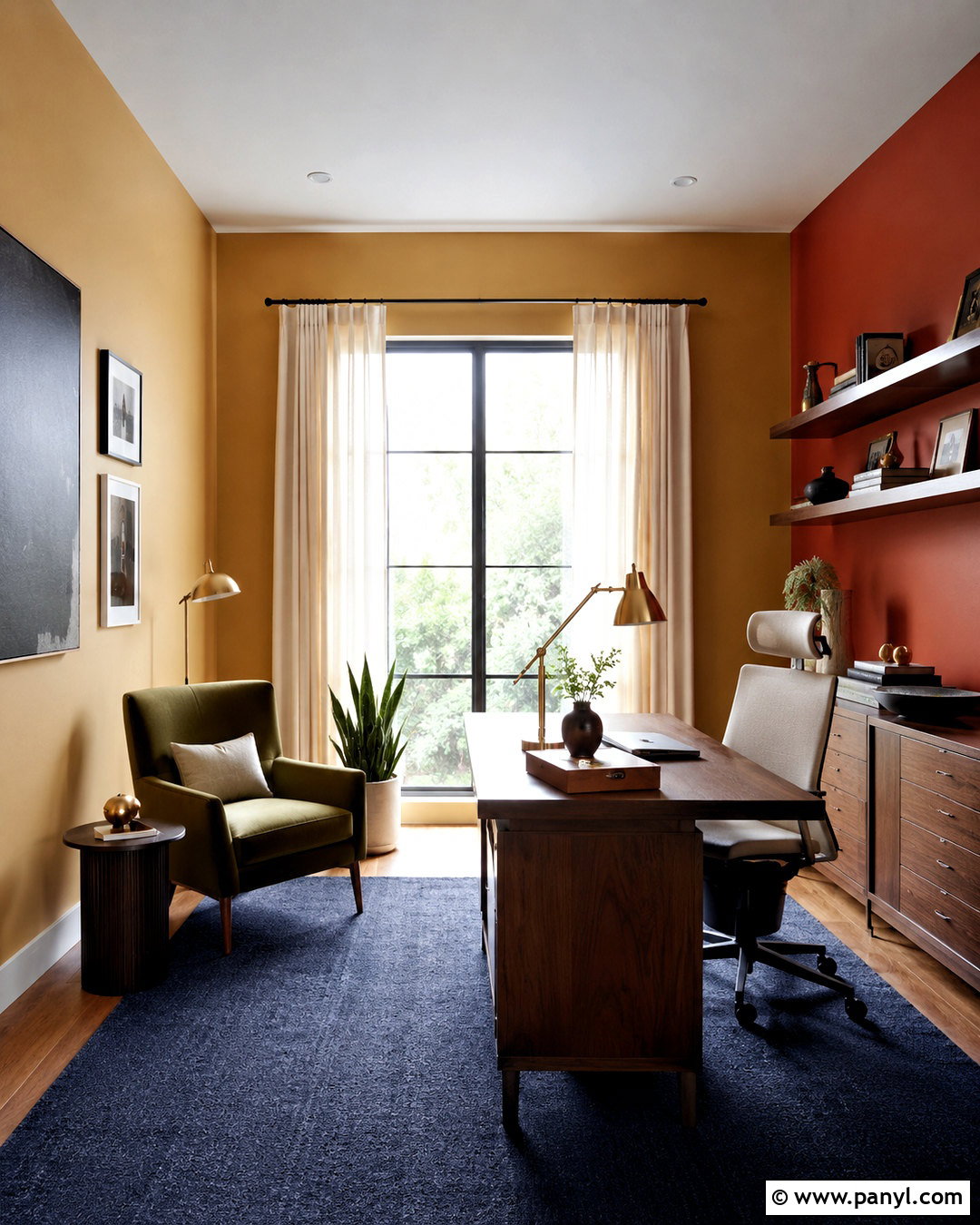
A focused workspace can still carry rich, creative color. Cover the main office walls in muted ochre yellow and paint the wall behind the desk a deep rust orange. Position a streamlined walnut desk against that darker surface so the work zone becomes the room’s natural focal point. Add a supportive cream desk chair, matte brass task lamp, and floating walnut shelves with neatly arranged storage boxes. A flat-woven rug in navy, tan, and ivory brings cooler contrast underfoot. Use white linen curtains to filter daylight and prevent the yellow from looking overly intense. One olive green lounge chair can create a separate reading corner. Minimal framed prints and a large plant finish an office that feels warm, organized, and visually stimulating without distracting from work.
6. Lemon Yellow And Coral Bathroom Walls
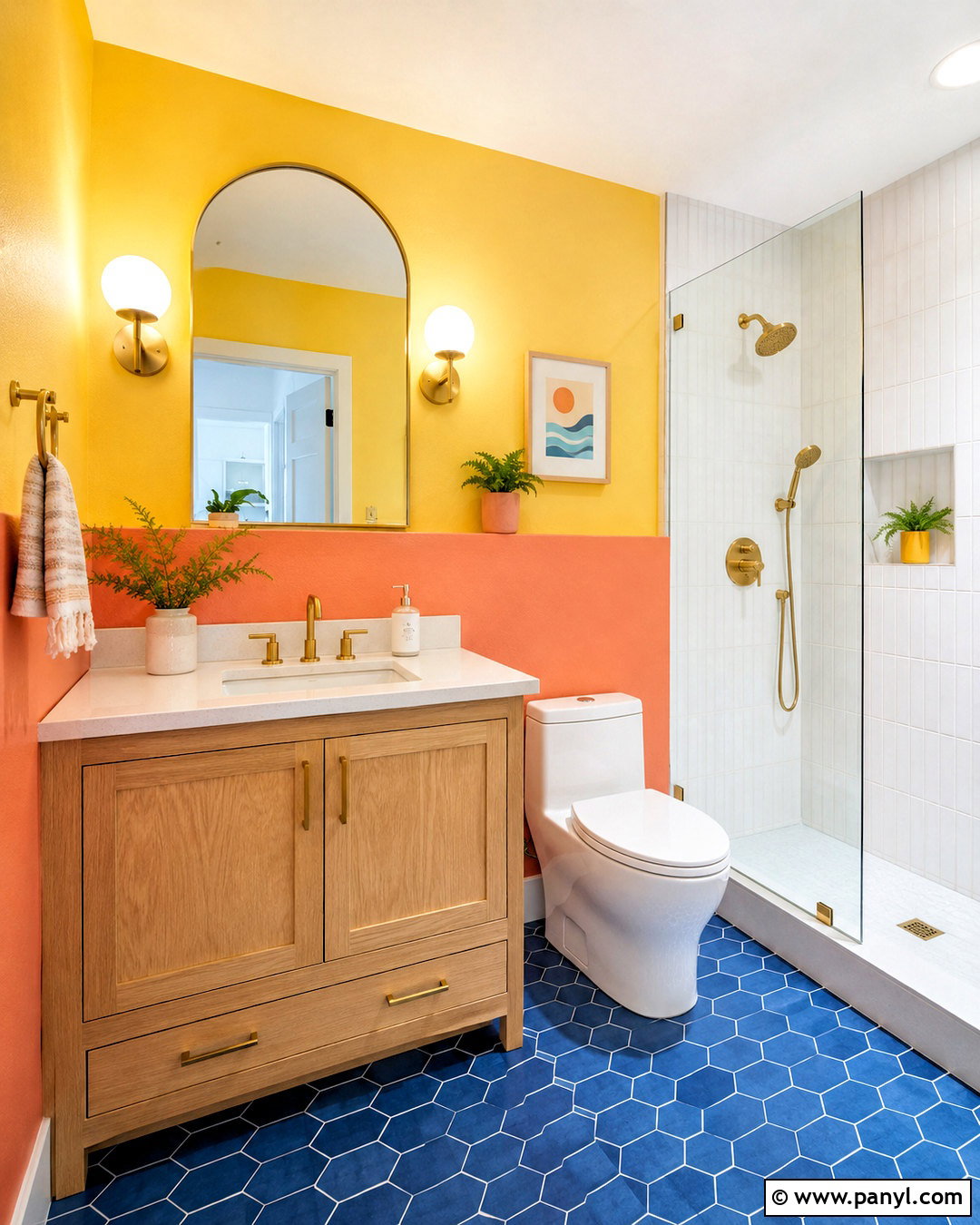
Would a small bathroom benefit from a brighter, more playful identity? Paint the upper walls soft lemon yellow and use warm coral around the vanity area. White vertical wall tile across the lower half protects busy surfaces and prevents the palette from dominating the room. Choose a light oak vanity with a white quartz top, an arched brass mirror, and simple globe sconces. Small blue floor tiles provide a crisp contrast to the warm walls. Add white towels, a coral-striped bath mat, and one yellow ceramic container for subtle repetition. A frameless glass shower enclosure maintains an open view across the colors. With practical storage, reflective finishes, and clean white fixtures, this complete bathroom feels fresh and colorful rather than crowded or overly themed.
7. Sunflower Yellow And Clay Orange Entryway Walls
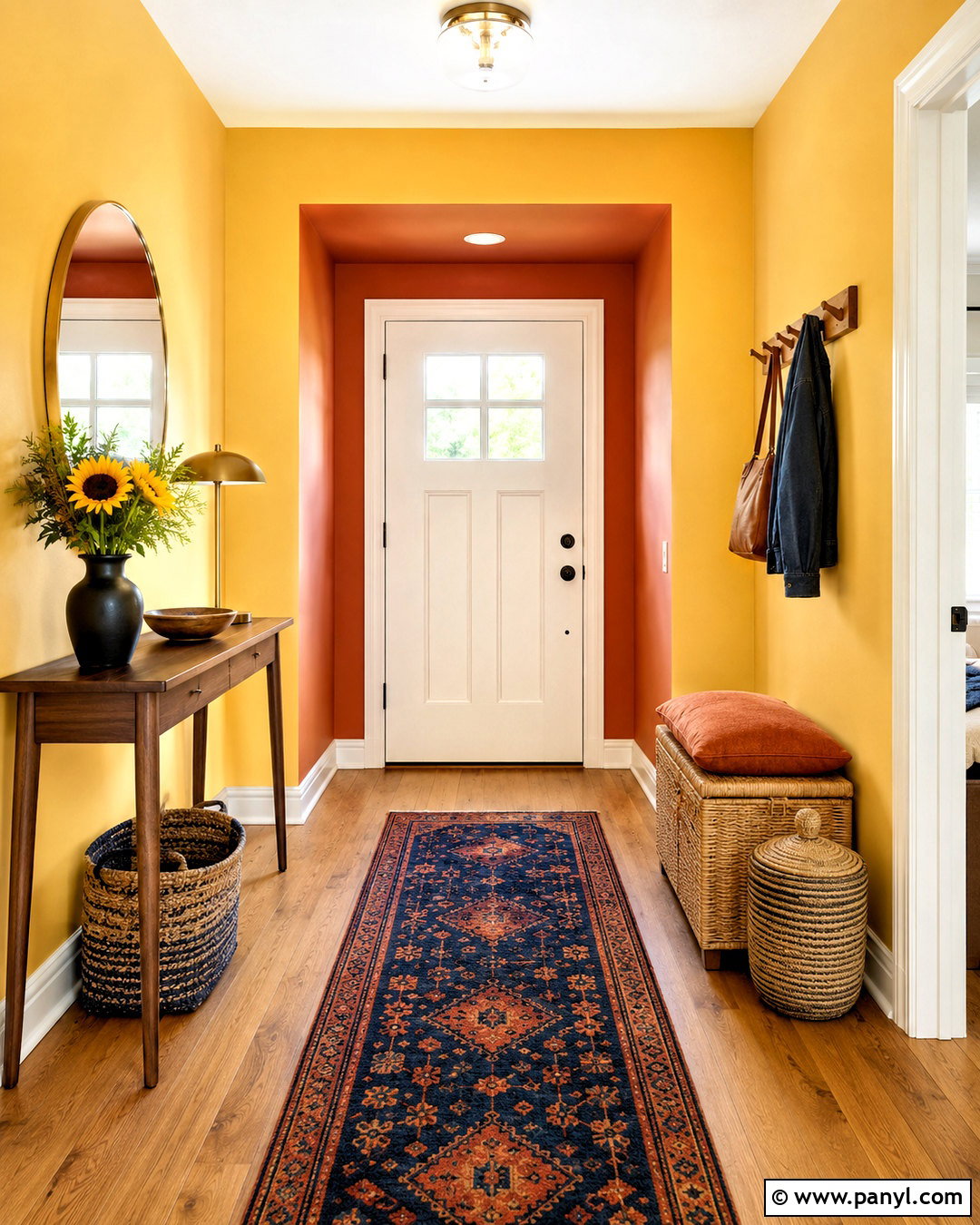
Make the entry feel welcoming by painting the main walls sunflower yellow and the recessed wall around the front door clay orange. A slim walnut console creates a useful landing place without covering the brighter colors. Above it, hang a large round mirror with a thin brass frame to reflect natural light through the space. Add a woven storage bench, neutral seat cushion, and closed baskets for shoes and outdoor accessories. A durable runner with navy, cream, and rust details grounds the warm wall palette. Keep the interior door, trim, and baseboards soft white for definition. Simple wooden hooks and a ceramic table lamp complete the arrangement. This entryway provides practical organization while giving guests an immediate sense of warmth, energy, and intentional design.
8. Honey Yellow And Pumpkin Orange Family Room Walls
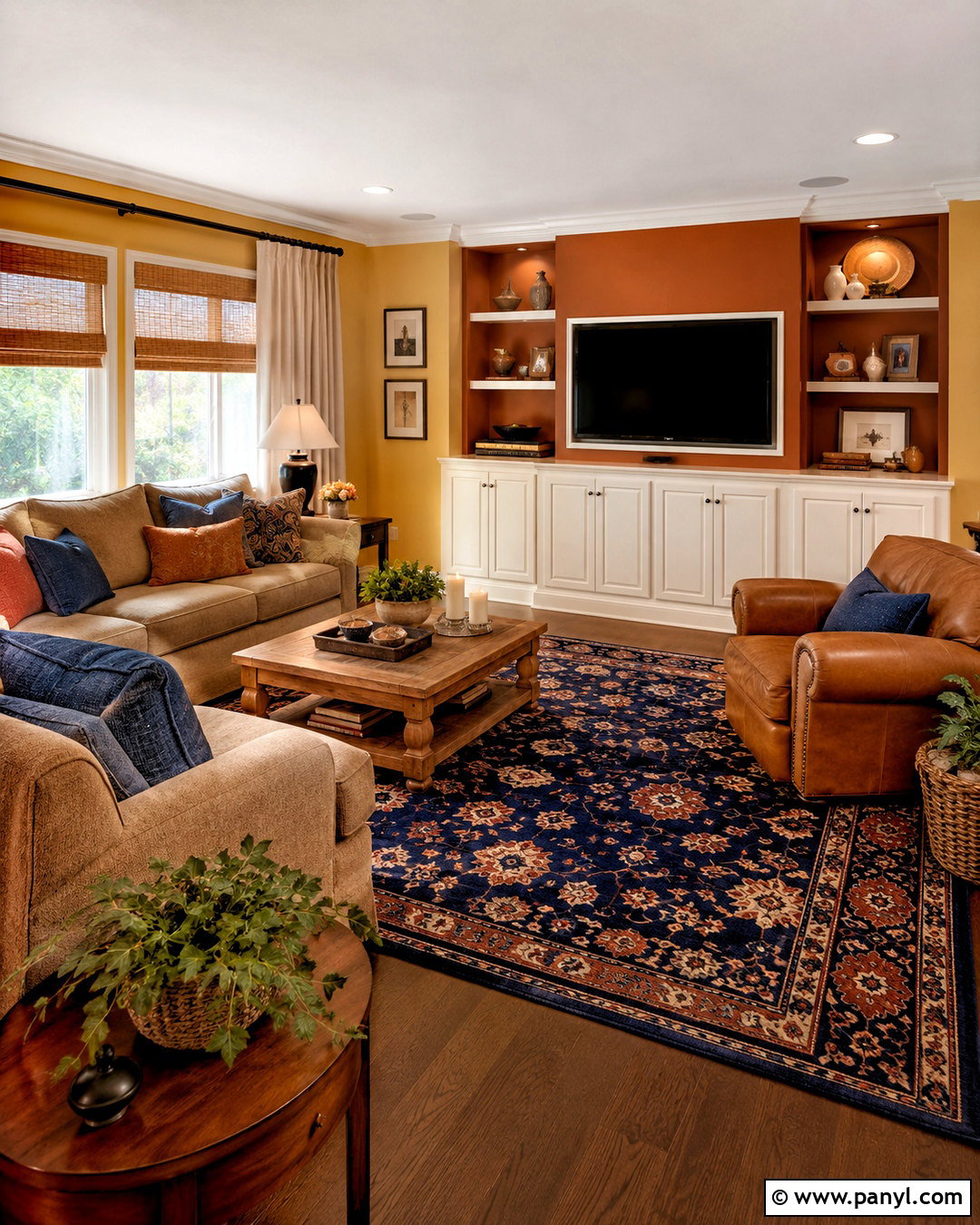
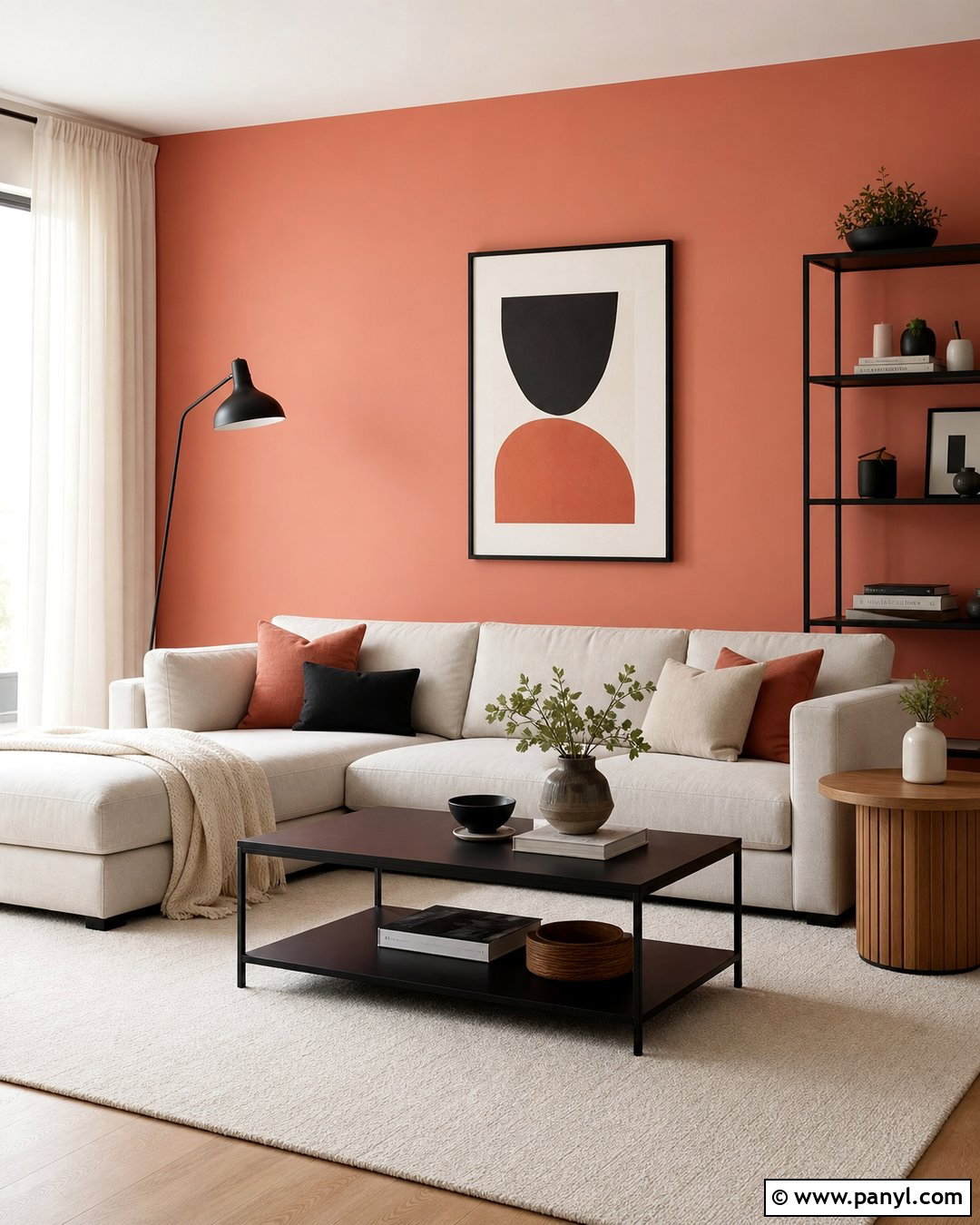
Family rooms need durable materials and a layout that supports conversation, entertainment, and relaxation. Honey yellow on three walls provides a warm background, while pumpkin orange behind the media cabinet establishes a clear viewing zone. Choose a large taupe sectional with washable fabric and position it around a sturdy oak coffee table. A navy patterned rug balances the wall colors and hides everyday wear. Built-in cabinets painted creamy white can hold electronics, books, and games while reducing visual clutter. Layer the sofa with rust, blue, and ivory pillows, but leave enough neutral fabric visible. Add woven shades, adjustable wall sconces, and a leather reading chair near the window. The finished space feels lively and comfortable without sacrificing practical family-friendly function.
9. Creamy Yellow And Apricot Nursery Walls
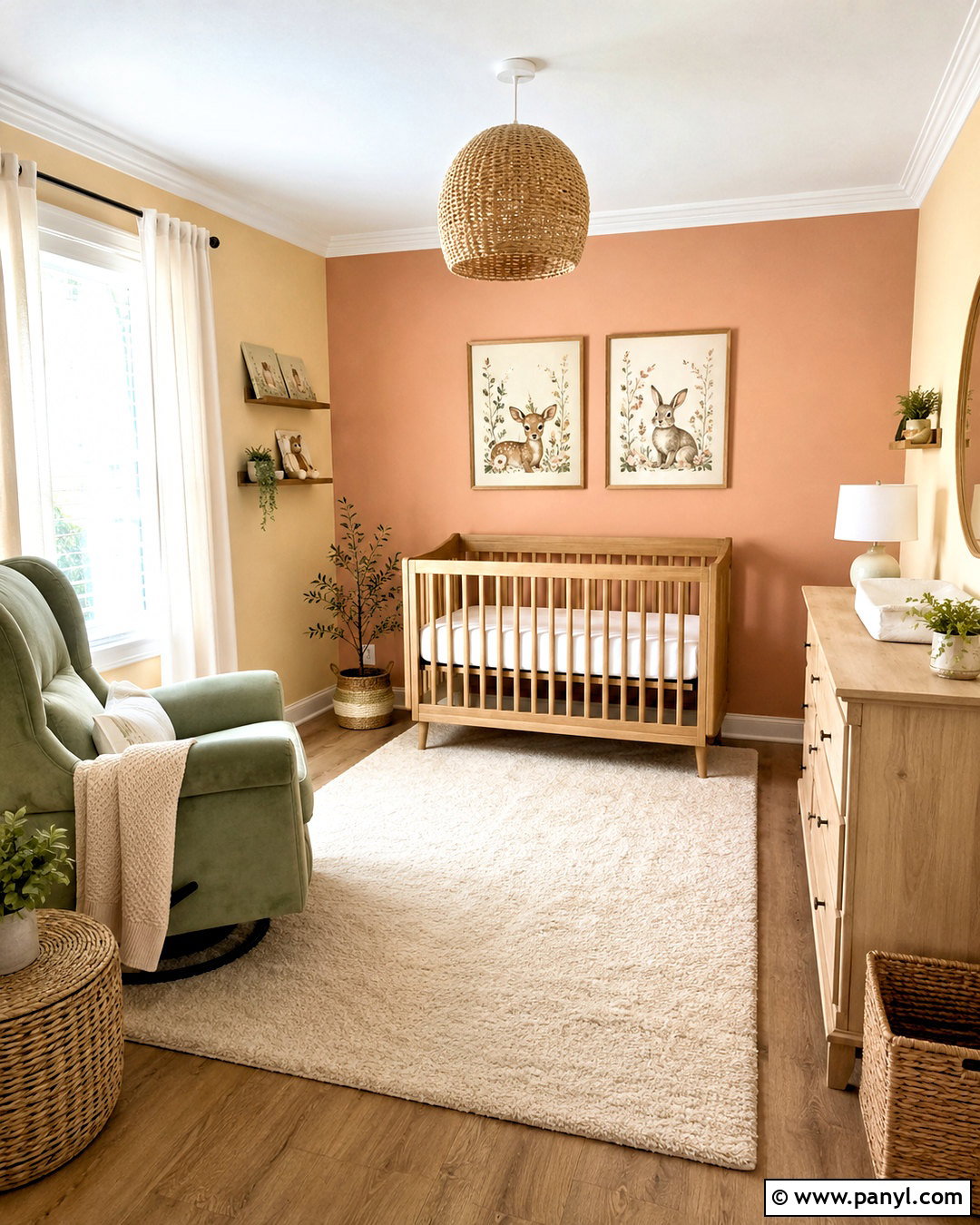
A nursery can use yellow and orange in a gentle, adaptable way. Paint most walls creamy yellow, then create an apricot focal wall behind a natural wood crib. Instead of filling the room with matching decorations, introduce soft contrast through a sage green glider, ivory curtains, and a washable cream rug. A pale oak dresser can double as a changing station, while simple wall shelves keep books and small items organized. Choose cordless window coverings and leave the crib area visually clean. A woven ceiling light and dimmable wall lamp provide layered illumination. Add woodland artwork in muted green, tan, and rust for subtle character. This balanced room feels cheerful for a baby but remains sophisticated enough to evolve as the child grows.
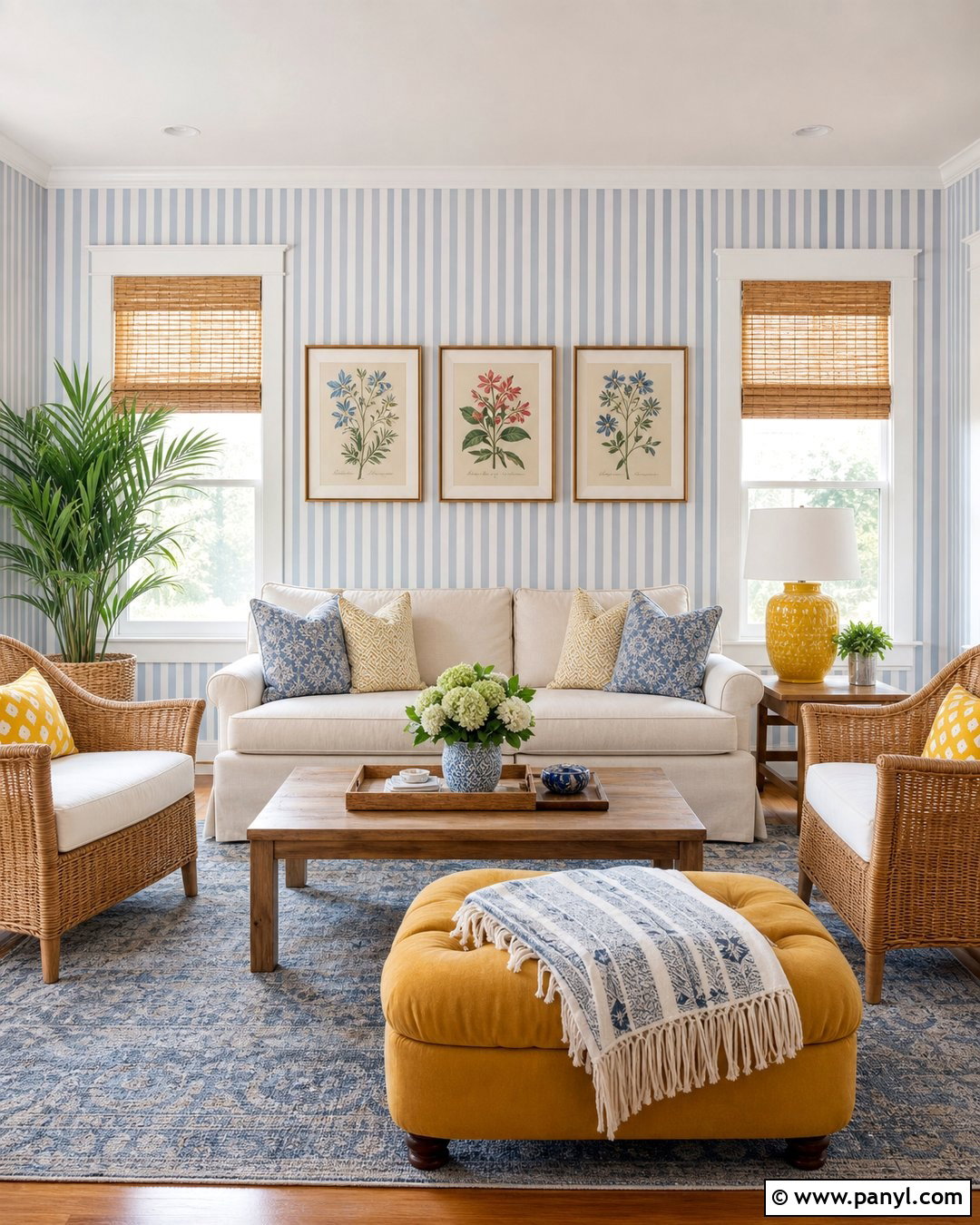
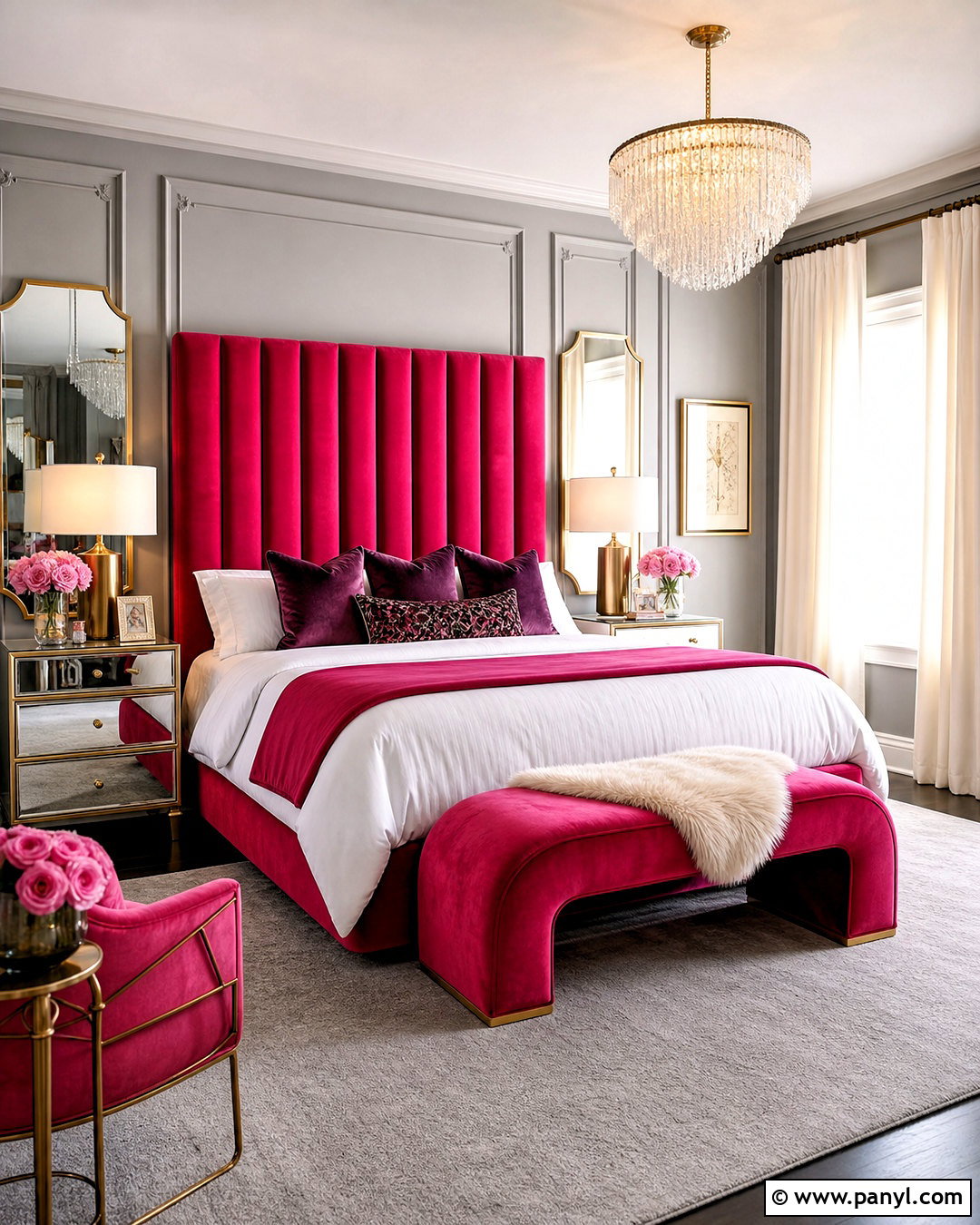
10. Marigold Yellow And Burnt Orange Guest Bedroom Walls
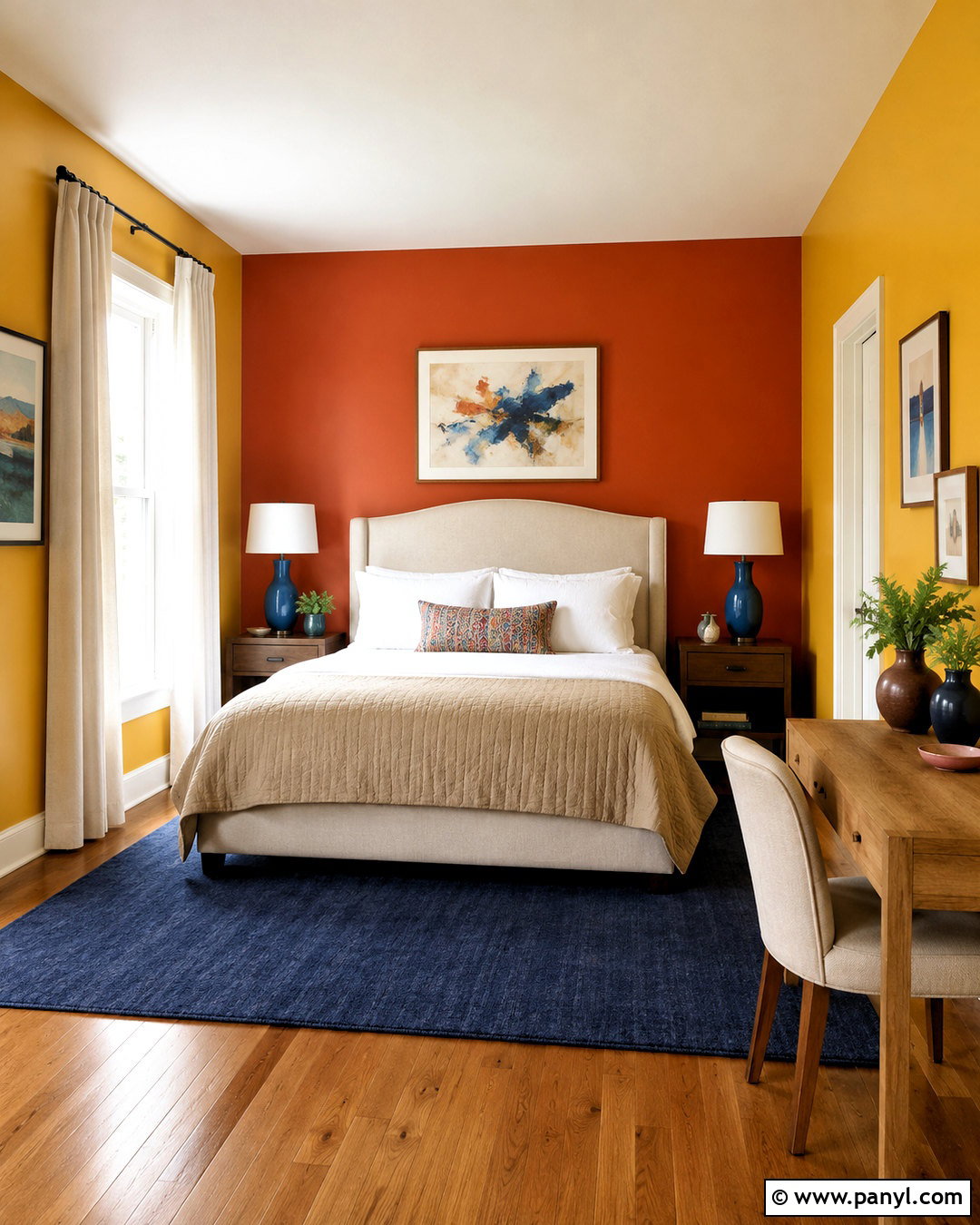
Give visitors a memorable room by combining marigold yellow side walls with a burnt orange wall behind the bed. Temper the saturated paint with a tall cream linen headboard, crisp white bedding, and a textured beige coverlet. Place dark walnut nightstands on either side to add depth and structure. Blue ceramic lamps and a faded navy rug offer a cooler counterpoint that makes the warm walls easier on the eye. Choose natural linen curtains and keep the ceiling bright white to maintain an airy feeling. A small oak desk can serve as both a workspace and dressing table. Finish with framed abstract artwork containing small amounts of yellow and orange. The completed guest bedroom feels thoughtfully coordinated, comfortable, and far more personal than a neutral spare room.
11. Yellow And Orange Color Block Walls
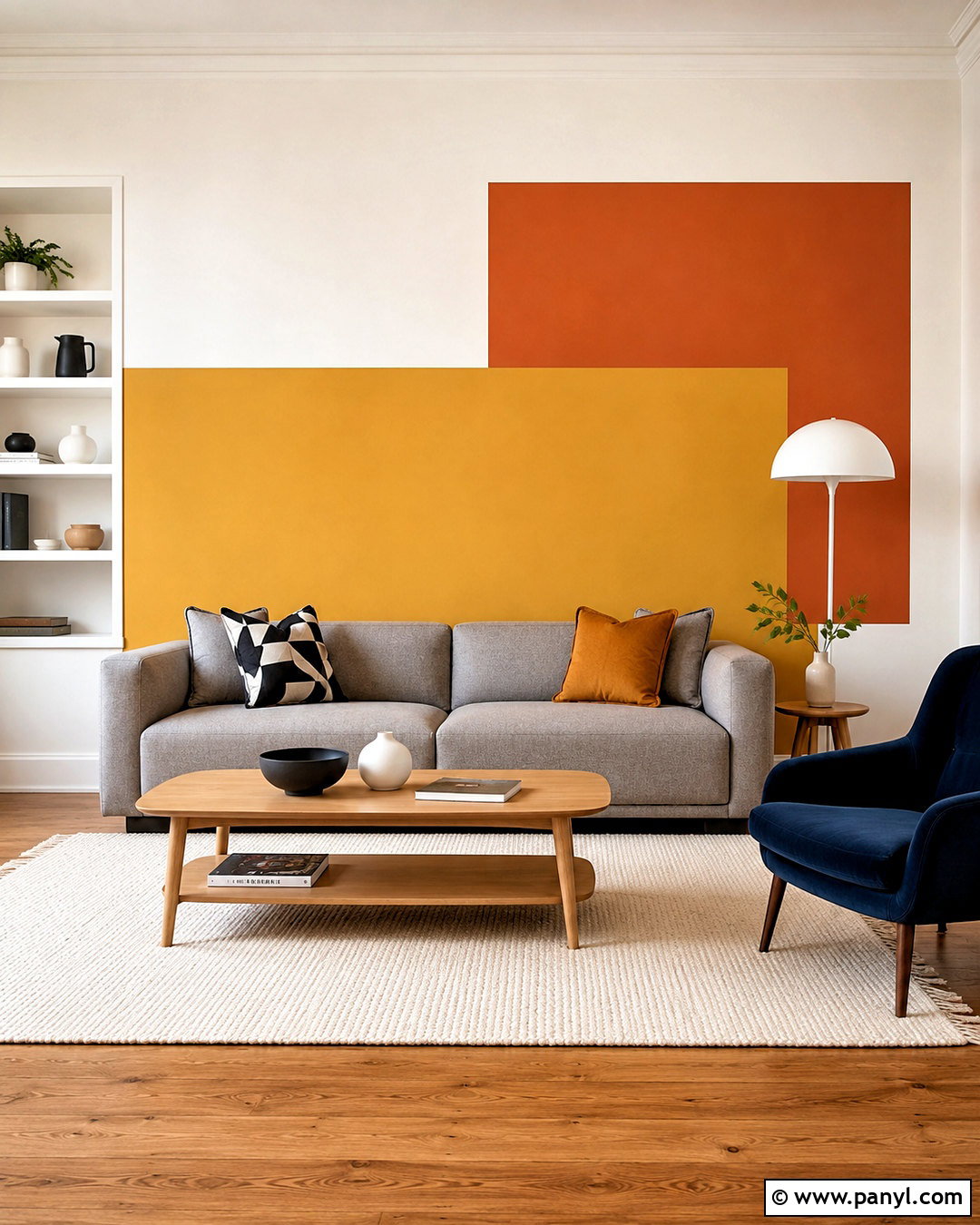
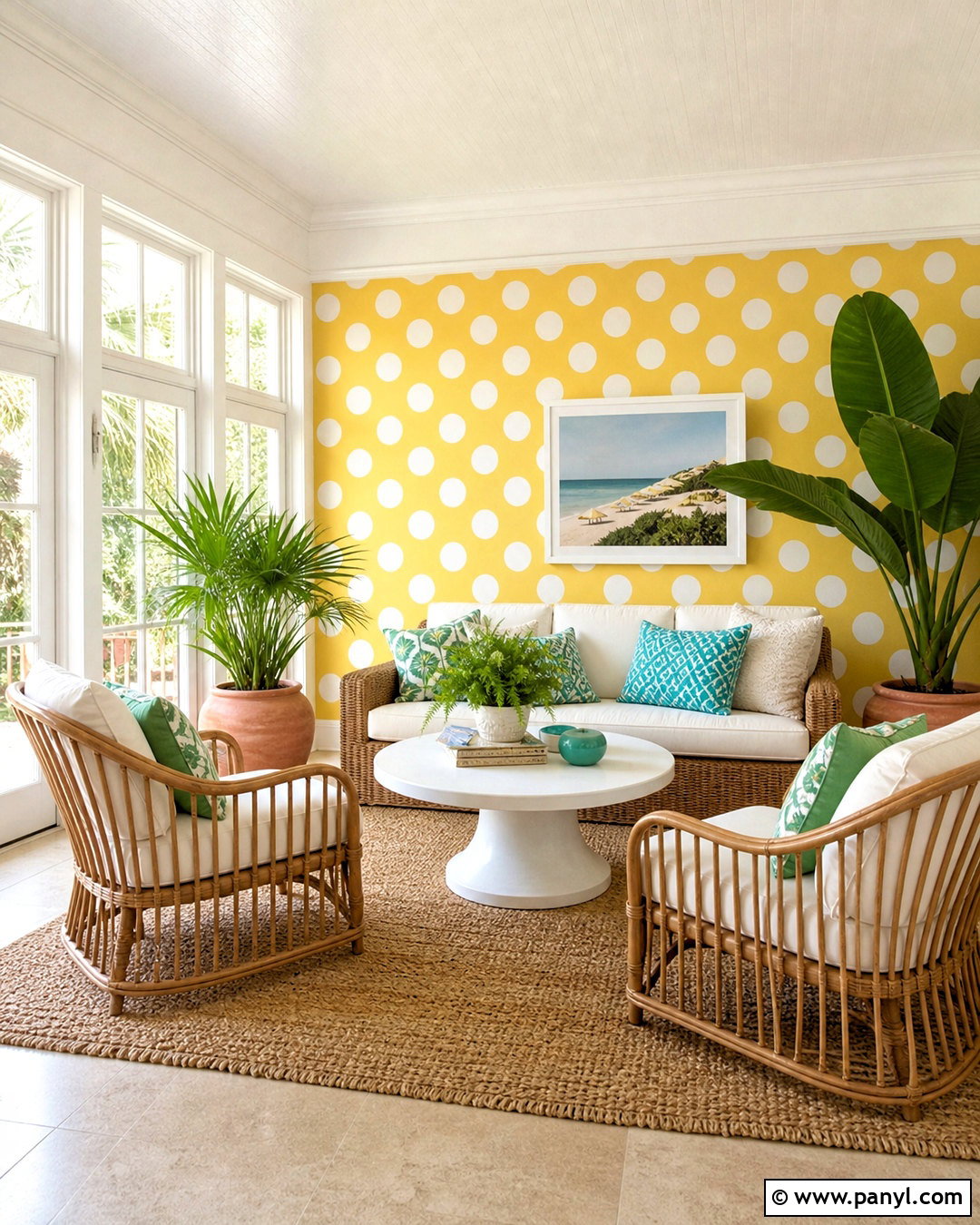
Color blocking offers a modern way to combine both shades without painting every wall from floor to ceiling. Start with creamy white walls, then create a wide mustard yellow block behind a low gray sofa. Extend a smaller burnt orange rectangle to one side, framing a slim floor lamp and side table. The overlapping shapes should relate directly to the furniture arrangement rather than appear randomly placed. Add a light oak coffee table, ivory rug, and navy lounge chair to balance the warm paint. Keep cushions mostly neutral, using only one geometric pillow that repeats both wall colors. White shelving and simple ceramics prevent the room from becoming busy. The finished living space looks graphic and energetic while remaining comfortable, functional, and easy to update.
12. Yellow And Orange Ombre Walls
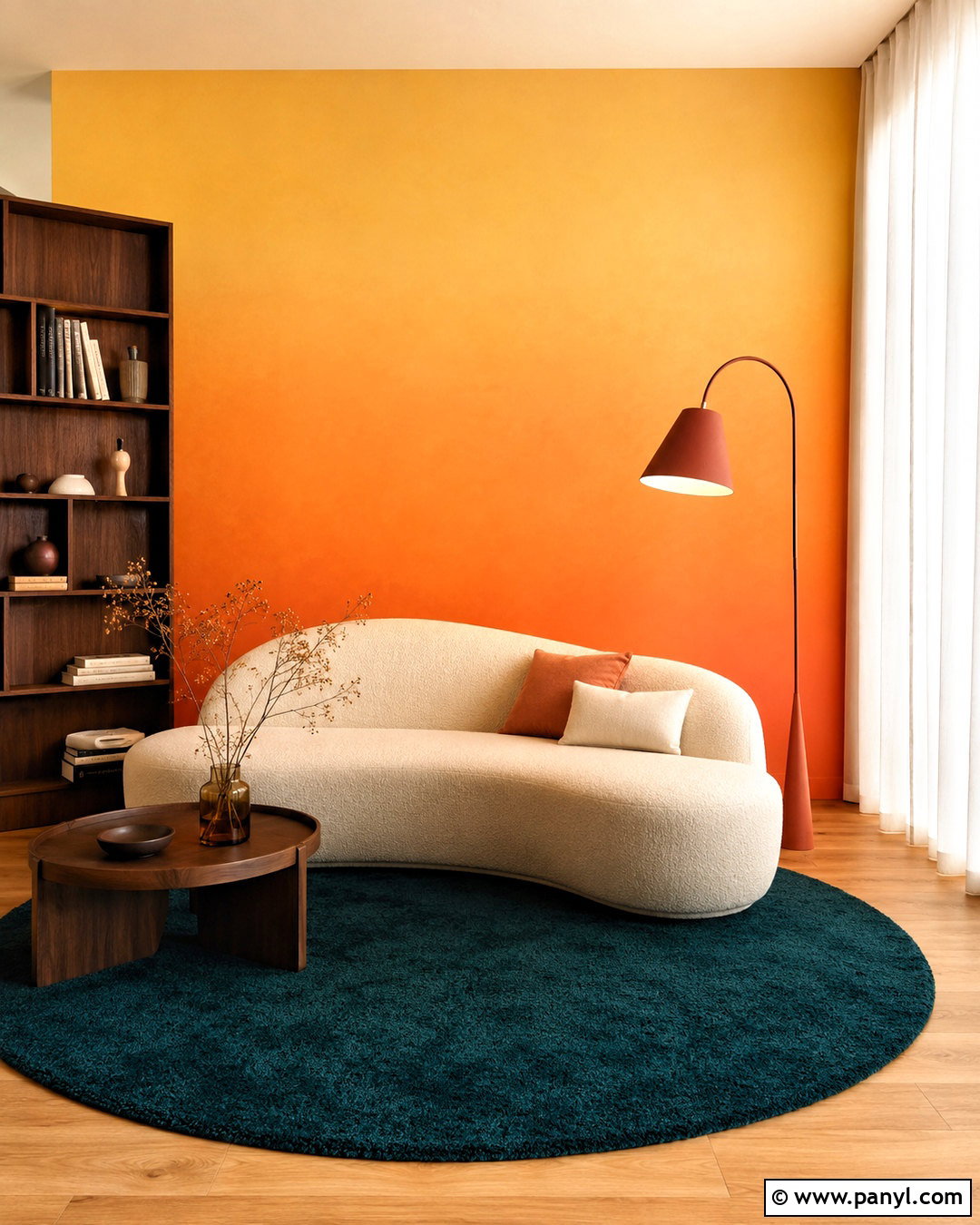
A yellow-to-orange ombre wall can become the centerpiece of a creative reading room. Begin with pale golden yellow near the ceiling, blend through warm mango in the middle, and finish with muted orange near the baseboard. Keep the remaining walls warm white so the gradual color transition receives proper attention. Place a curved cream loveseat in front of the feature wall, accompanied by a walnut side table and a rust-colored floor lamp. A deep teal rug supplies strong but balanced contrast. Use sheer white curtains and light oak flooring to preserve brightness. Instead of hanging numerous decorations over the painted effect, select one simple framed print. With smooth transitions and restrained furnishings, the completed room feels artistic, polished, and intentionally designed.
13. Yellow And Orange Geometric Walls
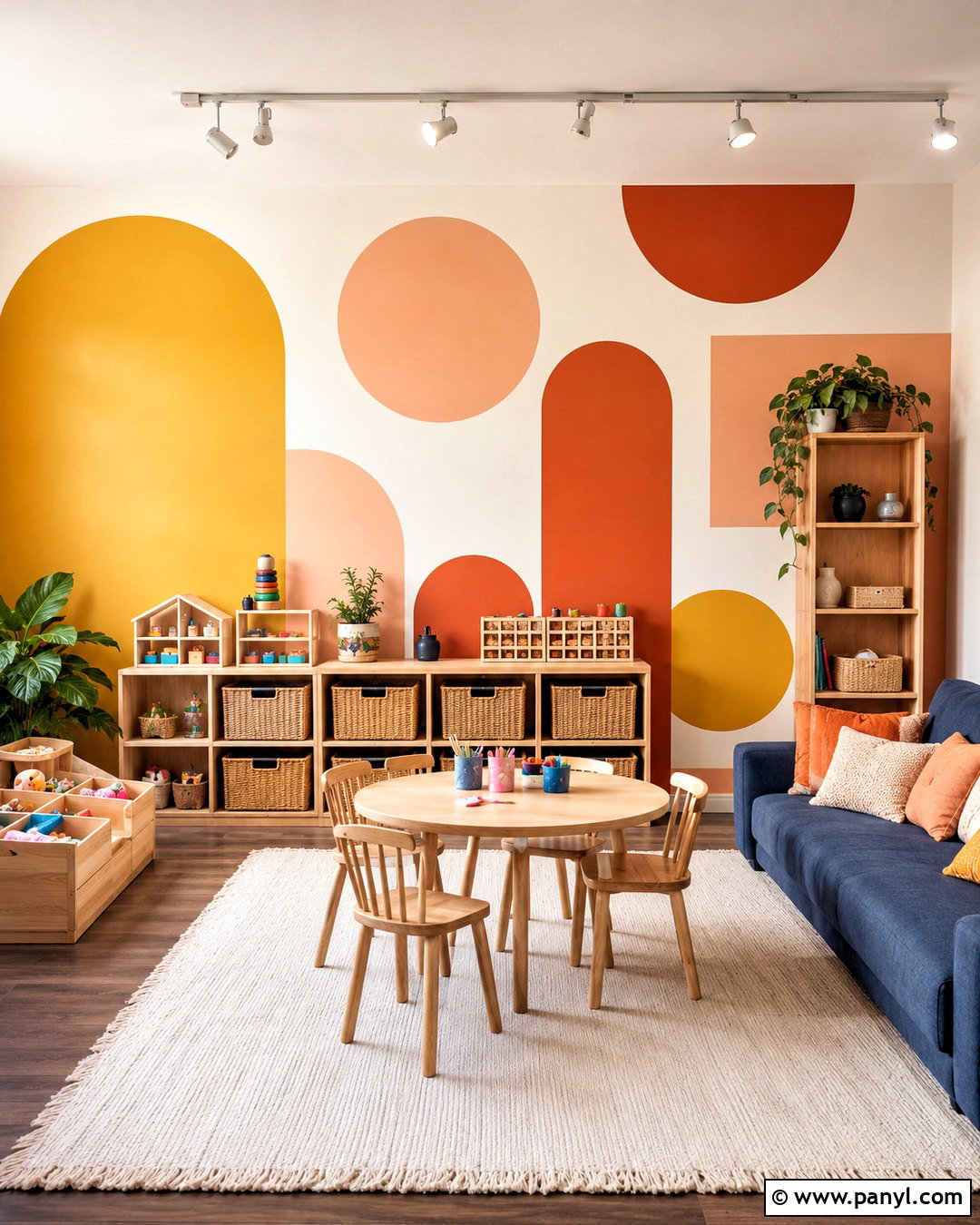
Crisp geometric shapes can turn yellow and orange paint into architectural decoration. In a modern playroom, begin with a warm white base and add large mustard yellow, peach, and terracotta shapes across one long wall. Use broad arches and angled sections rather than many small patterns, which can appear visually hectic. Build the rest of the room around practical pale wood storage, a washable cream rug, and a low navy sofa. Include a round craft table with sturdy oak chairs and labeled baskets tucked inside open cubbies. White track lighting keeps every activity area bright. Repeat the wall colors through only a few cushions and storage bins. The entire playroom feels energetic and imaginative while maintaining a clear layout, accessible organization, and plenty of visual breathing room.
14. Yellow And Orange Arch Accent Wall
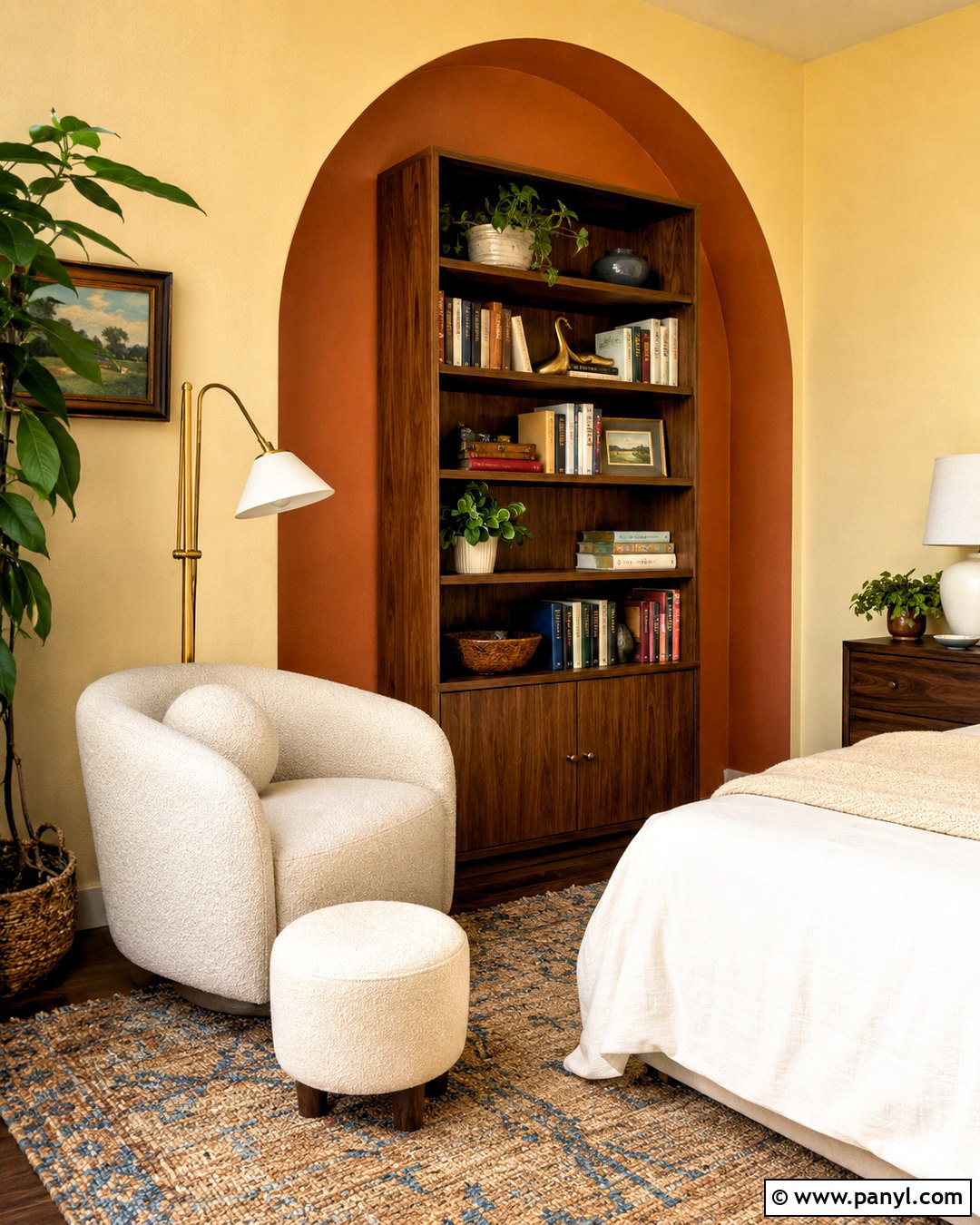
A painted arch gives a reading corner definition without requiring construction. On a creamy yellow bedroom wall, paint a large muted orange arch that begins behind a boucle chair and extends well above it. Center a narrow walnut bookcase inside the shape, leaving enough orange visible around the edges to create a strong outline. Add a brass floor lamp, small round side table, and soft ivory footstool. A woven rug in tan and faded blue anchors the corner while separating it from the sleeping area. Keep the nearby bed neutral with white linen and a light beige quilt. One leafy plant adds natural color. This complete arrangement makes the arch feel purposeful because it frames an actual activity zone rather than functioning as disconnected wall decoration.
15. Yellow And Orange Half Painted Walls
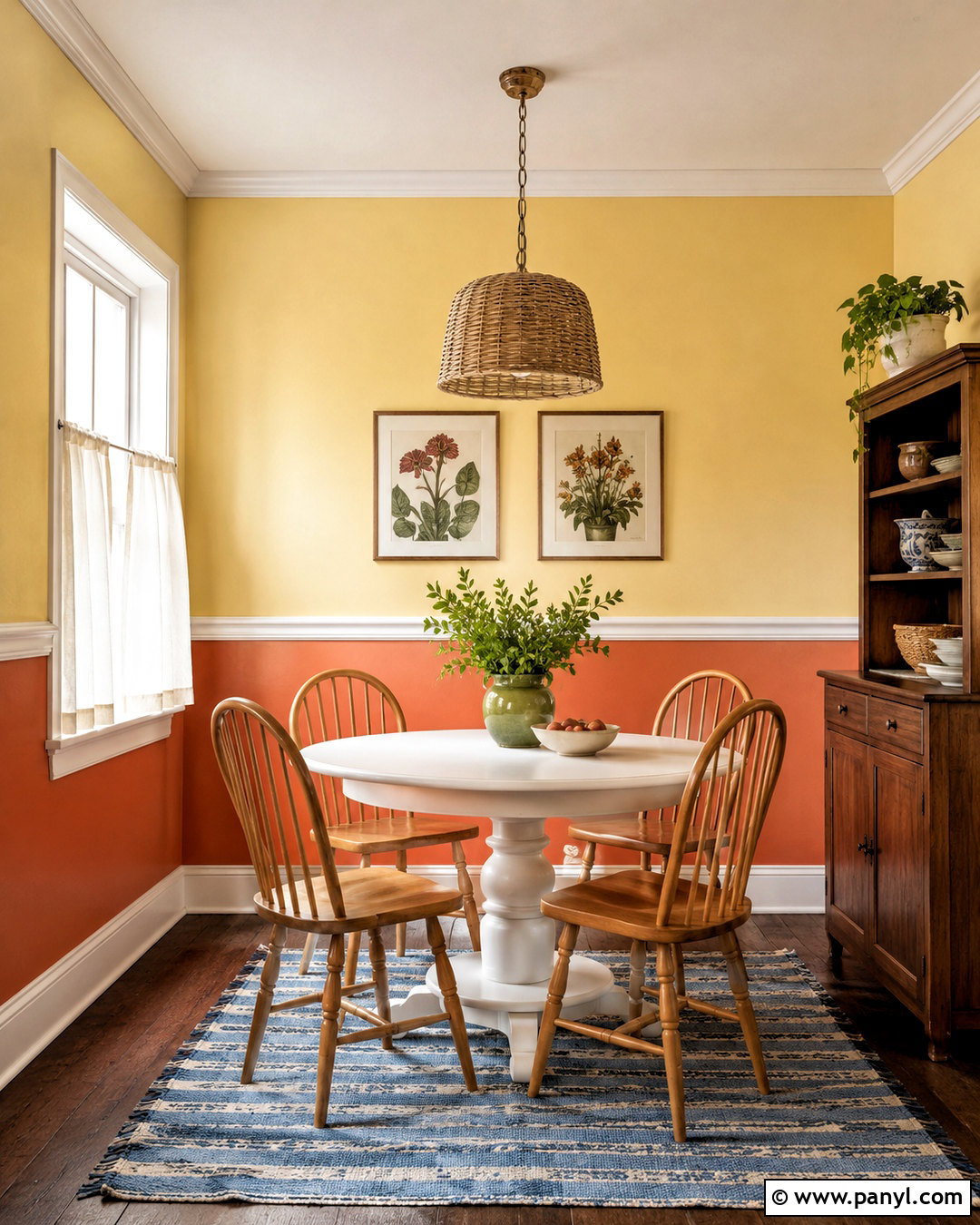
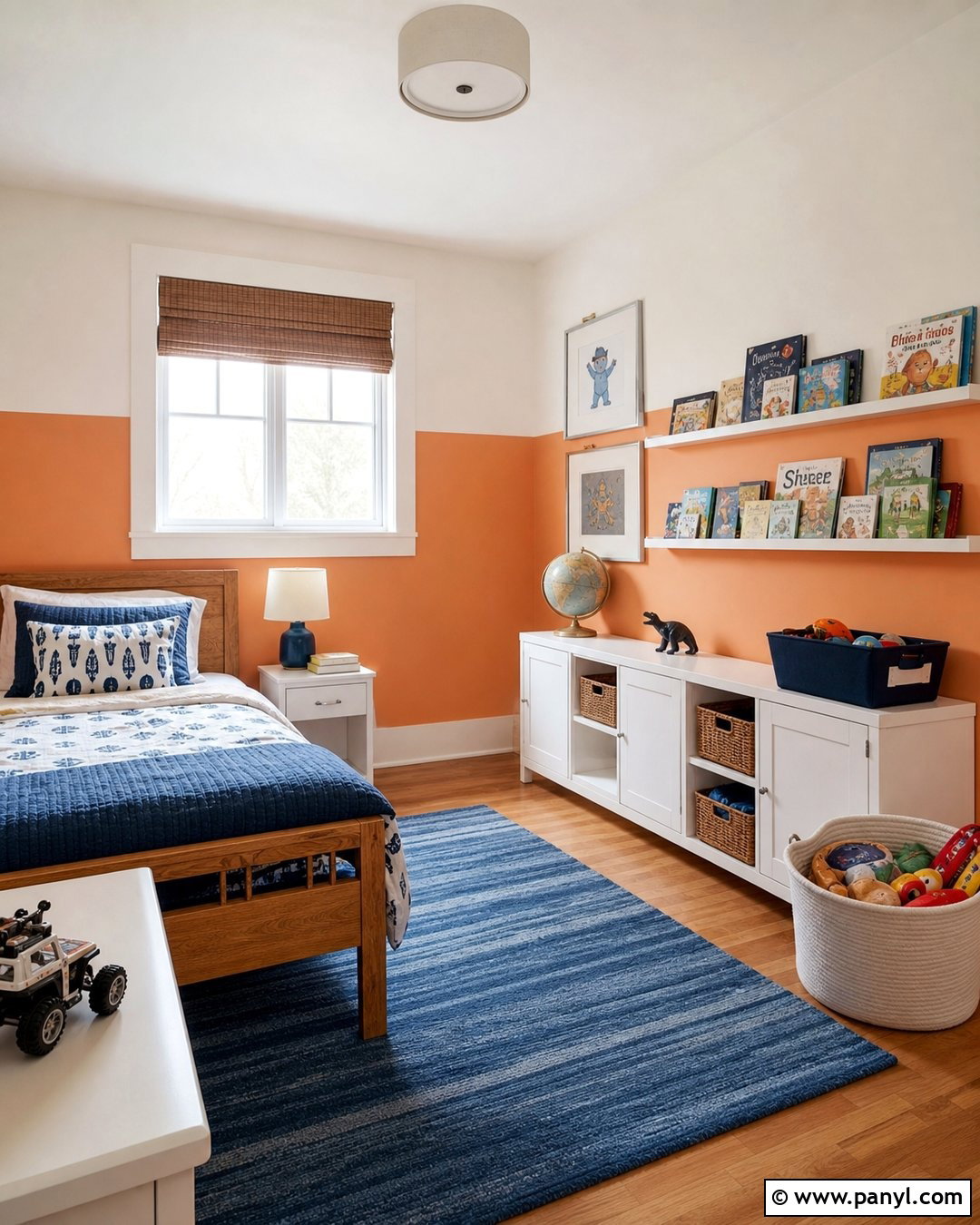
Half-painted walls are useful when you want warmth without surrounding the entire room in bold color. In a casual dining nook, apply muted orange below chair-rail height and soft yellow above it. Separate the shades with narrow white molding for a clean transition. Pair the walls with a round white table, spindle-back oak chairs, and a woven pendant light. A blue-and-cream striped rug introduces a cooler color and makes the eating area feel established. Add simple linen café curtains so daylight can enter while lower windows remain covered. A small walnut cabinet provides storage for dishes and table linens. Finish with framed botanical prints and handmade ceramics. The completed nook feels charming and colorful, yet the clear divisions keep the two warm hues controlled.
16. Yellow Walls With Orange Trim
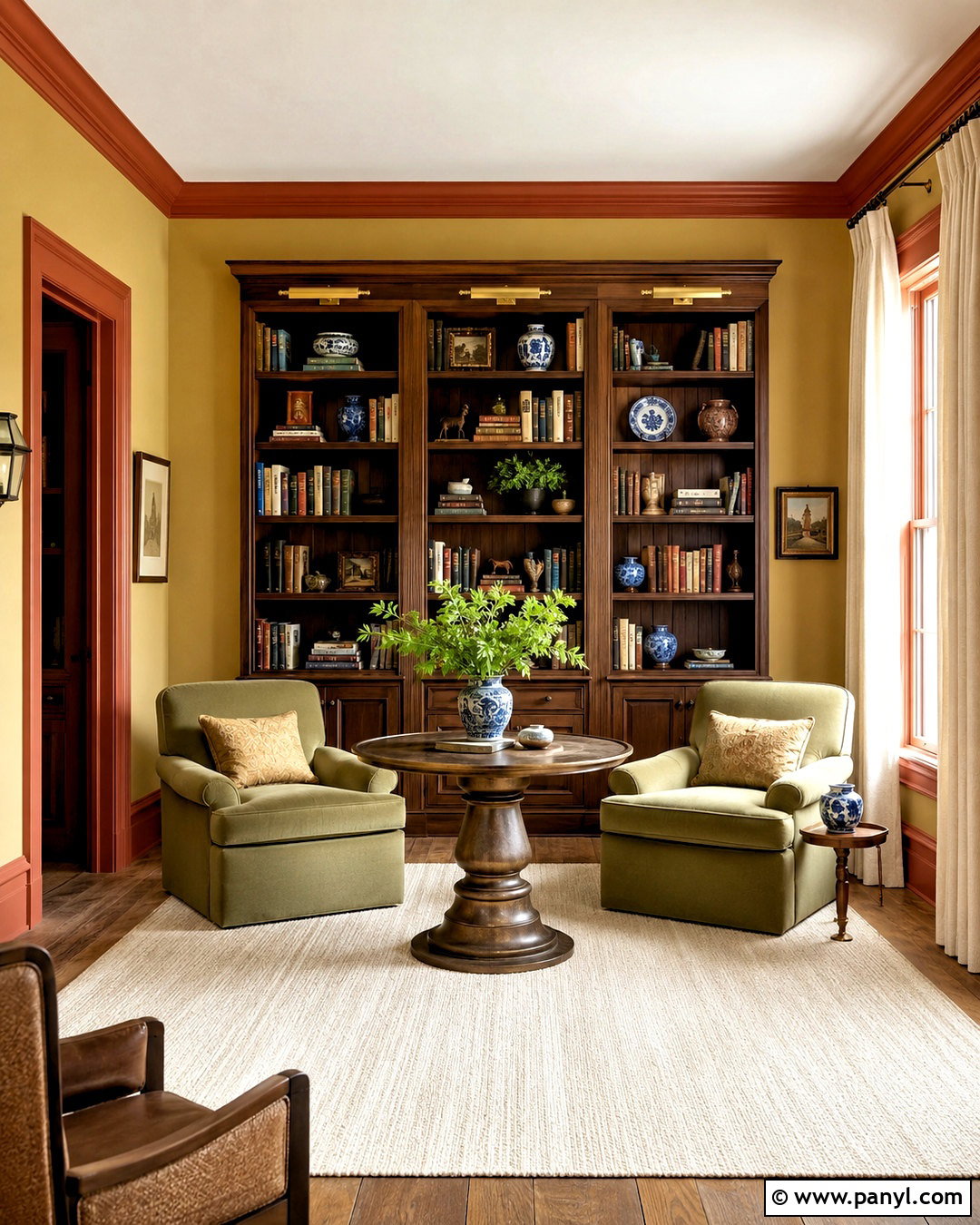
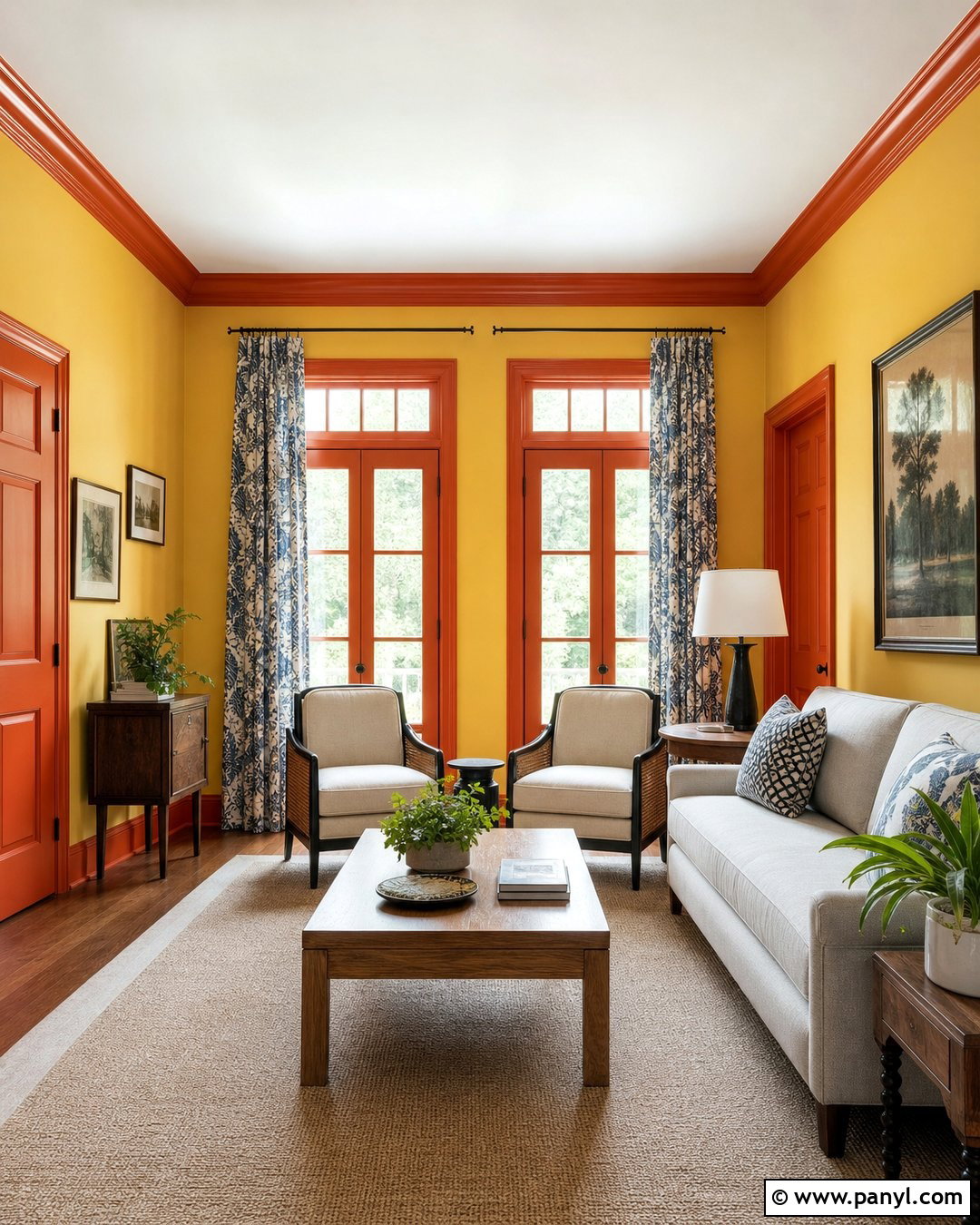
Painting trim orange can create a surprisingly polished frame around softer yellow walls. Use a muted straw yellow across a home library, then coat the baseboards, door casing, and built-in shelving edges in deep terracotta orange. Keep the ceiling warm white to stop the room from feeling enclosed. Furnish the space with two olive green armchairs, a walnut bookcase, and a low round table placed over an ivory wool rug. Linen curtains should closely match the wall color so the orange window trim remains visible. Add aged brass picture lights and a few blue ceramic accents for contrast. Because the stronger color follows existing architectural lines, it feels organized rather than random. The finished library is distinctive, cozy, and grounded by natural materials.
17. Orange Walls With Yellow Ceiling
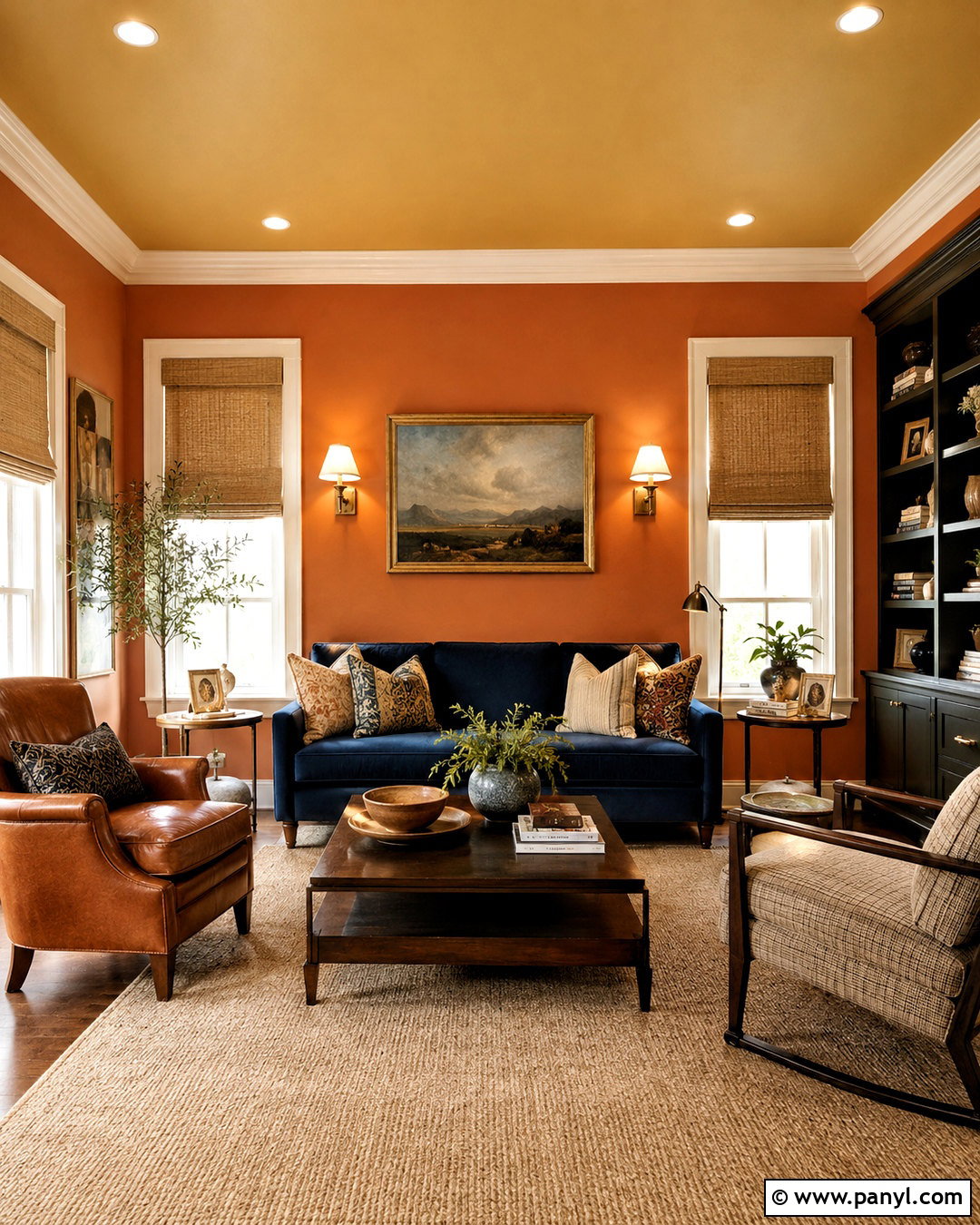
Reverse the expected arrangement by placing muted orange on the walls and soft yellow overhead. This approach works especially well in a cozy den where the ceiling can create a warm glow above the seating area. Choose clay orange walls, a pale golden ceiling, and creamy white crown molding to clearly separate the colors. Furnish the room with a deep blue sofa, cognac leather chair, and dark oak coffee table. A large beige rug prevents the palette from becoming too heavy. Use linen Roman shades and brass wall lights instead of a large hanging fixture that would interrupt the ceiling. Add landscape artwork with blue and green details. The complete room feels enveloping and relaxed, while the lighter ceiling keeps the unconventional color arrangement visually lifted.
18. Yellow And Orange Striped Walls
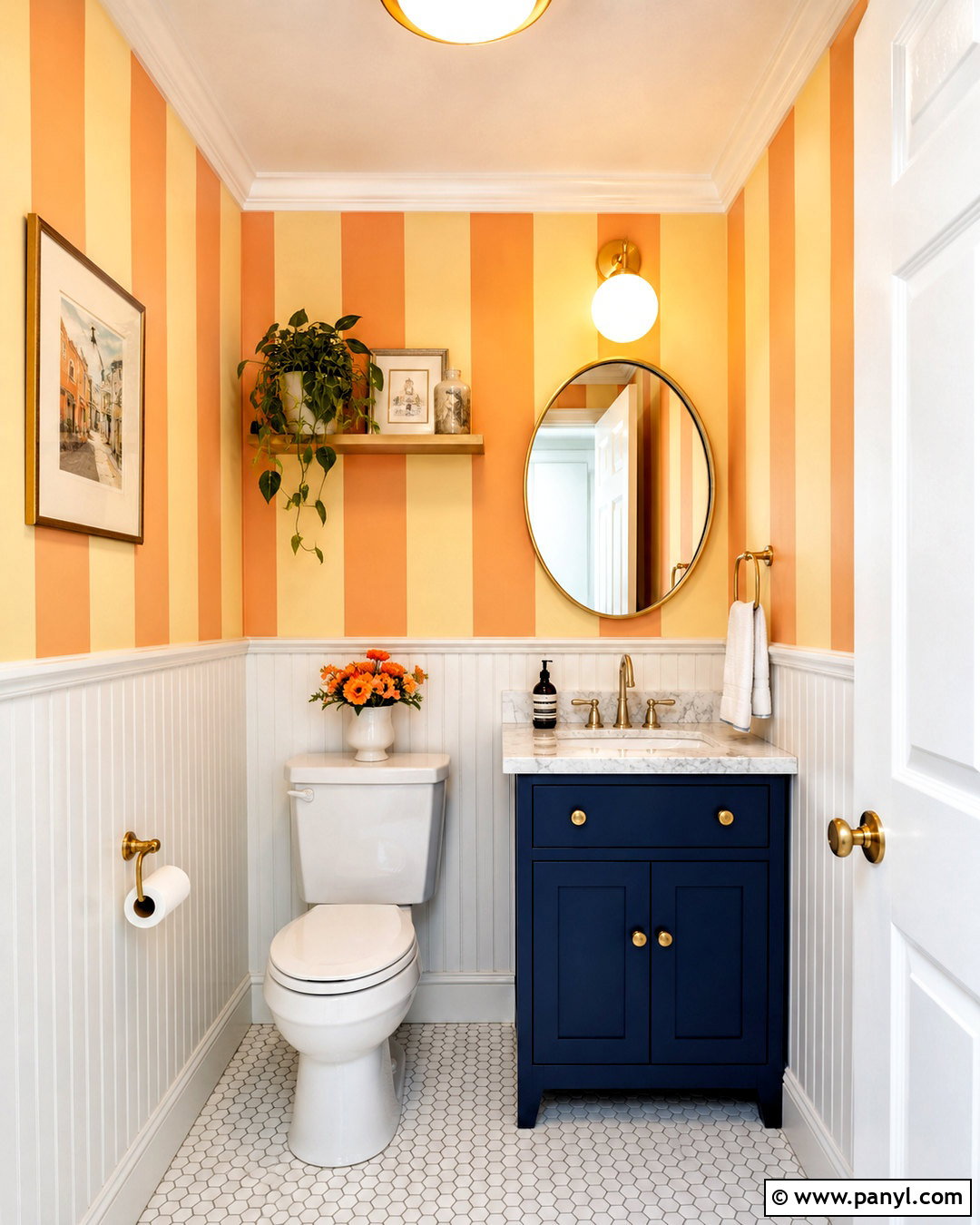
Wide vertical stripes can make a compact powder room feel playful and visually organized. Alternate muted butter yellow and soft apricot orange across the upper walls, keeping each stripe broad enough to avoid a busy appearance. Install white beadboard below the stripes to protect the lower wall and provide a crisp neutral foundation. A small navy vanity, white marble top, and polished brass faucet bring contrast and refinement. Use simple white hexagonal floor tile and an oval brass-framed mirror. A compact globe sconce supplies bright, even illumination without hiding the pattern. Finish with white towels and one leafy plant on a narrow shelf. This complete powder room looks cheerful and memorable, yet its traditional fixtures and controlled palette keep it suitable for an everyday home.
19. Muted Yellow And Orange Hallway Walls
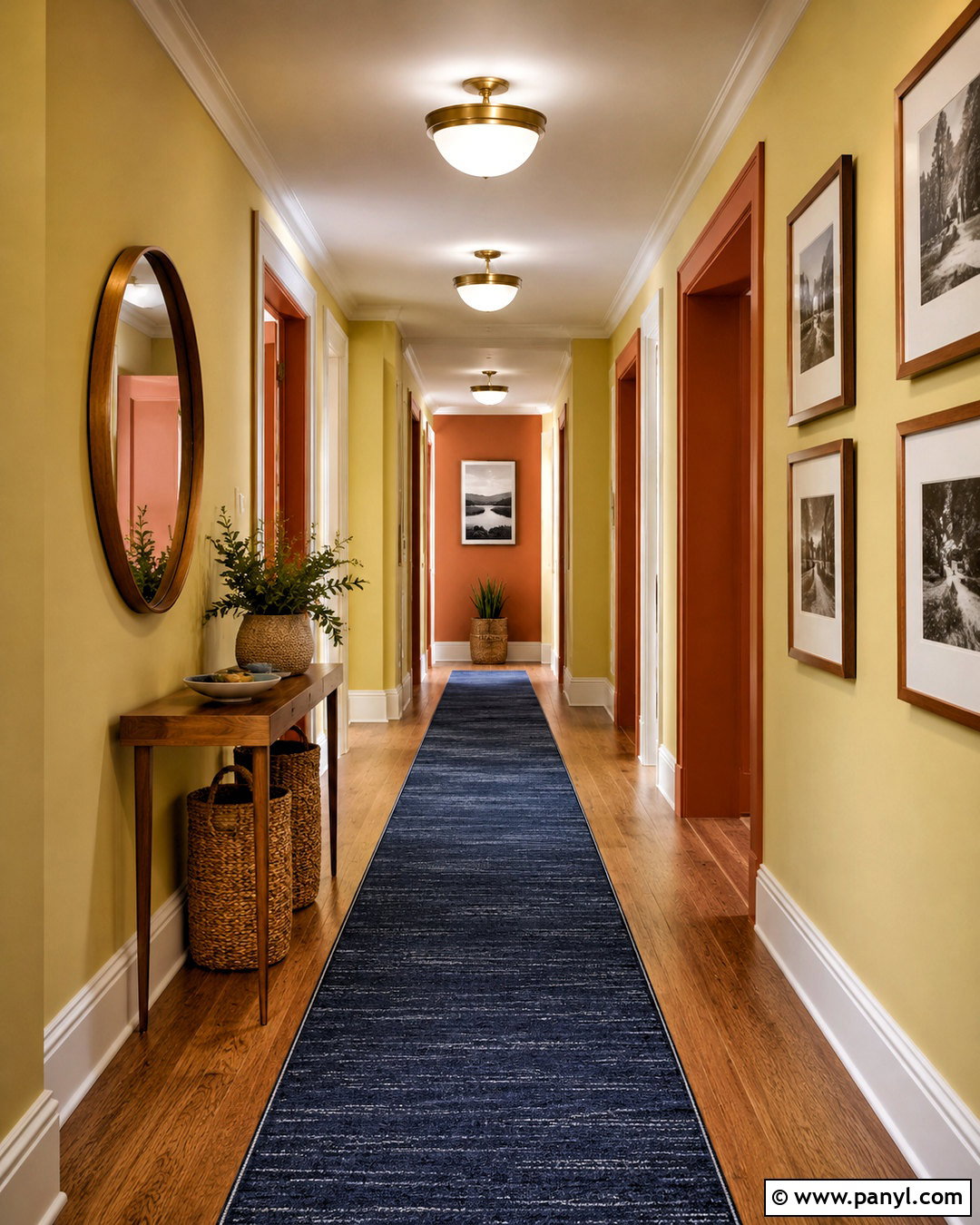
A long hallway becomes more inviting when its color placement supports the architecture. Paint the main walls muted wheat yellow and use dusty orange inside doorways, shallow niches, and the far end wall. This draws attention through the passage while keeping most surfaces relatively light. Add a narrow oak console, a round mirror, and two woven baskets without reducing walking space. A navy runner provides contrast and visually connects each doorway. Use simple brass ceiling lights at even intervals for consistent brightness. Black-and-white family photographs in natural wood frames add personality without introducing additional competing colors. Keep doors and baseboards creamy white for a fresh boundary. The completed hallway feels warm, cohesive, and connected to the surrounding rooms rather than treated as an overlooked passage.
20. Yellow And Orange Maximalist Walls
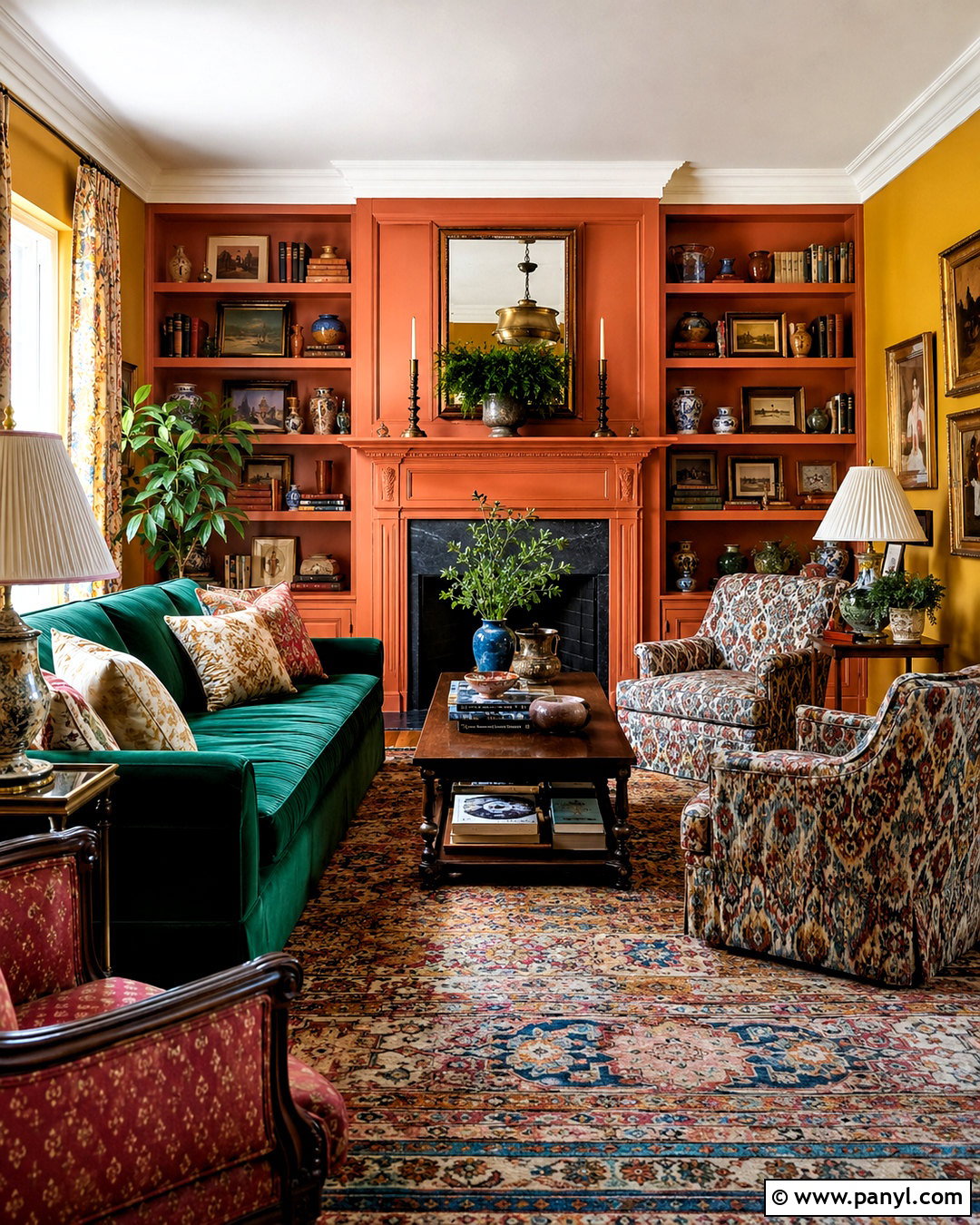
For a bold maximalist room, use mustard yellow on most walls and rich persimmon orange inside built-in shelves and around the fireplace. The color scheme should feel layered, but every major piece still needs a clear visual role. Place an emerald velvet sofa opposite two patterned armchairs, then connect them with a large vintage-inspired rug containing yellow, blue, orange, and cream. Add dark wood tables, pleated lampshades, and a curated gallery wall above the sofa. Keep picture frames in a limited mix of walnut and brass to control the variety. Books, ceramics, and plants can fill the shelving without hiding the orange background completely. The finished living room feels expressive and collected, while repeated colors and balanced furniture placement maintain order.
Conclusion:
Successful **20 Yellow And Orange Walls** depend on more than choosing two cheerful paint colors. Each room needs a clear balance of warm and cool shades, practical furniture, natural materials, and enough neutral space to let the walls stand out. Softer combinations such as butter yellow and peach work beautifully in restful rooms, while mustard, tangerine, and burnt orange bring energy to social areas. You can also control the impact through painted arches, broad stripes, trim, ceilings, or geometric blocks. Before committing, test each color in several areas and view it throughout the day. With thoughtful placement and a complete decorating plan, yellow and orange walls can feel welcoming, modern, and highly personal.

Related Ideas and Inspiration:
Leave a Reply