
Dusty blue sits between soft blue and muted gray, giving walls a calm presence that can function almost like a neutral. It works across modern, coastal, farmhouse, traditional, and transitional rooms because the color changes character with surrounding finishes. Warm wood makes it feel cozier, while white trim creates a fresher contrast. Brass, black, cream, terracotta, and sage can each take the palette in a different direction. Designers also use blue-gray tones to create sophisticated, livable rooms, while natural materials prevent the scheme from feeling too cool. () Before painting, test a large sample in morning and evening light so you can see its undertones clearly. Explore these 30 dusty blue wall color ideas to find a complete look for every room.

1. Dusty Blue Walls With White Trim
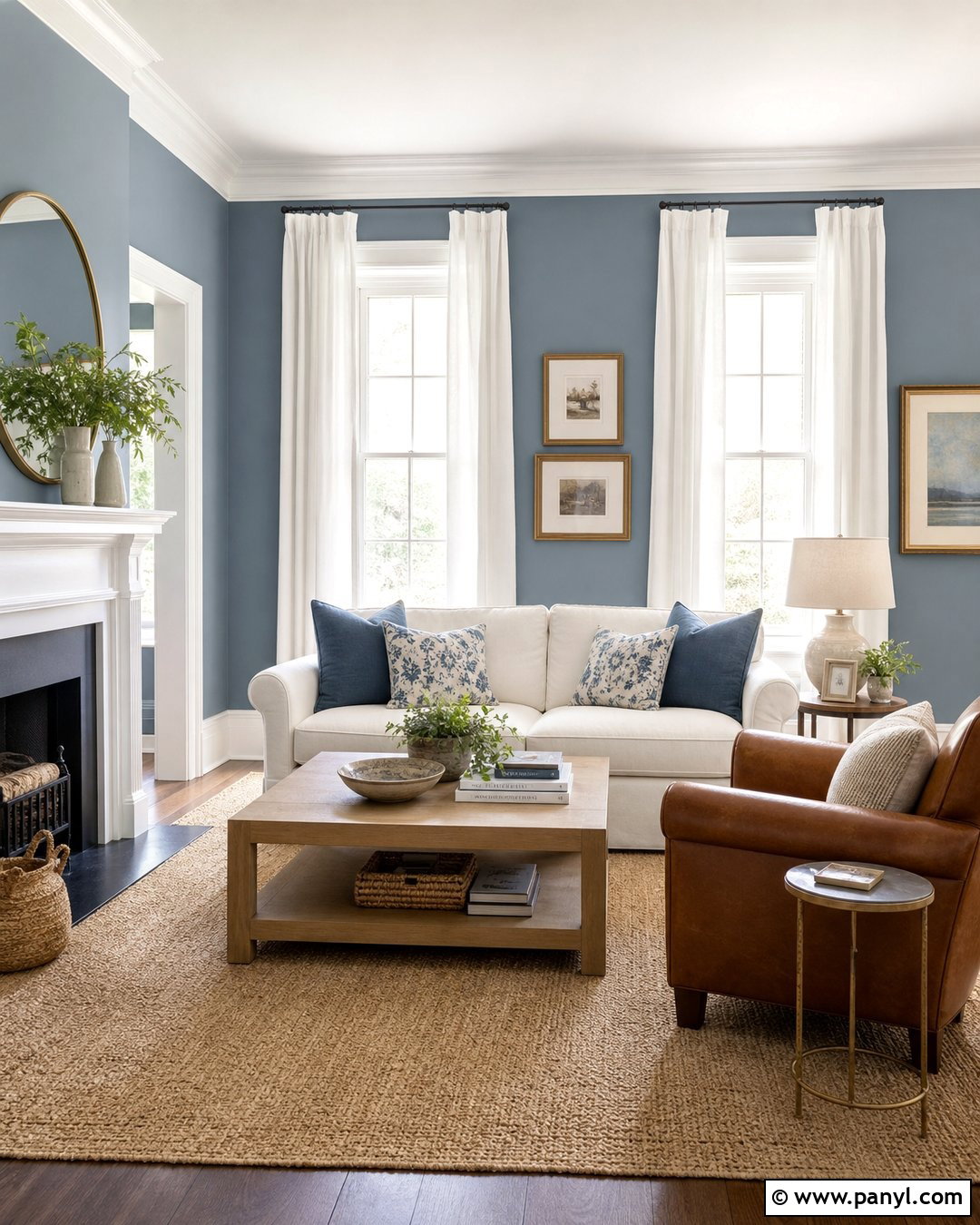
Crisp white trim gives dusty blue walls a clean, timeless finish without making the room feel formal. Use this combination in a living room with a cream sofa, pale oak coffee table, and woven natural-fiber rug. White linen curtains should match the trim, helping the windows look taller and brighter. Add medium-blue pillows, simple landscape art, and a ceramic table lamp for gentle color repetition. Keep large furniture neutral so the wall color remains the main feature. Satin white on the baseboards and doors creates a subtle contrast against matte blue paint. Warm the scheme with aged brass frames or a soft tan leather chair. The finished room feels fresh, comfortable, and easy to update as your decor changes.
2. Dusty Blue Walls With Warm Oak Furniture
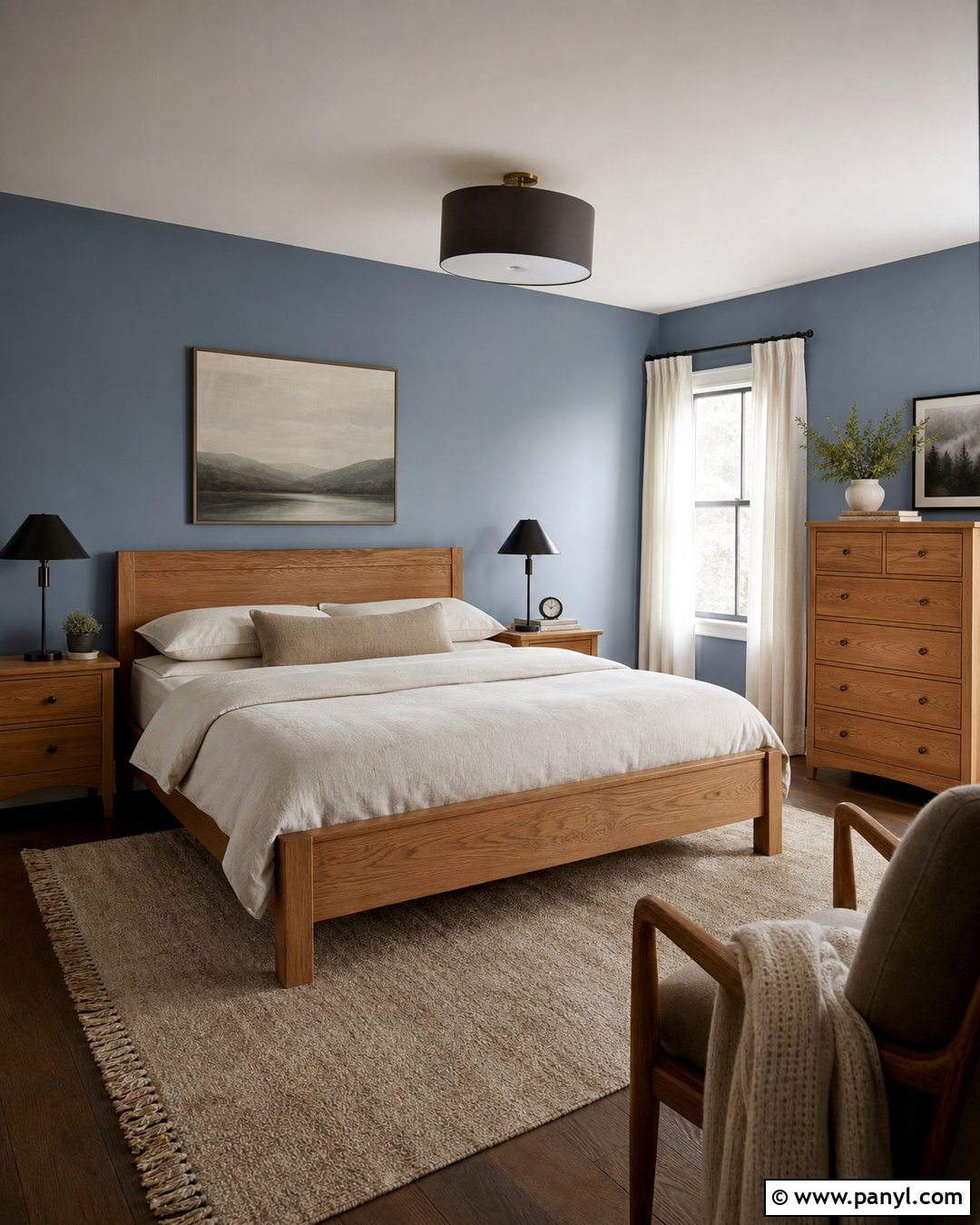
Warm oak furniture balances the cool undertones often found in dusty blue walls. Build the room around a simple oak bed, matching nightstands, and a low dresser with visible natural grain. Choose oatmeal linen bedding, ivory curtains, and a beige wool rug to connect the wood and wall colors. Small black lamps add definition without overpowering the softer palette. For artwork, select landscapes containing faded blues, olive greens, and sandy browns. Keep the ceiling and trim warm white rather than stark white, which could make the blue appear colder. A woven bench or cane-front cabinet adds another natural texture. This complete bedroom look feels relaxed and grounded, with enough warmth to remain comfortable during every season.
3. Dusty Blue Walls With Cream Furniture
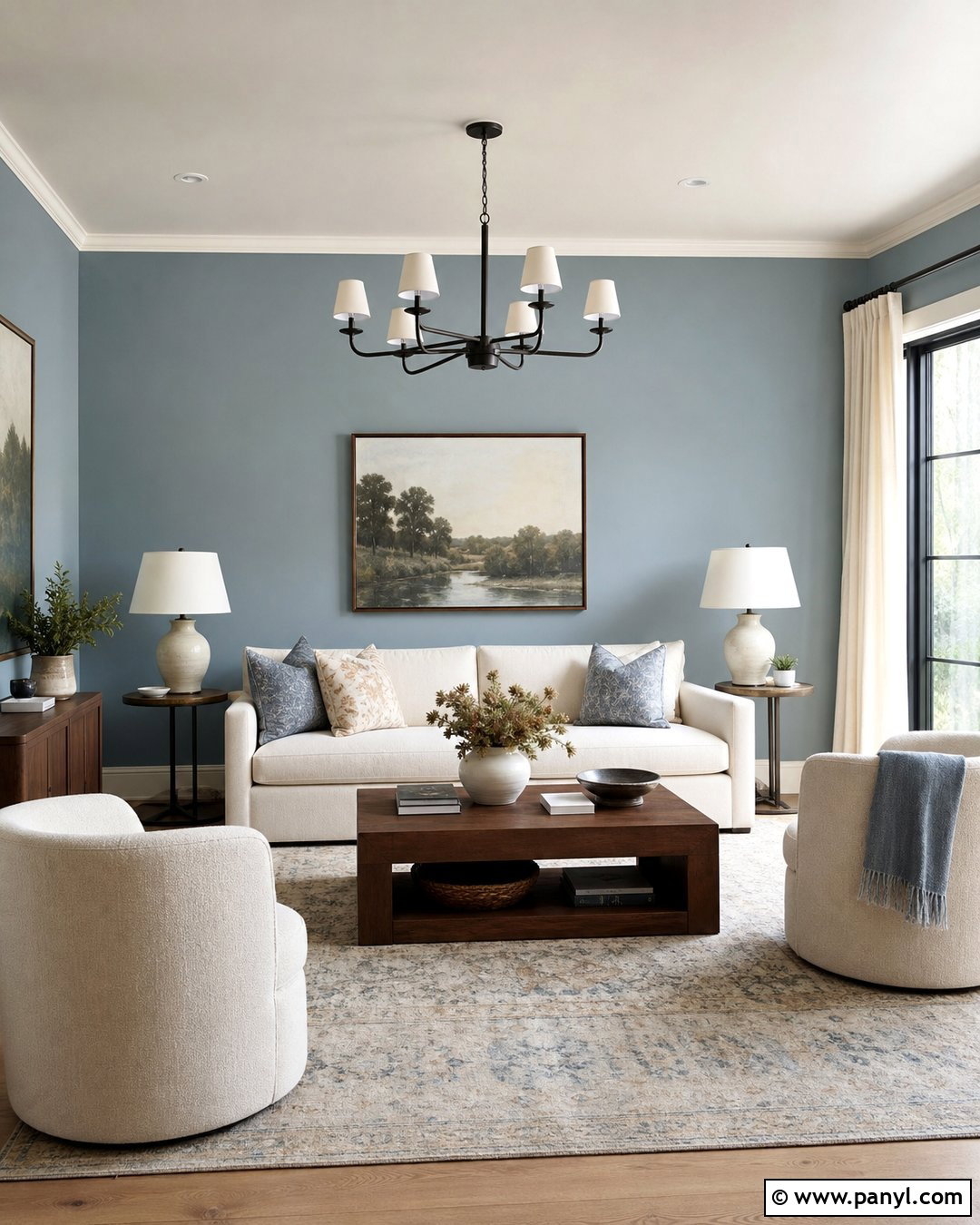
Imagine a soft, welcoming room where dusty blue walls surround layers of creamy upholstery. Start with a warm ivory sofa and two compact boucle chairs arranged around a walnut coffee table. Anchor everything with a vintage-style rug that blends beige, faded blue, and touches of brown. Use cream curtains with a subtle woven texture rather than bright white panels. A pair of ceramic lamps, linen pillows, and an off-white throw can continue the gentle tonal effect. Introduce contrast through dark bronze hardware and one or two walnut accessories. Avoid cool gray furniture, since it may flatten the palette. This combination creates a polished living space that still feels approachable, comfortable, and practical for everyday use.
4. Dusty Blue Walls With Brass Accents
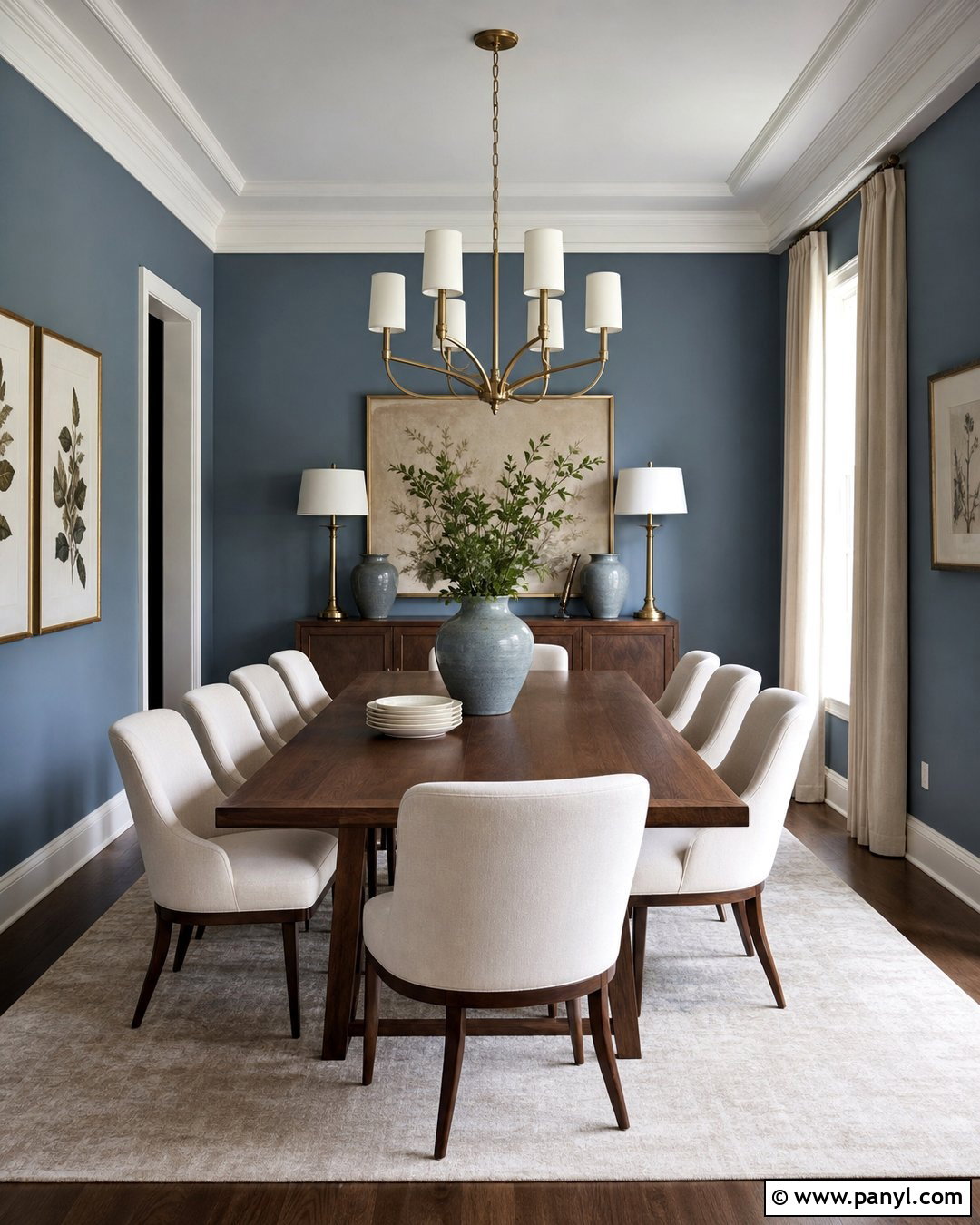
Dusty blue and brushed brass create a refined palette that suits dining rooms, bedrooms, and formal living spaces. For a balanced dining room, pair the painted walls with a medium-walnut table and upholstered cream chairs. Hang a simple brass chandelier above the table, then repeat the finish through curtain rods, picture frames, and cabinet knobs. Keep these metallic details limited so they appear intentional rather than flashy. An ivory rug and warm white ceiling will soften the contrast. Add linen curtains, blue-gray pottery, and botanical artwork with muted green leaves. Candlesticks or a slim brass-framed mirror can complete the arrangement. The overall look feels elegant and luminous, while the natural wood prevents the metal and blue combination from becoming overly cool.
5. Dusty Blue Walls With Terracotta Decor
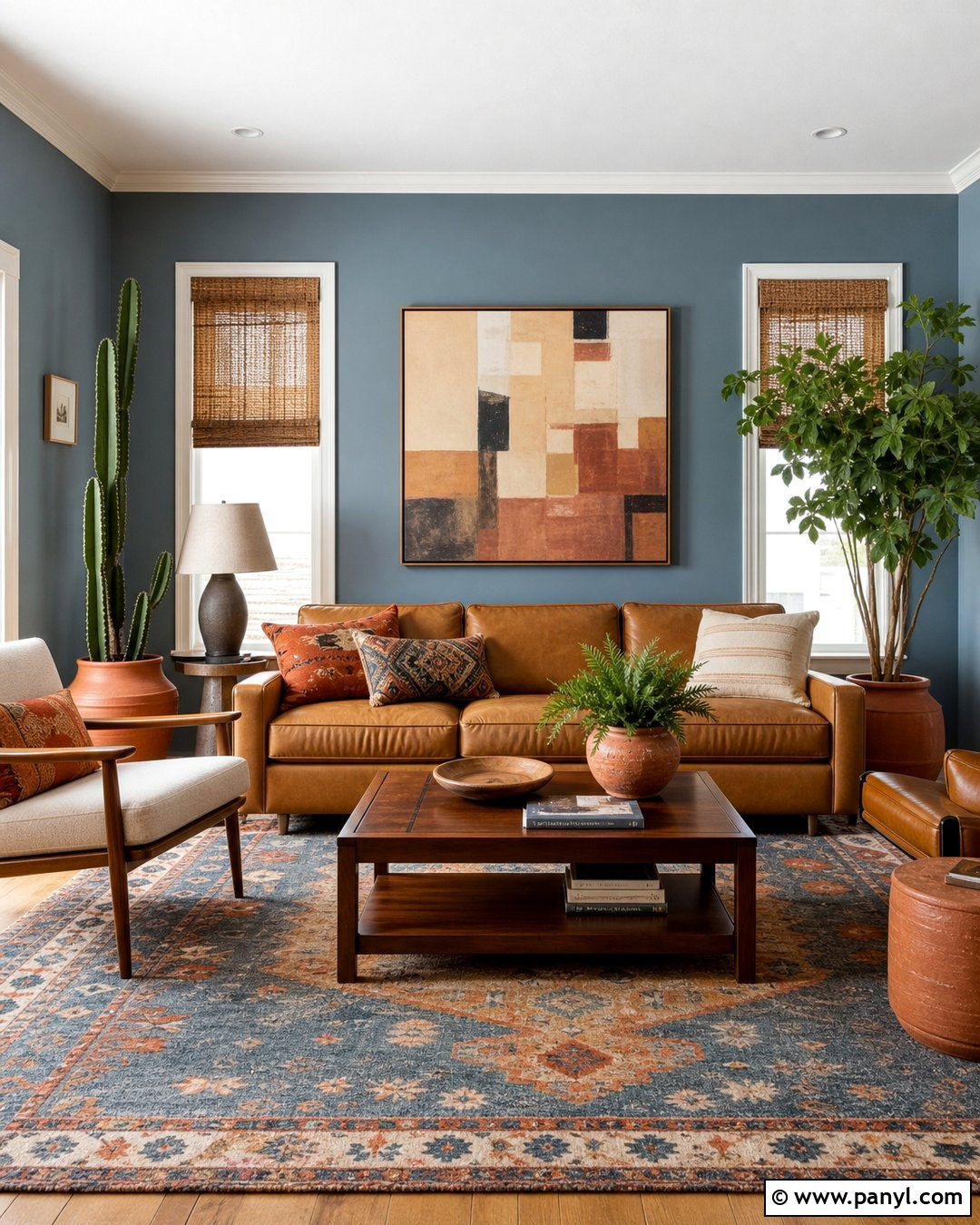
Could your dusty blue room use more warmth and personality? Terracotta introduces an earthy orange contrast that makes muted blue look richer. Paint the living room walls dusty blue, then add a caramel sofa or neutral sectional topped with rust, clay, and cream pillows. Choose a patterned rug containing both faded blue and warm red-brown tones. Terracotta planters, ceramic vases, and abstract artwork can repeat the accent color around the room. Ground the arrangement with a substantial walnut coffee table and woven window shades. Use only a few saturated rust accents, leaving plenty of cream and natural texture between them. This complete palette feels creative and collected while remaining calm enough for a comfortable, everyday family living room.
6. Dusty Blue Walls With Sage Green
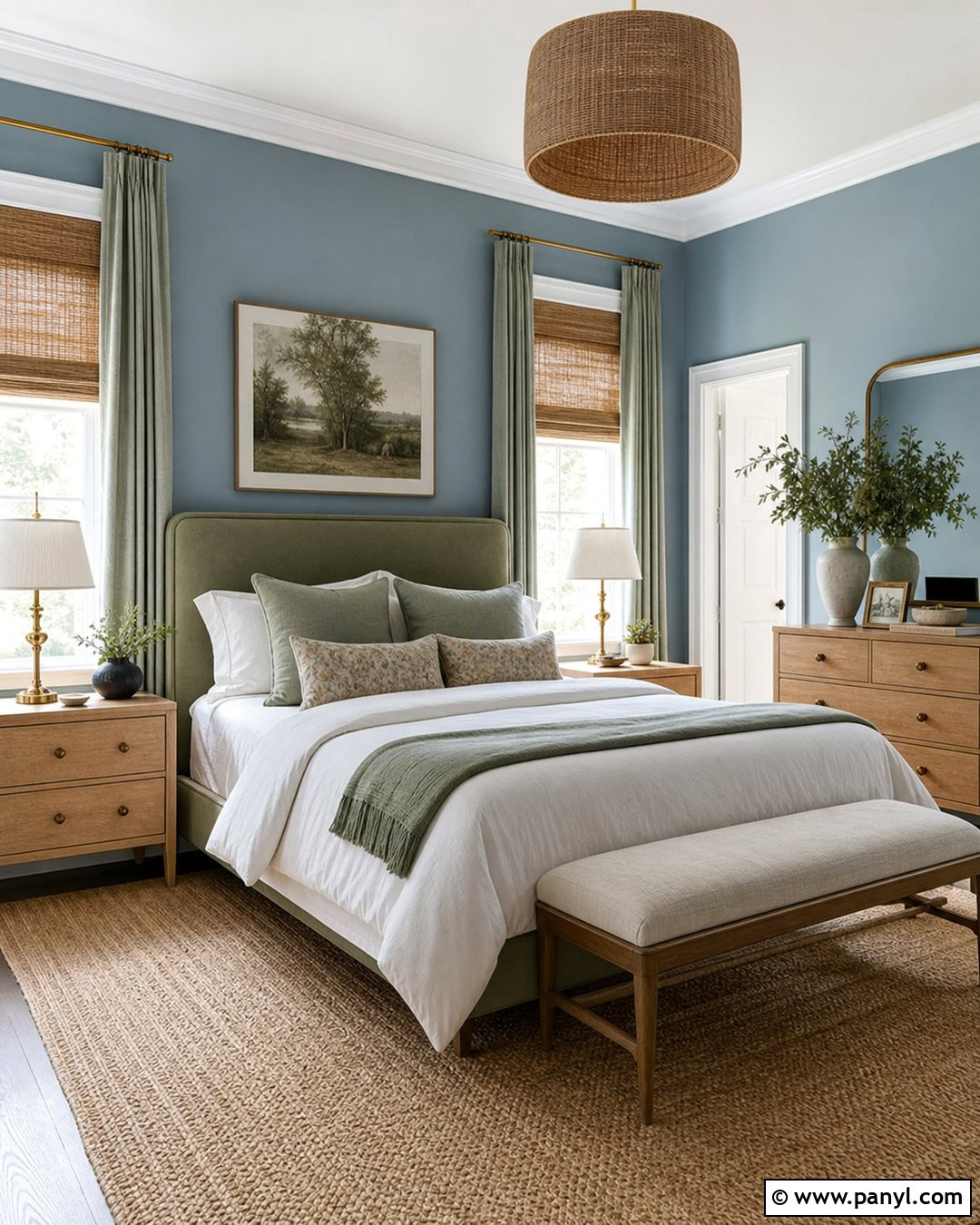
Nature-inspired color works beautifully when dusty blue walls meet soft sage green furnishings. Try the pairing in a bedroom with a muted green upholstered headboard, white oak nightstands, and warm ivory bedding. Layer dusty blue and sage pillows in linen, cotton, and subtle botanical patterns. A light beige rug keeps the floor quiet, while woven shades add an earthy golden tone. Select artwork featuring gentle landscapes so both colors appear naturally connected. Warm brass lamps or antique bronze sconces can provide a polished finishing touch. Avoid using equal amounts of blue and green; let blue dominate the walls while sage remains the secondary accent. The result is a peaceful, organic room that feels fresh without relying on bright or overly trendy colors.
7. Dusty Blue Walls With Blush Pink
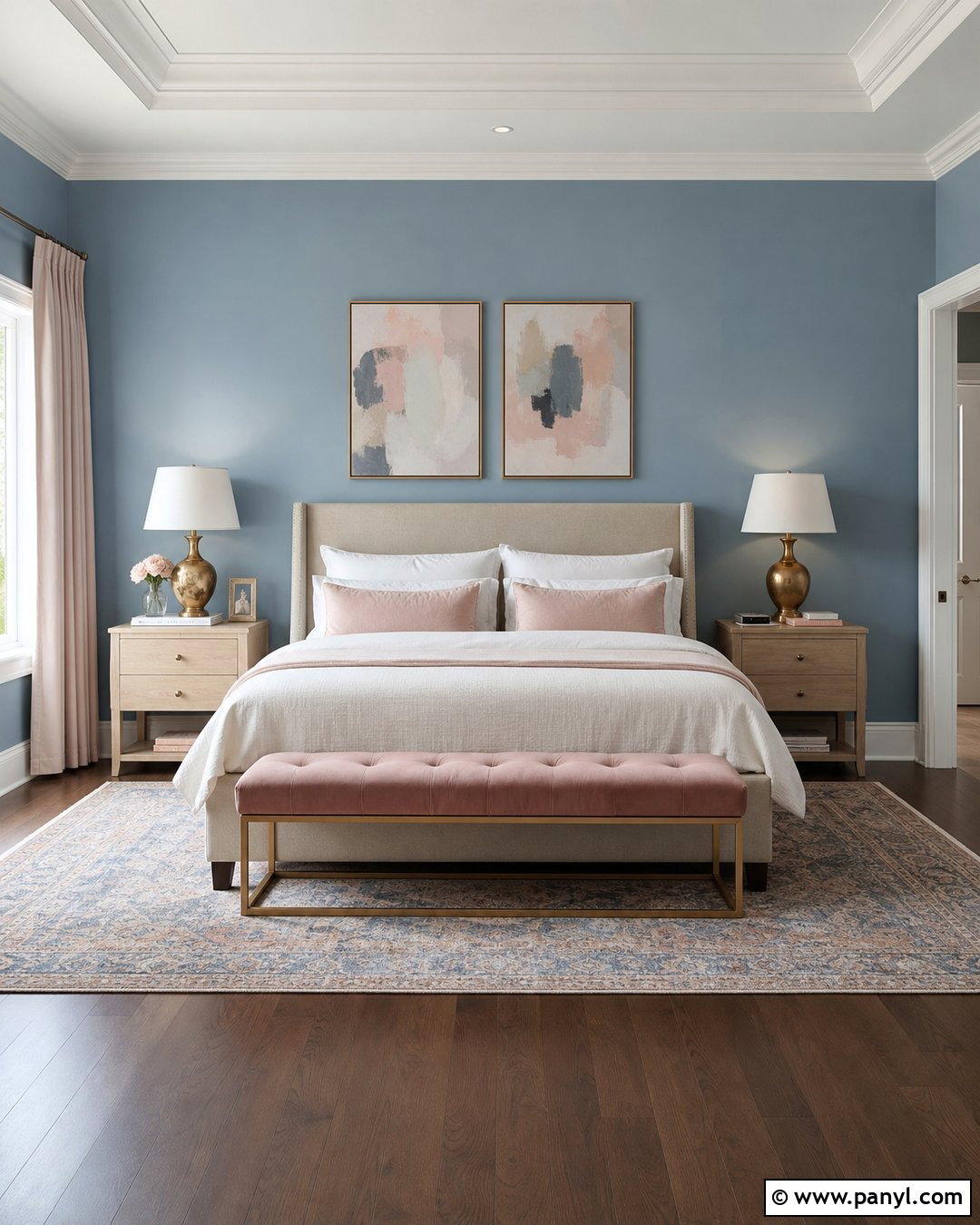
A dusty blue and blush pink palette can feel sophisticated when the pink is muted and used carefully. Cover the bedroom walls in a soft blue-gray, then choose a natural linen bed with white and oatmeal bedding. Introduce blush through a velvet lumbar pillow, an upholstered bench, and a faded area rug. Pale wood nightstands keep the room airy, while aged brass lamps lend warmth and structure. Select abstract artwork that combines blue, beige, blush, and a small amount of charcoal. Instead of filling the room with pastel accessories, include substantial neutral pieces to ground the scheme. The finished bedroom feels gentle and grown-up, making this pairing suitable for a primary bedroom, guest room, or stylish teenager’s space.
8. Dusty Blue Walls With Charcoal Gray
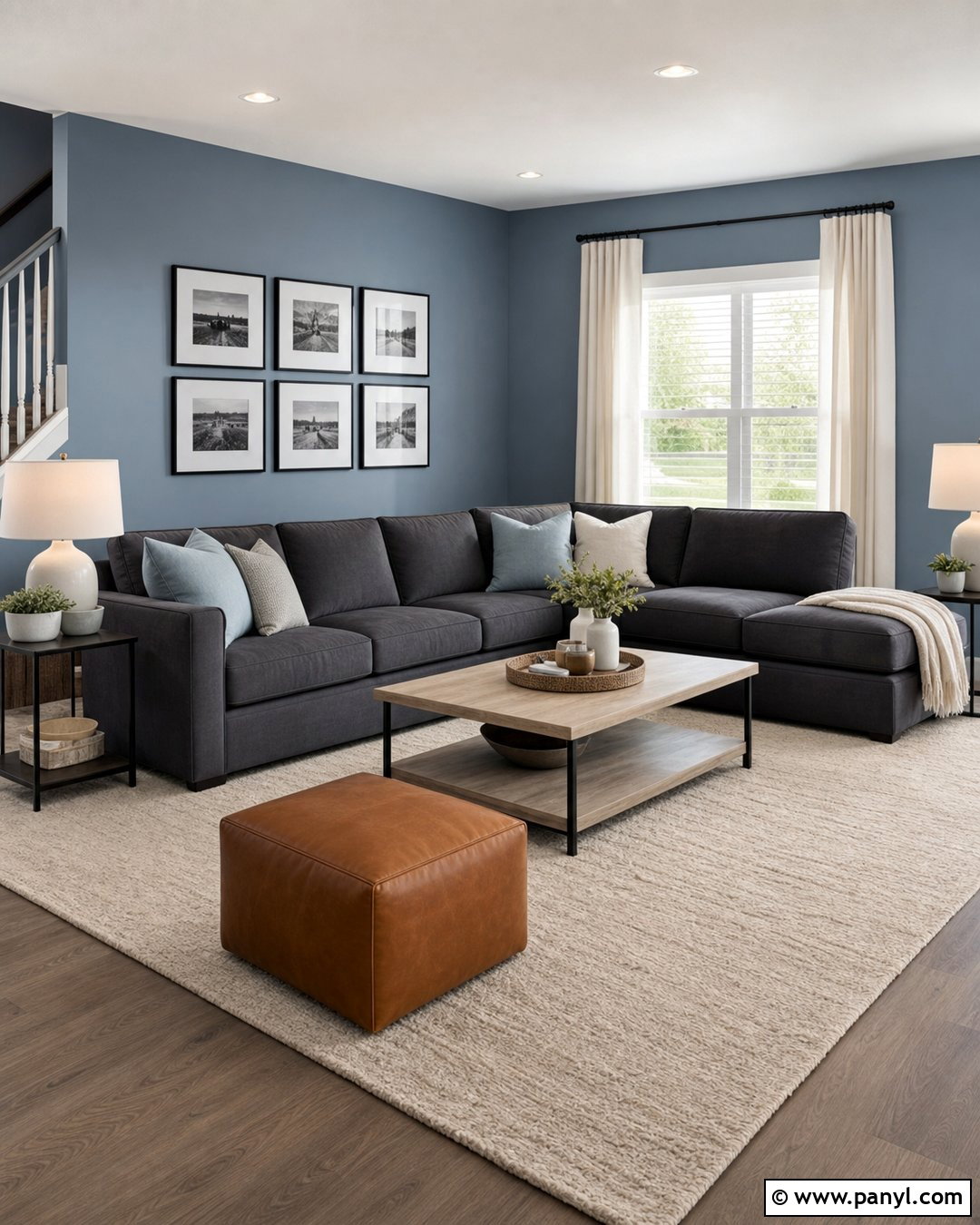
Charcoal gray brings depth and definition to dusty blue walls without creating the sharpness of pure black. In a modern living room, use a charcoal sectional as the visual anchor, then soften it with ivory, tan, and faded blue pillows. Place a light oak coffee table over a cream textured rug to keep the darker furniture from weighing down the space. Matte charcoal picture frames and a slim floor lamp can repeat the deeper tone vertically. Choose white curtains to preserve natural brightness, especially in a smaller room. Add one cognac leather ottoman or walnut side table for warmth. This design feels tailored and contemporary, yet the muted wall color and comfortable textiles prevent it from looking cold or overly industrial.
9. Dusty Blue Walls With Black Accents
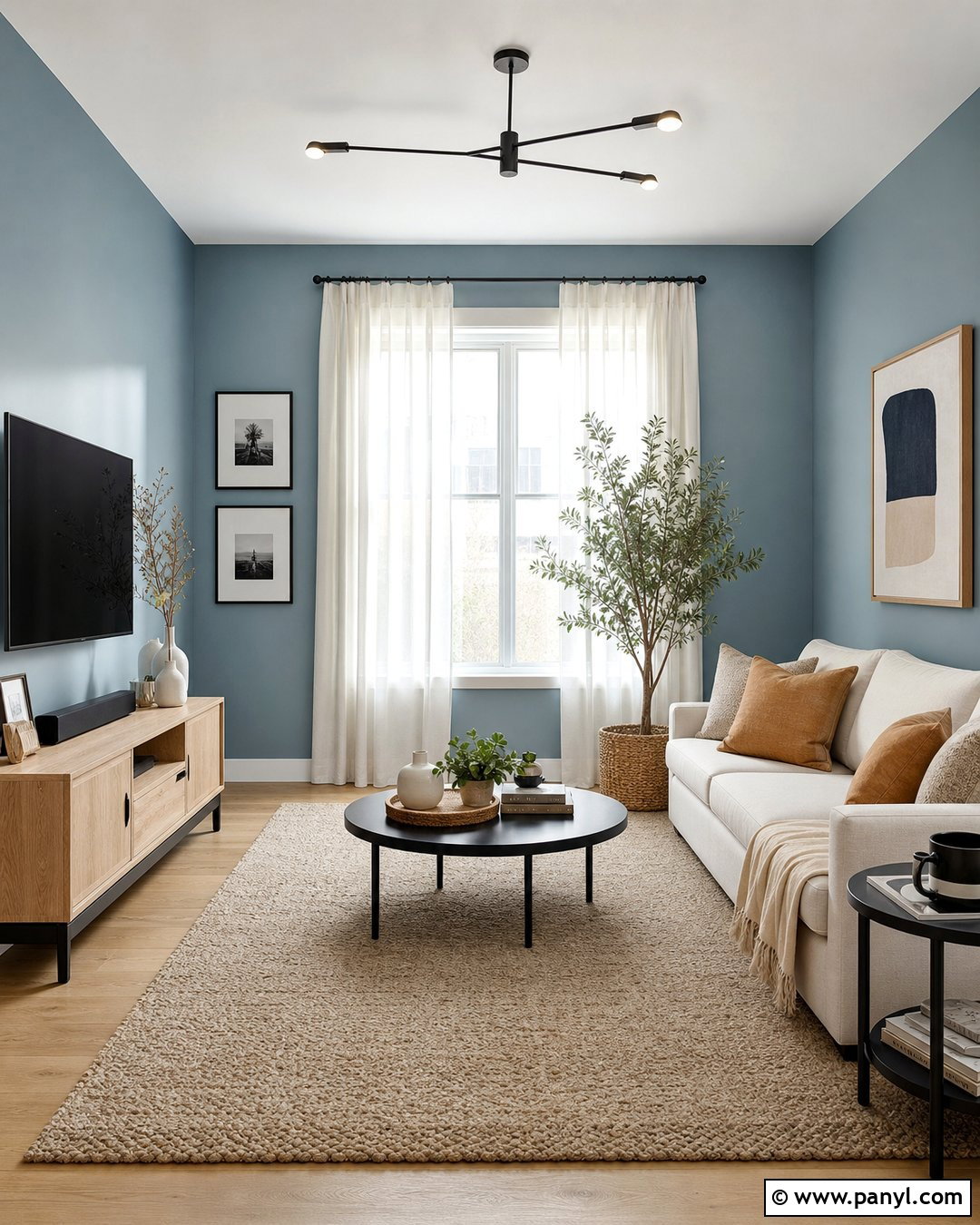
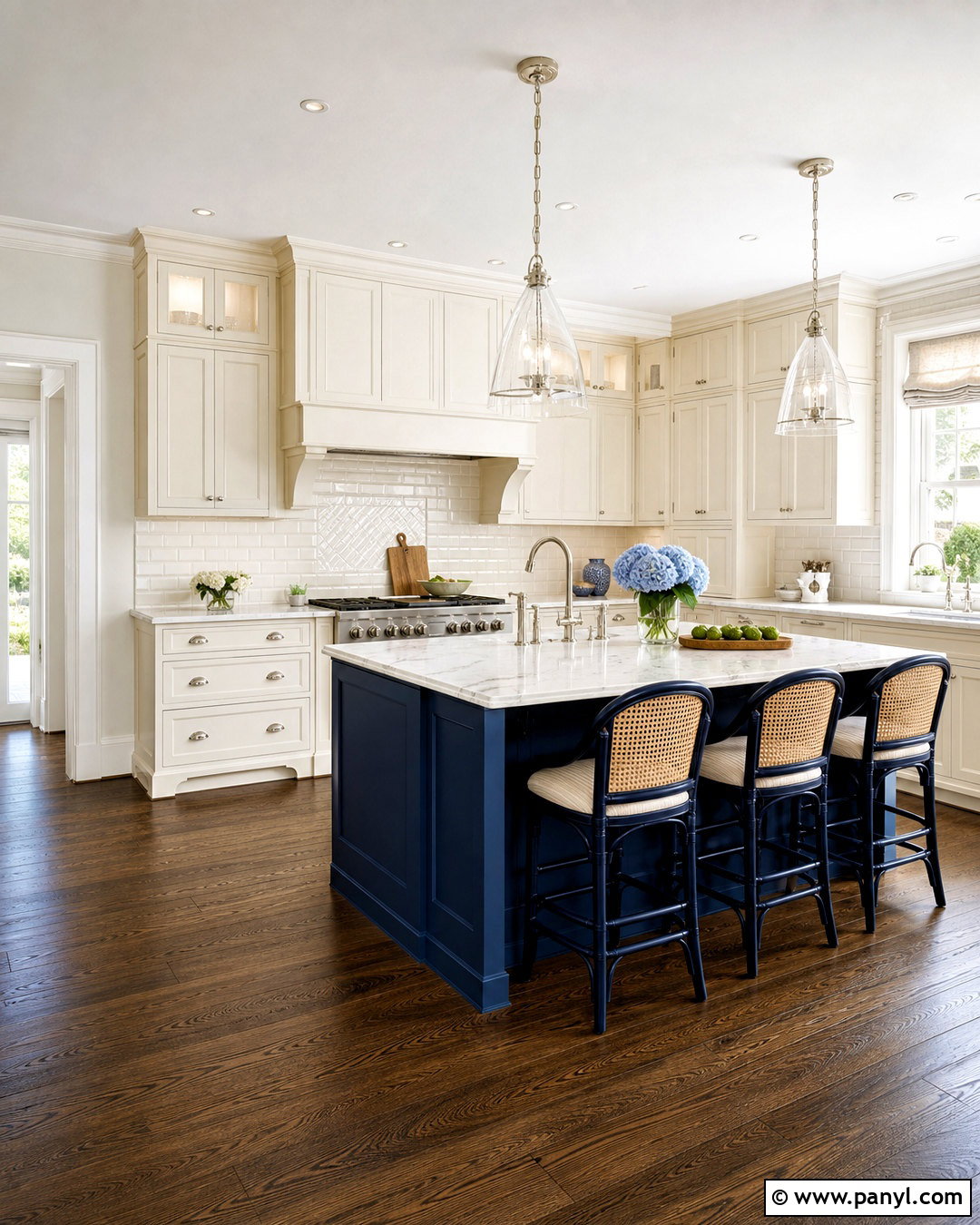
Thin black details can sharpen dusty blue walls and give the room a clear modern structure. Begin with a streamlined cream sofa, pale oak media cabinet, and light woven rug. Add black through narrow window frames, a linear ceiling fixture, metal side tables, and simple artwork frames. Keep each black element visually light instead of choosing bulky dark furniture. Natural linen curtains and camel-colored pillows can warm the blue-and-black contrast. Include leafy greenery in textured stone planters to make the room feel more relaxed. A few handmade ceramics will prevent the design from looking too polished. This complete scheme is especially effective in an open, bright living room where the dusty blue remains soft while black details define the architecture and furniture arrangement.
10. Dusty Blue Coastal Living Room
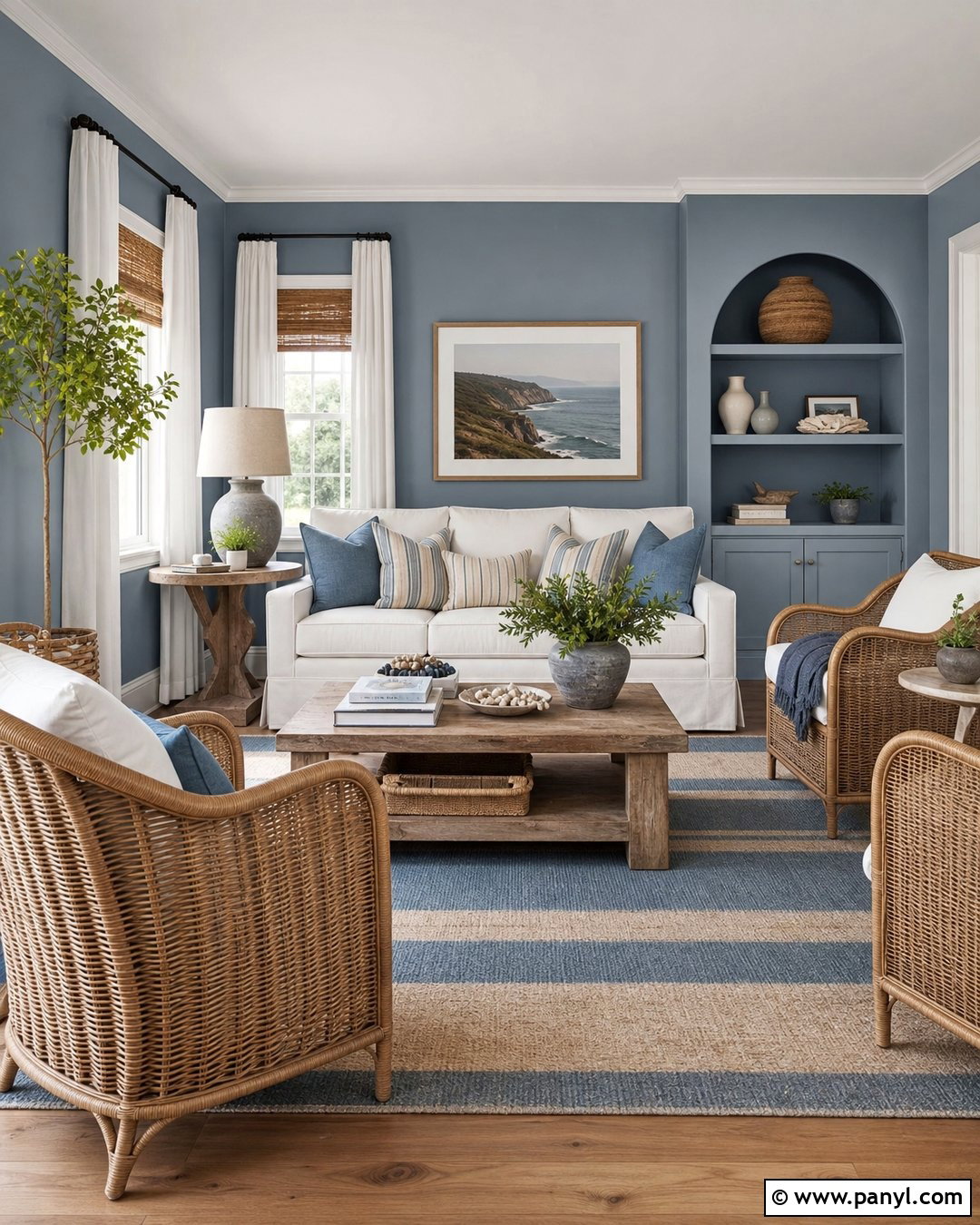
For a coastal look that avoids obvious beach themes, combine dusty blue walls with weathered wood, woven fibers, and creamy textiles. Arrange a slipcovered ivory sofa opposite two light rattan chairs, with a reclaimed oak coffee table between them. A striped blue-and-beige rug can define the seating area without introducing a busy pattern. Choose natural woven shades layered beneath white linen curtains. Decorate with pale ceramic vessels, seagrass baskets, and one large coastal landscape rather than shells or themed signs. Keep the trim warm white and the flooring light or medium wood. Subtle navy pillows can add depth. The finished living room feels airy, casual, and connected to the coast while remaining suitable for an ordinary home in any location.
11. Dusty Blue Farmhouse Living Room
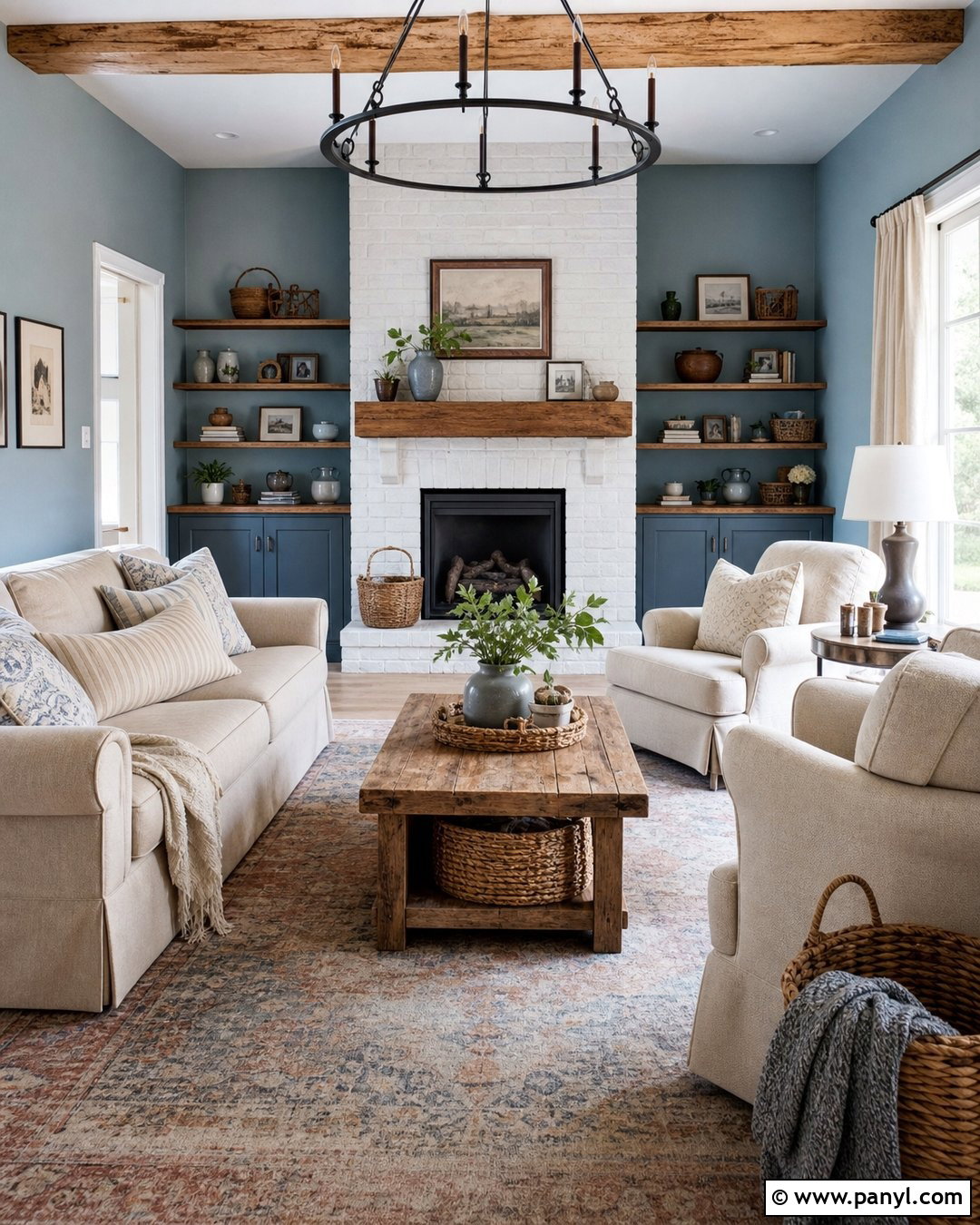
Dusty blue walls can soften farmhouse decor and make rustic materials feel lighter. Center the room around a comfortable oatmeal sofa, two slipcovered armchairs, and a substantial reclaimed-wood coffee table. Use a faded vintage rug with blue, tan, and muted brick tones to connect the palette. Warm white curtains, black iron lighting, and simple wood frames provide familiar farmhouse contrast. Instead of filling every surface, display a small collection of pottery, old books, and woven baskets. A white-painted brick fireplace can become the main focal point, topped with a natural wood mantel. Add olive branches or leafy greenery for life. This farmhouse room feels collected and comfortable without depending on distressed signs, heavy decoration, or an overly rustic appearance.
12. Dusty Blue Modern Bedroom
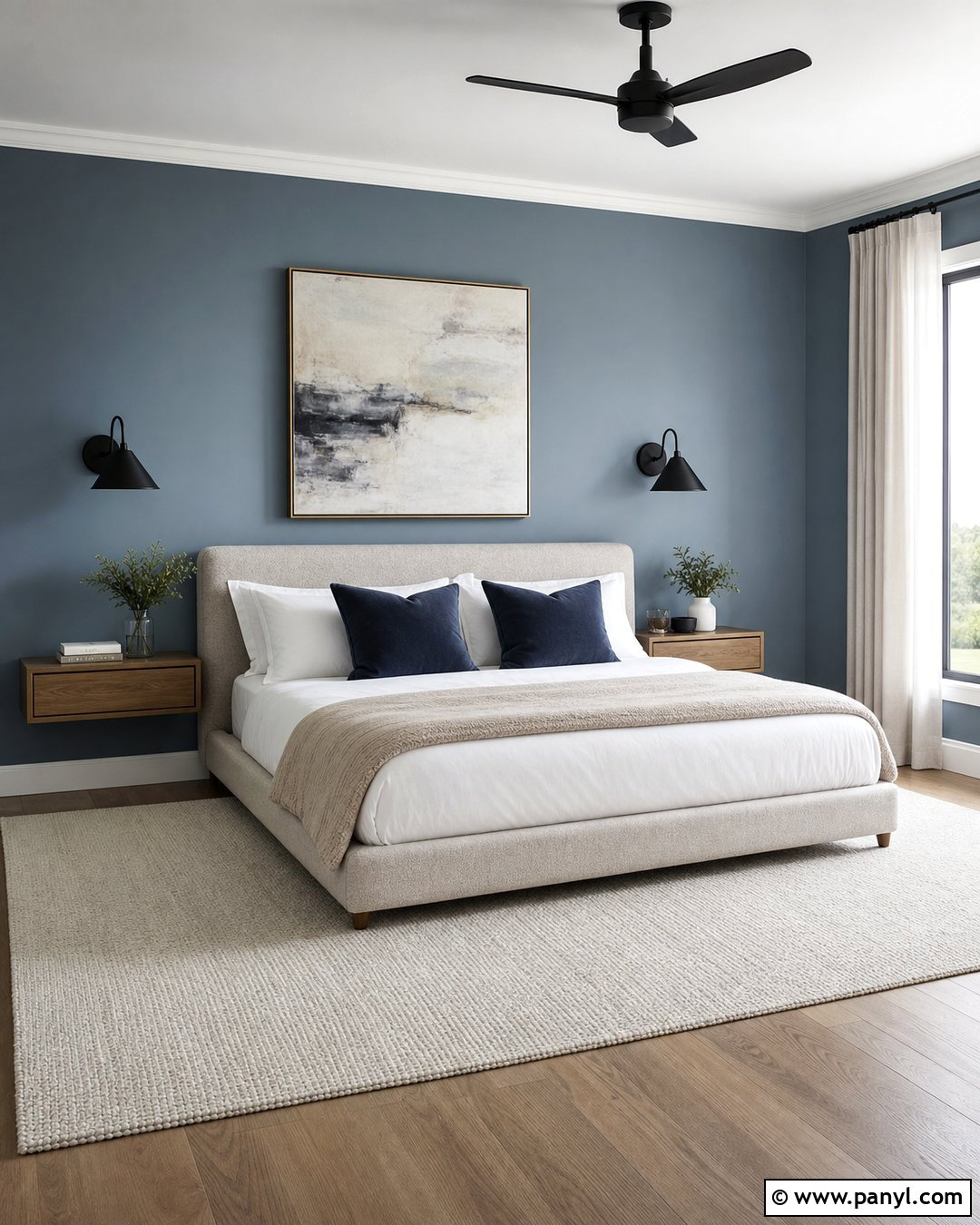
Clean lines help dusty blue walls feel current rather than traditional. Choose a low upholstered bed in warm beige, floating oak nightstands, and compact black sconces. Dress the bed with crisp white sheets, a textured oatmeal coverlet, and two deep blue accent pillows. A large neutral rug should extend generously beyond the bed, creating softness underfoot. Keep artwork minimal, perhaps using one oversized abstract piece that incorporates blue, cream, and warm brown. Full-length ivory curtains can make the ceiling appear higher. Limit accessories to a ceramic vase, a small stack of books, and one sculptural object. This uncluttered bedroom combines calm color with practical modern furniture, producing a restful design that looks intentional without feeling sparse or impersonal.
13. Dusty Blue Traditional Dining Room
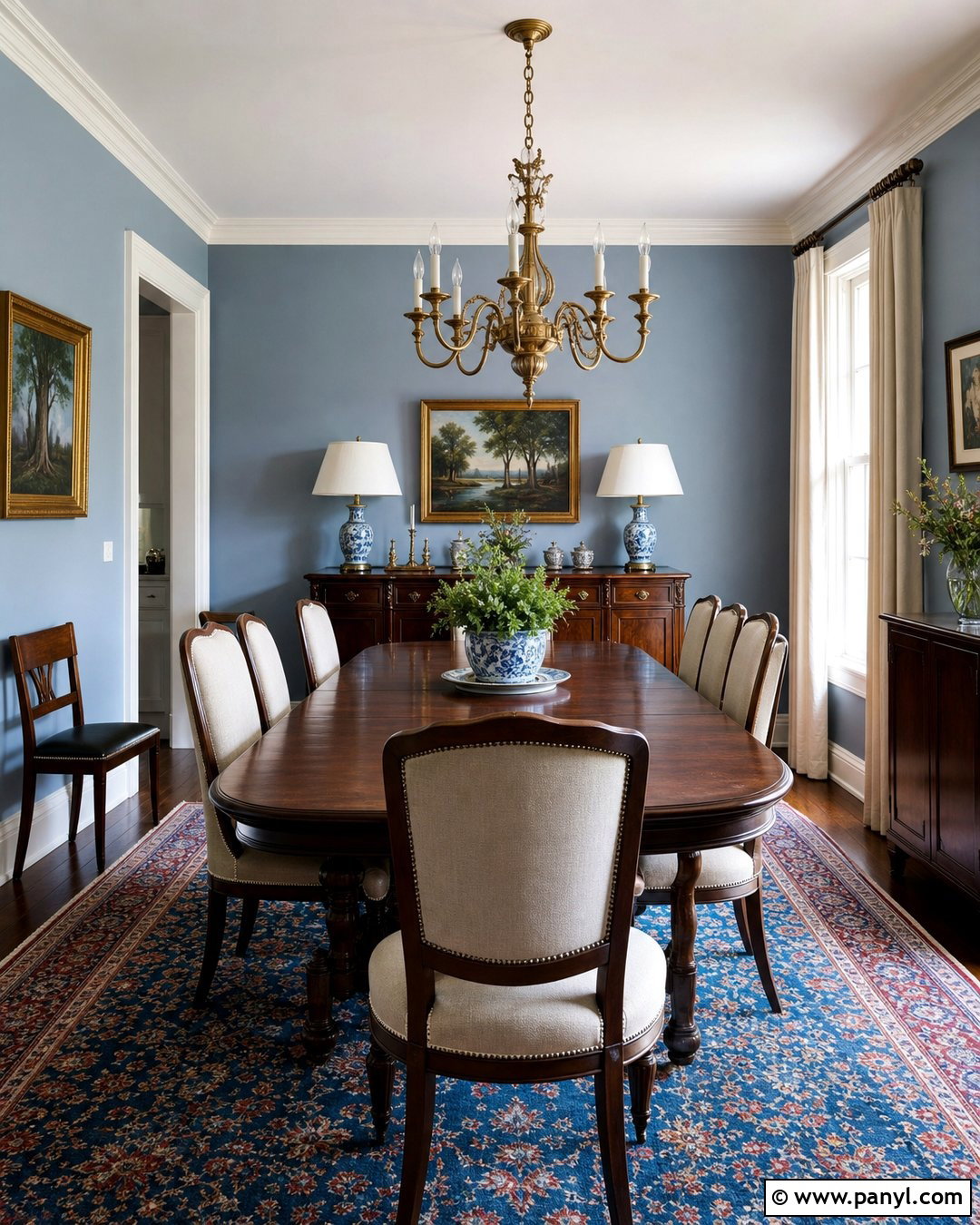
Architectural trim gives dusty blue walls a graceful, traditional character. Paint the walls blue while keeping crown molding, baseboards, and window casings a soft white. Place a polished walnut dining table at the center, surrounded by upholstered chairs in oatmeal or subtle blue ticking fabric. An antique brass chandelier adds warm light and connects with framed artwork along the walls. Ground the room with a vintage-patterned rug containing faded red, beige, and blue. Full linen curtains should fall close to the floor for a finished appearance. A dark wood sideboard can hold simple ceramic lamps and a large mirror. This complete dining room feels established and elegant, but its muted palette keeps formal furniture from appearing heavy or outdated.
14. Dusty Blue Small Bathroom
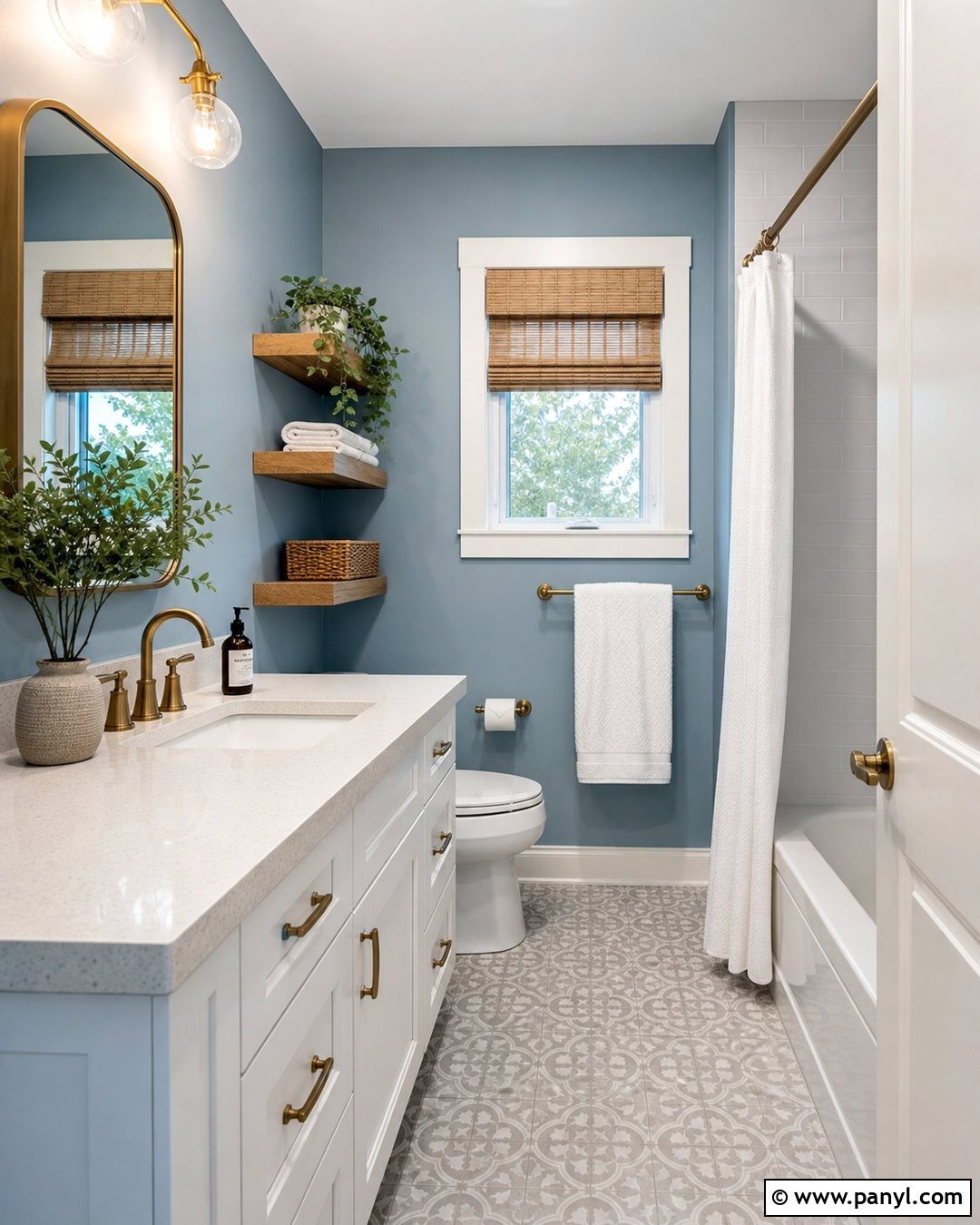
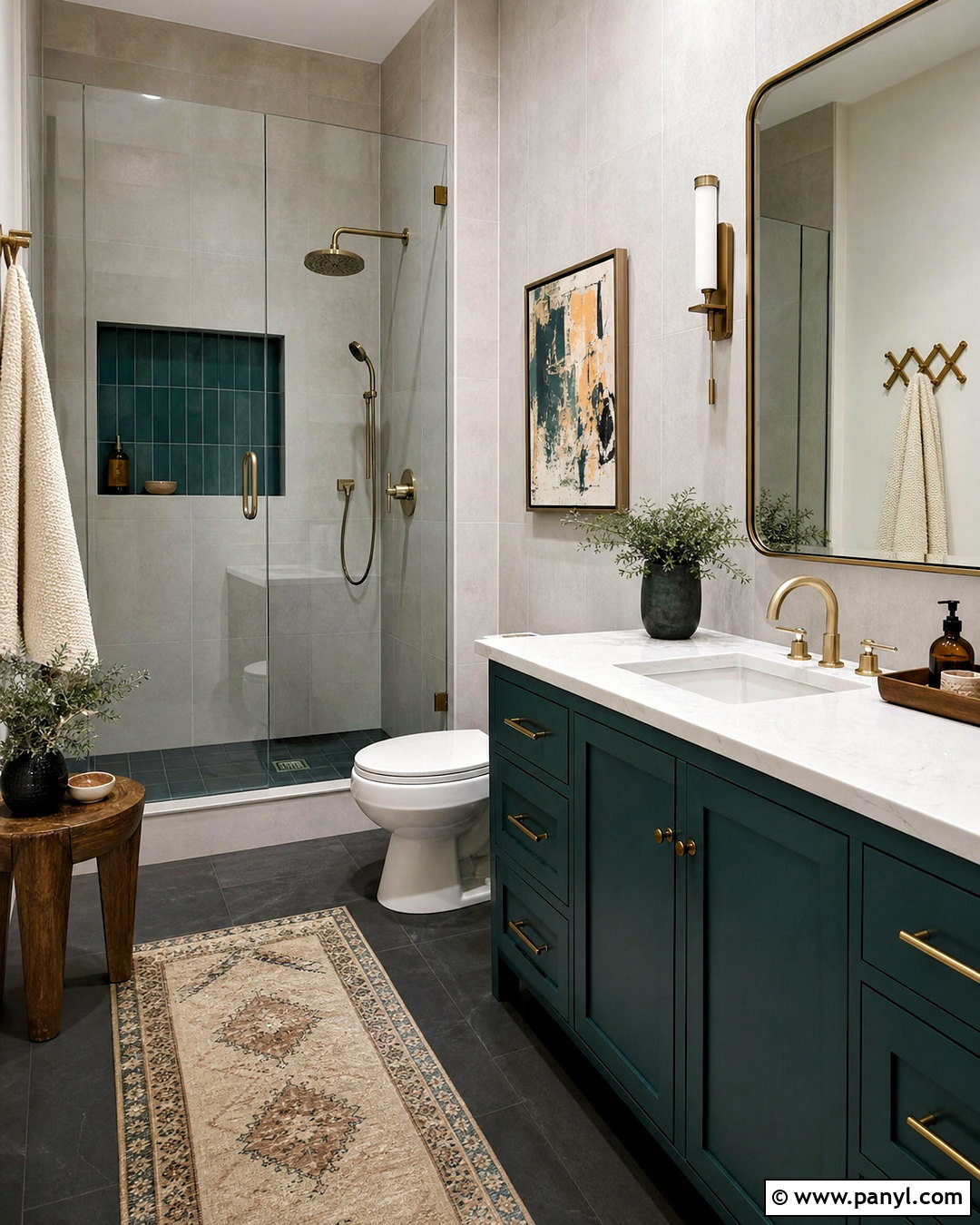
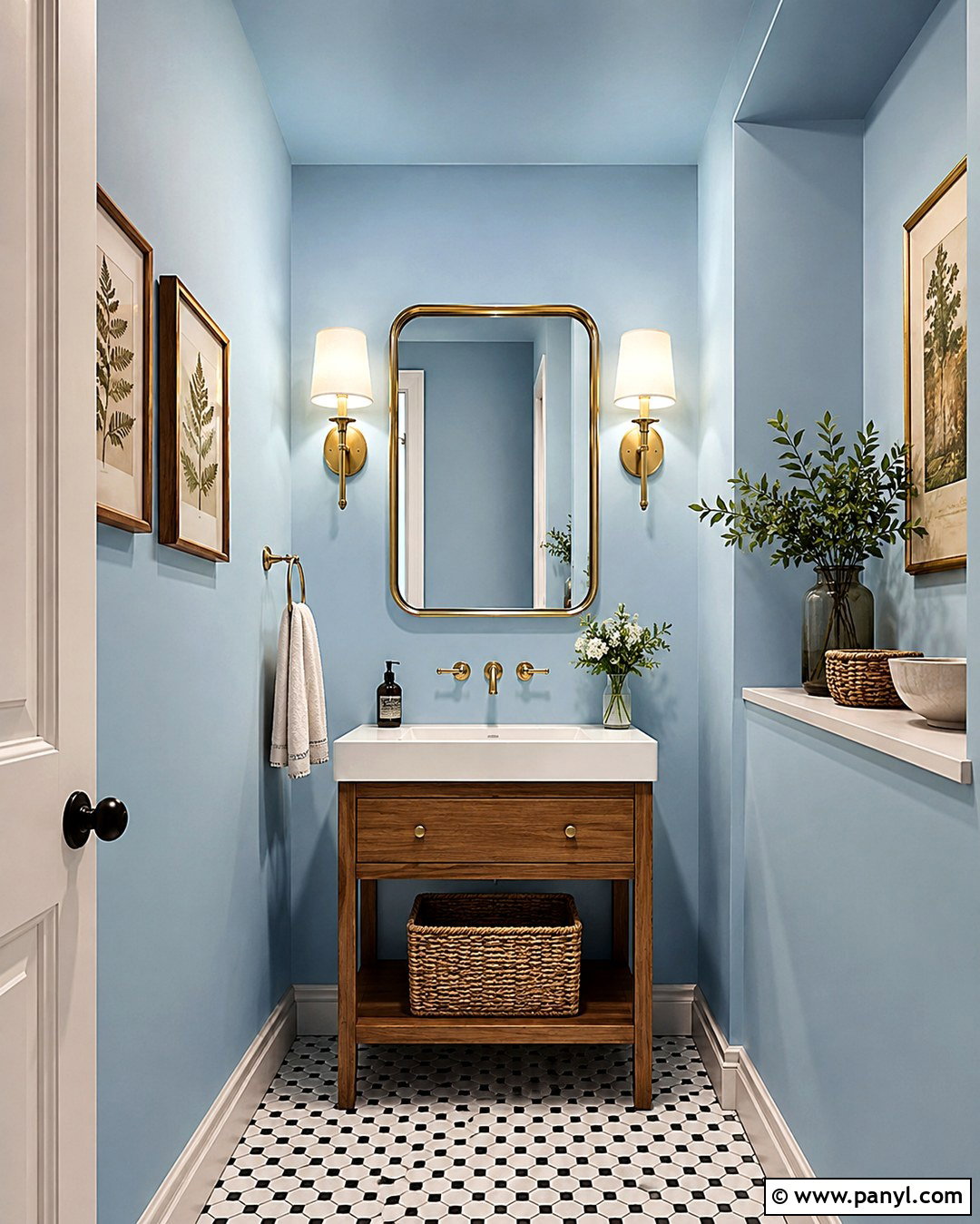
A compact bathroom can handle dusty blue walls when light surfaces balance the color. Pair the paint with a white vanity, pale quartz countertop, and simple white tile around the shower. Use brushed brass hardware to introduce warmth, then add a rounded mirror with a thin matching frame. A light wood shelf above the toilet offers useful storage for rolled towels and small baskets. Keep the floor subtle with warm gray or creamy patterned tile. White towels and a washable beige runner make the room feel brighter and more comfortable. If natural light is limited, choose a dusty blue with slightly warm gray undertones. This coordinated bathroom feels larger, cleaner, and more inviting because every material supports the wall color instead of competing with it.
15. Dusty Blue Home Office
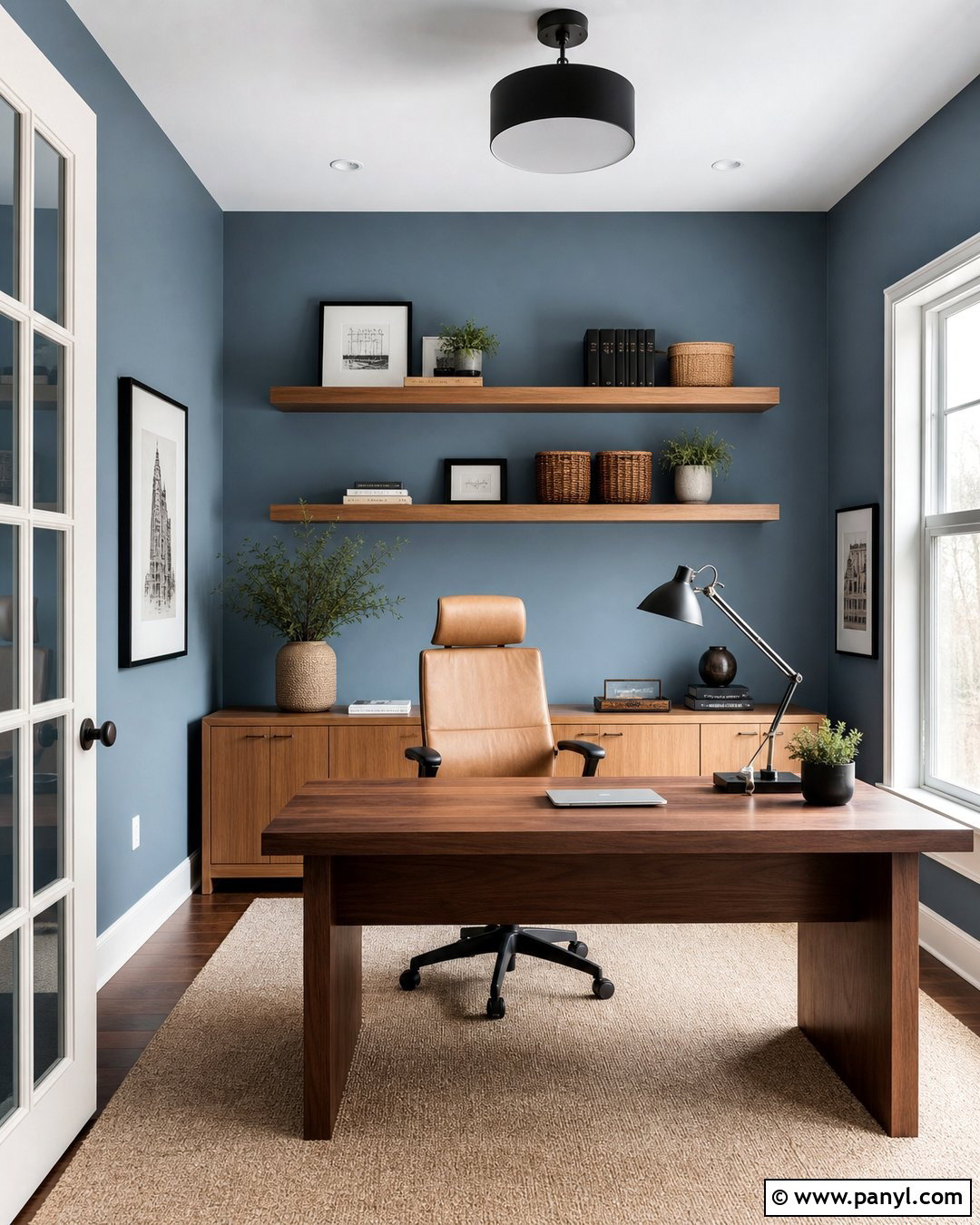
What would make a home office feel focused without becoming plain? Dusty blue walls provide a calm backdrop for an organized workspace built around warm wood and practical storage. Position a walnut desk near the window and add an ergonomic chair upholstered in tan or cream fabric. Install slim oak shelves above a low cabinet, leaving enough open wall space to avoid visual clutter. Black task lighting and matching hardware can define the softer palette. Use a beige rug to improve comfort and absorb sound. Frame a few simple landscapes or architectural prints in dark wood. A leafy plant and woven baskets finish the room. The result is a professional, welcoming office that works equally well for video calls, paperwork, and creative projects.
16. Dusty Blue Nursery
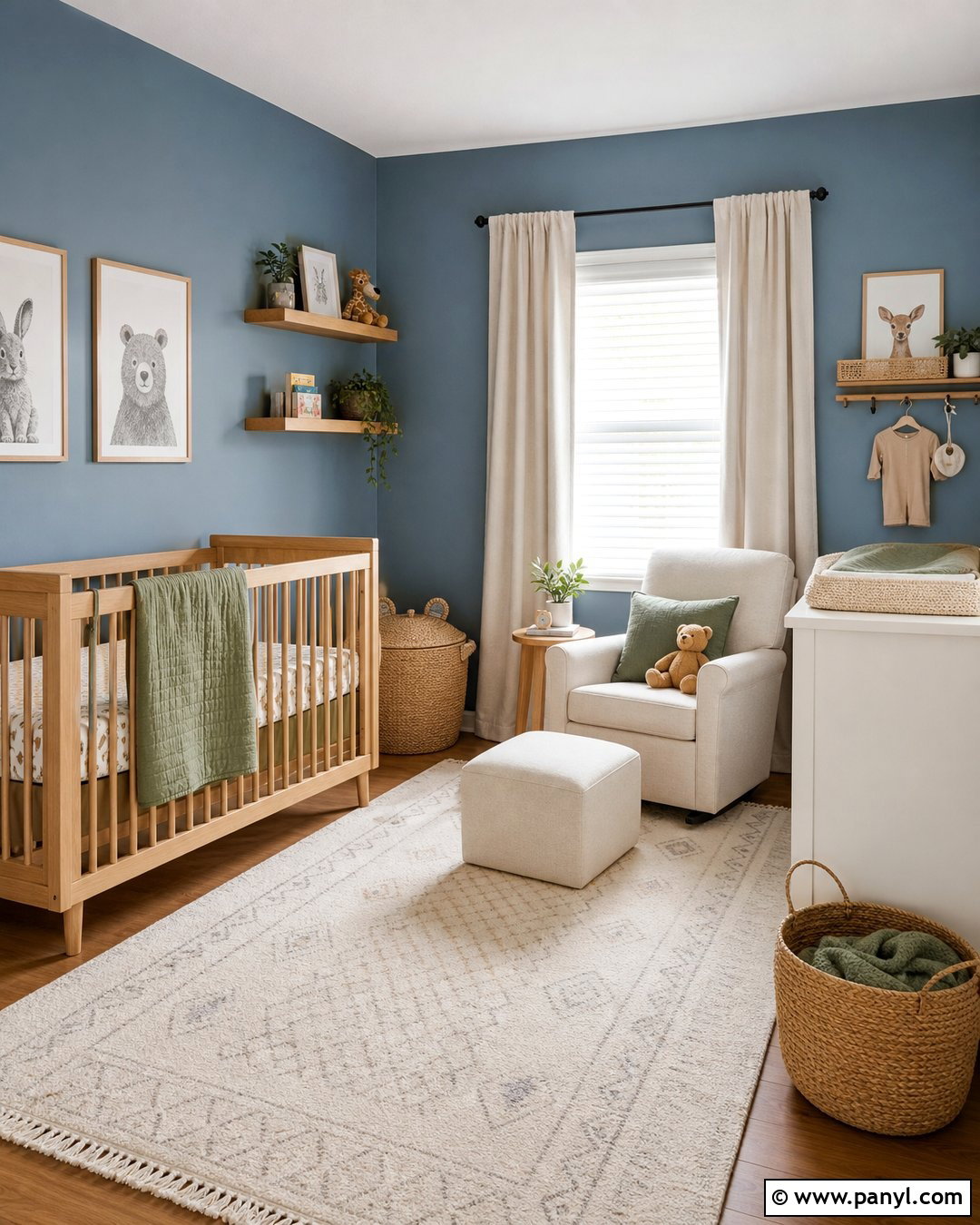
Dusty blue walls create a flexible nursery backdrop that can grow with the child. Pair them with a natural oak crib, white dresser, and comfortable cream glider arranged near a small reading corner. Use a washable ivory rug with a subtle blue pattern to soften the floor. Linen curtains with blackout panels provide practical light control without making the room look heavy. Add color through muted green, tan, and rust toys or textiles rather than using one strict theme. Simple animal prints, wooden shelves, and woven storage baskets keep the space warm and organized. Choose sturdy furniture with rounded forms and leave clear walking paths. This complete nursery feels peaceful and playful while remaining adaptable enough to become a toddler room later.
17. Dusty Blue Entryway
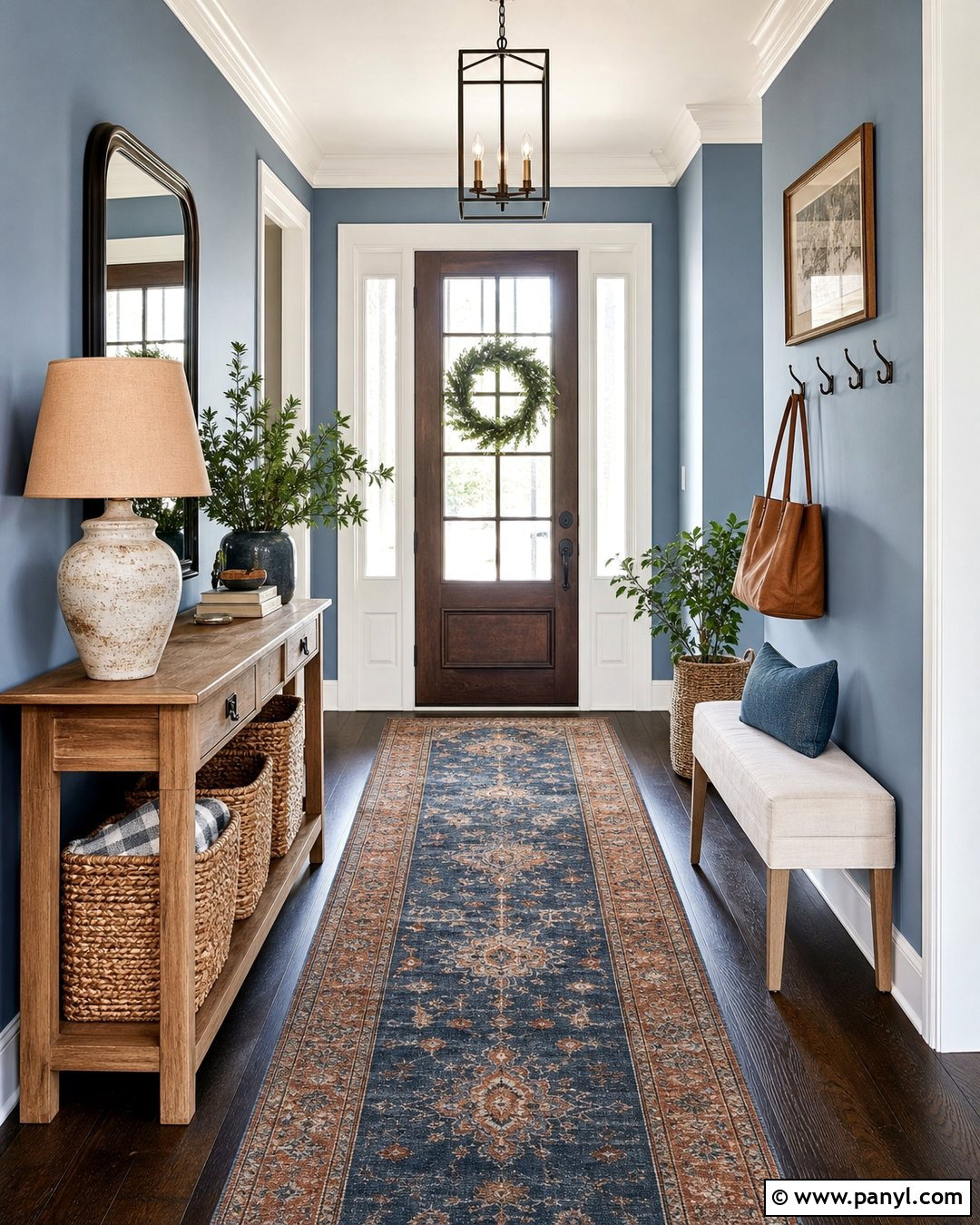
A dusty blue entryway can make the first view of your home feel calm and intentional. Paint the walls in a medium muted blue, then place a narrow natural-wood console against the longest wall. Hang a large brass or dark bronze mirror above it to reflect light and provide a useful final check before leaving. A washable runner with beige, rust, and blue tones will hide everyday dirt better than a solid pale rug. Add a small upholstered bench, wall hooks, and woven baskets for practical storage. Keep the nearby trim and doors warm white to sharpen the edges. A ceramic lamp and simple greenery finish the arrangement. The space remains functional, uncluttered, and welcoming even when the entry is relatively small.
18. Dusty Blue Breakfast Nook
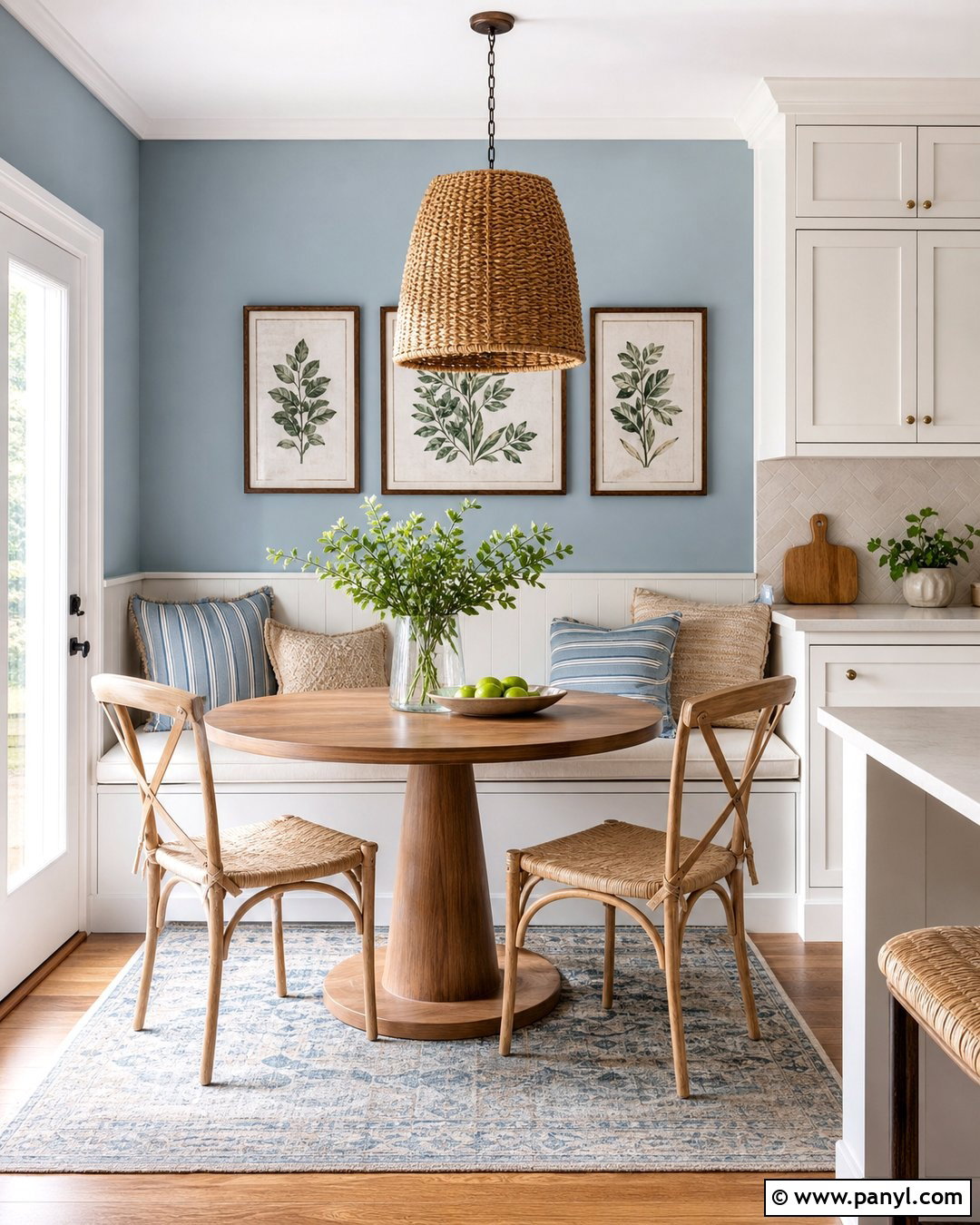
Morning light can make dusty blue walls look especially fresh in a kitchen breakfast nook. Build the seating area around a round oak table, a fitted cream bench, and two simple wood chairs. Use striped cushions or pillows that combine dusty blue, ivory, and warm tan. A woven pendant light adds texture above the table while keeping the palette relaxed. Hang one framed botanical print or a small grouping of ceramic plates on the main wall. If the nook connects to a white kitchen, repeat the blue through a vase or Roman shade for continuity. Natural wood flooring and a washable patterned rug will ground the arrangement. This cozy setup creates a complete dining destination without making a casual kitchen corner feel overly decorated.
19. Dusty Blue Color Drenched Room
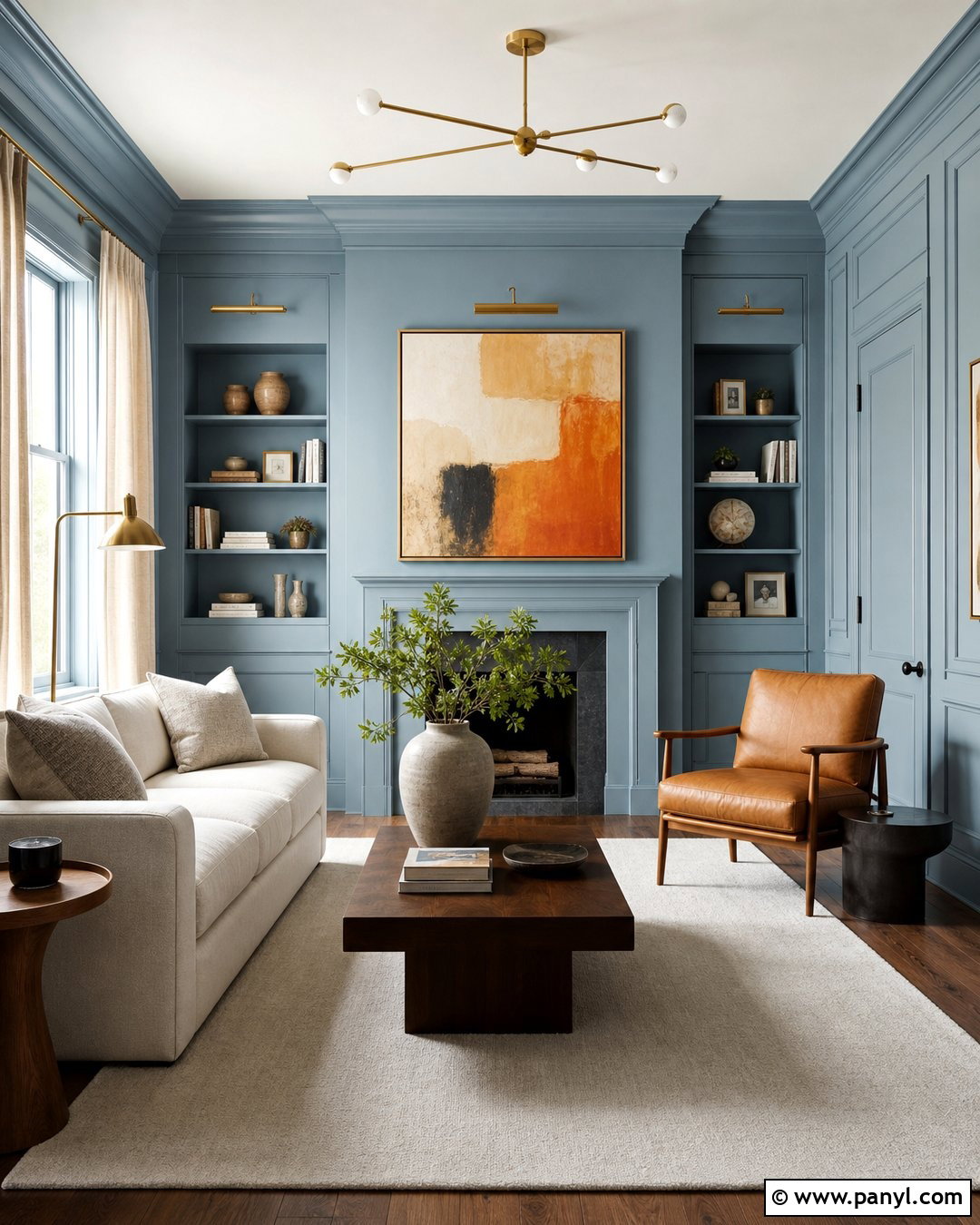
Color drenching gives dusty blue a more immersive, contemporary appearance. Paint the walls, trim, interior doors, and built-in shelves in the same blue, using a slightly higher sheen on the woodwork for definition. Choose furniture that contrasts gently, such as an ivory sofa, camel leather chair, and dark walnut table. A cream rug and natural linen curtains will stop the blue from becoming overwhelming. Add aged brass lighting and artwork with warm brown, ocher, and soft green accents. Keep the ceiling warm white in a low room, or paint it blue when the space receives generous daylight. This coordinated look feels enveloping and polished because architectural details blend together while carefully selected warm furnishings stand forward against the unified background.
20. Dusty Blue Half Wall Paneling
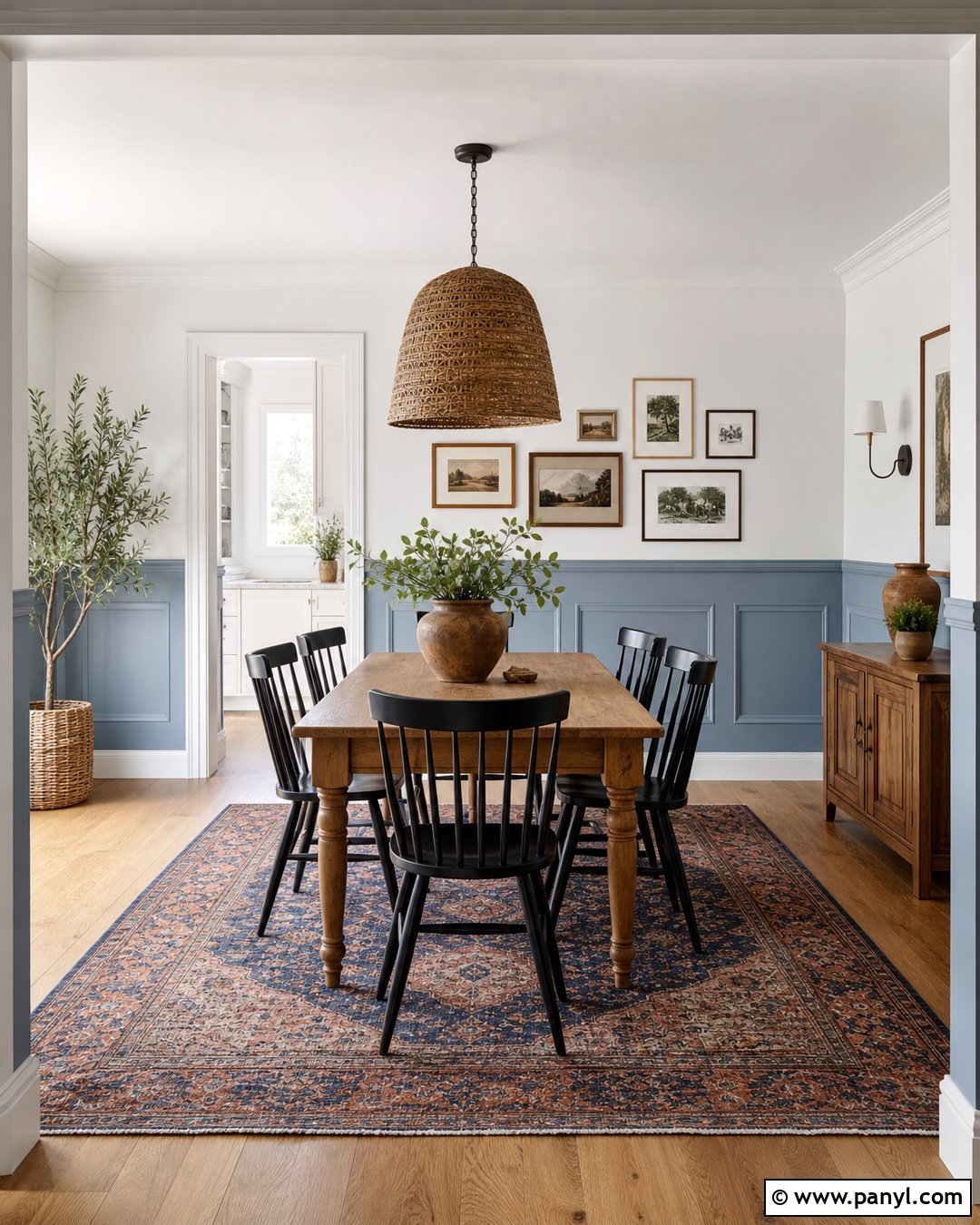
Half-wall paneling offers a practical way to use dusty blue without covering the entire room. Install simple panel molding or beadboard on the lower portion, paint it dusty blue, and keep the upper walls warm white. In a dining area, combine the treatment with an oak table, black spindle chairs, and a woven pendant. A patterned rug containing blue and terracotta can bring energy to the neutral furniture. Hang artwork above the paneling so the upper wall does not feel empty. Repeat the blue through seat cushions or pottery, but avoid matching every accessory. The paneled lower wall adds visual structure and helps protect high-traffic surfaces. This approach feels detailed and finished while keeping the room open, bright, and relatively easy to repaint.
21. Dusty Blue Board And Batten Wall
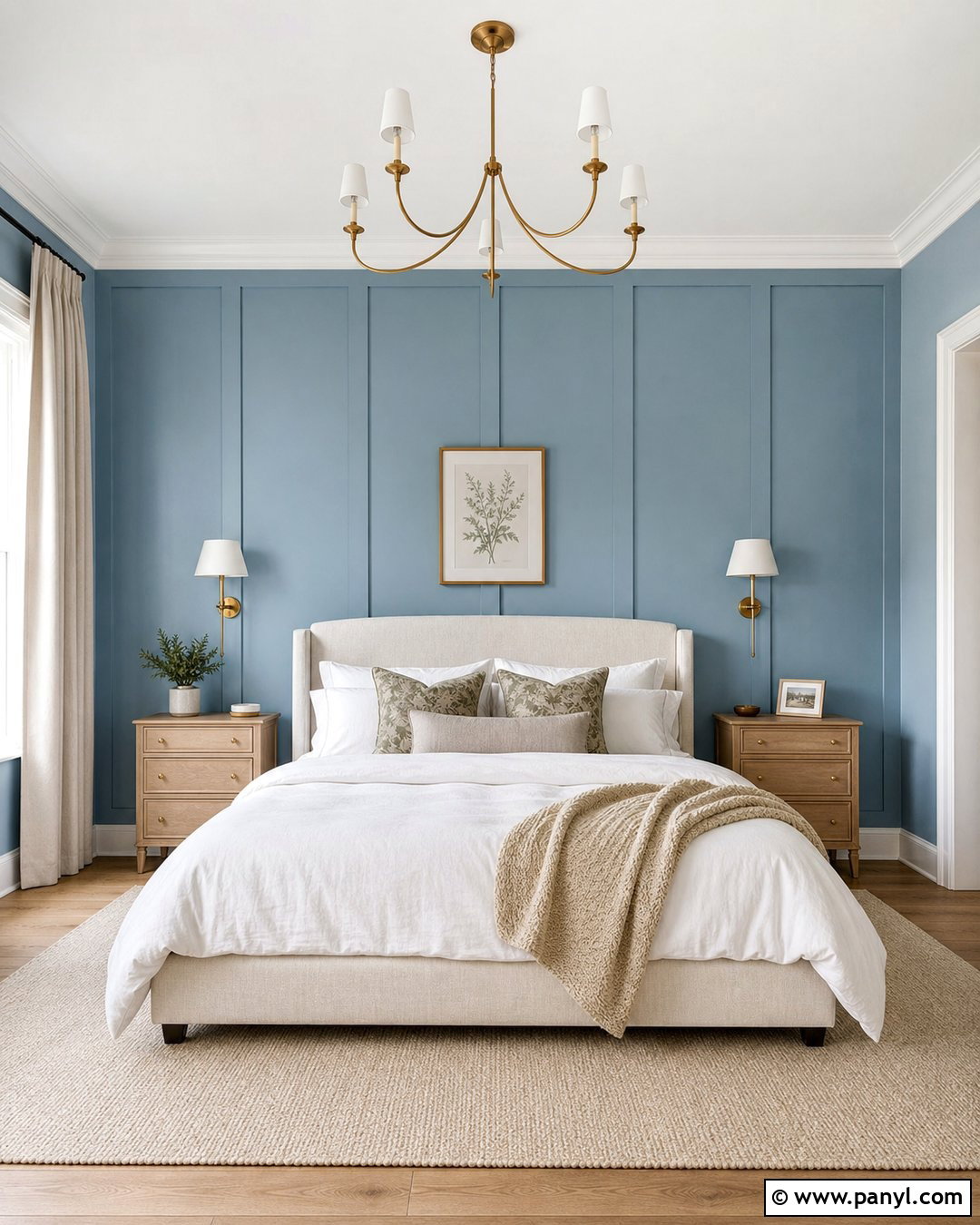
Board and batten turns a dusty blue wall into an architectural focal point. Use evenly spaced vertical battens behind the bed, extending the treatment across the entire wall for a built-in appearance. Paint the boards and wall the same matte blue so shadows create the texture. Pair the feature with a cream upholstered bed, pale oak nightstands, and warm brass sconces mounted between selected battens. White bedding and an oatmeal throw will keep the bedroom light. Choose a simple beige rug and restrained botanical artwork for the adjacent walls. Keep the remaining walls warm white or very pale blue-gray. This complete bedroom design adds character without wallpaper and works particularly well in newer homes that lack original architectural details.
22. Dusty Blue Picture Frame Molding
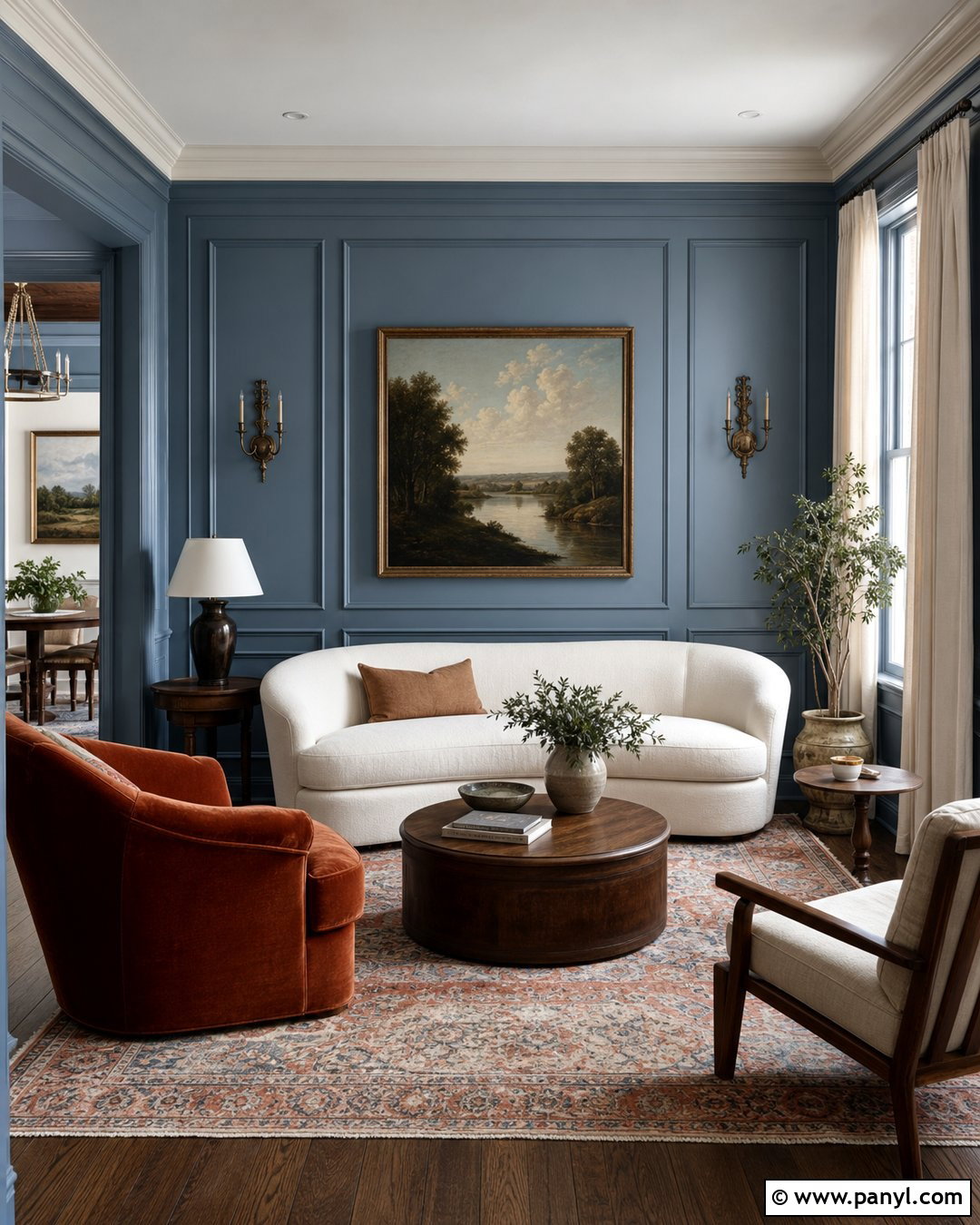
Picture frame molding brings elegant dimension to dusty blue walls without requiring elaborate decoration. Apply rectangular molding across all four walls, then paint the trim and wall surfaces in one consistent blue. Furnish the sitting room with a curved cream sofa, two walnut side tables, and a faded Persian-style rug. Place a large landscape painting inside the central molding panel to reinforce its proportions. Antique brass sconces can illuminate the artwork while adding warmth. Use ivory curtains and a warm white ceiling to balance the saturated wall treatment. A rust-colored velvet chair provides one stronger accent. The completed space feels traditional in structure but current in color and furniture, making it suitable for both historic homes and plain modern rooms needing architectural interest.
23. Dusty Blue Walls With Floral Wallpaper
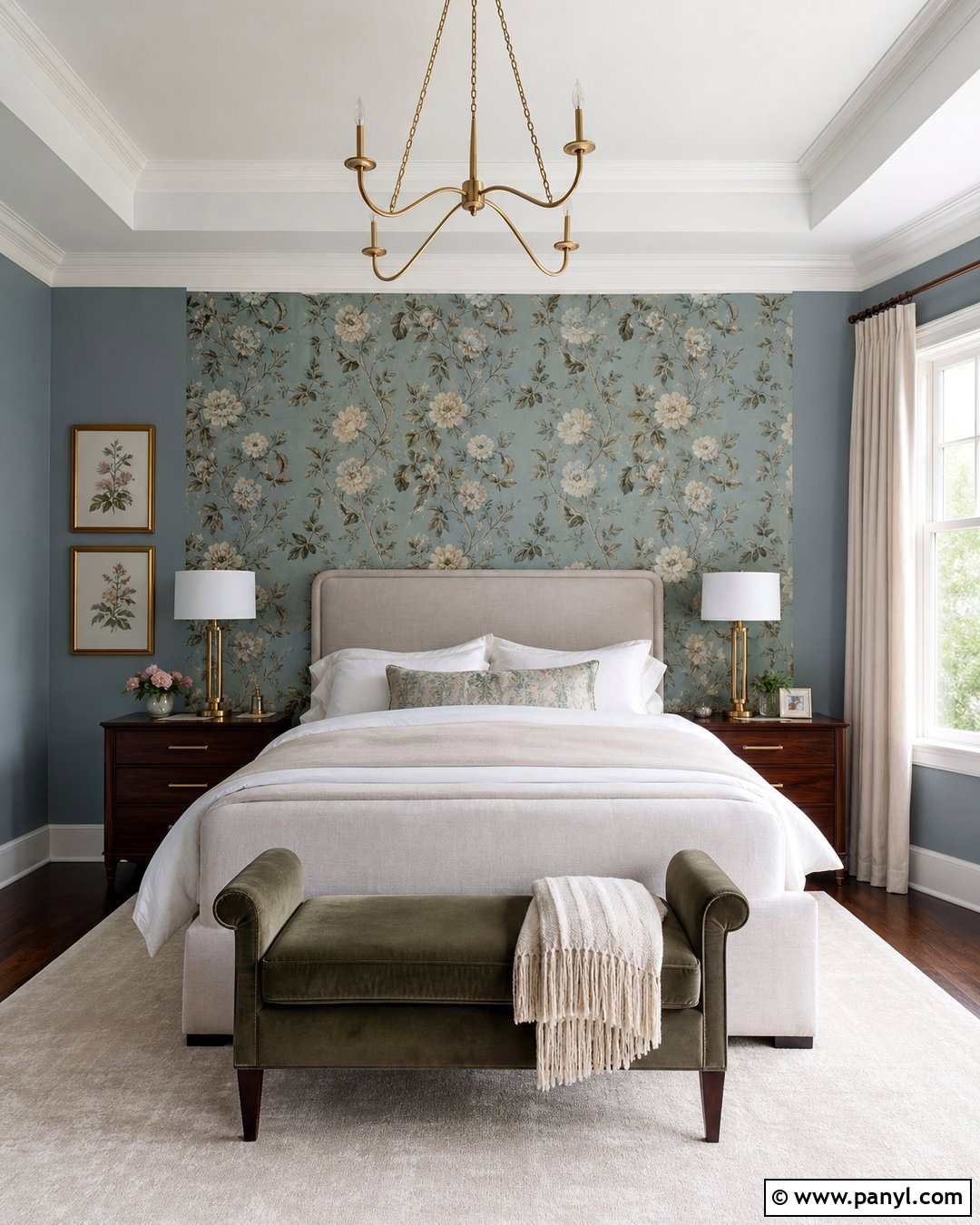
Combining dusty blue paint with floral wallpaper creates a layered room when both surfaces share similar undertones. Use the wallpaper behind the bed and paint the remaining walls in a blue pulled from its pattern. Select a design featuring dusty blue, cream, muted green, and soft brown rather than bright multicolored flowers. Add an oatmeal upholstered bed, white bedding, walnut nightstands, and antique brass lamps. Solid linen curtains will give the pattern room to breathe. A simple cream rug and one green velvet bench can finish the palette. Keep other artwork minimal because the wallpaper already provides visual detail. This bedroom feels romantic and collected, yet the coordinated wall color keeps the floral feature from looking disconnected or excessively decorative.
24. Dusty Blue Walls And Ceiling
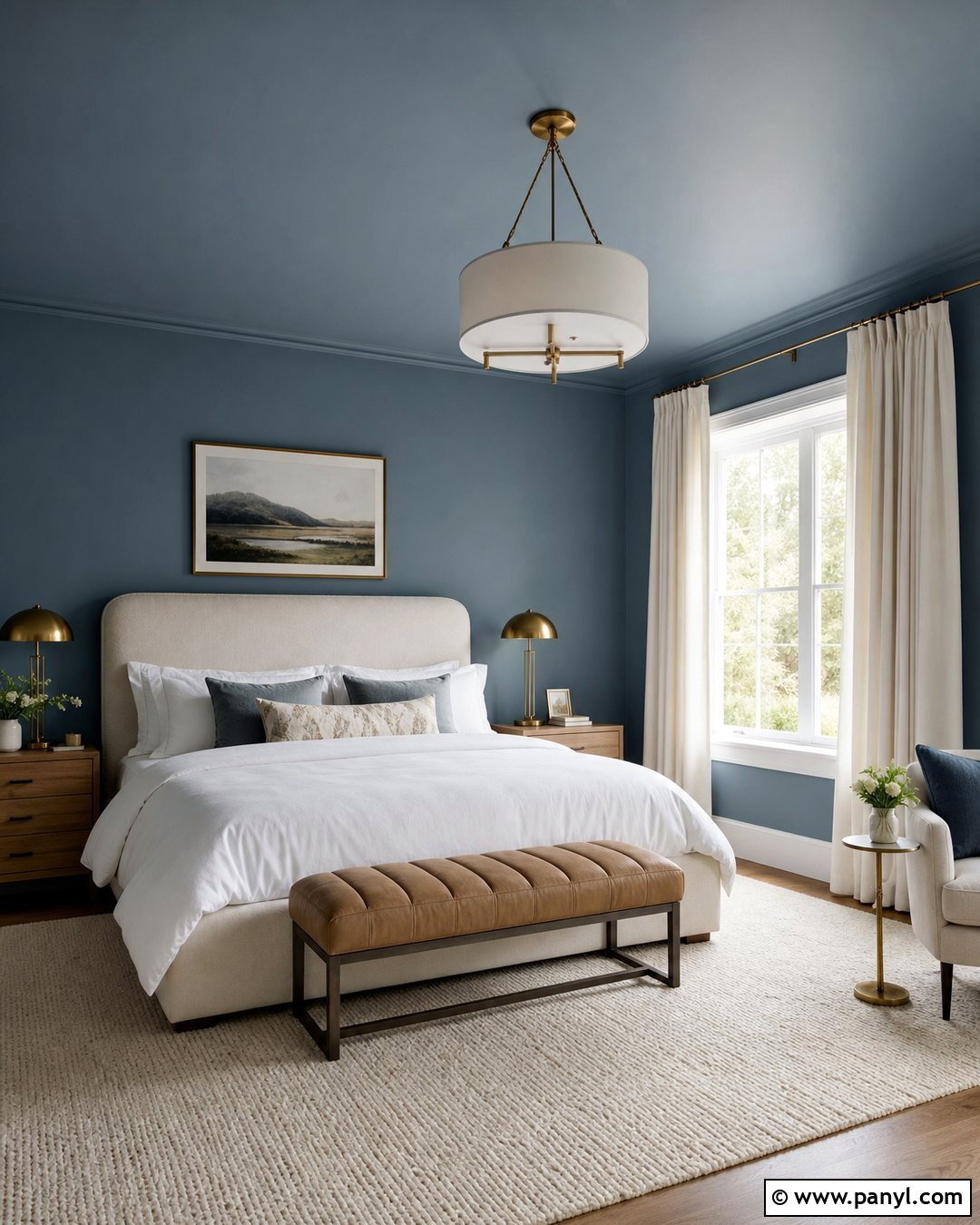
Painting both the walls and ceiling dusty blue can make a bedroom or reading room feel cozy and complete. Choose a light to medium shade so the color surrounds the space without becoming visually heavy. Keep the crown molding blue as well, allowing the room’s boundaries to soften. Introduce a cream upholstered bed, white linen bedding, and medium oak furniture for contrast. Warm brass lamps and a camel-colored bench will offset the cooler paint. Use an ivory rug and pale curtains to maintain brightness around the lower half of the room. Minimal artwork prevents the enveloping color from becoming busy. This approach works best as a deliberate full-room scheme, producing a peaceful retreat rather than simply turning the ceiling into an isolated accent.
25. Dusty Blue Fireplace Wall
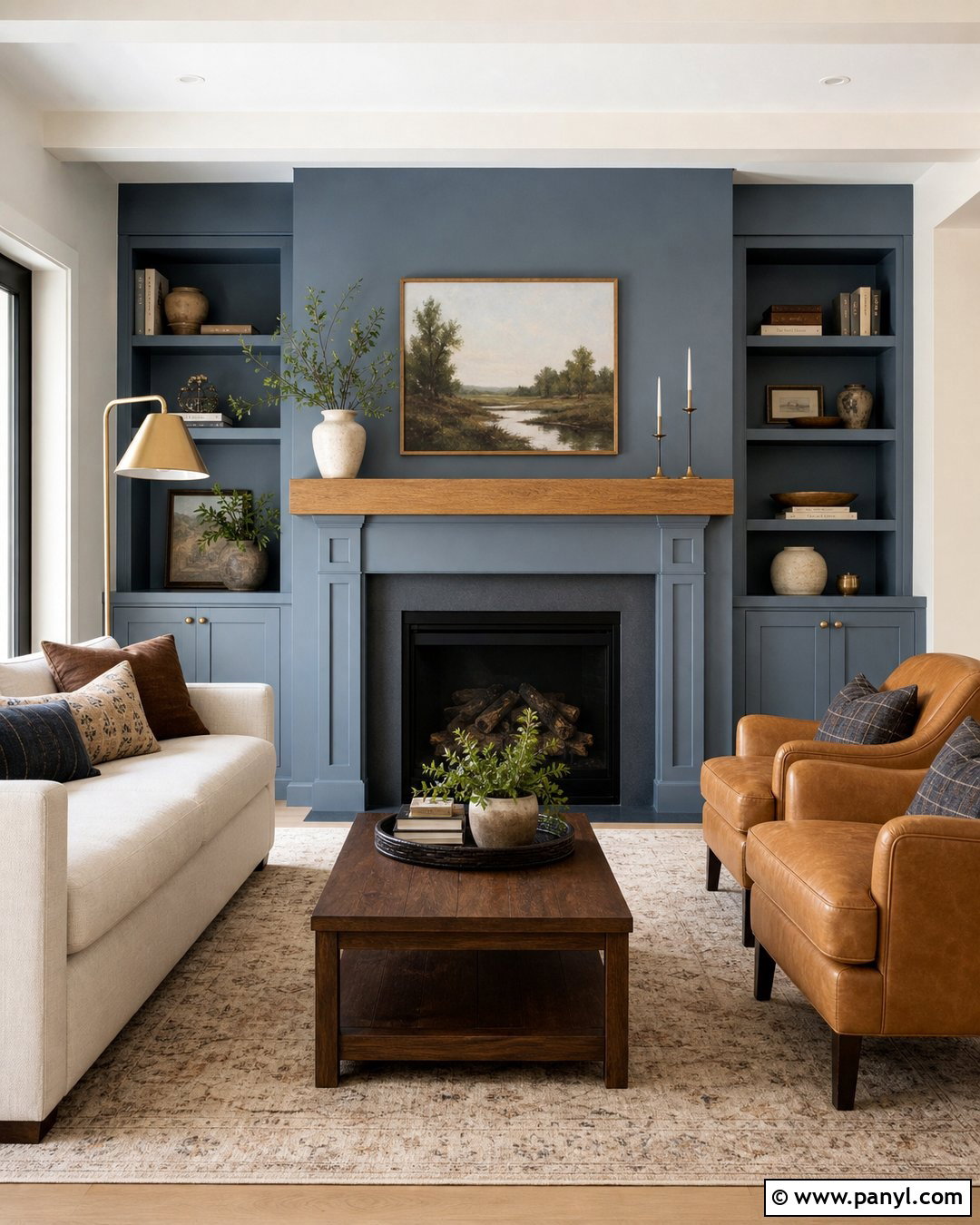
A dusty blue fireplace wall gives the living room a clear focal point while connecting architecture with color. Paint the chimney breast and surrounding built-ins dusty blue, leaving the mantel warm white or natural oak. Arrange a cream sofa and two tan leather chairs toward the fireplace to create a comfortable conversation area. A beige rug, walnut coffee table, and brass floor lamp add warmth. Style the shelves with books, pottery, and small framed art, allowing plenty of open space around each item. Hang one substantial landscape painting above the mantel rather than several small pieces. The full arrangement feels balanced because the blue feature anchors the furniture, while repeated wood and leather tones keep the fireplace wall from appearing too cool or disconnected.
26. Dusty Blue Gallery Wall
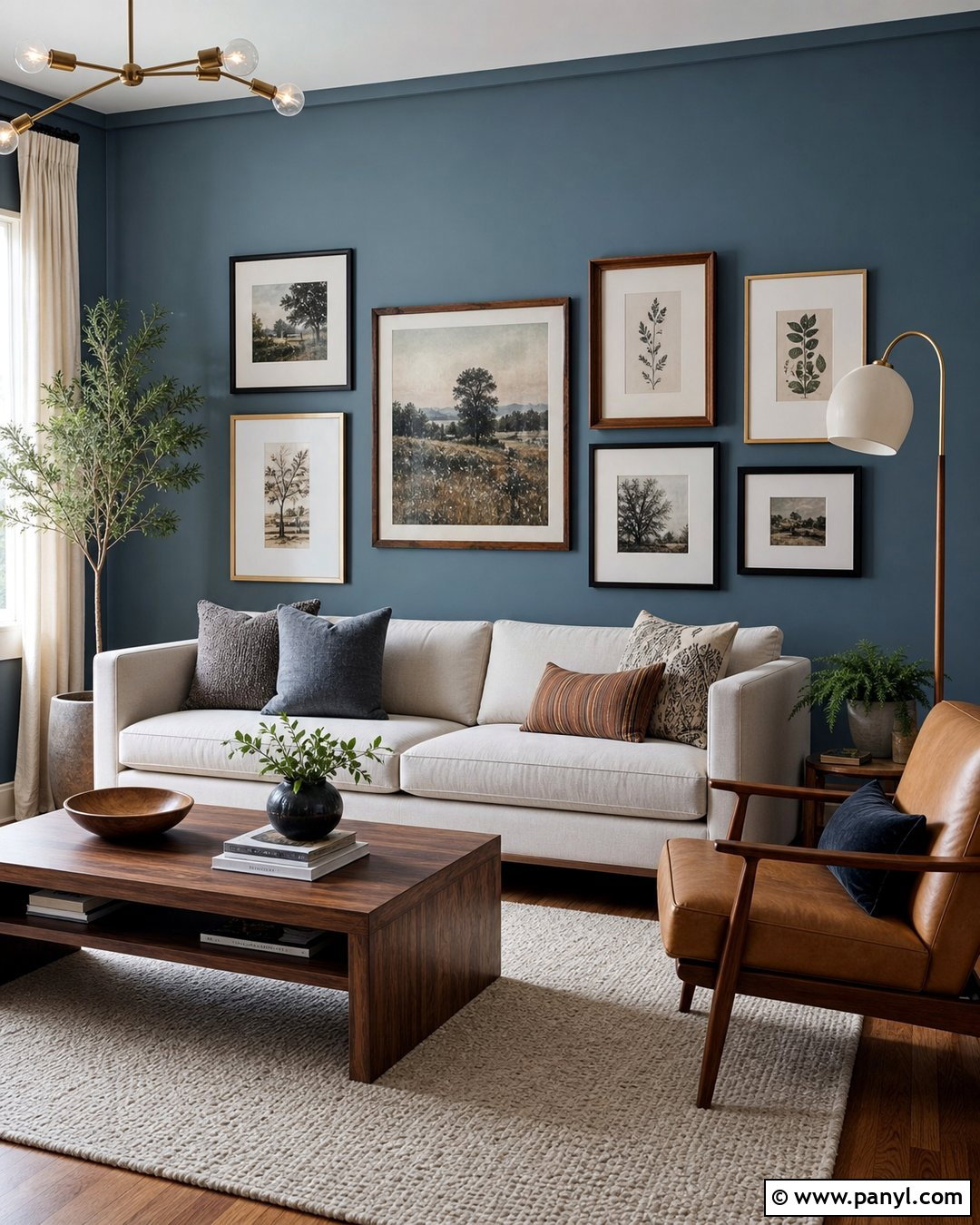
Artwork gains definition against dusty blue walls, especially when the frames and images share a controlled palette. Create a gallery above a neutral sofa using black, walnut, and aged brass frames in varied sizes. Fill them with landscapes, sketches, botanical prints, and abstract pieces containing cream, brown, green, and faded blue. Lay out the arrangement on the floor before hanging it, maintaining consistent spacing between frames. Add a walnut coffee table, cream rug, and tan accent chair to warm the room. Linen curtains and a sculptural floor lamp complete the seating area. Avoid decorating every remaining wall. By giving the gallery one dedicated location, the finished living room feels personal and collected while the dusty blue paint unifies otherwise different artwork.
27. Dusty Blue Walls In A Low Light Room
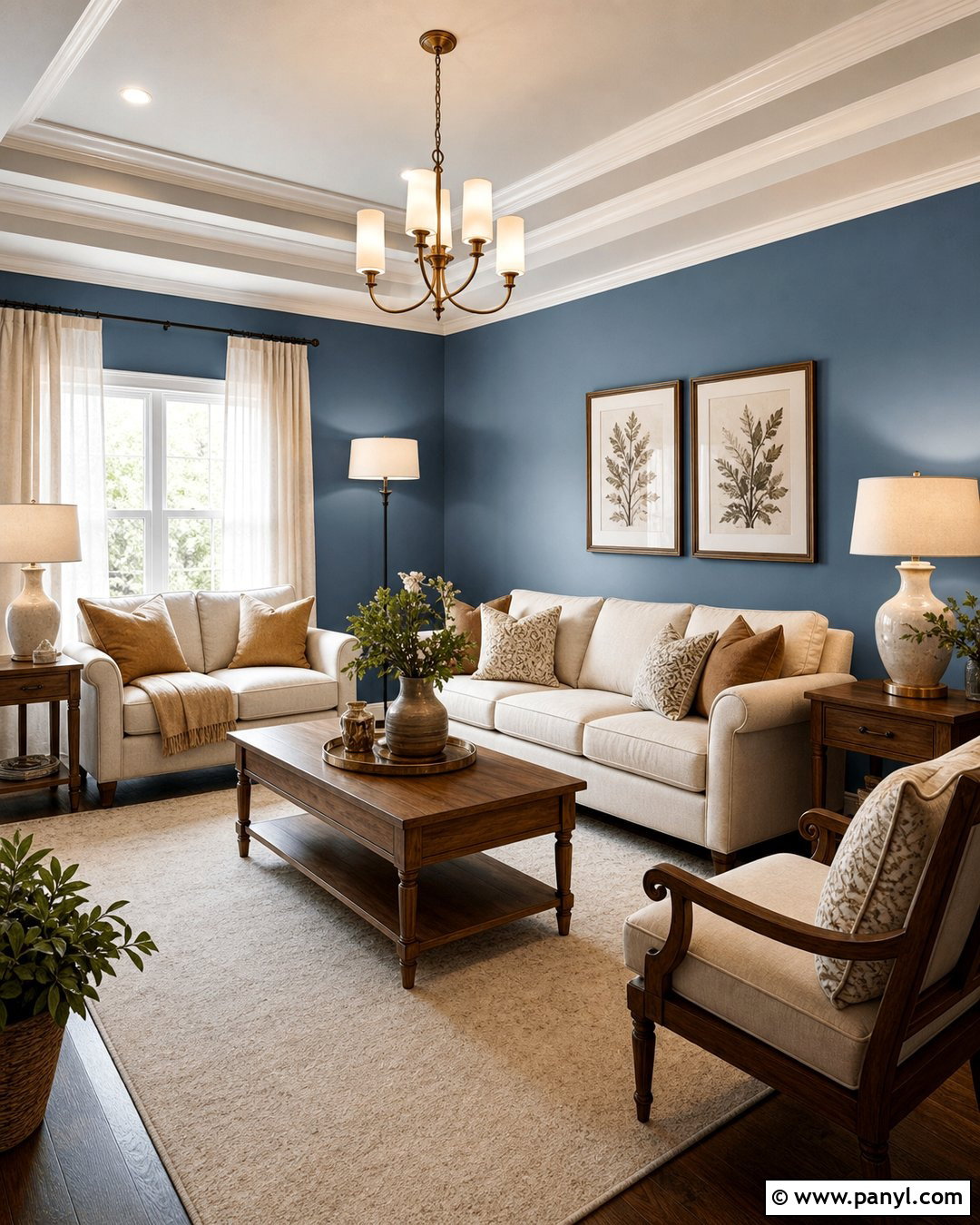
Low-light rooms need a dusty blue selected for warmth rather than icy gray undertones. Look for a muted shade with a subtle green or soft violet influence, then test it beside the flooring and artificial lighting. Furnish the room with warm cream upholstery, honey oak furniture, and an ivory rug that reflects available light. Use several lighting sources, including a ceiling fixture, table lamps, and a floor lamp, instead of relying on one overhead bulb. Warm white curtains can frame the windows without blocking daylight. Add rust, camel, or muted gold accessories to keep the palette cozy. The finished design accepts the room’s naturally shaded character while using layered illumination and warm materials to prevent the blue walls from feeling gloomy.
28. Dusty Blue Walls In A Sunny Room
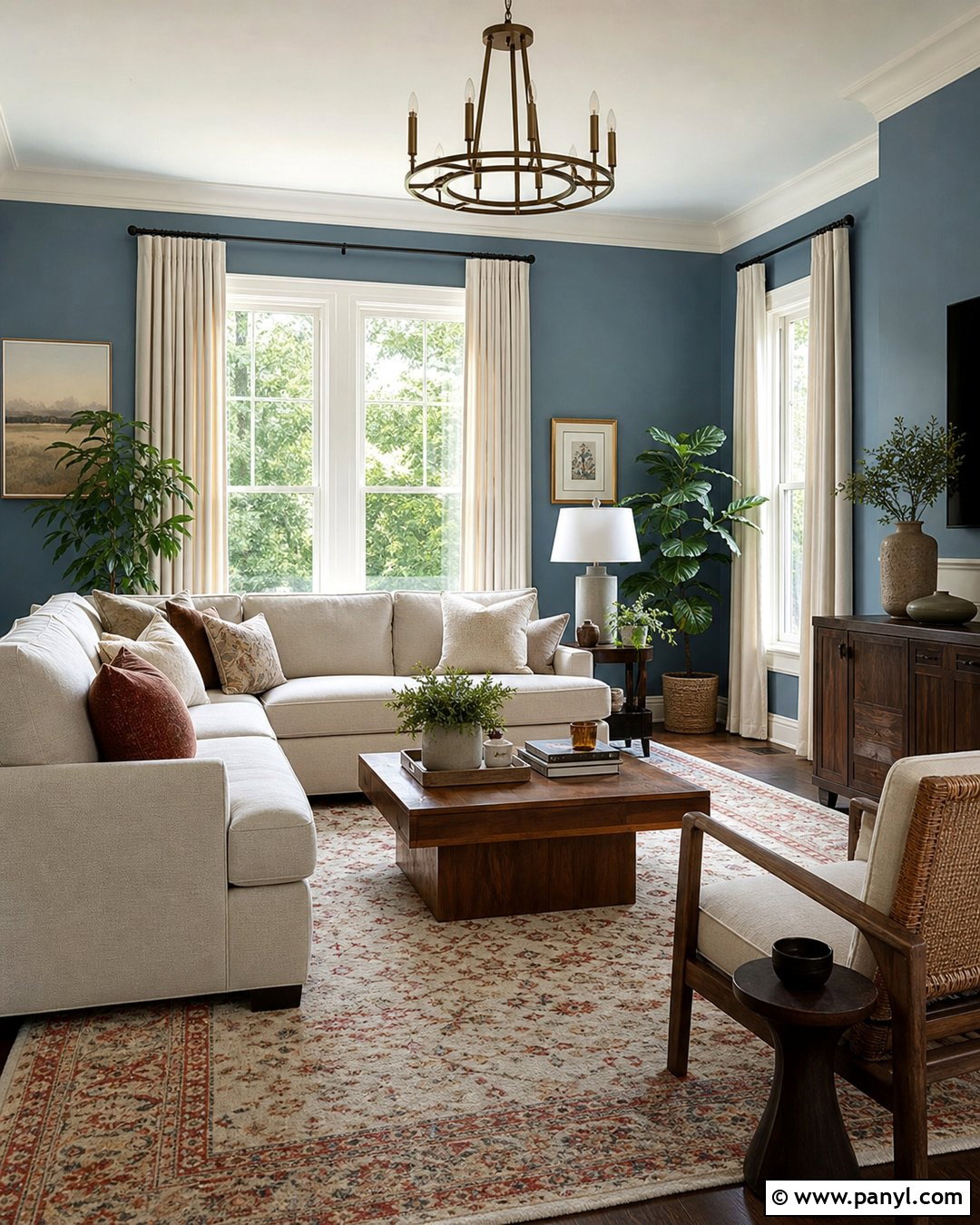
Abundant daylight allows a slightly deeper dusty blue to maintain its color throughout the day. In a sunny living room, coat all walls in a medium blue-gray and balance them with a warm white ceiling and trim. Arrange a light beige sectional near the windows, then add a walnut coffee table and two woven accent chairs. Choose lined linen curtains that filter strong sunlight while preserving the room’s airy quality. A patterned rug with cream, blue, and faded red adds dimension underfoot. Use black or bronze lighting for contrast, plus a few leafy plants that can handle the bright exposure. This complete scheme feels lively without becoming intense, since the muted blue absorbs some brightness while natural textures keep the sunny room relaxed.
29. Dusty Blue Apartment Accent Wall
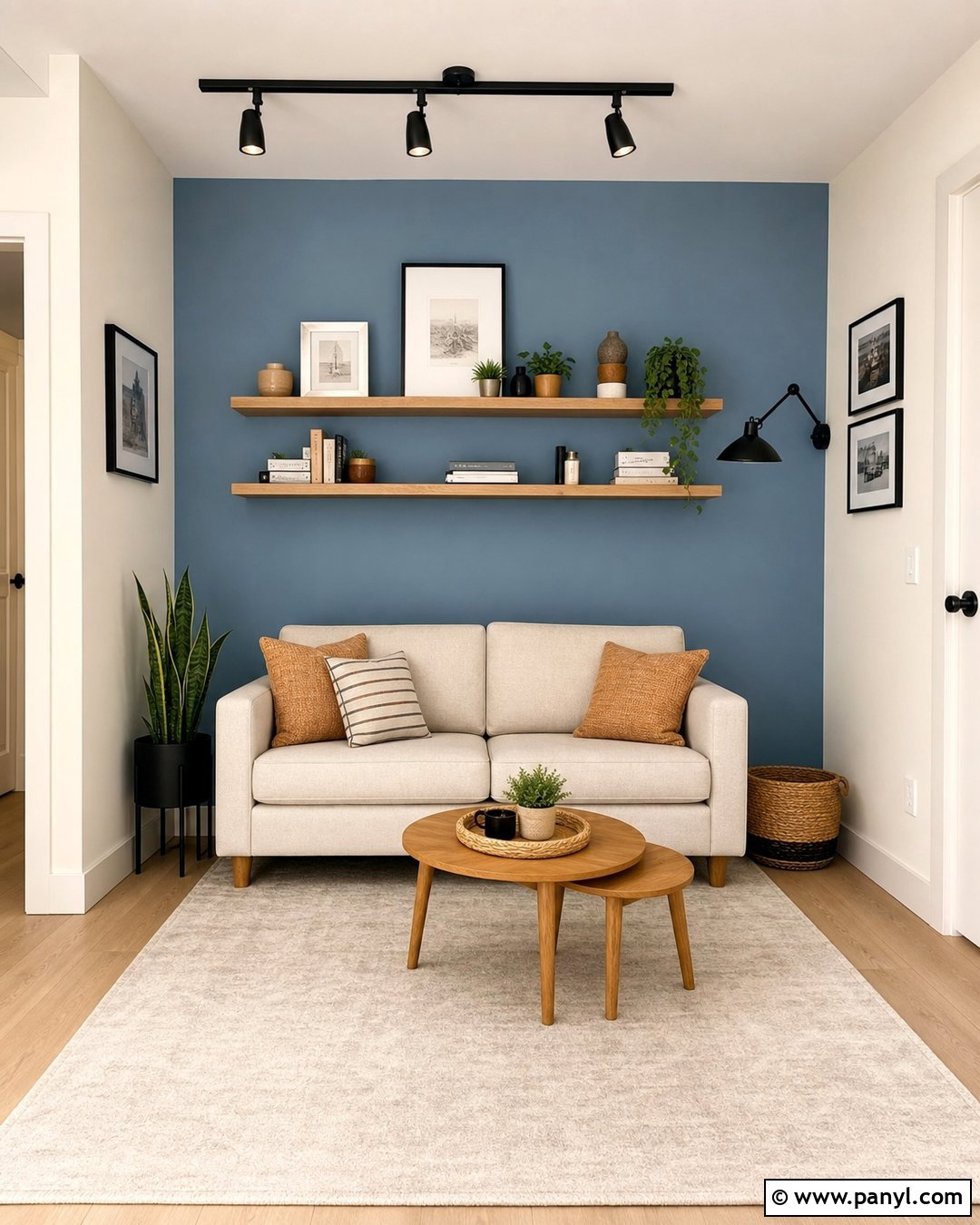
Renters and apartment dwellers can create impact by limiting dusty blue to one carefully chosen wall. Paint the wall behind the sofa or bed, selecting the surface that provides the clearest focal point from the doorway. Keep adjacent walls warm white to preserve an open feeling. In a small living room, combine the feature with a compact cream sofa, nesting oak tables, and a light washable rug. Wall-mounted shelves can add storage without using valuable floor space. Repeat the blue once through a pillow or artwork, then bring in tan, black, and natural woven accents. Use removable alternatives if painting is restricted. This focused design adds depth and personality while keeping the furniture arrangement flexible and the apartment visually uncluttered.
30. Dusty Blue Open Plan Walls
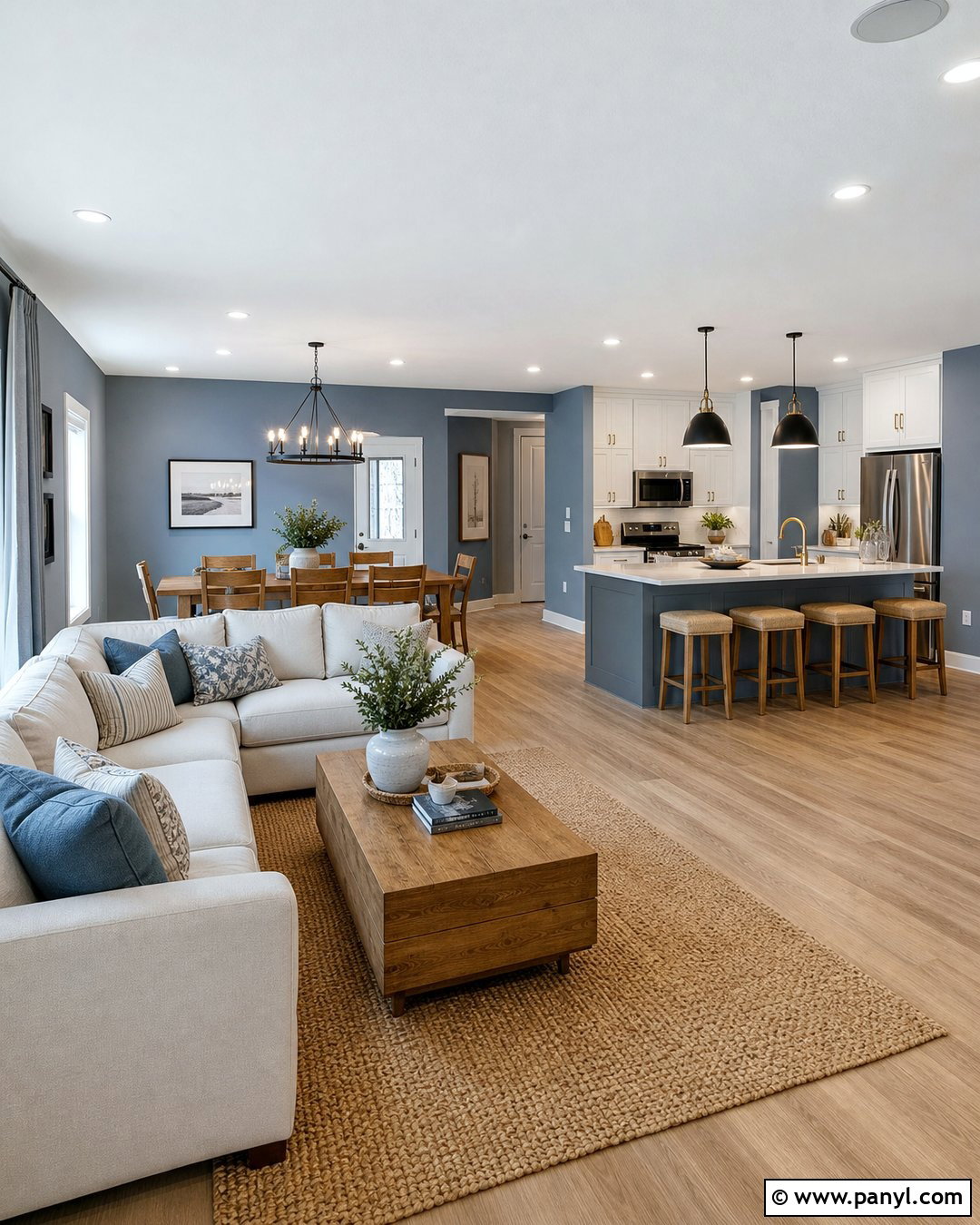
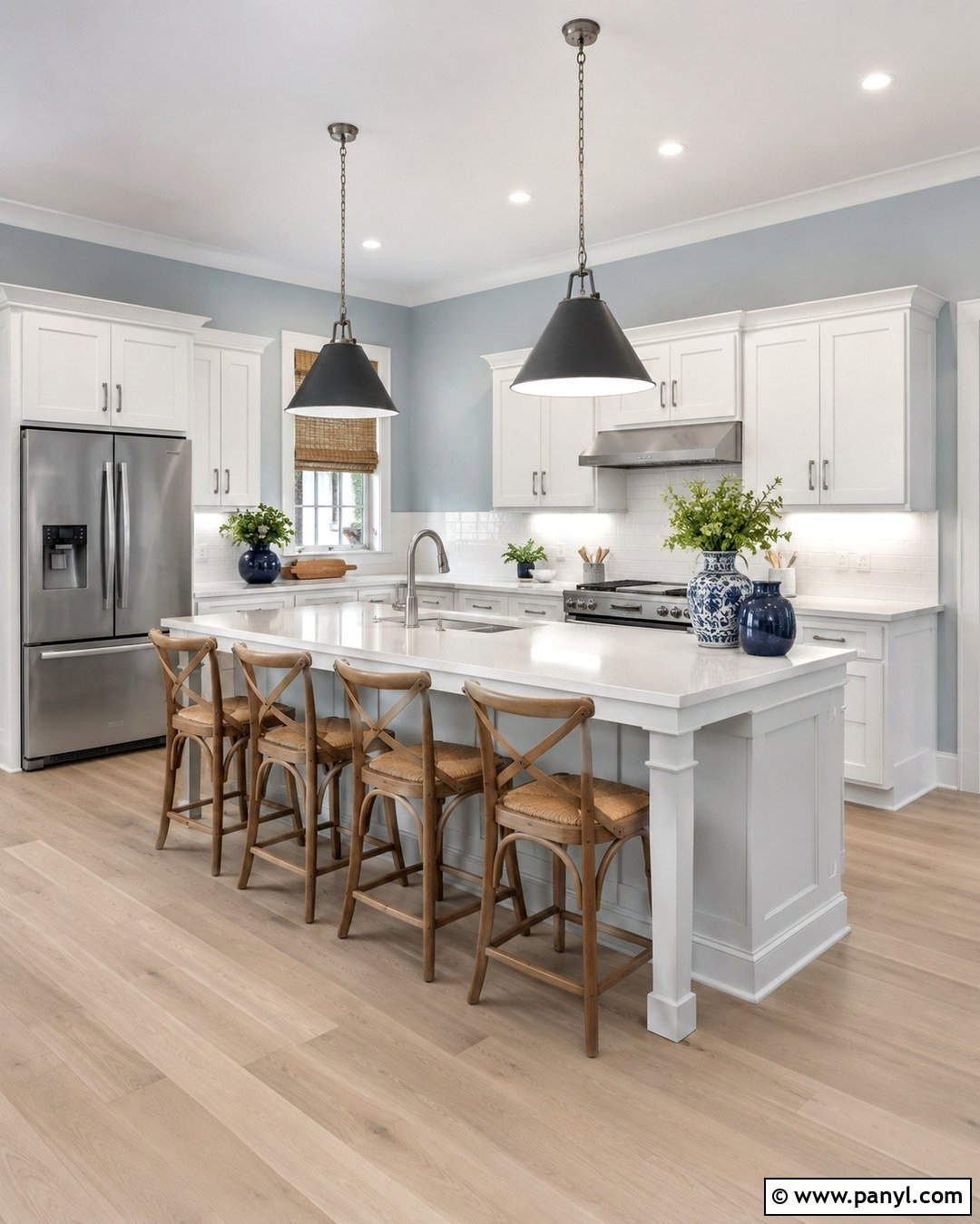
An open-plan home needs a dusty blue scheme that connects separate functions without making every area identical. Apply the color to the main living walls, then carry a softer version into the dining area or kitchen accents. Use consistent warm white trim across the entire space. In the living zone, arrange a cream sectional, oak coffee table, and textured beige rug. Continue the oak through the dining table and kitchen stools. Black lighting can provide a repeated structural accent, while brass hardware adds warmth in smaller doses. Keep curtains, flooring, and major upholstery consistent between zones. This coordinated approach allows the dusty blue walls to define the open room while furniture placement, rugs, and lighting establish comfortable individual areas for relaxing, dining, and cooking.
Conclusion:
The best dusty blue wall color ideas combine paint with furniture, finishes, lighting, and textiles that support the room as a whole. Crisp white creates freshness, while cream, oak, walnut, brass, terracotta, and tan add valuable warmth. Architectural treatments such as paneling, molding, built-ins, and painted ceilings can make the color feel even more intentional. Before choosing a final shade, sample it on a large board and move it around the room. Check the color during daylight and after your lamps are switched on. Pay attention to flooring, trim, and upholstery undertones as well. With thoughtful testing and a balanced palette, dusty blue can become a calm, adaptable backdrop throughout your home.

Related Ideas and Inspiration:
Leave a Reply