
Finding the right palette can turn gray from a basic neutral into the foundation of a warm, polished bathroom. These 20 bathroom color schemes gray ideas pair light, medium, and charcoal tones with colors that bring out their best qualities. Gray and white create crisp contrast, while wood, beige, and cream soften cooler surfaces. Blue and green introduce a calming natural influence. Blush, terracotta, and mustard provide more personality without overwhelming the room. The strongest schemes also coordinate the vanity, tile, fixtures, flooring, textiles, and lighting instead of treating color as an isolated choice. Gray remains especially flexible because it can support traditional, coastal, farmhouse, and contemporary settings. () Explore these complete 20 bathroom color schemes gray ideas to find a balanced look for your space.

1. Gray And White Bathroom
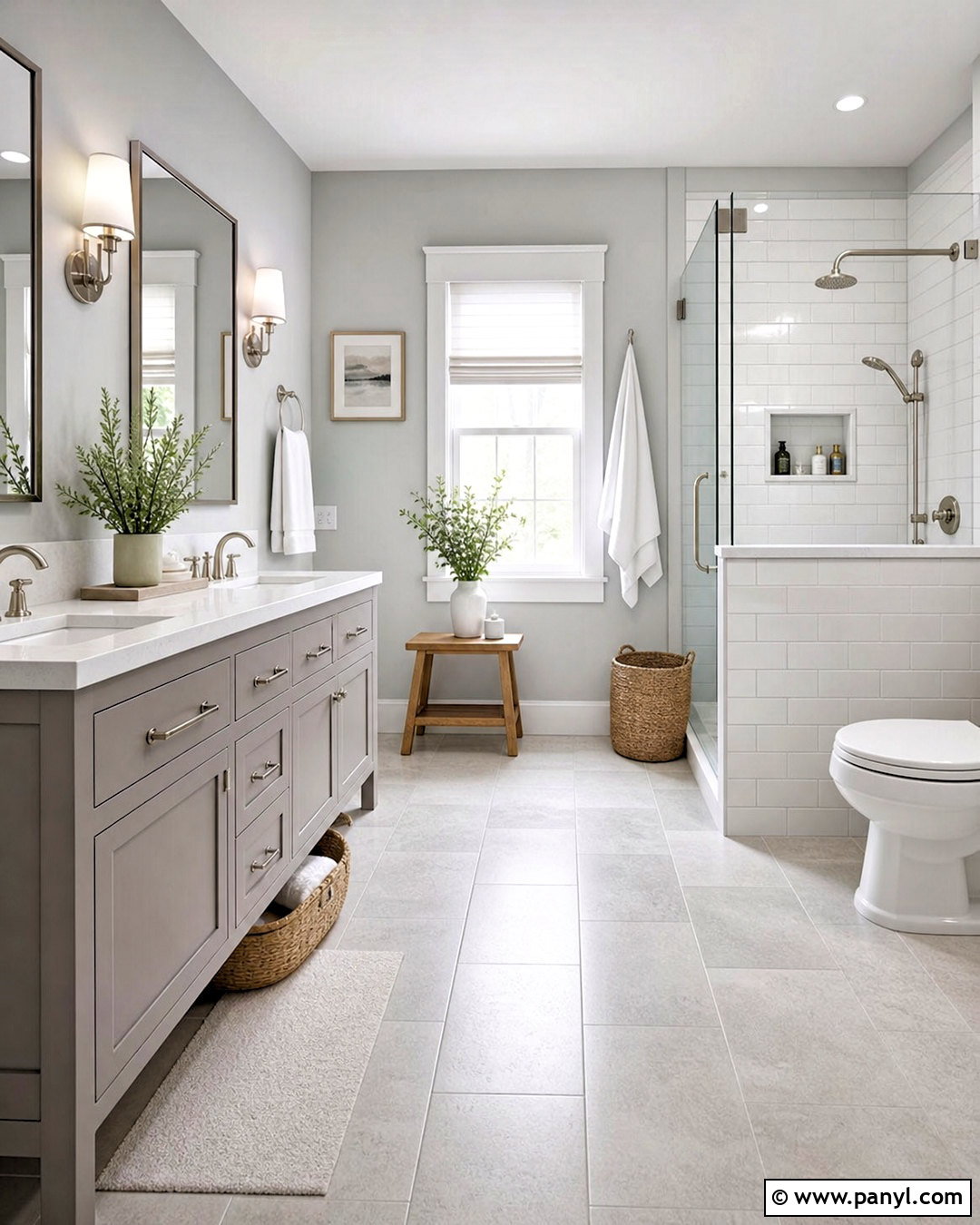
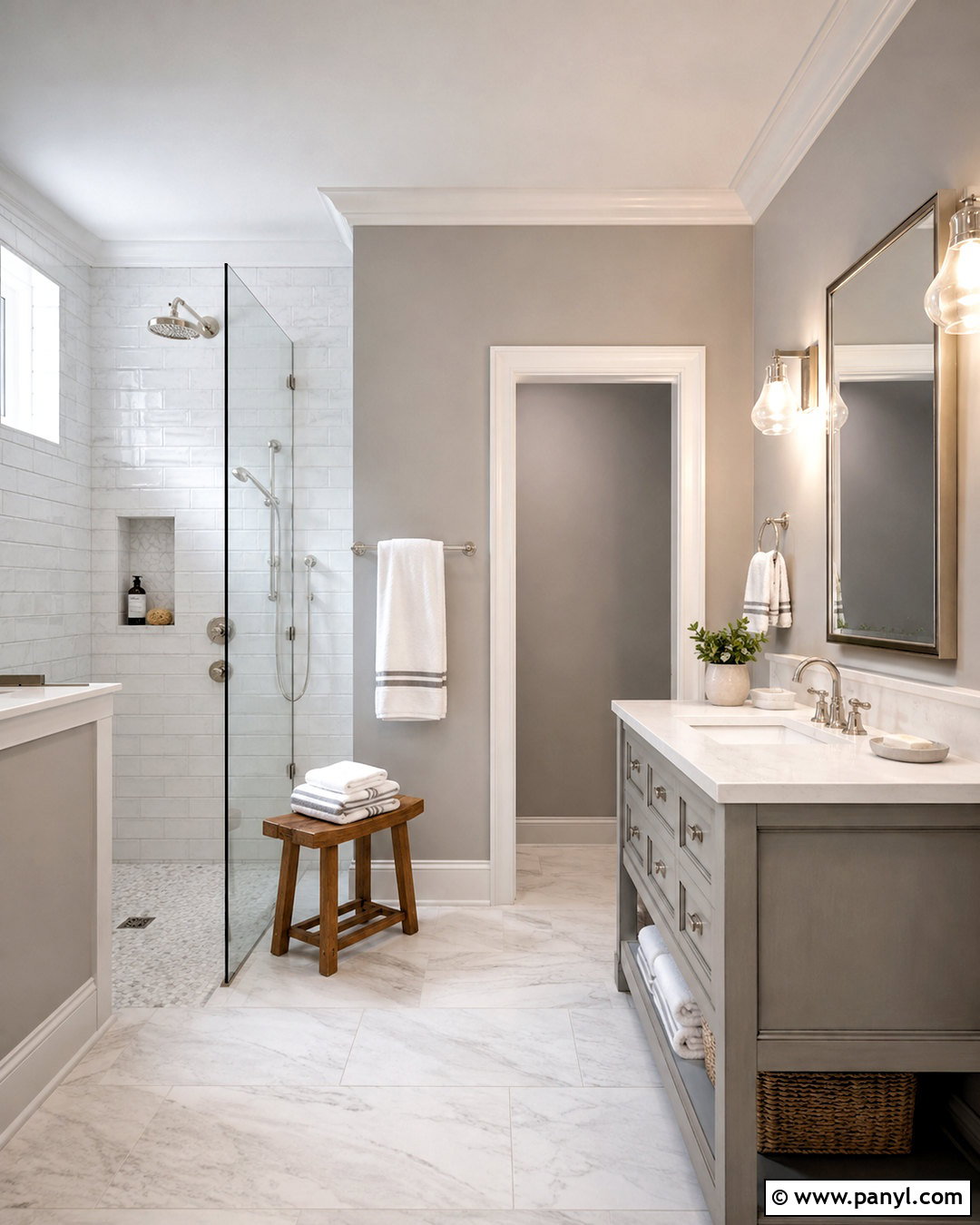
A gray and white bathroom feels bright, clean, and easy to maintain visually. Choose soft gray paint for the upper walls and white subway tile around the tub or shower. A medium-gray vanity with a white quartz counter anchors the room without making it heavy. Continue the palette with pale gray porcelain floor tile, white towels, and a simple white shower curtain. Polished nickel faucets and clear glass lighting add a subtle shine that suits the cool colors. To prevent the room from appearing flat, vary the textures. Use glossy wall tile, matte cabinetry, woven baskets, and a plush bath rug. A natural wood stool or framed botanical print adds one small touch of warmth.
2. Gray And Sage Green Bathroom
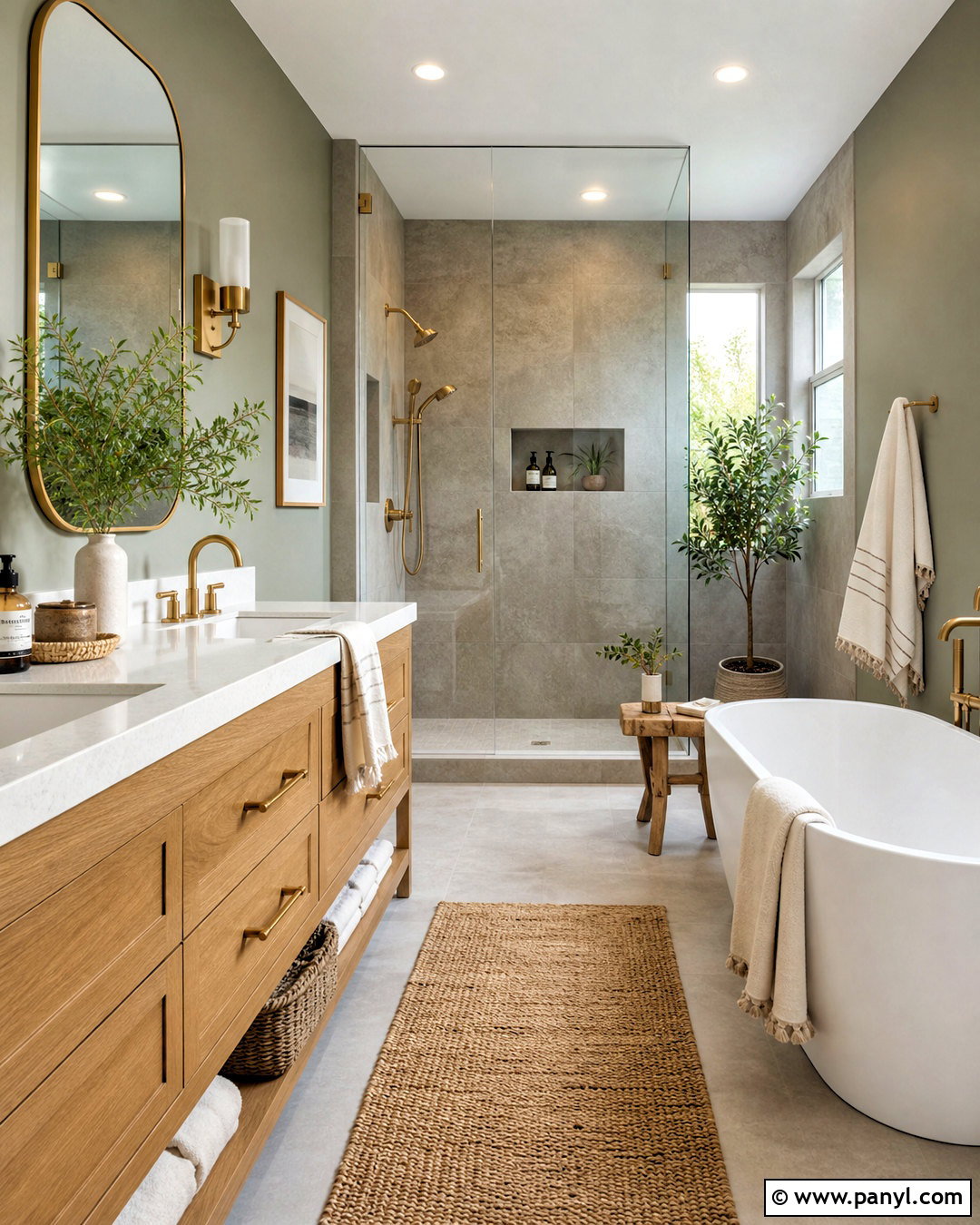
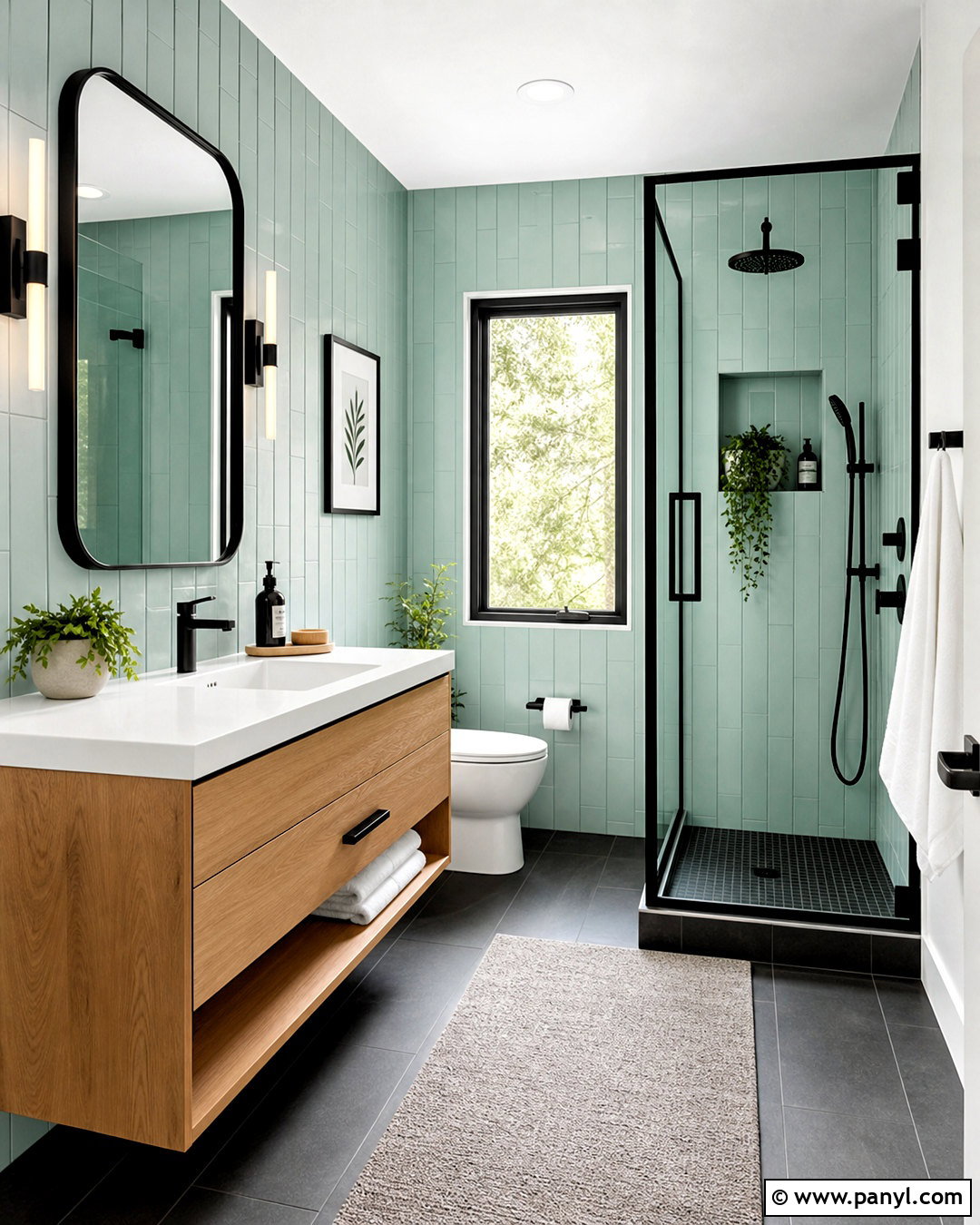
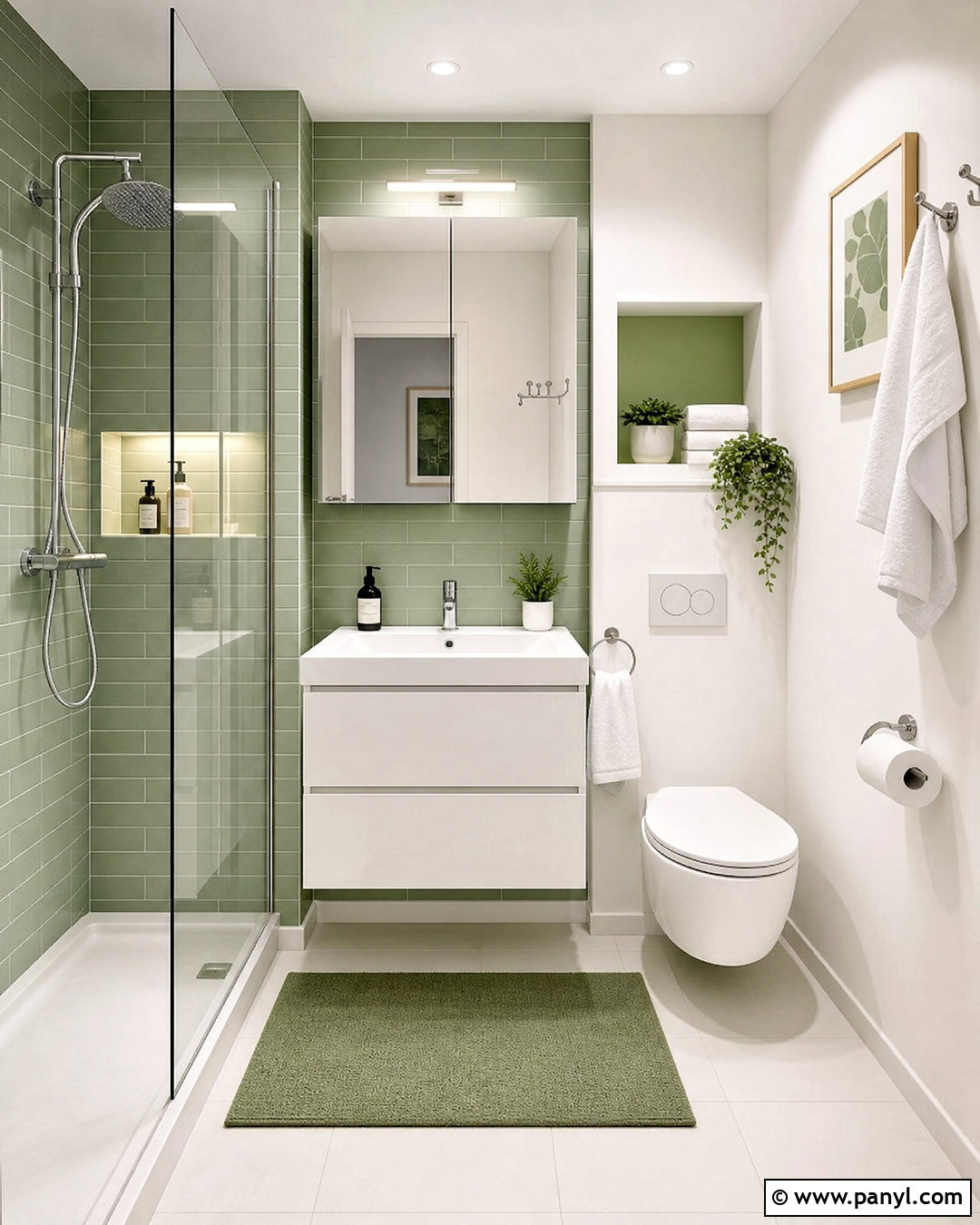
Soft sage green brings an organic quality to a gray bathroom while keeping the overall palette restful. Cover the shower walls with warm gray stone-look tile, then paint the remaining walls a muted sage. A natural oak vanity helps connect the two colors and introduces visible grain. Choose a creamy white countertop rather than a stark white surface, especially if the gray tile has beige undertones. Brushed brass hardware adds gentle warmth without overpowering the subtle scheme. Complete the room with an ivory shower curtain, sage towels, ceramic accessories, and one or two moisture-friendly plants. Light limestone-look flooring can make the space feel open. This combination works particularly well in a relaxed spa-inspired bathroom with simple lines and minimal clutter.
3. Gray And Navy Blue Bathroom
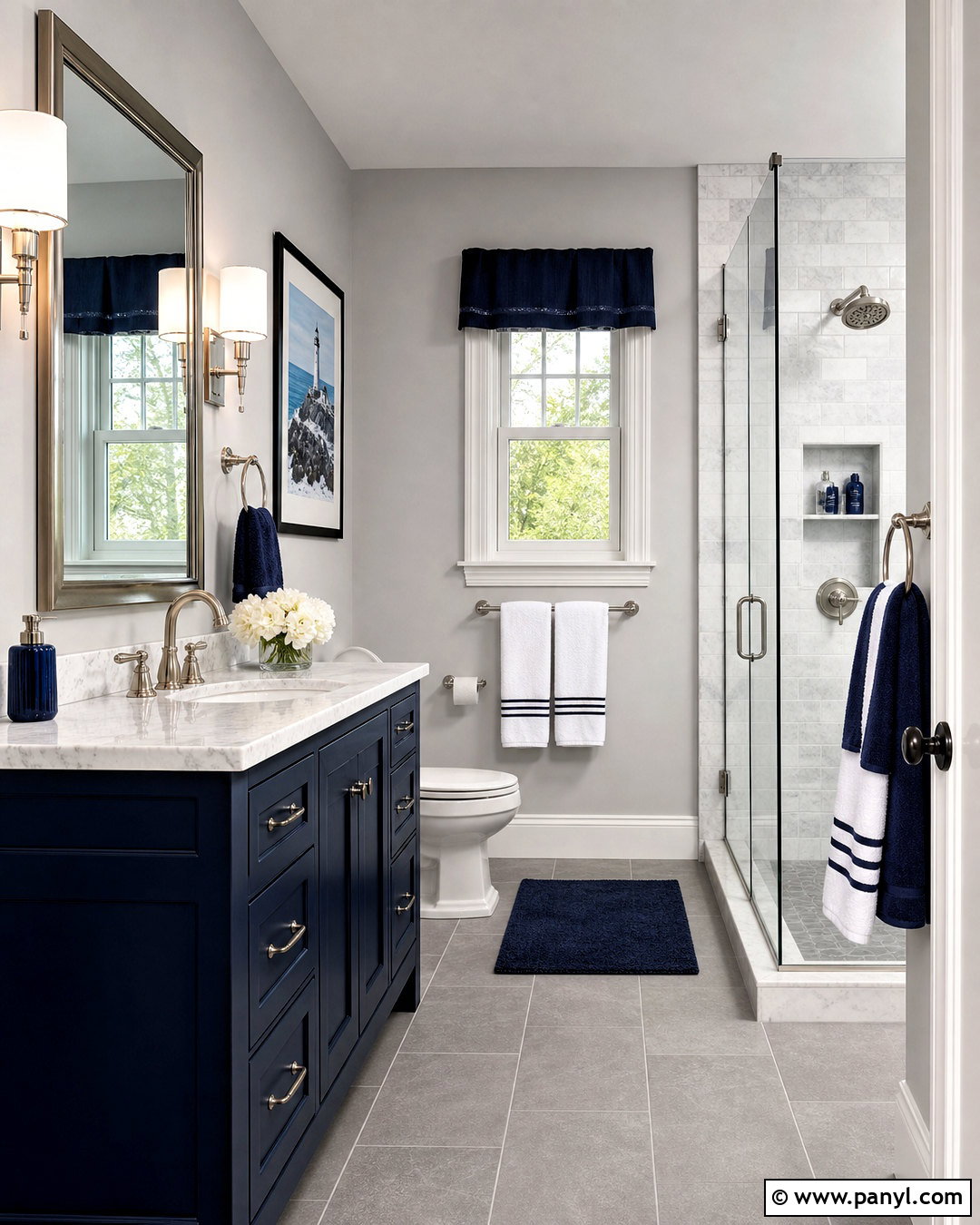
Deep navy blue gives a gray bathroom more definition and creates a smart, structured appearance. Start with pale gray walls and medium-gray floor tile to keep the background light. Use navy on a freestanding vanity or a paneled accent wall behind the sink. A white marble or quartz countertop provides separation between the darker finishes. Matte black hardware creates a modern result, while polished nickel feels more classic. Add white towels with narrow navy borders, a gray woven rug, and framed coastal or abstract artwork. In a small bathroom, limit navy to the vanity and accessories so the space stays balanced. Bright mirror lighting and a frameless glass shower enclosure will also help the darker color feel intentional rather than visually heavy.
4. Gray And Warm Beige Bathroom
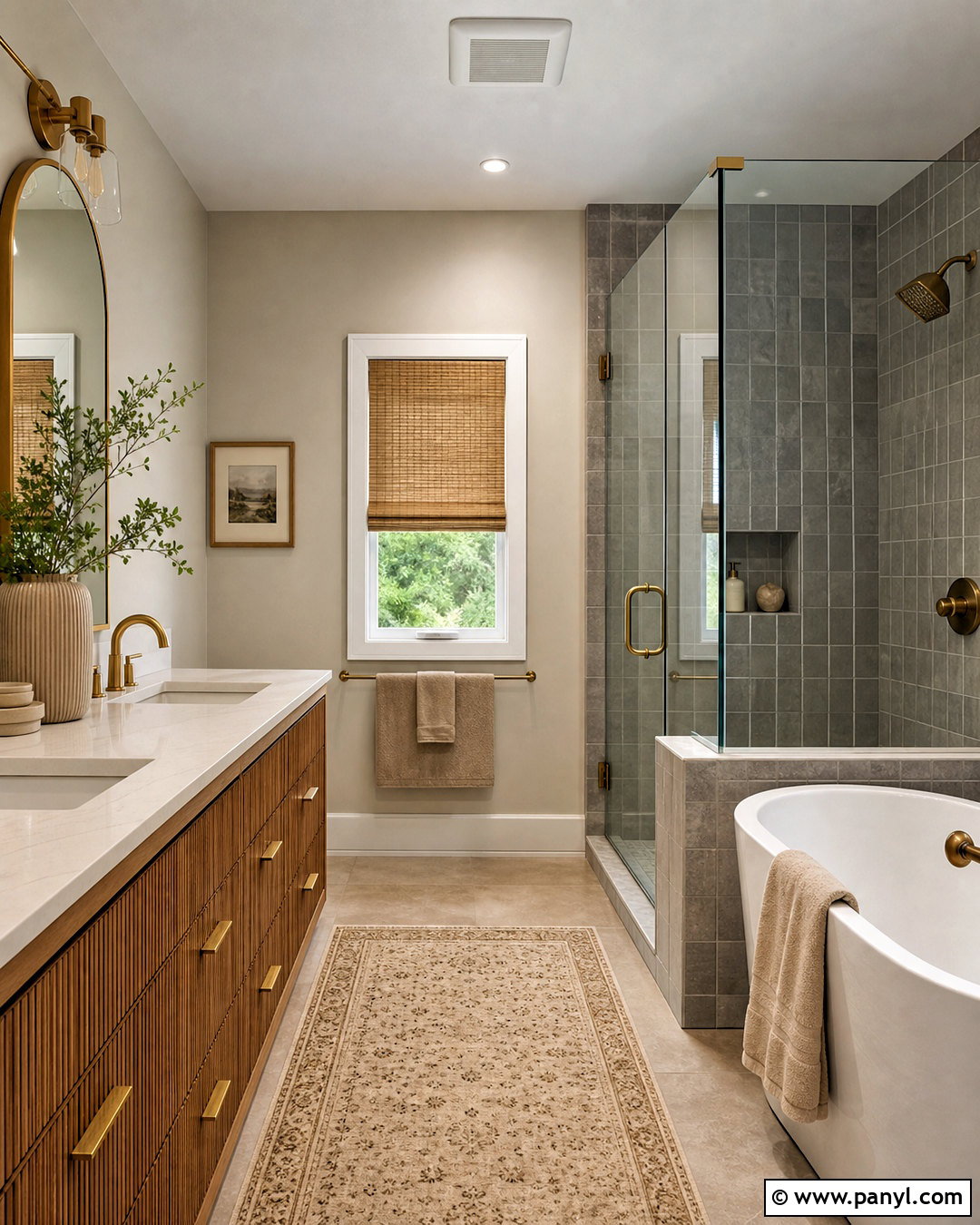
Combining gray and warm beige produces a layered neutral bathroom that feels softer than a strictly gray-and-white room. Select a warm greige wall color and use medium-gray porcelain tile inside the shower. A light walnut vanity, creamy quartz counter, and sand-colored floor tile establish a comfortable foundation. Repeat beige through textured towels, a woven window shade, and a natural cotton shower curtain. Brushed nickel faucets blend quietly with the gray, while aged brass hardware can emphasize the warmer side of the palette. Keep permanent surfaces understated and bring in interest through texture. Fluted cabinetry, subtle tile variation, and a ribbed ceramic vase make the restrained colors feel considered. This scheme suits transitional bathrooms where clean lines meet traditional, welcoming materials.
5. Gray And Blush Pink Bathroom
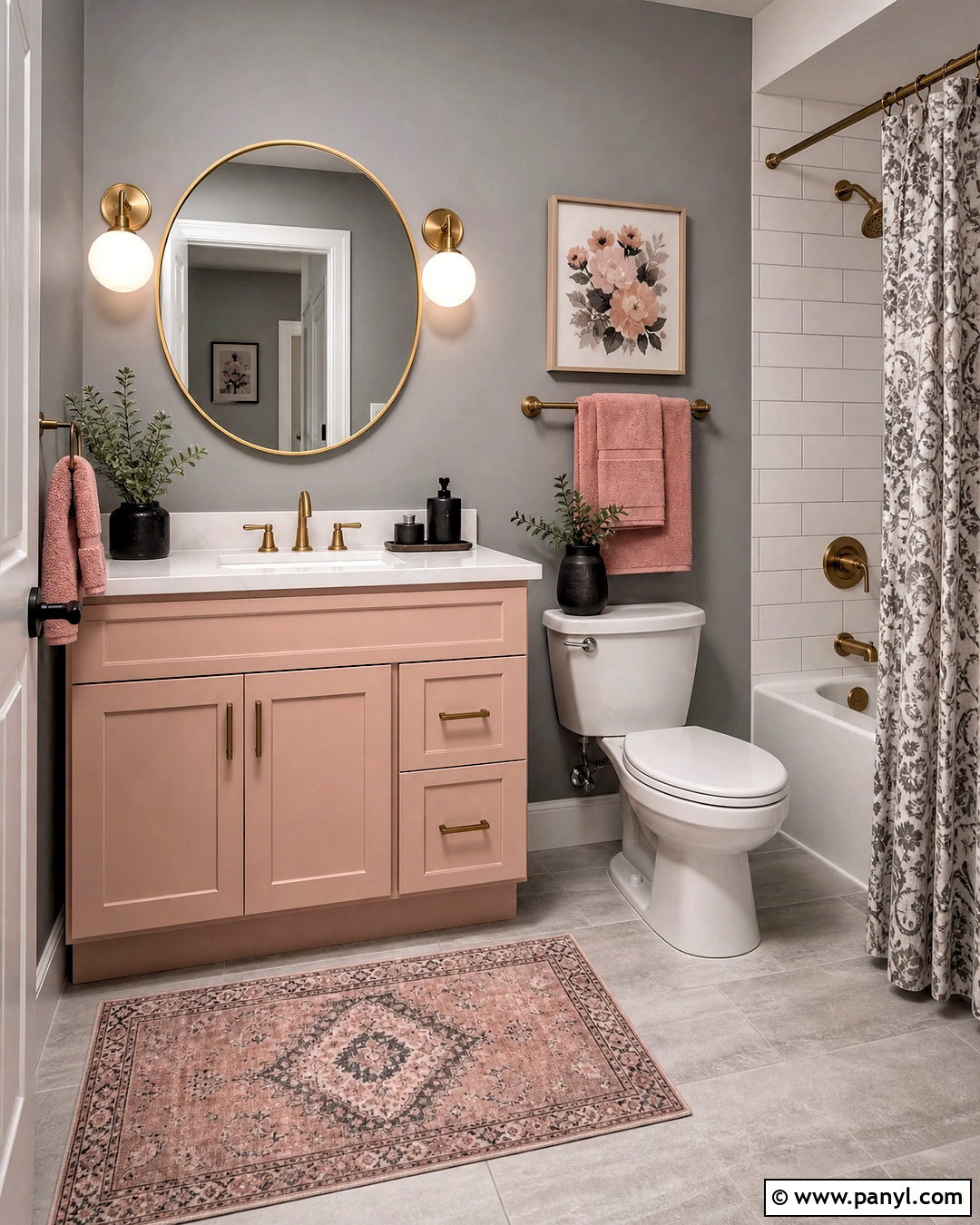
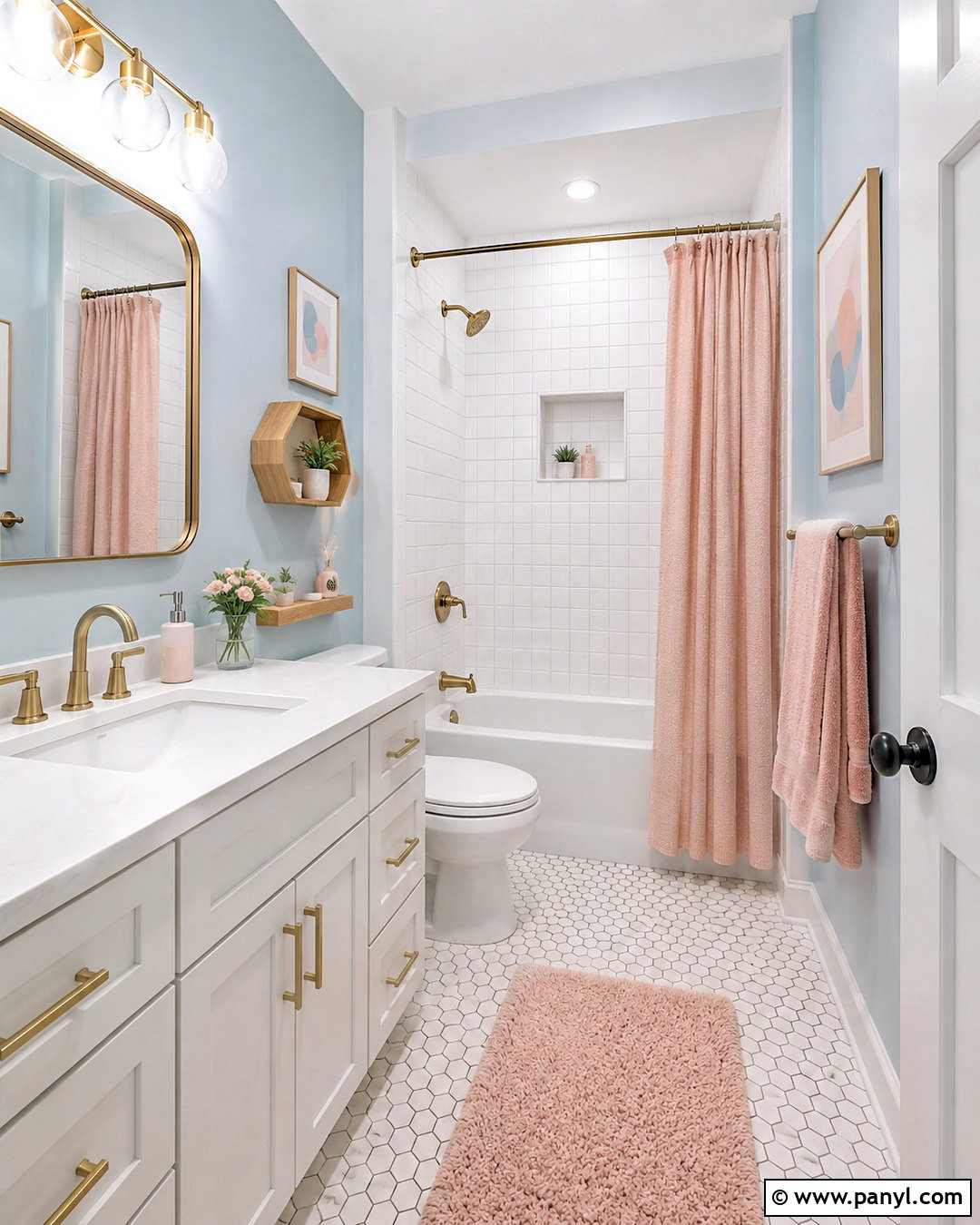
Blush pink can make gray feel softer and more inviting without turning the bathroom overly sweet. Use light dove-gray paint on the walls and white tile around wet areas. Introduce blush through a painted vanity, patterned shower curtain, towels, or a narrow section of glossy pink tile behind the sink. White quartz counters and pale gray flooring keep the scheme fresh. Choose brushed brass faucets and cabinet pulls to enhance the warmth of the pink. A rounded mirror, globe sconces, and gently curved accessories support the graceful palette. For a more mature finish, avoid bright bubblegum shades. Dusty blush, muted rose, and gray-pink tones are easier to coordinate. Add small charcoal accents through picture frames or a bath mat for necessary contrast.
6. Gray And Black Bathroom
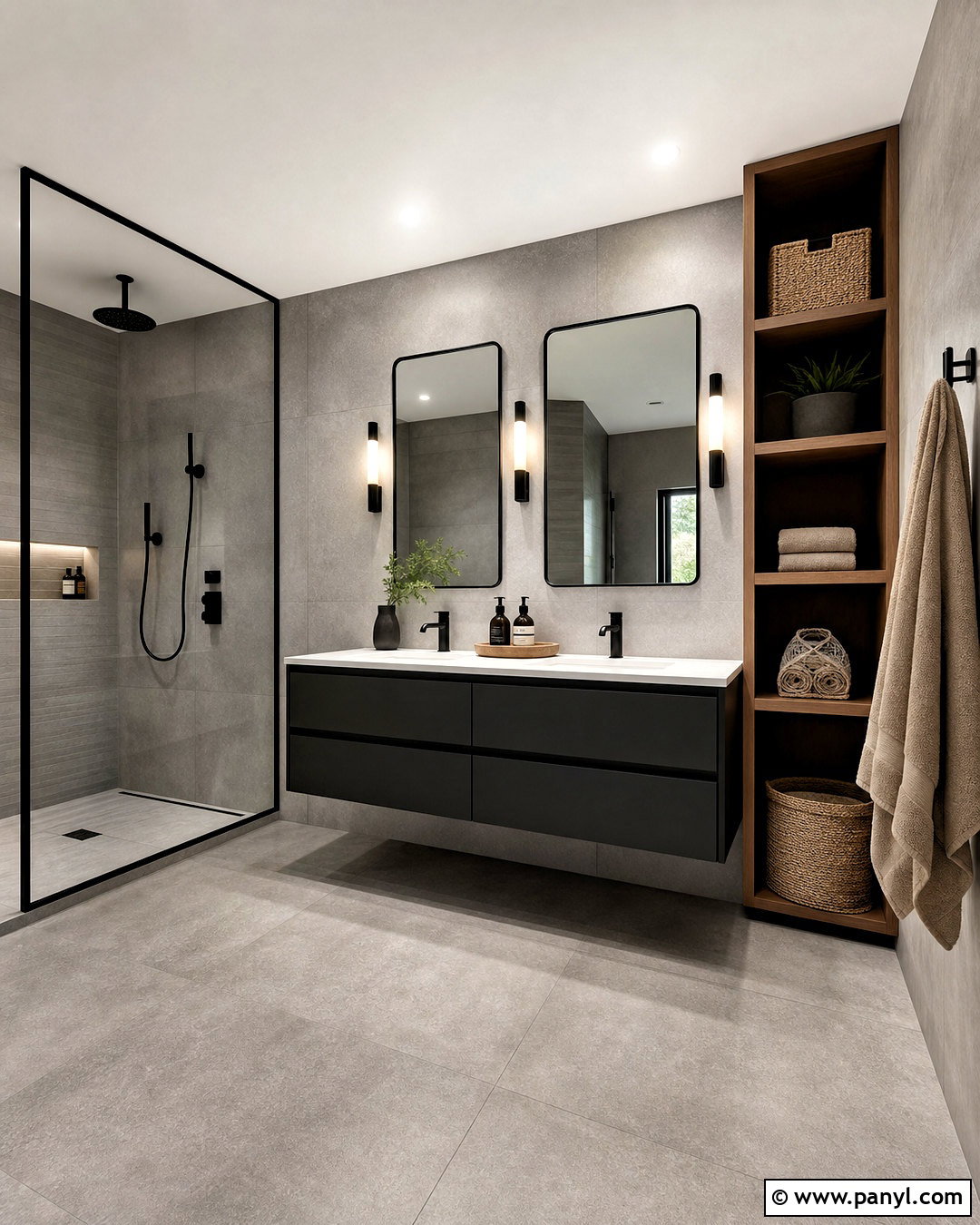
A gray and black bathroom delivers bold contrast while remaining practical for a contemporary home. Use pale concrete-gray wall tile as the main surface, then introduce black through the vanity, mirror frame, shower enclosure, and faucets. White fixtures and a white counter stop the dark accents from dominating. Large-format gray floor tile creates fewer grout lines and gives the room a streamlined appearance. Add a floating vanity to expose more flooring and visually lighten the layout. Warm the scheme with a walnut shelf, tan towels, or woven storage baskets. Layered lighting is important in this palette, so combine ceiling lighting with bright sconces near the mirror. Keep decorative pieces simple and substantial, allowing the strong shapes and contrasting finishes to become the main visual features.
7. Gray And Natural Wood Bathroom
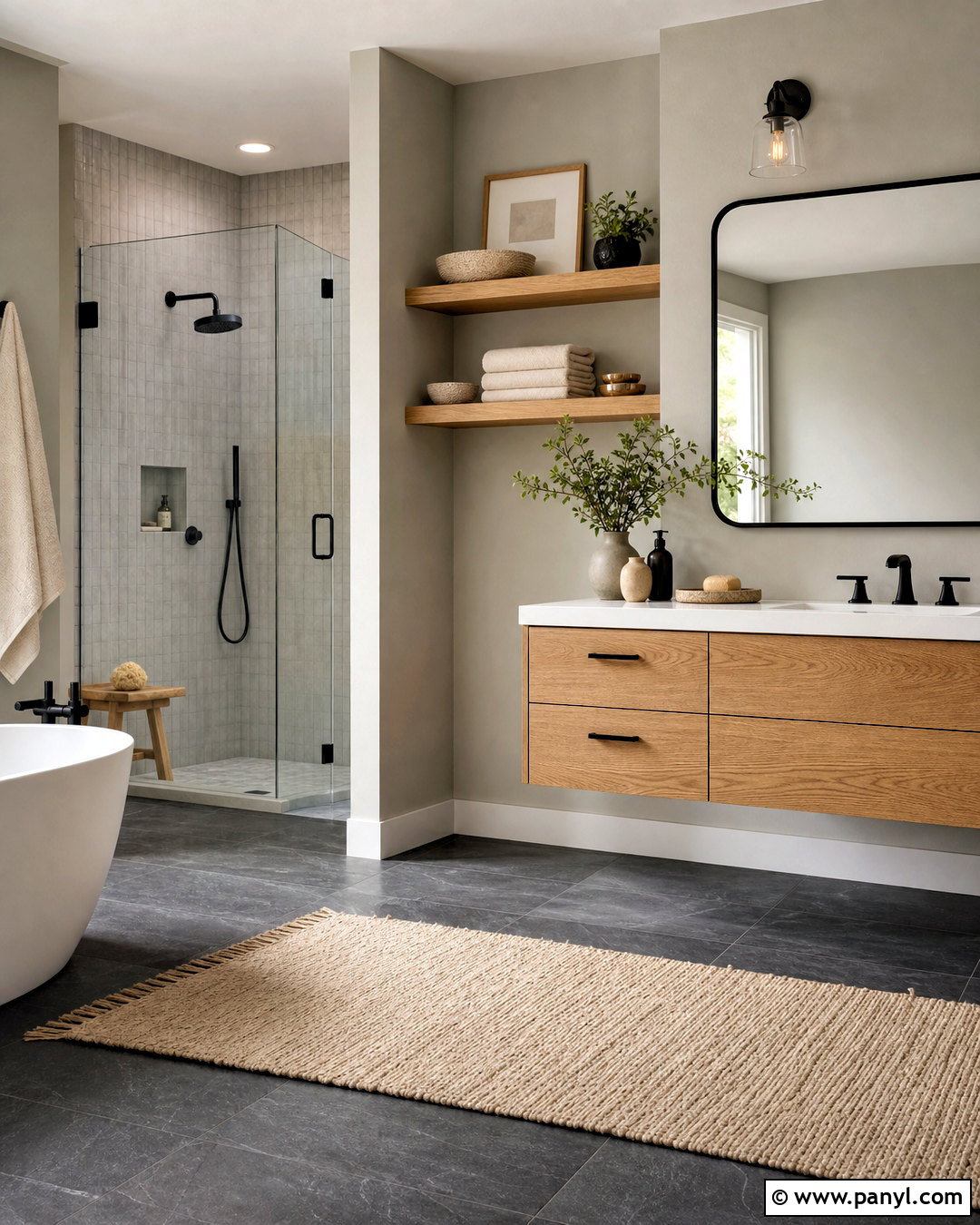
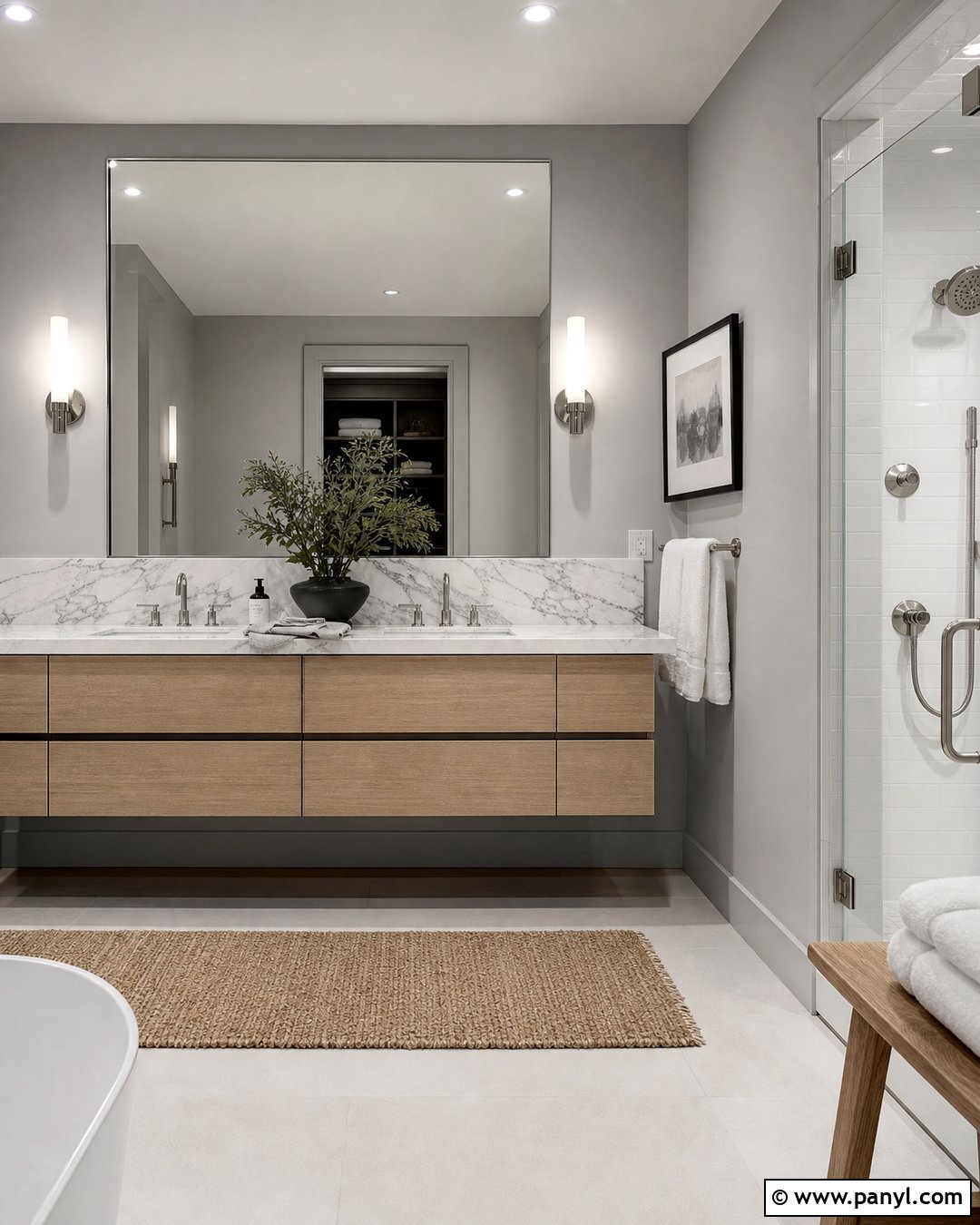
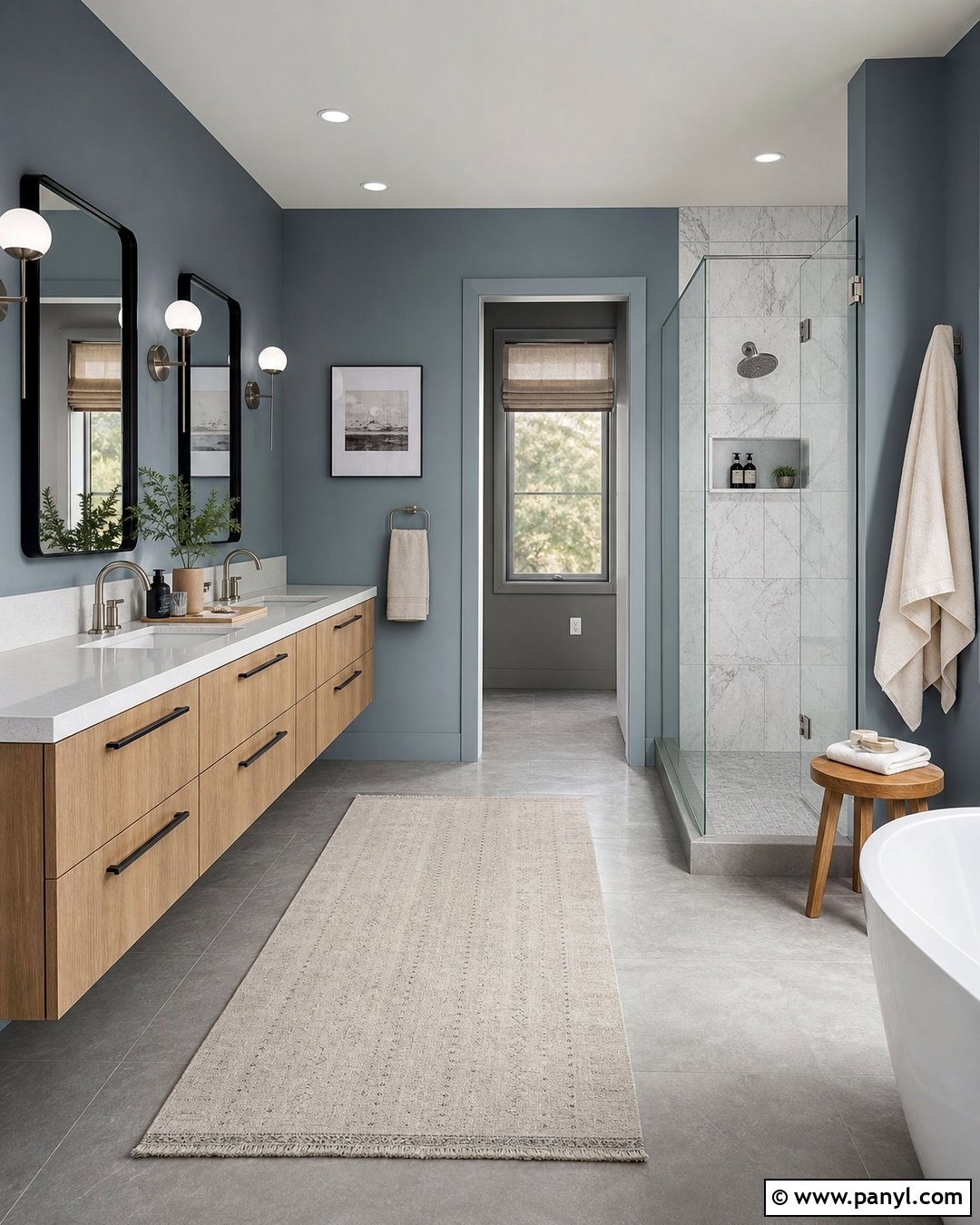
Natural wood immediately warms a gray bathroom and introduces texture that painted finishes cannot fully replicate. Begin with soft gray walls and charcoal slate-look flooring. Install a light oak floating vanity with a white counter and integrated sink. Use pale gray handmade-look tile in the shower to provide subtle movement without creating a busy background. Repeat the oak on open shelves or a framed mirror, but avoid covering every surface in wood. Matte black faucets create crisp definition, while brushed nickel offers a quieter finish. Add cream towels, a jute-look washable rug, and stone accessories. A simple glass shower enclosure keeps the material combination visible. This complete scheme feels modern yet comfortable, making it suitable for primary bathrooms, guest bathrooms, and compact renovations.
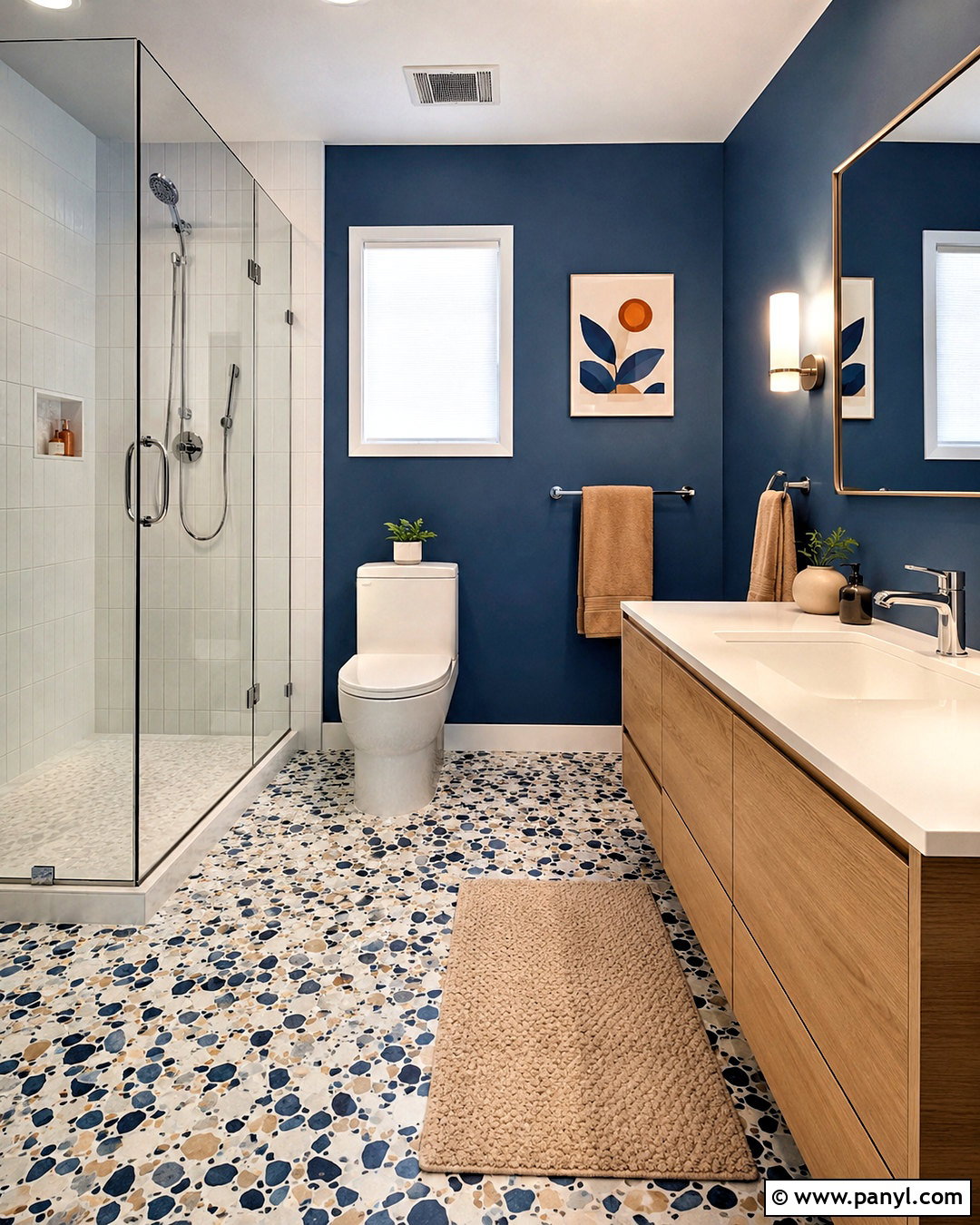
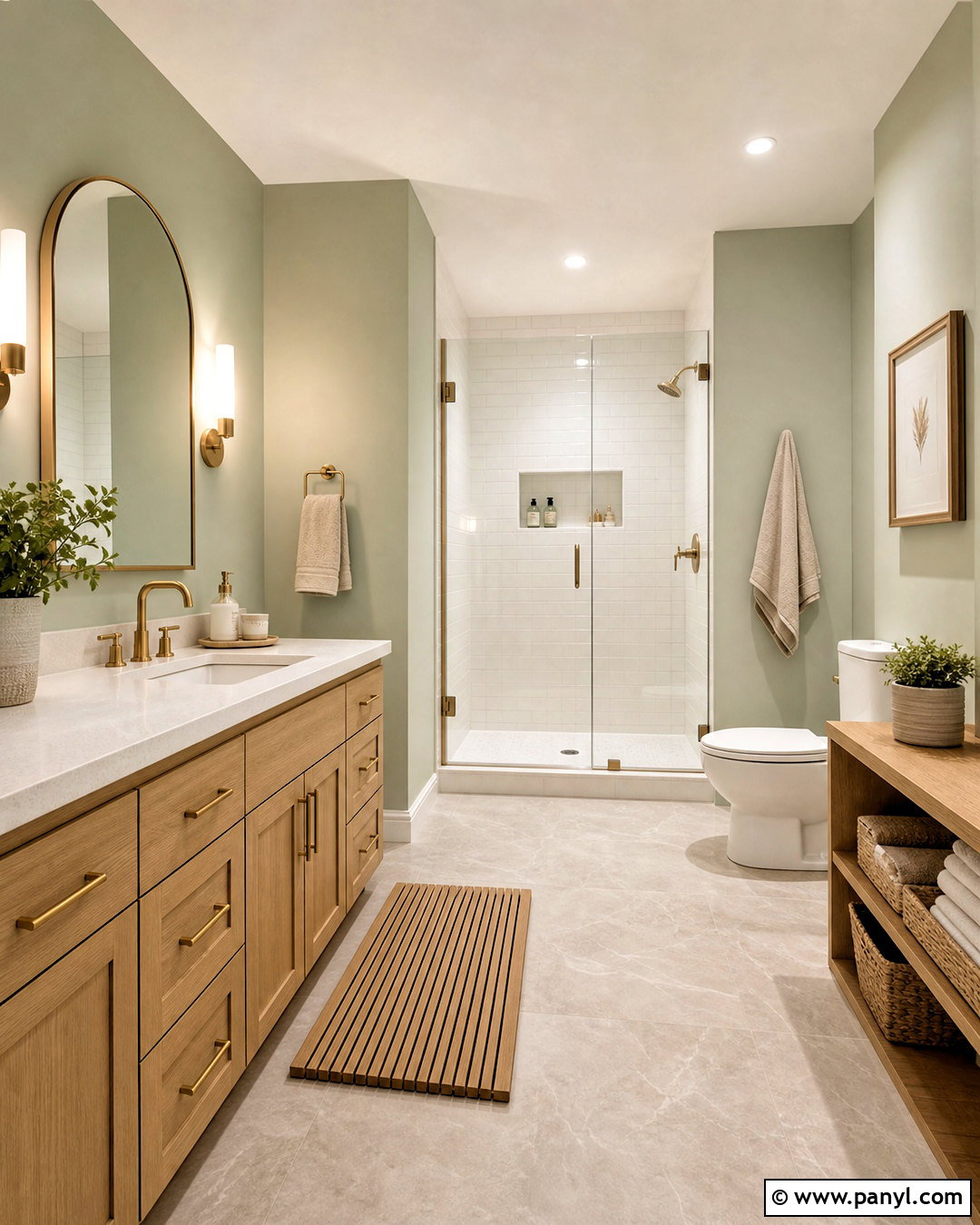
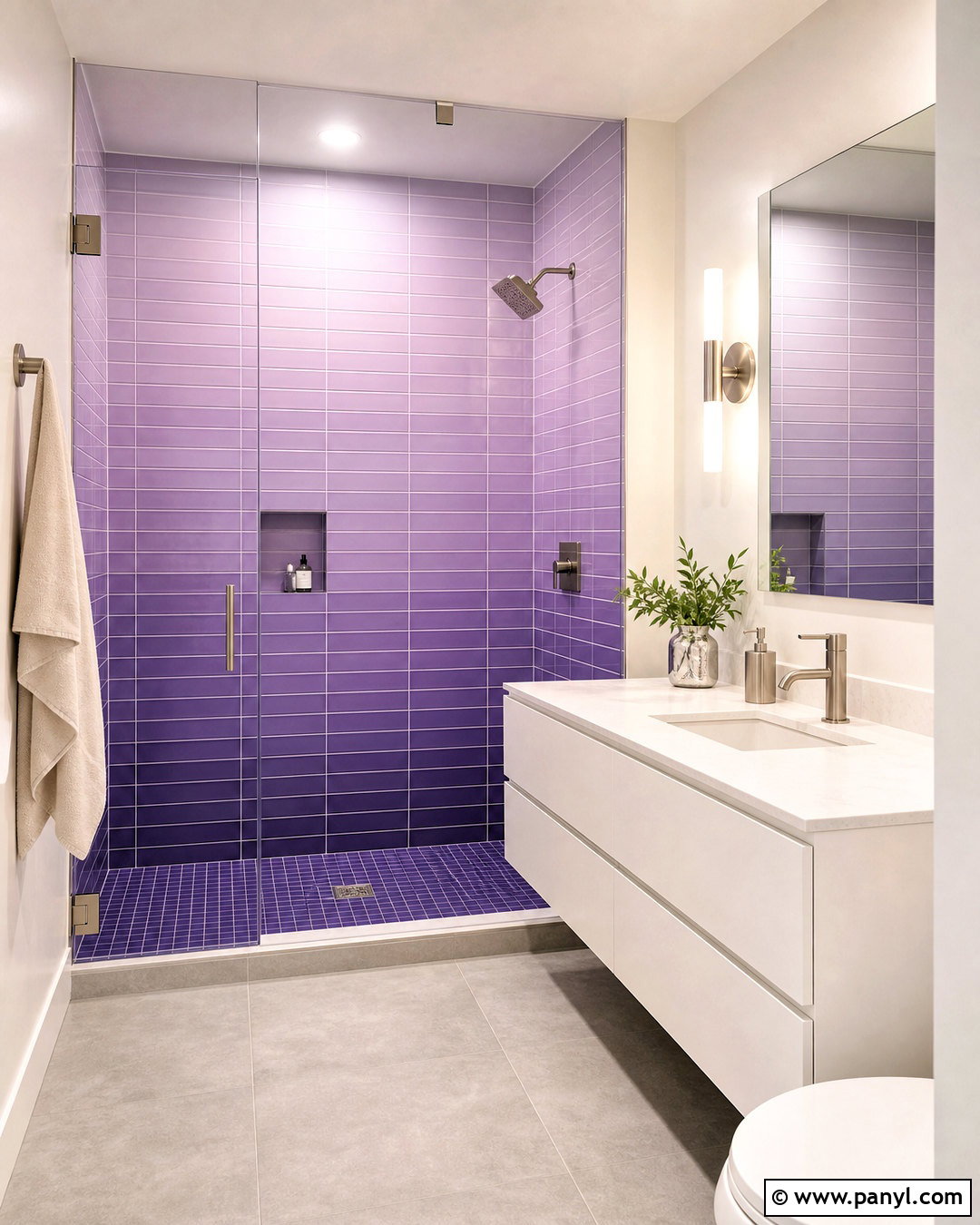
8. Gray And Dusty Blue Bathroom
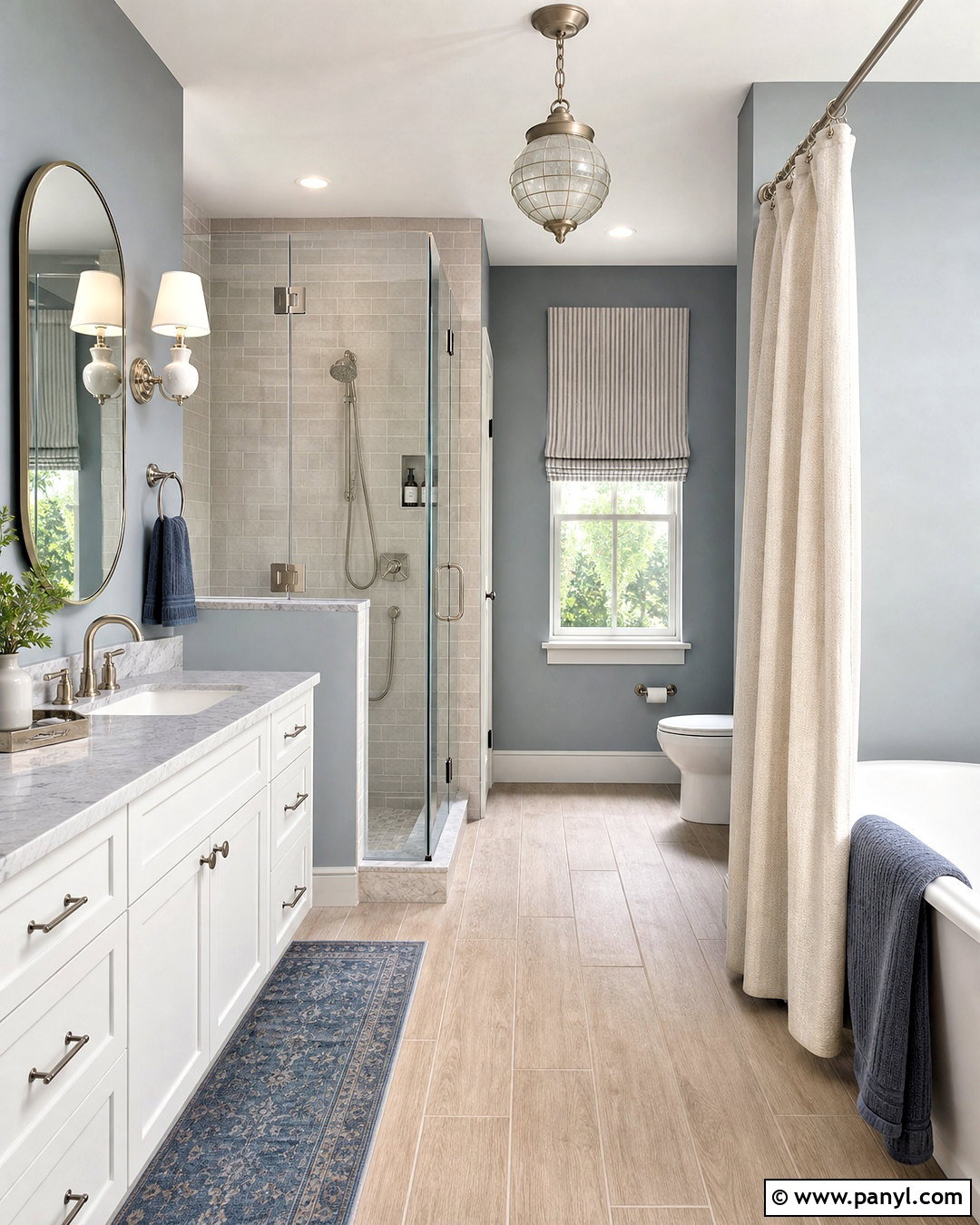
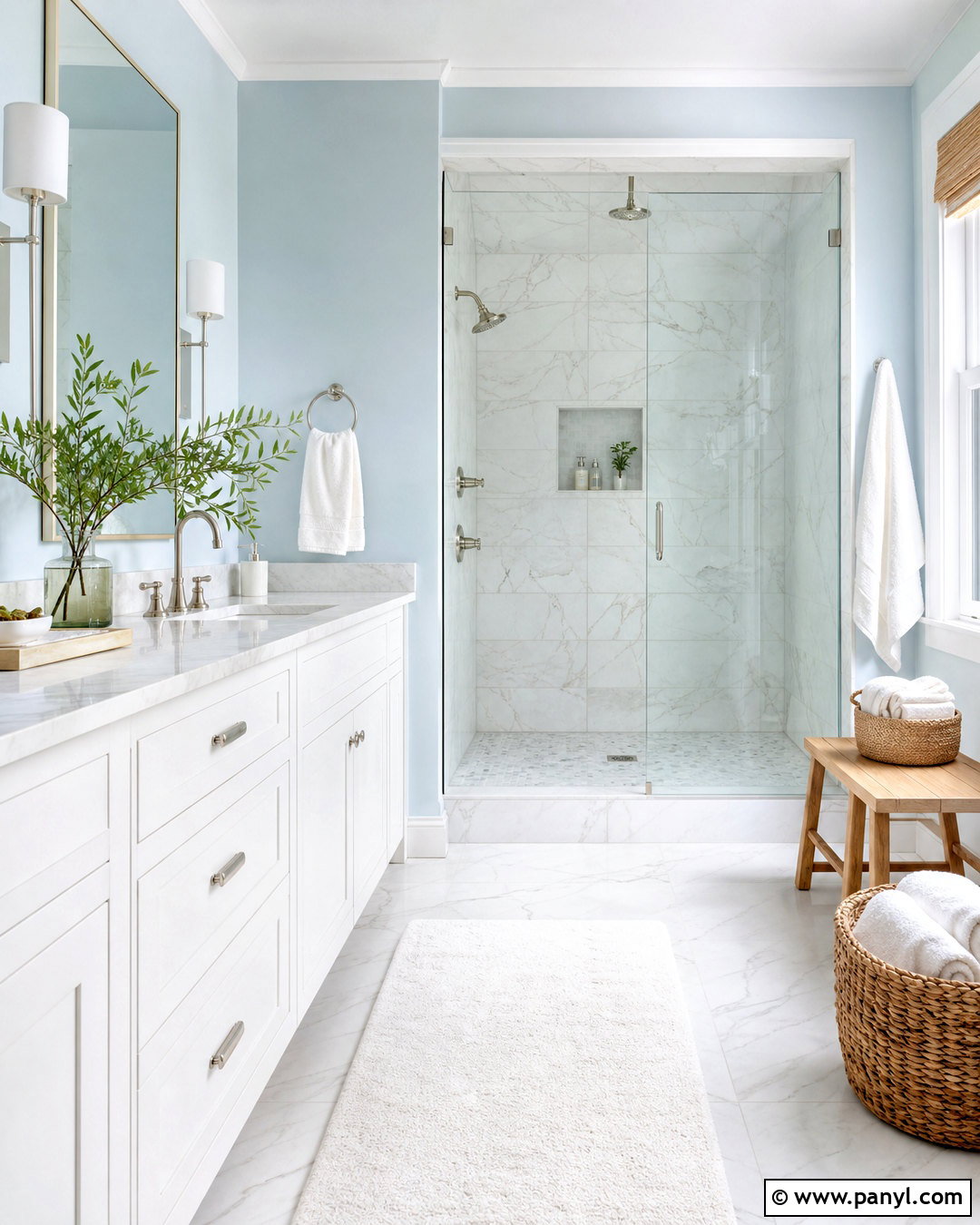
Dusty blue and gray create a soothing bathroom palette with enough color to feel distinctive. Paint the upper walls a muted blue-gray and use soft gray tile on the lower walls or shower surround. A white vanity with a marble-look counter keeps the room bright, while light oak flooring or wood-look porcelain tile adds warmth. Choose polished nickel fixtures for a gentle reflective finish. Textiles can blend several tones, including slate blue, cloud gray, and ivory. A striped shower curtain or patterned Roman shade introduces movement without disrupting the calm appearance. Add a rounded mirror and simple ceramic sconces for a relaxed transitional look. Because the colors are closely related, include crisp white trim and darker blue accessories to create visible depth between surfaces.
9. Gray And Terracotta Bathroom
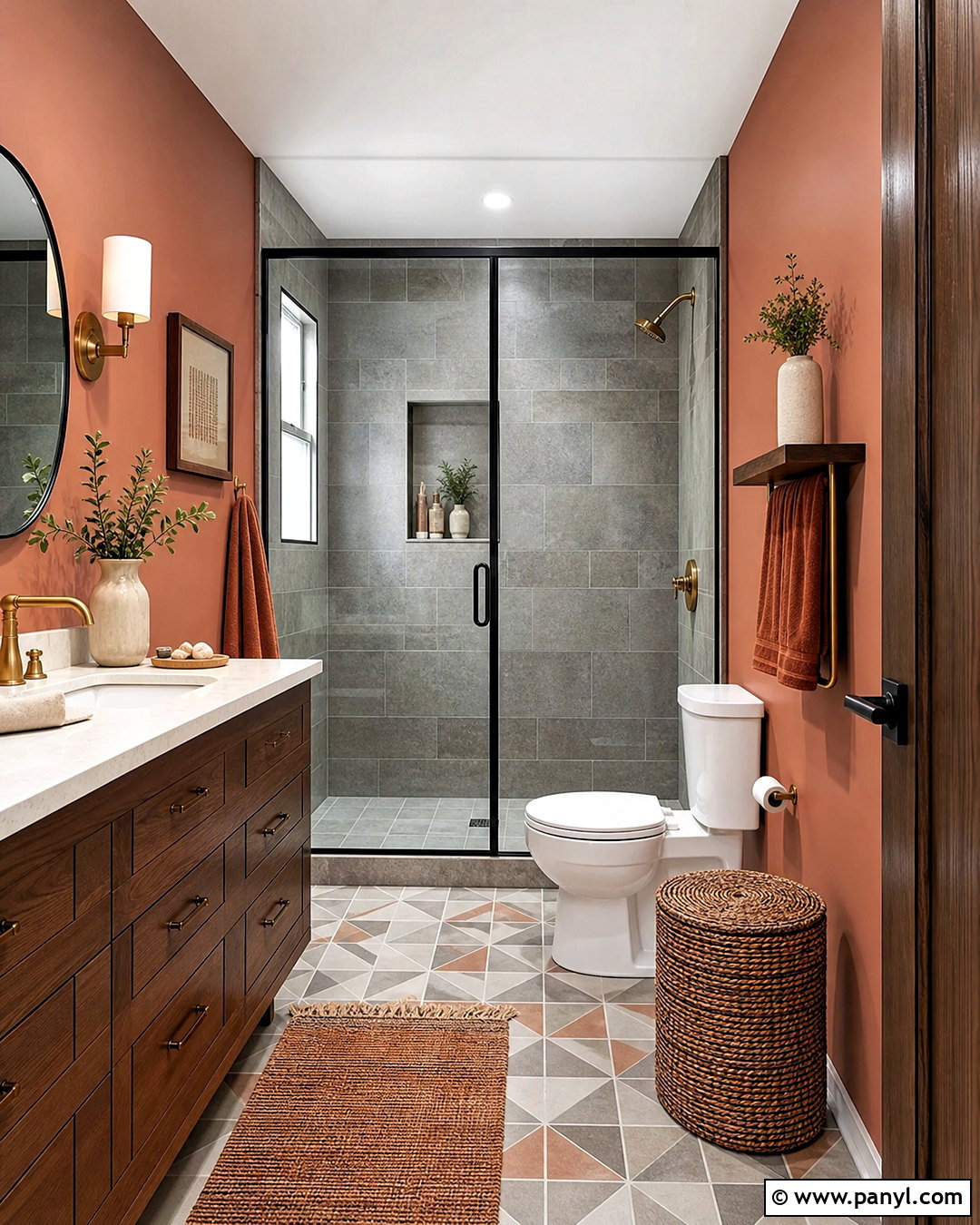
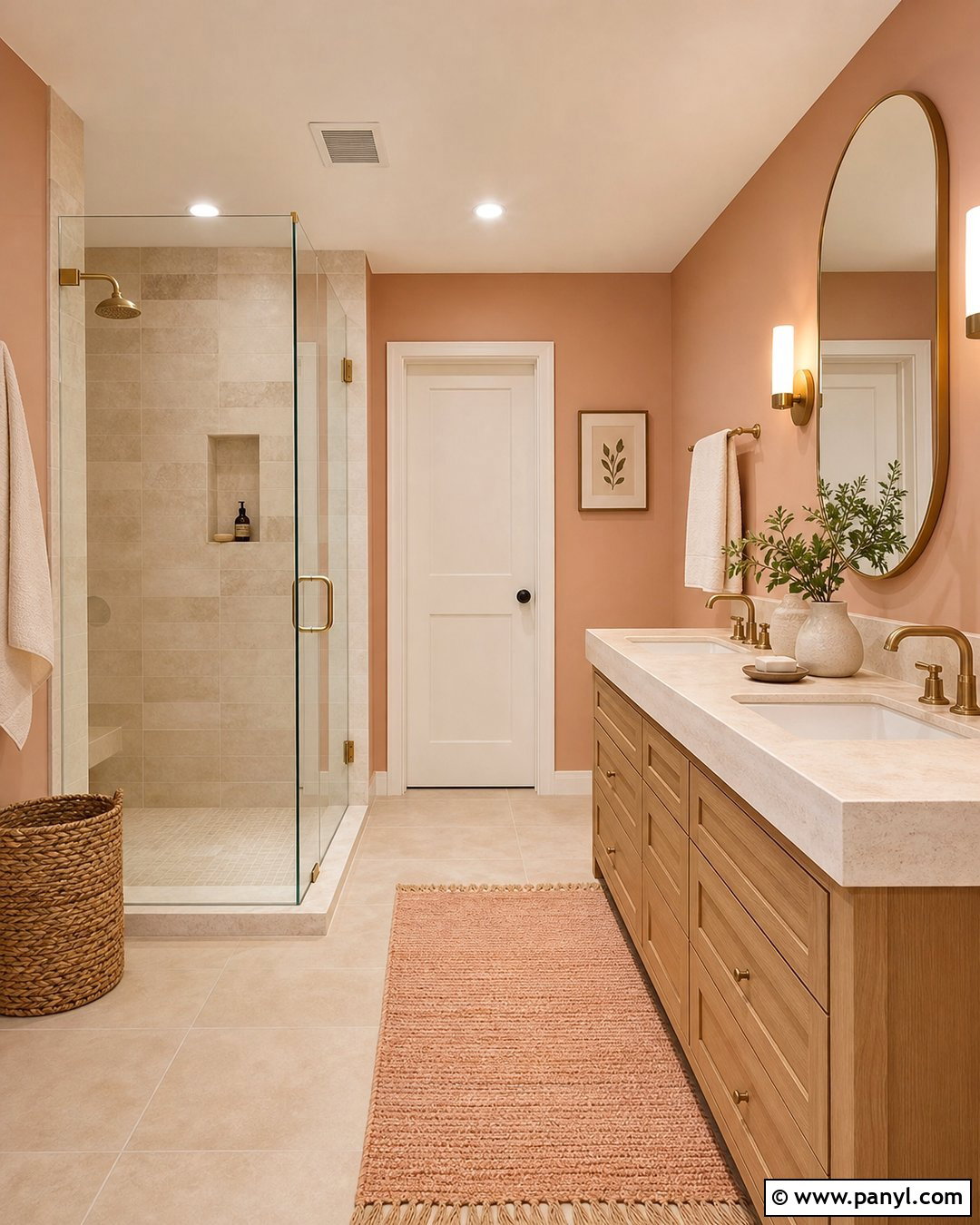
Earthy terracotta gives cool gray tile a warmer, more characterful direction. Use medium-gray stone tile across the shower and floor, then paint the remaining walls a muted clay or pale terracotta color. A walnut vanity reinforces the natural warmth, while an off-white quartz counter prevents the palette from becoming too dark. Choose aged brass fixtures, rust-colored towels, and cream ceramics to connect the surfaces. Black accents can appear in a slim mirror frame or shower enclosure for definition. Keep terracotta concentrated on paint, textiles, and small decorative features rather than every permanent surface. A geometric floor pattern that combines gray, cream, and clay can unite the full scheme. The finished bathroom feels grounded, modern, and influenced by warm Southwestern or Mediterranean interiors.
10. Gray And Mustard Yellow Bathroom
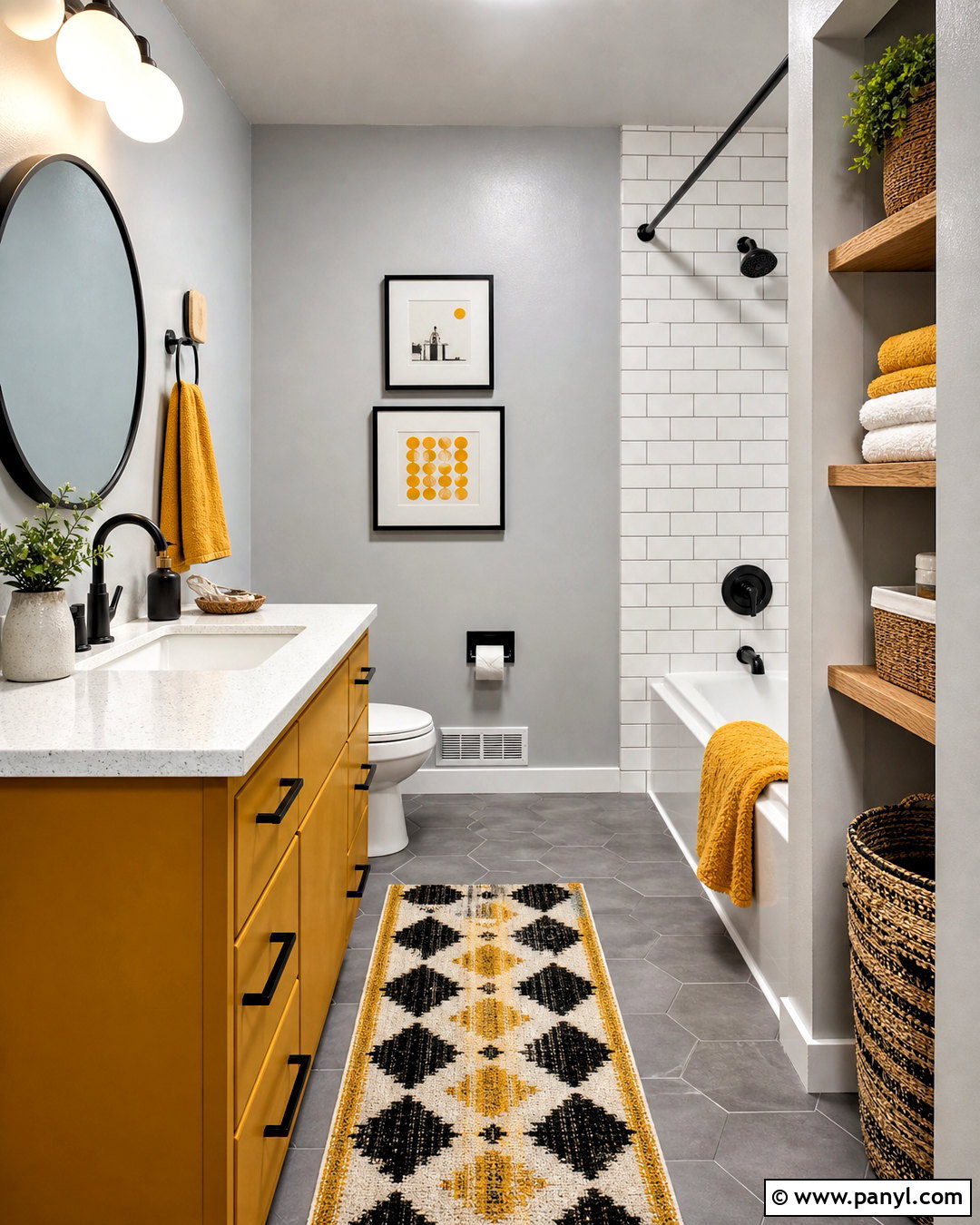
Mustard yellow adds cheerful energy to gray without producing the harsh contrast associated with brighter lemon tones. Create a stable background with light gray walls, white shower tile, and medium-gray flooring. Use mustard on a compact vanity, patterned wallpaper, or coordinated towels and bath mats. A white countertop and sink maintain a clean visual break. Matte black fixtures give the yellow a contemporary edge, while brass hardware creates a warmer retro influence. Introduce natural oak through a mirror frame or wall shelf to make the palette feel connected. If the bathroom is small, keep the strongest yellow below eye level. Gray should remain the dominant color, allowing mustard to act as a controlled accent that brings personality to the complete room.
11. Gray And Teal Bathroom
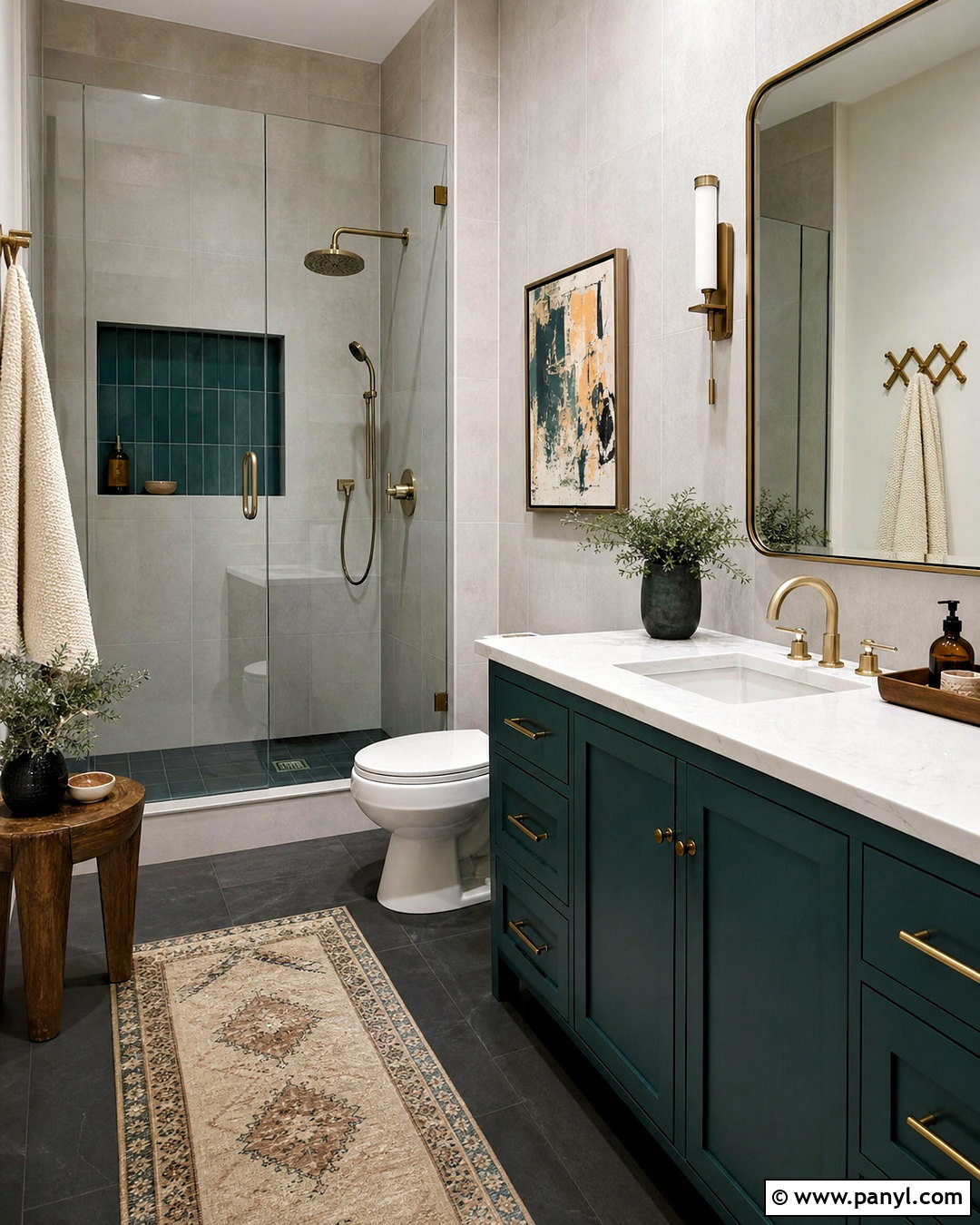
Rich teal can transform a neutral gray bathroom into a colorful, sophisticated space. Choose pale gray wall tile and a charcoal floor as the foundation. Paint the vanity deep teal or use teal zellige-style tile behind the sink and inside the shower niche. White quartz counters and white fixtures provide brightness around the saturated color. Brushed brass hardware creates a warm contrast, although polished nickel works well for a cooler result. Repeat teal in a patterned Roman shade, towels, or artwork, but leave some areas quiet. A frameless shower enclosure helps the tile remain visible and prevents the room from looking divided. Finish with warm wood accessories and a soft ivory rug. The combination feels especially effective in contemporary and eclectic bathrooms.
12. Gray And Cream Bathroom
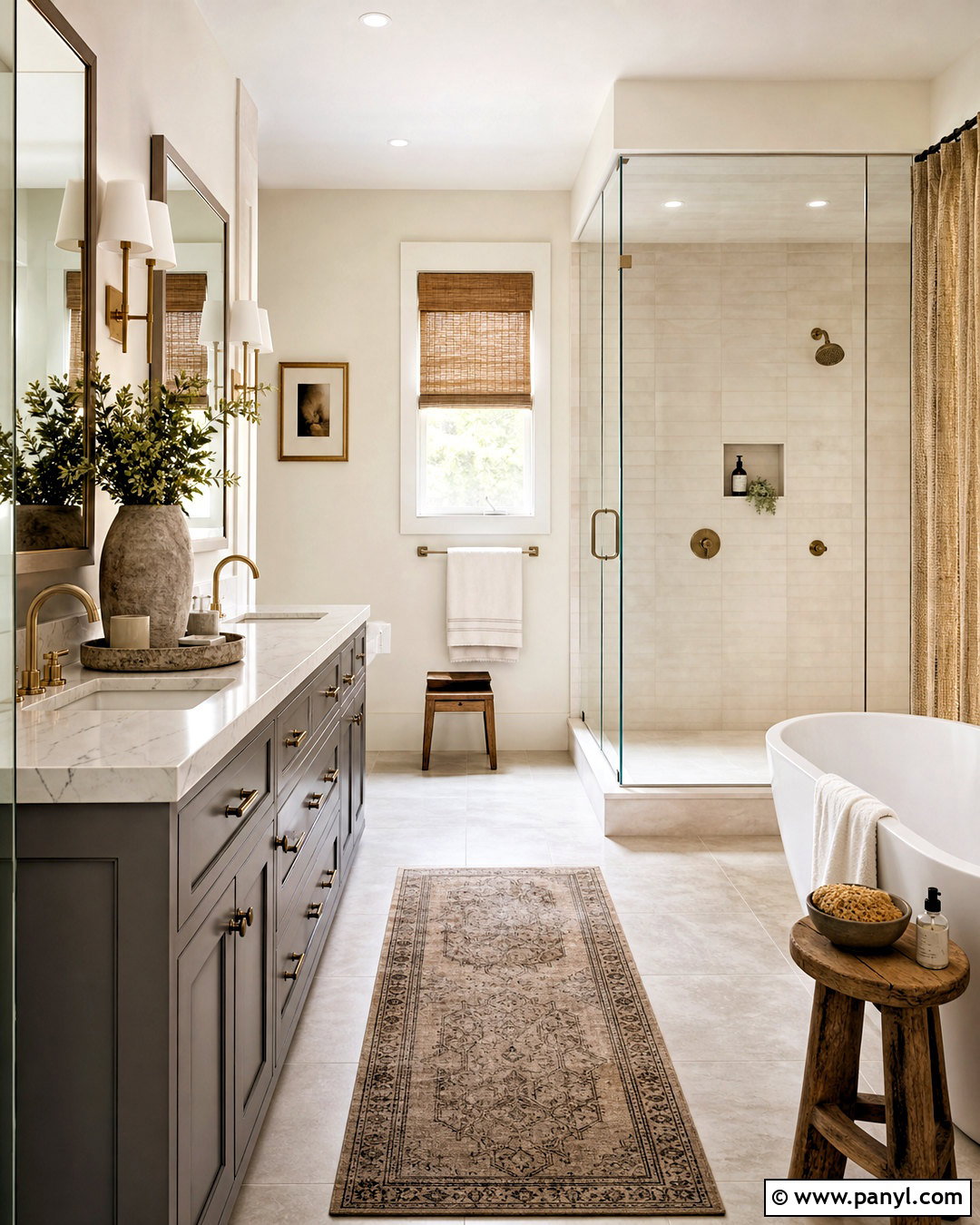
Cream softens gray surfaces and creates a bathroom that feels calm rather than stark. Use a warm medium-gray vanity with creamy white walls and ivory stone-look shower tile. A beige-gray floor can connect both sides of the palette without introducing another strong color. Select an off-white quartz counter with subtle gray veining, then add brushed brass faucets and cabinet pulls. Cream towels, a textured shower curtain, and a pale woven shade maintain the gentle warmth. Avoid mixing in bright blue-white finishes, which may appear disconnected beside the cream. Instead, choose warm white fixtures and light bulbs with a clean, comfortable appearance. A wood stool and stone tray add natural texture. This understated scheme works well in traditional, transitional, and relaxed spa-inspired bathrooms.
13. Gray And Emerald Green Bathroom
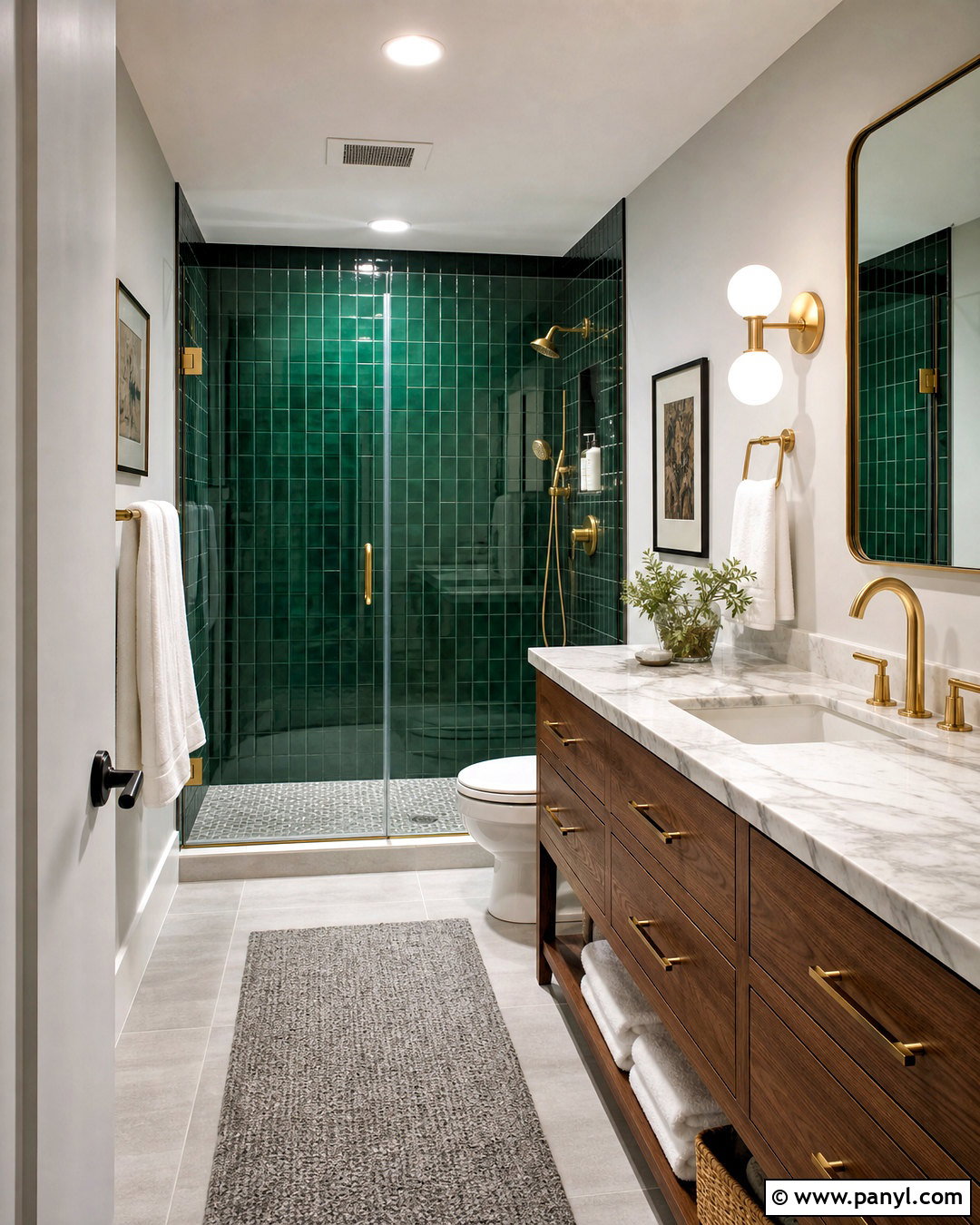
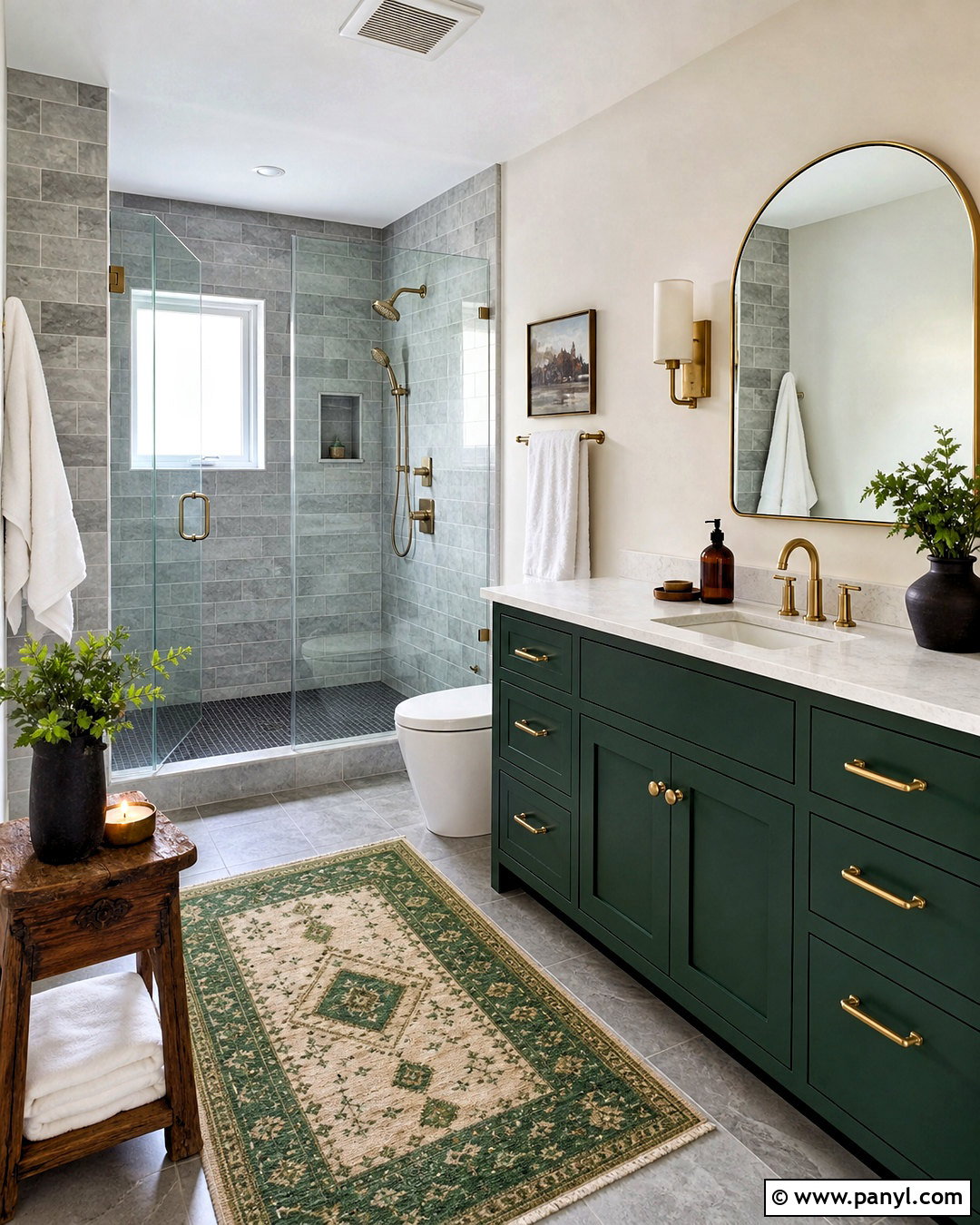
Emerald green creates a dramatic focal point against gray while giving the bathroom a polished, jewel-toned character. Use deep green tile in the shower or behind the vanity, then balance it with light gray walls and pale gray flooring. A charcoal or walnut vanity grounds the saturated wall color. White marble counters and white fixtures keep the room from becoming too enclosed. Brushed brass faucets, sconces, and cabinet pulls enhance the richness of emerald. Add white towels, a gray rug, and minimal greenery rather than filling the room with more strong color. In a powder room, emerald can cover every wall above gray wainscoting. In a larger bathroom, concentrating it in one zone creates a bold feature while preserving an open, balanced layout.
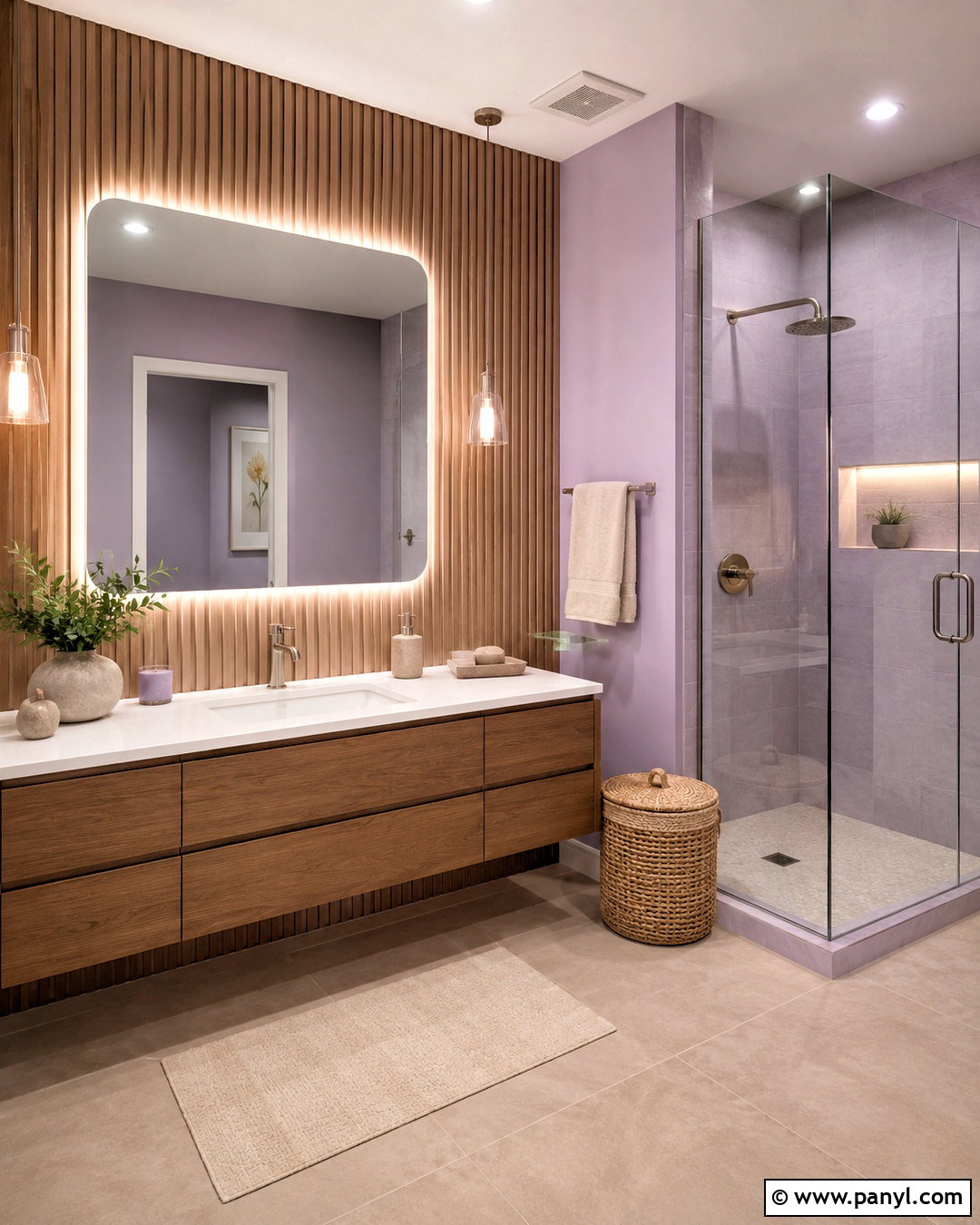
14. Gray And Lavender Bathroom
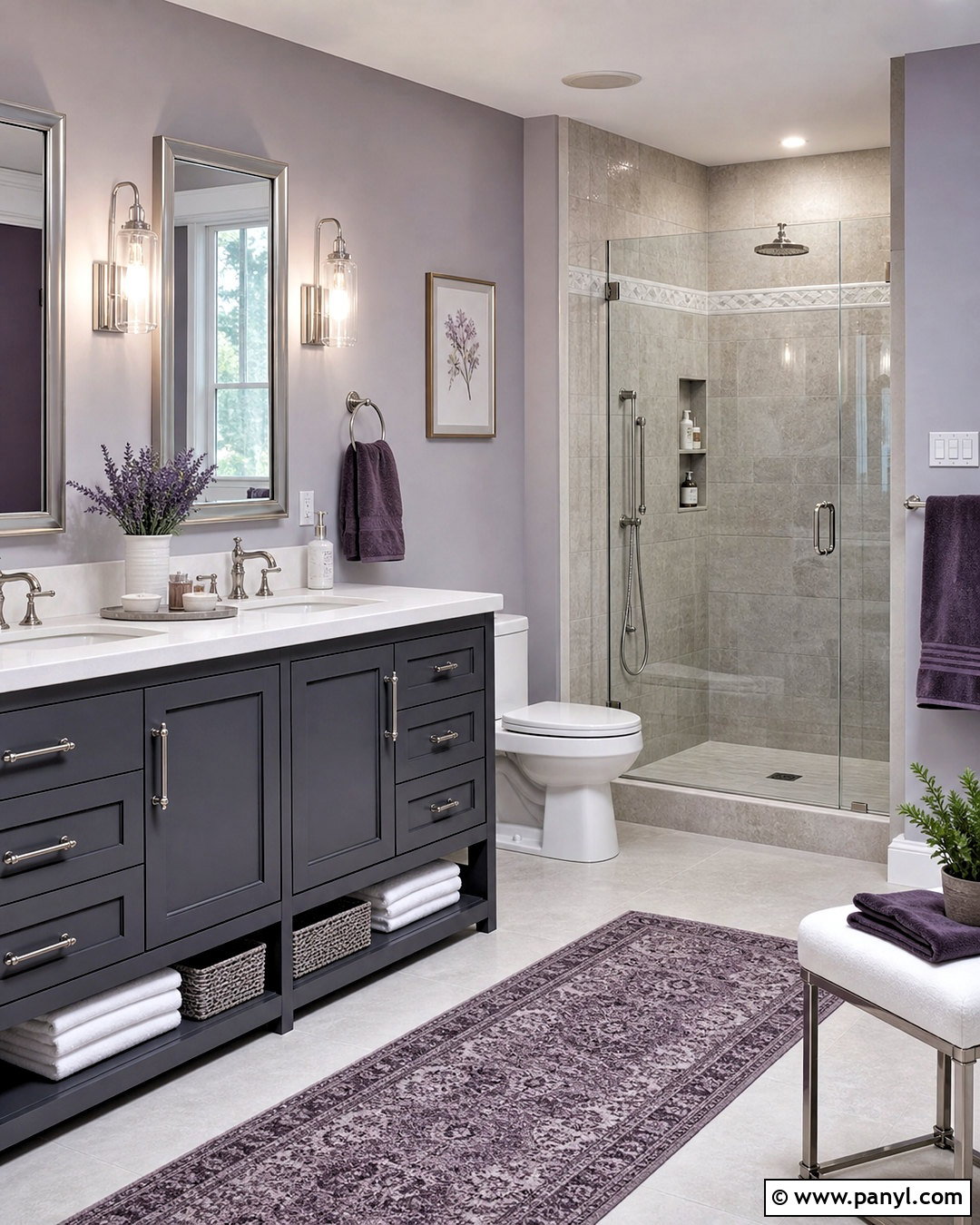
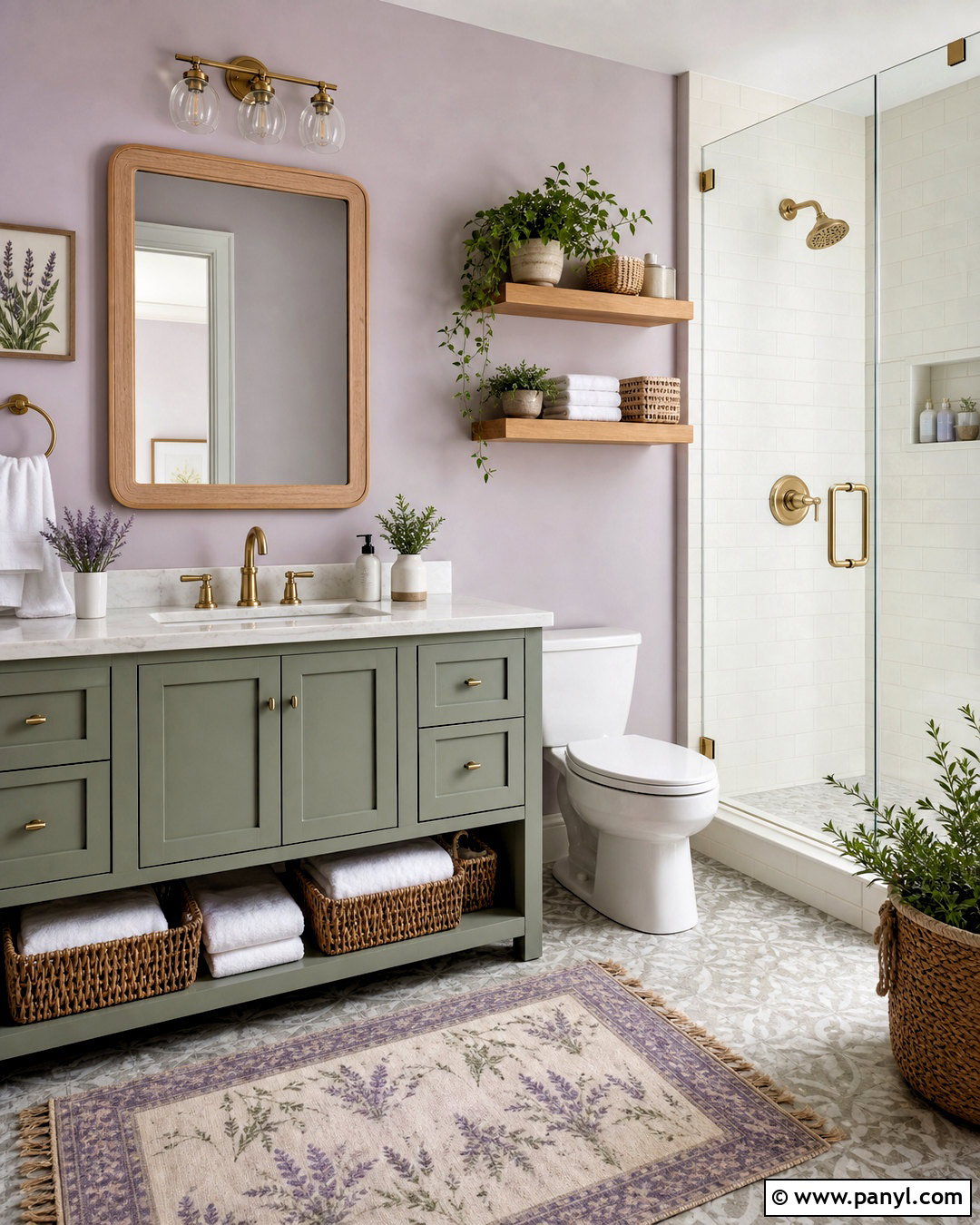
Muted lavender brings gentle color to gray and works especially well when both shades share cool undertones. Paint the walls a pale gray-lavender and use light gray tile around the shower and floor. Choose a white or charcoal-gray vanity, depending on how much contrast the room needs. A white quartz counter, polished nickel faucets, and clear glass sconces maintain a fresh look. Bring in deeper plum through towels or a narrow decorative border, but use it sparingly. Soft white textiles and a silver-framed mirror complete the cooler palette. To avoid a juvenile appearance, select smoky lavender instead of bright purple. Simple cabinetry, classic tile, and understated accessories allow the unusual color pairing to feel sophisticated, peaceful, and suitable for everyday use.
15. Gray And Coastal Blue Bathroom
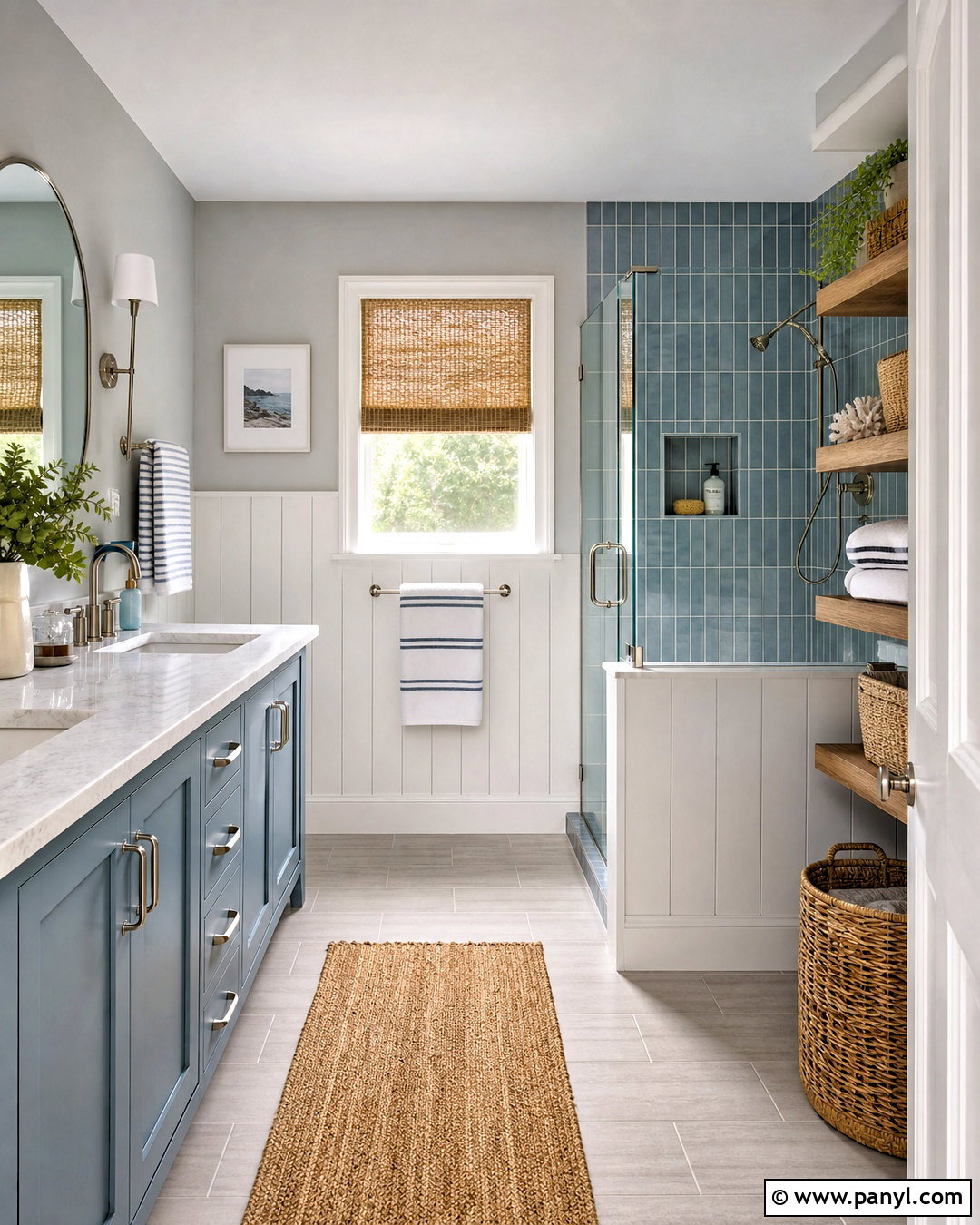
A coastal gray and blue bathroom should feel breezy and natural rather than heavily themed. Start with misty gray walls, white vertical shiplap, and pale blue vanity cabinets. Use sandy beige or light gray stone-look flooring to reference the shore without adding obvious motifs. A white quartz countertop and polished nickel fixtures keep the surfaces bright. Add a frameless glass shower with soft blue-gray tile arranged vertically for visual height. Woven baskets, a natural fiber shade, and light oak shelves provide warmth. Keep decorative accents limited to striped towels, clear glass containers, and one simple coastal print. Avoid covering the room with anchors or seashell accessories. The complete scheme should rely on color, texture, and light materials to create its relaxed coastal character.
16. Gray And Burgundy Bathroom
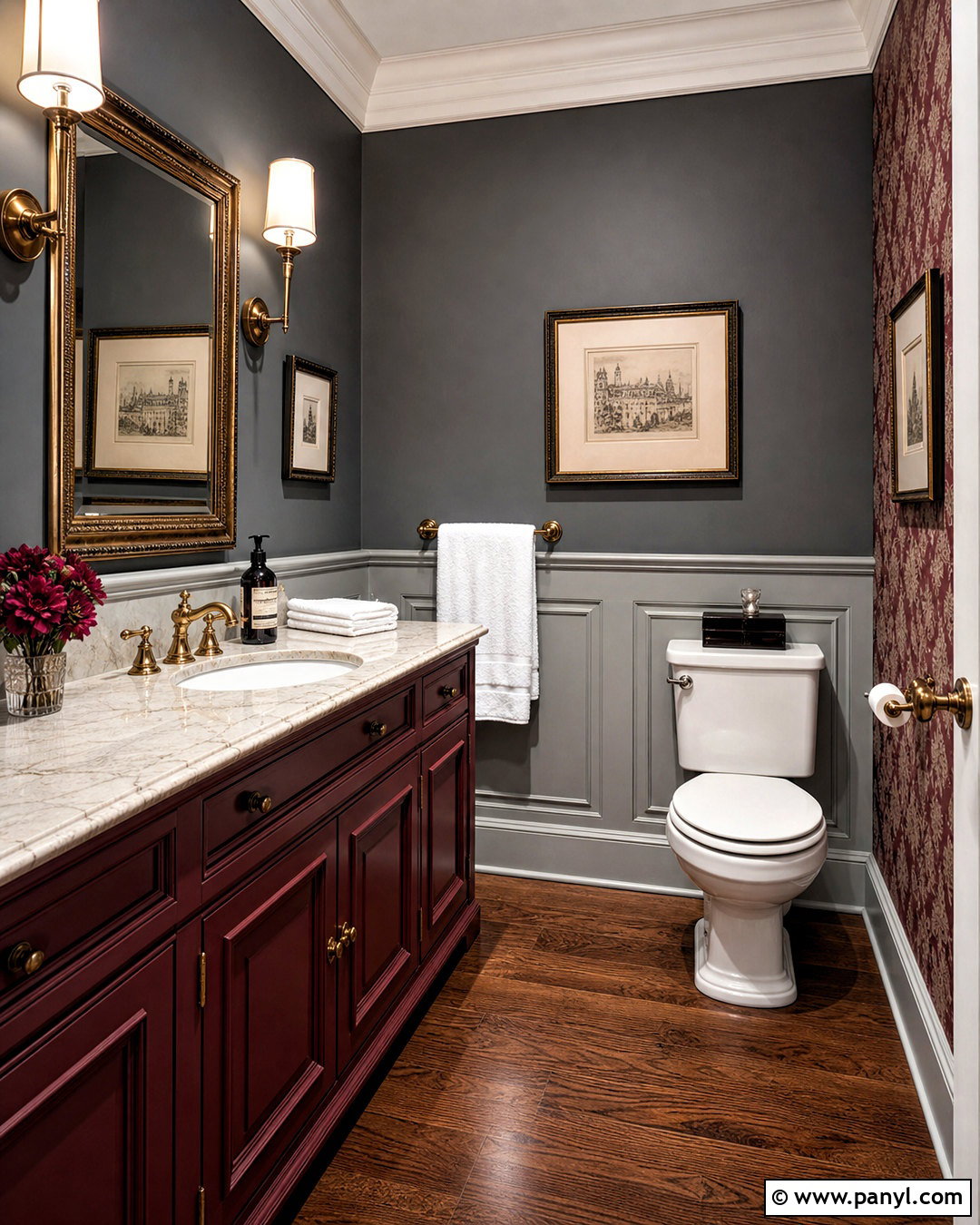
Burgundy gives gray a rich, traditional quality that suits powder rooms and statement bathrooms. Use warm charcoal-gray paint above white or pale gray wall paneling. Introduce burgundy through a painted vanity, patterned wallpaper, or a deep red shower curtain. A creamy marble counter softens the darker colors, while walnut flooring or wood-look tile adds another warm layer. Choose antique brass faucets and framed sconces to reinforce the classic direction. White towels and fixtures provide necessary brightness. If using burgundy wallpaper, select a pattern containing gray or cream so it connects naturally with the permanent finishes. Keep the ceiling and trim light. This thoughtful distribution allows the dark palette to feel dramatic and welcoming instead of enclosed or overly formal.
17. Gray And Soft Orange Bathroom
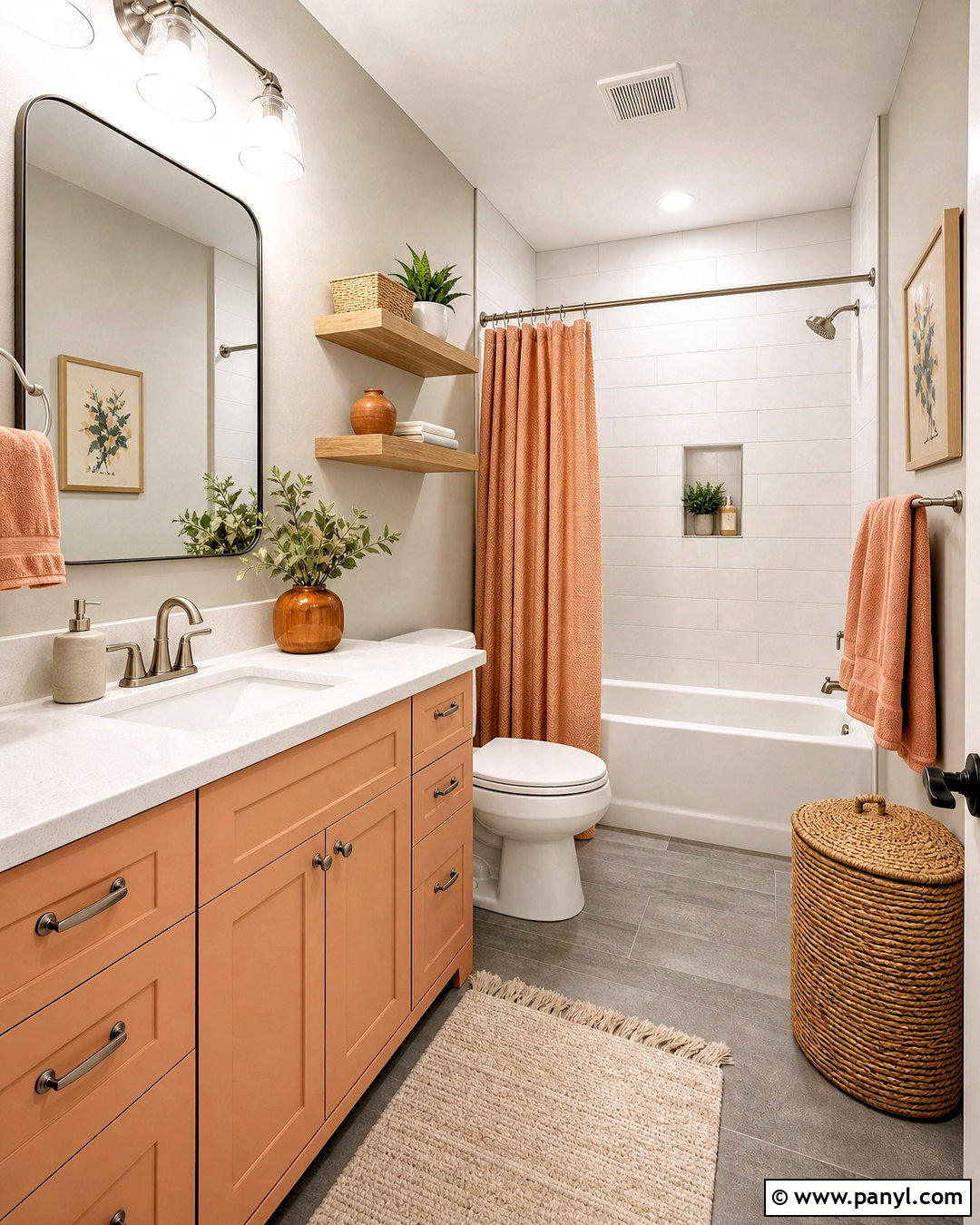
Soft orange gives gray a sunny lift while maintaining a comfortable, balanced atmosphere. Choose pale gray walls and medium-gray floor tile as the neutral base. Add muted apricot or peach through a painted vanity, shower curtain, or small-format backsplash tile. White counters and fixtures keep the room crisp, while light oak shelves support the warm accent color. Brushed nickel faucets provide a clean transition between warm and cool surfaces. Repeat orange in only two or three places, such as towels, artwork, and a ceramic planter. A cream rug and woven baskets complete the scheme. Avoid intense neon orange, which can overpower a compact room. Gentle clay-orange and peach tones create a more livable bathroom that feels colorful, fresh, and thoughtfully coordinated.
18. Gray And Greige Bathroom
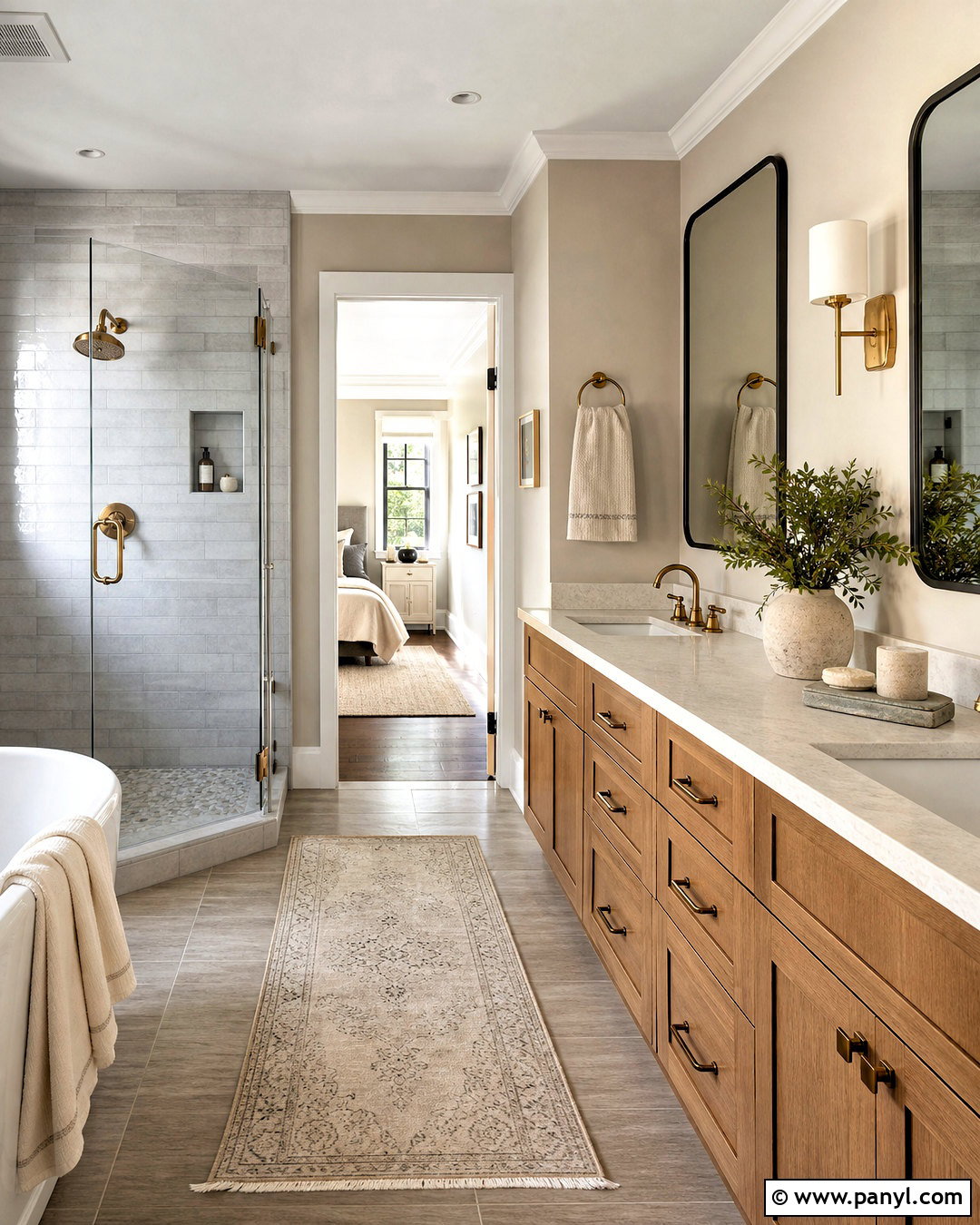
Layering gray with greige creates a subtle neutral bathroom with more depth than a single-color scheme. Use cooler light gray tile in the shower and a warmer greige paint on the surrounding walls. Install a medium oak vanity with a creamy quartz countertop to bridge the two undertones. Taupe-gray flooring provides a smooth transition from the wet area to the rest of the room. Choose brushed nickel hardware for a restrained finish or aged brass for additional warmth. Textured ivory towels, a beige runner, and stone accessories prevent the neutral palette from feeling unfinished. Include charcoal accents through the mirror frame or lighting for contrast. This balanced combination is versatile enough for contemporary, organic modern, farmhouse, or transitional bathrooms without relying on trendy decorative pieces.
19. Gray And Aqua Bathroom
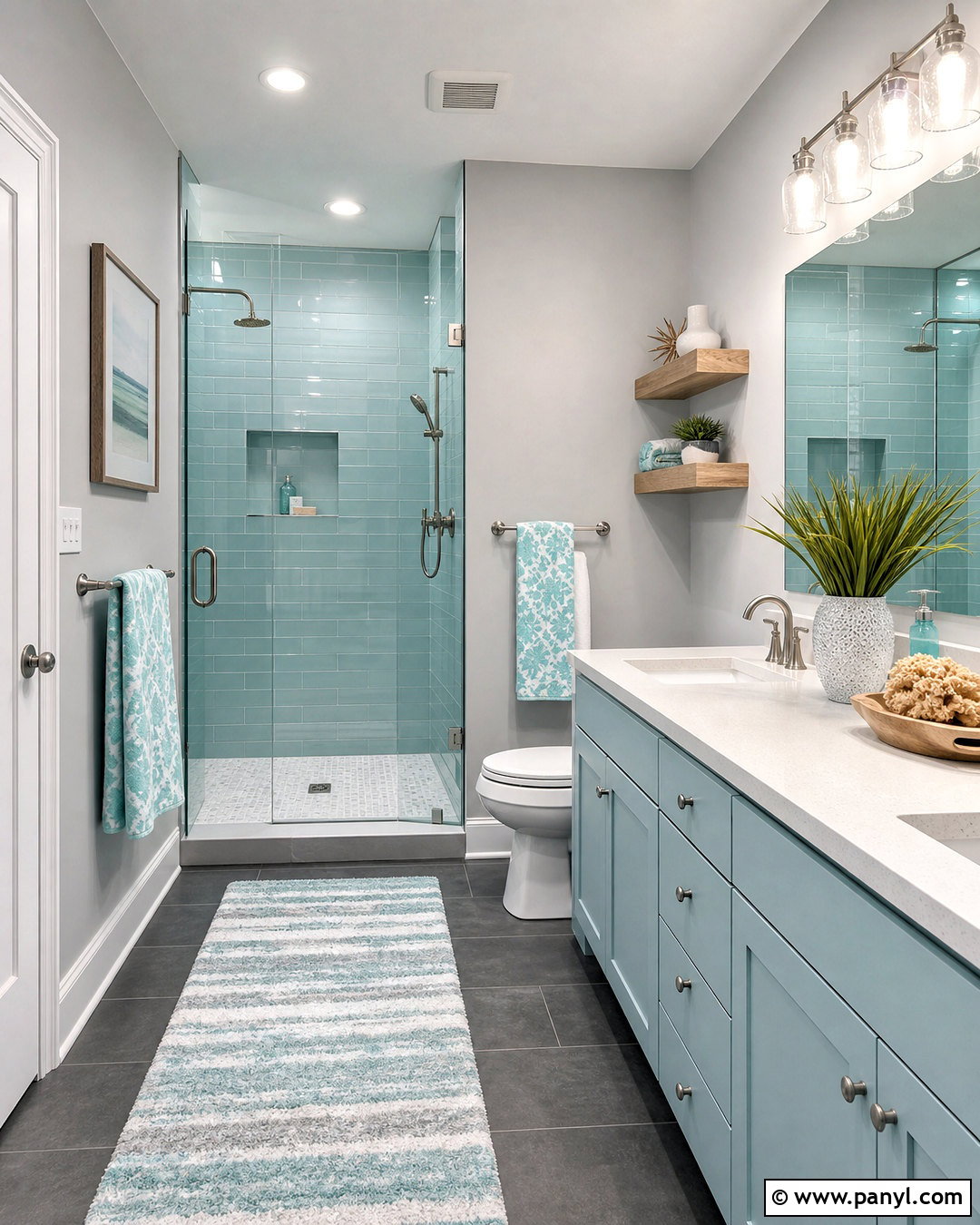
Aqua introduces a fresh, watery accent that can brighten cool gray surfaces. Keep the main palette controlled with light gray walls, white bathroom fixtures, and charcoal-gray floor tile. Use muted aqua on the vanity or as glossy shower tile rather than combining several competing blue-green shades. A white quartz countertop creates clean separation, while polished chrome or nickel fixtures support the cooler scheme. Add towels that blend aqua, white, and gray, plus a small amount of natural wood for warmth. Clear glass shower panels help distribute light across the colored tile. Avoid overly bright turquoise if the goal is a restful bathroom. A softened aqua with gray undertones will coordinate more naturally and create a complete space that feels crisp, modern, and quietly coastal.
20. Charcoal Gray And Brass Bathroom
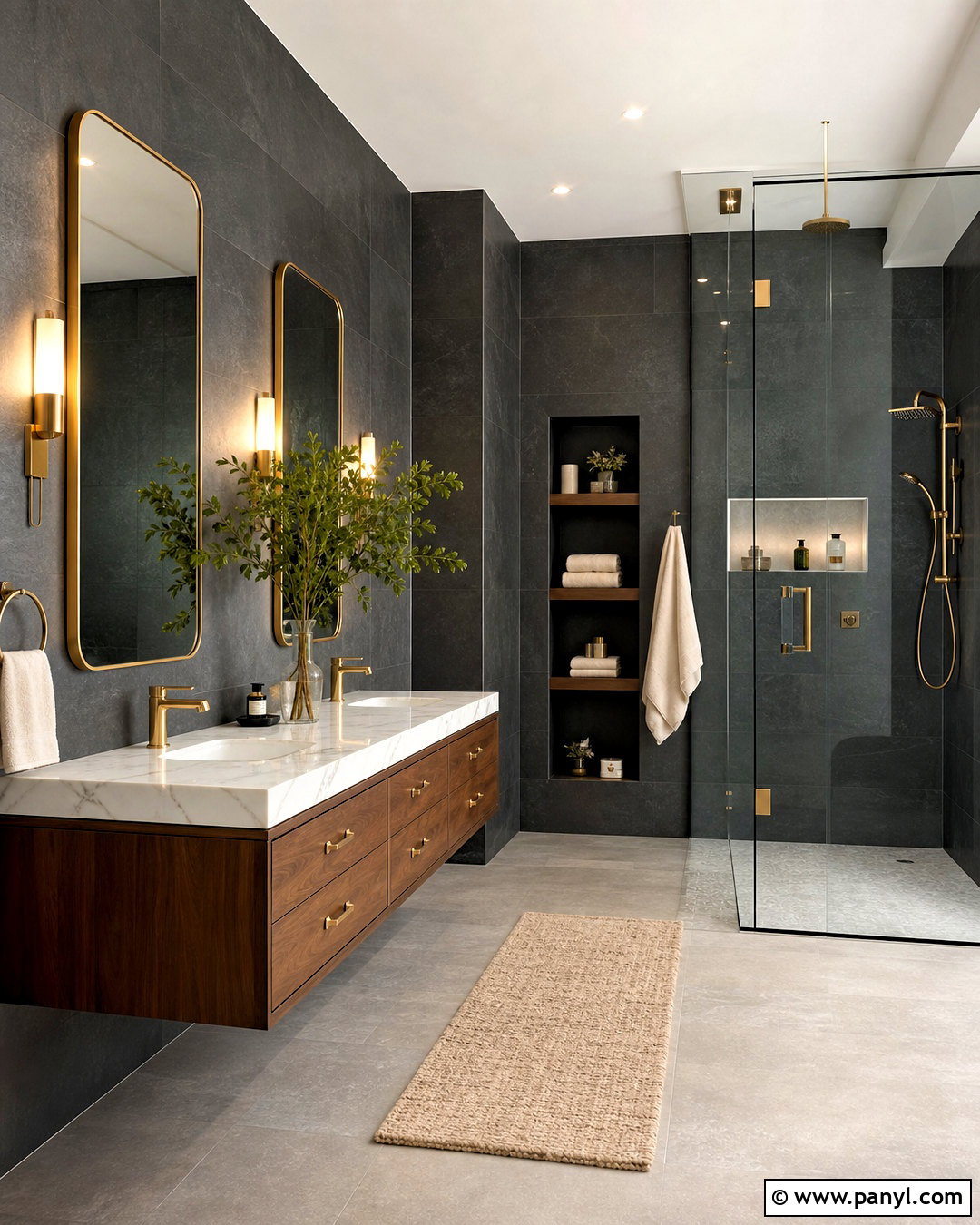
Charcoal gray and brass create a dramatic bathroom that feels luxurious without requiring ornate details. Apply charcoal paint or large-format tile to the walls, then introduce a floating walnut vanity with a white marble counter. Warm brass faucets, mirror frames, cabinet pulls, and sconces stand out clearly against the dark background. Use white fixtures and pale gray flooring to balance the room and reflect more light. A frameless glass shower keeps sightlines open, while a recessed niche adds functional storage without visual clutter. Complete the scheme with cream towels, a textured beige rug, and one leafy plant. Bright lighting around the mirror is essential. The final room should combine dark surfaces, warm metal, natural wood, and lighter textiles in measured proportions.
Conclusion:
The best gray bathroom feels layered, coordinated, and comfortable rather than cold or unfinished. These 20 bathroom color schemes gray ideas show how adaptable the neutral can be when it is paired with thoughtful materials and accent colors. White keeps gray crisp, while cream, beige, and natural wood create warmth. Navy, teal, sage, and emerald add calm color. Blush, terracotta, mustard, and soft orange bring a more expressive finish. Before selecting paint or tile, compare its undertone with the vanity, flooring, countertop, and lighting. Then repeat each main color in several controlled places. This approach creates a connected design that looks intentional while remaining practical for daily routines and future updates.

Related Ideas and Inspiration:
Leave a Reply