
Choosing a bathroom palette is about more than finding a pretty wall color. The most successful **20 Aesthetic Bathroom Color Schemes** coordinate paint, tile, flooring, cabinetry, fixtures, textiles, and lighting to create one complete look. Warm earth tones can make a large bathroom feel inviting, while airy blues and soft neutrals help compact spaces appear more open. Deep colors bring drama, especially when balanced with reflective finishes and layered lighting. Whether you prefer modern minimalism, vintage charm, organic warmth, or playful color, the right combination can establish the mood without sacrificing practicality. Use the complete palettes below to plan every visible surface and create a room that feels intentional, comfortable, and personal. Explore these **20 Aesthetic Bathroom Color Schemes** to find a look you can confidently recreate.

1. Sage Green And Warm White Bathroom
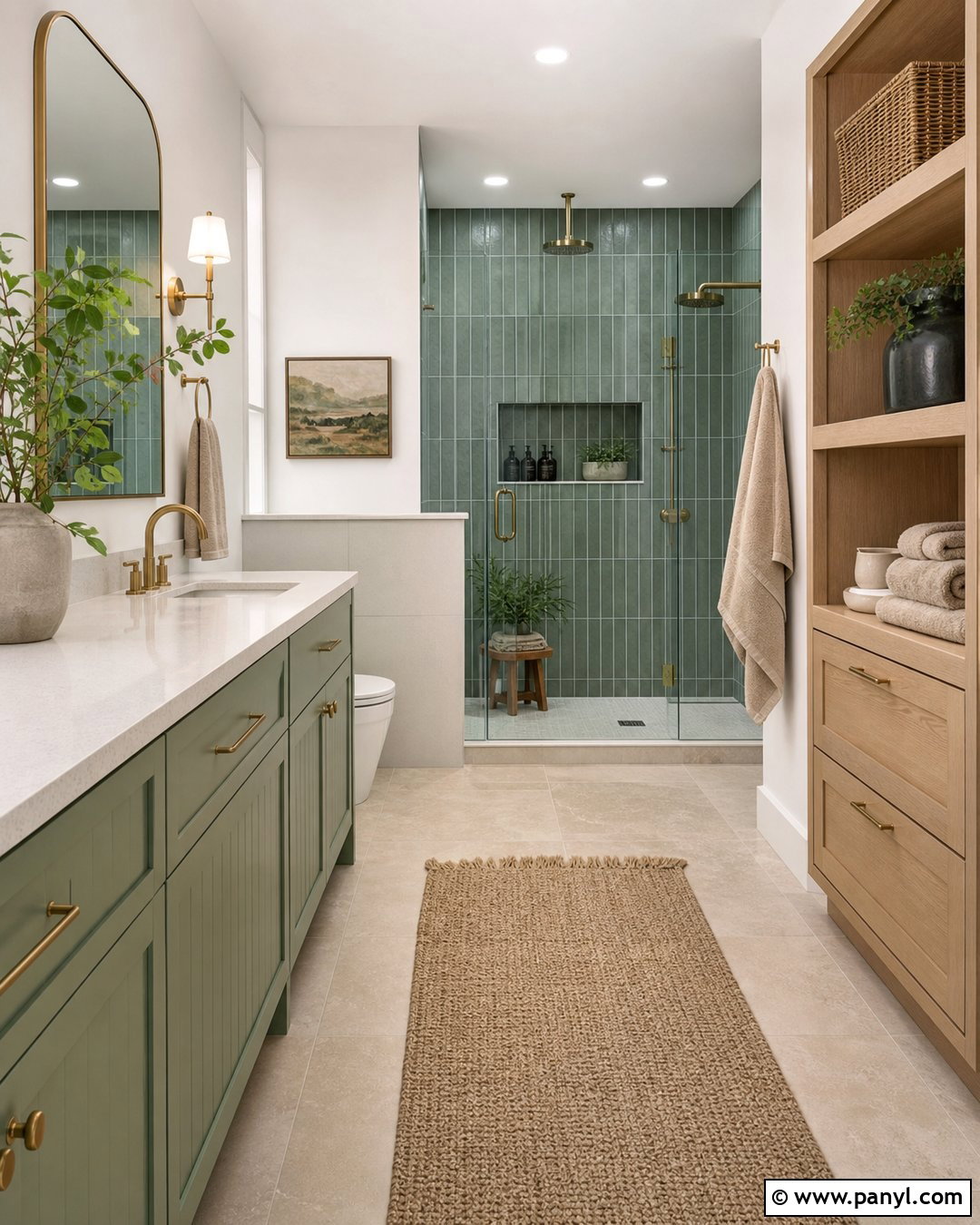
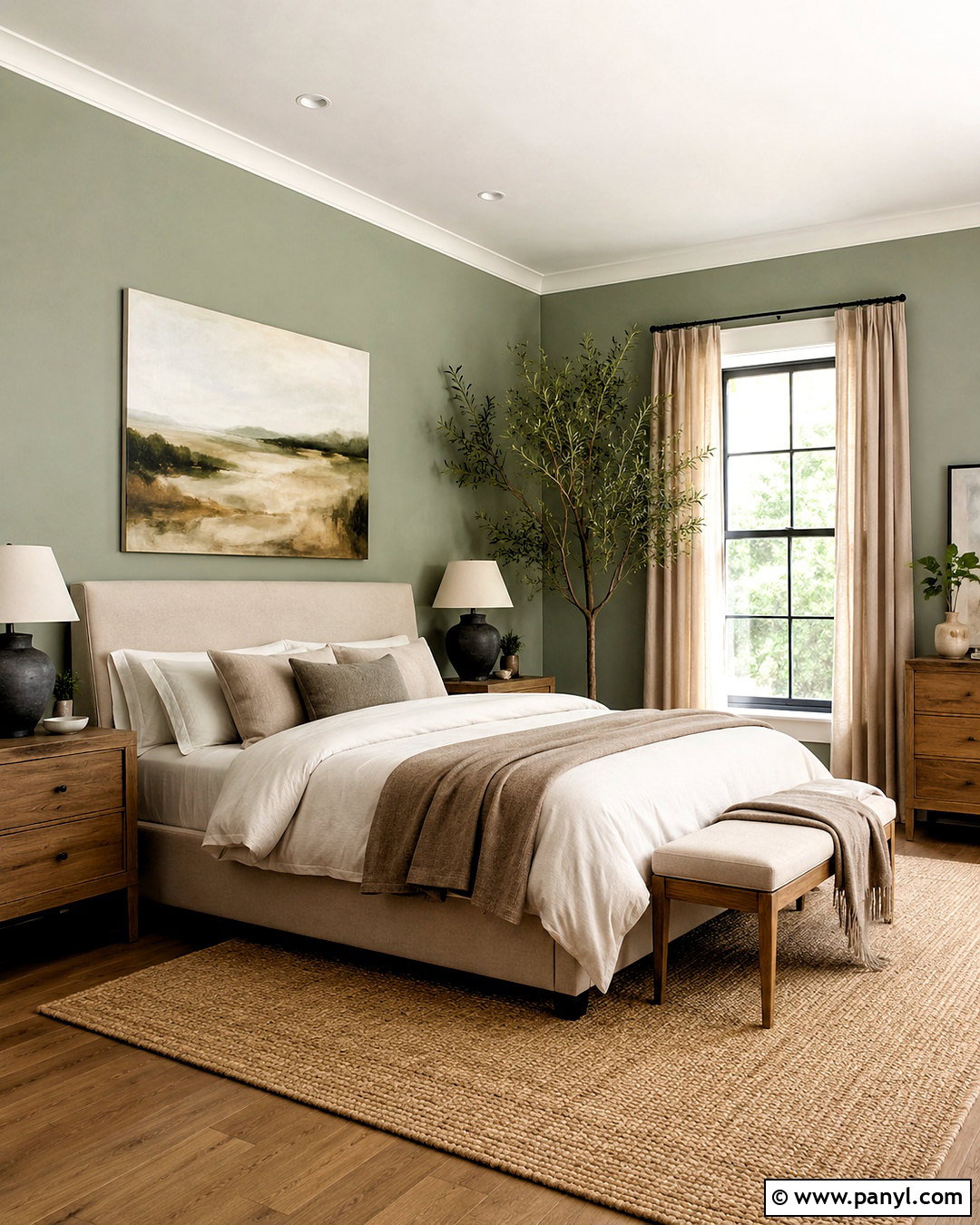
Soft sage green creates a calm, nature-inspired bathroom without making the room feel overly colorful. Use warm white on the upper walls and ceiling to reflect light, then introduce sage through a painted vanity, vertical shower tile, or paneled lower wall. Light oak cabinetry and beige limestone-look flooring reinforce the organic palette. Choose brushed brass faucets, sconces, and cabinet pulls for a gentle warmth that complements the green. A white quartz countertop keeps the vanity crisp and practical. Complete the scheme with oatmeal towels, a woven hamper, and one leafy plant near a window. In a smaller bathroom, limit sage tile to the shower and repeat the shade through accessories so the room remains bright, balanced, and visually connected.
2. Terracotta And Cream Bathroom
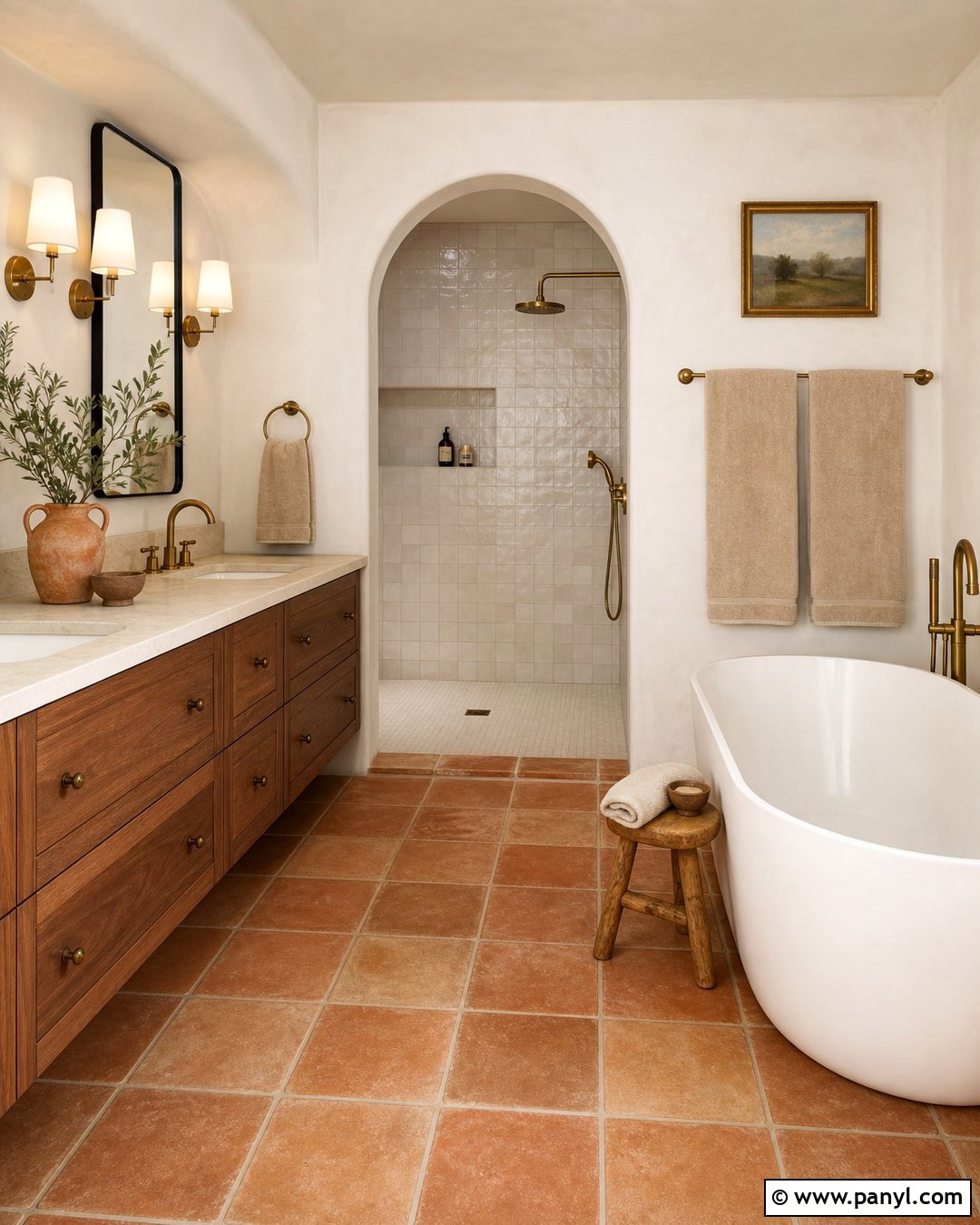
Sunbaked terracotta and creamy white make a bathroom feel warm, grounded, and welcoming. Begin with terracotta floor tiles, preferably in a matte or slightly varied finish that adds natural character. Paint the walls soft cream rather than stark white, which can look too sharp beside earthy orange. A medium-tone walnut vanity provides depth, while an ivory quartz or travertine countertop keeps the room polished. Use handmade cream shower tiles with warm grout to continue the relaxed look. A plaster-style terracotta accent wall can give a powder room extra personality without requiring extensive tilework. Finish with aged brass hardware, sand-colored towels, and simple ceramic accessories. Bright lighting and a large mirror prevent this rich palette from feeling enclosed or heavy.
3. Navy Blue And White Bathroom
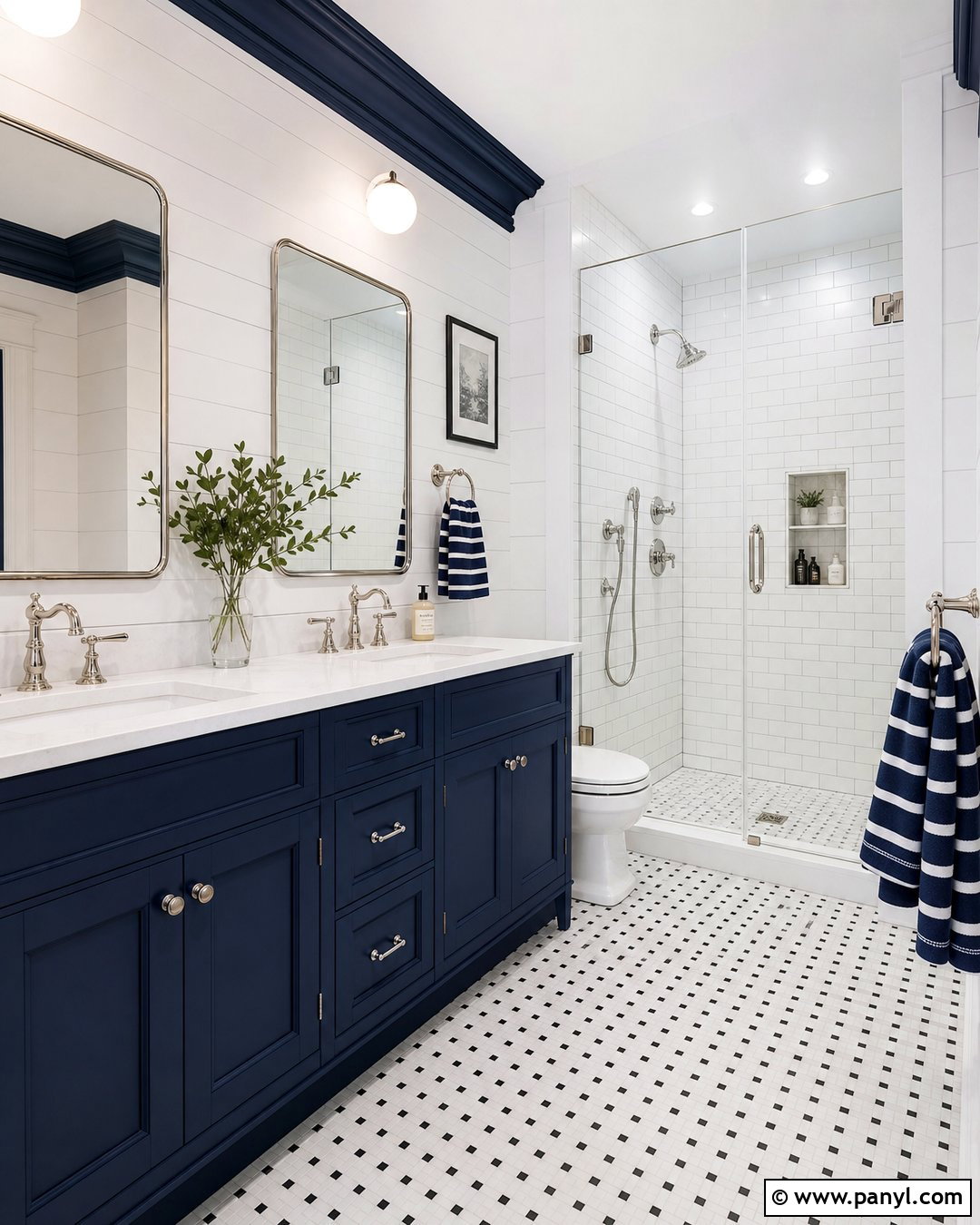
Navy blue and white deliver strong contrast while preserving a clean, classic bathroom atmosphere. Cover the shower walls with glossy white subway tile and use navy on the vanity or paneled walls. White quartz countertops, a white tub, and a pale ceiling keep the darker shade from overwhelming the space. For the floor, choose small black-and-white mosaic tile or light gray stone that visually connects both main colors. Polished nickel fixtures give the scheme a fresh, reflective finish, although brushed brass can create a warmer nautical character. Add crisp white towels with narrow navy borders and a simple striped shower curtain if needed. Multiple wall sconces, clear glass shower panels, and a generous mirror help distribute light throughout the entire room.
4. Blush Pink And Marble Bathroom
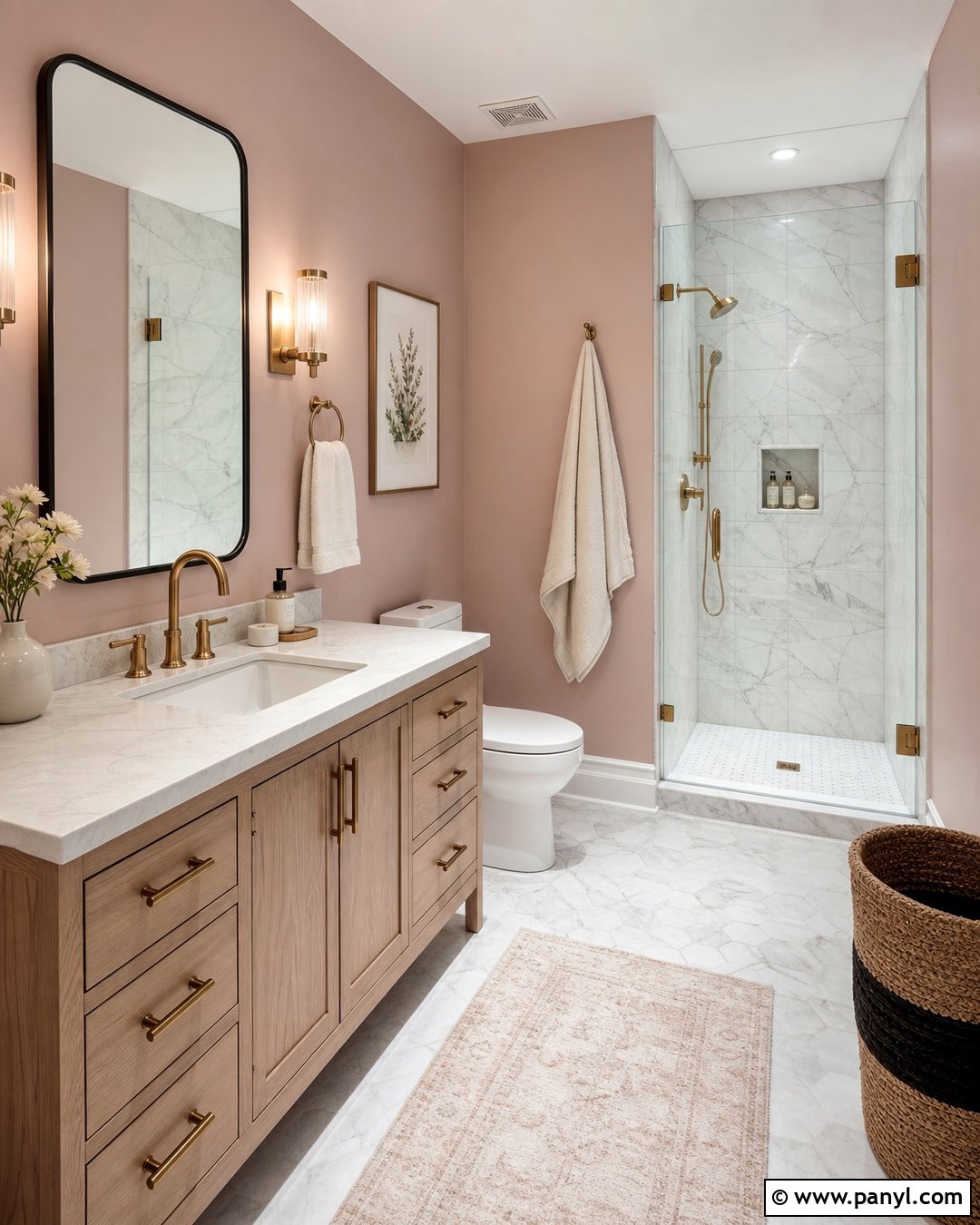
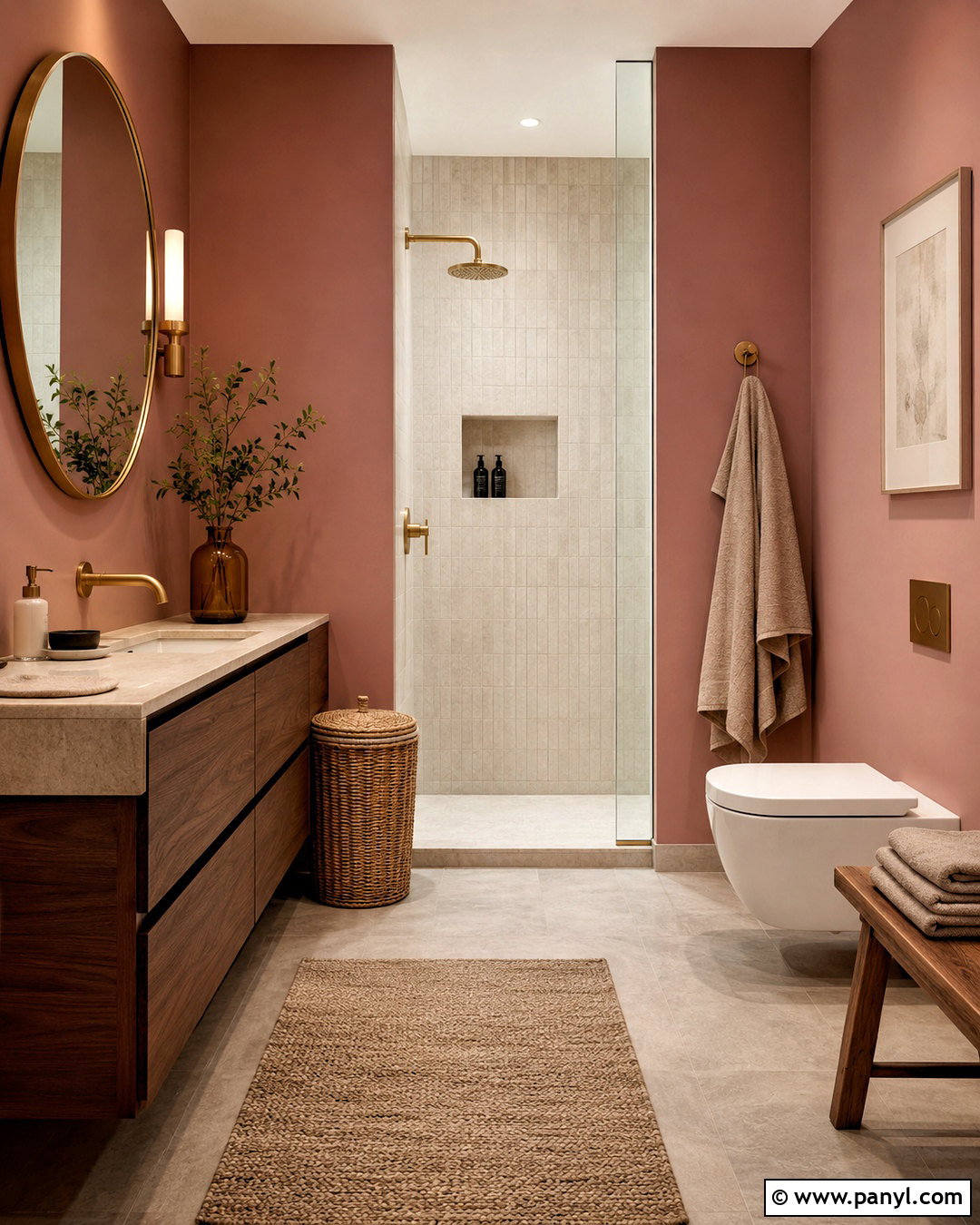
Blush pink offers gentle color while marble introduces movement and an elegant natural pattern. Paint the walls a dusty, muted pink rather than a sugary pastel, then use white marble with soft gray veining around the shower and vanity. A pale oak or warm white vanity keeps the design light. Brushed brass hardware enhances the pink undertones and gives the room a polished finish. To prevent the palette from becoming overly delicate, ground it with a charcoal-framed mirror or small black accents. Ivory towels, a cream bath mat, and ribbed glass lighting soften the overall look. This scheme works especially well in a powder room, but it can also suit a full bathroom when pink is balanced with abundant white and simple materials.
5. Charcoal Gray And Natural Wood Bathroom
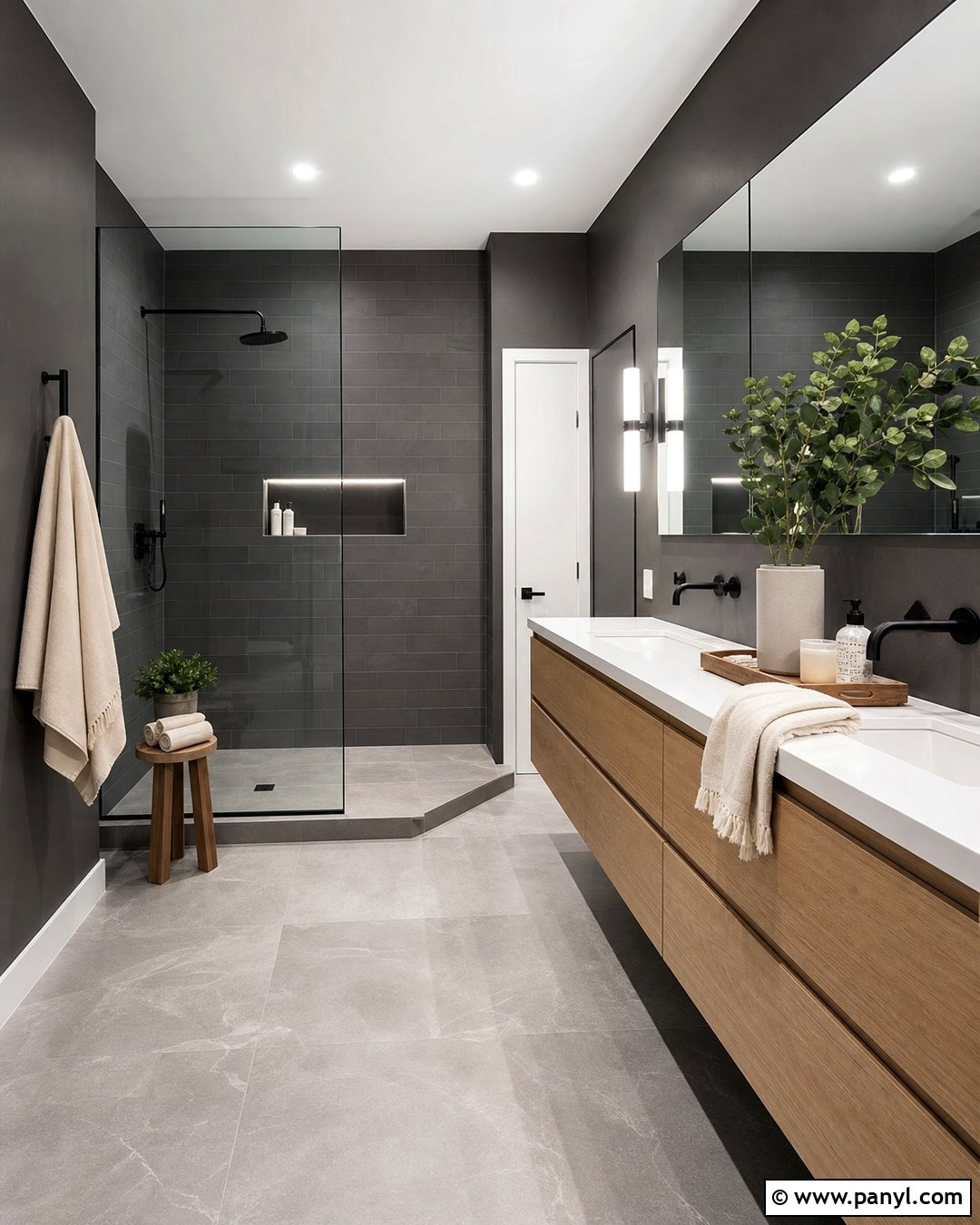
Rich charcoal walls can make a bathroom feel sophisticated when they are balanced with warm wood and plenty of light. Use charcoal porcelain tile inside the shower and continue a similar shade on one or two painted walls. Select a floating white oak vanity to add warmth and expose more flooring, which helps the space feel open. A white countertop and sink provide essential contrast, while matte black fixtures create a seamless modern finish. Choose light gray floor tile instead of matching charcoal everywhere. This prevents the room from looking flat or overly dark. Add a frameless mirror, bright sconces, and recessed ceiling lighting. Cream towels, wooden trays, and one understated plant introduce softness while maintaining the bathroom’s streamlined, contemporary appearance.
6. Powder Blue And Soft Gray Bathroom
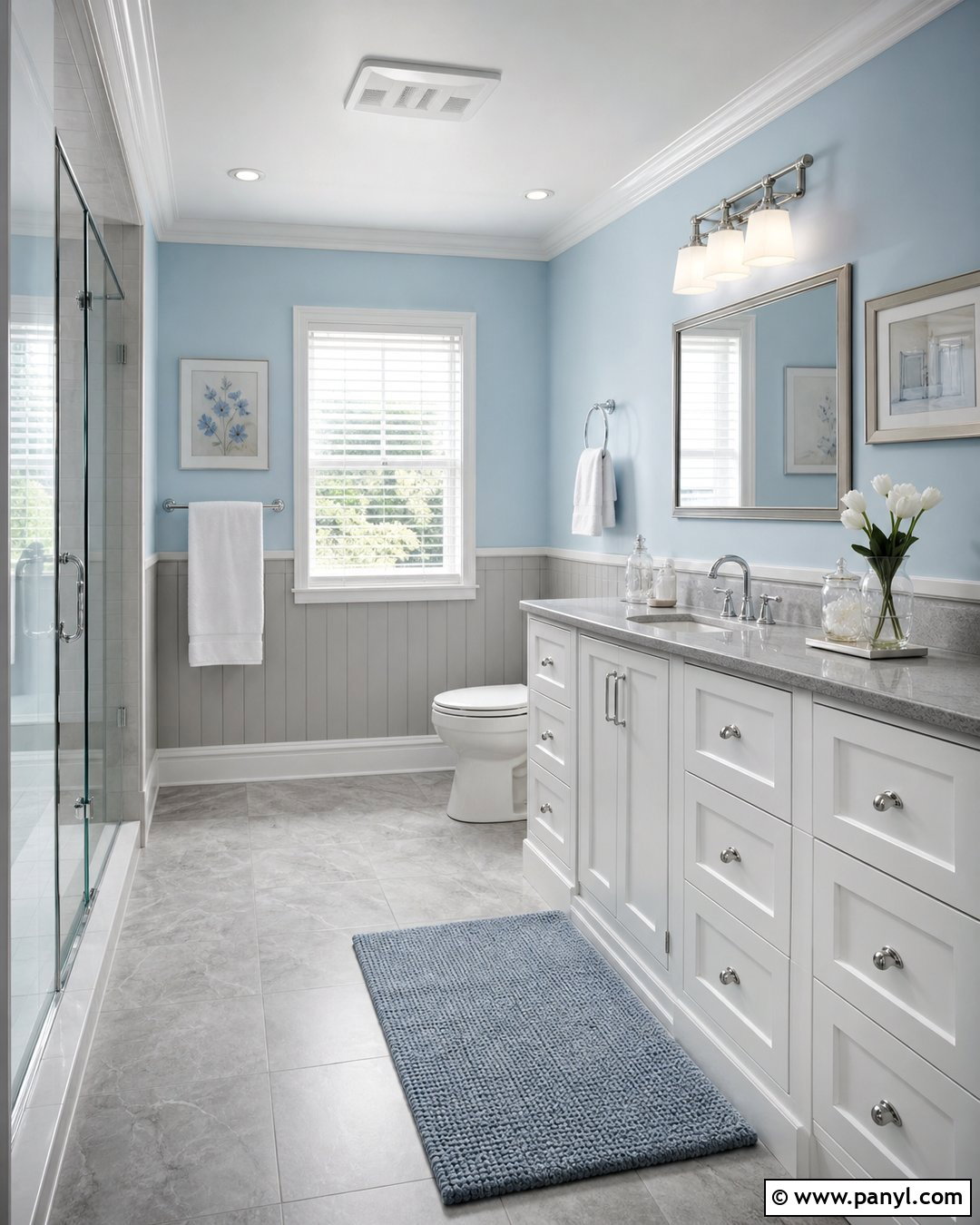
Powder blue and soft gray create an airy bathroom that feels calm rather than cold. Use pale blue paint above light gray wall tile or wainscoting, allowing both colors to share similar muted undertones. A white vanity with a gray quartz countertop keeps the design clean and provides practical storage. Continue the palette with large light gray floor tiles, white shower walls, and polished chrome fixtures. The reflective metal brightens the softer colors without adding visual heaviness. Layer in white towels, a blue-gray bath mat, and clear glass accessories for a simple finish. If the room receives limited natural light, select a powder blue that contains a subtle hint of green. It will appear softer under artificial lighting and coordinate naturally with gray surfaces.
7. Olive Green And Beige Bathroom
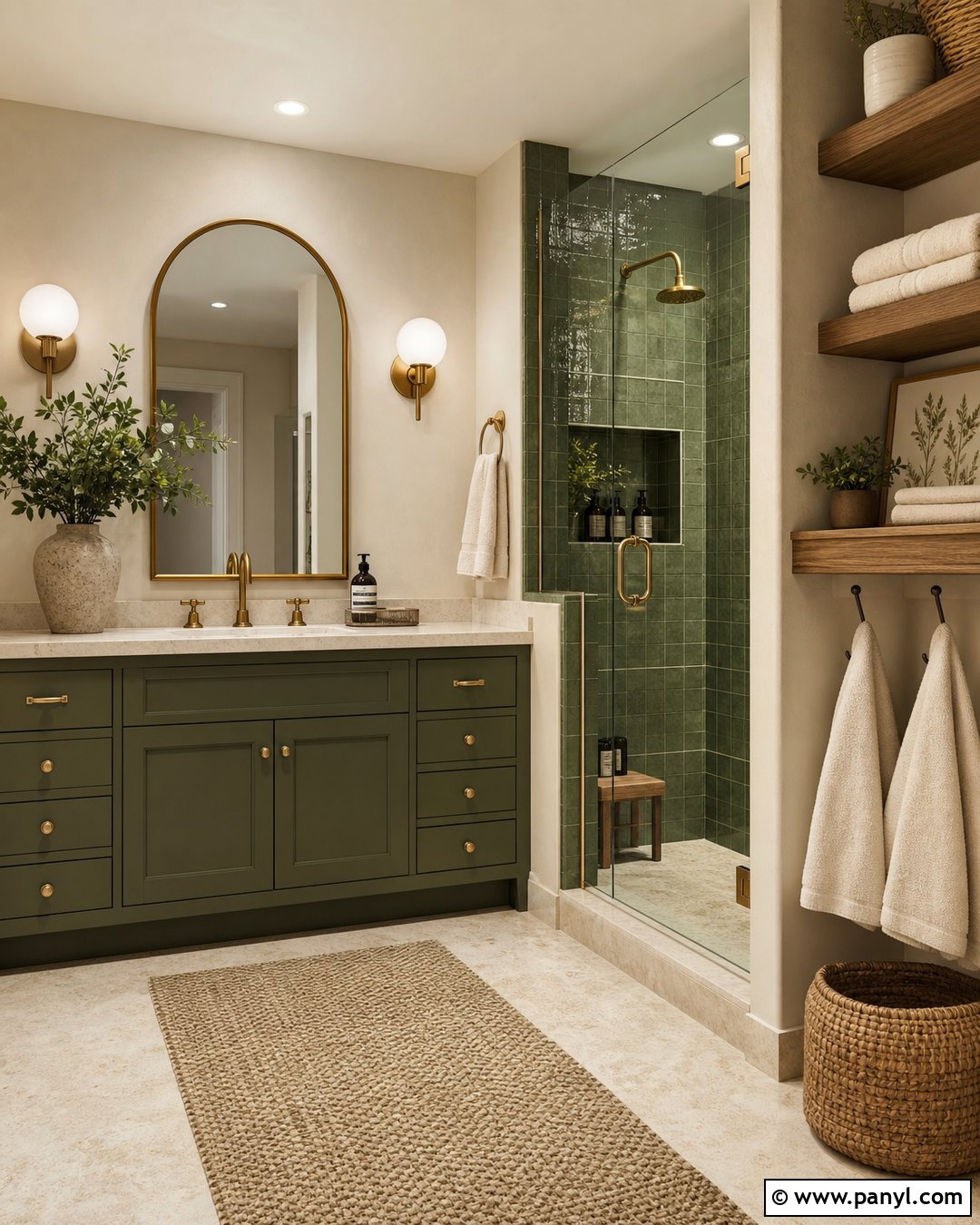
Earthy olive green and warm beige create a cozy bathroom with depth and natural character. Use olive on a paneled vanity, tiled shower wall, or color-drenched powder room walls. Balance its richness with sandy beige floor tile and a creamy stone countertop. Medium oak storage and open shelves add another warm layer without competing with the green. Choose antique brass fixtures for a softly aged appearance that suits the organic palette. An arched mirror and globe sconces can keep the room approachable rather than severe. Add ivory towels, woven baskets, and subtle botanical artwork in moisture-resistant frames. Because olive absorbs more light than sage, include strong vanity lighting and a pale ceiling. The finished bathroom will feel enveloping, relaxed, and thoughtfully coordinated.
8. Black And Warm White Bathroom
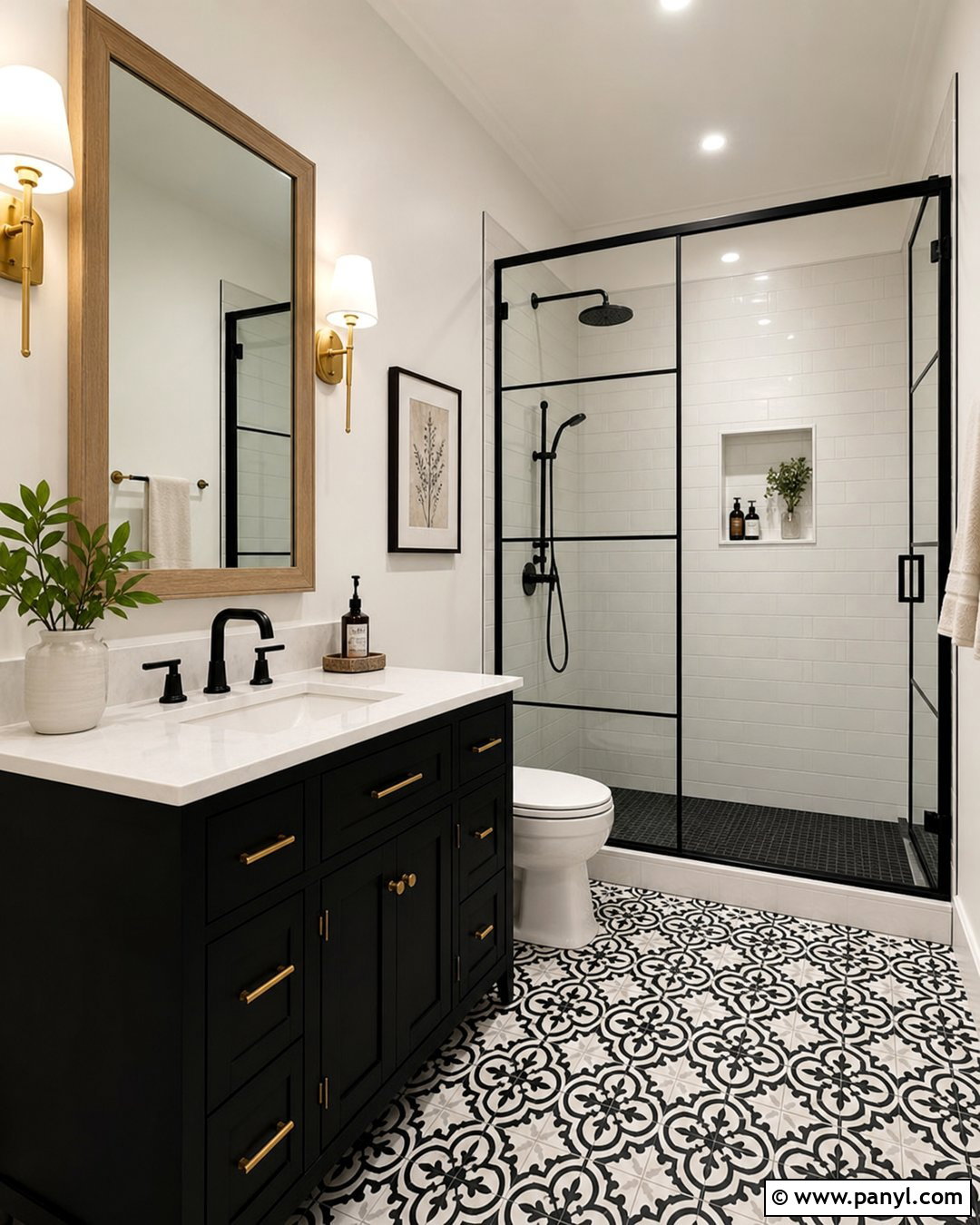
A black and warm white bathroom can look bold yet comfortable when the contrast is carefully distributed. Keep the largest surfaces, including the walls, ceiling, bathtub, and countertop, in a creamy white. Introduce black through a structured vanity, window trim, shower framing, and selected hardware. Patterned black-and-white floor tile can connect the two colors while adding movement. To soften the graphic palette, bring in a white oak mirror frame, stool, or narrow storage cabinet. Matte black faucets feel modern, while warm brass sconces add an optional layer of warmth. Avoid filling every corner with black accessories. Instead, repeat the dark shade in a few intentional places. Plush ivory towels and bright lighting ensure the finished bathroom remains fresh and inviting.
9. Teal And Brass Bathroom
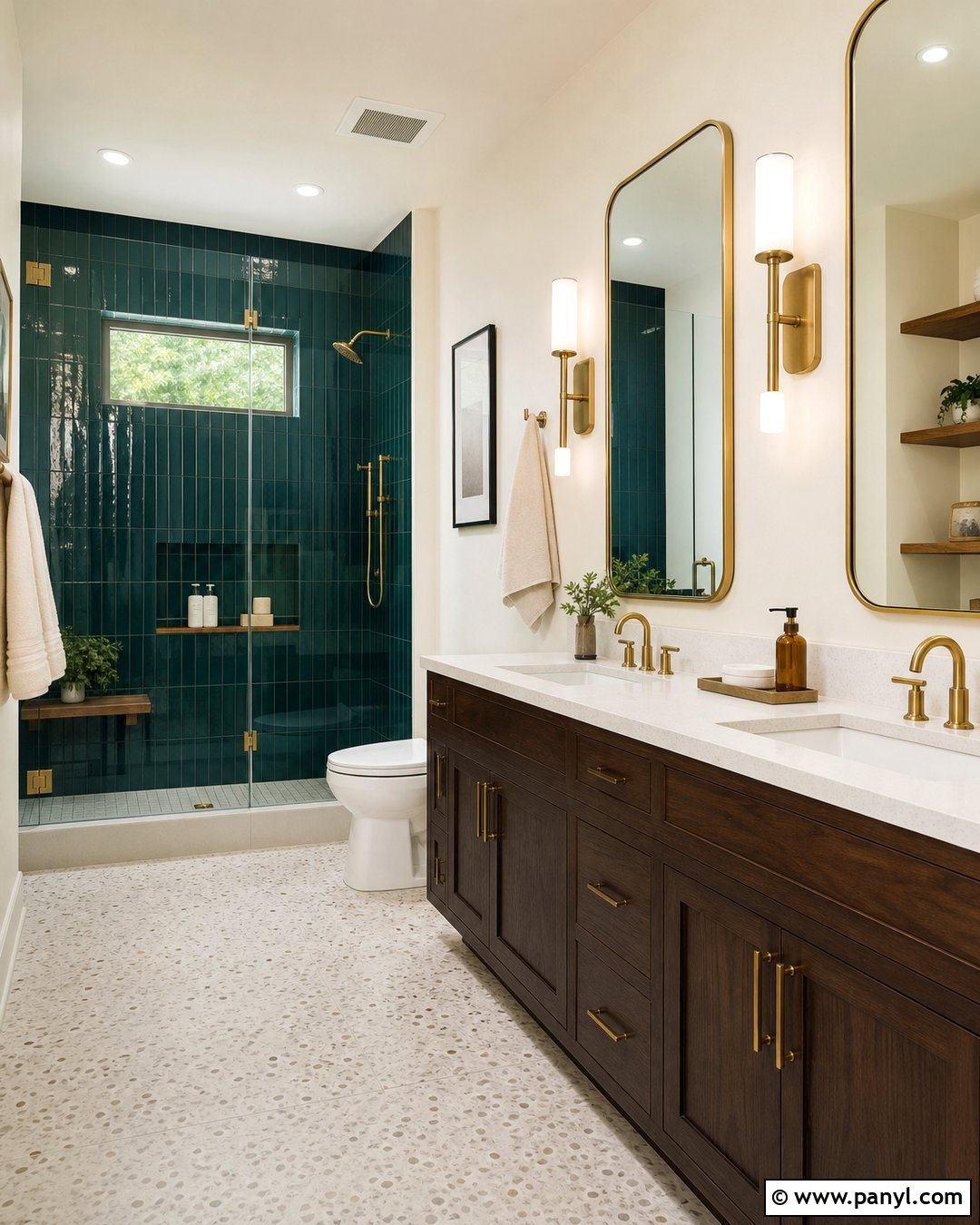
Deep teal gives a bathroom jewel-like color, while brass adds warmth and reflective detail. Use glossy teal tile across the shower walls or behind the vanity, where light can emphasize the tile’s subtle variations. Paint the remaining walls a pale warm gray or soft ivory to give the saturated color breathing room. A dark walnut vanity grounds the palette and complements unlacquered or brushed brass fixtures. Choose a simple white countertop and an off-white terrazzo floor with small teal flecks. This prevents competing patterns from distracting from the main color. Complete the bathroom with cream towels, a brass-framed mirror, and opal glass sconces. In compact rooms, a clear shower enclosure will preserve sightlines and make the vibrant surfaces feel spacious rather than crowded.
10. Chocolate Brown And Ivory Bathroom
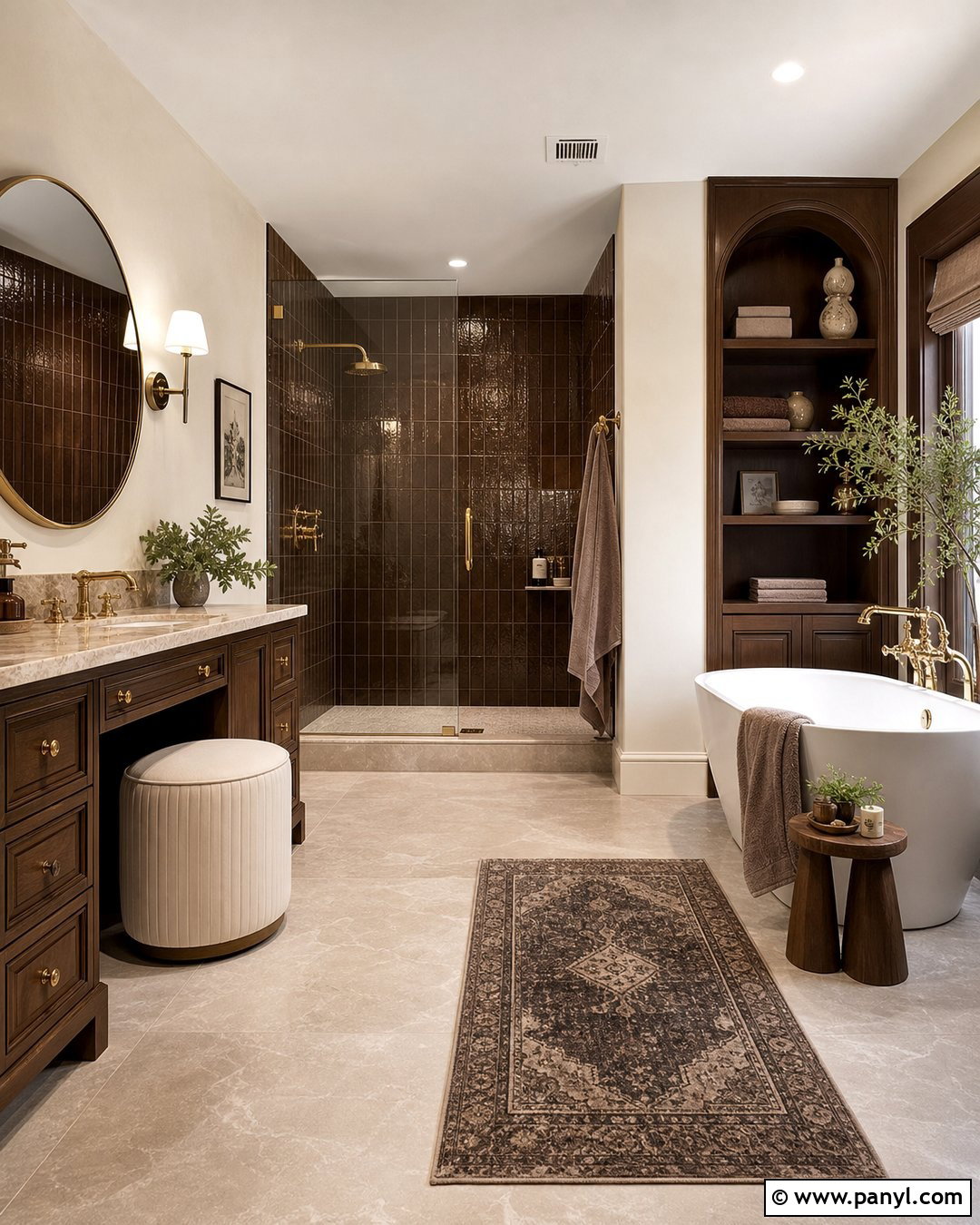
Chocolate brown creates a warm, enveloping bathroom that feels refined when paired with creamy ivory. Apply brown through rich wood cabinetry, glazed shower tile, or waterproof wall paneling rather than using one flat finish everywhere. Ivory plaster-look walls and a light stone floor provide enough contrast to keep the room open. A beige marble countertop with brown veining can bridge the palette beautifully. Use brushed bronze or aged brass hardware for a low-contrast finish that supports the warmth. Add an ivory upholstered vanity stool, soft taupe towels, and a round mirror to break up the room’s straight lines. Bright sconces are essential around the vanity. The resulting scheme feels restful and substantial, offering a softer alternative to a dramatic black bathroom.
11. Lavender And Warm Gray Bathroom
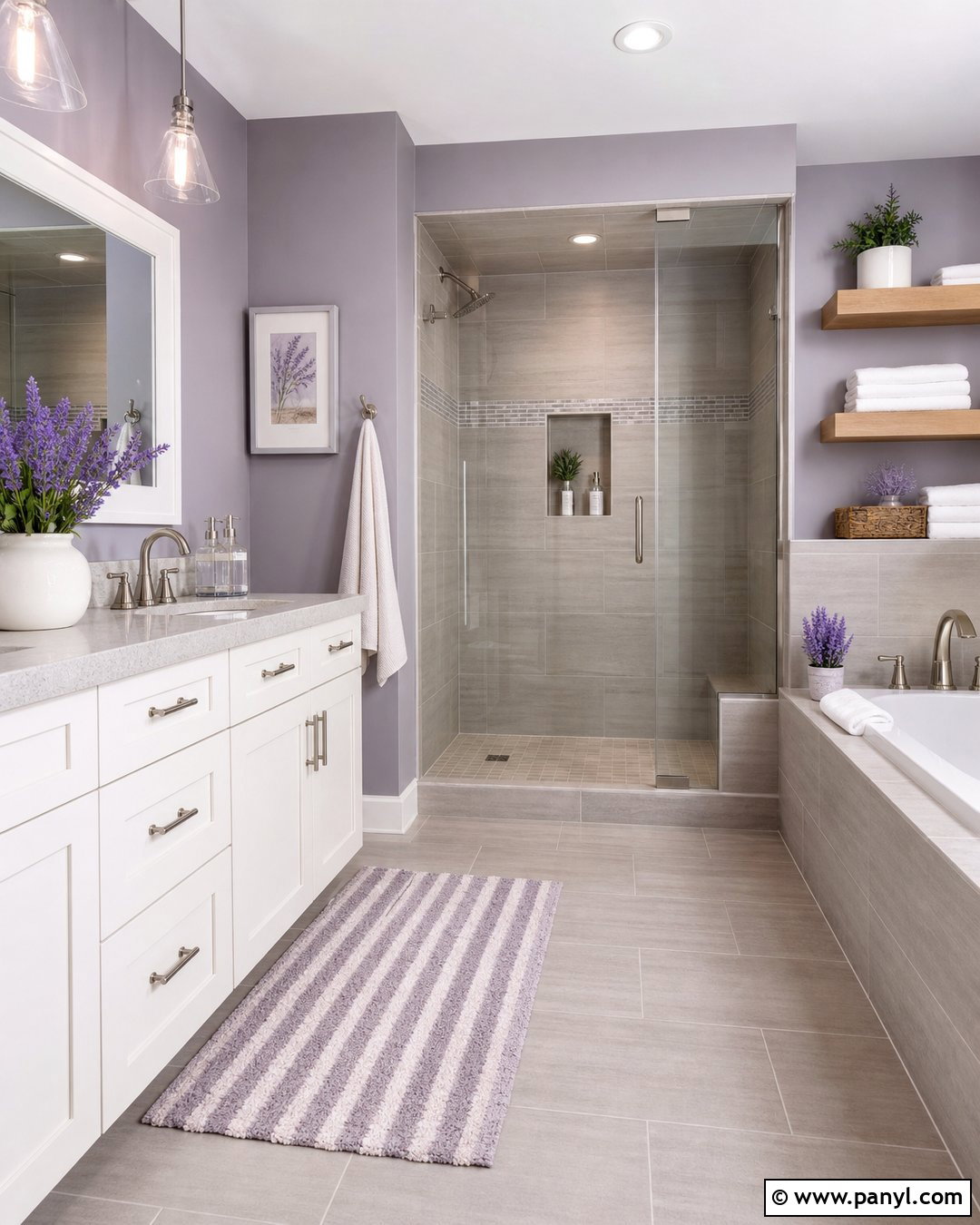
Muted lavender adds unexpected personality while warm gray keeps the bathroom composed and practical. Paint the walls a gray-leaning lavender and use large greige porcelain tiles across the floor and shower. A warm white vanity prevents the muted colors from blending together, while a pale gray quartz countertop provides a subtle transition. Polished nickel faucets and lighting work especially well because their gentle shine complements both cool and warm undertones. Introduce a small amount of natural oak through shelving or a framed mirror to make the scheme feel more relaxed. White towels, a lavender-striped bath mat, and translucent glass accessories complete the palette. Avoid intense purple accents, which can disrupt the softness. Instead, build depth through texture, veining, and slightly varied neutral shades.
12. Mustard Yellow And White Bathroom
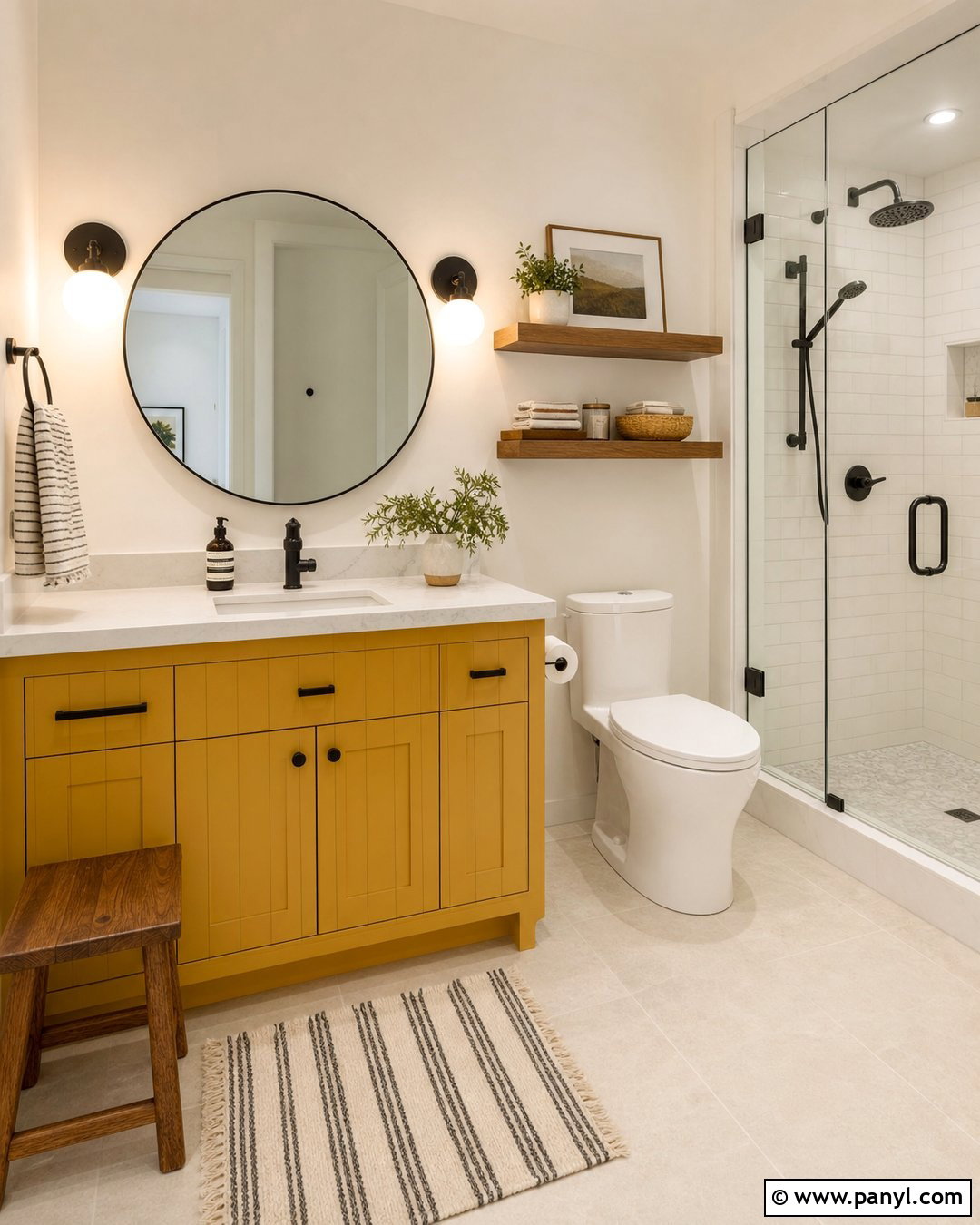
Mustard yellow can make a bathroom cheerful and distinctive without looking childish. Use it strategically on a vanity, painted paneling, or one tiled wall, then surround it with warm white surfaces. White shower tile and pale cream flooring give the energetic color room to stand out. Walnut shelving or a teak bath stool introduces an earthy note that helps mustard feel more sophisticated. Select matte black fixtures for clear definition, or brushed brass for a softer tonal effect. A simple round mirror and globe sconces maintain the friendly character. Repeat yellow sparingly through a striped hand towel or small ceramic planter. Since mustard changes noticeably under warm bulbs, choose bright, neutral-white lighting that displays the color accurately and keeps the finished bathroom feeling clean.
13. Forest Green And White Bathroom
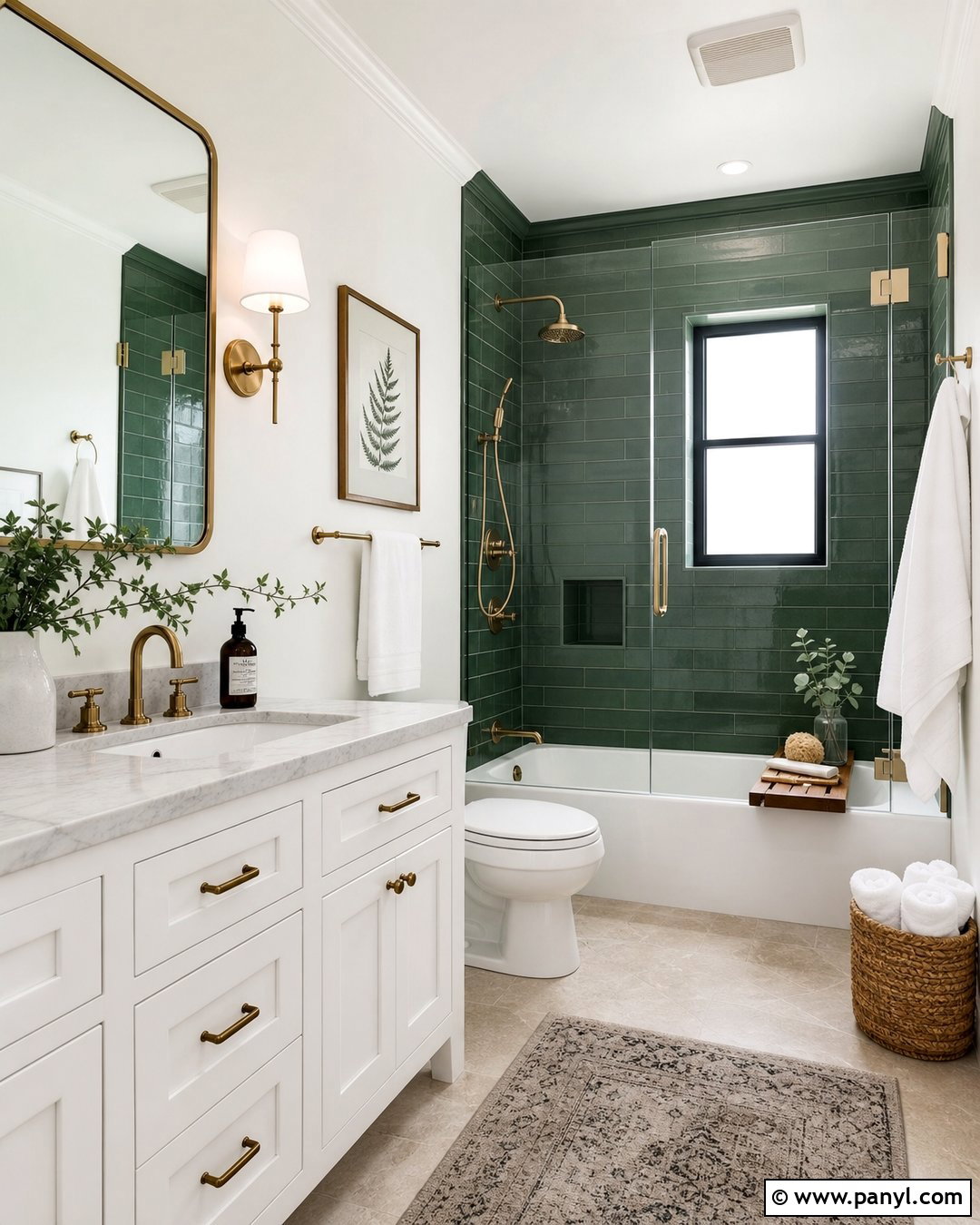
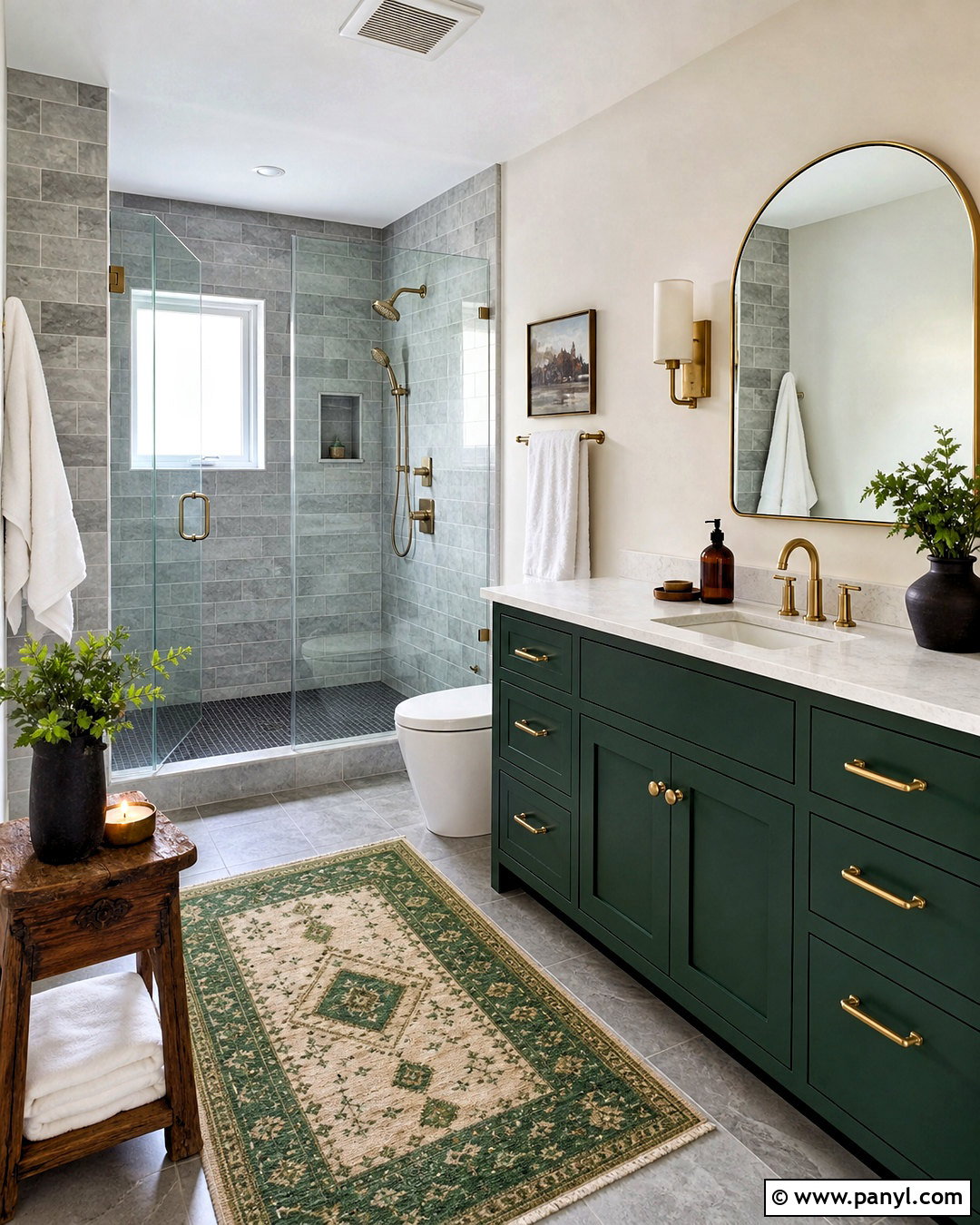
Forest green offers striking depth for a bathroom with traditional or modern character. Install dark green tile inside the shower and use clean white paint across the ceiling and remaining walls. A white vanity with a marble countertop prevents the room from becoming visually heavy. Alternatively, choose a matching green vanity for a more immersive effect, but keep the floor pale. Brushed brass faucets and cabinet hardware bring warmth to the cooler color and stand out clearly against it. Add a brass-framed mirror, white towels, and a slim wooden bath tray for balance. Glossy tiles are particularly effective because they bounce light across the deep green surface. Use clear shower glass and layered lighting to preserve openness, especially in a narrow or windowless bathroom.
14. Peach And Sand Bathroom
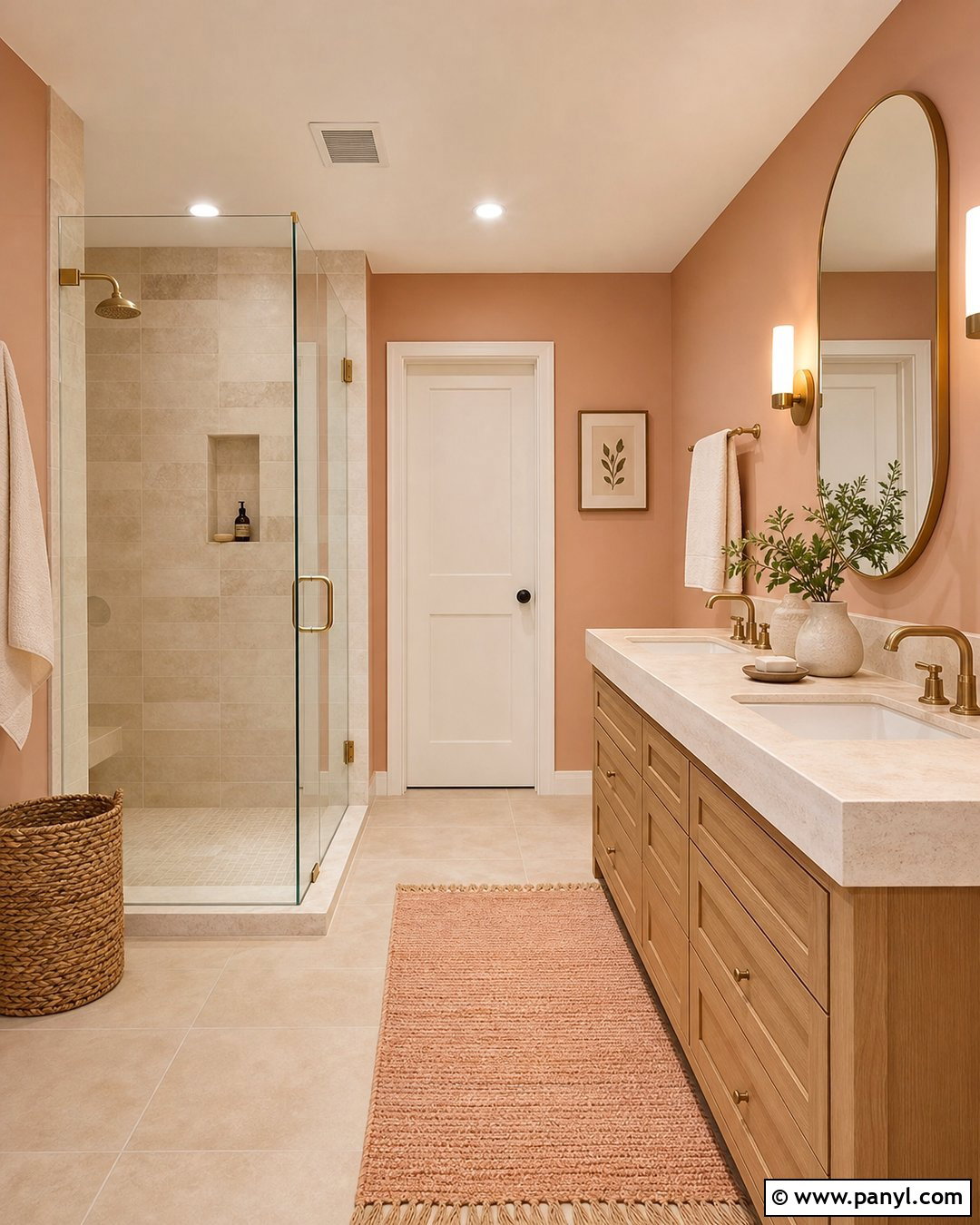
Soft peach and sandy beige form a sunny bathroom palette that remains gentle and easy to live with. Choose a muted peach wall color with warm beige undertones, then install sand-colored porcelain tile across the floor and shower. A light oak vanity naturally connects the two shades and adds visible grain. Cream quartz or limestone countertops keep the surfaces understated, allowing the peach to provide the room’s main glow. Use brushed brass fixtures and a rounded mirror for a smooth, cohesive finish. Textiles should stay within the warm palette, including ivory towels and a pale apricot bath mat. A small amount of white on the ceiling, tub, and sink adds freshness. This scheme is particularly useful for warming bathrooms that receive cool northern light.
15. Aqua Blue And Coral Bathroom
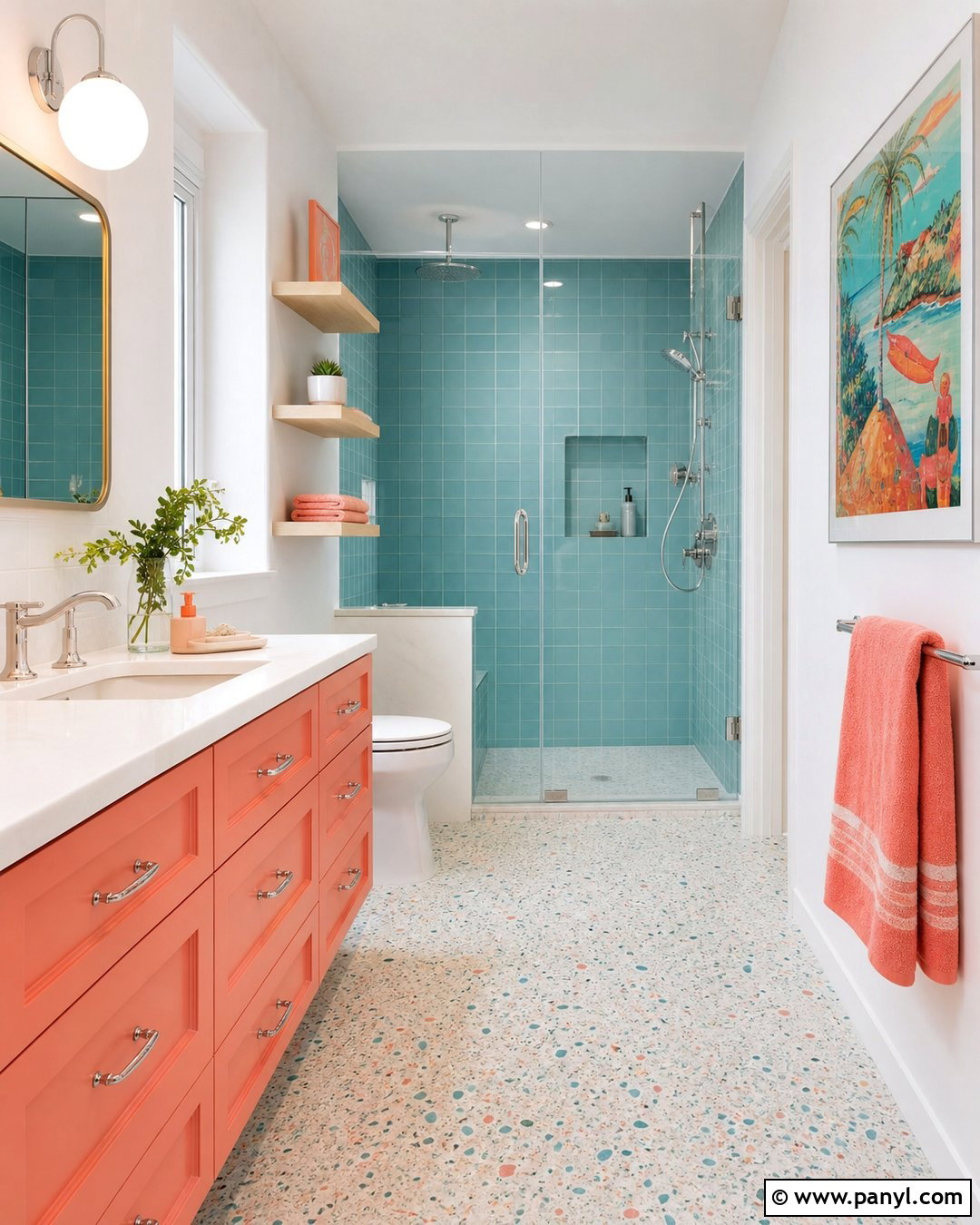
Aqua blue and coral create a fresh, playful bathroom when one color leads and the other acts as an accent. Use aqua glass or ceramic tile in the shower, pairing it with warm white walls and light terrazzo flooring. Bring coral into the room through a painted vanity, patterned shower curtain, framed artwork, or neatly folded towels. Keeping coral away from every permanent surface makes the scheme easier to update later. Choose white quartz counters and polished chrome fixtures for a bright, clean foundation. Pale wood shelves can soften the lively contrast and provide practical storage. Repeat each color two or three times around the room for balance. Strong white lighting and uncluttered surfaces will keep the finished palette colorful, refreshing, and intentional.
16. Greige And White Oak Bathroom
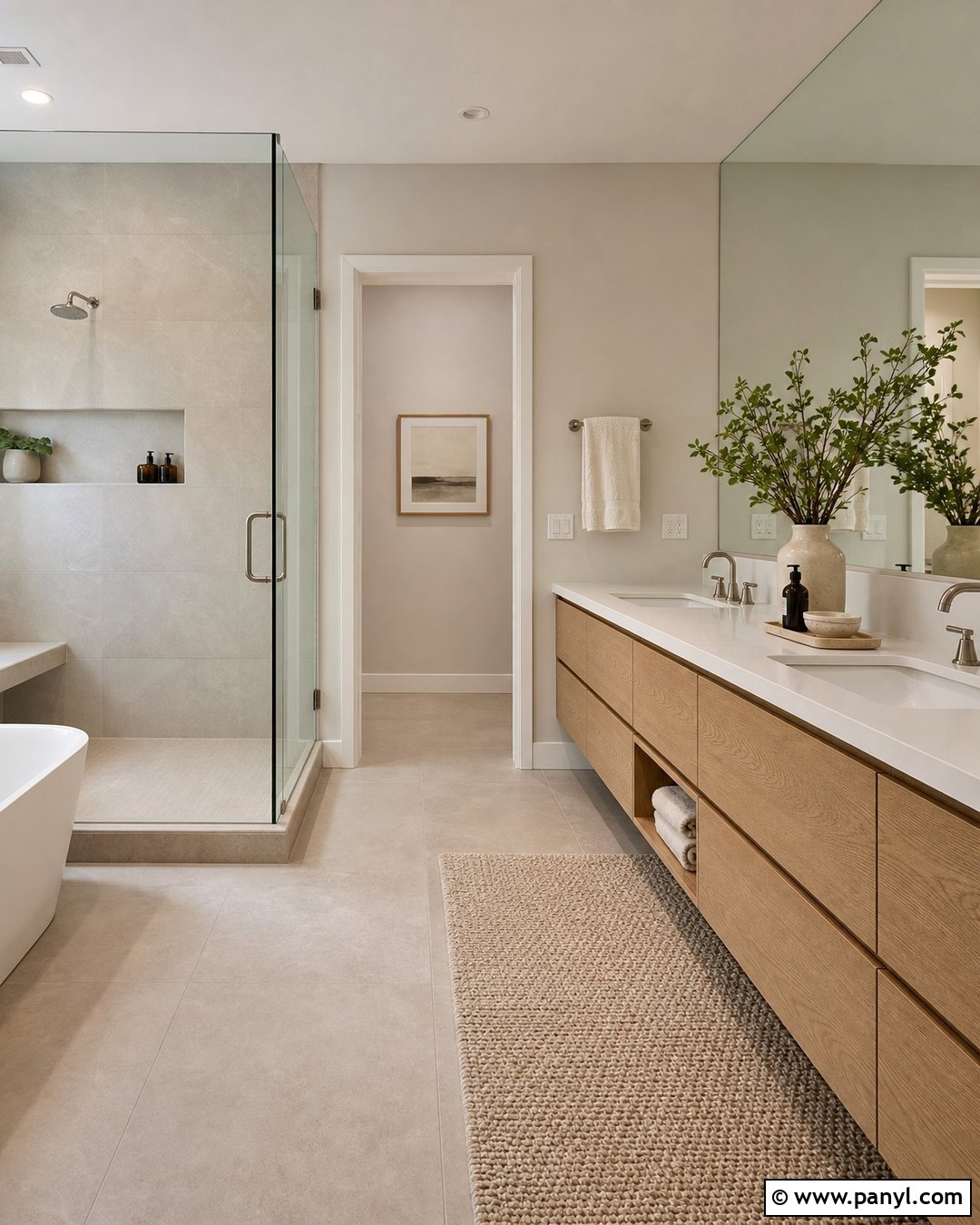
Greige and white oak make a quiet, contemporary bathroom feel warmer than a standard gray-and-white scheme. Use soft greige on the walls and choose slightly deeper taupe porcelain tile for the shower and floor. A floating white oak vanity introduces natural variation and keeps the neutral palette from appearing flat. Select a creamy quartz countertop rather than a blue-white surface, ensuring every element shares warm undertones. Brushed nickel fixtures offer subtle contrast, while aged brass can make the scheme feel more decorative. Add an oversized frameless mirror and vertical sconces to expand the sense of space. Finish with ivory towels, a textured beige bath mat, and minimal ceramic accessories. The low-contrast combination feels organized, restful, and adaptable to bathrooms of almost any size.
17. Burgundy And Pale Pink Bathroom
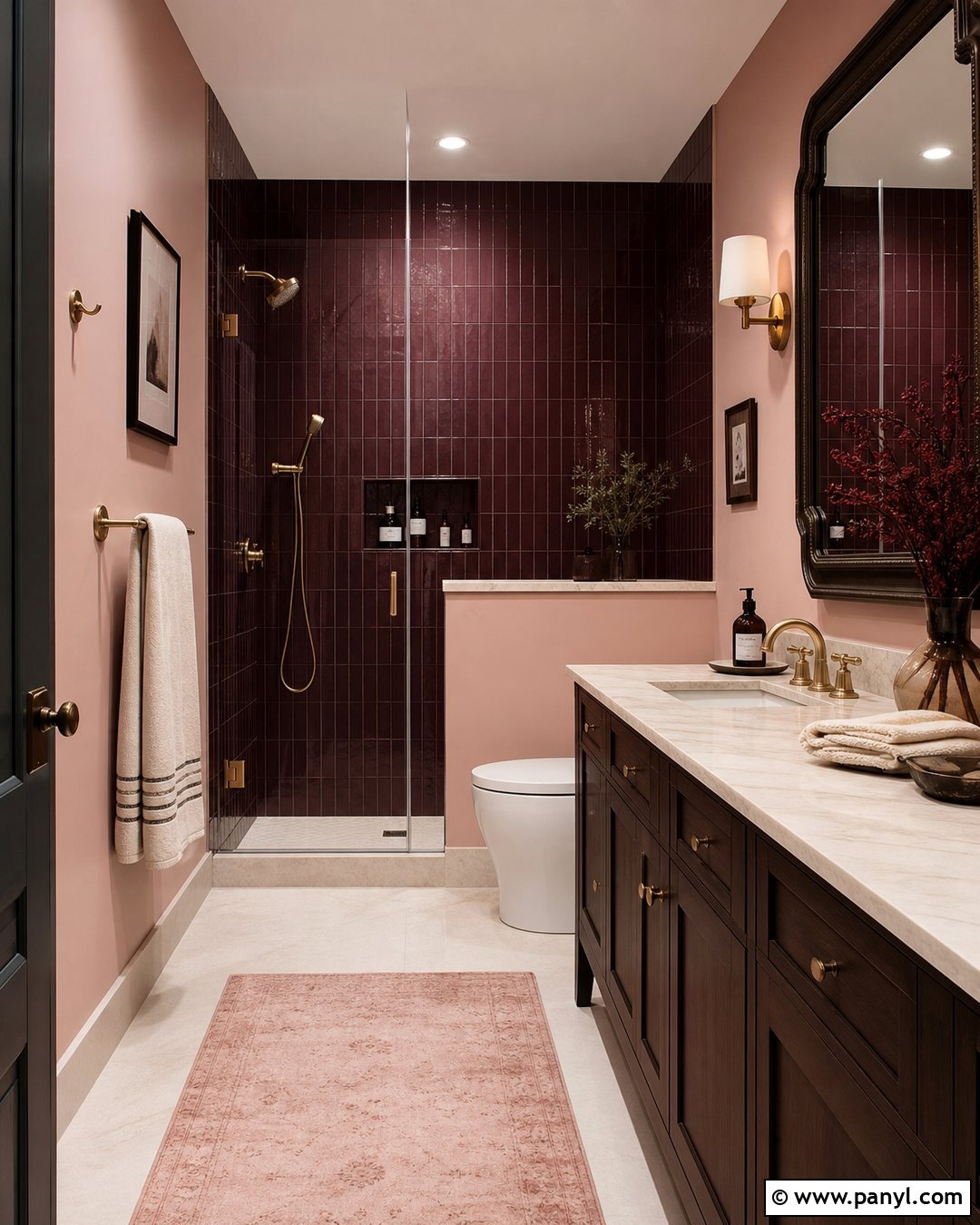
Burgundy and pale pink deliver a rich bathroom palette with a balanced mix of drama and softness. Use burgundy on a tiled shower wall or painted vanity, then cover the surrounding walls in a powdery pink with muted undertones. A cream marble countertop and warm white floor tile brighten the darker red. Brass faucets, handles, and lighting reinforce the palette’s warmth, while a dark wood mirror frame adds depth. Keep decorative pieces restrained because the color combination already carries strong visual interest. Ivory towels and a blush bath mat are enough to complete the room. For a small powder room, burgundy can cover the walls and ceiling for a cocooning effect. In larger bathrooms, confine it to defined areas so the space remains balanced.
18. Sky Blue And Walnut Bathroom
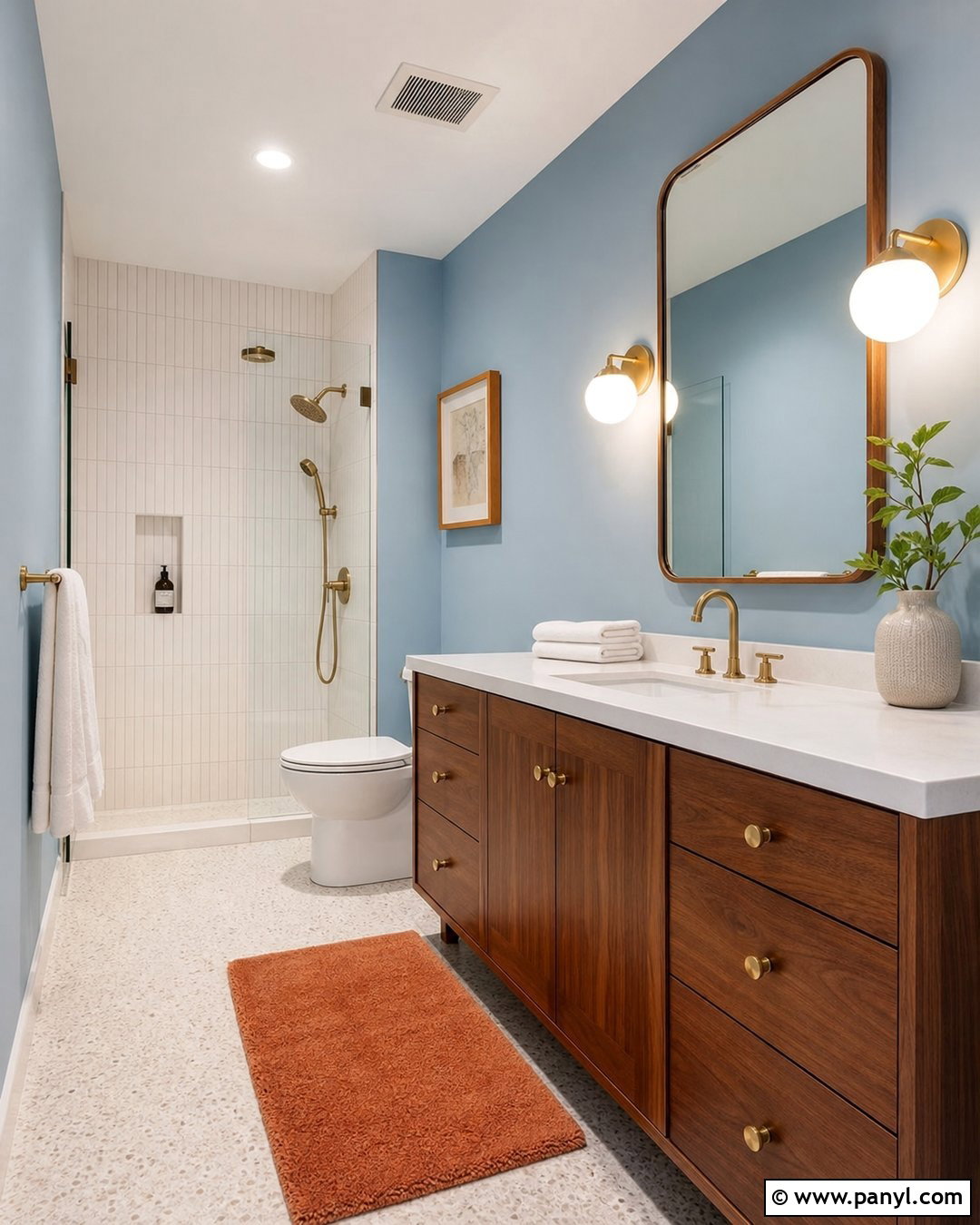
Sky blue walls and walnut cabinetry create a bathroom that feels fresh, grounded, and quietly midcentury. Choose a clear but softened blue for the upper walls, then use warm white tile around the shower or bathtub. A walnut vanity introduces deep brown grain that prevents the blue from feeling overly coastal. Continue the natural character with cream terrazzo flooring and a white quartz countertop. Brushed brass fixtures provide warmth, while simple globe lights suit the clean design. Add a rectangular mirror with rounded corners, white towels, and one rust-colored bath mat for a subtle complementary accent. Keep window treatments light and uncomplicated to maximize daylight. This palette works particularly well in family bathrooms because it combines an uplifting color with durable, forgiving wood tones.
19. Rust And Dusty Blue Bathroom
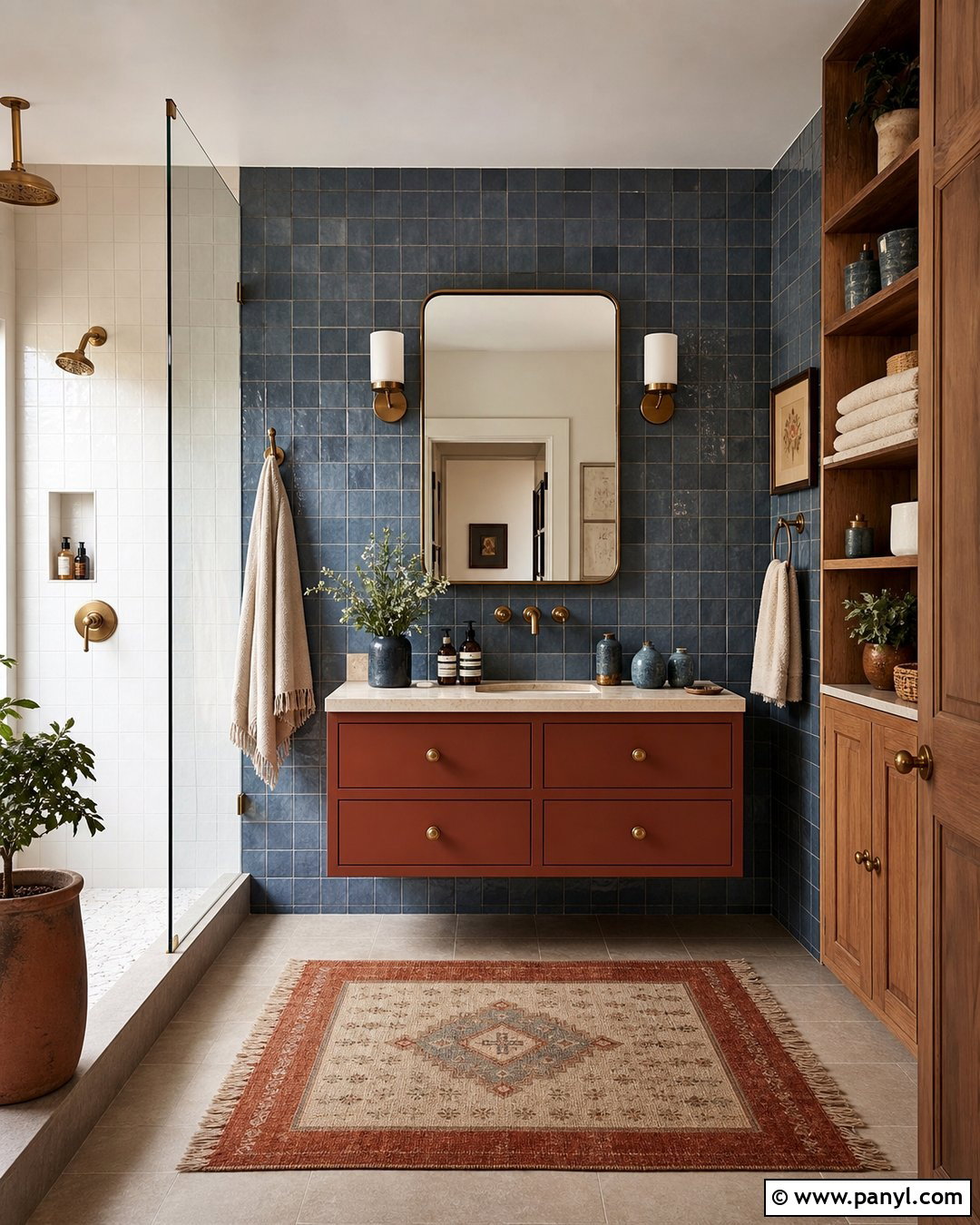
Rust and dusty blue form a balanced combination of warm and cool color. Start with dusty blue wall tile or painted paneling, then use rust through a floating vanity, patterned floor, or carefully selected textiles. Warm white shower tile creates a visual pause between the stronger shades. A pale stone countertop and medium oak storage help connect the earthy palette. Choose antique brass hardware, which relates naturally to rust without creating too much contrast. Keep the ceiling creamy white and use a large mirror to distribute light. Small accents can include oatmeal towels, blue ceramic containers, and a rust-bordered bath mat. The completed bathroom feels collected and distinctive because neither color dominates. It is also an effective palette for blending vintage forms with modern fixtures.
20. Soft Black And Dusty Rose Bathroom
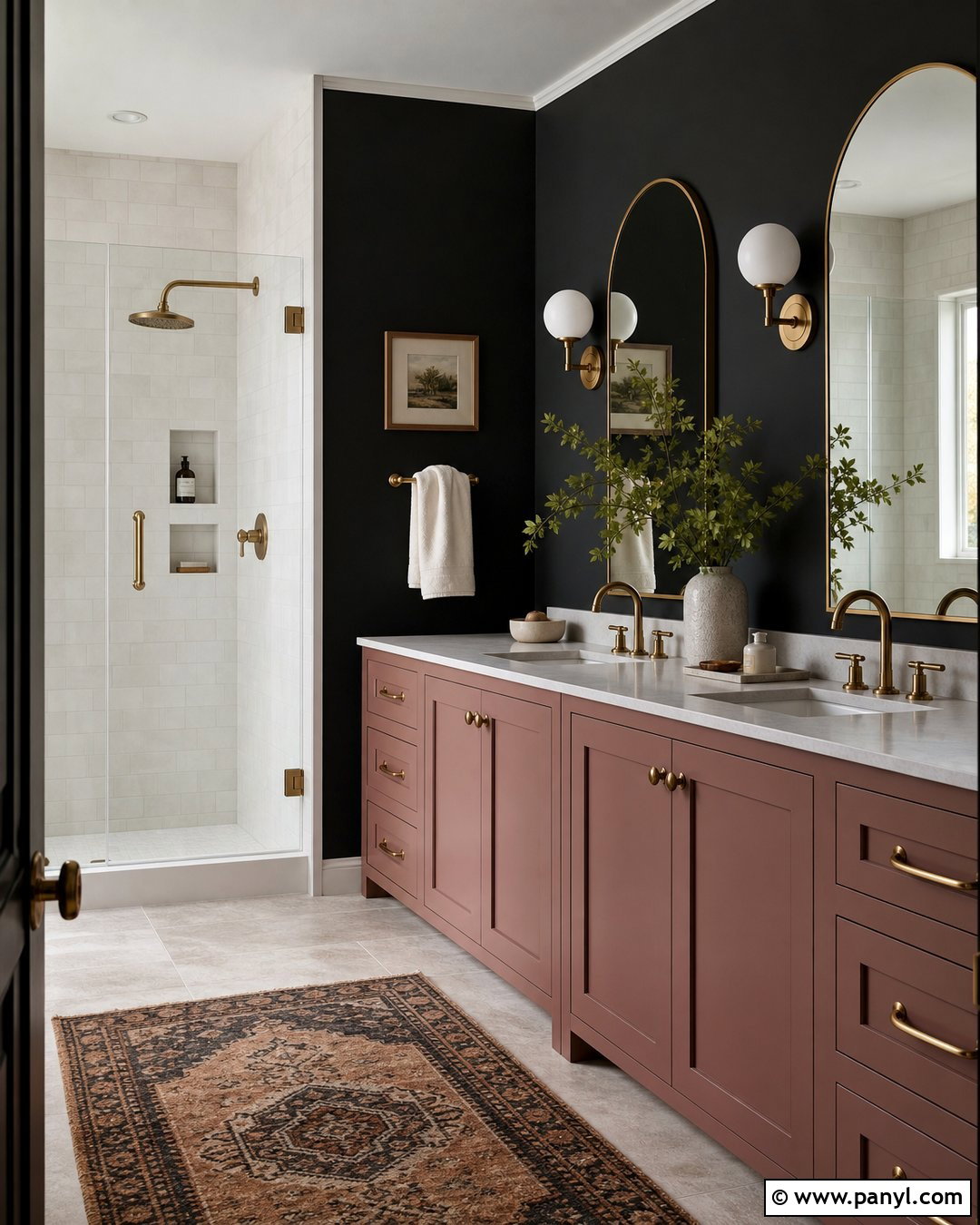
Soft black and dusty rose create a dramatic yet approachable bathroom with a boutique-inspired atmosphere. Use charcoal-black paint or tile on the vanity wall, then introduce dusty rose through the vanity, shower curtain, or lower wall paneling. Warm white tile and pale stone flooring keep the room from feeling too dark. Brushed brass fixtures add a luminous transition between the deep neutral and muted pink. Select a white countertop, an arched brass mirror, and opal glass sconces to brighten the vanity area. Ivory towels and a small patterned rug can soften the contrast further. For the most cohesive result, repeat black in the shower frame and cabinet hardware while allowing rose to remain the main accent. The finished room feels expressive, polished, and carefully layered.
Conclusion:
The best bathroom palette connects every surface instead of relying on one fashionable paint color. These **20 Aesthetic Bathroom Color Schemes** offer complete combinations for walls, tile, vanities, countertops, fixtures, flooring, and finishing details. Before committing, compare samples inside the actual bathroom during morning, afternoon, and artificial light. Check the undertones beside permanent features you plan to keep, including the tub, flooring, and countertop. You can also adjust the visual intensity by changing how much of each color appears. Use deeper shades on one focal surface or spread softer tones throughout the room. With balanced contrast, consistent undertones, and practical materials, any of these palettes can produce a bathroom that looks cohesive and feels personal.

Related Ideas and Inspiration:
Leave a Reply