
Choosing a kitchen palette is about more than matching cabinet paint to a countertop. The best schemes connect cabinetry, walls, flooring, hardware, lighting, and decorative accents into one complete look. This guide to **20 kitchen ideas color schemes** covers warm neutrals, nature-inspired greens, classic blues, rich earth tones, and a few bolder combinations. Each palette includes practical material pairings, so you can picture how the entire room will work before buying samples or starting a renovation. Consider your kitchen’s natural light, adjoining rooms, permanent finishes, and overall size as you compare options. Whether you prefer modern simplicity, cozy farmhouse character, or timeless traditional design, you will find an approachable starting point among these **20 kitchen ideas color schemes**.

1. Warm White And Oak Kitchen Color Scheme
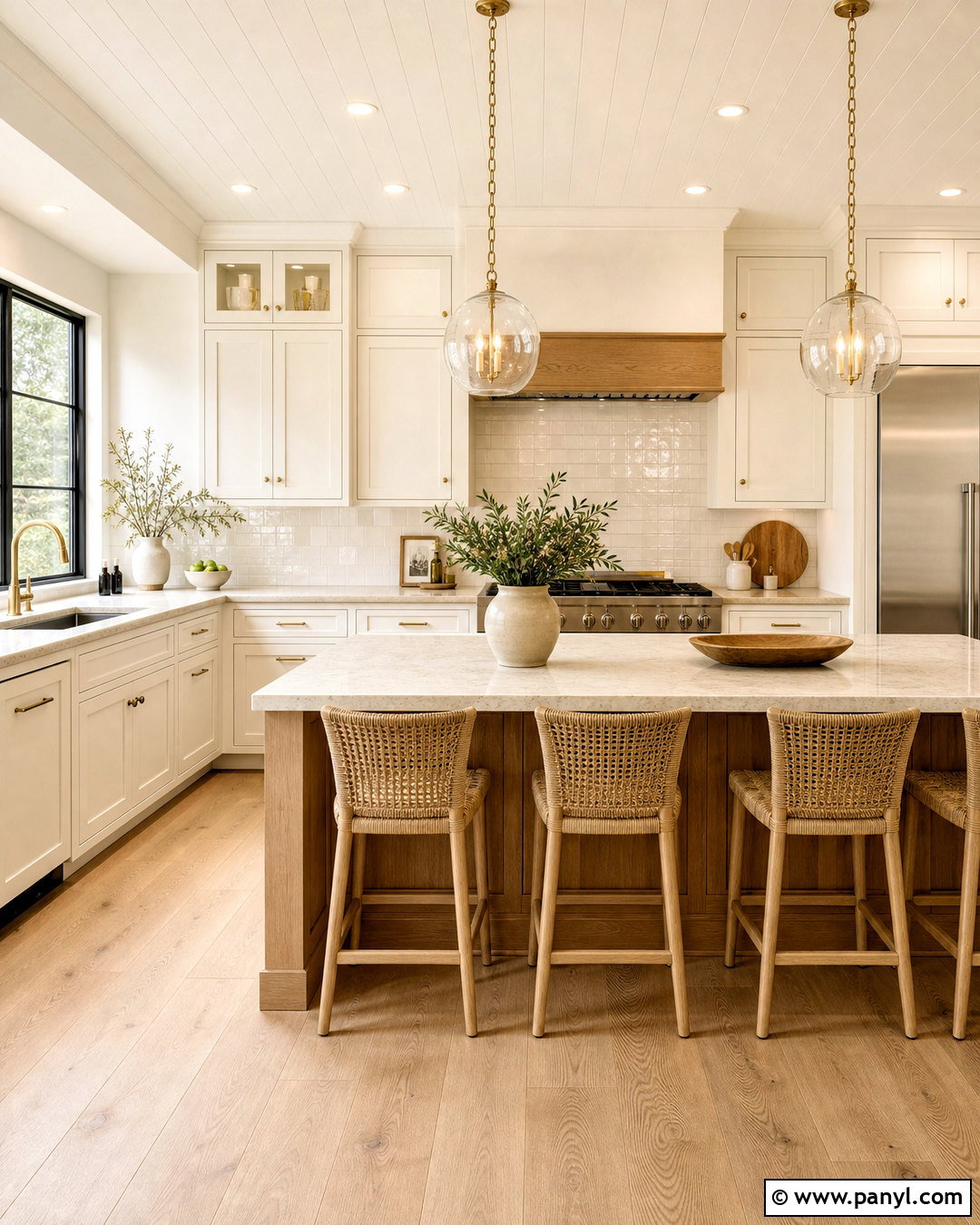
Warm white cabinetry and natural oak create a bright kitchen without the sharpness of pure white. Choose creamy white Shaker cabinets around the perimeter, then use white oak for the island and open shelves. A pale quartz countertop with soft beige veining keeps the surfaces light and practical. Add a handmade ivory tile backsplash for subtle texture rather than bold contrast. Light oak flooring can continue the natural look, while brushed brass hardware brings gentle warmth. Finish the room with woven counter stools, linen Roman shades, and clear glass pendants. This balanced scheme works especially well in kitchens connected to living spaces because the wood tones help the cabinetry blend naturally with surrounding furniture.
2. Cream And Walnut Kitchen Color Scheme
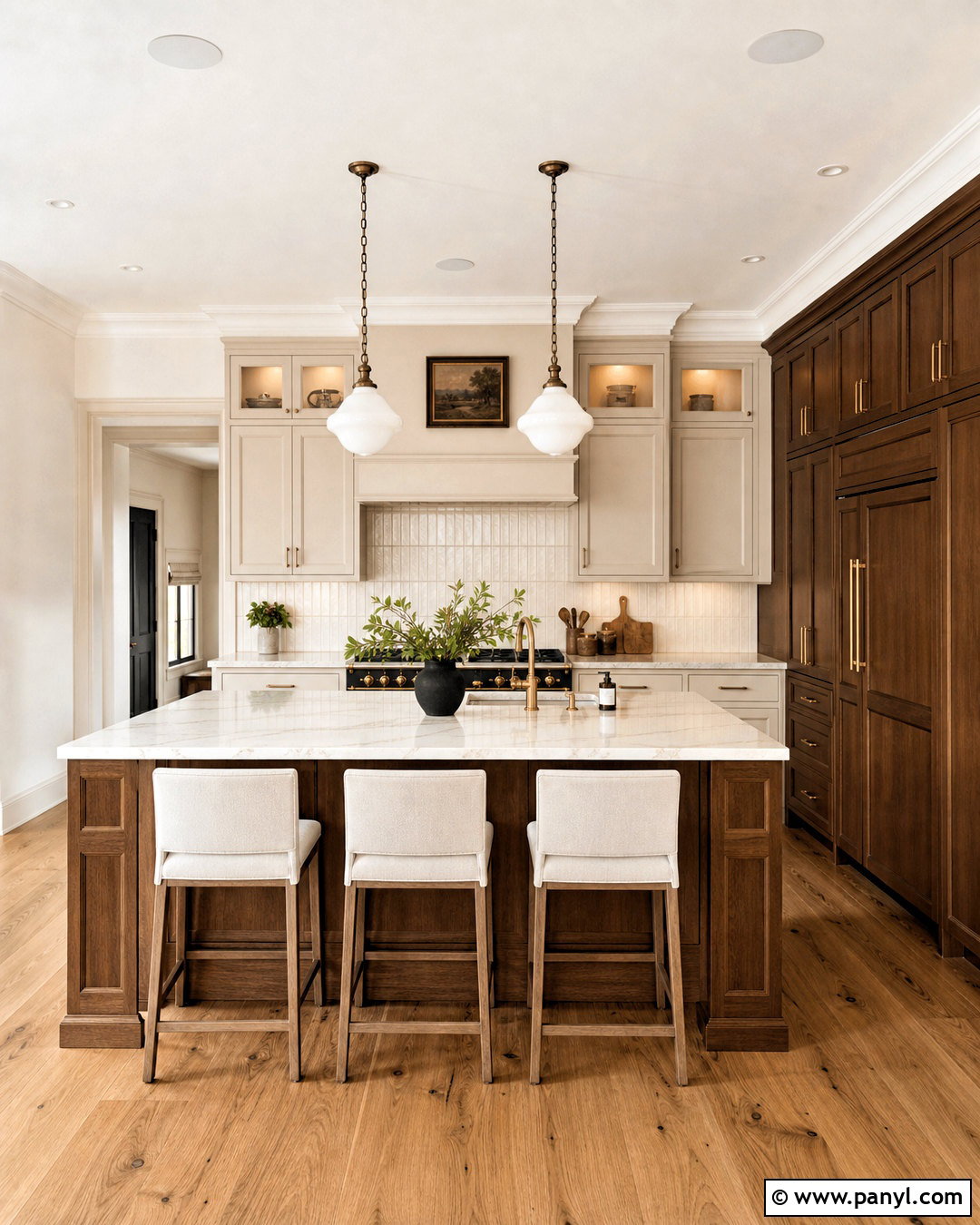
Imagine a cozy kitchen where creamy cabinets meet the deep grain of walnut. Use soft cream on the main cabinetry and reserve walnut for a substantial island, pantry wall, or built-in breakfast cabinet. Warm white quartz or creamy marble-look countertops will bridge the light and dark finishes. For the backsplash, consider elongated ivory tiles with light taupe grout. Medium oak flooring prevents the walnut from making the room feel too formal. Antique brass pulls, milk glass pendants, and oatmeal-colored stools complete the inviting palette. Keep walls a slightly lighter cream than the cabinetry to create gentle depth. This combination suits transitional, traditional, and midcentury-inspired homes while remaining calm enough for an open-plan interior.
3. Sage Green And White Kitchen Color Scheme
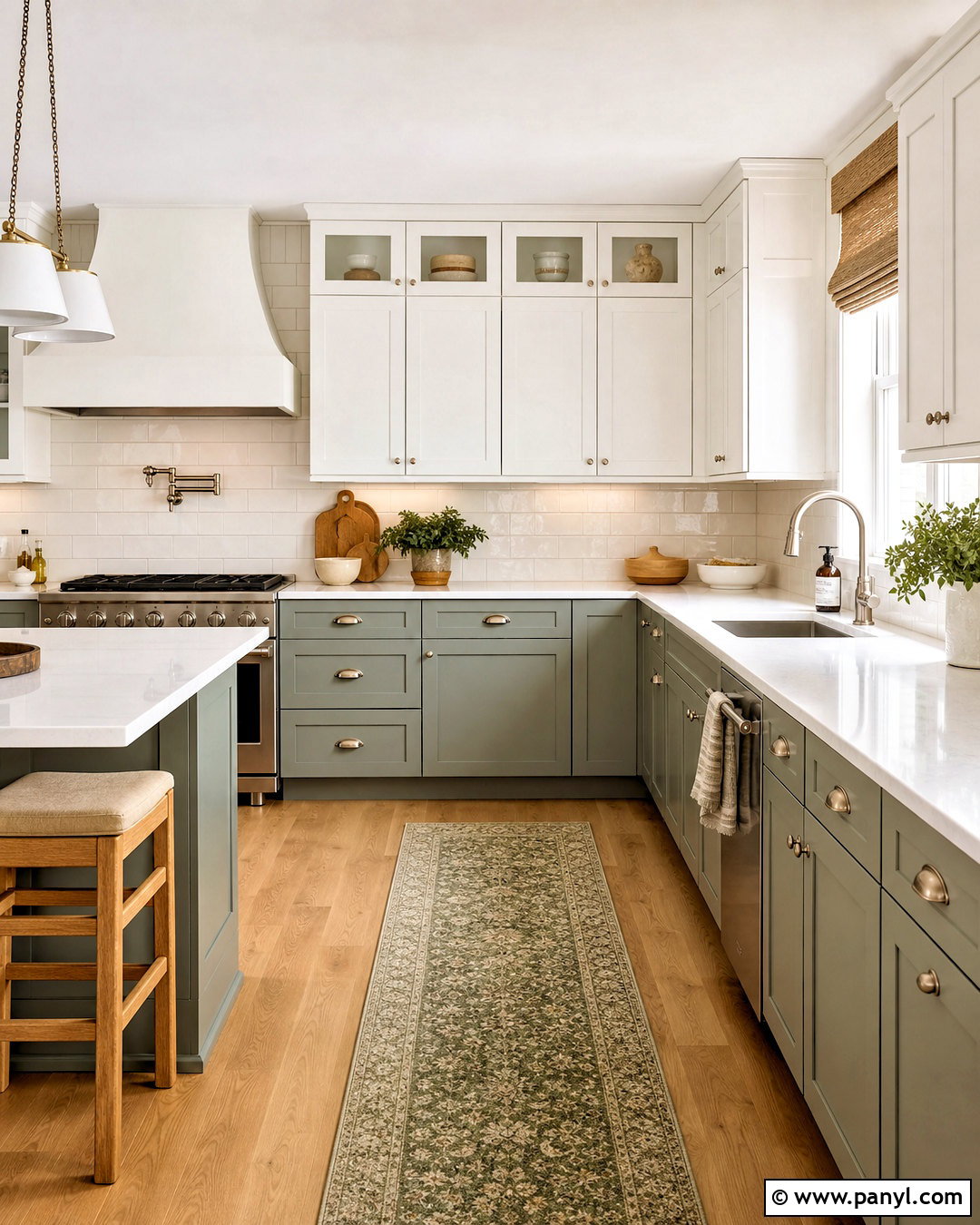
Soft sage green brings nature-inspired color into the kitchen while remaining easy to decorate around. Apply sage to the lower cabinets and island, then use warm white for upper cabinets and tall pantry units. This placement grounds the room without allowing the green to overpower it. Choose white quartz countertops, a simple off-white subway tile backsplash, and light oak flooring. Brushed nickel hardware creates a clean finish, although aged brass can make the palette feel warmer. Add oak counter stools, white ceramic pendants, and a washable runner containing muted green and beige. Paint the walls a soft warm white rather than cool gray. The finished kitchen feels fresh, relaxed, and well suited to farmhouse or transitional design.
4. Dark Olive And Brass Kitchen Color Scheme
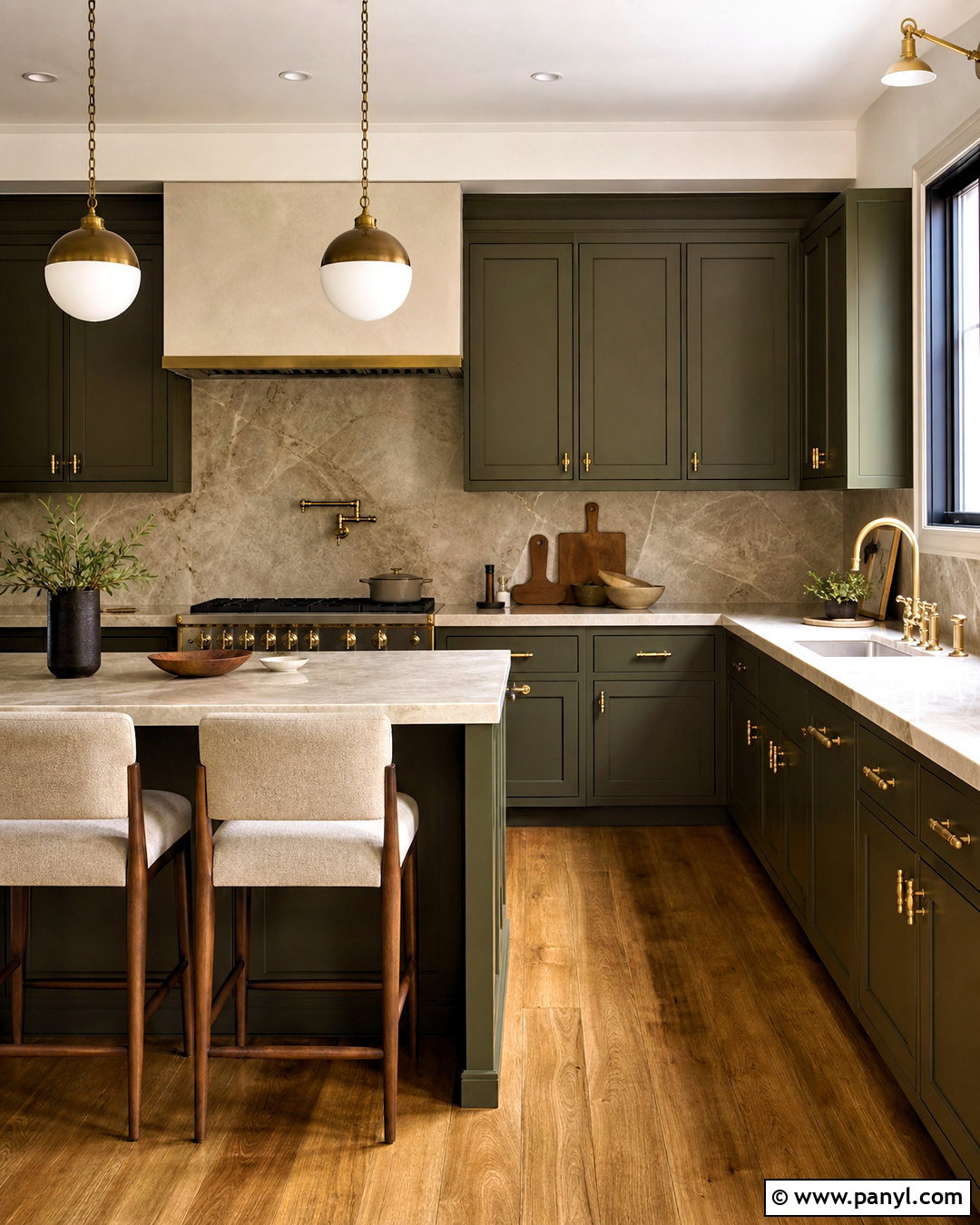
Dark olive cabinetry can create a rich, grounded kitchen that still feels connected to the outdoors. Use the color across lower cabinets, the island, and one full-height pantry wall. Balance it with warm ivory walls and a creamy quartzite or marble-look countertop. A matching stone backsplash behind the range gives the room a clean focal point without introducing another competing color. Choose medium walnut flooring or wide oak planks to support the olive undertones. Unlacquered brass hardware, a brass bridge faucet, and simple globe pendants add a warm metallic layer. Keep upholstery and window treatments in flax, camel, or oatmeal. The result is sophisticated but approachable, with enough neutral material to keep the dark cabinets from feeling heavy.
5. Navy Blue And White Kitchen Color Scheme
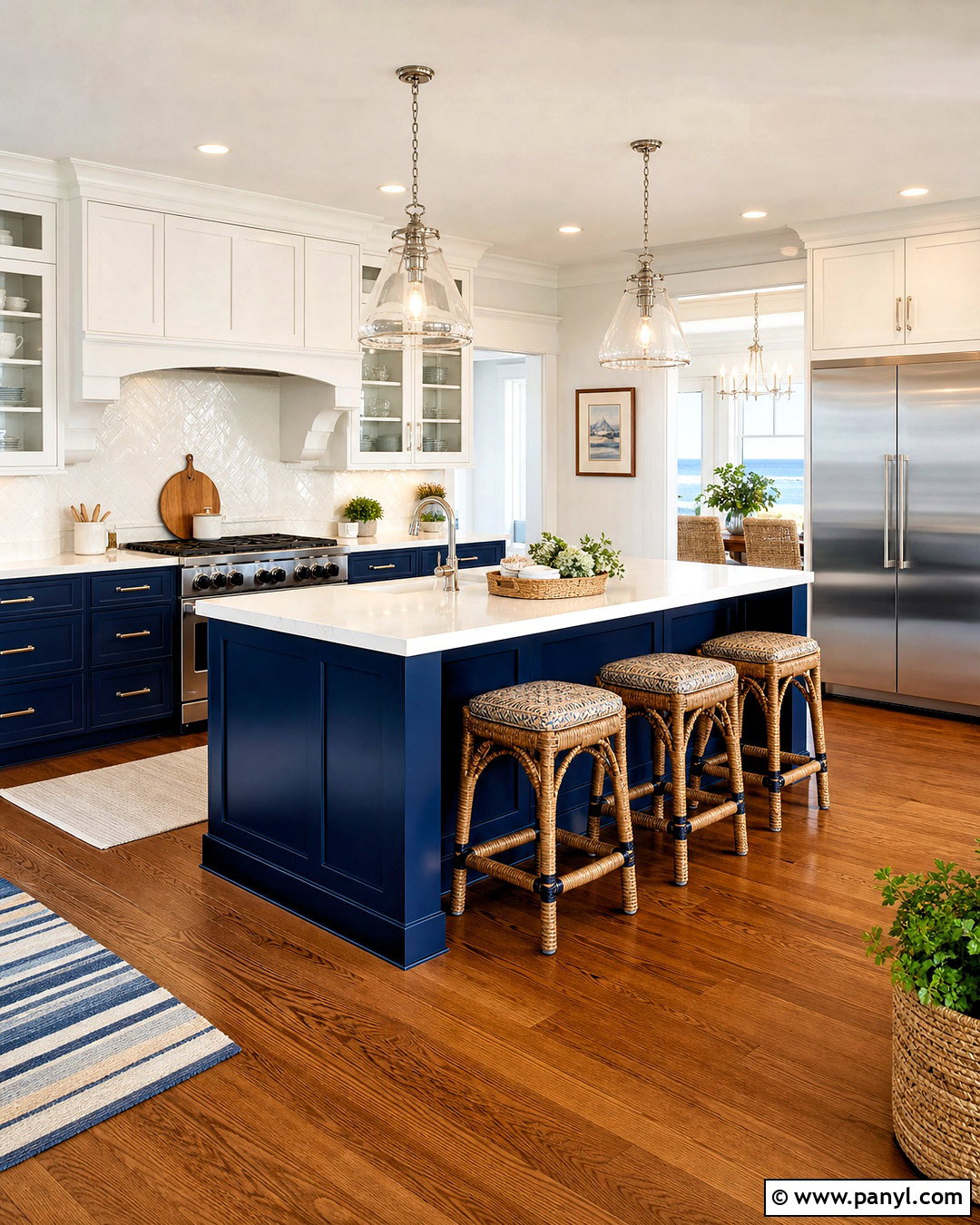
Navy and white deliver crisp contrast while giving a kitchen more character than an all-white palette. Paint lower cabinets and the island a deep navy blue, then keep upper cabinets warm white. Select white quartz countertops with restrained gray veining and a glossy white backsplash that reflects light. Warm oak flooring and woven counter stools soften the contrast. Polished nickel hardware keeps the look clean, while brass can provide a more traditional finish. Use navy sparingly elsewhere so the cabinetry remains the main feature. A white range hood, pale walls, and clear glass pendants maintain an airy feeling overhead. This complete scheme works particularly well in coastal, transitional, and classic kitchens with strong natural light.
6. Powder Blue And Oak Kitchen Color Scheme
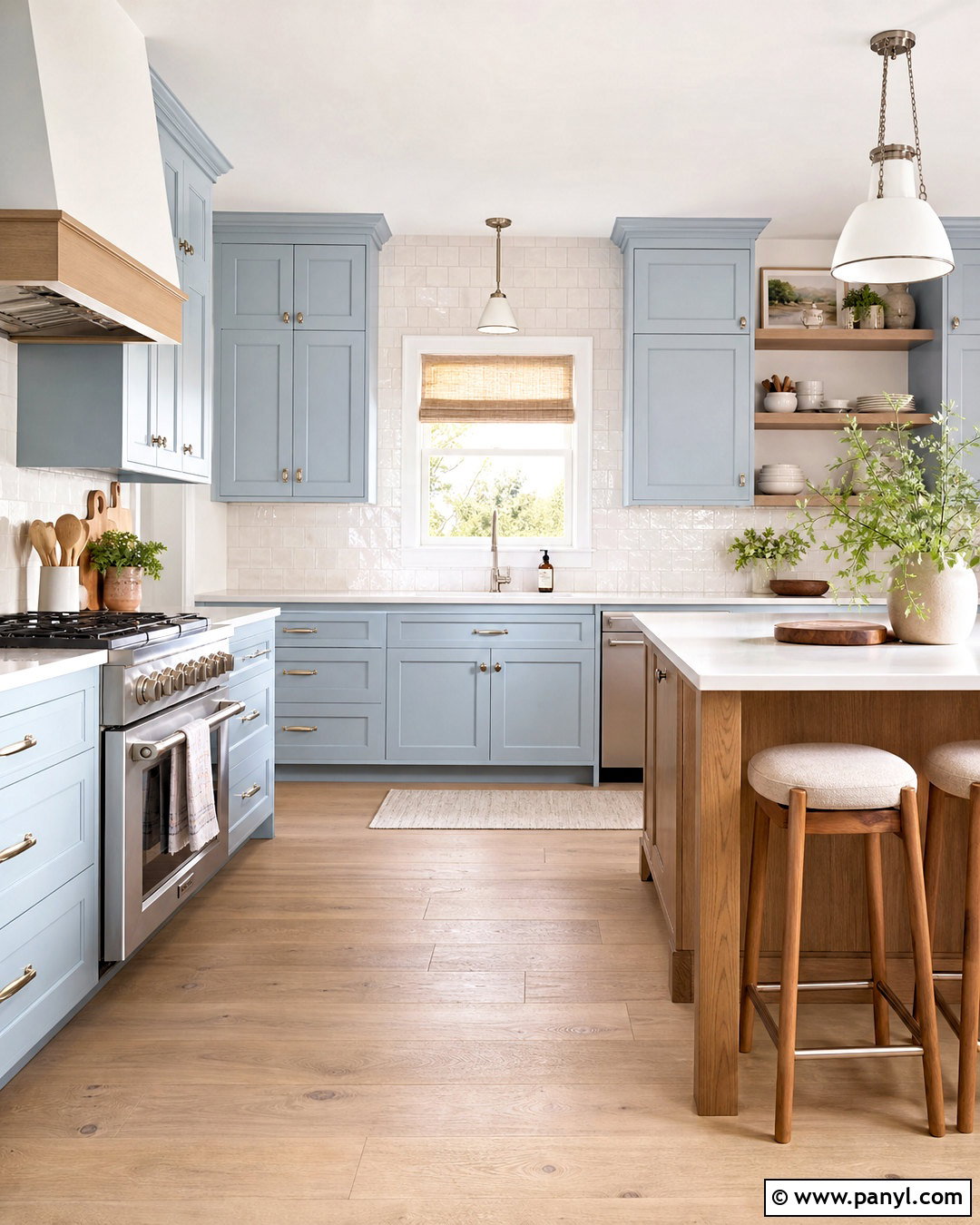
A powder blue kitchen can feel cheerful and calm when paired with light natural wood. Use soft blue on Shaker cabinets and introduce white oak through the island base, floating shelves, and dining furniture. Choose creamy white quartz countertops instead of bright blue-white stone, which can make the palette feel cold. An ivory zellige-style backsplash adds movement and a handcrafted finish. Brushed nickel handles and a stainless steel range complement the blue without creating excessive contrast. Complete the design with pale oak flooring, white linen shades, and soft blue-and-beige textiles. Keep the walls warm white and the ceiling clean white. This airy combination is ideal for cottages, coastal homes, and smaller kitchens needing approachable color.
7. Charcoal And Natural Wood Kitchen Color Scheme
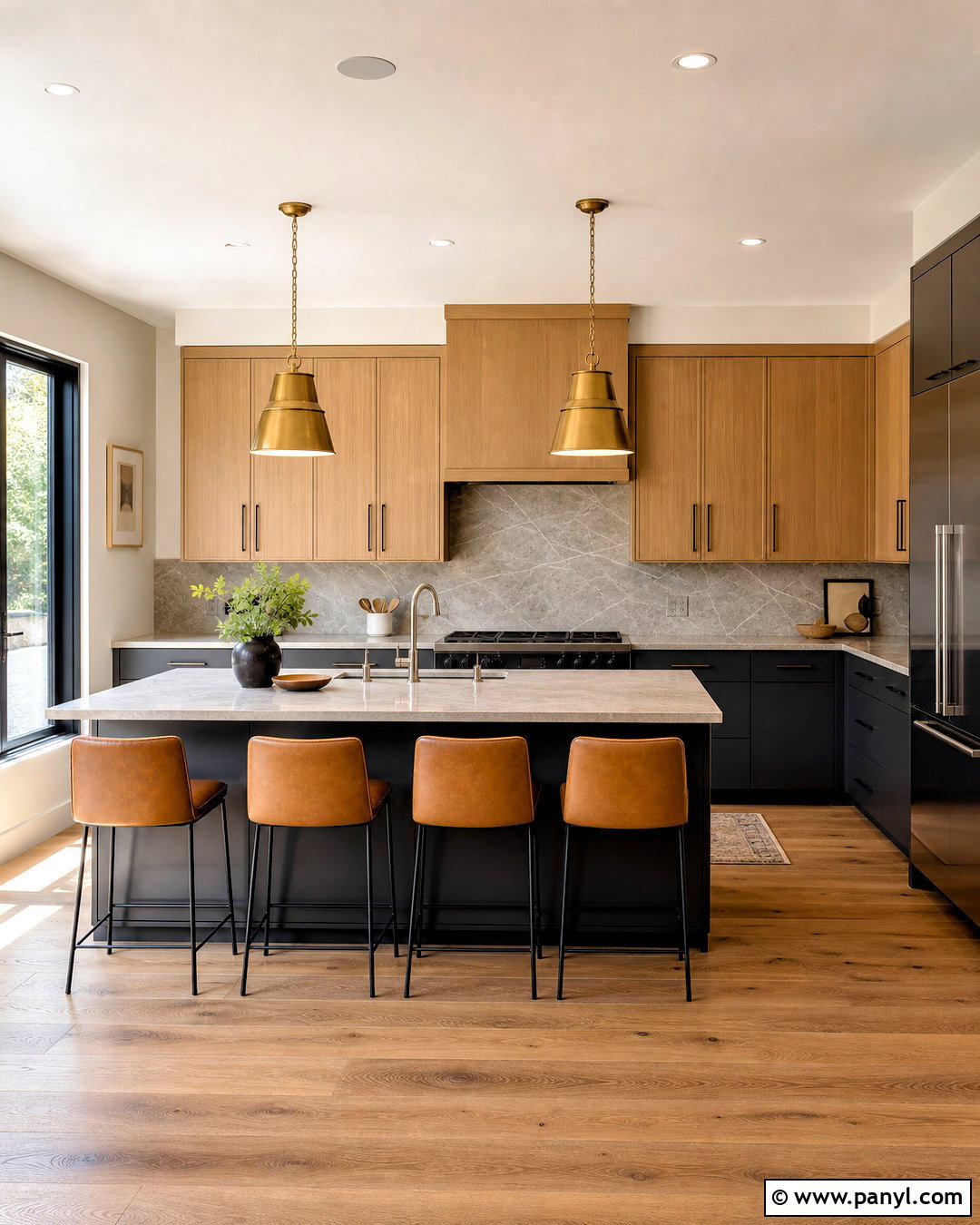
For a modern kitchen with depth, combine charcoal gray cabinets with natural wood and pale stone. Place charcoal cabinetry along the lower perimeter and use flat-panel white oak cabinets for the upper storage or appliance wall. A large island can repeat the charcoal finish to anchor the layout. Select light gray quartz countertops and a full-height backsplash with subtle warm veining. Wide-plank oak flooring prevents the gray from feeling industrial. Matte black hardware creates continuity, while brushed bronze pendants provide a controlled hint of warmth. Add camel leather stools and simple ceramic accessories. The finished room feels streamlined yet comfortable because the grain and color variation of the wood balance the darker, more uniform painted surfaces.
8. Black And White Kitchen Color Scheme
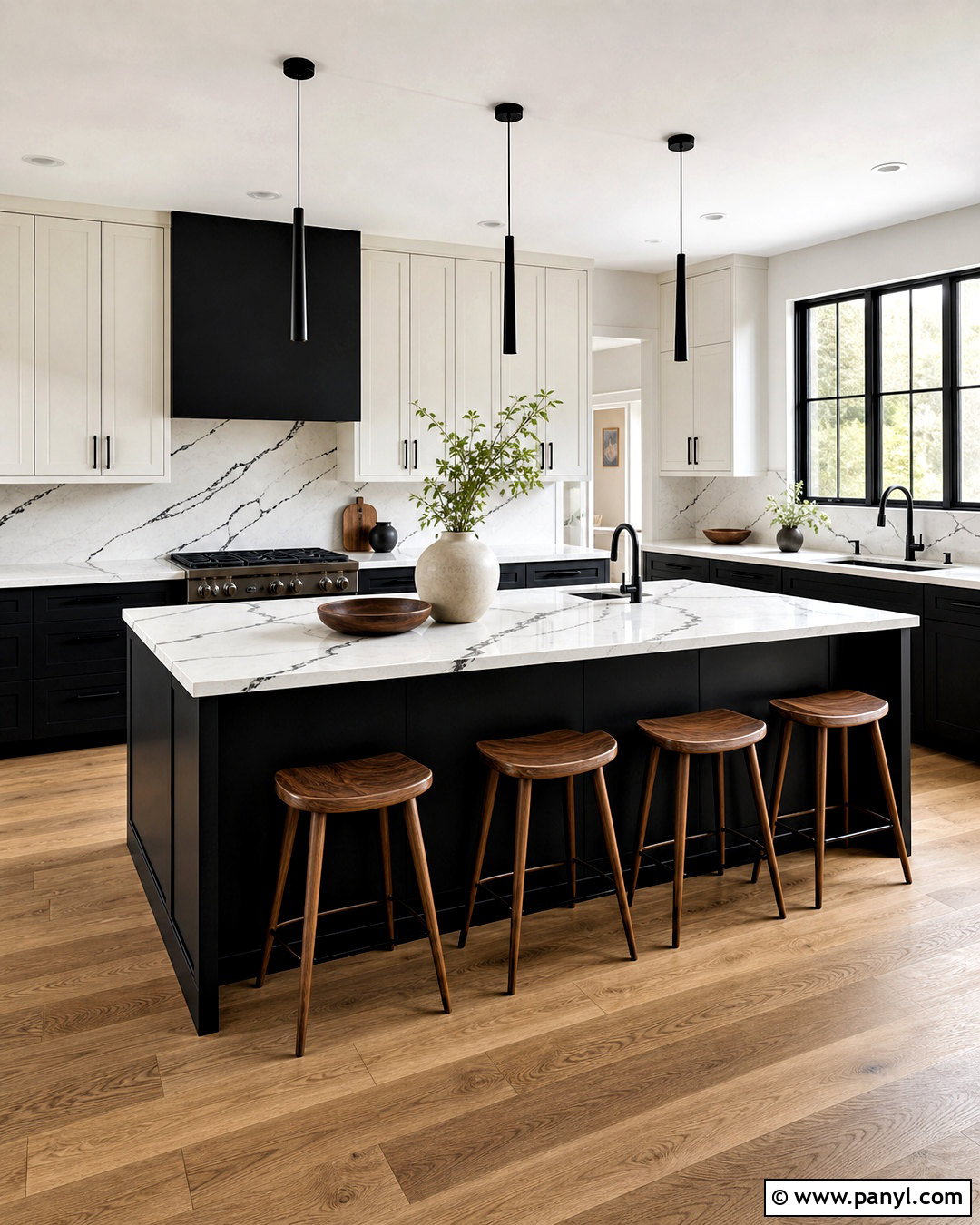
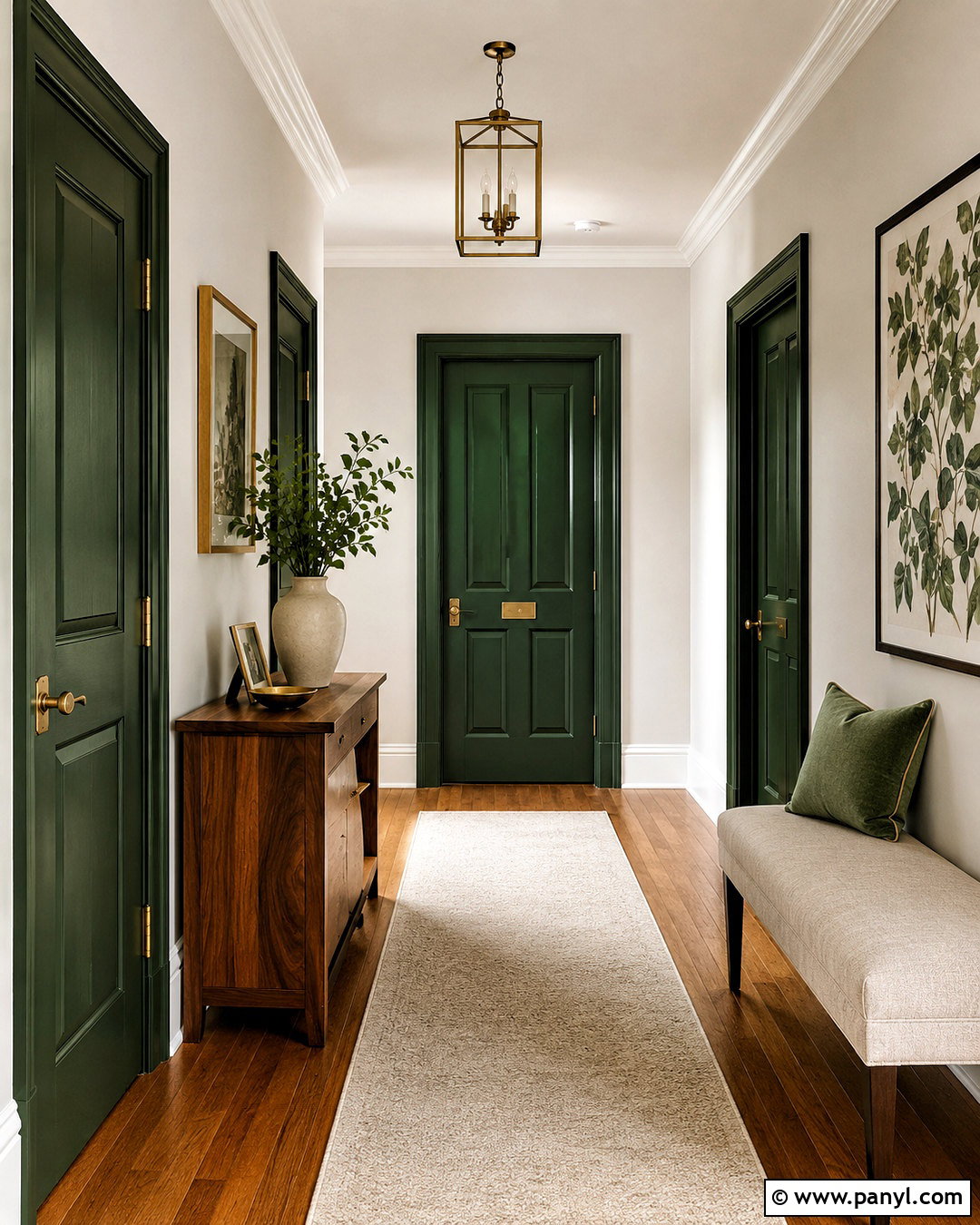
A black-and-white kitchen looks most inviting when texture and warm accents soften its graphic contrast. Use matte black cabinetry on the island and lower cabinets, with warm white cabinets above. Choose a white countertop with delicate charcoal veining, then carry the same material up the wall behind the range. Medium oak flooring adds essential warmth and prevents the palette from appearing flat. Repeat black through slim pendant lights, window frames, and a simple faucet, but avoid making every fitting dark. Add walnut counter stools, creamy pottery, and a neutral runner for variation. Plenty of under-cabinet lighting will help the work surfaces remain bright. This scheme suits contemporary spaces as well as updated traditional kitchens.
9. Greige And Taupe Kitchen Color Scheme
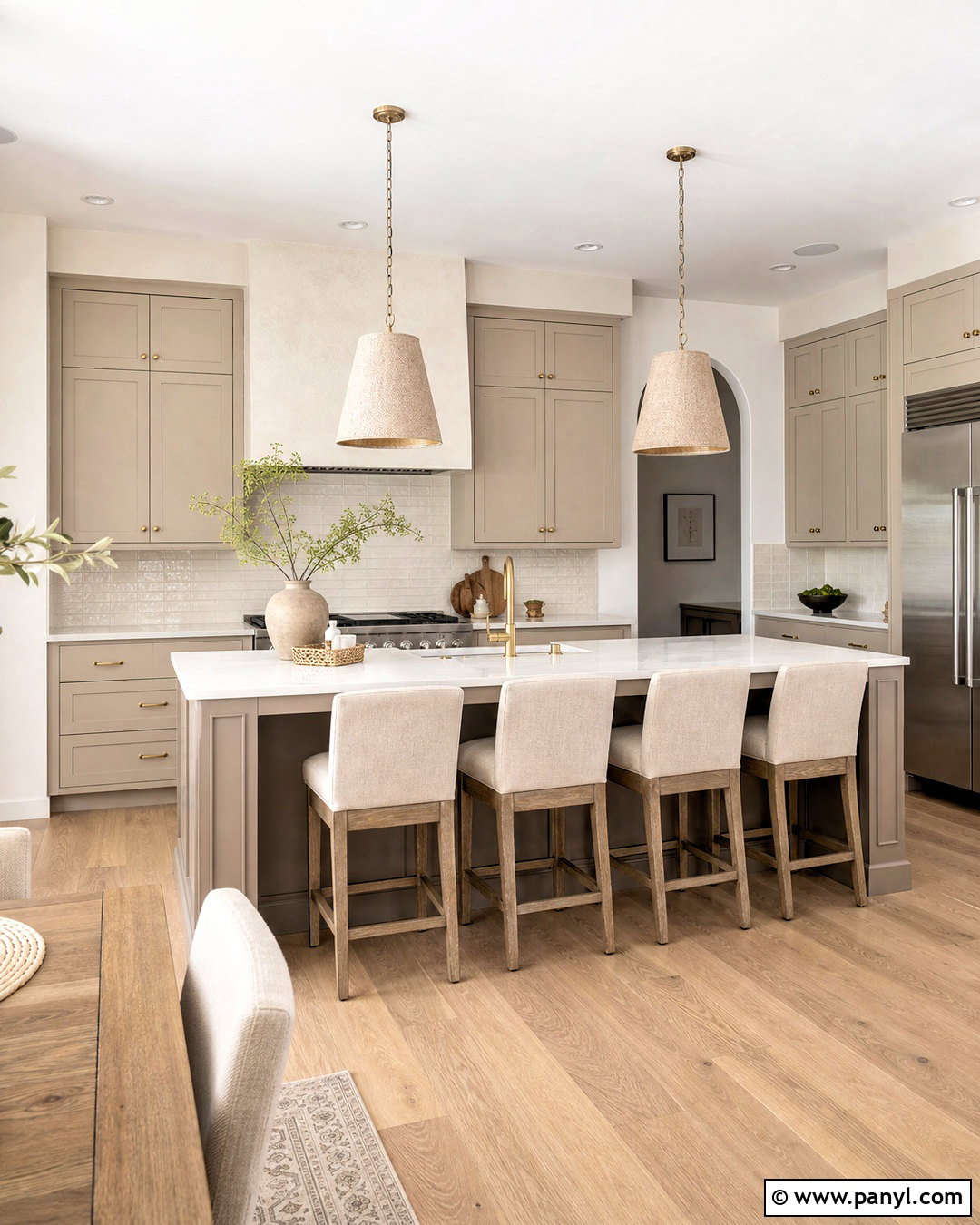
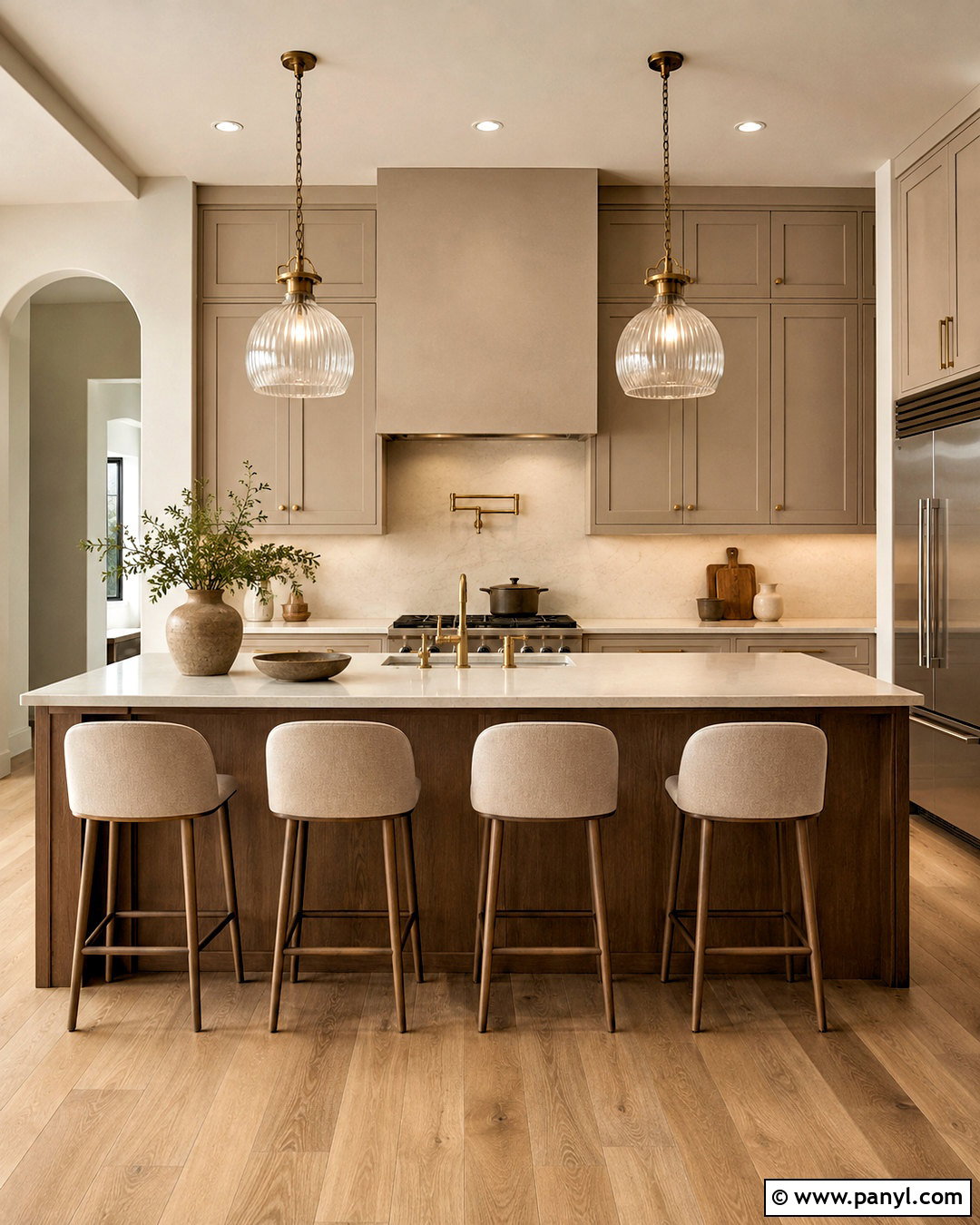
Greige and taupe form a layered neutral palette that feels softer than gray and more complex than beige. Paint perimeter cabinets a pale mushroom greige and use a deeper taupe on the island. Select warm white quartz countertops with quiet beige movement. For the backsplash, choose slim ivory tiles or a lightly textured limestone-look porcelain. White oak flooring, brushed brass hardware, and linen pendant shades reinforce the warm undertones. Keep walls one or two shades lighter than the cabinetry so the room has definition without obvious contrast. Add oatmeal stools and dark brown accents through frames or small appliances. This complete tonal scheme is useful for open layouts where the kitchen must coordinate smoothly with neutral living and dining furniture.
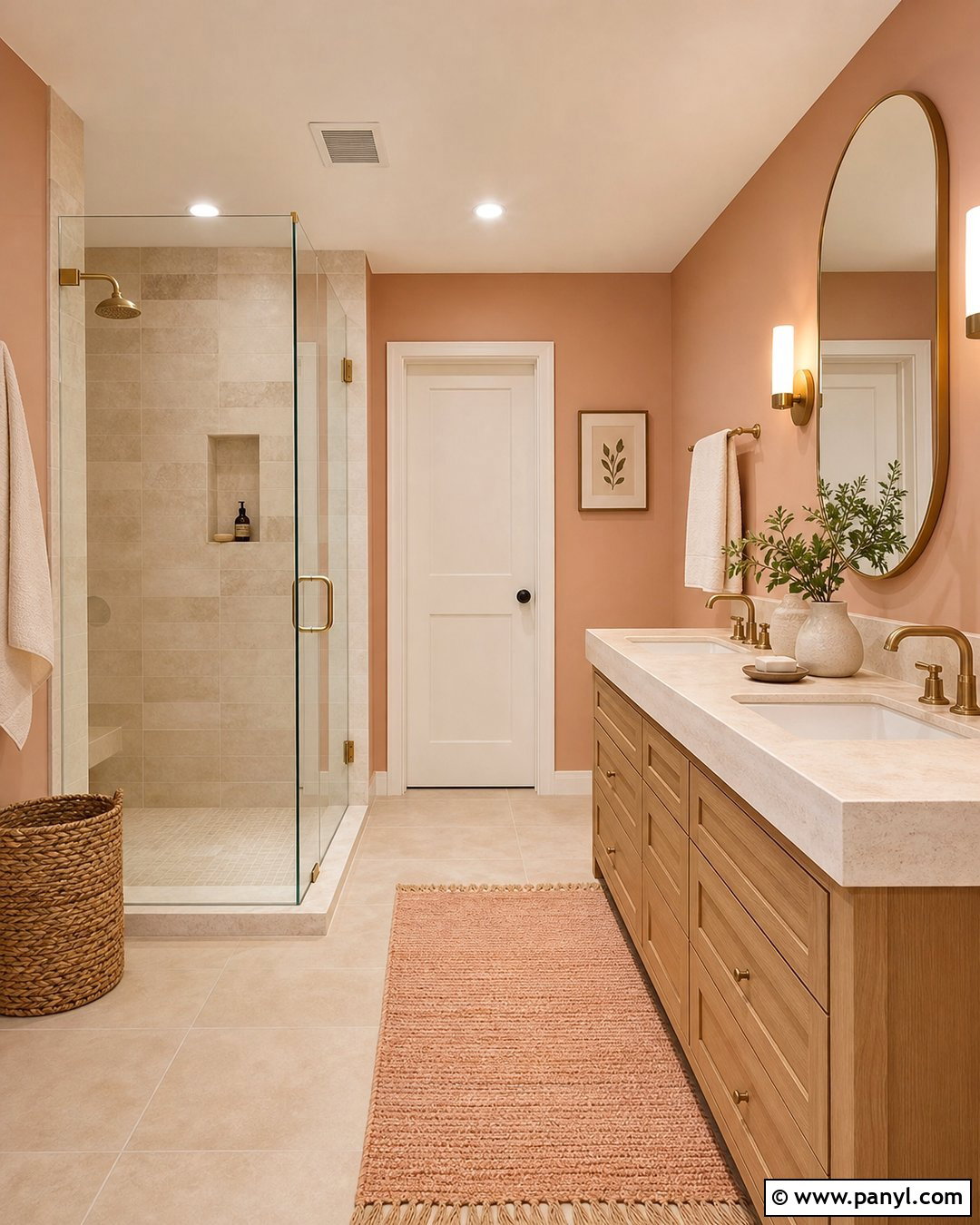
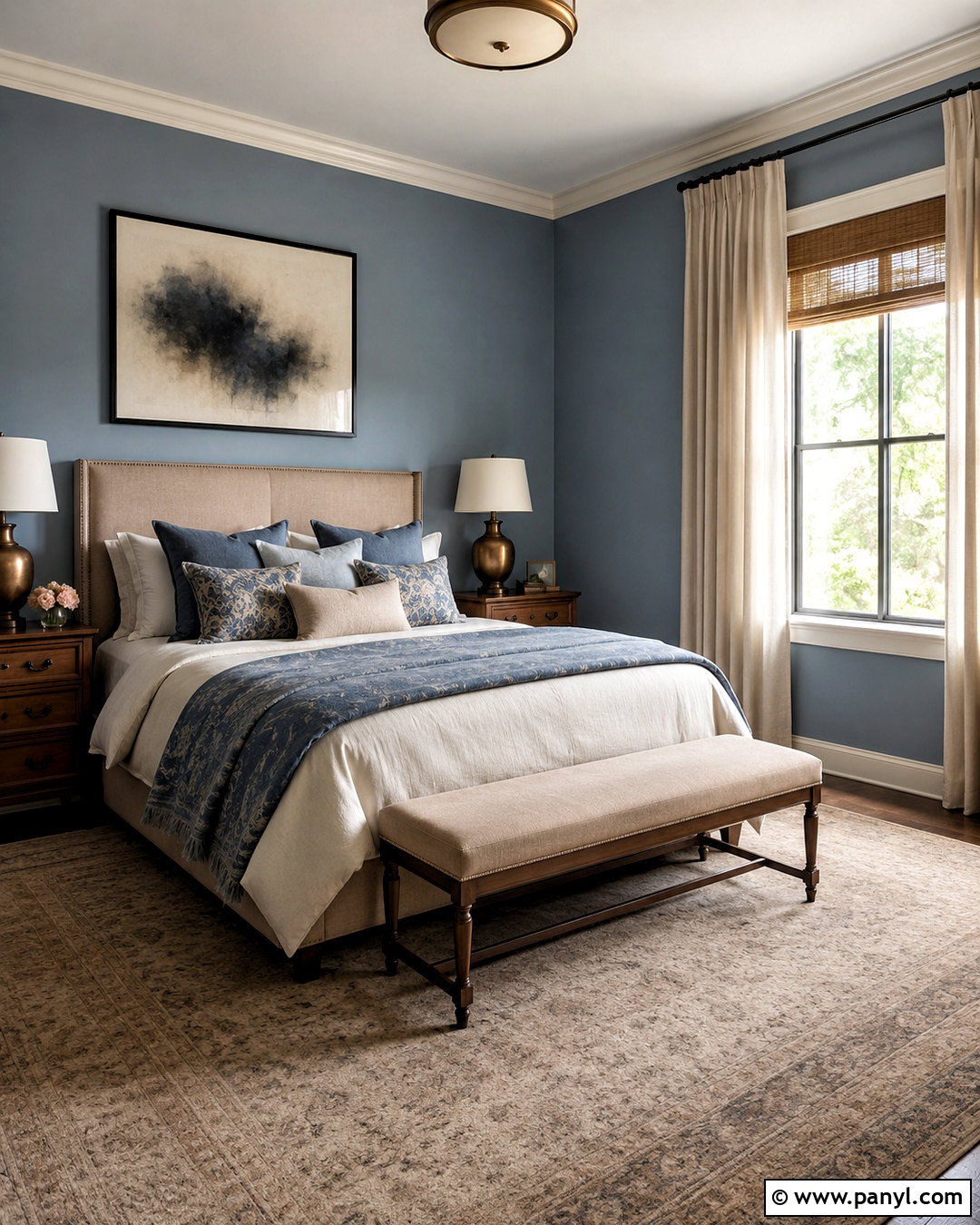
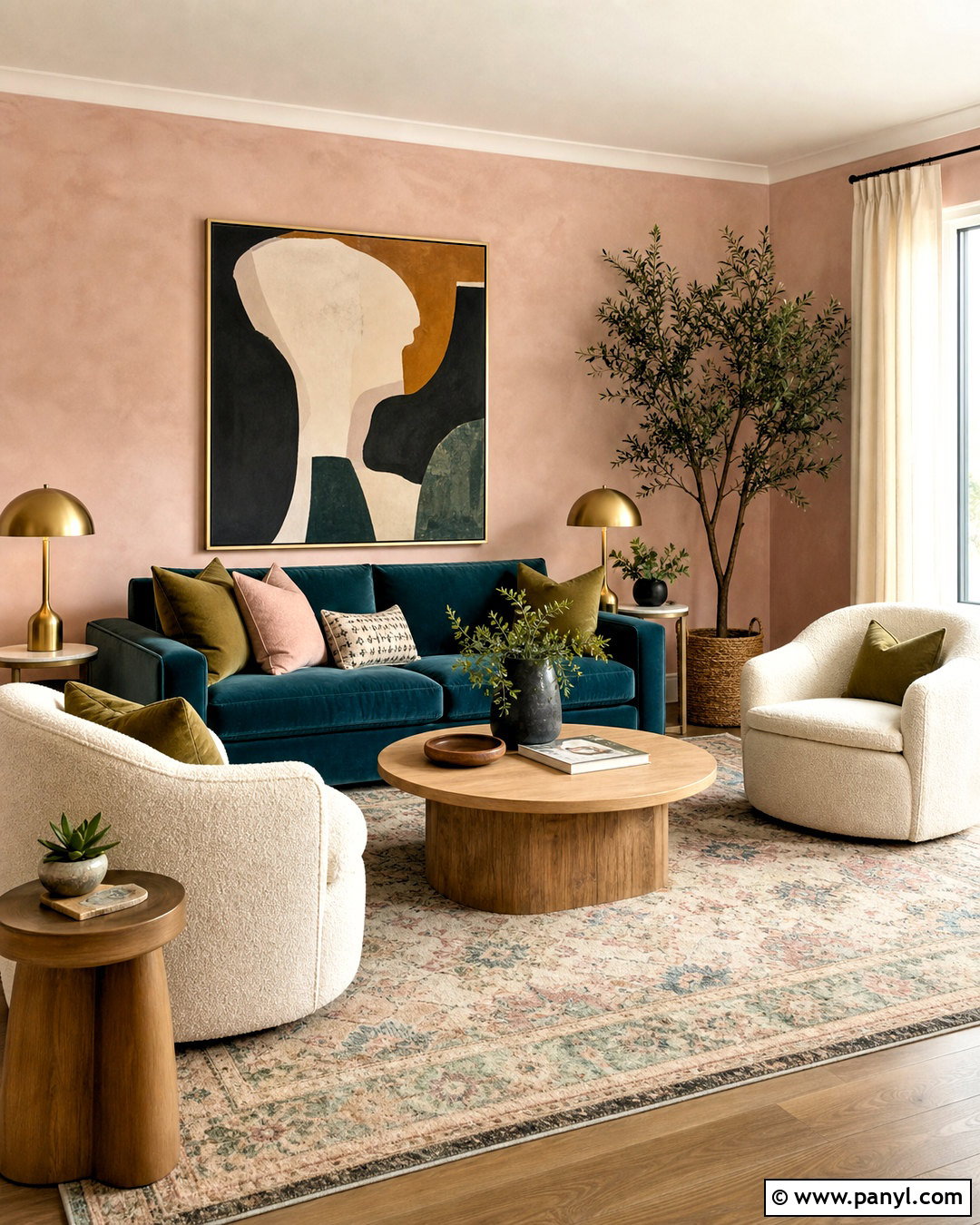
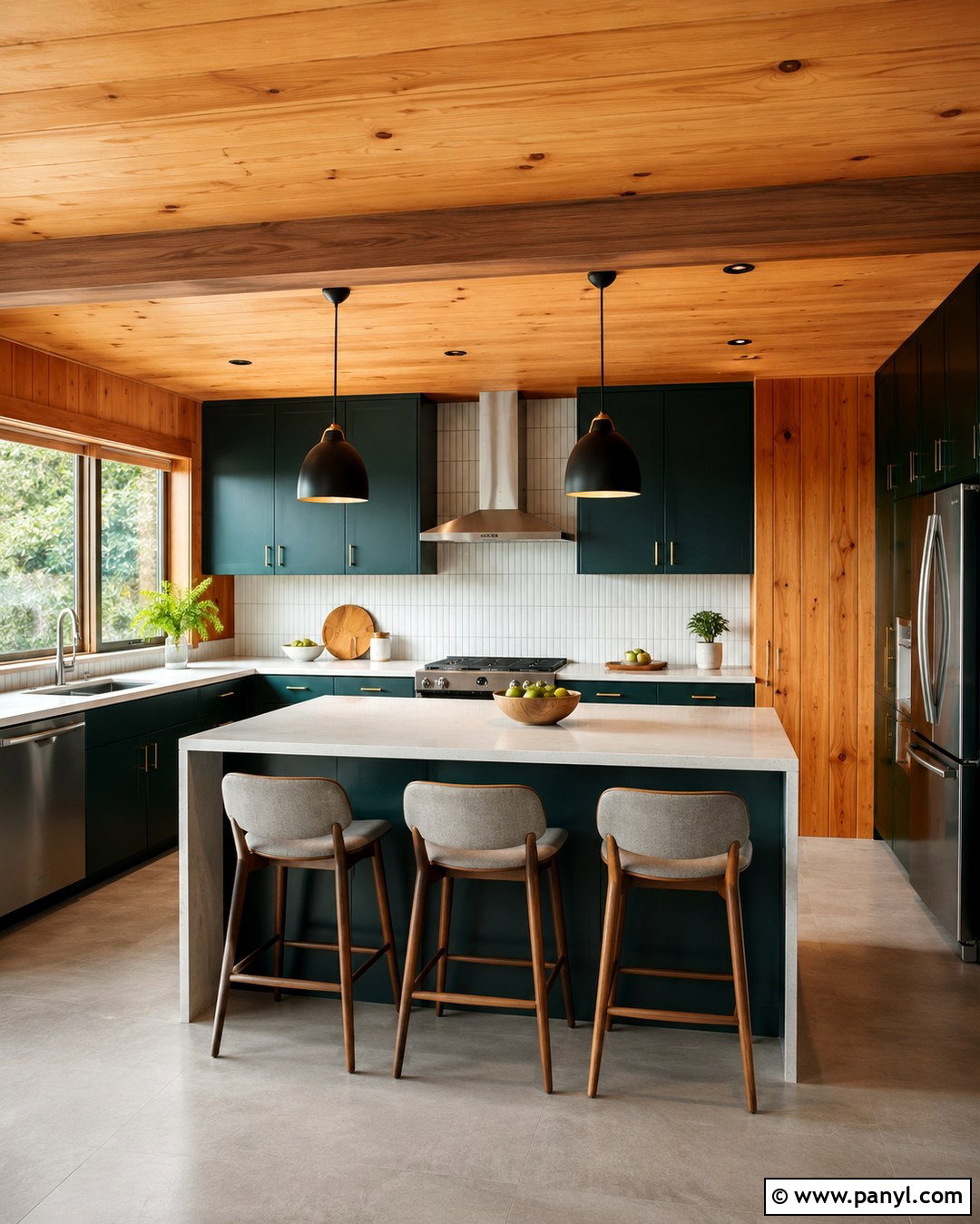
10. Terracotta And Cream Kitchen Color Scheme
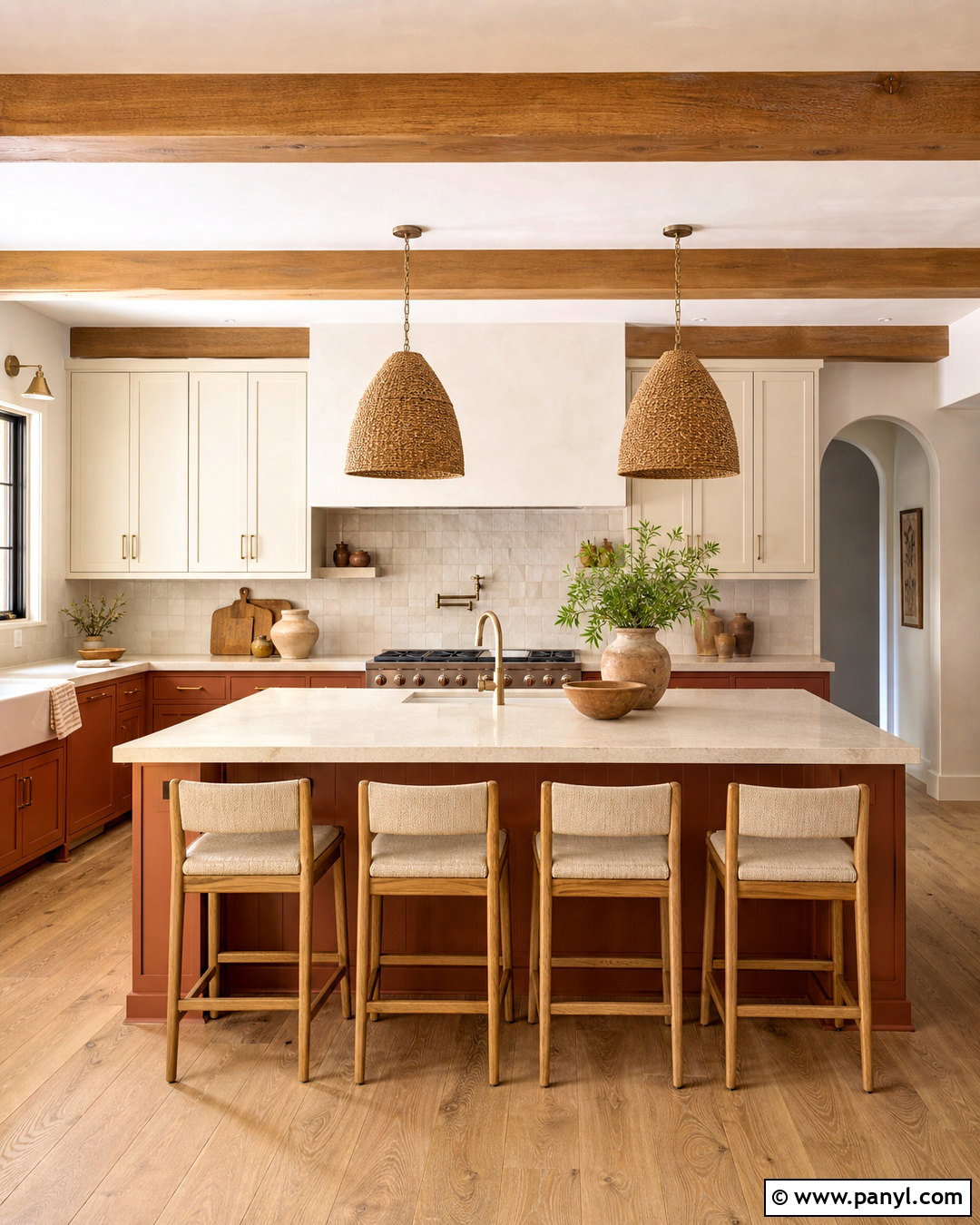
Sunbaked terracotta and creamy white create a warm kitchen with relaxed Mediterranean character. Use muted terracotta on the island and lower cabinetry while keeping tall units and upper cabinets soft cream. Choose honed limestone-look countertops or warm beige quartz to connect both colors. A handmade cream tile backsplash will introduce irregular texture without competing with the painted cabinets. Natural oak floors, woven pendant lights, and aged brass hardware complete the earthy foundation. Include simple wood stools with flax-colored cushions and a few clay accessories in slightly different terracotta shades. Avoid bright white, chrome, and blue-gray surfaces because they can disrupt the warmth. The finished kitchen should feel sunny, tactile, and comfortable rather than highly themed.
11. Burgundy And Warm White Kitchen Color Scheme
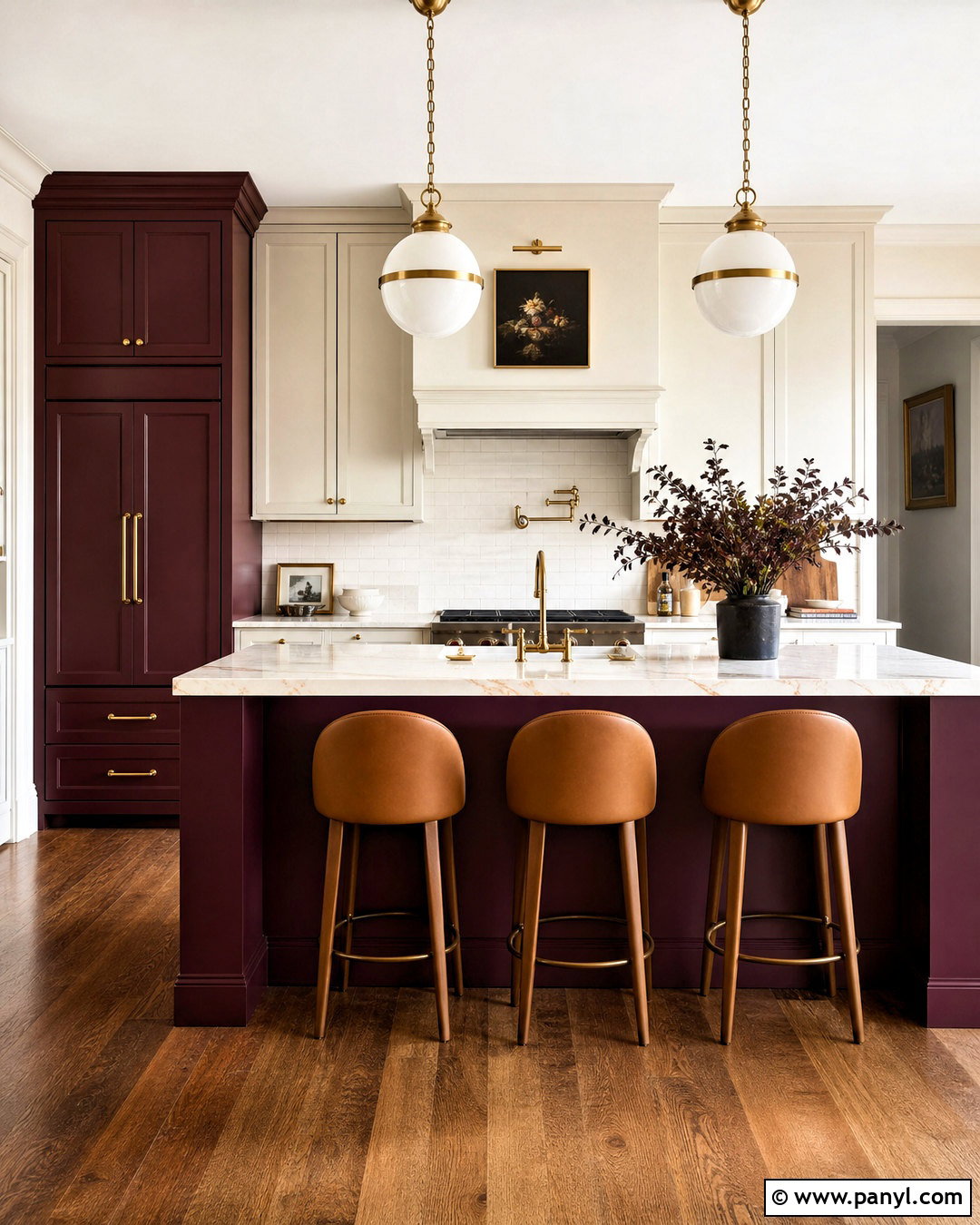
Deep burgundy gives a kitchen an elegant focal color when balanced with light, familiar finishes. Use burgundy on the island and a built-in beverage or pantry cabinet rather than every surface. Paint the remaining cabinets warm white and select creamy quartz countertops with faint brown or plum veining. A warm white tile backsplash keeps the work zone simple. Medium walnut flooring, antique brass handles, and off-white globe pendants support the richness of the cabinet color. Upholster counter stools in camel leather or textured beige fabric. Walls should remain a gentle ivory to prevent the palette from becoming too dark. This scheme works beautifully in traditional and transitional kitchens where homeowners want bold color without sacrificing a timeless, livable foundation.
12. Forest Green And Marble Kitchen Color Scheme
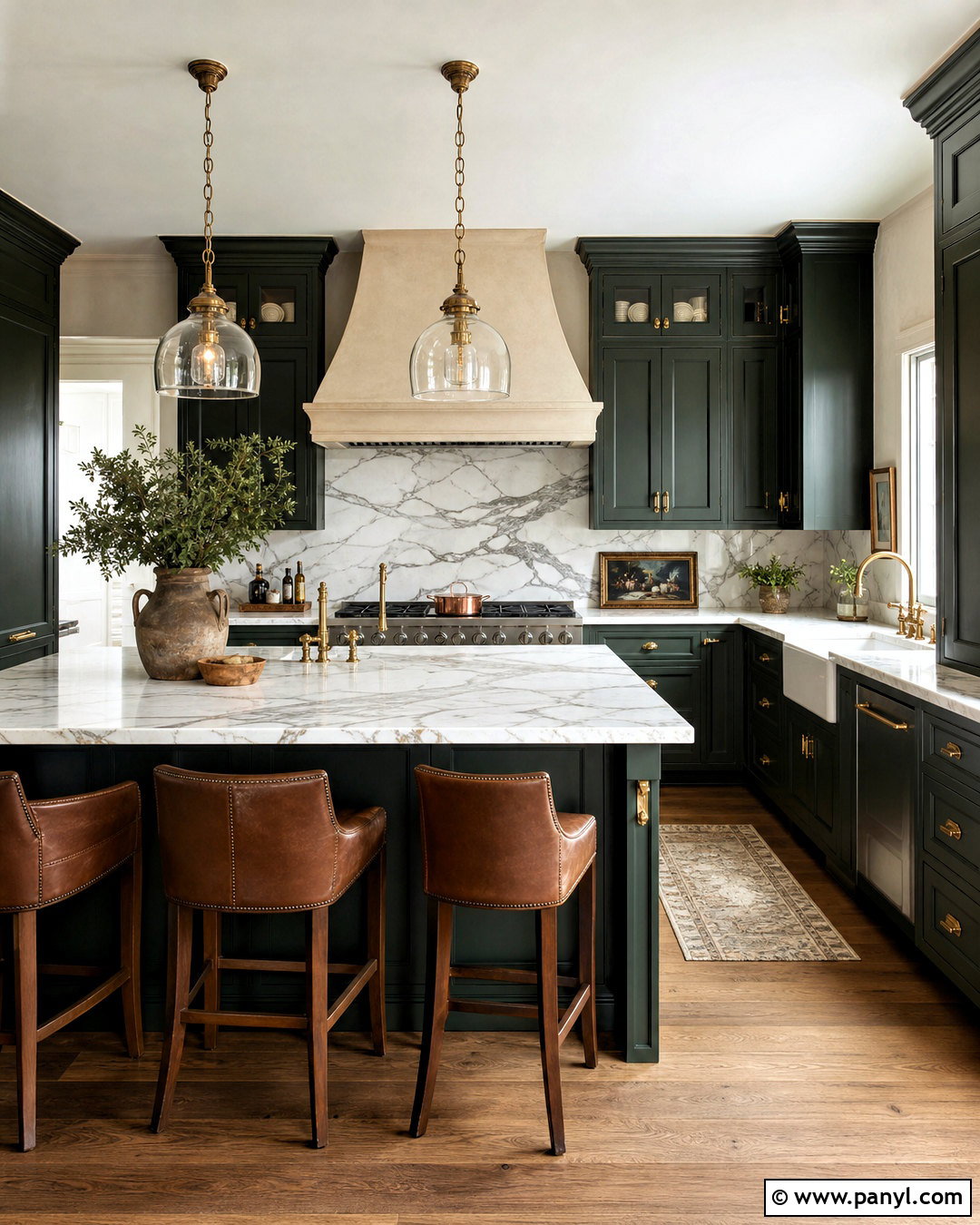
Forest green cabinets paired with pale marble create a dramatic kitchen inspired by classic European interiors. Apply the green to the full cabinet run and island for a cohesive, color-drenched effect. Use white marble or marble-look quartz with strong gray and olive veining on the counters and range backsplash. Warm oak floors keep the room grounded, while aged brass hardware adds contrast against the dark cabinetry. Choose cream-painted walls and a simple plaster range hood to provide visual breathing room. Saddle leather stools and clear glass pendants add warmth without distracting from the stone. If the kitchen receives limited daylight, include strong under-cabinet lighting and avoid dark window treatments. The completed design feels rich, polished, and intentionally layered.
13. Dusty Blue And Soft Gray Kitchen Color Scheme
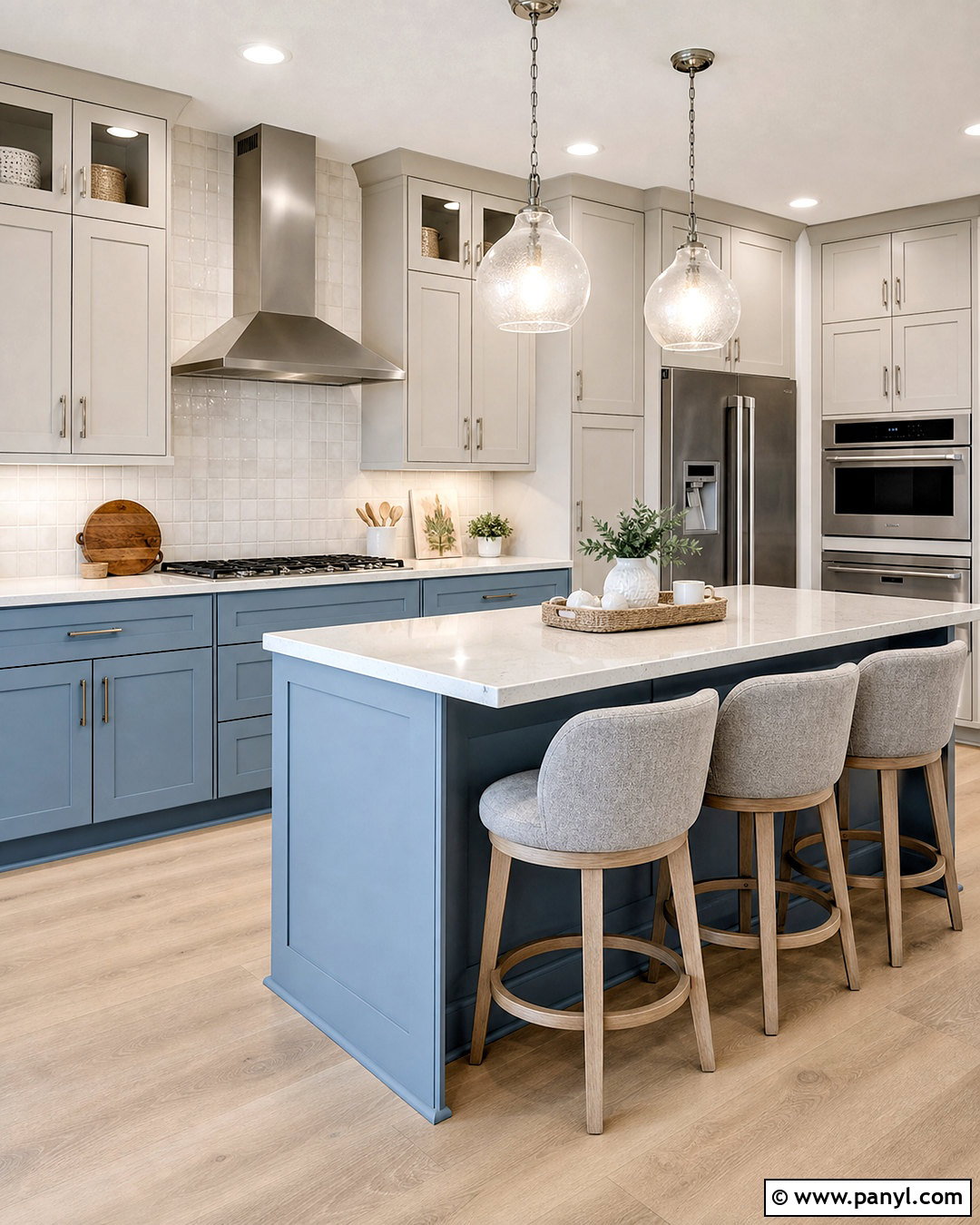
Dusty blue and soft gray offer a restrained color combination for homeowners who prefer cool shades without a stark appearance. Use dusty blue on the lower cabinets and island, then paint upper cabinets a pale warm gray. White quartz countertops with light gray veining will connect the two cabinet colors. Choose a backsplash of off-white square tiles with slightly darker grout for quiet definition. Pale oak flooring introduces enough warmth to keep the blue and gray from feeling chilly. Brushed nickel hardware, frosted glass pendants, and gray upholstered stools complete the balanced look. Keep wall color near-white with a subtle gray undertone. This palette fits coastal, transitional, and compact kitchens where gentle contrast is more suitable than deep, saturated cabinetry.
14. Butter Yellow And White Kitchen Color Scheme
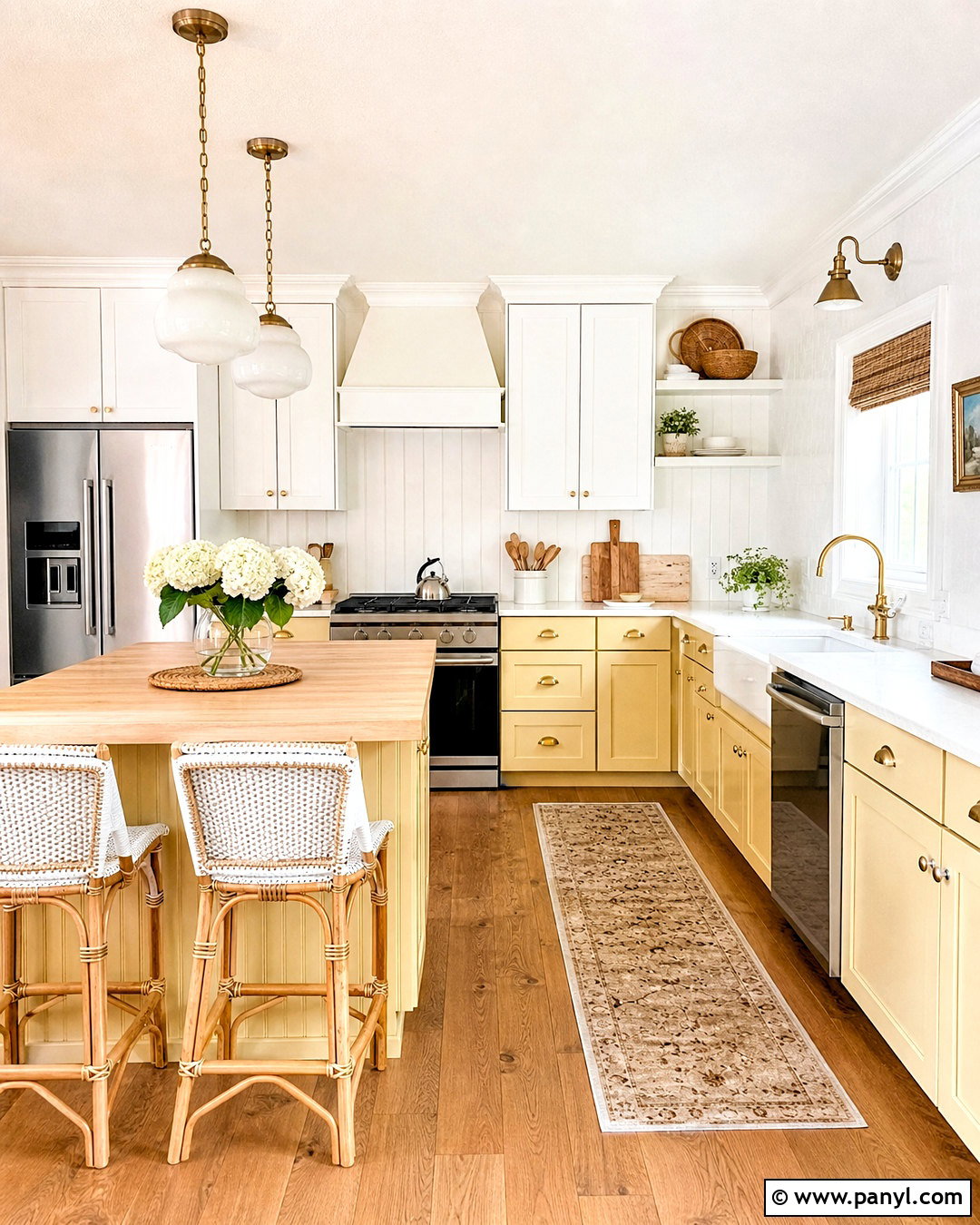
Butter yellow cabinetry can make a kitchen feel sunny even when windows are limited. Choose a muted, creamy yellow rather than a bright primary shade, and apply it to the lower cabinets and island. Keep upper cabinetry and walls warm white for an open appearance. Use pale butcher block on the island and creamy quartz on the perimeter counters. A white beadboard or square tile backsplash supports the cottage character. Add aged brass hardware, medium oak flooring, and milk glass pendant lights. Natural woven shades and striped beige textiles introduce relaxed pattern. A few muted green accessories can provide gentle contrast. The complete palette feels cheerful and nostalgic while remaining practical enough for a family kitchen used throughout the day.
15. Blush Pink And Walnut Kitchen Color Scheme
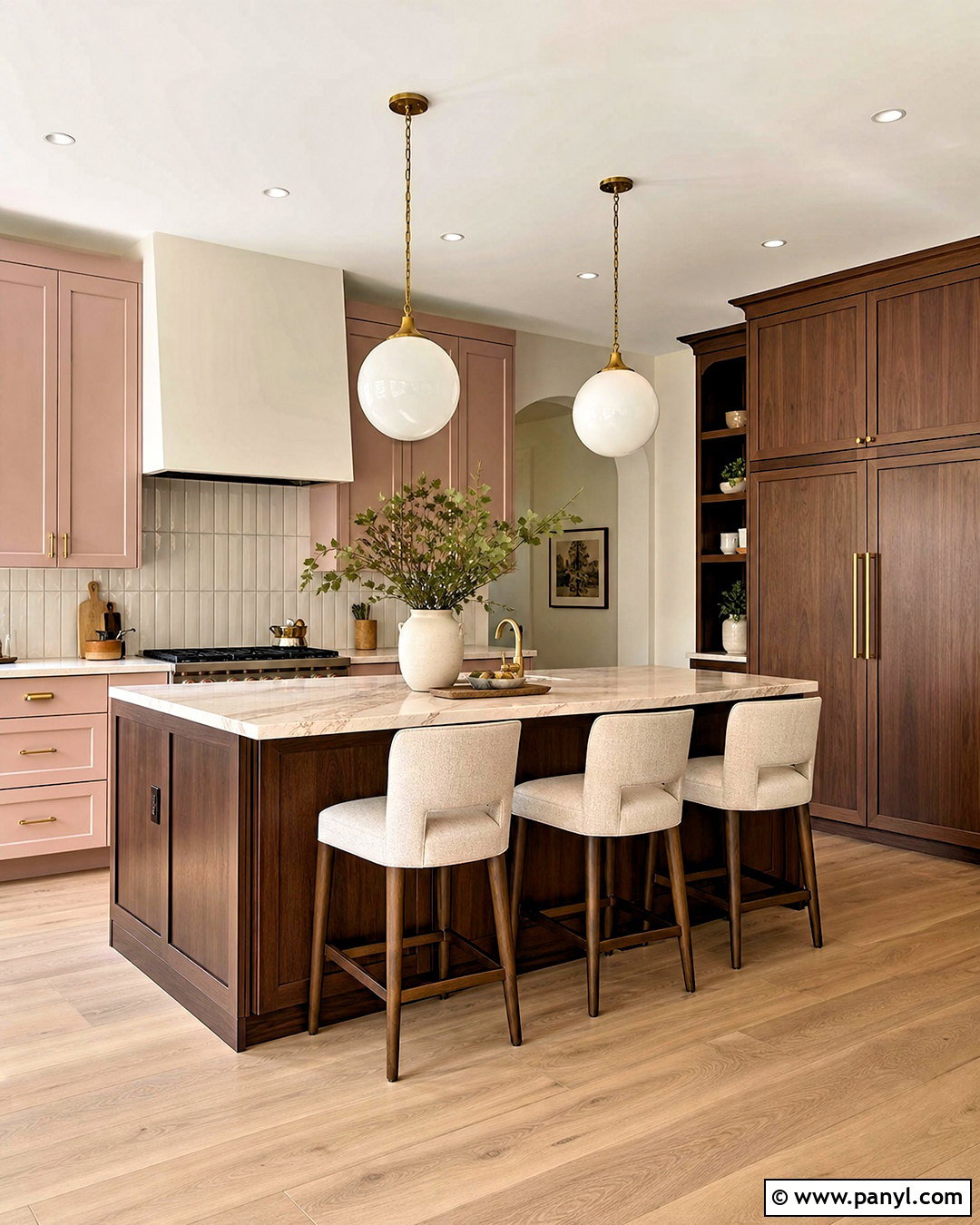
Soft blush cabinetry becomes surprisingly sophisticated when paired with dark walnut and warm stone. Use a muted clay-pink finish on perimeter cabinets and introduce walnut through the island, open shelves, or a floor-to-ceiling pantry. Select creamy beige quartz countertops with soft rose or brown veining. An ivory vertical tile backsplash will make the room feel taller while keeping attention on the cabinetry. Choose antique brass hardware and warm white globe pendants to reinforce the gentle color temperature. Medium-toned oak floors prevent the walnut from creating too much contrast. Finish with oatmeal stools, natural linen shades, and simple ceramics. This palette feels modern and personal without becoming overly sweet, especially when the pink has earthy brown or beige undertones.
16. Teal And White Oak Kitchen Color Scheme
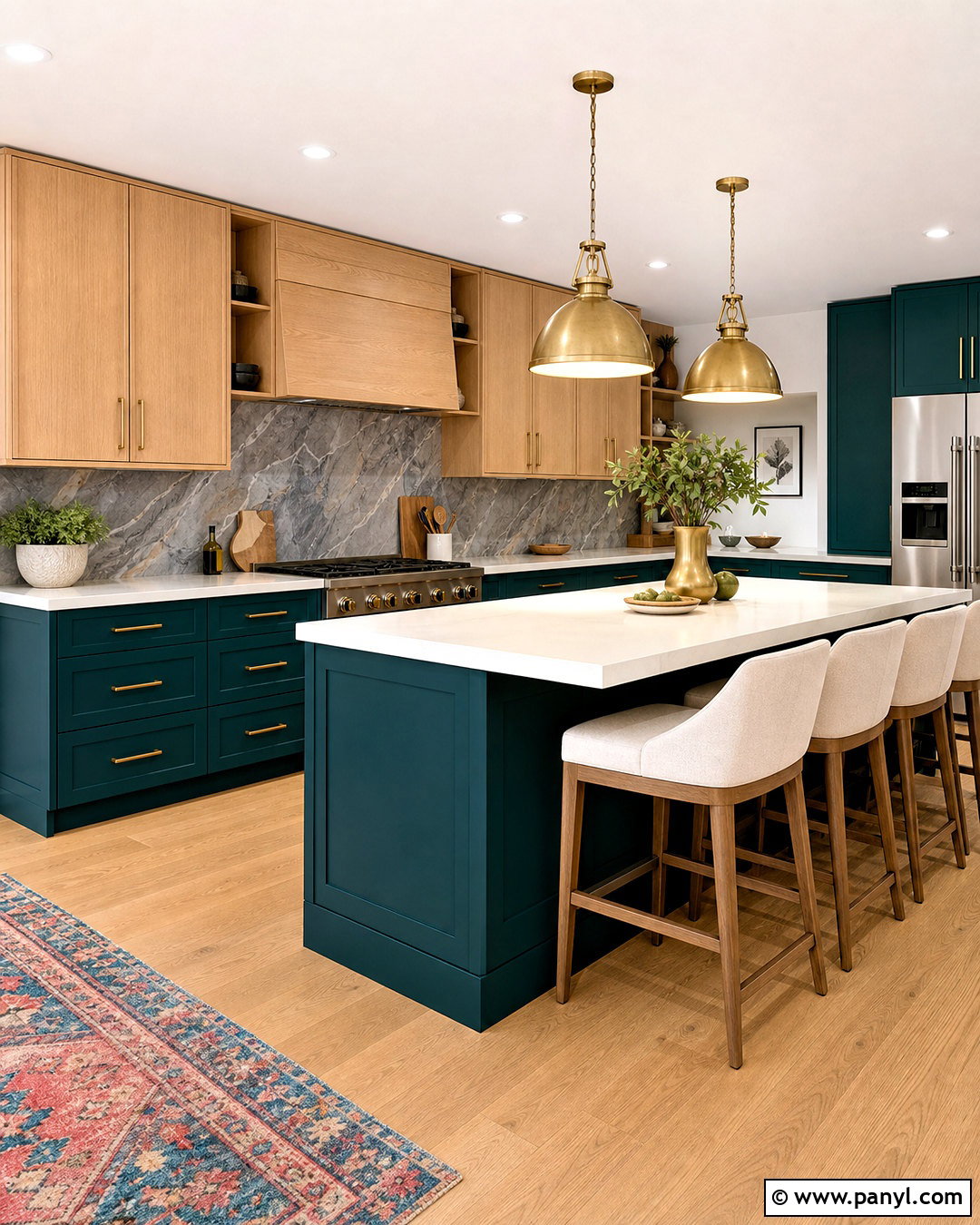
Deep teal and white oak create a colorful modern kitchen with plenty of natural warmth. Use teal on the island and lower cabinets, then install flat-panel white oak cabinetry above and around the refrigerator. Choose off-white quartz countertops and a full-height backsplash with soft gray-blue veining. Brushed brass pulls emphasize the green undertones in teal, while simple brass pendants connect the island to the surrounding cabinetry. Pale oak flooring can extend the wood palette without looking overly matched. Keep walls warm white and use neutral counter stools in cream or light tan. This scheme works best when teal is treated as the dominant accent and decorative objects remain restrained. The completed room feels bold, balanced, and welcoming.
17. Monochrome Beige Kitchen Color Scheme
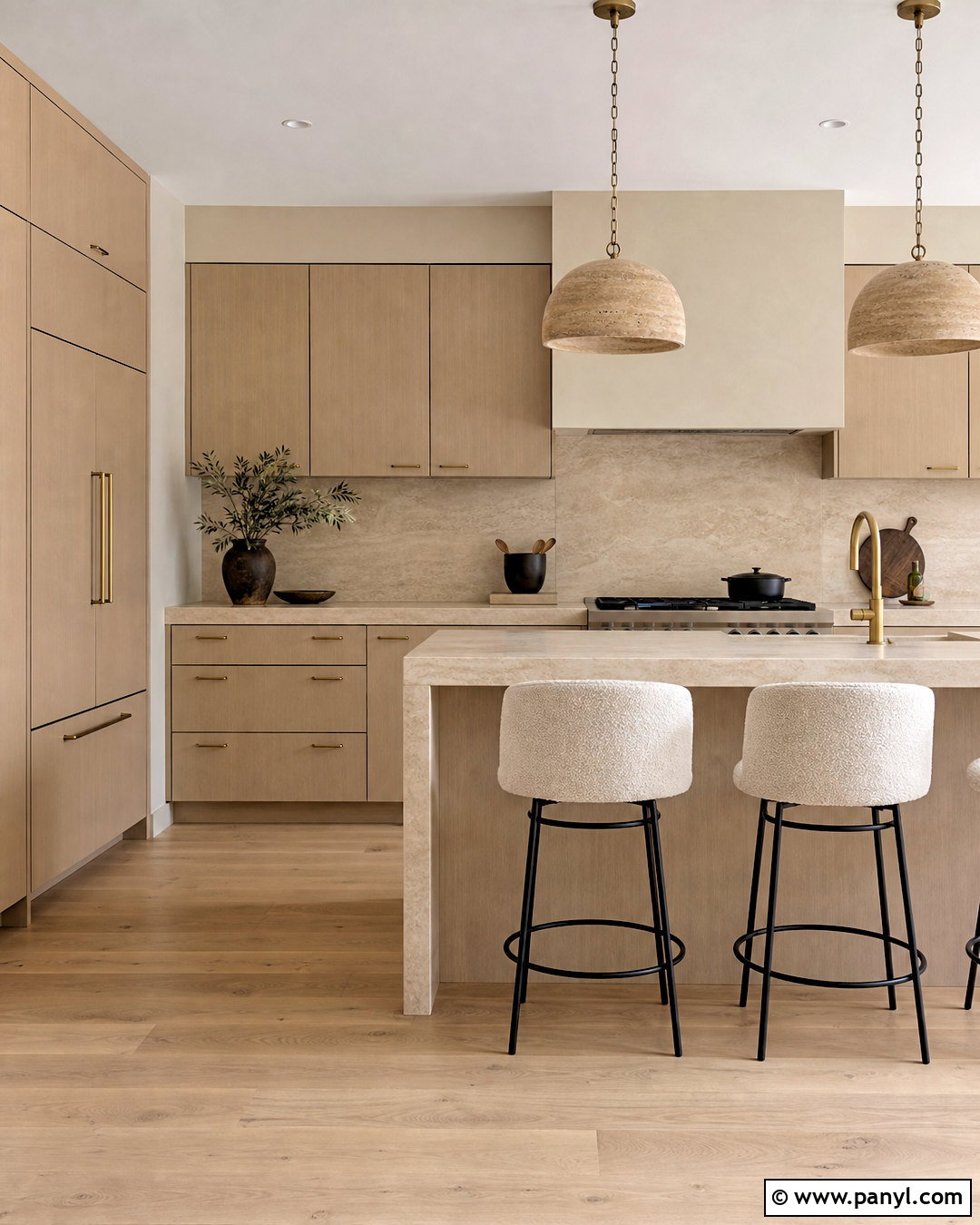
A monochrome beige kitchen relies on texture and tonal variation instead of sharp color contrast. Start with sand-colored cabinetry, then select a slightly lighter beige quartz or limestone-look countertop. Continue the countertop material up the backsplash for a seamless appearance. Paint the walls a pale warm beige and choose natural oak flooring that sits between the cabinet and countertop tones. Brushed brass hardware, travertine pendant lights, and bouclé counter stools can provide varied finishes within the same palette. Include a few dark bronze accents to define the room and keep it from appearing washed out. The final kitchen feels calm, warm, and visually spacious. It is especially effective in modern interiors where clean lines allow the subtle material differences to stand out.
18. White Kitchen With Blue Island Color Scheme
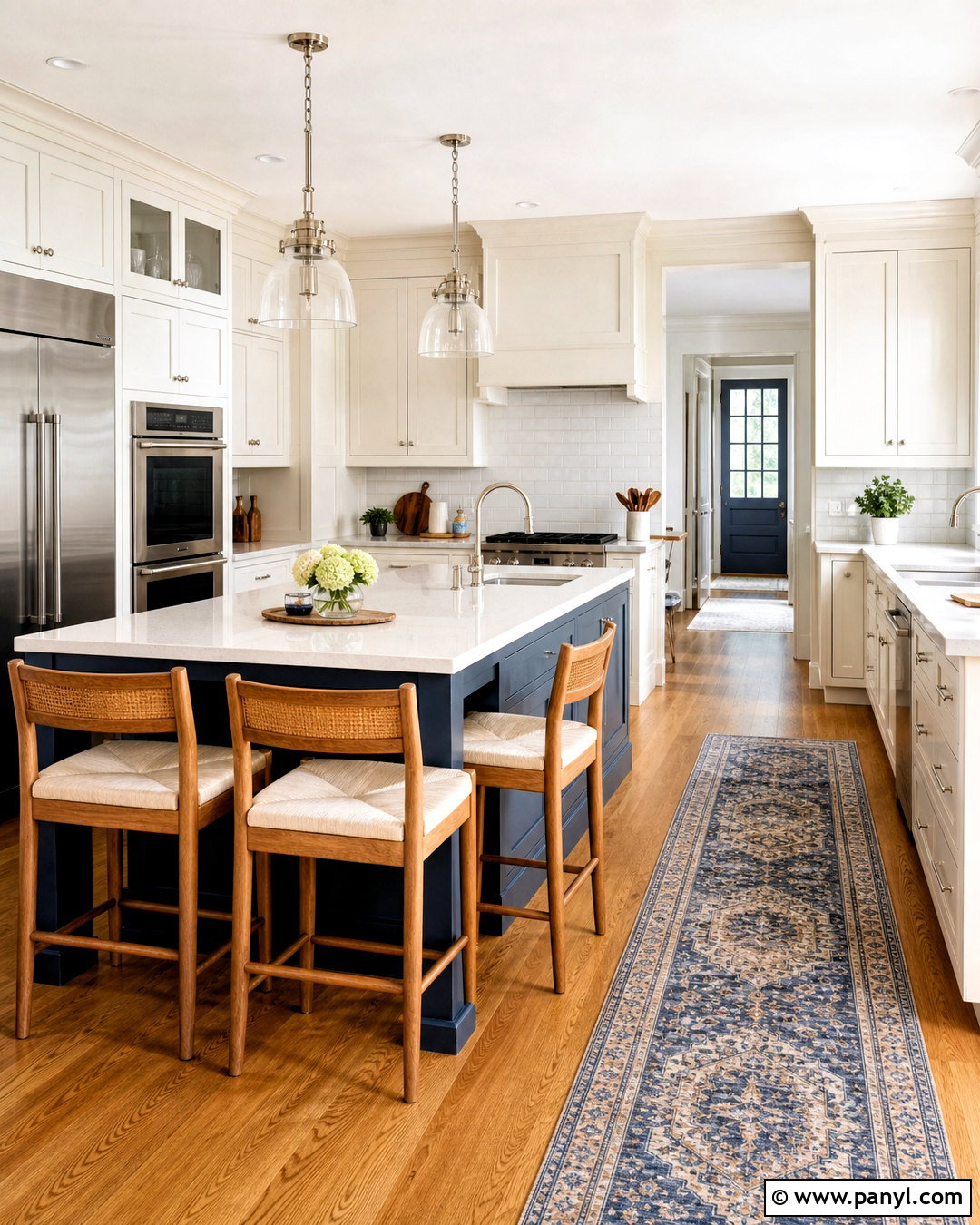
A blue island provides an easy focal point in a mostly white kitchen. Choose warm white Shaker cabinets for the perimeter and paint the island a medium denim or slate blue. Use pale quartz countertops throughout so the two cabinet finishes remain connected. A soft white subway tile backsplash can add texture while preserving the bright background. Introduce natural oak through flooring, counter stools, and a small open shelf. Polished nickel hardware creates a classic finish that works with stainless steel appliances. Repeat the island color subtly in a patterned runner or Roman shade rather than across numerous accessories. This complete palette is versatile, family-friendly, and easier to update than a kitchen where every cabinet is painted a saturated color.
19. Wood Cabinets With Green Backsplash Color Scheme
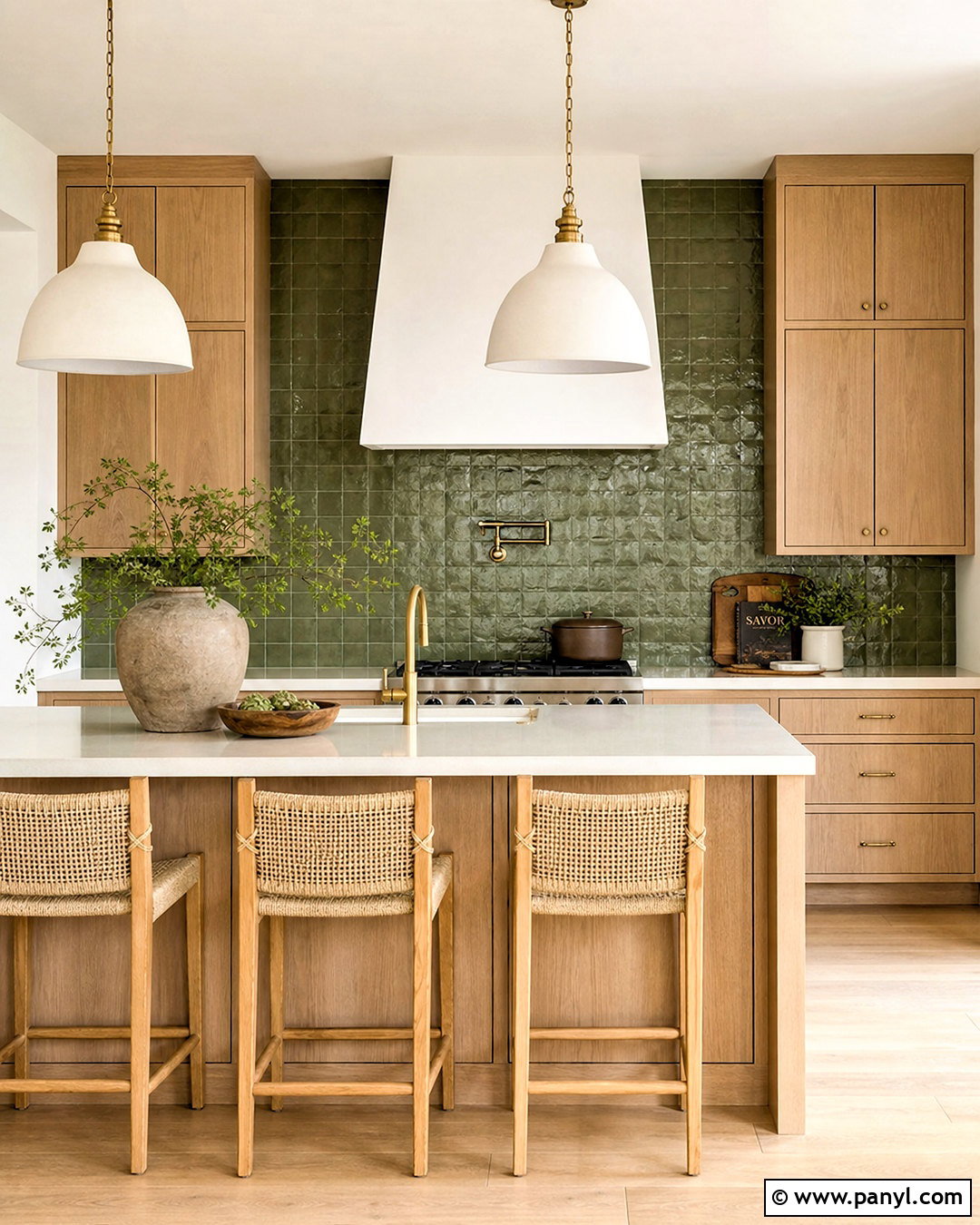
Natural wood cabinetry and a green backsplash create an organic kitchen without relying heavily on painted surfaces. Choose medium white oak or lightly stained walnut cabinets with simple slab or narrow Shaker doors. Install a muted moss, celadon, or sage green tile backsplash from the countertop to the upper cabinets. Creamy quartz counters will separate the wood grain from the tile and prevent visual clutter. Use warm white walls, brushed bronze hardware, and light oak flooring in a tone distinct from the cabinetry. Add woven stools and white ceramic pendants for softness. Because the backsplash supplies the main color, keep decorative accessories neutral. The result is a warm, nature-inspired kitchen with enough texture to feel interesting and comfortably lived in.
20. Plum And Warm Stone Kitchen Color Scheme
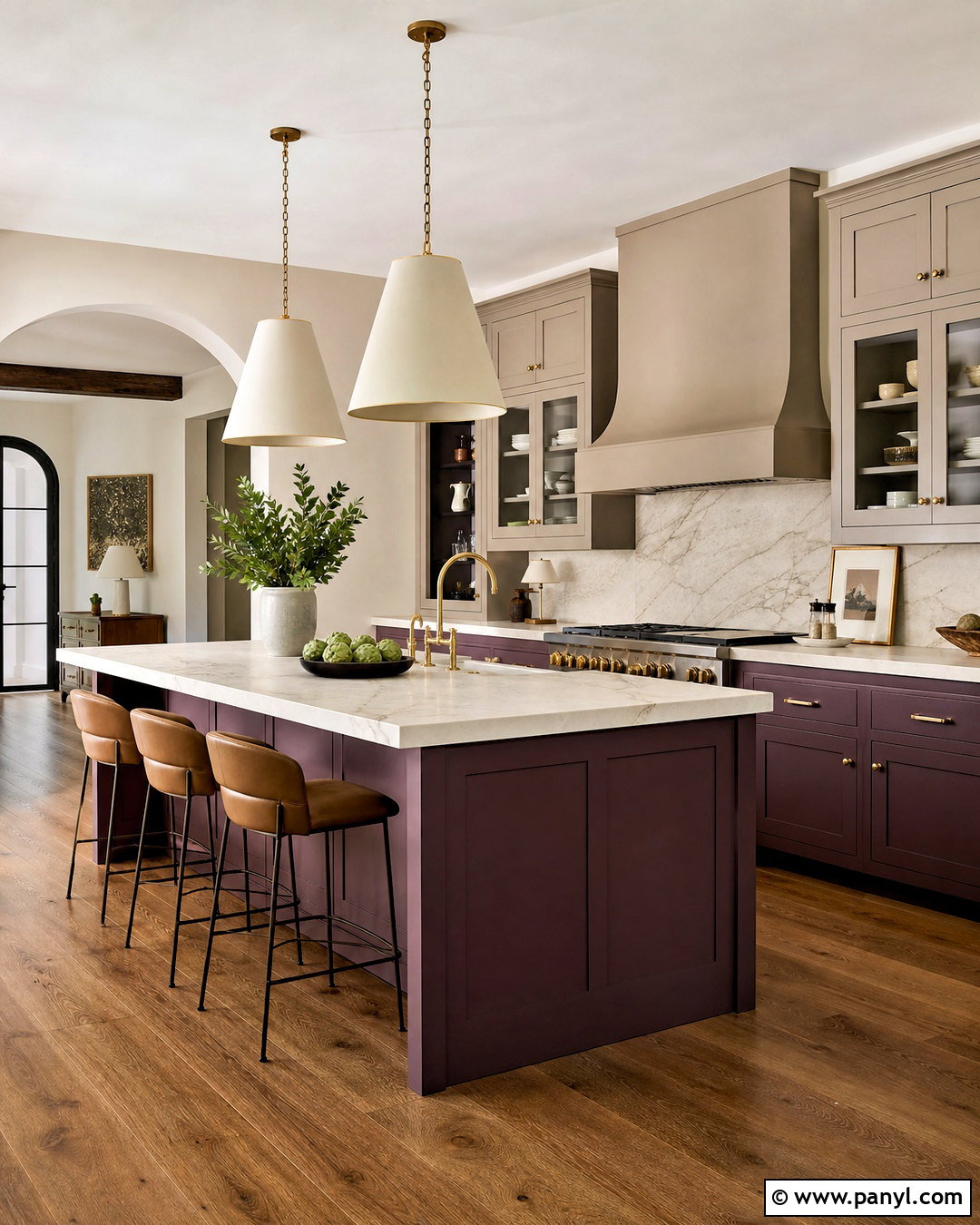
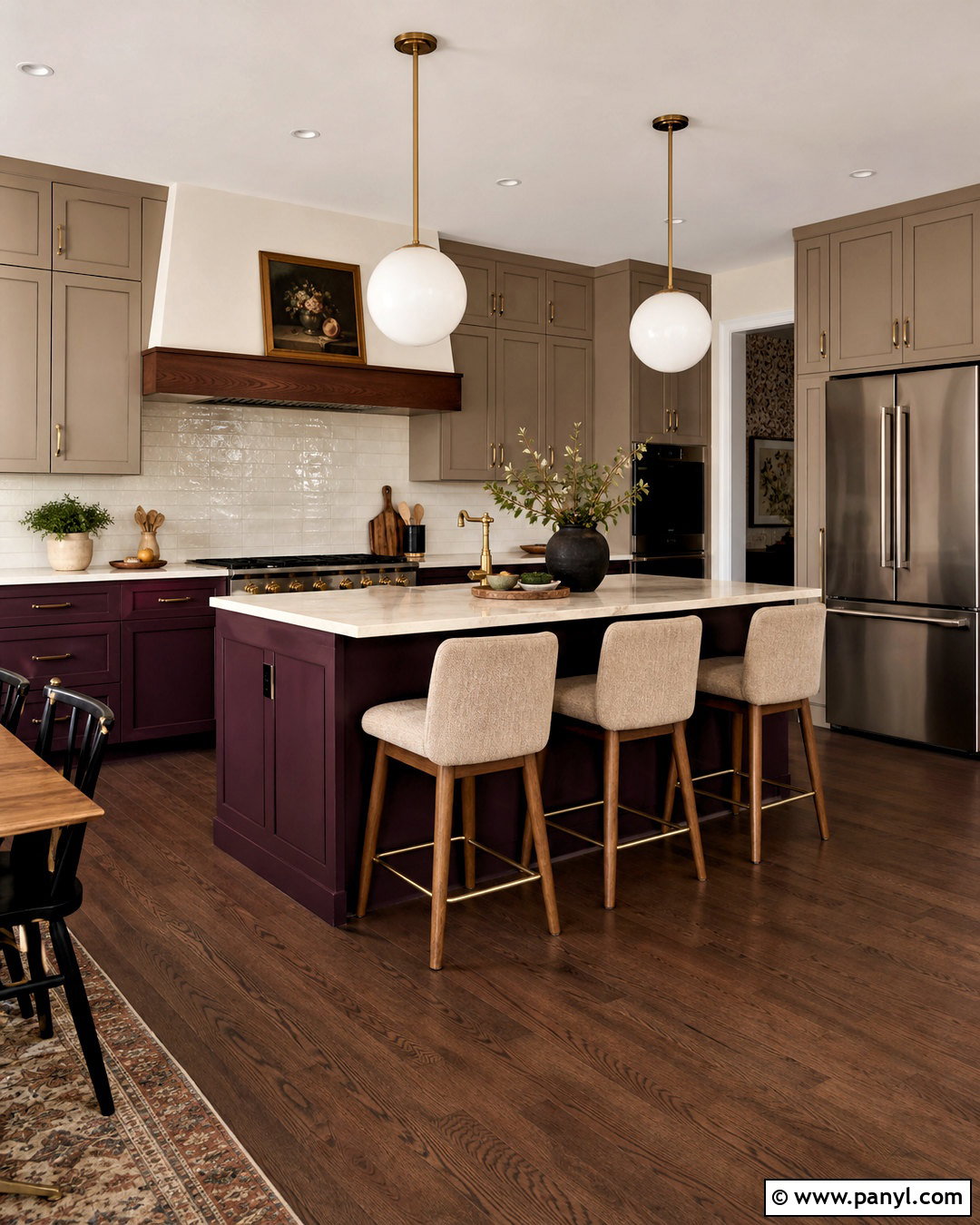
Muted plum cabinets offer a distinctive alternative to blue or green while still working with familiar neutral materials. Choose a brown-based plum rather than a bright purple, then apply it to the island and lower cabinetry. Use warm beige or mushroom-colored cabinets above to lighten the composition. Select creamy quartzite-look countertops with soft taupe veining and carry the same finish onto the range backsplash. Walnut flooring, aged brass hardware, and linen pendant lights complement the rich cabinet color. Keep walls warm ivory and choose camel or oatmeal counter stools. Small accents in dusty rose or dark brown can repeat the palette discreetly. This complete scheme feels creative and refined, making it suitable for both contemporary and updated traditional kitchens.
Conclusion:
The right kitchen palette should support the room’s layout, natural light, existing flooring, and connection to neighboring spaces. Before committing, gather samples of every major finish and view them together at different times of day. Pay particular attention to undertones, since a cool countertop can look disconnected beside creamy cabinets or warm wood. You can also introduce stronger color through an island, backsplash, or pantry wall while keeping expensive permanent finishes neutral. From calm beige and oak to dramatic forest green and marble, these **20 kitchen ideas color schemes** offer complete looks for many homes and preferences. Choose the combination that feels comfortable, functional, and consistent with the way you want your kitchen to look every day.

Related Ideas and Inspiration:
Leave a Reply