
Green can make a room feel calm, grounded, cheerful, dramatic, or refreshingly modern, depending on the shade and supporting finishes. This guide to **25 Wall Color Ideas Green Ideas** explores complete spaces rather than isolated paint swatches. You will find soft sage living rooms, earthy olive bedrooms, rich forest dining rooms, playful pistachio spaces, and deep emerald offices. Current color directions are moving beyond pale sage toward warmer olives, mossy greens, pistachio tones, and saturated botanical shades. () Each look includes furniture, flooring, trim, lighting, textiles, and accent colors that work together. Always test paint on several walls before committing because natural and artificial light can change its appearance. Use these **25 Wall Color Ideas Green Ideas** to find a balanced look for your home.

1. Sage Green Living Room
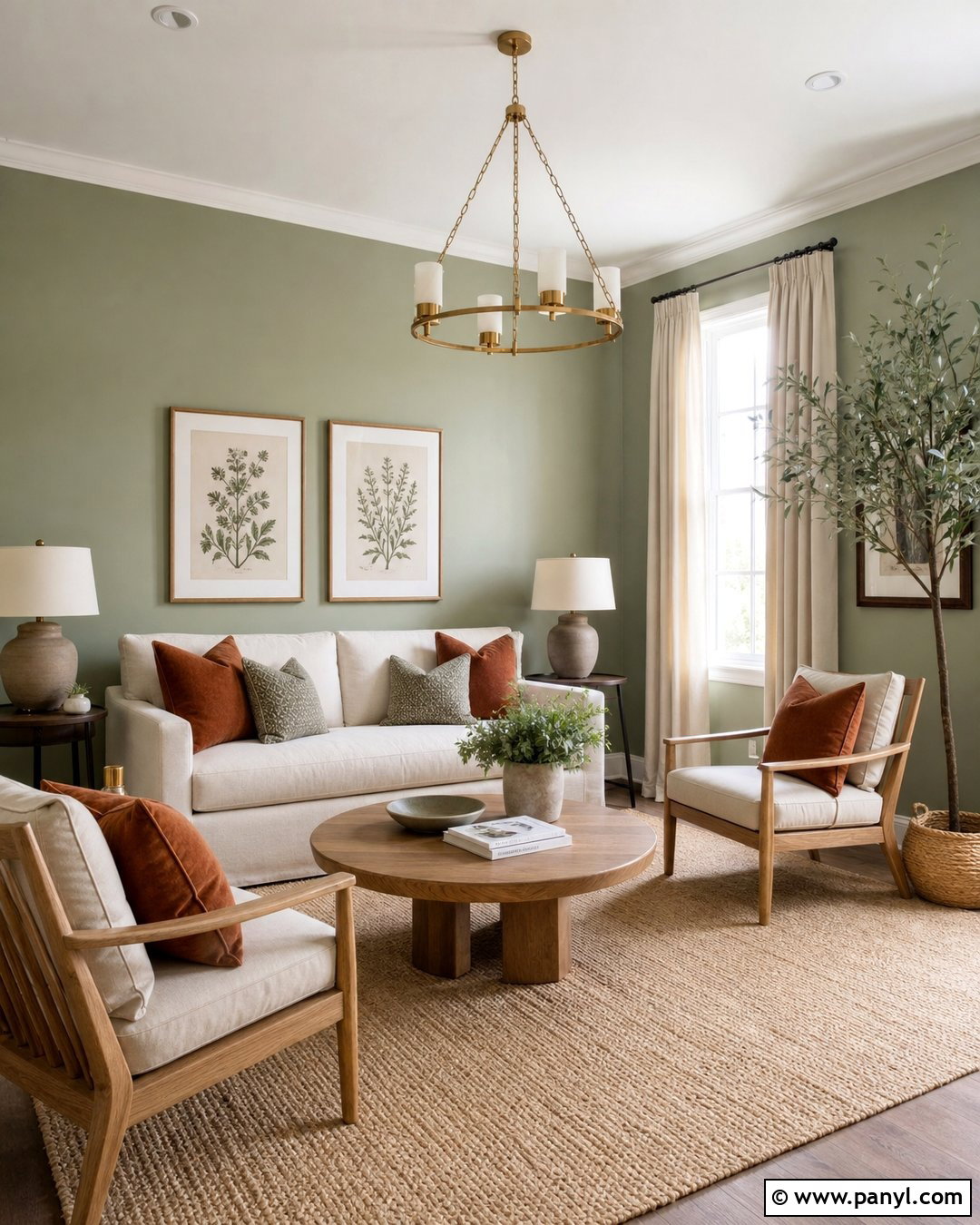
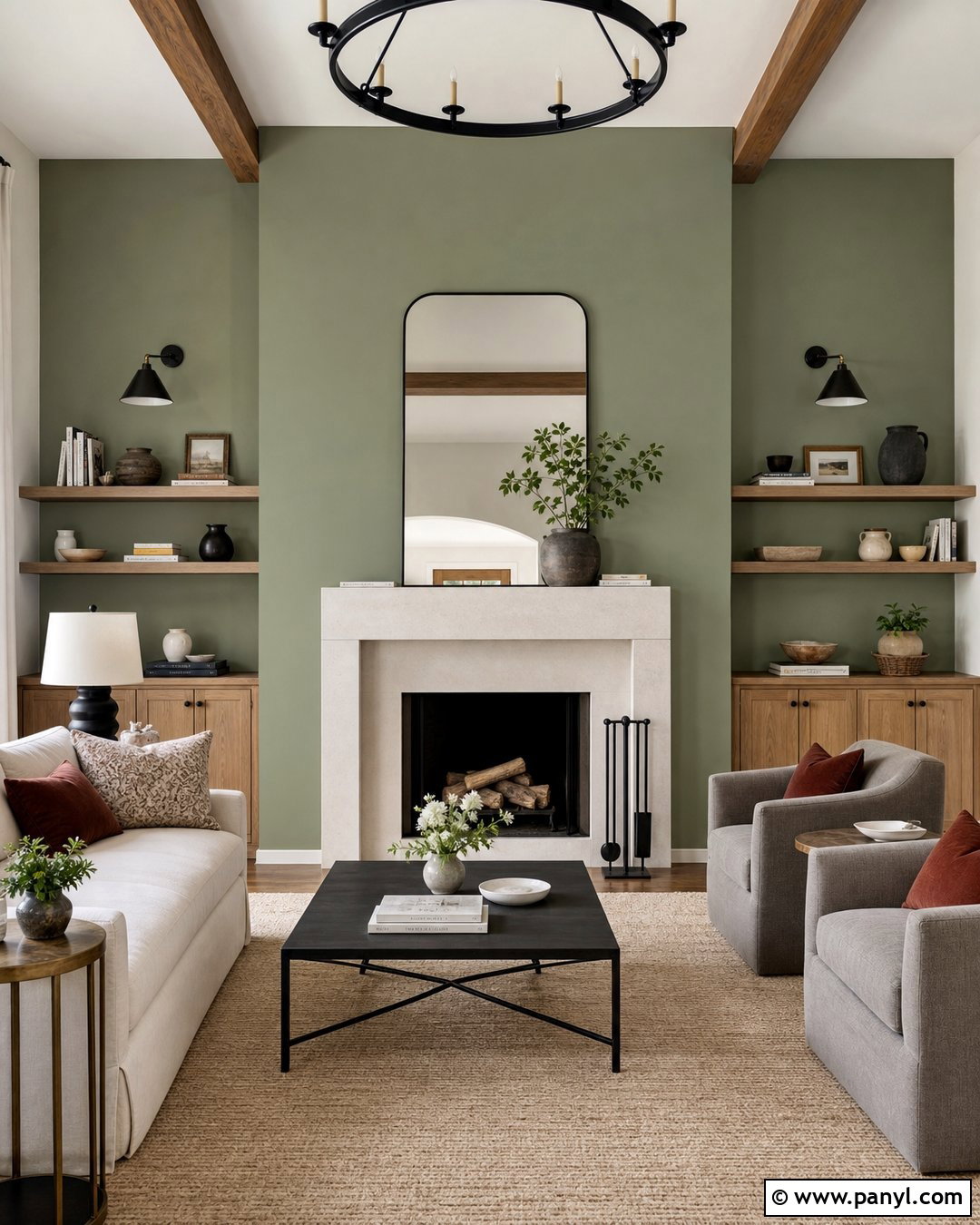
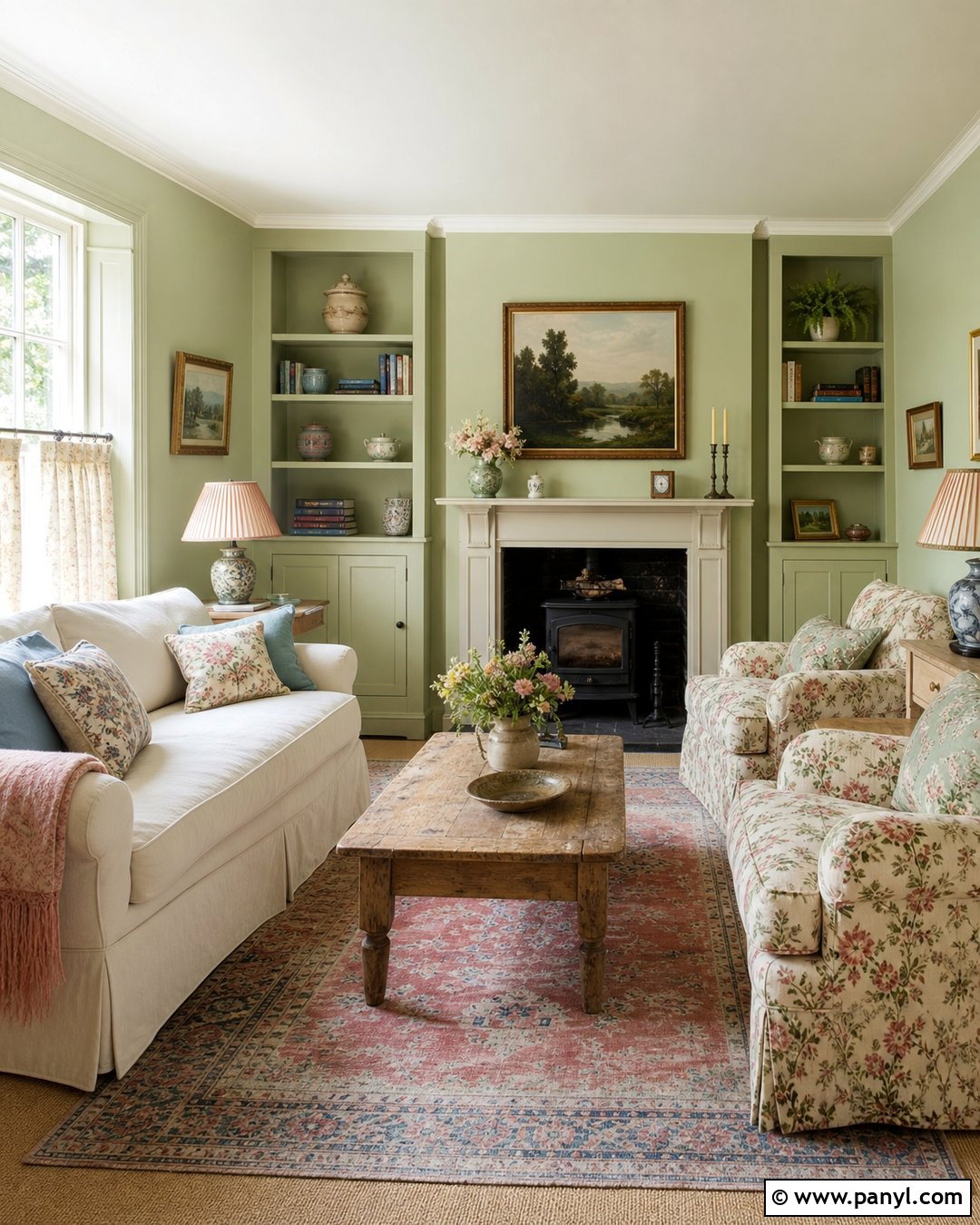
Soft sage green walls create a relaxed living room that feels colorful without becoming overwhelming. Pair the walls with warm white trim and a slightly lighter ceiling to keep the room open. An oatmeal linen sofa, two light oak armchairs, and a woven wool rug establish a comfortable neutral base. Add rust-colored pillows, a cream throw, and muted botanical artwork for gentle contrast. A round oak coffee table and brushed brass floor lamp bring warmth to the gray undertones in sage. Choose natural linen curtains that filter daylight rather than heavy window treatments. Finish the room with a tall indoor tree, handmade ceramic pieces, and a few matte black details. The complete palette feels organic, approachable, and easy to update throughout the year.
2. Olive Green Bedroom
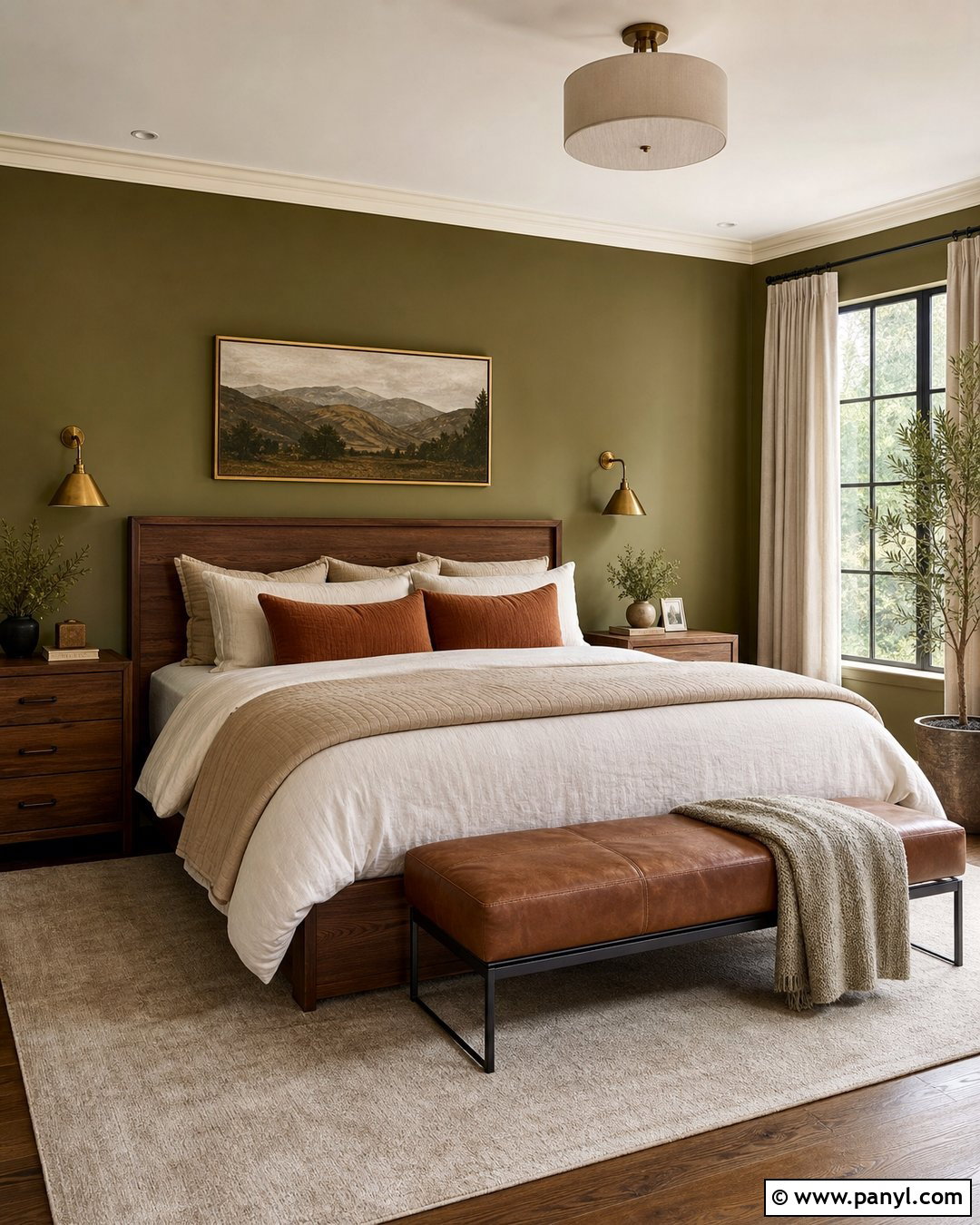
Warm olive green walls can turn an ordinary bedroom into a cozy, grounded retreat. Use the color on every wall, then balance its depth with a warm white ceiling and simple ivory baseboards. Center a walnut bed against the longest uninterrupted wall and dress it with cream linen bedding, a camel-colored quilt, and muted terracotta pillows. Matching wood nightstands create symmetry, while aged brass sconces add soft metallic warmth. Choose a large oatmeal rug to lighten dark flooring and improve comfort underfoot. Natural flax curtains work well because their warm undertone supports the olive paint. Complete the room with a leather bench, landscape artwork, and restrained greenery. The result feels sophisticated and restful without relying on dark furniture or excessive decorative accessories.
3. Forest Green Dining Room
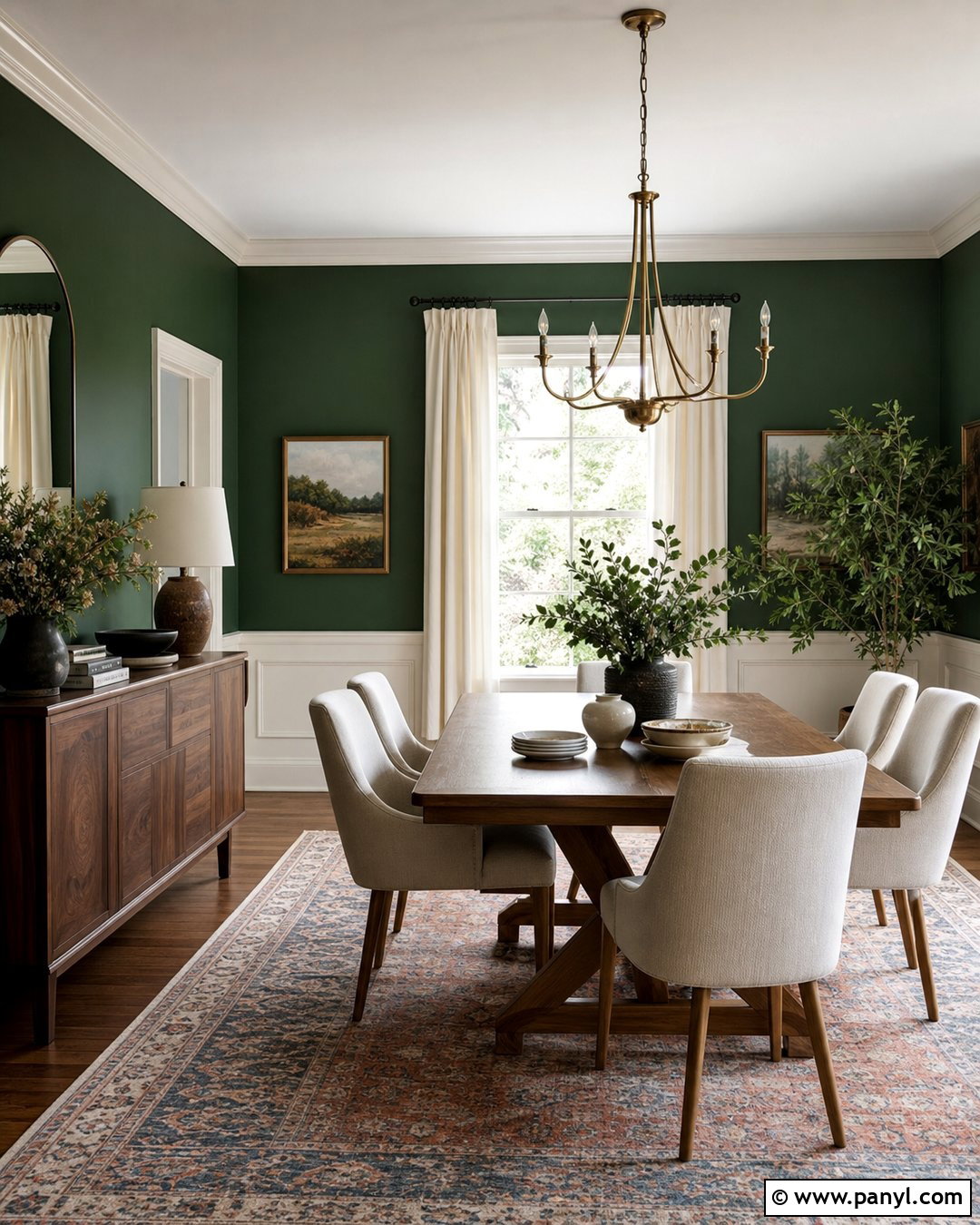
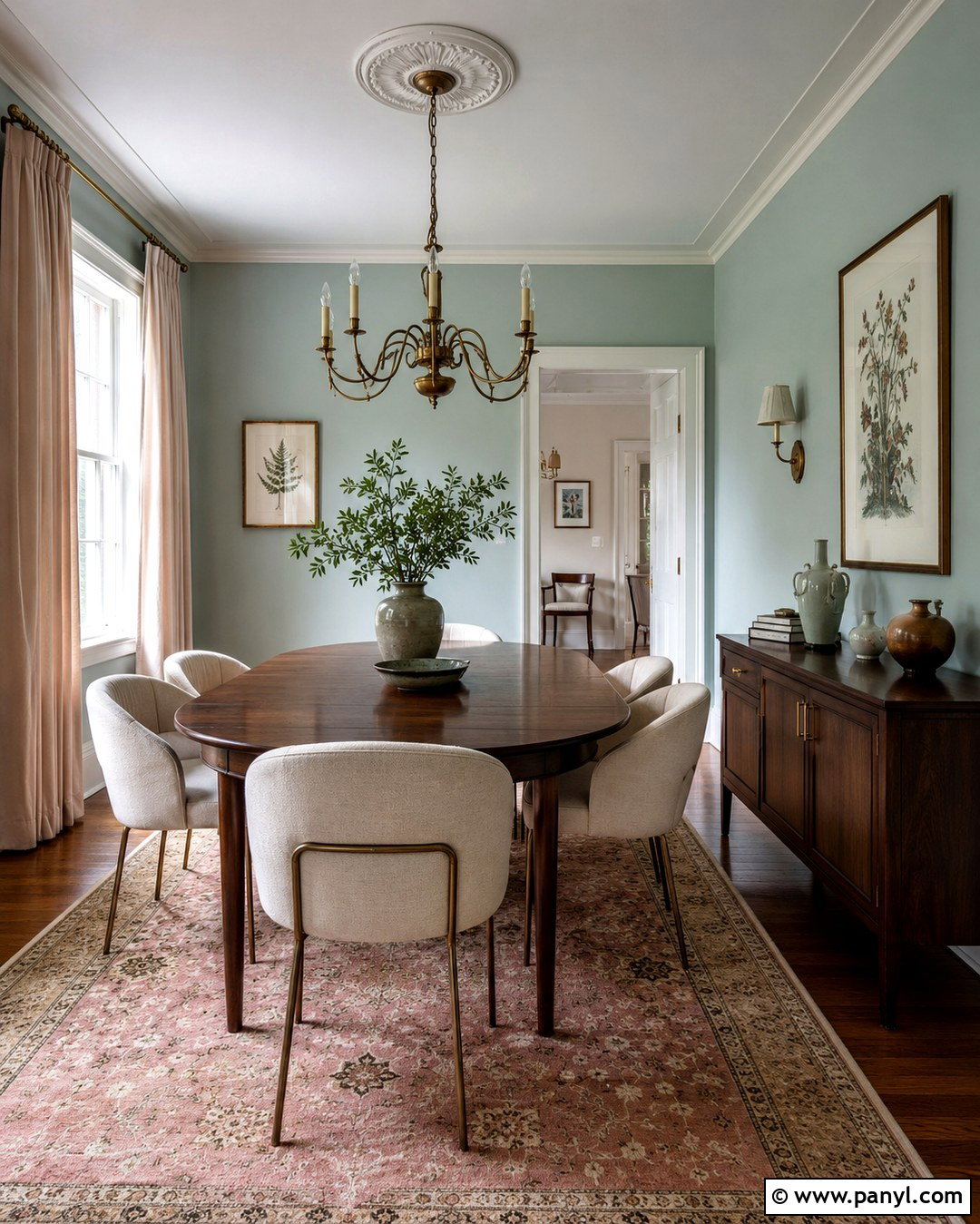
Forest green walls give a dining room an intimate, polished character that works especially well for evening gatherings. Paint the walls in a deep botanical green while keeping the ceiling, crown molding, and window trim warm white. A medium-tone oak dining table prevents the space from feeling overly formal. Surround it with cream upholstered chairs or woven cane seating for lighter contrast. Hang a simple aged brass chandelier above the table and introduce a large vintage-inspired rug containing beige, rust, and faded blue. Full-length ivory curtains soften the rich wall color and reflect daylight. A walnut sideboard provides storage without competing with the table. Finish with framed landscapes, ceramic tableware, and a few leafy branches. Layered lighting keeps the dark green welcoming after sunset.
4. Mint Green Kitchen
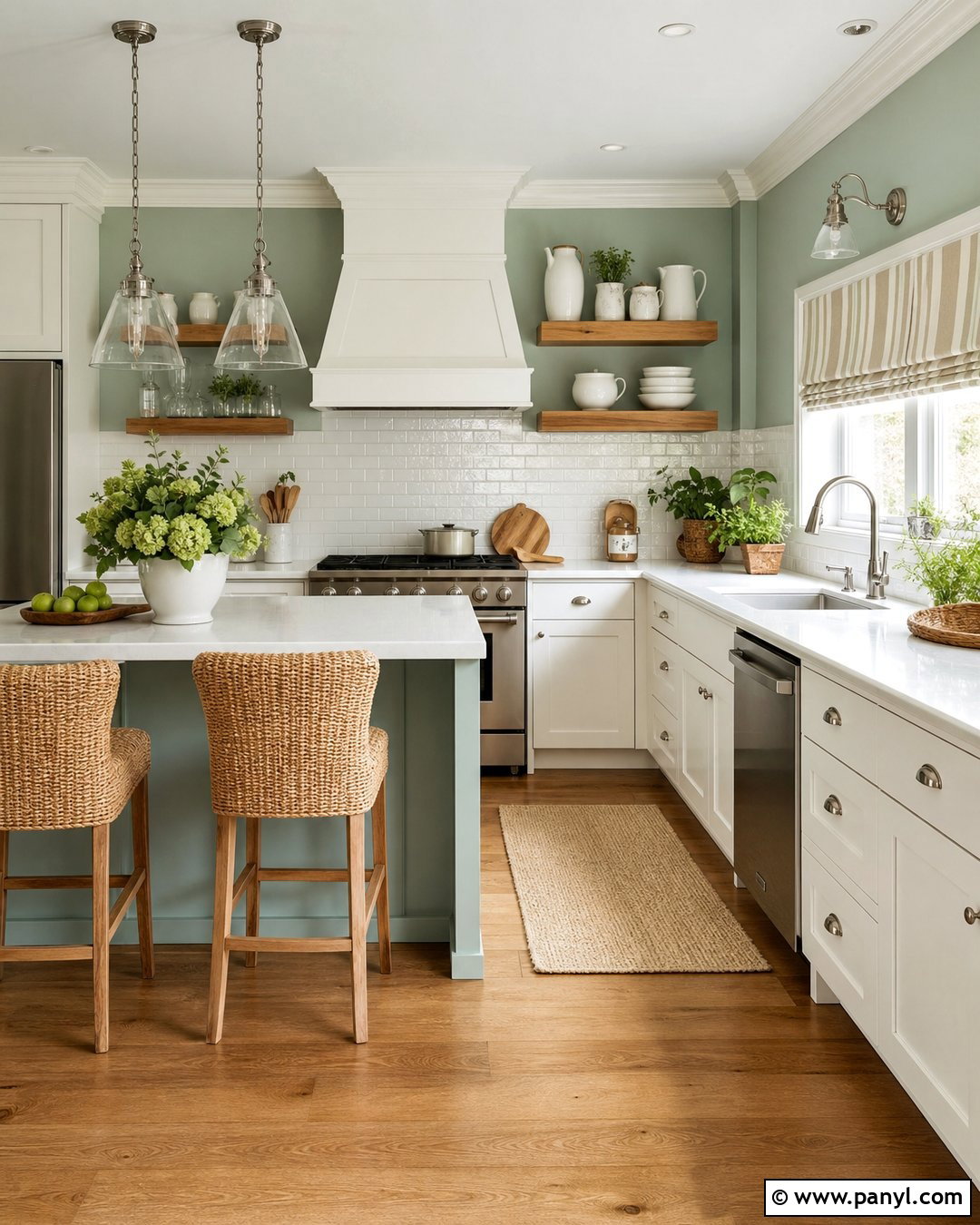
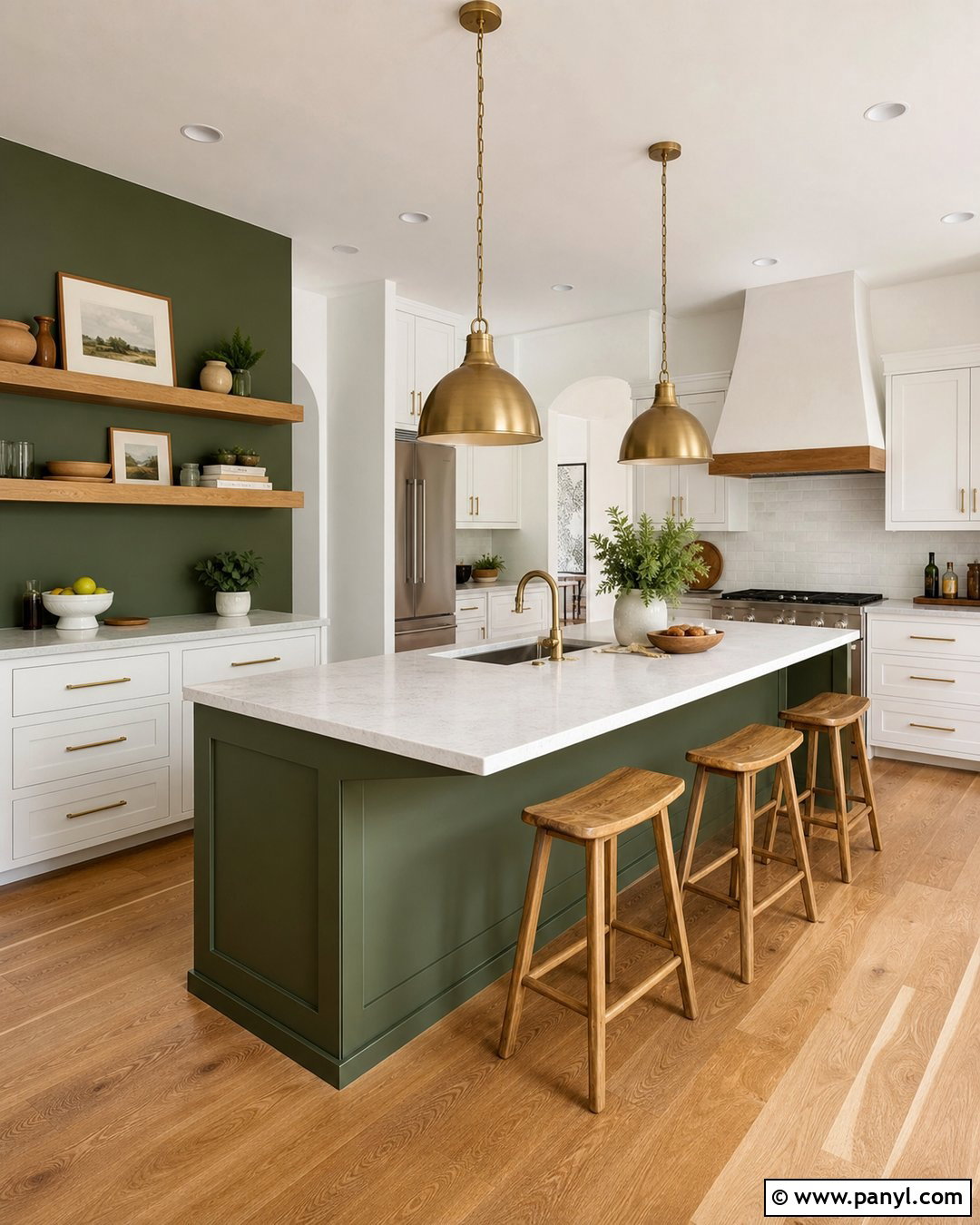
Fresh mint green walls can brighten a kitchen while maintaining a clean, comfortable atmosphere. Select a muted mint with slight gray undertones rather than a sugary pastel. Pair it with warm white shaker cabinets, lightly veined quartz counters, and a glossy white subway tile backsplash. Honey-toned oak flooring and woven counter stools stop the palette from feeling cold. Use brushed nickel hardware for a simple finish, or choose unlacquered brass when you want more warmth. Natural wood shelves can display white ceramics, glass containers, and small herb pots. Add striped Roman shades in cream and pale green to connect the windows with the walls. This complete kitchen works particularly well in compact homes because the light surfaces reflect brightness while the mint introduces clear personality.
5. Emerald Green Home Office
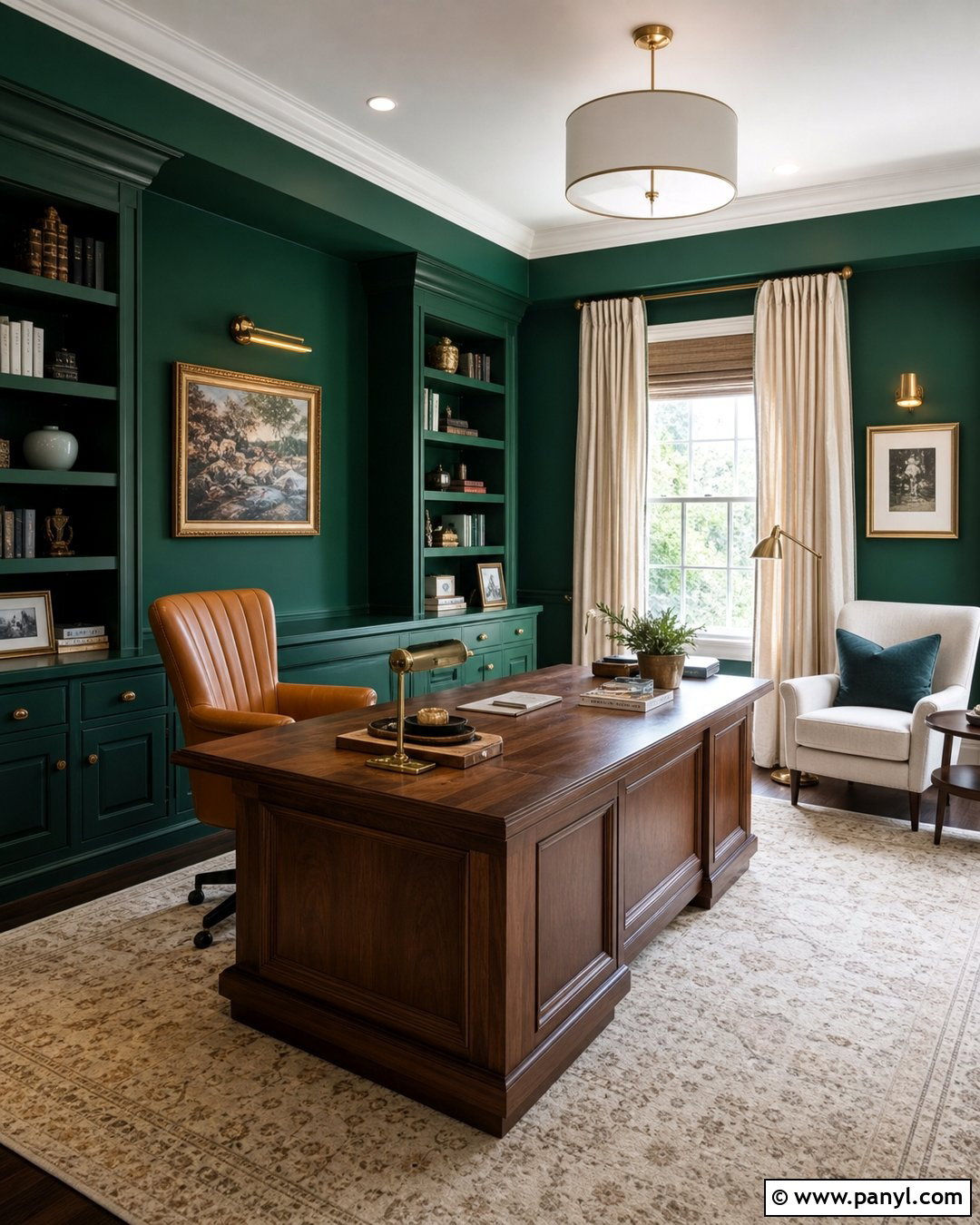
A saturated emerald green office can feel focused, confident, and carefully designed. Paint the walls in a deep jewel green and use crisp off-white on the ceiling and trim for definition. Place a substantial walnut desk near the window so natural light reaches the work surface without creating screen glare. Behind it, install low walnut bookcases or matching floating shelves for practical storage. A camel leather desk chair provides warm contrast, while a patterned rug in cream, green, and muted red adds character. Include closed cabinets for paperwork to prevent visual clutter. Brass picture lights, desk accessories, and framed artwork create a tailored finish. Complete the office with lined curtains, one sculptural plant, and a comfortable reading chair, forming a professional room that still feels personal.
6. Pistachio Green Family Room
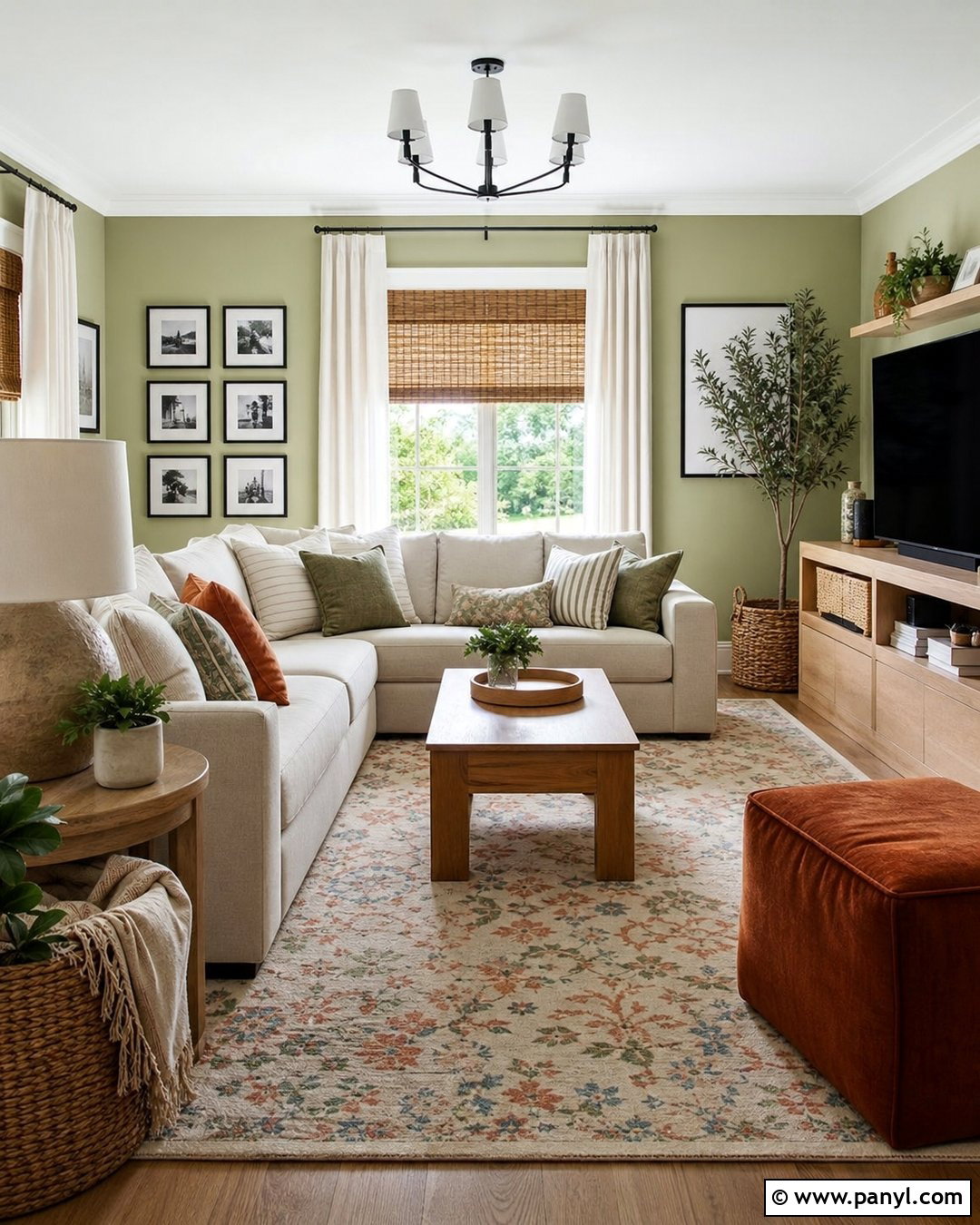
Pistachio green walls offer a livelier alternative to muted sage while remaining soft enough for a busy family room. Choose a warm, lightly yellowed pistachio and pair it with creamy trim rather than sharp white. Arrange a durable beige sectional around a broad oak coffee table, leaving clear walking space between the seating and entertainment area. Add washable striped pillows, a rust-colored ottoman, and a low-pile patterned rug that can handle everyday use. Light oak media storage keeps toys, games, and electronics organized behind closed doors. Use relaxed cotton curtains and woven shades for flexible light control. Black picture frames provide small moments of definition. This practical palette feels sunny and current, yet the neutral furnishings allow the room to grow with changing tastes.
7. Moss Green Entryway
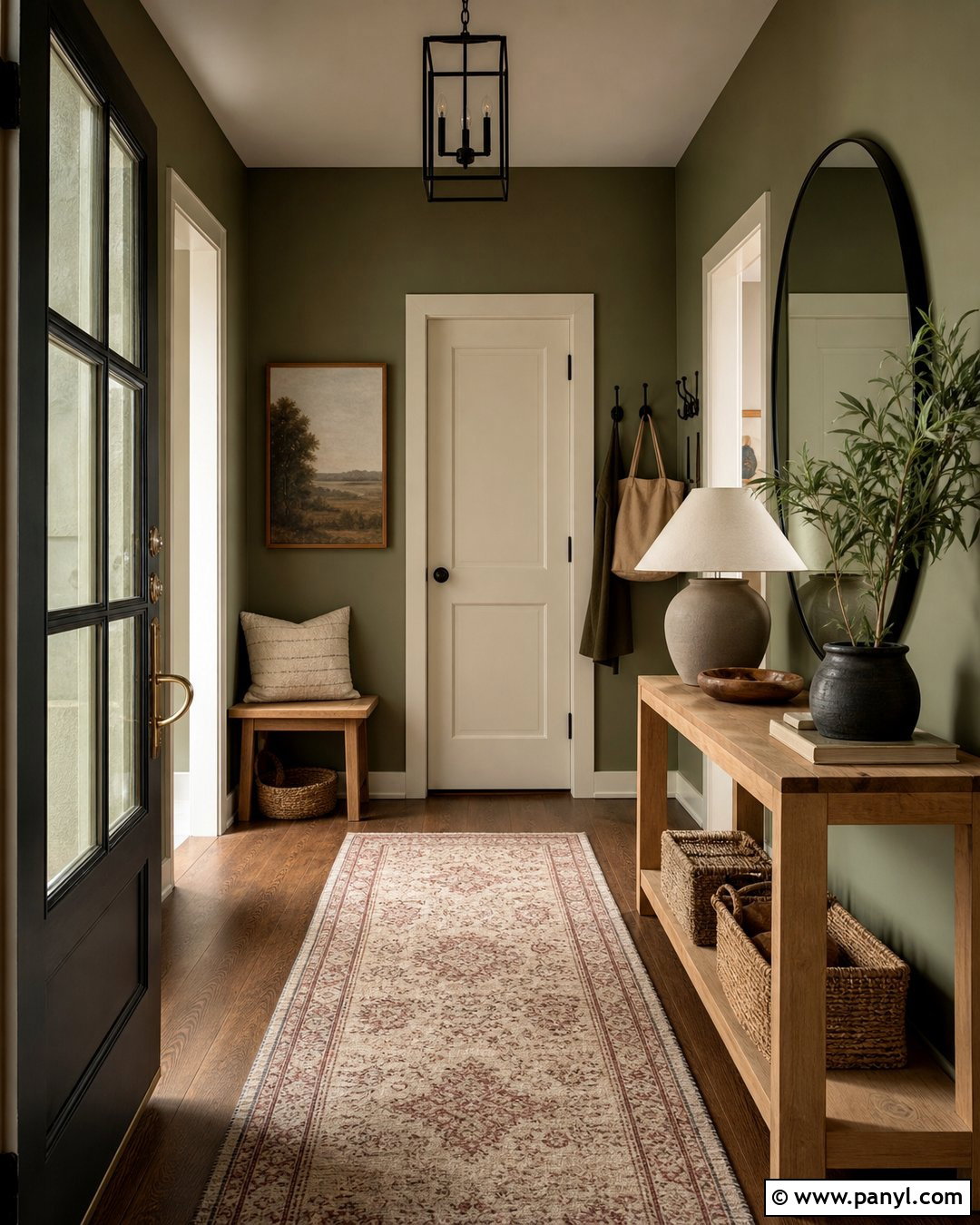
Moss green walls can give an entryway a welcoming sense of depth from the moment the door opens. Use a medium earthy green that complements natural materials and hides minor marks better than very pale paint. Place a narrow oak console along one wall, leaving enough clearance for coats, bags, and foot traffic. A large rounded mirror reflects light and makes the area feel broader. Add a washable runner with cream, brown, and faded red details to connect the green walls with the flooring. Matte black hooks, a simple bench, and woven baskets provide practical storage. Keep the ceiling and interior doors warm white for contrast. A ceramic lamp, small landscape print, and leafy branch complete the look without crowding this hardworking transitional space.
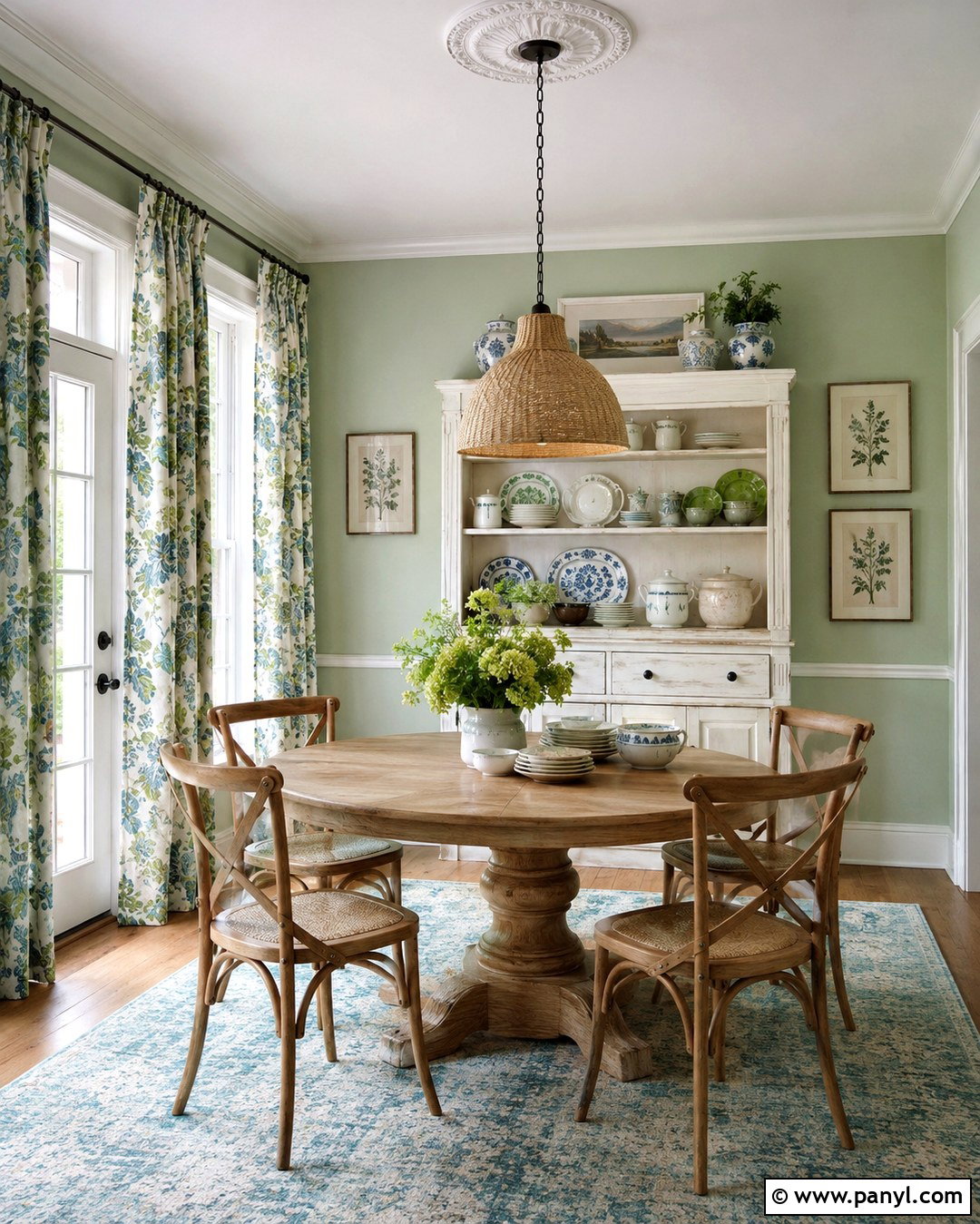
8. Eucalyptus Green Bathroom
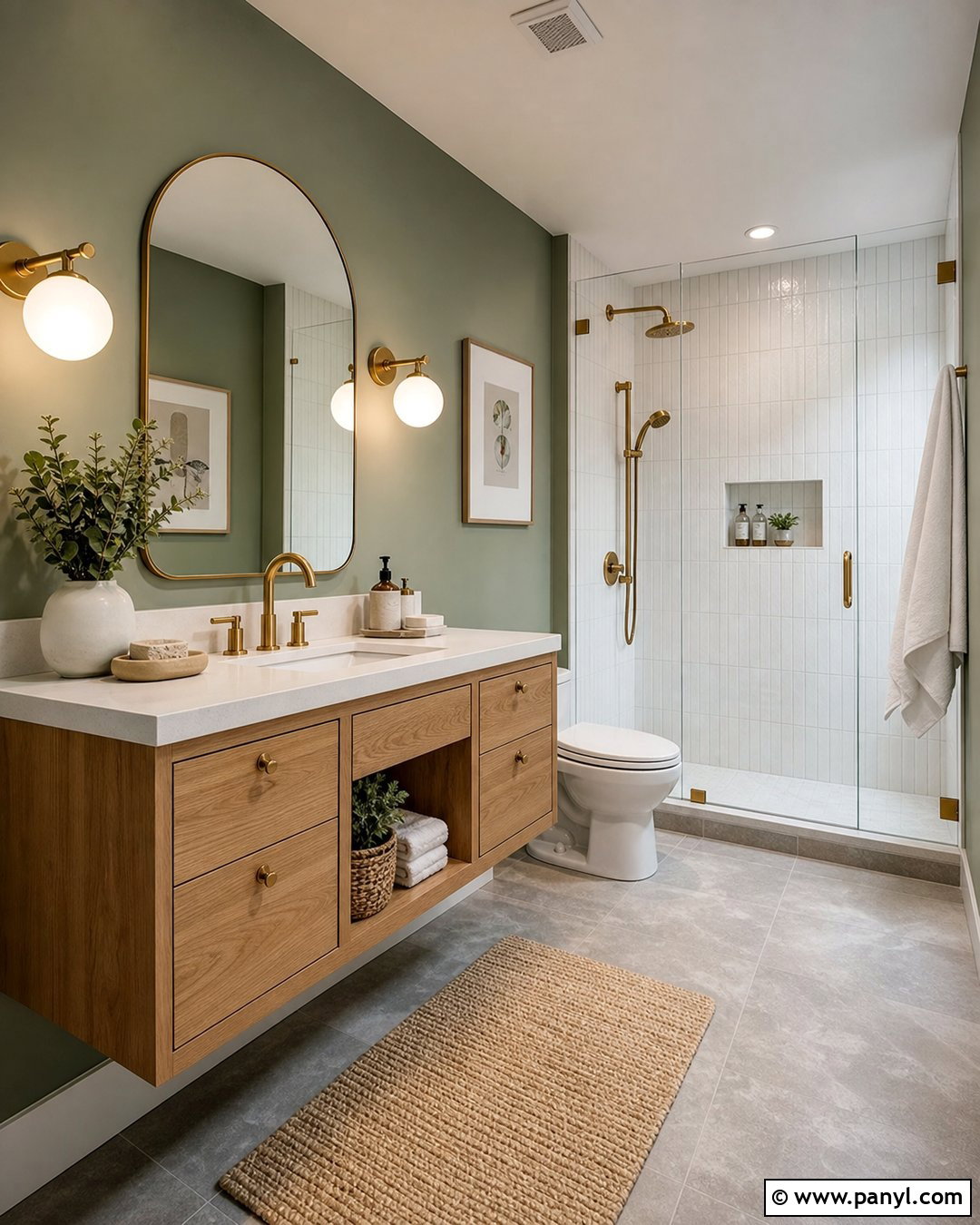
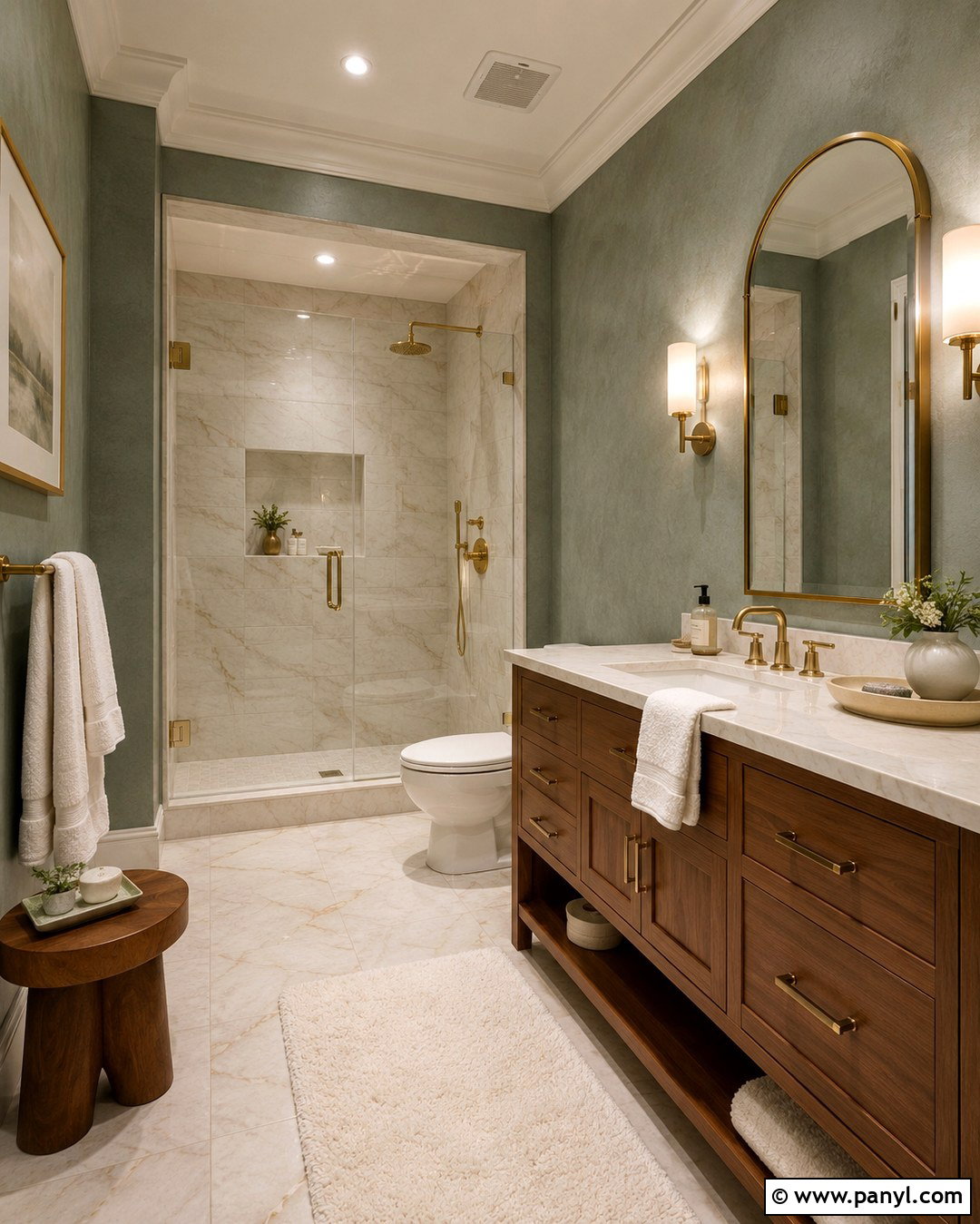
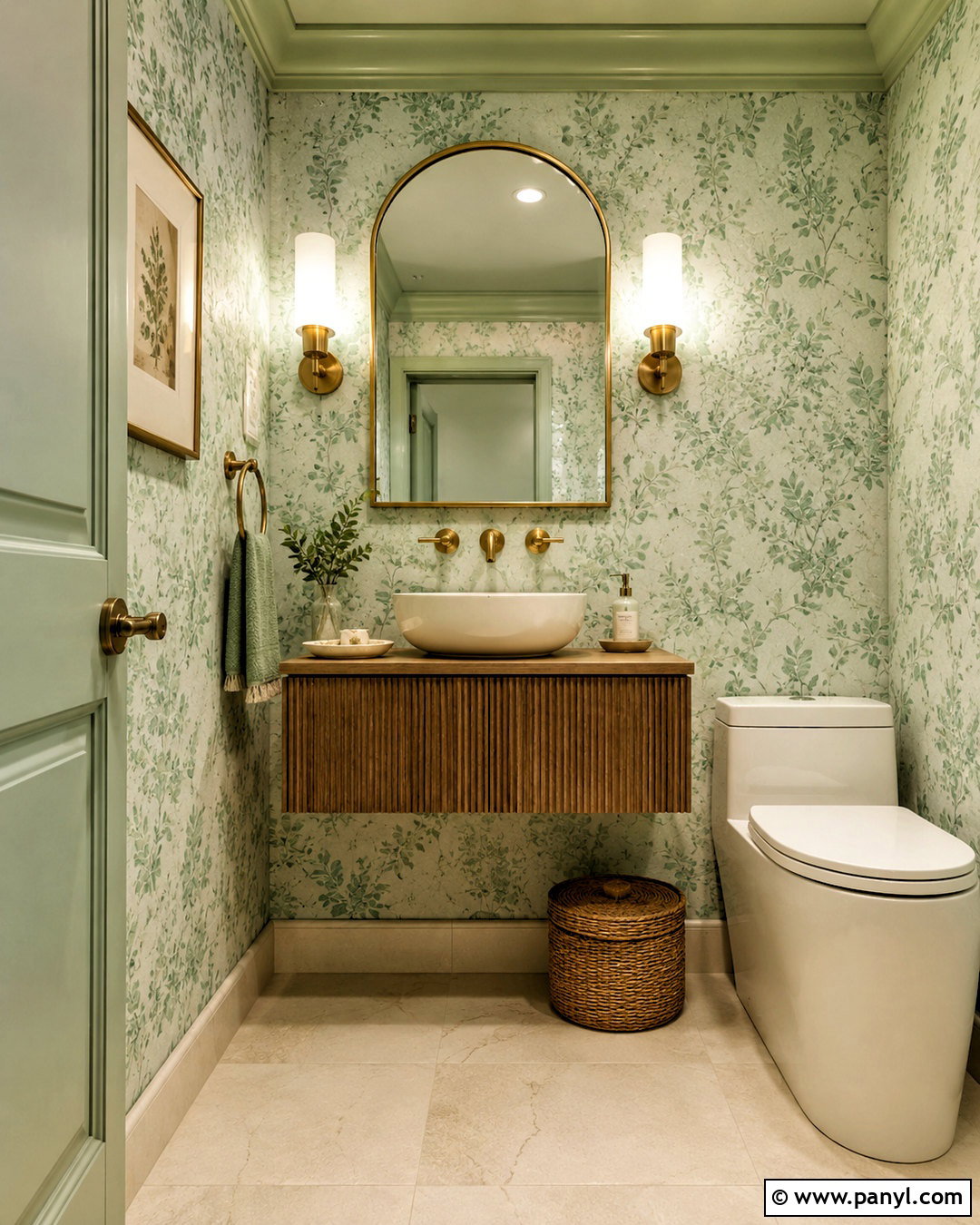
Muted eucalyptus green walls create a bathroom that feels fresh without looking overly themed. Select moisture-resistant paint in an eggshell or satin finish, then pair it with warm white wall tile around wet areas. A floating light oak vanity introduces natural warmth and provides storage without making the room feel heavy. Use a white quartz counter, an undermount sink, and brushed brass fixtures for a clean but welcoming combination. Large porcelain floor tiles in soft limestone gray ground the palette. Add an arched mirror, simple globe sconces, and a frameless glass shower enclosure to maintain visual openness. Fluffy ivory towels and a woven bath mat soften the harder surfaces. The finished bathroom feels calm, functional, and suitable for both modern and transitional homes.
9. Seafoam Green Nursery
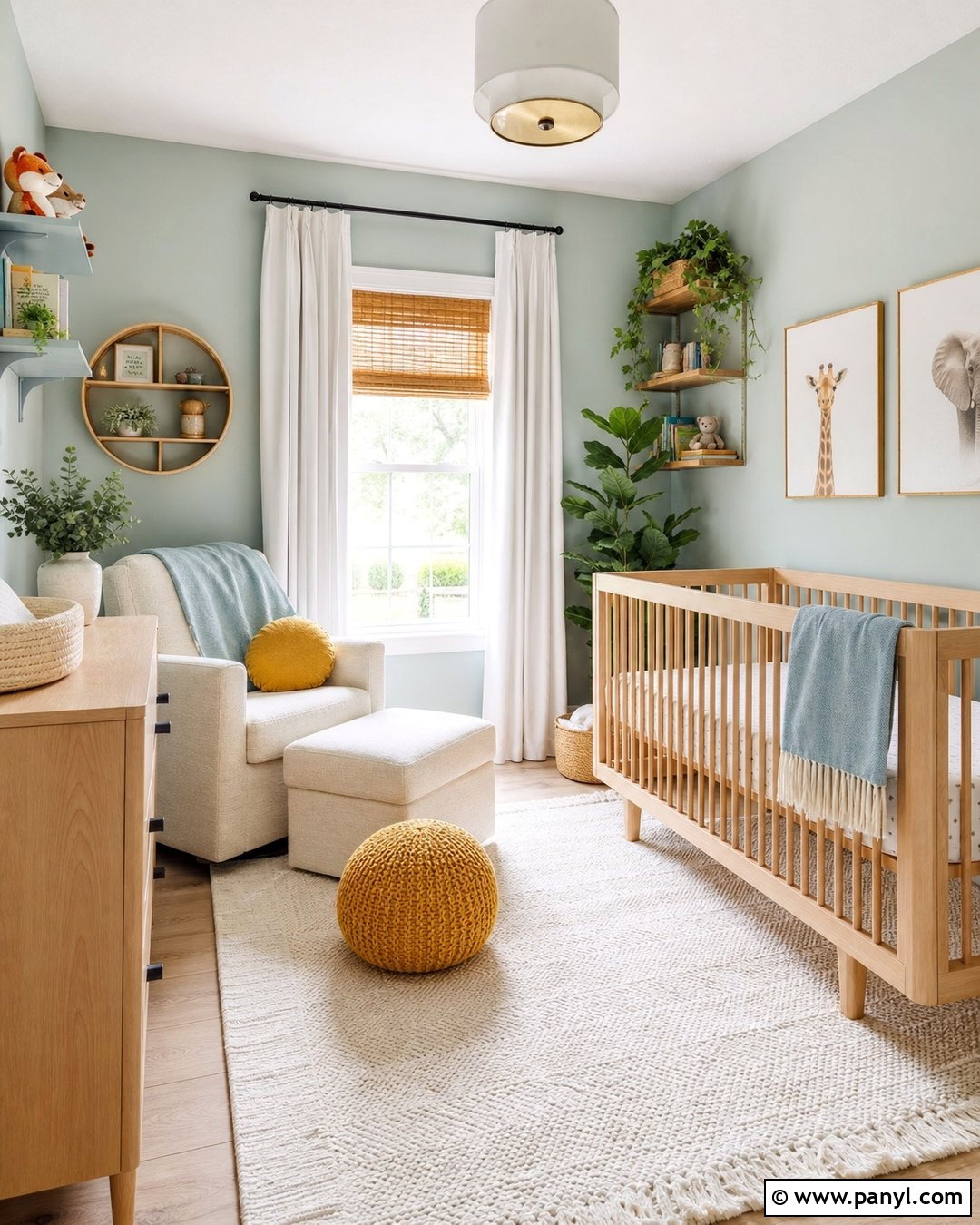
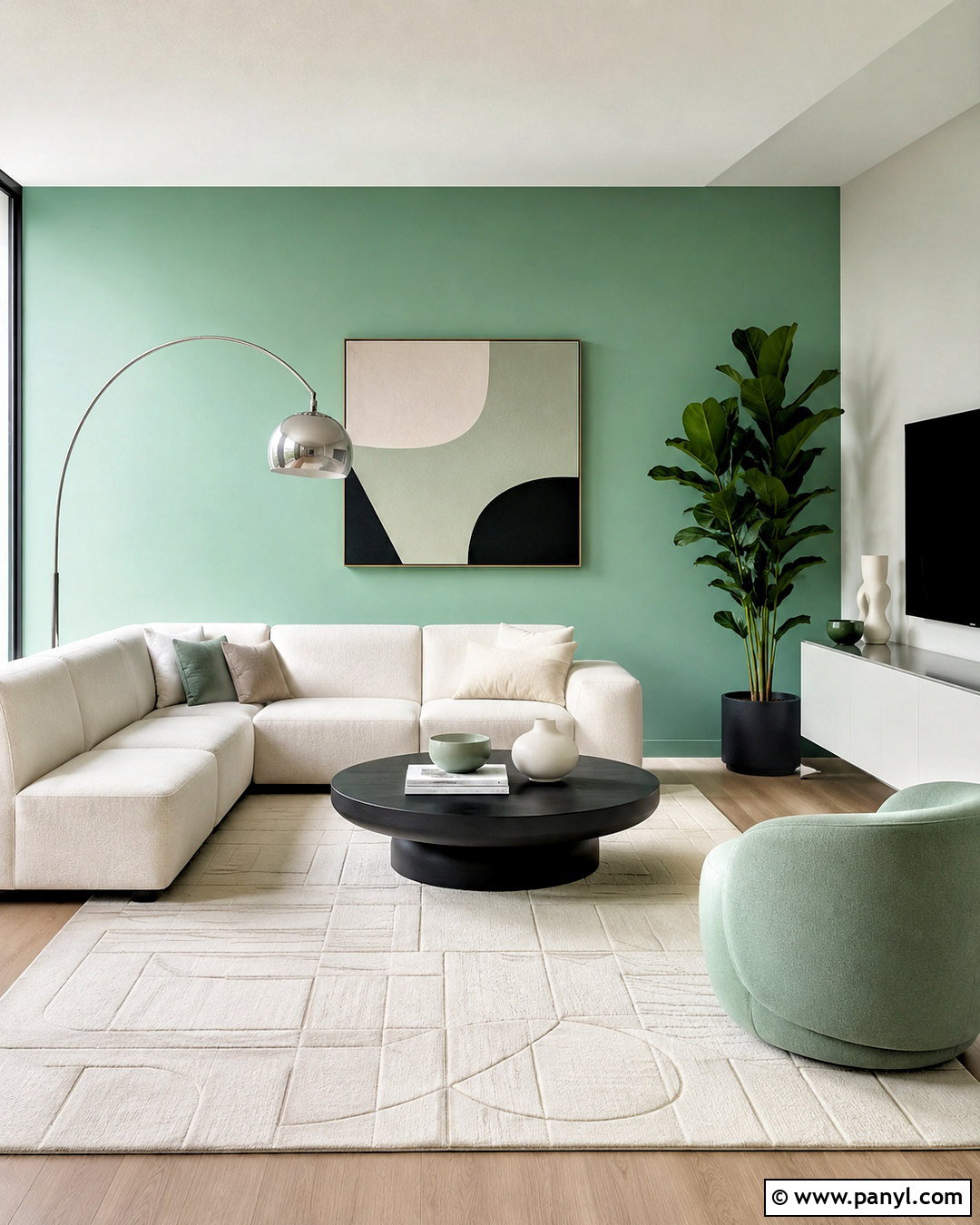
Gentle seafoam green walls create a soothing nursery that can transition easily into a child’s bedroom. Choose a soft blue-green with enough gray to prevent it from appearing too bright. Position a natural maple crib away from windows, cords, and direct airflow, then add a comfortable cream upholstered chair nearby. A washable ivory rug defines the center of the room and cushions the floor. Use a pale wood dresser as both clothing storage and a changing station, keeping everyday supplies organized in drawers. White curtains layered with woven shades provide flexible daylight control. Decorate with simple animal prints, soft blue textiles, and small touches of mustard yellow. The room feels cheerful and balanced without depending on decorations that will quickly seem too young.
10. Avocado Green Kitchen
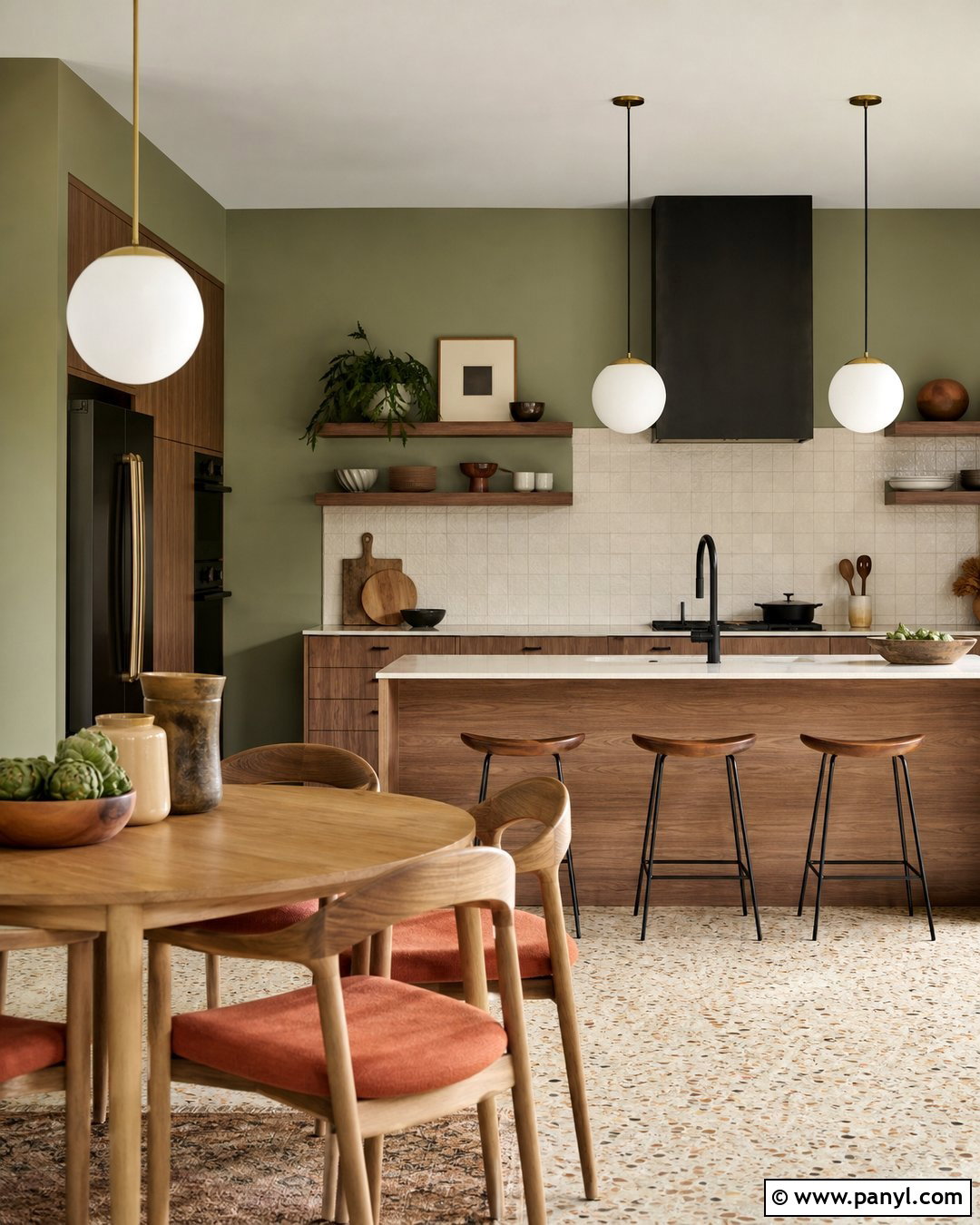
Avocado green walls can create a warm retro-inspired kitchen without making the room look dated. Choose a softened avocado shade, then combine it with flat-front walnut cabinets and creamy quartz counters. A backsplash of small ivory square tiles adds subtle vintage character while keeping the work area bright. Use matte black cabinet pulls and simple globe pendants to give the nostalgic palette a sharper modern edge. Warm terrazzo or light tan porcelain flooring ties the brown and green tones together. Include an oak breakfast table with curved chairs and burnt orange seat cushions. Open shelving should remain limited and neatly arranged with useful ceramics. This complete design captures the friendliness of midcentury color while using streamlined finishes, practical storage, and an uncluttered contemporary layout.
11. Hunter Green Bedroom
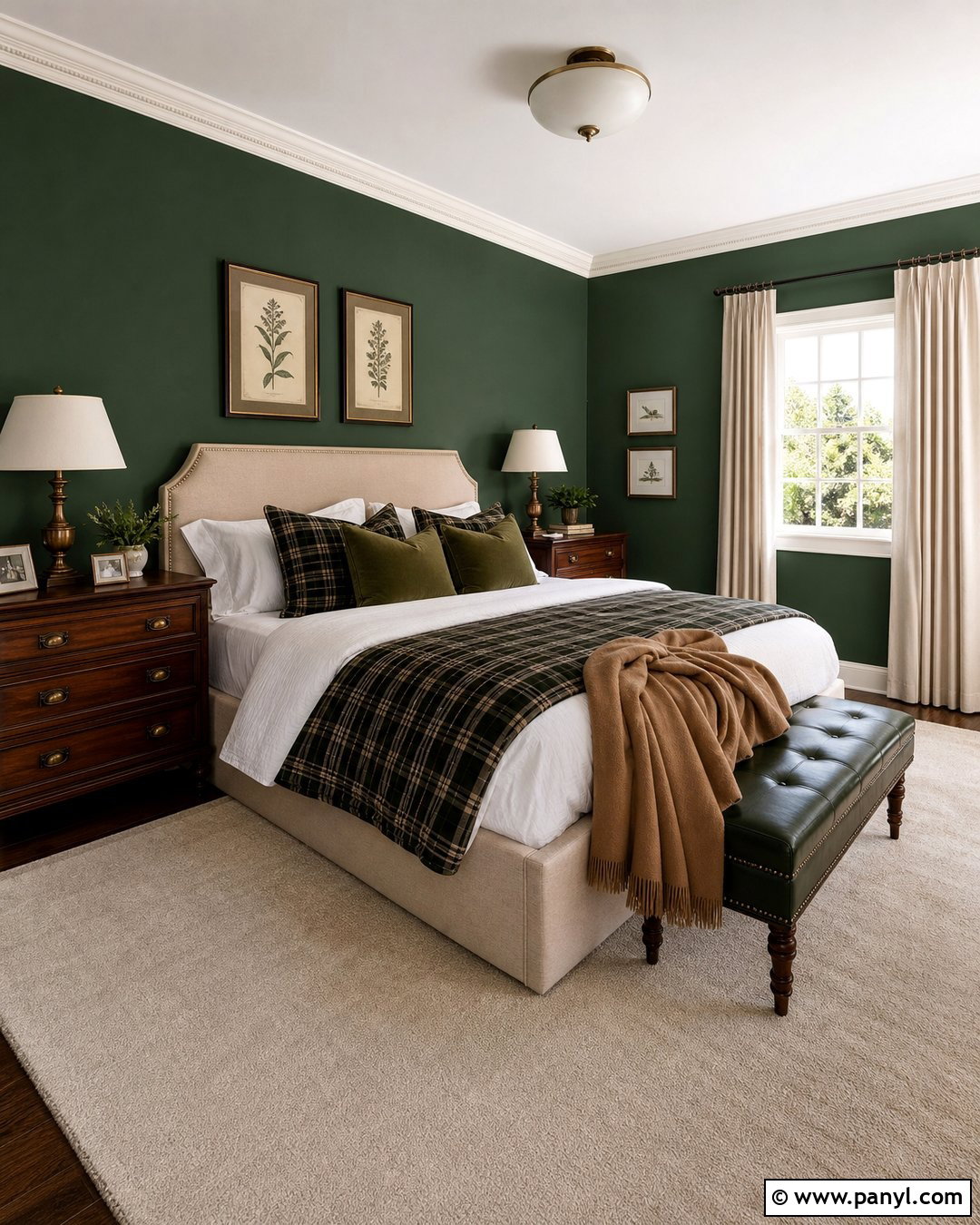
Hunter green walls bring classic depth to a bedroom, especially when paired with lighter upholstery and traditional architectural details. Paint all four walls in this rich shade and retain bright ivory trim around windows, doors, and baseboards. An upholstered bed in warm beige creates a clear focal point without disappearing against the dark background. Layer white sheets with a plaid wool blanket, olive pillows, and a camel throw. Use medium walnut nightstands and shaded brass lamps for warm bedside lighting. A large cream rug keeps the lower half of the room from feeling too dark. Hang botanical prints in antique brass frames and add full-length neutral curtains. The finished bedroom feels established and timeless, yet simple bedding and clean furniture lines prevent unnecessary formality.
12. Gray Green Open Plan Room
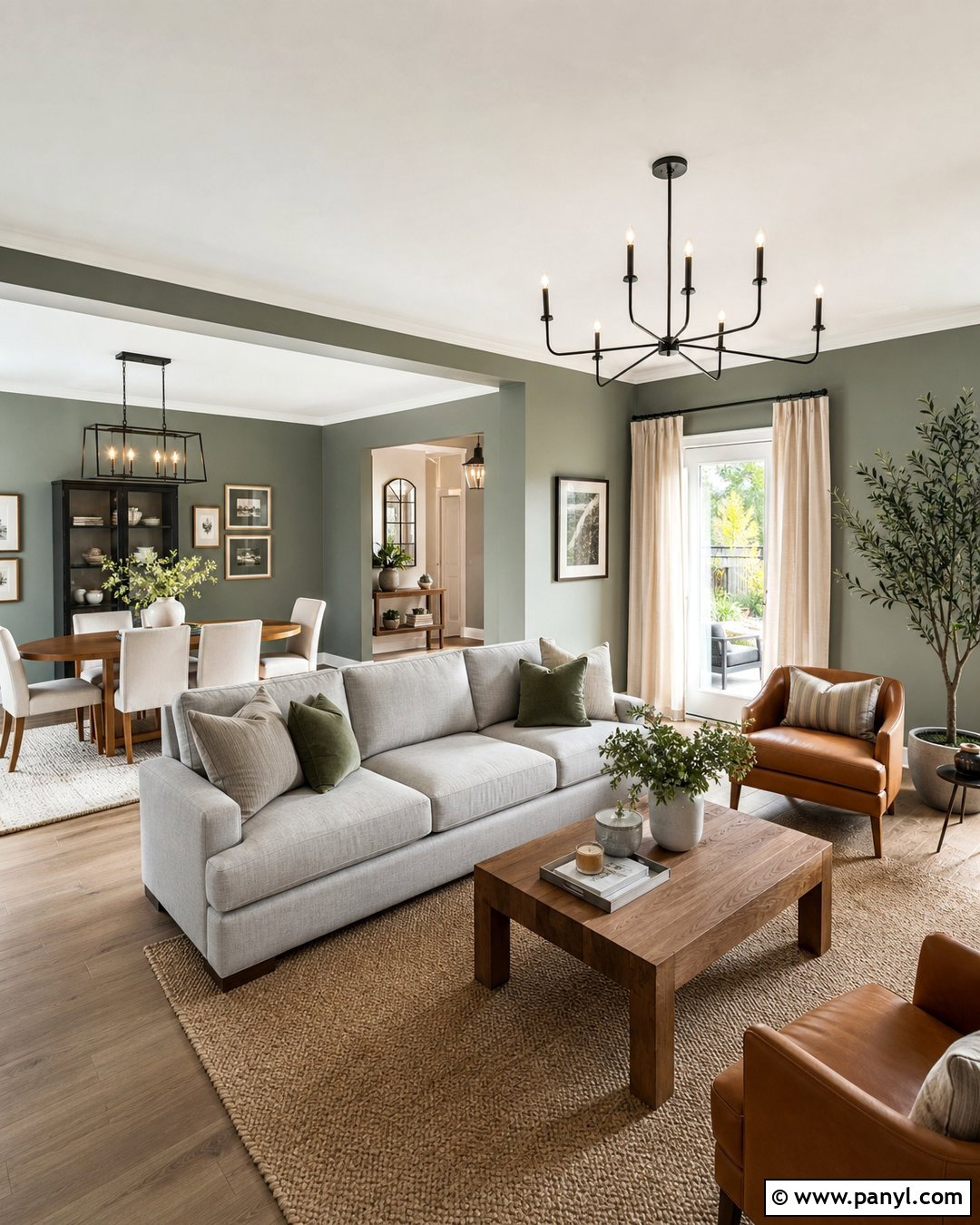
A soft gray-green wall color can unify an open living and dining space without making every area look identical. Use the same muted green throughout, then define each zone with furniture placement and rugs. In the living area, arrange a light gray sofa and two cognac leather chairs around an oak coffee table. Anchor the dining area with a round walnut table, cream chairs, and a simple black chandelier. Warm white trim and ceilings maintain continuity, while black metal accents repeat across both zones. Choose rugs with related beige and green tones but different patterns. Linen curtains should extend consistently across nearby windows. This layered approach gives the open room a coordinated background while allowing the seating, lighting, and functions of each area to remain visually distinct.
13. Lime Green Powder Room
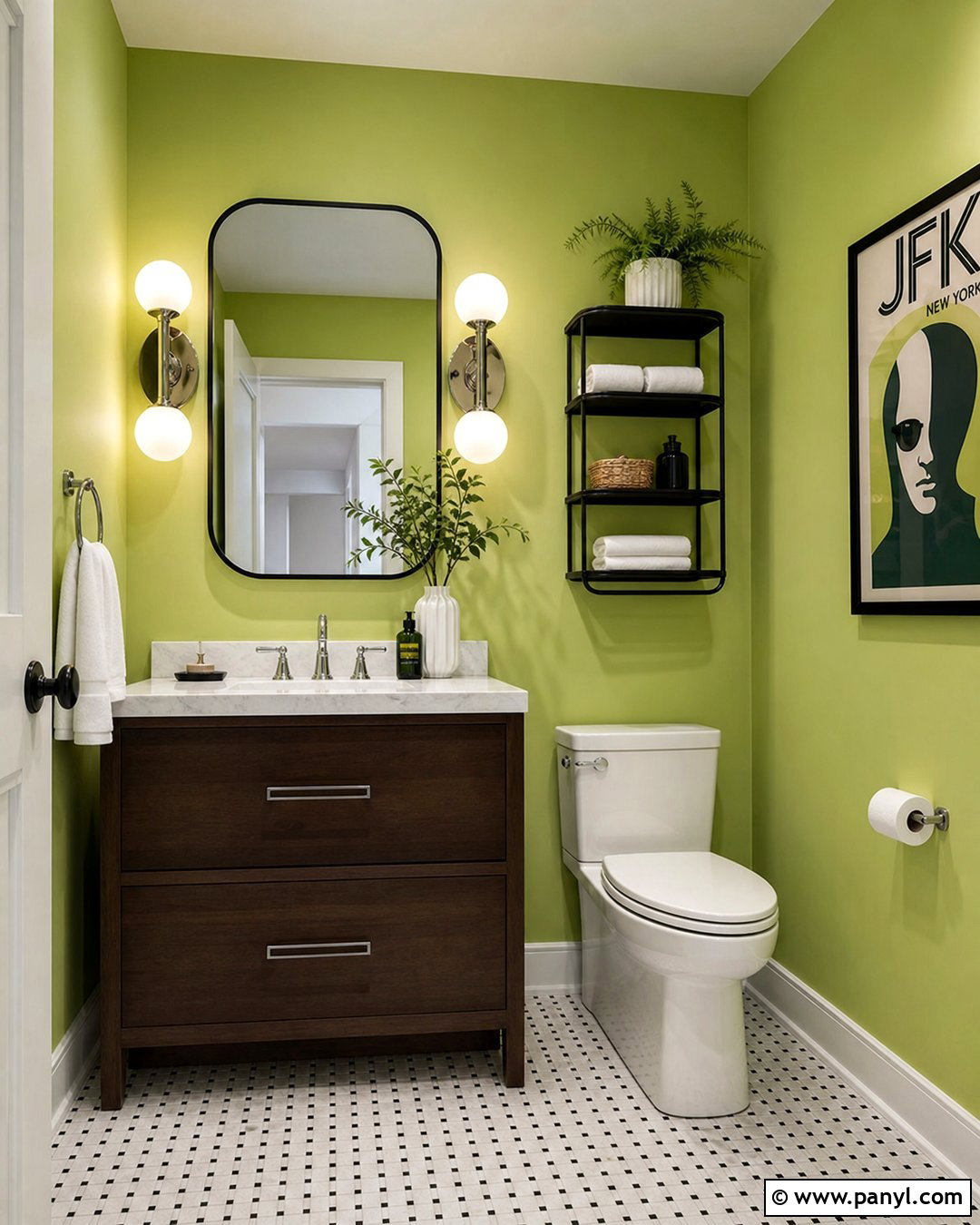
A small powder room is an ideal place for a bold lime green wall color because the compact space supports a concentrated design statement. Select a sophisticated citrus green with warm yellow undertones and use it across every wall. Balance the brightness with a dark walnut vanity, white stone counter, and polished chrome faucet. Black-and-white mosaic flooring adds crisp pattern without introducing another strong color. Install a large rounded mirror and two opal glass sconces to spread light evenly. Keep hand towels and accessories white, then add one framed graphic print containing green and black. A compact wall-mounted shelf can hold practical supplies in matching containers. The finished powder room feels energetic and intentional rather than random, proving that vivid green can work beautifully in a controlled setting.
14. Dark Green Color Drenched Room
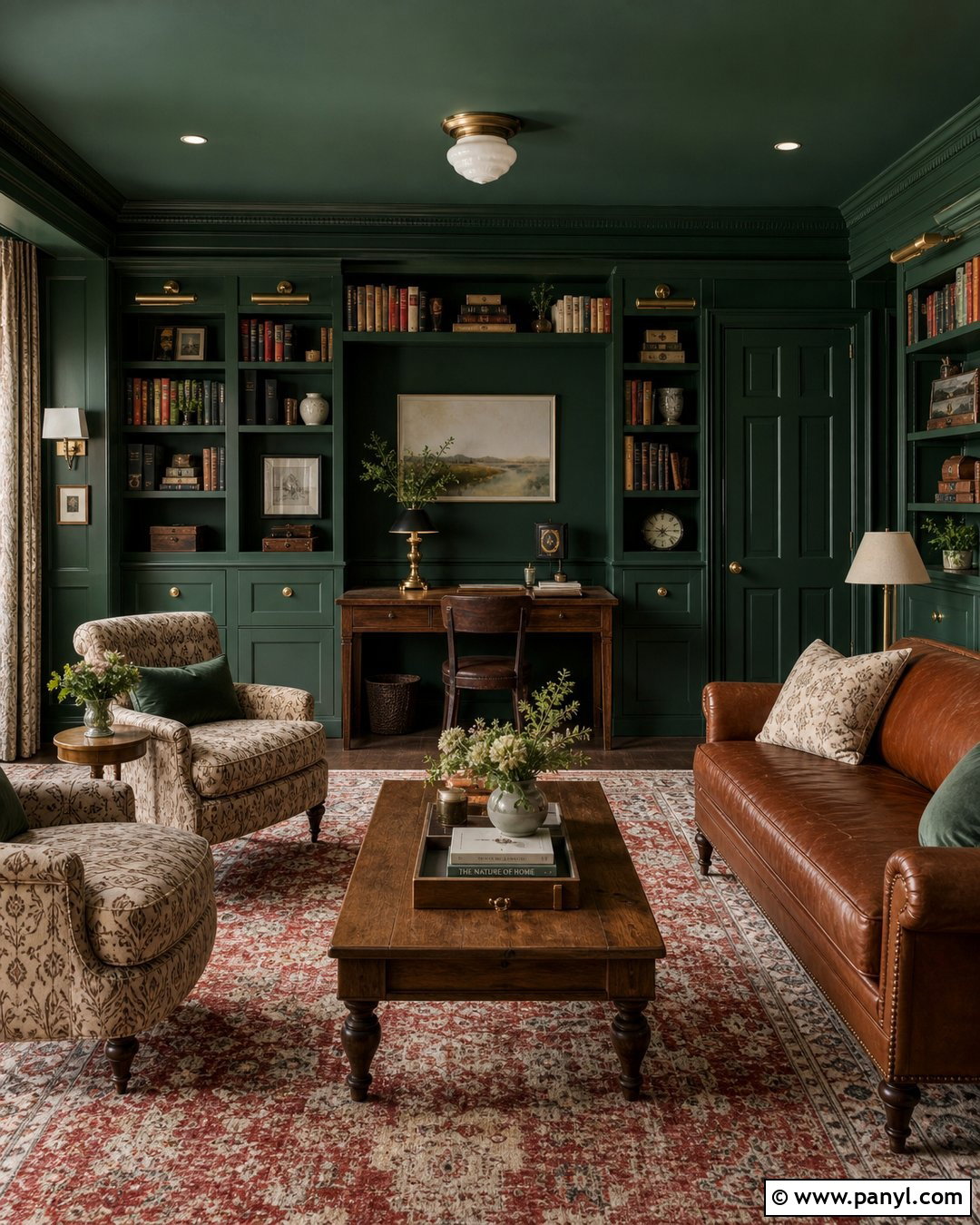
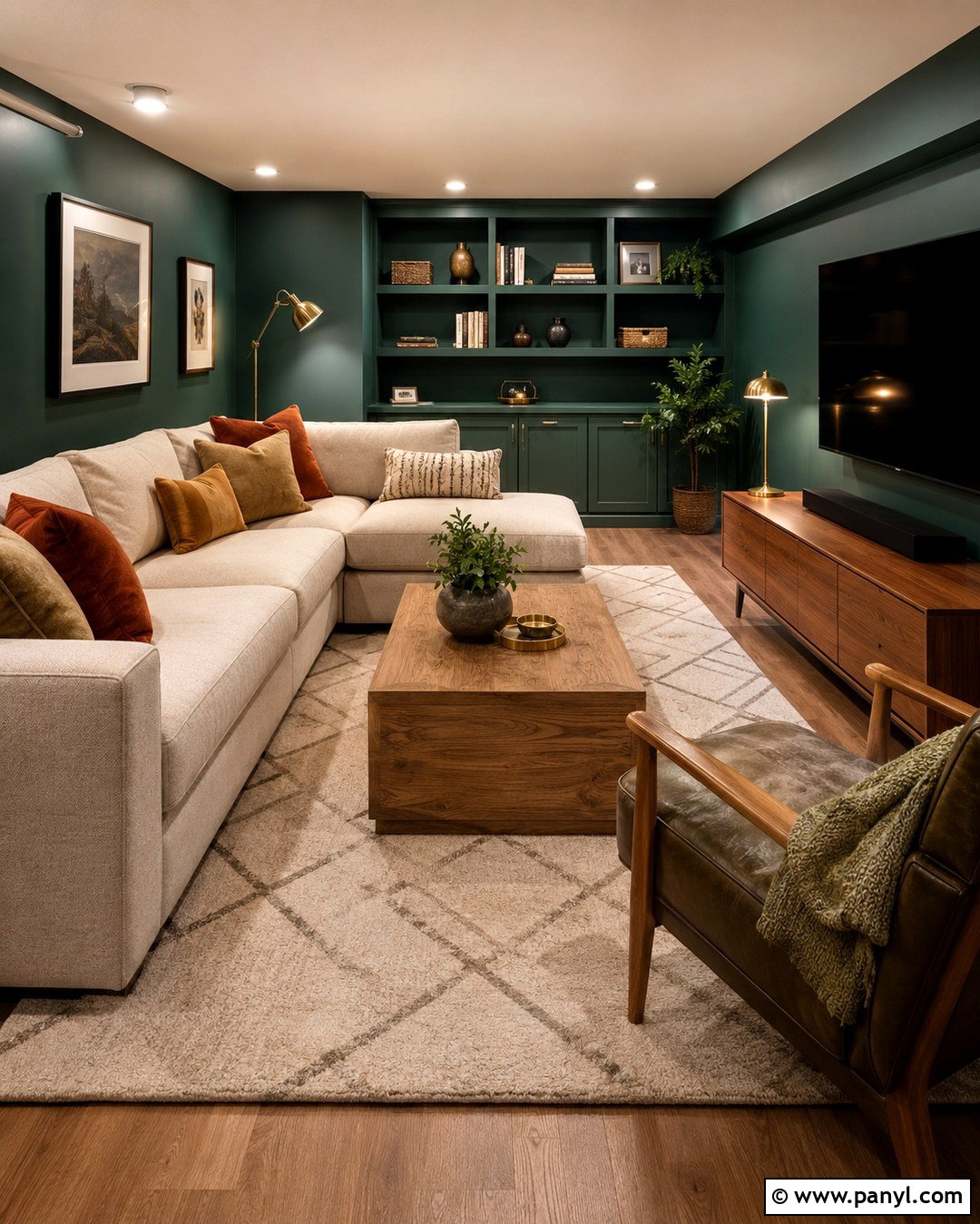
Color drenching creates an enveloping room by carrying dark green across the walls, trim, doors, and ceiling. This treatment works especially well in a library, snug, or media room where a cozy effect is welcome. Choose one deep green finish for the walls and a slightly more durable satin version for woodwork. Add a low caramel leather sofa, a pair of patterned armchairs, and a large wool rug with muted red and cream details. Built-in shelves painted in the same green blend into the architecture while holding books and closed storage. Use brass library lights and several table lamps to distribute illumination around the space. Natural wood tables and light artwork provide relief, keeping the immersive green scheme dimensional rather than flat or gloomy.
15. Two Tone Green Walls
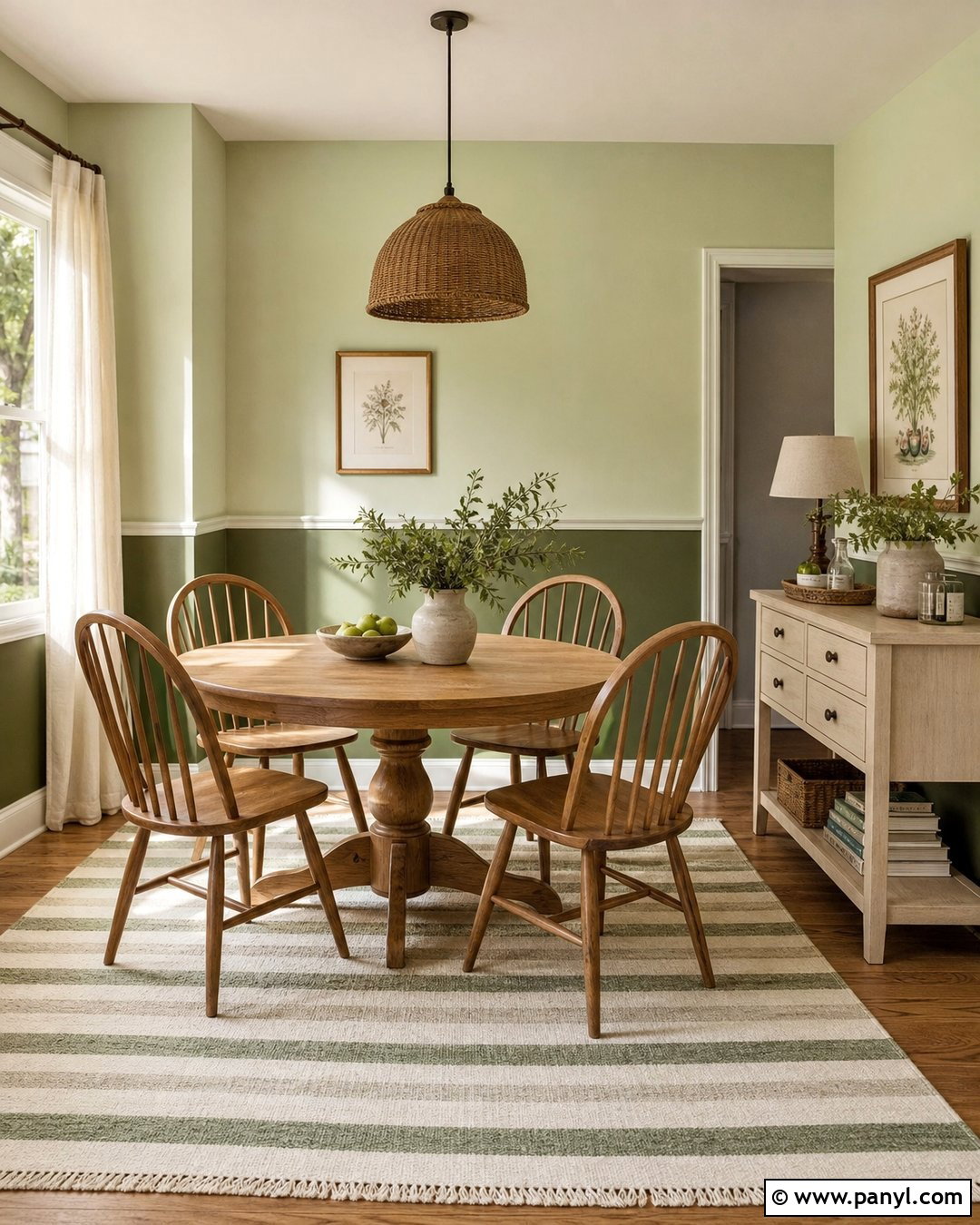
Two-tone green walls add architectural interest to a plain room without requiring complicated construction. Paint the lower portion in medium olive green and the upper section in a pale celery green, separating them with a slim cream chair rail. In a dining nook, pair this treatment with a round oak table, curved spindle chairs, and a woven pendant. A striped rug containing cream, brown, and both green shades reinforces the division naturally. Keep curtains light and simple so the walls remain noticeable. Add framed prints above the chair rail and a narrow sideboard below it. The darker lower color grounds the furniture and offers practical durability, while the lighter upper green helps the ceiling feel higher. This balanced treatment works particularly well in modest rooms with limited architectural detail.
16. Green Wall Paneling
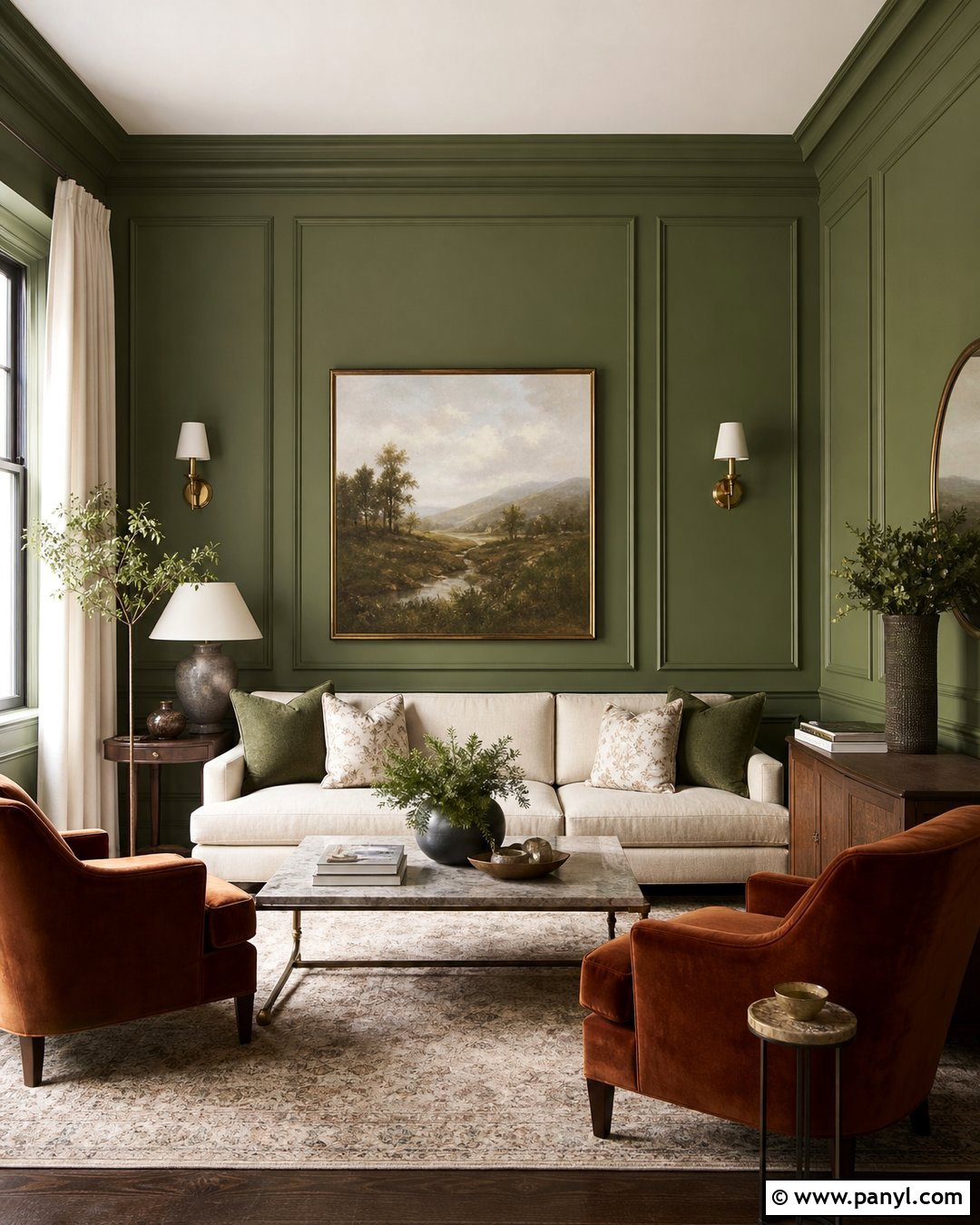
Green wall paneling gives a living room or dining space extra structure while allowing one color to carry the design. Install simple rectangular molding across the main walls, then paint both the panels and surrounding surfaces in a medium sage-olive green. Use warm white on the ceiling for a clean stopping point. A cream sofa, walnut console, and pair of rust velvet chairs provide balanced contrast against the detailed walls. Choose an understated rug so it does not compete with the molding. A large landscape painting centered within one panel creates an intentional focal point. Add linen curtains, brass wall sconces, and a marble-topped coffee table for varied texture. The result feels finished and architectural, even when the original room started as a basic rectangular box.
17. Green Accent Wall Living Room
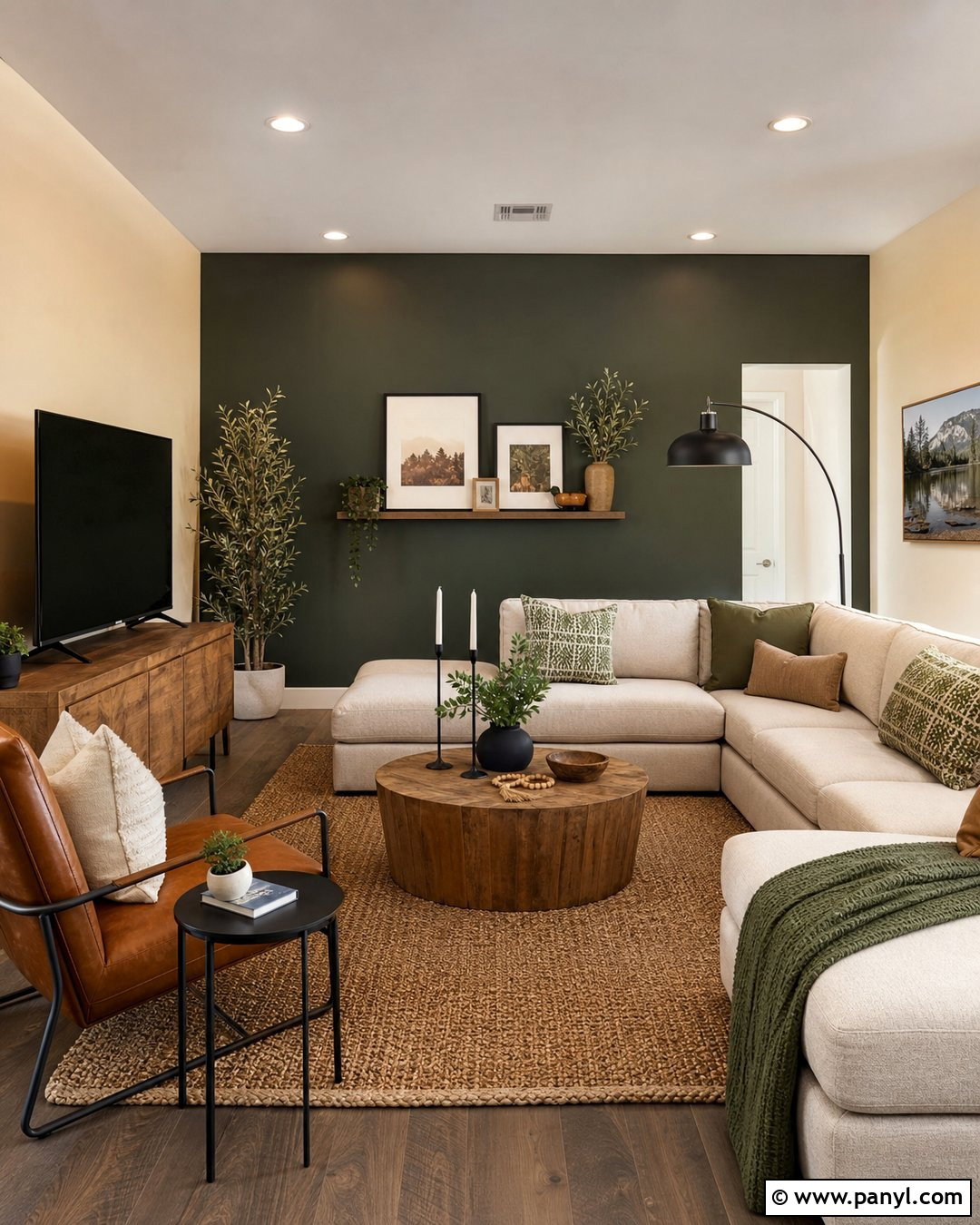
A green accent wall works best when it anchors the entire living room rather than appearing as an unrelated patch of color. Paint the wall behind the sofa in deep moss green and keep the remaining walls a warm creamy white. Choose a beige sectional large enough to visually connect with the painted surface. Repeat the green through patterned pillows, plants, and a small amount of artwork, but avoid matching every accessory. An oak media console, cognac leather chair, and woven neutral rug add warmth throughout the room. Use black curtain rods and lamp bases for clear definition. The finished scheme feels connected because the accent wall supports the furniture arrangement, establishes the focal point, and participates in a broader palette of natural greens, warm neutrals, and wood.
18. Green Ceiling And Walls
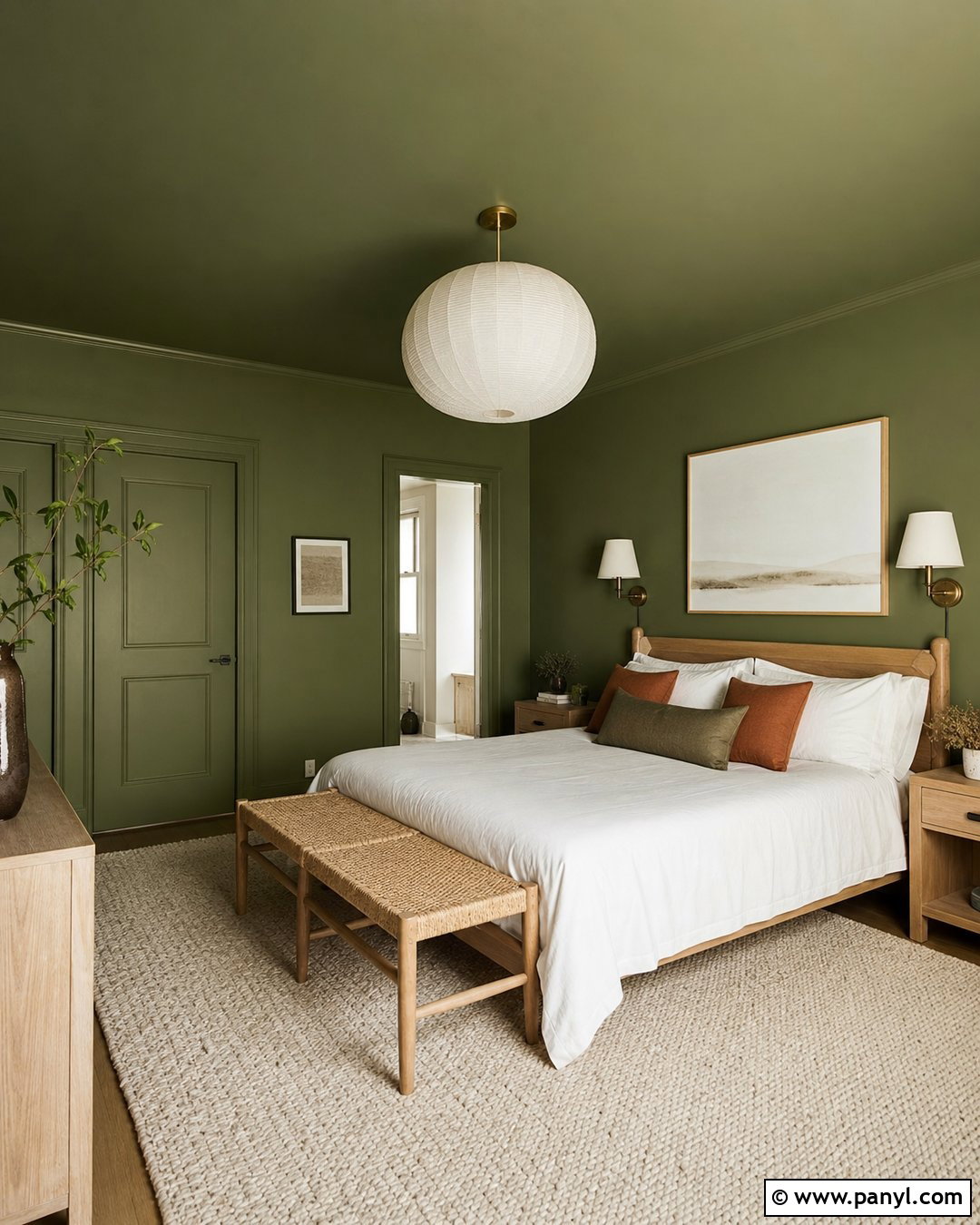
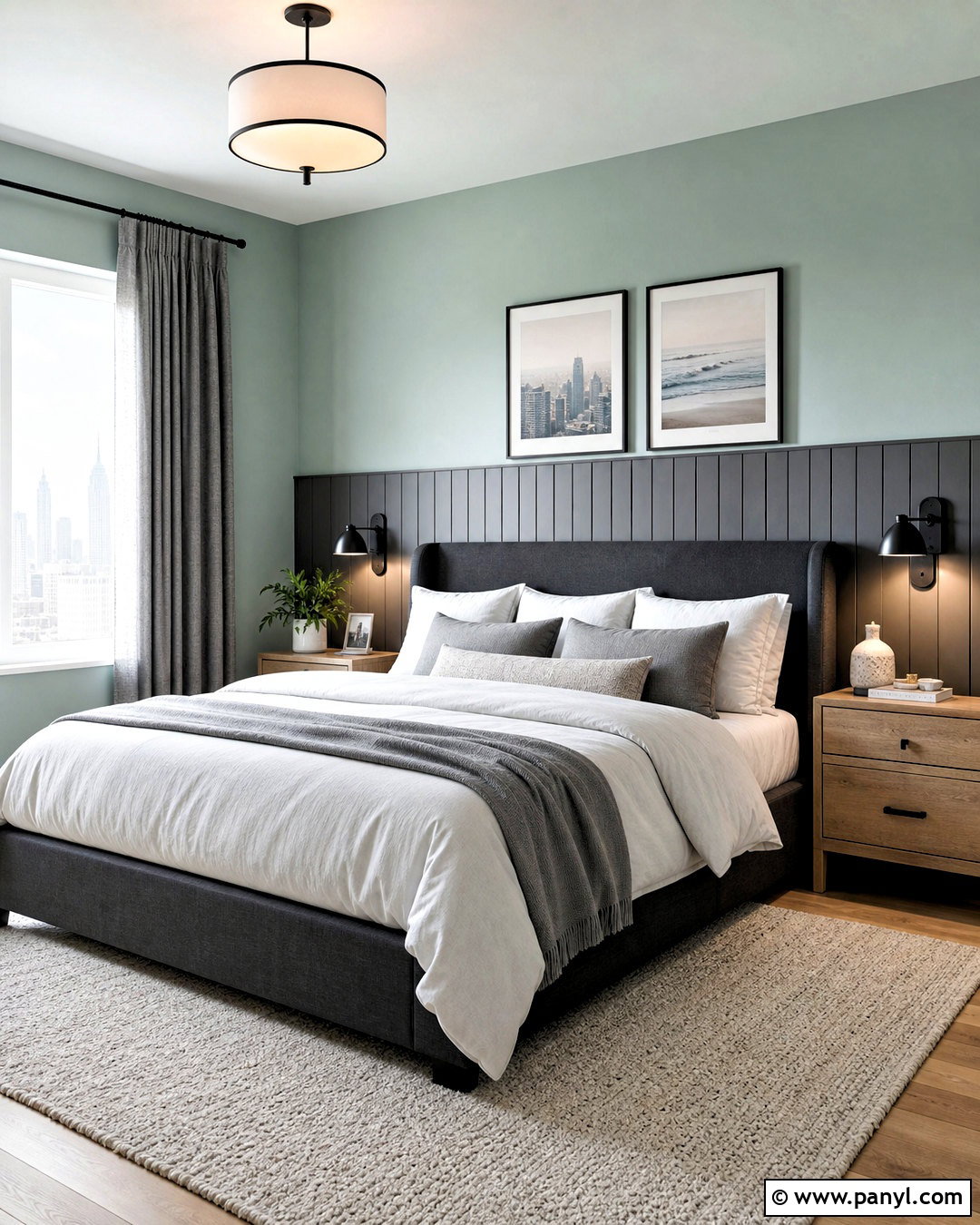
Carrying green onto the ceiling can make a bedroom feel cohesive and intentionally cocooned. Choose a medium dusty green that has enough softness to remain comfortable overhead. Paint the walls, ceiling, doors, and trim in the same hue, varying the paint sheen where additional durability is needed. A light oak bed and white bedding provide strong visual relief from the surrounding color. Add olive and clay-colored pillows, a woven bench, and an ivory wool rug for warmth. Simple paper pendant lights or cream fabric sconces keep the upper area from feeling heavy. Hang one oversized textile or pale abstract artwork above the bed. This complete design is immersive but not overly dark, making it suitable for bedrooms with reasonable natural light and uncomplicated architectural lines.
19. Green And Blush Bedroom
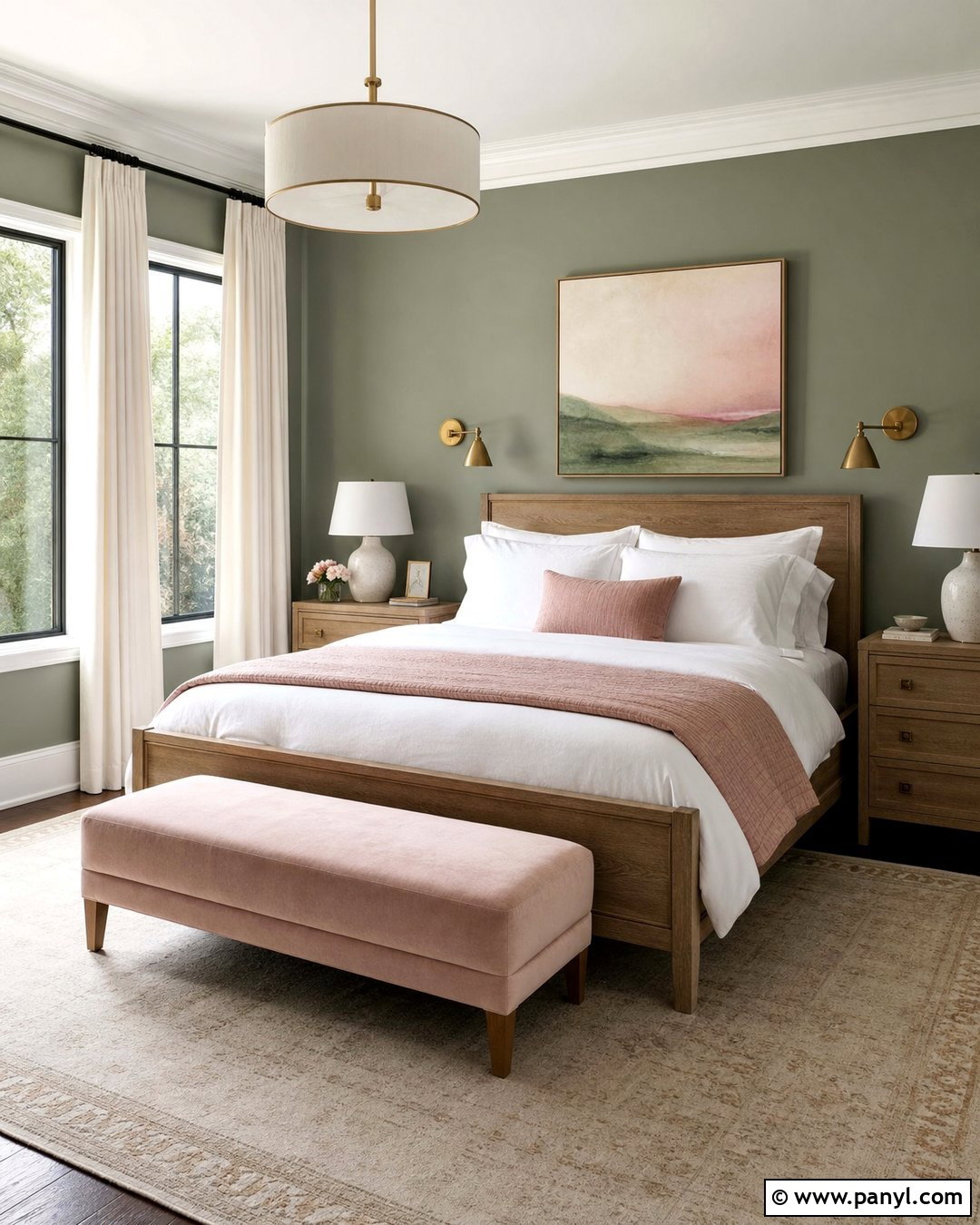
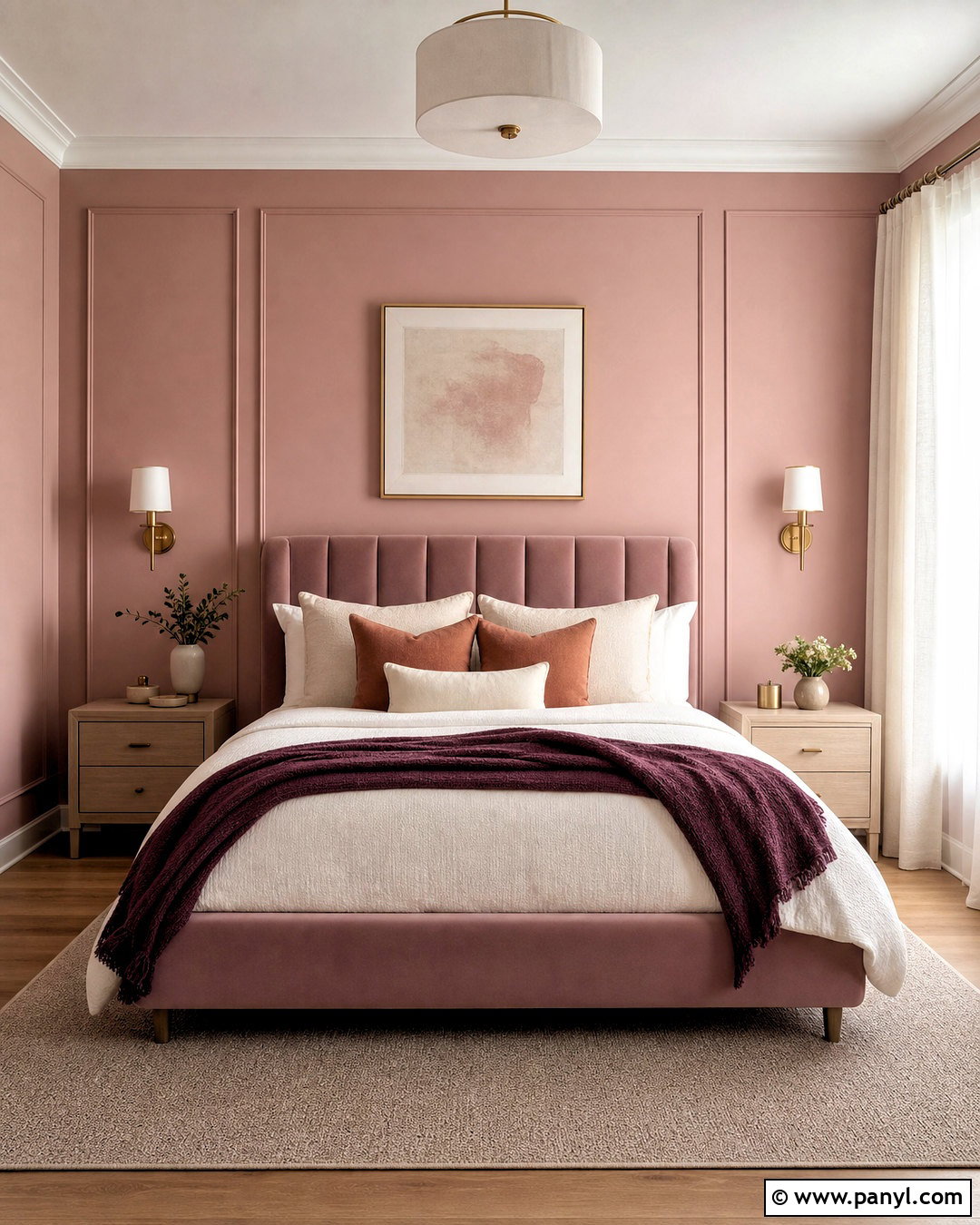
Muted green walls and blush accents create a bedroom that feels warm, gentle, and more sophisticated than a standard pastel scheme. Use a dusty sage wall color as the foundation, then introduce blush through a quilt, lumbar pillow, and upholstered bench. A natural oak bed and matching nightstands prevent the palette from becoming too sweet. Choose white cotton sheets, cream curtains, and a pale beige rug to give the eye neutral resting points. Aged brass sconces complement both green and pink without adding visual heaviness. Hang abstract art that repeats sage, blush, ivory, and a small amount of charcoal. Complete the room with ceramic lamps and restrained greenery. Careful color repetition makes the entire bedroom feel coordinated while allowing the green walls to remain the primary feature.
20. Green And Terracotta Living Room
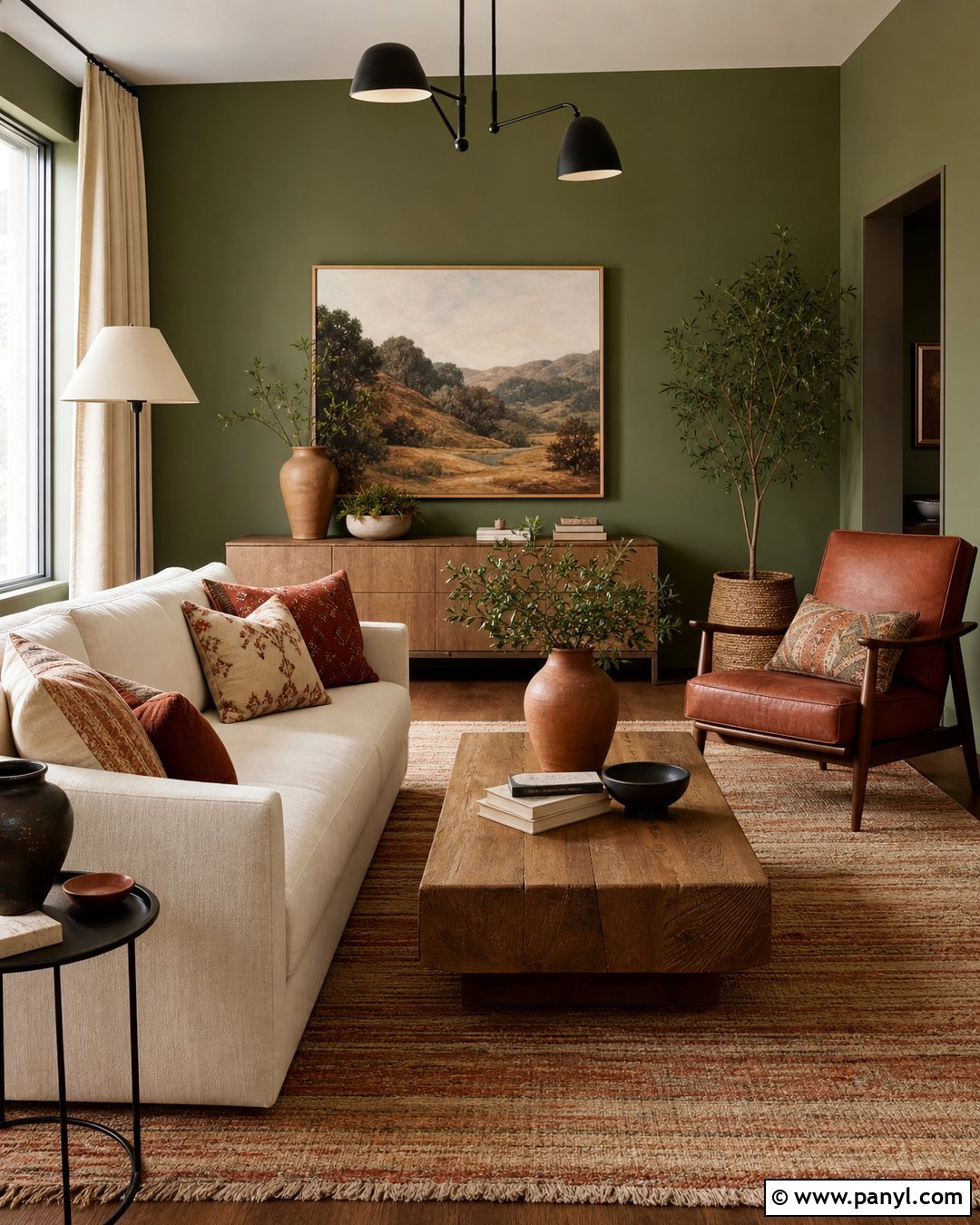
Earthy green walls pair naturally with terracotta when the room includes enough cream and wood to balance both colors. Start with medium moss green walls and a warm white ceiling. Place a cream sofa along the longest wall, then add a terracotta lounge chair and rust-patterned pillows. A substantial oak coffee table and low wood media unit reinforce the warm, organic direction. Use a flat-woven rug with beige, faded orange, and small green details to connect the palette. Linen curtains soften the windows without hiding natural light. Black metal lighting introduces crisp contrast, while pottery and landscape artwork add texture. This complete living room feels colorful but highly livable because the stronger hues are distributed across walls, seating, textiles, and decor rather than concentrated in one area.
21. Green And Navy Home Office
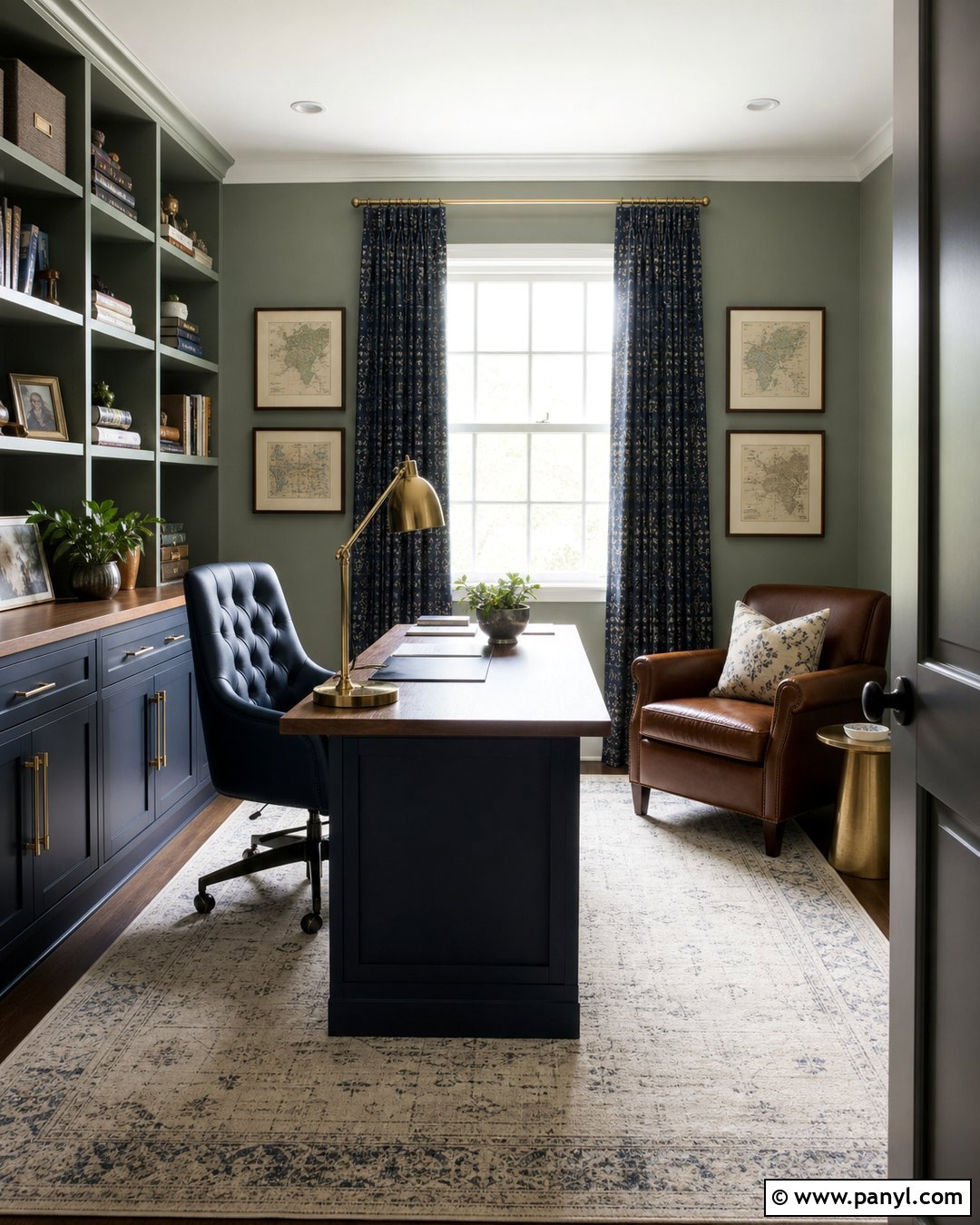
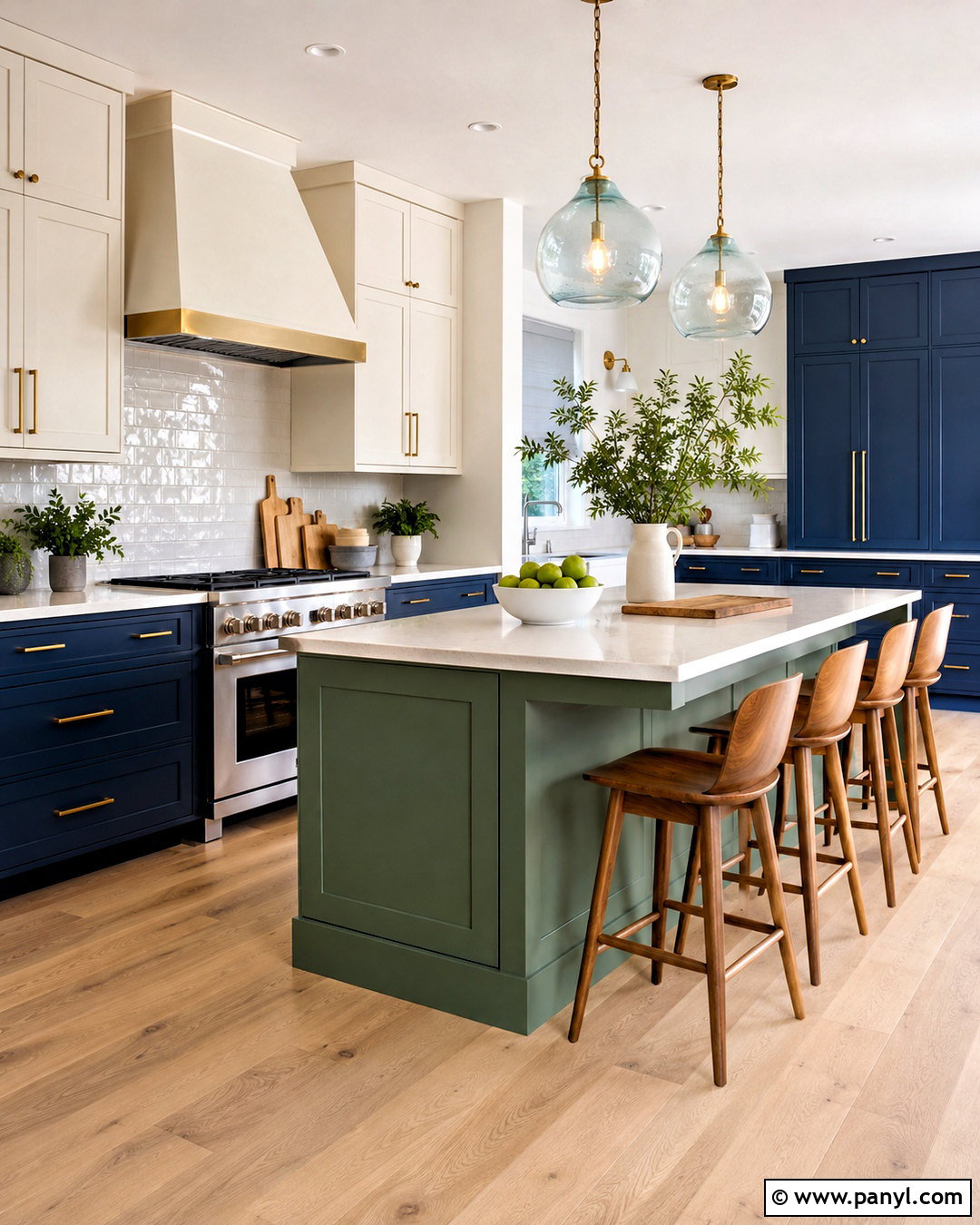
Green and navy can create a smart home office when each dark color has a clear role. Paint the walls in a refined gray-green, then introduce navy through built-in lower cabinets, a desk chair, and patterned curtains. Use a natural walnut desktop to separate the two colors and add needed warmth. Upper shelving painted to match the walls will appear lighter than a full wall of dark cabinetry. Choose a cream rug and an off-white ceiling to keep the office balanced. Brass cabinet pulls and a task lamp provide small reflective details. Finish with framed maps, organized storage boxes, and one cognac leather guest chair. The room feels professional and layered, while the restrained palette reduces distractions and gives every functional element an intentional place.
22. Green And Cream Bedroom
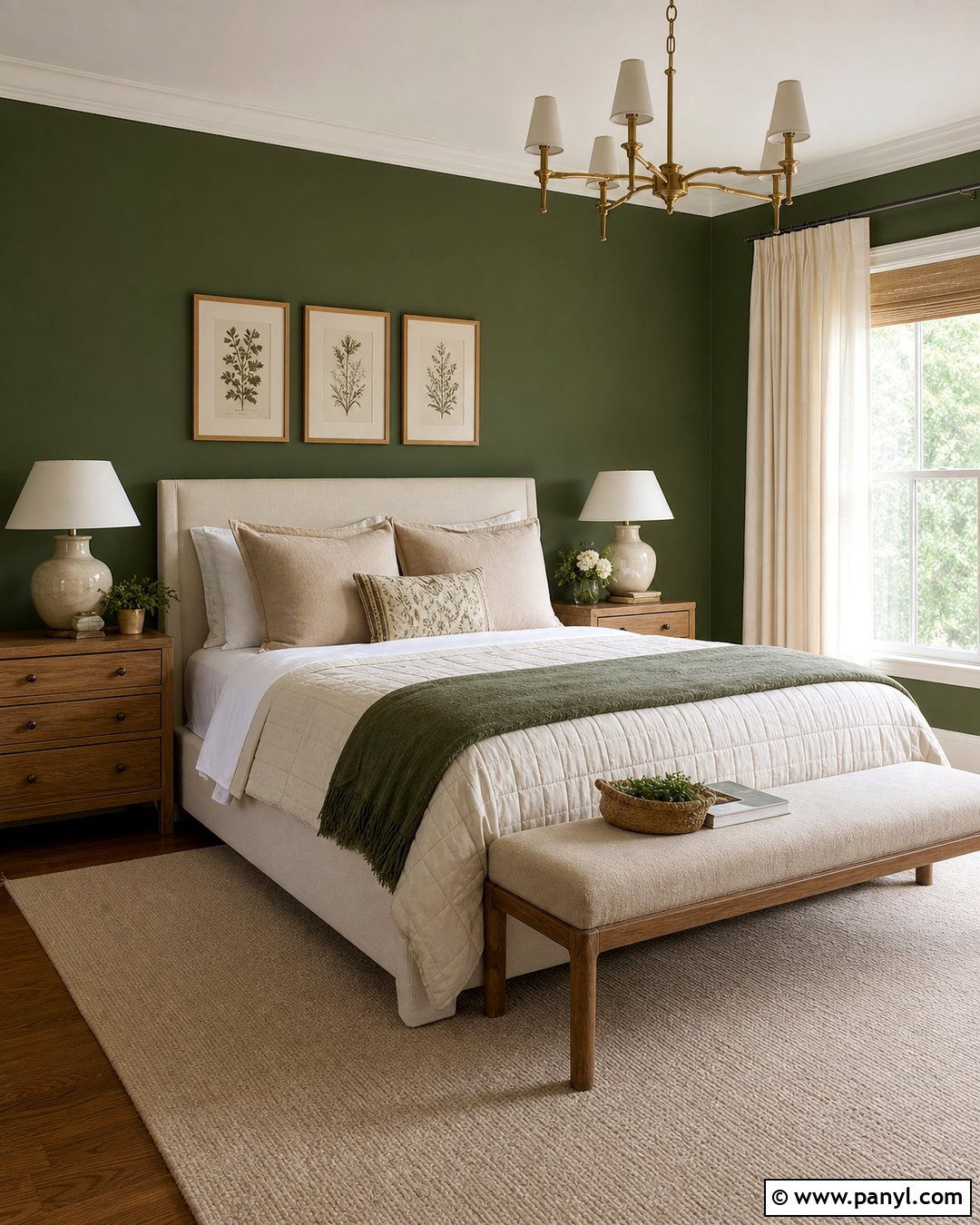
Green and cream offer a dependable bedroom palette that feels softer than green paired with bright white. Paint the walls in a warm fern green, then choose creamy ivory for the upholstered bed, curtains, rug, and ceiling. Layer the bedding with beige linen, a moss throw, and pillows containing subtle brown patterns. Medium oak nightstands introduce natural contrast without making the room too dark. Use ceramic lamps with warm white shades and a simple brass ceiling fixture for balanced lighting. A bench in textured oatmeal fabric can provide seating at the foot of the bed. Keep artwork minimal, using botanical sketches or quiet landscapes in wood frames. This complete scheme is calm, comfortable, and easy to personalize because cream supports nearly every warm green undertone.
23. Green And Natural Wood Dining Room
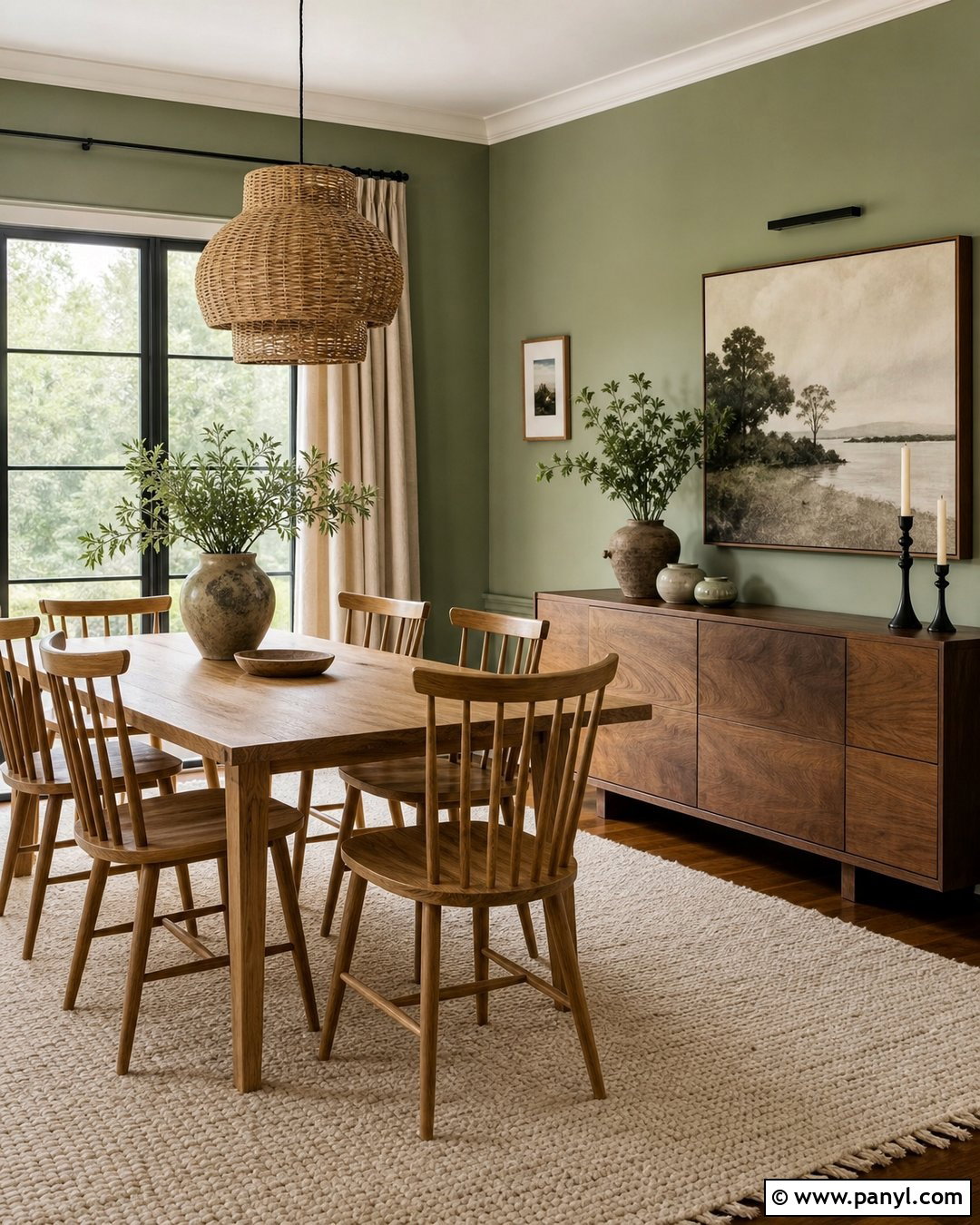
Natural wood makes green dining room walls feel richer by echoing the colors found outdoors. Choose a muted leaf green for the walls and warm white for the ceiling, window trim, and baseboards. Center a solid oak table beneath a woven pendant light, then surround it with spindle-back chairs in the same wood tone. A cream wool rug defines the dining area and softens the hard flooring. Add a long walnut sideboard for closed storage and display only a few handmade ceramic vessels. Flax linen curtains maintain the organic palette while filtering strong daylight. Black candlesticks and picture frames provide restrained contrast. The complete dining room feels welcoming and grounded, with the green paint, varied woods, woven fibers, and simple forms working as one cohesive design.
24. Green Small Apartment
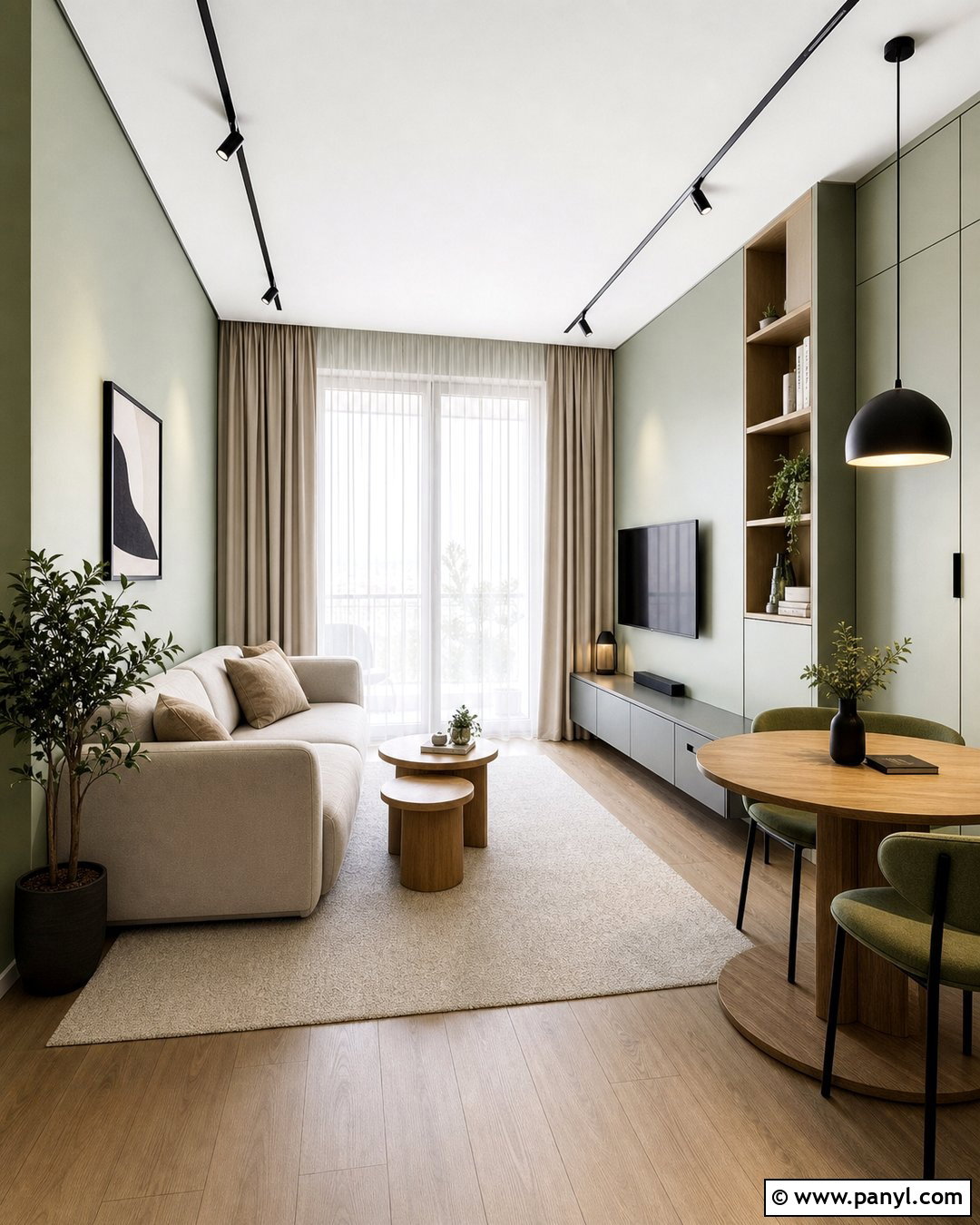
A pale green wall color can help a small apartment feel connected while still giving it more character than white. Use one light gray-green across the living room, dining nook, and visible hallway to reduce visual breaks. Choose an apartment-size cream sofa, nesting oak tables, and a wall-mounted media unit that preserves floor space. A compact round dining table can sit near the kitchen without interrupting circulation. Repeat black details through slim lighting, chair frames, and hardware. Use one large neutral rug rather than several small ones to make the main area feel broader. Floor-length curtains mounted close to the ceiling create a taller impression. Closed storage, limited artwork, and a few carefully placed plants complete a bright, practical apartment where every element serves a clear purpose.
25. Green Sunroom
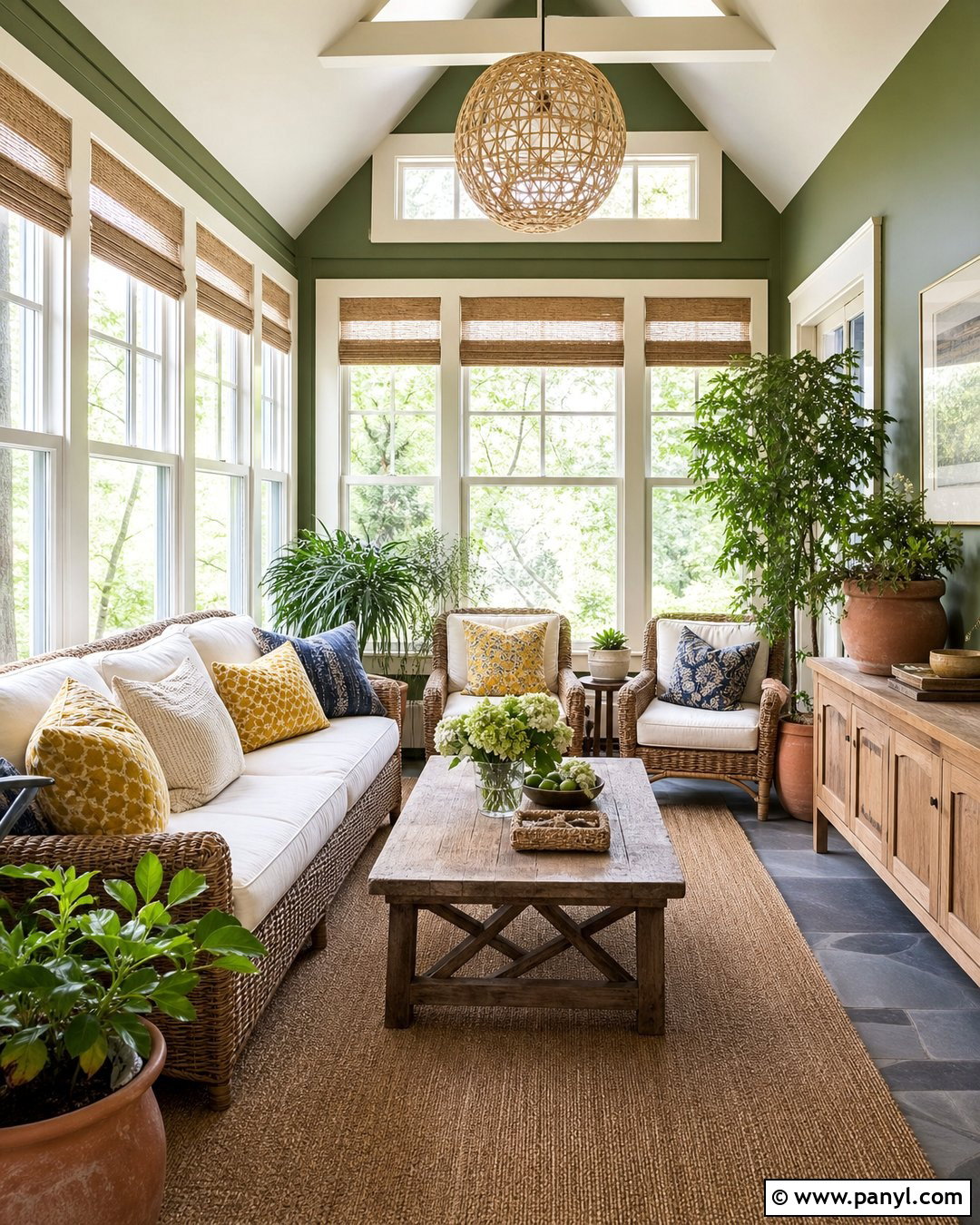
A cheerful green sunroom can connect indoor comfort with surrounding garden views. Paint the walls in a fresh leafy green that remains visible beside strong daylight, then use crisp warm white on window frames and the ceiling. Arrange a woven rattan sofa and two matching lounge chairs around a weathered oak coffee table. Cream performance cushions keep the seating light and practical, while patterned pillows introduce yellow, blue, and deeper green. A natural jute rug defines the sitting area without competing with the outdoor scenery. Add linen Roman shades for glare control and a simple white ceiling fan for air circulation. Terracotta planters and a small wood console complete the room. The layered natural materials prevent the green walls from feeling artificial or overly bright.
Conclusion:
Green walls offer far more variety than one familiar sage-painted room. Pale eucalyptus can brighten a bathroom, olive can warm a bedroom, forest green can enrich a dining room, and emerald can give an office confident character. The most successful schemes consider every visible surface, including trim, ceilings, flooring, furniture, lighting, curtains, and artwork. Before painting, sample several shades and observe them during the morning, afternoon, and evening. Pay close attention to whether the green appears warmer, cooler, lighter, or grayer beside existing finishes. Whether your home needs subtle color or a dramatic transformation, these **25 Wall Color Ideas Green Ideas** provide complete, practical looks that can be adapted to different rooms, budgets, and architectural settings.

Related Ideas and Inspiration:
Leave a Reply