
Brown beige wall colors bring warmth, depth, and flexibility to almost any room. Unlike cool gray, these earthy neutrals create a softer backdrop that works naturally with wood, stone, leather, linen, and metal finishes. Current color trends favor warmer, brown-leaning taupes, caramel tones, and layered neutrals that feel comfortable yet intentional. () The key is choosing the right undertone and building a complete palette around it. Some shades lean sandy and light, while others resemble mushroom, cocoa, clay, or coffee. Thoughtful contrast also prevents a neutral room from looking flat. Use these 20 Brown Beige Wall Color Ideas to create inviting, balanced spaces throughout your home.

1. Warm Taupe Living Room Wall Color
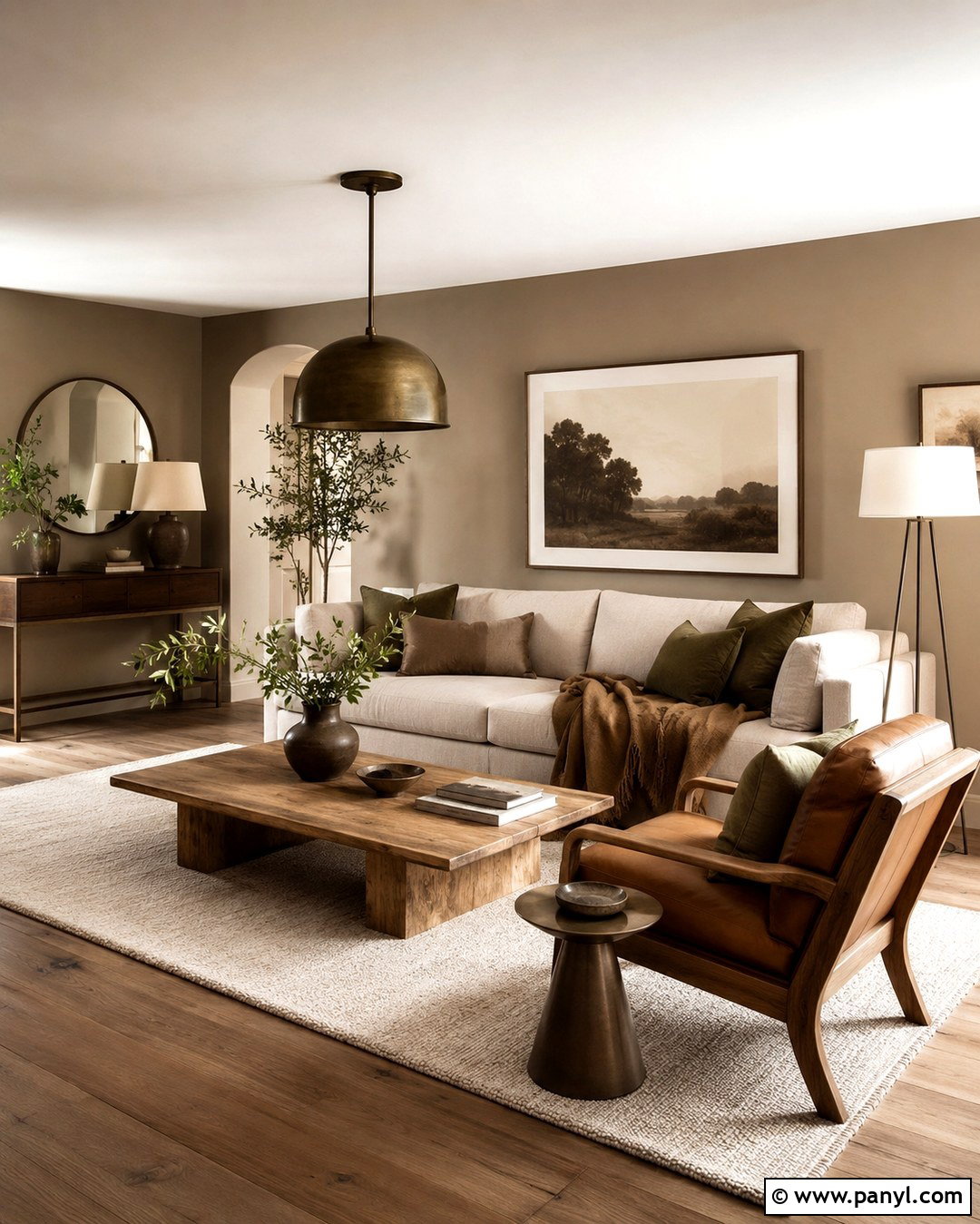
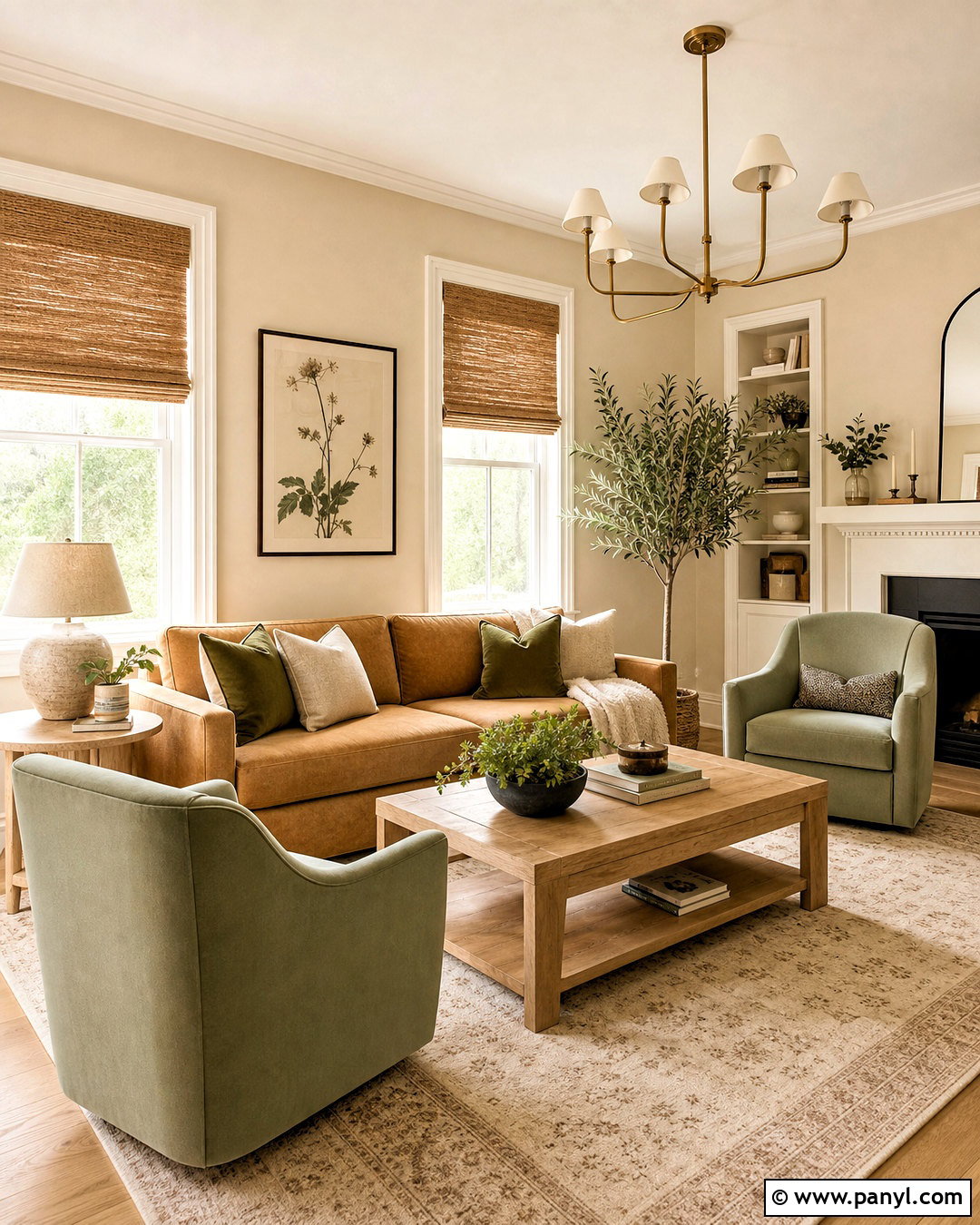
A warm taupe wall color gives a living room an earthy foundation without making it feel dark. Choose a medium-light shade that combines beige with soft brown and a touch of gray. Pair it with an oatmeal linen sofa, camel leather accent chair, and medium-toned oak coffee table. An ivory wool rug keeps the floor bright, while dark bronze lighting adds definition. Bring in muted olive pillows and ceramic planters for quiet color. Hang simple cream and charcoal artwork in walnut frames. Finish the windows with full-length natural linen curtains. This complete palette feels relaxed and polished because every material shares a warm undertone, while the black and bronze details provide enough contrast.
2. Mushroom Beige Bedroom Wall Color
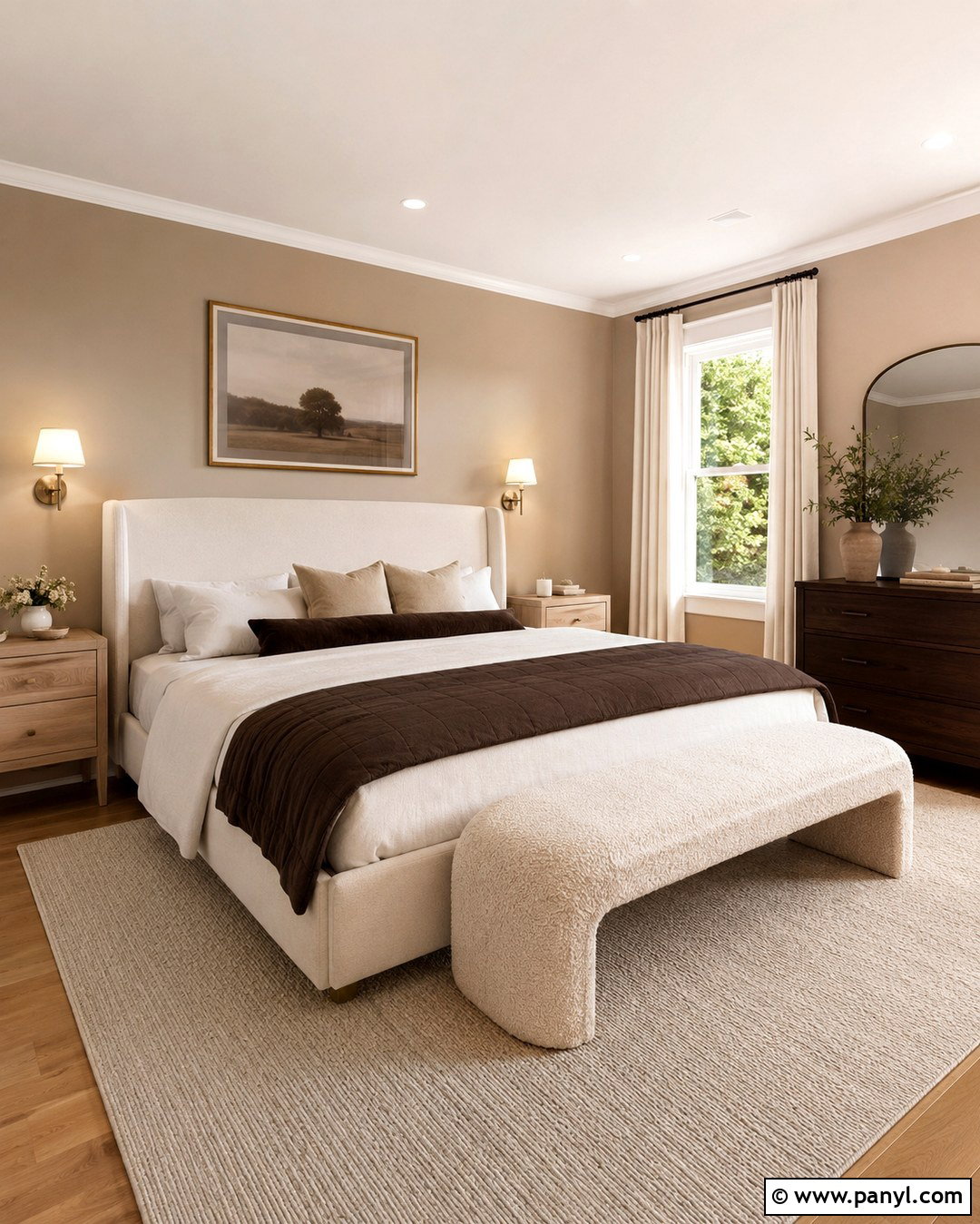
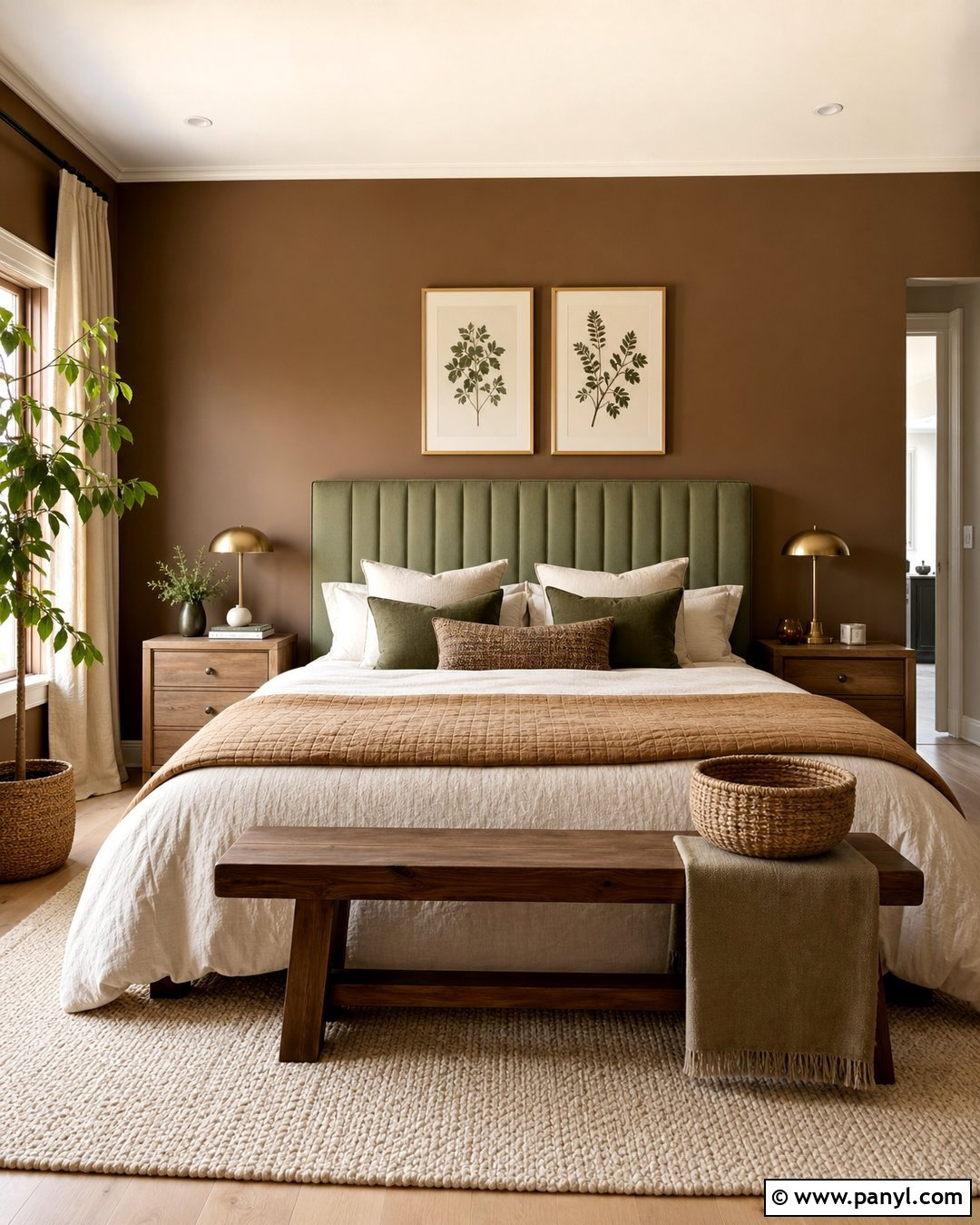
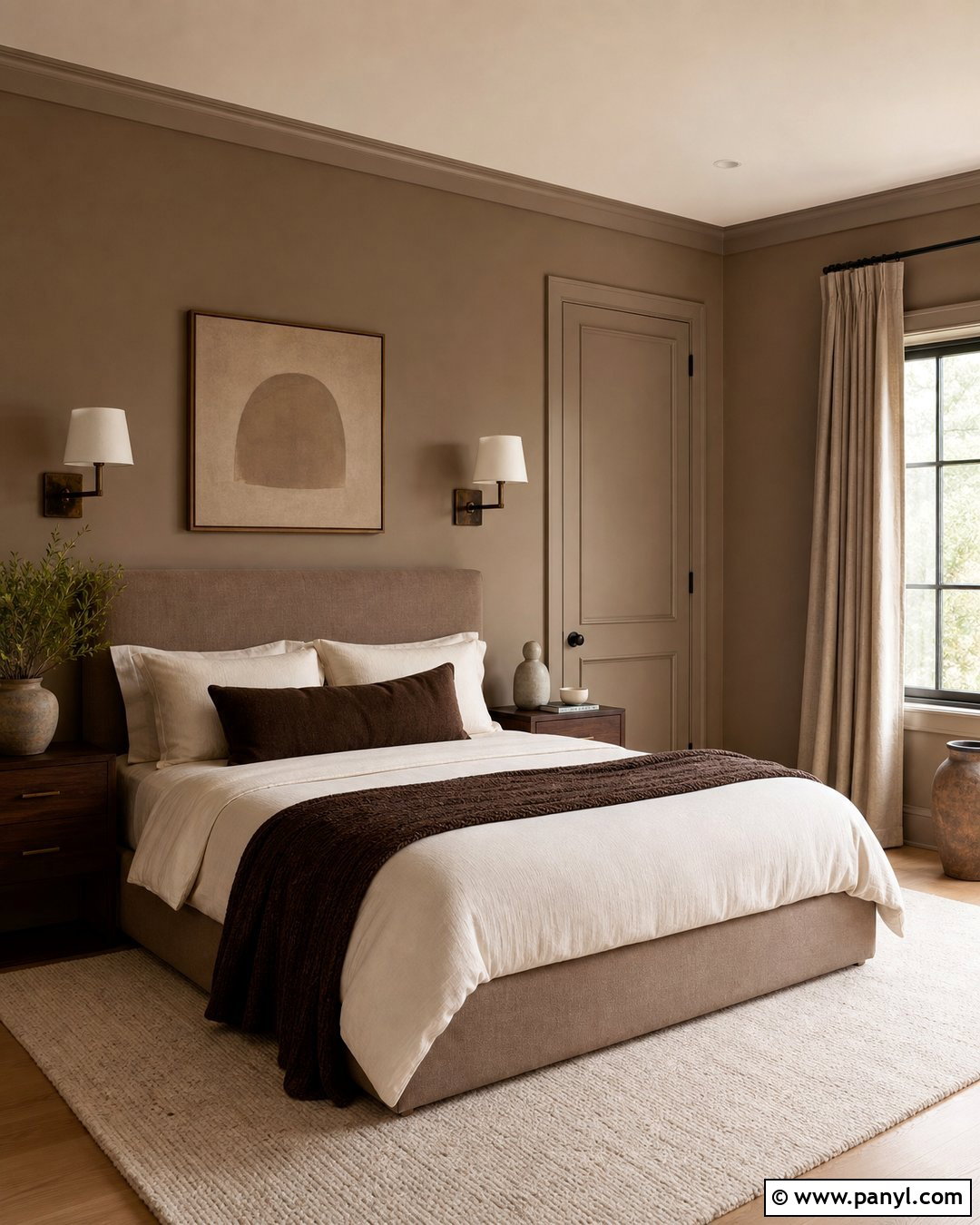
Soft mushroom beige creates a peaceful bedroom that feels warmer than greige but lighter than traditional brown. Paint every wall in the same shade, then use warm white on the ceiling and trim for gentle separation. Center the room around an upholstered oatmeal bed with layered ivory, taupe, and chocolate bedding. Light oak nightstands keep the furniture from appearing heavy. Add brushed brass sconces, a cream boucle bench, and a thick beige area rug under the bed. One deep brown dresser introduces useful contrast without overwhelming the room. Keep artwork minimal, using abstract shapes in sand, rust, and charcoal. The finished bedroom feels quiet, comfortable, and thoughtfully layered rather than plain or overly coordinated.
3. Latte Brown Dining Room Wall Color
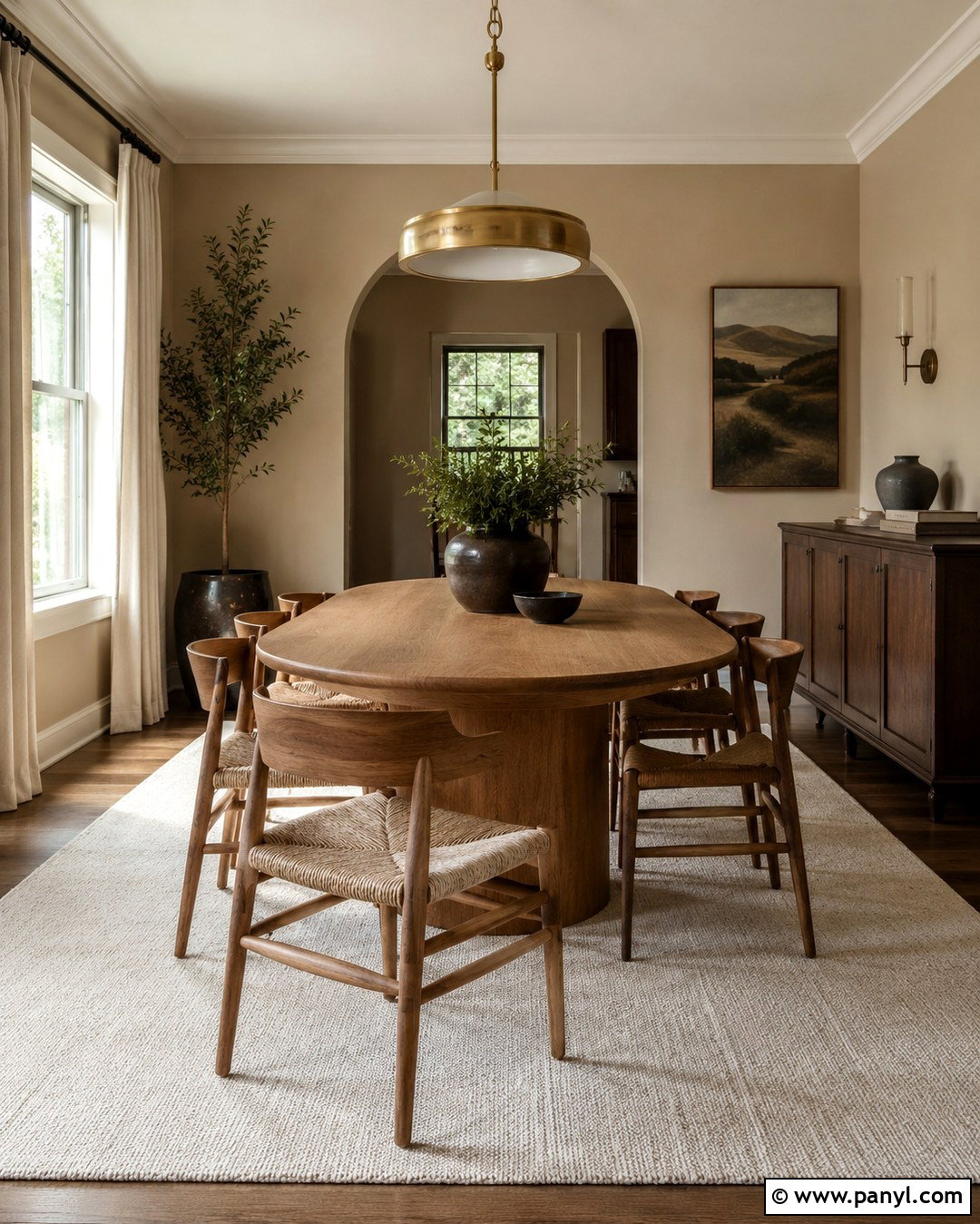
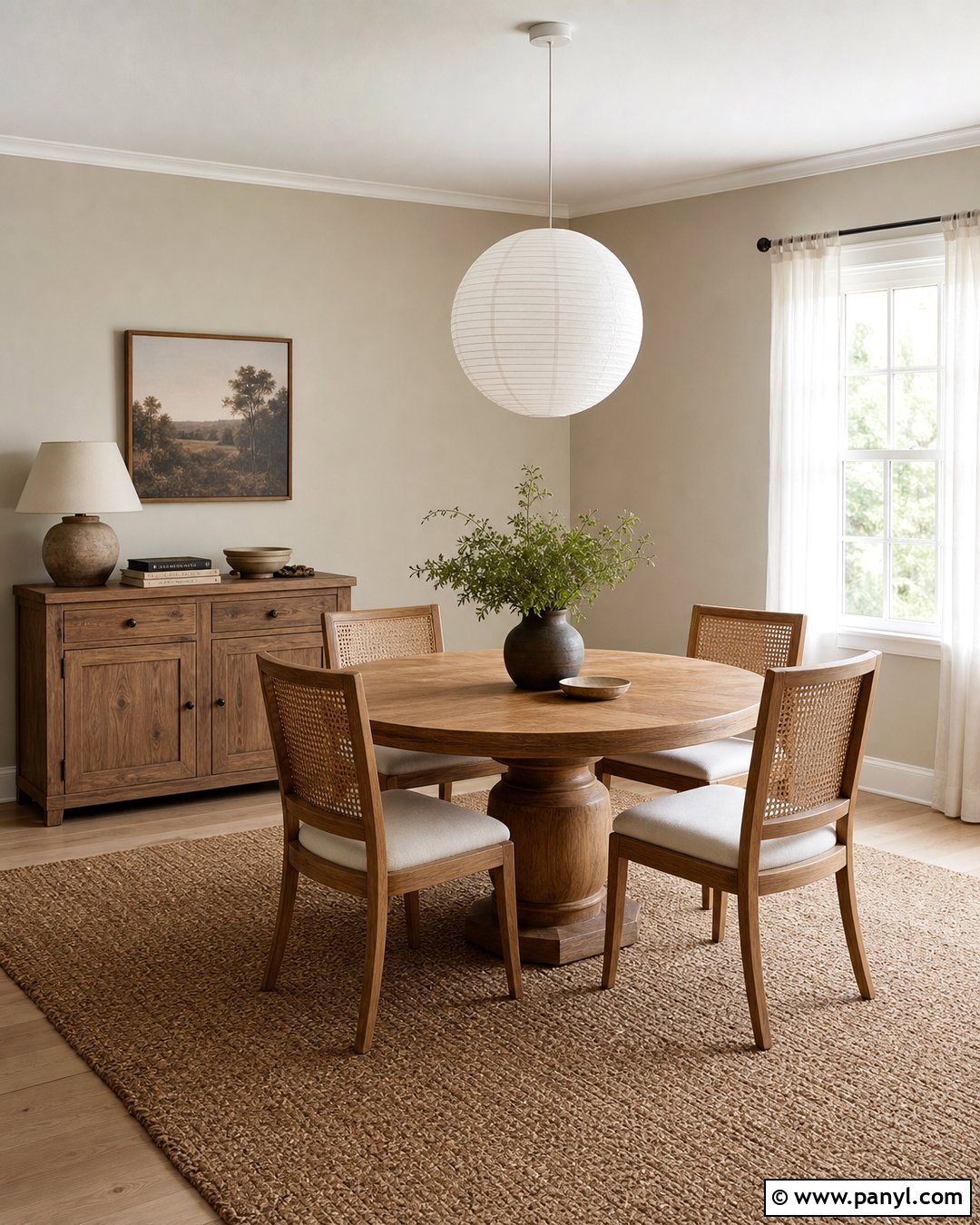
Imagine a dining room wrapped in the creamy warmth of a fresh latte. A light coffee-brown wall color works especially well with natural oak furniture and soft white trim. Choose an oval pedestal table to improve movement and surround it with woven-seat chairs in a slightly darker wood tone. Above the table, install a large aged-brass pendant with a simple sculptural shape. Use an ivory flat-weave rug to define the dining area and brighten the floor. Linen curtains in warm cream soften the windows. Complete the room with a walnut sideboard, oversized ceramic vase, and framed landscape art in muted green and brown. The varied textures give this tonal neutral scheme dimension and an inviting everyday character.
4. Sandy Beige Family Room Wall Color
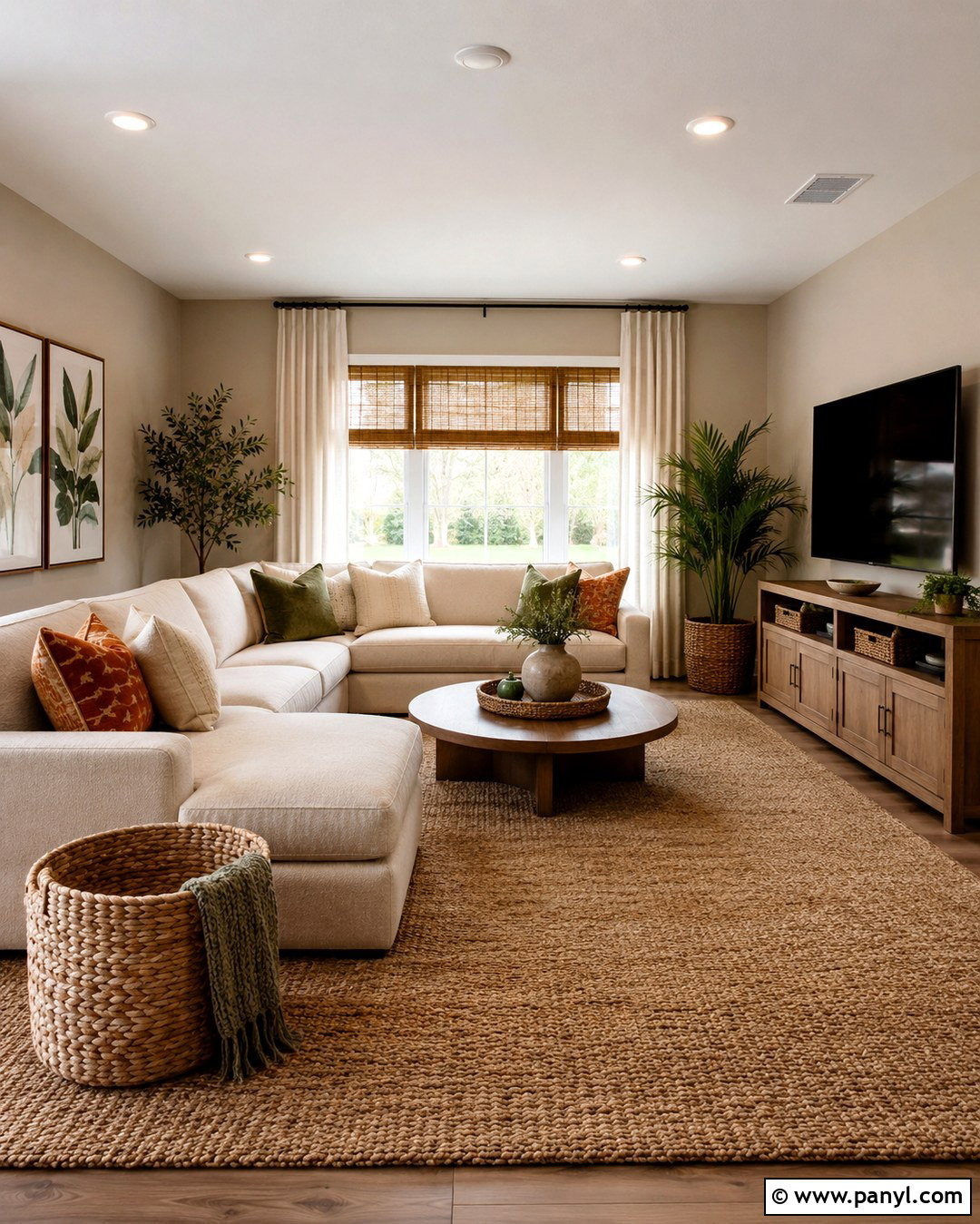
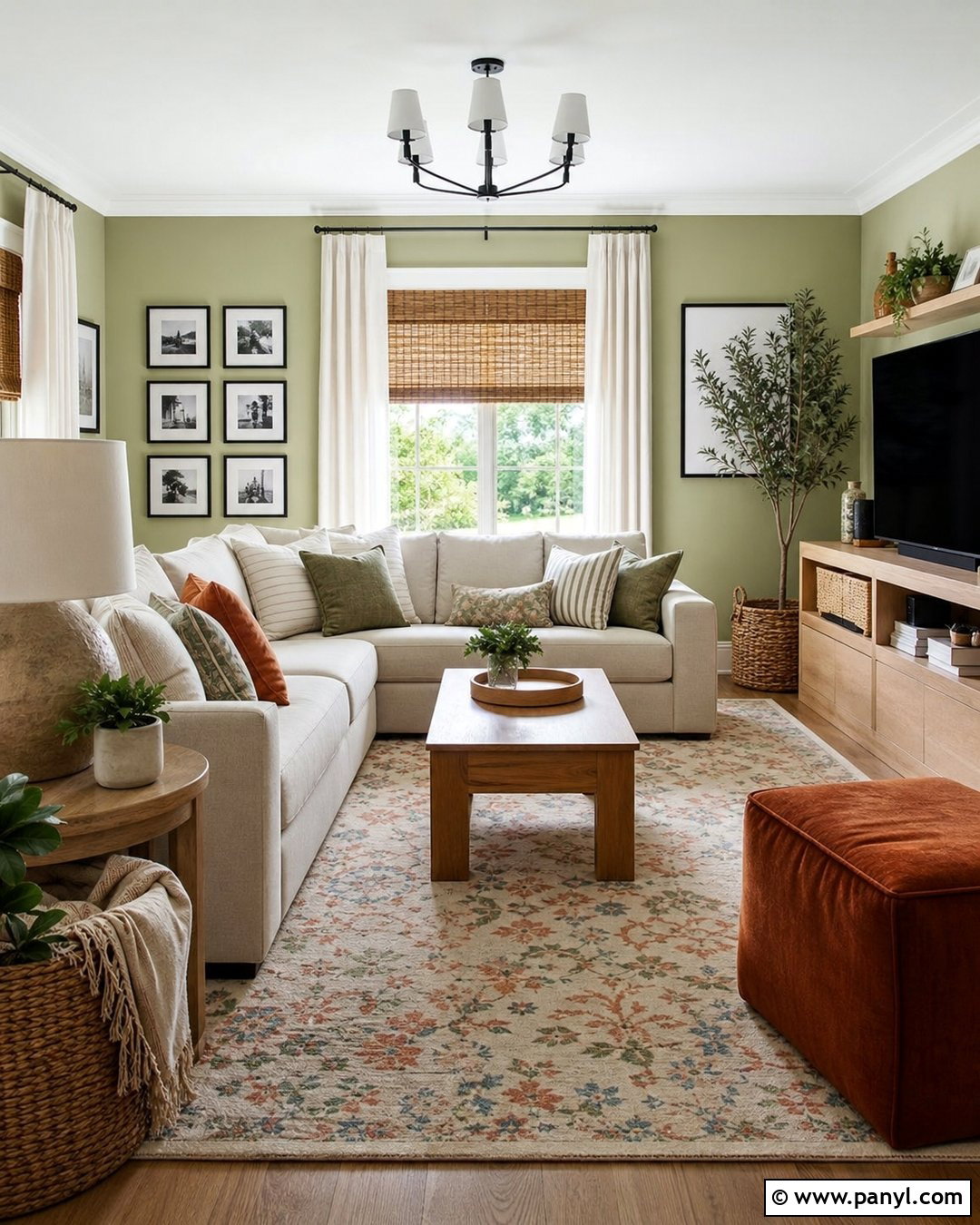
Does your family room need to feel brighter without becoming stark? Sandy beige walls can reflect light while maintaining a warm, casual mood. Pair them with a generous cream sectional and a durable jute-blend rug that can handle everyday use. Add a medium-brown wood media console and round coffee table to anchor the pale upholstery. Use washable pillows in rust, olive, and striped beige for practical color. Woven baskets provide toy and blanket storage without interrupting the natural palette. Hang relaxed botanical prints above the sofa and place a tall leafy plant near the window. Matte black curtain rods and table lamps sharpen the softer finishes. The result is comfortable, functional, and cohesive enough for an open household space.
5. Cocoa Beige Home Office Wall Color
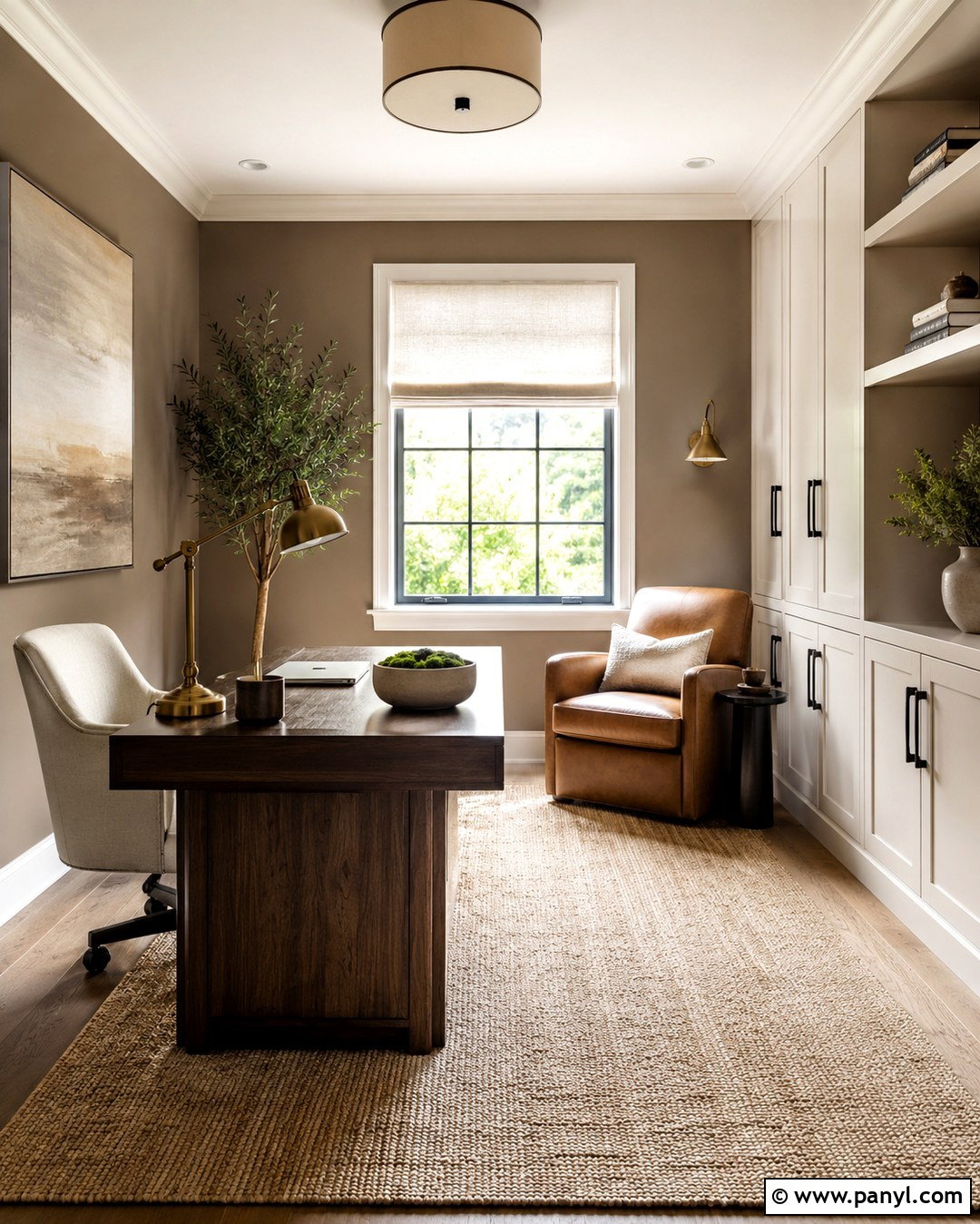
A cocoa beige wall color can make a home office feel focused, grounded, and more welcoming than a plain white workspace. Select a medium shade with balanced brown undertones, then place a substantial walnut desk against the brightest wall. Add a cream upholstered desk chair and a matching floating shelf above the work surface. Closed cabinets in warm off-white hide supplies, while black handles give the storage a clean outline. Use an adjustable brass task lamp, woven wool rug, and linen Roman shade to introduce texture. A small cognac leather chair creates a separate reading corner. Finish with restrained artwork in tan, charcoal, and muted blue. This arrangement feels professional while remaining comfortable enough for daily work.
6. Caramel Beige Kitchen Wall Color
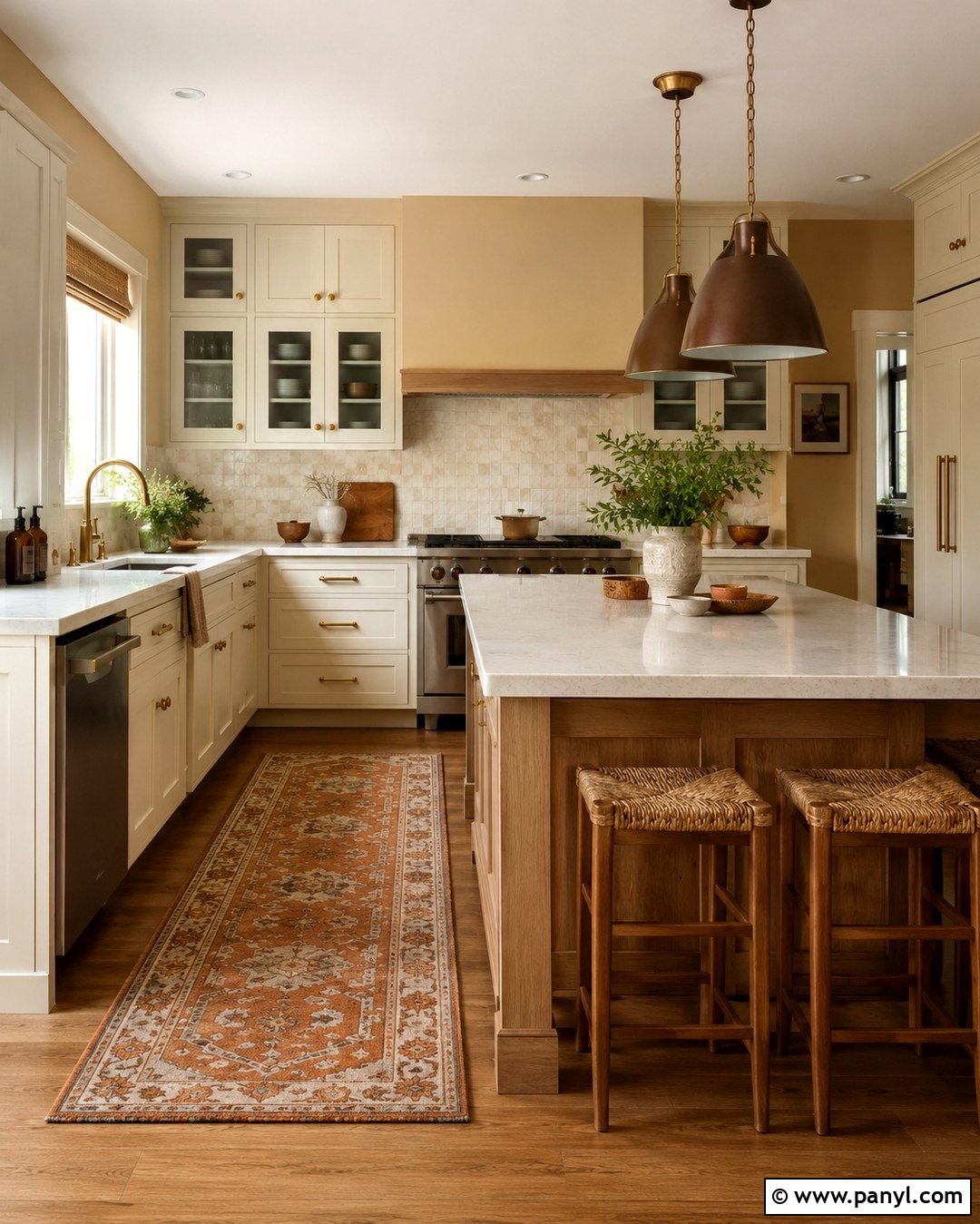
Caramel beige walls bring appealing warmth to a kitchen filled with cream cabinetry and natural materials. Use the color on open wall areas and around a breakfast nook, while keeping the ceiling and cabinet trim a soft white. Choose light oak lower cabinets or an oak island to reinforce the earthy palette. Cream quartz counters and a handmade off-white tile backsplash maintain brightness. Add aged-brass hardware, woven counter stools, and medium-brown pendant lights for depth. A washable runner with rust, tan, and charcoal details connects the work area visually. Display only a few wood boards and neutral ceramic pieces on open shelves. The completed kitchen looks warm and current without relying on a dark or overly dramatic color scheme.
7. Putty Beige Hallway Wall Color
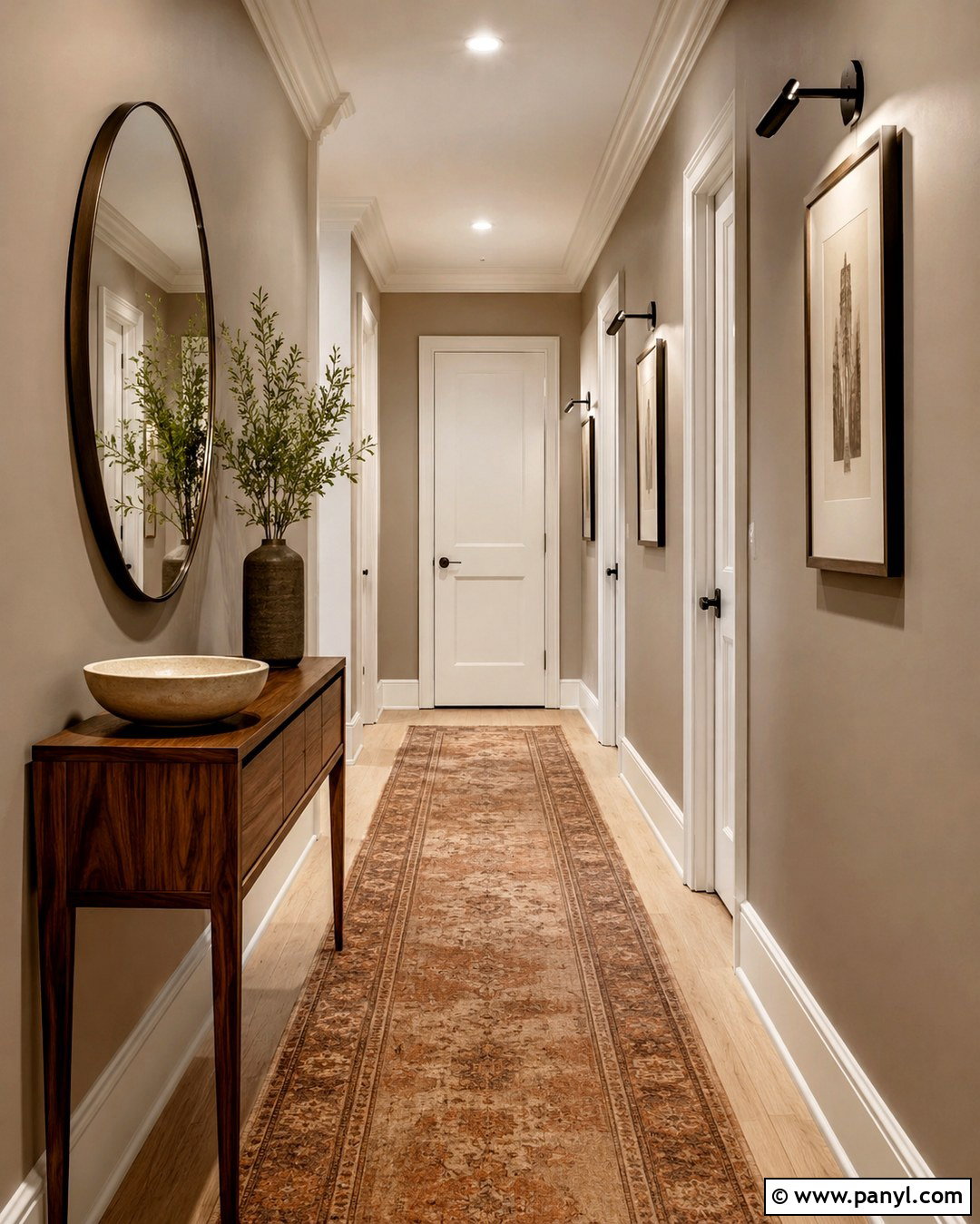
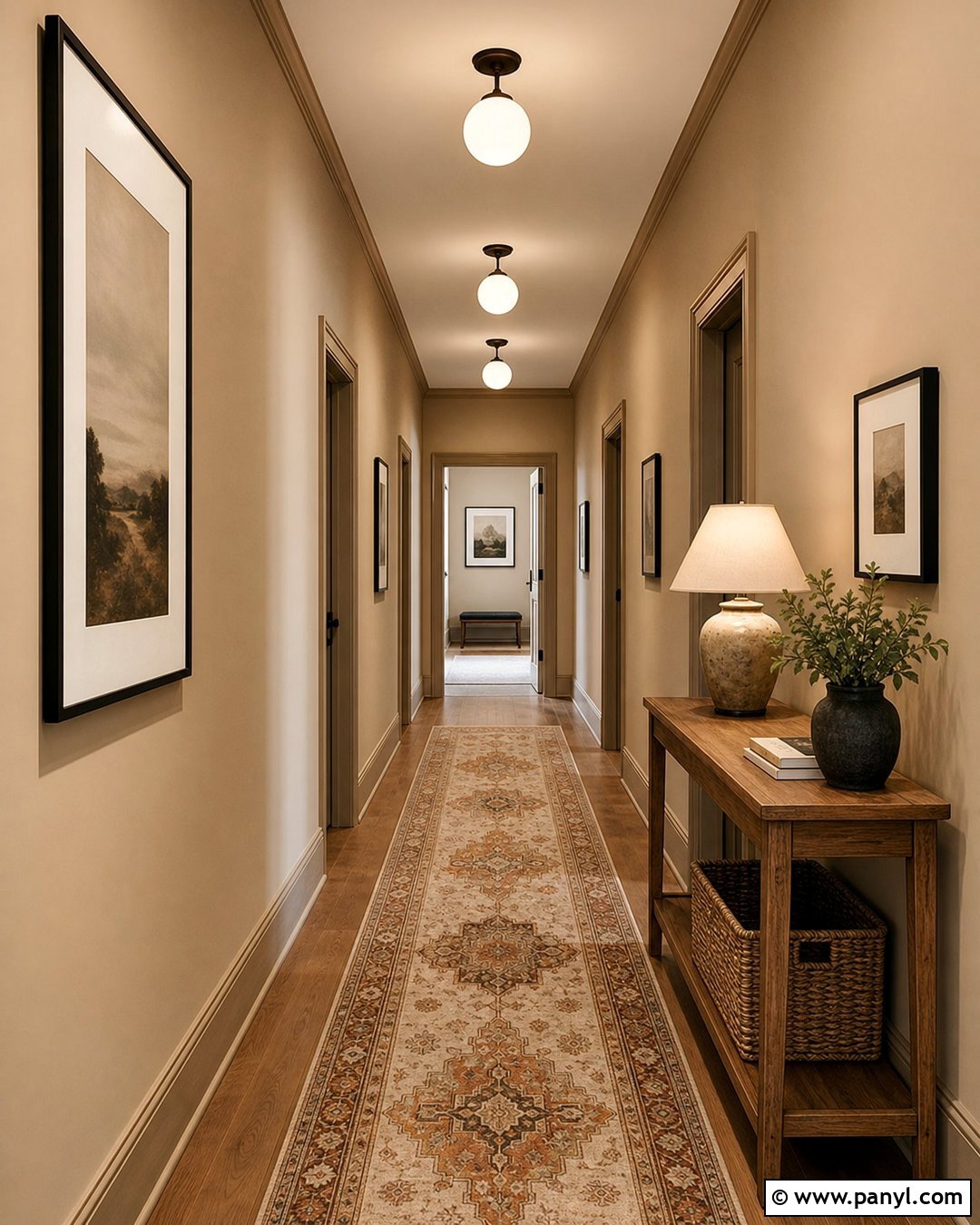
Narrow hallways often benefit from a quiet putty beige that sits comfortably between tan, taupe, and warm gray. Paint the walls in an eggshell finish and use warm white satin on doors and trim for subtle contrast. A slim walnut console gives the passage purpose without crowding the walkway. Above it, hang a large round mirror with a thin bronze frame to reflect nearby light. Add a narrow vintage-style runner featuring faded brown, cream, and muted rust. Simple black picture lights can illuminate a small gallery of neutral architectural prints. Keep accessories limited to a ceramic bowl and one leafy branch. The complete hallway feels brighter, more finished, and visually connected to neighboring rooms with wood floors or neutral furnishings.
8. Fawn Beige Bathroom Wall Color
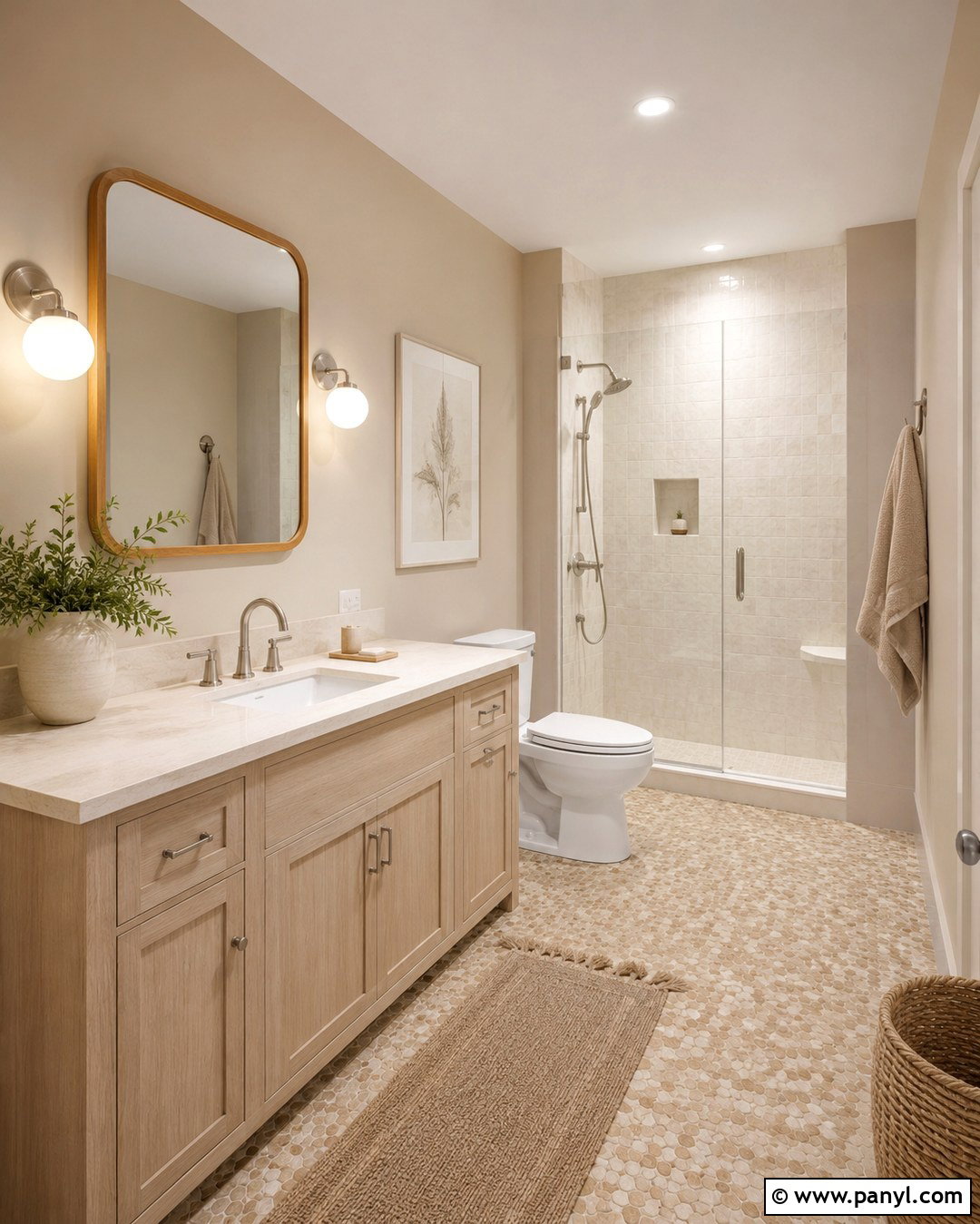
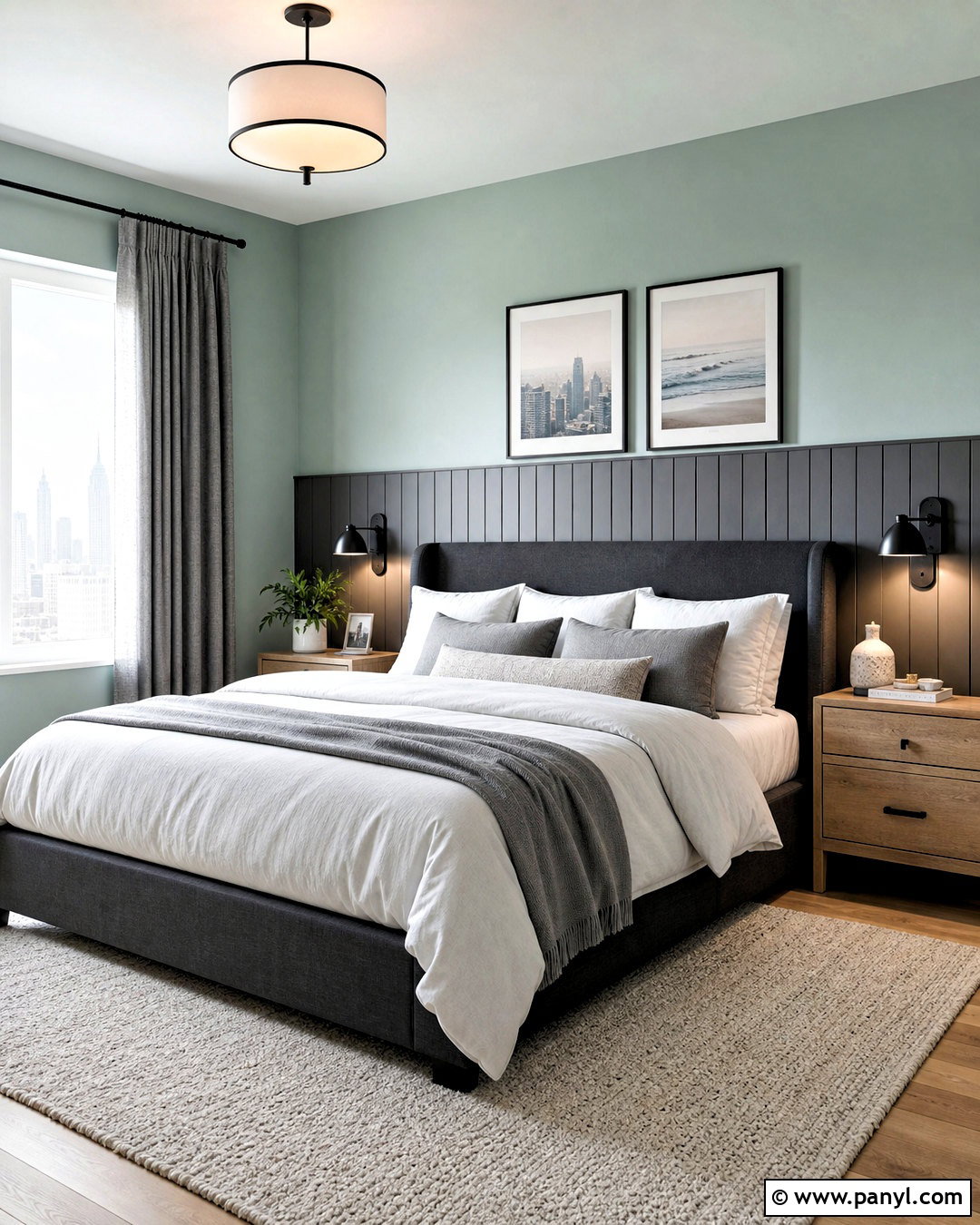
Fawn beige walls can soften the hard surfaces in a bathroom while still creating a clean, refreshing appearance. Combine this light brown-beige shade with a warm white oak vanity, creamy quartz countertop, and brushed nickel fixtures. Use matte ivory tiles in the shower and a subtle tan mosaic on the floor to build tonal variation. A frameless glass enclosure prevents the compact space from feeling divided. Hang a rounded wood-framed mirror above the vanity and install simple milk-glass sconces on either side. Fold white and camel towels on an open shelf, then add a woven laundry basket for natural texture. The restrained combination of warm paint, pale tile, and light wood feels calm, bright, and easy to maintain.
9. Greige Brown Nursery Wall Color
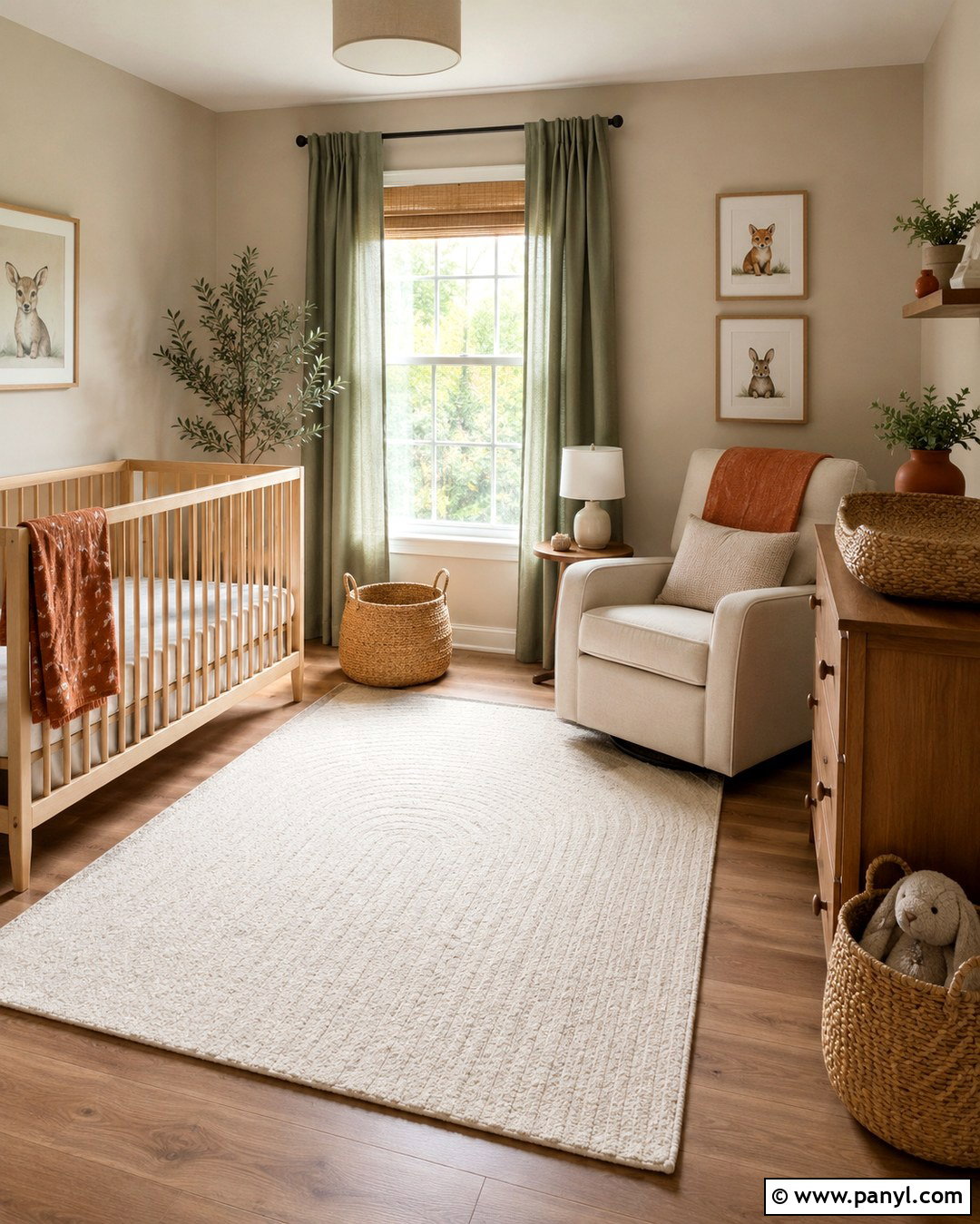
A brown-leaning greige creates a versatile nursery that can adapt as the room changes over time. Choose a pale shade without strong yellow undertones and pair it with warm white trim. Place a natural maple crib against the main wall and ground it with a washable cream rug. An oatmeal glider, medium-brown dresser, and woven storage baskets create practical layers of neutral color. Add sage green through blackout curtains and a soft throw, then introduce muted clay in small pillows or framed illustrations. A simple wood ceiling light keeps the room feeling relaxed. Avoid filling every surface with decor. With clear floor space, closed storage, and a balanced palette, the nursery remains soothing, functional, and visually interesting.
10. Camel Beige Entryway Wall Color
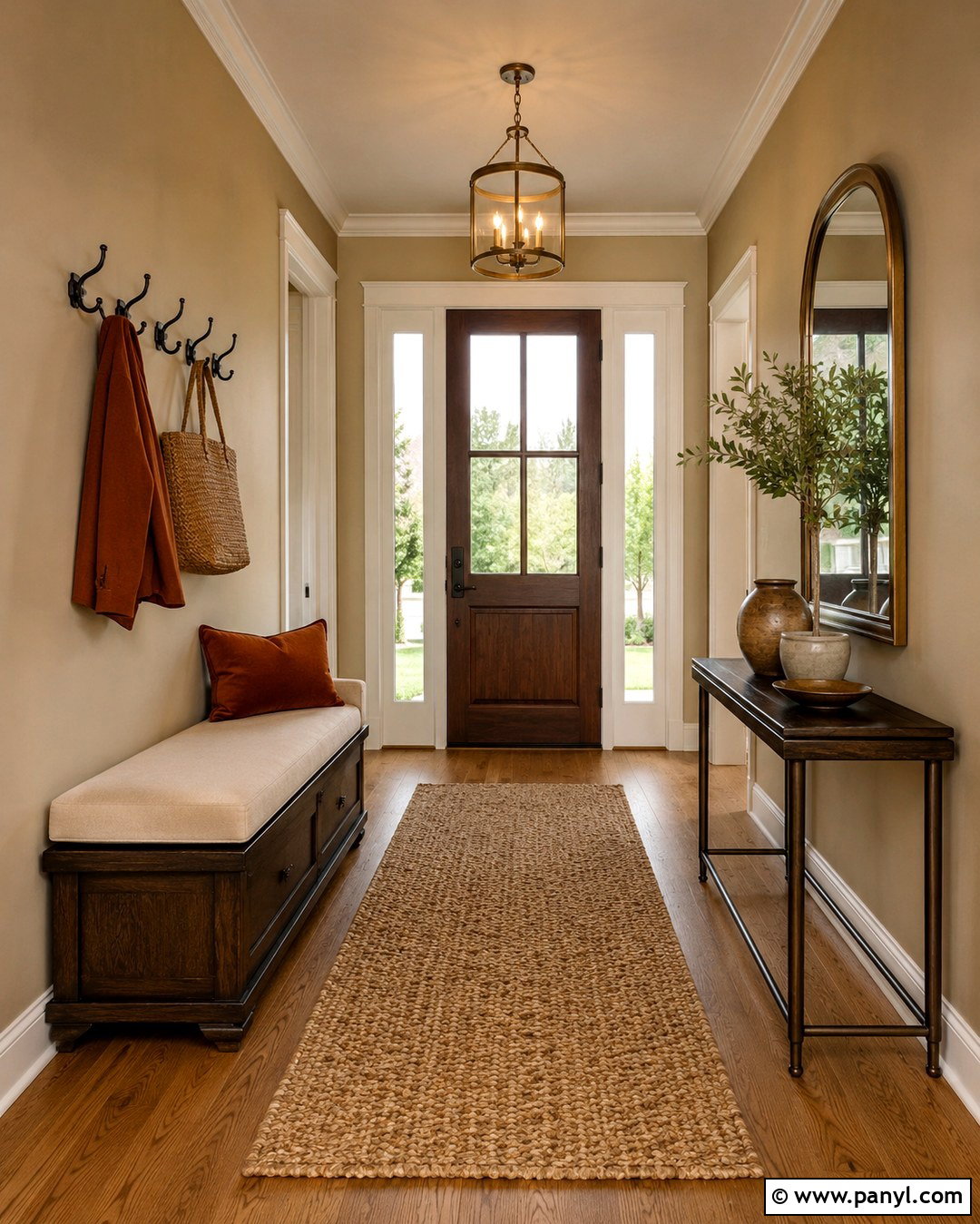
Camel beige walls instantly give an entryway a warm and established character. Use this golden brown-beige with creamy trim and medium oak flooring for a welcoming first impression. Position a dark walnut bench along one wall and add a thick oatmeal cushion for comfort. Install black metal hooks above it for coats and everyday bags. A large woven rug can catch dirt while reinforcing the natural palette. Across from the bench, place a narrow console with a bronze-framed mirror and a textured ceramic lamp. Add one rust-colored pillow and a small olive tree for controlled color. This complete entry design balances attractive materials with useful storage, ensuring the space looks organized rather than decorative but impractical.
11. Mocha Beige Primary Bedroom Wall Color
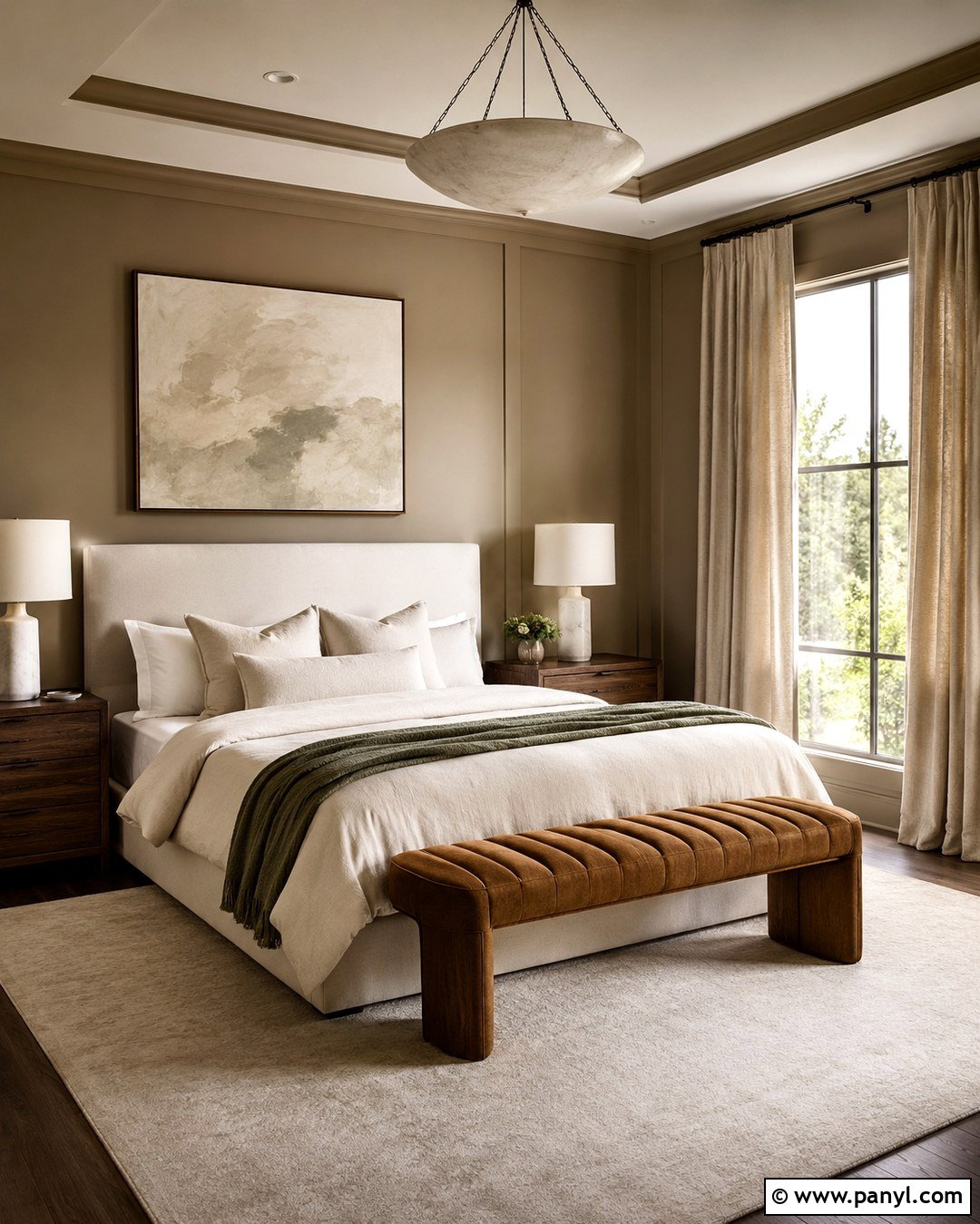
For a cocooning primary bedroom, choose a mocha beige that feels rich without reading as dark chocolate. Paint both the walls and trim in the same color, using slightly different sheens to create quiet architectural depth. Balance the enveloping background with an ivory upholstered bed, cream bedding, and a large pale wool rug. Flank the bed with dark oak nightstands and sculptural alabaster lamps. Add a caramel velvet bench and muted olive throw for subtle color variation. Full-length flax linen curtains make the room feel taller and soften the windows. A large abstract canvas in cream, brown, and charcoal completes the focal wall. The finished space feels intimate, sophisticated, and restful without becoming gloomy.
12. Clay Beige Sunroom Wall Color
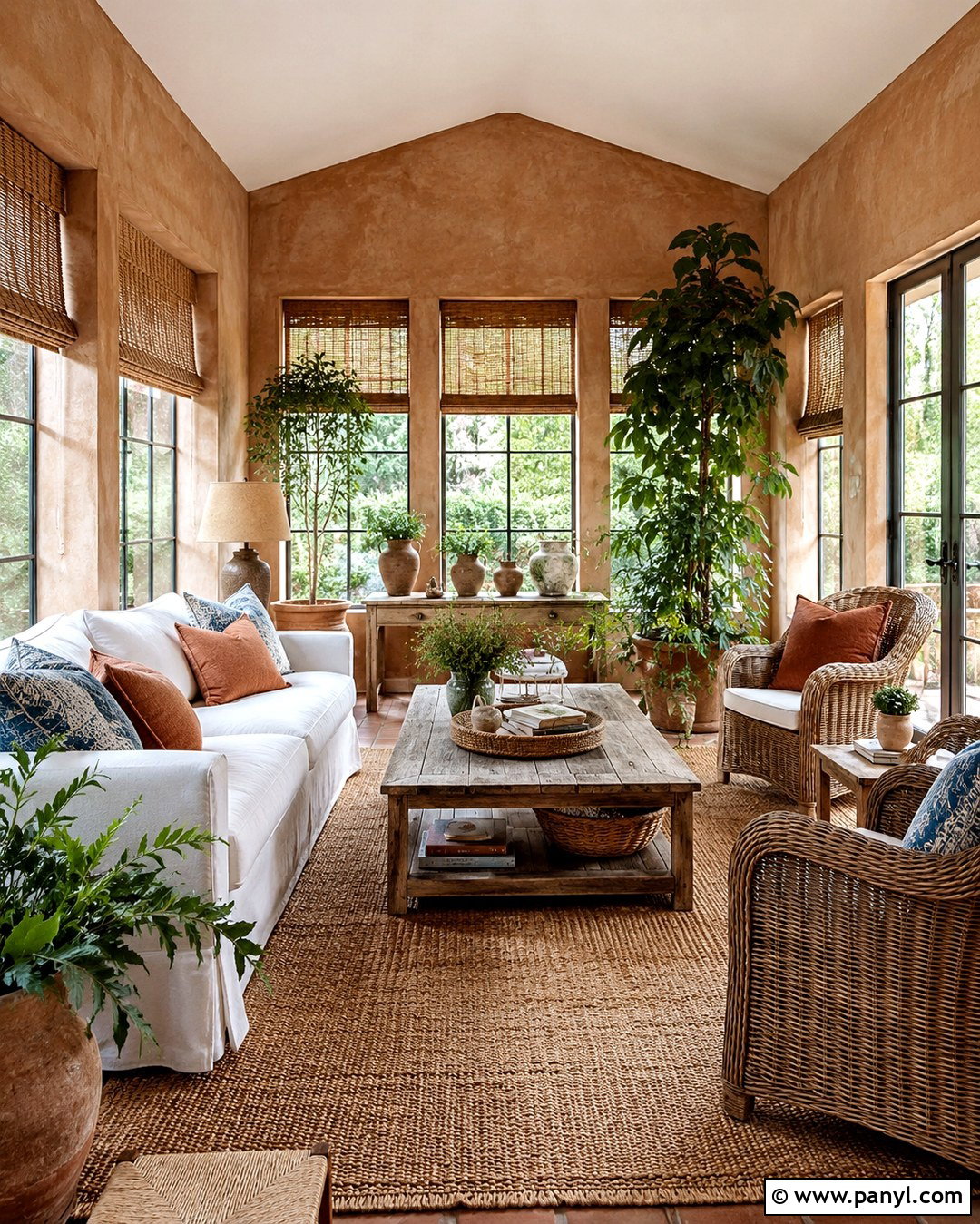
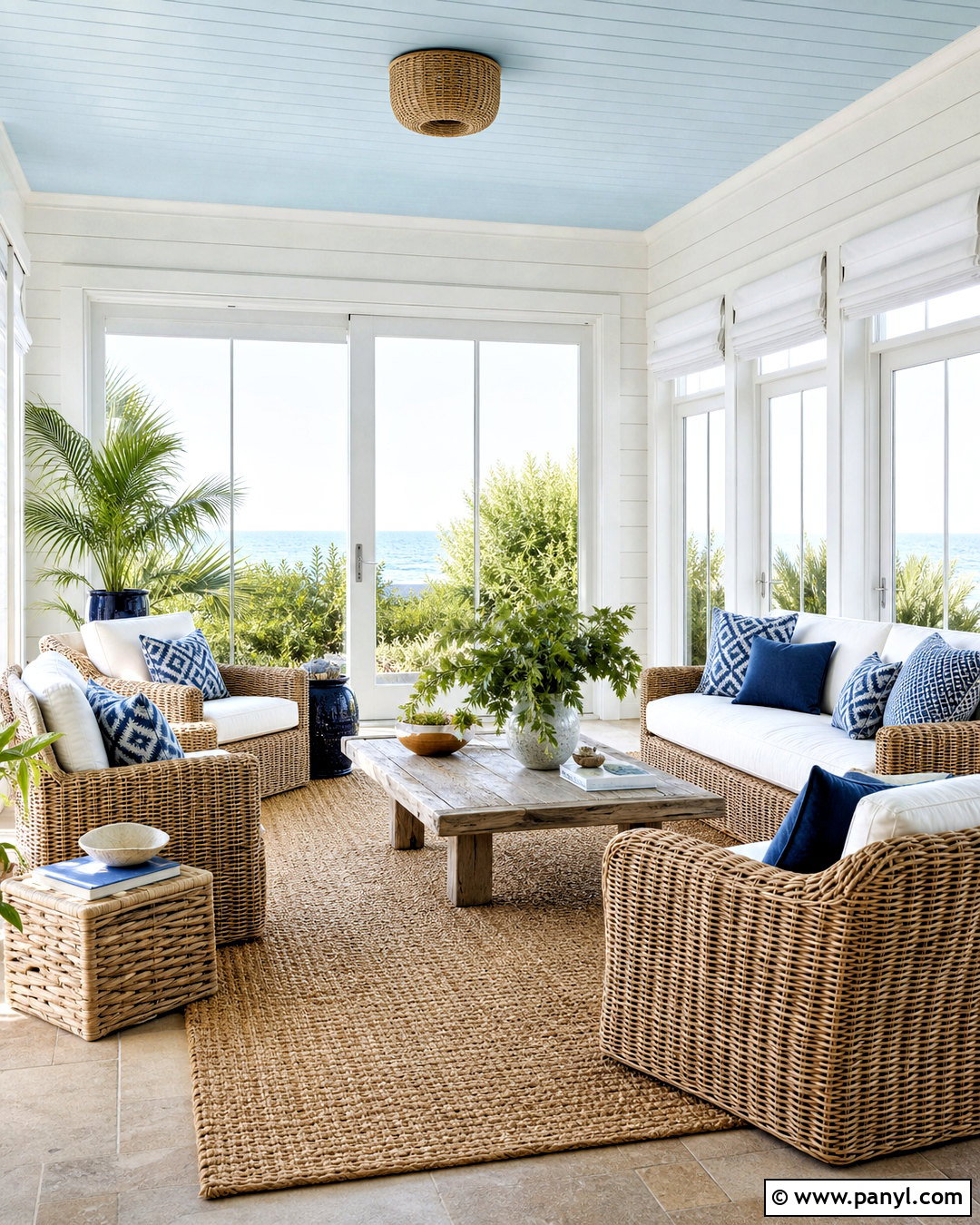
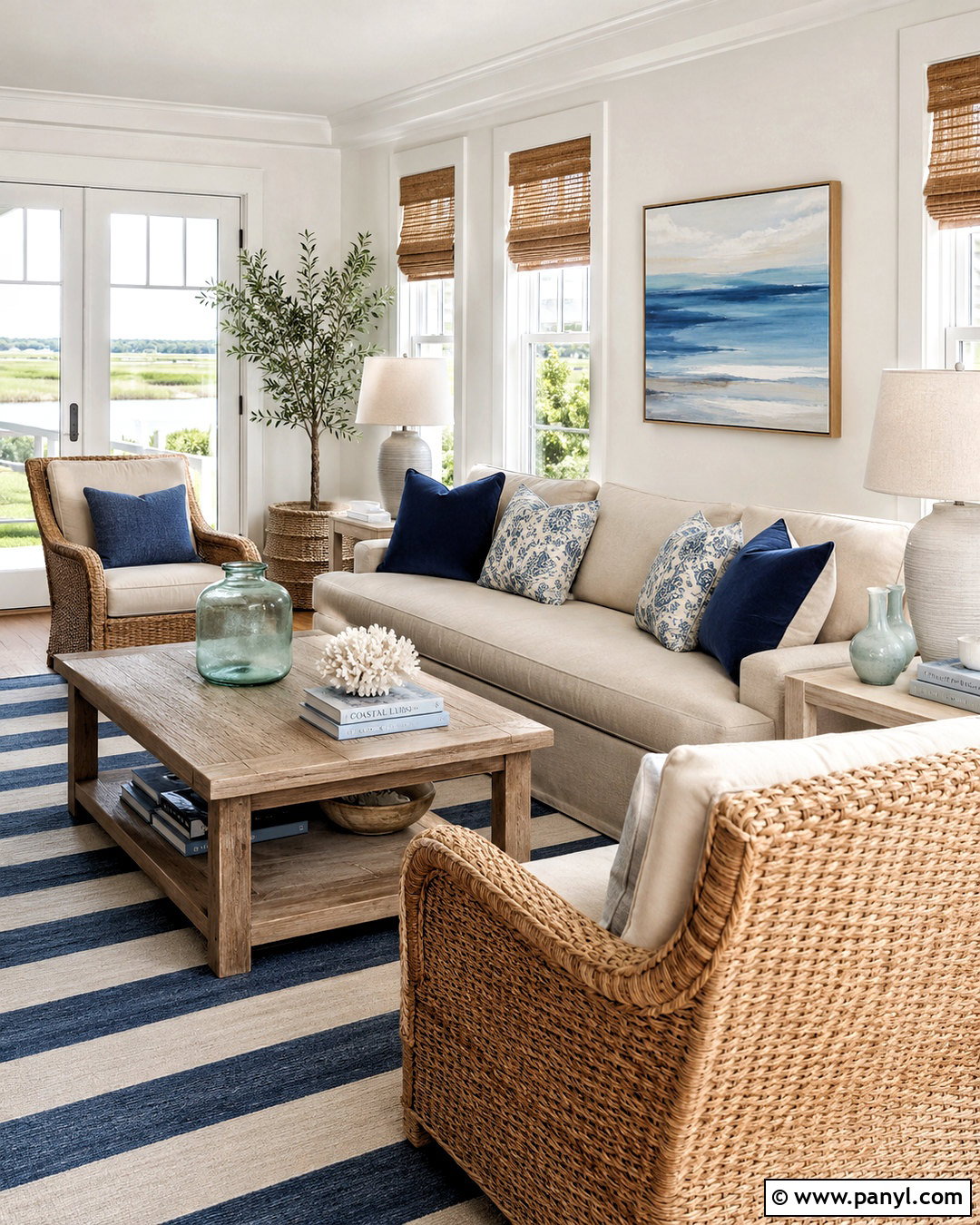
Sunlight brings out the gentle earthy undertones in a clay beige wall color. This shade works beautifully in a sunroom with abundant windows, pale floors, and plenty of greenery. Choose a relaxed slipcovered sofa in warm white and pair it with two woven rattan chairs. A weathered oak coffee table and natural fiber rug continue the organic look. Add cushions in terracotta, faded blue, and striped tan for a livelier but still grounded palette. Hang lightweight linen shades that filter glare without hiding the outdoor view. Use handmade pottery, wood-framed botanical art, and leafy plants as finishing details. The full design feels fresh and nature-connected, with enough brown and beige variation to remain comfortable throughout the seasons.
13. Oatmeal Brown Open-Plan Wall Color
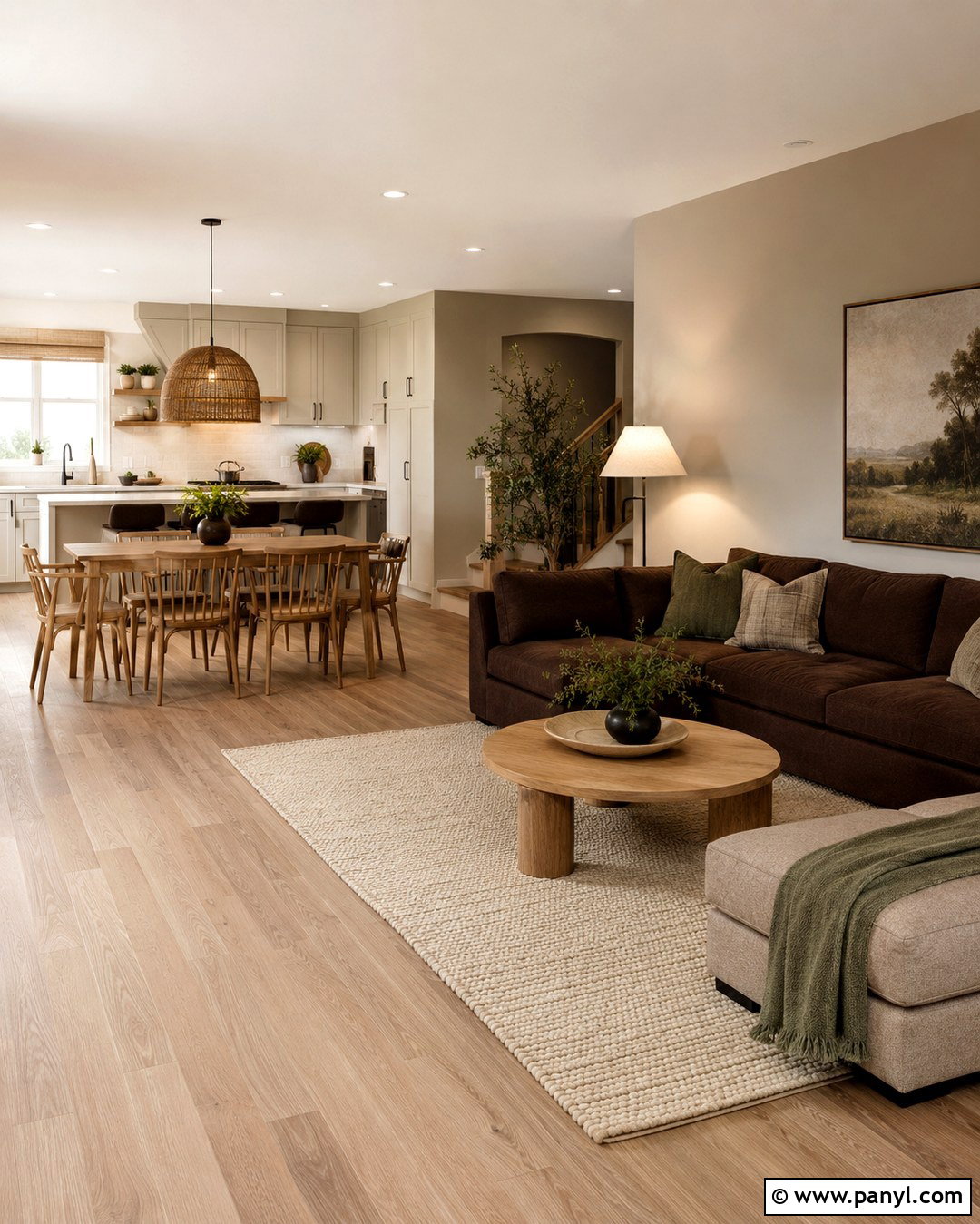
An oatmeal brown wall color can unify an open-plan living, dining, and kitchen area without making every zone look identical. Select a light, softly muted shade and repeat it across the connected walls. Use cream kitchen cabinets, pale oak dining furniture, and a deeper brown living room sofa to define each function. A large ivory rug anchors the seating arrangement, while a woven pendant centers the dining table. Repeat matte black in cabinet hardware, floor lamps, and window rods to create continuity. Add muted green through plants and cushions rather than introducing numerous accent colors. By varying furniture tones and textures while maintaining one wall color, the complete open space feels coordinated, spacious, and intentionally designed.
14. Walnut Beige Media Room Wall Color
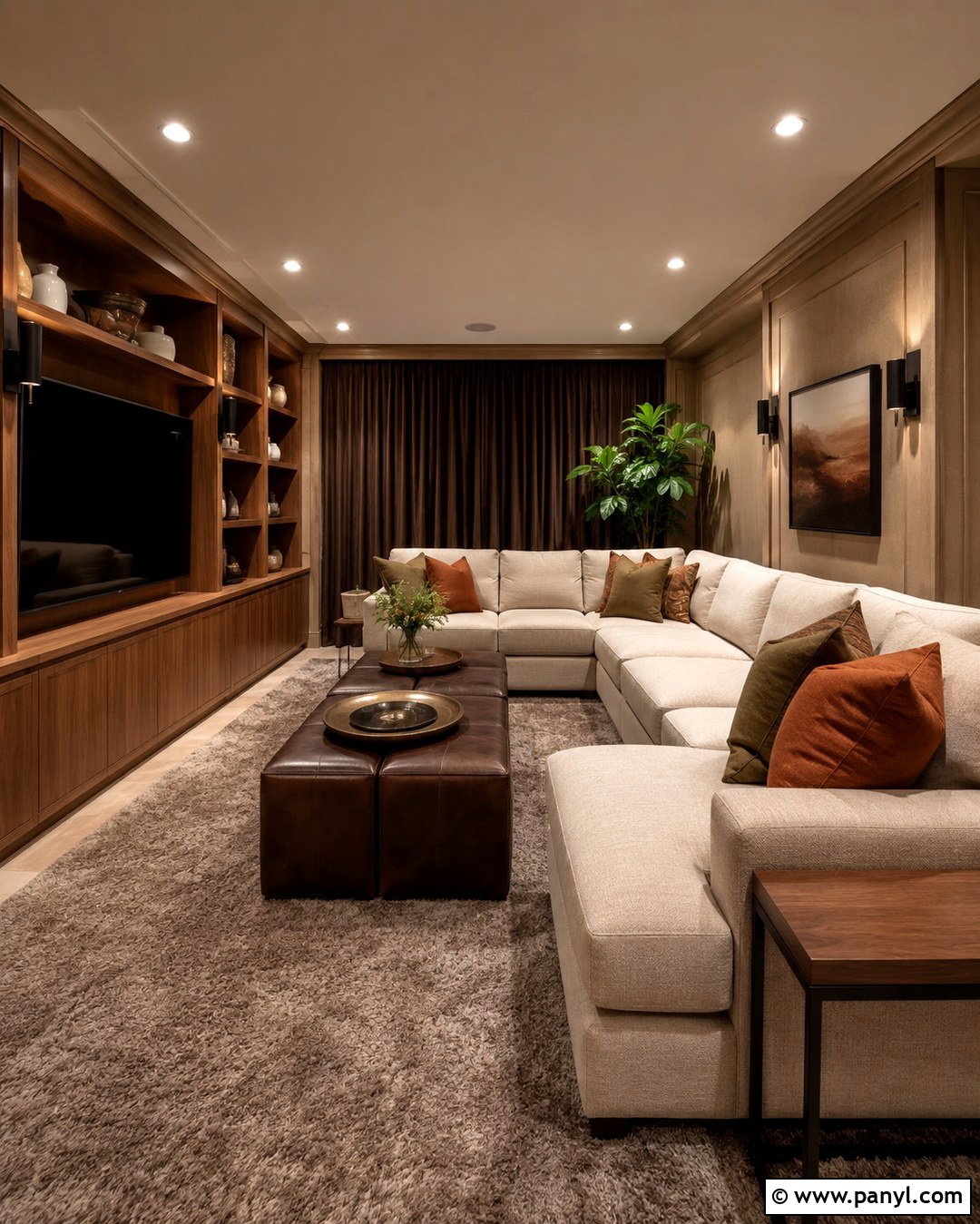
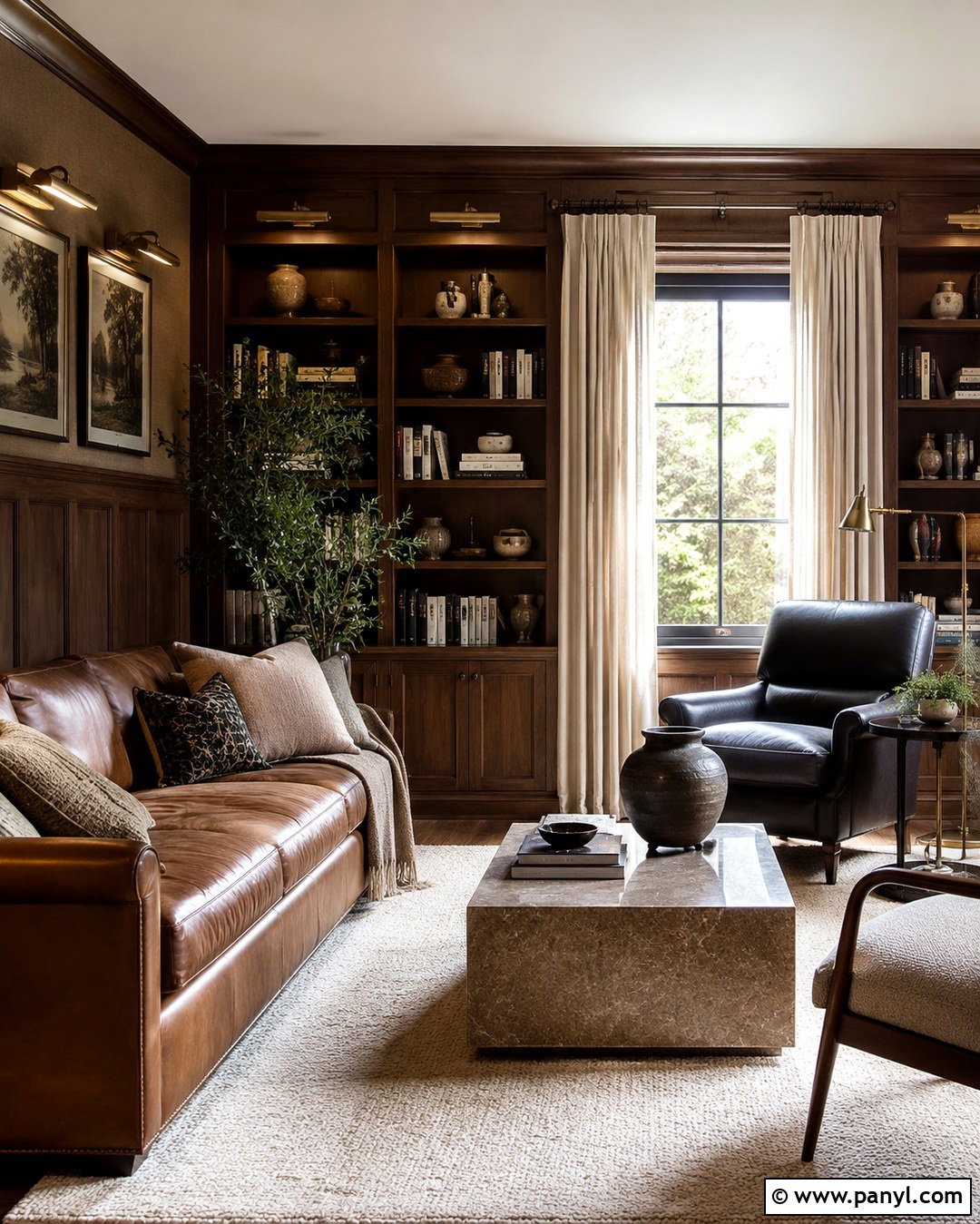
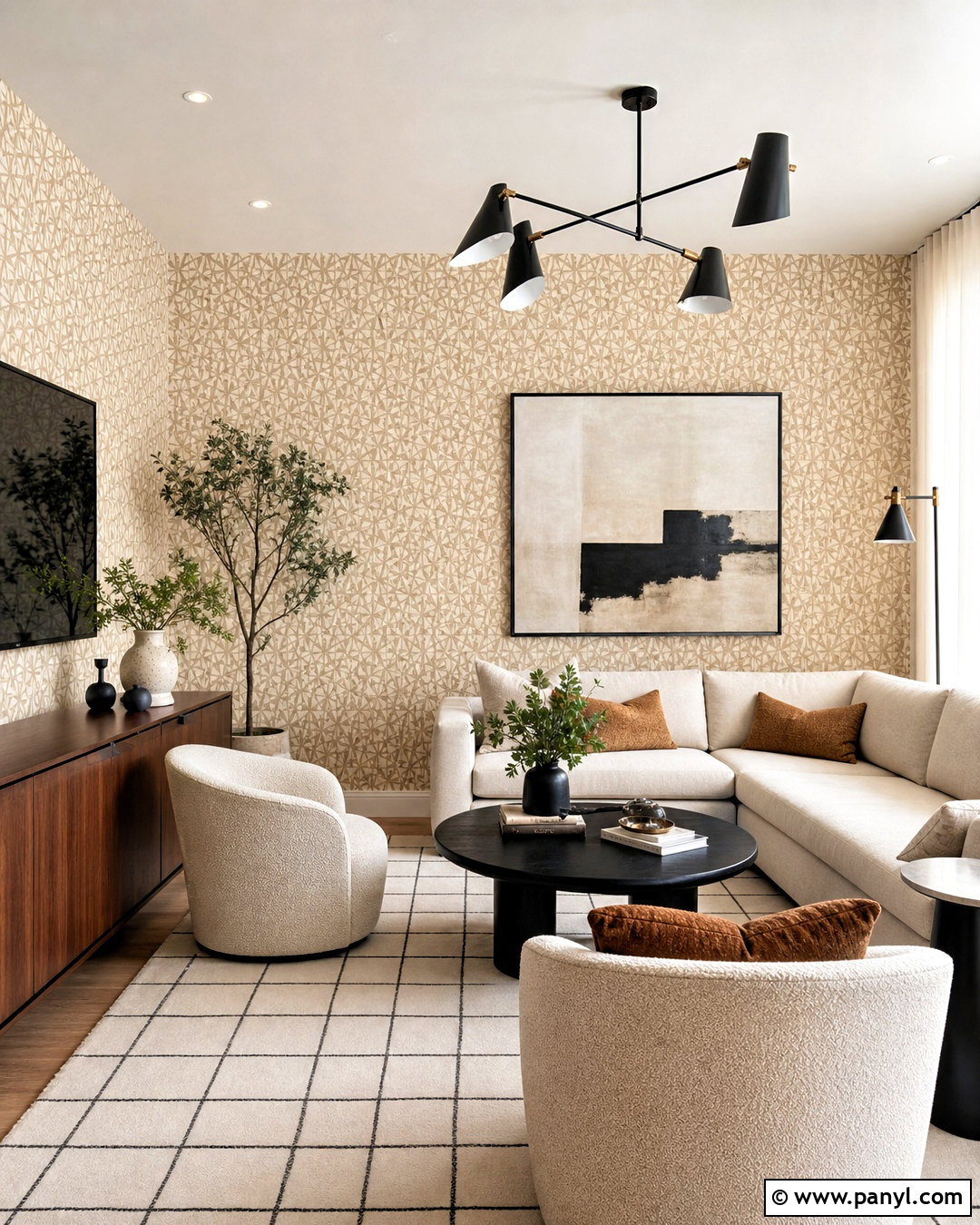
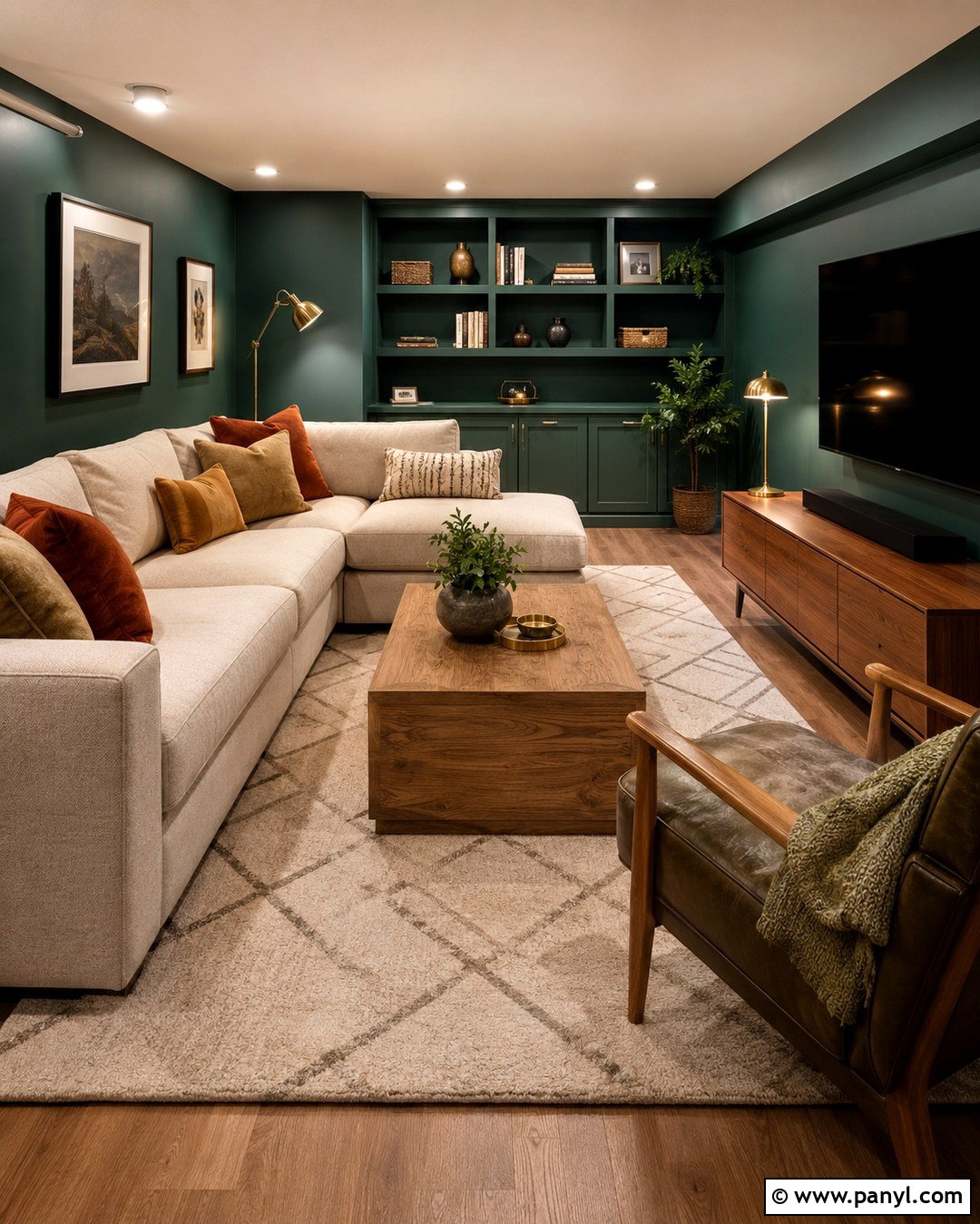
Walnut beige offers enough depth for a comfortable media room without creating an extremely dark interior. Choose a medium brown-beige wall color with muted undertones and extend it onto built-in shelving around the television. A large oatmeal sectional keeps the room approachable, while chocolate leather ottomans provide durable extra seating. Layer a thick taupe rug over wood flooring to improve softness and visual warmth. Use blackout curtains in a deeper brown that blends with the walls when closed. Add dimmable black sconces, walnut side tables, and pillows in rust and olive. Keep decorative objects low and uncluttered around the screen. This complete setup supports viewing while still looking like a thoughtfully furnished family space during the day.
15. Khaki Brown Mudroom Wall Color
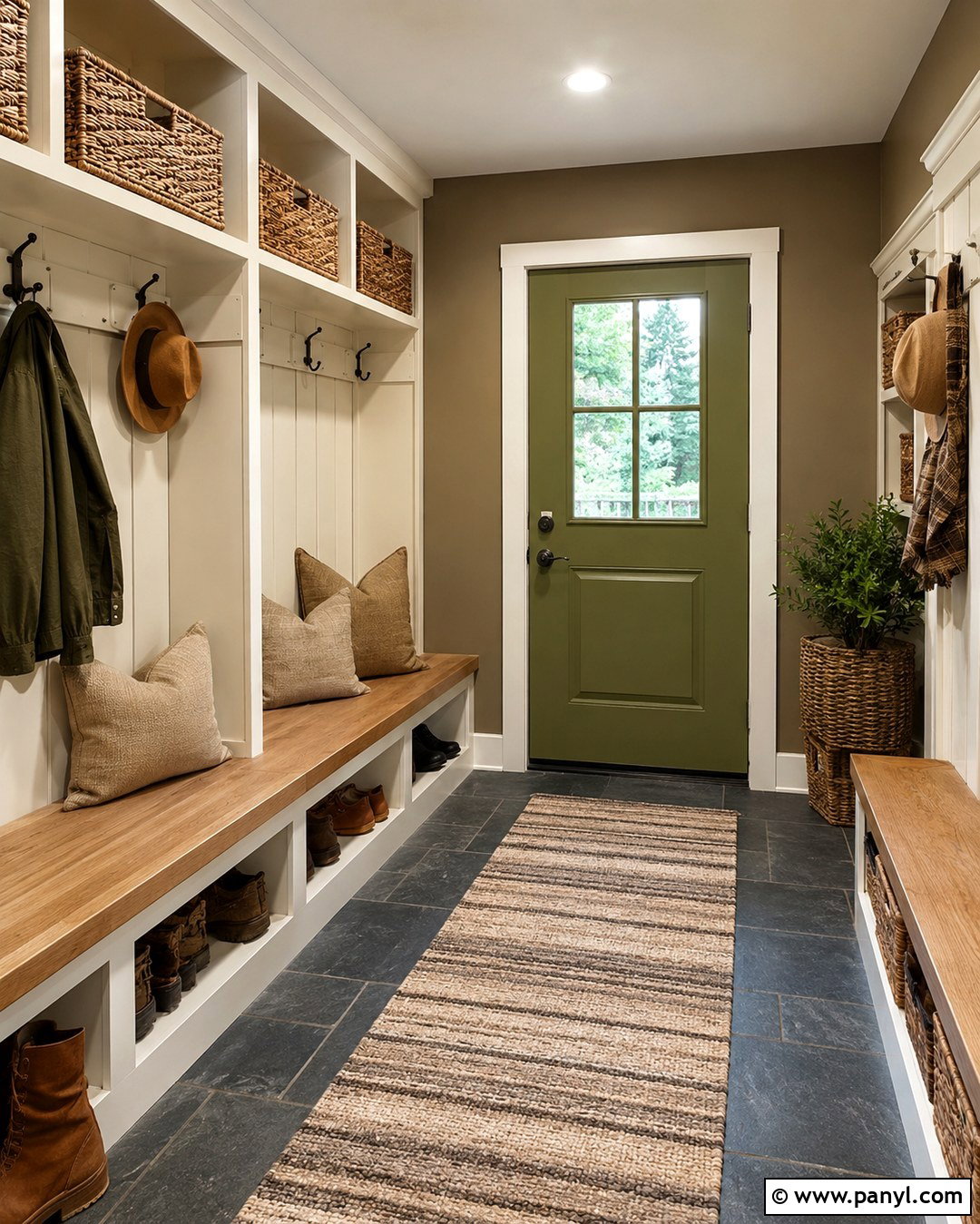
A practical mudroom does not need to feel cold or purely utilitarian. Khaki brown walls create a forgiving, earthy background for hardworking storage and natural finishes. Install warm white built-in cubbies with oak bench seats and black metal hooks. Use dark slate-look floor tile to disguise everyday dirt while providing strong contrast against the beige-brown walls. Add labeled woven baskets on upper shelves and washable tan cushions below. An olive green interior door can introduce personality without clashing with the neutral scheme. Choose a flush black ceiling light and a striped indoor-outdoor runner for simple finishing touches. The completed mudroom feels organized, durable, and connected to the warmer wood and neutral colors used throughout the home.
16. Rosy Brown Guest Room Wall Color
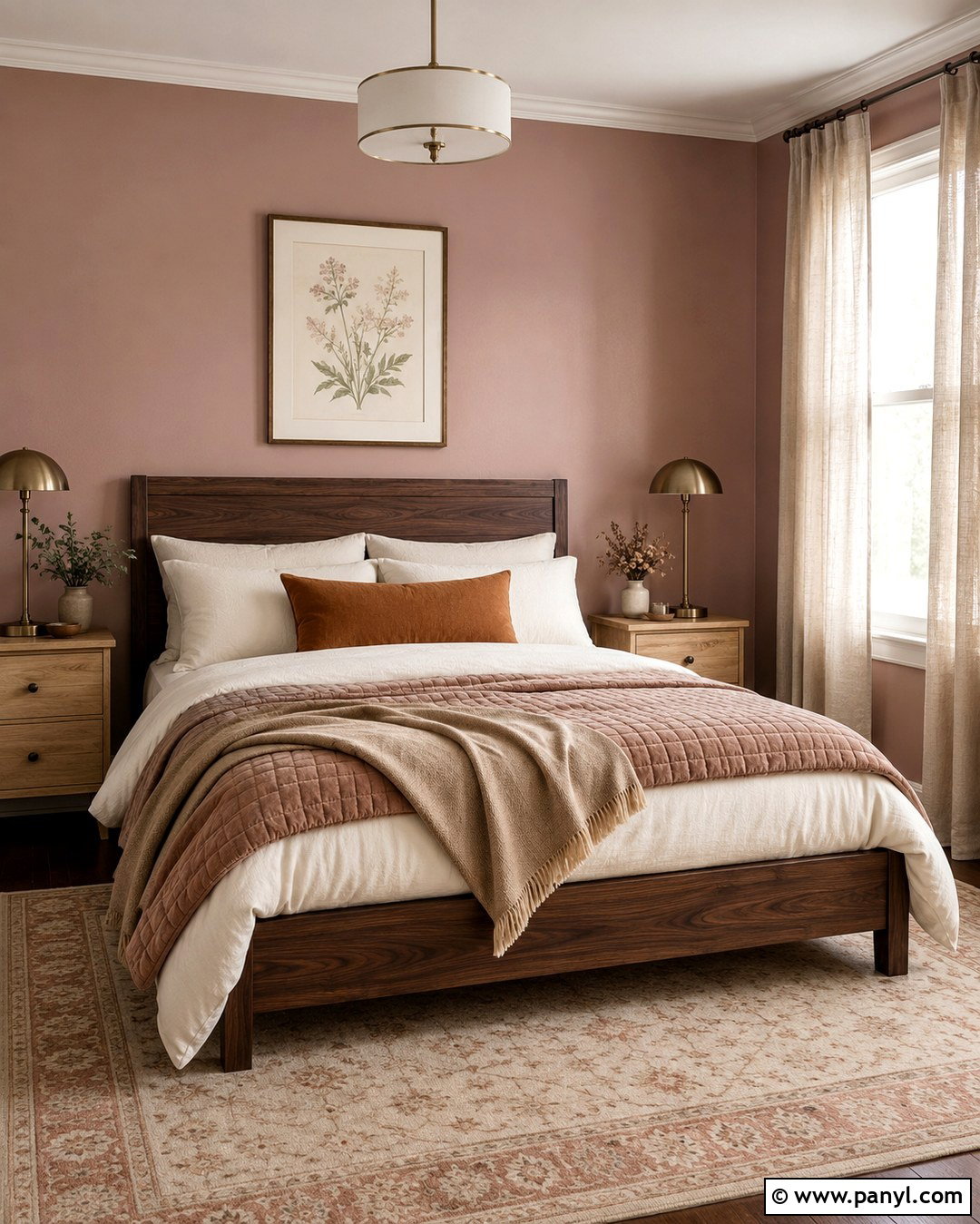
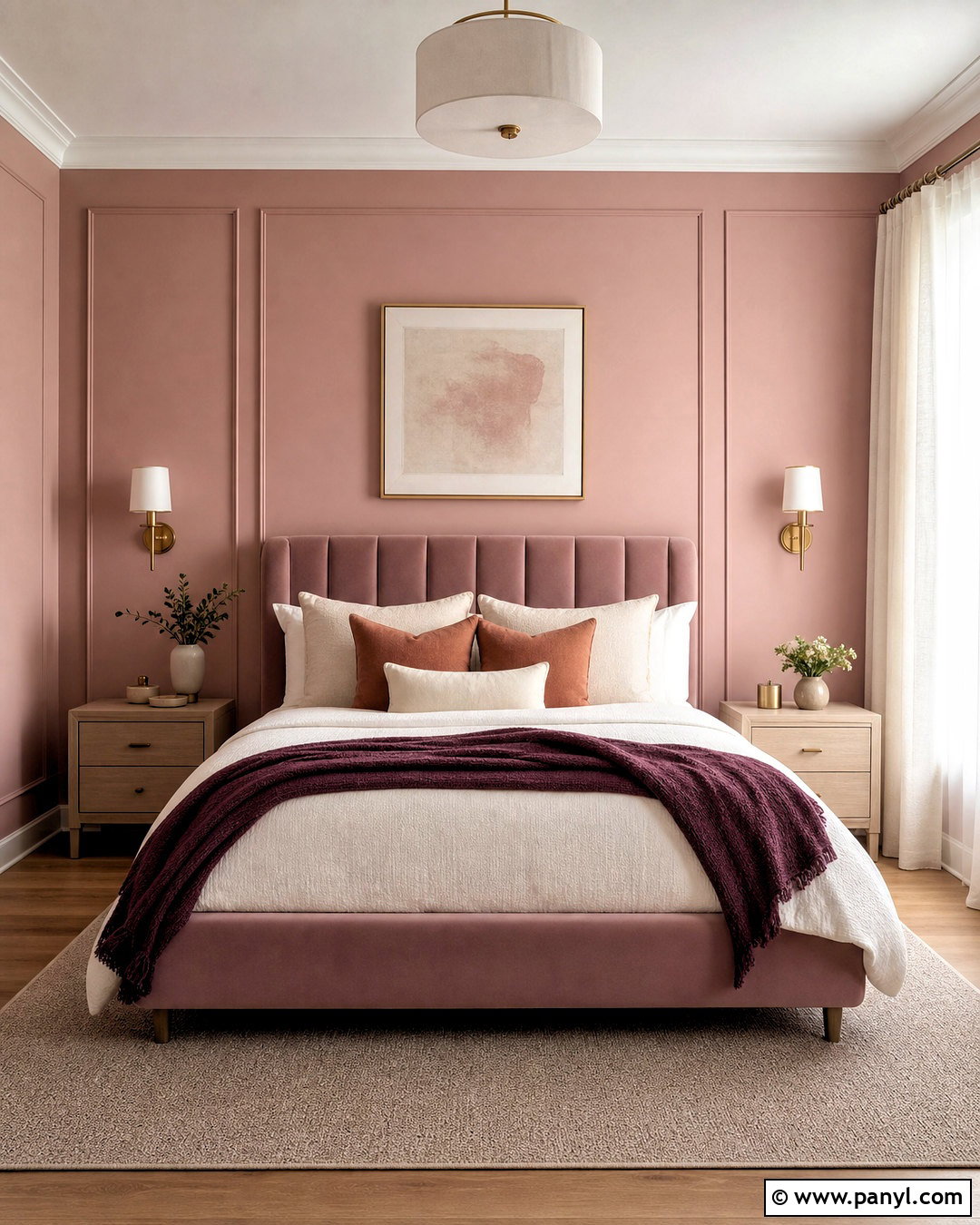
A rosy brown wall color blends beige, muted pink, and earthy brown for a guest room that feels warm but not overly feminine. Pair the walls with a simple walnut bed and crisp cream bedding. Add a dusty rose quilt, cinnamon-colored lumbar pillow, and oatmeal throw for soft tonal layering. Light oak nightstands prevent the darker bed from dominating the room. Use antique brass lamps and framed botanical prints with faded green details. A cream rug brightens the floor, while natural linen curtains keep the window treatment relaxed. Include a small upholstered chair and luggage bench so the room is genuinely useful for visitors. The finished design feels personal, comfortable, and richer than a standard all-beige guest space.
17. Toasted Almond Basement Wall Color
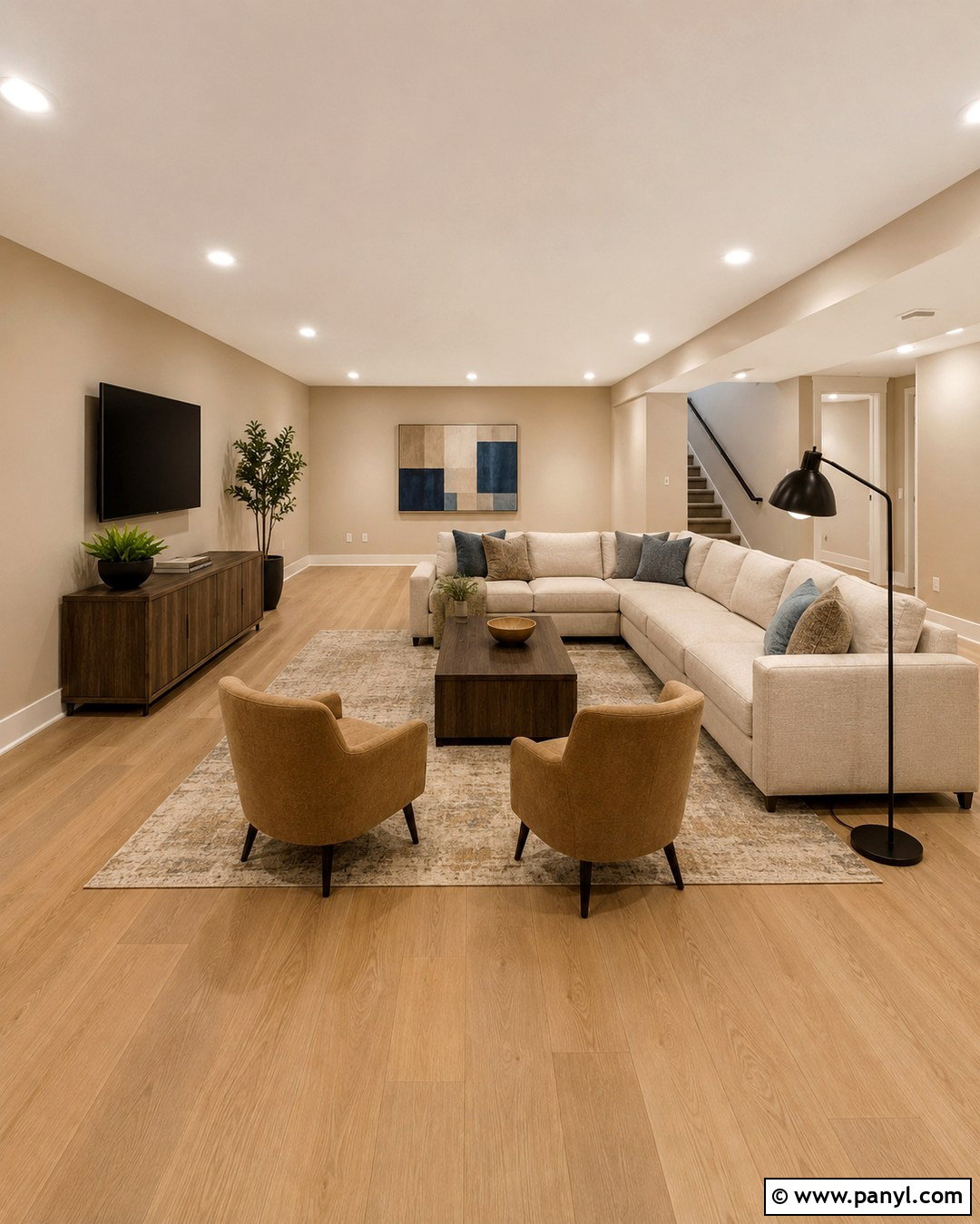
Basements with limited natural light need warmth without an overly deep wall shade. Toasted almond is a medium-light brown beige that can make the space feel comfortable and finished. Pair it with a warm white ceiling and pale oak-look flooring to maintain brightness. Use a cream sectional, walnut media cabinet, and two camel-colored lounge chairs to create a balanced conversation area. A large ivory and tan rug defines the seating zone. Add black floor lamps and sconces to distribute light across the room instead of relying on one ceiling fixture. Muted blue pillows introduce a cooler counterpoint to the warm neutrals. Closed storage, simple artwork, and uncluttered surfaces help the completed basement feel open, organized, and inviting.
18. Stone Brown Reading Nook Wall Color
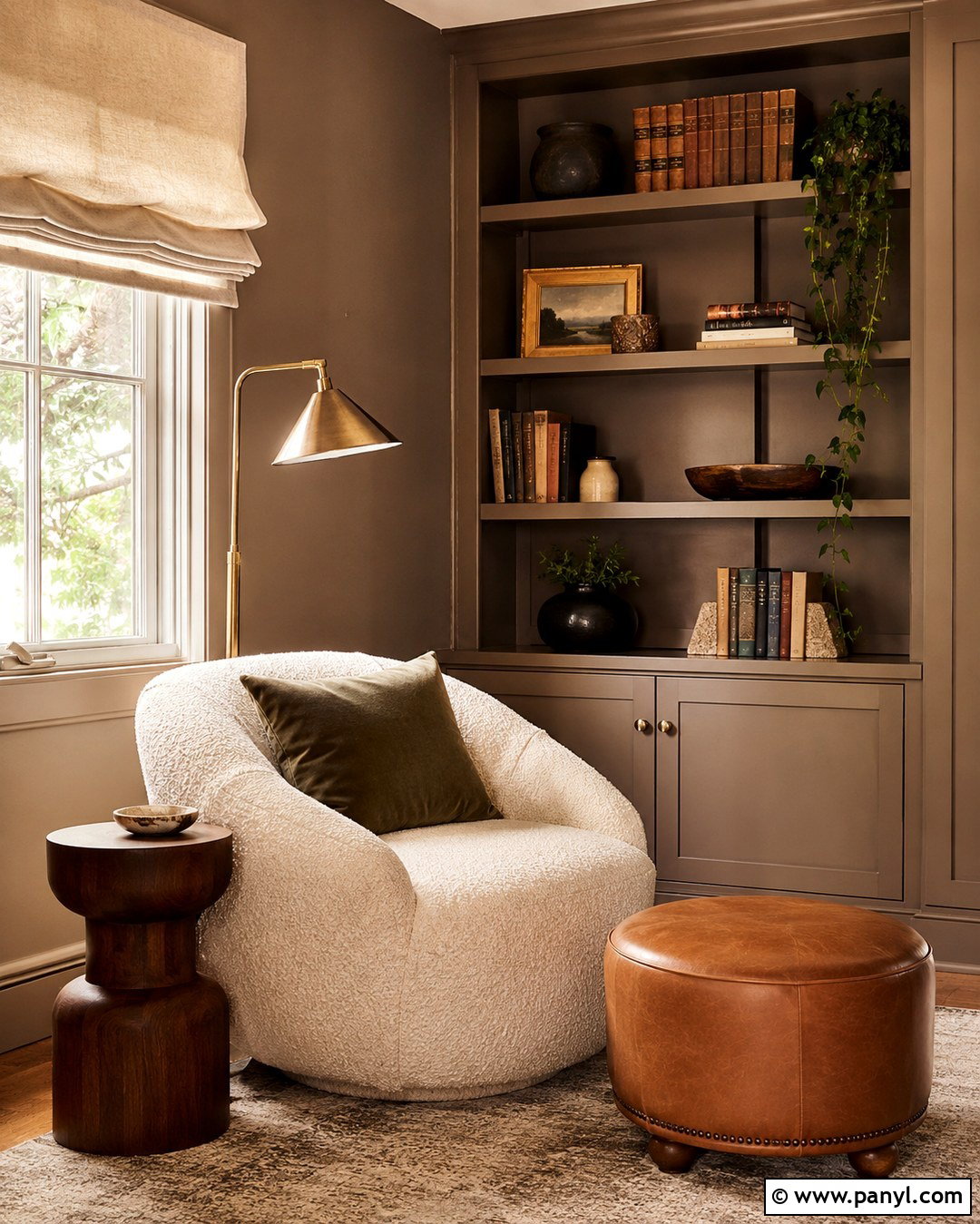
A quiet reading nook becomes more distinctive when surrounded by a muted stone brown wall color. Use the shade on the walls and built-in bookcase for a seamless, cozy effect. Place a comfortable cream boucle chair near the window with a small walnut drink table and an antique brass floor lamp. Add a footstool in caramel leather and a soft taupe rug underfoot. Style the shelves with books, handmade ceramics, and a few framed pieces, leaving open space so the display can breathe. A linen Roman shade filters strong daylight, while an olive cushion brings in restrained color. This compact but complete arrangement feels separate from the surrounding room and offers everything needed for a comfortable reading retreat.
19. Coffee Cream Studio Wall Color
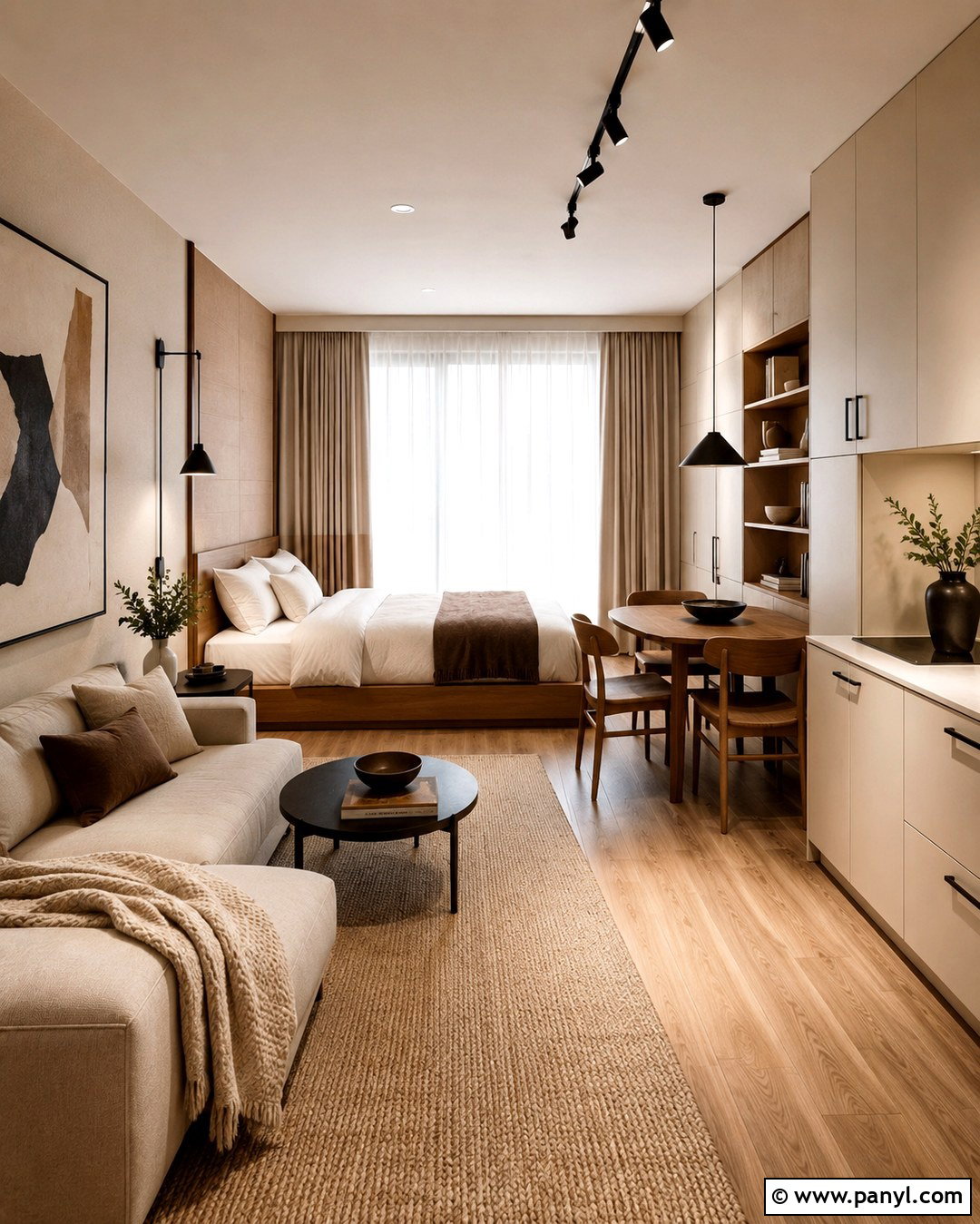
In a studio apartment, coffee cream walls provide warmth while remaining light enough for a small multifunctional layout. Paint the entire space in one pale brown-beige shade to avoid visual breaks. Use a low oatmeal sofa as a divider between the living and sleeping zones. Choose a walnut platform bed, compact oak dining table, and cream storage cabinets to create tonal variety. A large natural rug defines the sitting area, while a smaller washable runner marks the kitchen. Repeat black details through lighting, chair frames, and cabinet pulls. Hang one oversized artwork instead of many small pieces, and use full-height linen curtains to emphasize vertical space. The coordinated design makes the apartment feel orderly, comfortable, and visually larger.
20. Deep Brown Beige Powder Room Wall Color
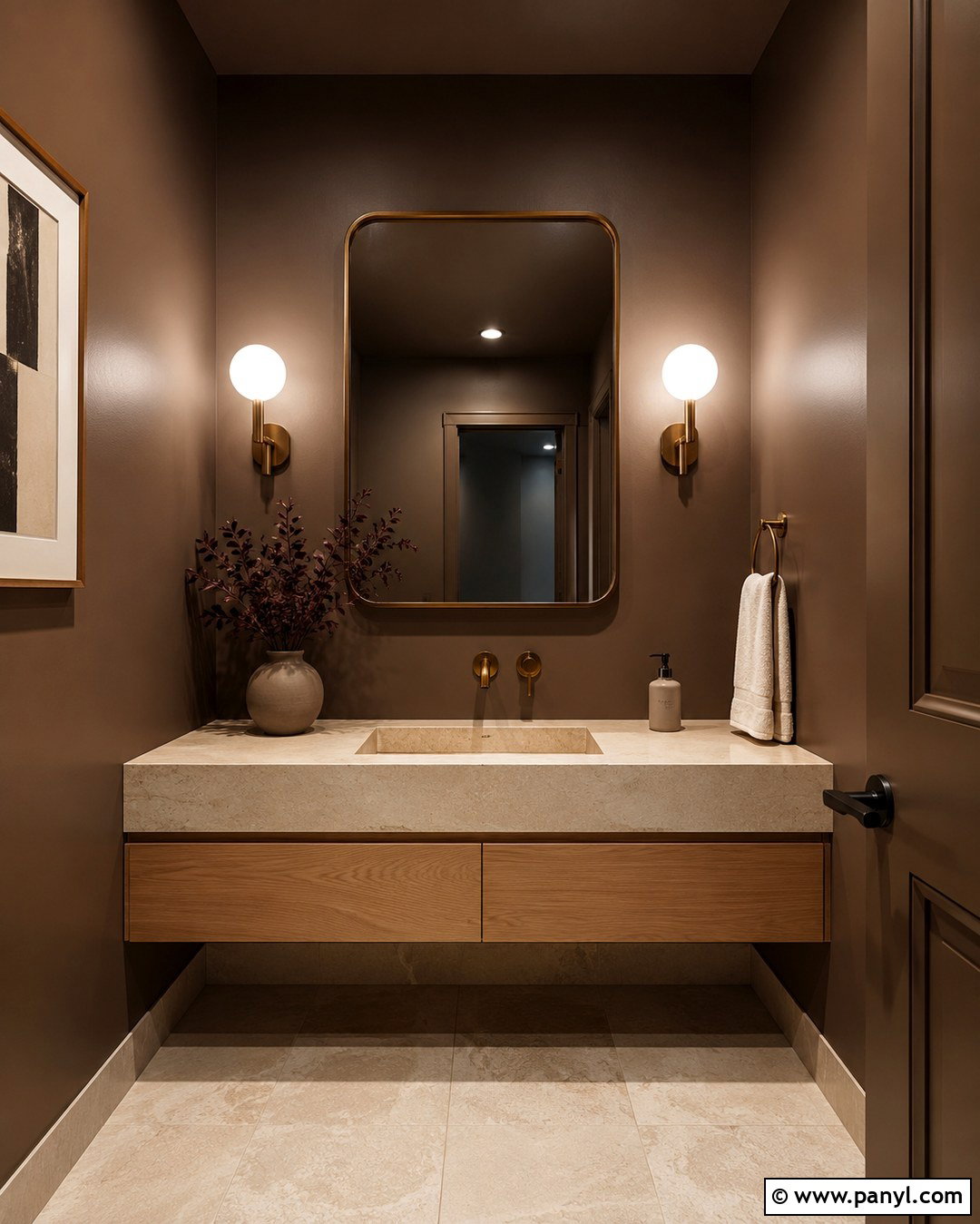
A small powder room is an ideal place to experiment with a deeper brown beige. Choose a rich espresso-taupe shade and apply it to the walls, trim, and ceiling for an immersive appearance. Balance the dark background with a floating light oak vanity and a creamy stone sink. An oversized antique brass mirror reflects light and creates a strong focal point. Install warm white globe sconces on both sides for even illumination. Use pale limestone-look floor tile and ivory hand towels to brighten the lower half of the room. One small framed artwork and a simple ceramic soap dispenser are enough decoration. This complete scheme feels bold and refined while keeping the compact room clear, functional, and visually balanced.
Conclusion:
The best 20 Brown Beige Wall Color Ideas show how versatile this warm neutral family can be. Pale mushroom, oatmeal, and sandy beige shades make small rooms feel open, while mocha, walnut, and espresso-beige tones create depth in bedrooms, media rooms, and powder rooms. For a successful result, repeat the wall’s undertone through wood, textiles, stone, and metal finishes. Then add contrast with warm white, charcoal, black, olive, rust, or muted blue. Always view a large paint sample in morning, afternoon, and artificial light before making a final decision. With thoughtful layering and a complete room plan, brown beige walls can feel current, comfortable, and distinctly personal.

Related Ideas and Inspiration:
Leave a Reply